• Skip to main content
  • Skip to secondary menu
  • Skip to primary sidebar
  • Skip to footer
  • Home
  • About Us
  • Say hello
Rethink Real Estate. For Good.

Rethink Real Estate. For Good.

  • Podcast
  • Posts
  • In the news
  • Speaking and media
    • About Eve
    • Speaking requests
    • Speaking engagements
    • Press kit
  • Investment opportunities

Development

Closing loopholes for better neighborhoods.

October 25, 2019

Unfortunately, loopholes are far too easy to find in the real estate development industry. They are hiding in plain sight in lots of places. Taxation, zoning, affordable housing programs or even government incentives jointly provide an abundance of loopholes and unscrupulous developers will find a way to take advantage of them. For many years, unethical, or at the very least short-sighted development has been the norm. Now, with the rise of sustainable and socially conscious development, a new generation of investors and developers are shedding the profit-driven dogma of the past to work towards a more ethical real estate industry. This includes creating more livable and equitable housing which can generate returns similar to traditional, profit-driven development projects.

The worst outcome

Perhaps the worst outcome of unethical real estate development is displacement. Projects initially pitched to provide a rebirth and revitalization for underserved neighborhoods can instead, sometimes unwittingly, lead towards gentrification, in turn driving long-term residents from their communities and homes.

Many areas slated for “urban renewal” in the past were primarily filled with single-family homes while the neighborhood itself was zoned for both single-family and multifamily properties. This provided a particularly attractive opportunity to profit-driven developers since the density of the neighborhood could be increased with apartments and condominiums many of which were out of the price range of current residents. This in turn led to a great deal of residential turnover in these communities and an acceleration of the harms associated with that turnover.

Community pushback

After years of such unchecked development, many communities- and aligned developers and investors- have started to push back. More appropriate zoning, sustainable and energy efficient housing, community cohesion, walkability, bike-ability and equality, amongst others, have moved to the forefront of the conversation. Often these conversations have been led by local organizations dedicated to preserving neighborhood character and ensuring positive growth in housing and commercial enterprises. Now, single-minded profit-driven real estate development is being supplanted by a collaborative approach- with local stakeholders and community-minded real estate professionals, developers and investors all talking to each other to plan for the best community outcomes.

Mix it up

Bigger or more of the same is not always better if your goal is to create diverse and livable communities. Studies have shown that mixed-income neighborhoods thrive compared to monoculture neighborhoods primarily comprised of a single social or economic class. Many of the worst examples of suburban sprawl or overzealous urban luxury development prioritize high-income, white-collar workers and families at the expense of others who may not be as socioeconomically well-off. 

These monoculture neighborhoods can be islands that residents commute to and from, only serving a small and elite sub-set of our country’s demographic. And let’s not forget what these isolated communities spawn – environmental and health issues related to commuting, lack of walkability and lack of long-term sustainability. These neighborhoods also degrade over time from A to B and C Class housing, and residents are left with vast tracts of homes, with little commercial or social activity within the bounds of their neighborhood. 

Smaller steps

A focus on developing smaller projects, such as micro/economical single-family homes, duplexes, or apartment buildings can avoid many of the headaches and harms that come with large-scale, homogenous development. Rather than knocking down existing affordable housing, or dominating an area with mega-structures, developers can work to maximize usable real estate and land (even non-traditional, unique and oddly shaped lots) while largely preserving the character and makeup of the neighborhood. These smaller projects can be much easier to finance for developers, as capital investment costs will be lower. And investors can benefit from the diversification value of multiple small projects as opposed to a single large project.

_

We can’t change the mistakes of the past, but we can work to ensure they are not repeated. Housing affects every facet of our society, from employment opportunities to the environment, to social and economic justice within a neighborhood. While legislative and community-based solutions are absolutely necessary to weed out bad actors and unethical development, pro-social developers and investors can also make a contribution to a future with carefully planned communities and neighborhoods.

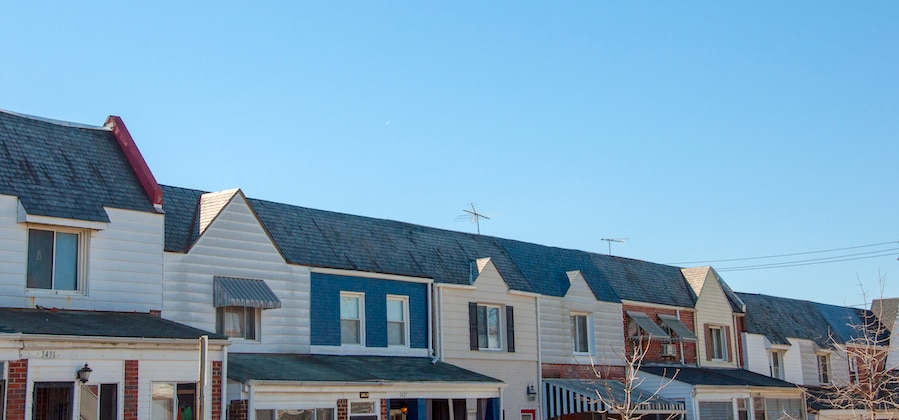
Image, Riverview Terrace, courtesy of Small Change.
Greenfields are boring.

October 23, 2019

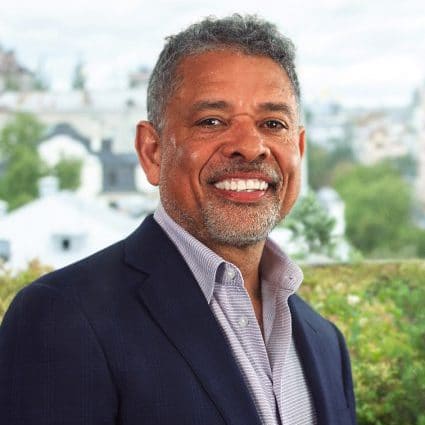
Adrian G. Washington is the founder and CEO of Neighborhood Development Company (NDC). Their mission is to develop exciting residential and commercial properties that cultivate vibrant communities. What does that mean? And how does a developer do that?

Well, that’s what Adrian and I talk about so listen in.

Adrian has over 30 years of experience in urban real estate development, construction and management. He founded NDC in 1999 and has served as President since then — except for a two year leave of absence from 2005 – 2007 when he left to lead the Anacostia Waterfront Corporation (AWC), the entity charged with leading a $10 billion, 20-year initiative to revitalize Washington, DC’s Anacostia Waterfront and surrounding communities. NDC has developed over 1,000,000 square feet of real estate, focusing on emerging urban neighborhoods while respecting the rich diversity of their existing fabric.

Adrian grew up in the city’s Anacostia neighborhood and is a lifelong resident of DC. He received his B.S. in Economics and Political Science from Stanford University and his M.B.A. in Marketing and Finance from the Harvard Business School. And he has received numerous individual awards reflecting his leadership in the development industry.

Insights and Inspirations

  • Why develop a green field when you can redevelop an existing neighborhood and help it to thrive?
  • See the people who are living there. They embody the neighborhood.
  • Mix it up. Build affordable housing right next to luxury housing.
  • Work with small businesses out of the community. They can become valuable tenants, not just for the developer but they bring value to the community as well.
  • There’s lots of opportunity in Opportunity Zones.

Information and Links

  • Adrian is excited to see NDC’s Benning Market built. It’s a food hall in River Terrace North East, and many of it’s investors came through a Small Change offering.
  • NDC supports DC Greens, a local non-profit dedicated to food justice and health equity in Washington, DC.
  • The project that Adrian is most proud of is the Residences of Georgia Avenue. This block buster project increased affordable housing options and healthy food options in a neighborhood considered a food desert. 
Read the podcast transcript here

Eve Picker: Hey, everyone, this is Eve Picker. If you listen to this podcast series, you’re going to learn how to make some change.

Eve Picker: Hi there. Thanks so much for joining me today for the latest episode of Impact Real Estate Investing. My guest today is Adrian Washington. Adrian is the founder and CEO of Neighborhood Development Company, a Washington, D.C. real estate company focused on rebuilding vibrant communities through their work. Adrian fell in love with this type of development work and decided to make a career out of it, much to the good fortune of the neighborhood he works in. For Adrian, greenfields are boring. Nothing gives him greater pleasure than digging into a forgotten and neglected site and turning it into a neighborhood asset. I’ve had the good fortune of working with Adrian at Small Change, helping to raise funds for some of these projects.

Eve Picker: Be sure to go to EvePicker.com to find out more about Adrian on the Shownotes page for this episode and be sure to sign up for my newsletter, so you can access information about impact real estate investing and get the latest news about the exciting projects on my crowdfunding platform, Small Change.

Eve Picker: Good morning, Adrian. Thank you very much for joining me.

Adrian Washington: Thank you, Eve. It’s a pleasure to be here.

Eve Picker: So you have a real estate company called Neighborhood Development Company, and we’ve been lucky enough at Small Change to help you raise funds for one of your projects. Your company is in Washington, D.C. I’m just wondering if you’d like to tell us how long you’ve had Neighborhood Development Company, or NDC, and have you lived in D.C. all of your life?

Adrian Washington: I’m a native Washingtonian. I’ve lived here most of my life. I went away and went to school down in California; lived out there for a while; lived in Boston, but, essentially, I’ve been in D.C. all of my professional … I grew up here, and I’ve lived here all my professional life. I’ve been involved in real estate, altogether now, going on over 30 years and formed Neighborhood Development Company a little over 20 years ago, back in 1999.

Eve Picker: That’s quite a stretch. NDC’s mission, in your words, is to develop exciting residential and commercial properties that cultivate vibrant communities. What does it mean to you to cultivate vibrant communities? How does a developer do that?

Adrian Washington: We’ve always operated in urban areas of primarily Washington, D.C. and really always neighborhoods that were emerging; that were maybe down and out at one time or were starting to turn around. What we found in these neighborhoods is that we don’t look at them just from a brick-and-mortar perspective. We see the people that are living there now. They want their neighborhoods improved, but they don’t want to be displaced. They want shops and things that serve them, but don’t serve just outsiders. They welcome newcomers, but they want to feel those newcomers respect the place that [inaudible]. We see our role as balancing those things of making a neighborhood better for people who are living there, attracting new residents who want to be part of those communities, attracting businesses that want to be part of those communities, but not to displace people and not to alter the fundamental character. As developers, I think it takes like a real balancing act that we work with on a day-to-day basis.

Eve Picker: I do think it is a real balancing act. How do you fend off displacement?

Adrian Washington: We do it in, I guess, a number of ways that I think are unique in some developers in that we do both very high-end market-rate developments, but we also do affordable housing. We do affordable housing in a number of ways. We do it in traditional ways that more traditional developers do it, using government subsidy and the many programs involved. We also do it in more creative ways. For instance, we’ve worked in the past with failing cooperatives, where a group of tenants own their building collectively, and it’s just not working out, either because of bad management, or whatever. We team with them to provide our services with them but do it in a way that allows them to stay in their homes. That’s one way we do it.

Adrian Washington: Another way we do it is we really, in our commercial work, really like to work with entrepreneurs. Your typical developer may want that credit tenant. They want that CVS, or that Walgreens, or someone national. We really- we don’t go that way. We go in the opposite direction. For instance, in one of our developments, we have a salsa teacher, and she was doing lessons- it was a nice young couple. They were doing lessons out of their basement in the neighborhood.

Adrian Washington: They were so successful, they wanted to have their first studio. They came to us, and we had a space in one of our buildings, so we worked with them on the design; we worked with them on getting government grants to help them build out. We helped them with the construction. We gave them a favorable lease that started out low, and it allowed them to develop the business.

Adrian Washington: It was just a great neighborhood success story, where they stayed in the neighborhood. They had a service that appealed to both the newcomers and people who were in the neighborhood. They successfully grew their business. They’re now opening a second location. I think it’s really about creativity; using the skills we have as developers and businesspeople and connecting with people who have hopes and dreams – maybe not the same skills – and working out win-win solutions.

Eve Picker: That’s a really lovely story. Other developers might say that’s taking a risk with a little startup business that you don’t necessarily need to take. You could go get a credit tenant. So, why do you take that risk?

Adrian Washington: Well, I think a couple of reasons. It is kind of, on paper, riskier. Although we see with all the changes in the retail economy, yeah, you could have some business like a Blockbuster – going back in time, when everyone thought it was really successful, and now it’s out of business [cross talk]

Eve Picker: Yeah, that’s true.

Adrian Washington: Or even something like a McDonald’s, where everyone thought McDonald’s used to be the gold standard. Even now, you see some of those stores shutting. There’s not ‘no risk’ in a credit tenant, but I agree that there’s more hand-holding; there’s more involvement. You’ve got to pick your entrepreneurs carefully. You’ve got to help nurture them. Typically, they’re people who are great enthusiasts about what they know – if it’s salsa dancing or handmade pottery – but they don’t know about marketing; they don’t know about financing. You’ve got to work with them more.

Adrian Washington: We just find that more rewarding. It’s just fun. It’s creative. We feel like we’re helping people. We feel that we’re seeing eye to eye, because even though we’ve been in business 20 years, we’re still thinking of ourselves as an entrepreneur. The neighborhoods love it, so I think it makes us more popular in the neighborhoods. We’ve found that the success rate that we’ve had with these businesses is really pretty high and that the occasional failure that comes along, we just kind of build that into our pro forma. We’ve found that we were able to replace people who don’t like it with other people. All in all, we just find it’s more socially rewarding, it’s financially fine, and it’s just a lot more fun.

Eve Picker: It adds to the economy of the neighborhood you’re in, which is really lovely. Developers do lots of different sorts of things, and I’m wondering how you ended up here. How did you …? There must have been a path that took you towards this type of development.

Adrian Washington: Eve, I think it’s like a lot of things in life. I don’t know, maybe there are people who have these- design these great plans at age 12 and follow them through. I really didn’t. I went to undergrad; I went and got an MBA. I worked for a national consulting firm, and I thought that was my path, but I really hated it. At the meantime, I had bought a house in an emerging neighborhood and fell in love with that culture. I think I was really ahead of my time. I saw the appeal of walkable, livable neighborhoods. I saw the appeal of eclectic neighborhoods that had different types of architecture, that had different types of people, different races, different income groups, that was close to urban centers. I just thought that was great. I loved being in that neighborhood. I loved the change that I saw was going on. I loved the physical aspect.

Adrian Washington: Back when I was younger, I did everything. I did carpentry; I did plumbing [inaudible]. I just loved that whole environment. I think I was always an entrepreneur at heart … I was going to a day job that I hated, and I had this hobby that I loved, so I said, “Well, why don’t I see if I can turn this hobby into a business?” That was 30 years ago. It hasn’t been a straight line. There were struggles; there were failures; there were just dumb-ass things that I did that didn’t work out, but I always came back the next day and tried to do it better, and I’m really glad I did.

Eve Picker: Be sure to go to EvePicker.com and sign up for my free educational newsletter about impact real estate investing. You’ll be among the first to hear about new projects you can invest in. That’s EvePicker.com. Thanks so much.

Eve Picker: That’s a great reason why. It’s pretty wonderful to be able to be doing something that you really love and that adds to communities everywhere. So, I’m going to move on now to a project that I know you’re working on, called 1100 Eastern Avenue, which is one of your latest projects. We’re fortunate enough, at Small Change, that we’re going to be helping you to raise a little money for this project. I wanted to talk a little bit about it. Can you just tell us a little about what the project is, how big it is, the uses, where it is?

Adrian Washington: Well, sure, Eve. I’m really excited, and our whole team’s excited about 1100 Eastern. It’s really a project that embodies our beliefs, and uses all of our skill sets, and is just very exciting. It’s a mixed-use projects. Ground floor is a retail component; not that large, about 4,000 square feet. I think one of the great things about it is that there were … The site is sort of a rundown former- like a strip shopping center. A couple of the tenants there were folks that, frankly, the neighborhood was happy to see leave. It was a liquor store and an old carry-out. Not to knock those people, but they weren’t really what the community wanted.

Adrian Washington: There were a couple of tenants the community really did like. It was a barbershop that had been there for really a couple of generations. The current owner’s father had founded it back 35 years ago. She was still running it, and it was really a neighborhood institution. Then there was a daycare center. One of the things that we’re doing is allowing those people to come back to the new development in brand-new facilities. We’re even able to offer them, starting out, kind of with our philosophy, at the same rents they were paying, which were far below market. It’ll allow them to build up the market over a number of years, so we’re very excited about that.

Adrian Washington: Now, on the floors above it, there are five stories above it. These will contain 65 units of mixed-income housing. There’s housing for very low-income people, who were formerly homeless, who will be able to get wraparound services to allow them to transition to a more normal life. Then there are other units that will be for people of moderate incomes; people anywhere from – these are technical terms – but from 40 percent to 65 percent of the area median income. These range from what we would call pretty subsidized housing to more workforce housing, so we’ll have a range of people there.

Adrian Washington: We’re also very proud of what we’re doing is that we’re giving a really big mix of unit types. Typically, in any kind of new construction development, you’re seeing just people were just building one- and two-bedrooms, or studios. What we’re able to do in this building is to provide one-bedrooms, two-bedrooms, three-bedrooms, even a few four-bedroom apartments. It really will serve a number of different types of people in the neighborhood – seniors, people with families, people with kids. It’s just a great project that will really help everyone in the neighborhood, so we’re very proud and excited about it.

Eve Picker: That sounds really, really wonderful. The four-bedroom units are so unusual nowadays, and extended families are important, so that’s pretty great. I understand it’s also an Opportunity Zone, which is, as we all know, a very hot topic right now. How will that impact the development?

Adrian Washington: Opportunity Zones are exactly what you said, Eve; it’s a very hot topic. People are still figuring it out. I think that, unfortunately, early on, a lot of the Opportunity Zone benefits are going to people who are creating projects that would have been created anyway. We’re very proud that we feel this project will fit in what the Opportunity Zone true mission is, which is to bring capital to underserved neighborhoods – as I said, our commercial businesses, our neighborhood-serving businesses that were going to be displaced and that people in the community wanted to stay.

Adrian Washington: What we’re doing is we’re using Opportunity Zone benefits to attract capital to help keep these businesses in. So, I think that’s important. But, also, I think one of the key things I feel that Opportunity Zones is that the projects have to make sense, even if they weren’t in Opportunity Zones. We are a business that prides itself on not just being do-gooders, but being solid businesspeople, so we’ve underwritten the project carefully. We understand the costs, and the risks, and all of the factors. We think this is a project that works, even if it wasn’t in an Opportunity Zone. But we’re very happy to allow people who are investors who want to get a good return on their money, but also to have a meaningful social impact, to have all that, plus the tax benefits of the Opportunity Zone.

Eve Picker: For listeners who don’t really understand Opportunity Zone funds, because they are very complicated … Took me a long time to understand. The fund, in this case, is actually the project. It’s just the entity that the project is using as a legal entity, the LLC, that will become a fund, right? If people invest-

Adrian Washington: Yes, that’s right.

Eve Picker: It’s a 100-percent Opportunity Zone fund because it’s just a single-use fund, just one project. So, if people invest in it, they’re investing actually into the project itself, not into a fund that then serves a whole series of projects. They can take a really close look at the underwriting and see if they like it. I would agree with you, at the moment, the Opportunity Zone fund benefits are kind of gravy. I have yet to see a project that is moving forward simply because of those benefits. They don’t seem to be enough to make a project happen, right?

Adrian Washington: Exactly. We’ve used that approach, not just in Opportunity Zones, but with our other investor- projects. What we found over the years is that people- they want to know what they’re investing in, both from a business standpoint … They want to kick the tires, see if they believe in the construction costs, and the neighborhood statistics, and the tenants that are being there. They want to understand that. They also want to understand the story behind it. What’s going into the neighborhood? How will my investment benefit [inaudible] neighborhood? They really want to touch, and feel, and see that. We’ve had a lot of success over the years in doing that. This project really works in the same manner, where people can really learn about it, learn about us, learn about the neighborhood, learn about the businesses, and say, “Yeah, I want to put my money here. I believe in it as a financial investment. I also believe in it, in terms of its social [mesh].

Eve Picker: I think what I’m most excited about for Small Change is the fact that we’re helping you raise money for this Opportunity Zone fund. We may very well be the first Opportunity Zone fund offering investments- very small investments to everyone over the age of 18, not just accredited investors. I think many of the funds that we see around the country have really big minimum investment amounts of $100,000 or $200,000, or $500,000. This is going to be much smaller for everyday people, which personally I find very exciting. It’s yet another way to make it accessible to your investors in your neighborhood, right, Adrian?

Adrian Washington: Right, and we’re excited, too. Eve, as you know, and the audience may not know, is that you guys raised money for us on another project, our Benning Market project – a neighborhood called River Terrace. It was a nice way to raise money, but I think more importantly, it helped build support and build involvement in the project. I have people in that neighborhood who told me, “Yeah, I saw … I’m an investor in your project, and …” [cross talk]

Eve Picker: That’s great. That’s really great, yeah.

Adrian Washington: -“… and I saw it because I lived down the street and I wanted to be a part of it. I just thought it was cool that you allowed us to participate in that.” I think it really does build more of a sense of community; it builds more of a sense of involvement; it invokes transparency, because, frankly, I think that, in these days, developers are viewed with a lot of distrust. I think that by allowing community members to invest at investment levels that they can afford really helps to break down those walls, and do that, and helps to increase visibility. We were really happy with the results we had with you on our first investment, which is literally breaking ground in a couple weeks, and we are very excited to work with you again on the Eastern Avenue Project.

Eve Picker: That’s great. You’re going to have to send me updates on the first one, because we’ll post them for our other investors. People like to see [cross talk].

Adrian Washington: We’ll send you groundbreaking pictures. How about that?

Eve Picker: That’d be fantastic, yeah. Talking about this little piece of community engagement – crowdfunding – community engagement has to play a big role in your projects. I’m wondering how you handle that. That can be tricky sometimes.

Adrian Washington: It can be tricky. Like I said, there’s just a lot of distrust around development, and in our political climate, I think there’s just [riding] distrust in everything, so I don’t take it personally. I think the key is you’ve got to be out there early and often. We’re working a different project, in a different part of the city, and we’re a couple years away from groundbreaking; really a year away from an actual serious design and engagement, but we’re already out there in the community, asking people what they want, telling them about ourselves, letting them see some of our other projects.

Adrian Washington: You’re never going to please 100 percent of the people in any community. What I’ve found over years is that what you can do is the best you can do, which is to be accessible, be transparent, to listen, to be honest. Sometimes, people want something, you’re like, “Yeah, we can do that.” Other times, people want something, and I’ve seen a lot of developers be vague and sort of say, “Oh, well, maybe we’ll look at that.” I try to be honest; I try to say that, “Sir, ma’am, we just can’t do that, and here’s the reason why. I know you won’t be happy about that,” but I think it’s more important to be honest than it is to try to gloss over a problem.

Adrian Washington: It really takes a lot of work. It’s changed over the years. 20 years ago, we didn’t have to do nearly this level of community involvement. I think, particularly in underserved neighborhoods, that people were happy that you were just there and building something; pretty much, you didn’t have to do more than that. Nowadays, it’s different. People realize that their neighborhoods are an asset, and that people want to develop there, and they are demanding to be heard and respected. If you’re not there, you don’t hear them, you don’t respect them, you’re gonna suffer for it.

Eve Picker: Yeah, I think that’s right. Moving on to more global themes, here, I’m just wondering what you think we all need to do to make our cities and neighborhoods better places for everyone, so that no one gets left out.

Adrian Washington: That’s a big question-

Eve Picker: It is a big question.

Adrian Washington: -I don’t know if we can solve that all in one podcast. I’ll focus on our roles as developers. Clearly, there is a need for more housing in our cities. There’s a need for housing that serves all different income levels and all different family types. It’s not the ’50s anymore. It’s not just mom and dad, and 2.3 kids, and a picket fence. There are all types of households.

Adrian Washington: The development process has gotten tougher. Besides the community involvement piece, the environmental and sustainability requirements are much higher, the zoning is trickier. It’s hard work. I think our job is to use the skills that we’ve developed over the years to work in partnership with communities, to let them see how they can help us, and, in turn, using our skills to help them work on win-win solutions; involve government, because, obviously, they’re important, and have patience, but have perseverance. Development is tough.

Adrian Washington: I think that to be successful, you’ve got to have a long-term view. You can’t feel like you’ve got to make a killing on every project. You’ve got to look at your entire body of work, so at the end of the day, at the end of your career that you’ve made a fair return on your investment, your time, and your risk, but you’ve also contributed to society. I think it’s possible, if you have those things in mind. Honestly, it’s more rewarding and it’s more successful, if you do it that way.

Eve Picker: Clearly, you think socially responsible real estate is necessary in today’s development world, and that’s the way you manage your business, but I’m wondering, are there enough developers out there thinking about impact and thinking in the way that you’re thinking? If not, how might we improve that? I still see a lot of greenfield developments that, quite frankly, shock me in this day and age; that that sort of work continues. I still see banks wanting to finance those models over and over again, because it’s easy to think about them. I’m wondering how we shift to a [kinder] development world.

Adrian Washington: I think it certainly is growing. I agree with you completely. I drive around, particularly when I’m not in D.C., and I see so many greenfield developments. Just to me, personally, it’s just kind of boring. I didn’t get into this just to make a ton of money. Like I said, I want to be fairly compensated for what I do, but it’s more about that.

Adrian Washington: To answer your question, I think I see more and more of it. I think, particularly the younger generation … I’m older. I’m not a millennial. I guess I’m a young baby boomer. But, particularly in the generation behind me, I see people who want to do that, and not just in real estate development, but in other fields in life. They want to do more than just do a job and make money. They want to make a meaningful impact on the world. They want to have that reward, which helps them feel better.

Adrian Washington: Also, what I’ve found in my business, is it helps to attract and retain young employees. They don’t want to just build some cookie-cutter, 200-unit apartment building in a greenfield, just like everybody else. They want to do projects that are creative, that involve different financing sources, that touch people’s lives, that take challenges [cross talk] and from a business standpoint. I think it’s a movement that is slow in coming, but I clearly see it’s building, and I think it’ll be more and more.

Eve Picker: Yeah, I think you’re probably right that it’s gradually building. Do you see any current trends in real estate that you’re fascinated by or you think are going to make a difference moving forward?

Adrian Washington: Yeah, I see … Clearly, the trend for co-living and coworking is the big trend. WeWork is obviously the big kind of corporate behemoth example of that, but there are a lot of other smaller, more entrepreneurial types of interests. I’ve see coworking spaces designed around women, or women with kids that have daycare centers, or people with social causes, like a nonprofit type of thing. I see that as a big trend.

Adrian Washington: I see co-living. I think that where people, either because of monetary reasons, or because of social reasons, don’t want that house by themselves, but want an opportunity where they can either live with roommates or live in a more communal environment, where things like kitchens and things are shared, and where there’s a social network in place that typically people who are new to an area- it’s a way for them to connect. I see a real sort of striving for more connectedness, as our world, in a way, becomes less connected. I think there are great opportunities to expand on that model. I’ve seen some very successful ones here in Washington, D.C., so it’s something I’m keeping my eye on.

Eve Picker: Yeah, I think a lot of people are. I’m going to ask you three signoff questions that I ask everyone. The first one is what is the key factor that makes a real estate project impactful to you?

Adrian Washington: I’d say the key factor is that it meets the needs of the community that it’s in. The only way you get that is to get out, and talk to the people there, and understand what they want. Some communities, they want more affordable housing. Some people, they want less. Some people want retail that’s a particular type; other people might want a retail that’s missing, like, say, a Fresh Grocer, which is like an example of another project that we did. We put in a Fresh Grocer where it’d been a food desert. It really involves talking to the community, understanding what they want, and then using your skills to develop- to deliver it.

Eve Picker: When it comes to crowdfunding, do you think there are other things that can help you as a developer, not just involving investors, but how might crowdfunding benefit your project, as a whole?

Adrian Washington: I think crowdfunding benefits us in a number of ways. The couple that most come to mind – and I [inaudible] an example earlier for one of our projects – is many people in the neighborhood become investors in the projects. They’re invested not just financially, but they’re invested emotionally. They tell their friends; they frequent there more often. I think the crowdfunding helps allow, particularly, local residents to be involved.

Adrian Washington: I think the second way that that’s really helped us and helped the project is that it’s a real brand builder. Eve, when we did the project with you guys, we got so many press kits about the project. We were [cross talk].

Eve Picker: That’s fabulous. That’s really fabulous.

Adrian Washington: I was interviewed a couple of times at the local news station, I was interviewed by national publications. People that I would- said “Hey, I heard about your project. What’s crowdfunding like, and how do you like it? It just really enhanced our company’s visibility, our project’s visibility; it was a real brand enhancer, and it’s something that I did not expect and something I was very pleased with.

Eve Picker: I’m grateful to hear that. That’s wonderful. Then, this is a really big one – if there were one thing that you could change about real estate development in the U.S. to make it better, what would that be?

Adrian Washington: I think that the thing that I would really change is not so much government policies. I understand the need for regulation around safety, and sustainability, and community impact, but I would change more the attitude of the people in government who do those. I think there is too much of a – particularly in inspections – ‘gotcha’ mentality, where, instead of working with us, and understanding that we’re doing the best we can … Yes, maybe this one particular light switch was two inches too high or too low-

Eve Picker: Oh …

Adrian Washington: Not just a ‘gotcha’ mentality, not just, “Okay, you messed up on that. Fix it, and we’ll come back when we’re ready and tell you whether you missed anything else,” more a partnership for governments to understand that we’re good guys. We’re doing the best we can; that we want a safe project, a sustainable project, and to work more cooperatively with us, and help us succeed as partners, and not to be adversaries.

Eve Picker: That’s a great way to end this interview. So, Adrian, thank you very much for your time. I really enjoyed talking with you, and I’m sure we’re going to be talking again.

Adrian Washington: Great, Eve. Thanks for having me.

Eve Picker: That was Adrian Washington. Adrian is not afraid of a challenge. His company focuses on challenging sites in challenging neighborhoods, always making sure that neighborhood folks are involved and that their neighborhood is improved by the final project. I love that Adrian finds greenfields boring. I love that he sees the people in a neighborhood first, and I love that he nurtures local businesses, bringing even more value to the projects he develops.

Eve Picker: You can find out more about impact real estate investing and access the Shownotes for today’s episode at my website, EvePicker.com. While you’re there, sign up for my newsletter to find out more about how to make money in real estate while building better cities. Thanks so much for spending your time with me today, and thank you, Adrian, for sharing your thoughts with me. We’ll talk again soon, but for now, this is Eve Picker signing off to go make some change.

Image courtesy of Neighborhood Development Company

Embracing Smart Homes.

October 18, 2019

We’ve always thought of housing as shelter and little more. Now we are on the cusp of a massive cultural shift here in the United States, and soon we’ll expect our homes to be much more than a place to hang our hat at the end of the day. It seems that the possibilities are endless and that they are very much in our grasp. Now is not the time to limit our collective imagination.

Technology integration

In the near future we’re going to be able to interact with our homes in a completely different way than we do today. Smart Homes and the Internet of Things have already changed how we listen to music in our homes, connect with digital assistants like Siri and Amazon Echo, how we control the climate of our homes with smart thermostats, how we open our doors with smart locks and many other digital-age upgrades that are changing the way we use and enjoy our homes.

And getting smarter is not just about gadgets and ease of use. Homebuyers and renters are looking for ways to reduce their environmental impact while saving money on their mortgage or rental payment at the same time. More and more luxury homes have integrated technology solutions that combine solar panels with battery systems like Tesla’s Powerpack to essentially turn their home into a mini power plant. Power is generated for every day household use, plug-in hybrids and electric vehicles and even provides a credit on your electric bill by sending surplus electricity generated back into the grid for the rest of the community to use as needed.

Builders and developers have an opportunity to embrace these changes in order to increase the appeal of their projects, attract technology and growth investors, and make a positive environmental impact on the community at large at that same time.

Smart City infrastructure

All these smart new home features allow city planners, builders, and developers the potential to integrate each home into a smart city net, which is essentially a series of homes that send relevant data back to a central processing area, so that various city and municipal professionals can parse that data.

Cities are already processing metrics which include energy/electricity and water use, and some municipal internet/fiber monitoring. Increasingly cities are also installing sensors that measure air quality, sunlight coverage, traffic monitoring sensors, pedestrian trackers, and many other data points that may be used to improve the community at large. Many of these sensors are not fixed in place – they are attached to city vehicles, buses, police and fire vehicles, so that data can be collected in and around the city’s geographic area.

Developers have the opportunity to incorporate these data collection systems into new real estate projects in order to allow residents to benefit from increased efficiencies in energy, water, and internet delivery. Rather than merely building houses, builders and developers can be a potent force for improving the lives of residents in an abundance of ways.

Mobility

As we shift towards homes as a hub for the devices and networks that we use every day, there is an opportunity to integrate new transportation modes into development projects as well. For example, as the use of ridesharing soars, particularly in dense urban cores, developers may opt to allocate less space for traditional solo-use parking spaces, and instead create a designated area for rideshare apps like Uber, Lyft and others. Or they may include more charging stations for hybrid or electric vehicles. Or more bike racks. Or they might even consider providing a shared vehicle for the use of property residents. Space that is typically set aside for ground level parking can instead by used for indoor or outdoor common areas and other such community enhancing features.

_

To remain relevant, developers and builders must embrace Smart Homes and Smart Cities. As the technology scales up, features that are now primarily seen in luxury homes will soon become part of middle and even lower-income housing markets. Everyone stands to benefit from the economic and energy efficiencies offered by smart grids, better and more efficient mobility options, and smart and sensible integrated housing systems.

Image ”We .. were .. waiting .. ages” they droned, by :mrMark:, CC BY-2.0

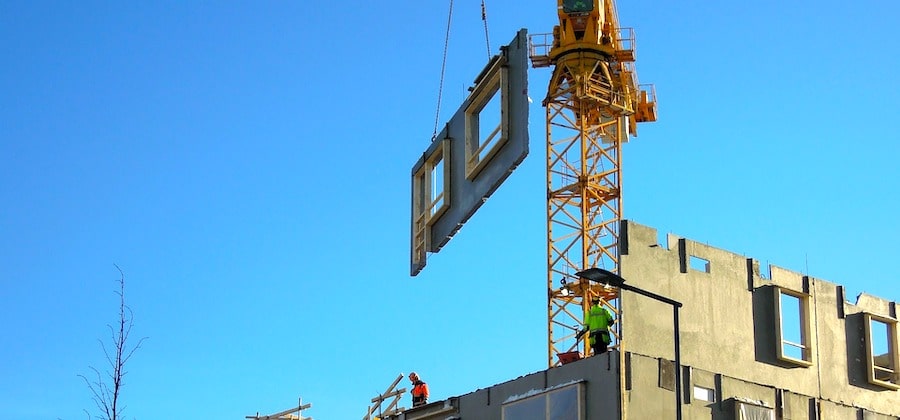
The rise of prefab.

October 11, 2019

The residential and commercial building industry has changed radically in the last few decades, following the pattern of many other vital sectors of the US economy. Two of the developments that the industry has been focused on, which happen to be interlinked, are prefabrication and offsite construction. Coupled with this, vertical integration is a focus of many companies as they seek ever more technologically advanced efficiencies. Compared to ten years ago, building projects today require less labor and have a faster construction cycle. Both of these factors have been driving down construction and labor costs for large-scale builders. The question is will prefab construction upturn the industry further and change how we build in the future? Maybe.

Prefab and offsite construction

Prefab buildings are not new. As early as 1908 Sears Catalog Homes started being sold through the Sears catalog with a reported 40,000 sold in North America between 1908 and 1940. Although the catalog home trend waxed and waned, much ado was made regarding modular construction. But at that time modular construction resulted in an entire generation of utilitarian and bland prefabricated buildings that were far more function than form. Now the offsite construction industry has moved beyond a purely functional role and offers pre-made, cost-effective and attractive structures for every purpose, from single-family homes to skyscrapers and everything in between.

Some larger companies are taking up prefab construction initiatives, such as the hotel-giant Marriott, which is undertaking six projects nationwide. Rehab construction specialists like Clark Pacific and Guerdon Modular buildings are reporting significant upticks in prefab orders across the country. At the same time building contractors are becoming more familiar and comfortable with the modular construction process, and designers are recognizing that prefab buildings can allow for significant flexibility, while not constraining innovation or imagination.

Benefits offered by prefab

A combination of lowered labor, building and material costs along with the ability to design a prefab structure from scratch, makes this industry sector especially enticing for both commercial and residential buildings that need to be replicated. Some examples of potential growth areas include fast-food buildings, hotels, coffee shops, and other spaces that follow a standard design and use pattern.

Labor costs

One of the most significant prefab drivers is not just the cost savings in on-site building labor. It’s the ability to build quickly in an industry in which there are simply not enough skilled workers available. For the last two years the multifamily and affordable housing sector has been hit particularly hard by a shortage of workers. This in turn drives up project costs and can cause building cost overruns or expensive delays in the completion of projects. Offsite manufacturing has the potential to not only solve these problems, but to reduce project schedules as well.

Controlled manufacturing environments

There is a pretty stark difference between the average manufacturing facility and most building sites when it comes to cleanliness and control of the site. Construction sites must be prepared for exposure to the elements, security and safety risks posed by trespassers, unwanted intrusion by animals or birds and a whole host of other problems. These prevent building sites from being ideal manufacturing facilities. Offsite construction avoids all of these problems as the building process is completed inside a clean and controlled warehouse facility.

Opportunities for collaboration

While not so long-ago architects, builders and other real estate professionals turned their collective noses up at the mention of a prefab building, today there is plenty of dialogue between all of these sectors – they want to be involved in prefab building design and manufacturing. Many designers are embracing prefab as the way of the future.

_

In an era of shrinking margins and growing costs in the development and construction space, prefab makes sense. It can be applied on scale, with no limitations on size or scope. Prefab skyscrapers are already being erected in many Chinese cities, with structures as tall as 57 stories high being built in less than 20 days. While the United States has lagged behind many Asian and European cities with their embrace of modular construction, astute developers and builders are beginning to leverage this new(ish) technology to reduce costs, improve build times, and introduce new levels of efficiency to operations.

Image by AI Leino from Pixabay

The contrarian developer.

October 9, 2019

Scott Choppin is the founder of the Urban Pacific Group of Companies, a Long Beach, CA based real estate development company. Founded in 2000, Urban Pacific focuses exclusively on urban infill and affordable housing communities throughout California and the western US.

Over the last 18 years, the company has developed nearly 1,700 units of unique to market urban housing communities throughout the Western United States. Urban Pacific is currently focussed on a new housing innovation of their creation, called UTH (Urban Town House) workforce housing. UTH provides middle income multi­generational housing to urban families, while producing market superior yields on invested equity. Historically these projects have delivered 29% IRR yields on equity.

With over 35 years in the development business, Scott is a leader in the field, and has been a speaker at the International Builders Show, the Pacific Coast Builders Conference, SoCal BIA’s BIS Show. As well, Scott is a published author in the real estate development field, and is a regular contributor to major media outlets throughout the nation having been published or quoted in Forbes Magazine, Los Angeles Times, Long Beach Press­Telegram, GlobeStreet, Builder Magazine, Affordable Housing Finance, Affordable Housing News, and most recently, the cover and feature article in Multi­Family Executive magazine.

Listen in to hear more about the way this contrarian developer thinks about bringing housing products to the marketplace.

Insights and Inspirations

  • Scott reminded us all that subsidy is finite, so building market rate solutions for the housing crisis is an imperative. 
  • He is methodically bringing a new workforce housing product to market. 
  • He noted that the 50s era household in the US (a suburban home, with mom, dad, 2,3 kids and 5 cars), was an anomaly. We need to get over it!
  • And I love that he is showing that a much needed and affordable housing model can be financed through private equity.

Information and Links

  • Scott is watching this series of contrarian investment frameworks from RCLCO
  • America needs 4.6 million more apartments in the next 11 years.
Read the podcast transcript here

Eve Picker: Hey, everyone, this is Eve Picker, and if you listen to this podcast series, you’re going to learn how to make some change.

Eve Picker: Hi there. Thanks so much for joining me today for the latest episode of Impact Real Estate Investing. My guest today is Scott Choppin. Scott is the founder of the Urban Pacific family of companies, and he likes to describe himself as a contrarian developer. What’s that, you ask? Urban Pacific’s workforce housing projects use private equity, while serving middle-income stable multigenerational families. Their townhouses are generally five bedroom, an anathema in this millennial studio apartment era. That’s why they are contrarian.

Eve Picker: Still, Scott’s projects have historically generated 25-percent-plus investor internal rate of return. Scott points out that multigenerational living is growing in the US. A report from the Pew Research Center shows that 20 percent of adults, or 64 million people, are living with two or more adult generations in a single household.

Eve Picker: Be sure to go to EvePicker.com to find out more about Scott on the show notes page for this episode and be sure to sign up for my newsletter, so you can access information about impact real estate investing and get the latest news about the exciting projects on my crowdfunding platform, Small Change.

Eve Picker: Scott, thanks so much for joining me on this podcast. I’ve been really fascinated to see your e-newsletters arrive in my inbox talking about contrarian development and other things like that. I was hoping you could just tell us a little bit about what you do and what you’re working on today?

Scott Choppin: Sure, sure, absolutely. Thank you, Eve. Happy to be with you here. Let me do this – let me just give the briefest of backgrounds, and this will build background for yourself and your audience about why we are then doing what we’re doing in our development operations today.

Scott Choppin: Scott Choppin, founder, and CEO of the Urban Pacific Group of Companies. Basically, background, probably 30-plus years in various forms of the real estate development business, away from working in the field as a construction worker, all the way up through today, running a development company as the CEO.

Scott Choppin: Two key points in my career really guide what we do today. My first job out of college, I worked for a guy named Mike Costa at a division of company that was called, at the time, Kaufman & Broad; now known as KB Home. Our division that Mike ran and where I worked was called Kaufman & Broad Multi-Housing Group. That was a developer and syndicator of affordable housing communities really throughout the nation.

Scott Choppin: It was a corporate in-house offer, meaning it was KB investing in affordable housing projects, and then it grew into a full syndication shop. My role there was as a project manager on the development side. So, I joined Mike’s team as the really super-green assistant project manager and left there as their most seasoned senior project manager with full P&L responsibility for multiple projects at any given time – all development, all new construction, and all affordable housing.

Scott Choppin: I left there, and I went to work for a couple of different companies, but the most noteworthy one is a group called Sares-Regis Group in Orange County, here in Southern California where we live. I worked there for a period of time, and that gave me exposure on the market rate side. KB was affordable; purely new construction. Sares-Regis was new construction, but market rate.

Scott Choppin: Then I left Sares-Regis Group to found what is now the Urban Pacific Group of Companies. We’re on our 19th year of operations now, and we have always focused on infill development. That’s our specialty. That’s something that we are passionate about. We have done various product types, as you would imagine. We’ve done affordable housing. We’ve done market rate. We’ve done both for sale and rental projects. Over the last few years, let’s say since about 2012, we’ve been entirely focused on rental housing only, and that’s both market rate and affordable, as I said before.

Scott Choppin: Then, in 2016, we started to note that in particular marketplaces where we’re in action on projects, particularly Southern California, it appeared that there was starting to be a pretty big wave of a certain type of project. That was what we describe internally as a podium project, but specifically built and designed to serve the millennial market, meaning a lot of studio, and one-bedroom units.

Scott Choppin: In 2016, we made the conscious decision to exit all the projects that we had that were that type of project. Of course, they were they were the right projects at that time, meaning demographically, the millennial generation is the largest single cohort, demographically, that we’ve ever had in the United States.

Eve Picker: Just to explain to our listeners who may not be real estate developers, a podium project is one that has a first floor that’s retail, or other uses like that, acting as a podium for upper-floor residential, right?

Scott Choppin: Correct. I would only add to that description that it’s … The way I describe it, Eve, is that it’s parking underneath in a concrete parking structure, many times faced with retail on the street, as you describe – mixed use. Then, three, four, five or more stories of stick-built wood-framed apartment or condo construction sitting on top of the parking deck. In other words, you’ve got the podium is the parking garage, and then the units above that, so-

Eve Picker: I think for those of us in the industry, we know what it looks like, but I think for people who are not, they’re going to start realizing how many of those projects [cross talk].

Scott Choppin: Yeah, they’ll start to show up for them … Thank you for asking. I use it commonly, but in the industry it’s- even sometimes, I get people who are investors that may not use that terminology, so thank you for that.

Eve Picker: Oh, that’s okay.

Scott Choppin: Just to completed … Back to the second question, which is what are we doing now, I think relevant to what your podcast subject is – focus on impact investing – in 2016, we were very aware of how much new product was coming into the marketplace in this specific demographic. In other words, a lot of studio and one-bedroom units in these downtown infill locations. Again, a great business plan, but we have always been a company that looked for specialized niche products, or contrarian investment and development type of opportunities.

Scott Choppin: In 2016, we basically sold everything off that was a podium, or studio, and one-bedroom type designs, and we started to look for, very consciously, a new type of product that we could develop that would be different; that would be something that wasn’t mainstream in the marketplace. What we basically settled on, or not even settled on; what started to appear for us was a middle market workforce housing product.

Scott Choppin: As I spoke before, I was in affordable housing, and then I went into market rate housing. You can think of those as two ends of a spectrum. You’ve got true affordable housing on one side – 60 percent and below on median incomes, government-subsidized, using tax credit financing. On the other side of the spectrum is pure market rate – your standard LP market rate equity; pretty mainstream debt products on construction, on-prem loans.

Scott Choppin: We saw a gap in the middle. We can talk more about the middle, but the middle, for us, is really from an income and rental standpoint. We want to serve middle-income families with a rental product that’s purposely designed and built to serve them as a family, and obviously relative to the markets that we’re in, particularly Southern California. We created a new product we call UTH, which stands for urban town house. We’re exclusively focused on that particular product, which is a middle-income, privately financed workforce housing product type, or rental housing offer. Let me stop there, and then see what questions that generates.

Eve Picker: Be sure to go to EvePicker.com and sign up for my free educational newsletter about impact real estate investing. You’ll be among the first to hear about new projects you can invest in. That’s EvePicker.com. Thanks so much.

Eve Picker: The big question is how does that serve the middle market, that particular housing type?

Scott Choppin: The middle market, really, I think of in three ways. The first way is really the most important, which is that this is a middle-income offer. You call it moderate-income housing; call it middle-income housing; call it workforce housing. There’s different definitions of it, and it all depends on the person who’s listening, the definition.

Scott Choppin: From our standpoint, the most important thing that we focus on is being in between those two spectrums that we talked about – true affordable housing, and market rate – right? If you look at, statistically, in the US rental housing markets, what you’re starting to see is a movement of the middle class, or moderate-income families, into a higher level of their incomes going towards rental housing-

Eve Picker: Traditionally, the rule’s been never spend more than a third of your income on your housing needs, right?

Scott Choppin: Exactly [cross talk]

Eve Picker: -seen statistics lately, which are closer to 50 percent.

Scott Choppin: Correct. In fact, I was reading an article today that … I think these are for true lower-income families and individuals. Some people are paying up to 90 percent [cross talk]

Eve Picker: Oh, that’s shocking.

Scott Choppin: -that’s an extreme, and we know that exists, because that’s what the true affordable-housing market serves. I have a graph, which I can share with you as needed, but basically the graph tracks average incomes across the US, and average rents across the US, and graphs those two, relative to each other.

Scott Choppin: What you see, what’s really apparent when you look at it visually, and we know this – incomes are stagnant, or flat, and rents are generally trending up at a good clip. What we’re dealing with, and what we are seeing, and why we created this product type is an ever-widening divergence between the rental rates and median incomes, or average incomes, however you want to describe it.

Scott Choppin: What’s happening, what that does is that moves that middle-income family, or that moderate-income family into a housing distress mode, where traditionally, if you went back 10 years, 20 years, 30, and longer in the history, a average working-class blue-collar moderate-income family could afford to rent. In fact, in many cases, they could afford to buy houses. That’s starting to lessen at a fairly dramatic pace, and our UTH product is there to address that. I’ll stop there … There’s a couple other ways that we talk about it, why it’s middle. I’ll let you guide me as to how we continue on that.

Eve Picker: I know that you’re focused on multigenerational, which is pretty unusual, too. You’ve mentioned before that many of these podium projects were focused on millennials. I’m in Pittsburgh, which sees these trends a little later than on the West Coast, certainly, but I’ve noticed here the abundance of that type of housing-

Scott Choppin: That abundance of the studio, and one-bedroom housing, you mean?

Eve Picker: Yeah.

Scott Choppin: Exactly right. UTH is unique for what we described previously on serving a moderate-income family, and we can talk in more detail later about how the rents work, and what makes them a naturally occurring moderate-income housing offer. The main mechanism of how we produce that benefit to the families … In other words, what is the mechanism, financially, that has a non-covenanted- I mean, no true government rent restriction model- allow it to naturally serve moderate-income families …

Scott Choppin: The way we do this, Eve, is UTH is unique in that all of our units are designed and built to be five-bedroom townhouse units. All the units have five bedrooms, four baths. They’re in a three-story town home model – garage on the ground floor, and a bedroom/bathroom on the ground floor. In fact, that ground-floor bedroom/bathroom is what provides the multigenerational component. Then, we have kitchen, dining, living, and the rest of the bedrooms throughout the two upper floors.

Scott Choppin: Where the multigenerational design component … We didn’t start with that. We actually started, originally, with a four-bedroom product type. As we were developing the business plan of UTH and coming up with a strategy of how this would work, in totality, it sort of showed up for us that we’re serving middle-income families, blue-collar working families in Southern California, because that’s where we’re predominately developing the UTH model. From a demographic standpoint, our main renter profile are Hispanic families in low, and lower-middle-income neighborhoods throughout, let’s say, Southern L.A., and northern Orange County, around where we’re based.

Scott Choppin: What that provided for us with some guidance. We said if we’re going to serve these families- we already knew we were going to do five bedrooms. We know we are renting purposely to larger families. What is the makeup of that family? Typically, you have two to four wage-earners; that might be mom and dad, aunt, or uncle, and then, maybe an adult child or two that are still living with their family. Then you have some number of small kids that are either kids of the parents, or possibly kids of the adult kids. Always, we were seeing grandma, or grandma and grandpa being part of that family group. When we would talk to them when we were renting units, we would see this.

Scott Choppin: Combining with other signals that we were seeing in the marketplace, we said we’ve got to do this ground-floor bedroom/bathroom. That would serve the older generations of that family, where they don’t have to necessarily walk up and down the stairs. We don’t have elevators in these units, in part, to keep them cost-effective, but this is a way that a person can live with their family; even be separated a little bit. For their own privacy, they’re downstairs. This has turned out to be, really, a very primary part of our offer. We now only do five-bedroom town house units with that ground-floor bedroom/bathroom. We’re not doing any units that don’t have that.

Eve Picker: It’s really interesting, because that’s quite contrary to US culture to have many generations living together. Although, I think that’s being forced upon us now with the boomerang kids, right?

Scott Choppin: Yeah. The way we look at it is this, and you make an excellent point … If you look at traditional American ’50s-era nuclear family – mom, and dad, and 2.3 kids; a garage, and two cars in the garage, that kind of thing …. If you look even further back in history, in both American culture, but let’s just say European culture; really, anywhere around the world, the lifestyle of the ’50s-era nuclear family in America was an anomaly.

Scott Choppin: It was an anomaly because, if you look back historically … I did research, and we looked up what was the makeup of the household in the Medieval era in England, as an example. It was interesting because the way they described it is they said the household in that era was multigenerational, already. That existed just inherently, and that was a function of multiple reasons. The two primary reasons and really the main reason was economics. The idea of maybe one, or two wage earners affording a house by themselves was really- it didn’t exist. What that caused people to do is they would have other parts of their family who were also bringing income to the family group to afford this house, or even that described, in older eras, taking on boarders; almost complete strangers.

Scott Choppin: The idea of this nuclear family house is really … If you look at it historically, it’s a blip on the timeline. If you go forward, now – I have a graph which I’m happy to share with you – we’re now in a multigenerational growth cycle in the American housing markets, where one example is the boomerang kids. I think that, for economic reasons, people are starting to live multigenerationally, and we’re at the highest point of that amount of families that are living multigenerationally. At least the stat that I have shows that 64 percent of households in the United States live multigenerationally, and it’s an upward trend on the graph. It’s at its highest point. I think that, again, is an economic function.

Eve Picker: Yeah, I grew up in a multigenerational family, and I think it was way more than economics. There was always an adult around for kids, and it just made life so much easier [cross talk]

Scott Choppin: Great. So, let me add something. The way we think of these tenants, the family profiles, we really think of them in three ways. You’ve triggered me to think about this. The first way that these families live is that they basically share incomes, and they share costs among the larger family group. That’s the economic part of it that I described.

Scott Choppin: Two is that, because of the incomes that they’re at – either low, very low, or moderate incomes – they tend to have a limited number of cars. Cars are a thing in California and designing buildings to house cars – it’s a pretty sensitive subject in some parts of people who are in the business. The reality is, functionally, this is what’s needed, but we don’t see a high car ownership. Your classic suburban house would have a family of four or five, and they’d have like 10 cars. I’m being [cross talk] right? We get this come up as we present this model to cities. The reaction is, “Oh, my gosh, we’re gonna have so many cars.” Functionally, again economics, they don’t own so many cars.

Scott Choppin: The third component- sorry-

Eve Picker: Well, it’s better for the environment, and better for cities, and better on so many levels, right?

Scott Choppin: Absolutely. Agreed. Then, the third component is, just to wrap up, and this is what you alluded to, is because we’re multigenerational, and because we are multi-wage earners, the way we look at it, and the way we’ve seen it actually work is that generally an adult will be at home at all times during the day. That means when kids get home from school, somebody will be there for them. There’s no economics around that.

Scott Choppin: You could maybe say it’s a cultural thing, but, to me, this is when we think about social ethics, and social impact … How do we, as a developer, and how do I, as the CEO, want to present our model to the marketplace? Although investors go, “Maybe that’s important, maybe that’s not.” For me, I go, this is a really important thing that avoids latchkey-kid syndrome. It keeps the family tighter. This is, Eve, in your experience living multigenerationally, is that you’re going to always have an adult; it might be grandma, it might be Uncle Joe, who works the night shift, but it’s a real key component of this model that we very much are encouraged by and even want to do more of.

Eve Picker: I really like it. In a way, it reminds me of the trendier version of this, which we call co-housing, right?

Scott Choppin: Mm-hmm. Co-living, right. Agreed, yeah.

Eve Picker: Co-living, co-housing, which is popping up to serve, I think, probably more millennials, who want to share costs and amenities, so, for a different reason. It’s all kind of this sharing economy, isn’t it?

Scott Choppin: It is, it is. In fact, we think of this in really three ways. In fact, we have a relationship with the folks at Common, which is one of the primary sort of co-living offers that we’ve seen in the marketplace. I actually sat on a panel at a conference with Shana Lee, who was one of their acquisitions folks in California at the time. It was interesting, I hadn’t seen her presentation in full until I sat on the stage with her. It was amazing to me, because as she started to describe their product, she goes, “We build five-bedroom units, or six-bedroom units.” She and I connected after the panel, and we said we should really meet, because clearly what we’re doing and what you guys are doing has a lot of alignment, but for different marketplaces, right?

Eve Picker: Different market, yeah.

Scott Choppin: As you described, this is millennial. This is sharing economy. Very high-end finishes. They want to locate in trendier neighborhoods. Our model, you [cross talk].

Eve Picker: They want yoga.

Scott Choppin: Yeah. Well, they want yoga, and they want rooftop decks, and really high-end kitchen finishes. I mean, the product is beautiful, no doubt. What this did, in this conversation, Eve, is it really opened my eyes that basically our model, UTH, is a co-living model.

Eve Picker: Yes.

Scott Choppin: We just happen to be oriented around single-family groups, or family groups, generally. The economics benefit of the sharing are the same. In other words, if you say I’ve got … Maybe in a co-living for millennials, everybody’s an income generator for each bedroom, so a five-bedroom unit would have five income-earners. Our model is the same, except maybe we have two to four wage-earners. Again, it’s sharing costs and sharing … Well, not really income on the co-living millennial side, but certainly, these families are [cross talk]

Eve Picker: -sharing responsibilities and sharing products. I mean they may not be sharing- there’s cost-sharing, as well.

Scott Choppin: Yeah, true.

Eve Picker: The fact that we were building for 10 vehicles in the suburbs was kind of crazy. How much could you possibly drive one vehicle?

Scott Choppin: Right. Agreed. In fact, just an interesting note, as I was having a conversation with one of our project managers – he’s managing one of our projects in Montebello, up in San Gabriel Valley – he and I were having this conversation about families, who would come to look at the units, would start to have a conversation as he was talking with them, and touring them. They really broke it down into what is the cost per bedroom. They were, of course, looking at the whole-dollar rent, and for our five-bedroom units, were averaging between $,3000 and $3,500 … The families were going, “How much per bedroom? Is it $500, $600, $700 per bedroom?”

Scott Choppin: For them, they were like, “That’s actually affordable.” Now, we know that in the marketplace, on a whole-dollar rent basis, $3,500 a month is not affordable in that context of how people think of it generically, but when you overlay that rent amount, given the total income that’s produced in a family group with four wage-earners, then it actually does drop truly into the 80 to 120 percent of median area income, so our product is a naturally occurring moderate-income housing offer, truly.

Scott Choppin: Now, we don’t put a covenant on it. People, when they look at it, like when I have conversations with affordable housing- pure affordable housing people, they go, “Oh, that’s not really that, because that’s … It’s not restricted, and it doesn’t have a 55-five year covenant.” I go, “True,” and we do have projects that have a certain number of units restricted in them.

But, what I go is, “If you put a covenant on it, then it will change the dynamic of the investment model for raising capital,” and then we go back to, now, this true affordable housing model where I always say that total subsidy to develop a true affordable housing is always going to be finite. There will never be enough subsidy to subsidize enough projects to serve all that very low, and low-income families across the US. There’s not enough capital in the marketplace to do that. There never will be, so I say it’s finite.

Scott Choppin: Our model, then, yes, we don’t have a covenant; yes, there is some potential for rents to rise, but we are serving a family group, at least in the early stages of it, that didn’t have that offer. They couldn’t go rent a five-bedroom unit for $3,500. Their next choice was to rent a five-bedroom house for $4,000, $5,000, depending on the market.

Eve Picker: Yeah. No, no, it’s great. How many of these units have you built?

Scott Choppin: The early stages of the cycle in, let’s say, 2017-2018, we were very careful to keep the project sizes low and the number of projects low in what we call our demonstration phase. We were literally doing three-, four-, five-, seven-unit projects. We did that purposely, because I had three things that I wanted to prove in the demonstration phase.

Scott Choppin: One is that we could rent the units for what we projected; that we truly were going to deliver the rents at the amounts that we thought we should get. Two is that we could build them at the cost that we projected … Rising construction costs, everybody’s dealing with that, and it’s particularly distinct in California. Third and most importantly for us, as a non-affordable housing, or at least development projects that don’t have subsidy and covenants, we have to have a certain value when we get to the end of the project; that it delivers the value or valuation that we intend. We’ve actually closed and completed the demonstration phase. We’ve been able to deliver, on average, about 26 percent internal rate of return to our equity investors [cross talk]

Eve Picker: That’s pretty fabulous.

Scott Choppin: We’ve sold those projects, and now we’re moving into a new phase which I’m calling our production phase, and we’re probably about a year into that. What that has us do is go up in volume, but particularly go up in project size. As an example, we recently won an RFP in a city called El Monte, in Southern California. That’s a little over a five-acre site, and we’ll end up doing somewhere around 53 of these UTH units in a single project. The total unit count is probably no more than about 70 units right now, all told, between what’s in the pipeline and what we’ve built and sold, but I consciously wanted to go in a very disciplined [cross talk]

Eve Picker: You should not apologize for innovating something brand new. 70 units is pretty, pretty fabulous, considering-

Scott Choppin: Well, I appreciate that. I think that one of the reasons why I was attracted to being … I mean, you and I know each other, and we’ve had many conversations, but part of my obligation is I need to get the news about this innovation out into the marketplace, one, to raise more capital, but also, I think this is a solution amongst many that are needed in this new environment of just highly constrained development pipelines and low production of housing. We’re going to need many answers, and this is one of them.

Eve Picker: This is just one of them, yeah. Tell me, how did banks receive this, when you went to finance the earliest project?

Scott Choppin: Sure. We actually used-

Eve Picker: You know that’s a loaded question, right?

Scott Choppin: Yeah, of course, and it’s a valid question. It’s one we considered. We went out and talked to about 10 different banks, and we got a variety of answers, as you would well imagine, right? Everybody looked at it differently. It sort of fell into two categories of reactions. One, to be honest with you, on the commercial banking side, without having a demonstrated pipeline of successful projects and the product being so innovative, and different, and uncommon, we just- we got a lot of … They were nice, but they were like, “Yeah, we don’t think this is for us. This is so unusual. We don’t know the valuation model. We don’t know who buys this.” We were prepared for that. I went into those meetings knowing that that was probably what we were going to hear.

Scott Choppin: The other group of lenders that we talked to were a variety of … We have some private lenders that we have longstanding relationships with, and then we have a small group of, I’ll call, community lending groups [cross talk]

Eve Picker: Institutions, yeah.

Scott Choppin: -or institutions. One of the one of the folks that we’ve had conversations with is Century Housing, which is a local nonprofit in Southern California. They have something called the Century Community Lending Fund, and that’s run by a woman named Tracey Burns, who’s a longtime colleague of mine from the Kaufman & Broad days. We haven’t done a project with them yet, but it very much fits inside what they are after. Their fund is a conglomeration of monies from B of A, Wells, and US Bank. Their business plan, their mandate, is to lend to projects that have unusual characteristics. Maybe they’re true affordable, but maybe they’re just infill in communities that need it, and certainly UTH fits in that well-

Eve Picker: But this is my beef … You’re innovating, and you’re doing it very carefully, and you’re showing that it’s successful. It’s very difficult to find funding for that [cross talk] traditional financing for that innovation. Yet, we all know how much this sort of housing, or any sort of affordable housing is needed. Why on earth should it be so difficult? It’s easy for the podium projects to get financing.

Scott Choppin: Amazingly so, right.

Eve Picker: Yet, we don’t really need them anymore. In fact, quite the reverse; we need them to stop, because they’ve flooded the market.

Scott Choppin: Agreed, yeah.

Eve Picker: I don’t get it [cross talk] change this … Can we really wait five to 10 years, while a bank, or banks, or traditional financial institutions become comfortable enough with a new model?

Scott Choppin: The joke that I would say to the commercial banking guys, and folks that we knew, and these were usually people I already knew and had relationships with … I said, “Hey, look, by the time the model proves itself the way you guys want, this cycle will be over [cross talk] saturated …” That’s maybe why the podium projects are the way you describe. It’s lemmings into the sea. Everybody is going to follow what everybody else is doing.

Scott Choppin: For me, Eve, I’m sort of … I’ve made peace with that process of frustrating bankers, or having them frustrate me, or the projects, because this project and product type is so different that, almost at every turn, city- conversations with council members and planning staff, I know I’m either going to get, “Wow, this is great! I love this,” or, “Wow, holy cow. I don’t even know how to deal with this. In fact, I’m sort of freaked out by the number of bedrooms,” imagining the worst case scenarios.

Scott Choppin: Equity investors have been very polarized. They either get it, and they’re like, “Wow, this is …” but people who know, like particularly what I find is people that are from already existing housing-constrained marketplaces … Let’s say an investor’s from New York, or Southern California, from the Bay Area. They already know this housing constraint story. When this shows up, they go, “Oh, I get it.” Not even a thought about it. I don’t even have to really describe it to them much more.

Scott Choppin: People who are from maybe more non-constrained markets, let’s say somebody’s from Texas, and I don’t have any specific example of anybody who’s done this, but when you can build housing really unfettered from a zoning, or capital-constraint standpoint, well, then you don’t have that issue of  constrained housing and rising costs. I can say any coastal urban market pretty much has this issue, and so, in fact, the larger-

Eve Picker: We have this issue in the Rust Belt cities for different reasons, but I am extremely frustrated by it. You know that’s why I built Small Change. It was really because I had this feeling that innovative projects were really being squashed by our financial institutions-

Scott Choppin: I agree, yeah.

Eve Picker: -yet innovation is the only way we’re going to solve these problems, build better cities, house everyone, and all of the other things we need to do. It’s [cross talk]

Scott Choppin: Agreed. Eve, this is what I love about … Although I’m looking for the right deal to do with you guys, I will tell you, as we have conversations with other groups that are in the same space that you are, everybody is so focused on just whatever is the path of least resistance. Many groups that I’m talking to now are all about value-add apartment acquisition. Even just the development model is anathema to them. Again, I understand that, but they’re so not creative.

Scott Choppin: I think part of what happens, particularly in the crowdfunding space, is I think you get a lot of people who are tech people going into real estate. My opinion, my assessment of it, is they are scared of it. Whereas, you … In fact, I was thinking about it this morning, as I was getting ready to do this interview. You’ve developed your own projects, right, Eve?

Eve Picker: Yes.

Scott Choppin: You’ve gone through the process of doing that. I would say 99 out of 100 people that I talk to in the crowdfunding space, usually they’re very early in their careers, so they haven’t gone through any seasoning, and real estate’s just a product that happens to be combined with tech, in this standpoint. They’re not seasoned in the way that folks like you and I are. I mean that in the best way. It’s just real estate development is a very, very tricky business, and it takes a lot of strategic knowledge to be able to do it competently. That doesn’t happen when you’re in early phases of your career.

Eve Picker: It takes a long time to see the results, too, of your hypothesis, right?

Scott Choppin: Agreed.

Eve Picker: Whatever you take on, it takes a while before you can actually see the results-

Scott Choppin: Correct, and that’s, in fact, why we did the demonstration phase, because I’ve certainly been guilty, as any other developer, of finding what I thought was a great idea and just launching as big as you could. I’ve had some successes in that manner, or methodology, and I’ve had some failures. From that, I just said, “Hey, look, let’s do this very rigorous and disciplined; let’s prove the model …” because we could’ve done the early projects, Eve, and they would’ve failed, or at least- not failed, because any housing you build new in California is pretty much going to have  good value, but does it …

Scott Choppin: My criteria was does it serve the families that we intended in the way we intended, in the way they need, and does it produce sufficient yield to investors for me to compete in the capital-raising process? Those were the two criteria. If either one of those failed, then we were done and go on to do something else.

Eve Picker: I think you described why we called ourselves Small Change. Small change leads to big change, right? [cross talk]

Scott Choppin: Right, right, and I am very encouraged. If anything in new trends – not that crowdfunding is a trend – but we haven’t seen the broad base of different types of offers and different ways of looking at it. I mean, your combination of social impact and crowdfunding is, to me, just amazing. I’m rooting for you guys to grow, to be bigger than-.

Eve Picker: Well, we’re going to talk about that, because you might help us.

Scott Choppin: Okay, great. Looking forward to it.

Eve Picker: Yeah, so I think this is really interesting stuff. You have some investors who took the plunge with you.

Scott Choppin: Right.

Eve Picker: They’re interested in impact, really. I’m wondering what you think the future of real estate impact investing looks like?

Scott Choppin: That’s an excellent question, and I might just answer it in a different way than you had conveyed the question. Our early investors, they recognized the social impact, but I don’t think they were driven by it primarily. Of course, any investor that’s not purely social impact coming from a source of capital that doesn’t need to produce returns, they need to produce returns. They’re looking for me to do that, and that’s primary. I would say they are predominantly oriented around making a profit, and receiving yield back, and getting their money back in the first place.

Scott Choppin: I have had many conversations with … We, in the beginning of UTH, thought social-impact funds, social-impact organizations – this is just right in the right space for them, meaning UTH, naturally occurring moderate income. I personally have found it a little bit of a challenge to get on people’s radars for a couple reasons. This is no complaint; this is just me being my blunt, honest self.

Scott Choppin: One is that, rightly so, most social-impact organizations, housing is low on the priority list and I don’t … Go get it, right? If you’re oriented to making the highest impact with the dollars that you have available to do that, housing may or may not be functionally appropriate for that.

Scott Choppin: Also, what I found was that when I started to talk about moderate-income housing, we didn’t fit the model of what people were looking for in the social-impact space, relative to housing. What I mean by that is that they said, “Look, if we’re going to invest our dollars in projects, we want to invest in neighborhoods and the demographic profile, the renter profile, at 20, 30, 40, certainly below 60 percent of median income, because that’s where the need is highest. That’s where the housing constraint and strain on families is the highest. I completely acknowledge that. My background in affordable housing has me understand that intuitively.

Scott Choppin: Social-impact capital coming into that space will have an impact and, in fact, will arguably … I said earlier, subsidy is finite, right? I was meaning government subsidy, but you could argue social-impact capital appropriately invested could raise that level of finite-ness. I would also say, still, without just a natural market mechanism, I think that we’re going to always have some constraints.

Scott Choppin: Again, no complaint. Just an observation. I saw social impact, at least the groups that I talked to, said … They got it. They said, “We get this, and we see the value and the social-impact value for it, but we’re focused in this 60-percent or below space.” I had a great conversation with the person who runs The Enterprise Group in Southern California. I think it was just like she got it, but I think it was just not where their focus was. They were focused on true affordable housing. When that started to become a theme or regular reaction … I mean, we continue to track social-impact investors, and I think there will be a time when that’s appropriate, or at least somebody has the investment mandate or the criteria, where middle-income families will be part of what they need to point their dollars at.

Scott Choppin: I think there’s almost a little bit of a competitive feeling, like, “Well, if I invest dollar in your project that’s serving working families that takes a dollar away from the homeless project that I need to support.” Again, I don’t dispute the idea. To me, it was almost too … The story is a broader story of that [cross talk] housing constraint and the pressure on families across the income spectrum is happening at all levels. That then, to me, says then solutions need to be at all parts of the spectrum. We just happen to be in this particular moderate-income part of the spectrum.

Eve Picker: Well, this has really been fascinating. I have three final questions that I’d like to ask you, if that’s okay?

Scott Choppin: Sure, absolutely.

Eve Picker: What’s the key factor for you that makes a real estate project impactful?

Scott Choppin: Where I’d go to is neighborhoods and demographics relative to the locations of those neighborhoods, and I’ll tell you what I mean by that. In essence, our UTH model, really … We seek out lower, and lower middle-income neighborhoods that traditionally don’t see much development, because the economic conditions of those neighborhoods don’t suggest to the development marketplace that this is a place to build. Maybe affordable housing, but nothing other than that.

Scott Choppin: As an example, in Fullerton, we’re developing a project in West Fullerton that hasn’t seen any new housing developed in that neighborhood, let’s say in a few blocks’ radius from our site, in probably 40 or 50 years, which is amazing to me. We’re in probably the most constrained marketplace in United States, and this neighborhood is untouched, right?

Eve Picker: Right.

Scott Choppin: There’s different reasons for that – zoning, economics, and that kind of thing. I’m encouraged to be able to go into a neighborhood and say we can create this new housing opportunity for families that, by the way, already live there. The families that rent our units are already in this neighborhood, or they’re a couple neighborhoods over, but they’re already living in this neighborhood, except that they may be living in two two-bedrooms, side by side, or one part of the family lives in this unit, and the other part of family is a couple blocks over. We’re just giving them a space to come together.

Scott Choppin: The other part of it that I see as impactful is that, naturally, because of the neighborhoods that we select, and because of where the folks who rent our units already live, this naturally has them be closer to the important things in their lives. In fact, I describe this tenant profile as sticky. What I mean by that is that they have things that exist for them already, where they live, and where our new units are located that have them be very stable and families that basically stay. Social networks is that the main way to describe that. That’s churches, community, community work or involvement in the community that they have; that’s schools. Their kids go to school …

Scott Choppin: Most importantly is that these units, because of their infill locations, are generally closer to the jobs these folks work at, which, as you would imagine, are more blue collar, or service worker jobs where … None of our families who we’ve rented to or in our units now, none of them commute- do this hour or two-hour commute each way. They just don’t do it. What they do is they look for the unit that is close by to their work, and that’s … They don’t do it in a way that we think, where a millennial person might say, “Look, I really want to live close to my job, because I want to ride my bike, or I want to ride and train.”

Scott Choppin: These families make the same decisions, but for different logic. One is, “I don’t want to drive my car that much because maybe it’s not a great car. It still runs good. Gets me to work, but I can’t drive it two hours back and forth.” Plus, I think just naturally, they understand the trade-off of that. Because the way they share rents and incomes, it gives them the capacity to stay in infill locations. By sharing more costs amongst the bigger group, that allows them now to stay …

Scott Choppin: In one of our downtown Long Beach projects – we have actually two – we say that, just generally, our tenant profile is the dad is a truck driver at the Port of Los Angeles, or Port of Long Beach. That’s where his job is. He goes there. Then, our two new communities that are in downtown Long Beach are between 10 and 15 minutes away from that job on surface streets. Doesn’t get on the freeway; drives to his job. That job probably produces $50,000 or $60,000 a year; maybe less, maybe more, depending on the person. When that’s combined with the other incomes for the families, now they can afford that $3,000 or $3,500 a month rent at 30 percent of their income, because [cross talk] jointly, they’re making $100,000, $110,000, $120,000 a year.

Eve Picker: The next question I have is it that you can raise money through equity crowdfunding. Is there another reason to use it, to involve investors through crowdfunding that you can think of?

Scott Choppin: Well, there is. It’s a great question. I haven’t thought of it this way, but I think … Look, I think, as any developer, our job is to raise capital. If I look at my primary responsibility, I’d say I have to always be raising capital. I see crowdfunding in a couple different ways that way.

Scott Choppin: One, it’s a new technology, or it’s a new process of raising capital. I’m always- just naturally, how I am as a learner, and a person of business, I’m always looking for that more effective, more technologically efficient way to manage our business. I see crowdfunding as having … It gives us the capability to have a wider audience for our product offer. A project goes out, and now we can see where … I have my network of investors, and I’m always expanding that network. I am building networks of networks to produce new capital opportunities, new investors. But crowdfunding is like that, on steroids, right?

Eve Picker: Yeah.

Scott Choppin: We have technological platforms. Obviously, crowdfunding groups like yours have their own investor base, so I’m able to broaden the reach of our offer, but also, yours is a separate new network [cross talk] so that is a capability to access that.

Eve Picker: This is a big question, but if you could do one thing to improve real estate development in the US, what would that be?

Scott Choppin: Yeah, so, [cross talk] easy question. I would … There’s a lot of dialogue on the social media platforms about zoning reform. If you look at your standard American city, almost any major urban metro, in the ’50s, and ’60s, and ’70s, many cities converted what was historically neighborhoods or zoning areas that allowed apartments, or more dense housing. They down-zoned almost consistently across major urban metros in the States.

Scott Choppin: We are seeing the very cutting edge of that right now. Oregon is working on removing single-family zoning entirely. I want to say it was Minnesota, or Wisconsin, I can’t remember which, they are starting to say, “Look, we are eliminating single-family zoning.” That, as a zoning tool, or at least that type of zoning is-

Eve Picker: That’s interesting.

Scott Choppin: -very ineffective in solving housing constraint. In fact, it’s the reason for housing constraint; in my mind, the primary reason. Also, if we’re going to meet our environmental greenhouse gas emissions standards, we cannot continue to build, nor can we allow single-family neighborhoods to exist as they are, because basically, when we build dense housing, it’s proven by research, that type of lifestyle reduces vehicle trips; has people use more transportation that’s alternate to cars.

Scott Choppin: In fact, in California, there’s a new … I don’t know if it was a report, or an article that basically said California will not meet its greenhouse emissions gas levels by just having cars be better at producing less smog. Their claim – I believe it, and I think it was based on real research – said the only way we’re going to get there is that we need to reform zoning, and we need to basically build more dense.

Eve Picker: Yeah. Well, look, thank you very much. This was really fascinating. I feel like I learned a lot [cross talk] and I want to talk to you a little bit more about it off the air, but I really appreciate the time you’ve taken with me today. It was a really interesting conversation.

Scott Choppin: Thanks Eve. Appreciate the invite, and I enjoyed the conversation, as well. Thank you so much.

Eve Picker: I really enjoyed talking to Scott today, and I learned a lot. I hope you did, too. Scott reminded us all that subsidy is finite, so building market rate solutions for the housing crisis is an imperative. He noted that the ’50s-era household in the US – a suburban home with mom, dad, 2.3 kids, and five cars – was an anomaly. We need to get over it. I love that he has shown a much needed, and affordable housing model can be financed through private equity.

Eve Picker: To find out more about impact real estate investing and to get access to the show notes for today’s episode, please go to EvePicker.com, where you can also sign up for my newsletter to find out more about how to make money in real estate, while doing good for society at the same time. Thanks so much for spending your time with me today, and thank you, Scott, for sharing your thoughts. We’ll talk again soon, but for now, this is Eve Picker signing off to go make some change.

Image courtesy of Scott Choppin, Urban Pacific

« Previous Page
Next Page »

Primary Sidebar

sign up here

APPLY TO BE A PODCAST GUEST

More to See

(no title)

February 22, 2025

Bellevue Montgomery

February 11, 2025

West Lombard

January 28, 2025

FOLLOW

  • LinkedIn
  • RSS

Tag Cloud

Affordable housing Climate Community Creative economy Crowdfunding Design Development Environment Equity Finance FinTech Gentrification Impact Investing Mobility Offering Opportunity zones PropTech Technology Visionary Zoning

Footer

©rethinkrealestateforgood.co. The information contained on this website is for general information purposes only. Nothing on this website is intended as investment, legal, tax or accounting strategy or advice, or constitutes an offer to sell, solicit or buy securities.
 
Any projections discussed or made may not be accurate and do not guarantee a specific outcome. All projections or investments are subject to risk due to uncertainty and change, including the risk of loss, and past performance is not indicative of future results. You should make independent decisions and seek independent advice regarding investments or strategies mentioned on this website.

Recent

  • The Mulberry
  • Mount Vernon Plaza
  • The Seven
  • Real estate and women.
  • Oculis Domes.

Search

Categories

Climate Community Crowdfunding Development Equity Fintech Investing Mobility Proptech Visionary


Copyright © 2026 · Magazine Pro on Genesis Framework · WordPress · Log in