• Skip to main content
  • Skip to secondary menu
  • Skip to primary sidebar
  • Skip to footer
  • Home
  • About Us
  • Say hello
Rethink Real Estate. For Good.

Rethink Real Estate. For Good.

  • Podcast
  • Posts
  • In the news
  • Speaking and media
    • About Eve
    • Speaking requests
    • Speaking engagements
    • Press kit
  • Investment opportunities

Development

Making allies, not opponents.

October 7, 2019

Impact investing is a relatively new phenomenon. Community-minded entrepreneurs who strive to be socially responsible are independently coming up with innovative solutions to solve or alleviate problems across the country. They are tackling issues like housing insecurity, the deleterious effects of suburban sprawl and environmental concerns related to housing. While every project is different, there is a game plan that developers can follow to make sure they are heading down the right path towards a socially responsible project.

Make the case

Every essay starts with a thesis, and so should an impactful development project. Onboarding investors and other stakeholders should always begin with a plan. Developers need to make the case for why and how the development in question will change lives for the better, while meeting or exceeding investor return on investment goals and matching their appetite for risk (or lack thereof). This process should include environmental and economic impact studies, as well as a clear explanation to current residents about how the project will preserve and enhance their neighborhood, rather than displace residents and lower their quality of life.

Build a coalition

Once the roadmap is in place, it’s time to build a coalition. This should include current neighborhood residents, local business owners, elected officials and real estate and development financial institutions. Recruiting stakeholders and including them in your vision can not only help avoid costly delays that can come from neighborhood opposition, but also genuinely speak to your desire to make meaningful change. You want allies, not opponents.

Your goal should be to create a community of impact investors, with a focus on embracing design, art, cultural and environmental concerns. By connecting like-minded developers and investors in the community you will help ensure the success of the project at hand, as well as plant seeds and forging connections for the next series of transformative development projects.

Bring investable products to market

And last, but not least, you must bring investable products to market. Make it easy for investors to deploy capital into your socially responsible project. You’ll find many of the partners in the coalition you have built may be interested in participating as investors, particularly development finance institutions, since now they have a stake in it. They can leverage their AAA ratings, underwriting abilities and loan management services to ensure a clear path forward to a well-capitalized real estate development.

Setting the stage for the future

This process transcends any single project or development. To truly make an impact as an investor, you must work towards making structural changes, and the best way to do this is by building a mass movement. There is incredible economic power in leveraging social networks, like Facebook, LinkedIn, and other platforms like this since they are geared towards the masses. The presence of accredited investors and developers will only have a multiplying effect on the economic value that your social network brings.

_

Impact investing is by nature more complex than traditional return-driven real estate development. Not only do developers need to set and hit ROI goals, they need to do so with social responsibility in mind. Unfortunately, government incentives and regulations do not always reward making the right choice. For example, tiny houses might not be permitted under some zoning and building regulations – although the market is clearly interested in them and they can be an affordable and environmentally friendly housing solution. By not permitting tiny houses, developers are driven to produce housing that is the same as the housing we’ve built since Levittown.

To be successful as an impact investor, you have to be smarter, more creative and nimbler than most. Having a game plan really helps. These three important steps – making your case, building your coalition, and bringing impactful investable products to market – may be critical to your success and the future of the community you are working in.

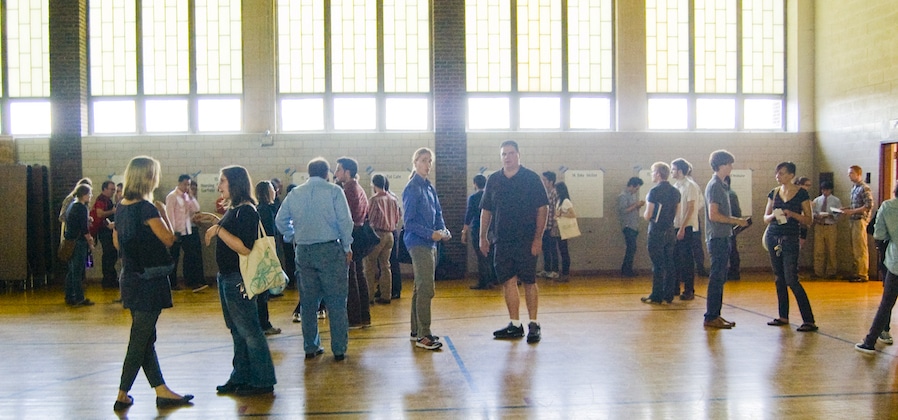
Image, Garfield Community Meeting, courtesy of Eve Picker.
Advancing community development.

October 2, 2019

Joshua Lavrinc is a multi-disciplinary real estate professional with a breadth of experience in development and finance consulting, lending and investment, and fund management. He’s also a colleague and friend of mine in Pittsburgh,

What sets Josh apart is the type of funds and projects he is involved in. He’s carved out a little niche for himself in Pittsburgh, helping to raise and manage funds like the Strategic Investment Fund and Power of 32 Site Development Fund through his company, Callay Capital. Callay, a real estate investment advisory firm, was formed to advance economic and community development goals and that’s just what Josh does. And he’s an expert on alternative financial structures as well, like New Market Tax Credits and Opportunity Zone Funds. He sits on Novogradac’s national Opportunity Zones Working Group. 

More recently Josh founded Grow Community Development to explore the real estate development work he really loves. Some examples of the projects he is involved in are the recently opened the Oaklander Hotel and is working on impactful, mixed-use projects in Pittsburgh and Detroit anchored by co-working company the Beauty Shoppe. Josh’s education includes a B.S. in Accounting from Pennsylvania State University, a J.D. from the University of Pennsylvania and a Certificate of Management and Public Policy from the Wharton School of Business. 

Listen in to hear more about Josh and his thoughts on impact in real estate and Opportunity Zone Funds.

Insights and Inspirations

  • The capital markets can be squarely directed at impact investing.
  • There are some large and strategic impact funds that have been around for a while, like Pittsburgh’s Strategic Investment Fund.
  • Impact investing isn’t just one size fits all. It can serve projects of many shapes and sizes.

Information and Links

  • Josh is proud of the Oaklander, the first hotel development project he has co-developed with business partners Jim Noland and Concord Hospitality.
  • Josh loves the Rich Roll Podcast series which explores Rich’s plant-fueled feats of boundary-pushing athleticism and fuels Josh’s exercise routine. He likes this latest episode in particular.
Read the podcast transcript here

Eve Picker: Hey, everyone, this is Eve Picker, and if you listen to this podcast series, you’re going to learn how to make some change. Thanks so much for joining me today for the latest episode of Impact Real Estate Investing. My guest today is Joshua Lavrinc, a colleague of mine in Pittsburgh. Josh is the CEO of Grove Community Development, a real estate development and consulting company. He’s also the CEO of Callay Capital, a fund advisory and management company.

Eve Picker: While Josh started his professional life as an attorney, he pretty quickly moved into the capital-raising world and has stayed there ever since, but he shifted his role to developer, development consultant, and fund manager, squarely in the impact arena. What sets Josh apart is the type of funds and projects he’s involved in. He’s carved out a little niche for himself in Pittsburgh, helping to raise and manage funds like the Strategic Investment Fund and the Power of 32 Site Development Funds.

Eve Picker: In this podcast, we explore the inherent challenges in impact investing. Be sure to go to EvePicker.com to find out more about Josh on the show notes page for this episode and be sure to sign up for my newsletter, so you can access information about impact real estate investing and get the latest news about the exciting projects on my crowdfunding platform, Small Change.

Eve Picker: Hi, Josh, how are you?

Josh Lavrinc: Good morning, Eve. I’m very well, thank you.

Eve Picker: Josh, I know a lot about you, but our listeners do not. I would love you to just tell us a little bit about yourself.

Josh Lavrinc: Fantastic. Well, thanks for the opportunity to speak. I’m in Pittsburgh, as you are these days, working on real estate investment, in particular, for socially responsible mission-based investments, which we’ll talk about as we proceed in the conversation.

Josh Lavrinc: My background … I’ve lived in several places in the Northeast and went to college, undergrad, at Penn State, where I learned accounting, among other things; started my career as an accountant very briefly, before deciding to continue on to law school. After studying accounting and being in an accounting firm for a short while, I decided to proceed to law school, and went to the University of Pennsylvania in Philadelphia with my now wife.

Josh Lavrinc: We stayed there for about five years, through law school and practicing law, really in the areas- two areas – one, real estate finance and development and the other area, structured finance, working, in particular, on commercial mortgage securitization for large rating agency clients and large investor clients. Then combining that with a more traditional dirt practice, as they call it, on real estate development, and then representing banks, insurance companies on lending and investment, as well.

Josh Lavrinc: When it was time to have children – my wife is from Pittsburgh – we came back to Pittsburgh and here we’ve been since about 2005. I continued practicing law for a few years until the market crashed in 2008. I had left the law firm to start a development career and started, actually, a distressed debt strategy that was difficult to pull off, raising capital and sourcing distressed debt transactions as a way to try and acquire property at the right basis during that cycle.

Josh Lavrinc: With little resources to pursue that strategy, my partner and I at the time – he was also young with new children in the house, like I – we decided to look at residential real estate as an overlooked asset class; something that had been hit pretty hard by the financial crisis. We started a real estate development and construction company in Pittsburgh, which went on. After starting that up. about 24 months into it, I sold my interests and moved on to the mission-based investment fund management platform that I’ve grown and am part of now. I sold those interests, and he went on to become the largest owner of houses in Allegheny County, where Pittsburgh is located, in 2014..

Josh Lavrinc: I have a residential development and an investment background thanks to those couple of years, but I’ve moved back into commercial, which was much more of my professional training. I’m excitedly applying my skills for a particular mission rather than an array of clients, an array of projects, where I had responsibilities previously, just to execute on a transaction somewhat disconnected from the underlying projects. Now, I’m on the front side of the transaction, helping, assisting clients in figuring out how to finance those projects or actually providing the capital for those projects, and with a particular mission, as I was saying [cross talk] I can talk a little bit about that.

Eve Picker: Yeah. Can you tell us a little bit about the mission? That’d be really great.

Josh Lavrinc: My current partner, Jim Noland, had a mortgage banking firm back in Pittsburgh that he had started in the late ’70s-early ’80s. At some point, towards the end of that decade, some of the local union building trades came to him and said, “We’ve been investing in these national strategies with our local pension fund money. They will create financial returns, but they’re invested in projects at major metros that are very large, and they don’t really have any impact on us, here locally, so we would like to see if we can invest our money in local projects, create jobs, and create financial return.”

Josh Lavrinc: So, before it became popular to talk about responsible investments or mission-based investment, here was a fund that formed. Fast forward, that fund is called the Employees Real Estate Construction Trust. It’s a regional fund from Cleveland, Ohio, through West Virginia that has a collection of union, municipal and private pension fund investors, the majority of whom originally were local union building trades. There is a 100-percent union building-trade labor requirement attached to those funds for every investment they do, in order to create high-quality jobs through the union building trades and invest that money for financial return, locally.

Eve Picker: How much has been invested locally through that fund over the years?

Josh Lavrinc: It’s been, I believe, over a billion dollars at this point, although the corpus of the funds is in the $200 million range, a little over that [cross talk]

Eve Picker: -that’s pretty high impact, Josh.

Josh Lavrinc: Pretty high impact, and that’s not a track record I can claim responsibility for. There’s a great team. There’s a trustee of those funds, AmeriServ Bank. My partner, Jim Noland, and his company, Penn Trust Real Estate Advisory Services, Incorporated, of which I was part, has served as the real estate advisor, essentially in charge of origination, and execution, and servicing of all those assets. There are strategies within those funds – a debt strategy and an equity strategy. They’ve been very flexible in the market; able to do things a little more aggressively than conventional lenders and have built up a great reputation in the development community in this region, as a result of that, and their great, diligent, and friendly relationships.

Eve Picker: That’s how you dipped your toe in the water of impact and socially responsible developments. If you fast forward today, what other projects have you worked on or what other funds have you managed that fit that criteria?

Josh Lavrinc: Great. When I met Jim Noland on a nonprofit board he and I were serving on, he was pursuing a program with the State of Pennsylvania – the Commonwealth of Pennsylvania, I should say – called the Building Pennsylvania Mezzanine Loan Program, trying to do support; provide gap financing to support commercial projects in promoting an economic development mission in the state. That program successfully was pursued, and we’ve used that a number of times, including to finance the Ace Hotel here in Pittsburgh. That’s one additional mission-based fund that we continue to manage from time to time.

Eve Picker: Be sure to go to EvePicker.com and sign up for my free educational newsletter about impact real estate investing. You’ll be among the first to hear about new projects you can invest in. That’s EvePicker.com. Thanks so much.

Eve Picker: We should tell people, the Ace Hotel in Pittsburgh is a pretty high-impact project, because it’s a hotel that was … The hotel actually re-utilized, renovated a beautiful old building that had been long vacant in a very underserved neighborhood that was quite poor at the time. It really did a number of amazing things. It’s not just an Ace Hotel. It’s an Ace Hotel that really made an impact, I think.

Josh Lavrinc: Yeah, it came at a time, just before this … Really at the cusp for … This neighborhood in Pittsburgh, East Liberty, had been, prior to that, fairly distressed. Certainly, the Bakery Square project and the folks at Walnut Capital helped to transform that neighborhood, among others, but our friends, Nate Cunningham and Matthew Ciccone – Matthew sort of envisioning that project …

Josh Lavrinc: A former YMCA associated with a church across the street; had been sort of mid-block. Not a hard corner. Not an easy site to see, and certainly, at that time, not a neighborhood where you thought about hospitality assets, nor a brand, in Ace, that lenders still to this day think about wanting to see a major franchise and the loyalty customer base of that franchise brought to bear. Difficult to do boutique hotel financing in this neighborhood, mid-block, in the conversion of a former YMCA, but it turned out beautifully. It has been a social magnet for that neighborhood and certainly part of the recovery, I think [cross talk] 

Eve Picker: So that’s what-

Josh Lavrinc: Interestingly enough, another- Oh, go ahead, Eve.

Eve Picker: No, you go ahead.

Josh Lavrinc: Interestingly enough, at that time, we also arranged senior financing, or I should say bridge financing, with a fund called the Strategic Investment Fund, which I now manage through our company, Callay Capital – a third fund in our portfolio of funds that we manage. At that time, we were doing servicing for this fund and had helped with origination. We weren’t formerly the fund manager, we were just a particular service provider, but it was a good fit for that mission.

Josh Lavrinc: That fund now has recently changed its mission a bit but was originally formed in the ’90s to revitalize downtown Pittsburgh in the wake of the collapse of the steel industry. I should say not just downtown Pittsburgh, but also industrial reparation of the river valleys, where so much steel job loss actually was experienced. The Strategic Investment Fund’s intent was to create economic development – primarily its focus – in those river valleys, but also to revitalize housing and make a vibrant downtown community in the Pittsburgh CBD, in particular. It was very active in financing residential, retail, some hospitality, and a lot of commercial in the region, but focused on those two strategies.

Josh Lavrinc: Again, subordinate financing, taking aggressive pieces of the capital stack that were unable to be financed by conventional lenders – second, third mortgages, bridge loans, those kind of financing. We now manage that. The strategy is shifting a bit. We’re looking at- now that downtown Pittsburgh has essentially become revitalized, although, perhaps not at 100 percent, it’s drastically different than it was even 20 years ago. The mission now is to try and spread that growth into other neighborhoods that have more challenges for resources and try and help those more challenged communities. There’s also a sub-mission to assist with the affordable housing crisis that we have nationally and trying to create affordable housing. We’re looking at affordable housing in well-resourced communities, as well as lesser-resource communities [cross talk] In the last-

Eve Picker: No, you go ahead. Go ahead.

Josh Lavrinc: I was just going to say the last fund that we’re managing currently, as an active fund, is the Power of 32 Site Development Fund. This was a fund in 2014 that we raised to assist in creating shovel-ready sites for our region to promote a land development and attract companies from across the globe to locate here in our region and create jobs.

Josh Lavrinc: It’s called the Power of 32, because there was a larger think-tank initiative trying to promote the greater Pittsburgh region, identifying with four states: Ohio, Maryland, West Virginia, Pennsylvania – 32 counties in those states – and really community development, broadly – rails to trails, and venture capital, and site development. A bunch of initiatives were discussed, and we were one of those initiatives was to do the site development and we were chosen as the fund manager and helped to raise and implement that fund. It’s been successful to date. We’ve raised about $50 million and have … We’ve done about $25 million of projects right now, and we’re continuing that investment.

Eve Picker: That, in itself, is a huge body of work, but I know you’re squarely involved in socially responsible real estate and finance in Pittsburgh, but I also know that you are working on your own real estate development projects. You and I have partnered to try and raise money for Opportunity Zone real estate, which I’d love us to talk about and the difficulties around that entire tax law and how it’s playing out. Do you want to talk about that?

Josh Lavrinc: Yes, absolutely. That’s the fund that has not been named yet-

Eve Picker: That’s right.

Josh Lavrinc: and we are … Eve and I have been actively involved since the tax cuts and JOBS Act of 2017 came out. In the wake of the announcement of the designated Opportunity Zones in April of 2018, or March of 2018, we’ve been actively monitoring this potential huge impact game-changer for socially responsible investment and impact investment. Maybe I’ll unpack that a little bit and just-

Eve Picker: I think that’s a great idea.

Josh Lavrinc: -how it’s set up.

Eve Picker: I was going to suggest that, yep.

Josh Lavrinc: When we talk about impact investment or social responsibility and investment, these all sort of have a categorical place, I think, in my mind, around certain missions. I think any time we’re talking about investment funds, there’s obviously a financial mission, but when we talk about socially responsible or impact investments, we’re coupling financial investment, without trying to compromise it, with some social mission and likely environmental; which might be part of social, but I would break out as a third category. So, financial, social and environmental missions; social sometimes is referred to as community.

Josh Lavrinc: I think that community development should and does occur in all communities. Most of the time, when we talk about community development, we’re talking about low-income communities and trying to help the communities with less resources, but really, there can be good community, positive community development. For instance, we’re pursuing right now an affordable housing project in Pittsburgh’s Strip District, which is a neighborhood that’s on fire for job growth, and retail development, and hospitality resources, adjacent to the CBD, and multi-family apartment, market-rate apartments, condominiums, office. All of the commercial real estate products are well represented there, but not affordable housing.

Eve Picker: In other words, it’s gentrifying very, very quickly.

Josh Lavrinc: Yes, and I think it was a fairly low population community to begin with, because it’s primarily industrial in nature, right? [cross talk]

Eve Picker: It was. That’s correct. That’s correct.

Josh Lavrinc: -there are concerns about displacement and gentrification throughout all of these conversations about responsible community development, but here’s a community that maybe did not have a large, low-income population, and we need to try and develop it in a balanced manner and help-

Eve Picker: That’s correct.

Josh Lavrinc: I think a key to creating affordable housing and creating a region, a strong region for all, is in those hot neighborhoods to try and remember the responsible uses, as well. We’re working on a project that I hope we’ll be closing on later this summer to create a significant amount of affordable units in that neighborhood. A slight digression there from our categorical discussion of impact investment.

Josh Lavrinc: Just one example of community development, though, is affordable housing, and most of the time, that market, whenever we have a use that doesn’t bring in rents that are sufficient to motivate investors on their own – hence the crisis we’re in, where we don’t have enough supply because there’s not enough financial investment incentive to attract investors and developers to create that product – there’s some subsidy or incentives. And in this case of affordable housing, obviously, there’s the Low Income Housing Tax Credit, and those-

Eve Picker: Well, I’ve got to interject here. You have said a couple of things now that I think are absolutely key. That is that there’s not enough financial incentive; that we’re trying to do socially responsible projects, while at the same time keeping the financial returns the same. That, I think, is the crux of the issue. I think that perhaps we’ve all gotten a little bit too greedy, but it isn’t- it isn’t always possible to keep the financial return in the 20-to 25-percent internal rate of return arena for a project that is socially responsible. Yet you and I have not … I think we both don’t believe that we have investors really ready to invest for less. They really want both. Am I right? They want the financial returns, and they want [cross talk]

Josh Lavrinc: Yeah, they do. They do [cross talk] and it’s tough to deliver both. It’s tough to deliver both, especially when you get into … When you get into a structured product like the Low Income Housing Tax Credit, you’ve got rent restrictions – for good reasons – that go on for sometimes upwards of 20 years. That’s difficult to project a financial return on sort of … All real estate is perhaps a depreciating asset, other than their land value, that require repair and reinvestment over time. If you have a challenged underlying land value because it’s in a less-resourced community, you have a restriction on the income potential of that property, it really becomes a very specialized, niche investment opportunity [cross talk] like most other investments.

Eve Picker: -yeah, because the asset value can’t increase over time because it’s restricted. Typically, investors- or often investors are looking for some return over the years and then some share the upside at the end, when the project is sold. But the upside on an asset, on a building that has been restricted, is just not going to be there.

Josh Lavrinc: That’s right. Sometimes, it is. Obviously, on the margins, there are exceptions. When you have something in a rent-restricted unit to a project in a rapidly, or even not rapidly, but a neighborhood that changes over the course of 20 years and becomes very valuable at the end and you lift the restrictions. That’s no longer developed for the same mission. That then, perhaps … The value becomes in converting that to another use. I think the silver lining to all of this, interestingly … How do we reconcile financial return and investment? You hit the nail on the head. There requires some compromise, in the absence of other incentives. I think the Opportunity Zone program or incentive is potentially one of the solutions that can really spur new impact investment in communities. The reason I say that- oh, go ahead.

Eve Picker: No, I was going to say for our listeners who don’t know what Opportunity Zones are, they were introduced as part of the 2017 JOBS and Tax Act. I think there are over 8,000 of them. Am I right, Josh? 8,000 [cross talk]

Josh Lavrinc: -25 percent of all eligible low-income census tracts in the United States were delegated to the state level to be selected by the chief executives in each of those states, and then they designated 25 percent of those. It is a large number, as you said, Eve, across the country. There has been a lot of focus on this program, about whether it’s really a program. I’ve used that word a couple of times. It’s an incentive, for sure, but it is different than a tax-credit program or other incentive program that we’ve seen in the past in that only those with capital gains can directly benefit by investing into an Opportunity Zone – one of these designated low-income census tracts.

Josh Lavrinc: The benefit is in a short-term deferral of a prior capital gain. If, meeting the qualifications, you can maintain that capital gains investment in an Opportunity Zone for a whole period exceeding 10 years – a long-term investment -then you would receive a step up in basis for that capital gains that was reinvested into a new investment to the fair market value of that investment at the end of that hold period [cross talk] has the potential for tax exemption, essentially.

Eve Picker: That’s correct. I think it’s actually a great program. It could be a great program. It has a couple of really, I think, serious flaws, and it’s inequitable in the fact that only someone with capital gains can really take advantage of it. That already skews it towards wealthy investors. Secondly, in the selection of these census tracts, one can only imagine how much politics was involved, because you and I know that the tracks that were selected in Pittsburgh, particularly difficult, and they were selected for the right reasons, because those really need the most investment. But other states didn’t really think about it that way, or other cities. They selected tracts that already had investment and they thought they could attract more dollars to. Even the selection of the census tracts has been inequitable. I don’t know what you think about that, Josh, but …?

Josh Lavrinc: Yeah, I think it may have been equitable in that everyone every state was participating, and every leadership group had discretion to choose the census tracts that made sense for their for their states. But when you do things equitably, it doesn’t necessarily always result in an equitable distribution of resources after that. I think, unfortunately, there will be … With our real estate lens, thinking about it in a real estate investment perspective, over the past 18 months, as we have … When I say ‘we,’ I mean all of us; all of the thought leaders on the investment, accountants, lawyers, investment professionals coming together, talking about Opportunity Zones.

Josh Lavrinc: There has been concern about how will this come about? What is the financial impact of this incentive? Will it really be a game-changing flow of capital to all the Opportunity Zones? Obviously, I left out, in that conversation with the communities and economic development trust professionals across the country, who are hoping that this is a new resource to help revitalize their communities. There is certainly, when looked out through the lens of investment capital, in projects out, real estate projects out, there will be some lowest common denominator that attracts capital to the primary market.

Josh Lavrinc: Rather than changing a capital flow from Silicon Valley to Pittsburgh, which may have been the original intent of the program, and I think was, based on the political leadership that have spoken about it, if there are qualified Opportunity Zones, designated Opportunity Zones in Silicon Valley, in New York, in L.A., then those folks that are already investing in those communities don’t have to look very far to find another opportunities. In fact, West Hollywood, and East Palo Alto, and portions of New York City – of course, they have low-income communities and have been designated Opportunity Zones..

Josh Lavrinc: If there’s a competition among Opportunity Zones across the country for limited dollars, there will not- the problem necessarily won’t be solved by the Opportunity Zone designation, itself. But I think, and reflecting on it 18 months in, I think the real change that can come through Opportunity Zones is the operating business incentive. This doesn’t just apply to real estate projects. The Opportunity Zone benefit applies to capital gains of any type, with some exceptions – some very nuanced tax exceptions – but operating businesses are squarely within the regulations that have come out from the IRS.

Josh Lavrinc: I think that when we see greater investment in operating businesses … There are already folks saying that private equity shops looking to invest in venture capital, looking to invest in companies; Company A is located outside an Opportunity Zone. “Why don’t you just move down the street to an Opportunity Zone, and we’ll make an investment, because it’ll be more tax advantaged for us.”

Josh Lavrinc: When that flow happens, when we see venture capital, private equity, and investment, and operating businesses start to prefer Opportunity Zones, I think that tide – that’s a trend that can occur throughout the Opportunity Zones, not just isolated … When that happens, we’re going to see real businesses relocate, real jobs relocate, real homes relocate. That will attract more jobs, more retail, more housing, and start to really revitalize a community in a fundamental way that I think we talked about revitalization, which is putting dollars into a community.

Josh Lavrinc: There may be adverse impacts of that, if we don’t use those dollars responsibly by providing for affordable housing in those communities, along- maintaining affordable housing at a high quality, for instance, as a community is revitalizing, but hopefully, those jobs that are moving down the street initially … Although the people in those jobs may or may not have come from the target Opportunity Zone community, new jobs that are attracted to that new company, whether they are community goods and services, like retail, or strategically associated companies with the original company that moved, or some other service in the community that has more demand, those hopefully will be employing folks in the community, and is such that, hopefully, the gentrification that happens is inclusive and participatory, so that we’re not seeing a series of outsiders coming into this community alone, but that there is a strengthening of the existing community that may not touch and concern every person.

Josh Lavrinc: Therefore, there’s a need to make sure we’re thinking about responsible community development goals, like affordable housing and investing in social services. That program, creating new businesses in an Opportunity Zone and the downstream impact of a new business locating in a community, I think, is the opportunity to bring together financial return and impact investment, social responsibility, because we’ll then [cross talk]

Eve Picker: -where does that leave real estate in the equation?

Josh Lavrinc: That’s the downstream effect. I think that it only takes one company moving into East Liberty, for instance – Duolingo moving into East Liberty; Google moving into East Liberty – to suddenly revitalize that community. There are much more real estate- many more real estate projects taking place in that community as a result of those business moves..

Josh Lavrinc: If we can continue to see more businesses move into Opportunity Zones that will beget more real estate investment, and folks that say, “We’re going to invest in this community … We wouldn’t have otherwise, because we were worried about compromising our financial return.” But then, when we combine the incentives for capital gains with the Opportunity Zone incentive with the potential transformation of this community over 10 years – transformation meaning revitalization; hopefully, appreciation – now we have a large enough financial return to incentivize us to invest and in this particular community. That’s what we’ve been trying to accomplish all along.

Josh Lavrinc: Obviously, there is place-based responsibility. Just investing in a low-income community is helpful, but it’s also subject-based, use-based responsibility. What are we building in that area? We’re building commercial real estate to support jobs. That’s a that’s a version of social responsibility. If we’re doing it to support housing, that’s a version. Obviously, we want to consider the environmental impact, which I’ve kind of left out of this conversation about financial incentives and social responsibility. All of those things can be serviced. We’ll still have, however, a need for some segment of the market to support the under-resourced portion of the community through other affordable housing, or social services. I think [cross talk] role of responsible tax management and those kind of things for the governing bodies, in addition to charitable and private efforts.

Eve Picker: But also, there’s people in the community who want to invest, as you know, right? I do believe that equity crowdfunding can play a huge role in the revitalization of communities, because now, if you have a business that moves in, or a building that is revitalized, the people in that neighborhood can actually invest in it. That’s a really important piece of building wealth within a community for the community, not just making it better for the community and leaving them on the outside. Difficult, as you know.

Josh Lavrinc: I think that’s a great point that the community, itself, with new financial tools and e-commerce, information-age tools, like crowdfunding and the regulatory predicates of crowdfunding that you’ve harnessed with Small Change, bringing not just capital into these communities for financially viable projects, but also on tapping neighbors, and neighbors, perhaps in a colloquial sense, that might be stretching across the globe that are motivated about something that compromises financial return in order to accomplish impact. That’s a real experiment with social capital [cross talk] can be accomplished. That story hasn’t been told yet, entirely.

Eve Picker: In my time in Pittsburgh, the thing that has had the biggest impact on me is – this is true throughout the Rust Belt, I think. I’m not sure about other cities, but certainly many places I’ve been – how much people love the cities they live in, and how much they want to be engaged in making them better. It’s a pretty astounding phenomenon..

Eve Picker: Give them an opportunity to invest $500, $1,000, $2,000, or whatever, in the place they live, rather than put it in a mutual fund, where they don’t know where it’s going to go, that circulates money locally, and it gives them an opportunity to share in making that place better. It’s an amazing opportunity. Now we just have to educate investors, right, Josh?

Josh Lavrinc: Of course. Yeah, that’s right. Not to mention the bite-sized piece of the investment that you’re talking about. The other power of this is we would all like to own the local restaurant, or the local general store, or name any other part of the community that you utilize and would like to support or own. Without a large amount of resources, it’s practically very difficult to accomplish that.

Josh Lavrinc: This allows, through fractional ownership at very humble investment levels, the opportunity to make a change and invest in something that … Whether it’s financially motivated, or more community motivated, depending on the mission of that particular project or fund, crowdfunding certainly is a powerful tool to try and unlock investment and change for the masses.

Eve Picker: Yeah. Moving away from Opportunity Zones, what other current trends in real estate development are you seeing that you think are really important for the future of our cities?

Josh Lavrinc: I think I would focus on the word ‘community.’ What  by that is I think we’re defining the way – in particular, in cities and urban environments – the way people come together, and live, work, and play. Those are terms popularized by commercial real estate development to try and identify or put a friendly face around mixed-use projects and make them simple to understand, but fundamentally, there is a big social change there of trying to make productive and as accessible a community as possible.

Josh Lavrinc: I was listening recently to another podcast with the co-founder of WeWork, talking about their perspective on co-working, how that came out of a desire to create community. I’m involved with a co-working company here, locally, called The Beauty Shop, in Pittsburgh, where we’re trying to develop similar communities, but growing that community outside of just an office space. Their first thought, back right around of the time the financial crisis, was that people working in isolated environments can be more productive, more happy, more engaged, and feel more appreciated and better-served by those around them that are similarly motivated; similarly making sacrifices for their businesses, if they are put together in a community.

Josh Lavrinc: When you combine that and expand that into residential real estate, can those people perhaps live in environments where they feel more supported and have more of a social fabric? I think this comes along with trends on isolationism and depression that are plaguing our country these days. Those are growing problems for our nation. This is one way to tackle that social problem is bringing together community.

Josh Lavrinc: Obviously, it can extend into other parts of the community, where instead of spending time isolated, commuting to your job, you might be able to create an entire ecosystem around your business, or your apartment, or your entertainment venue, and have that all in one … Obviously, that’s what a city represents [cross talk] extending that community into a broader scale about technology, connectedness, and resource- infrastructure resources in a particular city – all of these things are really the same concept, at a different scale.

Eve Picker: I can’t help but think it’s the modern-day version of the kibbutz [cross talk]

Josh Lavrinc: Yes, right, and-

Eve Picker: -the kibbutz probably got all of this right a long time ago.

Josh Lavrinc: That communal living is exactly what is perhaps needed to get people back, attached, especially in the age of digital devices and the connected-with-ness we have, and yet, perhaps, the over-connectivity that’s coming with that, without having perhaps enough emotional and human support with that connectivity. Definitely, it’s funny [cross talk]

Eve Picker: It’s also affordability, because if you share resources, whether it’s a shared kitchen or whatever it is, then your living costs are going to go down. I think that’s also part of the reason why co-housing options are being explored.

Josh Lavrinc: That’s right. You’re right, when we talk about the impact of an urban environment, or it doesn’t necessarily have to occur just in an urban environment, the community, generally, there are social health and well-being aspects. There are business aspects, and there are certainly affordable aspects of the development that can be brought to bear as a result of the sharing of a common amenity base and spreading those costs across many uses.

Josh Lavrinc: That’s one of the focuses of my current development in addition to fund management and the structured finance consulting, new markets, tax credits, historic tax credits that I work on in my primary business, I also spend a lot of time on commercial real estate development; in particular, recently, anchored by coworking, but has molded that into a strategy around community, where we are looking at secondary and tertiary cities, not primary markets, to try and create these full-scale communities in urban environments. Although I think suburban environments are a huge untapped market, as well, to try and bring together a greater sense of community and all of those benefits that come with it – the social, the financial and the affordability.

Eve Picker: Probably in suburban markets, people are even more isolated.

Josh Lavrinc: Exactly, exactly. When we talk about commute times and disparate destinations for live, work, and play, bring those things together into a town center, into a real Main Street … Revitalizing the main street. Obviously, there are a lot of Main Streets programs across the United States. It’s a very similar theme for community development. But bringing an urban spin to it, with a responsible amount of density and set of uses, I think has a lot of power, and I think we’ll see a lot of that coming up.

Josh Lavrinc: Hopefully, we’ll see that happening in Opportunity Zones. I think if we can bring together Opportunity Zone development and businesses locating in those Opportunity Zones and then try to develop more community, then we’ll see some pretty significant change in the next decade of real estate, business, and real community development conspiring together to implement improvement or accomplish improvement.

Eve Picker: Given all of this, where do you think the future of real estate impact investing lies?

Josh Lavrinc: Well, I think that it probably is the future. I think that the days of solely focusing on financial returns are probably starting to narrow, and it seems that the aware, responsible person is going to make more decisions. As we provide more information and more connectivity to individuals to not only their investments, but to the world around them, and their neighbors, and the people in the communities around them, they’re going to make more conscious decisions to better … To increase their efforts to deploy what investment funds they have into those things that help people around them and the environment around them.

Josh Lavrinc: Whether it’s crowdfunding, whether it’s an Opportunity Zone fund, whether it’s a tax credit incentive, there are … We are seeing a growth in responsible investment, in mission-based investment, and for good reason, because, fundamentally, we aren’t robots. We’re humans, and we have a moral compass, and we have emotion, and emotional intelligence that directs our activities to things that we favor for reasons other than purely financial. The closer we can get to combining financial return – which is almost a third-party neutral arbiter, selecting return responsibly for our good of our income and wealth in the future – if we can start to align that financial return, even more strongly than just the Opportunity Zone, with responsible investment, I think I think we’ll get there.

Eve Picker: We have, in fact, lived through the era of green-washing, and we’re heading into the era of good-washing, right?

Josh Lavrinc: Yeah, that’s an interesting way … Hopefully, it’s not washing at all, but you’re right. You’re right that there’s been popularization, perhaps over-popularization and overuse of terms around, for instance, green. I think we’re getting into a period, an enlightenment, if you will, where individuals are receiving information about their investments, receiving information about what’s happening in the world around them, and then are given opportunities to vote with their own dollars in projects that have real meaning to them and to the people around them that they care about.

Eve Picker: I have three sign-off questions for you that I ask everyone. I’m wondering what your answers are going to be. The first one is what’s the one thing that makes a real estate project impactful to you?

Josh Lavrinc: The impact for me, although I skew towards economic development, I would say it’s serving the people. Keying in on that community that we have spoken about here, we could easily talk about the environmental crisis that we face as a globe. We could talk about the lack of social services and the need in our community for the poor. But I think that cutting across all of those for impact, in my mind, is assessing whether a project is responsibly targeting its community.

Josh Lavrinc: I’m not inventing anything new with that response. When you think about the New Markets Tax Credit program and what community development enterprises across the country look at, when they’re assessing projects, one of the first questions they ask are what are the community’s plans? Does the community have a development plan? Is there community support for a proposed project, prior to awarding a subsidy or incentive? I think there’s really good wisdom in that practice. It doesn’t necessarily mean that you’re getting the best project, or necessarily a particular outcome, but it does mean that you’re considering what that community’s needs are and trying to address it responsibly. That’s how I would answer that.

Eve Picker: The second question – other than by raising money, how do you think crowdfunding might benefit the impact real estate developer?

Josh Lavrinc: Well [cross talk] obviously-

Eve Picker: These are not trick questions.

Josh Lavrinc: No, no, I think … Obviously, I think, when we think about influencers, and social media, and the power of marketing in our current environment, crowdfunding has a way of making something more popular, more highlighted, and can be a great marketing tool, and perhaps a vote of confidence from the community. It might be a third party, whether those people are local to the community or outside, it’s a third-party validation of whether this investment is responsible, or desirable for whatever- depending on the purpose of the crowdfunded group, that it’s meeting their mission. I think there could be strong marketing efforts as a result of the crowdfunded opportunity, but I’m sure there are a couple of other [cross talk]

Eve Picker: -in effect, a community engagement tool.

Josh Lavrinc: That’s right.

Eve Picker: Yeah, yeah. Final question – what one thing in real estate development do you think would improve … I’m going to ask that question again. How do you think real estate development in the US could be improved by just one thing?

Josh Lavrinc: I think that if we could … We can work hard to tie together our incentives, make sure they are aligned. We have a lot of … All of the real estate industry is motivated fundamentally by financial return. We have folks whose livelihood is based on their development project, their construction project, their leasing of the project. That is a powerful tool to impact activity, to create activity financially, for each one of us.

Josh Lavrinc: The more we can align incentives, like the Opportunity Zone, to create the outcomes we want and make sure that those incentives are narrowly tailored to really accomplish what we want … For instance, I think there are some great things about the Low Income Housing Tax Credit, which is an area I don’t practice a lot in – although we’re investing in affordable housing, regionally, that’s not a national practice that I participate in – I think that we see the competition over the program; the structure of a program that tries to compensate with fees, given the lack of value creation. Those fees then create outsized projects that maybe are more expensive than they need to be, or more inefficient than they need to be.

Josh Lavrinc: If we can go back and fix programs to address the value equation differently and think about the model we’re setting up and the downstream impact of that model to be more efficient and more effective for our goals, I think that would have perhaps the most profound effect, because you’re not … Instead of trying to change the fundamental capitalistic income-driven goal of a professional, which I don’t think we can change – other than to redirect it through incentives – and if we can align those incentives with what we think currently are the crises facing our country, which are probably the social isolation, the isolation of resources, so that everyone has access to good education, and training, and jobs, and economic advancement of themselves, and healthcare, and all the rest of those basic needs, and hopefully in a way that’s aligned responsibly for the environment, long term … We have a lot of great rapid change happening there, obviously, with autonomous vehicles and renewable energy. The more we can align these programs into creating a community that’s hitting on all cylinders across both of those major programmatic missions, I think that the better our commercial real estate market will be, the better our professionals will be in accomplishing those goals and the end result for the community.

Eve Picker: Yes. Agreed. Well, Josh, thank you very much for talking with me today. I really enjoyed our conversation, and I’m sure we’ll be talking again soon. Thanks so much-

Josh Lavrinc: I did as well. Thank you very much, Eve.

Eve Picker: Bye.

Eve Picker: That was Josh Lavrinc. Today, I learned that the capital markets can be squarely directed at impact investing. There are some large and strategic funds in Pittsburgh that have been doing this for quite a while now. Impact investing in real estate spans the spectrum from tiny projects, some of which we’ve listed on Small Change, to large funds that focus solely on impact.

Eve Picker: You can find out more about impact real estate investing and access the show notes for today’s episode at my website, EvePicker.com. While you’re there, sign up for my newsletter to find out more about how to make money in real estate while building better cities. Thank you so much for spending your time with me today, and thank you, Josh, for sharing your thoughts with us. We’ll talk again soon, but for now, this is Eve Picker signing off to go make some change.

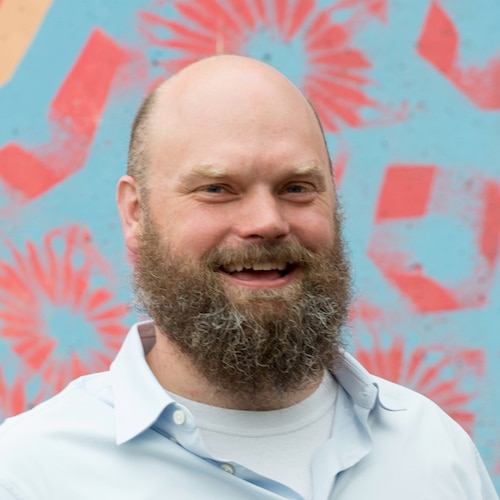
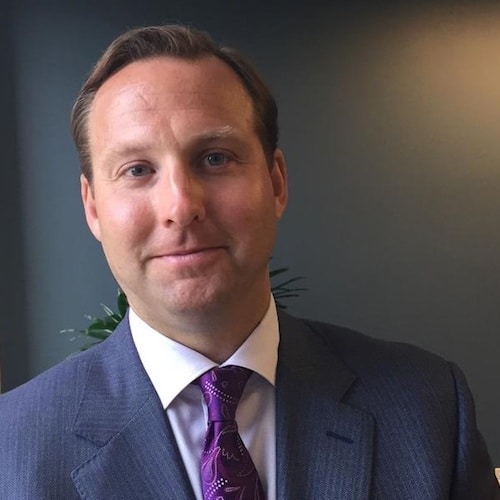
Image courtesy of Joshua Lavrinc

Striving for impact.

September 23, 2019

How can real estate developers and investors make substantial positive change in the places in which they build? It’s a vexing question that luckily has numerous answers. You just need to know where to look.

Be direct and honest

Let’s face it, you’re not going to be able to please all the people all the time. As an individual investor or developer, your project’s scope and scale is going to be limited, and while you can make an impact, there are limits to that ability. Your best path forward is to be accessible, transparent, and to listen to community concerns. Avoid falling into the trap of being too vague or using wishy-washy language. If you are unable to address people’s concerns, tell them, and tell them why. Be accessible, be transparent, listen to them, and give honest responses. You won’t be able to take everyone’s suggestions into account, but you can listen and sometimes that alone can bring value to a neighborhood.

Survey the locals

The primary factor in making a positive change is ensuring that the project meets the needs of the community it is located in. To do that, it is vital to get out and talk to people in the area and try to understand what they want. Some communities are in dire need of affordable housing. Other communities may need retail stores. Grocery stores, in particular, are needed in many communities. Urban areas throughout the United States exist in what are called “food deserts” where the only access to food is via unhealthy options like fast food, convenience stores, etc. When you know what that community needs, you can adjust your investment to be as impactful as possible.

Consider alternative funding sources

Traditional banks and lenders will, for the most part, only finance conventional forms of development: suburban tract houses, sprawling commercial districts, office parks with little connection to their surroundings. The democratization of real estate capital finance is upending their domination of the property and development markets. Options like real estate crowdfunding, hard money lenders, and Opportunity Zone funds are all excellent sources of financing for non-traditional, non-greenfield projects.

_

The definition of “impactful” is different for everyone. But the opinions of future residents and current stakeholders should be a primary concern when gauging what will work best for a development in a community.

Finding financing, working with local authorities, and getting the community on board are all necessary steps to building for the maximum impact. With the right approach, and the right team, you’ll be right on target.  

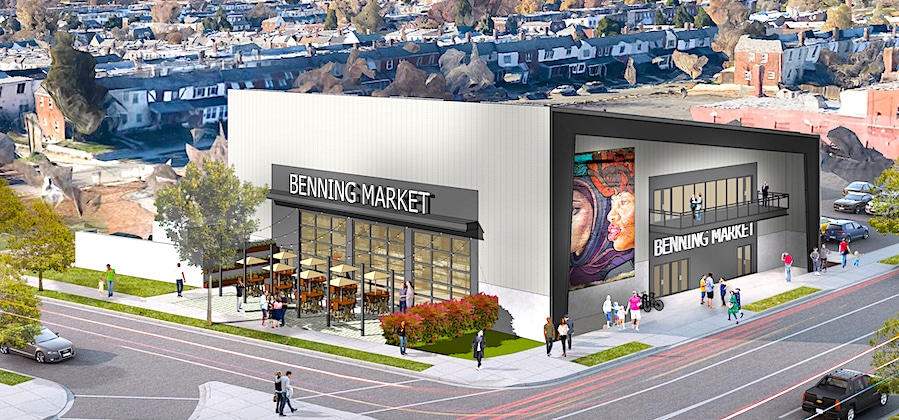
Rendering of Benning Market courtesy of Neighborhood Development Company.

The balancing act.

September 20, 2019

Modern community development is a balancing act

For most of the history of urban development, community input was rare. Top down design and planning prescriptions, like those of “urban renewal” were how communities were made. These days, planners and developers need to be far more agile and responsive to create communities. Working in tandem with the local community is an absolute necessity.

What residents want

Gentrification has become a loaded term, and rightly so. But it is a common misconception that existing residents of gentrifying neighborhoods do not understand or want the myriad benefits that come with rising economic tides. They want their communities to grow, and flourish- but they want to be able to enjoy the benefits of that renaissance, and not be displaced. Most people welcome newcomers, but they want to feel that newcomers respect the area and that new commercial businesses and housing developments serve all the people in that community.

Adding balance

Developers need to balance the needs and wants of locals with the march of progress. They have a financial responsibility to attract new residents who wish to join those communities, but sustainable development means targeting more than one social and economic strata. Instead of markedly altering the character of the community, developers should work to integrate their projects into the fabric of that community on its terms.

Include treasured local businesses

A community’s character does not only come from residents. Commercial spaces and businesses like restaurants, barbershops, local watering holes, and many other establishments define an area just as much as the people that live in the neighborhood.

Developers should make efforts to ensure that treasured local businesses are allowed to continue operations. A popular option for this route is to offer them below-market rent for a specified period. This will keep the best features of the neighborhood in place, building a sense of community and goodwill between neighborhood anchors and new tenants and developments.

Mixed-income considerations

Studies have consistently shown that mixed-income neighborhoods offer a plethora of social, economic and educational benefits. But it takes work to maintain that mix. In certain communities, people live on fixed or limited incomes. If these residents are unable to share in the collective progress of the neighborhood, they will likely oppose any new development. One way to do well and do right is to set aside a certain percentage of units in up and coming neighborhoods for low-income residents, or to explore bottom-up financing options like equity crowdfunding, which allow residents to invest direct in community projects.  

_

The choices developers make have a real impact on the daily lives of neighborhood residents. The most successful developers in the social impact space find a healthy balance between generating returns and ensuring that all residents benefit from a rising tide.

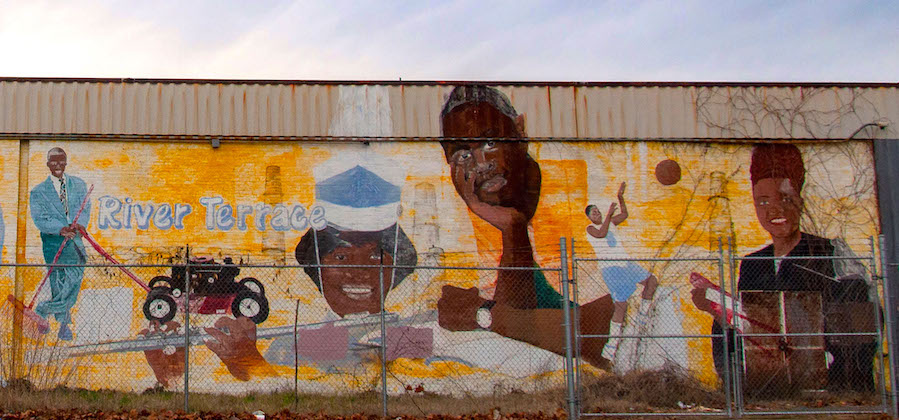
Image of building in River Terrace, DC, courtesy of Small Change.

The zoning whisperer.

September 18, 2019

Eric Kronberg is a zoning whisperer.  He specializes in examining and demystifying zoning ordinances to find ways to make great projects possible and help others navigate through the zoning swamp. 

Kronberg Urbanists + Architects projects have a lovely, authentic, grounded feel to them. You can imagine yourself inhabiting them. Nothing super slick. All of them super beautiful. And of course Kronberg Urbanists + Architects boasts a long list of achievements and awards.

Eric uses his skills for the force of good as a principal at Kronberg Urbanists + Architects, leading the firm’s pre-development efforts by combining skills in planning, development, architecture, and zoning. He leverages this potent cocktail to chart the course of best possibilities for each site’s redevelopment. His work with Kronberg Urbanists + Architects, the Incremental Development Alliance, the Congress for the New Urbanism, the Georgia Conservancy, and the Atlanta Bicycle Coalition has solidified his stance as an advocate for walkable and bikable communities.

Eric has also been deeply committed to community redevelopment for the past several decades.  He has served as a community leader in roles of Vice-President, President, Zoning Chair, and now Zoning Guru Emeritus for the Edgewood Neighborhood in Atlanta, GA.

Together, on this podcast, Eve and Eric talk about the role of design, architects, zoning, conscious place-making and revitalization projects, all of which can advance the triple bottom line.

Insights and Inspirations

  • A favorite quote by Charles Montgomery from the book, Happy City: “Great public space is a kind of magical good. It never ceases to yield happiness. It’s almost happiness itself.”
  • Let’s demonize single family zoning everywhere. It’s a zoning type that doesn’t produce enough in taxes to cover the cost of infrastructure to support it. And only 20% of households are made up of mom, dad and the kids, looking for a house to live in.
  • Density matters. We’ve got to change our land use laws.
  • Don’t be too quick to pull down an old building. Elegant decay can be valuable.
  • When you’re developing affordable housing, or on a budget, you need to find sites that have infrastructure, such as sidewalks, in place.

Information and Links

  • Read the Kronberg Urbanists + Architects blog. Its goal is to help demystify issues like zoning, parking, mobility and housing choices, and to illustrate how they interrelate to make great places. 
  • If you want to learn to be a small-scale developer, turn to the Incremental Development Alliance who conduct training sessions for aspiring developers and cities. Look for one in your neck of the woods. 
  • Eric wants you to watch Urban3’s video, The Value of Downtown. He thinks it should be required watching for anyone who cares about cities.
Read the podcast transcript here

Eve Picker : [00:00:09] Hi there. Thanks for joining me on Rethink Real Estate. I’m on a mission to make real estate work for everyone. Real estate can help to solve climate change, can house people affordably, can create beautiful streetscapes, unify neighborhoods and enliven cities. So I’m on a journey to find the most creative thinkers and doers out there. I’m not the only one who wants to rethink real estate. You can learn more about me at EvePicker.com or you can find me at SmallChange.co, a real estate crowdfunding platform with impact real estate investment opportunities open for investment right now. And if you want to support this podcast, please join me at Patreon.com/rethinkrealestate where there are special opportunities for my friends and followers.

Eve: [00:01:15] This episode was very popular in our first season. And since zoning issues continue to be recognized as one of the primary issues in the housing shortage, I thought we should revisit this insightful episode with Eric Kronberg. Eric is a principal of Kronberg Wall, an architecture and urban design firm based in Atlanta. They describe their work as conscious urban placemaking and they describe Eric as the firm’s zoning whisperer. In this episode we unpack the impact of zoning along with Eric’s belief that the revitalization of a neighborhood is perhaps the best way to advance the “triple bottom line”.

Eve: [00:02:03] Hi, Eric, how are you today?

Eric Kronberg: [00:02:06] Doing well. Thanks for having me.

Eve: [00:02:07] Thanks for joining me. So, you’re an architect, and you have a firm that focuses on conscious urban placemaking, which I really love. I sort of poked around your website a little bit and really enjoyed it. I especially enjoyed some quotes that just made me smile. The first one was, “Great public space is a kind of magical good. It never ceases to yield happiness. It’s almost happiness, itself.” Well, that’s really true for me, but I wonder if most people are even aware of that?

Eric: [00:02:45] I would absolutely agree that they probably are not and that part of a lot of our work is to help raise awareness of really what makes great places, and inclusive places, and trying to break down the terminology and the components of that. So many folks are eager to advocate for better places, but they don’t know the words to use; they don’t know the things to advocate for. A lot of our work is to make it- to help give people tools, and knowledge to push themselves, developers, elected officials to make and create better places. A lot of our work, particularly on our blog, is written from that perspective to help everyone to advocate for better places, because it takes everybody pulling together to make that happen.

Eve: [00:03:24] The role of the architect/urban designer, then, is educator, right?

Eric: [00:02:29] That’s a major component of it. At a sort of selfish basic level, we come at the vast majority of it from a standpoint – the vast majority of projects require some kind of governmental permission. In Atlanta, that means there’s a zoning change, or this, or that, and we need the community to bless that change. If we want the community to go along with something that they think is a bit weird, or different, or outside the typical rules, we’ve got to make sure they’re comfortable with why it’s a good project. The more educated the neighborhoods are with what good urbanism entails, the more likely we are to get our projects approved and design great things for our developer clients, or nonprofits, or city officials, or whatever. We take an approach that the more educated and inspired citizens are, the better chance there is to do better work.

Eve: [00:04:17] Yeah, I would agree with that. Another personal favorite of mine on your site was this one: “When revitalization of our distressed neighborhoods is done well, it is almost unrivaled in the ability to advance simultaneously the triple bottom line goals of sustainability, improving the environment, the economy, and social equity.” That’s a really big statement, right? So, I wonder what you think is a really good example of a revitalization done well that advances that triple bottom line or one that you’ve done that you think best advances it?

Eric: [00:04:56] Well, sure, and before … A couple of those quotes, we have borrowed from friends, too, so I want to make sure I give credit-

Eve: [00:05:03] No, I know. I thought about giving credit, and then I thought, no, that’ll really slow things down. Let’s just say this – if anyone wants to know who made the quote, go to Eric’s website, which will be posted on this website, right?

Eric: [00:05:17] Yeah. Sounds great. One of our earlier projects that won a lot of awards – kind of surprising us a little bit but helping us understand that really honing in on how this work matters – was one we did in New Orleans over a series of years with a wonderful client, where he bought up a series of distressed, vacant single-family and duplex houses. This is all post-Katrina. He assembled 20 to 25 dwellings across 15-16 buildings and married that with a Low Income Housing Tax Credit project. He was able to take a really complicated government funding mechanism for affordable housing and work specifically on blight removal. But the blight removal wasn’t tearing these things down and building new, by and large. We were doing historic preservation. We were taking historic, beaten-up old shotguns, and doubles and renovating them to be energy efficient and to come back as affordable housing. The neighborhoods we were working in were a range, but primarily Seventh Ward and Tremé in New Orleans. These are neighborhoods that now have just seen massive housing price appreciation. They’re highly desirable; they’re highly expensive. So many folks are facing challenges of displacement and trying to stay in the places they grew up.

Eric: [00:06:31] For us, I think, over five years in total, we did a hundred dwellings that are affordable housing for 30 to 35 years, depending on the specific project or time that this was done. Also, as the neighborhood was revitalizing, we would do sometimes two-three houses on a block, or over the course of a couple blocks scattered. Our client would specifically target the worst houses, the ones on the verge of collapse, for a variety of reasons. You cannot understand how powerful it is to take them as blighted structures on a block, and revitalize them, and renovate them to an amazingly high historic preservation standard, and HUD affordable housing standards, and have it be one of the best houses on the block, but not a shiny, blingy spaceship, landing from far away, but just the house that’s been there for 200 years-

Eve: [00:07:18] That’s pretty fabulous.

Eric: [00:07:20] We’ve done other great work, but sometimes it’s really hard to beat that one-

Eve: [00:07:26] So, those houses remain affordable for 35 years, and they’re kind of woven into the fabric of a now very solid neighborhood that is mixed and everyone can enjoy.

Eric: [00:07:37] We could talk for an hour about this project, but it’s a natural mixed income development, because these are inserted into, with other private homeowners who have seen appreciation. That’s wonderful, but one of the most powerful things we’ve seen for the residents is, as highly energy efficient homes, some had to meet Energy Star; others had to meet Enterprise Green Community standards. These are homes where utility bills, in total, for water, gas, electric, may be about 80 or 90 bucks a month. These are residents, oftentimes, that were living in really substandard housing before, and they may be paying $400 to $500 a month in utilities, because [cross talk] and leaking windows. Not only is the rent exceedingly affordable, but the utility costs have been crushed.

Eve: [00:08:16] Their quality of life is changed radically.

Eric: [00:08:19] It really, really is. Also, for those that live around these houses, because these were the houses that were the absolute problems that attracted crime and other kinds of nuisances on the block. It’s just such a great win, without a doubt. Our client’s been asked about it and spoken about it a lot. We speak about it from time to time. The big cautionary tale we tell people, though, is that this was really possible because we were able to marry the Low Income Housing Tax Credits to the [Y Tech] with historic tax credits. That’s an amazingly complicated legal tightrope to be able to do on the best of days. but applying state historic tax credits, and federal historic tax credits, and Low Income Housing Tax Credits; then there were some home funds here and some block grants there; NSP2 dollars for some of them. There was tremendous layering off capital stack to make this happen, but the outcome has been phenomenal.

Eve: [00:09:12] That’s pretty great. I have to think about what’s an example of revitalization that misses this completely and could do the same thing. I don’t know if we can think of one.

Eric: [00:09:22] We do a lot of work in Atlanta, where we’re taking often crappy 1960s warehouses and revitalizing them into restaurants, and loft office, and breweries, and other stuff. But one of the components of this is if the place you’re starting with has blighted structures on it and you can reuse, and/or add to them, you’re not displacing people typically, or generally with that endeavor. That is a starting point that makes it easier. That doesn’t always happen. Sometimes people get kicked out of the building we’re working with as clients, but usually we’re starting with weird, blighted buildings that are empty. So, you’re not displacing there, then, and to the degree that the outcomes of the uses benefit the community, that’s great. Sometimes, it’s affordable housing, and that’s an easy win. Other times, it’s market rate loft office, and sometimes, that’s not exactly – you could argue – for all the community. But finding market uses for blighted buildings that can pay the rent to justify renovating them is a critical component to fixing up neighborhoods. We always take an approach that there’s never enough federal subsidy to go around, or state or local subsidy. So, anything that we can do from a market rate perspective to help remove blight is something we’re very, very interested in.

Eve: [00:10:36] I think people don’t realize the cost of building or renovating is so great that, often, developers are thought of as just greedy. But I think many of the developers I talk to are really just trying to make it work. They have enormous expenses in construction expenses, and they have to somehow find an income stream. It’s very difficult, right?

Eric: [00:11:01] Well, yeah. Another area we spend a lot of time, which is definitely outside the realm of traditional architect, is we focus a lot on infrastructure costs. In our mind, infrastructure is everything other than the building. We look at all the costs based on parking requirements, which also trigger stormwater requirements, which waste land that doesn’t produce rent. In Atlanta and other cities, we’re required to put in a lot of streetscapes and street trees, which we love but are expensive. What we try to do is help people understand that every dollar that goes into those components takes away dollars from the building. As architects at heart, we would love as much budget to make our buildings as beautiful as possible. If we want our buildings to at least look decent, we’ve got to find ways to reduce all those costs.

Eric: [00:11:49] We work really, really hard on zoning and a whole other range of issues to find ways to minimize the costs of what we have to do. Sometimes, it’s educating clients to look for places where sidewalk and street trees are already in place, so you don’t have to redo those. It’s reducing parking requirements, so you don’t have to pave over half a lot and do a huge stormwater vault underground. There’s a range of ways to tackle this. A lot of it comes down to showing clients where, if you start with an existing building, you can also often do partial conformance to energy codes and building codes and save a really cool old building and have it actually be more cost effective, because you’re not having to necessarily renovate to the full standards of a new building. Energy nerds get mad at me because it’s not as great as a new building. I’m like, Yeah, sure, right, but we just saved that building, and it’s back in productive use, and it didn’t get torn down.” We take a very global holistic view at all of these things and look to create the most good with the scarce resources we have at our disposal.

Eve: [00:12:52] I think that’s the right approach to take. You mentioned zoning, and another comment that made me smile was – I read through your bio – you’re described as a Zoning Whisperer. You specialize in examining and demystifying zoning ordinances to find ways to make great projects possible and help others navigate through the zoning swamp. That’s a pretty big statement – zoning’s a hot button at the moment. I’d love you to tell us a little bit about how you think about zoning.

Eric: [00:13:23] Zoning, to me, is this collection of legalese that is filled with good intentions, usually; sometimes discriminatory, awful intentions, but, usually, the hope is that there’s good intentions with what they’re writing this for. It produces typically amazingly awful outcomes. Most people don’t understand the intent, or the why for zoning, and they absolutely don’t understand the outcomes of what they’ve written for those who write the codes. So, it’s our job to understand the how, and the why, and then to kind of re-manipulate what’s going on to get to better projects. There’s so many layers to the zoning, but what we find time and again in a range of jurisdictions is that the people enforcing the zoning understand the letter of the law, but they don’t understand much beyond that, oftentimes. They may want something better, or hope for a better project, but they don’t understand how the rules prevent those things from happening. Without that knowledge, they don’t know how to change or modify the rules to encourage better behavior or better projects and outcomes.

Eric: [00:14:30] We do a lot of coaching in the zoning sphere from both teaching communities, but also elected officials, to help people understand: if these are the things we say we want in a community that’s going to make for a better neighborhood, here are the specific rules that make that either specifically illegal, through zoning, or functionally illegal, through regulations that make it impossible to provide under any circumstances on the planet Earth. Most people are not able to connect the dots, because they’re either planners, who work at 30,000 feet and don’t really understand nuts and bolts of development, or they’re architects who just can’t look past the property lines to understand that there’s more out there. So, it’s our job to really go between these different realms and show not just design outcome goals, from the architecture side, but development necessity. We stress all the time that if you can’t get the rent, you don’t do the building. The building’s got to pay for itself, or it’s not going to happen. If the zoning mandates not- buildings that can’t pay the rent, you’re not going to get the buildings you want. It’s design, to development, to urban planning, and city goals – to say: if these are your goals, your rules are in direct opposition to those goals and not just to complain, but to say: these are how the rules need to change, if you want better outcomes.

Eve: [00:15:50] This moment in time is a perfect storm for zoning, because many zoning laws around the country have been in place for quite a long time, maybe even 50 years, right? Right now, people are experimenting with new types of commercial uses, and new types of housing uses, and moving away from the very traditional suburban one-family-per-house model. I don’t know what Atlanta is like, but I know other states are kind of playing with mixing single-family zoning, for example.

Eric: [00:16:24] Yeah, which we’re super-excited about. Atlanta’s actually been doing some great stuff. Some cities are getting splashier headlines. Hat tip to Minneapolis and the great work going on in Oregon. We really hope California can find a way to solve its housing crisis, because we know they need all the help they can get. We’ve been working quietly in the background with friends of ours that are on the code writing team to help Atlanta solve some problems. Atlanta’s actually done some quiet- they’re calling them ‘quick fixes,’ where they’ve tweaked some codes around the edges. The thing is, they’ve tackled really substantive components to make the city better, and it’s usually in the geeky areas that you would never start with. We helped and had some great leadership on the city side, and the consultant side, but the city enacted some amazing parking reforms that you may not typically think of as a suburban developed city, like Atlanta, or as it’s been pegged historically. Little things like stating that all buildings built before 1965 no longer have parking requirements. That’s transformational for historic preservation of the city.

Eve: [00:17:28] That absolutely is, yeah.

Eric: [00:17:30] Then they also said all buildings within a half mile of transit no longer have parking requirements-

Eve: [00:17:32] That’s fabulous.

Eric: [00:17:34] -that’s for all uses other than alcohol, over a minimum size. That’s kind of a weird twist, which we can kind of gloss over for now, but, on-street parking [cross talk]

Eve: [00:17:44] Why alcohol? Hold on a second-

Eric: [00:17:47] This is fun. So, the parking exceptions don’t apply to any use with an alcohol license over 1,200 square feet. Everybody says, “Well, why should you drive to a bar?” The rationale – and this is sort of the twisted logic – is that uses with alcohol licenses can pay a lot more in rent than typical retail. They’re trying to find a way to be flexible, but to protect smaller scale retail from getting priced out and having all of these places become entertainment districts, which is a very interesting balance and problem to try to wrestle with.

Eve: [00:18:21] Yes.

Eric: [00:18:22] There are always other ways to skin the cat and solve the problem, but that was the way that Atlanta landed upon to do that. The goal was that hopefully you could do a small neighborhood pub; that wouldn’t have to have parking, if it was small enough. But once you got over a certain size, with alcohol, you might become more than just a neighborhood spot. You might become more of a- I wouldn’t call it a regional attractor, but more of a multi-neighborhood attractor, attracting more traffic. Traffic is the bane of neighborhoods from a perceptional standpoint, so that was the compromise they used to pass. Nothing’s ever perfect with zoning, so that’s a reasonable compromise to get the great stuff we got passed. We deal with it. It’s a lot better than what it was.

Eve: [00:19:03] Yeah. I’ve always been fascinated by people who complain about not enough parking, and then they go to a place like New York, and say how fabulous it is. I want to say, “Well, we should be so lucky as not to need parking or to have as little of a place like New York, because it’s economically vital, and vibrant, and you don’t need to drive everywhere. There is some pretty big upheaval going on around zoning, and I really- I wonder how quickly that’s going to continue. It just sort of started, and it’s taking off.

Eric: [00:19:32] Well, I think that one of the one of the big areas that we focus on as a personal mission is to really demonize single-family zoning to the extent we possibly can. We know we’re not going to change that everywhere, and it doesn’t need to change everywhere, but one of the reasons we focus on that, and I think why it’s becoming to the fore with a lot of places is that, fundamentally, in 99 percent of cities, single-family zoning, the development pattern does not produce nearly enough property taxes to pay for all the services needed for those places. By services, that’s also infrastructure renovation, or replacement, along with police, and fire, and pensions, and trash, and everything else. Most single-family homeowners are mortified to hear that. They think they’re carrying the weight for the whole city, but they’re not. As city after city tends to go bankrupt or goes deep in the red trying to provide services for their citizens, a lot are finally starting to wake up and realize something’s got to change.

Eric: [00:20:29] Then you also combine the city tax structure along with massive change in household makeup, and demographic. We’ve only got 20 percent of American households with three people or more living in them with nuclear families. I think it’s over 76 to 80 percent of households are one or two people. Single-family housing, which makes up 65-66 percent of US housing stock, is a complete mismatch for most people living in America. Then you can layer on millennials and baby boomers, in particular, who wanted to live near a walkable amenity … It’s just a disaster from our housing stock to what we need. Then there’s land use regulations that prevent us from building the stuff people want.

Eve: [00:21:10] Yeah. How do you get through all of that, Eric?

Eric: [00:21:16] The good news is the problems are endless. We’re talking with a range of [inaudible] development folks in state of Georgia. We’re working with a great nonprofit in from our development alliance, helping the state of Michigan and the state of Virginia. I was talking some great people in the state of Maine this morning. The thing is, everybody thinks their place is special and every town is unique, it has character … That’s great, but these are fundamental problems with the American development pattern that are pretty typical.Whether you’re in Maine, Michigan, Montana, a lot of the problems these towns face are relatively similar. Since most zoning laws tend to be generally cut-and-paste from the ’50s through the ’80s, the land use regulations, generally speaking, tend to have a lot of similarities of the worst qualities. The repairs to these zoning codes always have to be calibrated to local conditions, but there’s some pretty typical stuff places could do to make their places better.

Eve: [00:22:10] Absolutely. Your projects have a lovely, authentic, grounded feel to them. I can imagine myself living in them or using them. Nothing super-slick, and all of them are very beautiful. I think the word is approachable. Along with that, you have quite a list of achievements and awards. It looks to me like your firm is pretty young. I’m not sure when you put your firm together, but why do you think your projects are so well received?

Eric: [00:22:37] Well, thank you for the compliment. [inaudible] part of it’s because we don’t have any budgets. We have to help the developers scrimp and stretch every dollar as far as they possibly can. There’s nothing superfluous. Everything has to matter. Any move we do, we need to get the triple benefit of fixing a facade with new windows; it’s got to provide better natural light. We don’t have projects with fat in them, so everything is just kind of stripped bare and as meaningful as it possibly can, often just due to necessity. In terms of awards, we’ve got an amazingly talented friend who works for us to write award submissions. The key to winning awards is having a writer-

Eve: [00:23:19] I don’t believe that for a moment! It’s not the writing of the award submissions.

Eric: [00:23:23] Yes, it is! You just invest in a great writer. Don’t spend any money on PR, spend your money on great photography and a great award submission writer. That is the key to our architectural award success.

Eve: [00:23:32] I think why your projects resonate with me is it’s pretty much what I had to do with my own development projects. It was absolutely no fat in them. You had to make the bones of the building beautiful, because that’s all you could afford, right?

Eric: [00:23:49] Yep, yep.

Eve: [00:23:50] I like that authenticity in the projects. They don’t feel like buildings that are covered in layers of granite and finishes that just speak to wealth. I think they feel like places for everyday people. That’s very nice.

Eric: [00:24:08] Yeah, and part of that, where it kind of … I went to Tulane, in New Orleans, so I had five years at school to learn a few things in between barhopping but have gone back and worked there a ton since. One of things that really hit home is that there’s beauty in patina, and sometimes just elegant decay is amazing. You can’t top it; just letting things be what they are. That’s often just enough. Sometimes, it’s a matter of convincing our clients to just … “That brick wall – don’t even worry about it. It’s fine. It’s good. It does what it needs to do. Don’t waste your money here. Let’s spend a little bit of money over there. Just let the building be what it’s going to be and be comfortable with that.” Sometimes it’s just don’t do stupid things and just kind of be confident that it is going to be okay with simplicity. Don’t gussy it up or fuss too much about some of the stuff. If more architects had a little bit more restraint in those areas, that’d be great.

Eric: [00:25:07] But part of why we can have that approach or take that approach is we’re looking at a really holistic approach to redevelopment. For us, it’s a win, if we take an old building, get it back into productive use. We’re not measuring our success from a project by how fancy we made the building. It’s really kind of what did we start with, from a heap of junk to getting it productive and functioning, and that’s enough for us. Our metric of success is directly in line with our clients, and it’s not often in competition with our clients, as a lot of architects tend to be, by seeing how much fee they can extract and construction costs to make the building as spectacular as possible at the client’s expense. That’s another component of why we get hard to do what we do and makes things better.

Eve: [00:25:53] You make architects sound bad.

Eric: [00:25:56] They’re not my favorite.

Eve: [00:25:58] You and I know that architects take many, many directions, just like in any other profession. What led you down the path of this conscious urban placemaking?

Eric: [00:26:07] All of us here at our office have a desire to do and get things done. We want to effect change. We want to make places better. We know that means that either laws have to change, buildings need to get renovated – things need to happen. Part of what gets us up in the morning is getting buildings put back into service. That matters a lot. We are a young firm with a young staff. Understanding that, as a priority, provides a lot of flexibility and freedom in how we approach problems. The other component of it is I do my own development. I teach development, training for Incremental Development Alliance. We also teach our staff, so they can understand the decision-making process, the developer clients, and the tradeoffs involved of where to emphasize and spend money, so that they can better respond with great solutions to making buildings better. So much of this, it gets back to not just putting yourself in the client’s shoes, but understanding how pro forma works, and the returns, and where cash flow is going to come, and financing. The more folks understand about that process, the better we can help people do better things.

Eve: [00:27:12] Clearly, there’s a lot of real estate that happens that isn’t triple bottom line. How necessary do you think socially responsible real estate is in today’s development landscape?

Eric: [00:27:26] Again, taking a sort of- I don’t want to say cynical approach to this, but here’s what we see, big picture – everybody is trying to move back into cities. There’s a huge demand for interesting places with $2 coffee, tacos, and donuts; ideally with transit nearby and jobs close. Those are really important things to a lot of people. Construction costs are just too high, right now. We don’t have the labor, tariffs, everything else. It’s too expensive to build. What we explain to folks is you need to find sites where the infrastructure is in place, where the street trees, the curbs, the on-street parking, and all this stuff exists. That typically means in existing towns, and most of these towns have crappy zoning. If you’re going to come in and do good stuff, you’re going to have to get approvals from the townsfolk to do good stuff.

Eric: [00:28:13] The more triple bottom line development you do, the more of a reputation you can develop for doing good projects, the easier it is to gain trust with folks in these places because they know you’re a credible designer or broker of making things happen. We tackle each project … We’ve got 30 or 40 more years to go of doing stuff, and we’re not going to burn a bridge with a community over a project, so it’s our job to find the right clients, to find the right places, and make good things happen. All this to say that if you’re not taking some kind of triple bottom line approach, your ability to effect change may be kind of short-lived.

Eve: [00:28:52] Interesting point of view. I’m going to just change track a little bit. I’m going to ask you if there are any current trends in real estate development that interest you a lot or that you think are really important for the future of our cities?

Eric: [00:29:04] The current drumbeat will beat some more with missing middle housing, that’s definitely the hot buzzword, and it’s well-deserved, and it’s also critically needed. For folks that may not have heard this before, and I think, hopefully, a lot of people have, it’s looking at more housing choice that you might … Instead of the house you might build on a typical single-family lot, it’s everything from a house with a guest cottage, or ADU behind, to a duplex, up to a 20-unit cottage-court development, or a 40-unit smaller three-story apartment building. What we continue to talk about with zoning change and development is that cities like Atlanta, and Portland, and otherwise have anywhere between 65 to 85 percent of their land in their city constrained to single-family zoning. You can’t have a great city with that kind of land-use pattern. It just doesn’t work. You can’t have enough density for it to support small business, to support transit. You’re going to be a sprawled-out, car-based society. So many people want something else.

Eric: [00:30:02] We’ve got to change our land-use laws to allow more things to happen on these lots. It needs to be contextual. It needs to be well-designed. Atlanta just took a step in this direction by creating a new zoning designation that will allow for up to 12 units on a standard single-family lot. Now, you have to up-zone, or rezone your property to have that, which means you’ve got to convince the neighbors that this is a good idea. That is not an easy prospect in the best of days. Even having a category is a huge start, because Atlanta’s never had a zoning category that’s functional for small-scale multifamily infill. If you don’t even have a zoning category to allow whatever, it makes it really hard to deliver anywhere in our city.

Eve: [00:30:42] Do you think it’s right that it’s up to the developer to convince neighbors?

Eric: [00:30:47] No, I think … We’ve been talking a lot this week about this, because we’re working on several projects and rezonings. Ultimately, my common, and Atlanta’s process, which is a normal process, is if we want better housing, and better zoning like this, we’ve got to take the voting away from the city council members. I say that because city council members, by and large, understand the high-level needs that we need to do to change our city from a housing perspective. They also know that if they’re on record voting for some of this stuff, they’re going to get voted out. How do you give them political cover for large-scale, broad policy things, and then let staff provide a set criteria to allow these things to happen without putting council members on the hook? An example of this that we’re talking about, internally, is if you have a lot that is in close proximity to a heavy-rail transit station that you’re not going to take out any mature top-quality trees; that you’re willing to provide a little bit of workforce housing in; that you’re not going to do more than the parking minimums … If you can check those key boxes, we would like to see a path to an automatic administrative up-zone that doesn’t take city council blessing.

Eve: [00:31:58] Right.

Eric: [00:31:59] I think it’s that kind of reorganization of the entitlement process that is going to be critical, or you take an approach like Minneapolis and up-zone the whole city and just roll with that, which is also another great way to do it.

Eve: [00:32:11] It’s kind of like a checklist for good. If you do a whole bunch of things, you get something extra and [cross talk] don’t do them, you don’t get that extra thing.

Eric: [00:32:20] Absolutely.

Eve: [00:32:21] That’s interesting. In Melbourne, Australia, which I visit a lot, I’ve been watching for years how they’re really focused their zoning changes on transit corridors, because it’s a really sprawly city, and also a very expensive one. They took the existing transit corridors and changed the density rules on those corridors to allow for much bigger projects. In other words, using the existing infrastructure in much the way you’re talking about, but at a much bigger scale. It’s been really interesting to watch.

Eric: I[00:32:56] ‘m trying to find it as we’re talking … There were some architects turned developers from Melbourne that we- they had a great TED Talk down there, where they were doing some of their own development that was just amazing. TED Talk was phenomenal. It was Jeremy McLeod-

Eve: [00:33:10] Oh, yes. Yes, I know Jeremy really well, and I hope to be interviewing him. His work is phenomenal; absolutely phenomenal. He’s [cross talk]

Eric: [00:33:17] We were super-impressed with how they really kind of took ownership of the entire process and really rethought everything, top to bottom. That was a [cross talk]

Eve: [00:33:29] -Jeremy is my architect on a little project I’m doing in Australia. What’s fascinating about that is there is an architect in the- a private architect who spun off a non-profit and is developing his own affordable housing policy in a country that really didn’t have any. It’s really stunning, and the architecture is astounding.

Eric: [00:33:55] Yeah, it looked really, really cool.

Eve: [00:33:57] Yeah. Yes, Jeremy is an interesting guy. So, that’s fascinating.

Eric: [00:34:02] Well, we’re fans, so, you can let him know that we think the work he’s doing is wonderful.

Eve: [00:34:06] It’s a very small world, isn’t it?

Eric: [00:34:06] Yeah.

Eve: [00:34:07] Then, I suppose my big question is what’s next for you?

Eric: [00:34:11] What’s interesting … We were asking that question ourselves, internally, and branding, and marketing folks, and everything else. One of the things that we are really working through now is understanding how to impact the most change. That’s something that we ask ourselves every day here and understanding that doing individual architectural projects are really important, and we’re committed to that. But also, when you have entire states that have state-level challenges and the cities within them, there’s a lot of places to effect change. I think one of our special skill sets is that we can kind of swim between these different levels of three feet from the ground to 30,000 feet and understand the nuts and bolts of both of those. We’re kind of getting our heads around how we help rethink, at both municipal and state levels, the kinds of policies and regulations to make better places.

Eric: [00:35:09] We had a really interesting discussion with some great folks in Michigan, where, even if you get the policies right, there’s a lot of communities – this is true for Georgia, and Maine, and all across the board – where there’s just not that much going on. In Michigan, we’re talking specifically about really trying to reset expectations for folks that work for the local land bank; that the expectation is no longer that you just sit on property, and hold it, and try to sell it someday, but that you need to become a small developer as a land bank; start to think about incrementally renovating or redeveloping the land you have, because nobody else is coming to save you. We’re also interested in helping places self-heal with the resources they have. Again, Michigan’s problems are Ohio’s problems are West Virginia’s problems are Virginia’s [cross talk] easy for me to speak about the Eastern Seaboard, or the East side of America, just cause I’m more familiar with that. But I know the whole Western half of the country has its own set of challenges, as well, that tend to be relatively similar.

Eve: [00:36:02] Yeah, that’s true. The really big question is where do you think the future of real estate impact investing lies?

Eric: [00:36:11] I’ve made a note to make sure I get a plug in for this, but we were chatting before this interview started that all these really important incremental infill projects are really hard to finance. They tend to be … Banks are not fans of them. They’re a little bit more obscure, or they’re not vanilla, and they’re kind of scary to bankers who like things beige or tan, like their two favorite colors. Anything else is kind of weird. One of the things we spend a lot of time on is in the sphere of accessory dwelling units. Just for an example, to recognize how hard it is to finance those kinds of buildings and also how well they cash flow in most cities. Here’s the thing that can either print money, if you rent it at market rate, or still be very reasonably profitable, if you run at workforce housing or affordable rate, but getting a loan to build those are so hard [cross talk]

Eve: [00:37:07] Oh, it’s very difficult, yeah [cross talk] You have to be kind of cookie-cutter to get a loan. I hope no bankers are listening, but I really believe that the banking system, for whatever reason, is squashing the innovation out of our cities.

Eric: [00:37:18] They really are. It’s probably unintentional between-

Eve: [00:37:20] Yeah.

Eric: [00:37:21] All it takes is a little bit of federal regulation and then some interpretation of that to scare bankers into doing nothing ever again, except sell the simplest of loans they possibly can. Financing these smaller-scale projects matters a ton. In terms of impact investing, when you want to talk about inclusive redevelopment, impact investing, this, almost by its very nature … The best stuff is going to be the smaller scale. Taking that corner, or blighted building and getting it fixed up. Taking an old duplex and renovating it, living in half, and building a cottage behind.

Eric: [00:37:54] These are the kinds of incremental changes that are really powerful for neighborhoods that allow for gradual redevelopment, which can minimize displacement in that process. These are also projects that may not need as much capital to get done, but it sure needs some capital. These are not $10 million projects, but maybe $100,000 to $200,000, or $500,000 projects. So, impact investing, and crowdfunding, these are important opportunities, where are these new opportunities, like Small Change, can really have an impact.

Eric: [00:38:24] We generally see, in America, that we’re massively over-retailed, in terms of square footage, and we’re massively under-housed, in terms of square footage of the kind of housing we need in the kind of places we need it. We don’t have good loan products for those types of housing. If you want to zoom in, or hone in on where is the lowest-hanging fruit and the greatest need, it’s going to be small-scale residential infill.

Eve: [00:38:49]  I think that’s probably right. Well, this has been really fascinating. I have three sign up questions I’m going to ask you. Okay. What’s the key factor that makes a real estate project impactful to you?

Eric: [00:39:00] Are we doing something good with a property, which is broad-based? Are we saving some cool buildings or even moderately crappy old buildings that could be cool when we’re done with them? Are the uses, when we’re done, going to add amenity to the neighborhood? And is it something we’re going to be proud of, or, sometimes, it’s not embarrassed about, but usually proud of? If we can feel pretty good about those things, that’s an easy win. But we’re also relatively malleable in what we feel proud about.

Eve: [00:39:23] Yes. We talked about crowdfunding- that it can benefit impact real estate developers with these small projects that most banks don’t want to touch. Are there are other ways that involving a crowd of people might be of benefit to projects like this?

Eric: [00:39:42] One of the things we’ve talked about – and I’m stealing this idea from Monty Anderson – and this is more for the foundations, but this is another interesting way things can happen is called a tri-party loan agreement. Another way to think about it, in your realm would be low-cost mezzanine debt, where essentially a lot of projects we see, you may have a small developer with a lot of hustle and skill, but he can only wrangle together $30,000 or $40,000 of equity, and he may need $80,000 or $100,000 of equity to make a bank happy for traditional funding. We talk about looking at zero percent, or low interest percent loans that could help bridge that equity gap to help leverage conventional financing.The reason I really like that is the lower-return money can really help unlock more lending to get more funding into projects. Other ways of kind of that bridge lending to leverage better good, as opposed to having to carry the whole lift from a crowdfunded source. If $30,000 of bridge loan can help unlock another $300,000 to $400,000, there’s just more good that can be done that way.

Eve: [00:40:49] Yeah. Where do you get that? That’s the question.

Eric: [00:40:51] Yeah. Any foundations listening to this podcast, we’re talking to you.

Eve: [00:40:56] Yes! I think the big question is if there’s one thing that you would change to make a real estate development better in the US, what would that be?

Eric: [00:41:06] Less white men doing it.

Eve: [00:41:09] That’s very, very apt, yep.

Eric: [00:41:12] I say that as a white man, too, just to clarify to your listeners of your podcast.

Eve: [00:41:16] What makes you say that? I don’t know if you noticed, but Jeremy- Jeremy’s team, his architecture team, is almost completely female.

Eric: [00:41:26] Got it, yeah. We’re about 50-percent female, and 50-percent male. Actually, I think we’re at five women and four men, at this point, so we’re outnumbered, which makes for a better, more thoughtful practice, to say the least. I think the more diverse you can be, the more inclusive you can be, the better the perspectives you can do. I also think that, on a range of levels, white men, like myself, tend to automatically assume we know the answer. That’s always kind of a weakness, to grossly generalize across broad spectrums of folks. Also, when you’re working in distressed communities, the more the design team, the development team can have a diverse group of people working on it, particularly folks that are of and like the community, the easier it is to connect and gain trust, and also to listen, and discuss, and find better solutions. That’s not to say that a white guy can’t come into an African-American neighborhood, and listen, and be thoughtful, and help, but the conversations can be a lot easier, faster, and trust can be built sooner, when it’s a more inclusive group on all sides of the table.

Eve: [00:42:26] I think that makes absolute sense. This has been really delightful. I’ve enjoyed talking to you. I hope we’ll will meet soon. Thank you, Eric.

Eric: [00:42:33] Eve, thanks so much for having me. It was my pleasure.

Eve: [00:42:39] That was Eric Kronberg. I thoroughly enjoyed our conversation. Here are just a few great takeaways that I’d like to remember. First, Eric wants to demonize single-family zoning everywhere. It’s a zoning type that doesn’t produce enough in taxes to cover the infrastructure costs, and only 20 percent of households are mom, dad and the kids looking for a house to live in. Second, don’t be too quick to pull down an old building. Elegant decay can be valuable. Third, when you’re developing affordable housing, or on a budget, you need to find sites that have infrastructure, such as sidewalks, in place.

Eve: [00:43:22] You can find out more about impact real estate investing and access the Show Notes for today’s episode at my website, EvePicker.com. While you’re there, sign up for my newsletter to find out more about how to make money in real estate while building better cities. Thank you so much for spending your time with me today, and thank you, Eric, for sharing your thoughts with me. We’ll talk again soon, but for now, this is Eve Picker signing off to go make some change.

Image courtesy of Kronberg Wall.

« Previous Page
Next Page »

Primary Sidebar

sign up here

APPLY TO BE A PODCAST GUEST

More to See

(no title)

February 22, 2025

Bellevue Montgomery

February 11, 2025

West Lombard

January 28, 2025

FOLLOW

  • LinkedIn
  • RSS

Tag Cloud

Affordable housing Climate Community Creative economy Crowdfunding Design Development Environment Equity Finance FinTech Gentrification Impact Investing Mobility Offering Opportunity zones PropTech Technology Visionary Zoning

Footer

©rethinkrealestateforgood.co. The information contained on this website is for general information purposes only. Nothing on this website is intended as investment, legal, tax or accounting strategy or advice, or constitutes an offer to sell, solicit or buy securities.
 
Any projections discussed or made may not be accurate and do not guarantee a specific outcome. All projections or investments are subject to risk due to uncertainty and change, including the risk of loss, and past performance is not indicative of future results. You should make independent decisions and seek independent advice regarding investments or strategies mentioned on this website.

Recent

  • The Mulberry
  • Mount Vernon Plaza
  • The Seven
  • Real estate and women.
  • Oculis Domes.

Search

Categories

Climate Community Crowdfunding Development Equity Fintech Investing Mobility Proptech Visionary


Copyright © 2026 · Magazine Pro on Genesis Framework · WordPress · Log in