• Skip to main content
  • Skip to secondary menu
  • Skip to primary sidebar
  • Skip to footer
  • Home
  • About Us
  • Say hello
Rethink Real Estate. For Good.

Rethink Real Estate. For Good.

  • Podcast
  • Posts
  • In the news
  • Speaking and media
    • About Eve
    • Speaking requests
    • Speaking engagements
    • Press kit
  • Investment opportunities

Community

The power of design.

August 21, 2019

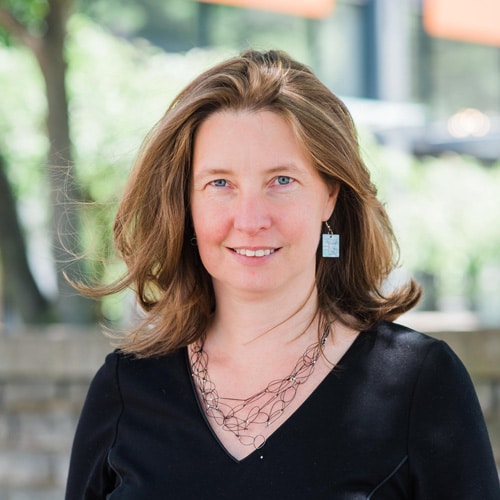
Christine Mondor describes herself as an eternal optimist regarding the power of design in shaping sustainable cities. And that’s what she has been working on for the past 15 years. She is using the power of design as an architect, educator and activist to shape places, processes and organizations nationally and internationally.

As a principal of the architecture firm evolveEA, Christine brings creative solutions to projects like the award-winning Millvale EcoDistrict Pivot Plan every day. She has taught architecture, landscape design and sustainability concepts at Carnegie Mellon and Slippery Rock universities, and at Chatham College. And she is deeply involved with organizations that promote design and the environment.

Currently she serves as chair of the Pittsburgh Planning Commission and she is a former president of the Green Building Alliance, a member of the Global Ecodistricts Protocol Advisory Committee, the Penn State University Stuckeman School advisory board, and former chair of the Design Center of Pittsburgh. Christine received her Bachelor of Architecture degree from Carnegie Mellon University and studied architecture and sustainable design in Scandinavia. Christine is a registered architect and LEED Accredited Professional, and a 2019 American Institute of Architect Fellow.

Listen in to our fascinating conversation about the power of design and the shifting role of architecture in this age of environmental challenges, and you’ll believe too.

Insights and Inspirations

  • Christine likes what Jane Jacobs had to say – “Cities have the capability of providing something for everybody, only because, and only when, they are created by everybody.”
  • She’s intrigued by the concept of naturally occurring affordable housing.
  • She thinks that co-operative or fractional ownership models have legs.

Information and Links

  • Christine loves Party with a Purpose and she’s working on two parties. The first is in partnership with Eco Districts and is a nationwide network for communities to create inclusive and integrated communities. The second is the 10th global EcoDistrict Summit to be convened in Pittsburgh in November, 2019.
  • Christine loves community based efforts and the use of citizen science to transform places such as the Breathe Easy project completed in Millvale.
  • Christine’s favorite brownfield rebirth is Malmo, Sweden’s Western Harbor. She really enjoyed walking through the amazing neighborhood that has been created and artfully weaves water into public spaces. 
Read the podcast transcript here

Eve Picker: Hey, everyone, this is Eve Picker, and if you listen to this podcast series, you’re going to learn how to make some change. Thanks so much for joining me today for the latest episode of Impact Real Estate Investing. My guest today is Christine Mondor, a neighbor of mine in Pittsburgh and an architect with her own company, evolveEA.

Eve Picker: Evolve is leading the charge in sustainability in the architectural world in Pittsburgh. Christine believes in the power of design in shaping a sustainable environment. I’m fascinated at how much Christine focuses on designing or redesigning the infrastructure of cities. This is something that not even I, a fallen architect, expect. In this podcast, we talk about the rapidly shifting roles and responsibilities of architects for our rapidly changing environments.

Eve Picker: Be sure to go to Eve Picker.com to find out more about Christine on the show notes page for this episode and be sure to sign up for my newsletter so that you can access information about impact real estate investing and get the latest news about the exciting projects on my crowdfunding platform, Small Change.

Eve Picker: Hi, Christine. Thank you for joining me today. How are you?

Christine Mondor: I’m doing great. How are you, Eve?

Eve Picker: Good. Good. Good. I know you pretty well. I’ve known you for quite a few years now, but our audience probably doesn’t. You want to tell them a little bit about what you do?

Christine Mondor: My name’s Christine Mondor, and I am an architect. I have the pleasure of having that be both my vocation and my profession. I really love the field of architecture – buildings, and spaces, and communities, and environments. I also have a practice called the Evolve Environment Architecture, where I get to have that as my profession, and I do that for a living.

Christine Mondor: My firm, Evolve Environment Architecture, was started in 2004. I had a history of practicing in kind of post-industrial cities, or the city of Pittsburgh during some of its hardest times and really always thought that there was an upswing coming and specifically when that upswing is framed around sustainability, and triple-bottom-line equity, and environment, and economics.

Christine Mondor: I started my firm with my partner, Mark. We really framed it around sustainability. I think, when we started the firm, a lot of the work that we were doing, people thought might be temporary; might be a nice thing to do for a couple years in terms of sustainability. What we’ve found is that while we were out in front in the early years with regards to sustainability in our practice, the rest of the society kind of caught up. What was once an outlier became standard practice.

Eve Picker: Now, in the folks that we hire, the people that we work for, they’re always asking for what’s next? What’s more? What else can we be doing? It’s been a really great process since 2004, defining a field of practice, spreading the word about this field of practice and having people join us, as clients, and as communities, and as our colleagues. Now, it’s to the point where there’s just so many challenges to try and hit on that we definitely are glad that many others are walking here beside us.

Eve Picker: I love, in your bio, the first statement – that you’re an eternal optimist regarding the power of design in shaping a sustainable environment. I’d love to know more about that.

Christine Mondor: I used to have this phenomena where, in Pittsburgh … You know these places well, as well; you would walk around communities, and you might have a visitor with you from somewhere else, and you would be just enamored and in love with everything that you see. Somebody would say to you, “Why are you taking me around to this neighborhood? I don’t see anything here.”

Christine Mondor: You have this kind of gut check, where you realize that you’re looking, and you’re seeing a future condition; a condition where things are more environmentally sustainable, where the community is lifted up, so that all may prosper, and frankly, it just has really great, design as well. When you have these other people around, they’re not seeing that, so it’s your obligation to make that happen. When I realized that I had that kind of disjuncture in what I was seeing and maybe what others were seeing, that was my eternal optimism. People would say, “Well, you’re optimistic, aren’t you?” Yes, I am!

Eve Picker: I think it’s a great way to describe it. My husband always says that when I drag him into an old building and all he sees is pigeon shit and [cross talk] and I’m standing there saying, “This is beautiful!” He’s just perpetually stunned.

Christine Mondor: That’s exactly it. That’s exactly it. Yep [cross talk]

Eve Picker: That’s the lot of a designer, right? Just trying to find a way to show the rest of the world what’s possible. What are you working on at the moment?

Christine Mondor: We are doing a lot of … In our firm, we work at three different scales. We work at the macro, mezzo, and micro scale. The micro scale is we think about as kind of like building spaces. We’re working a lot with universities and commercial clients to make outstanding places, inspiring places, but that are also high-performing and really are thinking about future conditions.

Christine Mondor: We’re also working a lot with district-scale work, that mezzo scale – communities and neighborhoods, and also at the regional scale, and that’s infrastructure. That’s the part that I spend most of my time in, in really thinking about these things as systems. We’re doing work with- a lot of stormwater work. That is taking an infrastructure system that previously was below grade, in pipes, and thinking about it as a land-use question and how it can really add to a community.

Christine Mondor: I find it especially fascinating, because you have to think about it in terms of future-proofing. It’s not just a question of doing, say, green infrastructure to capture stormwater and prevent it from getting into the storm pipes and putting sewage out into our rivers and waterways. It’s really a question of how are we going to recreate how our communities work so that we can deal with this issue in an environmentally and equitable way – environmentally beneficial and equitable?

Christine Mondor: Also, so that we can begin to deal with the issues of climate change in this very dramatic way that we’re seeing it play out. Yesterday, here in the city, we had a morning rain that sent many communities into full flood mode and even closed off a regional hospital for a period of time. That is a fascinating question of infrastructure planning.

Christine Mondor: If we are really going to deal with those issues, we’re going to- our communities are going to be reshaped. It’s not just a little bioswale in somebody’s front yard. We’re talking about rethinking the systems that we designed 100 to 150 years ago. I find that work really fascinating. We’re doing that work around stormwater and transit.

Eve Picker: Be sure to go to Eve Picker.com and sign up for my free educational newsletter about impact real estate investing. You’ll be among the first to hear about new projects you can invest in. That’s Eve Picker.com. Thanks so much.

Eve Picker: So, at the moment, I feel like I’m living in Kevin Costner’s Waterworld. It’s a little crazy. Maybe we can all learn something from that. When you talk about this, I realize that most people think about architects probably in a completely different way; that they’re busy designing single-family homes and office buildings. You’re talking about sort of redesigning the infrastructure for cities and neighborhoods. I don’t think people realize that’s what architects do.

Christine Mondor: Yes. I don’t think so either. I don’t think, sometimes, architects understand that that’s what they can do. Maybe it’s because we haven’t had the need to do that for the past 50-100 years. We’ve been kind of living off the legacy of that original infrastructure, and land-use work. But things like climate change and also economic conditions are changing in a way that forces us to rethink the development patterns that we have; whether it’s the availability of mortgages for single-family houses, the failure of shopping malls, and rethinking distribution patterns for retail. All those things caused pretty significant changes in our cities and our rural regions, too. Architects, we’re really well-suited to think about that on a qualitative way and a quantitative way [cross talk] superhero power.

Eve Picker: Yeah, no, I think that’s right. I always think of architecture as a really interesting profession that teaches you how to make something out of nothing – the process of designing something from absolutely nothing in a very creative way. I think it’s pretty rare skill. I wonder, do you think the profession, on the whole, is thinking the way you’re thinking?

Christine Mondor: I don’t think so. I think that some are … One of the things I always enjoy about your trajectory, Eve, is that you’re able to weave these disparate things together, whether it’s a development pattern, a housing type, a specific project, or a funding mechanism. You’re always pulling these things together to say what is it that we want to do as a community and then how do we make the tools work for us?

Christine Mondor: I think that our architectural training is, at the base of that, being able to see across these different disciplines and expertises. I think there’s a unique need for that now, so that the folks in the profession are waking up to that – that, in fact, our most useful role might be outside of what we consider traditional practice. I recently became an AIA fellow, and in the process of that, you kind of have to redefine how your practice has added to the profession. It helped me realize how we define ourselves as professionals is only scratching the surface of what the potential contribution we can make.

Christine Mondor: I know we were talking about the role of women. We talked about that in the past and how it’s hard to find women in the profession, or in the elevated, or recognized positions. I think that’s because they tend to- are oftentimes in non-traditional roles. The more we expand the definition of the profession, the more we’re going to find that those women are out there, and they’re in influential positions, but they’re just not in traditional positions of power.

Eve Picker: You’re still teaching at Carnegie Mellon, right?

Christine Mondor: Right.

Eve Picker: I taught there quite a few years ago now, and I was frustrated with the … For different reasons, I was frustrated with the very traditional approach to teaching these unbelievably talented kids architecture, because there are so few jobs in that profession, as well. Do you think that schools are sort of starting to see that they need to shift what the role of an architect might be in this really- in this world where sustainability has become so important?

Christine Mondor: I think that’s a great question, and I think that that shift is happening. It has to happen at two levels. First, the profession has to be ready to catch it, and to say is the goal of our professional education to graduate a narrow definition of what it means to be an architect, or can we broaden out and embrace a full spectrum, where everybody shines a different light on a topic, and in that, we see that all the colors kind of arrive?

Christine Mondor: I think the traditional way of approaching architectural education was that everybody shines the same color of light on the subject, so we are trying to make that light as uniform as possible. That’s the standards for that education. But when I look at what my students are doing up out of graduation that see a view that they’re doing things that I don’t even know what to call the job. You know, I don’t know what it is yet. And they don’t know what it is yet. But I don’t want them to be outside of my profession. I want to say that that is also architecture. It’s a different piece of architecture.

Eve Picker: I think you’re right. I think there’s an opportunity there that we’re kind of missing at school. I actually want to go back, because I know you did this little EcoDistrict PIVOT plan for Millvale, which is a Rust Belt town outside Pittsburgh. It’s kind of an unusual plan to do for a place like Millvale. I wanted to give our listeners an idea of what you did for Millvale, so they have a more concrete idea of what is possible.

Christine Mondor: Some of the work that we do in systems … Sometimes, we’re working directly with, say, a sewer authority here in Pittsburgh. We’ve done big planning with Buffalo Sewer Authority. Sometimes, we’re working with transit authorities. Those are people who hold infrastructure systems and plan that system, but communities are different; where they have many different types of infrastructure woven into the fabric – the social and cultural fabric – of what people think of as their community, their home, and their neighborhood.

Christine Mondor: EcoDistricts, in the way that we co-developed it, actually, with our colleagues in Millvale and with our colleagues in Larimar, another community here in Pittsburgh, is really looking at those larger systems and understanding how these smaller neighborhoods, communities, boroughs interface and weave themselves into it.

Christine Mondor: For instance, in Millvale, in the PIVOT plan, the PIVOT plan looked at, at first, three different areas. It looked at food, water and energy, and said how do we make our community better, more equitable, more healthy by looking at these systems and the resources, and flows that move through those systems? That’s what resulted in a plan in 2014 with a number of different things to do for the community. They did them in about two years and [cross talk]

Eve Picker: That’s very fast. That’s really fast.

Christine Mondor: I have to say that no … These plans- no plan really works unless a community’s ready to activate around them. Really, we had great community partners and worked hard, through the process, to build their supportive groups around them, so that the community had capacity to do this work. It doesn’t work to make a great plan unless they have the capacity to actually execute it, and they did, so we-

Eve Picker: What did they do in those first two years?

Christine Mondor: The first few years were … I’ll give you a for instance in energy. We looked across the entire municipality to say where is energy being used in the community? Where is it being lost? Where is it being gained? That’s anything from looking at building performance, to possibilities for renewable energy, to how those things weave into the daily life of communities.

Christine Mondor: One of the proposals was saying you’ve got a couple places here in town that you could do an energy hub, where you’re harvesting solar energy. It’s feeding into a particular function that services the community or a business. You can kind of punch above your weight, because you’re thinking outside of a single property, and you’re looking at more district-scale work. These energy hubs became resiliency hubs. The community was able to get funding to put a solar-resiliency hub in their municipal building, because, tragically, they have frequent flooding. In the case of that, this municipal building served that, in, perhaps, in some cases, off-line, off-the-grid hub, but it’s prepared to be the place where people can go for flooding.

Christine Mondor: They also did that in places called the food hub. The food hub is a place where there are a couple businesses being incubated around food-oriented businesses – whether it’s a caterer, or a startup, but also an organization called 412 Food Rescue, whose home is in the Moose; an old Moose Lodge that became the food hub. That is where 412 Food Rescue gathers waste product, waste food, from other businesses and places where somebody’s ordered too much food. They can capture that and re-use it, re-purpose it, put it back out there and really close loops within the community and within the region.

Christine Mondor: Attracting a business like that; having a facility that’s sustainably designed, and high-performance, and really creating a culture around these big idea comes from this type of EcoDistrict planning that says we’re bigger than a project. We’re really looking at resource flows, and we want to make some great design moves and really improve the quality of our places in the process.

Eve Picker: They did all of that, and what was next?

Christine Mondor: Food, water, and energy were first. With that success, they felt air quality and mobility were two things that were important, as well as the concept of equity. Equity was an underlying theme through everything, but bringing it to the forefront, elevating it to its own category forced everybody to really look hard at what these goals meant and how they were quantitatively, and qualitatively serving the community.

Christine Mondor: I think probably the one that’s got the most depth to date, so far, is air quality, because they were able to get additional funding to understand the nature of the exposure of the community to poor air quality, both regionally and localized sources. We did citizen science and monitoring around the community to understand where the bigger issues were, and then to, “try to fix” some of the problems and decrease exposure to the community, but also to try and raise awareness. Because what we found, in fact, through this citizen science, is that although there are minor variations … For instance, the homes that are near to the woods, but right above the fast-food place that fries burgers and sends its exhaust out, they had the worst air quality.

Eve Picker: Interesting.

Christine Mondor: Yeah, we would have thought the houses near the highway had the worst, but [cross talk] I know, but we didn’t check weight to know if smelling burgers frying also encouraged you to eat, so I’m not sure about that. But that was an interesting finding that it’s locally variable for those reasons. What we found is that most of the- all of the stations, in fact, tracked to the regional. We are exposed to things that are coming from Ohio, things that are coming from coal-fired power plants, and then the intermittent releases that happen from our local air emitters. That is an advocacy issue. There’s nothing that somebody in that community could do to stop that directly, if they want to live outside and walk around, but it is something that, if they know it, they can try to change it through policy and through advocacy.

Eve Picker: Interesting. Interesting. I’m going to just change course a little bit and ask you if there are any current trends in real estate development that interest you the most at the moment?

Christine Mondor: This is a great conversation to have with you, because I know your ear is always to the rail on these things. The two things that I’m really intrigued by, they could be related, but I’m not going to try to relate them here. First of all, I’m interested in the concept of naturally occurring affordable housing, because this seems to be the nexus of the strain that we feel, when we talk about gentrification, or changing markets, and displacement. At least in our region, this concept of naturally occurring affordable housing was a fairly common phenomena that we didn’t recognize.

Eve Picker: Can you explain that to the listeners? I don’t know if everyone knows what that is? What is naturally occurring affordable housing? What does that mean?

Christine Mondor: In a weak market, a weak real estate market – like, say, Pittsburgh was, say, the ’90s especially,  more uniformly weak – naturally occurring affordable housing meant that you never really had to look hard to find affordable housing. It also means that the housing is under-invested in, in a way that it doesn’t sustain the basic maintenance requirements of the house.

Christine Mondor: When I cut my teeth in the profession, what affordable housing meant in Pittsburgh was putting people who were above the average median income into communities that had very low median incomes, because there weren’t enough people who … There was no income diversity, and there weren’t people who could necessarily care for the infrastructure that existed, because there wasn’t enough economic resource in that community.

Christine Mondor: As a market pivots from weak to strong, the more commonly held narrative that we have now is trying to prevent displacement, because that naturally occurring affordable housing disappears. Then folks who had been living there, don’t have as many options. I think we need to have a broader conversation about the pros of naturally occurring affordable housing, recognizing places that have it, but also recognizing that it comes with its own set of problems that need to be addressed for that housing to be equitable, to maintain a quality that is equitable. In some communities, code enforcement is targeted at naturally occurring affordable housing, because, rightfully so, the conditions are not ideal to raise a child in, or to live in, but the investment that’s required to fix that place then prices somebody out of that unit, or it just doesn’t get done.

Eve Picker: Okay.

Christine Mondor: We need to understand what the extent of it is. We need to understand what our tolerance of it is and how we make sure that people are living in healthy and affordable places.

Eve Picker: This is an interesting concept, because there probably is a lot of naturally occurring affordable housing left in Pittsburgh, but the anger from people who are currently being displaced is really around the fact that it’s no longer in their own neighborhood, right? Those neighborhoods have been improved now.

Christine Mondor: Right. What is the balance that we have between the market doing improvements, between subsidizing improvements to make sure that people have choices and aren’t forced to leave? It’s oftentimes terms like gentrification are used to kind of flatten an argument. When you flatten an argument, you can’t get to the nuance that allows you to make sure you’re turning the right dial to [cross talk] solve a problem.

Eve Picker: I totally agree with you, and I think there are lots of dials to turn. Just that the idea that as neighborhood gains value, your property taxes go up with it is a peculiar idea to me. I just really think that people who live in that neighborhood should enjoy the increased value around them, but not be forced to leave because of that adjustment. I think there are lots of pieces to it, for sure.

Christine Mondor: That gets to the second thing that is of interest to me, in terms of that kind of real estate thing. That gets to the idea of ownership, because one of the reasons why people experience it unequally is access to investment, access to properties that don’t have tangled titles, access to financial mechanisms to purchase, and ownership. That means that some folks who do have access to that are better prepared to take advantage of a shifting market, whereas others are not.

Christine Mondor: I know that home ownership isn’t for everybody. What are other models we have, where people can have a stake in their neighborhood and be landed, if you will, and have that idea of stability, but not be burdened by responsibilities that they either don’t have the resources, whether that be time, or money, or interests to take care of? That is a cooperative model. It’s something that I’m very intrigued by, and I don’t see widespread adoption of. I don’t know why that is, but I’m very, very curious about that [cross talk]

Eve Picker: Have you seen anyone use that model in an interesting way?

Christine Mondor: You know, I think that there are examples of it outside of our region, here in Pittsburgh, and I have spoken with some experts who say there are some here in the region. I haven’t. I don’t have enough firsthand experience to know what the reality of the success of those things are yet. But it’s definitely something that I’m going to be looking into more so-

Eve Picker: Interesting. Interesting. We agree that socially responsible real estate is important. What do you think we need to think about generally to build better places for everyone?

Christine Mondor: I’m a big fan of the Jane Jacobs quote … I’m going to paraphrase it here. Cities are best whenever they’re … Cities serve everyone best, when they’re built by everyone. I think that thinking about cities as an equitable real estate opportunity is a powerful tool, because we know that capital thinks of cities as a means of making money.

Christine Mondor: It shouldn’t be that you’re on one side or the other. It should be that we’re thinking about how this mechanism we have can serve a broader purpose in a broader market – whether that’s helping folks who wouldn’t otherwise understand our built environment as a wonderful place to be, but also a place to develop stability and security because of the investment mechanisms that they might have available to them, or whether it’s thinking about their piece within a broader opportunity.

Christine Mondor: I think that your Small Change tool is really a part of that story that’s being written, where people can participate in this in different ways, because there’s just not enough flexibility in how people participate in making a city; to make sure they don’t just have an opinion on how something looks, but also how something works, and that they have a stake in it, in the long term.

Eve Picker: Yeah, I think you and I have seen how important that is in Pittsburgh, right? Yeah. What community engagement tools have you seen that you think really work well? That’s always the most- one of the very difficult things, I think, personally.

Christine Mondor: Yeah, I agree. In order for engagement to be transformational, it needs to be long term, and it needs to be repeated. The EcoDistrict model that we did in Millvale and with other communities really depends … I think it sets up a model of, first of all, giving people information, because they need information, and they need to be given decision points that are meaningful and not just decision points that check a box for participation.

Christine Mondor: Secondly, they need to have tools that are suited for their participation, meaning not just how you’re asking a question at a meeting, or how you’re engaging them in a volunteer activity, or outside activity, but also this idea of how they become invested in their community financially,  through time, through effort. It can’t just be a meeting, and then everybody goes home to their house. It has to be an ongoing effort to build that community.

Christine Mondor: I think that happens with a process that says we’re going to take some time; we’re going to figure out who’s in the room; we’re going to figure out who needs to be in the room. We’re going to have the vision, and then we’re going to take these multiple steps and let many voices determine how it is we’re going to get there.

Eve Picker: Yes. Okay. I think my final question is where do you think the future of real estate impact investing lies?

Christine Mondor: I’m not sure how qualified I am to say that on the broadest scale.

Eve Picker: I was actually going to say you probably just answered that, because what I’m hearing from you is that you really believe the community should be invested in themselves and in their own future, and that’s impact, right?

Christine Mondor: I worry about the aggregation of capital in large-scale investment, and whether that’s … Not something that we see here in Pittsburgh, as much, but in other cities, where investors have come in and bought up large amounts of single-family homes. What you’d get is an aggregation of capital and power, and you prevent people from participating in their community in a way that is meaningful.

Christine Mondor: Not to say that that everybody wants to be that single-family home longer, but in many communities, it’s becoming less and less possible. I think, here in Pittsburgh, our challenge might be otherwise in that we need to figure out how to … As our market is shifting, we need to figure out how we allow people to invest in projects and in places that are beyond their scale of engagement. A single investor can’t do it. Is it a community investor? Is it co-housing? Is it a co-operative? Is it an investment tool, like Small Change? To write a more different narrative than just a large-scale global capital that is making so much change in cities across [cross talk]

Eve Picker: No, I do agree, but I think what you’re grappling with is what I learned early on as a developer, and that is control of property is absolute power. The question is can you somehow shift control of property to a larger group of people? Not-

Christine Mondor: Yeah.

Eve Picker: -and that’s a really difficult question. I mean, control of property is powerful for a whole bunch of reasons, financial reasons, and other reasons, so it’s a really big question. I have three sign-off questions and I ask everyone [cross talk] I’m going to ask you, too. What is a key factor that makes a project impactful for you?

Christine Mondor: I think that, out of an impactful project, there is a high quality of design and improvement of the physical place, but there’s also a sense of empowerment that comes out of it for all who have participated, whether they just helped shape it with their opinion, or whether they invested, or whether they performed some of the work. That empowerment is what builds community. That’s what I think is the most impactful.

Eve Picker: Okay. Other than by raising money … You know what we do at Small Change, so you know that we can involve investors, so that they can invest and make money just like everyone else. Is there any other benefit of crowdfunding that you see that might benefit communities or impact real estate developers at large? Honestly, one of them … I’m going to answer you on one of them. I know that you head up the planning commission, here locally. I always think about, if someone came to the planning commission with a project that had a local crowd of investors invested in it, what would the planning commission think about that?

Christine Mondor: It’s an interesting thing, because tools we have to influence development, are sometimes regulatory, and they’re sometimes financial, and they’re sometimes kind of cultural, or social norms. I think that the planning commission has some regulatory tools that have … But it also reflects- some of those criterion reflect broader social norms and some of these other influences.

Christine Mondor: I would love to see the projects that come in with creative design that are led by teams that have empowered communities and have a strong financial working model. Having a great triple bottom line is a great way. Go into it with that, and if you fall short of some things, that’s okay, but have some big goal. It really makes for an amazing process and project. I would love for every project that we see in our city to have that type of effort. I think we’re still blessed, here in Pittsburgh, because we have a number of locally owned properties. We’re not as subject to global capital as other cities are, at least at the time, so we still have some of that ethos, where we’re doing [cross talk] the common good.

Eve Picker: The final question, which is a really hard one, what is the one thing that you think would improve real estate development in the U.S. that you would change?

Christine Mondor: I think that much of it is opaque to people who don’t have time to really sort through the complexities of it. I’m not sure that this is the entire system change that’s needed, but some part of it needs to change to allow transparency, whether that understanding how big deals happen and what effect it has on a city and the community, or whether that understanding how one can participate in it to their own benefit, but also for a common benefit. I think if those things were more clear and transparent, we’d probably have more equitable participation.

Eve Picker: That’s a great answer. I’m going to thank you very much for joining us. I really enjoyed it. I’m going to go check out the Millvale Eco plan, right now. It sounds really [cross talk] I haven’t paid enough attention to it. Thank you very much, Christine. It was really nice chatting with you.

Christine Mondor: It’s been great chatting with you, too, Eve.

Eve Picker: That was Christine Mondor, founder of EvolveEA. Here are some of my takeaways from our chat today. I learned that architects, and Christine in particular, are going far beyond just designing buildings. They are designing infrastructure and PIVOT plans for entire towns and neighborhoods. I heard the passion behind Christine’s conviction that high-quality design can reshape the future for cities. And I heard about her conviction that the housing models of the future need to be cooperative, providing access to ownership for everyone.

Eve Picker: You can find out more about impact real estate investing and access the show notes for today’s episode at my website, EvePicker.com. While you’re there, sign up for my newsletter to find out more about how to make money in real estate while building better cities. Thank you so much for spending your time with me today, and thank you, Christine, for sharing your thoughts. We’ll talk again soon, but for now, this is Eve Picker signing off to go make some change.

Image courtesy of evolve EA

The democratization of finance.

August 19, 2019

Throughout history finance has been the province of emperors and kings. Later it included the merchant classes and the new aristocracy born of the Industrial Revolution. Your average Joe only really got involved in investing during the stock craze of the 1920s. Even today the average investor holds assets in a small subset of classes – primarily stocks, mutual funds, and bonds. If Joe wanted to acquire real estate assets, she was relegated to a mortgage on her home, or her residential rental properties, or publicly-traded real estate service firms like the Simon Group, AvalonBay Communities, and others.

While all those asset classes have value and the potential to generate returns, the ability to invest in other real estate classes without a massive pile of capital has been limited until recently. In the early 2010s other real estate asset classes like commercial, shopping centers and retail became available to the average Joe as a result of the 2011 Entrepreneur Access to Capital Act.

The Entrepreneur Access to Capital Act gave a much wider pool of investors the ability to participate in crowdfunded investments. It did this by providing a crowdfunding exemption from SEC (U.S. Securities and Exchange Commission) regulations, as long as a company raised a maximum of one to two million dollars, the amount set at the time the bill was signed. Under the Entrepreneur Access to Capital Act, anyone could invest up to $10,000 or 10% of their annual income, whichever was lower.

Opening up markets to new investors

When markets open to firms, economic growth tends to follow. A great example of this is the surge in investment capital and growth in China after they gained Most Favored Trading Status in late 2001. China went from third-rate to one of the most dominant economic powers within just a few decades. While not entirely analogous, the democratization of finance could follow a similar trajectory, providing great economic benefit to a much larger pool of real estate investors and the communities in which they choose to deploy capital.

Rather than well-heeled and institutional investors sucking up profits by virtue of being the only ones allowed to play the game, now individual investors can take advantage of commercial real estate opportunities. This includes investing in a wide array of property types, such as multifamily apartment buildings, self-storage facilities, retail and shopping centers. Real estate projects with capital requirements that are out of the reach of most individual accredited investors are now within reach thanks to equity crowdfunding. 

Impact investing and the democratization of finance

One of the most exciting possibilities that the democratization of finance brings, is its possible marriage to socially responsible impact investing. Historically, the type of person who is interested in high-finance has not typically been particularly socially responsible. We can see that through industry’s past opposition to things we take for granted, like the weekend, child labor laws, safety standards, and a whole host of other protections. That is not to say that all investors or capitalists are bad people – just that they are laser-focused on profit, often to the detriment of society at large.

As many new investors enter the scene, bring different attitudes to ethical investing with them, this focus on profit may take a backseat to sustainable, community-led development projects. Impact investing does not need to mean sacrificing returns or investing in unprofitable projects – it is simply a market mechanism for affecting change while also generating a return on your investment.

_

As we’ve seen throughout history, large concentrations of power are not good, regardless of whether that power is financial, political, social etc. The democratization of finance has the potential to avoid or even alleviate many of the corruptive and detrimental effects of the finance system- by spreading ownership and wealth amongst the crowd instead of amongst just a few, and by shifting investment focus to impact investing with the end result of creating better places for everyone.

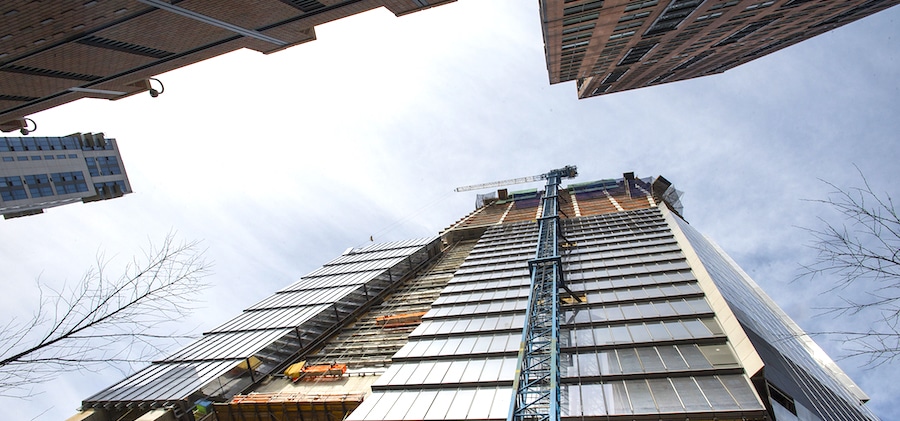
Image by MTAPhotos, Hudson Yards Real Estate Development Update: April 16, 2015, CC-BY-2.0, image cropped.

Is revitalization a dirty word?

August 16, 2019

Revitalization, gentrification, and displacement are now a mainstay in the heated national conversation about housing. For many years urban renewal and revival were sold as cure-alls for improving economically vulnerable neighborhoods in big cities from New York to Oakland. Unfortunately, the effort to bring new life to these areas was more successful than anyone predicted. In fact, it was so successful that it began to drive low and middle-income residents out of their homes as property values and the desirability of each neighborhood grew. And in the process revitalization went from a hopeful phrase to a coded word for displacement of minority and low-income residents.

This process started in the early 1990s in some high cost of living areas like San Francisco and Seattle and has substantially ramped up during the current real estate boom. Much of the issues arise from the Gen-X and millennial preference for smaller homes and their desire to have immediate access to urban life rather than schlepping in from the suburbs. As these young people flock to urban areas, existing residents are unable to keep up with rising rents, property taxes, and the general increase in expenses as their neighborhoods gentrify.

A silver lining

It is clear that gentrification is negatively affecting many Americans, with those most affected coming from low-income and minority groups. Some critics make no distinction between unmanaged market-driven gentrification, and the revitalization efforts happening in cities across the country. These revitalization efforts are having real, positive effects in some rust-belt states which are seeing incredible turnarounds, at least partially as a result of real estate revitalization.

Detroit as a model?

Detroit was, and continues to be, the poster-child for urban decay in America. The hollowing out of the American manufacturing base led to a situation where middle and upper-middle class residents fled to the suburbs, taking their tax dollars with them. Left behind were the poorest, many of whom came from minority communities. The city lurched from year to year in a state of disrepair until a few years after the 2008 financial crisis.

Over the past decade, real estate investors have helped develop millions of square feet of prime real estate in downtown Detroit. Areas that were once in significant decline, bordering on a demilitarized zone, became livable once again- and property values and the city’s economic picture rose with the real estate sector.

The housing market in Detroit is incredibly large and complex, and there are success stories as well as the emergence of some of the more common issues with gentrification and displacement. Many of the people on the ground working to protect residents from the deleterious effects work in partnerships with local governments, nonprofits- and developers.

Riding the wave

Spider-Man once said, “With great power, comes great responsibility.” This truism can be applied to how we approach housing issues such as sustainability and affordability. When local stakeholders are not heeded, projects can have disastrous consequences- both from an investor and resident perspective. Many grassroots movements have sprung up across the country as a response to development growth, and what some locals see as the destruction of their communities.

As developers and investors, we have a surefire way to avoid conflict with locals- and that is to  build to benefit the community, rather than just to make a buck. Everyone has to eat, and there is nothing wrong with an honest buck- but finding the intersection between community-minded morals and market forces will help each party benefit- the developer, investors, and residents.

_

Revitalization does not have to be a dirty word. In fact, it can be a net positive for all parties when implemented correctly.  Many cities and states throughout the country are taking steps to mitigate some of the worst problems arising from gentrification- and insightful investors have the chance to be on the ground floor of an entirely new development model- one where community and business interests are aligned, rather than at odds.

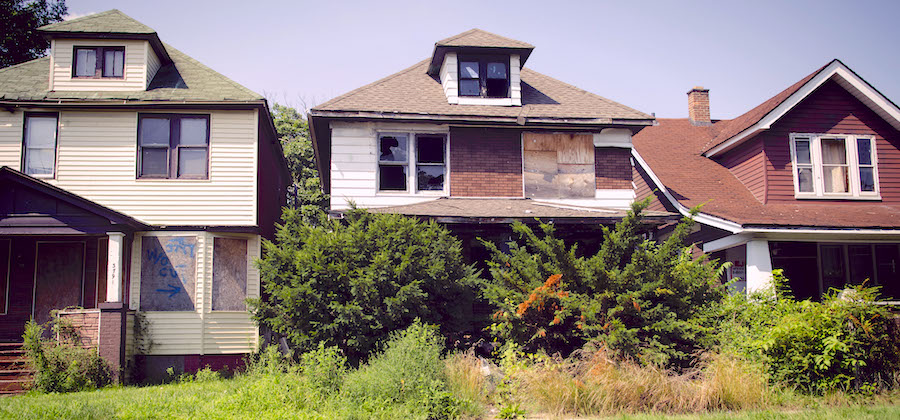
Image by Eve Picker

Development as art.

August 9, 2019

Real estate development as art

When you think of art, you probably think of Picasso or Matisse, not property developers like Mill Creek Residential or Greystar Real Estate Partners. Despite popular perception, real estate development is an inherently artistic endeavor. Some of the greatest artists in human history, people like Brunelleschi, Michaelangelo, and Da Vinci, all worked to create buildings and livable spaces.

For decades, since the birth of the modern housing industry at Levittown in the late 1940s, developers have focused on cranking out endless rows of homes with little thought given to much more than finances. Profits and growth were in the driver’s seat, with few considerations given to long-term community sustainability and dare I say it, beauty.

Many in the real estate sphere, on the investor and the developer side, are starting to realize that creating economically, environmentally, and yes, artistically focused housing is not only the right choice for society- it is absolutely essential to continue to remain relevant in a changing development landscape.

Crafting one of a kind environments

Innovative developers across the country are focusing on creating carefully crafted, artistic communities. Some of these new neighborhoods are purpose-built from the ground up. More commonly they are repurposed structures or vacant, unused lots in urban areas. Instead of seeing these areas as blighted, or unworthy of capital investment, forward-thinking developers and investors are focusing on them, partly due to the immense opportunity underserved areas present, and partly because of a genuine desire to create socially responsible communities.

Focus on urban infill

One strategy for creating art-driven developments is to focus on urban infill, defined as any new development in areas that are already built-up. Think abandoned lots in dense urban areas. There are many opportunities to create unique structures and neighborhoods in these areas, primarily because they are often overlooked by large-scale developers who prefer to develop on large and more traditional sites.

Adaptive reuse

Adaptive reuse may be leveraged to help artistically minded developers reuse existing buildings for new purposes. Many blighted or economically challenged areas have an abundance of old commercial and industrial buildings. With some hard work and lots of imagination, these underutilized structures can contribute to establishing new communities that are not constrained by the narrow-mindedness of traditional development models.

An example might be an old cannery turned into a loft housing site, with a small commercial area in the vicinity. Or an empty school re-envisioned as a community meeting place or artist studios. Beautification and artistic efforts can brighten these once abandoned or unused places to add some life and meaning to the neighborhood – not to mention the sustainability of converting an old building rather than starting from the ground up.

Creative redevelopment projects

Both of the above strategies share a commonality: Creativity. As cliché as it sounds, you will need to think out of the box to create an artistic and livable development. This not only applies to the building and the community it is part of, but it also applies to the methods that a developer might deploy to get these projects off the ground.

Creative financing strategies can help developers build the communities that people clamor to live in, no matter how out of the ordinary. While traditional lenders and banks are often reticent to lend to smaller developers pursuing “out of the ordinary” projects, new financial tools such as crowdfunding, present an opportunity for developers to build something cutting edge and extraordinary.

Instead of trying to squeeze an unique development project into a traditional lender’s box, you can go directly to potential investors via a crowdfunding platform. Investors and developers can even solicit support directly from the community in which they intend to build.

_

Most residential, commercial, and mixed-use developments across the country suffer from a lack of artistic vision, and this has hurt their aesthetic qualities, but more importantly, it exposes a lack of care for the daily needs of residents, the neighborhoods they live in and the cities they are part of. Steps towards embracing artistic diversity in the real estate world will pay dividends for years to come.

Image by Eve Picker

Embedded in community.

August 7, 2019

Brian Murray is the CEO and Founder of Shift Capital, a Certified B-­Corp impact real estate group headquartered in the Kensington neighborhood of Philadelphia, and focused on aligning capital and philanthropy with underserved communities.

Brian didn’t start his career in real estate. He started his career at Pricewaterhouse-Coopers as an auditor and quickly moved into the technology space where he helped found two start­ups. A stint in the Peace Corps, building community in Bulgaria, and an MBA from the Yale School of Management, followed.

While in graduate school Brian observed the growing interest in impact investing. At the same time he made his first real estate investment and discovered the importance of socially ­minded development. And with this his journey into real estate was complete. He fell in love with the process of developing real estate where it matters. All of these things come together in Brian, a man focused on doing well by doing good.

Together, on this podcast, Eve and Brian explore the challenge of developing real estate for purpose.

Insights and Inspirations

  • Brian proves that it’s possible to have a robust real estate business focussed on under-served neighborhoods.
  • Community engagement really means embedding yourself and becoming part of that community.
  • Finance is at the core of making change.  We need financial institutions and the philanthropic world to step up and make it possible to build much more real estate in neighborhoods that need the investment.

Information and Links

  • Shift’s latest inclusive project is Jumpstart Kensington a real estate accelerator for the Kensington community.
  • RevErie, staged by Shift, an event at the nexus of art, citizenry and community designed to uplift and inspire. 
  • The Reimagine Storefront Challenge is an inclusive development strategy to reactivate storefronts on Kensington Ave.
  • Urban Action: Kensington Gateway, a collaboration with UPenn, Penn Praxis, Olin, New Kensington CDC and Hinge Collective seeks to activate a severely challenged intersection with thoughtful, community-informed designs for public open space.
Read the podcast transcript here

Eve Picker: Hey, everyone, this is Eve Picker. If you listen to this podcast series, you’re going to learn how to make some change. Thanks so much for joining us on this podcast. I’m Eve Picker, and my life revolves around cities, real estate, crowdfunding, and change. In this podcast series, we’ll be digging deep to discover how we can build better cities by building better buildings.

Eve Picker: I’m excited to have Brian Murray as my guest today. Brian is the co-founder of Shift Capital, an urban real-estate group focused on mission-oriented projects in under-served Philadelphia communities.

Eve Picker: Brian didn’t start his career in real estate. He started traditionally at PricewaterhouseCoopers as an auditor, and then helped found two startups. The itch to do good was with him, so he joined the Peace Corps, and found himself in Bulgaria on the ground doing community development work.

Eve Picker: The journey into real estate was completed when, once back stateside, he invested in a real-estate project in Philly, and fell in love with the development process. All of these things come together in Brian, a man focused on doing well by doing good.

Eve Picker: If you want to know more about Brian after you’ve listened to this podcast, please visit EvePicker.com, where you’ll find links and other goodies on the show notes page, and where you can subscribe to my newsletter on all things real-estate impact.

Eve Picker: Welcome, Brian and thank you very much for joining me. I wanted to start by just diving into your background a little. I know you have a company called Shift, and I’m really wondering what led you to this point in your life?

Brian Murray: Sure. First off, thanks for having me, and Shift on. We’re really excited to connect with you, and share more so. I guess, background, I started off as an accountant. I graduated college and went to work for PricewaterhouseCoopers. I left that very, very quickly, knowing that that’s definitely not what I wanted to do with my life, and went into the tech world.

Brian Murray: It was 1999, and 23 was a well-seasoned age to be in the tech world at that time. I had a venture that- my first venture went belly up, and I decided that I wanted more out of life, and didn’t want to be chasing- just to be chasing dollars. I joined the Peace Corps. I spent a few years in the Peace Corps in Eastern Europe, in Bulgaria, and got introduced to a few core concepts that have really underpinned where I am today.

Brian Murray: One is that the Peace Corps is one of the most incredible organizations at putting people on the ground in communities, embedded in communities, listening to communities. Really got a understanding of how trust needs to happen on the ground level.

Brian Murray: I also learned what does economic-development planning look like when it actually gets to the ground? That was a little eye-opening to see the disconnect between a lot of dollars flowing through the non-profit, and international-development space, and then what happens actually on the ground.

Brian Murray: The third piece, I was introduced to social enterprise. I was volunteering with an organization that launched the first social-enterprise program in Eastern Europe. I really fell in love with the idea of doing well, and doing good.

Brian Murray: Came back to the States; went back into the tech world for a few years before heading off to business school to try to marry my love for entrepreneurship, and my love for social change, and positive social change.

Brian Murray: I thought I was going to go into the impact-investing space, so I went to work for an organization called Acumen Fund, which is a non-profit venture-capital group that invests in businesses serving populations in India, Pakistan, East Africa. We invested in entrepreneurs that were providing solar-powered lights, clean water, healthcare.

Eve Picker: Was introduced to this growing world of impact investing, which is the dollars that want to make a return, but also to do good with that return. Exactly at that time – I’m originally from the Philadelphia area – when I was in business school, I was approached to invest in a small real-estate deal in Philadelphia, which I did as a side project.

Brian Murray: We invested in a neighborhood,  A lower-middle-class neighborhood in Philadelphia. We bought a note from a bank; a 30-unit building that was completely run into the ground by what I’ll call a classic slumlord … I apologize. You want me to restart there?

Eve Picker: No, no. I was going to interject, and say that was the beginning of the end, right?

Brian Murray: I fell in love with-.

Eve Picker: Yes! I knew that was coming.

Brian Murray: I fell in love with, and really understood the power of real estate in people’s lives. On one hand, I realized what kind of  capital usually flows through these neighborhoods, and realized that if I could wake up every day, and be a good landlord, I would be doing the world a good service. I jumped in with two feet, at that point.

Eve Picker: Be sure to go to EvePicker.com, and sign up for my free educational newsletter about impact real-estate investing. You’ll be among the first to hear about new projects you can invest in. That’s EvePicker.com. Thanks so much.

Eve Picker: I’m not surprised. That’s a great story. That’s a pretty interesting road that got you there. I suppose the next really big question I have is do you think socially responsible real estate is necessary in today’s development landscape? What have you observed, overall, now that you are a developer, and a landlord?

Brian Murray: I would say that 95 percent of the capital that moves through the under-served communities that we work in is exploitative capital, and exploitative in a economic model that is slightly upside down, that does not incentivize even folks who probably want to do some good in the right ways.

Eve Picker: The importance of capital that is thinking about community, working with community, thinking about different ways in which capital can be layered to make it more effective, I think, is critical, in an age right now, where it feels a little bit like feast or famine; gentrification or poverty. There’s not a lot of discussion of anything in between. This is a role that I think this type of capital, and this type of impact developer needs to really …

Brian Murray: Not only do we need to bring it to the table, but we also need to raise/grow/nurture/support the next generation of real-estate developers, with a particular emphasis on, I think, developers of color, women developers, developers that are coming out of lower-income communities, because they are the ones that know their communities best, and are best suited to tackle needs, and challenges, and be aligned with communities.

Eve Picker: I’d love to drill down into that. Do you have an example of a good use of capital flowing through those communities, and maybe another example of a bad use? I’m sure you’ve thought about this, Brian.

Brian Murray: Yeah. Well, let’s talk about the bad first. In the neighborhood we work in, in Kensington, there was a portfolio of properties that blew up. These are housing – probably about 300 to 400 units – that were owned by someone who was literally called the slumlord millionaire.

Brian Murray: He was taking appraisals- creating fraudulent appraisals, and borrowing money, and then not putting it into the housing, and renting them out in their condition.

Eve Picker: Wow.

Brian Murray: This is a larger example, but there’s a lot of small examples of this on a daily basis. In neighborhoods, in Philadelphia, where we have the highest poverty- we’re the highest-poverty big city in the country, and we have housing where the comparable sales on a three-bedroom/one-bath is about $50,000. When you’re that low, it’s very difficult to renovate, and do the right thing, or to incentivize the capital markets to do the right thing in those neighborhoods.

Eve Picker: Yeah.

Brian Murray: On the good- on the right side, those who are investing the right way, and are renovating the right way are starting to see – again, in the neighborhoods we’re working in – that people are willing to pay more for a better house.

Brian Murray: Even though we’re talking about lower-income neighborhoods, and even though we’re talking about maybe 60 percent of adjusted median income, a hundred dollars more for home, in terms of rental, allows that landlord to get a lot more done; to add air conditioning, for example; add newer bathrooms, and kitchens.

Brian Murray: People in these communities do still recognize value, and higher quality. Although it’s still significantly below 80 percent of AMI, for example, when you deliver a better product out into even lower-income communities, people really respond to that. We’ve seen that firsthand on a small level, and we’ve seen that firsthand in even the commercial world, as well. I think that’s a market opportunity.

Eve Picker: Yeah, I agree with you. 300 units that are being abused in a neighborhood is quite a large block of units, and can have a really terrible impact. I thought maybe you could tell us about a current project you’re working on that you’re excited about that moved the needle in the right direction? I gather you work solely in this one neighborhood in Philadelphia, is that true?

Brian Murray: We have a fund that we’ve invested in two neighborhoods in Philadelphia, both along public transportation. Everything we have acquired, and are developing are within a five-minute walk to one of five subway stops.

Brian Murray: We just closed on financing for the one project that I’m super-excited about. This was a building in the Kensington section of Philadelphia, near the Tioga Station, for those of your listeners who might be familiar.

Brian Murray: It’s a project called J Central. It’s a 140,000-square-foot building. It sits right on the main commercial quarter, called Kensington Avenue, which has had its challenges with the opioid crisis, in particular. We are creating the first multi-family in the neighborhood. It will end up being 130 units with a full first floor of retail on the bottom floor, and maker spaces.

Brian Murray: What’s exciting about this project is that our ambition is for this to be the most civically engaged building in the country. What that means is we are going to be providing any person who rents from us in this building with a rent rebate, for every four hours a month that they volunteer in the local community.

Brian Murray: We’re setting up a whole series of programming, and volunteer opportunities within probably about five or six organizations that are not only locally located, but also driven by local issues, and local challenges.

Brian Murray: On the front end, we’re definitely filtering folks who are going to come in this neighborhood who want to be a part of such a program. Then, this building, on a monthly basis, should be delivering hundreds of hours of volunteer hours into the neighborhood.

Brian Murray: Our goal with this, and this is on the residential; the commercial’s another piece … The residential, what’s exciting about this is one of the challenges of investing in lower-income communities is trying to responsibly create mixed-income communities.

Brian Murray: We do need people who have discretionary income to spend dollars with local businesses, so that we can support that type of work. At the same time, many neighborhoods have had the trouble of having a complete communication disconnect between what’s called the new, and the existing community.

Brian Murray: This is a fantastic way, we think, to break down those barriers on both sides, where people coming in now get to know their community better, and the community gets to know them better; hopefully building a level of trust on the residential side. On the commercial [cross talk] go ahead.

Eve Picker: I was going to say that on the residential side, we did an offering on Small Change in Chicago, with a group that- they created something called Innovation Houses – I think I need to introduce you to Jay – where they give neighborhood volunteers reduced rent in exchange for services in the neighborhood, but they’re also really trying to create sort of the next generation of leaders in that neighborhood, which is a pretty remarkable ideas. Thinking along the same lines, slightly differently.

Brian Murray: I love it. I would be happy to connect with them. The commercial side of this building will also house a Vietnamese coffee group that we’ve home grown in our other building, but also the IF Lab. It sounds like this is very similar to Chicago.

Brian Murray: This is an incubator, and a business-services space on the ground floor that is targeted on under-served businesses, and specifically trying to put that kind of incubator mentality … Instead of having it in Center City, have it in the neighborhood, as well.

Brian Murray: The group behind that has had- it’s an incredible multimedia agency here in Philadelphia that has, in the past, launched something called the Institute of Hip Hop Entrepreneurship, which was also a incubation-style programming. We’re going to try to bring that all into the community, as well.

Eve Picker: It sounds fabulous. I hope I get to see it when you’re finished. It sounds really great. Of course, this only is the tip of the iceberg, right? What would you hope that we trend towards in the next 10 to 20 years?

Eve Picker: We’ve seen gentrification take hold of neighborhoods really rapidly in many cities. San Francisco is having especially difficult issues right now with many people being priced out of housing. It seems almost too big to solve. I wonder if you have any thoughts about that?

Brian Murray: Yeah, we think about it every day. I’m not sure that we have full answers, but I think we do have a number of ideas behind that. I believe that the work that you’ve done, and what’s going on nationally with Opportunity Zones has made these discussions even more important.

Brian Murray: One, going back to what I said before, I think we really need to focus on developing bridges, and doors for developers of color, and women developers. I think that that’s absolutely critical to the future.

Brian Murray: I believe that we need to bring more powerful tools into communities, and financial tools, specifically. We are working here in Philadelphia on creating a Neighborhood Trust to go alongside our work, where we’ll start to also buy up properties that will allow some of this capital to not only stay in the neighborhood, but then be used to help the neighborhood.

Brian Murray: I believe we need to be more aggressive in cities that are not San Francisco, or D.C., or New York in providing cities and public/private partnerships with more tools to aggressively buy up housing while we can. Those tools-

Brian Murray: The foundation world has been sitting on the sidelines. They have endowments, and they have lots of capital to bring to the table, so we’re very much pushing for trying to move the needle on trying to bring more financial tools, concessionary capital, other types of capital that can perform differently, and act differently than the marketplace.

Eve Picker: Personally, I also think that there’s some governmental work that has to happen. Often, gentrification is sort of the last step in numerous things that have happened over decades. Most cities are really not thinking about that, 20 years prior.

Eve Picker: Just one of the examples I think about often is the way that properties are taxed. Certainly, if you’re in a neighborhood – if you’re aging in a neighborhood – and that neighborhood suddenly has much more value, and the property values are being reassessed every year, or every two years, and all of a sudden you have a really hefty bill, that’s a problem for someone who wants to stay in place, or age in place, who’ve lived there for a long time.

Eve Picker: I think there are ways to think about that differently so those people can stay. It’s just one little tool, but I think there are other ways beyond finance that we could think about these problems before they happen. You’re right, maybe more aggressively in cities where it hasn’t happened yet.

Brian Murray: This is where the opportunity is, and you’re right, the public-policy side of it around protecting homeowners, providing homeowners with more micro-tools to renovate in place, I think, are all part of a more comprehensive strategy that … At this point [inaudible] the federal government here, it really needs to happen on local levels. H

How we go about- where that leadership comes from, it could come from the private sector. It could come from the community development sector, but it really should … A lot of this needs to be really spearheaded by the government sector; really, they’re the ones that should take that 10,000-foot view, and be looking at all pieces of it.

Eve Picker: Yeah, I think it’s very easy, at the end of the day, to say gentrification is the developers’ fault, but developers come in all shapes and sizes, like you, me, and other ones. Developers also have to take opportunities.

Eve Picker: I’ve seen this happen often. By the time developers step in unthinkingly into a neighborhood that is already transitioning up, it’s too late. They’re there because it’s already worth more. I just think we’ve got to step back decades to really understand what’s going on. Anyway, that’s my personal thought.

Brian Murray: Just to build on that, one of the things that we’re working on, and hoping to push out to the world is this idea of, okay, let’s talk about the adjacent neighborhood. We’re talking a lot about Opportunity Zones, and the opportunities to try to stem the gentrification in those neighborhoods, but, to your point, we need to start looking out 10-20 years in advance.

Brian Murray: Some of the tools that we need are for those neighborhoods that the typical developer is not looking at. I think the other thing that is really important to us is measuring impact, because we all … We’re guilty of it, and the community development community is guilty of this, and even the hardcore real-estate community is guilty of mislabeling what is gentrification.

Brian Murray: As a result, we have some communities that there’s a strong NIMBYism going on, and it’s a opportunity to educate, and think deeply about what change means, and who gets to participate. I think that measuring impact of change in neighborhoods, it’s critical to us to understand what’s going right when- on the economic-development front, on the wealth-building front, on the inclusion front. Then being honest about what is not going right. We paint a very broad brush when we just, “Oh, that neighborhood gentrified.”

Eve Picker: That’s right. I’m thinking of a couple of examples in a neighborhood I know well, where after a developer had- before a developer had built a new house in that neighborhood, the neighboring property was probably worth $20,000. The woman who’d lived there for decades, and had very little value in that asset, she really couldn’t- it really wasn’t worth putting a new roof on it.

Eve Picker: After the house was built on the vacant lot next door, it was worth- her asset was worth a lot more money, so that added value in the neighborhood; did something good for the person who’d been sort of struggling in this neighborhood that was basically disenfranchised. That’s the good side of- I wouldn’t even call that neighborhood gentrified, but the good side of increasing values in a neighborhood that we don’t talk about.

Brian Murray: That’s right. We did a study of thinking about the type of equity wealth-building that would happen in the neighborhoods we’re working in. There’s a home-ownership rate of – depending on the block – anywhere between 40 and 50 percent in these neighborhoods.

Brian Murray: To your point, the house that, on paper, is worth $20,000, well, if we do this work, and the neighborhood becomes safer; even if we see an increase of value in a typical row home, from $20-$30,000 to $100,000, homeowners in this neighborhood will be building $400 million of equity.

Brian Murray: Now, I think you pointed this out before, there needs to be real policy interventions when it comes to what does that mean for increase in property taxes, and other components that could be problematic?

Brian Murray: If we look at what happened, in particular, in the African-American community, it’s been pretty well-documented that the wealth-building opportunities that white America had, as it fled to the suburbs … I’m a family that benefited in this way. That was what got me to college, for example.

Brian Murray: Thinking about how we educate urban communities about building wealth, and what it means, and how does it work … Providing the opportunity for them to make the choices that make sense for them, I think, is just so critical to this conversation about gentrification.

Eve Picker: It’s a very complicated conversation, and I think, too often, it’s just painted with one immediate response, which isn’t always accurate. Very, very difficult. You also talked about community engagement tools that you learned early on, when you were in the Peace Corps. Community engagement’s really tough, and I’m wondering how you go about it for your projects, and what you think works?

Brian Murray: I guess what we’ve done, and tried to do is to build engagement up and down our entire ecosystem. We do our own property management. We do our own development. We do some of our own construction. We have hired local. We talk about engagement with everyone from the guy we send out to fix the toilet to the guy, or woman running our construction team.

Brian Murray: The opportunities for engagement are as simple as being in the street, listening; learning and understanding what are some of the daily problems of the community, inasmuch as it is, in a more traditional real-estate way, when we engage the community on a variance we need when it comes to a project, and what that might mean, and the input that we need …

Brian Murray: Those are just some of the basic underpinning philosophies of Shift, but beyond that, then we really try to put it all to the test, in reality. In the last probably 24 months, I can share with you probably four or five different projects; I’ll just name one or two.

Brian Murray: One most recent is that we engaged the local charter school to actually … As part of their curriculum, they are doing art projects on plywood that we’re using to board up vacant housing in the neighborhood. They’ve used it to tell their own stories about the trauma that vacancy has brought into their neighborhood. It’s just been absolutely eye-opening.

Brian Murray: We also launched a program called Jumpstart Kensington. Jumpstart Kensington is a real-estate accelerator for people in the community. The argument, or the challenge that I keep going back to is who gets a chance to participate in the upside of a neighborhood? When a community understands that their neighborhood is changing, do they have the tools, the access to capital, the knowledge to go out, and start perhaps buying, renovating, renting, building equity in their own way?

Brian Murray: We created a program; it’s a real-estate accelerator, where we provide a series of workshops, mentorship, and now, with the help of our nonprofit partner, and J.P. Morgan, we have funding available. We’ve brought 65 people through our program to date, of which probably about 90 percent are a person of color, and a woman.

Eve Picker: That’s a pretty fabulous. That’s a really great outcome. Have any of them had success with real-estate projects in the neighborhood, or are they coming from other neighborhoods, or are they solely from the ones you’re working in?

Brian Murray: Just like life, it’s a [inaudible] everything. It’s a little bit more complicated to paint a broad stroke, but what I can say is that yes, yes, and yes-

Eve Picker: Okay, very good.

Brian Murray: There’s some who come from other neighborhoods. There’s some that are just getting some properties up and going now. We’re trying to figure out the right cadence to help support them.

Eve Picker: That’s great. The other thing you talked about was wealth-building in the neighborhoods. I’m wondering if you think that equity crowdfunding can play any sort of role in building communities for everyone?

Brian Murray: Absolutely. I think there are real opportunities within almost any neighborhood project, and it could be small; it could be large, and meaningful, but I think that the-

Eve Picker: Hold on a second, small can be meaningful, Brian!

Brian Murray: Oh, absolutely … I meant … Sorry, thank you for correcting me there.

Eve Picker: Don’t apologize.

Brian Murray: I would say financially meaningful for the project.

Eve Picker: Yes, that’s correct.

Brian Murray: Both of them have roles. I was going to argue that especially the small amounts are educational opportunities. They might not necessarily always be wealth-building opportunities for the community, but they’re certainly an exciting way in which to bring people into the process; understand the process; understand what happens behind the scenes in a real-estate project. Then, of course, have some pride, and ownership over their own community.

Brian Murray: Whether it’s really truly, again, financially rewarding work with the psychological side of it, I think both of them have an unbelievable power when it comes to the type of work that you’re doing, obviously, and we’re doing, too.

Eve Picker: Then, the next question is where do you think the future of real-estate impacting … Impacted … Sorry, I’ve got to say that again.

Brian Murray: Sure.

Eve Picker: Where do you think the future of real-estate impact investing lies? I’m asking this because I hear- my personal experience is that I hear a lot of people … Perhaps pretty startling statistics, like 85 percent of people who have managed portfolios are now looking for some sort of impact, or social responsibility in their portfolio. That’s a really big number, but I am still to be convinced that impact investors will actually accept a lower return.

Eve Picker: That really complicates things, in my mind, for neighborhoods like the ones you’re working in, and, actually, most Opportunity Zones, where it is really difficult to find – if it’s really, truly an under-served neighborhood, which was the intent of that legislation. It’s very difficult to find a project that can really return to a bigger-pocket investor the sorts of returns they typically expect.

Brian Murray: I deeply- I don’t want to say troubled, but I think you’re right. My experience has been that even among the “impact-investing group” there is not yet a strong desire to increase risk at potentially decreasing returns slightly.

Eve Picker: Yes.

Brian Murray: I believe that- I think that there are a few reasons for that, and part of that’s my own experience here. People who traditionally had- people who are real-estate investors – I’m painting a really broad stroke here, but it’s not that far off – have typically been real-estate investors in the past. Either their family has been; they were in the business; they know the business very well.

Brian Murray: Impact investors don’t know real estate well. They are just starting to dip their toes in on platforms like your own, and it’s hard to discern what is risk in real estate, and what is risk …

Brian Murray: There’s lots of levels of risk in real estate, as we all know but now we are adding an additional risk here, which, I’ll be frank, having now been doing what we’re doing, I think that there’s more risk, as a real-estate investor, investing in Center City, downtown high-end rental markets than there is in working in lower-income communities, where demand drivers are just absolutely enormous-

Eve Picker: I agree with you. I agree with you.

Brian Murray: It’ll just take some time, I think, for us, and I mean that in this very collective ‘us’ of, as you know, lots of really great, fantastic groups doing this work on the ground to continue to educate, to do what you’re doing, by providing this access to these incredible projects, and really continuing to push that education process.

Brian Murray: Also, growing these type of value-driven developers, and making sure that we’re continuing to prop them up, give them- make sure that the light is getting shined on their work – good and bad. Sometimes, it might not always work out, but I think we all have that duty to do that. That’s where I think we all need to go as a group.

Eve Picker: I agree with you. I’m going to end this conversation with three sign-off questions that sort of, I suppose, summarize what we’ve been talking about. The first one is what do you believe is the key factor that makes a real-estate project impactful?

Brian Murray: A project that the community has a real say in; that the community has access to the process, and, in the best-case scenario, where the community has a benefit from that project, as well.

Eve Picker: The second question is, other than just raising money, how do you think involving investors in crowdfunding might benefit impact real-estate developers? Can the crowd do more than just raised money for projects?

Brian Murray: Wow, that’s a fantastic question, and I would turn that back to you. I think you’re … I don’t have an immediate reaction on that, except for, yes, I believe that there are probably ways that investors can play a … Investors connecting to projects through crowdfunded sourcing can probably crowdsource other resources that could help developers, and specifically their projects. I think it’s a great idea.

Eve Picker: One think I think about, just as an engagement tool for someone like you, if you crowdfunded a small portion of a project in your neighborhood to the people in the neighborhood, now you have a pool of people who are really standing behind you, and what you’re doing.

Brian Murray: That’s right.

Eve Picker: Maybe that helps at a zoning hearing, or maybe it helps in some other way that we haven’t thought about. I think that was my idealistic goal in Small Change is that … You and I have seen, in cities like Pittsburgh, and Philadelphia, how much people want to be involved in the place they live in, so this was a way to give them access beyond just talking about it. I don’t know. I’m sure there’s more that I hadn’t thought about but-

Brian Murray: No, I think that’s great.

Eve Picker: Yeah, and then, finally, and this is the really big question, which you probably have thought about, is how do you think real-estate development in the United States should be improved?

Brian Murray: We need to work with the banks to mandate, and improve ways in which real-estate financing happens, so that it’s not just the usual incumbents that have access to the type of capital that these projects need.

Brian Murray: Singlehandedly. I think there’s a systematic problem with access to financial markets, to the networks that create opportunities to raise equity. That circle is very small, and it’s very difficult for new developers, new entrepreneurs, to access- to break in. It’s just too high of a barrier of entry.

Eve Picker: I totally agree with you, and that, again, is why I’m doing what I’m doing. I hope there’s a friendly Philadelphia banker out there listening to this, who might start some process that helps the developers your training. In any case. I really enjoyed this conversation, and thank you so much. I’m sure we’re going to talk again soon.

Brian Murray: Thank you, Eve. It was great. I love what you’re doing. I love what it represents for the industry, and I just want you to keep doing what you’re doing.

Eve Picker: Okay, thank you, bye. That was Brian Murray. I hope you enjoyed listening to him as much as I enjoyed talking to him. Brian gave me three great takeaways. First, it’s possible to have a robust real-estate business focused on under-served neighborhoods. Second, community engagement really means embedding yourself, and becoming part of that community. Third, finance is at the core of making change. We need financial institutions, and the philanthropic world to step up, and make it possible to build much more real estate in neighborhoods that need the investment. What did you learn?

Eve Picker: You can read more about Brian on the show notes page for this podcast at EvePicker.com. While you’re there, please consider signing up for my newsletter to find out more about how to make money in real estate, while making some change.

Eve Picker: Thank you so much for spending your time with Brian, and I, today. We’ll talk again soon, but for now, this is Eve Picker signing off to go make some change.

Image courtesy of Brian Murray, Shift Capital

« Previous Page
Next Page »

Primary Sidebar

sign up here

APPLY TO BE A PODCAST GUEST

More to See

(no title)

February 22, 2025

Bellevue Montgomery

February 11, 2025

West Lombard

January 28, 2025

FOLLOW

  • LinkedIn
  • RSS

Tag Cloud

Affordable housing Climate Community Creative economy Crowdfunding Design Development Environment Equity Finance FinTech Gentrification Impact Investing Mobility Offering Opportunity zones PropTech Technology Visionary Zoning

Footer

©rethinkrealestateforgood.co. The information contained on this website is for general information purposes only. Nothing on this website is intended as investment, legal, tax or accounting strategy or advice, or constitutes an offer to sell, solicit or buy securities.
 
Any projections discussed or made may not be accurate and do not guarantee a specific outcome. All projections or investments are subject to risk due to uncertainty and change, including the risk of loss, and past performance is not indicative of future results. You should make independent decisions and seek independent advice regarding investments or strategies mentioned on this website.

Recent

  • The Mulberry
  • Mount Vernon Plaza
  • The Seven
  • Real estate and women.
  • Oculis Domes.

Search

Categories

Climate Community Crowdfunding Development Equity Fintech Investing Mobility Proptech Visionary


Copyright © 2026 · Magazine Pro on Genesis Framework · WordPress · Log in