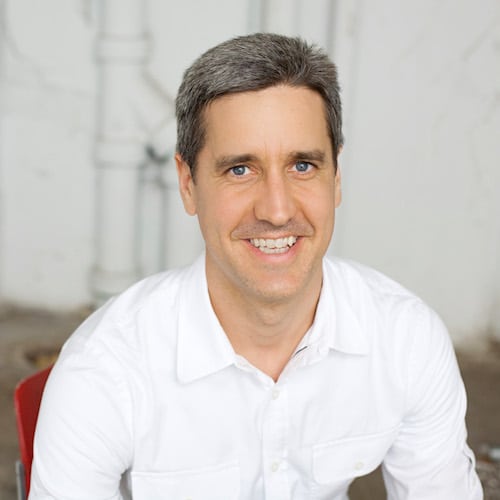
Brian Murray is the CEO and Founder of Shift Capital, a Certified B-Corp impact real estate group headquartered in the Kensington neighborhood of Philadelphia, and focused on aligning capital and philanthropy with underserved communities.
Brian didn’t start his career in real estate. He started his career at Pricewaterhouse-Coopers as an auditor and quickly moved into the technology space where he helped found two startups. A stint in the Peace Corps, building community in Bulgaria, and an MBA from the Yale School of Management, followed.
While in graduate school Brian observed the growing interest in impact investing. At the same time he made his first real estate investment and discovered the importance of socially minded development. And with this his journey into real estate was complete. He fell in love with the process of developing real estate where it matters. All of these things come together in Brian, a man focused on doing well by doing good.
Together, on this podcast, Eve and Brian explore the challenge of developing real estate for purpose.
Insights and Inspirations
- Brian proves that it’s possible to have a robust real estate business focussed on under-served neighborhoods.
- Community engagement really means embedding yourself and becoming part of that community.
- Finance is at the core of making change. We need financial institutions and the philanthropic world to step up and make it possible to build much more real estate in neighborhoods that need the investment.
Information and Links
- Shift’s latest inclusive project is Jumpstart Kensington a real estate accelerator for the Kensington community.
- RevErie, staged by Shift, an event at the nexus of art, citizenry and community designed to uplift and inspire.
- The Reimagine Storefront Challenge is an inclusive development strategy to reactivate storefronts on Kensington Ave.
- Urban Action: Kensington Gateway, a collaboration with UPenn, Penn Praxis, Olin, New Kensington CDC and Hinge Collective seeks to activate a severely challenged intersection with thoughtful, community-informed designs for public open space.
Read the podcast transcript here
Eve Picker: Hey, everyone, this is Eve Picker. If you listen to this podcast series, you’re going to learn how to make some change. Thanks so much for joining us on this podcast. I’m Eve Picker, and my life revolves around cities, real estate, crowdfunding, and change. In this podcast series, we’ll be digging deep to discover how we can build better cities by building better buildings.
Eve Picker: I’m excited to have Brian Murray as my guest today. Brian is the co-founder of Shift Capital, an urban real-estate group focused on mission-oriented projects in under-served Philadelphia communities.
Eve Picker: Brian didn’t start his career in real estate. He started traditionally at PricewaterhouseCoopers as an auditor, and then helped found two startups. The itch to do good was with him, so he joined the Peace Corps, and found himself in Bulgaria on the ground doing community development work.
Eve Picker: The journey into real estate was completed when, once back stateside, he invested in a real-estate project in Philly, and fell in love with the development process. All of these things come together in Brian, a man focused on doing well by doing good.
Eve Picker: If you want to know more about Brian after you’ve listened to this podcast, please visit EvePicker.com, where you’ll find links and other goodies on the show notes page, and where you can subscribe to my newsletter on all things real-estate impact.
Eve Picker: Welcome, Brian and thank you very much for joining me. I wanted to start by just diving into your background a little. I know you have a company called Shift, and I’m really wondering what led you to this point in your life?
Brian Murray: Sure. First off, thanks for having me, and Shift on. We’re really excited to connect with you, and share more so. I guess, background, I started off as an accountant. I graduated college and went to work for PricewaterhouseCoopers. I left that very, very quickly, knowing that that’s definitely not what I wanted to do with my life, and went into the tech world.
Brian Murray: It was 1999, and 23 was a well-seasoned age to be in the tech world at that time. I had a venture that- my first venture went belly up, and I decided that I wanted more out of life, and didn’t want to be chasing- just to be chasing dollars. I joined the Peace Corps. I spent a few years in the Peace Corps in Eastern Europe, in Bulgaria, and got introduced to a few core concepts that have really underpinned where I am today.
Brian Murray: One is that the Peace Corps is one of the most incredible organizations at putting people on the ground in communities, embedded in communities, listening to communities. Really got a understanding of how trust needs to happen on the ground level.
Brian Murray: I also learned what does economic-development planning look like when it actually gets to the ground? That was a little eye-opening to see the disconnect between a lot of dollars flowing through the non-profit, and international-development space, and then what happens actually on the ground.
Brian Murray: The third piece, I was introduced to social enterprise. I was volunteering with an organization that launched the first social-enterprise program in Eastern Europe. I really fell in love with the idea of doing well, and doing good.
Brian Murray: Came back to the States; went back into the tech world for a few years before heading off to business school to try to marry my love for entrepreneurship, and my love for social change, and positive social change.
Brian Murray: I thought I was going to go into the impact-investing space, so I went to work for an organization called Acumen Fund, which is a non-profit venture-capital group that invests in businesses serving populations in India, Pakistan, East Africa. We invested in entrepreneurs that were providing solar-powered lights, clean water, healthcare.
Eve Picker: Was introduced to this growing world of impact investing, which is the dollars that want to make a return, but also to do good with that return. Exactly at that time – I’m originally from the Philadelphia area – when I was in business school, I was approached to invest in a small real-estate deal in Philadelphia, which I did as a side project.
Brian Murray: We invested in a neighborhood, A lower-middle-class neighborhood in Philadelphia. We bought a note from a bank; a 30-unit building that was completely run into the ground by what I’ll call a classic slumlord … I apologize. You want me to restart there?
Eve Picker: No, no. I was going to interject, and say that was the beginning of the end, right?
Brian Murray: I fell in love with-.
Eve Picker: Yes! I knew that was coming.
Brian Murray: I fell in love with, and really understood the power of real estate in people’s lives. On one hand, I realized what kind of capital usually flows through these neighborhoods, and realized that if I could wake up every day, and be a good landlord, I would be doing the world a good service. I jumped in with two feet, at that point.
Eve Picker: Be sure to go to EvePicker.com, and sign up for my free educational newsletter about impact real-estate investing. You’ll be among the first to hear about new projects you can invest in. That’s EvePicker.com. Thanks so much.
Eve Picker: I’m not surprised. That’s a great story. That’s a pretty interesting road that got you there. I suppose the next really big question I have is do you think socially responsible real estate is necessary in today’s development landscape? What have you observed, overall, now that you are a developer, and a landlord?
Brian Murray: I would say that 95 percent of the capital that moves through the under-served communities that we work in is exploitative capital, and exploitative in a economic model that is slightly upside down, that does not incentivize even folks who probably want to do some good in the right ways.
Eve Picker: The importance of capital that is thinking about community, working with community, thinking about different ways in which capital can be layered to make it more effective, I think, is critical, in an age right now, where it feels a little bit like feast or famine; gentrification or poverty. There’s not a lot of discussion of anything in between. This is a role that I think this type of capital, and this type of impact developer needs to really …
Brian Murray: Not only do we need to bring it to the table, but we also need to raise/grow/nurture/support the next generation of real-estate developers, with a particular emphasis on, I think, developers of color, women developers, developers that are coming out of lower-income communities, because they are the ones that know their communities best, and are best suited to tackle needs, and challenges, and be aligned with communities.
Eve Picker: I’d love to drill down into that. Do you have an example of a good use of capital flowing through those communities, and maybe another example of a bad use? I’m sure you’ve thought about this, Brian.
Brian Murray: Yeah. Well, let’s talk about the bad first. In the neighborhood we work in, in Kensington, there was a portfolio of properties that blew up. These are housing – probably about 300 to 400 units – that were owned by someone who was literally called the slumlord millionaire.
Brian Murray: He was taking appraisals- creating fraudulent appraisals, and borrowing money, and then not putting it into the housing, and renting them out in their condition.
Eve Picker: Wow.
Brian Murray: This is a larger example, but there’s a lot of small examples of this on a daily basis. In neighborhoods, in Philadelphia, where we have the highest poverty- we’re the highest-poverty big city in the country, and we have housing where the comparable sales on a three-bedroom/one-bath is about $50,000. When you’re that low, it’s very difficult to renovate, and do the right thing, or to incentivize the capital markets to do the right thing in those neighborhoods.
Eve Picker: Yeah.
Brian Murray: On the good- on the right side, those who are investing the right way, and are renovating the right way are starting to see – again, in the neighborhoods we’re working in – that people are willing to pay more for a better house.
Brian Murray: Even though we’re talking about lower-income neighborhoods, and even though we’re talking about maybe 60 percent of adjusted median income, a hundred dollars more for home, in terms of rental, allows that landlord to get a lot more done; to add air conditioning, for example; add newer bathrooms, and kitchens.
Brian Murray: People in these communities do still recognize value, and higher quality. Although it’s still significantly below 80 percent of AMI, for example, when you deliver a better product out into even lower-income communities, people really respond to that. We’ve seen that firsthand on a small level, and we’ve seen that firsthand in even the commercial world, as well. I think that’s a market opportunity.
Eve Picker: Yeah, I agree with you. 300 units that are being abused in a neighborhood is quite a large block of units, and can have a really terrible impact. I thought maybe you could tell us about a current project you’re working on that you’re excited about that moved the needle in the right direction? I gather you work solely in this one neighborhood in Philadelphia, is that true?
Brian Murray: We have a fund that we’ve invested in two neighborhoods in Philadelphia, both along public transportation. Everything we have acquired, and are developing are within a five-minute walk to one of five subway stops.
Brian Murray: We just closed on financing for the one project that I’m super-excited about. This was a building in the Kensington section of Philadelphia, near the Tioga Station, for those of your listeners who might be familiar.
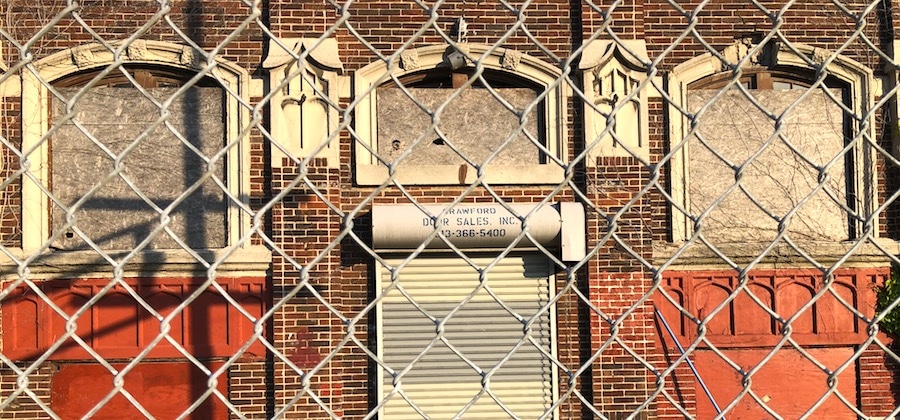
Brian Murray: It’s a project called J Central. It’s a 140,000-square-foot building. It sits right on the main commercial quarter, called Kensington Avenue, which has had its challenges with the opioid crisis, in particular. We are creating the first multi-family in the neighborhood. It will end up being 130 units with a full first floor of retail on the bottom floor, and maker spaces.
Brian Murray: What’s exciting about this project is that our ambition is for this to be the most civically engaged building in the country. What that means is we are going to be providing any person who rents from us in this building with a rent rebate, for every four hours a month that they volunteer in the local community.
Brian Murray: We’re setting up a whole series of programming, and volunteer opportunities within probably about five or six organizations that are not only locally located, but also driven by local issues, and local challenges.
Brian Murray: On the front end, we’re definitely filtering folks who are going to come in this neighborhood who want to be a part of such a program. Then, this building, on a monthly basis, should be delivering hundreds of hours of volunteer hours into the neighborhood.
Brian Murray: Our goal with this, and this is on the residential; the commercial’s another piece … The residential, what’s exciting about this is one of the challenges of investing in lower-income communities is trying to responsibly create mixed-income communities.
Brian Murray: We do need people who have discretionary income to spend dollars with local businesses, so that we can support that type of work. At the same time, many neighborhoods have had the trouble of having a complete communication disconnect between what’s called the new, and the existing community.
Brian Murray: This is a fantastic way, we think, to break down those barriers on both sides, where people coming in now get to know their community better, and the community gets to know them better; hopefully building a level of trust on the residential side. On the commercial [cross talk] go ahead.
Eve Picker: I was going to say that on the residential side, we did an offering on Small Change in Chicago, with a group that- they created something called Innovation Houses – I think I need to introduce you to Jay – where they give neighborhood volunteers reduced rent in exchange for services in the neighborhood, but they’re also really trying to create sort of the next generation of leaders in that neighborhood, which is a pretty remarkable ideas. Thinking along the same lines, slightly differently.
Brian Murray: I love it. I would be happy to connect with them. The commercial side of this building will also house a Vietnamese coffee group that we’ve home grown in our other building, but also the IF Lab. It sounds like this is very similar to Chicago.
Brian Murray: This is an incubator, and a business-services space on the ground floor that is targeted on under-served businesses, and specifically trying to put that kind of incubator mentality … Instead of having it in Center City, have it in the neighborhood, as well.
Brian Murray: The group behind that has had- it’s an incredible multimedia agency here in Philadelphia that has, in the past, launched something called the Institute of Hip Hop Entrepreneurship, which was also a incubation-style programming. We’re going to try to bring that all into the community, as well.
Eve Picker: It sounds fabulous. I hope I get to see it when you’re finished. It sounds really great. Of course, this only is the tip of the iceberg, right? What would you hope that we trend towards in the next 10 to 20 years?
Eve Picker: We’ve seen gentrification take hold of neighborhoods really rapidly in many cities. San Francisco is having especially difficult issues right now with many people being priced out of housing. It seems almost too big to solve. I wonder if you have any thoughts about that?
Brian Murray: Yeah, we think about it every day. I’m not sure that we have full answers, but I think we do have a number of ideas behind that. I believe that the work that you’ve done, and what’s going on nationally with Opportunity Zones has made these discussions even more important.
Brian Murray: One, going back to what I said before, I think we really need to focus on developing bridges, and doors for developers of color, and women developers. I think that that’s absolutely critical to the future.
Brian Murray: I believe that we need to bring more powerful tools into communities, and financial tools, specifically. We are working here in Philadelphia on creating a Neighborhood Trust to go alongside our work, where we’ll start to also buy up properties that will allow some of this capital to not only stay in the neighborhood, but then be used to help the neighborhood.
Brian Murray: I believe we need to be more aggressive in cities that are not San Francisco, or D.C., or New York in providing cities and public/private partnerships with more tools to aggressively buy up housing while we can. Those tools-
Brian Murray: The foundation world has been sitting on the sidelines. They have endowments, and they have lots of capital to bring to the table, so we’re very much pushing for trying to move the needle on trying to bring more financial tools, concessionary capital, other types of capital that can perform differently, and act differently than the marketplace.
Eve Picker: Personally, I also think that there’s some governmental work that has to happen. Often, gentrification is sort of the last step in numerous things that have happened over decades. Most cities are really not thinking about that, 20 years prior.
Eve Picker: Just one of the examples I think about often is the way that properties are taxed. Certainly, if you’re in a neighborhood – if you’re aging in a neighborhood – and that neighborhood suddenly has much more value, and the property values are being reassessed every year, or every two years, and all of a sudden you have a really hefty bill, that’s a problem for someone who wants to stay in place, or age in place, who’ve lived there for a long time.
Eve Picker: I think there are ways to think about that differently so those people can stay. It’s just one little tool, but I think there are other ways beyond finance that we could think about these problems before they happen. You’re right, maybe more aggressively in cities where it hasn’t happened yet.
Brian Murray: This is where the opportunity is, and you’re right, the public-policy side of it around protecting homeowners, providing homeowners with more micro-tools to renovate in place, I think, are all part of a more comprehensive strategy that … At this point [inaudible] the federal government here, it really needs to happen on local levels. H
How we go about- where that leadership comes from, it could come from the private sector. It could come from the community development sector, but it really should … A lot of this needs to be really spearheaded by the government sector; really, they’re the ones that should take that 10,000-foot view, and be looking at all pieces of it.
Eve Picker: Yeah, I think it’s very easy, at the end of the day, to say gentrification is the developers’ fault, but developers come in all shapes and sizes, like you, me, and other ones. Developers also have to take opportunities.
Eve Picker: I’ve seen this happen often. By the time developers step in unthinkingly into a neighborhood that is already transitioning up, it’s too late. They’re there because it’s already worth more. I just think we’ve got to step back decades to really understand what’s going on. Anyway, that’s my personal thought.
Brian Murray: Just to build on that, one of the things that we’re working on, and hoping to push out to the world is this idea of, okay, let’s talk about the adjacent neighborhood. We’re talking a lot about Opportunity Zones, and the opportunities to try to stem the gentrification in those neighborhoods, but, to your point, we need to start looking out 10-20 years in advance.
Brian Murray: Some of the tools that we need are for those neighborhoods that the typical developer is not looking at. I think the other thing that is really important to us is measuring impact, because we all … We’re guilty of it, and the community development community is guilty of this, and even the hardcore real-estate community is guilty of mislabeling what is gentrification.
Brian Murray: As a result, we have some communities that there’s a strong NIMBYism going on, and it’s a opportunity to educate, and think deeply about what change means, and who gets to participate. I think that measuring impact of change in neighborhoods, it’s critical to us to understand what’s going right when- on the economic-development front, on the wealth-building front, on the inclusion front. Then being honest about what is not going right. We paint a very broad brush when we just, “Oh, that neighborhood gentrified.”
Eve Picker: That’s right. I’m thinking of a couple of examples in a neighborhood I know well, where after a developer had- before a developer had built a new house in that neighborhood, the neighboring property was probably worth $20,000. The woman who’d lived there for decades, and had very little value in that asset, she really couldn’t- it really wasn’t worth putting a new roof on it.
Eve Picker: After the house was built on the vacant lot next door, it was worth- her asset was worth a lot more money, so that added value in the neighborhood; did something good for the person who’d been sort of struggling in this neighborhood that was basically disenfranchised. That’s the good side of- I wouldn’t even call that neighborhood gentrified, but the good side of increasing values in a neighborhood that we don’t talk about.
Brian Murray: That’s right. We did a study of thinking about the type of equity wealth-building that would happen in the neighborhoods we’re working in. There’s a home-ownership rate of – depending on the block – anywhere between 40 and 50 percent in these neighborhoods.
Brian Murray: To your point, the house that, on paper, is worth $20,000, well, if we do this work, and the neighborhood becomes safer; even if we see an increase of value in a typical row home, from $20-$30,000 to $100,000, homeowners in this neighborhood will be building $400 million of equity.
Brian Murray: Now, I think you pointed this out before, there needs to be real policy interventions when it comes to what does that mean for increase in property taxes, and other components that could be problematic?
Brian Murray: If we look at what happened, in particular, in the African-American community, it’s been pretty well-documented that the wealth-building opportunities that white America had, as it fled to the suburbs … I’m a family that benefited in this way. That was what got me to college, for example.
Brian Murray: Thinking about how we educate urban communities about building wealth, and what it means, and how does it work … Providing the opportunity for them to make the choices that make sense for them, I think, is just so critical to this conversation about gentrification.
Eve Picker: It’s a very complicated conversation, and I think, too often, it’s just painted with one immediate response, which isn’t always accurate. Very, very difficult. You also talked about community engagement tools that you learned early on, when you were in the Peace Corps. Community engagement’s really tough, and I’m wondering how you go about it for your projects, and what you think works?
Brian Murray: I guess what we’ve done, and tried to do is to build engagement up and down our entire ecosystem. We do our own property management. We do our own development. We do some of our own construction. We have hired local. We talk about engagement with everyone from the guy we send out to fix the toilet to the guy, or woman running our construction team.
Brian Murray: The opportunities for engagement are as simple as being in the street, listening; learning and understanding what are some of the daily problems of the community, inasmuch as it is, in a more traditional real-estate way, when we engage the community on a variance we need when it comes to a project, and what that might mean, and the input that we need …
Brian Murray: Those are just some of the basic underpinning philosophies of Shift, but beyond that, then we really try to put it all to the test, in reality. In the last probably 24 months, I can share with you probably four or five different projects; I’ll just name one or two.
Brian Murray: One most recent is that we engaged the local charter school to actually … As part of their curriculum, they are doing art projects on plywood that we’re using to board up vacant housing in the neighborhood. They’ve used it to tell their own stories about the trauma that vacancy has brought into their neighborhood. It’s just been absolutely eye-opening.
Brian Murray: We also launched a program called Jumpstart Kensington. Jumpstart Kensington is a real-estate accelerator for people in the community. The argument, or the challenge that I keep going back to is who gets a chance to participate in the upside of a neighborhood? When a community understands that their neighborhood is changing, do they have the tools, the access to capital, the knowledge to go out, and start perhaps buying, renovating, renting, building equity in their own way?
Brian Murray: We created a program; it’s a real-estate accelerator, where we provide a series of workshops, mentorship, and now, with the help of our nonprofit partner, and J.P. Morgan, we have funding available. We’ve brought 65 people through our program to date, of which probably about 90 percent are a person of color, and a woman.
Eve Picker: That’s a pretty fabulous. That’s a really great outcome. Have any of them had success with real-estate projects in the neighborhood, or are they coming from other neighborhoods, or are they solely from the ones you’re working in?
Brian Murray: Just like life, it’s a [inaudible] everything. It’s a little bit more complicated to paint a broad stroke, but what I can say is that yes, yes, and yes-
Eve Picker: Okay, very good.
Brian Murray: There’s some who come from other neighborhoods. There’s some that are just getting some properties up and going now. We’re trying to figure out the right cadence to help support them.
Eve Picker: That’s great. The other thing you talked about was wealth-building in the neighborhoods. I’m wondering if you think that equity crowdfunding can play any sort of role in building communities for everyone?
Brian Murray: Absolutely. I think there are real opportunities within almost any neighborhood project, and it could be small; it could be large, and meaningful, but I think that the-
Eve Picker: Hold on a second, small can be meaningful, Brian!
Brian Murray: Oh, absolutely … I meant … Sorry, thank you for correcting me there.
Eve Picker: Don’t apologize.
Brian Murray: I would say financially meaningful for the project.
Eve Picker: Yes, that’s correct.
Brian Murray: Both of them have roles. I was going to argue that especially the small amounts are educational opportunities. They might not necessarily always be wealth-building opportunities for the community, but they’re certainly an exciting way in which to bring people into the process; understand the process; understand what happens behind the scenes in a real-estate project. Then, of course, have some pride, and ownership over their own community.
Brian Murray: Whether it’s really truly, again, financially rewarding work with the psychological side of it, I think both of them have an unbelievable power when it comes to the type of work that you’re doing, obviously, and we’re doing, too.
Eve Picker: Then, the next question is where do you think the future of real-estate impacting … Impacted … Sorry, I’ve got to say that again.
Brian Murray: Sure.
Eve Picker: Where do you think the future of real-estate impact investing lies? I’m asking this because I hear- my personal experience is that I hear a lot of people … Perhaps pretty startling statistics, like 85 percent of people who have managed portfolios are now looking for some sort of impact, or social responsibility in their portfolio. That’s a really big number, but I am still to be convinced that impact investors will actually accept a lower return.
Eve Picker: That really complicates things, in my mind, for neighborhoods like the ones you’re working in, and, actually, most Opportunity Zones, where it is really difficult to find – if it’s really, truly an under-served neighborhood, which was the intent of that legislation. It’s very difficult to find a project that can really return to a bigger-pocket investor the sorts of returns they typically expect.
Brian Murray: I deeply- I don’t want to say troubled, but I think you’re right. My experience has been that even among the “impact-investing group” there is not yet a strong desire to increase risk at potentially decreasing returns slightly.
Eve Picker: Yes.
Brian Murray: I believe that- I think that there are a few reasons for that, and part of that’s my own experience here. People who traditionally had- people who are real-estate investors – I’m painting a really broad stroke here, but it’s not that far off – have typically been real-estate investors in the past. Either their family has been; they were in the business; they know the business very well.
Brian Murray: Impact investors don’t know real estate well. They are just starting to dip their toes in on platforms like your own, and it’s hard to discern what is risk in real estate, and what is risk …
Brian Murray: There’s lots of levels of risk in real estate, as we all know but now we are adding an additional risk here, which, I’ll be frank, having now been doing what we’re doing, I think that there’s more risk, as a real-estate investor, investing in Center City, downtown high-end rental markets than there is in working in lower-income communities, where demand drivers are just absolutely enormous-
Eve Picker: I agree with you. I agree with you.
Brian Murray: It’ll just take some time, I think, for us, and I mean that in this very collective ‘us’ of, as you know, lots of really great, fantastic groups doing this work on the ground to continue to educate, to do what you’re doing, by providing this access to these incredible projects, and really continuing to push that education process.
Brian Murray: Also, growing these type of value-driven developers, and making sure that we’re continuing to prop them up, give them- make sure that the light is getting shined on their work – good and bad. Sometimes, it might not always work out, but I think we all have that duty to do that. That’s where I think we all need to go as a group.
Eve Picker: I agree with you. I’m going to end this conversation with three sign-off questions that sort of, I suppose, summarize what we’ve been talking about. The first one is what do you believe is the key factor that makes a real-estate project impactful?
Brian Murray: A project that the community has a real say in; that the community has access to the process, and, in the best-case scenario, where the community has a benefit from that project, as well.
Eve Picker: The second question is, other than just raising money, how do you think involving investors in crowdfunding might benefit impact real-estate developers? Can the crowd do more than just raised money for projects?
Brian Murray: Wow, that’s a fantastic question, and I would turn that back to you. I think you’re … I don’t have an immediate reaction on that, except for, yes, I believe that there are probably ways that investors can play a … Investors connecting to projects through crowdfunded sourcing can probably crowdsource other resources that could help developers, and specifically their projects. I think it’s a great idea.
Eve Picker: One think I think about, just as an engagement tool for someone like you, if you crowdfunded a small portion of a project in your neighborhood to the people in the neighborhood, now you have a pool of people who are really standing behind you, and what you’re doing.
Brian Murray: That’s right.
Eve Picker: Maybe that helps at a zoning hearing, or maybe it helps in some other way that we haven’t thought about. I think that was my idealistic goal in Small Change is that … You and I have seen, in cities like Pittsburgh, and Philadelphia, how much people want to be involved in the place they live in, so this was a way to give them access beyond just talking about it. I don’t know. I’m sure there’s more that I hadn’t thought about but-
Brian Murray: No, I think that’s great.
Eve Picker: Yeah, and then, finally, and this is the really big question, which you probably have thought about, is how do you think real-estate development in the United States should be improved?
Brian Murray: We need to work with the banks to mandate, and improve ways in which real-estate financing happens, so that it’s not just the usual incumbents that have access to the type of capital that these projects need.
Brian Murray: Singlehandedly. I think there’s a systematic problem with access to financial markets, to the networks that create opportunities to raise equity. That circle is very small, and it’s very difficult for new developers, new entrepreneurs, to access- to break in. It’s just too high of a barrier of entry.
Eve Picker: I totally agree with you, and that, again, is why I’m doing what I’m doing. I hope there’s a friendly Philadelphia banker out there listening to this, who might start some process that helps the developers your training. In any case. I really enjoyed this conversation, and thank you so much. I’m sure we’re going to talk again soon.
Brian Murray: Thank you, Eve. It was great. I love what you’re doing. I love what it represents for the industry, and I just want you to keep doing what you’re doing.
Eve Picker: Okay, thank you, bye. That was Brian Murray. I hope you enjoyed listening to him as much as I enjoyed talking to him. Brian gave me three great takeaways. First, it’s possible to have a robust real-estate business focused on under-served neighborhoods. Second, community engagement really means embedding yourself, and becoming part of that community. Third, finance is at the core of making change. We need financial institutions, and the philanthropic world to step up, and make it possible to build much more real estate in neighborhoods that need the investment. What did you learn?
Eve Picker: You can read more about Brian on the show notes page for this podcast at EvePicker.com. While you’re there, please consider signing up for my newsletter to find out more about how to make money in real estate, while making some change.
Eve Picker: Thank you so much for spending your time with Brian, and I, today. We’ll talk again soon, but for now, this is Eve Picker signing off to go make some change.
Image courtesy of Brian Murray, Shift Capital