• Skip to main content
  • Skip to secondary menu
  • Skip to primary sidebar
  • Skip to footer
  • Home
  • About Us
  • Say hello
Rethink Real Estate. For Good.

Rethink Real Estate. For Good.

  • Podcast
  • Posts
  • In the news
  • Speaking and media
    • About Eve
    • Speaking requests
    • Speaking engagements
    • Press kit
  • Investment opportunities

Community

Ripe for disruption.

July 20, 2019

For many years the dirtiest word in the real estate development lexicon was innovation. Industry players were set in their ways and approached community development in the same manner, over and over. Like many other industries- from automobiles to airplanes- reality hits at some point. The old ways of doing things become less and less effective and buyers, community groups and local governments start demanding more from those shaping their neighborhoods. The world of real estate development is ripe for disruption.

Adopting best practices from other sectors

One of the best ways to succeed in life is to emulate successful people. The same logic can be applied to business. Developers who study the successes of other industries and apply that knowledge to community development will gain a substantial edge over the competition. An excellent example of this cross-industry pollination is real estate crowdfunding.

This form of fundraising took off in the nonprofit and manufacturing sphere with the help of early platforms like Indiegogo and Kickstarter. But these platforms were purely donation based. Soon, a few forward-thinking business advocates and investment professionals saw an opportunity to move the crowdfunding industry from donation based to investor based. With the help of the US government, the JOBS Act of 2012 made it possible to crowdfund investment opportunities and the real estate industry soon jumped in. They saw an opportunity to use the new crowdfunding regulations not just for business raises, but also real estate deals. Soon numerous crowdfunding platforms emerged, forever changing how the industry raises capital.

Developing for people

Many of the worst mistakes in the real estate industry occur when companies take a short-term view such as building endless rows of homes without thinking about how to make the community sustainable (with shops, community centers, restaurants and the like). Developers can avoid this pitfall by engaging with the community and creating vibrant spaces that take into account the needs and desires of residents, as well as the eventual return on investment for the company. Identifying customer needs is critical, which leads me to my next point:

Build for the market

It isn’t enough to build the ideal community. If most people can’t afford to live there, your efforts are for naught. We need to think about housing everyone. One of the major contributing factors to our current affordability crisis is that developers are building almost exclusively for the top end of the market. This focus on luxury developments leaves the vast majority of people, who are low and middle income, out in the cold. Developers need to create communities that are not just for the well-heeled. This will not only result in more sustainable communities, but it will also allow developers to generate income by working with traditionally underserved communities.

Take the environment into account

Environmental impacts have a dramatic effect on the livability of a given community. Think about the best neighborhoods in your city. Are they located next to industrial sites or garbage dumps? Probably not. The industry as a whole has made significant progress in green development over the past decade or so, but still has a long way to go. Incorporating solar, advanced insulation, power and water-saving appliances, along with other environmentally beneficial attributes is integral to making a community viable for the long-term.

Explore secondary cities

Every developer dreams of building a gleaming tower in the heart of Manhattan or Chicago. Secondary cities like Tampa or Cleveland? Not so much. By staying focused exclusively on high-dollar markets like Manhattan and San Francisco, developers are leaving money on the table. No one can tell you when the market will slow down. When it does slow down, developers will find that selling $3 million condos in San Francisco’s Financial District might not be as easy as it is now. Secondary cities provide a terrific opportunity for developers to get in on the ground floor. And many secondary cities need investment. Find a city you love, and nurture it as an investment opportunity.  Be in it for the long haul and bring value to the people that live there as well as for yourself.

_

In any business, if you fail to adapt- you die. Just ask the shareholders of Eastman-Kodak and Pets.com. To compete on a high level, developers should keep an eye on the future and always be on the lookout to improve their process, and the communities they work in.

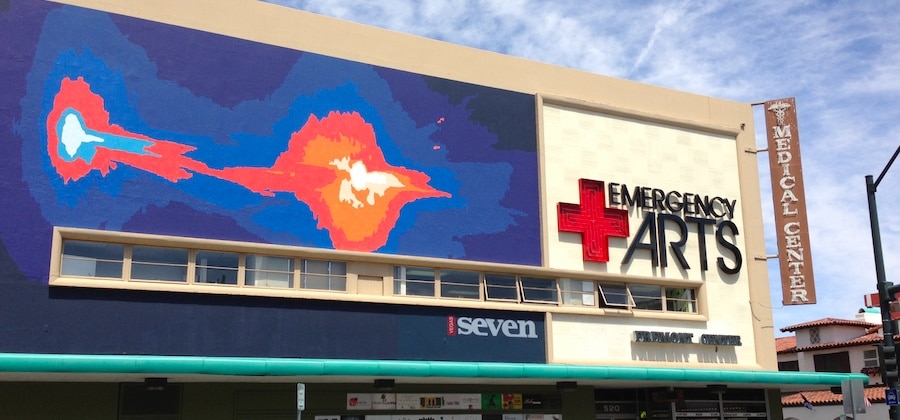
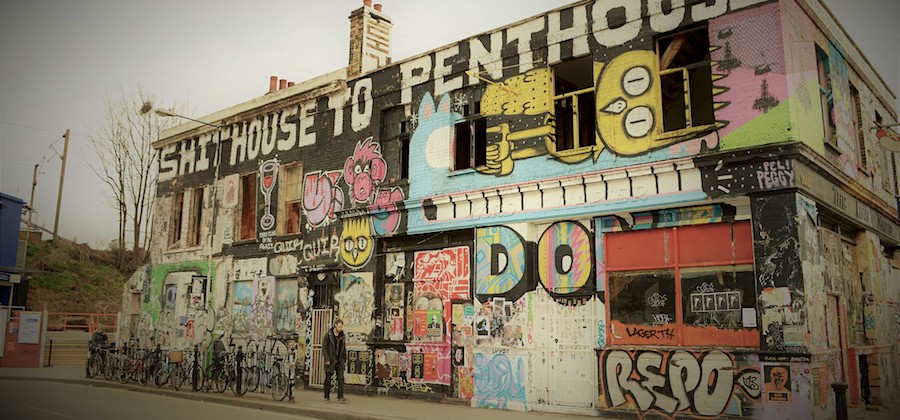
Emergency Arts in downtown Las Vegas, image by Eve Picker

Wealthy Wellthy.

July 19, 2019

The Wealthy Wellthy podcast series is the latest venture of Krisstina Wise who has been named one of the 100 Most Influential Real Estate Leaders in the country, been featured in USA TODAY and lauded by Apple for creative leadership with emerging technologies.

Krisstina is a real estate mogul and founder of several businesses, but after coming close to death she realized that wealth is not so important if you don’t have good health. So she embarked on a search of the real truth behind wealth and health in her podcast series, Wealthy Wellthy.

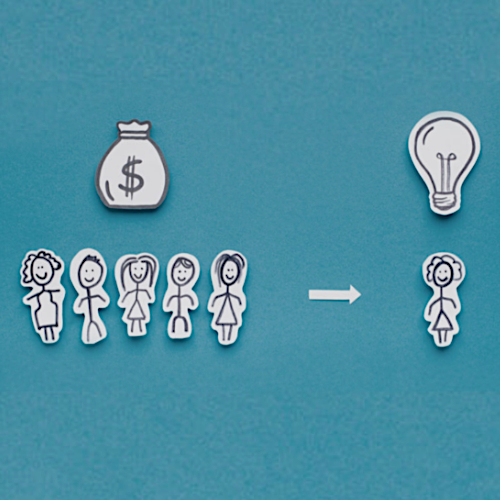
In this episode, #144 – Fund Your Next Project Faster, Krisstina talks with Eve Picker about Eve’s take on real estate. Find out how myths get busted and impact gets made through investing and real estate.

Image courtesy of the Wealthy Wellthy podcast

Make your impact count.

July 18, 2019

Impact investing is having a moment. Investors as well-heeled as Bill Gates, and as humble as your average college kid, are trying to find ways to “save the world” while also generating returns. This newfound desire to use the markets to affect change is a positive development, but like any other investment, impact or not, there are risks involved. Making the wrong decisions could lead to inadequate returns and even lost capital- not to mention the lack of an impact in an impact investment!

Research is key

Just like with any other investment, you need to do your due diligence. Usually, this would require a detailed review of the company’s financials, their market, competitors, etc., or in the case of real estate, it would be your own analysis of the area.  If you want to make a positive difference, you also need to research how your investment will affect the community.

For example, if you are planning to erect a multifamily building in an underserved neighborhood, will current residents be able to afford it? Will anyone be displaced by the construction such as neighborhood businesses? It is up to you to learn how your investment will shape people’s lives. You can find the hard data online: employment statistics, population growth, school district ratings, and other metrics that can help you understand the numbers. To create something that fits into the neighborhood, and creates a positive impact, you need to do more.

Use a dynamic planning process

Inviting all stakeholders- community, government, and business- to participate in a dynamic planning process can help you find the answer to those questions and give you firsthand data about the concerns and needs of a given neighborhood. If you use this process, you can use it to teach, recruit, and garner support for your project.  By addressing people’s needs, you can build projects that are poised for long-term success- because they fill a need in the community. 

Crowdfunding to raise sustainably-minded capital

Instead of trying to explain your vision to a traditional lender, you have the option of raising capital using crowdfunding- and even raising money from the same community in which you will be developing. This makes your future neighbors and prospective residents direct stakeholders in the project. You can also connect with socially-oriented investors online, and if your project gets in front of enough eyes, you will run into some people that share a sustainable development philosophy.

Sustainability as survival

Creating better communities is a net positive for developers, residents, and investors. The concept stands on its own merit, but what about investors who don’t particularly care about long-term growth? To be blunt, those investors are dinosaurs, and will likely suffer by holding such a myopic view. Development projects do not happen in a bubble. They are part and parcel of our broader society.

The strategies these investors employed in the past are becoming less and less profitable due to a combination of increased regulations and pushback from local groups.  From a purely rational standpoint- is it advantageous for you or your company to stick to old ideas, or to embrace new models that are slowly but surely gaining market share? Adopting more sustainable models is not only beneficial for society- but it may be for your long-term bottom line.

_

In any business, no matter how well-intentioned you are, if you fail to take into account customer needs, you will not be successful. As a developer or investor, your customers are your future tenants – if you can meet or exceed their needs while generating returns- everyone wins. 

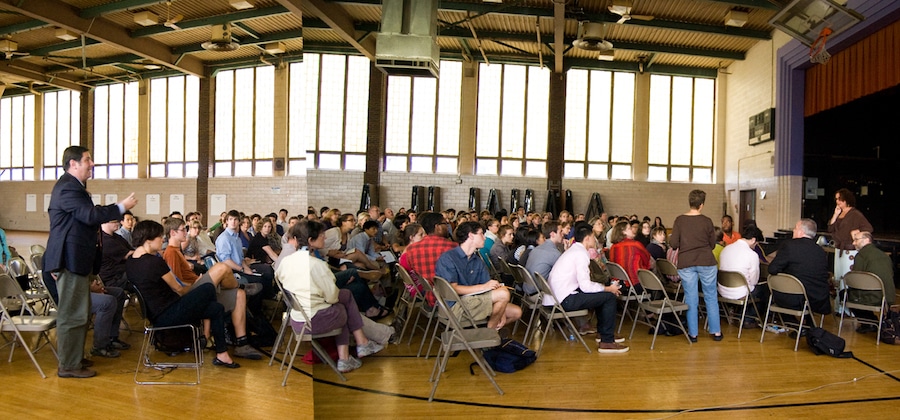
Garfield community meeting, image by cityLAB

Striving for justice in Arizona.

July 15, 2019

Kimber Lanning is dedicated to making Arizona a world class destination and is fiercely proud of the culture of the region. Specifically, Kimber hates injustice. She wants to leave Arizona a better and more just place than she found it. To this end, Kimber founded both Local First Arizona and Local First Arizona Foundation, two statewide organizations that work together to strengthen Arizona’s economy. She’s grown Local First Arizona into an organization with five statewide offices with 28 employees who work on a diverse array of programs ranging from healthy local food access, entrepreneurial development in underserved communities, and rural community development, each of which plays a part in building sustainable and resilient local economies. and Local First Arizona Foundation is leading the nation in implementing systems and policies to ensure a level playing field for entrepreneurial endeavors and communities of all sizes.

Lanning has received national numerous awards for her diverse work and extensive leadership and speaks regularly around the country. Her work in promoting adaptive reuse in Phoenix’s urban core was recognized by the American Planning Association, who presented Lanning with the Distinguished Citizen Planner Award in 2013. She has also been named one of the “50 Most Influential Women in Arizona” (Arizona Business Magazine, 2011), was the recipient of the Athena Award by the Greater Phoenix Chamber of Commerce in 2013, and was named Citizen Leader of the Year from the International Economic Development Council.

And if that’s not enough, Kimber opened Stinkweeds, a record store, when she was just 19 years old, and has moved the store 4 times over the past 27 years.

Insights and Inspirations

  • The odds are stacked against small businesses – they are not bankable.
  • Kimber is working to stop displacement that is expected when a new light rail is built in a racially segregated section of South Phoenix. It’s an uphill battle.
  • One passionate person like Kimber can make an enormous difference in many people’s lives.

Information and Links

  • Kimber wonders whether community investment trusts can help slow down gentrification, like this project in Portland.
  • Kimber loves this Local First program called FOR(u)M because it brings together the development community to talk about better designs for healthy communities.
  • She just learned about the Incremental Development Alliance recently and LOVES learning more about their work.
  • The Boston Impact Initiative is a beautiful organization in Boston doing amazing work building equity and ownership.
Read the podcast transcript here

Eve Picker: Hey, everyone, this is Eve Picker, and if you listen to this podcast series, you’re going to learn how to make some change. Thanks so much for joining us on this podcast. I’m Eve Picker, and my life revolves around cities, real estate, crowdfunding, and change. In this podcast series, we’ll be digging deep to discover how we can build better cities by building better buildings.

Eve Picker: Today’s feisty guest is Kimber Lanning. Kimber is dedicated to making Arizona a world-class destination and is fiercely proud of the culture of the region. Specifically, Kimber hates injustice. She wants to leave Arizona a better, and more just place than she found it. To this end, Kimber founded both Local First Arizona, and Local First Arizona Foundation – two statewide organizations that work together to strengthen Arizona’s economy.

Eve Picker: She’s grown Local First Arizona into an organization with five statewide offices and 28 employees, who work on a diverse array of programs, ranging from healthy local food access, entrepreneurial development in under-served communities, and rural community development – each of which plays a part in building sustainable and resilient local economies. If that’s not enough, Kimber open Stinkweeds, a record store, when she was just 19 years old, and has moved the store four times over the past 27 years.

Eve Picker: If you want to know more about Kimber after you’ve listened to this podcast, please visit EvePicker.com, where you’ll find links and other goodies on the show notes page, and where you can subscribe to my newsletter on all things real-estate impact. Hello, Kimber, how are you?

Kimber Lanning: I’m doing very well this morning. How are you?

Eve Picker: Good. Good. I would love you to tell us a little about what you’ve built in Arizona to support your passion.

Kimber Lanning: Absolutely. My background is as a small-business owner. I’ve had a small business for 32 years now, here in Phoenix. It’s a music store, of all things. I started Local First in 2003. Initially my orientation was simply corporate versus local. I wanted to build a better economy by educating and informing people about why the local economy matters and why local businesses matter.

Kimber Lanning: We’ve really been an organization that has evolved over time, so today we look very different than when we started. We do have the business coalition that I originally envisioned, which is now 3,600 businesses strong – small, medium, and large. In addition, we run some very specific programs that are creating a more diverse and inclusive economy.

Kimber Lanning: The first one is we run a business-accelerator program called Fuerza Local, which is Spanish for, essentially, Stronger Together Local First. It’s a business-accelerator program that we teach in Spanish that helps community members not only build successful businesses, but to become bankable, to gain a credit score so they can access capital at fair market rates, and essentially pulling them out of the predatory lenders.

Kimber Lanning: We also run a sustainability department, which is focused on a Green Business Certification program. We run a program called Forum that I think you’d be very interested in that’s focused on helping the developing community wrap their arms around the social determinants of health, and better understand health equity, and how the built environment plays a role in that.

Kimber Lanning: The final two programs are food and farming. We do a lot to build healthier food systems in Arizona, and finally, we are the Rural Development Council for the state. We have five statewide offices, and we work diligently in communities of all sizes to help them create entrepreneurial ecosystems and build opportunities for all. That says it, in a nutshell. There’s a lot going on.

Eve Picker: Wow. You’ve built quite an organization I know you have 17 employees and four different offices now.

Kimber Lanning: We actually even have grown bigger than that. We’re at 28 today. Yeah, it’s been quite a remarkable run. The good news is I’m still as fired up as ever, so who knows what else will happen in the next 10 years.

Eve Picker: Great! That’s really great news. Tell us just a little bit about your favorite project at the moment that you’re working on.

Kimber Lanning: You know what? I’m going to frame it a little bit differently than ‘favorite,’ because it’s the hardest work I’ve ever done, and it’s in an area in Phoenix called South Phoenix. Like many big cities, this is a part of town that was very racially segregated. The very-much ‘white power’ control of the city, here, relegated people of color into this area that is south of the river bottom. This is a story that can probably resonate in many cities across America. The river bottom, we use it as a dump, and there’s all sorts of toxic sludge in there.

Kimber Lanning: Just recently, the city won funding through a federal grant to expand the light rail into South Phoenix, which, on the one hand, is absolutely fantastic. We want these folks that live here to be able to access high-quality public transportation. It will minimize air pollution, and all the other benefits that come with that.

Kimber Lanning: I happen to live in a city that doesn’t have a lot of power in terms of … I should say they do have the power, but they’re refusing to use their power to create zoning regulations that will minimize displacement. While the community is supportive of the light rail, they’re very opposed, and fearful of the gentrification that comes with light rail, when there’s no transit justice involved, and, clearly, rightfully so. Many of them feel like this is the third time ‘you’ve come for my family to move us out of here.’.

Kimber Lanning: I’m very much involved with a business-assistance plan to try to strengthen, and shore up the businesses that are there, and I’m very active in trying to help those businesses figure out how to buy their own buildings, because, as you know, when wealth moves in, ownership matters. We need to make sure that as many families that have lived there for a long time own their properties as [inaudible] possibly can. That’s a big project I’m working on right now. I wouldn’t describe it as my favorite, but it’s the most challenging thing I’ve done in my career.

Eve Picker: That’s very challenging. What sort of success are you having in helping these business owners purchase the buildings?

Kimber Lanning: So far, we’ve only been able to help one, and that’s just very honest. There’s many different facets here. We’ve had more than one that could qualify, but they don’t trust banks enough, so they wouldn’t go for the loan. They want to do a cash deal, and they’re struggling to find ways to make that happen.

Kimber Lanning: There’s a lot of situations where we’ve actually found people that believed they were purchasing a building, but when they were making their payments, the landlord had actually never sold them the building. He was just collecting the payments [cross talk] There’s quite a lot of … Yeah, there’s quite a lot of  unlawful activity in terms of abuse and victimization of people who don’t know the laws. We do have one success story. He actually owned his building and he was able to acquire a parking lot that he was using that he had never owned before.

Kimber Lanning: We have a long way to go. I’m looking at models, community land trusts, and other such things. You and I talked about crowdfunding; trying to figure out a way to make that work in a community that doesn’t have a lot of collaboration, and certainly a lot of historical trauma that causes justified mistrust.

Eve Picker: Be sure to go to EvePicker.com and sign up for my free educational newsletter about impact real-estate investing. You’ll be among the first to hear about new projects you can invest in. That’s EvePicker.com. Thanks so much.

Eve Picker: Yes, that’s a pretty painful story. The person who purchased the land, can that person help reach others who might be mistrustful?

Kimber Lanning: Yes, we’re doing a lot of work to get the word out about that. We actually have submitted ‘thief’ to the attorney general’s office, and we’re seeing what legal recourse there might be, so that’s in progress.

Eve Picker: Wow, that’s really quite a project. Your world does really intersect with real estate quite a lot. Do you think that crowdfunding could help, or do you think that would just be more difficult for these people?

Kimber Lanning: No, I believe it would help. The challenge is there’s language barriers. This is a Spanish-preferred part of town. Then, there’s certainly trust.

Kimber Lanning: One thing that I find quite interesting in our business-accelerator program, which I mentioned, called Fuerza Local, the way we help people earn a credit score is that they participate in what’s called a money pool; in places around the world it’s called a tanda, or a cadena. It’s been used for centuries around the world, and the way I describe it to people – largely those of us in privilege, who have never faced these kinds of situations – it’s a way that families have saved money without paying interest by leveraging friends and family.

Kimber Lanning: Let’s just say my car broke down, and I need $1,200 by tomorrow to get it fixed, or I face losing my job, because it’s the only transportation that I have. I would call 12, well, 11 friends and family together, and I would ask them each to put $100 into a kitty.

Kimber Lanning: Then, if you can imagine, going around, like on a dial, each of us would put $100 into the kitty in the center each month and a different person in my family would get to take the whole kitty each month. I would take first position and take the whole $1,200; my aunt’s getting married next month, she’ll take the next $1,200, and we would all continue to pay, for the year, $100 a month.

Kimber Lanning: We’ve digitized that through a program called eMoneyPool. We put our students, our classes of business owners, into pods of twelve. They’re very familiar with a tanda, so we don’t have to teach them what a tanda is.

Kimber Lanning: We have to teach them to trust the digital aspect of it – that they’ll put their money in, and we’re reporting those payments over six months to Experian, so that when they graduate – Experian, the credit bureau – they have an actual credit history. We have relationships with two credit unions that will accept that six-month payment history in lieu of any either bad-credit, or no-credit history to extend them a line of credit for their business.

Kimber Lanning: With crowdfunding, the challenge is not that I don’t think it would be helpful; the challenge is how do we build trust? When we first started Fuerza Local, the hardest part was recruiting those first 12 businesses.

Eve Picker: I’m sure.

Kimber Lanning: They had to trust us. They had to believe it was going to work; that it mattered; that a credit score mattered – all of those things; even that access to capital mattered. They were so used to just doing business on a cash basis, and not buying what they couldn’t afford, even if it meant inventory that they then couldn’t sell. They were hindered significantly in their business.

Kimber Lanning: With crowdfunding, it’s a matter of how do we get in there, and show them that this works? Now that we’re going, we have about 60 students each semester that we can afford to put through the program, but over 150 apply, now that the word is out that we’re a trustworthy organization, that this works, that credit works, that banks are not going to steal all your money – all of those rampant rumors are not true – and that we can actually be a provided, and trusted resource. I think if we can get over that hurdle, Eve, the crowdfunding for real estate will be huge.

Eve Picker: I also wonder, although it doesn’t sound like you have great neighbors there who are helping, I wonder if there are people across the nation who might contribute to a fund that a trustworthy group like yourself could control.

Kimber Lanning: Right. I’d be interested in having that conversation. I think that this is a classic case of a very deliberately marginalized community that’s not being listened to, and it very much needs support.

Kimber Lanning: I think that if we can get that story out, people would- it would resonate, because whether we’re talking about East Chicago, or are certainly communities like New Orleans, and others, where a recovery has been slow, the investment has been slow, and people have been essentially left on their own, and now, we’re coming to take their land, essentially … This is how the system works, and we need to stop it.

Eve Picker: Wow! It’s quite a story. When you talk about this, I can’t even really think about the buildings. For you, impact is all really all about the people, right?

Kimber Lanning: It’s all about the people. This particular place, the one thing we have going is that the real estate was all developed in the ’30s, ’40s, ’50s, so there’s a lot of very small-footprint buildings that are stacked up very close to one another with unique ownership. Some of them might have five or six buildings in one parcel.

Kimber Lanning: My point is it will be harder for developers to do massive land acquisitions because there’s so many deals that need to be done, and that will perhaps save some of the older buildings, so that we can keep local and independent businesses in them.

Eve Picker: Interesting. Have you thought about recreating new buildings, or a new set of buildings like this, as well? Have you thought about actually finding some land on this corridor, and doing a project? I gather you’re a nonprofit, so that could be helpful.

Kimber Lanning: I love that idea. I don’t know how to make that work, but what’s interesting is the City of Phoenix owns a lot of land in this area, so I’m very curious about getting involved in an RFP process that is putting in, for example, not just commercial space, but affordable housing with local businesses on the ground floor.

Kimber Lanning: I’m really intrigued by this new model that I found in Portland that you may be familiar with, where a nonprofit went in, bought affordable housing; refurbished it, and then had allowed themselves to be bought out of it, as the community members that lived there had bought into it. Residents run businesses on the ground floor, and it’s a very healthy and active development. I’m very interested in that model, as well.

Eve Picker: Yeah, it’d be really interesting to see if it would translate, but it sounds like you need to move pretty fast, if that train is coming, right?

Kimber Lanning: That’s exactly right. We have to move fast, and the pressure is intense.

Eve Picker: Right. Are there any other current trends in real-estate development that you think could be helpful to you in that area? You see, for example, a lot of market-restaurant trends, which allow small businesses to start in a curated- like incubated space … Co-working, which shares office space.

Kimber Lanning: Right, right.

Eve Picker: There are people I’m talking to who are building … I don’t even want to call them co-working spaces, but small-.

Kimber Lanning: Almost like an incubator space, yeah.

Eve Picker: Incubator space, but for hands-on businesses, not tech companies [cross talk]

Kimber Lanning: Right, yeah. That’s a project that we run in a town called Mesa, which is in the East Valley, here, of the greater Phoenix area. We partnered with community development partners. They were real-estate developers who were very interested in place-based development.

Kimber Lanning: This is an affordable-housing complex. Everyone there is qualified, living below the poverty line, so it’s very affordable. It’s a new-market tax-credit deal that’s right on a light-rail line. They’ve partnered with us to run a commercial kitchen on site. We teach our Fuerza Local classes there. They invested in a commercial kitchen, which we never would have been able to afford.

Kimber Lanning: We are programming it in ways that are beneficial to their residents. We teach cooking classes for kids, and adults. We have 29 gardening beds so that families can grow their own food on site. There’s shared, fun playground area with barbecues, so that families can have indoor/outdoor opportunities, and really build community there.

Kimber Lanning: We’re also incubating small businesses. Some of the residents, as well as other people in the neighborhood, are growing catering companies, or foods that they can sell at the farmer’s market, which is just down the road, so there’s a variety of food-related things happening.

Kimber Lanning: We just started a business-accelerator boot camp that is designed specifically for food entrepreneurs. When they get out of the broad business development, they can go through six courses that are on managing food cost, and mitigating food waste, and very specific to restaurants [cross talk]

Eve Picker: -you’re digging in and helping these people build businesses, and learn how to build businesses, and then, the last piece of it is the real estate. When they find something affordable, when gentrification comes, it all kind of falls apart, so ownership becomes really critical, doesn’t it?

Kimber Lanning: It does. It really does, and the other piece of that, Eve, is that what we’re trying to do is demonstrate a model so that we can encourage the City of Phoenix to include in their RFP … When they put out an RFP for a city-owned parcel, they could be requiring a ground-floor commercial kitchen, specifically to incubate food entrepreneurs; they could require on-site gardening beds.

Kimber Lanning: We’re trying to use that as a model, and then apply pressure to the city on certain parcels – not all of them, obviously, but certain parcels – that we think are important for maintaining affordability, and health equity; we would make that requirement. We’ve done tours of this property to show the city officials how this is different, and why it matters.

Eve Picker: Wow. So, in the world of real-estate impact and real-estate impact investing, how do you think it might be improved?

Kimber Lanning: For impact investing, I feel that … I see some impact investing that is focused on systems change, and some that’s focused on projects that perhaps are temporary fixes. As good as they are, absent that particular project, it hasn’t really implemented long-term change.

Kimber Lanning: I think that this is the million-dollar question. We have so much inequity in the US. There are really great people with a lot of money trying to find ways to invest it. Again, we’re going to have to rattle some cages here.

Kimber Lanning: I’m not picking on any particular organization but let’s just say you have a giant- some of these giant nonprofit organizations that might be working with kids in communities of color, as an example … We can, of course, invest in those communities, and we can demonstrate that with the proper education, more of them will be successful.

Kimber Lanning: But, what are we really doing to change the racism that put the system in place that marginalized them in the first place, and limits their ownership? We shouldn’t be focusing on the few success stories. We should be focusing on the equity that enables everyone to have an equal opportunity to succeed. That’s my point.

Kimber Lanning: What we’re doing, essentially, with a lot of philanthropic money in America, is we’re buying more pool tables to placate the time of the children who are suffering through the indignities of a racist system. That is unconscionable.

Eve Picker: How do we start to fix that?

Kimber Lanning: Well, I think we need to have an honest conversation around race. I think that many white people that are doing well in this country are very slow, if not opposed to recognizing the privilege that got them there. We need to get there before we can start coming up with actual solutions, because, in order to create equity, we need to be willing to give some things up.

Eve Picker: Yes. It’s a very, very difficult conversation, and I think very hard for people to hear each other. I think maybe that’s the first step, just getting them to listen to each other.

Kimber Lanning: Agreed. There’s a lot of pain. It’s escalating. If anybody’s not recognizing that it’s escalating right now [cross talk].

Eve Picker: Oh, it is escalating. Yeah, I agree. It’s escalating very quickly. I don’t know if we’re going to solve that here, today, Kimber.

Kimber Lanning: We’re definitely not going to solve it here, today.

Eve Picker: At least we’re talking about it, right?

Kimber Lanning: I think it’s the first step. We have to talk about it, and it really … When you start talking about real estate, and equity, another thing I just would like to touch on is that the financial systems in the United States are very rapidly alienating communities of color, as well.

Kimber Lanning: When you look at the redlining, or specifically, the Big Banks not lending in communities that are primarily people of color, then we have to hold ourselves accountable, as the people who have deposits; that we move our money into places where those deposits will best help support those communities. That may look like community banks, or credit unions, or certainly banks that are owned by people of color.

Kimber Lanning: What I’ve done is I’ve moved all of my money into banks that I can see are demonstrating in the communities that I want to preserve, and support, and uplift. We can’t simply scratch our heads, and say, “Well, look at all this inequity,” if our money is sitting in Bank of America, or Wells Fargo, or JP Morgan Chase.

Kimber Lanning: We need to acknowledge that our money is doing harm. It’s invested in private prisons; it’s invested in perpetuating the inequities that we see in this country. That would just be one thing that I would ask your listeners to consider is to move their money into smaller, locally owned community banks, or credit unions, where they can be accountable for their money.

Eve Picker: I think it’s a great first step; a really great first step. Let’s move on. It’s hard to know where to move on after this conversation. It’s a pretty deep conversation. How do you think we need to think about our cities, and neighborhoods to build better places for everyone?

Kimber Lanning: I think that we need to always be willing to … The phase that I call peeling back the layers of the onion. A typical analysis might go in, and say this neighborhood is underemployed. There’s a high percentage of unemployed, as well as people that are working part-time, or not maximizing their education – whatever that might look like, but sometimes there’s an indicator that we completely overlook, like lack of affordable childcare.

Kimber Lanning: When I talk about building great communities, we need to look at all aspects, because when you don’t have affordable, quality childcare, you are taking a parent out of the workforce, or putting them in a part-time position, or whatever that might be just to try to be the supportive parent that they need to be.

Kimber Lanning: Especially when we work in rural areas, every worker counts in some of these smaller towns. When we go in, and do an assessment, sometimes they’re surprised to hear that the problem is not workforce training; it’s not, “Well, these people just don’t want to work,” which I’ve heard.

Kimber Lanning: It’s that you need to invest in quality childcare, in order to maximize the workers that are there. Believe me, they would love the opportunity, but they don’t currently have it. Peeling back the layers of the onion is really important as we begin to think about how to build better places.

Eve Picker: Yeah, I agree. I was somewhere yesterday, where the city’s working on a rather large project, and they were talking about a prisoner-release center nearby, and people drifting over to a McDonald’s, and hanging out there, and causing all sorts of problems.

Eve Picker: The discussion we had … They’re basically using McDonald’s as a safe place to hang out. There isn’t anywhere else for them to go. They don’t have money; they don’t have a job. Perhaps looking at what the work-release center provides is the first step. Not tearing down the McDonald’s, right?

Kimber Lanning: Exactly right. That’s exactly it. It’s a perfect example for when I say peeling back the layers of the onion to look at what are the original causes; what are we dealing with, before we react?

Eve Picker: That’s right. I totally agree with that. You’ve worked a lot in community work, and I’m wondering what community engagement tools you’ve seen that have worked best, because clearly that’s a big struggle [cross talk] to the table?

Kimber Lanning: I’m going to answer that in a few different ways. In rural communities, it’s about convening people, talking to them, and really listening to what their needs are, so that you can accurately assess what the challenges are.

Kimber Lanning: I think that in the Latino community, where we’re working, you don’t need to convene them all in a room. You need to find a few champions, and let those champions tell the story, and it will reverberate. I guess the first step is knowing your audience; knowing the community where you’re working, before you implement any sort of strategy.

Kimber Lanning: In rural communities here in Arizona, the opioid crisis has spread out into the rural areas, so much so that we have private-sector employers who will put out an entry level position at, say, $35,000 a year, which, in rural Arizona, is a good wage for a living, and for an entry level position.

Kimber Lanning: They’ll say if they get 10 applicants, that five of them won’t pass a drug test, and of the remaining five, three of them, on average, will no-show the interview. Of the two that actually show up, if they just hire them because they showed up, essentially, the average length of time they can keep them is six months.

Kimber Lanning: This is a massive workforce crisis, and I don’t think that our rural communities are an exception. There’s a major problem just under the surface in the US that’s workforce-related. You’re starting to see more, and more people starting to say, “Wait, we need more people in the trades.”

Kimber Lanning: Well, for 20 years, young people were told if you don’t go get a four-year degree, you basically should move into the alley, and become a heroin addict, right? Everybody ran and got a four-year degree, and now we don’t have people hanging drywall. It’s important that we recognize we need people in the trades. Not everyone is going to have a four-year degree.

Eve Picker: Oh, I so agree with you. I so agree with you. Are you going to start a trade school next?

Kimber Lanning: Don’t get me started [cross talk]

Eve Picker: -both my children went to trade school, and they were not ready … They were not ready for college. They both love learning, and they both said it was the best educational experience they had. They loved it.

Kimber Lanning: I have a dear friend whose son knew, in high school, he wanted to be a welder, so he went to a trade school for the last year of high school; got out of that, and landed a job at $45,000 a year, as a welder, that he absolutely loves, and he’s doing better than any of his friends who are struggling through community college, and everything else. I think that-

Eve Picker: The interesting things was that when my kids were finishing high school, there wasn’t one counselor who would talk to us about trade schools.

Kimber Lanning: Right. Yeah, no, it is a huge bias, and it’s going to cost our country mightily.

Eve Picker: You know, I totally agree with you. Not everyone is cut out for college, and not everyone learns very much in college. I think the next step of the problem is the debt they’re burdened with. I’ve hired people with liberal-arts degrees, who can’t write a letter, and I really wonder how they ever going to pay back their college debt.

Kimber Lanning: Right.

Eve Picker: It’s a crisis.

Kimber Lanning: It’s a crisis. That doesn’t even touch on the fact that there’s not enough of those jobs to go around. Meanwhile, the jobs that actually require hands-on knowledge are available. I can’t find a roofer in this city to save my life, right now. They are spread too thin, because there’s not enough of them.

Eve Picker: Wow.

Kimber Lanning: One thing I do want to mention that I think that people would be curious to hear about is we have one small town here that’s 1,300 people. They suddenly realized that everyone in their town that knew how to be a plumber, an air-conditioning repairman, or a heavy equipment operator was over 65. and just moments away from retirement.

Kimber Lanning: They started a journeyman program, where they took six high-school juniors, and seniors, and, for a year- I think it was actually 18 months, they shadowed, in the field, these professionals, so that by the time the older gentlemen were ready to retire, the younger gentlemen were ready to step into those roles. It was very successful.

Eve Picker: It’s like an apprentice program, right?

Kimber Lanning: It is, yeah.

Eve Picker: That’s fabulous. Well, we’re straying from real-estate impact, but it’s very interesting.

Kimber Lanning: Well, yes, and no. We can’t develop what we need to develop without the trades. So, to me-.

Eve Picker: It’s true; it’s true. I’m going to challenge you to start that trade school. It sounds like an opportunity in the making. You’d probably [inaudible] from that. Okay, well then, I have one wrap-up question. Actually, one wrap-up, and then three others that I’d like to ask you, so four questions. Where do you think the future of real-estate impact investing lies, knowing what we know today, and the gaps that exist?

Kimber Lanning: I think it has to lie in a community land trust. I think that we can’t retain ownership, as impact investors, in communities that need that ownership. The Portland model that I mentioned … I think the original acquisition, whether that’s done by a group of individuals, or nonprofits, I think they need to allow themselves to be bought out of it by the people who live there so that it becomes a self-reliant entity.

Eve Picker: That sounds like what you’re going to be working on next, right?

Kimber Lanning: That’s right. That’s right.

Eve Picker: Very good. I have three sign-off questions for you. What’s the key factor, or what are the key factors that make a real-estate project impactful to you?

Kimber Lanning: I think it has to be acculturated, meaning in the community where you are building, it has to be responsive to that community. El Rancho is 90-percent Latino, and it’s responsive to that in that the programming is done in Spanish. The foods that are encouraged, and the equipment, even, that we installed was for people that are going to be making foods like tamales, and other foods that that community enjoys. I also think that-

Eve Picker: And the rest of us enjoy.

Kimber Lanning: Well, the rest of us enjoy, but Grandma that lives there knows how to make the best ones known to mankind, so, it’s important that the younger kids be able to learn those heritage foods, and traditions. Providing a space for them to convene, and share is important. I also think the shared space for the kids to play after school, and the barbecues outdoors are very acculturated, as well.

Kimber Lanning: Another thing I will say, in real estate, Latino families tend to be larger, so this is an affordable-housing complex that has two-, three-, and four-bedroom, which you rarely see in affordability. It’s usually one-, and two-bedrooms only, because they always say it can’t be done. But it can be done, and it must be done. I think place-based would be my first one, and culturally appropriate for the communities that are living there.

Kimber Lanning: Then, the third, that’d be comprehensive and holistic. We need to think about health very broadly. Are there opportunities for the residents to learn new skills, or advance themselves economically on-site? Are there after-school programs for the kids to continue their learning after school? Those questions need to be answered.

Eve Picker: Very good. Other than by raising money, in what ways can involving investors through crowdfunding benefit the impact real-estate developer?

Kimber Lanning: Outside of raising money? I think influence; just influence. I think there are a lot of impact investors that are influencing others’ behavior, and perhaps they’re not even aware. I think to shine a light, to share, to show what an impact investment they’ve made has done … To share those stories, I think, is important.

Eve Picker: Okay. This is my really big one that I have to ask everyone. How do you think real-estate development in the US can be improved?

Kimber Lanning: Oh, my goodness! That-.

Eve Picker: That’s a whole podcast, right?

Kimber Lanning: Yeah, it is! I’m in Phoenix, Arizona, where the developers have ruled the earth like the dinosaurs for my entire lifetime. They control the policies; they control our state legislature. If they don’t want to build sustainably, they don’t have to, because they’ll just go and fight the laws, and they always win. They’re a powerful bunch.

Kimber Lanning: For me, I think that what I would ask is that they actually are accountable for the outcomes of what they develop. That means that they are accountable for the displacement; that they are accountable for the environmental degradation; that they are accountable for the unaffordability, or their role in crisis.

Kimber Lanning: I think, too often, developers have been trained to build what they want, and they drop new developments in like spaceships from outer space, without even looking around at what was actually needed. Too often, they just replicate what they’ve done that’s been profitable for themselves, rather than considering the rest of us who have to live with the crap they turn out.

Kimber Lanning: Understand walkability. Dropping in an apartment complex that doesn’t have any ground-floor activation, in a walkable district, is a crime, and they need to be held accountable for that. I could go on … I’ve seen some really [cross talk]

Eve Picker: That’s pretty good. That’s really holding people accountable. Well, I’ve really enjoyed talking to you, and thank you very much for joining us.

Kimber Lanning: Same to you!

Eve Picker: And I’m sure we’ll be talking again soon, because I really want to talk to you about crowdfunding in your community. I think there’s something we could cook up together. I’m sure.

Kimber Lanning: I think so, too. Absolutely. Thanks so much for having me.

Eve Picker: Thank you, Kimber. Bye.

Kimber Lanning: Take care; bye-bye.

Eve Picker: That was Kimber Lanning. I really enjoy talking to her. Kimber gave me three great takeaways. First, the odds are stacked against small businesses. They are not bankable. Second, she’s working to stop displacement that she expects will happen with a new light rail in a racially segregated section of South Phoenix. Third, women should rule the world. What did you learn?

Eve Picker: You can read more about Kimber on the show notes page for this podcast at EvePicker.com. While you’re there, please consider signing up for my newsletter to find out more about how to make money in real estate, while making some change. Thank you so much for spending your time with Kimber and I, today. We’ll talk again soon, but for now, this is Eve Picker signing off to go make some change.

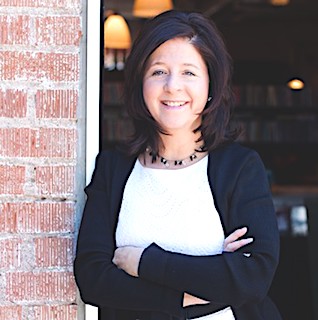
Image courtesy of Kimber Lanning, Local First Arizona

Share the wealth.

July 15, 2019

Brian Beckon believes we should share the wealth. Brian is an attorney with over twenty-five years of experience working for nonprofits, start-ups, and publicly-traded companies. When he was starting out as a young attorney, he wanted to find a way to make the world better. Now, as principal at Cutting Edge Capital, he focuses on strategies for raising capital for communities to help build a more equitable economy.

Brian has served as General Counsel for RSF Social Finance and Clean Power Finance; and before that as Corporate Counsel for Sybase and Catellus Development Corporation. He earned his J.D. from the University of the Pacific McGeorge School of Law and started his legal career with the North Bay law firm of Gaw Van Male. Brian is a member of the California Bar and serves on the boards of the National Coalition for Community Capital, the Mount Diablo Music Education Foundation, and the Neto Community Network.

Together, on this podcast, Eve and Brian explore what it means to share the wealth.

Insights and Inspirations

  • Share the wealth.
  • The conventional wisdom is that you can only fund projects with private equity, but Brian has funded projects through entire communities.
  • Everyone deserves to invest and get a return. Good opportunities should not be exclusive to the wealthy.
  • Community capital can break the cycle of the rich getting richer …

Information and Links

  • Brian works at Cutting Edge Capital
  • He’s also a founding member of NC3 an organization which envisions vibrant, equitable, and resilient local economies built on the strategies of community capital.
  • Brian is particularly proud of some of his successful community capital campaigns such as the $400,000 raised for Sonoma West Publishers and the over $1M raised for the PV Grows Investment Fund.
  • For some really provocative thought pieces he heads to The Next System.
Read the podcast transcript here

Eve Picker: Hey, everyone, this is Eve Picker, and if you listen to this podcast series, you’re going to learn how to make some change. Thanks so much for joining us on this podcast. I’m Eve Picker, and my life revolves around cities, real estate, and crowdfunding. In this podcast series, we’ll be digging deep to discover how we can build better cities by building better buildings.

Eve Picker: Brian Beckon is my guest today. Brian is an attorney with over 25 years of experience working for nonprofits, startups, and publicly traded companies. Now he owns Cutting Edge Counsel, which focuses on strategies, and raising capital for communities to help build a more equitable economy.

Eve Picker: If you want to know more about Brian, after you’ve listened to this podcast, please visit EvePicker.com, where you’ll find links, and other goodies on the show notes page, and where you can subscribe to my newsletter on all things real-estate impact.

Eve Picker: Brian, let’s talk a little bit about you. I’m just wondering how your background as an attorney led you to where you are today?

Brian Beckon: Well, first of all, thanks, Eve. This is really an honor to be on your podcast, so I really appreciate it. Let’s see, it’s a long journey … There were a lot of steps along the way that led me to where I am now, with Cutting Edge Counsel.

Brian Beckon: I guess the short version of that is I went to law school back in the ’80s, with the idea, a rather vague idea, that I wanted to do something to make the world a better place, and didn’t have a very clear idea of what that would mean; just that I figured studying law was the way to get there.

Brian Beckon: After law school, I did a lot of different things, trying to find my way, and into the kind of work that would allow me to make the world a better place. It took a few years, because I landed in a law firm that was just sort of a traditional law firm.

Brian Beckon: Then, I was in-house counsel for a couple of different companies; one of which was a large publicly traded real-estate-development company, called Catellus Development Corporation, so I got some early background into the whole real-estate world.

Brian Beckon: I found myself at RSF Social Finance, a nonprofit-finance organization based in San Francisco, which was really a transformative experience, because that’s where I came to see that there were ways of democratizing [inaudible] providing finance. That got me thinking about all the possible ways of doing things in a more impactful way, not just based on what you do with the money, but on how you raise it.

Brian Beckon: Then, after leaving RSF, about- well, I guess it was about 10 years ago, I started working on a couple of crowdfunding projects, that is to say crowdfunding portals, that were in some stage of development. One of which, again, was a real-estate-crowdfunding company. Again, I kind of had … There’s always been this sort of gravity that brought me back around to real estate, in some way.

Brian Beckon: Even though that portal didn’t get off the ground, in my work, now, at Cutting Edge Counsel, where I’ve been for about five years, there are ways … There are things that we’re exploring that you can do that are fairly innovative, and really allow everybody to participate in real-estate investing. Anyway, perhaps too long an answer to your question, but hopefully that gives you some flavor for how I got here.

Eve Picker: Well, that’s kind of interesting … I’d actually really like to hear about those things that let everyone participate. Do you want to tell us about those, the things that you’re exploring?

Brian Beckon: Well, sure. In the conventional wisdom … Eve, you, and probably a lot of your listeners on the podcast already know a lot of this, but in the conventional wisdom, a venture that wants to raise capital needs to do so privately.

Brian Beckon: You have to go out and find angel investors, those rich folks that have a lot of money, or the institutions, or the private equity, or venture capital, whatever it is. You’ve got to find those people with a lot of money; those deep pockets, and persuade them to invest in your project. That’s really the only option available to you. That’s the way students are taught in law school, and I assume that’s the same way students are taught in the business school.

Brian Beckon: That’s really your only option, up until you get big enough to do a full-blown IPO, until you get big enough to go public, which, you know, these days, with the cost of going public, we’re talking about something in the perhaps hundreds of millions before it makes sense to do that.

Brian Beckon: In that space between startup, and going public, you’re stuck raising capital privately from wealthy investors. Well, what happens? If that’s the paradigm that everybody follows, and that means all the good investment opportunities [inaudible] course, because it’s the folks who get in on investments before they go public; those are the really profitable investments.

Brian Beckon: In that paradigm, all the good opportunities are exclusively available to the folks who are already wealthy. The wealthy can grow their money rapidly, but non-wealthy are relegated to those publicly traded stocks, where the companies have already experienced their high growth, or the projects have already- they’ve already generated the fat returns for the wealthy investors. Then, once they go public, the returns are just not that good.

Brian Beckon: You have this dichotomy, where the wealthy get the good, high-margin, or I should say high-return investment opportunities, but the non-wealthy get stuck with the low-return investment opportunities. Naturally, what happens? The rich get richer, and everyone else can barely keep up with inflation. It’s a formula that contributes to a greater wealth gap. That’s part of the problem, and I won’t go into detail about that … A lot’s been written about the destabilizing effect of that.

Brian Beckon: The solution, or I should say a solution, one of the solutions to create a more equitable society, is to make sure that everybody can invest. What we want to do is turn that paradigm upside down, and say, “No, everybody should be able to invest in something that’s in their community, and something that’s meaningful to them, personally, and something that they believe in.” Those good investment opportunities should not be available only to the wealthy.

Brian Beckon: Then, the challenge is what are those strategies that allow you to raise what we now call community capital – through community capital, meaning from anybody in the community? Community can be a broad concept. It can be more than just a geographic community; it can mean a community of interest, or something that pulls people together.

Brian Beckon: The point is, bringing it back around to your question, there are a number of ways that you can defy the conventional wisdom, and raise capital in what would be a truly public way, without doing the traditional IPO.

Brian Beckon: That’s where sites like Small Change come in, and other crowdfunding sites. There are other strategies, too – direct public offerings, and so on – that you can use to raise capital from your community that a lot of folks don’t know about.

Brian Beckon: In some cases, they have been around for a long time, but haven’t gotten much attention. I think we’re seeing a major shift now in the level of consciousness about these strategies. Small Change is certainly a big part of that shift.

Eve Picker: Be sure to go to EvePicker.com, and sign up for my free educational newsletter about impact real-estate investing. You’ll be among the first to hear about new projects you can invest in. That’s EvePicker.com. Thanks so much.

Eve Picker: Well, thank you, but I’m as excited as you are about the potential that it holds. Do you think people are really aware of these opportunities yet? I feel like investor education is really not there. It is a very small segment of the world that understand that they can invest in this way, and even know about what is happening.

Brian Beckon: Yeah, you’re right, because what we’re trying to do, really, is change the culture in a profound way. Yes, education is key, and education, in a very broad, and deep way. I mean, consider that most people do not think of themselves as investors. For decades, people have been told that if you’re not wealthy, you’re not qualified to invest, so people just don’t even see themselves as investors.

Brian Beckon: We see ourselves as consumers. We see ourselves as workers. Workers, and consumers basically feed the machine. We’re feeding the machine. That machine was designed by, and for investors, and most of us don’t think we’re qualified to get in on the game.

Brian Beckon: There’s really a cultural shift that we need to make. Thinking broadly, it’s about empowerment; to empower everybody to feel like they can be a full participant in the economy; be fully engaged in what’s going on, as investors. It’s such a profound cultural shift, we’ve got a long ways to go. Even though all the legal tools are there, they’re very underutilized.

Brian Beckon: You’re right, not many people – regular folks who aren’t part of this sector we’re in – regular folks just don’t know about these. They may have heard about crowdfunding, but they may be a little skeptical, and they may have heard that that’s really risky. It is, and that is an issue, but the point is they generally … They don’t know what their options are, and if they have heard of some things, they are, perhaps- I wouldn’t say the word ‘scared away,’ but aren’t enthusiastic enough about it [cross talk]  really gotten engaged in it.

Eve Picker: I think they are scared away. I go to [cross talk] some of these crowdfunding platforms … I’m a pretty experienced developer, and investor, and yet I find myself going to some platforms,  looking at the presentations, and feeling a little scared, because they present towards a very, very sophisticated investor who understands a special lingo that’s only for them, right?

Brian Beckon: Yes.

Eve Picker: It is absolutely scary, and that’s, perhaps … You might know, but people listening to this probably don’t, that one of the securities rules that came out of the JOBS Act – Regulation Crowdfunding, which really permits everyone to invest – one of the things I like about that rule is that it requires everything about the offering to be in plain English.

Eve Picker: I think that was a pretty meaningful thing for the SEC to add, because when people like myself are scared at trying to unravel an offering, well, imagine someone who’s never done anything like it before.

Brian Beckon: Yeah, you’re right, and frankly, at the risk of sounding perhaps too skeptical, frankly, I’ve seen a lot of bad deals out there on some crowdfunding sites. By ‘bad deals,’ I mean … It’s not that they’re …

Eve Picker: Yes.

Brian Beckon: I’ve seen deals, where a company is raising money with an assumed valuation that’s just astronomical – $30 million – and if you really dig into it, they don’t hardly have anything. They have some good ideas, but the company probably isn’t worth more than $1 million; maybe even less.  When people invest in a $30-million valuation, they’re buying stock that’s grossly overvalued … Perhaps the reverse way of saying that: they’re not going to get as much back as they think they’re going to get.

Brian Beckon: I see a lot of these deals, and they do make me nervous. I do worry that there are going to be a lot of losses. That makes me nervous, and that’s actually one solid reason why, for those investors who don’t have a lot of sophistication in picking good investments, real estate still remains a pretty solid- I should say relatively safe way to invest, because you’re not going to lose as much. You’re probably not going to lose as much money on a real-estate investment, as you would get a startup company that values itself at $30 million.

Eve Picker: Yeah, I think that’s right. That’s right. You can at least hop on to Zillow, and check out the comps yourself, and really snoop around a little bit, in an everyday manner, and feel comfortable with what you’re investing in. I agree. I personally feel less threatened by investing in real estate than in companies I don’t really understand.

Brian Beckon: Yeah.

Eve Picker: That’s equity investing at large … It becomes even a little more difficult, when we bring impact, and social responsibility into it, doesn’t it? I’m just wondering, I suppose, how you feel about … I don’t even know how to say this. What level of additional difficulty does that add to a real-estate deal? What sort of things are you seeing in community capital-raising that makes it different than going to a crowdfunding platform that lets you invest in a very traditional Walmart, or Target, or something like that?

Brian Beckon: Good question. It raises this whole question about what does it mean to make impact? Much has been said, and written; we’re not going to solve that right now, perhaps. Let me give you my take on this question of impact, starting with the premise that we all want to invest our money in a way that, again, is, in some sense, making the world a better place.

Brian Beckon: How do we do that? I kind of see impact as happening in two broadly speaking, and this is over-generalization, but broadly two ways of making impact. One is by making sure that your money is doing something good in the world, whatever that may be. Housing the poor; building a hospital, or a school, or something like that. The money is being used in a beneficial way.

Brian Beckon: There’s another way of making impact that isn’t often discussed, and that is really by focusing on the process. If you’re raising money for an impactful project, and only the very wealthy can invest in it – and let’s assume that it’s a profitable project …

Brian Beckon: These wealthy people invest, and they make 10-percent return on their investment, and they’re richer, and happier. Yes, the project does have some positive impact; it does some good, whatever it is – you’re building some housing, or something.

Brian Beckon: That’s one kind of impact, but I have to admit, I’m a little skeptical of what often passes for impact, because I think a lot of impact investing, frankly, does more harm than good. Why? Because you’re still concentrating wealth. As long as you’re concentrating the wealth in the hands of the wealthy, how impactful can you be?

Brian Beckon: Yeah, you’re building a hospital, or housing, or whatever it may be, but ultimately, it’s really the wealthy investor who wins. When an investor is making high returns … You can make the argument, and maybe I won’t push that point too far, but you could make the argument that anyone making high returns is extracting wealth from this system. You’re leaving someone else less well-off, because you’re making a higher return.

Brian Beckon: That brings me to the other way of having an impact, which is via the process. If you’re raising money for a profitable project, whatever it may be – and I would argue it almost doesn’t matter what you’re actually doing with the money – but if it’s a profitable project, and you’re raising it in a truly democratic way so that everybody of any wealth can participate fully, now you’re not concentrating wealth in the hands of the wealthy. Now you’re actually sharing the wealth in an equitable and fair way.

Brian Beckon: That process, itself, is impactful because now you’re creating wealth-building opportunities for those that otherwise would not have had wealth-building opportunities. This can help to shrink the wealth gap, and, along the way, when regular folks who haven’t had an opportunity to invest in projects now do, that can contribute to a greater sense of empowerment, and lower community engagement. You can follow out the chain of causation there.

Brian Beckon: I think that has broad implications beyond just profits going into their pockets. I really see that the process of community capital, as I like to call it – this idea that you’re opening up an opportunity for anybody to invest, regardless of their economic status – that process is, itself, more impactful than just about anything you can do with the money, if you see what I’m saying. It’s about the process.

Eve Picker: Definitely do. I do. That’s a really interesting thought, but you know, in real estate, there are still so many hindrances with regards to that process that most people don’t think about.

Eve Picker: I’ll give you just a couple of examples that maybe … I’m sure you have more. One is, in talking to one developer about presenting a side-by-side offering, which is using two securities rules – one in which anyone can invest, and the other which permits accredited investors to invest with large amounts – that developer suggested that the accredited investors get a higher return.

Eve Picker: I was a little shocked by that. I’m thinking, just because you haven’t reached the accredited bar, why does that make your money less valuable to the developer? I really- I don’t understand the thinking behind that. Yet, I think that thinking is pretty prevalent just in the way you described.

Brian Beckon: Yes, I have seen the same phenomenon, and it just- I find it very disturbing. All things being equal, the same degree of risk, but we’re going to give greater reward to the wealthy, than we give the non-wealthy. Somehow, we think they deserve it because they have more money, or maybe they simply demand it, because they have more leverage. Whatever the reason is, it’s fundamentally inequitable-

Eve Picker: It is inequitable.

Brian Beckon: -and I think we need to resist that.

Eve Picker: Further, for someone who has less money, it’s an even bigger risk, so it’s even more inequitable, if you want to think of it that way.

Brian Beckon: Right, right, right.

Eve Picker: I find that very disturbing, but then there are other issues that pop up in real estate. For example, banks always want to have a 20-percent partner, or shareholder, or member of a real-estate project guarantee the project.

Eve Picker: In one crowdfunding offering that we did, the investors actually held 90-percent ownership, and that really confused the bank. They didn’t … I mean the 90-percent ownership was a whole crowd of investors, so they really didn’t know what to do with it. There are some structural problems in the way that we finance things that crowdfunding is kind of bashing up against.

Eve Picker: Another example is the new micro tax credit world, where I have seen, time and time again, really convoluted financial structures, so that those big investors don’t have to invest side by side with the little ones. That’s exactly the way they talk about it.

Eve Picker: I think we’re pretty far off from everyone … From really getting to the end goal, which is that the money that comes through crowdfunding, or community capital-raising is treated in exactly the same way as everyone else’s money.

Brian Beckon: Yeah, I think you’re right. We are a ways off from that. I think there are some things that we can do to get closer to that goal of a truly level playing field, where it doesn’t matter how much money you have; you should be able to get the same return on investment.

Brian Beckon: I think one of those strategies that we can use to get toward that goal is to use what we might call community investment funds, where … Because part of the problem is the small investors who can put $1,000 or $2,000 into a project really don’t have- probably don’t have the bandwidth to do the kind of due diligence on individual projects that someone putting in large amounts would do on the project.

Brian Beckon: You do have that imbalance of information, when you have investors who aren’t doing the due diligence. They’re more likely to make the wrong choice than those who have more time, and resources to put it into the diligence.

Brian Beckon: I think the way to get around that is to set up an intermediary fund that can do the due diligence, but aggregate capital from many, many investors; and then is careful to do the kind of due diligence on every investor- on every investment that anyone with deeper pockets might do.

Brian Beckon: I’m a big fan of community investment funds, in general. Real estate, again, is one of those areas where a community investment fund can be particularly impactful. There are a variety of different kinds of community investment funds that can be built.

Eve Picker: Well, I’m going to shift the conversation a bit to real estate, and I’m wondering whether you think socially responsible real estate is necessary in today’s development landscape, and if you do, why?

Brian Beckon: Well, yes, I do. We can talk about what constitutes socially responsible real estate, but, yes, you definitely can see where projects are rather extractive, and are designed to maximize profits for investors, versus projects that are really designed to serve communities. We don’t need the former; we do need the latter, so I do think that’s an important distinction.

Brian Beckon: For example, I live in the city of Concord, here in California. There are projects being proposed to build all these, what are euphemistically referred to as market-rate housing projects; what really are the top-dollar, more luxury apartment complexes.

Brian Beckon: Does the city need those? No. No, we don’t need those, but that’s what developers want to build, because they know that there are high profit margins, and that’s what investors want to invest in, even though that’s not what the city needs. What the city need is more moderate-income housing, but that’s not as profitable, and no one’s interested in building that, except for one or two nonprofit developers.

Brian Beckon: We do have the problem that the wrong kind of development is going into, particularly, lower-income communities that cause gentrification. What we need is more community driven real estate, where the communities can say, “Here’s what we want; here’s what meets our needs.” I think that would- that probably fits into that category of socially responsible investment, perhaps, among other things.

Eve Picker: Right. Have you noticed any trends, or projects out there that you think can solve those sorts of problems?

Brian Beckon: Well, yeah … Let’s take Opportunity Funds, for example. Opportunity Funds, as a lot of folks know by now, because it’s been in the news a lot in the last year or two, are a type of fund created to encourage investment into low-income communities. That encouragement comes in the form of a tax break for investors.

Brian Beckon: The conventional wisdom, and, as you probably can tell, I tend to be cynical about conventional wisdom, but-

Eve Picker: I’m going to join you on that.

Brian Beckon: -but the conventional wisdom says that only wealthy investors can get those tax benefits, because they have to do it with rolled-over capital gains, and who has all the rolled-over capital gains? Well, the wealthy.

Brian Beckon: These Opportunity Funds are basically almost always set up for the wealthy to invest. Just as I suggested a moment ago, when it’s the wealthy who are investing in real estate, in low-income communities, what do they want to do? They want to build high-end housing, which …

Brian Beckon: Does that serve the community’s needs? No, it doesn’t. It drives out the local residents. It forces them to move to some other more affordable community. It increases the prices.

Brian Beckon: In fact, since the Opportunity Fund law came into existence about a year and a half ago, some studies have shown that a house- that housing costs in Opportunity Zones have risen 20 percent, compared to comparable low-income communities that were not designated as Opportunity Zones.

Brian Beckon: You have a 20-percent increase in prices, just because it was designated as an Opportunity Zone, which means that gentrification is happening in these communities, because of this investment, or at least potential for investment by, again, typically wealthy people seeking to reduce their taxes.

Brian Beckon: That’s the problem, but that’s not really what you’re asking. You’re asking what’s the solution? The solution is to take this idea, and make it a true community investment fund.

Brian Beckon: Contrary to the conventional wisdom, if anybody, including non-wealthy folks, can get tax benefits from investing in an Opportunity Fund, and when you have an Opportunity Fund that is open for investment by the community, and reflects the voices of the community – so it’s one that’s somewhat democratically governed – now you’ll have a very different kind of thing.

Brian Beckon: Now you have a true community driven investment fund, where they’re going to build the kind of housing – if it’s a housing fund, or whatever it may be. They’re going to do the kind of projects, or development, or housing that the community wants, and needs.

Brian Beckon: When it is profitable, those profits will circulate within the community. If that’s where your investors are, that’s where your profits are going. That’s an important point that people sometimes forget.

Brian Beckon: Again [inaudible] wherever your investment comes from, that’s where your profits are going. If you want capital to stay in a community, you’ve got to raise capital from the community. That’s the way to solve that problem, I think.

Eve Picker: Yeah, it is, but often these communities, the communities you’re talking about, and that we’re interested in, are slightly depressed, and they certainly don’t have strong market values. Perhaps, the people in them … It’s difficult to raise enough capital to do large, and meaningful projects.

Eve Picker: It’s difficult to even finance projects, because banks don’t see the value in those communities either. You’re left with these yawning financing gaps that you have to fill in a number of ways, and, actually, it becomes very difficult to project any return for investors.

Eve Picker: While I agree that communities should benefit from improvements in their own communities, it’s very tricky finding a community that can really happen in, I think.

Brian Beckon: Yeah, no, you’re absolutely right. I don’t want to minimize the challenge it is to raise significant amounts of money from a lower-income community.

Brian Beckon: Let me say a couple things there. One, almost every community has resources, even if it’s a lower-income community. If the data shows that 50 percent of a community is below the poverty line, well then, that means 50 percent isn’t. There is money in every community, even low-income communities.

Brian Beckon: That brings us back to the cultural challenge that we started talking about earlier, which is that the folks in that community who do have some money … We’re not talking about millionaires; what we’re talking about is people who have some money to invest.

Brian Beckon: They may have- they may be able to write, not a $50,000 check, but they might be able to write a $1,000, or a $5,000 check. Yet, those people will tend to just put their money on Wall Street, because that’s all they know.

Brian Beckon: It brings us back to this cultural challenge, and this educational challenge … If you want to raise money from within a lower-income community, you’ve really got to do some outreach, and to talk to people about the fact that it is possible; that they are qualified; that they can invest in their local community. They don’t have to send their money to Wall Street.

Brian Beckon: It is a challenge, but it can be done. We’ve seen examples of where it has been done. This, while not exactly a real-estate project, I think it’s relevant.

Brian Beckon: We have a client at our firm called Community Foods Market, which is building a grocery store in West Oakland – a low-income, disinvested part of Oakland California. They specifically wanted to raise capital from the community, and we help them do that through a direct public offering.

Brian Beckon: The outcome was, yes, they did raise about $2.2 million dollars in this direct public offering. Now, that’s just part of the capital stack [cross talk]

Eve Picker: Fantastic.

Brian Beckon: -more than that to build a grocery store. The point here is that they raised capital from about … I think they have about 500 investors; most of them are, in fact, residents of this low-income community. Most of them, in terms of the number of investors …

Brian Beckon: Now, to be sure, the biggest dollars came from the wealthier investors, and many of those, probably most of those wealthier investors, and institutions worked inside that community. It is true, you still probably need to raise some of your money, if not most of it, from outside the community.

Brian Beckon: The important thing is that by specifically focusing the capital-raising campaign on the community, that had a lot of benefit. The community is invested; the community is engaged in the project; they’re excited about the project. When there are profits, at least a portion of those profits will go back to the residents of that community, which is exactly what he wanted to do.

Eve Picker: You know, going to have to be a little bit mercenary, because one of my frustrations with what we’re trying to do is the return that most people want. I’m not yet convinced that they’ll take a lesser return for impactful real estate.

Eve Picker: The question is: is that community- does that project compete for return with many of the real-estate projects we’re seeing on crowdfunding platforms, which boast 20-, to 25-percent internal rate of return, or is that community project likely to return something lesser, but the people in that community get some other less-tangible return – having a supermarket in their  community, for example?

Brian Beckon: Yeah, right. You do have that challenge. All things being equal, if I’m looking at two opportunities, and neither of them is in my community, and one promises a five-percent return, and the other promises a 10-percent return, I am more likely to invest in the one that offers a 10-percent return.

Brian Beckon: Now, if you tell me that the five-percent-return project is going to be more beneficial to the community, that may affect my decision, and maybe I’ll go with the five-percent, because after all, that’s still better than I can get on a bank CD. It’s still better than the stock market is doing. Five percent is still a good return on investment.

Brian Beckon: Now, if you change that hypothetical, and say that five-percent project is in my community, and actually can benefit my community, and contribute to local tax base; the owners have kids in the same schools that my kids go to, and they’re going to contribute some of their profits to local causes, well, that that makes it a very different scenario.

Brian Beckon: Because, just as I’ll donate my time, and sometimes donate my money to local things in my own community, why wouldn’t I invest locally at five-percent investment, instead of 10-percent, if you have all these other things that happen that benefit my own community; that make my life, in some way, better?

Brian Beckon: I think that’s part of the power of true community investment. If you can reach someone, really, in their backyard … These are people that want projects in their backyard to succeed, so I think you have … That can help you raise capital for projects that maybe don’t promise the highest return.

Eve Picker: Yeah.

Brian Beckon: I also acknowledge that, to some degree, this is theoretical, because we haven’t seen enough of these kinds of deals, perhaps, to be able to say with real evidence that people will invest for a lower rate of return, as long as it’s in their community. I have not seen specific evidence of that. Intuitively ,I believe that’s the case, but, have you seen that in your work at Small Change? 

Eve Picker: No, not yet. Maybe a little bit. We’ve certainly seen on some projects that more people locally have invested, but I think … I’m sort of interested in understanding what community engagement tools you think work, because I think we have to get better at it. It’s difficult finding people in communities..

Eve Picker: Often, real-estate developers, this is not what they do. They don’t market in that way. They put a deal together, and build a building. Now, you’re telling them, “Well, you gotta go reach out to all these people in the community,” and that’s not part of their wheelhouse, right?

Brian Beckon: Yeah.

Eve Picker: I think community engagement, and finding the right tools is probably a big part of this. Do you agree?

Brian Beckon: Yeah, I totally do. For years, we have been helping organizations with various strategies of community capital. Now, with the JOBS Act, Regulation Crowdfunding, that opened up a whole new avenue for ways of raising capital from a broad cross-section of one community.

Brian Beckon: Even before that law came into being, direct public offerings have always been out there. We’ve been doing this for a number of years, and we have consistently found that those- the key differentiator between those that succeed in raising the capital, and those that don’t succeed in raising the capital they need really boils down to marketing. It becomes a marketing campaign, when you’re doing something that involves a public offering.

Brian Beckon: I think even crowdfunding portals, and I assume this is probably true of Small Change,  you can’t just … It’s not one of those ‘Build it and they will come’ kind of thing. You still have to market the offering. The project manager, or promoter, they still need to pound the pavement, and get the word out to their network, and they need to reach out to their community. Really, it takes some effort.

Brian Beckon: Having seen some of these – over the years – seeing some of these offerings not succeed, we definitely, nowadays, almost always recommend to our clients that they get good marketing help. That may mean actually hiring a marketing and communications firm of professionals that can help in a number of ways.

Brian Beckon: Fundamentally, they do several things. One, they help you refine your message, and help you tell your story in a compelling way. Then, two, they can help you figure out who is the ideal audience – whether that is in your geographic community, or other communities of interest that maybe more dispersed. Then, three, how do you find them? How do you put the message up where they’re reading, or where they are?

Brian Beckon: A marketing fir can be really invaluable for that. I would say, again, of the folks that we’ve helped with community capital offerings that have not succeeded, almost always, it’s because of a lack of marketing, so, [cross talk] I think that it is really important.

Eve Picker: Yeah, I completely agree with you. I completely agree with you. This has been really interesting, but I’ve got three sign-off questions I want to ask you. The first one is what’s the key factor that makes a real-estate project impactful to you?

Brian Beckon: Well, number one, as I kind of suggested earlier, is I want to see something that is offered openly on a level playing field. I want to make sure that it doesn’t serve to concentrate wealth by being only available to the wealthy. I like to see projects that are open to the crowd.

Brian Beckon: Two, it’s got to be non-extractive. It’s got to serve the community. As someone from outside a community – let’s say the project is in some town that I don’t know very well – I may not have a good sense of what that community needs.

Brian Beckon: Hopefully, it’ll be clear in the disclosure materials – what kind of community it is – and we’ll be able to make some assessment of whether this sounds like it’s actually meeting the needs of the community, or is it just an opportunistic way to extract more profits from the community? I don’t want to invest in anything that’s extractive. I really want to invest in something that meets the needs.

Eve Picker: Sure.

Brian Beckon: Yeah, I don’t know, does that help?

Eve Picker: Yep, it does. Then, I think we know the answer to this, too, but I’m going to ask you again: other than by raising money, in what ways could involving investors through crowdfunding benefit the impact real-estate developer?

Brian Beckon: Well, yeah, one thing about raising capital from your community is – from a broad number of people – you now have a lot of people who are invested in you, and that means … Again, it has a number of implications. They’re going to be on your side. They want you to succeed, now, because they’re financially invested in your success.

Brian Beckon: That really helps to build community engagement, which can be really valuable if you have projects that, say, need local government approval, or what have you. If it’s the sort of project that is going to be a customer-facing project, let’s say someone …

Brian Beckon: Use a non-real-estate example, and there probably are some good real-estate examples, too, but one sort of obvious non-real-estate example is someone builds a brewery, and they raise capital from a community of people.

Brian Beckon: Now, what happens? Those investors in the brewery, if they want to find a beer, where are they going to go? They’re going to go to the brewery where they’re a co-owner. Of course they will. That’s where they’re going to send their friends.

Brian Beckon: Your investors can be your best customers. They can also be your best ambassadors. I think that also translates, or can translate into the real-estate world, too. It just helps having dozens, or perhaps even hundreds of advocates in a community that can help you be successful.

Eve Picker: That’s a great answer. Finally, this is a really big one – how do you think we can improve real estate development in the United States so that it’s better for everyone? Cities [cross talk]

Brian Beckon: I think we need to have real-estate development more community driven. Right now, I think the big problem is real-estate development is almost always driven … The agenda for real-estate development is almost always driven by the wealthy investor. What do wealthy investors want? They want to increase their wealth at the highest rate possible.

Brian Beckon: Most real-estate development is not done with a view to what the community needs; it’s done with a view to how can profits be most efficiently extracted out of the community, and placed into the hands of the investor?

Brian Beckon: I really think the number-one thing that we need is to change that paradigm, and have real-estate investment done in a more community driven way. The only way to do that, frankly, is the things we’ve been talking about – by having the community be investors; by building real-estate funds that are community driven.

Brian Beckon: Then we can talk about governance of a fund, and if a fund actually reflects the voices of the community that it’s serving, then it will probably do the things that the community needs; not the things that some rich investor somewhere else wants. I think that’s maybe the biggest paradigm shift that we need, in order to achieve a more equitable, and fair, and resilient society.

Eve Picker: Well, thank you very much, Brian. Thank you for having this conversation with me. We’re signing off now, but I hope everyone listened all the way to the end.

Brian Beckon: Well, thank you very much, Eve. It’s been a real pleasure chatting with you.

Eve Picker: That was Brian Beckon. I hope you enjoyed listening to him as much as I enjoyed talking to him. Brian gave me three great takeaways. First, that we need to share the wealth. Second, that it’s possible to fund projects through communities, not just private equity, and third, that everyone deserves to invest, and get a return. What did you learn?

Eve Picker: You can read more about Brian on the show notes page for this podcast at EvePicker.com. While you’re there, please consider signing up for my newsletter to find out more about how to make money in real estate, while making some change.

Eve Picker: Thank you so much for spending your time with Brian, and I today. We’ll talk again soon, but for now, this is Eve Picker signing off to go make some change.

Image courtesy of Brian Beckon, Cutting Edge Capital

« Previous Page
Next Page »

Primary Sidebar

sign up here

APPLY TO BE A PODCAST GUEST

More to See

(no title)

February 22, 2025

Bellevue Montgomery

February 11, 2025

West Lombard

January 28, 2025

FOLLOW

  • LinkedIn
  • RSS

Tag Cloud

Affordable housing Climate Community Creative economy Crowdfunding Design Development Environment Equity Finance FinTech Gentrification Impact Investing Mobility Offering Opportunity zones PropTech Technology Visionary Zoning

Footer

©rethinkrealestateforgood.co. The information contained on this website is for general information purposes only. Nothing on this website is intended as investment, legal, tax or accounting strategy or advice, or constitutes an offer to sell, solicit or buy securities.
 
Any projections discussed or made may not be accurate and do not guarantee a specific outcome. All projections or investments are subject to risk due to uncertainty and change, including the risk of loss, and past performance is not indicative of future results. You should make independent decisions and seek independent advice regarding investments or strategies mentioned on this website.

Recent

  • The Mulberry
  • Mount Vernon Plaza
  • The Seven
  • Real estate and women.
  • Oculis Domes.

Search

Categories

Climate Community Crowdfunding Development Equity Fintech Investing Mobility Proptech Visionary


Copyright © 2026 · Magazine Pro on Genesis Framework · WordPress · Log in