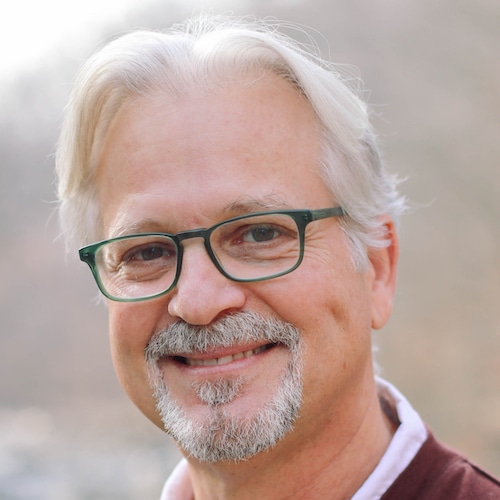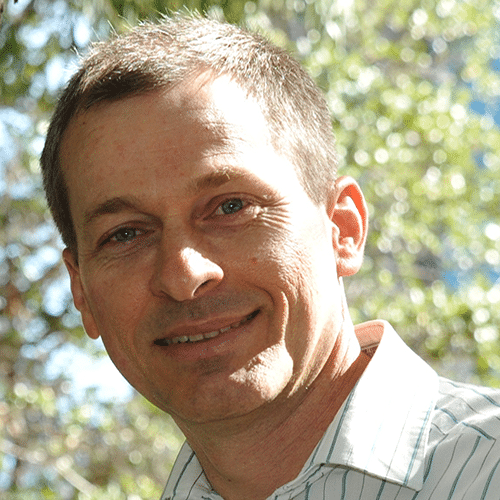
Brian Beckon believes we should share the wealth. Brian is an attorney with over twenty-five years of experience working for nonprofits, start-ups, and publicly-traded companies. When he was starting out as a young attorney, he wanted to find a way to make the world better. Now, as principal at Cutting Edge Capital, he focuses on strategies for raising capital for communities to help build a more equitable economy.
Brian has served as General Counsel for RSF Social Finance and Clean Power Finance; and before that as Corporate Counsel for Sybase and Catellus Development Corporation. He earned his J.D. from the University of the Pacific McGeorge School of Law and started his legal career with the North Bay law firm of Gaw Van Male. Brian is a member of the California Bar and serves on the boards of the National Coalition for Community Capital, the Mount Diablo Music Education Foundation, and the Neto Community Network.
Together, on this podcast, Eve and Brian explore what it means to share the wealth.
Insights and Inspirations
- Share the wealth.
- The conventional wisdom is that you can only fund projects with private equity, but Brian has funded projects through entire communities.
- Everyone deserves to invest and get a return. Good opportunities should not be exclusive to the wealthy.
- Community capital can break the cycle of the rich getting richer …
Information and Links
- Brian works at Cutting Edge Capital
- He’s also a founding member of NC3 an organization which envisions vibrant, equitable, and resilient local economies built on the strategies of community capital.
- Brian is particularly proud of some of his successful community capital campaigns such as the $400,000 raised for Sonoma West Publishers and the over $1M raised for the PV Grows Investment Fund.
- For some really provocative thought pieces he heads to The Next System.
Read the podcast transcript here
Eve Picker: Hey, everyone, this is Eve Picker, and if you listen to this podcast series, you’re going to learn how to make some change. Thanks so much for joining us on this podcast. I’m Eve Picker, and my life revolves around cities, real estate, and crowdfunding. In this podcast series, we’ll be digging deep to discover how we can build better cities by building better buildings.
Eve Picker: Brian Beckon is my guest today. Brian is an attorney with over 25 years of experience working for nonprofits, startups, and publicly traded companies. Now he owns Cutting Edge Counsel, which focuses on strategies, and raising capital for communities to help build a more equitable economy.
Eve Picker: If you want to know more about Brian, after you’ve listened to this podcast, please visit EvePicker.com, where you’ll find links, and other goodies on the show notes page, and where you can subscribe to my newsletter on all things real-estate impact.
Eve Picker: Brian, let’s talk a little bit about you. I’m just wondering how your background as an attorney led you to where you are today?
Brian Beckon: Well, first of all, thanks, Eve. This is really an honor to be on your podcast, so I really appreciate it. Let’s see, it’s a long journey … There were a lot of steps along the way that led me to where I am now, with Cutting Edge Counsel.
Brian Beckon: I guess the short version of that is I went to law school back in the ’80s, with the idea, a rather vague idea, that I wanted to do something to make the world a better place, and didn’t have a very clear idea of what that would mean; just that I figured studying law was the way to get there.
Brian Beckon: After law school, I did a lot of different things, trying to find my way, and into the kind of work that would allow me to make the world a better place. It took a few years, because I landed in a law firm that was just sort of a traditional law firm.
Brian Beckon: Then, I was in-house counsel for a couple of different companies; one of which was a large publicly traded real-estate-development company, called Catellus Development Corporation, so I got some early background into the whole real-estate world.
Brian Beckon: I found myself at RSF Social Finance, a nonprofit-finance organization based in San Francisco, which was really a transformative experience, because that’s where I came to see that there were ways of democratizing [inaudible] providing finance. That got me thinking about all the possible ways of doing things in a more impactful way, not just based on what you do with the money, but on how you raise it.
Brian Beckon: Then, after leaving RSF, about- well, I guess it was about 10 years ago, I started working on a couple of crowdfunding projects, that is to say crowdfunding portals, that were in some stage of development. One of which, again, was a real-estate-crowdfunding company. Again, I kind of had … There’s always been this sort of gravity that brought me back around to real estate, in some way.
Brian Beckon: Even though that portal didn’t get off the ground, in my work, now, at Cutting Edge Counsel, where I’ve been for about five years, there are ways … There are things that we’re exploring that you can do that are fairly innovative, and really allow everybody to participate in real-estate investing. Anyway, perhaps too long an answer to your question, but hopefully that gives you some flavor for how I got here.
Eve Picker: Well, that’s kind of interesting … I’d actually really like to hear about those things that let everyone participate. Do you want to tell us about those, the things that you’re exploring?
Brian Beckon: Well, sure. In the conventional wisdom … Eve, you, and probably a lot of your listeners on the podcast already know a lot of this, but in the conventional wisdom, a venture that wants to raise capital needs to do so privately.
Brian Beckon: You have to go out and find angel investors, those rich folks that have a lot of money, or the institutions, or the private equity, or venture capital, whatever it is. You’ve got to find those people with a lot of money; those deep pockets, and persuade them to invest in your project. That’s really the only option available to you. That’s the way students are taught in law school, and I assume that’s the same way students are taught in the business school.
Brian Beckon: That’s really your only option, up until you get big enough to do a full-blown IPO, until you get big enough to go public, which, you know, these days, with the cost of going public, we’re talking about something in the perhaps hundreds of millions before it makes sense to do that.
Brian Beckon: In that space between startup, and going public, you’re stuck raising capital privately from wealthy investors. Well, what happens? If that’s the paradigm that everybody follows, and that means all the good investment opportunities [inaudible] course, because it’s the folks who get in on investments before they go public; those are the really profitable investments.
Brian Beckon: In that paradigm, all the good opportunities are exclusively available to the folks who are already wealthy. The wealthy can grow their money rapidly, but non-wealthy are relegated to those publicly traded stocks, where the companies have already experienced their high growth, or the projects have already- they’ve already generated the fat returns for the wealthy investors. Then, once they go public, the returns are just not that good.
Brian Beckon: You have this dichotomy, where the wealthy get the good, high-margin, or I should say high-return investment opportunities, but the non-wealthy get stuck with the low-return investment opportunities. Naturally, what happens? The rich get richer, and everyone else can barely keep up with inflation. It’s a formula that contributes to a greater wealth gap. That’s part of the problem, and I won’t go into detail about that … A lot’s been written about the destabilizing effect of that.
Brian Beckon: The solution, or I should say a solution, one of the solutions to create a more equitable society, is to make sure that everybody can invest. What we want to do is turn that paradigm upside down, and say, “No, everybody should be able to invest in something that’s in their community, and something that’s meaningful to them, personally, and something that they believe in.” Those good investment opportunities should not be available only to the wealthy.
Brian Beckon: Then, the challenge is what are those strategies that allow you to raise what we now call community capital – through community capital, meaning from anybody in the community? Community can be a broad concept. It can be more than just a geographic community; it can mean a community of interest, or something that pulls people together.
Brian Beckon: The point is, bringing it back around to your question, there are a number of ways that you can defy the conventional wisdom, and raise capital in what would be a truly public way, without doing the traditional IPO.
Brian Beckon: That’s where sites like Small Change come in, and other crowdfunding sites. There are other strategies, too – direct public offerings, and so on – that you can use to raise capital from your community that a lot of folks don’t know about.
Brian Beckon: In some cases, they have been around for a long time, but haven’t gotten much attention. I think we’re seeing a major shift now in the level of consciousness about these strategies. Small Change is certainly a big part of that shift.
Eve Picker: Be sure to go to EvePicker.com, and sign up for my free educational newsletter about impact real-estate investing. You’ll be among the first to hear about new projects you can invest in. That’s EvePicker.com. Thanks so much.
Eve Picker: Well, thank you, but I’m as excited as you are about the potential that it holds. Do you think people are really aware of these opportunities yet? I feel like investor education is really not there. It is a very small segment of the world that understand that they can invest in this way, and even know about what is happening.
Brian Beckon: Yeah, you’re right, because what we’re trying to do, really, is change the culture in a profound way. Yes, education is key, and education, in a very broad, and deep way. I mean, consider that most people do not think of themselves as investors. For decades, people have been told that if you’re not wealthy, you’re not qualified to invest, so people just don’t even see themselves as investors.
Brian Beckon: We see ourselves as consumers. We see ourselves as workers. Workers, and consumers basically feed the machine. We’re feeding the machine. That machine was designed by, and for investors, and most of us don’t think we’re qualified to get in on the game.
Brian Beckon: There’s really a cultural shift that we need to make. Thinking broadly, it’s about empowerment; to empower everybody to feel like they can be a full participant in the economy; be fully engaged in what’s going on, as investors. It’s such a profound cultural shift, we’ve got a long ways to go. Even though all the legal tools are there, they’re very underutilized.
Brian Beckon: You’re right, not many people – regular folks who aren’t part of this sector we’re in – regular folks just don’t know about these. They may have heard about crowdfunding, but they may be a little skeptical, and they may have heard that that’s really risky. It is, and that is an issue, but the point is they generally … They don’t know what their options are, and if they have heard of some things, they are, perhaps- I wouldn’t say the word ‘scared away,’ but aren’t enthusiastic enough about it [cross talk] really gotten engaged in it.
Eve Picker: I think they are scared away. I go to [cross talk] some of these crowdfunding platforms … I’m a pretty experienced developer, and investor, and yet I find myself going to some platforms, looking at the presentations, and feeling a little scared, because they present towards a very, very sophisticated investor who understands a special lingo that’s only for them, right?
Brian Beckon: Yes.
Eve Picker: It is absolutely scary, and that’s, perhaps … You might know, but people listening to this probably don’t, that one of the securities rules that came out of the JOBS Act – Regulation Crowdfunding, which really permits everyone to invest – one of the things I like about that rule is that it requires everything about the offering to be in plain English.
Eve Picker: I think that was a pretty meaningful thing for the SEC to add, because when people like myself are scared at trying to unravel an offering, well, imagine someone who’s never done anything like it before.
Brian Beckon: Yeah, you’re right, and frankly, at the risk of sounding perhaps too skeptical, frankly, I’ve seen a lot of bad deals out there on some crowdfunding sites. By ‘bad deals,’ I mean … It’s not that they’re …
Eve Picker: Yes.
Brian Beckon: I’ve seen deals, where a company is raising money with an assumed valuation that’s just astronomical – $30 million – and if you really dig into it, they don’t hardly have anything. They have some good ideas, but the company probably isn’t worth more than $1 million; maybe even less. When people invest in a $30-million valuation, they’re buying stock that’s grossly overvalued … Perhaps the reverse way of saying that: they’re not going to get as much back as they think they’re going to get.
Brian Beckon: I see a lot of these deals, and they do make me nervous. I do worry that there are going to be a lot of losses. That makes me nervous, and that’s actually one solid reason why, for those investors who don’t have a lot of sophistication in picking good investments, real estate still remains a pretty solid- I should say relatively safe way to invest, because you’re not going to lose as much. You’re probably not going to lose as much money on a real-estate investment, as you would get a startup company that values itself at $30 million.
Eve Picker: Yeah, I think that’s right. That’s right. You can at least hop on to Zillow, and check out the comps yourself, and really snoop around a little bit, in an everyday manner, and feel comfortable with what you’re investing in. I agree. I personally feel less threatened by investing in real estate than in companies I don’t really understand.
Brian Beckon: Yeah.
Eve Picker: That’s equity investing at large … It becomes even a little more difficult, when we bring impact, and social responsibility into it, doesn’t it? I’m just wondering, I suppose, how you feel about … I don’t even know how to say this. What level of additional difficulty does that add to a real-estate deal? What sort of things are you seeing in community capital-raising that makes it different than going to a crowdfunding platform that lets you invest in a very traditional Walmart, or Target, or something like that?
Brian Beckon: Good question. It raises this whole question about what does it mean to make impact? Much has been said, and written; we’re not going to solve that right now, perhaps. Let me give you my take on this question of impact, starting with the premise that we all want to invest our money in a way that, again, is, in some sense, making the world a better place.
Brian Beckon: How do we do that? I kind of see impact as happening in two broadly speaking, and this is over-generalization, but broadly two ways of making impact. One is by making sure that your money is doing something good in the world, whatever that may be. Housing the poor; building a hospital, or a school, or something like that. The money is being used in a beneficial way.
Brian Beckon: There’s another way of making impact that isn’t often discussed, and that is really by focusing on the process. If you’re raising money for an impactful project, and only the very wealthy can invest in it – and let’s assume that it’s a profitable project …
Brian Beckon: These wealthy people invest, and they make 10-percent return on their investment, and they’re richer, and happier. Yes, the project does have some positive impact; it does some good, whatever it is – you’re building some housing, or something.
Brian Beckon: That’s one kind of impact, but I have to admit, I’m a little skeptical of what often passes for impact, because I think a lot of impact investing, frankly, does more harm than good. Why? Because you’re still concentrating wealth. As long as you’re concentrating the wealth in the hands of the wealthy, how impactful can you be?
Brian Beckon: Yeah, you’re building a hospital, or housing, or whatever it may be, but ultimately, it’s really the wealthy investor who wins. When an investor is making high returns … You can make the argument, and maybe I won’t push that point too far, but you could make the argument that anyone making high returns is extracting wealth from this system. You’re leaving someone else less well-off, because you’re making a higher return.
Brian Beckon: That brings me to the other way of having an impact, which is via the process. If you’re raising money for a profitable project, whatever it may be – and I would argue it almost doesn’t matter what you’re actually doing with the money – but if it’s a profitable project, and you’re raising it in a truly democratic way so that everybody of any wealth can participate fully, now you’re not concentrating wealth in the hands of the wealthy. Now you’re actually sharing the wealth in an equitable and fair way.
Brian Beckon: That process, itself, is impactful because now you’re creating wealth-building opportunities for those that otherwise would not have had wealth-building opportunities. This can help to shrink the wealth gap, and, along the way, when regular folks who haven’t had an opportunity to invest in projects now do, that can contribute to a greater sense of empowerment, and lower community engagement. You can follow out the chain of causation there.
Brian Beckon: I think that has broad implications beyond just profits going into their pockets. I really see that the process of community capital, as I like to call it – this idea that you’re opening up an opportunity for anybody to invest, regardless of their economic status – that process is, itself, more impactful than just about anything you can do with the money, if you see what I’m saying. It’s about the process.
Eve Picker: Definitely do. I do. That’s a really interesting thought, but you know, in real estate, there are still so many hindrances with regards to that process that most people don’t think about.
Eve Picker: I’ll give you just a couple of examples that maybe … I’m sure you have more. One is, in talking to one developer about presenting a side-by-side offering, which is using two securities rules – one in which anyone can invest, and the other which permits accredited investors to invest with large amounts – that developer suggested that the accredited investors get a higher return.
Eve Picker: I was a little shocked by that. I’m thinking, just because you haven’t reached the accredited bar, why does that make your money less valuable to the developer? I really- I don’t understand the thinking behind that. Yet, I think that thinking is pretty prevalent just in the way you described.
Brian Beckon: Yes, I have seen the same phenomenon, and it just- I find it very disturbing. All things being equal, the same degree of risk, but we’re going to give greater reward to the wealthy, than we give the non-wealthy. Somehow, we think they deserve it because they have more money, or maybe they simply demand it, because they have more leverage. Whatever the reason is, it’s fundamentally inequitable-
Eve Picker: It is inequitable.
Brian Beckon: -and I think we need to resist that.
Eve Picker: Further, for someone who has less money, it’s an even bigger risk, so it’s even more inequitable, if you want to think of it that way.
Brian Beckon: Right, right, right.
Eve Picker: I find that very disturbing, but then there are other issues that pop up in real estate. For example, banks always want to have a 20-percent partner, or shareholder, or member of a real-estate project guarantee the project.
Eve Picker: In one crowdfunding offering that we did, the investors actually held 90-percent ownership, and that really confused the bank. They didn’t … I mean the 90-percent ownership was a whole crowd of investors, so they really didn’t know what to do with it. There are some structural problems in the way that we finance things that crowdfunding is kind of bashing up against.
Eve Picker: Another example is the new micro tax credit world, where I have seen, time and time again, really convoluted financial structures, so that those big investors don’t have to invest side by side with the little ones. That’s exactly the way they talk about it.
Eve Picker: I think we’re pretty far off from everyone … From really getting to the end goal, which is that the money that comes through crowdfunding, or community capital-raising is treated in exactly the same way as everyone else’s money.
Brian Beckon: Yeah, I think you’re right. We are a ways off from that. I think there are some things that we can do to get closer to that goal of a truly level playing field, where it doesn’t matter how much money you have; you should be able to get the same return on investment.
Brian Beckon: I think one of those strategies that we can use to get toward that goal is to use what we might call community investment funds, where … Because part of the problem is the small investors who can put $1,000 or $2,000 into a project really don’t have- probably don’t have the bandwidth to do the kind of due diligence on individual projects that someone putting in large amounts would do on the project.
Brian Beckon: You do have that imbalance of information, when you have investors who aren’t doing the due diligence. They’re more likely to make the wrong choice than those who have more time, and resources to put it into the diligence.
Brian Beckon: I think the way to get around that is to set up an intermediary fund that can do the due diligence, but aggregate capital from many, many investors; and then is careful to do the kind of due diligence on every investor- on every investment that anyone with deeper pockets might do.
Brian Beckon: I’m a big fan of community investment funds, in general. Real estate, again, is one of those areas where a community investment fund can be particularly impactful. There are a variety of different kinds of community investment funds that can be built.
Eve Picker: Well, I’m going to shift the conversation a bit to real estate, and I’m wondering whether you think socially responsible real estate is necessary in today’s development landscape, and if you do, why?
Brian Beckon: Well, yes, I do. We can talk about what constitutes socially responsible real estate, but, yes, you definitely can see where projects are rather extractive, and are designed to maximize profits for investors, versus projects that are really designed to serve communities. We don’t need the former; we do need the latter, so I do think that’s an important distinction.
Brian Beckon: For example, I live in the city of Concord, here in California. There are projects being proposed to build all these, what are euphemistically referred to as market-rate housing projects; what really are the top-dollar, more luxury apartment complexes.
Brian Beckon: Does the city need those? No. No, we don’t need those, but that’s what developers want to build, because they know that there are high profit margins, and that’s what investors want to invest in, even though that’s not what the city needs. What the city need is more moderate-income housing, but that’s not as profitable, and no one’s interested in building that, except for one or two nonprofit developers.
Brian Beckon: We do have the problem that the wrong kind of development is going into, particularly, lower-income communities that cause gentrification. What we need is more community driven real estate, where the communities can say, “Here’s what we want; here’s what meets our needs.” I think that would- that probably fits into that category of socially responsible investment, perhaps, among other things.
Eve Picker: Right. Have you noticed any trends, or projects out there that you think can solve those sorts of problems?
Brian Beckon: Well, yeah … Let’s take Opportunity Funds, for example. Opportunity Funds, as a lot of folks know by now, because it’s been in the news a lot in the last year or two, are a type of fund created to encourage investment into low-income communities. That encouragement comes in the form of a tax break for investors.
Brian Beckon: The conventional wisdom, and, as you probably can tell, I tend to be cynical about conventional wisdom, but-
Eve Picker: I’m going to join you on that.
Brian Beckon: -but the conventional wisdom says that only wealthy investors can get those tax benefits, because they have to do it with rolled-over capital gains, and who has all the rolled-over capital gains? Well, the wealthy.
Brian Beckon: These Opportunity Funds are basically almost always set up for the wealthy to invest. Just as I suggested a moment ago, when it’s the wealthy who are investing in real estate, in low-income communities, what do they want to do? They want to build high-end housing, which …
Brian Beckon: Does that serve the community’s needs? No, it doesn’t. It drives out the local residents. It forces them to move to some other more affordable community. It increases the prices.
Brian Beckon: In fact, since the Opportunity Fund law came into existence about a year and a half ago, some studies have shown that a house- that housing costs in Opportunity Zones have risen 20 percent, compared to comparable low-income communities that were not designated as Opportunity Zones.
Brian Beckon: You have a 20-percent increase in prices, just because it was designated as an Opportunity Zone, which means that gentrification is happening in these communities, because of this investment, or at least potential for investment by, again, typically wealthy people seeking to reduce their taxes.
Brian Beckon: That’s the problem, but that’s not really what you’re asking. You’re asking what’s the solution? The solution is to take this idea, and make it a true community investment fund.
Brian Beckon: Contrary to the conventional wisdom, if anybody, including non-wealthy folks, can get tax benefits from investing in an Opportunity Fund, and when you have an Opportunity Fund that is open for investment by the community, and reflects the voices of the community – so it’s one that’s somewhat democratically governed – now you’ll have a very different kind of thing.
Brian Beckon: Now you have a true community driven investment fund, where they’re going to build the kind of housing – if it’s a housing fund, or whatever it may be. They’re going to do the kind of projects, or development, or housing that the community wants, and needs.
Brian Beckon: When it is profitable, those profits will circulate within the community. If that’s where your investors are, that’s where your profits are going. That’s an important point that people sometimes forget.
Brian Beckon: Again [inaudible] wherever your investment comes from, that’s where your profits are going. If you want capital to stay in a community, you’ve got to raise capital from the community. That’s the way to solve that problem, I think.
Eve Picker: Yeah, it is, but often these communities, the communities you’re talking about, and that we’re interested in, are slightly depressed, and they certainly don’t have strong market values. Perhaps, the people in them … It’s difficult to raise enough capital to do large, and meaningful projects.
Eve Picker: It’s difficult to even finance projects, because banks don’t see the value in those communities either. You’re left with these yawning financing gaps that you have to fill in a number of ways, and, actually, it becomes very difficult to project any return for investors.
Eve Picker: While I agree that communities should benefit from improvements in their own communities, it’s very tricky finding a community that can really happen in, I think.
Brian Beckon: Yeah, no, you’re absolutely right. I don’t want to minimize the challenge it is to raise significant amounts of money from a lower-income community.
Brian Beckon: Let me say a couple things there. One, almost every community has resources, even if it’s a lower-income community. If the data shows that 50 percent of a community is below the poverty line, well then, that means 50 percent isn’t. There is money in every community, even low-income communities.
Brian Beckon: That brings us back to the cultural challenge that we started talking about earlier, which is that the folks in that community who do have some money … We’re not talking about millionaires; what we’re talking about is people who have some money to invest.
Brian Beckon: They may have- they may be able to write, not a $50,000 check, but they might be able to write a $1,000, or a $5,000 check. Yet, those people will tend to just put their money on Wall Street, because that’s all they know.
Brian Beckon: It brings us back to this cultural challenge, and this educational challenge … If you want to raise money from within a lower-income community, you’ve really got to do some outreach, and to talk to people about the fact that it is possible; that they are qualified; that they can invest in their local community. They don’t have to send their money to Wall Street.
Brian Beckon: It is a challenge, but it can be done. We’ve seen examples of where it has been done. This, while not exactly a real-estate project, I think it’s relevant.
Brian Beckon: We have a client at our firm called Community Foods Market, which is building a grocery store in West Oakland – a low-income, disinvested part of Oakland California. They specifically wanted to raise capital from the community, and we help them do that through a direct public offering.
Brian Beckon: The outcome was, yes, they did raise about $2.2 million dollars in this direct public offering. Now, that’s just part of the capital stack [cross talk]
Eve Picker: Fantastic.
Brian Beckon: -more than that to build a grocery store. The point here is that they raised capital from about … I think they have about 500 investors; most of them are, in fact, residents of this low-income community. Most of them, in terms of the number of investors …
Brian Beckon: Now, to be sure, the biggest dollars came from the wealthier investors, and many of those, probably most of those wealthier investors, and institutions worked inside that community. It is true, you still probably need to raise some of your money, if not most of it, from outside the community.
Brian Beckon: The important thing is that by specifically focusing the capital-raising campaign on the community, that had a lot of benefit. The community is invested; the community is engaged in the project; they’re excited about the project. When there are profits, at least a portion of those profits will go back to the residents of that community, which is exactly what he wanted to do.
Eve Picker: You know, going to have to be a little bit mercenary, because one of my frustrations with what we’re trying to do is the return that most people want. I’m not yet convinced that they’ll take a lesser return for impactful real estate.
Eve Picker: The question is: is that community- does that project compete for return with many of the real-estate projects we’re seeing on crowdfunding platforms, which boast 20-, to 25-percent internal rate of return, or is that community project likely to return something lesser, but the people in that community get some other less-tangible return – having a supermarket in their community, for example?
Brian Beckon: Yeah, right. You do have that challenge. All things being equal, if I’m looking at two opportunities, and neither of them is in my community, and one promises a five-percent return, and the other promises a 10-percent return, I am more likely to invest in the one that offers a 10-percent return.
Brian Beckon: Now, if you tell me that the five-percent-return project is going to be more beneficial to the community, that may affect my decision, and maybe I’ll go with the five-percent, because after all, that’s still better than I can get on a bank CD. It’s still better than the stock market is doing. Five percent is still a good return on investment.
Brian Beckon: Now, if you change that hypothetical, and say that five-percent project is in my community, and actually can benefit my community, and contribute to local tax base; the owners have kids in the same schools that my kids go to, and they’re going to contribute some of their profits to local causes, well, that that makes it a very different scenario.
Brian Beckon: Because, just as I’ll donate my time, and sometimes donate my money to local things in my own community, why wouldn’t I invest locally at five-percent investment, instead of 10-percent, if you have all these other things that happen that benefit my own community; that make my life, in some way, better?
Brian Beckon: I think that’s part of the power of true community investment. If you can reach someone, really, in their backyard … These are people that want projects in their backyard to succeed, so I think you have … That can help you raise capital for projects that maybe don’t promise the highest return.
Eve Picker: Yeah.
Brian Beckon: I also acknowledge that, to some degree, this is theoretical, because we haven’t seen enough of these kinds of deals, perhaps, to be able to say with real evidence that people will invest for a lower rate of return, as long as it’s in their community. I have not seen specific evidence of that. Intuitively ,I believe that’s the case, but, have you seen that in your work at Small Change?
Eve Picker: No, not yet. Maybe a little bit. We’ve certainly seen on some projects that more people locally have invested, but I think … I’m sort of interested in understanding what community engagement tools you think work, because I think we have to get better at it. It’s difficult finding people in communities..
Eve Picker: Often, real-estate developers, this is not what they do. They don’t market in that way. They put a deal together, and build a building. Now, you’re telling them, “Well, you gotta go reach out to all these people in the community,” and that’s not part of their wheelhouse, right?
Brian Beckon: Yeah.
Eve Picker: I think community engagement, and finding the right tools is probably a big part of this. Do you agree?
Brian Beckon: Yeah, I totally do. For years, we have been helping organizations with various strategies of community capital. Now, with the JOBS Act, Regulation Crowdfunding, that opened up a whole new avenue for ways of raising capital from a broad cross-section of one community.
Brian Beckon: Even before that law came into being, direct public offerings have always been out there. We’ve been doing this for a number of years, and we have consistently found that those- the key differentiator between those that succeed in raising the capital, and those that don’t succeed in raising the capital they need really boils down to marketing. It becomes a marketing campaign, when you’re doing something that involves a public offering.
Brian Beckon: I think even crowdfunding portals, and I assume this is probably true of Small Change, you can’t just … It’s not one of those ‘Build it and they will come’ kind of thing. You still have to market the offering. The project manager, or promoter, they still need to pound the pavement, and get the word out to their network, and they need to reach out to their community. Really, it takes some effort.
Brian Beckon: Having seen some of these – over the years – seeing some of these offerings not succeed, we definitely, nowadays, almost always recommend to our clients that they get good marketing help. That may mean actually hiring a marketing and communications firm of professionals that can help in a number of ways.
Brian Beckon: Fundamentally, they do several things. One, they help you refine your message, and help you tell your story in a compelling way. Then, two, they can help you figure out who is the ideal audience – whether that is in your geographic community, or other communities of interest that maybe more dispersed. Then, three, how do you find them? How do you put the message up where they’re reading, or where they are?
Brian Beckon: A marketing fir can be really invaluable for that. I would say, again, of the folks that we’ve helped with community capital offerings that have not succeeded, almost always, it’s because of a lack of marketing, so, [cross talk] I think that it is really important.
Eve Picker: Yeah, I completely agree with you. I completely agree with you. This has been really interesting, but I’ve got three sign-off questions I want to ask you. The first one is what’s the key factor that makes a real-estate project impactful to you?
Brian Beckon: Well, number one, as I kind of suggested earlier, is I want to see something that is offered openly on a level playing field. I want to make sure that it doesn’t serve to concentrate wealth by being only available to the wealthy. I like to see projects that are open to the crowd.
Brian Beckon: Two, it’s got to be non-extractive. It’s got to serve the community. As someone from outside a community – let’s say the project is in some town that I don’t know very well – I may not have a good sense of what that community needs.
Brian Beckon: Hopefully, it’ll be clear in the disclosure materials – what kind of community it is – and we’ll be able to make some assessment of whether this sounds like it’s actually meeting the needs of the community, or is it just an opportunistic way to extract more profits from the community? I don’t want to invest in anything that’s extractive. I really want to invest in something that meets the needs.
Eve Picker: Sure.
Brian Beckon: Yeah, I don’t know, does that help?
Eve Picker: Yep, it does. Then, I think we know the answer to this, too, but I’m going to ask you again: other than by raising money, in what ways could involving investors through crowdfunding benefit the impact real-estate developer?
Brian Beckon: Well, yeah, one thing about raising capital from your community is – from a broad number of people – you now have a lot of people who are invested in you, and that means … Again, it has a number of implications. They’re going to be on your side. They want you to succeed, now, because they’re financially invested in your success.
Brian Beckon: That really helps to build community engagement, which can be really valuable if you have projects that, say, need local government approval, or what have you. If it’s the sort of project that is going to be a customer-facing project, let’s say someone …
Brian Beckon: Use a non-real-estate example, and there probably are some good real-estate examples, too, but one sort of obvious non-real-estate example is someone builds a brewery, and they raise capital from a community of people.
Brian Beckon: Now, what happens? Those investors in the brewery, if they want to find a beer, where are they going to go? They’re going to go to the brewery where they’re a co-owner. Of course they will. That’s where they’re going to send their friends.
Brian Beckon: Your investors can be your best customers. They can also be your best ambassadors. I think that also translates, or can translate into the real-estate world, too. It just helps having dozens, or perhaps even hundreds of advocates in a community that can help you be successful.
Eve Picker: That’s a great answer. Finally, this is a really big one – how do you think we can improve real estate development in the United States so that it’s better for everyone? Cities [cross talk]
Brian Beckon: I think we need to have real-estate development more community driven. Right now, I think the big problem is real-estate development is almost always driven … The agenda for real-estate development is almost always driven by the wealthy investor. What do wealthy investors want? They want to increase their wealth at the highest rate possible.
Brian Beckon: Most real-estate development is not done with a view to what the community needs; it’s done with a view to how can profits be most efficiently extracted out of the community, and placed into the hands of the investor?
Brian Beckon: I really think the number-one thing that we need is to change that paradigm, and have real-estate investment done in a more community driven way. The only way to do that, frankly, is the things we’ve been talking about – by having the community be investors; by building real-estate funds that are community driven.
Brian Beckon: Then we can talk about governance of a fund, and if a fund actually reflects the voices of the community that it’s serving, then it will probably do the things that the community needs; not the things that some rich investor somewhere else wants. I think that’s maybe the biggest paradigm shift that we need, in order to achieve a more equitable, and fair, and resilient society.
Eve Picker: Well, thank you very much, Brian. Thank you for having this conversation with me. We’re signing off now, but I hope everyone listened all the way to the end.
Brian Beckon: Well, thank you very much, Eve. It’s been a real pleasure chatting with you.
Eve Picker: That was Brian Beckon. I hope you enjoyed listening to him as much as I enjoyed talking to him. Brian gave me three great takeaways. First, that we need to share the wealth. Second, that it’s possible to fund projects through communities, not just private equity, and third, that everyone deserves to invest, and get a return. What did you learn?
Eve Picker: You can read more about Brian on the show notes page for this podcast at EvePicker.com. While you’re there, please consider signing up for my newsletter to find out more about how to make money in real estate, while making some change.
Eve Picker: Thank you so much for spending your time with Brian, and I today. We’ll talk again soon, but for now, this is Eve Picker signing off to go make some change.
Image courtesy of Brian Beckon, Cutting Edge Capital