• Skip to main content
  • Skip to secondary menu
  • Skip to primary sidebar
  • Skip to footer
  • Home
  • About Us
  • Say hello
Rethink Real Estate. For Good.

Rethink Real Estate. For Good.

  • Podcast
  • Posts
  • In the news
  • Speaking and media
    • About Eve
    • Speaking requests
    • Speaking engagements
    • Press kit
  • Investment opportunities

Community

Shaping a sustainable environment.

September 9, 2019

Developers and architects have the opportunity to sell a new vision of sustainability in the United States. Many people see private capital and sustainability as fundamentally at odds with each other. Some even question the value that developers, architects and investors bring to the community building or redevelopment process.

But civic-minded investors have the opportunity to change this dynamic by supporting developers and architects working on real estate projects that are more inclusive and friendly to local residents and the environment. The value that private capital adds to the equation is the ability to mobilize and rally like-minded investors and real estate professionals to take these projects from concept to shovel ready to completion.

Macro, micro, and mezzo

When attempting to solve issues as complex as long-term sustainability, developers must take a full-spectrum approach to solve the problem. This means when creating new communities, developers need to look at the problem from multiple levels, on a grand or macro scale which takes regional concerns into account, on a small or micro scale which looks at building use and techniques, and with a mezzo approach, which examines sustainable development at the community or neighborhood level.

Macro approach

Taking regional needs into account is crucial when attempting to build a community that is both livable and environmentally friendly. For example, a project in sunny Sedona, Arizona will have needs that may not be applicable in Portland, Oregon, and vice-versa. Variables like water usage, solar panel options, xeriscaping choices, and other desert or dry climate requirements need to be taken into account before constructing a new development in Arizona, but maybe not in Portland or San Francisco or Omaha.

Micro approach

The micro scale (on an individual project basis) is vital to efforts to create sustainable homes. When creating an environmentally friendly, livable space, it is essential to balance design and aesthetics, longevity, and sustainability into a single package. Without some mix of those three factors, it is unlikely that your project will make it past the planning stages. Remember that there are numerous stakeholders to whom you may be accountable, including investors, lenders, local residents, and city officials.

Mezzo approach

District, or mezzo scale work, is felt at the neighborhood scale, as opposed to individual buildings (micro scale), or entire regions (macro scale.) An example of a mezzo-scale project could be a neighborhood-focused infrastructure project, such as replacing fluorescent streetlamps with LEDs in a designated area, or implementing a bioswale rainwater catch system for a specified area.

Remember that while individual properties can be improved, their value is largely defined by the neighborhood in which they reside. Sustainability issues often arise from poor planning. A little bit of preparation can prepare a community for long-term sustainability challenges, like collecting rainwater, reducing energy and water waste, efficient public transit, and many hurdles that come up as a result of poor planning.

_

Sustainable communities do not appear out of thin air. It takes a team of dedicated professionals to meet the challenges of the present, while keeping an eye towards the future viability of environmentally-friendly design and development choices. As the old adage goes: “If you don’t know where you’re going, any road will take you there.” Don’t follow any road- follow the road toward long-term sustainable development.

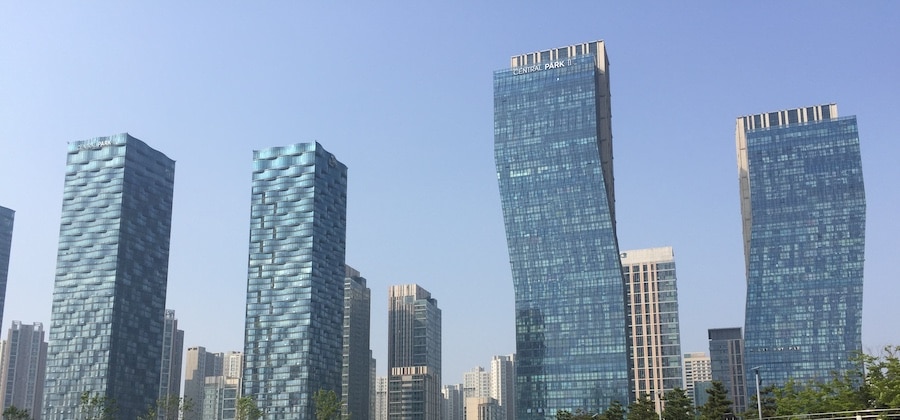
Photo of Songdo, South Korea by Eve Picker.

How to leave places better than you find them.

September 4, 2019

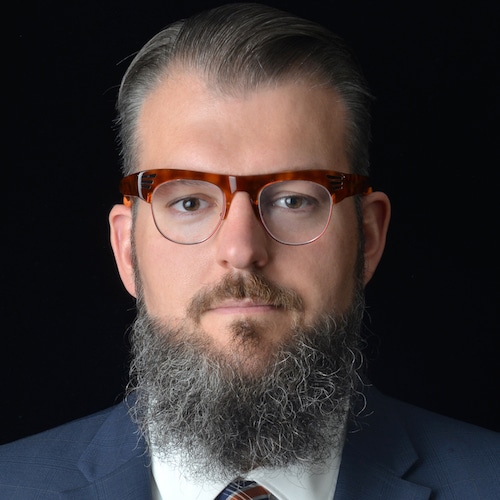
Josh McManus is a problem-solver working in post-industrial cities with entrepreneurs, corporations, and foundations to help people positively transform the places that they love. Josh’s experience spans 20 years as a serial social and business entrepreneur. An innovator in entrepreneurial ecosystems, creative economic development and combating population loss, Josh is obsessed with place-based change. An autodidact learner on subjects ranging from invention laboratories to neuroscience to game theory, Josh designs and implements projects that aim to disrupt how people in places think of themselves and their community and maximize the potential of all citizens who reside there.

Previously, Josh worked with the Rock Ventures team in Detroit, helping to buy and renovate many millions of square feet of empty downtown space. Rock Ventures is the umbrella company that serves and connects Quicken Loans Founder and Cleveland Cavaliers Chairman Dan Gilbert’s portfolio of more than 100 companies. 

Nationally, Josh is a Marshall Memorial Fellow and a Next American Vanguard. Locally, he has helped found multiple organizations and has served on a variety of institutional boards in his collection of adopted hometowns including Chattanooga, Tennessee; Detroit; and Bar Harbor, Maine. His thoughts have been featured by Forbes, Fast Company, The Economist, Entrepreneur, GOOD, USA Today, The Huffington Post and Garden and Gun.

Listen in to our fascinating conversation.

Insights and Inspirations

  • Josh believes we are on the precipice of the democratization of finance
  • All segments of the real estate market are innovating and  transforming rapidly, right before our eyes.
  • Just as we’ve lived through a wave of green-washing, we are now in a wave of good-washing. 
  • The sharing economy is flexing its muscles in real estate – office sharing, AirBNB, revenue sharing in lieu of rent, co-housing – and there is more to come.
  • Real estate in the US would be radically improved through the rapid re-writing of zoning laws.

Information and Links

  • Josh’s purpose in this world is to be a trim tab. He spends most of his time working to hack capitalism and building on work that started in Chattanooga, TN.
  • And Josh loves Avalon Bakery, in Detroit.
Read the podcast transcript here

Eve Picker: Hey, everyone, this is Eve Picker, and if you listen to this podcast series, you’re going to learn how to make some change.

Eve Picker: Thanks so much for joining us on this podcast. I’m Eve Picker, and my life revolves around cities, real estate, and crowdfunding. In this podcast series, we’ll be digging deep to discover how we can build better cities by building better buildings.

Eve Picker: My guest today is friend, and colleague, Josh McManus. Josh describes himself as a problem solver, strategy implementer, and idea activator, and I know all three to be true. He works in post-industrial cities with entrepreneurs, corporations, and foundations to help people positively transform the places that they love. He’s obsessed with place-based change. We have that in common.

Eve Picker: Previously, Josh worked with Rock Ventures’ team in Detroit, helping to buy and renovate hundreds of millions of square feet of empty space in downtown Detroit. Rock Ventures serves and connects Quicken Loans founder, and Cleveland Cavaliers Chairman Dan Gilbert’s portfolio of more than 100 companies.

Eve Picker: Nationally, Josh is a Marshall Memorial Fellow and a Next American Vanguard. Locally, he has helped found multiple organizations and has served on a variety of institutional boards in his collection of adopted hometowns, including Chattanooga, Tennessee, Detroit, Bar Harbor, and New Orleans. His thoughts have been featured by Forbes, Fast Company, The Economist, Entrepreneur, GOOD, USA Today, and The Huffington Post.

Eve Picker: If you want to know more about Josh after you’ve listened to this podcast, please visit EvePicker.com, where you’ll find links and other goodies on the show notes page and where you can subscribe to my newsletter on all things real estate impact.

Eve Picker: Hi, Josh. How are you this morning?

Josh McManus: Doing great.

Eve Picker: Thank you so much for joining me. I know quite a lot about you, but our listeners don’t. I know that you’re always moving, and I’m wondering what and where you’re working right now.

Josh McManus: I am in Dearborn, Michigan this morning. I’m fortunate to have spent a lot of time in Detroit, and Dearborn over the last 10 years. My work right now is mostly to support Ford Motor Company, as they transform from a past that has been just about cars to a future that’s about movement and mobility, overall.

Eve Picker: That’s pretty innovative stuff. Your background has been- you’ve been involved in a lot of real estate recently in under-served cities. Do you want to tell us a little bit about that?

Josh McManus: Sure. I actually realized recently that it goes back to my childhood. I grew up in the shadows of a Goodyear plant in Georgia, and the life and death of that little town came and went with what was going on in that factory, so I’ve spent the entirety of my career working in post-industrial places. One of the best tools for changing the trajectory of a place is re-imagining real estate. I’ve worked in Chattanooga, Cincinnati, Akron, and then spent a lot of time in Detroit. With each passing set of interventions, have moved up and up in the scope of ambition of the projects that I’ve worked on.

Josh McManus: In the last 10 years, I’ve been very fortunate to work on some really large-scale projects. I got to serve with the team at Rock Ventures, which has amassed over 14 million square feet of real estate in downtown Detroit – over 100 buildings – and I’ve been party to taking most of those buildings from low, or no occupancy to full, or near-full occupancy.

Josh McManus: In the recent work with Ford, I was also very fortunate to be party to helping make the announcement of Ford’s return into their home city of Detroit, with the acquisition of Michigan Central Station, which is really turning into a living laboratory for the future mobility. It was this iconic abandoned structure that’s now getting new life and will be online and operational in 2021, I believe.

Eve Picker: That’s pretty big and exciting stuff. What’s your background, and what path led you to what you’re working on now, and this real estate reinvention?

Josh McManus: Actually, I also had the revelation recently that I come into real estate rightly so. My paternal great grandfather, and paternal grandfather were in the real estate business in Georgia and had some commercial and residential transactions and holdings. Then I spent this blended upbringing, where my dad was a CEO, my mom’s an artist, and I was torn between those two polarities of doing beautiful and good things for the world and doing business things.

Josh McManus: I went on to get business degrees, both undergraduate, and graduate, but most of my work focused on how to leave places better than you found them. I eventually came up with this reconciliation, I call it, for purpose – instead of for profit, for purpose – which is attempting to work at the intersections of moral imperative, and market imperative.

Josh McManus: All of my work in real estate is very much in that direction, which is how do you make places both humane, and maximization machines for human potential, but how do you also make them fiscally feasible, so that you can do the projects again, and again, and at scale. It’s a fine line to walk, but it’s really where my interests are is how do we build for-purpose places that serve people well, serve communities well, and serve capital interests, to the extent that they have to?

Eve Picker: I love the idea of leaving places better than you found them. It sounds easy, but it’s- probably the most difficult thing about it is that people have different ideas about what ‘better’ is, don’t they?

Josh McManus: Yes, absolutely. Real estate redevelopment is a very loaded subject right now [cross talk]

Eve Picker: It certainly is.

Josh McManus: -national conversations on things like gentrification, which are understandable; while, at the same time, there’s national and global conversations about economic stagnation. People are very clear on things they don’t like – when people get pushed out, or when people can’t stay in a place, or can’t thrive in a place …

Josh McManus: That in-between space of how do you make places work for everybody is oft talked about, but very little delivered. I think that’s why I’ve had such a consistent interest in it – how do we build places that maximize the potential for all that are able to retain talent that already exist there, but to attract new talent at the same time? I feel like it’s one of the few things that could be a lifelong pursuit, because it’s complex enough, it’s going to evolve. I know you feel the same way. It’s the problem that I’ll never solve, but I think I’ll always love working on it.

Eve Picker: Be sure to go to EvePicker.com and sign up for my free educational newsletter about impact real estate investing. You’ll be among the first to hear about new projects you can invest in. That’s EvePicker.com. Thanks so much.

Eve Picker: Yeah, I think you’re right … The interesting thing about my interviewing, people I’ve interviewed so far, they’re all tackling the problem from a different angle. It’s absolutely fascinating. Their backgrounds have led them to a different place where they have different skills, and they may be able to help in a different way. I don’t know how you get them all together. It’s very difficult, and it is, as you said, very loaded. Developers are not very popular at the moment, although they may be the answer, in some ways, somehow.

Josh McManus: Actually, I think there’s a new- there’s an emergent field. This has been one of the hard things for me … Going back to when I think you and I met, probably a dozen years ago?

Eve Picker: Yeah, it was a long time ago.

Josh McManus: We met in sort of this ‘island of misfit toys’ faction – the old gatherings of CEOs for Cities. What was fascinating about that is that you had … I was an early social entrepreneur. You were doing both that place-based change, and development work. Then there was a mix of other people that really shouldn’t have intersected with each other.

Josh McManus: What I’ve felt since then is there is this emergent field. I guess my resume would say that I’ve been proxy to a lot of development. I, by no means, would consider myself a developer, and I don’t know that I ever will, but it feels like, to me, that there’s an emergent field that is something slightly different from developer that needs a name. It doesn’t have that name yet.

Eve Picker: Yeah, that’s interesting. Something to ponder. What is real estate impact investing, from your perspective?

Josh McManus: Overall, I think that we are on the precipice of democratization of finance in a way that’s really- that we’ve certainly not seen in our lifetimes. It may have happened in certain ways in the past, where you opened up finance to more people, but the impact falls in this overarching democratization of finance wave that is impending.

Josh McManus: What I mean by that is I’ve always … In some of the economic-theory stuff that I’ve read, there’s this notion of perfect capitalism. A lot people right now are talking about post-capitalism. I’m still talking about perfect capitalism. It would be where supply and demand met each other in real time and worked its way towards efficiencies.

Josh McManus: Impact real estate investing, to me, is just the opening of the capital markets for good projects to meet good capital at a cost that’s sustainable. This is being equipped and enabled by technology, by new modes of thinking, and by measurements that are no longer single bottom line, which I think is totally appropriate.

Josh McManus: The arms race we’ve had towards single bottom line returns, since Milton Friedman economics set in, is very problematic. This return to impact, to me, feels like a return to understanding our core biological instincts, which are self-preservation. Impact finance, to me, feels like a return to what’s right and the pursuit of more perfect capitalism.

Eve Picker: I agree with you on that, but I have to wonder whether it’s really working that way yet. At the moment, I feel that impact investors are seeking the good, as well as the return. We know what it looks like to put together an impactful project in a soft market. The returns are never going to be that great. If you offer bigger returns to investors, that works its way down to the occupant of the building, who might be an affordable-housing tenant. I don’t know. Do you agree that, somehow, this great divide between the haves and have-nots is not just about the money they have, but also the expectations for the money they have? I’m not sure I’m describing that-

Josh McManus: No, no, I follow. I think there’s a couple of forces in play. One is, just as we saw a wave of green-washing over the last 10-15 years – where now everything is organic, and you can’t tell whether organic is good or not – we’re in a great period of good-washing right now. It seems that every way I turn right now, everybody’s an impact investor, because that is fashionable.

Josh McManus: But, then, if you look at the core of some of these folks’ beliefs and return expectations, they truly are willing to receive returns that are multiple bottom lines. Then there are some people who have just good-washed and expect the same arbitrary financial returns that they saw under other boom times that have advantaged capital over everything else. I think that’s an issue.

Josh McManus: I also think that we are, like you say, on the precipice, but not there yet with truly unlocking all capital with all risk orientations. The work that you’ve been doing on Reg-CF, with Small Change, is absolutely fascinating to me, because bringing folks who are holding capital that they’ve only been able to see microscopic returns on, for any sort of lower-risk opportunities – people that have only been able to see a money market account or CDs, these things that have been low, low single-digit returns – allowing those folks to bring capital on that they will now, all of a sudden … Six-percent returns, to them, looks really good compared to what they’ve seen in the past.

Josh McManus: I just think we’ve still got a lot of capital that’s yet to be unlocked that has a different return prospectuses on it. I think we’ve got to be patient in getting all capital onto the playing field and then getting it liquid enough that it can move in the directions of projects where those folks are going to see a proper risk-adjusted return.

Josh McManus: I think, in you guys’ shoes, over in what you’re doing with Small Change, what’s got to be tough is it’s a little bit Wild West, right now, so you can’t tell … It’s hard to tell the difference between who’s good and who’s good-washing, and it may take a period of time before that sorts itself out.

Eve Picker: No, I think it is going to take some time, for sure. How much, I’m not sure [cross talk] but we’ll try to be patient. When you look at cities – you travel a lot; you go to a lot of cities – do you think socially responsible real estate is necessary in today’s development landscape?

Josh McManus: Yeah, I think socially responsible everything is necessary in every landscape [cross talk].

Eve Picker: That was a loaded question.

Josh McManus: -throughout time. I am an avid consumer of a lot of historical information. The times when we put our self in great peril is when we are socially irresponsible. My dad, the CEO, raised me as a capitalist with one caveat. Every time he would remind me that I was a capitalist, he would also remind me that unbridled greed is the Achilles heel of capitalism. Unbridled greed is not socially responsible. It’s also not sustainable. We have to have a system that can allow returns on capital, but can allow returns on … I call them the other ROIs – the returns on individuals. Can individuals maximize their potential? In addition to return on investment, return on individuals.

Josh McManus: Then, also, ROIs in return on ideas. Are we rewarding and testing new ideas? This is especially problematic in the real estate business, because things all too often get too formulaic, too templatized. You and I share a friend in Jonathan Tate, who’s looked at the structure and form of multi-family housing units. There is a big problem there, in that it becomes templatized. The capital gets comfortable with that template, but then that template stops serving people in the way that needs to be. I spend a lot of time [cross talk]

Eve Picker: -that, to me, I think is the crux of it all. We need innovation in cities and innovation in place-making, and our financial institutions are not built to be innovators. They [cross talk] looking at real estate development that perpetuates the same, just in the way you said. It’s a very difficult cycle to break out of. Yet, I see so many creative developers coming to me with the most amazing ideas. How can we unleash them all and finance them all? I think we would have better cities, right?

Josh McManus: Right. The marketplace has to be there, and then we’ve got get … In all of this post-industrial city work I’ve done, I’ve worked a lot with large and small foundations, some national, some place-based. Foundation capital is interesting to me, because I think it can and should be the most risk-oriented capital in the whole world.

Josh McManus: An evergreen foundation that throws off five percent of its corpus every year, and that annualized return rates are adjusted over time, that means that that corpus is evergreen. We allow that in the tax code, because we see a benefit; that there should be a benefit to humanity and the society. That most risk-oriented money should be going into a lot of these real estate projects, especially for model-testing purposes, and that’s not totally the case right now. We’ve started to see some of that happen with some foundations, but they …

Josh McManus: The weird thing that happened, where foundations would get hit up for a lot of capital campaigns; so, then they categorically said, “We’re not going to be in the real estate business anymore.” I completely understand not building another wing on to a museum or building another dorm room at a college or university, but we need to go back and revisit that amongst the philanthropy crowd to say we probably shouldn’t be in the rote real estate business, but we should be in the real estate innovation business. The foundation capital being the most risk-oriented should be the ones that are trying the highest likelihood of transformation efforts on affordable housing.

Josh McManus: It was interesting to me to see the announcement … I don’t know if you saw it or not, from Google, last week. They said they’re going to put a billion dollars into affordable housing in the Bay Area. There’s a crazy statistic out there; I think it’s in the last 10 years, for every 12 new jobs that have been created, only one unit of housing has been created at the same time. You have these incredible pressures … You see Google putting a billion into that, and that’s a survival metric for them. They’re not going to be able to retain and attract talent, if people can afford to live.

Eve Picker: Right.

Josh McManus: I think that philanthropic money should be thinking the same way. If you’ve got a broken real estate market in a community, you may be the intervention of last resort, and you’ve got to fix that positively or negatively. I’ll just give you one example of how we thought about that.

Josh McManus: The work that I did with Rock Ventures is now carried on by a team that’s led by a lady named Laura Grannemann. They have gone very, very deep in working to figure out how to stop the blight machine that exists in the Detroit city limits. That has required not just investments in blight reduction, but significant investment in education of homeowners, so that the foreclosure process is slowed and eventually stopped. It’s required investments in rehabbing some houses for stabilization purposes – full neighborhood-sized interventions.

Josh McManus: I think that’s a good example of the level that philanthropy will have to intervene at to get markets back to operational. Once that happens, maybe they can move on, or maybe they can move to commercial, but we need risk-oriented money in the mix, for sure.

Eve Picker: Yeah. Foundations can invest in lots of other ways that aren’t necessarily bricks and mortar but end up being place-making. There are many zoning codes that need to be looked at, for an example, and changed to permit density in a way that they’re not written.

Eve Picker: One example that I’ve watched with interest is in the city of Melbourne, in Australia, where, maybe it might be as long as 10 years ago now, but a few years back, they introduced density zoning overlay along all the major corridors in the city, because those are transit corridors. They were trying to really implement density without the need for adding more cars. It’s been really interesting watching that emerge. It’s an interesting thesis that’s a little tinker with the zoning code to really make development happen in a different way. I’m fascinated by that.

Josh McManus: Yeah.

Eve Picker: In Pittsburgh,  I had a little non-profit, and built a tiny house, which in itself, was plenty of work and interesting, but the most interesting outcome, to me, was that several years later, just last year, the City of Pittsburgh actually created an overlay district for that little under-served neighborhood, so that they could build an experiment with ADUs, and tiny houses, which are really not part of the zoning code. To me, that was an absolutely wonderful outcome of this little $200,000 project. There’s ways to experiment and innovate, I think, that go beyond just building something.

Josh McManus: You’re bringing attention to something … One of the things that I’ve wanted to see created or to help create that I haven’t had time is what I describe as this [inaudible] from municipal policy innovation.

Eve Picker: Oh, that’d be fabulous.

Josh McManus: It’s under the realization that … It’s funny, because I watched a little bit of the Democratic debate last night, just to see what’s going on in that world. I had the realization, studying American history, there was a time when federal policy was the be-all-end-all for impacting local life in America. When we were debating major social, major fiscal policies, then the federal policy was where it’s at. The debates that we have on federal policies right now do have local impact, but they don’t have the local impact that they did all the way through the 1800s.

Josh McManus: At some point, the game really moved to the states, and state policy started to have a large impact on whether you have state income tax or not, or how you fund education, how you think about crime. During that period, governors were where it was that for impacting day-to-day life at a neighborhood level.

Josh McManus: Today, it’s really down to a place where I think your mayor matters a lot more than your president. That throws a lot of people off, because of the drama that’s happening on our national policy stage right now. The truth is, I travel so much, and the quality of life at the neighborhood level is much more greatly impacted by the policy choices of a city’s mayor than by the president, nor Congress.

Josh McManus: Now, if you follow Twitter all the time and watch TV all the time, you might think otherwise, but the actuality of it, of what your access to transportation is, what your access to parks and public places are, what the quality of your local education offerings are … The folks that have their hands in that are local politicians, much, much, much moreso than national, or state politicians.

Josh McManus: I think this game of sitting around saying, “Well, when is the state or the feds going to help us fix this stuff?” is completely wrong-headed, and the game is really transforming at a local level, in a lot of cities. My time in Detroit … I think my biggest fear for Detroit, right now, is that they went unregulated during the bankruptcy period. There was very low regulation on a lot of development activities and other things.

Josh McManus: Now, they’re turning back on the development regime that’s really dated circa 1950. I think  there’s folks that are working hard to try to update some of that, but these communities that have these leftover enforcement regimes that are from times that are no longer here and didn’t really deliver results that were optimal for all people, this is highly problematic [cross talk]

Josh McManus: -we need to be scrubbing local zoning issues. The way that you’re zoned, from a density standpoint, has a very fast waterfall effect to what’s going to happen with education, and transportation. I think a lot of the citizens don’t realize that, and they fall into a default NIMBY setting, which is ill-advised, because it means that you make decisions that don’t impact your kids, your surrounding neighborhood, your surrounding businesses.

Eve Picker: Right. Well, if you start your school, count me in, because I think [cross talk] I’m always astonished at how much power politicians have and how little they know about urban design, planning, architecture, and the impact that it can have on place, so I think that’s really important. Do you think there are any current trends in real estate development that are really important for the future of our cities?

Josh McManus: Oh, yeah. My observation is that we’re seeing the radical transformation of the three primary forms of real estate right before our very eyes. These are things that have, at least in the US, have held true almost since our foundation. I’ll unpack that a little bit.

Josh McManus: On commercial real estate, we’ve existed off of a owner-broker model that was predicated on square feet, and years. If I wanted to lease office space for my commercial offices, then I went and met with a broker who represented a property owner, and we had a debate and discussion about how many years and how many square feet I needed for my offices.

Josh McManus: Due to the demands of the property owner and also to the inertia of the whole situation, we typically had a very long-term discussion. The property owner, and the broker really wanted to get me into five years, and they wanted to get me into as much square footage as possible, at as high a leasehold rate as they could get their hands on [cross talk]-

Eve Picker: Both for different reasons, right? One, because the broker is incentivized to do the biggest deal possible, because the way the broker gets paid is on a percentage-commission basis, right?

Josh McManus: Yes.

Eve Picker: Which is also a really broken piece of this all.

Josh McManus: Yeah. What I see happening right now – again, with technology democratization, and ability to understand real-time supply and demand – is almost this continuously variable financing of real estate. You see it manifest the best in things like WeWork, because whereas the CBREs of the world are still out there going, “Well, how many how many square feet and how many years do you want this for?” WeWork is saying, “How many desks do you want, and how many days do you want them for?”

Josh McManus: That’s the transformation of the pro forma, because at CB Richard Ellis, they wanted me to rent that space, and they wanted me to put one person per every 300 square feet, or 350 square feet – as much room as I would sign up for, that’s what they wanted to get me to. By changing the pro forma around and by aligning the interests of the broker-owner – now that’s kind of collapsing into the same thing, sometimes – WeWork says desk and days, and what they don’t talk about as much is square feet, because now, if you go into a WeWork office, there’s one desk per every 75 square feet.

Josh McManus: What’s fascinating about that is that it’s a healthier performing pro forma; it’s also more environmentally sustainable, because you’re conditioning less space. It has a higher energy level to it, so people who work in those spaces feel a different level of energy. You can also shift the pro forma to have more amenities, because you’re spending less money on just bare space and conditioning of that bare space [cross talk].

Eve Picker: -it really supports startup, and small businesses who can’t really find the time to put all the necessary utilities, and the managers together for themselves, so there’s an added bonus, right?

Josh McManus: Well, it also allows them … It’s continuously variable, if it’s priced based upon risk. I may price your desk rate higher, if you’re a more risky client, or if you want more flexibility. Essentially, what you’re paying for is optionality. It also allows you, if you’re a startup, to be like, “Well, this month, I have 12 employees, and next month, I have 17. Then we went through a down cycle, and I’m at 11.”

Josh McManus: It’s more pay-to-play than this encumbrance that so many companies have been so scared of, which is this five-year lease with these ridiculous guarantees, and [cross talk] I think it actually accelerates the economy, because it gives people more options to play the way they want to, when they want to [cross talk] for the landlord and the broker, because they’re pricing risk into it. Their margin is still there-

Eve Picker: Josh, early on in my real estate career, I was known as the only developer in Pittsburgh who would actually lease out space for a year at a time. I have some buildings that have smaller office spaces, and I would find these startup tenants, and I would take a risk. They’d stay for a year, and then, they’d stay for another. Some of them ended up staying for 20, maybe because I understood who they were, because I was like that myself. I couldn’t find anyone to help me find tenants, because it wasn’t worth their while. I love that the internet is producing new models and helping make that happen [cross talk]

Josh McManus: That’s commercial, and then what you’ve got happening on retail-

Eve Picker: Oh, that’s huge.

Josh McManus: -is similar. I mean retail, both in the displacement of some retail to online, but the retail that’s persisting is highly experiential. I think that you’re seeing a lot more revenue-share rents at the ground level. It’s aligning the interest of the landlord and the lessee.

Josh McManus: You’re also seeing a lot of things like food halls. The way those are working out is the landlord, the broker, and the lessee are sharing costs differently. If I’m in a food hall, the property owner, or the property manager may be the one who’s buying some of that back-of-house equipment and carrying the debt, or the cost of that equipment. What that does is create lower barrier to entry for more localized, more authentic offerings to going to place. Then, when that those offerings perform very well, both the landlord and the lessee are sharing in those outcomes [inaudible]

Eve Picker: -co-working for food, right?

Josh McManus: Yeah, totally. The final transformation that I’m watching in real estate is the residential side of it. If you look backwards, if I need to stay a night – I’m in a Marriott, right now. If I needed to stay a night, I would go to a hotel. If I needed to stay for a week, I’d stay for an extended stay. If I needed to stay for three months, then I would go to some corporate housing that had furniture in it. If I needed to stay for longer than that, I could stay for 12 months, or 24 months, but it had to be a fixed increment.

Josh McManus: Now, that’s all collapsing. I moved my family down to New Orleans over the winter, and we actually went on Airbnb, and did a long-term rental … Longer-term rental, so it was more like a 90-day. The algorithm there brokered some adjustments to say, “Hey, you’re staying for a longer time. That’s good for you; that’s good for the landlord. Let’s get the economics of this right.”.

Josh McManus: This foreshadows, for me, that you’re going to have this optionality in the future on a small number of platforms – whether I need to stay one night, one week, or six months – that I’ll be able to do that, and the data will help you understand what the right pricing is for both parties. It’s democratizing that, and de-risking it. I’m extremely excited, because I think what you’re seeing is this melt into something where supply and demand can meet each other in much greater fashion, faster fashion, with more transparency and more benefit in both directions.

Eve Picker: That plays into financing these things, which are all new, and innovative, and financial institutions often don’t understand. I have a building that is now a co-working building. I moved from traditional office spaces to getting rent, as the building owner, from desks. I have an operator who manages the building, much like a hotel operator.

Eve Picker: I’ve been paying my mortgage on time on that building at least 13 years, never missing a payment, and went to them for a credit line to make some improvements, and couldn’t get it financed, because they just didn’t understand where the income was coming from. We’re back to the first issue we talked about, which is the financial institutions really, for whatever reason … It may not be their fault. They have all their regulations to deal with … They’re squashing the innovation out of the cities. These innovations are happening regardless, and there’s going to have to be different financing tools [cross talk] banker is listening here.

Josh McManus: I couldn’t agree more, but I don’t- I think that wishing for bankers to figure it out … Bankers always follow the lowest common denominator [inaudible] path. I did have some insight in working for Rock Ventures. That’s the holding company that sits next to Quicken Loans. Quicken Loans, in some ways, is in that traditional banking category, but in most ways is not. What I learned in that world is that a lot of people look at that as fin-tech rather than finance-

Eve Picker: That’s true.

Josh McManus: I think that there is a major opportunity in the way that this is likely going to get handled at scale, as you’re going to see the development of a capital class that’s called REfin-tech, real estate fin-tech. I think that’s the exact money that is financing things like WeWork, right now. If you look at WeWork, it’s not your traditional- it’s more your soft banks. It’s your folks that understand that data has value; that technology has inherent value, but that you also need to finance large amounts of physical property. It’s a blended- it’s not just tech. It’s physical property and tech living together side by side.

Josh McManus: I think this is going to come off of a completely new capital class, and that, as you start to see exits, it’s going to be really interesting to see what happens with the IPO of WeWork. If that goes well, that probably forms the foundation of this REfin-tech capital class that will subvert the banks. Once, it subverts the banks, then the banks will try to figure out how to get in that game.

Eve Picker: Yeah, I think that’s right. I’m going to shift gears a little bit, because we’ve been talking a long time, but I want to know the answer to this. You started your- well, I don’t know if it was the beginning, but when I first met you, you were doing quite a lot of community engagement work. I’m wondering what community-engagement tools that you’ve seen or used that you really believe work?

Josh McManus: Around the time- well, probably around the time that we met was the time that I got involved in conceiving and driving what we thought, and what we still think is the world’s largest community visioning process. We got over 26,000 people to participate in Ideas for the Future of Chattanooga Tennessee.

Josh McManus: That was fascinating for me, because all the assumptions were totally wrong. We thought it would happen mostly online. It happened 80 percent on paper. We thought that folks would be single-issue voters, and they turned out to be very dynamic in what their interests were in the community. We thought that when you were faced with the issue of vision that people would have really, really wild ideas, and really, en masse, the community had incremental ideas. If you’re looking for breakthrough ideas, I learned that big survey processes were not the way to go for it [cross talk]

Josh McManus: After all this time of doing it … I did that, and then I’ve done a lot of other approaches. I believe in what I call humanity-centered design. I’ve got a process that I’ve developed for it. What it says is don’t build nor design things for what you believe is a community, build and design things for what you know is a community.

Josh McManus: Any intervention you build should be with the deep observation of the issues that you’re trying to understand and intervene on. What I mean by that is if you want to intervene on affordable housing and you don’t have a lot of people involved, who have lived in, are living in, and are currently pursuing affordable housing, then it’s going to be really hard to get it right..

Josh McManus: Just as human-centered design has put people in hospital beds, when you’re trying to innovate in hospitals, this humanity-centered design says I’ve got to take it more than just innovation on behalf of the patient. I’ve got to find innovation on behalf of the entire patient base. I believe in this humanity-centered design. I believe in feedback from the people. I believe in that in two different ways. I think if you need to understand what consensus is, then you mass survey, and representative sample. If you need to look for innovation, you actually have to do constrained dreaming.

Josh McManus: What I mean by that is we did the world’s largest community-visioning process, and people wanted a little cleaner, a little less traffic, a little better amenities. Then we did this other process that was called City R&D, where we said, “We’ve got downtown, we’ve got the mall area, and we’ve got the new giant auto factory – we need to connect these three together. What are your wildest ideas for connecting these things together?”.

Josh McManus: When you constrain the problem like that, the imagination became really much more bold. People had public art ribbons, and rubber-tired trolleys, and all these different ways that you could connect these assets together that they didn’t come up with, when they were just asked to imagine a better community and describe it. I think that community process has to be selective around are you trying to figure out what consensus is, or are you trying to figure out what innovation is?

Josh McManus: The last thing I want to mention is my friend, Mark Wallace, who runs the Detroit River Conservancy, I feel like he really stumbled into, or intentionally drove into new territory from a community-input standpoint with the new park that they just announced on the Detroit riverfront.

Josh McManus: What he did was actually go get a representative sampling. I think it was 21 folks, real people from neighborhoods – mom and her kid, a set of retirees – and these are people that were not your usual suspects in public participation. Then what he did is put them on a plane, and they went to the best parks in the country-

Eve Picker: Oh, that’s really cool.

Josh McManus: Yeah. They experienced those parks, and then they came back and worked with the designers to say what they wanted in their park. Instead of [cross talk]

Eve Picker: That’s really cool.

Josh McManus: -surveying, he found his representative sampling of the community; made sure that they were unbiased, because they weren’t the usual suspects and participants, like people that are in the know. Used their input to come up with a plan that I’m super-super-excited about. I think that may be a next practice, too.

Eve Picker: That’s pretty cool. I’m gonna have to interview Mark-

Josh McManus: Oh, yeah, he’s great.

Eve Picker: One last question – where do you think the future of real estate impact investing lies, in summary?

Josh McManus: In summary, I think that all of us that care about real estate impact investing have to continue to drive for policies, tools, and patrons, for that matter, who are committed to the democratization of finance. When the controls are in the hands of the commons, instead of in the hands of a small few who may make choices that were based on that unbridled greed that is this Achilles heel of capitalism, that is problematic. Anything that we can build, that we can do, that we can advocate for, that allows finance to further democratize to allow all people to participate in it, and to participate in ways that are fair and just, I think that’s what the future looks like.

Eve Picker: Okay, that’s great. I do have three sign-off questions that I’m asking everyone because I’d like to tabulate the answers in the end. The first question is what’s the key factor that makes a real estate project impactful to you?

Josh McManus: I’ll tell you a quick story. There was a time when everybody was talking about Denver. They’re like, “Denver’s changing. Denver’s changing. You gotta go see Denver! Denver is changing!” Then you went to Denver, and it was three blocks-.

Eve Picker: Yes, I remember that.

Josh McManus: Yeah, yeah [cross talk]

Eve Picker: -you could say the same about Corktown. You know that, right?

Josh McManus: Yeah, yeah, totally, totally. Absolutely.

Eve Picker: Where is Corktown? Oh, it’s this block …

Josh McManus: Yeah, that’s … my friends, the Cooleys, and they started with the BBQ shop. That does get to how I measure these things. A project that is so impactful that people start to talk about a place, because that one project … It’s happened with a place called The Flying Squirrel in Chattanooga; incredibly designed; really smart bar that really accelerated the south side of the city. That’s what I’m looking for in transforming real estate.

Josh McManus: Does the project have the ability to play above its fighting weight, because it becomes contagious? Does it cause adjacent development? Does it get written up because it has particular aspects of it, like Jonathan Tate’s odd-lot work that he’s done down in New Orleans? Does it set precedent? Does it challenge people? Does it change the status quo? Do you come back to it in 10, 15, 20 years and all sorts of other stuff has happened around it, because it was that compelling unto itself?

Eve Picker: Yes, okay. Then, other than by raising money, how do you think involving investors through crowdfunding could benefit the impact real estate developer?

Josh McManus: When I speak of the democratization of finance, the disassociation of capital and community that happened since the 1950s is very problematic. What has the potential to happen now … Before we got on the line, I was working through a small investment in a place-based development out of my IRA- a self-directed IRA investment that’s in my neighborhood in New Orleans. What that does is reconnect me, my capital, and my community together. I think that’s what’s to come for the investor is to no longer be a spreadsheet jockey who is just sitting there looking for returns, but to actually participate in the true active community, by the utilization of your capital, to deliver things that include returns for you, but include a lot more.

Eve Picker: Right. Okay, if you could think of one thing that would improve real estate development in the US, what would it be?

Josh McManus: One thing that would improve real estate development in the US would be a rapid evolution of understanding of zoning, because I feel like this is … The municipal boundaries of most communities were formed at a time of horse and carriage. Most of our zoning requirements still date back to times when heavy industry and light industry were really different from each other. Heavy industry had machines that could suck people into them, and cause major problems, and had major health concerns.

Josh McManus: I look at additive manufacturing, experiential retail, multi-family affordable residential, and I know, in the future, we’re going to have to have all of those on the same block with each other. Accelerating to standards that allow for that to happen seems really important to me.

Eve Picker: Yeah? Okay. Josh, it’s been really lovely talking to you. I thoroughly enjoyed it. I can’t wait to hear about what you’re next working on. Thank you so much for your time.

Josh McManus: Thank you. I enjoyed the conversation, Eve.

Eve Picker: That was Josh McManus. I hope you enjoyed listening to him as much as I enjoyed talking to him. Josh gave me three great takeaways. First, he believes we are on the precipice of the democratization of finance. Second, all segments of the real estate market are innovating and transforming rapidly right before our eyes. Third, just as we lived through a wave of green-washing, we are now in a wave of good-washing. We need to be patient for investors to catch up. What did you learn?

Eve Picker: You can read more about Josh on the show notes page for this podcast at EvePicker.com. While you’re there, please consider signing up for my newsletter to find out more about how to make money in real estate while making some change. Thank you so much for spending your time with Josh, and I, today. We’ll talk again soon, but for now, this is Eve Picker signing off to go make some change.

Detroit, image by Eve Picker

Real estate artist.

August 28, 2019

In this podcast Lorenzo Perez and I explore the power of developing artistic and inspirational places and the need for less formula and more creativity in real estate development.

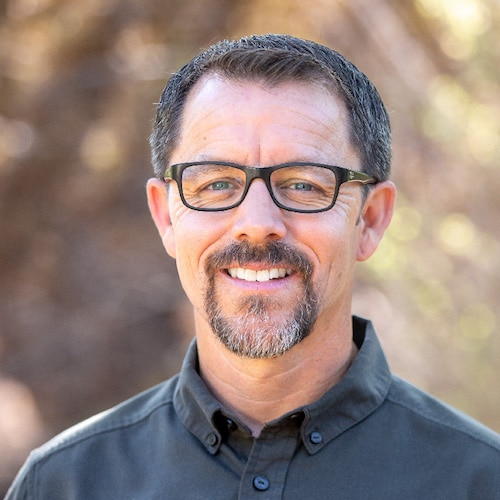
Lorenzo is the co-founder, designer, restless innovator and inspired real estate developer leading Venue Projects. He talks fast, plenty and daydreams often and he’s a nostalgic storyteller who finds magic in the details.

Lorenzo describes Venue’s work as crafting one of a kind environments that are sensitive to experiences, neighborhoods and people. That’s an understatement. Lorenzo’s approach is that of an entrepreneur. He takes opportunities and risks that most developers would not in order to create projects that are carefully crafted, artistic, community-centric masterpieces. He’s a real estate artist.

I wish Lorenzo worked in Pittsburgh.

Insights and Inspirations

  • Each of Venue’s projects is built to provide wholistic returns including emotional, social, cultural, environmental and economic returns.
  • Ugly buildings are a lot of fun. They are a blank canvas just waiting for reinvention.
  • Real estate trends that fascinate Lorenzo include anything to do with mobility, micro-hospitality and food courts.
  • Community engagement is key, if sometimes uncomfortable.
  • Alternative projects must become more acceptable to our financial systems.

Information and Links

  • Lorenzo is fascinated with the disruption of construction delivery systems that is brewing. This innovation is growing out of the need for both skilled labor and more efficient building models in the marketplace. Venue is contemplating partnering with Katerra for the housing / micro hospitality projects they are developing.
  • Venue is interested in the potential for AirBNB to serve as a reservation system for their micro lodging concepts.  
  • The book Built to Love Creating Products that Captivate Customers is foundational to Venue’s process and approach to real estate development.
Read the podcast transcript here

Eve Picker: Hey, everyone, this is Eve Picker, and if you listen to this podcast series, you’re going to learn how to make some change. Hi there. Thanks so much for joining me today for the latest episode of Impact Real Estate Investing.

Eve Picker: My guest today is Lorenzo Perez, the co-founder of Venue Developments, a redevelopment practice based in Phoenix, Arizona. Lorenzo describes Venue’s work as crafting one-of-a-kind environments that are sensitive to experiences, neighborhoods, and people. That’s an understatement.

Eve Picker: Lorenzo’s approach is that of an entrepreneur. He takes opportunities and risks that most developers would not, in order to create projects that are carefully crafted, artistic, community-centric masterpieces. I wish Lorenzo worked in Pittsburgh.

Eve Picker: Listen in to hear more and be sure to go to EvePicker.com to find out more about Lorenzo on the show notes page for this episode. Don’t forget to sign up for my newsletter, so you can stay tuned into the latest news about real-estate impact investing, and the latest projects on my crowdfunding platform, smallchange.co.

Eve Picker: So, Lorenzo, I know a little bit about your work, but I would love to tell our listeners, or have you tell our listeners a little bit about what you do.

Lorenzo Perez: Sure. I am a real-estate entrepreneur based in Phoenix Arizona. I say entrepreneur more than a developer, because we are focused on creative real-estate development with a focus on urban infill, adaptive reuse, and creative redevelopment projects.

Lorenzo Perez: Everyone is a prototype, and a one-off, so they’re very entrepreneurial in terms of what do we do with a particular building, or how do we find a home for a particular tenant, or what kind of use can we implement, or a variety of uses? Then we’ve got to figure out how to put it all together, how to finance it, operate it, execute, and deliver it [cross talk]

Eve Picker: You’re a little bit of an artist, right? 

Lorenzo Perez: You know, it’s funny, I’ve had several people tell me that. They say, “Your projects are so creative that you’re really an artist, and real estate, and the various users, and forces that go into a real-estate project are your medium.” I always tell people now that I sort of play in habitable, and income-producing sculpture.

Eve Picker: That’s really great.

Lorenzo Perez: Because we are significantly manipulating old, beat-up buildings into pretty, fun, and inspired places.

Eve Picker: Yeah, I think you’ve told me that you go for some pretty ugly ducklings.

Lorenzo Perez: Yes, the uglier, the more broken, the better. Usually that translates to a better buying opportunity, or also just motivation, and enthusiasm from government, and neighborhood stakeholders.

Eve Picker: Maybe the uglier, the better the transformation, as well, right? 

Lorenzo Perez: Exactly. I love to bring people through our projects for a variety of reasons, but from start to finish, I love the insight we get from their observations. Quite often, I’m actually surprised at things they pick up on that we don’t, because we’re so in the weeds with them. I always tell people that I love to bring them through the different stages because it really does make it more impactful at the end [cross talk]

Eve Picker: The ugly buildings are blank palette, right? 

Lorenzo Perez: They really are, and I always tell people, “We’ve got to take you through the pain, so you can enjoy the gain.” 

Eve Picker: That’s right. Yeah, real estate is very messy, and it seems to get worse before it gets better.

Lorenzo Perez: Yes, yes. 

Eve Picker: What are you working on at the moment? 

Lorenzo Perez: At the moment, I’m working on the largest project that we’ve ever undertaken. We’ve been working on it now for- we’re going probably in to three years from when we started acquiring the buildings, and then formulating a joint venture with a larger developer.

Lorenzo Perez: We’re working on a two-acre site right next to a property that we redeveloped about five years ago on a light-rail line. It’s two 1950s office buildings that we are converting into a boutique hotel campus – a 79-room boutique hotel.

Lorenzo Perez: We are navigating a variety of things. We have transit-oriented development standards that we’re navigating. It’s a joint venture between three parties – ourselves, another developer, and vintage partners with much larger, stronger balance sheet, way more experience. They came to us and wanted to partner with us on it. Our hotel operator’s based out of Los Angeles, and Palm Springs, so they are a co-investor, as well as our operating partner.

Lorenzo Perez: The two buildings were tired, and mid-century desert modern architecture. While we’re going through it, we’re-

Eve Picker: Which sounds really sexy, but really isn’t? 

Lorenzo Perez: It is, yeah. In Phoenix, that’s all we got. We’re like early-’20s, and then we will eliminated a bunch of stuff. Phoenix is a mid-century city. We appreciate that they’re out of Palm Springs, because they really do value that kind of architecture, that sort of funky, streamlined, linear … 

Lorenzo Perez: One of our buildings is pretty unique to the area. It follows the Googie-style architecture, which was usually reserved for like roadside architecture for restaurants or banks. It’s got some playful forms. It’s not too rough. It’s got a fourth-floor penthouse, and a roof deck that we’re going to convert to a cocktail lounge – an outdoor-view experience.

Lorenzo Perez: It’s got a lot of challenges. The building’s retired. We’re navigating serious code upgrades, because of the change in use from office, to hospitality, and assembly.

Eve Picker: Oh, yeah, that would be big.

Eve Picker: Yes, it’s big, and we’re also dealing with economic forces here that are beyond our control. One, the market is extremely elevated, busy; a lot of investment to Phoenix. Phoenix is sort of late to the recovery from the Great Recession, because we went so deep into the recession.

Lorenzo Perez: There’s just a lot going on here, a lot of people moving here. A lot of things are under construction; a lot of things in development. We are dealing with limited labor, and that translates to unpredictability on schedule, but also just significant cost escalation.

Lorenzo Perez: We’re navigating a tough environment in terms of … We’ve also – which is weird for Arizona – we’re also coming out of, I think, one of the wettest winters that we’ve ever had. That didn’t help us, because it caught us right as we were doing all our [cross talk] 

Eve Picker: One of our offerings was a little modular house in Pittsburgh, and they were really seriously delayed because of the rain. They could not … They could not beat the ground. It was just a mud pool [cross talk] 

Lorenzo Perez: -it’s really rare for us to have to deal with that, because we have over 300 sunny days a year. This, we were in the ground, with underground retention, and utilities, and starting foundations. We would get wet, and it would take us two to three weeks to dry out enough just to get on the site. Then we could work a little bit, and then the rain would come back. It definitely set us back probably three months, I would say, for weather that-

Eve Picker: That’s a long time, when you’re holding land, have construction interests, et cetera. Yeah. 

Lorenzo Perez: Yes. 

Eve Picker: Be sure to go to EvePicker.com and sign up for my free educational newsletter about impact real-estate investing. You’ll be among the first to hear about new projects you can invest in. That’s EvePicker.com. Thanks so much.

Eve Picker: I know you think a lot about your audience, because you are building art, right? Relation art. 

Lorenzo Perez: Yes. 

Eve Picker: Who’s the audience for this project? It isn’t just a hotel, right?

Lorenzo Perez: No. Our projects are really rooted in community and that’s always been our intention – since we founded our company 11 years ago – was to create community gathering places in artistic settings and really create these distinct destinations that provide an experience. 

Lorenzo Perez: Our audience, surprisingly, has been fairly consistent across, I would say, our hospitality projects. Most of our projects were restaurant-, or retail-anchored, but they tend to attract … We’re seeing a pattern that they tend to attract young to old.

Lorenzo Perez: Really, it’s less about age demographic; it’s more about really people who just enjoy getting together in a communal setting. They like an indoor/outdoor experience. We have the benefit of being able to do that here nine out of 12 months a year.

Lorenzo Perez: I would even say, if you’re from the Southwest, you can even handle the summers. As intense as they are, the dry heat does allow us to be outside, even in 110-, 115-degree weather, if we’re in the shade, or we’re in pools. If we design for weather, it can really be a special year-round place.

Lorenzo Perez: I would say our audience really is young to old. When I say young, some of our places, we have a lot of candy and ice cream shops, so they can get pretty young; they can also get pretty old. 

Lorenzo Perez: The hotel is probably a little more defined. They are targeting a 21 and older crowd, so I would say that one’s probably 21 into probably you 80s would be our target audience for a hotel project.

Eve Picker: What about the neighborhood it’s in? How do you think about what you’re doing for that neighborhood? 

Lorenzo Perez: What I love about this neighborhood is that it was in a location that suffered, when the light rail went through it. If you’re from Arizona, or Phoenix, there’s … Locals know there’s always been a built-in bias, west of Central Avenue. Central Avenue runs north-south and bisects the city of Phoenix.

Lorenzo Perez: History will show that people kind of look down on the avenues versus the streets. It’s sort of [inaudible] line. If you go west of it you’re in the avenues; if you go east of it, you’re in the streets.

Lorenzo Perez: So, the neighborhood we’re in was pretty disinvested, when we purchased our property next door, back in 2012. They were having a lot of issues with vacancy, transience … Even though the residential neighborhoods around them were fairly stable, there was just a lot of attractive nuisances, and people weren’t investing there.

Lorenzo Perez: We saw the opportunity, with its proximity to the central corridor, as an opportunity to go in there and start accumulating some of these buildings. They really do have kind of an interesting collection of mid-century, early ’50s building stock that are pretty unique, even to Phoenix’s standards. They were tired. They were disrepaired. There were some vacant lots. We started with the one property a few years ago, and then were successful in acquiring three or four others on each side of our property … Our focus was to sort of do a district-scale development through a series of small incremental projects.

Eve Picker: Nice. 

Lorenzo Perez: The neighborhood, really, we couldn’t be more grateful. They’re supportive. They love us. They support what we’re doing. This project in particular really reflects kind of our approach to development. I always tell people we really do take an entrepreneurial and opportunistic approach. We aren’t limited by product. We go into a neighborhood, and we’re really basing our decisions on context. We look at things like scale, impact to the surrounding neighborhood.

Lorenzo Perez: In this particular neighborhood, when we introduced our retail dining experience next door, it was really received with great success. The community loves it. We have plenty of multi-family housing around us. We have transit right in our front door. We have single-family historic neighborhoods around us. What we were missing in that area, really, was maybe some creative office, and we were really missing hospitality – a place to stay in the neighborhood – because the area is abundant with all kinds of shopping, from really edgy, shabby-chic type stuff to upscale shopping [cross talk]

Eve Picker: When do you think it’s going to be finished, because I’m going to book a room?

Lorenzo Perez: Yes, we would love your support. We’d love to have you out here. We are targeting a November opening [cross talk] in early November.

Eve Picker: That’s pretty soon. 

Lorenzo Perez: Yes. We’re starting to see the light at the end of the tunnel. It’s been a haul.

Eve Picker: That’s about it. Okay, so you really approach real-estate development from a community perspective. I’d like to know, everyone has a … This show is about real-estate impact investing, and everyone has a very different opinion about what impact real estate should look like. I’m just wondering what it looks like from your perspective.

Lorenzo Perez: Well, impact investing, from our perspective, is … I’ll use a term[ I’ll share a term with you that we use internally in our company. I think you heard me speak about this when we met a few years ago. We strive- our mission is to obtain holistic return on our investment of time, creativity, capital, whatever.

Lorenzo Perez: What I mean by that is we’re seeking more than economic return on investment. We always have to clarify – we are a for-profit business. We are seeking a return on our capital for the risk and time that we have invested, but it’s just one-fifth of what we’re looking for. Our number-one priority is we seek an emotional return on our investment. We’re really motivated by doing inspired work – work that’s meaningful that makes a difference in people’s lives, our lives. We look for, first, an emotional return.

Lorenzo Perez: Our second one is social return on investment. We’re looking for a social return. We named our company Venue Projects for a reason. We just thought it was a perfect name to represent things like gathering spaces, or people places, or destinations, or distinct artistic settings. Not only did we want to have a social impact, we wanted to bring people together and really contribute towards building community – so, emotional-social.

Lorenzo Perez: Our third return on investment we’re seeking is cultural. We’re trying to create places that make an architectural statement or a cultural statement in our community that … We do a lot of preservation through reuse, so what we’re also trying to do is unveil maybe unknown stories about these properties or Phoenix’s past. 

Lorenzo Perez: We’re a young city. Growing up here – I’m a native of Arizona – all I heard is that Phoenix has no soul and no history. We’ve just always been the baby out in the Southwest. I always tell people, today, even though we’re the fifth largest city in the US, we’re like a gangling teenager who’s figuring out his big body. We’re trying to figure ourselves out. We didn’t have really a lot of stories to share or we didn’t celebrate them, so we’re starting to celebrate them to try to create some connections to a sense of place.

Lorenzo Perez: Our fourth return is environmental return. We wanted, when we started our company, to set a new example for emerging developers that we can take existing building resources, even as uninspired as a lot of the buildings are in Phoenix, Arizona, because most of them have more of a very practical, utilitarian mission behind their design. We have plenty of great architecture, but I would say the greater majority are pretty utilitarian buildings. We wanted to show, well, these are already here. It’s what we got, but what can we do with them without tearing them down? We wanted to show a counter-approach to Phoenix’s demolition culture [cross talk]

Eve Picker: Oh, interesting.

Lorenzo Perez: -legacy. What we do have a lot of are boxes – either wood-frame boxes, but we have a lot of masonry boxes. If you’ve been in design or you’ve been in construction like I have for over 24 years, one of the most efficient buildings to remodel or to construct cost-efficiently are boxes. We’re starting with, in many cases, good bones. I love the design challenge of manipulating boxes into something that was pretty uninspired and basic to something that’s pretty magical and interesting.

Lorenzo Perez: So, the environmental return is can we keep these out of landfills? Can we make them more energy-efficient? Can we create an indoor/outdoor experience that adds trees? We really value landscape, especially in our urban projects. We break all the rules with that in our retail projects. People will be like, “Well, you can’t see the signs.” We give people the benefit of the doubt. We’re like, “You know what? We’re serving humans, first and foremost, not the vehicle.” 

Lorenzo Perez: Humans like to be in nature, and we’re learning, 11 years in, that people really do value our projects because of the atmosphere and the environments that a lot of them have, with mature trees, and desert flora, and indoor/outdoor transitional spaces that open to the outdoors during the great times of year.

Lorenzo Perez: Then, obviously, our fifth return is economic. We always say … Listen, we put economic as our fifth return because it is the foundation for our sustainability and our success, but really what we’re seeking are those other four levels of return.

Eve Picker: Yeah, okay. That’s pretty fabulous. So, obviously, you think socially responsible real estate is necessary in today’s development landscape, and it comes in all forms. I’m wondering how you think that might be improved, because I think, probably, we’re … You, and developers like you, are still a rarity and not a commonality, so how can we shift that pendulum? 

Lorenzo Perez: Our company was founded on a three-pronged mission – create, inspire, serve – really to create beauty, but to create value, and to create opportunity. The inspire part of that is a big part, and the service element of it is a big part. We try to stay focused on … That’s kind of our why – why we are even operating and why we do what we do. We try to model, for other emerging developers or even other existing developers, new ways of doing things just through our work; testing convention and trying to prove that you can make great returns and create wonderful experiences by going against convention.

Lorenzo Perez: We actually spend a lot of time with- and in mentoring roles, or at Arizona State University, in their Masters in Real Estate Development program, or through the Urban Land Institute. We try to inspire just different thinking and different approaches. I’ll tell you, when we got started in Phoenix in ’08, it was the start of the recession. We intentionally started our company then, because we knew that disruptive nature was going to, one, open doors to opportunity, but it was also going to allow us to buy properties at basis that would allow us to experiment and show new ways of doing things.

Lorenzo Perez: I look at where we’re at today across the city, and there’s a whole slew of developers. Really, the bar has been raised, and they’re approaching things with more sensitivity. I think it’s part of what’s happening here, but I think it’s part of what’s happening everywhere, where people want a more meaningful experience. They want to feel good about the places they patronize. I think it’s [cross talk] yeah, social conscience is definitely changing.

Eve Picker: One of the things that has changed, of course, is that many more people are coming back to cities. That has also kind of moved that type of development along. When I started doing real-estate development work in Pittsburgh, most people thought I was crazy, but it’s worked out pretty well. The really interesting, not dissimilar story to yours, going to abandoned neighborhoods can be so fruitful in so many different ways-

Lorenzo Perez: We found that that very liberating because they’re just- they’re so hungry, and motivated, enthusiastic for positive change. Quite often, we go into these communities, and they’ve been dealing with blight, and issue. I think what we’ve learned in reflecting back on the work and analyzing the impact some of our projects have had on the communities they’ve been developed in is that I think you give people hope and confidence. 

Lorenzo Perez: I think we realized that more in the deep recession – that sort of 2010 through ’13, when we were really kind of feeling the pain in Phoenix here. People were uplifted by these places that were positive. They were different. They offered a place where people could come together and have a positive experience, even down to the economic community and the economic-development piece of it.

Lorenzo Perez: People were so grateful for the jobs; to be involved in such [cross talk] To be involved in such meaningful projects that were valued. People were excited about it, so they felt … I love the sense of pride that you would see at our friends and family openings, when we would invite our trades peoples to this. You could see the pride of the laborer, or the carpenter, or the tradesman, when they brought their families; like, “Yeah, we did this.” 

Lorenzo Perez: The impact of investing can go well beyond the economics of the return to the developer, or the tenants, or what have you. It really can be pretty fruitful for the neighborhood [cross talk] I mean, we’ve seen tremendous stimulation in terms of attracting additional reinvestment in redevelopment.

Eve Picker: Yeah, no, I think that’s right. Are there any current trends in real estate that are sort of interesting to you at the moment?

Lorenzo Perez: Yeah. I find real estate very creative and innovative right now. I love the spirit behind especially infill, and redevelopment, and reuse. We’re seeing some really fun projects out there. I’m intrigued and enthused by places like food courts. I’m an ’80s kid. I grew up in malls. I just find it interesting … I’ve traveled across the US, and I’ve seen all kinds of food courts, but man, they sure are resonating with people as food hubs in this foodie culture. People are coming and gathering around a meal. There’s just so much some symbolic pieces to that. I just love … They’ve become sort of these living rooms.

Lorenzo Perez: I’m really intrigued with mobility and the built environment responding to the rapid innovation and evolution we’re seeing in technology. I’m fascinated with mobility, and in Arizona, we’re at the heart of autonomous-vehicle development. We’re involved in some creative consulting projects, where we’re partnering with groups out of the Bay Area. 

Lorenzo Perez: We’re working on a project right now, where they’re developing a carless residential mixed-use community. Just the whole- when you really think about that – what would it be like to support carless living in a city like Phoenix? It’s really pretty disruptive, and stretches the brain, but it’s so liberating in so many ways not to be locked down with a car. 

Lorenzo Perez: It’s fun to look at things like autonomous vehicle, and how do we do Instacart food delivery. If we’re going to have an onsite grocery, maybe it’s more of a hacked version, where it’s really more of a processing and storage place, where people gather and have a social experience, because they can get food delivery from [cross talk] Now, the grocery doesn’t have to be there; it can be delivered to you. 

Eve Picker: Even in Pittsburgh, which is a hilly city, over the last 10 years, we’ve seen an explosion bike riders and also an explosion of people who really don’t want to own a car. It’s been interesting watching the code changes, because I’m working on a little project at the moment, where, in a neighborhood that used to demand one vehicle per unit, and now you get a 50-percent discount. It’s gone beyond just pioneering now. It’s starting to infiltrate government. 

Lorenzo Perez: It really is. We’re seeing scooters, bikes, trails, pedestrian-oriented trails systems [cross talk].

Eve Picker: Right. So, Lorenzo, I have to ask you, with all the super-malls that are vacant, what would you do with those? 

Lorenzo Perez: Yes! Oh, my God, that’s [cross talk] 

Eve Picker: -that is for sale.

Lorenzo Perez: It’s so funny. When we started our company, people were like, “That’s an interesting focus, redevelopment,” but I was just like … To me, it made a lot of sense, because I just knew we were going into an area of serious change, and re-imagination, and having to really respond to the evolution of technology. Malls, to me, are fascinating [cross talk] 

Eve Picker: They really are, aren’t they? 

Lorenzo Perez: -expanses of land, the sizes of buildings, the linear nature of them. They’re really unique design challenges. Yeah, I would love an opportunity. I’m sure we’ll fall into them. We’ve seen some interesting redevelopments in Phoenix, because we’re like Strip-center Mall Epicenter of the Southwest. It’s really funny to see some of the creative ideas coming out around … A lot of them are turning into mixed-use hubs, where they’re integrating housing, and lodging, and creative office. Even things like the big boxes becoming inner city fulfillment for e-commerce, which is a pretty fascinating mix [cross talk]

Eve Picker: Yeah, I mean it’s a really completely different landscape. Retail isn’t what it used to be. It’s fascinating. We have a lot of them around here. There’s one in particular that is just completely vacant. It’s enormous, and I think about what it might become. It could be interesting-.

Lorenzo Perez: I’ll tell you, the other trends that are exciting to me are, like you said, e-commerce is really- I think retail is really interesting. It’s really becoming more experience-based. I think micro hospitality, what Airbnb has done to really just totally turn logic in housing inside out is pretty fascinating, Even the Tiny Home Movement, I thought maybe was probably more of a trend, but it seems like people are really valuing scarcity and preciousness. They’re willing to do more with less, if they get the space they need. It’s just- it’s a really fascinating time [cross talk] 

Eve Picker: It is fascinating. It is really fascinating. I suppose the big question is what do we need to think about to make our cities and neighborhoods better places for everyone? Clearly, you are; you are really thinking about that a lot. I’m also wondering what community-engagement tools you have seen that have worked for you? It sounds very much like you do engage your community a lot, and I’m wondering how you go about doing that? 

Lorenzo Perez: We do it on a variety of levels. First and foremost, every one of our projects has required some sort of entitlement and community outreach. We learned early on that if you’re going to do this kind of work, you’ve … It’s kind of like dating. You got to make yourself vulnerable and available.

Lorenzo Perez: We do all our speaking. We started really with the mission to own and operate our buildings. Really, we feel we have a responsibility as stewards to those properties to be a good neighbor, and to be a good listener. It has not been always a pleasant experience. We [cross talk].

Eve Picker: No, that’s for sure. 

Lorenzo Perez: -people continue – moreso in the beginning – continue to question our agenda, or our authenticity. I’ll tell you, 11 years in, and having a nice track record and a nice body of work behind us that shows consistency helps us way more today. We’re being invited in, and people are excited when we’re coming into neighborhoods.

Lorenzo Perez: The speaking for ourselves, one of the things we also do is willing to meet with people, especially the pessimist, one on one. We make the job site open to people. I’m a big fan of giving tours, because I get as much out of it as they do. I find that that one-on-one is such a human piece of it. We’re not always successful. We’ve had people that have opposed us, start to finish; maybe it’s a little less contentious at the end, because you’ve kind of built a relationship.

Lorenzo Perez: I just learned that you’re not going to always turn everybody. I can control what I can control, and I can control our behavior, our actions, by just doing what we say we’re going to do. I can’t emphasize that enough – if you’re going to be in this business, and you’re going to be in it long term, you’ve got to do what you say you’re going to do. If you stub your toe in any shape, way, or form, you’ve got to be willing to be accountable, and say, “Hey, we didn’t anticipate that,” or, “Yeah, we should have done that better, but we’re not running away from it. We’ll be here to help fix it.”

Eve Picker: Yeah, somehow, the name ‘developer’ has become a dirty word in our society.

Lorenzo Perez: Yeah, demonized.

Eve Picker: But you’re not all the same. You notice that there are quite a few developers out there- I see them through Small Change every day, who are extremely thoughtful about what they do and really care about the communities. There’s just so much mistrust, it’s really a shame.

Lorenzo Perez: Yeah, it’s unfortunate. I think any industry probably has that, but you know … It’s funny, Kimber will sort of cringe when I tell people I’m a real-estate developer, because she knows how demonized [cross talk] She looks at me, and just goes, “You’re so much more than … You’re so not a developer,” and I just sort of chuckle. That’s why I tell people I’m really more of a real-estate entrepreneur. People ask me, “What do you mean by that?” I just say, “Well, I mean, we touch every aspect of it. We design the concept. We design the building. We design the operating system. We finance it. We lease it. We own it. We build it. We operate it. We maintain it. We manage it. We do everything around it.”

Eve Picker: Yeah. 

Lorenzo Perez: So, I don’t know … They’re all so unique.

Eve Picker: There are lots like you though, and-.

Lorenzo Perez: There are.

Eve Picker: That’s what makes it sad that we can’t say what we do and be proud of it, yeah? 

Lorenzo Perez: I don’t know, maybe there needs to be a shift in semantics or something. But you know the Small Scale Forum, through ULI, is not only social, and networking, it’s also part therapy.

Eve Picker: Yes.

Lorenzo Perez: To commiserate with each other, because … I’m always amazed that, no matter where we’re at in the US, or sometimes even out of the country, how consistent that is, because of the actions of others that are just purely transactional [cross talk]

Eve Picker: Yeah, that’s right. I think that’s right. Do you think that equity crowdfunding could play a role in building communities like [cross talk].

Lorenzo Perez: Oh, absolutely. I just [cross talk] 

Eve Picker: That’s a loaded question, Lorenzo.

Lorenzo Perez: Yeah, I know, I know, I know! The quick answer is absolutely, yes. I’ve always had an interest in it, and we’re going to do something together, Eve, I know it!

Eve Picker: I know we are, yeah. 

Lorenzo Perez: You know, what I love about it is the democratization of finance. I’m such a critic on our broken system that’s really set up to do big, soulless projects. What I love about the crowdfunding is that this provides access for, and the platform, and opportunity for people to vote with their dollar, and support things that are close to them that are on their Main Street, not Wall Street kind of a deal. 

Lorenzo Perez: I think it’s great for the developer. I think it’s great for the communities. I think it’s great for the individual, who maybe doesn’t want to take the level of capital risk, but wants to maybe invest in real estate, indirectly, or they just flat out want to support an initiative [cross talk]

Eve Picker: Right. They want to invest in their city, which is really why we’re doing it. I suppose my wrap-up question for you is where do you think the future of real-estate impact investing lies?

Lorenzo Perez: I think we’re going to see a lot more of it. I think with just such a social mission being part of business today, from very micro business to the mega business, I think there’s a expectation that- an obligation that businesses have to do good on some level. With real estate, I don’t think we’re going to be any different. I think it’s only going to grow.

Eve Picker: Now I have three sign-off questions, which I have to you.

Lorenzo Perez: Sure. 

Eve Picker: I’m asking everyone these, because it’s very interesting to see the variety of answers I get. The first is what’s the key factor that makes a real-estate project impactful to you? 

Lorenzo Perez: For us, it’s one that has the opportunity to hit on all those five levels of return that we identified for holistic ROI. We get presented a ton of opportunities that … A good chunk of them, return on one or two. I mean, there’s one that’s kind of like, eh, that one could be a home run, but it really … Sure it provides great impact for me and maybe puts a use in an underused building, but outside of that, I don’t know if it’s adding the value that we’re seeking. We’re looking for a building or a real-estate project that has the ability to generate those five levels of return.

Eve Picker: Okay. Other than just raising money, do you think there are other benefits for involving a crowd of investors in real estate?

Lorenzo Perez: Yeah. I think it provides potentially a disruptive force and influence to shake up the system that’s geared towards bigger projects and maybe commodity stuff. I think it’s going to, like every industry is seeing, I think it’s going to continue to grow and force the big banks and lending institutions to innovate and be more flexible. If they don’t, they’re going to become quickly irrelevant, because people aren’t necessarily going to need to … Like we’re seeing in other industries, before the players were two or three key people, but then once it gets fragmented, there’s abundant choices on how you could finance a real-estate project, as we’re seeing.

Eve Picker: Yeah. I always think that the traditional banks … First of all, we had, I think, 15,000, over 15,000 banks 20 years ago, and we’re down to less than 5,000 now. Innovation is being squashed out of these sort of real-estate deals by financial institutions that have to follow very, very rigorous rules about what they invest in. What they want to invest in is what they’ve seen before and not something new. It’s very, very difficult.

Lorenzo Perez: I’m actually fascinated that- I’m going to be fascinated to see, because of what we’re seeing – so much disruption in so many industries. We’ve got these weird forces. You’ve got this demand for one-of-a-kind, unproven, disruptive-type projects that don’t fit the mold of lending. You also have a situation where you have just a ton of money in capital out in the marketplace.

Lorenzo Perez: I think people are just learning now that, “Hey, maybe I don’t have to put it through the big bank. Maybe we can just do private lending and not be so restrictive.” I think when we start … We’re starting to see things loosen up. We’re starting to see more creative projects. It’s only going to get exacerbated when we start seeing disruption in construction, like 3-D printing, or panelization, or modulation, that don’t fit the black-and-white criteria that maybe a bank wants, or appraisers want to see – abundant parking. We’re seeing so much fragmentation; I think you’re going to see capital follow.

Eve Picker: Yes, I think that will be great. I’m hoping that’s what Small Change can do [cross talk] play a little part in, but it’s very difficult to do a new, and necessary project at the moment. Then here’s the really big question: how do you think real-estate development in the US can be improved? 

Lorenzo Perez: First, I’d go back to finance. We’ve got to find more flexible and creative financing vehicles that facilitate innovation and creativity, in both uses, and in product type. On the same note, building upon that, I think we need a major policy overhaul in cities across the US. I think we’re seeing examples, but we need to really … 

Lorenzo Perez: As we are looking at more urbanization, I could just speak to Phoenix. We were really built around suburban, greenfield development models. Like my hotel project, I think we have something like 20 variances and 10 use permits to get what we want done. It’s just kind of like why? It costs a lot of time and money. It limits creativity and adaptability. I think for cities to be [cross talk].

Eve Picker: -you’re paving the way.

Lorenzo Perez: Yeah, so policy changes on zoning and land use is going to be my number two. My number three, too, is just more acceptance of alternative delivery for construction and manufacturing. On the flip side, the complimentary piece of that is we’ve got to re -dignify the trades and not push everyone into college, and get more craftsman out there because [cross talk] 

Lorenzo Perez: At the end of the day, we’re building the built environment for human beings, and human beings are emotional, soulful creatures. While I do believe that automation, and robotics, and all that stuff are definitely going to help mitigate the lack of labor, at the end of the day, you still need that human sensitivity I think to deliver environments that humans want to live in and the artful piece of it the craft know from the hand from the human being with the emotional sensitivity is key. I’d like to see shop programs, and the arts revalued in the education system. Weaving business into the arts from a young age, I think, will really help the future of real estate and just business in general.

Eve Picker: Well, that’s a really lovely way to wrap up, and I’m certain that you’ve convinced a lot of people that all developers are not bad. If they haven’t gone to your website yet, I’m sure they will any moment now. I know I’m itching to go back and take a look at what you’re working on.

Lorenzo Perez: Thanks.

Eve Picker: Thank you very much, Lorenzo, and we’ll be talking soon.

Lorenzo Perez: Yes, Eve. It was a pleasure. It was great catching up with you. Thanks for the opportunity to share.

Eve Picker: Okay, bye.

Lorenzo Perez: Bye-bye.

Eve Picker: That was Lorenzo Perez. I’ve come away thoroughly inspired by his entrepreneurial approach to real estate, and I’m itching to stay in his new hotel in Phoenix, as soon as it opens.

Eve Picker: Here are some things I learned from Lorenzo. First that ugly-duckling buildings can make fantastic projects. Approach them like an artist does, as a blank canvas, and so much can emerge. Second that developers can take an entrepreneurial and opportunistic approach injecting creativity instead of formula into their projects. Third, that disruption in both real-estate, and financing models will lead to better cities and neighborhoods for everyone. Financial institutions are squeezing the ability of creative developers like Lorenzo to experiment. This has to change.

Eve Picker: You can find out more about impact real-estate investing and access the show notes for today’s episode at my website, EvePicker.com. While you’re there, sign up for my newsletter to find out more about how to make money in real estate while building better cities. We’ll talk again soon, but for now this is Eve Picker signing off to go make some change.

Image courtesy of Venue Projects

Private capital. The solution to housing affordability.

August 26, 2019

Three principal actors are tackling the housing affordability crisis in the United States- government entities, nonprofits and investors. The issues arising from housing instability and affordability are complex, and a patchwork approach is necessary to make a dent in the problem. With that being said, investors should be aware of their crucial role in alleviating or even ending the housing affordability crisis in America. In fact, the role of the private sector will likely be the deciding factor in whether or not this crisis gets solved.

Subsidies may evaporate

One pitfall that comes from relying too much on government aid is the fickleness of politicians and political parties. In tough economic times, the rug can be pulled out from under a wide variety of government initiatives that have been relied on, like social services, school budgets, fire and safety, and housing initiatives. Especially in these days of political extremes, government priorities can change radically from one administration to the next, which can leave local stakeholders or even private-sector partners holding the bag.

Private enterprise is nimble

The idea that private enterprise is more responsive than the government is not a new one. However, when it comes to housing, the government has a particularly checkered history. The first extensive forays into public housing in the United States were an unmitigated disaster, with massive brutalist projects focusing on warehousing residents rather than creating community. Predictably, most of these communities failed, and some have been demolished such as the infamous Cabrini Green in Chicago.

In the intervening years the government approach to housing has had mixed results and unintended consequences. Many experts pinned lax home loan lending policies, intended to increase homeownership, as the cause of the 2008 crash. As a result, the housing crisis festered and then exploded in the decade that followed through to the present day. Local, state and federal responses to this crisis have been lackluster, to say the least, and most innovative work in the space is being carried out by public-private partnerships, nonprofits, and private investors.

Investor priorities are changing

One of the standard and somewhat accurate criticisms of investors is that their priorities are not aligned with sustainable community growth. Take one drive through a Southern California town filled with rows of McMansions, or an empty luxury tower in downtown Portland, and you can see why many believe that investors are not interested in anything other than profits.

Despite the mistakes of the past, a new generation of socially conscious investors in partnership with community groups and nonprofits, is making great strides in developments across the country. Projects that are too niche or not profitable enough for large developers are instead being undertaken by smaller developers and investors working in concert with local groups. Some are even utilizing crowdfunding platforms. Rather than relying on a large lender in Chicago or New York to fund their projects, socially minded entrepreneurs can solicit funds through crowdfunding efforts, from friends, family, socially responsible investors and even residents of the same areas in which they plan to develop.

An excellent example of such a community-centric projects are the redevelopment of vacant urban infill lots, some of them oddly shaped and otherwise unsuitable for traditional or large-scale development projects. These projects are centrally located in already built-up areas, close to flourishing economic zones and neighborhoods. They provide a pressure valve for housing demand and are often embraced by local residents who are eager to remove an eyesore from their community, like an abandoned factory an overgrown lot or a long vacant house.

_

The private sector has a great deal to contribute when it comes to ending the affordability crisis. Responsible investors can work on timescales longer than the period before the next election and have a vested interest in creating spaces in which residents want to live.

Image by Inmacus from Pixabay

Trends in multigenerational living.

August 23, 2019

How the trend toward multigenerational living will change real estate development

The concept of the single-generation, single-family home is in decline. Over the past four decades or so, the total percentage of Americans living with family members has increased from 12% in 1980, to 20% in 2019. Experts have not reached a consensus as to why this is happening, but it seems likely that a confluence of factors is to blame.

The skyrocketing cost of housing, stagnant real wage growth, and urbanization trends all play some role in the shift towards multigenerational housing. Americans are also living longer. As the average life expectancy in the United States has climbed, so has the incidence of multigenerational living situations. Many families are unable or unwilling to send their families to a retirement home or purpose-built retirement community. Combine this with the growing number of renters in the US and what you are left with is unmet market demand.

Rising life expectancy has also changed how Americans buy homes. In-law units, once relegated to a small number of high cost-of-living states, are seeing being adopted across the spectrum of property markets. Lennar Homes, one of the premier home builders in the United States, now offers in-law units in its home models in 13 states, and they are far from the only large builder exploring this option.

New housing development strategies

While in-law units are one way to approach this shift in living needs, it is far from the only strategy developers and builders have in their repertoire. Here are a few methods developers can use to take advantage of this new housing paradigm.

Larger multifamily units

In most markets, the majority of multifamily apartment units skew heavily towards one, two and sometimes three bedroom apartments.  Some areas, like the Southwest, tend towards multi-residential buildings where three and four bedroom apartments are the norm. This is primarily due to a tendency to have larger families in that part of the country. Working on projects that embrace the need for larger multifamily units could pay dividends in the long run.

Mixed-income buildings

The call for mixed-income development has proven benefits for society, including increasing mobility upward, lifting low-income citizens out of poverty, and several other positive effects. Mixed-income developments can also help keep families together. If you are a senior on a fixed income, or a student just starting out in life, it can be hard to afford rent or a mortgage at the same level as a working adult in their prime years. Mixed-income developments can allow families in different stages in life to maintain and strengthen familial connections, and thus the community as a whole.

Mixed-use buildings

Another trend gaining steam is the move towards mixed commercial and residential spaces. These spaces allow residents to live and work in the same area, reducing commuting time and increasing the amount of capital that stays within that community. These developments can be fantastic for families of all ages, particularly for retirees who might find part-time work in a local shop or business.

Reconsider the studio

Studio apartments are wildly popular with millennials, and there is a phenomenal demand for them, particularly in urban areas. Smaller spaces are an excellent way to tackle housing affordability, but they are not ideal for multi-generational living. One caveat, as we mentioned earlier, is that sometimes studios can work well as part of a mixed-income property as a way to keep families together.

_

Identifying and taking advantage of trends is critical for success in the real estate industry. By investing or developing projects that take this societal shift into account, investors can meet the market where it is going to be and reap the benefits of being there first.

Finger Family Song for Kids, by MrNguyen68, CC BY-4.0

« Previous Page
Next Page »

Primary Sidebar

sign up here

APPLY TO BE A PODCAST GUEST

More to See

(no title)

February 22, 2025

Bellevue Montgomery

February 11, 2025

West Lombard

January 28, 2025

FOLLOW

  • LinkedIn
  • RSS

Tag Cloud

Affordable housing Climate Community Creative economy Crowdfunding Design Development Environment Equity Finance FinTech Gentrification Impact Investing Mobility Offering Opportunity zones PropTech Technology Visionary Zoning

Footer

©rethinkrealestateforgood.co. The information contained on this website is for general information purposes only. Nothing on this website is intended as investment, legal, tax or accounting strategy or advice, or constitutes an offer to sell, solicit or buy securities.
 
Any projections discussed or made may not be accurate and do not guarantee a specific outcome. All projections or investments are subject to risk due to uncertainty and change, including the risk of loss, and past performance is not indicative of future results. You should make independent decisions and seek independent advice regarding investments or strategies mentioned on this website.

Recent

  • The Mulberry
  • Mount Vernon Plaza
  • The Seven
  • Real estate and women.
  • Oculis Domes.

Search

Categories

Climate Community Crowdfunding Development Equity Fintech Investing Mobility Proptech Visionary


Copyright © 2026 · Magazine Pro on Genesis Framework · WordPress · Log in