• Skip to main content
  • Skip to secondary menu
  • Skip to primary sidebar
  • Skip to footer
  • Home
  • About Us
  • Say hello
Rethink Real Estate. For Good.

Rethink Real Estate. For Good.

  • Podcast
  • Posts
  • In the news
  • Speaking and media
    • About Eve
    • Speaking requests
    • Speaking engagements
    • Press kit
  • Investment opportunities

Visionary

It takes a village.

June 16, 2021

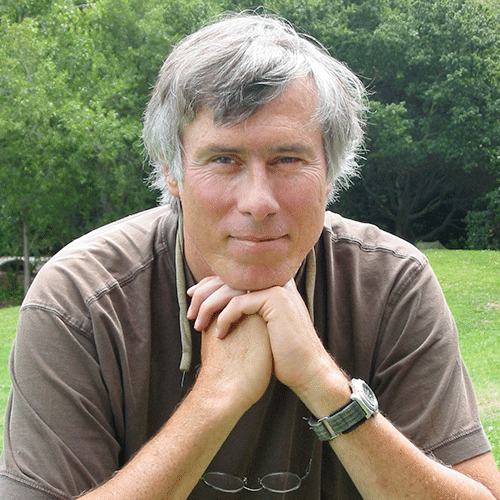
Charles Durrett is an architect often credited with introducing the concept of cohousing to the United States through his co-authored book, Cohousing: A Contemporary Approach to Housing Ourselves and more recently Cohousing Communities: Designing for High-Functioning Neighborhoods. Over a number of years, he has built a career around this idea – one he was introduced to as a student in Copenhagen. These Danish housing projects captured his imagination enough that he set about bringing this novel idea to the U.S.

Today, Charles oversees The Cohousing Company, which designs cohousing projects for many kinds of clients. A typical design includes densely packed cottages of 30 or so homes that form a ‘village,’ with a liberal sprinkling of communal areas and amenities, occupied by people who want to live co-operatively. The historical idea of planned communal ‘villages’ in the U.S. is not totally new – you have everything from worker housing to the freeform communes of the 1960s and 70s. But Charles has taken it further, inspired by the Danish model and adding in a dash of the principles of New Urbanism. Most interestingly, Charles describes himself as more of an anthropologist than an architect because every design begins with a deep dive into the psyche of the 30 families that plan to live together. Only once he understands how they want to live their lives, does he embark on the process of designing the physical place.

Charles has received numerous awards and regularly gives presentations on cohousing to interested citizen groups. He has spoken before the United States Congress and has lectured at many universities. His most recent book is A Solution to Homelessness in Your Town, about the Valley View Senior Housing project, built in 2019 in Napa County, CA. Charles lives in Nevada City, CA, in a community he and his office designed.

Insights and Inspirations

  • Cohousing is just a modern-day village.
  • Financing a cohousing project is easy. 70% of the homes are pre-sold and banks like that!
  • Contrary to expectations, over half of cohousing inhabitants are introverts.
  • Cohousing owners believe that their life will be easier if they live co-operatively. That’s the common thread.
  • To design cohousing one must be as much an anthropologist as an architect, making sure that what is designed serves the eventual occupants.
Read the podcast transcript here

Eve Picker: [00:00:13] Hi there, thanks for joining me on Rethink Real Estate. I’m on a mission to make real estate work for everyone. Real estate can help to solve climate change, can house people affordably, can create beautiful streetscapes, unify neighborhoods and enliven cities. So I’m on a journey to find the most creative thinkers and doers out there. I’m not the only one who wants to rethink real estate. You can learn more about me at EvePicker.com or you can find me at SmallChange.co, a real estate crowdfunding platform with impact real estate investment opportunities open for investment right now. And if you want to support this podcast, please join me at Patreon.com/rethinkrealestate where there are special opportunities for my friends and followers.

Eve: [00:01:16] Today, I’m talking with Charles Durrett, an architect often credited with introducing the concept of cohousing to the United States. Charles has built his career around this idea, one he was introduced to as a college student in Copenhagen. These Danish villages captured his imagination. And so he set about bringing this novel idea home. Today, he oversees The Cohousing Company, which designs cohousing villages for a variety of clients. His designs are densely packed cottages of 30 or so homes that form a village with a liberal sprinkling of communal areas and amenities. They are occupied by people who believe their lives will be easier if they live together. You’ll want to listen in. If you’d like to join me in my quest to rethink real estate, there are two simple things you can do. Share this podcast or go to Patreon.com/rethinkrealestate to learn about special opportunities for my friends and followers and subscribe if you can.

Eve: [00:02:27] Good morning, Chuck. Thanks so much for joining me today.

Charles Durrett: [00:02:31] Well, top of the day. Thanks for having me.

Eve: [00:02:33] Very good. So, you’re known as a cohousing expert, and I wanted to start by having you explain what is cohousing?

Charles: [00:02:43] Oh, well, yes, cohousing is at some level, it’s a custom neighborhood. It’s very much for people who are quite motivated to live in a high functioning neighborhood. When I first discovered it, I met a woman in Denmark who said that her and her husband grew up in high functioning neighborhoods. And it was pretty much chance these days to find a neighborhood where people knew each other, cared about each other and supported each other. So cohousing has six fundamental components. One is that the future residents are very much a part of making it happen. And it turns out they’re better at making neighborhoods function than any bureaucrats, business people, bankers, builders, even architects, frankly. I’ve done about 55 cohousing now, and every time somebody says, Hey Chuck, why don’t you just design it? We’ll see if we like it. And I always say no, because with you we’ll do a much better job, and we’ll make a more high-functioning neighborhood. And that’s really been the case, no doubt about it. So, future residents extended common facilities, self-managed design that facilitates knowing each other over time, completely resident managed and no hierarchy of decision making.

Eve: [00:04:05] So what did you learn about cohousing?

Charles: [00:04:08] I learned, I went to the University of Copenhagen in 1980 and…

Eve: [00:04:12] Lucky you.

Charles: [00:04:13] You know, it was fantastic, actually. Really fantastic. And walking home from school one day, I just stopped, and I noticed as I was walking by single family houses, there was no life between the buildings, walking past apartments and apartment buildings. There was zero life. Condos, none. Assisted care, none. And then there was this one neighborhood that every single day that I walk by, when the weather was halfway decent, there would be people outside sitting at picnic tables talking to each other, kids running freely in and out of a building where it looked like nobody lived, but everybody lived. And that turned out to be the common house. And I just stopped and asked this young mother, hey, what’s going on here? in my broken Danish and she answered me in her perfect English that, yeah, this is a neighborhood that we made. And we made it so that we lived in an environment that we felt was not only healthy but sustainable over time. Anybody who hopes to make a single family house that is remotely sustainable is just putting lipstick on a pig, no doubt about it. I mean, we’ve got enough single family houses. We need to make villages now.

Eve: [00:05:26] So were there any cohousing projects at the time in the U.S.?

Charles: [00:05:31] Zero. We came back and made the first one and it was built and finished in 1991 in Davis, California, Muir Commons. Very much based on the Danish model and it’s elaborated on extensively in our book called Creating Cohousing, as well as another 200 other communities have been built since that first one was built in 1991.

Eve: [00:05:54] So how big was the first community?

Charles: [00:05:57] 26 houses and that’s about par for a new cohousing community, 26 to 30 houses. I mean enough people that everybody relates well with five or six others and turn into good friends and not so much that, not so much the consensus and other decision making and management becomes difficult at all.

Eve: [00:06:25] And architecturally, because you’re an architect, so what do these, what does a housing cohousing project look like? How does it differ from, you know, a regular neighborhood or an urban neighborhood or a suburb?

Charles: [00:06:40] Well, fundamentally, it’s quite different. You’ll notice when you walk in. I mean, it’s very much a modern-day village. And the Danes would say they’re not creating anything new. They’re just recreating what used to happen naturally. We now have to make very consciously and subconsciously we have to get our sleeves rolled up and make them happen. So, for example, imagine a typical suburban block and and now imagine when you drive on to that street with nice little porches and all the rest, that you everybody parks at the very end of the street and walks by all the other houses on their way home. That fundamentally changes the nature of a neighborhood basically where you see everyone, that’s germane in terms of knowing them and, you know, it plays a big role down the line. Now, imagine you take all the garage doors off of the front of the houses and you move the houses, oh, instead of a typical suburban neighborhood is about 110 feet doorknob to doorknob. And our houses range about 20 to 30 feet, doorknob to doorknob. And so now when you walk by, you can see the smile on the face of the person in their kitchen waving at you. And it’s simply the opposite of anonymous housing or spread out housing or even warehousing like a typical apartments are. And now imagine where that street used to be there are sandboxes and play cards and picnic tables and gardens. And that’s what a cohousing looks like, basically. Quite different.

Eve: [00:08:23] In addition to housing people in a friendly manner, there’s also sort of the urban design aspects of bringing activity to the street, that really part and parcel of it, of the sounds of it.

Charles: [00:08:37] Oh yeah. I mean, like to the tune of thousands of people hours per week. In a typical cohousing neighborhood, there’s thousands of people hours per week of communing basically with each other. How’s Johnny, I heard he wasn’t feeling well. Hey, I’m taking my kids to the zoo this weekend, are you interested? And if you were to walk down a typical single family house neighborhood, you’d probably find less than one hundred people hours a week of people communing. I mean, really barely extends past salutations, rarely passed salutations. So, but it does. And there are some fantastic neighborhoods in the U.S., but far too few. Probably runs much less than one percent. And then the common facilities play a big role. I live in a 34-unit cohousing and we have dinner in the common house available six nights a week for anybody who wants to make it. You sign up a couple of days in advance. But we usually have 30 to 40 people there a night, and there’s nothing like breaking bread together to enhance and sustain a sense of community. No doubt about it. I mean, it’s timeless.

Eve: [00:09:51] Interesting. So, was it hard to get the first one, the first project done?

Charles: [00:09:56] And by the way, we also have a childcare center on site, and we just have a lot of things in our neighborhood where, a music room, a lot of things that stitch us together. Was it difficult to get the first one done? Well, you know, people often ask us, you know, Chuck, or ask me is, is it the zoning codes that make it difficult? Is the bankers that make it difficult? And that has not been my experience. My experience has been very much it’s our culture that’s challenging, makes it challenging. We’re very much grown up on the shirttails of movie stars like John Wayne, who, by the way, has starred in more movies than any other actor or actress in American history at 126 films. So, that’s a lot of propaganda about pulling yourself up by the bootstraps, which is probably a big reason we have millions of homeless people in this country, is because that’s a myth that does not work. What does work is people helping people. We know that. I can imagine a community pulling you up by your bootstraps, but I cannot imagine you pull yourself up by the bootstraps. It is physically impossible. So, our culture is slowly but surely making a shift. And that’s great. The second cohousing community we finished in the U.S., hardly anybody was born in the U.S. Which is interesting and it’s largely because…

Eve: [00:11:23] That is interesting.

Charles: [00:11:23] Yeah, it’s largely because these are people from the Philippines, from Mexico and other places where it was obvious to them that community was fundamental to their quality of life. And so it was not a big culture shift. So…

Eve: [00:11:39] Perhaps also extended families which are in the community, right?

Charles: [00:11:44] And they were away from their extended family. So they were seeking other means to grow nearer to the people that lived around them.

Eve: [00:11:54] Really interesting. So, since you built the first project, have they evolved at all to suit U.S. culture?

Charles: [00:12:04] Yes, absolutely. I think U.S. culture is evolving as well. But the key thing about cohousing is it’s very much based on who that group of people are. I mean, I feel like I’m as much of an anthropologist as I am an architect. My job is day in and day out figuring out who this group of people is. How do they stitch their shifts together in general? What do they care about? Where are their values? What are their experiences? And I built two cohousing communities right across the street from each other and been quite different, actually. Because it’s very much designed to reflect the values of that group of people and fit like a glove, consequently. Some of them that we built today are almost exactly like the first one we built them, but more likely all of them in between have been quite different, quite, quite different. What is interesting is what are the constants? And the constants seem to be that the common denominator among all these thousands of people that now live in cohousing, the common denominator is they have one thing in common, and that is that they believe that their life will be easier, more convenient, more practical, more economical, more healthy, more interesting, more fun if they give cooperation with their neighbor the benefit of the doubt. And in other words, if we don’t cooperate on anything unless we consent to it. But consequently, we have one lawnmower for 34 houses. We have one swimming pool for 34 houses. We have one hot tub. We have hundreds of things we share. We have discovered that we can successfully share together.

Eve: [00:13:47] Have you ever done a survey on how many introverts versus extroverts we have in cohousing projects?

Charles: [00:13:54] That survey has been accomplished numerous times with surprising results. The general population is running about 60 percent extroverts and 40 percent introverts, and the cohousing population runs about 60 percent introverts and 40 percent extroverts.

Eve: [00:14:12] Oh, that’s really fascinating. Really fascinating because introverts get the energy by being alone, having a lot of alone times.

Charles: [00:14:21] Exactly, but on cohousing is very, very much designed to give you as much community as you want and as much privacy as you want.

Eve: [00:14:29] And I say that because I’m an introvert, so I know how I get my energy.

Charles: [00:14:33] Right. Sure.

Eve: [00:14:34] Interesting. It’s really interesting. So what’s the process like then? Walk me through the process to design a cohousing village.

Charles: [00:14:42] Okay, I will. And by the way, that is the one common denominator among not only every American but every European I’ve met. I’ve been to about 385 cohousing communities, the one common denominator is that these are people they distinctly want to balance between privacy and community as opposed to feeling like they have as much privacy as they want and as much privacy as they want. And cohousing, they want as much privacy as they want and as much community as they want as well.

Eve: [00:15:08] Interesting.

Charles: [00:15:09] That’s distinctive. The process. Well, typically, somebody has gotten a hold of our book called Creating Cohousing and or the book Senior Cohousing by myself or and Creating Cohousing was written with Kathryn McCamant and has a little study group in their town. And then those eight or nine people invite either Katie or I to come to that town. I’m actually getting on a plane on Thursday and going to Richmond, Virginia, and that’s typical. So then I’ll do a presentation, usually an hour or two. They usually have about 100 or 150 people show up. And from there they’ll have what’s called a Getting It Built Workshop for the 15 or 20 households that are motivated to proceed. And that’s two days of this is how this whole thing gets built. The residents play a big role in the development, and they figure out how to get everybody on board. Even those who come to the table who really can’t afford it. So, there’s some grant writing involved and such. And then after the getting built, let’s say there’s, where I live 25 houses at the Getting It Built Workshop. 21 households were at the next workshop, which is Site Designing. Where we do exercises to figure out how far we’re going to make the houses away from each other and all the rest. And then Common House Design Workshop a month later and then Private House Design Workshop a month later. And then we go through the design of the whole project. And then there’s bank financing that has to be procured and building permits. And while the buildings are being built, the group hammers out their management, how many days a week they’ll have dinner and all the rest and kind of goes like that. That sounds easy, but they take two to three years to pull off.

Eve: [00:17:15] Yeah, I’m sure. So, I have two really big questions. And one is about NIMBYism. What are the neighbors think when you build a village like this? And the second issue is how do they get financed?

Charles: [00:17:27] Yeah, question one, that is a really good question. I’m surprised rarely do people ask that. I guess most people don’t know what goes into getting a project built, and dealing with the neighbors is certainly one of the biggest hurdles.

Eve: [00:17:41] I know. I’m an architect by training and I used to work at a planning department, so, yeah, I’m pretty familiar.

Charles: [00:17:49] So and yeah. And it’s a workout. In 55 projects though, we’ve only had one stop by the neighbors, oddly enough. So we have a much better track record. But it has to do with the fact that, you know, you get two or three nursing moms up at the podium and asking the city counselors, why wouldn’t you approve this? I need this. In fact, I need it by September so my other kids can go to school, etc., etc. So, the human appeal really eclipses the normal “just say no to the developer” attitude. And the magic bullet really is being able to put 150 people in the room that are saying, why wouldn’t you build this project? You know, it’s just prejudices and all the wrong reasons. So, and especially today, with affordable housing being such a crisis in the U.S., we’re running into much less NIMBYs than we used to. And now I don’t have to fill the room of 150 people but more like 50 to 100 before the bureaucrats and the politicians say, hey, we just have to do this. But we had some absolutely miracle projects, right? Pulling a rabbit right out of the hat. Like, for example, Stillwater, Oklahoma, Vancouver, B.C., where we have bought with the group a single family house on a big lot and transformed it into 24 houses in one case.

Eve: [00:19:16] Oh, wow, that’s fantastic.

Charles: [00:19:18] 31 houses in another case. And we’re just doing that more and more. And it’s even getting better than that. We just have our first case right now in Auburn, California, where the county has come to us and said, Chuck, if you build a high functioning neighborhood on this property, we will give you this 4.6 acres. That’s very European. And it’s the first case in the U.S., some 30 years after we introduced it to the U.S. So.

Eve: [00:19:46] And what about financing and banks who are traditional?

Charles: [00:19:49] Yeah, they are. Well, there’s a couple of things that they really like about cohousing. The main one that they like is that the project is pre-sold, so we don’t start construction without 70 percent pre-sales. So compare that to a regular developer who’s now designing 30 units, but not one single pre-sell. So, they have to do this market study after market study. I know a woman developer who just spent 350,000 dollars on a market study to prove to the banks that her houses will sell. And we just spend zero money on the market study because they’re at the table and then not only at the table, but they put in their down payment to get the project built, which is 20 percent of the value of their house. So these are people with real skin in the game. If they walk, they also lose. So the market walks, they lose. And, you know, there’s nothing like getting a project approved. And when I meet with the bank the first time, I usually ask a couple of the residents to come. And, you know, everybody just says, hey, these are just people. I mean, you know, you got to get past all the prejudices about, you know, a village which could look like a commune under the wrong circumstances, but it never does. I mean, it’s far from a “commune”. There’s no guru, there’s no strident back to nature ideology. There’s just people who want to live lighter on the planet and live closer to other human beings. I mean, the banks themselves realize that they’ve been looking in the rearview mirror too much. You know, what sold last week.

Eve: [00:21:19] Exactly.

Charles: [00:21:20] They want to get past that.

Eve: [00:21:22] Yes. Yeah. So I’m getting the sense that you play a very large role in getting these projects off the ground because you go to the bank with them. You make sure that there’s enough people at hearings. So explain what your role is in a process like this with a community.

Charles: [00:21:42] Well, ostensibly, I’m the architect and however I’m an architect, I’m going to argue with a little bit of a mission and whatever the mission presents itself, I have to help solve. So, for example, nobody would publish our first book, which came out in 1988 and ended up selling 30,000 copies and just a couple of years. But, so we published it ourselves and sold 3,200 copies in the first six months and then another publisher picked it up. So, you know, sure we’ve run it up against too much skepticism, no doubt about it. America is an innovative land, but not socially. When it comes to social innovations you look to the Swedes, the Danes, the Finns and so many others, and so we barely know how to sustain a viable society. I mean, it’s clear. And so we just basically have to do whatever is necessary. I mean, I had to learn about publishing. I had to learn about kerning and letting and fonts and all the things that I formerly didn’t care about at all. So whatever presents itself, we have to embrace and get past that hurdle. So that’s our big problem.

Eve: [00:23:03] You’re a problem solver. So tell me, is there a typical cohousing project in terms of amenities and or are they all like, what sort of amenities to they have and how do they vary and why?

Charles: [00:23:16] Well, I’ll describe a couple. Where I live, we have a lovely common dining room. I mean, the acoustics have to be perfect from an architect point of view, a lovely super gourmet kitchen, much more gourmet than any of the private houses. I mean, there’s one very, very gourmet kitchen for 34 houses and then there’s 34 standard kitchens. We have a kids room where we have child care and after school and after dinner play, we have a lovely music room with a piano and we have lots of musicians there that teach the children after school music and you know, and then they do rehearsals at the local assisted care and recitals at the nursing care, et cetera, et cetera. We have, for sustainable reasons, 26 of the 34 houses use a single laundry because that’s the only place we can have recycled grey water and use 100 percent biodegradable detergent. We have two guest rooms, which means that, you know, the single family, the houses could be smaller. People didn’t need a third bedroom for potential guests. So, there you can, you can book them out up to two months, two weeks, a year. But most people, we don’t really pay attention to that. But that’s our goal. And they’re full all the time. We have a lovely sitting room with a fireplace with lots of men’s clubs and stuff like that happens in the evenings. And women’s knitting happens and quilt making happens on the weekends. And we have a lovely teen room, which is fantastic. We moved in with 21 seniors and 37 kids and the rest were adult parents. And you know, I went to the teen room one night and there were 21 teens there. Actually, only ten of them lived in the cohousing and they were having a slumber party on the outside deck there and it was midnight and I just popped in on them to see how everyone was doing. And I counted 21 kids. And then coincidentally, the next morning in the Sunday New York Times, I read that the safest thing you can do with your teenagers, because being a teenager in America is relatively dangerous, is to keep them at home and however they want to be where the action is. So you want to make the action in your neighborhood and basically keep them at home.

Eve: [00:25:50] Yeah, yeah.

Charles: [00:25:51] And so we have a great workshop. I mean, it’s fantastic. We can build, people build all kinds of stuff in the workshop, and people are learning from each other all the time. You know, the things are one thing, but really, they’re just all a format for us to learn from each other all the time. Some people like myself make homemade bread for dinner for the common dinners, and other people are learning how to make common homemade bread and all the rest. So, it’s all about what am I getting out of it? I hate to say it, but I think, and Ayn Rand was correct, and it’s all about me and yet, and so that’s the way it’s kind of set up. Everybody feels like they’re getting something out of it and therefore it just it just continues to grow that way.

Eve: [00:26:33] Interesting. So, you know, I know in the U.S., each state seems to have a cultural vibe of its own. And there’s some states where we’re more housing projects have been built than others.

Charles: [00:26:47] Oh, yes, for sure. And there are.

Eve: [00:26:50] That was a loaded question.

Charles: [00:26:51] That was a loaded question. California has by far the vast majority of cohousing because as Paul Ray, in his book, Cultural Creatives, points out, and he was our keynote speaker at one of our yearly conferences, as he points out, the people who move into cohousing are, in fact, cultural creatives because they don’t feel like they have to do what the parents did. It’s not interested in growing old like my parents did. They were wasted away in a big, dumb, single family house. And then they went off to assisted care and then they went up to nursing care. I’m not interested in growing up like my little brother did, where I had already left the house and my little brother was alone and forlorn and watching video games and social media all the time. I think there’s only like two or three residents in our 34 houses that even have a TV. TV is not a big part of growing up where we live. Running out the front door is and having races in the swimming pool and just goes on and on. I mean, I know I make it sound a little bit idyllic, because I feel that every time I walk home from work every day. But managing it is a workout, by consensus does make it a workout. The thing I love about cohousing more than anything else, above all, is how many people that live there that say the best part about living there, is I’ve learned how to get along with other people. I take these lessons to my church. I take these lessons to my school. I take these lessons to my work. And I know from my own experience, my daughter is 29 now, works for a Congresswoman in D.C., but she worked for the U.N. for four years and I just watched her go to Africa and introduce different concepts to different villages like clean cookstoves, so young girls weren’t walking in the middle of the night to go get firewood, etc. and Jesse simply knew how to help people get organized. She simply knew how to work with a lot of different people, both at the U.N. and in the villages. So, she had something to offer, and people wanted to listen to her because she knew how to get her proposal passed.

Eve: [00:29:02] So you’ve also written a book on housing the homeless. How does that tie into your cohousing work?

Charles: [00:29:09] Well, thank you for asking. There is a movement afoot called Housing First, and I fully respect it. It’s about getting a roof over people’s heads and then you can deal with their alcoholism and their mental illnesses and they’re just down and out situation. But I’m a big believer in community first because I’ve seen too many times now where I’ve built a homeless project like a five-story project in downtown San Francisco, where the residents currently make dinner for each other six nights a week again, and how community has played such a huge role. And they’re leveraging relationships to bettering their lives. I’m infinitely impressed with a project in Eugene, Oregon, called Opportunity Village, where they built 30 units for 8,000 dollars each, volunteer labor mostly, but with the homeless. And then after the volunteers left and the homeless were left to self-management with some help from some local elders, from various churches, all of the amazing things those guys did. First, they had trucked in water. They had porta potties trucked out. They didn’t have a kitchen, et cetera, et cetera. They built the trenches for the water, the sewer.

Eve: [00:30:32] Wow.

Charles: [00:30:32] Then the dining facilities. And then they put heat in the units because the first winter, they had no heat. These were just little tiny boxes. And one person was clever with getting some solar panels donated. And then they put in some batteries and then they were able to create some heat. Now all 30 of them have heat. I mean, I’m just astounded by how much cleverness out there is homeless. It’s just astounds me. Every time I organize a new project, some very wise people come to the table and given the right format, they can actually provide for each other immensely. And we’re so hellbent on victimizing those folks. I wish they would just move on that we don’t even embrace the potential there and help those people reach the potential. It’s very sad. So, yes, I do hope a lot of people get the book, A Solution To Homelessness In Your Town, because it’s to the extent that that book stays in circulation is to the extent that more will be built.

Eve: [00:31:40] Just changing text a little bit. Are there any current trends or innovations in real estate development that you believe are important for the future?

Charles: [00:31:48] Oh, there’s actually a lot, but I wouldn’t call them trends per say. I would call them innovations. And unfortunately, those innovations are sexy and interesting and yet don’t get the kind of traction that they need. I mean, the Congress for New Urbanism, for example, I mean, building towns that feel more urban instead of more suburban. No strict commercial, no boxes surrounded by a sea of asphalt, which is America everywhere. You know, if you drive through Spokane, Washington; Sacramento, California, it’s just parking lot after parking lot after boulevard after box in the middle of a pool of asphalt. So, however, the most distressing part of the whole thing is I don’t know what the percentage of last year. They were probably about 1.2 million houses built in America and by probably over a million were single family houses. And that’s the trend that we’re continuing on, simply because that’s the rearview mirror. You build out into the farmland. And if you build on the farmland, you won’t have any NIMBYs, as you alluded to earlier. If you build into the farmland, you won’t have any management issues because these people are not organized. It is the path of least resistance for the banks. If they sold last time, they’ll probably sell this time. It is the most deleterious solution that we could come up with for the planet or for us as healthy social beings. They say that our second responsibility as a species is to get along. The first responsibility is surviving, and that’s true for every species. But getting along is particularly important for our species. And if we don’t get along, we might not survive. So, it really feeds into priority number one. And yet if you put everybody in a box, equidistance, atomize, estranged they’re not going to know how to get along. That possibility will wane further. And I’m very concerned about the vast majority. So, it is it’s going to take more people. I’m mentoring as many young people as I can these days to become architect activists, because it turns out, just like the CNU, the architects are better than average activists.

Eve: [00:34:19] Yeah, I think that’s true. So what’s, final question, what’s next for you?

Charles: [00:34:25] Well, like I said, I’m getting on a plane and I’m going to Richmond. I’m working with the Chickahominy Indian Tribe, and I see that as the future. I mean, it kills me when I, when they first called me and said, you know, our old people are dying in nursing care and it’s as far away from our traditions as humanly possible. We have to figure out who we are and respond to that, not what the institutions are providing for us now. And so, this is going to be housing and a child care, nearby on the same property. Right? I mean, I’m going to have a super close. It’s going to be a village and I’m going to make it I’m going to make it reflect their needs, wants and desires as distinctly as possible. But I’m also going to challenge them a little bit to go back to their previous priorities so that we’re not hedging our bets. So, you know, I’m increasingly playing an activist role, but I only take the Chickahominy as far as they feel comfortable. But I’m taking the American population as far as they feel comfortable because I’m hellbent on getting these projects built, because I know it’s a better way to go. So there’ll be more activism in my future.

Eve: [00:35:40] I’m looking forward to it. I really enjoyed this conversation, and I can’t wait to visit one of your villages.

Charles: [00:35:46] Will you live in Pittsburgh, huh?

Eve: [00:35:49] I do.

Charles: [00:35:50] The closest one is Ithaca, New York. I don’t know. I don’t know where the closest one is to you.

Eve: [00:35:57] I’ll have to do a Google Search.

Charles: [00:35:59] But we need to get some more in PA, that’s for sure.

Eve: [00:36:01] We do, we do. Well, thank you so much.

Charles: [00:36:04] You’re welcome. Good. Thank you very much, Eve. Appreciate it.

Eve: [00:36:19] That was Charles Durrett. The historical idea of planned communal villages is not new. You have everything from worker housing, such as Pittsburgh’s Chatham Village, to the free form West Coast communes of the 1960s and 70s. But Charles has taken it a little further, adding in a dash of New Urbanism. Most interestingly, Charles describes himself as more of an anthropologist than an architect. Every design begins with a deep dive into the psyche of the 30 families that plan to live together. Only once he understands how they want to live their lives does he embark on the process of designing the physical place.

Eve: [00:37:10] You can find out more about this episode on the show notes page at EvePicker.com, or you can find other episodes you might have missed, or you can show your support at Patreon.com/rethinkrealestate, where you can learn about special opportunities for my friends and followers. A special thanks to David Allardice for his excellent editing of this podcast and original music. And thanks to you for spending your time with me today. We’ll talk again soon. But for now, this is Eve Picker signing off to go make some change.

Image courtesy of Charles Durrett, The Cohousing Company

Bridging the Gap.

May 24, 2021

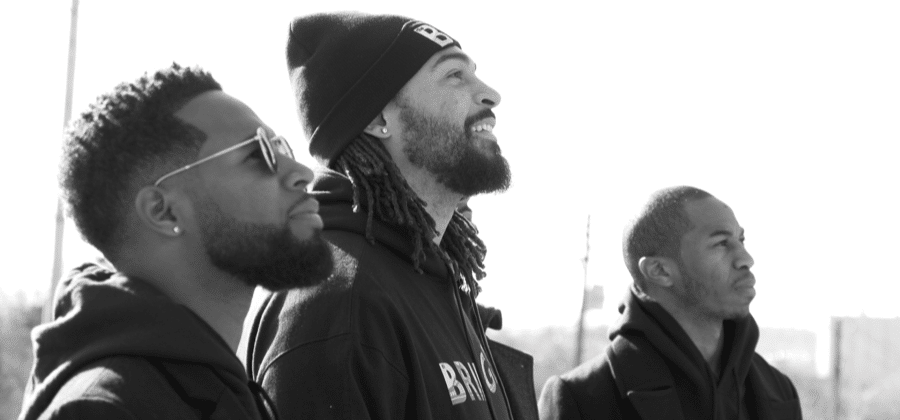
“Even after retiring from the NFL, Seattle Seahawks players keep finding ways to give back to their community. Former offensive tackle Garry Gilliam and defensive tackle Jordan Hill, who have played football together for most of their lives, are uniting once again to create change in their hometown of Harrisburg, PA.” writes Samantha Sunseri for Yahoo Sports.

When Garry Gilliam retired from football, it was just the end of his first career. As a graduate with multiple degrees from Milton Hershey School and Penn State University, and with a thirst for knowledge and a passion to give back to his community, he launched a second career –  as founder and CEO of The Bridge. Not content with coaching youth football, his former colleague and good friend Jordan Hill also jumped on board as chief community officer.

With the Bridge they are building a ‘for-purpose’ real estate development company with the intention of acquiring unused properties such as malls, schools and warehouses and transforming them into inner-city mixed-use ‘eco villages’. Their focus is on cooperation, collaboration, and community. Sustainability will be achieved by residents being able to work, eat, learn, live, and play all in the same location. The first eco-village, in the former Bishop McDevitt High School, broke ground in late 2020 and they hope to open it to the public in 2022. The project will include affordable housing and spaces for entrepreneurs, entertainment, specialized learning and trade programs. Year-round food production is planned, using no-soil agricultural techniques such as hydroponics and aeroponics. 

The Bridge wants to address some of the challenges which many communities face and which have created systems of oppression for many Black Americans. They want to “span the tide…. that exists between the rich and the poor, the informed and the untaught, the entrepreneur and the everyday citizen.”

Listen to my interview with Garry Gilliam or read the original article here.

Images courtesy of The Bridge

Jumpstart desegregation.

April 26, 2021

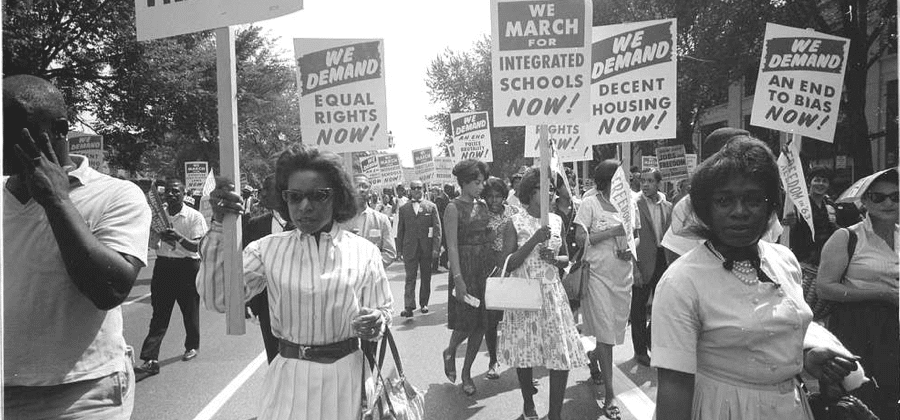
The United States has an ugly history of displacement, exclusion, and segregation which continues to this day. Blacks continue to be denied the same opportunities that are given to whites for affordable rental, home ownership and wealth building. While many may believe that this state of affairs somehow occurred organically, the truth is that Federal, state, and local policies have all led to that displacement and segregation. Those policies continue to undermine the prosperity of minorities, stripping them of wealth and financial stability.

Just a few of the policies that led to catastrophic outcomes for Blacks were:

  • Policies to create outdoor space. In the 1850s thousands of predominantly Black residents were displaced to create Central Park in New York city. And in Atlanta, the oldest subsidized affordable housing project, where 30,000 mostly Black families lived, became Centennial Olympic Park.
  • Policies that discouraged racially diverse neighborhoods. The Federal Housing Administration justified housing discrimination by asserting that if Blacks bought property in white neighborhoods, then insurance values would fall causing loans to be at risk. There was no basis for this rationale.
  • Policies that ‘red-lined’ neighborhoods.  The New Deal, established by Franklin D. Roosevelt to stimulate the economy after the Great Depression, offered home-buying aid to Americans. But color-coded maps of every metropolitan area in the country determined where it was “safe” to insure mortgages. Areas where Blacks lived were ‘red-lined’ to indicate that they were too risky.
  • Policies that encouraged ‘white flight’. Post World War II, the Federal Housing Administration and Veterans Administrations focused on moving the entire white working-class and lower middle-class populations out of urban areas and into single family homes in all-white neighborhoods. This was the beginning of suburbanization and these suburbs came to ring all American cities. And it led to the devaluation of inner city neighborhoods where Blacks lived for many decades.

More recently there has been a shift in housing tastes when life in suburbia, with its gridlocked highways for the morning and evening commute, became less appealing. And so a shift in housing demand has emerged, changing the landscape once again. Wealthy and middle-class people began moving back into urban areas, leading to the redevelopment of previously blighted urban neighborhoods. This revitalization and resulting gentrification exacerbated racial inequality and caused further displacement as Blacks, unable to afford newly gentrified neighborhoods, had to leave once again.

In his book, ‘The Color of Law: A Forgotten History of How Our Government Segregated America’, Richard Rothstein explores the history of housing segregation in the United States. He argues that each of these policies violated the Constitution. Although he recognizes the efforts being made to remedy the situation, he believes we need a more coordinated, new civil rights movement. One focused on housing segregation, to jumpstart desegregation in a meaningful way.

Listen to my conversation with Richard.

Civil Rights March on Washington D.C. from Library of Congress, Public Domain

Housing in the middle.

April 12, 2021

Zoning in America. It’s a vast set of regulations which determines where and what you can build, how high and how close to your property line your building can be, how much of your land you can occupy, how much parking you need to provide and what type of tenant can occupy your property.

Once upon a time nuisance laws were the only way to regulate building disputes, with a judge deciding the outcome. In the early 20th century as cities grew and buildings became larger and taller, this process became unwieldy. The Equitable Building in New York changed all that. Completed in 1915 it was said to cast a 7-acre shadow over surrounding buildings and became the catalyst for the first comprehensive zoning code passed by the city of New York in 1916.

Skip forward one hundred years and we might just be back to where we were in the early 20th century. Zoning has become a behemoth. Many cities are using 50-year-old zoning codes which have had many bandaids applied to them over time, making them out-dated, complicated and far too long. Most importantly, over the last 50 years for the most part zoning has not changed sufficiently to reflect the sometimes rapid changes in our cities. There’s a shift in how people want to live. Sprawling suburbs no longer offer the kind of lifestyle that many Americans are looking for. They want a more sustainable lifestyle in a walkable urban context. And what’s missing is the housing typology, in between single-family detached and large apartment complexes, that’s required to fulfil this need. 

The idea of this ‘missing middle housing’ was framed by Daniel Parolek, architect, urbanist and the founder of Opticos Design. Missing middle housing was born just as the critical absence of affordable housing was becoming a major planning issue for cities nationwide. As a result, Daniel has become a high-profile advocate for zoning reforms that would allow for ‘the right kind of density.’ More people, less parking, walkable neighborhoods and broader demographics.

Listen in to my conversation with Daniel.

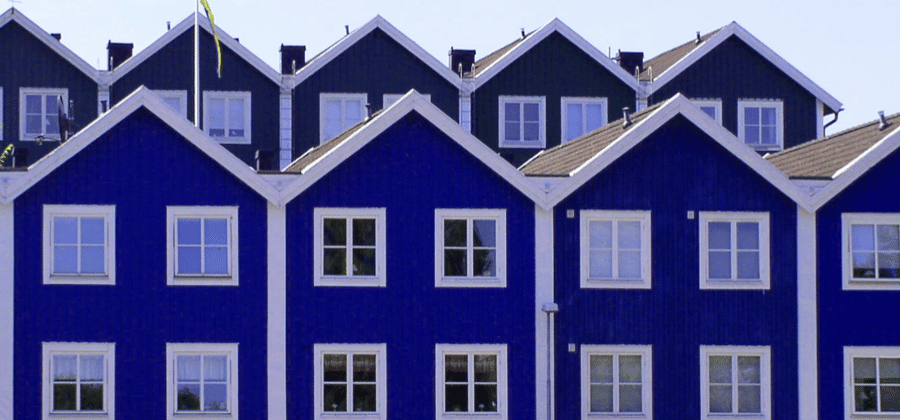
Image from Pixabay

Mass timber for the masses.

April 7, 2021

Scott Ehlert is the co-founder of Fabric Workshop, a company focused on low carbon, mass timber building technologies for California’s livable future. Scott is designing a proprietary hollow core mass timber plate, column, and wall system that uses 50% less wood fiber and will cost 10-35% less overall than for a CLT (cross laminated timber) structure. The system will also provide installation benefits like integrated MEP (mechanical, electrical, plumbing), acoustic insulation and fire performance. And, as if that is not enough, Scott is also designing a robotic fabrication facility to anchor a new wood product innovation campus, in California.

Scott’s background is an unlikely one for an entrepreneur in mass timber. He spent years in the  production and logistics management of concerts, private and corporate events, and national experiential marketing campaigns before pivoting to system design strategies that leveraged research, data and design to meet high-level business objectives.

While consulting for some of the largest companies in the real estate and construction space, Scott recognized a massive need for desirable middle-income housing that wasn’t being met by the market. So, he left his agency and started on the journey of what would become Fabric Workshop.

This is a story of sheer stick-to-itness!

Insights and Inspirations

  • The mass timber industry is actually being accelerated by forest fires. The neglected undergrowth throughout 32 million square miles of forest in California, has became the perfect kindling for infernos. California (and Scott) are determined to turn that kindling into an industry.
  • Scott is focused on the “next generation” of mass timber products. This is a “cassette system” – a hollow-core system of wood housing building systems, insulation and more. These systems are already being used in Japan and Europe with great success.
  • Kick-starting an industry around this model could both reduce building costs and potentially aid in filling the huge deficit of housing in California.
  • And if this is not enough of a challenge to solve, Scott is also designing and building an automated and robotic manufacturing facility to build his cassette systems.

Information and Links

  • The Nature Conservancy: Let’s stop megafires before they start!
  • Scott also wanted to point to this New York Times article about leaps forward in construction and design using engineered wood.
  • And this piece from ProPublica, on ways to keep people and homes safer from wildfires.
Read the podcast transcript here

Eve Picker: [00:00:14] Hi there, thanks for joining me on Rethink Real Estate. I’m on a mission to make real estate work for everyone. Real estate can help to solve climate change, can house people affordably, can create beautiful streetscapes, unify neighborhoods and enliven cities. So I’m on a journey to find the most creative thinkers and doers out there. I’m not the only one who wants to rethink real estate. You can learn more about me at EvePicker.com or you can find me at SmallChange.co, a real estate crowdfunding platform with impact real estate investment opportunities open for investment right now. And if you want to support this podcast, join me at Patreon.com/rethinkrealestate, where there are special opportunities for my friends and followers.

Eve: [00:01:18] Today, I’m talking with Scott Ehlert, co-founder of Fabric Workshop, a company focused on low carbon, mass timber building technologies for California’s livable future. Scott is designing a proprietary hollow core mass timber plate column and wall system that uses 50 percent less wood fiber and will cost ten to 35 percent less overall than for a CLT structure. His system will also provide installation benefits like integrated MEP, acoustic and fire performance. And as if that is not enough, Scott is also designing a robotic fabrication facility to anchor a new wood product innovation campus in California to help in the state’s wildfire efforts. Scott’s background is an unlikely one for an entrepreneur in mass timber. He spent years in the production and logistics management of concerts, private and corporate events, and national experiential marketing campaigns before pivoting to system design strategies that leveraged research, data and design to meet high level business objectives. While consulting for some of the largest companies in the real estate and construction space, Scott recognized a massive need for desirable middle-income housing that wasn’t being met by the market. So, he left his agency and started on the journey of what would become Fabric Workshop. This is a story of sheer stick-to-it-ness.

Eve: [00:03:04] If you’d like to join me in my quest to rethink real estate, there are two simple things you can do. Share this podcast or go to Patreon.com/rethinkrealestate to learn about special opportunities for my friends and followers and subscribe if you can.

Eve: [00:03:33] Hello Scott, I’m so pleased to have you on my show.

Scott Ehlert: [00:03:37] Thank you. Yeah, good to be here.

Eve: [00:03:39] So you’ve had a fascinating and pretty astounding career, from concert and event management to design and strategic consulting, to property technology. So, I wanted to start with what you’re doing right now. What are you doing right now?

Scott: [00:03:57] Yeah, great question. Yeah. So we are, I’ve created a company called Fabric Workshop and we are pioneering a new next generation mass timber manufacturer. We manufacture in California and a fabrication, a digital and robotic fabrication facility to bring those next generation Messmer panels to life.

Eve: [00:04:20] So what does the next generation mass timber panel mean?

Scott: [00:04:26] Yeah, so, you know, we kind of started our journey looking at the cost of housing. And, you know, as you mentioned, I worked as a design strategy consultant for many years and I kind of had run my course in that in that career and was looking for something new and something for, you know, a bit more impactful. And really started looking at housing, which was the most kinda pressing thing in my life as I was starting a family and seeing how so many of my friends and peers in California were leaving the state because of the cost of housing or were in a constant state of financial and mental pressure due to housing. And I also consulted with quite a few really large companies, just by chance in my design consulting days, worked with some of the largest companies in the housing and real estate space in the United States and just saw this, you know, kind of looming existential crisis around housing affordability. And, you know, when the housing affordability comes up, we love to kind of cut out the perennial teachers and firefighters, as you know, our benchmarks for who can afford housing. But what we were seeing was that housing was really kind of impacting bankers and doctors. We were you were talking to doctors who were having to have roommates in the Bay Area because they couldn’t afford the housing.

Eve: [00:05:54] Wow.

Scott: [00:05:54] And so there was this kind of big, big question of like, how do we make housing? How do we create housing in California that’s affordable to middle income folks we traditionally call the middle-class. And so that started us down a really long journey and looking at just a year long process of just listening and asking questions and sitting in the back of rooms and talking with as many folks in the in the industry as possible. And it became really clear that how we build and the type of projects we build were really kind of fundamental to, this seems kind of obvious, the kind of fundamental to the cost of housing. And so, you know, we really started to look at how we can build things differently and what with the technologies available out there to help them offset these costs.

Eve: [00:06:53] So let’s back up a bit. Like for some people listening, they may not know what mass timber is, which is kind of all the rage in the architecture building industry, but perhaps not something that most people know about.

Scott: [00:07:06] Yes, so mass timber is kind of the catchall phrase for what is a range of engineered wood products similar to glulam beams. The most prominent is cross-laminated timber or CLT. And that’s, the that’s the type that you’ll see turning up most often. And what CLT is, is just that, it’s cross-thatched, and kind of cross-threaded dimensional lumber, 2x6s and 2x4s, laid out in a giant press with glue. And then that press puts extreme pressure on those panels and that glue and turns it into essentially a giant butcher block. It turns it into a more or less a solid piece of wood. And those panels can be 12 feet tall and 12 inches wide and 40 feet long or larger, in some cases.

Eve: [00:08:00] Smaller, non-structural pieces of wood, glued together and engineered in such a way that they become much larger structural elements.

Scott: [00:08:09] Yes. And then they take on some really incredible structural properties. So, you know, they are stronger and lighter than steel. Stronger and lighter than concrete. You know, it’s an incredible product. It has been widely adopted in Europe and into East Asia and Japan. And it’s just starting to kind of trickle up in the United States. And as you said, it’s kind of all the rage right now. Everybody’s talking about CLT and there’s a lot of hopes and prayers being put on CLT as the, you know, the silver bullet that’s going to save us from our cost of housing.

Eve: [00:08:46] So it’s cheaper than steel and other structural elements. Is that what you’re saying?

Scott: [00:08:52] Um, no, that’s kind of the problem, that’s the that’s the challenge with it, is that while it does have these incredible attributes, you know, speed of construction is one of them. You know, these are essentially printed building panels. You know, you can get an entire wall or, you know, five, half a dozen panels to make an entire floor plate of a large building. And so you’re seeing buildings, you know, eight story buildings go up in two weeks. Right. It’s all crammed in. It’s all kind of flat packed like, an IKEA footer. Pre-cut, pre-manufactured, there’s no saws on site, no hammers. You know, nobody’s doing anything manual on site. They’re just essentially cramming these giant plates into place and a small crew catching the plates and then screwing them into place with some really advanced metal connectors to hold this together.

Eve: [00:09:51] But the materials themselves are expensive…

Scott: [00:09:54] Right.

Eve: [00:09:55] But you’re saving, you’re saving time on the site. You’re saving uncertainties like weather. Because they are factory built.

Scott: [00:10:03] Yes, exactly.

Eve: [00:10:05]  Insurance you’re saving.

Scott: [00:10:09] Yeah. Insurance is still kind of a question mark. It’s still very new in the US. So, the insurance has not quite caught up yet, but it is completely a completely safe product that has to go through a very rigorous testing process called PRG 320. And that is the fire certification process. And it’s also been the new international building codes updates around mass timber and CLT. So they’re able to build much larger buildings now. So, you know, 18 plus stories, large warehouse facilities, distribution centers, you know, these very large type two, type four type structures can now be built with mass timber.

Eve: [00:10:47] So, in balance then, if you can save all of these site costs, will it provide a less expensive solution? And especially for, you know, what you’re focused on, which is what I understand, the missing middle housing, those smaller infill lots that maybe are not as efficient as a huge 800-unit building, but certainly helped to kind of just stitch cities together, right?

Scott: [00:11:17] Yeah, exactly. So, when we were looking at CLT, we want to have all of the benefits of CLT, but without the biggest drawback and the biggest drawback of CLT, or there’s a couple of other variants like DLT, which is dowel laminated timber, which is they use wooden dowels to connect the boards together, or NLT, which is nail laminated timber, which is just that the boards are stuck together with nails. The biggest drawback with them is, with those technologies, is they just use a lot of wood. There’s just no way around it. It’s a giant butcher block and so, you know, and it uses dimensional lumber, the same lumber that stick frame builders use and modular builders use. You know, when you go to Home Depot and buy, you know, Doug fir for your deck, that’s the same stuff that goes into CLT. And so, you know, it’s a commodity product and they’re using a lot of commodity product. It’s susceptible to high prices and that there’s just no way around that. And so, you know, I don’t know how anybody that started a CLT project a year ago is going to make those projects pencil today. What, the cost of dimensional lumber up to, what, two hundred percent or something like that over year over year. Right?

Eve: [00:12:34] Why is it up so high?

Scott: [00:12:36] Yeah, so…

Eve: [00:12:37] I’m sorry. I’m completely new to this so I’m learning.

Scott: [00:12:40] Absolutely. Yeah. Yeah. No, this is you know, we are we are incredibly focused on the forestry and supply side. You know, we are kind of a hybrid between a housing prefab re-manufacturer and a forestry company, in particular the wildfire side, so I can definitely share more on that. And so, yes, you know, the implications on the lumber costs are, have a big, big impact. And lumber prices were already going up, right, there was just limited supply. There’s limited companies involved in the forestry space. And everybody’s going out to the same suppliers, like, you know, in the US. Dimensional lumber on the West Coast comes primarily from British Columbia, Washington and Oregon. And Idaho and Montana to a lesser extent. But those are the three kind of major producing markets and everybody’s buying it. Right. And even if you’re on the East Coast, a lot of people want that, like the aesthetic and material qualities of West Coast feedstock. And it’s primarily Doug fir. That’s what everybody wants. And so there’s just high demand, it’s just a supply and demand, and then Covid came and just threw a giant wrench into all of that. The mills shut down, the logging shut down, and everybody thought the housing and construction industry would collapse with Covid. But just the opposite happened. There was a huge remodel boom, a huge push for new homes in the suburbs. People were trying to get more space. And so the macron effects of that are that an industry that was already under high demand pressures is now under extreme demand pressures. And then they took their capacity offline for a period of time with Covid. And now they’re just trying to play catch up. And the industry in 2019 is already at record highs. And now we are just, it’s just through the roof, you know, OSB board, plywood of all that down the stack is all impacted by this. And so, when prices are just really high so CLT or DLT, NLT that’s just going to be less price competitive now than they were before.

Eve: [00:15:00] Interesting. So let’s go back to what you’re trying to solve and what your solution looks like. And then we can talk about how the last year has impacted that.

Scott: [00:15:11] Yeah, absolutely. Yeah. So, you know, that use of material is kind of fundamental to our approach. And, you know, we were really pursuing a CLT based product initially. But when we, when that reality of the the material cost, the fiber cost, just was the 100 pound gorilla in the room, there’s no way around it. It’s going to just do more research. Kind of went back to the table and some to look at those more mature markets in Europe and Japan and started to see this kind of, as I was saying, the next generation of mass timber products coming out where they’ve already kind of gone through that and recognize that, you know, a CFT panel is not necessarily the ideal product for a lot of building types, particularly smaller and faster buildings. And so what they’re using now is what are kind of known as cassette systems. They, these are a panelized approach, just like CLT, but they’re taking the fiber out. And so, what they’re doing is, they’ll be more or less there’s like two kind of sandwich layers, a top and a bottom and then a structure on the inside of those two sandwich pieces that give it the structural integrity. So you get a box-like panel with a hollow core and that removes a substantial amount you know 50, 60 percent of the fiber, from those panels, driving the cost down while still maintaining the structural integrity of a full kind of solid wood panel.

Eve: [00:16:47] Like a hollow core door, but not as flimsy?

Scott: [00:16:53] Exactly. A hollow core door that you could build an eight-story building out of.

Eve: [00:16:58] Yeah, yeah.

Scott: [00:16:58] There’s a membrane, a structure on the inside of that hollow core that gives it its strength. Ingenuity at play here. Companies are now taking advantage of that cavity to include things that would normally be exposed in a CLT building. So, CLT with the solid wood in place, all of your MEP systems, your electrical, your plumbing, your lighting, all of that can’t run in the middle of the plate. It’s solid wood. Right. And so it has to be hung underneath or run in interior walls or both in most cases. But with these hollow core cassette systems, you can actually run those MEP systems inside the cavity of the floor plate. So, it gives it a much cleaner and tight aesthetic.

Eve: [00:17:46] Yeah, yeah.

Scott: [00:17:48] And then you can also add additional elements to those cavities. So you can add acoustic materials, you can add insulating materials to increase the R value. You can add seismic and fire safety materials in there. And so you can actually get a much thinner for floor plate overall than CLT, where you have to then just have any piece stuff hanging beneath it. With CLT, a lot of that insulating and acoustic and dampening performance has to be laid on top. And it’s generally a really thick concrete layer that’s poured on top of the wood panel. So, a lot of people with CLT they think that you get to see all the wood, but in most cases you don’t. Actually, on the floor plate it’s kind of covered in five inches of concrete and gypsum and all that stuff. So, the cassette systems are a really genius kind of approach to a lot of those challenges with CLT.

Eve: [00:18:44] And it means less time on site, by the sounds of it.

Scott: [00:18:48] It does, yes. But the flip side of all of this is that it does add complexity and you do have to be in much deeper coordination with your trades very early in the process to coordinate where all of those runs are going through those plates so that the connection points on site are all, you know, when you when you’re doing a small prefabricated, a lot of it’s going to be automated. And so, the tolerances are down to the millimeter. So things have to be tight. There’s no change orders, I guess. So there’s no saws, there’s no handsaws or circular saws on site to fix problems. Everything has to be really, really tight. So that really, kind of, front loads the design and the engineering process. And all of the trades have to be at the table very early. And so, it’s a very different process than a standard site build construction. You know, that’s the trade-off. Is that the process that has to adapt to the material.

Eve: [00:19:47] Just listening to you speak of it sounds to me like you might be enjoying that process.

Scott: [00:19:53] Yes, very much so. Yes. As somebody that that worked in design and system design and customer experience design, you know, all of that thinking is really, you know, and you can see the outcomes, right?

Eve: [00:20:07] Yes.

Scott: [00:20:08] You know, you can go and tour these sites in in Europe and parts of Australia, where they’re being, you know the sophisticated approaches, is happening in Japan and particularly Central Europe, where this market is very mature. I mean, you’re seeing build costs in major urban markets, you know, down to 140-150 dollars a square foot.

Eve: [00:20:29] Oh, that’s extraordinary.

Scott: [00:20:31] Whereas in San Francisco, you’re at, what, 750-850 a square foot for a poor-quality building.

Eve: [00:20:39] Yeah.

Scott: [00:20:39] That’s what we’re kind of chasing. Right. Like that’s the that’s the end goal is to build out the system that can drive towards those better pricing outcomes and make housing more affordable.

Eve: [00:20:50] Where are you in your process right now? You’ve been at this for how long?

Scott: [00:20:56] We’re now officially into year three, so it’s a long and winding road. As I mentioned, with our company, with Fabric Workshop, there’s this really big wildfire and forestry component to it. So, we are focused very much on the California market. We’re based in California. We by no means will turn clients away, that’s in a neighboring state. But the challenge in California is so enormous that we feel like that so many other housing starts to take on like a national approach. And we feel that we just need to be very specific to California and the codes and the and the challenges and the crisis that that’s at hand here and that it’s a big enough opportunity that it can justify that. The new housing element numbers are coming in across the state. And, you know, we’re going to need two million units of housing in the next, within the next 10 years. You know, it’s just a staggering number of housing. And so that that volume actually presents a really powerful opportunity to impact another, maybe bigger crisis at hand in the state of California. And that’s the wildfire situation here. And so, I don’t know, I’m sure you’ve seen that on the news.

Eve: [00:22:21] Oh, yeah. I mean, I’m Australian, I don’t know if you realize from my accent, so I’ve lived with it.

Scott: [00:22:27] Yes, that’s right. Right. So, yeah, in California, you know, five of California’s six largest fires in modern history were all, all happened last year. And they were all burning at the same time. Right. When four million acres of forest burned across the state last year, which was double the previous record, which was just in the previous couple of years. You know, it’s just really staggering, right? There was nearly ten thousand separate fires across California last year. And the fire season is growing, right? Climate change, drought is driving more extreme fire seasons. And so, we’re now seeing fire season in 2020 is 75 days longer than it was 20 years ago, just 20 years ago. And that’s two months longer, two and a half months longer. And so there’s this overarching kind of pressing need to fix that. And one of the best things that we can do is to get this excess unnatural growth out of our forests and turn it into wood products. So our forests in California are completely overgrown, grossly overgrown, naturally overgrown. We have, for the last hundred years, we’ve taken a policy of complete fire suppression.

Eve: [00:23:52] That’s really interesting. Yeah, because fire is an actual regeneration of forests and that’s what was brought up on me.

Scott: [00:24:02] Exactly.

Scott: [00:24:02] They happen for a reason. So, you have to just control them.

Scott: [00:24:07] Yes. Yes. And so we actually have to go back to a natural fire cycle where we’re not stopping fires. We’re actually letting fires happen. But in order for that to take place without being so destructive, like they are now, is we have to get all of that overgrowth that was the result of stopping fires in the forests.

Eve: [00:24:26] That’s really interesting, though.

Scott: [00:24:28] Yeah.

Eve: [00:24:29] But my question is, is why were they stopped? I’ve always thought that the push of, you know, the spread of cities into forests. I mean, I’ve seen it in Australia, you know, as housing popped up in amongst the forests. Of course, you want to stop fires there. And that also exacerbated the problem because, you know, you have this push and pull between people who want to live in those places and the natural the natural forest. It’s a mess.

Scott: [00:24:58] Yeah, right it is. Yeah. That’s a huge, huge driver to it that that growth is called the WUI. It’s the WUI and that’s the wilderness urban interface. And that that growth, particularly since the 90s, has just been exponential as we’ve continued to sprawl ever farther outward in California. We’ve pushed our towns and cities, the perimeter, more and more into that WUI. And so that’s been a big, big driver as well as the, you know, the agricultural, livestock and forestry industries in the 20th century. They didn’t want fires. And you combine that with just a…

Eve: [00:25:44] Yeah

Scott: [00:25:44] Very. What’s the term? I mean, what’s the word? How do you describe it?

Eve: [00:25:48] It’s a manmade problem.

Scott: [00:25:51] Yeah, yeah. And just a desire to control nature, you know, is man’s desire , the man emphasis there to control nature and dictate, basically saying fires are evil and treating them as a as an enemy that needed to be defeated.

Eve: [00:26:07] When I was young in Sydney, Australia. I mean, I remember bush fires. Like Sydney’s a huge….

Scott: [00:26:12] Bush fires. Yeah.

Eve: [00:26:12] I remember in the middle of the city, seeing just red and grey sky all around me. But there wasn’t the pain and misery of today because not, there was not nearly as much suburban housing – it pushed into the wilderness.

Scott: [00:26:31] Yeah. Yep. Yep. And that’s the same here. That’s just an overarching problem that needs to be solved. And there’s really no easy solution to it. The state now has about 33 million acres of forest, which is bigger than Oregon, and 13 million of them are considered very high risk. These are drought affected, beetle infected, because of lots of dead trees, and they have just this extreme level of overgrowth and that overgrowth are small and medium diameter trees. Those are the trees that normally would have been cleaned out by natural wildfires. And because there was no natural wildfires, they just exploded. And what they do, the small and medium diameter trees, they’re much more susceptible to fire, but they’re also tall enough to carry the fire into the canopies of the healthy, strong trees. And that’s where we get these infernos that then get the wind picks up in the canopy and carries it from tree to tree. And it just creates these, this tinder box. So, we have to get those small and medium diameter trees out of the forest. And right now, they have no value. They’re used for livestock, mulch, woodchips in your yard. And that’s not a valuable enough product to justify the cost of thinning, mechanical thinning. And mechanical thinning is a laborious, hard job. You have to, you know, carry chainsaws and particularly if we want to take a much more ecological approach to forestry thinning and not clear cut and carve up all of these fire roads that cause horrible erosion. The state’s trying to avoid the forestry problems of the past. So, it’s all done, a lot of that has to be done by hand, much more mechanical.

Eve: [00:28:20] 32 million acres, manually cleared.

Scott: [00:28:24] It’s staggering.

Eve: [00:28:25] It’s really staggering. How long does it take?

Scott: [00:28:28] Yeah, the goal of the California Forest Management Task Force, which is kind of the broad extra agency group that’s trying to address this challenge, their goal is a million acres per year by 2025. And right now – in 2019, we had 114 thousand acres – so we’re off by a factor of ten.

Eve: [00:28:47] Wow. That’s like one hundred years we’re looking at and more.

Scott: [00:28:52] That’s right. And what’s going to be left in California in 100 years of we’re burning four million acres a year. And it’s not just, this is not an abstract any more. Our water, for all of those cities comes from these forests and with these forest fires that you can grossly impact our water supply. The carbon impact of this. Right, 2020, there was 112 million metric tons of carbon were released by the 2020 wildfires. Which is 30 percent more than all the power plants that generated power that year. So, the health and that’s how you get into the asthma and respiratory issues of all that wildfire smoke. I mean, the implications of our society are bleak. And so, we have to figure out ways to get those small and medium diameter trees out of the forests. And that’s why we really kind of looked at, you know, not only these cassette systems, but getting away from dimensional lumber and really kind of focusing on veneer-based products. So, there’s another sub product of mass timber known as laminated veneer lumber or mass plywood panels, mass plywood. MPP is a brand from an Oregon company called Freres Brothers. And what they do is instead of cutting the log into 2x4s and having a bunch of scraps left over, is they put the log on a peeler and they peel the log and turn it into a big, long sheet. And then they glue those sheets together versus gluing 2x4s together. And that’s something that you can do, that’s, a that’s a vehicle for these small and medium diameter trees, whereas 2×4 dimensional lumber is not really feasible. And so they can peel logs, you know, down to six to eight inches and turn them into veneers. And so that’s what we’re really focused on, is these veneer-based structural products. Both floor plates, floor and ceiling plates and wall plates as well. That’s where we see our role in the forestry and the wildfire piece is creating market side demand for these small and medium diameter trees and putting them into really advanced, these really advanced cassette-based plate systems.

Eve: [00:31:14] Interesting. So I’m going to back up one more time. I sense a two-parter is coming on here. This is fascinating because…

Scott: [00:31:24] Yeah.

Eve: [00:31:24] I heard somewhere in amongst all the impact finance center information that there is a company out focusing on small diameter timber products. I can’t remember the name of the company, in California.

Scott: [00:31:38] So, we pitched at that event. So you might have, is that our pitch that you’re referring to?

Eve: [00:31:44] No, I think there’s another company I talked to so, we can come back to that.

Scott: [00:31:50] Yeah, yeah.

Eve: [00:31:51] But I’ve heard of people focusing on specifically that product and now it’s all falling into place for me. Personally, I didn’t know all of this. It’s really fascinating. But the importance of using that small diameter timber is becoming pretty clear.

Scott: [00:32:07] Uh huh. The great thing is that it could actually go into a very valuable product for the construction industry, the building industry. Incredibly green product, right? Very, very high embedded carbon in the veneer-based products, much lower travel times if we’re sourcing our wood from our local forest and putting it into buildings in Los Angeles and Sacramento and San Jose. Think of all the truckloads from British Columbia and northern British Columbia that we’re saving, right. And all that diesel fuel that gets burned. So, this really big upstream and downstream and benefits to sourcing this wood from California.

Eve: [00:32:51] Sounds like a whole new industry can emerge.

Scott: [00:32:54] That’s the goal, right. And that’s what the state is trying to incentivize is a re-ignition. I hate to use fire related terminology when talking about this stuff, but like, we kind of rekindling, that’s another one, restarting a forestry industry in California, which is really kind of on its last breath. Like, in the last 45 years, 70 percent of wood processing facilities in California closed. So, there’s really no eco system to actually process this. There’s no LBL manufacturers in California. There’s no plywood manufacturers in California. There’s very few mills left in California. There’s very few loggers left in California. And so we’re kind of having to start from scratch. And what the state is working on is incentivizing and creating these wood products, wood innovation campuses, across the state to bring this industry back. And to bring it back with a much greater kind of technological focus and an environmental and ecological focus. And so that things are done right. And so we’re at very early days of that. You know, we are not going to try to get into the manufacturing side of the LBL panels. It’s a very capital heavy side and there’s a reason why most of the companies that get into that, you know, they have three or four family generations that have been in the logging industry or they’ve been around for 150 years. You know, there are companies that just know how to do that and to manage those supply chains and to manage that production. And so we’re focused on it being a remanufacture of those products. And so, if we can help, you know, kind of show that there’s demand for this for this LBL and MPP type panels in California, hopefully we can then lure a manufacturer to the state, with our some of our demand, and get them active in the state and thinning our forests.

Eve: [00:34:58] So, Scott, you’ve bitten off a huge project, like where are you? You said you’re in the third year.

Scott: [00:35:04] Yes.

Eve: [00:35:06] I mean, where are you in the process of building a company?

Scott: [00:35:09] Yeah, yep. So, it is a very meaty challenge and myself and everybody that’s on our team is up for that challenge. That’s why we’re all here. We all understand the enormity of it and the, and the urgency of it. And that’s what motivates us every day. And the fact is, there’s not a lot of other companies doing this is yes, it’s an opportunity, but it’s also drives us to lead and to show that it can be done. And so, you know, we have to take advantage of the resources that we have. This is all bootstrapped at this point and self-funded, as you said, this is a big, meaty challenge. So, it’s really hard for investors to kind of wrap their head around it or see an exit to liquidity event in the near term. So fundraising has been a challenge, but that’s really not a deterrent to us in the slightest bit. And so, we have to focus on what we can sell for.

Eve: [00:36:08] Well, you have to eat. It’s going to be a little bit of a deterrent, right?

Scott: [00:36:13] Well, you know, the spouses of entrepreneurs do a lot of the heavy lifting. Right? And so, I have a really, my wife is an incredible partner and she’s also an entrepreneur, though a much more successful one. And she’s able to carry us through this kind of start-up period. But what’s great is that our story and our kind of mission is bringing a lot of really amazing people to the table. We are working with a company, for example, called Hacker Architects up in Portland, and they are an incredibly experienced, one of the most experienced architecture firms in North America working with mass timber. And they are becoming friends. Right. Like they they’ve really been a key supporter of our mission. And it really kind of backed us up and provided a lot of design assist and are really helping the design of our building system, because we have to think of this as a holistic building where we can put these different wood materials throughout the building. And so that’s just one example. We’ve got a whole network, whole ecosystem of companies that all share our same values and recognize the enormity of the problems that we’re solving. And so, we’ve built this great network of aligned allies that are helping us drive this forward. So, like I said, we’re a small kind of bootstrap team, but we’ve got some really great friends. And, you know, we are in the R&D phase and getting closer to a first prototypes. We originally had our first building construction project penciled as supposed to break ground this year, as a single-family home in the Tahoe region. Unfortunately, that project kind of fell through, just wasn’t the right application. And so, we decided to kind of shift focus. But ideally, we’d like to get a project off the ground here sometime this year with our investor pool that we do have and get a proof of concept project on paper this year and breaking ground next year. So that’s really what we’re what we’re driving for at this point.

Eve: [00:38:22] What is good proof of concept look like at this point?

Scott: [00:38:25] Yes. So, we’re looking at a small multi-family project and that’s the market that we’re going after is a unique market in the industry. Most of the construction industry and the prefab industry is really kind of set up to focus on how we build in the United States today, which is sprawl or tall. Right? Like it’s single-family homes on the peripheral cities, or it’s a big giant two hundred unit podium structures or towers in the urban core. And Fabric, we see the opportunity, especially considering the sheer scale of the housing need and how fast that housing needs to be produced and brought to market. We really see the opportunity in that missing middle upper missing middle range, small to medium lot, three to eight story buildings. So that’s really our key focus and really kind of unique, a bit more unique in the marketplace. And so we want to, we want to get a proof of concept project of at least four units. It doesn’t have to be huge. It just needs to show how the systems kind of work together and kind of bring that to life in an infill type application.

Eve: [00:39:42] I’m excited to see it.

Scott: [00:39:44] Yeah.

Eve: [00:39:44] Are you going to act as your own developer or are you looking for a developer who will use your system?

Scott: [00:39:51] Yeah, it’s kind of like yes and…

Eve: [00:39:55] Yes, I know.

Scott: [00:39:56] If we yes, either, you know, we are talking to more and more developers. We are finding that network of of young kind of independent developers, baby developers, I’ve heard that kind of term kind of thrown around, you know, the folks that are producing like the 20-unit buildings and the odd 16-plex. Right. Like those small buildings. And we’re building that network. And hopefully we can bring a developer partner to the table sooner rather than later. But we’re also kind of setting ourselves up for self-developing our first project. And that’s what we were going to do on that single family home. We were going to develop that through our, through one of our investors, but we kind of shifted and would like to ideally bring on a development partner that knows that process better than we do. You know, we’re not developers.

Eve: [00:40:47] And so you might stretch yourself very thin during trying to do both.

Scott: [00:40:52] Yes, exactly. And we have to kind of kind of focus on what our value add is. And the development side is not it today, who knows down the road where this goes. But as of now, ideally, we have a partner that can, that can really kind of drive this through that to the development process.

Eve: [00:41:11] So you’ve talked about these materials looking very sleek. What does that first project going to look like?

Scott: [00:41:18] Yeah, I wish I could show you some of the renderings, the absolutely beautiful renderings that Hacker put together for us. One of the advantages of focusing on this smaller type three, type five building typology is that the fire code and the fire ratings aren’t as strict with the CLT. So we can leave a lot more of that with the mass timber, we can leave a lot more of that exposed. So, you’ll see a lot of exposed natural wood elements. So wooden ceilings, heavy timber beams, well it will have the aesthetic about heavy timber beams, but it’s actually LDM. A lot of the columns in the beams will be exposed and even wall panels can be of exposed wood to them. So, a very natural and a minimal, what’s the term a soft minimal kind of aesthetics to them and and very high precision tolerances on that minimalism, right, like that’s kind of what separates good minimalism from bad minimalism is the execution and the precision of it. And because everything is cut in a factory, the aesthetic is just really tight and really clean. And so we’re really looking forward to bringing that to life.

Eve: [00:42:37] Do you have the renderings on the website you’d like to share?

Scott: [00:42:40] Yeah, on our website we have a few renderings on there. So you can kind of get a sense out of the real aesthetic and that that would be our proof of concept project. Each developer will have that choice that they want to drywall over those exposed wood elements they can. But our preference would be to leave them exposed. And there’s a lot of really interesting data back to that benefits of mass timber. There’s a lot of really interesting data around the biophilia benefits of mass timber, where people get that sense of serenity and calm. Like being in a forest.

Eve: [00:43:16] Yes.

Scott: [00:43:17] In a mass timber house, they are really cool buildings. I don’t know if you’ve had a chance to spend time in one. But they do have a a dampness to them, not not wet, damp, but just materially damp. And so sound travels differently. And you do get the sense that you’re in the forest. It’s really, it’s a really cool experience.

Eve: [00:43:37] So I’m going to go back.  You’re in Truckee. Right. And I’m wondering…

Scott: [00:43:41] That’s correct. Yes.

Eve: [00:43:42] Why are you in Truckee?

Scott: [00:43:44] I asked myself that question sometimes, too. I love Truckee, but I’m definitely a city kid. So, Truckee is more or less a one road town. And so, I do feel a little stir crazy here sometimes, but it is a great place. And I have two young kids, four and six years old, and just this is a big playground for them. So, we ended up in Truckee a long time, a decade and a half in San Francisco, three years down in Los Angeles, and then had to get out of L.A. and Truckee was supposed to be a one year stopover on the way back to the bay. But, shocker, the cost of housing was so high in the bay that we couldn’t afford anything there so we could afford something in Truckee, Truckee at the time. So we were able to…

Eve: [00:44:34] You’re living the Californian dream.

Scott: [00:44:36] Yeah. More or less trying to.

Eve: [00:44:40] Okay. So tell me, I’m going to move to shift gears a little bit and just ask you, are there any other current trends out there or innovations in real estate development or construction that you believe are really important for our future?

Scott: [00:44:54] Yeah, and so a couple, yeah, so one thing that we are bringing in house we have, this is a capability that we are, as we speak, kind of building out a facility is the fabrication side of construction and particularly automated and robotic fabrication. That is the piece that’s going to have prefab construction kind of realize the benefits that it kind of promised the world when it came out a few decades ago. You know, from pricing to quality control, robotic fabrication is going to be a huge piece of this. And we are actively building that capacity out in California, will be a leader in that space here in the state. And particularly as more and more construction will go towards wood-based construction to offset the carbon and environmental impacts of concrete and steel. You know, we firmly believe that wood construction is the future of construction. And so, to make that a reality, you have to have a much more advanced fabrication capabilities like you see across Switzerland and Austria and Germany and Sweden, for example.

Eve: [00:46:10] Right. Right.

Scott: [00:46:11] And so that’s going to be a big piece. Right. And then, you know, I do believe fundamentally that we are seeing the cracks in the dam when it comes to planning and zoning in particular. I think that the sea change and our laws and regulations on what gets built and where is going to happen very quickly, much faster than I think a lot of people give it credit for. You know, we are slowly starting to see the end of single family only zoning. When I first really started thinking about creating the housing company in 2014, most of them really talk about like, oh, yeah, houses are expensive in nice parts of the city. But that was kind of the attitude. And now fast forward seven years and it’s a topic in our presidential campaigns. It’s just becoming a fundamental issue in this country. And I think that the 20th century experiment of highly segregated neighborhoods, housing over here, business over there, commerce over here. Single family based, car based, an entirely car-based society, car exclusive society. I really fundamentally believe that that is coming to an end in California and that those changes are going to happen. It’s going to build and then is going to happen really rapidly.

Eve: [00:47:36] Wow. I have one final question for you, and that is, what is your big, hairy, audacious goal?

Scott: [00:47:43] Yeah, I and I would say, you know, not as ambitious to say we want to build a new city out of wood, but definitely, you know, a neighborhood out of wood. That’s kind of our big goal is to build a five 600-unit community, all sustainably sourced, locally sourced, sustainably sourced timber neighborhood. And we’re seeing those neighborhoods pop up in Europe and Japan and they are incredibly inspiring. They are walkable, human scaled, car free, no carbon passive house technology. And I would love to just get my hands on a decrepit shopping mall in central Sacramento and convert that into the neighborhood. A vibrant, diverse, mixed income neighborhood in in Sacramento, for example. And that’s our big, big goal that we’re driving towards.

Eve: [00:48:41] Oh, I’m really excited for you. It sounds amazing. And I hope sometime in the future we’ll get to host one of your projects on Small Change.

Scott: [00:48:51] Would absolutely love that. Yes.

Eve: [00:48:53] Thank you so much, Scott.

Scott: [00:48:55] Yes, thank you, Eve. Really appreciate the time. And I’m honored to be on your podcast and be part of this group. So thank you.

Eve: [00:49:11] That was Scott Ehlert of Fabric Workshop. Scott pivoted his life and career in a way that most people do not dare. He is making all bets on an industry that doesn’t quite exist yet and technology that he needs to design. While other housing developers try to crack the construction affordability code using the same old building systems, Scott has spent years planning how to become a housing developer using a brand new building system, one that he has designed and one that he will manufacture. We’ll be hearing more about Scott. I’m sure.Eve: [00:49:58] You can find out more about this episode on the show notes page at EvePicker.com, or you can find other episodes you might have missed, or you can show your support at Patreon.com/rethinkrealestate, where you can learn about special opportunities for my friends and followers. A special thanks to David Allardice for his excellent editing of this podcast and original music. And thanks to you for spending your time with me today. We’ll talk again soon. But for now, this is Eve Picker signing off to go make some change.

Image courtesy of Fabric Workshop/Scott Ehlert

« Previous Page
Next Page »

Primary Sidebar

sign up here

APPLY TO BE A PODCAST GUEST

More to See

(no title)

February 22, 2025

Bellevue Montgomery

February 11, 2025

West Lombard

January 28, 2025

FOLLOW

  • LinkedIn
  • RSS

Tag Cloud

Affordable housing Climate Community Creative economy Crowdfunding Design Development Environment Equity Finance FinTech Gentrification Impact Investing Mobility Offering Opportunity zones PropTech Technology Visionary Zoning

Footer

©rethinkrealestateforgood.co. The information contained on this website is for general information purposes only. Nothing on this website is intended as investment, legal, tax or accounting strategy or advice, or constitutes an offer to sell, solicit or buy securities.
 
Any projections discussed or made may not be accurate and do not guarantee a specific outcome. All projections or investments are subject to risk due to uncertainty and change, including the risk of loss, and past performance is not indicative of future results. You should make independent decisions and seek independent advice regarding investments or strategies mentioned on this website.

Recent

  • The Mulberry
  • Mount Vernon Plaza
  • The Seven
  • Real estate and women.
  • Oculis Domes.

Search

Categories

Climate Community Crowdfunding Development Equity Fintech Investing Mobility Proptech Visionary


Copyright © 2026 · Magazine Pro on Genesis Framework · WordPress · Log in