• Skip to main content
  • Skip to secondary menu
  • Skip to primary sidebar
  • Skip to footer
  • Home
  • About Us
  • Say hello
Rethink Real Estate. For Good.

Rethink Real Estate. For Good.

  • Podcast
  • Posts
  • In the news
  • Speaking and media
    • About Eve
    • Speaking requests
    • Speaking engagements
    • Press kit
  • Investment opportunities

Visionary

Homage to Sutro Baths.

September 15, 2021

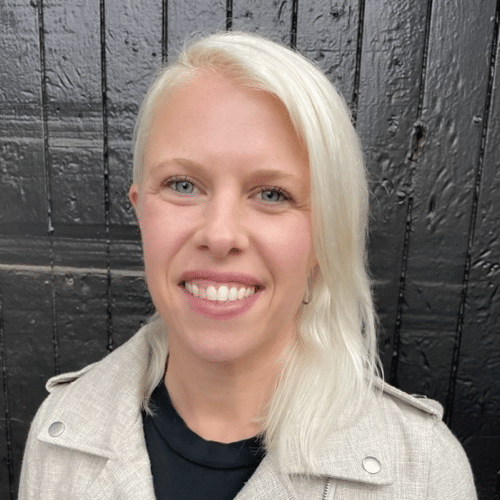
Anne Nickel Cannady was born and raised in Minnesota but has lived an international life. Over the past 20 years she has worked in brand strategy, culture, innovation and immersive experience design with start-ups and leading brands including Starbucks, Avalon Bay, Choice Hotels, Royal Caribbean, and Honda to name just a few. And she’s lived all over the world in London, Cape Town, Detroit, New York, and now San Francisco.

After leaving college in North Carolina, Ann dove into a marketing and HR career in London working with a variety of organizations. Her skillset expanded into workplace culture. By 2010 she was working in the U.S., first at the consultancy Kantar, then as an independent consultant. She joined the PayPal community for six years, becoming Head of Culture, followed by her most recent job as Head of Employee Experience at Fastly.

Now Anne is challenging herself with a project called Alchemy Springs that brings all her skills to play … and more. The plan is ambitious – a social community bath house. The building is ambitious – the transformation of an historic warehouse into a biophilic wonderland. The location is ambitious – a neighborhood on the cusp of gentrification. And the financing is ambitious – she’s raising funds through an equity crowdfunding raise in order to let anyone over the age of 18 invest.

We can’t wait to see how it turns out. 

Insights and Inspirations

  • Biophilic design incorporates natural lighting, ventilation and landscape features in order to create more productive and healthy spaces.
  • Anne envisions Alchemy Springs as a modern urban oasis. Winding ‘riverbaths’ and lush surroundings will define it. Blazing steam saunas, frigid cold plunges, a starscape moon bath, an outdoor sun bath, greenhouse and gardens will be built for all to enjoy.
  • Anne is based in the Bay Area. But it feels as if she could live anywhere.
Read the podcast transcript here

Eve Picker: [00:00:09] Hi there. Thanks for joining me on Rethink Real Estate. I’m Eve Picker and I’m on a mission to make real estate work for everyone. I love real estate. Real estate makes places good or bad. Rich or poor. Beautiful or not. In this show, I’m interviewing the disruptors. Those creative thinkers and doers that are shrugging off the status quo, in order to build better for everyone. When I’m not hosting this show, I’m running my real estate crowdfunding platform, SmallChange.co, where you’ll find impact real estate investment opportunities open to everyone. Or you can learn more about me and catch up on some podcasts at my website, rethinkrealestateforgood.co.

Eve: [00:01:11] Today I’m talking with Anne Nickel Cannady. Anne was born and raised in Minnesota, but she’s lived an international life. Over the past 20 years, she has worked in brand strategy, culture, innovation, and immersive experience design with startups and leading brands, including Starbucks, AvalonBay, Choice Hotels, Royal Caribbean and Honda, to name just a few. She’s lived all over the world – in London, Cape Town, Detroit, New York, and now San Francisco. Anne is challenging herself with a project that brings all her skills to play and more. The plan is ambitious – a social community bathhouse. She plans to transform an historic warehouse into a biophilic wonderland. The location is ambitious – a neighborhood on the cusp of gentrification. And the financing is ambitious – she’s raising funds through crowdfunding on my funding platform, Small Change. You’ll want to hear more.

Eve: [00:02:19] If you’d like to join me in my quest to rethink real estate, there are two simple things you can do. Share this podcast or go to patreon.com/rethinkrealestate to support this podcast. For the price of a cup of coffee.

Eve: [00:02:41] Hi, Anne, I’m just really pleased to have you with me today.

Anne Nickel Cannady: [00:02:45] Thanks, Eve. It’s great to be here.

Eve: [00:02:47] You’ve had some really interesting titles like Head of Culture at PayPal and head of Employee Experience at Fastly. But now you’ve moved on to a very different project. And I’d really love you to tell us about Alchemy Springs.

Anne: [00:03:01] Sure. It’s interesting because while I’ve held a lot of different roles, they sort of have all come together for all the skills that I needed to bring this new sort of project to life. But Alchemy Springs came about because in San Francisco, there was a huge community built around some of the hot springs that were, you know, within a couple of hours outside of the city, and one, in particular, burned down in a wildfire several years back. And everyone really missed that community, a community that would gather and be up there. You could, you know, spend the night. There was all these events. And at the same time, we started seeing this rise and this kind of model of these urban bathhouses popping up across the country, so there was one called the Schvitz in Detroit, there’s one, Banya 5, in Seattle. And, all of these really started to bring this community together. You know, for example, I was shocked to learn that, you know, members of the one in Seattle would go four to five days a week. And this whole community was even extended beyond the bathhouse into their local community as a sort of a friendship circle and mentorship circle. So, we looked around at San Francisco, and while we do have a number of spas and sort of bathhouse spas, none of them were quite hitting the mark.

Anne: [00:04:26] There was only one real communal one where you could be social. Most spas, where you really went to kind of check out on your own, not just sort of connect with people. And the one social one that there was, a sort of Russian style banya, it’s a little bit more like a sort of a glorified locker room experience, right? And, you know, maybe wasn’t designed with the guest experience in mind. And so, we really saw this opportunity. And on top of that, San Francisco has this rich history in Sutro Baths. And we met with SF Heritage, who introduced us to the gentleman who wrote one of the famous books on Sutro Baths. And we wanted to learn what the story was behind it, why the mayor at the time wanted to build this grand structure. It was sort of 1894, and it was huge. It was right out over the waters. And at the time, it was quite innovative. He built these almost like little windows, hatches, that would open and close to allow the waters to come in…

Eve: [00:05:37] Oh beautiful, yeah.

Anne: [00:05:37] Yeah. And then he would heat them to different temperatures and all this. And he was inspired by sort of the grand European bathhouses, right? And back then, people were working six days a week and they only had one day off. So, he wanted to find a way that people could socialize with friends or family, but also do something restorative because they only had one day off. And, you know, hydrothermal bathing and all the properties of that, the health properties, he decided to build Sutro Baths. And it really was a place for everybody. So, everyone could have access to this grand experience. And he had gardens, and there was places for, you know, the police and fire department to meet. And it really was a

Eve: [00:06:19] Community gathering place. Yeah.

Anne: [00:06:21] Yeah. A very iconic piece of San Francisco history. So, all of those ingredients together, we thought, this is it. You know, we’ve got to build this in San Francisco. And when the pandemic hit, it only became more important than ever to reconnect the city, which has lost a lot of people, we’ve gotten a lot of new people coming in, but we miss our community. So, it’s kind of perfect timing.

Eve: [00:06:45] Well, what happened to the Sutro Baths?

Anne: [00:06:48] The Sutro Baths actually, there was one point in time it ended up being converted into an ice rink, of all things.

Eve: [00:06:55] Interesting.

Anne: [00:06:57] Yeah. And then it burned down. Gosh, I want to say in the maybe 50s. Yeah, 50s, or early 60s. It burned down. And so now, today, out near Land’s End in San Francisco, there’s these beautiful ruins. I mean, it’s kind of an iconic, you know, tourist destination now right on the cliff side where you can go when you can see a lot of the old cement structures of the different pools.

Eve: [00:07:28] Oh, wow.

Anne: [00:07:28] So it’s, yeah, pretty amazing.

Eve: [00:07:28] You know where I grew up in Australia and they always had rock pools in the ocean, like on the ocean’s edge. Sort of reminds me of the sutro baths but a little bit less grand. They were fabulous places to go and bathe, really fabulous. So, like, where’s your sutro baths? Where’s Alchemy Springs going to be located?

Anne: [00:07:49] Yeah. So, Alchemy Springs is in a neighborhood, kind of the blending of two different neighborhoods. Technically, it’s lower Nob Hill area or sort of upper Tenderloin, right? So they call this neighborhood the Tendernob in San Francisco. And it’s a great up and coming area, right? You know, I think below the Tenderloin has really gone through somewhat of a gentrification. You know, the neighborhood can be a little bit rough, but it’s also been an opportunity for a lot of hospitality, sort of, restaurants and retail to come in. So, a lot of the coolest new bars and restaurants are sort of popping up around there. And then Nob Hill is a great more slightly more higher end neighborhood, tons of residentials, new developments, and then some hotels as well. And it’s about 10- to 15-minute walk west of Union Square, which is obviously sort of the tourist capital for San Francisco with all the hotels

Eve: [00:08:48] And what does the building look like that you’ve chosen?

Anne: [00:08:52] The building’s beautiful. It took us a while to find a building. We looked at so many different buildings, but this one is a 1919 masonry warehouse. A beautiful brick, gorgeous thick wood timber beams. It’s kind of two and a half stories. So, there’s a ground floor and then sort of the mezzanine above which we’re actually going to be raising the roof to create a sort of proper second floor there. And then there’s this basement level, which right now is sort of being used as a parking garage. But we’ll do some excavation and sort of turn that into the baths floor. But the thing that’s super exciting is that it has a 2500 square foot parking lot out back. So our concept has been able to translate into sort of an indoor outdoor flow in this space and being inspired by nature, which Alchemy Springs is, we can bring a lot of those elements, you know, both indoors and outdoors. So, we’re super excited.

Eve: [00:09:50] I’ve seen some renderings of this. It looks pretty fabulous. But maybe you could describe like what the building will contain or what you’re hoping it’ll contain when you, when it’s complete.

Anne: [00:10:00] Sure. I’ll walk you through the guest experience. It’s probably the best. So, from the street level, on Post Street, you’ll see a small retail boutique and there’ll be an entrance into the bathhouse. It’s going to be quite an inspiring grand entrance in that there’s a sort of giant living wall and double storey ceilings right as you walk in, A beautiful sort of rock carved desk area to sit with your friends or family that you’re waiting to go to the baths with. And you’ll check in. And then in the middle of this building is this gorgeous atrium that runs all three levels, with giant skylights at the top that just bring tons of natural light in. And there’s also tons of natural light from the back of this warehouse building. There’s beautiful, most of the walls are windows in the back, so tons of natural light. You’ll get your towel and your, you know, your robe and your slippers, and you’ll walk on either side of this atrium back to the locker rooms. And in addition to male and female, we also have gender neutral locker room and changing room. That was really important to us.

Anne: [00:11:01] So you’ll change and go downstairs to the bath floor. So, you can overlook the baths through the atrium from that locker room floor. But on the baths floor, we’ve got a series of different thermal pools at different temperatures that sort of wind along a path as if it was a river sort of built into these different platforms for accessibility and A.D.A. But we’ll have, on one end is what we’re calling the moon pool, which is going to be, sort of, you know, body temperature, sort of mild in temperature waters with a higher salt content, so it won’t quite be a flotation tank, but you will feel a little more buoyant in those waters, with a sort of domed ceiling above it that drops down a bit with lights and stars. And then lights in the pool as well with some sound. And then around this, the moon pool, and this is one of my favorite things that Lundberg Design, our Architect, has designed. We have a rain shower curtain. So, it almost creates a cave-like experience around the moon pool.

Eve: [00:12:14] Oh, fabulous!

Anne: [00:12:14] Yeah, I’m excited for that one. And then we have a mineral pool, which will be, kind of, mimicking the natural hot springs healing waters with all the minerals, which, you know, are very good for you. We’ll have then a sun pool, which is our warm pool. It’s not the hottest, but it’s warm. The sun pool, and that will be directly across from the cold plunge, which is kind of on this, you know, bath house circuit. You always want to move between the different contrasts of, you know, warm to cold or hot to cold. And then outside, we have a massage pool, which will be a lot of different water jets, maybe some different textures inside, rocks and things that you can sit on to sort of get that massage and that’ll be outdoors in a greenhouse. So that’s the pool part. We also have thermal rooms. So, we have a Himalayan salt cave. Think of it like a Finnish style dry sauna, but with Himalayan salt bricks and a kind of a salt nebulizer that brings amazing detoxification qualities. And then we have a snow shower. So, when you step outside of the hot salt cave, you can take a shower of snow to cool off before you get back in the bath. And then we also have an herbal infusion steam room, which we’ll do with different herbs that have, you know, different healing properties at different times of the day. So, waking up, relaxing,

Eve: [00:13:45] It sounds fabulous, so I want to move to like the financing. And when do you expect to open the doors?

Anne: [00:13:52] We expect the process from closing the capital to opening doors to take about three years. And so right now, we’re looking at probably September of 2024.

Eve: [00:14:03] And how long has it taken you to get to this point?

Anne: [00:14:07] Oh, gosh, there’s been a lot of stops and starts. It’s taken probably just shy of three years.

Eve: [00:14:17] So this is like a five-year project from inception to opening the doors. It’s a long time.

Anne: [00:14:23] Yeah, I think it’s taken many twists and turns. It started as something small. But as we looked into the business model for bathhouses, it made sense for us to actually do something on a bigger scale. Doing something on a bigger scale allows you to have both, sort of, drop ins for not non-members will say or tourists or anyone that wants to come in, but also have enough capacity to cater for members, because building that membership base in the community was really important to us and the bathhouses that exist today, they can’t really do memberships because their capacity is so small and you wouldn’t want members showing up and not being able to get in.

Eve: [00:15:07] Oh, well, I’m going to come back to that. But I do have to ask, so how much is this going to cost to build?

Anne: [00:15:14] Yeah. So right now, the total project cost is about 20 million. And the last sort of six months has been a pretty heavy and detailed due diligence process. My developer, Michael Jarne, has been an absolute gift to the team. He’s got a lot of experience in this. And there’s always that trade off of, how much do you spend upfront to minimize the risk. And, you know, he’s more on the side of, you know, this is a big project and, you know, somewhat unknown concepts in cities. So, we’ve taken the route of, hey let’s spend more and make sure we’re really clear on what this is going to take financially. And, also, you know, that we can do this concept in this space with the city. So, we’re feeling good about that.

Eve: [00:16:05] And then usual concept equals probably no bank interested? Is that right?

Anne: [00:16:13] I think the banks, you know, typically will want to see operating income, right? So, we’ve reached out to some lenders. We have a fantastic relationship with a bank here in San Francisco, does a lot of real estate stuff, and we’ve tested the waters for them of when in our sort of timeline, we might be able to to leverage that. And now most likely, that would be after we open doors. Right now, it looks like a very sort of good net operating income. And so, we would likely be able to get a loan off of that, you know, within the first few years.

Eve: [00:16:49] So, full disclosure, you’ve listed this project on Small Change as a crowdfunding raise for the first phase of it. So, that’s a pretty bold move in amongst all of this. Lots of bold moves here.

Anne: [00:17:06] Yeah, I mean, it felt right. You know, the essence of the Alchemy brand is positive transformation. And that ties back to this idea of alchemy, right? And, you know, we want our space to be a place where people feel transformed, right? But that’s also important to us as a company for our employees, right? We want this to to have improved people’s lives, right? So, there’s things we have, like we’re paying more than minimum wage and giving health care benefits to people that work, you know, I think it’s 30 hours a week, not 40. But the other side of that is that we want to make sure we’re positively transforming the community that we’re in. And so, for us, part of that was allowing San Francisco, or anyone, to own a piece of Alchemy. If it’s for the community, why should the community not benefit from us being here.

Eve: [00:18:07] I love that idea. So, I’m also going to ask you about, this is sort of an edge neighborhood, right? Between a pretty rough one, slightly rough, I don’t know, changing, and one that’s more established. And I’m just wondering how you’re planning to include that community in this space. And, you know, how that will work. I mean, if you’re really going to emulate that mayor’s desire to have a place for community, how does it look there?

Anne: [00:18:38] Yeah, there’s a few things that we’re exploring. And obviously, you know, it’s early days – we’re three years out. But there’s a couple of things. So, built in, right now, we have some sort of basic community programming of offering up our space before we open. So, our opening hours are 10:00 a.m. to 10 p.m. But there is an opportunity to give our back gardens. You know, we’ve got a sort of a Zen meditation garden and a back dining patio. We could absolutely offer that up to the community to host free events. We have a round-up at purchase, which we want to partner with local community groups and give guests the option to sort of round-up and donate to some groups that align with our sort of mission and vision and values. And then the third thing, which, it’s early days but I’m quite excited to pursue this opportunity, is almost sort of kitty corner to us. At the intersection of Post and Hyde, is at-risk Youth Navigation Center that’s just being developed. It was just rented by the city for 20 years. And when I learned about this, I spoke with one of our advisors, who’s the president of the San Francisco Chamber of Commerce and he said, you know, these centers have more bark than bite. And usually, neighbors are afraid that they’re coming into their neighborhood. But a big light bulb went off for me, that this was, actually, an incredible opportunity for us to partner with a group like that and provide job training, apprenticeships, you know, training these these at-risk youth in service industries. So, I’m incredibly excited to pursue that. And I think we could be a sort of model business citizen for how we embrace and support those centers popping up in our neighborhoods.

Eve: [00:20:32] Yeah, I’m sure you’re going to find lots of other opportunities too as you move along. You’ve barely started, right? What about some of the challenges you’ve been confronted with? You said lots of twists and turns. I think finding a building sounded like a really big challenge,

Anne: [00:20:47] Having been new to this, a few years ago, you know, there’s always this chicken or egg scenario you run into, which is, you can’t raise money without the space and you can’t get the space without the money. So, it’s this dance of timing and, you know, unfortunately, we’ve just missed out on some spaces when some of the, you know, initial capital couldn’t come through. So that was certainly one. And then another one was obviously Covid. There was a lot of initial sort of knee-jerk reaction to anything in hospitality and, you know, bath houses. And, you know, is that safe and clean? And, you know, from that standpoint we’re really lucky in that, you know, all of these spas and bath houses have had to convert a lot of their amenities and their procedures around hygiene to now meet new standards. Well, we can design from the beginning, so in a way, we’re three years out, right? So, you know, knock on wood, hopefully we’ll be out of this by then. So that was another major twist and turn. And then the other one on a on a personal level, which, you know, has deep meaning for me in this project, is a dedication to my mother who passed. And she passed away two years ago now, and she passed from cancer. It was her fourth one. She beat three different stage one cancers prior to that across ten years. But from her first cancer onwards, when she’d find out, she would go to Esalin, this beautiful retreat center in Big Sur, and she really found her acceptance and peace in nature. And that was absolutely a huge inspiration for Alchemy Springs and this sort of element of bringing nature indoors. And so, I promised her that she would have her own little heart shaped rock in our gardens and it would be one of her resting places for her ashes. So there has been nothing insurmountable. I have had the most incredible determination to make this happen in her honor so, from a personal standpoint, that was another setback. But also, what has super-charged me to bring this to life.

Eve: [00:23:07] I’m sure she’d be super proud of you.

Anne: [00:23:09] Yeah.

Eve: [00:23:10] So Alchemy Springs is a big new beginning for you. Right? But what’s your big hairy, audacious goal?

Anne: [00:23:18] Wow, what’s my big, hairy, audacious goal? I mean, I would love for Alchemy Springs to just be the first flagship location of a bunch of Alchemys across the country and to use this brand and these spaces as one of many ways to bring the community together around social bathing. So, there’s, you know, different communities out there for the spa industry and sort of the business end, but there are people across the country that are really into this ritual and little micro communities, you know, in all these cities, but we’re not all coming together as one. And so, another grand vision of ours is to pull this community together, you know, online and kind of connect the global bathing community across the U.S., maybe even internationally, so.

Eve: [00:24:14] That’s a pretty big goal.

Anne: [00:24:16] Yeah.

Eve: [00:24:18] Well, my goal is to come out there in three years and try it. So, that’s my goal.

Anne: [00:24:22] I know, I keep saying, phew, with this ride, I’m going to need it at the end of it. So,

[00:24:28] Yes, that’s right

[00:24:28] …selfish reasons. I’m going to need a spa at the end of this.

Eve: [00:24:33] Well, thanks so much, Anne. It sounds like a fantastic project. I can’t wait to see how it turns out.

Anne: [00:24:40] Thank you. We’re really excited and we’re thrilled to be raising money on Small Change. And I just can’t wait to see how it goes.

Eve: [00:24:48] Me, too. Bye.

Anne: [00:24:50] Bye. Thank you.

Eve: [00:24:56] That was Anne Nickel Cannady. Anne is challenging herself with a project that brings all her skills to play and more. The plan is ambitious – a social community bathhouse. The building is ambitious – the transformation of an historic warehouse into a biophilic wonderland. The location is ambitious – a neighborhood on the cusp of gentrification. And the financing is ambitious – she’s raising funds through crowdfunding on my funding platform, SmallChange.co. I can’t wait to see how it turns out.

Eve: [00:25:40] You can find out more about this episode or others you might have missed on the show notes page at rethinkrealestateforgood.co, or you can support us at patreon.com/rethinkrealestate for the price of a cup of coffee. A special thanks to David Allardice for his excellent editing of this podcast and original music. And thanks to you for spending your time with me today. We’ll talk again soon. But for now, this is Eve Picker signing off to go make some change.

Image courtesy of Anne Nickel Cannady

Truly unique.

September 6, 2021

“This truly unique project aims to provide an iconic response to the generic status quo of speculative office real estate in Portland today, with below-market rents aimed at smaller start-ups and companies that would not otherwise be able to afford space in a new construction mid-rise building.” Guerrilla Development

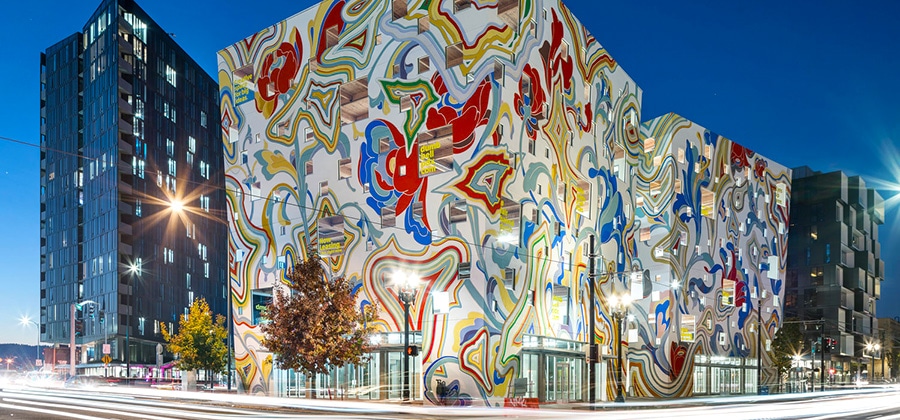
If you live in Portland, you’ve probably seen Tree Farm. Designed by Kevin Cavanaugh of Guerrilla Development, this six-storey mixed-use office building has a bright blue mural façade dotted with 56 strawberry trees. It’s located in Central EastSide, a gritty warehouse district, just a short streetcar ride across the Willamette River from downtown. The district boasts small-batch distilleries, coffee roasters, restaurants, designer stores, artist ateliers, an independent publisher and plenty of street art.

Another of Kevin Cavanaugh’s unique developments, The Fair-Haired Dumbbell, Is also in Portland’s Eastside. It consists of two separate six-story buildings structurally supported by mass timber sourced in the Pacific Northwest. The buildings are connected on each level by skybridges, and the entire façade is wrapped in a wild and colorful mural by Los Angeles artist James Jean. As if that wasn’t enough of a challenge, this was one of the first projects to raise funds using Regulation A crowdfunding.

Guerrilla Development’s many projects include Dr. Jim’s Still Really Nice, The Ocean, Burnside Rocket, Rig-a-Hut, Two-Thirds, and The Zipper. And two of those projects –Jolene’s First Cousin and Atomic Orchard Experiment – have reduced-rate units reserved for homeless people and social workers. And of course, these were crowdfunded too.

As a developer, Kevin wants his buildings to attract attention and to encourage people to live in that city. And he wants his buildings to make people happy. He is one of the most creative developers we know.

Have some fun and listen to my conversation with Kevin here.

Image courtesy of Guerrilla Development

One year. 41 more conversations.

July 28, 2021

41 amazing people. 41 inspiring conversations.

Cynthia Muller. Richard Rothstein. Andre Perry. Charmaine Curtis. Lyneir Richardson. Darryl Scipio. Libby Seifel. Beth Silverman. Patrick Quinton. Daniel Parolek. Charles Durrett. Heather Hood. Diana Lind. Scott Flynn. Atticus LeBlanc. Sam Ruben. Andrew Luong. Stephanie Gripne. Shannon Mudd. Ken Weinstein. Garry Gilliam. Andy Williams. Daniel Dus. Patrice Frey. Bruce Katz. Christopher Leinberger. David Peter Alan. Annie Donovan. Michael Shuman. Dan Miller. Scott Ehlert. Katie Faulkner. A-P Hurd. Max Levine. Brian Dally. Jonny Price. Michael Lee. Kevin Cavenaugh.

These are the rockstars of my show.

Season Three starts soon …

Read the podcast transcript here

Eve Picker: [00:00:14] Hi there. Thanks so much for joining me today for the final episode of Rethink Real Estate. For Good, season 2.

My name is Eve Picker and I’m on a mission to make real estate work for everyone. Real estate can help to solve climate change, can house people affordably, can create beautiful streetscapes, unify neighborhoods and enliven cities. 

You can learn more about me at my website, rethinkrealestateforgood.co, or visit my real estate crowdfunding platform, SmallChange.co. Our projects offer impact, solve housing problems, invest in neighborhoods and give everyone the opportunity to invest and build wealth for as little as $500.

[00:01:12] Today marks the second anniversary of this podcast. Two years ago, I didn’t know that our audience would grow as it has. In fact, two years ago I wasn’t sure we would have an audience at all. Now 10,000 people download episodes every month. That’s 10,000 people who care about thoughtful and impactful real estate solutions.  Wow!  I am humbled that all of you want to listen in.

This second year has been an opportunity to learn from yet another class of extraordinary leaders and innovators in real estate. My guests are working on housing solutions, policy issues, manufacturing, in fintech, on preservation, on developing new technologies and on providing real estate metrics, on mobility issues, as architects, on sustainable development, on community capital, on equity for women and equity for minorities and in many other niches, pushing the boundaries of the built environment to be better for everyone. 

The range of work that is being accomplished is quite awe-inspiring.

[00:02:25] Perhaps the most important theme this year was equity.

Cynthia Muller, director of Mission Driven Investments at the Kellogg Foundation. has been described as a “thought leader of the impact investing ecosystem and a trailblazer in the field.” In No guilt. Just Action. she reminds us that every time there has been an opportunity for black and brown people to build an asset, to build wealth, it’s been taken away from them. Let’s change that. 

Richard Rothstein and Andre Perry have written about these inequities.In The Color of Law Richard argues for a national civil rights movement to ensure that we all get to reap the economic benefits of living in this rich and diverse country. And In Know your price, Andre share findings that homes are underpriced by 23 percent, or $48,000 per home, in majority black neighborhoods. That’s $156 billion in lost equity.

[00:03:31] Charmain Curtis, Lyneir Richardson and Darryl Scipio are a new breed of black developers. Charmain has built a successful career as a developer despite being a black woman. She didn’t realize what she was up against until she was in her 30s. In Spread the Wealth she ponders how wealth could be distributed equitably to everyone.

In Building Generational Wealth, Lyneir describes his plan to buy 100 community shopping centers with 100 community members, all focused in majority black neighborhoods. He provided the first opportunity to 140 investors on Small Change early this year.

[00:04:17] Justice runs deep with Darryl.  In Turning renters into homeowners he describes his latest passion project, Savers Village.  He aims to help every tenant save enough for a down payment on a home.

And Libby Seifel is focused on women.  In Women building collective muscle, she describes the network of women leaders in real estate she has built. After more than 30 years in the industry, she is no longer the only woman in the room, and that some of the biggest new projects in the Bay Area are being driven by women.

[00:04:56] Housing solutions are importantly getting a lot of attention.

Perhaps the boldest of these is Beth Silverman’s Lotus Project. In Radical in its Simplicity she tells us how ,for just $800, her organization can successfully house a homeless family and change the trajectory of their lives forever.

We learn about accessory dwelling units as an affordable housing solution in Yes! In My Backyard! Patrick Quinton has developed a manufactured solution that drops a 32×14 foot ADU into a typical 50-by-100-foot lot in Portland, Oregon without hitting the setbacks and without requiring city design review. And he’s raising money for this project on Smallchange.co

[00:05:48] On the west coast, Daniel Parolek, architect, coined the phrase, The Missing Middle just as the critical absence of affordable housing was becoming a major planning issue for cities nationwide. He explains what the missing middle is, why it is important and how we can build more of it. 

Charles Durrett brought co-housing from Copenhagen to the US many years ago and wrote a book about it. He explains why he’s spent a career in co-housing and how it can make people’s lives better in It takes a Village.

[00:06:27] In Northern California, Heather Hood oversees efforts for the Enterprise Community Partners that ensure low- and moderate-income residents have access to affordable, quality housing. We talk about the enormous size of this problem in The elephant in the region.

And Diana Lind wraps it up for us in Lets be Brave. She’s written a book called Brave New Home in which she argues that the single-family home is at least partly to blame for our current housing woes.

[00:07:01] Technology is rapidly transforming the real estate industry in many different ways as well.

Some of my guests, like Patrick Quinton and Scott Flynn in Manufacturing change, are focused on manufacturing affordable homes in factories. Scott’s company, IndieDwell, manufactures smaller, sustainable and affordable homes at the pace of 10 homes per week and growing.

But others are pursuing new ideas.  Atticus LeBlanc tells us about PadSplit in One Room at a time.. He wants to dramatically change how we address affordable housing by using space that is now under-used in everyday homes.

[00:07:46] Or Sam Ruben in 3D-printing, robotics and automation, oh my! His company is printing buildings and hopes to create affordable and sustainable homes with their new technology.

And finally, Andrew Luoung who has deconstructed the often lengthy and confusing process of small scale real estate investment, making it accessible to everyone.  In Andrew loves real estate he describes the online turnkey service that he has developed into Doorvest.

[00:08:20] Some guests are focused on fertilizing tranches of future impact investors and leaders.

None is more passionate than Dr. Stephanie Gripne. In The impact accelerator, she tells us about founding the Impact Finance Center with a mission to identify, train and activate philanthropists and investors to become impact investors. Her big, hairy audacious goal is to move a trillion dollars into impact investing.

Dr. Shannon Mudd is right behind her, teaching students how to invest $50,000 of real money for maximum social impact. His Young Angels are carrying this knowledge into their professional careers.

[00:09:09] Others want to pay it forward.

Like Ken Weinstein, a highly successful Philly developer whose career was inspired by his landlady in Germantown. He’s created a boot-camp for aspiring developers called Jumpstart Germantown and describes the program in Jumpstarting a community.

[00:09:32] Garry Gilliam may be best known for playing in the NFL. Today he has a second career as an impact real estate developer. He tells about his first project in The Bridge. It came about as a joint effort with Garry’s friends from the Hershey School, a philanthropic school for low-income children. That school gave them all a leg up and now they want to give back to their community. 

Or Andy Williams, a former Marine who was determined to secure his future through real estate. He’s built a substantial portfolio of homes, a real estate development business focused on larger projects, and now, a program that seeks to turn veterans into entrepreneurs just like himself.  

[00:10:23] Some guests, like Daniel Dus and Patrice Frey, are focused on building on what’s already there. Learn how Daniel is planning to redevelop the dramatically underutilized historic luxury estates of the Berkshires for the shared economy in Everything old is new again.  And in Saving Places, Patrice explains the role of the National Main Street Center in servicing the revitalization of commercial main streets in big cities and small towns alike.

Bruce Katz moves the focus back to metro areas in Cities are networks. As a foremost policy expert, Bruce argues that cities must knit together solutions. It’s an imperative. And he calls this the new localism.

Christopher Leinberger is thinking along the same lines in Back to the Future. As a renowned urban strategist, teacher, developer, researcher and author Chris thinks “Back to the Future” got it right.

[00:11:30] While David Peter Alan enchanted me in I’ve been working on the railroad with his singular passion for the country’s railway system. He has ridden the entire Amtrak system and about 300 transit providers in the U.S. and in Canada.

Annie Donovan and Michael Shuman are focused on alternative finance. Michael thinks we have it Totally backwards. Local owned businesses make up 60 to 80 percent of the private marketplace in the average U.S. community. But economic developers and subsidies almost always overlook them. And Annie believes that disruptive capital is critical for solving thorny problems. She describes her pursuit of fairness in economics and finance in The world beyond banks.

[00:12:27] A handful of guests are diversely focussed on sustainability in the built environment.  Perhaps the most interesting is Dan Miller, who has launched a platform that connects everyday investors with farmers who need loans. He’s Stewarding the Future of Farming with investments as low as $100.

Scott Ehlert and Katie Faulkner are mass timber experts.  Katie as an architect with an eye on sustainability in From here to there.  In Mass timber for the masses, Scott tells us about the installation and cost benefits of a proprietary hollow core mass timber system he is designing that uses 50% less wood fiber. And, as if that is not enough, Scott is also designing a robotic fabrication facility to anchor a new wood product innovation campus, in California.

While A-P Hurd remains focused on building Livable and delightful communities.

[00:13:28] This class of guests would not be complete without my colleagues in the crowdfunding industry.

Some like Max Levine and Brian Dally are focused on real estate.

In Hello, Neighbor we learn about Max’s Neighborhood Investment Company, which has a mission “to localize wealth creation and broaden access to neighborhood equity.”  While in Get in on the ground floor,  Brian describes the platform that he has built into the go-to funding platform if you want to fix’n flip property.

Jonny Price, previously with Kiva and now with Wefunder, is focused on Filling the “crazy” gap. There’s a common theme for Johnny – financially excluded and socially impactful businesses.And Michael Lee is Building Virtual Communities using blockchain. Instead of using blockchain for crypto, he’s using it as an organizing tool to democratize the power of data.

[00:14:31] Finally, what better way to end than with Kevin Cavenaugh a developer in a class of his own. In I do a bunch of weird stuff, you can tap into this unique developer. Left brain, right brain, head and heart all come to bear on his wildly creative buildings. “I’m tired of mocha-colored, vinyl-windowed boring. I can’t change the fact that the streets are gray, and the sky is gray. But the buildings?” says Kevin.

Phew. That’s a lot of podcasts.  I’ve enjoyed every interview with every person.  I’m in awe of them all.   But it’s time to take some time off to recharge and get ready for Season Three. We’ll be back refreshed in September with many more amazing people for you to listen to and for me to learn from.

Thank you so much for joining me.  Now go forth, invest a little in your community and make some change!

Young angels.

July 21, 2021

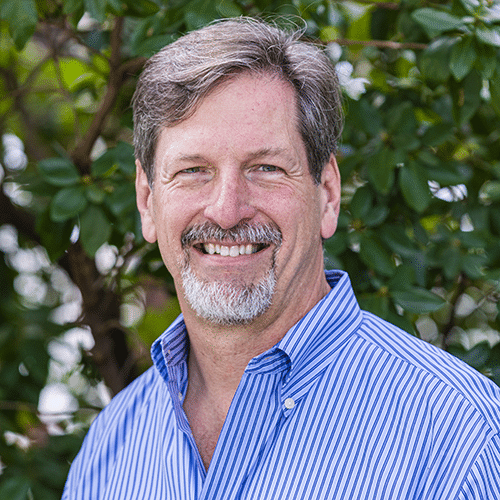
Dr. Shannon Mudd is an economist and educator with a University of Chicago pedigree, specializing in microfinance and impact investment.

He currently runs the Microfinance and Impact Investing Initiative program (Mi3 for short), which he founded about 8 years ago. One of his hottest classes teaches students how to invest $50,000 of real money for maximum social impact. This might seem trivial in the investment world, but it’s powerful ‘homework’ for students testing the waters of impact investing for the first time.

When Haverford College first looked at creating microfinance programming at the college, Shannon was a visiting professor and offered a proposal that would get students involved. His eventual job description said “something about engaging students in sustainable and socially responsible investing.” Shannon says, “They left it up to me to figure out what that would be.”

Shannon has turned teaching economics into a meaningful and hands-on exercise. His students gain real world experience learning how to invest for more than a financial return.  And they are taking that knowledge with them into the job market and passing it on.  Impactful classes for impact investing.

Read the podcast transcript here

Eve Picker: [00:00:14] Hi there. Thanks for joining me on Rethink Real Estate. I’m on a mission to make real estate work for everyone. Real estate can help to solve climate change, can house people affordably, can create beautiful streetscapes, unify neighborhoods and enliven cities. So I’m on a journey to find the most creative thinkers and doers out there. I’m not the only one who wants to rethink real estate. You can learn more about me at EvePicker.com or you can find me at SmallChange.co, a real estate crowdfunding platform with impact real estate investment opportunities open for investment right now. And if you want to support this podcast, please join me at Patreon.com/rethinkrealestate where there are special opportunities for my friends and followers.

Eve: [00:02:24] Today, I’m talking with Dr. Shannon Mudd, an economist with the University of Chicago pedigree specializing in microfinance and impact investment. He currently runs the Microfinance and Impact Investing Initiative program, MI3 for short, at Haverford College. One of his hardest classes teaches students how to invest 50 thousand dollars of real money for maximum social impact. This might seem trivial in the investment world, but it’s powerful homework for students testing the waters of impact investing for the first time. When Haverford first looked at creating microfinance programming at the college, Shannon was a visiting professor. He heard about the proposal and offered a plan that would get students involved. His eventual job description said something about engaging students in sustainable and socially responsible investing. Shannon says, They left it up to me to figure out what that would be. I’d like to be one of Shannon’s students. Shannon, thanks so much for joining me today.

Shannon Mudd: [00:02:38] It is a pleasure to be here and I think turnabout is fair play. It was great to have you come and talk to my class with Jonny Price and Topiltzin from Honeycomb Credit. So, yeah, this is great.

Eve: [00:02:50] Yeah. More and more of all of this, right?

Shannon: [00:02:53] Mm hmm.

Eve: [00:02:54] So I wanted to start by asking you, you’re an economics professor and you teach microfinance, and I wanted you to just tell us what exactly is microfinance?

Shannon: [00:03:06] Certainly. So, microfinance is basically about providing people in poverty with very small loans. And originally, it was designed to help entrepreneurs, people who have some kind of a small business that they are trying to earn additional income. It could be selling in a market. It could be making some kind of product that they are manufacturing by hand, something like that. And the loan is to be able to, basically just working capital to provide materials, maybe buy a sewing machine or something like that with a capital investment. But what’s key is that when you’re lending to that population, you can’t use the same kind of techniques that a bank uses because banks are looking for two things when you’re doing a loan assessment. They want to know there’s collateral and these are people in poverty and probably are not going to have access to collateral that banks is going to want. And then two, often there’s very, very little information about them for them to be able to for the bank to be able to really get a sense of if they were a good borrower or not. So there’s not necessarily a credit bureau, something like that. And then there are some other issues that the microfinance industry was able to work with to kind of come up with a different technology of lending. And so, for example, instead of collateral, to use what is often thought of as social capital. To provide the incentive for the borrower to use the loans like it was intended to be used. To pay back regularly so that the microfinance organizations that get its money back. So they often lend into not just an individual, but a group of individuals that come together to make their payments at the same time and actually have groups of, say, five or eight that will all come to weekly meetings. There will be a member of each of those groups that will pass the money forward for the whole group, which saves a lot of time, lowers the cost because it’s very labor intensive to go and collect very small loans from a lot of people, which makes the average cost very high. So, looking for anything they can do to try to lower those costs for those loans. And that’s, you know, one of the techniques they developed. They have groups that meet that all pay at the same time to reduce the time of the loan officer and then also using these groups as a way to reinforce payment discipline. But also, there’s a hope that when these groups form that they become socially cohesive. We can maybe give advice to each other about what they can do to make their businesses better.

Eve: [00:05:49] What are some recognizable microfinancing institutions in the U.S.?

Shannon: [00:05:55] In the U.S., Grameen has a U.S. Presence in New York, and so Grameen was started in Bangladesh and they are often considered sort of to be the grandfather MFI institution. So they’ve been doing some group lending in New York. I’m not sure if they spread beyond that, but probably the most common sort of microfinancing in the U.S. is done through CDFIs, Community Development Financial Institutions. And so, these are institutions that are raising funds and then lending into very low-income areas. And they can do a lot of different things. Some of them are doing real estate development. Some of them are doing small business loans. But there are some that are actually doing microfinance.

Eve: [00:06:38] Interesting. So how did you get interested in microfinance?

Shannon: [00:06:42] I came by it honestly by having dinner conversations with my wife who was in the industry.

Eve: [00:06:48] Oh, interesting. And and what’s your background?

Shannon: [00:06:52] So I am an economist, and my original research orientation was toward issues of growth and development. International capital flows interested me for a while and then more about sort of small business finance and how crises might be affecting that. And then that sort of naturally led into more and more interest in the microfinance industry and what they were doing differently from small business in my conversations with my wife and other people that were her colleagues.

Eve: [00:07:21] Interesting. Interesting. So you teach at Haverford, right. And what do you teach at Haverford?

Shannon: [00:07:27] So I have a kind of a unique situation in that I was visiting Haverford for a year. There were rumors that an alum was interested in funding some programming in microfinance because he would have been interested in it. And so, I went and talked to the provost and said, OK, you know, I hear this is a possibility. What are you thinking? The provost at the time was thinking, well, they’ll use the money to bring in some marquee name person to sort of sit in residence for a couple of weeks a year. And I said, OK, if that’s what you think is the best use of of this opportunity, fine. I gave him a list of some names and contact information to follow up. And the year continued and there was nothing moving forward with that. And I’m looking around Haverford. I really am impressed with Haverford. I’m impressed with its educational sort of way of doing things, impressed with the students in the way that they seemed very engaged in their own education, more so than any other place I had taught. I was more of a instead of sort of spoon-feeding people, you sort of say, go look over there and see what you find. And that is a very fun place to teach. And I decided that maybe there could be another way to approach this opportunity. And so, I drew up an alternative plan, which was to hire somebody to teach a course in microfinance, to get students engaged in research and consulting opportunities to bring in speakers, maybe hosted a conference, etc., and took it to the provost. She said, this sounds great. And they hired me to stay on. And I basically wrote my own job description, which is kind of nice. But they did add this one little half of a sentence, which was and also get students engaged in socially responsible investing. And so that was something I had to figure out what that would mean. And doing my own due diligence, I wasn’t really interested in doing the stock portfolio. Publicly traded stocks, select-in select-out type of thing, that really interests me, I wasn’t sure would interest them. There were some shareholder activism that was already occurring on campus with a small portfolio, some portfolio that was a part of the endowment at that time. So that was going on. So it makes sense to go in that direction. And then I stumbled across this idea of impact investing, particularly angel impact investing. And that seemed to fit more with the ethos at Haverford. And we’re talking about, you know, engaging in sort of basically private equity deals, early-stage social enterprises. It fit with the social justice emphasis that Haverford has always maintained. And so I was able to launch a program on impact investing.

Eve: [00:10:12] So what happens in one of these impact investing classes? How does the year go?

Shannon: [00:10:18] It’s it’s really kind of an interesting set up. And as far as I know, there’s not other examples similar to this. So, first of all, I have to see if there is interest among the students at Haverford. And so, I actually paired up with the investment analyst with the endowment to teach a class just an evening, non-credit class, six evenings over six weeks on impact investing to see if there was interest. And so, we just sort of set up a basic class at first talked about investing and what does the financial sector actually look like? Because there are business classes at Haverford and there is now a corporate finance class that I teach which has been taught off and on, but now I’m teaching every other year. So, there wasn’t any really background on this to any great extent. And so, it became a very practical class to talk about, you know, the different types of investment vehicles. But what does it mean to invest not only for the potential to earn a financial return, but also to generate some kind of a positive social or environmental benefit? So we talked about how do you actually assess impact, what are the different type of impact measurements, et cetera. And so once we did that class and saw their success, I decided to launch the class and then the person that had been sponsoring the work that I was doing in the microfinance when you heard about it, he thought this is an interesting direction to go also. And basically he said OK, would 50 thousand dollars a year to invest, be helpful? I said, yes, it would be great. I sort of had this idea that we might want to eventually collaborate and do some co-investments with an existing impact investing fund. And now that there was some money that we could actually commit to that, okay, I can actually go talk to people who are going to take me seriously. And it was about this time that I met somebody from what was then called Investor Circle, now Social Venture Circle. And she told me that in Philadelphia and we’re just outside of Philadelphia, that there was a group of angel impact investors, that was a local chapter of Investor Circle and now Social Venture Circle, that was really strong and sort of being in the vanguard for the type of investing that this group was doing. And so I went and talked to them. It’s great. What happens is once a month, the members meet, and they invite two firms to pitch. And as they listen to the entrepreneurs, they ask questions. And eventually the entrepreneur leaves. They talk among themselves to see if there’s interest in doing a deeper dive. Do a real due diligence on this firm, report back to the group a month later and then two months later, sort of say, okay, this is what we found. We’re investing, we’re not investing anybody interested in joining that investment. And so it’s a great group. And even though this seems way more risky than anything I imagined doing, this kind of early stage equity investing, the opportunity to actually be able to bring students with me to these meetings where they could be in the room where it happens. They could observe the types of questions that investors were asking. What is it they thought was important? What is it they were concerned about? It was just too good of an educational opportunity to pass up. And when I first told the the foundation of the alumni, this is what I was thinking about doing about had a heart attack. But they also recognize that this is just a very, very unique educational opportunity. And so what happens is, you know, the class we talk about what is impact investing. We talk about how the financial sector works in different types of securities that are available. Then we talk about impact and then we start talking about how do you actually do diligence on an early stage firm. And then the last five weeks, we go through a screening process. We source firms from Social Venture Circle. Also, we have a relationship with Mercy Corps Social Venture Fund also with beneficial returns, and we find live deals that are open usually between November and December that we can do due diligence on. And then the students we narrowed down to four firms, the students are split into four groups and they go into due diligence for about three to four weeks. And then they present their due diligence to an investment advisory council, which is made up of alums and some staff. And there are questions posed to them during their presentations and afterwards. And we break and have a nice dinner and then we come back together and sort of plenary and say, OK, students, step back from all that work you’ve done, these individual firms, because I know that you can become very much a cheerleader for the firm that you work on. But now we need to step back and say, OK, we had this opportunity to actually invest 50 thousand dollars. Are these firms investable? If they are, should we invest 15 thousand or 25 thousand? If they are not investable, are there any guideposts that make us consider going in, looking at them again? And what would those guideposts be or are they not investable? And so we try to come up with consensus and then with that consensus recommendation, we set that off to the foundation that works with us and they make the investment.

Eve: [00:15:39] Wow. So, when the students do the due diligence, I mean, how do they go about evaluating these companies?

Shannon: [00:15:47] So I think it’s, sort of, a standard way of looking at due diligence. Of course, we’re coming in with very, very little experience to be able to make judgments very critically. I mean, we’re still new at this, and every year is a new set of students. But we are often trying to co-invest with other investors, for example, from Investors Circle. And so, if we are coordinating due diligence, we can participate on the same investor calls and so we can hear the questions they are asking, or we can be adding questions to the list of questions that are sent to the entrepreneurs. And so ideally, that’s how it works, that we’re actually collaborating with social venture circles, sometimes another angel group that we are involved in the process together. Sometimes it’s just us alone, but often, and it works best, we have the opportunity to work with others. We’re usually able to have direct contact with the entrepreneur. To ask them a set of questions and get their answers. Sometimes we follow up with other people in the sector or academics who follow in a sector, for example. And so that’s what we do, very much like a standard due diligence process that an angel group would do, except that we have a lot less experience going into it.

Eve: [00:17:05] And the younger angels. So, I don’t know, can you share what investment picks they’ve made and how many years have you been doing this?

Shannon: [00:17:16] So I believe this is our eighth year. We’ve made 11 investments.

Eve: [00:17:22] Okay.

Shannon: [00:17:23] And we’ve had two exits.

Eve: [00:17:26] Wow.

Shannon: [00:17:26] One was a firm that unfortunately did not survive, but the other firm actually returned a more than 2x return in less than two years.

Eve: [00:17:37] That’s pretty good.

Shannon: [00:17:37] Not a bad track record so far. But of course, the average time for liquidity that for an exit is about seven years. So we’re still on the, sort of, the cusp of when we’re hoping some more exits will come through. Although with this last year, I feel like everything’s been pushed back a year or so, almost like a lost year in some ways.

Eve: [00:17:57] Yes. So what sort of investments did they decide on? And the second part of that question is, would you have made the same decision on your own, the unusual decisions?

Shannon: [00:18:08] Well, okay, let’s see. So, one of the first companies we invested in is a company called Wash Cycle Laundry. And they are a Philadelphia company. What the entrepreneur CEO Gabriel was really interested in doing was actually he had worked in manpower development, worked with formerly incarcerated people with recovering addiction, sort of this hard to hire population. And he was kind of frustrated with the limitations he faced in working with an NGO. And so, he decided to open his own company, had a very interesting business plan, which was to do delivery laundry services in downtown Philadelphia. But instead of having an offsite laundry facility where everything is laundered offsite and then taken in a van into the city and distributed, because that leaves a pretty high carbon footprint, the original idea was instead to work with local laundromats to get them to use, you know, best in class, you know, highly efficient, low water usage, washing machines. Contracted with them on their downtime to do the laundry and then deliver everything by bicycle.

Eve: [00:19:19] Interesting.

Shannon: [00:19:20] And so had some really good success in Philadelphia. A lot of small businesses like spas and gyms and but also had some bigger contracts, too, and they have since pivoted a bit. And now they’re actually working with hotels and working with hotels in Philadelphia, with hotels in Boston. And so that’s been an interesting company to work with over the years. It’s had its ups and downs, but really have great respect for the CEO and the way that he’s been able to take what is really a pretty low margin kind of industry, but be able to fulfill the important mission that they’re trying to do.

Eve: [00:19:59] Interesting. What about the company that exited successfully?

Shannon: [00:20:03] Yeah. Successfully. So that’s a company that is called CodeMonkey and it’s actually, was an Israeli company that was coming into the U.S., which is how we became aware of them. What they do is they have a very gamified way of teaching how to do coding. Sort of a low bar kind of Java language. But it’s all through programming to get a monkey to be able to get some bananas. And they had launched in Israel and had great success in Israel. It actually really had success in the Israeli school systems. And so, they’re coming to the U.S. And what we really liked was the fact that you had a freemium model, and you had a very, very low price level, which meant that even under-resourced schools had opportunities to be able to deploy this. And so, we were looking forward to working with them when to try to get them to make sure they were measuring sort of what kind of schools they are working with. It wasn’t just the high resourced schools. Then they got bought out. They got bought out by a Chinese company, which was also interested in getting into the U.S. educational space. And so we did well.

Eve: [00:21:13] Interesting. And what about real estate? Any real estate investments? They are difficult.

Shannon: [00:21:18] There have not been any. And I think that you have to understand, we’ve got one semester to really kind of cover a lot of ground.

Eve: [00:21:25] Yeah, yeah.

Shannon: [00:21:25] It’s hard enough just to figure out how to work with analysts and entrepreneur. You know, real estate, sort of a whole different way of approaching due diligence. And so, there was one time actually it was a deal that you guys were involved in. The class did screen, but they were scared.

Eve: [00:21:43] Maybe next time I can help somehow, not on my own deals, but just thinking through real estate or perhaps something simple, like a fix and flip. Although, you know, one wonders what the impact is there. Right?

Shannon: [00:21:59] Right.

Eve: [00:21:59] Anyway. Oh, that’s really interesting. So how many students have you taught in this class so far?

Shannon: [00:22:05] So when I started off, I was limiting it to 12. So because the idea was I could find three live deals and I had some success with that. I was able to get three live deals pretty regularly. And but I had these huge waitlists. There were more people in the waitlist then I was letting in the class. But I always told students that if they stayed for the first two weeks of class, that I would allow them to get first pick to come into class the next year I taught it. And then one year I realized that I had 12 people that had stayed for two weeks, which means I would have already filled next year’s class.

Eve: [00:22:43] Wow.

Shannon: [00:22:43] I said, OK, I’m going to try to bump it up to 16. And so that meant I had to find four live deals and I did that. It was, we were successful in finding the four live deals. And so I’ve been doing it with 16 ever since then. So I guess that makes, let’s see, six times twelve plus another, another thirty two.

Eve: [00:23:04] Oh wow. That’s a lot of people. That’s over a hundred. So, I have to ask, what are these students go on to do? Do you track them? What sort of impact does this have on their lives? Because they, you know, if they really want to get into this class. Clearly they must be really interested in this.

Shannon: [00:23:20] Well, they are, but my attitude, one of the things I do also is that the only prerequisite I have for the course is introductory economics, and the reason is because I want to make this available to English students, science students, because I think that part of what the course is about is for us to think more intentionally about how we deploy our capital as individuals. And, you know, just like we take in to consider many different factors, we decide what jobs we take, and it’s not just about the one with the highest salary, that it could be just as important to have something that’s more aligned with our values, that might be important to us, that we can also think about how we invest our capital that way, too. And so, part of what I to do with the class is to make sure students recognize that this is possible. I think they hunger for that and show that at least one way they can do this. Now, when I first started, of course, this was only for people who were accredited investors to be able to do these kinds of private early-stage equity investments. But now with crowdfunding, you know, they actually had the opportunity to take the lessons from this class and start

Eve: [00:24:35] Start applying them.

Shannon: [00:24:37] Exactly. You know, build up a small early-stage equity portfolio of their own by using some of the crowdfunding platforms.

Eve: [00:24:44] And do you know if they have, like have any of them done that?

Shannon: [00:24:48] I don’t know that. I don’t know that. But I do know that one student has gone to work for Ashoka. Another student is actually working for a fairly large investment fund, I guess a medium sized investment fund who has become more interested in impact investing. And they have been asking them and one of the reasons they hired them is because they liked this person because they liked what they were doing in this class and they’re able to talk, a lot of them talk about how it’s so great for their interviews to be able to talk about what they learn from this class and what they were doing, what they learned from it, the skills they gained from it et cetera. But anyway, when a student is working for a medium sized investment fund who is just starting to go into impact investing and is really kind of calling on them to to engage in that, even though they’ve only been there for two years.

Eve: [00:25:40] That’s pretty fabulous. So out of all of this in your class, what excited the students the most do you think?

Shannon: [00:25:47] So I think that they really enjoy the opportunity to participate in the investor calls. That’s probably the biggest thing. To hear the investor, to be able to actually sometimes even have a relationship with the investor, with their own conversations with them, but also be able observe the kinds of questions that investors are asking and to hear, to pick up on what they think is important. You know, it’s clear and one of the biggest lessons from my own experience was the entrepreneur so important and understanding why and and recognizing and seeing the rapport between investors and the entrepreneur or the lack of rapport that happens as well.

Eve: [00:26:33] You talked about impact measurements earlier. So, when they evaluate, what are you using to measure impact and how does that play into the decision?

Shannon: [00:26:44] So what we’ve been doing is we’ve been adapting a technique, I guess it was bridges that was doing this. And so what we do is instead of an exact measurement, what we have been doing, say, okay, let’s judge each of these firms on a couple of different criteria. In terms of impact, and this actually came from Mercy Corps Social Venture Fund. Let’s look at them in terms of depth, breadth and reach. So ,breadth is about how many people are going to be touched by this. The depth is how actually big of an impact each individual feels and then reach is, okay, is this a targeted population that we really care about that has been marginalized or under-resourced in some way? And so, basically, we have a matrix that we put up for those and rate them with a three, two or one and just come up a little radio diagram so that we can for each of the four investments we’re looking at, we can look at a similar graphic saying, yes, we think this has a strong reach, but it has very little doubt. Or another one has, you know, a very important throughout they’re going to touch a lot of people in climate change, could potentially touch a lot of people, but it could be very, very small depth. And then we also look at other ESG, in other words, is a company headed toward, for example, B Corp certification, are they really trying to align the way they run the company with the values that we would expect from a good company? Also, additionality, is there any way that we, as a college campus or students could actually add value beyond just the financial investment? Usually that’s a no. I mean, we’re a bunch of students, but we have actually had success. We invested in a company called Vega Coffee that is a company that recognizes the value chain of coffee, most of the added value comes in the packaging and the roasting, not down in the growing. So, the farmers get very, very little value from the whole coffee value chain. And so, what Vega coffee has done is working with farmers and farmer cooperatives down in Nicaragua and Colombia to get them to do the roasting and packaging and then through subscriptions provide the U.S.

Eve: [00:29:04] Oh, interesting.

Shannon: [00:29:04] And they had made a created a business line going into colleges and universities. And we were the fifth college to actually adopt them. After we invested in them, we introduced in the dining center and the dining center really liked what they were doing and so they contracted with them. So that was an additionality we could have. And then but most important is probably alignment. And alignment is really thinking about as this firm grows and becomes successful, as their potential for financial return gets higher and higher, does the impact also get higher and higher? And so, is there a connection? We always see these, when you’re looking at early-stage companies, they always say these projections of their revenues with the hockey stick going like this. Well, the question is, what’s going to happen to impact as you become more and more successful in terms of revenues, in terms of your profitability? Does this impact grow as well? And one of the other firms we invested initially as a company called Thread International.

Eve: [00:30:06] I know Thread. They were actually a tenant of mine.

Shannon: [00:30:09] Oh, really? And they were there in Pittsburgh.

Eve: [00:30:11] In one of my buildings. And there when they started in Pittsburgh, yeah.

Shannon: [00:30:16] That’s right. So, when we first looked at Thread, they were very intentional in that they first set up a supply chain of this recycled plastic from Haiti. And then they started taking that recycled plastic and turn it into thread polyester thread materials and then trying to market that to big brands and they achieved some success. They, for example, had a contract with Timberland et cetera. And then they actually have now created their own brand called Day Owl. And they have a great backpack. I’ve been using one for two years and so I’m a big fan of that. But we initially were concerned that they said they were never worried about running out of supply of recycled plastic. From Haiti, from their supply chain.

Eve: [00:31:00] Right. Right.

Shannon: [00:31:00] And that made me realize so as they get bigger and bigger. There’s not going to be a greater impact because that commodity production of the recycled plastic is not changing. You’re always producing more than we actually need. Mm hmm. And so that means that even though the company either financials go like that, the impact is kind of going like that. And so first we decided not to invest, but then what they recognized also is that they had a capability of actually starting a supply chain. And so they started working in Honduras and they’ve now spread to some other countries, too. And so, the impact is growing because they are establishing these supply chains in other countries.

Eve: [00:31:43] That make sense.

Shannon: [00:31:44] So that alignment. Does the impact grow with the company is also something we take very seriously.

Eve: [00:31:51] So you started off with microfinance and not really thinking about impact. Now, it’s a lot of impact. I want to know what next interesting class you’re cooking up.

Shannon: [00:32:05] Yeah, that’s a good that’s a really good question. Actually, the alumn that I work with, he is very interested in sort of the more, I’m not sure the terminology, I’m still researching this, but sort of understanding all of the environmental impacts of a supply chain and trying to really reduce waste in every single way you can. And he is in a production where a field where he’s been able to do this with his own production and because he’s been able to really track what he is doing with all, for example, the waste of the products and actually reduce waste and work with his suppliers to actually reduce waste that they’re in and can track all this. He is getting a lot of attention from big manufacturer, big brands who need to have that kind of information for their own internal ways of measuring sustainability and meeting their own sustainability goals. And so more about understanding sort of how to arrange supply chains, communicate, measure all that stuff.

Eve: [00:33:18] Interesting.

Shannon: [00:33:19] I think he’s been talking about teaching a class that’s more along those lines. So we’ll see. That’s going to take some work. But I’ve got a sabbatical coming up and so maybe that’ll come out of my sabbatical.

Eve: [00:33:29] Fun. So, some big questions for you. What do you think needs to be fixed in the world of finance?

Shannon: [00:33:38] Wow, that’s a big one. That is a big one. I feel like in the United States, in particular, that finance should be sort of like a lubrication for the machine. And shouldn’t be an end in itself, and I feel like it’s become too much of an end in itself and that this chasing of returns and this idea that we can come up with, you know, new securities that will somehow spread risk and therefore make it more efficient that oftentimes we’re making things so complicated that they are non-transparent and it’s not clear how to identify who is actually bearing the risk. I think we become very complicated and in ways that have not served us well.

Eve: [00:34:33] I think that, you know, the whole point of microfinance is that it’s sprung up to serve an obvious need that no one else is serving. So, we’ve got venture capitalists who want to make a lot of money and are not interested in anything that doesn’t make a lot of money. And we have banks that don’t want to take any risks at all. And in between, there are a whole sea of businesses that need to happen to serve us and create jobs and innovate and everything else. And they have such a hard time finding financing.

Shannon: [00:35:06] Yes, exactly, and we’re seeing some innovative ways to try to do this, we’ve certainly got information and in different ways and we’ve had in the past, but it’s not clear who’s benefit is.  It’s is not clear that small business is benefiting from in these advances that we’ve got.

Eve: [00:35:25] Yeah, yeah. Okay, so one final question. Is there anything else you’re really excited about in your work?

Shannon: [00:35:31] I’m working with some students right now to develop a program that we hope will be ongoing. We are collaborating with ImpactPHL, which is a sort of an affinity group here in Philadelphia. It’s trying to really make Philadelphia a destination for social enterprise, develop the whole ecosystem around it. And so, one of the things we’re doing is we’re working with ImpactableX, which is a very specific way of measuring impact that I really like, because it tries to really tie impact to the growth of revenues in a way that makes it much more manageable and accessible for early stage companies that don’t have a long track record. And another company organization called Upped Impact that is trying to better identify sources of capital with the types of impact they’re interested in, the types of investing and securities that they are interested in. And the idea is to be able to take a few companies during the summer with some students to take them through this ImpactableX to better articulate and quantify their impacts and then identify good sources of capital for them for their next raise further down the road.

Eve: [00:36:41] Oh, that’s a great plan. That’s really interesting. I’d love to hear more about that. But with that, I’m going to end this interview and I actually would really love to hear more about that. So, when you’re ready, let’s do another one.

Shannon: [00:36:55] Well, call me at the end of the summer. We’ll tell you how we do and what the plans are for the next summer.

Eve: [00:36:59] Ok, thanks very much. Bye.

Shannon: [00:37:01] Bye bye, Eve.

Eve: [00:37:12] That was Shannon Mudd. Shannon has turned teaching economics into a meaningful and hands-on exercise. His students gain real world experience, learning how to invest for more than a financial return. And they are taking that knowledge with them into the job market and passing it on. Impactful classes for impact investing.

Eve: [00:37:44] You can find out more about this episode on the Show Notes page at EvePicker.com or you can find other episodes you might have missed, or you can show your support at Patreon.com/rethinkrealestate, where you can learn about special opportunities for my friends and followers. A special thanks to David Allardice for his excellent editing of this podcast and original music. And thanks to you for spending your time with me today. We’ll talk again soon. But for now, this is Eve Picker signing off to go make some change.

Image courtesy of Shannon Mudd, Patrick Montero and Haverford College.

Filling the “crazy gap”.

June 30, 2021

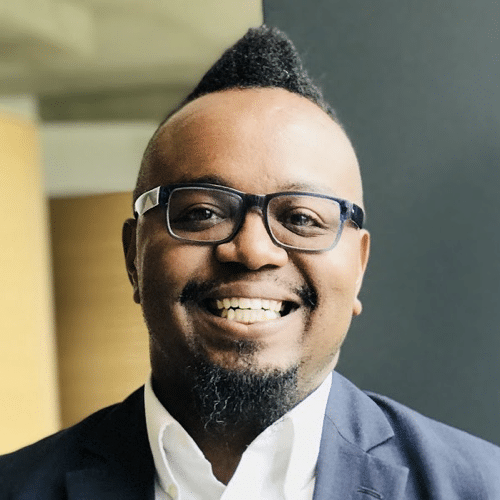
Jonny Price has spent most of his working life in the world of microfinance, first at the nonprofit, Kiva, and now with the crowdfunding platform, Wefunder.

He started his journey from management consultant to crowdfunding guru in 2009, as a volunteer with Kiva, on an externship from his consulting job. He made the full leap over in 2011, to lead the Kiva Zip pilot project, which later became Kiva U.S. And a couple of years ago, he transitioned to Wefunder, a crowdfunding platform where everyone over the age of 18 can invest as little as $100. 

Kiva and Wefunder have a common theme for Jonny – they are aimed at  “financially excluded and socially impactful businesses.” He talks about the “crazy gap” between bank loans for established businesses, and venture capital for a select few.

Jonny is squarely in the small business corner.  He’s spending his life building alternative financing systems for businesses seeking to launch or grow – businesses that simply don’t meet the rigid criteria of our traditional financial institutions. Some of these are tiny, and some are big. But they have one thing in common – while they hold little interest for banks or venture capitalists, they certainly can add a lot of value to our economy by innovating and creating jobs.


Read the podcast transcript here

Eve Picker: [00:00:03] Hi there, thanks for joining me on Rethink Real Estate. I’m on a mission to make real estate work for everyone. Real estate can help to solve climate change, can house people affordably, can create beautiful streetscapes, unify neighborhoods and enliven cities. So I’m on a journey to find the most creative thinkers and doers out there. I’m not the only one who wants to rethink real estate. You can learn more about me at EvePicker.com or you can find me at SmallChange.co, a real estate crowdfunding platform with impact real estate investment opportunities open for investment right now. And if you want to support this podcast, please join me at Patreon.com/rethinkrealestate, where there are special opportunities for my friends and followers.

Eve: [00:01:07] Today, I’m talking with Jonny Price, V.P. of Fundraising for Wefunder. Jonny Price, who spent most of his working life in the world of microfinance, first at the nonprofit Kiva and now with the crowdfunding platform, Wefunder. He started his journey from management consultant to crowdfunding guru in 2009 as a volunteer with Kiva. He made the full leap over to Kiva in 2011 to lead the Kiva Zip pilot project. This later became Kiva U.S. and a couple of years ago he transitioned to Wefunder, a crowdfunding platform where everyone over the age of 18 can invest as little as 100 dollars. Kiva and Wefunder have a common theme for Jonny. They are aimed at financially excluded and socially impactful businesses. Jonny talks about the crazy gap between bank loans for established businesses and venture capital for a select few. Venture capitalists almost exclusively focused on potential unicorns. A lot of businesses in the middle fall in between the cracks, and Jonny thinks that crowdfunding might serve them well. If you’d like to join me in my quest to rethink real estate, there are two simple things you can do. Share this podcast or go to Patreon.com/rethinkrealestate to learn about special opportunities for my friends and followers and subscribe if you can.

Eve: [00:02:49] Hi, Jonny. I’m delighted to talk to you today.

Jonny Price: [00:02:52] Thank you, Eve. I’m delighted to talk with you, too.

Eve: [00:02:55] I think I’m especially delighted because you have an accent closer to the mine.

Jonny: [00:02:59] My accent actually sounds pretty Australian these days after 10 years in America. It’s becoming more and more diluted, polluted by the day.

Eve: [00:03:10] I think I’m stuck somewhere between the two, yeah. OK, so I wanted to start by asking you how someone with a degree from Cambridge in history, economics and Italian ended up at Wefunder?

Jonny: [00:03:25] Yes.

Eve: [00:03:26] Take me on the journey.

Jonny: [00:03:27] The meandering journey. Yeah. So, when I graduated from university, which was, I think 2005, I didn’t really know what I wanted to do with my history degree. And the economics and Italian, are kind of embellishments for the LinkedIn profile to impress people like you. But really, it was a history degree. So even less useful, I think you know, than having the economics. And so I didn’t really know what I wanted to do and was just kind of looking for jobs. And the management consulting guys gave out really good wine and kind of looked at their recruiting event and sold a good story of, you know, fly around the world and advise, you know, senior executives of big companies on their strategy. And so I kind of fell into that a little bit and worked for a firm called Oliver Wyman in their London office, which kind of looking back on that, I kind of maybe think I would have enjoyed my 20s if I started my career in startups and entrepreneurship. But at the time I actually really enjoyed it. A lot of people don’t like it and leave after a couple of years, but I actually kind of liked it and I decent with some good skills that it taught me. And then four years into working for Oliver Wyman, I took a what’s called a non-profit fellowship. They had this awesome scheme where you could go and volunteer for a non-profit for a few months and they actually paid you part of your salary while you were there. And so I flew to San Francisco and worked for a non-profit called Kiva.org in their San Francisco office for five months. And you probably, do you know Kiva?

Eve: [00:05:15] Oh, yeah.

Jonny: [00:05:16] So as someone in the crowdfunding, a maven of crowdfunding, you probably would. So they are, as you know, crowd funded microloans for entrepreneurs all around the world. And they kind of really burst onto the scene in 2005. When they were founded, they were on Oprah’s favorite things. Muhammad Yunus won the Nobel Peace Prize for microfinance. Crowdfunding was a new thing. And so, in 2009, I went to volunteer there for a few months, kind of fell in love with the mission, the team and also a girl called Ali, who is now my wife. So she’s a big part of the story because after that five months was up, I went back to London, back to Oliver Wyman. We were dating long distance. Then I got Oliver Wyman to transfer me to their San Francisco office so we could be in the same city. Then we got married and then she was like, actually, you know, you flying to Toronto on Sunday nights and flying back on Thursday nights with this management consulting thing isn’t really working for me. So how about you leave consulting? And so that was 2011. And so then I was looking for what was next. After Oliver Wyman and the guys at Kiva were looking at launching this new pilot program at the time called Kiva Zip. And they knew me from when I was volunteering there. And so it was kind of perfect timing. And I got into that in 2011. Ran that team for seven years. We can get into my exit story from Kiva if you want. And since early 2018 I have been leading the business development team at Wefunder. Sorry, that was really long-winded.

Eve: [00:06:47] No, it’s great. So, you know, I remember when Kiva came to Pittsburgh when you launched in the U.S., it was a really big deal.

Jonny: [00:06:58] Yeah. So the Kiva Zip pilot that I kind of founded back in 2011 at the time we were in both the U.S. and Kenya. After a few years, we ended up kind of winding down the Kenyan side, which is a whole other question that we can get into. Basically, it was resource constraints of trying to with very, very limited bandwidth, trying to build for small business owners in Nairobi and Pittsburgh is quite hot.

Eve: [00:07:30] Oh, yes, very, very much so.

Jonny: [00:07:32] Peter tells of bison zero to one rate while he talks about kind of starting with a very targeted customer base. We didn’t really do that on Kiva Zip. So that’s why we kind of ended up winding down the Kenyan side and then we focused on the U.S. So over time, Kiva Zip came to be known as Kiva U.S., and we brought this international microfinance model that Kiva had pioneered and crowdfunded microfinance and then brought it to entrepreneurs in the U.S. And I think we launched in Pittsburgh I want to say maybe early 2015. And I think since then we funded well over 100 small business owners and probably coming up in 200 now in Pittsburgh.

Eve: [00:08:09] Just in Pittsburgh alone. And what about in the U.S.?

Jonny: [00:08:13] When I left, we had funded 5,000 entrepreneurs. That was in the first seven years, and we did 1,500 the last year I was there and it was growing at about 30 or 40 percent a year. I think it has slowed down in the last couple of years, unfortunately. But yeah, at the time I left we had done 5,000.

Eve: [00:08:35] So what does it mean to be funded by Kiva for people who don’t know about Kiva?

Jonny: [00:08:41] So in the U.S. model, Kiva does zero percent interest crowdfunded microloans, and when I left, they were up to 25 K, although the average was just 5 K. So, if you have a barbershop or a small farm, then you know, and you need 10,000 dollars for a specific purpose rather than getting that money from a bank. I mean, banks are just not lending to small businesses these days or a conventional community development financial institution or a credit card or on deck or whatever the other options are. You could go to your customers or the Wefunder lender base. What was interesting about Kiva, unlike most crowdfunding platforms, is 80 percent of the capital is coming from Kiva’s lender base and they’re not getting an interest rate on the loans. It’s all zero interest, no fees. So they’re just lending to help entrepreneurs maybe like invest in this business, in their community or, you know, they like the story and then they just want to help. And they have money in their account, and it’s being paid to them back. And then they just relend it and it keeps cycling over and over again. So, so that was the model. So for entrepreneurs and we were we were lending to people that no one else would lend to start-up businesses, low credit scores, you know, low income entrepreneurs, two thirds actually more of the loans we made were to women entrepreneurs, 70 percent were to entrepreneurs of color. The median household income was 42,000 dollars. So we were really extending loans to small businesses that no one else was touching. And instead of them paying exorbitant punitive interest rates, they were paying zero percent. It was very kind of fun to just buck that open economic paradigm in that way.

Eve: [00:10:25] I’ll bet. Yes, yes. And then, and then Wefunder seduced you away.

Jonny: [00:10:32] Kind of. Yeah. So I, there was a new CEO who came in at Kiva in late 2017. And he basically wanted to take their program in a different direction. He didn’t think the growth rate was fast enough was what he told me. And so he asked me to step down from running it in early 2018, which was quite a shock to me. I thought things had been going very, very well. And I think he maybe and some people in the Kiva board were kind of used to kind of venture capital backed growth rates and were looking for the hockey stick, which we suddenly weren’t delivering a hockey stick. Our growth rate, as I mentioned, was like 30 or 40 percent. So, yeah, he asked me to step down, which caused me to to move away from Kiva. And thankfully, I found Wefunder. And when I left Kiva, I kind of seen a couple of big challenges with the Kiva model. Firstly, Kiva wasn’t really earning any money from making these loans. We weren’t charging an interest rate or a fee to borrowers and say the model wasn’t very economically sustainable. Kiva, as a non-profit, was reliant on grant funding, which was challenging then for us to scale. And we weren’t able to attract venture capital funding, for example, to grow very quickly. And so the growth was a little more linear. So the economic sustainability of the Kiva side was one challenge. And then the other challenge was that the lenders, because they weren’t offered a potential rates of return, the capital that they were willing to deploy was also very limited. So I think we made 25,000,000 dollars of loans when I was there. 5,000 loans and 5,000 dollars average loan. But, you know, it wasn’t like two and a half billion.

Eve: [00:12:25] And I mean, in that period of time, how much venture capital was deployed to businesses?

Jonny: [00:12:29] Exactly.

Eve: [00:12:29] Like seriously, how much? What was the number? Compared to… billions and billions.

Jonny: [00:12:35] Right. So then at Wefunder we’re charging founders a fee to raise on the platform like Kickstarter does or any crowdfunding platform apart from Kiva. And then we are offering investors, is the hope of return. And obviously investing in start-ups is super risky. A lot of them will go to zero, but some of them might hit it really big. We do loans as well on the platform where you’re getting an interest rate back on the loan and so the Wefunder model, solved the two biggest challenges I’d seen with the Kiva model and so and got to know the team and was just very, very impressed and inspired with both the mission and the caliber of the people. And it’s really been a match made in heaven and it’s been a very, very exciting and fun three and a half years.

Eve: [00:13:22] Wow. So what’s your role at Wefunder?

Jonny: [00:13:25] So my title is VP of Fundraising, and I’m basically responsible for leading a team that is focused on getting founders fundraising on the Wefunder platform. So, you know, we are investing in tech start-ups and breweries and coffee shops and movies, and we really have a pretty eclectic portfolio. But, you know, finding those founders, developing relationships with accelerators or incubators or small business development centers and then, you know, talking to those founders, explaining to them the pros and cons of regulation crowdfunding, which is what we do, and then hopefully working with them and say as they launch on the platform.

Eve: [00:14:12] So, as you know, I’m also in the regulation crowdfunding industry.

Jonny: [00:14:18] Yeah.

Eve: [00:14:19] What excites you most about crowdfunding and regulation crowdfunding in particular. What’s the potential that you think it holds?

Jonny: [00:14:30] Yeah, many things. I’ll maybe highlight three. Firstly, getting more capital flowing to found this. So, I think both in aggregate and then kind of disaggregated. So, what I mean by that is I believe that, you know, one of the reasons why entrepreneurial activity has been on the decline for decades in America is that this kind of you know, it’s harder to raise capital for early stage businesses. VCs have been going later. You know, banks are just not lending to small businesses or start-up businesses. So it’s harder and harder to raise capital. So if you read Wefunder’s, Public Benefit Corporation Charter, one of the things we’re trying to do is, you know, use democracy and use the crowd to get more capital in aggregate flowing to start-up founders and early stage entrepreneurs in America, period. And I think that’s really cool. I think there’s a lot of positive social externalities that come from people starting businesses and funding businesses. So, I’m excited about that in aggregate. And then to disaggregate right now, one percent of VC goes to black founders and three percent goes to female only founding teams versus 80 percent to male only founding teams. And 77 percent of venture capital goes to three states, California, New York and Massachusetts. I live in Nashville, Tennessee now. I moved here about a year ago from San Francisco. And it’s pretty striking to me how hard it is for families to access capital here in the heartland. I was chatting to one founder. He said, you can’t get in front of angels here until you have a million dollars in ARR, which is just insane.

Eve: [00:16:15] Yes.

Jonny: [00:16:15] And so not just more capital flowing to founders in aggregate. If the investors, you know, kind of look like the women of color in Baltimore or Nashville rather than just a lot of kind of conventional investors being kind of white men on the coasts, then hopefully we can get more equitable allocations of capital happening as well. So that’s on the founder side. And then on the investor side, basically, it’s simple, right? Why should only rich people get to participate in investing in start-ups? There’s a lot of wealth that’s being created by start-ups like imagine if the people that benefited from Uber’s IPO, the people that made like five thousand X on Uber’s IPO from that investment in the seed round instead of being a bunch of millionaires. If that had been middle class people, I just think that can be a powerful vehicle for wealth creation, kind of socio-economic mobility. And then the third point is like, and we’ve really experienced this on our own rates recently, we’ve only just raised five million dollars on for using regulation crowdfunding ourselves in partnership with a platform called Honeycomb, who you know who based in Pittsburgh.

Eve: [00:17:25] Yes, also Pittsburgh. Yes.

Jonny: [00:17:26] So Wefunder raised five million on Honeycomb from the crowd. And you see some of the messages that investors write about how they’ve been involved with Wefunder this since 2012 when we were founded, and they’re so inspired by our mission, and they’re really excited about what we’re doing. And it’s you read those comments and it’s just truly inspiring. And the point, that this third point is that trying to forge connections and, you know, tissue between founders and investors, I think can do really good things for start-ups. So obviously, consumer facing businesses, it’s probably the easiest to see if a consumer facing business raises a million dollars from a thousand people. That’s a thousand super loyal customers, brand ambassadors, champions that can help them grow the business and are now, you know, involved, and have a front row seat, you know, for the for the growth of that company. So those are the things I’m most excited about with this kind of democratic approach to raising capital.

Eve: [00:18:30] So have you seen an increase in minority or women business owners over the last year or two?

Jonny: [00:18:39] I don’t know if we’ve seen one over the last year or two. I think kind of from the outset Wefunder is always over indexed. You know whether you look at the three lenses I mentioned earlier, gender, ethnicity, geography, I think we’ve kind of over indexed versus conventional venture capital, angel investing. But on both sides of the marketplace. Right. Like working capital, flowing to underrepresented founders, but also 85 percent of angel investors in a stat I found online, I don’t know if it’s accurate, but this stat said 85 percent of angels are men, 15 percent are women.

Eve: [00:19:11] That’s, I think, that’s actually surprisingly.

Jonny: [00:19:14] Probably generous.

Eve: [00:19:14] The number’s so high for women actually.

Jonny: [00:19:17] On Wefunder it’s 70-30. Right. So we’ve still got work to do.

Eve: [00:19:20] It’s pretty good.

Jonny: [00:19:20] It’s not 50-50, but it’s, and the same on the founder side. We’re not at a level playing field yet, I would say, but suddenly we’re doing much, much better than conventional.

Eve: [00:19:31] I think real estate’s even harder. Very difficult to find female developers. And we’ve seen a rise of minority developers over the last year, which is really amazingly encouraging. But the number of women that invest in real estate is just startlingly low. I can’t believe it. I just like I. Yeah, there’s a lot of education that has to happen.

Jonny: [00:19:57] Mm hmm.

Eve: [00:19:58] It’s interesting.

Jonny: [00:20:01] Yeah, well, it’s good to be good to be working in the same space space as you as trying to, trying to move things in the right direction.

Eve: [00:20:10] Ok, let’s talk about the regulation, because, as you know, I love regulation crowdfunding, too. But it’s not a panacea. It doesn’t fix all things. What you know, what do you think are its warts and how could it be better?

Jonny: [00:20:24] Yeah, I mean, honestly, the recent changes that the SEC made, I think are very good. So, as you know, March 15th of this year, 2021, the SEC brought up some changes, some of the highlights. The headline was that, you know, the maximum amount a founder could raise increased from 1.07 million to 5 million. And that has meant that the quality of companies that are interested in raising from the crowd has increased. Which is kind of our paradigm on how we’ve got to make this industry work long term. I think one of the biggest criticisms probably valid over the last five years since the rollout of Reg CF in May 2016 has been that there is an adverse selection effect. And, you know, the best companies are going to go the conventional route of VCs. And, you know, so regulation crowdfunding is for companies that can’t raise money from real investors. And so what we are really trying hard to do as a company at Wefunder is to make that not true. And I am optimistic, but in large part because of our team, Nick Tommarello, our CEO, Greg Belote our CTO, just very, very brilliant, inspiring people that are thinking about this very, very strategically. But we are desperately trying to get to that world. And since the five million cap increase, we’ve had 30 Y Combinator companies launched on Wefunder. We had Rome Research raise a million dollars in a day. I think they oversubscribed to nine million dollars and had to turn eight million dollars of investors away.

Eve: [00:22:15] Wow.

Jonny: [00:22:15] We’ve raised five million dollars ourselves. Gumroad raised on Republik. So, you know, there really is, I think, an increase in that kind of caliber of companies that are looking at and happy to raise through regulation crowdfunding. And SPVs was another aspect of the March 15th rule changes, so enabling founders to raise through one on the table using a special purpose vehicle, which is how, you know, normal companies raise using Reg V funding. So there’s a, there’s more to do. And I think over time, like, you know, as there are more success stories. And the key for me is going back to the third thing I mentioned, I’m excited about. If the value that an early-stage founder gets from raising money on Wefunder through regulation crowdfunding, if the value that they get from this army of champions and customers and ambassadors is so strong that, like. And obviously, it doesn’t need to be an either/or thing you can raise from VCs and also from the crowd, and if the value that you’re getting from that crowd to really compliment the value that you’re getting from institutional investors, I think that will be the moment. And when it’s like, well, why the hell would you not do this as an early stage, you know, start-up? And you’re kind of putting yourself at a competitive disadvantage if you’re not recruiting this army of champions in the early, fragile days of your business. So that’s the world we’re shooting for. And probably not there yet. But we try.

Eve: [00:23:51] No, I don’t think we are there yet.  I think we, I think we’re very much the underdog, like in real estate. When I see the things that developers have to deal with because they want to do crowdfunding and because their large institutional investors don’t want to be next to small investors. It makes me want to cry. Like does small mean fraudulent? I don’t understand it, but yeah, you shouldn’t…

Jonny: [00:24:18] Do you see it moving in the right direction in real estate? Because, especially with this March 15th thing, but also the pandemic, I think accelerated this as well for us, because especially in the early days of the pandemic, I spoke to a lot of families who, you know, we’re talking to angels and basically had their rounds fall apart. And, you know, so then they were like, OK, we need a different option. And then they came. And so it’s been growing. And the kind of the caliber of founders I think has been increasing for a year or so. But that’s really accelerated in the last couple of months. So I see it moving in the right direction in the kind of start-up side. What about in the real estate side?

Eve: [00:24:55] Yeah, I’ve been doing a number of things that have sort of changed direction slightly towards higher quality developers. So we’re absolutely seeing it. And I think the most gratifying thing that I’ve seen over the last year during the pandemic is the number of minority developers who have emerged and are raising funds on this site. And I really, I’m just so excited to be able to provide that opportunity, because if you talk to any of them and ask them what help do you need, they say access to capital.

Jonny: [00:25:32] Yeah. And hopefully that will also translate to returns. So I had this stat the other day. I can’t remember the exact number, but it was something along the lines of where an investor invests in someone that went to their school. The returns are worse because of the school connection. That kind of buddy buddy, you know, kind of…

Eve: [00:25:54] Empathy I’ll put up with anything.

Jonny: [00:25:56] They’ll kind of, you know, make slightly worse investment decisions because there’s some subjectivity that creeps in. Right. And I don’t know how robust the kind of statistical analysis that went into this was. But I mean, it’s intuitive to me that it would be true. I’d never heard something like that before in that black and white terms. But when you hear that, it’s like, well, then obviously, you know, if you have kind of a bunch of, you know, investors that look the same, investing in founders that look the same as them, then, you know, if you can…

Eve: [00:26:32] Yes.

Jonny: [00:26:32] Kind of get more diversity of investments happening by recruiting more diverse army of investors, then that should all other things being equal, kind of improved returns, which is kind of encouraging for us.

Eve: [00:26:45] Little bit different with real estate, because, you know, we’re really all about supporting projects that wouldn’t normally happen or have difficulty raising funds because they are you know, it’s the same thing as a small business. They’re innovative. They’re creative. They’re new. They’re in underserved neighborhoods that do not have a strong market yet. And so banks don’t want to lend to them. Or if they do, they have an equity requirement that’s very difficult for these developers to fill. Right. So they’re looking at needing to find 40 percent equity for a real estate project that’s maybe 10 million dollars because the bank won’t lend them more than 60 percent. And so because banks lend based on tried and true.

Jonny: [00:27:31] Right.

Eve: [00:27:31] And understand, you know, that’s what an appraisal is all about. Three like things that have happened before that can almost assure them that they’re going to get their return. But if you have a neighborhood or a developer who’s never done that before, that’s difficult for a bank to finance. And but you know them often. These projects are in poor neighborhoods where the neighbors who care and want it the most may not have the finances to support even a small amount of the crowd fund raised. So it becomes a little more difficult.

Jonny: [00:28:08] Well, when you said not a panacea before that, that’s usually one of the things that I think about. The downsides of crowdfunding democratic investment, you know, with respect to leveling the playing field. Yeah, exactly as you say, right. If if black household. Last time I saw the stat black median household wealth was I think it was 10,000 dollars.

Eve: [00:28:32] And it’s less than that, I think is the last time I saw the stat.

Jonny: [00:28:36] White median household wealth was 170 or something like that.

Eve: [00:28:40] Yes.

Jonny: [00:28:41] And so where does that discrepancy. Right. If a black founder launches on Wefunder and is going to that community, it’s going to be harder for them to…

Eve: [00:28:49] Much harder. Yeah.

Jonny: [00:28:50] So it’s definitely not a panacea. On the regulation side, I mean, going back to your question, which I kind of didn’t really answer. What could be improved on the legislation? The one thing the reason I started talking about the big game for us as a company is like trying to get the best companies to choose to go with the crowd as well as or even instead of the conventional VC. So that’s a big aim for us. One of the ways that I think the legislation could change to move us in that direction would be carried interest. So, we have this principle of lead investors and Wefunder, where there’s like, let’s say, a well-respected angel investor who, you know, has experience in that sector where the start-up is operating and that lead investor will kind of, you know, validate the terms of the deal. OK, this the valuation cap on this convertible note of five million makes sense. I’m putting in 50 K of my money in this deal, and that’s a great kind of signal to the crowd. And they actually vote for the shares of the individual investors who have protection and representation in the SPV. But the lead investor is fighting for the shares. So it’s kind of good, good for investors. But the lead investor we’ve been told recently by the SEC, pretty explicitly, cannot earn any carried interest on the Wefunder the round as they can in an AngelList syndicate in the regulation D world. So if a syndicate lead on AngelList raises a million dollars to invest in a company, that syndicate lead can earn, I think it’s 10 percent, maybe 20 percent carried interest.

Eve: [00:30:27] It’s usually 20, 20 percent.

Jonny: [00:30:27] On the profits from the million dollars. And that can’t happen in regulation crowdfunding. And so, then those syndicate leads will be more likely to put that high quality deal flow on AngelList versus Wefunder, which again, will be a force for kind of, you know, making it harder for the best quality deal flow to go on Wefunder. So it’s kind of a little in the weeds, but that’s certainly one area where we, I think, would want the legislation to go in the future, potentially. I mean, there’s reasons why the S.E.C., you know, didn’t want to move it in that direction. Good reasons, but that’s something we were we were advocating for that didn’t happen with the March 15th rule changes.

Eve: [00:31:09] And while we’re in the weeds…

Jonny: [00:31:13] Yeah, sorry. Have you listened to that podcast In the Weeds. Or The Weeds, I think it’s called by Vox, but yeah. So sorry.

Eve: [00:31:21] No, no. Don’t apologize. I like it.

Jonny: [00:31:23] We’re diving deep. We’re rummaging around in the undergrowth, Eve.

Eve: [00:31:26] The beautiful thing with a podcast is that the listeners can turn it off if they’re bored. But, you know, the thing I really, I find difficult and dislike is that we, the crowdfunding portals are not permitted to invest in these deals. And this is after we’ve spent zillions of hours with them making sure their disclosure packets are good and ready to go. And we have a really good sense of the project. You know, my employees, my spouse might like to invest and we’re not permitted to. And I, I really kind of don’t get that, do you?

Jonny: [00:32:04] Yeah. I mean, you can charge a part of your fee.

Eve: [00:32:07] You can charge a part of your, a part of your fee, but you, but that doesn’t really help. Like, I’ve been told by my attorney that my husband may as well be me, in terms of this rule. He can’t invest.

Jonny: [00:32:20] Yeah, it has been, it has been frustrating to especially our founders down the years. You know, they’ve seen some very, very awesome companies come and go on Wefunder and not being able to invest in them has been personally frustrating for them.

Eve: [00:32:37] Yeah.

Jonny: [00:32:37] Yeah, I agree.

Eve: [00:32:38] It’s a weird one.

Jonny: [00:32:38] I think that’s where we would seem to align incentives.

Eve: [00:32:42] Ok, so what keeps you up at night?

Jonny: [00:32:46] Yeah, that’s a good question. I think probably investor returns. So I think the reason why unaccredited investors being able to invest in early stage private companies was illegal from the 1930s until 2016 was, you know, kind of, are retail investors able to make sophisticated investment decisions, firstly. And then secondly, do they have enough kind of, you know, money to kind of sustain the losses that they might incur? Because investing in start-ups is super risky. Right.

Eve: [00:33:30] Right.

Jonny: [00:33:31] And so I welcome, the SEC has put limits around how much people can invest so everyone can invest 2,200 dollars per year. And then there’s a formula for how much people can invest. And if you’re accredited, you can invest an unlimited amount, which actually another thing that changed with these March 15th rules.

Eve: [00:33:49] Yes, that’s a nice thing.

Jonny: [00:33:50] Harmonized with Reg D. But, you know, the point is like, yeah, like investor returns is the thing that keeps me up at night. So if in aggregate in 10 years’ time, you know, Wefunder  investors have, you know, lost a bunch of money by investing in start-ups and Wefunder then I will be sad. And so, again, this is going that I mean, in venture capital investing. Right. Like there’s a power lure effect where if you get into Airbnb. If you get into Uber, it returns a whole fund and say there’s a risk with which kind of start-up investing from the crowd that if the hottest companies in the 2021 batch of companies, you know, don’t raise on Wefunder, that they raise through conventional venture capital, then, you know, in aggregate the portfolio of Wefunder investors is kind of negative returns. And so, trying to ensure that we are, you know, returning money to investors is probably the biggest concern that I have. And again, it’s if we can get the best quality founders, the best deal flow up on Wefunder for us, that is like the North Star in terms of how we prevent that that concern from coming true.

Eve: [00:35:13] Yeah, I think I’m with you. I’m with you on that. It breaks my heart if investors lose money. And breaks my heart more for those ones who’ve invested 500 dollars. And I know, I know it was a meaningful 500 dollars for them.

Jonny: [00:35:28] Yeah. And look, democracy is complicated, right.

Eve: [00:35:32] Yes. And not always fair.

Jonny: [00:35:33] Not always fair. Everyone has different motivations when they are investing.

Eve: [00:35:34] Yes.

Jonny: [00:35:36] So I invested 125 dollars in Chattanooga Football Club, which is a soccer club that raised close to a million dollars on Wefunder a couple of years ago and now my name is on their jersey, you know, and I didn’t look at the financials. I didn’t I didn’t care about making a return on that $125. I just thought it was really cool to be a part owner of a soccer club, you know, in Tennessee. And so the point is that, you know, some investors on Wefunder, it’s a mother investing in her son. Right. Or it’s someone investing in this company up there now that’s curing cancer in dogs. And you see some of the comments and the investors who had a dog that died of cancer and they love to be a part of maybe coming up with a cure for that, you know, so. And then there’s people that are like really diving deep into the financials and thinking about, you know, that kind of IRR. Right. But we’re trying to we’re trying to capture kind of all investors and their motivations. And so that makes this question of kind of investor returns, I think, even more complicated.

Eve: [00:36:50] Yeah, I totally agree with you and even, you know, and then there’s also I think the education that they’ve probably been exposed to is, quite frankly, one of, I think, immense greed. You know, investors in real estate who don’t want to look at anything unless it offers 25 percent internal rate of return. Well, you can’t do that when you’re building an affordable housing project. And what you know at what point is that okay?

Jonny: [00:37:20] Absolutely.

Eve: [00:37:20] You know, like 10 percent seems pretty good to me, you know, but yeah, it’s a weird world.

Jonny: [00:37:27] Yeah. One of the things we try to do on Wefunder is to reject that greed-based education or communication. So we talk a lot about investing start-ups is risky. You look in the money up, don’t invest more than you can afford to lose. Our CEO had a phrase, a socially good lottery ticket.

Eve: [00:37:49] Yes.

Jonny: [00:37:50] Which I say we talk about that in our FAQs. I really, I really like that. But we really do try to flag that this is risks. And a tagline is: invest in start-ups you love. So that’s the brand that we’re going for. Invest in start-ups because you love what they’re doing. You believe in the founder. You know, you think it’s really cool. You want to be a part of it as opposed to invest in start-ups to earn a 25 percent IRR.

Eve: [00:38:19] Yes. Yeah. So then I have to ask a big question. What does impact investing mean to you then?

Jonny: [00:38:28] Mm hmm. Yeah, that’s, that’s a good question. And same thing on the other side, I would say, what is what a social enterprise mean? I thought about this a lot, both at Kiva, which was a non-profit, and then Wefunder, which is a public benefit corporation and a B corp. So I guess kind of technically a social enterprise and quite and this is kind of go back to the democracy part, right? Like, I think a lot of investors on Wefunder, individual investors on Wefunder that would call themselves or most people would say are impact investors, right? When I made $125 investment in Chattanooga F.C., that was, I don’t know if it’s impact…

Eve: [00:39:06] It impacts, yeah.

Jonny: [00:39:06] Community or kind of feel good. Right. As opposed to kind of financially based. But then there’s a bunch of other investors that you would say are not impact investors. And tell us in our email inbox right. I didn’t care about the impact. I just like, where’s my money? So, again, democracy kind of has to accommodate all different motivations. And sometimes people have hybrid motivations. But I don’t know both the Kiva and Wefunder. I see it as a spectrum, honestly. And, you know, it kind of having some line for like what is an impact investment and what is not an impact investment, I think gets pretty messy.

Eve: [00:39:49] It is messy. I totally agree.

Jonny: [00:39:51] And so, you know, I, I tend not to use those words, actually. And, you know, kind of I like it when people are thinking about, you know, holistic impacts and, you know, societal community like impacts on people as well as like what is my financial IRR. But I think there’s like a bunch of ways that you can do that. And so, I don’t really like to kind of get tied down to definitions. I would say, like when we’re at Kiva, you know, the kind of outcomes assessment was always quite bizarre to me. So we were like a tiny team, super resource strapped, trying desperately to grow this program that was making zero percent interest loans to low income small business owners. Right. And so and by the way, the last month I was there, the net promoter score from our borrowers was a hundred. Everyone that filled in the survey gave us a 9 or 10.

Eve: [00:40:50] Oh, wow.

Jonny: [00:40:50] In terms of what they recommend to a friend. Everyone. And so, did I believe that this was having a positive impact in the world? 100 percent like, you know. Was I able to kind of, you know, figure out through some survey or some other methodology that a randomized control trial meant that, you know, the Kiva loans led to a 12 percent increase in borrower household income or jobs created or business profits? No, but, you know, it’s kind of it’s tough to kind of pin it down, but I was just very confident we were kind of moving in that direction and had trust in our team. So I guess kind of same thing with like outcomes assessment and and analysis at Kiva. And that kind of definition of impact investing. I’m a little bit kind of more vague in hand, wavy versus kind of civic definition.

Eve: [00:41:45] Well, you know, we created our own index because we had our own ideas about it. And I looked at a lot of different ways to score impact. And I just felt like they were first of all, they weren’t easy for the everyday person to understand. And if you’re going to get everyday investors, you you’ve got to make it easy for those everyday investors. And secondly, I didn’t understand most of them.

Jonny: [00:42:08] Well it’s also it’s also very hard to collect the data. And then like at Kiva, if we were doing surveys to small business owners on jobs created, it kind of imposed an additional burden on them after the fact. So, yeah, it’s complicated.

Eve: [00:42:23] It’s complicated. OK, just a couple more questions. I want to know what your big, hairy, audacious goal is?

Jonny: [00:42:32] Yeah. I honestly, I don’t think we really have a kind of…

Eve: [00:42:38] Well, let me ask a different question.

Jonny: [00:42:40] Yeah.

Eve: [00:42:42] You know what are the sort of projects that would exemplify how you’d like to leave your mark on the world?

Jonny: [00:42:50] Yeah, so I think a few things. You know, firstly, again, getting much more capital flowing to underrepresented founders to level the playing field a little. I think I’ve always been pretty passionate about the kind of economic justice, why I went to work for Kiva in the first place. Why I went to Zambia for eight months on a gap year before going to the university. And so, yeah, trying to level the playing field as in terms of solid founders raising capital as one tool to try to address this worsening economic inequality in America that we’ve seen now for many, many decades. Right where the top one percent control more and more of the wealth. And so that’s kind of at base a big part of it for me, you know, enabling kind of investors throughout the country and throughout the economic spectrum to benefit from the wealth that start-ups are creating rather than just rich people getting to play. So obviously, there you, kind of, you need some returns. Right. And some companies like going big. And then probably another thing which we haven’t really touched on as much as kind of you’re getting this a little with the impact investing question. But, you know, I love it when I see things like the curing cancer in dogs company LEAH Labs, raising on Wefunder or companies that are tackling climate change. And that’s another thing, another lens where I hope a more democratic approach that funding companies can lead to better outcomes for society. I don’t have any data on this one. But if you look at sectors that are being funded by VCs, for example, I think you probably over index to, you know, consumer tech start-ups like Uber or Doordash.

Eve: [00:44:54] Um hmm.

Jonny: [00:44:54] Right. Versus I mean, you know, health care or climate change or education. Like inflation of, you know, consumer products. Look at Amazon. Right. It’s a massive deflation. Right. Everything’s kind of cheaper for consumers. Right. But health care and education are the inflation there is just massively higher. Right. And probably a part of the reason for that is our allocation of capital to those industries, to start-ups. Disrupting and improving those industries has been too low as a society. And so, again, with democracy, maybe we can kind of get more capital flow into those sectors. And again, to the point earlier that we were talking about, like probably the returns where there’s like a kind of a bias against doing something because, you know, all the investors went to Harvard and so they invest in the Harvard founders. And this that’s like a slightly worse economic decision, like hopefully also kind of investing in sectors that have been under invested in might also be good for financial returns as well as like benefits of society. And that’s like a really, really important one for me, is like if we can get, you know, more and more of Wefunder capital flowing to businesses that are very obviously good for society. I’ve actually been thinking about that this year. Is like with my time, like, how can I spend more of my time trying to find what you would conventionally term, you know, social entrepreneurs or entrepreneurs tackling the biggest challenges that would improve our society and to get a higher and higher share of founders on Wefunder kind of in that sector.

Eve: [00:46:47] Well, on that fantastic note, I think you and I agree, and it’s just been delightful talking to you, and I hope we can continue the conversation.

Jonny: [00:46:56] Likewise, Eve. This was a really fun conversation, it’s great to chat about these issues with someone that really knows this stuff inside out. And I think thinks along very similar lines to how I do. So, yeah, great talking as always and we’ll speak soon.

Eve: [00:47:15] That was Jonny Price. Jonny is squarely in the small business corner. First at Kiva and now with Wefunder. He’s spending his life building alternative finance systems for businesses seeking to launch or grow. Businesses that simply don’t meet the rigid criteria of our traditional financial institutions. Some of these businesses are tiny and some are big. But they have one thing in common, they hold little interest for banks or venture capitalists, but they certainly can add a lot of value to our economy by innovating and creating jobs. You can find out more about this episode on the show notes page at EvePicker.com, or you can find other episodes you might have missed or you can show your support at Patreon.com/rethinkrealestate, where you can learn about special opportunities for my friends and followers. A special thanks to David Allardice for his excellent editing of this podcast and original music. And thanks to you for spending your time with me today. We’ll talk again soon. But for now, this is Eve Picker signing off to go make some change.

Image courtesy of Jonny Price, Wefunder.

« Previous Page
Next Page »

Primary Sidebar

sign up here

APPLY TO BE A PODCAST GUEST

More to See

(no title)

February 22, 2025

Bellevue Montgomery

February 11, 2025

West Lombard

January 28, 2025

FOLLOW

  • LinkedIn
  • RSS

Tag Cloud

Affordable housing Climate Community Creative economy Crowdfunding Design Development Environment Equity Finance FinTech Gentrification Impact Investing Mobility Offering Opportunity zones PropTech Technology Visionary Zoning

Footer

©rethinkrealestateforgood.co. The information contained on this website is for general information purposes only. Nothing on this website is intended as investment, legal, tax or accounting strategy or advice, or constitutes an offer to sell, solicit or buy securities.
 
Any projections discussed or made may not be accurate and do not guarantee a specific outcome. All projections or investments are subject to risk due to uncertainty and change, including the risk of loss, and past performance is not indicative of future results. You should make independent decisions and seek independent advice regarding investments or strategies mentioned on this website.

Recent

  • The Mulberry
  • Mount Vernon Plaza
  • The Seven
  • Real estate and women.
  • Oculis Domes.

Search

Categories

Climate Community Crowdfunding Development Equity Fintech Investing Mobility Proptech Visionary


Copyright © 2026 · Magazine Pro on Genesis Framework · WordPress · Log in