• Skip to main content
  • Skip to secondary menu
  • Skip to primary sidebar
  • Skip to footer
  • Home
  • About Us
  • Say hello
Rethink Real Estate. For Good.

Rethink Real Estate. For Good.

  • Podcast
  • Posts
  • In the news
  • Speaking and media
    • About Eve
    • Speaking requests
    • Speaking engagements
    • Press kit
  • Investment opportunities

Investing

Investing locally.

July 19, 2021

Vibrant, thriving communities need locally owned businesses. Local businesses can create a vigorous local economy, provide more jobs and reduce poverty. In the US private sector, small businesses produce two out of three jobs and generate approximately fifty percent of the GDP. And locally owned businesses also give rise to more civic engagement, higher voter participation and more volunteerism.

Everybody wants to live in a lively, prosperous neighborhood, but that’s not where most investments are going. The majority of Americans still invest in stocks and bonds, benefitting large corporations outside their communities. Banks typically only approve twenty percent of small business loans and venture capital funding only goes to a lucky one percent.

Small business needs those investment dollars.

Michael Schuman, economist, attorney, author and entrepreneur, is an avid advocate for local investing. He believes that start-ups and small main street businesses make a robust economy. In his book, Put Your Money Where Your Life Is, Michael outlines strategies for investing locally.

  • Invest in you. There’s nothing more local than owning your own home. Once you pay off your mortgage you can invest in energy efficient improvements to reduce your household bills. You can pay off credit cards and student loans or lend money to family or friends at a lower-than-market interest rate.
  • Invest in other people. There are many ways to invest in local small business and real estate. There might be a larger local project raising funds from individual investors to improve existing businesses or develop new ones. It’s also possible to invest in local government projects through a municipal bond offering.
  • Save locally. Open an account and deposit your money in a locally controlled and operated financial institution. These community focused financial institutions have local decision-makers and serve the local community well.
  • More options.  Join a local investment club or start one. Slow Money, which catalyzes local food investing, has local chapters or investment clubs too. Or invest through community development corporations or a micro-credit fund.

The more you engage with your community, the more you will learn about local investment opportunities.

Listen in to my conversation with Michael to learn more.

Image by John D. Norton

Filling the “crazy gap”.

June 30, 2021

Jonny Price has spent most of his working life in the world of microfinance, first at the nonprofit, Kiva, and now with the crowdfunding platform, Wefunder.

He started his journey from management consultant to crowdfunding guru in 2009, as a volunteer with Kiva, on an externship from his consulting job. He made the full leap over in 2011, to lead the Kiva Zip pilot project, which later became Kiva U.S. And a couple of years ago, he transitioned to Wefunder, a crowdfunding platform where everyone over the age of 18 can invest as little as $100. 

Kiva and Wefunder have a common theme for Jonny – they are aimed at  “financially excluded and socially impactful businesses.” He talks about the “crazy gap” between bank loans for established businesses, and venture capital for a select few.

Jonny is squarely in the small business corner.  He’s spending his life building alternative financing systems for businesses seeking to launch or grow – businesses that simply don’t meet the rigid criteria of our traditional financial institutions. Some of these are tiny, and some are big. But they have one thing in common – while they hold little interest for banks or venture capitalists, they certainly can add a lot of value to our economy by innovating and creating jobs.


Read the podcast transcript here

Eve Picker: [00:00:03] Hi there, thanks for joining me on Rethink Real Estate. I’m on a mission to make real estate work for everyone. Real estate can help to solve climate change, can house people affordably, can create beautiful streetscapes, unify neighborhoods and enliven cities. So I’m on a journey to find the most creative thinkers and doers out there. I’m not the only one who wants to rethink real estate. You can learn more about me at EvePicker.com or you can find me at SmallChange.co, a real estate crowdfunding platform with impact real estate investment opportunities open for investment right now. And if you want to support this podcast, please join me at Patreon.com/rethinkrealestate, where there are special opportunities for my friends and followers.

Eve: [00:01:07] Today, I’m talking with Jonny Price, V.P. of Fundraising for Wefunder. Jonny Price, who spent most of his working life in the world of microfinance, first at the nonprofit Kiva and now with the crowdfunding platform, Wefunder. He started his journey from management consultant to crowdfunding guru in 2009 as a volunteer with Kiva. He made the full leap over to Kiva in 2011 to lead the Kiva Zip pilot project. This later became Kiva U.S. and a couple of years ago he transitioned to Wefunder, a crowdfunding platform where everyone over the age of 18 can invest as little as 100 dollars. Kiva and Wefunder have a common theme for Jonny. They are aimed at financially excluded and socially impactful businesses. Jonny talks about the crazy gap between bank loans for established businesses and venture capital for a select few. Venture capitalists almost exclusively focused on potential unicorns. A lot of businesses in the middle fall in between the cracks, and Jonny thinks that crowdfunding might serve them well. If you’d like to join me in my quest to rethink real estate, there are two simple things you can do. Share this podcast or go to Patreon.com/rethinkrealestate to learn about special opportunities for my friends and followers and subscribe if you can.

Eve: [00:02:49] Hi, Jonny. I’m delighted to talk to you today.

Jonny Price: [00:02:52] Thank you, Eve. I’m delighted to talk with you, too.

Eve: [00:02:55] I think I’m especially delighted because you have an accent closer to the mine.

Jonny: [00:02:59] My accent actually sounds pretty Australian these days after 10 years in America. It’s becoming more and more diluted, polluted by the day.

Eve: [00:03:10] I think I’m stuck somewhere between the two, yeah. OK, so I wanted to start by asking you how someone with a degree from Cambridge in history, economics and Italian ended up at Wefunder?

Jonny: [00:03:25] Yes.

Eve: [00:03:26] Take me on the journey.

Jonny: [00:03:27] The meandering journey. Yeah. So, when I graduated from university, which was, I think 2005, I didn’t really know what I wanted to do with my history degree. And the economics and Italian, are kind of embellishments for the LinkedIn profile to impress people like you. But really, it was a history degree. So even less useful, I think you know, than having the economics. And so I didn’t really know what I wanted to do and was just kind of looking for jobs. And the management consulting guys gave out really good wine and kind of looked at their recruiting event and sold a good story of, you know, fly around the world and advise, you know, senior executives of big companies on their strategy. And so I kind of fell into that a little bit and worked for a firm called Oliver Wyman in their London office, which kind of looking back on that, I kind of maybe think I would have enjoyed my 20s if I started my career in startups and entrepreneurship. But at the time I actually really enjoyed it. A lot of people don’t like it and leave after a couple of years, but I actually kind of liked it and I decent with some good skills that it taught me. And then four years into working for Oliver Wyman, I took a what’s called a non-profit fellowship. They had this awesome scheme where you could go and volunteer for a non-profit for a few months and they actually paid you part of your salary while you were there. And so I flew to San Francisco and worked for a non-profit called Kiva.org in their San Francisco office for five months. And you probably, do you know Kiva?

Eve: [00:05:15] Oh, yeah.

Jonny: [00:05:16] So as someone in the crowdfunding, a maven of crowdfunding, you probably would. So they are, as you know, crowd funded microloans for entrepreneurs all around the world. And they kind of really burst onto the scene in 2005. When they were founded, they were on Oprah’s favorite things. Muhammad Yunus won the Nobel Peace Prize for microfinance. Crowdfunding was a new thing. And so, in 2009, I went to volunteer there for a few months, kind of fell in love with the mission, the team and also a girl called Ali, who is now my wife. So she’s a big part of the story because after that five months was up, I went back to London, back to Oliver Wyman. We were dating long distance. Then I got Oliver Wyman to transfer me to their San Francisco office so we could be in the same city. Then we got married and then she was like, actually, you know, you flying to Toronto on Sunday nights and flying back on Thursday nights with this management consulting thing isn’t really working for me. So how about you leave consulting? And so that was 2011. And so then I was looking for what was next. After Oliver Wyman and the guys at Kiva were looking at launching this new pilot program at the time called Kiva Zip. And they knew me from when I was volunteering there. And so it was kind of perfect timing. And I got into that in 2011. Ran that team for seven years. We can get into my exit story from Kiva if you want. And since early 2018 I have been leading the business development team at Wefunder. Sorry, that was really long-winded.

Eve: [00:06:47] No, it’s great. So, you know, I remember when Kiva came to Pittsburgh when you launched in the U.S., it was a really big deal.

Jonny: [00:06:58] Yeah. So the Kiva Zip pilot that I kind of founded back in 2011 at the time we were in both the U.S. and Kenya. After a few years, we ended up kind of winding down the Kenyan side, which is a whole other question that we can get into. Basically, it was resource constraints of trying to with very, very limited bandwidth, trying to build for small business owners in Nairobi and Pittsburgh is quite hot.

Eve: [00:07:30] Oh, yes, very, very much so.

Jonny: [00:07:32] Peter tells of bison zero to one rate while he talks about kind of starting with a very targeted customer base. We didn’t really do that on Kiva Zip. So that’s why we kind of ended up winding down the Kenyan side and then we focused on the U.S. So over time, Kiva Zip came to be known as Kiva U.S., and we brought this international microfinance model that Kiva had pioneered and crowdfunded microfinance and then brought it to entrepreneurs in the U.S. And I think we launched in Pittsburgh I want to say maybe early 2015. And I think since then we funded well over 100 small business owners and probably coming up in 200 now in Pittsburgh.

Eve: [00:08:09] Just in Pittsburgh alone. And what about in the U.S.?

Jonny: [00:08:13] When I left, we had funded 5,000 entrepreneurs. That was in the first seven years, and we did 1,500 the last year I was there and it was growing at about 30 or 40 percent a year. I think it has slowed down in the last couple of years, unfortunately. But yeah, at the time I left we had done 5,000.

Eve: [00:08:35] So what does it mean to be funded by Kiva for people who don’t know about Kiva?

Jonny: [00:08:41] So in the U.S. model, Kiva does zero percent interest crowdfunded microloans, and when I left, they were up to 25 K, although the average was just 5 K. So, if you have a barbershop or a small farm, then you know, and you need 10,000 dollars for a specific purpose rather than getting that money from a bank. I mean, banks are just not lending to small businesses these days or a conventional community development financial institution or a credit card or on deck or whatever the other options are. You could go to your customers or the Wefunder lender base. What was interesting about Kiva, unlike most crowdfunding platforms, is 80 percent of the capital is coming from Kiva’s lender base and they’re not getting an interest rate on the loans. It’s all zero interest, no fees. So they’re just lending to help entrepreneurs maybe like invest in this business, in their community or, you know, they like the story and then they just want to help. And they have money in their account, and it’s being paid to them back. And then they just relend it and it keeps cycling over and over again. So, so that was the model. So for entrepreneurs and we were we were lending to people that no one else would lend to start-up businesses, low credit scores, you know, low income entrepreneurs, two thirds actually more of the loans we made were to women entrepreneurs, 70 percent were to entrepreneurs of color. The median household income was 42,000 dollars. So we were really extending loans to small businesses that no one else was touching. And instead of them paying exorbitant punitive interest rates, they were paying zero percent. It was very kind of fun to just buck that open economic paradigm in that way.

Eve: [00:10:25] I’ll bet. Yes, yes. And then, and then Wefunder seduced you away.

Jonny: [00:10:32] Kind of. Yeah. So I, there was a new CEO who came in at Kiva in late 2017. And he basically wanted to take their program in a different direction. He didn’t think the growth rate was fast enough was what he told me. And so he asked me to step down from running it in early 2018, which was quite a shock to me. I thought things had been going very, very well. And I think he maybe and some people in the Kiva board were kind of used to kind of venture capital backed growth rates and were looking for the hockey stick, which we suddenly weren’t delivering a hockey stick. Our growth rate, as I mentioned, was like 30 or 40 percent. So, yeah, he asked me to step down, which caused me to to move away from Kiva. And thankfully, I found Wefunder. And when I left Kiva, I kind of seen a couple of big challenges with the Kiva model. Firstly, Kiva wasn’t really earning any money from making these loans. We weren’t charging an interest rate or a fee to borrowers and say the model wasn’t very economically sustainable. Kiva, as a non-profit, was reliant on grant funding, which was challenging then for us to scale. And we weren’t able to attract venture capital funding, for example, to grow very quickly. And so the growth was a little more linear. So the economic sustainability of the Kiva side was one challenge. And then the other challenge was that the lenders, because they weren’t offered a potential rates of return, the capital that they were willing to deploy was also very limited. So I think we made 25,000,000 dollars of loans when I was there. 5,000 loans and 5,000 dollars average loan. But, you know, it wasn’t like two and a half billion.

Eve: [00:12:25] And I mean, in that period of time, how much venture capital was deployed to businesses?

Jonny: [00:12:29] Exactly.

Eve: [00:12:29] Like seriously, how much? What was the number? Compared to… billions and billions.

Jonny: [00:12:35] Right. So then at Wefunder we’re charging founders a fee to raise on the platform like Kickstarter does or any crowdfunding platform apart from Kiva. And then we are offering investors, is the hope of return. And obviously investing in start-ups is super risky. A lot of them will go to zero, but some of them might hit it really big. We do loans as well on the platform where you’re getting an interest rate back on the loan and so the Wefunder model, solved the two biggest challenges I’d seen with the Kiva model and so and got to know the team and was just very, very impressed and inspired with both the mission and the caliber of the people. And it’s really been a match made in heaven and it’s been a very, very exciting and fun three and a half years.

Eve: [00:13:22] Wow. So what’s your role at Wefunder?

Jonny: [00:13:25] So my title is VP of Fundraising, and I’m basically responsible for leading a team that is focused on getting founders fundraising on the Wefunder platform. So, you know, we are investing in tech start-ups and breweries and coffee shops and movies, and we really have a pretty eclectic portfolio. But, you know, finding those founders, developing relationships with accelerators or incubators or small business development centers and then, you know, talking to those founders, explaining to them the pros and cons of regulation crowdfunding, which is what we do, and then hopefully working with them and say as they launch on the platform.

Eve: [00:14:12] So, as you know, I’m also in the regulation crowdfunding industry.

Jonny: [00:14:18] Yeah.

Eve: [00:14:19] What excites you most about crowdfunding and regulation crowdfunding in particular. What’s the potential that you think it holds?

Jonny: [00:14:30] Yeah, many things. I’ll maybe highlight three. Firstly, getting more capital flowing to found this. So, I think both in aggregate and then kind of disaggregated. So, what I mean by that is I believe that, you know, one of the reasons why entrepreneurial activity has been on the decline for decades in America is that this kind of you know, it’s harder to raise capital for early stage businesses. VCs have been going later. You know, banks are just not lending to small businesses or start-up businesses. So it’s harder and harder to raise capital. So if you read Wefunder’s, Public Benefit Corporation Charter, one of the things we’re trying to do is, you know, use democracy and use the crowd to get more capital in aggregate flowing to start-up founders and early stage entrepreneurs in America, period. And I think that’s really cool. I think there’s a lot of positive social externalities that come from people starting businesses and funding businesses. So, I’m excited about that in aggregate. And then to disaggregate right now, one percent of VC goes to black founders and three percent goes to female only founding teams versus 80 percent to male only founding teams. And 77 percent of venture capital goes to three states, California, New York and Massachusetts. I live in Nashville, Tennessee now. I moved here about a year ago from San Francisco. And it’s pretty striking to me how hard it is for families to access capital here in the heartland. I was chatting to one founder. He said, you can’t get in front of angels here until you have a million dollars in ARR, which is just insane.

Eve: [00:16:15] Yes.

Jonny: [00:16:15] And so not just more capital flowing to founders in aggregate. If the investors, you know, kind of look like the women of color in Baltimore or Nashville rather than just a lot of kind of conventional investors being kind of white men on the coasts, then hopefully we can get more equitable allocations of capital happening as well. So that’s on the founder side. And then on the investor side, basically, it’s simple, right? Why should only rich people get to participate in investing in start-ups? There’s a lot of wealth that’s being created by start-ups like imagine if the people that benefited from Uber’s IPO, the people that made like five thousand X on Uber’s IPO from that investment in the seed round instead of being a bunch of millionaires. If that had been middle class people, I just think that can be a powerful vehicle for wealth creation, kind of socio-economic mobility. And then the third point is like, and we’ve really experienced this on our own rates recently, we’ve only just raised five million dollars on for using regulation crowdfunding ourselves in partnership with a platform called Honeycomb, who you know who based in Pittsburgh.

Eve: [00:17:25] Yes, also Pittsburgh. Yes.

Jonny: [00:17:26] So Wefunder raised five million on Honeycomb from the crowd. And you see some of the messages that investors write about how they’ve been involved with Wefunder this since 2012 when we were founded, and they’re so inspired by our mission, and they’re really excited about what we’re doing. And it’s you read those comments and it’s just truly inspiring. And the point, that this third point is that trying to forge connections and, you know, tissue between founders and investors, I think can do really good things for start-ups. So obviously, consumer facing businesses, it’s probably the easiest to see if a consumer facing business raises a million dollars from a thousand people. That’s a thousand super loyal customers, brand ambassadors, champions that can help them grow the business and are now, you know, involved, and have a front row seat, you know, for the for the growth of that company. So those are the things I’m most excited about with this kind of democratic approach to raising capital.

Eve: [00:18:30] So have you seen an increase in minority or women business owners over the last year or two?

Jonny: [00:18:39] I don’t know if we’ve seen one over the last year or two. I think kind of from the outset Wefunder is always over indexed. You know whether you look at the three lenses I mentioned earlier, gender, ethnicity, geography, I think we’ve kind of over indexed versus conventional venture capital, angel investing. But on both sides of the marketplace. Right. Like working capital, flowing to underrepresented founders, but also 85 percent of angel investors in a stat I found online, I don’t know if it’s accurate, but this stat said 85 percent of angels are men, 15 percent are women.

Eve: [00:19:11] That’s, I think, that’s actually surprisingly.

Jonny: [00:19:14] Probably generous.

Eve: [00:19:14] The number’s so high for women actually.

Jonny: [00:19:17] On Wefunder it’s 70-30. Right. So we’ve still got work to do.

Eve: [00:19:20] It’s pretty good.

Jonny: [00:19:20] It’s not 50-50, but it’s, and the same on the founder side. We’re not at a level playing field yet, I would say, but suddenly we’re doing much, much better than conventional.

Eve: [00:19:31] I think real estate’s even harder. Very difficult to find female developers. And we’ve seen a rise of minority developers over the last year, which is really amazingly encouraging. But the number of women that invest in real estate is just startlingly low. I can’t believe it. I just like I. Yeah, there’s a lot of education that has to happen.

Jonny: [00:19:57] Mm hmm.

Eve: [00:19:58] It’s interesting.

Jonny: [00:20:01] Yeah, well, it’s good to be good to be working in the same space space as you as trying to, trying to move things in the right direction.

Eve: [00:20:10] Ok, let’s talk about the regulation, because, as you know, I love regulation crowdfunding, too. But it’s not a panacea. It doesn’t fix all things. What you know, what do you think are its warts and how could it be better?

Jonny: [00:20:24] Yeah, I mean, honestly, the recent changes that the SEC made, I think are very good. So, as you know, March 15th of this year, 2021, the SEC brought up some changes, some of the highlights. The headline was that, you know, the maximum amount a founder could raise increased from 1.07 million to 5 million. And that has meant that the quality of companies that are interested in raising from the crowd has increased. Which is kind of our paradigm on how we’ve got to make this industry work long term. I think one of the biggest criticisms probably valid over the last five years since the rollout of Reg CF in May 2016 has been that there is an adverse selection effect. And, you know, the best companies are going to go the conventional route of VCs. And, you know, so regulation crowdfunding is for companies that can’t raise money from real investors. And so what we are really trying hard to do as a company at Wefunder is to make that not true. And I am optimistic, but in large part because of our team, Nick Tommarello, our CEO, Greg Belote our CTO, just very, very brilliant, inspiring people that are thinking about this very, very strategically. But we are desperately trying to get to that world. And since the five million cap increase, we’ve had 30 Y Combinator companies launched on Wefunder. We had Rome Research raise a million dollars in a day. I think they oversubscribed to nine million dollars and had to turn eight million dollars of investors away.

Eve: [00:22:15] Wow.

Jonny: [00:22:15] We’ve raised five million dollars ourselves. Gumroad raised on Republik. So, you know, there really is, I think, an increase in that kind of caliber of companies that are looking at and happy to raise through regulation crowdfunding. And SPVs was another aspect of the March 15th rule changes, so enabling founders to raise through one on the table using a special purpose vehicle, which is how, you know, normal companies raise using Reg V funding. So there’s a, there’s more to do. And I think over time, like, you know, as there are more success stories. And the key for me is going back to the third thing I mentioned, I’m excited about. If the value that an early-stage founder gets from raising money on Wefunder through regulation crowdfunding, if the value that they get from this army of champions and customers and ambassadors is so strong that, like. And obviously, it doesn’t need to be an either/or thing you can raise from VCs and also from the crowd, and if the value that you’re getting from that crowd to really compliment the value that you’re getting from institutional investors, I think that will be the moment. And when it’s like, well, why the hell would you not do this as an early stage, you know, start-up? And you’re kind of putting yourself at a competitive disadvantage if you’re not recruiting this army of champions in the early, fragile days of your business. So that’s the world we’re shooting for. And probably not there yet. But we try.

Eve: [00:23:51] No, I don’t think we are there yet.  I think we, I think we’re very much the underdog, like in real estate. When I see the things that developers have to deal with because they want to do crowdfunding and because their large institutional investors don’t want to be next to small investors. It makes me want to cry. Like does small mean fraudulent? I don’t understand it, but yeah, you shouldn’t…

Jonny: [00:24:18] Do you see it moving in the right direction in real estate? Because, especially with this March 15th thing, but also the pandemic, I think accelerated this as well for us, because especially in the early days of the pandemic, I spoke to a lot of families who, you know, we’re talking to angels and basically had their rounds fall apart. And, you know, so then they were like, OK, we need a different option. And then they came. And so it’s been growing. And the kind of the caliber of founders I think has been increasing for a year or so. But that’s really accelerated in the last couple of months. So I see it moving in the right direction in the kind of start-up side. What about in the real estate side?

Eve: [00:24:55] Yeah, I’ve been doing a number of things that have sort of changed direction slightly towards higher quality developers. So we’re absolutely seeing it. And I think the most gratifying thing that I’ve seen over the last year during the pandemic is the number of minority developers who have emerged and are raising funds on this site. And I really, I’m just so excited to be able to provide that opportunity, because if you talk to any of them and ask them what help do you need, they say access to capital.

Jonny: [00:25:32] Yeah. And hopefully that will also translate to returns. So I had this stat the other day. I can’t remember the exact number, but it was something along the lines of where an investor invests in someone that went to their school. The returns are worse because of the school connection. That kind of buddy buddy, you know, kind of…

Eve: [00:25:54] Empathy I’ll put up with anything.

Jonny: [00:25:56] They’ll kind of, you know, make slightly worse investment decisions because there’s some subjectivity that creeps in. Right. And I don’t know how robust the kind of statistical analysis that went into this was. But I mean, it’s intuitive to me that it would be true. I’d never heard something like that before in that black and white terms. But when you hear that, it’s like, well, then obviously, you know, if you have kind of a bunch of, you know, investors that look the same, investing in founders that look the same as them, then, you know, if you can…

Eve: [00:26:32] Yes.

Jonny: [00:26:32] Kind of get more diversity of investments happening by recruiting more diverse army of investors, then that should all other things being equal, kind of improved returns, which is kind of encouraging for us.

Eve: [00:26:45] Little bit different with real estate, because, you know, we’re really all about supporting projects that wouldn’t normally happen or have difficulty raising funds because they are you know, it’s the same thing as a small business. They’re innovative. They’re creative. They’re new. They’re in underserved neighborhoods that do not have a strong market yet. And so banks don’t want to lend to them. Or if they do, they have an equity requirement that’s very difficult for these developers to fill. Right. So they’re looking at needing to find 40 percent equity for a real estate project that’s maybe 10 million dollars because the bank won’t lend them more than 60 percent. And so because banks lend based on tried and true.

Jonny: [00:27:31] Right.

Eve: [00:27:31] And understand, you know, that’s what an appraisal is all about. Three like things that have happened before that can almost assure them that they’re going to get their return. But if you have a neighborhood or a developer who’s never done that before, that’s difficult for a bank to finance. And but you know them often. These projects are in poor neighborhoods where the neighbors who care and want it the most may not have the finances to support even a small amount of the crowd fund raised. So it becomes a little more difficult.

Jonny: [00:28:08] Well, when you said not a panacea before that, that’s usually one of the things that I think about. The downsides of crowdfunding democratic investment, you know, with respect to leveling the playing field. Yeah, exactly as you say, right. If if black household. Last time I saw the stat black median household wealth was I think it was 10,000 dollars.

Eve: [00:28:32] And it’s less than that, I think is the last time I saw the stat.

Jonny: [00:28:36] White median household wealth was 170 or something like that.

Eve: [00:28:40] Yes.

Jonny: [00:28:41] And so where does that discrepancy. Right. If a black founder launches on Wefunder and is going to that community, it’s going to be harder for them to…

Eve: [00:28:49] Much harder. Yeah.

Jonny: [00:28:50] So it’s definitely not a panacea. On the regulation side, I mean, going back to your question, which I kind of didn’t really answer. What could be improved on the legislation? The one thing the reason I started talking about the big game for us as a company is like trying to get the best companies to choose to go with the crowd as well as or even instead of the conventional VC. So that’s a big aim for us. One of the ways that I think the legislation could change to move us in that direction would be carried interest. So, we have this principle of lead investors and Wefunder, where there’s like, let’s say, a well-respected angel investor who, you know, has experience in that sector where the start-up is operating and that lead investor will kind of, you know, validate the terms of the deal. OK, this the valuation cap on this convertible note of five million makes sense. I’m putting in 50 K of my money in this deal, and that’s a great kind of signal to the crowd. And they actually vote for the shares of the individual investors who have protection and representation in the SPV. But the lead investor is fighting for the shares. So it’s kind of good, good for investors. But the lead investor we’ve been told recently by the SEC, pretty explicitly, cannot earn any carried interest on the Wefunder the round as they can in an AngelList syndicate in the regulation D world. So if a syndicate lead on AngelList raises a million dollars to invest in a company, that syndicate lead can earn, I think it’s 10 percent, maybe 20 percent carried interest.

Eve: [00:30:27] It’s usually 20, 20 percent.

Jonny: [00:30:27] On the profits from the million dollars. And that can’t happen in regulation crowdfunding. And so, then those syndicate leads will be more likely to put that high quality deal flow on AngelList versus Wefunder, which again, will be a force for kind of, you know, making it harder for the best quality deal flow to go on Wefunder. So it’s kind of a little in the weeds, but that’s certainly one area where we, I think, would want the legislation to go in the future, potentially. I mean, there’s reasons why the S.E.C., you know, didn’t want to move it in that direction. Good reasons, but that’s something we were we were advocating for that didn’t happen with the March 15th rule changes.

Eve: [00:31:09] And while we’re in the weeds…

Jonny: [00:31:13] Yeah, sorry. Have you listened to that podcast In the Weeds. Or The Weeds, I think it’s called by Vox, but yeah. So sorry.

Eve: [00:31:21] No, no. Don’t apologize. I like it.

Jonny: [00:31:23] We’re diving deep. We’re rummaging around in the undergrowth, Eve.

Eve: [00:31:26] The beautiful thing with a podcast is that the listeners can turn it off if they’re bored. But, you know, the thing I really, I find difficult and dislike is that we, the crowdfunding portals are not permitted to invest in these deals. And this is after we’ve spent zillions of hours with them making sure their disclosure packets are good and ready to go. And we have a really good sense of the project. You know, my employees, my spouse might like to invest and we’re not permitted to. And I, I really kind of don’t get that, do you?

Jonny: [00:32:04] Yeah. I mean, you can charge a part of your fee.

Eve: [00:32:07] You can charge a part of your, a part of your fee, but you, but that doesn’t really help. Like, I’ve been told by my attorney that my husband may as well be me, in terms of this rule. He can’t invest.

Jonny: [00:32:20] Yeah, it has been, it has been frustrating to especially our founders down the years. You know, they’ve seen some very, very awesome companies come and go on Wefunder and not being able to invest in them has been personally frustrating for them.

Eve: [00:32:37] Yeah.

Jonny: [00:32:37] Yeah, I agree.

Eve: [00:32:38] It’s a weird one.

Jonny: [00:32:38] I think that’s where we would seem to align incentives.

Eve: [00:32:42] Ok, so what keeps you up at night?

Jonny: [00:32:46] Yeah, that’s a good question. I think probably investor returns. So I think the reason why unaccredited investors being able to invest in early stage private companies was illegal from the 1930s until 2016 was, you know, kind of, are retail investors able to make sophisticated investment decisions, firstly. And then secondly, do they have enough kind of, you know, money to kind of sustain the losses that they might incur? Because investing in start-ups is super risky. Right.

Eve: [00:33:30] Right.

Jonny: [00:33:31] And so I welcome, the SEC has put limits around how much people can invest so everyone can invest 2,200 dollars per year. And then there’s a formula for how much people can invest. And if you’re accredited, you can invest an unlimited amount, which actually another thing that changed with these March 15th rules.

Eve: [00:33:49] Yes, that’s a nice thing.

Jonny: [00:33:50] Harmonized with Reg D. But, you know, the point is like, yeah, like investor returns is the thing that keeps me up at night. So if in aggregate in 10 years’ time, you know, Wefunder  investors have, you know, lost a bunch of money by investing in start-ups and Wefunder then I will be sad. And so, again, this is going that I mean, in venture capital investing. Right. Like there’s a power lure effect where if you get into Airbnb. If you get into Uber, it returns a whole fund and say there’s a risk with which kind of start-up investing from the crowd that if the hottest companies in the 2021 batch of companies, you know, don’t raise on Wefunder, that they raise through conventional venture capital, then, you know, in aggregate the portfolio of Wefunder investors is kind of negative returns. And so, trying to ensure that we are, you know, returning money to investors is probably the biggest concern that I have. And again, it’s if we can get the best quality founders, the best deal flow up on Wefunder for us, that is like the North Star in terms of how we prevent that that concern from coming true.

Eve: [00:35:13] Yeah, I think I’m with you. I’m with you on that. It breaks my heart if investors lose money. And breaks my heart more for those ones who’ve invested 500 dollars. And I know, I know it was a meaningful 500 dollars for them.

Jonny: [00:35:28] Yeah. And look, democracy is complicated, right.

Eve: [00:35:32] Yes. And not always fair.

Jonny: [00:35:33] Not always fair. Everyone has different motivations when they are investing.

Eve: [00:35:34] Yes.

Jonny: [00:35:36] So I invested 125 dollars in Chattanooga Football Club, which is a soccer club that raised close to a million dollars on Wefunder a couple of years ago and now my name is on their jersey, you know, and I didn’t look at the financials. I didn’t I didn’t care about making a return on that $125. I just thought it was really cool to be a part owner of a soccer club, you know, in Tennessee. And so the point is that, you know, some investors on Wefunder, it’s a mother investing in her son. Right. Or it’s someone investing in this company up there now that’s curing cancer in dogs. And you see some of the comments and the investors who had a dog that died of cancer and they love to be a part of maybe coming up with a cure for that, you know, so. And then there’s people that are like really diving deep into the financials and thinking about, you know, that kind of IRR. Right. But we’re trying to we’re trying to capture kind of all investors and their motivations. And so that makes this question of kind of investor returns, I think, even more complicated.

Eve: [00:36:50] Yeah, I totally agree with you and even, you know, and then there’s also I think the education that they’ve probably been exposed to is, quite frankly, one of, I think, immense greed. You know, investors in real estate who don’t want to look at anything unless it offers 25 percent internal rate of return. Well, you can’t do that when you’re building an affordable housing project. And what you know at what point is that okay?

Jonny: [00:37:20] Absolutely.

Eve: [00:37:20] You know, like 10 percent seems pretty good to me, you know, but yeah, it’s a weird world.

Jonny: [00:37:27] Yeah. One of the things we try to do on Wefunder is to reject that greed-based education or communication. So we talk a lot about investing start-ups is risky. You look in the money up, don’t invest more than you can afford to lose. Our CEO had a phrase, a socially good lottery ticket.

Eve: [00:37:49] Yes.

Jonny: [00:37:50] Which I say we talk about that in our FAQs. I really, I really like that. But we really do try to flag that this is risks. And a tagline is: invest in start-ups you love. So that’s the brand that we’re going for. Invest in start-ups because you love what they’re doing. You believe in the founder. You know, you think it’s really cool. You want to be a part of it as opposed to invest in start-ups to earn a 25 percent IRR.

Eve: [00:38:19] Yes. Yeah. So then I have to ask a big question. What does impact investing mean to you then?

Jonny: [00:38:28] Mm hmm. Yeah, that’s, that’s a good question. And same thing on the other side, I would say, what is what a social enterprise mean? I thought about this a lot, both at Kiva, which was a non-profit, and then Wefunder, which is a public benefit corporation and a B corp. So I guess kind of technically a social enterprise and quite and this is kind of go back to the democracy part, right? Like, I think a lot of investors on Wefunder, individual investors on Wefunder that would call themselves or most people would say are impact investors, right? When I made $125 investment in Chattanooga F.C., that was, I don’t know if it’s impact…

Eve: [00:39:06] It impacts, yeah.

Jonny: [00:39:06] Community or kind of feel good. Right. As opposed to kind of financially based. But then there’s a bunch of other investors that you would say are not impact investors. And tell us in our email inbox right. I didn’t care about the impact. I just like, where’s my money? So, again, democracy kind of has to accommodate all different motivations. And sometimes people have hybrid motivations. But I don’t know both the Kiva and Wefunder. I see it as a spectrum, honestly. And, you know, it kind of having some line for like what is an impact investment and what is not an impact investment, I think gets pretty messy.

Eve: [00:39:49] It is messy. I totally agree.

Jonny: [00:39:51] And so, you know, I, I tend not to use those words, actually. And, you know, kind of I like it when people are thinking about, you know, holistic impacts and, you know, societal community like impacts on people as well as like what is my financial IRR. But I think there’s like a bunch of ways that you can do that. And so, I don’t really like to kind of get tied down to definitions. I would say, like when we’re at Kiva, you know, the kind of outcomes assessment was always quite bizarre to me. So we were like a tiny team, super resource strapped, trying desperately to grow this program that was making zero percent interest loans to low income small business owners. Right. And so and by the way, the last month I was there, the net promoter score from our borrowers was a hundred. Everyone that filled in the survey gave us a 9 or 10.

Eve: [00:40:50] Oh, wow.

Jonny: [00:40:50] In terms of what they recommend to a friend. Everyone. And so, did I believe that this was having a positive impact in the world? 100 percent like, you know. Was I able to kind of, you know, figure out through some survey or some other methodology that a randomized control trial meant that, you know, the Kiva loans led to a 12 percent increase in borrower household income or jobs created or business profits? No, but, you know, it’s kind of it’s tough to kind of pin it down, but I was just very confident we were kind of moving in that direction and had trust in our team. So I guess kind of same thing with like outcomes assessment and and analysis at Kiva. And that kind of definition of impact investing. I’m a little bit kind of more vague in hand, wavy versus kind of civic definition.

Eve: [00:41:45] Well, you know, we created our own index because we had our own ideas about it. And I looked at a lot of different ways to score impact. And I just felt like they were first of all, they weren’t easy for the everyday person to understand. And if you’re going to get everyday investors, you you’ve got to make it easy for those everyday investors. And secondly, I didn’t understand most of them.

Jonny: [00:42:08] Well it’s also it’s also very hard to collect the data. And then like at Kiva, if we were doing surveys to small business owners on jobs created, it kind of imposed an additional burden on them after the fact. So, yeah, it’s complicated.

Eve: [00:42:23] It’s complicated. OK, just a couple more questions. I want to know what your big, hairy, audacious goal is?

Jonny: [00:42:32] Yeah. I honestly, I don’t think we really have a kind of…

Eve: [00:42:38] Well, let me ask a different question.

Jonny: [00:42:40] Yeah.

Eve: [00:42:42] You know what are the sort of projects that would exemplify how you’d like to leave your mark on the world?

Jonny: [00:42:50] Yeah, so I think a few things. You know, firstly, again, getting much more capital flowing to underrepresented founders to level the playing field a little. I think I’ve always been pretty passionate about the kind of economic justice, why I went to work for Kiva in the first place. Why I went to Zambia for eight months on a gap year before going to the university. And so, yeah, trying to level the playing field as in terms of solid founders raising capital as one tool to try to address this worsening economic inequality in America that we’ve seen now for many, many decades. Right where the top one percent control more and more of the wealth. And so that’s kind of at base a big part of it for me, you know, enabling kind of investors throughout the country and throughout the economic spectrum to benefit from the wealth that start-ups are creating rather than just rich people getting to play. So obviously, there you, kind of, you need some returns. Right. And some companies like going big. And then probably another thing which we haven’t really touched on as much as kind of you’re getting this a little with the impact investing question. But, you know, I love it when I see things like the curing cancer in dogs company LEAH Labs, raising on Wefunder or companies that are tackling climate change. And that’s another thing, another lens where I hope a more democratic approach that funding companies can lead to better outcomes for society. I don’t have any data on this one. But if you look at sectors that are being funded by VCs, for example, I think you probably over index to, you know, consumer tech start-ups like Uber or Doordash.

Eve: [00:44:54] Um hmm.

Jonny: [00:44:54] Right. Versus I mean, you know, health care or climate change or education. Like inflation of, you know, consumer products. Look at Amazon. Right. It’s a massive deflation. Right. Everything’s kind of cheaper for consumers. Right. But health care and education are the inflation there is just massively higher. Right. And probably a part of the reason for that is our allocation of capital to those industries, to start-ups. Disrupting and improving those industries has been too low as a society. And so, again, with democracy, maybe we can kind of get more capital flow into those sectors. And again, to the point earlier that we were talking about, like probably the returns where there’s like a kind of a bias against doing something because, you know, all the investors went to Harvard and so they invest in the Harvard founders. And this that’s like a slightly worse economic decision, like hopefully also kind of investing in sectors that have been under invested in might also be good for financial returns as well as like benefits of society. And that’s like a really, really important one for me, is like if we can get, you know, more and more of Wefunder capital flowing to businesses that are very obviously good for society. I’ve actually been thinking about that this year. Is like with my time, like, how can I spend more of my time trying to find what you would conventionally term, you know, social entrepreneurs or entrepreneurs tackling the biggest challenges that would improve our society and to get a higher and higher share of founders on Wefunder kind of in that sector.

Eve: [00:46:47] Well, on that fantastic note, I think you and I agree, and it’s just been delightful talking to you, and I hope we can continue the conversation.

Jonny: [00:46:56] Likewise, Eve. This was a really fun conversation, it’s great to chat about these issues with someone that really knows this stuff inside out. And I think thinks along very similar lines to how I do. So, yeah, great talking as always and we’ll speak soon.

Eve: [00:47:15] That was Jonny Price. Jonny is squarely in the small business corner. First at Kiva and now with Wefunder. He’s spending his life building alternative finance systems for businesses seeking to launch or grow. Businesses that simply don’t meet the rigid criteria of our traditional financial institutions. Some of these businesses are tiny and some are big. But they have one thing in common, they hold little interest for banks or venture capitalists, but they certainly can add a lot of value to our economy by innovating and creating jobs. You can find out more about this episode on the show notes page at EvePicker.com, or you can find other episodes you might have missed or you can show your support at Patreon.com/rethinkrealestate, where you can learn about special opportunities for my friends and followers. A special thanks to David Allardice for his excellent editing of this podcast and original music. And thanks to you for spending your time with me today. We’ll talk again soon. But for now, this is Eve Picker signing off to go make some change.

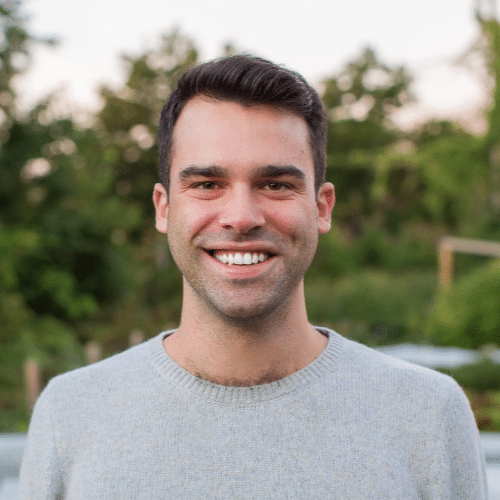
Image courtesy of Jonny Price, Wefunder.

How to be an Impact Investor.

June 21, 2021

Impact investing is rapidly increasing in popularity and there’s a growing interest from first time investors. Education is the key to feeling comfortable for those sticking their toe in the water.

In 2012 Dr. Stephanie Gripne recognized a need for trustworthy, un-conflicted investor education.  Back then she was the director of the Initiative for Sustainable Real Estate Development at the University of Colorado’s Lead School of Business. Money just wasn’t flowing into projects which were trying to make a difference and most investment advisors were trying to gain business or build a fund. Her hypothesis was that a non-profit could offer such education and might activate or accelerate investment where it matters.

If you’ve never heard of an accelerator, it’s like a boot camp for start-ups and small business. Their role is generally to identify, educate and invest in entrepreneurs. Stephanie thought that an accelerator might just be the way to educate impact investors, so in 2012 she founded The Impact Finance Center (IFC). It is essentially an accelerator. Founded as a non-profit academic center, its mission is to identify, train and activate philanthropists and investors to become impact investors. Those investors might include private foundations, community foundations, high net worth individuals, companies, family offices and a growing number of new investors.

The IFC offers one-on-one training as well as small and large group training. And for those who want to train themselves there are two hundred online classes and forty-seven recorded webinars. The Center also offer simulation activities where would-be investors can either pretend to invest or practice investing small amounts. Or they might learn how to invest as a group by pooling a little money. And for those who are already investors, the IFC can evaluate portfolios and investment advisors for governance and fees, evidence-based decision evaluation and impact.

The IFC’s education institute is only a part of their community infrastructure which they are building to be replicated, scaled and customized. Also in their arsenal are investor clubs, a marketplace for impact investing, a Who’s Who of impact investing, and partnerships with civil society organizations like community foundations and Community Financial Development Institutions.

Listen in to my podcast interview with Stephanie to find out more about the in-roads she is making.

Image courtesy of Impact Finance Center

Stewarding the future of farming.

June 9, 2021

After a decade of building a career in real estate finance, from a pre-college stint as an analyst for an established D.C. development firm all the way to co-founding (with his brother, Ben) the first real estate crowdfunding platform, Fundrise, Dan Miller changed lanes.

Sort of.

In 2016, he founded Steward, a private commercial lender which enables people to help fund the growth of sustainable farms. In a way, it wasn’t such a shift from Fundrise, which used an online funding platform to connect developers and investors. Think farmers instead of real estate developers.

When Dan’s real estate work led him to cross paths with a local D.C. chef, and as he learned of the financial difficulties facing independent farmers that supplied his restaurant, Dan connected the dots. “This generation of regenerative farmers has more opportunities than they’ve ever had. The demand is exploding. They really have a chance to grow sales and revenue but they can’t get funding.” So he set out to solve that problem.

Steward is a B Corp, which allows individual lenders to pick specific farm-based agricultural projects to back. The loans vary in interest, often 5 – 8%, a reasonable rate for business owners who cannot find financing anywhere else. “I always saw finance as a way to open up access to new groups of people,” says Dan, and true to his word, one can join in for as little as $100.

Read the podcast transcript here

Eve Picker: [00:00:08] Hi there, thanks for joining me on Rethink Real Estate. I’m on a mission to make real estate work for everyone. Real estate can help to solve climate change, can house people affordably, can create beautiful streetscapes, unify neighborhoods and enliven cities. So I’m on a journey to find the most creative thinkers and doers out there. I’m not the only one who wants to rethink real estate. You can learn more about me at rethinkrealestateforgood.co or you can find me at smallchange.co, a real estate crowdfunding platform with impact real estate investment opportunities open for investment right now. And if you want to support this podcast, please join me at Patreon.com/rethinkrealestate where there are special opportunities for my friends and followers.

Eve: [00:01:08] Today, I’m talking with Dan Miller, who co-founded Fundrise, the first real estate crowdfunding platform to emerge in the U.S. and which has now raised over 500 million dollars. Those early years Fundrise were a slog, but that hasn’t stopped Dan from starting over. He’s changed lanes. Sort of. In 2016, he founded Steward, an online platform which raises loan funds for sustainable farms from the crowd. In a way, it wasn’t such a shift from Fundrise, which used an online funding platform to connect developers to investors. Think farmers instead of real estate developers and loans instead of equity. How did this happen? When Dan’s real estate work led him to cross paths with a local Washington, D.C. chef, and as he learned of the financial difficulties facing independent farmers that supplied his restaurant, Dan connected the dots. This generation of regenerative farmers has more opportunities than they’ve ever had, says Dan. The demand is exploding. They really have a chance to grow sales and revenue, but they can’t get funding. So he set out to solve that problem. You’ll want to listen in to learn more.

Eve: [00:02:33] If you’d like to join me in my quest to rethink real estate, there are two simple things you can do. Share this podcast or go to Patreon.com/rethinkrealestate to learn about special opportunities for my friends and followers and subscribe if you can.

Eve: [00:02:56] Hello, Dan, I’m so happy to talk to you today.

Dan Miller: [00:02:58] Happy to be here, thanks Eve

Eve: [00:03:01] So I have followed you since the early Fundrise days and now you have GoSteward, a very different type of enterprise. So I wanted to start by just understanding what is GoSteward?

Dan: [00:03:16] Steward is a funding platform for regenerative agriculture, and I began meeting regenerative farmers in my real estate days in the past through chefs I knew, and these types of farmers, diversified, direct sale, smaller scale, generally have very little access to capital. So it’s meant to be a platform that lets farmers raise money and lets individuals provide capital to them that they can’t fund otherwise.

Eve: [00:03:43] So, but why did you start it?

Dan: [00:03:45] I started in 2016. There was a well-known chef in the D.C. area that I had been working with from real estate projects there. And through him, I started to meet all these farmers growing amazing products with great stories, selling them at well-known restaurants and farmer’s markets. And then in those conversations, it was clear that that none of them had access to capital, which was surprising because they’re selling products that everyone wants, you think they’d be able to get access to funds. And this was in the early days of when I was working on Fundrise, so 2010. When Fundrise was launched was when I started to meet some of these farmers. So I shoved the idea for a bunch of years and then it kind of kept coming back to me and then I eventually read the Wendell Berry ‘The Unsettling of America’, one of the kind of iconic foundational texts around agriculture and the challenges and issues of modern agriculture. And that just put me on, I would say, the path and obsession of this type of agriculture and then the positive impacts that it has through land use and ecology and health and wellness. And you, kind of, once you get into it, I find that people, they tend to not be able to stop.

Eve: [00:04:54] So how does it actually work? How does the platform work?

Dan: [00:04:58] So farmers come to our platform through insurance, through referrals, through direct relationships. They apply for funding through the traditional application process, telling their background and their experience, what products they’re growing, so we can learn more about their farm. We do due diligence, we vet them. We have a farmer on our team who does the agricultural diligence, understanding their operation, their bottlenecks or challenges, their farming practices too to make sure they align with the principles of regenerative agriculture. Then we do the credit underwriting the classic financial stuff that’s not as sexy, but it is critical for any viability of any platform. And then the loans are put on the platform so that people are buying loan participations, and they’re buying slice of the loans that were making, and then they earn the interest and return on that loan. So it’s essentially a way to connect farmers who need capital, they need credit with individuals, whether high worth family offices or small retail funders, and give them the chance to lend money to these farmers.

Eve: [00:06:04] There’s always an issue with finding loans for anything that is really standard, right? And I feel like that’s partly why we’re in the predicament we’re in. Like, banks are really focused on lending to, sort of, tried and true things that they know will guarantee a return for them.

Dan: [00:06:25] And that’s, I think, the broader theme of the work I’ve done through Fundrise or now Steward, that most funding is looking for safe and traditional and corporate and reliable. And so, when you see that, what businesses are able to access capital, it’s the larger ones that have a lot of assets and are more predictable. But money needs to go to small businesses and entrepreneurs across the spectrum, whether that’s in agriculture or real estate or small business. And the way that the funding system is set up is, it’s just not built for that. So, creating these decentralized models where smaller dollar contributors can participate and entrepreneurs can tell their story and raise funding, I think is fundamental to really unlocking more capital, which gives more opportunity to people. So I see parallels in the, kind of, the different sectors, but in the need to bring different types of funding to the end result.

Eve: [00:07:20] Well, you know, I wholeheartedly agree so, you know, in real estate, it’s exactly the same problem as in business. So it’s always the same old, same old that gets funded and that’s, that doesn’t really encourage innovation and moving forward, does it? It just staying where you are?

Dan: [00:07:40] Not at all. And I think I found a lot of similarities in agriculture to real estate. The focus on credit tenants, the focus on the users of the space being well-capitalized corporate users, forces a certain type of development with chain stores and large corporations. And similarly, in agriculture, they’re focusing on large commodity producers, huge operators with just tried and true grain, corn, soy, whereas anyone that’s doing anything a little different is just not worth the effort. They’re just left out, completely left out. Part by design, I think, but part just because it takes more time, which is basically harder to assess.

Eve: [00:08:20] It takes more time. Yeah, but damn, it’s so much more exciting!

Dan: [00:08:26] I can’t, I can’t do it because I just have no motivation. So there’s no option for me.

Eve: [00:08:33] No, I’m not wired that way either. Like, you know, I’m just not. So where did you start your operations? What were the first farms?

Dan: [00:08:41] Yeah, I began in 2016-17 working on Steward. The first farms that we funded were two urban farms in Detroit. You know, I had left Fundrise, I had started speaking to farmers through many different connections and actually found a lot of real estate people I had met around the country. I asked them if they knew agriculture and was connected to a lot of local farmers. So, there were two urban farms in Detroit. One is called Fisheye Farms, one is called Acre Detroit. They were farming on small lots, a tenth of an acre lot and they were hoping to buy land from the city. The city owns ten thousand acres of vacant land but was hesitant to sell them to farmers because, I don’t know what they’re waiting for. So we stepped in, provided funding for these farmers to buy two acres of land each. The original loans I personally provided as I was building the platform and figuring out the regulatory infrastructure. And just as an example of the kind of growth and opportunity of these overlooked farms, Fisheye farms went from ten thousand of revenue to one-hundred-twenty-thousand revenue in the three years since they were able to buy that land, so…

Eve: [00:09:49] So how much was the loan? Like, how much was it?

Dan: [00:09:54] That was a hundred-thousand-dollar loan, so, I mean, relatively small,

Eve: [00:09:56] Relatively small.

Dan: [00:09:59] And it shows the demand for those products. You know, people really want to buy wholesome food and they want to connect with where their food’s coming from. And so, in a city like Detroit, they’re in a food desert, they have fresh food that they can sell locally, and people are thrilled to do so. So, I think there’s a lot of misnomers around the viability of these types of farms. The reality is they are viable, but they’ve been under-capitalized. It’s hard to get to viability when they can’t access funding but when they are able to access funding, we see the same story of really rapid revenue growth. So, we started with urban farms in Detroit. I thought we would be a niche business. I thought most regenerative farms were funded well and maybe urban farms and other niche farms struggled. And I soon realized that it’s a global problem. Any non-traditional farm struggles with capital and so that kind of broadened from urban farms to really all types of farms now.

Eve: [00:10:54] How many farms if you help to date with loans?

Dan: [00:10:58] Over 70 now. That’s about one or two new farms a week so it’s really picked up. Just some recent farms as an example, we’ve a livestock branch in Western Oregon, right near Astoria, Oregon. We have a urban farm in Detroit with a Black farmer who’s about to raise funding. And we had an Amish dairy farmer in Pennsylvania raise funding to do value added processing for fluid milk. We had a fisheries project with just line-caught tuna and line-caught local fisheries that are then processed and sold direct. So, I think the narrative that’s similar is farmers are people that are obsessed with the quality of the product. They’re obsessed with the traceability of it. They’re obsessed with taking care of the natural resource, whether that’s land or the watershed. And they have customers that are along for the journey that want to support them. And they need money for equipment, infrastructure, land, you know, operating capital. So it’s a fairly simple business plan. They have demand and they need more production to meet the demand. But because they’re non-traditional, they’re just ignored.

Eve: [00:12:05] So you say they have customers who want to support them. Do those customers also invest?

Dan: [00:12:09] Yes, those customers do fund the loans. We actually have the first 20 percent of every loan gets funded through the network of that farmer. So, they share it at the farm stand they share it through social media. And that gives a chance for their community to be engaged and connected to the farm. And it also provides social validation of, if those people are engaged in supporting the farm, then I think it provides us confidence, too, that there’s really a community to support them. If you have customers that love your product, you’re in good shape as a farm and those are the types of farms we support. They’ve established their markets, have established their products. They know what they can produce. They know where they can sell it, and now they need to grow. And whether they’re a small farm or a larger farm, they have that same kind of demand, they’re unfulfilled.

Eve: [00:12:55] So, I think you’ve said this is not a crowdfunding platform, but this sure sounds like crowdfunding. So what’s the regulatory structure that you’re using?

Dan: [00:13:04] Yes. So, you know, crowdfunding and the general term of raising money online from many people, but ever since regulation crowdfunding came out, then that’s kind of narrowly defined crowdfunding.

Eve: [00:13:15] Really? I don’t think of it that way.

Dan: [00:13:16] In terms of fundraising, introspective. So, yeah. So, I think in broad brushstrokes it meets the premise of crowdfunding, of raising it online in smaller, larger amounts and people telling their story. We’re providing loans so we work under a framework of syndicated or participated loans. So, Steward is a private commercial lender. We provide the loan for the lender record and then we sell the participations to qualified basically members of our platform. There was a recent legal ruling over the summer, last summer, in 2020 around commercial syndicated loans not being considered securities. So there’s always been a discussion around the determination of when is a loan a security or not a security?

Eve: [00:14:02] Oh interesting.

Dan: [00:14:03] And so under that premise, we’ve kind of designed our business. So basically, we’re just providing credit, providing loans and giving the people the chance to participate in those loans.

Eve: [00:14:13] That’s really fascinating. What’s the typical loan size and what’s the rate?

Dan: [00:14:19] So most of the loans, I would say, as small as ten thousand. Average loan, probably fifty to one hundred thousand. The largest we’ve done is seven hundred thousand. Larger loans tend to be for mortgage, for property purchase. The midsize tends to be for equipment and isome nfrastructure. And then smaller ones are often quick bursts of operating capital.

Eve: [00:14:41] I mean, it’s really sad that a farm can’t get a ten-thousand-dollar loan from a bank, like…

Dan: [00:14:46] Well, the sad thing is it’s easier to get a ten-million-dollar loan as a big soy farm than a fifty- or ten-thousand-dollar loan from a bank. So, it’s kind of this strange circumstance you probably see in real estate that the bigger, formulaic deals can raise money and smaller deals that can’t get it.

Eve: [00:15:01] Exactly what we see on Small Change, and yet, I mean, I really think that if you’re really going to support that change in real estate and growing experience with people who’ve never had the opportunity before, that’s exactly what has to happen. Smaller loan sizes, smaller equity needs. Like, smaller.

Dan: [00:15:18] Yeah, you need a pathway to viability. Right now, the system’s set up that only if you’re inheriting large amounts of farmland can you get credit because you need big assets and big dollars. But a lot of the farmers we support didn’t grow up farming. I mean, it’s, I think the real sea change that’s happening in this type of regenerative agriculture. People of non-farm background, often college educated, going into farming, which certainly never happened in the past, at least not consistently. How are they going to get on the ladder? How are they going to be vetted and able to support? So a ten, twenty-five fifty K loan helps them get started. And then eventually they buy land and grow as a business. In terms of rates, most of the loans are between five to eight percent. So, I think very fair rates.

Eve: [00:15:59] That’s really reasonable.

Dan: [00:16:01] Very reasonable rates. We found that the funders are comfortable with those. Five is secured mortgage, solid cash flow. Eight is equipment with an earlier stage business. The highest we’ve done is 10, which is kind of a scrappy year one, year two farm where they’re early in their days and they just need funding to help grow. And so that’s what we’re really trying to do, create a capital market for regenerative agriculture. At what rates are people willing to lend the money? At what rates can farmers afford to borrow the money? And connect the two. Which is surprisingly uncommon in agriculture because the entirety market, most of the market is government funding. And so, there’s very little private capital market in agriculture, pretty much all USDA and government loans. And so what we’re trying to do is create an alternative of private capital that’s a different option for these farms.

Eve: [00:16:55] What about vertical farms? Have you helped any vertical farms ’cause that’s all the rage, right?

Dan: [00:16:59] It’s all the rage. I’m sceptical of vertical farms. We’ve helped urban farms, we’ve done greenhouses, hoop houses. The thing I struggle with, with vertical farms as the concept is, they are only needed in certain places. Generally, land is not that expensive in most places that you would need to produce vertically. And I struggle with the capital costs. A million dollars into some infrastructure to grow greens, you know, when you can go not too far outside the city and buy a piece of land for ten thousand dollars and grow greens there. And so, the economics of overhead of a million, or overhead of twenty-five-thousand,

Eve: [00:17:35] It doesn’t make sense to you. That’s really interesting.

Dan: [00:17:36] I just, I struggle with that as a credit provider. That you basically have, you know, the thing I’ve learned in agriculture is you want to keep your overhead low. You want it to have as little debt to service as possible. And so loading huge infrastructure costs for the vertical ag just kind of breaks that mold. Farmers, I think, do find it frustrating that a startup in Silicon Valley that’s doing vertical farming can raise one-hundred-million dollars, but they’re doing livestock in Missouri, and they can’t raise 50 K. And it’s just like, why do we keep throwing money into the non-sensical billion-dollar thing when there’s just good people out there who are doing farming the right way and just need a little bit of money to get to take the next step.

Eve: [00:18:19] Dan, you really like to support the underdog,

Dan: [00:18:22] Always, always. I don’t know how that…

Eve: [00:18:26] You’re a man after my own heart.

Dan: [00:18:29] And with these farmers, I mean, they’re persevering. They’re sacrificing, they’re doing whatever they can, most of them have off-farm jobs. One of the farms we funded in Detroit was washing dishes at the restaurant he was selling to, I mean, whatever it takes. And so, the ability to get them more resources and help them grow, it does, it is meaningful. I find it more meaningful than my work in real estate. But not all real estate developers, I would say, have the best ethic. But these farmers are really values-oriented people.

Eve: [00:19:01] Interesting. So, but you have to keep the doors open. How to Go Steward make money?

Dan: [00:19:06] Yes, you do have to. And that’s part of our proposition, that it’s a commercial platform. You’re paying rates of return that are reasonable but fair to lenders. We charge a loan origination fee. So, we charge roughly between two to three percent of the loan amount. And that’s a success paid at closing of the loan. So, when they go through the lending process that fee is added to the loan balance. And we’re also working on some other revenue streams. We’re providing services, support to some farmers, such as bookkeeping or helping with branding a website. So, I think over time a lot of the kind of business functions of these farms we could help and streamline. And then we’re also providing our technology infrastructure. And one of the farms now is using our software to raise a round of equity capital for their business in a private syndication. So they’re using our software to do that, and we have other firms. So, I think over time, this kind of value of this system we’re building, the kind of decentralized financial platform and then its application is to agriculture. And I think over time there’s ways to monetize both of those. But we’re in our early days and I mean we’re, we obviously have a long way to go. There’s a lot of growth and demand and interest from both sides of the market. So I definitely see the viability. I’ve seen it before from before with Fundraise from the beginning. How will this business ever work? But if the right market forces and trends are behind you, you can surprisingly get to scale. And I see the same thing here where just the interest in regenerative agriculture is exploding. The kind of viability and demand for these products is exploding and the need for alternative capital credit is becoming more aware. So, those kind of all weave together, that there’s more farmers that need funding, more people that want to fund them, and that the winds of ESG and climate and kind of the policy support is going is going in the right direction.

Eve: [00:20:59] Right, right.. Interesting. So how do you hope to scale?

Dan: [00:21:05] For us, it’s just more farms, I mean, we started making loans originally smaller, 50 K, 100 K. Recently we funded a project that was seven-hundred-thousand. So we’re now starting to work with more mid-sized farms that our hundreds of thousands revenue, really solid operations starting to grow. So, by being able to provide more capital, we can support operations that have more capacity to grow. So, I think, just expanding both sides of the market. The more farms we have, the more capital, the stronger the platform. The more capital on a platform, the more interest there is from farms. So we’re seeing that symbiotic kind of viral effect of each side of the market strengthening the overall platform, which is what you always hear about, but it’s nice to see it in action, that, kind of, the more the business grows, the more it can offer.

Eve: [00:21:56] Yeah. Yeah. So, you know, you said you started in Detroit. Where are you lending now?

Dan: [00:22:02] We’re lending all around the country. Right now, we’re US focused. We’ve had a lot of interest from non-US farms, that’s definitely on the horizon. But in terms of the US, Oregon has been our biggest market. Our HQ is in Portland, though our team’s remote. So just amazing farmers and farmland in Oregon, really knowledgable and thoughtful consumers, a lot of them hoping to also put their money to work in local food systems. And we just made a loan to a farmer in Hudson Valley. We funded a bunch of farms in Louisiana. So, I think we’re now at probably around 30 of the 50 states in the US. So it’s by no means limited to big coastal cities. We’ve got farmers in all parts of the country. And the business model depends, you know, you’re closer to a city you often have produce, if you have livestock that tend to be farther from a city because you need more space. And it all varies. But we’ll support any type of farmer anywhere in the country and hopefully soon the world, as long as they’re following the right practices and can have the knowledge and experience they need.

Eve: [00:23:06] So do you have investors who invest across all farms?

Dan: [00:23:11] That’s what we found. That’s one of the most promising aspects. We have over half of the people that have funded a farm fund, fund another farm, and I think we found that there we’re building a category of, well, I’ve funded this one farm and now here is another farm. It’s a similar story and a similar profile, maybe in a different location and a different product. But I, I see their challenges. I believe in them, and their kind of values focus. So, I think we’re finding that people who want to support regenerative farms have very few options. And if they’ve come to support one farm, maybe they’re a CSA member of a farm and they heard about the opportunity to help fund it and they have. Now they see another farm, and they fund it. We have people who funded 10 or 15 farms, even. Some are putting ten, twenty-five thousand dollars into every farm. So, I think that kind of stickiness of the customer on the funding side has been very positive because that’s not always the case with platforms. Sometimes people come in and do one deal and that’s the end of it and if you can cultivate a community, it goes a long way.

Eve: [00:24:09] Yeah, we’re actually finding the same thing. We definitely have a community of investors who come back again and again and again for particular themes. I think those people are truly impact investors. They really, they really care about an issue like a farm. It’s great. It’s really great to see. So just shifting gears a little bit, the common theme in your life has been crowdfunding, at least for the last 10 years, right? You launched Fundrise, which looks more like a mutual fund now than a crowdfunding platform. And now back to sort of a very organic crowdfunding platform, helping farms. What else do you think crowdfunding might be applied to that could be really successful besides real estate and farms?

Dan: [00:24:55] Yeah, I’ve always felt there’s so many broader applications and I think people haven’t been creative enough, you know by developing Fundrise, I just again saw so many people go into real estate and it like, there are other verticals to be done.

Eve: [00:25:08] There are other things, right?

Dan: [00:25:09] And so I, I felt it was a lot of like, kind of, me too. Well, what’s the narrative? Why does it matter? And I think in reality, that type of passion shows the purpose behind the platform, not just sector, but the purpose behind it. So I think real estate still presents opportunities. I think a lot of, you know, you talk about green building and other aspects, I think there’s still a ways to go to push the envelope in real estate in terms of how the built environment is done. You know, agriculture obviously, now is my big focus. Parallel to agriculture where I think there’s an opportunity is also in forestry. And I think that’s a great way to build as a good asset, but also as a natural resource to be preserved. I’m seeing more interest in alternative energy. It’s something that we’ve even worked with farms who are planning to do solar on their farm. So I think ultimately more decentralized local funding for alternative energy can go a long way. In small business, I feel like there’s still a lot of gaps for small businesses that are looking for funding. I look at so many funding platforms and it feels like there’s a lot that are real estate, there’s a lot that are tech startups, you know, and that’s pretty much it. And the reality is there’s so many other enterprises that need the support.

Dan: [00:26:26] But where I tend to think the interest and ,demand is, is if you can back it with some sort of fixed asset, I think it always helps the viability of the business and the ability to take capital where you can be more confident that people can earn a return. And I think having a forward-facing business where they’re engaged with their customers goes a long way. So, I think if you have an audience of people that want to support you, I think it’s good to bring them in. So, yeah, I’ve always been interested in crowdfunding from the perspective of a different type of capital that thinks differently and is more aligned with the end project that Fundrise was originally developed around. Me and my brother doing real estate development projects that were non-traditional and finding that traditional funding didn’t fit it. So, I’ve been on the entrepreneur side. I began on the entrepreneur side of, the frustrations of trying to find funding that meets, that is really aligned with you and so all these platforms have been, had that as the theme of how do you have more of an alignment among the entrepreneur and the capital?

Eve: [00:27:30] Yeah. So, what is your background before Fundrise?

Dan: [00:27:35] So, I started a real estate development business with my brother right out of university and my father was in real estate development in Washington, DC, so that’s where I learned real estate. Just being around it. I have tons of experience in it, but actually for years not  necessarily, just you just grow up and then see around it. So commercial real estate, I would say, applies across everything. It applies to Fundrise, with the ability to build that. It applies with Steward because at the end of the day we’re funding a lot of commercial real estate and use of land that is commercial real estate. For some reason, agriculture is not thought of as commercial real estate, but it certainly is, I would say, commercial real estate. And then my kind of interest and experience in raising money through alternative channels was built around that, of being a real estate entrepreneur, trying to figure out different types of funding and then just creating a platform to do it. Just, well, if there’s nothing out there that can serve what I need, let me help build the platform that does it. So I’ve, my whole career has almost been in being an entrepreneur and finding alternative funding and building it up. And a lot of my work with these farmers is just helping them think through funding options. Not always just saying, you know, use our funding or just, well, what’s out there that we can weave together? We now even help some of the farmers apply for grants. We help them figure out what’s out there, and what can we weave together. And I think, I think that’s what a lot of entrepreneurs struggle with. An advocate for them, helping them think about what’s there from a kind of agnostic perspective. And then obviously finding that I think I can help them through our platform but understanding that there are options out there that they just may not be familiar with.

Eve: [00:29:25] Interesting. So, I mean it’s a nascent industry, crowdfunding, if you think about crowdfunding – all of it, not just regulation crowdfunding. How could it be made easier and more acceptable? It’s definitely not mainstream.

Dan: [00:29:41] It’s, yeah, it’s still early. And that’s why I think people have a short-term perspective. I mean, most of the regulations that define the world of securities and investment were written in 1933, 1934, and that quieted down requirements for fundraising and for basically eighty years provided very few options. So, we’re really only in the first decade of loosening of those types of rules, broadening opportunities and access to capital. And a lot of the rules and regulations are still challenging and problematic to utilize and maybe probably generally over the garden some. So, I think as these rules are streamlined and improved, it will become easier for platforms and entrepreneurs to use them, which will then expand the size of the market. I also find, I think the way to really drive growth in crowdfunding and drive adoption is through narrative storytelling. And so, I find a lot of crowdfunding is pitching return and that’s fine. But I think if you’re just pitching return, there’s a lot of places that are pitching return and it doesn’t stand out. And so, I find if you’re bringing people in on an emotional narrative level, you know, that takes someone who’s not classifying themselves as someone who funds things to now funding a project. And I think to bring people mainstream, it has to go beyond the investment world. And I find that few platforms to speak people beyond return.

Eve: [00:31:06] Interesting. So, what’s the biggest challenge you’ve had in building this Go Steward?

Dan: [00:31:12] I mean, the biggest challenge was really developing the market. I mean, I started in 2016 / 17. The idea of regenerative agriculture was very kind of unknown. I didn’t grow up farming. My mother’s family has been farming since the late 1800s so I was one generation away from that, but it wasn’t my personal background. And so, understanding who are these farmer customers? Where are they? How do I find them? What can they afford to pay? How can I structure a deal? Are they viable enterprises? And just validating that there is a customer who actually is a real business that can afford and raise capital, that took a few years. And then was just very pleasantly surprised at not only by the viability of these businesses, but the growth in this sector of just all types of people entering this world and wanting to become farmers and really focused on ecology and taking care of the land. And then the second challenge was, well, who are the people who want to fund these farms? I mean, I personally funded the first portfolio because you don’t want to try to build two sides of the market at once. It’s easier just to focus on one side. And then we took these farms to market over the past year as we launched the platform publicly. And I’ve been amazed by the breadth of people who are interested in funding these types of funds.

[00:32:26] I mean, most people have never funded a farm. I mean, I’ve almost never spoken to anyone who’s funded a farm that wasn’t their own family’s farm. And so you’re having to educate them about farm, farming as an asset class, regenerative agriculture as a subset of that of a different type of agriculture, and then, you know, the stories of these farms. And so, I think people, when I was saying the kind of narrative emotional level, they connect with these people. They’ve all bought food, they’ve all have that experience of being at a farmers-market of hearing a farmer and understanding their passion and their interest. So, if you can connect with who that person is and their challenges and their struggles and the importance of the funding, the other aspects of collateral security sector, I think, they can get comfort on the fact that that’s what we’re focused on and that’s our goal to make that simple and easy. So now we have both sides of the market working. Farms raising funding, funding happening very quickly. And now it’s growing the business. That part’s easier to me. It’s still a challenge but you at least know that there’s viability on both sides, whereas the first few years was kind of a lot of questions around who even is the market going to be?

Eve: [00:33:38] And are these real collateralized loans? I mean, what happens if someone defaults?

Dan: [00:33:43] Yes, so they’re all secured loans. Some are secured by real properties, some by mortgages or deed of trust, some real estate and some are secured by personal property which basically means equipment, infrastructure. So, they’re all secured. Some farms have better collateral than others. So that the interest rate depends on that. The five percent loans are the more secure lower risk loans, the higher rates are businesses with less assets or collateral. But that’s our sole business of vetting farms, helping farmers figure out what type of funding is needed and what amounts, helping them drive growth their business through other means. And then we service all the loans ourselves. So if there is a challenge, we’ll work with the farmer. Most of time if there’s a challenge, it’s a timing challenge. That there is an issue with the market or a customer or a job. So it’s not a fundamental problem. It’s OK, I just need a little more time or this customer drops so I’m now launching this, or I’m waiting on an inspection for my grade A milk, which happened when Covid hit and now it’s six months later, you know, just the reality. So rescheduling the payments is the most important. But if a farmer really can’t do it anymore, they just need to give up and move on, then we would step in. And our first scenario would be to bring in another farmer because we have a huge network of farmers who would love nothing more than to take over a operation that exists and is properly capitalized. And it’s ready to go.

Eve: [00:35:06] Interesting.

Dan: [00:35:07] So that’s our view. It’s not a type of business where you can just passively just auction off the assets and expect to get recovery. You have to be engaged in it. All we do is fund small-and mid-sized generative farmers all day, every day. And so that expertise gives us confidence that if situations do arise where there are challenges, that we can step in and resolve them. And I mention that team member who’s a farmer himself. I mean, he can literally show up at the farm if he has to and help them figure out the bottlenecks and the challenges that they’re facing.

Eve: [00:35:37] Oh wow! So then, what’s your big, hairy, audacious goal?

Dan: [00:35:41] I’ve, you know, I came into this with the view that there is a need for a fundamental transformation in our agricultural system. The reason why I support regenerative agriculture is because of the importance of taking care of the land and people and helping them all. All of those positive benefits are needed in part of our agricultural system. Instead, the system we have now has huge negative externalities with run-off, with low wages, with low quality food, with difficult access to food. So I think what we’re trying to prove is there’s a viable alternative of how you can do agriculture that is in alignment with ecosystems that provides health and wellness and opportunity for people. And I think if that can be shown to be viable and it doesn’t need to be subsidized and it can operate on its own, you can show that there is a different way and a different path forward. So many, I think, of the current modern challenges we face around societal economic, health challenges, find a root in agriculture, at least are impacted by agriculture in terms of climate or obesity or exploitation, labor exploitation. And so, it is one of those sectors that touches upon everything and each story, each farm has their own impact, which is direct and tangible, which then becomes part of a broader movement. So I think we’re in a historical kind of sea change of doing one hundred years of industrial agriculture with really negative results, misguided maybe by design or not, but the end result is not serving the interests of most people. And so, our goal is to really lead the transition to an agricultural system that is for the benefit of many and does provide opportunity for people.

Eve: [00:37:29] Well, Dan, it’s really interesting and I’m so glad you could talk to me and I wish you all the best success. It sounds like you’re well on the way.

Dan: [00:37:38] Well, thank you. Really nice to chat. And I appreciate all the work that you’ve done, also in building impact and focusing on storytelling and engaging people around funding things that are different. And I think more of that is always needed.

Eve: [00:37:52] Thank you. That was Dan Miller, founder of Steward, an online investment platform raising funds for sustainable farmers. Everything about Steward and Dan checks a box for me. With Steward Dan is serving an under-represented group of people, farmers who can’t get loans elsewhere. He’s non-discriminating in accepting investors. You can invest for as little as one hundred dollars. And he’s keenly focused on making a difference in everything that he does. I’m looking forward to seeing how Steward grows.

Eve: [00:38:45] You can find out more about this episode on the show notes page at rethinkrealestateforgood.co or you can find other episodes you might have missed. Or you can show your support at patreon.com/rethinkrealestate where you can learn about special opportunities for my friends and followers. A special thanks to David Allardice for his excellent editing of this podcast and original music. And thanks to you for spending your time with me today. We’ll talk again soon. But for now, this is Eve Picker signing off to go make some change.

Images courtesy of Dan Miller, Steward

Know your price.

May 12, 2021

Andre Perry is a senior fellow with the Metropolitan Policy Program at Brookings and a scholar-in-residence at American University. He writes for The Hechinger Report, and has been published by The Nation, The New York Times and The Washington Post. Last year, Andre put out a new book based on his work: Know Your Price: Valuing Black Lives and Property in America’s Black Cities, which explores urban development in cities across the country, and how it has so often failed Black communities.

This story is also a personal one. Andre talks about growing up in the Pittsburgh region, in the township of Wilkinsburg. He has described how he has watched over the years as this community remains stagnated, and without meaningful investment, while neighboring areas experience remarkable economic revivals.

Andre began his career focused on education, but his work has expanded to examine the myriad ways government policies have ‘created housing, education, and wealth disparities’ that continue to disadvantageously impact minority communities in urban metro areas. Andre has written on subjects as diverse as infrastructure, how our children are driving climate action, student debt cancellation, access to fertility treatments, and supporting Black businesses. He also served as the Founding Dean at the College of Urban Education, at Davenport University in Grand Rapids, an institution he helped to plan and launch.

Insights and Inspirations

  • Institutionalized racism creates an ‘unconscious bias,’ where we are willing to blame the people who have been marginalized rather than the policies that made it possible. And so, we recycle discrimination over and over and over. If we don’t see the problem, we have no incentive to change it.
  • Andre found that in neighborhoods where the share of Black population was 50 percent or higher, homes were underpriced by 23 percent, or $48,000 per home … $156 billion in lost equity.
  • These communities should have access to the same information, data, research, and ideas as corporations, cities and state governments … so they can come to the table empowered.
  • We need to create a culture of inclusion where all people are valued, and to do this we need innovations. We need new mortgage products. We need new appraising systems. We need new tax assessment systems.
Read the podcast transcript here

Eve Picker: [00:00:10] Hi there, thanks for joining me on Rethink Real Estate. I’m on a mission to make real estate work for everyone. Real estate can help to solve climate change, can house people affordably, can create beautiful streetscapes, unify neighborhoods and enliven cities. So I’m on a journey to find the most creative thinkers and doers out there. I’m not the only one who wants to rethink real estate. You can learn more about me at EvePicker.com or you can find me at SmallChange.co, a real estate crowdfunding platform with impact real estate investment opportunities open for investment right now. And if you want to support this podcast, please join me at Patreon.com/rethinkrealestate, where there are special opportunities for my friends and followers. Today, I’m talking with Andre Perry, a senior fellow at Brookings in Washington, D.C. Andre is also a scholar in residence at American University, a columnist for The Hechinger Report, and he writes for the Nation. But what really drives Andre is the seemingless impossible divide between blacks and whites in this country. He is focused in his recent work on the multiple issues impacting minority communities in urban metro areas. And he has authored a book, published in 2020, called Know Your Price, Valuing Black Lives and Property in America’s Black Cities. In his work at gathering data for the book in black majority cities across the country, Andre found that homes in black neighborhoods where the share of population was 50 percent or higher were valued at about half as much as white neighborhoods. Andre further refined the data by taking into account education, crime, walkability and other key neighborhood factors. And still, he found that homes in black majority neighborhoods were underpriced by 23 percent, or about 48,000 dollars per home. That’s 156 billion in lost equity. And Andre knows we have to fix that. If you’d like to join me in my quest to rethink real estate, there are two simple things you can do. Share this podcast or go to Patreon.com/rethinkrealestate to learn about special opportunities for my friends and followers and subscribe if you can.

Eve: [00:03:18] Hello, Andre, and I’m just really delighted to have this opportunity to talk to you.

Andre Perry: [00:03:22] Well, thanks for having me. I’m looking forward to the conversation.

Eve: [00:03:26] Great. There’s lots to talk about. You’ve thought and written about multiple issues impacting minority communities and urban metro areas and most recently in your book, Know Your Price, Value in Black Lives and Property in America’s Black Cities. So, first of all, I wanted to ask you, because I’ve also read other things that you’ve written, and I’d like to know what you mean by the term unconscious bias.

Andre: [00:03:54] Well, unconscious bias is when you act without thinking. It’s essentially the responding to a narrative that we generally know and accept. It’s like when people say the American dream, we all have an idea about what that means, and we respond to it. But when it comes to Black Americans, we also have an idea in our head that if anything goes wrong, we blame Black people. And so without thinking, without batting an eye, if there are problems in Black neighborhoods, we say, oh, it must be the character of the residents. It must be crime. It must be something else. We never look at policy implications or we don’t look at policy makers behavior. So for me, when I talk about unconscious bias, I generally refer to how we assume that Black people are the problem when considering the issues in Black neighborhoods and cities.

Eve: [00:05:09] Right. So what’s been the overall impact of this unconscious bias and what’s the impact today? I mean,

Andre: [00:05:17] You know, we talk a lot about unconscious bias, but at its heart is really just plain discrimination.

Eve: [00:05:24] Emotion, yeah.

Andre: [00:05:24] Like that. You know, it’s when you talk about, for instance, redlining. It was the practice of the federally backed Homeowners Loan Corporation in the 30s and throughout to the 70s, the practice of saying that Black neighborhoods were too hazardous or or they weren’t worthy of low interest loans to help develop those those areas. But it was predicated on this, the effort to isolate Black people in communities.

Eve: [00:06:00] Wasn’t that conscious bias rather than unconscious bias?

Andre: [00:06:03] Yeah, I mean, but it was also just fueled by this belief that Black people and white people should not live together. And there was a conscious effort to bring that belief into policy. And so, you know, I you know, I talk a little bit about conscious bias in my work, but the source of a lot of our implicit or tacit assumptions are racist policy. Conscious, conscious, racist policy. And so we can’t let policy off the hook for our behaviors. I tend to blame policy, not people. I just I find it more useful to get at the root for me. And that’s policy. And that, for me, represents that conscious effort to suppress Black people based on a hierarchy of human values.

Eve: [00:07:08] Right. Yeah, that’s, I think, very conscious and really disturbing. But, you know, I have to wonder about all the unconscious bias out there that just perpetuates things a little longer, makes it a little harder to get where we need to go.

Andre: [00:07:23] You know, a lot of my work, I look at home values. What anchors the book Know Your Price is a housing study we did a few years back where we looked at the average price of homes in areas where the share of the Black population is 50 percent or higher and compared them to areas where the share of the Black population is less than a percent. And we controlled for education, crime, walkability, all those fancy Zillow metrics. And what we found is that homes in Black neighborhoods are underpriced by 23 percent, about 48,000 per home. Cumulatively, that’s 156 billion in lost equity. That’s the money people use to lift themselves up by their proverbial bootstraps. It’s the money municipalities use to fund everything from education to infrastructure to policing. But, you know, there’s a way to interpret that 23 percent difference. Again, we controlled for education, we controlled for crime. And certainly, crime and education mattered. They lower price, but that there’s still a gap. And it’s almost as if people, when they see Black neighborhoods, they see twice as much crime than there actually is. They see worse education than there actually is. So there is a perceptual issue here. That when evaluating or assessing taxes, when appraising homes or any kind of subjective task is at hand, people lean on these tropes of Black neighborhoods. And and so there is something psychological in nature that’s reducing the value in Black neighborhoods in ways that it shouldn’t. So there is something there when you’re talking about unconscious bias.

Eve: [00:09:36] So as you mentioned, this bias spills over into investment and who has wealth and who does not. And, you know, as a real estate developer, I’ve certainly seen how it works with appraisals because, you know, banks will lend based on appraisals and appraisals in existing neighborhoods have a certain value. And if they’re already devalued, what’s going to disrupt that and raise the value? You know, it’s just a huge dilemma.

Andre: [00:10:06] Yeah. You know, the price comparison model is an example of structural racism. I mean, a good example of structural racism. So, as you mentioned, when an appraiser has to find a comparable home and they stay in the neighborhood, that’s already been discriminated against, you’re essentially just recycling discrimination over and over and over.

Eve: [00:10:27] Exactly. So how do you disrupt that?

Andre: [00:10:30] Oh, so one, you can you don’t necessarily have to stay in the neighborhood for finding comparables. I mean, what’s interesting is like for our data, we looked at the entire metro area and compared homes with similar social circumstances. So you can find, using big data, you can find homes in areas that have similar educational levels, similar crime levels, all those different things. And you don’t necessarily have to compare it to another home in the same neighborhood.

Eve: [00:11:07] Yeah, but then you’re dealing with an industry that’s used to doing that. So really, the disruption has to come with the entire banking and appraisal industry. How do you make them look elsewhere? Like what prompts? You know, I was one of the first loft builders in Pittsburgh and I went through this myself because there were no comparables. And so I talked to appraisers about like, well, you know, look at that project. It’s not in the same neighborhood, but it’s offering a similar product. And they did. You know, they had to because it was the beginning of something new and there wasn’t anything else to look at. But when you have, you know, five other houses that have sold in a neighborhood, like Wilkinsburg, where I know you grew up or Garfield and that’s the easiest go-to, how do you disrupt that behavior?

Andre: [00:11:57] Yeah, but I think you said a word that is really relevant to the conversation. You make them.

Eve: [00:12:05] Ahhhh.

Andre: [00:12:06] You know, one thing I learned about this protest movement over the last few years, but really culminating in the summer of 2020 is that people do have power. This is a power issue. And the same way we created a culture of exclusion, we can create a culture of inclusion where people are valued, all people are valued. And we need innovations, no question. We need new mortgage products. We need new appraising systems. We need new tax assessment systems, and we should open ourselves up to that. But clearly, people in various industries aren’t going to do that themselves. They’re going to have to be backed into it. So I encourage communities to mobilize, organize and fight back. The typical thing that has incited structural change in the United States, it’s litigation.

Eve: [00:13:14] Right, right.

Andre: [00:13:14] So that is a tool. But I also just think that we are going to have to pressure banks and appraisal, the various industries in housing to take new approaches. Because those approaches are the tools that reify discrimination in this country, and it goes beyond appraisals and lending. You’re talking about zoning structures as well.

Eve: [00:13:47] Yes. Yes.

Andre: [00:13:47] You know, you’re talking about building.

Eve: [00:13:50] My backyard. Yeah.

Andre: [00:13:52] Yeah, exactly. And so there’s all these structures that maintain exclusion and bias. And we need to demand change in all of those structures. So and that’s where, you know, for my book, Know Your Price, there’s a theme, there’s you know, I want people to demand their proper value. And it’s not going to come because someone else says this is what it should be worth or, it’s going to come by people from places like Wilkinsburg, Homewood, Garfield, demanding their proper value.

Eve: [00:14:37] Right.

Andre: [00:14:37] And so for me, it’s, you said the word make. Yeah, that’s what it’s going to take.

Eve: [00:14:43] Yeah, I think you’re probably right. So the interesting thing is also, you know, there are developers who, developer it isn’t always a bad word, who really want to work in these neighborhoods. And they can’t because of this entire sort of pricing structure becomes impossible. It doesn’t matter if you build a house in Wilkinsburg or Garfield or downtown, the construction costs are going to be the same. Right?

Andre: [00:15:09] Yeah.

Eve: [00:15:09] But the market’s really different. So that is a huge problem. But also, I’ve always been really sort of irritated and puzzled by the affordable housing market, which almost demands a product that looks the same. So, I think when you talk about value, you know, good design, different design, innovative products can bring a different value as well. And I don’t think people think about that very much. You can drive down a street in Pittsburgh and, you know when you’re on a street which has affordable housing because it all looks the same.

Andre: [00:15:44] Yeah.

Eve: [00:15:46] It’s bad branding, right?

Andre: [00:15:47] Exactly. And I’m not a real estate person in the sense I’m not a practitioner. I’m a researcher. But I’ve been saying, hey, there needs to be innovation in the actual end products that we put up. You know, we’ve got to show how diverse products can look and serve diverse communities. We’ve got to have innovation in lending and in ownership. Like we need new cooperative models. We need new everything from credit scoring systems to zoning ordinances. But I will say this, that at some point you need more capital directed in the right way.

Eve: [00:16:37] Yes.

Andre: [00:16:38] And so for me, it’s also about understanding the role the federal government has to play in creating inclusive communities. Because remember, it was the federal government largely that created the problem we’re in today. They, instead of distributing resources equitably in the 30s, 40s, 50s, 60s, they distributed resources to help communities, to build up communities and wealth, really among white residents and not Black. So, the same approach as we used in the 30s, 40s, 50s to help people build up communities, we can use today. But when it comes to Black people, we don’t want to give Black residents low interest loans and grants and down payment assistance. And and we don’t want to reward developers for actually creating inclusive homes and facilities. We then hide behind the sort of, you can’t create any kind of race based program that’s reverse discrimination. But the reality is, if you really create some type of equitable strategy, you almost have to target your investments towards people who have been disenfranchised or injured by past policy.

Eve: [00:18:09] Right.

Andre: [00:18:10] And it happens to be Black people and we should not shy away from that. And then it happens to be in places that you have significant Black populations, not completely all Black people in Wilkinsburg or Homewood or Garfield, but those are the places we need to find a way to direct capital to and in ways that just makes sense.

Eve: [00:18:33] Yes, yes.

Andre: [00:18:34] And there’s this reticence to drive capital based on need. And until we solve for that, it’s going to be hard to really do what we need to do.

Eve: [00:18:48] So you’ve also talked about the devaluation of Black owned homes, and I want to hear a little bit more about that. How how did you calculate that?

Andre: [00:18:57] At the core, you know, I’m from Wilkinsburg and I come back home all the time,

Eve: [00:19:02] We should explain to people who are listening to this, because we have listeners all over the country, maybe even the world. So, Wilkinsburg is actually a beautiful neighborhood town on the outskirts of Pittsburgh that has amazing architectural building stock and has just sort of stagnated and leaned in really poor condition for a very long time, presumably because it is predominantly a Black demographic. Is that a good explanation?

Andre: [00:19:34] Yeah. And it’s you know, growing up in Wilkinsburg, I really didn’t know the difference between Wilkinsburg and Pittsburgh, because Wilkinsburg is a Black majority municipality borough surrounded by Pittsburgh on three sides.

Eve: [00:19:49] Oh, I didn’t know that actually. Yeah.

Andre: [00:19:51] Yeah. And the people generally were the same. I mean, in the parts of Pittsburgh that it was adjacent to was Black. Wilkinsburg was majority Black. It had thriving commercial corridor, and it had all the quote unquote assets that you would look for when considering to develop a place. It’s close to downtown, close to the university. It has its own highway. It had parks. It has everything.

Eve: [00:20:22] There’s even a busway stop there.

Andre: [00:20:24] Busway. I mean, there’s…

Eve: [00:20:26] Like ten minutes to downtown. It’s amazing.

Andre: [00:20:28] I mean, it has literally everything you would want. But when U.S. Steel left town or downsized considerably, white residents moved, leaving a majority Black population and investment just stopped. And in any situation, I mean other situations, if you said if that area had majority white people in it, there would be no question there will be development there, because, as you mentioned, housing stock was excellent. You had a thriving commercial corridor.

Eve: [00:21:07] Yeah, the main street’s lovely.

Andre: [00:21:09] Exactly. You had everything there. And so, when I go back home, it is like stupefying to look at why isn’t investment coming? And right next door in Pittsburgh, which similar situation in terms of access to transportation, great housing, universities nearby, commercial corridor. But there was a decision to bring Google into town. And Google could have landed in Wilkinsburg. They chose Pittsburgh. And I talk a lot about bias in bias out. And so, in the planning for Google to come to Pittsburgh. To site itself in a former Nabisco factory where Black people used to live around. All the planning was essentially with white people. And if you look at that part of Pittsburgh now, it’s thriving, it’s booming. It has restaurants, shops,

Eve: [00:22:18] It’s actually gentrified, which is a little shocking.

Andre: [00:22:21] But you don’t see Black people.

Eve: [00:22:23] No, I know that. You know, I did a couple of developments in East Liberty before Google came along. And the last thing in the world I wanted to see was that neighborhood gentrify.

Andre: [00:22:36] Yeah.

Eve: [00:22:37] And I was absolutely shocked to see it happen over the period of probably 18 months. It went from Black people on the street to what looked like people visiting from the suburbs. I don’t know how else to say it, but it was it was actually shocking to watch. It was like for one moment in time, it was a great mixed, diverse neighborhood and then it was over. How can you, like, stop it right there, you know, when it’s at the great, mixed, diverse neighborhood point?

Andre: [00:23:06] But that’s why we need more housing policy connected to our economic development policy.

Eve: [00:23:15] Yep.

Andre: [00:23:16] And oftentimes they’re running on parallel tracks, never to touch. And it, my belief that some of that is intentional. That there are many people who don’t want to see Black people around a new development. And so, when you plan with all or mostly all white people with the muckety mucks of places like Pittsburgh and not include others in your development, you get what you get. And so I always say that. The developments really reflect who’s involved. Now, and it’s difficult because when you’re talking about planners and architects and economic development folks, largely white crowds and so…

Eve: [00:24:08] Also, largely white male crowd.

Andre: [00:24:11] Yes, that’s right.

Eve: [00:24:12] I want to point that out because I’ve been the only female in the room for a long time.

Andre: [00:24:16] Exactly. Very. A lot of testosterone in the room.

Eve: [00:24:21] Yes.

Andre: [00:24:22] Right. Lots of it. And so, and then people look up when the project started to go, why does it look pale and male? Because the planners were pale and male, you know? So you have to be very intentional about making sure people are included in any kind of development. And so, whether you are in Pittsburgh or Philly or Birmingham or Detroit or Baltimore, you just have to be very deliberate about including people. And we have to make every effort to concretize inclusion into policy. You know, I wrote something not that long ago that talked about, on the federal government side, that we need equity scoring system. This, just the way we score legislation against its potential impacts on the budget. We should score policies and practices on its potential impact on Black and brown communities. And so, when you’re developing a project, you’ve got to demonstrate how is this going to boost employment? How it’s going to boost ownership? How are Black people going to share in the prosperity? If you don’t see a clear path, then we should not greenlight these projects.

Eve: [00:25:42] Yeah.

Andre: [00:25:43] Not only must we build a culture that supports inclusion. That culture must build policy to protect for inclusion.

Eve: [00:25:56] Right. So, in your book, you also talk about wanting to give Black communities and home-owners information to stand on to empower them. But how do you do that? I’ve been involved in community meetings in neighborhoods like Garfield and it’s excruciatingly difficult. Do you want to explain what you’re doing? You are faced with a crowd of people, some of whom are just trying to get by. And as a small developer, it’s just it’s you want to do the right thing. It’s just really hard to know how to do it.

Andre: [00:26:32] Yeah, but this is why we need to really work with community members. It’s a lot easier when you’re of the community. When people recognize you as a member of a particular community. So when I come back to Wilkinsburg, although I’ve been fairly distant for most of my professional career, when I go back, people go, oh, Andre, he’s down with us. He believes in us.

Eve: [00:26:56] They trust you.

Andre: [00:26:57] They trust me.

Eve: [00:26:58] Right.

Andre: [00:26:59] And so when I talk with developers, I see, you know, a lot of this work and it’s hard work. But you got to think of yourself as becoming a member of a community first, because when you’re a member of a community, it’s so much easier to communicate. It’s so much easier to share the benefits and the trade-offs. And it’s so much easier to be honest. And so one of the reasons why I wrote Know Your Price, it’s a policy book, but it’s there’s a lot of stories in there, personal narrative, biographies. Because one of the goals of the book was to introduce this idea of devaluation, not making it a policy wonky type of thing, but really explain it through the lived experience. And when you run through the lived experience, keep, it resonates with community members. So that was my goal of the book. But it’s something that everyone should take on. They should see themselves as becoming a member of a community because communication becomes so much easier.

Eve: [00:28:20] Interesting. So, I also want to shift to your partnership with Ashoka. The Brookings Ashoka Partnership, and explain what you’re trying to accomplish there. And also, what Ashoka, I know a little bit about Ashoka, but not a lot. So it would be great to hear something about this.

Andre: [00:28:38] Ashoka is a social entrepreneurship organization that really tries to incubate or incentivize systems changing ideas. So, if you have an idea that will change some system, they fund or incentivize through these through fellowships or competitions to find interesting and innovative approaches to solving problems. So, when I presented this issue of housing devaluation, someone from the Ashoka organization reached out and said, hey, this is the kind of problem that requires a systems changing idea. So, after a year worth of planning and discussion, we landed on a competition, a challenge, competition of sorts. Collaborative competition, I should say. That we’re looking for innovations that will find those systems changing ideas that will solve for housing devaluation. So, if you are out there and we’re going to have a million dollars’ worth of prize money that we’re going to use as incentive. So we’ll be giving away different prizes totaling a million dollars to people who may have new zoning ordinances they want to put forth. New credit scoring systems. New cooperative ownership models. If you have a solution, we want to hear about it. All you have to do is Google Ashoka Brookings Collaborative Challenge and you’ll get all the information. But it was my way of really saying, hey, how can we incentivize people who are proximate to the problem to solve for this issue? And so we launched it a few months ago, but people can start enrolling in the competition in the summer. Right now, we’re just simply mapping ideas, looking for different approaches and so we can then categorize them. But people will be able to join in this collaborative challenge starting this summer.

Eve: [00:31:09] That sounds really fabulous.

Andre: [00:31:11] Yeah, it’s fab because, you know, when you work in a think tank, I’m a senior fellow at Brookings. We’re good with identifying problems, sometimes not as good as identifying solutions. So, this is really my effort to say, hey, here are some solutions that will be community driven. Not coming from up high, from somebody in D.C. These are solutions driven by community members. And so that’s the whole point.

Eve: [00:31:46] So if you could imagine the country 10 years from now, how would you like to see it changed?

Andre: [00:31:53] I want to see a country in which there’s a culture that supports reparative strategies. You know that I want to see these kind of policy changes come from a change in culture. For so long we’ve created a culture of exclusion and that led to everything from redlining to exclusionary zoning to employment discrimination. All these things are supported by an exclusive culture. I want to see 10 years from now a culture that supports reparations, inclusionary zoning, other policies that repair the damage that was caused by discrimination. And that’s going to take people who are talking about repair, talking about inclusion, talking about the value of diversity, and if we do this enough, we can shift the culture. And so that’s what I want to see.

Eve: [00:33:07] I’ve thought about this a lot. And I think for me, it’s I’d love to see a culture of trust. And that would probably only be built after everything you’ve said. But the mistrust is really, I think, stopping us moving forward really big time. And so, I’d love to live in this country and not feel like I’m mistrusted because I’m white or not feel like I might mistrust someone because they’re Black. That would be a really lovely thing. Don’t you think?

Andre: [00:33:40] Oh yeah. I mean, you know, that’s certainly core.

Eve: [00:33:44] Yes.

Andre: [00:33:44] We really don’t trust each other.

Eve: [00:33:47] No, I think that’s …

Andre: [00:33:47] As you know, developing trust is a process.

Eve: [00:33:51] It certainly is.

Andre: [00:33:52] I think if we are willing to put ourselves in that process, then we can gain trust. It is achievable to be a trusting, loving reparative culture.

Eve: [00:34:07] So what’s next for you? Final question.

Andre: [00:34:10] Oh, man, I’m I have this Ashoka Brookings Collaborative Challenge. I have reports coming up. But, you know, I’m going to continue to fight for justice using research as my main tool and engage in places with places like Pittsburgh, Wilkinsburg. And just go deeper with my analysis and look for solutions. So, more of the same. Yeah. So, you know, obviously we keep updating our research. We keep finding new insights, but I’m going to keep pressing on fighting for justice.

Eve: [00:35:06] Well, I can’t wait to see what else you do. And I’m certainly going to keep an eye on that Ashoka challenge. It sounds really interesting. Thank you so much for spending time with me today.

Andre: [00:35:16] Hey, thanks for having me.

Eve: [00:35:35] That was Andre Perry, a senior fellow at the Brookings Institute. Andre grew up in Wilkinsburg on the outskirts of Pittsburgh. Once a diverse and thriving neighborhood and now a poor majority Black neighborhood. On his trips home, he can’t help but notice that East Liberty, an adjacent neighborhood and home to Google, is thriving. Meanwhile, Wilkinsburg seems stuck in time. There has been no investment there in decades, and this speaks to the data he has found. Black neighborhoods are valued at 23 percent less than white ones. In Andre’s perfect world, which he is working towards, they’ll be valued the same. You can find out more about this episode on the show notes page at EvePicker.com, or you can find other episodes you might have missed. Or you can show your support at Patreon.com/rethinkrealestate, where you can learn about special opportunities for my friends and followers. A special thanks to David Allardice for his excellent editing of this podcast and original music. And thanks to you for spending your time with me today. We’ll talk again soon. But for now, this is Eve Picker signing off to go make some change.

Image courtesy of Andre Perry/Brookings

« Previous Page
Next Page »

Primary Sidebar

sign up here

APPLY TO BE A PODCAST GUEST

More to See

(no title)

February 22, 2025

Bellevue Montgomery

February 11, 2025

West Lombard

January 28, 2025

FOLLOW

  • LinkedIn
  • RSS

Tag Cloud

Affordable housing Climate Community Creative economy Crowdfunding Design Development Environment Equity Finance FinTech Gentrification Impact Investing Mobility Offering Opportunity zones PropTech Technology Visionary Zoning

Footer

©rethinkrealestateforgood.co. The information contained on this website is for general information purposes only. Nothing on this website is intended as investment, legal, tax or accounting strategy or advice, or constitutes an offer to sell, solicit or buy securities.
 
Any projections discussed or made may not be accurate and do not guarantee a specific outcome. All projections or investments are subject to risk due to uncertainty and change, including the risk of loss, and past performance is not indicative of future results. You should make independent decisions and seek independent advice regarding investments or strategies mentioned on this website.

Recent

  • The Mulberry
  • Mount Vernon Plaza
  • The Seven
  • Real estate and women.
  • Oculis Domes.

Search

Categories

Climate Community Crowdfunding Development Equity Fintech Investing Mobility Proptech Visionary


Copyright © 2026 · Magazine Pro on Genesis Framework · WordPress · Log in