• Skip to main content
  • Skip to secondary menu
  • Skip to primary sidebar
  • Skip to footer
  • Home
  • About Us
  • Say hello
Rethink Real Estate. For Good.

Rethink Real Estate. For Good.

  • Podcast
  • Posts
  • In the news
  • Speaking and media
    • About Eve
    • Speaking requests
    • Speaking engagements
    • Press kit
  • Investment opportunities

Impact

Learning by doing.

March 2, 2020

With any project, learning from success and failure is important. In real estate, paying attention to and making adjustments based on what works and what doesn’t can have a major impact on the success of both current and future projects. This is especially true for projects that involve unique problems or complex issues that lack clear solutions. In these cases, the ability to learn by doing, and to effectively and quickly implement new knowledge, is crucial.

The affordable housing crisis is an example of one such problem. It is becoming an increasingly urgent issue in urban areas throughout the country. It has put millions at risk of losing their homes and their quality of life. Many different factors have had an impact on the current housing crisis over the last few decades and as a result it’s become an increasingly complicated issue with no simple answers.

Innovative financial tools

The good news is that many people are working to find ways to address it. As different communities, organizations and individuals work to preserve and create affordable housing in their own unique neighborhood, we can learn from their experiences. Leveraging the successes (and failures) of different affordable housing solutions is one of the most effective ways for communities to learn multiple and comprehensive solutions to this crisis.

One solution is to address financial issues in building affordable housing.  Rebecca Foster, the CEO of the San Francisco Housing Accelerator Fund, is a great example of this. Her fund focuses on this specific issue – how to innovate financial tools to ensure that affordable housing is produced in the face of a competitive real estate market.

The Accelerator Fund has two primary programs: bridge loans and providing homeless housing.

Bridge programs are supported through a mix of private, public and philanthropic funds. Rebecca’s team understands that public funding is necessary to fund affordable housing in the long-term. At the same time, they appreciate the fact that the private sector’s speed, flexibility and comfort level with risk is needed for the acquisition and development of those projects. By combining private and public funds they can act quickly in order to more effectively preserve and create affordable housing in the Bay Area. Private funds go in first, to acquire properties quickly, and once stabilized public funds provide long term loans so that private investors can be repaid.

Just as with bridge loans, Homes for the Homeless, uses philanthropic capital to create housing for the homeless community. The Accelerator Fund is currently working on a 146-unit project in San Francisco’s Fillmore neighborhood. The project aims to build each unit well-below the market costs in the neighborhood, and on a tight timeline.

Always learning and getting better

At the heart of all of their work, the Accelerator Fund’s focus is first and foremost on how they can help their partners. They have some big hairy goals which include how they can help to get a project completed, how to make sure that a building isn’t lost, and how to make sure that homes aren’t left vacant.

At the same time as they see project success, they remain laser-focused on how they can do better on the next one. They must remain vigilant about lowering costs, reducing the amount of time that it takes to build or rehab housing, and finding better ways to use capital to complete projects. Foster and her team understand that small differences can make a big impact on their ability to fund and complete projects. Thus, learning from successes and failures is a critical part of their process.

The Accelerator Fund’s current goal is to preserve 15,000 units in the Bay Area and to build 30,000 new ones. As Foster and others work to close the gap on affordable housing in the Bay Area, their constant progress and improvement in both funding and building techniques is something that others can learn from and build off of. Listen to our full interview with Rebecca Foster to learn more about what the Accelerator Fund is doing in San Francisco and how this model can be applied to other communities.

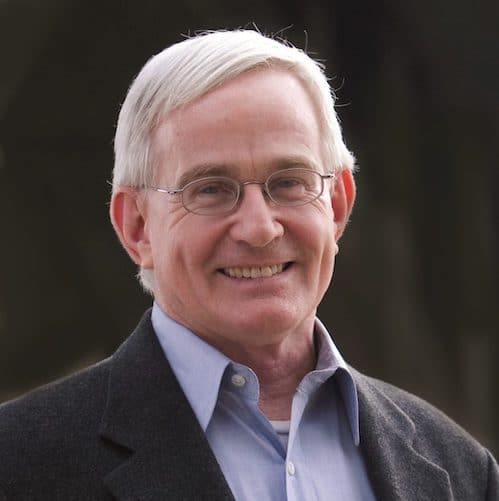
Image courtesy of Jonathan Greene

How to transform a city.

February 26, 2020

Tom Murphy is the second-longest serving mayor of Pittsburgh (after David Lawrence).

He is noted for overseeing the difficult, but transformative transition of the city from the mid-1990s to mid-2000s during turbulent Downtown development cycles, an initially unpopular funding bid for two new waterfront stadiums, a new convention center (then the largest ‘green’ building in the U.S.) and investment in and development of 1,500 acres of land from abandoned steel mill sites to vacant houses. He built many miles of river trails and ran on them religiously.

“Public space can be the most democratic space in the city”

Mayor Murphy’s administration took a market-driven approach and downsized governmental departments. With the savings from downsizing, Tom created the visionary Pittsburgh Development Fund, a $60 million fund which he employed to leverage private real estate projects and investment all over the city. Public/private partnerships were key to this strategy. He was looking towards a future that not many others saw.

Struggling with outdated taxing structure regulated by the state, as well as state resistance to city growth through annexation, Mayor Murphy made hard decisions such as declaring a budget crisis and pushing through alternative funding sources such as a parking tax for commuters.

By the end of his tenure he had shepherded the city, kicking and screaming, onto a new track which led to it being held up as the model for urban transformation – a former industrial city reinvented as a biotech, medical, university and robotics hub. In 2008, the G-20 was staged in Pittsburgh, highlighting its transformation. 

Mayor Murphy, who studied urban studies in college, also previously served as a state representative for the North Side, as a neighborhood organizer there, and between college and graduate school, in the Peace Corps.

Insights and Inspirations

  • Tom focused on five things as mayor. Finding money for projects that would change the city. Taking control of vacant land. Building a really great team. Creating a vision. And building excellent public/private partnerships.
  • Since ending his tenure as mayor, Tom has come to believe that public spaces matter more than anything else in building better cities.
  • He believes that the interface between buildings and community is critical to the making of a place.

Information and Links

  • Mayor Murphy Gets Key to City (Pittsburgh Post-Gazette, Jan. 3, 2020)
  • Reaching for the Future: Creative Finance for Smaller Communities (A 2016 report for the Urban Land Institute)
  • Adapting Cities for the Future (A 2011 article for the Urban Land Institute)
Read the podcast transcript here

Eve Picker: [00:00:14] Hi there. Thanks so much for joining me today for the latest episode of Impact Real Estate Investing.

[00:00:23] My guest today is Tom Murphy, Pittsburgh’s turnaround mayor. He oversaw the difficult, but transformative transition of the city from the mid-1990s to mid-2000s. Those were turbulent times and included many highlights and many struggles. During his tenure, he declared a budget crisis, built two stadiums, created a $60 million development fund and built many miles of river trails. Tom Murphy is an authentic city expert.

Eve: [00:01:03] Be sure to go to EvePicker.com to find out more about Tom on the show notes page for this episode, and be sure to sign up for my newsletter so you can access information about impact real estate investing and get the latest news about the exciting projects on my crowdfunding platform, Small Change.

Eve: [00:01:38] Hello, Tom, I’m so delighted that you found time to join me today.

Tom Murphy: [00:01:42] I’m always honored to be with you. You were one of the pioneers in many developments in Pittsburgh when very few people saw the opportunity.

Eve: [00:01:50] You were the second longest serving mayor in the history of Pittsburgh. And in 1994, when Pittsburgh wasn’t sure what it was going to become, was really on the verge of collapse. And you shepherded the city through a very turbulent transition from a place that had emptied out with the closing of steel mills and suburban flight, to a city transformed almost every respect. And I was in Pittsburgh for every moment of it. So, you reshaped Pittsburgh, kicking and screaming all the way.

Tom: [00:02:22] Underlining kicking and screaming, Eve. As you remember, every time we tried to do something, there were, there was controversy. I mean, it just, it was amazing to me.

Eve: [00:02:34] Well, this is slightly conservative city, so maybe that was part of it, but people couldn’t imagine what you imagined. When you begin with a city that has lost its industry and half its people?

Tom: [00:02:47] Well, I’m a product of that, I mean, my father worked for 51 years at Jones & Laughlin Steel steel mill on the South Side. So, my whole life was defined by the shifts he worked there, I mean … you know, he was, he worked in the mill. I mean, he wasn’t a boss or anything, he just worked in the mill and our lives were shaped by that and … and sort of everybody I knew pretty much, their lives were tied to the mill. And so I grew up with that. And to watch that disappear in the, really the 70s and the 80s, I was a state legislator on the North Side, and I don’t think people appreciate how incredibly destructive it is for families. You know, where you had very traditional families where the husband went to work in the mill, you can make a good living, buy a house, buy a car, take a vacation and now all of a sudden that disappeared. You know, the wives went to work, kids who had thought about going to college deferred that, you know, we lost a whole generation from Western Pennsylvania – 500,000 people left and they were overwhelmingly are our kids, young people who were leaving, because they didn’t see a future in Pittsburgh. And so having come through that, having lived it, you know, on the North Side, where we’ve lived for almost 50 years now, and how destructive it was, never thinking I would be mayor. When I became mayor, I mean, my focus was how do we stabilize this situation? And to do that, we needed to re-imagine Pittsburgh in lots of different ways. In how we educate kids, because you didn’t need a high school education, let alone a college education to work in a steel mill. And you know, what we did with all this land, all of these industrial, thousands of acres of industrial property. And the culture of Pittsburgh, which, you know, was almost opposed in the technology industry because they were seen as non-union.

Tom: [00:04:40] And so we went through huge controversies in talking about re-imagining Pittsburgh. And now we’ve come out the other side and, you know, it looks very different.

Eve: [00:04:51] It does. Did you have a strategy from day one?

Tom: [00:04:57] Well, I laugh at that. I mean, hindsight always gives you the strategy. But we did in the sense that we felt we needed five things, right? We needed money. We were a flat broke city and … you know, essentially, as you said, I mean, close to bankruptcy. And we needed to figure out how we will get money so we could invest in Pittsburgh and entice developers. Two, we wanted land control. A lot of this land was tied up in bankruptcies and it was, you know, uncertain titles. And so, a developer who has a choice of buying a 100-acre greenfield site or 100-acre steel mill site, they’re going to buy the greenfield site. It’s safer. And the third was that we needed a really good team of people who were going to be public entrepreneurs, in effect, that were willing to take risk. And the fourth thing we needed, we needed a vision. We needed to be, to sort of know where we wanted to go. And the fifth thing is we needed good public-private partnerships. We needed people who believed that Pittsburgh could be a different place. And you remember back then, Eve, you were one of the few people that …

Eve: [00:06:08] Yeh.

Tom: [00:06:08] … were willing to invest in places like East Liberty. It was very hard to get local developers to re-imagine Pittsburgh. They had their little niche. They were comfortable in it. They’ve been through 30 years of decline. And so all those ingredients, you know, we talked about them when I ran for mayor. And people obviously voted for me. But when we started to do this stuff, they said we didn’t know you meant that. So where do we get money? And the first month or so I was Mayor we reduced the city’s workforce, reduced the number of police officers we had, then shifted six million dollars of that money annually to finance a $60 million bond issue, which we called the Pittsburgh Development Fund, which gave us money to invest in the future. In every city, I mean, I talk, I meet with cities a lot and talk to them and that’s one of the challenges they face is, your demands for the day-to-day. Just ‘today’ is huge in a city. I mean, everybody wants more police. Nobody’s streets are getting salted enough, and potholes, and if you just spend the stuff on all your resources on today, nothing changes. I mean, you’re Pittsburgh and in Pittsburgh we were still declining, so the challenge was how do we get some of those resources and use it to invest in the future, which entails risk.

Tom: [00:07:27] The second thing we did, Eve, we went out and bought, as you know, Mulugetta Birru was head of the Urban Redevelopment Authority, and we had him go out and buy almost 1500 acres of land. You know, we bought what was then the South Side works of Jones & Laughlin. We bought the slag dump in Squirrel Hill. We bought the old Sears site in East Liberty. And then, you know, we looked at each other and said, what do we do with this stuff? And that’s when we began to form great partnerships with developers. Somebody like you who was willing to invest in that old building in East Liberty and, you know, and others. And the $60 million gave us the ability to create really creative and effective public-private partnerships that share the risk with developers who believe that Pittsburgh could be a different place. That’s what we did.

Eve: [00:08:17] I was going to ask the question that, do you believe developers played an important role in the transformation of the city? Obviously you do.

Tom: [00:08:24] I do. I think place is everything. I think it has huge impact on how people live, I think, like crime rates, a whole host of other things. How they, what they think about themselves. I mean, if I live in a neighborhood that has, half the buildings are vacant and there’s a lot of litter and everything, you know, I come out my door every morning, I probably have a different reaction than if I live in a neighborhood that has lots of gardens and clean. And so I think that, it has huge impact. And so developers, from our point of view, as you know, were really important partners. And this is, I tell this story all the time, is when we started to see things happen, developers would come and say, Mayor, I have a great idea for you. And we’d say, with all due respect, tell us why it’s a great idea for you. And we’ll decide whether it’s a great idea for us, and if our self interests come together, we’ll figure out how to be a good partner and share the risk with you. But that assumed we knew what we wanted and so that was one of the really big challenges. As you remember early in my administration, I had a really great planning director, Eloise Hirsh, who really helped shape that vision, as well as Tom Cox and Mulu and Steve Leaper, really helped shape that whole vision of what Pittsburgh could be. It was really reimagining, you know, old steel mills in the South Side and a slag dump in Squirrel Hill. And so we were looking at, not to ignore other things, but we were looking for things that could be catalytic, that could change people’s image of Pittsburgh. And the ballparks obviously help with that, too. I mean that when I was running for mayor, I wasn’t planning to be, have anything to do with sports stadiums. And that sort of was one of the challenges of running the city, as you know, I didn’t think about it. And then all of a sudden, it’s the number-one topic.

Eve: [00:10:17] Well, it’s always the number one topic in Pittsburgh. Sports, so.

[00:10:20] Well, unfortunately, I mean, I don’t know if you know the story, Eve. As I, when I ran for mayor, I was elected mayor in November. In early December, the then-owners of the Pirates gave me a letter that said they intended to sell the team. I don’t even know this, that Dick Caligiuri many years ago had signed an agreement with the team that if ever they were going to sell it, that the city would in affect own the team for nine months in which they would be required to find a buyer. And if we couldn’t in nine months find a buyer, then the team could be sold to another city. And so there I was, having run on crimes, jobs and taxes, now owning a baseball team. It really, literally when I was running in November, I had no idea that the first year of my time as mayor, two years, would be dominated by trying to figure out how to build a baseball park and a football stadium and a convention center. So, that’s life, right? So, we had to figure it out, right?

Eve: [00:11:20] When the sun goes down, with Downtown as a backdrop, it’s a very special place.

Tom: [00:11:27] Well, it’s a, my favorite seat in PNC Park, regardless of what the team is doing, is that, at the very highest point in the left field stands, and because the view of the city at dusk like that is incredible.

Eve: [00:11:41] Was the Pittsburgh Development Fund the most important thing that you implemented? Were there the other programs or policies with very big impact?

Tom: [00:11:49] Well, what’s the Development Fund gave us is, it gave us the ability to be, to be flexible. When I go to lots of cities, they would say, we’d love to do this, but we don’t have any money. The money, for better, for worse, becomes a really important part of being able to pursue your dreams. And so the Development Fund was our money in the sense that we didn’t have to look to the state or the federal government, you know, to wait for months or a year before you figure out whether you’re going to get the money or not. We also, as you know, in the URA, people at the URA led by Mulu and Steve, were very entrepreneurial in understanding how they used tax increment financing and other federal and state sources, so it … it was fairly typical, it might be true in your deal, your deals that you were doing, is that you were getting sources of money from 10 or 12 different sources. And what I have found is that’s unusual in a lot of cities, that cities are not entrepreneurial like that, of understanding how you mix and match money to make a deal work. So, what I say, Eve, is it’s really, it’s really a market driven approach, is that basically you as a developer come and say, you know, I want to do this building, but this is what the bank is going to lend me, and there’s this gap in financing, and if it’s something we want to see happen, we being the city in this case, then we become your partner and figure out how to help finance it, whether it’s our Development Fund or other sources.

Eve: [00:13:30] My experience with the Liberty Bank Building was very typical. I think I had 12 sources of financing.

Tom: [00:13:36] Yeh.

Eve: [00:13:36] Most of the URA money, which I’m really glad gets to be recycled. But Mulu was extremely entrepreneurial. He, first of all, he didn’t quite trust me when we started …

Tom: [00:13:36] Well, but you were a small developer at the time, right? With not a long track record. But with great ideas.

Eve: [00:14:05] There were really interesting meetings. I really became very fond of Mulu. So, but he, you know, his approach was, look, we have this amount of money. 300,000 dollars out of this pot of money, or whatever it was. And you need two million. Go away and think about how it might work. And so I would come back and I’d say, look, I could make it work if you took little interest payments for two years or, you know, whatever, whatever it was that made it to some sort of stabilized scenario. I learned a lot. And then, you know, things shifted very much, and I think the URA lost a lot of its funding in the mid-2000s and the banks got more skittish and it all changed, right?

Tom: [00:14:49] Well, it did and it didn’t. I mean, I think the philosophy in the city changed and maybe … so I was saying this about being market driven. Mulu met with you and you convinced him that the market was what it was, that without flexible public money that could defer interest or payments even for a few years, that that this deal was not going to happen, and we wanted it to happen, and so we would make the loan. The market has become much better in Pittsburgh, though. You were, you know, in my view, the early bird gets the worm in this case, in the case of your building, you were, you were the early bird. Is that you got better financing then maybe after the market’s healthy. So, we tried to be market sensitive in that sense. And at the same time, recognize that we wanted these deals to happen, so we were willing to put, risk public money. I think the key to it, what I learned about myself in this, Eve, as I was, I am not a good day-to-day manager, but I understood how to hire good people and just give them room. And if a deal blew up, you know, that’s what’s going to get reported on the news. But I need to be willing to support the people if they did the deal for the right reasons and it just didn’t work. And we had some of those done, you know, Fifth and Forbes Downtown was one of those examples. But we were willing to take those risks, whether it was with you or other developers, that we didn’t know with the market, we didn’t know if people would move and live on a slag dump in Squirrel Hill or, you know, live in apartments in South Side. We didn’t know what the market was. We were way out there and that was the risk involved in this, and using public money.

Eve: [00:16:33] I moved to Pittsburgh accidentally and was kind of involved in all of this on the periphery, and it really shaped my life. The way I think about cities is very different now. So, thank you for that. The plan that did not work out was the redevelopment plan to reshape Downtown which…

Tom: [00:16:49] Actually it worked though didn’t it? I mean, four of the five blocks that we were going to acquire have been redeveloped.

Eve: [00:16:57] Yes, it did work. But my question was, yeah, it just took time, didn’t it? Took time for people to get used to the idea.

Tom: [00:17:04] Well, it looks differently than what we would have, I mean, we were more focused on a retail strategy and it might or might not have worked. I don’t know.

Eve: [00:17:12] Well, today with Amazon, it might have backfired again.

Tom: [00:17:15] And that’s where you don’t, I don’t know with today’s retailing whether it would have worked or not. If we would have been able to put together sort of what we were thinking. But, in any case, all five blocks have now been redeveloped, that we focused on. And it’s a much more vibrant place. We could see the decline there. I mean, we could look at the sales numbers of businesses that were there and just see the decline of what was going on, and I think felt the need to try to intervene, you know, and maybe did it really in a clumsy kind of way. And but, you know, at the end of the day, it was a necessary intervention that ended up working. PNC played a big part, was a big partner in that with their new building

Eve: [00:17:59] Yes. It was really difficult, I remember. What would you do differently today? A different city.

Tom: [00:18:06] When I’ve come to really love is the public spaces. So, in East Liberty, I think we would have had, we had the opportunity, which we didn’t do, to create a sort of a central plaza somewhere there. That we could have really recreated a much more, you know, in a public space, it can be the most democratic place in the city. And so, I mean and so with Home Depot, we were looking to make a democratic place where people, wealthy people and poor people would all shop. If I had done East Liberty thoughtfully more, maybe we would have created a public space like that, too. And Market Square, in many ways, plays that role Downtown now. There’s a public space where people of, with all incomes and all backgrounds show up. And so even in smaller neighborhoods like Lawrenceville and other places, because there were such, you know, abandonment of property, we had opportunities to really create better public spaces, little town squares. Because one of the strengths of Pittsburgh is with its 90 neighborhoods is, is that we have this real sense of communities and I’ve come to appreciate that much more. And we really would have focused more on creating places where that community can play out in neighborhoods like Lawrenceville and other places. I go to China a fair amount. Not recently. thank goodness. And when I, I get up early in the morning to go for a run and one of the things I see there, and China has done a very bad job of creating public spaces, but where there is public spaces like at six, seven o’clock in the morning, there are hundreds of people there in the plaza doing tai chi or dancing to a boombox. It’s this great sense of community. There’s lots of older people or people running. And you can see feel this community, I mean, people talking and laughing. Every morning they’re there. And we don’t have that tradition in America. But it would be wonderful. We did, but but we ought to create places where that happens. You know, the Blue Slide Playground is a place like that in Squirrel Hill. I mean, famous now because of Mac Miller.

Eve: [00:20:24] I visited Beijing three years ago, and the photo I loved the most from there is a small urban park which had exercise equipment in it. And in fact, I saw this several times …

Tom: [00:20:34] Right.

Eve: [00:20:35] … exercise equipment, really basic. And you could see people all congregating, and doing their little exercises in the park, open to everyone, It was fabulous.

Tom: [00:20:46] Right. We did a half step under Eloise’s leadership in public works. We made a decision to rebuild all of our 100 and some neighborhood parks, like the Blue Slide Playground or the Schenley Park, and also many of the smaller ones. And we would have community meetings and we would hire landscape architects who would meet with the community and, you know, with the playbooks. And then they would work to design the kind of playground they wanted. They would given a budget, 100, 150 thousand dollars, and they could pick from the play equipment books, the playground they wanted. But the instinct we had was right, but we should have expanded it. And in many neighborhoods where, like Homewood. I mean, you have an opportunity in Homewood, still today, I think, to create a really great plaza that would become the center of Homewood, and how you would do that. And East Liberty represented that opportunity. I mean, there were, as you remember, lots of vacant land there that was tax, you know, essentially abandoned. So that’s probably one of my bigger regrets, was not creating places where that sense of community can play out.

Eve: [00:21:58] What do you love most about Pittsburgh? I know you still live here.

Tom: [00:22:01] Our strength and our weakness is our parochialism and that’s what I love most … is that we’re an unusually friendly city. I’m in Washington four days a week, right? And my habit in Pittsburgh is pretty much everybody you see, even before I was mayor, but when I’m mayor I don’t know whether I know them or not, or they know me. So you say hello to people, right? You get on an elevator, you say good morning, right? People, you do that in Washington, D.C. people look at you like you’re … going to rob them. You know, it’s a weird feeling for me. I see that in lots of cities. I would just did Orlando for a couple of days that I felt it there. Same thing, is that, sort of people don’t make eye contact, don’t acknowledge. I mean, if there was just two of you in a place, that you don’t, they don’t acknowledge you.

Eve: [00:22:50] You know, that’s interesting. There are other cities like, I think Atlanta and Detroit are very friendly. I always notice it when I go there.

Tom: [00:22:56] Yeah. So it’s, and I hear that. It’s funny, I mean, when I speak, and I was in 50 cities last year, so I end up engaging with thousands of people. One, is the numbers of people that have lived in Pittsburgh. You know, I mean, that’s sort of the legacy. I always say you’re our failures. We couldn’t give you a reason to stay, you know, there’s so many people that left in the 70s and the 80s. And the other is inevitably people who are not from Pittsburgh. I just was talking to a guy in Orlando yesterday who, his daughter and he, and they’ve never had any connection with Pittsburgh, but she loves the Pittsburgh Penguins. And they go to Pittsburgh every year to see a couple of Penguins game, and he was telling me he’s going in March and, you know, he said, I’ve never been to a friendlier place in my life. Everybody talks to you and it’s just, it’s a great place, right? We don’t even think of that. And that’s partly what I like. And I think that’s the strength of Pittsburgh. When I say parochial is that we are really, those of us who are from Pittsburgh or who moved there, you become really rooted in your neighborhood, and in the city. I think in places like Orlando, that is, you know, a lot of Florida cities in California and even Texas cities. You know, there’s lots of new residents. And so they don’t have that kind of history. And so I, that’s part of the challenge of Pittsburgh. How to keep that, and at the same time not have it be a deterrent to making Pittsburgh a competitive city.

Eve: [00:24:28] But you know, I think what’s most interestingly Pittsburgh, about Pittsburgh to me, is again, I’ve always thought it’s topography saved it from becoming what Detroit has become.

Tom: [00:24:40] Oh, I think definitely, I mean, the hills and valleys and how Pittsburgh is defined, I think is a large part because of its topography. You know, I learned that running for office when I was in the legislature, when I first ran for the legislature. If you confuse people from Spring Garden with people from Spring Hill, they will never vote for you. I mean, they’re very rooted in their neighborhoods, right? And so there’s that whole hierarchy like that around Pittsburgh. When I meet somebody, when they say they’re from Pittsburgh, I typically say, where did you go to school? And that tells me a lot about them.

Eve: [00:25:19] Interesting. Yeah, I think the topography also, it kind of contains each neighborhood. So, I think that that sense of being in a neighborhood is going to stay.  I can’t, I can’t see it disappearing in the city.

Tom: [00:25:33] No, and that’s what, when I was talking about the public space, I mean that’s, that’s what I have a big regret it was around that idea of how do you build even a stronger sense community using public space, whether it’s playgrounds or a park, a community. How do you in a very thoughtful way connect people in that neighborhood so they feel a sense of place? And there’s a purpose for that, because I think if people feel rooted in their neighborhood, I think they’re willing to put up with a lot of problems if they see themselves and others committed to wanting to making it better. I mean, if I can see a light at the end of the tunnel, I’m willing to stay on the journey, right? A lot of people are not willing if they don’t see any end to it. And I think of a neighborhood like Allentown that’s been through a lot of problems. And yet, there’s a strong core of people in Allentown who have really stayed with that neighborhood. And, you know, it has gone up and done and now I think it’s back, going back up again. I know we used say, Eve, you know, that houses in the North Side up in Fineview at the time, I mean, you could buy for 30 or 40 thousand dollars. And we said if Pittsburgh’s population were like any other city and it was growing, those houses would be worth a million dollars with the views. And that was part of the problem, is that we weren’t growing as a city. And it’s still part of the challenge of Pittsburgh, is that we’re doing much better, but we’re still not growing compared to, certainly the region is not, compared to a lot of other cities and communities.

Eve: [00:27:19] Today you work, you’re a senior fellow at the Urban Land Institute, which some of my listeners may not know about. What do you do in your role there?

Tom: [00:27:32] So the Urban Land Institute is an organization founded about 75 years ago by a group of developers concerned about the quality of development beginning to happen in America. And fast forward, the Urban Land Institute now has about 50,000 members worldwide. And it really, it’s focus is how do you create thriving communities? And ULI had participated in several programs in Pittsburgh when I was mayor, and then I got recruited to speak at different ULI events. And when I was leaving as mayor, it was right after Katrina in New Orleans and along the Mississippi coast. And they asked me whether I would go down and work with the mayor of New Orleans and with other public officials across the Mississippi coast. And so I did that for about a year and a half after leaving as mayor. And it was fascinating. I mean, it was really a fascinating experience. And, you know, in New Orleans, their mayor ended up going to jail for 15 years. And the political structure was really fairly inept back then. It’s gotten better. And so I watched, really, New Orleans return in large part because of grassroots decisions and leadership, through churches and nonprofit groups and neighborhood groups, and a lot of outside help. Foundations and movie stars like Brad Pitt. But people, but ultimately, the up-swelling was really, really bottom up. It wasn’t top down. And so it was a fascinating experience to work in, there. And I still am, I was on the board for many years of a community development corporation there. So it’s been an experience. Since then I got to about 50 cities a year and speak at ULI events or other events, and then often end up working with cities for a while. And I’ve written several papers – working on one now for ULI.

Tom: [00:29:40] It’s been a good, a good experience, really a great experience after being a mayor. And part of what I get asked to do all over the world is, in part I get asked to talk about Pittsburgh. How we went from this failing industrial city  to what we’re becoming. And the reason I get asked by, about that is, wheat I’ve come to realize, Eve, is virtually every city in the world, whether it’s Hong Kong or London or Dublin, or are all struggling with some of the same issues that we went through in Pittsburgh, of sort of what what is our place in the world? We were forced to have that conversation because of the collapse of the steel industry. Other cities have not had that kind of dramatic change, but they are seeing the world change and they are trying to figure out how to  stay current and get in front of those changes and manage them.

Eve: [00:30:34] Are there any current trends in real estate development that interest you the most?

[00:30:39] Well,every city, every place I’ve been, and this is, I mean, last month I was in Dublin and London, right. And I was supposed to go, I go to China about four times a year. I was supposed to be going in March. My plane trips are now all being canceled, but I was going to cancel anyhow. But so whether it’s cities in China or European cities, affordability is a huge issue. Of how do people, where do people live? And how do they afford to live? And so how cities develop affordable housing is a big, big issue. Where am I going to work? Because of the impact of technology and we see it in Pittsburgh up close every day as we see a whole litany of driverless cars on the streets of Pittsburgh or autonomous vehicles with attendants in them. But, you know, pretty soon the attendance won’t be there. As I mentioned, I was in Orlando yesterday, just east of Downtown Orlando but still in Orlando is a place called Lake Nona. And they now have, I don’t know, a half a dozen driverless autonomous buses that drive people around this very large development. Nobody driving. Nobody in, no driver. And no attendant. It is just on its own already on a sort of a, sort of private street where bikes and others places can go, but not cars. So we’re seeing this happen and what does that mean? I mean, if you think of 50 percent of the land use of a typical city is for cars, between roads and parking and everything like that, what does that do to how we think about cities. And not it’s not even that kind of technology. It’s why do young people want to come places? Part of what I say is what does General Electric and McDonald’s and Marriott and Fifth Third Bank and Heinz Kraft Foods and what they have in common is over the last five years they’ve all moved their headquarters from suburban office parks into cities. And why are they doing that? They’re doing it because … they’re having a hard time recruiting talent, young people, to move to the suburban office park. Where you need a car to get to. You know, if you do a survey of the Google employees in East Liberty, I’m betting that 25, 30 percent of them either walk or ride a bike to work. So that has huge implications on cities. You know, do you spend your money building more highways or do you build a transit system. That’s part of Orlando’s challenge. They don’t have a good transit system and now they’re  strangling, you know, because of the congestion.

Eve: [00:33:33] Yeah. It’s changing.

[00:33:34] So it’s those debates that I’m watching all over. Mobility is a huge conversation. The equity conversation, I mean, one of the things I see really fascinating, The New York Times did this, I thought, very cruelly. A few months ago they did an article about cities and they talked about winners and losers.

Eve: [00:33:56] Yes.

Tom: [00:33:56] And they talked, and they compared Nashville and Birmingham. And they said Nashville is a winner, they both start at the same place 25 years ago. Nashville is now a hot city, booming, and Birmingham is not. And they talk about, why, how that happens is really a lot to do with leadership. And then within, so we’re seeing cities sort of separate themselves, if you understand, those that are, where Amazon is going to consider locating, and those that are not. And what are the ingredients that make that cut? And then the other, within cities we are watching a huge divide with lower income people and the people that are sort of part of the new economy. And so, I think that equity issue is a huge challenge for cities also.

Eve: [00:34:43] Yes. You know, I have always thought that one of the things that’s most overlooked in discussions about cities and how to grow them is their connection to other cities. And, you know, I think that’s probably Pittsburgh’s growth problem. It takes a really long time go by train.

Tom: [00:35:00] Well, we lost a whole generation of people that would normally be having babies.

Eve: [00:35:07] If you want to get to New York by train, it’s a day. There’s no easy, fast way to get to work hubs. We’re sort of a little bit stranded. And I was always puzzled by the fact that we, you know, people would talk about better transit in the city, but I wanted better transit to other places, nearby, to open up opportunities. If I wanted to do a development project in a city, I wanted to be able to get there in a day in and back. Right?

Tom: [00:35:37] Right.

Eve: [00:35:37] So I, you know, I wonder if you plot out those connections, you know, where the, you know, the cities done well, will land.

[00:35:49] I think it’s a mix. I think mobility is one piece of the conversation of how easy it is to move around a city. Our son, for example, is now 29 years old, does not even have a driver’s license. He lives in Pittsburgh. On the North Side right now with us, he’s moving, though. You know, he is, has been able to manage fine living in Pittsburgh, using Uber and using public transit and, you know, walking a host of other things and abusing his friends every once while they’re able to, you know, he’s able to sort of manage living in a city pretty well. But I think mobility is part of the conversation. And that’s what, when I was becoming mayor, Eve, our focus was we need to figure out how to create a diversity of jobs. And we needed to make Pittsburgh a place where people wanted to live. You know, we’re never going to be, maybe we will someday, we’re never going to be a warm city. Like I was just in Orlando yesterday. It was 90 degrees. We’re not going to be near the ocean, but we had other assets. And so, as you might remember, I was very focused on building riverfront trails for that reason is that was an underutilized asset. You know, we watched, you know, a great music and bar scene sort of, and that happened organically. It’s funny, I watch the, I read the media in Pittsburgh now about the Strip District and we made a very intentional decision not to do anything in the Strip District. We, you know, people would come and why don’t we do this and why don’t we do that in the Strip District.tAnd we really said The place is working really well. Why do we want to get involved in it? Let it, it’s just happening on its own. So. You know, that it’s interesting that that’s the big, big debate right now in Pittsburgh, I guess about, are we killing the Strip District. So I think that you make decisions, you know, some of them are going to be right. Some of them were wrong. Hindsight will tell you whether it works or not.

Eve: [00:37:56] You know, this show is about real estate impact investing. And I want to know what you think a key factor is that makes a real estate development project impactful.

Tom: [00:38:06] You know, I think it’s the public space. Is the building itself attractive, but it’s the space around it, how it engages people that work in that building, and even people walking by, how they might use it. I think that, how it all connects. And you can get senses of it, right? When it works well? I think, you know, there are places in Pittsburgh that I think of that are just great places to be. People like to be there, right? I look at Mellon Park, you know, going back many, many years, long before I was mayor. Still a very iconic place on a nice summer day. It’s packed with people, having lunch. And I think how that happens, and that’s where the public private interface is so importantA and where the public needs to have, to be put money in the game, to say to a developer, you know, we want to get this quality in, and a developer might say, but I can’t afford to do that. And if you look at the books and the market is going to be make it hard for the developer to do that, then there’s a public role for that. I think another good example is that is Schenley Plaza, which for for 40 years or 50 years was a parking lot. I mean, think about that. I mean, I, you know, on one side is Schenley Park, on the other side are the museums, on the other side is the Pitt law school. And then on the other side, the Cathedral of Learning. And what is the highest and best use of that land for 50 years? It was surface parking. And Mark, this chancellor at Pitt and I got together and said we should be, we should do better than that. And so we work with the Parks Conservancy and came up with an idea to put a park there, to take the parking. And I got all this hate mail, but I’m never going to vote for you again. You’re taking away my parking place. And I said, you know, you’ll get over it. There’ll be other places to park it. But this is, this, we can do better than that is the interest of a great university. To a great park. To a great museum. We can do better than that. And you look at that on a nice summer day, it’s filled with people. So creating those kinds of places, I think is is that there’s a responsibility of both the developer and the community. You know, you did something quirky Downtown with those statues. And I bet lots of people walk over, who maybe have never been in Pittsburgh, walk over just to look at them.

Eve: [00:40:58] Yes. In fact, I think the taxi drivers use it for directions when someone says, I want to go Downtown.

Tom: [00:41:05] Yeah. So that’s what I mean. And look at Randyland on the North side.

Eve: [00:41:10] It’s fabulous. Yeah.

Tom: [00:41:12] You know, I mean, it’s just things like that make a cityS so the other word that we use a lot in ULI is authenticity, right? Pittsburgh has a great history. It has a great story. And we could still do better at telling that story. The South Side Works, when we started to develop that we put, had a competition for, and we brought artists and old steel workers who worked there together for like a morning of talking. And then we had a competition for artists. And there’s, at the end of Hot Metal Bridge is a little monument that we established for the steelworkers. But Pittsburgh is an incredible story.

Eve: [00:41:56] So I’m going to ask one last question, because I’ve taken up a lot of your time.

Tom: [00:42:00] It’s fine, I’ve enjoyed it. It’s fun to talk to somebody who actually knows Pittsburgh, Eve.

Eve: [00:42:05] So is there something that you think could really change real estate development in the U.S., for the better?

Tom: [00:42:14] I think it is, is the idea, the partnership idea. I’m amazed that the cities I go to, many developers attitude is I want a minimize my involvement with the city. Maybe there’s a reason for it. I want to get in and get out. I want to get the entitlements, whatever I may need and do what I want to do. So the challenge is the developer has a piece of property. The developer needs to figure out how to make money from that property. I accept that. I want the developer to make money from the property. On the other hand, the city, the city has the responsibility to build a great city. That it will never be a great city if these developers see their development as sort of an island disconnected from what’s next to it. And so the city’s responsibility is to figure out how that all fits together. Give you two examples that drive me nuts. I can drive on pretty much any suburban shopping street. I can go into a gas station. Maybe I want to go to the store next door. And I have to drive back out onto the highway. Or maybe I want to go to a store across the street, I have to go out on the highway. Maybe I have to drive a half a mile to get over there to the other side. So I can’t, there’s no sense of connection between any of that. And the other is, I watch in suburban areas like Cranberry Township subdivisions being developed of 100 acres or so. What would it take for those subdivisions that, maybe there’s five different developers doing one hundred acres each, if they would, then the city’s role would be to say we want to connect all this with a bike trail at the edge of your property so that every, so now instead of having a couple little playgrounds, you might have a five or ten mile bike ride, safe, off road. You don’t have to worry about traffic with your little children. And there is examples of where the public fails. Both the public and private developers fail. Because you create great, great amenities if you begin to think in a bigger way rather than individual pieces of property. That’s what’s destroying development, and quality in America today.

Eve: [00:44:33] Yeah, I agree, I think we both believe that real estate development, just as a financial tool, as a way to make money, isn’t making our cities better.

Tom: [00:44:43] Well, I think you make more money if you build quality. In the long run I think your development is more valuable. I mean, we didn’t get into all the other sustainability and all that which a lot of cities are facing.

Eve: [00:44:54] Thank you very much.

Tom: [00:44:55] Look forward to see you sometime. Bye bye.

Eve: [00:45:04] That was Tom Murphy, past mayor of Pittsburgh. Tom thinks place is everything, so place is what he invested in during his long term as mayor. He did that by reducing operational costs and creating the Pittsburgh Development Fund, a $60 million fund focused on helping developers who were willing to work in places and on projects that made the city better and better. It was a very bold, and unpopular move, but paid off in ways that no one imagined, as did many other moves that Mayor Murphy made.

You can find out more about impact real estate investing and access the show notes for today’s episode at my website, EvePicker.com. While you’re there, sign up for my newsletter to find out more about how to make money in real estate while building better cities. Thank you so much for spending your time with me today. And thank you, Tom, for sharing your thoughts. We’ll talk again soon. But for now, this is Eve Picker signing off to go make some change.

Image courtesy of Tom Murphy

Public-private partnerships and affordable housing.

February 24, 2020

We are facing a unique and complex set of problems that have combined to create the perfect storm for housing – an affordable housing crisis that is affecting not just US citizens, but people everywhere. We need to find plentiful and innovative solutions. Because the lack of affordable housing is the result of so many different factors, it’s going to take a multi-faceted approach to effectively address the crisis.

One solution is the utilization of public and private partnerships to both create and sustain affordable housing development. These partnerships combine the speed and flexibility of the private sector with essential subsidies and support from the public sector, both of which are needed to acquire, build, operate, and maintain affordable housing projects in urban areas.

In San Francisco, the Housing Accelerator Fund provides a good example of how these partnerships can be used effectively to have a meaningful impact on individuals and a community.

The Accelerator Fund

The San Francisco Housing Accelerator Fund, led by Rebecca Foster, provides “innovative financial tools to preserve and expand affordable housing.” Notably, the Fund was created and developed in the San Francisco Mayor’s office, and from its inception it has been centered around private and public partnerships. Foster is quick to note that these partnerships have been one of the Fund’s essential keys to success.

Using a mix of private, philanthropic and public sector funding to address needs in public housing, Foster’s team has been able to create unique financing tools and use private funding to help with issues that the public sector cannot address on its own. The result has been more permanently affordable housing in the Bay Area.

Why do we need partnerships?

What Foster and her team have learned is that in places like San Francisco you can’t simply finance permanently affordable housing. The reason is that the costs of acquiring or building and then operating such projects are just too high to be covered by middle-income rent, much less low-income rent. What this means is that you need the power of the public sector and the tax base to cover the long-term costs.

Yet, at the same time, the public sector does not move quickly, it is risk-averse, and it cannot deliver capital quickly. So, while the public sector is needed for long-term funding, it’s less effective when it comes to acquiring or building affordable housing.

This is where the Accelerator Fund comes in and bridges that gap. The Fund uses private and philanthropic capital to be the first money into a project. The Fund helps nonprofits compete, even in the face of cash buyers and foreign buyers, offering the flexibility to close within 60 days. This speed and flexibility is essential for acquisitions, especially in situations where residents are at risk of displacement. Similarly, the Fund supports new builds, and offers affordable housing developers the chance to be innovative, fast and creative.

Using this model, the Fund is able to provide funds for the acquisition and development phase of a project. Once a project is under the control of a nonprofit, the government can come in 12 to 24 months later and provide long-term funding.

Every month, Foster is seeing families that are positively impacted by the work that her organization is doing. While she is quick to note how substantial the problem of affordable housing is, especially in California, she is encouraged by the results that she is seeing from her team’s efforts to date. As she describes it, they are “on the ground in a real blocking and tackling transactional way, and in a way where [they] see the impact on families.”

To learn more about the San Francisco Housing Accelerator Fund and how their model is successfully utilizing public-private partnerships, listen to the full interview with Rebecca Foster.

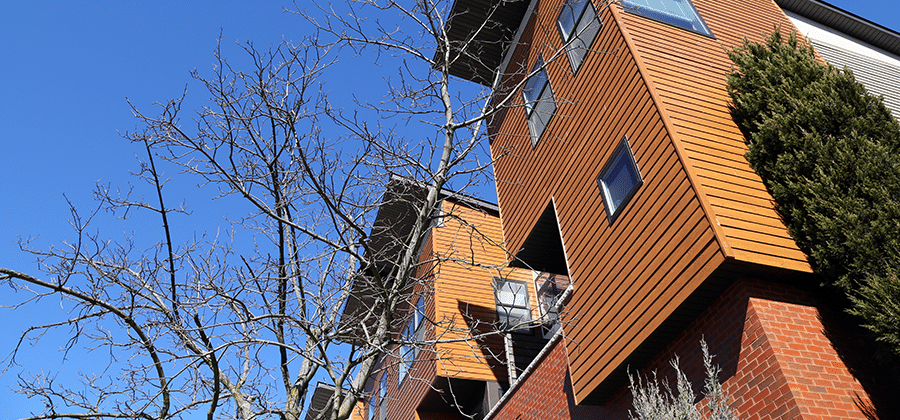
Image by David Bernabo

Delicious urban soup.

February 19, 2020

Entrepreneur-in-Residence is a bold and unusual title for a real estate developer. Emerick Paul Patterson, who owns that title, fits the bill.

Emerick’s work over the past two years has focused on the East Williamsburg neighborhood of Brooklyn, where he partnered with the real estate developer, Heritage Equity Partners, to create a large-scale (500,000 square foot) culture and innovation hub called The Bushwick Generator.

The Bushwick Generator is a community oriented – and most importantly community led – innovation lab in Brooklyn. It is home to experts and novices in urban tech, blockchain, AI, agriculture, and other social impactful focused industries. And its intention is to open the doors to the local community in the face of a swiftly growing technology hub. Emerick wants to make sure they are included.

Emerick is about to embark on his next venture, as founder of Urban Parti, an innovation studio and neighborhood planning lab. Urban Parti will focus on new neighborhood models for innovation as well as leveraging technology to enhance local participation and engagement.

Prior to joining Heritage, Emerick built and led a data-driven commercial real estate investment team at Marcus & Millichap, and started his career in emerging market investment banking. Emerick has a Masters in Real Estate Development from Columbia University’s Graduate School of Architecture, Planning, and Preservation (GSAPP), where he founded the Real Estate Development Lab (RED Lab) and earned an undergraduate degree from The School of Sustainable Engineering and the Built Environment at Arizona State University.

Insights and Inspirations

  • What’s the process for community engagement? Developing deep relationships.
  • To Emerick, East Williamsburg, an extremely diverse neighborhood is a “delicious urban soup”.
  • For community engagement to be successful, Emerick believe you have to meet people where they are and provide a space for them to access.

Information and Links

  • The BK Reader has an interesting perspective on the changing hyper-local news landscape in Brooklyn.
  • The Bushwick Blockchain Alliance is an initiative that aims to integrate blockchain technology into the neighborhood in a more transparent and equitable way.
Read the podcast transcript here

Eve: [00:00:00] Hi there. Thanks so much for joining me today for the latest episode of impact real estate investing.

[00:00:06] My guest today is Emerick Patterson, a developer with a conscience. Emerick is currently entrepreneur in residence at Heritage Equity Partners, but he’s about to launch his own brand Urban Parti. With his latest project, The Bushwick Generator, he focuses on ways in which to find and keep a place for the existing community in the face of gentrification.

[00:00:33] Be sure to go to rethinkrealestateforgood.co to find out more about Emerick on the show notes page for this episode and be sure to sign up for my newsletter so you can access information about impact real estate investing and get the latest news about the exciting projects on my crowdfunding platform, Small change.

Eve: [00:00:54] Hello, Emerick. Thanks for joining me today.

Emerick: [00:00:56] Hello. It’s nice to talk to you.

Eve: So I reached out to you because I heard about a project that you’re involved in called the Bushwick Generator. And I’ve seen it described as a community oriented and community led innovation lab in Brooklyn, which is pretty intriguing. So I wanted to start by having you tell us a little about that project.

Emerick: [00:01:22] Yes, I will. And for first I want to say thanks for having me on. And I am a big fan of Small Change and the work that you’re doing and just generally of the ecosystem or community that you are creating. So, yes, I’m happy to tell you about the Bushwick Generator. It’s an innovation hub based in Brooklyn, New York, an area called East Williamsburg. So have you been to Williamsburg before?

Eve: [00:01:47] Yeah, it’s been a while, but I have. Yes.

Emerick: [00:01:51] So Williamsburg was basically a manufacturing district on the waterfront. There’s a ton of industry. This is really north of Brooklyn. There was a ton of industry here in the 1900s. And you know, the industry is transformed, moved on in some cases and the waterfront of Williamsburg basically was repositioned into more of a living destination and also a tourist destination. You know, if you look on Netflix now, basically the majority of shows that are filmed are filmed in Brooklyn. So, you know, it has changed dramatically in the last 10 years and the area that I’ve been working in is in East Williamsburg and Bushwick, which is really an up and coming area in north Brooklyn. What’s special about it is that highly [friend] and accessible there. It’s right on the L-train and the L-train is really the main mode of transportation from Brooklyn to Manhattan. Aapproximately two hundred and fifty thousand people take the L-train every day. So this sits right on the L-train, very close to where folks live. That means it really has the potential to be a true live work and play district. And so all my focus over the past two years has been in this area. And Bushwick is generally a very central area, very, very diverse. I’d like to say that Bushwick has all the ingredients for a delicious urban soup because you have a mix of ethnicities. It’s primarily actually, Latino migrants, immigrants, that have been in the area for a long time. And then as well as a large African-American population. We’re also very close to Bedside.

Emerick: [00:03:47] So very interesting, very diverse area. You also have all the young creatives who live along the L-train. Most of them live in Bushwick because the price of housing is lower.

Eve: [00:03:58] Yes. Interesting. So what’s what’s the goal of the Bushwick Generator.

Emerick: [00:04:03] So when I showed up at the Bushwick Generator there wasn’t much going on, but it was always conceived as a place for office tenants and creative tenants, which is really, you know, the standard for a warehouse type development. So basically there was a lot that’s approximately a hundred thousand square feet. There was a warehouse and there was a company there that made tanks. We purchased the site in 2015. And since then, we’ve repositioned the buildings to be from the tank and storage facility to be for creative office, and, you know, in the creative office tenants, essentially. And so we’re now still today the building is a bit under construction because the L-train actually was shut down for a long period of time and really slowed down the progress of the East Williamsburg, Bushwick as far as tenants wanting to move in. Everybody thought that Bushwick and Brooklyn were going to be disconnected from Manhattan. And so it’s still today mostly under construction. However, we’re going through some permitting on a portion of the site.

Emerick: [00:05:26] And we do have a 5000 square foot space that is completed. And that space know is where I do a lot of the neighborhood work. And we also do have a couple of tech tenants in the building. So we have a tenant called Paper Space, which is a machine learning tenant. And we also have a company called Romenesko, which is a Latin American media tenant.

Eve: [00:05:52] So the ultimate goal is to… What is the ultimate goal of this space?

Emerick: [00:05:59] Yes, sure. So I would say that it’s a standard development. We are going through a process to build more than we’re currently building. However, I would say that the goal of the building is this  is a unique opportunity here to kind of offset gentrification, if you will. I mean, there’s clearly a lot of capitalized stakeholders that are moving into this area. Netflix is coming in just a stone’s throw away and they’re building 250,000 square feet of production facilities. Also, a company called [Consensys], which is a large blockchain company, founded Ethereum which is also a stone’s throw away.

Emerick: [00:06:42] There’s other tech and media tenants in the area. So tech is definitely moving into a neighborhood. But at the same time, as I mentioned, Bushwick and East Williamsburg is a highly diverse area. And so there’s a huge opportunity to really align some of the effects that a new capitalized stakeholders will create by coming into the areas. That could mean job training and job readiness. It could just mean space equity to convene for some of the residents in the neighborhood now. But in the end, it’s really about taking the steps to really have the neighborhood influence what what could be in the building. And I think that’s the most important part.

Emerick: [00:07:23] How did you take those steps and how do they have a say?

Emerick: [00:07:27] Yeah. So community work is not easy. Exactly. So we have space.and the Bushwick Generator really is its ethos. I mean, for lack of a better word at the moment, we have 5000 square feet, we have an open door policy for people in the neighborhood to come in. And we also encourage them to come in. And we do a lot of outreach to make sure that they get in the door. So when we do an event, for example, you know, we do a lot of outreach. We have a local nonprofit that works out of the space called Sustainable United Neighborhoods. And we do a lot of outreach to make sure that the people who show up in the generator, or virtually any event, make up a kind of representative sample of what the neighborhood actually is.

Emerick: [00:08:13] It’s very easy to throw a tech event, but it’s not as easy to get local young adults from, say, major housing into the building. So we really tried to bring together the normal events that would happen in the tech hub with kind of the young adults who are in the area who really want access to the possibilities that are happening now in the space and also will happen in the future. And we really work to bring these two things together.

Eve: [00:08:41] So what’s what’s the best outcome for this project? Do you think, for the neighborhood?

Emerick: [00:08:45] Well, there’s a lot of unknowns. I would say the absolute best outcome here is that there’s a shift in the status quo of creating a tech hub. You know, I mean, I think that this is a well-positioned development in an urban area that is outside the core district. And it’s really very close, within walking distance to a lot of people who could really use training without the cost of getting into the city every day. And they could use kind of the [augeration effect], frankly, that, you know, has happened in the city or has happened in Manhattan and in their own neighborhood. So I think that the scenario here is where the young adults that live in this neighborhood feel like this is also their home and they feel confident enough to be a part of this community and and really, you know, ask for help.

Emerick: [00:09:45] And I think the other side of that, of course, is that people coming into the area, into this tech hub, really understand what this neighborhood is all about. And that they offer, you know, their time and mentorship to make sure that the young adults of the neighborhood really have have access.

Eve: [00:10:03] I know how hard it is to make something like this happen in the face of, you know, wealthy development. So it’s commendable, ethical, and I hope you’re successful. I’ve also noticed that there’s a wiki page that the community keeps for the lab or incubator, which is really interesting.

Emerick: [00:10:33] Yes. The Wiki page. Yes. We’ve done a lot of work around open source technology and really looking at what is it that really makes it create trust in neighborhoods. And I think that I just don’t believe that the future is that people are going to shove technology down the throats of people who live in neighborhoods. So we’ve done a lot of work to consider what does it look like if for basically tech to be in the neighborhood. I feel like it’s something that the people in the neighborhood created or have access to to change or control themselves.

Eve: [00:11:11] Right. Interesting. What’s your background and what led you to this point? Working on projects like this?

Emerick: [00:11:21] My background is, I mean, just before even getting into real estate, I was very young, so I graduated with an engineering degree when I was twenty four. I got a crazy idea that the stock market crashed two thousand eight, that commodities were going to do very well, so I dreamt up a very crazy idea to move to Brazil and tried [to turn my farmland]. It didn’t work out and years paying people back for that mistake. And, you know, friends and family and so forth. And from there, I’ve gotten to investment banking.

Eve: [00:11:59] Hold on a sec. I wouldn’t call that a mistake. I would call that a pretty bold experiment.

Emerick: [00:12:07] It was a it was a grand journey. But, you know, when you’re young and naive, you know, you don’t you don’t think it’s easy to gloss over it.

Eve: [00:12:17] That’s how you learn, right?

Emerick: [00:12:19] I definitely learned. So I went into investment banking for a bit down in Miami where I was doing Latin American receivables financing. Eventually I made my way to New York and I worked for a few tech companies for a bit, doing fiber optic cable.

Emerick: [00:12:41] And then I had a friend call me up and say, Hey, man, I’m starting this real estate business. Will you help me build it? So I helped to build a real estate business. And then I went back to Columbia to do a degree in master’s in real estate development. It was at that point that I really committed myself to the urban environment. And I said, you know, this is what I’m going to focus on, basically the rest of my life. So whatever happens, it happens within the context of of the built environment or urban. And from there I went to work with a large developer in Brooklyn, really a pioneering developer. It’s called Heritage Equity Partners, led by Toby Moskovitz. And I went there to do acquisitions. But eventually I changed my my title to entrepreneur in residence and went to work on this property.

Eve: [00:13:46] That’s a nice journey. So shifting gears a bit. You know, this is a risk,  socially responsible work that you’re doing. So, you know, do you think socially responsible real estate is necessary in today’s development landscape?

Emerick: [00:14:02] Yes, absolutely. Absolutely. More than necessary. It’s almost it’s almost critical. I mean, because we’re really talking about know we’re really talking about equity. And we’re also talking about, you know, real estate is a political endeavor almost always, unless you’re building as of right. And you know that it’s really a negotiation oftentimes with the city as to what’s being built and why and for whom. And so I would say that it’s definitely critical that there’s more people in this conversation, essentially.

Eve: [00:14:45] All right. Yeah, I mean, I agree. But is there enough of it is the question. I’m not convinced that many developers think this way yet.

Emerick: [00:14:54] Yeah, I definitely don’t think there’s enough of it. And I would say that I don’t think enough developers have the capacity to think this way. I think until we see, you know, the capital markets really transformed for, you know, that we’re not going to see real change. And the reality is, is that, you know, with highly debt and debt driven investments and development, you’re going to continue to push rents.

Emerick: [00:15:19] And I’m not even speaking about the residential market. That’s just that’s its own animal. But even in the commercial market, you know that debt-driven investments are going to push rents into neighborhoods. And that is definitely going to a force displacement. So I agree that it’s very. It is also very tough for a developer to fully think through and to fully act on what would take to be a good developer, I mean, Brian, from Shift Capital, I think like one of the best examples of a developer who is really committed and, you know. I don’t know what his capital stack is. But I think that his capital stack is aligned with you know, the work that he wants to really do in the neighborhood. So, yeah, I don’t think we’re there yet.

Emerick: [00:16:16] Certainly on small change, we’ve helped raise homes for a number of developers who I think are really thinking hard about this and working hard on it. So I think they’re, um, there are more. But it’s a capital problem is huge because if you have to provide a return to keep hungry investors happy, it’s not always possible to do something that’s socially responsible. So they’re really at odds with each other, right?

Emerick: [00:16:44] Yes, exactly. Yes. Yes.

Emerick: [00:16:47] And just get put in a situation where you have to basically push rents. It’s a vicious cycle. Right. You know, and if you’re pushing rents, if you’re pushing rents in communities, I mean, you’re really, it really becomes a problem because if people don’t have the space to convene and to grow, you know, then the question is where do they really go for that? And it all plays, a lot of it plays into the structural transformation around mobility and, you know, just the cost on time and resources that it takes to get somebody from … As people move farther and farther out into neighborhoods, you can’t have them all coming all the way into the core area to get some sort of training. So there’s definitely, there’s definitely like a space shift that’s happening.

Eve: [00:17:46] Yeah. You know, if you if you get a moment and take a listen to the podcast interview I did with Jeremy McCleod in Australia. He’s building affordable, sustainable buildings in a country that really doesn’t have an affordable housing policy. But one of the things that is fascinating is they have like eighty five hundred people lined up for the units that they’re building, but they’re putting civil servants, teachers, firefighters, people who are necessary to keep the city going, at the top of the list. They are always the first to get an option to buy.Yes, because that group of people are not paid enough and pushed further and further out. It’s a really, it’s an interesting thesis, a different take on the problem. I just find it fascinating.

Emerick: [00:18:33] That’s how the affordable housing structure is kind of set up in New York, just to some extent was to make sure that the first responders always had a place to be close to the core area.

Emerick: [00:18:47] Yeah, is he in architecture, Jeremy?

Eve: [00:18:50] Jeremy, he’s an architect. Yeah, but he’s really stretching his role as an architect and has spun off a non-profit to build more buildings like this. And that’s really sort of taken on the role of developer in many ways. It’s fascinating. People are tackling the problem all over the world and in different ways, which I find really hopeful actually. It’s a really huge problem.

Eve: [00:19:18] Are there any other tenant trends in real estate development that interest you the most or that you think are important for the future of our cities.

Emerick: [00:19:27] Yeah, I mean, I believe. I believe governance, the governance dynamic is changing and the political, like the hyper local political landscape is changing. I think that cities generally and municipalities they’re stretched kind of to the limit. And I think that it’s going to be difficult for them to to really have the resources where their mouth is. And so I think that that is something that developers or intermediaries are going to have to really take on, which there’s an opportunity as well. You know, and really manage some of the hyper local type of coordination that’s needed to be sustainable. So, you know, I believe that sustainability includes both the social fabric and the physical fabric. I believe that they go hand in hand and I believe it is incumbent on people to understand what is it involved, you know, with some degree of creating, you know, neighborhood or cities. They understand the dynamics or understand what capacity they have to actually make a difference, do something in neighborhoods and what the mechanisms are to do that. You know, that is what’s needed for people to feel confident enough to change and to participate. I think the shift is that people actually want to co-create their neighborhoods and cities and you know, the mechanisms mechanisms to do so aren’t exactly there. And it’s not so much about a product or, you know, a short term goal, as it is about the long term process of education, of empathy and of feeling, also of innovation.

Eve: [00:21:39] So you talked about you know, we talked about how difficult it is to engage community members. What engagement tools have you seen or used that you think work best?

Emerick: [00:21:51] I think that space is very important. Having a space where people can access. The tool is really not an app, you know. I mean, you know, these are these are things that definitely complement the work. But I think that in the end, you have to meet people where they are and where they want to go in life. You know, not everybody is interested in real estate development. Not everybody is interested in local urbanist type stuff. You know, we are because that’s what we like. But that doesn’t mean that a young kid from Florida who lives in a housing project or you know around the neighborhood, cares at all about that. So they may want to go find a shoe or they may want to make a business or they may want to learn something and get a job. So I think that there’s this infinite complexity in neighborhoods. And to say that there’s one or one idea that’s really going to fix everything. It’s an approach that’s not necessarily my approach. So I think the tool is the process itself. The tool is in deep relationships. And also programming. So I would say programming is critical and everything else is secondary.

Eve: [00:23:12] So in other words, it’s a lot of hard work, right?

Emerick: [00:23:15] Yes. I think it’s a great because I think there’s a ton of opportunity in that. I mean, you know, every time you speak to somebody more in the neighborhood, you really you learn something new. And that is part of innovation. I mean, I don’t I frankly don’t see how innovation works in any other way. So I you know, I know what all the tech companies are doing, you know. But I think there’s tremendous opportunity in learning about people in dense urban areas.

Eve: [00:23:48] Where do you think ultimately the future of real estate impact investing lives? What do you think real estate in the US needs to look like in the future?

Emerick: [00:24:00] I think you started with your Small Change index, you know, in attempting to quantify impact. I think that is definitely important and that is that is the direction it’s headed. And I mean, I think that ultimately the capital markets have to change. There really has to be a new kind of return on investment that we’re getting to a point where debt capital for speculative development, at least in the commercial office space, for example, is not really the right way to fund a development, but it could be. That make sense?

Eve: [00:24:44] Yeah. It makes lot of sense. So with that, I’m gonna sign off. And thank you very much for taking the time to talk to me today. It’s been really fascinating. Oh, you know, I have one more question. I’m gonna I’m gonna ask you and that is what’s next for you? That’s the most important question.

Emerick: [00:25:01] Yeah. Thank you. For now, I’m still working with the generator property in Brooklyn. I do have launching a brand which is Urban Parti. You can see information at urbanparti.com that you know, which is really all the work I’ve done here in Brooklyn just to put a form to what I’ve done, which is really about creating local access points for urban innovation. And so the next step is really building up the partnerships around, you know, in this community, really, of people who care about real estate development. And I believe that it needs to be changed and I’m growing that brand.

Eve: [00:25:48] That sounds fabulous. I can’t wait to see what you do next.

Emerick: [00:25:51] Great. Thank you very much for the time. I appreciate it. Thank you. Bye.

Eve: [00:25:59] That was Emerick Patterson. Emerick believes that in order for socially responsible development really to take hold, the capital markets must change. We need to move away from debt and equity. That essentially requires developers to squeeze out more and more rent, displacing more and more people. And Emerick also believes that when there is a shift in status in a neighborhood, it is incumbent on developers to build a relationship with neighborhood residents and provide a space for them to stay and grow. You can find out more about impact real estate investing and access the show notes for today’s episode at my web site rethinkrealestateforgood.co. While you’re there. Sign up for my newsletter to find out more about how to make money in real estate, while building better cities. Thank you so much for spending your time with me today. And thank you, Emerick, for sharing your thoughts with me. We’ll talk again soon. But for now, this is Eve Picker signing off to go make some change.

Image courtesy of Emerick Paul Patterson

She’s all in.

February 12, 2020

Janine Firpo is a writer, values-aligned investor, and entrepreneur. She left a career in the tech world many years ago to pursue a more meaningful work experience. This led her into the world of micro-finance and philanthropy. And now, for the last ten years she has been on a personal mission to invest all of her assets so they create a positive impact. It’s a bold move and she is all in.  

A pioneer in Digital Financial Services (DFS), in 2002, Janine initiated and led a consortium of micro-finance leaders to explore the role technology could play in dramatically increasing the scale of financial services to the poor. In 2008, she became one of the first mobile money experts and advisors to mobile network operators, financial institutions, and other early DFS entrants. In her role at the Bill & Melinda Gates Foundation, where she served as a Deputy Director on the Financial Services for the Poor team, Janine and her team designed philanthropic and impact investments to bring poor people out of poverty by leveraging DFS to bring them into the formal economy.

In 2017 Janine left her position at the Bill & Melinda Gates Foundation to focus on bringing more female investors into the impact space.

She is currently one of the lead investors in the Next Wave Impact Fund an impact angel fund designed to help more women become angel investors, and she sits on the board of Zebras Unite, an organization developing the capital structures, community, and culture that non-unicorn start-up businesses need to thrive.

During her career, Janine worked for Apple Computer, Hewlett-Packard, and a number of technology start-ups. She also ran a non-profit that she spun out of her role at HP. Janine has consulted to corporations, government agencies, start-ups, and non-profits around the world.

You can email Janine at [email protected] if you want to know more.

Insights and Inspirations

  • Figuring out what “impact” means in real estate investing is difficult for someone starting out. It’s impossible to find consistent metrics.
  • According to Janine, not only can you expect financial return when you make a socially responsible investment, you can meet or beat the market! 
  • Only 5% of the US population is a millionaire. That means that 95% of the population does not have access to investment opportunities that are largely available to millionaires. 

Information and Links

  • Some of Janine’s cash is invested in CNote, which offers a 2.75% return with great liquidity after 3 months. Janine loves that their updates track how her money is helping women entrepreneurs
  • Being part of the Next Wave Impact has been a great way for Janine to learn about angel investing in the company of other women, all of them committed to making an impact by supporting women-led companies.
  • Janine is also investing Nia Global Solutions a female-led public equity fund. This fund investing in companies that promote sustainable agriculture, good health, quality education, affordable housing, and sustainable life, all the while beating market returns!  
Read the podcast transcript here

Eve Picker: [00:00:03] Hi there! Thanks so much for joining me today for the latest episode of Impact Real Estate Investing.

My guest today is Janine Firpo. Janine is a writer, values-aligned investor and entrepreneur. Janine’s background is fascinating. She left a career in the tech world many years ago to pursue a more meaningful work experience. This led her into the world of microfinance and philanthropy. She has consulted and lived all over the world. And now for almost 10 years, she has been on a personal mission to invest all of her assets so they create a positive impact. It’s a bold move and she is all in.

Be sure to go to EvePicker.com to find out more about Janine on the show notes page for this episode. And be sure to sign up for my newsletter so you can access information about impact real estate investing and get the latest news about the exciting projects on my crowdfunding platform, Small Change.

Eve: [00:01:21] Hello Janine, thanks so much for joining me today.

Janine Firpo: [00:01:24] It’s my pleasure, Eve. Thank you so much for asking me and for being interested in what I’m doing.

Eve: [00:01:30] Yeah, well, you’ve had a really fascinating career, starting with technology companies when they were startups, and are household names now. And you left that path to follow a very different one. But I wanted to ask you how you started your career?

Janine: [00:01:45] I’d be happy to tell you. So, I actually started my career very early in 1981. It’s a long time ago for many people. And I sort of fell into the computer industry, first in Louisiana, and then when I really got into it, I moved back to the Silicon Valley where I was originally from and I’m still here. And I worked in high tech for about 15 years, worked at Apple Computer in the 80s, and then also did some startup work. And then in 1995 I left a job and I did a solo backpacking trip through sub-Saharan Africa. And what was really interesting about that is when I left on my trip, I was in something called the CD-ROM and multimedia industry. And when I came back, everyone I knew was in the Internet industry. So the internet literally turned on in the four months that I was away.

Eve: [00:02:37] Wow.

Janine: [00:02:38] And I was perfectly positioned to get on that ride, that dot com ride. But when I was in Africa, I saw poverty like I had never seen it before. And I decided that I wanted to use my life in a way that had meaning. And so I set out on a track to figure out how could I use the skills I had, technology and business knowledge, to bring change to the levels of poverty that I was seeing in Africa. And so that launched me on then what became a twenty-year career in international development and bringing technology into Africa, Southeast Asia and other parts of the world. And while I was on that trajectory, I got involved in something called microfinance, which is making loans to poor women, primarily in developing countries around the world. And in looking at what is the role that tech could play in really scaling microfinance, it was reaching 100 million people in the world when I started, and the need was to reach two and a half billion people. That inquiry, other people were involved in it as well, led to something called ‘mobile money,’ which is using the cell phone as a bank for the poor.

Eve: [00:03:50] I was at the Bellagio Foundation in Italy, a few years back, with someone who was writing a book about the M-Pesa.

Janine: [00:03:58] Exactly! M-Pesa, which was one of the first incidences of this, it actually started in the Philippines, but M-Pesa was the example that just shot off the charts within the first year. It came out in 2007, and within its first year it had a million people using the service. And in the second year it was many more millions. And it’s now serving, over 85 percent of the population of Kenya uses M-Pesa now, and it has become a de facto way to move money. And now people are getting loans over it. It’s being used as a financial mechanism for all sorts of things. So, it became an amazing industry. There are now over 250 incidences in more than 90 countries around the world.

Eve: [00:04:44] But it really started because people had cell phones. Right? And they needed to move money.

Janine: [00:04:51] They had cell phones, well, actually the way it really started was  the people behind M-Pesa was Vodacom, and they were trying to apply the cell phone technology to microfinance. And they started in 2004 with a microfinance institution in Kenya. And it just didn’t work for a lot of reasons that I won’t go into. But what they found that was really interesting when they were trying to help this microfinance industry scale its business was that people were using the phone just to move money back and forth. And they saw a real opportunity. So, they retrenched. They rethought everything. They set up all the infrastructure that they needed. And then in … February of 2007, they launched M-Pesa as we know it today, which was a money transfer service. Now, super-fascinating the way it all unfolded.

Eve: [00:05:40] Yeah.

Janine: [00:05:41] Yeah. And then so I had this great career for 20 years. I traveled all over the world. I’ve been to more than 80 countries. I worked all over the world. It was amazing. I loved it, but I was also traveling 50 to 70 percent of the time for 20 years. And the industry became huge. And I was always more interested in startups and new things. And so it just became time, a couple years ago, for me to leave that. And so I retired from that career. And along with being involved in all of that, so, I was sort of a social entrepreneur before that kind of word became a thing. And because I was in the Bay Area I was involved in all of these conversations around what has ultimately become known as impact investing. I was working at Hewlett Packard in the corporate social responsibility world. So, part of just that entire conversation about the new philanthropy and different ways of using our money. And about 10 years ago, even though I am not a high net wealth individual myself, I realized I’d made the choices in my life to live and lead from a life of value, and something where I was making a difference in the world, and I realized my money was working against me. And so I decided I was going to figure out how to invest all of my own money, from my cash to my public stocks to private stuff. If I could do that to real estate, all of it, how do I invest all of that in a way that lines with my values and is supporting the world I want to see.

Eve: [00:07:18] That’s a pretty powerful step to take, Janine.

Janine: [00:07:19] Well, it just was really in alignment with who I was. And it was because I was watching, I was going to these conferences and I was seeing these ultra-rich people and financial, you know, foundations and institutional investors doing this. And I thought, well, why can’t, why can’t the rest of us do this? Why is this yet another thing that’s just being left to the very rich? And so I decided to try on my own. And in the 10 years I was working super hard, so I had financial advisors. They didn’t get me where I wanted to go. And so when I retired a couple of years ago, I took a lot of my assets back. And I’ve been working on this myself.

Eve: [00:08:01] Wow.

Janine: [00:08:03] And I have realized that in the 20 years that I was, have been sort of watching this space, it’s really evolved. And I now think we’ve gotten to a point where the goal of investing your money in alignment with your values is becoming mainstream. At this point, one of four dollars that are invested by institutional investors are invested in socially responsible ways. It just hasn’t trickled down enough to those of us who aren’t wealthy. And it shouldn’t be that way, because there are now products across virtually all asset classes that you can invest in a values-aligned way, even if you’re a non-accredited investor, which means even if you don’t have a million dollars in net worth, you can invest this way. And so I have corralled a bunch of the brilliant women I know who are now helping me develop a book, helping people, primarily women, because we have been really left out of the financial services conversation in a lot of ways, to help them think about how to be smarter about their investing overall and how to do this in a way that aligns with their values, too.

Eve: [00:09:12] That’s pretty fabulous. So, just shifting gears a bit, when we talked awhile back, you mentioned that you were interested in investing in impactful real estate, the next step in this process for you. And …

Janine: [00:09:25] Yes.

Eve: [00:09:25] First of all, I’m wondering why that’s an interest now?

Janine: [00:09:28] Because, well, I currently own real estate. So, when I was a kid, I actually learned a lot about money from my mom, and my mom when I was a really young kid, we didn’t have very much money. In fact, we were kind of poor. We didn’t always know where we were going to get food. We were wearing secondhand clothes. My mom was a coupon shopper. And at some point along the way, she decided that she needed to find a way to make more money. And so she got herself into real estate. She became a real estate professional. And she started learning about buying property, buying and selling property. And so she, we’re talking like back in the 60s, I think, she started going to the courthouse steps and buying foreclosed property and sometimes sight unseen. She would buy them and then she would turn my sisters and I into her crew and we would go … we were, like, this is how I spent my summers, my teen years. Ripping up carpets, refinishing carpets, painting interiors, painting exteriors, cleaning, you know, all of that. We were her crew. And then she would rent these properties out. Sometimes she’d sell them. So, I learned about real estate and I’m in the Bay Area. This is a really hot real estate market. And so I’ve, you know, I’ve learned something along the way. And … I bought my first house when I was 30, and have purchased real estate. So, I have those assets. Now, if I am truly aligning all of my money with my values, then that has to include my real estate. And so I’ve gotten to the point where I’ve pretty much figured out a strategy for all of my other asset classes. My cash has all been moved in alignment with my values. I’m working on doing that with my public equity stuff. My fixed income is moving that way. I’m an angel investor. I only invest in socially responsible businesses and I primarily am investing in companies that are started by female CEOs, because women get less than two percent of the private equity capital in this country. So, we need to support more women founders. So, I’m doing that with a lot of my money already. It’s time for me now to start shifting my focus to the real estate. So how do I get out of, so I’m starting to think about, how do I get out of single family residences, and what might have more values aligned real estate set of opportunities look like.

Eve: [00:12:02] That’s really interesting. I have the reverse problem, so I’m going to probably ask for your help in dealing with my other assets.

Janine: [00:12:11] Happy to do that.

Eve: [00:12:12] So, you’ve been looking. And what does real estate impact investing look like to you? What does that mean?

Janine: [00:12:19] Well, that’s a really good question. And I have to be honest that I’m in the early days of this journey. And so I’m just starting to learn and that’s how I found you. Actually, I was out on the Web and I was kind of searching around and thinking, well, who’s doing anything out there in real estate? And that’s how I found you. So, I know a little bit. So, and I’ve invested in a little bit. So, my last job was up in Seattle working through the Bill and Melinda Gates Foundation. And when I was up there, I heard about a company, that basically what they were doing was they were buying distressed property in Seattle, and they were single family, and they were gutting a lot of these places and then rebuilding them green. And could actually tell the buyer this is what you’re energy saving is as the result of buying this house. So, green is one way of thinking about this. I’m also somewhat familiar with affordable housing. And my current financial advisor actually has me in an affordable housing fund. I forget the name right now. I apologize for that. But they had me in that kind of fund. I’ve been aware of the whole opportunity zone set of things that are cropping up around the country. Although I’ve heard varied things about those opportunities. And, you know, those are basically things that I know. I also am invested, a very small amount of money, this particular deal could only take a thousand dollars from each investor. But it’s a woman here in Oakland, the city that I live in, who is basically raising down payments through gathering money from many, many investors. And then she’s getting loans and she’s buying multi-unit properties that already have tenants, low-income tenants, and what she’s doing is, she’s setting up structures where these tenants, as they’re paying rent, are actually in basically a buy-to-own situation. And she’s turning these buildings into cooperatives that are owned by the people that live in them. So, I think there’s some interesting models out there. I just don’t, I only have seen a smattering of them so far.

Eve: [00:14:40] Yeah, actually, I think, I just interviewed Rebecca Foster, who is also in the Bay Area on the Housing Accelerator Fund, which is a different model, they are working on raising money to preserve existing affordable housing in San Francisco. Yeah, I think there’s lots of ways to make impact and you’re just really scratching the surface. Right?

Janine: [00:14:59] Exactly. And there’s a, yeah, there’s a man that I met recently through something I’m involved in who’s in the real estate business out here. And he’s starting to think about building his career around socially responsible real estate. So, he and I have had a couple of conversations. And one of the things that he sort of suggested to me, although I don’t know that I have enough assets to do this, but he talked about wouldn’t it be cool to like have a building where you could have businesses in it and and tenants in it, residential and office space combined. But really determine that you want a certain kind of business. Like create a space where these are all businesses that are run by women, or these are, you know, so … or these are all businesses that are in this kind of vertical and they’re helping each other and that particular vertical is good for the world. That was kind of an interesting thought.

Eve: [00:16:02] I think a lot of people are thinking about this in many very different ways. Like, I built a portfolio of what I believe are socially responsible projects, but really starting before green was the theme. And I focused on underserved neighborhoods and blighted architecture …

Janine: [00:16:26] Right.

Eve: [00:16:27] And so what I think is interesting about the real estate impact investing world is there’s really 1001 ways to make an impact. You just really need to figure out what matters the most for you.

Janine: [00:16:41] I totally agree. In fact, that’s one of the things that I’m talking about in this book I mentioned is I am moving away from the words impact investing and socially responsible investing and all of that, because I think so many people use those words and they mean different things by them. And what I and it’s, so it’s hard to get a clear definition on it. And what I’ve found is when push comes to shove and you talk to people who are thinking about impact investing, they’re usually talking about private deal flow, private debt and private equity. And I’m really interested in looking across all of your assets. So, what I’ve come to realize is even though I believe that if enough of us move our money this way, we can change the economy. At the end of the day this is really about our individual choices and who we think we are as people and how we want our money to reflect who we are in the world.

Eve: [00:17:35] Yes.

Janine: [00:17:36] Right?

Eve: [00:17:37] When you take money, you use it, you spend time on it as well. So, for me, it’s even more than money. It’s how I spend the time around it.

Janine: [00:17:47] Exactly. In fact, I realized the other day, it’s, for me … so much of this conversation about values align or impact investing, it’s always the extra thing that people have to talk about. It’s, like, here’s your financial issues and how you invest in all of that. Oh, and then there’s this impact investing thing. And I realized, particularly for women and millennials, who the vast majority of us want to invest our money this way, it’s not the extra thing. It’s sort of like the icing on the cake. Yeah, you can go out and you can invest your money to maximize return or whatever. But it’s really kind of boring, in a way, to do, at least to me, it’s like, yeh, so my money is out there and it’s doing whatever and I don’t even know what it’s doing, and all I really care about is the return? No, I want more from my money than that. I’ve worked hard to get it. I care about everything I do in my life. Why wouldn’t I care about what my money is doing? And when I get feedback from the people that I invest in about how my money is being used and what it’s doing in the world, that makes me so insanely happy. And it’s really fun to be able to talk to people about the cool stuff that my money is doing. I love it. It changes the game.

Eve: [00:19:08] Are you still getting your return?

Janine: [00:19:10] Oh, my God, yes! This is not about giving up return. This has never been about giving up returns. I can meet or beat the return that you that any other investment is giving. So, for example, if you look at public equities markets, so, one of the things that I’m invested in is the Vanguard Total Stock Market Index. This is like one of the things that people talk about all the time. Go into an index fund, Vanguard is really cheap, blah, blah, blah. Right? Great thing to be invested in.

Eve: [00:19:41] Right.

Janine: [00:19:41] But if you actually look at that from the perspective of environmental sustainability, there is a website out there called As You Sow that ranks, if you look up As You Sow ‘Invest Your Values,’ you will go to a page that you can say, “I care about fossil free stuff” or “I care about gender diversity” or whatever. And you can put your stock tickers into this tool and it will tell you, it’ll show you a grade that that particular holding gets across all of these different variables. And it will show you how much of that fund is invested in the things you don’t want it to be in it. What are those holdings? And so that stock gets a D on As You Sow. Now, I did some homework on As You Sow and I actually found another Vanguard Fund, an FTSE Social Index Fund, and other funds that not only are getting a better grade like A’s and B’s, but they also get better returns over a 10 to 15 year time horizon than what I’m in, that’s getting a D.

Eve: [00:20:54] Wow.

Janine: [00:20:55] So why am I in that?

Eve: [00:20:57] Yes.

Janine: [00:20:57] I’m going to get out.

Eve: [00:20:59] Well, I have to ask, you spent a lot of time on this, right?

Janine: [00:21:02] Yes.

Eve: [00:21:03] What about those who are just trying to find time in between the cracks to figure out where to put our money?

Janine: [00:21:12] Right. Well, that’s why I’m writing a book, because I realized that this shouldn’t be this hard, and people shouldn’t have to do the level of work that I’ve had to do to figure this out. So, the book is going to tell you how to do it. It’s going to basically, what it’s going to do, it’s going to have three different sections, and the mid-section goes asset class by asset class and tells you this is what this asset class is, here’s how it works, here’s how it’s generally thought about, and here’s all the ways you can invest in this asset class in a values aligned way.

Eve: [00:21:42] Wow. Let’s go back to real estate. So, on your journey to find impact impactful real estate … Now I’m feeling very self-conscious about the word … What information haven’t you been able to find? What’s missing out there for someone who wants to figure this out?

Janine: [00:22:00] There is no place that really says these, this is what this space looks like, and here’s all the different kinds of deals that are available. And, you know, this is what’s going on, these are the cool things that people are doing. I mean, I think that you’re trying to do that through your podcast, and I applaud you. And that’s it. I mean, I realize in order to figure this out, I’m going to have to go do serious homework and talk to a lot of people and see what other people are doing and then start to piece together what feels like an interesting way for me to move forward. Finding the information is super, super hard.

Eve: [00:22:46] Yup, it’s very hard. There’s a lot of high level information that I’m aware of that I, that is really for sophisticated investors. I find it difficult to follow myself and, there is sort of an … exclusiveness around it … investing that I agree with use a little bit disappointing.

Janine: [00:23:10] So, there are financial advisers out there who are socially focused, but they don’t share information about the things that they invest their clients in.

Eve: [00:23:21] Oh.

Janine: [00:23:21] Because that knowledge is sort of their intellectual property. Right? So, there has been an opaqueness around this for a long time. And I feel like it’s time to blow that up, too, and just make this stuff completely transparent. There’s no reason why this information shouldn’t be easily available and easily accessible.

Eve: [00:23:43] Well that’s very exciting. So, have you found anything you want to invest in real estate?

Janine: [00:23:48] Not yet, because I haven’t gone far enough down the path. But I will say the other thing that has intrigued me is the idea of co-living or shared housing kinds of situations. I’ve been intrigued by some of the things that you’ve had on your show and, you know, have added them to my list of possibilities. But I’ve been so focused on the other asset classes and just trying to get this book, bringing this book to life, that I haven’t had the time to do the real homework on real estate.

Eve: [00:24:24] I mean, I think if I was starting out now, I’d be making a list for myself and not expecting to check every box, you know? Certainly if I think about moving other assets, top of my list would be women-owned businesses. You know, it’s just things that you, that I care about, that really matter to me that the next person, you’re about something else more.

Janine: [00:24:48] That’s exactly right. And there is there will be a chapter on this book, in this book about private debt and revenue-based financing and private equity and how women can get involved in that. Angel groups that are women-based angel groups, and some new innovative models that are coming out to bring women in, even at relatively small value points, and online platforms that are available now if you’re not accredited investors. So, there’s actually tons of ways to start investing in women, in businesses and things like that for anyone.

Eve: [00:25:24] So, I’m in the early, right at the beginning stage of talking to a group about a women’s development fund, a fund, not a huge one, a small one that would invest in women-led real estate projects.

Janine: [00:25:36] Oh, interesting.

Eve: [00:25:38] It’s going to take a little while to develop, but I’m very excited about that. I think it’s a, you know, a very strong purpose, right?

Janine: [00:25:47] Yeah, no, it’s great. So, I actually have a question for you. Because I seem to remember and I may have gotten this wrong, but I seem to remember in listening to one of your podcasts at one point that you talked about the fact that people who do impact real estate investing aren’t necessarily going to see the same kind of returns as people would in regular real estate deals. So, first of all, did I hear that right? And if I did, could you say more about that and why that’s the case? And also, what do you think is a good return?

Eve: [00:26:21] I think that’s not necessarily true across all types of real estate; affordable housing is the most difficult.

Janine: [00:26:30] Ah.

Eve: [00:26:30] And that’s because the more you return to an investor or a bank, the higher rents are going to be for the tenants.

Janine: [00:26:38] Right. I get it.

Eve: [00:26:39] So, if subsidy goes away as it has been, and we get a bigger and bigger and bigger need for affordable housing, which we have, this gap, ok? And if investors continue to want to be, quite frankly, a little bit greedy and expect 20 percent internal rate of return, I don’t know how you build those projects and keep housing affordable if that continues. So …

Janine: [00:27:09] Yeah.

Eve: [00:27:09] There are many examples of affordable housing projects we’ve done on Small Change that are offering quite generous returns. But they can do that because they have, they are a mixed-use project, they have new market tax credits, they have a grant from the city, they have, you know, historic tax, they do public-private financing, maxxed to be able to squeeze out the best return they can for investors. Very difficult. And so I think that’s not true for all real estate, but definitely for that class of real estate. I think a lot has to happen for it to be kind of a normal market driven …

Janine: [00:27:55] That actually makes a ton of sense. I totally hear what you’re saying. And I think those kinds of things in real estate and other verticals like health and education, perhaps. That not everything is going to deliver market rate returns. I mean, I think one of the fallacies and the problems that have come out of the impact investing movement, if you want to call it that, is the belief, or that’s come out of our very, the way we think about capitalism, is that everything has a market … everything can be done through the market. And that’s just totally not true. There’s a, there are brilliant things that can happen, like what you’re talking about with affordable housing that can deliver a good return to an investor. If there is a subsidy brought in, or if there is a recognition that, you know, this business model is not going to completely wash its face, it’s not going to completely be able to return what it needs to return. But there’s lots of ways that you can bring in guarantees or you can bring in first tranches of money that are willing to take a greater loss. Or very interesting things you can do with a financial stack.

Eve: [00:29:23] But ultimately is it right for a private investor to get a 15 to 20 percent return on a project that will only move forward if there’s tons of subsidy. Kind of wrong.

Janine: [00:29:37] I’m not sure it is because, look at the alternative. The alternative, and this is kind of what happened in the microfinance world. So, in microfinance, it was reaching 100 million people. It definitely was shown to help bring people out of poverty. It was completely driven by grants. And there was, when I got involved in it in 2002, there was this huge battle going on between proponents of, like, the Grameen Bank, of keeping it completely the way it had always been and fully driven by grants, and a new group of players who were saying, yes, but we can actually commercialize these microfinance institutions and turn them into commercially viable institutions. And there was this huge battle between those two. They hated each other, actually. And what ended up happening is the commercial play actually got proven out. It was shown that you can, in fact, commercialize microfinance and you can reach a lot more, and the whole technology piece that I talked about came out of that as well. And now you’ve got, from the time I got started, so that two and a half, in a basically a 10 year span in that two and a half billion people who were previously unbanked. It’s now gone below two billion. So, by bringing capital that was seeking a return into the mix, that whole thing was able to scale in a way that it would never have scaled just on grants. Right?

Eve: [00:31:18] But I think when I’m talking about is, we had an offering on Small Change that was an homeless housing project in L.A., just a small offering. But the developers were determined to open it up to the community. And the funds they get, the rent they get is actually from the government. So, it’s going to be affordable housing in perpetuity. It’s not going to, you know, increase in value and be sold at a profit. So …

Janine: [00:31:48] Right.

Eve: [00:31:49] … was a fixed return, OK, return over years, which was a nine percent return, which I thought was pretty generous. And that offering actually filled up faster than any we’ve had.

Janine: [00:32:01] Yeah. I’m not surprised.

Eve: [00:32:03] So that question to me was, do you think we could offer a little less and still raise money, because that’s hard, to add in a nine percent return to a project like that? And I don’t know the answer.

Janine: [00:32:14] Well, you try. I mean, I’m … I think the thing is, you know, people are going to look at this like anything else. They’re going to look at it from a risk returns scenario. So in my own personal portfolio, I have money in bonds that are returning me three or four percent. Right. So that’s OK, because I know that those are pretty secure and chances are I’m not going to lose my principal.

Eve: [00:32:42] Right.

Janine: [00:32:42] So getting three or four percent is OK. But if I’m going to put money into a private business where in five years, 50 percent of private businesses will be out of business, then my risk is a lot higher because I don’t know that that business is actually going to succeed and I could lose everything. Right? So I’m looking for a better return in a three to four percent. The same thing is going to be true in a real estate deal. I mean, if you’re asking me to invest in something and I’m going to get a five percent return on it, then I’m going to need to feel pretty dang confident that I’m going to get that five percent return and I’m going to get my principal back. And that’s not always possible in a real estate deal.

Eve: [00:33:27] And you get to feel good because you’ll be housing most people, right?

Janine: [00:33:34] Yes. Yes, I get that. And I also get that people need to make enough return on their money to be able to retire and have the things that they want, too. And they’re not going to put that at risk. So, I think there’s a, but I, you know, I talked to a woman yesterday who’s on the other side of this discussion, and I really liked her a ton. She was great. She’s very committed. She is very, you know, in integrity with herself. And she really believes that people should be willing to make investments and get no return if they’re doing good stuff in the world. And that that is the way the world should go and that we should stop even thinking about return at all. So, she’s got a very different perspective on it.

Eve: [00:34:19] I think if you have enough wealth that you can do that with some of your money, that’s fantastic. But you’re right, most people can’t,.

Janine: [00:34:26] No, they can’t.

Eve: [00:34:27] They need to live, too.

Janine: [00:34:29] So, yeah, in fact, in doing the research on this book, I found that in the United States, there are 14 million people who are millionaires, about 14, 15 million people. Right? Five percent of this, five, six percent of the country. So, if that’s true and if 95 percent of us aren’t millionaires, then, you know, asking people to not get a return on their money is a pretty big ask.

Janine: [00:35:03] Yeah. An I don’t think, and I don’t think that one percent of us who really have wealth are sufficient to solve this problem.

Eve: [00:35:15] Yes.

Janine: [00:35:17] So, we have to find ways that the majority of us can participate in solving this problem. And that means that we need to do this in a way that they can feel comfortable with the return they’re getting. And I think subsidizing to help them do that is not necessarily a bad thing. And I actually think that’s where the really rich people could come in, is that they could provide some of those subsidies, so they can take lower return to help other people’s money come in at a higher level of return.

Eve: [00:35:51] So do you think that these new crowdfunding rules, like my platform, Small Change, where we use regulation crowdfunding to let anyone invest? Do you think that is a path towards a solution?

Janine: [00:36:02] I think it’s one of them, and I think it’s, Yes, I do. I think it’s a really interesting path. And I think that people who are non-accredited, it’s been kind of fascinating to me as well how differently wealthy people invest than people who aren’t. And it’s not right that people who aren’t wealthy shouldn’t be allowed to invest in vehicles that can provide them with more direct opportunities to have impact with their money and to provide them with greater return. I mean, there is way more risk, for sure. And some people could make bad decisions. You need to do your homework with this. But there are a lot of really smart people out there who are non-accredited who would put in the time and effort to make the right decisions and they should be allowed to.

Eve: [00:36:56] No, you and I agree about that. And I also, I really don’t like the idea of classes of investors. So that, you know, I’ve had discussions with developers who think that accredited investors want more, deserve more, and I …

Janine: [00:37:14] Yeah.

Eve: [00:37:14] … can’t agree with that. I think money should be given the same opportunity. And unaccredited investors who had absolutely zero opportunity to get, you know, a half a percent return from your bank account if you’re lucky.

Janine: [00:37:26] Right.

Eve: [00:37:26] That’s just not OK. So …

Janine: [00:37:29] No, it’s not. And you know, the truth is, there’s a great book I read a long time ago by a guy named Nocera about sort of the evolution of money. And, you know, actually even before him, if you go back, San Francisco history. So, this is a story I absolutely adore. The Bank of America. Do you know the origin story of the Bank of America? It’s sort of incredible.

Eve: [00:37:53] No, I don’t.

Janine: [00:37:55] So, quick version. So, it started in before 1906. There was an Italian immigrant in the San Francisco, in San Francisco itself, actually, who decided that, at that time, the only people who could have bank accounts were extraordinarily wealthy people. J.P. Morgan, you know, that kind of ilk of person. And so he decided, you know what, I think the average man and woman should have bank accounts and be able to get loans. And so he started this bank. It was called the Bank of Italy. And nobody used him because nobody trusted banks. And so then came 1906, the famous earthquake of San Francisco. And he rushed to his bank. He took all the cash out of his safe. He put it in a wheelbarrow. He put, you know, fruit and vegetables over this thing that he had all his money in. And he carted it out of San Francisco. And then he met with the other bankers and they were talking about what they were going to do for the city. And the other bankers were saying, well, we’ve got to wait six months before we can open our banks. It’s too dangerous. You know, bad stuff is going to happen. And so this man, his name is A.P. Giannini. He took that cart or whatever he had of money and he brought it to Fisherman’s Wharf and he set up a little table using barrels and a log, and he started giving out money.

Eve: [00:39:30] Wow.

Janine: [00:39:30] People came to him and he gave them loans. And all he asked was their signature. He trusted them. And the people were so responsive to that,  they had so much gratitude, that his bank grew and the Bank of Italy became the Bank of America.

Eve: [00:39:50] That’s a great story. Yeah.

Janine: [00:39:51] Right? So, and if you look at the history of money and you look at, what you find is that time and time again, there was some innovator like him who said, “You know what? This shouldn’t only be for the rich.” That’s how we got money, mutual funds, and that’s how we got invested in, that’s how anyone can invest in the stock market. It wasn’t always that way either. That was also just something for the rich. So, time and time again, we have seen these things come online for wealthy people. And then some innovator says, you know what? It doesn’t have to be this way.

Eve: [00:40:32] Yes.

Janine: [00:40:34] And then the rest of us can participate.

Eve: [00:40:35] Fascinating. So given all of that, what do you think the future of real estate impact investing lies?

Janine: [00:40:43] I’m going to take a step back first and say, where does the future of impact or values aligned investing lie first, and I believe it is going to become ubiquitous. I believe that ultimately this is the way people are going to invest writ large, that their values are going to matter to them as much as their return. And they’re going to realize they don’t have to give up both. And I think that the real estate piece of this, because it’s more complicated for people, is going to be a little longer to come online. But I think there will ultimately be a lot of really interesting opportunities, for all of us, to invest in real estate, too, because it is a great diversifier.

Eve: [00:41:23] Yes.

Janine: [00:41:25] And I’m a huge fan. When I was a young girl, my favorite movie of all time was Gone With the Wind. And, you know, I totally love that she always goes back to the land and she realizes that regardless of what’s happening around her, the land is something tangible and real. And it’s something that she can hold on to. And I think that’s still true today.

Eve: [00:41:49] Well, that was some really fascinating conversation. Thank you so much for joining me, Janine. I’m sure we’re going to be talking again soon.

Janine: [00:41:58] My pleasure. Thank you so much. I enjoyed it, too.

Eve: [00:42:03] That was Janine Firpo. Here are some of the things I learned during our fascinating conversation. First, not only can you expect financial return when you make a socially responsible investment, you can meet or even beat the market. Second, only five percent of the U.S. population is a millionaire. That means that 95 percent of the population does not have access to investment opportunities that are largely available for the wealthy. Finally, figuring out what impact means in real estate investing is difficult for someone starting out. It’s impossible to find consistent metrics. You can find out more about impact real estate investing, and access the show notes for today’s episode at my website, EvePicker.com. While you’re there, sign up for my newsletter to find out more about how to make money in real estate while building better cities. Thank you so much for spending your time with me today. And thank you, Janine, for sharing your thoughts with me. We’ll talk again soon. But for now, this is Eve Picker signing off to go make some change.

Image courtesy of Janine Firpo

« Previous Page
Next Page »

Primary Sidebar

sign up here

APPLY TO BE A PODCAST GUEST

More to See

(no title)

February 22, 2025

Bellevue Montgomery

February 11, 2025

West Lombard

January 28, 2025

FOLLOW

  • LinkedIn
  • RSS

Tag Cloud

Affordable housing Climate Community Creative economy Crowdfunding Design Development Environment Equity Finance FinTech Gentrification Impact Investing Mobility Offering Opportunity zones PropTech Technology Visionary Zoning

Footer

©rethinkrealestateforgood.co. The information contained on this website is for general information purposes only. Nothing on this website is intended as investment, legal, tax or accounting strategy or advice, or constitutes an offer to sell, solicit or buy securities.
 
Any projections discussed or made may not be accurate and do not guarantee a specific outcome. All projections or investments are subject to risk due to uncertainty and change, including the risk of loss, and past performance is not indicative of future results. You should make independent decisions and seek independent advice regarding investments or strategies mentioned on this website.

Recent

  • The Mulberry
  • Mount Vernon Plaza
  • The Seven
  • Real estate and women.
  • Oculis Domes.

Search

Categories

Climate Community Crowdfunding Development Equity Fintech Investing Mobility Proptech Visionary


Copyright © 2026 · Magazine Pro on Genesis Framework · WordPress · Log in