• Skip to main content
  • Skip to secondary menu
  • Skip to primary sidebar
  • Skip to footer
  • Home
  • About Us
  • Say hello
Rethink Real Estate. For Good.

Rethink Real Estate. For Good.

  • Podcast
  • Posts
  • In the news
  • Speaking and media
    • About Eve
    • Speaking requests
    • Speaking engagements
    • Press kit
  • Investment opportunities

Impact

Affordable and sustainable through simple reduction.

February 10, 2020

The crisis in affordable housing and the growing awareness of climate change both loom large as increasingly pressing issues. Both real estate investors and homebuyers are increasingly interested in housing that can be both affordable and sustainable. However, most people believe that the two are mutually exclusive – that much higher costs are required to build more sustainably, making such housing financially out of reach. Encouragingly, the reality is that this does not have to be the case. In fact, there are a number of ways to provide housing that is both affordable and sustainable.

Australian architect, Jeremy McLeod, and his firm Breathe Architecture have tested an innovative way of accomplishing both objectives in the design of The Commons, a 24-unit housing project now built in Melbourne, Australia. McLeod utilized a unique strategy based on ‘reductionism’, to ensure that the project provided affordable apartments that were also environmentally sustainable. The result was a building that quickly sold out and won both the National Award for Sustainability and the National Award for Housing. Even more noteworthy is the fact that Breathe Architecture’s next housing project has a waiting list of over 8,500 people.

Sustainability through reductionism

Led by project architect Bonnie Herring, the team building The Commons worked to prioritize what people really want (not what they think they want) and need in an apartment by talking both to people in the community and to individuals who had expressed interest in the project. Through those conversations they found that future residents prioritized space, light, outlook, plants and natural materials above all else. Using these features as a guide, the design of the Commons then simply took out anything that didn’t help meet those objectives – a reductionist approach.

Trading Spaces

Looking at the results of this approach at The Commons provides a fascinating framework for how this method can be applied elsewhere. Since many potential residents did not own a car or need a car on a daily basis, the first thing McLeod and his team did to apply their strategy was to remove the planned basement car parking from the design. Doing this saved $750,000 AUD and reduced overall costs by 10 percent. They then used part of that savings to create a stunning rooftop garden to be shared by all the residents. The basement is now 100 per cent full of bikes – the highest bike-to-resident ratio in Melbourne. Plus, the residents are given a free car-share membership which gives them access to 20 cars within 400-meters of The Commons.

The second major move the design team made was to remove ‘en suites’ (or attached baths) from the apartments. While most two-bedroom apartments in Melbourne have two bathrooms, one of which is an en suite to the master, the team found that if they took out the en suite they could save $10,000 AUD per unit, make the apartments more efficient, and adding 70 square feet back to the main living space, another way to better meet the stated needs of future residents.

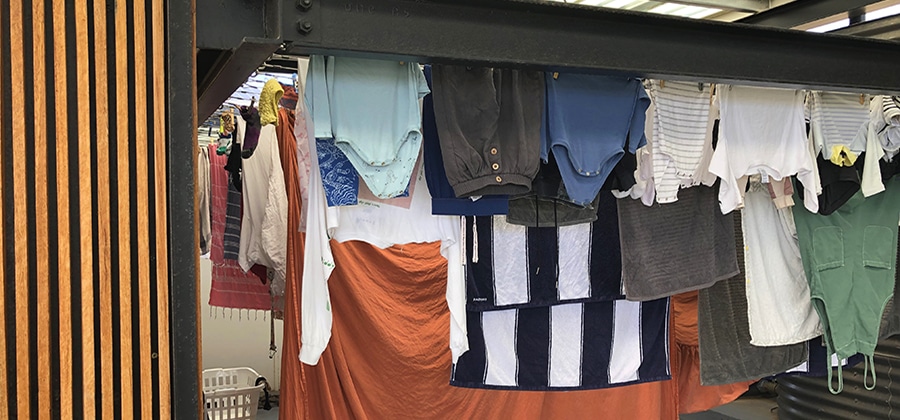
A third unconventional decision they made was removing individual laundry areas from each apartment. Instead of having laundry units in each apartment, they created one beautiful laundry area for the building that overlooks the rooftop garden. This one shift saved space in each apartment, and reduced construction costs as well as future energy usage by the building.

Lastly, where there would have been a large garage entrance from the street, because future owners agreed to no on-site parking, they were able to create space for a wine shop and sold it for $425,000 AUD. They then used that revenue to increase the thermal envelope of the building, purchasing the best double-glazing possible and increasing the insulation. And with the building significantly more efficient they were able to eliminate air conditioning, which in turn lowered overall construction costs by five percent while further reducing future energy usage and operating costs.

McLeod’s team consistently took the approach of asking what they could get rid of and what residents could share. This strategic and focused method led to maximum utilization and enabled them to create an affordable, sustainable building that was finished on time, on budget, and whose spaces were highly sought after.

Since then, McLeod has completed and filled the second building right across the street – Nightingale One.  And he’s spun off a non-profit, Nightingale, to produce more projects and provide assistance to other architects to do more of the same. Nightingale Village is under way, and a list of 8,500 potential owners wait hopefully to see if they will be lucky enough to win the right to purchase a unit there. All of this has been accomplished with no marketing.

Listen to the full interview with Jeremy McLeod to learn more about how he effectively utilized a strategy of reductionism to create a new housing model in Melbourne –  affordable, sustainable and beautiful.

Image of Nightingale I laundry by Eve Picker

Superlofts. Super fantastic.

February 5, 2020

Marc Koehler is the founder of Marc Koehler Architects (MKA) and the creator of the fabulous Superlofts project. The studio is located in Amsterdam, the Netherlands. While his firm works on many architectural projects, with Superlofts, Marc is stretching his role as an architect.

For 15 years, MKA has developed an analytically innovative, research-by-doing approach to ambitious, original ideas directed at the future of sustainable urban living.

The Superlofts project pursues the idea of community first, building second. Rather than design and build a condominium project in the hope that the market will follow, MKA are creating curated living experiences and providing highly-flexible living spaces set in urban sites, all the while building with carbon neutrality in the foreground. Superlofts accomplishes this through a customizable co-living and development model which allows people to design their own living spaces from scratch and lets new homeowners co-create their shared spaces, all in service of building a sustainable co-living community. Every aspect of each project is thoughtfully designed – from the exterior facade, to the number of families in each “pod”, to the shared amenities that will encourage community, to the extreme flexibility of the living arrangements.

Having started as a local project, Superlofts is growing into an international movement. Five Superlofts have been completed in Amsterdam and Utrecht, and projects in Groningen, Amsterdam and Delft are under construction. Sites in other international cities are also being researched.

Marc’s studio, MKA, practices a full range of design disciplines from start to finish: concept, architecture & urban design. with a team that includes four core associates and 29 architects, designers and engineers. Their work has been recognized with the World Architecture Festival Housing Award (Completed Buildings) and Director’s Special Award in 2017, World Architecture News Award for Best Housing Project in Europe 2017, Best Dutch Building of the Year (Housing) in 2018, architectenweb award in 2018 and Dutch Building Award in 2015. Recently, MKA won design bids for ambitious new developments such as Poppies, Bosrijk, KBF-Dock, Peak and commissions such as Republica Circular City and MARK that promote the transition towards a circular economy and inclusively built environment.

Marc Koehler (1977) grew up in a Dutch Portuguese family in the northern Dutch town of Naarden. He holds a Masters in Architecture from the Technical University of Delft (TU Delft). Since 2017 he has an advisory role at the municipality of Amsterdam as a member of the Spatial Quality Committee. The committee reviews planning permits in light of the city’s urban design ambitions across themes such as densification, urban renewal, sustainability and cooperative developments.

I can’t wait to visit a Superloft.

Insights and Inspirations

  • We already live in the future if successful urban housing can be modular, co-living villages, co-created by their inhabitants.
  • Building community should be the primary goal of any urban design process.
  • Sustainability is just as much about people as it is about resources.

Information and Links

  • On the Superlofts website you can explore the tools that MKA uses to help home owners, real estate pioneers and architectural partners create buildings for the future.
  • MKA has also launched the Superliving community. Here you can see residents in their dream home and meet MKA’s interior design partners.
  • Open Building is an emerging group of Dutch architects and engineers who are devoted to radically changing the building industry and the built environment to enable a sustainable and personalized way of living.
Read the podcast transcript here

Eve Picker: [00:00:00] Hi there. Thanks so much for joining me today for the latest episode of Impact Real Estate Investing.

My guest today is Marc Koehler, the founder of Marc Koehler Architects and the fabulous Superlofts. His studio is located in Amsterdam, the Netherlands. While the studio works on many architectural projects, Superlofts is perhaps the most exciting project that you will want to hear more about. With Superlofts, Marc is tapping the desire for city living and combining it artfully with flexible living opportunities, carbon-neutral living and community consciousness.

Be sure to go to EvePicker.com to find out more about Marc Koehler on the show notes page for this episode, and be sure to sign up for my newsletter so you can access information about impact real estate investing and get the latest news about the exciting projects on my crowdfunding platform, Small Change.

Marc Koehler: [00:01:09] Hi, Eve.

Eve: [00:01:10] Hi, Mark. Thank you very much for joining me today.

Marc: [00:01:13] Yeah. Nice to be here. Thank you.

Eve: [00:01:15] Yes. So, you know, I wanted to talk to you today about the very fascinating work that you’re doing in your studio, Marc Koehler Architects. And, you know, I was especially fascinated by a statement on your web site that says you are in the business of bringing people together and that you build the new ways that people want to live. And that’s a pretty unusual set of statements for an architect. Architects usually focus on buildings, not people. So, I’d love you to tell me what you mean by “the business of bringing people together.”

Marc: [00:01:51] Yeah. Well, our company started 15 years ago. Small architects, boutique design agency, doing private houses, transformations of apartments and so on. And we really had to listen to what people wanted, and how they would like to live. So, what we developed is a methodology which we called ‘The Ideal Day,’ in which we ask people to write down their ideal dream day in their ideal future home … as a film script, starting in the morning, ending in the evening. And then, it’s about how do you want to wake up, or how do you want to come home after work? So, it’s not about how big is this? How many square meters do you need in your bedroom, or in your entrance hallway, but what is coming home for you? What do, what is the routine, the ritual of coming home or going to bed or waking up or cooking or showering? And by describing this as scenes, as, let’s say, scripted scenes of a movie of your ideal future life, people start to imagine the power of change, of possibility. And that’s the real quality of architecture and interior design, is that it can really change your life if you take the opportunity and really think of what you want to achieve with your new space.

Marc: [00:03:13] This is something that grew out into several projects, beautiful houses we did for different people. And then in the middle of the financial crisis, when nobody wanted to invest into, let’s say, apartment buildings in the Netherlands, the only sector of the building industry that continued was private housing. So, townhouses, family houses in the suburbs. And there was a lot of land available around the city center of Amsterdam that wasn’t developed. Banks wouldn’t give anyone a loan because it was a very, very deep financial and real estate crisis, from 2008 to 2015. We, though, had this network of private individuals that did want to develop their dream home. They didn’t want to live in the suburbs, though. So what we created was a framework. Basically an apartment building existing out of concrete frame, with double-high spaces of five or six meters tall, and invited people to design their dream house within that framework. And this is what became Superlofts.

Marc: [00:04:22] And Superlofts basically allows private individuals to design with us their dream home in a vertical kind of village, in the sense that we have multiple floors on top of each other, with collective facilities and a strong community that actually then is the result of this. Because people become engaged, in the process of design and also in the process of, let’s say, co-owning a project with other neighbors. And we manage this whole process. And this is when we discovered that the sense of community, something that was really missing in the city. So, we started to also select people for these projects that actually match with each other, and organized, let’s say … co-creation sessions, in which these future homeowners decided together upon what kind of parking situation they wanted for their cars? Did they want electrical charging points? Did they want a shared car? Or maybe they wanted a roof terrace with a barbecue pit or a shared garden for the kids to play. And we really became real estate developers focusing on how people want to live together in the future. And this is what made us stand out to other real estate and architectural concepts in housing. Superloft is really based on individual freedom and, let’s say, the power of doing things together with your co-owners in the building, and developing shared spaces. And it creates very successful building complexes with a lot of happy people that have a very strong social cohesion, do things together, take care of each other, like in a village, but then in the middle of the city.

Eve: [00:06:21] Wow, so that’s a pretty powerful concept, and it must be very different from, you know, where you started 15 years ago. I’m wondering what sort of shifts in lifestyle you’re responding to.

Marc: [00:06:36] Ah, well, there’s many global trends that also resonate in the Netherlands, which is the shift from suburbs towards living in the city centers, or around the city centers, so people are moving back into town. People are moving closer to the facilities that the city offers. They don’t want to sit in their cars, in traffic jams, bringing their children to horse-riding classes and ballet classes and football class the whole day. So, they choose to move back into the areas where they can have everything close by. So, they don’t lose valuable time in the car.

Marc: [00:07:14] So, that’s one thing. So, in Holland, you see that, all this in … also in London and many other cities. Also in the U.S., you see that former industrial areas are gentrificating into mixed-use residential zones close to the city hubs. And this is kind of, let’s say, a potential area for a new kind of mixed and diverse city where working and living and leisure and mobility – all these aspects are kind of like combined in a new way, a lot of potential for new experiments. The old city centers are, of course, overprotected and with all kind of building codes and historic preservation codes, but especially these zones in this transition zones like called old harbor districts and light industrial areas. They are potentially the new cities where the middle class moves too. And, yeah, Superlofts is often used as a catalyst in these kind of areas. So, we are hired to bring an area that is now underused and mono-functional into movement with maybe 20- to 100-apartment building with shared facilities. This attracts pioneers that … often creators, designers, makers, thinkers and marketers, real estate developers that think, hey, I have an idea of how I want to live, and I think I can develop my ideal home within this Superlofts framework.

Eve: [00:08:49] Well, I want to move in.

Marc: [00:08:52] And then you see that these pioneers are often rewarded with a very strong increase of value of the property over the years, and then surrounding properties profit from that Superlofts has had … let’s say, a function of putting the area on the map, showing as a proven concept that it’s a nice place to live. And this is then where more commercial housing projects are being developed around it. So that’s one an important trend.

Marc: [00:09:22] But I think the second one is that we are moving towards more compact and smart living so that the apartments are becoming smaller but more smartly designed with less space for owning things, more for sharing space, collective sharing services. So, we don’t need our CD collection anymore in the house. We have it on our phone. So, we don’t need all this space to own things. And you see that also in Superlofts. They are becoming more and more compact and therefore also more affordable to broader groups of people.

Marc: [00:09:57] And the third trend, I would say, is sustainability. Climate, positive approach in which we use all these different aspects from water retention to natural cooling in nature, inclusive façades, smart energy and heating concepts to make a real circular approach to how we deal with energy and materials. In the sense that we tried to create closed cycles and loops in which energy is not being used for … spoiled, or wasted. And the same in terms of net nature and water. And yeah, that’s how … we achieve, to make, let’s say, projects with this positive climate, positive footprint in which we we store CO2 in the buildings rather than that the buildings produce CO2.

Marc: [00:10:48] And yeah, and the fourth trend is the one that I described in the beginning, the search for community. People are looking for a sense of belonging, of social interaction.

Eve: [00:11:02] You know what I’m hearing is that you must have a lot of people who are interested in what you’re doing. I’m hearing first you curate the people that are going to live in the next building, whether it’s 20 or 30 or 40 people. And you essentially address the way they want to live rather than create an apartment building with two bedrooms and two bathrooms and some of them with a den, and hoping that you can find people who want to live like that.

Marc: [00:11:26] Exactly.

Eve: [00:11:28] Wow.

Marc: [00:11:28] Yeah. So, what we do is we propose through social media and a website, a proposition for a building that is still very open in terms of offer. So we provide a menu of housing types, very diverse, from apartments on one level to duplex apartments, to work/home combinations, to apartments for seniors with everything on one level with all kinds of facilities or with a little elevator connecting two floors. And then we see how the market responds. So, we do market research and see how, what people’s interests are. And then we make the, based on that, the ideal mix of apartments. And allow people to get an option, like, to take an option, or, how to call that, to reserve an apartment for an amount of money so that we are sure that they are serious in wanting to join the community. And then we kind of puzzle with these people so that everyone gets their ideal type of apartment on the floor they want. And then we’ll have a second round to fill up, let’s say, the empty spaces within the building. And we do this all based on online communication, but as well through interactive meetings, live meetings, let’s say, group meetings in … we rent a place where we invite future homeowners to come together so they can get to know each other and see if they really like each other. And then you still see that people are still moving to the building, because they see, oh, there are these other two families with kids. Well, that would be nice to live together on one floor and share this large roof terrace together, for instance. So, you … meetups create all kinds of social interaction that leads then to a strong community.

Eve: [00:13:34] How fascinating. And then how long does this whole process take from when you sort of make the offer online and start to organize people until when they move in?

Marc: [00:13:45] Well, I mean, the last project we’re now doing … within Hoorn, in the north of the Netherlands. It has 45 apartments, large ones, a tower of 50 meters. And we started six months ago. Now we are offering the website of going live within a month and we will start construction in one year. And then it’s about a year to build it.

Eve: [00:14:12] About two and a half years.

Marc: [00:14:13] So, let’s see. That is one, two and a half years. Yeah, it’s about two and a half years from beginning to end.

Eve: [00:14:20] And do you find that a lot of people drop out if they commit like the half year point and they have to wait two years. Are they happy to wait?

Marc: [00:14:29] No, because this is almost common in The Netherlands, because the difference between how we built in the Netherlands or develop in the U.S., is that people … we don’t we don’t start to build before the apartments are sold. So, the project first needs to be designed. Then it’s, 70 percent needs to be sold before the developer and construction company will actually start constructing the building. So, people are used to have, to wait two years before they are actually moving in. If they are first buyers, in the beginning of the process, of course, you start later. The last 30 percent of the project is always sold in the latest stage.

Eve: [00:15:15] Right. It’s not that different because for condominium projects, which this would be in the States, you would have to have pre-sales in order to get financing. For an apartment rental building, you would build it before …

Marc: [00:15:31] Ah.

Eve: [00:15:31] … but if, yeah, but condominiums are a little bit riskier and I think banks on the whole want to see pre-sales. I am not sure they want to see 70 percent, but it’s a similar process.

Marc: [00:15:42] Ok. And that will also then take about two and a half years?

Eve: [00:15:46] Well, I don’t know. It depends on the project. You know, it depends on what sort of permits you get. It could take a lot longer in a place like San Francisco with, where permitting is really, really slow …

Marc: [00:15:55] Yeah.

Eve: [00:15:55] … versus a smaller place where permitting is faster. So, it depends.

Marc: [00:16:01] Right.

Eve: [00:16:03] So, yeah.

Marc: [00:16:04] Here, by the way, we had our buildings also can be larger than just 20 to 40 apartments. We are now also working on, like, complexes with hundreds of apartments. I don’t think that this way of developing is just possible only in a niche market, tailor-made situation. I think it actually can be done better, when you have a larger scale and more apartments. So, we are, in this sense, also talking to developers abroad, like in London and in Bremen, in Germany, for really large-scale projects. Because the return on the investment is more interesting in terms of software development that is tailor-made for this project. And you can make a much more smooth process really working on, let’s say, online customer journey that done with an interface that is really allowing the future homeowners to customize their homes on their iPad. But the investment of this is so large that it actually pays back only on a larger scale.

Eve: [00:17:11] But how do you keep community in a very big scale project? I know I talked to Jeremy in Australia about, sort of, the ideal size of a community. And I think when you have hundreds of units …

Marc: [00:17:23] I think ideal would be 20 people. 20 apartments, for me, is an ideal size of, let’s say, a basic cell. And then if you do hundreds of houses, you build it up with several cells. So, every entrance and elevator is then one unit of about 20 apartments. And it has its own homeowner association, so they can make decisions with a small, trusted group of people. They share their roof terrace and they make their choices together. It can also be 30 apartments. It’s not, or even more. But, ideally, let’s say, between 20 and 30. And then in a neighborhood development, you just built several of these blocks and then they again communicate on a higher level about how do we deal with the street?What do we want the municipality to offer in terms of bicycle parking in the street, garbage and waste recycling facilities? What do we do in terms of architectural co-ordination so that different blocks actually create a nice ensemble? How do we deal with sun and shading and wind and sound issues that … we can discuss that on a larger neighborhood scale with different communities.

Eve: [00:18:49] Right. So what does a Superloft actually look like?

Marc: [00:18:53] Well, that is very diverse, but we like to see it in the basis as a stripped down core and cell building in which we expose the concrete structure that has a very beautiful, deep facade made out of timber on the inside. I think it’s important that this is something that is very beautifully designed, like we are using like a very deep 40 centimeter, deep timber frame on the inside that allows you to sit in it and to put books or plants in it. And then the rest of the space is very stripped to concrete. And then people are able to customize that space with interior design elements. It can be a mezzanine floor, can be staircases, kitchens, bathrooms, walls, etc. And, in that way, can give their own expression to the space. The facade zone is something we like to control because it’s very important how the building looks to the outside. The building should stand there for hundreds of years and we don’t want to make something that looks cheap or unattractive over time. So we spend a lot of quality time on how the facades are designed.

Eve: [00:20:15] And the building facade is, you know, the wall of an open space that’s shared by everyone. So that’s really appropriate.

Marc: [00:20:22] Each unit, its apartment is then sold as as an open space, but then filled in … with a specific layout of the inner walls, and so on, by each client. They can then choose to do this themselves as a do-it-yourself project. But most of them, they choose from a palette of standard options that we are offering, and we still offer them all kind of finishing options that to customize the space in the way that they really like. Everyone has the feeling that they are part of a creative process, even if you don’t have much time for it. And you choose a basic layout. There is still a lot of nice decisions you can make about how to give expression to your space, and not everyone has time and the creativity to do so. So we offer a whole spectrum of, let’s say, paths, routes more or less intense to make your ideal home. Then, in terms of rental apartments, which we also do, we give these choices to the developer and the real estate agent to together customize the building in the way they think would work best. And then we still try to make the layouts in a way that people have several options in how to place their furniture in this space so that they can decide to put the sofa in at least three positions. So that there is really a choice to make even if you cannot design the layout of the apartment, you can design the layout in a way that you can customize the seating area, and even the kitchen that we’re designing now – a hotel co-living brand with a kitchen that is kitchen island on wheels, so that you can really customize the space to your taste, even if you don’t own the space.

Eve: [00:22:12] Very nice. So, you know, the world has a huge affordable housing crisis. And I’m wondering, I don’t know if the Netherlands has an affordable housing crisis.

Marc: [00:22:23] Yes. Yes.

Eve: [00:22:24] What … who is addressing that in any way?

Marc: [00:22:27] Definitely. And Dezeen maand Business Insider and The Independent newspaper have written all about Superlofts in the light of housing crisis and affordability. And basically what they were analyzing is that Superlofts allows starters, first buyers, an affordable home, because, let’s say, 20 to 30 percent of the value or price of an apartment is in the finishing of the apartment. And often this is too expensive for first-time buyers. And this is what makes them move to rental. However, if you buy the apartment in a core/shell way and it’s already attractive to start living there just with minimum investments, which is basically what Superlofts does, because the basic quality of the empty, open space is already does, so nice that you can just put a bed, kitchen and a bathtub and you can live there in a very nice way. And then in that way, phase your investment over time. So, then you don’t need to invest that 30 percent upfront. But you can wait until you find a better job or your fixed contract. So, it allows younger people to enter the housing market and save their investment in the apartment.

Eve: [00:23:53] And shared amenities also must reduce the cost. I mean, do you have shared laundry rooms? Are you able to limit parking areas?

Marc: [00:24:02] Exactly. And then also the larger apartments are actually a solution to the housing crisis, because what happens is that they are built in a way that they have multiple front doors, they have two front doors. So, you can split each larger apartment into two smaller ones, which results in, people rent out part of their house as a unit, as a rental unit. So, they buy an apartment and rent out part of it to two young people that need a 30 square meter studio, or something. And so it also, in this way, contributes to at least a diversity of housing types in an area, and also affordable rental apartments within a condominium.

Eve: [00:24:47] Interesting. So how Superlofts evolving, then? What do you see in five or 10 years?

Marc: [00:24:53] Well, I think that, several things. One is that we are really moving to timber construction and we are developing our first timber project at the moment in the Netherlands, which is six stories, mass timber. Still, there are smaller units that you can connect into larger ones on top of each other or next to each other. That creates kind of infinite possibilities to make floorplans and adapt them over time to changing lifestyles or market demands. So, when this mid-segment rental project, in 20 years, is released by the government, because there is a 20-year, let’s say, deal on the land-lease that needs to be respected before you can alter the configuration. In 20 years, the owner of the building can reconfigure it without, with minimal costs, because it’s already built in a very flexible, adaptable way. The timber construction is helping a lot. If you make things in concrete, it is more hard to connect units on top or next to each other. You have flexibility within the unit, but not between them. When we move to timber we can make this kind of Tetris game much more flexible and allow in 20 years from now a much higher, let’s say, rest value or repurpose value for the owner of the building. And he can then or she can then transform it into another second market segment. Maybe make smaller units, maybe sell part of it without having to demolish anything. So it actually allows a much more healthy and sustainable way of building if you build in a flexible, adaptable way in timber, because you don’t produce waste. And secondly, you store CO2 in the building because each tree that you, let’s say, take out of the forest and put into your building is a lot of CO2 that you take out of the air and store in the building – as long as you replant the tree, of course …

Eve: [00:24:53] Yes.

Marc: [00:27:09] … which is the case in Europe, in all the forests that you are allowed to take wood from. So, we are really believing that this is going to be a huge solution, or help, a contribution to solving climate crisis, is to mass build, massively in timber. Secondly, we are moving into diversifying our products, into rental, into co-living. And we’d like to partner with developers and real estate pioneers to, let’s say, create a global brand for Superlofts that connects all these different projects both in condominiums and rental into one strong brand that the Superloft members identify with, that activates the community, that offers all kinds of services, such as if you want to rent or sell your apartment, you can do that through our platform. If you want to share services or start a community event, we will allow that. And we offer all kinds of inspiration, creative inspiration on how to decorate your home or a platform of preferred suppliers where you can get design advice or buy really cool stuff for your house. So, there’s a lot of opportunity still to activate a community and to develop Superlofts further into a global brand. And we are looking for partners in different countries at the moment to produce to do so.

Eve: [00:28:42] Fabulous. That’s pretty exciting.

Marc: [00:28:44] Yeah … I don’t know if it’s gonna work, but it isn’t really … my dream already for five years is to actually connect now to different buildings. We have built eight in the Netherlands. I know these people are super-excited to tell about what they are, about their lives and how they are using the building and how they decorated their homes. And we have photographed twenty five of them, interviewed to them, and we are now starting to post that on the website, on what’s called Superlofts.co with ‘co.’ And then there is the Superliving page. And that’s the blog where we are kind of like starting to share this inspiration.

Eve: [00:29:27] That’s wonderful. Are real estate investors in the Netherlands interested in your work?

[00:29:32] Yeah, in general. Well, it’s … In MKA, definitely, in our architect firm, for sure. So, there’s a lot of spin-off for my architect firm because of Superlofts. So, we being hired, as I said, to to design a new co-living hospitality brand that is going to operate globally. So, these kind of people see that energy and creativity that we put in Superlofts can also be put into new housing concepts, that we are being approached by different investors and developers to start new specific concepts for their own properties or investments. And about Superlofts to find partners. It is. Yeah. Actually, when I am thinking, yeah, actually it is going quite well.

Marc: [00:30:19] So, there are there is different developers in both the Netherlands and abroad that would like to do Superlofts projects with us, and I think that in a couple of years from now we will we have projects in London and Germany and maybe the U.S.

Eve: [00:30:37] That’s pretty fabulous. Do you know where in the U.S.?

Marc: [00:30:41] Well, we’ve been looking in Newark. We’ve been looking in Brooklyn, in San Francisco. And the thing is that all these developments, they kind of stalled because of the complexity of legal issues in condominiums. So, this kind of development of Superlofts in the States that, where we were like one and a half years ago, which was really still focusing on condominiums, not so much on rental and co-living, but in that phase when we were in the U.S., we discovered that there was a lot of fear of people suing each other in condominiums …

Eve: [00:31:25] Yes.

[00:31:28] … and that this is what stalled the developments and what made it more difficult to pull it off. But I think that in terms of rental, when we customize the building, not with the end users, but just with the developer and the local design team, that this is actually going to be a much more interesting approach for the U.S., which means we’ll make rental buildings with shared facilities with a lot of diversity and types of lofts, in which the people can actually still belong, become a member of the Superlofts community, and enjoy the creative energy that that we are spreading. But then not in co-designing their building, but more in, let’s say, customizing their apartment decoration or, let’s say, configuring their, the furniture settings of their apartments, the types of furnishings that they choose. This is something we are now looking into, but our focus is really now in London and Germany.

Eve: [00:32:41] Okay, cool. So, I have some final questions for you. And I want to know whether you think socially responsible real estate is necessary in today’s development landscape. Because not everyone thinks about it the way you do, right?

Marc: [00:32:56] Yeah, I think it’s it’s just it’s crucial for two reasons. One, is that we are having a climate crisis that really demands for people that have power to change things, to really step up. And I think real estate pioneers are having a great responsibility and potential to show that we can do things in a radically different way. It doesn’t cost much more. It’s not so much more complicated. It just needs a little bit more time to do the right thing. You need more attention. Slow down a little bit the process so that we have time to really think things through in a more original and sustainable way than just choosing for the standard options. But I think we all know that the world deserves this attention. Right? This is just there would be a kind of crazy not to take the time to really do the right thing at the moment. And secondly, I think in terms of social sustainability, we see that our societies are polarizing a lot. Societies are falling apart in different groups that are standing more and more opposite to each other, even within families. Well, this is partly the result of that we have created cities with a huge segregation between different groups and that we allow ourselves to just go from place to place with our car or on public transport with our headphones on, not talking to the so-called other. We’re not meeting others really anymore. And we’re meeting the same kind of people in this, in the gym as in the offices and in the members club. And that’s, and so on.

[00:34:45] So what is really important is that we create communities around the home so that the home sphere, let’s say that what we in Germany called the meinschaft sphere is, let’s say, a local area network around your home includes maybe the school for your children, your local shops, but also places where you meet your neighbors, that we really start to revalue the neighborhood and the street and the building block as a social structure that allows you to get to know people from your own kind and tribe, but also from others. And that your children, our children aren’t that they become used to the fact that the world is very diverse and that there is diverse ideas and diverse kind of people, and that that is actually enriching our lives and our potential as open societies to survive in this competitive world against other continents in which there is much less freedom and much less diversity. I think the strong potential of the United States, of Europe, is that we can be proud of having these open societies that are diverse and inclusive, and that we really need to revalue the position of the home and the neighborhood in this city as important social catalysts. And I think that community-based residential developments that are not gated communities, but that are designed to interact with their surroundings and that are diverse socially and economically. Small and large, rich and poor apartments, everything mixed. That is the responsibility we have as real estate pioneers to create, let’s say, a better world.

Eve: [00:36:40] So, in a sense, I think, I feel like we’re going backwards. When I first moved to Pittsburgh, I lived in a neighborhood of houses built around 1900 and they all had front porches, and that’s where people congregated in the evening …

Marc: [00:36:55] Exactly.

Eve: [00:36:56] … talked to their neighbors. And then, you know, TV came along and everyone went inside. And the front porch was no longer used in that way. And I think it was sort of replaced all the time in apartment buildings with individual small balconies, but without really sort of understanding the …

Marc: [00:37:14] Yeah.

Eve: [00:37:14] … the loss of that place. Right?

[00:37:16] I so agree. And, you know, it’s so simple to solve this. If you look at an entrance lobby of an apartment building or a condominium, maybe it’s three meters wide. That’s 30 feet wide, a hundred feet long and you just have mailboxes. But if you would make it a little bit bigger and you put a large table there for where you can sit with 10 people, you put the newspaper, you put some flowers. You have Internet. Then suddenly you have an office space or flex-office place in your apartment building. People will start to use it as a place to work. Of course, you need to have a little bit nice design of the space and of the facade and good light and a nice carpet and so on. But it’s a little bit of effort, and then suddenly people that have that are independent workers that work from their home or their apartment can use that space as their meeting room as their, you know? It doesn’t cost anything extra and you have a fantastic social interaction space where you meet your neighbors, where you talk to each other. The same for children. You can they can do their homework with one parent together in that space rather than that every parent has to do their homework with their children separately in their homes. What we see in our buildings is that parents share this responsibility, and say, ok, one of us stays at home every afternoon to take care of the kids coming home after school, because they’re playing in the street around the house. And then at least one parent is there working in the space for something when something happens or if they need some guidance with their homework. This is what my ideal world looks like. Basically, you know, where people choose to live together because they see the advantage of sharing things.

Eve: [00:39:08] What wonderful ideals. Thank you very, very much for joining me. I thoroughly enjoyed the conversation. And I want to come and look at your Superlofts sometime very soon.

Marc: [00:39:17] You’re very welcome. And let’s find a nice spot in the U.S. to do a Superlofts U.S. prototype with a very nice lobby space where people can work on the ground floor. And with all these dreams that we have just discussed, maybe we all we can find an interesting opportunity in the future. I’m sure that there is a lot of interesting developments in American cities at the moment, like in Europe, that really are very interesting to work within. And when you come to the Netherlands, I would love to show you around. We have another website that I would like to tell you about, which has an audio tour along all these kind of community buildings in Amsterdam. So it’s nice for you and for any of the listeners. It’s called the Open Building Audio Tour. And you’ll find it on openbuilding.co, ‘co’ again, which is a platform that I’ve created with 15 Dutch architects with all kind of, everyone showcasing buildings similar to Superlofts which the architect has created, let’s say, community buildings, flexible and adaptable over time, often very sustainably built and, that’s really worth doing when you come to visit Amsterdam.

Eve: [00:40:47] Absolutely. I’m going to, I’m going to get there. Thank you very much, Marc, and enjoy the rest of the day.

Marc: [00:40:53] Thank you. Bye bye.

Eve: [00:40:55] That was Marc Koehler of Marc Koehler Architects and Superlofts. This architect is thoughtfully pursuing the idea of community first, building second, rather than design and build a project and hope the market will come. Instead, his team design their Superlofts around a curated community of people. Every aspect of each Superloft project is thoughtfully designed, from the exterior facades to the number of families in each pod, to the shared amenities to encourage community, to the extreme flexibility of the housing units. I can’t wait to visit a Superloft. You can find out more about impact real estate investing and access the show notes for today’s episode at my web site, EvePicker.com. While you’re there, sign up for my newsletter to find out more about how to make money in real estate while building better cities. Thank you so much for spending your time with me today. And thank you, Marc, for sharing your thoughts with me. We’ll talk again soon. But for now, this is Eve Picker signing off to go make some change.

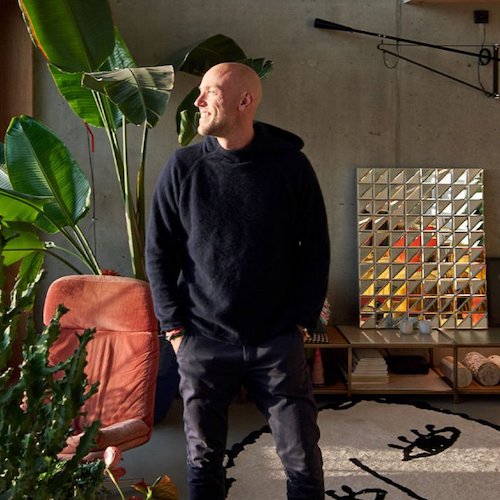
Image of Marc Koehler by Jordi Huisman.

Accelerating affordable housing in San Francisco.

January 29, 2020

Rebecca Foster is the CEO of the San Francisco Housing Accelerator Fund.  The Accelerator Fund is a public private partnership that helps to finance affordable housing in San Francisco — in particular the many buildings currently being occupied affordably that are in danger of being purchased, and of their occupants being displaced.

The Accelerator Fund has set itself the challenging goal of preserving one-third of the existing 45,000 affordable housing units in San Francisco over the next 20 years. They plan to do that with a variety of powerful financial tools and subsidies to make sure that rents remain affordable. And Rebecca is working hard to educate and bring new investors into the Fund. In just three years they have saved 319 homes and raised $183 million in capital.

Prior to leading the Accelerator Fund, Rebecca was Director of Social Impact Investment for Mayor Lee, where she led the City’s exploration of results driven contracting and social impact finance, and developed capital tools to address the City’s housing shortage. She started her tenure in local government as a Fuse Fellow in the Mayor’s Office of Civic Innovation in 2012-13. Before that she worked in public sector and infrastructure investment banking at Goldman Sachs for eight years, where she raised capital for local governments, universities, non-profits, and utilities around the country.

Insights and Inspirations

  • The average cost of an affordable housing unit in San Francisco is $500 – $800,000. That’s not affordable.
  • “The number of affordable housing units needed is staggering,” says Rebecca.
  • Rebecca’s team is tackling reducing the cost of housing from many angles — such as lower returns to investors and the use of modular construction to reduce costs.
  • Bridge loans are the key to Accelerator Fund’s financing arsenal. By providing bridge loans to projects that cannot get traditional financing, they ensure a much more rapid preservation of housing stock. When the buildings stabilize after a few years, banks will step in.
Read the podcast transcript here

Eve Picker:  Hi there, thanks so much for joining me today for the latest episode of Impact Real Estate Investing. My guest today is Rebecca Foster, the CEO of the San Francisco Housing Accelerator Fund. The accelerator fund is a public private partnership that helps to finance affordable housing in San Francisco, in particular, the many buildings currently being occupied affordably that are in danger of being purchased and of their occupants being displaced. Be sure to go to rethinkrealestateforgood.co to find out more about Rebecca on the show notes page for this episode and be sure to sign up for my newsletter so you can access information about impact real estate investing and get the latest news about the exciting projects on my crowdfunding platform, Small change.

Eve: [00:00:00] Hi, Rebecca. Thanks for joining me.

Rebecca Foster: [00:00:02] Thank you so much for having me, yes.

Eve: [00:00:04] It’s really great. So I wanted to dive right in and find out all about the San Francisco housing accelerator, which you lead, and I saw that the headline on the accelerator site says, “Innovative financial tools to preserve and expand affordable housing.” And I wanted to ask you, what are innovative financial tools? What do you employ?

Rebecca: [00:00:27] Sure. So, what our goal was in … creating the accelerator fund and I think a key piece in our origin story is actually we were created and incubated out of the mayor’s office in San Francisco. And so we are truly a public-private partnership, and I think, especially in the world of affordable housing, that’s a fundamental component of what makes it effective. So, we bring together private, philanthropic and public sector funds to address gaps in … that the public sector can’t address with its sources of capital alone to achieve its affordable housing goals and so on. And in terms of innovative financial products, what that really means is that, for example, the … you can’t really finance permanently affordable housing, especially in a high-cost city like San Francisco, but really in most places around the country, without permanent subsidy funds from the public sector. Because the amounts that … of rent that are lower, extremely low-income or in the case of the Bay Area, even middle-income person can afford to pay just isn’t enough to cover the cost of building or acquiring a building, let alone some of the operating and services costs if they are extremely low-income and need services support. So you really need the power of the public sector and the tax base, essentially, to cover those long-term permanent costs.

Rebecca: [00:02:06] But it would … it’s probably no surprise that government does not move very quickly and it’s hard for government to deliver on capital, deliver their capital really quickly and to take risk with it. And so that’s where we come in, is with private and philanthropic capital we are able to be the first money in that can, for example, in the acquisition of a building where residents are at risk of displacement, we can help a nonprofit compete with all cash buyers and foreign buyers and close on a loan in less than 60 days, get to approval for a loan in less than 45 days, and that’s really hard for a government to be able to do. So we essentially can provide that bridge. And then once the property … the building is controlled and in nonprofit hands, the city can come in, 12 to 24 months later, with permanent funding. And then we can do something similar with new construction and just really use our capital to be much more innovative and allow the nonprofit housing, affordable housing developer to move faster, be creative, try construction innovation that it’s harder for the public sector to do so.

Eve: [00:03:21] Do you … like, I’ve worked enough in these types of projects to know that the gap can be really substantial, even in Pittsburgh. I think a few years back, it was really a 40 percent financing gap between what it costs to build an affordable unit and what return you would get for that unit. So, 40 percent in government subsidies, I can’t imagine there isn’t a bigger gap in San Francisco in the Bay Area.

Rebecca: [00:03:49] Yes, I mean, it is. You’re absolutely right. It is. Just for order of magnitude, the average cost of a new construction affordable housing unit in San Francisco ranges between 500 and 800 thousand dollars. And depending on the income level of the residents in that unit, the subsidy required can be, if you include the low income housing tax credit, so federal and state subsidies and local subsidies, it can be nearly all of that cost. The local government generally bears, in the case of San Francisco, about 200 to 300 thousand of that total cost. So, a similar percentage, but I think the total costs are … a similar percentage on the local level, but the total costs are probably much higher.

Eve: [00:04:41] And that means the traditional banks don’t want to be involved at some lower level?

Rebecca: [00:04:48] Yes. So they … so, basically in our … so we have many banks actually invested in the accelerator fund as senior lenders and so they are involved in our fund, in the bridging, at a senior level. And then we have below them funds from foundations and from the city of San Francisco itself. But in the permanent financing, yes, banks will both provide a construction loan, but they provide a construction loan when there is clarity on what the permanent, stabilized funding source is, which will include a significant amount of subsidies and often low-income housing tax credit. And then if the project is supportive housing for individuals who’ve been experiencing homelessness, generally there isn’t much revenue that can support a senior mortgage on the permanent. But if it’s a 50 or 60 percent median income project or, you know, workforce housing, if there is enough in rent, then there often will be a bank providing a senior mortgage. It’s just a small, relatively small percentage often of the entire capital stack.

Eve: [00:05:58] So you must get frustrated listening to some of the rhetoric about building affordable housing. And who’s to blame for where we are. It’s a really big problem.

Rebecca: [00:06:12] It is a tremendous problem. But I guess I also … it can be frustrating, but I also, like, part of why I love my job every day is that we are on the ground in a real blocking and tackling transactional way, and in a way where we see the impact on families. We are producing and preserving affordable housing every month with projects. And so that is a counterpoint to the feeling sometimes of how overwhelming the level of systems changes that’s necessary to actually address the hole that we have dug ourselves into, particularly in California, with so many decades of undersupply of housing, especially in urban infill housing, not enough density tax codes that don’t really encourage rental housing and affordable housing. I mean, we have a lot to dig our way out of. And I think we can do it.

Eve: [00:07:12] Yeah. I mean, I just made a little time in Australia talking to an architect who is working on affordable and sustainable housing there. And it was really fascinating to hear the story of what got them to this place where essentially there’s no government subsidy at all. And, you know, the cities, the major cities in Australia are some of the most expensive in the world. So, I think the problem is huge in many places. We, you know, we know it’s huge in San Francisco, but I think people are attacking this in many different ways, which we’ll talk, you know, about later. But I wanted to first know what’s your impact been to date? How long have you been in business, actually?

Rebecca: [00:07:53] Yes, so we are just about at our three-year mark. So, we are still very much a startup. But we have we’ve done a lot and the need has been great in the last three years. So, we have really two primary programs, I guess three primary programs, to date. And the one that we really started with, and then I would say it’s our most significant, is the bridge loans that I mentioned where we help nonprofit or affordable housing developers buy buildings, often, or land that is on the market, on the open market. And in the case of the buildings where the residents are at a very high risk of displacement, and just for a little context there, it is … we have rent control in San Francisco, but there’s no vacancy control. And so, basically when a unit becomes vacant, the rent can go from, if there has been a long-time rent-controlled resident living there, can go from, say, you know, 1500 dollars a month up to market, to 4500 dollars a month, depending on the size of the unit. So, that, in a market like this, means that there are a lot of buyers that are looking to buy five to 25-plus unit buildings and either very aggressively push the existing residents out who are low-income or wait them out. And, so, we are just experiencing tremendous displacement. So, we have with, our bridge loan fund has funded the preservation of 319 affordable homes since we started and that’s across 15 projects, and we have committed across those projects 183 million dollars of capital, across those projects plus an additional vacant land acquisition for the production of new affordable housing.

Rebecca: [00:09:50] And we have also, separately, so that’s our bridge loan fund and we basically raise capital, deploy it for non-profit, to go buy these buildings; also to rehab them, do the structural upgrades so they’re seismically safe; in any instances where it’s possible add new accessory dwelling units, so, turn the garages or the carriage houses in these buildings into new, permanently affordable units. So, we’ve also financed the first permanently affordable accessory dwelling units in San Francisco, in a couple of our buildings that we funded in the Mission. And then we separately have another fund, the homes for the homeless fund, that’s in partnership with a great local organization, Tipping Point Communities, and that is funded with 50 million dollars entirely of philanthropic capital. So, our other capital is impact that basically, but it is not … we have to repay it. And in this case, this month of a 50 million dollar restricted grant and the entire goal for those dollars is to significantly cut the cost and time for the production of supportive housing for individuals who’ve been experiencing homelessness. And we are halfway into the development of a 146-unit building in the Fillmore neighborhood in San Francisco that has 145 supportive housing units and a manager’s unit, and it will, knock on wood, the total development costs for it is going towards under 400 thousand dollars a unit, including land, which is, as I mentioned before, a really significant reduction from the status quo. And our whole schedule is two years and nine months from the time we bought the parking lot until when we should have individuals be able to move in. And that is …

Eve: [00:11:44] Yeh.

Rebecca: [00:11:45] … there are many factors there, but, I say, in both cases, really what we are … you know, we have we’ve deployed a lot of capital and we are, what we’re really focused on is like what can we do with every single project to help our partners, both just get it done and make sure the building isn’t lost and the homes aren’t lost in the case of the empty displacement work and preservation. But also to do it better, every time, and figure out how … we can do the next one a little bit faster at, you know, at a lower cost or with different capital sources that make it more sustainable for the government to support this work over the long term.

Eve: [00:12:28] What about construction in the equation? Are you sort of looking at different construction methods as a way of becoming more efficient?

Rebecca: [00:12:38] Yes. So, for the project that we are working on, that … the new construction supportive housing project, we are using modular construction, and this will be the first permanently affordable modular project in San Francisco. We are working with Factory OS, a modular manufacturer in Vallejo, and that is one of the many factors that is helping us cut the time and the cost for the project.

Eve: [00:13:07] It’s interesting. And so what’s the long term goal for the housing accelerator?

Rebecca: [00:13:12] I mean, I’d say, so when I mentioned that we really focus on three things; we have the bridge lending program, which really is about just helping the, you know, the government, the city, achieve its goals with much more flexible capital and faster, and problem solve. And then, we have a supportive housing work, which is really a more flexible investment focused on bringing down the cost and time of the production of housing. And then, the other big area that we’re focused on increasingly as well is innovation in how capital can be used to really help push the envelope in getting more affordable housing done and getting it done faster. Kind of more of those systems change elements. I mean, I’d say within the circle of the delivery of capital in dollars, which is really are, I think where we’re focused. And so, for a long term goal, we have really ambitious goals about getting to one-third of our existing multifamily building stock in San Francisco, where there are low-income and extremely low-income tenants. We have a 20-year goal, along with our nonprofit developer partners, of getting to one-third of those units being permanently affordable. So, like building more of a social housing stock or preserving more of a social housing stock. On the preservation side, we’re also starting to work with other partners in the Bay Area about how they can build out similar preservation programs in their cities, because unfortunately San Francisco has been at the tip of the spear with displacement.

Rebecca: [00:14:51] And I think it’s rippling out to, you know, a number of other places as well now. And then, I think on the partnership and, you know, that investment and construction side, I mean, we are … we’re looking at any way, as I said, that we can be really creative, and problem solving focus and capital delivery that can cut costs and time so that the long term permanent gap that the government puts for affordable housing can be reduced and that we can get more housing done faster. So, to your question about innovations in construction, we’re looking at are there ways we could support construction innovation where traditional banks and governments aren’t yet comfortable with taking on risks in this industry by, you know, so we’re looking at creating some insurance or backstop products for modular housing.

Eve: [00:15:46] Yeh, interesting.

Rebecca: [00:15:47] We’re also looking at other public-private partnerships, which I think is another key part of our model. So, we’re looking at working with the school district on educator housing and philanthropic partners and, you know, trying to in some ways, you know, and then just getting more done in San Francisco in the work that we’re doing and continuing to improve upon that.

Eve: [00:16:10] So, it’s great hearing you talk about all of this, because I think most people think, you know, an affordable housing unit is just the structure, but there’s so much more to it. There is how do you finance it, and how do you build it, and how do you insure it and all of this, all of those things. Have you estimated, I’m sure you have, how many affordable housing units are needed in San Francisco?

Rebecca: [00:16:34] That is a great question that everyone has. Yes, everyone has different numbers. So, I think on the preservation side, we are focused on preserving through … the lending program 15,000 units in San Francisco. And that’s our, based on the data that’s available, getting it about a third of what seems to be the at-risk, you know, generally rent control, the lower income, extremely low-income units, and on the new construction side, I don’t have the number at my fingertips, but when we started the accelerator fund, the goal was, this was in 2014, 2015, when the initial ideas … for the fund were getting incubated in the mayor’s office, we had set out at the city to to build 30,000 new units of housing by 2020. So, by the end of this year. Which now we’re here, with half of them being permanently affordable. And I think the city will be close to meeting that goal by the end of the year, knock on wood.

Eve: [00:17:41] That’s pretty great.

Rebecca: [00:17:41] And it is clear that it is not nearly enough. I mean, … in the last study I saw, regionally, is that we need about 250 thousand more units of affordable housing in the nine county Bay Area just to make up for what we haven’t produced over the last decade.

Eve: [00:18:00] Wow.

Rebecca: [00:18:01] And so, I mean, the numbers are staggering. And so, we can’t do it if, we have to be reducing the cost and the permanent gap from the government in every possible way we can. And I think, I mean, another piece here to focus on is the revenue side. We also have to, you know, we need to also be addressing how extremely low-income individuals and low-income in our workforce, what kind of opportunities they have to actually be earning enough or be supplementing their income in other ways so that they can afford rent.

Eve: [00:18:42] Right. It’s a huge problem. So, it’s really big, and it sounds like you’re attacking it from all sides. So, what’s your background and how did you get to this position?

Rebecca: [00:18:55] It’s been a meandering path. I’m sure like many people, but … I have always really, have always really loved communities and particularly the way that people interact with their environment and, like, the built environment. And I grew up in a very rural place on the river. My parents had a campground. And although that’s a far cry from the urban landscape, I think that threadbare as it is, in that case, the campground and the river were really a physical gathering place and like a hub of community. And I think similarly, in a place like San Francisco, I mean, this work we’re doing on preservation, you just see, although a building might have five units in it, five families, one of them is the, you know, marine biologist who tends the local community garden. And another family moved here from Central America 27 years ago and have built their live here. And I mean, you just the ripple impact of everybody’s story … in these buildings and what it does to community when they are displaced. We actually, we just helped our partner close on a building in, north of the panhandle of Golden Gate Park on December 23rd that has sick senior citizen African-American couples in the building. And I mean, that’s exactly the kind of situation where they have built their lives here, their friends are here, their communities here. And they are an integral part of what makes the fabric of San Francisco the place that everybody loves. And we, so I think there is that connection, I mean, it’s like the connection of people to place, not just the big fancy architecture, which also is really cool. But the, you know, the homes that make up these communities and how that all ripples out and, you know, makes a place a really unique special place it is, I think that, that is a common thread.

Rebecca: [00:21:12] And then, from a otherwise from a background expertise perspective, after I went to business school, I had an … I went to business school because I had zero background in finance and felt like, I started to realize in my work in urban development that I needed that. And then decided at the end of that to go really try to solidify what I had started to get at graduate school, with real world experience. And I spent eight years at Goldman Sachs as a public sector infrastructure banker in New York, and then in San Francisco, … and then left there to go to the mayor’s office in San Francisco. And so I really feel like now I am in the best professional opportunity of a lifetime to be able to be entrepreneurial and creating something that connects capital to solutions in communities. And it’s been really, it’s been really fun and challenging.

Eve: [00:22:17] It sounds like it. So, you know, I wonder … So we kind of heard what real estate impact investing is happening around the accelerator. But I’m wondering what difficulties you see with it and whether you think people still need to be better educated about what sort of returns to expect, and, you know, what it means to invest in something that isn’t just a commodity. Right?

Rebecca: [00:22:46] Yes. I mean, that is an excellent question and I think one that’s very top of mind right now, because we have had fortunately more of the largest employers in the Bay Area have started to focus on the tremendous need, locally, even though these are global companies and I think often in many ways had not really been focused as much on their local communities. And and are now, I think, both because it’s a real, that the lack of affordability and the housing challenges are a real issue for their workforce across the spectrum of their workforce. And because it’s just, you know, the extent of homelessness is really painful and you can’t exist in the Bay Area and not be feeling every day the impact of the level of poverty. And I think also of the dissonance between being at the center of wealth and innovation, arguably in the world, and the level of poverty.

Eve: [00:23:55] I was going to say that’s the most shocking part. You know, the fact that it’s one of the wealthiest places in the world and has this incredible homeless problem.

Rebecca: [00:24:04] Yes. I mean, and it is that, I mean, we all have to take so much responsibility … like, we got to fix it. And, I think, you know, when we started our fundraising, we talked to a lot of national foundations and it was frustrating at that time. But I get it. Many of them said to us, we’re sorry, we’re not going to invest in San Francisco. You have so much money there. You’ve got to solve your own problems. And, I think, it’s to some extent that’s true. Like we have to address this in the Bay Area. And, I think, that that is becoming more front and center for folks. And that being said, from an, to your point about the kinds of returns you can expect and the education question, we still have some work to do on that front. Because you can’t really, you can’t make money off of extremely low-income people.

Eve: [00:24:57] Yeh.

Rebecca: [00:24:57] Yes. There is the potential to have some, you know, high risk appetite. You get your principal back and get a one or two percent return type funding. We certainly have that sort of capital in our bridge loan fund, but that’s only as valuable as the amount of permanent gap dollars that the public sector has and that are available to address the needs of permanent affordability. And so I think the power of what you can do with flexible philanthropic and private impact-focused capital is take a lot of risk. Try new things. Innovate on construction. Parallel track on your design work before you have your entitlements, like, allow your, like those types of things. And that means you might not always get repaid. It is more risk. And, I think, though, that is, that’s a hard, that’s a hard balance to sort of figure out.

Eve: [00:25:55] It is. And it’s actually something I struggle with. I don’t know if you got a chance to look at my crowdfunding platform, small change, but I get asked all the time how the platform might help affordable housing projects. It’s a very difficult thing to answer for exactly the reason you said. The more return you provide to investors, the more rent you have to charge.

Rebecca: [00:26:15] Right.

Eve: [00:26:17] It’s very problematic. That’s not really the goal of affordable housing. But I’ve seen people tackle it and still manage to get some investment in just some different ways. But it’s really, it’s difficult to watch. I wish I knew with certainty that if we put affordable housing projects on the platform with a two percent return, people would invest.

Rebecca: [00:26:41] Right.

Eve: [00:26:41] But … I just, I don’t really believe that yet. You know?

Rebecca: [00:26:45] Yeah, I think it is a hard, we have talked, we’ve had many brainstorming sessions with various partners about, you know, well, what about like affordable housing and workforce housing? Your risk of turnover is minimal. And so the risk is significantly lower, and so, we have, you know, talked through before, well, could we get, you know, pension funds and larger institutional investors to really look at this more like infrastructure, than like, you know, real estate, market rate real estate returns. So, that’s one angle that we’ve talked about with folks. The challenge still is it’s very low. It’s one to two percent. And it’s long term. And, you know, until there is just …

Eve: [00:27:32] It’s got to be people in institutions with enough wealth that that particular investment isn’t going to impact them too much.

Rebecca: [00:27:40] Right. And where there is, I mean, I think there … and it’s a very true double bottom line. I mean … and where I’ve seen it work, you know, in some cases with crowdfunding, one of our partners, Mission Economic Development Agency, did a crowdfunding raise for a building acquisition that had a beloved mural in Mission Bernal neighborhood, the Precita Eyes Mural. And when there’s some, I think there is a benefit, especially because it’s so local. You know, engaging people who care about a place, and investing in something that makes that place vibrant and diverse, and the community that they, that they love and want to be in. Although, that may be in many cases, I guess, I think the other challenge with crowdfunding is the cost is so significant, of housing, that raising $20,000, which could be a lot of people with a lot of small contributions, is probably more meaningful in terms of engaging people in the work than it is in terms of actually moving the needle financially for the project.

Eve: [00:28:54] Yeah. Although I think of crowdfunding as a couple of different securities rules and you can crowdfund or advertise regulation D, as well, which lets you raise as much as you want. So, but only through accredited investors. So, but I think, you know, the small crowdfunding, retail crowdfunding that everyone can invest in is useful from a community building, asset building point of view. It’s not a way to raise a lot of money, that’s for sure.

Rebecca: [00:29:24] Right, right. Yeah, there’s a … one area we’re looking at where there could be overlap a little bit with the crowdfunding ideas, how we could create a product for investing in affordable housing that’s coming through donor-advised funds.

Eve: [00:29:42] Yes.

Rebecca: [00:29:42] There really is already the dollars that people have allocated to philanthropy and generally there is a lower desired return threshold, or they’re just not as focused on it. And so, and there are there are a lot of dollars in donor-advised funds, nationally, of course. So, that’s an area that we started to look at more, that it would be great to, for us to continue the conversation on.

Eve: [00:30:08] Absolutely. Absolutely. So do you think socially responsible real estate is necessary in today’s development landscape? I know you’re focused on housing, but in general?

Rebecca: [00:30:16] I mean … to the extent, and you can help me with the definition of socially responsible real estate …

Eve: [00:30:25] Oh, I don’t even really know it myself. I mean, I think there are a bunch of different definitions out there. Mine is, you know, something that makes life better for people. It might be a building that houses services that they need, or it could be a building that, or a space that is created that they can use. I mean, I think there’s many ways to define it, in real estate. For me.

Rebecca: [00:30:52] Yes, I mean, absolutely. I think especially in these, I mean, the trends toward urbanization. And we just, there are so many more people and I think probably will continue to be so many more people that are living in an urban environment. And it is, I think as we, everyone feels like, viscerally yourself, what your day to day interaction is with the space that is your home, and your community, and your walk to transportation, or your commute to work, and your interaction and your place of work with the space that you’re in. I mean, those that’s what makes up a big portion of people’s lives. And so I think it is totally fundamental that we are, that we, you know, are all thinking about making that positive and thinking about it in all of the ripple impact ways, from a sustainability and climate perspective and, you know, how people interact and as an affordability perspective. I mean, there’s so many elements in addition to affordable housing that improve the quality of someone’s life versus their rent cost …

Eve: [00:32:11] Right.

Rebecca: [00:32:11] … that also are very much tied to space, their commute, their job environment, the quality of their schools. And these are all tied to urban design, and the use of space, and the buildings that fill the space.

Eve: [00:32:27] And I think the ability to live somewhere and not have to have a car is like absolutely critical. Transit …

Rebecca: [00:32:34] Yes.

Eve: [00:32:35] … being able to walk to amenities, walk to work, walk to school. It’s really critical for living affordably. Actually, I wonder how successful you’ve been, where you’ve been sort of making your numbers extremely lean in, in getting the units to be very energy efficient. Has that been hard?

Rebecca: [00:32:57] So, a lot of the work we do is, as I said, is helping … developers buy existing buildings. And part of the upgrades are focused, whenever there’s enough, you know, capital budget for it on window upgrades and kind of those types of weatherization, and other things that will improve energy efficiency. And then in the new construction buildings, I mean, our, we are not a developer, but our developers are definitely focused on those things. And I think just by nature of, I mean, there’s no parking in affordable housing … There’s always bike storage. There is, you know, they’re generally, luckily, in San Francisco, like near and have great access to transit options. And, I mean, you know, one thing that is, we are doing to bring down costs in the, our new construction project is the individual unit sizes are smaller than most supportive housing studios are. Yes.

Eve: [00:34:05] Yeah. Interesting. Okay. Yeah, it’s a little bit harder when you have older buildings, you have to retrofit them because … you just can’t seal them as well.

Rebecca: [00:34:17] Yeh.

Eve: [00:34:17] You can’t really get as much energy efficiency as in, you know, a modular box that you’re thinking about that from day one. They just weren’t built that way. Yeah.

Rebecca: [00:34:26] Yeh. Right.

Eve: [00:34:27] So. Wrap up question. Where do you think the future of real estate impact investing lies?

Rebecca: [00:34:35] I mean, I think, definitely, as I said, where I think that private capital can be, from an affordable … from my lens, an affordable housing can be the most impactful, is in really coordinating closely, working with somebody like us, or others, that coordinate their dollars and the repayment of their dollars very closely with public sector dollars that are the permanent financing, which is a huge risk mitigation for their investment. And so, you know, I think in the case of San Francisco, it had the triple-A credit rating. So, investors really should feel comfortable as bridge lenders with taking on a fair amount of risk if they know that the city is a partner of ours. And so, and that can then allow us to help the, you know, the nonprofits move much faster and have one single funding source that could be extremely high loan to value ratio, for example, and not have to pull together many different funding sources, just anything that we can do with bringing in that private capital. And then really understanding how mitigated their risk is by the existence of the permanent capital at the back end. I think then can, you know, can help us deliver on greater efficiency and get them their goals of repayment and also get moved towards our goal, bringing down the permanent gap and getting more housing done faster and more cost effectively.

Eve: [00:36:11] So you’ve you’ve really bitten off a huge project. And I’m really, I’m really impressed and very grateful that you took the time to talk to me.

Rebecca: [00:36:22] Well, I love the work you’re doing, and it’s so great to be able to lift my head up sometimes and hear about what others are doing, innovating in this space around the world. So, with your, much appreciate the … documenting and sharing you are doing with the project.

Eve: [00:36:40] Well, thank you very much. And we’ll sign off. Thanks a lot. Bye.

Rebecca: [00:36:44] All right. Thank you. Bye.

Eve: That was Rebecca Foster, CEO of the San Francisco Housing Accelerator. What a huge challenge she has set herself. The accelerator wants to save one third of the existing 45,000 affordable housing units in San Francisco over the next 20 years. And they’re using a variety of financial tools to make sure that rents remain affordable. In just three years, the accelerator has saved 319 homes and raised $183 million in capital. You can find out more about impact real estate investing and access the show notes for today’s episode at my website rethinkrealestateforgood.co. While you’re there, sign up for my newsletter to find out more about how to make money in real estate while building better cities. Thank you so much for spending your time with me today. And thank you, Rebecca, for sharing your thoughts with me. We’ll talk again soon. But for now, this is Eve Picker signing off to go make some change. 

Image courtesy of Rebecca Foster, San Francisco Housing Accelerator

When public outcry drives change.

January 27, 2020

We’re facing significant challenges in the housing and real estate market these days. And still it seems hard to convince people that change is necessary to respond to the enormous challenges of climate change and the affordable housing crisis. This is especially true in the real estate industry, where trends and practices have developed over many years and are a little set in stone.

So how does one trigger change? Sometimes unwittingly when an unusual or noteworthy event captures people’s attention. One great example is a planning battle that was fought by an architect in Melbourne, Australia.

Stripped unfairly

Jeremy McLeod, director of the architecture studio, Breathe, is committed to providing affordable and sustainable housing to the Melbourne community. When Jeremy tested these objectives with his first project, The Commons, a mid-sized condominium project in the heart of Melbourne, the project was an unequivocal success, as it quickly sold out, won various awards for sustainability, and was completed on budget.

Sustainable, affordable and pretty gorgeous, people wanted more just like it. And so, with a waiting list of over a hundred people, Jeremy decided to pursue a second project right across the street and went about getting a planning permit to begin the project. The planning permit was approved. And then a neighboring developer challenged it in court. Breathe was building apartments that were 20% bigger, 20% cheaper, and substantially better than traditional apartments in the area, and better than the developer was planning to build. As you can imagine, other developers were concerned that this was going to create issues in the market.

Well-funded and with a powerful legal team, the challenging developer was successful and Breathe was stripped of its planning permit for the building, Nightingale. This put them back to square one, with the task of starting the long planning application process from scratch again. For Jeremy it was a devastating moment and one that nearly broke him and his team.

The public response

While the loss of the permit was beyond disheartening, it unexpectedly became a turning point for the project, bringing waves of public support. The press heard of the permit challenges and became very fired up over the loss of the permit. The idea of shutting down a project that had high community aspirations – affordable, carbon-neutral housing for first-time home buyers in a very expensive housing market – did not sit well with many and got lots of attention. It seemed objectively contrary to the goals of the community. As a result, it worked to spark a powerful public response.

This outcry was only strengthened when the reasons for the permit loss were highlighted. In the Appeals Court, the issue turned over the car parking, namely the fact that there wasn’t a parking lot in the basement. However, the project is on a train line, with a bikeway leading to the CBD right next to it, and 30% of future residents didn’t even have a driver’s license. At least 40% of future residents had already committed to either getting rid of their car or parking it in one of the many lots in the area. All in all, it was a decision that didn’t seem to make much sense.

The result was that support for this type of carbon-neutral, affordable housing literally grew overnight. The waiting list for Nightingale went from 125 to 400 people in one day. Now, there are 8,500 people on the waiting list.

It was a difficult and unusual way to gain support, but the seemingly unfounded stripping of Nightingale’s planning permit was ultimately an incredibly effective way to raise support for a new type of housing. This battle brought some central issues to light, helped frame important topics for the community, and drew attention to what types of changes were possible. In Melbourne, the community responded with resounding support for innovative designs and a new housing model. Hopefully, this is momentum that will carry over to other communities and areas. 

If you want to learn more, listen in to to Eve’s interview with Jeremy about this project and the work that Breathe is doing.

Image of Nightingale I, Melbourne, by Eve Picker

Investing for good.

January 24, 2020

More and more, investors want to do more than make money. They want to invest in triple bottom line projects that are socially responsible as well. Environment, Social and Governance (“ESG”) investing is a rapidly expanding investment category and already offers a wide array of opportunities, many of which produce competitive returns. Unfortunately, many investors still fear that investing in an impactful project means sacrificing returns.

It’s time to get over that. There are lots of opportunities for investment in projects that do good as well as provide a competitive or even above-market return. Just like any other investment, there are some basics to keep in mind when looking for and making socially conscious real estate investments.

How can I make sure a project offers impact?

What exactly is Socially Responsible Investing (SRI)? It means investing in companies or projects that have ethical practices and positive social impacts. Simply put, this means investing in ventures and companies that work to have a positive impact in their community.

Just because a company or a project claims to have a positive social impact doesn’t necessarily mean that it does. You’ll need to evaluate that impact for yourself. You can do that in any number of ways that make sense to you. In real estate you might be interested in affordable housing, energy efficiency, elimination of blight or supporting a neighborhood project. Everyone has their passion project and you will have yours too.

At Small Change we’ve developed our own set of measures called the Small Change Index. These measures are built around three impact pillars – mobility, economic vitality and community. Any project that lists an offering on the Small Change platform must score at lease 60% on our proprietary Change Index survey. This provides some flexibility and quite a variety of impactful projects to choose from.

How should I evaluate return?

When you consider investing in an SRI, you’ll be thinking about two things – the social impact that the project makes and the potential for a return on your investment. These two goals are not always compatible. It’s a balancing act. One may be more important than the other to you. It’s important to consider them independently, weigh each carefully and make your investment decision accordingly. Sometimes the scale may tip towards doing good, and sometimes the scale may tip towards doing well. If you’re lucky, you’ll find projects with perfect balance.

What are some examples?

For example, you may want to invest in a project in your neighborhood. Perhaps it’s a building that fills a lot that has been vacant for many years and has been a neighborhood eyesore. The return on this investment is most likely to be much greater than just a financial return to you. This building promises to improve your neighborhood, and along with that perhaps improve the value of your house. Or maybe you want to invest in an affordable housing project, because you care about housing security for everyone. Affordable housing is an especially difficult socially responsible investment class. The greater the return on equity invested, the higher the end rent the tenant will pay. High returns and supporting housing security may not go hand in hand. You’ll need to decide which matters more to you with an affordable housing investment opportunity.

At Small Change we’ve had first-hand experience with high impact projects that have provided competitive financial returns to investors as well. To date the balance has been pretty well perfect, with not one project that has returned less than 10% per annum to date, and the most successful returning an extraordinary 21%+ IRR. These are competitive returns even for projects that don’t provide any social returns. And take a look as well at the creative ways that Jorge Newberry and his team at American Homeowner Preservation are working to help thousands of Americans stay in their homes, all the while providing handsome returns to their investors.

All that to say, there are plenty of investment options that are socially conscious and that offer investors a good return on investment as well.

Why should I care?

There are plenty of social issues that plague our planet. Climate change and the affordable housing crisis, to name just two, are on everyone’s mind today. When you invest in an affordable housing project, you are taking action to help solve the problem. When you invest in a net zero or a transit-oriented building project, you are taking action to help solve climate change. Similarly, when you invest in your community, you’ll reap the benefits and so will your neighbors. And so on.

_

Socially responsible investment is not rocket science. It’s common sense. Go ahead. Invest in something you care about.

Image of building in San Anonio, Texas, by Eve Picker

« Previous Page
Next Page »

Primary Sidebar

sign up here

APPLY TO BE A PODCAST GUEST

More to See

(no title)

February 22, 2025

Bellevue Montgomery

February 11, 2025

West Lombard

January 28, 2025

FOLLOW

  • LinkedIn
  • RSS

Tag Cloud

Affordable housing Climate Community Creative economy Crowdfunding Design Development Environment Equity Finance FinTech Gentrification Impact Investing Mobility Offering Opportunity zones PropTech Technology Visionary Zoning

Footer

©rethinkrealestateforgood.co. The information contained on this website is for general information purposes only. Nothing on this website is intended as investment, legal, tax or accounting strategy or advice, or constitutes an offer to sell, solicit or buy securities.
 
Any projections discussed or made may not be accurate and do not guarantee a specific outcome. All projections or investments are subject to risk due to uncertainty and change, including the risk of loss, and past performance is not indicative of future results. You should make independent decisions and seek independent advice regarding investments or strategies mentioned on this website.

Recent

  • The Mulberry
  • Mount Vernon Plaza
  • The Seven
  • Real estate and women.
  • Oculis Domes.

Search

Categories

Climate Community Crowdfunding Development Equity Fintech Investing Mobility Proptech Visionary


Copyright © 2026 · Magazine Pro on Genesis Framework · WordPress · Log in