• Skip to main content
  • Skip to secondary menu
  • Skip to primary sidebar
  • Skip to footer
  • Home
  • About Us
  • Say hello
Rethink Real Estate. For Good.

Rethink Real Estate. For Good.

  • Podcast
  • Posts
  • In the news
  • Speaking and media
    • About Eve
    • Speaking requests
    • Speaking engagements
    • Press kit
  • Investment opportunities

Equity

7.4 million short.

November 6, 2019

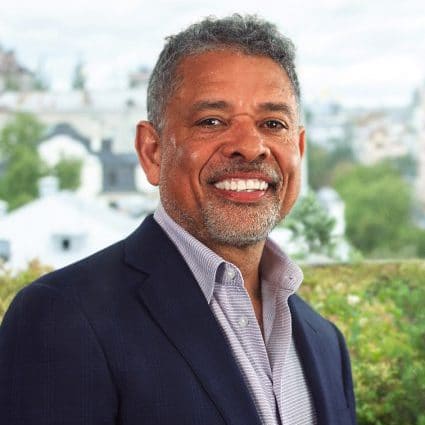
Matt Hoffman’s primary interest these days is the intersection of housing and technology. He is an active early-stage investor in companies with tech-enabled solutions that can transform the housing sector in a way that increases affordability and sustainability. And he’s also  a founding partner in HEALTH+, a suite of telehealth services bringing healthcare and lower cost prescription medications to lower income residents of multifamily housing. 

With over 25 years experience in the private, public, and non-profit sectors as a social and business entrepreneur, Matt has served as Vice President of Innovation for Enterprise Community Partners a national organization working to deliver capital, policy, and solutions to the affordable housing sector. In that role, he built an investment portfolio of HousingTech companies and led the launch of an online brokerage for social impact investing called ImpactUs. His previous experiences include serving as a policy advisor to the U.S. Secretary of Commerce and running a federal interagency task force on e-commerce; providing business strategy and policy consulting to high-tech and startup companies as Vice President of E-commerce at Infotech Strategies; and co-founding and running a real estate development company in Baltimore, Maryland.

Matt has served on numerous non-profit boards and currently chairs the board of Integrated Living Opportunities, which builds community for young adults with autism seeking to live independently. He is a graduate of Harvard’s Kennedy School of Government (MPP) and Brown University (BA).

There is no doubt that Matt is squarely focussed on how technology can disrupt our failing housing industry. With a shortage of 7.4 million affordable housing units today, Matt is thinking big.

Insights and Inspirations

  • Housing Tech Ventures, where Matt is managing partner, is focused on backing companies with tech-enabled platform solutions that have the prospect of changing the housing market in a way that increases affordability. He likes companies that are tackling very challenging problems.
  • We’re 7.4 million affordable housing units short of our housing needs in the US today. Over the next 10 years we’ll need to build another 4 million rental units just to keep up along with 8 million homes for sale. Ouch.
  • Even if we had the funds, we won’t have the labor. Other technological solutions have to step up.
  • Matt is thinking big sourcing companies like CityBldr which uses machine learning to aggregate land, or credit companies like Till – trying to solve credit issues for low income tenants. 

Information and Links

  • Matt chairs the board of Independent Living Opportunities, a startup that works to enable adults with intellectual disabilities to live independently.
  • When Matt is not thinking about housing and tech, he’s practicing on his congas, djembe and darbuka, trying to become a better drummer! Tom Teasley, Matt’s percussion instructor, is one of those special people bringing good to the world. 
  • Matt hopes that his startup, Housing Tech Ventures, will bring market-driven solutions to the housing market in order to increase housing availability and affordability.
Read the podcast transcript here

Eve Picker: Hey, everyone, this is Eve Picker, and if you listen to this podcast series, you’re going to learn how to make some change.

Eve Picker: Hi there. Thanks so much for joining me today for the latest episode of Impact Real Estate Investing. My guest today is Matt Hoffman, whose primary interest these days is the intersection of housing and technology. He’s an active early-stage investor in companies with tech-enabled solutions that can transform the housing sector in a way that increases affordability and sustainability.

Eve Picker: He’s also a founding partner in HEALTH+, a suite of telehealth services bringing healthcare and lower-cost prescription medications to lower-income residents of multifamily housing. This is built on his background of over 25 years’ experience in the private, public, and non-profit sectors, as a social and business entrepreneur and serving as a policy advisor to the U.S. Secretary of Commerce.

Eve Picker: Be sure to go to Eve Picker.com to find out more about Matt on the show notes page for this episode and be sure to sign up for my newsletter, so you can access information about impact real estate investing and get the latest news about the exciting projects on my crowdfunding platform, Small Change.

Eve Picker: Hi, Matt. Welcome. Thank you for joining me.

Matt Hoffman: Pleasure to be here, Eve.

Eve Picker: I know that your interests have shifted over the years, and you worked as a developer in a large mission-driven organization for a while, but you’re now pretty squarely focused on technology and innovation. I’m just wondering how that shift happened.

Matt Hoffman: While working in residential development for 15 years, in one capacity or another, it became very clear that the housing market was getting away from most Americans, whether they were renting or seeking home ownership. By that, I just mean it just wasn’t accessible or affordable. People obviously are housed, but not in an optimal way. Looking at the market, a question that I asked myself, coming from a policy background, was how could we transform the way that we build, that we preserve housing in the country?

Matt Hoffman: Although there certainly are some key policy levers that we could pull, I felt that the biggest shift could come from the market side, itself, and through the application of technology, which really has not penetrated the housing sector like it has most other sectors of our economy. That really was the draw – trying to solve for the housing affordability challenge that the US faces right now and looking for entrepreneurs who were looking to apply technology and business model innovation enabled through technology to the housing market.

Eve Picker: You created HousingTech Ventures?

Matt Hoffman: I did. HousingTech Ventures is a technology-focused venture fund seeking early-stage companies – seed stage and Series A – that have solutions that are tech-enabled solving a problem in the housing market in a way that, at scale, could increase housing affordability. The way I think about it is where are the entrepreneurs in the housing sector that could provide that kind of transformation or disruption, even, to the marketplace that Uber did to the taxi market or Airbnb to the hotel market? It’s not so much that they eliminated the incumbents, but they really forced those incumbents and the regulators who oversee those markets to change their business practices.

Matt Hoffman: We need to see that in the housing market, and the evidence is clear. We have 7.4 million units-  a shortage of 7.4 million units that are affordable to lower-income Americans. We need to add 400,000 new units per year – that’s a net number – to serve the number of renter households that are coming into the market over the next decade; that’s 4 million units right there. We need to add 8 million units of home ownership over the next decade for the new household formation. We clearly are not going to get there using the same practices that we’ve been using over the past several decades. In fact, it’s getting harder as we try and address existential issues, like climate change, which, rightfully so, are forcing us to change our policies, which unfortunately make it harder to produce housing.

Eve Picker: Yes.

Matt Hoffman: We need that kind of disruption and transformation in the housing sector.

Eve Picker: I usually think about this in terms of building, construction, disruption, but I’m sure you’re thinking about it in in other ways. Can you tell us about any disruptors that you are seeing that are very different?

Matt Hoffman: Sure. I’m very excited, first, about what we’re seeing in the construction-tech sector; entrepreneurs who are applying technology to how we build. Fortunately, there’s a lot of capital flowing to those companies; whether that’s 3-D printing, or construction-site management, or the use of drones, or robotics, especially related to bricklaying and drywall hanging; lots of opportunity in construction tech, and that’s all good. That’s automation, which produces greater efficiency, which will lower the cost of inputs to produce housing.

Matt Hoffman: I have been focused more on business-model innovation that’s enabled through technology. What excites me about that, first and foremost, is it’s less obvious, and there’s not as much capital flowing, so I tend to be attracted to harder problems to solve. Automation, in general, is happening throughout the economy. It’s finally penetrating construction and the building trades, and that’s going to happen over time. The real challenge is how can we accelerate change? I think that’s through business-model innovation.

Matt Hoffman: Let me give you a couple of examples of the type of companies that I’m interested in. There’s a company, for example, in Seattle called CityBldr, an early-stage company that is using machine learning in identifying opportunities to build housing, by-right, according to the zoning code, by aggregating potential development parcels, which is a very difficult [cross talk]

Eve Picker: -it’s very difficult. Yeah.

Matt Hoffman: What I like about the CityBldr’s approach is there are sophisticated software tools for developers to use to do that type of modeling, but the approach that CityBldr is taking is both on the supply and demand side. So, the supply side are the landowners, the current landowners, who essentially have a lock on the property. The demand side, in this case, is the developers or even cities that are seeking economic development and revitalization for an area. This tool is egalitarian in that it enables both parties to come to the table and look what could be built and does a pro forma that demonstrates to both sides what the economics are of the deal and what the land value the deal can tolerate.

Matt Hoffman: I’m hopeful that through this type of analytics being applied in the marketplace, we’ll be able to unstick deals that don’t get done for a variety of reasons and put tools in the hands of both buyers and sellers to enable development to happen and to enable it to happen by-right, so we can get the highest and best use for land that’s appropriately placed, that’s in demand, and that can help alleviate the housing challenge. That’s a machine-learning example.

Matt Hoffman: We also have companies that are unlocking credit opportunities for people who’ve been shut out of the credit markets. There’s a company based here in Washington, D.C., where I am, called TILL (T-I-L-L) that’s working with renters who are either no-file, or thin-file, to use the credit vernacular. In other words, they have no credit or poor credit. These renters, like anyone, sometimes experience unforeseen challenges that restrict their cash flow.

Matt Hoffman: Example: someone is doing all the right things. They’re housing themselves and their family. They’re working, and the car breaks down; they need to pay $1,000 to get the car repaired, and they need the car in order to get to work. But now they’ve spent $1,000 on the car that they were going to spend on rent. They don’t have savings. What do they do? Really, their only … They have two options. One is to not pay the rent. They don’t pay the rent, not only do they face late fees, but they could get evicted. The other option is to go to a payday lender, which will likely charge upwards of 400-percent APR and put them into an endless cycle of late fees and loan renewals. These are loans that are designed for the customer to fail.

Matt Hoffman: TILL saw the opportunity with these borrowers to provide them with a loan structure that’s designed for them to succeed. In other words, it’s not a predatory situation. TILL can provide the service and make money without preying on these very vulnerable borrowers. What does that do? That’s essentially de-risks the credit from the landlord because TILL pays the landlord directly, and it also enables the tenant to bridge whatever minor financial crisis that they’re currently facing, get back on track, and, most importantly, stay housed. They don’t have to move themselves or their family and potentially end up on the street. Those are just two examples. One is, obviously, zoning. One is credit. There are many others I could give, as well.

Eve Picker: Be sure to go to EvePicker.com and sign up for my free educational newsletter about impact real estate investing. You’ll be among the first to hear about new projects you can invest in. That’s EvePicker.com. Thanks so much.

Eve Picker: Yeah, I think I saw one … I think it was New York Times, just this week, where these two guys started a company where they help people with rental security deposits, which I suppose might be another barrier of entry for a lot of people.

Matt Hoffman: Exactly. Again, that’s a credit-based model, or financial-services- based model. There’s so much opportunity for business-model innovation around financial services and credit. In the US, if you want to house yourself, most people have only two options. You either sign a 12 -month lease, which does require an additional security deposit, or you sign a 30-year mortgage.

Matt Hoffman: We are much more sophisticated than that. We can offer people a host of options for both home ownership and for renting that can better suit their economic situation, and even their temporal needs. Maybe someone only is prepared to obligate themselves for three or six months instead of the standard 12 months. Unfortunately, the business models have not only been locked in by the market side, but also by regulation, much of it very well-intentioned for tenant protection, but, to a large extent, I think that’s inhibited owners and landlords from innovating and offering other solutions. I think that’s largely, in part, because we’ve had too many bad actors in the real estate market who’ve preyed on tenants who, especially at the lower end of the income spectrum, are very vulnerable. We’ve had some pretty heavy handed regulations which, when that occurs, tend to inhibit innovation.

Eve Picker: Well, I can see why you’re fascinated by all of this. Still, that’s like how on earth do we bridge the 7.4 million short? That’s crazy. That’s a very big number.

Matt Hoffman: One way to do that is not only through production. There’s no way we’re going to build our way out of this in the near term. The shortage for affordable units is actually 7.4 million. That’s according to the Harvard Joint Center for Housing Studies, which is the annual report, which is the Bible of the industry. If you put a number on that of $200,000 per unit, that’s $1.5 trillion of capital, we would need to build our way out of it. Not to mention, how would we address the labor issues, the labor supply issues? We clearly don’t have enough construction workers in the country, right now; as well as where would we build it, permitting, et cetera? We could not build our way out of this.

Matt Hoffman: We also need to look … That’s the supply side, but there is the demand side. We are seeing co-housing and other models emerge where, again, we’re moving away from the traditional model of one tenant or two tenants per unit and looking at unrelated parties sharing spaces in ways that are not locked into that 12-month lease. There are companies, like Nesterly, out of New York, which is opening up a service in Boston that matches millennials with seniors who have extra rooms in their apartment that they’d like to rent. The millennials that they’re targeting are typically seniors- I’m sorry, students, of which Boston has only 250,000 full time students. Plenty of market share there for them to penetrate.

Matt Hoffman: Then, other companies, like Common, and Starcity that are bringing co-housing to the multifamily market. PadSplit, which is bringing co-housing to the single-family-rental market. On the demand side, we’re filling in with different models that can not necessarily produce new units but can house more people. That’s going to be essential because the two biggest demographic cohorts in our country are millennials, which is a bigger cohort than the baby boomers, and seniors. Those two cohorts – millennials, and seniors – will continue to be the largest for the next couple of decades. Their housing needs are significantly different than what has become the typical housing scenario – which I referred to earlier – of 12-month lease or 30-year mortgage that has dominated the marketplace for the last multiple decades.

Eve Picker: Yeah, okay. I think that’s right. Family structure is also changing. The house for mom, dad and 2.3 kids isn’t really quite the way we live anymore is it? Or many of us-

Matt Hoffman: It’s not. You actually have a pretty interesting innovator in Pittsburgh who’s addressing that. Brian, at Module, has a company that’s thinking of the home as essentially an expanding unit. Constructing a new home, starter home, that’s two bedroom/one bath, but it’s built in a way such that you can add on additional components as a family’s needs change. Add a bedroom and a bath as children are introduced into the equation; add an accessory dwelling unit, if parents come home to live, or even students who’ve graduated and return to live at the family home while they start their careers.

Matt Hoffman: This notion of being able to stay in place … When we talk about aging in place, we often think of people in their 60s, 70s, and 80s not wanting to go to a nursing home and holding onto the family home or an apartment. What I think the new definition of aging in place, that Module and others, who are introducing the concept of a transforming home, bring to the market is that the home can be more than just a single- serve a single purpose or a single point in time without major renovation.

Eve Picker: Yes. Still, my frustration with a modular market like that is it’s so expensive. It really- it just hasn’t reached the point yet where it makes a lot of sense for most people. It’s, I think, a good idea, but it’s still extremely expensive, but maybe that will change really soon.

Matt Hoffman: One of the things we need to change, I think, with regard to that – and I’m not a modular expert per se – but oftentimes the cost of development or construction only looks at the structure until the point it’s delivered to the marketplace and not at the ongoing operating costs. I think that factory-built housing, whether it’s modular, or panelized, or manufactured, most people would agree it produces a better product. It’s better built.

Matt Hoffman: It’s not built in the environment where it’s exposed to rain, weather, and other issues, so the operating costs can be reduced – there’s fewer repairs, the seals are tighter, et cetera. I think, over the next few years, my prediction would be that we’ll find that people who are developing and financing housing will do a better job of calculating forward costs and not just the project-related costs, when they’re factoring in the viability of factory-produced housing.

Eve Picker: Really, what it requires is for financial institutions to factor in those forward-looking costs so that someone building a modular home gets a credit for it, because the operating expenses are going to be lower, and therefore, they can maybe borrow more. I think that’s part of the problem. People are trying to hit a budget at the beginning of a project. They only have this much money, and they need that much space.

Matt Hoffman: That’s exactly right. I think that this all goes back to a very valuable lesson I learned called the Golden Rule. I didn’t learn it in Sunday school. I actually learned it early on in my career as a developer. It’s not the Golden Rule that you think. This Golden Rule is he or she who has the gold, makes the rules. I learned that as a developer, getting very frustrated, going to banks, trying to borrow money for projects that I thought were extremely compelling and would be financially rewarding. But as a new, young developer, I was consistently getting rejected for my loan applications. A more seasoned developer said that my problem was I didn’t understand the Golden Rule when I was trying to argue the logic of investing in my project.

Eve Picker: That’s right. Anyway, I do think that innovation has to occur at the bank level, at the mortgage level, along with all of this. It’s pretty hard to borrow money, as you know, not only because it’s the first project you’re doing, but also because it’s different. It doesn’t fit the cookie-cutter project that banks want to invest in. I hope bankers are listening here … Anyway, you also have another company that you’re a partner in, HEALTH+. I’m wondering how that fits into all of this.

Matt Hoffman: I decided that one of the best ways to be a venture capitalist was to understand the other side of the table. It was actually a little bit more serendipitous than I’m presenting in that expression. As I started to structure HousingTech Ventures, I was approached by someone in the insurance business I’d known for a long time. He explained that one of the products that he sells to employers is a telehealth product that rides alongside the standard health insurance that people get offered from their employers.

Matt Hoffman: It’s a 24/7 service called Teladoc that any employer that offers it to their employees, the employee can call, speak with a licensed medical doctor, 24/7, either over the phone or video-chat platform that’s offered through their app. What he explained was that employees love this, because most of the time … In fact, the industry reports about 70 percent of the time, visits to the doctor could be handled over the phone. This is cold and flu, upper respiratory, sore throat, earaches, stomach ache, things of that nature.

Matt Hoffman: Oftentimes, I’m sure you’ve had the experience where you know that you need an antibiotic or some other medication, but you need to go see the doctor in order to get the prescription written. You go, and it turns out to be the exact scenario you predicted. With the tele-health, you obviate the need for transportation, for the unexpected hours that you can end up waiting in the doctor’s waiting room, even though you have an appointment, or worse, for some people who go to emergency rooms for non-emergency care, that can be a significant amount of time – four to five hours – not to mention that it’s a use of resources that are needed elsewhere.

Matt Hoffman: His epiphany was what if we replace the employer with the landlord and offered this product to especially lower-income renters who struggle to access health care? Having spent 15 years in affordable housing and interacted with many lower-income renters and understanding the difficult situation that they’re often in having to make difficult choices, I recognized that this would be an invaluable tool. The question really was, could we get landlords to see that by having healthier tenants, it would be worthwhile them paying for the healthcare.

Matt Hoffman: It’s at a price point where it really does make sense, because a healthier tenant is someone who goes to work, and lower-income people mostly or hourly workers, which means shift work. So, if they are awakened at 3:00 in the morning by a child who is not feeling well, and they have to be at work at 6:00 or 7:00 in the morning, they’re put in a very difficult situation. Do I take my child to the doctor, and if I do, do I potentially miss work, and if I miss work, do I get fired? Since, most shift work, that is the penalty for not showing up. Or, do I go to work, and my child remains untreated? In this country, with the resources we have – the doctors, not to mention the capital – people shouldn’t be in that situation.

Matt Hoffman: This really isn’t a social program because, for the landlord, if that tenant misses work and it disrupts their income, they’re likely to have to move out, either of their own choice or through eviction. If that happens, it can cost the landlord $2,500 to $4,000 in turning that unit. So, it really does make sense to prophylactically provide a tenant with access to this type of healthcare. We started this company about five months ago, and we’ve already started rolling out with several landlords, and we’re getting very positive feedback.

Eve Picker: That’s fabulous. So, you’re a startup?

Matt Hoffman: I’m a startup, so that’s why I’m kind of eating my own lunch … That’s not the right expression, but eating my own cooking, because I am out in the marketplace with large- and medium-sized landlords, primarily, trying to sell them something, just like startups are coming to me, trying to sell me on an investment in their company. I understand the challenges of presenting your case, knowing that you’re right, and believing in what you’re doing, and having people on the other side of the table say no, or even worse than no is maybe [cross talk] maybe puts you in no man’s land.

Eve Picker: I’m going to connect you to a landlord who I think might be interested, in D.C., okay, when we’re finished. I think it’s a fabulous idea.

Matt Hoffman: Wonderful.

Eve Picker: What do you like best about the world of real estate impact investing? We’re clearly in the middle of it.

Matt Hoffman: What excites me about impact investing in real estate is that traditional real estate investing is all about yield. I think whether it’s commercial or residential, we’ve really gotten away from the power of architecture, and design, and the effect that the built environment has on the human condition. The impact side of real estate investing brings that back to the table.

Matt Hoffman: I’m in Washington, D.C.. If you come visit us downtown, now, every new building, because of the height restriction we have here, is a glass box that’s built out the lot line. I can put you on almost any street, and there’s very little distinction between any of the buildings, and you’d have no visual reference for where you were, especially if we took away the street signs. I think that’s really a missed opportunity, not just for the aesthetics of the city, but it really diminishes the livability of the city, because it becomes just a purely functional place. I think that architecture, both on the commercial and residential side, and how we build communities is so critical to our existence, to our positivity, to our engagement with each other.

Matt Hoffman: Impact investing, in my opinion, is bringing that element back in. Maybe less so on the design side, because you still have the economics of the deal, which are largely driven by land costs and the cost of capital, which we were talking earlier, but how people live in structures, whether they’re single-family, or multifamily, or even commercial properties. The impact investing side is bringing that element to the table again. For people who are passionate about society, whether it’s connected to real estate or not – if that passion is connected to real estate or not – I think can participate now in real estate investing and the power of real estate to determine what our society- how it evolves.

Eve Picker: Maybe equity crowdfunding has a little role in that, because communities can actually also participate in what’s going to happen in their community. That’s what I would hope for it anyway.

Matt Hoffman: Oh, absolutely, because impact investing is all about alignment of values with the investment. You have capital; you have values; you deploy the capital in a way that aligns with those values. I think that’s what I’m driving at with how we can connect something more than just the economics of a real estate deal to that deal, whether that’s about affordable housing, education, health care, job training, employment, whatever that might be. Certainly, climate change, that’s the most obvious one. We’re seeing a decent amount of capital, I think, flow into real estate that is more sensitive to climate change. We have a long way to go, though.

Eve Picker: Where do you think the future of real estate impact investing lies? You say we have a long way to go; what’s kind of the [cross talk]

Matt Hoffman: When it comes to money, I think that people have good intentions, but, at the end of the day, most people want the highest deal that they can get in any investment. We need to build awareness globally, not just in the US, about the long-term effects of any investment and make more transparent that the investments that you make that yield the highest returns often fly in the face of your personal values. We, as an impact … Someone who’s been involved in impact investing for the last decade or so, I don’t think we’ve made that message very clear to people. I think it’s the most powerful element of impact investing.

Matt Hoffman: I think that most capital that’s deployed in impact investing in the future will be done at the local level, because that’s where people will be able to touch and feel their money making a difference. When we abstract investing, like we have, the sophistication of the financial markets now is such that if you have some means and are invested, you have exposure globally, and you don’t have to have millions of dollars to do that. You can do that through unsophisticated retail accounts and financial advisors, as most for 401ks, or those types of vehicles have access to. When you abstract it, you remove that personal connection. Impact investing enables us to reinstitute that connection, and I think that’s going to be the most compelling thing that unlocks more capital that goes into charter schools, affordable housing, healthcare clinics, et cetera, that we deem to be true impact.

Eve Picker: I hope that’s right, because I think you’re right; I think people still thinking, first and foremost, about the financial return and not the triple bottom line. It feels to me like, in the impact investing world, people want both. They’re not willing to compromise yet. I hope that changes a little bit.

Matt Hoffman: Well, I think if you continue to promote these types of conversations and raise awareness, it’ll be a big step forward to doing that.

Eve Picker: Good, good. I have three sign-off questions for you that we talked about before, and I’d love to know your answer. The first is what do you think is the key factor that makes a real estate project impactful to you?

Matt Hoffman: For me, the key factor is does it have an element that can be modeled by others to change how we house people? Impact is about transforming what we’re doing right now. I love projects where I can look at something and say, “I haven’t seen that before, and that can be applied over there, and over there, and over there, and replicated time and time again, at scale.” I think that that’s the key factor for me.

Eve Picker: That’s pretty interesting. Then, crowdfunding can benefit an impactful real estate investor in just raising money, but I wonder if you think it can benefit in other ways, as well.

Matt Hoffman: I do. I think that crowdfunding has the ability to bring new partners together at the local level. As I was referencing a few minutes ago, these local projects, whether they’re economic development, trying to drive new jobs, or retain jobs in a community, or build senior housing, which we need a lot more of, or transform a downtown, all of these elements, I believe, get people excited. It’s the crowdfunding element, where everyone can participate in achieving that vision that I think can make the big difference. Obviously, bringing the capital to the table is essential and the primary purpose of crowdfunding, but there’s a strong social element to it that can bind a community together that I think is equally as valuable.

Eve Picker: I do agree with you. Finally, this is a really hard one – if you could change one thing that would make real estate development better in the US, what would that be?

Matt Hoffman: Without a doubt, it would be eliminating or, at best, modifying single-family zoning. We’ve seen two examples of it in this past year, in Minneapolis, and the state of Oregon. Those regulations have been passed. I’m a firm believer that we need to densify many- not all, but many neighborhoods and at least put the power of that densification back in the hands of property owners and local urban planners.

Matt Hoffman: Without that, and our inability to continue to sprawl – we shouldn’t do anyway, but especially in light of climate change – and our lack of ability to invest in new infrastructure, we’re going to continue to languish in this current period of having an immense shortage of affordable housing. Without a doubt, for me, it’s eliminating single-family zoning and allowing much denser development to happen in neighborhoods that are well-located, connected to transit, near good schools, and in economically thriving areas.

Eve Picker: Well, that was really fabulous. Thank you, Matt. I really enjoyed talking to you, and I’m sure we’ll talk again.

Matt Hoffman: Thank you, Eve.

Eve Picker: That was Matt Hoffman. There is no doubt that finding affordable housing solutions through technology is foremost in Matt’s mind. He’s thinking big, sourcing companies like CityBldr, which uses machine learning to aggregate land, or credit companies, like TILL, trying to solve credit issues for low-income tenants, and Matt has thrown his hat into the ring by launching his own startup, HEALTH+. With a shortage of 7.4 million affordable housing units today, we need Matt to keep thinking big.

Eve Picker: You can find out more about impact real estate investing and access the show notes for today’s episode at my website site, EvePicker.com. While you’re there, sign up for my newsletter to find out more about how to make money in real estate while building better cities. Thank you so much for spending your time with me today, and thank you, Matt, for sharing your thoughts. We’ll talk again soon, but for now, this is Eve Picker signing off to go make some change.

Image courtesy of Matt Hoffman
A perfect union. Technology and housing.

November 4, 2019

Much has been written about the ability of technology to change our lives. But decades into the digital revolution, the results of technological advancement have a mixed track record at best. Every productivity gain or positive connection brought by new tech, is countered by harms such as hacking, service and product outages, and the unprecedented aggregation of wealth among large tech firms.

These same issues transfer to the real estate industry. Digital platforms like Zillow, Airbnb and Redfin, to name a few, have changed the way we buy, use, and even upgrade or maintain properties. They have introduced efficiencies into the market, like instant property or market research and online transactions, that were unthinkable just two decades ago.

In the best of all worlds, the next iteration of tech-enabled solutions will transform the housing sector in a manner that benefits affordability, economic stability and environmental sustainability.

Out of their reach

Homeownership is just a pipe dream for many Americans, particularly in high cost-of-living areas where many of the best employment opportunities are concentrated. This is not an issue of lack of new construction or population growth (many luxury projects are being built as we speak). This is an issue of insufficient affordable developments being built. Most new construction is simply out of the reach of the vast majority of home seekers.

Technology might offer a possible roadmap to transforming the development and construction of housing for investors or developers interested in building affordable housing solutions.

Alternatives to public policy solutions

Often affordable housing solutions are found through public policy such as subsidies provided to make these projects viable. Rapid technological adoption has not traditionally been the strong suit of governments. While there are some key policy levers our society could pull to use technology to improve housing, it is more likely that the biggest shift will come from the market side through applying technologies. Mostly these technologies have not yet penetrated the housing sector compared to other industry sectors. Entrepreneurs who are willing and able to apply business and technology innovation to the housing market will be a major contributor to the eventual solution to this crisis.

Technology-focused funds

It makes sense that venture capital funds and other large financial institutions are at the forefront of tech-enabled problem solving in the housing market. While these solutions can be expensive, they are often built to scale in a way that could fundamentally alter how we envision, develop, build, and offer housing to consumers. These technologies can help shift focus to expanding homeownership and increasing affordability.

The question is, where are the entrepreneurs who are ready to embrace and implement these solutions? Transportation had UBER’s Travis Kalanick. Hotel disruption came in the form of Airbnb by Brian Chesky, Joe Gebbia, and Nathan Blecharczyk. Many other industries have technology-focused entrepreneurs with the vision and ability to force market incumbents and regulators to adapt to changing realities in the way we distribute and consume services and goods.

Limitless potential

Potential solutions offered by new technology are limitless. Equity crowdfunding platforms have only existed since 2013, and now they connect many investors across the country with socially driven developers. Technology can also help to drive costs down- and the less it costs to build a development, the more savings can be passed on to the end consumer.

When projects become more affordable, they have a better chance of finding the funding needed to come out of the ground. These are just some obvious solutions. There are many other opportunities for entrepreneurs to use digital technology to reach their affordable housing goals.

_

With a shortage of 7.4 million affordable units across the country we need housing solutions today, not tomorrow. To satiate the demand, we’ll need to add 400k net units per year over the next decade, assuming population trends and housing demand growth remain stable. We are collectively already suffering from a lack of housing availability. Technology has helped lower the cost of services and goods across a broad variety of sectors – it is time for the real estate industry to catch up to the rest of the pack.

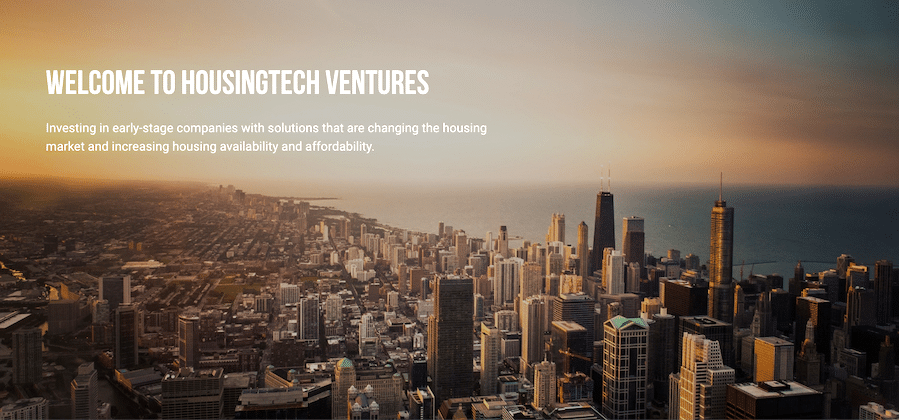
Image of Housing Tech Ventures home page.

Small lots. One solution to the housing problem.

November 1, 2019


At times the housing crisis can seem just insurmountable. Upwards of 11 million Americans spend half of their monthly take-home pay in rent, an increase of more than 30% over the last five years. Almost 25% of housing markets across the country are considered to be unaffordable for the vast majority of citizens. Many different factors influence the rising cost and availability of housing. But there is one that is often overlooked – the design of housing developments. One way to avoid the mistakes of the past and work towards building a better housing future is to think about design from multiple perspectives.

New solutions for old problems

It may seem like housing has only recently become an issue. But while the housing affordability problem has grown in size and scope over the past few decades, it is not unique to our time and place. Over the years, both public and private sectors have tried, but largely failed, to solve the problem. Some infamous examples include housing projects, rent control, Section-8 vouchers, and a whole host of other strategies implemented not just locally but also state and nationwide. In order to change this failing narrative investors and developers should consider identifying and embracing entirely new development models.

Small-lot subdivisions

In the early 2000s, the Los Angeles City Planning Department collaborated with designers, developers, investors, city planners and other stakeholders to tackle the issue of affordable housing. Their collaboration led to several policy ideas that they believed would spur affordable housing production. Among the many ideas proposed at the time, one that stands out is the Small Lot Subdivision Ordinance.

The Planning Department introduced the ordinance in 2005. The Small Lot Ordinance regulates the construction of single-family infill housing in commercial and multi-family neighborhoods. It aims to create a new path for home ownership for first-time buyers by permitting developers to sub-divide small lots and build multiple homes.

Buying a home can be a demanding exercise. Aside from the substantial financial costs, there is also reams of paperwork, lots of professional fees, taxes and many other hurdles along the way. Small-lot or zero-lot-line housing aims to scale down homeownership to make it more accessible to potential buyers, without the use of a traditional condo model – instead, small parcels of land are developed and marketed towards entry-level buyers, or those who may be willing to trade size and aesthetic considerations for the ability to get into a home and start building equity immediately.

At the same time, developers can mitigate expensive land costs through subdivision or the ability to build on off-shape parcels of land, in areas that may not be viable for large-scale development. They get the added bonus of saving on costly risk-insurance premiums that come with developing standard condominium projects.

Unintended consequences

Unfortunately, as is often the case, this new small-lot approach was not as effective as hoped for – as evidenced by the continued and growing housing crisis in the Los Angeles Metro area. As land and housing prices in these areas continued to skyrocket, once affordable small-lot developments became increasingly desirable. Instead of providing a pressure-valve for housing, these homes have been scooped up by speculators, investors, and homeowners of means who wish to buy a piece of these now thriving neighborhoods.

This is not entirely the fault of the originators of the small-lot ordinance. Far from being seen as a panacea to get people into housing, small-lot development was and is viewed as one tool out of many to increase the total housing supply in an area, thus theoretically reducing prices. And it was effective in this goal. What planners in the early 2000s could not account for was the dramatic tide of urbanization, the reversal of residents from suburban and rural areas back to the cities, particularly pronounced in high-dollar regions on the coast, like Los Angeles and San Francisco.

_

Small-lot development has a great deal of potential for making housing more accessible, as long as it is used in conjunction with other potential solutions like mixed-income developments, grants to first-time homeowners, and other well-thought-out, rigorously tested solutions. It is not and was never meant to be an all-encompassing solution to the housing crisis. Rather it was meant to be just one tool in a toolbox, a piece of the puzzle that is the modern housing crisis.  

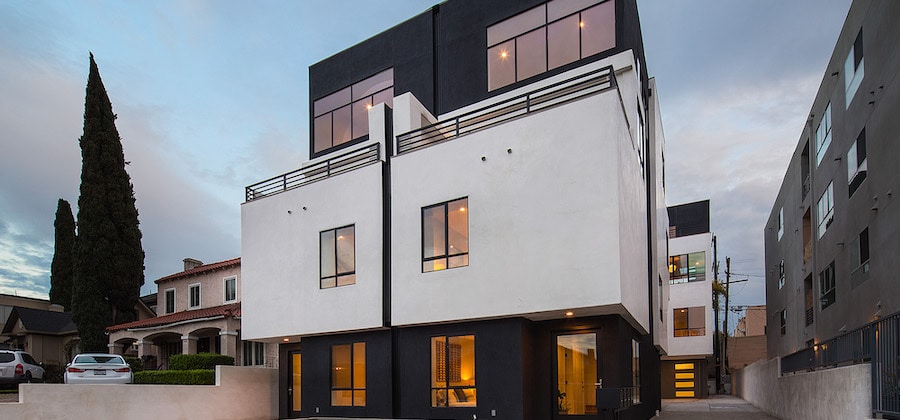
Image of Rosewood, a small lot subdivision, courtesy of the The 4Corners Group

Closing loopholes for better neighborhoods.

October 25, 2019

Unfortunately, loopholes are far too easy to find in the real estate development industry. They are hiding in plain sight in lots of places. Taxation, zoning, affordable housing programs or even government incentives jointly provide an abundance of loopholes and unscrupulous developers will find a way to take advantage of them. For many years, unethical, or at the very least short-sighted development has been the norm. Now, with the rise of sustainable and socially conscious development, a new generation of investors and developers are shedding the profit-driven dogma of the past to work towards a more ethical real estate industry. This includes creating more livable and equitable housing which can generate returns similar to traditional, profit-driven development projects.

The worst outcome

Perhaps the worst outcome of unethical real estate development is displacement. Projects initially pitched to provide a rebirth and revitalization for underserved neighborhoods can instead, sometimes unwittingly, lead towards gentrification, in turn driving long-term residents from their communities and homes.

Many areas slated for “urban renewal” in the past were primarily filled with single-family homes while the neighborhood itself was zoned for both single-family and multifamily properties. This provided a particularly attractive opportunity to profit-driven developers since the density of the neighborhood could be increased with apartments and condominiums many of which were out of the price range of current residents. This in turn led to a great deal of residential turnover in these communities and an acceleration of the harms associated with that turnover.

Community pushback

After years of such unchecked development, many communities- and aligned developers and investors- have started to push back. More appropriate zoning, sustainable and energy efficient housing, community cohesion, walkability, bike-ability and equality, amongst others, have moved to the forefront of the conversation. Often these conversations have been led by local organizations dedicated to preserving neighborhood character and ensuring positive growth in housing and commercial enterprises. Now, single-minded profit-driven real estate development is being supplanted by a collaborative approach- with local stakeholders and community-minded real estate professionals, developers and investors all talking to each other to plan for the best community outcomes.

Mix it up

Bigger or more of the same is not always better if your goal is to create diverse and livable communities. Studies have shown that mixed-income neighborhoods thrive compared to monoculture neighborhoods primarily comprised of a single social or economic class. Many of the worst examples of suburban sprawl or overzealous urban luxury development prioritize high-income, white-collar workers and families at the expense of others who may not be as socioeconomically well-off. 

These monoculture neighborhoods can be islands that residents commute to and from, only serving a small and elite sub-set of our country’s demographic. And let’s not forget what these isolated communities spawn – environmental and health issues related to commuting, lack of walkability and lack of long-term sustainability. These neighborhoods also degrade over time from A to B and C Class housing, and residents are left with vast tracts of homes, with little commercial or social activity within the bounds of their neighborhood. 

Smaller steps

A focus on developing smaller projects, such as micro/economical single-family homes, duplexes, or apartment buildings can avoid many of the headaches and harms that come with large-scale, homogenous development. Rather than knocking down existing affordable housing, or dominating an area with mega-structures, developers can work to maximize usable real estate and land (even non-traditional, unique and oddly shaped lots) while largely preserving the character and makeup of the neighborhood. These smaller projects can be much easier to finance for developers, as capital investment costs will be lower. And investors can benefit from the diversification value of multiple small projects as opposed to a single large project.

_

We can’t change the mistakes of the past, but we can work to ensure they are not repeated. Housing affects every facet of our society, from employment opportunities to the environment, to social and economic justice within a neighborhood. While legislative and community-based solutions are absolutely necessary to weed out bad actors and unethical development, pro-social developers and investors can also make a contribution to a future with carefully planned communities and neighborhoods.

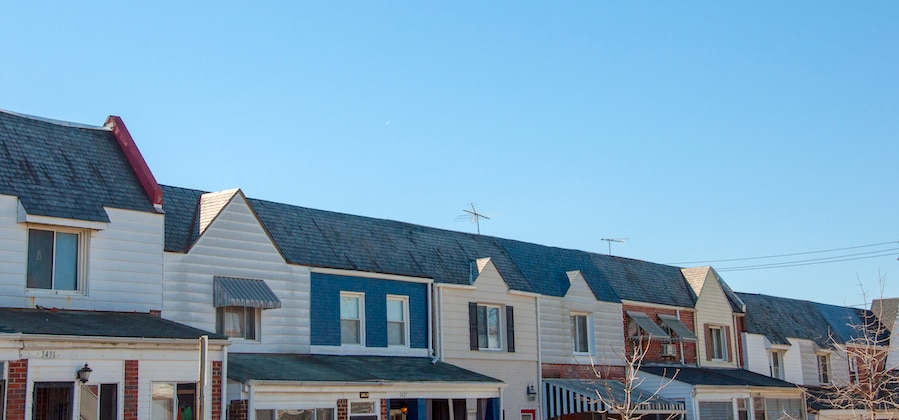
Image, Riverview Terrace, courtesy of Small Change.

Greenfields are boring.

October 23, 2019

Adrian G. Washington is the founder and CEO of Neighborhood Development Company (NDC). Their mission is to develop exciting residential and commercial properties that cultivate vibrant communities. What does that mean? And how does a developer do that?

Well, that’s what Adrian and I talk about so listen in.

Adrian has over 30 years of experience in urban real estate development, construction and management. He founded NDC in 1999 and has served as President since then — except for a two year leave of absence from 2005 – 2007 when he left to lead the Anacostia Waterfront Corporation (AWC), the entity charged with leading a $10 billion, 20-year initiative to revitalize Washington, DC’s Anacostia Waterfront and surrounding communities. NDC has developed over 1,000,000 square feet of real estate, focusing on emerging urban neighborhoods while respecting the rich diversity of their existing fabric.

Adrian grew up in the city’s Anacostia neighborhood and is a lifelong resident of DC. He received his B.S. in Economics and Political Science from Stanford University and his M.B.A. in Marketing and Finance from the Harvard Business School. And he has received numerous individual awards reflecting his leadership in the development industry.

Insights and Inspirations

  • Why develop a green field when you can redevelop an existing neighborhood and help it to thrive?
  • See the people who are living there. They embody the neighborhood.
  • Mix it up. Build affordable housing right next to luxury housing.
  • Work with small businesses out of the community. They can become valuable tenants, not just for the developer but they bring value to the community as well.
  • There’s lots of opportunity in Opportunity Zones.

Information and Links

  • Adrian is excited to see NDC’s Benning Market built. It’s a food hall in River Terrace North East, and many of it’s investors came through a Small Change offering.
  • NDC supports DC Greens, a local non-profit dedicated to food justice and health equity in Washington, DC.
  • The project that Adrian is most proud of is the Residences of Georgia Avenue. This block buster project increased affordable housing options and healthy food options in a neighborhood considered a food desert. 
Read the podcast transcript here

Eve Picker: Hey, everyone, this is Eve Picker. If you listen to this podcast series, you’re going to learn how to make some change.

Eve Picker: Hi there. Thanks so much for joining me today for the latest episode of Impact Real Estate Investing. My guest today is Adrian Washington. Adrian is the founder and CEO of Neighborhood Development Company, a Washington, D.C. real estate company focused on rebuilding vibrant communities through their work. Adrian fell in love with this type of development work and decided to make a career out of it, much to the good fortune of the neighborhood he works in. For Adrian, greenfields are boring. Nothing gives him greater pleasure than digging into a forgotten and neglected site and turning it into a neighborhood asset. I’ve had the good fortune of working with Adrian at Small Change, helping to raise funds for some of these projects.

Eve Picker: Be sure to go to EvePicker.com to find out more about Adrian on the Shownotes page for this episode and be sure to sign up for my newsletter, so you can access information about impact real estate investing and get the latest news about the exciting projects on my crowdfunding platform, Small Change.

Eve Picker: Good morning, Adrian. Thank you very much for joining me.

Adrian Washington: Thank you, Eve. It’s a pleasure to be here.

Eve Picker: So you have a real estate company called Neighborhood Development Company, and we’ve been lucky enough at Small Change to help you raise funds for one of your projects. Your company is in Washington, D.C. I’m just wondering if you’d like to tell us how long you’ve had Neighborhood Development Company, or NDC, and have you lived in D.C. all of your life?

Adrian Washington: I’m a native Washingtonian. I’ve lived here most of my life. I went away and went to school down in California; lived out there for a while; lived in Boston, but, essentially, I’ve been in D.C. all of my professional … I grew up here, and I’ve lived here all my professional life. I’ve been involved in real estate, altogether now, going on over 30 years and formed Neighborhood Development Company a little over 20 years ago, back in 1999.

Eve Picker: That’s quite a stretch. NDC’s mission, in your words, is to develop exciting residential and commercial properties that cultivate vibrant communities. What does it mean to you to cultivate vibrant communities? How does a developer do that?

Adrian Washington: We’ve always operated in urban areas of primarily Washington, D.C. and really always neighborhoods that were emerging; that were maybe down and out at one time or were starting to turn around. What we found in these neighborhoods is that we don’t look at them just from a brick-and-mortar perspective. We see the people that are living there now. They want their neighborhoods improved, but they don’t want to be displaced. They want shops and things that serve them, but don’t serve just outsiders. They welcome newcomers, but they want to feel those newcomers respect the place that [inaudible]. We see our role as balancing those things of making a neighborhood better for people who are living there, attracting new residents who want to be part of those communities, attracting businesses that want to be part of those communities, but not to displace people and not to alter the fundamental character. As developers, I think it takes like a real balancing act that we work with on a day-to-day basis.

Eve Picker: I do think it is a real balancing act. How do you fend off displacement?

Adrian Washington: We do it in, I guess, a number of ways that I think are unique in some developers in that we do both very high-end market-rate developments, but we also do affordable housing. We do affordable housing in a number of ways. We do it in traditional ways that more traditional developers do it, using government subsidy and the many programs involved. We also do it in more creative ways. For instance, we’ve worked in the past with failing cooperatives, where a group of tenants own their building collectively, and it’s just not working out, either because of bad management, or whatever. We team with them to provide our services with them but do it in a way that allows them to stay in their homes. That’s one way we do it.

Adrian Washington: Another way we do it is we really, in our commercial work, really like to work with entrepreneurs. Your typical developer may want that credit tenant. They want that CVS, or that Walgreens, or someone national. We really- we don’t go that way. We go in the opposite direction. For instance, in one of our developments, we have a salsa teacher, and she was doing lessons- it was a nice young couple. They were doing lessons out of their basement in the neighborhood.

Adrian Washington: They were so successful, they wanted to have their first studio. They came to us, and we had a space in one of our buildings, so we worked with them on the design; we worked with them on getting government grants to help them build out. We helped them with the construction. We gave them a favorable lease that started out low, and it allowed them to develop the business.

Adrian Washington: It was just a great neighborhood success story, where they stayed in the neighborhood. They had a service that appealed to both the newcomers and people who were in the neighborhood. They successfully grew their business. They’re now opening a second location. I think it’s really about creativity; using the skills we have as developers and businesspeople and connecting with people who have hopes and dreams – maybe not the same skills – and working out win-win solutions.

Eve Picker: That’s a really lovely story. Other developers might say that’s taking a risk with a little startup business that you don’t necessarily need to take. You could go get a credit tenant. So, why do you take that risk?

Adrian Washington: Well, I think a couple of reasons. It is kind of, on paper, riskier. Although we see with all the changes in the retail economy, yeah, you could have some business like a Blockbuster – going back in time, when everyone thought it was really successful, and now it’s out of business [cross talk]

Eve Picker: Yeah, that’s true.

Adrian Washington: Or even something like a McDonald’s, where everyone thought McDonald’s used to be the gold standard. Even now, you see some of those stores shutting. There’s not ‘no risk’ in a credit tenant, but I agree that there’s more hand-holding; there’s more involvement. You’ve got to pick your entrepreneurs carefully. You’ve got to help nurture them. Typically, they’re people who are great enthusiasts about what they know – if it’s salsa dancing or handmade pottery – but they don’t know about marketing; they don’t know about financing. You’ve got to work with them more.

Adrian Washington: We just find that more rewarding. It’s just fun. It’s creative. We feel like we’re helping people. We feel that we’re seeing eye to eye, because even though we’ve been in business 20 years, we’re still thinking of ourselves as an entrepreneur. The neighborhoods love it, so I think it makes us more popular in the neighborhoods. We’ve found that the success rate that we’ve had with these businesses is really pretty high and that the occasional failure that comes along, we just kind of build that into our pro forma. We’ve found that we were able to replace people who don’t like it with other people. All in all, we just find it’s more socially rewarding, it’s financially fine, and it’s just a lot more fun.

Eve Picker: It adds to the economy of the neighborhood you’re in, which is really lovely. Developers do lots of different sorts of things, and I’m wondering how you ended up here. How did you …? There must have been a path that took you towards this type of development.

Adrian Washington: Eve, I think it’s like a lot of things in life. I don’t know, maybe there are people who have these- design these great plans at age 12 and follow them through. I really didn’t. I went to undergrad; I went and got an MBA. I worked for a national consulting firm, and I thought that was my path, but I really hated it. At the meantime, I had bought a house in an emerging neighborhood and fell in love with that culture. I think I was really ahead of my time. I saw the appeal of walkable, livable neighborhoods. I saw the appeal of eclectic neighborhoods that had different types of architecture, that had different types of people, different races, different income groups, that was close to urban centers. I just thought that was great. I loved being in that neighborhood. I loved the change that I saw was going on. I loved the physical aspect.

Adrian Washington: Back when I was younger, I did everything. I did carpentry; I did plumbing [inaudible]. I just loved that whole environment. I think I was always an entrepreneur at heart … I was going to a day job that I hated, and I had this hobby that I loved, so I said, “Well, why don’t I see if I can turn this hobby into a business?” That was 30 years ago. It hasn’t been a straight line. There were struggles; there were failures; there were just dumb-ass things that I did that didn’t work out, but I always came back the next day and tried to do it better, and I’m really glad I did.

Eve Picker: Be sure to go to EvePicker.com and sign up for my free educational newsletter about impact real estate investing. You’ll be among the first to hear about new projects you can invest in. That’s EvePicker.com. Thanks so much.

Eve Picker: That’s a great reason why. It’s pretty wonderful to be able to be doing something that you really love and that adds to communities everywhere. So, I’m going to move on now to a project that I know you’re working on, called 1100 Eastern Avenue, which is one of your latest projects. We’re fortunate enough, at Small Change, that we’re going to be helping you to raise a little money for this project. I wanted to talk a little bit about it. Can you just tell us a little about what the project is, how big it is, the uses, where it is?

Adrian Washington: Well, sure, Eve. I’m really excited, and our whole team’s excited about 1100 Eastern. It’s really a project that embodies our beliefs, and uses all of our skill sets, and is just very exciting. It’s a mixed-use projects. Ground floor is a retail component; not that large, about 4,000 square feet. I think one of the great things about it is that there were … The site is sort of a rundown former- like a strip shopping center. A couple of the tenants there were folks that, frankly, the neighborhood was happy to see leave. It was a liquor store and an old carry-out. Not to knock those people, but they weren’t really what the community wanted.

Adrian Washington: There were a couple of tenants the community really did like. It was a barbershop that had been there for really a couple of generations. The current owner’s father had founded it back 35 years ago. She was still running it, and it was really a neighborhood institution. Then there was a daycare center. One of the things that we’re doing is allowing those people to come back to the new development in brand-new facilities. We’re even able to offer them, starting out, kind of with our philosophy, at the same rents they were paying, which were far below market. It’ll allow them to build up the market over a number of years, so we’re very excited about that.

Adrian Washington: Now, on the floors above it, there are five stories above it. These will contain 65 units of mixed-income housing. There’s housing for very low-income people, who were formerly homeless, who will be able to get wraparound services to allow them to transition to a more normal life. Then there are other units that will be for people of moderate incomes; people anywhere from – these are technical terms – but from 40 percent to 65 percent of the area median income. These range from what we would call pretty subsidized housing to more workforce housing, so we’ll have a range of people there.

Adrian Washington: We’re also very proud of what we’re doing is that we’re giving a really big mix of unit types. Typically, in any kind of new construction development, you’re seeing just people were just building one- and two-bedrooms, or studios. What we’re able to do in this building is to provide one-bedrooms, two-bedrooms, three-bedrooms, even a few four-bedroom apartments. It really will serve a number of different types of people in the neighborhood – seniors, people with families, people with kids. It’s just a great project that will really help everyone in the neighborhood, so we’re very proud and excited about it.

Eve Picker: That sounds really, really wonderful. The four-bedroom units are so unusual nowadays, and extended families are important, so that’s pretty great. I understand it’s also an Opportunity Zone, which is, as we all know, a very hot topic right now. How will that impact the development?

Adrian Washington: Opportunity Zones are exactly what you said, Eve; it’s a very hot topic. People are still figuring it out. I think that, unfortunately, early on, a lot of the Opportunity Zone benefits are going to people who are creating projects that would have been created anyway. We’re very proud that we feel this project will fit in what the Opportunity Zone true mission is, which is to bring capital to underserved neighborhoods – as I said, our commercial businesses, our neighborhood-serving businesses that were going to be displaced and that people in the community wanted to stay.

Adrian Washington: What we’re doing is we’re using Opportunity Zone benefits to attract capital to help keep these businesses in. So, I think that’s important. But, also, I think one of the key things I feel that Opportunity Zones is that the projects have to make sense, even if they weren’t in Opportunity Zones. We are a business that prides itself on not just being do-gooders, but being solid businesspeople, so we’ve underwritten the project carefully. We understand the costs, and the risks, and all of the factors. We think this is a project that works, even if it wasn’t in an Opportunity Zone. But we’re very happy to allow people who are investors who want to get a good return on their money, but also to have a meaningful social impact, to have all that, plus the tax benefits of the Opportunity Zone.

Eve Picker: For listeners who don’t really understand Opportunity Zone funds, because they are very complicated … Took me a long time to understand. The fund, in this case, is actually the project. It’s just the entity that the project is using as a legal entity, the LLC, that will become a fund, right? If people invest-

Adrian Washington: Yes, that’s right.

Eve Picker: It’s a 100-percent Opportunity Zone fund because it’s just a single-use fund, just one project. So, if people invest in it, they’re investing actually into the project itself, not into a fund that then serves a whole series of projects. They can take a really close look at the underwriting and see if they like it. I would agree with you, at the moment, the Opportunity Zone fund benefits are kind of gravy. I have yet to see a project that is moving forward simply because of those benefits. They don’t seem to be enough to make a project happen, right?

Adrian Washington: Exactly. We’ve used that approach, not just in Opportunity Zones, but with our other investor- projects. What we found over the years is that people- they want to know what they’re investing in, both from a business standpoint … They want to kick the tires, see if they believe in the construction costs, and the neighborhood statistics, and the tenants that are being there. They want to understand that. They also want to understand the story behind it. What’s going into the neighborhood? How will my investment benefit [inaudible] neighborhood? They really want to touch, and feel, and see that. We’ve had a lot of success over the years in doing that. This project really works in the same manner, where people can really learn about it, learn about us, learn about the neighborhood, learn about the businesses, and say, “Yeah, I want to put my money here. I believe in it as a financial investment. I also believe in it, in terms of its social [mesh].

Eve Picker: I think what I’m most excited about for Small Change is the fact that we’re helping you raise money for this Opportunity Zone fund. We may very well be the first Opportunity Zone fund offering investments- very small investments to everyone over the age of 18, not just accredited investors. I think many of the funds that we see around the country have really big minimum investment amounts of $100,000 or $200,000, or $500,000. This is going to be much smaller for everyday people, which personally I find very exciting. It’s yet another way to make it accessible to your investors in your neighborhood, right, Adrian?

Adrian Washington: Right, and we’re excited, too. Eve, as you know, and the audience may not know, is that you guys raised money for us on another project, our Benning Market project – a neighborhood called River Terrace. It was a nice way to raise money, but I think more importantly, it helped build support and build involvement in the project. I have people in that neighborhood who told me, “Yeah, I saw … I’m an investor in your project, and …” [cross talk]

Eve Picker: That’s great. That’s really great, yeah.

Adrian Washington: -“… and I saw it because I lived down the street and I wanted to be a part of it. I just thought it was cool that you allowed us to participate in that.” I think it really does build more of a sense of community; it builds more of a sense of involvement; it invokes transparency, because, frankly, I think that, in these days, developers are viewed with a lot of distrust. I think that by allowing community members to invest at investment levels that they can afford really helps to break down those walls, and do that, and helps to increase visibility. We were really happy with the results we had with you on our first investment, which is literally breaking ground in a couple weeks, and we are very excited to work with you again on the Eastern Avenue Project.

Eve Picker: That’s great. You’re going to have to send me updates on the first one, because we’ll post them for our other investors. People like to see [cross talk].

Adrian Washington: We’ll send you groundbreaking pictures. How about that?

Eve Picker: That’d be fantastic, yeah. Talking about this little piece of community engagement – crowdfunding – community engagement has to play a big role in your projects. I’m wondering how you handle that. That can be tricky sometimes.

Adrian Washington: It can be tricky. Like I said, there’s just a lot of distrust around development, and in our political climate, I think there’s just [riding] distrust in everything, so I don’t take it personally. I think the key is you’ve got to be out there early and often. We’re working a different project, in a different part of the city, and we’re a couple years away from groundbreaking; really a year away from an actual serious design and engagement, but we’re already out there in the community, asking people what they want, telling them about ourselves, letting them see some of our other projects.

Adrian Washington: You’re never going to please 100 percent of the people in any community. What I’ve found over years is that what you can do is the best you can do, which is to be accessible, be transparent, to listen, to be honest. Sometimes, people want something, you’re like, “Yeah, we can do that.” Other times, people want something, and I’ve seen a lot of developers be vague and sort of say, “Oh, well, maybe we’ll look at that.” I try to be honest; I try to say that, “Sir, ma’am, we just can’t do that, and here’s the reason why. I know you won’t be happy about that,” but I think it’s more important to be honest than it is to try to gloss over a problem.

Adrian Washington: It really takes a lot of work. It’s changed over the years. 20 years ago, we didn’t have to do nearly this level of community involvement. I think, particularly in underserved neighborhoods, that people were happy that you were just there and building something; pretty much, you didn’t have to do more than that. Nowadays, it’s different. People realize that their neighborhoods are an asset, and that people want to develop there, and they are demanding to be heard and respected. If you’re not there, you don’t hear them, you don’t respect them, you’re gonna suffer for it.

Eve Picker: Yeah, I think that’s right. Moving on to more global themes, here, I’m just wondering what you think we all need to do to make our cities and neighborhoods better places for everyone, so that no one gets left out.

Adrian Washington: That’s a big question-

Eve Picker: It is a big question.

Adrian Washington: -I don’t know if we can solve that all in one podcast. I’ll focus on our roles as developers. Clearly, there is a need for more housing in our cities. There’s a need for housing that serves all different income levels and all different family types. It’s not the ’50s anymore. It’s not just mom and dad, and 2.3 kids, and a picket fence. There are all types of households.

Adrian Washington: The development process has gotten tougher. Besides the community involvement piece, the environmental and sustainability requirements are much higher, the zoning is trickier. It’s hard work. I think our job is to use the skills that we’ve developed over the years to work in partnership with communities, to let them see how they can help us, and, in turn, using our skills to help them work on win-win solutions; involve government, because, obviously, they’re important, and have patience, but have perseverance. Development is tough.

Adrian Washington: I think that to be successful, you’ve got to have a long-term view. You can’t feel like you’ve got to make a killing on every project. You’ve got to look at your entire body of work, so at the end of the day, at the end of your career that you’ve made a fair return on your investment, your time, and your risk, but you’ve also contributed to society. I think it’s possible, if you have those things in mind. Honestly, it’s more rewarding and it’s more successful, if you do it that way.

Eve Picker: Clearly, you think socially responsible real estate is necessary in today’s development world, and that’s the way you manage your business, but I’m wondering, are there enough developers out there thinking about impact and thinking in the way that you’re thinking? If not, how might we improve that? I still see a lot of greenfield developments that, quite frankly, shock me in this day and age; that that sort of work continues. I still see banks wanting to finance those models over and over again, because it’s easy to think about them. I’m wondering how we shift to a [kinder] development world.

Adrian Washington: I think it certainly is growing. I agree with you completely. I drive around, particularly when I’m not in D.C., and I see so many greenfield developments. Just to me, personally, it’s just kind of boring. I didn’t get into this just to make a ton of money. Like I said, I want to be fairly compensated for what I do, but it’s more about that.

Adrian Washington: To answer your question, I think I see more and more of it. I think, particularly the younger generation … I’m older. I’m not a millennial. I guess I’m a young baby boomer. But, particularly in the generation behind me, I see people who want to do that, and not just in real estate development, but in other fields in life. They want to do more than just do a job and make money. They want to make a meaningful impact on the world. They want to have that reward, which helps them feel better.

Adrian Washington: Also, what I’ve found in my business, is it helps to attract and retain young employees. They don’t want to just build some cookie-cutter, 200-unit apartment building in a greenfield, just like everybody else. They want to do projects that are creative, that involve different financing sources, that touch people’s lives, that take challenges [cross talk] and from a business standpoint. I think it’s a movement that is slow in coming, but I clearly see it’s building, and I think it’ll be more and more.

Eve Picker: Yeah, I think you’re probably right that it’s gradually building. Do you see any current trends in real estate that you’re fascinated by or you think are going to make a difference moving forward?

Adrian Washington: Yeah, I see … Clearly, the trend for co-living and coworking is the big trend. WeWork is obviously the big kind of corporate behemoth example of that, but there are a lot of other smaller, more entrepreneurial types of interests. I’ve see coworking spaces designed around women, or women with kids that have daycare centers, or people with social causes, like a nonprofit type of thing. I see that as a big trend.

Adrian Washington: I see co-living. I think that where people, either because of monetary reasons, or because of social reasons, don’t want that house by themselves, but want an opportunity where they can either live with roommates or live in a more communal environment, where things like kitchens and things are shared, and where there’s a social network in place that typically people who are new to an area- it’s a way for them to connect. I see a real sort of striving for more connectedness, as our world, in a way, becomes less connected. I think there are great opportunities to expand on that model. I’ve seen some very successful ones here in Washington, D.C., so it’s something I’m keeping my eye on.

Eve Picker: Yeah, I think a lot of people are. I’m going to ask you three signoff questions that I ask everyone. The first one is what is the key factor that makes a real estate project impactful to you?

Adrian Washington: I’d say the key factor is that it meets the needs of the community that it’s in. The only way you get that is to get out, and talk to the people there, and understand what they want. Some communities, they want more affordable housing. Some people, they want less. Some people want retail that’s a particular type; other people might want a retail that’s missing, like, say, a Fresh Grocer, which is like an example of another project that we did. We put in a Fresh Grocer where it’d been a food desert. It really involves talking to the community, understanding what they want, and then using your skills to develop- to deliver it.

Eve Picker: When it comes to crowdfunding, do you think there are other things that can help you as a developer, not just involving investors, but how might crowdfunding benefit your project, as a whole?

Adrian Washington: I think crowdfunding benefits us in a number of ways. The couple that most come to mind – and I [inaudible] an example earlier for one of our projects – is many people in the neighborhood become investors in the projects. They’re invested not just financially, but they’re invested emotionally. They tell their friends; they frequent there more often. I think the crowdfunding helps allow, particularly, local residents to be involved.

Adrian Washington: I think the second way that that’s really helped us and helped the project is that it’s a real brand builder. Eve, when we did the project with you guys, we got so many press kits about the project. We were [cross talk].

Eve Picker: That’s fabulous. That’s really fabulous.

Adrian Washington: I was interviewed a couple of times at the local news station, I was interviewed by national publications. People that I would- said “Hey, I heard about your project. What’s crowdfunding like, and how do you like it? It just really enhanced our company’s visibility, our project’s visibility; it was a real brand enhancer, and it’s something that I did not expect and something I was very pleased with.

Eve Picker: I’m grateful to hear that. That’s wonderful. Then, this is a really big one – if there were one thing that you could change about real estate development in the U.S. to make it better, what would that be?

Adrian Washington: I think that the thing that I would really change is not so much government policies. I understand the need for regulation around safety, and sustainability, and community impact, but I would change more the attitude of the people in government who do those. I think there is too much of a – particularly in inspections – ‘gotcha’ mentality, where, instead of working with us, and understanding that we’re doing the best we can … Yes, maybe this one particular light switch was two inches too high or too low-

Eve Picker: Oh …

Adrian Washington: Not just a ‘gotcha’ mentality, not just, “Okay, you messed up on that. Fix it, and we’ll come back when we’re ready and tell you whether you missed anything else,” more a partnership for governments to understand that we’re good guys. We’re doing the best we can; that we want a safe project, a sustainable project, and to work more cooperatively with us, and help us succeed as partners, and not to be adversaries.

Eve Picker: That’s a great way to end this interview. So, Adrian, thank you very much for your time. I really enjoyed talking with you, and I’m sure we’re going to be talking again.

Adrian Washington: Great, Eve. Thanks for having me.

Eve Picker: That was Adrian Washington. Adrian is not afraid of a challenge. His company focuses on challenging sites in challenging neighborhoods, always making sure that neighborhood folks are involved and that their neighborhood is improved by the final project. I love that Adrian finds greenfields boring. I love that he sees the people in a neighborhood first, and I love that he nurtures local businesses, bringing even more value to the projects he develops.

Eve Picker: You can find out more about impact real estate investing and access the Shownotes for today’s episode at my website, EvePicker.com. While you’re there, sign up for my newsletter to find out more about how to make money in real estate while building better cities. Thanks so much for spending your time with me today, and thank you, Adrian, for sharing your thoughts with me. We’ll talk again soon, but for now, this is Eve Picker signing off to go make some change.

Image courtesy of Neighborhood Development Company

« Previous Page
Next Page »

Primary Sidebar

sign up here

APPLY TO BE A PODCAST GUEST

More to See

(no title)

February 22, 2025

Bellevue Montgomery

February 11, 2025

West Lombard

January 28, 2025

FOLLOW

  • LinkedIn
  • RSS

Tag Cloud

Affordable housing Climate Community Creative economy Crowdfunding Design Development Environment Equity Finance FinTech Gentrification Impact Investing Mobility Offering Opportunity zones PropTech Technology Visionary Zoning

Footer

©rethinkrealestateforgood.co. The information contained on this website is for general information purposes only. Nothing on this website is intended as investment, legal, tax or accounting strategy or advice, or constitutes an offer to sell, solicit or buy securities.
 
Any projections discussed or made may not be accurate and do not guarantee a specific outcome. All projections or investments are subject to risk due to uncertainty and change, including the risk of loss, and past performance is not indicative of future results. You should make independent decisions and seek independent advice regarding investments or strategies mentioned on this website.

Recent

  • The Mulberry
  • Mount Vernon Plaza
  • The Seven
  • Real estate and women.
  • Oculis Domes.

Search

Categories

Climate Community Crowdfunding Development Equity Fintech Investing Mobility Proptech Visionary


Copyright © 2026 · Magazine Pro on Genesis Framework · WordPress · Log in