• Skip to main content
  • Skip to secondary menu
  • Skip to primary sidebar
  • Skip to footer
  • Home
  • About Us
  • Say hello
Rethink Real Estate. For Good.

Rethink Real Estate. For Good.

  • Podcast
  • Posts
  • In the news
  • Speaking and media
    • About Eve
    • Speaking requests
    • Speaking engagements
    • Press kit
  • Investment opportunities

Equity

Create, don’t destroy.

September 27, 2019

The term “blight removal” conjures up images of construction cranes knocking down homes, displacement, and gentrification. But blight can take many forms and its removal has many remedies. Preservation of seemingly dilapidated structures can invigorate and reinforce a community’s value and sense of place.

Historic preservation

Instead of knocking down older buildings with neighborhood character, nowadays many developers are working on revamping those spaces and giving them new life. Fully renovating a vacant or underutilized historic building can add to and preserve the fabric of a place while providing opportunity for new development.

Rehabilitation of dilapidated structures is equally as effective for commercial, residential, and mixed-uses, and is particularly well suited to historic areas that have fallen on rough times, such as New Orleans’ Seventh Ward, parts of East Oakland or many of Detroit’s neighborhoods outside of the urban core.

By focusing on forlorn properties, investors can increase their returns while also improving the general character and quality of the area. Additionally, rather than displacing existing tenants, seeking out and improving vacant property creates more housing than existed before, without significantly altering the character of the neighborhood. This strategy preserves community charm and while still increasing the housing available.

Commercial benefits

One lesson that should be ingrained in every developer’s mind is the failure of purely residential communities. In study after study, mixed-use neighborhoods consistently show benefits in resident economic activity, safety and crime, and lowered carbon footprint. Commercial activity allows residents to work and to live in the same area, reducing local congestion, and transportation costs like cars.

Affordable set-asides

Mixed-use development is a step toward creating complete communities; creating neighborhoods for a variety of income levels is even better. These strategies can go a long way towards creating quality, affordable neighborhoods. When addressing de-blighting initiatives, locals often worry about being displaced due to increasing property values and commensurate rents in the area. Setting aside a portion of units specifically for those who are lower on the income scale can help alleviate many of those concerns. Updating zoning constraints that allow for more mixed-use development is an essential component too.

_

The old paradigm of development is…old. Blight removal should be thought of in the context of building communities up with the assets already in place. Building functional, thriving communities simply requires it.

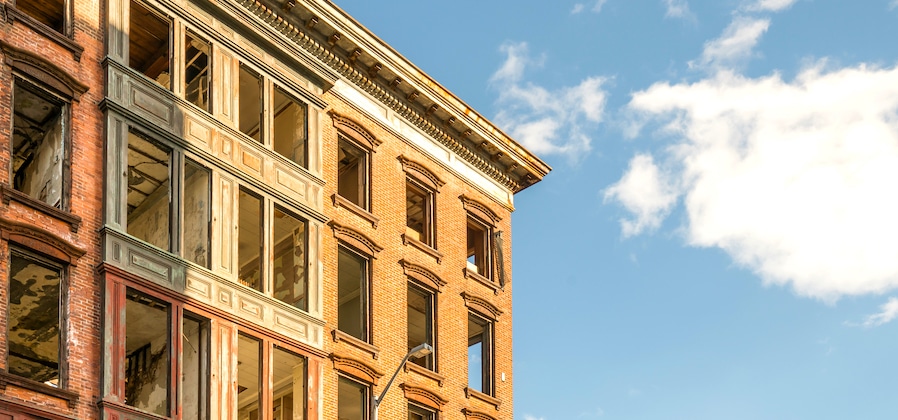
Image of building in Bridgeport, CT, courtesy of Small Change,
Striving for impact.

September 23, 2019

How can real estate developers and investors make substantial positive change in the places in which they build? It’s a vexing question that luckily has numerous answers. You just need to know where to look.

Be direct and honest

Let’s face it, you’re not going to be able to please all the people all the time. As an individual investor or developer, your project’s scope and scale is going to be limited, and while you can make an impact, there are limits to that ability. Your best path forward is to be accessible, transparent, and to listen to community concerns. Avoid falling into the trap of being too vague or using wishy-washy language. If you are unable to address people’s concerns, tell them, and tell them why. Be accessible, be transparent, listen to them, and give honest responses. You won’t be able to take everyone’s suggestions into account, but you can listen and sometimes that alone can bring value to a neighborhood.

Survey the locals

The primary factor in making a positive change is ensuring that the project meets the needs of the community it is located in. To do that, it is vital to get out and talk to people in the area and try to understand what they want. Some communities are in dire need of affordable housing. Other communities may need retail stores. Grocery stores, in particular, are needed in many communities. Urban areas throughout the United States exist in what are called “food deserts” where the only access to food is via unhealthy options like fast food, convenience stores, etc. When you know what that community needs, you can adjust your investment to be as impactful as possible.

Consider alternative funding sources

Traditional banks and lenders will, for the most part, only finance conventional forms of development: suburban tract houses, sprawling commercial districts, office parks with little connection to their surroundings. The democratization of real estate capital finance is upending their domination of the property and development markets. Options like real estate crowdfunding, hard money lenders, and Opportunity Zone funds are all excellent sources of financing for non-traditional, non-greenfield projects.

_

The definition of “impactful” is different for everyone. But the opinions of future residents and current stakeholders should be a primary concern when gauging what will work best for a development in a community.

Finding financing, working with local authorities, and getting the community on board are all necessary steps to building for the maximum impact. With the right approach, and the right team, you’ll be right on target.  

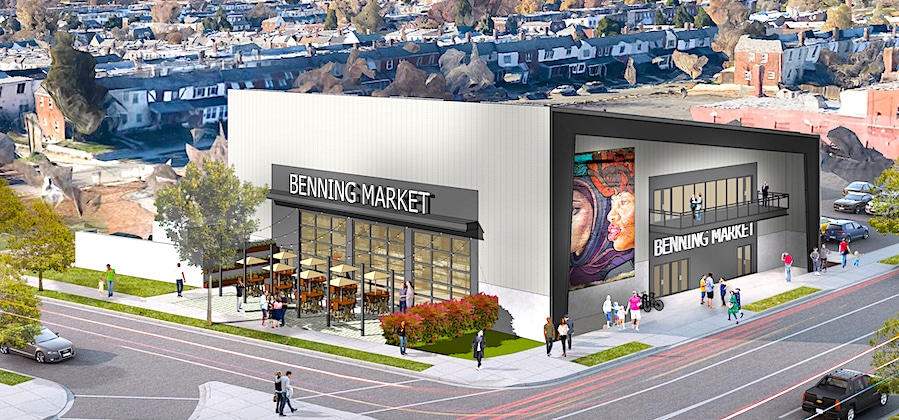
Rendering of Benning Market courtesy of Neighborhood Development Company.

The balancing act.

September 20, 2019

Modern community development is a balancing act

For most of the history of urban development, community input was rare. Top down design and planning prescriptions, like those of “urban renewal” were how communities were made. These days, planners and developers need to be far more agile and responsive to create communities. Working in tandem with the local community is an absolute necessity.

What residents want

Gentrification has become a loaded term, and rightly so. But it is a common misconception that existing residents of gentrifying neighborhoods do not understand or want the myriad benefits that come with rising economic tides. They want their communities to grow, and flourish- but they want to be able to enjoy the benefits of that renaissance, and not be displaced. Most people welcome newcomers, but they want to feel that newcomers respect the area and that new commercial businesses and housing developments serve all the people in that community.

Adding balance

Developers need to balance the needs and wants of locals with the march of progress. They have a financial responsibility to attract new residents who wish to join those communities, but sustainable development means targeting more than one social and economic strata. Instead of markedly altering the character of the community, developers should work to integrate their projects into the fabric of that community on its terms.

Include treasured local businesses

A community’s character does not only come from residents. Commercial spaces and businesses like restaurants, barbershops, local watering holes, and many other establishments define an area just as much as the people that live in the neighborhood.

Developers should make efforts to ensure that treasured local businesses are allowed to continue operations. A popular option for this route is to offer them below-market rent for a specified period. This will keep the best features of the neighborhood in place, building a sense of community and goodwill between neighborhood anchors and new tenants and developments.

Mixed-income considerations

Studies have consistently shown that mixed-income neighborhoods offer a plethora of social, economic and educational benefits. But it takes work to maintain that mix. In certain communities, people live on fixed or limited incomes. If these residents are unable to share in the collective progress of the neighborhood, they will likely oppose any new development. One way to do well and do right is to set aside a certain percentage of units in up and coming neighborhoods for low-income residents, or to explore bottom-up financing options like equity crowdfunding, which allow residents to invest direct in community projects.  

_

The choices developers make have a real impact on the daily lives of neighborhood residents. The most successful developers in the social impact space find a healthy balance between generating returns and ensuring that all residents benefit from a rising tide.

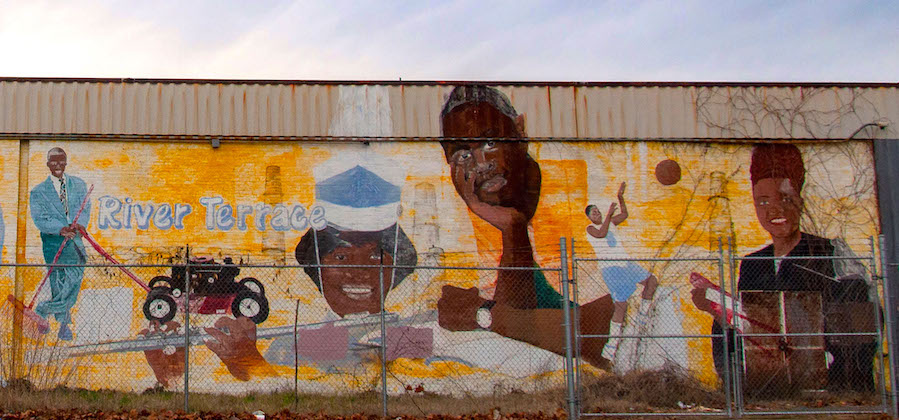
Image of building in River Terrace, DC, courtesy of Small Change.

Taking the best path forward.

September 16, 2019

Nowadays, you can’t throw a stone without hitting a “socially conscious” or “socially responsible” residential development project. Let’s assume for a second that most of the firms involved in these projects are genuinely interested in making a difference while making a profit. The question remains: why aren’t we seeing a substantive change in the amount and type of affordable housing available? The quick answer is that many developers are not taking into account how their projects will function in the real world.

Housing is a complex and multifaceted sector. Market conditions and governance factors change from state to state, county to county, and even city to city. Developers can have the best intentions in the world, and the best game plan, but if local authorities or stakeholders are not on board, their project may be dead on arrival. There are significant market forces working against affordable housing. Since housing is an investment for homeowners and commercial property owners, they have a vested interest in stopping new affordable housing from being built.

It may seem that developers working to bring to market affordable housing projects have the deck stacked against them. But with the right mindset and vision going into a project, there is precedent for success.  That precedent requires moving beyond traditional ways of thinking and employing place- and use-based framework to their developments.

Place-based responsibility

When selecting a site to erect community-conscious or low-income housing, it is essential to show respect for the local community, and how that development will affect the day to day lives of the people in the area. Many of the problems associated with low-income housing, like blight, crime rate increases, traffic and density issues, and a whole host of other problems come about as a result of poor planning and not staying true to place-based responsibility. In order to dodge these issues, a focus on the neighborhood as a whole, rather than your little piece, will pay big dividends later on.

Use-based responsibility

Use-based responsibility touches on some of the same areas as place-based, but with a crucial difference: it looks towards how the residents and community will interact with the development on a level that exceeds simply doing what you can to ensure the units are filled. Rather than just creating a sequence of buildings, the goal should be to create eminently livable communities, where the space compliments the way residents live, rather than residents having to adapt to the space.

Determining the best path forward

To ensure that your project is aligned with place and use based responsibility, it is imperative that you somehow engage the community. This can be through educational campaigns, public meetings, or any other means of two-way communication between stakeholders and developers. Going further, crowdfunding platforms have allowed developers to solicit investments from people in the very same communities in which they hope to make a difference. Nothing gets people on board like having a direct financial incentive in a project.

_

Even the best intentions can result in disaster without proper follow-through. They say smart people learn from their mistakes, and smarter people learn from the mistakes of others. The socially responsible development sector is no longer in its infancy, and there is a wealth of data out there to help new developers avoid the mistakes of the past. Recognizing your responsibility as an investor or developer is the first step toward building a profitable, socially conscious property portfolio.

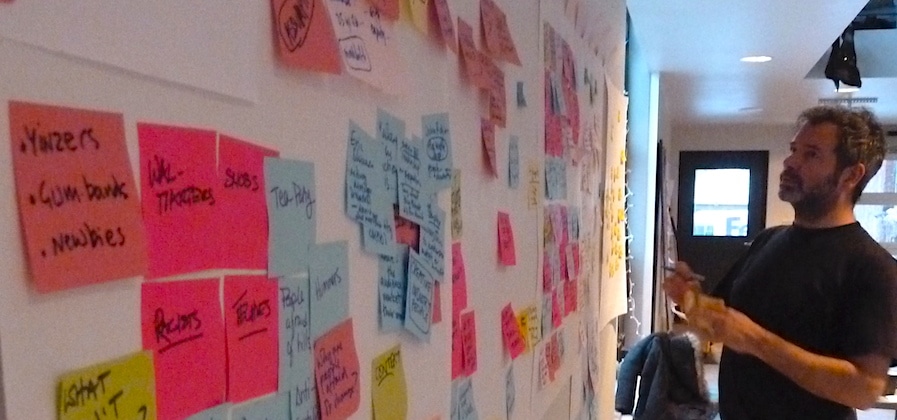
Image by Eve Picker

Challenges of natural affordable housing.

September 6, 2019

We all know that many areas in the US are suffering from an affordability crisis but what’s less known is the impact of broader economic influences on weak versus strong sub-markets within a single city or region. Housing affordability issues are incredibly complex, and they take different forms depending on how well the overall economy is performing. As always, however, it is those at the bottom of the economic pyramid who find themselves squeezed out of the housing market.

Weak markets versus strong markets

In this article, I examine one aspect of affordable housing; intra-city migration where residents are driven out of neighborhoods with affordable home values as higher income residents seek alternatives once their own first-choice neighborhoods become too expensive.

Infrastructure

Some weak housing markets such as Philadelphia on the Eastern Seaboard and Pittsburgh in the Rust Belt, were filled with a substantial amount of naturally occurring affordable housing in the early ‘90s. Unlike cities where space was at a premium, such as Manhattan or Miami’s South Beach, it was easy to find affordable housing in these weak housing markets. However, easy availability came at a price. It meant that most housing was under-invested in, not well maintained or in disrepair.

This underinvestment affected not just the individual homes, but also the infrastructure built-up around the homes and the neighborhoods they could be found in. We see examples of this in places like Flint, Michigan, with its failing water pipe infrastructure, as well as New Orleans, Louisiana, with its need for levee maintenance and storm protection issues.

Intra-city migration

As housing markets boom, previously affordable areas become more expensive and prices rise, forcing increasing swaths of the home-buying population to seek housing in areas initially less desirable to them, but more affordable. This affects home buyers at all levels of the economic spectrum, but most deleteriously those at the bottom who find that, as prices rise everywhere, they have nowhere to go because areas less expensive than their own used to be no longer exist.

Initially, there are advantages to this kind of migration process. New residents can help to widen the local tax base, which in turn helps pay for infrastructure repairs and maintenance, better schools and the like. And new residents tend to keep up with the upkeep of their homes more effectively than their new lower-income neighbors, because they can afford to.

This newfound economic diversity initially provides a much-needed fillip for these lower income areas, but soon cracks emerge. Rising property values and rising rents begin to drive out existing, lower income residents and businesses, who soon find themselves unable to afford their newly desirable neighborhood and who discover that there are few, if any, affordable options for them to move to.

Impact

One of the major disadvantages, therefore, of a booming economy is that as these lower income sub-markets grow stronger, displacement is a potentiality, if not a probability. The disappearance of naturally occurring affordable housing can become prevalent on a macro scale affecting entire cities and even entire regions, like the Bay Area.

However, although most developers, stakeholders, and neighborhood representatives are aware of the deleterious effects of a strengthening real estate market, we must realize that only creative solutions to providing naturally affordable housing will have an impact. Naturally affordable housing comes with its own set of problems especially when the entire housing stock is rising in value. These problems need to be addressed before those most harmed by booming economy can find quality, affordable housing.

_

Naturally affordable housing may have been more prevalent in the early ‘90s, before the United States’ housing boom, but there are still many areas of the country, like Pittsburgh, or Philadelphia, that still possess significant affordable housing stock. Should developers choose to work in these areas, they should embrace strategies that reduce displacement. Some of these strategies may include offering reduced-rent housing to displaced residents through partnerships with local government, developing in ways that provide units that are affordable to residents without government intervention or choosing to develop in regions where displacement will have a less prominent effect on local populations.

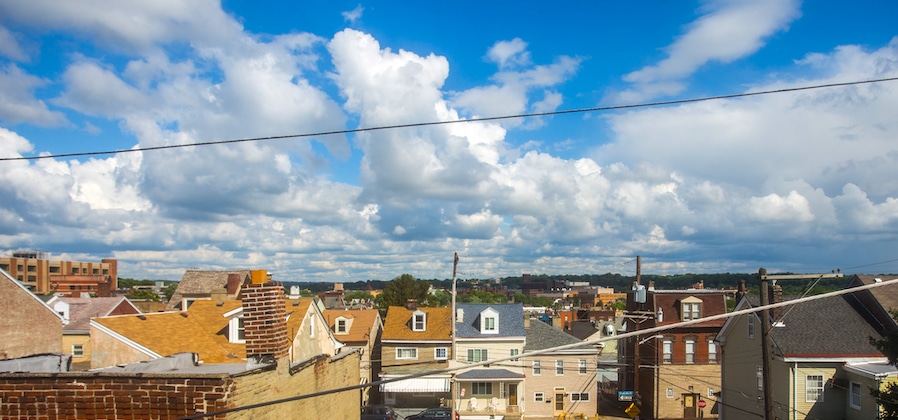
Image of Bloomfield, Pittsburgh courtesy of Eve Picker.

« Previous Page
Next Page »

Primary Sidebar

sign up here

APPLY TO BE A PODCAST GUEST

More to See

(no title)

February 22, 2025

Bellevue Montgomery

February 11, 2025

West Lombard

January 28, 2025

FOLLOW

  • LinkedIn
  • RSS

Tag Cloud

Affordable housing Climate Community Creative economy Crowdfunding Design Development Environment Equity Finance FinTech Gentrification Impact Investing Mobility Offering Opportunity zones PropTech Technology Visionary Zoning

Footer

©rethinkrealestateforgood.co. The information contained on this website is for general information purposes only. Nothing on this website is intended as investment, legal, tax or accounting strategy or advice, or constitutes an offer to sell, solicit or buy securities.
 
Any projections discussed or made may not be accurate and do not guarantee a specific outcome. All projections or investments are subject to risk due to uncertainty and change, including the risk of loss, and past performance is not indicative of future results. You should make independent decisions and seek independent advice regarding investments or strategies mentioned on this website.

Recent

  • The Mulberry
  • Mount Vernon Plaza
  • The Seven
  • Real estate and women.
  • Oculis Domes.

Search

Categories

Climate Community Crowdfunding Development Equity Fintech Investing Mobility Proptech Visionary


Copyright © 2026 · Magazine Pro on Genesis Framework · WordPress · Log in