• Skip to main content
  • Skip to secondary menu
  • Skip to primary sidebar
  • Skip to footer
  • Home
  • About Us
  • Say hello
Rethink Real Estate. For Good.

Rethink Real Estate. For Good.

  • Podcast
  • Posts
  • In the news
  • Speaking and media
    • About Eve
    • Speaking requests
    • Speaking engagements
    • Press kit
  • Investment opportunities

Equity

Digital finance and the revolution in impact investing.

December 2, 2019

Impact investing has grown from a quaint, niche idea to a powerful force inside the world of finance. At one time the thought of aligning investment goals with social responsibility seemed like an excellent way to turn a large fortune into a small fortune. These days, changing investor sentiment aligned with the “good” coupled with the rise of social media and digital platforms has led to a rapidly increasing amount of capital invested in impact projects. According to Barron’s an estimated $50 billion was invested in impact projects in 2009 growing to more than $502 billion in 2019. As the scale and scope of this investment focus has grown some on the frontline have embraced new tools to add clarity and accountability, specifically digital platforms and blockchain-related technologies.

Democratization now

Historically, commercial real estate has not been a readily available investment class like more traditional stocks, bonds, and other commonly held financial products. This exclusivity comes from the fact that commercial property deals are often complex and require substantial capital investments as well as detailed knowledge of all aspects of property development including site planning, construction issues, and zoning and local regulations. These barriers held investors at bay for a long time but now, with the transition into the digital world of finance and subsequent democratization of investment, property investing has become much more accessible to a much broader range of investors.

Accessibility and cost considerations

For instance, prior to the development of digital platforms, interacting with investors globally was pretty well impossible without deep pockets, serious connections, or both. Now any investor with an internet connection can deploy investment capital from anywhere in the world. The ease of investment transactions is further magnified when blockchain and digital currencies are employed. The friction of distance,  paperwork and rigid banking rules that made traditional investing in a real estate project difficult, all but melts away.

Minimum investments

In 2019, Prequin reported that total assets under management for real estate focused US private equity funds surpassed $900 billion, just shy of a full trillion. But the majority of these investments were only accessible to those investors who had the means to afford high minimum investments, much higher than say, buying a share in Berkshire Hathaway or a 10-year T-Bill. Now, with the emergence of fractional investing through digital platforms, and with new securities regulations in place, commercial real estate investments can be offered at much lower minimum investment, opening up and democratizing investment opportunities to everyone.

Attracting like-minded capital

The marriage of impact investing and digital technology not only allows for accessibility but it also offers investors and companies a means of connecting based on shared principles or ideals. Take a look at marketing materials for most big investment firms – many of them stress their stellar reputation, long period of service to their clients, or their futuristic algorithms and robust quantitative analysis. Digital platforms allow financial managers, property developers and other investment professionals to communicate their value sets to potential investors without a significant marketing push, whether those values are related to green building, sustainability, affordability or any combination of the above.

_

History has shown that when more people are exposed to the right professional or educational opportunities, they outperform those without the same good fortune. Similarly, barriers to opportunity, whether they be cultural, social, or political, can have disastrous consequences for the communities in question and society as a whole. The democratization of investment opportunities, including commercial real estate projects, is a step in the right direction towards greater opportunity and away from the limiting dogma of the past.

Image courtesy of Small Change.
The poverty trap.

November 18, 2019

Let’s talk about the concept of mixed-income development. Sometimes mixed-income projects are viewed as the first step toward displacement or gentrification. And to be honest, these fears are not entirely unfounded. The introduction of mixed-income developments was the first step in many rapidly gentrifying areas, followed by luxury housing and upmarket conversions that lifted property values to displacement levels, and the subsequent exodus of long-time residents.

Surely we can learn from the mistakes of the past. Is the concept of mixed-income developments entirely misplaced? The Urban Institute found, in a landmark 2010 study, that thoughtfully planned mixed-income communities can provide unexpected community benefits. The report concluded that mixed-use developments offer tremendous benefits to communities, as long as they are designed in a sustainable, community-oriented manner. Conversely, communities without mixed-use development can suffer adverse effects, including economic stagnation, higher crime, lower educational attainment levels, and a whole host of other negative consequences related to concentrated poverty.

The corrosive effect of concentrated poverty

We’d like to believe we live in a genuinely meritocratic society, But that just isn’t true. Where you are born has a tremendous bearing on how likely you are to succeed. Robert Sampson, a noted Harvard researcher, has spent decades studying poverty along with other academic luminaries. He concludes that concentrated poverty leads to profound suffering in affected communities, as well as limited social mobility. This is magnified in children and adolescents who have a much lower chance of success, even after leaving the low-status community they live in.

Economic diversity as an antidote

There are many possible ways that society can work to end concentrated poverty including legislating racial justice, ensuring gender and sexual orientation-based equity, green/environmental solutions, and a whole host of additional strategies. Mixed-income developments can offer one potential solution.

We all know that there is a great need for more affordable housing. In order to create economies of scale in investing and building affordable house, cookie-cutter affordable housing products have been developed everywhere. These housing products trumpet the boundary of low-status neighborhoods from Baltimore to Boise. While they solve immediate and urgent housing needs, they often fail on many other counts. Are they adding to the vitality of the neighborhood? Are they making the streetscape better? Do they contribute holistically to the place they are built in? Are they sustainably helping to build a better community or will they simply perpetuate the current economic status of that place. Perpetuation means that those social ills caused by redlining, white flight, and urban renewal, will never be solved.

Affordable housing developers should remember that residents in low-status neighborhoods want the same things that everyone else wants.  They want access to the same high-quality infrastructure and commercial options that usually grace only middle and upper-income neighborhoods. Cafes, restaurants, grocery stores and shops have a better chance of survival in mixed-income neighborhoods and can act as an anchor for low-income residents. They also provide valuable employment and networking opportunities cementing the community together, instead of breaking it apart.

_

Fostering thriving mixed-income communities creates opportunity far beyond just affordable housing.  Mixed-income communities have the potential to bring us all together.

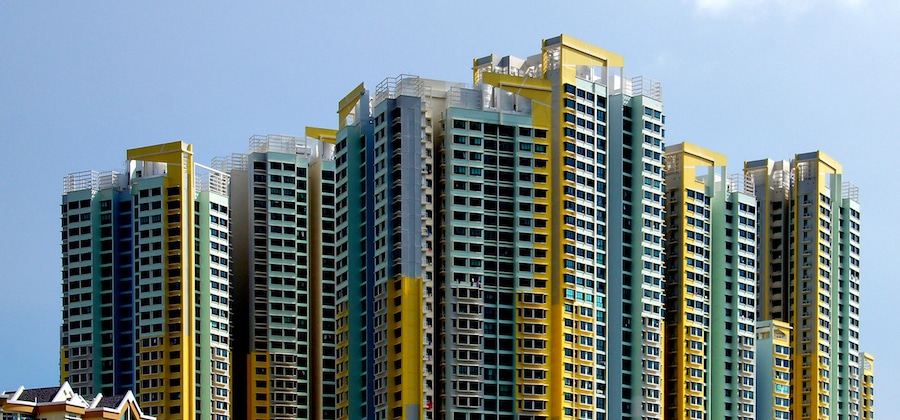
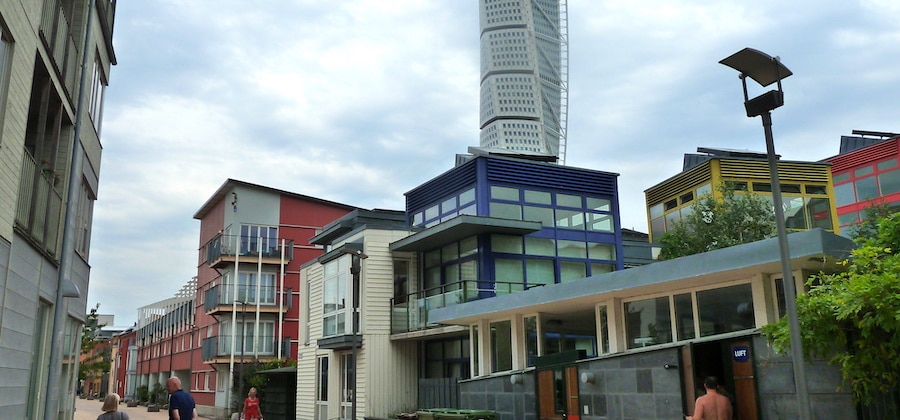
Image of Malmo, Sweden by Eve Picker.

Innovation in real estate. An inevitability.

November 15, 2019

In order to keep a-pace with the quickly changing world, the real estate development industry needs to change. One way is to focus on strategies for business model innovation. Let’s take a look at a few forward-thinking real estate development and investment firms that are leveraging technology and modern business strategies to create sustainable development projects.

Machine learning

Some early-stage companies are using machine learning to identify optimal opportunities to build housing. CityBldr, for example, have positioned themselves as the first “Smart Brokerage.” They use AI and machine learning to determine the market value of a property. And they connect those property owners with buyers willing to pay the market price. This is a win for the property owner who may not have known the value of their property. At the same time, they are providing previously unrecognized (and unavailable) property opportunities to developers. Property owners can see if a builder or developer would pay more for their property in thirty seconds by visiting CityBldr.

CityBldr’s solution could help to build more by-right housing which conforms to local zoning codes. By aggregating potential development parcels and providing developers with access to their advanced software tools that model potential development, they are impacting both the supply and the demand side. The supply side is represented by current landowners, who hold rights to any potential project on the site. The demand side is represented by developers or other stakeholders who are intent on revitalizing a given neighborhood or geographic area.

Analytics systems like those offered by CityBldr and other similar data companies have the potential to take the guesswork out of development and facilitate projects that would be otherwise overlooked due to financial constraints and the time cost of negotiating with landowners.

Unlocking credit opportunities

Many hopeful homeowners are locked out of traditional home financing solutions. Credit problems, bankruptcies, alternative income streams, and lack of credit history all prevent many people from buying a house. This is especially true for low-income Americans and those with little history of homeownership in their family. In the mortgage lending arena, renters that have troubled credit histories are known as no-file or thin-file. These individuals, like many others, experience issues related to cash flow. This is where payday and short-term lenders come into play- these lenders often prey on lower-income or cash insolvent individuals with high-interest rate loans with terrible terms. And so the cycle of credit and other financial problems begins.

Many companies and nonprofits are working to serve these consumers with housing-related credit, offering opportunity without the onerous loan terms. They act as go-betweens for landlords and renters – the renter pays the company directly, and the company pays the landlord. They can provide bridge financing when times are tough, thus ensuring people stay in their homes. Landlords work with these companies due to the guarantee of rent coming in on time, every month, regardless of the financial circumstances of tenants.

In many ways, the housing and rental credit industries are among those most in need of disruption. Increasing access to mortgage loans and other housing-related finance will reduce housing insecurity, while also providing the industry with much needed growth from customers they would traditionally not be able to serve. This means more transactions, more filled properties with rent-paying tenants, and an overall boost to the real estate industry and the companies that work with real estate professionals.

_

When we think about business technology, we’ve been programmed to think about gleaming data centers, mobile apps, and other common examples of tech-driven solutions. But new business and development models are also a form of technology. They can disrupt and improve the industry just as much as (if not more than) any technical solution. Companies and investors who embrace these new methods will find that they’ve provided more housing, to more people, while improving their overall profitability at the same time. It’s a win-win for everyone.

Image by Gino Crescoli from Pixabay

Revitalization strategist to barista.

November 13, 2019

“Nobody should have to move out of their neighborhood to live in a better one.”

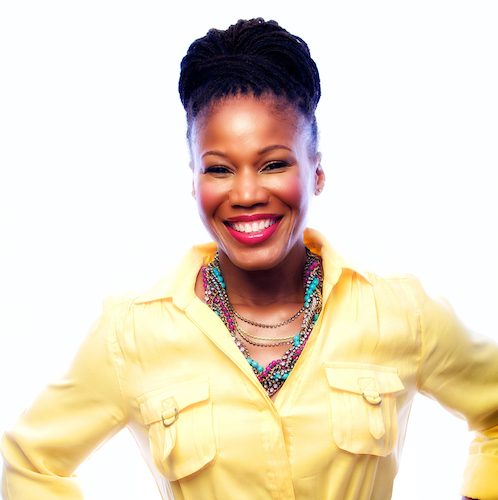
Majora Carter is an American urban revitalization strategist and broadcast producer/host from the South Bronx in New York. Her career has spanned environment, economy, social mobility, and real estate development. Her work has won major awards in each sector including a MacArthur ‘genius’ Grant, a Peabody Award, the Rudy Bruner Award Silver Medal, nine honorary doctorates, and accolades from various professional groups too many to mention here.

The quote, on the walls of the Smithsonian Museum of African American History and Culture, is attributed to Majora. In fact, that’s just the opposite of what Majora was taught to do as a young woman growing up in the South Bronx. She believed, as she was taught to believe along with many others, that her only hope was to get out and abandon her neighborhood.

But she defied the norm and moved back to the very street she grew up on, bringing back with her what she had learned through her corporate consulting work. Her take on real estate and economic development is based on this understanding – that talent retention is key to building better neighborhoods.

Majora believes in talent retention. By placing higher quality third space enterprises for social gathering (cafes, bars and restaurants) ahead of the typical market curve, she believes that talented successful people who would ordinarily migrate out will stay, and keep their spending, reinvestment acumen and day to day example where they grew up. In a stagnant neighborhood , their only option is to flee, leaving communities in a constant talent deficit situation, that (again) makes the place a bargain for those who see value.

Majora is uncompromising about her mission. She lives and works in Hunts Point in the South Bronx, one of America’s lowest status communities just two blocks from the house she grew up in. And she is undaunted by taking new and necessary steps. When it became clear that no coffee shop operator wanted to operate out of her space in the neighborhood, she created her own business to achieve her goal. She’s committed to further developing the neighborhood where she lives and has her sights set on the conversion of a vacant building into a food hall. She lives in a brownstone, two blocks from the one she grew up in.

So listen. You must.

Insights and Inspirations

  • Majora uses the term “low-status” to describe communities where the schools are worse, where there are more environmental burdens, where the air is more polluted, where there are fewer and less well-maintained parks and trees and where the local population’s health statistics are worse. While philanthropy and elected officials acknowledge these endless disparities, they do little to change them except to use them as campaign tools to get elected, raise money and congratulate themselves.
  • South Bronx is one of the lowest-status neighborhoods in the country.
  • Talent retention is key to stopping the typical, stagnant economic cycle of low-status communities.
  • Billions go into low-status communities every year, but with little impact. You need to mix it up to lift a neighborhood up.
  • Mixed income and mixed use are key to building stronger communities.

Information and Links

  • See Majora’s unabridged bio here.
  • This is Majora’s coffee shop, the Boogie Down Grind Cafe, which was featured in Edible Bronx.
  • Read about the Self-Gentrification Salon.
Read the podcast transcript here

Eve Picker: Hey, everyone, this is Eve Picker, and if you listen to this podcast series, you’re going to learn how to make some change.

Eve Picker: Hi there. Thanks so much for joining me today for the latest episode of Impact Real Estate Investing. My guest today is Majora Carter, and, wow, you won’t want to miss this. It’s hard to know where to begin describing Majora, who is, quite simply put, a powerhouse. Described as an urban revitalization strategist, her career has spanned environment, economy, social mobility, and real estate development, and her work has won major awards in each sector, including a MacArthur Genius Grant, a Peabody Award, the Rudy Bruner Award – Silver Medal, and nine honorary doctorates amongst many, many more.

Eve Picker: Majora is quoted on the walls of the Smithsonian Museum of African-American History and Culture as saying, “Nobody should have to move out of their neighborhood to live in a better one.” There is no way around it; if you are really interested in impact investing, this podcast is a must-listen. Be sure to go to EvePicker.com to find out more about Majora on the show notes page for this episode and be sure to sign up for my newsletter so you can access information about impact real estate investing and get the latest news about the exciting projects on my crowdfunding platform, Small Change.

Eve Picker: Good morning, Majora. I’m so delighted that you’re on the show with me.

Majora Carter: Good morning. Thanks for having me.

Eve Picker: I was reading a little background on you, and the thing that stood out to me is this quote, “Nobody should have to move out of their neighborhood to live in a better one.” These are your words, and they can be found on the walls of the Smithsonian Museum of African-American History and Culture. I just wonder how these words play into your work?

Majora Carter: Oh, those words are- were actually not my words, but they’ve certainly been attributed to me. They were the words of a woman who worked with me – Marta Rodriguez – as a organizer, when I ran Sustainable South Bronx, and it really embodied exactly what we were trying to do at the time, when I was running a small environmental and economic development organization – which is this is our community. How are we not creating the kind of community of our dreams here? It really continues on, as we’re thinking about real estate development, and how do you use real estate development to truly transform your community into something that you can age into, and stay there, because you feel as though everything that you need and want is actually part of it?

Eve Picker: Yeah. So, you’re working- are you still working mostly in the South Bronx?

Majora Carter: No, I work nationally. I certainly do have some projects that I’d love to get off the ground, here in the South Bronx, and some that we’re working on, but we actually work nationally, as well. We’ve got a really amazing real estate development project, a mixed-income housing, mixed-use development, going on out in Mapleton-Fall Creek, Indianapolis, which I’m absolutely delighted about. There’ll be about 50 units of home ownership; another 150 units of mixed-income housing, and about 50,000 square feet specifically for light manufacturing, commercial, and cultural space. We’re delighted to be the developer on it.

Eve Picker: Wow. You weren’t a developer when you started out, right?

Majora Carter: Oh, no! Although, interestingly enough, I’ve been developing a lot longer than I actually gave myself credit for. I was a card-carrying member of the non-profit industrial complex, and moved out of my neighborhood, or left my neighborhood for college, and didn’t really want to come back, because it’s really like America’s low-status community – one of America’s low-status communities.

Majora Carter: I want to just articulate what I mean by ‘low-status.’ We don’t generally use ‘disadvantaged,’ or ‘low-income’ to describe the communities that we want to work in most; but low-status are the kind of communities where there are more liquor stores, and corner stores than there are opportunities for good, affordable, different, diverse options for food. You’ll find, instead of banks, or credit unions, you’ll find payday-loan places, and check-cashing stores. You’ll find the kind of places where there’s an enormous amount of very highly subsidized affordable housing, and very little economic range between.

Majora Carter: Essentially, in those areas, inequality is assumed, both inside, and outside the community. These are the places where, if you’re a bright, talented kid, you are taught to measure your success by how far you get away from those communities. We don’t have a way to think about retaining talent in those neighborhoods.

Majora Carter: When I was growing up in the South Bronx, I was one of those bright kids who was definitely told, “You’re going to grow up and be somebody,” which meant you get out of the neighborhood. I embraced it hook, line, and sinker. Only when I came back to the neighborhood and realized that the way our communities were being used via real estate – in particular, for us, it was environmental burdens that just kept getting heaped upon us – I also started realizing that we could use real estate as a way to transform our communities to benefit us.

Majora Carter: I first started in park development, and riverfront restoration, green jobs, training, and placement, and literally just moved into real estate development, when I realized that … It seemed to me like a very natural trajectory to go at scale, in terms of creating the kind of community that you really felt you didn’t have to move out of, in order to live in a better one.

Majora Carter: My first development project was literally squatting a building across the street from the house that my parents lived in, and I was born and raised in. It was a crazy story because it kind of technically had been in my family for decades at that point. The woman who owned it died 20 years before I decided to move in, and no one in her family wanted the house.

Eve Picker: Wow.

Majora Carter: Yeah, so it was like I’d move back in, and I’m like, “I want to set some roots down.” What did I do? I moved in there, took over all the bills, the taxes, and everything. That’s when predatory speculators obtained a fraudulent deed for my house, just as I was in the process of trying to purchase it and finding – getting title. It was a crazy, crazy story.

Majora Carter: There I was, acting as an owner/landlord for years, at that point, and it was a wonderful, just crazy opportunity to realize that, no, I am actually developing this space. and preserving affordable housing in my own community, and generating wealth for myself, because it’s like, look, we’re losing that. I wasn’t thinking about the wealth gap or anything like that, I just needed a place to live. I wanted the people who were living in my building to continue to have a place to live. But I was a developer back then, and I’m a developer now.

Eve Picker: Right. That’s really interesting to me, because I’ve been lots of places lately where ‘developer’ is just a bad word.

Majora Carter: It still is. Oh, my gosh, yeah-

Eve Picker: Yeah, I know. It’s getting worse, I think. Not just still … The question is, I mean, we know that just like there’s good doctors and there’s bad doctors-

Majora Carter: Exactly.

Eve Picker: -there’s good developers and there’s bad developers. But the narrative is really all developers are bad.

Majora Carter: Right [cross talk] and there’s no space in it for those of us who are trying to use development for what it actually could be, which is a truly transformative way to support communities that we love. We really think about how do you use it as a tool, specifically, to support the visions and the values that we have, which is that [inaudible] and no one should have to move out of their neighborhood to live in a better one. You should have opportunities to live, work, and play, in wonderful ways, in ways that match your income, but there’s all sorts of opportunities for you to engage in a beautiful community that actually does not require money, but builds community, and through [cross talk]

Majora Carter: Why is it that, in low-status areas – whether it’s an inner-city community, like the South Bronx, or a Native American reservation, or a former coal-mining town that has no real jobs anymore, where it was all white – why do we think of those, of developing in those places, where it’s only two kinds of development, where it’s either the poor folks that are there are either bought it; generally bought out, or displaced by people with higher incomes  – that typical gentrification kind of phenomena – or its poverty-level economic maintenance, which is still real estate development, wherein there’s [cross talk]

Majora Carter: The whole idea is that why are there only two kinds of development that happen in low-status communities? Why can’t we use it as a way to increase economic diversity, and to build wealth creation, and just make it so that people love their neighborhoods, as opposed to feeling like they’ve got to move out of them in order to live a little bit better? I accept that challenge, and I really believe that that’s what I’m doing. So, yeah, as a developer, and as a black woman developer, whose working in this really interesting way, where I absolutely … There is no way I would ever build an exclusively affordable-housing complex for the lowest-

Eve Picker: I’m glad you said that.

Majora Carter: Never, never! I’ve been, in some circles within the non-profit industrial complex, demonized for that, because I should be doing the kind of things, where it’s like [cross talk] for the people. I’m like, poor communities concentrate- low-status communities concentrate poverty and all of the issues that are associated with it – low health outcomes, poor educational attainment, higher rates of being involved in the justice system, or being touched by it in some way, and your family … Obviously, higher rates of unemployment, and poverty, and just creating a sense of lack of hope within those communities.

Majora Carter: Why would I want to build more of that?

Eve Picker: Yeah.

Majora Carter: Unless, of course, you’re getting big developer fees, and you really don’t care about the communities that you’re working in, which is why I understand why most people hate developers so much.

Eve Picker: Be sure to go to EvePicker.com and sign up for my free educational newsletter about impact real estate investing. You’ll be among the first to hear about new projects you can invest in. That’s EvePicker.com. Thanks so much.

Eve Picker: Yeah, no, I get it, too. But I’m really fascinated by what you’re saying, and I totally agree with it. I’ve watched, for years, in Pittsburgh, the affordable housing product sort of live in neighborhoods that all start looking the same – this cookie-cutter affordable-housing product. It doesn’t … While, definitely, people need decent places to live, and it accomplishes that, it doesn’t change the nature of what’s happening in those neighborhoods. The moment you kind of push that edge of that, that’s when … I don’t know, how do you stop speculators? It’s something I think about a lot.

Majora Carter: We [cross talk] try to and are still trying a number of things. One of them is to continue talking about the approach that we’ve taken with our own real estate development and actually putting our own money where our mouth is. So, as developers, we did spend a lot of time within our own community just really understanding what are some of the hopes, and dreams, and aspirations, and, of course, needs within the community.

Majora Carter: We did hundreds and hundreds of surveys; realized that what people in a neighborhood, like the South Bronx, which is one of the poorest parts of the country within congressional districts, are the kind of the same things that anybody in a middle-class community wants. They want great places to work, with housing that- quality housing that matches their income. They want places where they could afford to buy new things that they need. They want lifestyle infrastructure, like cafes, and coffee shops, and bars, and things of that nature. They want those kind of things so they can feel a sense of value that is inherent within their own community. That goes back to that …

Majora Carter: What happens within low-status communities a lot … Because, of course, real estate developers, they take the kind of 20-, 30-year long-term view of what’s happening, in terms of how communities are going, to plan; whereas, in our communities, we’re taught that there’s no real value in them. So, it’s easy, I think, for them, if your family owned a home during a time of severe financial disinvestment in America, like the way that my family … My dad bought the house I was born and raised in the 1940s. By the time the ’60s, and the ’70s rolled around, there was so much white flight and disinvestment within the community, and arson, because landlords were torching the buildings there, because there was no financial investment coming in, so the most they could do is get insurance money.

Majora Carter: It was a really bad kind of space. That kind of lingering understanding – this is what our community is … Of course, you own property. It’s going to have an impact on you, and you’re going to feel like … The second you can move, you’re going to get out. Predatory speculators understand that. They’re counting on us not knowing the value of our own home. I can’t tell you how many little notes I get under my door, or they found my cell phone … They’re telling me they can buy my house for cash, and close within a week. This is a common occurrence.

Eve Picker: Wow.

Majora Carter: For folks that don’t understand what they have, guess what? They’re going to be like, “You want to pay me what for this crap that I’m living in right now?” So, they end up selling, actually, generally for less than what the house is worth, because they just don’t know. Then the predatory speculator makes out really well.

Majora Carter: Since there isn’t a whole lot, from what I’ve seen, within the non-profit industrial complex and communities like this, that’s actually going to support homeowners within a community; which I think home homeownership is actually often – especially in areas where there’s a rental unit in them – there’s very little support to support those folks, like there’s [cross talk] non-profits or government. They’re like, “Oh, we’re going to focus on the poorest people in those communities,” and anybody else, it’s like sucks to be them, because it’s almost like they’re invisible.

Majora Carter: What we’ve actually been doing on our own is trying to identify what are … First of all, some of the homeowners, and just letting them know, “You’re sitting on your family’s legacy. You should be using this to help create wealth and retain it within your own family. Or, if you want to sell, at least understand what you got so that you’re not being reamed for it.”

Majora Carter: The other thing is we’ve actually hosted things like small zero-percent-interest loan workshops, and low-interest-loan workshops and you specifically – on our own dime – just so that folks have an understanding of what that is. On another level, and I think funny, because this is, again, on my own time, because we don’t have funding to do this; it’s just that we saw that it was a need … We’re really hoping that we are going to be able to convince somebody or other to develop some kind of a fund that supports low-income homeowners in low-status communities.

Majora Carter: You know there’s that cooling-off period, if you change and get insurance, or you buy a house, or whatever, and you’ve got a little bit of time where you’ve got to prove that this is what you want? Wouldn’t that be kind of great that before any kind of real estate transaction goes down in a neighborhood like this, that there’s actually folks just making sure that folks understand what their options are?

Eve Picker: That would be great. What would the fund ideally do?

Majora Carter: It would, number one, support folks to actually be in that role, to play that kind of adviser role to the folks to let them know what their options are. But also, people may need … We find that some folks are selling their homes [cross talk]

Eve Picker: -could not repair the roof.

Majora Carter: Yeah!

Eve Picker: I know, I know.

Majora Carter: One little thing, and it’s just like [cross talk]

Eve Picker: So, a neighborhood fund- a neighborhood fund for people who really need help to keep them in their homes. I thought Philadelphia was doing a program like that.

Majora Carter: It is … New York is definitely not; New York City, at least [cross talk]

Eve Picker: Yeah.

Majora Carter: -sad how little they think about it-

Eve Picker: I think there are ways to do a fund like that. Do you think there are people in the neighborhood that would contribute to a fund like that, themselves, in their own neighborhood?

Majora Carter: I’m not sure about that. I think it’s something that, frankly, should be a part of city government. I really do, because I feel like they’ve just- they watch the tax rolls in communities like ours, and it does fall along racial lines, as well. Nobody pays attention in poorer communities of color to supporting the homeownership right here. It’s not in our government. There are non-profits; there are a few nonprofits that work on- none in the area that I’m in, actually, which is why we’ve been posting those type of meetings and bringing those resources in. It’s really challenging.

Majora Carter: Another thing that we’re working on and is literally building our own projects to prove this talent-retention strategy that we have. It’s like if you build the kind of community that makes people feel like they don’t have to move out of it, in order to live in a better one … But you’ve got to build it. One of the things that we saw in all of our research, in the market research that we did here, was that people were leaving the community across income levels; not because they thought the neighborhood was dangerous or anything like that.

Majora Carter: It was because it was- there was no real lifestyle infrastructure here. There was no place to get a drink, if you’re an adult, that wasn’t a topless bar; there wasn’t a coffee shop, or a bookstore, anything like that. Even the kind of cute stores that people want to go to, or a place to get dinner. There’s plenty of greasy spoon places, and, of course, fast-food chains, et cetera, but nothing that actually spelled quality in any real way, and no attractive third spaces that made people want to stick around, like a coffee shop with Wi-Fi.

Majora Carter: We actually were able to acquire the lease on two very inexpensive leases on the main street in our community. It was just a wonderful deal that we got, long term. So, we were just like, “This is great.” We looked, actually, for a coffee-shop operator for years-

Eve Picker: For years?

Majora Carter: Oh, yeah, literally. We had that lease for a while [cross talk] and basically, it was clear, because it looked like the market here wouldn’t appreciate anything like this, even though we knew that our data proved otherwise, because we knew people were leaving the community to experience things like that-

Eve Picker: I know what happened. You started it yourself, right?

Majora Carter: Exactly. I was never planning to be a barista [cross talk]

Eve Picker: Well, there’s not many developers who’ve done that in areas where no one sees the market potential, because our financial institutions – I sound a little bit like a broken record, because there’s lots of reasons to say this – financial institutions, really, they’re crushing the innovation of the cities-

Majora Carter: Exactly.

Eve Picker: They’re really just financing cookie-cutter projects, so the moment you do something different  … I mean, I get it. They have regulators, but shouldn’t someone step up?

Majora Carter: Yes! Yes! You know what? What was wonderful is that, in our example … We decided to open- we first started- it was a joint venture with a really amazing coffee shop and roaster downtown. They’d never had a Bronx presence, and was kind of interested in the idea, called Birch Coffee. So, we partnered with them for almost a year. First, it took six months just to understand the business. Then, we actually opened in the latter half of the year. We learned everything from them about how to actually operate a coffee shop, and bringing people in, all that stuff. It was amazing. It really was their guidance [inaudible] I am so grateful.

Majora Carter: But it was sort of clear that the market up here was a little different than this very high-end big coffee shop downtown, where there’d be no flavors, or whipped cream, and syrups, and people … That’s what, frankly, people wanted up here. We also wanted to provide healthy options, as well, but we had- in order to stay in business, we actually had to respond to the market. So, we actually [cross talk]

Eve Picker: They wanted over-the-top luxury, right?

Majora Carter: Yes, and it’s just like no. I know expertly steamed milk is beautiful, on its own, but, look, if somebody wants whipped cream on top of it, I’m going to give it to them.

Eve Picker: Yes!

Majora Carter: Oh, it was just [cross talk]

Eve Picker: That’s a Viennese, right? [cross talk]

Majora Carter: -we should start calling it that now. You’re totally right.

Eve Picker: Yeah, and they’re all over the … Call it a Viennese.

Majora Carter: What was so interesting is that it … It also gave us an opportunity to stick our own swagger on it, quite frankly-

Eve Picker: Right.

Majora Carter: -because, after all, this is the South Bronx. It is the birthplace of hip hop. We are all about innovation. We were like, we need this cafe to pay homage to that. We literally ended up moving it to a larger space, and then we actually hired a two hip hop historians to actually help us curate the actual wallpaper, which is literally the early days of hip hop, mostly [broad] space. We just built this … It’s like an homage to graffiti, and it’s just beautiful.

Majora Carter: We use it as this tremendous third space for open mikes, and art shows. It’s just really this beautiful community gathering spot. It did take us a while to get to that point at a place where we won’t be losing money soon, which is awesome. But what was fascinating about it was the fact that, early on, we literally ran out of money to do it, because we were not anticipating … First-time coffee shop owners not knowing anything [cross talk] One of the members of the advisory board that we had that was literally giving us intel about how to do our projects better, actually, they volunteered to invest- her family volunteered to invest in our project-

Eve Picker: Isn’t that great?

Majora Carter: It was just like … What was amazing was that we didn’t talk about it. We socialize a lot of things, and it’s a small community, but what was interesting is that the way people found out that another family in the community had invested in this business was just like, “Wait, we can do that?” I’ll never forget some of the conversations we’ve had about it. It was just so beautiful that it was … Because people just did not realize that this was like within their grasp.

Eve Picker: Yeah.

Majora Carter: For our next project, we acquired [cross talk]

Eve Picker: I think you should- I think you should be the spokesperson for Small Change [cross talk] that’s really what my hope is for it, that people can invest in the way big investors can invest and they can get the same return. Because, you know, hey, it’s money, right? Why should they get less than someone else? Anyway, I’m sorry to interrupt you-

Majora Carter: -powerful place.

Eve Picker: Very powerful.

Majora Carter: -just to even know that you can add value. Literally, you are adding the value to make this project grow. It is really amazing. Our next project, we acquired a rail station, a former rail station, that was designed by the same architect that did the Woolworth Building, and the U.S. Supreme Court building – his name’s Cass Gilbert. Of course, I’m sure you know who that is. I owned a little piece of Cass Gilbert, like Woo-Hoo!, Which just makes me very happy. It really does! It’s only about 4,000 square feet. Our goal is to transform that into a restaurant incubator, or a food hub for local chefs, because we’ve … Interestingly enough, the Bronx has some tremendous culinary talent that comes out [cross talk]

Eve Picker: I’m sure it does, yeah.

Majora Carter: There’s this one group called Ghetto Gastros. It is four young men from the Bronx; [cross talk] one of them I mentored 20 years ago, which I’m so proud of. Now, they’re like these ridiculous caterers that are flown all over the world to do their version … Haute couture is- I think that’s a fashion term. That’s not a food term. It’s like nouvelle cuisine, except they put their spin on it, because they’re these wonderful boys from the hood, but they’re all trained chefs. It’s unbelievable what they do, and it’s just extraordinary. Ghetto Gastro – you look it up [cross talk] There are folks like that literally come from our communities, but then kind of parachute out, because there aren’t many opportunities for them to open up businesses here. I’m like, how cool would it be if we had this restaurant [cross talk]

Eve Picker: Yeah, that’d be awesome. You know, we have an incubator like that in Pittsburgh that’s done very well. I think they’ve got three stations, and they have like rotating startups in there.

Majora Carter: Because the restaurant incubatees, all they do, they cook … In our version, we would manage the bar and the dining area, and each one of the restaurateurs, either three or four, depending on what we can fit, is literally what … They would, instead of rent, we would get a gross percentage of sales [cross talk]

Eve Picker: Right, right, right, right.

Majora Carter: -they get a chance to really hone their craft-

Eve Picker: Right.

Majora Carter: -and at least focus on building their market, but the-

Eve Picker: What’s the holdup? Why can’t you get that off the ground?

Majora Carter: We’re in a neighborhood that’s not … You can read lots of real estate development articles about the South Bronx, and how it’s like the next … It’s like the next extension of Manhattan, and it’s booming, and there’s a lot of market rate development going on, and a lot of commercial things happening in it. But that’s the part of the South Bronx where that’s happening. There are other parts of the South Bronx, which is where I’m in, and born, and raised, and still live, that’s the part that’s sort of being reserved for poverty level economic maintenance [cross talk] Yep.

Majora Carter: There is one big project that’s coming up here that’s about … Basically, it’s another low-income-housing project. It’s so crystal clear that all that’s happening is they’re trying to concentrate more and more poverty here. I think that’s one of the reasons why it’s kind of like, “Well, that’s what happens here, so we can’t really think about investing in it.” Also, it seems like it might be considered a smaller- like almost too small a project for some folks, as well, because-

Eve Picker: How many square feet is that?

Majora Carter: It’s only 4,000 square feet.

Eve Picker: Oh, that’s big enough.

Majora Carter: That’s about- with all the added … We actually, interestingly enough, discovered a basement [cross talk] found the other room up top. It was- we discovered another basement [cross talk]

Eve Picker: That could be the speakeasy [cross talk]

Majora Carter: You know that to redevelop a 5,000-square-foot space, it’s almost as … The brain damage is about the same as a 50,000-square-foot space, but the returns are much higher for the 50,000-square-foot space. So, I think that’s also part of it, as well.

Eve Picker: Yes, but the return on this would be phenomenal for that neighborhood [cross talk]

Majora Carter: Oh, absolutely.

Eve Picker: -the triple-bottom-line return that really we’re talking about here. I don’t know. I think there would be people who would invest. I really do. It’s really an amazing story. I want to come see the building, and I want to eat with Ghetto Gastro, and-

Majora Carter: I know! Oh, my gosh, who knows where they are right now? [cross talk]

Eve Picker: -because the neighborhood sounds amazing, and I want to cry when I hear about more and more affordable housing being built.

Majora Carter: I know, I know, and it’s just like … I know whenever I say that, I have to preface it with, “Please don’t think that Majora Carter hates poor people,” because I think that’s the way that folks immediately go, like, “Oh, she doesn’t want any more affordable housing.” I want- Actually, I do want more affordable housing. I want affordable housing for a range of incomes, because we know that economic diversity needs economic stability and community stability. Whereas, the concentration of poverty is exactly opposite that.

Majora Carter: But again, if we’ve been led to believe that this is all that happens in low-status communities, we start to believe it, and then feel the only option is to leave, if we have an opportunity to do so. Who does that benefit? It benefits the predatory speculators and the government programs, who take advantage of the fact that there are really poor people in our communities that probably have lifestyle-related illnesses, low educational attainment, or who’ll probably be within the justice system. They make money for somebody; not for the people that are here. It just seems like such a tragically obvious thing that we see happening over, and over, and over again, and since we’re led to believe that there’s no real value in our communities, we internalize it.

Eve Picker: Yes. A lot of this is about educating community, right?

Majora Carter: Yeah.

Eve Picker: What community-engagement tools do you think work best?

Majora Carter: Honestly, opening our coffee shop [cross talk] having a presence, and being there has been so transformative. My husband and I both work there [inaudible] and work out of it a lot. We’ve met … I thought I knew a lot of people in my own neighborhood, but I have met so many more, as a result of having that space, opening it up in a way that is just- it’s not a community center that people feel like they’ve got to tip-toe in, or have a problem to be in. No, this is a place of joy, and access.

Majora Carter: I’ll give you an example of how I knew that we were really something that our community appreciated, because, again, the idea … I mentioned before that some folks within the social justice industrial complex totally demonized me and think that I’m bringing in developers to kick out poor people. Some of the stuff is just insane, and they won’t acknowledge that I’m actually a developer. It’s like, no, no, no, I’m the developer. I want to be called a developer … I have my own ideas. I don’t want to talk to these guys.

Majora Carter: We were hosting a workshop for small business owners in the community, as well as homeowners to get access to capital for zero-percent-interest loans and low-interest loans and also figure out other ways … There was going to be a presentation on how to make your building- add additional units on top of your building, to see if this is something even you could do. We were protested. We had 40 people inside the space waiting to hear more about these zero-percent-interest loans and how do you make your actual building work for you, and there were like 10-15 people outside yelling about how I was destroying the neighborhoods with bringing a coffee shop there.

Eve Picker: Really?

Majora Carter: Yeah, and I have to tell you, I was … The signs were huge. They were saying, “Majora Carter destroys the South Bronx one coffee at a time.” That I’m a community destroyer. It was just like, “Some of you people know me … You could’ve just literally knocked on my door and said, ‘Can we talk?'” But they wouldn’t do that. But I have to say, after that, I’m like, “Oh, my God, my whole neighborhood is seeing people yelling, with my name on a sign, talking about how evil I am.

Eve Picker: Yeah.

Majora Carter: I was just like, “We might have to close this stupid coffee shop. I mean, who’s going to want to come?” The next day, we had the best day ever-

Eve Picker: Oh, that’s really great.

Majora Carter: The best day ever. We had people coming in, one after another. It was like, “You know what? I’ve actually never even been here before, but I saw that, and I thought that was stupid. I’m going to buy a cup of coffee just to support you.” I was just like [cross talk]

Eve Picker: That’s really lovely. That’s really lovely. Yes, yes, it is. Many people just fear change, right?

Majora Carter: Yes, and I get it, and I understand … That’s like to your point, it is we fear what we don’t know, but if we don’t actually look at … Because real estate developers … You know that Bishop Desmond Tutu quote? A knife’s a knife. You could either use it to cut a hole in somebody or to cut a slice of bread and feed it to your child … It’s a tool. We can use it for horrible things, or we could use it for great stuff, but it is what it is. But how we use it, and unless we are empowering ourselves and other folks who are actually looking at places that actually have that triple bottom line and going, “That’s valuable. Maybe I won’t make the kind of returns …” because I’m sure … My rail station, one of the reasons why it’s also empty is because I’ve been very choosy. I am not going to open it up to another health clinic, or a tax-prep place that’s [cross talk]

Eve Picker: Yeah, yeah, yeah …

Majora Carter: We’ve said no to folks like that.

Eve Picker: Yeah.

Majora Carter: No. So, yeah-

Eve Picker: So have I, so you’re making me feel stronger.

Majora Carter: Good, good. No, I don’t mind at all; at all.

Eve Picker: I said no to a tax-prep space. I couldn’t bring myself to sign the lease. I just couldn’t do it.

Majora Carter: They have so much money, and they don’t even have to be open. It’s really crazy.

Eve Picker: No, they don’t have to be open. That’s the really bad thing. What a horrible thing to do in a neighborhood, just have a place that’s open for three months and then a shuttered storefront [cross talk] Anyway, now we’ve said what we think … Just like there’s been a wave of green-washing in this country, but I feel like there’s a wave of good-washing. People are talking about impact investing.

Majora Carter: I hope so.

Eve Picker: But when I hear you, I really wonder if they’re really impact investing.

Majora Carter: Nope.

Eve Picker: What do you think the future holds for impact investing? What do we have to do to change that?

Majora Carter: I am actually hopeful about some of the smaller-scale investment platforms that are out there, and just crowdfunding, in general, for real estate. I’m still learning about it. I do feel like our communities and our country, as a whole, is really only going to be changed when we start seeing each other in ways that we want to support. Look, I’m a woman of faith, so I think I actually really do believe that we can create a kind of heaven on earth, if we were really good at it, but I also think that- I am hopeful that … People are really tired of the expecting the status quo, because, by all accounts … I’ve got great vision. I have no balance sheet, so I don’t look good to anybody, and I get that, but I have a track record of getting things done, and-

Eve Picker: No, you don’t look good to very traditional financial [cross talk]

Majora Carter: No, I look miserable.

Eve Picker: You look great to other people, so that’s-

Majora Carter: Yes, and those are the people that I’m hoping will go, “Oh, wait …” But in order to continue to do that great work, she needs something that’s a little bit different than what she was getting before.” That’s what I’m hoping. Because I do- I also love the idea of people really taking ownership. I think that’s been one of the reasons why our low-status communities in America feel so disjointed and so destabilized is because we don’t have a way to really keep and retain roots in those areas where there’s access to capital, or predatory speculation. It’s all up in there, just [cross talk]

Eve Picker: But it’s really hard to get a neighborhood to focus, when has more than its fair share of single parents and people with two or three jobs.

Majora Carter: Those are the people that want more, and you know what? Believe me, and not to pooh-pooh it at all, yes, there are those who are not going to get out of their heads at all, but then there’s those are just like, “You know what? Why can’t I have it?” There’s always a critical mass of folks who are just literally waiting for something to do, like, frankly, the folks who saw me being bullied with this protest and who were just like, “No, wait … I see that. I know what I can do.” You may think that just buying a cup of coffee, a specialty cup of coffee, might not be an act of rebellion or resistance, but I absolutely looked at it like it was.

Eve Picker: Yeah, I think you’re right.

Majora Carter: I think there’s more of that that’s just waiting for a reason to be there, to actually stand up and be counted, and maybe even count a little bit of their own dollars to say, “You know what? Yeah, I believe in it. I believe in it so much that I’m going to invest in it.”

Eve Picker: So that’s what we’ve got to make happen at the train station, right?

Majora Carter: Yes [cross talk]

Eve Picker: I’m going to ask three sign-off questions that I ask of everyone, because I think I’ve taken up enough of your time. I could keep talking to you all day long.

Majora Carter: I know. I love it [cross talk]

Eve Picker: I think I know the answer to this, but we may as well reiterate – what’s the key factor that makes a real estate project impactful to you?

Majora Carter: Mixed-income housing, mixed-use … Well, the actual specifics – mixed income housing and mixed-use economic developments. But I think the real vision is talent retention in low-status communities.

Eve Picker: Then, do you think that crowdfunding might … I mean, you touched on crowdfunding. Do you think it might benefit impact real estate developers in more ways than just raising money?

Majora Carter: Would it impact real estate developers?

Eve Picker: Well, or neighborhoods or any [cross talk]

Majora Carter: -no, I think that you couple the idea of putting your cash into something that you believe in that is actually going to support your community creates a level of ownership that, you can’t buy that; you just can’t. It sets up a foundation and roots in ways that I think a lot of folks wouldn’t know what else to deal with.

Eve Picker: I think that’s right. Then, this is a really hard one – if you were going to change one thing to make real estate development better in the U.S., what would it be?

Majora Carter: Just one?

Eve Picker: Blow up all the Walmarts … I’m just joking …

Majora Carter: You know what? Honestly, I really would go back to  … It’s very practical. Creating a fund and education platform specifically for people in low-status communities to either retain their properties or purchase them.

Eve Picker: Like a land bank.

Majora Carter: Mm-hmm. It’s not necessarily a community land trust, although that could certainly be a byproduct or a result of it, absolutely. But I think, ultimately, right now, we just have to stop the bleeding. I just think about my own neighborhood, whereas, I think within the past 10 years, our local homeownership rate has gone down from like 20 percent down to less than seven.

Eve Picker: Oh, why? Why did that happen?

Majora Carter: Because predatory speculators [cross talk]

Eve Picker: -foreclosures …

Majora Carter: Yeah.

Eve Picker: That’s really bad.

Majora Carter: Yep, exactly.

Eve Picker: Well, on that sad note, I’m going to say [cross talk] I’m going to say thank you very much for talking to me. I thoroughly enjoyed it-

Majora Carter: Thank you. Right back at you.

Eve Picker: -and I really hope we’ll continue talking.

Majora Carter: Cool. I hope so. Yes.

Eve Picker: That was Majora Carter. I’m in awe. Majora is uncompromising about her mission. She lives and works in Hunts Point in the South Bronx, one of America’s lowest-status communities, just two blocks from the house she grew up in. Majora is undaunted by taking new and necessary steps. When it became clear that no coffee shop operator wanted to operate out of her space in the neighborhood, she created a own business to achieve her goal. She’s committed to further developing the neighborhood where she lives and has now set her sights on the conversion of a former railway station into a food hub. She lives in a brownstone, two blocks from the one she grew up in. Now that is putting your money where your mouth is.

Eve Picker: You can find out more about impact real estate investing and access the show notes for today’s episode at my website, EvePicker.com. While you’re there, sign up for my newsletter to find out more about how to make money in real estate while building better cities. Thank you so much for spending your time with me today, and thank you, Majora, for sharing your thoughts. We’ll talk again soon, but for now, this is Eve Picker signing off to go make some change.

Image courtesy of Majora Carter Group

Crushing urban innovation.

November 8, 2019

SONY DSC

Institutional lenders have their place when it comes to commercial real estate finance. They are the primary source of loans for real estate projects and they offer a wide array of business and development-oriented services as well, all of which are definitely needed. But traditional lenders are not particularly well-suited to solving development challenges in a rapidly changing world. Large financial institutions are not nimble. They will follow, rather than lead with, change. The mess we find ourselves in today is unfortunately in large part due to the dominance of large and traditional financial institutions in the funding of the housing market.

Cookie cutter projects

If you’ve spent any time at all in the urban cores of cities like New York, Los Angeles, Seattle or Chicago, you must have noticed that new construction seems to all look the same. The same residential projects. The same commercial projects. These days larger real estate projects tend to have a floor of businesses and shops with some parking added in, topped with lots of condos or apartments. Often these projects are marketed to high-middle or upper-income tenants, and often they are built with millennials in mind with lots of studio and one-bedroom units. And these developments are a primary reason that displacement is occurring. They are homogenous, catering to one type of tenant or buyer, in a particular income range, with a particular lifestyle. Often, they are funded by the same institutional lenders, like Wells Fargo, Key Bank, and Capital One Financial, amongst others.

Large financial institutions seem to prize predictability and stable returns over all else. The welfare of local residents and the improvement of the community don’t seem to be part of the underwriting equation. There is a desire for simplicity and scalability above all, hence the same projects are appearing in cities from Portland to St. Paul, despite massive differences in the needs of each respective city or community. Housing is not and cannot be a “one size fits all” product. The root cause of many of the ills in the housing market stem from this attitude of “build, and they will come” rather than using community needs and input to craft positive housing solutions.

Scalability is perhaps the biggest reason why lenders won’t support smaller, market-specific projects. Plans to build 20 or 30 units on a small, reclaimed industrial lot in the heart of the city are less attractive than monoculture mixed-use developments that can be replicated quickly and present little risk in terms of construction or the ability to lease to tenants or sell to homeowners. These smaller projects can often be built to maximize their social, environmental, and economic impact. By using non-traditional lots, developers can save on land costs and may also save on lengthy neighborhood review processes, which are common with larger-scale developments. Despite the obvious benefits offered by small-scale development, it can be hard to fund them.

Small investors. Big returns

As institutional investors cannot or will not adapt to unique or non-traditional models, developers and investors must leverage alternative sources of funding for progressive and innovative projects. When traditional lenders choose not to fund a project, look to your own community for development capital!

Raising capital through community-based means allows developers to offer similar returns on investment to smaller, local investors, who may have a personal stake in the success or failure of the project. Rather than the returns flowing out of the community to a large financial institution, that money stays within the area, giving residents and other stakeholders a direct financial interest in their community.

_

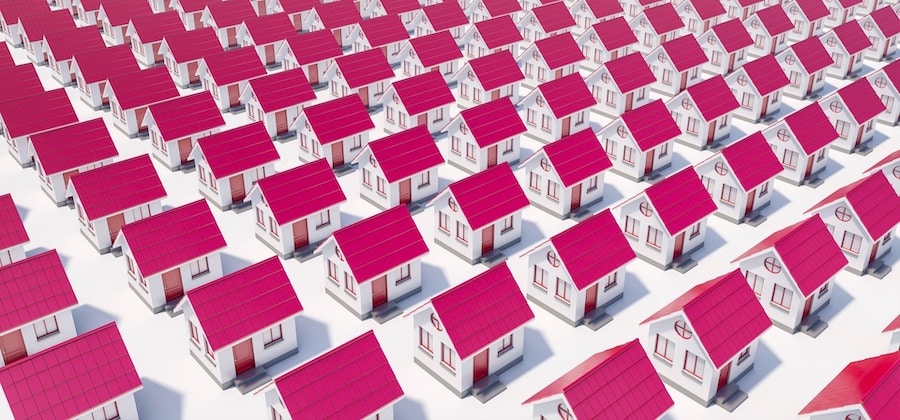
A diverse investment portfolio is a healthy investment portfolio. The same can be said of housing and commercial space. Modern mixed-use, cookie-cutter developments detract from the charm, sustainability, and longevity of a neighborhood. Rather than becoming a fixture of a community, as a unique building or development might, these podium developments re-shape the communities they are built in and drive out long-term residents. We need developers who are willing to take chances on non-traditional projects and want to push urban innovation in our cities to make them better places for everyone. If we crush them, we’ll all be a little poorer, culturally, financially, and socially.

Image from pxhere, C00

« Previous Page
Next Page »

Primary Sidebar

sign up here

APPLY TO BE A PODCAST GUEST

More to See

(no title)

February 22, 2025

Bellevue Montgomery

February 11, 2025

West Lombard

January 28, 2025

FOLLOW

  • LinkedIn
  • RSS

Tag Cloud

Affordable housing Climate Community Creative economy Crowdfunding Design Development Environment Equity Finance FinTech Gentrification Impact Investing Mobility Offering Opportunity zones PropTech Technology Visionary Zoning

Footer

©rethinkrealestateforgood.co. The information contained on this website is for general information purposes only. Nothing on this website is intended as investment, legal, tax or accounting strategy or advice, or constitutes an offer to sell, solicit or buy securities.
 
Any projections discussed or made may not be accurate and do not guarantee a specific outcome. All projections or investments are subject to risk due to uncertainty and change, including the risk of loss, and past performance is not indicative of future results. You should make independent decisions and seek independent advice regarding investments or strategies mentioned on this website.

Recent

  • The Mulberry
  • Mount Vernon Plaza
  • The Seven
  • Real estate and women.
  • Oculis Domes.

Search

Categories

Climate Community Crowdfunding Development Equity Fintech Investing Mobility Proptech Visionary


Copyright © 2026 · Magazine Pro on Genesis Framework · WordPress · Log in