• Skip to main content
  • Skip to secondary menu
  • Skip to primary sidebar
  • Skip to footer
  • Home
  • About Us
  • Say hello
Rethink Real Estate. For Good.

Rethink Real Estate. For Good.

  • Podcast
  • Posts
  • In the news
  • Speaking and media
    • About Eve
    • Speaking requests
    • Speaking engagements
    • Press kit
  • Investment opportunities

Environment

The Bridge.

February 17, 2021

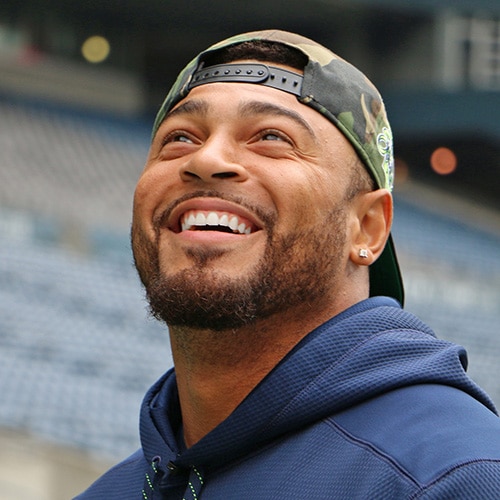
Garry Gilliam may be best known for playing in the National Football League, first for the Seattle Seahawks, then the San Francisco 49ers, but today he has a second career as an impact real estate developer. Originally from Harrisburg, at age eight Garry was sent to the Milton Hersey School, a private philanthropic boarding school for orphans and low income children based in nearby Hershey, PA, where he excelled. That model of community is one part of the inspiration for The Bridge, a new real estate development company that is working to acquire old properties like schools, malls, and warehouses, in order to turn them into sustainable communities in the inner city. Each project will be planned as self-contained, mixed-use “Eco-Villages” with housing, commercial/retail space, co-working, urban agriculture, innovation/education center and entertainment. A place to “work, eat, live, learn and play.”

The Bridge came about as a joint effort with Garry’s friends, both from Penn State and the Hershey School, to give back to their hometown community. Their first project began when they leased the Bishop McDevitt Building in Harrisburg, in 2019, to create co-working, maker and event spaces, and this summer they finished their initial fundraising. The complete rehabilitation will include about 50 units of sustainable, zero-energy housing, commercial areas and indoor urban agriculture. The Bridge also hopes to acquire five to 30 acres in Harrisburg for sustainable Eco-Village campuses that can produce healthy fresh food, clean water and renewable energy.

After starting in Harrisburg, the partners then hope to expand to other cities, going into low-income neighborhoods and turning to other athletes and influencers of color to invest in and lead each project. So … watch this space!

Insights and Inspirations

  • Just watch Garry talk about The Bridge. Seriously.
  • Garry wants to invest $1.5B over the next 20 years into 20 different cities with The Bridge.
  • Harrisburg is ripe for impactful development with historical issues that many cities face, including redlining, neighborhoods that are food deserts, and general lack of resources for many school districts.
  • The goal with The Bridge is to find a model that works not just in his hometown, but everywhere.

Information and Links

  • Garry wants to highlight three amazing people: Milton Hershey, Nipsey Hussle and Charles Mully. You can read a little about each of them here.
  • And he gives a shoutout to a book by spiritual teacher David Deida, The Way of the Superior Man.
Read the podcast transcript here

Eve Picker: [00:00:05] Hi there. Thanks so much for joining me today for the latest episode of Impact Real Estate Investing.

Eve: [00:00:11] My guest today is Gary Gilliam. Gary is perhaps best known for his starring role in football. He entered the NFL in 2014 after signing with the Seattle Seahawks, a superstar climax to a very long journey, which we talk about in the podcast. But today’s focus, The Bridge, came about as a joint effort with friends to give back to their hometown, Harrisburg. There they will take an obsolete school building, the Bishop McDevitt Building and repurpose it for 21st century needs. It will become an eco-village with about 50 units of sustainable, zero energy, housing, commercial uses and indoor urban agriculture. Their broader goal is to acquire five to 30 acres for sustainable eco-village campuses that will produce healthy, fresh food, clean water and renewable energy. Gary doesn’t plan to stop there. Over the next 10 years, he hopes to invest one point five billion dollars (1.5) in 20 different cities. He’ll turn to other athletes and influences of color to invest in and lead each project.

Eve: [00:01:35] Be sure to go to Evepicker.com to find out more about Gary on the show notes page for this episode and be sure to sign up for my newsletter so you can access information about impact real estate investing and get the latest news about the exciting projects on my crowdfunding platform, Small Change.

Eve: [00:01:59] All right, Gary, thanks so much for joining me on this show.

Gary Gilliam: [00:02:08] Yeah, thanks for having me.

Eve: [00:02:09] So I’m very excited to talk to you. Someone shared your really wonderful video, What is The Bridge Eco-village, with me. And there’s really there’s so much passion and love in that video. I really just wanted to hear more about the project.

Gary: [00:02:26] Yeah. Yeah, definitely. That video specifically was featuring our pilot location in Harrisburg, Pennsylvania. So, The Bridge Eco-village is a for-purpose real estate development company. The model that is also in that video is our B model in which we acquire old schools, malls, warehouses and convert them into eco-villages. And to us, an eco-village is essentially a mixed use development that has spaces for you to work, eat, live, learn and play. So that workspace, co-working spaces, maker-space, an area for entrepreneurs to come for incubation acceleration, what have you, that each branch is actually urban agriculture, the growing food with aeroponics and hydroponics, or growing food without soil, which allows us to grow food year round and also control the environment so we get bigger and higher yields and actually higher nutritional value as well. So that’s where we live is housing, affordable housing as well as luxury housing. It’s important for everybody to be together. That LERN Branch is actually our non-profit, which is Empower at the Bridge Foundation, which is a heavy focus into financial literacy, teaching people how to repair their credit. Also a heavy focus into job training, mostly like contractual work, so plumbing, electrician work, things like that, and then also sustainable business practices and research and development.

Gary: [00:03:51] Then within that play branch, the last branch is entertainment. So that’s providing a space for people to have zip lines and batting cages, electric go-carts, virtual reality areas. So providing entertainment spaces to the local community. So The Bridge Eco-village, essentially a community center or village aspect, mixed use development. The eco aspect actually comes from the way that we are building mostly through our ITW branch, but for the entire building itself. So solar panels not just looking to be net zero, but striving to be net positive in our energy. We have water collection which doubles with how efficient our water usage is within our farming aspect. We actually save ninety five percent more water than what traditional farmers do. And then within our our waste and our carbon, we actually have a bio waste food digester. We can bring in fresh food waste from outside sources, convert that into nutrients and also more energy. So not just, you know, closing the energy loop, the waste loop, the water loop, carbon loop, so building things sustainably and our build environment. But to us, it’s not just about the word sustainable. It’s really about kind of playing chess and thinking ahead and making things that are built to last. So for us, sustainability really means longevity, which is why we’re looking to convert these older good bone schools and malls and do something great with them.

Eve: [00:05:12] You have my head spinning. Any any one of these things is a pretty significant business to start. And for those who are listening, I mean, you’ve you’ve moved a career from professional football to basically community visionary. And so let’s step back a bit. I mean, how did that transformation happen and where did the seed of the idea for The Bridge begin?

Gary: [00:05:38] Way back, actually. So when I was eight years old, I actually was enrolled into a private boarding school for orphans. I’m not an orphan, so I’ll give a little bit of history about the school itself. So Milton Hershey School, founded by Hershey’s Chocolate, the great chocolate chairman Milton Hershey, not only was he into chocolate, but he also founded this school back in 1909 for little white orphan boys. It was called the Hershey Industrial School for Boys. And that’s what the school was up to the 60’s when black males were admitted, to the 70’s and 80’s females were admitted. And by the time that I went in late 90s, it was no longer just for orphans. But your family had to be below the poverty line, single parent homes, still your orphans, foster kids, the like. And what the school does is it provides a fully cost free education. You live on campus, cost free your clothes, your food, everything, and then they double it up. And when you graduate from the high school, whatever college you get accepted to, they provide you with a pretty significant scholarship, anywhere from eighty thousand to one hundred thousand dollars to go toward that education.

Eve: [00:06:47] Wow.

Gary: [00:06:48] So, that’s really the true inspiration of the work, eat, live, learn, play model. One the school, but but on a bigger scale, the town itself. So there was nothing in that farm town of Hershey wasn’t being called Hershey until Milton Hershey himself went there and established this town. Now there’s a four theme park, stadiums, theaters, obviously the entire school just it’s now a one stop shop for everything that he provided for his workers. But now it’s an entertainment space for everybody. So, that work, eat, live, learn, play model definitely comes from the town. And then also on a microcosm of the school itself, providing all the opportunities and resources that the kids needed that would have never gotten those opportunities or resources before.

Eve: [00:07:29] I bet Hershey would love to hear this story, right?

Gary: [00:07:32] Yeah, yeah.

Eve: [00:07:33] That’s a great seed to plant. So then you went on to have a professional career in football and I suppose came back to your hometown, right? That’s Harrisburg.

Gary: [00:07:45] Yeah, yeah, yeah. Yep. So I got a full ride scholarship to play at Penn State where I went and played for Joe Paterno and Bill O’Brien. While there, I triple majored in business, advertising and psychology. So made sure that with that full ride I maximize it and got some pieces of paper to my name. So then after that I went to the NFL. I went undrafted actually to the Seattle Seahawks. Earned a starting spot there and played there for three years and ended up getting two new contracts actually with the Forty Niners. And that’s who I most recently played with and now I’m a free agent. I’m taking this year off to stay away from the virus and decided to, you know,  develop The Bridge. A few business plans had already been developed for The Bridge. So you kind of put them together. So, yeah, I went to the NFL, played for a few different teams, and now I’m doing some real estate development. And like you stated, you know, community development.

Eve: [00:08:38] Yes, it’s a lot of fun, isn’t it?

Gary: [00:08:40] Absolutely.

Eve: [00:08:41] Yeah. Where are you starting? Like, physically? What are the buildings like? And you have a first project, I think, in Harrisburg. What does it look like?

Gary: [00:08:50] Yeah. Yeah. So that specific property was built in 1930. It’s an old Catholic school. The Catholic school was there until 2014, so it’s been empty since then. It’s actually the fallout shelter for the city. So it’s got great bones. It’s actually really, really good shape on the inside. A few areas need some work, got to put a sprinkler system in and repair parts of the roof. That’s part of the biggest expense, aside from obviously the renovations that we plan on doing. But, yeah, that the building in terms of the areas, though, that The Bridge itself targets, there are three main requirements. First and foremost, the town or the city or the area is a food desert or within close proximity to a food desert.

Eve: [00:09:37] Um Hm.

Gary: [00:09:37] Our main objective is to convert food deserts into food oases. Food security and food localization are extremely important, not just in the health of individuals, but also in finances and keeping the dollar circulating within your community. So first and foremost, food deserts. Second, we’re targeting places that have home owner occupied rates lower than 45 percent. And then we’re also the third requirement is the local school district there is ranked in the bottom half of the state. So those three things, Venn diagramed out the middle area right there is where The Bridge wants to be. Normally areas that most developers don’t want to go into. Lots of distressed properties, you know, areas that don’t have people that have a lot of disposable income. Those are the exact people that we’re targeting. We’re pitching or constructing this model to really combat systematic oppression. Those things that I just labeled create systematic oppression and keeps whoever lives in those areas down. You don’t have resources there. You don’t have opportunities to get yourself out of those situations. So that’s right where we want to be.

Eve: [00:10:40] Ok, so this first building sounds like a gut rehab. I think I saw pictures of it. It’s pretty gorgeous on your video and it looks pretty big. How big is it and what are you planning to actually build inside that space? And you adding new buildings like I’m an architect. I want to know how the physical structure, what you’re planning.

Gary: [00:11:01] So it’s one hundred and twenty thousand square feet.

Eve: [00:11:05] Oh, that’s pretty big. Yeah.

Gary: [00:11:06] Sitting on eight and a half acres. And it’s currently there’s a ground floor, first floor and a second floor. We plan on building another floor on top, at least one floor. We’re still deciding if we’re going to go a bit higher within that top floor is going to be housing. As of now, we’ve got about 50 units. And that’s a mix of affordable housing as well as luxury housing. As I stated. In the ground floor is actually where our maker-space, music studio, a digital media lab, that’s where those those areas are. So kind of the co-working space.

Eve: [00:11:41] Incubator space.

Gary: [00:11:41] Some co-working offices up on the first floor, as well as some more housing. The gym, there’s a gym. The gym will remain the gym. There’s a nice stage in there and some built-in bleachers. So we’ll refurbish that and people will be able to use that for TED talks and what have you. We’re not going to put a gym floor back into it, but you will be able to do some physical activities in there, pull up curtains, sectioned off the area, use it for different events and what have you. There’ll be a new building actually built connected to the gym, which will house our adventure arcade. So the zip lines, the batting cages, the trampolines and what have you. So that’ll be new build as well as our farm. Which is looking to be anywhere from sixty thousand to seventy thousand square feet, but going vertical. So about six stories high, so only taken up about a third of an acre, but being able to produce the same amount of food that 13 acres does in a traditional farming sense.

Eve: [00:12:34] It sounds like your plans are pretty fleshed out. Like, how far along are you in the development process?

Gary: [00:12:39] Yeah, the conceptual phase is done. We’re getting our land development plan together. We haven’t gotten our full construction drawings together yet. We’re still locking in a few of our different anchor tenants, some of the local entities that want to be a part of our mission and really help the demographic that we’re trying to help too. So we’re making sure we lock in the right anchor tenants there and get their spaces developed the way that they like them. And as of now, we’re raising money. And luckily, being in the NFL, I got to be our main investor. But we’re in the process of opening up to bring more investors in so we can obviously bring this fully to fruition. We just had our groundbreaking actually on November 19 and looking to start construction in the spring.

Eve: [00:13:21] Oh, wow. So you’re really pretty far along.

Gary: [00:13:23] Yeah. Yeah. So we’re we’re moving along, moving, moving, moving right along. We acquired the building last November, so we took the last year to really do a lot of our planning stuff. You know, Covid slowed a few things down.

Eve: [00:13:36] Really slowed things down.

Gary: [00:13:38] Yeah. But allowed us to still meet virtually and get some of our things done.

Eve: [00:13:43] Right.

Gary: [00:13:43] But now we’re obviously entering the next phase and taking it from paper to dirt and steel. It’s going to be paramount that we get there. And so being in March, April, May it will look a little bit better.

Eve: [00:13:53] Yes, hopefully. So what do the locals think?

Gary: [00:13:56] Oh, we’ve got, oh man, tremendous community support. So, what we do, like so The Bridge Eco-village, work, eat, live, learn, play. Right. That’s that’s the model. But the specific amenities within each of those branches is determined by what the community there needs. Right. So, okay yeah, we want a co-working space, if that’s what you guys want, or we want an area like a maker-space. Like, what do you guys want within a maker-space. What do you need. What have you not had access to. You know, so we actually hold a bunch of community panels before we even put together our plan. So that’s what a lot of the last year was too, is getting in touch with local community, local neighborhoods, figuring out what the specific things people want, need, what’s lacking, obviously talking to not just the community, but also to politicians and getting their support. You know, because obviously within the fundraising aspect, there’s a public private partnership. So being able to have their support as we pursue some of those public funds was was very important, you know, and they’re all behind it. Everybody’s super behind, you know, what we’re doing. It’s not like this is some like, you know, come to Jesus thing. This is like, all right, look, we have an old school here, a building that’s been sitting here as a community. We have an opportunity now to put together a plan to really develop this thing as something that we could use and need. And not only that, but then actually create a showcase to show what other communities can do in their places and in their cities with their old buildings.

Eve: [00:15:18] You talked about public private partnerships. Does that include financing partnerships?

Gary: [00:15:23] Yeah, absolutely.

Eve: [00:15:24] So affordable housing dollars or historic tax credits?

Gary: [00:15:29] Yep.

Eve: [00:15:29] Like, how do you bring the capital stuff together? I know these projects are very difficult.

Gary: [00:15:34] Yeah, yeah. No, so a lot. So there’s different grants, obviously, like you mentioned, tax credits, historical tax credits. We actually have a meeting set up with the expert, for historical tax credits. The way we designed our plan, we know we’re not being super intrusive and knocking down a ton of different walls. So, we are  anticipating…

Eve: [00:15:52] Yes, they don’t like that, do they?

Gary: [00:15:57] No, they don’t. That’s the kind of the public side, the private side, a lot of different athletes and entertainers. Right. So. As an athlete, most of us have different, like I’ll speak specifically to the NFL and football. We have our own football camps and we go back home. Right. So, it never really sat well with me, you know, just like, ah man, first of all, the chances of making it to the NFL are very, very, very low. And even if you do make it to the NFL, the chances of you keeping a lot of your money is very, very low. Eighty eight percent of NFL players are bankrupt within just two years of playing.

Eve: [00:16:29] Oh, that’s shocking.

Gary: [00:16:30] Eighty eight percent. Yeah.

Eve: [00:16:32] Why is that?

Gary: [00:16:33] That’s financial literacy and really understanding, you know, just making bad investments. I think you’ve got to have a certain image, spending the money in the wrong places, purchasing liberty.

Eve: [00:16:44] You grow up poor and then you have all this money. And because no one’s ever really taught you how to manage it, it’s too much.

Gary: [00:16:51] Yeah. Yeah. Kind of like, you know, when people win the lottery. Most of them end up same thing, either broke or dead, unfortunately.

Eve: [00:16:58] What a shame. Okay.

Gary: [00:17:00] So, aside from that, which is also an issue, instead of going home and preaching about or having the kids come in and go to these football camps, and them thinking, oh, I want to make it to the NFL and be just like Gary Gilliam, you know, if there’s a kid that that has the potential, by all means, do it. It’s also great for the physical aspect and getting the kids out of the house to do things. But let’s think a little more deeply with it. Let’s let’s really go back and talk about real estate, business, agriculture, leveraging credit. Let’s talk about those things. You can create a lot more millionaires that way than we do with athletics, right? That same drive and tenacity and execution ability that we have in athletics, we can mirror that in the business world, too. So let’s be the face of that. You know, athletes, let’s be the ones that are going back home now and using the money that we’ve gained to then, one, create opportunities for other people to gain money, but also be helping a ton of people. And most of them like it and and they want to get on board. And what The Bridge is, is it’s a model. So it’s not just in Harrisburg. We’ve got a target to hit a bunch of other cities over the next few years. So this thing is about scalability. It’s about impact. Like I stated in the very beginning, it’s a for purpose real estate development company. So really about impacting individual’s lives. But it’s also structured and made in a way that you can make a lot of money with and has a great return too.

Eve: [00:18:20] So then what will success look like to you in five or 10 years, say?

Gary: [00:18:26] Yeah, I think success will go back to our three requirements. If that area is no longer a food desert. If the home ownership are higher than forty five percent, significantly higher. And if the school district in that area is then ranked in the top half of the state, then that’s when we know we were successful. And that ripple will be able to be measured. That’s quantifiable. We’ll be able to see that with numbers. And you kind of wonder, OK, well, how does the school district, how does homeownership rates, how does that food desert, how does that relate to the bridge? Well, the school district is directly correlated to homeownership rates and values, which in our LERN branch were heavy on financial literacy, getting people into homes, using FHA loans to get their home owner occupied, taking care of properties, property values go up, more funding to our school districts. Right, these things are linked. So if we’re doing, we’re supposed to do with each bridge location and that means the area surrounding us, none of those things are now issues and we’ll see how far that ripple goes. Which will then allow us to overlap, if need be, other bridge locations so we can start to cover the areas that still have those issues.

Eve: [00:19:32] Those are really great and pragmatic metrics. I think it’ll work really well.

Gary: [00:19:38] Thank you.

Eve: [00:19:38] I have to ask, what’s the biggest challenge you’ve had with this project? Maybe you haven’t had any.

Gary: [00:19:44] The biggest challenge personally would be asking people for money. It’s kind of an odd thing personally, for me to do so, you know, getting over that hump and just kind of like, yeah, you know, this is this is kind of, you know, what we’re doing. And everyone’s always like, well, how can I get involved? It’s like, well, we need capital. That’s that’s that’s a big thing. You know, we’ve kind of assembled The Avengers. If you’ve got expertise, right, in architectural stuff or engineering or marketing or whatever else it is, like, this is obviously something that would be in a lot of different cities and teams are needed in each of those cities to run these living buildings, if you will. So, yeah. So teams and capital.

Eve: [00:20:22] Ok, and what’s your what’s your really big, hairy, audacious goal? You said you wanted to be in a few other cities in a few years. What’s, what does this look like in in 10 years from now, do you think?

Gary: [00:20:33] Oh, yeah. Oh, yeah. We’re looking to raise. You want big hairy. Okay.

Eve: [00:20:38] Yeah, Big hairy.

Gary: [00:20:39] Ok, here we go. One point five billion dollars. We want to pump that into 20 different cities over 10 years.

Eve: [00:20:50] Okay.

Gary: [00:20:50] One point five billion dollars to be deployed into 20 different cities over 10 years.

Eve: [00:20:56] That is a lot.

Gary: [00:20:59] Yeah, Big. Hairy. All that.

Eve: [00:21:01] Yeah, this is really great. Well, I’m really excited to see what what happens. I would love to be at your groundbreaking. Who knows if we’ll be through this pandemic by then. I hope I hope it’s over soon. But it really it sounds like a fantastic project. And I want to tell everyone, if they haven’t seen your video, they should go look at it because it’s a pretty wonderful description of what you’re trying to do. I really enjoyed it.

Gary: [00:21:28] Thank you.

Eve: [00:21:29] It’s been really nice talking to you.

Gary: [00:21:31] You as well. Thanks for having me.

Eve: [00:21:43] That was Gary Gilliam. Football star would probably be enough for most people. It’s not enough for Gary, who planned to leverage his extensive and influential network to do some good. To do a lot of good. The community he grew up in, Harrisburg, Pennsylvania, is poor and segregated. Gary says it is the epitome of systematic oppression, redlining, food desert, lack of resources for the school district. It’s all here. And it’s been that way since I was young. He wants to find a real solution for those real points of pain, not just in Harrisburg, but all over the world. You can find out more about impact real estate investing and access the show notes for today’s episode at my website, Evepicker.com. While you’re there, sign up for my newsletter to find out more about how to make money in real estate while building better cities. Thank you so much for spending your time with me today. And thank you, Gary, for sharing your thoughts. We’ll talk again soon. But for now, this is Eve Picker signing off to go make some change.

Image courtesy of Garry Gilliam, The Bridge.
Let’s be brave.

February 10, 2021

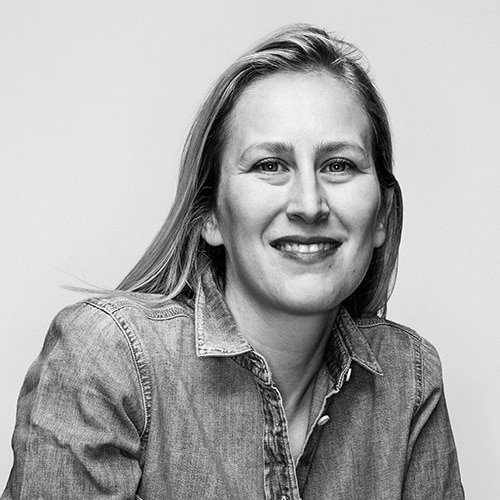
Diana Lind is a writer, editor, critic and urban advocate. Now heading the Arts and Business Council for Greater Philadelphia, Diana made her mark at Next City, a nonprofit, online news organization focused on urban issues and stories about creating equitable cities. Diana moved to Philadelphia, in 2008, from her hometown of NYC to take over as editor in chief, and she later became the executive director. After Next City she was the founding managing director of the Fels Policy Research Initiative at The University of Pennsylvania, where she worked until joining the Arts and Business Council in 2019. Previously, Diana worked at the Philadelphia Media Network, which owns the Philadelphia Inquirer, and was both a freelance editor for Rizzoli and editor/critic for Architectural Record.

In October, Diana published a new book on the history of and alternatives to the single-family home in the United States, called Brave New Home. Meant as a way to introduce laypeople to the rich (and sometimes troubled) history of housing in the U.S., her book also confronts the housing disparities we must bravely face today. Diana is a frequent public speaker, and has given keynotes or participated in panels at more than 100 events, including major conventions like the World Urban Forum and Smart City Expo. In 2008, she published Brooklyn Modern: Architecture, Interiors & Design, and she has received honors such as the TED City 2.0 prize, the ACLU Stand Up for Freedom award, and a funded residency at Blue Mountain Center. She serves on the boards of Next City and The Philadelphia Citizen.

Insights and Inspirations

  • Let’s be brave, Diana says. And brave we must be to solve the housing crisis.  
  • Governments must bravely tweak their zoning regulations, so that new and affordable housing types can easily be built.  
  • Developers must bravely experiment with their next housing project.  
  • Banks must bravely finance new housing products.  
  • And NIMBYS must bravely accept some change.

Information and Links

  • Be sure to check out Diana’s new book!
  • And she wants to point people to Next City, “the best source of national news about urban innovations.”
  • And, The Philadelphia Citizen, the local solutions journalism website where she is also a board member. It’s a fantastic window into the “good things in Philly” that are happening, and the leaders who are making it so.
Read the podcast transcript here

Eve Picker: [00:00:15] Hi there. Thanks so much for joining me today for the latest episode of Impact Real Estate Investing. My guest today is Diana Lind. She’s written a book called Brave New Home. In it, she explores the history of and alternatives to the single family home in the United States. Her interest in this subject was kindled by her own experiences as a young mother living in a typical single family home which didn’t quite meet her needs. Diana’s past experiences come into full focus with this book. Professionally, she started life as a writer at Architectural Record, kindling an interest in architecture, and her tenure at Next City cemented her interest in urban advocacy. If you’d like to know more about Diana once you’ve listened in, be sure to go to EvePicker.com to find out more on the show notes page for this episode. And be sure to sign up for my newsletter so you can access information about impact real estate investing and get the latest news about the exciting projects on my crowdfunding platform, Small Change.

Eve: [00:01:42] Hi, Diana. I’m really delighted to have you here with me today.

Diana Lind: [00:01:46] Thanks so much for having me.

Eve: [00:01:47] So, you’re a writer and you’ve spent your career deeply immersed in urban issues. And I’m wondering how you became an urban advocate?

Diana : [00:01:57] Sure, I grew up in New York City. So, living in a city and just adoring all of its creativity, its vibrancy, its density, all of these kinds of things, just as part of who I am. But I originally thought I was going to be a novelist or just a journalist. And when I graduated from college, my first job was working at a magazine, but it was working at an architecture magazine. And I didn’t really know very much about architecture, but it was a fantastic experience. I was working for Architectural Record and I still write for them and it’s a fantastic publication. And really from that experience, that was in the early 2000s, it was a period when there was a big focus on kind of the ‘Bilbao effect.’ How could cities use amazing architecture to spark a downtown revitalization in cities around the country? And so, I really went from architecture into becoming very interested in cities and started working at Next City, which was then known as the Next American City Magazine, in Philadelphia. And that’s really when I transitioned from being focused on architecture, to cities and urban policy issues. And I’ve been in that place ever since.

Eve: [00:03:21] So, did you ever get to Bilbao?

Diana : [00:03:23] I did not, no.

Eve: [00:03:25] I did, it’s a really fantastic city. It’s a really interesting city.

Diana : [00:03:32] Yeah. I mean, what is one of the problems with the Bilbao effect’s translation into the U.S. is that I think a lot of people thought, well, you just need an awesome museum by a brand name architect and you need so much more than that.

Eve: [00:03:45] Oh, no. I think the remarkable thing about Bilbao that I really, was burned into my brain, is the use of public squares and how just the culture is very different in American culture. So, in the evening, you know, families would come out into these little urban courtyards and squares and join other families and the kids would be playing and it was fantastic. That’s really what Bilbao is about.

Diana : [00:04:10] Yeah. And also like an economic development strategy, not just an expensive museum. So, I think you need a fuller package. Yeah, for sure.

Eve: [00:04:20] So, tell me about your latest book, Brave New Home.

Diana : [00:04:23] Sure. Brave New Home just came out in October 2020. And the book is really a history of single family housing in the United States and an exploration of how we went from a country that had many more diverse housing options to one dominated by single family homes. And then a forward looking view at what are some alternatives to the single family home and why they’ve become so compelling. And swirling all around this is issues of demographic change, cultural change, ways in which just society has changed and housing has not kept pace. So, the conclusion looks also at how can we address some of the social, economic and environmental issues that we’re facing as a country through better housing policies.

Eve: [00:05:17] So, why did you write the book? What prompted you to write it?

Diana : [00:05:20] I was inspired to write the book first from a personal level. So, I was one of these people in my 20’s and early 30’s who spent very little time at home. And I was always kind of out working or I was going out with friends or going to different cities, things like that. And then when I had my first child, I just started spending so much more time at home and I really started to question how I had come to assume that a certain style of living, the single family row home that we lived in, was the right choice for our family. And also wondered about why it was, being a first-time mother, very difficult in terms of not having connections to people to kind of learn from and talk to, and other families to have dinner with where it wouldn’t matter if your child was screaming or crying. And I’ve found that we have created all of these sort of workarounds to that, like Mommy and Me classes that you pay 20 dollars to participate in. But that, you know, actually housing, multigenerational housing, neighborhoods that were purposefully built to be, you know, more closely knit as communities. These were ways in which we had raised generations in the past, and that was really no longer the case anymore. So, it started with a kind of personal questioning of how housing affects our lives in the way that we just raise families and exist in the world.

Eve: [00:06:55] Right.

Diana : [00:06:56] And then, this was a number of years ago, when really the price appreciation in Philadelphia where I live, and in many other cities, was picking up at a really fast pace. So, I think in 2016, prices went up by about 20 percent in Philadelphia in just one year alone. And so just witnessing…

Eve: [00:07:18] Wow…

Diana : [00:07:18] Yeah, and, you know, and that was not even the most extreme example. I mean, Seattle was probably the leader that year. And so, recognizing that housing was so expensive and there was such a great need for more affordable housing and just absolutely no way that we were going to be able to just sort of subsidize our way out of that, through whether it was new taxes or new government programs, that there had to be some other ways of addressing some of this affordability issue. And then finally, also in the past couple years, obviously, people had been thinking about climate change forever. But, you know, in the past couple of years, it’s become very evident, especially with wildfires in California, that the ways in which we have built into nature and kind of further expanded development has really had an impact on our ability to bring climate change under control. So, the social, economic and environmental issues had been swirling. And really, I wanted to put it together in a book and write about it in a way that would be accessible to people who knew a little bit about housing, but not a ton, perhaps. And also just sort of like a general person who was very curious about some of these issues and needed a bit of like a foundation of understanding the history of housing in the country.

Eve: [00:08:41] Right. You must have learned a lot researching it. What was the most surprising thing you learned?

Diana : [00:08:48] You know, that’s a good question. I don’t know that I was entirely surprised, but I had, of course, imagined that in the past there were more diverse housing options, like obviously knew about boarding houses or single room occupancy type buildings, or inns and taverns and the very beginning of colonial cities and whatnot. What I didn’t realize was that there were just so many variations upon things like apartment hotels that were built to give people a certain amount of privacy in their own apartment. But to have these kind of communal dining rooms where you could connect with your neighbors. And also how, you know, some of these types of communities were not seen as the way that I think they’re portrayed today, as kind of just bourgeois, you know, laziness, but rather a way to address some of the domestic inequality of women always having to take on the laundry, the cleaning of the house, et cetera. And so, some of these kinds of communities where there were amenities built in, were actually seen as feminist projects.

Eve: [00:10:00] That’s amazing.

Diana : [00:10:01] Yeah. And, you know, gender segregated housing that had a mission to provide for professional opportunities and colleagueship among women or men, over and over, and I couldn’t include it all in the book, but just found really interesting examples of, like, housing set aside for sailors that came in the city. Or, you know, just like so many different types. And we think, you know, pretty much today of just like single family housing and senior housing and maybe student housing. And that’s kind of it, you know?

Eve: [00:10:33] I interviewed someone a few months back who built a project, specifically housing for teachers. So, again, a community like that could kind of really lean on each other in a variety of ways. Interesting. You must have learned some troubling things as well. I read a quote. You said, “The housing that we built is built on a model that was created, frankly, with a lot of classist and racist exclusivity and privacy in mind.” So, you know, tell me about them.

Diana : [00:11:03] Sure, yeah, well, when you look at the growth of single family homes, it really started in the early 20th century at a time when there was an influx of immigrants in cities and a lot of the immigrants were not wealthy people living in crowded situations, in tenements and other housing types. And when both a combination of a bunch of different things happened, housing became more affordable to build through some standardizations of technologies and materials and the proliferation of private cars and trolleys and transit systems that would get people out of cities. You know, the real push for these initial suburbs in the beginning of the 20th century were really opportunities for the wealthiest and the whitest to move out of cities.

Eve: [00:12:02] That was catastrophic. Places like Pittsburgh. Right?

Diana : [00:12:06] Um hum, yeah. And that started, you know, really before what we think of as the baby boom period, which really led to suburbanization and very much car oriented suburbs, which then were communities that were built explicitly to exclude people of color, Jewish people and other minority groups. And that was done both legally, first through redlining and then sort of extra legally continued through restrictive covenants that could determine who was able to own a home or not able to own a home. You know, I think a lot of people in the history that has been talked about of this have really thought about the suburbs as being this great opportunity for people to access affordable housing and improve their quality of life. But it was not an opportunity that was available to all people. And many people have read Richard Rothstein’s Color of Law, but that is a whole book on that particular topic and certainly worth reading for that.

Eve: [00:13:12] Ok, so what does housing reform look like to you after writing this book and doing this research?

Diana : [00:13:18] The key thing is recognizing that there are a lot of different demographics in the country that want different styles of housing and we’ve really tried a sort of one size fits all approach to housing through the single family home and pursued that too. I think in some cases boost property values for people to continue to provide the kind of privacy and seclusion that we associate with the American dream, but which is really benefiting a kind of smaller and smaller group of homeowners. And in fact, as more corporate entities come into the single family home investment space, buying up tens of thousands of properties to use them as rental properties or even as flipping options as Zillow and other companies have done, it’s not even homeowners anymore who are pursuing this dream. So recognizing that we need to provide options for people who are in different economic circumstances and have different cultural and social needs is going to be really important. The reform part of it would really be to ensure that there is the zoning that allows for different types of housing, that there are incentives that provide for different types of housing, and that we’re not really only incentivizing the single family home through things like the mortgage interest deduction, through homeownership oriented programs, but that we’re thinking about ways to say legalize and encourage duplexes, because that might be a style of housing particularly suited for multigenerational households or households where someone needs an in-home caretaker or people need access to rental income or all of these various different things. And it’s really not legal in many neighborhoods, residential communities across the country. So I think step one would certainly be reforming the zoning and reforming what kinds of incentives we provide for housing.

Eve: [00:15:28] Yeah, okay, I suppose that was my next question. What is the impact of zoning on building a more equitable housing landscape is huge.

Diana : [00:15:37] Absolutely. Just yesterday, I was talking with a group of people interested in trying to encourage Philadelphia to reword some of its zoning to allow for accessory dwelling units across the city or in more neighborhoods and make the zoning less restrictive for it. And hearing from developers that were part of the group talking about how it costs time and money to have to deal with zoning variances or the uncertainty about whether a project is going to get it approved, you realize just how these kinds of zoning issues affect the whole pipeline of housing.

Eve: [00:16:19] Enormously. So, we actually have an offering live on Small Change for aiding a developer in Oregon. And there they put an overlay district, I think it statewide, which makes them use by right as long as they conform to a certain size. And he’s built the business around that zoning regulation.

Diana : [00:16:40] Yeah.

Eve: [00:16:40] So that he can move really quickly and create a manufactured unit that is actually half the price, a regular one bedroom unit to build. It’s one hundred and fifteen thousand instead of two hundred and fifty. So they have that in place. But the next problem is that financing them. I mean, you cannot find a bank, a CDFI fund or anyone who really finance these projects.

Diana : [00:17:07] Yeah, I think that’s an interesting issue and something that I talk a little bit about in the book. I give an example of an innovative project in Los Angeles through a nonprofit there, called LA Más. And they were really exploring, along with the city of Los Angeles, how to provide accessory dwelling units that would be both affordable to construct, and affordable to finance and all these kinds of issues. And what they were trying to do was to essentially line up all the parts for the homeowner to make it kind of one stop shopping so that they could have the contractor, the architect, the financing, all as part of a package that you buy into. Because I think one of the other issues is just for so many people, the idea of building an accessory dwelling unit is it’s very difficult. And if you’re not real estate savvy…

Eve: [00:18:02] Oh, it’s impossible. So, this guy actually builds it, installs it, finances it, and then gives them a ground lease. So, the opportunity to buy it at any time, you know, within a 10 year period, I think.

Diana : [00:18:19] Right. So that’s definitely a model that is gaining popularity and with good reason.

Eve: [00:18:24] Yeah, except he can’t finance it. I mean, it’s really difficult like we are with this huge housing need. And while I think people are being extremely creative, developing new models, getting banks and financial institutions to catch up is the next part of the story, right?

Diana : [00:18:46] Yes, absolutely. You know, just today, I got an invite to a webinar about accessory dwelling units with someone from Fannie Mae participating in it. So I think that there is kind of an increasing awareness among our governmental institutions that are financing housing that we need to be more nimble in what types of housing we’re financing and that there’s a I think, a growing awareness among a lot of banks as well. To your point about that statewide overlay in Oregon and some of the reform in California, these are huge markets and there’s a real opportunity there for these banks. So it’s going to become a question of them figuring out sooner rather than later that this is going to be a business opportunity for them. And they would be silly to not participate in that.

Eve: [00:19:38] Yeah, I think what I love most, about ADUs, backyard units, Grandma, in-law units, whatever you want to call them, is that they slip into an existing infrastructure in the neighborhood which has transit options and the grocery store and the school, they just slip in as extra housing without much fuss at all. If you can provide an affordable unit to someone in a great neighborhood that already exists, it’s just a fabulous option and we ought to all be on it.

Diana : [00:20:09] Yeah, yeah, absolutely. You know, something I try to stress in the book is that I don’t think there is a single housing option that’s going to solve the housing crisis. And so, you know, accessory dwelling units, they sort of have their limits. And before this call, you and I were talking a little bit about covid. And it kind of reminds me in some sense of what is increasingly called sort of like the Swiss cheese model, which is the idea that you have to wear a mask, you have to do social distancing, you have to limit the time you’re spending in certain places and that none of these various different safeguards is going to be enough to prevent covid. But when you do them all together, then you actually are able to prevent it relatively well.

Eve: [00:20:49] Make some impact. Yeah, yeah.

Diana : [00:20:51] So I think that’s sort of the same thing with housing, which is like, you know, these accessory dwelling units, they’re not going to solve everything, nor are duplexes, nor multifamily because they’re not going to work in every kind of context, but we have to think about what works in a given context and think about how we might be able to update housing to better provide affordability or some of the kind of needs that people have today.

Eve: [00:21:17] So what about co-living or co-housing, which is an emerging affordable housing trend? And I’ve talked to a variety of developers and I worked with a variety of developers just tackling this in so many different ways. It’s really fascinating.

Diana : [00:21:32] Yeah, so co-living was really picking up a lot of steam before the pandemic. And I have heard that there’s continuing to be some expansion and kind of merging of co-living companies. And I think it is still continuing to be a viable product and will be certainly post pandemic. But co-living, you know, is this idea of people having their own private bedrooms but larger shared spaces with programming and a sort of intentional community aspect to the building or the house, what have you, behind it. And certainly there are a lot of advantages of it and ways in which co-living really responds to demographic needs. And that, again, is sort of one of the thrust of the book is that, you know, there are young people who are not interested in acquiring furniture, are not interested in long leases. They want experiences. They want, you know, an Instagram worthy meal. They want, you know, just different types of things. And this is not to say it’s all people. And certainly it is a wealthier demographic of young people that tend to be living in these kind of traditional co-living spaces. That said, co-living has also, I think, de-stigmatized, shared living in a way in which we haven’t seen in a long time. So the kind of idea that living in a small apartment but having a small studio but having access to all of these amenities and other people, that kind of makes it seem cool. But we’ve seen some developers like Common, for example, which has then now partnered with cities like New York and Atlanta to build shared living and co-living spaces for people who are lower income or who are formerly homeless. So it can transcend one market into another. And I think it’s a really interesting housing type to get to address both some of the social needs that people have for actually connecting with people. You know, young people are like the loneliest generation, especially as more people spend time online. I think really value time in person as well. And so it’s a great way to address some of that social need and also provide some of that density that is going to have economic and environmental benefits too.

Eve: [00:24:01] In markets, like New York City it provides an opportunity for someone to live there. I suppose if you want to call affordably, you know, in a place that really could not afford to live.

Diana : [00:24:11] Right. Yes, that is definitely I think part of the whole idea is that for decades now, people have lived in little shoeboxes in New York and San Francisco, you know, sharing a, say, two bedroom apartment among six young people or what have you. And it’s kind of taking a little bit of that same idea. But but doing it in a more thoughtful way. And, yeah, like people are going to be spending a lot of money on rent anyways to live in a prime neighborhood. This is a way to do that and do it and actually sometimes like a more legal and friendly fashion.

Eve: [00:24:49] Right, right. Right. So are there any other housing trends that you believe are kind of really important for our future?

Diana : [00:24:55] Definitely think that multigenerational housing is one of the sleeper issues in housing that has not really gotten the attention of both the marketplace solutions and government policies. Multigenerational housing, so three or more generations under a roof, was on the rise in the U.S. and at the highest level since the 1950’s, I think in 2018. When the next data dump comes out, I’m very interested to see. I’m sure that it is even higher now. Also, people living with kin has also increased. So not just multiple generations, but living with an aunt and uncle or brother or sister or cousin, that kind of thing. People can, of course, live all in a single family home together in a multigenerational fashion. But, you know, there are a lot of housing types that were traditionally available, like duplexes, like multifamily townhouses that worked quite well for this type of demographic that we could see the renewal of that being very important to support in multigenerational housing. So I think that’s going to be a huge trend in the future.

Eve: [00:26:13] That’s kind of ‘the missing middle,’ right?

Diana : [00:26:15] Mm hmm. Right. Yeah.

Eve: [00:26:17] We’ve touched on this, but what role should developers or communities or city government or even federal government play in building an equitable housing landscape?

Diana : [00:26:28] Well, I think it requires certainly all of these different stakeholders. And the role that developers can play is being willing to experiment with housing types, being willing to test out housing that might work for a niche demographic that actually is quite huge. You know, I think that’s one of the things that we found with co-living, for example. Like, you don’t need all young people to live this way because the millennial generation is the largest generation that exists. But even just a fraction of it is a huge market. So a willingness to look beyond the status quo is going to be important from developers. I think from the government side of things, a willingness to accept that we’re not going to be able to simply create all the affordable housing that we need through the old standard measures of old government programs. It would be great if, as President elect Biden has proposed, that of making Section eight an entitlement that will do a lot to create more affordable housing. But I also think that government needs to recognize that there is a role here to play in changing zoning to adjust. Yes. What might actually flourish more naturally in their city if they adjusted the zoning.

Eve: [00:27:47] I mean, it’s so expensive to change zoning regulations. I was part of a zoning regulation rewrite a couple of decades ago, and it was a huge project.

Diana : [00:27:58] Right.

Eve: [00:27:59] You have all these small places that where did they get the funds from?

Diana : [00:28:05] Right, and that’s where I think some of the state reform is really powerful because then you don’t have the same kinds of issues of small municipalities having to figure out how to change their zoning. I’m thinking more along the lines of larger cities that could adjust their zoning and have processes to look at their planning documents every few years. So I think that’s definitely a way to adjust some of it.

Eve: [00:28:34] Right back to you. What are you currently working on?

Diana : [00:28:39] I sometimes marvel at the fact that I was able to write the book because I have two young kids and I have a full time job. And then there’s been this pandemic which has made everything…

Eve: [00:28:50] Three jobs.

Diana : [00:28:51] Yeah, right. So, I think at the moment I’m really just trying to get the word out about the book and kind of get those ideas out there a bit more. I do have some ideas of what some potential next book could be. Very interested in the discussion about how cities are going to transform as a result of the pandemic and more rather than just the pandemic, the increase in online working and how that is going to change cities and the sort of ways in which retail had been troubled pre pandemic. But that has just been accelerated. So, something about that future of the city question and something I’ve written about a little bit lately, and I could imagine looking at that in a larger format.

Eve: [00:29:41] That would be really interesting.

Diana : [00:29:42] Yeah.

Eve: [00:29:43] I just wanted to go back to one other thing. You grew up in New York City and I think you live in Philly now, right?

Diana : [00:29:48] Yeah.

Eve: [00:29:49] What do you love about Philly and what do you think it needs to do better to become a 21st century metro area.

Diana : [00:29:56] Well, I think Philly is a fantastic city for so many different reasons. I think the reason that I love it currently, which is different than a couple of years ago, is just how amazing its cultural institutions are. I now run something called The Arts and Business Council. That’s my day job, if you will. And so I work with people in the creative sector and also businesses who are interested in getting involved in the creative community as well. So that just makes me really excited about the city seeing how that plays out. I live not too far from many of its big institutions, like the museums and the library, the central branch of the library and some of its great parks. So just all of that kind of like cultural infrastructure is built into, baked into Philly, and that is fantastic. The other thing that I really love about it is that it is a city that is changing, but not at such warp speed. That was definitely something I felt in New York in my early 20’s there. It just felt like the city was changing so fast and it was really disruptive. And so there’s like a nice pace of change here. Where it needs to go in the future? I think it just needs to be a more brave to take a word from the book.

Eve: [00:31:16] Yeah. Brave. I love that word. Everyone gets to be brave.

Diana : [00:31:20] Yes, totally. So that’s a little bit of a motto from the book is like, let’s be brave. And, you know, it’s amazing to see how we’ve closed down some streets for outdoor restaurants and taking up parking spaces for that and stuff like that. It’s just exposed how we could reorganize the city to be more pedestrian friendly, more bicycle friendly, all that kind of stuff. And we’ve not had the focus on that. I also think, you know, just a huge issue is the school system here is facing a huge deficit as a result of the pandemic and just a recognition that this is like the top priority for the city and we have to figure it out and do it right, at this point. There hasn’t been consensus around that, but I just don’t see a way forward for Philly if we don’t solve that. So that is going to need some bold action as well. You know, you can take these ideas and a bunch of different directions. I think we could do a lot more in terms of our transit, in terms of our housing, that would just be less about trying to recapture the status quo, but trying something new because we have no other option at this point.

Eve: [00:32:34] Yeah.

Diana : [00:32:35] Yeah.

Eve: [00:32:36] Well, thank you so much for joining me, Diana. I really enjoyed our conversation. And I want to learn more. And I think your book is now my reading list for the holidays, so I haven’t had time to read it yet, but it sounds really fascinating. I can’t wait to get into it. Thank you so much.

Diana : [00:32:53] Thanks so much. It was great talking with you as well.

Eve: [00:33:03] That was Diana Lind. “Let’s be brave,” she says, and brave we must be to solve this housing crisis. Governments must bravely tweak their zoning regulations so that new and affordable housing types can be easily built. Developers must bravely experiment with their next housing project. Banks must bravely finance new housing products, and NIMBY’s must bravely accept some change. Together, surely we can make a difference.Eve: [00:33:39] You can find out more about impact real estate investing and access the show notes for today’s episode at my website EvePicker.com. While you’re there, sign up for my newsletter to find out more about how to make money in real estate while building better cities. Thank you so much for spending your time with me today. And thank you, Diana, for sharing your thoughts. We’ll talk again soon. But for now, this is Eve Picker signing off to go make some change.

Images courtesy of Diana Lind

Urban economics.

December 14, 2020

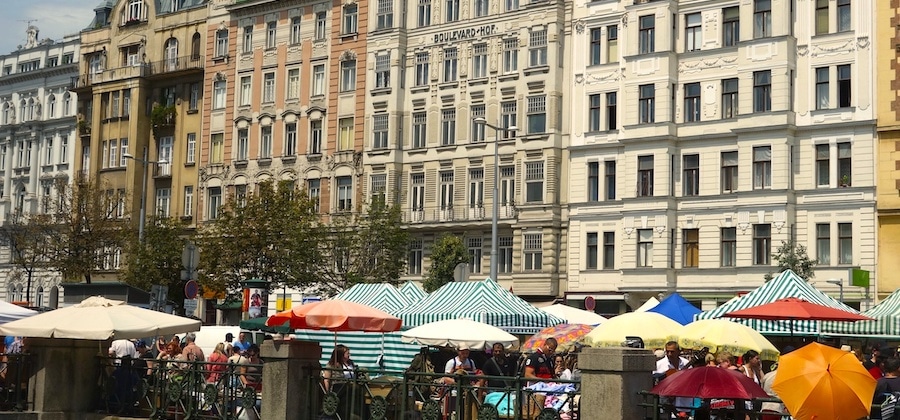
Simply put, urban economics is the study of buildings and cities and why they develop the way they do. Urban economics help us to determine why certain places are so much more vital than others through the exploration of land-use, zoning, employment patterns, and the price of land.

Over the last century cities have experienced massive change. With the arrival of the automobile our cities transformed from the once walkable urban areas they were into soulless, car-centric cities surrounded by outlying suburbs. By the 1980s most of the real estate investment and development energy had shifted to business parks, malls and sub-divisions.

But now we’re back to wondering whether cars should be part of the equation. Cities and cars are an expensive mismatch and we can see that cars waste space. Several American cities are even considering demolishing highways to reclaim precious land.

One of the more recent additions to the toolbox for the urban economist is the measurement of walkability. Walkable neighborhoods are once again seeing a renaissance. They not only offer residents more convenience and character, but also a more active and environmentally friendly lifestyle. And we’re also discovering that walk scores can have serious economic consequences. Redfin, owners of the go-to application for measuring walkability Walk Score®, say that one Walk Score point can increase the value of a home by an average of $3,250. Hence an increasing number of new developments are being planned as mixed-use communities where residents can walk to all the amenities they need.

Christopher Leinberger’s fascination with cities started at an early age and evolved into an astounding career working on urban land issues as a strategist, teacher, developer, researcher and author. He was a member of the original board of Walk Score and continues to use the tool in his research at The Brookings Institute and George Washington University. With his latest endeavour, Places Platform, he’s building a “Sim City for real estate and place management and city management” by developing more tools and methodologies to measure economic, social equity and environmental conditions in cities and metropolitan areas.

If you’re a city lover, like I am, listen to my interview with Christopher Leinberger

Image courtesy of John D Norton

Learn some more …

Why ADUs are a good idea.

November 30, 2020

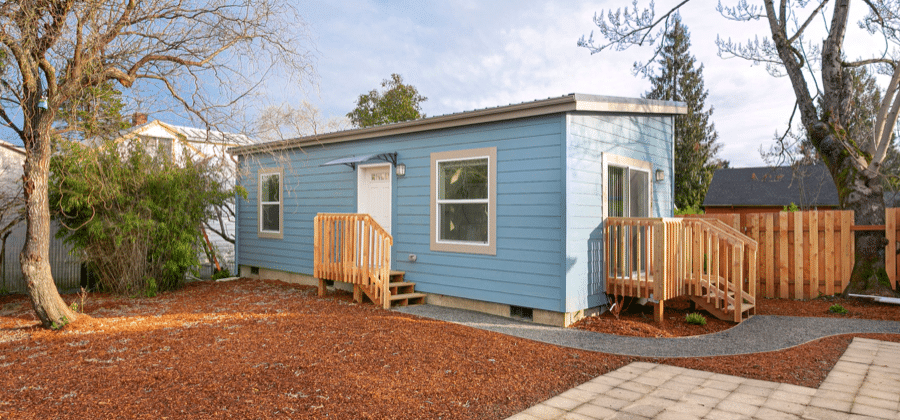
What’s an ADU?  It’s a granny flat or a mother-in-law unit, now more widely known as an Accessory Dwelling Unit and usually built as an additional living unit in the backyard of a single-family home. ADUs are typically small, so that they can fit neatly into a backyard, with a compact and efficient floor plan big enough for one or two people to live in.

Adding value all around

One of the greatest benefits of an ADU is the value it adds to a property. Already a popular selling point in many areas, they not only add square footage of independent living space but can also provide supplementary rental income to the homeowner. In the past, zoning laws have prevented this but with the current shortage of housing availability cities and states are enacting policies which encourage the building of ADUs but permitting them to be built “by right”, with no special permitting needed.

Building ADUs increases the amount of housing units while reducing the pressure of cities to expand outwards. Instead of building large-scale low-income housing, building a multitude of small-scale ADUs will increase property values across the board as the integrity and  character of a neighborhood is preserved. And higher density populations can not only bring more commercial activity, more transport options and walkability, but the value of infrastructure investments such as transportation, is expanded when more people use it.

Multigenerational housing

With the housing shortage at crisis levels, multigenerational housing is becoming more widely accepted in the US, and ADUs are likely to become more frequently used for expanded families. An ADU can provide housing for ageing parents, home care helpers or young adult members of a family. It can provide additional work-from-home space or it can allow senior homeowners to age in place.

Cost and efficiency

Building an ADU in your backyard means you don’t have to acquire land and their compact size requires less building materials. In some cases, costs are minimized by manufacturing off-site. Their size makes them inherently energy efficient as well.

Zoning

In some cities zoning laws can make it tough for homeowners to create an entirely new dwelling on their property. They may also face backlash from NIMBY (Not in My Backyard) neighbors. But homeowners who build ADUs are filling an important affordability gap and are helping to address the ever-growing housing crisis.

In Portland, Oregon, the city has introduced a combination of zoning reforms, fee waivers, and outreach to jumpstart the building of ADUs and help address the critical housing shortage. That’s where Patrick Quinton launched his company, Dweller. Dweller specializes in building and providing ADUs to homeowners who want one. Not only do they build the modular ADUs offsite, saving substantial time and money, they handle all aspects of the process, from site planning and permitting, to utilities, installation and landscaping. And they pay for the ADUs as well – financing that most homeowners don’t have. Dweller enters into a ground lease with each homeowner, giving them the option to buy the ADU at some later date, making the process of adding a housing unit and adding a little income for each homeowner, as easy as can be.

Listen in to my conversation with Patrick.

Image courtesy of Dweller, Inc

Learn some more …

Triple bottom line development.

November 23, 2020

Triple Bottom Line

The term was coined some twenty-five years ago by John Elkington, author of 19 books, co-founder of Environmental Data Services and SustainAbility, and a pioneer of the global sustainability movement. Traditionally, investors were only concerned with profit, but the concept that investment can also be socially and environmentally beneficial is one that began with this term and has been gaining traction and even driving decision-making ever since.

In the same way, triple bottom line real estate development can create a win-win-win for the developer, the community and also the planet.

The developer

Real estate development is a hugely risky business. Developers must make a reasonable profit not only to cover overheads, and a salary for themselves, but also to make it possible to secure loans, without which real estate projects cannot happen.

Community

The social component of community might be the most important. A development can bring many benefits to a community including the removal of blight, providing affordable housing, adding amenities, adding civic space, encouraging local business, bringing jobs, increasing the tax base to pay for more services and generally improving the quality of life through place-making.  It’s important that developers work closely with the community to make sure their project is both beneficial and embraced.

Sustainability

Real estate projects can incorporate sustainable practices into their work in many ways — by saving energy during construction, using renewable building materials or energy, by adding insulation and rainwater collection facilities, by locating in a walkable or bikeable location and by being close to transit. These are just a few of the options which developers might consider.

Ken Weinstein is a developer who strives for the triple bottom line in each of his projects. His company, Philly Office Retail, tackles underutilized and blighted properties and re-develops them to serve their local communities.

Not satisfied with what he can add to his community in terms of real estate, he’s also become a teacher by launching Jumpstart Germantown, a bootcamp for wannabe developers, open to everyone in his community. Still not satisfied, he’s gone even further to launch a loan program to support their projects as well.

The High Line, New York by Brian Ledgard , CC BY-2.0

« Previous Page
Next Page »

Primary Sidebar

sign up here

APPLY TO BE A PODCAST GUEST

More to See

(no title)

February 22, 2025

Bellevue Montgomery

February 11, 2025

West Lombard

January 28, 2025

FOLLOW

  • LinkedIn
  • RSS

Tag Cloud

Affordable housing Climate Community Creative economy Crowdfunding Design Development Environment Equity Finance FinTech Gentrification Impact Investing Mobility Offering Opportunity zones PropTech Technology Visionary Zoning

Footer

©rethinkrealestateforgood.co. The information contained on this website is for general information purposes only. Nothing on this website is intended as investment, legal, tax or accounting strategy or advice, or constitutes an offer to sell, solicit or buy securities.
 
Any projections discussed or made may not be accurate and do not guarantee a specific outcome. All projections or investments are subject to risk due to uncertainty and change, including the risk of loss, and past performance is not indicative of future results. You should make independent decisions and seek independent advice regarding investments or strategies mentioned on this website.

Recent

  • The Mulberry
  • Mount Vernon Plaza
  • The Seven
  • Real estate and women.
  • Oculis Domes.

Search

Categories

Climate Community Crowdfunding Development Equity Fintech Investing Mobility Proptech Visionary


Copyright © 2026 · Magazine Pro on Genesis Framework · WordPress · Log in