• Skip to main content
  • Skip to secondary menu
  • Skip to primary sidebar
  • Skip to footer
  • Home
  • About Us
  • Say hello
Rethink Real Estate. For Good.

Rethink Real Estate. For Good.

  • Podcast
  • Posts
  • In the news
  • Speaking and media
    • About Eve
    • Speaking requests
    • Speaking engagements
    • Press kit
  • Investment opportunities

Environment

Embracing Smart Homes.

October 18, 2019

We’ve always thought of housing as shelter and little more. Now we are on the cusp of a massive cultural shift here in the United States, and soon we’ll expect our homes to be much more than a place to hang our hat at the end of the day. It seems that the possibilities are endless and that they are very much in our grasp. Now is not the time to limit our collective imagination.

Technology integration

In the near future we’re going to be able to interact with our homes in a completely different way than we do today. Smart Homes and the Internet of Things have already changed how we listen to music in our homes, connect with digital assistants like Siri and Amazon Echo, how we control the climate of our homes with smart thermostats, how we open our doors with smart locks and many other digital-age upgrades that are changing the way we use and enjoy our homes.

And getting smarter is not just about gadgets and ease of use. Homebuyers and renters are looking for ways to reduce their environmental impact while saving money on their mortgage or rental payment at the same time. More and more luxury homes have integrated technology solutions that combine solar panels with battery systems like Tesla’s Powerpack to essentially turn their home into a mini power plant. Power is generated for every day household use, plug-in hybrids and electric vehicles and even provides a credit on your electric bill by sending surplus electricity generated back into the grid for the rest of the community to use as needed.

Builders and developers have an opportunity to embrace these changes in order to increase the appeal of their projects, attract technology and growth investors, and make a positive environmental impact on the community at large at that same time.

Smart City infrastructure

All these smart new home features allow city planners, builders, and developers the potential to integrate each home into a smart city net, which is essentially a series of homes that send relevant data back to a central processing area, so that various city and municipal professionals can parse that data.

Cities are already processing metrics which include energy/electricity and water use, and some municipal internet/fiber monitoring. Increasingly cities are also installing sensors that measure air quality, sunlight coverage, traffic monitoring sensors, pedestrian trackers, and many other data points that may be used to improve the community at large. Many of these sensors are not fixed in place – they are attached to city vehicles, buses, police and fire vehicles, so that data can be collected in and around the city’s geographic area.

Developers have the opportunity to incorporate these data collection systems into new real estate projects in order to allow residents to benefit from increased efficiencies in energy, water, and internet delivery. Rather than merely building houses, builders and developers can be a potent force for improving the lives of residents in an abundance of ways.

Mobility

As we shift towards homes as a hub for the devices and networks that we use every day, there is an opportunity to integrate new transportation modes into development projects as well. For example, as the use of ridesharing soars, particularly in dense urban cores, developers may opt to allocate less space for traditional solo-use parking spaces, and instead create a designated area for rideshare apps like Uber, Lyft and others. Or they may include more charging stations for hybrid or electric vehicles. Or more bike racks. Or they might even consider providing a shared vehicle for the use of property residents. Space that is typically set aside for ground level parking can instead by used for indoor or outdoor common areas and other such community enhancing features.

_

To remain relevant, developers and builders must embrace Smart Homes and Smart Cities. As the technology scales up, features that are now primarily seen in luxury homes will soon become part of middle and even lower-income housing markets. Everyone stands to benefit from the economic and energy efficiencies offered by smart grids, better and more efficient mobility options, and smart and sensible integrated housing systems.

Image ”We .. were .. waiting .. ages” they droned, by :mrMark:, CC BY-2.0
The rise of prefab.

October 11, 2019

The residential and commercial building industry has changed radically in the last few decades, following the pattern of many other vital sectors of the US economy. Two of the developments that the industry has been focused on, which happen to be interlinked, are prefabrication and offsite construction. Coupled with this, vertical integration is a focus of many companies as they seek ever more technologically advanced efficiencies. Compared to ten years ago, building projects today require less labor and have a faster construction cycle. Both of these factors have been driving down construction and labor costs for large-scale builders. The question is will prefab construction upturn the industry further and change how we build in the future? Maybe.

Prefab and offsite construction

Prefab buildings are not new. As early as 1908 Sears Catalog Homes started being sold through the Sears catalog with a reported 40,000 sold in North America between 1908 and 1940. Although the catalog home trend waxed and waned, much ado was made regarding modular construction. But at that time modular construction resulted in an entire generation of utilitarian and bland prefabricated buildings that were far more function than form. Now the offsite construction industry has moved beyond a purely functional role and offers pre-made, cost-effective and attractive structures for every purpose, from single-family homes to skyscrapers and everything in between.

Some larger companies are taking up prefab construction initiatives, such as the hotel-giant Marriott, which is undertaking six projects nationwide. Rehab construction specialists like Clark Pacific and Guerdon Modular buildings are reporting significant upticks in prefab orders across the country. At the same time building contractors are becoming more familiar and comfortable with the modular construction process, and designers are recognizing that prefab buildings can allow for significant flexibility, while not constraining innovation or imagination.

Benefits offered by prefab

A combination of lowered labor, building and material costs along with the ability to design a prefab structure from scratch, makes this industry sector especially enticing for both commercial and residential buildings that need to be replicated. Some examples of potential growth areas include fast-food buildings, hotels, coffee shops, and other spaces that follow a standard design and use pattern.

Labor costs

One of the most significant prefab drivers is not just the cost savings in on-site building labor. It’s the ability to build quickly in an industry in which there are simply not enough skilled workers available. For the last two years the multifamily and affordable housing sector has been hit particularly hard by a shortage of workers. This in turn drives up project costs and can cause building cost overruns or expensive delays in the completion of projects. Offsite manufacturing has the potential to not only solve these problems, but to reduce project schedules as well.

Controlled manufacturing environments

There is a pretty stark difference between the average manufacturing facility and most building sites when it comes to cleanliness and control of the site. Construction sites must be prepared for exposure to the elements, security and safety risks posed by trespassers, unwanted intrusion by animals or birds and a whole host of other problems. These prevent building sites from being ideal manufacturing facilities. Offsite construction avoids all of these problems as the building process is completed inside a clean and controlled warehouse facility.

Opportunities for collaboration

While not so long-ago architects, builders and other real estate professionals turned their collective noses up at the mention of a prefab building, today there is plenty of dialogue between all of these sectors – they want to be involved in prefab building design and manufacturing. Many designers are embracing prefab as the way of the future.

_

In an era of shrinking margins and growing costs in the development and construction space, prefab makes sense. It can be applied on scale, with no limitations on size or scope. Prefab skyscrapers are already being erected in many Chinese cities, with structures as tall as 57 stories high being built in less than 20 days. While the United States has lagged behind many Asian and European cities with their embrace of modular construction, astute developers and builders are beginning to leverage this new(ish) technology to reduce costs, improve build times, and introduce new levels of efficiency to operations.

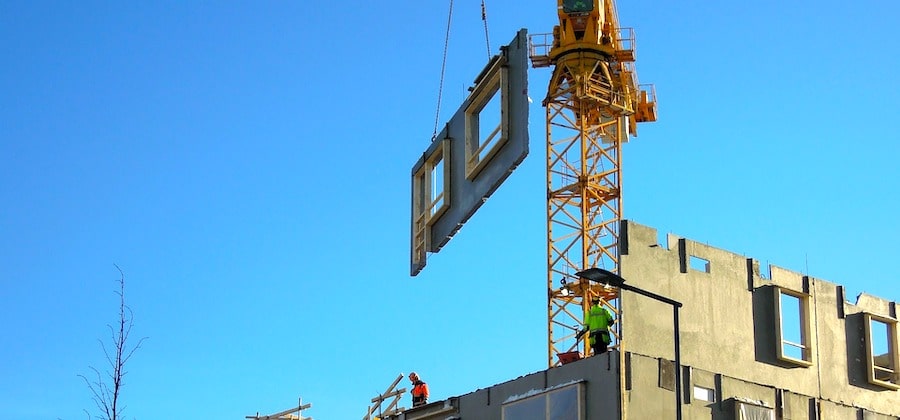
Image by AI Leino from Pixabay

Making allies, not opponents.

October 7, 2019

Impact investing is a relatively new phenomenon. Community-minded entrepreneurs who strive to be socially responsible are independently coming up with innovative solutions to solve or alleviate problems across the country. They are tackling issues like housing insecurity, the deleterious effects of suburban sprawl and environmental concerns related to housing. While every project is different, there is a game plan that developers can follow to make sure they are heading down the right path towards a socially responsible project.

Make the case

Every essay starts with a thesis, and so should an impactful development project. Onboarding investors and other stakeholders should always begin with a plan. Developers need to make the case for why and how the development in question will change lives for the better, while meeting or exceeding investor return on investment goals and matching their appetite for risk (or lack thereof). This process should include environmental and economic impact studies, as well as a clear explanation to current residents about how the project will preserve and enhance their neighborhood, rather than displace residents and lower their quality of life.

Build a coalition

Once the roadmap is in place, it’s time to build a coalition. This should include current neighborhood residents, local business owners, elected officials and real estate and development financial institutions. Recruiting stakeholders and including them in your vision can not only help avoid costly delays that can come from neighborhood opposition, but also genuinely speak to your desire to make meaningful change. You want allies, not opponents.

Your goal should be to create a community of impact investors, with a focus on embracing design, art, cultural and environmental concerns. By connecting like-minded developers and investors in the community you will help ensure the success of the project at hand, as well as plant seeds and forging connections for the next series of transformative development projects.

Bring investable products to market

And last, but not least, you must bring investable products to market. Make it easy for investors to deploy capital into your socially responsible project. You’ll find many of the partners in the coalition you have built may be interested in participating as investors, particularly development finance institutions, since now they have a stake in it. They can leverage their AAA ratings, underwriting abilities and loan management services to ensure a clear path forward to a well-capitalized real estate development.

Setting the stage for the future

This process transcends any single project or development. To truly make an impact as an investor, you must work towards making structural changes, and the best way to do this is by building a mass movement. There is incredible economic power in leveraging social networks, like Facebook, LinkedIn, and other platforms like this since they are geared towards the masses. The presence of accredited investors and developers will only have a multiplying effect on the economic value that your social network brings.

_

Impact investing is by nature more complex than traditional return-driven real estate development. Not only do developers need to set and hit ROI goals, they need to do so with social responsibility in mind. Unfortunately, government incentives and regulations do not always reward making the right choice. For example, tiny houses might not be permitted under some zoning and building regulations – although the market is clearly interested in them and they can be an affordable and environmentally friendly housing solution. By not permitting tiny houses, developers are driven to produce housing that is the same as the housing we’ve built since Levittown.

To be successful as an impact investor, you have to be smarter, more creative and nimbler than most. Having a game plan really helps. These three important steps – making your case, building your coalition, and bringing impactful investable products to market – may be critical to your success and the future of the community you are working in.

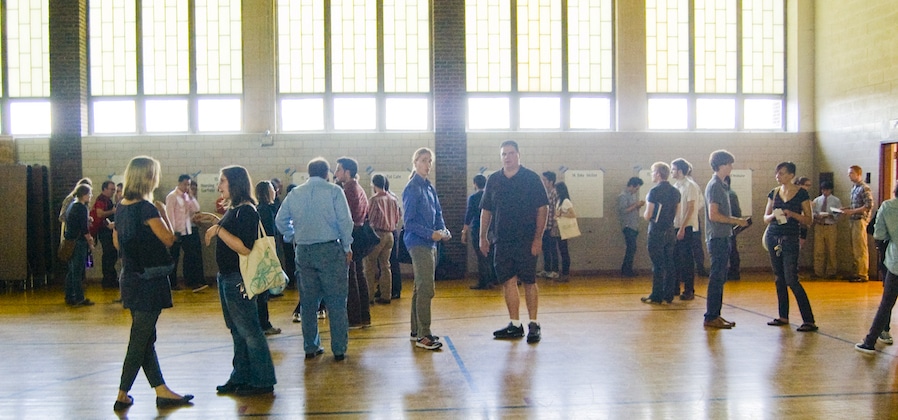
Image, Garfield Community Meeting, courtesy of Eve Picker.

Investors as educators.

October 4, 2019

Most people have some familiarity with the process of buying real estate, either through popular media or their own experiences purchasing a home. But when you enter the world of commercial property development and investment, there is a “lingua franca” that is unique to the real estate business. While there may be a justifiable need for this “secret language” between real estate professionals, investors, and developers, it can act as a barrier to increasing the pool of people, laymen and experts alike, who are involved in real estate development and investing.

If we make real estate development terminology accessible and understandable to the average investor, we’ll start to raise awareness about real estate development and how to make great and inclusive places. And we’ll help prosocial, environmentally conscious developments reach a more mainstream investor audience. It is much harder to explain a sustainable, inclusive vision for the future if sustainability advocates are not even speaking the same language as investors, This is a way to shift the focus from bottom line to triple bottom line.

Remember, it takes convincing a pretty diverse group of people to successfully push a sustainable project forward. Not only do the numbers have to make sense to lenders or investors, but local municipalities or counties must also be convinced. The ability to speak the same language as the people who determine whether or not your project proceeds is critical. No matter how financially beneficial the investment, or how sustainable the project, if you can’t sell it to local authorities your capital will evaporate with costly studies, complaints and revisions.

Sell the benefits of revitalization

Words like “displacement” and “gentrification” have entered the national conversation around housing development. In many places, chatter relating to these issues is driving the discussion, and almost always in a manner that portrays property development as incompatible with the goals of a more equitable and verdant society. When entering into a new community, developers must work to challenge this notion. The best way to do that is through education. Create a dialogue with the local community to alert them to the potential benefits of new commercial/residential spaces. Remember that dialogue goes two ways and that residents have a wealth of information to share about how developers and investors can make the project truly sustainable, in an economic or an environmental sense.

Triple bottom line

When making your case, hitting on the “triple bottom line” goals of sustainability, environmental stewardship, and economic justice will address many local concerns. There is an old adage in the sales community: “sell, not tell.” This truism should be adopted when selling anything, from an automobile to a development plan. Instead of just telling the community how your vision will hit these triple bottom goals, get into specifics. Sell them on the benefits of sustainable development, and how their day to day lives are likely to improve once construction begins.

This dialogue can also act as a phenomenal way to raise capital for a project. After all, you are reaching groups of people who understand the realities on the ground and have a vested interest in making sure that property lifts their neighborhood, rather than pulling it down. Combining your community outreach efforts with a crowdfunding campaign can help build up support among local residents and help get your project off the ground.

_

Historically, top-down efforts have not had much success in alleviating the housing problems we face today as a society. Conversely, grassroots, community-based projects have seen and continue to see success in cities across the country. If your goal is to create better communities, it is imperative that the community you wish to improve is kept in the loop, consulted, and shown respect.

Image, Empty Desks, from Pixnio

Create, don’t destroy.

September 27, 2019

The term “blight removal” conjures up images of construction cranes knocking down homes, displacement, and gentrification. But blight can take many forms and its removal has many remedies. Preservation of seemingly dilapidated structures can invigorate and reinforce a community’s value and sense of place.

Historic preservation

Instead of knocking down older buildings with neighborhood character, nowadays many developers are working on revamping those spaces and giving them new life. Fully renovating a vacant or underutilized historic building can add to and preserve the fabric of a place while providing opportunity for new development.

Rehabilitation of dilapidated structures is equally as effective for commercial, residential, and mixed-uses, and is particularly well suited to historic areas that have fallen on rough times, such as New Orleans’ Seventh Ward, parts of East Oakland or many of Detroit’s neighborhoods outside of the urban core.

By focusing on forlorn properties, investors can increase their returns while also improving the general character and quality of the area. Additionally, rather than displacing existing tenants, seeking out and improving vacant property creates more housing than existed before, without significantly altering the character of the neighborhood. This strategy preserves community charm and while still increasing the housing available.

Commercial benefits

One lesson that should be ingrained in every developer’s mind is the failure of purely residential communities. In study after study, mixed-use neighborhoods consistently show benefits in resident economic activity, safety and crime, and lowered carbon footprint. Commercial activity allows residents to work and to live in the same area, reducing local congestion, and transportation costs like cars.

Affordable set-asides

Mixed-use development is a step toward creating complete communities; creating neighborhoods for a variety of income levels is even better. These strategies can go a long way towards creating quality, affordable neighborhoods. When addressing de-blighting initiatives, locals often worry about being displaced due to increasing property values and commensurate rents in the area. Setting aside a portion of units specifically for those who are lower on the income scale can help alleviate many of those concerns. Updating zoning constraints that allow for more mixed-use development is an essential component too.

_

The old paradigm of development is…old. Blight removal should be thought of in the context of building communities up with the assets already in place. Building functional, thriving communities simply requires it.

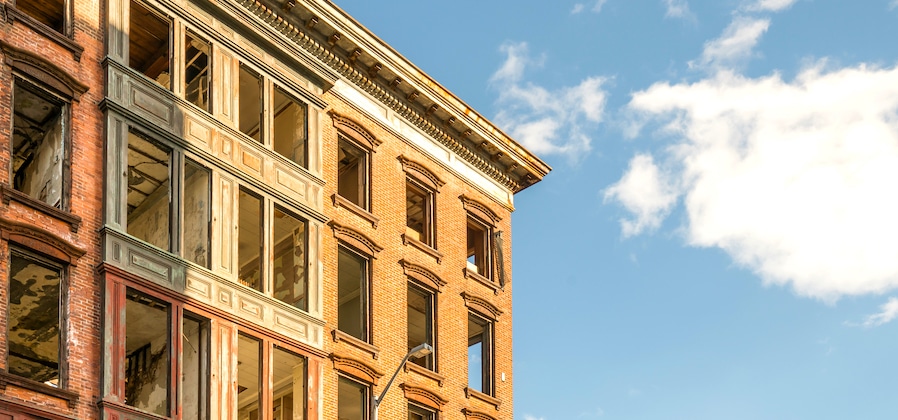
Image of building in Bridgeport, CT, courtesy of Small Change,

« Previous Page
Next Page »

Primary Sidebar

sign up here

APPLY TO BE A PODCAST GUEST

More to See

(no title)

February 22, 2025

Bellevue Montgomery

February 11, 2025

West Lombard

January 28, 2025

FOLLOW

  • LinkedIn
  • RSS

Tag Cloud

Affordable housing Climate Community Creative economy Crowdfunding Design Development Environment Equity Finance FinTech Gentrification Impact Investing Mobility Offering Opportunity zones PropTech Technology Visionary Zoning

Footer

©rethinkrealestateforgood.co. The information contained on this website is for general information purposes only. Nothing on this website is intended as investment, legal, tax or accounting strategy or advice, or constitutes an offer to sell, solicit or buy securities.
 
Any projections discussed or made may not be accurate and do not guarantee a specific outcome. All projections or investments are subject to risk due to uncertainty and change, including the risk of loss, and past performance is not indicative of future results. You should make independent decisions and seek independent advice regarding investments or strategies mentioned on this website.

Recent

  • The Mulberry
  • Mount Vernon Plaza
  • The Seven
  • Real estate and women.
  • Oculis Domes.

Search

Categories

Climate Community Crowdfunding Development Equity Fintech Investing Mobility Proptech Visionary


Copyright © 2026 · Magazine Pro on Genesis Framework · WordPress · Log in