• Skip to main content
  • Skip to secondary menu
  • Skip to primary sidebar
  • Skip to footer
  • Home
  • About Us
  • Say hello
Rethink Real Estate. For Good.

Rethink Real Estate. For Good.

  • Podcast
  • Posts
  • In the news
  • Speaking and media
    • About Eve
    • Speaking requests
    • Speaking engagements
    • Press kit
  • Investment opportunities

Environment

Living the Jetson life.

September 25, 2019

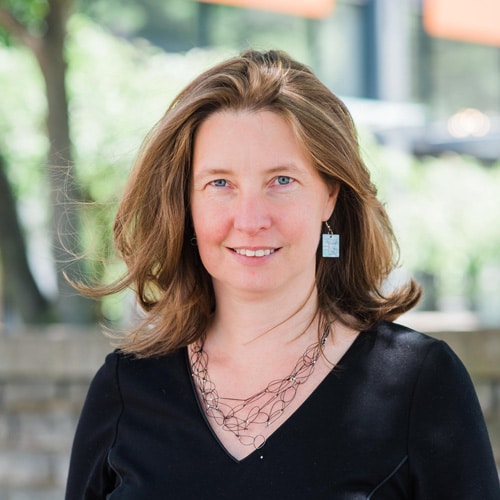
Jennifer Castensen is the vice president of programming at Hanley Wood, a company which serves the construction and design industry through their analytics-driven Construction Industry Database.

In this capacity, she provides leadership and collaboration across all verticals in the building products industry to drive innovation. Castenson establishes themes and coordinates content from Metrostudy and Meyers Group, Hanley Wood’s industry leading data and research arms, along with content from the editorial team to provide audiences with fresh, innovative content in a variety of forums. Castenson also serves in a project management and editorial capacity for multiple concept projects spearheaded by the Hanley Wood editorial teams. Prior to joining Hanley Wood in 2015, Castenson spent nine years as the vice president of marketing for a building product manufacturer. 

Jennifer has her finger on the pulse of innovation in the building industry … and she loves it. Listen in to hear all about the rapidly evolving building industry and what Jennifer thinks the next big thing will be.

Insights and Inspirations

  • In the future housing will need to deliver far more than just shelter. Think the Jetsons.
  • Lots of attention is being paid to pre-fab. Innovations in prefab may well be a major part of the solution to the lack of housing in the United States.
  • Lots of attention is being paid to vertical integration. New companies and processes are emerging that promise to change the building industry forever.
  • A focus on health and well being is having massive cultural implications in the building industry.  
  • We need to stop thinking that change in the building industry is slow. Change is moving very fast.

Information and Links

  • The HIVE community brings an energy and passion for innovation and improvement in future housing options that Jennifer loves.
  • The HIVE 50 list showcases people, products, and processes that are leading the charge to inspire creativity, improve performance, and explore better ways to build. Look for the 2019 list in November.
  • Jennifer is proud of the concept project – Building Positive + Living Well – that she was involved in with Skidmore, Owings and Merrill and Amli Residential. She believes this work redefines how we will live in the future, in a healthier, more sustainable way. 
Read the podcast transcript here

Eve Picker: Hey, everyone, this is Eve Picker, and if you listen to this podcast series, you’re going to learn how to make some change.

Eve Picker: Hi there. Thanks so much for joining me today for the latest episode of Impact Real Estate Investing. My guest today is Jennifer Castenson. Jennifer is the VP of programming at Hanley Wood, a company which serves the construction and design industry through their analytics-driven Construction Industry Database. Based on this information, Jennifer establishes themes and develops content to provide Hanley Wood’s audience with up-to-date industry intelligence. As such, Jennifer has her finger on the pulse of innovation in the building industry, and she loves it.

Eve Picker: Be sure to go to Eve Picker.dot com to find out more about Jennifer on the Show Notes page for this episode and be sure to sign up for my newsletter so you can access information about impact real estate investing and get the latest news about the exciting projects on my crowdfunding platform, Small Change.

Eve Picker: Hi, Jennifer. It’s really lovely to have you here. You have a fascinating job. I know that you’ve been on the marketing side of the building industry for at least a dozen years. Is that right?

Jennifer Castenson: Yeah, for a decade.

Eve Picker: A decade? Yeah. Now, as I understand it, you use leading data or research information from the industry to help establish themes and content for Hanley Wood, is that correct?

Jennifer Castenson: That’s correct. Yes.

Eve Picker: So, that means that you have your finger on the pulse of innovation in the building industry, which is pretty fabulous.

Jennifer Castenson: It’s amazing. It’s a really fun job, and it’s also very amazing to see the innovators who are behind the scenes and actually doing something to change all of the challenges that are facing the housing industry right now.

Eve Picker: Tell us a little bit more about what you actually do.

Jennifer Castenson: What I do at Hanley Wood is mostly programming for our events. Hanley Wood has a number of different publications and mediums, and we have conferences associated with a lot of those that we call branding conferences. Then we also do custom events where we program for our partners in various capacities.

Jennifer Castenson: For our conferences, we are very focused on creating a theme, and sticking with the theme, and finding experts who can deliver the content in the best way; who can deliver best practices; who can talk about research, innovation within a certain space. I work on the conference program in determining, with our editorial team, what is the right focus. Then I go out, I search for, find the experts, and then work with them to deliver the content at the event.

Jennifer Castenson: I also work on editorial content, working with some of those leaders in the industry to write certain material for our websites. That could be Builder, which focuses on single-family; for Multifamily Executive, for Architect, for Journal of Light Construction, or Remodeling or ProSales. I’m looking very holistically at the industry and then solutions for each one of those verticals within the industry and how we can help the industry leaders move forward strategically into the future.

Eve Picker: I was one of the fortunate ones who was found by you a couple of years ago, right? That’s how we [cross talk]

Jennifer Castenson: Yeah. Thank you so much for being part of Hive.

Eve Picker: Yeah, that was great. How did you end up in this role? This is pretty recent, right?

Jennifer Castenson: I’m going on four years that Hanley Wood. Before that, I worked for Organized Living, which is a building products supplier. Like I said, I was there for about a decade doing marketing and sales, and I was working with Hanley Wood. I had been part of the events from a sponsorship and exhibitor standpoint and knew the folks very well, and they recruited me in to be part of the Hanley Wood team.

Eve Picker: Pretty great. Your world intersects, then, with … You know this podcast is about impact in real estate, and the building industry is part of real estate, so your world intersects pretty squarely with that, as you see innovation emerge. I’ve seen that you’re a prolific speaker, as well as being an organizer, and you actually moderate panels yourself. So, you’ve touched lots and lots of topics; some of them, really big ones, like power, or affordable housing, or ADUs, or prefabrication. What theme do you think has the loudest drumbeat in the building industry today?

Jennifer Castenson: That’s a really good question, and I really have to think that there are two, and they, just like you said, intersect with each other. I think prefabrication/offsite construction and vertical integration are the two that I’m referring to.

Jennifer Castenson: I think modular and offsite are getting more and more attention. They’ve been around for a very long time. However, in today’s age, they are getting the benefit of new and enhanced technology. Then, they are extending the benefit to many different aspects that are really important to today’s construction environment. There’s more sustainability factors. There are more efficiency to respond to the need for more affordable housing.

Jennifer Castenson: That touches on the less need for less labor, faster construction cycle, less labor, and therefore reducing the time, reducing the costs. That’s just really, really critical in today’s age that we’re pulling together projects faster and at lower cost to put homeownership or rent in the hands of more people. But then, also the sustainability factors. There’s less onsite waste. There’s less waste altogether.

Jennifer Castenson: The projects can happen in any type of environment, which is also important, because if you look at climate change, we’re dealing with a lot of different climate factors, but if you’re inside of a factory, then the housing can continue to be built regardless of what the conditions are outside of that factory. Prefabrication/offsite construction just has a lot of different benefits right now.

Eve Picker: I never thought of that last one. That’s really interesting. But still, I’m in Pittsburgh. When I talk to some builders here, they still say that stick build is cheaper here than prefab. How much does that have to do with the labor in any particular market or the building conditions in any particular market? Is it really equally efficient everywhere?

Jennifer Castenson: No. Actually, I would say, nationwide, you’ll find that stick build, traditional build is very similar in cost to prefabrication. However, the time savings reduces the cost. The hard costs are there, and they’re probably the same. Sometimes, prefabrication might cost a little bit more. There are actually markets, right now, where prefabrication is so popular, for a variety of reasons, where the manufacturers are able to then bid up, and it’s … The costs are rising for factory construction. So, all those things are coming together.

Jennifer Castenson: Actually, if you think of labor unions, the costs involved with labor unions, sometimes the offsite construction might help avoid some of the labor unions. It depends on what kind of market you’re in and all of those variety of factors – how many offsite manufacturers are there, and what the demand is for that type of construction, along with labor unions, the amount of transportation to site, because that’s a huge component of it that will drive up costs. All of those things factor into the cost, but then the time savings is the real savings.

Eve Picker: Interesting. So, someone might argue that you’re putting people out of jobs. I’m in a heavy union-labor market in Pittsburgh, so they might not be happy to hear you say that.

Jennifer Castenson: No, I know, and it’s actually … Those jobs are evolving, and it’s a real big question right now. I said the second thing, for me, that I see impacting housing the most is vertical integration. There are a lot of organizations, like Katerra, and I’m also working with another one in the multifamily realm that’s called Cortland, who are trying to vertically integrate more and more and to take parts of the process that weren’t together under one roof and make them seamless under one roof where-

Eve Picker: I’m sorry I interrupted you, but I’m wondering what precisely you mean by vertical integration here? What is all part of that?

Jennifer Castenson: It might be different with different organizations. In the two examples I just gave, it’s very different. Katerra, for instance, is bringing in design, and development, and the manufacturing all under one roof. They’re bringing in even more than that, because they’re manufacturing some of the products that they’re using in their projects and some of the software that they’re using in the design regard.

Jennifer Castenson: It’s making the process- it’s making it more seamless and making fewer connections so that it can happen more efficiently and more effectively. They’re one of the biggest examples of it, but I was talking about Cortland, as well. They’re taking a lot of things under one roof that weren’t considered before, in terms of property management. It’s happening more and more with more organizations-

Eve Picker: Where do you think all of this is leading?

Jennifer Castenson: I think that it’s leading to more affordable housing, for one. That’s the aim that most people have; most organizations have, when they start doing vertical integration. That was why and how Katerra kicked off; and creating efficiencies. It will take some time to ramp up, because those, let’s say, legacy organizations – the big developers, the big builders – they have relationships that will be very hard to break. If you look at- I’m talking about the top 10 developers, legacy developers have relationships, in all the markets they’re building, with general contractors. Once they start saying no to the general contractors and start doing offsite construction or changing the parameters of those relationships, it’s going to be really taxing on their business to, one, just to figure out how to do it-

Eve Picker: Yeah.

Jennifer Castenson: -how to restructure their organization. But, two, what will, then, that general contractor do? That general contractor might go from being involved in 50 percent of the project to only having 10 percent of the project. Is he going to ratchet up his pricing? Those dynamics aren’t-

Eve Picker: Or is he going to be innovative and figure out how to become part of the industry, himself?

Jennifer Castenson: Exactly. Hopefully. Hopefully, there’s innovation behind it.

Eve Picker: Be sure to go to EvePicker.com and sign up for my free educational newsletter about impact real estate investing. You’ll be among the first to hear about new projects you can invest in. That’s Eve Picker.com. Thanks so much.

Eve Picker: That’s absolutely fascinating. The ramifications of one change towards the top can be huge, can’t they? Other than these two, which obviously really interest you, are there any other current trends in the building, or the real estate industry, or in cities that interest you the most?

Jennifer Castenson: There’s so much that’s happening, and I think there’s some really big trends in health and well-being from a living standpoint. It’s going to be a massive culture shift within the United States. We have been looking at housing as a shelter, but we’re going to be … As homeowners and as renters, we’re going to be thinking about our housing needs to be delivering more than that. That’s not only from health and well-being; that’s the builders and developers thinking about how to integrate technology in order to do that.

Jennifer Castenson: We are going to be able to, as homeowners, walk into our home and think of it as a character in our lives; to be thinking of it as we can have … Not only can we ask our house to put something on the grocery list, but we can also ask our house to get us ready for bed. That is a whole series of things that will be kicked off by a technology that’s behind the walls, and that will literally help us get to sleep and have better sleep during the night and, therefore, better performance during the next day.

Eve Picker: That is so awesome. It brings to mind a show I used to love called The Jetsons.

Jennifer Castenson: Yeah, right? Yes.

Eve Picker: It feels like we’ll be entering the life of The Jetsons.

Jennifer Castenson: It is. There’s so much. Years ago, I heard somebody talking who was an employee of Disney, and he was saying that we will have characters in our home; characters who speak to us. I feel like we’re almost there. Now, there’s a whole bunch of hurdles with security issues, and there’s also hurdles in terms of integration and what people are willing to pay for these sorts of technologies. However, we are on a fast track because of the way that technology accelerates, so [cross talk]

Eve Picker: -yeah, interesting. But do you think these trends will make for better cities? Are these really important, impactful trends, having [cross talk]

Jennifer Castenson: -I was talking about health and well-being. I think health and well-being, I was focused on it in terms of just one residence. However, more and more people, from an urban planning standpoint, and smart cities development standpoint, are working together. There are more and more collaborations, and more people are understanding, recognizing the benefits of collaboration.

Jennifer Castenson: You’ll see more cities are creating- working with developers or leading organizations in order to change the city; in order to mold it to be not only prepared for the smart city infrastructure, but to have a focus on health and well-being and creating a more strategically resilient community, where people can prosper; where they can, not only economically, but healthy- from a health standpoint.

Jennifer Castenson: Putting access to fresh food in walking distance of residences; putting more public transportation options in place. We are a nation that’s growing older. So, a lot of folks are starting to think about how are we thinking about accessibility, and how are we making that available for this aging population?

Eve Picker: Yeah, that’s really interesting because actually everything you touched on there is part of the Change Index on Small Change. I don’t know if you’ve looked at it lately, but those are the key things – livability for everyone, whether they’re three years old, or 85 years old, right?

Jennifer Castenson: Right. Exactly.

Eve Picker: An accessible, healthy place to live where you can move around, and reach good food, and all of those things. I was having a conversation with someone the other day about assisted living and how it needs to evolve. I think there was an article in The New York Times about how broken the system is. Do you see any innovation in assisted living or the way that people are thinking about housing our aging population?

Jennifer Castenson: Oh, for sure. I think there’s so much that’s going into that. There are new design guides that are going into that and actually being picked up by certain legislations that have to meet-  or building code that are being incorporated into the building code.

Jennifer Castenson: Then, there’s so much in terms of technology to help people. I’ve seen projects where there is technology that can alert a caregiver of somebody who is in a home alone – if they’ve fallen, if they haven’t moved for a certain amount of time; can tell them when to take their medications, can do so much for the aging population, assist them in just living for day to day and [cross talk]. 

Eve Picker: -help them age in place. 

Jennifer Castenson: Exactly. Well, the age place … That’s also, when I was talking about having the access to the public transportation, when people live that- age out of the ability to independently drive their cars, they lose a little bit of independence. So, having access to public transportation or having things within walking distance is really important. That’s why so many people are thinking of community design and not just how someone lives within their own residence.

Eve Picker: Yeah, I know everyone’s thinking ADUs as a way to deal with affordable housing, but I actually think about it a lot as a way to deal with the aging population, because, when I get old, I’d love one of my kids to have me in an ADU in their backyard. That sounds to me much more appealing than an assisted living community. If there’s technology developed that helps keep me safe in that place and able to age like that, that would be amazing, right? 

Jennifer Castenson: Yeah, absolutely, and you’re right. They are an option for affordability, but it’s also being looked at as a second home on property that could house in an older relative. A lot of people are looking at it as that option.

Eve Picker: Or a teenager you don’t want to see every day, right?

Jennifer Castenson: Right. 

Eve Picker: Okay, so the big question is, really, do you think socially responsible real estate or building methods necessary in today’s still development landscape?

Jennifer Castenson: Oh, for sure. It’s actually really impressive that we talk about that change in the building industry is very slow. But if you look at change in terms of code, all of it has been socially responsible, right?

Eve Picker: Yes.

Jennifer Castenson: We’ve actually layered on so much code to be more responsible in terms of environmental impact. Now, we’re using codes in projects, and certifications that also – like the Fitwel program – that are focused on health and well-being in our communities and in our homes. Then, we’re also taking on codes, and we’re involved in another project at Hanley Wood that’s focusing on reducing the amount of embodied carbon. Those types of things are the responsibility- are things that builders and developers are owning. They’ve been evolving quite quickly over the years. They’re taking more and more responsibility for providing housing in a way that is socially responsible, environmentally responsible, and then that is comfortable, and also will help people from a perspective of emotionally, psychologically, and mentally growing. It’s a lot to combine into a home.

Eve Picker: Maybe eventually we’ll become the happiest country on the planet.

Jennifer Castenson: Right.

Eve Picker: We’re far from that right now, right? We’re sort of gradually catching up on some European standards, which is really pretty fabulous. My big wrap-up question is where do you think the future of real estate impact investing lies?

Jennifer Castenson: I was talking about before that we’re working on various conferences, and the one that we had you involved in was called Hive, which stands for Housing Innovation Vision Economics. Through that conference, we do an honors program that’s called the Hive 50, which our editors select the top 50 innovations in housing. I would say that a lot of the innovations are around finance.

Jennifer Castenson: Impact investing has had a smaller presence on that list, and I think that there’s a lot of opportunity for that to grow. I think that as more cities and their collaborations come into the picture, we’ll see more and more of that happening. Tangentially, you see a lot of organizations getting involved in sponsoring, donating, subsidizing affordable housing construction in various areas. That actually has picked up a lot in the last 12 months-

Eve Picker: In fact, there’s impact investing, right?

Jennifer Castenson: Yeah, absolutely. And I think we’ll see more and more of that, just as we are not able to meet the demand of housing in this country, and we’re not actually on a trajectory to meet it anytime soon. So, hopefully we see more of that; more of the money coming in so that we can develop the housing that we need.

Eve Picker: I also have three sign-off questions that I usually ask, because I want to hear everyone’s answer on these. The first one is what’s the key factor that makes a real estate project impactful to you?

Jennifer Castenson: I think what makes it interesting to me is that it becomes something that teaches the industry, the rest of the industry, and that we can pick up at a volume scale and bring it to more places.

Eve Picker: That sounds like innovation-

Jennifer Castenson: Yeah.

Eve Picker: -really is the most important thing to you. You know I have a crowdfunding platform, right? Do you think there could be other benefits, other than raising money, that could come out of crowdfunding in real estate?

Jennifer Castenson: Oh, for sure. Absolutely. I think you have done such an amazing job bringing crowdfunding to a more visible level in housing, and that means … I give you all of the kudos in the world, and I hope that you guys keep elevating that. It has done a tremendous job to give visibility to projects that wouldn’t have made it otherwise. Those projects are the ones that we need more of, because they’re innovative. They’re new approaches to what traditionally, or legacy organizations, are not approaching because of their capital streams, so it’s … I think it’s amazing.

Eve Picker: Well, thank you. I feel like we’re just scratching the surface. There’s so much to do, right?

Jennifer Castenson: Right.

Eve Picker: This is a really big question: if you want to improve one thing about the real estate industry in this country, what would that be?

Jennifer Castenson: If I could change one thing, I think it would just be something about regulation, which I wouldn’t know how to approach because it’s such a complicated web. But I would say that there’s something either to policy and regulation that would remove some of the hurdles and allow building to happen in a more efficient way with maybe some of the responsibilities back on … I’m not sure. There’s just so much to do there.

Eve Picker: No, I think you’re talking about zoning and building codes all wrapped up together, and that’s a lot of stuff to unravel. I know some cities are trying to unravel bits of zoning codes and move things forward in a different way, but, yes, it’s a lot. Jennifer, this was just delightful. Thank you very much for taking the time to talk with me [cross talk] I’m going to call this Entering the Life of The Jetsons.

Jennifer Castenson: I like it.

Eve Picker: Okay. Have a great day. Bye.

Jennifer Castenson: Thanks, You, too. Bye.

Eve Picker: That was Jennifer Castenson. She gave me lots to think about. First, she thinks that a focus on health and well-being is having massive cultural implications in the building industry. Second, in the future, she believes that housing will need to deliver far more than just shelter. And third, innovations in prefab may well be a major part of the solution to the lack of housing in the U.S..

Eve Picker: You can find out more about impact real estate investing and access the show notes for today’s episode at my website, Eve Picker.com. While you’re there, sign up for my newsletter to find out more about how to make money in real estate while building better cities. Thank you so much for spending your time with me today, and thank you, Jennifer, for sharing your thoughts with me. We’ll talk again soon, but for now, this is Eve Picker signing off to go make some change.

Image courtesy of Jennifer Castensen
Shaping a sustainable environment.

September 9, 2019

Developers and architects have the opportunity to sell a new vision of sustainability in the United States. Many people see private capital and sustainability as fundamentally at odds with each other. Some even question the value that developers, architects and investors bring to the community building or redevelopment process.

But civic-minded investors have the opportunity to change this dynamic by supporting developers and architects working on real estate projects that are more inclusive and friendly to local residents and the environment. The value that private capital adds to the equation is the ability to mobilize and rally like-minded investors and real estate professionals to take these projects from concept to shovel ready to completion.

Macro, micro, and mezzo

When attempting to solve issues as complex as long-term sustainability, developers must take a full-spectrum approach to solve the problem. This means when creating new communities, developers need to look at the problem from multiple levels, on a grand or macro scale which takes regional concerns into account, on a small or micro scale which looks at building use and techniques, and with a mezzo approach, which examines sustainable development at the community or neighborhood level.

Macro approach

Taking regional needs into account is crucial when attempting to build a community that is both livable and environmentally friendly. For example, a project in sunny Sedona, Arizona will have needs that may not be applicable in Portland, Oregon, and vice-versa. Variables like water usage, solar panel options, xeriscaping choices, and other desert or dry climate requirements need to be taken into account before constructing a new development in Arizona, but maybe not in Portland or San Francisco or Omaha.

Micro approach

The micro scale (on an individual project basis) is vital to efforts to create sustainable homes. When creating an environmentally friendly, livable space, it is essential to balance design and aesthetics, longevity, and sustainability into a single package. Without some mix of those three factors, it is unlikely that your project will make it past the planning stages. Remember that there are numerous stakeholders to whom you may be accountable, including investors, lenders, local residents, and city officials.

Mezzo approach

District, or mezzo scale work, is felt at the neighborhood scale, as opposed to individual buildings (micro scale), or entire regions (macro scale.) An example of a mezzo-scale project could be a neighborhood-focused infrastructure project, such as replacing fluorescent streetlamps with LEDs in a designated area, or implementing a bioswale rainwater catch system for a specified area.

Remember that while individual properties can be improved, their value is largely defined by the neighborhood in which they reside. Sustainability issues often arise from poor planning. A little bit of preparation can prepare a community for long-term sustainability challenges, like collecting rainwater, reducing energy and water waste, efficient public transit, and many hurdles that come up as a result of poor planning.

_

Sustainable communities do not appear out of thin air. It takes a team of dedicated professionals to meet the challenges of the present, while keeping an eye towards the future viability of environmentally-friendly design and development choices. As the old adage goes: “If you don’t know where you’re going, any road will take you there.” Don’t follow any road- follow the road toward long-term sustainable development.

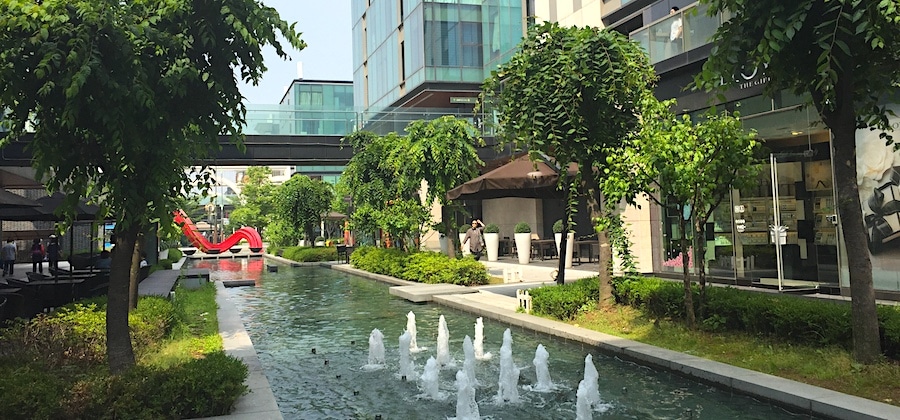
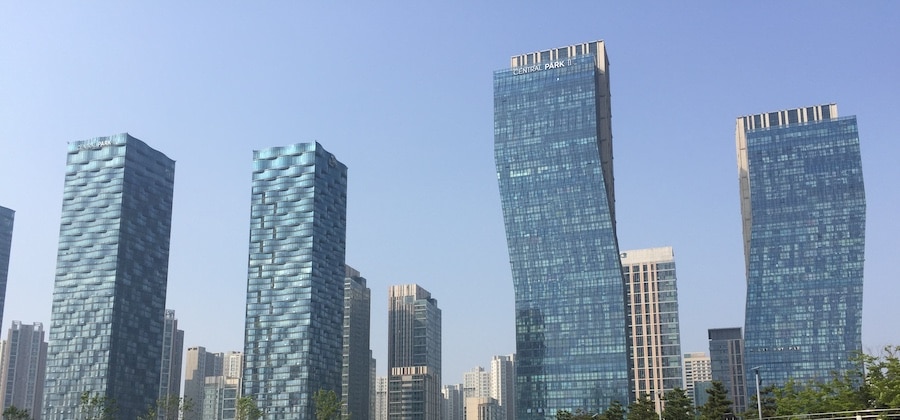
Photo of Songdo, South Korea by Eve Picker.

The power of design.

August 21, 2019

Christine Mondor describes herself as an eternal optimist regarding the power of design in shaping sustainable cities. And that’s what she has been working on for the past 15 years. She is using the power of design as an architect, educator and activist to shape places, processes and organizations nationally and internationally.

As a principal of the architecture firm evolveEA, Christine brings creative solutions to projects like the award-winning Millvale EcoDistrict Pivot Plan every day. She has taught architecture, landscape design and sustainability concepts at Carnegie Mellon and Slippery Rock universities, and at Chatham College. And she is deeply involved with organizations that promote design and the environment.

Currently she serves as chair of the Pittsburgh Planning Commission and she is a former president of the Green Building Alliance, a member of the Global Ecodistricts Protocol Advisory Committee, the Penn State University Stuckeman School advisory board, and former chair of the Design Center of Pittsburgh. Christine received her Bachelor of Architecture degree from Carnegie Mellon University and studied architecture and sustainable design in Scandinavia. Christine is a registered architect and LEED Accredited Professional, and a 2019 American Institute of Architect Fellow.

Listen in to our fascinating conversation about the power of design and the shifting role of architecture in this age of environmental challenges, and you’ll believe too.

Insights and Inspirations

  • Christine likes what Jane Jacobs had to say – “Cities have the capability of providing something for everybody, only because, and only when, they are created by everybody.”
  • She’s intrigued by the concept of naturally occurring affordable housing.
  • She thinks that co-operative or fractional ownership models have legs.

Information and Links

  • Christine loves Party with a Purpose and she’s working on two parties. The first is in partnership with Eco Districts and is a nationwide network for communities to create inclusive and integrated communities. The second is the 10th global EcoDistrict Summit to be convened in Pittsburgh in November, 2019.
  • Christine loves community based efforts and the use of citizen science to transform places such as the Breathe Easy project completed in Millvale.
  • Christine’s favorite brownfield rebirth is Malmo, Sweden’s Western Harbor. She really enjoyed walking through the amazing neighborhood that has been created and artfully weaves water into public spaces. 
Read the podcast transcript here

Eve Picker: Hey, everyone, this is Eve Picker, and if you listen to this podcast series, you’re going to learn how to make some change. Thanks so much for joining me today for the latest episode of Impact Real Estate Investing. My guest today is Christine Mondor, a neighbor of mine in Pittsburgh and an architect with her own company, evolveEA.

Eve Picker: Evolve is leading the charge in sustainability in the architectural world in Pittsburgh. Christine believes in the power of design in shaping a sustainable environment. I’m fascinated at how much Christine focuses on designing or redesigning the infrastructure of cities. This is something that not even I, a fallen architect, expect. In this podcast, we talk about the rapidly shifting roles and responsibilities of architects for our rapidly changing environments.

Eve Picker: Be sure to go to Eve Picker.com to find out more about Christine on the show notes page for this episode and be sure to sign up for my newsletter so that you can access information about impact real estate investing and get the latest news about the exciting projects on my crowdfunding platform, Small Change.

Eve Picker: Hi, Christine. Thank you for joining me today. How are you?

Christine Mondor: I’m doing great. How are you, Eve?

Eve Picker: Good. Good. Good. I know you pretty well. I’ve known you for quite a few years now, but our audience probably doesn’t. You want to tell them a little bit about what you do?

Christine Mondor: My name’s Christine Mondor, and I am an architect. I have the pleasure of having that be both my vocation and my profession. I really love the field of architecture – buildings, and spaces, and communities, and environments. I also have a practice called the Evolve Environment Architecture, where I get to have that as my profession, and I do that for a living.

Christine Mondor: My firm, Evolve Environment Architecture, was started in 2004. I had a history of practicing in kind of post-industrial cities, or the city of Pittsburgh during some of its hardest times and really always thought that there was an upswing coming and specifically when that upswing is framed around sustainability, and triple-bottom-line equity, and environment, and economics.

Christine Mondor: I started my firm with my partner, Mark. We really framed it around sustainability. I think, when we started the firm, a lot of the work that we were doing, people thought might be temporary; might be a nice thing to do for a couple years in terms of sustainability. What we’ve found is that while we were out in front in the early years with regards to sustainability in our practice, the rest of the society kind of caught up. What was once an outlier became standard practice.

Eve Picker: Now, in the folks that we hire, the people that we work for, they’re always asking for what’s next? What’s more? What else can we be doing? It’s been a really great process since 2004, defining a field of practice, spreading the word about this field of practice and having people join us, as clients, and as communities, and as our colleagues. Now, it’s to the point where there’s just so many challenges to try and hit on that we definitely are glad that many others are walking here beside us.

Eve Picker: I love, in your bio, the first statement – that you’re an eternal optimist regarding the power of design in shaping a sustainable environment. I’d love to know more about that.

Christine Mondor: I used to have this phenomena where, in Pittsburgh … You know these places well, as well; you would walk around communities, and you might have a visitor with you from somewhere else, and you would be just enamored and in love with everything that you see. Somebody would say to you, “Why are you taking me around to this neighborhood? I don’t see anything here.”

Christine Mondor: You have this kind of gut check, where you realize that you’re looking, and you’re seeing a future condition; a condition where things are more environmentally sustainable, where the community is lifted up, so that all may prosper, and frankly, it just has really great, design as well. When you have these other people around, they’re not seeing that, so it’s your obligation to make that happen. When I realized that I had that kind of disjuncture in what I was seeing and maybe what others were seeing, that was my eternal optimism. People would say, “Well, you’re optimistic, aren’t you?” Yes, I am!

Eve Picker: I think it’s a great way to describe it. My husband always says that when I drag him into an old building and all he sees is pigeon shit and [cross talk] and I’m standing there saying, “This is beautiful!” He’s just perpetually stunned.

Christine Mondor: That’s exactly it. That’s exactly it. Yep [cross talk]

Eve Picker: That’s the lot of a designer, right? Just trying to find a way to show the rest of the world what’s possible. What are you working on at the moment?

Christine Mondor: We are doing a lot of … In our firm, we work at three different scales. We work at the macro, mezzo, and micro scale. The micro scale is we think about as kind of like building spaces. We’re working a lot with universities and commercial clients to make outstanding places, inspiring places, but that are also high-performing and really are thinking about future conditions.

Christine Mondor: We’re also working a lot with district-scale work, that mezzo scale – communities and neighborhoods, and also at the regional scale, and that’s infrastructure. That’s the part that I spend most of my time in, in really thinking about these things as systems. We’re doing work with- a lot of stormwater work. That is taking an infrastructure system that previously was below grade, in pipes, and thinking about it as a land-use question and how it can really add to a community.

Christine Mondor: I find it especially fascinating, because you have to think about it in terms of future-proofing. It’s not just a question of doing, say, green infrastructure to capture stormwater and prevent it from getting into the storm pipes and putting sewage out into our rivers and waterways. It’s really a question of how are we going to recreate how our communities work so that we can deal with this issue in an environmentally and equitable way – environmentally beneficial and equitable?

Christine Mondor: Also, so that we can begin to deal with the issues of climate change in this very dramatic way that we’re seeing it play out. Yesterday, here in the city, we had a morning rain that sent many communities into full flood mode and even closed off a regional hospital for a period of time. That is a fascinating question of infrastructure planning.

Christine Mondor: If we are really going to deal with those issues, we’re going to- our communities are going to be reshaped. It’s not just a little bioswale in somebody’s front yard. We’re talking about rethinking the systems that we designed 100 to 150 years ago. I find that work really fascinating. We’re doing that work around stormwater and transit.

Eve Picker: Be sure to go to Eve Picker.com and sign up for my free educational newsletter about impact real estate investing. You’ll be among the first to hear about new projects you can invest in. That’s Eve Picker.com. Thanks so much.

Eve Picker: So, at the moment, I feel like I’m living in Kevin Costner’s Waterworld. It’s a little crazy. Maybe we can all learn something from that. When you talk about this, I realize that most people think about architects probably in a completely different way; that they’re busy designing single-family homes and office buildings. You’re talking about sort of redesigning the infrastructure for cities and neighborhoods. I don’t think people realize that’s what architects do.

Christine Mondor: Yes. I don’t think so either. I don’t think, sometimes, architects understand that that’s what they can do. Maybe it’s because we haven’t had the need to do that for the past 50-100 years. We’ve been kind of living off the legacy of that original infrastructure, and land-use work. But things like climate change and also economic conditions are changing in a way that forces us to rethink the development patterns that we have; whether it’s the availability of mortgages for single-family houses, the failure of shopping malls, and rethinking distribution patterns for retail. All those things caused pretty significant changes in our cities and our rural regions, too. Architects, we’re really well-suited to think about that on a qualitative way and a quantitative way [cross talk] superhero power.

Eve Picker: Yeah, no, I think that’s right. I always think of architecture as a really interesting profession that teaches you how to make something out of nothing – the process of designing something from absolutely nothing in a very creative way. I think it’s pretty rare skill. I wonder, do you think the profession, on the whole, is thinking the way you’re thinking?

Christine Mondor: I don’t think so. I think that some are … One of the things I always enjoy about your trajectory, Eve, is that you’re able to weave these disparate things together, whether it’s a development pattern, a housing type, a specific project, or a funding mechanism. You’re always pulling these things together to say what is it that we want to do as a community and then how do we make the tools work for us?

Christine Mondor: I think that our architectural training is, at the base of that, being able to see across these different disciplines and expertises. I think there’s a unique need for that now, so that the folks in the profession are waking up to that – that, in fact, our most useful role might be outside of what we consider traditional practice. I recently became an AIA fellow, and in the process of that, you kind of have to redefine how your practice has added to the profession. It helped me realize how we define ourselves as professionals is only scratching the surface of what the potential contribution we can make.

Christine Mondor: I know we were talking about the role of women. We talked about that in the past and how it’s hard to find women in the profession, or in the elevated, or recognized positions. I think that’s because they tend to- are oftentimes in non-traditional roles. The more we expand the definition of the profession, the more we’re going to find that those women are out there, and they’re in influential positions, but they’re just not in traditional positions of power.

Eve Picker: You’re still teaching at Carnegie Mellon, right?

Christine Mondor: Right.

Eve Picker: I taught there quite a few years ago now, and I was frustrated with the … For different reasons, I was frustrated with the very traditional approach to teaching these unbelievably talented kids architecture, because there are so few jobs in that profession, as well. Do you think that schools are sort of starting to see that they need to shift what the role of an architect might be in this really- in this world where sustainability has become so important?

Christine Mondor: I think that’s a great question, and I think that that shift is happening. It has to happen at two levels. First, the profession has to be ready to catch it, and to say is the goal of our professional education to graduate a narrow definition of what it means to be an architect, or can we broaden out and embrace a full spectrum, where everybody shines a different light on a topic, and in that, we see that all the colors kind of arrive?

Christine Mondor: I think the traditional way of approaching architectural education was that everybody shines the same color of light on the subject, so we are trying to make that light as uniform as possible. That’s the standards for that education. But when I look at what my students are doing up out of graduation that see a view that they’re doing things that I don’t even know what to call the job. You know, I don’t know what it is yet. And they don’t know what it is yet. But I don’t want them to be outside of my profession. I want to say that that is also architecture. It’s a different piece of architecture.

Eve Picker: I think you’re right. I think there’s an opportunity there that we’re kind of missing at school. I actually want to go back, because I know you did this little EcoDistrict PIVOT plan for Millvale, which is a Rust Belt town outside Pittsburgh. It’s kind of an unusual plan to do for a place like Millvale. I wanted to give our listeners an idea of what you did for Millvale, so they have a more concrete idea of what is possible.

Christine Mondor: Some of the work that we do in systems … Sometimes, we’re working directly with, say, a sewer authority here in Pittsburgh. We’ve done big planning with Buffalo Sewer Authority. Sometimes, we’re working with transit authorities. Those are people who hold infrastructure systems and plan that system, but communities are different; where they have many different types of infrastructure woven into the fabric – the social and cultural fabric – of what people think of as their community, their home, and their neighborhood.

Christine Mondor: EcoDistricts, in the way that we co-developed it, actually, with our colleagues in Millvale and with our colleagues in Larimar, another community here in Pittsburgh, is really looking at those larger systems and understanding how these smaller neighborhoods, communities, boroughs interface and weave themselves into it.

Christine Mondor: For instance, in Millvale, in the PIVOT plan, the PIVOT plan looked at, at first, three different areas. It looked at food, water and energy, and said how do we make our community better, more equitable, more healthy by looking at these systems and the resources, and flows that move through those systems? That’s what resulted in a plan in 2014 with a number of different things to do for the community. They did them in about two years and [cross talk]

Eve Picker: That’s very fast. That’s really fast.

Christine Mondor: I have to say that no … These plans- no plan really works unless a community’s ready to activate around them. Really, we had great community partners and worked hard, through the process, to build their supportive groups around them, so that the community had capacity to do this work. It doesn’t work to make a great plan unless they have the capacity to actually execute it, and they did, so we-

Eve Picker: What did they do in those first two years?

Christine Mondor: The first few years were … I’ll give you a for instance in energy. We looked across the entire municipality to say where is energy being used in the community? Where is it being lost? Where is it being gained? That’s anything from looking at building performance, to possibilities for renewable energy, to how those things weave into the daily life of communities.

Christine Mondor: One of the proposals was saying you’ve got a couple places here in town that you could do an energy hub, where you’re harvesting solar energy. It’s feeding into a particular function that services the community or a business. You can kind of punch above your weight, because you’re thinking outside of a single property, and you’re looking at more district-scale work. These energy hubs became resiliency hubs. The community was able to get funding to put a solar-resiliency hub in their municipal building, because, tragically, they have frequent flooding. In the case of that, this municipal building served that, in, perhaps, in some cases, off-line, off-the-grid hub, but it’s prepared to be the place where people can go for flooding.

Christine Mondor: They also did that in places called the food hub. The food hub is a place where there are a couple businesses being incubated around food-oriented businesses – whether it’s a caterer, or a startup, but also an organization called 412 Food Rescue, whose home is in the Moose; an old Moose Lodge that became the food hub. That is where 412 Food Rescue gathers waste product, waste food, from other businesses and places where somebody’s ordered too much food. They can capture that and re-use it, re-purpose it, put it back out there and really close loops within the community and within the region.

Christine Mondor: Attracting a business like that; having a facility that’s sustainably designed, and high-performance, and really creating a culture around these big idea comes from this type of EcoDistrict planning that says we’re bigger than a project. We’re really looking at resource flows, and we want to make some great design moves and really improve the quality of our places in the process.

Eve Picker: They did all of that, and what was next?

Christine Mondor: Food, water, and energy were first. With that success, they felt air quality and mobility were two things that were important, as well as the concept of equity. Equity was an underlying theme through everything, but bringing it to the forefront, elevating it to its own category forced everybody to really look hard at what these goals meant and how they were quantitatively, and qualitatively serving the community.

Christine Mondor: I think probably the one that’s got the most depth to date, so far, is air quality, because they were able to get additional funding to understand the nature of the exposure of the community to poor air quality, both regionally and localized sources. We did citizen science and monitoring around the community to understand where the bigger issues were, and then to, “try to fix” some of the problems and decrease exposure to the community, but also to try and raise awareness. Because what we found, in fact, through this citizen science, is that although there are minor variations … For instance, the homes that are near to the woods, but right above the fast-food place that fries burgers and sends its exhaust out, they had the worst air quality.

Eve Picker: Interesting.

Christine Mondor: Yeah, we would have thought the houses near the highway had the worst, but [cross talk] I know, but we didn’t check weight to know if smelling burgers frying also encouraged you to eat, so I’m not sure about that. But that was an interesting finding that it’s locally variable for those reasons. What we found is that most of the- all of the stations, in fact, tracked to the regional. We are exposed to things that are coming from Ohio, things that are coming from coal-fired power plants, and then the intermittent releases that happen from our local air emitters. That is an advocacy issue. There’s nothing that somebody in that community could do to stop that directly, if they want to live outside and walk around, but it is something that, if they know it, they can try to change it through policy and through advocacy.

Eve Picker: Interesting. Interesting. I’m going to just change course a little bit and ask you if there are any current trends in real estate development that interest you the most at the moment?

Christine Mondor: This is a great conversation to have with you, because I know your ear is always to the rail on these things. The two things that I’m really intrigued by, they could be related, but I’m not going to try to relate them here. First of all, I’m interested in the concept of naturally occurring affordable housing, because this seems to be the nexus of the strain that we feel, when we talk about gentrification, or changing markets, and displacement. At least in our region, this concept of naturally occurring affordable housing was a fairly common phenomena that we didn’t recognize.

Eve Picker: Can you explain that to the listeners? I don’t know if everyone knows what that is? What is naturally occurring affordable housing? What does that mean?

Christine Mondor: In a weak market, a weak real estate market – like, say, Pittsburgh was, say, the ’90s especially,  more uniformly weak – naturally occurring affordable housing meant that you never really had to look hard to find affordable housing. It also means that the housing is under-invested in, in a way that it doesn’t sustain the basic maintenance requirements of the house.

Christine Mondor: When I cut my teeth in the profession, what affordable housing meant in Pittsburgh was putting people who were above the average median income into communities that had very low median incomes, because there weren’t enough people who … There was no income diversity, and there weren’t people who could necessarily care for the infrastructure that existed, because there wasn’t enough economic resource in that community.

Christine Mondor: As a market pivots from weak to strong, the more commonly held narrative that we have now is trying to prevent displacement, because that naturally occurring affordable housing disappears. Then folks who had been living there, don’t have as many options. I think we need to have a broader conversation about the pros of naturally occurring affordable housing, recognizing places that have it, but also recognizing that it comes with its own set of problems that need to be addressed for that housing to be equitable, to maintain a quality that is equitable. In some communities, code enforcement is targeted at naturally occurring affordable housing, because, rightfully so, the conditions are not ideal to raise a child in, or to live in, but the investment that’s required to fix that place then prices somebody out of that unit, or it just doesn’t get done.

Eve Picker: Okay.

Christine Mondor: We need to understand what the extent of it is. We need to understand what our tolerance of it is and how we make sure that people are living in healthy and affordable places.

Eve Picker: This is an interesting concept, because there probably is a lot of naturally occurring affordable housing left in Pittsburgh, but the anger from people who are currently being displaced is really around the fact that it’s no longer in their own neighborhood, right? Those neighborhoods have been improved now.

Christine Mondor: Right. What is the balance that we have between the market doing improvements, between subsidizing improvements to make sure that people have choices and aren’t forced to leave? It’s oftentimes terms like gentrification are used to kind of flatten an argument. When you flatten an argument, you can’t get to the nuance that allows you to make sure you’re turning the right dial to [cross talk] solve a problem.

Eve Picker: I totally agree with you, and I think there are lots of dials to turn. Just that the idea that as neighborhood gains value, your property taxes go up with it is a peculiar idea to me. I just really think that people who live in that neighborhood should enjoy the increased value around them, but not be forced to leave because of that adjustment. I think there are lots of pieces to it, for sure.

Christine Mondor: That gets to the second thing that is of interest to me, in terms of that kind of real estate thing. That gets to the idea of ownership, because one of the reasons why people experience it unequally is access to investment, access to properties that don’t have tangled titles, access to financial mechanisms to purchase, and ownership. That means that some folks who do have access to that are better prepared to take advantage of a shifting market, whereas others are not.

Christine Mondor: I know that home ownership isn’t for everybody. What are other models we have, where people can have a stake in their neighborhood and be landed, if you will, and have that idea of stability, but not be burdened by responsibilities that they either don’t have the resources, whether that be time, or money, or interests to take care of? That is a cooperative model. It’s something that I’m very intrigued by, and I don’t see widespread adoption of. I don’t know why that is, but I’m very, very curious about that [cross talk]

Eve Picker: Have you seen anyone use that model in an interesting way?

Christine Mondor: You know, I think that there are examples of it outside of our region, here in Pittsburgh, and I have spoken with some experts who say there are some here in the region. I haven’t. I don’t have enough firsthand experience to know what the reality of the success of those things are yet. But it’s definitely something that I’m going to be looking into more so-

Eve Picker: Interesting. Interesting. We agree that socially responsible real estate is important. What do you think we need to think about generally to build better places for everyone?

Christine Mondor: I’m a big fan of the Jane Jacobs quote … I’m going to paraphrase it here. Cities are best whenever they’re … Cities serve everyone best, when they’re built by everyone. I think that thinking about cities as an equitable real estate opportunity is a powerful tool, because we know that capital thinks of cities as a means of making money.

Christine Mondor: It shouldn’t be that you’re on one side or the other. It should be that we’re thinking about how this mechanism we have can serve a broader purpose in a broader market – whether that’s helping folks who wouldn’t otherwise understand our built environment as a wonderful place to be, but also a place to develop stability and security because of the investment mechanisms that they might have available to them, or whether it’s thinking about their piece within a broader opportunity.

Christine Mondor: I think that your Small Change tool is really a part of that story that’s being written, where people can participate in this in different ways, because there’s just not enough flexibility in how people participate in making a city; to make sure they don’t just have an opinion on how something looks, but also how something works, and that they have a stake in it, in the long term.

Eve Picker: Yeah, I think you and I have seen how important that is in Pittsburgh, right? Yeah. What community engagement tools have you seen that you think really work well? That’s always the most- one of the very difficult things, I think, personally.

Christine Mondor: Yeah, I agree. In order for engagement to be transformational, it needs to be long term, and it needs to be repeated. The EcoDistrict model that we did in Millvale and with other communities really depends … I think it sets up a model of, first of all, giving people information, because they need information, and they need to be given decision points that are meaningful and not just decision points that check a box for participation.

Christine Mondor: Secondly, they need to have tools that are suited for their participation, meaning not just how you’re asking a question at a meeting, or how you’re engaging them in a volunteer activity, or outside activity, but also this idea of how they become invested in their community financially,  through time, through effort. It can’t just be a meeting, and then everybody goes home to their house. It has to be an ongoing effort to build that community.

Christine Mondor: I think that happens with a process that says we’re going to take some time; we’re going to figure out who’s in the room; we’re going to figure out who needs to be in the room. We’re going to have the vision, and then we’re going to take these multiple steps and let many voices determine how it is we’re going to get there.

Eve Picker: Yes. Okay. I think my final question is where do you think the future of real estate impact investing lies?

Christine Mondor: I’m not sure how qualified I am to say that on the broadest scale.

Eve Picker: I was actually going to say you probably just answered that, because what I’m hearing from you is that you really believe the community should be invested in themselves and in their own future, and that’s impact, right?

Christine Mondor: I worry about the aggregation of capital in large-scale investment, and whether that’s … Not something that we see here in Pittsburgh, as much, but in other cities, where investors have come in and bought up large amounts of single-family homes. What you’d get is an aggregation of capital and power, and you prevent people from participating in their community in a way that is meaningful.

Christine Mondor: Not to say that that everybody wants to be that single-family home longer, but in many communities, it’s becoming less and less possible. I think, here in Pittsburgh, our challenge might be otherwise in that we need to figure out how to … As our market is shifting, we need to figure out how we allow people to invest in projects and in places that are beyond their scale of engagement. A single investor can’t do it. Is it a community investor? Is it co-housing? Is it a co-operative? Is it an investment tool, like Small Change? To write a more different narrative than just a large-scale global capital that is making so much change in cities across [cross talk]

Eve Picker: No, I do agree, but I think what you’re grappling with is what I learned early on as a developer, and that is control of property is absolute power. The question is can you somehow shift control of property to a larger group of people? Not-

Christine Mondor: Yeah.

Eve Picker: -and that’s a really difficult question. I mean, control of property is powerful for a whole bunch of reasons, financial reasons, and other reasons, so it’s a really big question. I have three sign-off questions and I ask everyone [cross talk] I’m going to ask you, too. What is a key factor that makes a project impactful for you?

Christine Mondor: I think that, out of an impactful project, there is a high quality of design and improvement of the physical place, but there’s also a sense of empowerment that comes out of it for all who have participated, whether they just helped shape it with their opinion, or whether they invested, or whether they performed some of the work. That empowerment is what builds community. That’s what I think is the most impactful.

Eve Picker: Okay. Other than by raising money … You know what we do at Small Change, so you know that we can involve investors, so that they can invest and make money just like everyone else. Is there any other benefit of crowdfunding that you see that might benefit communities or impact real estate developers at large? Honestly, one of them … I’m going to answer you on one of them. I know that you head up the planning commission, here locally. I always think about, if someone came to the planning commission with a project that had a local crowd of investors invested in it, what would the planning commission think about that?

Christine Mondor: It’s an interesting thing, because tools we have to influence development, are sometimes regulatory, and they’re sometimes financial, and they’re sometimes kind of cultural, or social norms. I think that the planning commission has some regulatory tools that have … But it also reflects- some of those criterion reflect broader social norms and some of these other influences.

Christine Mondor: I would love to see the projects that come in with creative design that are led by teams that have empowered communities and have a strong financial working model. Having a great triple bottom line is a great way. Go into it with that, and if you fall short of some things, that’s okay, but have some big goal. It really makes for an amazing process and project. I would love for every project that we see in our city to have that type of effort. I think we’re still blessed, here in Pittsburgh, because we have a number of locally owned properties. We’re not as subject to global capital as other cities are, at least at the time, so we still have some of that ethos, where we’re doing [cross talk] the common good.

Eve Picker: The final question, which is a really hard one, what is the one thing that you think would improve real estate development in the U.S. that you would change?

Christine Mondor: I think that much of it is opaque to people who don’t have time to really sort through the complexities of it. I’m not sure that this is the entire system change that’s needed, but some part of it needs to change to allow transparency, whether that understanding how big deals happen and what effect it has on a city and the community, or whether that understanding how one can participate in it to their own benefit, but also for a common benefit. I think if those things were more clear and transparent, we’d probably have more equitable participation.

Eve Picker: That’s a great answer. I’m going to thank you very much for joining us. I really enjoyed it. I’m going to go check out the Millvale Eco plan, right now. It sounds really [cross talk] I haven’t paid enough attention to it. Thank you very much, Christine. It was really nice chatting with you.

Christine Mondor: It’s been great chatting with you, too, Eve.

Eve Picker: That was Christine Mondor, founder of EvolveEA. Here are some of my takeaways from our chat today. I learned that architects, and Christine in particular, are going far beyond just designing buildings. They are designing infrastructure and PIVOT plans for entire towns and neighborhoods. I heard the passion behind Christine’s conviction that high-quality design can reshape the future for cities. And I heard about her conviction that the housing models of the future need to be cooperative, providing access to ownership for everyone.

Eve Picker: You can find out more about impact real estate investing and access the show notes for today’s episode at my website, EvePicker.com. While you’re there, sign up for my newsletter to find out more about how to make money in real estate while building better cities. Thank you so much for spending your time with me today, and thank you, Christine, for sharing your thoughts. We’ll talk again soon, but for now, this is Eve Picker signing off to go make some change.

Image courtesy of evolve EA

Investing in nature.

August 12, 2019

The natural environment and real estate investment

When it comes to housing, for many years, concerns about the natural environment were low on the list of priorities for developers. Community-builders saw the natural environment as a backdrop for their projects rather than a critical element in their design and function. Think gated developments set within lush valleys or mountainside retreats that sit apart from their surroundings, rather than being integrated into the natural environment.

Despite the mistakes of the past, societal and consumer demands have led to a sea change in how many developers view the environment, and how they can integrate and protect the environment while still generating solid returns on their capital investments.

Encouraging walkability

Among the most important contributions a developer can make to the local environment is to build walkable communities. The ability to walk to local shops, work, and recreational activities decreases the addition of carbon monoxide and other noxious gases into the air. There are many other benefits offered by walkability, including healthier populations, increased local commerce, and the ability to save space by not building wide roads and parking lots.

Leaving the tree canopy intact

A 2018 US Forest Service study found that communities lost 36 million trees in just five years between 2009 and 2014, almost 1% of total tree coverage in the United States. Trees provide shade for nearby buildings and lower surface temperatures in the area. They also actively take in and release moisture, which helps cool the air. By embracing non-traditional development models, and protecting tree canopy and other natural features, developers can create communities that benefit the environment, while also attracting residents who have an appreciation for green living.

Embracing water saving technologies

The planet is getting hotter. Many areas of the country, particularly in Sun Belt states like Arizona, Nevada and New Mexico, are experiencing increasingly more severe and longer heatwaves. Many Sun Belt states rely heavily on aquifers, in particular, the Ogallala Aquifer, which acts as a significant source of water for eight states in and around the Sun Belt. Water-saving technologies like low drip faucets, water-efficient dishwashers and laundry machines, and xeriscaping can help save residents and investors money, while also preserving our precious water resources.

Utilizing alternative, pro-environment funding sources

One hundred of the largest companies on the planet are responsible for 71% of greenhouse gas emissions, according to The Guardian. These companies enjoy a symbiotic relationship with traditional banks, mortgage lenders, and other big financial players who are the primary source of funding for most real estate projects. If green building and green tech projects become the standard, these companies may lose billions or even trillions of dollars in value over the long term.  So it should comes as no surprise that these same companies are not particularly gung-ho about investing in green real estate projects.

Instead of soliciting funds from financial institutions that are diametrically opposed to progressive environmental and social ideals, developers can go straight to the people by raising capital with crowdfunding platforms. Millions of investors across the United States are ready to invest with their conscience, not just their pocket book, and a not-insignificant amount of those investors are interested in green building solutions.

Partnering with local governments and nonprofit organizations

Environmentally-friendly developers hold a unique advantage over large firms- they are well-positioned to work with the community and with government entities to get projects shovel ready and completed as soon as possible. This is especially true in dense urban areas. Cities are leading the way in green legislation, from building codes to transportation, and this allows developers in this space to have projects greenlit with far less resistance than a traditional development.

_

Every industry-not just real estate development- will have to adapt to a greener future. We’re already seeing the growth in this trend in the automotive, restaurant, logistics, and energy sectors, among others. This makes the choice to get in on the ground floor with environmentally sustainable development an easy one. The combination of community and government support, along with return on investment and cash flow boosting green measures make developing sustainably a formidable strategy for developers and investors.

Image by Eve Picker

Attacking homelessness.

July 26, 2019

The homeless crisis in the United States is reaching epic proportions. Despite continued economic growth across almost all sectors, more than half a million Americans are homeless, and millions more suffer from housing insecurity along with other issues stemming from the high cost of housing. According to CityLab, there is not a single major metro area in the United States where one can rent a two-bedroom apartment on minimum wage and many others where you cannot even rent a one-bedroom or studio.

The inability to find affordable housing does not only affect low-income Americans- it contributes to numerous social ills, like environmental pollution from longer commutes, drug and alcohol addiction, crime and the blighting of our downtowns and urban cores. However, there is hope on the horizon. A new generation of developers are devising strategies to alleviate the homelessness crisis in the United States, including alternative development and funding models, micro-homes, and new techniques to expedite housing development that benefits everyone- not just top earners.

The real estate development industry’s role in the crisis

There is a multitude of reasons why we are in this mess. Zoning laws and NIMBYism have caused moderately priced construction to plummet. Social service programs throughout the United States have been consistently gutted since the late 1970s, and despite roaring economic growth, real wages and purchasing power for workers remains stagnant.

Developers have also contributed to the problem in a not insignificant way, by fostering a situation where the majority of new housing in many urban areas consists of Class-A luxury housing. This is out of reach for low-income earners and even middle-class workers. Many developers are also guilty of not embracing mixed-use residential and commercial districts, which can be more affordable and often can be built on non-traditional lots.

How some developers are facing the crisis head-on

While the industry as a whole is largely responsible for the crisis we face, many positive actors are working in new and innovative ways to solve the issue.

Micro-housing developments

The size of the average American home grew from 1,660 square feet in the early 1970s to more than 2,700 square feet today. This trend towards larger and larger homes meant that neighborhoods became less dense by definition. More dense areas can house more people, more efficiently, not just in terms of house size, but in terms of utility and resource delivery.

Micro-homes and micro-home developments seek to reverse this trend by providing low-income and homeless citizens with an accessible way to get a roof over their heads. Right now, micro-home projects go against zoning laws in many areas of the country, but as the housing crisis grows more intense, there is a growing call to change zoning regulations to allow smaller homes. Cities like San Francisco, Los Angeles, Portland, and others have experimented with the use of these developments to increase the total number of homes available to the homeless in their cities.

City low-income housing subsidies

City officials across the country are desperate for a solution to this problem. And this presents an opportunity for civic-minded developers. In many areas, like Los Angeles, the city provides numerous tax and capital investment benefits to developers working in the low-income housing space. Traditionally, the Department of Housing and Urban Development was responsible for funding marginal and low-income housing, but as the federal government has stepped back, municipalities have picked up much of the slack.

_

These are just a few of the ways that developers are adapting to the challenge presented by the housing affordability crisis. Other approaches include seeking out alternative funding from crowdsourcing platforms, rehabbing older buildings, and developing on non-traditional lots. A plethora of factors created this crisis and determined developers will need to take multiple approaches to end it.

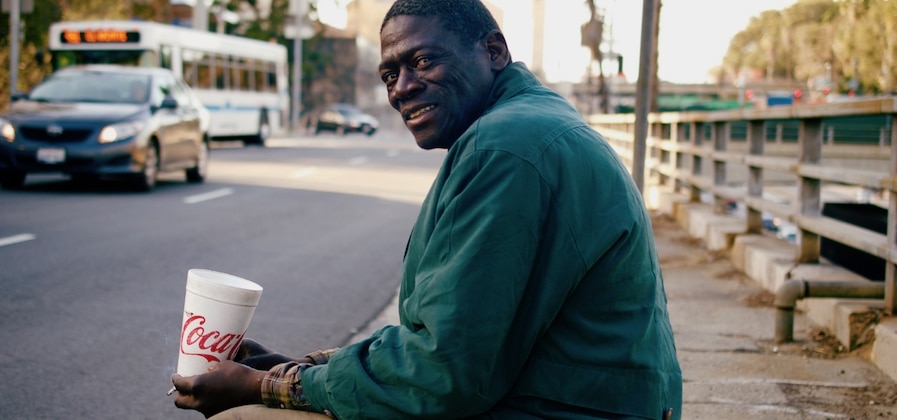
Image by Levi Clancy / CC BY-SA 4.0

« Previous Page
Next Page »

Primary Sidebar

sign up here

APPLY TO BE A PODCAST GUEST

More to See

(no title)

February 22, 2025

Bellevue Montgomery

February 11, 2025

West Lombard

January 28, 2025

FOLLOW

  • LinkedIn
  • RSS

Tag Cloud

Affordable housing Climate Community Creative economy Crowdfunding Design Development Environment Equity Finance FinTech Gentrification Impact Investing Mobility Offering Opportunity zones PropTech Technology Visionary Zoning

Footer

©rethinkrealestateforgood.co. The information contained on this website is for general information purposes only. Nothing on this website is intended as investment, legal, tax or accounting strategy or advice, or constitutes an offer to sell, solicit or buy securities.
 
Any projections discussed or made may not be accurate and do not guarantee a specific outcome. All projections or investments are subject to risk due to uncertainty and change, including the risk of loss, and past performance is not indicative of future results. You should make independent decisions and seek independent advice regarding investments or strategies mentioned on this website.

Recent

  • The Mulberry
  • Mount Vernon Plaza
  • The Seven
  • Real estate and women.
  • Oculis Domes.

Search

Categories

Climate Community Crowdfunding Development Equity Fintech Investing Mobility Proptech Visionary


Copyright © 2026 · Magazine Pro on Genesis Framework · WordPress · Log in