• Skip to main content
  • Skip to secondary menu
  • Skip to primary sidebar
  • Skip to footer
  • Home
  • About Us
  • Say hello
Rethink Real Estate. For Good.

Rethink Real Estate. For Good.

  • Podcast
  • Posts
  • In the news
  • Speaking and media
    • About Eve
    • Speaking requests
    • Speaking engagements
    • Press kit
  • Investment opportunities

Community

Jumpstart desegregation.

April 26, 2021

The United States has an ugly history of displacement, exclusion, and segregation which continues to this day. Blacks continue to be denied the same opportunities that are given to whites for affordable rental, home ownership and wealth building. While many may believe that this state of affairs somehow occurred organically, the truth is that Federal, state, and local policies have all led to that displacement and segregation. Those policies continue to undermine the prosperity of minorities, stripping them of wealth and financial stability.

Just a few of the policies that led to catastrophic outcomes for Blacks were:

  • Policies to create outdoor space. In the 1850s thousands of predominantly Black residents were displaced to create Central Park in New York city. And in Atlanta, the oldest subsidized affordable housing project, where 30,000 mostly Black families lived, became Centennial Olympic Park.
  • Policies that discouraged racially diverse neighborhoods. The Federal Housing Administration justified housing discrimination by asserting that if Blacks bought property in white neighborhoods, then insurance values would fall causing loans to be at risk. There was no basis for this rationale.
  • Policies that ‘red-lined’ neighborhoods.  The New Deal, established by Franklin D. Roosevelt to stimulate the economy after the Great Depression, offered home-buying aid to Americans. But color-coded maps of every metropolitan area in the country determined where it was “safe” to insure mortgages. Areas where Blacks lived were ‘red-lined’ to indicate that they were too risky.
  • Policies that encouraged ‘white flight’. Post World War II, the Federal Housing Administration and Veterans Administrations focused on moving the entire white working-class and lower middle-class populations out of urban areas and into single family homes in all-white neighborhoods. This was the beginning of suburbanization and these suburbs came to ring all American cities. And it led to the devaluation of inner city neighborhoods where Blacks lived for many decades.

More recently there has been a shift in housing tastes when life in suburbia, with its gridlocked highways for the morning and evening commute, became less appealing. And so a shift in housing demand has emerged, changing the landscape once again. Wealthy and middle-class people began moving back into urban areas, leading to the redevelopment of previously blighted urban neighborhoods. This revitalization and resulting gentrification exacerbated racial inequality and caused further displacement as Blacks, unable to afford newly gentrified neighborhoods, had to leave once again.

In his book, ‘The Color of Law: A Forgotten History of How Our Government Segregated America’, Richard Rothstein explores the history of housing segregation in the United States. He argues that each of these policies violated the Constitution. Although he recognizes the efforts being made to remedy the situation, he believes we need a more coordinated, new civil rights movement. One focused on housing segregation, to jumpstart desegregation in a meaningful way.

Listen to my conversation with Richard.

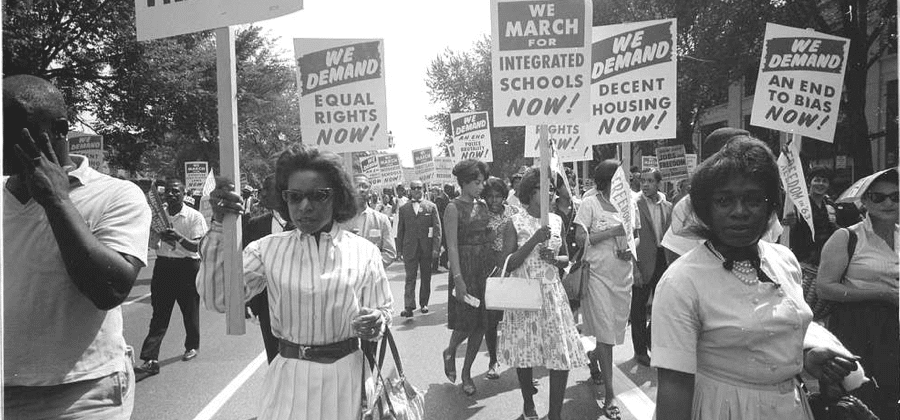
Civil Rights March on Washington D.C. from Library of Congress, Public Domain

Women building collective muscle.

April 14, 2021

Libby Seifel‘s life is built around big causes. She has spent much of it professionally focused on affordable housing and much of it personally focused on women. Libby’s interest in housing came about when she lived through gentrification in her own neighborhood in Boston. There she saw her own godmother pushed out of her apartment into distressed public housing, and that convinced her that mixed-income housing was a far better solution. She went on to get degrees at MIT in Planning and Urban Studies and became the founding Executive Director of Tent City Corporation, a nonprofit developer of a ULI (Urban Land Institute) award winning, mixed-income housing development in downtown Boston.

Since the 1990s, Libby has run her own consulting firm, advising public and private clients on projects where sustainability and social equity are pursued in equal measure alongside strong financial returns. And she has worked in every part of the Bay Area: Transbay Transit District, Mission Bay, Mission Rock and Hunters Point Shipyard, as well as South San Francisco’s Oyster Point, Mountain View’s North Bayshore and Novato’s Hamilton Field.

When she started out in the 1980s, she says mixed-income housing and sustainable development were considered somewhat of an “oddball” concept. Now she says, they’re widely accepted as good planning. Libby is also the founder of the Women’s Development Collaborative – a network of women leaders doing transformative real estate developments. After more than 30 years in the industry, Libby notes that she is no longer the only woman in the room, and that some of the biggest new projects in the Bay Area are being driven by women.

Insights and Inspirations

  • Libby hopes that Women’s Development Collaborative will become a place where women build collective muscle.
  • If you want change, you need to become involved, or start the process yourself.
  • It can’t be said enough. Women need to support women in every field. Things have gotten better, but we are not there yet. And education and the sharing of our learned experiences with other women is critical.

Information and Links

  • The Women’s Development Collaborative is a network of women leaders who inspire, promote and support women who lead transformative real estate developments.
  • The ULI San Francisco Housing the Bay is a multi-year initiative to find new solutions to overcome the Bay Area’s housing challenges and ensure more people have access to housing that is safe, healthy, sustainable and affordable.
  • Two amazing projects Libby has worked on: The redevelopment of Mission Bay and the Transbay Transit Center District, which have both created mixed income, transit oriented neighborhoods in the heart of San Francisco.
Read the podcast transcript here

Eve Picker: [00:00:15] Hi there, thanks for joining me on Rethink Real Estate. I’m on a mission to make real estate work for everyone. Real estate can help to solve climate change, can house people affordably, can create beautiful streetscapes, unify neighborhoods and enliven cities. So I’m on a journey to find the most creative thinkers and doers out there. I’m not the only one who wants to rethink real estate. You can learn more about me at EvePicker.com or you can find me at SmallChange.co, a real estate crowdfunding platform with impact real estate investment opportunities open for investment right now. And if you want to support this podcast, join me at Patreon.com/rethinkrealestate, where there are special opportunities for my friends and followers.

Eve: [00:01:29] Today, I’m talking with Libby Seifel. Libby’s life is built around big causes. She has spent much of it professionally focused on affordable housing and much of it personally focused on women. Libby’s interest in housing came about when she lived through gentrification in her own neighborhood in Boston. There she saw her own godmother pushed out of her apartment into distressed public housing, and that convinced her that mixed income housing was a far better solution. She went on to get degrees at MIT in Planning and Urban Studies and became the founding Executive Director of Tent City Corporation, a non-profit developer of a ULI, award winning, mixed income housing development in downtown Boston. At that time, mixed income housing and sustainable development were considered somewhat of an oddball concept, says Libby. Now they’re widely accepted as good planning. And then she founded her own firm. She was the only woman in the room when she started her career. Today, that has changed a little, but not nearly enough for Libby, who has founded a quickly growing women’s development collaborative to support women developers. I’m a member of the Women’s Development Collaborative, so I’ve seen firsthand the strength of Libby’s focus. If you’d like to join me in my quest to rethink real estate, there are two simple things you can do. Share this podcast or go to Patreon.com/rethinkrealestate to learn about special opportunities for my friends and followers and subscribe, if you can.

Eve: [00:03:32] Libby, I’m really happy to talk with you today. Thanks for joining me.

Libby Seifel: [00:03:38] Thank you.

Eve: [00:03:39] So I’ve known you for quite some time. I was trying to remember how long that was, but I just couldn’t. It’s been a long time. But still, I was really surprised when I read your resume and you’ve done so much and there’s probably more that you haven’t talked about, which I’m hoping we’re going to talk about today. But I wanted to start with a quote I read that you were going to be a doctor and and I’m wondering what happened.

Libby: [00:04:07] That’s interesting story. So, I think what happened was that I got really, really interested in urban planning and I was actually talking with somebody about this recently that I had the great fortune of having Lewis Mumford as one of my professors, my freshman year in college. And I was coincidentally reading The City and History, which is his famous book. And he was such a wonderful storyteller and really conveyor of what was going on in the earlier part of the 20th century with respect to thinking about what cities could be and how they could be. And so he looked at it both historically and as a visionary, and he was very dedicated to sustainable development. About having development that was holistic, where people could walk to, walk in their communities to the grocery store where they could live together.

Eve: [00:05:16] And that was before this was the thing, right?

Libby: [00:05:18] This was before it was a thing. This was, yeah, it was. I mean, there’s, we can talk about the criticism and there are pieces about the movement that he was part of that was very white focused. So I want to just say that up front. And I understand and and that but this sort of it was kind of the city beautiful, but it was really more country beautiful movement. He lived for it pretty much his whole life after he moved out of New York City, in Amenia, New York, which is an absolutely beautiful part of New York. And if you’ve never driven up the Hudson Valley, it is absolutely exquisite. And Amenia is off the Hudson Valley inland. And it’s a beautiful farming community near the border of Connecticut and on, coincidentally, a rail line that goes into New York City.

Eve: [00:06:11] I’ve been on that train. It’s fabulous.

Libby: [00:06:13] You’ve been on that train. So you know what I’m what I’m talking about. So, and my uncle’s an architect, so my mother never wanted me to be an architect or an urban planner, which is what I am now. She wanted me to be a doctor and specifically she wanted me to be an ophthalmologist. So I was like, no, but I love visual arts and I love visual science. And I actually studied that. So alongside of studying urban planning, I studied neurophysiology and urban, just a lot of urban studies. And and I prepared to be a doctor. And I finally convinced my mom that if I got a master’s in urban planning alongside of my undergraduate degree, I’d be so much more competitive to be a doctor. So, so that’s the funny story. But on a more serious note, I was able to study with Dr. Land at Polaroid on visual art and visual science. And I have a very deep appreciation for the arts and colors in particular. And I like the idea of creating a colorful world where we all can participate and be part of this. You know, it’s the utopic view, but my life is really dedicated to making the world a better place. That’s what I try to do.

Eve: [00:07:41] That’s wonderful.

Libby: [00:07:41] And I think Lewis Mumford and people like him are just very inspirational to us in this field.

Eve: [00:07:50] You were lucky.

Libby: [00:07:50] And I wouldn’t really be here without him. And then actually the other clincher to all of this was that – it’s a story that kind of leads into my career – is that I moved to Boston, I went to school in Cambridge at MIT, and I moved to Boston with my college roommate, who’s now still a very good friend of mine and a real estate developer and investor. And we moved into the South End neighborhood of Boston, which is a really incredible neighborhood now. And then when we moved in there, it was a neighborhood very much in transition and it was a neighborhood very affected by urban renewal. And these were the times when wholesale displacement of people occurred, where they were moved out of their homes. Where a vibrant neighborhood that had been very colorful and dynamic, was changed through urban renewal, and the community had been promised development as part of their protests against urban renewal. They had formed a tent city in protest to say we did not want to be moved. And a group of folks reenacted this tent city event, this demonstration, and I was coincidentally in college at the time and was at a studio that was dedicated to working on studying this site called Tent City, which was the site where this protest had occurred. And so I took the studio and I was forever transformed. I got very involved with the community. I was living there. We really wanted to make this housing happen. We wanted it as mixed income housing. We wanted it to be a resource for the people who have been displaced in the community. And we wanted it to be a place where people of all income levels could live together in a great, absolutely great site in Boston, right next to that Back Bay Station, which ultimately got built. I mean, that’s part of my whole history, but ultimately got built with that vision and that dedication of that group of people totally transformed my life.

Eve: [00:10:14] And that also got a ULI award, right?

Libby: [00:10:17] It did. It did. It got a ULI award. And it is great to visit. It’s right next to Copley Place. There’s a whole story about Copley Place. We could talk about later if you wanted, but it’s next door to Copley Place. It’s next door to Back Bay Station, which is where the Amtrak station is and the light rail. And it’s also next door to the moved underground railway that used to be an elevated railway, a streetcar through Boston, through the South End in a southern part of the South End which was then put into an underground tunnel. And on top of it is the most amazing set of community gardens.

Eve: [00:10:57] Yes, I’ve been in them. They’re stunning.

Libby: [00:10:58] You’ve been in them. And the walkway…

Eve: [00:11:01] That was the Big Dig, right?

Libby: [00:11:02] Yeah, well, it’s not the Big Dig, but the Big Dig is amazing. The Big Dig is over by the waterfront of Boston. This is actually in the Back Bay, South End, part of Boston. It’s the orange line. And you wouldn’t know because you’re going underneath it if you’re riding it. But it is on top of it. There are these amazing community gardens.

Eve: [00:11:25] The gardens are gorgeous.

Libby: [00:11:27] Yeah.

Eve: [00:11:27] Including, you know, community vegetable gardens.

Libby: [00:11:31] Exactly and each neighborhood block actually participated in the design of each garden and walkway at the end of their block. Another mentor and person that got me into this was Ken Kirkmeyer, who lived in the South End, who was the President of Tent City Task Force. And he was actually the project manager that spearheaded this project and worked with the neighbors to create this marvelous place to walk the South End corridor.

Eve: [00:12:04] So Boston and all that really formed your professional path. And where did that lead you? Where are you now?

Libby: [00:12:12] So I now live in San Francisco, across the country.

Eve: [00:12:18] Very different.

Libby: [00:12:20] Yes. But I think sister cities. We’re on the water. We have a long history of progressive politics. Though, it’s quite different out here than it is in Boston and a very, very strong set of values when it comes to preserving history, to recognize the importance of neighborhoods and community and thoughtfulness about design. A lot of architects and designers. In fact, when I when I was making the decision to leave Boston and come out here, I can’t tell you how many people told me not to come because there’s way too many planners out here, urban planners and architects and real estate economists. And it was going to be very hard to move, unfortunately, chose the time to move, which was one of the recessionary times we had across the industry. But it all worked out and I love it here. It’s a beautiful city and the Bay Area is an absolutely lovely place to be. And there are so many challenges and I thrive on challenges. So there are so many urban challenges in the Bay Area to work on.

Eve: [00:13:34] What sort of challenges? What do you work on?

Libby: [00:13:36] Well, first, you know, like in Boston, but even worse, the cost of housing is just phenomenal out here and out of reach of so many people. And it exacerbates the haves and the have nots. So that’s a big challenge that I work on a lot, both as a volunteer and in my profession. It’s also that we have we have to be very conscious of sea level rise, much of the Bay area is on water, as it makes sense, we’re on the bay. We’re on the ocean, San Francisco straddles the Pacific Ocean and the San Francisco Bay. And so, we’re virtually surrounded by water on three sides. And we have the possibility of our downtown in San Francisco being underwater in the not-too-distant future. The history of San Francisco, like Boston, there’s a lot of the city is on fill. We have natural hills that we took down, many of them to build fill, and we filled in a lot of the areas that when you come to visit San Francisco and you’re walking around that land used to be either marshland or ocean, very deep ocean or bay. So actually bay, not ocean, but through the ocean, water intrudes. So that’s a big challenge. We also have earthquakes. Just to keep things interesting. So that shakes us up every once in a while. And we’re at risk of an earthquake, particularly in the East Bay, happening again. So we have to be very conscious of resilience in so many ways. So that makes our our life challenging. And we have we have it’s an absolute blessing and a curse. As many people say, we have the most amazing set of folks in technology. I mean, many of whom are M.I.T. alums and Stanford alums who have formed this tech corridor and biotech corridor that we have all through the through the Bay Area Peninsula and Silicon Valley, which is absolutely amazing and makes our economy incredibly strong and robust. And California’s incredibly strong and robust. But alongside of that, it ends up pushing up the price of land and the price of development so it can make it very hard for small businesses to be successful. Sometimes small retail businesses, the rents can get very expensive. That can make it more difficult for them. So, we have a lot of challenges.

Eve: [00:16:18] So how does that like, how does that color the work that you do? You now have your own company, right? And you do consulting work? And is it mostly around affordable housing or what challenges do you confront in that work?

Libby: [00:16:33] Great question. So, I do a lot more than affordable housing work, but my passion and heart is around affordable housing. I just want to say on one of my volunteer efforts, because I want people to know about this, I’m the co-chair of the Utilized San Francisco Housing the Bay Steering Committee, and we are dedicated to promoting and producing more housing in the Bay Area through our work. And we have an upcoming summit that’s happening June 2nd, 3rd and 4th. This will be our fourth summit that we’ve had where we bring together a very diverse group of speakers from around the world and the United States to talk about the Bay Area’s housing situation, but also more generally, the housing situation across the United States and what are great strategies and tools and best practices that we can use to improve our housing situation. Which includes building all types of housing for all types of people. It’s very invigorating to be part of the housing the Bay effort. And this summit always inspires me every year to do more. And in my practice, I work with a lot of cities and developers that are dedicated to building affordable housing and mixed income housing, which is even tougher to do. Tent City was able to hit the timing right with the funding and the commitment by the city to make that mixed income housing development happen. And it had a unique location, but it’s been it’s very difficult to get the funding together and the financing that is necessary to do mixed income housing at scale. We do have a strong inclusionary housing set of regulations, but here in many cities in the Bay Area, so we do a lot of work and inclusionary housing, which means that a portion of housing is restricted for occupancy or dedicated to occupancy by persons of usually very low, low and moderate income, which is HUD speak is federal housing agency speak for people that earn typically less than the rest of us or about the same.

Eve: [00:19:05] Critical for the function of the city, right?

Libby: [00:19:08]  Right.

Eve: [00:19:09] Often service workers and …

Libby: [00:19:11] Essential workers, yep.

Eve: [00:19:12] And people who keep places going.

Libby: [00:19:15] Yep, exactly.

Eve: [00:19:17] If they live too far out, then those places are not going to work anymore.

Libby: [00:19:20] Exactly. Exactly. And trying to figure out how to do this with the private market. So I work a lot on the private market side. I’m the number cruncher behind the scenes and the strategist trying to work on these projects. And so, we’re constantly trying to thread the needle to figure out how can we keep the private market still building housing while including housing for more people of a greater and more diverse set of backgrounds and incomes?

Eve: [00:19:54] Yeah, it’s a really big challenge.

Libby: [00:19:58] It’s really big.

Eve: [00:20:00] Well, I want to shift gears a little bit, because I also know about another one of your passions, which is also very close to my heart. And that is how to increase the visibility of women in the real estate industry, in particular real estate developers. And so I’ve kind of watched you over the years put together a little group that’s become the Women’s Development Collaborative, and it isn’t so little anymore. And I wanted to talk about that. Where did this come from? Why did you start it?

Libby: [00:20:35] That’s a great question. I guess I mentioned the Urban Land Institute or ULI earlier, and I’ve been a member of ULI now for, realizing it’s been three decades or more. It’s an organization that’s dedicated to advancing development across the world, globally, and since I’ve been involved for so many years. When I first got involved, I was often the youngest person in the room and many of these national conferences, and I was often the only woman or one of the few women. And it was very important to me to find, I guess, soul sisters or wise women in this industry. It had been a struggle in my career at different I know, right, to be the only woman. And it was definitely…

Eve: [00:21:31] I was the only woman developer in Pittsburgh for quite a while. So, I …

Libby: [00:21:35] Yeah. You were? Well, and Eve, I don’t know if you remember this, but how we met was we were at a conference for the Women Presidents Organization in San Francisco.

Eve: [00:21:47] Yes.

Libby: [00:21:47] Many, many years ago, and you and I both were involved in that. And that’s an organization that’s dedicated to women entrepreneurs and building capacity. It’s a peer-based group. It actually also inspired the Women’s Development Collaborative. So it’s worth talking about for a minute in case anybody on the line, a woman entrepreneur, it’s a great group.

Eve: [00:22:09] It’s a great group.

Libby: [00:22:09] But what was incredibly funny was there’s this entire ballroom, one of San Francisco’s largest ballrooms, with tables all across it on a Saturday morning with signs on it of like, you know, are you in consumer affairs? Are you in you know? I don’t know. Do you do retail product, apparel, whatever? But all across the room, everything. There was one table in real estate, and it was at the table. You and I, we were the only ones at the table.

Eve: [00:22:40] And it’s really not a whole lot different today, Libby. What really scares me.

Libby: [00:22:49] It’s true. It’s true. So, I mean, it’s better, we’re working very hard at ULI. So the origin story of the Women’s Development Collaborative goes back to these times. And ULI, which still often continue but have gotten better because a number of women that were part of this informal network of wise women, soul sisters that came together to meet on a regular basis at the spring and fall meetings of ULI, which are national meetings when we get together across the country. And we would meet, whether it was for dinner or breakfast or whatever, and we would share ideas about development and best practices and what we were doing. And one of my mentors, she said to me, well, you need to we need to do something more than this. Like these women’s receptions in these gatherings are fine, but we need to actually make a difference. We need to improve leadership. And so a number of us got together and helped form what’s now called the Women’s Leadership Initiative, or WLI within ULI, which is dedicated to advancing women’s leadership in the entire real estate industry. And that’s been phenomenal and that’s gone on since 2012. And again, anyone in the real estate industry should follow that because WLI is wonderful. But at the same time, there we had this niche group that was really focused on development and we recognize that development itself, which is part of the entire landscape of real estate, that you needed support and nurturing and showcasing. And so we started to alongside of the WLI activities, I continue to organize with a lot of other women, events around this spring and fall meetings where we would showcase women developers. We’d go tour their projects, we hear from them, we learn from them. And it’s just been so inspiring to see these projects.

Eve: [00:25:02] It really has been.

Libby: [00:25:03] And then we had to go virtual because there was no Toronto meeting. And so now we’re online. So, you can find us at the Women’s Development Collaborative online. And we are really trying to build our presence across the United States and Canada. We have a number of women involved from Canada to really promote and advance women’s success, leadership, innovation and collaboration and building transformative developments.

Eve: [00:25:35] I need to tell you, like I I was also a member of ULI for many years, and then I stopped my membership because I really didn’t feel like I belonged there, for a couple of reasons. One was the whole woman thing. But also, I was working on quirky, small interstitial urban projects. And when I was a member of ULI just there was there was nothing there was no one talking about that. So I stopped attending. And actually, when you started inviting me to the Women’s Development Collaborative meetings was when I decided to join again because I finally felt like there was sort of a space emerging for developers like myself. That and the small-scale development group, which has been also pretty wonderful to see emerge. But I think…

Libby: [00:26:28] Yes, yes.

Eve: [00:26:29] Times are very different, but it is incredibly inspiring what you’re doing and you have a lot of stick-to-it-ness. And it’s also very frustrating to see how slowly things have changed. I mean, what do you think about that, for women? It’s very slow.

Libby: [00:26:43] Yeah, it is really slow, but it is it is getting better bit by bit. You know, it is, I was looking at some data and it is it is improving, but it is very, very hard. And it’s I think that, you know, I, I think that a couple of things that we have to think about and think about deeply, which is that in addition particularly to the history of African-Americans in the United States and their inability to first secure and hold property or even keep property right after the civil war. Property was actually stolen away from them, it was often stolen away back from Native Americans as well. So, we have had a history in our country of not respecting and honoring property for persons of color. But at the same time, when we think about the history and it’s not just of the United States it’s of the world, women were not allowed to own property. And it also varied state by state. And I believe it still does. And a lot of states that there are different rules that make it very hard for women to hold property or to transact. So it’s not just discrimination in the sense of how you show up. Like if you’re a woman, you’re obviously different as you enter a room, but it’s also the rules by which we play. So getting through the those rules…

Eve: [00:28:21] Not just the rules, but the culture that those rules perpetuate,

Libby: [00:28:25] Yeah, and the culture.

Eve: [00:28:25] Because even if there are no rules there, you know, I have to say I, I own a small portfolio of buildings and I have two female bankers to thank for it. Without them, I would not own that portfolio of buildings, which is really an extraordinary thing to say, right?

Libby: [00:28:44] It is. It is. And, you know, that’s part of what WDC is trying to work on. I mean, we have we have a lot of ambitions and it’s and it’s hard to even figure out what to prioritize because there’s so many challenges. But alongside of really promoting women developers, we want to expand women in the workforce and the development supply chain for developments because of exactly what you said, that we need more women bankers. We need more women equity investors. I mean, that’s something we want to talk about, right? That that women just aren’t investing as much as men.

Eve: [00:29:24] Oh yeah, women investors. Why do women not invest? I don’t understand.

Libby: [00:29:32] Well, and I think it’s I think there’s a history of this. Like I think there’s an education process. I mean, that’s partly what WDC is a big part of our mission is to educate. But I’m now recognizing it’s not just educating and building up women developers like educating ourselves about each other or, you know, the service providers, introducing them to women developers. It’s also about educating the broader community. I was listening to your podcast with Stephanie Gripne and I absolutely loved the conversation that you had about the fact that in essence, you know, part of this is a perception issue that if we think about it, everyone is an investor, as Stephanie said. She said when we make a choice to buy, she used buy milk. That was her analogy. When we buy milk, we make a conscious choice whether we’re realizing that it’s conscious or not, that we’re using milk. We’re choosing a type of milk that’s sold by a certain company. And we may be choosing it based on price, but we may be choosing it based on the fact that we recognize the farms or the farms where it came from. Or in these days, we might be making a choice not to buy cow milk. We might be buying almond milk or soy milk, and we may be looking at how that was grown. So we have to, I think women are the biggest consumers in our country. So struck by this, after I listened to that podcast, that we are the ones that we lead the buying. If you look at all the consumer surveys, women are the buyers in our society. We are the retail shoppers. We love to shop. We do comparison shopping, et cetera, et cetera. We need to learn as women how to do the same thing with real estate investment. We need to get educated about it, it’s it’s a much different world than buying milk, but at the same time it is it is how the milk is, where the milk sits right in our society, these buildings.

Eve: [00:31:49] What’s interesting to me, if I think about researching where milk comes from, so I can make an informed decision, that makes my brain hurt compared to understanding a real estate project and what I might invest in. So I think it’s partly what you’re trained in, what you learn, how you’re educated. It’s not I don’t think it’s harder to do. It’s just different.

Libby: [00:32:12] Yeah, yeah, yeah. No, you’re absolutely right. It’s it’s not harder to do. It’s just different. But we’re not educated in it. I mean, I don’t know how you feel about this, but I never learned really what I do today. Like when I was in school, they didn’t teach me what I what I practice right now. I learned real estate by reading books, honestly.

Eve: [00:32:39] Oh. How did I learn Securities Law? Yes, yeah.

Libby: [00:32:46] Yeah, exactly. Like reading books so and getting educated in it. And now I mean I’m grateful. I’m able to teach, I’m teaching now at UC Berkeley. I’m a lecturer part time, but I just absolutely love being able to teach. And what I recognize is I teach public private partnerships, which is a lot of my work is how to get the public in the private sector to work together, whether it’s on a deal that the public sector is sponsoring or whether it’s just a deal a private developer wants to do. And they need the support of the public sector, which is pretty much every project ever.

Eve: [00:33:24] Yes, that’s right.

Libby: [00:33:26] Especially in the Bay Area. If you don’t have public support, you’re not going to get your project. And what I recognize is there are so there are so few classes that actually teach people how to do this and how to do it well or how to do real estate development and how to do it well. Luckily, ULI has offers a lot. And as you said, the you know, the small scale development council, that they focus on that and have some great trainings through ULI. But it is not something that is taught to the average person. It’s not like we go to school and we learn about how buildings are built.

Eve: [00:34:03] Right.

Libby: [00:34:03] And so I think we have to start to educate the general population and in our case with the women’s development, collaborative women in particular, and including women in our field, because what I’m even finding out is through the WDC, I’ve been asking women like, do you invest in real estate? And the answer is often is pretty much no, we don’t we don’t know. We don’t know how to do it. We don’t understand it. So that’s a mission for someone in our and where…

Eve: [00:34:39] I can sense a class coming along that you and I can conduct.

Libby: [00:34:43] Exactly. I’m so excited about this. I really want to do this, Eve this spring or summer. I want to do a class in how to invest in real estate and why. It’s like how to invest in real estate and why should we care and why should we do it. And I think it’s critical.

Eve: [00:35:01] Yeah, it’s also something else about real estate, you know, that I think over the last few decades, everyone’s been trained to think about quick returns. And real estate isn’t that. You just have to think about the long haul.

Libby: [00:35:19] Right.

Eve: [00:35:20] And I’m always stunned when I hear from people saying I invested there and they’re going to give me my money back in six months. Can I do that in real estate? And I’m like, no, what can you do in six months in real estate? It’s, it’s a different thought process.

Libby: [00:35:38] It’s absolutely a different thought process. And I also think that the real estate is much more long term in the investment horizon that many capital providers, meaning institutional and private investment capital, which is what fuels a lot of real estate development in the United States and across the world. It is usually focused on five-to-seven-year time horizons. And in terms of equity investment, a lot of the money that is coming in. So, their preference is that they can make their money back, they can get their money back and a return within a five-to-seven-year horizon. And that puts you on the one hand, it puts a certain discipline in the market, but it also means that it goes at counter purposes for, you know, the idea of patient capital, because buildings are they’re going to I mean, if we build them well, they should last for a very long time, if not forever, like they do in Europe. And some buildings have a lifetime. Kind of you think at a minimum of 50 years, if we’re doing a good job, that should be the minimum life and hopefully it’s much longer than that. So the time horizons have to be much longer. But as you said, you know, in many consumer markets, it’s a much shorter time horizon, six months or a year. It is just not it’s not realistic in real estate.

Eve: [00:37:15] Tell me, how much has WDC grown since you started it? How many members how many of your meetings and what do you do now that it’s covid-19.

Libby: [00:37:28] Right. Right. So so first of all, we are very much still a start-up organization. We’re reaching out to anyone that’s interested in joining, please Google Women’s Development Collaborative and reach out. Our organization has about I guess we have 400 to 500 women on our email list and our LinkedIn group now I think it’s around 300 people. So it’s still very much a growing group. Our meetings are intentionally intimate and small, usually 30 to 40, maybe 50 people, 50 women. We are intentionally keeping this focused on women. We are trying to think about how do we bring in men as allies, because that’s critical, particularly as we start to think about some of our next goals of what we want to do as an organization. But the goal of WDC is to really build our capacity and to create a safe space for us to as women, to be able to provide advice and guidance to other women and to be open about our deals and what we’re what we’re experiencing and to provide advice. So that’s the scale we’re at. And I think to myself, how big do we really want to be? Do we want to be another ULI? What is the scale that we really want to be at, and I and I think it’s a, it’s a question that we have to ponder as the group of us, because I think we cherish having the ability to know one another and to get to know one another. So, we want to keep that part of WDC alive because it’s so important to all of us.

Eve: [00:39:22] So this year, programming is changed because of the, at least last year, because of the pandemic.

Libby: [00:39:27] Yes.

Eve: [00:39:28] And I thought as I watched it, it was sort of an amazing opportunity. To move this group along a bit fast and not be reliant on ULI meetings twice a year and the people who can afford to show up there.

Libby: [00:39:42] Yes, yes, that’s true. It is. That is one thing about being online that we can provide better access to, just across the country and people can access it. We will definitely keep an online program, even if we could hopefully go back to meeting in person, maybe even as early as this fall in Chicago at ULI. But what we what we have right now are a series of programs that we’ve been evolving. You do such an amazing job at Small Change in branding. I’ve learned so much from you about this.

Eve: [00:40:23] Thank you.

Libby: [00:40:24] And really, it’s incredible. And one of the programs that we have very much inspired by you and this podcast, though I didn’t even know when I when I was first thinking about it, I didn’t even realize you were on this podcast quest. And then when I started talking with you, you actually agreed to be the first person to participate. And it’s called In Conversation with Developer. So, it was in conversation with the developer, Eve Picker. And we’ve done a series of these. And each conversation is just so fascinating like this. Your podcast about how did the women make the decisions they did to be developers, who has provided them support along their way, etc. So those have been really, really inspiring. We also have these project forums that are dedicated to helping women developer and emerging developer present the challenges that she’s facing regarding her development project and receive advice from a panel of seasoned professionals to help her overcome these challenges. And thankfully, Eve, you also participated on one of those project forums as well, were you able to be part of a panel to provide advice? We call it kind of instead of a shark tank. It’s a guppy tank. It’s a place it’s a safe space where people can feel comfortable and really get honest advice about how to move forward. So, we’ve had several of those. We’ve we’re doing three this year. We’ve had three already last year in the year before. So, we’re building our program there. So, if anyone out there is an emerging developer, that’s an option for you to consider. And then I’m just going to do one other program. We have a number of others. But the other one I want to talk about is the investment forum, because this is where tying to our discussion earlier, we are really trying to build our collective muscle to invest in and advance successful development partnerships. And that investment forum is featuring conversations with women developers and investors about how deals are done. And it’s actually a learning experience for developers and potential investors. So that’s what we’re dedicated on. And that’s the program where I really want us to collaborate on thinking about how. How can we get more women in the investment world?

Eve: [00:43:03] Yes, that’s critical. So what are some potential strategies you’re thinking about for promoting investment or encouraging women to invest?

Libby: [00:43:16] So we’ve been working on an investment framework that’s a gender lens framework for how we could evaluate investments in women led developments. And that’s been a process. We’ve been very informed by the Small Change metrics and thinking about how crowdfunding could be a potential tool to encourage investment in women led developments. But we also realized that we needed to define what we meant by women led development, and we needed to think about the whole ecosystem, like I talked about earlier, about all the women that could contribute to it. So we’re focusing right now on WDC taking on four dimensions of activities to empower women developers to expand economic opportunity, which means expanding women in the workforce and the development supply chain, as we talked about earlier, expanding access to capital. So building on the same theme. So, both getting women, individual women investors to invest in real estate, but also just to promote investment more broadly from men and women and institutional corporations in development. And then we want to make sure that these developments benefit women and communities, and so we’ve come up with a set of principles and you and I speak. There’s a lot of 10 principles books. So, we have 10 principles of transformative development that benefit women and communities. And we’re using these four criteria, these four activities, as a way to measure women developers and their development to provide recommendations. So the screening process to provide recommendations to women and to men about developments that they may invest in. So, four lenses are women in leadership in development, women in the supply chain and workforce, women capital providers and benefiting women and communities. And out of these criteria, we developed 10 questions. We spent a long time actually refining these 10 questions that really it was more like 15. We refined it went through a number of rounds. And what’s really been great is we had this whole community of women developers who’ve beta tested this scoring process a lot. And you were one of them. So, thank you so much, Eve.

Eve: [00:45:53] It’s great.

Libby: [00:45:54] Women from around the country and we learned a lot through this beta testing. And we think we have an investment framework that can work alongside of the Small Change index and other crowdfunding platform.

Eve: [00:46:09] And other ESG indices, right? Like…

Libby: [00:46:13] Yes.

Eve: [00:46:13] It’s a very particular woman-centric real estate lens. It’s great.

Libby: [00:46:20] Yeah. And so what we’re hoping to do, our next step is that we are really trying to work on the strategies that are going to enable us as a small organization, you know, where can we make impact first and how can we make impact first? But our hope is to actually encourage some individual investment and crowdfunding investment in specific real estate developments that will be placed through this investment framework lens. That’s our first goal.

Eve: [00:46:52] It’s pretty big.

Libby: [00:46:54] It’s a big goal. It’s a really big goal.

Eve: [00:46:56] It’s a very big goal. So, I have to wrap up and I just have one final question for you, and that is, what are you most excited about right now?

Libby: [00:47:08] It’s so many things that I’m working on, but I think what I’m most excited about with WDC and my work generally is just the number of wonderful young and emerging women developers and and women who want to be developers. There is this community of women that are both really younger and older. It’s women who’ve been in their careers in real estate for a number of years. For example, a woman architect who’s decided that she wants to be a developer after having been leading her practice for a number of years and is actually her first project, is going to be building a building for herself and her community of professionals that she works with. So the building will be bigger than just her architectural practice. It will include others in it as well. And then younger women developers who are starting out, who are really interested in changing the world and in leading development companies. And it’s very exciting to talk to them and hear what they’re doing and how they’re going about it and trying to support them. We have another colleague that you and I know who is developing is working on a mixed use project in her community that is going to be transformative for that community, be a place where people can gather. And whereas she says one plus one can equal much more than that. And that’s Molly McCabe, who you’ve also interviewed here in your podcast.

Eve: [00:48:50] Yes.

Libby: [00:48:51] So I just thought that constantly inspires me to have to just have that sense that there is this community and this future of women in development that we can encourage and build upon, which is fabulous.

Eve: [00:49:06] Well, thank you so much for your time, Libby. I have really enjoyed our conversation and I’m going to be seeing a lot more of you.

Libby: [00:49:14] Yes, I’m looking forward to it. Thank you so much, Eve.

Eve: [00:49:32] That was Libby Seifel, Libby’s career has been one built from her heart. First, she worked on affordable housing concepts that were ground-breaking at the time, having witnessed firsthand how crushing gentrification and displacement can be. And now she is focused on the small number of women in the room. She has puzzled over the years, as have many of us, why there are so few women who take the leap into real estate investment and development. She intends for the Women’s Development Collaborative to be a safe place for women who are testing the waters to land. A place where they will be supported by their peers as they emerge as women developers. Please share this podcast so that more women learn about Libby and the Women’s Development Collaborative. You can find out more about this episode on the show notes page at EvePicker.com or you can find other episodes you might have missed or you can show your support at Patreon.com/rethinkrealestate, where you can learn about special opportunities for my friends and followers. A special thanks to David Allardice for his excellent editing of this podcast and original music. And thanks to you for spending your time with me today. We’ll talk again soon. But for now, this is Eve Picker signing off to go make some change.

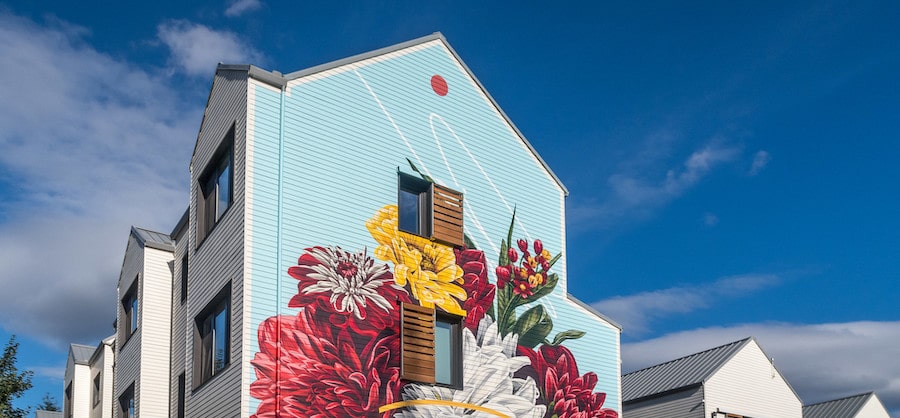
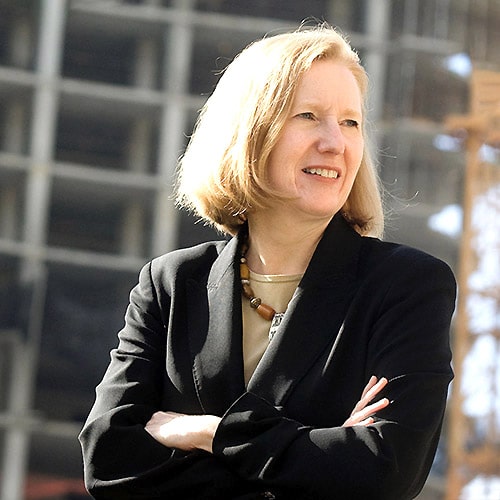
Image courtesy of Seifel Consulting/Libby Seifel

Between renting and home ownership.

March 29, 2021

Home ownership has traditionally been considered a part of the American dream, providing economic benefits such as wealth accumulation, access to credit and a built-in saving system. Home ownership also provides housing security and a connection to place. But many Americans may never own a home. The challenges for first-time home buyers, skewed worse for minorities, include coming up with a down-payment, overcoming regulatory burdens and obtaining adequate credit.

The alternative to home ownership is renting a house or apartment, which has a lower barrier to entry. Renting provides more flexibility by allowing tenants to move without penalty at the end of a lease. On the flip side, it decreases housing security. A landlord might suddenly decide to sell, causing tenants to have to vacate. Or gentrification could cause rents to increase until they become unaffordable. And saving money without the advantage of a mortgage can be daunting.

Max Levine’s organization, NICO (Neighborhood Investment Company), wants to create a new housing typology – something halfway between renting and home ownership. Modeled as a B-Corp, NICO has launched what they believe is the world’s first neighborhood REIT (real estate investment trust) in Echo Park, Los Angeles.

Echo Park, like many other neighborhoods today, has experienced a significant amount of gentrification. This means that many members of the community are excluded from home ownership. NICO wants to help them to build wealth and belonging and let them participate as primary financial stakeholders. Using a REIT structure and applying it at the local level allows every day people to have a financial stake in their own neighbourhood.

Shares in NICO sell for as little as $100 and stakeholders can choose to make either a one-time investment or a long-term commitment through monthly payments. Open to both locals and non-locals, the REIT offers two classes of shares with some additional benefits attached to those for local shareholders. In addition, each of the tenants in the buildings owned by NICO have been given $1,000 worth of shares. 

Listen in to my conversation with Max Levine as we unpack this interesting new model.

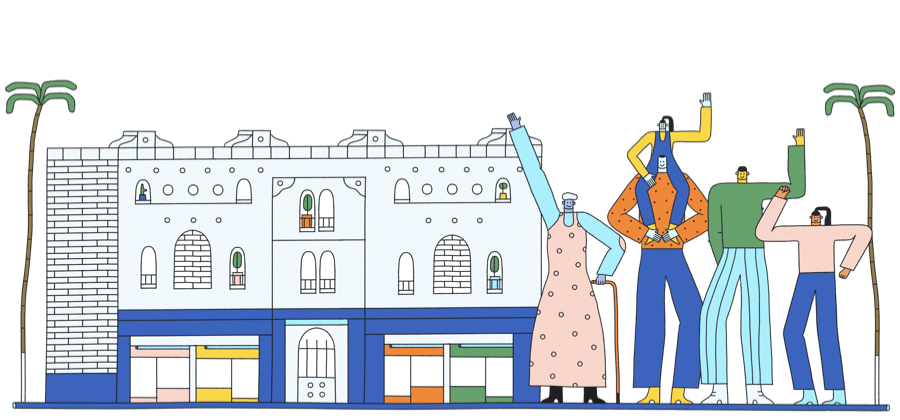
Image courtesy of Max Levine/NICO Benefit Corp.

The potential of unused space.

March 8, 2021

The US may be facing the most severe housing crisis in its history. Restrictive building regulations and zoning have pushed real estate prices out of reach for more and more Americans. The problem, which has been growing for the last fifty years, has been sharply accelerated by the pandemic.  

While some progress is being made, the rate of homelessness is outstripping policymaking to squash it. This problem requires more creative responses, both long-term and temporary, that recognize the unique characteristics of cities and their populations.

Vacant land 

Many cities have vacant and underutilized land. There’s a growing awareness that cities are the most sustainable places to live and this makes vacant lots in cities quite attractive. Often small in size, they can be well-suited for the building of small, affordable homes. Developers and architects are turning their attention to these lots in an effort to make an impact on housing affordability. Architects like Brian Gaudio, turned housing manufacturer, who launched his company Module to build efficient infill homes. Or Jonathan Tate, a New Orleans- based architect who focused on designing and building affordable housing on odd-shaped and forgotten lots. One of his projects, Starter Home Two, was built using crowdfunded equity raised through Small Change.

Adaptive reuse

Underutilized government offices, hotels and shuttered public schools might also help to solve the housing shortage. The pandemic has increased the inventory of buildings that now stand vacant. And some developers and investors are creatively acting upon the opportunity.

Repvblik, an LA development company, has built its practice around adaptive reuse since 2015. In Branson, Missouri, they have converted a Days Inn Hotel into affordable housing, turning 423 hotel rooms into 341 affordable multifamily units. Plato’s Cave now includes coworking spaces, meeting rooms, a gym, a communal kitchen and dining room for functions, a beach volleyball court, and free-to-use bicycles. The cost of conversion for this project was less than half of the cost of building a new property. Starcity, a San Francisco-based company, is also converting defunct and underused commercial and hospitality spaces. And ASK Studio, an architectural firm, has converted an 1888 local high school, in Clinton, Iowa, into 16 affordable multifamily units.

Empty rooms

But what about homeowners who are feeling the squeeze and have a spare room or two in their home? Or real estate owners who are just not realizing the appropriate rent for their property? Atticus LeBlanc, an affordable housing advocate for over a decade now, founded Padsplit to address affordable housing a little differently. Instead of building new, he advocates for using every empty space in every home for an abundance of affordable living options. On Padsplit, a technology platform, homeowners can list a room, or find a local contractor to reconfigure their home so that they can share it with multiple tenants. On the outside, a PadSplit looks like any other traditional home. But on the inside each house typically has five to eight furnished bedrooms, with shared bathrooms, kitchen, dining, and laundry rooms (no living rooms). Utilities, internet service and cleaning is included in weekly rent, making these “pads” extremely flexible housing options. Padsplit homes are designed to allow single person households, or individual workers in our communities, to be able to rent individual rooms rather than entire homes.

Want to learn more? Listen in to my podcast conversation with Atticus.

Image by Htm CC BY 4.0, via Wikimedia

The impact accelerator.

March 3, 2021

From ecologist to impact investment guru, Dr. Stephanie Gripne has had a singular career arc. Originally trained in wildlife management and conservation, she went on to work on issues surrounding the built environment, in conservation real estate, environmental markets, and in the wonky world of financing strategies and historic tax credits. At the same time she was working as a research fellow, studying impact investing and philanthropy, and she became involved in the Colorado impact investing scene.

In 2012, it all came together when she founded the Impact Finance Center (IFC), based in Denver, as a nonprofit academic center with a mission to identify, train and activate philanthropists and investors to become impact investors. In 2019, the IFC added on an Impact Investing Institute, to provide education to organizations, family offices, foundations and other funding groups. Today, Stephanie’s big, hairy audacious goal is to move a trillion dollars into impact investing.  

Stephanie believes that impact investing is all about educating people – and the IFC is quickly becoming the go-to place for every level of investor, from the well-endowed non-profit world to individuals who have never invested before. We know you’ll be hearing more from Stephanie and the IFC, for sure.

Insights and Inspirations

  • Stephanie wants the Impact Finance Center to be the place to go for agenda-free and trustworthy investor education.
  • The Impact Finance Center is an accelerator for impact investors.
  • Stephanie believes there is a gigantic audience of potential impact investors out there we can reach.
  • The IFC provides impact education through portfolio evaluation, educational offerings (with 200 classes online), training and an ever-growing number of themed impact investor clubs.
  • And you should check out the Impact Real Estate Investing Club.
Read the podcast transcript here

Eve Picker: [00:00:14] Hi there. Thanks for joining me on Rethink Real Estate. I’m on a mission to make real estate work for everyone. Real estate can help to solve climate change, can house people affordably, can create beautiful streetscapes, unify neighborhoods and enliven cities. So, I’m on a journey to find the most creative thinkers and doers out there. I’m not the only one who wants to rethink real estate. You can learn more about me at EvePicker.com, or you can find me at SmallChange.co, a real estate crowdfunding platform with impact real estate investment opportunities open for investment right now. And if you want to support this podcast, join me at Patreon.com/RethinkRealEstate, where there are special opportunities for my friends and followers.

Eve: [00:01:09] Today, I’m talking with Dr. Stephanie Gripne. In what seems to be an improbable amount of time, Stephanie has gone from ecologist to impact investment guru. Her big, hairy, audacious goal is to move a trillion dollars into impact investing. Ten years ago, about four years after getting her doctorate, she became director of the Initiative for Sustainable Development at the University of Colorado’s Real Estate Center. There she was immersed in issues surrounding the built environment and socially responsible investing. In 2012, she took the leap and founded the Impact Finance Center as a nonprofit academic center with a mission to identify, train and activate philanthropists and investors to become impact investors. I’ve already learned a lot from Stephanie, but I’m going to learn more and so might you. So, listen in. If you’d like to join me in my quest to rethink real estate there are two simple things you can do. Share this podcast. Or go to Patreon.com/RethinkRealEstate to learn about special opportunities for my friends and followers, and subscribe if you can.

Eve: [00:02:40] Stephanie, I’m so happy to talk to you today.

Stephanie Gripne: [00:02:44] Eve, I am so happy to talk with you today.

Eve: [00:02:47] So, you have a supremely cool resume and it’s pretty clear how driven you are. There’s a lot to talk about, but I wanted to start by talking about what you’re working on today. You lead the Impact Finance Center. What is that?

Stephanie: [00:03:01] That’s a great question, Eve. For those of you in the audience who have heard of an accelerator, you might have heard of TechStars or 500 startups or Y Combinator. Those accelerators are essentially boot camps for people who want to start a startup or a small business. So, they identify, educate and invest in entrepreneurs. When I was a professor in 2010-12 at the University of Colorado at the Leeds School of Business, I was actually the director of the Initiative for Sustainable Real Estate Development. I just kept wondering why isn’t there more money flowing into good things? And I finally kept unpeeling the onion and realizing there are not entities out there providing investor education that is non-conflicted or trustworthy, in that most of the investor education is actually trying to get your business. So, it comes from Wall Street and they’re trying to become your investment adviser or raise a fund. And so, my hypothesis was that if we started providing non-conflicted investor education from the inside of a nonprofit, where we weren’t going to try to raise a fund or become your investment advisor, we could actually educate and activate these investors. So, going back to the accelerator analogy, Impact Finance Center is essentially an accelerator for impact investors. Instead of identifying, educating and investing in entrepreneurs, we identify and educate individuals and organizations who want to become impact investors. And those typically are: private foundations, community foundations, high net worth individuals, companies and family offices.

Eve: [00:04:51] So, that’s really how you and I started talking way back on the plane ramp, where we met, right?

Stephanie: [00:04:58] That is true. We did mean on a plane ramp in California. And yes, we are. I had been following the crowdfunding movement for some time and figuring out what my role in it was going to be.

Eve: [00:05:10] How do you accomplish investor education and accelerate those impact investors? What is it you actually do?

Stephanie: [00:05:17] That’s a great question. We really offer five ways for people to get education. One, and this is the the holy grail of it all, is we can evaluate your investment advisor portfolio, and that is pretty brutal. We evaluated a 100 million dollar foundation in Seattle and found out their investment advisor had charged them in excess of fees of one million dollars over five years to underperform by five million dollars.

Eve: [00:05:49] Ohhh.

Stephanie: [00:05:49] We have a 15 million dollar foundation in Denver … where we evaluated their investment advisor and found out they had been charged in excess of fees of $240,000 over seven years to underperform by 1.4 million dollars. So, we have, that is number one. We can evaluate your portfolio and investment advisor for governance and fees and evidence-based decision evaluation and impact. And then, the next phase is just education. We’re putting our 200 classes online. We have 47 recorded webinars up there. So, if you’re a do-it-yourselfer … sign on our Impact Investing Institute and train yourself. We also offer one-on-one training, small group training and large group training.

Eve: [00:06:39] Wow. That’s a lot of work, Stephanie. When did you launch the center?

Stephanie: [00:06:43] I was a professor at University of Colorado in 2010-12. And I realized then, once I had essentially collected evidence and accidentally discovered that the financial return of a grant is negative 100 percent loss. I determined that this impact investing was legal; and determined that, also, that people were interested, but there wasn’t a place for them to go learn. And then, the other piece, I realized, is asking somebody to do a first investment, cutting a 25,000 dollar check, even if you have a lot of money, is scary. And so, the key was, that’s in my, I use a baseball analogy, that’s a major league investment. And so, how do you create a T-ball opportunity for people to learn by doing. And so, that’s either using simulations like business case competitions or kind of monopoly. We do some simulation type activities, where you get to pretend you’re an investor or you actually do a small dollar amount. And we often have people take money they would have donated and pool it together in a giving circle model, and then they learn how to invest together.

Eve: [00:07:55] Interesting. Interesting. Who are you trying to reach? Like, who do you think your audience is? How big is it?

Stephanie: [00:08:04] Our audience is gigantic. If you just Google the number of millionaires in states like Colorado or Georgia or Massachusetts, and you’ll see a range from 150,000 millionaires to over a million millionaires … that’s a great question, Eve. People often ask me, oh, would you rather not work with a foundation or, versus a high net worth individual? And there’s two criteria that we look to partner with people. One, they have to be motivated and willing to take action. If you’re going to be on the slow boat will still help you, but you don’t get to be first in line. So, you have to be willing to move and take action. And the second thing is, you have to be an independent thinker. If you’re somebody who likes to have the crowd go first and you join the crowd, you’re probably not the right individual organization to come find us. And so, those are difficult to go find. But it’s great. We’re really nice about it. When people get stuck, we’re like, hey, it’s OK, go back and do this homework, and when you’re ready to get back into it, move forward. But what that means, Eve,  is that I have worked with foundations where 20 trustees, oftentimes family members, are in unison, and I’ve worked with a grumpy high-net worth individual that’s difficult to move. So, it doesn’t have to be an individual or a foundation or a family office or a corporation. It just has to be a willingness to take action.

Eve: [00:09:29] And beyond the gigantic audience of accredited investors, as you know, they are only about three percent of the population, there is now a growing audience of people who’ve never invested before and sit in the non-accredited group. So it’s huge, right?

Stephanie: [00:09:45] It’s endless. And it’s interesting, because I was trying to think the other day about how I got started. And I know my dad, when I was 12 or 13 years old, we invested in Micron Together Technology Company. I’m 47 years old. I don’t know how I found, it had to have been at the library, found a book on Motley Fool that taught direct investing. So, direct investing with public companies. And I still have some of those stocks I first invested in. But I actually did an investment in Enron, because it was a renewable energy company. So, I kind of like to think of myself as an early adopter in the modern-day crowdfunding.

Eve: [00:10:25] Since have you started seeing a shift towards impact investing?

Stephanie: [00:10:30] Oh, absolutely. In Colorado, for example, we started the Center in 2012, and I’ll go back and answer your your last question in a little bit. When we started the Center, I realized when I was at University of Colorado when I had that ‘aha’ moment that, wow, people do need education, and I thought every entrepreneurship center needs an innovative finance center. And then I took a step back, and I’m like, wait, every university that’s going to struggle financially needs innovative finance center to stay financially viable. And then I took a step back, and I thought, wait, every association of, I call them ‘clubs of money,’ a community foundation association, a YPO, family office association. They need this curriculum too. And there was, at the time, only 15 centers and really only two of us that actually do transactions. And so, that was my idea, to leave in 2012 and then start a nonprofit, multi-university academic center where we could essentially provide a curriculum in a box. And just to give you a sense of how long it takes to get going, at least in Colorado …

Eve: [00:11:46] Are you telling me how long it takes to get going?

Stephanie: [00:11:48] Well, just to just have a sense, in 2010-12, our first two transactions we supported were the Museum of Contemporary Art and the Alliance Center, and those both were real estate transactions, and one was a foundation and a couple of board members. So, they got 101 percent return. And we financed the Museum of Contemporary Art and saved them 550,000 a year. The other one was a project I led with the Alliance Center in partnership with the Denver Foundation, and we used a donor-advised fund to do a loan at zero and one percent that essentially saved that nonprofit six million dollars and gave the donor 101 percent return. I worked on those two transactions for three years and they all moved when the bills were due. They tried everything else for years and years and years. And then, when the adjustable rate mortgage was going to be due, or the building renovation COP bill was going to be due, that’s when they were finally willing to move. So, that there was a negative-like desperation as the birthplace of innovation. It took three years for two transactions. And I do believe Colorado’s probably done 100 impact investment transactions in the last three months.

Eve: [00:13:02] Wow. The story you’re telling is much like mine. I think if you build something new and I suppose on the cutting edge, it takes a really long time and you have to have stick-to-it-ness. Right. Just have to keep going.

Stephanie: [00:13:15] You do. You have to have the Stockdale paradox. You have to have this eternal knowledge you will prevail in the end. And I had great advice from a friend, Dan, whose dad said, you need to stick past three and a half years and go to five years. Most people give up at three and a half years. And there’s a great metaphor. It’s like paddling an iceberg with flippers on. It takes a long time to get that iceberg going.

Eve: [00:13:38] Yeah, it really does. It can be a little depressing but there it is.

Stephanie: [00:13:42] Um-Hmm.

Eve: [00:13:42] This is a pretty unusual place for a Ph.D. in forestry to end up. That’s what you have, right?

Stephanie: [00:13:49] Yes.

Eve: [00:13:49] So I have read about Fish and Wildlife and spotted owls on your resume. Tell me about the journey that took you from wildlife to impact investment.

Stephanie: [00:14:01] It was great. I was watching an interview this morning with Heather McGhee, and she’s approaching this conversation from a race issue. I grew up in an environmental issue, and she’s framing it using a zero sum game. And I grew up in central Idaho, in Sun Valley, Idaho. And there was a zero sum framing where it was, either we either could save the endangered species of the wolves and the salmon, or we could have jobs. And I just remember knowing deeply in my heart that there was enough resources for both of them, and my friends would literally threaten the lives of my other friends with guns. And there was a river guide I used to work for that, a bunch of the river guides, made a sticker that said ‘Happiness is the fisheries’ biologists’ face on a milk carton.’ And it was a very tumultuous, and in some ways, violent way to grow up. And I just I didn’t know. I thought it was about the wildlife at that point. And now I’m really clear it was a resource allocation issue. And I deeply believe there’s enough money for communities and the environment and jobs. And so, that just has motivated me since I was 16 and I’ll never forget. I do like woodworking. And I announced when I was 16 or 17 that I was going to become a carpenter and make furniture. And my dad, who was incredibly supportive, my late dad, of whatever I would choose, said Stephanie, what about architect? I said, I said no. I said, what about wildlife biologist? And my dad said, you have a mind for business, Stephanie. Why don’t you go make a lot of money and then you can have influence on the environment. And my dad, actually, he was a workout guy that would take companies through bankruptcy, but the last 10 years of his career, he took a company out of bankruptcy, a precast concrete company. So, for 10 years, my family made every precast concrete box in the state of Idaho, electrical box, etc., and air conditioner pad. And I said, Dad, I just don’t have the constitution to do it the way you did it. I’m not willing to go make money in whatever way I can and then do what I want to do. I’m going to do what I want to do along the way.

Eve: [00:16:22] Yeah, I think this must be part of being a parent, not really understanding what your kids are doing. Right. What would be good outcomes, do you think, if more people invest in important change making projects, what are the outcomes you hope for?

Stephanie: [00:16:41] I’ll actually, answer that question and continue my last answer a little bit. My dad would end up being quite wealthy, becoming homeless for two years, and then at 24 years of age, he would come back to live with me. And so, the roles were reversed, for those of you who cared for your parents, except my roles were reversed for me when I was 24. And I remember I was doing my Ph.D. in seven states with ranchers and, a socioeconomic analysis, a conservation project, and I got to study with my hero, the chief of the Forest Service, Dr. Jack Ward Thomas. I was also working for the Forest Service in multiple roles all around the country based out of Lander, Wyoming. And my mom came down with pancreatic cancer and my dad was living with us in a home in Lander, Wyoming. And I remember coming home one day and I said, I don’t care if you walk dogs or volunteer or you get a job, but you can’t just stay in this basement apartment. You have to do something. And he would get a real estate license and a mortgage broker license. And he didn’t cost a lot of money to support him at that time because he was living in a basement apartment of our house. And so, essentially what we did is we were used to being poor graduate students. And so, instead of taking all the excess money of having two salaries and a grad’s stipend, we would buy a house. You could buy a house in Lander, Wyoming, for six to eight thousand dollars from down payment, 120,000 dollars house from 2000-2005.

Eve: [00:18:17] Wow.

Stephanie: [00:18:18] And the reason I’m saying this is my mom passed in 2003 and I wasn’t emotionally ready to sell the house. My sister was. So, I bought the house from my sister. And I think most of us, our road to becoming an investor in a meaningful way, is that second house. The first house is, I made it. I’m an adult. I’m building wealth. But that’s a, it’s a very different experience to get your second house. And I don’t know that I would have offensively purchased my second house. It kind of came to me because my mom passed. But once that second one happened, I talked to several people who’ve had this experience, you’re like, wait a minute, I can do this. I can own an asset and make money. And so, we bought a third house and then, on the fourth or fifth house, my dad came home and he said, Stephers, he’s like, there’s these families coming into our mortgage business. A lot of them have bad credit, but there are some that have bad credit that actually used to have good credit. They just had a medical situation and they didn’t have the right medical insurance. And now they’re in this bankruptcy called a medical bankruptcy. So they’re not allowed to buy a house or car, even though they are people who paid their bills. And so we ended up doing a lease option with these families and we had a family meeting and agreed that we wanted a 10 percent return. And so we would set aside 10 percent of their rent as a partial equity. And if the house appreciated above 10 percent return during their medical bankruptcy, essentially get the upside of that. And the houses during that time period appreciated fifteen to twenty five percent. So we got the joy of philanthropy, a job for my dad, an amazing tenant, a solid 10 percent return, and they got dignity. Got to move into their home three to five years early and get partial equity upside. And so I think that all of us are on this quest of connection and meaning. And when you realize, like I did then at twenty four, twenty five years of age, that you can do well by doing good. I don’t think most of us can go back from that.

Eve: [00:20:27] I think you’re a rock star. You probably made some friends for life as well in that process, right.

Stephanie: [00:20:34] Absolutely. That was about three hundred transactions ago and I’m I have lots of friends along the way. Three to four hundred. I’ve lost count. I kind of stopped keeping count after two hundred. As as my colleague Todd James says, 60 percent of what we do has been visible and behind the scenes. So there’s a lot of lovely, incredible, awesome people out there that don’t even know that we were helping push and pull to make their dreams happen. And, you know, it’s it’s it’s an incredible role to play in people’s lives.

Eve: [00:21:03] You really did shift from fish and wildlife to real estate, and then you dragged me into it recently, which I’m really enjoying. But we’re working together on one of your many projects, which you didn’t mention before when you talked about the five ways to educate people. You’re also creating impact investing clubs, which are really fascinating, they’re themed clubs where potential impact investors gather and you’re educating them with a particular focus. And we’re on the journey of building a real estate impact investing club.

Stephanie: [00:21:38] We are, Eve. I didn’t mention this at the beginning. So Impact Finance Center does two things. We identify, educate and activate individuals and organizations to become impact investors and we also build what we call community infrastructure, which can be replicated, scaled and customized. And in that bucket of community infrastructure, you just mentioned investor clubs, which is one piece of it. We also stood up the first statewide marketplace for impact investing, which is the second time I met you when you came out to Impact Days.

Eve: [00:22:11] That’s right. Yeah.

Stephanie: [00:22:11] Our Impact Days, and that’s, you can think of it is, imagine everybody who needed money in the state, doing good, shows up and they create a farmer’s market booth and we activate new investors and organize existing investors and we bring the investors to go shopping in the farmer’s market. We call that Impactings. A Bodega is a subset of that marketplace. And that’s what we’re branding as our Investor Clubs. And then we also have two hundred classes, which we refer to as our Impact Investing Institute. And one of the most exciting pieces of infrastructure that we created was, are you familiar with The Who’s Who Under 40 that business journals do?

Eve: [00:22:49] Yes, yep.

Stephanie: [00:22:50] Yeah. We reached out to our business journal and we said we’re going to do Who’s Who in impact investing for the Rocky Mountain region. Do you want to be our media partner? And that was exciting because the first year we did it, we had 300 people apply.

Eve: [00:23:03] Oh, wow, that’s great.

Stephanie: [00:23:05] The second year that we had 1,300, and so that builds the book. And then the last piece, which is really the key, is our impact investing, giving circle or investor accelerator, and that’s in partnership with civil society organizations like Community Foundations. So, right now we have 34 women that could be middle-income or high-net worth, or connected to a company or family office or foundation, who are major league when it comes to intelligence, and major league when it comes to alignment, and major league when it comes to admission, and major league when it comes to access to money. But they’ve never actually written a check to support a sutainable real estate project, or a small business, or a startup. And so in this case, we make it low cost, easy and fun. We say, let’s participate in a giving circle, donate two thousand dollars in and we end up getting a kitty of seventy five thousand to one hundred and fifty thousand and we say, who needs money? And this year we had a 111 women apply, 112 women apply, for over 50 million dollars of need. And then we go through a selection process and they do due diligence, and they invest in a couple investments for their first investments. Because it’s a pooled donor-advised fund that the Women’s Foundation of Colorado, they don’t get the money back, it’s essentially a learned by doing fund experience where hopefully they walk in is that as a donor, they walk out as an investor and then they say, I want to join the investor club. So, yes, Eve, the investor clubs are…

Eve: [00:24:38] This is especially important, this educational piece, because because women don’t invest. And I can tell you that with certainty on Small Change, women, just a tiny minority of investors. It really kind of puzzles me.

Stephanie: [00:24:53] You know, it’s interesting because I am counting on my fingers right now and hopefully going to my toes. I have several women who will be investing in Lyneir’s project who have been spreading the good news on Lyneir and some of the other great offerings you have on Small Change right now. And I’ll be completely honest with you, we we started the Investor Club as a response to Colorado’s CDFIs, Community Financial Development Institutions and nonprofit lenders, who basically said Steph, that’s been great. The three year pilot, we had a goal to move one hundred million. We’re up to three hundred million. Success. But we need to still keep helping raise capital for the CDFI’s and non-profit lenders. And so the first Investor Club was a Main Street Lender Club. The second one was our Indigenous Investor Club. And then the third one was with the federal government’s Sustainable Forestry Mass Timber CLT Investor Club that connects with real estate. And now we’re starting clubs in California and Massachusetts and with the New York CDFIs.   But I have to say Eve Picker, the most popular one, has been the Real Estate Investor Club.

Eve: [00:26:02] This was unexpected, wasn’t it? We have to keep up.

Stephanie: [00:26:06] Yeah, I was only mildly surprised. I saw there’s a quest to need. Nobody gets paid to do the work we’re doing. I think that’s the difficult part.  If Wall Street had figured out how to get paid to educate investors we would have money flowing like hotcakes to Main Street investments.

Eve: [00:26:23] And, you know, it’s been pretty stunning because some on our club meeting announcements for mid-March, there’s something like 1,800 people signed up on LinkedIn and I have no idea where they’re coming from. It’s pretty big. It’s pretty astounding, so we better put on a really good show, right.

Stephanie: [00:26:43] Yeah, it’s well it’s easy to do. I mean, people who are either investing or working in community real estate, creating real estate, affordable housing, mass timber CLT, all of the all the good stuff. Is there some of the most inspiring people you’ve ever met.

Eve: [00:26:58] Yes, I agree.

Stephanie: [00:26:58] So so it’s pretty much you just have to set the stage and let them shine.

Eve: [00:27:04] Let me ask you, so what happens to the club meeting and how it happened? What’s your formula?

Stephanie: [00:27:10] Yeah. And and for those of you who are familiar and who’ve gone to like a pitch competition or an expo, that’s what I think about it. I think it is essentially a virtual farmer’s market. And our goal is investor education specifically and also some social venture education. But what we want to do is we do an investor panel and we want to showcase different types of investors so people can see themselves in the crowd and go, wait, they’re just like me. I could do that, too. And so really, that’s about getting diverse, interesting investors up there so we can make it seem more accessible to people sitting in the crowd that they can go from not identifying as an investor to becoming an investor. And then the same is true for the social ventures like community real estate projects. It’s a way to educate people about what’s possible. Most people I mean, Eve, you know better than anybody, but if you and I walked out of our front door right now and and just talk to the next hundred people that walked by and said, are you an investor? All of them are investors, but most of them would probably we’d probably get five to ten of them who would say that they identify as an investor?

Eve: [00:28:24] Yeah, maybe less, actually.

Stephanie: [00:28:27] Maybe less. And that is the challenge. Like I remember when Mitt Romney was running for president, the Mormon Church put up signs, they had a campaign and put up billboards and they put up everyday faces and they called I’m a Mormon campaign. And I feel like we need to put up do a similar campaign, that I’m an Investor campaign.

Eve: [00:28:46] Yeah, that’s right. I think that’s a great idea because an investor could be someone who invests ten bucks in their friend’s startup or an investor can be someone who invests a million dollars into something big.

Stephanie: [00:28:59] I would even argue a mom who goes to the grocery store and decides which milk she’s going to buy for her child as an investor. She’s invested in the supply chain of…

Eve: [00:29:08] Oh, yeah.

Stephanie: [00:29:09] Are you buying organic or not organic or how are the companies trading?

Eve: [00:29:13] Or if they decide to go purchase at a farmer’s market instead of the grocery store.

Stephanie: [00:29:18] Every time a dollar changes hands, you’re an investor.

Eve: [00:29:24] Yes. I think you have a broader description of investor than I think of. But you’re right. So the club meetings are like a mixture of panels with investors, large and small, talking about their experiences and what it means to them and social ventures. And then a little pitch round right. Of deals that are looking for money.

Stephanie: [00:29:43] Yeah. So we we essentially, because we’re in Covid, we can’t do this in person. And so I think that’s to the benefit of this, Eve.

Eve: [00:29:50] I agree.

Stephanie: [00:29:52] And because in Colorado, when you came out to Colorado, Impact Days, we physically have a farmer’s market, you know, where…

Eve: [00:29:59] I don’t want to travel that much. I kind of like this Zoom thing.

Stephanie: [00:30:02] Absolutely. So we’re essentially putting the farmer’s market online. And so we created an investor catalog. And it’s really the social venture panel is to give five to 12 minutes casually for people to learn about a couple of the investment opportunities. And then we do a speed round of two minutes. And it’s shocking to me sometimes that people actually shine better in the two minutes than they do when they’re given seven to ten minutes.

Eve: [00:30:29] Yeah, it’s pretty fun. And people get an opportunity to ask questions, too. I think it’s exciting for me. I mean, what’s your ultimate goal with these clubs? What would be a fantastic outcome in five years for you?

Stephanie: [00:30:41] I’ll put my geeky academic entrepreneur hat on for a second. We actually wrote a paper called Laying the Groundwork for the National Impact Investing Marketplace. So we published in the Foundation Review. And we’re pretty confident now that if you take our infrastructure and combine it with some other infrastructure, such as Lenny Lavis up in Seattle, he has realized impact investor flow, a Fleg regenerative accelerator. If you take some of our joint infrastructure together, we can actually completely fix the capital markets and move a trillion dollars into impact. I can do it two ways. I can go fundraise 20 million dollars and take what we did in Colorado and expand it to all 50 states. Or we can earn money from some of our social ventures, such as our Impact Investing Institute, and use it to self-fund our expansion to all 50 states. So what’s exciting about the Investor Clubs is most of our Investor Clubs are actually being purchased or supported by foundations who want to do economic development and Covid recovery. Federal government, USDA, Forest Service. And we’ve had interest in state governments, too. So I think if I was in state government or foundation interested or family office interest in Covid recovery or a corporation, I would be basically investing in as many Impact Investing Giving Circles and Investor Clubs as I could afford to support. I think that getting one percent of our wealth to invest in Main Street as an example in Colorado, that would be five billion dollars that could be leveraged through CDFI’s and banks for a 15 billion to 50 billion dollar year investment. It wouldn’t take much, just one percent of the wealth.

Eve: [00:32:27] Um-hmm. Fantastic. I’m going to change gears again. Just ask a few more questions to wrap up and they’re about you. And what do you love doing the most and why?

Stephanie: [00:32:39] I love most partner dancing. Ballroom dancing is my favorite joy in the whole world. Which I feel like it’s going to be the last activity that comes back to us after Covid. So I’m sort of isolated. I’m single in Denver, Colorado, and I Waltz and Cha-Cha and Two-step and learning the Latin dances and I Swing and I just can’t wait to get back to partner dancing.

Eve: [00:33:04] So I have to ask, have you watched my very favorite Australian movie called Strictly Ballroom?

Stephanie: [00:33:09] I have seen Strictly Ballroom. Yes.

Eve: [00:33:13] So, the Star of Strictly Ballroom used to live next to me in Sydney.

Stephanie: [00:33:17] Well, I can’t wait to be traveling with you to Sydney.

Eve: [00:33:20] I don’t think he lives there any more.

Stephanie: [00:33:24] We can go have lunch.

Eve: [00:33:24] And what are you excited about the most?

Stephanie: [00:33:27] I am excited, two things. Is, as I used to feel like that from 2012-20, I felt like I know there’s an answer and we just have to develop the answer. And now I feel like the answers there. All the puzzle pieces are on the table. Now, we just have to put the puzzle pieces together. And so I’m excited about all of the amazing impact investors and all the amazing social ventures out there. There is so much goodness and love and light and inspiring people who are showing up in the impossible ways to make the world a better place. And so I’m very fortunate in that I get to hear from people with resources and people needing resources, doing amazing things and have the the joy of being able to connect them together. And our phone has just been ringing off the hook. Especially a lot of middle aged white women, just between the combination of the global pandemic and our civil rights crisis have just called. And many of them have got a text once that says, what can I do to help my sisters of color immediately? And she made an investment quickly. I had another woman call. We do a fellowship of ten sessions. And on her first session, she’s like, I’m ready to make a first hundred thousand dollar investment today. I’m like, OK, there we go. And so, yeah. So it’s just great to see how many people are showing up and going, now’s the time. I can’t wait any longer.

Eve: [00:34:59] It’s been really wonderful talking to you and I really can’t wait to see what becomes of the Impact Finance Center and our club and what’s next for you.

Stephanie: [00:35:09] Oh, well, and likewise, Eve. I just want to give a gratitude and compliment to you, because I don’t know that we’ve discussed this, but when this movement was getting off the ground, I was very aware there’s a role to activate new investors, educate and organize existing investors and build the financial fintech solution. And I chose to be on the education of investor side, and I couldn’t be more happy to be collaborating with you. You’re just somebody who is a visionary and a joy and has incredible integrity. And I think,

Eve: [00:35:44] I’m blushing now.

Stephanie: [00:35:45] Oh, I think that what you do and what I do are two pieces…

Eve: [00:35:51] Perfect match.

Stephanie: [00:35:51] Of a puzzle that literally will democratize and provide that pathway to solve the problems that I had as a 15 year old, 16 year old watching.

Eve: [00:36:01] You know, you’re right. I mean, I think investor education is the most difficult part of what I do, and I can’t do that and investor education. So I’m extremely grateful to have you around.

Stephanie: [00:36:14] Well, let’s go find what should our goal be in the next five years.

Eve: [00:36:18] We should build humongous impact investor club and just showcase thousands of projects. And, you know, I’d have to quantify that goal clearly.

Stephanie: [00:36:30] Well, I’m going put a goal out for us. It’s February 18, 2021. How about a year from now, our goal will be able to have a list of twenty thousand investors that are actively investing in and community real estate.

Eve: [00:36:43] I think that’s a fantastic goal. I’m happy to add to it.

Stephanie: [00:36:48] Fantastic. It’s a true honor and joy to be in partnership with you.

Eve: [00:36:51] Thank you.

Stephanie: [00:36:52] Thank you.

Eve: [00:37:04] That was Dr. Stephanie Gripne. Stephanie believes that impact investing is all about educating people – trustworthy, non-conflicted investor education. The Impact Financial Center is quickly becoming the go-to place for just this type of education and for every level of investor, from foundations to individuals who have never invested before. You’ll be hearing more about the Impact Finance Center, I’m sure. Please share this podcast so that more people learn about Stephanie and the Impact Finance Center. You can find out more about this episode on the show notes page at EvePicker.com, or you can find other episodes you might have missed. Or you can show your support at Patreon.com /RethinkRealEstate, where you can learn about special opportunities for my friends and followers. A special thanks to David Allardice for his excellent editing of this podcast and original music. And thanks to you for spending your time with me today. We’ll talk again soon, but for now, this is Eve Picker, signing off to go make some change.

Image courtesy of Dr. Stephanie Gripne/IFC and CO Impact Days

« Previous Page
Next Page »

Primary Sidebar

sign up here

APPLY TO BE A PODCAST GUEST

More to See

Oculis Domes.

February 25, 2025

Bellevue Montgomery

February 11, 2025

West Lombard

January 28, 2025

FOLLOW

  • LinkedIn
  • RSS

Tag Cloud

Affordable housing Climate Community Creative economy Crowdfunding Design Development Environment Equity Finance FinTech Gentrification Impact Investing Mobility Offering Opportunity zones PropTech Technology Visionary Zoning

Footer

©rethinkrealestateforgood.co. The information contained on this website is for general information purposes only. Nothing on this website is intended as investment, legal, tax or accounting strategy or advice, or constitutes an offer to sell, solicit or buy securities.
 
Any projections discussed or made may not be accurate and do not guarantee a specific outcome. All projections or investments are subject to risk due to uncertainty and change, including the risk of loss, and past performance is not indicative of future results. You should make independent decisions and seek independent advice regarding investments or strategies mentioned on this website.

Recent

  • Podcast hiatus.
  • The Mulberry
  • Mount Vernon Plaza
  • The Seven
  • Real estate and women.

Search

Categories

Climate Community Crowdfunding Development Equity Fintech Investing Mobility Proptech Visionary


Copyright © 2026 · Magazine Pro on Genesis Framework · WordPress · Log in