• Skip to main content
  • Skip to secondary menu
  • Skip to primary sidebar
  • Skip to footer
  • Home
  • About Us
  • Say hello
Rethink Real Estate. For Good.

Rethink Real Estate. For Good.

  • Podcast
  • Posts
  • In the news
  • Speaking and media
    • About Eve
    • Speaking requests
    • Speaking engagements
    • Press kit
  • Investment opportunities

Climate

Urban economics.

December 14, 2020

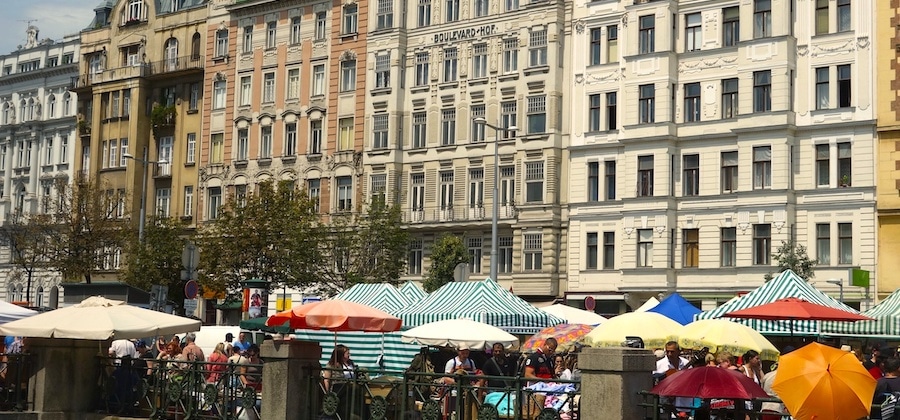
Simply put, urban economics is the study of buildings and cities and why they develop the way they do. Urban economics help us to determine why certain places are so much more vital than others through the exploration of land-use, zoning, employment patterns, and the price of land.

Over the last century cities have experienced massive change. With the arrival of the automobile our cities transformed from the once walkable urban areas they were into soulless, car-centric cities surrounded by outlying suburbs. By the 1980s most of the real estate investment and development energy had shifted to business parks, malls and sub-divisions.

But now we’re back to wondering whether cars should be part of the equation. Cities and cars are an expensive mismatch and we can see that cars waste space. Several American cities are even considering demolishing highways to reclaim precious land.

One of the more recent additions to the toolbox for the urban economist is the measurement of walkability. Walkable neighborhoods are once again seeing a renaissance. They not only offer residents more convenience and character, but also a more active and environmentally friendly lifestyle. And we’re also discovering that walk scores can have serious economic consequences. Redfin, owners of the go-to application for measuring walkability Walk Score®, say that one Walk Score point can increase the value of a home by an average of $3,250. Hence an increasing number of new developments are being planned as mixed-use communities where residents can walk to all the amenities they need.

Christopher Leinberger’s fascination with cities started at an early age and evolved into an astounding career working on urban land issues as a strategist, teacher, developer, researcher and author. He was a member of the original board of Walk Score and continues to use the tool in his research at The Brookings Institute and George Washington University. With his latest endeavour, Places Platform, he’s building a “Sim City for real estate and place management and city management” by developing more tools and methodologies to measure economic, social equity and environmental conditions in cities and metropolitan areas.

If you’re a city lover, like I am, listen to my interview with Christopher Leinberger

Image courtesy of John D Norton
Learn some more …

Why ADUs are a good idea.

November 30, 2020

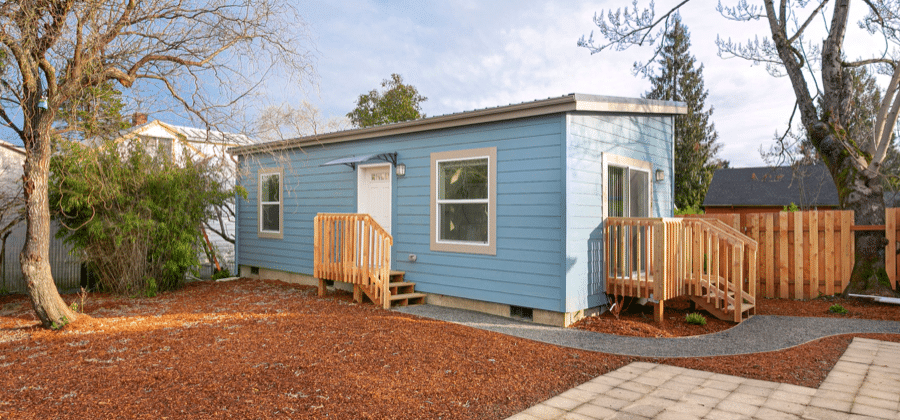
What’s an ADU?  It’s a granny flat or a mother-in-law unit, now more widely known as an Accessory Dwelling Unit and usually built as an additional living unit in the backyard of a single-family home. ADUs are typically small, so that they can fit neatly into a backyard, with a compact and efficient floor plan big enough for one or two people to live in.

Adding value all around

One of the greatest benefits of an ADU is the value it adds to a property. Already a popular selling point in many areas, they not only add square footage of independent living space but can also provide supplementary rental income to the homeowner. In the past, zoning laws have prevented this but with the current shortage of housing availability cities and states are enacting policies which encourage the building of ADUs but permitting them to be built “by right”, with no special permitting needed.

Building ADUs increases the amount of housing units while reducing the pressure of cities to expand outwards. Instead of building large-scale low-income housing, building a multitude of small-scale ADUs will increase property values across the board as the integrity and  character of a neighborhood is preserved. And higher density populations can not only bring more commercial activity, more transport options and walkability, but the value of infrastructure investments such as transportation, is expanded when more people use it.

Multigenerational housing

With the housing shortage at crisis levels, multigenerational housing is becoming more widely accepted in the US, and ADUs are likely to become more frequently used for expanded families. An ADU can provide housing for ageing parents, home care helpers or young adult members of a family. It can provide additional work-from-home space or it can allow senior homeowners to age in place.

Cost and efficiency

Building an ADU in your backyard means you don’t have to acquire land and their compact size requires less building materials. In some cases, costs are minimized by manufacturing off-site. Their size makes them inherently energy efficient as well.

Zoning

In some cities zoning laws can make it tough for homeowners to create an entirely new dwelling on their property. They may also face backlash from NIMBY (Not in My Backyard) neighbors. But homeowners who build ADUs are filling an important affordability gap and are helping to address the ever-growing housing crisis.

In Portland, Oregon, the city has introduced a combination of zoning reforms, fee waivers, and outreach to jumpstart the building of ADUs and help address the critical housing shortage. That’s where Patrick Quinton launched his company, Dweller. Dweller specializes in building and providing ADUs to homeowners who want one. Not only do they build the modular ADUs offsite, saving substantial time and money, they handle all aspects of the process, from site planning and permitting, to utilities, installation and landscaping. And they pay for the ADUs as well – financing that most homeowners don’t have. Dweller enters into a ground lease with each homeowner, giving them the option to buy the ADU at some later date, making the process of adding a housing unit and adding a little income for each homeowner, as easy as can be.

Listen in to my conversation with Patrick.

Image courtesy of Dweller, Inc

Learn some more …

Triple bottom line development.

November 23, 2020

Triple Bottom Line

The term was coined some twenty-five years ago by John Elkington, author of 19 books, co-founder of Environmental Data Services and SustainAbility, and a pioneer of the global sustainability movement. Traditionally, investors were only concerned with profit, but the concept that investment can also be socially and environmentally beneficial is one that began with this term and has been gaining traction and even driving decision-making ever since.

In the same way, triple bottom line real estate development can create a win-win-win for the developer, the community and also the planet.

The developer

Real estate development is a hugely risky business. Developers must make a reasonable profit not only to cover overheads, and a salary for themselves, but also to make it possible to secure loans, without which real estate projects cannot happen.

Community

The social component of community might be the most important. A development can bring many benefits to a community including the removal of blight, providing affordable housing, adding amenities, adding civic space, encouraging local business, bringing jobs, increasing the tax base to pay for more services and generally improving the quality of life through place-making.  It’s important that developers work closely with the community to make sure their project is both beneficial and embraced.

Sustainability

Real estate projects can incorporate sustainable practices into their work in many ways — by saving energy during construction, using renewable building materials or energy, by adding insulation and rainwater collection facilities, by locating in a walkable or bikeable location and by being close to transit. These are just a few of the options which developers might consider.

Ken Weinstein is a developer who strives for the triple bottom line in each of his projects. His company, Philly Office Retail, tackles underutilized and blighted properties and re-develops them to serve their local communities.

Not satisfied with what he can add to his community in terms of real estate, he’s also become a teacher by launching Jumpstart Germantown, a bootcamp for wannabe developers, open to everyone in his community. Still not satisfied, he’s gone even further to launch a loan program to support their projects as well.

The High Line, New York by Brian Ledgard , CC BY-2.0

Change accelerated.

November 16, 2020

Over the last few years something has become pretty clear. The internet has infiltrated our lives, with a steady shift towards online shopping, remote work and more. Now, a pandemic has cemented and accelerated these shifts in the way we live and work. They are no longer gradual but have been condensed and forced upon us.

According to IBM’s US Retail Index, the shift to e-commerce has been accelerated by a startling five years. And while remote work was also possible before the pandemic, many office spaces now stand empty and office work is no longer an option. Zoom meetings are the new normal. Even though we are certain there will be a return to the physical office for some, there may also be compelling reasons for others to continue to work from home. Consider the artefacts of the work commute – unproductive time spent travelling, the carbon footprint of cars, crowded transit endangering health and the cost of childcare.

The pandemic is motivating change. But how can we grab this opportunity to do better, for everyone?

With the change in work and shopping habits comes a need for change in the physical spaces we occupy. And architects like Katie Faulkner have been thinking about how this pandemic will impact architecture and design. Katie’s ambitions have always been to design impactful, sustainable and socially responsible architecture, but now there is even more to think about.

Now she’s thinking about different ways of delivering projects and the materials that are used to build them; ways in which the building industry can reduce its carbon footprint; ways in which  the carbon footprint of buildings can be reduced to zero and ways in which to make buildings more useful, more productive. Issues to be considered include storm surge, climate change and the need to make the world a more sustainable, fair and inclusive place. And as our space needs change, so will the need to revisit land-use restrictions, zoning requirements and building codes as the need for change becomes more pressing.

There’s a domino effect here. The first domino to fall was the pandemic. There are many more to come.

Listen to my interview with Katie Faulkner to learn more.

Image by Standsome from Pixabay

Adaptive re-use.

October 5, 2020

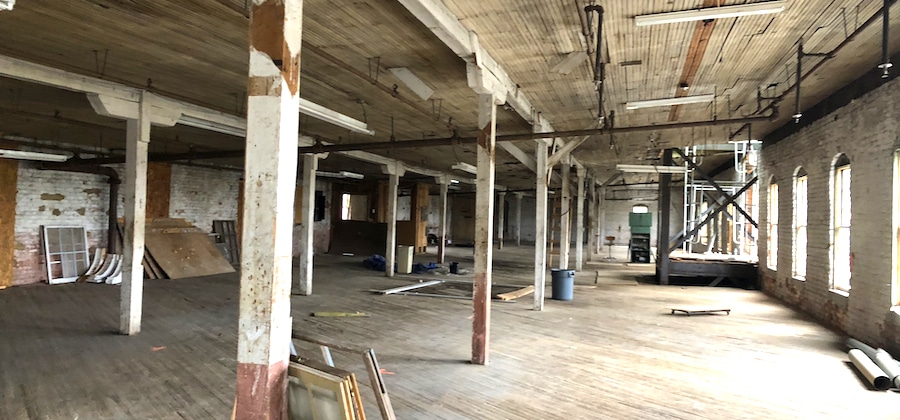
To adaptively re-use a building is to re-imagine and re-purpose it. Often old, historic buildings have outlived their original purpose. They can be demolished or brought back to life and adapted to contemporary life. And there are compelling reasons to re-use historic buildings.

Sustainable

The adaptive re-use of buildings is inherently green. It’s a form of recycling which uses less energy than new construction and generates less waste than demolition or ground up new construction. The bulk of materials that give the building shape don’t need to be manufactured, procured or transported – they’re already on site and in place. Typically they are higher quality materials which would be prohibitively expensive to purchase today or, in the case of old growth forest, no longer even available. A hundred years ago building standards were also higher. A century-old building might outlast a brand new one.

Less urban sprawl

Urban sprawl can be contained by the re-use of existing old or abandoned buildings. Many older buildings are located in dense, walkable neighborhoods with good access to transit. Warehouses and factories in cities around the world have been converted to a myriad of uses, including co-working offices and some of the coolest homes. Industrial waterfronts in many cities have transformed struggling and forgotten areas into vibrant neighborhoods. And even unused railway trestles have been converted into linear parks providing much-needed outdoor space as well as pedestrian links between neighborhoods.

Lots of character

Historic buildings are a tangible part of the past, providing cultural enrichment to communities and allowing residents to take pride in the history of their place. The revival of urban downtown areas and historic buildings has often resulted in higher property values. People seem drawn to local history, to the warmth of old materials or maybe to older buildings just because they are more interesting.

As long ago as 1961, Jane Jacobs asserted that small businesses, like stores, restaurants, neighborhood pubs and small start-ups thrive in old buildings. Maybe she was right. A newer study from the Preservation Green Lab shows that cities with older, smaller buildings have higher density, a greater number of small businesses, more entrepreneurial activity, more diversity and more affordable housing.

Affordable

Avra Jain, who co-founded the Vagabond Group, is a wildly creative Miami developer, passionate about adaptive re-use projects. She has earned a reputation for identifying the next IT neighborhood. Her remake of the abandoned 195O’s Vagabond Hotel on Biscayne Boulevard in Miami changed the course of that neighborhood forever. The historic MiMo District was born. But Avra wants to push adaptive reuse even further. Her personal passion is to convert these abandoned and historic motels into reimagined, affordable housing communities. She’s tackling both the restoration of significant architecture and the making of affordable housing in a very unique way.

Listen to my interview with Avra to learn more about the importance of saving buildings.

Image by Eve Picker

« Previous Page
Next Page »

Primary Sidebar

sign up here

APPLY TO BE A PODCAST GUEST

More to See

Oculis Domes.

February 25, 2025

Bellevue Montgomery

February 11, 2025

West Lombard

January 28, 2025

FOLLOW

  • LinkedIn
  • RSS

Tag Cloud

Affordable housing Climate Community Creative economy Crowdfunding Design Development Environment Equity Finance FinTech Gentrification Impact Investing Mobility Offering Opportunity zones PropTech Technology Visionary Zoning

Footer

©rethinkrealestateforgood.co. The information contained on this website is for general information purposes only. Nothing on this website is intended as investment, legal, tax or accounting strategy or advice, or constitutes an offer to sell, solicit or buy securities.
 
Any projections discussed or made may not be accurate and do not guarantee a specific outcome. All projections or investments are subject to risk due to uncertainty and change, including the risk of loss, and past performance is not indicative of future results. You should make independent decisions and seek independent advice regarding investments or strategies mentioned on this website.

Recent

  • Podcast hiatus.
  • The Mulberry
  • Mount Vernon Plaza
  • The Seven
  • Real estate and women.

Search

Categories

Climate Community Crowdfunding Development Equity Fintech Investing Mobility Proptech Visionary


Copyright © 2026 · Magazine Pro on Genesis Framework · WordPress · Log in