• Skip to main content
  • Skip to secondary menu
  • Skip to primary sidebar
  • Skip to footer
  • Home
  • About Us
  • Say hello
Rethink Real Estate. For Good.

Rethink Real Estate. For Good.

  • Podcast
  • Posts
  • In the news
  • Speaking and media
    • About Eve
    • Speaking requests
    • Speaking engagements
    • Press kit
  • Investment opportunities

Affordable housing

Challenges of natural affordable housing.

September 6, 2019

We all know that many areas in the US are suffering from an affordability crisis but what’s less known is the impact of broader economic influences on weak versus strong sub-markets within a single city or region. Housing affordability issues are incredibly complex, and they take different forms depending on how well the overall economy is performing. As always, however, it is those at the bottom of the economic pyramid who find themselves squeezed out of the housing market.

Weak markets versus strong markets

In this article, I examine one aspect of affordable housing; intra-city migration where residents are driven out of neighborhoods with affordable home values as higher income residents seek alternatives once their own first-choice neighborhoods become too expensive.

Infrastructure

Some weak housing markets such as Philadelphia on the Eastern Seaboard and Pittsburgh in the Rust Belt, were filled with a substantial amount of naturally occurring affordable housing in the early ‘90s. Unlike cities where space was at a premium, such as Manhattan or Miami’s South Beach, it was easy to find affordable housing in these weak housing markets. However, easy availability came at a price. It meant that most housing was under-invested in, not well maintained or in disrepair.

This underinvestment affected not just the individual homes, but also the infrastructure built-up around the homes and the neighborhoods they could be found in. We see examples of this in places like Flint, Michigan, with its failing water pipe infrastructure, as well as New Orleans, Louisiana, with its need for levee maintenance and storm protection issues.

Intra-city migration

As housing markets boom, previously affordable areas become more expensive and prices rise, forcing increasing swaths of the home-buying population to seek housing in areas initially less desirable to them, but more affordable. This affects home buyers at all levels of the economic spectrum, but most deleteriously those at the bottom who find that, as prices rise everywhere, they have nowhere to go because areas less expensive than their own used to be no longer exist.

Initially, there are advantages to this kind of migration process. New residents can help to widen the local tax base, which in turn helps pay for infrastructure repairs and maintenance, better schools and the like. And new residents tend to keep up with the upkeep of their homes more effectively than their new lower-income neighbors, because they can afford to.

This newfound economic diversity initially provides a much-needed fillip for these lower income areas, but soon cracks emerge. Rising property values and rising rents begin to drive out existing, lower income residents and businesses, who soon find themselves unable to afford their newly desirable neighborhood and who discover that there are few, if any, affordable options for them to move to.

Impact

One of the major disadvantages, therefore, of a booming economy is that as these lower income sub-markets grow stronger, displacement is a potentiality, if not a probability. The disappearance of naturally occurring affordable housing can become prevalent on a macro scale affecting entire cities and even entire regions, like the Bay Area.

However, although most developers, stakeholders, and neighborhood representatives are aware of the deleterious effects of a strengthening real estate market, we must realize that only creative solutions to providing naturally affordable housing will have an impact. Naturally affordable housing comes with its own set of problems especially when the entire housing stock is rising in value. These problems need to be addressed before those most harmed by booming economy can find quality, affordable housing.

_

Naturally affordable housing may have been more prevalent in the early ‘90s, before the United States’ housing boom, but there are still many areas of the country, like Pittsburgh, or Philadelphia, that still possess significant affordable housing stock. Should developers choose to work in these areas, they should embrace strategies that reduce displacement. Some of these strategies may include offering reduced-rent housing to displaced residents through partnerships with local government, developing in ways that provide units that are affordable to residents without government intervention or choosing to develop in regions where displacement will have a less prominent effect on local populations.

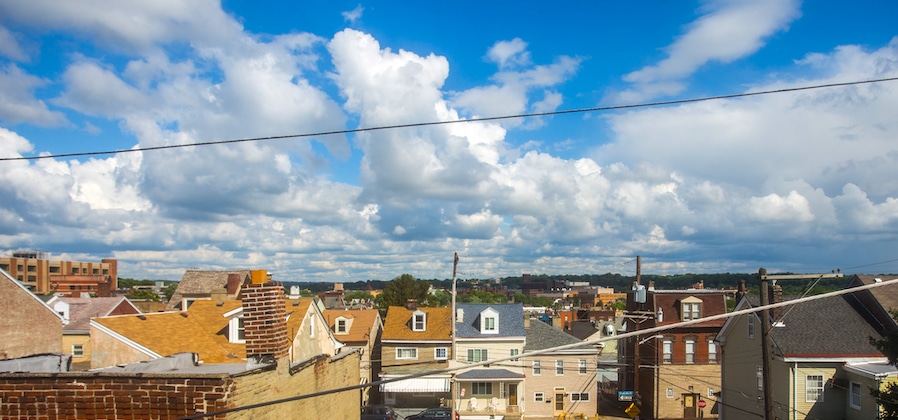
Image of Bloomfield, Pittsburgh courtesy of Eve Picker.
Securing housing.

August 30, 2019

Homelessness and housing insecurity are among the greatest challenges facing our communities. The US Department of Housing and Urban Development, in their 2018 Annual Homeless Assessment, reported that there were more than 550,000 homeless men, women, and children in the United States. Numerous factors contribute to the growing homeless crisis. The primary drivers include the skyrocketing cost of homes, whether for sale or for rent, flat or low-growth nominal wages, and the scaling back of governmental social and housing assistance programs.

Developers and investors hold some of the blame for housing insecurity. In many of the hardest-hit cities, developers have prioritized constructing luxury buildings. This focus on the higher end of the market can be more profitable, but units in these developments are inaccessible to the vast majority of people affected by rising home prices. What can we, as socially conscious investors and entrepreneurs, do to help resolve this seemingly insurmountable issue?

Housing costs and homelessness

For many years now, even before the housing crisis in ’08, developers have shifted their focus toward luxury construction. There are a few reasons why most new construction is in the luxury space. As properties age, the physical structure that sits on the lot, the actual building, becomes less valuable. While many of the affordable units on the market today did not start life that way, they aged into being affordable. This is known as “filtering.”

In addition, much of the current affordable housing stock in this country was built at a time when regulations, permits, and environmental concerns relating to new construction were a significantly lower burden to developers and builders. Creating low, and even middle-income housing is simply not as profitable as it used to be.

A multifaceted approach

When setting out to solve a problem as complicated as homelessness, there is rarely a “silver bullet” solution. Instead of focusing on a single contributing factor, to make real progress, it is imperative that we employ a patchwork of strategies.

New construction technology

Developers can leverage new construction technologies to reduce the total cost per unit of new housing. New technologies that can help lower the cost of housing include drones to more effectively and cheaply survey lots, self-healing concrete to reduce foundation issues, or even the use of robotics during construction.

Partnering with cities to increase affordable housing stock

While many in the real estate industry take a cautious or even adversarial approach to local governments, they can be fantastic partners when it comes to getting affordable housing projects off the ground. Cities have a vested interest in creating sustainable neighborhoods and offer many tax breaks, land discounts on city-owned lots and other services and benefits to socially minded developers.

Work with social service providers

Social service nonprofits are on the frontline of the housing crisis. These groups step in when there is inadequate governmental or societal response to problems like homelessness. Many of these groups are shifting their focus from a reactive model to a proactive model. Instead of dealing with the consequences of homelessness, they are employing their resources to stop the cycle before it begins.

Investors and real estate professionals can work with these groups to help determine the needs of low-income residents and to find ways to build housing that stops the cycle of homelessness. The cherry on top is that through working with these groups, developers can build grassroots community support for their projects, which will make neighborhood and local stakeholder opposition less of a problem.

_

Homelessness affects all of us in one way or another.  Socially minded developers can use their skills and capital to help end this problem and make all of our communities safer and more livable- and they can do so while still maintaining a healthy return on their capital and time investments.

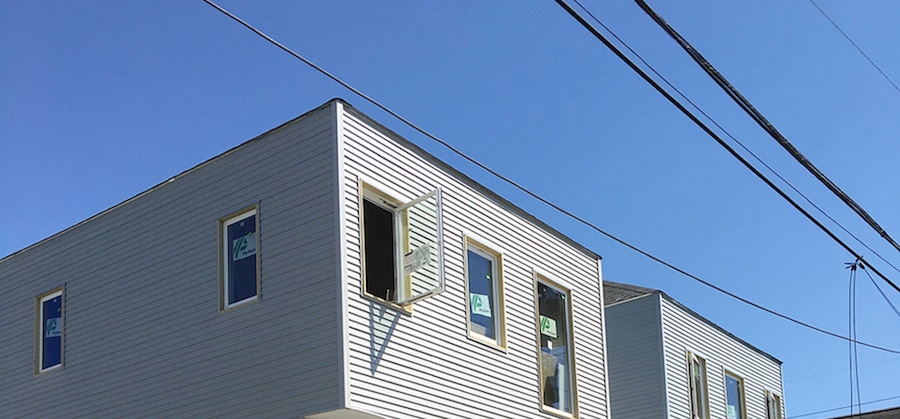
Image Starter Home Two, courtesy of Office of Jonathan Tate

Private capital. The solution to housing affordability.

August 26, 2019

Three principal actors are tackling the housing affordability crisis in the United States- government entities, nonprofits and investors. The issues arising from housing instability and affordability are complex, and a patchwork approach is necessary to make a dent in the problem. With that being said, investors should be aware of their crucial role in alleviating or even ending the housing affordability crisis in America. In fact, the role of the private sector will likely be the deciding factor in whether or not this crisis gets solved.

Subsidies may evaporate

One pitfall that comes from relying too much on government aid is the fickleness of politicians and political parties. In tough economic times, the rug can be pulled out from under a wide variety of government initiatives that have been relied on, like social services, school budgets, fire and safety, and housing initiatives. Especially in these days of political extremes, government priorities can change radically from one administration to the next, which can leave local stakeholders or even private-sector partners holding the bag.

Private enterprise is nimble

The idea that private enterprise is more responsive than the government is not a new one. However, when it comes to housing, the government has a particularly checkered history. The first extensive forays into public housing in the United States were an unmitigated disaster, with massive brutalist projects focusing on warehousing residents rather than creating community. Predictably, most of these communities failed, and some have been demolished such as the infamous Cabrini Green in Chicago.

In the intervening years the government approach to housing has had mixed results and unintended consequences. Many experts pinned lax home loan lending policies, intended to increase homeownership, as the cause of the 2008 crash. As a result, the housing crisis festered and then exploded in the decade that followed through to the present day. Local, state and federal responses to this crisis have been lackluster, to say the least, and most innovative work in the space is being carried out by public-private partnerships, nonprofits, and private investors.

Investor priorities are changing

One of the standard and somewhat accurate criticisms of investors is that their priorities are not aligned with sustainable community growth. Take one drive through a Southern California town filled with rows of McMansions, or an empty luxury tower in downtown Portland, and you can see why many believe that investors are not interested in anything other than profits.

Despite the mistakes of the past, a new generation of socially conscious investors in partnership with community groups and nonprofits, is making great strides in developments across the country. Projects that are too niche or not profitable enough for large developers are instead being undertaken by smaller developers and investors working in concert with local groups. Some are even utilizing crowdfunding platforms. Rather than relying on a large lender in Chicago or New York to fund their projects, socially minded entrepreneurs can solicit funds through crowdfunding efforts, from friends, family, socially responsible investors and even residents of the same areas in which they plan to develop.

An excellent example of such a community-centric projects are the redevelopment of vacant urban infill lots, some of them oddly shaped and otherwise unsuitable for traditional or large-scale development projects. These projects are centrally located in already built-up areas, close to flourishing economic zones and neighborhoods. They provide a pressure valve for housing demand and are often embraced by local residents who are eager to remove an eyesore from their community, like an abandoned factory an overgrown lot or a long vacant house.

_

The private sector has a great deal to contribute when it comes to ending the affordability crisis. Responsible investors can work on timescales longer than the period before the next election and have a vested interest in creating spaces in which residents want to live.

Image by Inmacus from Pixabay

Trends in multigenerational living.

August 23, 2019

How the trend toward multigenerational living will change real estate development

The concept of the single-generation, single-family home is in decline. Over the past four decades or so, the total percentage of Americans living with family members has increased from 12% in 1980, to 20% in 2019. Experts have not reached a consensus as to why this is happening, but it seems likely that a confluence of factors is to blame.

The skyrocketing cost of housing, stagnant real wage growth, and urbanization trends all play some role in the shift towards multigenerational housing. Americans are also living longer. As the average life expectancy in the United States has climbed, so has the incidence of multigenerational living situations. Many families are unable or unwilling to send their families to a retirement home or purpose-built retirement community. Combine this with the growing number of renters in the US and what you are left with is unmet market demand.

Rising life expectancy has also changed how Americans buy homes. In-law units, once relegated to a small number of high cost-of-living states, are seeing being adopted across the spectrum of property markets. Lennar Homes, one of the premier home builders in the United States, now offers in-law units in its home models in 13 states, and they are far from the only large builder exploring this option.

New housing development strategies

While in-law units are one way to approach this shift in living needs, it is far from the only strategy developers and builders have in their repertoire. Here are a few methods developers can use to take advantage of this new housing paradigm.

Larger multifamily units

In most markets, the majority of multifamily apartment units skew heavily towards one, two and sometimes three bedroom apartments.  Some areas, like the Southwest, tend towards multi-residential buildings where three and four bedroom apartments are the norm. This is primarily due to a tendency to have larger families in that part of the country. Working on projects that embrace the need for larger multifamily units could pay dividends in the long run.

Mixed-income buildings

The call for mixed-income development has proven benefits for society, including increasing mobility upward, lifting low-income citizens out of poverty, and several other positive effects. Mixed-income developments can also help keep families together. If you are a senior on a fixed income, or a student just starting out in life, it can be hard to afford rent or a mortgage at the same level as a working adult in their prime years. Mixed-income developments can allow families in different stages in life to maintain and strengthen familial connections, and thus the community as a whole.

Mixed-use buildings

Another trend gaining steam is the move towards mixed commercial and residential spaces. These spaces allow residents to live and work in the same area, reducing commuting time and increasing the amount of capital that stays within that community. These developments can be fantastic for families of all ages, particularly for retirees who might find part-time work in a local shop or business.

Reconsider the studio

Studio apartments are wildly popular with millennials, and there is a phenomenal demand for them, particularly in urban areas. Smaller spaces are an excellent way to tackle housing affordability, but they are not ideal for multi-generational living. One caveat, as we mentioned earlier, is that sometimes studios can work well as part of a mixed-income property as a way to keep families together.

_

Identifying and taking advantage of trends is critical for success in the real estate industry. By investing or developing projects that take this societal shift into account, investors can meet the market where it is going to be and reap the benefits of being there first.

Finger Family Song for Kids, by MrNguyen68, CC BY-4.0

Is revitalization a dirty word?

August 16, 2019

Revitalization, gentrification, and displacement are now a mainstay in the heated national conversation about housing. For many years urban renewal and revival were sold as cure-alls for improving economically vulnerable neighborhoods in big cities from New York to Oakland. Unfortunately, the effort to bring new life to these areas was more successful than anyone predicted. In fact, it was so successful that it began to drive low and middle-income residents out of their homes as property values and the desirability of each neighborhood grew. And in the process revitalization went from a hopeful phrase to a coded word for displacement of minority and low-income residents.

This process started in the early 1990s in some high cost of living areas like San Francisco and Seattle and has substantially ramped up during the current real estate boom. Much of the issues arise from the Gen-X and millennial preference for smaller homes and their desire to have immediate access to urban life rather than schlepping in from the suburbs. As these young people flock to urban areas, existing residents are unable to keep up with rising rents, property taxes, and the general increase in expenses as their neighborhoods gentrify.

A silver lining

It is clear that gentrification is negatively affecting many Americans, with those most affected coming from low-income and minority groups. Some critics make no distinction between unmanaged market-driven gentrification, and the revitalization efforts happening in cities across the country. These revitalization efforts are having real, positive effects in some rust-belt states which are seeing incredible turnarounds, at least partially as a result of real estate revitalization.

Detroit as a model?

Detroit was, and continues to be, the poster-child for urban decay in America. The hollowing out of the American manufacturing base led to a situation where middle and upper-middle class residents fled to the suburbs, taking their tax dollars with them. Left behind were the poorest, many of whom came from minority communities. The city lurched from year to year in a state of disrepair until a few years after the 2008 financial crisis.

Over the past decade, real estate investors have helped develop millions of square feet of prime real estate in downtown Detroit. Areas that were once in significant decline, bordering on a demilitarized zone, became livable once again- and property values and the city’s economic picture rose with the real estate sector.

The housing market in Detroit is incredibly large and complex, and there are success stories as well as the emergence of some of the more common issues with gentrification and displacement. Many of the people on the ground working to protect residents from the deleterious effects work in partnerships with local governments, nonprofits- and developers.

Riding the wave

Spider-Man once said, “With great power, comes great responsibility.” This truism can be applied to how we approach housing issues such as sustainability and affordability. When local stakeholders are not heeded, projects can have disastrous consequences- both from an investor and resident perspective. Many grassroots movements have sprung up across the country as a response to development growth, and what some locals see as the destruction of their communities.

As developers and investors, we have a surefire way to avoid conflict with locals- and that is to  build to benefit the community, rather than just to make a buck. Everyone has to eat, and there is nothing wrong with an honest buck- but finding the intersection between community-minded morals and market forces will help each party benefit- the developer, investors, and residents.

_

Revitalization does not have to be a dirty word. In fact, it can be a net positive for all parties when implemented correctly.  Many cities and states throughout the country are taking steps to mitigate some of the worst problems arising from gentrification- and insightful investors have the chance to be on the ground floor of an entirely new development model- one where community and business interests are aligned, rather than at odds.

Image by Eve Picker

« Previous Page
Next Page »

Primary Sidebar

sign up here

APPLY TO BE A PODCAST GUEST

More to See

(no title)

February 22, 2025

Bellevue Montgomery

February 11, 2025

West Lombard

January 28, 2025

FOLLOW

  • LinkedIn
  • RSS

Tag Cloud

Affordable housing Climate Community Creative economy Crowdfunding Design Development Environment Equity Finance FinTech Gentrification Impact Investing Mobility Offering Opportunity zones PropTech Technology Visionary Zoning

Footer

©rethinkrealestateforgood.co. The information contained on this website is for general information purposes only. Nothing on this website is intended as investment, legal, tax or accounting strategy or advice, or constitutes an offer to sell, solicit or buy securities.
 
Any projections discussed or made may not be accurate and do not guarantee a specific outcome. All projections or investments are subject to risk due to uncertainty and change, including the risk of loss, and past performance is not indicative of future results. You should make independent decisions and seek independent advice regarding investments or strategies mentioned on this website.

Recent

  • The Mulberry
  • Mount Vernon Plaza
  • The Seven
  • Real estate and women.
  • Oculis Domes.

Search

Categories

Climate Community Crowdfunding Development Equity Fintech Investing Mobility Proptech Visionary


Copyright © 2026 · Magazine Pro on Genesis Framework · WordPress · Log in