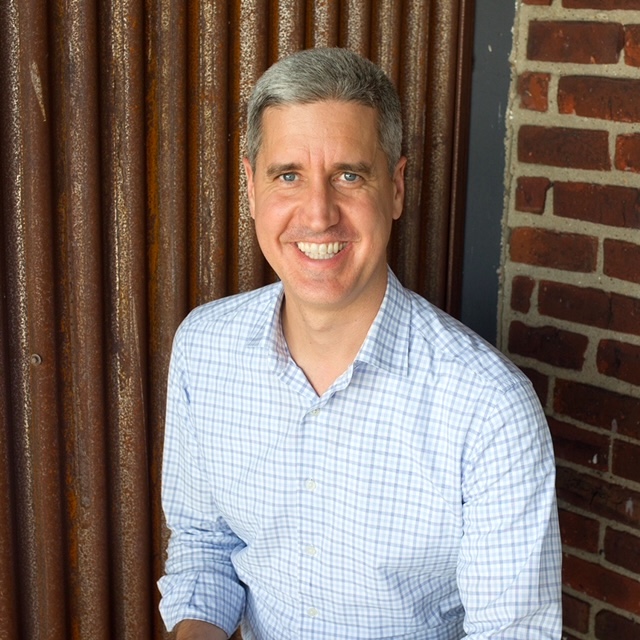
Brian Murray is the co-founder of Shift Capital, an impact urban real estate group driving mission-oriented capital, collaborative resources and inclusive strategies into underserved communities. Through his work at Shift, Brian is focused on finding better solutions at the intersection of society’s most difficult urban challenges – intergenerational poverty, urban revitalization, access to opportunity, and community displacement. Brian led the capital raise for SHIFT’s Neighborhood Fund and manages the deployment of over $330 million of investments throughout SHIFT’s portfolio in Philadelphia, Newark NJ, Washington DC, and Upstate New York.
Brian spent the majority of his career outside of the real estate space, starting his career at PricewaterhouseCoopers as an auditor. He moved into the technology space where he helped found two start-ups, before joining the Peace Corps and heading back to get his MBA. While in graduate school, Brian observed the growing interest in impact investing – investing with a purpose. It was at this time he made his first real estate investment and discovered the importance of socially-minded development. He hasn’t looked back since.
Brian is a graduate of The College of New Jersey and received his MBA from Yale School of Management. He is the co-founder of Arete Youth Foundation, focused on youth development in the Roma communities of Bulgaria. He has two daughters that keep him young at heart and on his toes.
Read the podcast transcript here
Eve Picker: [00:00:08] Hi there. Thanks for joining me on Rethink Real Estate. For Good. I’m Eve Picker and I’m on a mission to make real estate work for everyone. I love real estate. Real estate makes places good or bad, rich or poor, beautiful or not. In this show, I’m interviewing the disruptors, those creative thinkers and doers that are shrugging off the status quo in order to build better for everyone.
Eve: [00:00:43] This is my second podcast interview with Bryan Murray. But time has passed, and his business and expertise have grown. Brian came to real estate as a non real estate guy. Always interested in impact, he wanted to find a way to address poverty and real estate presented a tangible path. And so, he launched Shift Capital, an impact urban real estate group focused on mission oriented real estate strategies in underserved communities. And so, he launched Shift Capital and Impact Urban Real Estate group focused on mission oriented real estate strategies in underserved communities. Simply put at Shift, Brian works on uncovering better solutions to society’s most difficult urban challenges – intergenerational poverty, urban revitalization, and access to opportunity and community displacement. There’s a lot to unpack here, so take a few minutes and listen in.
Eve: [00:01:56] Hey, Brian, I’m really happy to have you join me today.
Brian Murray: [00:01:59] I’m super excited to be here.
Eve: [00:02:01] We are real estate developers who do things differently. That’s what your website announces really boldly. So, tell me what that means.
Brian: [00:02:10] Sure. For us, what that means is that we are focused on building equitable neighborhoods, and we are focused in doing it in untraditional ways to the typical real estate development cycle. We focus on a hyperlocal approach. We focus on scale through that hyperlocal approach, and we focus on doing it holistically and really trying to dig deeper with the community beyond just participation, but equity building as well.
Eve: [00:02:43] We’re going to unpack that a little bit later. Right? So…
Brian: [00:02:45] That’s alright.
Eve: [00:02:46] And like, how did Shift happen? What are its origins and how did it come about?
Brian: [00:02:52] Yeah. By the way, in preparing to talk to you again, I went back and I looked through all your old podcasts, and I just want to say that the amazing people that you have interviewed over the years, I’m probably going to now make your podcast a requirement for anybody that we hire just so many good friends and great people and a lot of people that I admire that I haven’t met before.
Eve: [00:03:18] It’s been an enormous learning experience for me. I’ve enjoyed, like, I’ve really enjoyed talking to people and figuring out what’s going on.
Brian: [00:03:27] Yeah, I think you’ve really unpacked so many aspects of this, quote, non-traditional part of the real estate cycle. But I think people who are focused on all aspects of it, which is amazing. Sorry. What was your question? Your question was Shift origins. Yeah.
Eve: [00:03:44] How did Shift happen?
Brian: [00:03:46] Yeah. So, I’m not a traditional real estate person. I didn’t come up through the institutional real estate world and then come into development. I came into development with a goal to make an impact on poverty. My background was a mix of entrepreneurship, nonprofit work, Peace Corps, business school, etcetera. And I knew I wanted to combine all those things in a way that was creating effective impact. And what I mean by effective impact was I was struggling with the impact that the nonprofit sector was making. I was struggling with the idea of entrepreneurially just chasing money. And I knew I didn’t have the personality for the government sector and policy. Although I’m a, you know, a huge believer that that policy really drives a lot of this change. And so, that ended up being a, you know, an investment during business school and a small real estate deal in Philadelphia. And then realizing and really connecting meet with me personally that impact of real estate in people’s lives. The physicality of it, how these things get financed, who’s benefiting from this. And you know, as you’ve talked about and we share, you know, real estate surrounds our lives. We live in it. We breathe in it, we work in it, we walk by it. And in low-income communities and communities that have been left out of investment, I think it’s even more profoundly negatively impacting. And that’s what I wanted to build. I wanted to build a company that was really digging deep into that challenge and thinking about how is what we’re doing connecting with making people’s lives better.
Eve: [00:05:38] So how do you approach that with each building project? What’s the process like from beginning to end? Can you talk about that?
Brian: [00:05:46] Well, we’ve evolved. We’ve been doing this for about 12 years. And in the beginning, I will share that, you know, I don’t think we really had this worked out. I think we made a lot of mistakes, and we were making investments without an overarching strategy, and we were making construction mistakes and other things that were challenging. But ultimately, we have evolved into really two core philosophies. One, is that we believe in investing in place. So, place-based strategies, concentrating our investments. So, it’s really not just about investing in one building. It’s about investing in a group of buildings so that we are maximizing that impact. That has shown up in our shift neighborhood fund, in our work in Philadelphia, where we’ve really gone deep in, now, three neighborhoods in Philadelphia. The other way that it has evolved for us is realizing that our work can connect the dots between other challenges in the real estate sector. So, specifically going through our own journey, and I’m a, you know, a white male, which, and carry a lot of privilege, but I found getting into the real estate sector to be the most harrowing and crazy and unbelievably risky thing that I’ve done. And I’ve been an entrepreneur my whole life,
Eve: [00:07:10] Really?
Brian: [00:07:12] It’s set up to keep people out, and we combine that with, you know, redlining and access to information and bank practices that are still happening today, to insurance practices that are now hitting our industry again in low-income communities. And there’s no wonder that there are not a lot of women-led black and brown led developers. And working in the neighborhoods that we’re working in, we knew we wanted to do something, so we created a platform and a program to focus on that as well. So, we do our own work and we also try to uplift others through partnership as well.
Eve: [00:07:49] Yeah, access to capital, really that’s what it’s all about, right?
Brian: [00:07:53] Access to capital. But not just capital. Right? So, for those of us who work in places where the numbers and the math don’t work in a traditional sense, we also have to be experts at tax credits and subsidy sources. And with all of those additional items in the capital stack, the skill set needed is exponentially more than someone who’s just doing a simple office product or what have you.
Eve: [00:08:24] Oh yeah, and I think appraisals are absolutely key as well. Early on in my career, I would have appraisers calling me just bewildered about what I was doing and not sure what comps to look at. And that’s another skill set you have to develop, I think. Yeah.
Brian: [00:08:43] It’s a combination of factors. But you know, and one of them is a spiral effect of, you know, of groupthink that happens. Right? I think the statistic is 95% of appraisers are white, male, and in all likelihood not from the communities that they’re appraising. And as Andre Perry and many others have pointed out, you know, just a devaluation of urban black and brown neighborhoods as a result. And so, you combine that with institutional and, you know, capital staying out of those neighborhoods, afraid of being termed gentrifiers or afraid of the perception of safety. All these things combine to make real estate in the places we want to invest in much harder. And I only bring that up to say that it’s not just about access to capital. It is truly challenging on all levels. And for someone who is, wants to do good and, you know, and maybe does have some of the skill set, the team that you need to hire to be able to do a larger project, it’s an awful lot of money just to get a project off the ground. You know, you can’t make any mistakes because the numbers and the math are very difficult. And then you’re you’re not going to see a dollar yourself for maybe three, 4 or 5 years and then…
Eve: [00:10:06] Or longer.
Brian: [00:10:07] Or longer. What we have experienced ourselves and, you know, I have been really pushing against this is, whether it’s banks or investors and even mission investors believing that we need to continue to stick things in the same box. So, what I mean by that is that when a project is, we’re two weeks away from closing, we’ve been working on a project for two and a half years and interest rates change. Well, you know, everybody comes back to the developer and says, okay, well, now you need to contribute your developer fee, or you need to defer your developer fee, or you need to get rid of your, the only dollars you’re ever going to have to put food on your plate. Guess what? You can’t have that either. And at that point, when someone’s been working on something for two and a half years, what are they supposed to say? They’re going to get it done. And they give up the only way that they can provide for their families. That’s just not fair.
Eve: [00:11:04] Well, I wouldn’t agree, but still. Yeah, it’s really a very difficult business, I have to say. I’m a developer and I have a portfolio thanks to my husband. I don’t know, because he supported us through all those years of waiting for something, now we have a very nice retirement fund, so it’s payback time. But I just don’t know who someone on their own can do this. They have to be getting an income. You have to be. And the problem with it is, Brian, for some reason, developers are painted as evil, money-grubbing people across the board.
Brian: [00:11:45] Yeah.
Eve: [00:11:46] Maybe some of them are, but a lot of them aren’t. So how did that happen? When you talk, you talk about, you know, giving up fees and just scraping by.
Brian: [00:11:56] When we talk about, it’s funny because I bring this full circle to the Small Change platform. And one of the incredible benefits of participating and being a part of, and we have now our second project on the platform, but one of the massive benefits is not that we’re necessarily going to get thousands of people in the community to invest, is that we are going to expose thousands of people to the community, to what happens behind the curtain. And, you know, I do believe that the evil developer has been used as a tool that has negatively impacted a lot of the neighborhoods that need good developers and good development and good investment, because it has filtered down from watching maybe 30 years of center cities getting gobbled up for dollars, and then the truly evil developers of the world who have exploited opportunities when in reality most developers you know, are not and are working within a system and just trying to put together things. This is not a business for someone to run in and make a ton of money quickly, you know, and blood, sweat, tears, you know, in 30 years, yeah, I think, you know, it’s a great business. But that’s a lot, it’s a misconception, both actually of young developers and a lot of our work is helping to demystify and make sure that people understand the risk.
Eve: [00:13:28] Yeah.
Brian: [00:13:28] Because a lot of people get into the business without understanding that they might be putting their home up. But I do think that that translates down into communities. And this you know, I think the gentrification conversation is in that, I think the fear of change is in that, but using the Small Change platform to educate people like, hey, wait a minute, you know, look behind the curtain, you know, this school project that we’re doing, you know, there is not a lot of money that we make, and there’s a lot of risks that we’re taking to get this thing done, has been really valuable. And I think we need to continue to educate communities on the positive side of inviting developers into their communities as well.
Eve: [00:14:08] There’s also the issue that investors, maybe goes back to Sesame Street. They want immediate gratification. I actually had one investor say to me, I’ve been investing in, I don’t know, something that she was getting returns every six months. You know, I’d like a short-term investment in real estate. I’d like to move into real estate. Can I get my money back in a year? And I was like, dumbfounded. A year is no time at all in the real estate world. Like, you know, you’ll have to wait a little longer. And I think that’s also an educational mountain to climb because everyone talks about portfolios, right? And yes, some people need to have a return immediately. But I think the value of real estate is that you can have something that will grow over time, in value, in time. It’s not about that immediate cash flow. But most people don’t understand that there’s a big educational gap.
Brian: [00:15:06] Yeah, and I think that’s not just individuals. I mean, I think that the other factor that I didn’t mention yet is just institutional capital. So, when we raised our first fund, we were pre opportunity zone, pre you know a lot of stuff. And we were asking investors to invest in a neighborhood that had an average median income of $22,000 but we believed in, for a variety of reasons. And you know I wanted to do a ten-year fund. And I just said, you know, this is not going to be an overnight thing. It’s going to be a long-term investment. That’s actually how we seek to be more aligned with community if we’re longer term. And, you know, my advisors at the time said, you know, the marketplace isn’t, you’re not going to raise any anything. No one does ten-year deals and funds and you’ve got to be five years. So, five years is impossible.
Eve: [00:15:59] It’s impossible. It’s impossible.
Brian: [00:16:01] So I ended up doing a seven-year fund with three one year extensions is what I was able to pull off. And then of course, the marketplace changed with the Opportunity Zone legislation, which changed mindsets to ten years. But I believe that the real work is actually with the generational investment groups, the groups that can think generationally or think at least on ten, 15, 20-year time horizons. That’s where the real value opportunity is. There’s still so much capital chasing the five-year cycle, and that is detrimental to investments in cities, which I think you have to inherently believe long term in cities. But if you do, there’s a lot of opportunity.
Eve: [00:16:50] Because the hard stuff that really provides a return, it’s just going to take a longer time.
Brian: [00:16:56] Yeah.
Eve: [00:16:57] Anyway.
Brian: [00:16:58] Yeah. So, you know, I think you combine that with, and I’ll just make one last comment on this that I think is important, especially for those out in your audience who are, you know, are talking to institutional equity and thinking about that source. The impact investing world has evolved and has really grown. You know, 12 years ago at Socap, which is the premier impact, I felt like we were the only real estate person there. And now, you know, it really is revolving around investment and community. But I have found that institutional capital still is on the 80 over 20 and 2 mold, you know, which is to simplify that down to basically 2% asset management fee and then a 20% promote over a certain equity hurdle.
Eve: [00:17:47] A promote for those who don’t know what it is, is what goes to the person who’s putting the fund together or the project together. Yeah.
Brian: [00:17:55] It’s your pod at the end of the rainbow. But obviously if your project doesn’t work out, you don’t have any of it. And so, I think in the impact space, there needs to be a reckoning on incentive structures that properly reward the amount of time and effort. Because an impact project, I mean, I’ll put it toe to toe with any, you know, equity real estate group out there, is infinitely harder than, you know. If I’m buying triple net industrial across the country, you know, I can have a team of two and do that. If I’m doing, you know, the type of projects that we do, the neighborhood investments that we do, I have to have a team of ten plus and the expertise is hard. And so we don’t get paid for that, nor do we get, you know, even, you know, the 2%. Now we have to also report on impact metrics. But guess what? We have to do all this additional work in this model that was never set up to, it was set up for a different world, honestly.
Eve: [00:18:59] Yes. Yeah. Well, tell me about a favorite project and why it’s favorite and how it met your goals.
Brian: [00:19:08] Yeah, I’m going to get to my favorite project by just talking briefly about this next gen platform that we were doing.
Eve: [00:19:16] Okay.
Brian: [00:19:16] It started with actually a group in Philadelphia, Mosaic Development Partners, where a Sharswood Ridge project that we did on Small Change that created the framework for us to create this next gen platform. And our next gen platform is a platform where we are investing in and with what we call the next generation of impact developers. And it’s the belief that we are seeking to help raise the game for developers who are trying to break into that next level of their business. And the majority, you know, with a strong emphasis on women led development groups, Black and Brown led development groups. And right now, we’re working with 11 different sponsors across the country from Rochester, Ithaca, Newark, Baltimore, D.C., Southern California.
Eve: [00:20:09] And again, for our listeners who don’t know what a sponsor is, that’s really the developer, right?
Brian: [00:20:14] A development partner. So instead of, you know, in our world, a lot of times developers have to look for allocators. So, people who are allocating capital and we’re trying to come up alongside as a practitioner, as a developer ourselves and recognize that it’s not just about the money, it’s also about, you know, providing and buttressing, you know, development groups who are, you know, on their growth path that might not have exposure to new market tax credits, for example. And we’re able to help lean in on that on a particular deal. So, through this platform, about two and a half years ago, we were approached by a Latino owned housing group in Philadelphia called Voyage Investments. And Voyage was started by two gentlemen, Alex Robles and Juan Saenz, who went to undergrad together. Alex, both, you know, incredibly incredible pedigrees. Alex, many years in the real estate space and went to Wharton from the neighborhood of Kensington, where our offices are. Juan, you know, deep institutional finance experience. And they went off to start their own business. And I’d known them and, you know, we would talk every once in a while, and, you know, I’d relay some advice. And they went maybe two plus years trying to put deals together and make things work. And of course, this was, you know, ’18, ’19, ’20 and the marketplace was very hot and it was very difficult.
Eve: [00:21:52] I’ve got to add, I’ve worked with Alex. He’s got to be one of the smartest, most responsive thinkers I’ve ever worked with. Really super impressive.
Brian: [00:22:02] Yeah, they’re both impressive. They’re both incredible. But, you know, in this space, you need more than that. You need a little bit of luck. You need the right people to help you out and they were just losing out on deals. And at the time, I had needed support, I needed help. And so, I approached them in the conversation and said, you know, would you guys be interested in embedding yourself within Shift for a couple of years? We’ll, you know, I’ve come from the venture world or had experience in the venture world where they have these entrepreneurs and residents at the VCs. And I hadn’t seen that happen in real estate. And I said, would you guys be a developer in residence? And, you know, let’s do a three-year program and you guys come on and for the first year, you’ll spend, you know, a lot of time on our projects. And over the course of a three-year period, we’ll JV together and we’ll look for opportunities to to help you guys out. But the goal is at the end of three years that you guys are back out on your own. But now, you know, you’ve got a track record, you’ve got relationships that we help build up, etcetera. So, Alex and Juan have been on our team for two years. We’ve done a project in West Philadelphia, which was a housing preservation a deal. And then we found a deal locally in Kensington, which was a 40,000 square foot warehouse space. Alex is from Kensington. This is right around the street from our offices. And we said, hey, how about we partner on this one together? So, we partnered up with Voyage and we had this warehouse and we said, and we actually at the time had a tenant who was going to take the whole thing.
Brian: [00:23:49] The tenant was a ceramic company that was part of our ecosystem. So we are, one of our bases of philosophy is really investing in the creative economy. I know you’ve had, you know, my good friend Lindsay Scannapieco on recently. And, you know, we share a lot of similarities in terms of things that we’ve done in the Philadelphia area. But one of our companies was a ceramic building business that was growing out of its space. And so we partnered up with them to buy this building. This was going to be their future home. They were going to grow into it, and we bought it together. We started moving down that pathway. And the construction cost to build out their space was more than they anticipated, and so they decided they wanted to back out of the deal. They wanted to stay as partners in the deal, but they no longer wanted that to be their future home. So maybe about 3 or 4 months later, we ended up getting approached by a school, a school called Big Picture El Centro, which is a opportunity youth school in Philadelphia for those you know, and this is education for me as well, an opportunity youth school that’s focused on youth who are struggling in the traditional system, and this provides them an alternative pathway to graduation by focusing on skill set education, on putting these kids into businesses earlier in apprenticeship programs across the spectrum, from culinary to trades, etcetera.
Brian: [00:25:28] And they were looking for a permanent home in Kensington and their timeline was really tight. They were they could only move in half of the building at first, but they did want to go into the whole building. And so, Alex, Juan and the Shift team, we put our hats on, we put together that lease and we are building the future home of El Centro. And for me, it’s probably one of the more rewarding projects that we’ve ever done. It checks all the boxes of impact for me. You know, we’re, I think, making a healthy return for the risk, but not an egregious return for, to make sure that we are providing the most economical space we can for the school. We are building a high-quality school. You know, I say that because, you know, Philadelphia is marred with a education licensing system that is really problematic for building good schools. The charter school system is on a five-year program, and the and schools are really not able to pay a whole lot. And that combination means that the private sector is not really able to step in very often and build higher quality schools. But we feel we’ve been able to thread the needle on this one. And so, the plan is for them to move in in January. We’re about 60% through the construction. We are partnering with Small Change on this project to provide opportunities for people in the neighborhood. And again, going back to this importance of education and involvement and access, you know, we couldn’t be more thrilled to be bringing this project on there as well.
Eve: [00:27:22] But just about the finances, you’re actually raising quite a lot of money through on Small Change. So, what’s the financing been like for you on this project? Because it’s an odd start construction and try and figure out the financing as you go strategy, right?
Brian: [00:27:38] Yeah. This is one, you know, I’ll look back and say, you know, man, this was this was a tough one. We knew the school needed to move fast. We knew they didn’t have a lot of options, and they were getting a lot of pressure from the district to move to Kensington. And so, we pulled the trigger, and I’ll say this, we actually started construction, you know, earmuffs here, before we got the lease signed. Just to give you a sense of…
Eve: [00:28:12] I’ve done that.
[00:28:13] How much we’ve leaned into this. By the way, no one do this. Do not do this. But, you know, we had a lot of confidence that, you know, we were going to get the lease done. You know, we had built a very strong, very, you know, relationship with the board, with the leadership team. And we knew that the pressure was on for them. And so, we wanted to, you know, we really wanted to get them in earlier. But you know, construction, you know, has pushed us to moving them in in January. But to close on a project, to sign a lease where, you know, not all of the equity and the debt is together is certainly a terrifying place to be. We’re in a much stronger place now. We do have and we’re closing on our construction debt, about $3.9 million of construction debt, maybe as early as next week, which, we’re in October right now. We are raising 2.4 million, and we’ve put in $800,000 ourselves. We’ve also bridged a lot of this construction during this time. And we are seeking both accredited and non-accredited. So, we’re doing a side-by-side raise. And, you know, we’re out there talking to a lot of groups right now on the accredited side. But, you know, and meeting with community groups on the non-accredited, you know, looking to raise awareness.
Eve: [00:29:36] I have a question about that. How do the community groups respond to this. It’s an unusual opportunity for them, right?
Brian: [00:29:45] Uh, it’s been fantastic, and I will say that, you know, the Voyage team, especially Alex as a native person from Kensington, you know, has really been on the front end of this, has been excited to be able to talk about this. And, you know, I would say that a lot of this is really it’s a very soft sell, right? I mean, we’re using this as an opportunity to educate as much as possible in addition to saying, hey, this opportunity is here, but not, you know, but be realistic in terms of what where people are.
Eve: [00:30:18] It’s more about like, this is your neighborhood.
Brian: [00:30:22] That’s right.
Eve: [00:30:22] This is the value it’s going to add to your neighborhood, there’s value here besides a return you might get on the dollars you invest. And that’s actually a lot to think about, I think.
Brian: [00:30:33] Yeah. And, you know, I think this neighborhood, for those unfamiliar, Kensington was on the Republican national debate stage as the, you know, worst place in America. You know, we were the center of the opioid crisis. You know, we are dealing with $1 billion drug trade, you know, just blocks away from here. This community is resilient. You know, it’s a big second-generation Latino community. It’s a very mixed community. Old generation, new generation, lots of kids. And, you know, to take a building that has been vacant for 25 years and to put it into productive use like this positively, and for them to be able to see how and, you know, pull back the curtain and allow them to see that happen, you know, is just very rewarding for us.
Eve: [00:31:28] I have to ask; how did you end up in Kensington and why the worst neighborhood in America?
Brian: [00:31:35] Well, a little bit happenstance, but Kensington was the workshop of the world for the textile business at the turn of the century. And so, it has two really incredible things going for it from a real estate perspective. One, it’s on public transportation. There’s only two subway lines in Philadelphia. And so, we had a long-term belief that Philadelphia was going to turn from a car city into a public transportation city. So, everything we purchased within a five minute walk to a subway station when we got involved in the neighborhood. Two, as a result of being the workshop of the world, there’s a lot of larger real estate and older buildings that we could adaptively reuse, and we could purchase at a low basis at the time. And that low basis for those interested in impact, I cannot emphasize enough how important low basis is to doing the work of impact. It gives you flexibility that if you buy in, you know, later, you don’t have as much flexibility without a lot of subsidy. And so those two, three things really were what brought us to Kensington. You know, the reason for it being a challenge neighborhood is very complicated. It is just north of some of the hottest neighborhoods in the country with Fishtown and Lower Kensington. But this neighborhood has been ring-fenced by the city, and drug trade has been allowed to happen. And that has, you know, and again, I don’t want to get too deep into the politics of it, but I would say, you know, it is largely so that it doesn’t spread to other neighborhoods in Philadelphia. This neighborhood has pretty much been sacrificed, in my opinion. It’s an incredible tragedy but within that tragedy is this incredible story of a phoenix rising that, you know, we’re proud to be a part of and proud to work through with the community that’s there, that’s, you know, continuing to want to live there and want to see this neighborhood come back.
Eve: [00:33:53] I’m going to shift a little bit because that’s a pretty incredible story. But I just want to know, how big is your portfolio now? And do you have an end goal in mind? And are you working anywhere other than Philadelphia?
Brian: [00:34:05] Yeah. So, our Philadelphia portfolio is probably about 1,000,000ft². We have a number of projects in development right now. Outside of Philadelphia is through our next gen platform. This is where we are working in Rochester, Ithaca, Newark, Baltimore, DC. Our portfolio as a whole is probably about 3 to 4,000,000ft² which, you know, is, that’s pretty remarkable to say that out loud now that I think about it. But it’s largely been through sharing, partnering, joint venturing in a way that feels, you know, very appropriate. We’re about 30 people, so we’re vertically integrated within the Philadelphia marketplace. And we’d like to lend ourselves into other marketplaces where needed. I would say that, you know, we’ve been at the forefront of thinking long term. How do you create mixed income communities? So, from the day we started our work, we were thinking about our exit strategy. We helped put together the first neighborhood trust in the country, which is the Kensington Corridor Trust. I know you’ve had David Kemper and Trust Neighborhoods, which is a corollary group that started about the same time. Adriana Abizadeh, who leads the Kensington Corridor Trust, should absolutely be a someone you interview.
Eve: [00:35:46] Oh, send me the information. I was just writing this down.
Brian: [00:35:50] So the Kensington Corridor Trust, and I can’t speak for them. I got kicked off the board, which is a wonderful feeling. But they own probably a couple of blocks now in the Kensington neighborhood. They’ve been buying their own real estate on behalf of a mission for the community, and that mission is to preserve affordable workspaces on the corridor. And that model, I’m excited to say, is now starting to spread across the country. And so, we are constantly thinking about exit, you know, how do you preserve in advance? I’m a big believer that while I think the LIHTC, the low-income housing tax credit tool, is probably one of the greatest tools ever created at the same time, it’s a reactionary tool. And the mindset should be when we have that low basis of real estate in a lot of places, now’s the time to think about preservation. We need to think about preservation on a 20- 30-year scale. And we need more tools. We need more financing groups. We need philanthropy. We need investors to think more strategically about how do we think about capital long term. You know, if you told an investor they could make, you know, 8% returns over a 30-year period, you know, that’s a great return.
Eve: [00:37:12] It’s a great return.
Brian: [00:37:13] Unfortunately, when you have short term investors who are oh, I need 15, 20% returns on a five year schedule, and then you compound that, compound that over 30 years, you’re at a much different place. And that is a detriment to neighborhoods and cities. And it’s a problem we have to solve.
Eve: [00:37:33] Yeah, I agree, and I think that impact investors I’ve talked to have been an enormous disappointment to me, because I think that that longevity is definitely part of the equation. But what I get is what’s your exit strategy and how soon? They’ll talk about impact and then it’s what’s your exit strategy and how soon? And I just want to build the best platform I can that will serve the most people.
Brian: [00:38:00] I am, I’m gonna give you a little…
Eve: [00:38:01] I don’t know what, I don’t…
Brian: [00:38:02] And I have been in the doldrums with you. I have seen the slow march forward and, you know, having been there when the only investing impact investors were doing was, was in CDFIs and affordable housing, to this, you know, a place-based mindset. I believe that although it’s taking a lot more time, that we are seeing more and more investors getting that message. And I do think it’s these podcasts, Eve. I think it’s, you know, the cadre, the community that’s gotten created over the last ten years of people saying these things. And I believe it, I really believe it needs to come from family offices in particular, who have the ability to think long term as opposed to the, you know, the black rocks of the world, so to speak, getting into impact investing is not where it’s going to come from. It’s going to come from the next generation of families who, there’s a big transition of wealth. And if you look at things like the Durst Organization, right? I mean, they invest generationally. And I do think that more and more families are going to start getting this message and understanding that they can be part of the solution. It’s already happening. We’re having some conversations, and I feel like the message is getting through, even though you know, it’s not fast enough and it’s not enough yet. I mean, certainly not enough. Yeah.
Eve: [00:39:31] It’s not fast enough. No, I mean, we have thousands of users as well who must have an interest in impact because that’s all we offer investment in, right, So but it’s still, it’s not enough. It’s not enough. When you compare it to the hundreds of thousands who are investing on platforms in ways that have absolutely no impact. They just, yeah. Depressing. Okay. So, last question. What’s been your biggest challenge and biggest disappointment?
Brian: [00:40:03] Um.
Eve: [00:40:04] Maybe that’s not an uplifting question to end on, but I’ll ask you that and then.
Brian: [00:40:09] No, that’s okay. I mean, yeah, I think it’s the right question when we’re talking about development, because there isn’t a day that is not challenging that we go through. You know, sometimes I feel like I’m, you know, whether it’s whack-a-mole or whatever, the right metaphor, whack-a-mole, or you’re plugging the dyke over here, and then a leak happens over here.
Eve: [00:40:32] Oh yeah.
Brian: [00:40:33] And, you know, one of the challenges is keeping positive through that and recognizing that the small incremental movements forward are going to be part of the big movements later. You know, it’s been very difficult to grow the team that we’ve grown. We’ve taken a lot of risks. My team has dealt with a lot of stress. You know, we’ve gone through periods and, you know, where payroll is an issue. And I’ve you know, I’ve had during Covid asked the team to not take payroll for, you know, more than a month to just help us get through and try to keep everybody together, you know. I have a goal, maybe one day in life to write, you know, the developer confidential book that needs to be written based off of the Kitchen Confidential book that Anthony Bourdain wrote. But, you know, there is so much behind the scenes that’s challenging. I would just say, you know, keeping people positive in the wake of what feels like insurmountable challenges and push-back and, you know, is definitely our biggest challenge.
Eve: [00:41:50] So I’m going to ask you if it’s so challenging, why do you do it?
Brian: [00:41:54] Oh, why do we do it?
Eve: [00:41:56] What’s the reward? Why do we do it.
Brian: [00:42:00] It Depends on what day you ask me that question. You know, some days I’ll say, well, if I knew then what I know now. But most days I really feel that real estate is the most impactful and important thing to combat the challenges and the ills of today’s world. Whether that’s the idea that real estate spaces can bring people together, whether it’s about financing and how do we bring positive dollars into low-income communities and bridge an equity gap, wealth building. I mean, it touches so many things that for me, you know, that I can wake up every day and say, we’re, you know, we’re doing something positive for society, and that’s why we do it. Yes. I love the building and I love the physicality side of it, and that is important. But I would say arguably the people side of buildings is probably more, is the most important for us.
Eve: [00:43:12] Well, thank you very much for joining me. And I can’t wait to see what you do next. This current project is fabulous, so I’ll be watching.
Brian: [00:43:22] Well, you’re, I mean this, you’re a gem to this whole world and this movement. And, you know, I’m just so happy to see how much you’ve grown and how much you’ve built this thing and think I’m just really excited to be back on the podcast. So, thanks for having me again.
Eve: [00:43:39] Thank you.
Eve: [00:43:46] I hope you enjoyed today’s guest and our deep dive. You can find out more about this episode or others you might have missed on the show notes page at RethinkRealEstateforGood.co. There’s lots to listen to there. Please support this podcast and all the great work my guests do by sharing it with others, posting about it on social media, or leaving a rating and a review. To catch all the latest from me, you can follow me on LinkedIn. Even better, if you’re ready to dabble in some impact investing, head on over to smallchange.co where I spend most of my time. A special thanks to David Allardice for his excellent editing of this podcast and original music. And a big thanks to you for spending your time with me today. We’ll talk again soon. But for now, this is Eve Picker signing off to go make some change.
Image courtesy of Brian Murray