• Skip to main content
  • Skip to secondary menu
  • Skip to primary sidebar
  • Skip to footer
  • Home
  • About Us
  • Say hello
Rethink Real Estate. For Good.

Rethink Real Estate. For Good.

  • Podcast
  • Posts
  • In the news
  • Speaking and media
    • About Eve
    • Speaking requests
    • Speaking engagements
    • Press kit
  • Investment opportunities

Investing

Yes! In my backyard!

October 28, 2020

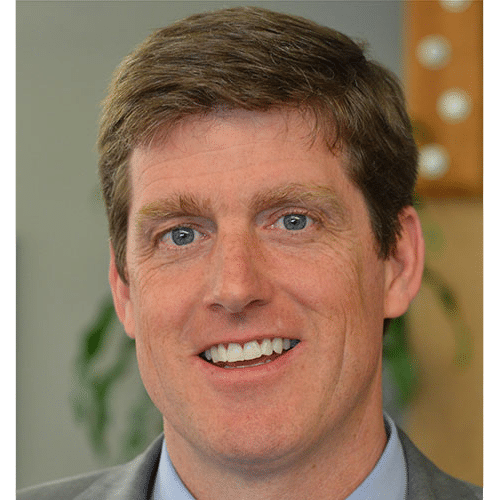
Two years ago, after careers in financing, government and local economic development, Patrick Quinton co-founded a new startup, called Dweller, in Portland, Oregon. Like all metro areas, Portland faces an affordable housing shortage, and Patrick, from his previous role as head of Portland’s real estate and economic development agency, knew that the city had “the most ADU-friendly code of just about anywhere.” A 32×14 foot ADU (accessory dwelling unit) could be dropped into a typical 50-by-100-foot lot without hitting the setbacks and without requiring city design review.

Patrick, and his business partner Brian Lynott, knew that in order to scale, they needed to deal with two key friction points. The first is the complexity of building an ADU, which most mainstream homeowners cannot tackle.  And the second is the financing required to build one, which many homeowners simply lack, either in savings or equity. Enter the ground lease. By leasing space on a homeowners property, Dweller can install an ADU, hook it up to city services, and then take full responsibility for its management. The homeowner pays nothing upfront, and gets paid for use of their land from a portion of the rental income each month. Finally, the homeowner also gets to buy the ADU at a pre-set price at any time within the next ten years. Dweller’s ADUs are built off-site in a factory, further lowering costs, and they handle all permitting and installation. They currently offer six styles, and floorplans from 392-660 square feet.

Before Dweller, Patrick spent over eight years at the Portland Development Commission (now Prosper Portland), five of those as executive director. Early in his career, Patrick worked for eight years as a commercial lender at Shorebank, a widely-recognized finance leader in community revitalization, and then had eight years at Textron Financial Corporation providing financing to small and mid-sized companies in health care, energy and technology. He has degrees in government and public policy.

Insights and Inspirations

  • Patrick wants to scale Dweller to a point where mainstream lenders truly see the possibilities and want to invest (a lot) in the ADU market.
  • It isn’t magic. By removing the land cost and building ADUs in a factory, the cost of a newly installed ADU simply drops.
  • Ground leases allow moderate-income homeowners to incur no cost up front, and make money toward purchasing the ADU outright. Plus, it creates new, affordable rental space in desirable neighborhoods.
  • This is a way to (literally) drop in affordable housing supply without having to acquire new land, or even disturb the existing fabric of a neighborhood.
  • There is no comparable affordable housing solution at this price point. Or even close.

Information and Links

  • It’s almost impossible find bank financing to build the Dweller ADUs, so now Patrick is crowdfunding equity, on Small Change, for the next portfolio of ADUs he’s building.
  • Though he no longer works there, Patrick is very proud of the work of Prosper Portland. An urban renewal agency, Prosper has remained relevant by focusing on Portland’s most pressing needs, with a racial equity mission and a focus on community partnerships on all projects.
  • He is also on the board of Latino Network, one of the largest social service agencies focused on serving Oregon’s growing Latinx community. The organization’s executive director, Carmen Rubio, was just elected to Portland’s City Council and will be the first Latinx leader to serve on the council.
  • Patrick says that when you live in the Northwest, you are never far from nature and the conflicts over who controls our natural resources as well. He suggests a podcast series on the Timber Wars, by Oregon Public Broadcasting, that is worth a listen.
Read the podcast transcript here

Eve Picker: [00:00:13] Hi there, thanks for joining me on Rethink Real Estate. I’m on a mission to make real estate work for everyone. Real estate can help to solve climate change, can house people affordably, can create beautiful streetscapes, unify neighborhoods and enliven cities. So I’m on a journey to find the most creative thinkers and doers out there. I’m not the only one who wants to rethink real estate. You can learn more about me at EvePicker.com or you can find me at SmallChange.co, a real estate crowdfunding platform with impact real estate investment opportunities open for investment right now. And if you want to support this podcast, please join me at Patreon.com/rethinkrealestate where there are special opportunities for my friends and followers.

Eve: [00:01:22] Our episode, Yes! In my Backyard, made it to the top of the charts.  More of you downloaded this episode than any other one to date. And since my guest, Patrick Quinton, is currently offering an opportunity to invest in his ADU’s on SmallChange, we thought you might be interested in listening to Patrick’s vision  again. Dweller is Patrick’s startup company. He manufactures turnkey accessory dwelling units (ADUs) with a goal of addressing the very pressing housing needs of his hometown, Portland, Oregon. Patrick started Dweller because he knew that Portland has “the most ADU-friendly code of just about anywhere.” A 32×14 foot ADU can be set into a typical 50-by-100-foot lot without hitting the setback limits and without requiring city design review. If you haven’t heard his story, we think you’ll want to listen in.

Eve: [00:02:25] If you’d like to join me in my quest to rethink real estate there are two simple things you can do. Share this podcast or go to patreon.com forward slash rethink real estate to learn about special opportunities for my friends and followers, and subscribe if you can.

Eve: [00:02:52] Hello Patrick! Thanks so much for joining me today.

Patrick Quinton: [00:02:55] Thanks, Eve. It’s great to be here.

Eve: [00:02:57] Great. So, a couple of years ago, you co-founded a company called Dweller to address the pressing housing shortage in Portland, Oregon. And you’ve had a pretty substantial financial and economic development career. So, I’m wondering what prompted you to move to the uncertainty of a startup life?

Patrick: [00:03:18] Yeah, I sometimes ask myself that as well. My most recent job, prior to this, was I ran the city of Portland’s development entity. At the time it was called the Portland Development Commission. It’s now called Prosper Portland. But, obviously in that role I had my hands in a lot of different, large-scale projects, and had benefit of lots of public funding, and so had an opportunity to have an impact in a way that, across a lot of different things, but when my time came to leave there and I was thinking about, not just kind of what I wanted to do next, but what type of role I wanted to have, I really felt like I wanted, you know, to use the cliche, roll my sleeves up and really be closer to the work. And in particular, I had been thinking a lot about private models of solving any of a number of public issues. And certainly affordable housing was at the top of the list. So, you know, I didn’t leave with the idea of starting an ADU year company. I left to try and explore and think about, you know, what to do next. And my business partner, Brian, came to me with this idea, and at first I didn’t think it was the right idea. I didn’t think it had the opportunity to have as much of an impact as I had hoped. But the more I thought about it, the more I realized it really was the right opportunity to both build affordable housing, you know, to really have a direct impact, but also to prove a model that we both felt people had been toying with this, but really not making any progress. And so, it’s always kind of a leap, and it’s always, you got to drink a little bit of the Kool-Aid, but we really did feel like we were on to something new and kind of at the beginning. And so, you know it’s been a fun adventure.

Eve: [00:05:13] Dweller manufactures ADUs, right? And for those who don’t know who are listening, what’s an ADU?

Patrick: [00:05:21] Yeah, so ADU stands for Accessory Dwelling Unit, which is an unfortunate name for something that we’re trying to popularize. But it just means that it’s a secondary, permitted unit on a residential property. It’s typically referred to as a backyard cottage or a mother-in-law unit. But, in any form, it is a second living unit. And because it’s a separate permanent unit, it can be used as a rental. It can be used to house a family member. Obviously, it can be used for somebody to have, you know, their TV room, but its power is in, it creates another housing unit on land that nobody assumes can accommodate any more housing. And so you’re able to drop in additional housing supply without really having to acquire new land, or even disturb the kind of existing fabric of a neighborhood. So, it’s backyard housing. I mean,  that’s kind of the easiest way to talk about it.

Eve: [00:06:22] So, it’s a density play. It’s really kind of utilizing expensive land in a more efficient way. Right?

Patrick: [00:06:30] Exactly. There’s no way that anybody could develop housing on the land in these types of neighborhoods without this type of unit that didn’t have to acquire land and can be built on a small scale. It’s the ideal way to take advantage of this excess land.

Eve: [00:06:44] So, tell us about your model and how you arrived at it. Because I think there’s lots of different ways of building ADUs.

Patrick: [00:06:52] Once we dive into the ADU world and you learn more about it, you know, and we’re on the West Coast, so the West Coast has been doing this for a while, you look and you see lots of ADUs have been built. But, basically, what’s been going on is people who have money have been building a lot of kind of cool backyard houses. And so while they’ve been proving that you can do this, it really hasn’t been available to mainstream homeowners who aren’t sitting on a ton of money. So, we really wanted to create a model that would get a lot of ADUs built, but more importantly, really open the market up to more mainstream homeowners. So, we wanted to bring the cost down for ADUs and then help them finance it. And we brought the cost down by developing standardized ADUs that are built in a factory. So, high quality construction, but we’re just taking out a lot of the waste and inefficiency that happens with building a unit on site. And so, that’s really made our ADUs a lot more affordable than your average ADU. And then the second thing is, we’ve created a way for homeowners to finance an ADU without putting any money into it themselves. So, those are the two main things we wanted to address. And we feel like with those issues solved, we think, yeah, now your average homeowner and thousands of similar homeowners can now put ADU on their property when, you know a few years ago, that really was impossible.

Eve: [00:08:23] Can you share with us how much it costs to build one of these pre-manufacturing units?

Patrick: [00:08:28] So, our typical project is about 120,000 dollars, all in. So, that means that, you know, a homeowner can come to us …

Eve: [00:08:35] That’s very reasonable.

Patrick: [00:08:36] Yeah, when you consider the average price of an ADU here in Portland is around 200,000 dollars. And the average price in other West Coast markets in California, and Seattle, is around 300 or higher. So, yeah, 120 brings it into the range of affordable for many homeowners. It’s still a big financial decision, but it’s definitely a lot easier for homeowners to get over that hurdle.

Eve: [00:09:02] Yeh, I’ll say, that’s pretty reasonable. And then, so, how many units have you built and operate to date, as a start?

Patrick: [00:09:08] We built 15 units in total, and then, you know, I know we’re going to get into this, but we actually own nine of those. So, we operate nine of those as a small portfolio of affordable ADUs rentals and we rent those out to long-term rentals. So, local residents, and they’re sprinkled throughout the city of Portland. The other units we just sold. There’s homeowners who come to us and have the money and want to buy from us. And we’re happy to do that. And homeowners who buy from us who have money, you know, they like the efficiency, the no-hassle aspect of it as well. So, it’s not simply that, you know, homeowners can afford it. It’s that ADUs have traditionally been a big project for a homeowner. It’s, they become a mini-developer and most people just don’t have the time to do that. Because there’s a lot of pitfalls along the way. So, we also attract a number of buyers who just want to buy ADU like they buy a car, or some other big purchase. They don’t want to have to learn how the car is manufactured.

Eve: [00:10:10] Right. Where are these located, the ones that you built?

Patrick: [00:10:12] They’re located in residential neighborhoods throughout our city. You know, Portland is, like many cities is, has tons of great residential neighborhoods. And what people don’t realize is that in most cities, even in the city itself, you know, you walk down any residential block and there’s a nice big backyard in these properties.

Eve: [00:10:32] Yes, yeah.

Patrick: [00:10:33] And so when you look across the landscape in Portland, where most of the residential neighborhoods are, if you were to fly over them, you would see all this space that you really don’t see from the street side. And a lot of them are really modest neighborhoods with bungalow-style houses and homeowners who, you know, they want to have the extra income. That’s really the prime motivation.

Eve: [00:10:55] So, you are doing two things. You’re creating affordable homes and extra income for people who need it.

Patrick: [00:11:00] Yup, yup.

Eve: [00:11:02] And the third thing I’m realizing as you’re talking about this … ADUs are built in places where there’s already infrastructure. And so, they’re going to be close in, and provide housing for people perhaps without needing a car because the developed neighborhoods have transit, etc..

Patrick: [00:11:18] From an urban policy perspective, that’s one of the reasons why so many jurisdictions have been promoting ADUs, is because it’s an easy win on the housing side. You don’t have to fight over how you develop a big corner lot. You’re dropping it in. You don’t have to build new streets or sidewalks, like you’re saying, and you get to take advantage of existing parks. And even, you know, schools. Like people … this is an understated aspect of this. But when a household that typically rents gets the rent in a neighborhood that’s primarily single family, owner-occupied houses, they’re generally accessing better schools. And so, it opens up even that, for renters.

Eve: [00:11:58] Yeah, probably better shopping and proximity to grocery stores, etc..

Patrick: [00:12:02] Exactly.

Eve: [00:12:03] Yeah. So, what do they look like? Do you have a number of models?

Patrick: [00:12:07] We do now. You know, as like any company, we started off with one model. You know, we really were trying to work out the kinks, but also just kind of see where customers are. But we generally sell units that are between four and 500 square feet. It looks like a one bedroom apartment. There’s a lot of talk about tiny homes these days, which is another really great form of housing. But ours are bigger than that, and most ADUs are, and they look more like apartments than what people will see in a lot of these tiny home images. So, they have full bedroom, full bathroom, usually a shared kitchen, living space. ADUs can come in all sorts of architectural forms. But what’s interesting about it is a lot of them have, what they call a shed roof or mono slope roof, which is different than most houses which have the peaked roof, gable roof. So, ADUs tend to have a little bit of a different feel there …

Eve: [00:13:00] It’s a little bit more of a shed aesthetic, like the garden shed, yeh?

Patrick: [00:13:03] Exactly. When you look into the back yard, you don’t see a mini house. You see a structure that looks more like a larger shed.

Eve: [00:12:12] Yeh.

Patrick: [00:13:19] But inside it’s built out like, you know, any apartment that you would see in a big apartment building.

Eve: [00:13:19] Right. I’ve lived in a 450 square foot unit and loved it. It was the perfect size and there were two of us. So, if you don’t have too much stuff, it’s great. What makes them affordable? This is a loaded question, because I know you’re also striving for affordability, just through your mission. I suppose the question is not what makes them affordable is small and well-thought through manufacturing, but what’s your affordability mission beyond that is, I suppose, what I’m asking?

Patrick: [00:13:49] I do want to actually just talk about one thing that, about affordability, before we get into making them affordable rentals is, and there’s a lot written on this. You know, the average cost of a new housing unit is, you know, if you’re talking about an apartment building or something like that, here, it can be 300 to 400,000 dollars, a unit. In California, the Bay Area, right, they’re talking about 700 to 800,000. And …

Eve: [00:14:14] It’s crazy, yeh.

Patrick: [00:14:15] The mere act of building a new housing unit has become so expensive. And when governments and other organizations that care about affordable housing are rounding up dollars to build new affordable housing, they have to find a lot of money to build a number of housing units of any scale. So, to say I can build a housing unit for 120,000 dollars, regardless of what the purpose is, that’s a big deal. And there are other companies doing this. So, the ADU industry is positioned to add a lot of housing supply at a price per unit that almost no other aspect of the housing industry can achieve. And, you know, one of the main savings is we don’t have land cost. Right? So, it’s not magic. It’s not like, you know, somehow we’ve figured out the magical way of building that takes out of the cost. It’s that we’re leveraging existing land. So, basically, if it’s a homeowner, the homeowner is kind of contributing that land to this transaction. But it’s not money that we have to find. And then we generally, because we build small units, and if you are building the way we build in a standardized fashion, then you can take out all these inefficiencies, as I mentioned earlier. So, that’s like this whole powerful part of the ADU world is …

Eve: [00:15:31] Yeh.

Patrick: [00:15:32] … if we really can figure out how to get thousands of ADUs built, we’re going to be building those units at a lower cost per unit than pretty much any form of housing.

Eve: [00:15:44] I mean, when you look at a multi-unit building, you’re talking about fire sprinklers and stairs and elevators …

Patrick: [00:15:50] Exactly.

Eve: [00:15:51] … and, you know, accessibility, really expensive.

Patrick: [00:15:53] Yup.

Eve: [00:15:53] And all of that has to be subsidized to keep it affordable.

Patrick: [00:15:57] Yeah.

Eve: [00:15:57] So, tell me about the ground lease and, you know, who’s interested in it. And what sort of success you’re having finding people who want to do this.

Patrick: [00:16:06] And so, as I mentioned earlier, we really wanted to help address the financing challenge for homeowners, and just a bit on that. So, basically an ADU is typically a project. It’s taken on by a homeowner and the homeowner has to not only manage it, but pay for it.

Eve: [00:16:20] They have to hire an architect and probably an engineer.

Patrick: [00:16:23] Yeh. And so when homeowners go to pay for things like this, they typically are going and getting home equity financing. I mean, obviously, there’s people out there who might have that money just sitting at the bank. But that’s, that’s typically not most people. So, they go and get home equity loans, and I think the home equity loan has certainly become pretty widespread over the past 20 years. So, everybody gets that that’s out there. But when you really dig into the numbers, lots of people are sitting on small amounts of equity. Very few people are sitting on a lot of equity, certainly enough that’s going to allow them to pull, you know, 120,000 dollars out in our case, but for the average cost, you’re talking about a lot more.

Eve: [00:17:05] Right.

Patrick: [00:17:06] And even then, you’re asking people to take out what is basically the bulk of their life savings. It’s you know, the statistics all indicate that most people have their net worth tied up in their home. So, like, that’s the ADU financing challenge is, it’s all home equity based and most people don’t have it, and the ones who do have to make this massive decision and …

Eve: [00:17:27] Oh yeh. It actually turn them into mini developers. You’re asking homeowners to be real estate developers and work through all the issues around that. That’s a lot.

Patrick: [00:17:38] And so, that’s just a risk profile that you’re not going to find in your average homeowner. So, we wanted to figure out how do you finance this in a way that takes out all of those obstacles. And so we came up with, we didn’t invent it, but we’re one of the first ones to really try it, is to use what’s called the ground lease. Under a ground lease we lease a part of the homeowner’s property. So, we generally lease a defined part of their backyard. And then by doing that, we then have the right to develop on that part of the property, and then we develop the ADU ourselves using our own capital. So, we’re building the ADU on the homeowner’s property at no cost to them. And then we own the ADU then and we’re able to manage it and rent it out. And then we share a percentage of the rent that we collect each month, back to the homeowner. And that’s essentially our lease payment to them. So, once again, we’re tenant in their backyard because we’ve leased that part of their backyard, so we owe them monthly rent. And so we pay them that as a percentage of the rent. And then the homeowner has the right to buy us out of that lease at a prearranged price at some point during the lease. 

Patrick: [00:18:50] So, in essence, the homeowner is getting the ADU on their property at no cost to them, and then they can, when the time is right for them, choose to pay us back. Right? So, it operates like a loan, but it’s not a loan. It’s, you know, it’s us going in and building and owning the ADU. And we think this is a particularly well-suited type of financing vehicle for ADUs, because not only does it overcome these challenges that we’re seeing for homeowners who want an ADU but can’t finance it or can’t pull the trigger on taking all their equity out. But it also puts these ADUs immediately into the rental market, because we’re owning it and then we’re managing it like any other long-term rental. So, not only are we getting ADUs built, but we’re getting them immediately available to local renters, which is one of the big policy objectives for promoting ADUs, is to have more affordable rental units. And then when the homeowner buys it out, they can decide if they’re going to keep it as a rental. But for at least some period of time, five, 10 years, it operates as a rental unit in neighborhoods that really need it. So, it’s just this kind of unique way of looking at how to get over the financing hurdle that has all these ancillary benefits.

Eve: [00:20:09] So then, you’re launching a crowdfunding campaign to raise equity on my crowdfunding platform, Small Change. And why are you doing that?

Patrick: [00:20:21] The financing challenges don’t go away just because we’re building on aground lease. Somebody still has to fund this. And so, that financing challenge then gets pushed onto our shoulders. And so we’ve tried to figure out how to fund the development of new ADUs using a lot of traditional financing methods. And so, if you think about a real estate transaction, you know, you have some equity, you go out and you borrow money from a lender, and usually you can kind of piece together the right capital sources. But this structure is unique in that we don’t own the land and we don’t have rights to the land. So, you’re asking lenders and investors to really bet on this structure and the stream of income from it. And even though I would argue until I’m blue in the face, how secure this is and what a great investment this is because of the regular income coming in, it doesn’t look and feel like what lenders and investors are used to seeing. And so, it doesn’t fit in one of these boxes. And so, we’ve tried to look for traditional lenders, non-traditional lenders, all sorts of folks who fund even affordable housing projects. And we just haven’t found lenders who are willing to do this with an eye towards scale. And so, at the end of the day, we felt like there’s a lot of interest in this type of housing. There’s a lot of people that we talk to who love the idea of ADUs, who really want to see more ADUs built. These are average folks who want to help with the affordable housing crisis. And so, we actually have always thought in the back of our minds, you know, this would be a great crowdfunding opportunity, but we really thought, you know, we should be funding this in a traditional way. And we had to beat our heads against the wall for a long enough time before we decided, you know what, let’s actually look into crowdfunding because we feel like there’s a really strong interest out there for what we’re doing.

Eve: [00:22:16] Yeah. So, the challenges never end. Right? So, you’ve got a product that sounds like it’s scalable, that may really help the affordable housing crisis. And yet you’ve not been able to find a lender to, at least lend, yo know, 60 percent of the cost of building these, even if you have to go find equity, which I personally find really shocking … that we don’t have lenders in this country that can think a little bit out of the box. I mean, there are, as you said, non-traditional lenders, lenders that are focused on affordable housing, nonprofit lenders with a mission to help affordable housing. What has to change for this to work?

Patrick: [00:22:57] Yeah, this is multi-layered. So, the first thing is that I think that everybody can point fingers at each other. So, I think your actual lenders would point fingers at regulators and their auditors, and say, if I put this loan on my books I am going to get killed when audit comes around. Or they’re going to say, point to actual, you know, this is how we have to underwrite them. So, you have that. I do think you have, regulators and auditors might come back and say, we don’t say they can’t do this. They just have to kind of make the case and show us how it’s collateralized. So, I think some of it is this, like, you know, do I want to take this fight on as a lender when I can go look for another deal? So, I think there’s a lot of this, like, who’s self-interested enough to make it happen. And so, that gets to the second layer, which is getting scale on this proves it out, and then it will give, I think it’ll begin to open up the eyes of lenders. So, I do think we need to prove out that there’s a market for not just a lot of ADUs getting built, but also for folks with money that folks who deal in much bigger numbers with more zeros than we do right now, say, hey, I can put 10, 20, 50 million dollars to work right away, into this market. Now, I’m interested. So, I think we’re in the chicken/egg classic stage. We’ve got to prove it out, get some scale, and show people not just that it’s safe, because I think that’s actually the easier argument to make. It’s really can this thing be scale, can achieve scale, and can it really end up putting a lot of money to work? And so, whether it’s a regulated lender or a group of lenders that come in and do this, or whether it’s some more of a kind of investment banking type of approach, I think that scale is going to unlock, you know, one or both of those eventually to get more money into this market.

Eve: [00:24:49] Or maybe crowdfunding is, if enough investors …

Patrick: [00:24:52] Crowdfunding, right. You’re more the expert. I’m new to this. My natural inclination to think its smaller scale. But you’re right, that, you know, the beauty of crowdfunding is maybe it is.

Eve: [00:25:01] There are other platforms that have gone fairly large scale …

Patrick: [00:25:03] Right. Yeah, exactly.

Eve: [00:25:04] … but they have a very traditional real estate projects. Again, they’re kind of following the model. So, I think Small Change is a bit unusual in that it will help developers like you with unusual projects that are awkward to finance is the only other way to say it, like awkward to finance, because we think that in the long run it’s the right thing to do. So, I’m really excited you’re doing that on our platform.

Patrick: [00:25:29] I have one of our early investors, friends of family, this is a long time friend of mine. She does a lot of investing and she was one of the people who was really nudging us to explore crowdfunding. And she thinks just like you do, she thinks, like this is the way to scale, like she thinks this is just going to grow, and she has money to invest, so lots of options as an investor and she is sold on crowdfunding. So, she’s in a lot of different crowdfunding deals. She believes this is the way to go. So, you, I think you’re right.

Eve: [00:25:51] Yeah. I mean, its, instead of investing your money in a bank or mutual fund, you invest it directly into what you care about. And that’s a pretty beautiful thing.

Patrick: [00:25:52] Yup.

Eve: [00:26:12] Hopefully, there are enough affordable housing advocates out there who want to invest in affordable housing that will help you, and maybe we can find them. What does scale look like for you?

Patrick: [00:26:22] I think scale, obviously, it involves not just numbers, but I think multiple markets. We operate on the West Coast, so we see the housing crisis really clearly, you know, and it’s all relative. So, sitting in Portland, Oregon, we have a housing crisis. But then what we hear about in California, or up in Seattle, we know it’s even more challenging. And then we know that communities across the country are all experiencing this. So, I do think that we want to see us being able to offer this ground lease product in other markets. And, you know, the beauty of what we’re doing, and I think what’s happening in the ADU industry, is that we don’t have to be the builder. We can work with other builders and help them serve more customers in their markets by bringing this financing product to them. And we’re seeing a lot of growth in new ADU builders who are building more affordable units in other markets. So, the issue is not going to be capacity. It’s going to be how do we bring more financing options to homeowners? So, we think that’s where the scale comes from, is being able to partner with builders in other markets.

Eve: [00:27:31] And I agree. So, I have to ask, are there any other current trends or innovations that you think might help this crisis or might help construction costs come down, that you’ve been tracking?

Patrick: [00:27:46] I’d like to be more optimistic. I do believe in cycles, so I think we’re going to get out of this current moment. Where in the construction industry where costs are rising and we do have backlogs. The timber price goes up, there’s no way to, you know, the housing costs go up. So, we’re definitely in a challenging cycle there. I think that the more efficient that we build, the less waste that you have in the construction process, I think the less susceptible you are to those price changes. We’re just going to get more and more efficient and there may be alternative timber products that are able to also drive the cost down there. I think the other issue, which kind of gets in a little bit into the weeds, but building a prefab or factory built AU, however you want to call it, you know, there’s challenges in getting that unit into the backyard of an existing house. So, you can imagine a regular residential street in an urban neighborhood, or even suburban neighborhood. It’s not like you can just back the thing in the backyard. It’s usually not enough space. So, we’re using cranes and all sorts of things. We have power lines. We have …

Eve: [00:28:55] Wow.

Patrick: [00:28:56] … lots of obstacles. So, there’s a lot of properties that have space, the homeowners ready to go, the whole thing, and we can’t get there. So, we’re seeing a lot of innovation on how can you basically take the house and be able to, like, construct it on site. So, house-in-a-box. So, there’s prefab walls and things. But how can you make that process as efficient as building it in a factory, but eliminate a lot of the installation challenges that we have? If you can, if we could figure out how to get those types of units into pretty much any property, regardless of how much space you have to install, or what obstacles in front, I think that itself is going to open up …

Eve: [00:29:35] Right, right.

Patrick: [00:29:36] … the ADU market. I think that innovation will happen. I think it’ll happen more quickly than the financing innovation will happen. It’ll make the financing challenges even more acute because you have more homeowners who are ready to move forward and they’re looking at a, you know, 100,000 dollar … And the other thing I’ll just say which, every industry in the world can say this, but, you know, Amazon talks about selling these houses and you have an Airbnb, you have all these companies out there with massive scale that may or may not be able to carry through on this, but we should probably assume that some company of prominence is going to come forward with a solution as well. And I think it’s good for the market, assuming they do it responsibly. Amazon says I can sell you a 20,000 dollar house, that’s not, it’s not it’s an irresponsible thing. But it could really help with innovation, it could help with efficiency, those kind of things. So, I do think we’re going to be seeing that in the next few years. We’re going to be seeing some large companies that you wouldn’t expect to be in the middle of this, are doing it.

Eve: [00:30:42] I think it’s a great idea, and I wish you all the best of luck. I can’t wait to see how you grow and I hope you make your way over to the East Coast sometime, as well.

Patrick: [00:30:54] Thank you, Eve. We do, too. We love the West Coast, and there’s certainly a lot of work to be done out here. I get a lot of phone calls from folks in your neck of the woods. Atlanta, D.C.. We really do hear from people all over the country who want to see our model there.

Eve: [00:31:07] So, financing, we’ve got to figure it out. Thank you very much.

Patrick: [00:31:11] Thank you, Eve.

Eve: [00:31:35] That was Patrick Quinton. Patrick launched Dweller to help address what he thinks is the most pressing issue in Portland, Oregon, right now: a critical lack of affordable housing. He applied focus to the problem and decided that in order to scale, he needed to deal with some key friction points. The first is the complexity of building an ADU, which most homeowners can’t and won’t tackle. And the second is finding financing to build one, which most homeowners don’t have. By entering into a ground lease with the homeowner, and building and financing the ADU for them, Dweller has made the process as easy as can be. But now Patrick must struggle with an industry in its infancy and lenders who are not quite ready to go down the path of financing ADUs built on a ground lease. These are the growing pains of a company that is first in the marketplace.

Eve: [00:32:38] You can find out more about this episode on the show notes page at EvePicker.com, or you can find other episodes you might have missed, or you can show your support at Patreon.com/rethinkrealestate, where you can learn about special opportunities for my friends and followers. A special thanks to David Allardice for his excellent editing of this podcast and original music. And thanks to you for spending your time with me today. We’ll talk again soon. But for now, this is Eve Picker signing off to go make some change.

Images courtesy of Patrick Quinton, Dweller

Empowered through the Blockchain.

October 26, 2020

The blockchain is not as complicated as you might think. “Blocks” are just digital pieces of information and the “chain” is the public database where the blocks are stored.

The block

Each block (or digital piece of information) might include transactions, participants, dates, times or identifying information. This doesn’t necessarily reveal your name as the blocks use digital signatures much like usernames. Each block has a unique cryptographic code called a “hash”, created by a special algorithm, so that no two blocks can be the same. And a single block can store approximately 1MB of information.

The chain

The chain is then a number of blocks strung together. As a block of data is added, it not only becomes part of the chain, but it becomes publicly available. Information about the block such as when, where and by whom the block was added is available for anyone to see.

Distributed ledger

Each blockchain user can opt to connect through their computer to a node, often called a “distributed ledger”. This means the blockchain is “distributed” to their computer, not only providing a live feed of what is happening in that particular blockchain, but more importantly, distributing the information across a network of computers that might connect to it. Because blockchain is distributed in this way, there is no single, definitive account for a hacker to manipulate.

Security and trust

Each block is added chronologically to the end of a blockchain and contains its own hash as well as the hash of the block before it, making it extremely difficult to alter the contents of a block once it has been added to the blockchain. When a hash is created it is transformed into digital information. If this digital information is edited in any way, a new hash is created. Other security measures implemented in blockchain include tests for computers that want to join and add blocks to the chain.

Applications

The advantages of utilizing the blockchain include accuracy, cost reduction, decentralization, privacy, efficiency and transparency. Bitcoin, which we’re sure you’ve all heard about, is only one such application. Others being explored today include banking, healthcare, property records, supply chains, voting and smart contracts.

Michael Lee, a cultural planner and designer with an architectural background, has found a new use for the blockchain. He’s developed a web application called BLDGBLOX. The Bldg app is an online bulletin board which helps to turn community ideas into public action. The user-friendly interface of BLDGBLOX tracks information dynamically in projects created by anyone who wants to start one, as people use it and add to it. The information gathered in the blockchain created can be a useful way to track the impact of a particular project, thereby encouraging people to invest in projects that are impactful for their community. Michael hopes that the data gathered through BLDGBLOX projects will empower people to make more informed decisions. It’s an amazing example of blockchain being used as an organizing tool.

Listen in to my interview with Michael to learn more about how he wants to democratize the power of data.

Image by TheDigitalArtist from Pixabay

Power mapping and impact.

October 19, 2020

Impact investing has grown globally in both depth and sophistication and is now valued at $USD715 billion according to a 2020 study by Global Impact Investing Network (GIIN). But there are still many challenges. Here in the US, most of those funds are invested into cities and gentrifying areas, and although many low-income communities are beginning to see more capital investment, the most marginalized are still left out. For poor Black, native and other marginalized groups, opportunities to build wealth have historically been systematically denied. Redlining, made illegal in the 1970s, still occurs today and we know that all lending is not equal. Now the coronavirus pandemic is exacerbating the problem.

In recent news Netflix announced that a 2 percent share of its cash will go to financial institutions that serve Black communities and PayPal has also announced a $500 million fund to support black- and other minority-led start-ups. This is a promising start but to really effect change requires an understanding of the systems we operate in. They may have been built for everyone, but they don’t work for everyone.

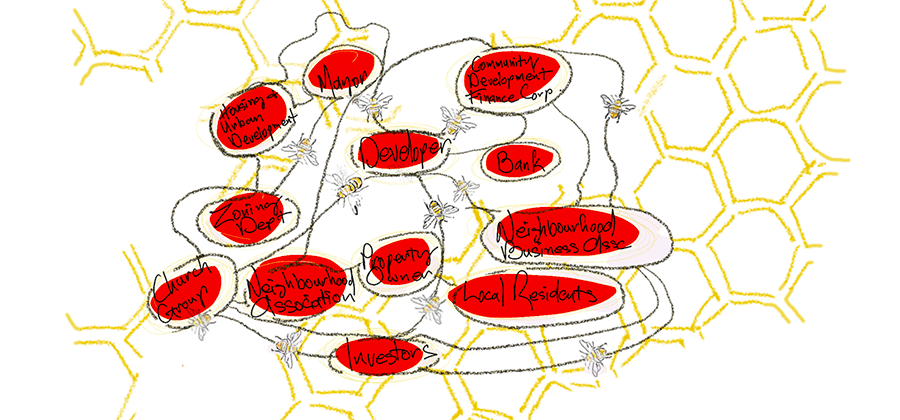
Cynthia Muller, a thought leader of the impact investing ecosystem and director of Mission Driven Investment at the W.K. Kellogg Foundation, believes that power mapping is an important tool to help gain an understanding of how to structure a project that will be meaningful and beneficial to a community. The parties brought to the table for any particular project might include residents, real estate developers, planning departments, investment banks, venture capital, community development corporations and others. With a power map as a visual aid you can begin to recognize the roles and relationships of all parties and identify the decision makers with power who might be influenced to make change. Here are the steps required to make a power map:

  • Identify the people involved, the problems and the decision makers.
  • Place the person or institution that can make the decision or enact changes to fix the identified problems at the centre of the map.
  • Think about any associations or relationships. This requires thinking about any connection including family, neighborhood, religious, political or financial that might influence the central decision maker. Place these in a ring around the centre.
  • Look carefully at the mapped network to determine any connections, including secondary connections like family members. These are the relational power lines.
  • Identify the people with the most relational power lines as well as those with less and mark them differently. If there are no connections, plan to learn more about that person.
  • Make a plan of action. Using the relational power lines and work out the best way to access people or institutions.

Power mapping is a great community engagement tool which helps to conceptualize networks and spheres of influence. Listen to my interview with Cynthia Muller to learn more.

Original artwork by David J Allardice

Adaptive re-use.

October 5, 2020

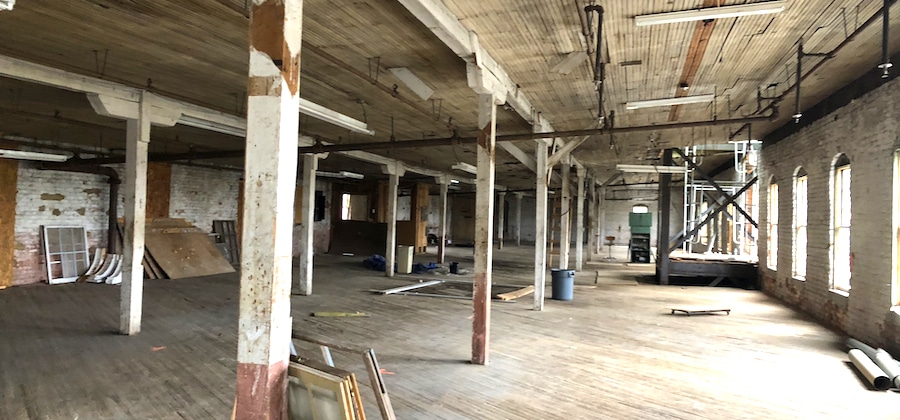
To adaptively re-use a building is to re-imagine and re-purpose it. Often old, historic buildings have outlived their original purpose. They can be demolished or brought back to life and adapted to contemporary life. And there are compelling reasons to re-use historic buildings.

Sustainable

The adaptive re-use of buildings is inherently green. It’s a form of recycling which uses less energy than new construction and generates less waste than demolition or ground up new construction. The bulk of materials that give the building shape don’t need to be manufactured, procured or transported – they’re already on site and in place. Typically they are higher quality materials which would be prohibitively expensive to purchase today or, in the case of old growth forest, no longer even available. A hundred years ago building standards were also higher. A century-old building might outlast a brand new one.

Less urban sprawl

Urban sprawl can be contained by the re-use of existing old or abandoned buildings. Many older buildings are located in dense, walkable neighborhoods with good access to transit. Warehouses and factories in cities around the world have been converted to a myriad of uses, including co-working offices and some of the coolest homes. Industrial waterfronts in many cities have transformed struggling and forgotten areas into vibrant neighborhoods. And even unused railway trestles have been converted into linear parks providing much-needed outdoor space as well as pedestrian links between neighborhoods.

Lots of character

Historic buildings are a tangible part of the past, providing cultural enrichment to communities and allowing residents to take pride in the history of their place. The revival of urban downtown areas and historic buildings has often resulted in higher property values. People seem drawn to local history, to the warmth of old materials or maybe to older buildings just because they are more interesting.

As long ago as 1961, Jane Jacobs asserted that small businesses, like stores, restaurants, neighborhood pubs and small start-ups thrive in old buildings. Maybe she was right. A newer study from the Preservation Green Lab shows that cities with older, smaller buildings have higher density, a greater number of small businesses, more entrepreneurial activity, more diversity and more affordable housing.

Affordable

Avra Jain, who co-founded the Vagabond Group, is a wildly creative Miami developer, passionate about adaptive re-use projects. She has earned a reputation for identifying the next IT neighborhood. Her remake of the abandoned 195O’s Vagabond Hotel on Biscayne Boulevard in Miami changed the course of that neighborhood forever. The historic MiMo District was born. But Avra wants to push adaptive reuse even further. Her personal passion is to convert these abandoned and historic motels into reimagined, affordable housing communities. She’s tackling both the restoration of significant architecture and the making of affordable housing in a very unique way.

Listen to my interview with Avra to learn more about the importance of saving buildings.

Image by Eve Picker

Saving places.

September 23, 2020

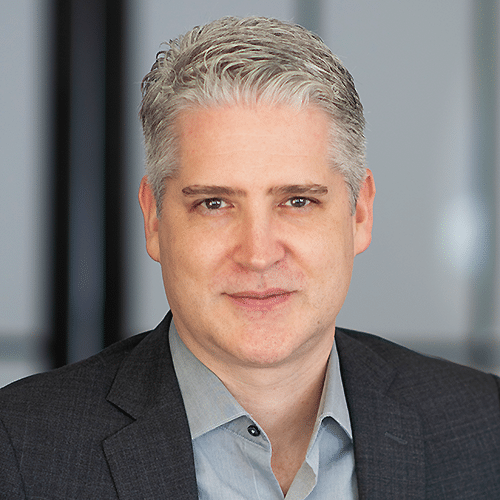
Patrice Frey is President and CEO of the National Main Street Center, where she oversees the Center’s work. Patrice and her team offer programs and guidance on placemaking, local entrepreneurship, facade improvements, crowdfunding and green rehabs to their network of approximately 1,800 members, all in service of revitalizing commercial main streets in both big cities and small towns alike.

Based in Chicago, Illinois, the National Main Street Center is a subsidiary of the National Trust for Historic Preservation, and has participated in the renewal of more than 2,000 older commercial districts during its 30-year history. Before joining the National Main Street Center in May 2013, Patrice served as the Director of Sustainability at the National Trust for Historic Preservation, where she oversaw the National Trust’s efforts to promote the reuse and greening of older and historic buildings, including research and policy development work through the Seattle-based Preservation Green Lab.

Patrice worked for several years in the field of community development and urban research before joining the National Trust. She is a graduate of the University of Pennsylvania’s program in historic preservation, where she received a master’s degree in preservation planning and a certificate in real estate design and development through the Penn School of Design and Wharton Business School. Patrice completed her master’s thesis on the application of the U.S. Green Building Council’s Leadership in Energy and Environmental Design standards to historic buildings. Patrice also worked for the City of Goleta, California, where she coordinated the acquisition and preservation of coastal open space, as well as a number of community development related programs. Prior to her time in Goleta, Patrice worked for the Brookings Institution’s Center on Urban and Metropolitan Policy in Washington, D.C., where she served as the executive assistant to the center director. She received her bachelor’s degree in politics and international relations from Scripps College in Claremont, California.

Insights and Inspirations

  • Main streets are the heart of their community.
  • They are often the single biggest asset that a neighborhood or small town has.
  • And Patrice sees them as entrepreneurial eco-systems.
  • Two main streets that Patrice loves are in Edenton, North Carolina and Emporia, Kansas.

Information and Links

  • Patrice finds this Roadmap to Recovery a great source of inspiration. She especially loves the community response map at the bottom of the page.
  • The National Trust for Historic preservation wants your help finding 1,000 places where women have made their mark. Submit your entry!
  • Follow this reddit thread for serious lego and creativity talent. Patrice has been collecting since she was eight and her favorite sets date back to the 1980’s.
Read the podcast transcript here

Eve Picker: [00:00:10] Hi there. Thanks, so much for joining me today for the latest episode of Impact Real Estate Investing.

Eve: [00:00:18] My guest today is Patrice Frey, the president and CEO of the National Main Street Center. Through the Center, Patrice and her team offer programs and guidance on placemaking, local entrepreneurship, facade improvements, crowdfunding and green habs, all in service of revitalizing commercial main streets in both big cities and small towns alike. Their network is very big with eighteen hundred members. If you want to hear why main streets matter, listen into our conversation.

Eve: [00:01:04] Be sure to go to rethinkrealestateforgood.co to find out more about Patrice on the show notes page for this episode. And be sure to sign up for my newsletter so you can access information about impact real estate investing and get the latest news about the exciting projects on my crowdfunding platform, Small change.

Eve: [00:01:35] Good morning, Patrice. I’m really looking forward to our conversation today.

Patrice Frey: [00:01:39] Hi, Eve. Thanks for having me. I’m looking forward to it.

Eve: [00:01:42] Good. You have a pretty big job. The National Main Street Center now has eighteen hundred members. Is that right?

Patrice: [00:01:50] It is, yeah. Eighteen hundred members all across the country. Every state in the union, I think, except maybe saving Hawaii.

Eve: [00:01:59] Ok. That’s pretty big. How has it grown under your watch? You’ve been there since 2013, is that right?

Patrice: [00:02:09] Yeah, I have. We launched as a subsidiary of the National Trust in 2013. Before then, we had been a program embedded at the National Trust for Historic Preservation and we have been very fortunate to see a strong membership growth in the last, in the last seven years or so. You know, those 18 hundred members are located all across the country. It’s a really good mix of rural programs and more mid-sized and then quite a bit of representation in some larger cities as well. When we took over in 2013, the team had a real focus on reaching out to folks that had been members in the past and maybe they had lapsed. And we’ve also just put a tremendous focus on developing new content and new resources that have helped to, I think, attract people, attract people to the organization. Yeah. So, it’s been really gratifying. We’re so proud to have such a large and strong membership.

Eve: [00:03:10] So I have to ask, I suppose the main question is why Main Streets?

Patrice: [00:03:16] Well, great question. You know, Main Street is important, I think, in at least two ways. The first is they truly are in the heart of a community and people tend to feel about their town, the way they feel about their downtown, which is to say you’ve got a healthy, vibrant, thriving downtown. I think that’s a real sense of pride, provides a real sense of pride and helps shape the identity, a positive identity for a community. And the reverse is true as well, where if you look at downtown and there’s nothing happening, I think that can help sort of create a sense of distress and incredibly challenged. So, psychologically, we know main streets are extraordinarily important. They’re really important for the quality of life factor, you know, providing restaurants, dynamic shopping experiences, all of that good stuff. But we also know that they’re key to economic competitiveness, right? Because as the economy, we’ve seen these seismic changes in the economy in the last 10, 20 years, we know that people are more mobile and they’re often picking where they live and then choosing a job. And that means for those employers, for local leaders, it’s extraordinarily important that there are high quality places in those communities and downtowns have those qualities in abundance.

Eve: [00:04:40] So that’s what’s going to be my next question. Why is it important to save them? So, one reason is that it offers an option for people. But what if they didn’t have that option? Why is it really important to save main streets?

Patrice: [00:04:54] A couple of reasons come to mind. The first is that often if you’re looking in some of our more stressed areas, cross country, whether that’s in rural or urban areas, other than the people, that commercial quarter is often the single greatest asset that that community has, right? It tends to be affordable, stay flexible, it’s adaptable, it’s walkable and we know more and more people are really appreciating the benefits of walkability. So, it really is an approach to asset based economic development that leverages what you already have. The other thing is main streets, particularly those, you know, those truly that were built like before the 1950s, you have just such a beautiful sense of character. They really reflect the local culture. They were built in a human scale. They’re super, and I’ve already talked about adaptability, but that is extremely important, 5the fact that you can adapt these places, you know, you can do like light manufacturing, you can do a restaurant, you can do standard office. You can, you know, turn upstairs into apartments or condos. So, it’s important and for many communities, this is the single biggest asset they’ve got.

Eve: [00:06:13] Yeah, I always find when I go to a small town or borough with a charming main street, I feel very comfortable with the scale. It’s kind of very easy to relate to, which is a bit of a relief sometimes, I think.

Patrice: [00:06:28] It is, it is. And it’s so funny because, you know, with Covid I’ve been spending a lot of time at home and I have a four-year-old son and we had checked out a book from the library on Roman design, Roman construction. And it’s just, you know, looking at the sketches was just reminded that, you know, this is an urban form that has existed for millennia. And I think it’s existed for a reason. It’s certainly existed for purposes of transacting commerce, but it’s also been a place that people go to connect with each other. And I think Covid is making us realize how much we appreciate having places to go.

Eve: [00:07:09] Yeah, and how much we miss it, right?

Patrice: [00:07:11] Yeah.

Eve: [00:07:12] So a hard question. How do we bring equity to small towns? This is the other pandemic, right?

Patrice: [00:07:21] Yeah, no, no, no. And yes, equally as concerning, if not more so. I think the first thing is acknowledging the problem for what it is and speaking openly about it. You know, in many communities, there is a legacy of African Americans being excluded that dates back to Jim Crow where African Americans were really only allowed downtown on certain days, during certain times to complete their shopping. So, I think some of it is really just acknowledging that in many ways main streets were, just have extraordinary histories of exclusion. And my own thinking is you only fix that by a truly intensive community engagement process where you are committed to reaching audiences and meeting members that you haven’t had traditionally part of downtown and then programming in a way in which those communities, particularly African-American community, feels supported. We, at the Center, do a lot of work on entrepreneurial ecosystems, and we’re taking a fresh look at that in terms of really understanding and helping communities embed within their work practices that really create for more diverse representation downtown.

Eve: [00:08:53] Yeah, I think exciting time about this moment is everyone I am talking to is really thinking about this issue very constructively. And I’m not sure that’s ever happened before. It’s going to be really wonderful to see, you know, what a year of thinking brings, right?

Patrice: [00:09:11] Yeah, it will. And I think now we’ve got to do the work, right? It’s getting past the talking and acknowledging that, yeah, that we have a problem. And, you know, we’re certainly, I personally am really committed to it, and then the organization, Main Street America, are very committed to it as well. You know, I think we’re going to have more tools and resources, support our communities in this conversation in the coming months and I would also say, you know, we’re eager to intensively engage in places where they’re ready to have this conversation and, you know, they want to make some changes.

Eve: [00:09:50] Yeah. Yeah. What are the primary activities of the Main Street Center? How do you help communities?

Patrice: [00:09:57] So, we’re the leading national revitalization organization nationally. So that means we can provide training, technical assistance, grants, networking opportunities. All of that good stuff. But we’re probably best known for something called the Main Street approach, or the four point approach, which is a revitalization strategy that’s been used now by about 2000 communities to help them really identify their values, identify their vision for downtown, and then program in a way to really make that happen. It’s a very comprehensive approach. A lot of times what we see in economic development is, you know, kind of the  one-shot wonder where you build the stadium, or you build the museum or a baseball park, and expect that that will automatically transform an area. That is very rarely the case. Instead, what we know makes a big change, big differences, is small steps, incremental change over time in a way that really takes into consideration the design of the place, economic vitality, the strategies, how you’re, what kind of place you’re actually trying to create and how you are attractor helping those businesses. And of course, promoting it, marketing, marketing it, all that good stuff.

Eve: [00:11:19] Right now, what communities have you been working on?

Patrice: [00:11:24] Well, we do a lot of work in communities. Up until Covid, right?

Eve: [00:11:28] Yes. Yeah, yeah.

Patrice: [00:11:29] We have our field services team that I think was in 200 communities…

Eve: [00:11:35] You know, Covid19, I’m just astonished at the trickle-down effect. Every time I talk to someone there’s another impact I haven’t thought about.

Patrice: [00:11:45] Yeah, yeah. So, our field services typically visits, will visit at least 200 communities a year. And we have transitioned a lot of those services online. But particularly when you’re talking about place, it’s really tough work to do. Place and relationship building. It’s really tough to do.

Eve: [00:12:11] Impossible remotely, right?

Patrice: [00:12:13] I won’t say it’s all impossible. I will say a lot of it is extremely difficult. Yeah.

Eve: [00:12:19] Yeah. I mean, you can only go so far.

Patrice: [00:12:22] Yeah. Exactly. So, you know, it’s hard for me to pick a place where we’re doing work, but, we’re in so many places, but Ohio, we’re doing some really exciting work there in a few of the heavily coal-impacted areas in terms of supporting the development of entrepreneurial ecosystems in that place. And I would say that work is almost certainly shifting off, because of Covid, to be focused on recovery as well.

Eve: [00:12:54] I suppose the question is, you know, how are you shifting your thinking because of this pandemic?

Patrice: [00:13:01] Well, yeah. So, I actually have great hope for main streets on the other side of all of this. I think the reason I’m so hopeful is because I think they, you know, like we talked about, they’re so adaptable. And even though I think we’re going to see the marketplace change a little bit, I think the space to sort of inherently, you know, we can do it, right Eve?

Eve: [00:13:33] Well, you know, I think main streets have a future because I think there are going to be a lot of people who want the calm, peace and space in places that have small main streets. Unfortunately, I think we’re going to go through a period of time where downtowns in larger cities might be scary for some people. And that could be to the advantage of smaller communities.

Patrice: [00:13:59] Well, I think that’s right. And I think we are also seeing where so many of our big cities were reaching peak unaffordability.

Eve: [00:14:07] Oh, yeah, there that too.

Patrice: [00:14:09] Yeah, that combined with the dynamic of, you know, people wanting a little bit more space and realizing that they can work from anywhere. I do think that bodes well for rural towns. I just feel like Americans have reconnected with the value of walkability in recent years. And, you know, I think that persists on the other side of this as well. Even though the economic impacts are going to be severe, we’re going to have vacancies, storefront vacancies that we’re, you know, going to be challenged by, overall, I think, we come out for the better.

Eve: [00:14:44] Yeah. So, storefront vacancies were happening before the pandemic, right? Because retail was really shifting dramatically.

Patrice: [00:14:52] Yeah. Because we’re so massively overbuilt in terms of commercial space especially.

Eve: [00:14:57] And I think because retail activities have changed so much in the last few years.

Patrice: [00:15:02] Absolutely.

Eve: [00:15:02] So, what does that mean for main streets? I mean, hasn’t it changed so much in small places? I mean, I like having my groceries delivered from Whole Foods or Costco or somewhere, but I don’t know if that’s possible in a small town, so…

Patrice: [00:15:17] Yeah, yeah. From what I’ve seen, probably not. I guess maybe there have been some changes. Maybe there will be some changes. We are seeing where, particularly larger retailer vacancies, were really starting to be a problem. My impression is that those tended to be in places, maybe central business district downtown, the malls, the lifestyle centers, et cetera. But I don’t tend to see those national retailers concentrated quite so heavily on our main streets, at least in the type of communities that we’re working with. So, I’m a little bit, you know, less concerned about that dynamic there, because we were seeing, people were really being extraordinarily creative in creating an experience at customers. And whether that was a restaurant or retail. Yeah. And so, again, I think, you know, none of the fundamentals have changed. And so, I see that continuing on the other side.

Eve: [00:16:18] Yeah. So, it’s maybe a shift towards slightly different retail types. Which is kind of exciting to think about.

Patrice: [00:16:26] Yes, it is, it is. I mean, I don’t know about you, but I, I am sick of like trying to online shop for clothes.

Eve: [00:16:34] Oh, I hate it.

Patrice: [00:16:36] I want somewhere I can look at them, you know, like touch them, feel them, like, you know that sort of human want, you know. I think that it’s real and doesn’t go away.

Eve: [00:16:48] So, I’d love to hear about, like, an accomplishment you’re really proud of or a project that you thought sort of exemplified what you do at the Main Street Center, something that’s, that you love.

Patrice: [00:17:01] Yeah. Well, I love that you ask that question, thank you. We are working on an advocacy campaign right now to ask for congressional support for, I mean through organizations, and so, I have been so heartened and just thrilled to see the way that our network has really rallied behind this cause. Unfortunately, state and local Main Street Programs are in peril. We know fiscal budgets, which are a big source of funding for these programs, are badly endangered. And so, we have been rallying and approaching Congress about what sounds like a large number to me, but I’m told is actually a small number. We’ve been rallying around a 100 million dollar ask to ensure that we can sustain these main street programs when small businesses need them most. You know, these Main Street Programs, the leaders of these programs are the folks on the ground who are helping the small businesses with their PPP application or they’re directing them to local community foundations for grants or making sure they understand what might be available through the state. They’re also sometimes in the room negotiating with landlords for rent forgiveness or forbearance. In this moment, what I’m most excited about, most proud of, is the way that folks have rallied to Main Street’s defence. And I’m pleased that Congress seems to be listening. We have a long way to go yet, but I’m feeling good about it.

Eve: [00:18:44] Awesome, that sounds fantastic. So, I’m just shifting a little bit to you. What’s your background and how did you, what led you to this role?

Patrice: [00:18:54] Well, it was a meandering path. So

Eve: [00:18:57] They’re always the good ones.

Patrice: [00:19:00] Well, you know, some people, some people know. Like my husband, you know, knew in third grade what he wanted to do and he’s doing it today. So, I, to make a long story short, I ended up at Brookings Institution. That was the Center on Urban and Metropolitan Policy at that point. And right after, soon after college, because I just love cities and, you know, I was sort of leaning towards the idea of a planning degree. And then I ended up on a tour in downtown Tacoma, Washington, with my dad. And, you know, we had this tour guide. Michael Sullivan, very well known locally, who captured my ardent attention. He just took us down, through downtown, telling the stories of the buildings. And I thought, OK, well, this is what I want to do. So, from there I, because I had really been interested in policy and really interested in architecture, and so I figured, OK, this is preservation is really a melding of those two things. So, from there, I took my time, but I ended up in grad school at Penn for preservation in the Design School. And I did my thesis actually on the greening of older historic buildings and ended up at the National Trust working as their research director. And then it’s it was a lot, I had so much fun in that job working on sustainability and older buildings. And then Main Street came along and I thought, well, you know, there are a lot of parallels between, a lot of threads, between sustainability and main streets. And so, I threw my name in the hat and here I am.

Eve: [00:20:50] That’s fabulous. So, you get to run this really pretty unique organization.

Patrice: [00:20:56] I love it.

Eve: [00:20:57] And spend time on main streets.

Patrice: [00:20:59] When times are normal, I get to see some of the most beautiful, most special places that I think people often never see. So, I am really grateful for that.

Eve: [00:21:11] So what’s one of the most beautiful, most special places you’ve seen?

Patrice: [00:21:17] So, a couple come to mind immediately. One is Emporia, Kansas. And I wouldn’t say it’s like beautiful in the way that, you know, you might think about a landscape or something. But it’s a city of, I think it’s twenty-five thousand, it’s near nothing, right, which is to say, I think Kansas City is a good two and a half, three hours away. And they have done such an extraordinary job of nurturing entrepreneurship there and have had just like success story after success story. I want to say that the Main Street Program has helped to support something like 70 or 80 new business starts there. They will allow good stuff with housing downtown. Just extraordinarily dynamic leadership. Great community. Yeah, just, just…

Eve: [00:22:11] In an unexpected place, right?

Patrice: [00:22:13] Yeah. Yeah. And then, you know, the other thing that I realize is, well the other, to one of the other key lessons I’ve learned, it’s from place called Edenton, North Carolina, and it’s an absolutely charming downtown. But sometimes with the preservation lens you can look at a place and say like, “oh, that facade isn’t”, you know, “that facade isn’t quite right”, “those windows…”, etc., etc.. And there’s a lot of what I would describe as imperfect preservation there, but I say that with no judgment. The thing I realized is, you know, it’s really not about the way it looks, it’s about what’s happening at 2:00 p.m. on a Tuesday afternoon, which is: Is this vibrant? Are people using this space? Are they getting what they need? And, you know, Edenton is absolutely just incredible.

Eve: [00:23:06] Oh, I’m going to have to put them on my bucket list.

Patrice: [00:23:08] Yeah, it is right on the water. It’s a beautiful, beautiful place. I’m probably getting my history wrong, but I think it was very briefly the capital of North Carolina.

Eve: [00:23:18] Fabulous. So, do you think socially responsible real estate is necessary in today’s development landscape?

Patrice: [00:23:26] I think it’s absolutely essential. I’m pleased to see that, you know, there is a bit more attention on it than perhaps in the past. My two big concerns when it comes to real estate are, well really three, building in a way that truly supports the community, is in line with the community’s vision. The second is building with time in mind. Meaning, I think so much of what gets constructed today is just utter crap.

Eve: [00:23:57] Oh, yeah, I agree.

Patrice: [00:23:58] And it will, it will not stand the stand the test of time either design wise or, you know, the fundamentals, the physical structures are so poorly constructed. And then the third thing that is, again, just kind of how I look at the world, is the reuse factor. You know, I tend to really gravitate to projects, you know appreciate projects, that are making use of an old building in some form or some fashion because they, the research I did early on in my career regarding the carbon impacts associated with new construction, was kind of formative in my thinking about this. I mean, there are just massive, massive impacts associated with constructing new buildings and tearing down old ones. And it’s just critically important that we’re giving that our full attention as we’re designing these places.

Eve: [00:24:52] Yeah, and, you know, I’ve done a lot of reuse projects and I find people really love the idea that they’re living in or occupying something that has a history. So, it’s a shame to eradicate it. It’s useful today.

Patrice: [00:25:09] Yeah. And Eve, you are a hero, a true champion among the development community for the work you’ve done on.

Eve: [00:25:19] Oh, thank you.

Patrice: [00:25:19] Yeah, and reuse. I think you’re right. I mean, I do think there’s an element of the human psyche that finds it very important to connect to elements of the past. And that’s what building reuse allows us to do. I mean, unfortunately, so much of what is being constructed today, you know, has so little value that, yeah, it’s hard to imagine 50 years from now that people are going to be fighting to save those places.

Eve: [00:25:46] Yes. Yep. Shifting gears again, what community engagement tools have you seen that have worked best? I know you talked about going further with them in the future, but I’m just wondering what works?

Patrice: [00:26:02] Yeah. So, I mean, there’s certainly the you hold a meeting and you see who shows up and you create the space for them to, for everyone to have a voice and to talk. And that’s very important. But there are two engagement tools in particular that we’ve had some success within recent years. One are surveys. I mean, obviously, that’s a little bit different and limited because you’re not having a dynamic conversation with someone. But that can be extraordinarily helpful in reaching a larger community group about and engaging them in terms of how they want to see their downtown evolve. And the second, and this is really important, is going to where they are, right? So, which is to say, if you have groups that just tend to not engage downtown and yet, you know, there’s a festival happening or there’s some sort of gathering, churches, what have you. That can be a great place to go and engage directly, you know, hand somebody a survey and talk to them at the same time. That’s been extraordinarily valuable.

Eve: [00:27:04] Oh, interesting. And then I have to ask this question. Do you think equity crowdfunding can play a role in building main streets? I’m hoping the answer is yes.

Patrice: [00:27:15] Money? Absolutely. Absolutely. And I think that crowdfunding, is probably the most exciting thing I’ve seen come along and real estate, I’d say full stop. Precisely because I think it creates a foundation for better community engagement, literally community buy-in.

Eve: [00:27:35] Yes. Yeah, that’s the important bit. Yeah.

Patrice: [00:27:37] Yeah. And that is, you know, that’s what it’s all about.

Eve: [00:27:42] Yeah, so they get to vote with their dollars. I mean, they also get to see the upside.

Patrice: [00:27:49] They do. They do. Yeah.

Eve: [00:27:51] Yeah. That’s what I love about it. So final question, what’s next for the Center and what’s next for you if you’re looking five years ahead, like what are the big goals?

Patrice: [00:28:03] Oh boy, I can answer the one for the Center pretty easily.

Eve: [00:28:07] Well, the 100 million for sure, right. That’s a really big goal.

Patrice: [00:28:10] After we get our 100 million and I go on vacation…I will not go on vacation. In terms of what’s next for the Center it is a renewed focus on diversity, equity and inclusion. You know, we’ve recently been doing some strategic planning that we’ve completely, I think, rethought our strategic plan to be aligned with goals of enhancing equity on main streets. I don’t want to be Pollyanna-ish about this and say, you know, we’re going to be able to snap our fingers and massive changes overnight but I do think we’re going to focus on creating tools and partnerships that will really support communities who want to have this conversation, are committed to creating a more diverse representation downtown. So, you’re going to see more resources come from the Center focused on the diversity issue. You know, the five-year question, Eve, is a really hard one because I’m spending all the time with Main Street. So, every year sort of presents a new challenge and you never know what’s coming down the road for you. I hope that, you know, five years from now, we’ve got double the membership and that we honestly have really engaged on the diversity issue in a really meaningful way.

Eve: [00:29:38] Yeah, I think that’s a good goal. And I hope there’s quite a few more main streets with less vacant storefronts.

Patrice: [00:29:45] That’s a good hope as well.

Eve: [00:29:48] Well, thank you very much for talking to me today. And I’m really looking forward to seeing what else, what else happens.

Patrice: [00:29:54] Thanks Eve, great to talk to you as well.

Eve: [00:30:08] That was Patrice Frey, the president and CEO of The National Main Street Center. Patrice impressed on me the importance of main streets. These commercial corridors are often the single biggest asset that a neighborhood or small town has. They are the center of commercial activity, often full of well-built, historic buildings, and they are the heart of their community. It’s important that they thrive. It’s important that they are saved and reused in ways that befit the way we live today.

Eve: [00:30:47] You can find out more about impact real estate investing and access the show notes for today’s episode at my website, rethinkrealestateforgood.co. While you’re there, sign up for my newsletter to find out more about how to make money in real estate while building better cities.

Eve: [00:31:04] Thank you so much for spending your time with me today. And thank you, Patrice, for sharing your thoughts with me. We’ll talk again soon but for now, this is Eve Picker signing off to go make some change.

Image courtesy of Patrice Frey

« Previous Page
Next Page »

Primary Sidebar

sign up here

APPLY TO BE A PODCAST GUEST

More to See

(no title)

February 22, 2025

Bellevue Montgomery

February 11, 2025

West Lombard

January 28, 2025

FOLLOW

  • LinkedIn
  • RSS

Tag Cloud

Affordable housing Climate Community Creative economy Crowdfunding Design Development Environment Equity Finance FinTech Gentrification Impact Investing Mobility Offering Opportunity zones PropTech Technology Visionary Zoning

Footer

©rethinkrealestateforgood.co. The information contained on this website is for general information purposes only. Nothing on this website is intended as investment, legal, tax or accounting strategy or advice, or constitutes an offer to sell, solicit or buy securities.
 
Any projections discussed or made may not be accurate and do not guarantee a specific outcome. All projections or investments are subject to risk due to uncertainty and change, including the risk of loss, and past performance is not indicative of future results. You should make independent decisions and seek independent advice regarding investments or strategies mentioned on this website.

Recent

  • The Mulberry
  • Mount Vernon Plaza
  • The Seven
  • Real estate and women.
  • Oculis Domes.

Search

Categories

Climate Community Crowdfunding Development Equity Fintech Investing Mobility Proptech Visionary


Copyright © 2026 · Magazine Pro on Genesis Framework · WordPress · Log in