• Skip to main content
  • Skip to secondary menu
  • Skip to primary sidebar
  • Skip to footer
  • Home
  • About Us
  • Say hello
Rethink Real Estate. For Good.

Rethink Real Estate. For Good.

  • Podcast
  • Posts
  • In the news
  • Speaking and media
    • About Eve
    • Speaking requests
    • Speaking engagements
    • Press kit
  • Investment opportunities

Impact

Superpowers Interview.

June 3, 2024

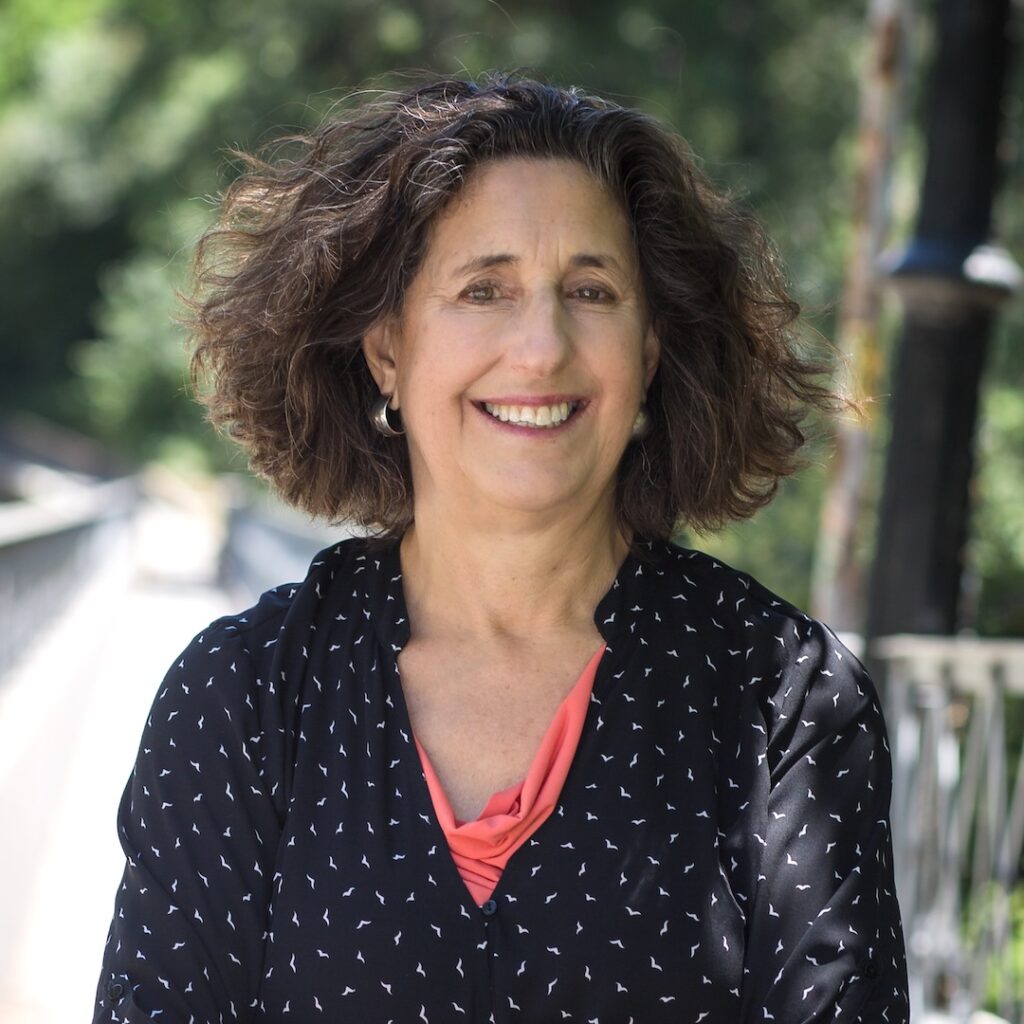
Devin Thorpe interviewed Eve for his TV show, Superpowers for Good!. It’s a masterful interview. Devin teased the why and how of Small Change right out of her. For those of you still wondering what it is Eve actually does, this interview tells it all.

You can watch the interview here.

AI Episode Summary

  1. Devin Thorpe introduces Eve Picker, CEO and founder of Small Change, a crowdfunding portal for real estate projects with social impact.
  2. Eve discusses recent expansion at Small Change, including the addition of five new partners from another real estate crowdfunding platform.
  3. The short-term effect of this expansion is increased busyness and the need to align the new partners with Small Change’s processes and compliance issues.
  4. Long-term implications include the ability to handle more and larger listings and to take on a broader range of projects.
  5. Small Change leverages Regulation Crowdfunding, which enables developers to raise capital from the public for projects with emphasis on democratizing investment.
  6. The platform focuses on overlooked neighborhoods and developers, often unable to access capital through traditional means, by allowing them to raise money from people who care about their projects.
  7. Small Change has a unique rubric to ensure that listed projects make some form of social impact, whether through the team, the neighborhood, the creation of public spaces, or environmental contributions.
  8. Examples of diversity in projects include a developer helping his community buy neighborhood shopping centers and another who is purchasing and restoring great estates in the Berkshires.
  9. Investing through Small Change offers possibilities of equity ownership or debt investment in real estate projects, but like any investment, it comes with inherent risks.
  10. Devin and Eve discuss her determination and persistence, especially in the face of resistance, as her superpower that led to the creation of Small Change, aiming to disrupt the traditional system and to empower overlooked developers and communities.

Public Assets.

May 22, 2024

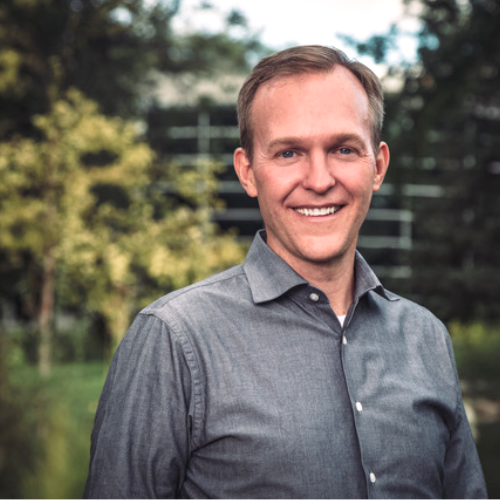
Former U.S. Congressman Ben McAdams is the founder and CEO of the Common Ground Institute, an organization supporting jurisdictions working to create revenue and other public benefits from government-owned real estate through public-private partnerships. He is also a Senior Fellow for the Government Finance Officers Association, where he leads the Putting Public Assets to Work Incubator, working with jurisdictions across the U.S. to support their development of public asset management strategies.

From 2009 through 2020, McAdams served as a Member of the United States Congress, a Utah State Senator, and Mayor of Salt Lake County, where he represented 1.1 million constituents and balanced a budget of $1.2 billion. In his public service, McAdams brought Republicans and Democrats together to find solutions to address homelessness, improve education and health outcomes, and promote evidence-based decision-making at all levels of government using innovations, including the first social impact bonds to achieve measurable outcomes for the public good.

Prior to elected office, McAdams taught Securities Regulation at the University of Utah Law School and was an attorney with Davis Polk in New York and Dorsey & Whitney in Salt Lake City, where he specialized in public and private securities transactions for U.S. and international issuers.

Read the podcast transcript here

Eve Picker: [00:00:13] Hi there. Thanks for joining me on Rethink Real Estate. For Good. I’m Eve Picker and I’m on a mission to make real estate work for everyone. I love real estate. Real estate makes places good or bad, rich, or poor, beautiful, or not. In this show, I’m interviewing the disruptors, those creative thinkers and doers that are shrugging off the status quo in order to build better for everyone.

Eve: [00:00:48] As mayor of Salt Lake County a decade ago, Ben McAdams was frustrated that there wasn’t $500,000 in a $1.3 billion annual budget for a promising early childhood education program. Not one to permit defeat, he decided to map the value of the city’s underutilized real estate, and that yielded an impressive number. All of a sudden, the city had $45 billion on its balance sheet. I found out there is actually money under our mattress Ben says. It’s real estate that is just forgotten. Since then, Ben has spent time in politics as mayor, senator, and congressman, but now he’s launched an incubator to help cities map their public assets, much like he did a decade ago, providing a path to solve issues that need money like affordable housing and homelessness. Every city should listen in.

Eve: [00:02:11] Hi, Ben. Thank you very much for joining me today.

Ben McAdams: [00:02:14] Eve, it’s so great to be with you.

Eve: [00:02:15] So the common theme in your life for many years was politics. You’ve been a mayor, a senator, and a congressman, but you started off as a securities attorney. How does a securities attorney become a politician?

Ben: [00:02:29] Well I am passionate about public service and really, from early days in college, wanted to be in a position that I could give back to a community that I love. And so, I went to law school and also found a passion for corporate finance. So, I went to a firm in New York. I did a lot of work in Latin America with issuers who were raising money in the US to do big projects, typically in Latin America. And I found kind of an alignment between my passion for public service and finance. And what I saw was the power of finance to transform communities for the better. So, I did a lot of work in Brazil and with telecom and what we saw, I’d spent some time in Brazil previously, and when I was there nobody had a telephone. And we saw because the cost to install a landline to a home was about $5,000, and nobody could afford that upfront cost to install a landline. And then cell phones come along, and people are raising money to just skip the landline process and go straight to cell phone.

Ben: [00:03:32] And I saw in Brazil, everybody went from not having a phone to having a telephone and what that meant for their productivity, for their ability to earn money, to stay in touch with family and loved ones was transformative. And so, we found an alignment between the power of finance to do good and to lift people for the better. And so, I spent about five years working in, as a securities lawyer, I taught securities law at the University of Utah. And then there came a chance to transition to directly public service. So, I went to work for the mayor of Salt Lake City as his director of government affairs. And in that capacity, I found that somebody with a good finance background was able to add a lot of value to government. We were able to, you know, figure out how to do the Rubik’s Cube of some pretty complicated public projects that we were trying to get done. And I think that was then my life mission. I found this passion for bringing a knowledge and understanding of private finance to the world of social impact.

Eve: [00:04:34] So, after quite a few years in politics, you have now launched something called the Putting Public Assets to Work incubator. So first I want to ask what are public assets?

Ben: [00:04:47] So public assets can be any number of things. You know, it can be a mass transit system that we’ve built. It can be an educated population. It can be, you know, public safety infrastructure. But when I was mayor and looking to, so I served first for the city of Salt Lake City, and then I was elected to the Utah State Senate, and then I was elected Salt Lake County mayor and I served for six years as mayor. And that was my favorite job, because I was really in a position to impact my community for the better. And one of the things that I found is that we knew, we know empirically from numerous studies that have been done globally, that it’s less expensive to educate your population than it is to incarcerate. It’s less expensive to treat somebody with addiction than it is to watch them cycle through a homeless services system. It’s less expensive to, you know, to maintain a road than to let that road fail and then come in and rebuild the road. But what frustrated me is, while we knew these things would save taxpayer dollars over the medium term, we just didn’t have the money to do it. And I said, there’s got to be a better way. We know we are acting in a way that’s going to cost us more money in the long run. We’ve got to figure this out. So, I started looking at our budget. And, you know, government budgeting is really built around cash flow. We project how much money we’re going to bring in from taxes and fees, and then we decide where we’re going to spend that. And what we ignore in government budgeting is our balance sheet.

Ben: [00:06:13] What assets does government have? How much are those assets costing us to maintain and what opportunities can we derive from those assets? So, I started focusing on the balance sheet aspect. You know, if we have, if we’re able to better utilize our mass transit system, that means and to better utilize that asset means we’re building fewer roads, maybe fewer stormwater systems and water and electrical systems. We can actually save money by better utilizing existing assets. Pretty quickly we came to what I think is the biggest asset class of government. It’s real estate. And, surprisingly, government has very little understanding of what real estate they own, what it’s worth and because of that, they don’t make good strategic decisions about how to manage their asset, how to minimize costs and maximize value. So, I said, you know, as a county, we are spending over $1 billion a year. We should have a handle on what we own and what it’s worth and start thinking about that as a way to minimize expense and maximize value. So, we did an inventory. We hired Urban3, who came in and did an inventory for Salt Lake County, helped us to identify all of our assets and hone in on the value. And what we found was shocking. So, we said we’re going to exclude assets that have no commercial value. We excluded our watershed, our, you know, our ski terrain is sacred here, so we don’t want to touch the ski terrain. Of course, our airport runway you’re not going to, that’s going to just be what it is. It’s an asset of a different…

Eve: [00:07:44] So you’re talking about the land, even the land. You just didn’t include those assets that you’re not going to touch.

Ben: [00:07:48] We didn’t include those. So, we looked at land that had commercial potential in addition to or instead of government value, so we could make better strategic decisions. What we found was in a county that’s about 500mi², we found 44mi² of commercially viable government owned land that was not on the tax rolls. We estimated the value of that was about $13 billion. This was 2017. So, you know, it’s about 10% of our land mass. It’s about ten times our annual budget that’s tied up in non-producing land. You know, some of these things we’re still going to want them to be non-producing. A library serves a function. But we started thinking, you know, could that library in an urban area, it’s a one story building with a big parking lot, instead of just being a rundown, dilapidated library surrounded by ten story office and residential, could we think of a library as a ground floor retail, so to speak, of an office building and reduce the cost of owning and operating that facility and actually maybe even generate some revenue off of it if we were able to activate the land.

Eve: [00:08:54] Let’s just go back a bit. So, these public assets that you found, like the library, is a fascinating example. What are some other examples? Not just vacant land, like not just abandoned houses, right? It’s way more than that, right?

Ben: [00:09:07] Yeah, vacant abandoned homes is a big one, but that comes with some other policy challenges around it. You know, governments think in terms of decades and centuries, and private sector thinks in more in terms of, you know, 7 to 10 years. So, we found a lot of parcels that 50 years ago, 75 years ago, we made a decision. Maybe we were widening a road and so we did some eminent domain to condemn some homes to acquire parcels. And we will widen that road, but we didn’t need the entire parcel. So, you have kind of the scrap that’s off to the side.

Eve: [00:09:38] Right.

Ben: [00:09:38] I can think of, you know, here in Salt Lake we have a major roadway, you know. So that roadway is a valuable asset. Transportation assets are expensive and desirable. And on the side of that roadway, there are these fantastic parcels of land that have signs on it that say property of the government, you know, and we go out and we cut the grass, and we clean up graffiti. And they just have been sitting there for decades being maintained and not being activated. So, there are not vacant abandoned homes but vacant parcels that the government is banking for another use or just kind of maintaining but has forgotten.

Eve: [00:10:14] Oh, interesting.

Ben: [00:10:15] So that’s one asset class.

Eve: [00:10:17] I just have to hop in. I bought one of those little abandoned pieces of property in Australia. I’m doing a project there with my sister, and there was this tiny little laneway that we really needed to make the project. It’s a very dense urban site. The city didn’t even know they owned it. They, we paid them for it in the end, quite handsomely. But they didn’t know they owned it. No one had a record of it anywhere. It was a very interesting exercise in a very desirable neighborhood.

Ben: [00:10:47] Surprisingly, or maybe not. But that scenario where government does not even know that they own a valuable parcel of land, we’ve seen it over and over again in this work. So, you know, helping them understand what they have and then make strategic decisions about that is a big part of putting assets to work. To your point, it’s not just the vacant parcel of land. Maybe it’s the parcel of land that is being used. It’s the library, it’s the senior center. It’s the parking lot adjacent to a rec center that you know could be used. You still need parking, but in some of these urban areas, does it really make sense for government to have a surface parking lot? The private sector’s concluded that it doesn’t. Right?

Eve: [00:11:24] The highest and best use, yeah. Yeah. We’re working with a developer who actually made a deal with Alexandria to purchase and redevelop three surface parking lots, and he’s building 50 housing units and putting robotic parking in place and expanding the parking, I think by three times, all on those three lots. So, I think that’s a really good example of what you’re talking about, right?

Ben: [00:11:50] They’re getting everything they wanted, right? They’ll still have parking there, but they’re just bringing property on the tax rolls and giving people a place to live.

Eve: [00:11:57] Exactly.

Ben: [00:11:57] That’s close to transportation and transit.

Eve: [00:11:59] Right? Right.

Ben: [00:12:00] It’s checking so many boxes instead of just one.

Eve: [00:12:03] When you uncover the value of a city’s assets, how can you leverage them? On a developer’s balance sheet obviously, their net worth is what banks look at and they want to make sure that they have enough money to support a project. If it fails, how does it work in government?

Ben: [00:12:19] Evidenced by the fact that we had $13 billion of latent real estate it doesn’t work, right? So, you know, every government has a story of where they’ve taken a public asset and done a public private partnership and activated that asset. So, there are exceptions to that. But these exceptions are few and far between. It’s, you know, one every several years. And when I saw that we had $13 billion of opportunities, it dwarfed the, you know, the one opportunity that we could think of three years ago where we did something. And look, we did do, we are doing interesting things and governments are doing these, but how do you systematize it and scale it that it’s not just something that happens when somebody knocks on your door, and then they’re persistent enough to wait out a government process that takes three years. These are the examples that are successful. How do we make this the norm of what we do not an exception? I’ll tell you, when I taught securities law, I would start my class with a kind of a dumb joke. I would say two economists are walking down the road and one economist says to the other “hey look, I think I see a $10 bill lying on the ground up ahead”. And the other economist says “you’re an idiot. There’s not $10 lying on the ground up ahead. If there was $10, somebody would already picked it up”.

Ben: [00:13:31] And so I think about this with the public assets, you know. I see $13 billion under the mattress of government. Is it a mirage? Is it really there? And what are we missing? Why is it there? And I think there has to be an explanation for why the market is failing in this. And I think the first explanation is government doesn’t even know it’s there. And when they do discover it, then the second explanation is the process to unlock that is so cumbersome. So, I’ll give you an example, a different government outside of my own that we were working with in this Putting Assets to Work. They have a salt pile, you know, governments when it snows, they need to de-ice their roads. And 75 years ago, they put this salt pile in an industrial corridor on an industrial rail line. Smart place to put it on a kind of a low value parcel of land. And then they go into autopilot. The salt pile has been there for 75 years. They use it. They know, you know, somebody knows that it’s there. We are looking at this and we say, do you realize your salt pile, that industrial rail line is not an industrial rail line today? Like many governments are doing with rails to trails. It’s a trail. It’s some of the highest value real estate in your city. And your salt is sitting on land that’s worth $10 million.

Ben: [00:14:44] If you would just pick up your salt and move it a couple of miles away, you’ve got $10 million in an area that has incredible affordable housing needs. So, government can decide, do you want to pocket $10 million by selling the land? Do you want to roll up your sleeves and become part of a public private partnership and create some affordable housing? All of those are options. And so that government is doing exactly that. But I think if so many other governments where once they’ve identified that opportunity, the next step would be to turn to the public works director and say, okay, can you do a public private partnership to create some affordable housing? And the public works director would say, are you kidding? Like, I’m overworked, underpaid, and I don’t know the first thing about doing a multifamily affordable housing development. And you want me to do that on top of my job? And so that starts the process of five years of it’s on a back burner but the public works director is trying to write an RFP. They have to maybe carve out money out of their budget to hire a consultant to help them write the RFP. And it just, the systems of government…

Eve: [00:15:48] Oh, I know I’ve been there. Most of my projects have been very small public private partnerships. So, I totally understand the pace of things in government.

Ben: [00:15:57] Yeah. And so most private developers, in your perspective, just say it’s not worth the effort. There’s a, it’s a great parcel but down the road there’s a parcel I can just buy in a few months and be done with it and be on my way with my project. I can’t spend three, five years trying to unlock this. And so, where the market’s failing, why there’s still that $10 bill on the ground is first, government doesn’t know that it’s there. Private market and the neighbors know that it’s there but the process for talking to government, to engage with them and to form a partnership with them is just so exhausting that nobody’s doing it. And so that’s a couple of things.

Eve: [00:16:31] It’s exhausting. And then I wonder what this partnership looks like. Because I’ll give you an example of a project I did that, hearing what you’re saying, I think the government would have, if they had approached it differently, they would have something of much greater value now in their pocket. I redeveloped a building that’s 30,000ft² and had been vacant for 15 years in a largely Black demographic. I responded to an RFP just like the one you talked about. Spent a lot of time putting my response together. Was apparently the only developer who responded. And eventually the city sold me the property for $1,000, and it was really a liability for $1,000. They also helped in a number of ways with loans and deferred interest payments and matching facade grants, the sort of things they normally have in their pocket. But now we’re like 20 years later and the building is fully occupied, bar Covid, which rocked the boat a little bit and worth a lot of money. And I often wonder if they had said, look, we’ll give you the land and we’ll give you these special grants, but we want to be a partner what they would have today.

Ben: [00:17:40] That’s right.

Eve: [00:17:40] You know, they would have a part of a project or building they basically gave away because that neighborhood has, a little unfortunately, gentrified. Just a few blocks away we have the Google headquarters and Facebook, and it’s very close to the universities. It’s very desirable. Right across the road there’s very expensive apartments that have been built. And I mean, no one could have foreseen that, but no one really. They didn’t have the belief in the property that I had, you know. So how do you change, how do you flip that switch?

Ben: [00:18:14] Well, we have some tools that we have developed that we are advising governments to try to unlock this, because if the tool is look to your public works director, look to your library director to figure this out that doesn’t work. But I think you’re right that also just selling it for, you know, long term lease for a dollar a year, selling it for $1,000, government’s leaving money on the table and the private market’s probably fine with that. But if you want government to not just do this once every five years, but maybe make it a part of what they’re doing every day and to accelerate the pace of these partnerships, there has to be a different approach. But government has some things going for it that the private market doesn’t have. First of all, we own these land, these parcels outright. We have been sitting on them for decades and there’s no expectation to generate revenue tomorrow. The private market has to look at a IRR. How much are you going to make per time, right? And government, I think government should look to say can we, are we using tax dollars or taxpayer assets well? But we can say we can go to a partnership and say we want you to pay a market value for this, but we don’t need that market value up front before you do the development.

Eve: [00:19:27] Yeah, it’s a patient wait.

Ben: [00:19:30] We can contribute it to…

Eve: [00:19:31] Patient capital.

Ben: [00:19:32] Patient capital. Yeah, we’ll contribute it. We understand that you’re going to have bank debt that’s going to be very sensitive to time. You may have other equity investors that are very time sensitive. So, we’re going to negotiate some benchmarks. And once the project has stabilized and you’re paying your debt and you’re paying your investors and negotiated rate that, you know, then we’ll be in the waterfall, but we can be towards the back of the waterfall. And so, government can say we’re willing to absorb that time risk that, you know, we’d like to get paid, but if it takes five years or seven years, we’re willing to be patient. It’s better than what we’re doing right now, which is spending money to let it sit, you know.

Eve: [00:20:10] Right.

[00:20:10] And so there’s some tools that government can bring to the table. So, to capture value but also…

Eve: [00:20:15] Sometimes in those instances I’m thinking about this building. The fact that I renovated the building, redeveloped it, meant that other developers came in because I just happened to like being in underserved neighborhoods. I like the challenge of those projects, and it’s where I prefer to work. I want to do something that’s meaningful. But other developers are waiting to see where something’s already been invested. And so, you know, maybe government’s thinking, well, we’ll give this one away, but we’re going to get other ones. As a result.

Ben: [00:20:45] They have the ability to do, to lead out, to maybe do some philanthropic investments with their land, because, you know, their baseline is zero. So, absolutely.

Eve: [00:20:56] Okay. So interesting. So how does the incubator work? The Putting Public Assets to Work incubator?

Ben: [00:21:04] Yeah. I was mayor. I was then elected to the United States Congress. I served only two years in Congress. I lost my re-election in 2020. So, I still had a passion for public service, a passion for finance, and came back to this idea that I’d been working on as mayor of public assets. And I just said, I know there are billions of dollars under the mattress of government. I know that if we can unlock it, the amount of good we can do in our communities, you know, that can, to your point, it can catalyze growth in an underserved neighborhood. It can form affordable housing. But maybe what you’re doing is just looking to maximize revenue into government to then support childcare or, you know, childcare vouchers or investing in homeless services or investing in clean and renewable energy. There are so many different things you can do with that asset once you unlock it. So, I said, this is where I want to spend my time, is figuring out how to help governments unlock the value of their underutilized assets. So, I teamed up with the Government Finance Officers Association, GFOA. They’re a membership association, you know, pretty much every city, county, school district, the CFO of those government entities is a member of GFOA. And so, we worked with GFOA. And I said, look, putting assets to work should be part of every government’s finance. Let’s start working with GFOA member governments and helping them and others but helping them to unlock the value of their real estate. So, we started Putting Assets to Work incubator.

Ben: [00:22:34] We’ve now worked with about 15 governments, mostly cities and counties across the country. All of them saw what I saw when I was mayor. They’re all sitting on billions of dollars under the mattress, and they have challenges to activate that. So, we help, we go in, we help them identify their assets. We help them see what it’s worth. You may have an asset that is in the far flung reaches of the county that you would say, put on a back burner for now, but we help them identify 10 to 15 assets that they should take action on immediately that are really that proverbial, the salt pile. So, and then we work with them to develop some policy tools to help scale it, to make it not a one every once every five years initiative, but to make it part of what they’re doing. So, the concept that we have there is we go in, and we serve as a, what we call a municipal property advisor. And we say, you know, once we’ve identified the asset, we would like to represent you in structuring a transaction. And we’re going to do this at no charge or very little charge to the government. You know, the private developers will pay a finder’s fee for this. So, our model is built on passing that fee onto the private developers. But if we can say, look, we can clear all of this government red tape, all of these hurdles to give you a parcel that is in a prime location in a great downtown area that has already…

Eve: [00:23:55] Hell yeah, I’m in!

Ben: [00:23:56] …cleared the boxes. Yeah. And then, you know, and here’s our fee, you know. But we pass that not onto government, but onto the private sector. So, all of a sudden, the library director, the public works director, we say we don’t need you to model a multifamily real estate development. Just tell us what you need. You need us to find another parcel for your salt? You need a library that’s 20,000ft², and you need so many parking stalls. Okay, we’ll take your inputs, and we’ll work up a model, and we’ll bring it back to you, government to sign off on. And if you sign off, we’ve got private developers who will, you know, also come in and pay for the architectural work and the design work to get these projects shovel ready. All of this government doesn’t need to pay for that. They just need to create a process where they can get out of their own way and still maintain what they want out of the land. And then and then let the private sector do what they’re going to do.

Eve: [00:24:48] So you said you’ve worked with 15 cities. Can you mention some of them?

Ben: [00:24:53] Yeah. I think some of the ones that have taken this work and are now doing amazing things. City of Atlanta. The mayor of Atlanta, mayor Dickens, said he wanted to build 20,000 affordable housing units. That’s a huge goal. But they identified all of these public assets that can come in and be part of the capital stack to start lowering the cost of development and consequently insisting that those developments have affordable housing. We worked the city of Cleveland. They’re trying to create jobs. And so, they know that they have, they’re actually losing population. So affordable housing is not at the top of their to do list. It’s clearing space. You know, they want to bring in employers and they said we need parcels that are 30 acres or larger. And they did the survey of the entire city of Cleveland and said that parcels that could work for that they had one in the city of Cleveland. So, they said, we’ve got to do some work to assemble parcels, remediate any environmental contamination, and make these available. So, Atlanta and Cleveland are two that we’ve worked with. Of course, you know, given my roots, we’ve worked with Salt Lake City and Salt Lake County. We are doing some work with the city of Annapolis, Maryland. Chattanooga, Tennessee.

Eve: [00:26:02] So pretty big cities.

Ben: [00:26:04] Yeah. Austin, Texas. And some small ones, too. And some small ones, you know, Sugarland, Texas is another one that’s doing some really innovative things.

Eve: [00:26:11] I don’t suppose my city, Pittsburgh is on the list, right?

Ben: [00:26:15] Not yet. We’d love to talk to them. Although they have done some interesting things thinking about their assets as well, you know.

Eve: [00:26:22] Our Urban Redevelopment Authority has always been at the forefront, I think. Yeah, they’ve worked a lot at clearing some very large vacant assets called steel mills. You know, they’re very good at that. And they were a fabulous partner in all my projects. So, yeah. So, do you have a waiting list? Do you have cohorts that you take through? I mean, how does it work?

Ben: [00:26:44] We do. So, we have cohorts. We are preparing to start with our third cohort. So, you know, we think the, the best size for a cohort is about 4 to 5 jurisdictions, and it takes us roughly 6 to 8 months really depending on the speed of government.

Eve: [00:27:00] Doesn’t work fast.

Ben: [00:27:02] Employees have a busy schedule. Yeah. So, and we understand that we work with their time. So, we do most of the workload ourselves. But we’ve got to get into their data and sort through their data. And we need some collaboration with them, or we need them to look over our work before we go public with it. We want them to give a trained eye to tell us what they like. So, it takes about 6 to 8 months to do a cohort. We’re launching a cohort over the next couple of months. We have, almost full, we actually have one spot left for a government to join with this cohort. You know, we do 4 to 5. So, we’ve got four, but we’re looking for that fifth one. And then we’re also soliciting interest for our fall cohort with putting assets to work.

Eve: [00:27:41] It’s fascinating.

Ben: [00:27:42] So yeah, if any governments are interested, we’d love to talk to them.

Eve: [00:27:45] You must get pushback, right? There must be plenty of places that say, why on earth would we do this? We’re stuck in our ways. We don’t want to change.

Ben: [00:27:55] Yeah. No, a little bit. I think you get some pushback from some of the staff that say, you know, if I’m that public works director and I say my budget’s $100 million a year, I don’t want to spend my time on, you know, this salt pile just. It’s fine. It works for me right now. What’s the reward for thinking innovatively? And so oftentimes, what we look for when we’re deciding who to admit into the cohort, we want to see a mayor, a council, some city managers who are willing to push it a little bit to say, no, this is important. We want to be better stewards of taxpayer assets. And so, we want to see some leadership from the jurisdiction. Sometimes we think it’s our job to have some uncomfortable conversations. One jurisdiction we worked with, we saw that they had an abundance of parks and open space that were poorly maintained. And they probably had like, I’m a as a mayor, I’m a big supporter of parks and trails and open space. But if they’re too many and underutilized by the public, we said, maybe, you know, you should think about, you know, a slight reduction in your parks and go for quality over quantity. And, you know, that’s always a hard conversation to have. And we think it’s our job to like to provoke that. So, we encourage them to look at their parks parcels. And do you really need a pocket park across the street from a pocket park or can we rethink how you’re using those assets? So, you know, there are some uncomfortable conversations that we think it’s our job to have.

Eve: [00:29:25] So, what’s been the biggest surprise for you in this work?

Ben: [00:29:28] Well, I think my biggest surprise was to find that what I discovered in Salt Lake County was not unique. It is every, 100% of the governments we’ve worked with. And many governments say, look, we don’t have any vacant assets. We’re on top of it, and we’ll go in, and we’ll find them everywhere. It’s, you know this this concept actually isn’t new. It’s done pretty regularly in Europe and Asia when they think about, you know, the city of Hong Kong built their entire mass transit system without tax dollars by simply saying, we know that when we put in a transit stop, the land around the transit stop is going.

Eve: [00:30:05] Increase in value.

Ben: [00:30:06] Increase exponentially in value. So, they just were thoughtful about how they built a transit system and paid for their transit system with the value that the transit system created. So, it happens in Europe and Asia. I think it just doesn’t happen in the US because our governments are so much more fractured. You have cities and counties and school districts and housing authorities and transit authorities. And, you know, we have a mosquito abatement district here that, you know, and to get all of these entities working together is hard. And so, I think we have to develop new tools that they don’t need in, you know, in a jurisdiction where there’s just the federal government and it’s very hierarchical and aligned. So, you know, it’s been a surprise that how many assets we have and how, and what incredible opportunities there are to unlock it.

Eve: [00:30:55] One other big question, how do you plan to scale this work? What are your plans?

Ben: [00:31:01] Yeah. Well, first of all, I would say we hope people copy us. My hope is that ten years from now, this is the norm of municipal government. Everybody has a municipal property advisor or 2 or 3 who are on tap with the government, who are making unsolicited proposals to government to say, hey, we’ve noticed you have this parcel, and we’d like to help you think about how to use it better. And that government is well versed in saying, okay, let’s have that conversation, you know, and here’s what we want. And if you can hit these objectives, then we’re game. So, I would love people to copy what we’re doing and to make this the norm of municipal government. Because if we do, so many communities are going to be benefited. We have the capital to solve our homelessness crisis, to solve our housing affordability crisis, to transition to clean and renewable energy. We have the assets to do that. It’s just a matter of figuring out how to activate those assets.

Eve: [00:31:53] It’s really fascinating. Ben, thank you so much for joining me. I can’t wait to see where this goes, and I hope my city is listening.

Ben: [00:32:03] We’d love to talk to them.

Eve: [00:32:04] Okay. Thank you so much.

Ben: [00:32:07] Thank you. Eve.

Eve: [00:32:20] I hope you enjoyed today’s guest and our deep dive. You can find out more about this episode or others you might have missed on the show notes page at RethinkRealEstateforGood.co. There’s lots to listen to there. Please support this podcast and all the great work my guests do by sharing it with others, posting about it on social media, or leaving a rating and a review. To catch all the latest from me, you can follow me on LinkedIn. Even better, if you’re ready to dabble in some impact investing, head on over to smallchange.co where I spend most of my time. A special thanks to David Allardice for his excellent editing of this podcast and original music. And a big thanks to you for spending your time with me today. We’ll talk again soon. But for now, this is Eve Picker signing off to go make some change.

Image courtesy of Ben McAdams

Bigger.

May 16, 2024

This year Small Change expanded its team … radically. 

You may have read about it.  We’re 10 weeks in now and have developed a satisfying work rhythm, supporting each other as Small Change gets busier.  

Julian and Mitch are now managing the platform technology in house. Mitch is the coder and Julian the strategist.  Rich, Jake and I are focused on meeting with and onboarding new projects. Derek is building our deal flow, meeting with developers early on to explain how our platform works.  And Jake has taken over the bookkeeping and budgeting.

I’m still the CEO but I am so grateful for their support.  They are an amazing team.

If you missed the headlines, there were a lot of them. Commercial Observer broke the story so that’s a good place to start!

https://commercialobserver.com/2024/03/cre-crowdfunding-platform-small-change-expansion-adds-partners/

https://www.connectcre.com/stories/smallchange-expands-with-five-new-partners/

https://www.crowdfundinsider.com/2024/03/222534-real-estate-crowdfunding-smallchange-adds-five-partners-looks-to-expand-offerings/

https://finance.yahoo.com/news/smallchange-co-expands-welcomes-five-150000673.html

https://www.mannpublications.com/mannreport/2024/03/06/smallchange-co-welcomes-five-partners-with-expertise-in-regulation-crowdfunding/

https://buffalonews.com/buffalo-next-crowdfunding-real-estate-business-merges-with-larger-firm/article_5ca0a512-eba1-11ee-acf1-0783c03d587a.html

https://www.streetinsider.com/Business+Wire/SmallChange.co+Expands%2C+Welcomes+Five+Partners+With+Expertise+in+Regulation+Crowdfunding/22892747.html

https://www.bizjournals.com/buffalo/inno/stories/news/2024/03/12/buffalo-startup-common-owner-small-change.html


Image courtesy of Small Change

Woman of Influence.

May 14, 2024

For the second year running GlobeSt. has made me a winner!  

GlobeSt. has been recognizing the growing number of women in commercial real estate for their excellent professional achievements for over 30 years now through the “Woman of Influence” awards.  The categories are broad. This year I’ve been included in the PropTech Executive / Innovator group of just seven women.  

All credit to GlobeSt. for trying to turn the tide. We need what they want, and that is to recognize that both men and women are capable of amazing things. I’m eagerly awaiting the day that these awards will be renamed – from “Woman of Influence” to “Person of Influence”.

You can view the class of 2024 here.

Thank you GlobeSt!


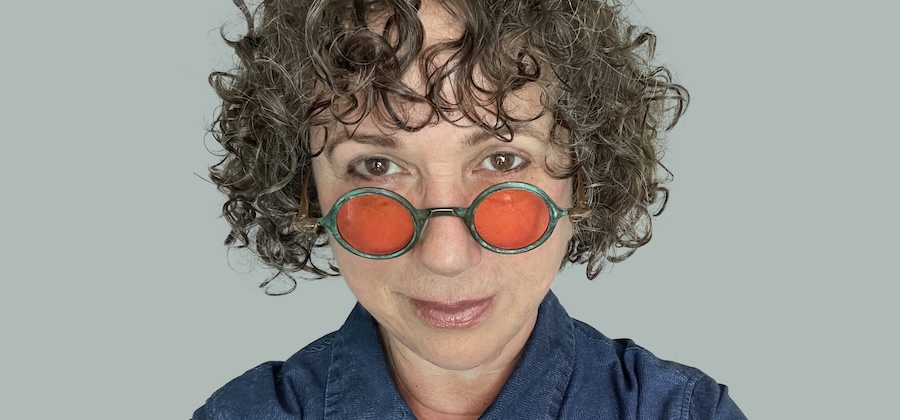
Image courtesy of Eve Picker

For the love of cities.

May 8, 2024

Enrique Penalosa is an internationally respected urban thinker, who, as Mayor of Bogota in two non-consecutive terms, profoundly transformed his city from one with neither bearings, nor self-esteem into an international model in several areas. As adviser and lecturer, he has influenced policies in many cities throughout the world. 

Among his achievements is the creation of TransMilenio, the world’s best BRT (Bus based mass transit), which today moves 2.4 million passengers daily, inspired by the Curitiba model but much improved in capacity and speed, which has served as a model to hundreds of cities. Currently its lines are being extended by 61%. He contracted the first Metro line in Bogota which is under construction. He also created an extensive bicycle network when only a few northern European cities had one, greenways, hundreds of parks, formidable sports and cultural centers and large libraries, 67 schools, 35 of which managed by a successful private-public scheme and high quality urban development projects for more than 500,000 residents and a radical redevelopment of 33 hectares of the center of Bogota, previously controlled by drug dealers and crime which required demolishing more than 1200 buildings occupying 32 hectares, a few blocks from the heart of Colombia´s institutional heart, including the Presidential house.   

His advisory work concentrates on urban mobility, quality of life, competitiveness, equity and the leadership required to turn visions into realities.

Penalosa has lectured in hundreds of cities and in many of the world´s most important universities. He has advised local and national governments in Asia, Africa, Australia, Latin America and the United States.

He is a member of the Advisory Board of AMALI (African Mayoral Leadership Initiative), Fellow of the Institute for Urban Research of the University of Pennsylvania. For over a decade he was President of the Board of New York´s ITDP (Institute for Transportation and Development Policy) of New York; member of the London School of Economics´ Cities Program Advisory Board. He was a member of the Commission for the Reinvention of Transport of the New York Metropolitan Transit Authority created by the New York Governor Cuomo.

His book Equality and the City was recently published by The University of Pennsylvania; in Spanish it was published Villegas Editores and in Portuguese by the IPP (Instituto Pereira Passos) of Rio de Janeiro. 

Penalosa has been included in Planetizen´s list of The Most Influential Urbanists, Past and Present, the most recent time in July 2023. He was also one of ¨15 Thought Leaders in Sustainable City Development¨ selected by Identity Review July 2023. He has been awarded important international recognitions such as the Stockholm Challenge; the Gothenburg Sustainability Prize; the 2018 Edmund N. Bacon Award, the highest tribute of The Center for Design and Architecture of Philadelphia, given to him because of ¨the world-wide influence his pioneering initiatives have had on public transportation, infrastructure investment, and public space, including in cities such as Philadelphia and New York City¨. For Penalosa´s work Bogota was awarded the Golden Lion of the Venice Biennale.

Penalosa has a BA in Economics and History from Duke University, a Degree in Government from the IIAP (now fused with ENA) in France and a DESS in Public Administration from the University of Paris 2 Pantheon-Assas. He was Dean of Management at Externado University in Bogota and a Visiting Scholar at New York University.

Penalosa´s TED Talk has nearly one million views, his X account in Spanish has more than 2 million followers.

Read the podcast transcript here

Eve Picker: [00:00:13] Hi there. Thanks for joining me on Rethink Real Estate. For Good. I’m Eve Picker and I’m on a mission to make real estate work for everyone. I love real estate. Real estate makes places good or bad, rich, or poor, beautiful, or not. In this show, I’m interviewing the disruptors, those creative thinkers and doers that are shrugging off the status quo in order to build better for everyone.

Eve: [00:00:49] This is a long one, but I couldn’t help myself. Enrique Penalosa is an exuberant lover of cities, equitable cities. He served as mayor of Bogota, Colombia, not once but twice, profoundly transforming his city from one with no self-esteem into an international model. As mayor, Enrique launched TransMilenio, a bus mass transit system which today moves 2.4 million passengers daily. He also built an extensive bicycle network at a time when only a few northern European cities had one, along with greenways, hundreds of parks, sports and cultural centers, large libraries, 67 schools, and a radical 33-hectare redevelopment in the heart of Bogota previously controlled by drug dealers. This required demolishing more than 1200 buildings. Recently he published a new book called Equality and the City. Look for it on Amazon. Of course, the accolades are too numerous to mention here. Enrique’s work is considered significant and influential by many, and the list of awards is long. There’s a lot to learn here. More than an hour’s worth of podcasting can hold.

Eve: [00:02:21] Good morning. I’m really delighted to have you on my show, Enrique. I’ve been a huge fan of yours for a very long time.

Enrique Penalosa: [00:02:28] Thank you very much, Eve. Thank you. You’re really generous, and it’s a great pleasure to be with you.

Eve: [00:02:33] I know there have been many, many accolades. You’re one of the most influential urbanists, and you have a brand new book called Equality in the City. But I wanted to start with a question: why and how did cities come to take center stage in your professional life?

Enrique: [00:02:50] Oh, that’s an interesting question. I somehow talk about this in my book. I am from Colombia, and this, of course, conditions everything. My father was into public service, and he was the head of the Rural Land Reform Institute and the, and so I was as most middle, upper middle-class children in a developing country, in a private school. And I used to get beat up because they were this, institute was doing land reform, taking, forcefully buying land to distribute to small farmers. And so, since very early, I was obsessed with equality with, I was convinced that socialism was the solution, as many in my generation. It was that time around late 60s, 70s and I went to Duke University and there I really was very interested in studying all about this. And I realized socialism was a failure. It was both a failure for economic development, which for me was extremely important and sadly, also for constructing equality, because it was extremely hierarchical system with all kinds of privileges for the bureaucracy and all that. But at that time, when I was in college, my father became secretary general of the United Nations Conference on Human Settlements – Habitat in Vancouver. And he had always already been involved in in Bogota, he had been in city council, and at that time I began to be more and more interested in cities and less and less interested in the socialism, which I as I said, I realized it was a failure. And at that time my city was growing like 4% per year. Bogota. And I realized that maybe it was much more important to define the way cities would be built and even economic development, because economic development would come sooner or later, maybe 50 years later, 50 years earlier. But if cities were not done right, it was very difficult to correct them. If we were able to save land for a park as the city was growing or exploding, almost, this hectare or ten hectares or 100 hectares would make people happier for hundreds of years. Thousands.

Eve: [00:05:21] New York City is a really great example of that, with the fabulous park in the middle. That was very visionary. Yeah.

Enrique: [00:05:27] New York City, I mentioned this, and I work a lot with Africa recently, New York City created Central Park in 1860, when New York City had less than 1 million inhabitants and had an income per capita, very similar to some developing countries today. So, if we are able to save land for a park, it will make life happier for millions for hundreds of years. If we are not able to save land for that park and cities built over, it’s almost impossible to demolish, for example, the 300 hectares that Central Park has later. Demolish 300 hectares of city to create a park of that size. So I became more and more interested in cities. Obsessed. Later I did graduate school in Paris and, of course I was always very poor. When I was at Duke, I was on a soccer scholarship. And in Paris I worked a lot. I was a very low. I mean, I realized I was poor many years later because I was extremely happy. The city gave me everything I needed. And I realized how a great city can make life happy, even if you don’t have wealth or anything. I mean, it’s a, so I became obsessed with cities since then. When I majored in university, I studied economics and history and public administration and all that, but I never actually studied anything urban per se. But all my life that’s what I have worked on.

Eve: [00:07:02] Interesting. So, I have to ask you, what city do you think does that best today, makes people happy?

Enrique: [00:07:10] Oh.

Eve: [00:07:11] I wasn’t going to ask that question, but I have some of my own answers.

Enrique: [00:07:15] That’s an interesting city because I love all cities, you know, all of them have some charm and some great things. Clearly, today for everybody what is a great city is one that is good to be on foot for pedestrians. That’s the way. So, with that criteria, which city? What makes it a great city for pedestrians and for, also, I would add, a great city for the most vulnerable citizens, for the elderly, for the poor, for the children. And so the first thing has to have is great pedestrian qualities. And pedestrian quality means great sidewalks, of course, but also destinations, places to go to and people that you see in the sidewalks. We need to see people, to see people. I mean, we are pedestrians. We are walking animals. We need to walk to be happy. Just as birds need to fly or deer need to run, or fish need to swim. We need to walk not just to survive, but to be happy. We could survive inside an apartment all our life, but cities that are great for walking sometimes because they are very great sidewalks places such as I love New York, despite the fact that I think it’s a little too dirty recently.

Enrique: [00:08:35] And I think the occupations of public pedestrian space by by informal vendors really is getting out of hand. And this crazy, how is it that they put in the buildings the, andamios. Scaffolding all over the place that lasts for years. I mean, but despite that, I love New York because he’s so full of life and he’s so it’s so free and it has beautiful places like the riverfront and anyway I love, I mean I love all cities. And it seems very spontaneous, you know, spontaneous. So, it’s not like, and they are, everybody’s like doing their own thing and doing things. There are cities where you, I think you can be there and just simply lead a contemplative life. But others, if somehow brought you to do things, to do things, to be active, to create, to do, to do. Other cities, you can just, you know, go to the cafe, relax and that’s fine. But I like this energy New York has.

Eve: [00:09:45] You like active cities. Active cities, yeah.

Enrique: [00:09:47] Somehow brought you to be active and to create and to do things. But I mean, all cities are wonderful. I mean, all for different reasons. Mexico City, my city I like, of course. I mean, I love all cities.

Eve: [00:10:03] Yes. So, let’s move on. You had two terms as mayor of your city, Bogota, Colombia, and they’re often cited as transformative for the city. So, what led you to become mayor? I mean, I hear the love of cities, but becoming mayor is really another big step, right?

Enrique: [00:10:20] Yes. I was obsessed with the public service somehow. Always. This is why, even though it’s an interesting thing, I was born in the United States, because, but I was there for only one month, as my accent shows. When I was a kid, my family went back to when I was 15, to my father was working at the Inter-American development Bank and even though then, I was at Duke University, a very good university in the US, and I had a US nationality because I’ve been born there in one of these rare trips to Colombia, I renounced my US citizenship because, since then I was interested in politics. In politics and my father had been a public servant, but not elected. And he was attacked and all this and had many, and I remember always an uncle of mine who said, look, uh, your father was attacked so dirtily because he had neither money nor votes. So, I said I would not have money, but I will get votes. What gives you power when you are, and what makes you be able to do change when in government is to have votes. The difference between the one who is elected and the one who is appointed is like the difference between the owner of the company and the manager.

Enrique: [00:11:46] If you do, if you are appointed and you do anything that creates a conflict, you are fired. So, I always thought I wanted to be elected, and that’s why I said maybe to have a US nationality may become a handicap in the future. And I was obsessed with doing things for cities. More and more, the more I studied since I was in the middle of college, I was obsessed with studying and reading, and I lived in Paris, and I always dreamt of doing things that were very obvious. And I dreamt, for example, of bikeways much before, I mean, they were always bikeways in the Netherlands and Denmark, but there were no bikeways in Paris when I lived there, not one single bikeway. And in Bogota there were no sidewalks, very few almost. There was not one decent sidewalk in the city, in Colombia. And I always also dreamt that the rail systems were too expensive for our possibilities, that we needed to organize some kind of efficient bus-based mass transit. And, I mean, I was obsessed since then, and so I wanted to become mayor. I think I was a good mayor, relatively good. But I was not a good politician.

Eve: [00:12:58] We had a mayor like that in Pittsburgh. He was a fabulous mayor, but he was not a good politician.

Enrique: [00:13:03] Yes, yes, yes. I mean, I have lost like 7 elections in my life. And that sounds very quickly. When I said you, I lost seven elections. But in life, actually, it is almost one year of work every time, so like,

Eve: [00:13:14] Oh yeah.

Enrique: [00:13:14] You could say it’s lost seven, seven years of life for elections that were not successful. But to make the story short, in my life, I was, after a big effort, I was elected, but I wanted to be mayor because I wanted to do things. I had a whole vision in my mind of what I wanted to do. I did not want to be mayor, but to do as mayor.

Eve: [00:13:43] Yes, I get it. I mean, I’ve read that even the way you became elected, you didn’t really rely on a party machine. You relied on meeting with people one at a time, right? It was all about connecting with the people.

Enrique: [00:13:55] That’s right. Eve. When I started, Colombian politics was only machinery, very powerful machineries, organizations and a lot of money distributed to local leaders. And I did something that was completely new at that time. It’s very obvious. And I had nothing creative now in the world. It’s very easy to start to distribute little leaflets in the street, which nobody had done at that time. Even I did some interesting things that were different. For example, the first politician had a smiling picture. At that time, all of the pictures were more like, great…

Eve: [00:14:34] Powerful. Yes.

Enrique: [00:14:35] And I also put a resume and anyway, so I was able and going to homes one by one. Anyway, I was elected. I was able to be elected first to Congress, like this. And a few years later to mayor with no party, as an independent really.

Eve: [00:14:57] Independent. Interesting. So, describe Bogota as a city when you took office and some of the challenges you faced.

Enrique: [00:15:06] That’s interesting because Bogota, as most developing cities, well, Bogota, our cities have lacked a lot of planning. And even when they did plans, they weren’t very nice plans. Architects draw and they don’t, are not implemented. So a few things were a few roads, a few main big roads. But for example, more than 40% of Bogota when I was first elected in ’97, had informal origin, had been of informal origin. And since I had worked in the past in things with the city, for example, I was Vice President of this Bogota water company. I had really worked closely, and I knew very well, and I was very obsessed with this informal organization, how lower income people were not able to get legal land, well-located legal land. So were they forced to the steep hills around the city, steep mountains, or flooding zones near the river and so with the water company we used to we’re able to work a lot in the legalization of this to bring water and sewage. And so, this is one thing Bogota had. Another thing Bogota did not have sidewalks, practically not one. I would say they were not one. They had been a few decades before a few sidewalks built or some sidewalks, but the cars simply were parking on top of them whenever they had been built. And and many places they had not even been built at all. So, it was horrible for pedestrians and of course Colombia has always been a very much of a bicycling country. It’s the only developing country, the country in the developing world that has successful cyclists at the world level. Some Colombians have won.

Eve: [00:17:00] That’s interesting. Yeah.

Enrique: [00:17:02] There is no other developing country in the world. I mean, you would think this is not an expensive sport. It’s not like yachting, but nevertheless, for some reason, Colombia is the only developing country that is successful. For example, Colombian won the tour de France and Colombians have won the tour of Spain and of Italy.

Eve: [00:17:22] Oh wow! I didn’t know that. Yeah.

Enrique: [00:17:25] But there were no bicycling for work. For zero for transportation. It was like a sports thing. And of course, only 10% of the people have cars, but they were the richest and most powerful people in the city, and they think they could park in the sidewalks or two. And they thought the bicyclists were a nuisance if there were any. They were nobody used to go to work by bicycle. There were almost no parks, and the few parks were completely abandoned and not in a good shape. So, this is the environment I found, more or less. And of course, the traffic jams were worse and worse, and there was not a decent public transportation system. Of course, there was not a metro and there was not a, the bus system was completely chaotic. There were thousands and thousands of buses that were almost individually owned, racing against each other, people hanging from the doors. And sometimes since they were fighting for passengers, they would block the another ones and the other bus the driver would get out with a cudgel and break the windows of the other bus. Even if the other bus was full of passengers, it was like the Wild West. And that’s the city.

Eve: [00:18:45] It was. It was like the wild… Just just backing up a little bit, how many people live in Bogota?

Enrique: [00:18:51] Now we have like 8 million inhabitants in Bogota.

Eve: [00:18:55] It’s a big city. OK.

Enrique: [00:18:56] And also in the surrounding municipalities, like a little bit about a million, 200 more or something like that.

Eve: [00:19:02] Okay, okay. And then it was also a lot of poverty and drug activity and altogether not a very healthy city by the sounds of it.

Enrique: [00:19:12] There was a lot of poverty because we were a developing city that was very poor. And we are still I mean, so far, for example, Colombians income per capita today is around $6,000. And the United States income per capita is like $80,000 or something like that. So it would take us if we do very well with very high economic growth rates, it would take us maybe, even if we have very high economic growth rates, like, for example, if we if we grow at 3 or 4% per capita annually, it would take us more than 150 years to reach today’s income per capita of the United States, not to catch up to the United States, but to reach where the United States is today.

Eve: [00:19:53] Wow!

Enrique: [00:19:54] We have advanced a lot. Colombia has progressed a lot and we have reduced poverty very much. We have made huge advances in education and all that, but we are still at poverty. But of course, we had much more poverty 25 years ago when I first became mayor.

Eve: [00:20:10] So what did you tackle first?

Enrique: [00:20:13] One thing before I go into that, I’d like to say that this experience in urbanization, urbanization is fascinating because it’s gigantic. I mean, when I became mayor, Bogota’s population would double every 16 years or so, and the size of the city grows much more than proportional to population, because as a society gets richer, there are more buildings that are different from housing. For example, when a society is very poor, barely there are housing buildings. As societies get richer, there are shops, there are factories, there are offices, there are universities. And one thing that is very interesting, this is not just history. What we are talking about is not history because this is the challenge in Africa. I think the most important challenge in the world today is African urbanization. Today in Africa, there are more than, in sub-Saharan Africa, there are more than 250 million people who live in slums. Horrible poverty, slums with no electricity, no water, no sewage. Different degrees of poverty, but all of them horrible. And if these things continue the way as they are, they would have more than 500 million more people living in slums in 20 years. African urban population, it grows by the amount of the US population, about 320 million or something, every 15 years or so. So every 15 years, Africa has to build the amount of housing that the whole US has today every 15 or 16 years, you know. And they are extremely poor, not only housing the sewage, the water…

Speaker4: [00:22:03] The infrastructure.

Enrique: [00:22:04] The schools, the roads, they’re going to have giant cities, cities that maybe like Lagos, cities that maybe 60 million inhabitants or more. So, it is extremely important not only for Africa but for the world to do good cities in Africa. Even if at first they do not have all the water or sewage, but to leave enough space for roads, for parks, for public transport, because otherwise this is going to be horrible for the environment and horrible suffering for people. And this is even a problem for the security of the world, because this is going to be a completely inhuman situation that can have unexpected consequences. So, what I’m saying is that my experience in Latin America is some, a few decades ahead of Africa in economic development and urbanization but this is still a big challenge for the world. This is not just history.

Eve: [00:23:10] I suppose I’m wondering how you convince people. Because Bogota Ciclovia is a really amazing, iconic symbol of the city. I understand that now every Sunday, 75 miles of roads are shut down and given over to people to enjoy, almost like a Millennial Park, right?

Enrique: [00:23:30] Exactly. This is a beautiful thing that we have in Colombia.

Eve: [00:23:35] So I actually was so inspired by this, I co-founded an open street in Pittsburgh, Pennsylvania, and I can’t tell you how hard it was to get one mile of it because everyone complained about, you know, the street in front of their shop that someone couldn’t park there and shop there that day. It was exhausting because people don’t understand the potential that that has. And I don’t know how you get to 75 miles, like, this is huge! You know, how do you convince people that they have to be fabulous cities in Africa or we’re all going to suffer? It’s, most people don’t want to think about it.

Enrique: [00:24:20] Yes. There are several aspects of this. This is a fascinating thing. It all has to do with equality, which is the theme of my book in a certain way, how cities can construct equity so that a good city is one place where nobody should feel inferior or excluded. A good city is also one where, if all citizens are equal, then public good prevails over private interest, you know? So, in developing countries, in Africa or even in Colombia and most, almost there is not one single developing country where more than 50% of the people have cars. Always developing country, almost by definition, I would say, is that it’s a developing city is one where less than 50% of the people have cars. And the one thing we should remember is that if we are all equal, as all democracies say, all constitutions state that all citizens are equal, then a citizen on a $100 bicycle is equally important to one on $100,000 car. And they have, or a citizen that is walking or is on a bicycle has a right to the same amount of road space that a citizen that has goes in a luxury car. The same amount. There is, the person in the car usually think they have a right to more space than the people in the bicycle or so, and they honk at the people in the bicycle.

Eve: [00:25:53] Oh yeah.

Enrique: [00:25:56] So, so this is very beautiful, what we have achieved in in Bogota because,I mean, it was created before, but it has been expanding, actually, when my brother was the head of the Sports and Parks and Recreation with another mayor, he expanded a lot and I expanded it a lot. So, we get, on a sunny day, we may get, a million and a half people out in the street. And one thing that is important is that Bogota is a very compact city, very dense. We have more than 220 inhabitants per hectare. So, it’s a beautiful ritual of human beings reconquering this city for themselves. One thing that I did that is interesting too, is that I held a referendum for people to vote, and one day a year a work weekday, we have a car free day. So, this whole 8 million inhabitant city has no cars, no cars at all, during the whole day. Everybody has to use public transport or bicycles. We have taxis but no private cars. And so, it’s an interesting exercise, not only in terms of the environment or even mobility, but of social integration. One of the most crucial things that we need, especially in unequal, in more unequal societies like ours, is that all citizens should meet as equals. For example, someone who owns an apartment in Fifth Avenue in front of Central Park in New York.

Enrique: [00:27:38] He may meet the doorman of the building, but they meet separated by hierarchies. One is the owner of the apartment, and the other one is the employee, low paid employee. But if they meet in the sidewalk or if they meet in the park, they meet in a completely different way. They meet as equals or if they meet in public transport. So, in a great city, people meet as equals. This is not enough for, but this is one of the kinds of equality that a good city can construct. And so in these kind of exercises, if we get people to meet together, for example, if two people meet in bicycles in a traffic light, maybe one bicycle is a $10,000 and the other one is $100, but it doesn’t matter. They both meet as fragile humans, vulnerable. They see each other. They have the same right to the street. They have the same right to the space. It’s very different than if somebody is in a crowded public transport, and the other one is in a luxury car or something. In this there is a proximity, there is a vulnerability. And so, these exercises that we do in Bogota, I think they are interesting. And they are good for the environment, they are good for mobility, and they are good for social integration or construction of some kind of unconscious equity.

Eve: [00:29:11] So you as mayor, you focused on mobility, not just bicycles, right? I read about the TransMilenio, the first metro line, a huge bicycle network, greenways. Do you want to tell us a little about all of that?

Enrique: [00:29:26] Thank you very much, Eve. Yes. For example, the TransMilenio, the BRT. I have even written about how we should organize a bus system that was different than the one I described earlier, with exclusive lanes for buses and a system that, where people would have prepaid cards so they would not take time to board the bus. And then I found the Curitiba system. Mayor Jaime Lerner in Curitiba had done a wonderful, in Brazil, Curitiba had done a wonderful system. But Curitiba was a small city. The system had been created like in 1973 or 4. And they only had 500,000 inhabitants, at that time. It did not have much impact. But then to me, I marvelled because I said, this is the solution. This is perfect because rail systems are too expensive. I mean, subways are wonderful. But they cost a huge amount of money. It’s extremely expensive to build an extremely expensive to operate. And so, we created a BRT system and actually we were innovative even in that we gave a name to it. You know, one of the things that I, I knew from, since you tell me you are in Pittsburgh, one of the first places in the world where they did some exclusive lanes for buses was Pittsburgh.

Eve: [00:30:50] Oh yeah. I use it. I used it a couple of times a week. I live downtown, and I have an office in East Liberty, a building in East Liberty, and it takes me seven minutes on the busway. And if I drive, it’s 30 minutes.

Enrique: [00:31:03] Exactly. You know, so…

Eve: [00:31:05] It’s Fantastic. Fantastic.

Enrique: [00:31:07] Well, I’m very happy that you say that, because I like to tell you and to tell the Pittsburgh people that one of the things that influenced me to create TransMilenio was the Pittsburgh project, because that’s before TransMilenio. I found about it. And these things motivated me and inspired me.

Eve: [00:31:23] It’s very limited. I wish they would expand it. They’re doing a line now from downtown to Oakland, which is the University Center, but they’ve been talking about it for 30 years, you know, takes a very long time to do things.

Enrique: [00:31:38] This brings us to the fact that solutions to mobility, more than an issue of money, are an issue of equity and political decision. This is very obvious. Some things, sometimes for us, they are before our noses, and we don’t see them. You know, for example, only about 100 years ago or a little bit more, women could not vote, you know, and it was not fascist who thought women should not vote. I mean, normal people, good people thought that this was good. That was normal, you know? And today we see this is completely mad. Or how about only about 70 years ago or so that, even in the United States that the African Americans had to give their seat to the whites or things like this, that today we think is is mad. But at that time, I’m sure many people who were good people thought this was normal. And so, in the same time, sometimes inequalities before our noses, for example, I believe it’s completely crazy that we have a bus with 50 people and then you have the give the same space that you give to a car with one, you know. This is not democratic. Besides, it’s not technically intelligent because actually a BRT is the most efficient way to use scarce road space. Since we are going to have buses, a BRT is the way that you use the least energy, the way that you use the least amount of buses, the way that you use the least amount of road space. Anyway, we created TransMilenio, which became a model to hundreds of cities around the world. It’s a system that has an amazing capacity. It moves more people per kilometer hour anyway you want to measure it than almost all subways in the world.

Eve: [00:33:28] Wow.

Enrique: [00:33:28] We move more people, passengers, our direction and also within Europe. There is only one line in New York subway that moves more than us and that’s the Green Line. But that’s only because it’s two lines actually: the express line and the local one.

Eve: [00:33:43] Right.

Enrique: [00:33:44] But our system moves more passengers per kilometer than practically even all the New York subway lines. And of course, it costs 15 times less. And this is, I think, you need more of this in many cities in the US, it’s the only way to be able to give this kind of service, even to suburbs, because this can have more flexibility. Anyway, we created this, this system. It has 114km today. And it moves a 2.4 million passengers per day.

Eve: [00:34:14] Wow.

Enrique: [00:34:15] And it’s being expanded by 60%. Now, at this time. So, we should reach easily more than 3.2 million passengers per day or something like this. And now, of course, most buses are bi-articulated buses with gas fuel. But soon all of them will be electric, of course, as well. So, and I’m sure very soon in ten years or so, they will also be driverless. So actually, what makes a mass transit system is not the fact that it has metal wheels or rubber wheels, but the fact that it has exclusive right-of-way. That’s what creates the the mass transit, the capacity, the speed. We don’t have time to go into these boring technical details. But what is interesting also is the democratic symbol it represents, because I have seen everybody in the world wants subways.

Eve: [00:35:14] Yes.

Enrique: [00:35:14] Upper income people all over the world, subways, preferably underground. So, they don’t even have to see the low income people that go in them. You know, in developing countries, I mean, this is not the case in London or in Paris or in New York, but in developing countries, all upper income people want subways, but they have not the slightest intention of using them. It has not crossed their mind. You know, I am sure that if you have Mexican friends, that are most likely upper middle-class citizens, 99% of the cases, not only they don’t use this, I mean, the Mexico City subway is one of the most extensive networks in any developing city in the world. I think only Delhi and maybe another one has longer one. But the upper middle class or upper class even less, it’s not that they don’t use it, it’s that they have never even been to it once in their lifetime. Never.

Eve: [00:36:14] So, you know that’s not only true of them. I have a Pittsburgh born and bred friend who’s in his 50s who has never ridden a bus. Ever. I was completely shocked when he told me that.

Enrique: [00:36:27] There is something very interesting. Transport has a lot to do with status for some interesting reason. You know, this is why some people pay $500,000 for a car, which basically that’s something very similar to a $50,000 car, you know, but then it’s very cool. The fancy car. And for example, in 1940, there were trams in every city in the world with more than 100,000 inhabitants. But at that time, trams were identified with the poor, with the lower income people. They were jammed and so, buses appeared. For some interesting reason buses appear much later than cars, because at first, they were not the technologies for pneumatic tires, and the only until 1920, or even more, most streets in the world were cobblestones. So, a solid rubber tire, big vehicle on cobblestones, of course, would fall apart in a few blocks.

Eve: [00:37:27] Yes.

Enrique: [00:37:28] Jumping.

Eve: [00:37:29] Yeah.

Enrique: [00:37:30] And so buses appeared, and in 1940 buses were sexy. They were the sexy, the modern thing. And trams were identified with something for the poor. Now it’s the opposite. Now, in the US, buses are identified with the poor, with the Latin Americans, with the African Americans. And the cool thing is trams. So, everybody wants to put trams, trams. All cities think trams will revitalize the city centers and all that. And, of course, trams are nice, but basically, they do the same or less than buses and they cost a lot more. But they are sexy, you know, and so we have to make bus-based systems sexy to finish this story. We may have $100,000 car stuck in a traffic jam, and there are many traffic jams in Bogota, and the bus zooms by next to it. And even a little boy can’t make faces to the guy in the car, you know, and say, hey, they can go, you know?

Eve: [00:38:31] Yes.

Enrique: [00:38:32] So it’s a symbol of democracy in action, a BRT when the expensive cars. So, because, even if an underground subway is wonderful, it’s not as powerful symbolically as the bus that zooms next to the car, because it shows that public good prevails over private interest. Democracy is not just the fact that people vote. Democracy it also requires that if all citizens are equal, public good prevails over private interest. And this is the essence of the busway. And also, this is the essence of bikeways. When first we started to do bikeways in Bogota, when I first became mayor, we did like 250km of protected bikeway, the first time I was mayor. When there were no protected bikeways anywhere in the world except the Netherlands and Denmark and a few in Germany. There was not a meter in Paris or in New York, or in London. Maybe there were a few kilometers somewhere in California or something. But we created this network and again, it’s the equity principle is what is behind it. What we are saying is a citizen on a $100 bicycle is equally important to one on a $200,000 car. And the protected bikeway not only protects the cyclist, but it raises the social status of the cyclist. And this is very interesting. Bogota today has the highest amount of cyclists in any city in America. Amsterdam has a much higher percentage, of course, but since we are much bigger, we have more cyclists than Amsterdam.

Eve: [00:40:12] Interesting.

Enrique: [00:40:13] We have like a like a million people every day using bicycles.

Eve: [00:40:17] Your optimism about this is infectious, but I can’t wonder what sort of pushback you had because wealth is powerful, right? So even if 10% of the population don’t get it, that must have been an enormous lift.

Enrique: [00:40:32] I had a lot of enemies in politics. Yes. I mentioned I was not a good politician. Amazingly enough, I was re-elected in Bogota. There is no immediate re-election. If I had immediate re-election, I would have loved to have 2 or 3 periods. I really would have transformed Bogota. But I had to wait several years afterwards. And it was very difficult, even, for example, when I was just having the war to get cars off the sidewalks and to put bollards, for example, they made this huge calumny. Half of Colombians thinks that I made a business making bollards, you know? And there was never an investigation. There was never even a press article. Nothing. But there was so much calumny that I would say, if we make a poll, a half of, not Bogota people, Colombian people, think I made some kind of business from making bollards, or that my mother had a bollard factory or my brothers or something. Because we had to put bollards because we built a lot of sidewalks. But we did not have enough money to build the sidewalks everywhere. So we had to put bollards where we did not have money to build sidewalks. It’s always difficult. I try to do many things. I mean, again, we have to do what will improve the life of all and this implies conflicts. For example, now I talk very quickly about how we create the TransMilenio. But these people who used to have individually owned buses before TransMilenio, they were extremely powerful, extremely well-organized, and they would bring the city to a halt on a strike, and they would put the president on his knees. When I was doing TransMilenio, the President would call me once they had a strike, and he would call me all the time at home and everything to tell me to stop and to negotiate, that this was not tolerable.

Enrique: [00:42:30] Happily, in the Colombian constitution, the mayor has a lot of autonomy, and I did not have to obey the President. But I don’t say this is the kind of difficulties that you find when you are seeking the public good. And not only that, for example, many of these traditional bus operators became the contractors of the TransMilenio system, and actually it was very good business for them. But it was not easy. And, for example, there was the most exclusive club. This is the cover of my book, by the way, the cover of my book. The most exclusive country club in Colombia where the elite of the elite, maybe, I don’t know, 1500 members, the all the former President, the richest people in Colombia, I mean the most powerful people. I use eminent domain to turn the riding stables and the polo fields into a public park. And I also said that the whole golf course should become a public park as well. And this was, of course, very difficult. And, of course, all of these are battles. Battles, battles. Sometimes I have to battle the drug traffickers who control the whole area downtown. The police would not enter this area unless they were on a big operative with a hundred police, but five police would not go there because it was completely controlled by crime. And this was two blocks from the Presidential palace, from the main square in the country, in the city, from Congress, from the Supreme Court of Justice. And it was extremely difficult. And there we demolished more than 1200 buildings in my two terms and were able to create parks and housing.

Eve: [00:44:16] Wow!

Enrique: [00:44:17] But everything that you do is difficult. It’s difficult and painful.

Eve: [00:44:21] And yet you went back for a second time.

Enrique: [00:44:23] I went back, this, yeah, this thing that I just.

Eve: [00:44:25] Is there a the third one that we need to know about?

Enrique: [00:44:28] Well, I was feeling that I was already in a certain age. But then, once I see Mr. Biden and Mr. Trump as candidates, so I feel very young again.

Eve: [00:44:41] Very good. It’s only a number, right?

Enrique: [00:44:43] So I will go for another time or something.

Eve: [00:44:48] This is an amazing story. So, I want to ask you what’s the accomplishment you are most proud of?

Enrique: [00:44:54] Well, there are many things that made me extremely happy. For example, I was able to get more land for parks than all the mayors in the city in the whole history. The TransMilenio is very exciting to me because I think, again, as mobility, as symbol of democracy. There are some other things that we did that are very beautiful. For example, one of the most difficult things is to give good education to the poorest people, quality education. And we began to build some beautiful libraries, like four large, beautiful libraries, some in low-income areas. So, they are symbols that construct, like temples, that construct values, that knowledge and education are important. But also, we created beautiful schools. Beautiful, like the best private schools of the upper income people in the lowest income neighborhoods and former slums. And these beautiful, but more important than the building is that we created a system that has cost me blood politically, because I confronted the extremely powerful teacher’s union in which we said, we are going to get the best private schools and the best private university to manage these public schools in the poorest areas.

Speaker4: [00:46:09] And we have now 35 of these schools that we built, and we are able to contract with this, the best university. And the results have been amazing. Amazing. It’s really amazing that these children with the poorest people, because these schools are all in the poor, they are not in middle class areas, they are in the poorest neighborhoods. These children have academic results that are comparable to the upper income children in private schools. And of course, this has been extremely exciting. I mean, I will tell you that 99% of these children who study, they’re already graduates, or they have no idea that I, that I did this. But the teacher’s union has it very clear and it has caused me blood because they have been specialists in calumny me and to say all kinds of lies. And of course, the fact is not that all public schools are going to be managed in this way, but this creates a competition with…

Eve: [00:47:09] Equality, yeah.

Enrique: [00:47:10] Exactly, a model. So, we have to understand why these children in these schools, why these schools work so much better, so much, amazingly much better than the other public school that is managed by the traditional public union style only a few blocks away. And it’s not only in academic results that are amazing in the S.A.T. kind of things, but also, for example, much lower drug consumption, much lower desertion. I mean, when desertion rates that these children leave schools. Much lower gangs, even the whole neighborhoods crime goes down.

Eve: [00:47:50] Interesting.

Enrique: [00:47:51] It’s really fascinating. And of course, like many things that, so this, if you say, what are you most proud of? I think that these schools are teaching some things which have not yet been adopted by the rest of the educational system, but it’s very clear what it is that makes them much better.

Eve: [00:48:08] Interesting. We could talk all day, but I’m going to have to wrap up. So one more question. What’s next for you?

Enrique: [00:48:17] Well, we have in Colombia this time what I consider a terrible national government. We’re doing many crazy things, and I continue participating in politics. I mean, I have, like more than 2 million followers in Twitter, and so I try to give opinions or things. I may run for office somehow, even if it’s just to help somebody in the end, somebody else. I’m not obsessed with power, but I will try to contribute, and I’m also working very much internationally. I am very, I have been given the opportunity by some programs in Africa that are being, built by AMALI, an organization called AMALI and by Bloomberg. So, I am extremely interested in being able to participate more in African organization. I think this is a huge challenge, not just because we could avoid horrible problems, but because we could do cities that are better than anything that has been done before in the world. For example, in Africa, one of the things that we did here that I’m most happy about, we did more than 100km of greenways crisscrossing or bicycle highways crisscrossing an extremely dense city, because this is easy in a suburb, maybe, but this is extremely difficult.

Enrique: [00:49:33] And so, African cities could very easily have thousands of kilometers of greenways crisscrossing them in all directions. Imagine, not just one central park, but some parks all over the place. I mean, African cities can profit from the experience of all cities in the past, and in many cases, it makes it easier. In many cases, land is owned not by private owners, land that runs it by tribes or by national governments. So this is something that I hope that I’m able to participate more, because I think African people are wonderful, and I think there is a fantastic possibility to profit from us. I tell them, look, it’s not that I want to teach you the wonderful things we did. I want to tell you all the wrong things that we did, that you can avoid. Because our process of urbanization is so recent. I say, oh my God, if we had done this, that, that, that, that we would have we could have avoided so many mistakes.

Eve: [00:50:35] Yeah. Well, this has been just an incredibly delightful hour. I could go on forever. And of course, now Bogota is on my bucket list. I have to go there. Especially on a Sunday. I can get to ride those 75 miles. It would be amazing. So, thank you very, very much for joining me. And I hope every city gets your touch.

Enrique: [00:51:02] Thank you very, very much for the invitation. Thank you very much.

Eve: [00:51:19] I hope you enjoyed today’s guest and our deep dive. You can find out more about this episode or others you might have missed on the show notes page at RethinkRealEstateforGood.co. There’s lots to listen to there. Please support this podcast and all the great work my guests do by sharing it with others, posting about it on social media, or leaving a rating and a review. To catch all the latest from me, you can follow me on LinkedIn. Even better, if you’re ready to dabble in some impact investing, head on over to smallchange.co where I spend most of my time. A special thanks to David Allardice for his excellent editing of this podcast and original music. And a big thanks to you for spending your time with me today. We’ll talk again soon. But for now, this is Eve Picker signing off to go make some change.

Image courtesy of Enrique Penalosa

« Previous Page
Next Page »

Primary Sidebar

sign up here

APPLY TO BE A PODCAST GUEST

More to See

(no title)

February 22, 2025

Bellevue Montgomery

February 11, 2025

West Lombard

January 28, 2025

FOLLOW

  • LinkedIn
  • RSS

Tag Cloud

Affordable housing Climate Community Creative economy Crowdfunding Design Development Environment Equity Finance FinTech Gentrification Impact Investing Mobility Offering Opportunity zones PropTech Technology Visionary Zoning

Footer

©rethinkrealestateforgood.co. The information contained on this website is for general information purposes only. Nothing on this website is intended as investment, legal, tax or accounting strategy or advice, or constitutes an offer to sell, solicit or buy securities.
 
Any projections discussed or made may not be accurate and do not guarantee a specific outcome. All projections or investments are subject to risk due to uncertainty and change, including the risk of loss, and past performance is not indicative of future results. You should make independent decisions and seek independent advice regarding investments or strategies mentioned on this website.

Recent

  • The Mulberry
  • Mount Vernon Plaza
  • The Seven
  • Real estate and women.
  • Oculis Domes.

Search

Categories

Climate Community Crowdfunding Development Equity Fintech Investing Mobility Proptech Visionary


Copyright © 2026 · Magazine Pro on Genesis Framework · WordPress · Log in