• Skip to main content
  • Skip to secondary menu
  • Skip to primary sidebar
  • Skip to footer
  • Home
  • About Us
  • Say hello
Rethink Real Estate. For Good.

Rethink Real Estate. For Good.

  • Podcast
  • Posts
  • In the news
  • Speaking and media
    • About Eve
    • Speaking requests
    • Speaking engagements
    • Press kit
  • Investment opportunities

Impact

Building generational wealth.

January 20, 2021

Last May, Lyneir Richardson told us about his audacious goal to help 1,000 urban entrepreneurs grow their businesses, through a nine-month program run by the Center for Urban Entrepreneurship & Economic Development (CUEED) at Rutgers University in Newark, NJ. This year we are talking to him again about his latest project, implemented through The Chicago TREND Corporation, where Lyneir is co-founder and CEO, to buy 100 community shopping centers with 100 community members. The first one will be Walbrook Junction, in Baltimore, MD.

The Chicago TREND Corporation is a social enterprise that was initially funded by the John D. and Catherine T. MacArthur Foundation and Chicago Community Trust. It was created as a centralized resource, for real estate developers, retailers and community development organizations wanting to invest in and understand Chicago’s neighborhoods, that can drive transformative change. Describing himself as an urban entrepreneur who is interested in strengthening economic conditions in underserved areas, Lyneir says he likes to work on bringing together private, public and philanthropic funds to support these kinds of projects. And he does that with incredible energy.

Lyneir was also formerly the CEO of Brick City Development Corporation, where he had responsibility for real estate development, small business services and business attraction in Newark, N.J. He is an experienced commercial and residential real estate developer with almost two decades of experience in urban retail development.

Insights and Inspirations

  • Wealth is generated by owning assets that generate revenue and appreciate over time.
  • Retail can be catalytic.
  • Lyneir started his career as a bank lawyer, but found his passion in smaller loans that made a serious impact.
  • His big hairy audacious goal is to buy 100 community shopping centers with 100 community members.
  • Lyneir’s first offering on Small Change, Walbrook Junction, can be found here!
Read the podcast transcript here

Eve Picker: [00:00:10] Hi there! Thanks so much for joining me today for the latest episode of Impact Real Estate Investment. Wealth is created by owning assets that generate revenue and appreciate over time. And today, I’m talking to Lyneir Richardson, the CEO of The Chicago Trend Corporation, about his wealth creation strategy, a strategy that he is  sharing with those who have missed out on wealth generation opportunities before. Lyneir is planning to buy 100 community shopping centers. He and his team have developed a rigorous set of criteria for finding and buying shopping centers that have solid cash flow and also added value over time. He wants to empower Black entrepreneurs and community residents to have a meaningful ownership stake in the revitalization and continued vibrancy of commercial corridors and Black shopping districts. And now he’s onto the next phase of his plan with a crowdfunding campaign for a shopping center he wants to purchase in Baltimore, which everyone over the age of 18 can invest in. You’ll want to hear more. Be sure to go to EvePicker.com, to find out more about Lyneir on the show notes page for this episode. And be sure to sign up for my newsletter so you can access information about impact real estate investing and get the latest news about the exciting projects on my crowdfunding platform, Small Change.

Eve: [00:01:54] Hello, Lyneir, thanks so much for joining me today.

Lyneir Richardson: [00:01:57] Thank you for having me.

Eve: [00:01:59] So, you’ve lived a life in economic development and I’m just wondering how you got there from your initial career choice of the law.

Lyneir: [00:02:08] I tell people all the time that hopefully life is long and the world is big. I started my career as a bank lawyer. I worked in a law department of 90 lawyers and every day we’d work on transactions where we were making loans of 50 million or a 100 million dollars to some big corporate institution. Every day in the afternoon, around two o’clock, I started to fall asleep on the loan documents. The work was boring. It wasn’t until I had an opportunity to do a pro-bono assignment, which was making a 100,000 dollar loan to a local business on the west side of Chicago, and it was at that point that the work came alive. It was the same loan documents and, you know, mortgage and guarantee, and it was a 100,000 dollar loan as opposed to a 100 million dollar loan. But it was a lot of fun. And, you know, giving resources to people and places, that other people overlooked or undervalued, became my mantra. So, I’ve had a lot of fun with that. I left the bank shortly thereafter.

Eve: [00:03:17] Yeah. And what did you do after that?

Lyneir: [00:03:19] So, I went to a homebuilder who was building houses in on the south side of Chicago. I worked for him for a couple of years and really saved up some money. I was 27. I’d saved about 70,000 dollars of my own money. And I jumped out and I started my own little business. The first year I developed, built and sold, and I want to come back to ‘and sold’, six single-family homes in Chicago. I grew that business over the next maybe six and a half, seven years to about nine million dollars of annual revenue, building 80 to 100 homes every year.

Eve: [00:03:54] Wow.

Lyneir: [00:03:55] And it was, it was a wild ride. I was a ‘Young Entrepreneur of the Year.’ And I always tell people I’d won what we would call today a pitch competition. I won a business plan competition and I won a 100,000 dollar prize. And what they said was the 100,000 dollars was rocket fuel, but no one ever told me that rocket fuel is highly flammable. So, I had all the highs and lows. Couple of claims, the need to sell that business, in like, a fire sale. But luckily, I was able to keep my reputation and sort of figure out what my next move is, would be. And now it’s sort of fun to talk about failure, and failure is necessary. And you learn it’s only lessons that failure can teach. But I’m telling you, at that point, it was hard for me.

Eve: [00:04:41] Yeah, I’m sure.

Lyneir: [00:04:44] But I got lucky. I met a guy at an Urban Land Institute meeting who was being honored, you know, for real, in the real estate industry, a guy named Matthew Bucksbaum and who was the founder and CEO of General Growth Properties. He ultimately gave me an opportunity. I send him a letter and said, I’m trying to figure out what to do next. And it worked. I got an opportunity to work at General Growth and and work directly with the CEO to formulate an urban development group. Again, back at passion work. How do you get retail development in ethnic, urban and underserved areas was the charge. The CEO had a personal interest there. I formed a national group and I got the resources in General Growth to do projects in Baltimore, in New York, in Detroit and Birmingham, Alabama. Worked on projects in Milwaukee. It just was a lot of fun. So, you know, step two, I always tell people the career is long and winding road. In 2007, General Growth experiences the financial, was the poster child for financial, financial sort of illiquidity, had great assets, but couldn’t refinance. It was the recession. And so, I left General Growth. Same way, trying to figure out what do I do next? And I moved to Newark and found this great opportunity working for Cory Booker and heading the Economic Development Corporation in Newark, New Jersey. And when the recession thawed out, we did two billion dollars of new projects, hotels, grocery stores, office towers for Panasonic and others. It just was a lot of fun. And then, when he became Senator Booker is when I started my current sort of career path. I lead an entrepreneurship center at Rutgers Business School and I am CEO of a social enterprise, again, focusing on development and getting capital to underserved, changing ethnic neighborhoods. So, it’s been a lot of fun.

Eve: [00:06:44] That’s really what we’re going to talk about today. So, you founded and lead The Chicago TREND Corporation?

Lyneir: [00:06:50] Yes.

Eve: [00:06:51] And what does TREND do?

Lyneir: [00:06:53] So, TREND aims to empower entrepreneurs and strengthen neighborhoods. That’s really our mission. We were formed out of a research assignment from the MacArthur Foundation and the Chicago Community Trust that really aimed to determine how retail impacted neighborhood change. And so, it was what every community kind of wanted, a grocery store or a coffee shop or sit-down restaurant. And the foundation at the time was trying to determine where to put its resources. They didn’t want to put grant and investment in neighborhoods that didn’t need it, that would act on it, would have that development on its own market forces. It also didn’t want to do grants in neighborhoods where the project would fail. And so my co-founder and I, Bob Weisbord, worked on a process, a data analytic tool, leveraging our retail relationships and then ultimately getting capital. We launched in 2016 with about seven million dollars of support from philanthropically motivated impact investors: MacArthur Foundation, Chicago Community Trust. We subsequently raised another 10 million dollars from Fifth Third Bank and something called Benefit Chicago, and the American Baptist Home Mission Society, and a host of other, again, philanthropic impact investors. Really excited.

Eve: [00:08:20] What do you do with that money?

Lyneir: [00:08:22] We find projects. We’ve now invested about nine million dollars in projects really largely led by the Black entrepreneurs or nonprofit organizations. Initially, all of our work has been in Chicago. We’re just starting to expand outside of Chicago. We invested in everything from, our first project was an urgent care and health care center, urgent care and a daycare center right next door to each other. A second project was relocating a historic restaurant in Southside neighborhood, literally across the street in a new building; a new restaurant in there. I think the restaurant was more than 70 years, 80 years old. And we brought in additional retail and African American UPS store franchisee, Military Veterans Doing Great Work. We’ve invested in land with the developer, two million dollars to buy land for a mixed-use project. We invested in a performing arts center. So, it’s that type of work. The theory is retail can be catalytic and can either stem the neighborhood’s decline or strengthen the neighborhood. That your first impression of a community is the commercial corridor, right? You drive in there, you see it. And so we try to use data and analytic tools to identify strategic commercial corridors where investment could happen. We then use a whole host of, we call it deal facilitation, relationships with URI, our relationship that ICSE, going to the shopping center convention and talking to the retailers, leveraging my old relationships at General Growth, but then ultimately finding projects and developers and investing 200,000 dollars to two million dollars on projects that have been our work up until the start of 2020.

Eve: [00:10:18] What are some of the challenges that you’ve been confronted with with this work?

Lyneir: [00:10:23] Well, this work again, I’ve been doing this since my time at General Growth in 2004. It is about perception, in some instances, that still redlining, retail redlining of neighborhoods. That’s been a challenge in communicating that it really is income and market viability to sites and finding the right location that has components that will work for retail. Accessible and visible, and finding projects that work and assembling land. So, just the nature of real estate development and getting tenants attracted is a challenge. Of course, retail, the industry is changing. So, right now there’s this thought about everything is Amazon, and Amazon sells everything. And so what retail is still necessary to communities are: restaurants, entertainment, necessity-type goods, health services and other things of that sort. And then finally, I always say it’s the narrative in the numbers. It’s sort of making sure that the project works, the project proforma works. There’s clearly often a narrative around communities. Maybe it’s a food desert, or a community doesn’t have a sit down restaurant. But you got to find a place where the numbers work, both from a development standpoint as well as for the retailer or the entrepreneurs operating the business. So, intelligently identifying, structuring, using data to identify opportunity and invest in it, all of that’s the challenge. Then just communicating and building relationships to get people to take a look at the projects.

Eve: [00:12:05] It sounds like up until now, in Chicago, transferral hasn’t really been as development, but more investment in development projects.

Lyneir: [00:12:13] That’s correct. That is correct.

Eve: [00:12:14] And so, now you’re shifting gears a little bit because you’ve listed a project on Small Change.

Lyneir: [00:12:20] Yes.

Eve: [00:12:21] And it seems you shifted into development mode. And why is that?

Lyneir: [00:12:27] Yes, I’m really excited about it. So, you know, 2020, we all know it was the year of pandemic, of protests and a political pandemonium. That’s what I call it, the PPP. And in Chicago, right after the murder of George Floyd, there was looting in commercial corridors. And as I, as I watched the news and sort of talked to friends who were on the ground, and community, people were lamenting the fact that we just got these stores open. We fought for everywhere to get a Wal-Mart open or Walgreens open in the community. And there was looting even to some of the Black-owned business. There was looting. I’ve just observed that, that my thought was a very few people of color-owned commercial real estate. People of color didn’t have opportunities, sufficient opportunities to be commercial real estate agents or commercial property managers. And so, my thought was we should own assets. And as you remember, I talked about my initial business of developing, building and selling homes. Then, when I got to General Growth and met, you know, the Bucksbaums, when I got to Newark, I met a guy named Jerry Gottesman where they said, you know, we don’t sell. That wealth is created by owning assets that generate revenue and appreciate over time. So, my thought was, why don’t I start to buy assets? Commercial, small strip centers that generate revenue, have the potential to appreciate over time, are important to the community and provide services. And so, we bought our first shopping mall. It literally was our Chicago TREND business. You know, it was a pilot. So, literally, the first project, my wife and I put our own money alongside of our philanthropic capital. And one of the industry icons invest with us. And we bought the first center. And what we found is even during the tough part of the pandemic, the first center had non-Amazonable retail tenants. It had an MRI center, a carry-out chicken restaurant, State Farm dealer, Dunkin Donuts, a beauty salon. Right? So, those tenants, there were entrepreneurs. They were fighting and finding ways and finding grants to stay open. They paid their rent. They continued to provide services to the community. I say, essential services, and again, essential in the context of the pandemic is taking on different meanings. But these are places that people still went to that are, quote unquote, not Amazonable. And so, we bought our first one in the early part of 2020. We bought a second one in October of 2020. The second one we bought in partnership intentionally with local entrepreneurs and we decided that we could do that more. And so, that’s the project we’ve listed on Small Change and we’re really excited about continuing to grow this business line.

Eve: [00:15:41] Tell us about that particular offering that you have on Small Change. What does the building look like?

Lyneir: [00:15:46] So, we’ve put under contract a 47,000 square foot shopping center in West Baltimore. West Baltimore is a largely African American community, densely populated, median household income of a little over fifty thousand dollars a year. And we found a community essential services shopping center. Now, I want to brand the name. I want to call it SOCS, Service Oriented Community Shopping. Right, everybody needs SOCS. Everybody needs black socks, right? Service Oriented Community Shopping. You know, it’s a small shopping center, nothing glamorous. But even during the pandemic, it continued to perform. It has a Save-a-lot grocery, RiteAid Drugstore, carryout pizza, Papa John’s, a laundromat, a liquor store, all of those things, as you can imagine, even though the pandemic were still needed services for the community.

Eve: [00:16:50] Right.

Lyneir: [00:16:50] And over time, we’re going to own it. We put a contract. We’re going to invest. Initially, our plan was let’s buy it. Let’s talk to the city of Baltimore. But we intentionally have created this structure where we want to co-own with local residents and entrepreneurs and people that have some connection to the community. And so we create we create an opportunity. We’re investing half of the money, up to 70, 80 percent of the money if necessary. With our Small Change offering, we’re providing an opportunity for people with a little amount of money, anyone over the age 18 to invest with us and to co-own the asset with us.

Eve: [00:17:36] That’s pretty great. What’s the overall strategy? So, this is shopping center, number two, right?

Lyneir: [00:17:42] It would be number three, actually.

Eve: [00:17:44] OK, number three, what’s the overall strategy?

Lyneir: [00:17:47] So, our goal, it depends on who you’re talking to. Right? So some people only get excited by the big numbers and some people say, oh, big numbers are too, too aggressive, why be greedy? Our initial goal is we want to own 10 more shopping centers in partnership with local residents and impact investors, and sort of structuring these deals. We want 10 more of these in 2021. And the big business … could we own 100? Could we form the first urban shopping center that’s owned by people of color and have local investment? Can we make these assets better over time? So, imagine the conversation with the city is not just Lyneir and Chicago TREND saying to the city of Baltimore, you know, let’s help us make the center better. But it’s the community. It’s sort of the crowd. There’s power in the crowd. I believe in that. And then over time, just lastly, just measuring impact. Imagine if the neighborhood continues to get stronger. Imagine if more entrepreneurs found opportunity in the center. Imagine if the center becomes more profitable. The neighborhood becomes safer because there’s ownership here. All of those big, old, dreamy impact goals really excite me.

Eve: [00:19:00] Yeah, it is very exciting. Wow. Who do you hope the investors will be? What what do you hope they will look like? Do you have some avatars in mind?

Lyneir: [00:19:12] Yes. But, I mean, literally, we started with the thought of could we find more people of color? Right? That right now there’s a real conversation going on around racial justice investing and racial wealth gap closing. I firmly believe it can. I woke up one day with this sentence in my head, ‘that wealth is created by owning assets that generate revenue and hopefully appreciate over time.’ And by owning those assets over the long term and having a long term perspective, you have different opportunities. Maybe it’s a redevelopment, maybe it’s new tenant, maybe it’s a new program that provides capital. So, I really would love to have a whole lot of local community residents .. open a shopping center in Baltimore, have some Baltimore residents own it with me, open a center in Cleveland or Pittsburgh or Greensboro or Columbus, Ohio, or more shopping centers in Chicago. That there’s a place in our offering for local Black entrepreneurs so that they’re learning about commercial real estate development and ownership and also benefiting from the appreciation of the income that might be generated from the asset. But then lastly, I’m hoping that impact investors, not just them, I’m hoping that people who want a good return, want to strengthen neighborhoods, want a project that has the narrative, what we’re strengthening neighborhoods and bridging the racial wealth gap, but also has a return. So it doesn’t just have to be Black entrepreneurs. It doesn’t just have to be Baltimore residents or Columbus, Ohio residents or Chicago residents. It’s impact investors who want to believe that a commercial asset, community owned, well managed, managed from an advantage point of social impact as well as profitability. People want to invest and get a return. So foundation programming officers, impact investors, small people around the country, outside of the country. Anyone who wants to help neighborhoods get better. That’s my passion. I always tell you this this thing, you know, I have a younger brother who is financially much wealthier than I am, much more financially. But my goal was not to be because I never wanted to be the poor nonprofit executive. But I wasn’t, I didn’t want to be the billionaire either. Right. That was my first objective.

Eve: [00:21:53] Right. That’s pretty clear when the 100,000 dollar deal excited you, right.

Lyneir: [00:21:58] Exactly. I never want to be the poor nonprofit executive, but I wasn’t profit maximizing either. Right. So, it’s about impact. It’s about strength in the neighborhood. It’s about the small deal that again, seeing value where other people say that’s too small. You know, people will tell me all the time is just as easy to do a 60 million dollar deal or a 100 million dollar deal as it is to do a six million dollar deal.

Eve: [00:22:22] But do you feel as good about it?

Lyneir: [00:22:24] I don’t feel as good about it.

Eve: [00:22:26] No, you and I are alike.

Lyneir: [00:22:26] So, I’m hoping that some of those people want to do the big deals, but know that it’s important to do the little deals will also invest with us.

Eve: [00:22:34] Yeah.

Lyneir: [00:22:34] They’ll say, all right, I see he’s doing good work. I see that they’re intelligent about it. They understand how to operate it. Again, this is not just about imaginary goals or, you know, we’re going to close the laundromat and tomorrow we’re going to bring in Starbucks and Cheesecake Factory. We’re going to see opportunities. We’re going to find things that can also work with the municipality, we’re going to hopefully continue to own and improve the project in a way that both makes money and makes sense and is valued and appreciated by the community and by our investors.

Eve: [00:23:12] Yeah, it’s a really exciting strategy. And I think sometimes these little projects are harder to pull off than being one so big is not necessarily better.

Lyneir: [00:23:22] Yeah, I want to do this 100 times. I don’t know what you call that. I want to just bang my head against the wall. But I believe that local ownership, that if I can use the MacArthur Foundation, and Chicago Community Trust, and Fifth Third Bank, and Rockefeller Foundation, and Child Care Foundation and others … Farash Foundation, I don’t want to leave anyone out. They all invested in our little social enterprise to create capacity. And so, I’m hoping to use that capacity in other places around the country and further working in Chicago and in Baltimore and in Rochester, New York and other places to really make communities better to, you know, again, get resources to places that are overlooked and to help create wealth for people who, you know, who just haven’t had as many opportunities as some other communities.

Eve: [00:24:13] One of the things I find most exciting about this is that, I don’t want to call them unsophisticated investors,  but investors who’ve never had an opportunity to invest in real estate before can invest right alongside people who do know what they’re doing. And it’s an educational enterprise as well.

Lyneir: [00:24:32] Yeah.

Eve: [00:24:33] Embarking on this idea of, put a little bit of money in and see where it takes you. And it’s the beginning of a journey to create wealth. You know, along the way you can learn from the other people around you. I think it’s an amazing opportunity.

Lyneir: [00:24:49] I started out, I went to law school, a great law school, but no one ever told me, hey, you know, you hold some assets, you try to let them appreciate.

Eve: [00:25:01] Right.

Lyneir: [00:25:02] You know, there’s value in compounding, you know, you know, all those things. You know what really goes into the discussion with the retailer? So, it’s not just Starbucks is not coming to our community or it’s how do we create a structure that makes it attractive, the win/win for the community. And maybe it’s not Starbucks, maybe it’s a local entrepreneur. How do we get resources, but also shop there and patronize in a way that allows the entrepreneur to make money and stay open and continue to grow. So all of those things are byproducts. But first, it makes money, right? At first, it pencils.

Eve: [00:25:41] Right.

Lyneir: [00:25:42] Because of it doesn’t pencil, what I learned in my early period of entrepreneurship, is while you can do passion work if you’re not doing it in a way that’s profitable, it becomes exasperating, you run out of energy. So, I want to do passion work profitably.

Eve: [00:25:58] Yes, yep.

Lyneir: [00:26:00] That’s what this is about.

Eve: [00:26:01] So, there’s one other thing we haven’t touched on, and that is how you’re planning to staff and fill these shopping centers. I know that’s sort of an added value for the communities. Talk about that?

Lyneir: [00:26:13] So, literally the shopping centers that we are acquiring, first a shopping center we acquired, it was a little less than 70 percent occupied. And we initially identified an African American restaurant and signed a lease with them. It was a State Farm office, it’s an African American State Farm owner. We signed a lease with them. So we would love to find other ways to have local and people of color becoming tenants in our centers. We love to have people of color leasing, doing property management at our centers. There are these opportunities again, that by owning and being able to lead the decision making, you know, you’ll find opportunities, you’ll deal with a more diverse tenants. Over time, Baltimore has a center that has some tenants that people might turn their nose up to, or can make the case that they’re extractive, you know, things like check cashing and stuff, things like that.

Eve: [00:27:10] Right.

Lyneir: [00:27:10] Over time, we’ll find new opportunities. So, you don’t go in there tomorrow and say, OK, Mr. Tenant, we don’t like, that’s been paying rent that’s been operating here for 10 years, that obviously is serving a customer, you don’t  go in there and want to say, you’re out.

Eve: [00:27:25] Yeah.

Lyneir: [00:27:26] You go on there and say, is there a way to improve the operation in some way or can we make the case with another potential operator that may not pay as much rent as the extractive tenant?

Eve: [00:27:37] I’ve done that myself in a neighborhood where I had what I suppose you would call an extractive operator. And it really took me 10 years to be in a position to replace them with someone who paid less rent but added much more value at the street. And it’s it’s a really long haul. It can take a long time because you’ve got to stabilize the entire building to really kind of get to the point where you can afford to do that and not lose investor’s money, you know.

Lyneir: [00:28:03] So that, again, that’s the advantage, I believe, of our expertise and experience.

Eve: [00:28:08] Yes.

Lyneir: [00:28:09] So, from an economic development standpoint. So, my objective is how could I make the case to the city to, you know, the foundation community, to, you know, other government support sources, though, say, all right, we do want this tenant who we think would offer more goods and services and be, you know, a better asset or benefit to the community, but they’ll pay 40 percent less than the tenant is there that we are not as happy with.

Eve: [00:28:37] Right.

Lyneir: [00:28:38] Can we find resources to structure that? The other thing is, again, this is long term work. All of the work, I’ve been doing this work now for, in June, I’ll call it 28 years.

Eve: [00:28:51] Wow.

Lyneir: [00:28:52] This is evolution, not revolution. Right. That things get better progressively. We’re trying to have long term ownership not going in here, buying the center, flipping. Our goal is can we create wealth by a pool of shopping centers. This is the third, the first outside of Chicago. I’ve had great conversations about other markets. I’m very optimistic about how we will grow. And I’m hoping that we’ll do more with this crowdfunding approach of really democratizing investor interest and making opportunities locally, but also making opportunities available for people who are, you know, any place but want to have an impact. I’m really, this is our pilot test with this. And if it works, maybe we’ll do it 98 more times, Eve. Let’s do it ninety eight more times.

Eve: [00:29:40] I sure hope so. Well, thank you very, very much. I’ve really enjoyed getting to know you, Lyneir, and I’m just dying to see what happens with your offering. So, thank you. Thank you very much for everything you do.

Lyneir: [00:29:54] Great. Thank you again.

Eve: [00:30:17] That was Lyneir Richardson. Not only has Lyneir crafted a wealth creation strategy that could empower Black communities, he’s also being purposeful about driving inclusively in other ways. He plans to assemble a team of Black experts to provide hands on property management, stay on top of issues, retain existing tenants and attract new ones to improve financial performance of each shopping center. This culturally informed team will have a positive community impact by employing black people and cultivating and incubating Black-owned businesses in these shopping centers. If you want to know more, check out Walbrook Junction at SmallChange.co. You can find out more about Impact Real Estate Investing and access the show notes for today’s episode at my website EvePicker.com. While you’re there, sign up for my newsletter to find out more about how to make money in real estate while building better cities. Thank you so much for spending your time with me today and thank you Lyneir for sharing your thoughts. We’ll talk again soon. But for now, this is Eve Picker signing off to go make some change.

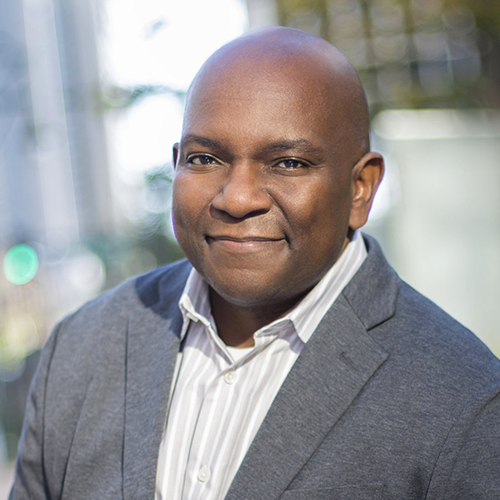
Image courtesy of Lyneir Richardson/The Chicago TREND

The Color of Law.

January 13, 2021

Richard Rothstein is a distinguished fellow of the Economic Policy Institute and a senior fellow (emeritus) at the Thurgood Marshall Institute of the NAACP Legal Defense Fund. He is today widely lauded as the author of The Color of Law: A Forgotten History of How Our Government Segregated America (2017), which excavates a history of how federal and state policies were created to explicitly segregate metropolitan areas, creating racially homogenous neighborhoods. Richard feels the damage done by these policies is so systemic that a very big step is needed – a new civil rights movement – one that is focused on housing segregation and its economic fallout.

Both an economic analyst and journalist whose career primarily focused on issues of race and education, Richard has also published Grading Education: Getting Accountability Right (2008), and Class and Schools: Using Social, Economic and Educational Reform to Close the Black–White Achievement Gap (2004). From 1999 until 2002, he also served as the national education columnist for The New York Times.

Richard was a senior fellow at the Chief Justice Earl Warren Institute on Law and Social Policy at the University of California, Berkeley, a Tisch Visiting Professor at Teachers College, Columbia University, and adjunct professor at Occidental College in Los Angeles. He also worked as a senior correspondent for The American Prospect. He lectures widely on issues of equity, race, and education.

Insights and Inspirations

  • Richards argues that federal, state, and local policy explicitly segregated metropolitan areas nationwide and that these policies violated the Constitution.  
  • Activists must rise up to insist on change. To propel change forward quickly. A national civil rights movement to ensure that we all get to reap the economic benefits of living in this rich and diverse country.

Information and Links

  • Read the book. It’s a good primer for those interested in development and zoning history, as well as how to think about what equitable housing means.
  • Richard talks to Ta-Nehisi Coates on C-Span.
  • And is interviewed on Fresh Air!
Read the podcast transcript here

Eve Picker: [00:00:12] Hi there. Thanks so much for joining me today for the latest episode of Impact Real Estate Investing. My guest today is Richard Rothstein, a journalist and researcher at the Economic Policy Institute. He is widely lauded as the author of ‘The Color of Law: A Forgotten History of How Our Government Segregated America.’ In this book, he explores how federal, state and local policy explicitly segregated metropolitan areas nationwide. And he argues that these policies violated the Constitution. Richard recognizes that many small steps are being taken today to remedy this, but the damage done by these housing segregation policies is so overwhelming that he believes a very big step is needed to jumpstart desegregation in a meaningful way – a new civil rights movement, one focused on housing segregation. Be sure to go to EvePicker.com to find out more about Richard on the show notes page for this episode. And be sure to sign up for my newsletter so you can access information about impact real estate investing and get the latest news about the exciting projects on my crowdfunding platform, Small Change.

Eve: [00:01:46] Hello, Richard, I’m really delighted to have this opportunity to talk to you today.

Richard Rothstein: [00:01:51] Well, thank you very much for engaging with me on this topic.

Eve: [00:01:54] Oh, yes, it’s an important one. You’re perhaps best known today for the research you’ve done on the history of housing segregation in the United States, and the really important book that you’ve written that’s called ‘The Color of Law.’ And I’ve heard you say every metropolitan area in this country is residentially segregated. I’m wondering how we ended up in this very racially segregated landscape.

Richard: [00:02:23] Well, we have a national myth about how we ended up. That myth is flawed. The myth is that what we’ve got is something we call ‘de facto segregation’ that just have sort of happened by accident. It happened because of private bigotry on the part of homeowners and landlords and white neighborhoods who wouldn’t sell or rent to African Americans. Or because of businesses in the private economy, purely private economic actors like real estate agents, banks or insurance companies that discriminated. Or maybe we tell ourselves it’s because people just like to live with each other of the same race. It’s all natural that way. You feel more comfortable if we do it. Or maybe we say it’s because of income differences. African Americans on average have lower incomes than whites, not all, but on average, and so can’t frequently afford to live in higher opportunity. White neighborhoods, all of these individual bigoted but personal decisions, not governmental actions, is what created residential segregation. And we tell ourselves that what happened naturally can only happen naturally. It’s other nonsense. The reason we have residential segregation in this country is because of a network of racially explicit federal, state and local policies that were designed to ensure that African Americans and whites could not live near one another. In any metropolitan area, we have a totally unconstitutional system of residential boundaries. They were established in the mid 20th century in such a powerful way that they still determine where we live today.

Eve: [00:04:06] Wow. So what what are some of these policies? Can you be a little more explicit?

Richard: [00:04:13] Sure. I could go on for hours, but I’ll mention just a couple of them. In the post-World War II period, the Federal Housing Administration and Veterans Administrations determined upon a policy to move the entire white working-class and lower middle-class population out of the urban areas where they were then living, into single family homes in all white suburbs that came to ring American cities. At the time, in the post-World War II period, low- and middle-class, working-class and even middle-class families were all living in urban areas. We hadn’t suburbanized at that point. They were living there because we were a manufacturing economy and factories had to be located near deep water ports or railroad terminals. So did banks and other service industries that were servicing those factories, because they needed to be able to get their parts and ship their final products, in that way. And so, we had an urban population, both African Americans and whites, living in urban areas. But the federal government determined to move the whites, not the African Americans, but the whites only, out of those urban areas of the single family homes into all-white suburbs. Perhaps the most famous of these is Levittown, east of New York City. 17,000 homes in one place, single family homes. The developer, William Levitt, could never have assembled the capital to build a subdivision that enormous on his own. No bank would be crazy enough to lend him the money to do that. To be worth, as I said, the suburban country, at that time. The banks thought that it was a crazy idea that nobody would want to move there. The only way that Levitt could assemble the capital is by going to the Federal Housing Administration and Veterans Administration, submitting his plans for the development, the architectural design of the homes, the construction materials, he was going to use, the layout of the streets, and a commitment that the Federal Housing Administration, the Veterans Administration required, that he never sell a home to an African American. The Federal Housing Administration and Veterans Administration even required that Levitt place a clause in the deed of every home prohibiting resale to African Americans or rental to African Americans. But this was a racially explicit policy. It wasn’t the action of rogue bureaucrats working in federal agencies. It was written policy. The Federal Housing Administration had an underwriting manual that was distributed to appraisers throughout the country whose job it was to evaluate the applications of builders to create new subdivisions or even smaller projects. The manual said you could not recommend, for a federal bank guarantee, a loan to a developer who was going to sell to African Americans. And the manual went so far as to say you couldn’t even recommend for a federal bank guarantee an all white project that was going to be located near where African-Americans were living, because in the words of the manual, that would run the risk of infiltration by inharmonious racial groups. This was, I say, an explicit racial policy. Levitt, with that kind of a guarantee, built this large subdivision and builders all over the country did the same. They were inexpensive homes. These were returning World War II veterans, mostly who bought these homes. They sold at the time for eight, nine thousand dollars, perhaps. Today’s money, inflation adjusted, that’s about 100,000 dollars. Well, as you know, those homes not in Levittown, not in any suburb in this country, no longer sell for 100,000 dollars.

Eve: [00:08:09] Right.

Richard: [00:08:10] The value of those homes appreciated. The families who bought them gained wealth from the equity they now had in their homes. And as a result, today, African American incomes are about 60 percent of white incomes. You’d expect African American wealth to be similar. But in fact, while African American incomes are 60 percent of white incomes, African American wealth is only five percent of white wealth. And that enormous difference between the 60 percent income ratio and the five percent wealth ratio is entirely attributable to unconstitutional, federal housing policy that was practiced in the mid 20th century. I’m sorry. Go on.

Eve: [00:08:53] Now, that’s OK. So, One of the biggest consequences of this housing segregation is just the loss of generational wealth that we’re struggling with today.

Richard: [00:09:04] Yes, absolutely. Those, the white families who bought those homes and gained this wealth use the wealth to send their children to college. They used it to perhaps take care of emergencies, medical emergencies or temporary unemployment. You know, if you have wealth and you lose a job, you can weather the temporary unemployment. If you don’t have wealth, and you lose a job, you’re pushed further down the social and economic scale. And the white families also use it to subsidize their retirements, and most importantly, to bequeath wealth to their children and grandchildren …

Eve: [00:09:39] Yes.

Richard: [00:09:40] … who then down payments for their own homes. So, that’s why I say that these policies are so powerful that they still determine the racial landscape of today.

Eve: [00:09:50] So, how many years did it take us to get where we are today because of those policies?

Richard: [00:09:57] Well, you know, the policies began, the federal government wasn’t involved in housing at all until the New Deal of Franklin Roosevelt and the Depression, the federal government’s first entry into the civilian housing market was at the beginning of the New Dealm the Roosevelt administration. When the Public Works Administration, one of the first New Deal agencies, beginning in 1933, built the first public housing in this country for civilians and everywhere it built it, it segregated it. Frequently, again, creating segregated patterns where they hadn’t previously existed. In many of these downtown urban areas, that I described earlier, that, where both blacks and whites lived. You know, the great African American poet, novelist, playwright Langston Hughes describes how he grew up in an integrated downtown Cleveland neighborhood in the early 20th century. That’s not how we think of downtown Cleveland today. But, as I said, we had the factory districts. The jobs were located in a central location, so the black and white workers had to live in roughly the same areas. But so, Langston Hughes describes how he grew up in an integrated downtown Cleveland neighborhood. He said his best friend in high school was Polish. He said he dated a Jewish girl in high school. It was an integrated high school in an integrated neighborhood. The Public Works Administration went into that neighborhood, demolished housing to build two separate projects, one for whites, one for African Americans, creating a pattern of segregation there that hadn’t previously existed. And it did this everywhere it went as did subsequent successor federal housing agencies and local housing agencies. So, I’ve mentioned now two big policies that the federal government followed. One was its public housing program. The other was its subsidization of suburbanization for whites only.

Eve: [00:11:58] Um hmm.

Richard: [00:11:58] And there were many, many other policies as well, followed by federal, state, local governments, all racially explicit, all of which interacted to create the segregated landscape that we now have in this country.

Eve: [00:12:11] So, are we trying to fix this now?

Richard: [00:12:16] No, we’re not. We’re not. There’s …

Eve: [00:12:19] Oh, that’s awful.

Richard: [00:12:19] Well, no, we’re not. We, to the extent that there’s any attention to this issue, it’s the attention to the condition of the low-income, segregated neighborhoods in which African-Americans are concentrated. Not all of them, but many of them. I’m not in any way suggesting we shouldn’t be paying attention to that and focusing on things like evictions and rent control and inadequate housing supply. But we are not paying any attention yet to the segregated nature of those communities or to the segregated nature of communities outside those low-income downtown areas where they’re segregated on an all white basis. But we need to pay attention to it. Our democracy, I think, is under great threat because of the extreme polarization we have in this country, political polarization that largely tracks racial lines. And I don’t think it’s conceivable that we can preserve this democracy in a healthy way if so many African Americans and whites live so far from each other that they can’t empathize with each other or understand each other’s life experiences. So, I think it’s urgent that we do pay attention to these racial boundaries, but we are not yet doing so.

Eve: [00:13:43] So, A couple of things that have been attempted have been like the Fair Housing Act and eradicating redlining. Have they have any impact at all on this polarization of the landscape?

Richard: [00:13:58] Well, of course, they’ve had a small impact. I mentioned Levittown earlier in our conversation, created as an all white suburb by the Federal Housing Administration in the post-World War II period. That community of 17,000 homes is now about one to two percent African American. The homes there now sell for 400, 500,000 dollars. There are African Americans who can afford to buy those homes at those prices. But the, Levittown is located in a neighborhood that is about 15 percent African American. So, the difference between that, the two percent that the Fair Housing Act, you know, was able to address and the 15 percent that you would expect if it were not for these policies of segregation, is the difference that the Fair Housing Act cannot address. Those homes, as I say, are now unaffordable to working class families of either race.

Eve: [00:14:58] What do you think it will take to correct this?

Richard: [00:15:01] Well, the policies to correct this are well known. No mystery about them. What’s missing is a new civil rights movement that’s going to be as aggressive in addressing residential segregation as the civil rights movement of the 1960s was in addressing public accommodations and interstate transportation and employment segregation. We don’t have that yet. We are, I will say, having a more accurate and passionate discussion in this country now about the legacies of slavery and Jim Crow than we ever have had before in American history. We had Black Lives Matter demonstrations this past summer and spring that engaged 25 million Americans, demonstrating for police reform, for community policing, for the demilitarization of the police. They didn’t address housing issues, neighborhood segregation, but out of that consciousness, it’s possible that a new civil rights movement will emerge that addresses the underlying causes of police abuse of African Americans, which are largely the fact that African Americans are so segregated in low-income neighborhoods and concentrated there. So, I’m hopeful, not confident, but I’m hopeful that such a new civil rights movement will emerge.

Eve: [00:16:28] And do you, do you know any organizations really actively working to correct the housing segregation issues, in particular?

Richard: [00:16:40] Well, there are many, many organizations doing, taking small steps, and being successful in taking small steps. It’s not that we’re not doing anything at all. But we don’t have a systematic attack on segregation. There are some communities that are beginning to look at their zoning ordinances and the way in which they function …

Eve: [00:17:08] Yeah.

Richard: [00:17:08] … to perpetuate this unconstitutional system of segregation. There are organizations that are sponsoring mobility programs for African Americans, giving African Americans who have housing subsidies, we call them Section Eight vouchers, giving them more opportunities to find rental units in the higher opportunity communities. There is some work being done, but we don’t have a systematic effort. I am involved now with a group of national civil rights leaders who are creating something they call the National Committee to Redress Racial Segregation. And it’s hoped that they will be able to launch that national committee in the near future. And the purpose of that National Committee would be to support and create local civil rights groups that will take the kind of action that’s necessary to make it uncomfortable to maintain these segregated patterns. But we’re not there yet.

Eve: [00:18:16] Yeah, I think for me, I mean, this is a lot to absorb and pretty shocking. How do you educate so many people? There’s this trickle down effect, right? So, every bank, every local community bank, that lends money to developers or home buyers or anyone like that has to really examine their practices very carefully. I know enough about what goes on in racially segregated neighborhoods and banking to know that that in itself is an enormous task to just educate everyone to behave differently.

Richard: [00:18:57] My perspective is that our focus should not be on educating banks and developers and insurance companies. Our goal should be to create local activists who will put pressure on those banks and insurance companies and developers, realtors, to behave differently. If this is not something that can happen from the top down any more than the civil rights victories of the 1960s came about because we educated restaurant owners or bus companies to behave differently. It happened because we have an activist civil rights movement to force them to act differently. And I think if we think of that as a model, we’ll be on a better path to understanding how we can have these changes. As I said, we’re having a more accurate and passionate discussion now about this in this country than we ever have had before. So, there’s the potential for creating such civil rights groups, but they haven’t emerged as of yet.

Eve: [00:20:05] Yeh, it’s a really big task. And one of the question for you. How do you deal with pushback, like that was only in past, or there are a few bad apples, or arguments like that in the face of what you’ve uncovered and what’s the truth?

Richard: [00:20:22] Well, we don’t have unlimited time today, but I did describe two big policies that the federal government followed, both in creating the suburbanization and in its public housing program to create the segregation. That wasn’t just a few bad apples. If we had more time, I could go through dozens and dozens of these policies at the federal, state and local level, all of which networked together to create this segregation. So, it was not a, it was not a few bad apples that that this. This was a systematic government policy. As I said, the segregation we have today is unconstitutional because it violated the Fifth and the Fourteenth Amendments to the Constitution when government enacted these policies.

Eve: [00:21:11] This is really fascinating, and I do hope that this new civil rights movement emerges, and I’d love to hear more. I’m going to be reading your book in great detail, and I hope all our listeners do as well. Thank you very much for your time.

Richard: [00:21:27] Thank you very much.

Eve: [00:21:36] That was Richard Rothstein. A history of housing segregation in the United States is a shocking one, and we will be grappling with the damage done for many decades to come. There is a glimmer of hope this year as more open and concrete dialogue emerges between blacks and whites. Richard’s hope is that activists will rise up to insist on change to propel change forward quickly, a national civil rights movement to ensure that we all get to reap the economic benefits of living in this rich and diverse country. You can find out more about impact real estate investing and access. The show notes for today’s episode at my website, EvePicker.com. While you’re there, sign up for my newsletter to find out more about how to make money in real estate while building better cities. Thank you so much for spending your time with me today. And thank you, Richard, for sharing your thoughts. We’ll talk again soon. But for now, this is Eve Picker signing off to go make some change.

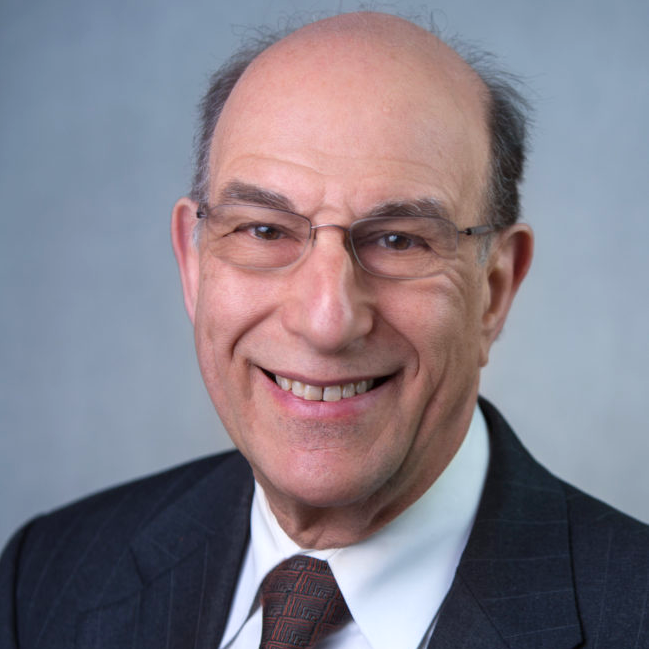
Image courtesy of Richard Rothstein, EPI

Sharing luxury.

January 11, 2021

Have you ever imagined spending the weekend in a grand luxury estate in the country?

America’s luxury estates were built in the late 1800s during ‘The Gilded Age’, a term made popular by Mark Twain. After the Civil War, with the onset of industrialization, the nation enjoyed unprecedented prosperity, Great fortunes were amassed with the expansion of tobacco, railroads, steel, fossil fuel industries and technical and scientific progress, not to mention no personal income tax.

Some of this wealth found its way to the Berkshires, only 150 miles from New York City. There some of the country’s wealthiest families, The Astors and Westinghouses among them, built their second homes, or ‘cottages.’ Carole Owens, author of The Berkshire Cottages — a survey of the palatial summer retreats constructed by millionaires in the post-Civil War Gilded Age — believes the influx of literary and artistic luminaries “gave the Berkshires a panache that attracted wealthy New Yorkers and Bostonians looking for more than just sylvan beauty.”

More than 75 grand estates were built in the Berkshires and they were built to last for generations. Designed by prominent architects to emulate the grand estates that were so admired on European travels, each one was more extravagant than the last. These mansions were constructed in a variety of architectural and decorative styles from different European countries and from different eras such as Queen Anne, Beaux Arts, and Renaissance Revival. Inside, they were overflowing with antiquities, furniture, collectibles and works of art, often imported from Europe.

Over time, as the gilded age ended, and manufacturing moved south, these mansions were reduced in number, demolished or some succumbing to fire. A few have been preserved as museums to paint a picture of the privileged Gilded Age summers. Some have become exclusive resorts and hotels. And one, previously owned by the Tappan family, is now Tanglewood, the summer home of the Boston Symphony Orchestra. And the rest, most likely due to the cost of maintenance, sadly have been abandoned.

In the Berkshires, you’re surrounded by natural beauty. With its proximity to New York and Boston, the region remains a popular vacation destination today. It’s recognized as a cultural hub with a thriving arts scene, is renowned for annual festivals, offers outdoor activities year round and has a farm to table food scene.

Daniel Dus grew up in the Berkshires and is familiar with those abandoned and underutilized luxury estates. He’s launched a new company, Shared Estates, and plans to reposition some of these estates for current times. For one, they’ll be renovated to carbon neutral standards, the ultimate in recycling projects. But perhaps more important Daniel and his team want to reposition these luxury estates for the sharing economy. No longer for the wealthy, they will be available for middle class families to enjoy. And he’s taking the democratization one step further by offering anyone over the age of 18 the opportunity to invest through a crowdfunding offering.

Listen in to Eve’s conversation with Daniel Dus.

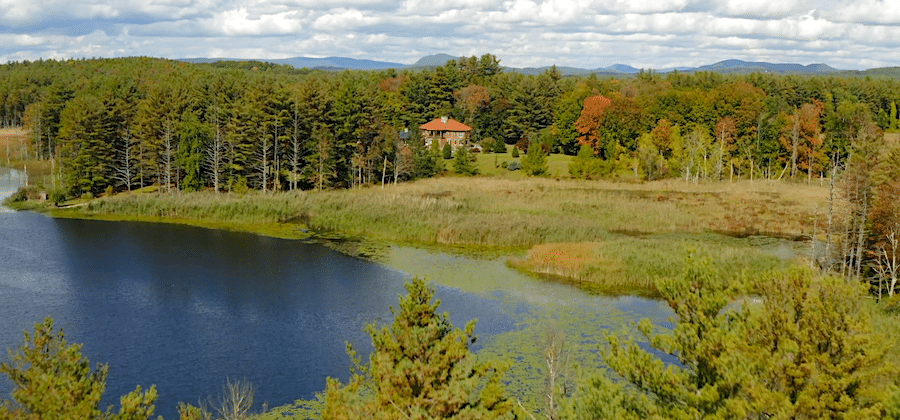
Image courtesy of Shared Estates

Hello, Neighbor.

December 16, 2020

Max Levine’s organization, NICO (Neighborhood Investment Company), has a mission “to localize wealth creation and broaden access to neighborhood equity.” The Los Angeles neighborhood Max lives in, Echo Park, has an income average of $40,000, whereas the average home is valued at $900,000 – an enormous discrepancy. Max and his business partner, John Chaffetz, began exploring the gap between home ownership and renting, testing financial models of what might fall in between. They ended up with the innovative idea of a neighborhood REIT (real estate investment trust) that would allow members of a local community, property owners and tenants, to literally invest in the place that they live by buying shares of local properties owned by an investment trust. Their first effort is NICO Echo Park, with an initial portfolio of three rent-stabilized apartment buildings.

NICO, not surprisingly modeled as a B-Corp, aims instead to create both societal benefit as well as modest financial growth. By taking the REIT structure and applying it at the local level, stakeholders who want to have a financial stake in their neighborhood can buy shares, starting at only $100. They can make a one-time token investment or make monthly investments to build up a deeper, long-term commitment. In addition, NICO has given each of the tenants in their buildings $1,000 worth of shares. 

Though now in LA, Max spent his working career mostly in New York City, as a financial analyst and later as CFO at Storage Deluxe, a self-storage giant, with a stint working on their subsidiary, UOVO Fine Art Storage. He even took an entrepreneurial break to open a delicatessen in Brooklyn. He is also a member of Top Tier Impact, a small, global community of investors, entrepreneurs and experts whose goal is to “accelerate mainstream adoption of impact and sustainability as the way of investing and running companies.”

Insights and Inspirations

  • Home is neighborhood. It’s a unit of organization.
  • With NICO, Max wants to create a new housing typology, located between renting and home ownership.
  • There’s a lot of love in neighborhoods. And that’s super-exciting!
  • The relationship between residents and property owners, or landlords and tenants, needs to be radically reframed. 

Information and Links

  • Max has been listening to the amazing music and programming from their friends at Dublab, and which has helped keep their spirits high during the last year.
  • He and his team are super-proud of the work that Helen Leung and the team at LA Mas have done to help coordinate the Northeast LA Community Response to the Covid-19 emergency. Helen is a board member of NICO Echo Park, Benefit Corp.
  • Max also wanted to highlight the work of Women’s Center for Creative Work, which has also inspired them. 
Read the podcast transcript here

Eve Picker: [00:00:11] Hi there, thanks so much for joining me today for the latest episode of Impact Real Estate Investing. My guest today is Max Levine, founder of NICO. A few years ago, Max noticed a very big gap between traditional home ownership and renting, and he wondered what might fall in between. At the same time, he wanted to explore how to create localized wealth and neighborhood equity, and he found the solution to his quest at his own back door. In Echo Park, the neighborhood he lives in, a highly diverse neighborhood, incomes average forty thousand dollars, yet the average home sells for nine hundred thousand. Max took a huge leap in order to bridge that gap by creating NICO, a neighborhood investment company, or REIT through NICO locals can literally invest in the place that they live in by buying shares of local properties owned by NICO. But Max doesn’t want to stop there. Listen in to hear more. And be sure to go to EvePicker.com to read the show notes page for this episode. You can sign up for my newsletter so you can get access to information about impact real estate investing and get the latest news about the exciting projects on my crowdfunding platform, Small Change.

Eve: [00:01:50] Hello, Max, thanks so much for joining me today.

Max Levine: [00:01:53] Yeah, thank you so much for having me. It’s great to be here with you.

Eve: [00:01:57] So, I’m really fascinated to hear, because like me you’ve plunged into the fintech crowdfunding world to solve a problem. And I think your NICO is sort of a version of Small Change, although a little bit different as we’re going to discover. So, it’s really nice to interview someone in the same industry.

Max: [00:02:15] Absolutely. Great to connect with you.

Eve: [00:02:19] First, I wanted to ask you what problem you’re trying to solve.

Max: [00:02:21] NICO really started, NICO stands for the “neighborhood investment company” and we really started, really with an observation of just how broken housing in this country is. And initially, we sort of were focused on thinking about, you know on one hand, you have traditional home-ownership which is held up, you know, sort of the American dream and this example of what Americans should aspire to, sort of the responsible thing. But it’s so out of reach for so many people. And, you know, on the other hand, you have renting, which is more accessible, lower barrier to entry, certainly more flexible. And for us, you know, housing as being this sort of, I’ll use the word “choice,” but it’s not really a choice for so many people because homeownership is still out of reach.

Eve: [00:03:13] Yeh, that’s right.

Max: [00:03:13] But there’s these two options, right? And so initially we start to think about how could we play a role in creating the third option that sits in between traditional homeownership and renting, one that confers some of the benefits of traditional homeownership, you know, the opportunity for wealth creation and connection to place and sort of putting down roots. And on the other hand, you know, was sort of flexible and more accessible the way that renting is. And so, that was sort of the first observation is, you know, if you were going to design a housing system for today’s world to reflect the realities of the real economy today, our thesis is the system would probably not look too similar to the system we have in place. And our, you know, vision is to try and create, you know, really a new product that is more in line with the way the economy is working today and specifically around access to capital and opportunities for wealth creation for folks.

Eve: [00:04:10] Right, Yeh, I always think of rental as not providing comfortable stability.

Max: [00:04:16] Yeh.

Eve: [00:04:16] For example, when places gentrify you can’t be certain that your home won’t be taken away from you, which is troubling.

Max: [00:04:23] Yeah, correct. Right. And I would say it’s even deeper than that. You know, I think that’s a big element. Housing stability and security is a big element of it. I mean, even the word, right? Even the words “landlord” and “tenant”.

Eve: [00:04:36] Um hmm.

Max: [00:04:36] And those are words that are rooted in medieval servitude. Right? That whole paradigm and the whole way that that relationship is set out is one that is, you know, not rooted generally in equity or respect. Right? And so, I think there’s also sort of an element where that relationship between, you know, residents and property owners or landlords and tenants, needs to be radically reframed. And I think housing stability and security is a big part of the outcome of what that could look like. But I think there are other ones as well. For instance, I think there’s a real bias against renting as an option. I think it’s viewed as being ‘less than’ homeownership.

Eve: [00:05:22] Right.

Max: [00:05:22] And I think that narrative that exists really broadly needs to change because the reality is, you know, renting is. If it evolves a bit, I think has the potential to be a better option than homeownership for a lot of folks.

Eve: [00:05:37] Yes. yup.

Max: [00:05:38] And that’s part of the future that we’re trying to build through our product.

[00:05:42] And I would say the other, you know, sort of big thing that we’re trying to solve for is, you know, when you ask people where they live, where home is, you know, nine out of 10 times they’ll say, I live in Echo Park or I live in Inwood or I live in Greenpoint. They’ll sort of lead with the neighborhood, right? For us at NICO. The neighborhood as a unit of organization, to us, is sort of the most important of social organization that we have, right? Because it’s larger than your family unit, but it’s still close enough and personal enough that you develop really meaningful connections with folks in your community, whether they’re neighbors or small business owners or organizations that you support or volunteer with. And so, for us in thinking about how to create a new housing typology in between renting and homeownership, it was really important to think about how we could sort of give the appropriate place and the appropriate role to the neighborhood. And NICO, which is the neighborhood investment company, is really sort of come out of both of those lines of inquiry.

Eve: [00:06:54] That’s interesting. So, how does NICO work?

Max: [00:06:58] We have launched what we believe is the world’s first neighborhood “real estate investment trust” or neighborhood REIT. And what that means is that, you know, we’re a real estate investment company that owns a portfolio of income-producing properties and potentially other real estate-related investments, within a specific neighborhood. And so, the first neighborhood REIT is here in Echo Park, in Los Angeles. It’s called NICO Echo Park Benefit Corp. And it’s a company that has a share structure that owns portfolio property. Today, we own three rent-stabilized multifamily apartment buildings, one of which is a mixed-use building with some retail on Sunset Boulevard. And people can invest into the REIT through our website, mynico.com, and become shareholders in the company that owns this portfolio of property. And our vision with this and our, you know, what we’re trying to sort of build is we want to create an opportunity for thousands of people within a community, many of whom, in the case of Echo Park, most of whom are excluded from being homeowners, we want to create a way for them to be able to build wealth, build belonging and sort of participate as primary financial stakeholders in their neighborhood through a responsibly managed, impact-focused, neighborhood investment company. And that’s what it is.

Eve: [00:08:29] So, why Echo Park?

Max: [00:08:32] There’s a lot of reasons why Echo Park, but I don’t think that this concept is limited to Echo Park. I think some of the dynamics that are playing out in Echo Park and have played at in Echo Park are playing out in communities all over the country. Some of these reasons are sort of specific to Echo Park and some, I think, are speaking to the broader dynamic that we see in communities like Echo Park all over the country. So, the first thing I would say is that Echo Park is an incredible dynamic beloved neighborhood. Dodger Stadium is here. There’s an incredible music and creative community that’s been here for a long time. And, you know, people who live in Echo Park choose to live there because they love what this community is about, and it is speaking to them and it’s the place that they want to call home. So, there’s a lot of neighborhood love here. At the same time, you know, the median household income in Echo Park is approximately forty thousand dollars a year. The average home price is over nine hundred thousand dollars, and, you know, about seventy five percent of the households in the neighborhood are renter households, right? And so, that speaks to this huge gap where homeownership is really out of reach for a lot of folks, right?

Eve: [00:09:51] Yes.

Max: [00:09:52] And there’s a lot of love and there’s, you know, a desire to be more secure, qnd being a resident of this community and, you know, Echo Park has experienced significant amount of gentrification. It’s a neighborhood that has experienced a lot of change over the last 20 years, I would say, you know, maybe especially over the last 10 years. And that dynamic creates, which we primarily view through a lens of inclusion or exclusion, right? Who is benefiting, who is accruing benefit from this change, who is being harmed by the change? And so, this dynamic where people love their neighborhood, they’re excluded from being homeowners because it’s just too out of reach, and the neighborhood is changing in a way that feels kind of out of control. You know, we want to create a way that over time, and this isn’t something that can be sort of solved in six months or a year or even five years, but we think over 10 years or 15 years or 20 years, if you have a way for many more people, radically more people within the community to be able to build wealth in a fair, flexible, incremental way, we think that that could drive some very, very special outcomes relative to the current paradigm, if those people are able to build wealth through investing in their community.

Eve: [00:11:12] So, can anyone invest, or do you restrict investment to locals or people who live in Echo Park?

Max: [00:11:19] Yeah, so investment is open to local people and to non-local people. Within the REIT, we have two classes of shares. We have a class of local shares, Class L shares and a class of non-local shares. And so, it’s open to both groups, though the local shareholders have some benefits on some concrete terms of the offering, like the redemption plan, which is how people would request to get their money out. Or, and also, and you know I’d love to talk a little bit more about this, we’re a benefit corporation. You know, sort of at our, at a DNA level for our company, we have a legal responsibility to balance financial returns to our shareholders with social and environmental impact of our business on stakeholders, right? So, on a group of people beyond just our shareholders. And our local shareholders are one of the key stakeholder groups that we will count on to help inform specifically our non-financial objectives and our non-financial measurement and performance.

Eve: [00:12:19] Right. So, what percentage of your investors actually live in the neighborhood, to date? I know that might change, but I’d be interested to know that.

Max: [00:12:28] We launched the offering, and I should say the offering itself is a Reg A+ offering, which means that NICO Echo Park is a public, non-listed REIT. So, we’re regulated by the SEC, you know, there’s a lot of sort of robust reporting, audited financials, all sorts of stuff like that.

Eve: [00:12:49] Oh, I know it well.

Max: [00:12:50] Yeh. And what that allows us to do is, whereas many real estate investments, most real estate investments are only open to, you know, what the government calls accredited investors, which is another way of saying rich people, By being a public company, and using this type of offering, we’re open to both accredited investors and non-accredited investors or non-wealthy people. And so, we’ve set our investment minimum at one hundred dollars, which is very low for this type of offering. And our, you know, objective in that is to make sure that as many people as want to, within the community and nationally, have the opportunity to support this model and participate in this model. We haven’t publicly disclosed the breakdown between local and non-local investors, so far. I think that we’ll probably do that on our supplemental filing. That’ll be coming up pretty soon. So, I’m going to sort of hold on answering that question. It’s a significant portion of the investors who’ve come through the offering.

Eve: [00:13:52] Yeh, yeh. Well, that’s really good to hear. That’s what I hope will happen. So, when when someone invests 100 dollars, what do they get?

Max: [00:13:59] Anyone who invests into the offering becomes a shareholder in the company that ultimately owns the portfolio properties. And so, you know, people who become shareholders, they own shares in NICO Echo Park Benefit Corp. And what accrues to them are, you know, sort of the pro-rata profit and appreciation that we expect to generate as long-term owners of these properties. And I’ll also say that, you know, one question that comes up a lot is people want to know whether investing in this means they own a specific unit or a specific property. You know, the answer to that is, is no. They become a shareholder in the whole portfolio and the portfolio, you know, we expect to grow it pretty substantially over time. So, it’s not just investing into the properties that we own today. It’s also investing into the company that will own additional real estate assets within the neighborhood, as we grow it.

Eve: [00:14:56] So, they’re really in it with you. And that’s a pretty big responsibility for you, I imagine. That’s how it feels.

Max: [00:15:02] We view it as a big responsibility, you know. And I would say the big responsibility is sort of two-fold, I should say, at least two-fold. One is, when you take investor capital, you know, they’re trusting you to make decisions on their behalf, you know,  and be stewards of that capital. So, I’d say that’s one level of responsibility that we view. And I would say the other, you know, sort of major level is this approach to neighborhood investment through a benefit corporation structure, through a neighborhood REIT, this is really the first of its kind, right? In a lot of ways. And so, you know, we have a responsibility to be incredibly thoughtful and understand, you know, the context that we’re coming into and, you know, in the neighborhoods where we’ll be active in pursuing this model, and I think we’ve set a very high bar for ourselves, right? We’ve set …

Eve: [00:15:55] Yes.

Max: [00:15:55] … a bar where, you know, we are trying to balance financial returns to our shareholders. And we believe that the market-oriented solutions are an important part of, you know, what moving through this pain that so many people are in around housing in their community. We think more market-oriented solutions are a big part of that solve, and that balancing, you know, it’s going to take some time to get right, right? And I think that we have sort of designed our, our impact framework and our product in a way that is intended to evolve with stakeholder input over time, right? So, we aren’t making a claim that, hey, this is what it is and we’re going to get it exactly right. I think we built it in a way that gives it space to evolve into what it needs to be in response to, you know, stakeholder input and feedback and sort of our community over time. And balancing all those things will be a challenge, you know, but that’s the challenge that we’ve signed up for and that’s the future that we’re trying to create.

Eve: [00:16:57] Yeah, I mean, we have non-accredited investors as well on Small Change and I sometimes think that one needs to feel even more responsible for 100 dollars when it comes from someone who doesn’t have a lot more. It’s maybe more meaningful.

Max: [00:17:13] Yeah

Eve: [00:17:13] I don’t really know how to put it, but that 100 dollars is a stretch for a lot of people. And so, there’s this extra feeling of responsibility around it.

Max: [00:17:23] Yeah, we certainly feel that way.

Eve: [00:17:26] You know, under a Regulation A+ offering, you can, at the moment, raise up to 50 million dollars. Is that right or is it 50 million a year? I can’t remember.

Max: [00:17:34] It’s 50 million per year. Yeh, we can raise up to 50 million per year.

Eve: [00:17:38] And, is that what you hope to raise?

Max: [00:17:41] Yeah, so, you know, to date, we’ve raised, prior to launching the offering, raised about 30 million dollars of real estate, debt and equity capital. We used that to acquire the seed assets. Since launching the offering, we’ve added to that. And I wouldn’t say it’s my expectation that we’re going to raise 50 million dollars, you know, in the first year or two, because I think the nature of the problem that we’re trying to solve, or the problem that we’re trying to be part of solving is, you know, that folks who have been excluded from wealth creation, they don’t have 50 million bucks sitting around, right?

Eve: [00:18:17] Yeh. And it takes a lot of education. I think real estate investment is difficult and requires a lot of education as well. So, it is, it’s hard. Yeh.

Max: [00:18:29] Yes. I would say we hope to make really good use of the offering, but our priority is less about how much money we bring into the offering and more about how many people, specifically how many local investors, are participating in the model. That’s really our, you know, sort of North Star for the next couple of years.

Eve: [00:18:50] So, how long will this offering, or this REIT remain open?

Max: [00:18:55] So, again, I have to be a little careful about what I say with securities law. So, I don’t want to sound evasive. My understanding is that we can keep it open on a rolling, permanent or semi-permanent basis, subject to renewing some of the paperwork. So it’s out intention to basically keep it open.

Eve: [00:19:14] Ok, that’s pretty exciting. So, can you tell me a little bit more about the buildings in the IT and how you’re hoping to expand your portfolio? I heard you say that some or all of them are rent stabilized. Can you expand on that a little bit?

Max: [00:19:31] All of the buildings that we own today are rent stabilized. We’re not limited at the REIT to only investing in rent stabilized buildings, but we like that asset class. We like that type of building a lot. When I say rent stabilized, I’m talking about in the city of Los Angeles, there’s a rent stabilization ordinance, which is a very broad program. Any multifamily buildings, which I think is two or more units that were built prior to 1979, are part of this program, as a default. So, it covers, you  know, a significant portion of the multifamily housing stock in the city of Los Angeles. And, you know, what that program currently does is basically puts very strong protections in place for existing tenants, right? And so, the amount that property owners can raise rents on existing tenants is capped at a rate set by the city, for example, and it’s more regulated than market units. So, we really like, you know, those protections. And, you know, we are, as I mentioned earlier, we’re sort of trying to reframe this relationship between, you know, residents and property owners where landlords and tenants, in industry speak, and we love the fact that we can invest in assets where strong protections for tenants are built into the asset price. We sort of love that as an asset class. The buildings themselves, there are three buildings that are all in core Echo Park. We have one at 1650 Echo Park, I have one at 1416 Echo Park, which is a block off the intersection of Echo Park and Sunset. And then we have a property at 1461 Sunset, which is a few blocks down Sunset from Echo Park. So, they’re very proximately located, the portfolio totals 80 residential units and four retail stores, all of which are occupied by locally owned small businesses. And, you know, we are targeting future investments that are rent stabilized, some that are, you know, maybe retail investments, some non-rent stabilized properties, mixed-use properties. And, you know, our investment parameter is sort of, its geographic, like it’s not limited to Echo Park. So, the way the offering describes our investment parameters are, you know, Echo Park, Silver Lake and proximate communities. So, that gives us a bit of room to look …

Eve: [00:21:54] Ok.

Max: [00:21:54] … beyond core Echo Park, though our initial portfolio is very concentrated, you know, historically significant, you know. All of the assets were built in the 19 …. I want to say the 1920s, approximately, though if we’ve got any history buffs on here, there might be, you know, 10 years plus or minus on that. But they’re all sort of very recognizable buildings that have been part of the community for a long time. And, you know, part of what that, coupled with the protections under the RSO program does, it means that the buildings are occupied by a really socio-economically diverse set of residents. And that also is, you know, important to the type of product and community and inclusion that we’re trying to build through our product.

Eve: [00:22:38] So, we have a rent stabilized building. Is it hard to make enough money to cover the expenses? And how do you cope with that? You know, you have pretty lofty goals here in keeping costs reined in is … hard.

Max: [00:22:52] I would say that all of the assets, you know, like asset prices, just, this is more broadly than our building, but asset prices really reflect expected future returns, right. And so all of the properties are comfortably covering their expenses, comfortably covering their debt service. They’re all conservatively financed with long-term fixed-rate debt capital. And the portfolio has been highly occupied since we acquired it. So, you know, we continue to manage to a high level of occupancy. And the pricing of the assets and the way these types of assets are priced and valued is reflective of the protections that are in place. And so, they’re all doing great on a property level.

Eve: [00:23:36] So, I have to say, it’s a lot, and kudos to you. You actually, three companies in one. Real estate development, management company and a crowdfunding platform. And that’s a lot.

Max: [00:23:48] Well, I would say that we’re not really a real estate developer. So, you know, we won’t do, as we’re currently set up now and under the terms of the offering, you know, we’re really not set up to do ground up development or to do even substantial renovations.

Eve: [00:24:03] Well, real estate owner, then, which is different than property manager.

Max: [00:24:07] That’s true. Yes. So, we’re really an asset manager, a property manager. And then we have, you know, the offering and the sort of capabilities that go with managing that type of property.

Eve: [00:24:17] Yeh. So, how do you hope to scale?

Max: [00:24:22] Yeh, so we have ambitious goals for this company, and I would say that, you know, we hope to be doing sort of regular acquisitions into NICO Echo Park over the next number of years. I’m not sure exactly what that looks like from a number of units or a capital investment standpoint, but we believe that this neighborhood, you know, has the opportunity to grow pretty substantially and to grow our impact and grow, you know, the model. And then, you know, separate apart from that, we’re actually in a in sort of a fourth line of business, which is, we have a non-real estate owning sponsor company, which actually owns sort of the functions that you outlined before. And through our structure, you know, we seek and expect to be launching additional neighborhood REITS in other neighborhoods around the country, probably starting next year.

Eve: [00:25:15] Wow. Okay, big goals. So, what’s the biggest challenge you’ve had?

Max: [00:25:22] It’s a great question. I mean, running a company through a pandemic has certainly been challenging …

Eve: [00:25:28] Oh yeh.

Max: [00:25:28] ,,, Having a team that is, you know, very much in sort of the formation phase and, you know, team building phase have to go remote and get to know each other over Zoom, you know. We have team members who have not met in person. People who have joined our team since the pandemic started. And so, I think that’s a challenge. And I think the other, I would say the sort of more macro challenge is that what we’re doing is a bit counterintuitive, right? It’s on a populist level, it’s a bit counterintuitive. And so, what I mean by that is to say that the relationship that we are trying to realign, you know, at its core is really kind of the relationship between investment capital and what motivates it and how it defines success, with people in communities like Echo Park who’ve had a pretty negative relationship with investment capital, right? Because they’ve been excluded from it. And it’s come in and I think the perception, which I believe is largely, you know, accurate, is that when capital comes in it typically means that there is risk to me as a long-time resident. Risk to me and risk to my neighbors as long-term residents. And so, I think that trying to start to solve some of these issues through being an investment company, I think that’s a bit of a barrier for people to get over. And I think that’s pretty fair and pretty deserved. But, you know, our model is such that we’re really sort of taking that on, and, you know, I think the great sort of untold story of gentrification and neighborhood change is that real estate, you know, really was not an institutional mainstream institutional asset class 20, 25 years ago, right? And now it is.

Eve: [00:27:19] Yes.

Max: [00:27:19] It’s a big part of the allocation. And so, I don’t think that capital is the only sort of factor. I think the housing shortages is also one. And I think, you know, there’s a lot of other ones. But, you know, the pressure that that huge, organized flow of capital has put on, you know, neighborhoods like Echo Park is really hard to understate. And so, to our view, to NICO’s view and to our theory of change, until that powerful, large flow of investment capital can be realigned to actually be viewed as a tool and a resource for stabilizing communities, and including folks who are previously excluded in the wealth that’s created through that investment, we’re not going to be able to really solve, you know, these issues at a level, right? And so, I think it’s a bit of a counterintuitive move for people who are used to viewing investment capital or a company or an investment company in a specific way, which is this feels like a threat to me and my neighbors, into something where this offering and this way of being can actually help to stabilize this community and help to drive the types of outcomes that are important to me, you know, in my own community.

Eve: [00:28:41] Yeah.

Max: [00:28:41] I think that’s sort of a lot to get your head around. And we understand that that will take time. And where the rubber hits the road is sort of our actions and the way that we’re managing this portfolio and balancing our various priorities. You know, are we doing that in a way that is genuine and, you know, sort of worthy of people’s trust, right? And that’ll take some time to to earn that, and that’s part of our journey here.

Eve: [00:29:08] Yes, yeh. You know, just shifting gears a little bit, are there any other current trends or innovations in real estate that you think are really important to the future of cities or be a future of housing?

Max: [00:29:21] I think that the sort of renewed focus now on the equity or dis-equity that’s built into the public realm, and also into the sort of planning process …

Eve: [00:29:32] Yes, yeh. I’ve been watching that. It’s interesting.

Max: [00:29:35] I think that conversation is super-exciting and has the opportunity to really reframe how people and how communities are able to have agency in terms of what happens within their community. I think public projects, public space projects, development projects, you know, we’re certainly seeing and starting to feel within the sort of the real estate industry the pressure that comes with that, you know. And I think there’s a genuine attempt by, you know, more and more private sector actors to take that seriously, and to legitimately and earnestly try and figure out how to be engaged with the community and to, beyond just sort of the tokenism of, hey, we’ll throw in a garden, have a couple of feedback meetings or something like that, like I think there’s sort of the start of a groundswell of, you know, we need to build equity into how we think about …

Eve: [00:30:35] Right.

[00:30:35] … development in the public realm. I think that’s super-interesting and very important. And I hope we can play a role in that. And then I think things like technology that is helping to create more efficient, less expensive, quicker ways to actually generate, you know, new housing. You know, there’s no path out of this housing crisis that doesn’t come with building a lot more housing. That’s not the business that we’re in. But I think that construction is super-painful, and it’s sort of in the Stone Age, right? In terms of how that process actually works on a deal level. And so, I think anything that makes that process, you know, more transparent, more noble and less risky, more scalable, will help to create a lot more housing. So, I’m very excited about that.

Eve: [00:31:22] Yeh.

Max: [00:31:22] And I would also say that the sort of, you know, more broadly, shift in focus by institutions and family offices and, you know, other sort of sources of that mainstream real estate investment capital toward strategies that are legitimately ESG strategies or impact strategies, I think that is super-exciting and very important. And for us, we always come back to what is that relationship between capital and what capital is seeking to do, and how is that aligned with the financial and non-financial impact of communities and people in communities, right? And so, I think that shift in awareness and that shift in priority towards strategies that are legitimately focused on ESG and impact, I think that’s a great first step in starting to reframe that relationship at scale.

Eve: [00:32:18] Yeah, because in the end, without shifting capital, not much is going to happen.

Max: [00:32:25] Right. And if you think about affordable housing as a, as an example of this, like, we’re pro affordable housing, you know, but the structural limitation of subsidized affordable housing …

Eve: [00:32:38] It’s huge.

Max: [00:32:38] … is that it requires a subsidy, right? And so, like, the subsidy that it requires is limited. Right? And therefore, there’s only so many tax credits that go out every year.

Eve: [00:32:50] And it’s time consuming. It doesn’t let you produce affordable housing fast, which we need to do.

Max: [00:32:56] Yeah, exactly. And so, we come to this place and NICO is really built around this theory of change, that until market forces of capital, right? Until market rate capital, which is a huge, you know, effectively it’s an infinite pool when you think about how the capital gets recycled, until the priorities of that change, and until the structures around that change to be focused on delivering financial returns and acknowledging the non-financial impact that that capital has. Until that happens, the scale of any potential solutions that count on subsidy or philanthropy, which is a form of subsidy, it’s, the scale of that potential impact is just limited when you look at the scale of the market.

Eve: [00:33:44] Yup.

Max: [00:33:44] So, we’re excited to start to see that shift a little bit.

Eve: [00:33:49] Well, this is something that’s been really interesting, and I’ve really enjoyed learning about NICO, and I’m especially looking forward to see what comes next. So, thank you very much for joining me.

Max: [00:33:59] Great. Thank you so much, Eve. And thank you also for all the work you’ve done over the years with Small Change, with impact real estate. We’re huge fans of it and very appreciative for your leadership in our nascent industry.

Eve: [00:34:24] That was Max Levine. His life is focused on building equity through real estate. With NICO, he’s working to bridge the gap between those who own assets and those who don’t. If you live in Echo Park, you can invest in Echo Park, and what you invest in will ensure that the neighborhood remains available to everyone. For everyone. NICO’s first three buildings are rent stabilized. It’s a very big goal and Max is chipping away at it.

Eve: [00:35:05] You can find out more about impact real estate investing and access the show notes for today’s episode at my website, EvePicker.com. While you’re there, sign up for my newsletter to find out more about how to make money in real estate while building better cities. Thank you so much for spending your time with me today. And thank you, Max, for sharing your thoughts. We’ll talk again soon. But for now, this is Eve Picker signing off to go make some change.

Image courtesy of Max Levine/NICO Benefit Corp.

Urban economics.

December 14, 2020

Simply put, urban economics is the study of buildings and cities and why they develop the way they do. Urban economics help us to determine why certain places are so much more vital than others through the exploration of land-use, zoning, employment patterns, and the price of land.

Over the last century cities have experienced massive change. With the arrival of the automobile our cities transformed from the once walkable urban areas they were into soulless, car-centric cities surrounded by outlying suburbs. By the 1980s most of the real estate investment and development energy had shifted to business parks, malls and sub-divisions.

But now we’re back to wondering whether cars should be part of the equation. Cities and cars are an expensive mismatch and we can see that cars waste space. Several American cities are even considering demolishing highways to reclaim precious land.

One of the more recent additions to the toolbox for the urban economist is the measurement of walkability. Walkable neighborhoods are once again seeing a renaissance. They not only offer residents more convenience and character, but also a more active and environmentally friendly lifestyle. And we’re also discovering that walk scores can have serious economic consequences. Redfin, owners of the go-to application for measuring walkability Walk Score®, say that one Walk Score point can increase the value of a home by an average of $3,250. Hence an increasing number of new developments are being planned as mixed-use communities where residents can walk to all the amenities they need.

Christopher Leinberger’s fascination with cities started at an early age and evolved into an astounding career working on urban land issues as a strategist, teacher, developer, researcher and author. He was a member of the original board of Walk Score and continues to use the tool in his research at The Brookings Institute and George Washington University. With his latest endeavour, Places Platform, he’s building a “Sim City for real estate and place management and city management” by developing more tools and methodologies to measure economic, social equity and environmental conditions in cities and metropolitan areas.

If you’re a city lover, like I am, listen to my interview with Christopher Leinberger

Image courtesy of John D Norton

Learn some more …

« Previous Page
Next Page »

Primary Sidebar

sign up here

APPLY TO BE A PODCAST GUEST

More to See

(no title)

February 22, 2025

Bellevue Montgomery

February 11, 2025

West Lombard

January 28, 2025

FOLLOW

  • LinkedIn
  • RSS

Tag Cloud

Affordable housing Climate Community Creative economy Crowdfunding Design Development Environment Equity Finance FinTech Gentrification Impact Investing Mobility Offering Opportunity zones PropTech Technology Visionary Zoning

Footer

©rethinkrealestateforgood.co. The information contained on this website is for general information purposes only. Nothing on this website is intended as investment, legal, tax or accounting strategy or advice, or constitutes an offer to sell, solicit or buy securities.
 
Any projections discussed or made may not be accurate and do not guarantee a specific outcome. All projections or investments are subject to risk due to uncertainty and change, including the risk of loss, and past performance is not indicative of future results. You should make independent decisions and seek independent advice regarding investments or strategies mentioned on this website.

Recent

  • The Mulberry
  • Mount Vernon Plaza
  • The Seven
  • Real estate and women.
  • Oculis Domes.

Search

Categories

Climate Community Crowdfunding Development Equity Fintech Investing Mobility Proptech Visionary


Copyright © 2026 · Magazine Pro on Genesis Framework · WordPress · Log in