• Skip to main content
  • Skip to secondary menu
  • Skip to primary sidebar
  • Skip to footer
  • Home
  • About Us
  • Say hello
Rethink Real Estate. For Good.

Rethink Real Estate. For Good.

  • Podcast
  • Posts
  • In the news
  • Speaking and media
    • About Eve
    • Speaking requests
    • Speaking engagements
    • Press kit
  • Investment opportunities

Development

Public Assets.

May 22, 2024

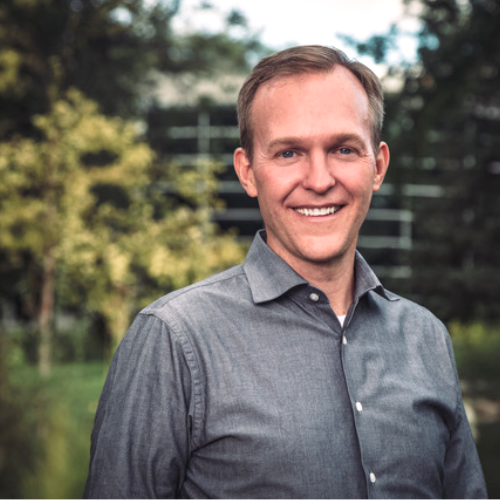
Former U.S. Congressman Ben McAdams is the founder and CEO of the Common Ground Institute, an organization supporting jurisdictions working to create revenue and other public benefits from government-owned real estate through public-private partnerships. He is also a Senior Fellow for the Government Finance Officers Association, where he leads the Putting Public Assets to Work Incubator, working with jurisdictions across the U.S. to support their development of public asset management strategies.

From 2009 through 2020, McAdams served as a Member of the United States Congress, a Utah State Senator, and Mayor of Salt Lake County, where he represented 1.1 million constituents and balanced a budget of $1.2 billion. In his public service, McAdams brought Republicans and Democrats together to find solutions to address homelessness, improve education and health outcomes, and promote evidence-based decision-making at all levels of government using innovations, including the first social impact bonds to achieve measurable outcomes for the public good.

Prior to elected office, McAdams taught Securities Regulation at the University of Utah Law School and was an attorney with Davis Polk in New York and Dorsey & Whitney in Salt Lake City, where he specialized in public and private securities transactions for U.S. and international issuers.

Read the podcast transcript here

Eve Picker: [00:00:13] Hi there. Thanks for joining me on Rethink Real Estate. For Good. I’m Eve Picker and I’m on a mission to make real estate work for everyone. I love real estate. Real estate makes places good or bad, rich, or poor, beautiful, or not. In this show, I’m interviewing the disruptors, those creative thinkers and doers that are shrugging off the status quo in order to build better for everyone.

Eve: [00:00:48] As mayor of Salt Lake County a decade ago, Ben McAdams was frustrated that there wasn’t $500,000 in a $1.3 billion annual budget for a promising early childhood education program. Not one to permit defeat, he decided to map the value of the city’s underutilized real estate, and that yielded an impressive number. All of a sudden, the city had $45 billion on its balance sheet. I found out there is actually money under our mattress Ben says. It’s real estate that is just forgotten. Since then, Ben has spent time in politics as mayor, senator, and congressman, but now he’s launched an incubator to help cities map their public assets, much like he did a decade ago, providing a path to solve issues that need money like affordable housing and homelessness. Every city should listen in.

Eve: [00:02:11] Hi, Ben. Thank you very much for joining me today.

Ben McAdams: [00:02:14] Eve, it’s so great to be with you.

Eve: [00:02:15] So the common theme in your life for many years was politics. You’ve been a mayor, a senator, and a congressman, but you started off as a securities attorney. How does a securities attorney become a politician?

Ben: [00:02:29] Well I am passionate about public service and really, from early days in college, wanted to be in a position that I could give back to a community that I love. And so, I went to law school and also found a passion for corporate finance. So, I went to a firm in New York. I did a lot of work in Latin America with issuers who were raising money in the US to do big projects, typically in Latin America. And I found kind of an alignment between my passion for public service and finance. And what I saw was the power of finance to transform communities for the better. So, I did a lot of work in Brazil and with telecom and what we saw, I’d spent some time in Brazil previously, and when I was there nobody had a telephone. And we saw because the cost to install a landline to a home was about $5,000, and nobody could afford that upfront cost to install a landline. And then cell phones come along, and people are raising money to just skip the landline process and go straight to cell phone.

Ben: [00:03:32] And I saw in Brazil, everybody went from not having a phone to having a telephone and what that meant for their productivity, for their ability to earn money, to stay in touch with family and loved ones was transformative. And so, we found an alignment between the power of finance to do good and to lift people for the better. And so, I spent about five years working in, as a securities lawyer, I taught securities law at the University of Utah. And then there came a chance to transition to directly public service. So, I went to work for the mayor of Salt Lake City as his director of government affairs. And in that capacity, I found that somebody with a good finance background was able to add a lot of value to government. We were able to, you know, figure out how to do the Rubik’s Cube of some pretty complicated public projects that we were trying to get done. And I think that was then my life mission. I found this passion for bringing a knowledge and understanding of private finance to the world of social impact.

Eve: [00:04:34] So, after quite a few years in politics, you have now launched something called the Putting Public Assets to Work incubator. So first I want to ask what are public assets?

Ben: [00:04:47] So public assets can be any number of things. You know, it can be a mass transit system that we’ve built. It can be an educated population. It can be, you know, public safety infrastructure. But when I was mayor and looking to, so I served first for the city of Salt Lake City, and then I was elected to the Utah State Senate, and then I was elected Salt Lake County mayor and I served for six years as mayor. And that was my favorite job, because I was really in a position to impact my community for the better. And one of the things that I found is that we knew, we know empirically from numerous studies that have been done globally, that it’s less expensive to educate your population than it is to incarcerate. It’s less expensive to treat somebody with addiction than it is to watch them cycle through a homeless services system. It’s less expensive to, you know, to maintain a road than to let that road fail and then come in and rebuild the road. But what frustrated me is, while we knew these things would save taxpayer dollars over the medium term, we just didn’t have the money to do it. And I said, there’s got to be a better way. We know we are acting in a way that’s going to cost us more money in the long run. We’ve got to figure this out. So, I started looking at our budget. And, you know, government budgeting is really built around cash flow. We project how much money we’re going to bring in from taxes and fees, and then we decide where we’re going to spend that. And what we ignore in government budgeting is our balance sheet.

Ben: [00:06:13] What assets does government have? How much are those assets costing us to maintain and what opportunities can we derive from those assets? So, I started focusing on the balance sheet aspect. You know, if we have, if we’re able to better utilize our mass transit system, that means and to better utilize that asset means we’re building fewer roads, maybe fewer stormwater systems and water and electrical systems. We can actually save money by better utilizing existing assets. Pretty quickly we came to what I think is the biggest asset class of government. It’s real estate. And, surprisingly, government has very little understanding of what real estate they own, what it’s worth and because of that, they don’t make good strategic decisions about how to manage their asset, how to minimize costs and maximize value. So, I said, you know, as a county, we are spending over $1 billion a year. We should have a handle on what we own and what it’s worth and start thinking about that as a way to minimize expense and maximize value. So, we did an inventory. We hired Urban3, who came in and did an inventory for Salt Lake County, helped us to identify all of our assets and hone in on the value. And what we found was shocking. So, we said we’re going to exclude assets that have no commercial value. We excluded our watershed, our, you know, our ski terrain is sacred here, so we don’t want to touch the ski terrain. Of course, our airport runway you’re not going to, that’s going to just be what it is. It’s an asset of a different…

Eve: [00:07:44] So you’re talking about the land, even the land. You just didn’t include those assets that you’re not going to touch.

Ben: [00:07:48] We didn’t include those. So, we looked at land that had commercial potential in addition to or instead of government value, so we could make better strategic decisions. What we found was in a county that’s about 500mi², we found 44mi² of commercially viable government owned land that was not on the tax rolls. We estimated the value of that was about $13 billion. This was 2017. So, you know, it’s about 10% of our land mass. It’s about ten times our annual budget that’s tied up in non-producing land. You know, some of these things we’re still going to want them to be non-producing. A library serves a function. But we started thinking, you know, could that library in an urban area, it’s a one story building with a big parking lot, instead of just being a rundown, dilapidated library surrounded by ten story office and residential, could we think of a library as a ground floor retail, so to speak, of an office building and reduce the cost of owning and operating that facility and actually maybe even generate some revenue off of it if we were able to activate the land.

Eve: [00:08:54] Let’s just go back a bit. So, these public assets that you found, like the library, is a fascinating example. What are some other examples? Not just vacant land, like not just abandoned houses, right? It’s way more than that, right?

Ben: [00:09:07] Yeah, vacant abandoned homes is a big one, but that comes with some other policy challenges around it. You know, governments think in terms of decades and centuries, and private sector thinks in more in terms of, you know, 7 to 10 years. So, we found a lot of parcels that 50 years ago, 75 years ago, we made a decision. Maybe we were widening a road and so we did some eminent domain to condemn some homes to acquire parcels. And we will widen that road, but we didn’t need the entire parcel. So, you have kind of the scrap that’s off to the side.

Eve: [00:09:38] Right.

Ben: [00:09:38] I can think of, you know, here in Salt Lake we have a major roadway, you know. So that roadway is a valuable asset. Transportation assets are expensive and desirable. And on the side of that roadway, there are these fantastic parcels of land that have signs on it that say property of the government, you know, and we go out and we cut the grass, and we clean up graffiti. And they just have been sitting there for decades being maintained and not being activated. So, there are not vacant abandoned homes but vacant parcels that the government is banking for another use or just kind of maintaining but has forgotten.

Eve: [00:10:14] Oh, interesting.

Ben: [00:10:15] So that’s one asset class.

Eve: [00:10:17] I just have to hop in. I bought one of those little abandoned pieces of property in Australia. I’m doing a project there with my sister, and there was this tiny little laneway that we really needed to make the project. It’s a very dense urban site. The city didn’t even know they owned it. They, we paid them for it in the end, quite handsomely. But they didn’t know they owned it. No one had a record of it anywhere. It was a very interesting exercise in a very desirable neighborhood.

Ben: [00:10:47] Surprisingly, or maybe not. But that scenario where government does not even know that they own a valuable parcel of land, we’ve seen it over and over again in this work. So, you know, helping them understand what they have and then make strategic decisions about that is a big part of putting assets to work. To your point, it’s not just the vacant parcel of land. Maybe it’s the parcel of land that is being used. It’s the library, it’s the senior center. It’s the parking lot adjacent to a rec center that you know could be used. You still need parking, but in some of these urban areas, does it really make sense for government to have a surface parking lot? The private sector’s concluded that it doesn’t. Right?

Eve: [00:11:24] The highest and best use, yeah. Yeah. We’re working with a developer who actually made a deal with Alexandria to purchase and redevelop three surface parking lots, and he’s building 50 housing units and putting robotic parking in place and expanding the parking, I think by three times, all on those three lots. So, I think that’s a really good example of what you’re talking about, right?

Ben: [00:11:50] They’re getting everything they wanted, right? They’ll still have parking there, but they’re just bringing property on the tax rolls and giving people a place to live.

Eve: [00:11:57] Exactly.

Ben: [00:11:57] That’s close to transportation and transit.

Eve: [00:11:59] Right? Right.

Ben: [00:12:00] It’s checking so many boxes instead of just one.

Eve: [00:12:03] When you uncover the value of a city’s assets, how can you leverage them? On a developer’s balance sheet obviously, their net worth is what banks look at and they want to make sure that they have enough money to support a project. If it fails, how does it work in government?

Ben: [00:12:19] Evidenced by the fact that we had $13 billion of latent real estate it doesn’t work, right? So, you know, every government has a story of where they’ve taken a public asset and done a public private partnership and activated that asset. So, there are exceptions to that. But these exceptions are few and far between. It’s, you know, one every several years. And when I saw that we had $13 billion of opportunities, it dwarfed the, you know, the one opportunity that we could think of three years ago where we did something. And look, we did do, we are doing interesting things and governments are doing these, but how do you systematize it and scale it that it’s not just something that happens when somebody knocks on your door, and then they’re persistent enough to wait out a government process that takes three years. These are the examples that are successful. How do we make this the norm of what we do not an exception? I’ll tell you, when I taught securities law, I would start my class with a kind of a dumb joke. I would say two economists are walking down the road and one economist says to the other “hey look, I think I see a $10 bill lying on the ground up ahead”. And the other economist says “you’re an idiot. There’s not $10 lying on the ground up ahead. If there was $10, somebody would already picked it up”.

Ben: [00:13:31] And so I think about this with the public assets, you know. I see $13 billion under the mattress of government. Is it a mirage? Is it really there? And what are we missing? Why is it there? And I think there has to be an explanation for why the market is failing in this. And I think the first explanation is government doesn’t even know it’s there. And when they do discover it, then the second explanation is the process to unlock that is so cumbersome. So, I’ll give you an example, a different government outside of my own that we were working with in this Putting Assets to Work. They have a salt pile, you know, governments when it snows, they need to de-ice their roads. And 75 years ago, they put this salt pile in an industrial corridor on an industrial rail line. Smart place to put it on a kind of a low value parcel of land. And then they go into autopilot. The salt pile has been there for 75 years. They use it. They know, you know, somebody knows that it’s there. We are looking at this and we say, do you realize your salt pile, that industrial rail line is not an industrial rail line today? Like many governments are doing with rails to trails. It’s a trail. It’s some of the highest value real estate in your city. And your salt is sitting on land that’s worth $10 million.

Ben: [00:14:44] If you would just pick up your salt and move it a couple of miles away, you’ve got $10 million in an area that has incredible affordable housing needs. So, government can decide, do you want to pocket $10 million by selling the land? Do you want to roll up your sleeves and become part of a public private partnership and create some affordable housing? All of those are options. And so that government is doing exactly that. But I think if so many other governments where once they’ve identified that opportunity, the next step would be to turn to the public works director and say, okay, can you do a public private partnership to create some affordable housing? And the public works director would say, are you kidding? Like, I’m overworked, underpaid, and I don’t know the first thing about doing a multifamily affordable housing development. And you want me to do that on top of my job? And so that starts the process of five years of it’s on a back burner but the public works director is trying to write an RFP. They have to maybe carve out money out of their budget to hire a consultant to help them write the RFP. And it just, the systems of government…

Eve: [00:15:48] Oh, I know I’ve been there. Most of my projects have been very small public private partnerships. So, I totally understand the pace of things in government.

Ben: [00:15:57] Yeah. And so most private developers, in your perspective, just say it’s not worth the effort. There’s a, it’s a great parcel but down the road there’s a parcel I can just buy in a few months and be done with it and be on my way with my project. I can’t spend three, five years trying to unlock this. And so, where the market’s failing, why there’s still that $10 bill on the ground is first, government doesn’t know that it’s there. Private market and the neighbors know that it’s there but the process for talking to government, to engage with them and to form a partnership with them is just so exhausting that nobody’s doing it. And so that’s a couple of things.

Eve: [00:16:31] It’s exhausting. And then I wonder what this partnership looks like. Because I’ll give you an example of a project I did that, hearing what you’re saying, I think the government would have, if they had approached it differently, they would have something of much greater value now in their pocket. I redeveloped a building that’s 30,000ft² and had been vacant for 15 years in a largely Black demographic. I responded to an RFP just like the one you talked about. Spent a lot of time putting my response together. Was apparently the only developer who responded. And eventually the city sold me the property for $1,000, and it was really a liability for $1,000. They also helped in a number of ways with loans and deferred interest payments and matching facade grants, the sort of things they normally have in their pocket. But now we’re like 20 years later and the building is fully occupied, bar Covid, which rocked the boat a little bit and worth a lot of money. And I often wonder if they had said, look, we’ll give you the land and we’ll give you these special grants, but we want to be a partner what they would have today.

Ben: [00:17:40] That’s right.

Eve: [00:17:40] You know, they would have a part of a project or building they basically gave away because that neighborhood has, a little unfortunately, gentrified. Just a few blocks away we have the Google headquarters and Facebook, and it’s very close to the universities. It’s very desirable. Right across the road there’s very expensive apartments that have been built. And I mean, no one could have foreseen that, but no one really. They didn’t have the belief in the property that I had, you know. So how do you change, how do you flip that switch?

Ben: [00:18:14] Well, we have some tools that we have developed that we are advising governments to try to unlock this, because if the tool is look to your public works director, look to your library director to figure this out that doesn’t work. But I think you’re right that also just selling it for, you know, long term lease for a dollar a year, selling it for $1,000, government’s leaving money on the table and the private market’s probably fine with that. But if you want government to not just do this once every five years, but maybe make it a part of what they’re doing every day and to accelerate the pace of these partnerships, there has to be a different approach. But government has some things going for it that the private market doesn’t have. First of all, we own these land, these parcels outright. We have been sitting on them for decades and there’s no expectation to generate revenue tomorrow. The private market has to look at a IRR. How much are you going to make per time, right? And government, I think government should look to say can we, are we using tax dollars or taxpayer assets well? But we can say we can go to a partnership and say we want you to pay a market value for this, but we don’t need that market value up front before you do the development.

Eve: [00:19:27] Yeah, it’s a patient wait.

Ben: [00:19:30] We can contribute it to…

Eve: [00:19:31] Patient capital.

Ben: [00:19:32] Patient capital. Yeah, we’ll contribute it. We understand that you’re going to have bank debt that’s going to be very sensitive to time. You may have other equity investors that are very time sensitive. So, we’re going to negotiate some benchmarks. And once the project has stabilized and you’re paying your debt and you’re paying your investors and negotiated rate that, you know, then we’ll be in the waterfall, but we can be towards the back of the waterfall. And so, government can say we’re willing to absorb that time risk that, you know, we’d like to get paid, but if it takes five years or seven years, we’re willing to be patient. It’s better than what we’re doing right now, which is spending money to let it sit, you know.

Eve: [00:20:10] Right.

[00:20:10] And so there’s some tools that government can bring to the table. So, to capture value but also…

Eve: [00:20:15] Sometimes in those instances I’m thinking about this building. The fact that I renovated the building, redeveloped it, meant that other developers came in because I just happened to like being in underserved neighborhoods. I like the challenge of those projects, and it’s where I prefer to work. I want to do something that’s meaningful. But other developers are waiting to see where something’s already been invested. And so, you know, maybe government’s thinking, well, we’ll give this one away, but we’re going to get other ones. As a result.

Ben: [00:20:45] They have the ability to do, to lead out, to maybe do some philanthropic investments with their land, because, you know, their baseline is zero. So, absolutely.

Eve: [00:20:56] Okay. So interesting. So how does the incubator work? The Putting Public Assets to Work incubator?

Ben: [00:21:04] Yeah. I was mayor. I was then elected to the United States Congress. I served only two years in Congress. I lost my re-election in 2020. So, I still had a passion for public service, a passion for finance, and came back to this idea that I’d been working on as mayor of public assets. And I just said, I know there are billions of dollars under the mattress of government. I know that if we can unlock it, the amount of good we can do in our communities, you know, that can, to your point, it can catalyze growth in an underserved neighborhood. It can form affordable housing. But maybe what you’re doing is just looking to maximize revenue into government to then support childcare or, you know, childcare vouchers or investing in homeless services or investing in clean and renewable energy. There are so many different things you can do with that asset once you unlock it. So, I said, this is where I want to spend my time, is figuring out how to help governments unlock the value of their underutilized assets. So, I teamed up with the Government Finance Officers Association, GFOA. They’re a membership association, you know, pretty much every city, county, school district, the CFO of those government entities is a member of GFOA. And so, we worked with GFOA. And I said, look, putting assets to work should be part of every government’s finance. Let’s start working with GFOA member governments and helping them and others but helping them to unlock the value of their real estate. So, we started Putting Assets to Work incubator.

Ben: [00:22:34] We’ve now worked with about 15 governments, mostly cities and counties across the country. All of them saw what I saw when I was mayor. They’re all sitting on billions of dollars under the mattress, and they have challenges to activate that. So, we help, we go in, we help them identify their assets. We help them see what it’s worth. You may have an asset that is in the far flung reaches of the county that you would say, put on a back burner for now, but we help them identify 10 to 15 assets that they should take action on immediately that are really that proverbial, the salt pile. So, and then we work with them to develop some policy tools to help scale it, to make it not a one every once every five years initiative, but to make it part of what they’re doing. So, the concept that we have there is we go in, and we serve as a, what we call a municipal property advisor. And we say, you know, once we’ve identified the asset, we would like to represent you in structuring a transaction. And we’re going to do this at no charge or very little charge to the government. You know, the private developers will pay a finder’s fee for this. So, our model is built on passing that fee onto the private developers. But if we can say, look, we can clear all of this government red tape, all of these hurdles to give you a parcel that is in a prime location in a great downtown area that has already…

Eve: [00:23:55] Hell yeah, I’m in!

Ben: [00:23:56] …cleared the boxes. Yeah. And then, you know, and here’s our fee, you know. But we pass that not onto government, but onto the private sector. So, all of a sudden, the library director, the public works director, we say we don’t need you to model a multifamily real estate development. Just tell us what you need. You need us to find another parcel for your salt? You need a library that’s 20,000ft², and you need so many parking stalls. Okay, we’ll take your inputs, and we’ll work up a model, and we’ll bring it back to you, government to sign off on. And if you sign off, we’ve got private developers who will, you know, also come in and pay for the architectural work and the design work to get these projects shovel ready. All of this government doesn’t need to pay for that. They just need to create a process where they can get out of their own way and still maintain what they want out of the land. And then and then let the private sector do what they’re going to do.

Eve: [00:24:48] So you said you’ve worked with 15 cities. Can you mention some of them?

Ben: [00:24:53] Yeah. I think some of the ones that have taken this work and are now doing amazing things. City of Atlanta. The mayor of Atlanta, mayor Dickens, said he wanted to build 20,000 affordable housing units. That’s a huge goal. But they identified all of these public assets that can come in and be part of the capital stack to start lowering the cost of development and consequently insisting that those developments have affordable housing. We worked the city of Cleveland. They’re trying to create jobs. And so, they know that they have, they’re actually losing population. So affordable housing is not at the top of their to do list. It’s clearing space. You know, they want to bring in employers and they said we need parcels that are 30 acres or larger. And they did the survey of the entire city of Cleveland and said that parcels that could work for that they had one in the city of Cleveland. So, they said, we’ve got to do some work to assemble parcels, remediate any environmental contamination, and make these available. So, Atlanta and Cleveland are two that we’ve worked with. Of course, you know, given my roots, we’ve worked with Salt Lake City and Salt Lake County. We are doing some work with the city of Annapolis, Maryland. Chattanooga, Tennessee.

Eve: [00:26:02] So pretty big cities.

Ben: [00:26:04] Yeah. Austin, Texas. And some small ones, too. And some small ones, you know, Sugarland, Texas is another one that’s doing some really innovative things.

Eve: [00:26:11] I don’t suppose my city, Pittsburgh is on the list, right?

Ben: [00:26:15] Not yet. We’d love to talk to them. Although they have done some interesting things thinking about their assets as well, you know.

Eve: [00:26:22] Our Urban Redevelopment Authority has always been at the forefront, I think. Yeah, they’ve worked a lot at clearing some very large vacant assets called steel mills. You know, they’re very good at that. And they were a fabulous partner in all my projects. So, yeah. So, do you have a waiting list? Do you have cohorts that you take through? I mean, how does it work?

Ben: [00:26:44] We do. So, we have cohorts. We are preparing to start with our third cohort. So, you know, we think the, the best size for a cohort is about 4 to 5 jurisdictions, and it takes us roughly 6 to 8 months really depending on the speed of government.

Eve: [00:27:00] Doesn’t work fast.

Ben: [00:27:02] Employees have a busy schedule. Yeah. So, and we understand that we work with their time. So, we do most of the workload ourselves. But we’ve got to get into their data and sort through their data. And we need some collaboration with them, or we need them to look over our work before we go public with it. We want them to give a trained eye to tell us what they like. So, it takes about 6 to 8 months to do a cohort. We’re launching a cohort over the next couple of months. We have, almost full, we actually have one spot left for a government to join with this cohort. You know, we do 4 to 5. So, we’ve got four, but we’re looking for that fifth one. And then we’re also soliciting interest for our fall cohort with putting assets to work.

Eve: [00:27:41] It’s fascinating.

Ben: [00:27:42] So yeah, if any governments are interested, we’d love to talk to them.

Eve: [00:27:45] You must get pushback, right? There must be plenty of places that say, why on earth would we do this? We’re stuck in our ways. We don’t want to change.

Ben: [00:27:55] Yeah. No, a little bit. I think you get some pushback from some of the staff that say, you know, if I’m that public works director and I say my budget’s $100 million a year, I don’t want to spend my time on, you know, this salt pile just. It’s fine. It works for me right now. What’s the reward for thinking innovatively? And so oftentimes, what we look for when we’re deciding who to admit into the cohort, we want to see a mayor, a council, some city managers who are willing to push it a little bit to say, no, this is important. We want to be better stewards of taxpayer assets. And so, we want to see some leadership from the jurisdiction. Sometimes we think it’s our job to have some uncomfortable conversations. One jurisdiction we worked with, we saw that they had an abundance of parks and open space that were poorly maintained. And they probably had like, I’m a as a mayor, I’m a big supporter of parks and trails and open space. But if they’re too many and underutilized by the public, we said, maybe, you know, you should think about, you know, a slight reduction in your parks and go for quality over quantity. And, you know, that’s always a hard conversation to have. And we think it’s our job to like to provoke that. So, we encourage them to look at their parks parcels. And do you really need a pocket park across the street from a pocket park or can we rethink how you’re using those assets? So, you know, there are some uncomfortable conversations that we think it’s our job to have.

Eve: [00:29:25] So, what’s been the biggest surprise for you in this work?

Ben: [00:29:28] Well, I think my biggest surprise was to find that what I discovered in Salt Lake County was not unique. It is every, 100% of the governments we’ve worked with. And many governments say, look, we don’t have any vacant assets. We’re on top of it, and we’ll go in, and we’ll find them everywhere. It’s, you know this this concept actually isn’t new. It’s done pretty regularly in Europe and Asia when they think about, you know, the city of Hong Kong built their entire mass transit system without tax dollars by simply saying, we know that when we put in a transit stop, the land around the transit stop is going.

Eve: [00:30:05] Increase in value.

Ben: [00:30:06] Increase exponentially in value. So, they just were thoughtful about how they built a transit system and paid for their transit system with the value that the transit system created. So, it happens in Europe and Asia. I think it just doesn’t happen in the US because our governments are so much more fractured. You have cities and counties and school districts and housing authorities and transit authorities. And, you know, we have a mosquito abatement district here that, you know, and to get all of these entities working together is hard. And so, I think we have to develop new tools that they don’t need in, you know, in a jurisdiction where there’s just the federal government and it’s very hierarchical and aligned. So, you know, it’s been a surprise that how many assets we have and how, and what incredible opportunities there are to unlock it.

Eve: [00:30:55] One other big question, how do you plan to scale this work? What are your plans?

Ben: [00:31:01] Yeah. Well, first of all, I would say we hope people copy us. My hope is that ten years from now, this is the norm of municipal government. Everybody has a municipal property advisor or 2 or 3 who are on tap with the government, who are making unsolicited proposals to government to say, hey, we’ve noticed you have this parcel, and we’d like to help you think about how to use it better. And that government is well versed in saying, okay, let’s have that conversation, you know, and here’s what we want. And if you can hit these objectives, then we’re game. So, I would love people to copy what we’re doing and to make this the norm of municipal government. Because if we do, so many communities are going to be benefited. We have the capital to solve our homelessness crisis, to solve our housing affordability crisis, to transition to clean and renewable energy. We have the assets to do that. It’s just a matter of figuring out how to activate those assets.

Eve: [00:31:53] It’s really fascinating. Ben, thank you so much for joining me. I can’t wait to see where this goes, and I hope my city is listening.

Ben: [00:32:03] We’d love to talk to them.

Eve: [00:32:04] Okay. Thank you so much.

Ben: [00:32:07] Thank you. Eve.

Eve: [00:32:20] I hope you enjoyed today’s guest and our deep dive. You can find out more about this episode or others you might have missed on the show notes page at RethinkRealEstateforGood.co. There’s lots to listen to there. Please support this podcast and all the great work my guests do by sharing it with others, posting about it on social media, or leaving a rating and a review. To catch all the latest from me, you can follow me on LinkedIn. Even better, if you’re ready to dabble in some impact investing, head on over to smallchange.co where I spend most of my time. A special thanks to David Allardice for his excellent editing of this podcast and original music. And a big thanks to you for spending your time with me today. We’ll talk again soon. But for now, this is Eve Picker signing off to go make some change.

Image courtesy of Ben McAdams
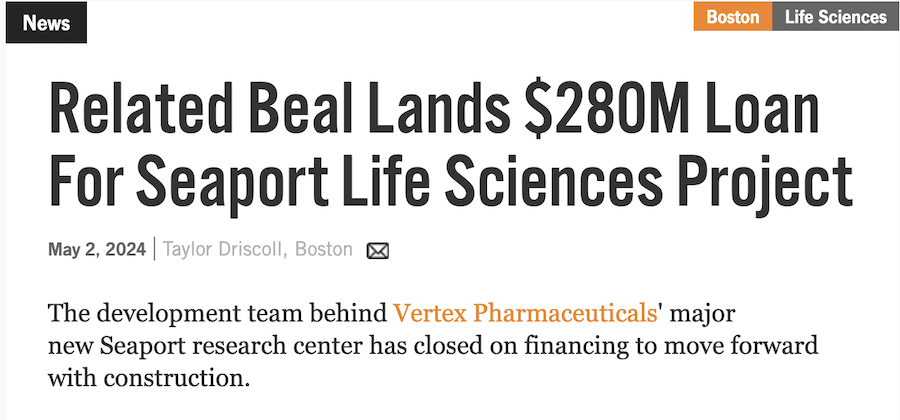
$280M Loan.

May 6, 2024

This is a big one.

Related Beal just closed on a $280M loan for the new Seaport life sciences project, readying them for the next phase of the project, construction. 

You might wonder why we care?

One of the partners on the project, The Boston Real Estate Inclusion Fund, led by Kirk Sykes, has listed an offering on Small Change. They’ve already raised $1 million towards a $3.75 million goal for an equity stake in this project.  

22 Drydock is focused on Impact with a capital I. Slated to become Boston’s first LEED Platinum and zero net carbon life science building, the developer has also achieved 50% minority participation in all aspects of the project including construction, design and ongoing operations.  And ownership through the Small Change platform. 

We’re excited. Take a peek at the full article here.

Image courtesy of Related Beal

#WeOwnThis

April 24, 2024

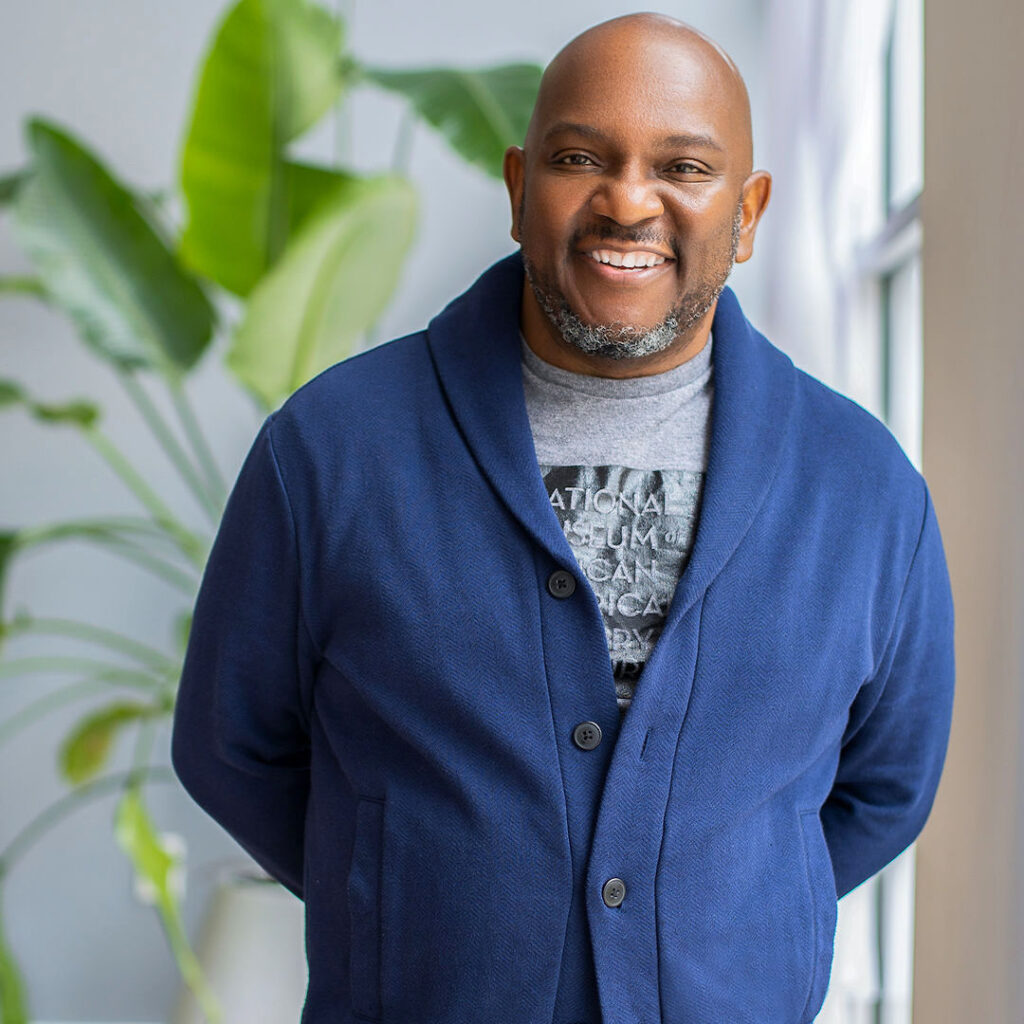
Lyneir Richardson is co-founder and CEO of The Chicago TREND Corporation. He is an experienced commercial and residential real estate developer with over 17 years of experience in urban retail development.

Lyneir is also a Professional Practice Instructor in the Department of Management and Global Business at Rutgers Business School in Newark, NJ, and the Executive Director of the Rutgers Center for Urban Entrepreneurship and Economic Development (CUEED), where he leads capacity-building programs that have assisted over 400 entrepreneurs.

Lyneir has served as Chief Executive Officer of the primary economic development corporation in Newark, NJ, for two different mayoral administrations. He was Vice President of Urban Development at General Growth Properties, Inc., where he led the national initiative to bring quality shopping centers to ethnic neighborhoods in large U.S. cities. Early in his career, Lyneir founded Lakeshore Development Construction Company and was recognized by the U.S. Small Business Administration as Illinois Young Entrepreneur of the Year. He started his career as a corporate attorney at the First National Bank of Chicago.

Lyneir is a graduate of Bradley University and the University of Chicago Law School. He is a member of the Urban Land Institute, the International Council of Shopping Centers, and the International Economic Development Council. He serves on the Board of Directors of the International Economic Development Council, New Growth Innovation Network, Newark Arts Council and the Cook County Land Bank, and has served as Vice Chairman of the Illinois Housing Development Authority Trust Fund Board and as a Commissioner on the Chicago Plan Commission.

Read the podcast transcript here

Eve Picker: [00:00:01] Hi there. Thanks for joining me on Rethink Real Estate. For Good. I’m Eve Picker and I’m on a mission to make real estate work for everyone. I love real estate. Real estate makes places good or bad, rich, or poor, beautiful, or not. In this show, I’m interviewing the disruptors, those creative thinkers and doers that are shrugging off the status quo in order to build better for everyone.

Eve: [00:00:48] Lyneir Richardson is building Black wealth through community owned shopping centers. He has an audacious plan to buy 16 community shopping centers and invite 1000 small investors to co-own them with his company, Chicago TREND. He’s made a sizable dent in this goal, with over 340 investors and five shopping centers in this portfolio. This will be number six. To accomplish this, Lyneir and his team have developed a rigorous set of criteria for finding and buying shopping centers in majority Black demographics that are on the cusp of change that might offer added value over time. His plan is to empower Black entrepreneurs and community residents to have a meaningful ownership stake in the revitalization and continued vibrancy of commercial corridors and Black shopping districts. But there’s so much more. Lyneir wants every neighbor to be able to say, “We own this”.

Eve: [00:00:48] Hello, Lyneir. Thanks so much for joining me again.

Lyneir Richardson: [00:02:13] Good morning. I’m happy to be with you.

Eve: [00:02:16] I’m really happy to have you back a third time, because this marks your third offering on Small Change. Very exciting.

Lyneir: [00:02:23] When you come back for a second or third serving, it must be good.

Eve: [00:02:27] It’s got to be good. Yeah, that’s really great. Just for everyone who doesn’t know you, let’s start with Chicago TREND, which is, um, a company you started. What does Chicago Trend do?

Lyneir: [00:02:37] TREND stands for Transforming Retail Economics of Neighborhood Development. We started the company in 2016, after two years of being a research project that was funded by the MacArthur Foundation and the Chicago Community Trust. The nature of our work is focusing on how to make commercial corridors and commercial properties in neighborhoods that are underserved stronger. Our belief is that the commercial corridor is the first impression of a neighborhood, and if it’s blighted or under retailed or some way underperforming, it becomes a liability for the neighborhood rather than an asset. It brings down property values. It could even attract crime. And so, our work for the last ten years now has really been focused on strategies to get capital and to get services and goods, and to articulate why commercial corridors, particularly in majority Black neighborhoods, can be viable and helping them to become assets for the community.

Eve: [00:03:43] So I think you had a light bulb during Covid and the Black Lives Matter movement about a strategy that you’re now playing out that’s going to take you a while, but it’s pretty amazing. Do you want to tell us about that?

Lyneir: [00:03:54] You know, we own five shopping centers now. And I talk about #WeOwnThis. And the ‘we’ is not even, you know, Chicago TREND and our company. And it’s not even the so far 330 community investors that have invested in our projects through the Small Change platform. We think of the ‘we’ being everyone that’s even connected to ownership for the first time. You know, that’s my grandmother or my auntie or my prom date, or my fraternity brother or my church member. They now, for the first time, have connection to ownership of an asset, commercial property in their neighborhoods. The light bulb moment was right after George Floyd was murdered. We all were at home during Covid watching TV. And I remember that there were clarion calls for racial justice investing and initiatives to close the racial wealth gap. And the next day I remember seeing a guy holding a sign up saying don’t wreck my business is Black owned. There was no civil unrest and rioting in neighborhoods of Chicago. And then it hit me. Well, you know, wealth is created by owning assets. Assets that generate revenue and appreciate over time, perhaps assets that have tax advantages. So, we really are going to close the racial wealth gap. We need to help more people of color own assets that could be homes, businesses, stocks. Again, our work was commercial corridors. So, as I mentioned, since that moment, we now own five shopping centers and on this Small Change platform, right now we’re about to launch our sixth and we will ideally own our sixth shopping center by the end of June.

Eve: [00:05:45] When you talk about owning real estate assets, what does that look like, white versus Black in this country?

Lyneir: [00:05:52] Through work that I have enjoyed doing with colleagues at the Brookings Institution, Tracy Hadden Loh and Andre Perry, I know you know them, and Tracy’s so fun to work with. And Andre is a sort of, a research rockstar, right? So, for me, it’s been fun to work with them. Research that, you know, they really have pioneered. You know, only, you know, 3% of people of color have an ownership stake in commercial real estate. You know, two thirds less than, you know, the general population.

Eve: [00:06:27] Which is, what? About 8 or 9%?

Lyneir: [00:06:28] It’s 9%. Yeah, 8 or 9%. Right. So less than 3% of people of color own commercial real estate.

Eve: [00:06:33] And also, I’ve got to add from what I understand, the value of those assets is less.

Lyneir: [00:06:39] Of course, right.

Eve: [00:06:40] Than white-owned real estate assets. There’s not even 3%. If you took it by value, it would be a much smaller percentage, right?

Lyneir: [00:06:48] Yeah. Exactly right. And so, the question becomes what’s the on ramp? I remember also during Covid, seeing this article in the Wall Street Journal where the former US Commerce Secretary, Penny Pritzker made a quote that said, you know, one of the reasons that there’s a racial wealth gap in America is that people of color have not been invited into good real estate deals, into good deals, right? To be equity holders into good deals. And the article in the Wall Street Journal was talking about Jay-Z and Wall Street executives and these entertainers. And I remember shooting a note to, I had a friend there who worked in her philanthropy, and I said, hey, we’re doing the same thing but, you know, our investors are charter school parents and young millennials and, you know, professionals that live near the shopping centers, and community residents. You know, we’d like to have Jay-Z and, you know, LeBron James. But we’re doing the same thing, but we’re democratizing ownership, and we’ve created a structure that allows people with $1,000 to get an on ramp into ownership. Right? My favorite moment of 2023 was, I was in the community, and we were doing an event, and this woman came up to me and she said “I have lived in this community for 43 years. I call it my own. But I’ve been a renter here. I never actually owned anything until I invested my thousand dollars in your shopping center”.

Eve: [00:08:22] Oh, isn’t that wonderful? That’s now wonderful.

Lyneir: [00:08:24] Now, that comes with a lot of responsibility, right? Obviously. And so, I think about, you know, my dream is one day everyone will receive their investment return, that the shopping center will be better, that you know, all the things that we envisioned will really come to fruition. But that moment of inspiration, of now she’s getting an investor report and understanding what it means and thinking about ownership and even communicating about ownership in a different way with her children and her family members.

Eve: [00:08:54] Yeah. So, my favorite moment with your first offering was when I got a phone call from a gentleman who said he had a young woman who cared for his wife, who lived in the neighborhood, who was so excited about Walbrook Junction that she really wanted to make an investment, but she had no money. How could he pay for her investment?

Lyneir: [00:09:15] Oh, wow!

Eve: [00:09:16] Because she was so excited about owning a piece of it. She lived there. It was really pretty wonderful.

Lyneir: [00:09:22] You know, I imagine there’s a hundred or hundreds of good stories. We’re just launching a little research project to interview the investors, to interview the CDFI lenders in the projects, to talk to some of the retailers. And I’m hoping that, you know, we’ll get some really good data points, both for why and over time, the impacts of the work.

Eve: [00:09:45] One of the things you had us do was to help you start tracking demographics of people who invested. What does that look like?

Lyneir: [00:09:52] Very cool. 53% of our investors are African American.

Eve: [00:09:56] Isn’t that fabulous?

Lyneir: [00:09:58] 58% reside in low- and moderate-income neighborhoods. 42% are women. None of those stats are indicative of commercial real estate ownership.

Eve: [00:10:10] No. Absolutely.

Lyneir: [00:10:11] Like we’re changing the game, right? And that work is incredible. Those stats are unbelievable.

Eve: [00:10:16] I think you and I are both really proud of that. We had another offering on our site, a gentleman in, down South who did a little cabin project, and he really wanted to teach his community how to invest. He ended up with 85% investors from his community, which was astounding. That’s what he worked at.

Lyneir: [00:10:38] Well, you know Eve, I have this little phrase that “intentionally inclusive does not mean exclusive”.

Eve: [00:10:47] Yes.

Lyneir: [00:10:48] So, we’re intentional about communicating that there is an opportunity to have an ownership stake. In church basements, in apartment building community rooms, in the public library. I’ve done Zoom presentations at 7 a.m. in the morning, at lunchtime and at dinnertime to parents in the charter school, the PTA, so to speak. That’s intentional, right? But I’m also excited that through Small Change, we have investors as far away from Australia.

Eve: [00:11:19] Yes.

Lyneir: [00:11:20] So we have people that want to be a part of a community development movement, that want to support something positive and get a return, right? So, this is another way of, you know, how can I, as you always say, do real estate for good? I think that’s the, you know, that’s your tagline, right?

Eve: [00:11:41] Right. So, this is a strategy to own 16 shopping centers and you will soon own your sixth. Tell me about that. How hard has it been to find them and how have you thought about it?

Lyneir: [00:11:55] Eve, it’s, the work is grueling, actually, and…

Eve: [00:11:59] But it’s a lot of fun, right?

Lyneir: [00:12:02] Yeah. And you find little moments of inspiration. So, you know, the first quarter for us, we had, you know, we’re raising a fund, and our objective is to get the fund to $50 million. That fund allows us to do the due diligence and financial underwriting and to know that we can acquire the shopping centers, right? And then, once we put a property under contract, we do the Small Change offering and ultimately, you know, this investor outreach and try to democratize ownership, right? And really foster inclusive ownership and being intentional and mission based about that work. But man, raising money is hard. Getting properties under contract is hard. You know, going through a financial due diligence is, you know, so every step of the way. But you look for little moments of inspiration, right? The lady who said, you know, thank you for giving me an opportunity to be an owner, you know, a favorable article in the local newspaper where the editorial board will say, you know, hey, I think this is an interesting idea. You know, getting a green light from a new grocery store that will occupy the project, the last shopping center that we bought, a new grocery store and a national coffee shop. Like, we’re.

Eve: [00:13:16] Oh, congratulations. Because that was really great.

Lyneir: [00:13:19] We’re two minutes away from being able to publicly announce that. But those little moments of inspiration add fuel to the work.

Eve: [00:13:27] So this is really triple bottom line, right? Maybe even quadruple.

Lyneir: [00:13:32] It’s a lot of bottom line. The first is even in my class at Rutgers is being profitable. So, you know, every day the whole team struggles with this tension between mission, market opportunity and money. Right? So that shows up in our work in shopping center ownership of, you know, we want to get tenants to the shopping center that are not extractive. And so, when there’s a vacancy our first thought is what retailer or what service would be profitable here, but also would be community serving. Right? And we’ll leave a space vacant even a month or two longer as we try to work to get a tenant that we think will be accretive for the neighborhood. Sometimes the challenge is, you know, we really fought very hard to get out of Black-owned bank in back to projects. And at the end of the day, the deal didn’t happen. And we ultimately found a Black entrepreneur, a husband-and-wife team that have opened a first-class laundromat, laundry facility in the shopping center. So, the mission got carried out in a different way. We wanted to get financial services, but now we have Black entrepreneurship.

Eve: [00:14:47] You get laundry services instead, right? But what fascinates me about your plan is that you’ve always said these neighborhood shopping centers should be full of non-amazon-able service businesses, right? So, you can’t get your laundry cleaned on Amazon yet.

Lyneir: [00:15:06] And Amazon doesn’t do fingernails yet. You know, manicures yet. I always joke and someone said, well, it’s all machines, so.

Eve: [00:15:12] Right.

Lyneir: [00:15:13] This is, the shopping centers that we own these are not the mall. And we don’t own shopping centers with Best Buy and West Elm and the Cheesecake Factory, right? The shopping centers we own have the carryout pizza, the barber shop. We have 30% of our tenants now are health care, women’s health care center. We have a pediatric dentist. We have eye doctor, ear doctor that kind of stuff.

Eve: [00:15:40] Really serve the neighborhood.

Lyneir: [00:15:41] That’s right. You know, it’s where you go to eat and where you go to get services. We’re working on a day care deal now we’re really excited about. So, it’s that type of [inaudible].

Eve: [00:15:50] Wonderful. So where are your shopping centers located?

Lyneir: [00:15:53] So all the shopping centers are in majority Black neighborhoods now in Chicago and in Baltimore. The property that we’re about to acquire, enrols in the Roseland Medical district. The Roseland neighborhood is exciting for us because, you know, it has four medical tenants. It has a FQHC and a pharmacy and a dialysis center, but it also has three restaurants and a nail salon. So, it’s right down the strike zone. It’s 27,000ft². You know, our smallest property is 10,000ft². Our largest property is about 140,000ft² and growing. And we’re starting to look for, you know, as you mentioned, our aim is to acquire 16 shopping centers by the end of 2026. And so, the next couple of years, we’re trying to find the right neighborhoods where the shopping center makes a difference. It’s not just about the real estate, but where the real estate can do all of these other things, right? It’s, you know, it can be a catalyst for community development. It can, you know, it can attract new services. It can, you know, if done right, create wealth for local residents. If done right, it’ll help reduce crime. That’s how we think about it as sort of centers of influence of, you know, the shopping center as an asset.

Eve: [00:17:12] So we can’t talk about the terms of the current offering, but we can tell people, like, I was sort of really interested that it has a big piece of land attached to it as well.

Lyneir: [00:17:23] Yes. One of the ways that we strategically look to add value is to look at adjacent vacant property. I’ll give you the best example of the last project we bought.

Eve: [00:17:37] Was that Edmondson Village.

Lyneir: [00:17:39] Edmondson Village in Baltimore.

Eve: [00:17:42] Just for listeners that’s also on Small Change.

Lyneir: [00:17:44] Small change as well. We closed it in August. We bought it in August. It had a vacant parcel behind it. We have signed a contract with a very well regarded non-for-profit organization called Meals on Wheels. People love Meals on Wheels, and they will build a new headquarters and distribution facility there and, you know, it was a way to add value to the property.

Eve: [00:18:08] That’s amazing. Yeah.

Lyneir: [00:18:09] And so we’re excited about that. Here at the Roseland Medical District, there’s similarly a piece of vacant property, this shopping center’s less than a block from a new announced public transit stop. The Chicago Transit Authority has announced almost a $4 billion extension of the transit station. And a new station will be, you know, less than a block away from our shopping center. And then there’s also this Roseland Medical District, where the master plan to do more medically oriented development and housing. And so, you know, part of what we will determine over the next year is how to develop that vacant parcel in a way that creates value for us as owners of this asset, but also that stimulates and catalyzes and is in concert with the other development vision that’s articulated in the master plan for the medical district. And, you know, and the big vision and big investment happening with the public transit expansion.

Eve: [00:19:14] So all those little investors in this project and in the last one get to own an additional property.

Lyneir: [00:19:22] Yeah. I mean, it’s part of the property. It’s, you know, we acquire it. It’s, you know, it’s like vacant parts, like the backyard. So, you know, we’re trying to figure out how to maximize value. I mean, one of the things I’m excited about is when you buy a 20-year-old or 30-year-old shopping center, typically there’s some concern about the roof needing repair. And so, we’ve now submitted grant applications to do solar on the roof. So now our investors are not just investors in a commercial property for the first time. In theory, as soon as we get a project done, they’re going to be investors in climate positive initiatives, right? So, you know, what does it mean to, you know, solar panels or energy efficient HVAC equipment? Or, you know, we’re aiming to put a electric charging station in the parking lot. So, all of these things are possible when you own the asset. That’s why ownership matters, right?

Eve: [00:20:14] Right. Right, right, right.

Lyneir: [00:20:15] When we #WeOwnThis, when the ownership matters, right? We’ve hired African American property managers and leasing agents. We’ve can engage in climate positive initiatives. We can do deals with, you know, local and African American owned tenants, right? So again, inclusive doesn’t mean exclusive. We have other people that are not African Americans, that are tenants and are service providers. But we, as owners can be intentional about, let’s take an extra step and see if there’s someone local, someone of color that could do this project or that we could help open a business or that can, you know, be our advisor on making climate positive improvements to the shopping centers. That’s why ownership matters.

Eve: [00:21:02] How do you finance these projects? I mean, do you have a plan in place for all of them that you repeat, you know? like, how does it work?

Lyneir: [00:21:08] Well, the structure is in theory, rinse and repeat. We raised our fund, which provides, you know, to buy a shopping center now requires 25 to 30% of equity. And so, our fund…

[00:21:20] That’s actually low.

[00:21:21] Yeah. And our fund now and because of the community development nature of the work, we’ve been able to get CDFI lenders. Or in the last two projects, we’ve assumed debt from a national lender that has allowed the loan assumption. So, that’s been the nature of the work. So, what changes every time is who the lender might be. We like working with local CDFI partners, right, that understand, that have the same mission. You know that are patient and flexible in trying to, you know, allow us to do the community investment raise. And so, the structure is the same. You identify a property that meets the investment criteria. You negotiate with the current owner to get the property under contract. You make the deposits. You make sure that we have investment, internal Investment Committee approval to move forward. As little as 51%, as much as 95% of the investment comes from, you know, our internal, you know, fund and our resources there. And then after that, we launch the crowdfunding platform, we work with the CDFI to get the loan commitment in place with the expectation that we will close on the purchase, you know, within, you know, 90 days after.

Eve: [00:22:35] So we’re not allowed to say the numbers, but basically you share the equity role with whatever investors come through Small Change, right? You could talk about how Walbrook Junction worked, you know.

Lyneir: [00:22:50] The beauty of simplicity is this that once we do the due diligence and the financial underwriting and determine this project needs $1 million of equity, or in this, in Roseland’s instance it needs $2.5 million of equity. We’re prepared to invest 95% of that equity and as little as 51% of that equity. So, we’re, what we’ve said is we believe in this. We’re going to invest in this. We’re moving forward. We’re allowing you to invest on the same terms as we are. So, Eve, if you want to invest, we’ve said we believe this is good for these reasons. Here’s, you know, we have a financial return expectation that, you know, we think we will achieve in this project. And therefore, you know if we think we’ll achieve it, you will achieve it as well. And so, in our prior projects, we worked to get to a 15%, you know, investment return. You know, our internal rate of return. We worked to get, you know, an equity multiple that looks like three in our prior projects, right? That’s the nature of our work. And so, for the 60 days we’re saying you can do this. You can join, you can invest alongside of us on the same terms.

Eve: [00:23:56] It’s absolute equality. What you get, they get and you’re willing to give up a major slab of ownership. And however it falls out on our funding platform, that’s what you end up with.

Lyneir: [00:24:09] If we raise 10% of the equity, we’re going to put in 90%. If we raise 49% of the equity, we’re going to invest 51%. And the goal is we have other individuals. And it’s actually been strategic for us in this way. When we have looked to the municipality or state government or even philanthropy or support. I mentioned the solar demonstration project. In one of our projects, we got grants to put in, make safety improvements, new security cameras, and when we make those applications, it’s not just, you know, Chicago TREND and Small Change or, you know, Eve and Lyneir that owns the shopping center, we’re there representing 200 local investors. A much more compelling request for public support for the project, right? So that’s why the number of owners matters to us as much as the amount of capital we raise. Like, I like having 330 investors. I’m really aiming to get to a thousand. And it doesn’t matter if they, right now, our average investor has invested $2,275. That means there are a whole lot of people that have invested a thousand and a few people that have invested, you know, $20,000 or $30,000, you know, that kind of thing. But it’s about the number of individuals who are connected to feel owner. I get calls, people drive by, and they say, oh, I saw this, or what are we going to do about that? And those little messages, they’re not annoyances, they are, they’re, that’s ownership being demonstrated.

Eve: [00:25:44] Have you been able to track how many people in the neighborhood invest?

Lyneir: [00:25:48] Uh, so what we used is this metric we call investors who reside in low- and moderate-income communities. So again, all of these properties that we own are in LMI low- and moderate-income communities. And so that’s been our proxy for how local are the investors. You know, so we have 58% of the investors in our projects reside in low and moderate income.

Eve: [00:26:12] And I have to ask you, do you have repeat investors from one project to the next?

Lyneir: [00:26:17] We do, you know, again, we’re on our, this will be our third. We probably have, you know, I don’t know the exact numbers, but we have a number of repeat investors, which is the coolest thing. I’m invest. There’s a guy you may see, Eve, Otto Beatty, and I like him. He’s a, he’s an entrepreneur. Family is, you know, he’s a statesman. And Otto actually invested and then brought us to Columbus, Ohio. We’re trying to find a project together to work on, and he’s actually invested twice. And then he got some of his, you know, local other leaders and other folks who are interested in economic development to invest. So, Otto’s not only been an investor, he’s been, you know, sort of an ambassador as well.

Eve: [00:27:03] Isn’t that great?

Lyneir: [00:27:04] I owe him a dinner, probably.

Eve: [00:27:05] So I’m gonna ask you, what keeps you up at night?

Lyneir: [00:27:09] I dream about the day where people will say: He was right, they were right, the strategy was right. And so, that what that means is the project achieved its financial objectives. Again, this is not philanthropic. First. That we improve the quality of the asset. Sometimes it’s physical improvement, a new roof, a new facade. Most times it’s getting additional retailers and services and tenants there. And that ultimately the places that we have invested in, the neighborhood will be stronger. That was the impetus for our work. It wasn’t about the retail. It was about, can you do something to make the neighborhood stronger? Neighborhoods that are depopulating, neighborhoods that haven’t had, seen, you know, an uptick in new development. Can you increase property values in neighborhoods where the concern is not about gentrification? Can you bring services and amenities in that people of color will benefit from? All of that it’s the dream that is the recurring dream that you wake up and people go. He was right. Thank you. I made money on your project and thank you. Our neighborhood is better and that’s, you know, that’s not a nightmare that keeps me up. That’s a dream that I wake up going, you know. Oh, I can’t wait for that day to come.

Eve: [00:28:39] I love this Lyneir. And I really hope that I know that dream is going to come true. It’s a really good dream. Thank you so much for joining me today and good luck on the race.

Lyneir: [00:28:50] Thank you, Eve, for the opportunity.

Eve: [00:29:01] I hope you enjoyed today’s guest and our deep dive. You can find out more about this episode or others you might have missed on the show notes page at RethinkRealEstateforGood.co. There’s lots to listen to there. Please support this podcast and all the great work my guests do by sharing it with others, posting about it on social media, or leaving a rating and a review. To catch all the latest from me, you can follow me on LinkedIn. Even better, if you’re ready to dabble in some impact investing, head on over to smallchange.co where I spend most of my time. A special thanks to David Allardice for his excellent editing of this podcast and original music. And a big thanks to you for spending your time with me today. We’ll talk again soon. But for now, this is Eve Picker signing off to go make some change.

Image courtesy of Lyneir Richardson

DWELL riffs on Small Change.

April 16, 2024

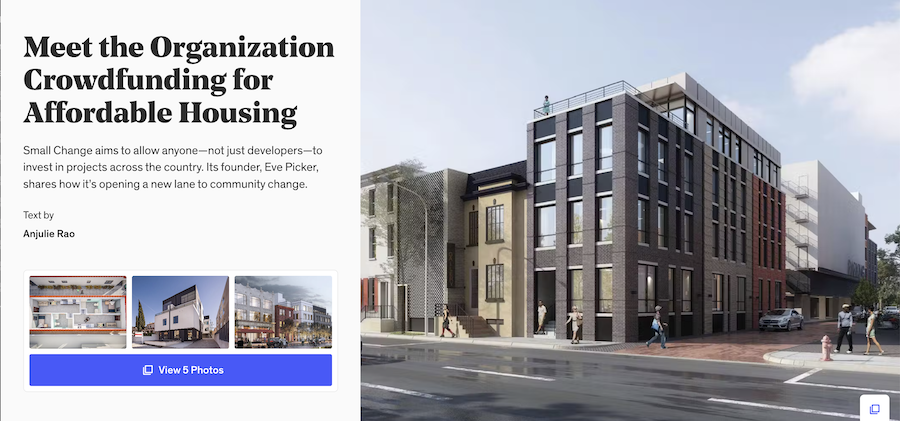
“Meet the organization crowdfunding for affordable housing” writes Anjelie Rao for Dwell magazine. “Small Change aims to allow anyone—not just developers—to invest in projects across the country. Its founder, Eve Picker, shares how it’s opening a new lane to community change.

Real estate investment hasn’t always had the best reputation. House flipping, gentrification anxiety, and opaque LLCs have characterized a popular perspective on the industry. But Pittsburgh-based Small Change is a young company seeking to democratize the field and shift who participates in real estate investment—and how. Founded and led by architect-developer Eve Picker, Small Change has become a platform for minority and female developers, among others, seeking crowd-sourced funding to get smaller-scale projects that have positive impacts on their communities off the ground.

Crowdfunding’s heyday was born from ArtistShare, Kickstarter, Indiegogo, and their ilk operating under the premise that anyone should be able to invest in a good idea. But Small Change and other crowdfunded real estate platforms were facilitated by former President Barack Obama’s 2012 Jumpstart Our Business Startup (JOBS) Act and subsequent changes to Securities Exchange Commission (SEC) regulations, which allowed non-accredited investors (whose net worth and income are relatively low) to invest relatively small amounts of money into businesses. For real estate, this meant that anyone, with any income or net worth, could invest in eligible commercial or housing projects and receive returns on the project’s success; developers can raise up to $50 million from crowdfunded sources. While some projects featured on Small Change are for accredited investors only, many are open to everyone.“

Read the whole story here! 

BREIF. Boston Real Estate Inclusion Fund.

April 10, 2024

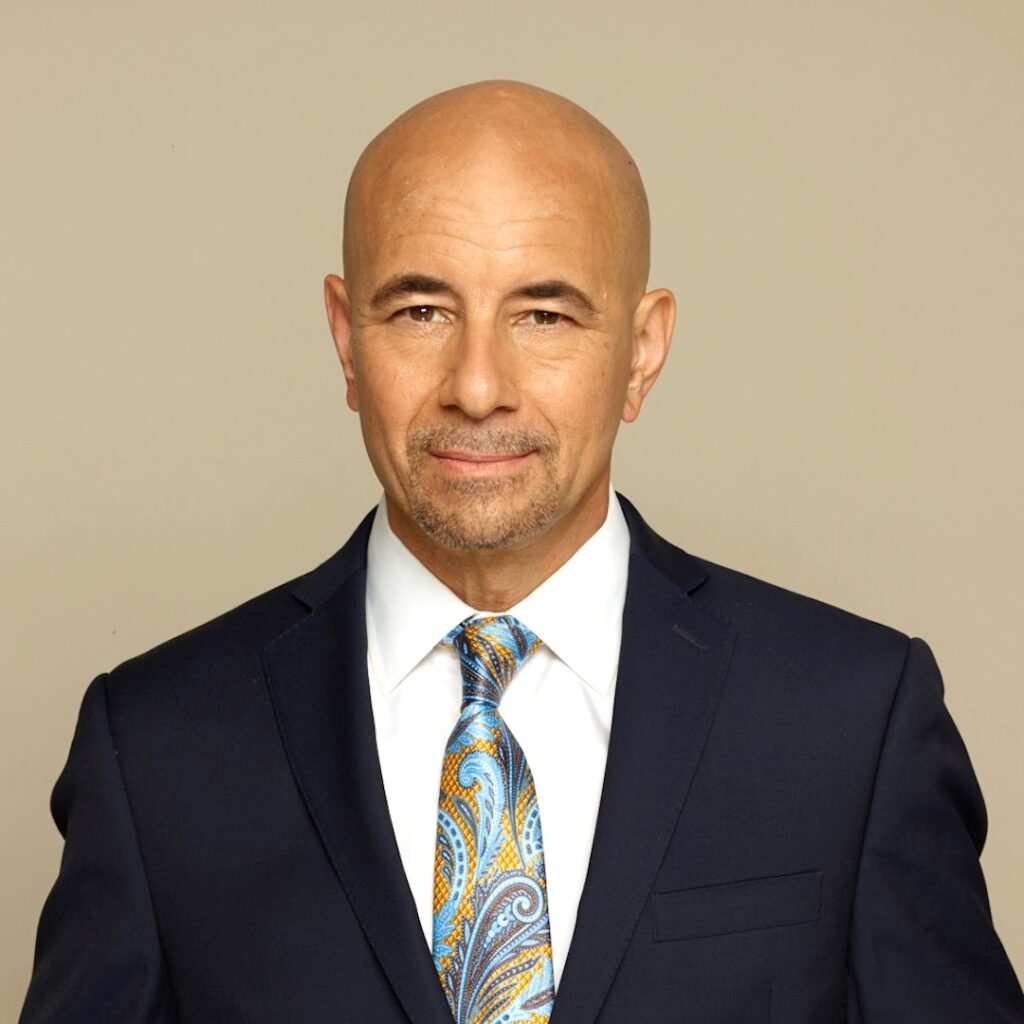
Kirk Sykes is Managing Director of Accordia Partners, LLC, a Boston-based real estate investment and development company. Accordia executes large scale public-private real estate projects with a goal of financial and socially responsible investing success. He was previously the head of Urban Strategy America Fund, L.P., an urban investment, development, and redevelopment commercial real estate equity fund focused on investment returns, economic development and environmental sustainability.

Mr. Sykes combines his professional training and hands-on experience in the areas of finance, investment, development, design, and construction to create customized responses to the complex issues of urban real estate development. His approach is grounded in the bottom-line driven perspective gained during his tenure as chairman of the Federal Reserve Bank of Boston, and other roles that included serving on Fleet Bank and BankBoston’s Community Bank Advisory Boards. He currently serves on the Eastern Bank Board of Trustees and Risk Management Committee and on the Board of Directors of Apartment Investment and Management Company. He was formerly a member of the Ares Commercial Real Estate (NYSE: ACRE) Board and Compensation Committee.

Mr. Sykes has attended the Harvard Business School Owner/President Management Program, the MIT Center for Real Estate Development Commercial Development Executive Program, and L’Ecole Polytechnique in Paris. He earned his Bachelor of Architecture from Cornell University.

Read the podcast transcript here

Eve Picker: [00:00:09] Hi there. Thanks for joining me on Rethink Real Estate. For Good. I’m Eve Picker and I’m on a mission to make real estate work for everyone. I love real estate. Real estate makes places good or bad, rich, or poor, beautiful, or not. In this show, I’m interviewing the disruptors, those creative thinkers and doers that are shrugging off the status quo in order to build better for everyone.

Eve: [00:00:52] Kirk Sykes is managing director of Accordia Partners, a Boston based real estate investment and development company. Accordia develops large public private real estate projects. Kirk was previously the head of Urban Strategy America Fund, perhaps one of the first urban real estate equity funds focused on the triple bottom line. And that brings us to this podcast. Kirk has had a highly successful career, but that is not enough for him. He has always given back. And for Kirk, that means helping the black community he is part of access capital and investment opportunities that have historically been unavailable to them. Listen in to learn more.

Eve: [00:01:48] Hello Kirk. Thank you so much for joining me today.

Kirk Sykes: [00:01:52] Eve it’s a pleasure to be with you.

Eve: [00:01:54] So you’ve had a pretty rock star career in real estate, founding, owning and managing companies in the financial services, real estate and architectural sectors, and even serving as the chairman of the board of the Federal Reserve Bank of Boston. But all the while, you’ve been building your profile. You’ve made inclusion for BIPOC and women in real estate a lifelong mission. My first question for you is a tough one, but how does it feel to be a black man in real estate today compared to, say, 25 years ago?

Kirk: [00:02:27] Well as we all know all real estate is local so I’ll answer that from the perspective of being in the Boston market. So, I would say it’s better in Boston. And I didn’t know that I would say that when I first came to Boston 40 years ago. But there has been a substantial improvement from the time that I first came to this market.

Eve: [00:02:53] That’s good to hear, because, you know, my vivid memories of ten, 15 years ago in Pittsburgh were entering a real estate event room and literally feeling like the only woman there. It was a pretty elite club. So, do you think we have come even vaguely close to equality?

Kirk: [00:03:15] You know, it’s hard to say what equality is. Commercial real estate has been notoriously inequitable, you know, due to the demands in terms of capital and access and going back to redlining and even where the banks’ insurance companies wouldn’t lend to people of color and also to women. So, I think we’re getting closer in equity in many ways. I think there are a lot more people, capable people, in the market that I’m in than there were when I started. I was one of a few, or a handful, and now I’d say I’m encouraged by the number of folks that have shown up. I can talk a bit about how we got there, if you like, at some point.

Eve: [00:04:09] Oh yeah. No, I’d like to know. And my next question will be what still needs to be fixed?

Kirk: [00:04:14] Yeah. So, a few things in the Boston market changed in the last 20 years. One of the most significant was something called the Massport Model. So, a public entity, the Port Authority decided that it would make inclusion by women and people of color in all aspects of projects, 25% of its selection criteria for who got to develop sites they controlled in Boston Seaport, which became very valuable over the last 20 years. That process has evolved and gotten better and has led us to BRIEF which we’ll talk about a little later. But I would say I never imagined Boston would be the leader in change in public disposition of valuable real estate assets. But it has evolved into that. And that Massport Model has now expanded to be part of the disposition and expectations of the city as a whole, and not just the state. So that’s quite an accomplishment for Boston.

Eve: [00:05:32] It is. So, it’s gone from being an unusual idea to something that’s sort of part of the fabric of doing real estate in that area, by the sounds of it.

Kirk: [00:05:42] And it’s continuing to evolve. So now there is a request from the city on every development project that developers disclose what they are doing in terms of inclusion and equity, resiliency and affordability. And it is presumed that that may evolve further to be more than just a voluntary disclosure. So, I think the message is coming across that if you want to get approved or entitled to build a significant real estate asset, you need to be doing meaningful things in terms of transformation.

Eve: [00:06:20] So how? I mean, at least in that area, how close are we to equity? Like, how far do we still have to go? You know, you said you’ve been working on this for 25 years. Is it another 25 years? Is it around the corner?

Kirk: [00:06:35] Well, it’s a diverging trend line, isn’t it? If you look at opportunities and the number of people able to execute them. And that’s unfortunately related to access to capital in many ways because there isn’t sufficient accessibility to be in a position of controlling projects, not just to invest in a project, it’s who’s in the decision making position to leverage those projects to be transformational in terms of labor, in terms of occupancy, in terms of, you know, affordable retail, you know, all the transformative things that come along with control are so important. And if, by way of your question of equity, it’s a broad question. In terms of how many people will be able to be, able to own valuable commercial real estate assets, aren’t we playing a 400 year catch up game?

Eve: [00:07:38] Probably, yes.

Kirk: [00:07:39] Closing that gap.

Eve: [00:07:41] Yeah

Kirk: [00:07:41] But there is reason for optimism. When I took over Real Estate Executive Council in the early 2000s as the preeminent organization of African American real estate executives in the country, it grew from 30 to 70 people, but now it’s 250 people. So, that seems to be exponential growth and something to celebrate.

Eve: [00:08:05] Right. Although I have to say this, and people have heard me say this before, when I look at the investments made by VCs in 2023 versus 2000, nothing has changed. I mean, you’re looking at companies, you know, women-owned companies, 2% of the investment dollars, minority-owned companies, 1% of the investment made during that year. That feels to me like we’re never going to get anywhere.

Kirk: [00:08:37] It’s easy to be disheartened and it’s hard to continue in the face of the challenges. But, you know, you mentioned venture. I think something has changed. I have the good fortune to be the father of the founder, one of the founders of black VC and, BLCK VC didn’t just try to promote people going into venture as investments, but creating an ecosystem where BIPOC and women venture platforms could be launched. So now, while the numbers are still pretty small, you know, I think when Sydney Sykes went to the Valley after Stanford Business School, it was 300 folks of color in venture platforms. Probably hasn’t gone up a lot, but there are a lot more people nationally in that ecosystem of venture investing platforms which didn’t exist before black VC. So, I’m encouraged, I guess, and I’m an optimist. I’m a developer, I got to be an optimist.

Eve: [00:09:40] I tend to be discouraged and encouraged in cycles, you know, with my platform. Small Change. What I’ve seen in that, the world of democratized investment opportunities is that there’s a very large percentage of women and minority owned businesses looking at that tool as a way to startup businesses. And I think that will eventually Sort of become part of the status quo. So that’s also I think a check mark, right?

Kirk: [00:10:07] Yeah. That’s true.

Eve: [00:10:08] Okay. So, what initiatives in particular have you tackled over the years in an effort to move this needle?

Kirk: [00:10:15] Yeah, interesting. You know, I’ve had a few hats, as you’ve mentioned, from architect to developer to investor. So, I guess it depends on which hat I’m wearing. But I like to say I’ve built community with a pencil, a dollar and a brick, and building community is important to me. They’ve all worked well at different times. So, if I were to point to some specific opportunities or, I should say, initiatives, going back to the 90s we changed the point system on the largest highway construction project in America, the Big Dig, $20 billion.

Eve: [00:10:56] Oh, I remember that.

Kirk: [00:10:57] But we found out people were winning contracts by a very few points. So, when we gave value and attention to including first time and diverse team members or companies, it automatically, out of greed, kind of propelled opportunity for those companies to grow. In 2000 we got involved with developing the first African American owned branded hotel in New England. And it was in an Empowerment Zone. And we learned how to use Empowerment Zone financing and tax preferences to create the most diverse workforce, in terms of construction and union labor. The first African American general manager, a hotel staff that was 98% people of color, mostly women. So, leveraging the Empowerment Zone objectives to create change. And then coming into early 2000s with the launch of Urban Strategy America Fund, which I started, which was sort of the early socially responsible investing private equity strategy, which included all the banks and a number of institutional investors and pension funds, we created change in terms of keeping track and measuring investment with women and people of color and transformation of communities and we found investors that wanted to invest in that. And so, you know, I could keep going, I guess what the theme is that over the years, not only the initiatives have changed but the tools required to create change have changed. And so, I keep trying to evolve to stay one step ahead. And now with the BRIEF vehicle we’ve launched with Small Change, we’re trying to figure out how to make large scale commercial real estate opportunities that typically don’t see commercial real estate investors out of the diverse communities more available and accessible. So, thank you for helping us with that.

Eve: [00:13:15] Oh sure. Well, it’s been a little bit disappointing in some ways, but we can talk about that too. But let’s talk about that BRIEF and what and who is BRIEF and what inspired it.

Kirk: [00:13:26] BRIEF, Boston Real Estate Inclusion Fund, kind of came out of that evolving leadership in Boston to want to create opportunities for people of color and women to invest in some of the growth that’s happening and has been happening specifically around the life science industry, but in other industries as well. And so, three partners came together. We were once competitors and, you know, we joined up to identify commercial real estate investment opportunities in the city and then bring retail investors together with Basis Investment Group. And Basis as the largest woman of color owned platform in commercial real estate, having done about 6 billion, had the ability to come in and finance investments and underwrite investments with large scale developers who had very attractive opportunities. And then we came along and syndicated out a portion of that to make it available to smaller retail investors, qualified investors, who could invest $50,000 or more. And now we’re putting about $3 million into one venture, which Basis has put $11 million into with related companies.

Eve: [00:14:50] So this opportunity is on Small Change, but it’s accredited investors only, or qualified investors. That’s my disappointment and for yours too, right, that it couldn’t be non-accredited investors, because if you can’t get your foot in the door, then it’s pretty hard to start building wealth. But nevertheless, the rules dictated that. And so, you’re trying to raise 3.75 million towards this pretty spectacular life sciences project in Boston. Do you want to tell us a bit about the building and the tenants and developers?

Kirk: [00:15:25] Yeah, yeah, the building is exciting in that it’s a life sciences building for Vertex Pharmaceuticals, which is a fortune 100 pharmaceutical company. The project itself is about $418 million, 344,000ft². But what’s more exciting is that Vertex is the 100% commercial tenant for the building, and it’s expected to come in as a equity investor alongside the retail investors. The sponsor is equally impressive, related companies, which build projects like Hudson Yards in New York, is the sponsor for the venture and is quite qualified and capable in the Boston market. We’re excited to make this available in much smaller retail investor increments to qualified investors than has typically happened before. And with your help, we’re making that possible.

Eve: [00:16:26] Yeah. So, the disappointment is that because this is such a small piece of the pie, right, of a very large project, it’s really a passive investment into that project. And so therefore non-accredited investors are not permitted to invest through regulation crowdfunding, which is a very big disappointment. But maybe someone at the SEC is listening.

Kirk: [00:16:50] Well, we’re happy to at least, this is a very cutting-edge effort in our opinion. And hopefully it will continue to get even better in terms of its availability as time goes on.

Eve: [00:17:03] So what is the ultimate goal for BRIEF?

Kirk: [00:17:06] Yeah. So, you know, BRIEF is ultimately trying to promote opportunities for diverse investors, Bipoc and women investors, who don’t get a chance to participate in these investments. But our ultimate goal is for transformational real estate investments that do well and do good. And, specifically, in the terms of inclusion and all aspects of inclusion, which is a dimension of this project. 50% of the project’s participants are women and people of color. It is a LEED-certified building and aspires to be Net Zero. So, in terms of ESG dimensions, this is a home run. So doing well and doing good, as was the case back when I launched my triple bottom line fund in 2005 is People, Planet, Profit. And I like to say that there are not the other two Ps without the profit P but the same is true in terms of the People and Planet dimension. And we will look forward to chronicling how this building is transformational and we’re excited that people can actually also be profitable in doing that.

Eve: [00:18:32] So for anyone who’s listening, if you don’t already know, we are at SmallChange.co. So you started life as, or at least your career not life, as an architecture student. And what led you to start a fund? It’s a pretty big step. Yeah.

Kirk: [00:18:49] Big step. You know, I think the cornerstone of everything I’ve done in my life has been about building community. And that sounds rather broad, but, you know, my family came out of the black community in Alabama, and my great grandparents were involved in setting up the education system in Alabama. And, you know, we’ve always been part, not only of building community in the black community, but standing up for civil rights. Grandfather testified in the Scottsboro trial, helped black people have a voice up to the Supreme Court to be on juries in America. So, there’s an obligation where to much those who’s given, much is expected. And I think that’s a roundabout way of saying I see real estate as my vehicle for giving back. And you heard me say earlier, I built community with a pencil, a dollar and a brick, and they’ve all worked at various times. I’m kind of agnostic. I want them all to be, all the tools on the table, to achieve the outcomes we want to try to attain. And so, that’s the path I’ve chosen for my life. And the fund vehicle has been maybe the most transformational, because you’re leveraging capital and you’re able to leverage that to create the change that sometimes doesn’t get attained without capital leverage.

Eve: [00:20:26] Yeah, I personally agree. You’re a real estate developer, what sort of projects are you working on today?

Kirk: [00:20:33] Our singular and greatest focus beyond BRIEF, and BRIEF has the ability to be in lots of investments in an investor role as it’s evaluated and underwritten, and we’re able to be confident that we can share that with retail investors in a way that they can make an intelligent investment decision. Beyond that, we are developing 6,000,000ft² at a place called Dorchester Bay City, and this is a 15-year capstone project. We’ve been at it for four. It’s 36 acres on a peninsula on the Red Line in Boston, on the water next to the third largest park, next to an urban beach, next to the third most diverse university in the country. And we are extremely excited about that project. So, for me, I’ve gotten more focused in my efforts, and they are really bifurcated between the retail opportunities for diverse investors that BRIEF affords and the transformation and placemaking and inclusion that can be attained through a 6,000,000 square foot, $5 billion project.

Eve: [00:21:52] So what have been some of your very biggest challenges over the years and maybe disappointments?

Kirk: [00:21:59] Yeah. You know, it’s interesting. I guess I don’t see barriers, I see opportunities. And so, I suppose in that regard everything’s a disappointment, right? Or anything that gets in your way.

Eve: [00:22:16] Yes.

Kirk: [00:22:17] But, you know, I’ve been very fortunate to take advantage of opportunities that have been presented to me, and many of them have showed up in ways that I never expected. So, I go into life looking for a great story. If I come up with a great outcome, then it’s an additional success. And so, I try not to be disappointed, but, you know, I would like to have been where we are now 20 years ago, in terms of being able to access 36 acres and do a 6,000,000 square foot project. But, you know, it wasn’t the time. And by that, what I mean is I didn’t have the capital relationships. I hadn’t spent the time in financial institutions and environments. So, I’m not answering your question because, as an optimist it’s really hard for me to look at and find the disappointments. I just see them as impediments that can be removed.

Eve: [00:23:23] Interesting. So, they just even, they just become bigger challenges.

Speaker3: [00:23:28] Well, you know, makes life interesting, right? I mean, if it were easy, everybody would do it. And many of the opportunities have come out of adversity. When we acquired the Crosstown site, we were unable to test for anything by the agreement on the contract. There was a lead paint factory underneath it.

Eve: [00:23:50] Oh.

Kirk: [00:23:51] So a guy with no money had a project for a city block. But he had a lead paint factory he had to get rid of. So, we created an environmental risk transfer company with an insurance company and an engineering company. We fixed the problem. We got the regulatory closure. I sold the company back to them. They went on and did it for other people. So, I guess the story of that is, maybe the opportunity was there because somebody else knew there was a lead paint factory, or maybe they didn’t know how to solve the problem, but once you can remove it, it became a valuable asset. And we own that asset today. But if I gave up…

Eve: [00:24:33] You wouldn’t own it. That’s right. I’m going to go back to BRIEF at the moment and the 22 DryDock offering. What will success look like for you with that offering?

Kirk: [00:24:45] Yeah. You know, success here, because it’s all about the qualified investor and their ability to obtain the expected outcome. So, we’ve been able to scrub a lot of the risk in this project. One of the advantages of coming in later, which is not always where people of color are invited to come in, usually it’s in an effort to win something. If you come join me, I’ll tell you what you won. Win, win. This is the exact opposite of that. We’ve reverse engineered inclusion. And so, to your question, success will look like a predictable outcome where people attain the 1.7 equity multiple that they’re expected to get and the 17% internal rate of return. But the only way to do that is to have risk adjusted returns that are based in fact. And so, 22 DryDock project is unique in that 60% of the project has been bought out in terms of construction costs. Normally, you don’t know that when you go into a project, it has a tenant for 100% of the space. Normally you don’t have a tenant before you start a project. It has the success of a very viable fortune 100 pharmaceutical company who has a building across the street already in their headquarters in it. So, there is certainty of tenancy. And so, I guess I’m describing to you predictable outcomes that track along the lines of the underwriting that we offer to our investors. The by-product is that we can engage a lot of people of color and women in the execution of this project, and that we can prove that doing well is not at the exclusion of doing good or the opposite.

Eve: [00:26:46] Well, on that note, I thank you very much for joining me. You’ve had a pretty spectacular career. I’m not sure what else to say. I was gonna say, what’s next for you? But it sounds like you have your hands full.

Kirk: [00:27:02] You know it’s interesting. I keep finding things that I should do. I took over as the president of NAIOP for the largest national…

Eve: [00:27:14] Oh, I know NAIOP well, that was one of the real estate industry events that really turned me off a while back.

Kirk: [00:27:22] Yeah, but that’s been exciting because there’s a whole regulatory piece. I’m skiing every continent of the world so I’m off to New Zealand in August.

Eve: [00:27:33] Oh, close to my home country.

Kirk: [00:27:35] That’s right. And I’ve been there and love it. And Oceania is a destination for us. So, you know, I think BRIEF will be a wonderful thing to bring to fruition and bring ten more BRIEF projects to Small Change and have them bring lots and lots of retail investors into the fold. It’ll be great.

Eve: [00:27:57] Well, we would love that too. So, we’re ready for it.

Kirk: [00:28:00] I know you are.

Eve: [00:28:01] Thank you very much, Kirk. It’s been it’s been a pleasure.

Kirk: [00:28:05] Thank you Eve. You take care.

Eve: [00:28:12] I hope you enjoyed today’s guest and our deep dive. You can find out more about this episode or others you might have missed on the show notes page at RethinkRealEstateforGood.co. There’s lots to listen to there. Please support this podcast and all the great work my guests do by sharing it with others, posting about it on social media, or leaving a rating and a review. To catch all the latest from me, you can follow me on LinkedIn. Even better, if you’re ready to dabble in some impact investing, head on over to smallchange.co where I spend most of my time. A special thanks to David Allardice for his excellent editing of this podcast and original music. And a big thanks to you for spending your time with me today. We’ll talk again soon. But for now, this is Eve Picker signing off to go make some change.

Image courtesy of Kirk Sykes

« Previous Page
Next Page »

Primary Sidebar

sign up here

APPLY TO BE A PODCAST GUEST

More to See

(no title)

February 22, 2025

Bellevue Montgomery

February 11, 2025

West Lombard

January 28, 2025

FOLLOW

  • LinkedIn
  • RSS

Tag Cloud

Affordable housing Climate Community Creative economy Crowdfunding Design Development Environment Equity Finance FinTech Gentrification Impact Investing Mobility Offering Opportunity zones PropTech Technology Visionary Zoning

Footer

©rethinkrealestateforgood.co. The information contained on this website is for general information purposes only. Nothing on this website is intended as investment, legal, tax or accounting strategy or advice, or constitutes an offer to sell, solicit or buy securities.
 
Any projections discussed or made may not be accurate and do not guarantee a specific outcome. All projections or investments are subject to risk due to uncertainty and change, including the risk of loss, and past performance is not indicative of future results. You should make independent decisions and seek independent advice regarding investments or strategies mentioned on this website.

Recent

  • The Mulberry
  • Mount Vernon Plaza
  • The Seven
  • Real estate and women.
  • Oculis Domes.

Search

Categories

Climate Community Crowdfunding Development Equity Fintech Investing Mobility Proptech Visionary


Copyright © 2026 · Magazine Pro on Genesis Framework · WordPress · Log in