• Skip to main content
  • Skip to secondary menu
  • Skip to primary sidebar
  • Skip to footer
  • Home
  • About Us
  • Say hello
Rethink Real Estate. For Good.

Rethink Real Estate. For Good.

  • Podcast
  • Posts
  • In the news
  • Speaking and media
    • About Eve
    • Speaking requests
    • Speaking engagements
    • Press kit
  • Investment opportunities

Development

Bridging the Gap.

May 24, 2021

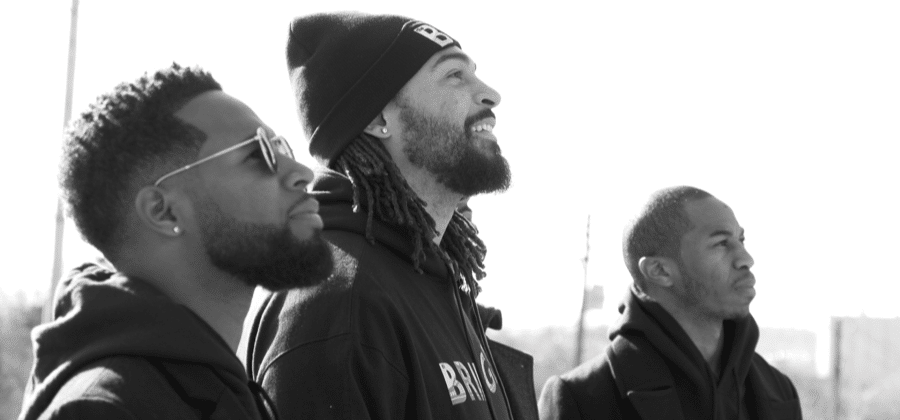
“Even after retiring from the NFL, Seattle Seahawks players keep finding ways to give back to their community. Former offensive tackle Garry Gilliam and defensive tackle Jordan Hill, who have played football together for most of their lives, are uniting once again to create change in their hometown of Harrisburg, PA.” writes Samantha Sunseri for Yahoo Sports.

When Garry Gilliam retired from football, it was just the end of his first career. As a graduate with multiple degrees from Milton Hershey School and Penn State University, and with a thirst for knowledge and a passion to give back to his community, he launched a second career –  as founder and CEO of The Bridge. Not content with coaching youth football, his former colleague and good friend Jordan Hill also jumped on board as chief community officer.

With the Bridge they are building a ‘for-purpose’ real estate development company with the intention of acquiring unused properties such as malls, schools and warehouses and transforming them into inner-city mixed-use ‘eco villages’. Their focus is on cooperation, collaboration, and community. Sustainability will be achieved by residents being able to work, eat, learn, live, and play all in the same location. The first eco-village, in the former Bishop McDevitt High School, broke ground in late 2020 and they hope to open it to the public in 2022. The project will include affordable housing and spaces for entrepreneurs, entertainment, specialized learning and trade programs. Year-round food production is planned, using no-soil agricultural techniques such as hydroponics and aeroponics. 

The Bridge wants to address some of the challenges which many communities face and which have created systems of oppression for many Black Americans. They want to “span the tide…. that exists between the rich and the poor, the informed and the untaught, the entrepreneur and the everyday citizen.”

Listen to my interview with Garry Gilliam or read the original article here.

Images courtesy of The Bridge
Livable and Delightful.

May 19, 2021

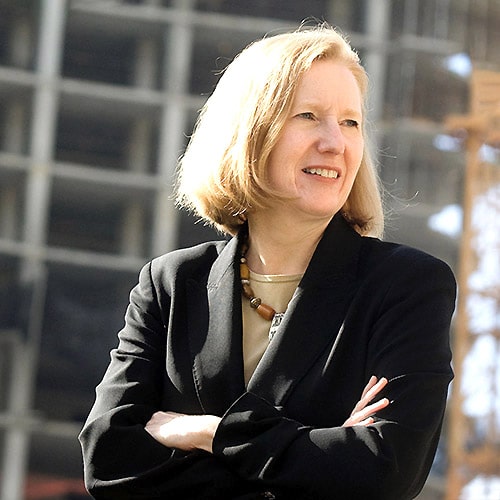
A-P Hurd says that she can understand why people don’t like developers. “Most people don’t like change, and development is really visible,” she says. “Often, five or 10 years after something gets built, people really love it. But when you’re talking about replacing the familiar with the unknown, that’s hard for people. All we can do is what Garrison Keillor admonishes: “Be well, do good work and keep in touch.”

Born and raised in Ottawa, A-P’s career is smartly eclectic. Journalism, finance, software startup, and novelist are all part of her career path. Then she decided to go to graduate school to further her engineering skills, and found her way to sustainable and transit-oriented real estate development. Today she has SkipStone, where she works with clients like Sound Transit, the City of San Jose, Community Roots Housing and private developers bringing projects to market, sustainably. 

A-P has been a faculty member in the Runstad Real Estate Department at the University of Washington, and she co-authored The Carbon Efficient City (2012) with the U of W Press. She is on the boards of CityBldr, a technology company, and Blueline Group, an engineering design firm. She also served on the board of OneBuild – a modular construction company. Currently, A-P is a board member at the Downtown Seattle Association and serves on the board of the Pacific Real Estate Institute (PREI).

Insights and Inspirations

  • Livable and delightful is what all communities should aspire to be.
  • Really successful cities never have a finish line.
  • Expanding rail infrastructure into non-urban areas might be the next thing for A-P
  • Regulations squish innovation.
Read the podcast transcript here

Eve Picker: [00:00:15] Hi there. Thanks for joining me on Rethink Real Estate. I’m on a mission to make real estate work for everyone. Real estate can help to solve climate change, can house people affordably, can create beautiful streetscapes, unify neighborhoods and enliven cities. So I’m on a journey to find the most creative thinkers and doers out there. I’m not the only one who wants to rethink real estate. You can learn more about me at EvePicker.com or you can find me at SmallChange.co, a real estate crowdfunding platform with impact real estate investment opportunities open for investment right now. And if you want to support this podcast, please join me at Patreon.com/rethinkrealestate where there are special opportunities for my friends and followers.

Eve: [00:01:16] AP Hurd says that she can understand why people don’t like developers. “Most people don’t like change, and development is really visible” she says. “Often five or 10 years after something gets built, people really love it. But when you’re talking about replacing the familiar with the unknown, that’s hard for people. All we can do is what Garrison Keillor admonishes: Be well, do good work and keep in touch.”

Eve: [00:02:02] Born and raised in Ottawa, AP’s career is smartly eclectic. Journalism, finance, software start-up and novelist are all part of her career path. Then she decided to go to graduate school to further her engineering skills and found her way to sustainable and transit oriented real estate development. Today, she has SkipStone where she works with clients like SAM Transit, the city of San Jose, community roots housing and private developers bringing projects to market sustainably. Share this podcast or go to Patreon.com/rethinkrealestate to learn about special opportunities for my friends and followers and subscribe if you can.

Eve: [00:03:03] Hello, AP, I’m really happy to talk to you today. I want to find out more about what you do. Welcome.

AP Hurd: [00:03:11] Thanks. I’m pleased to be here, Eve.

Eve: [00:03:13] And I think I’m most impressed that we share a tagline Build Better Cities. So SkipStone, your company, helps private, public and non-profit entities build better cities. And I wanted you to tell me a little bit more about what that means.

AP: [00:03:30] Sure. In answering this question might be helpful to go back a little bit to my history. So, my background is in operations and finance early in my career, but really spent the last 15 years working in real estate and development. And for about 10 years of the last 15, I worked for a company called Touchstone, which is a large regional developer in the Pacific Northwest and ran that company for a few years and then started my company, SkipStone, about three and a half years ago and pretty early into working as a developer, I became very interested in the idea that development happens a certain way because of a combination of where capital wants to invest and the regulatory framework that governs where it can invest. And the mental model that I have for this that I’ve talked about before is, you know, when you’re a kid and you have one of those playdough extruders…

Eve: [00:04:32] Oh yeah.

AP: [00:04:32] And you had a little tube and there’s a little thing, you can push through the tube and there’s little plates you can put on the front of the tube. So if you put a little star shaped plate and you push playdough through the tube, you get a little star shaped extrusion. And if you take out the star plate and you put a circle, then you get kind of a long tube extrusion. And if you put in a plate that has very, very tiny holes, you might push on the playdough thing and actually nothing comes through because the playdough is too viscous. And so the for me, this metaphor is interesting because I tend to think of the little plate that is across the front of the tube as the regulatory framework. It sort of governs what’s allowed and what’s not allowed and what can go through and what can’t go through. And then the playdough is actually the investment capital that flows to projects. And so, you know, if you’ve got a plate that’s got very tiny holes in it, you might be that’s a very that would correspond to a restrictive regulatory framework. And so you would have to push very, very hard and you’d only get a little bit of playdough to go in. And that would be the idea that if you’ve got a very restrictive regulatory framework, you might get less investment. And so, what all this is to say that in thinking about building better cities, I’ve become very interested early in my real estate career about how the regulatory framework interacts with large flows of institutional capital. And I’ve become interested in can you have a regulatory framework where the most profitable projects, so the ones that attract a lot of capital or playdough, the most profitable projects, are also the ones that align with the public interest? How can we get more investment into things that are good for people instead of just stopping investment into things that are bad for people? And so when I think about building better cities, I think about how we do both of those things. Have frameworks that let capital flow to things that serve the public interest. And I guess I would say I’m also really interested in that in the broad picture of sort of how do businesses, as a whole, get regulated. And so I’ve wound up working in areas like environmental policy and energy policy and housing policy and really trying to think at the local and state level about sort of how are we creating frameworks that can get us more of the things that our cities desperately need.

Eve: [00:07:12] So I have to ask the very big question, how close are we to frameworks that work well towards building better cities?

AP: [00:07:25] That’s a great question, Eve. I think there are several ways that you could evaluate that. One is, are our cities doing for us the things that cities need to do? And so, one of the reasons that people have always aggregated into cities or towns from much of human history isn’t because it’s prettier or nicer smelling. You think of the Middle Ages, but it’s because people can exchange things with others and particularly with others who are quite different from them. There is a pretty fundamental economic theory that the value of an exchange between two people is higher if they are more different from each other. If they have things to exchange that are more differentiated. And this is true if you’re exchanging a bolt of silk for some olive oil. But it’s also true if you pair up a lawyer and a computer programmer. If you have two computer programmers together, they might have some differences in their field and stimulate each other to think differently. But if you bring a lawyer and a computer programmer and a cook together, the kinds of things that they may be able to produce jointly are going to be more innovative and higher value. And so, to the extent that cities facilitate exchanges that drive value for people, I think cities are doing pretty well at serving a reasonable proportion of the people who live there. And that’s why across the world right now, we are seeing continued urbanization and continued in migration into cities pretty much across most countries of the world. The things that cities are not doing especially well right now, well, they have not in the last year done especially well, slowing transmission of Covid.

Eve: [00:09:24] That’s for sure.

AP: [00:09:25] They are not doing particularly well at moving people around in them as they grow past two or three million individuals in size, at least across much of the sprawling North America. They are not doing particularly well, and this is a related concept, at sheltering people in ways that are adequate and affordable, in a reasonable proximity to the jobs and interactions that are so important. So, I would say we’re doing OK. We’re still attracting people. But there are some very worrisome trends that threaten to tip the balance of cities, particularly large cities, not working so well for people.

Eve: [00:10:13] So, you know, this conversation is going to go in a different direction than I planned, but it’s sort of fascinating. So, you know, I always think that financial institutions actually have a very large say in which way the balance is going to tip even on small projects. Right. So, do financial institutions understand the need to innovate and do things a little differently?

AP: [00:10:47] That’s a good question, Eve. I think that the one of the things I’ve learned about the real estate industry is that people who control capital in real estate tend to be very risk averse. And so that makes it a very challenging industry to innovate. And I’ve wondered a lot like, why do we innovate better and faster and on quicker cycles for the companies that are making portable phone and tablet devices than we do on real estate? And I don’t think I know all the answers. But one thing that’s occurred to me is that if you’re a developer, maybe even more to the point, if you’re a major investor and certainly if you’re a contractor, you’re making in any given fiscal year, you’re making a few big bets. You’re not diversified across a ton of retail customers and you’re not diversified across a ton of customer relationships. And a lot of times those relationships are not long term because you’re buying or selling a building. So, they’re more transactional and you’re making some pretty big bets where any one bet could tip the company upside down. And that’s true as much for the investors as it is if you’re a contractor for a general contractor, your company might be working on two or three projects. And if for some reason the customer can’t pay you or you have a huge cost overrun that you have to absorb, that can also tip the supply chain upside down. So, I think that’s made all financial participants in real estate more risk averse and then consequently has made it quite difficult to innovate.

Eve: [00:12:38] Yes.

AP: [00:12:38] And certainly to innovate in ways that someone is not requiring of you. Now, just to provide a little more optimistic note. I think that also a lot of really exciting examples of people who participate in real estate and who are very focused on de-risking projects, providing a good return to investors and who also figure out how to innovate or build better cities or have a better street front experience or better designed building or contribute to the civic environment in a lot of ways. But when I see that happen, it seems to be more driven by the passion of the individuals.

Eve: [00:13:22] Yes.

AP: [00:13:22] And they’re doing it as an and, in addition to satisfying their investors as opposed to it being the path of least resistance where it’s really happening at scale. Does that make sense as a distinction?

Eve: [00:13:35] Oh yeah, it makes absolute sense. I mean, my crowdfunding platform, SmallChange.co is actually where we have the tagline Build Better Cities is actually trying to fill in that innovation gap for real estate at a very small level. So I think, I mean, I’m completely frustrated by the lack of innovation in large financial institutions, and I see it, the larger the project, the more complex the financing, the bigger the chance you’re going to you’re going to be stalled or stymied by someone who doesn’t really understand yet what you’re doing. The more you have to weigh your work your way up a ladder with a creative project, the less likely it is to happen. And I learned that really early on as a developer doing small projects. If I could find a loan officer in a bank who would basically be my ally in front of the loan committee, I had a much better chance than if I went to a larger bank, where the person I was talking to was six steps removed from the loan community. Right.

AP: [00:14:49] Um hmm.

Eve: [00:14:50] So, there’s a lot lost in translation. And it’s almost like we need the entire financial system to be educated on the value of innovation. Yeah.

AP: [00:15:05] Yeah, I mean, I think what you’re driving at Eve, is maybe even a more fundamental question that I think a lot of people have been asking over the past couple of years and what our corporations for? Right? And, yes, they have a fiduciary duty to their investors or shareholders. But do they have other duties? Do they have duties to their employees? Do they owe a standard of care to the places they operate in? And some people who are very sort of traditional economists might say, no, no, the duty of a corporation is to its shareholders. But we do accept that that’s not the case in its entirety because we have regulations now that prevent some kinds of pollution. So, we do in our legal framework, have some reflection that the duty of a company is also to not desecrate its environment. But I think that there are a lot of people, many of them much more articulate than me, who are starting to ask these questions of how corporations operate in the world. And if they are sort of the the primary entity of how we organize economically, do we need to have more clarity about sort of what their obligations are to to place and people? Because I’ll just say one more thing about this. Companies are not real. They’re a made-up construct to allow people to organize and transact with each other. And so just like money, they’re kind of a made-up convention, but that humans have come up with. And I just will say it would really be a shame if a made-up convention wound up not really serving the public interest. And I think there’s some question right now about the framework for corporations and whether on the balance they are serving the public interest adequately.

Eve: [00:17:16] Yeah, yeah. So, you know, if you can talk about this, who are your clients? And I’d love to know a bit about what you’re working on.

AP: [00:17:26] Sure. So, about half the work that I do is still really kind of traditional development advisory work. So, the company that I worked for before, Touchstone, all of our projects were transit oriented developments. And this is something in which I believe really strongly and I’m a pretty committed environmentalist and really have done a lot of work on climate change policy and energy policy. And one of the things I love about working in cities is that cities have a much lower carbon footprint per capita per inhabitant than any other land use patterns. So, cities are off to a good start, certainly in that respect, and in particular cities that have robust transit infrastructure, whether it’s rail or the much less sexy but very useful bus, cities that have those kinds of infrastructure do even better on their carbon footprint per inhabitant. So there is a ton of value to serve for the planet and economically, it turns out, to building along transit. And one of the ways that this manifests economically is if you build a house near transit, you can start out by just building a house for the person and not have to build a house for the car before you get to building the house for the person.

Eve: [00:18:52] Right.

AP: [00:18:52] So that the lower need for parking around transit has the potential to really positively impact housing pricing and access to housing. So, I’ve been really mostly focused in the world of TOD and thinking about how do we build transit oriented development that also creates great cities that people love. We don’t want to build know so efficiently around transit that suddenly it becomes inhospitable or it’s not a nice place to walk around because at the end of the day, you also need people to want to and choose to live there. But a lot of the work I do now is working with landowners and developers to bring projects to fruition around transit and to think about how to attract capital to those projects. And so really kind of all the levers, the entitlements, the outreach to the community, the project capitalization, the design and construction, and thinking about how to pull all those pieces together into a successful project financially, but one that is also accretive to the community around it. And so that’s about half my work and then the other half of my work is with public entities, cities, but also transit agencies that are trying to think about how to catalyze or bring transit to fruition. And for me, it’s really fun to wear these two hats because I’ve had such a long-standing interest in the policy frameworks that shape development and getting to work with municipalities and agencies that influence those policies. It really is a way to both get to pick what plate goes on the front of the playdough tube and to help push capital through it.

Eve: [00:20:43] So is there a project that you’ve worked on that’s come to fruition that best exemplifies what you do?

AP: [00:20:51] Well, I think one of the most interesting opportunities and I’ve had a chance to work on in the last few years is working with the regional transit agency in Puget Sound. It’s called Sound Transit, and it operates some of the buses, but also all of the light rail system. And a few years ago, I think three or four years ago, there was a bond measure passed or a referendum passed across the tri-county area, which is the three counties that encompass Seattle and the surrounding areas. That was to fund light rail expansion to the tune of about 52 billion dollars. I think it’s the largest transit measure that’s ever been passed by voters in the United States. And what that means is that we’re really expanding our rail infrastructure and sort of the backbone of it into some areas that are not as urban today. And the first reaction to that would be, well, if it’s not very urban, why are you building light rail? But if you go back and think of examples of very successful transit systems, when New York City built its subway as it was building, this is one hundred years ago, as it was building up into the areas that are now the Bronx, it was building into farmland.

Eve: [00:22:14] Yes.

AP: [00:22:14] And so there was there was even fewer people around the transit stations and the stations ultimately influenced the land use pattern. And so there can be some very significant advantages to building infrastructure early and then letting the land you shape around this. And the counter example of what isn’t so great as we’ve seen that in the United States with our freeway system is that a lot of times freeways got built and then they subsidize development around them and then the freeways got clogged up. And now you’ve got people who theoretically have access, but not during large swaths of the daytime. And so light rail expansion is pretty exciting. But it also raises the question of what kind of development is going to come up around some of these stations, particularly in places that, like I mentioned, are not not even close to being an urban land use pattern. And one of the things that has been particularly interesting to observe is that there is a large appetite for TOD, or transit-oriented development of the flavor that shows up on the cover of the ULI magazine. And when I say that, I say it a little bit tongue in cheek, but sort of seven story multifamily over retail with the cute little bakery in the ground floor.

Eve: [00:23:37] And it’s a podium building. Right?

AP: [00:23:40] Right. But also, with these very cute little businesses and eight stories high and no parking. And the reality is, if you’re starting off, whether it’s the fields of the Bronx or an industrial zone on the outside of Seattle, you’re not going to get the cute little croissant bakery on day one. And what’s been interesting is to have the conversation with people about really successful cities don’t have a finish line. It’s not like you put in light rail and you get this prototype of development and then you’re done and it never changes. And if that was to happen, it would quickly become a dying city because it would be full and it would never change. And so thinking about cities as living organisms that are never finished and that sort of build on themselves has given us a bit of a framework. And I say us, kind of collectively as a team and a group of thinkers, that it’s allowed us to ask the question of what comes first and then what comes next and are there phases to zoning and are there phases to development? And how do we think about even interim land uses or interim land use patterns? And for me, this was very interesting because I had previously developed in quite dense urban areas that were very kind of urbanized. And so looking at what is it take in a place that is not yet really a compact, mixed use land pattern. What does it take to get that wheel started? And it’s also sort of forced a reckoning of like we’re not going to be done with the first set of development. It’s going to change over time. And how do we put ourselves in a mindset of evolution rather than a mindset of just getting to some arbitrary finish line?

Eve: [00:25:43] So, you know, the other thing is I just interviewed a guest who described developers as pale and male and, um, and, you know, he said, you know, we end up with pale and male looking developments because that’s who’s driving them. So as a woman in real estate, which is still shamefully a tiny minority, how do you view that? And what are some of the challenges you’ve encountered because of your gender?

AP: [00:26:19] I was very fortunate to join a development company where the three founders were white and male, but they were incredibly supportive of my career and the career of the folks on the team. And we were able to build, you know, not what would be a diverse team by some standards, but a diverse team by real estate standards. And I think as I moved into leadership of the company, I believe strongly that people need to be able to bring their whole selves to work. They they need to not feel that there’s only a little slice of them that is accepted at work, but that they can be themselves at work in all of their glory and all of the different sides of their personality and aptitudes and passions. And that if people do that on a team, the team will be more successful. Not only will it have the benefit of more talents and aptitudes and passions, but that people will share of themselves and speak up about things that are important to them and about things they’re worried about and about risks that might be emerging. and the team will be more successful as a result. And so the company that I was in was very good. I think the founders laid a good foundation for people bringing their whole selves to work. And I really tried to perpetuate that. I, I think that within the industry as a whole, Seattle has a lot of women leaders in real estate, but I gather that’s a bit less common in other parts of the country.

Eve: [00:28:14] Yes, definitely.

AP: [00:28:16] So I would say that I’ve been very fortunate to be in a place where my gender is less of an anomaly. That being said, you know, I wouldn’t really be in real estate if I hadn’t experienced some very awkward situations. And one that comes to mind is at some point, that was when I was running Touchstone and a lender came to our office and wanted to sort of pitch the, us on a relationship with them. And we had a meeting in our conference room and there was a couple of men from this lender organization. And I had a couple of the folks on my team with me. And the lenders would only talk to the two men who worked for me.

Eve: [00:29:01] Oh, AP, I’ve had the same experience, exactly the same experience.

AP: [00:29:05] Yeah. Even when I asked them a question, they wouldn’t look at me when they answered, and they would only look at the folks who worked for me. And so, you do realize that people’s biases about who is making the decisions or who’s in charge can be pretty deep and pretty hard to overcome, even with evidence to the contrary.

Eve: [00:29:25] Yeah, I know. Pretty crazy, huh? So, you know, real estate has become a bit of a dirty word, too, or developers, should I say. So you know, but we, you and I, know that building better cities really requires developers. So how can you make people feel comfortable that real estate development is a solution that will help them have better places to live in?

AP: [00:29:52] I think two answers that come to mind to that question, Eve. The first one is when a site in a neighborhood is being redeveloped, almost regardless of what was there before, people feel a sense of loss at the thing that is going away. Even if it’s a parking lot, they feel a sense of loss. And I’ve thought a lot about why that is, because sometimes the new thing that’s being proposed is actually quite cool. And my conclusion is that people can only love what they know, and they can’t love something that they’ve never encountered. And so, there is something very natural psychologically about people experiencing the moment of redevelopment as a sense of loss, even if 10 years down the road, they love the new things so much that they can’t imagine it ever going away. But I think that creates an obligation to us as developers to try to make the new thing lovable and delightful so that even if the community has a sense of loss at the moment of redevelopment, that they eventually are made whole again and that they love the new thing that came into their neighborhood. So that’s the first answer is we probably can keep as developers through our efforts, giving people new things to love. And the love will eventually catch up. But we shouldn’t fault people for feeling a sense of loss when they don’t know the new thing yet. And then the second answer is maybe a little less positive about human psychology. And it’s this. I think that when neighborhoods are redeveloping, there is a current of conversation that inevitably comes up that is about is it consistent with neighborhood character? Are we preserving neighborhood character? And I think it’s an interesting question to ask, but it’s rarely balanced against the question of are we making room for everyone who is an immigrant to our cities, who wants to have a chance at economic opportunity? And I think neighborhood character in at its worst can wind up being a foil for people to keep others out who are not like them in the name of some lovely sentimental concept. That’s not to say that developers shouldn’t do a good job and build beautiful buildings, because that’s the first part of what I was saying. But I do think that sometimes people who want to stop development, they want to seem like good liberals. And certainly San Francisco has their share of these. But at the same time, like these good liberals are preventing really decent people who want a crack at economic opportunity from having space in their city. And when we don’t make space for other people, we are doing them harm because cities are where economic opportunity resides in this country today. And it is not just a sin of omission to not make space for those people, but it is a sin of commission. And so, I think that sometimes disliking development can be a way for good liberals to make this idea of making space into the bogeyman. Like I don’t like what those developers did, but really what they mean is they don’t like that it’s hard to make space for others. And make no mistake, it is hard to make change and make space for others. But it is so imperative that in this country we figure out how to do that.

Eve: [00:33:45] Yeah, I agree. So I mean, I think that would have been, I suppose, my third point, and that is that some people take easily to change and other people have a very hard time with it. And I remember someone showing me a bell curve with Prada at one end and, you know, a farmer at the other. And at the top of the curve was Walmart or Target. You know, when when that thing has been accepted into the the mainstream. And like, you know, I probably am at the Prada end and or maybe a little bit further up. Right. I can’t really afford Prada. But at the other end is probably my husband who doesn’t really, like, change. He like things being the same. And so I think that that’s, you know, you’re going to have a whole range of people to deal with who, who can move with the times or not, I suppose.

AP: [00:34:46] Yeah. I mean, our cities are the way they are because of a lot of historic framework, some of which are pretty ugly. And redlining is at the top of the list. But there are a lot of structural things built into our land use pattern that are fundamentally about excluding other people. And so, I think we do have an imperative to change because the way we have been is not just.

Eve: [00:35:16] Yeah, I agree. So I’m going to shift gears a bit and ask you about what innovation are you watching that you might think about in future projects or that you think is essential to watch?

AP: [00:35:29] I’d love to say mass timber because I’m working on a mass timber project, but that also feels incredibly clichéd because everybody is working on  mass timber project these days, it seems like. You know, here’s one that is a little weird. If I am going back to this concept, we talked a lot about very suburban neighborhoods or even sort of industrial or undeveloped exurban areas that are urbanizing because of transit. I become very interested in the idea of grouping surface parking so that you can have compact development and buy compact, I mean, two or three story apartments that come right up to the street or row houses with a shared backyard, but that none of the structures that house people would have parking in them, the parking would be sort of getting together either a street parking or angle parking on the street or in a parking lot at the end of the block. And the advantage of ganging together the street, sorry, ganging together the parking, the surface parking is people then have a place to put their car during the period where they need a car because the neighborhood is transitioning, but the parking being aggregated in one place as surface parking, also allows it to be potentially shared with other buildings as it’s not needed so much, or maybe even in the very long term, redeveloped if it’s not needed at all.

Eve: [00:37:04] I love that idea.

AP: [00:37:04] And I have not seen that many places that are doing this. But I am having more and more conversations with cities who are starting to explore this and starting to understand that their right of way or the street is an asset that can be used for lots of things, including maybe having some parking for a period of time until it’s needed less. And that the city’s using the right of way in such a way can help stimulate development and sort of the nascent stages of urbanization around the station. So to me, that’s a really exciting idea.

Eve: [00:37:39] Oh, yeah. And it goes further because if you have a four-lane road, eventually you hope you can reduce the size of the road and that frees up even more land, right? So you get rid of cars.

AP: [00:37:51] Yeah. I don’t know if you need to totally get rid of them, but they’re useful. If you need to go to the Petco and get a hundred-pound bag of dog food, but you certainly don’t need them quite as much as we use them. I did an interesting project a couple of years ago with a community in North Seattle. This was really a grassroots community project that was funded by research and environmental organization called the Bullet Foundation in Seattle. And we took a right-of-way that was really underutilized in a neighborhood that didn’t have a lot of public space. And we created a way to close it during certain periods and also to narrow it and put in community gardens. And we painted the street and we had festivals and what was really sort of a block and a half of city street came to take a much more park like function, but a park that was really active and that gave people a destination to gather within the neighborhood during the summer. And so, it’s made me think a lot about that sort of 20 or 23 percent of of city space that is the right of way. And what are all the public purposes we can put it to?

Eve: [00:39:05] Yes. So, one last question for you. What’s your big, hairy, audacious goal?

AP: [00:39:13] I think that one of the things that I am most focused on and sort of the arc of my life is making the difference that I can on climate change, and it probably is a hairy, audacious goal because there are so many headwinds. We have a system of living and commerce and interacting with each other that depends tremendously on fossil fuel use. And so, it’s very, very hard to change those patterns. I have done work lobbying and on sort of carbon taxes and regulatory frameworks for energy use. And in addition to that, I think maybe the more promising, I’ve written a book about this, the more promising strategy is probably to give people a better way that they love more and to to delight people with an option that is more carbon efficient. And that’s probably the root of my interest in cities, because I think cities can bring people opportunity and they can also bring freedom and joy and not just economic opportunity, but sort of opportunity to live your potential and be your best self, and they provide a lot of flexibility for people to grow into their identities. And so, I think those kinds of things do bring joy. And if we can shape cities so that they continue to lower the carbon footprint per capita, but in ways that people embrace because it’s better than the old way, that maybe seems like the biggest potential for change. And I feel like I can only do a small part of that. But it’s a very exciting place to work.

Eve: [00:41:24] Well, thank you very much for the conversation. I love your upbeat take on real estate and especially the idea of delighting people. That’s a great way of looking at it. I can’t wait to see what comes next.

AP: [00:41:37] Thanks a lot, Eve. It was a pleasure talking with you.

Eve: [00:41:47] That was AP Hurd. Her mantra these days is livable and delightful. An inquiring and eclectic background led AP to where she is today, an in-demand consultant solving very large real estate challenges, all focused on sustainability. Not a straight path, but a very rewarding one. You can find out more about this episode on the Show Notes page at EvePicker.com, or you can find other episodes you might have missed, or you can show your support at Patreon.com/rethinkrealestate, where you can learn about special opportunities for my friends and followers. A special thanks to David Allardice for his excellent editing of this podcast and original music. And thanks to you for spending your time with me today. We’ll talk again soon. But for now, this is Eve Picker signing off to go make some change.

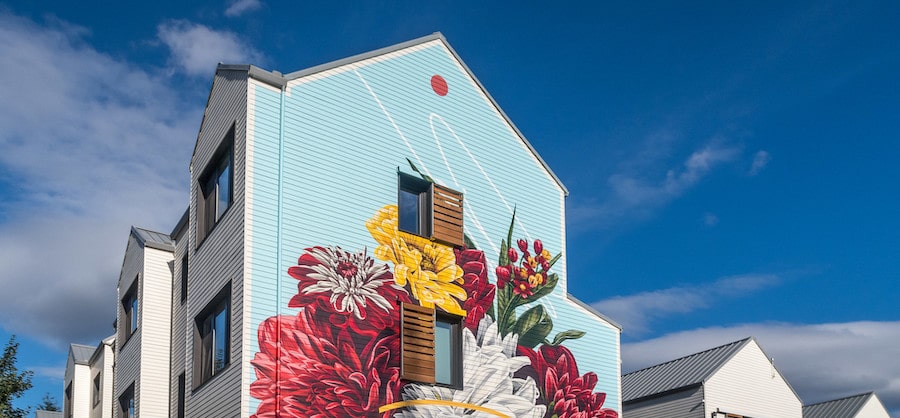
Image courtesy of Touchstone

Know your price.

May 12, 2021

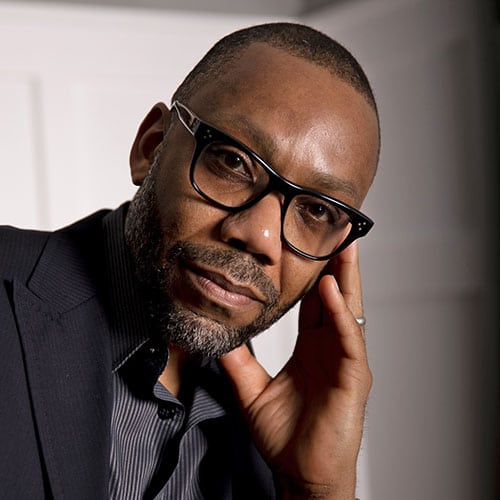
Andre Perry is a senior fellow with the Metropolitan Policy Program at Brookings and a scholar-in-residence at American University. He writes for The Hechinger Report, and has been published by The Nation, The New York Times and The Washington Post. Last year, Andre put out a new book based on his work: Know Your Price: Valuing Black Lives and Property in America’s Black Cities, which explores urban development in cities across the country, and how it has so often failed Black communities.

This story is also a personal one. Andre talks about growing up in the Pittsburgh region, in the township of Wilkinsburg. He has described how he has watched over the years as this community remains stagnated, and without meaningful investment, while neighboring areas experience remarkable economic revivals.

Andre began his career focused on education, but his work has expanded to examine the myriad ways government policies have ‘created housing, education, and wealth disparities’ that continue to disadvantageously impact minority communities in urban metro areas. Andre has written on subjects as diverse as infrastructure, how our children are driving climate action, student debt cancellation, access to fertility treatments, and supporting Black businesses. He also served as the Founding Dean at the College of Urban Education, at Davenport University in Grand Rapids, an institution he helped to plan and launch.

Insights and Inspirations

  • Institutionalized racism creates an ‘unconscious bias,’ where we are willing to blame the people who have been marginalized rather than the policies that made it possible. And so, we recycle discrimination over and over and over. If we don’t see the problem, we have no incentive to change it.
  • Andre found that in neighborhoods where the share of Black population was 50 percent or higher, homes were underpriced by 23 percent, or $48,000 per home … $156 billion in lost equity.
  • These communities should have access to the same information, data, research, and ideas as corporations, cities and state governments … so they can come to the table empowered.
  • We need to create a culture of inclusion where all people are valued, and to do this we need innovations. We need new mortgage products. We need new appraising systems. We need new tax assessment systems.
Read the podcast transcript here

Eve Picker: [00:00:10] Hi there, thanks for joining me on Rethink Real Estate. I’m on a mission to make real estate work for everyone. Real estate can help to solve climate change, can house people affordably, can create beautiful streetscapes, unify neighborhoods and enliven cities. So I’m on a journey to find the most creative thinkers and doers out there. I’m not the only one who wants to rethink real estate. You can learn more about me at EvePicker.com or you can find me at SmallChange.co, a real estate crowdfunding platform with impact real estate investment opportunities open for investment right now. And if you want to support this podcast, please join me at Patreon.com/rethinkrealestate, where there are special opportunities for my friends and followers. Today, I’m talking with Andre Perry, a senior fellow at Brookings in Washington, D.C. Andre is also a scholar in residence at American University, a columnist for The Hechinger Report, and he writes for the Nation. But what really drives Andre is the seemingless impossible divide between blacks and whites in this country. He is focused in his recent work on the multiple issues impacting minority communities in urban metro areas. And he has authored a book, published in 2020, called Know Your Price, Valuing Black Lives and Property in America’s Black Cities. In his work at gathering data for the book in black majority cities across the country, Andre found that homes in black neighborhoods where the share of population was 50 percent or higher were valued at about half as much as white neighborhoods. Andre further refined the data by taking into account education, crime, walkability and other key neighborhood factors. And still, he found that homes in black majority neighborhoods were underpriced by 23 percent, or about 48,000 dollars per home. That’s 156 billion in lost equity. And Andre knows we have to fix that. If you’d like to join me in my quest to rethink real estate, there are two simple things you can do. Share this podcast or go to Patreon.com/rethinkrealestate to learn about special opportunities for my friends and followers and subscribe if you can.

Eve: [00:03:18] Hello, Andre, and I’m just really delighted to have this opportunity to talk to you.

Andre Perry: [00:03:22] Well, thanks for having me. I’m looking forward to the conversation.

Eve: [00:03:26] Great. There’s lots to talk about. You’ve thought and written about multiple issues impacting minority communities and urban metro areas and most recently in your book, Know Your Price, Value in Black Lives and Property in America’s Black Cities. So, first of all, I wanted to ask you, because I’ve also read other things that you’ve written, and I’d like to know what you mean by the term unconscious bias.

Andre: [00:03:54] Well, unconscious bias is when you act without thinking. It’s essentially the responding to a narrative that we generally know and accept. It’s like when people say the American dream, we all have an idea about what that means, and we respond to it. But when it comes to Black Americans, we also have an idea in our head that if anything goes wrong, we blame Black people. And so without thinking, without batting an eye, if there are problems in Black neighborhoods, we say, oh, it must be the character of the residents. It must be crime. It must be something else. We never look at policy implications or we don’t look at policy makers behavior. So for me, when I talk about unconscious bias, I generally refer to how we assume that Black people are the problem when considering the issues in Black neighborhoods and cities.

Eve: [00:05:09] Right. So what’s been the overall impact of this unconscious bias and what’s the impact today? I mean,

Andre: [00:05:17] You know, we talk a lot about unconscious bias, but at its heart is really just plain discrimination.

Eve: [00:05:24] Emotion, yeah.

Andre: [00:05:24] Like that. You know, it’s when you talk about, for instance, redlining. It was the practice of the federally backed Homeowners Loan Corporation in the 30s and throughout to the 70s, the practice of saying that Black neighborhoods were too hazardous or or they weren’t worthy of low interest loans to help develop those those areas. But it was predicated on this, the effort to isolate Black people in communities.

Eve: [00:06:00] Wasn’t that conscious bias rather than unconscious bias?

Andre: [00:06:03] Yeah, I mean, but it was also just fueled by this belief that Black people and white people should not live together. And there was a conscious effort to bring that belief into policy. And so, you know, I you know, I talk a little bit about conscious bias in my work, but the source of a lot of our implicit or tacit assumptions are racist policy. Conscious, conscious, racist policy. And so we can’t let policy off the hook for our behaviors. I tend to blame policy, not people. I just I find it more useful to get at the root for me. And that’s policy. And that, for me, represents that conscious effort to suppress Black people based on a hierarchy of human values.

Eve: [00:07:08] Right. Yeah, that’s, I think, very conscious and really disturbing. But, you know, I have to wonder about all the unconscious bias out there that just perpetuates things a little longer, makes it a little harder to get where we need to go.

Andre: [00:07:23] You know, a lot of my work, I look at home values. What anchors the book Know Your Price is a housing study we did a few years back where we looked at the average price of homes in areas where the share of the Black population is 50 percent or higher and compared them to areas where the share of the Black population is less than a percent. And we controlled for education, crime, walkability, all those fancy Zillow metrics. And what we found is that homes in Black neighborhoods are underpriced by 23 percent, about 48,000 per home. Cumulatively, that’s 156 billion in lost equity. That’s the money people use to lift themselves up by their proverbial bootstraps. It’s the money municipalities use to fund everything from education to infrastructure to policing. But, you know, there’s a way to interpret that 23 percent difference. Again, we controlled for education, we controlled for crime. And certainly, crime and education mattered. They lower price, but that there’s still a gap. And it’s almost as if people, when they see Black neighborhoods, they see twice as much crime than there actually is. They see worse education than there actually is. So there is a perceptual issue here. That when evaluating or assessing taxes, when appraising homes or any kind of subjective task is at hand, people lean on these tropes of Black neighborhoods. And and so there is something psychological in nature that’s reducing the value in Black neighborhoods in ways that it shouldn’t. So there is something there when you’re talking about unconscious bias.

Eve: [00:09:36] So as you mentioned, this bias spills over into investment and who has wealth and who does not. And, you know, as a real estate developer, I’ve certainly seen how it works with appraisals because, you know, banks will lend based on appraisals and appraisals in existing neighborhoods have a certain value. And if they’re already devalued, what’s going to disrupt that and raise the value? You know, it’s just a huge dilemma.

Andre: [00:10:06] Yeah. You know, the price comparison model is an example of structural racism. I mean, a good example of structural racism. So, as you mentioned, when an appraiser has to find a comparable home and they stay in the neighborhood, that’s already been discriminated against, you’re essentially just recycling discrimination over and over and over.

Eve: [00:10:27] Exactly. So how do you disrupt that?

Andre: [00:10:30] Oh, so one, you can you don’t necessarily have to stay in the neighborhood for finding comparables. I mean, what’s interesting is like for our data, we looked at the entire metro area and compared homes with similar social circumstances. So you can find, using big data, you can find homes in areas that have similar educational levels, similar crime levels, all those different things. And you don’t necessarily have to compare it to another home in the same neighborhood.

Eve: [00:11:07] Yeah, but then you’re dealing with an industry that’s used to doing that. So really, the disruption has to come with the entire banking and appraisal industry. How do you make them look elsewhere? Like what prompts? You know, I was one of the first loft builders in Pittsburgh and I went through this myself because there were no comparables. And so I talked to appraisers about like, well, you know, look at that project. It’s not in the same neighborhood, but it’s offering a similar product. And they did. You know, they had to because it was the beginning of something new and there wasn’t anything else to look at. But when you have, you know, five other houses that have sold in a neighborhood, like Wilkinsburg, where I know you grew up or Garfield and that’s the easiest go-to, how do you disrupt that behavior?

Andre: [00:11:57] Yeah, but I think you said a word that is really relevant to the conversation. You make them.

Eve: [00:12:05] Ahhhh.

Andre: [00:12:06] You know, one thing I learned about this protest movement over the last few years, but really culminating in the summer of 2020 is that people do have power. This is a power issue. And the same way we created a culture of exclusion, we can create a culture of inclusion where people are valued, all people are valued. And we need innovations, no question. We need new mortgage products. We need new appraising systems. We need new tax assessment systems, and we should open ourselves up to that. But clearly, people in various industries aren’t going to do that themselves. They’re going to have to be backed into it. So I encourage communities to mobilize, organize and fight back. The typical thing that has incited structural change in the United States, it’s litigation.

Eve: [00:13:14] Right, right.

Andre: [00:13:14] So that is a tool. But I also just think that we are going to have to pressure banks and appraisal, the various industries in housing to take new approaches. Because those approaches are the tools that reify discrimination in this country, and it goes beyond appraisals and lending. You’re talking about zoning structures as well.

Eve: [00:13:47] Yes. Yes.

Andre: [00:13:47] You know, you’re talking about building.

Eve: [00:13:50] My backyard. Yeah.

Andre: [00:13:52] Yeah, exactly. And so there’s all these structures that maintain exclusion and bias. And we need to demand change in all of those structures. So and that’s where, you know, for my book, Know Your Price, there’s a theme, there’s you know, I want people to demand their proper value. And it’s not going to come because someone else says this is what it should be worth or, it’s going to come by people from places like Wilkinsburg, Homewood, Garfield, demanding their proper value.

Eve: [00:14:37] Right.

Andre: [00:14:37] And so for me, it’s, you said the word make. Yeah, that’s what it’s going to take.

Eve: [00:14:43] Yeah, I think you’re probably right. So the interesting thing is also, you know, there are developers who, developer it isn’t always a bad word, who really want to work in these neighborhoods. And they can’t because of this entire sort of pricing structure becomes impossible. It doesn’t matter if you build a house in Wilkinsburg or Garfield or downtown, the construction costs are going to be the same. Right?

Andre: [00:15:09] Yeah.

Eve: [00:15:09] But the market’s really different. So that is a huge problem. But also, I’ve always been really sort of irritated and puzzled by the affordable housing market, which almost demands a product that looks the same. So, I think when you talk about value, you know, good design, different design, innovative products can bring a different value as well. And I don’t think people think about that very much. You can drive down a street in Pittsburgh and, you know when you’re on a street which has affordable housing because it all looks the same.

Andre: [00:15:44] Yeah.

Eve: [00:15:46] It’s bad branding, right?

Andre: [00:15:47] Exactly. And I’m not a real estate person in the sense I’m not a practitioner. I’m a researcher. But I’ve been saying, hey, there needs to be innovation in the actual end products that we put up. You know, we’ve got to show how diverse products can look and serve diverse communities. We’ve got to have innovation in lending and in ownership. Like we need new cooperative models. We need new everything from credit scoring systems to zoning ordinances. But I will say this, that at some point you need more capital directed in the right way.

Eve: [00:16:37] Yes.

Andre: [00:16:38] And so for me, it’s also about understanding the role the federal government has to play in creating inclusive communities. Because remember, it was the federal government largely that created the problem we’re in today. They, instead of distributing resources equitably in the 30s, 40s, 50s, 60s, they distributed resources to help communities, to build up communities and wealth, really among white residents and not Black. So, the same approach as we used in the 30s, 40s, 50s to help people build up communities, we can use today. But when it comes to Black people, we don’t want to give Black residents low interest loans and grants and down payment assistance. And and we don’t want to reward developers for actually creating inclusive homes and facilities. We then hide behind the sort of, you can’t create any kind of race based program that’s reverse discrimination. But the reality is, if you really create some type of equitable strategy, you almost have to target your investments towards people who have been disenfranchised or injured by past policy.

Eve: [00:18:09] Right.

Andre: [00:18:10] And it happens to be Black people and we should not shy away from that. And then it happens to be in places that you have significant Black populations, not completely all Black people in Wilkinsburg or Homewood or Garfield, but those are the places we need to find a way to direct capital to and in ways that just makes sense.

Eve: [00:18:33] Yes, yes.

Andre: [00:18:34] And there’s this reticence to drive capital based on need. And until we solve for that, it’s going to be hard to really do what we need to do.

Eve: [00:18:48] So you’ve also talked about the devaluation of Black owned homes, and I want to hear a little bit more about that. How how did you calculate that?

Andre: [00:18:57] At the core, you know, I’m from Wilkinsburg and I come back home all the time,

Eve: [00:19:02] We should explain to people who are listening to this, because we have listeners all over the country, maybe even the world. So, Wilkinsburg is actually a beautiful neighborhood town on the outskirts of Pittsburgh that has amazing architectural building stock and has just sort of stagnated and leaned in really poor condition for a very long time, presumably because it is predominantly a Black demographic. Is that a good explanation?

Andre: [00:19:34] Yeah. And it’s you know, growing up in Wilkinsburg, I really didn’t know the difference between Wilkinsburg and Pittsburgh, because Wilkinsburg is a Black majority municipality borough surrounded by Pittsburgh on three sides.

Eve: [00:19:49] Oh, I didn’t know that actually. Yeah.

Andre: [00:19:51] Yeah. And the people generally were the same. I mean, in the parts of Pittsburgh that it was adjacent to was Black. Wilkinsburg was majority Black. It had thriving commercial corridor, and it had all the quote unquote assets that you would look for when considering to develop a place. It’s close to downtown, close to the university. It has its own highway. It had parks. It has everything.

Eve: [00:20:22] There’s even a busway stop there.

Andre: [00:20:24] Busway. I mean, there’s…

Eve: [00:20:26] Like ten minutes to downtown. It’s amazing.

Andre: [00:20:28] I mean, it has literally everything you would want. But when U.S. Steel left town or downsized considerably, white residents moved, leaving a majority Black population and investment just stopped. And in any situation, I mean other situations, if you said if that area had majority white people in it, there would be no question there will be development there, because, as you mentioned, housing stock was excellent. You had a thriving commercial corridor.

Eve: [00:21:07] Yeah, the main street’s lovely.

Andre: [00:21:09] Exactly. You had everything there. And so, when I go back home, it is like stupefying to look at why isn’t investment coming? And right next door in Pittsburgh, which similar situation in terms of access to transportation, great housing, universities nearby, commercial corridor. But there was a decision to bring Google into town. And Google could have landed in Wilkinsburg. They chose Pittsburgh. And I talk a lot about bias in bias out. And so, in the planning for Google to come to Pittsburgh. To site itself in a former Nabisco factory where Black people used to live around. All the planning was essentially with white people. And if you look at that part of Pittsburgh now, it’s thriving, it’s booming. It has restaurants, shops,

Eve: [00:22:18] It’s actually gentrified, which is a little shocking.

Andre: [00:22:21] But you don’t see Black people.

Eve: [00:22:23] No, I know that. You know, I did a couple of developments in East Liberty before Google came along. And the last thing in the world I wanted to see was that neighborhood gentrify.

Andre: [00:22:36] Yeah.

Eve: [00:22:37] And I was absolutely shocked to see it happen over the period of probably 18 months. It went from Black people on the street to what looked like people visiting from the suburbs. I don’t know how else to say it, but it was it was actually shocking to watch. It was like for one moment in time, it was a great mixed, diverse neighborhood and then it was over. How can you, like, stop it right there, you know, when it’s at the great, mixed, diverse neighborhood point?

Andre: [00:23:06] But that’s why we need more housing policy connected to our economic development policy.

Eve: [00:23:15] Yep.

Andre: [00:23:16] And oftentimes they’re running on parallel tracks, never to touch. And it, my belief that some of that is intentional. That there are many people who don’t want to see Black people around a new development. And so, when you plan with all or mostly all white people with the muckety mucks of places like Pittsburgh and not include others in your development, you get what you get. And so I always say that. The developments really reflect who’s involved. Now, and it’s difficult because when you’re talking about planners and architects and economic development folks, largely white crowds and so…

Eve: [00:24:08] Also, largely white male crowd.

Andre: [00:24:11] Yes, that’s right.

Eve: [00:24:12] I want to point that out because I’ve been the only female in the room for a long time.

Andre: [00:24:16] Exactly. Very. A lot of testosterone in the room.

Eve: [00:24:21] Yes.

Andre: [00:24:22] Right. Lots of it. And so, and then people look up when the project started to go, why does it look pale and male? Because the planners were pale and male, you know? So you have to be very intentional about making sure people are included in any kind of development. And so, whether you are in Pittsburgh or Philly or Birmingham or Detroit or Baltimore, you just have to be very deliberate about including people. And we have to make every effort to concretize inclusion into policy. You know, I wrote something not that long ago that talked about, on the federal government side, that we need equity scoring system. This, just the way we score legislation against its potential impacts on the budget. We should score policies and practices on its potential impact on Black and brown communities. And so, when you’re developing a project, you’ve got to demonstrate how is this going to boost employment? How it’s going to boost ownership? How are Black people going to share in the prosperity? If you don’t see a clear path, then we should not greenlight these projects.

Eve: [00:25:42] Yeah.

Andre: [00:25:43] Not only must we build a culture that supports inclusion. That culture must build policy to protect for inclusion.

Eve: [00:25:56] Right. So, in your book, you also talk about wanting to give Black communities and home-owners information to stand on to empower them. But how do you do that? I’ve been involved in community meetings in neighborhoods like Garfield and it’s excruciatingly difficult. Do you want to explain what you’re doing? You are faced with a crowd of people, some of whom are just trying to get by. And as a small developer, it’s just it’s you want to do the right thing. It’s just really hard to know how to do it.

Andre: [00:26:32] Yeah, but this is why we need to really work with community members. It’s a lot easier when you’re of the community. When people recognize you as a member of a particular community. So when I come back to Wilkinsburg, although I’ve been fairly distant for most of my professional career, when I go back, people go, oh, Andre, he’s down with us. He believes in us.

Eve: [00:26:56] They trust you.

Andre: [00:26:57] They trust me.

Eve: [00:26:58] Right.

Andre: [00:26:59] And so when I talk with developers, I see, you know, a lot of this work and it’s hard work. But you got to think of yourself as becoming a member of a community first, because when you’re a member of a community, it’s so much easier to communicate. It’s so much easier to share the benefits and the trade-offs. And it’s so much easier to be honest. And so one of the reasons why I wrote Know Your Price, it’s a policy book, but it’s there’s a lot of stories in there, personal narrative, biographies. Because one of the goals of the book was to introduce this idea of devaluation, not making it a policy wonky type of thing, but really explain it through the lived experience. And when you run through the lived experience, keep, it resonates with community members. So that was my goal of the book. But it’s something that everyone should take on. They should see themselves as becoming a member of a community because communication becomes so much easier.

Eve: [00:28:20] Interesting. So, I also want to shift to your partnership with Ashoka. The Brookings Ashoka Partnership, and explain what you’re trying to accomplish there. And also, what Ashoka, I know a little bit about Ashoka, but not a lot. So it would be great to hear something about this.

Andre: [00:28:38] Ashoka is a social entrepreneurship organization that really tries to incubate or incentivize systems changing ideas. So, if you have an idea that will change some system, they fund or incentivize through these through fellowships or competitions to find interesting and innovative approaches to solving problems. So, when I presented this issue of housing devaluation, someone from the Ashoka organization reached out and said, hey, this is the kind of problem that requires a systems changing idea. So, after a year worth of planning and discussion, we landed on a competition, a challenge, competition of sorts. Collaborative competition, I should say. That we’re looking for innovations that will find those systems changing ideas that will solve for housing devaluation. So, if you are out there and we’re going to have a million dollars’ worth of prize money that we’re going to use as incentive. So we’ll be giving away different prizes totaling a million dollars to people who may have new zoning ordinances they want to put forth. New credit scoring systems. New cooperative ownership models. If you have a solution, we want to hear about it. All you have to do is Google Ashoka Brookings Collaborative Challenge and you’ll get all the information. But it was my way of really saying, hey, how can we incentivize people who are proximate to the problem to solve for this issue? And so we launched it a few months ago, but people can start enrolling in the competition in the summer. Right now, we’re just simply mapping ideas, looking for different approaches and so we can then categorize them. But people will be able to join in this collaborative challenge starting this summer.

Eve: [00:31:09] That sounds really fabulous.

Andre: [00:31:11] Yeah, it’s fab because, you know, when you work in a think tank, I’m a senior fellow at Brookings. We’re good with identifying problems, sometimes not as good as identifying solutions. So, this is really my effort to say, hey, here are some solutions that will be community driven. Not coming from up high, from somebody in D.C. These are solutions driven by community members. And so that’s the whole point.

Eve: [00:31:46] So if you could imagine the country 10 years from now, how would you like to see it changed?

Andre: [00:31:53] I want to see a country in which there’s a culture that supports reparative strategies. You know that I want to see these kind of policy changes come from a change in culture. For so long we’ve created a culture of exclusion and that led to everything from redlining to exclusionary zoning to employment discrimination. All these things are supported by an exclusive culture. I want to see 10 years from now a culture that supports reparations, inclusionary zoning, other policies that repair the damage that was caused by discrimination. And that’s going to take people who are talking about repair, talking about inclusion, talking about the value of diversity, and if we do this enough, we can shift the culture. And so that’s what I want to see.

Eve: [00:33:07] I’ve thought about this a lot. And I think for me, it’s I’d love to see a culture of trust. And that would probably only be built after everything you’ve said. But the mistrust is really, I think, stopping us moving forward really big time. And so, I’d love to live in this country and not feel like I’m mistrusted because I’m white or not feel like I might mistrust someone because they’re Black. That would be a really lovely thing. Don’t you think?

Andre: [00:33:40] Oh yeah. I mean, you know, that’s certainly core.

Eve: [00:33:44] Yes.

Andre: [00:33:44] We really don’t trust each other.

Eve: [00:33:47] No, I think that’s …

Andre: [00:33:47] As you know, developing trust is a process.

Eve: [00:33:51] It certainly is.

Andre: [00:33:52] I think if we are willing to put ourselves in that process, then we can gain trust. It is achievable to be a trusting, loving reparative culture.

Eve: [00:34:07] So what’s next for you? Final question.

Andre: [00:34:10] Oh, man, I’m I have this Ashoka Brookings Collaborative Challenge. I have reports coming up. But, you know, I’m going to continue to fight for justice using research as my main tool and engage in places with places like Pittsburgh, Wilkinsburg. And just go deeper with my analysis and look for solutions. So, more of the same. Yeah. So, you know, obviously we keep updating our research. We keep finding new insights, but I’m going to keep pressing on fighting for justice.

Eve: [00:35:06] Well, I can’t wait to see what else you do. And I’m certainly going to keep an eye on that Ashoka challenge. It sounds really interesting. Thank you so much for spending time with me today.

Andre: [00:35:16] Hey, thanks for having me.

Eve: [00:35:35] That was Andre Perry, a senior fellow at the Brookings Institute. Andre grew up in Wilkinsburg on the outskirts of Pittsburgh. Once a diverse and thriving neighborhood and now a poor majority Black neighborhood. On his trips home, he can’t help but notice that East Liberty, an adjacent neighborhood and home to Google, is thriving. Meanwhile, Wilkinsburg seems stuck in time. There has been no investment there in decades, and this speaks to the data he has found. Black neighborhoods are valued at 23 percent less than white ones. In Andre’s perfect world, which he is working towards, they’ll be valued the same. You can find out more about this episode on the show notes page at EvePicker.com, or you can find other episodes you might have missed. Or you can show your support at Patreon.com/rethinkrealestate, where you can learn about special opportunities for my friends and followers. A special thanks to David Allardice for his excellent editing of this podcast and original music. And thanks to you for spending your time with me today. We’ll talk again soon. But for now, this is Eve Picker signing off to go make some change.

Image courtesy of Andre Perry/Brookings

Happier housing.

May 10, 2021

In her book, Brave New Home, Diana Lind argues that the single-family home is at least partly to blame for our current housing woes.

“A fundamental part of the American dream is to own a single-family home. But this aspiration and the lifestyle that comes with it has grown increasingly unaffordable, unhealthy, and ironically out of step with consumer demand” writes Lind in an opinion piece for The Philadelphia Enquirer. “A large and growing portion of the population is unable to access the homeownership lifestyle, even if they desire it. Not surprisingly, the lack of housing choices and the prevalence of exclusionary housing regulations—such as minimum lot sizes and required off-street parking for each household— has made housing grow more expensive decade over decade, even though wages have not kept up with housing costs.”

The impossible dream

Home ownership, idealized by real estate developers and 20th Century policymakers, is no longer an achievable goal for many. It divides the country not only financially but racially. Redlining and other widespread discrimination have left entire neighborhoods in poverty. The high cost of housing and subsequent poverty can be directly linked to poorer health outcomes. And suburbs full of single-family housing, where cars are required, have caused environmental consequences as well.

Single family homes are just not as suitable as they once seemed. Today, 20 percent of the population lives alone and 20 percent live with extended family in multi-generational homes.

Alternatives

COVID-19 has also challenged the way we look at housing. Stay-at-home requirements during the pandemic brought the need for community into sharp focus. “The fact is that encouraging more housing types would accommodate more people with different life circumstances” writes Lind. “By changing our zoning to not only accommodate more housing, but also changing how we incentivize housing types other than the single-family homes, we could make our neighborhoods more livable and affordable for a wider range of people.”

Other housing types might include duplexes, a good option for family who want to live close to each other; Single Room Occupancy buildings (SROs), a better option than living on the street for those who can’t afford an entire apartment; and Accessory dwelling units (ADUs), a housing type which includes basement apartments, in-law suites and backyard cottages.

_

So, how do we find a path to what Diana Lind calls “smarter, simpler, happier housing”?

“We will have to include housing in a broader set of policies to address the country’s deep inequality. But we must do so without prizing homeownership and the single-family home.“

Listen to my conversation with Diana Lind or read her Phildelphia Enquirer article here.

‘Missing Middle Homes 2′ by Sightline Institute from Flickr CC BY-2.0

Women building collective muscle.

April 14, 2021

Libby Seifel‘s life is built around big causes. She has spent much of it professionally focused on affordable housing and much of it personally focused on women. Libby’s interest in housing came about when she lived through gentrification in her own neighborhood in Boston. There she saw her own godmother pushed out of her apartment into distressed public housing, and that convinced her that mixed-income housing was a far better solution. She went on to get degrees at MIT in Planning and Urban Studies and became the founding Executive Director of Tent City Corporation, a nonprofit developer of a ULI (Urban Land Institute) award winning, mixed-income housing development in downtown Boston.

Since the 1990s, Libby has run her own consulting firm, advising public and private clients on projects where sustainability and social equity are pursued in equal measure alongside strong financial returns. And she has worked in every part of the Bay Area: Transbay Transit District, Mission Bay, Mission Rock and Hunters Point Shipyard, as well as South San Francisco’s Oyster Point, Mountain View’s North Bayshore and Novato’s Hamilton Field.

When she started out in the 1980s, she says mixed-income housing and sustainable development were considered somewhat of an “oddball” concept. Now she says, they’re widely accepted as good planning. Libby is also the founder of the Women’s Development Collaborative – a network of women leaders doing transformative real estate developments. After more than 30 years in the industry, Libby notes that she is no longer the only woman in the room, and that some of the biggest new projects in the Bay Area are being driven by women.

Insights and Inspirations

  • Libby hopes that Women’s Development Collaborative will become a place where women build collective muscle.
  • If you want change, you need to become involved, or start the process yourself.
  • It can’t be said enough. Women need to support women in every field. Things have gotten better, but we are not there yet. And education and the sharing of our learned experiences with other women is critical.

Information and Links

  • The Women’s Development Collaborative is a network of women leaders who inspire, promote and support women who lead transformative real estate developments.
  • The ULI San Francisco Housing the Bay is a multi-year initiative to find new solutions to overcome the Bay Area’s housing challenges and ensure more people have access to housing that is safe, healthy, sustainable and affordable.
  • Two amazing projects Libby has worked on: The redevelopment of Mission Bay and the Transbay Transit Center District, which have both created mixed income, transit oriented neighborhoods in the heart of San Francisco.
Read the podcast transcript here

Eve Picker: [00:00:15] Hi there, thanks for joining me on Rethink Real Estate. I’m on a mission to make real estate work for everyone. Real estate can help to solve climate change, can house people affordably, can create beautiful streetscapes, unify neighborhoods and enliven cities. So I’m on a journey to find the most creative thinkers and doers out there. I’m not the only one who wants to rethink real estate. You can learn more about me at EvePicker.com or you can find me at SmallChange.co, a real estate crowdfunding platform with impact real estate investment opportunities open for investment right now. And if you want to support this podcast, join me at Patreon.com/rethinkrealestate, where there are special opportunities for my friends and followers.

Eve: [00:01:29] Today, I’m talking with Libby Seifel. Libby’s life is built around big causes. She has spent much of it professionally focused on affordable housing and much of it personally focused on women. Libby’s interest in housing came about when she lived through gentrification in her own neighborhood in Boston. There she saw her own godmother pushed out of her apartment into distressed public housing, and that convinced her that mixed income housing was a far better solution. She went on to get degrees at MIT in Planning and Urban Studies and became the founding Executive Director of Tent City Corporation, a non-profit developer of a ULI, award winning, mixed income housing development in downtown Boston. At that time, mixed income housing and sustainable development were considered somewhat of an oddball concept, says Libby. Now they’re widely accepted as good planning. And then she founded her own firm. She was the only woman in the room when she started her career. Today, that has changed a little, but not nearly enough for Libby, who has founded a quickly growing women’s development collaborative to support women developers. I’m a member of the Women’s Development Collaborative, so I’ve seen firsthand the strength of Libby’s focus. If you’d like to join me in my quest to rethink real estate, there are two simple things you can do. Share this podcast or go to Patreon.com/rethinkrealestate to learn about special opportunities for my friends and followers and subscribe, if you can.

Eve: [00:03:32] Libby, I’m really happy to talk with you today. Thanks for joining me.

Libby Seifel: [00:03:38] Thank you.

Eve: [00:03:39] So I’ve known you for quite some time. I was trying to remember how long that was, but I just couldn’t. It’s been a long time. But still, I was really surprised when I read your resume and you’ve done so much and there’s probably more that you haven’t talked about, which I’m hoping we’re going to talk about today. But I wanted to start with a quote I read that you were going to be a doctor and and I’m wondering what happened.

Libby: [00:04:07] That’s interesting story. So, I think what happened was that I got really, really interested in urban planning and I was actually talking with somebody about this recently that I had the great fortune of having Lewis Mumford as one of my professors, my freshman year in college. And I was coincidentally reading The City and History, which is his famous book. And he was such a wonderful storyteller and really conveyor of what was going on in the earlier part of the 20th century with respect to thinking about what cities could be and how they could be. And so he looked at it both historically and as a visionary, and he was very dedicated to sustainable development. About having development that was holistic, where people could walk to, walk in their communities to the grocery store where they could live together.

Eve: [00:05:16] And that was before this was the thing, right?

Libby: [00:05:18] This was before it was a thing. This was, yeah, it was. I mean, there’s, we can talk about the criticism and there are pieces about the movement that he was part of that was very white focused. So I want to just say that up front. And I understand and and that but this sort of it was kind of the city beautiful, but it was really more country beautiful movement. He lived for it pretty much his whole life after he moved out of New York City, in Amenia, New York, which is an absolutely beautiful part of New York. And if you’ve never driven up the Hudson Valley, it is absolutely exquisite. And Amenia is off the Hudson Valley inland. And it’s a beautiful farming community near the border of Connecticut and on, coincidentally, a rail line that goes into New York City.

Eve: [00:06:11] I’ve been on that train. It’s fabulous.

Libby: [00:06:13] You’ve been on that train. So you know what I’m what I’m talking about. So, and my uncle’s an architect, so my mother never wanted me to be an architect or an urban planner, which is what I am now. She wanted me to be a doctor and specifically she wanted me to be an ophthalmologist. So I was like, no, but I love visual arts and I love visual science. And I actually studied that. So alongside of studying urban planning, I studied neurophysiology and urban, just a lot of urban studies. And and I prepared to be a doctor. And I finally convinced my mom that if I got a master’s in urban planning alongside of my undergraduate degree, I’d be so much more competitive to be a doctor. So, so that’s the funny story. But on a more serious note, I was able to study with Dr. Land at Polaroid on visual art and visual science. And I have a very deep appreciation for the arts and colors in particular. And I like the idea of creating a colorful world where we all can participate and be part of this. You know, it’s the utopic view, but my life is really dedicated to making the world a better place. That’s what I try to do.

Eve: [00:07:41] That’s wonderful.

Libby: [00:07:41] And I think Lewis Mumford and people like him are just very inspirational to us in this field.

Eve: [00:07:50] You were lucky.

Libby: [00:07:50] And I wouldn’t really be here without him. And then actually the other clincher to all of this was that – it’s a story that kind of leads into my career – is that I moved to Boston, I went to school in Cambridge at MIT, and I moved to Boston with my college roommate, who’s now still a very good friend of mine and a real estate developer and investor. And we moved into the South End neighborhood of Boston, which is a really incredible neighborhood now. And then when we moved in there, it was a neighborhood very much in transition and it was a neighborhood very affected by urban renewal. And these were the times when wholesale displacement of people occurred, where they were moved out of their homes. Where a vibrant neighborhood that had been very colorful and dynamic, was changed through urban renewal, and the community had been promised development as part of their protests against urban renewal. They had formed a tent city in protest to say we did not want to be moved. And a group of folks reenacted this tent city event, this demonstration, and I was coincidentally in college at the time and was at a studio that was dedicated to working on studying this site called Tent City, which was the site where this protest had occurred. And so I took the studio and I was forever transformed. I got very involved with the community. I was living there. We really wanted to make this housing happen. We wanted it as mixed income housing. We wanted it to be a resource for the people who have been displaced in the community. And we wanted it to be a place where people of all income levels could live together in a great, absolutely great site in Boston, right next to that Back Bay Station, which ultimately got built. I mean, that’s part of my whole history, but ultimately got built with that vision and that dedication of that group of people totally transformed my life.

Eve: [00:10:14] And that also got a ULI award, right?

Libby: [00:10:17] It did. It did. It got a ULI award. And it is great to visit. It’s right next to Copley Place. There’s a whole story about Copley Place. We could talk about later if you wanted, but it’s next door to Copley Place. It’s next door to Back Bay Station, which is where the Amtrak station is and the light rail. And it’s also next door to the moved underground railway that used to be an elevated railway, a streetcar through Boston, through the South End in a southern part of the South End which was then put into an underground tunnel. And on top of it is the most amazing set of community gardens.

Eve: [00:10:57] Yes, I’ve been in them. They’re stunning.

Libby: [00:10:58] You’ve been in them. And the walkway…

Eve: [00:11:01] That was the Big Dig, right?

Libby: [00:11:02] Yeah, well, it’s not the Big Dig, but the Big Dig is amazing. The Big Dig is over by the waterfront of Boston. This is actually in the Back Bay, South End, part of Boston. It’s the orange line. And you wouldn’t know because you’re going underneath it if you’re riding it. But it is on top of it. There are these amazing community gardens.

Eve: [00:11:25] The gardens are gorgeous.

Libby: [00:11:27] Yeah.

Eve: [00:11:27] Including, you know, community vegetable gardens.

Libby: [00:11:31] Exactly and each neighborhood block actually participated in the design of each garden and walkway at the end of their block. Another mentor and person that got me into this was Ken Kirkmeyer, who lived in the South End, who was the President of Tent City Task Force. And he was actually the project manager that spearheaded this project and worked with the neighbors to create this marvelous place to walk the South End corridor.

Eve: [00:12:04] So Boston and all that really formed your professional path. And where did that lead you? Where are you now?

Libby: [00:12:12] So I now live in San Francisco, across the country.

Eve: [00:12:18] Very different.

Libby: [00:12:20] Yes. But I think sister cities. We’re on the water. We have a long history of progressive politics. Though, it’s quite different out here than it is in Boston and a very, very strong set of values when it comes to preserving history, to recognize the importance of neighborhoods and community and thoughtfulness about design. A lot of architects and designers. In fact, when I when I was making the decision to leave Boston and come out here, I can’t tell you how many people told me not to come because there’s way too many planners out here, urban planners and architects and real estate economists. And it was going to be very hard to move, unfortunately, chose the time to move, which was one of the recessionary times we had across the industry. But it all worked out and I love it here. It’s a beautiful city and the Bay Area is an absolutely lovely place to be. And there are so many challenges and I thrive on challenges. So there are so many urban challenges in the Bay Area to work on.

Eve: [00:13:34] What sort of challenges? What do you work on?

Libby: [00:13:36] Well, first, you know, like in Boston, but even worse, the cost of housing is just phenomenal out here and out of reach of so many people. And it exacerbates the haves and the have nots. So that’s a big challenge that I work on a lot, both as a volunteer and in my profession. It’s also that we have we have to be very conscious of sea level rise, much of the Bay area is on water, as it makes sense, we’re on the bay. We’re on the ocean, San Francisco straddles the Pacific Ocean and the San Francisco Bay. And so, we’re virtually surrounded by water on three sides. And we have the possibility of our downtown in San Francisco being underwater in the not-too-distant future. The history of San Francisco, like Boston, there’s a lot of the city is on fill. We have natural hills that we took down, many of them to build fill, and we filled in a lot of the areas that when you come to visit San Francisco and you’re walking around that land used to be either marshland or ocean, very deep ocean or bay. So actually bay, not ocean, but through the ocean, water intrudes. So that’s a big challenge. We also have earthquakes. Just to keep things interesting. So that shakes us up every once in a while. And we’re at risk of an earthquake, particularly in the East Bay, happening again. So we have to be very conscious of resilience in so many ways. So that makes our our life challenging. And we have we have it’s an absolute blessing and a curse. As many people say, we have the most amazing set of folks in technology. I mean, many of whom are M.I.T. alums and Stanford alums who have formed this tech corridor and biotech corridor that we have all through the through the Bay Area Peninsula and Silicon Valley, which is absolutely amazing and makes our economy incredibly strong and robust. And California’s incredibly strong and robust. But alongside of that, it ends up pushing up the price of land and the price of development so it can make it very hard for small businesses to be successful. Sometimes small retail businesses, the rents can get very expensive. That can make it more difficult for them. So, we have a lot of challenges.

Eve: [00:16:18] So how does that like, how does that color the work that you do? You now have your own company, right? And you do consulting work? And is it mostly around affordable housing or what challenges do you confront in that work?

Libby: [00:16:33] Great question. So, I do a lot more than affordable housing work, but my passion and heart is around affordable housing. I just want to say on one of my volunteer efforts, because I want people to know about this, I’m the co-chair of the Utilized San Francisco Housing the Bay Steering Committee, and we are dedicated to promoting and producing more housing in the Bay Area through our work. And we have an upcoming summit that’s happening June 2nd, 3rd and 4th. This will be our fourth summit that we’ve had where we bring together a very diverse group of speakers from around the world and the United States to talk about the Bay Area’s housing situation, but also more generally, the housing situation across the United States and what are great strategies and tools and best practices that we can use to improve our housing situation. Which includes building all types of housing for all types of people. It’s very invigorating to be part of the housing the Bay effort. And this summit always inspires me every year to do more. And in my practice, I work with a lot of cities and developers that are dedicated to building affordable housing and mixed income housing, which is even tougher to do. Tent City was able to hit the timing right with the funding and the commitment by the city to make that mixed income housing development happen. And it had a unique location, but it’s been it’s very difficult to get the funding together and the financing that is necessary to do mixed income housing at scale. We do have a strong inclusionary housing set of regulations, but here in many cities in the Bay Area, so we do a lot of work and inclusionary housing, which means that a portion of housing is restricted for occupancy or dedicated to occupancy by persons of usually very low, low and moderate income, which is HUD speak is federal housing agency speak for people that earn typically less than the rest of us or about the same.

Eve: [00:19:05] Critical for the function of the city, right?

Libby: [00:19:08]  Right.

Eve: [00:19:09] Often service workers and …

Libby: [00:19:11] Essential workers, yep.

Eve: [00:19:12] And people who keep places going.

Libby: [00:19:15] Yep, exactly.

Eve: [00:19:17] If they live too far out, then those places are not going to work anymore.

Libby: [00:19:20] Exactly. Exactly. And trying to figure out how to do this with the private market. So I work a lot on the private market side. I’m the number cruncher behind the scenes and the strategist trying to work on these projects. And so, we’re constantly trying to thread the needle to figure out how can we keep the private market still building housing while including housing for more people of a greater and more diverse set of backgrounds and incomes?

Eve: [00:19:54] Yeah, it’s a really big challenge.

Libby: [00:19:58] It’s really big.

Eve: [00:20:00] Well, I want to shift gears a little bit, because I also know about another one of your passions, which is also very close to my heart. And that is how to increase the visibility of women in the real estate industry, in particular real estate developers. And so I’ve kind of watched you over the years put together a little group that’s become the Women’s Development Collaborative, and it isn’t so little anymore. And I wanted to talk about that. Where did this come from? Why did you start it?

Libby: [00:20:35] That’s a great question. I guess I mentioned the Urban Land Institute or ULI earlier, and I’ve been a member of ULI now for, realizing it’s been three decades or more. It’s an organization that’s dedicated to advancing development across the world, globally, and since I’ve been involved for so many years. When I first got involved, I was often the youngest person in the room and many of these national conferences, and I was often the only woman or one of the few women. And it was very important to me to find, I guess, soul sisters or wise women in this industry. It had been a struggle in my career at different I know, right, to be the only woman. And it was definitely…

Eve: [00:21:31] I was the only woman developer in Pittsburgh for quite a while. So, I …

Libby: [00:21:35] Yeah. You were? Well, and Eve, I don’t know if you remember this, but how we met was we were at a conference for the Women Presidents Organization in San Francisco.

Eve: [00:21:47] Yes.

Libby: [00:21:47] Many, many years ago, and you and I both were involved in that. And that’s an organization that’s dedicated to women entrepreneurs and building capacity. It’s a peer-based group. It actually also inspired the Women’s Development Collaborative. So it’s worth talking about for a minute in case anybody on the line, a woman entrepreneur, it’s a great group.

Eve: [00:22:09] It’s a great group.

Libby: [00:22:09] But what was incredibly funny was there’s this entire ballroom, one of San Francisco’s largest ballrooms, with tables all across it on a Saturday morning with signs on it of like, you know, are you in consumer affairs? Are you in you know? I don’t know. Do you do retail product, apparel, whatever? But all across the room, everything. There was one table in real estate, and it was at the table. You and I, we were the only ones at the table.

Eve: [00:22:40] And it’s really not a whole lot different today, Libby. What really scares me.

Libby: [00:22:49] It’s true. It’s true. So, I mean, it’s better, we’re working very hard at ULI. So the origin story of the Women’s Development Collaborative goes back to these times. And ULI, which still often continue but have gotten better because a number of women that were part of this informal network of wise women, soul sisters that came together to meet on a regular basis at the spring and fall meetings of ULI, which are national meetings when we get together across the country. And we would meet, whether it was for dinner or breakfast or whatever, and we would share ideas about development and best practices and what we were doing. And one of my mentors, she said to me, well, you need to we need to do something more than this. Like these women’s receptions in these gatherings are fine, but we need to actually make a difference. We need to improve leadership. And so a number of us got together and helped form what’s now called the Women’s Leadership Initiative, or WLI within ULI, which is dedicated to advancing women’s leadership in the entire real estate industry. And that’s been phenomenal and that’s gone on since 2012. And again, anyone in the real estate industry should follow that because WLI is wonderful. But at the same time, there we had this niche group that was really focused on development and we recognize that development itself, which is part of the entire landscape of real estate, that you needed support and nurturing and showcasing. And so we started to alongside of the WLI activities, I continue to organize with a lot of other women, events around this spring and fall meetings where we would showcase women developers. We’d go tour their projects, we hear from them, we learn from them. And it’s just been so inspiring to see these projects.

Eve: [00:25:02] It really has been.

Libby: [00:25:03] And then we had to go virtual because there was no Toronto meeting. And so now we’re online. So, you can find us at the Women’s Development Collaborative online. And we are really trying to build our presence across the United States and Canada. We have a number of women involved from Canada to really promote and advance women’s success, leadership, innovation and collaboration and building transformative developments.

Eve: [00:25:35] I need to tell you, like I I was also a member of ULI for many years, and then I stopped my membership because I really didn’t feel like I belonged there, for a couple of reasons. One was the whole woman thing. But also, I was working on quirky, small interstitial urban projects. And when I was a member of ULI just there was there was nothing there was no one talking about that. So I stopped attending. And actually, when you started inviting me to the Women’s Development Collaborative meetings was when I decided to join again because I finally felt like there was sort of a space emerging for developers like myself. That and the small-scale development group, which has been also pretty wonderful to see emerge. But I think…

Libby: [00:26:28] Yes, yes.

Eve: [00:26:29] Times are very different, but it is incredibly inspiring what you’re doing and you have a lot of stick-to-it-ness. And it’s also very frustrating to see how slowly things have changed. I mean, what do you think about that, for women? It’s very slow.

Libby: [00:26:43] Yeah, it is really slow, but it is it is getting better bit by bit. You know, it is, I was looking at some data and it is it is improving, but it is very, very hard. And it’s I think that, you know, I, I think that a couple of things that we have to think about and think about deeply, which is that in addition particularly to the history of African-Americans in the United States and their inability to first secure and hold property or even keep property right after the civil war. Property was actually stolen away from them, it was often stolen away back from Native Americans as well. So, we have had a history in our country of not respecting and honoring property for persons of color. But at the same time, when we think about the history and it’s not just of the United States it’s of the world, women were not allowed to own property. And it also varied state by state. And I believe it still does. And a lot of states that there are different rules that make it very hard for women to hold property or to transact. So it’s not just discrimination in the sense of how you show up. Like if you’re a woman, you’re obviously different as you enter a room, but it’s also the rules by which we play. So getting through the those rules…

Eve: [00:28:21] Not just the rules, but the culture that those rules perpetuate,

Libby: [00:28:25] Yeah, and the culture.

Eve: [00:28:25] Because even if there are no rules there, you know, I have to say I, I own a small portfolio of buildings and I have two female bankers to thank for it. Without them, I would not own that portfolio of buildings, which is really an extraordinary thing to say, right?

Libby: [00:28:44] It is. It is. And, you know, that’s part of what WDC is trying to work on. I mean, we have we have a lot of ambitions and it’s and it’s hard to even figure out what to prioritize because there’s so many challenges. But alongside of really promoting women developers, we want to expand women in the workforce and the development supply chain for developments because of exactly what you said, that we need more women bankers. We need more women equity investors. I mean, that’s something we want to talk about, right? That that women just aren’t investing as much as men.

Eve: [00:29:24] Oh yeah, women investors. Why do women not invest? I don’t understand.

Libby: [00:29:32] Well, and I think it’s I think there’s a history of this. Like I think there’s an education process. I mean, that’s partly what WDC is a big part of our mission is to educate. But I’m now recognizing it’s not just educating and building up women developers like educating ourselves about each other or, you know, the service providers, introducing them to women developers. It’s also about educating the broader community. I was listening to your podcast with Stephanie Gripne and I absolutely loved the conversation that you had about the fact that in essence, you know, part of this is a perception issue that if we think about it, everyone is an investor, as Stephanie said. She said when we make a choice to buy, she used buy milk. That was her analogy. When we buy milk, we make a conscious choice whether we’re realizing that it’s conscious or not, that we’re using milk. We’re choosing a type of milk that’s sold by a certain company. And we may be choosing it based on price, but we may be choosing it based on the fact that we recognize the farms or the farms where it came from. Or in these days, we might be making a choice not to buy cow milk. We might be buying almond milk or soy milk, and we may be looking at how that was grown. So we have to, I think women are the biggest consumers in our country. So struck by this, after I listened to that podcast, that we are the ones that we lead the buying. If you look at all the consumer surveys, women are the buyers in our society. We are the retail shoppers. We love to shop. We do comparison shopping, et cetera, et cetera. We need to learn as women how to do the same thing with real estate investment. We need to get educated about it, it’s it’s a much different world than buying milk, but at the same time it is it is how the milk is, where the milk sits right in our society, these buildings.

Eve: [00:31:49] What’s interesting to me, if I think about researching where milk comes from, so I can make an informed decision, that makes my brain hurt compared to understanding a real estate project and what I might invest in. So I think it’s partly what you’re trained in, what you learn, how you’re educated. It’s not I don’t think it’s harder to do. It’s just different.

Libby: [00:32:12] Yeah, yeah, yeah. No, you’re absolutely right. It’s it’s not harder to do. It’s just different. But we’re not educated in it. I mean, I don’t know how you feel about this, but I never learned really what I do today. Like when I was in school, they didn’t teach me what I what I practice right now. I learned real estate by reading books, honestly.

Eve: [00:32:39] Oh. How did I learn Securities Law? Yes, yeah.

Libby: [00:32:46] Yeah, exactly. Like reading books so and getting educated in it. And now I mean I’m grateful. I’m able to teach, I’m teaching now at UC Berkeley. I’m a lecturer part time, but I just absolutely love being able to teach. And what I recognize is I teach public private partnerships, which is a lot of my work is how to get the public in the private sector to work together, whether it’s on a deal that the public sector is sponsoring or whether it’s just a deal a private developer wants to do. And they need the support of the public sector, which is pretty much every project ever.

Eve: [00:33:24] Yes, that’s right.

Libby: [00:33:26] Especially in the Bay Area. If you don’t have public support, you’re not going to get your project. And what I recognize is there are so there are so few classes that actually teach people how to do this and how to do it well or how to do real estate development and how to do it well. Luckily, ULI has offers a lot. And as you said, the you know, the small scale development council, that they focus on that and have some great trainings through ULI. But it is not something that is taught to the average person. It’s not like we go to school and we learn about how buildings are built.

Eve: [00:34:03] Right.

Libby: [00:34:03] And so I think we have to start to educate the general population and in our case with the women’s development, collaborative women in particular, and including women in our field, because what I’m even finding out is through the WDC, I’ve been asking women like, do you invest in real estate? And the answer is often is pretty much no, we don’t we don’t know. We don’t know how to do it. We don’t understand it. So that’s a mission for someone in our and where…

Eve: [00:34:39] I can sense a class coming along that you and I can conduct.

Libby: [00:34:43] Exactly. I’m so excited about this. I really want to do this, Eve this spring or summer. I want to do a class in how to invest in real estate and why. It’s like how to invest in real estate and why should we care and why should we do it. And I think it’s critical.

Eve: [00:35:01] Yeah, it’s also something else about real estate, you know, that I think over the last few decades, everyone’s been trained to think about quick returns. And real estate isn’t that. You just have to think about the long haul.

Libby: [00:35:19] Right.

Eve: [00:35:20] And I’m always stunned when I hear from people saying I invested there and they’re going to give me my money back in six months. Can I do that in real estate? And I’m like, no, what can you do in six months in real estate? It’s, it’s a different thought process.

Libby: [00:35:38] It’s absolutely a different thought process. And I also think that the real estate is much more long term in the investment horizon that many capital providers, meaning institutional and private investment capital, which is what fuels a lot of real estate development in the United States and across the world. It is usually focused on five-to-seven-year time horizons. And in terms of equity investment, a lot of the money that is coming in. So, their preference is that they can make their money back, they can get their money back and a return within a five-to-seven-year horizon. And that puts you on the one hand, it puts a certain discipline in the market, but it also means that it goes at counter purposes for, you know, the idea of patient capital, because buildings are they’re going to I mean, if we build them well, they should last for a very long time, if not forever, like they do in Europe. And some buildings have a lifetime. Kind of you think at a minimum of 50 years, if we’re doing a good job, that should be the minimum life and hopefully it’s much longer than that. So the time horizons have to be much longer. But as you said, you know, in many consumer markets, it’s a much shorter time horizon, six months or a year. It is just not it’s not realistic in real estate.

Eve: [00:37:15] Tell me, how much has WDC grown since you started it? How many members how many of your meetings and what do you do now that it’s covid-19.

Libby: [00:37:28] Right. Right. So so first of all, we are very much still a start-up organization. We’re reaching out to anyone that’s interested in joining, please Google Women’s Development Collaborative and reach out. Our organization has about I guess we have 400 to 500 women on our email list and our LinkedIn group now I think it’s around 300 people. So it’s still very much a growing group. Our meetings are intentionally intimate and small, usually 30 to 40, maybe 50 people, 50 women. We are intentionally keeping this focused on women. We are trying to think about how do we bring in men as allies, because that’s critical, particularly as we start to think about some of our next goals of what we want to do as an organization. But the goal of WDC is to really build our capacity and to create a safe space for us to as women, to be able to provide advice and guidance to other women and to be open about our deals and what we’re what we’re experiencing and to provide advice. So that’s the scale we’re at. And I think to myself, how big do we really want to be? Do we want to be another ULI? What is the scale that we really want to be at, and I and I think it’s a, it’s a question that we have to ponder as the group of us, because I think we cherish having the ability to know one another and to get to know one another. So, we want to keep that part of WDC alive because it’s so important to all of us.

Eve: [00:39:22] So this year, programming is changed because of the, at least last year, because of the pandemic.

Libby: [00:39:27] Yes.

Eve: [00:39:28] And I thought as I watched it, it was sort of an amazing opportunity. To move this group along a bit fast and not be reliant on ULI meetings twice a year and the people who can afford to show up there.

Libby: [00:39:42] Yes, yes, that’s true. It is. That is one thing about being online that we can provide better access to, just across the country and people can access it. We will definitely keep an online program, even if we could hopefully go back to meeting in person, maybe even as early as this fall in Chicago at ULI. But what we what we have right now are a series of programs that we’ve been evolving. You do such an amazing job at Small Change in branding. I’ve learned so much from you about this.

Eve: [00:40:23] Thank you.

Libby: [00:40:24] And really, it’s incredible. And one of the programs that we have very much inspired by you and this podcast, though I didn’t even know when I when I was first thinking about it, I didn’t even realize you were on this podcast quest. And then when I started talking with you, you actually agreed to be the first person to participate. And it’s called In Conversation with Developer. So, it was in conversation with the developer, Eve Picker. And we’ve done a series of these. And each conversation is just so fascinating like this. Your podcast about how did the women make the decisions they did to be developers, who has provided them support along their way, etc. So those have been really, really inspiring. We also have these project forums that are dedicated to helping women developer and emerging developer present the challenges that she’s facing regarding her development project and receive advice from a panel of seasoned professionals to help her overcome these challenges. And thankfully, Eve, you also participated on one of those project forums as well, were you able to be part of a panel to provide advice? We call it kind of instead of a shark tank. It’s a guppy tank. It’s a place it’s a safe space where people can feel comfortable and really get honest advice about how to move forward. So, we’ve had several of those. We’ve we’re doing three this year. We’ve had three already last year in the year before. So, we’re building our program there. So, if anyone out there is an emerging developer, that’s an option for you to consider. And then I’m just going to do one other program. We have a number of others. But the other one I want to talk about is the investment forum, because this is where tying to our discussion earlier, we are really trying to build our collective muscle to invest in and advance successful development partnerships. And that investment forum is featuring conversations with women developers and investors about how deals are done. And it’s actually a learning experience for developers and potential investors. So that’s what we’re dedicated on. And that’s the program where I really want us to collaborate on thinking about how. How can we get more women in the investment world?

Eve: [00:43:03] Yes, that’s critical. So what are some potential strategies you’re thinking about for promoting investment or encouraging women to invest?

Libby: [00:43:16] So we’ve been working on an investment framework that’s a gender lens framework for how we could evaluate investments in women led developments. And that’s been a process. We’ve been very informed by the Small Change metrics and thinking about how crowdfunding could be a potential tool to encourage investment in women led developments. But we also realized that we needed to define what we meant by women led development, and we needed to think about the whole ecosystem, like I talked about earlier, about all the women that could contribute to it. So we’re focusing right now on WDC taking on four dimensions of activities to empower women developers to expand economic opportunity, which means expanding women in the workforce and the development supply chain, as we talked about earlier, expanding access to capital. So building on the same theme. So, both getting women, individual women investors to invest in real estate, but also just to promote investment more broadly from men and women and institutional corporations in development. And then we want to make sure that these developments benefit women and communities, and so we’ve come up with a set of principles and you and I speak. There’s a lot of 10 principles books. So, we have 10 principles of transformative development that benefit women and communities. And we’re using these four criteria, these four activities, as a way to measure women developers and their development to provide recommendations. So the screening process to provide recommendations to women and to men about developments that they may invest in. So, four lenses are women in leadership in development, women in the supply chain and workforce, women capital providers and benefiting women and communities. And out of these criteria, we developed 10 questions. We spent a long time actually refining these 10 questions that really it was more like 15. We refined it went through a number of rounds. And what’s really been great is we had this whole community of women developers who’ve beta tested this scoring process a lot. And you were one of them. So, thank you so much, Eve.

Eve: [00:45:53] It’s great.

Libby: [00:45:54] Women from around the country and we learned a lot through this beta testing. And we think we have an investment framework that can work alongside of the Small Change index and other crowdfunding platform.

Eve: [00:46:09] And other ESG indices, right? Like…

Libby: [00:46:13] Yes.

Eve: [00:46:13] It’s a very particular woman-centric real estate lens. It’s great.

Libby: [00:46:20] Yeah. And so what we’re hoping to do, our next step is that we are really trying to work on the strategies that are going to enable us as a small organization, you know, where can we make impact first and how can we make impact first? But our hope is to actually encourage some individual investment and crowdfunding investment in specific real estate developments that will be placed through this investment framework lens. That’s our first goal.

Eve: [00:46:52] It’s pretty big.

Libby: [00:46:54] It’s a big goal. It’s a really big goal.

Eve: [00:46:56] It’s a very big goal. So, I have to wrap up and I just have one final question for you, and that is, what are you most excited about right now?

Libby: [00:47:08] It’s so many things that I’m working on, but I think what I’m most excited about with WDC and my work generally is just the number of wonderful young and emerging women developers and and women who want to be developers. There is this community of women that are both really younger and older. It’s women who’ve been in their careers in real estate for a number of years. For example, a woman architect who’s decided that she wants to be a developer after having been leading her practice for a number of years and is actually her first project, is going to be building a building for herself and her community of professionals that she works with. So the building will be bigger than just her architectural practice. It will include others in it as well. And then younger women developers who are starting out, who are really interested in changing the world and in leading development companies. And it’s very exciting to talk to them and hear what they’re doing and how they’re going about it and trying to support them. We have another colleague that you and I know who is developing is working on a mixed use project in her community that is going to be transformative for that community, be a place where people can gather. And whereas she says one plus one can equal much more than that. And that’s Molly McCabe, who you’ve also interviewed here in your podcast.

Eve: [00:48:50] Yes.

Libby: [00:48:51] So I just thought that constantly inspires me to have to just have that sense that there is this community and this future of women in development that we can encourage and build upon, which is fabulous.

Eve: [00:49:06] Well, thank you so much for your time, Libby. I have really enjoyed our conversation and I’m going to be seeing a lot more of you.

Libby: [00:49:14] Yes, I’m looking forward to it. Thank you so much, Eve.

Eve: [00:49:32] That was Libby Seifel, Libby’s career has been one built from her heart. First, she worked on affordable housing concepts that were ground-breaking at the time, having witnessed firsthand how crushing gentrification and displacement can be. And now she is focused on the small number of women in the room. She has puzzled over the years, as have many of us, why there are so few women who take the leap into real estate investment and development. She intends for the Women’s Development Collaborative to be a safe place for women who are testing the waters to land. A place where they will be supported by their peers as they emerge as women developers. Please share this podcast so that more women learn about Libby and the Women’s Development Collaborative. You can find out more about this episode on the show notes page at EvePicker.com or you can find other episodes you might have missed or you can show your support at Patreon.com/rethinkrealestate, where you can learn about special opportunities for my friends and followers. A special thanks to David Allardice for his excellent editing of this podcast and original music. And thanks to you for spending your time with me today. We’ll talk again soon. But for now, this is Eve Picker signing off to go make some change.

Image courtesy of Seifel Consulting/Libby Seifel

« Previous Page
Next Page »

Primary Sidebar

sign up here

APPLY TO BE A PODCAST GUEST

More to See

(no title)

February 22, 2025

Bellevue Montgomery

February 11, 2025

West Lombard

January 28, 2025

FOLLOW

  • LinkedIn
  • RSS

Tag Cloud

Affordable housing Climate Community Creative economy Crowdfunding Design Development Environment Equity Finance FinTech Gentrification Impact Investing Mobility Offering Opportunity zones PropTech Technology Visionary Zoning

Footer

©rethinkrealestateforgood.co. The information contained on this website is for general information purposes only. Nothing on this website is intended as investment, legal, tax or accounting strategy or advice, or constitutes an offer to sell, solicit or buy securities.
 
Any projections discussed or made may not be accurate and do not guarantee a specific outcome. All projections or investments are subject to risk due to uncertainty and change, including the risk of loss, and past performance is not indicative of future results. You should make independent decisions and seek independent advice regarding investments or strategies mentioned on this website.

Recent

  • The Mulberry
  • Mount Vernon Plaza
  • The Seven
  • Real estate and women.
  • Oculis Domes.

Search

Categories

Climate Community Crowdfunding Development Equity Fintech Investing Mobility Proptech Visionary


Copyright © 2026 · Magazine Pro on Genesis Framework · WordPress · Log in