• Skip to main content
  • Skip to secondary menu
  • Skip to primary sidebar
  • Skip to footer
  • Home
  • About Us
  • Say hello
Rethink Real Estate. For Good.

Rethink Real Estate. For Good.

  • Podcast
  • Posts
  • In the news
  • Speaking and media
    • About Eve
    • Speaking requests
    • Speaking engagements
    • Press kit
  • Investment opportunities

Development

Homage to Sutro Baths.

September 15, 2021

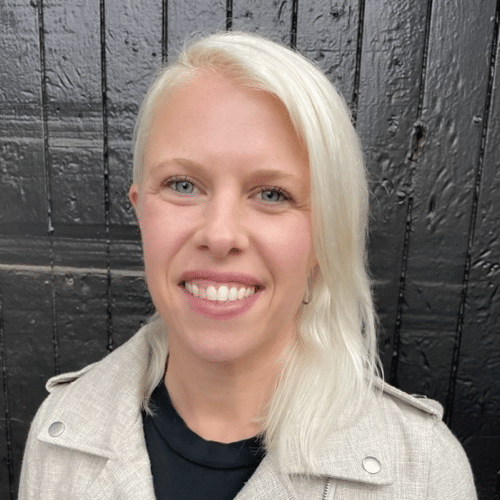
Anne Nickel Cannady was born and raised in Minnesota but has lived an international life. Over the past 20 years she has worked in brand strategy, culture, innovation and immersive experience design with start-ups and leading brands including Starbucks, Avalon Bay, Choice Hotels, Royal Caribbean, and Honda to name just a few. And she’s lived all over the world in London, Cape Town, Detroit, New York, and now San Francisco.

After leaving college in North Carolina, Ann dove into a marketing and HR career in London working with a variety of organizations. Her skillset expanded into workplace culture. By 2010 she was working in the U.S., first at the consultancy Kantar, then as an independent consultant. She joined the PayPal community for six years, becoming Head of Culture, followed by her most recent job as Head of Employee Experience at Fastly.

Now Anne is challenging herself with a project called Alchemy Springs that brings all her skills to play … and more. The plan is ambitious – a social community bath house. The building is ambitious – the transformation of an historic warehouse into a biophilic wonderland. The location is ambitious – a neighborhood on the cusp of gentrification. And the financing is ambitious – she’s raising funds through an equity crowdfunding raise in order to let anyone over the age of 18 invest.

We can’t wait to see how it turns out. 

Insights and Inspirations

  • Biophilic design incorporates natural lighting, ventilation and landscape features in order to create more productive and healthy spaces.
  • Anne envisions Alchemy Springs as a modern urban oasis. Winding ‘riverbaths’ and lush surroundings will define it. Blazing steam saunas, frigid cold plunges, a starscape moon bath, an outdoor sun bath, greenhouse and gardens will be built for all to enjoy.
  • Anne is based in the Bay Area. But it feels as if she could live anywhere.
Read the podcast transcript here

Eve Picker: [00:00:09] Hi there. Thanks for joining me on Rethink Real Estate. I’m Eve Picker and I’m on a mission to make real estate work for everyone. I love real estate. Real estate makes places good or bad. Rich or poor. Beautiful or not. In this show, I’m interviewing the disruptors. Those creative thinkers and doers that are shrugging off the status quo, in order to build better for everyone. When I’m not hosting this show, I’m running my real estate crowdfunding platform, SmallChange.co, where you’ll find impact real estate investment opportunities open to everyone. Or you can learn more about me and catch up on some podcasts at my website, rethinkrealestateforgood.co.

Eve: [00:01:11] Today I’m talking with Anne Nickel Cannady. Anne was born and raised in Minnesota, but she’s lived an international life. Over the past 20 years, she has worked in brand strategy, culture, innovation, and immersive experience design with startups and leading brands, including Starbucks, AvalonBay, Choice Hotels, Royal Caribbean and Honda, to name just a few. She’s lived all over the world – in London, Cape Town, Detroit, New York, and now San Francisco. Anne is challenging herself with a project that brings all her skills to play and more. The plan is ambitious – a social community bathhouse. She plans to transform an historic warehouse into a biophilic wonderland. The location is ambitious – a neighborhood on the cusp of gentrification. And the financing is ambitious – she’s raising funds through crowdfunding on my funding platform, Small Change. You’ll want to hear more.

Eve: [00:02:19] If you’d like to join me in my quest to rethink real estate, there are two simple things you can do. Share this podcast or go to patreon.com/rethinkrealestate to support this podcast. For the price of a cup of coffee.

Eve: [00:02:41] Hi, Anne, I’m just really pleased to have you with me today.

Anne Nickel Cannady: [00:02:45] Thanks, Eve. It’s great to be here.

Eve: [00:02:47] You’ve had some really interesting titles like Head of Culture at PayPal and head of Employee Experience at Fastly. But now you’ve moved on to a very different project. And I’d really love you to tell us about Alchemy Springs.

Anne: [00:03:01] Sure. It’s interesting because while I’ve held a lot of different roles, they sort of have all come together for all the skills that I needed to bring this new sort of project to life. But Alchemy Springs came about because in San Francisco, there was a huge community built around some of the hot springs that were, you know, within a couple of hours outside of the city, and one, in particular, burned down in a wildfire several years back. And everyone really missed that community, a community that would gather and be up there. You could, you know, spend the night. There was all these events. And at the same time, we started seeing this rise and this kind of model of these urban bathhouses popping up across the country, so there was one called the Schvitz in Detroit, there’s one, Banya 5, in Seattle. And, all of these really started to bring this community together. You know, for example, I was shocked to learn that, you know, members of the one in Seattle would go four to five days a week. And this whole community was even extended beyond the bathhouse into their local community as a sort of a friendship circle and mentorship circle. So, we looked around at San Francisco, and while we do have a number of spas and sort of bathhouse spas, none of them were quite hitting the mark.

Anne: [00:04:26] There was only one real communal one where you could be social. Most spas, where you really went to kind of check out on your own, not just sort of connect with people. And the one social one that there was, a sort of Russian style banya, it’s a little bit more like a sort of a glorified locker room experience, right? And, you know, maybe wasn’t designed with the guest experience in mind. And so, we really saw this opportunity. And on top of that, San Francisco has this rich history in Sutro Baths. And we met with SF Heritage, who introduced us to the gentleman who wrote one of the famous books on Sutro Baths. And we wanted to learn what the story was behind it, why the mayor at the time wanted to build this grand structure. It was sort of 1894, and it was huge. It was right out over the waters. And at the time, it was quite innovative. He built these almost like little windows, hatches, that would open and close to allow the waters to come in…

Eve: [00:05:37] Oh beautiful, yeah.

Anne: [00:05:37] Yeah. And then he would heat them to different temperatures and all this. And he was inspired by sort of the grand European bathhouses, right? And back then, people were working six days a week and they only had one day off. So, he wanted to find a way that people could socialize with friends or family, but also do something restorative because they only had one day off. And, you know, hydrothermal bathing and all the properties of that, the health properties, he decided to build Sutro Baths. And it really was a place for everybody. So, everyone could have access to this grand experience. And he had gardens, and there was places for, you know, the police and fire department to meet. And it really was a

Eve: [00:06:19] Community gathering place. Yeah.

Anne: [00:06:21] Yeah. A very iconic piece of San Francisco history. So, all of those ingredients together, we thought, this is it. You know, we’ve got to build this in San Francisco. And when the pandemic hit, it only became more important than ever to reconnect the city, which has lost a lot of people, we’ve gotten a lot of new people coming in, but we miss our community. So, it’s kind of perfect timing.

Eve: [00:06:45] Well, what happened to the Sutro Baths?

Anne: [00:06:48] The Sutro Baths actually, there was one point in time it ended up being converted into an ice rink, of all things.

Eve: [00:06:55] Interesting.

Anne: [00:06:57] Yeah. And then it burned down. Gosh, I want to say in the maybe 50s. Yeah, 50s, or early 60s. It burned down. And so now, today, out near Land’s End in San Francisco, there’s these beautiful ruins. I mean, it’s kind of an iconic, you know, tourist destination now right on the cliff side where you can go when you can see a lot of the old cement structures of the different pools.

Eve: [00:07:28] Oh, wow.

Anne: [00:07:28] So it’s, yeah, pretty amazing.

Eve: [00:07:28] You know where I grew up in Australia and they always had rock pools in the ocean, like on the ocean’s edge. Sort of reminds me of the sutro baths but a little bit less grand. They were fabulous places to go and bathe, really fabulous. So, like, where’s your sutro baths? Where’s Alchemy Springs going to be located?

Anne: [00:07:49] Yeah. So, Alchemy Springs is in a neighborhood, kind of the blending of two different neighborhoods. Technically, it’s lower Nob Hill area or sort of upper Tenderloin, right? So they call this neighborhood the Tendernob in San Francisco. And it’s a great up and coming area, right? You know, I think below the Tenderloin has really gone through somewhat of a gentrification. You know, the neighborhood can be a little bit rough, but it’s also been an opportunity for a lot of hospitality, sort of, restaurants and retail to come in. So, a lot of the coolest new bars and restaurants are sort of popping up around there. And then Nob Hill is a great more slightly more higher end neighborhood, tons of residentials, new developments, and then some hotels as well. And it’s about 10- to 15-minute walk west of Union Square, which is obviously sort of the tourist capital for San Francisco with all the hotels

Eve: [00:08:48] And what does the building look like that you’ve chosen?

Anne: [00:08:52] The building’s beautiful. It took us a while to find a building. We looked at so many different buildings, but this one is a 1919 masonry warehouse. A beautiful brick, gorgeous thick wood timber beams. It’s kind of two and a half stories. So, there’s a ground floor and then sort of the mezzanine above which we’re actually going to be raising the roof to create a sort of proper second floor there. And then there’s this basement level, which right now is sort of being used as a parking garage. But we’ll do some excavation and sort of turn that into the baths floor. But the thing that’s super exciting is that it has a 2500 square foot parking lot out back. So our concept has been able to translate into sort of an indoor outdoor flow in this space and being inspired by nature, which Alchemy Springs is, we can bring a lot of those elements, you know, both indoors and outdoors. So, we’re super excited.

Eve: [00:09:50] I’ve seen some renderings of this. It looks pretty fabulous. But maybe you could describe like what the building will contain or what you’re hoping it’ll contain when you, when it’s complete.

Anne: [00:10:00] Sure. I’ll walk you through the guest experience. It’s probably the best. So, from the street level, on Post Street, you’ll see a small retail boutique and there’ll be an entrance into the bathhouse. It’s going to be quite an inspiring grand entrance in that there’s a sort of giant living wall and double storey ceilings right as you walk in, A beautiful sort of rock carved desk area to sit with your friends or family that you’re waiting to go to the baths with. And you’ll check in. And then in the middle of this building is this gorgeous atrium that runs all three levels, with giant skylights at the top that just bring tons of natural light in. And there’s also tons of natural light from the back of this warehouse building. There’s beautiful, most of the walls are windows in the back, so tons of natural light. You’ll get your towel and your, you know, your robe and your slippers, and you’ll walk on either side of this atrium back to the locker rooms. And in addition to male and female, we also have gender neutral locker room and changing room. That was really important to us.

Anne: [00:11:01] So you’ll change and go downstairs to the bath floor. So, you can overlook the baths through the atrium from that locker room floor. But on the baths floor, we’ve got a series of different thermal pools at different temperatures that sort of wind along a path as if it was a river sort of built into these different platforms for accessibility and A.D.A. But we’ll have, on one end is what we’re calling the moon pool, which is going to be, sort of, you know, body temperature, sort of mild in temperature waters with a higher salt content, so it won’t quite be a flotation tank, but you will feel a little more buoyant in those waters, with a sort of domed ceiling above it that drops down a bit with lights and stars. And then lights in the pool as well with some sound. And then around this, the moon pool, and this is one of my favorite things that Lundberg Design, our Architect, has designed. We have a rain shower curtain. So, it almost creates a cave-like experience around the moon pool.

Eve: [00:12:14] Oh, fabulous!

Anne: [00:12:14] Yeah, I’m excited for that one. And then we have a mineral pool, which will be, kind of, mimicking the natural hot springs healing waters with all the minerals, which, you know, are very good for you. We’ll have then a sun pool, which is our warm pool. It’s not the hottest, but it’s warm. The sun pool, and that will be directly across from the cold plunge, which is kind of on this, you know, bath house circuit. You always want to move between the different contrasts of, you know, warm to cold or hot to cold. And then outside, we have a massage pool, which will be a lot of different water jets, maybe some different textures inside, rocks and things that you can sit on to sort of get that massage and that’ll be outdoors in a greenhouse. So that’s the pool part. We also have thermal rooms. So, we have a Himalayan salt cave. Think of it like a Finnish style dry sauna, but with Himalayan salt bricks and a kind of a salt nebulizer that brings amazing detoxification qualities. And then we have a snow shower. So, when you step outside of the hot salt cave, you can take a shower of snow to cool off before you get back in the bath. And then we also have an herbal infusion steam room, which we’ll do with different herbs that have, you know, different healing properties at different times of the day. So, waking up, relaxing,

Eve: [00:13:45] It sounds fabulous, so I want to move to like the financing. And when do you expect to open the doors?

Anne: [00:13:52] We expect the process from closing the capital to opening doors to take about three years. And so right now, we’re looking at probably September of 2024.

Eve: [00:14:03] And how long has it taken you to get to this point?

Anne: [00:14:07] Oh, gosh, there’s been a lot of stops and starts. It’s taken probably just shy of three years.

Eve: [00:14:17] So this is like a five-year project from inception to opening the doors. It’s a long time.

Anne: [00:14:23] Yeah, I think it’s taken many twists and turns. It started as something small. But as we looked into the business model for bathhouses, it made sense for us to actually do something on a bigger scale. Doing something on a bigger scale allows you to have both, sort of, drop ins for not non-members will say or tourists or anyone that wants to come in, but also have enough capacity to cater for members, because building that membership base in the community was really important to us and the bathhouses that exist today, they can’t really do memberships because their capacity is so small and you wouldn’t want members showing up and not being able to get in.

Eve: [00:15:07] Oh, well, I’m going to come back to that. But I do have to ask, so how much is this going to cost to build?

Anne: [00:15:14] Yeah. So right now, the total project cost is about 20 million. And the last sort of six months has been a pretty heavy and detailed due diligence process. My developer, Michael Jarne, has been an absolute gift to the team. He’s got a lot of experience in this. And there’s always that trade off of, how much do you spend upfront to minimize the risk. And, you know, he’s more on the side of, you know, this is a big project and, you know, somewhat unknown concepts in cities. So, we’ve taken the route of, hey let’s spend more and make sure we’re really clear on what this is going to take financially. And, also, you know, that we can do this concept in this space with the city. So, we’re feeling good about that.

Eve: [00:16:05] And then usual concept equals probably no bank interested? Is that right?

Anne: [00:16:13] I think the banks, you know, typically will want to see operating income, right? So, we’ve reached out to some lenders. We have a fantastic relationship with a bank here in San Francisco, does a lot of real estate stuff, and we’ve tested the waters for them of when in our sort of timeline, we might be able to to leverage that. And now most likely, that would be after we open doors. Right now, it looks like a very sort of good net operating income. And so, we would likely be able to get a loan off of that, you know, within the first few years.

Eve: [00:16:49] So, full disclosure, you’ve listed this project on Small Change as a crowdfunding raise for the first phase of it. So, that’s a pretty bold move in amongst all of this. Lots of bold moves here.

Anne: [00:17:06] Yeah, I mean, it felt right. You know, the essence of the Alchemy brand is positive transformation. And that ties back to this idea of alchemy, right? And, you know, we want our space to be a place where people feel transformed, right? But that’s also important to us as a company for our employees, right? We want this to to have improved people’s lives, right? So, there’s things we have, like we’re paying more than minimum wage and giving health care benefits to people that work, you know, I think it’s 30 hours a week, not 40. But the other side of that is that we want to make sure we’re positively transforming the community that we’re in. And so, for us, part of that was allowing San Francisco, or anyone, to own a piece of Alchemy. If it’s for the community, why should the community not benefit from us being here.

Eve: [00:18:07] I love that idea. So, I’m also going to ask you about, this is sort of an edge neighborhood, right? Between a pretty rough one, slightly rough, I don’t know, changing, and one that’s more established. And I’m just wondering how you’re planning to include that community in this space. And, you know, how that will work. I mean, if you’re really going to emulate that mayor’s desire to have a place for community, how does it look there?

Anne: [00:18:38] Yeah, there’s a few things that we’re exploring. And obviously, you know, it’s early days – we’re three years out. But there’s a couple of things. So, built in, right now, we have some sort of basic community programming of offering up our space before we open. So, our opening hours are 10:00 a.m. to 10 p.m. But there is an opportunity to give our back gardens. You know, we’ve got a sort of a Zen meditation garden and a back dining patio. We could absolutely offer that up to the community to host free events. We have a round-up at purchase, which we want to partner with local community groups and give guests the option to sort of round-up and donate to some groups that align with our sort of mission and vision and values. And then the third thing, which, it’s early days but I’m quite excited to pursue this opportunity, is almost sort of kitty corner to us. At the intersection of Post and Hyde, is at-risk Youth Navigation Center that’s just being developed. It was just rented by the city for 20 years. And when I learned about this, I spoke with one of our advisors, who’s the president of the San Francisco Chamber of Commerce and he said, you know, these centers have more bark than bite. And usually, neighbors are afraid that they’re coming into their neighborhood. But a big light bulb went off for me, that this was, actually, an incredible opportunity for us to partner with a group like that and provide job training, apprenticeships, you know, training these these at-risk youth in service industries. So, I’m incredibly excited to pursue that. And I think we could be a sort of model business citizen for how we embrace and support those centers popping up in our neighborhoods.

Eve: [00:20:32] Yeah, I’m sure you’re going to find lots of other opportunities too as you move along. You’ve barely started, right? What about some of the challenges you’ve been confronted with? You said lots of twists and turns. I think finding a building sounded like a really big challenge,

Anne: [00:20:47] Having been new to this, a few years ago, you know, there’s always this chicken or egg scenario you run into, which is, you can’t raise money without the space and you can’t get the space without the money. So, it’s this dance of timing and, you know, unfortunately, we’ve just missed out on some spaces when some of the, you know, initial capital couldn’t come through. So that was certainly one. And then another one was obviously Covid. There was a lot of initial sort of knee-jerk reaction to anything in hospitality and, you know, bath houses. And, you know, is that safe and clean? And, you know, from that standpoint we’re really lucky in that, you know, all of these spas and bath houses have had to convert a lot of their amenities and their procedures around hygiene to now meet new standards. Well, we can design from the beginning, so in a way, we’re three years out, right? So, you know, knock on wood, hopefully we’ll be out of this by then. So that was another major twist and turn. And then the other one on a on a personal level, which, you know, has deep meaning for me in this project, is a dedication to my mother who passed. And she passed away two years ago now, and she passed from cancer. It was her fourth one. She beat three different stage one cancers prior to that across ten years. But from her first cancer onwards, when she’d find out, she would go to Esalin, this beautiful retreat center in Big Sur, and she really found her acceptance and peace in nature. And that was absolutely a huge inspiration for Alchemy Springs and this sort of element of bringing nature indoors. And so, I promised her that she would have her own little heart shaped rock in our gardens and it would be one of her resting places for her ashes. So there has been nothing insurmountable. I have had the most incredible determination to make this happen in her honor so, from a personal standpoint, that was another setback. But also, what has super-charged me to bring this to life.

Eve: [00:23:07] I’m sure she’d be super proud of you.

Anne: [00:23:09] Yeah.

Eve: [00:23:10] So Alchemy Springs is a big new beginning for you. Right? But what’s your big hairy, audacious goal?

Anne: [00:23:18] Wow, what’s my big, hairy, audacious goal? I mean, I would love for Alchemy Springs to just be the first flagship location of a bunch of Alchemys across the country and to use this brand and these spaces as one of many ways to bring the community together around social bathing. So, there’s, you know, different communities out there for the spa industry and sort of the business end, but there are people across the country that are really into this ritual and little micro communities, you know, in all these cities, but we’re not all coming together as one. And so, another grand vision of ours is to pull this community together, you know, online and kind of connect the global bathing community across the U.S., maybe even internationally, so.

Eve: [00:24:14] That’s a pretty big goal.

Anne: [00:24:16] Yeah.

Eve: [00:24:18] Well, my goal is to come out there in three years and try it. So, that’s my goal.

Anne: [00:24:22] I know, I keep saying, phew, with this ride, I’m going to need it at the end of it. So,

[00:24:28] Yes, that’s right

[00:24:28] …selfish reasons. I’m going to need a spa at the end of this.

Eve: [00:24:33] Well, thanks so much, Anne. It sounds like a fantastic project. I can’t wait to see how it turns out.

Anne: [00:24:40] Thank you. We’re really excited and we’re thrilled to be raising money on Small Change. And I just can’t wait to see how it goes.

Eve: [00:24:48] Me, too. Bye.

Anne: [00:24:50] Bye. Thank you.

Eve: [00:24:56] That was Anne Nickel Cannady. Anne is challenging herself with a project that brings all her skills to play and more. The plan is ambitious – a social community bathhouse. The building is ambitious – the transformation of an historic warehouse into a biophilic wonderland. The location is ambitious – a neighborhood on the cusp of gentrification. And the financing is ambitious – she’s raising funds through crowdfunding on my funding platform, SmallChange.co. I can’t wait to see how it turns out.

Eve: [00:25:40] You can find out more about this episode or others you might have missed on the show notes page at rethinkrealestateforgood.co, or you can support us at patreon.com/rethinkrealestate for the price of a cup of coffee. A special thanks to David Allardice for his excellent editing of this podcast and original music. And thanks to you for spending your time with me today. We’ll talk again soon. But for now, this is Eve Picker signing off to go make some change.

Image courtesy of Anne Nickel Cannady
Truly unique.

September 6, 2021

“This truly unique project aims to provide an iconic response to the generic status quo of speculative office real estate in Portland today, with below-market rents aimed at smaller start-ups and companies that would not otherwise be able to afford space in a new construction mid-rise building.” Guerrilla Development

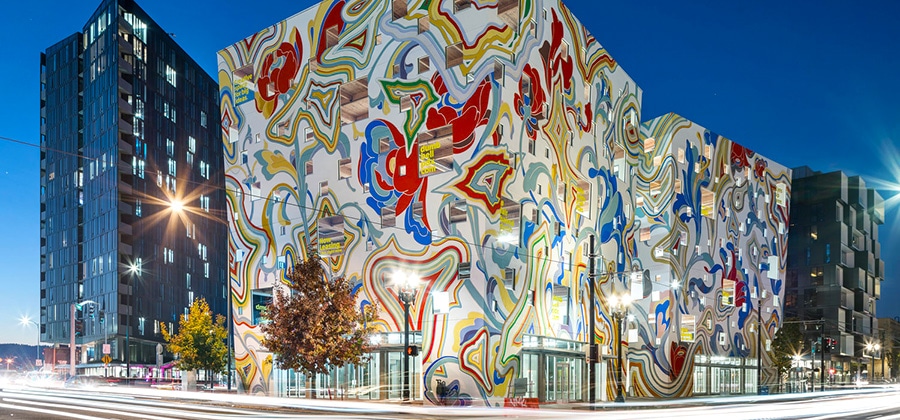
If you live in Portland, you’ve probably seen Tree Farm. Designed by Kevin Cavanaugh of Guerrilla Development, this six-storey mixed-use office building has a bright blue mural façade dotted with 56 strawberry trees. It’s located in Central EastSide, a gritty warehouse district, just a short streetcar ride across the Willamette River from downtown. The district boasts small-batch distilleries, coffee roasters, restaurants, designer stores, artist ateliers, an independent publisher and plenty of street art.

Another of Kevin Cavanaugh’s unique developments, The Fair-Haired Dumbbell, Is also in Portland’s Eastside. It consists of two separate six-story buildings structurally supported by mass timber sourced in the Pacific Northwest. The buildings are connected on each level by skybridges, and the entire façade is wrapped in a wild and colorful mural by Los Angeles artist James Jean. As if that wasn’t enough of a challenge, this was one of the first projects to raise funds using Regulation A crowdfunding.

Guerrilla Development’s many projects include Dr. Jim’s Still Really Nice, The Ocean, Burnside Rocket, Rig-a-Hut, Two-Thirds, and The Zipper. And two of those projects –Jolene’s First Cousin and Atomic Orchard Experiment – have reduced-rate units reserved for homeless people and social workers. And of course, these were crowdfunded too.

As a developer, Kevin wants his buildings to attract attention and to encourage people to live in that city. And he wants his buildings to make people happy. He is one of the most creative developers we know.

Have some fun and listen to my conversation with Kevin here.

Image courtesy of Guerrilla Development

She’s breaking barriers.

September 1, 2021

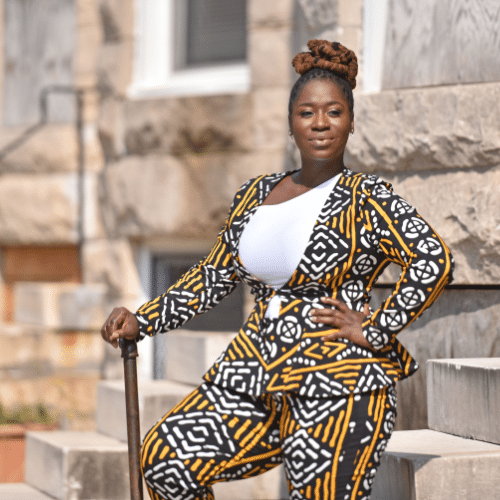
Joanna Bartholomew, owner of O’Hara Developments, is a woman who’s breaking all barriers. 

While Joanna’s background is in social work, community health and financial education, real estate is in her blood. Her father was a developer, and as a young girl she spent time with him, both in the office and on job sites. So it’s no surprise that she launched her own real estate company.

But being a Black woman in the real estate industry is not quite enough of a challenge. On one hand, Joanna is focusing on broad community development by tackling decaying properties in East Baltimore (one block at a time) and breathing new life into them. But on the other, she is committed to providing outreach to the people who will occupy them. To make sure that what she is building will serve the community effectively, Joanna’s organization offers up financial literacy courses and down payment programs, to both educate and support new potential home-owners. All of it to make sure everyone can have a chance at home ownership.

Insights and Inspirations

  • Joanna is one of a few. A black woman with her own real estate company.
  • She’s focussing on community development one block at a time, tackling decaying properties and breathing new life into them.
  • Her past career in social work creeps into her real estate work. She offers up financial literacy and down payment  programs so that everyone can have a chance at home ownership.
Read the podcast transcript here

Eve Picker: [00:00:17] Hi there, thanks for joining me on Rethink Real Estate. I’m Eve Picker and I’m on a mission to make real estate work for everyone. I love real estate. Real estate makes places good or bad, rich or poor, beautiful or not. In this show, I’m interviewing the disruptors, those creative thinkers and doers that are shrugging off the status quo, in order to build better for everyone. When I’m not hosting the show, I’m running my real estate crowdfunding platform, SmallChange.co, where you’ll find impact real estate investment opportunities open to everyone, or you can learn more about me and catch up on some podcasts at my website EvePicker.com.

Eve: [00:01:14] Today, I’m talking with Joanna Bartholomew, owner of O’Hara Developments and a woman who’s breaking all barriers. While Joanna’s background is in social work, community health and financial education, real estate is in her blood. Her father had a real estate company. And as a young girl, she spent time with him in the office and on job sites. So it’s no surprise that she launched her own real estate company. But being a black woman in the real estate industry is not quite enough of a challenge for Joanna. She’s focusing on community development one block at a time, tackling decaying properties and breathing new life into them. You’ll want to hear more.

Eve: [00:02:04] If you’d like to join me in my quest to rethink real estate, there are two simple things you can do. Share this podcast or go to Patreon.com/rethinkrealestate to support this podcast for the price of a cup of coffee.

Eve: [00:02:25] Good morning, Joanna. Thanks so much for joining me.

Joanna Bartholomew: [00:02:28] Hi, Eve. Good morning. Thanks for having me. Yeah.

Eve: [00:02:32] So you’re a pretty rare breed, a black woman developer. And I was wondering how you got there from your initial career choice of social work. That’s quite a journey.

Joanna: [00:02:46] It quite is. So I actually was raised in real estate. My father was a developer. So, growing up, I knew him to just be the person that always would have me in these rooms of either going to a settlement or going to the old Hechinger, which was the former Home Depot, picking up the lumber and looking at like design sketches and things like that. I still remember having to take a construction class in an elementary school. And I have to be honest, I probably picked the classes I knew I could pass. My house, that I had to build it looked better than all the other kids in the class because of my dad. But fast forward, you know, being in the field of social work for some years and working with families that were facing various challenges, one of the most common things that we saw was their access to equity, their access to wealth. And in the population that I worked with were people that looked like me and other brown families that had limited access. And it wasn’t because of anything other than the knowledge and knowing where to get information. So what I wanted to do, expanding on, I said, you know, it’s time for me to fire my boss, get into the roots of what I know, and bring both worlds together so we could be able to provide access to equity. And one of the first places you could do that with is in real estate.

Eve: [00:04:11] So isn’t that interesting? Because my parents sort of grew up always investing that I grew up with my parents, always investing in real estate. They actually were refugees, so they had very little, but that’s when they had money and that’s what they invested in. So I was also very comfortable with real estate. And it really is about a comfort level, isn’t it, with something you don’t understand.

Joanna: [00:04:33] Right. Right.

Eve: [00:04:35] It’s really interesting.

Joanna: [00:04:37] And it does take a level of comfort to know what you know in your brain and have to manifest that into reality. And it requires some guts. And if you have the privilege of seeing that in your younger years, when you get older, it does feel a little bit more comfortable vs. a family that doesn’t know anything about these type of financial terms and systems. And now you’re adding on a big house responsibility onto it. So we want to be able to be that line of support.

Eve: [00:05:06] So what sort of projects do you focus on?

Joanna: [00:05:10] So our projects primarily are residential. The majority of them are three level homes, three story homes where they’re row homes there in the urban community. And we are either transitioning them into single family homes where they can use the whole space for their family or we are actually converting them into duplexes, most of them being bi level units, two bedrooms, two baths, where people can also be able to rent from them for a period of time. Now, with our renters, we do something a little different because, again, we’re encouraging homeownership. We take a portion of their rent and we put it into escrow. So when they’re ready to be able to transition to being a homeowner, they could actually use those funds, especially if they’re purchasing one of our properties towards either down-payment or any moving costs.

Eve: [00:06:02] Oh, wow. So how long does it take for someone to save enough that way to purchase a house?

Joanna: [00:06:11] Well, it really just depends. I mean, everybody’s situation is different. How much they need for down payment, is different and they may not even use it. They may use it towards their moving costs. They can use it however they choose. But I would say if I had to put a number on it, most people could be able to use those funds at least in about a year and a half. Right. So.

Eve: [00:06:35] Right. So this is the social worker in you emerging in real estate.

Joanna: [00:06:42] Yes. Most developers could care less about where you’re moving to next.

Eve: [00:06:46] This is really, this is really cool. So you’re really working on the whole thing. The real estate project and the people who live in the projects.

Joanna: [00:06:57] Yes.

Eve: [00:06:59] So where do you focus on your projects?

Joanna: [00:07:02] So as of right now, we have I would consider it to be our staple development site, which is in Baltimore City. We’re actually restoring a nice portion of the neighborhood. Some people say that we bought the neighborhood, but I don’t feel that way. It’s about two continuous blocks, I would say, in that area that we’re focusing on. And majority of them are actually not all of them are three story buildings. And we’re planning for about 15 single family homes and eight buildings that will actually be duplexes.

Eve: [00:07:35] So I’ve seen the blocks and the architecture is really stunning. And these buildings have been vacant for a while, haven’t they?

Joanna: [00:07:45] Yes, they have, unfortunately in a lot of urban neighborhoods, what we hear and what we see is the aftermath and some of it we’re still fighting that’s affiliated to redlining. And redlining is something that has caused a lot of funds to not be placed in certain neighborhoods over the years, which would have allowed people to become homeowners, which then also brings in other things as far as, you know, very poor behaviors in terms of drugs and things of those nature. So these are neighborhoods that have that are being revamped. But we have to be intentional in how we do it in these spaces, because these are people that have lived here in some shape or form for a long time. But in this particular area of Baltimore, Baltimore had a great flight at one point where a lot of these homes became became vacant. So we’re working with various city programs and some individuals in terms of the acquisition of the properties. And we also make sure that we work with some of the neighborhood associations as well, making sure that they are aware of some of the programs that we have. One of the beauties about adding in the social work piece is that because of our program and through our non-profit, we’re also able to provide up to 43,000 dollars in down-payment assistance as well.

Eve: [00:09:00] Wow. So you have to tell me more about the non-profit. You’re throwing things at me really fast. So what condition are the buildings in?

Joanna: [00:09:11] It varies. Some of them. I mean, you have to, I tell people all the time what we see in like the Home Depot and Lowe’s now as lumber is nothing in comparison to some of the true lumber that was there way, way back in the day. So these houses have stood the test of times. I mean, they have great solid bones. Some of them are still pretty intact and maybe they just need heavy cosmetic work. But there’s also some of them where the roof has already caved in and now we’re doing a lot more extensive work. There’s a good portion of them that are also considered to be historic. So when we restore those, we have to follow certain architectural guidelines. So we have to put back like wood windows. If the staircase was still intact, we have to restore the staircase to its original state as much as possible. We have to take certain pictures, submit it to the historic alliance there to be able to make sure that we’re following things to code. So it’s a little bit a mixture of both that we experience.

Eve: [00:10:18] Cool. So when it’s done, how many units will there be? What will this project look like?

Joanna: [00:10:24] So in this phase of the project, which I consider to be Phase A, there will be a total of 31 units. Between the single families, the units from the duplexes and one of the duplexes has a commercial space at the bottom. So it’ll be 31 units and the the duplexes will bi-level two bedroom, two bath, kind of give you that New York feel a little bit. So it will have that, that feel of a home because you can be able to go upstairs and downstairs. One of the things that we did during the time of when the pandemic first hit and really, really heavy, we readjusted the layout for the single-family homes because we know some people are not going back into the office for work for some time and some children are still going to do hybrid learning or they’ll be learning 100 percent from home. So those homes have a loft area that could be converted back to a bedroom later on, if they chose to. And it also has a private office for whomever wants to use that as well. So we wanted to meet the families where they are in the times that we’re living in because we don’t know how long we’re going to be living this way. So it’s a very convertible house. I would say that can truly grow with you.

Eve: [00:11:40] And what is Phase Two?

Joanna: [00:11:43] Well, Eve, maybe I could say a little bit about that. So,t Phase Two is at very, very early stages. We have some land there that we are considering to do some development on. We can’t talk too much about it, but it could be some brand new construction with some condos. So we’ll see.

Eve: [00:12:04] Ok, and I know you’ve talked to me in the past about open space as well and how that knits into your overall strategy. And can you talk about that?

Joanna: [00:12:15] Yes. So through our non-profit, we manage about 27, 25 lots, give or take, in the East Baltimore section of the city. Our biggest thing is, is reducing vacant lots. So right now, a lot of the lots, we’re just keeping them clean as much as possible. Some of them are side lots next to homes. Some of them are just completely wide open spaces where they used to be homes, but they had to be demolished for whatever reason, more than likely because it was a safety hazard to the neighborhood and they’re just completely open. So what we’ve been doing with one of the particular areas, which is about a little over a quarter acre of land, that space, we’re actually transitioning that to a community park. So on our in our neighborhood, right behind some of the houses that we’re planning to build to restore there, you would now have a community park right in your backyard where you could really be in your kitchen and look out and see your kids playing or any of those things there. It’s going to be really nice. We’re using a concept that we like to call It Takes a Village. So we are blurring the lines of Baltimore City and really allowing people from different cities and states to donate and be a part of reducing vacant lots in urban neighborhoods, period. And that has been going pretty well. So we’re excited to see what it looks like when it comes together.

Eve: [00:13:39] So I want to come back to the non-profit. You said you have a non-profit as well, which is kind of unusual for a developer. Why? And what do you accomplish with that?

Joanna: [00:13:48] So through our non-profit, we only manage space, the green spaces, because they are not providing us any rent. So through our reinvestment model, we donate a portion of our profit from our developments into our non-profit. That helps us to be able to provide financial wellness workshops for the neighborhood. We’ve recently partnered with JPMorgan Chase Bank, which we’re really, really excited about, to be able to offer workshops to the neighborhood. We also have a summer financial literacy program that we’re actually in our fifth year. I couldn’t believe it, the other day when I saw the number. We’re in our fifth summer providing financial literacy specifically for young women. And then we also have our housing and financial counseling program. So for us with a non-profit, it’s not necessarily totally focused on real estate, but it does manage the last that we adopt and or that we own under that umbrella.

Eve: [00:14:46] It’s a really interesting strategy because often in neighborhoods like the one you’re working in you would only be able to have a non-profit developer to accomplish all of this. This is not yet. I’m sure it’s still a soft market. Is that what you’re experiencing? I mean, the market values are going to be different in a in a more established neighborhood in Baltimore, certainly. Right.

Joanna: [00:15:12] Right. So I would say that right now we are still in the early transition part of this neighborhood. We do have some brand new development that has already happened. They they did modular homes right in our backyard where we are. And those were eight. Yeah, I think we’re eight of modular homes and they look beautiful. And we have some other homes that have already been restored and they vary. In terms of price point, you do have some non-profits that have actually built those homes and they were able to take advantage of different funding and they were able to offer them under three 300,000. And then you have some of your traditional developers who have come in and done restoration projects and they’re selling for over 300,000. So we’re still very much in the early phase in this particular area. And it just it does vary.

Eve: [00:16:03] Right. So not absolutely ground zero.

Joanna: [00:16:05] Right.

Eve: [00:16:06] So tell me about some of the challenges you’re being confronted with, both as a developer and with this project.

Joanna: [00:16:15] Right, so as a female developer, one of the challenges is that I’m often taken as the secretary when I walk into most places then the owner. And it’s nothing wrong with being a secretary or an administrative assistant. But it’s the assumption of the fact that she could actually be the owner, that sometimes can be a bit frustrating. And so that can kind of get underneath my skin a little bit. I try my best for it not to get to me, but it can be a bit uncomfortable. I feel like when I get into spaces and I get in and I get a chance to connect with other female developers, I almost feel like it’s a sorority. Like you haven’t seen your sorority sister since college. You’re like, oh my God, just another person like me. And we’re able to connect. Thank God. I had somebody call me yesterday and they were all the way in Boston and they said, Joanna, do you have like two minutes just to say hi to someone? They saw you online. She also female developer. Can you just say hi? And we were like, oh, my gosh, this is great. We have to connect. And, you know, I say that to say Eve, we need more females in this space. We need to have more women investing for sure. But we need to also have more women in the real estate industry. And this has been a very much a male dominated space for a very long time. I still come across in business meetings, in business meetings where men will say, sweetie, honey and I have to correct them.

Eve: [00:17:41] Yeah, oh yeah.

Joanna: [00:17:43] I’m not sweetie, would you say this if I was a man and we were talking about the deal? No, let’s you know, so I have to, often, correct that as well. So that’s some of the challenges that I face on the female side of being a developer. But building in Covid-19, I mean, who would have thought that this would be the time that we would really be doing this would be right in the middle of Covid-19. And it’s like, oh, my goodness. I think the beauty for me, though, because I’m often the person that’s thinking outside of the box, Covid has made every industry have to think outside of the box. So now when I’m going into spaces and I’m talking about for profit and non-profit and down payment assistance and thinking about the actual individual and how it affects their family, people are actually more open-minded now than they were three years ago when we first started.

Eve: [00:18:39] I think that’s very true. Yeah. Yeah, yeah. So so what about financing? I mean, you know, most of the honeys I’ve received have been at banks. I sometimes want to come back with sugar, but that won’t work.

Joanna: [00:18:58] Well, in regards to financing, we’ve been able to be in a good position. I mean, Baltimore’s is one of the places that we that we have our our staple project. We’re also doing some work in the Philadelphia area. And this is this is not the beginning. This is not a very this is the beginning of this level of how we’re going about things. But I’ve been able to do some projects in the past where I was strategic with those funds and really allowed that to be the spark of what we’re working on now. We’ve also done…

Eve: [00:19:28] I think I think it was asking more like how did banks treat you when you walk in the door? You know…

Joanna: [00:19:35] Banks are a little bit a little bit different. I think I’ve come across more of the honeys and the sweeties in the private the private conversations. That could be a little frustrating, but I think the bank so far has been pretty good. And we haven’t had to really work with too many of them. Most of our financing when we’ve done construction and things of that nature has been more of your alternative options. Some people call them hard money and things like that. But I haven’t had a bad experience at the bank, knock on wood that they won’t.

Eve: [00:20:10] Well, that’s an improvement. OK, so no other serious challenges. It looks like you’re roaring along. What about perception, like in the neighborhood?

Joanna: [00:20:23] Well, I would tie that in. And that’s part of where I was going with that. Perception in the neighborhood especially, and I’ll focus on Baltimore because Philadelphia is home for me. When you’re going into a city where you’re not from there, it does require another layer of work. You have to understand how their systems work. But right down to how can you get your utilities turned on is a whole new system, even with some of the things that we’re coming from a different city. Not necessarily using Philadelphia systems and trying to put them into Baltimore, but you’re looking at different systems from various cities. In addition to things that you have learned from a different industry and you’re bringing them into a city that you’re now in a room with other creatives, but now you’re bringing a different process to them because they may have only understood how things go in Baltimore, but now you’re bringing in new information and you want to do this in a strategic way where you’re not trying to flex a muscle and so to speak to them. But you want them to start thinking outside of the box of how they can be able to address some of the challenges. So I would say in a nutshell, it’s been positive overall, but at the same time, we’ve had situations where you do have people wondering, well, who is this woman? Where does she come from? How does she know this and how does….but now I could say that we’ve gotten past that part. And I want to say 95 percent is very much welcome in opening. We can pick up the phone, ask questions, get the support that we need with no problem. And Baltimore has become almost like a second home for me.

Eve: [00:22:08] That’s nice. But what about the neighborhood itself, the people who live there?

Joanna: [00:22:12] Right. So the people that live there? One of the things that I did from the very beginning, and this is before we did any construction on any property, I went I knocked on the door of the local church and I sat with one of the associate pastors asking them questions about what, how the neighborhood operates, what’s the vibe in the neighborhood, and I did not I did that not only with the church but even when we were out, some of my meetings are not just your formal neighborhood association meetings or your land use committee meetings. Some of these meetings, Eve, is right on a stoop. Sitting with someone that lives in the neighborhood. Asking questions and engaging with them before your you know, they just see you doing demo. And that has been very helpful. So, I mean, I think I might have one of the best security systems in the area, and that’s called neighbors now because of the fact that we have this relationship. So we will welcomed very early on with positivity. I didn’t have any issues with neighbors because I went to them. I didn’t wait for them to come to me.

Eve: [00:23:16] That’s great. So they trust you and they’re looking forward to what you’re building, right?

Joanna: [00:23:20] Oh, yes, absolutely.

Eve: [00:23:22] That’s wonderful. So you just made it a little harder for yourself. You added crowd funding to the mix. Your project of Aruka Midway in Baltimore is listed on my platform, Small Change. And that’s just another layer of complexity. Why did you do that? What do you hope to, what do you hope the outcome is?

Joanna: [00:23:50] What I hope for the outcome to be is for in urban neighborhoods, for wealth to be more normalized by the people that live there. And this is what I mean by this. Growing up I grew up in North Philly. That’s considered, quote unquote, the hood for some people. And when we will see development happening, even if you went off to college or came back, you’re like, oh, my goodness, what happened here? Ms. so-and-so used to live here. This school building used to be here. One of the common threads in the neighborhood and not just in North Philadelphia is, well, I didn’t even know what happened. Nobody ever talked to us about it. And we often feel boxed out, left out. And then definitely there was no one saying to us, well, how we could be able to at least reap some part of the return for things that are happening right in our neighborhood, that they also want us to patronize it. You want us to come shop at these retail places and things of that nature. So while we’re doing the crowdfunding raise, is to now provide an opportunity for people that live in the neighborhood, people that can relate in urban neighborhoods or those that want to support this type of development structure for them to also have a piece of what we’re also going to be reaping as well. That’s why we’re really creating it. We’re already doing the education in the community. We’re already providing the housing counseling through partnerships. We’re providing down payment assistance. So now the thing is, where can we do this in a way that, yes, we are able to raise the funds to do the development, but we also strategically do it in a way where those that can connect with this area in some shape or form can also be able to see what it looks like when you get that dividend check every year or see what it looks like when you can say, I own a piece of that restaurant that I go to every Sunday for family, a family breakfast. Those things start to matter. So that’s why I decided to create Aruka Midway. It’s a part of restoration for the neighborhood. And Aruka actually means restore in Hebrew.

Eve: [00:25:55] Oh, I didn’t know that. Thank you.

Joanna: [00:25:57] Yeah.

Eve: [00:26:00] Yeah. So, yeah, there’s something very palpable about people wanting to be involved in and engaged. And crowdfunding seems to just go that extra step. They can actually say I own a piece of that. I made it happen. Right?

Joanna: [00:26:13] Yes, absolutely. It’s the story that’s able to be told.

Eve: [00:26:17] Right. So what’s next for you? What’s ultimately your big, hairy, audacious goal, Joanna?

Joanna: [00:26:26] Believe it or not, and some people are often like, what, you don’t want to do this in 20 other cities? I absolutely do not. I want to live. I want to be able to enjoy the fruits of my labor and be able to enjoy time with my family. So doing this in more than three cities is not the goal. Three cities will be our max. We’re still identifying what that third will be. And ultimately, what we want to be able to do is for companies that see this to be a structure of purpose in their real estate development, is to be able to sow a seed and be their partner in helping them get started. Be a part of that funding for them where they could be able to come to O’Hara Developments and say, hey, I found a block, I found a neighborhood, or maybe it’s just one house. I know it fits into your model. Is there a way that you could support me? So if we could do that in a way of being some form of an equity partner in the beginning, giving them the consultation that they need, the support that they need. As long as they are looking to mirror a socially conscious and impactful model, the way that we have it, we want to be able to be that source for other developers in urban development.

Eve: [00:27:41] That’s a great goal. So thank you. Thank you very much for talking with me today. I hope that listeners will go check out your offering on SmallChange.co. We can’t talk too much about it here, but there’s lots about it there. So here’s to your success, Joanna.

Joanna: [00:28:00] Thank you, Eve. Thank you and thank you for having me today.

Eve: [00:28:09] That was Joanna Bartholomew. Joanna Bartholomew changed her career path from social work to real estate, and yet she didn’t. It’s not just about the vacant and decrepit row houses that she’s rehabbing one block at a time. For Joanna, it’s also about the people who will occupy them. She immerses herself in the community to make sure that what she is building will serve it well. And she offers up financial literacy and down-payment programs so that everyone can have a chance at home ownership.

Eve: [00:28:51] You can find out more about this episode or others you might have missed on the show notes page at EvePicker.com, or you can support us at Patreon.com/rethink real estate for the price of a cup of coffee. A special thanks to David Allardice for his excellent editing of this podcast and original music. And thanks to you for spending your time with me today. We’ll talk again soon. But for now, this is Eve Picker signing off to go make some change.

Image courtesy of Joanna Bartholomew, O’Hara Developments

How to be an Impact Investor.

June 21, 2021

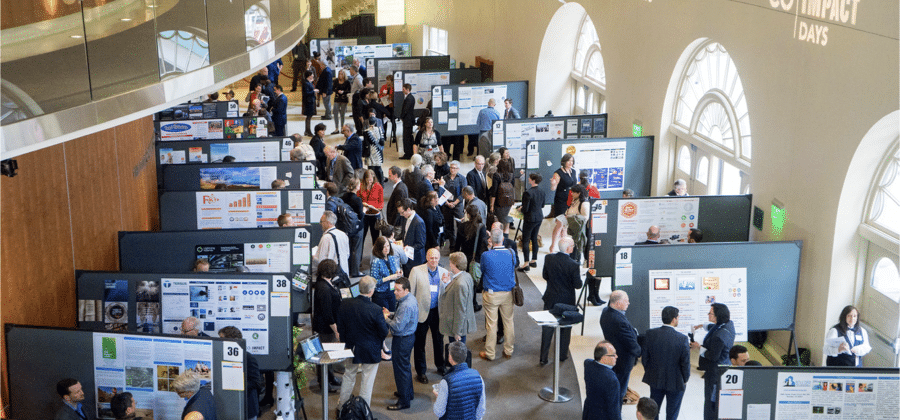
Impact investing is rapidly increasing in popularity and there’s a growing interest from first time investors. Education is the key to feeling comfortable for those sticking their toe in the water.

In 2012 Dr. Stephanie Gripne recognized a need for trustworthy, un-conflicted investor education.  Back then she was the director of the Initiative for Sustainable Real Estate Development at the University of Colorado’s Lead School of Business. Money just wasn’t flowing into projects which were trying to make a difference and most investment advisors were trying to gain business or build a fund. Her hypothesis was that a non-profit could offer such education and might activate or accelerate investment where it matters.

If you’ve never heard of an accelerator, it’s like a boot camp for start-ups and small business. Their role is generally to identify, educate and invest in entrepreneurs. Stephanie thought that an accelerator might just be the way to educate impact investors, so in 2012 she founded The Impact Finance Center (IFC). It is essentially an accelerator. Founded as a non-profit academic center, its mission is to identify, train and activate philanthropists and investors to become impact investors. Those investors might include private foundations, community foundations, high net worth individuals, companies, family offices and a growing number of new investors.

The IFC offers one-on-one training as well as small and large group training. And for those who want to train themselves there are two hundred online classes and forty-seven recorded webinars. The Center also offer simulation activities where would-be investors can either pretend to invest or practice investing small amounts. Or they might learn how to invest as a group by pooling a little money. And for those who are already investors, the IFC can evaluate portfolios and investment advisors for governance and fees, evidence-based decision evaluation and impact.

The IFC’s education institute is only a part of their community infrastructure which they are building to be replicated, scaled and customized. Also in their arsenal are investor clubs, a marketplace for impact investing, a Who’s Who of impact investing, and partnerships with civil society organizations like community foundations and Community Financial Development Institutions.

Listen in to my podcast interview with Stephanie to find out more about the in-roads she is making.

Image courtesy of Impact Finance Center

It takes a village.

June 16, 2021

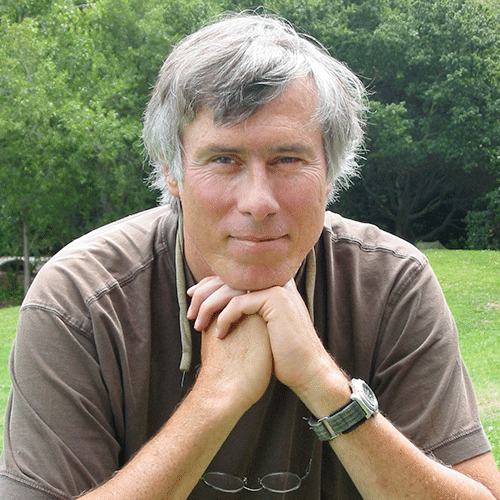
Charles Durrett is an architect often credited with introducing the concept of cohousing to the United States through his co-authored book, Cohousing: A Contemporary Approach to Housing Ourselves and more recently Cohousing Communities: Designing for High-Functioning Neighborhoods. Over a number of years, he has built a career around this idea – one he was introduced to as a student in Copenhagen. These Danish housing projects captured his imagination enough that he set about bringing this novel idea to the U.S.

Today, Charles oversees The Cohousing Company, which designs cohousing projects for many kinds of clients. A typical design includes densely packed cottages of 30 or so homes that form a ‘village,’ with a liberal sprinkling of communal areas and amenities, occupied by people who want to live co-operatively. The historical idea of planned communal ‘villages’ in the U.S. is not totally new – you have everything from worker housing to the freeform communes of the 1960s and 70s. But Charles has taken it further, inspired by the Danish model and adding in a dash of the principles of New Urbanism. Most interestingly, Charles describes himself as more of an anthropologist than an architect because every design begins with a deep dive into the psyche of the 30 families that plan to live together. Only once he understands how they want to live their lives, does he embark on the process of designing the physical place.

Charles has received numerous awards and regularly gives presentations on cohousing to interested citizen groups. He has spoken before the United States Congress and has lectured at many universities. His most recent book is A Solution to Homelessness in Your Town, about the Valley View Senior Housing project, built in 2019 in Napa County, CA. Charles lives in Nevada City, CA, in a community he and his office designed.

Insights and Inspirations

  • Cohousing is just a modern-day village.
  • Financing a cohousing project is easy. 70% of the homes are pre-sold and banks like that!
  • Contrary to expectations, over half of cohousing inhabitants are introverts.
  • Cohousing owners believe that their life will be easier if they live co-operatively. That’s the common thread.
  • To design cohousing one must be as much an anthropologist as an architect, making sure that what is designed serves the eventual occupants.
Read the podcast transcript here

Eve Picker: [00:00:13] Hi there, thanks for joining me on Rethink Real Estate. I’m on a mission to make real estate work for everyone. Real estate can help to solve climate change, can house people affordably, can create beautiful streetscapes, unify neighborhoods and enliven cities. So I’m on a journey to find the most creative thinkers and doers out there. I’m not the only one who wants to rethink real estate. You can learn more about me at EvePicker.com or you can find me at SmallChange.co, a real estate crowdfunding platform with impact real estate investment opportunities open for investment right now. And if you want to support this podcast, please join me at Patreon.com/rethinkrealestate where there are special opportunities for my friends and followers.

Eve: [00:01:16] Today, I’m talking with Charles Durrett, an architect often credited with introducing the concept of cohousing to the United States. Charles has built his career around this idea, one he was introduced to as a college student in Copenhagen. These Danish villages captured his imagination. And so he set about bringing this novel idea home. Today, he oversees The Cohousing Company, which designs cohousing villages for a variety of clients. His designs are densely packed cottages of 30 or so homes that form a village with a liberal sprinkling of communal areas and amenities. They are occupied by people who believe their lives will be easier if they live together. You’ll want to listen in. If you’d like to join me in my quest to rethink real estate, there are two simple things you can do. Share this podcast or go to Patreon.com/rethinkrealestate to learn about special opportunities for my friends and followers and subscribe if you can.

Eve: [00:02:27] Good morning, Chuck. Thanks so much for joining me today.

Charles Durrett: [00:02:31] Well, top of the day. Thanks for having me.

Eve: [00:02:33] Very good. So, you’re known as a cohousing expert, and I wanted to start by having you explain what is cohousing?

Charles: [00:02:43] Oh, well, yes, cohousing is at some level, it’s a custom neighborhood. It’s very much for people who are quite motivated to live in a high functioning neighborhood. When I first discovered it, I met a woman in Denmark who said that her and her husband grew up in high functioning neighborhoods. And it was pretty much chance these days to find a neighborhood where people knew each other, cared about each other and supported each other. So cohousing has six fundamental components. One is that the future residents are very much a part of making it happen. And it turns out they’re better at making neighborhoods function than any bureaucrats, business people, bankers, builders, even architects, frankly. I’ve done about 55 cohousing now, and every time somebody says, Hey Chuck, why don’t you just design it? We’ll see if we like it. And I always say no, because with you we’ll do a much better job, and we’ll make a more high-functioning neighborhood. And that’s really been the case, no doubt about it. So, future residents extended common facilities, self-managed design that facilitates knowing each other over time, completely resident managed and no hierarchy of decision making.

Eve: [00:04:05] So what did you learn about cohousing?

Charles: [00:04:08] I learned, I went to the University of Copenhagen in 1980 and…

Eve: [00:04:12] Lucky you.

Charles: [00:04:13] You know, it was fantastic, actually. Really fantastic. And walking home from school one day, I just stopped, and I noticed as I was walking by single family houses, there was no life between the buildings, walking past apartments and apartment buildings. There was zero life. Condos, none. Assisted care, none. And then there was this one neighborhood that every single day that I walk by, when the weather was halfway decent, there would be people outside sitting at picnic tables talking to each other, kids running freely in and out of a building where it looked like nobody lived, but everybody lived. And that turned out to be the common house. And I just stopped and asked this young mother, hey, what’s going on here? in my broken Danish and she answered me in her perfect English that, yeah, this is a neighborhood that we made. And we made it so that we lived in an environment that we felt was not only healthy but sustainable over time. Anybody who hopes to make a single family house that is remotely sustainable is just putting lipstick on a pig, no doubt about it. I mean, we’ve got enough single family houses. We need to make villages now.

Eve: [00:05:26] So were there any cohousing projects at the time in the U.S.?

Charles: [00:05:31] Zero. We came back and made the first one and it was built and finished in 1991 in Davis, California, Muir Commons. Very much based on the Danish model and it’s elaborated on extensively in our book called Creating Cohousing, as well as another 200 other communities have been built since that first one was built in 1991.

Eve: [00:05:54] So how big was the first community?

Charles: [00:05:57] 26 houses and that’s about par for a new cohousing community, 26 to 30 houses. I mean enough people that everybody relates well with five or six others and turn into good friends and not so much that, not so much the consensus and other decision making and management becomes difficult at all.

Eve: [00:06:25] And architecturally, because you’re an architect, so what do these, what does a housing cohousing project look like? How does it differ from, you know, a regular neighborhood or an urban neighborhood or a suburb?

Charles: [00:06:40] Well, fundamentally, it’s quite different. You’ll notice when you walk in. I mean, it’s very much a modern-day village. And the Danes would say they’re not creating anything new. They’re just recreating what used to happen naturally. We now have to make very consciously and subconsciously we have to get our sleeves rolled up and make them happen. So, for example, imagine a typical suburban block and and now imagine when you drive on to that street with nice little porches and all the rest, that you everybody parks at the very end of the street and walks by all the other houses on their way home. That fundamentally changes the nature of a neighborhood basically where you see everyone, that’s germane in terms of knowing them and, you know, it plays a big role down the line. Now, imagine you take all the garage doors off of the front of the houses and you move the houses, oh, instead of a typical suburban neighborhood is about 110 feet doorknob to doorknob. And our houses range about 20 to 30 feet, doorknob to doorknob. And so now when you walk by, you can see the smile on the face of the person in their kitchen waving at you. And it’s simply the opposite of anonymous housing or spread out housing or even warehousing like a typical apartments are. And now imagine where that street used to be there are sandboxes and play cards and picnic tables and gardens. And that’s what a cohousing looks like, basically. Quite different.

Eve: [00:08:23] In addition to housing people in a friendly manner, there’s also sort of the urban design aspects of bringing activity to the street, that really part and parcel of it, of the sounds of it.

Charles: [00:08:37] Oh yeah. I mean, like to the tune of thousands of people hours per week. In a typical cohousing neighborhood, there’s thousands of people hours per week of communing basically with each other. How’s Johnny, I heard he wasn’t feeling well. Hey, I’m taking my kids to the zoo this weekend, are you interested? And if you were to walk down a typical single family house neighborhood, you’d probably find less than one hundred people hours a week of people communing. I mean, really barely extends past salutations, rarely passed salutations. So, but it does. And there are some fantastic neighborhoods in the U.S., but far too few. Probably runs much less than one percent. And then the common facilities play a big role. I live in a 34-unit cohousing and we have dinner in the common house available six nights a week for anybody who wants to make it. You sign up a couple of days in advance. But we usually have 30 to 40 people there a night, and there’s nothing like breaking bread together to enhance and sustain a sense of community. No doubt about it. I mean, it’s timeless.

Eve: [00:09:51] Interesting. So, was it hard to get the first one, the first project done?

Charles: [00:09:56] And by the way, we also have a childcare center on site, and we just have a lot of things in our neighborhood where, a music room, a lot of things that stitch us together. Was it difficult to get the first one done? Well, you know, people often ask us, you know, Chuck, or ask me is, is it the zoning codes that make it difficult? Is the bankers that make it difficult? And that has not been my experience. My experience has been very much it’s our culture that’s challenging, makes it challenging. We’re very much grown up on the shirttails of movie stars like John Wayne, who, by the way, has starred in more movies than any other actor or actress in American history at 126 films. So, that’s a lot of propaganda about pulling yourself up by the bootstraps, which is probably a big reason we have millions of homeless people in this country, is because that’s a myth that does not work. What does work is people helping people. We know that. I can imagine a community pulling you up by your bootstraps, but I cannot imagine you pull yourself up by the bootstraps. It is physically impossible. So, our culture is slowly but surely making a shift. And that’s great. The second cohousing community we finished in the U.S., hardly anybody was born in the U.S. Which is interesting and it’s largely because…

Eve: [00:11:23] That is interesting.

Charles: [00:11:23] Yeah, it’s largely because these are people from the Philippines, from Mexico and other places where it was obvious to them that community was fundamental to their quality of life. And so it was not a big culture shift. So…

Eve: [00:11:39] Perhaps also extended families which are in the community, right?

Charles: [00:11:44] And they were away from their extended family. So they were seeking other means to grow nearer to the people that lived around them.

Eve: [00:11:54] Really interesting. So, since you built the first project, have they evolved at all to suit U.S. culture?

Charles: [00:12:04] Yes, absolutely. I think U.S. culture is evolving as well. But the key thing about cohousing is it’s very much based on who that group of people are. I mean, I feel like I’m as much of an anthropologist as I am an architect. My job is day in and day out figuring out who this group of people is. How do they stitch their shifts together in general? What do they care about? Where are their values? What are their experiences? And I built two cohousing communities right across the street from each other and been quite different, actually. Because it’s very much designed to reflect the values of that group of people and fit like a glove, consequently. Some of them that we built today are almost exactly like the first one we built them, but more likely all of them in between have been quite different, quite, quite different. What is interesting is what are the constants? And the constants seem to be that the common denominator among all these thousands of people that now live in cohousing, the common denominator is they have one thing in common, and that is that they believe that their life will be easier, more convenient, more practical, more economical, more healthy, more interesting, more fun if they give cooperation with their neighbor the benefit of the doubt. And in other words, if we don’t cooperate on anything unless we consent to it. But consequently, we have one lawnmower for 34 houses. We have one swimming pool for 34 houses. We have one hot tub. We have hundreds of things we share. We have discovered that we can successfully share together.

Eve: [00:13:47] Have you ever done a survey on how many introverts versus extroverts we have in cohousing projects?

Charles: [00:13:54] That survey has been accomplished numerous times with surprising results. The general population is running about 60 percent extroverts and 40 percent introverts, and the cohousing population runs about 60 percent introverts and 40 percent extroverts.

Eve: [00:14:12] Oh, that’s really fascinating. Really fascinating because introverts get the energy by being alone, having a lot of alone times.

Charles: [00:14:21] Exactly, but on cohousing is very, very much designed to give you as much community as you want and as much privacy as you want.

Eve: [00:14:29] And I say that because I’m an introvert, so I know how I get my energy.

Charles: [00:14:33] Right. Sure.

Eve: [00:14:34] Interesting. It’s really interesting. So what’s the process like then? Walk me through the process to design a cohousing village.

Charles: [00:14:42] Okay, I will. And by the way, that is the one common denominator among not only every American but every European I’ve met. I’ve been to about 385 cohousing communities, the one common denominator is that these are people they distinctly want to balance between privacy and community as opposed to feeling like they have as much privacy as they want and as much privacy as they want. And cohousing, they want as much privacy as they want and as much community as they want as well.

Eve: [00:15:08] Interesting.

Charles: [00:15:09] That’s distinctive. The process. Well, typically, somebody has gotten a hold of our book called Creating Cohousing and or the book Senior Cohousing by myself or and Creating Cohousing was written with Kathryn McCamant and has a little study group in their town. And then those eight or nine people invite either Katie or I to come to that town. I’m actually getting on a plane on Thursday and going to Richmond, Virginia, and that’s typical. So then I’ll do a presentation, usually an hour or two. They usually have about 100 or 150 people show up. And from there they’ll have what’s called a Getting It Built Workshop for the 15 or 20 households that are motivated to proceed. And that’s two days of this is how this whole thing gets built. The residents play a big role in the development, and they figure out how to get everybody on board. Even those who come to the table who really can’t afford it. So, there’s some grant writing involved and such. And then after the getting built, let’s say there’s, where I live 25 houses at the Getting It Built Workshop. 21 households were at the next workshop, which is Site Designing. Where we do exercises to figure out how far we’re going to make the houses away from each other and all the rest. And then Common House Design Workshop a month later and then Private House Design Workshop a month later. And then we go through the design of the whole project. And then there’s bank financing that has to be procured and building permits. And while the buildings are being built, the group hammers out their management, how many days a week they’ll have dinner and all the rest and kind of goes like that. That sounds easy, but they take two to three years to pull off.

Eve: [00:17:15] Yeah, I’m sure. So, I have two really big questions. And one is about NIMBYism. What are the neighbors think when you build a village like this? And the second issue is how do they get financed?

Charles: [00:17:27] Yeah, question one, that is a really good question. I’m surprised rarely do people ask that. I guess most people don’t know what goes into getting a project built, and dealing with the neighbors is certainly one of the biggest hurdles.

Eve: [00:17:41] I know. I’m an architect by training and I used to work at a planning department, so, yeah, I’m pretty familiar.

Charles: [00:17:49] So and yeah. And it’s a workout. In 55 projects though, we’ve only had one stop by the neighbors, oddly enough. So we have a much better track record. But it has to do with the fact that, you know, you get two or three nursing moms up at the podium and asking the city counselors, why wouldn’t you approve this? I need this. In fact, I need it by September so my other kids can go to school, etc., etc. So, the human appeal really eclipses the normal “just say no to the developer” attitude. And the magic bullet really is being able to put 150 people in the room that are saying, why wouldn’t you build this project? You know, it’s just prejudices and all the wrong reasons. So, and especially today, with affordable housing being such a crisis in the U.S., we’re running into much less NIMBYs than we used to. And now I don’t have to fill the room of 150 people but more like 50 to 100 before the bureaucrats and the politicians say, hey, we just have to do this. But we had some absolutely miracle projects, right? Pulling a rabbit right out of the hat. Like, for example, Stillwater, Oklahoma, Vancouver, B.C., where we have bought with the group a single family house on a big lot and transformed it into 24 houses in one case.

Eve: [00:19:16] Oh, wow, that’s fantastic.

Charles: [00:19:18] 31 houses in another case. And we’re just doing that more and more. And it’s even getting better than that. We just have our first case right now in Auburn, California, where the county has come to us and said, Chuck, if you build a high functioning neighborhood on this property, we will give you this 4.6 acres. That’s very European. And it’s the first case in the U.S., some 30 years after we introduced it to the U.S. So.

Eve: [00:19:46] And what about financing and banks who are traditional?

Charles: [00:19:49] Yeah, they are. Well, there’s a couple of things that they really like about cohousing. The main one that they like is that the project is pre-sold, so we don’t start construction without 70 percent pre-sales. So compare that to a regular developer who’s now designing 30 units, but not one single pre-sell. So, they have to do this market study after market study. I know a woman developer who just spent 350,000 dollars on a market study to prove to the banks that her houses will sell. And we just spend zero money on the market study because they’re at the table and then not only at the table, but they put in their down payment to get the project built, which is 20 percent of the value of their house. So these are people with real skin in the game. If they walk, they also lose. So the market walks, they lose. And, you know, there’s nothing like getting a project approved. And when I meet with the bank the first time, I usually ask a couple of the residents to come. And, you know, everybody just says, hey, these are just people. I mean, you know, you got to get past all the prejudices about, you know, a village which could look like a commune under the wrong circumstances, but it never does. I mean, it’s far from a “commune”. There’s no guru, there’s no strident back to nature ideology. There’s just people who want to live lighter on the planet and live closer to other human beings. I mean, the banks themselves realize that they’ve been looking in the rearview mirror too much. You know, what sold last week.

Eve: [00:21:19] Exactly.

Charles: [00:21:20] They want to get past that.

Eve: [00:21:22] Yes. Yeah. So I’m getting the sense that you play a very large role in getting these projects off the ground because you go to the bank with them. You make sure that there’s enough people at hearings. So explain what your role is in a process like this with a community.

Charles: [00:21:42] Well, ostensibly, I’m the architect and however I’m an architect, I’m going to argue with a little bit of a mission and whatever the mission presents itself, I have to help solve. So, for example, nobody would publish our first book, which came out in 1988 and ended up selling 30,000 copies and just a couple of years. But, so we published it ourselves and sold 3,200 copies in the first six months and then another publisher picked it up. So, you know, sure we’ve run it up against too much skepticism, no doubt about it. America is an innovative land, but not socially. When it comes to social innovations you look to the Swedes, the Danes, the Finns and so many others, and so we barely know how to sustain a viable society. I mean, it’s clear. And so we just basically have to do whatever is necessary. I mean, I had to learn about publishing. I had to learn about kerning and letting and fonts and all the things that I formerly didn’t care about at all. So whatever presents itself, we have to embrace and get past that hurdle. So that’s our big problem.

Eve: [00:23:03] You’re a problem solver. So tell me, is there a typical cohousing project in terms of amenities and or are they all like, what sort of amenities to they have and how do they vary and why?

Charles: [00:23:16] Well, I’ll describe a couple. Where I live, we have a lovely common dining room. I mean, the acoustics have to be perfect from an architect point of view, a lovely super gourmet kitchen, much more gourmet than any of the private houses. I mean, there’s one very, very gourmet kitchen for 34 houses and then there’s 34 standard kitchens. We have a kids room where we have child care and after school and after dinner play, we have a lovely music room with a piano and we have lots of musicians there that teach the children after school music and you know, and then they do rehearsals at the local assisted care and recitals at the nursing care, et cetera, et cetera. We have, for sustainable reasons, 26 of the 34 houses use a single laundry because that’s the only place we can have recycled grey water and use 100 percent biodegradable detergent. We have two guest rooms, which means that, you know, the single family, the houses could be smaller. People didn’t need a third bedroom for potential guests. So, there you can, you can book them out up to two months, two weeks, a year. But most people, we don’t really pay attention to that. But that’s our goal. And they’re full all the time. We have a lovely sitting room with a fireplace with lots of men’s clubs and stuff like that happens in the evenings. And women’s knitting happens and quilt making happens on the weekends. And we have a lovely teen room, which is fantastic. We moved in with 21 seniors and 37 kids and the rest were adult parents. And you know, I went to the teen room one night and there were 21 teens there. Actually, only ten of them lived in the cohousing and they were having a slumber party on the outside deck there and it was midnight and I just popped in on them to see how everyone was doing. And I counted 21 kids. And then coincidentally, the next morning in the Sunday New York Times, I read that the safest thing you can do with your teenagers, because being a teenager in America is relatively dangerous, is to keep them at home and however they want to be where the action is. So you want to make the action in your neighborhood and basically keep them at home.

Eve: [00:25:50] Yeah, yeah.

Charles: [00:25:51] And so we have a great workshop. I mean, it’s fantastic. We can build, people build all kinds of stuff in the workshop, and people are learning from each other all the time. You know, the things are one thing, but really, they’re just all a format for us to learn from each other all the time. Some people like myself make homemade bread for dinner for the common dinners, and other people are learning how to make common homemade bread and all the rest. So, it’s all about what am I getting out of it? I hate to say it, but I think, and Ayn Rand was correct, and it’s all about me and yet, and so that’s the way it’s kind of set up. Everybody feels like they’re getting something out of it and therefore it just it just continues to grow that way.

Eve: [00:26:33] Interesting. So, you know, I know in the U.S., each state seems to have a cultural vibe of its own. And there’s some states where we’re more housing projects have been built than others.

Charles: [00:26:47] Oh, yes, for sure. And there are.

Eve: [00:26:50] That was a loaded question.

Charles: [00:26:51] That was a loaded question. California has by far the vast majority of cohousing because as Paul Ray, in his book, Cultural Creatives, points out, and he was our keynote speaker at one of our yearly conferences, as he points out, the people who move into cohousing are, in fact, cultural creatives because they don’t feel like they have to do what the parents did. It’s not interested in growing old like my parents did. They were wasted away in a big, dumb, single family house. And then they went off to assisted care and then they went up to nursing care. I’m not interested in growing up like my little brother did, where I had already left the house and my little brother was alone and forlorn and watching video games and social media all the time. I think there’s only like two or three residents in our 34 houses that even have a TV. TV is not a big part of growing up where we live. Running out the front door is and having races in the swimming pool and just goes on and on. I mean, I know I make it sound a little bit idyllic, because I feel that every time I walk home from work every day. But managing it is a workout, by consensus does make it a workout. The thing I love about cohousing more than anything else, above all, is how many people that live there that say the best part about living there, is I’ve learned how to get along with other people. I take these lessons to my church. I take these lessons to my school. I take these lessons to my work. And I know from my own experience, my daughter is 29 now, works for a Congresswoman in D.C., but she worked for the U.N. for four years and I just watched her go to Africa and introduce different concepts to different villages like clean cookstoves, so young girls weren’t walking in the middle of the night to go get firewood, etc. and Jesse simply knew how to help people get organized. She simply knew how to work with a lot of different people, both at the U.N. and in the villages. So, she had something to offer, and people wanted to listen to her because she knew how to get her proposal passed.

Eve: [00:29:02] So you’ve also written a book on housing the homeless. How does that tie into your cohousing work?

Charles: [00:29:09] Well, thank you for asking. There is a movement afoot called Housing First, and I fully respect it. It’s about getting a roof over people’s heads and then you can deal with their alcoholism and their mental illnesses and they’re just down and out situation. But I’m a big believer in community first because I’ve seen too many times now where I’ve built a homeless project like a five-story project in downtown San Francisco, where the residents currently make dinner for each other six nights a week again, and how community has played such a huge role. And they’re leveraging relationships to bettering their lives. I’m infinitely impressed with a project in Eugene, Oregon, called Opportunity Village, where they built 30 units for 8,000 dollars each, volunteer labor mostly, but with the homeless. And then after the volunteers left and the homeless were left to self-management with some help from some local elders, from various churches, all of the amazing things those guys did. First, they had trucked in water. They had porta potties trucked out. They didn’t have a kitchen, et cetera, et cetera. They built the trenches for the water, the sewer.

Eve: [00:30:32] Wow.

Charles: [00:30:32] Then the dining facilities. And then they put heat in the units because the first winter, they had no heat. These were just little tiny boxes. And one person was clever with getting some solar panels donated. And then they put in some batteries and then they were able to create some heat. Now all 30 of them have heat. I mean, I’m just astounded by how much cleverness out there is homeless. It’s just astounds me. Every time I organize a new project, some very wise people come to the table and given the right format, they can actually provide for each other immensely. And we’re so hellbent on victimizing those folks. I wish they would just move on that we don’t even embrace the potential there and help those people reach the potential. It’s very sad. So, yes, I do hope a lot of people get the book, A Solution To Homelessness In Your Town, because it’s to the extent that that book stays in circulation is to the extent that more will be built.

Eve: [00:31:40] Just changing text a little bit. Are there any current trends or innovations in real estate development that you believe are important for the future?

Charles: [00:31:48] Oh, there’s actually a lot, but I wouldn’t call them trends per say. I would call them innovations. And unfortunately, those innovations are sexy and interesting and yet don’t get the kind of traction that they need. I mean, the Congress for New Urbanism, for example, I mean, building towns that feel more urban instead of more suburban. No strict commercial, no boxes surrounded by a sea of asphalt, which is America everywhere. You know, if you drive through Spokane, Washington; Sacramento, California, it’s just parking lot after parking lot after boulevard after box in the middle of a pool of asphalt. So, however, the most distressing part of the whole thing is I don’t know what the percentage of last year. They were probably about 1.2 million houses built in America and by probably over a million were single family houses. And that’s the trend that we’re continuing on, simply because that’s the rearview mirror. You build out into the farmland. And if you build on the farmland, you won’t have any NIMBYs, as you alluded to earlier. If you build into the farmland, you won’t have any management issues because these people are not organized. It is the path of least resistance for the banks. If they sold last time, they’ll probably sell this time. It is the most deleterious solution that we could come up with for the planet or for us as healthy social beings. They say that our second responsibility as a species is to get along. The first responsibility is surviving, and that’s true for every species. But getting along is particularly important for our species. And if we don’t get along, we might not survive. So, it really feeds into priority number one. And yet if you put everybody in a box, equidistance, atomize, estranged they’re not going to know how to get along. That possibility will wane further. And I’m very concerned about the vast majority. So, it is it’s going to take more people. I’m mentoring as many young people as I can these days to become architect activists, because it turns out, just like the CNU, the architects are better than average activists.

Eve: [00:34:19] Yeah, I think that’s true. So what’s, final question, what’s next for you?

Charles: [00:34:25] Well, like I said, I’m getting on a plane and I’m going to Richmond. I’m working with the Chickahominy Indian Tribe, and I see that as the future. I mean, it kills me when I, when they first called me and said, you know, our old people are dying in nursing care and it’s as far away from our traditions as humanly possible. We have to figure out who we are and respond to that, not what the institutions are providing for us now. And so, this is going to be housing and a child care, nearby on the same property. Right? I mean, I’m going to have a super close. It’s going to be a village and I’m going to make it I’m going to make it reflect their needs, wants and desires as distinctly as possible. But I’m also going to challenge them a little bit to go back to their previous priorities so that we’re not hedging our bets. So, you know, I’m increasingly playing an activist role, but I only take the Chickahominy as far as they feel comfortable. But I’m taking the American population as far as they feel comfortable because I’m hellbent on getting these projects built, because I know it’s a better way to go. So there’ll be more activism in my future.

Eve: [00:35:40] I’m looking forward to it. I really enjoyed this conversation, and I can’t wait to visit one of your villages.

Charles: [00:35:46] Will you live in Pittsburgh, huh?

Eve: [00:35:49] I do.

Charles: [00:35:50] The closest one is Ithaca, New York. I don’t know. I don’t know where the closest one is to you.

Eve: [00:35:57] I’ll have to do a Google Search.

Charles: [00:35:59] But we need to get some more in PA, that’s for sure.

Eve: [00:36:01] We do, we do. Well, thank you so much.

Charles: [00:36:04] You’re welcome. Good. Thank you very much, Eve. Appreciate it.

Eve: [00:36:19] That was Charles Durrett. The historical idea of planned communal villages is not new. You have everything from worker housing, such as Pittsburgh’s Chatham Village, to the free form West Coast communes of the 1960s and 70s. But Charles has taken it a little further, adding in a dash of New Urbanism. Most interestingly, Charles describes himself as more of an anthropologist than an architect. Every design begins with a deep dive into the psyche of the 30 families that plan to live together. Only once he understands how they want to live their lives does he embark on the process of designing the physical place.

Eve: [00:37:10] You can find out more about this episode on the show notes page at EvePicker.com, or you can find other episodes you might have missed, or you can show your support at Patreon.com/rethinkrealestate, where you can learn about special opportunities for my friends and followers. A special thanks to David Allardice for his excellent editing of this podcast and original music. And thanks to you for spending your time with me today. We’ll talk again soon. But for now, this is Eve Picker signing off to go make some change.

Image courtesy of Charles Durrett, The Cohousing Company

« Previous Page
Next Page »

Primary Sidebar

sign up here

APPLY TO BE A PODCAST GUEST

More to See

(no title)

February 22, 2025

Bellevue Montgomery

February 11, 2025

West Lombard

January 28, 2025

FOLLOW

  • LinkedIn
  • RSS

Tag Cloud

Affordable housing Climate Community Creative economy Crowdfunding Design Development Environment Equity Finance FinTech Gentrification Impact Investing Mobility Offering Opportunity zones PropTech Technology Visionary Zoning

Footer

©rethinkrealestateforgood.co. The information contained on this website is for general information purposes only. Nothing on this website is intended as investment, legal, tax or accounting strategy or advice, or constitutes an offer to sell, solicit or buy securities.
 
Any projections discussed or made may not be accurate and do not guarantee a specific outcome. All projections or investments are subject to risk due to uncertainty and change, including the risk of loss, and past performance is not indicative of future results. You should make independent decisions and seek independent advice regarding investments or strategies mentioned on this website.

Recent

  • The Mulberry
  • Mount Vernon Plaza
  • The Seven
  • Real estate and women.
  • Oculis Domes.

Search

Categories

Climate Community Crowdfunding Development Equity Fintech Investing Mobility Proptech Visionary


Copyright © 2026 · Magazine Pro on Genesis Framework · WordPress · Log in