• Skip to main content
  • Skip to secondary menu
  • Skip to primary sidebar
  • Skip to footer
  • Home
  • About Us
  • Say hello
Rethink Real Estate. For Good.

Rethink Real Estate. For Good.

  • Podcast
  • Posts
  • In the news
  • Speaking and media
    • About Eve
    • Speaking requests
    • Speaking engagements
    • Press kit
  • Investment opportunities

Development

No more broken promises.

July 20, 2022

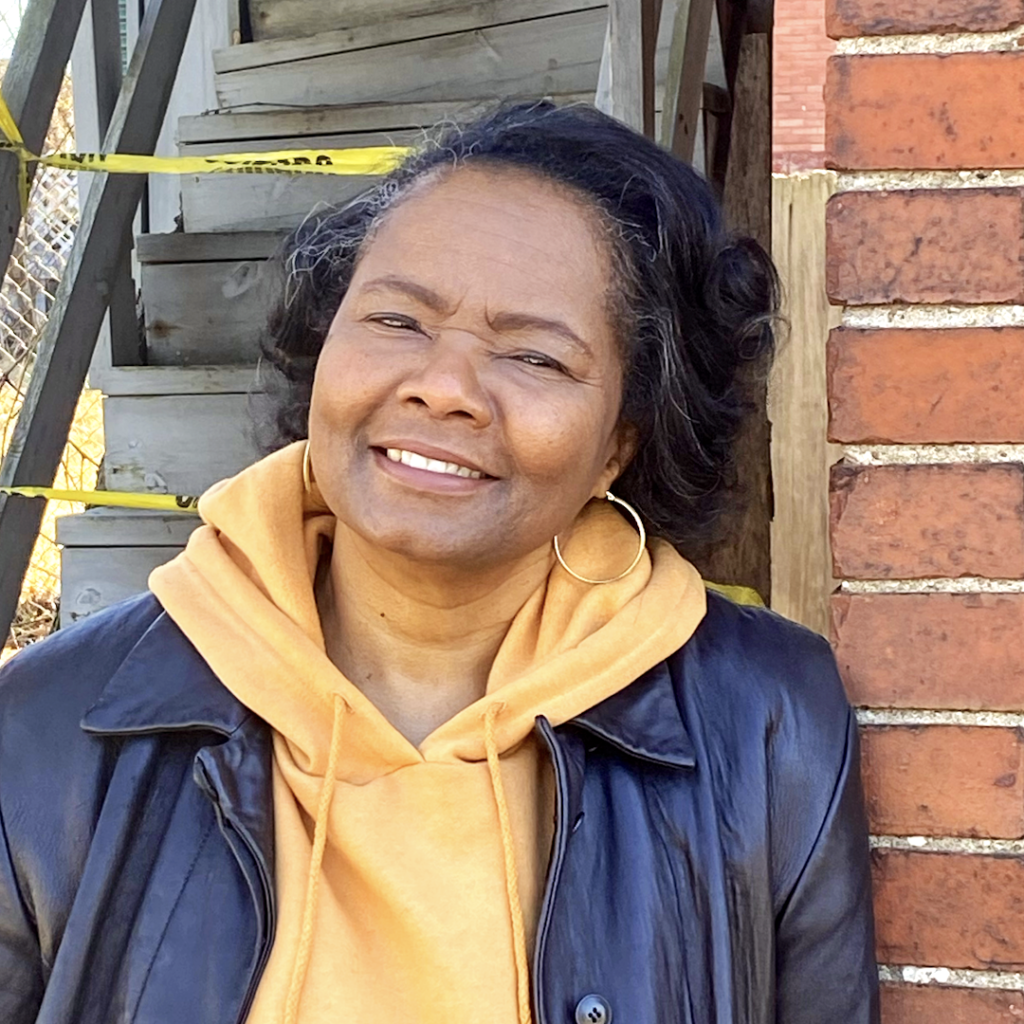
Brinda Devine has over 25 years of experience in real estate, beginning at age 29 with Acquest Development, where she earned her real estate broker license and served as their Vice President of Asset Management. She then joined Wayne State University, where she established a Real Estate Office which facilitates the purchase and sale of land and buildings for the University, and she became the university’s first Real Estate Officer.

Much of Brinda’s real estate career has been influenced by her race and gender – she notes that early on in her real estate career, Brinda was often the only woman and/or Black person in the office, in meetings, at events, and even in classes. 

In 2020 she decided to take the step to become a real estate developer, starting P8 Real Estate Solutions, to focus on developing neighborhood marketplaces within Detroit neighborhoods that lacked easy access to the daily necessities most of us take for granted. During the last two years, Brinda says she’s learned that the number one challenge of being a woman, particularly a Black woman developer, is getting access to capital. Her first project is the Kornr Store, and is a kind of development prototype that will provide what Brinda calls ‘life essentials’ – like coffee, healthy food and drink options, prepared food, home and personal goods, green space, internet access. She’s raising funds for this project on Small Change.

Brinda is an active member of Urban Land Institute, and a member of their Small Scale Local Product Development Council. She is a co-founding member and treasurer of Detroit’s Women’s Sustainable Development Initiative, and was also a member of the 2020 Cohort of the Equitable Development Initiative in Detroit, through Capital Impact Partners. Brinda is also an author of two books – Discover Your Value, Discover Your Purpose, and Authentication Process: Connecting the Dots of Being a Believer and Living a Life of Purpose.

Read the podcast transcript here

Eve Picker: [00:00:05] Hi there. Thanks for joining me on Rethink Real Estate. For Good. I’m Eve Picker and I’m on a mission to make real estate work for everyone. I love real estate. Real estate makes places good or bad, rich or poor, beautiful or not. In this show, I’m interviewing the disruptors, those creative thinkers and doers that are shrugging off the status quo, in order to build better for everyone. If you haven’t already, check out all of my podcasts at our website RethinkRealEstateForGood.co, or you can find them at your favorite podcast station. You’ll find lots worth listening to, I’m sure.

Eve: [00:00:56] Brinda Devine boasts of a 25-year career in real estate, working her way up to VP of Asset Management with Acquest Development. And then at Wayne State University, where she established a real estate office which facilitates the purchase and sale of land and buildings for the university. Much of Brinda’s real estate career has been influenced by her race and gender. She’s Black and she’s a woman. She notes that early on she was often the only woman and or Black person in the office, in meetings, at events, and even in classes. In 2020, Brenda decided to switch seats at the table by launching her own real estate company, P8 Real Estate Solutions. She is focusing on developing neighborhood marketplaces within Detroit neighborhoods. But now, being Black and a woman have become a challenge to her like never before. Brinda Devine has a big story to tell, so listen in.

Eve: [00:02:09] If you’d like to join me in my quest to rethink real estate, there are two simple things you can do, share this podcast and go to rethinkrealestateforgood.co, where you can subscribe to be the first to hear about my podcasts, blog posts and other goodies. Good morning, Brenda. Thanks so much for joining me today.

Brinda Devine: [00:02:32] Good morning. Thank you for inviting me.

Eve: [00:02:36] You’ve had a pretty interesting career in real estate, 25 years of it. How did real estate become your career path?

Brinda: [00:02:44] Well, that’s a little crazy. I actually didn’t know anything about commercial real estate. I was about 25, 27 years old, left a banking career, answered a wild ad in a newspaper, the Sunday newspaper. Went to an interview, just going to find out about things and ended up getting the job out of 300 applicants.

Eve: [00:03:08] Wow.

Brinda: [00:03:09] Yeah. Surprised me, too. And I actually work for a wonderful developer who trained me from the ground up of not knowing anything and he was a colorblind individual. He did not see color, race, he just wanted to make sure that you were on the team and that we all were working towards the same goal. So, a beautiful gentleman.

Eve: [00:03:37] And so, over 25 years you worked with him and then you were the first real estate officer for Wayne State University as well, is that correct?

Brinda: [00:03:46] Yep. So, I stayed with the developer about 12 years and then I ended up applying for a position at Wayne State. They created an officer of real estate and joined there in 2005 and started that office for the university. And at that time, and I think that’s still the case, the office was actually led by an African American woman of color. A person of color. The real estate office for the university. So that was, I don’t think really too many people think about it that way, but that’s, I thought it was significant, particularly with the impact with development in the city, particularly the the midtown area. So, it’s been interesting.

Eve: [00:04:37] Very good. So, you’ve spent 25 years in the real estate industry and only recently you decided to take the plunge and create your own development company. What made you do that?

Brinda: [00:04:50] So, I’ve been blessed to be on the opposite side of the table to do business with developers. And I’m going to say that every one of them that I’ve dealt with, they were Caucasian males. I’ve not had a project with. No, I take it back one one Black developer I did a project with. So, I was thinking I needed to get from behind a desk and see what the reality was for developers on the opposite side of the table. I decided at the beginning of 2020 that I wanted to be a developer and I sought out a class through Capital Impacts EDI program, which is essentially a development class for minority developers. And it was eye opening. Being on the opposite side of the table of getting a lot of feedback and information on how that process works and how it is so much different for Black developers than the developers that I had been working with.

Eve: [00:06:00] And on top of that, you’re a woman, which, you know, I was the only female developer in Pittsburgh for many years. So, I can only imagine you’re a rare breed. So, how has that impacted your career? And you said this was eye opening and in what way was it eye opening?

Brinda: [00:06:21] So, I’ve been in commercial real estate. I usually work with men, white males. And so, I can say that I’ve been sort of trained for that type of environment. It doesn’t bother me being the only person in the room. I have typically been the only woman in the room, the only Black in the room, and I adjusted to it because my personality is pretty direct and that’s just a different pace when you’re working with developers. So, that didn’t really bother me because I fit my personality. And so, I understood that world of real estate, of coming in, talking to someone about your project and that there would be funds available. One, two, three, easy. I wanted to see what it was like on opposite side. And what I found out is that it is full of challenges, it’s full of broken promises, it’s full of. And because I’m analytical and because I don’t come from that background, I have the ability to sort through information to go, okay, this is not really working. Why is this process not working? And be able to look into it a little deeper, because I’ve not been in that realm, and I could take a look at it from a first look. So, it was eye opening because I just saw processes that did not work and because the majority of the people who who many of them have, I would say for the not-for-profit side, they’re in this realm where they’ve committed themselves to do good and they are in these programs and they’re trying to help people. But the problem is they are not developers. They have absolutely no idea. They’re program managers. And it’s really hard to make something work when you don’t have any feedback on what that feels like or what that process is. And working, it’s all sort of like it’s just a process without actually having the experience, I put it that way.

Eve: [00:08:31] Right. So, it doesn’t sound like it’s impacted your career very much, but now that you’ve become a developer, what’s that like?

Brinda: [00:08:41] It’s been very frustrating because from my background, when I look at what, when I used to be an analyst and work for a developer and what was required to do a deal. But then when you’re a woman or a person of color and you’re reaching out to lenders for funding, there’s always something that’s missing. There’s this big cloud of a big veil of information that is uncertain. People are interested in your project. They love the idea. They want to meet and talk about it, they want to help. And then the day after you get a call that, well, you know, I went to the team, and we talked about it and we don’t really think your project fits. How does a marketplace within within a neighborhood not fit? There’s always some level of criteria that there’s something that astounds me, that they don’t have the expertise in the beginning to analyze that. So, it’s been very, very frustrating. And you have to have a huge level of resilience about yourself and determination to push through your project, irregardless of what someone says or what they say they’re going to do. And then it doesn’t happen. You have to have this resilience about you. So, it’s been frustrating, but I also find it fascinating, and I find it challenging to be able to figure it out and get it done.

Eve: [00:10:25] Well good for you because it makes me want to cry. Really. I mean. I don’t even know what to say. So, we are not at the point where an equal society. That’s for sure. Right.

Brinda: [00:10:40] Yeah. I have the opportunity to be associated with an organization that listens to me. A not for profit, the Urban Land Institute that listens. And I’ve shared my perspectives and experiences and I’ve had a good opportunity just a couple of weeks ago to pitch my project at a committee meeting, and I took the opportunity to make it a teachable moment. I would say you should expand your circle. You should expand your friends, the food you eat, where you drive, places you go. Developers are often embedded in one area, and with this set of friends that I grew up with to school with and da da da. And so, their perspectives are limited and so their environment is limited and the information that they receive is limited.

Brinda: [00:11:30] So, when you give someone an opportunity to share your experience and expand their circle, I can pose it in a way for them to understand what it would be like if they were in the same scenario. So, they can have an emotional attachment to the problem that I’m talking about. I’ve gotten a lot of feedback from people of I really had not thought about it like that. I really had not considered that. You know what, I really need to do more about that. And that could be as simple as referring someone for a job, hiring someone, adding someone to your team, and you’ll get a different perspective, a different understanding to expand your circle. So, that’s the approach that I’ve been going at, just being vocal about it. I think sometimes we don’t we don’t really talk about stuff. We try to be politically, too much being politically correct and not just speaking out and being direct in our conversation.

Eve: [00:12:29] I love the way you talk about it, so I’m going to ask you, with all of this experience wrapped up, what sort of projects have you decided to focus on with your real estate company?

Brinda: [00:12:39] Okay, so personally, I am solution and purpose driven in the capital impact classes for the minority developer program I mentioned, I was exposed to a lot of information, research, market data, demographics and the consistent stream through Detroit and a lot of urban areas like Detroit is that there is a lack of healthy food options within the neighborhoods and there’s a lack of personal and home goods. And I found that it’s a good percentage of people shop at their convenience stores, the dollar stores, the gas stations. Even though Detroit is a motor city, there is a huge percentage of adults that don’t have access to a car and during the pandemic, not necessarily access to public transportation as well. So, there is a need for a typical what you call a, what I grew up with, a corner store within the neighborhood. You can pick up your essential life, essential things, you know, some groceries, some healthy snacks, some healthy foods and things, some coffee, some prepared foods.

Brinda: [00:13:52] There’s a lack of that in the neighborhood. There’s a big gap for the small-scale developments. They’re more inclined to 1 million and up. And so my niche is to focus on developing small scale marketplaces within emerging Detroit neighborhoods. I don’t think that’s an insurmountable task. You know, I’ve heard someone say, Well, that’s a novelty. And I had to challenge him and say, it’s not a novelty to have a store to go to. You actually go to a grocery store, and you eat on a regular basis. That shouldn’t be something that you have to consider what you’re going to do. And they hadn’t thought about that, just like I had not thought about it before I took the class, and I expanded my circle. So, eating is not a novelty marketplace. A corner store is not a novelty in a neighborhood. So, just to get past that whole notion, but I try to make it funny but try to make it serious as well.

Eve: [00:14:57] So you’ve got a first project that you’re working on, Kornr store. How did you find it and what neighborhood is it in?

Brinda: [00:15:04] So, it’s in the Northwest Goldberg neighborhood of Detroit. It’s not far from some long-standing partners here before, Northwestern High School, Motown Museum. I’m actually, I have been working on a model for this type of store for probably about for over two years. And I happened to mention to someone that I have been looking for a building, and they happened to mention this neighborhood, which I was somewhat familiar with. And I walked through the neighborhood, and what’s interesting about the neighborhood, there’s not that many parcels that are zoned for commercial. So, there were two buildings that were vacant. I look them both up, I found out who owned them both. One of them, I was a Facebook friend. And then I saw that we had a mutual friend and I asked for an introduction, and we got along very well and we had a mutual interest in the building of what it is. The building is actually a 100-year-old building. The original owner in 1904 went down to the city of Detroit and had it zoned for that parcel to be a grocery store. So that grocery store has fed that neighborhood for years.

Eve: [00:16:16] That’s lovely.

Brinda: [00:16:17] And that’s what it’s been. And the person was initially purchased it to do the same thing, but it ended up being too small for their use. And so they had been waiting for someone who had the same type of mindset. So, we agreed on it and he sold it to me, and I actually felt as if he was passing a baton to me because it’s a long legacy of feeding a neighborhood. And I just was grateful, if someone had told me a year ago that I would be doing this, I would have said that you were crazy. But purpose leads you to places that you would not think that you would land. And I’m just grateful that he trusts me enough to sell me the building.

Eve: [00:17:11] So how big is it?

Brinda: [00:17:13] The building is about 1600 square feet. There’s commercial space on the first floor which where the corner store would be. And then above there’s a two bedroom, two bath. And oftentimes I get asked, what, don’t you think that’s too small? I’m like, no, it’s the perfect size because it fits within a neighborhood.

Eve: [00:17:33] Right. And how are you going to drag it into this century? Like what’s going to be different in your store versus the way it used to be?

Brinda: [00:17:41] Well, that’s a good question. So, what is going to be different? I have a small team. One of my team members is out of New York and she has a lot of good ideas. And I’ve done a lot of research on different marketplaces outside of Michigan. Actually, Michigan’s kind of slow in terms of advancement and technology for convenience stores. So, one of the things in this will have to be scaled and I have to start at square one and scale up. But one of the things that’s going to be different is we’re going to have, of course, a coffee bar, but we’re also going to have another type of bar. And I’m not going to say it because I don’t want anybody to take my idea. We’re going to have this other type of bar that has to do with food that I have found that people are so entrenched, and they love this type of food and to eat it all day and we’ll have that type. But we’ll also have some healthy food and drink options and some groceries and such and some artwork and some wine and some of the typical things you find in the convenience store. But the Kornr Store brand is also about being an amenity to the neighborhood, but also a neighbor.

Brinda: [00:18:58] So, during the weeks’ time when there is a lull, let’s say a Friday, nobody’s really thinking about going to the corner store on a Friday, late afternoon or Thursday. We’ll have some time to activate different activities that we’ve been planning for community engagement. The neighborhood has a huge percentage of senior residents and also young mothers and then older gentleman, and we’ll plan events around the neighborhood, different activities that they can do. So, we can engage and use the space and also engage with local pop ups, maybe have some wine tasting events, maybe have some tutoring events. I have a multitude of friends that have finance backgrounds, real estate, architecture, legal. They can do different tutoring sessions or just have different topics that would interest the neighborhood. A birthday month for different seniors just to connect and to say that we’re here. We’re a neighbor. Yeah, I want you to shop. I want you to come by. But the very first thing I want is that when you walk through that door that you feel like you belong here. I’ve gone into other places, and you feel like you don’t belong there. Like the neighbors, the residents who have held it down for so long won’t feel welcome. I want the people in Northwest Goldberg, those neighbors to feel like they can walk in, and I’ll have something for them and I’ll have something for other people. I have something for guests. I have something that will peak someone’s interest if they feel like when they walk in there, they feel like they’re welcome and they feel good.

Brinda: [00:20:44] That’s what I want to get out of this, that they feel good when they come in and then they stay for a while, then they leave. But that they feel good being in the Kornr Store that that brings back that emotional connection of the corner store that I grew up with. And I tell people all the time when I say corner store, this is emotional feeling of like, that’s the place where you used to go pick up something at the last minute. That’s the place where you actually went and found out what was going on in the neighborhood. That was the old school Internet of going in and finding out the news of what was going on. And I want that. I want people to feel like they can walk in and feel good about being there.

Eve: [00:21:23] You’ve talked about the challenge of financing a project like this and a project led by a Black woman. But you’ve added crowdfunding to the mix, which is an extra lift. Why investment crowdfunding. Who do you hope will invest?

Brinda: [00:21:40] Being the analytical person I am, I’ve placed applications for lenders, and we talked about that. And real estate, as you know, is about timing. And I needed another platform other than just the lender, I needed to have something that connected, that a person could read the story, they could understand, okay, this is a good idea. This is the right time. That’s why I reached out for the crowdfunding. One of the things I’m finding about with lenders, I mean, some of them seem to be in a small spot, a place, and they can’t really embrace the whole idea of Kornr Store because they have hundreds of loans going by. But when you have an opportunity to read the story, to read what I’m focused on, this isn’t for me. I didn’t pick this. It picked me. And in real estate, I truly believe that you should have a project that’s bigger than you. And this project is definitely bigger than me. It is totally out of my comfort zone, but it is much needed, and I am in at 100% so.

Eve: [00:22:55] So it’s really small but mighty, right?

Brinda: [00:22:58] It’s small but mighty and it has. And I tell people all the time, you don’t have to have huge projects to make an impact. You can have a small project and make an impact. Would a 200-unit apartment really impact the neighborhood? Or will you have an impact by putting in a smaller footprint that impacts the neighborhood and retains its personality? Smaller projects have big impacts as well.

Eve: [00:23:29] Talking about that, how have the neighbors welcomed you and this project?

Brinda: [00:23:34] They have welcomed me because I was respectful. I came in as a person. I came in as a human. I approached people as humans. I was respectful of the layers of history, the neighborhood clubs, the dynamics that go on under the surface. And because I was respectful and didn’t come in, like, I know everything, I’m this and that. You know, these demographics say this and that. I mean, demographics can be skewed as well. They can be biased. So, I came in as a human and approach my project as a human and the people that live there. That’s why the Kornr Store is an amenity, but we want to be a neighbor. So, planning a neighbor in a place. And so, I have been welcomed very well. I’ve been introduced to the person before the person I purchased the building from. The building has a crack of grocery store. It’s known in the neighborhood as that. And I met the owner who I believe he’s 83. We met online and he actually provided me with a story of how he actually came into acquiring the store, which I found fascinating. It was more information, more history. And I could tell when I first saw the building how it was respected because there was no graffiti. It wasn’t damaged. It’s 100-year-old building and it’s structurally sound. So, that told me a lot about how the neighborhood feels about that store.

Eve: [00:25:19] Yeah. One more question about it, and that fascinated me when I learned about this project. And you said that you will try to incorporate items to sell in the store that actually made by neighborhood residents. How has that come together?

Brinda: [00:25:34] So in Detroit, there are a lot of people who have small businesses, and we have a lot of incubators for small businesses that have been going on even before the pandemic. So, there are a lot of entrepreneurs here, a lot of artists, musicians and such, and I have it on my website that if anyone is interested in selling their items in the store, I have the opportunity to buy their products, even like authors. I have quite a few friends that are authors. I like to have a few books by local authors or have them pop up and do a pop up about their products or their books or their services. And I think that’s important because it gives them an opportunity to have access to a space without having to go and pay for a space. And they’re a start-up as well. I would definitely believe in spaces that have multiple uses.

Eve: [00:26:33] So once this one is put to bed, which I’m sure, yeah. What is the timeline, by the way? When are you hoping to get it finished?

Brinda: [00:26:41] I just had that phone call today. So, I could actually have the business open up by the end of this year. I’m ready to go with the permit and everything. The problem is the financing. I really need the financing to get this going. I’ve put in quite a significant amount of my own money, so it’s not like I’m sitting here going, okay, I want everybody else to put their money in but me. No, I’ve done that. We’re at the point where we are ready to start construction and as soon as we can start, that would be fantastic for me.

Eve: [00:27:16] You’d be underway. So, once it’s finished, what’s next? I’m sure you’re thinking about the next one.

Brinda: [00:27:22] Oh, yeah, I’ve already. I’m already looking for the second one. I’m already looking for another location for the second one. So that’s the idea behind the Kornr Store model is that it can fit in a residential lot. So, I am already looking at a second location, more than likely to lease that one. But this very first one, this one is the most important. It sets the tone for everything else. So yeah, the idea is to scale this model within Detroit and then elsewhere.

Eve: [00:27:57] So Brinda, I love the idea and I want to come visit as soon as it’s finished. I can’t wait to see it. And I wish you all the best of luck.

Brinda: [00:28:08] Thank you. I appreciate you. You know, I appreciate you. I do.

Eve: [00:28:12] Thank you so much for joining me.

Brinda: [00:28:14] No, thank you for inviting me. Thank you.

Eve: [00:28:23] Brinda Devine is a rare breed. She has spent most of her real estate career as the only Black and the only woman in the room. And she got used to it. Now she’s facing a different challenge with the first real estate project that she’s tackling on her own, access to capital.

Eve: [00:28:51] You can find out more about this episode or others you might have missed on the show notes page at our website RethinkRealEstateForGood.co. There’s lots to listen to there. A special thanks to David Allardice for his excellent editing of this podcast and original music, and thanks to you for spending your time with me today. We’ll talk again soon, but for now, this is Eve Picker signing off to go make some change.

Image courtesy of Brinda Devine
Storyteller.

July 13, 2022

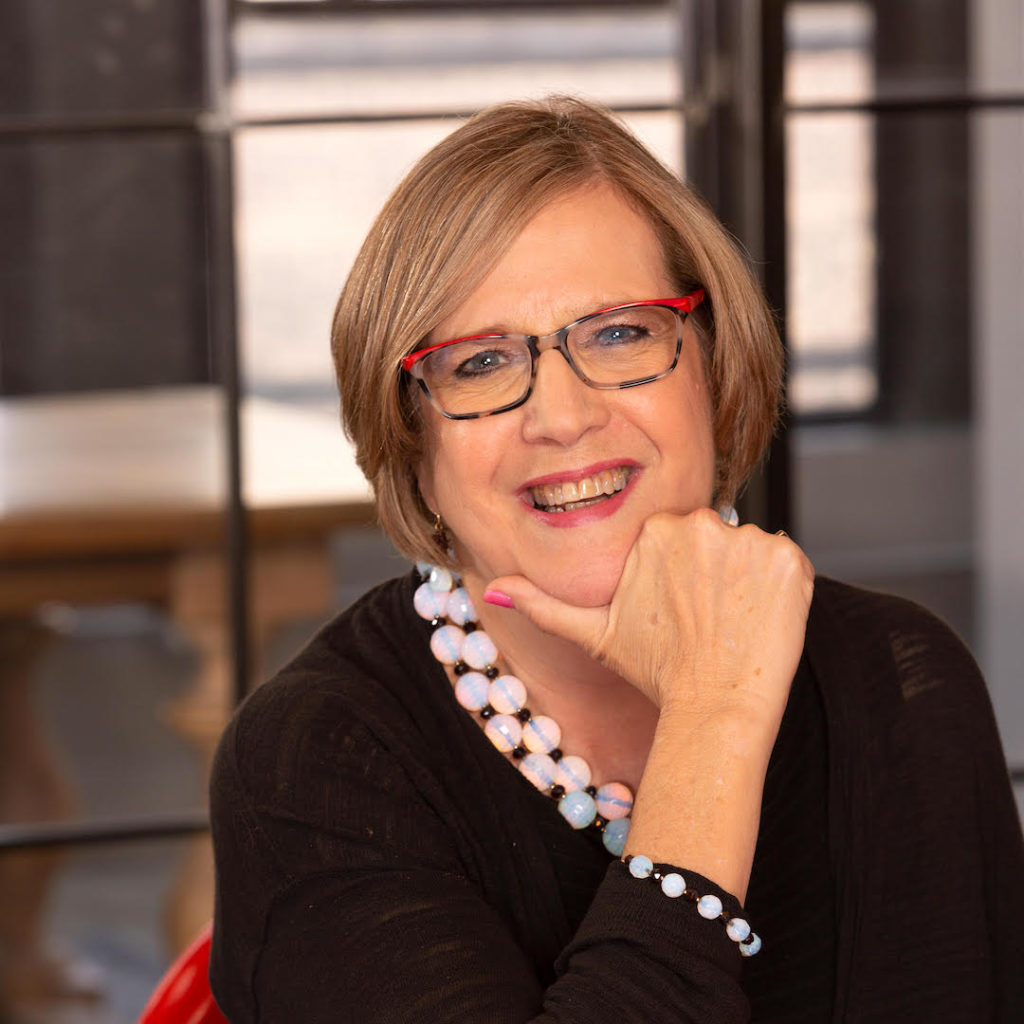
Madelyne Kirch is the founder of Sun & Moon Marketing Communications in New York.  What differentiates her agency is its focus on real estate – everything from corporate, commercial and retail, to residential real estate. Madelyne founded her company almost 30 years ago, in her basement with a $2,500 investment. She’s always focused on real estate, a unique niche and a much-needed one.  Developers are not schooled in marketing and generally need help. And her projects have ranged enormously in scale – sometimes working on a brand new project and sometimes working on repositioning existing space.

Madelyne sees a story in every project. “We are Real Estate Storytellers”  pronounces her website. Finding the story that represents the developer’s idea, the project goals, and the physical building is step one in her process.  Her secret sauce is her insider understanding of real estate. She is a member of industry groups, such as the Women’s Development Collaborative  and an active member of the Urban Land Institute. Her handle on the experience of being a developer, including the difficulties that come with it, help her effectively guide clients towards a meaningful and impactful story about their project.

Sun and Moon marketing has worked with numerous developers, but Madelyne says their biggest and most impactful project was the development of Hudson Square – a 30 year project that turned a previously undesirable and underserved neighborhood into the site of a Google Campus and the Disney headquarters. Madelyne knows the importance of real estate and its power to transform a place; the Hudson Square project did just that. Sun and Moon has been around for decades, and Madelyne’s method has withstood the test of time (and technology), but even in the age of digital media, she emphasizes the importance of incorporating real-life marketing. Marketing tactics change consistently, but Sun and Moon has displayed its ability to adapt to shifts in how marketing is done, helping real estate developers find success in their projects for nearly 30 years.

Read the podcast transcript here

Eve Picker: [00:00:11] Hi there. Thanks for joining me on Rethink Real Estate. For Good. I’m Eve Picker and I’m on a mission to make real estate work for everyone. I love real estate. Real estate makes places good or bad, rich or poor, beautiful or not. In this show, I’m interviewing the disruptors, those creative thinkers and doers that are shrugging off the status quo, in order to build better for everyone. If you haven’t already, check out all of my podcasts at our website RethinkRealEstateForGood.co, or you can find them at your favorite podcast station. You’ll find lots worth listening to, I’m sure.

Eve: [00:01:17] Madelyne is the founder of Sun and Moon Marketing Communications in New York City. What differentiates her agency is its focus on real estate everything from corporate, commercial and retail to residential. Madelyne founded her company almost 30 years ago in a basement with a $2,500 investment. She’s always focused on real estate, a unique niche and a much needed one. Developers are not schooled in marketing and generally need help, and her projects have ranged enormously in scale. Sometimes working on a brand new project and sometimes working on repositioning existing space. Over the years, marketing has changed a lot, from hard copy to experiential marketing. Gone are the days of ads in a newspaper. Today, you need to find your audience in other ways. Listen in to hear how Madelyne thinks marketing real estate works best. If you’d like to join me in my quest to rethink real estate, there are two simple things you can do, share this podcast, and go to rethinkrealestateforgood.co where you can subscribe to be the first to hear about my podcasts, blog posts and other goodies.

Eve: [00:02:47] Hi, Madelyne. It’s really fun to have you on my show today.

Madelyne Kirch: [00:02:50] Hi Eve, how are you? Nice to see you.

Eve: [00:02:52] On your website, you say we are storytellers and those are the words on your company’s homepage. And what does that mean to you? Why do you say that?

Madelyne: [00:03:02] I’ve spent my career trying to encourage my staff to answer two questions about every project or every company that we’re marketing. And it really leads to a strategic perspective on how we’re doing what we’re doing. It’s never about just let’s make it a color or do we like this font? It’s really about what’s our story and how are we going to tell it? Every project has a story. Every company has a story. It may not necessarily be the story that the developer thinks that it is, and often there are components to a story that are hidden at first. But when you think of them more broadly or more strategically, they become, they become the forefront of how you engage who your audience is. We really start from a perspective, from a developer’s perspective, at a 30,000-foot level, they want to maximize return and minimize risk, and when it’s a for profit venture, they want to monetize either land or air. Those are the three components. How you define return is very broad. Not everybody does it for the financial return, although certainly many do it for the financial return both to themselves and to their investors. And so, we believe that when you look at marketing through a strategic lens, it helps you both maximize the return and minimize the risk because you’re asking a lot of questions in order to tell your story, and you need to start at the end before you begin. So, you ask questions like, who is this going to be attractive to? Who’s our audience? What action do we want them to take? Why would they do that? Right, you do a whole SWOT analysis. I see a SWOT analysis as not necessarily a financial component, but also a marketing component because it’s going to tell you how to tell your story and what’s important to it.

Eve: [00:05:08] Backtracking a little bit. Your company, Sun and Moon, is focused on real estate and economic development, which is maybe a little bit unusual for marketing branding. Very specific niche. And so, what led you to focus on real estate?

Madelyne: [00:05:24] My degrees are in journalism, political science and public administration.

Madelyne: [00:05:30] Oh, wow.

Madelyne: [00:05:30] And so, I have this very unusual mix of interests and I’ve sort of fell into real estate through the public administration part of it many years ago. My very first job was I was the marketing director when the Port Authority was building the north terminal of the bus terminal a long time ago. And they decided that they had 60 million people a year going through this bus terminal and a lot of shops that weren’t earning their keep. And so, they thought they should treat it like a shopping center. And I knew nothing about shopping centers or how to market shopping centers, but that got me involved with ICSC. And from there I got involved in all sorts of other facets of real estate. Yeah, I love real estate. I really, just as, its impact on the world I think is different than almost everything else.

Eve: [00:06:24] And it’s permanent for a start. Usually.

Madelyne: [00:06:27] My friends will tell you that I’m always saying, it’s always about the real estate. And when you think about your life, both your personal life and your professional life, there are very few aspects of it that don’t have some real estate piece to them. Where am I going to live? What city do I want to be in? How much space do we need? Is the job too far from the house? I mean, there’s just lots of lots of decisions that are real estate related, and I think that it’s integral to our lives. Also, the impact that real estate is able to have on our world. How do places feel? How do we make places? What do the buildings look like? What is the streetscape like? All of that has this very subtle effect on us that even people in the real estate industry don’t, they don’t necessarily relate to, but they absolutely feel.

Eve: [00:07:20] Yeah, I agree. So, what type of services do you provide to real estate developers or others in the industry?

Madelyne: [00:07:28] We start at the very beginning, really with a strategic approach and we will ask the developers lots of questions about, how do we get to their story. Very often we name a project, everything has an address, but the address isn’t necessarily always the best thing to call it. That’s the first part of telling a story is what is the name. We have a proprietary process that we go through and how we look at every piece of land and come up with a number of lenses through which it can be seen. So, we do a lot of naming, both of neighborhoods as well as of individual properties. We’ve also named companies. We’ve had cakes with our logos on them.

Eve: [00:08:09] That’s great.

Madelyne: [00:08:10] And then of course from the name becomes the whole branding process where you develop the look and the feel and the aesthetic that reinforces the strategy that you’re trying to get across and begins to tell the story. And then you take it through to a whole series of marketing tools early on in the project, the first thing you might see would be signage that alerts the neighborhood to what’s going on. We also do websites and marketing collateral, sales environments, leasing environments, the whole gamut, digital advertising and so on.

Eve: [00:08:45] That’s extensive. So, who are your customers?

Madelyne: [00:08:49] You know, our customers really span the spectrum from very, very large institutional investors through individual entrepreneurs. And it’s one of the things that we think helps us, because real estate is not a single source entity. It’s seen through a variety of lenses by different people. Very often we’ve taken the same building in the hands of different owners and done entirely different marketing campaigns because different people see bricks and mortar differently. The building hasn’t picked itself up and moved across the street. It’s the same building, but it’s conceptualized very differently. So, we have a lot of owners and developers. A lot of the great real estate families of New York are clients of ours, individuals starting out, people in real estate related service businesses across the spectrum.

Eve: [00:09:43] Okay, so what’s the biggest project you’ve worked on and what’s the smallest?

Madelyne: [00:09:49] So, the biggest project we’ve ever worked on. How you define big. Is it different term? Is it by dollars? Is it by square footage? Is it by number of units? But I would say the most impactful project we’ve ever worked on is the development of Hudson Square, the Hudson Square neighborhood in New York, which we worked on for 30 years.

Eve: [00:10:11] Oh, wow.

Madelyne: [00:10:12] With Trinity Real Estate, when we first started working on it, it was known as the Canal Varick Hudson area. A catchy denomination if you ever heard it. And the advantage that we had was Trinity is an institutional owner, as a church, they owned the land for 300 years, they weren’t going anywhere and they were very persistent. And over the course of three decades, we introduced the name. We introduced it to a lot of different types of audiences. We started out with commercial real estate brokers, then we went to retail brokers, tenants. The neighborhood was rezoned which interested residential buyers in it. And now, 30 years later, Google is calling its campus in Lower Manhattan, Google Hudson Square, and Disney has relocated, its office is building a brand new building at four Hudson Square. 30 years ago, no one would have thought that either Google or a company like Disney. 30 years ago, there was no Google, but that a company like Disney would even consider this neighborhood. So, real value was created through this decades long marketing process with a very committed owner who really monetized their land for social good. Right? The Trinity real estate is a church. The proceeds go to church related activities and support church related activities, and they did very, very well. Disney Net leased the land for $650 million.

Eve: [00:11:45] Wow.

Madelyne: [00:11:47] It was a worthwhile investment.

Eve: [00:11:49] Did you expect it to take so long when you started?

Madelyne: [00:11:53] I don’t know if I expected it to take 30 years. And there were certainly incremental victories along the way. Rents rose. Now, market forces were obviously in play as well, but the neighborhood became an accepted neighborhood. It went from being seen as a industrial neighborhood to really a place, and it became an accepted and even desirable and sought after place initially for commercial tenants and then for retail and residential as well. And it takes time. It takes time and it takes vision. One of my favorite quotes is a Japanese proverb that says Vision without action is a daydream. An action without vision is a nightmare.

Eve: [00:12:38] I love that.

Madelyne: [00:12:40] And I give Trinity a lot of credit to have affected that kind of change and created a place. But marketing was a very, very important component of it. Every year there was a line item in the marketing budget.

Eve: [00:12:52] It’s really interesting. So, then tell me about a tiny project that you loved working on.

Madelyne: [00:12:59] Tiny project.

Eve: [00:13:01] That’s, you know, that’s huge. The one you just described.

Madelyne: [00:13:05] Not all of them are tiny. There are smaller projects where a commercial tenant, for instance, might need to sublease space. And the tenant itself is not in the real estate business other than the fact that it has office space. And so, a commercial broker will look to us to help them create the materials that will bring that space to market. And that’s really a business to business, not a business to consumer approach. But it’s very important in those instances, not so much to position the property, but to organize the information to make it easy for someone to get involved.

Eve: [00:13:40] How is marketing real estate shifted over the last few decades? What are some examples of the most seismic shifts you’ve seen?

Madelyne: [00:13:48] The biggest seismic shift, as with other aspects of society, is technology. When I started in the business, really everything was print based and very person to person based, you know, advertising in the New York Times and The Wall Street Journal and the Los Angeles Times, wherever the property happened to be. Now, there’s very, very little of that, obviously, in print. And everything has gone to digital and to search and to SEM and SEO and those kinds of activities where you can be much more targeted, and you can have much more direct data to help you guide your efforts. I would say that the ability to target an audience has changed dramatically. But interestingly, person to person is still very important, and we find that we still do consistently over the years marketing suites, sales and leasing centers where you’re able to actually get someone to the building or in the case of new residential development to a nearby location, and really take them through the process as opposed to just the digital interface where you have to tell them, but you’re not quite sure how much attention they’re paying. So, the personal aspect of it and the ability to be there hasn’t changed at all. That’s still very much a part of the business.

Eve: [00:15:14] And we also learnt that through the pandemic, didn’t we, that we all burned out on Zoom and yes, person to person.

Madelyne: [00:15:21] You know, I mean, who would have thought, I guess it took a pandemic, but for people to lease apartments sight unseen from a broker’s camera iPhone tour was not anything that anybody would have thought of. But digital marketing in all its facets. There are now TikTok channels and YouTube channels, and residential brokerage was much quicker to interact with digital technology and video technology than commercial. Commercial took a little longer. But even now, during the pandemic, commercial space sort of caught up. And now all of the video tours and walk the room and things like that are all very much part of it.

Eve: [00:16:01] But some basic things like signage on the building, posters. They’ve remained, haven’t they?

Madelyne: [00:16:09] For individual properties, signage is still the single largest driver of traffic.

Eve: [00:16:16] Interesting.

Madelyne: [00:16:17] If you have no budget at all, the simplest thing that you can do is a well-placed and strategic sign on the property. If you have no budget at all, do that because ultimately people are going to be at your building and are going to want to be at your building. And the chances are that people already in the neighborhood are your best prospects.

Eve: [00:16:39] Interesting. And what’s like the hottest way to market right now?

Madelyne: [00:16:43] Today, digital marketing and video marketing, A.I. is becoming a very big part. We’ll see where the metaverse lands us in terms of marketing. There is now digital land has become very popular and we’ll see where that takes us. But I think as technology continues to have, and the Prop Tech sector is exploding really in all different facets, both from a property management perspective as well as from a marketing perspective, I’m not sure all of it is going to ultimately be successful. It will have a shakeout period. But in the end, technology is with us and will continue to be.

Eve: [00:17:18] Yeah, and it’s a great thing. So, you know, then there’s the audience too. And do they want different things than they wanted several decades ago? You’re marketing to a different group of people.

Madelyne: [00:17:29] Yes. The younger they are, the more experiential it needs to be. Whether or not we are creating that experience in a virtual format or whether you’re creating that experience in real life, the idea of the experience, which really goes back to the story. What’s our story and how are we going to tell it? And do we need to tell it differently depending upon the medium that we’re using? How are we telling that story in a virtual context and how are we telling that story in real life and how people interact with it? So, the interaction of both of those. Ideally, you want both you want to have a great presence online and you want to have a great presence in person. Not every budget permits you to do that. And even from a corporate perspective, where if you’re marketing a company as opposed to, or a service, as opposed to a property, you still want to have a very robust online presence. But it doesn’t take away, for instance, the need for face-to-face meetings or the need to sit down and break bread with someone. So, both of those things are still important.

Eve: [00:18:38] So, I’m going to shift to the developers. Your customers. Yes. What are some of your pet peeves?

Madelyne: [00:18:46] I guess probably my biggest pet peeve, and I understand this to a certain degree, is that development is very much about managing risk and they manage risk in every phase of the development. And so, they’re not willing to take risks in the marketing. And sometimes what we often say is we have a great concept, and the client will dumb it down, and that’s because of risk. They’re concerned about doing anything that could impart risk to the process. I look at it from the other perspective that sometimes taking that risk actually lowers the risk, and that if you’re willing to be strategically different and you’re willing to be out there in a different way and position yourself differently than the herd that will ultimately lower your risk. But often developers don’t see it that way. And there is a herd mentality and the guy down the street did it this way. And so, we’re going to do it that way too.

Eve: [00:19:43] Well, that’s a shame.

Madelyne: [00:19:44] Yes.

Eve: [00:19:45] And we end up with vanilla everywhere.

Madelyne: [00:19:48] It’s very hard to embrace new concepts. As I said, clients are concerned about doing that. The other thing that I would say probably a pet peeve of mine is that marketing is brought in too late in the process. It’s not really thought about early on, and often it doesn’t get the line item that it needs in order to do it the right way. And so, we’re always value engineering, I guess, the way a lot of real estate is. But if I could change one thing, that might be my preference.

Eve: [00:20:17] On the whole, how would you love to see the real estate industry change?

Madelyne: [00:20:22] That’s a very good question. I would like to see the industry be more holistic, think about its impact on the world. There are certainly lots of people who do do that, and I don’t want to slight them in any way. There are lots of very caring developers who really are concerned about the impact that they have on a neighborhood. And certainly, community groups will do their best now to keep them in check. So, it is a push pull. But I do think that everything from sustainability and climate change to affordable housing to placemaking, there’s just a broad spectrum of ways in which real estate impacts the world. And thinking about the world from a big perspective is something that we really need to continue to do.

Eve: [00:21:09] So one final question. What’s exciting you most right now?

Madelyne: [00:21:13] I would say that the economic development excites me a lot. I love to be able to work with cities to help them think about what they might be able to be and how to position themselves and market themselves to a broader universe. I like that a lot. I think it has the potential to do a lot of good. I think we have to be very careful about gentrification in that process and be sensitive to that process. So, we can’t just go in and have broad swaths of change, but there is also potential for tremendous benefit, and that excites me a lot.

Eve: [00:21:51] So, you know, the other thing I’ve learned about you is that you’re not just a marketing firm outsider. You’re pretty heavily involved in the real estate industry yourself as part of the women’s development initiative and also ULI where I think you’re now going, aren’t you the chair of one of their, what do they call them?

Madelyne: [00:22:12] On July 1st, I’m going to become the chair of the Blue Flight of the Urban Revitalization Council.

Eve: [00:22:17] So you’re really heavily involved in real estate.

Madelyne: [00:22:20] I am. I think that understanding the world from the developer’s perspective and from our clients’ perspective really informs our work and that if we don’t understand the forces that are up against them, that we really can’t do a good job in servicing them and providing them with the right story and what they need.

Eve: [00:22:43] Well, thank you, Madelyne. It’s been a total pleasure.

Madelyne: [00:22:45] Thank you, Eve. It’s been great being with you.

Eve: [00:22:51] You can find out more about this episode or others you might have missed on the show notes page at our website RethinkRealEstateForGood.co. There’s lots to listen to there. A special thanks to David Allardice for his excellent editing of this podcast and original music, and thanks to you for spending your time with me today. We’ll talk again soon, but for now, this is Eve Picker signing off to go make some change.

Image courtesy of Madelyne Kirch

Slaying Gentrification.

June 29, 2022

David Kemper wanted to find a way to safeguard established renters against gentrification. His goal was to build a real-estate investment model that both stabilized existing rents and gave a voice to that community. Too many have suffered from racism and disinvestment in their neighborhoods. Across the country, communities are being torn apart because residents are being priced out of the neighborhoods they have called home for decades. Just as resources and new opportunities come to a community, its longtime inhabitants often get pushed out.

So David and his team are working towards an alternative: cities with inclusive, mixed-income neighborhoods. These diverse and dynamic neighborhoods will deliver better economic, social, and health outcomes, especially for lower-income residents. The model they have developed, MINT (or Mixed-Income Neighborhood Trust), is a sophisticated and replicable ownership model. Each MINT develops, owns, and operates a rental housing and retail portfolio. MINTs harness the money coming into communities to keep rent affordable for existing residents. Trust Neighborhoods, David’s non-profit, works with neighborhood-focused organizations to facilitate the formation of each MINT with the goal of a self-sustaining organization, run by the neighborhoods themselves. This gives neighborhoods equal footing with developers contributing to the gentrification taking place.

David and his co-founders started Trust Neighborhoods in 2019 and have since launched three MINT pilots in Kansas City, Missouri and in Tulsa, Oklahoma and Fresno, California. They have already shown to be beneficial. But they are just getting started. Neighborhood Trust is growing, and they hope to work with neighborhoods across the country, forming MINTs in each city and protecting community members who have too often been overlooked. 

Read the podcast transcript here

Eve Picker: [00:00:08] Hi there. Thanks for joining me on Rethink Real Estate. For Good. I’m Eve Picker and I’m on a mission to make real estate work for everyone. I love real estate. Real estate makes places good or bad, rich or poor, beautiful or not. In this show, I’m interviewing the disruptors, those creative thinkers and doers that are shrugging off the status quo, in order to build better for everyone. If you haven’t already, check out all of my podcasts at our website RethinkRealEstateForGood.co, or you can find them at your favorite podcast station. You’ll find lots worth listening to, I’m sure.

Eve: [00:01:00] David Kemper wanted to find a way to safeguard established renters against gentrification. His goal was to build a real estate investment model that both stabilized existing rents and gave a voice to that community. The model he landed on, MINT, or mixed income Neighborhood Trust, is a sophisticated and replicable ownership model. Each MINT develops, owns and operates a rental housing and retail portfolio. Trust Neighborhoods, David’s non-profit, works with neighborhood focused organizations to facilitate the formation of each MINT, with the goal of creating a self-sustaining organization run by the neighborhoods themselves. Trust Neighborhoods is still new, but David has said that they hope to expand their reach and work with neighborhoods around the country. Listen in to learn more.

Eve: [00:02:01] If you’d like to join me in my quest to rethink real estate, there are two simple things you can do, share this podcast and go torethinkrealestateforgood.co, where you can subscribe to be the first to hear about my podcasts, blog posts and other goodies.

Eve: [00:02:30] Hello, David. Thanks very much for joining me today.

David Kemper: [00:02:33] Thanks very much for having me on.

Eve: [00:02:35] You launched something called Trust Neighborhoods in 2019. And I wanted to ask you first, what problem are you trying to solve?

David: [00:02:45] Yeah. I’m one part of the three of us who are leadership at Trust Neighborhoods is Kavya Shankar and Jason Dehaemers, and the problem we’re trying to solve is that you have neighborhoods which have experienced disinvestment over decades, often from racist reasons, that now are finally having investment come into them and becoming a higher opportunity, both by public efforts, by private efforts and a lot of efforts on the part of current residents. But just as those neighborhoods are becoming higher opportunity, the very residents which are most deserving of participating in that and have often contributed so much to creating that experience a second injustice of being displaced from that neighborhood, not only denying them that experience of living in a higher opportunity neighborhood, but often even creating harm beyond that prevention of opportunity and around that problem is why we started working with neighborhoods through our nonprofit Trust Neighborhoods to help set up these mixed income neighborhood trusts.

Eve: [00:03:41] When did this need become clear to you? What’s the journey you took?

David: [00:03:46] We followed different paths in the leadership team. My particular path was through working at New York City government in affordable housing, and that was first in a department there called Housing Preservation Development, where I got to do a lot of refinancing of LI-tech which low-income housing tax credit deals and HUD multifamily deals, which is really the current meat and potatoes of American affordable housing finance. And you both saw how those worked at volume and the non-profits and neighborhood-based organizations that use them and also where it wasn’t working, which is especially around what real pinpoint anti-displacement looked like.

David: [00:04:22] The city of New York at the time was then interested with the arrival of de Blasio and really pinpointing neighborhoods where likely gentrification would create displacement. And a lot of the effort was around creating inclusionary zoning to prevent that displacement. And I had the good fortune to be part of the team who was working on that, and then a new team that was set up in capital planning in the city planning department and trying to work with neighborhoods facing that pressure to proactively prevent displacement. But there’s kind of this rhetoric in New York, which is wonderful, but, you know, New York is everywhere. And there’s this idea that they would build a model and it would work for the whole country. And I grew up in Kansas City and have stayed deeply appreciative and tuned into a lot of cities like it. And you see this phenomenon playing out across the country, including Pittsburgh, certainly very familiar with it.

Eve: [00:05:12] Oh, yeah.

David: [00:05:13] And the mechanism is not going to be that you’re going to prevent displacement by incentivizing what’s going to happen when a five-story building is torn down for a ten-story building. A lot of the displacement and change in ownership and lack of control is happening long before that. So, the same principles are playing out, but you really need to focus on building a different kind of set of tools. And fortunately, both found others who cared about, and we had the time to work on this, but most of all spent time with a lot of neighborhood based organizations in neighborhoods that had either undergone gentrification or facing it. And really sat down with them and said, what are your pain points? How are you spending your days? What are you looking at for tools? And almost consistently you had this need identified of saying, if we could just have our own ownership group, that could really do cross-subsidy in our neighborhood in a way that we could raise outside capital akin to the developers we’re competing against that can move at the speed of the market. It’s not applying for a grant for a house that gets receipt that that grant was received months after the house was sold and really do it at the scale at which we were experiencing displacement. And bit by bit, we worked with some neighborhood partners on honing that model, launching pilots, and now we’re working to get out across the country.

Eve: [00:06:31] And that model, you call it MINT, right?

David: [00:06:35] We call it MINT, a mixed income neighborhood trust.

Eve: [00:06:38] So tell me precisely how it works.

David: [00:06:40] In some ways, it’s very simple. Some ways a little more complex. We help the neighborhood set up this mixed income neighborhood trust. It is an LLC which has all of its voting shares controlled by something called a perpetual purpose trust that is somewhat distinctive from some uses of trust models where there’s not national trust, there’s a legal trust which is assigned to a purpose agreement which controls all the votes of this new entity. That trust then has a trustee group which has the existing neighbor based organization on there and resident representation and adheres to a purpose agreement which we work with residents, the neighborhood based organization, on writing when we’re setting this up, which really identifies what anti displacement means, what protect me belonging means what long term financial sustainability for this new institution looks like and then really build in also details and nuances, that are particular for each neighborhood. That serves as a long term constitution that then this operating company of the Mixed Income Neighborhood Trust has to adhere to as it buys, develops, and then long term owns a mixed income portfolio, which today we’re entirely focused on housing in a way that prevents the displacement of residents in that neighborhood.

Eve: [00:07:57] So the trust is actually a developer.

David: [00:08:00] In some ways. It’s a vehicle to allow a neighborhood to serve in a developer function for its neighborhood. And the way we’ve set up is that each mixed income neighborhood trust will have a general management function, which is essentially a budget line that goes back to the neighborhood-based organization. So you aren’t building duplicative new institutions. You’re really building the capacity of groups that have been on the ground, have legitimacy, have been doing the hard work, and too often are then excluded from actually having that level of control and autonomy within their neighborhood as it experiences this kind of pressure. So really important for us is not just hitting numbers on preservation of affordable units, but really also changing power structures in these neighborhoods where especially women and people of color have been precluded for so long.

Eve: [00:08:50] I’m trying to wrap my head around this. It sounds pretty powerful. So if a new developer comes to the neighborhood and purchases a property outright, what control does this Trust or MINT have?

David: [00:09:04] It is just in parallel with that. There’s no outright authority it has. It’s more putting the neighborhood on more equal footing with a lot of more conventional developers that may be participating in a neighborhood that is facing gentrification.

Eve: [00:09:17] I see, okay. And so, how is a MINT portfolio designed?

David: [00:09:23] So one of the one of the key things we begin with is really doing an analysis with the neighborhood-based organization of what does protecting displacement need, what is the real need in the neighborhood. An example of this is one of the first neighborhoods we worked with was in Kansas City, Missouri, in the northeast section of neighborhoods there, and the neighborhoods called Lykins. And from a parcel view of housing in that neighborhood, they have 1700 units of housing and 900 of those are rental housing with basically zero regulated within that. They are next to a neighborhood that has had some of the fastest rising rents in the city. They’re beginning to experience that same pressure coming on the side of them. So, the beginning was talking with residents saying, look, you have 900 households that are renting in this neighborhood at this average rate. What does it look like to make sure that those households, some of those will move into homeownership? Some of those will not be necessarily having their income rise as fast as the market is rising. What does it mean to protect them from displacement and then working with them to identify how can we maximize the preservation of those units? What does cross-subsidy look like from likely rising rents and unrestricted units we put under that same ownership group? So it self-finances affordability, which works for a subset of neighborhoods and then saying also what is feasible?

David: [00:10:40] In terms of what are rehab partners or construction partners you can work with and what kind of volume can they work with? What is the churn happening in a market? Is this a neighborhood where you’re seeing hundreds of units bought and sold every month or is this something where you’re seeing a dozen bought and sold every month and then putting together a capital stack that makes that feasible. We really do that whole hands-on diligence process with them and service a lot of the short term capacity which a lot of neighborhood based organizations just don’t have to set up that kind of vehicle. But then once it’s set up with that governance, with those partnerships in place for renovation, for property management, and that scope of of what they want to be building in as their own ownership, as much as possible we then build their own autonomy to be running that and attuned at the neighborhood level as they build that ownership and manage it in an accountable way long term.

Eve: [00:11:27] So tell me, how long does it take to go through this process, from thinking about it to actually forming a group that’s governing itself?

David: [00:11:36] Yeah, I mean, we’re kind of figuring it out. We did the two pilots. We are in the midst of a third one right now. We’re in the midst of a fourth one right now. So, we’re learning exactly what the long term process looks like. It’s probably about nine months to a year in terms of our experience, but it may be that right now, I think one of the bigger bottlenecks has been capital appetite, especially for more philanthropic sources. And we’re building it so that long term can take in non-philanthropic sources that are okay with low returns, which certainly can move faster. We don’t know what looks like if that bottleneck is not there for how fast it happens.

Eve: [00:12:12] Interesting. So, the pilots, where are your pilots and where’s the third one? Kansas City and.

David: [00:12:17] Our pilots are in Tulsa, Oklahoma. Certainly, a really meaningful place to get to work, especially in 2021 with the memorial of the race massacre there. And then in Kansas City, which is also where we’re based and very meaningful to work with a neighborhood in our own home in a way that is disciplining and really holds us to doing quality work. The third, which is currently in formation, is in Fresno, in central Fresno with some really great neighborhoods there as the downtown is experiencing growth and preserving a lot of housing stock as well as hopefully providing alternative to owners that have been in the neighborhood they would like to have purchased out.

Eve: [00:12:58] So how far are these experiments in? Like the the MINTs are formed? Have they purchased properties? What are they doing?

David: [00:13:08] Yeah. As noted, Trust Neighborhoods came together in 2019. We really worked with the neighborhoods and the pilots and on the whole scoping and 2020 and both those pilots launched in early 2021. So, they’re just over a year old right now. But both have really seen promising signs so far. They both control well over a dozen units of housing. I think the one can see is almost up to two dozen now.

Eve: [00:13:30] Wow.

David: [00:13:30] And out of that is some real glimmers of hope, both in terms of just operational efficacy, seeing the governance really have resonance in that governance. But most importantly, some of those of early glimmers of impact, like the Mixed Income Neighborhood Trust in Tulsa, which was set up with Growing Together, which is focused in the Kendall-Whittier neighborhood, is the Kendall-Whittier Neighborhood Trust and I was actually just out there last week as they did a celebratory open house for another one of the renovated units that’s open, and had both residents and contractors and funders and everyone all together having paletas really feeling the promise of the work. But alongside things like that were it’s a deep renovation project, they’ve had ones where they’ve just bought housing that was for sale in the neighborhood and been an alternative to a lot of what are kind of unsavory buyers and sellers in that neighborhood, and there was one that was selling and a they bought it and the seller told them, you know, every other buyer told us they were going to clear out the residents in these units in order to renovate them and re rent them at a higher rate.

David: [00:14:37] And instead the Kendall-Whittier Neighborhood Trust was able to own them and have all the residents stay in place along with the budget, to actually improve the quality of those units of housing discovered families that are in the school, which is a place based school that would have told you’re not able to come back to your school with your kids on a couple of months’ notice of a new school year. So, it was a real change to instead get a knock on the door from the Kendall-Whittier Neighborhood Trust saying, hey, look, you’re not only in a safe place versus this threat which is facing you, but we’re also here to make sure that you’re not displaced as this neighborhood continues to become a better place.

Eve: [00:15:17] That’s very powerful. So how do you plan to scale? I mean, how many neighborhoods will be successful?

David: [00:15:24] Yeah, that’s a lot of a lot of our focus is yeah. From the beginning which which may be distinctive in some ways is that we really have had an eye toward saying we are not content if this happens for a dozen units in one neighborhood, the scale of the need in just one neighbor is larger, that the scale of need across the country is hundreds of neighborhoods which are very rapidly changing. And we at this point get a lot of cold outreach from neighborhoods across the country that say, we’re interested using this model, we’ve heard about you, can we work together? Our biggest limit on that side is our own capacity of a team as we grow that team and grow our own operational ability.

David: [00:15:59] But we’re really focused on building our own team to be this short-term service, which is a big piece, is really being able to step in and work with neighborhoods across the country on setting it up. A big part is building long term capital supplies. We’ve had a generous supporter who has come in for funding the design of a fund that will be the national with ready capital, which we hope will solve that bottleneck issue and help build that overall market, which can bring in a lot of capital which is not usually participated in both community governance models and models focused on anti-displacement and changing power structures in this way. And then a big piece is just learning from each neighborhood trust and really powerfully having them start to build their own peer group in a way that is self-reinforcing, builds us as a better support partner, but also can build on their own experiences, lessons learned interpretations from those governance bodies of what anti displacement really looks like and very hard decision making moments. And then also step in as they discover things which are even more valuable to each neighborhood trust. And already the two pilots have met and compared notes. And we think it will only get stronger as you have more and more mixed income neighborhood trusts in the country working these neighborhoods for the residents.

Eve: [00:17:14] So that was one of the questions I have. Like, community engagement is really hard. Do you experience friction when you set up one of these? Like what does it take to get everyone on board?

David: [00:17:29] Community engagement is hard, but what we’ve been doing with the Mixed Income Neighborhood Trust is so different from a lot of what more conventional community engagement is. I think the place to pinpoint there is, we are helping the neighborhood-based organization set up these entities that have residents in long term governance. And that is very different from a typical project where there is a community engagement period, which then ends and residents never have another maybe not even another voice, much less any actual real power in that institution or project. And residents are smart, and they get it. And if they think they have a six-month engagement process to try to convey all the complexity of experience in a neighborhood and any possible thing in this, that will be a very hard process. And instead, with this both, I think we’ve worked with really great partners on designing community engagement, which both make for very productive sessions, where people come into it already with a sense of having had time to do one on ones with everyone and talk through their experience and have that as a, as a jumping off point. But then the most important thing is they then step into the actual governance long term. So, there’s a real ability to keep on iterating and having a voice in the model and in this new institution in their neighborhood. That’s actually something I think we thought was going to be a lot harder and has been really energizing to spend time with residents who just get this and are excited to have this kind of institution as a vehicle for creating this kind of change in their neighborhood.

Eve: [00:18:56] So how big is your team and what sort of skills are represented at the moment?

David: [00:19:01] Not very big. Five of us full time right now. We’re doing some hires right now.

Eve: [00:19:05] Small but mighty, right?

David: [00:19:07] Yeah. Part of the building up the capacity to actually take on the scale of problem and our skill set is mixed. Kavya had been out in the White House and had done organizing work as well as some amount of investment side work. And then Jason is utterly brilliant all things finance, governance and had really worked more in the investment banking, private equity world and then some corporate governance and just delights in building out an actual new financial structure which is solving for things that are more complex than just making money. And then my background was more in the affordable housing finance community development side. We’ve got two wonderful more junior members of the team, Natalie and Ben, who have both actually come through Venture for America, which has been a great source of team members and a delight to work with.

Eve: [00:19:55] So you’ve been working on this a little while. I’m sure you’re thinking about improvements. How could it be improved and why? It can’t be perfect, right?

David: [00:20:04] A big thing is the pilots in place as they grow. And I think then building out their own governance and being improved in that way.

Eve: [00:20:13] This is a pretty entrepreneurial idea. So, entrepreneurs never sit still for very long.

David: [00:20:18] Yeah, I think a big part of the improvement also is building that peer group in terms of having the neighborhood trusts speak to each other more. Building out just a lot of the capital familiarity. Right. There’s a risky moment at the beginning of saying, can you put money into a new vehicle that is creating this kind of impact, and will that really work? And as we start to see them work, that makes it so it’s a lot easier for the next one to say, yes, I want to see that happen too. I think as each neighborhood-based organization kind of learns what what means to be taking this on and building into their existing institution. And as you varied organizations right now, they’re, one is a neighbor association, one is one of the purpose-built communities, one is a CDC. So, as you start to have a peer group of different kinds of neighborhood focused organizations that are using this, that will make it even better.

Eve: [00:21:06] And do you think this is really unique? Is there anyone else doing similar work?

David: [00:21:11] There are aspects that are unique in their aspects that are very familiar. A lot of the land trust community and world, I think, is using community land trust towards similar spirit and functions. But I think unique here is the ability to use the outside capital, the outright control of the land versus separation, the focus on, there’s a lot of renters being displaced, There’s a big focus of this, versus a lot of CLTs tend to have more home ownership focus. We early on have met with a lot of peers across the country that we sort of think are doing relevant, familiar work. And a big part of ours is not having too much pride of authorship of really learning for others. A part of that early on is we were calling this a mixed income land trust and we spent time with the Kensington Corridor Trusts out in Philadelphia. And they said, hey, look, you know, we’re really trying to establish more the terminology of a neighborhood trust here. And we said, sure, great, we don’t we don’t have any pride of term here.

David: [00:22:04] We have a really great to actually be part of helping build on what you’re doing. So, we decided to call it a mixed income neighborhood trust. And so a noted MINT kind of sounded nice too. So, that was part of it. We’ve also liked a lot of the shared equity worlds and built out. The Kresge Foundation include us in the community of practice of several groups working on shared equity models, which certainly plays into a lot of what you in Small Change have also been building into and that’s been really great to be part of. And Elwood Hopkins, who’s led that has just been a great champion and convener. And then I think also on, if you see models and neighborhoods facing gentrification that have relatively succeeded in doing cross-subsidy to the benefit of their neighborhoods. Some of those have come out of almost less conventional models than necessarily a community developing corporation. Where if you look at what the Hasadim community has done in South Williamsburg, in New York, it’s experienced massive gentrification pressure, which, because of ownership and cross-subsidy, has in many ways actually made it more affordable for that community through their cross-subsidy and ownership of land. Likewise, you see some of that with some of the Chinatown family societies in New York, and you see a couple of clusters of that in different places in the world. And there are some community development corporations, I think, use their assets. We right now are working with the East Boston Development Corporation in Boston, which has been both an amazing partner to work with and also the way in which they’ve built out the organization ownership and building their own self-financing mechanisms is really in line with what we’d like to see this model enable for more neighborhoods. So, it’s been amazing to get to work with them as a partner in that.

Eve: [00:23:39] So, how many more neighborhoods do you think will have mint in one year or three years from now?

David: [00:23:46] One year. A few, but three years. We’d like to see actually getting up to really doing this at scale.

Eve: [00:23:55] And what does success look like to you?

David: [00:23:57] Success looks like living in a country where we have cities that have mixed income neighborhoods led by especially residents that had been excluded and discriminated against, especially black and brown leadership of institutions that are creating high opportunity neighborhoods that work for everyone. And not only does it hopefully make it so that those neighborhoods become very high opportunity neighborhoods in a way that works for a mix of incomes and identities there, particularly each neighborhood, but also it stops this phenomenon in America where we’ll see investment go into one geography. And there’s almost this assumption that you’ll end up not serving a large chunk of residents who will get displaced somewhere else. And then almost, then you’ll continue to see a cycle where you’re chasing poverty to different geographies, just as all these efforts to try to improve a place come to fruition. Instead, we stop that. I think with half a dozen MINTs in each American city, you could actually create a thing where at the core of each American city are these mixed income neighborhoods which are robust, wonderful, I think could be some of the best neighborhoods in the country. And you also have this window of opportunity, the United States, where we buy deep tragedy of racism and suburban investment. We’ve ended up with the cores of our cities being massively underinvested and undervalued. But, we in many ways are the anomaly in the world on that. And we’re seeing our appetite shift where the cores of our cities are becoming the most valuable places, which is much more akin to everywhere else in the world. It would be a tragedy, I think, to then see us also just have it where if you don’t have the money, you can’t afford to live anywhere near the middle of the city.

Eve: [00:25:39] I think that shift is already happening.

David: [00:25:40] Yeah, we have we have a window of opportunity, I think, for a crucial subset of neighborhoods to at least secure some place near the center of the city that especially carries such deep meaning and current social capital institutions in a way that could create a very different kind of city.

Eve: [00:25:58] I’ve been living in a downtown myself for quite a few years now and have gone from being one of the first residents to one of many who look very affluent to me now. And it’s disturbing. I really feel like the vitality of mixed people using a place is really being wiped out. So, I agree with your argument here. So, I have one more question for you, and that is what keeps you up at night?

David: [00:26:29] Oh, lots of things. At the very beginning, I really did not sleep that well. There’s a lot more stress and things, I think. As we built out a really quality team that’s helped with the sleep. Journaling helps the sleep. You know, you write down your worries.

Eve: [00:26:46] I’m so glad it’s not me alone.

David: [00:26:48] Then you don’t have them bouncing around your head in the middle of the night. I mean, you always you always kind of swing back and forth too, you have this thing where you go, there are moments where you go, oh yeah, this is doing great and we’re going to run with it. There are moments that you go, oh, is something going to hit us that we aren’t expecting and everything’s going to fall apart? And I feel fortunate that more and more of the days are the former.

Eve: [00:27:09] Yes, yeah. Or there are moments where it’s like, why am I doing this? It’s a very hard road.

David: [00:27:16] We’re up against a daunting scale of historical injustice, of momentums, of other forces in the world. So it’s understandable. It’s hard, but there’s also hope.

Eve: [00:27:27] I think you’re also up against greed, unfortunately. So, the gentrification of neighborhoods is going to continue. The question is, is how many can you catch and save? Right.

David: [00:27:39] Yeah. I think the hardest thing for us right now has been when we have neighborhoods that say we really want to work with you, now is the moment. And we’ve just had to say we just don’t have the capacity to work with you right now. And that’s been really hard.

Eve: [00:27:54] That’s heartbreaking.

David: [00:27:55] I remember one very early on going, well, you know, whether or not you work with us, we’re going to be here fighting displacement, our neighborhood. So, it’s not so much are we going to work together and find displacement more? They’re going to be there doing it regardless. It’s just really hard to not have the ability at this point to say yes to everyone and get these in place with the speed which with these words are changing.

Eve: [00:28:20] Is there any like white label option that you can create for do-it-yourselfers?

David: [00:28:26] We’ve occasionally sent along pieces. Unfortunately, it’s just, I think a big reason why we built the team is that a lot of people know all the principles, it’s just, don’t have the capacity in a team that actually will step in and run with it. So, that was, we have no pride of that. We’re happy if someone else wants to do it. Just a big part is building the team to be able to actually say yes to more places and run with it.

Eve: [00:28:52] Well, you’ve chewed off a huge problem, and I really hope you’re super successful and I can’t wait to see where you are in three years. Maybe we’ll have one in Pittsburgh or 2 MINTs.

David: [00:29:05] Yeah, we’d love that.

Eve: [00:29:07] That would be fantastic. Yes. Let me know if you need any introductions.

David: [00:29:12] Yeah, well, if they’re are neighborhood based organizations, this resonates with their priorities and what the neighborhoods are, then. .

Eve: [00:29:18] There’s tons. I feel like someone once told me that community development work started in Pittsburgh. It’s got an enormous number of neighborhood-based organizations. I helped found one myself, a CDC. So, every neighborhood has one. It’s a pretty active place that way.

David: [00:29:37] Well, we’ll follow up. Definitely.

Eve: [00:29:38] Yes, definitely. But thank you very much and congratulations and good luck.

David: [00:29:44] Eve thank you.

Eve: [00:30:01] You can find out more about this episode or others you might have missed on the show notes page at our website RethinkRealEstateForGood.co. There’s lots to listen to there. A special thanks to David Allardice for his excellent editing of this podcast and original music, and thanks to you for spending your time with me today. We’ll talk again soon, but for now, this is Eve Picker signing off to go make some change.

Image courtesy of David Kemper

Before IMPACT was a thing.

June 22, 2022

In college, Paul Rabinovitch planted almost a million trees. Seeing the clear-cut land in which he was working sparked a desire to center his work around creating change. His career path displays a multitude of avenues towards making an impact – from brownfields redevelopment, to building sanctuaries and parks with the Nature Conservancy, to working as an impact investor in real estate.

Now Paul serves as the Head of Real Estate Investments at New Island Capital, a family office that centers its work around impact. New Island Capital was one of the first investment firms with a focus on impact.Now impact investing has come into the mainstream with more firms and family offices looking to bring positive change with their investments every day. New Island brands itself as being 100% for profit and 100% mission driven. The office prioritizes long term investments that bring meaningful social and environmental change at the same time as maintaining profit and competitive returns. They invest in various sectors including clean technology, health care, renewable energy and of course, real estate. Real estate investments are made in markets where the residents are supportive of sustainable assets, as well as those in need of social equity and workforce housing.

Paul sees real estate as an opportunity to benefit people’s lives in a tangible way. There is longevity in real estate – buildings impact residents’ lives for decades, even centuries – which emphasizes the importance of adaptable, restorative, and regenerative development. In his varied work with both conservation and real estate, Paul has witnessed the organic growth of places. That is his goal – to build change that benefits people and the planet.

Read the podcast transcript here

Eve Picker: [00:00:08] Hi there. Thanks for joining me on Rethink Real Estate. For Good. I’m Eve Picker and I’m on a mission to make real estate work for everyone. I love real estate. Real estate makes places good or bad, rich or poor, beautiful or not. In this show, I’m interviewing the disruptors, those creative thinkers and doers that are shrugging off the status quo, in order to build better for everyone. If you haven’t already, check out all of my podcasts at our website RethinkRealEstateForGood.co, or you can find them at your favorite podcast station. You’ll find lots worth listening to, I’m sure.

Eve: [00:00:57] Early in his career, Paul Rabinovitch worked as a tree planter in the reforestation industry, personally planting over 800,000 trees in Canada, where he grew up. That set the stage for the career he pursued. First as the executive director at the Nature Conservancy in Arlington and then as founder of TerraCycle Investments, a socially conscious real estate firm. His mother is a real estate developer, and Paul followed her lead, weaving in the social responsibility that so interests him to his real estate career. Now, Paul heads up real estate investment at New Island Capital, one of the largest family offices in the country, and one of the first to focus on impact investment before such a thing really existed. New Island invests in commercial scale, growing companies providing private credit, private equity and project finance. They also invest in farms, forests and of course, real estate. At New Island, Paul gets to invest in real estate with social impact at scale. You’ll want to hear more.

Eve: [00:02:15] If you’d like to join me in my quest to rethink real estate, there are two simple things you can do: share this podcast and go to rethinkrealestateforgood.co, where you can subscribe to be the first to hear about my podcasts, blog posts and other goodies.

Eve: [00:02:37] Hi, Paul. It’s really great to have you on my show today.

Paul Rabinovitch: [00:02:40] It’s great to be here. Thanks for inviting me, Eve.

Eve: [00:02:42] So I wanted to ask you about New Island Capital, where you work, and the company defines itself as both 100% for profit and 100% mission driven. And I wanted to just ask what that means.

Paul: [00:02:57] Sure. That’s a great question. New Island Capital was formed a couple of decades ago almost, and it was formed on the premise that we can invest towards triple bottom line returns where profits do not exclude creating environmental or social benefits. And really, the company was formed around that thesis that we can do both and there are meaningful opportunities for us to invest in things that make a profit that would be equal to what you would make in a conventional or traditional type of investment, but also drive really great social results. And that’s what our company is all about. We are 100% what’s called now impact investors. Back then it was double or triple bottom line investing. And we invest in real estate, and in businesses, companies as well as being active lenders across a lot of different spaces, ranging from health care to real estate to health and wellness and renewable energy, clean tech, a lot of different sectors.

Eve: [00:04:11] So you mentioned returns. And I’m wondering like, do you do you get as good returns as regular non-impact investment? Is that really possible?

Paul: [00:04:23] Yes, it is Eve. And I’d say there’s one important distinction to keep in mind, which is that we are long term investors, and sometimes we call that being patient capital. And so, our usual investment horizon is ten or fifteen years, and we do that intentionally as long term investors. One reason is because we invest on behalf of the family office. So, we’re investing for multiple generations, and we can think longer term. That’s one reason. The other reason is that we invest a lot of capital upfront in some of those social benefits. And an example I would use would be solar panels. So, we would invest in putting solar panels on the building right up front. And we know it would take seven or eight years before we’re at a break even on that investment. But then every year after that, it’s accretive to our bottom line. So, when we compare ourselves to other investors, we compare it on a ten- or fifteen-year horizon. And then we’re very competitive because by then, by the tenth or twelfth or fifteenth year, some of those upfront investments are beginning to bear fruit, so to speak. And we are outperforming what people are doing on the shorter-term horizons that that are more in vogue these days.

Eve: [00:05:41] Interesting. So, I’m going to go back to New Island Capital. Why does it exist?

Paul: [00:05:48] New Island Capital really exists because it was the experience of our family office that started us who was really interested in investing in alignment with their core values and their beliefs. And they had been shown a number of ESG screened kind of investment opportunities to invest their wealth in alignment with their values. And really their drive was not so much how do I do less bad in the world? Their drive was, how do I do more good in the world? And there weren’t at that time, this is going back a couple of decades, a whole lot of opportunities to invest with that kind of an idea. And so, our firm was born out of that idea. Now there’s a lot more impact investing firms that are out in the marketplace. It’s been really a pretty rapid rise of impact investing as a practice, which I think is really encouraging and exciting.

Eve: [00:06:47] So what’s your role at New Island Capital?

Paul: [00:06:51] So my role here in New Capital is I’m the Head of Real Estate, and responsible for all real estate investments for the company, as well as part of the senior leadership team in the investment committee and overseeing all the investments across all the various specialties that we have here.

Eve: [00:07:11] And I’d love to know, first of all, how you find triple bottom line impact real estate investment opportunities. And a second part to that is what percentage of the opportunities do you look out really kind of meet your goals, and what are some of the examples of the types of investments that New Island has made?

Paul: [00:07:32] Well, let’s talk about how do we source opportunities first, and you know, our approach to sourcing opportunities, projects where we want to deploy capital into is sort of the reverse of many other capital allocators that are in the market. And what I mean by that is that many other capital allocators, family offices or pension funds or what have you go through a sort of a research driven approach to say, well, where is the best market in the United States or in Europe or wherever they’re working? And where do we want to invest? They may pick an area like, let’s say, Pittsburgh, just out of the blue or some other wonderful city like that. And then they go look for a good sponsor that is an expert in developing in Pittsburgh or whatever geography they’re working in. We’re the reverse because we are 100% impact oriented. The bottom-line returns, the impact outcome is just as important as the financial outcome, and not all sponsors are the same. They’re not all equal because we need one, a partner who we believe, and trust is in alignment with our goals. So, our process is go find the best impact developers in the country and then underwrite them and the market that they work in. So, we come at it backwards. We go sponsor first, who are the best sponsors, what are their markets? And if those two circles intersect and we like the developer sponsor and we like the market, then we have a place that we can really have a conversation around.

Eve: [00:09:08] So I’m wondering if that’s the way you look at it. Are the markets that you generally end up in not the hottest markets in the country?

Paul: [00:09:16] It’s an interesting question. Not necessarily. No, I wouldn’t say that, Eve. I would say that the markets that we are ending up in right now are some of the fastest growing, most progressive markets in the country. And the reason I say that is one of the themes that we work in is sustainability and building net zero energy, operating buildings, low carbon buildings, buildings that perform at the highest levels of resource efficiency, water and energy efficiency and all those sorts of things. And so, if you’re going to build a building like that, you need to have a market that accepts it and might be willing to pay a little bit more in rent or might be really attracted to a building product that’s like that. So, we tend to be in markets where there’s a more progressive market tenant base that would be attracted to those kind of assets. So, we’re in markets like Seattle, Boulder, Colorado, and we’re not in markets that are less interested in those kinds of products. So, sustainability is a good example. And then, we also do a lot of work in social equity and workforce housing. And so, we’re also in some markets where workforce housing is in short supply and so, and high demand. And so, we work in those areas as well and some of those markets are really terrific as well.

Eve: [00:10:44] Oh, that’s interesting. And so, what are some examples of the types of investments that New Island has made?

Paul: [00:10:51] As I was saying earlier, we’re really interested in accelerating and supporting a transition to a low carbon economy. And so, we work in investing in buildings that have the lowest carbon footprint that you could design towards. So, there’s a couple of projects that we have that are CLT Cross Laminated Timber construction. That construction type is about 50% lower embodied carbon than a steel and concrete building, for example. So, those, we think that’s sort of the future of where we want to, if we want to try to become a low carbon and we want to try to combat global climate change, that’s the kind of buildings that we need to be building. And so, we invest in buildings like that. We also invest in buildings that have high solar or renewable energy components to them. And so, they’re in sunnier places. We’re investing in a project in Huntsville, Alabama, that will be net zero energy from solar contributions. We also invest in the workforce housing, as I was saying, and trying to figure out how we can create without government subsidies, housing that is affordable to what used to be called the middle class, the population that is usually comprised of schoolteachers and firemen, policemen, the essential economy of our society who are having a harder and harder time finding places to live in that don’t burden them for, the housing cost does not burden their family budget. So, our goal is to try to develop properties where a middle-income, middle-class family can afford to live without spending more than 30% of their budget for that housing.

Eve: [00:12:36] And without spending 2 hours commuting to their job, right?

Paul: [00:12:40] Correct.

Eve: [00:12:41] Is that really horrible issue.

Paul: [00:12:43] Yeah, that is part of the issue.

Eve: [00:12:47] Go ahead.

Paul: [00:12:48] Well, the last part of it, which I also think is an interesting part of our work and because we are long term holders of real estate, as I was saying earlier, where we’re holding assets for ten plus years, we also think about how can we layer on additional impact to a project over time, maybe we can’t afford it when we build it to put on solar hot water, but we could put that in in year three. Maybe we identify that the area that we, that our building is going up in is a food desert and really needs to have an organic co-op on the ground floor and we can put that in, or is a banking desert and needs to have like a co-op or a community bank on the ground floor. So, we think long and hard about how do we improve the communities in which we’re investing, and that is a tangible impact that we measure. And then the last part is who are our partners, and can we diversify our partners so that they’re representative of our society, that we have women developers, we have developers of color, we have all the developers who are trying to emerge into the field. So that’s another part of our impact as well. That is part of what we’re trying to create.

Eve: [00:14:11] So going back to family office operations, which impact operations were pretty rare, as you said, 20 years ago, but tremendous private wealth is consolidated around the world and family offices. How much wealth do they hold?

Paul: [00:14:28] It’s in the trillions, Eve, but I don’t know specifically. Family offices to be candid about, I’m not necessarily tracking, I happen to work within, for a family office, but I don’t necessarily track the sector. But you’re right, they’ve been growing rapidly. But there’s also not necessarily like a registration or a way of tracking how much money is actually managed there or, it’s a little bit I don’t want to say shadowy, but it’s a little bit you know, it’s not something that is out in the open where everyone knows the number of family offices and how much wealth do they have under management. It’s a little hard to track.

Eve: [00:15:08] One of the articles I was reading is that why some people with wealth have tended towards family offices because they have a little more leeway in what they can do with their funds than, for example, a hedge fund or a venture capital fund or something like that.

Paul: [00:15:28] Yeah, that’s true. And, you know, it could be to the best. You know, the story that I told you about New Island Capital is around a family who has wealth that wanted to do more good work with their capital and their wealth. And so, I think that there are many family offices. I know there are, because I speak to them frequently about cooperating on projects that have similar ideas. And I think there’s a lot of encouragement to be had from the next generation of family wealth. Perhaps the founders may not hold some of the same values, but this next generation that’s upcoming is from everything that I read and everything that I hear is very desirous of seeing a world that works better for the environment and for social justice and for other issues and equity. So, there’s more and more family offices that are looking at the same way that we are.

Eve: [00:16:25] So yeah, we generally seem to be experiencing the mainstreaming of impact investing. And I’m wondering, you’ve been in this world for a while and how much has it changed over the last decade?

Paul: [00:16:39] Well, you know, that’s very interesting. It has changed a lot is the short answer to it. And I think that has changed, you can measure it and think about it in a lot of different ways. One way is how much money is there that’s in the sector and that has certainly grown. How many other companies are there? It’s been a long time since I started in this work, since I had other colleagues that I can talk to. Now there’s a lot, and there’s conferences and there’s more and more people who are doing this kind of work and thinking about it. And I think even though you didn’t ask me about this, particularly as a lot of the work that family offices have done to invent and think about impact investing has now kind of evolutionarily moved up the ladder into institutions. So now, you know, Goldman Sachs, Nuveen, any of the major banks and financial institutions you can think of, as well as many life insurance companies and pensions have impact investing shops. Larger capital providers are also sort of following the trend and building out that sort of, that strength and that practice, which I think is really encouraging.

Eve: [00:17:54] It is. And I was just going to say, like when you did your degree, it was probably unusual. But now I hear about more and more impact investing programs and students emerging who want to work in that world, right?

Paul: [00:18:09] Yeah, absolutely. I’m ancient, so there was no such thing as this when I was in school. But you’re right, now it’s being taught at school. You know, like on this podcast, I’ve been asked to speak to students and tell them about what I do for a living and why it could be a good career choice for them. I just did that for a group of students at University of Colorado, Boulder and they were, they were fascinating and fascinated. And I thought it was great.

Eve: [00:18:41] That’s really cool. So, I have to ask, there are clearly areas that are receiving a lot of attention from impact investors, but do you feel like there are some big holes that still need to be plugged? Some areas that really need help?

Paul: [00:19:00] The leading component of impact investing would be the environment sustainability. And I would say that that is by far the, the bigger appetite that I see people investing towards. You know, that could cross a lot of different areas, it could be clean tech, it could be green buildings, it could be sustainable food and our food supply chain. So, if you think about it as ESG, there’s a lot of “E” that people invest into. And I think it may also be that that is the part of impact investing world that may be the easiest to track and has the longest, it’s got the greatest longevity. We’ve been talking about it for 20, 30 years, and so it’s finally got some traction. That would be sort of the top of the list. I would say the second most emergent that I’ve noticed has been social equity and diversity, mostly driven out of the racial unrest that we saw over the last few years and just a great drive together with opportunity zones in some way to create greater economic opportunities for diverse populations, and populations that have been overlooked for decades and decades, or have lost the opportunity to create wealth for themselves through institutional racism and other institutional barriers to advancement. So that, I would say, would be the second largest. Your third question is, are there areas that are not being addressed?

Eve: [00:20:42] Those two actually encompass a lot, don’t they?

Paul: [00:20:46] Yeah. You know, the one area that I think I’m really interested in and our family has been talking a lot about and which I think is really interesting, is community ownership and different ways in which, and your, Small Change is a part of the solution to that is how do people invest in real estate or invest in their own communities? How do they make, how do you build up your community around you and also profit from it and create wealth? And how does that work in our society? I think that’s an area that has, there’s a lot of people thinking about it and not a ton of examples. Your Small Change is one example, but there’s also ideas about neighborhood rights. There’s examples about community land trusts. There are other examples that are out there of different ideas about how do we structure these kinds of opportunities.

Eve: [00:21:40] So, I think for me the big difference is that the environment is and the issues that environment are really mainstream now. Everyone knows they can, they understand, even if they don’t want to do it, that they can have a small part in making a difference whether they recycle or put a solar panel on their roof or, you know, whatever small step they can take, it’s really at the level now that everyone can grasp. Right. But I think that creating equity for people is not something that most people can grasp and not something that most people understand how they can help. Does that make sense?

Paul: [00:22:18] I think it does, yeah. We’re tactile people and it’s very tangible when you see a solar panel on a roof or rain barrel or something like that, you you get it. Some of the other things that you mentioned are kind of more a little bit more conceptual. They’re not as tactile.

Eve: [00:22:37] Yes. Yeah. So, I want to go back to your background, which is really interesting Paul. What led you from planting trees, which is where you started, I think, to directing impact investments in real estate?

Paul: [00:22:50] So, yes, you’re right. I started planting trees when I was in college. I’m Canadian and one of the best ways for Canadian students to make money for their beer budget for the next year is to go north and plant trees. The Canadian government set up this regulation that any tree that’s cut in Canada has to be replaced at the cost of the timber company. So, they hire these legions of undergrads to come and plant trees. And I’m proud to say that over my lifetime I planted a million trees.

Eve: [00:23:25] Oh, wow.

Paul: [00:23:27] I can breathe easy, I suppose. I’ve created my own oxygen budget. But, you know, part of that experience was if you’re going to be a tree planter, you’re going to be sent to an area that was clear cut and you’re going to have to reforest it. And so, it just really impacted me at that young age to be in these clear cuts all summer long and seeing moose wandering around lost and birds and what, where the forests go. And it would be hectares and hectares of just nothing. And it was, it changed my mind about what I wanted to do. And I had the good fortune of being raised by an architect mother who taught me the business of real estate. And I sort of put those two things together and said, well, I can use what my mom has taught me about real estate and start building green buildings and recycling land. And so, I started off as a Brownfields redeveloper, and learned the business of green building. And then along the way, I also learned about low-income housing tax credit projects and historic tax credit projects and have done all those kinds of projects over the course of my career, mostly in cities, almost entirely in cities. For one part of my career, I also took about a 9 to 10 year hiatus to go join the Nature Conservancy and use my real estate skills to help the Nature Conservancy build more nature sanctuaries and parks. And so, that’s been my career as an impact real estate developer, a conservationist, and now an impact investor.

Eve: [00:25:06] It makes a lot of sense. So, a couple of final questions. What do you like best about the work you do?

Paul: [00:25:14] The way I look at the world is real estate is this opportunity where you can really have a beneficial influence on people’s lives in a very tangible way, whether it’s where they live or where they work, they are spending the majority of their time there, they’re raising their families there. They’re experiencing these places that are being built every day. And so, the process of thinking about that and how these assets that are long term assets they could stand for 40, 50, 6000 years can be adaptable and restorative and maybe even regenerative, I think is a fascinating question and a really worthy place to work. But for me, that’s really gratifying work. It’s hard. There’s not easy solutions. There’s a lot of trade-offs. But if I’m going to work somewhere, working somewhere where I can benefit people and planet is just super gratifying to me. And if I get to make money along the way, too, that is awesome.

Eve: [00:26:19] That’s the triple bottom line, right?

Paul: [00:26:21] Yeah. And I also, you know, I really enjoy watching the organic growth of places. Most of the projects that I’ve done in my career have been in places that are distressed in some ways or have some environmental contamination. They’ve been derelict, things like that. And to watch them come back to life and then spur other life, it’s sort of like seeds being cast from a from a tree and then new sprouts coming up. I find that super gratifying and exciting.

Eve: [00:26:51] Well, thank you very much for talking to me today. I really enjoyed it and I hope I get to hear more about what you’re doing.

Paul: [00:26:58] Absolutely. This was a ton of fun. Thank you, Eve, I appreciate being on.

Eve: [00:27:06] Paul holds an enviable position as the director of real estate investment at New Island Capital, one of the largest family offices in the country. Here he has the opportunity to focus on impact investment in impact at scale into farms, forests and of course, real estate.

Eve: [00:27:33] You can find out more about this episode or others you might have missed on the show notes page at our website RethinkRealEstateForGood.co. There’s lots to listen to there. A special thanks to David Allardice for his excellent editing of this podcast and original music, and thanks to you for spending your time with me today. We’ll talk again soon, but for now, this is Eve Picker signing off to go make some change.

Image courtesy of Paul Rabinovitch

Superpower. Stick-to-itness.

June 21, 2022

“What is your superpower?” This is the question that Devin Thorpe asks every one of his podcast guests in his podcast show, Superpowers for Good, where he focuses on inspirational impact. And true to form, Devin asks Eve the same question in this episode, Developer Becomes a Tech Entrepreneur to Help Community-Focused Peers.  Her answer?  Stick-to-itness.

Eve’s career has evolved from Columbia-trained architect to community-focused developer to fintech entrepreneur, but the theme has remained the same – building better cities that are equitable places for everyone. Small Change, her real estate crowdfunding platform (a FINRA-registered crowdfunding portal), provides a way for developers to raise money for real estate projects with a social impact.

Small Change is a testament to her endurance. “When I started down this path, I honestly didn’t even know what a security was,” says Eve. She had to educate herself. She read the 650 pages of regulations and converted them into a fluid online platform, easy to use but fully compliant. “And, by the way, I had never built a technology platform before!” says Eve.

She is unstoppable.

Image by real444 from Canva

« Previous Page
Next Page »

Primary Sidebar

sign up here

APPLY TO BE A PODCAST GUEST

More to See

(no title)

February 22, 2025

Bellevue Montgomery

February 11, 2025

West Lombard

January 28, 2025

FOLLOW

  • LinkedIn
  • RSS

Tag Cloud

Affordable housing Climate Community Creative economy Crowdfunding Design Development Environment Equity Finance FinTech Gentrification Impact Investing Mobility Offering Opportunity zones PropTech Technology Visionary Zoning

Footer

©rethinkrealestateforgood.co. The information contained on this website is for general information purposes only. Nothing on this website is intended as investment, legal, tax or accounting strategy or advice, or constitutes an offer to sell, solicit or buy securities.
 
Any projections discussed or made may not be accurate and do not guarantee a specific outcome. All projections or investments are subject to risk due to uncertainty and change, including the risk of loss, and past performance is not indicative of future results. You should make independent decisions and seek independent advice regarding investments or strategies mentioned on this website.

Recent

  • The Mulberry
  • Mount Vernon Plaza
  • The Seven
  • Real estate and women.
  • Oculis Domes.

Search

Categories

Climate Community Crowdfunding Development Equity Fintech Investing Mobility Proptech Visionary


Copyright © 2026 · Magazine Pro on Genesis Framework · WordPress · Log in