• Skip to main content
  • Skip to secondary menu
  • Skip to primary sidebar
  • Skip to footer
  • Home
  • About Us
  • Say hello
Rethink Real Estate. For Good.

Rethink Real Estate. For Good.

  • Podcast
  • Posts
  • In the news
  • Speaking and media
    • About Eve
    • Speaking requests
    • Speaking engagements
    • Press kit
  • Investment opportunities

Design

Create, don’t destroy.

September 27, 2019

The term “blight removal” conjures up images of construction cranes knocking down homes, displacement, and gentrification. But blight can take many forms and its removal has many remedies. Preservation of seemingly dilapidated structures can invigorate and reinforce a community’s value and sense of place.

Historic preservation

Instead of knocking down older buildings with neighborhood character, nowadays many developers are working on revamping those spaces and giving them new life. Fully renovating a vacant or underutilized historic building can add to and preserve the fabric of a place while providing opportunity for new development.

Rehabilitation of dilapidated structures is equally as effective for commercial, residential, and mixed-uses, and is particularly well suited to historic areas that have fallen on rough times, such as New Orleans’ Seventh Ward, parts of East Oakland or many of Detroit’s neighborhoods outside of the urban core.

By focusing on forlorn properties, investors can increase their returns while also improving the general character and quality of the area. Additionally, rather than displacing existing tenants, seeking out and improving vacant property creates more housing than existed before, without significantly altering the character of the neighborhood. This strategy preserves community charm and while still increasing the housing available.

Commercial benefits

One lesson that should be ingrained in every developer’s mind is the failure of purely residential communities. In study after study, mixed-use neighborhoods consistently show benefits in resident economic activity, safety and crime, and lowered carbon footprint. Commercial activity allows residents to work and to live in the same area, reducing local congestion, and transportation costs like cars.

Affordable set-asides

Mixed-use development is a step toward creating complete communities; creating neighborhoods for a variety of income levels is even better. These strategies can go a long way towards creating quality, affordable neighborhoods. When addressing de-blighting initiatives, locals often worry about being displaced due to increasing property values and commensurate rents in the area. Setting aside a portion of units specifically for those who are lower on the income scale can help alleviate many of those concerns. Updating zoning constraints that allow for more mixed-use development is an essential component too.

_

The old paradigm of development is…old. Blight removal should be thought of in the context of building communities up with the assets already in place. Building functional, thriving communities simply requires it.

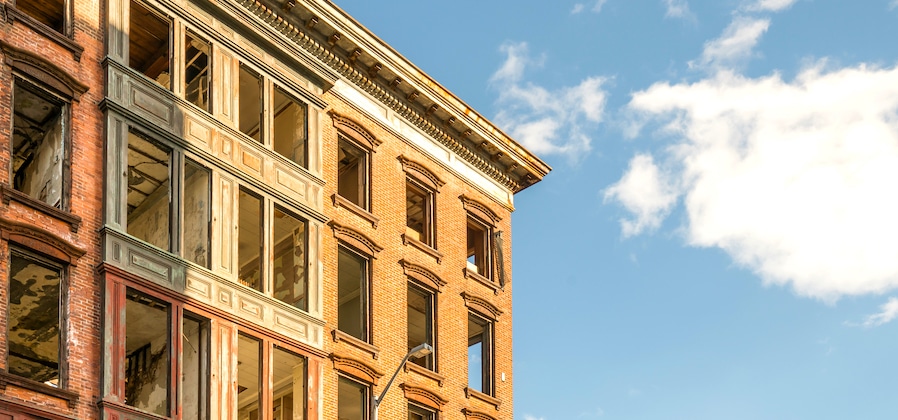
Image of building in Bridgeport, CT, courtesy of Small Change,
Living the Jetson life.

September 25, 2019

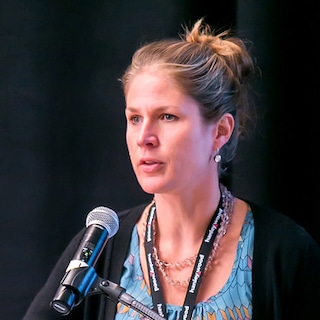
Jennifer Castensen is the vice president of programming at Hanley Wood, a company which serves the construction and design industry through their analytics-driven Construction Industry Database.

In this capacity, she provides leadership and collaboration across all verticals in the building products industry to drive innovation. Castenson establishes themes and coordinates content from Metrostudy and Meyers Group, Hanley Wood’s industry leading data and research arms, along with content from the editorial team to provide audiences with fresh, innovative content in a variety of forums. Castenson also serves in a project management and editorial capacity for multiple concept projects spearheaded by the Hanley Wood editorial teams. Prior to joining Hanley Wood in 2015, Castenson spent nine years as the vice president of marketing for a building product manufacturer. 

Jennifer has her finger on the pulse of innovation in the building industry … and she loves it. Listen in to hear all about the rapidly evolving building industry and what Jennifer thinks the next big thing will be.

Insights and Inspirations

  • In the future housing will need to deliver far more than just shelter. Think the Jetsons.
  • Lots of attention is being paid to pre-fab. Innovations in prefab may well be a major part of the solution to the lack of housing in the United States.
  • Lots of attention is being paid to vertical integration. New companies and processes are emerging that promise to change the building industry forever.
  • A focus on health and well being is having massive cultural implications in the building industry.  
  • We need to stop thinking that change in the building industry is slow. Change is moving very fast.

Information and Links

  • The HIVE community brings an energy and passion for innovation and improvement in future housing options that Jennifer loves.
  • The HIVE 50 list showcases people, products, and processes that are leading the charge to inspire creativity, improve performance, and explore better ways to build. Look for the 2019 list in November.
  • Jennifer is proud of the concept project – Building Positive + Living Well – that she was involved in with Skidmore, Owings and Merrill and Amli Residential. She believes this work redefines how we will live in the future, in a healthier, more sustainable way. 
Read the podcast transcript here

Eve Picker: Hey, everyone, this is Eve Picker, and if you listen to this podcast series, you’re going to learn how to make some change.

Eve Picker: Hi there. Thanks so much for joining me today for the latest episode of Impact Real Estate Investing. My guest today is Jennifer Castenson. Jennifer is the VP of programming at Hanley Wood, a company which serves the construction and design industry through their analytics-driven Construction Industry Database. Based on this information, Jennifer establishes themes and develops content to provide Hanley Wood’s audience with up-to-date industry intelligence. As such, Jennifer has her finger on the pulse of innovation in the building industry, and she loves it.

Eve Picker: Be sure to go to Eve Picker.dot com to find out more about Jennifer on the Show Notes page for this episode and be sure to sign up for my newsletter so you can access information about impact real estate investing and get the latest news about the exciting projects on my crowdfunding platform, Small Change.

Eve Picker: Hi, Jennifer. It’s really lovely to have you here. You have a fascinating job. I know that you’ve been on the marketing side of the building industry for at least a dozen years. Is that right?

Jennifer Castenson: Yeah, for a decade.

Eve Picker: A decade? Yeah. Now, as I understand it, you use leading data or research information from the industry to help establish themes and content for Hanley Wood, is that correct?

Jennifer Castenson: That’s correct. Yes.

Eve Picker: So, that means that you have your finger on the pulse of innovation in the building industry, which is pretty fabulous.

Jennifer Castenson: It’s amazing. It’s a really fun job, and it’s also very amazing to see the innovators who are behind the scenes and actually doing something to change all of the challenges that are facing the housing industry right now.

Eve Picker: Tell us a little bit more about what you actually do.

Jennifer Castenson: What I do at Hanley Wood is mostly programming for our events. Hanley Wood has a number of different publications and mediums, and we have conferences associated with a lot of those that we call branding conferences. Then we also do custom events where we program for our partners in various capacities.

Jennifer Castenson: For our conferences, we are very focused on creating a theme, and sticking with the theme, and finding experts who can deliver the content in the best way; who can deliver best practices; who can talk about research, innovation within a certain space. I work on the conference program in determining, with our editorial team, what is the right focus. Then I go out, I search for, find the experts, and then work with them to deliver the content at the event.

Jennifer Castenson: I also work on editorial content, working with some of those leaders in the industry to write certain material for our websites. That could be Builder, which focuses on single-family; for Multifamily Executive, for Architect, for Journal of Light Construction, or Remodeling or ProSales. I’m looking very holistically at the industry and then solutions for each one of those verticals within the industry and how we can help the industry leaders move forward strategically into the future.

Eve Picker: I was one of the fortunate ones who was found by you a couple of years ago, right? That’s how we [cross talk]

Jennifer Castenson: Yeah. Thank you so much for being part of Hive.

Eve Picker: Yeah, that was great. How did you end up in this role? This is pretty recent, right?

Jennifer Castenson: I’m going on four years that Hanley Wood. Before that, I worked for Organized Living, which is a building products supplier. Like I said, I was there for about a decade doing marketing and sales, and I was working with Hanley Wood. I had been part of the events from a sponsorship and exhibitor standpoint and knew the folks very well, and they recruited me in to be part of the Hanley Wood team.

Eve Picker: Pretty great. Your world intersects, then, with … You know this podcast is about impact in real estate, and the building industry is part of real estate, so your world intersects pretty squarely with that, as you see innovation emerge. I’ve seen that you’re a prolific speaker, as well as being an organizer, and you actually moderate panels yourself. So, you’ve touched lots and lots of topics; some of them, really big ones, like power, or affordable housing, or ADUs, or prefabrication. What theme do you think has the loudest drumbeat in the building industry today?

Jennifer Castenson: That’s a really good question, and I really have to think that there are two, and they, just like you said, intersect with each other. I think prefabrication/offsite construction and vertical integration are the two that I’m referring to.

Jennifer Castenson: I think modular and offsite are getting more and more attention. They’ve been around for a very long time. However, in today’s age, they are getting the benefit of new and enhanced technology. Then, they are extending the benefit to many different aspects that are really important to today’s construction environment. There’s more sustainability factors. There are more efficiency to respond to the need for more affordable housing.

Jennifer Castenson: That touches on the less need for less labor, faster construction cycle, less labor, and therefore reducing the time, reducing the costs. That’s just really, really critical in today’s age that we’re pulling together projects faster and at lower cost to put homeownership or rent in the hands of more people. But then, also the sustainability factors. There’s less onsite waste. There’s less waste altogether.

Jennifer Castenson: The projects can happen in any type of environment, which is also important, because if you look at climate change, we’re dealing with a lot of different climate factors, but if you’re inside of a factory, then the housing can continue to be built regardless of what the conditions are outside of that factory. Prefabrication/offsite construction just has a lot of different benefits right now.

Eve Picker: I never thought of that last one. That’s really interesting. But still, I’m in Pittsburgh. When I talk to some builders here, they still say that stick build is cheaper here than prefab. How much does that have to do with the labor in any particular market or the building conditions in any particular market? Is it really equally efficient everywhere?

Jennifer Castenson: No. Actually, I would say, nationwide, you’ll find that stick build, traditional build is very similar in cost to prefabrication. However, the time savings reduces the cost. The hard costs are there, and they’re probably the same. Sometimes, prefabrication might cost a little bit more. There are actually markets, right now, where prefabrication is so popular, for a variety of reasons, where the manufacturers are able to then bid up, and it’s … The costs are rising for factory construction. So, all those things are coming together.

Jennifer Castenson: Actually, if you think of labor unions, the costs involved with labor unions, sometimes the offsite construction might help avoid some of the labor unions. It depends on what kind of market you’re in and all of those variety of factors – how many offsite manufacturers are there, and what the demand is for that type of construction, along with labor unions, the amount of transportation to site, because that’s a huge component of it that will drive up costs. All of those things factor into the cost, but then the time savings is the real savings.

Eve Picker: Interesting. So, someone might argue that you’re putting people out of jobs. I’m in a heavy union-labor market in Pittsburgh, so they might not be happy to hear you say that.

Jennifer Castenson: No, I know, and it’s actually … Those jobs are evolving, and it’s a real big question right now. I said the second thing, for me, that I see impacting housing the most is vertical integration. There are a lot of organizations, like Katerra, and I’m also working with another one in the multifamily realm that’s called Cortland, who are trying to vertically integrate more and more and to take parts of the process that weren’t together under one roof and make them seamless under one roof where-

Eve Picker: I’m sorry I interrupted you, but I’m wondering what precisely you mean by vertical integration here? What is all part of that?

Jennifer Castenson: It might be different with different organizations. In the two examples I just gave, it’s very different. Katerra, for instance, is bringing in design, and development, and the manufacturing all under one roof. They’re bringing in even more than that, because they’re manufacturing some of the products that they’re using in their projects and some of the software that they’re using in the design regard.

Jennifer Castenson: It’s making the process- it’s making it more seamless and making fewer connections so that it can happen more efficiently and more effectively. They’re one of the biggest examples of it, but I was talking about Cortland, as well. They’re taking a lot of things under one roof that weren’t considered before, in terms of property management. It’s happening more and more with more organizations-

Eve Picker: Where do you think all of this is leading?

Jennifer Castenson: I think that it’s leading to more affordable housing, for one. That’s the aim that most people have; most organizations have, when they start doing vertical integration. That was why and how Katerra kicked off; and creating efficiencies. It will take some time to ramp up, because those, let’s say, legacy organizations – the big developers, the big builders – they have relationships that will be very hard to break. If you look at- I’m talking about the top 10 developers, legacy developers have relationships, in all the markets they’re building, with general contractors. Once they start saying no to the general contractors and start doing offsite construction or changing the parameters of those relationships, it’s going to be really taxing on their business to, one, just to figure out how to do it-

Eve Picker: Yeah.

Jennifer Castenson: -how to restructure their organization. But, two, what will, then, that general contractor do? That general contractor might go from being involved in 50 percent of the project to only having 10 percent of the project. Is he going to ratchet up his pricing? Those dynamics aren’t-

Eve Picker: Or is he going to be innovative and figure out how to become part of the industry, himself?

Jennifer Castenson: Exactly. Hopefully. Hopefully, there’s innovation behind it.

Eve Picker: Be sure to go to EvePicker.com and sign up for my free educational newsletter about impact real estate investing. You’ll be among the first to hear about new projects you can invest in. That’s Eve Picker.com. Thanks so much.

Eve Picker: That’s absolutely fascinating. The ramifications of one change towards the top can be huge, can’t they? Other than these two, which obviously really interest you, are there any other current trends in the building, or the real estate industry, or in cities that interest you the most?

Jennifer Castenson: There’s so much that’s happening, and I think there’s some really big trends in health and well-being from a living standpoint. It’s going to be a massive culture shift within the United States. We have been looking at housing as a shelter, but we’re going to be … As homeowners and as renters, we’re going to be thinking about our housing needs to be delivering more than that. That’s not only from health and well-being; that’s the builders and developers thinking about how to integrate technology in order to do that.

Jennifer Castenson: We are going to be able to, as homeowners, walk into our home and think of it as a character in our lives; to be thinking of it as we can have … Not only can we ask our house to put something on the grocery list, but we can also ask our house to get us ready for bed. That is a whole series of things that will be kicked off by a technology that’s behind the walls, and that will literally help us get to sleep and have better sleep during the night and, therefore, better performance during the next day.

Eve Picker: That is so awesome. It brings to mind a show I used to love called The Jetsons.

Jennifer Castenson: Yeah, right? Yes.

Eve Picker: It feels like we’ll be entering the life of The Jetsons.

Jennifer Castenson: It is. There’s so much. Years ago, I heard somebody talking who was an employee of Disney, and he was saying that we will have characters in our home; characters who speak to us. I feel like we’re almost there. Now, there’s a whole bunch of hurdles with security issues, and there’s also hurdles in terms of integration and what people are willing to pay for these sorts of technologies. However, we are on a fast track because of the way that technology accelerates, so [cross talk]

Eve Picker: -yeah, interesting. But do you think these trends will make for better cities? Are these really important, impactful trends, having [cross talk]

Jennifer Castenson: -I was talking about health and well-being. I think health and well-being, I was focused on it in terms of just one residence. However, more and more people, from an urban planning standpoint, and smart cities development standpoint, are working together. There are more and more collaborations, and more people are understanding, recognizing the benefits of collaboration.

Jennifer Castenson: You’ll see more cities are creating- working with developers or leading organizations in order to change the city; in order to mold it to be not only prepared for the smart city infrastructure, but to have a focus on health and well-being and creating a more strategically resilient community, where people can prosper; where they can, not only economically, but healthy- from a health standpoint.

Jennifer Castenson: Putting access to fresh food in walking distance of residences; putting more public transportation options in place. We are a nation that’s growing older. So, a lot of folks are starting to think about how are we thinking about accessibility, and how are we making that available for this aging population?

Eve Picker: Yeah, that’s really interesting because actually everything you touched on there is part of the Change Index on Small Change. I don’t know if you’ve looked at it lately, but those are the key things – livability for everyone, whether they’re three years old, or 85 years old, right?

Jennifer Castenson: Right. Exactly.

Eve Picker: An accessible, healthy place to live where you can move around, and reach good food, and all of those things. I was having a conversation with someone the other day about assisted living and how it needs to evolve. I think there was an article in The New York Times about how broken the system is. Do you see any innovation in assisted living or the way that people are thinking about housing our aging population?

Jennifer Castenson: Oh, for sure. I think there’s so much that’s going into that. There are new design guides that are going into that and actually being picked up by certain legislations that have to meet-  or building code that are being incorporated into the building code.

Jennifer Castenson: Then, there’s so much in terms of technology to help people. I’ve seen projects where there is technology that can alert a caregiver of somebody who is in a home alone – if they’ve fallen, if they haven’t moved for a certain amount of time; can tell them when to take their medications, can do so much for the aging population, assist them in just living for day to day and [cross talk]. 

Eve Picker: -help them age in place. 

Jennifer Castenson: Exactly. Well, the age place … That’s also, when I was talking about having the access to the public transportation, when people live that- age out of the ability to independently drive their cars, they lose a little bit of independence. So, having access to public transportation or having things within walking distance is really important. That’s why so many people are thinking of community design and not just how someone lives within their own residence.

Eve Picker: Yeah, I know everyone’s thinking ADUs as a way to deal with affordable housing, but I actually think about it a lot as a way to deal with the aging population, because, when I get old, I’d love one of my kids to have me in an ADU in their backyard. That sounds to me much more appealing than an assisted living community. If there’s technology developed that helps keep me safe in that place and able to age like that, that would be amazing, right? 

Jennifer Castenson: Yeah, absolutely, and you’re right. They are an option for affordability, but it’s also being looked at as a second home on property that could house in an older relative. A lot of people are looking at it as that option.

Eve Picker: Or a teenager you don’t want to see every day, right?

Jennifer Castenson: Right. 

Eve Picker: Okay, so the big question is, really, do you think socially responsible real estate or building methods necessary in today’s still development landscape?

Jennifer Castenson: Oh, for sure. It’s actually really impressive that we talk about that change in the building industry is very slow. But if you look at change in terms of code, all of it has been socially responsible, right?

Eve Picker: Yes.

Jennifer Castenson: We’ve actually layered on so much code to be more responsible in terms of environmental impact. Now, we’re using codes in projects, and certifications that also – like the Fitwel program – that are focused on health and well-being in our communities and in our homes. Then, we’re also taking on codes, and we’re involved in another project at Hanley Wood that’s focusing on reducing the amount of embodied carbon. Those types of things are the responsibility- are things that builders and developers are owning. They’ve been evolving quite quickly over the years. They’re taking more and more responsibility for providing housing in a way that is socially responsible, environmentally responsible, and then that is comfortable, and also will help people from a perspective of emotionally, psychologically, and mentally growing. It’s a lot to combine into a home.

Eve Picker: Maybe eventually we’ll become the happiest country on the planet.

Jennifer Castenson: Right.

Eve Picker: We’re far from that right now, right? We’re sort of gradually catching up on some European standards, which is really pretty fabulous. My big wrap-up question is where do you think the future of real estate impact investing lies?

Jennifer Castenson: I was talking about before that we’re working on various conferences, and the one that we had you involved in was called Hive, which stands for Housing Innovation Vision Economics. Through that conference, we do an honors program that’s called the Hive 50, which our editors select the top 50 innovations in housing. I would say that a lot of the innovations are around finance.

Jennifer Castenson: Impact investing has had a smaller presence on that list, and I think that there’s a lot of opportunity for that to grow. I think that as more cities and their collaborations come into the picture, we’ll see more and more of that happening. Tangentially, you see a lot of organizations getting involved in sponsoring, donating, subsidizing affordable housing construction in various areas. That actually has picked up a lot in the last 12 months-

Eve Picker: In fact, there’s impact investing, right?

Jennifer Castenson: Yeah, absolutely. And I think we’ll see more and more of that, just as we are not able to meet the demand of housing in this country, and we’re not actually on a trajectory to meet it anytime soon. So, hopefully we see more of that; more of the money coming in so that we can develop the housing that we need.

Eve Picker: I also have three sign-off questions that I usually ask, because I want to hear everyone’s answer on these. The first one is what’s the key factor that makes a real estate project impactful to you?

Jennifer Castenson: I think what makes it interesting to me is that it becomes something that teaches the industry, the rest of the industry, and that we can pick up at a volume scale and bring it to more places.

Eve Picker: That sounds like innovation-

Jennifer Castenson: Yeah.

Eve Picker: -really is the most important thing to you. You know I have a crowdfunding platform, right? Do you think there could be other benefits, other than raising money, that could come out of crowdfunding in real estate?

Jennifer Castenson: Oh, for sure. Absolutely. I think you have done such an amazing job bringing crowdfunding to a more visible level in housing, and that means … I give you all of the kudos in the world, and I hope that you guys keep elevating that. It has done a tremendous job to give visibility to projects that wouldn’t have made it otherwise. Those projects are the ones that we need more of, because they’re innovative. They’re new approaches to what traditionally, or legacy organizations, are not approaching because of their capital streams, so it’s … I think it’s amazing.

Eve Picker: Well, thank you. I feel like we’re just scratching the surface. There’s so much to do, right?

Jennifer Castenson: Right.

Eve Picker: This is a really big question: if you want to improve one thing about the real estate industry in this country, what would that be?

Jennifer Castenson: If I could change one thing, I think it would just be something about regulation, which I wouldn’t know how to approach because it’s such a complicated web. But I would say that there’s something either to policy and regulation that would remove some of the hurdles and allow building to happen in a more efficient way with maybe some of the responsibilities back on … I’m not sure. There’s just so much to do there.

Eve Picker: No, I think you’re talking about zoning and building codes all wrapped up together, and that’s a lot of stuff to unravel. I know some cities are trying to unravel bits of zoning codes and move things forward in a different way, but, yes, it’s a lot. Jennifer, this was just delightful. Thank you very much for taking the time to talk with me [cross talk] I’m going to call this Entering the Life of The Jetsons.

Jennifer Castenson: I like it.

Eve Picker: Okay. Have a great day. Bye.

Jennifer Castenson: Thanks, You, too. Bye.

Eve Picker: That was Jennifer Castenson. She gave me lots to think about. First, she thinks that a focus on health and well-being is having massive cultural implications in the building industry. Second, in the future, she believes that housing will need to deliver far more than just shelter. And third, innovations in prefab may well be a major part of the solution to the lack of housing in the U.S..

Eve Picker: You can find out more about impact real estate investing and access the show notes for today’s episode at my website, Eve Picker.com. While you’re there, sign up for my newsletter to find out more about how to make money in real estate while building better cities. Thank you so much for spending your time with me today, and thank you, Jennifer, for sharing your thoughts with me. We’ll talk again soon, but for now, this is Eve Picker signing off to go make some change.

Image courtesy of Jennifer Castensen

Shaping a sustainable environment.

September 9, 2019

Developers and architects have the opportunity to sell a new vision of sustainability in the United States. Many people see private capital and sustainability as fundamentally at odds with each other. Some even question the value that developers, architects and investors bring to the community building or redevelopment process.

But civic-minded investors have the opportunity to change this dynamic by supporting developers and architects working on real estate projects that are more inclusive and friendly to local residents and the environment. The value that private capital adds to the equation is the ability to mobilize and rally like-minded investors and real estate professionals to take these projects from concept to shovel ready to completion.

Macro, micro, and mezzo

When attempting to solve issues as complex as long-term sustainability, developers must take a full-spectrum approach to solve the problem. This means when creating new communities, developers need to look at the problem from multiple levels, on a grand or macro scale which takes regional concerns into account, on a small or micro scale which looks at building use and techniques, and with a mezzo approach, which examines sustainable development at the community or neighborhood level.

Macro approach

Taking regional needs into account is crucial when attempting to build a community that is both livable and environmentally friendly. For example, a project in sunny Sedona, Arizona will have needs that may not be applicable in Portland, Oregon, and vice-versa. Variables like water usage, solar panel options, xeriscaping choices, and other desert or dry climate requirements need to be taken into account before constructing a new development in Arizona, but maybe not in Portland or San Francisco or Omaha.

Micro approach

The micro scale (on an individual project basis) is vital to efforts to create sustainable homes. When creating an environmentally friendly, livable space, it is essential to balance design and aesthetics, longevity, and sustainability into a single package. Without some mix of those three factors, it is unlikely that your project will make it past the planning stages. Remember that there are numerous stakeholders to whom you may be accountable, including investors, lenders, local residents, and city officials.

Mezzo approach

District, or mezzo scale work, is felt at the neighborhood scale, as opposed to individual buildings (micro scale), or entire regions (macro scale.) An example of a mezzo-scale project could be a neighborhood-focused infrastructure project, such as replacing fluorescent streetlamps with LEDs in a designated area, or implementing a bioswale rainwater catch system for a specified area.

Remember that while individual properties can be improved, their value is largely defined by the neighborhood in which they reside. Sustainability issues often arise from poor planning. A little bit of preparation can prepare a community for long-term sustainability challenges, like collecting rainwater, reducing energy and water waste, efficient public transit, and many hurdles that come up as a result of poor planning.

_

Sustainable communities do not appear out of thin air. It takes a team of dedicated professionals to meet the challenges of the present, while keeping an eye towards the future viability of environmentally-friendly design and development choices. As the old adage goes: “If you don’t know where you’re going, any road will take you there.” Don’t follow any road- follow the road toward long-term sustainable development.

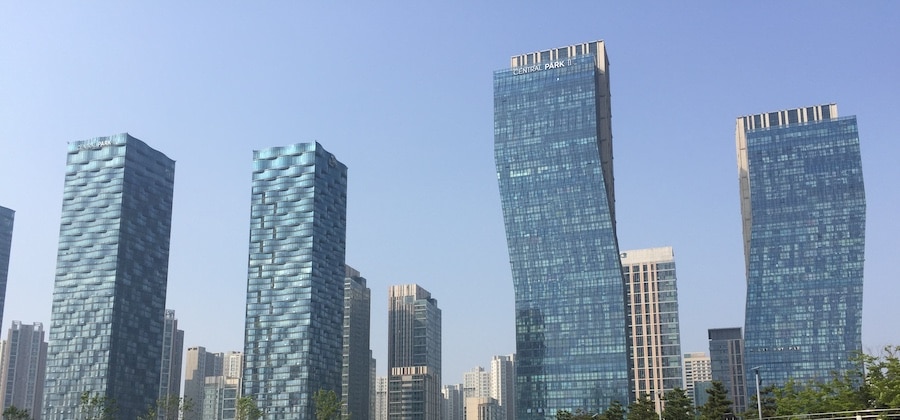
Photo of Songdo, South Korea by Eve Picker.

Real estate artist.

August 28, 2019

In this podcast Lorenzo Perez and I explore the power of developing artistic and inspirational places and the need for less formula and more creativity in real estate development.

Lorenzo is the co-founder, designer, restless innovator and inspired real estate developer leading Venue Projects. He talks fast, plenty and daydreams often and he’s a nostalgic storyteller who finds magic in the details.

Lorenzo describes Venue’s work as crafting one of a kind environments that are sensitive to experiences, neighborhoods and people. That’s an understatement. Lorenzo’s approach is that of an entrepreneur. He takes opportunities and risks that most developers would not in order to create projects that are carefully crafted, artistic, community-centric masterpieces. He’s a real estate artist.

I wish Lorenzo worked in Pittsburgh.

Insights and Inspirations

  • Each of Venue’s projects is built to provide wholistic returns including emotional, social, cultural, environmental and economic returns.
  • Ugly buildings are a lot of fun. They are a blank canvas just waiting for reinvention.
  • Real estate trends that fascinate Lorenzo include anything to do with mobility, micro-hospitality and food courts.
  • Community engagement is key, if sometimes uncomfortable.
  • Alternative projects must become more acceptable to our financial systems.

Information and Links

  • Lorenzo is fascinated with the disruption of construction delivery systems that is brewing. This innovation is growing out of the need for both skilled labor and more efficient building models in the marketplace. Venue is contemplating partnering with Katerra for the housing / micro hospitality projects they are developing.
  • Venue is interested in the potential for AirBNB to serve as a reservation system for their micro lodging concepts.  
  • The book Built to Love Creating Products that Captivate Customers is foundational to Venue’s process and approach to real estate development.
Read the podcast transcript here

Eve Picker: Hey, everyone, this is Eve Picker, and if you listen to this podcast series, you’re going to learn how to make some change. Hi there. Thanks so much for joining me today for the latest episode of Impact Real Estate Investing.

Eve Picker: My guest today is Lorenzo Perez, the co-founder of Venue Developments, a redevelopment practice based in Phoenix, Arizona. Lorenzo describes Venue’s work as crafting one-of-a-kind environments that are sensitive to experiences, neighborhoods, and people. That’s an understatement.

Eve Picker: Lorenzo’s approach is that of an entrepreneur. He takes opportunities and risks that most developers would not, in order to create projects that are carefully crafted, artistic, community-centric masterpieces. I wish Lorenzo worked in Pittsburgh.

Eve Picker: Listen in to hear more and be sure to go to EvePicker.com to find out more about Lorenzo on the show notes page for this episode. Don’t forget to sign up for my newsletter, so you can stay tuned into the latest news about real-estate impact investing, and the latest projects on my crowdfunding platform, smallchange.co.

Eve Picker: So, Lorenzo, I know a little bit about your work, but I would love to tell our listeners, or have you tell our listeners a little bit about what you do.

Lorenzo Perez: Sure. I am a real-estate entrepreneur based in Phoenix Arizona. I say entrepreneur more than a developer, because we are focused on creative real-estate development with a focus on urban infill, adaptive reuse, and creative redevelopment projects.

Lorenzo Perez: Everyone is a prototype, and a one-off, so they’re very entrepreneurial in terms of what do we do with a particular building, or how do we find a home for a particular tenant, or what kind of use can we implement, or a variety of uses? Then we’ve got to figure out how to put it all together, how to finance it, operate it, execute, and deliver it [cross talk]

Eve Picker: You’re a little bit of an artist, right? 

Lorenzo Perez: You know, it’s funny, I’ve had several people tell me that. They say, “Your projects are so creative that you’re really an artist, and real estate, and the various users, and forces that go into a real-estate project are your medium.” I always tell people now that I sort of play in habitable, and income-producing sculpture.

Eve Picker: That’s really great.

Lorenzo Perez: Because we are significantly manipulating old, beat-up buildings into pretty, fun, and inspired places.

Eve Picker: Yeah, I think you’ve told me that you go for some pretty ugly ducklings.

Lorenzo Perez: Yes, the uglier, the more broken, the better. Usually that translates to a better buying opportunity, or also just motivation, and enthusiasm from government, and neighborhood stakeholders.

Eve Picker: Maybe the uglier, the better the transformation, as well, right? 

Lorenzo Perez: Exactly. I love to bring people through our projects for a variety of reasons, but from start to finish, I love the insight we get from their observations. Quite often, I’m actually surprised at things they pick up on that we don’t, because we’re so in the weeds with them. I always tell people that I love to bring them through the different stages because it really does make it more impactful at the end [cross talk]

Eve Picker: The ugly buildings are blank palette, right? 

Lorenzo Perez: They really are, and I always tell people, “We’ve got to take you through the pain, so you can enjoy the gain.” 

Eve Picker: That’s right. Yeah, real estate is very messy, and it seems to get worse before it gets better.

Lorenzo Perez: Yes, yes. 

Eve Picker: What are you working on at the moment? 

Lorenzo Perez: At the moment, I’m working on the largest project that we’ve ever undertaken. We’ve been working on it now for- we’re going probably in to three years from when we started acquiring the buildings, and then formulating a joint venture with a larger developer.

Lorenzo Perez: We’re working on a two-acre site right next to a property that we redeveloped about five years ago on a light-rail line. It’s two 1950s office buildings that we are converting into a boutique hotel campus – a 79-room boutique hotel.

Lorenzo Perez: We are navigating a variety of things. We have transit-oriented development standards that we’re navigating. It’s a joint venture between three parties – ourselves, another developer, and vintage partners with much larger, stronger balance sheet, way more experience. They came to us and wanted to partner with us on it. Our hotel operator’s based out of Los Angeles, and Palm Springs, so they are a co-investor, as well as our operating partner.

Lorenzo Perez: The two buildings were tired, and mid-century desert modern architecture. While we’re going through it, we’re-

Eve Picker: Which sounds really sexy, but really isn’t? 

Lorenzo Perez: It is, yeah. In Phoenix, that’s all we got. We’re like early-’20s, and then we will eliminated a bunch of stuff. Phoenix is a mid-century city. We appreciate that they’re out of Palm Springs, because they really do value that kind of architecture, that sort of funky, streamlined, linear … 

Lorenzo Perez: One of our buildings is pretty unique to the area. It follows the Googie-style architecture, which was usually reserved for like roadside architecture for restaurants or banks. It’s got some playful forms. It’s not too rough. It’s got a fourth-floor penthouse, and a roof deck that we’re going to convert to a cocktail lounge – an outdoor-view experience.

Lorenzo Perez: It’s got a lot of challenges. The building’s retired. We’re navigating serious code upgrades, because of the change in use from office, to hospitality, and assembly.

Eve Picker: Oh, yeah, that would be big.

Eve Picker: Yes, it’s big, and we’re also dealing with economic forces here that are beyond our control. One, the market is extremely elevated, busy; a lot of investment to Phoenix. Phoenix is sort of late to the recovery from the Great Recession, because we went so deep into the recession.

Lorenzo Perez: There’s just a lot going on here, a lot of people moving here. A lot of things are under construction; a lot of things in development. We are dealing with limited labor, and that translates to unpredictability on schedule, but also just significant cost escalation.

Lorenzo Perez: We’re navigating a tough environment in terms of … We’ve also – which is weird for Arizona – we’re also coming out of, I think, one of the wettest winters that we’ve ever had. That didn’t help us, because it caught us right as we were doing all our [cross talk] 

Eve Picker: One of our offerings was a little modular house in Pittsburgh, and they were really seriously delayed because of the rain. They could not … They could not beat the ground. It was just a mud pool [cross talk] 

Lorenzo Perez: -it’s really rare for us to have to deal with that, because we have over 300 sunny days a year. This, we were in the ground, with underground retention, and utilities, and starting foundations. We would get wet, and it would take us two to three weeks to dry out enough just to get on the site. Then we could work a little bit, and then the rain would come back. It definitely set us back probably three months, I would say, for weather that-

Eve Picker: That’s a long time, when you’re holding land, have construction interests, et cetera. Yeah. 

Lorenzo Perez: Yes. 

Eve Picker: Be sure to go to EvePicker.com and sign up for my free educational newsletter about impact real-estate investing. You’ll be among the first to hear about new projects you can invest in. That’s EvePicker.com. Thanks so much.

Eve Picker: I know you think a lot about your audience, because you are building art, right? Relation art. 

Lorenzo Perez: Yes. 

Eve Picker: Who’s the audience for this project? It isn’t just a hotel, right?

Lorenzo Perez: No. Our projects are really rooted in community and that’s always been our intention – since we founded our company 11 years ago – was to create community gathering places in artistic settings and really create these distinct destinations that provide an experience. 

Lorenzo Perez: Our audience, surprisingly, has been fairly consistent across, I would say, our hospitality projects. Most of our projects were restaurant-, or retail-anchored, but they tend to attract … We’re seeing a pattern that they tend to attract young to old.

Lorenzo Perez: Really, it’s less about age demographic; it’s more about really people who just enjoy getting together in a communal setting. They like an indoor/outdoor experience. We have the benefit of being able to do that here nine out of 12 months a year.

Lorenzo Perez: I would even say, if you’re from the Southwest, you can even handle the summers. As intense as they are, the dry heat does allow us to be outside, even in 110-, 115-degree weather, if we’re in the shade, or we’re in pools. If we design for weather, it can really be a special year-round place.

Lorenzo Perez: I would say our audience really is young to old. When I say young, some of our places, we have a lot of candy and ice cream shops, so they can get pretty young; they can also get pretty old. 

Lorenzo Perez: The hotel is probably a little more defined. They are targeting a 21 and older crowd, so I would say that one’s probably 21 into probably you 80s would be our target audience for a hotel project.

Eve Picker: What about the neighborhood it’s in? How do you think about what you’re doing for that neighborhood? 

Lorenzo Perez: What I love about this neighborhood is that it was in a location that suffered, when the light rail went through it. If you’re from Arizona, or Phoenix, there’s … Locals know there’s always been a built-in bias, west of Central Avenue. Central Avenue runs north-south and bisects the city of Phoenix.

Lorenzo Perez: History will show that people kind of look down on the avenues versus the streets. It’s sort of [inaudible] line. If you go west of it you’re in the avenues; if you go east of it, you’re in the streets.

Lorenzo Perez: So, the neighborhood we’re in was pretty disinvested, when we purchased our property next door, back in 2012. They were having a lot of issues with vacancy, transience … Even though the residential neighborhoods around them were fairly stable, there was just a lot of attractive nuisances, and people weren’t investing there.

Lorenzo Perez: We saw the opportunity, with its proximity to the central corridor, as an opportunity to go in there and start accumulating some of these buildings. They really do have kind of an interesting collection of mid-century, early ’50s building stock that are pretty unique, even to Phoenix’s standards. They were tired. They were disrepaired. There were some vacant lots. We started with the one property a few years ago, and then were successful in acquiring three or four others on each side of our property … Our focus was to sort of do a district-scale development through a series of small incremental projects.

Eve Picker: Nice. 

Lorenzo Perez: The neighborhood, really, we couldn’t be more grateful. They’re supportive. They love us. They support what we’re doing. This project in particular really reflects kind of our approach to development. I always tell people we really do take an entrepreneurial and opportunistic approach. We aren’t limited by product. We go into a neighborhood, and we’re really basing our decisions on context. We look at things like scale, impact to the surrounding neighborhood.

Lorenzo Perez: In this particular neighborhood, when we introduced our retail dining experience next door, it was really received with great success. The community loves it. We have plenty of multi-family housing around us. We have transit right in our front door. We have single-family historic neighborhoods around us. What we were missing in that area, really, was maybe some creative office, and we were really missing hospitality – a place to stay in the neighborhood – because the area is abundant with all kinds of shopping, from really edgy, shabby-chic type stuff to upscale shopping [cross talk]

Eve Picker: When do you think it’s going to be finished, because I’m going to book a room?

Lorenzo Perez: Yes, we would love your support. We’d love to have you out here. We are targeting a November opening [cross talk] in early November.

Eve Picker: That’s pretty soon. 

Lorenzo Perez: Yes. We’re starting to see the light at the end of the tunnel. It’s been a haul.

Eve Picker: That’s about it. Okay, so you really approach real-estate development from a community perspective. I’d like to know, everyone has a … This show is about real-estate impact investing, and everyone has a very different opinion about what impact real estate should look like. I’m just wondering what it looks like from your perspective.

Lorenzo Perez: Well, impact investing, from our perspective, is … I’ll use a term[ I’ll share a term with you that we use internally in our company. I think you heard me speak about this when we met a few years ago. We strive- our mission is to obtain holistic return on our investment of time, creativity, capital, whatever.

Lorenzo Perez: What I mean by that is we’re seeking more than economic return on investment. We always have to clarify – we are a for-profit business. We are seeking a return on our capital for the risk and time that we have invested, but it’s just one-fifth of what we’re looking for. Our number-one priority is we seek an emotional return on our investment. We’re really motivated by doing inspired work – work that’s meaningful that makes a difference in people’s lives, our lives. We look for, first, an emotional return.

Lorenzo Perez: Our second one is social return on investment. We’re looking for a social return. We named our company Venue Projects for a reason. We just thought it was a perfect name to represent things like gathering spaces, or people places, or destinations, or distinct artistic settings. Not only did we want to have a social impact, we wanted to bring people together and really contribute towards building community – so, emotional-social.

Lorenzo Perez: Our third return on investment we’re seeking is cultural. We’re trying to create places that make an architectural statement or a cultural statement in our community that … We do a lot of preservation through reuse, so what we’re also trying to do is unveil maybe unknown stories about these properties or Phoenix’s past. 

Lorenzo Perez: We’re a young city. Growing up here – I’m a native of Arizona – all I heard is that Phoenix has no soul and no history. We’ve just always been the baby out in the Southwest. I always tell people, today, even though we’re the fifth largest city in the US, we’re like a gangling teenager who’s figuring out his big body. We’re trying to figure ourselves out. We didn’t have really a lot of stories to share or we didn’t celebrate them, so we’re starting to celebrate them to try to create some connections to a sense of place.

Lorenzo Perez: Our fourth return is environmental return. We wanted, when we started our company, to set a new example for emerging developers that we can take existing building resources, even as uninspired as a lot of the buildings are in Phoenix, Arizona, because most of them have more of a very practical, utilitarian mission behind their design. We have plenty of great architecture, but I would say the greater majority are pretty utilitarian buildings. We wanted to show, well, these are already here. It’s what we got, but what can we do with them without tearing them down? We wanted to show a counter-approach to Phoenix’s demolition culture [cross talk]

Eve Picker: Oh, interesting.

Lorenzo Perez: -legacy. What we do have a lot of are boxes – either wood-frame boxes, but we have a lot of masonry boxes. If you’ve been in design or you’ve been in construction like I have for over 24 years, one of the most efficient buildings to remodel or to construct cost-efficiently are boxes. We’re starting with, in many cases, good bones. I love the design challenge of manipulating boxes into something that was pretty uninspired and basic to something that’s pretty magical and interesting.

Lorenzo Perez: So, the environmental return is can we keep these out of landfills? Can we make them more energy-efficient? Can we create an indoor/outdoor experience that adds trees? We really value landscape, especially in our urban projects. We break all the rules with that in our retail projects. People will be like, “Well, you can’t see the signs.” We give people the benefit of the doubt. We’re like, “You know what? We’re serving humans, first and foremost, not the vehicle.” 

Lorenzo Perez: Humans like to be in nature, and we’re learning, 11 years in, that people really do value our projects because of the atmosphere and the environments that a lot of them have, with mature trees, and desert flora, and indoor/outdoor transitional spaces that open to the outdoors during the great times of year.

Lorenzo Perez: Then, obviously, our fifth return is economic. We always say … Listen, we put economic as our fifth return because it is the foundation for our sustainability and our success, but really what we’re seeking are those other four levels of return.

Eve Picker: Yeah, okay. That’s pretty fabulous. So, obviously, you think socially responsible real estate is necessary in today’s development landscape, and it comes in all forms. I’m wondering how you think that might be improved, because I think, probably, we’re … You, and developers like you, are still a rarity and not a commonality, so how can we shift that pendulum? 

Lorenzo Perez: Our company was founded on a three-pronged mission – create, inspire, serve – really to create beauty, but to create value, and to create opportunity. The inspire part of that is a big part, and the service element of it is a big part. We try to stay focused on … That’s kind of our why – why we are even operating and why we do what we do. We try to model, for other emerging developers or even other existing developers, new ways of doing things just through our work; testing convention and trying to prove that you can make great returns and create wonderful experiences by going against convention.

Lorenzo Perez: We actually spend a lot of time with- and in mentoring roles, or at Arizona State University, in their Masters in Real Estate Development program, or through the Urban Land Institute. We try to inspire just different thinking and different approaches. I’ll tell you, when we got started in Phoenix in ’08, it was the start of the recession. We intentionally started our company then, because we knew that disruptive nature was going to, one, open doors to opportunity, but it was also going to allow us to buy properties at basis that would allow us to experiment and show new ways of doing things.

Lorenzo Perez: I look at where we’re at today across the city, and there’s a whole slew of developers. Really, the bar has been raised, and they’re approaching things with more sensitivity. I think it’s part of what’s happening here, but I think it’s part of what’s happening everywhere, where people want a more meaningful experience. They want to feel good about the places they patronize. I think it’s [cross talk] yeah, social conscience is definitely changing.

Eve Picker: One of the things that has changed, of course, is that many more people are coming back to cities. That has also kind of moved that type of development along. When I started doing real-estate development work in Pittsburgh, most people thought I was crazy, but it’s worked out pretty well. The really interesting, not dissimilar story to yours, going to abandoned neighborhoods can be so fruitful in so many different ways-

Lorenzo Perez: We found that that very liberating because they’re just- they’re so hungry, and motivated, enthusiastic for positive change. Quite often, we go into these communities, and they’ve been dealing with blight, and issue. I think what we’ve learned in reflecting back on the work and analyzing the impact some of our projects have had on the communities they’ve been developed in is that I think you give people hope and confidence. 

Lorenzo Perez: I think we realized that more in the deep recession – that sort of 2010 through ’13, when we were really kind of feeling the pain in Phoenix here. People were uplifted by these places that were positive. They were different. They offered a place where people could come together and have a positive experience, even down to the economic community and the economic-development piece of it.

Lorenzo Perez: People were so grateful for the jobs; to be involved in such [cross talk] To be involved in such meaningful projects that were valued. People were excited about it, so they felt … I love the sense of pride that you would see at our friends and family openings, when we would invite our trades peoples to this. You could see the pride of the laborer, or the carpenter, or the tradesman, when they brought their families; like, “Yeah, we did this.” 

Lorenzo Perez: The impact of investing can go well beyond the economics of the return to the developer, or the tenants, or what have you. It really can be pretty fruitful for the neighborhood [cross talk] I mean, we’ve seen tremendous stimulation in terms of attracting additional reinvestment in redevelopment.

Eve Picker: Yeah, no, I think that’s right. Are there any current trends in real estate that are sort of interesting to you at the moment?

Lorenzo Perez: Yeah. I find real estate very creative and innovative right now. I love the spirit behind especially infill, and redevelopment, and reuse. We’re seeing some really fun projects out there. I’m intrigued and enthused by places like food courts. I’m an ’80s kid. I grew up in malls. I just find it interesting … I’ve traveled across the US, and I’ve seen all kinds of food courts, but man, they sure are resonating with people as food hubs in this foodie culture. People are coming and gathering around a meal. There’s just so much some symbolic pieces to that. I just love … They’ve become sort of these living rooms.

Lorenzo Perez: I’m really intrigued with mobility and the built environment responding to the rapid innovation and evolution we’re seeing in technology. I’m fascinated with mobility, and in Arizona, we’re at the heart of autonomous-vehicle development. We’re involved in some creative consulting projects, where we’re partnering with groups out of the Bay Area. 

Lorenzo Perez: We’re working on a project right now, where they’re developing a carless residential mixed-use community. Just the whole- when you really think about that – what would it be like to support carless living in a city like Phoenix? It’s really pretty disruptive, and stretches the brain, but it’s so liberating in so many ways not to be locked down with a car. 

Lorenzo Perez: It’s fun to look at things like autonomous vehicle, and how do we do Instacart food delivery. If we’re going to have an onsite grocery, maybe it’s more of a hacked version, where it’s really more of a processing and storage place, where people gather and have a social experience, because they can get food delivery from [cross talk] Now, the grocery doesn’t have to be there; it can be delivered to you. 

Eve Picker: Even in Pittsburgh, which is a hilly city, over the last 10 years, we’ve seen an explosion bike riders and also an explosion of people who really don’t want to own a car. It’s been interesting watching the code changes, because I’m working on a little project at the moment, where, in a neighborhood that used to demand one vehicle per unit, and now you get a 50-percent discount. It’s gone beyond just pioneering now. It’s starting to infiltrate government. 

Lorenzo Perez: It really is. We’re seeing scooters, bikes, trails, pedestrian-oriented trails systems [cross talk].

Eve Picker: Right. So, Lorenzo, I have to ask you, with all the super-malls that are vacant, what would you do with those? 

Lorenzo Perez: Yes! Oh, my God, that’s [cross talk] 

Eve Picker: -that is for sale.

Lorenzo Perez: It’s so funny. When we started our company, people were like, “That’s an interesting focus, redevelopment,” but I was just like … To me, it made a lot of sense, because I just knew we were going into an area of serious change, and re-imagination, and having to really respond to the evolution of technology. Malls, to me, are fascinating [cross talk] 

Eve Picker: They really are, aren’t they? 

Lorenzo Perez: -expanses of land, the sizes of buildings, the linear nature of them. They’re really unique design challenges. Yeah, I would love an opportunity. I’m sure we’ll fall into them. We’ve seen some interesting redevelopments in Phoenix, because we’re like Strip-center Mall Epicenter of the Southwest. It’s really funny to see some of the creative ideas coming out around … A lot of them are turning into mixed-use hubs, where they’re integrating housing, and lodging, and creative office. Even things like the big boxes becoming inner city fulfillment for e-commerce, which is a pretty fascinating mix [cross talk]

Eve Picker: Yeah, I mean it’s a really completely different landscape. Retail isn’t what it used to be. It’s fascinating. We have a lot of them around here. There’s one in particular that is just completely vacant. It’s enormous, and I think about what it might become. It could be interesting-.

Lorenzo Perez: I’ll tell you, the other trends that are exciting to me are, like you said, e-commerce is really- I think retail is really interesting. It’s really becoming more experience-based. I think micro hospitality, what Airbnb has done to really just totally turn logic in housing inside out is pretty fascinating, Even the Tiny Home Movement, I thought maybe was probably more of a trend, but it seems like people are really valuing scarcity and preciousness. They’re willing to do more with less, if they get the space they need. It’s just- it’s a really fascinating time [cross talk] 

Eve Picker: It is fascinating. It is really fascinating. I suppose the big question is what do we need to think about to make our cities and neighborhoods better places for everyone? Clearly, you are; you are really thinking about that a lot. I’m also wondering what community-engagement tools you have seen that have worked for you? It sounds very much like you do engage your community a lot, and I’m wondering how you go about doing that? 

Lorenzo Perez: We do it on a variety of levels. First and foremost, every one of our projects has required some sort of entitlement and community outreach. We learned early on that if you’re going to do this kind of work, you’ve … It’s kind of like dating. You got to make yourself vulnerable and available.

Lorenzo Perez: We do all our speaking. We started really with the mission to own and operate our buildings. Really, we feel we have a responsibility as stewards to those properties to be a good neighbor, and to be a good listener. It has not been always a pleasant experience. We [cross talk].

Eve Picker: No, that’s for sure. 

Lorenzo Perez: -people continue – moreso in the beginning – continue to question our agenda, or our authenticity. I’ll tell you, 11 years in, and having a nice track record and a nice body of work behind us that shows consistency helps us way more today. We’re being invited in, and people are excited when we’re coming into neighborhoods.

Lorenzo Perez: The speaking for ourselves, one of the things we also do is willing to meet with people, especially the pessimist, one on one. We make the job site open to people. I’m a big fan of giving tours, because I get as much out of it as they do. I find that that one-on-one is such a human piece of it. We’re not always successful. We’ve had people that have opposed us, start to finish; maybe it’s a little less contentious at the end, because you’ve kind of built a relationship.

Lorenzo Perez: I just learned that you’re not going to always turn everybody. I can control what I can control, and I can control our behavior, our actions, by just doing what we say we’re going to do. I can’t emphasize that enough – if you’re going to be in this business, and you’re going to be in it long term, you’ve got to do what you say you’re going to do. If you stub your toe in any shape, way, or form, you’ve got to be willing to be accountable, and say, “Hey, we didn’t anticipate that,” or, “Yeah, we should have done that better, but we’re not running away from it. We’ll be here to help fix it.”

Eve Picker: Yeah, somehow, the name ‘developer’ has become a dirty word in our society.

Lorenzo Perez: Yeah, demonized.

Eve Picker: But you’re not all the same. You notice that there are quite a few developers out there- I see them through Small Change every day, who are extremely thoughtful about what they do and really care about the communities. There’s just so much mistrust, it’s really a shame.

Lorenzo Perez: Yeah, it’s unfortunate. I think any industry probably has that, but you know … It’s funny, Kimber will sort of cringe when I tell people I’m a real-estate developer, because she knows how demonized [cross talk] She looks at me, and just goes, “You’re so much more than … You’re so not a developer,” and I just sort of chuckle. That’s why I tell people I’m really more of a real-estate entrepreneur. People ask me, “What do you mean by that?” I just say, “Well, I mean, we touch every aspect of it. We design the concept. We design the building. We design the operating system. We finance it. We lease it. We own it. We build it. We operate it. We maintain it. We manage it. We do everything around it.”

Eve Picker: Yeah. 

Lorenzo Perez: So, I don’t know … They’re all so unique.

Eve Picker: There are lots like you though, and-.

Lorenzo Perez: There are.

Eve Picker: That’s what makes it sad that we can’t say what we do and be proud of it, yeah? 

Lorenzo Perez: I don’t know, maybe there needs to be a shift in semantics or something. But you know the Small Scale Forum, through ULI, is not only social, and networking, it’s also part therapy.

Eve Picker: Yes.

Lorenzo Perez: To commiserate with each other, because … I’m always amazed that, no matter where we’re at in the US, or sometimes even out of the country, how consistent that is, because of the actions of others that are just purely transactional [cross talk]

Eve Picker: Yeah, that’s right. I think that’s right. Do you think that equity crowdfunding could play a role in building communities like [cross talk].

Lorenzo Perez: Oh, absolutely. I just [cross talk] 

Eve Picker: That’s a loaded question, Lorenzo.

Lorenzo Perez: Yeah, I know, I know, I know! The quick answer is absolutely, yes. I’ve always had an interest in it, and we’re going to do something together, Eve, I know it!

Eve Picker: I know we are, yeah. 

Lorenzo Perez: You know, what I love about it is the democratization of finance. I’m such a critic on our broken system that’s really set up to do big, soulless projects. What I love about the crowdfunding is that this provides access for, and the platform, and opportunity for people to vote with their dollar, and support things that are close to them that are on their Main Street, not Wall Street kind of a deal. 

Lorenzo Perez: I think it’s great for the developer. I think it’s great for the communities. I think it’s great for the individual, who maybe doesn’t want to take the level of capital risk, but wants to maybe invest in real estate, indirectly, or they just flat out want to support an initiative [cross talk]

Eve Picker: Right. They want to invest in their city, which is really why we’re doing it. I suppose my wrap-up question for you is where do you think the future of real-estate impact investing lies?

Lorenzo Perez: I think we’re going to see a lot more of it. I think with just such a social mission being part of business today, from very micro business to the mega business, I think there’s a expectation that- an obligation that businesses have to do good on some level. With real estate, I don’t think we’re going to be any different. I think it’s only going to grow.

Eve Picker: Now I have three sign-off questions, which I have to you.

Lorenzo Perez: Sure. 

Eve Picker: I’m asking everyone these, because it’s very interesting to see the variety of answers I get. The first is what’s the key factor that makes a real-estate project impactful to you? 

Lorenzo Perez: For us, it’s one that has the opportunity to hit on all those five levels of return that we identified for holistic ROI. We get presented a ton of opportunities that … A good chunk of them, return on one or two. I mean, there’s one that’s kind of like, eh, that one could be a home run, but it really … Sure it provides great impact for me and maybe puts a use in an underused building, but outside of that, I don’t know if it’s adding the value that we’re seeking. We’re looking for a building or a real-estate project that has the ability to generate those five levels of return.

Eve Picker: Okay. Other than just raising money, do you think there are other benefits for involving a crowd of investors in real estate?

Lorenzo Perez: Yeah. I think it provides potentially a disruptive force and influence to shake up the system that’s geared towards bigger projects and maybe commodity stuff. I think it’s going to, like every industry is seeing, I think it’s going to continue to grow and force the big banks and lending institutions to innovate and be more flexible. If they don’t, they’re going to become quickly irrelevant, because people aren’t necessarily going to need to … Like we’re seeing in other industries, before the players were two or three key people, but then once it gets fragmented, there’s abundant choices on how you could finance a real-estate project, as we’re seeing.

Eve Picker: Yeah. I always think that the traditional banks … First of all, we had, I think, 15,000, over 15,000 banks 20 years ago, and we’re down to less than 5,000 now. Innovation is being squashed out of these sort of real-estate deals by financial institutions that have to follow very, very rigorous rules about what they invest in. What they want to invest in is what they’ve seen before and not something new. It’s very, very difficult.

Lorenzo Perez: I’m actually fascinated that- I’m going to be fascinated to see, because of what we’re seeing – so much disruption in so many industries. We’ve got these weird forces. You’ve got this demand for one-of-a-kind, unproven, disruptive-type projects that don’t fit the mold of lending. You also have a situation where you have just a ton of money in capital out in the marketplace.

Lorenzo Perez: I think people are just learning now that, “Hey, maybe I don’t have to put it through the big bank. Maybe we can just do private lending and not be so restrictive.” I think when we start … We’re starting to see things loosen up. We’re starting to see more creative projects. It’s only going to get exacerbated when we start seeing disruption in construction, like 3-D printing, or panelization, or modulation, that don’t fit the black-and-white criteria that maybe a bank wants, or appraisers want to see – abundant parking. We’re seeing so much fragmentation; I think you’re going to see capital follow.

Eve Picker: Yes, I think that will be great. I’m hoping that’s what Small Change can do [cross talk] play a little part in, but it’s very difficult to do a new, and necessary project at the moment. Then here’s the really big question: how do you think real-estate development in the US can be improved? 

Lorenzo Perez: First, I’d go back to finance. We’ve got to find more flexible and creative financing vehicles that facilitate innovation and creativity, in both uses, and in product type. On the same note, building upon that, I think we need a major policy overhaul in cities across the US. I think we’re seeing examples, but we need to really … 

Lorenzo Perez: As we are looking at more urbanization, I could just speak to Phoenix. We were really built around suburban, greenfield development models. Like my hotel project, I think we have something like 20 variances and 10 use permits to get what we want done. It’s just kind of like why? It costs a lot of time and money. It limits creativity and adaptability. I think for cities to be [cross talk].

Eve Picker: -you’re paving the way.

Lorenzo Perez: Yeah, so policy changes on zoning and land use is going to be my number two. My number three, too, is just more acceptance of alternative delivery for construction and manufacturing. On the flip side, the complimentary piece of that is we’ve got to re -dignify the trades and not push everyone into college, and get more craftsman out there because [cross talk] 

Lorenzo Perez: At the end of the day, we’re building the built environment for human beings, and human beings are emotional, soulful creatures. While I do believe that automation, and robotics, and all that stuff are definitely going to help mitigate the lack of labor, at the end of the day, you still need that human sensitivity I think to deliver environments that humans want to live in and the artful piece of it the craft know from the hand from the human being with the emotional sensitivity is key. I’d like to see shop programs, and the arts revalued in the education system. Weaving business into the arts from a young age, I think, will really help the future of real estate and just business in general.

Eve Picker: Well, that’s a really lovely way to wrap up, and I’m certain that you’ve convinced a lot of people that all developers are not bad. If they haven’t gone to your website yet, I’m sure they will any moment now. I know I’m itching to go back and take a look at what you’re working on.

Lorenzo Perez: Thanks.

Eve Picker: Thank you very much, Lorenzo, and we’ll be talking soon.

Lorenzo Perez: Yes, Eve. It was a pleasure. It was great catching up with you. Thanks for the opportunity to share.

Eve Picker: Okay, bye.

Lorenzo Perez: Bye-bye.

Eve Picker: That was Lorenzo Perez. I’ve come away thoroughly inspired by his entrepreneurial approach to real estate, and I’m itching to stay in his new hotel in Phoenix, as soon as it opens.

Eve Picker: Here are some things I learned from Lorenzo. First that ugly-duckling buildings can make fantastic projects. Approach them like an artist does, as a blank canvas, and so much can emerge. Second that developers can take an entrepreneurial and opportunistic approach injecting creativity instead of formula into their projects. Third, that disruption in both real-estate, and financing models will lead to better cities and neighborhoods for everyone. Financial institutions are squeezing the ability of creative developers like Lorenzo to experiment. This has to change.

Eve Picker: You can find out more about impact real-estate investing and access the show notes for today’s episode at my website, EvePicker.com. While you’re there, sign up for my newsletter to find out more about how to make money in real estate while building better cities. We’ll talk again soon, but for now this is Eve Picker signing off to go make some change.

Image courtesy of Venue Projects

The power of design.

August 21, 2019

Christine Mondor describes herself as an eternal optimist regarding the power of design in shaping sustainable cities. And that’s what she has been working on for the past 15 years. She is using the power of design as an architect, educator and activist to shape places, processes and organizations nationally and internationally.

As a principal of the architecture firm evolveEA, Christine brings creative solutions to projects like the award-winning Millvale EcoDistrict Pivot Plan every day. She has taught architecture, landscape design and sustainability concepts at Carnegie Mellon and Slippery Rock universities, and at Chatham College. And she is deeply involved with organizations that promote design and the environment.

Currently she serves as chair of the Pittsburgh Planning Commission and she is a former president of the Green Building Alliance, a member of the Global Ecodistricts Protocol Advisory Committee, the Penn State University Stuckeman School advisory board, and former chair of the Design Center of Pittsburgh. Christine received her Bachelor of Architecture degree from Carnegie Mellon University and studied architecture and sustainable design in Scandinavia. Christine is a registered architect and LEED Accredited Professional, and a 2019 American Institute of Architect Fellow.

Listen in to our fascinating conversation about the power of design and the shifting role of architecture in this age of environmental challenges, and you’ll believe too.

Insights and Inspirations

  • Christine likes what Jane Jacobs had to say – “Cities have the capability of providing something for everybody, only because, and only when, they are created by everybody.”
  • She’s intrigued by the concept of naturally occurring affordable housing.
  • She thinks that co-operative or fractional ownership models have legs.

Information and Links

  • Christine loves Party with a Purpose and she’s working on two parties. The first is in partnership with Eco Districts and is a nationwide network for communities to create inclusive and integrated communities. The second is the 10th global EcoDistrict Summit to be convened in Pittsburgh in November, 2019.
  • Christine loves community based efforts and the use of citizen science to transform places such as the Breathe Easy project completed in Millvale.
  • Christine’s favorite brownfield rebirth is Malmo, Sweden’s Western Harbor. She really enjoyed walking through the amazing neighborhood that has been created and artfully weaves water into public spaces. 
Read the podcast transcript here

Eve Picker: Hey, everyone, this is Eve Picker, and if you listen to this podcast series, you’re going to learn how to make some change. Thanks so much for joining me today for the latest episode of Impact Real Estate Investing. My guest today is Christine Mondor, a neighbor of mine in Pittsburgh and an architect with her own company, evolveEA.

Eve Picker: Evolve is leading the charge in sustainability in the architectural world in Pittsburgh. Christine believes in the power of design in shaping a sustainable environment. I’m fascinated at how much Christine focuses on designing or redesigning the infrastructure of cities. This is something that not even I, a fallen architect, expect. In this podcast, we talk about the rapidly shifting roles and responsibilities of architects for our rapidly changing environments.

Eve Picker: Be sure to go to Eve Picker.com to find out more about Christine on the show notes page for this episode and be sure to sign up for my newsletter so that you can access information about impact real estate investing and get the latest news about the exciting projects on my crowdfunding platform, Small Change.

Eve Picker: Hi, Christine. Thank you for joining me today. How are you?

Christine Mondor: I’m doing great. How are you, Eve?

Eve Picker: Good. Good. Good. I know you pretty well. I’ve known you for quite a few years now, but our audience probably doesn’t. You want to tell them a little bit about what you do?

Christine Mondor: My name’s Christine Mondor, and I am an architect. I have the pleasure of having that be both my vocation and my profession. I really love the field of architecture – buildings, and spaces, and communities, and environments. I also have a practice called the Evolve Environment Architecture, where I get to have that as my profession, and I do that for a living.

Christine Mondor: My firm, Evolve Environment Architecture, was started in 2004. I had a history of practicing in kind of post-industrial cities, or the city of Pittsburgh during some of its hardest times and really always thought that there was an upswing coming and specifically when that upswing is framed around sustainability, and triple-bottom-line equity, and environment, and economics.

Christine Mondor: I started my firm with my partner, Mark. We really framed it around sustainability. I think, when we started the firm, a lot of the work that we were doing, people thought might be temporary; might be a nice thing to do for a couple years in terms of sustainability. What we’ve found is that while we were out in front in the early years with regards to sustainability in our practice, the rest of the society kind of caught up. What was once an outlier became standard practice.

Eve Picker: Now, in the folks that we hire, the people that we work for, they’re always asking for what’s next? What’s more? What else can we be doing? It’s been a really great process since 2004, defining a field of practice, spreading the word about this field of practice and having people join us, as clients, and as communities, and as our colleagues. Now, it’s to the point where there’s just so many challenges to try and hit on that we definitely are glad that many others are walking here beside us.

Eve Picker: I love, in your bio, the first statement – that you’re an eternal optimist regarding the power of design in shaping a sustainable environment. I’d love to know more about that.

Christine Mondor: I used to have this phenomena where, in Pittsburgh … You know these places well, as well; you would walk around communities, and you might have a visitor with you from somewhere else, and you would be just enamored and in love with everything that you see. Somebody would say to you, “Why are you taking me around to this neighborhood? I don’t see anything here.”

Christine Mondor: You have this kind of gut check, where you realize that you’re looking, and you’re seeing a future condition; a condition where things are more environmentally sustainable, where the community is lifted up, so that all may prosper, and frankly, it just has really great, design as well. When you have these other people around, they’re not seeing that, so it’s your obligation to make that happen. When I realized that I had that kind of disjuncture in what I was seeing and maybe what others were seeing, that was my eternal optimism. People would say, “Well, you’re optimistic, aren’t you?” Yes, I am!

Eve Picker: I think it’s a great way to describe it. My husband always says that when I drag him into an old building and all he sees is pigeon shit and [cross talk] and I’m standing there saying, “This is beautiful!” He’s just perpetually stunned.

Christine Mondor: That’s exactly it. That’s exactly it. Yep [cross talk]

Eve Picker: That’s the lot of a designer, right? Just trying to find a way to show the rest of the world what’s possible. What are you working on at the moment?

Christine Mondor: We are doing a lot of … In our firm, we work at three different scales. We work at the macro, mezzo, and micro scale. The micro scale is we think about as kind of like building spaces. We’re working a lot with universities and commercial clients to make outstanding places, inspiring places, but that are also high-performing and really are thinking about future conditions.

Christine Mondor: We’re also working a lot with district-scale work, that mezzo scale – communities and neighborhoods, and also at the regional scale, and that’s infrastructure. That’s the part that I spend most of my time in, in really thinking about these things as systems. We’re doing work with- a lot of stormwater work. That is taking an infrastructure system that previously was below grade, in pipes, and thinking about it as a land-use question and how it can really add to a community.

Christine Mondor: I find it especially fascinating, because you have to think about it in terms of future-proofing. It’s not just a question of doing, say, green infrastructure to capture stormwater and prevent it from getting into the storm pipes and putting sewage out into our rivers and waterways. It’s really a question of how are we going to recreate how our communities work so that we can deal with this issue in an environmentally and equitable way – environmentally beneficial and equitable?

Christine Mondor: Also, so that we can begin to deal with the issues of climate change in this very dramatic way that we’re seeing it play out. Yesterday, here in the city, we had a morning rain that sent many communities into full flood mode and even closed off a regional hospital for a period of time. That is a fascinating question of infrastructure planning.

Christine Mondor: If we are really going to deal with those issues, we’re going to- our communities are going to be reshaped. It’s not just a little bioswale in somebody’s front yard. We’re talking about rethinking the systems that we designed 100 to 150 years ago. I find that work really fascinating. We’re doing that work around stormwater and transit.

Eve Picker: Be sure to go to Eve Picker.com and sign up for my free educational newsletter about impact real estate investing. You’ll be among the first to hear about new projects you can invest in. That’s Eve Picker.com. Thanks so much.

Eve Picker: So, at the moment, I feel like I’m living in Kevin Costner’s Waterworld. It’s a little crazy. Maybe we can all learn something from that. When you talk about this, I realize that most people think about architects probably in a completely different way; that they’re busy designing single-family homes and office buildings. You’re talking about sort of redesigning the infrastructure for cities and neighborhoods. I don’t think people realize that’s what architects do.

Christine Mondor: Yes. I don’t think so either. I don’t think, sometimes, architects understand that that’s what they can do. Maybe it’s because we haven’t had the need to do that for the past 50-100 years. We’ve been kind of living off the legacy of that original infrastructure, and land-use work. But things like climate change and also economic conditions are changing in a way that forces us to rethink the development patterns that we have; whether it’s the availability of mortgages for single-family houses, the failure of shopping malls, and rethinking distribution patterns for retail. All those things caused pretty significant changes in our cities and our rural regions, too. Architects, we’re really well-suited to think about that on a qualitative way and a quantitative way [cross talk] superhero power.

Eve Picker: Yeah, no, I think that’s right. I always think of architecture as a really interesting profession that teaches you how to make something out of nothing – the process of designing something from absolutely nothing in a very creative way. I think it’s pretty rare skill. I wonder, do you think the profession, on the whole, is thinking the way you’re thinking?

Christine Mondor: I don’t think so. I think that some are … One of the things I always enjoy about your trajectory, Eve, is that you’re able to weave these disparate things together, whether it’s a development pattern, a housing type, a specific project, or a funding mechanism. You’re always pulling these things together to say what is it that we want to do as a community and then how do we make the tools work for us?

Christine Mondor: I think that our architectural training is, at the base of that, being able to see across these different disciplines and expertises. I think there’s a unique need for that now, so that the folks in the profession are waking up to that – that, in fact, our most useful role might be outside of what we consider traditional practice. I recently became an AIA fellow, and in the process of that, you kind of have to redefine how your practice has added to the profession. It helped me realize how we define ourselves as professionals is only scratching the surface of what the potential contribution we can make.

Christine Mondor: I know we were talking about the role of women. We talked about that in the past and how it’s hard to find women in the profession, or in the elevated, or recognized positions. I think that’s because they tend to- are oftentimes in non-traditional roles. The more we expand the definition of the profession, the more we’re going to find that those women are out there, and they’re in influential positions, but they’re just not in traditional positions of power.

Eve Picker: You’re still teaching at Carnegie Mellon, right?

Christine Mondor: Right.

Eve Picker: I taught there quite a few years ago now, and I was frustrated with the … For different reasons, I was frustrated with the very traditional approach to teaching these unbelievably talented kids architecture, because there are so few jobs in that profession, as well. Do you think that schools are sort of starting to see that they need to shift what the role of an architect might be in this really- in this world where sustainability has become so important?

Christine Mondor: I think that’s a great question, and I think that that shift is happening. It has to happen at two levels. First, the profession has to be ready to catch it, and to say is the goal of our professional education to graduate a narrow definition of what it means to be an architect, or can we broaden out and embrace a full spectrum, where everybody shines a different light on a topic, and in that, we see that all the colors kind of arrive?

Christine Mondor: I think the traditional way of approaching architectural education was that everybody shines the same color of light on the subject, so we are trying to make that light as uniform as possible. That’s the standards for that education. But when I look at what my students are doing up out of graduation that see a view that they’re doing things that I don’t even know what to call the job. You know, I don’t know what it is yet. And they don’t know what it is yet. But I don’t want them to be outside of my profession. I want to say that that is also architecture. It’s a different piece of architecture.

Eve Picker: I think you’re right. I think there’s an opportunity there that we’re kind of missing at school. I actually want to go back, because I know you did this little EcoDistrict PIVOT plan for Millvale, which is a Rust Belt town outside Pittsburgh. It’s kind of an unusual plan to do for a place like Millvale. I wanted to give our listeners an idea of what you did for Millvale, so they have a more concrete idea of what is possible.

Christine Mondor: Some of the work that we do in systems … Sometimes, we’re working directly with, say, a sewer authority here in Pittsburgh. We’ve done big planning with Buffalo Sewer Authority. Sometimes, we’re working with transit authorities. Those are people who hold infrastructure systems and plan that system, but communities are different; where they have many different types of infrastructure woven into the fabric – the social and cultural fabric – of what people think of as their community, their home, and their neighborhood.

Christine Mondor: EcoDistricts, in the way that we co-developed it, actually, with our colleagues in Millvale and with our colleagues in Larimar, another community here in Pittsburgh, is really looking at those larger systems and understanding how these smaller neighborhoods, communities, boroughs interface and weave themselves into it.

Christine Mondor: For instance, in Millvale, in the PIVOT plan, the PIVOT plan looked at, at first, three different areas. It looked at food, water and energy, and said how do we make our community better, more equitable, more healthy by looking at these systems and the resources, and flows that move through those systems? That’s what resulted in a plan in 2014 with a number of different things to do for the community. They did them in about two years and [cross talk]

Eve Picker: That’s very fast. That’s really fast.

Christine Mondor: I have to say that no … These plans- no plan really works unless a community’s ready to activate around them. Really, we had great community partners and worked hard, through the process, to build their supportive groups around them, so that the community had capacity to do this work. It doesn’t work to make a great plan unless they have the capacity to actually execute it, and they did, so we-

Eve Picker: What did they do in those first two years?

Christine Mondor: The first few years were … I’ll give you a for instance in energy. We looked across the entire municipality to say where is energy being used in the community? Where is it being lost? Where is it being gained? That’s anything from looking at building performance, to possibilities for renewable energy, to how those things weave into the daily life of communities.

Christine Mondor: One of the proposals was saying you’ve got a couple places here in town that you could do an energy hub, where you’re harvesting solar energy. It’s feeding into a particular function that services the community or a business. You can kind of punch above your weight, because you’re thinking outside of a single property, and you’re looking at more district-scale work. These energy hubs became resiliency hubs. The community was able to get funding to put a solar-resiliency hub in their municipal building, because, tragically, they have frequent flooding. In the case of that, this municipal building served that, in, perhaps, in some cases, off-line, off-the-grid hub, but it’s prepared to be the place where people can go for flooding.

Christine Mondor: They also did that in places called the food hub. The food hub is a place where there are a couple businesses being incubated around food-oriented businesses – whether it’s a caterer, or a startup, but also an organization called 412 Food Rescue, whose home is in the Moose; an old Moose Lodge that became the food hub. That is where 412 Food Rescue gathers waste product, waste food, from other businesses and places where somebody’s ordered too much food. They can capture that and re-use it, re-purpose it, put it back out there and really close loops within the community and within the region.

Christine Mondor: Attracting a business like that; having a facility that’s sustainably designed, and high-performance, and really creating a culture around these big idea comes from this type of EcoDistrict planning that says we’re bigger than a project. We’re really looking at resource flows, and we want to make some great design moves and really improve the quality of our places in the process.

Eve Picker: They did all of that, and what was next?

Christine Mondor: Food, water, and energy were first. With that success, they felt air quality and mobility were two things that were important, as well as the concept of equity. Equity was an underlying theme through everything, but bringing it to the forefront, elevating it to its own category forced everybody to really look hard at what these goals meant and how they were quantitatively, and qualitatively serving the community.

Christine Mondor: I think probably the one that’s got the most depth to date, so far, is air quality, because they were able to get additional funding to understand the nature of the exposure of the community to poor air quality, both regionally and localized sources. We did citizen science and monitoring around the community to understand where the bigger issues were, and then to, “try to fix” some of the problems and decrease exposure to the community, but also to try and raise awareness. Because what we found, in fact, through this citizen science, is that although there are minor variations … For instance, the homes that are near to the woods, but right above the fast-food place that fries burgers and sends its exhaust out, they had the worst air quality.

Eve Picker: Interesting.

Christine Mondor: Yeah, we would have thought the houses near the highway had the worst, but [cross talk] I know, but we didn’t check weight to know if smelling burgers frying also encouraged you to eat, so I’m not sure about that. But that was an interesting finding that it’s locally variable for those reasons. What we found is that most of the- all of the stations, in fact, tracked to the regional. We are exposed to things that are coming from Ohio, things that are coming from coal-fired power plants, and then the intermittent releases that happen from our local air emitters. That is an advocacy issue. There’s nothing that somebody in that community could do to stop that directly, if they want to live outside and walk around, but it is something that, if they know it, they can try to change it through policy and through advocacy.

Eve Picker: Interesting. Interesting. I’m going to just change course a little bit and ask you if there are any current trends in real estate development that interest you the most at the moment?

Christine Mondor: This is a great conversation to have with you, because I know your ear is always to the rail on these things. The two things that I’m really intrigued by, they could be related, but I’m not going to try to relate them here. First of all, I’m interested in the concept of naturally occurring affordable housing, because this seems to be the nexus of the strain that we feel, when we talk about gentrification, or changing markets, and displacement. At least in our region, this concept of naturally occurring affordable housing was a fairly common phenomena that we didn’t recognize.

Eve Picker: Can you explain that to the listeners? I don’t know if everyone knows what that is? What is naturally occurring affordable housing? What does that mean?

Christine Mondor: In a weak market, a weak real estate market – like, say, Pittsburgh was, say, the ’90s especially,  more uniformly weak – naturally occurring affordable housing meant that you never really had to look hard to find affordable housing. It also means that the housing is under-invested in, in a way that it doesn’t sustain the basic maintenance requirements of the house.

Christine Mondor: When I cut my teeth in the profession, what affordable housing meant in Pittsburgh was putting people who were above the average median income into communities that had very low median incomes, because there weren’t enough people who … There was no income diversity, and there weren’t people who could necessarily care for the infrastructure that existed, because there wasn’t enough economic resource in that community.

Christine Mondor: As a market pivots from weak to strong, the more commonly held narrative that we have now is trying to prevent displacement, because that naturally occurring affordable housing disappears. Then folks who had been living there, don’t have as many options. I think we need to have a broader conversation about the pros of naturally occurring affordable housing, recognizing places that have it, but also recognizing that it comes with its own set of problems that need to be addressed for that housing to be equitable, to maintain a quality that is equitable. In some communities, code enforcement is targeted at naturally occurring affordable housing, because, rightfully so, the conditions are not ideal to raise a child in, or to live in, but the investment that’s required to fix that place then prices somebody out of that unit, or it just doesn’t get done.

Eve Picker: Okay.

Christine Mondor: We need to understand what the extent of it is. We need to understand what our tolerance of it is and how we make sure that people are living in healthy and affordable places.

Eve Picker: This is an interesting concept, because there probably is a lot of naturally occurring affordable housing left in Pittsburgh, but the anger from people who are currently being displaced is really around the fact that it’s no longer in their own neighborhood, right? Those neighborhoods have been improved now.

Christine Mondor: Right. What is the balance that we have between the market doing improvements, between subsidizing improvements to make sure that people have choices and aren’t forced to leave? It’s oftentimes terms like gentrification are used to kind of flatten an argument. When you flatten an argument, you can’t get to the nuance that allows you to make sure you’re turning the right dial to [cross talk] solve a problem.

Eve Picker: I totally agree with you, and I think there are lots of dials to turn. Just that the idea that as neighborhood gains value, your property taxes go up with it is a peculiar idea to me. I just really think that people who live in that neighborhood should enjoy the increased value around them, but not be forced to leave because of that adjustment. I think there are lots of pieces to it, for sure.

Christine Mondor: That gets to the second thing that is of interest to me, in terms of that kind of real estate thing. That gets to the idea of ownership, because one of the reasons why people experience it unequally is access to investment, access to properties that don’t have tangled titles, access to financial mechanisms to purchase, and ownership. That means that some folks who do have access to that are better prepared to take advantage of a shifting market, whereas others are not.

Christine Mondor: I know that home ownership isn’t for everybody. What are other models we have, where people can have a stake in their neighborhood and be landed, if you will, and have that idea of stability, but not be burdened by responsibilities that they either don’t have the resources, whether that be time, or money, or interests to take care of? That is a cooperative model. It’s something that I’m very intrigued by, and I don’t see widespread adoption of. I don’t know why that is, but I’m very, very curious about that [cross talk]

Eve Picker: Have you seen anyone use that model in an interesting way?

Christine Mondor: You know, I think that there are examples of it outside of our region, here in Pittsburgh, and I have spoken with some experts who say there are some here in the region. I haven’t. I don’t have enough firsthand experience to know what the reality of the success of those things are yet. But it’s definitely something that I’m going to be looking into more so-

Eve Picker: Interesting. Interesting. We agree that socially responsible real estate is important. What do you think we need to think about generally to build better places for everyone?

Christine Mondor: I’m a big fan of the Jane Jacobs quote … I’m going to paraphrase it here. Cities are best whenever they’re … Cities serve everyone best, when they’re built by everyone. I think that thinking about cities as an equitable real estate opportunity is a powerful tool, because we know that capital thinks of cities as a means of making money.

Christine Mondor: It shouldn’t be that you’re on one side or the other. It should be that we’re thinking about how this mechanism we have can serve a broader purpose in a broader market – whether that’s helping folks who wouldn’t otherwise understand our built environment as a wonderful place to be, but also a place to develop stability and security because of the investment mechanisms that they might have available to them, or whether it’s thinking about their piece within a broader opportunity.

Christine Mondor: I think that your Small Change tool is really a part of that story that’s being written, where people can participate in this in different ways, because there’s just not enough flexibility in how people participate in making a city; to make sure they don’t just have an opinion on how something looks, but also how something works, and that they have a stake in it, in the long term.

Eve Picker: Yeah, I think you and I have seen how important that is in Pittsburgh, right? Yeah. What community engagement tools have you seen that you think really work well? That’s always the most- one of the very difficult things, I think, personally.

Christine Mondor: Yeah, I agree. In order for engagement to be transformational, it needs to be long term, and it needs to be repeated. The EcoDistrict model that we did in Millvale and with other communities really depends … I think it sets up a model of, first of all, giving people information, because they need information, and they need to be given decision points that are meaningful and not just decision points that check a box for participation.

Christine Mondor: Secondly, they need to have tools that are suited for their participation, meaning not just how you’re asking a question at a meeting, or how you’re engaging them in a volunteer activity, or outside activity, but also this idea of how they become invested in their community financially,  through time, through effort. It can’t just be a meeting, and then everybody goes home to their house. It has to be an ongoing effort to build that community.

Christine Mondor: I think that happens with a process that says we’re going to take some time; we’re going to figure out who’s in the room; we’re going to figure out who needs to be in the room. We’re going to have the vision, and then we’re going to take these multiple steps and let many voices determine how it is we’re going to get there.

Eve Picker: Yes. Okay. I think my final question is where do you think the future of real estate impact investing lies?

Christine Mondor: I’m not sure how qualified I am to say that on the broadest scale.

Eve Picker: I was actually going to say you probably just answered that, because what I’m hearing from you is that you really believe the community should be invested in themselves and in their own future, and that’s impact, right?

Christine Mondor: I worry about the aggregation of capital in large-scale investment, and whether that’s … Not something that we see here in Pittsburgh, as much, but in other cities, where investors have come in and bought up large amounts of single-family homes. What you’d get is an aggregation of capital and power, and you prevent people from participating in their community in a way that is meaningful.

Christine Mondor: Not to say that that everybody wants to be that single-family home longer, but in many communities, it’s becoming less and less possible. I think, here in Pittsburgh, our challenge might be otherwise in that we need to figure out how to … As our market is shifting, we need to figure out how we allow people to invest in projects and in places that are beyond their scale of engagement. A single investor can’t do it. Is it a community investor? Is it co-housing? Is it a co-operative? Is it an investment tool, like Small Change? To write a more different narrative than just a large-scale global capital that is making so much change in cities across [cross talk]

Eve Picker: No, I do agree, but I think what you’re grappling with is what I learned early on as a developer, and that is control of property is absolute power. The question is can you somehow shift control of property to a larger group of people? Not-

Christine Mondor: Yeah.

Eve Picker: -and that’s a really difficult question. I mean, control of property is powerful for a whole bunch of reasons, financial reasons, and other reasons, so it’s a really big question. I have three sign-off questions and I ask everyone [cross talk] I’m going to ask you, too. What is a key factor that makes a project impactful for you?

Christine Mondor: I think that, out of an impactful project, there is a high quality of design and improvement of the physical place, but there’s also a sense of empowerment that comes out of it for all who have participated, whether they just helped shape it with their opinion, or whether they invested, or whether they performed some of the work. That empowerment is what builds community. That’s what I think is the most impactful.

Eve Picker: Okay. Other than by raising money … You know what we do at Small Change, so you know that we can involve investors, so that they can invest and make money just like everyone else. Is there any other benefit of crowdfunding that you see that might benefit communities or impact real estate developers at large? Honestly, one of them … I’m going to answer you on one of them. I know that you head up the planning commission, here locally. I always think about, if someone came to the planning commission with a project that had a local crowd of investors invested in it, what would the planning commission think about that?

Christine Mondor: It’s an interesting thing, because tools we have to influence development, are sometimes regulatory, and they’re sometimes financial, and they’re sometimes kind of cultural, or social norms. I think that the planning commission has some regulatory tools that have … But it also reflects- some of those criterion reflect broader social norms and some of these other influences.

Christine Mondor: I would love to see the projects that come in with creative design that are led by teams that have empowered communities and have a strong financial working model. Having a great triple bottom line is a great way. Go into it with that, and if you fall short of some things, that’s okay, but have some big goal. It really makes for an amazing process and project. I would love for every project that we see in our city to have that type of effort. I think we’re still blessed, here in Pittsburgh, because we have a number of locally owned properties. We’re not as subject to global capital as other cities are, at least at the time, so we still have some of that ethos, where we’re doing [cross talk] the common good.

Eve Picker: The final question, which is a really hard one, what is the one thing that you think would improve real estate development in the U.S. that you would change?

Christine Mondor: I think that much of it is opaque to people who don’t have time to really sort through the complexities of it. I’m not sure that this is the entire system change that’s needed, but some part of it needs to change to allow transparency, whether that understanding how big deals happen and what effect it has on a city and the community, or whether that understanding how one can participate in it to their own benefit, but also for a common benefit. I think if those things were more clear and transparent, we’d probably have more equitable participation.

Eve Picker: That’s a great answer. I’m going to thank you very much for joining us. I really enjoyed it. I’m going to go check out the Millvale Eco plan, right now. It sounds really [cross talk] I haven’t paid enough attention to it. Thank you very much, Christine. It was really nice chatting with you.

Christine Mondor: It’s been great chatting with you, too, Eve.

Eve Picker: That was Christine Mondor, founder of EvolveEA. Here are some of my takeaways from our chat today. I learned that architects, and Christine in particular, are going far beyond just designing buildings. They are designing infrastructure and PIVOT plans for entire towns and neighborhoods. I heard the passion behind Christine’s conviction that high-quality design can reshape the future for cities. And I heard about her conviction that the housing models of the future need to be cooperative, providing access to ownership for everyone.

Eve Picker: You can find out more about impact real estate investing and access the show notes for today’s episode at my website, EvePicker.com. While you’re there, sign up for my newsletter to find out more about how to make money in real estate while building better cities. Thank you so much for spending your time with me today, and thank you, Christine, for sharing your thoughts. We’ll talk again soon, but for now, this is Eve Picker signing off to go make some change.

Image courtesy of evolve EA

« Previous Page
Next Page »

Primary Sidebar

sign up here

APPLY TO BE A PODCAST GUEST

More to See

(no title)

February 22, 2025

Bellevue Montgomery

February 11, 2025

West Lombard

January 28, 2025

FOLLOW

  • LinkedIn
  • RSS

Tag Cloud

Affordable housing Climate Community Creative economy Crowdfunding Design Development Environment Equity Finance FinTech Gentrification Impact Investing Mobility Offering Opportunity zones PropTech Technology Visionary Zoning

Footer

©rethinkrealestateforgood.co. The information contained on this website is for general information purposes only. Nothing on this website is intended as investment, legal, tax or accounting strategy or advice, or constitutes an offer to sell, solicit or buy securities.
 
Any projections discussed or made may not be accurate and do not guarantee a specific outcome. All projections or investments are subject to risk due to uncertainty and change, including the risk of loss, and past performance is not indicative of future results. You should make independent decisions and seek independent advice regarding investments or strategies mentioned on this website.

Recent

  • The Mulberry
  • Mount Vernon Plaza
  • The Seven
  • Real estate and women.
  • Oculis Domes.

Search

Categories

Climate Community Crowdfunding Development Equity Fintech Investing Mobility Proptech Visionary


Copyright © 2026 · Magazine Pro on Genesis Framework · WordPress · Log in