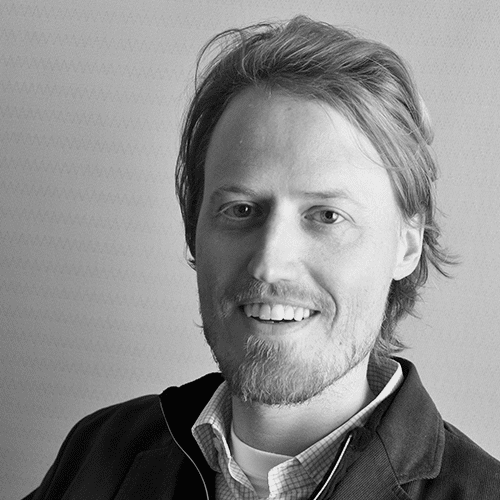
Jonathan Tate leads by example. I met Jonathan through my crowdfunding platform Small Change, where he raised funds for several of his project in New Orleans. With his New Orleans architectural practice, Jonathan focuses on architecture, planning and odd opportunities such as what to do with odd-shaped lots that no-one knows what to do with. I find that immensely appealing and so do lots of others. Jonathan has received awards and press ranging from Curbed to Fast Company. He’s a rising star.
Jonathan is a graduate of Auburn University, where he was a multi-year participant in the Rural Studio, and Harvard University Graduate School of Design. He has been recognized by Emerging Voices 2017 of the Architectural League of New York.
Together, on this podcast, Eve and Jonathan geek out a little on odd buildings, odd lots, odd clients, crowdfunding and the role of creativity in building better cities.
Insights and Inspirations
- Lead by example.
- Dig in to non-formulaic, non-cookie-cutter solutions.
- Odd-shaped and forgotten lots can lead to a new genre of housing.
- A homeless person can build a house with the right set of drawings.
- Equity crowdfunding could equalize a neighborhood around development.
Information and Links
- Jonathan owns an architectural studio called Office of Jonathan Tate
- He’s building Starter Homes Two, an affordable housing project that he raised money for from a crowd of people on Small Change.
- He designed and is developing 1476 Magazine Street an artist owned bed and breakfast co-operative in New Orleans.
Read the podcast transcript here
Eve Picker: Hey, everyone, this is Eve Picker, and if you listen to this podcast series, you’re going to learn how to make some change. Thanks so much for joining us on this podcast. I’m Eve Picker, and my life revolves around cities, real estate, and crowdfunding. In this podcast series, we’ll be digging deep to discover how we can build better cities by building better buildings.
Eve Picker: Jonathan Tate is my guest today. I met Jonathan through my crowdfunding platform, Small Change, where he’s listed a couple of his projects in New Orleans. Jonathan’s architectural practice focuses on architecture, planning, and odd opportunities, such as what to do with odd-shaped lots that no one knows what to do with in New Orleans. I find that immensely appealing, and so do lots of other people.
Eve Picker: Jonathan has received awards, and press, ranging from Curbed to Fast Company. He’s a rising star. If you want to know more about Jonathan, after you’ve listened to this podcast, please visit EvePicker.com, where you’ll find links, and other goodies on the show notes page, and where you can subscribe to my newsletter on all things real-estate impact.
Eve Picker: Jonathan, what’s your background, and what path led you to where you are today, with your practice in New Orleans?
Jonathan Tate: Well, first, I want to say thank you for having me on, and it’s good to talk to you today. Let’s see if I can answer the question in terms of background.
Jonathan Tate: I don’t know how far to go back, but it might help just to say that I just started off, actually, in architecture in what I would say is a world-class practice, but a very conventional practice. We were located in Memphis, Tennessee. Then, in 2005, after Katrina in New Orleans, we relocated to the city. Roughly speaking, it was more like 2008, for me, to move down here.
Jonathan Tate: Through that process, and then, additionally, with the recession, and then, additionally, I was teaching at the time, it just … I don’t know. That’s sort of the origins of how our practice became our practice is what I’d say. At least those are some of the pieces that all added up to our multifaceted focus as an office.
Jonathan Tate: The lineage being exposure to New Orleans, in a recovery standpoint; trying to assist in that recovery, but also in academia, where research, and engagement in topics that were sort of extra-architecture, in a way, all led to the establishment of our practice, today, which tries to focus both on architecture – making buildings – but also, all the other things surrounding what it takes to put together a building, or a city, or [inaudible]. That’s kind of where we came from.
Eve Picker: What prompted you to move to New Orleans? I know we had Katrina, but why move your office there? What were you hoping that would accomplish?
Jonathan Tate: Well, the thing is, we were … Memphis is close, but really far away at the same time. We were in a state with a practice, where we were busy … Again, it’s ’05, and it’s rolled into ’06-’07; we were busy, but not that busy, and we were trying to re-calibrate, and stand up a little bit, just to drive in … Anyway, focus on things that we cared more about, and less about just staying busy.
Jonathan Tate: Then comes Katrina, and we just wanted to help. There’s a kinship with the city. We were both along the river. We spent- A lot of us in the office had sort of grown up coming down here. We really got wrapped up in what was happening, and wanted to help, basically.
Jonathan Tate: We were invited by a number of different people to speculate on what we thought the future of the city was. Again, we were doing this from afar, and an opportunity arose for my partner at the time to be able to move down to New Orleans, and do a sort of visiting-teaching position at the university here, Tulane.
Jonathan Tate: That was kind of our segue to making a decision just to move everything down. We, through this process, recognized that there was only so much we could do in this environment. being, again, away in another city. I haven’t had a chance to kind of be on the ground, and see if we could really have an impact. That was important to us. We were able to act on that; then, eventually, we moved the … He came down, and eventually, we decided to move the entire office down.
Eve Picker: Has it played out that way? Do you think the work that you’re doing intersects with impact, and socially responsible work in New Orleans? How do you think you’re, in your little practice, helping the city?
Jonathan Tate: Well, yeah, actually I do believe that it does, but in different ways is what I’d say. I wouldn’t say it’s more nuanced; it’s just that we don’t … It’s not always … Frankly, it’s over 10 years, now; the city’s kind of passed the recovery mode. Forgive me for saying, but there’s still things that need to be resolved that were consequences of the storm.
Jonathan Tate: What I would say, more importantly, and back to the original question, is there’s an ethos about how you engage in urbanization in the city, and how an architect can participate in that discussion, and contribute. That ethos is what’s really in the office, whether what we’re doing specifically relates to recovery, or whatever.
Jonathan Tate: It’s, I’d say, more the spirit of that, and being here at that time, shortly after the storm, and just seeing the energy in the architectural, and planning community, and how there was a lot of ideas, and vitality, and just a real commitment to try to make this place survive, and be greater than it was.
Jonathan Tate: That spirit … Again, sorry for using these terms, but I’d say that spirit sort of has infused the office in a lot of ways, and it’s still – as a lot of people in New Orleans connect, and resonate on that level – but we’re- it’s definitely a part of, and been embodied in our office, for sure.
Eve Picker: Be sure to go to EvePicker.com, and sign up for my free educational newsletter about impact real-estate investing. You’ll be among the first to hear about new projects you can invest in. That’s EvePicker.com. Thanks so much.
Eve Picker: Do you want to just tell us quickly about a couple of projects that you think kind of embody impactful real-estate projects that you’re working on? I know about them, but our listeners don’t, so I’m hoping you’ll explain a couple of things you’re working on.
Jonathan Tate: Sure, sure. There’s actually two- a couple of projects, and I should say, as an office, we had plenty of, like, “Here, we just do work for people,” and I love all the work that we do for people, and I love all our clients. It’s fantastic.
Jonathan Tate: Running parallel to that, we have projects that are self-starters, let’s say; projects that we initiated, either through partnerships with people, or on our own. Those are the ones that I generally talk about, when we’re having this kind of conversation. I’ll sort of start it there.
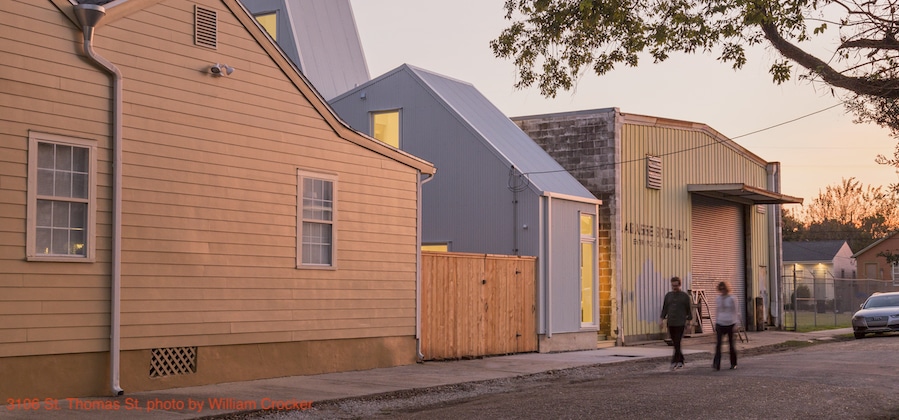
Jonathan Tate: The one would certainly be our housing program, which we’ve dubbed the Starter Home*, with an asterisk, which is a infill … You mentioned in your intro, it’s an infill-housing-development agenda, if you will; a strategy, a Project sort of with a capital P.
Jonathan Tate: What we’ve done was formulate a position about a need for a particular type of housing in New Orleans, and this is topical, by the way. I think, as we framed it, it’s applicable in any city in the US, or at least from an American context, I think it’s applicable anywhere.
Jonathan Tate: In effect, we were looking for housing opportunities that were leveraging what we saw as unrealized property, or land in urban, or strictly city environments; then trying to locate, and design housing on these sites that were focused on either first-time home buyers, or last-time home buyers, or anywhere really in between.
Jonathan Tate: The idea about the housing was is that it’s sort of right-sized. It’s resisting the sort of bloat that we’re seeing in the housing industry, in general, and, as a consequence, was driving down some of the costs of the housing. It’s by no means affordable, but it’s certainly mid-market housing.
Jonathan Tate: In that, we’re trying to interject design, and offer to the speculative buyer what we think is all the contemporary work, versus most speculative housing you’re going to see; A tend, or a trend towards traditionalist, at least in single-family housing.
Jonathan Tate: That one- that project, again, the Starter Home* project is something we’re really proud of, and that we worked on for the last year … It’s gone on five years now, basically, and we’ve managed to build … I think collectively we’re at our 16th home. The last ones were ones that we ran through Small Change. It was the first project that we worked with you on there.
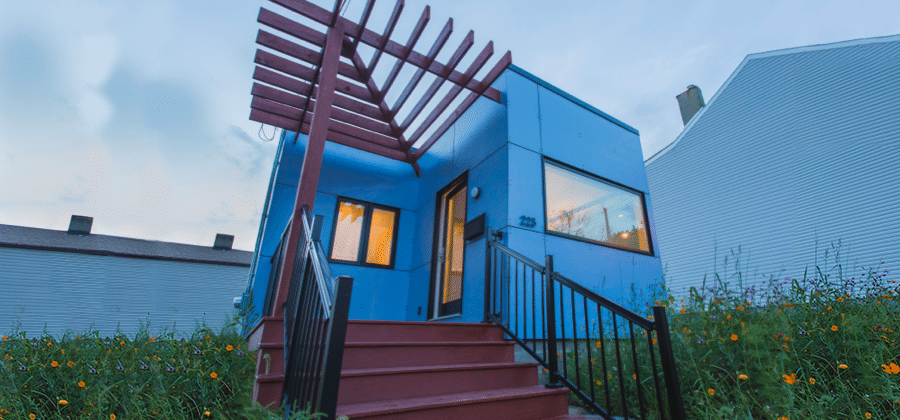
Jonathan Tate: Along the way, we’ve done a number of different houses. One that I’m starting to kind of look back on, and think of, more deeply, anyways, is a project that we categorized under Starter Home*, but it was something that we did for an individual, who was formerly homeless. He had purchased himself a small lot; basically one of these little remnant parcels that … I think, in total, it was about 800 square feet of land. I forget the exact number, but it’s small.
Jonathan Tate: We, with his help, designed a home for him. It’s basically a micro house. It was, at the time, the smallest; I think it still is the smallest permitted home in the city of New Orleans. It was under 200 square feet.
Jonathan Tate: We did it in a way that he could self-build it. We sort of helped him with the construction; we created a set of documents that were permittable, but also something that he could actually go out, and build by it. We helped him in that process, and with pulling that together.
Jonathan Tate: Now, weirdly enough, we don’t promote it a lot, but it’s one that has a lot of meaning for us, and it’s getting a little bit of traction here in the city, just with people that are interested in looking at other housing; other ways to provide housing for people that aren’t just building homes; it may be looking at a micro home, and looking at, again, these small parcels. That one’s really interesting. Again, it’s under that framework of the starter housing. I can keep going. There’s another project that we’re- or I can stop there.
Eve Picker: No, no, no, go ahead. One more project.
Jonathan Tate: Yeah. The other one I’d say is another project that has been hosted on the Small Change site, and another self-initiated project. It’s actually, at least in theory, again, that we’ve come up with an idea, and then formulated a building around the idea.
Jonathan Tate: The idea being a cooperatively owned B&B that … Basically a hotel, or a small hotel, in this case, where the operations are provided by the co-operative. The co-operative is made up of artists, and other creative individuals that need time to do their work, but don’t often have that time, because they’re too busy making money at a job, basically..
Jonathan Tate: The thought being is that we would create a co-operative. The co-operative would do the operations for the hotel, and then, in return for your work at the hotel, you actually get room and board.
Jonathan Tate: Then, depending on how much you decided to work in the hotel, the theory goes that you work one day a week – you may work a little bit more; you may work less – but the rest of that time, because you’re not worried about where you have to live, or where you’re going to get your next meal, you’re able to focus on, and concentrate on your work.
Jonathan Tate: That one’s underway now, the one here, but we’ve already done one in Clarksdale, Mississippi. That one’s up, and operational, and it’s sort of our model that we’re translating down here. Those are two projects that I think that-
Eve Picker: Obviously, you think socially responsible real estate is necessary. Do you see any current trends that interest you the most, that might propel that type of real estate further [cross talk] Maybe another question I want to ask you, also, or maybe this one comes first is, in your practice, now, which do you prefer? Do you prefer doing these self-starter projects, or working for your client?
Jonathan Tate: That’s a good question. I’d rather answer that one, rather than the trend. I’m terrible at trends [cross talk] all I get asked is … I’m no good at predicting that, I should say. In terms of working with things, the truth is that I go back and forth. It depends on what day of the week, or what process, or phase that it’s in.
Jonathan Tate: I think what I enjoy most is that they both exist simultaneously, because it’s … Again, it can be a headache sometimes. I really do enjoy working with clients, and other people, and helping them with their vision, and I also really enjoy, and appreciate the opportunity to kind of make some pivotal, and essential decisions around the things that we do. It’s not that I would say I prefer one or the other. What I prefer is that they both exist.
Eve Picker: Right. Okay, I’m going to retract the trend question, and I’m going to ask you if there’s any anything in the world of real estate that you’ll particularly interested in that’s new that you’re following? Let’s not call it a trend.
Jonathan Tate: What we are moving in to, and what we’re trying to think about more … There’s nothing new about this, in some ways; it’s just I’m not sure that people have been critical about it, in certain ways. It’s all this mid-rise housing, and the typology around multifamily housing …
Jonathan Tate: It’s what we would sort of colloquially call a four-over-two, or a three-over-one, or whatever, but where you have a base that’s not constructed non-combustible, which means it could be retail; it could be parking; it could be whatever. On top of that, you’ve got the obligatory three-four floors of housing that sit on top of it, which is the kind of building block of what we’re seeing here in cities, now, and have, historically.
Jonathan Tate: It is also, in our mind, leading to the homogenization of urban environments, because it’s become formulaic. It’s what we’re really digging into now, and again, this isn’t a trend; this isn’t necessarily anything new. It’s just we’re starting to question what that is, and how we can engage in that conversation, and maybe turn it a little bit, and see if there’s a way to make a richer- or get a richer project out of it.
Eve Picker: I think the other question I had is do you think there are some trends, and I know you don’t like that word, in real-estate development that are really important for the future of our cities?
Jonathan Tate: In my world … It’s funny; this is a question, again, it’s hard for me to really answer in some ways, because, believe it or not, and I often say this, I don’t see myself as a developer, at least not by definition.
Jonathan Tate: What I mean by that is we’re not really set up as a development practice, per se. We do development, but we’re not organized around development as a business model. Consequently, weirdly enough, I don’t really follow development as much. I don’t pay attention to it probably the way that I should but …
Jonathan Tate: That’s not to say we don’t interact with it in interesting ways. Obviously, we’ve got clients that are developers, aside from ourselves … There’s things that are floating around now that … Actually, honestly, a lot of people come to us to talk about, or a fair amount of people come to us with interest in, and want to discuss crowdfunding, the world that you’re in. It certainly has a lot of interest, and I think people are trying to figure out how to utilize that as a tool.
Jonathan Tate: Lately, Opportunity Zone seems to be the thing that everyone wants to hear about. Those are financial trends, and what people are starting to focus on. I think your earlier question about any sort of social-minded real-estate development … In our world, we don’t see- you see a little bit of it, but you don’t see a lot of it, and it certainly doesn’t feel like a trend, unfortunately [cross talk]
Eve Picker: If you think about it, crowdfunding is fast – raising equity through a crowd, but co-working has had a meteoric rise, where people share office space, and share amenities, because it’s flexible, and it allows them to move around; it allows them not to put down a lot of money on a space they may not need. The same is going to happen with housing, right? We’re seeing [cross talk] housing, and we’re seeing all sorts of new versions of living, and working together that didn’t exist maybe 10 years ago.
Jonathan Tate: Something we’re starting to get … On that same track, something that we’ve started to engage with a little bit, in a couple of different cities now, is the role of the food market as an incubator, and a jumping-off point for restaurant entrepreneurs. That’s a whole ‘nother model that seems to be proliferating wherever we go these days.
Jonathan Tate: That’s right. I think, for me, what’s interesting about that is that it allows places that don’t have much activity, or that someone may not go to, to open an office, because it’s a neighborhood that they’re not sure about, but it allows that neighborhood to kind of gather people who are doing things. That may begin invigoration of that neighborhood.
Eve Picker: If a nonprofit opens a co-working space, they’re able to offer space to small businesses in the neighborhood, and they really have nowhere else to go, now, all of a sudden, you have some sort of expression of what’s actually happening in the neighborhood. That’s really interesting, I think [cross talk]
Jonathan Tate: Yeah, I totally agree, and we’re certainly seeing that. I guess what I like about it, in addition to what you’ve described already, is the forefront of revitalization of a portion of a city, or at least that’s one component of it.
Jonathan Tate: It also involves, often, non-developer types that are working towards these goals. I think by the time these kind of ideas make their way up, and they become, again, formulaic in some ways, that’s when developers feel like it’s safe to take it on, and implement different-.
Eve Picker: That’s right, and that’s why bankers feel it’s safe to take it on..
Jonathan Tate: That’s right.
Eve Picker: We’re sort of stuck in this circle of traditional financial institutions not wanting to fund the things that will eventually make the places we live better. Someone has to kick that off, right? That’s you, with your odd lots, or me, with my crowdfunding.
Eve Picker: There have to be those early starters, which I think brings me to my next question – how can we improve on that? It is so hard, as you know, to do those little startup projects, and they really don’t provide much financial return. Clearly, we like doing them because they provide us some other sort of satisfaction. How can we get better at incubating those sorts of ideas for cities?
Jonathan Tate: I think, one, you have to lead by example, in a lot of ways, and that’s certainly what we were trying to do. We had no … With the housing in particular, there’s no expectation that we were going to build thousands of units of housing, which we certainly need, like most cities [inaudible] help with a lot of issues, just availability, but also affordability. There’s that.
Jonathan Tate: I think providing some evidence that this is a thing that one can do … Then you see the adaptation of that, and the adoption of that, and how it can sort of roll through … When I fortunately find myself in these kind of conversations, a lot, are people that are interested in it, that just need some encouragement, and some support.
Jonathan Tate: That said, as a way to make sure this continues to happen, or at least facilitate this happening, I think creating networks, collaborative networks, where people can call on one another for expertise, or just general encouragement, as we’re saying, I think that’s an important thing. That’s the community, right?
Eve Picker: Right.
Jonathan Tate: That’s what it takes for this to happen.
Eve Picker: Yeah. I wish every city had a Department of Big Ideas, and a little bit of money set aside for the projects, which they maybe turn their noses up at, because they’re small, and they don’t think they’re important enough; those little projects can sometimes have an enormous impact in an unintended way.
Jonathan Tate: Yeah.
Eve Picker: One of the stories I like about you, Jonathan, is you’ve created this whole thesis around odd-shaped, forgotten, and abandoned lots in New Orleans. Recently, didn’t New York City run a little competition on odd-shaped lots [cross talk] took from you. How did that competition end up, and why did they do that?
Jonathan Tate: Well, definitely don’t want to take credit for the idea there, but they … Actually, I followed it. We did not compete in it. We didn’t submit anything for it, but have certainly followed it. I think it ended up they selected some winners, and we’ll see if they’re interested, and want to actually construct the housing that’s on there, or that they’ve proposed, let’s say.
Jonathan Tate: Weirdly enough, I was having a conversation with a New York region developer early on … When I say early on in our process of building this housing … They said to me, “That’s really fascinating, but it only works where you are, or in similar-sized cities. It doesn’t make any sense in New York, at all.” Then, three years later, the city is saying, “No, this is exactly what we should be doing with these lots.” [cross talk]
Eve Picker: -another really great example of that is the Ciclovía that’s in Bogota, Colombia. I talked to the Mayor Peñalosa, who started that. He said they had no operational funds, and it was really a question of whether they created the Ciclovía, which is an open street once a week for the residents of the city, who are very poor, and the city had many problems, or whether they paved the roads.
Eve Picker: They chose to do this open street for the people, instead. The last time I looked, I think it was 100-miles long. Every Sunday, they close the streets, and people go out there, and run, and bicycle, and do lots of other learn things. That idea has spread to practically every city in the world.
Jonathan Tate: Yeah.
Eve Picker: It’s had an astounding impact , just that idea, so, those little ideas [cross talk]
Jonathan Tate: I think you’re right. Look at something the High Line in New York, as well. I feel like every city is clamoring for their own version of that, now, too, because they just see how impactful, and how it’s making use of an abandoned resource, right?
Eve Picker: Right, so maybe … Go ahead.
Jonathan Tate: I was going to say, that’s part of this ethos, as well, when we when we talk about the development, or redevelopment of cities. It’s like looking at things not as, I don’t know, refuse, or eyesore, or junk, or waste, or whatever you want to call it.
Jonathan Tate: It’s just like there are opportunities all around us, and just understanding how to capitalize on those spaces, on those buildings, on those structures, it really takes imagination. That’s really, I think, what we should be supporting, and trying to cultivate. Back to your idea of the Department of Big Ideas, I think that’s a great idea.
Eve Picker: In other words, use every corner of the city, and don’t waste it, because we’ve built the infrastructure, and we paid for it, and there are people there. Anyway …
Jonathan Tate: Yeah, yeah.
Eve Picker: Well, I have to ask you, you’ve crowdfunded a couple of projects on our site, and I’m wondering what role you think that equity crowdfunding can play in building communities, or building better communities?
Jonathan Tate: Yeah, it is … Well, I’m going to have to say I’m absolutely enamored with it, as a process, and as a platform, and as a tool to help with development. The thing that I think it can do more of, and frankly, I haven’t done a great job with our own raises is how it might galvanize neighborhoods around development.
Jonathan Tate: I think that’s the one of the principal aspirations of this is that you can- that everyone should be able to participate, and be involved with the redevelopment of their own neighborhoods, or their own community, or their own city. They should be able to support that in some way.
Jonathan Tate: Again, here’s a tool for us to use that would enable people to support, and basically cast a vote for what they felt like were strong investments in their city, and that they see a benefit of that.
Jonathan Tate: That’s where, actually, if, or as the next raise comes, that’s the thing that would be … At least for us, on the crowdfunding raise, it’d be the thing that I’d want to try to focus on more of is just how do we pull people into it that are directly impacted by it?
Jonathan Tate: That’s where, again, that’s what I would see as one of the great advantages of this; just leveraging it, and making people aware of it. Then sort of pulling them into the process. I think that’s an important tool.
Eve Picker: Yeah, so, I think other than raising money, as you said, it can galvanize a neighborhood, and it could provide- even could provide proof to a zoning department that a project could go … I think there are maybe other things that we haven’t thought out about that it could help with kind of the crowd [inaudible], right?
Jonathan Tate: Yeah, and there again, it becomes emblematic, and you see it is here’s a test case, and it proves that it’s right. It doesn’t have to be grandiose. You don’t need to raise $10 million. I think if it was a small project that a lot of people were able to participate in, then that’s … They have an ownership in that, [inaudible] people around it have ownership, and that’s great.
Eve Picker: Right. I suppose I have one wrap-up question; it’s a big one. That is how do you think real-estate development, or architecture, or thinking about cities could be improved in the US?
Jonathan Tate: Whoa, that’s a big one. Let me think … Let me think about that. Going back to the comment that I made about mid-sized housing, if you asked me that question today, I’m, again, increasingly interested, but also frustrated with the built environments that we’re seeing kind of rapidly expanding in most cities that reflect a lack of imagination, or better yet, the propensity for developers to sort of follow known models.
Jonathan Tate: In this case, it’s like we understand a certain kind of housing type, or you just kind of build that, because it’s known, and it’s comfortable, and we can rely on it. I don’t particularly care for the consequences of that in our cities. As things are popping up, it’s just- we’re losing characteristics, and qualities of our urban environments that I think make going to Pittsburgh different than coming to New Orleans, right?
Eve Picker: Right.
Jonathan Tate: I’d say that’s the piece. If we can start challenging the development community to think about things a little bit differently, or to try to localize a little bit more … I understand the economics around all of this, and why it is what it is, but it’s just revealing what’s happening now, just acknowledge it, so that, as we move forward, we could challenge some of those preconditions a little bit, and come up with work that feels like it was born out of the location that it belonged, right?
Eve Picker: Yes, yes, absolutely. Maybe the most important thing you said is lead by example, because if you do some terrific projects, others will follow, as we saw you do … You tackled odd-shaped lots, and New York City followed. Perhaps, the timeline’s too long? I think having creative people working on cities, like you, is absolutely essential, and I want to thank you for that.
Jonathan Tate: Well, thank you.
Eve Picker: With that, let’s wrap up. I thank you very much for joining us, and I’m sure we’re going to talk again.
Jonathan Tate: Yeah, great. Thank you.
Eve Picker: That was the amazing Jonathan Tate. Today, Jonathan gave me three great takeaways. First, to always lead by example. Second, that I’d forgotten things can have great value, and third, that it’s worth looking beyond formulaic answers to solve tricky urban issues. What did you learn?
Eve Picker: You can read more about Jonathan on the show notes page for this podcast, at EvePicker.com. While you’re there, please consider signing up for my newsletter to find out more about how to make money in real estate, while making some change.
Eve Picker: Thanks so much for spending your time with Jonathan, and I today. We’ll talk again soon, but for now, this is Eve Picker signing off to go make some change.
Image courtesy of OJT (Office of Jonathan Tate)