• Skip to main content
  • Skip to secondary menu
  • Skip to primary sidebar
  • Skip to footer
  • Home
  • About Us
  • Say hello
Rethink Real Estate. For Good.

Rethink Real Estate. For Good.

  • Podcast
  • Posts
  • In the news
  • Speaking and media
    • About Eve
    • Speaking requests
    • Speaking engagements
    • Press kit
  • Investment opportunities

Crowdfunding

Scottie loves real estate.

February 23, 2022

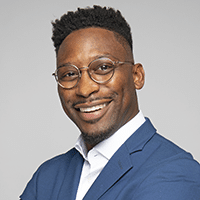
Scottie Smith II, is CEO of Scottie Smith & Associates (SSA), and a licensed broker, developer, author and entrepreneur based in Dallas, Texas.  He is a veteran in the real estate industry, with 15 years of experience, and has helped thousands of people nationwide through his sales and real estate development activities. Scottie has been featured on Black Enterprise, Fox News, Forbes and more as a real estate subject-matter expert. His recently released book, “From Decision to Close“, provides a practical, no-nonsense guide to homeownership. Scottie’s journey in real estate began when he purchased his first home and rented spare rooms to friends during his freshman year of college. This sparked his interest. At 19 he got his real estate license. By the time he was 21, he had invested in multiple properties and had numerous tenants.

In 2011, Scottie founded SSA, a real estate brokerage, with just one other agent. The company has grown more than 200% yearly with new agents continuing to join the team making SSA one of the fastest growing independent real estate brokerages in Texas. He and his team of experts have brokered millions of dollars in sales helping people across the country experience the dream of homeownership.

Scottie also served as a Board Trustee for the Atlantic Housing Foundation for ten years, where he was a member of the Investment Committee helping to underwrite, review and approve more than $500 million in affordable housing projects in several states. This includes the acquisition and renovation of 300 affordable units in Fort Worth, the redevelopment of 250 affordable housing units in Lewisville, and a 32-unit townhome development in South Dallas.

In addition to his thriving brokerage firm, Scottie provides training courses through Lone Star Real Estate Academy, a real estate school he founded in 2015. He also works with underserved entrepreneurs by creating the HUB Space, a non-profit formed to support minority-owned startups. Because of his commitment to the area, Mr. Smith has been appointed by City Councilman Adam Bazaldua to the South Dallas Area Planning Task force, where he has been tasked with creating a 20 year area development plan for South Dallas/Fair Park.

Scottie has been recognized by the National Association of Realtors Magazine as one of the Top 30 brokers under 30, and by the mayor of Denton, Texas as a leader in providing public housing. He was also presented with the Quest for Success Award, Entrepreneur of the Year Award in 2015 by the Dallas Black Chamber of Commerce, recognized and inducted into the Forbes Real Estate in 2018.  Scottie has made a lifelong commitment to use his passion for real estate to provide an avenue that helps people in his community and will continue to keep his goal in the forefront. He is a graduate of the University of Notre Dame, a father of two and brother of twelve.

Read the podcast transcript here

Eve Picker: [00:00:11] Hi there. Thanks for joining me on Rethink Real Estate. For Good. I’m Eve Picker and I’m on a mission to make real estate work for everyone. I love real estate. Real estate makes places good or bad, rich or poor, beautiful or not. In this show, I’m interviewing the disruptors, those creative thinkers and doers that are shrugging off the status quo, in order to build better for everyone. If you haven’t already, check out all of my podcasts at our website RethinkRealEstateForGood.co, or you can find them at your favorite podcast station. You’ll find lots worth listening to, I’m sure.

Eve: [00:01:03] Scotty Smith is a very energetic guy. He fell in love with real estate at just 19. By the time he was 21, he had invested in multiple properties and had numerous tenants. It makes sense that in 2011, Scotty founded SSA, a real estate brokerage with just one other agent. The company has doubled in size year upon year, making SSA one of the fastest growing independent real estate brokerages in Texas. He and his team of experts have brokered millions of dollars in sales, helping people across the country experience the dream of home ownership. And if that’s not enough, Scotty started a real estate training program and wrote a book ‘From Decision to Close’. It provides a practical, no-nonsense guide to home ownership. Listen in to learn more about Scottie Smith and his passion for real estate.

Eve: [00:02:18] Hi, Scotty, it’s it’s really lovely to have you with me today.

Scottie Smith: [00:02:22] Thank you for having me. I’m excited to be here.

Eve: [00:02:25] So I have to ask what drew you to real estate as a career?

Scottie: [00:02:30] Well, so, I’ve been in real estate for my entire adult life. Really started as a child when I was helping my stepfather and my mother, they were running a small contracting business and I used to do a lot of work with him. I was doing roof work, H-back work. I was under houses and at the end of the project we’d be handing somebody the key to a finished project that they will ultimately go out and make, you know, a bunch of money on it. So, I wanted to figure out how, one, I wanted to figure out how to stop from being on the roof in hot Houston weather. But two, I wanted to figure out how could I be the key holder at the end of that transaction? And so, my senior year in high school, I read ‘Rich Dad, Poor Dad’, then went off to college and my professor, my first real estate professor, actualized what I read in that book. And it made me say, OK, this is something that is real, it’s not just something that’s on paper. And that professor really challenged all of the students to purchase a property by the end of that semester. And for me, it was weird because when I went back home during the college break, you know, winter and stuff like that, I still had a curfew. And so putting in my mind that I could actually own a property at such a young age, blew me away. Didn’t reach the goal that he set to own a property by the end of that semester, but by the time the end of the next semester rolled around, I’d taken some scholarship money that I won and refund from financial aid. And I took that and bought my first property, I was 19 years old, and I took what I learned in those classes and in that book and put it to work.

Scottie: [00:04:18] And so from there, things just kind of spun out of control. I bought a property, and I did a deal with the international buyer. And then I did my first big flip. All of this happened so quickly before I was even the age of twenty-one. And, you know, I couldn’t even go celebrate at the bar like I wanted to because I wasn’t allowed in the bar. But it was such an experience, all before the Great Recession hit that taught me a lot about real estate and taught me a lot about me being able to educate a lot of my friends and family about purchasing real estate and helping them understand the investor’s mindset and applying that to the home buying process. And so, yeah, it just kind of grew from there and I’ve been, you know, going crazy ever since.

Eve: [00:05:12] So it sounds like you love it. So, this interest has blossomed into a number of things like a brokerage, a training academy, a book and a bunch of leadership positions. I wanted to talk to you about each of those. Tell me about the brokerage. When did you start that and why?

Scottie: [00:05:28] Yeah. So, I started my brokerage in 2011, and let me take a step back. Before that, I was in public accounting. When the when the Great Recession hit, I felt like I needed to do something safe. And so, I became, you know, I got my master’s in accounting from the University of Notre Dame, and I’m really just trying to find a safe route, right? But even in that career, I realized I wasn’t walking in my purpose. And so ultimately, I ended up leaving that and starting the brokerage with the expectation to help people understand how to build wealth using home ownership as that vehicle. And that’s the whole purpose of my entire career, right? My goal is to help people using real estate as the vehicle to do so. And so everything that I do, every purpose movement, has to lead with helping people achieve and accomplish something. And so, I started the brokerage. We came out the gate really swinging. It was great. I just started just helping folks and by that time, you know, we got picked up by the NAR at 30 under 30. They saw the work that we were doing here down in Dallas with helping families find affordable housing. And that was really the start of the brokerage really just figuring out how to help the people who, you know, don’t necessarily always have the help.

Eve: [00:06:55] So how big is your brokerage now?

Scottie: [00:06:57] So we have scaled back. At our largest we were about 30 agents strong. We scaled back to 10. And really solid agents who take the principle that I that I’ve taught and that I’ve built this company on, specifically about education, educating our clients, right? Everything isn’t just transactional; it’s about how can we equip our buyers and our sellers with the necessary information to help them make the right financial decision? And so that’s kind of what our mission has been, and it continues to be, educating folks. And from that we’ve gotten a number of people who have asked and approach us about becoming licensed real estate advisors or licensed real estate agents. And so that’s where the academy came in is, OK, let’s go into the community, the underserved community, and help people understand how to become licensed in the real estate industry. And so that’s what we, you know, that’s what I’ve been able to really accomplish is understanding where the need is and bridging the gap between what folks want and what they have access to. And so, a lot of people that we serve and a lot of communities that we serve, they don’t really understand how to get into real estate, how to become licensed agent or appraiser or an inspector. And so, we provide the resources for very, very low cost so that people can realize and actualize this whole idea of real estate as a career.

Eve: [00:08:29] So how many people have you trained in your academy?

Scottie: [00:08:33] Oh, at this point since launching, we’ve had almost 500 students and folks who’ve come through. Through the investing academy, through the licensing academy and through our brokerage, you know, the number of continuing education classes that we offer agents. It’s a very rewarding position to be in, and I’m really happy with what we’ve been able to accomplish over these last 11 years.

Eve: [00:09:03] And who are the teachers who help you? Is that your brokerage team?

Scottie: [00:09:08] It is our brokerage team. So, we have a few trainers. Part of what we do, we have some online stuff that we offer. I’ve authored a textbook that allows for folks to understand the investing and development side of things. And it’s really been, you know, just a working process. We’re consistently and constantly changing and evolving what the curriculum looks like, and it’s fun. And so, we also have a partnership with Dearborn Education. And Dearborn has provided us a lot of access to learning materials as well, so we’ve done some great things with them over the years.

Eve: [00:09:52] And so I think I heard there that you also wrote a book.

[00:09:56] Yes.

[00:09:57] And I think it’s called ‘From Decision to Close’. So, what’s that about?

Scottie: [00:10:00] So ‘From Decision to Close’, that book is ultimately just a guide. It’s the simplest form, the simplest way to help people understand what the process is for purchasing and owning a home. And so, I broke it down to its simplest form, simply because so many people view the home buying process and that process surrounding that, as antiquated, as difficult to understand, scary, it made them anxious. And the demographic that we served, I wanted to make it as easy and plain as possible. And so, when somebody read this book, we want to make certain that by the end of the book, they had a breath of fresh air and they were like, oh, that’s it?

Eve: [00:10:49] And I get it. Yeah,

Scottie: [00:10:51] Yeah. And so, you know, I’ve gotten a lot of, oh, OK, I didn’t realize how simple it was. Yeah, it requires you to do a little bit of work on the front end. But if you follow these….

Eve: [00:11:00] It’s really amazing how simple things are clouded in complicated language, aren’t they?

Scottie: [00:11:05] Right, exactly.

Eve: [00:11:06] So you talked about the demographic you served. Can you tell us about that?

Scottie: [00:11:10] Yeah. So, we typically serve the minority community in low-income, middle-income neighborhoods in the urban community, really.

Eve: [00:11:20] This is Dallas, right?

Scottie: [00:11:22] This is Dallas, correct. And so we were initially in downtown Dallas, and about two years ago, we moved our office to South Dallas, specifically on Martin Luther King Boulevard. And so with our academy and with our brokerage and the Career Institute, we’re hoping to impact this community, create jobs, create understanding of the industry. Because that’s where we serve, right? And so we wanted to not just sell things to the community, but now offer career training, career placement in real estate.

Eve: [00:11:58] Yes, I think you have had some pretty high level volunteer leadership positions, too, if I remember correctly.

Scottie: [00:12:07] Yeah. So, through the work that I’ve done, I’ve been tasked with helping the South Dallas and southern Dallas area create an area development plan. And, you know, South Dallas specifically is an area that had been, you know, before we came into the community and started really developing on a mass scale, it was a community that was systemically disinvested in, strategically ignored. Schools were closing down, homes were getting torn down, the historical elements of the community were essentially getting wiped away. And so, I specifically chose this area because it was, for the most part, completely vacant. And so, I wanted to build homes. With it being six minutes from the central business district of the city, I knew that it was a way to make an impact I could. I could build affordable housing but also help to redevelop and breathe life back into a specific area. And so, through that work, the city councilman has appointed me as a chair of that task force. That is, I guess, our marching orders are to create a long-term development plan specifically for the area. How do we bring economic development, new commercial and residential development, you know, create jobs and things like that? So, we’re putting together a really comprehensive plan around that. That’s been fun. With some board stuff with the Association of Realtors, I’ve been placed there. Really just taking my talent and my knowledge to help people understand the community that we serve, right? And so, I’m kind of the advocate and the representative for the forgotten folks.

Eve: [00:13:50] And I think then, last but not least, you’re also a real estate developer. That’s correct, right? So, you started fixing and flipping houses pretty young. What’s that look like? What has that morphed into?

Scottie: [00:14:01] That has been a journey. So, seven years ago or so I literally took a wrong turn, and that’s how I found the South Dallas area, which is near Fair Park. I was supposed to turn left on the street and actually turned right on the street and ended up in this neighborhood. And I just I kind of just got lost in the neighborhood just to see what’s going on. Around the time when the market was rebounding here in Dallas we had a ton of outside investors from California, New York, Florida, come into the North Texas area, buying properties, all cash. And so a lot of my buyers that our brokerage was working with, we’re financing. They had some type of down payment assistance grants that they were working with. Took a little longer to close those deals so we were getting looked over on properties left and right. When I made that turn, which I say was the wrong time, but you know,

Eve: [00:14:54] It was really the right turn, right? Yeah.

Scottie: [00:14:57] It ended up being the right turn. I saw a vision for this area. We could build these homes and give our buyers first crack at them. And it just opened this, you know, mountain of possibilities for us and what started as, hey, I just want to get a few of my clients into a home because they’re, you know, they’re frustrated, stressed out, all of those things, evolved into, OK, now I’m a community developer, I’m helping to rebuild the community. And so between my partners and I, we’ve built about 60 homes in this area, with another 40 or so slated for the next 18 to 24 months. And so, we’re really working to change the outlook on how people view the South Dallas community.

Eve: [00:15:43] So those are tough projects to do because there’s no market. When you go to a bank, you’re not going to be able to raise as much money. How do you make them happen?

Scottie: [00:15:54] So yes, before I actually started my first build here in South Dallas, I think I got 14 or so no’s. And then finally, I had to reach out to a private lender down in Austin who saw the potential. And because of their confidence and because of how they saw us, I still, to this day continue to use them. Because they were there, and they have been rocking with this since the very beginning.

Eve: [00:16:24] You had to go to a lender in Austin?

Scottie: [00:16:27] A lender almost three and a half hours away,

Eve: [00:16:30] 14 noes

Scottie: [00:16:31] 14 noes.

Eve: [00:16:33] Why do you think that is? I’m going to push you a little on this.

Scottie: [00:16:37] Well, there was no real market for it. That’s first things first. It wasn’t a pretty area. People did not build in the area. It was falling down. It was dilapidated. At the face of it, it had everything that, you know, worked against it. And so it was difficult to set comps. It was difficult to justify the values. And it really was for homes that we were planning on selling for one hundred and sixty-five thousand dollars. And so to get that kind of no so many times, it almost got discouraging. And…

Eve: [00:17:15] I’m sure it was very discouraging!

Scottie: [00:17:17] It was discouraging. But I continue to press forward because I saw the potential and I saw the purpose and I understood the mission. And really, ponce we ended up just saying, you know what? everything will happen just the way it should, that’s when things started coming in place. We’ve got introduced to the capital partners down in Austin, and from there it was swinging. And so, you know, we had a little bit more skin in the game than we expected to with the lender starting, but we had to show proof of concept first. And so proof of concept worked and what has happened is that, before it was my partner and I that were building in this area. Now we have no less than 50 other builders that are doing the same thing and really helping to speed along the process.

Eve: [00:18:09] Right. Fourteen noes. OK. That’s a lot.

Scottie: [00:18:13] Yep, that is.

Eve: [00:18:14] A lot of tenacity. So, you’re also doing a really funky little project called The Retreat @ Lake Noire, which I personally know because you’re listing it on Small Change trying to raise funds through crowdfunding. Tell us a little bit about this project. It’s a little different than the affordable housing you’ve been working on.

Scottie: [00:18:33] Yeah, it really is. And so, you know, because I’m in the affordable housing development and anyone that’s in that space understands the politics behind creating affordable housing and the stresses that come with that. And so for the past six years, we’ve been doing, six or seven years actually, we’ve been doing affordable housing. And that has been the focus. And when you’re dealing with a large city like the city of Dallas, it can really beat you up. It can beat you down.

Eve: [00:19:05] And also during the last year, the price increases must be really making it more difficult for you.

Scottie: [00:19:11] Supply chain issues, material issues…

Eve: [00:19:14] Yes. Yeah.

Scottie: [00:19:16] the pricing on that. And so, you know, it is difficult to work in that space. And so, this year, I said I wanted to do, I wanted to get back to developing, but also having fun. And so, this is really a fun project for me. I initially purchased this land to be my hunting getaway. And so, I wanted to hunt. You know, it’s Texas, everybody hunts. I do bird hunting and things like that. But I wanted it to be my hunting getaway. But then I kind of sat down and spoke with a few friends and advisors, and I realized that we could do something more. We can create a getaway, a retreat, so to speak, where folks could unplug, come off the grid and really just, you know, get away from the busyness that is life. And, you know, realizing that there’s a lot of people who suffer from, you know, just mental health issues, just, you know, a lot of stuff on their mind that they just need to pull away from. This is what I’m hoping that the Retreat @ Lake Noire is able to accomplish. Just, and it’s strategically located an hour and a half south of Dallas. And when you go out there, there’s no service, right? And so you literally have to stand in the middle of the land to get some service. And so, it’s ideal because we have so much screen time. We have so much computer time that as a society now, we don’t ever really get to sit with our thoughts. And so with the Retreat @ Lake Noire, I’m hoping that people can just be at peace in a serene environment where you know the luxury tiny cabins end up helping them just be.

Eve: [00:20:53] Well, describe the project to us a little bit because it has a little lake, but how big is the land and what are you building?

Scottie: [00:21:00] Yeah, so it’s a 15-acre site. We’re building a three-and-a-half-acre manmade lake and we’re, around that lake we’ll have 20 luxury tiny cabins that will be, you know, energy efficient, solar powered. We’re stocking the lake with fish. People will be able to fish and enjoy that type of stuff, boating activities. Ultimately just giving people that getaway, that peaceful nature. And so, it’ll be 20, like I said, 20 cabins on a 15-acre site in the middle of nowhere.

Eve: [00:21:37] And I’ve seen the cabins. They’re very, very cute. So, what sets it apart? Is there anything else like that around Dallas?

Scottie: [00:21:44] No, there’s nothing in that direction. There are some things in Oklahoma, just about four hours north of Dallas. They’re much larger cabins called Broken Bow. And then there is one in far east Texas that is a similar kind of getaway, a little further away. And there is something else in far west Texas where, you know, people can go, a little bit further away from the city of Dallas than most people like to travel. But for the Retreat @ Lake Noire, it’s the only one that I’ve seen that has the cabins surrounding the lake and allows for guests to fish and boat in the lake so…

Eve: [00:22:28] Close enough so that you could really take a weekend. Like an hour and a half is not a not a super long drive. Have you started construction yet?

Scottie: [00:22:37] We started site work the week of January 14th. And our guys, once they started clearing the land, we ultimately found that we had a creek coming down the left side of the property, which I’m really excited about because it allows for us to add another feature. And so we’re going to put a path down the side of the creek that allows for guests to walk along that.

Eve: [00:23:03] A little trail. Yeah, nice.

Scottie: [00:23:05] A little trail. So yeah.

Eve: [00:23:06] When do you think it’ll be finished? When are you going to start taking bookings?

Scottie: [00:23:09] So we’re going to take bookings after the first 10 are completed. I think the target for that is at the end of the year. Full construction on this should take about 18 months from start to finish on completion on that.

Eve: [00:23:24] And so why crowdfunding? What are you hoping you’ll accomplish crowdfunding the equity for this project?

Scottie: [00:23:30] Just being able to have more partners on a deal is exciting. I’ve been doing, you know, for the past few years I’ve been doing everything on my own with, you know, a handful of investors every now and again. But this year I want to ensure that I was opening up these developments for people to get involved in, for people to see a return and, you know, being able to take advantage of these types of investments when they normally wouldn’t. And so most of these types of things are slated for accredited investors, and I don’t think it’s fair that accredited investors can have all the fun, so….

Eve: [00:24:08] Me too. But I think I see another class calling you in the training academy about crowdfunding, investing through crowdfunding.

Scottie: [00:24:16] Right? Yeah, that is something that has been written down up here on my board. I think the first thing, first step is successfully complete a crowdfund, so…

Eve: [00:24:29] Yeah, yeah. But I think, yeah, it does require education for sure, teaching people how to invest. So, I’m just going ask some wrap up questions. What accomplishments are you proudest of? You’ve done a lot in a short time.

Scottie: [00:24:42] Oh. Oh, that is a lot. I want to say this. I’m a father, so I have to lead with them. These kids, they blow me away every day. They’re good and decent kids. So that accomplishment of being a good father is dynamic, you know. That’s first and foremost. But from a real estate perspective, I think when I made 30 under 30, that was a goal that I wrote down when I first became a broker, and it was because there was a gentleman on the front cover of the Realtor Magazine that was in Plano. And that’s just, you know, 30 minutes north of Dallas. And I went and talked to him, and I said my goal is to be able to get on the front page of Realtor Magazine as a 30 under 30 recipient. And we had a really long conversation. He told me what to do. I kind of forgot the conversation and then I picked it up and said, this is the year, and I hit that. I applied for five years straight.

Eve: [00:25:44] Oh, that’s sad!

Scottie: [00:25:46] Five years straight. And on the fifth year, they finally, was like, I guess this guy isn’t giving up.

Eve: [00:25:52] Isn’t giving up, yeah.

Scottie: [00:25:54] And so it was such an awesome experience for me.

Eve: [00:26:00] Oh good, That’s great. That’s really great. Congratulations. Final question. What’s next for you after The Retreat? Any other plans?

Scottie: [00:26:09] Yes. So, with this tiny cabin community, a lot of people reached out to me with concepts and ideas, and I’d never really thought about the idea of having a tiny home community for sale. Somebody shot me over, they passed me over a development that was going on in Atlanta that was a tiny cottage community that they were selling, you know, and I looked at it and I said, wow, everything under, you know, for the most part, under two hundred thousand. In Dallas, we have an affordable housing crisis and so I figured…

Eve: [00:26:44] All over the world we have an affordable housing crisis.

Scottie: [00:26:46] Right! So, it’s, you know, if this is a way that I can create more affordable housing and figure out how to do what I need to do there, I think I should explore it. And so, I’ve been exploring it, and I’ve identified a few sites here in the city of Dallas, pretty much already zoned for what I needed to do. And I think I’m going to do a tiny home community here in the city of Dallas, but a for-sale model. And so that’s going to be next step.

Eve: [00:27:14] I can’t wait to see it. Well, thank you very much for joining me. I thoroughly enjoyed hearing about your exploits, and you’ll be like 50 under 50 sometime, 40 under 40, I don’t know. There are more goals.

Scottie: [00:27:29] Thank you so much for having me.

Eve: [00:27:31] 30 under 30 is an amazing accomplishment. Congratulations.

Scottie: [00:27:34] Thank you. Thank you.

Eve: [00:27:44] You can find out more about this episode or others you might have missed on the show notes page at our website RethinkRealEstateForGood.co. There’s lots to listen to there. A special thanks to David Allardice for his excellent editing of this podcast and original music. And thanks to you for spending your time with me today. We’ll talk again soon but for now, this is Eve Picker signing off to go make some change.

Image courtesy of Scottie Smith
On loving a challenge.

February 7, 2022

Nick Perold is a curious guy. On his podcast show, Curiosity in Progress, he asks these questions — What if we did things differently? What would it look like? How might it change life for the better? Nick believes that progress is fueled by these questions, and so are his guests.

In this episode Nick interviews Eve Picker, a pretty curious person herself. She’s the founder of Small Change, the first equity crowdfunding platform for impact investing in real estate. And she hosts her own podcast show, Rethink Real Estate (for good). Eve loves cities and challenges. If you want to learn more, you’re going to have to listen in!

Image courtesy of Curiosity In Progress

Dorchester rocks.

January 19, 2022

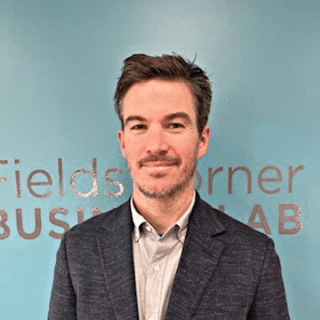
Travis Lee is founder and owner of TLee Development LLC, the developer of 1463 Dorchester Avenue. Travis is passionate about creating cross-cultural community building and economic development opportunities for low- and moderate-income Dorchester residents.

A Dorchester resident himself, Travis has over 15 years of experience developing mixed-income housing and small businesses in his community. Travis founded TLee Development (TLD) in 2014 with a core mission to help communities articulate and bring their visions to life. TLD works closely with community groups and civic associations to conceive, plan, permit and construct various mixed-income and mixed-use properties in Dorchester. To date, TLD has over 80 residential units and 50,000 square feet of neighborhood commercial space in the planning, permitting or operational phases of development. 100% of the residential units developed and owned by TLD are affordable to families making between 60%-90% of the area median income. In addition, TLD projects are designed and built to meet Passive House standards which reduces energy consumption and operating costs—ultimately creating a healthier environment for building occupants.

Prior to forming TLD, Travis served as a project manager in one of Boston’s most historic and impactful community development corporations, Madison Park CDC. While there, he oversaw the development of over 200 units of rental and homeownership housing as well as roughly 40,000 square feet of commercial space in the Roxbury neighborhood. As an entrepreneur and small business owner in Dorchester, Travis’s commitment to economic development in his neighborhood is personal. As co-founder of the Fields Corner Business Lab (2014), Travis has fostered collaboration among entrepreneurs, small businesses, and community development organizations to advance one of Dorchester’s most promising business districts. Travis also co-founded the Dorchester Brewing Company (2016), an AIA-award-winning partner-brewing facility and public Tap Room that has become a neighborhood staple and citywide favorite.

Read the podcast transcript here

Eve Picker: [00:00:11] Hi there. Thanks for joining me on Rethink Real Estate. For Good. I’m Eve Picker and I’m on a mission to make real estate work for everyone. I love real estate. Real estate makes places good or bad. Rich or poor. Beautiful or not. In this show, I’m interviewing the disruptors, those creative thinkers and doers that are shrugging off the status quo in order to build better for everyone. If you haven’t already, check out all of my podcasts at our website Re-Think Real Estate for Good, Darko, or you can find them at your favorite podcast station. You’ll find lots worth listening to, I’m sure.

Eve: [00:01:05] Travis Lee is the developer who believes in the local economy. After launching a career building big, Travis came home to Dorchester in 2014 to found TLDevelopment. Dorchester is a vibrant and diverse community in Boston. Since then, his work has not strayed beyond the boundaries of the Dorchester community, and that’s the way he likes it. Travis takes his role in the community very seriously. He works closely with community groups and civic associations to conceive, plan, permit and construct his various properties. To date, he has built, or is planning, 80 residential units and 50,000 square feet of neighborhood commercial space. One hundred per cent of his residential units are affordable to families making between 60 to 90 percent of the area median income. And his projects are designed and built to meet Passive House standards as well. He’s also co-founded a unique brewery and a co-working space, all in Dorchester. You’ll want to hear more.

Eve: [00:02:18] If you’d like to join me in my quest to rethink real estate. There are two simple things you can do. Share this podcast and go to RethinkRealEstateForGood.co, where you can subscribe to be the first to hear about my podcasts, my blog posts, and other goodies.

Eve: [00:02:46] Hi, Travis, thanks so much for joining me today.

Travis Lee: [00:02:49] My pleasure, Eve. Thanks for inviting me

Eve: [00:02:52] So, you’re a real estate developer with a mission grounded in community, and I wanted to understand why that’s important to you.

Travis: [00:03:00] Well, it’s a great question. I graduated college and moved up to Boston from South Carolina to work at a homeless shelter in downtown Boston. And my first year of living in Boston was sharing a bunk with a man recovering from substance abuse. Along with thirty-one other men in recovery at a homeless shelter, and my job was to be an informal in-house caseworker who helped folks find jobs and go to court and help them with their court cases and just be a friend, so to speak. And that was probably the most influential year of my life in terms of getting a up-close view of community development and/or broken communities and hearing all of my new friends tell me about their stories and the communities they came from. And it gave me quite the passion to be deeply involved, deeply engaged in a community as I grew older, and to play a small role in facilitating a healthy community for folks.

Eve: [00:04:22] So how did you wind your way to developer in Dorchester today?

Travis: [00:04:27] Well, after that year of living and working at the Boston Rescue Mission, I took on a role via AmeriCorps at a micro-lending organization called Accione USA, where I spent a year making five-thousand-loans to Spanish speaking entrepreneurs.

Eve: [00:04:48] Oh, that’s interesting.

Travis: [00:04:49] In the city of Boston. And I think I had more fun that year than I have in many, many years. And after that year, I got an internship at the Jamaica Plain Neighborhood Development Corporation, a community development group in Boston. And I had the great privilege of working on a redevelopment of a 1880’s brewery, the Haffenreffer Brewery.

Eve: [00:05:16] Oh, that’s fun.

Travis: [00:05:17] And we converted one hundred thousand square foot abandoned brewery into 32 small business spaces. And to be involved with the financing and the construction and the tenant fit-out of that project got all of my blood flowing for community development. From there, I got married and moved to New York City and got a job working at a public private bank called the Upper Manhattan Empowerment Zone, where I was charged with making loans and equity investments into small businesses and real estate projects that otherwise would not occur in Harlem or Upper Manhattan, and got a chance to be on the lending side for small businesses and fell in love with small business, and helping those small businesses grow and start up shops when they were having a hard time finding the capital. So, we got to play that gap financing role. And a couple of years later, moved back to Boston and moved into a neighborhood called Dorchester, where my kids would go to school and my wife would teach and I looked for a job in the community development world.

Travis: [00:06:38] This time, I wanted to be on the development side, and I found an old friend who was running a real estate department at a community development group called Madison Park CDC in Roxbury and took a job as a project manager and spent the next seven years developing two hundred or so apartments and/or homeownership opportunities in the Roxbury neighborhood called Nubian Square. And those seven years were extremely influential, mostly because for seven years I worked in the same location with the same people, the same community groups getting to know the heart and the soul of a neighborhood and getting to understand the vision that a community had for itself and thereby getting to play a role in executing their vision. And that’s when I said, I want to spend the rest of my life working in a single community, helping to advance the vision that that community has for itself. And that means getting to know a place, getting to know the people there, getting to know what they care about and putting the skills and the experience and the resources that I, as a developer, have at my disposal. Putting those to work for the sake of moving forward a community’s vision for itself and finding the balance where I can both make money and accomplish a vision that a community has, and that’s a very tight rope to walk.

Eve: [00:08:20] Yes, it is.

Travis: [00:08:21] It’s been extraordinarily enjoyable, and the relationships have been very sweet over the years.

Eve: [00:08:29] That’s wonderful. That’s a very powerful vision and a pretty unusual goal. Not many people think that smaller can be bigger, I suppose. Right? You’re just focused on one community.

Travis: [00:08:42] Yeah, it’s tough to limit the opportunism. For a long time, I got phone calls from friends or colleagues in other neighborhoods or other cities saying, hey, I’ve got a great opportunity, let’s, can you come and participate here or there? And for several years, it was really, really hard to say no. And after a few years of committing to a place and committing to a people and building those relationships with people, where they started to trust that what I said, I hear you and we can’t do exactly what you’re asking for, but we can do this and that, and moving forward and working alongside the community. After experiencing some of that, it became much easier to say, You know what, we’re going to turn down some, what might look like great opportunities way over there, to focus right here. And to be honest with you, the neighborhood that we work in, Dorchester, is the neighborhood where I live. And the neighborhood where I’ve lived for 15 years, and my five children go to school and my whole family lives and operates. And so, it all feels very close to home, and there is much satisfaction getting to see my own neighborhood grow up in a more equitable, inclusive manner and being a small, small part of practicing equity and practicing work that builds wealth in communities that have had wealth extracted from them over the years. And so, it’s…

Eve: [00:10:16] So, you know, what is Dorchester like? I mean, that brings me to think about what is that demographic like in your neighborhood?

Travis: [00:10:24] Well, Dorchester is a large neighborhood. I think there’s close to a hundred-thousand people altogether. And it is a very diverse neighborhood. Some people liken it to Queens in some ways, Queens New York. There are African American people, there are Africans, there are a strong Latino population, a white population, a strong Cape Verdean population, which of course is West African and a strong Vietnamese.

Eve: [00:10:53] I have to say Yum.

Travis: [00:10:54] It is a very diverse group of people that live here. And my humble opinion is that most of us live in our own silos. The cross-cultural gathering and community building is fairly weak, and we have mostly white people doing life with white people, and we have Vietnamese people doing life with Vietnamese people. And I think there’s a younger generation that is really working hard to bridge some of the cultural barriers there. And that’s one thing that our organization is trying to do, is trying to facilitate community building across cultures where language barriers are real, cultural differences are real, and finding commonalities. Finding things that will bring people to the same table, often over food. And that’s why most of our projects have a retail component, a small business component on the ground floor where we can help work with a local entrepreneur to open. We’ve opened four restaurants at this time.

[00:12:08] Oh, that’s great.

[00:12:08] That is the owner and that is the operator, but as the developer/landlord who wants to facilitate a community gathering space for people in the neighborhood to come and eat and be together and that’s something we believe in.

Eve: [00:12:21] So a very diverse neighborhood. And what does your team look like?

Travis: [00:12:25] Well, at the moment, we have three people on the team. Myself, I’m a white man of Western European descent. We have a woman named Dariella, who is a woman whose family comes from the Dominican Republic. She identifies as a person of color. She often identifies herself as being black. And Milton, our third teammate, is a black male who grew up in the neighborhood, although both Dariella and Milton both grew up within five to seven minutes of all of the work that we do. I am the newest comer to the neighborhood, having been here for just 15 years or so.

Eve: [00:13:11] Okay, so okay, let’s talk about the project. So you’ve done quite a lot of work. What are the projects like that you focus on in Dorchester?

Travis: [00:13:19] Well, about four years ago, we actually, our work started seven or eight years ago in buying one of the largest office buildings in Dorchester. It was sixty-five percent vacant, and it was a struggle to buy it. The financing of it was quite difficult, but we managed to purchase this mostly vacant building and over the next six to nine months, fitted out with a non-profit tenant. And then we started a shared workspace on the fourth floor because we were unable to find another tenant. So, we started a business to be our own tenant, and we call that space the Field’s Corner Business Lab. We have 120 or so members that all share the space as members of the Field’s Corner Business Lab. We, from that building, once it was occupied, we built a six-family, and our first new construction residential building in Dorchester. It was aimed at households earning 70 percent of the area median income. At that time, it was like fifty-five thousand to seventy thousand dollars a year in annual income as what we were honing in on. The vision for an income target came from some of the experience I got as a non-profit developer working for CDCs, whereby we built affordable housing strictly for households making at or below 60 percent of Boston’s area of median income. And what I started to read about, and think about, was the hollowing out of the working class. Those folks that made too much money to qualify for the quote low-income-housing and yet could not afford the market-rate housing. And so, we started with a focus on what some call middle income, others call workforce housing, and that trend has stuck.

Travis: [00:15:21] So our first six-family building was quickly occupied entirely by neighborhood residents who were working and making around 60 to 70 percent of the area median income. We then went on to build a 14-unit workforce housing project with rents between 70 and 90 percent of the area’s median income. And in that project, we had some ground floor retail space that was occupied shortly after construction by a local catering company and restaurant called Fresh New Generation, which we are extremely excited about. Not too long ago, in December of 2020, we purchased a thirty-one-unit existing building. It’s about 60 years old and was failing in many regards. The physical condition was failing, the tenants were not well cared for, and we have spent the last year systematically re-renovating the building, both physically and reaching out to each tenant, trying to figure out how we can provide folks with the resources they need to thrive. And that has been a challenging project, one that helps you realize that you don’t change the culture of a building overnight, especially one that’s been operating in a particular way for many, many years. So as a team, we have been investing in the building, both with people and investing dollar resources to help slowly turn the nature of that ship into a place that people are happy to call home. And just a month ago, we began construction on a twenty-nine-unit five-storey building in a neighborhood of Dorchester called Fields Corner. This project is the first of our projects to include a community investment offering.

Eve: [00:17:22] Yeah, on Small Change.

Travis: [00:17:24] We worked with Small Change for many numbers of months to just recently launch an offering for members of the community to invest in this building. It will have studio and one-bedroom units available to folks making between 70 and 90 percent of the area’s median income and will also have a ground floor retail component. We are currently talking with two different restaurants, restaurant owners, to possibly move into that space. So, we have a few other things in the pipeline that we’re working on in the future. But those are the things that are currently either complete or in construction.

Eve: [00:18:03] Are underway. So, let’s talk a little bit more about 1463 Dot Avenue, the crowdfunding project, which, you know, I have to say you’re the first developer who came along who really had a really serious community engagement plan in place. Often crowdfunding is more casual, a little more organic than that, you know, but I’d love to hear about that strategy.

Travis: [00:18:28] Well, I think the first part is that we weren’t primarily trying to raise money. And it all starts with what the objective is, and our objective of this community investment initiative was to do development different. And we have recognized that many of us, including our own team and our own operations, we’ve done development the same way for so long and we step back, and we wonder why we’re not creating a more equitable environment, why we’re not making a bigger change, a bigger impact. Why we’re not creating better access for people who have been historically marginalized. And so, we said to ourselves, we’ve got to do something different. We’ve got to push the envelope a little bit. We’ve got to move the needle a little bit and test the waters. And so, while we weren’t looking primarily to raise money, we were looking primarily to engage residents of Dorchester in a process. And I think we were quick to say, this is also not primarily a wealth building exercise, right? When you invest two thousand dollars into something, and you make 10 percent on that money every year. Two hundred bucks isn’t going to change your life.

Eve: [00:19:49] Oh yeah, but compare it to a bank account, which makes you -0.5 Percent a year. It might change your life a little bit, you know.

Travis: [00:19:59] But in terms of what the primary objective was, it wasn’t even wealth building. It was place-making and community building. It was this this hope for a psychological change in, say, two or three hundred people who live in the community who might otherwise have walked by this new building and said, look what somebody is doing in my neighborhood. Maybe they walk by and say, Look what I’m a part of. Look what we are doing in my neighborhood. So that was the biggest objective or that is the biggest objective. Can we steer the narrative a little bit to be one of greater inclusion and one of less look what he or she is doing but look what we are doing? And so that’s our hope, and that’s what we’re off to do. And so, you ask, why did you engage in such a robust community engagement process? It’s because of that reason. This is not about raising money. This is about raising community participation, raising engagement, connecting people to their place, to their home and to each other. And we hope that that is accomplished.

Eve: [00:21:07] So Travis, I’ll tell you, I mean, that’s why I built Small Change. I mean, it really was for that very reason because I feel that people love the cities they live in, and they really want and need a palpable connection to them. And so, I think what you’re doing is exactly right, but it’s extremely difficult. I’d love to know your playbook for community engagement because not everyone really understands that. It’s very, very difficult. But it’s working. It looks like it’s working, right? People are starting to invest. So that must feel pretty gratifying to you.

Travis: [00:21:46] Yeah. You know, we’re a week or two into this.

Eve: [00:21:49] Yes.

Travis: [00:21:50] And the investments are certainly gratifying. I am going to be more satisfied when we have a group of investors that feel more connected to their community and to their neighbors because of this, right? The ultimate achievement here won’t be that we raise fifty, one-hundred or two-hundred-thousand dollars. It will be that people care more about the place they live in, and they feel more part of its growth than they would have otherwise, and that’s going to be hard to measure. I will say, you know, as you mentioned, this is a really hard thing to pull off, technically, legally, you know, jumping through all the hoops to pull off this community investment. It was really hard and without the help of our teammates, CoEverything, Miriam and Declan, we certainly would not have been able to do this. But we won’t know that we are successful until after the fact, and we talk to people who are invested in this and get a sense of how their psychology has changed because of this project.

Eve: [00:23:01] You know, I think you’re going to find that they will come to you. One of our developers in Washington worked on a project in a food desert, and he told me that the highlight for him was every now and then he’d be walking down the street, and someone stops him and said, I invested in that building with you. And you know, it was probably 500 dollars, but it’s extremely meaningful to both of them. And I have a feeling that if you, you know, this is a marketing exercise as well, right? So, wouldn’t it be great if those people come back to you with more project ideas? Because it’s now, you know, community that they feel more connected to and they have a stake in it, that would be really wonderful.

Travis: [00:23:43] You know, having done real estate development work exclusively in this particular neighborhood for the last eight years, we’re not calling on strangers to come and participate in this investment opportunity, right? But that’s the benefit of forgoing some of the opportunism that might be out there in other cities or other parts of our state. But we get a benefit from focusing on a group of people in a certain place. We get to know them, and they get to know us. And as you said, we now call on these relationships and say, look at this opportunity, can you share it with your friends? And we have ambassadors. We have people that want to be a part of what we’re doing and that bring opportunities to us and say, Listen, our neighbor is going to sell some real estate soon. Would you all come take a look at it?

Eve: [00:24:36] Yeah, it’s pretty great.

Travis: [00:24:38] It’s super. It’s a super wonderful place for us to be. And it reminds us that if we can do what we say we’re going to do and be honest and transparent and put others before ourselves, people will start to believe that this is real and that we’re trying to be, trying to move the needle a little bit and they’ll get on board. And that’s…

Eve: [00:25:03] Yeah. So, beyond all that brain damage, you do a lot of other things Passive House standards, transit-oriented development, something called the city of Boston’s Compact Living Pilot requirements and really complicated financing from what I’ve seen. Do you want to talk about the challenges of making a project like this really, sort of, fit that affordable worker housing model?

Travis: [00:25:34] Yes, I think the financing of these projects is the most difficult part, and it’s not because money is not available. It’s because our objective to offer housing that is affordable to the median income household in a neighborhood, or in this neighborhood, I should say, that is getting harder and harder to do. And we traditionally have not sat in line for big state subsidies. We traditionally have worked with creative private lenders who are mission-aligned and have more patience and often lower returns requirements, but they still need their money back. And so we borrow real money that has to be repaid, and the costs of these projects is increasing big time each year, and material pricing. You know Covid has had a large part of this. And so it’s getting more and more difficult. Part of this Compact Living Program that the city has opened up allows developers to build much smaller apartments than otherwise, or historically, we could. And as you know, Eve, there’s not a lot of ways to reduce the price of something, right? You either get government subsidy, you build a piece of junk, or you build something smaller and more dense. You build smaller units in a more dense building and you get more in the bag. And part of our thesis here has been in order for us to be competitively affordable, and if we’re not going to rely on big government grants, which so far, we have not really done, then we’ve got to build smarter and we’ve got to get more in the bag. So, that’s been what we’ve been trying to do. We’ve built smaller unit sizes than most. Our studios are often in the three-hundred-fifty square foot range and our one bedrooms are as low as four-hundred or four-hundred-and-fifty square feet, five-hundred square feet. And on one hand, this isn’t a home run, right, because people want and need space to live in. On the other hand, if we want to bring the price down, we’ve got to take advantage of all the opportunities we’ve got.

Eve: [00:27:53] Yeah, I mean, I think those sizes are OK. I actually have a little cottage that’s a two bedroom that’s 600 square feet and it’s extremely comfortable. And I think that really comes down to the architecture and how you lay it out. Are you going to lose spaces and common areas or you’re going have some sensible layout that really efficiently captures every square foot? You know, there’s a big difference, right?

Travis: [00:28:18] Yeah. The layout’s super important, as you say, and we’ve gotten, I think, better and better at this over time. The other really important thing to ask yourself is who’s going to live here, right? Are we trying to attract the young professional who is working downtown and making a single salary, but a pretty good salary? Or are we trying to, and maybe that person lives in a more expensive part of Boston who wants a cheaper rent. Or are we trying to create opportunities for people that already live in Dorchester, have a decent job, but might have, might be a part of a household, might have a child or two? And I think knowing your audience is really important and the audience that, you know, that we are really trying to target are people that currently live here. And not just trying to attract people from outside of Dorchester but trying to create a space that people that live here and are getting priced out of here can stay. We have constraints that we’re trying to live within, and hopefully this next project with twenty-nine apartments, hopefully with our marketing efforts, we will be able to fill it with Dorchester residents. That’s the goal.

Eve: [00:29:33] That would be fabulous. So when will that be? When are they going to live there?

Travis: [00:29:39] Well, we started construction in December, so we expect to complete in about March of 2023 and we will begin our marketing efforts in the late fall or winter of 2022.

Eve: [00:29:53] I bet you must already be keeping a waiting list, right?

Travis: [00:29:56] We’re currently working on our branding and our various web pages and marketing materials, so we haven’t specifically launched a campaign for applicants yet, so we’ll start that in a couple of months.

Eve: [00:30:13] It sounds like it will go really well, but I wanted to also talk about the other stuff you do because it sounds like you haven’t stopped at buildings. You mentioned the Fields Corner Business Lab, and I also read about the Dorchester Brewing Company, which you co-founded. What about those?

Travis: [00:30:30] Yeah, I think those have largely been attempts to bring people together. Fields Corner, one of the neighborhoods of Dorchester, won an award, a handful of years ago, for being, I shouldn’t say an award. It was ranked like number eight in the country for its true diversity. And there wasn’t, you know, a few years ago, me and a friend were lamenting that while it is so diverse on paper, there was so little interaction in general, from culture to culture or community to community. And so, part of the objective was could we create a shared workspace where Vietnamese entrepreneurs and Cape Verdean entrepreneurs and Latino entrepreneurs and white entrepreneurs could come together and work not just side-by-side but get to know each other and do their work better because of relationships they’re building with other like-minded folks, maybe with different perspectives. And that was the objective there. And to date, it is an extraordinarily diverse work environment. Of the hundred and twenty members, it’s very well representing the community at large. The Dorchester Brewing Company was an idea envisioned after the Field’s Corner Business Lab took effect where we double-booked and sometimes triple-booked the number of seats in the shared workspace so that we could reduce the price of one seat by renting it to say three people, hoping that they’re not all there at the same time, right? This is sort of the airline effect.

Eve: [00:32:07] The hoteling thing, right?

Travis: [00:32:09] Yes. And so, we did something similar with this beer industry. We figured out that in Massachusetts, some 20 or 30 percent of beer companies did not have their own brick and mortar but were borrowing someone else’s brick and mortar to brew their beer. And that’s called the contract brewing industry. And we realized that there wasn’t a specific manufacturing center for beer that focused on making beer for others, as opposed to one big beer company making beer for themselves in their own building, and then pawning off a little bit of excess space to other people and often treating them like stepchildren. And so, we envisioned this concept where we would be the first state-of-the-art beer manufacturing center that existed for other beer companies. And in 2016, we finally launched in a 24,000 square foot building with the full array of packaging options and a very flexible beer production system. And we had 15 or 20 different customers that we brewed beer for all under the same roof. And they would come pick up their beer. And the beauty of the beer industry is that ninety-five percent of beers are made in a super similar manner, with mostly the same ingredients. And so, we could order ingredients in very large quantities and instead of paying 89 cents a pound for some material, we could pay 22 cents a pound.

Eve: [00:33:45] Wow.

Travis: [00:33:45] And we pass that savings on to these small brewers that are otherwise paying 89 cents a pound for that product. And it’s been a real win-win and the funnest part of the whole project has been taking a piece of all the product we’re making for these 15 or 20 different beer companies and selling them in a single tap room on premise, where the general public, the Boston population, can come and sit and drink any one of these beers.

Eve: [00:34:16] That’s fabulous.

[00:34:17] That are all on premise, but they were all authored by different companies, but made by us on premise. So, it’s fun thing.

Eve: [00:34:24] That’s really fun. So, you’re a pretty busy, guy. What’s your big, hairy, audacious goal? This is my final question, I promise.

Travis: [00:34:37] What is my big, hairy, audacious goal? You know, when I die, I would love to look back on years and say that I stewarded my opportunities as well, and that I stewarded my resources well, and when I think about what that means, I think about, was my time and energy and resource put to use in a manner. that created a more just and equitable community? And instead of thinking a mile wide and an inch deep, by focusing on literally a quarter-mile radius, could the efforts that our team, the efforts that we’re putting towards our development and towards our community, could we go a mile deep in an inch wide and create lasting impact that might build generational wealth in families who have been pushed to the side for many, many years? Could we actually bring opportunities within arm’s reach of families that haven’t been able to grab a hold of them? That’s our hope, and that would be an extraordinarily satisfying life if I could have a very small role in accomplishing that.

Eve: [00:35:55] Well, it’s been a complete pleasure talking to you, and I hope the crowdfunding raise is wildly successful. I hope you do more, too. It’s been a great pleasure. Thank you, Travis.

Travis: [00:36:06] Eve, thanks for your time. Have a lovely day.

Eve: [00:36:25] That was Travis Lee. As an entrepreneur and small business owner in Dorchester, Travis commitment to economic development in his neighborhood is personal. He works hard at fostering collaboration amongst entrepreneurs, small businesses and community development organizations to advance one of Dorchester’s most promising business districts and to improve the place that he calls home.

Eve: [00:37:04] You can find out more about this episode or others you might have missed on the show notes page at our website RethinkRealEstateForGood.co. There’s lots to listen to there. A special thanks to David Allardice for his excellent editing of this podcast and original music. And thanks to you for spending your time with me today. We’ll talk again soon, but for now, this is Eve Picker signing off to go make some change.

Image courtesy of Travis Lee, TLee Development

Mission (Almost) Impossible.

January 5, 2022

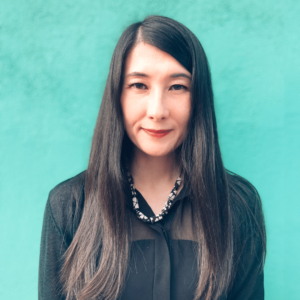
Saki Bailey, the Executive Director of San Francisco Community Land Trust (SFCLT), has a decade of experience in nonprofit management and program development roles; a decade of experience in facilitation, teaching and training roles both in the academic and non-profit sectors with a focus on the legal regulation around Community Land Trusts, Co-op formation, and incorporation. Saki is a published author on property law, community land trusts, and the commons with three books and multiple articles published by both academic and non-academics publishers and journals translated into multiple languages. Saki is an educator and trainer on community land trusts, coops, and other shared equity ownership models based on her six plus years of research on the topic and serves currently on the board of the California Community Land Trust Network and its policy committee in advancing legislation for Community Land Trusts and Limited Equity Housing Cooperatives.

Read the podcast transcript here

Eve Picker: [00:00:07] Hi there. Thanks for joining me on Rethink Real Estate. For Good. I’m Eve Picker and I’m on a mission to make real estate work for everyone. I love real estate. Real estate makes places good or bad, rich or poor, beautiful or not. In this show, I’m interviewing the disruptors, those creative thinkers and doers that are shrugging off the status quo in order to build better for everyone. If you haven’t already, check out all of my podcasts at our website RethinkRealEstateforGood.co, or you can find them at your favorite podcast station. You’ll find lots worth listening to, I’m sure.

Eve: [00:00:58] Today, I’m talking with Saki Bailey. Saki is the executive director of the San Francisco Community Land Trust and an expert in community land trusts, co-ops, and limited equity housing cooperatives. To back that up, she has authored books on property law, community land trusts and the Commons in multiple languages. In this podcast, she breaks down how community land trusts emerged, how they have morphed from land to buildings, and how they are gaining rapidly in popularity. More importantly, she explains how a community land trust might be usefully applied to ownership models. And she tells us about the Community Land Trust’s latest project on 285 Turk Street in San Francisco’s Tenderloin district. She’s hoping the community will fill in the equity gap through a crowdfunding campaign to convert 34 units into a permanently affordable co-op. It’s a fascinating conversation you’ll want to listen in.

Eve: [00:02:06] If you’d like to join me in my quest to rethink real estate, there are two simple things you can do. Share this podcast and go to Rethink Real Estate for Good Doc Co., where you can subscribe to be the first to hear about my podcasts, blog posts and other goodies.

Eve: [00:02:31] Hello, Saki, I’m really delighted to have you with me today.

Saki Bailey: [00:02:35] Hi, Eve. Thank you so much for having me. It’s really an honor to be here.

Eve: [00:02:39] So, I’ve come to know you through an offering that your non-profit organization has listed on Small Change. And it’s a really challenging project and pretty unique. But I wanted to first talk about your non-profit organization, which is called the San Francisco Community Land Trust. So, what is a community land trust?

Saki: [00:03:00] Yeah, that’s a great question, and it isn’t an easy answer, but I’ll try to keep it as simple as possible. Community Land Trust holds land in perpetuity to keep it permanently affordable for the residents and the tenants, who either live on the properties of the Land Trust as renters but permanently affordable renters, meaning that their rents are kept very low or where they own actually an equity share and actually are homeowners of the structure. It’s a delinking between the structure, the home itself and the land beneath, with the Land Trust owning the land with a 99-year ground lease and the resident owning the structure through shares.

Eve: [00:03:47] When did land trusts, community land trusts emerge first?

Saki: [00:03:51] Yes, there’s a long history of community land trusts. So, while it’s sort of a model that I think really has taken off in the last, I would say, decade and especially the last few years as the affordable housing crisis really heats up around the country. This model has actually been in existence since the late 60s. Yeah! So, the first Community Land Trust was created in Albany, Georgia, and actually really has an interesting history and rootedness in the civil rights movement and really was a mechanism by which black plantation workers were actually able to take back land ownership and really was an effort to create agricultural land wealth holdings for the black community. And since then, has evolved over time. And really, the focus of the Land Trust is now on housing and less about agricultural land, but really with the same mission of returning land and wealth that’s been appropriated from people of color back to people of color. And that’s really the focus of San Francisco Community Land Trust. So, we have this complex model, but really the aim of it is to provide black and people of color homeownership in a city where that’s really become impossible.

Eve: [00:05:21] Very difficult, yeah.

Saki: [00:05:23] Yeah, absolutely.

Eve: [00:05:24] So how long has the San Francisco Community Land Trust been in existence?

Saki: [00:05:29] So, San Francisco Community Land Trust has been around since 2003, and we really developed as a community grassroots political activist organization, organizing around, at that time, different types of legislation that were coming up on, sort of, the map of the San Francisco political landscape and namely the Small Sites program and even precursors to the Small Sites program. So, this is a city program that really focused on displacement that was happening in units between five to 25 units. So those smaller units, the units that actually are, that make up the majority of the housing stock in San Francisco. And around that time, we got involved in a really huge tenant struggle that was going on in Chinatown with first generation Chinese immigrants and second-generation Chinese Americans really being the community that was organizing around a building that was being threatened to first be demolished and then purchased by a predatory real estate company. So San Francisco Community Land Trust came in and assisted those tenants to purchase that twenty-one-unit building in Chinatown, and that was the first project that we had. That project got incorporated into a limited equity housing cooperative, so that model where the tenants own shares and own their building while the Land Trust owns the land. And we turned it into the first project called Columbus United Cooperative.

Eve: [00:07:06] Wow. So, you’ve been at the Land Trust for a short time? And what brought you there? What’s your background?

Saki: [00:07:13] Yeah. So, my background, while I’ve been here for a short time, so it’s been eight months, eight crazy months of drinking….

Eve: [00:07:20] Sounds like it.

Saki: [00:07:21] Yeah, absolutely, absolutely. But in a way, I feel like this is very much home for me. And the reason why is because prior to this, I was already on another Land Trust – Bay Area Community Land Trust, which is across the bay in Berkeley – and then prior to that, for 15 years, I actually have been a researcher and policy advocate and attorney around the Community Land Trust model, and I’ve written several books and articles, both in academic and policy journals, around this model of how do you create access to land which de-commodifies the land, takes the land off of the speculative market and creates more equitable access for people of low and moderate income?

Eve: [00:08:09] Yeah, that’s a lot to absorb. It’s a pretty unique model. There are also co-operatives mixed in in the work that you do, and there’s limited equity cooperatives. So on top of the land trust model, there’s also, you seem to, at least the San Francisco Community Land Trust, also works with co0operatives. So, tell us a little bit about how that works, because I learned a little bit with a project that you’re currently raising money for. But it, and I’m a pretty experienced developer, but it was brain damage for me to understand how that process works.

Saki: [00:08:46] Yeah, absolutely. So, I mean, what might be helpful in trying to kind of think about, why are we trying to do this? Why are we trying to make it so complicated for you, Eve, and everybody else with these models that that requires so much explanation and almost like a law degree to, sort of, understand because of the way that there’s this delinked ownership, the ownership of the land, the ownership of the structure. And really what it comes down to is, you know, I think we need to put it in the social context of the problem of affordability in cities like San Francisco and cities like Manhattan, which have actually long histories of cooperatives of this type, these types of affordable cooperatives. So, I just want to kind of take us to the setting in which we are for your listeners, people who might be living all over the U.S. and not so familiar with what has happened in San Francisco over the last 15 years. You know, San Francisco has gone through such a dramatic change with the sort of increase of tech billionaires, the growth of Silicon Valley. We have tens of thousands of jobs which have sort of exploded into this area and people coming from all over the world, all over the U.S., to work in the tech industry. You know, we have some absurd number like one out of eleven thousand six hundred people in San Francisco is a billionaire. I mean, you know there’s….

Eve: [00:10:19] Ooh, that’s crazy.

Saki: [00:10:20] Yes, that’s right. I mean, so we’re living in a city which, where we’re walking amongst billionaires, and yet there’s 8000 people out on the streets living homeless, unhoused. You know, this is a place where Leilani Farha, who is the U.N. special rapporteur on housing, came after a tour where she had visited cities like Mexico City and Delhi and said that San Francisco had the worst conditions that she has ever seen in housing, even compared to those cities. And she said, you know, that, sadly, her heart was broken in San Francisco because of how tragic the kinds of conditions that she saw here. So, we’re really living in a kind of, you know, actual Gotham City, you know, a city where there’s these complete huge inequalities of wealth and…

Eve: [00:11:20] And yeah, and really just and just for everyday people who may not even be homeless. I remember about five years ago or four years ago, I was there, and I caught an Uber and I was talking to the driver. The driver was a schoolteacher who said that the only way he could put food on the table was to drive every night of the week when he finished his… I mean, that’s very broken, you know.

[00:11:44] That’s extremely broken, that’s right. When you have your children’s schoolteachers needing to take a second job and driving Uber at night and then going back to teach school in the morning. Yeah, we’re living in a broken society. And that’s why I say Gotham City, because it really feels like that you have people living in such undignified conditions and then you have such incredible wealth at the same time. And it’s really about, how are we going to redistribute that wealth? How are we going to make sure that some of that wealth trickles down to the communities of color that have been displaced by the thousands in these last 15 years? For example, you know, in the height of the 60s, we saw the height of the black population. So, 14 percent of San Francisco was black. Today, San Francisco is less than five percent black. Yes, and it’s not an accident. It’s really not an accident. It’s not just the product of an extreme inequality in wealth, but it’s actually also the product of intentional racism and redlining and discrimination against this black community. For example, in 1945, there was a master plan in San Francisco that was put into place really for the aim of keeping certain neighborhoods elite and keeping certain neighborhoods from being re-zoned to create more dense housing for the immigrants that were coming into the city. And from then during that plan, they bought out something like 5000 households from the Fillmore in Western addition districts which have always been historically black districts. And so that kind of practice of forcing black communities out of certain neighborhoods that were gentrifying has been going on forever in San Francisco.

Eve: [00:13:45] Yeah, it’s also been going on everywhere else as well.

Saki: [00:13:48] Absolutely, everywhere else that we really see it like, for example, I raise it because that particular government action, of buying out those five thousand families, is the topic of the film, for example, which came out several years ago now, which is, you know, The Last Black Man in San Francisco. And it’s really the story of a person whose grandfather’s house got bought out when he was five years old. And the whole premise of the film is of this man who then grows up in San Francisco is one of the last black men in San Francisco wanting to then buy back his ancestral home many, many years later. And you know, this is the reality for San Franciscans today.

Eve: [00:14:32] So, so you work against that backdrop, right?

Saki: [00:14:35] Exactly, exactly. So let me get to where the limited equity housing cooperative fits in here. So, working in this extreme backdrop of racism, of inequality in wealth of, you know, astronomical real estate prices, what is a way forward by which we can create ownership for people of color? Well, it’s not going to come through the market, OK? An average median price of a house in San Francisco is $1.6 million. That is. Yes. That is, and that’s cheap. That’s probably not totally reflective of some of the neighborhoods, right? So, the more wealthier neighborhoods, it’s easily three point five million dollars. So, you know, but as an area median price of a house, I mean, most people have no way of ever saving that much. We know that, for example, for every dollar of white wealth, one cent of that is owned by people of color. So, we know that the gap is so huge that there’s just no way to own a house of this value.

Saki: [00:15:48] So how do we do it? We do it through limited equity. So, by the Land Trust going in and becoming a partner with the community and becoming partner with these residents we’re able to use the Land Trust and the non-profit to secure the loans that are necessary to buy the land. So the land is already very expensive, but we are able to have access to state subsidies, city subsidies and also the equity that we raise through our very generous foundations and individuals who contribute to our projects like, for example, in this latest project, I know that we will start talking about next, which is advertised on Small Change, 1.4 million dollars in equity was raised by San Francisco Community Land Trust through these generous foundations and individuals who contributed to make this project permanently affordable. So by being able to sort of draw upon these resources, because we have relationships with lenders, we’re able to buy the land, and then what we’re able to do then is to turn around and go to the residents and say, now let’s give you a piece of this. So, this remains yours forever. Now it’s not going to be outright homeownership in the sense that one day you’ll be able to sell at windfall prices that float on the market. Rather, we cap the equity so that it remains affordable for the next generation of buyers. So, we sell shares, the prices are not so high that people aren’t able to buy in. So, we capped the price of the shares to something like $10,000 each or even less. And so, people buy these shares and then they appreciate over time something between one and four percent capped to an index like the consumer price index or area median income. And so over time, people get equity back from their property in the form of kind of a modest savings. But what they really get is a right to live in their home as a homeowner in the sense that they can actually pass this property on, their unit, on to their successors. In sort of the bundle of rights when you own a property. And so, this is the way in which we’re trying to make San Francisco more affordable and to give people a home ownership stake, particularly for people of color.

Eve: [00:18:08] So it’s not easy. Like, in order to keep a property affordable, you have to give up the potential for equity, which means that many investors who don’t understand what the triple bottom line really means are not going to be waiting to invest in a project like this. They have to really want to be giving something back to accept what’s probably going to be a much lower return. And I imagine it’s just as difficult to find lenders who don’t understand these models because lenders tend to be sort of used to seeing the same thing over and over again. This is a very different model. So you know, who are you lenders and partners in projects like this besides the equity partners?

Saki: [00:18:54] Yes. Yes, I think you raise a number of really important things. It is not easy creating this type of housing, and the complexity is also a barrier for many lenders. So we don’t have partners like banks. Like Wells Fargo or Bank of America or more mainstream lenders, right? Because mainstream lenders are concerned about, you know, for example, their ability to foreclose on the property with this kind of model where the tenants own a piece of it and the Land Trust owns another part, right? So, we work with credit unions, we work with CDFI’s. We work with lenders like Self-help Credit Union for this project, this latest project, with LISC or LIIF. These are a couple of CDFIs. We work also with impact investors, right? So, you mentioned the type of investors that are going to be interested in our types of projects are really those who understand the impact of what they do. So, they aren’t looking for a really high rate of return. They’re looking for a modest rate of return and really about the kind of impact that they’re creating through the project. So that’s really the target of our focus here is, are folks like that. And we thought, you know what? We might actually have a network of people who are willing, and there’s an appetite for that kind of project, and the reason for that is because of this $1.4 million equity raising.

Eve: [00:20:26] I think that’s probably true. We had a project in Los Angeles that was an eight-unit project for four formerly homeless people, and it filled up faster than, and it wasn’t a huge raise, but it filled up faster than any other. I think because many people have a conscience, and they really want to help somehow. Somehow, even if they only have a little way to do that, so, but getting back to banks, we talked about mainstream banks not wanting to have projects like this on their books. But how are we going to address the huge housing gap if they don’t start having projects like this on their books? I mean, LISC cannot fund everything in the country that needs to happen. So, you know, what needs to happen in the banking world to make it possible to accomplish much more?

Saki: [00:21:23] Yeah, that’s a really great question. Well, I think that it has to start with the lenders in the secondary mortgage market like Freddie Mac and Fannie Mae. And actually, some of that has started to happen. So, for example, Freddie Mac, a couple of years ago, went in to the CLT market and set, told the mainstream lenders, actually we are now in this market. So, if, should you choose to lend, we’re going to mitigate your risk. That’s essentially what happens when these lenders in the secondary market go in is that they’re saying, look, we’re willing to buy up your debt. And so, as a result, your risk is being mitigated and what happened is that it’s still taking sort of years. Now it’s, I guess, a couple of years, maybe two or three years, to sort of have that trickle down and get actually made into policy on the ground level. So, we haven’t seen those shifts yet that we expected to see when we heard that announcement. So that’s one, is that I think that we need to kind of get the banks on board with this new information and kind of push them to figure out how they’re going to do their underwriting for these types of projects. Another part of it is that the underwriting is a bit complicated, right? So, another innovation is that Freddie Mac, also as part of that move to create this kind of secondary market and CLT mortgages is to streamline the underwriting process to make it easier. So that’s another big step.

Saki: [00:23:01] But one of the other things is that that legislation, or that policy shift that took place within Freddie Mac, it was not for multi-unit buildings. And so it really didn’t have an impact on cities. Yeah, so I think that’s another part of it, is that that policy needs to be applied to CLT-owned multi-unit buildings. And I know that there’s some lobbying work, advocacy work around that. But I think that’s really what we need to do is to really fund this model. And I just want to say, Eve, you know, what’s really unique about this model as opposed to, you know, you were saying, if we’re going to address the affordable housing crisis that’s taking place throughout this country, we really need the banks to kind of shift in understanding models like ours. And I just want to say, why models like ours are so important in that context. It’s really important, of course, to keep building and new housing production, creating new affordable housing. But what our model does is preservation, right? So, it’s really about creating affordability in the existing buildings, now as opposed to 10 years from now. Like, for example, in an affordable housing production, we know that just by producing housing for the market, it takes something like 10 years before that sort of trickles down to people of low and moderate income. Why….

Eve: [00:24:27] And it’s very expensive to produce new housing compared to saving it?

Saki: [00:24:32] Absolutely. Absolutely. That’s exactly it. It takes so much more, so many more dollars to create new housing than to actually keep the affordable housing stock that we have or to create affordability in the existing housing stock. So that’s really why our work is so critical because we’re keeping people in place today, you know, before they have to leave the city, as opposed to a plan of, well in 10 years, well, you know, please, whenever, you move back.

Eve: [00:25:01] You come back, I know.

Saki: [00:25:03] It should be called a right of return, or something like that, because that’s essentially what it is. It’s not really keeping people housed right now.

Eve: [00:25:11] Right. So, tell us a little about the current project. It’s 285 Turk Street.  Well, it’s located on Turk Street, but where is that in San Francisco?

Saki: [00:25:23] Yeah. So, 285 Turk is in the Tenderloin. So, this is a really, kind of interesting area of the city. Interesting may be a euphemism in some ways, because it’s also.

[00:25:35] I was going to say that

[00:25:36] It’s a very colorful part of the city.

Eve: [00:25:37] Very colorful, yes.

Saki: [00:25:39] Yes, yes. And it kind of perfectly captures that inequality that I was talking about because we’re, you have on one hand, the theater district, right? You have the Opera, you have City Hall, one of the most, sort of, monumental buildings in all of San Francisco where everything is happening. All the deals are being made. You have, you see Hastings School of Law, you know, you have courts, you have lawyers running back and forth on the street. And yet at the same time, we have the highest percentage of our un-housed population there, right there in the Tenderloin. We have, you know, a number of non-profits as a result that serve those communities that are really leaders in our community, the Tenderloin Housing District, for example, or Glide Memorial Church, these are, kind of, really iconic sort of non-profits that are really, really doing amazing community work, really organizing people at the sort of grassroots level. And then you have the transgender cultural district. So and part of that is that you do have a lot of sex work that is happening in the city. There’s also rampant drugs and crime, and we have, you know, now what’s emerging is that the highest new percentage of unhoused folks are actually people between the age of 18 to 25, which is a real tragedy. That really shows there’s another, right, sign of a broken society when you have kids that are actually the unhoused. So, another part of it is that it also borders on the Vietnamese cultural district, so you have a number of Vietnamese shops and restaurants. And so it’s a really very unique part of the city in some ways creates what we put in quotes natural, affordable or naturally kind of developed affordable housing in the sense of that, you know, the economy there is block to block and some of the blocks are just really affordable because of the features of that neighborhood.

Eve: [00:27:55] But the neighborhood is feeling pressure, right? It has to be because of what’s happening in the whole of San Francisco. Is it, is there fear of gentrification? What’s happening there?

Saki: [00:28:08] Yeah, I wouldn’t say that there’s kind of an impending gentrification that’s going on. But as you say, it’s sort of an inevitable part of San Francisco. Yes, eventually in 10 years, I don’t think this neighborhood will look the way that it does right now. On the other hand, it sort of resists gentrification because of all these features that I just mentioned. But yeah, I mean, I think it’s probably inevitable that if we don’t start to save these buildings now, we are on what they call the edge of a real estate apocalypse, right, where soon land is going to be so expensive that we’re just not going to be able to buy it as non-profits or the city publicly using public tax dollars to keep it affordable going forward. So it’s really now, right. If we’re going to save these neighborhoods, we have to invest now.

Eve: [00:28:58] And 285 Turk Street, how big is it? I’ve seen photos of it. It’s actually a very pretty building. Tell us a little bit about the building.

Saki: [00:29:09] Yeah. So, this was a building owned by Mosser, a very large real estate investment company. It still is, we’re still in the midst of the closing. And the closing is around, should be closing around January 15th. So still, lots of time for folks to invest. But yes, I mean, you know, this building, you know, it is very beautiful. The Mosser did do a number of renovations, so it’s 40 units, something like 29 of them being studio apartments, the rest being one- and two-bedroom units. Most of the units have been fully renovated and the remaining ones we intend to renovate once we obtain the post-acquisition funding that we’re trying to raise the money for right now through the our crowd raise. It is a very beautiful building, the community that is in the building currently, so there’s 30 households, and the 30 households are primarily of Filipino and Latino descent. So Filipino, Black and Latino descent and actually the Latino population, it’s very interesting, but a majority of them are actually indigenous from the Yucatan Peninsula. Kind of a very interesting San Francisco population, which is growing. Yeah.

Eve: [00:30:32] So, and do these people know of your plans and how do they how do they feel about it?

Saki: [00:30:38] Yeah. So, we have been working from the beginning with a organizer, Lorenzo Listana, who is with the Filipino Development Corporation. So, he’s been an organizer at this unit now for, I think it’s almost three years, that he’s been organizing the tenants, talking to them about their rights, initially assisting them with the predatory rent hikes that were being imposed on them, to fight that. Also, uninhabitable conditions, et cetera. So, Lorenzo’s really been working very closely with the residents and also informing them about the plans. He was actually interviewed just recently on PBS NewsHour. We just had a piece done about 285. If anybody’s interested in seeing that, you can pop in PBS Weekend Edition and you can learn a little bit more about the CLT and the purchase there. So, we really rely heavily on Lorenzo in providing this sort of education about the Community Land Trust. But going forward, we have also hired a resident education coordinator, and this is a kind of critical part of how we turn this building from a permanently affordable rental into a limited equity housing cooperative. So, our one part of the model in terms of how we finance it, is that we build a kind of half-time employee who works half-time for the building and half-time for the Land Trust into the project budget. And that’s really, as folks will see when they go into the details of this project, they’ll see that some portion of the raise is going towards that person’s salary. So, we’ve been able to already anticipate that we’ll be able to raise this money and we’ve hired that resident coordinator who is half, who is a bilingual, fully bilingual in Spanish and English. And she also has a co-op education background. So, she’s going to be providing this kind of important, what we call a five step or five part co-op curriculum, to the residents over the next many months. But that work will begin after we close on January 15th.

Eve: [00:32:56] So really, this is way more than buying a building and flipping it. It’s really about educating all of the tenants and bringing them along with your plans, and it’s hugely challenging.

Saki: [00:33:09] It is. It’s almost like a mission impossible. I mean, in a way, that’s really how I kind of view our work, is that we’re trying to create affordability in one of the most unaffordable cities in the city, and we’re trying to do it through a model that really provides low- and moderate-income people with an equity stake in a building and creating home ownership. So yes, it takes education. It takes time. Part of why it takes time, as well, is because we’re helping these residents to save for their equity share. You know, not all of these residents already have the savings to contribute towards an equity share. So, it’s really also about financial empowerment and creating access to financial empowerment tools and assisting them to save. And that’s why we put a kind of five-year timeline around this conversion to a limited equity housing cooperative.

Eve: [00:34:04] It’s pretty fabulous. Requires a lot of patience. So, what success rate do you expect in converting these residents to owners?

Saki: [00:34:16] Yeah, I mean, it depends on a lot of different circumstances. I can’t say that we have, like, so many buildings that we’ve converted to this model that we know exactly what it’s going to take. Our first project, the one that I mentioned, Columbus United Cooperative in Chinatown, that was converted to a limited equity housing cooperative within three years. So, it’s really hard to tell with this very diverse population. And I think maybe potentially those who are of lower income, how long it will take for them to save and organize. You know, a huge part of it, though, is the success of that resident and education coordinator. You know, part of the success of the Columbus United Cooperative really comes from the fact that from the beginning we baked in, or built in, that coordinator who actually is still with us today. She’s our longest-running employee, Julie Dye(??), who’s half, who’s Chinese and speaks full bilingual Mandarin. And I think that’s a really critical part of this as well, is that the coordinator is someone who’s really rooted in that community, really is able to overcome the language access barriers, so that’s really why we focused on this new resident coordinator being fully bilingual in Spanish.

Eve: [00:35:40] She must really love her job. It must give her great satisfaction.

Saki: [00:35:45] Yeah, I think it’s hard work, but absolutely, it’s one of those jobs that on a good day, it’s like the best day you’ve ever had, yeah,

Eve: [00:35:52] I have to ask, is there anyone else in the US using this model, doing what you’re doing?

Saki: [00:35:58] Absolutely. You know, we’re a really fast emerging model. So, there are something like three hundred community land trusts across the United States, and that number is going up every day. I mean, I think in the last five years, there were more CLTs created than in the entire, you know, history from the 60s. Yeah, exactly. So there are CLTs popping up everywhere. And I think especially in urban areas, right? Where that affordability is really, really… So, in the past, it really was, as I mentioned, a model that was focused on agricultural land. But obviously in the last 30 years, it’s all been in cities.

Eve: [00:36:40] That’s really interesting. So, what’s next for you? More the same? Lots more.

Saki: [00:36:46] Yeah, I guess that’s it. I mean, that’s yes, absolutely. That’s sort of how we measure our success is how many buildings can we make permanently affordable this year and the next year and before this real estate apocalypse, like I mentioned, is sort of upon us. Or perhaps it’s already upon us. But, you know, I think it’s really about figuring out how do we make these projects deeply affordable going forward? Some of it has to be done through public dollars through city subsidies. So, we continue to work with the Small Sites program and actually we’re in the midst of another acquisition, right now.

Eve: [00:37:24] Oh great! That’s great.

Saki: [00:37:26] Yeah, through the City of San Francisco. So we have had a long, ongoing partnership with the City of San Francisco ever since the Small Sites program was created. Actually, San Francisco’s Neil Antress (??), as I mentioned, was one of the authors of the Small Sites program. So, we work with the city to make units permanently affordable, and it’s really about, I think, also shifting the city’s politics around cooperatives because that’s one of the difficulties for us is that we’d love to make every project a Small Sites project. But not every Small Sites project can be converted into a limited equity housing cooperative because of various legislative barriers. So we’re working, you know, I guess that’s kind of next on my agenda, aside from creating more affordable buildings, is really working on that reform or policy change, which needs to take place around cooperatives in San Francisco.

Eve: [00:38:21] Well, San Francisco is such a beautiful city. Really, everyone should enjoy it. It’s been really miserable watching this happen from the outside. So, I hope you have enormous success. It’s a pretty fabulous program.

Saki: [00:38:37] Thank you so much, Eve. Yeah, it is a beautiful city, and yes, I think we can make it available for more people to live in and work in as opposed to just visit as tourists, the more beautiful it will be also for everyone else, including those tourists. So, thank you.

Eve: [00:38:55] Thank you. That was Saki Bailey. She’s spent a career becoming an expert on community land trusts, and now she’s putting that knowledge to work as the executive director of the San Francisco Community Land Trust. There, she leads a team working on the conversion of existing rental properties into permanently affordable housing co-ops for the tenants who live there. She’s helping to put assets into the hands of those who’ve never had that opportunity before. It’s challenging, but so very important.

[00:39:44] You can find out more about this episode or others you might have missed on the show notes page at our website RethinkRealEstateForGood.co There’s lots to listen to there. A special thanks to David Allardice for his excellent editing of this podcast and original music. And thanks to you for spending your time with me today. We’ll talk again soon, but for now, this is Eve Picker signing off to go make some change.

Image courtesy of Saki Bailey, San Francisco Community Land Trust

Bisnow reports.

December 8, 2021

Bisnow is one of the the world’s leading B2B platforms serving the commercial real estate industry. From events and news to branded content and recruiting solutions. Bisnow reaches millions of readers and hosts hundreds of real estate events each year in over 50 local markets.

Eve Picker is interviewed by Bisnow host, Miriam Hall in Episode 5 of Bisnow Reports, a podcast examining every facet of the international commercial real estate industry – from the murky future of retail and office to real estate’s reckoning with diversity to the effects of climate change on the built world, and so much more.

Learn about the emerging investment crowdfunding industry, democratizing real estate investment, and Small Change, the real estate crowdfunding platform Eve founded, and the shift towards a more equitable real estate industry.

Image courtesy of Bisnow Reports

« Previous Page
Next Page »

Primary Sidebar

sign up here

APPLY TO BE A PODCAST GUEST

More to See

(no title)

February 22, 2025

Bellevue Montgomery

February 11, 2025

West Lombard

January 28, 2025

FOLLOW

  • LinkedIn
  • RSS

Tag Cloud

Affordable housing Climate Community Creative economy Crowdfunding Design Development Environment Equity Finance FinTech Gentrification Impact Investing Mobility Offering Opportunity zones PropTech Technology Visionary Zoning

Footer

©rethinkrealestateforgood.co. The information contained on this website is for general information purposes only. Nothing on this website is intended as investment, legal, tax or accounting strategy or advice, or constitutes an offer to sell, solicit or buy securities.
 
Any projections discussed or made may not be accurate and do not guarantee a specific outcome. All projections or investments are subject to risk due to uncertainty and change, including the risk of loss, and past performance is not indicative of future results. You should make independent decisions and seek independent advice regarding investments or strategies mentioned on this website.

Recent

  • The Mulberry
  • Mount Vernon Plaza
  • The Seven
  • Real estate and women.
  • Oculis Domes.

Search

Categories

Climate Community Crowdfunding Development Equity Fintech Investing Mobility Proptech Visionary


Copyright © 2026 · Magazine Pro on Genesis Framework · WordPress · Log in