• Skip to main content
  • Skip to secondary menu
  • Skip to primary sidebar
  • Skip to footer
  • Home
  • About Us
  • Say hello
Rethink Real Estate. For Good.

Rethink Real Estate. For Good.

  • Podcast
  • Posts
  • In the news
  • Speaking and media
    • About Eve
    • Speaking requests
    • Speaking engagements
    • Press kit
  • Investment opportunities

Crowdfunding

Superpower. Stick-to-itness.

June 21, 2022

“What is your superpower?” This is the question that Devin Thorpe asks every one of his podcast guests in his podcast show, Superpowers for Good, where he focuses on inspirational impact. And true to form, Devin asks Eve the same question in this episode, Developer Becomes a Tech Entrepreneur to Help Community-Focused Peers.  Her answer?  Stick-to-itness.

Eve’s career has evolved from Columbia-trained architect to community-focused developer to fintech entrepreneur, but the theme has remained the same – building better cities that are equitable places for everyone. Small Change, her real estate crowdfunding platform (a FINRA-registered crowdfunding portal), provides a way for developers to raise money for real estate projects with a social impact.

Small Change is a testament to her endurance. “When I started down this path, I honestly didn’t even know what a security was,” says Eve. She had to educate herself. She read the 650 pages of regulations and converted them into a fluid online platform, easy to use but fully compliant. “And, by the way, I had never built a technology platform before!” says Eve.

She is unstoppable.

Image by real444 from Canva

On making waves.

May 16, 2022

Eve Picker, founder of Small Change, talks to Brian Gaudio of Module Housing.

Eve has a passion for cities and for working on real estate projects that make a positive impact in neighborhoods. Originally from Australia, Eve trained as an architect and has a master’s degree in urban design. She moved to Pittsburgh where she fell in love with the city and, through a series of ‘accidents’, transitioned from architect to real estate developer, building a small but meaningful portfolio of projects.

In 2016, Eve launched Small Change, a real estate crowdfunding platform matching developers with every day investors. The idea was born out of the Jobs Act of 2012 which allowed crowdfunding to be used for investment, rather than just donations. Now people who wanted to make their neighborhoods better could become investors in developing properties on their own streets.

Small Change focuses on impact by scoring every project to ensure that it creates impact in some way. They also tackle a lack of diversity within the real estate industry – over 54% of developers working with Small Change are women and minority developers. And they help those developers raise meaningful funds – up to $5M per year from anyone who is 18 or over.

Listen in to the conversation.

Image from PxHere

New markets for main street.

May 11, 2022

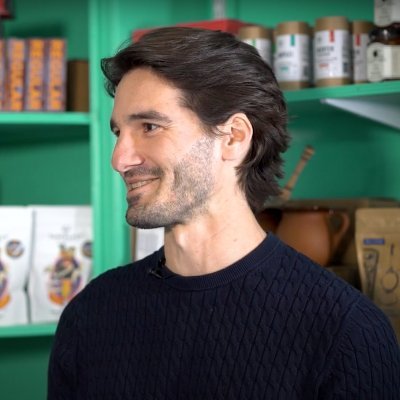
NuMarket was born out of the pandemic. Ross Chanowski founded the social crowdfunding platform in 2020 because he felt there wasn’t a way for communities to purposefully support the survival and growth of their local businesses. In an interview with The Boston Globe, Ross said that he wanted to develop a way for customers to meaningfully support the businesses they love while, yes, getting something in return.

On NuMarket, main street businesses raise funds for a variety of reasons like renovations, expansion, a popup, a new product line or even a second location. But instead of going to a bank to get a loan, they go to their customers, raising funds through contributions made in an online campaign on NuMarket. The payoff for each contributor is  120% of their money back in credits that can be used at that business. Contributors receive a bonus from the businesses they support, and those businesses get much-needed funds from the customers who love them!  To date, NuMarket has helped 23 small businesses raise funds through successful campaigns with more coming. The amounts raised vary, but the largest (and first) raise was completed by Mamalehs, an iconic delicatessen in Cambridge, that raised over $185k to open a second location. Prior to launching NuMarket, Ross was living in the UK, completing his Master’s degree work in social innovation at the LSE. While there he found time to co-found Jungle, a collective of creative thinkers, designers and strategists growing companies with social impact, working to build product ideas with intrinsic impact. Their current project is Jungle Brew – cold brew coffee designed for socially impactful behavior. Past engagements for Ross include Allen & Gerritsen and Draftfcb and an internship with former House representative Barney Frank. Ross is currently an advisor at the Kenarava Group in Kenya, “a progressive company offering climate-smart agribusiness solutions for a healthier, sustainable future.”

Read the podcast transcript here

Eve Picker: [00:00:12] Hi there. Thanks for joining me on Rethink Real Estate. For Good. I’m Eve Picker and I’m on a mission to make real estate work for everyone. I love real estate. Real estate makes places good or bad, rich or poor, beautiful or not. In this show, I’m interviewing the disruptors, those creative thinkers and doers that are shrugging off the status quo, in order to build better for everyone. If you haven’t already, check out all of my podcasts at our website RethinkRealEstateForGood.co, or you can find them at your favorite podcast station. You’ll find lots worth listening to, I’m sure.

Eve: [00:01:04] Ross Chanowski wanted to help when the pandemic hit, so he founded the social crowdfunding platform NuMarket as a way for communities to purposefully support the survival and growth of their local businesses. He wanted to develop a way for customers to meaningfully support the businesses they love while yes, getting something in return. Ross has put his background in marketing and a master’s in social innovation and entrepreneurship from the London School of Economics and Political Science to good use. Numarket helps Main Street businesses raise funds in a compelling way. Make a contribution to a business you love now, and you’ll get goods and services back with a 20% bonus, ten bagels become 12 in your tummy, all the while supporting the bagel shop you love. It’s a lovely story about a lovely business. Please listen in to hear more. If you’d like to join me in my quest to rethink real estate, there are two simple things you can do: share this podcast and go to rethinkrealestateforgood.co where you can subscribe to be the first to hear about my podcasts, blog posts and other goodies.

Eve: [00:02:42] Hi, Ross.

Ross Chanowski: [00:02:44] Eve, it is great to see you and hear you.

Eve: [00:02:48] I’m really happy to talk to you today. And, you know, Numarkets is one of my favorite companies. I’m really excited to talk to you. So let’s talk about Numarket. NuMarket, I think, is a pandemic, baby, right?

Ross: [00:02:59] It is, yeah.

Eve: [00:03:01] When did you found it and why? And how?

Ross: [00:03:05] As we all have found, pandemic time feels like a very odd construct. So thinking about two years of being in it, I’m still not quite sure when it started. Now we got going, we launched into the world in February of 2021, and the impetus and the idea and research behind New Market, I think had been happening for years before that and a lot of interesting in different ways. But when the pandemic hit, there was a clear insight that everyday customers of businesses and people in communities desperately wanted to do something positive for the places that that they love and that they need. And we were all struggling to find ways to do that. We were hashtagging on Instagram. We were tipping our delivery drivers and bartenders on the way out. We were buying gift cards, kind of doing anything we could, but it definitely didn’t feel like we were giving the kind of support that we could. And on the flip side, businesses were finding it incredibly difficult to get financing at the time to survive. But for decades before that, to to thrive and to open. And so there was something of matching those two up, this desire to support and be a critical part of independent businesses and businesses that couldn’t find avenues to financing that worked for them. So that’s where NuMarket came from. And what we do is we create crowdfunding campaigns for those businesses to raise money from their customers and community. But the contributors to those campaigns, they get more back than what they put in, 20% more, actually, as credits to use towards the business over time. So, it’s not a donation. You’re getting a lot more back than what you put in and you get to use it towards the business in the months that follow, in the years that follow. So, it generates this really interesting economic engine around these important and critical independent businesses all around us.

Eve: [00:05:23] Interesting. So, I’m having a thought. Could Small Change run a campaign on NuMarkets and offer people some investment coupon for future use?

Ross: [00:05:37] You know, I know we’re recording and if there are any regulators listening, we have to check that out first.

Eve: [00:05:43] No, this is, well, what’s interesting and this was going to be my next question. So NuMarkets doesn’t fall under any securities law, does it?

Ross: [00:05:52] Right. So, we’re issuing promotional credits. That’s kind of what our model entails. You are not receiving back cash. It is not a security. It is in the promotional credit category where you’re getting that 20% back as essentially a voucher to use towards goods and services, not that different from a gift card. And we’re very clear about that with everyone involved in knowing that there are some risks involved. But you’re getting this great chance to support a business. And unlike some donation-based platforms, where your money is going towards incredible causes, this is going towards businesses, for profit businesses like restaurants, yoga studios, online platforms, things like that.

Eve: [00:06:44] Right. I don’t think it would break any securities law, but we’ll talk about that later.

Ross: [00:06:50] I didn’t realize this was going to be a whiteboarding session.

Eve: [00:06:53] No, I mean, it really just occurred to me. My favorite Korean restaurant right next door, if they came to you and they did a campaign and I, what do you call it, make a donation. It’s not really a donation. Yeah, a contribution. It’s a contribution. So, it’s some way between investment and donation. So, make a contribution. Then thereafter, I could buy their bibimbap for 20% less.

Ross: [00:07:19] Exactly. Yeah. And you could buy their bibimbap, you could buy drinks, you could get anything that’s in there. Goods and services that they’re offering, which is one of the things we found has been a really big value add, where contributors get to use it, how they’d like to. And for businesses, they get to do exactly what they do best, which is just run their business. You don’t need to change your offering. You don’t need to offer any special packages or anything like that.

Eve: [00:07:47] So what do these businesses I mean, what do these businesses generally raise money for?

Ross: [00:07:54] Yeah. It’s we find a really big mix of things, new locations, new product lines, being able to move from, let’s say, a brick-and-mortar model to a nationwide or worldwide delivery service or the opposite. We find a lot of delivery, whether it be home delivery locally or nationally, moving into more of a permanent space. A lot of pop ups that are turning into brick and mortars. So, we’re at this point where some really amazing, vibrant and oftentimes funky businesses get to fund their dreams and get that validation that those dreams are real from their funders who turn into their best customers.

Eve: [00:08:45] That’s pretty cool. So, walk me through how a campaign works.

Ross: [00:08:50] Yeah. Campaigns, they last for 30 days, and you get a unique URL and campaign page designed with content that shows sort of who you are as the business owners, what your business is, and really gets to the soul of why you’re doing what you do. And anyone with access to a credit card can contribute during that 30-day period. You can gift contributions if you’d like to, to others, which we find a lot. You can leave testimonials that really show how much a lot of these great independent businesses are loved. So, it’s really special there. And then after the campaigns end, what we do is we handle all of the credit distribution, and we start doing that one month after the campaign ends. And that one difference for us of how our credits work is that we break them up monthly. So, we’ll start sending you your credits just one month after the campaign ends super quickly. And we do that monthly for six months. The way that math works out is, let’s say you contribute $100 to Eve’s Cafe. You would get back a total of $120 in credits, and you’d get $20 worth of credits every month.

Eve: [00:10:09] Okay. And this is to make sure that the funds are raised to spread out for the business as well.

Ross: [00:10:19] Exactly, yeah. And what we found happens quite often is you’ll have $20 worth of credits in month one and you’ll go in and you’ll spend those 20 credits and spend above them. So, there’s this really great engine around supporting independent businesses in a really, really strong way, not just as funders, but as your most loyal customers.

Eve: [00:10:43] How did you come up with that formula?

Ross: [00:10:46] Just trying to understand, I think, and talking with a lot of business owners and understanding the problems that are that are facing them and just taking a human first approach of, you know, just talk to us. Tell us what’s going on. Tell us why when you look for institutional funding, it’s difficult. Tell us why when you might find that funding, it’s difficult for you. And then, and then iterating. You know, our model wasn’t always exactly like this. We have great feedback loop and we’re super close with our customers and have a willingness to make those changes when we see that they’re needed.

Eve: [00:11:28] Interesting. Okay. So, I have to ask then, what percentage of your customers are not white male?

Ross: [00:11:38] Yeah, we don’t sort of publish exact data, but it’s a vast, vast majority.

Eve: [00:11:45] So often they fit into that minority or woman-owned business category that we all know does very poorly in the fundraising world.

Ross: [00:11:56] Yes. Yeah. The statistics on that are shocking.

Eve: [00:12:01] They’re really shocking. I think something like 2% for women owned businesses it’s ridiculous.

Ross: [00:12:07] Yeah, we’re very excited about the opportunity that we have in front of us to try to change that. And we’re at this point way above a majority of the businesses being led and managed by women and people of color.

Eve: [00:12:23] So what’s their average amount raised for businesses that you’ve helped so far? And how many have listed campaigns with you?

Ross: [00:12:31] Yeah, we’re up over 30 right now in the past year and at a pretty solid growth rate, which is exciting but also daunting, as you know. Yeah. And the average contribution amount, which I think is one piece of of data that is that’s pretty important for us, is around $150 per person. So, and that’s kind of the spot that we like to be in, which is no matter if you’re putting in $10 or 10,000, what you’re getting back is going to be the same. You’re getting that 20% back. And so we’ve found all different types of people from all different income levels who are able to participate and get that 20%.

Eve: [00:13:19] It must also depend on the business what value $150 has. Like it’s going to be different for bake shop than for something that sells more expensive goods, right?

Ross: [00:13:31] Yeah. Yeah, we found some really interesting, I think at this point slightly anecdotal, data on that of how do contributions change based on your average cost of goods. What’s been really interesting for us is the success of recurring purchase models. So, things like subscriptions, we’ve had some everything from farm delivery boxes to dumpling delivery and those have done incredibly well. I think there’s something to the idea that you know, as a customer that you’re going to be either going in or getting delivered something every week, every month. So, it makes a lot of sense to support and get 20% more.

Eve: [00:14:19] Interesting. Okay, let’s talk about geography. Where where do you do this right now?

Ross: [00:14:23] Yeah, we just kind of moved into Nationwide in the US. So, we started off in Boston in New England with a really, really great community of customers. And we, just this month, started launching campaigns that are across the country. What’s been really interesting, given what’s going on in the world right now, is that where you’re based has taken on an entirely new meaning on both sides of the platform. So, for contributors, people are living all over the place. Maybe you’re spending three months out of the year in New York, three months out of the year in Albuquerque, three months out of the year and in Indonesia. And for businesses, it’s a little bit of the same. You might be based in Los Angeles, but most of your customers are in Miami or in Topeka or wherever it may be.

Eve: [00:15:14] Interesting. So, do you find people contributing who are not customers or might be new customers for these businesses? I suppose the question is, is there crossover between campaigns? Are you building your own contributor base? Yeah.

Ross: [00:15:31] There is, yes. And we’re still early on. And I think that number will, we hope, grow. But we have found a really strong amount of repeat contributors, whether that’s our doing or the fact that there are just some really great businesses in similar communities, it doesn’t really matter to us. We’re just excited that people want to see this model grow and they want to see great independent businesses grow. We’re just there as the tool to make that happen.

Eve: [00:16:03] You said you’ve gone national. Where have you had campaigns?

Ross: [00:16:08] We’ve had some in California. We’ve had some in Florida. We’ve had a lot in New England, Connecticut, Boston, up in Maine, expansion into Maine, I should say. And in the next few weeks, we’re going to have a little bit more dotting across the country.

Eve: [00:16:26] Okay. None in Pittsburgh yet, right?

Ross: [00:16:29] Not until you help us out Eve. That’s what we need.

Eve: [00:16:31] I’m going to help you out, I’m going to help you out!

Ross: [00:16:33] You’ve got to spread the word.

Eve: [00:16:35] I think it’s a really great idea. So, do you think this model might become mainstream?

Ross: [00:16:40] We’re pretty confident that it will if we do our job well. I think that’s kind of the feeling that we all have right now, which is if we can continue to spread the word about it and make it known to more independent business owners that this is an option and that there is great support and there’s a way to engage your community of customers, we do think it can go mainstream. I guess it depends on your definition of mainstream. We’re not focused on world domination as a tech platform. I think we’re focused on being an option for every independent business that wants that option. Yeah.

Eve: [00:17:20] What’s your revenue stream? How do you get paid?

Ross: [00:17:23] Yeah, it’s pretty simple. We take a percentage of the funds that are raised in the campaigns. We have no subscription fees, no upfront fees. So, the only time businesses see us in their accounts is when we send them their funds at the end of the campaign.

Eve: [00:17:40] Shifting gears a little, you know, I looked at your background, which is very interesting, and community and social impact are clearly a really big theme in your life. There must have been a story. There’s got to be a journey that led you to NuMarkets, and I’d love to hear it.

Ross: [00:17:57] Yeah. Eve, if you recall to how we met, one of the big themes of that accelerator was Origin story. And unfortunately, there’s no great origin story. It’s, I guess, the seeds of how NuMarket came about in my background, were doing work and research that took me to some places all over the world and getting to see how different financial models work, how different businesses engaged in commerce and getting a lot of exposure to just difference.

Eve: [00:18:38] But to be fair, you’ve got a masters in entrepreneurship and social impact. So, you you’ve had a path towards this, right?

Ross: [00:18:46] Sure. Yeah, absolutely. And I think what that sort of academic piece of my life did was to really frame around the idea of understanding the problem from a very human lens. So instead of taking an idea and overlaying it onto people, it’s let yourself understand the challenges and day to day problems that are facing real communities and try to design ideas and business models and products against that. I can remember being in very specific instances and looking at the way that people have funded independent businesses all over the world, the ways that they’ve been able to create financial inclusion and just being so interested and impressed and engaged by those experiences that in some odd way Eve, leads to you running down the stairs one day and saying, Oh, I think I think now it makes sense. I think now NuMarket is ready. I think we’ve got the model.

Eve: [00:19:56] Right, I get it. But there’s another company that you’re involved in that intrigues me and I’ve just got to hear about, and that’s called Jungle. Tell me about that.

Ross: [00:20:05] Yeah, so Jungle started off sort of consulting and working with other corporates on how to increase their community impact through their revenue models. And in a strange twist and turn of events, it ended up being a coffee company that I started a few years ago, a handful of years ago now, with the idea that coffee is the most ubiquitous and habitual product that probably exists in the world where I’m holding one right now, we all…

Eve: [00:20:40] Here’s mine.

Ross: [00:20:40] I shouldn’t say we all. There’s yours. Exactly. It’s something that many people across the world really understand and purchase, and it affects over 25 million people across the supply chain. So, ended up starting a cold brew coffee company in in London a handful of years ago and a very different, of course, business model to what NuMarket is. But I think a lot of the partners and customers that we had are the same people and same type of people that we’re supporting at NuMarket now, owners of coffee shops, owners of bakeries, restaurants. We just launched a campaign for a coffee producer in Lawrence, Massachusetts, and it’s pretty cool to see, see some of the same challenges that we were facing in the coffee world and be able to support people doing it themselves now through NuMarket.

Eve: [00:21:38] Very cool. You’ve developed a thesis which is really fascinating. What do you think needs to be fixed in the world of small business? I know that’s a really big question, but I’m asking it anyway.

Ross: [00:21:50] Yeah, well, you know, there is, there’s no doubt that there’s power in commerce and who holds the purse strings. And I think the thing that we’re focused on from a systemic change perspective is allowing everyday customers to be the arbiters of the success of these businesses. So, if you’re the ultimate end user, you’re the person who’s buying the product. If we allow those same people to decide who gets the funding to start and grow, I think we’ll see a big, big change towards businesses that are important, that are independent, that are really, really doing great things for their communities, as opposed to businesses that have one very clear single bottom line, which is how fast can we grow? How quickly can we increase our margins as opposed to can we make people’s lives better and also make money at the same time?

Eve: [00:22:46] So if you were going to leave your mark on the world, what would that look like?  How would you like to leave your mark on the world?

Ross: [00:22:54] Eve, that is such a big question.

Eve: [00:22:57] It is! But you’re pretty close, I think, you know.

Ross: [00:23:01] Yeah, not even.

Eve: [00:23:03] Okay, I didn’t ask. What would your gravestone say?

Ross: [00:23:09] Oh, that’s a good one, too. Well. You know, I think it would just be. You know Eve, I don’t know and I’m going to be honest, I think we’re supposed to answer these questions with authority and strong character and all of that in these types of settings. But I think it’s okay to not know and to still be figuring that out. And right now, I think what I want my mark to be today, it’s just to have done worthwhile work.

Eve: [00:23:46] I’m pretty much in the same place. She led a good life. She was a decent person. That’d be pretty good. Yeah.

Ross: [00:23:53] And had a few good cups of coffee. Right, right. And a few bad ones too.

Eve: [00:23:58] Okay. So, I have to ask, ‘cause you sound pretty prolific there, what’s next for you? Like, are you focused solely on growing this business or is there something else you’re cooking up?

Ross: [00:24:10] I think I’m very laser focused on growing NuMarket in a way that is positive on a lot of levels. But I think there are lots of challenges and opportunities to solve those challenges out there. And I hope that whether it’s through NuMarket or through other efforts, that I and our team can start to tackle those and find some great momentum towards this idea of mutual value models. How can everyone involved in the equation of commerce or economies put something in and get more out from doing so? So, we’ll see where that takes us and we’ll see whether that’s tomorrow or ten years from now or ten weeks from now.

Eve: [00:25:01] Well, it’s fascinating. And I have one final question, if I find a business for you in Pittsburgh, will you come?

Ross: [00:25:08] Absolutely. I’ll come tomorrow. Let’s have some Korean food. Let’s have some good coffee.

Eve: [00:25:14] It’s a deal.

Ross: [00:25:16] We should hang up and stop recording now so we can start, we can start creating spots

Eve: [00:25:20] Okay. Thanks very much for joining me.

Ross: [00:25:24] Thank you, Eve. It was a pleasure.

Eve: [00:25:35] Ross Chanowski is passionate about building businesses that are needed and that make a difference. It looks like NuMarket is well on its way to making a mark.

Eve: [00:25:56] You can find out more about this episode or others you might have missed on the show notes page at our website RethinkRealEstateForGood.co. There’s lots to listen to there. A special thanks to David Allardice for his excellent editing of this podcast and original music, and thanks to you for spending your time with me today. We’ll talk again soon, but for now, this is Eve Picker signing off to go make some change.

Image courtesy of Ross Chanowski

Reclaiming your Community.

April 6, 2022

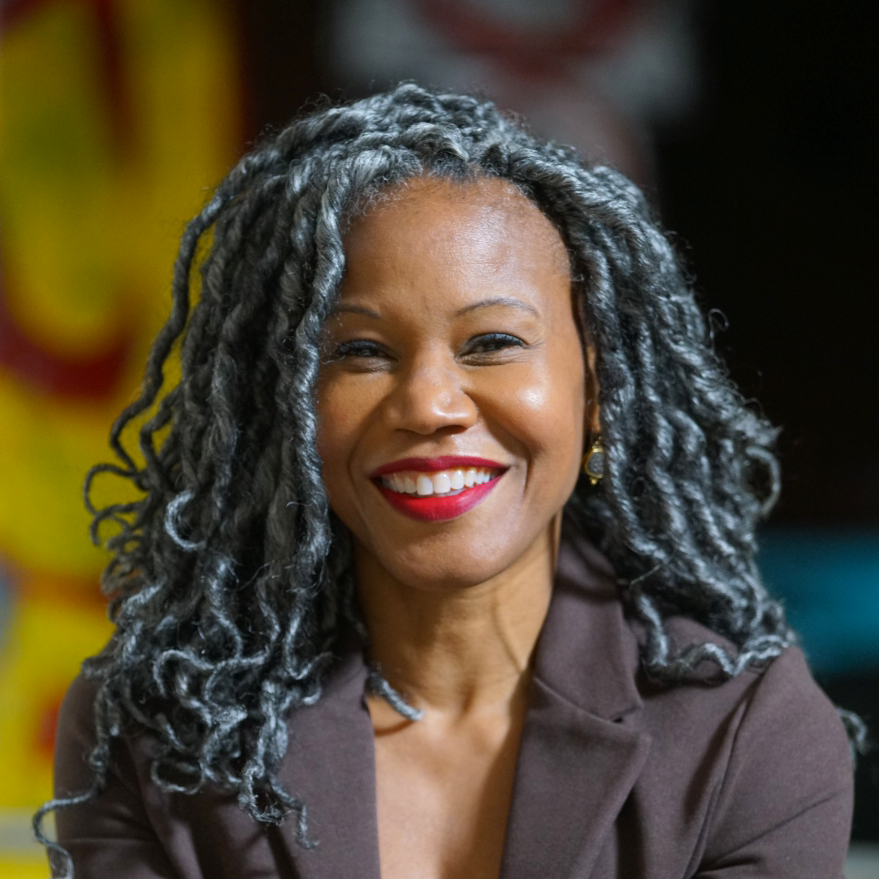
Majora Carter’s career as urban revitalization strategist has spanned environment, economy, social mobility, and real estate development. Her work has won major awards in each sector, including a MacArthur ‘genius’ Grant and Peabody Award winning broadcaster.

Majora’s words — “Nobody should have to move out of their neighborhood to live in a better one” — are inscribed on the walls of the Smithsonian Museum of African American History and Culture. And her new book, called “Reclaiming Your Neighborhood”, the subject of our podcast, takes a next step in her thesis – build where you live,  talent will stay and your neighborhood will prosper.

Born and raised in the South Bronx, Majora has long-focused much of her work there, looking always to make positive change for her community, and in doing so, gained both national and international attention. She believes that talent retention may be the key to turning around low-status neighborhoods. And she’s backed that up with her Boogie Down Ground Hip-Hop coffee spot which she owns and operates with her husband in Hunts Point, around the corner from where she grew up.

Majora is also a lecturer at Princeton University’s Keller Center, serves as editor and senior producer at GROUNDTRUTH, a platform for telling stories of people building community power, and she previously served as associate director of The POINT Community Development Corporation. She founded and ran Sustainable South Bronx and co-founded Green for All.

Read the podcast transcript here

Eve Picker: [00:00:07] Hi there. Thanks for joining me on Rethink Real Estate. For Good. I’m Eve Picker and I’m on a mission to make real estate work for everyone. I love real estate. Real estate makes places good or bad, rich or poor, beautiful or not. In this show, I’m interviewing the disruptors, those creative thinkers and doers that are shrugging off the status quo, in order to build better for everyone. If you haven’t already, check out all of my podcasts at our website RethinkRealEstateForGood.co, or you can find them at your favorite podcast station. You’ll find lots worth listening to, I’m sure.

Eve: [00:01:01] My guest today is Majora Carter, my second interview with this powerhouse. Her career as urban revitalization strategist has spanned environment, economy, social mobility and real estate development, and her work has won major awards in each sector, including a MacArthur Genius grant. Majora’s words are inscribed on the walls of the Smithsonian Museum of African American History and Culture: “Nobody should have to move out of their neighborhood to live in a better one.” Her new book called “Reclaiming Your Neighborhood”, the subject of our podcast, takes a next step in her thesis. Build where you live, talent will stay, and your neighborhood will prosper. Look for the book on Amazon, in bookstores or on Majora’s website. There is no way around it. If you are really interested in impact investing, this podcast is a must listen.

Eve: [00:02:19] Hello, Majora. I’m so delighted to have you back on this show.

Majora Carter: [00:02:23] Thanks for having me.

Eve: [00:02:25] It’s been a while, but you’ve just written a book called “Reclaiming Your Community,” and in it you ask how we can address the problem of persistent poverty in low status communities differently. So, I wanted to start by asking you what is a low status community and what does it mean to you?

Majora: [00:02:46] A low status community to me – the way that our company defines it is a place where inequality is assumed by both the people that are in that community and those outside looking in. And so, what that what it looks like and I think that’s easier to describe that way; It’s the kind of places where there are more environmental burdens, where there’s higher rates of poverty, lower educational attainment, the kind of places where you won’t find diverse options for food. Not many great places to invest your money or you’re charged for it, like through check cashing stores or places like that. And it’s just literally the places where inequality is just understood. And so and they look different. They can be inner cities, they could be Native American reservations, they could be the kind of former booming Rust Belt towns that only white people lived in. But the jobs are long gone.

Eve: [00:03:44] This is a really big and hard question. So why is it difficult to improve the status of a low status neighborhood?

Majora: [00:03:52] Well, like a lot of things, it comes down to who benefits from it. And because if you look at those communities, literally billions of dollars are pumped into them through the philanthropic industrial sector and as well as our government. And it looks different, but it comes in the form of whether there are subsidies to build very low-income housing and homeless shelters, whether it’s the multibillion dollar economic engine that’s our pharmaceutical industry that absolutely does profit off of lifestyle related health conditions from diabetes and obesity and heart conditions. And it’s the, you know, the fact that there’s such low educational attainment but really, we’re not investing in public education within those areas either. And so, again, so it’s always like a problem to be solved. Again, folks, there are definitely industries set up to perpetuate that and actually benefit from them, but the people in those communities are not getting any better.

Eve: [00:04:53] So how does the redevelopment industry impact this cycle?

Majora: [00:04:58] Yeah, so like I think there’s an old saying, “all relationships are about real estate” and I believe it’s true in this regard because real estate development can be used as a transformational tool if we use it that way. I mean, think about it. What we’re doing is literally redefining what constitutes what is happening in those areas. So, when you do it by creating really interesting commercial, industrial, residential development. And so, you can tweak the formula and create benefits for the people that are there or not. Right?

Eve: [00:05:32] Right.

Majora: [00:05:32] And so if we’re thinking about development as a transformational tool and if we know that sort of status quo development, which either content to concentrate poverty and everything and all the ills associated with it from low health outcomes, low educational attainment, you know, higher rates of people being incarcerated. If we know that, then what if we designed those places and developed them in ways that actually promoted the opposite?

Eve: [00:06:01] Right.

Majora: [00:06:01] And that’s when we decided to look at a tool. We literally borrowed a page from the business community that looks at if you are an employer, if you own a business and you train, you hire your staff, that’s your talent and you pour resources into them, whether it’s training or benefits or reasons for them to want to stay. You know, you’re not doing it so that your competitor will hire them away. You’re doing it so that your talent sees you as the place to be. But we don’t do that in American low status communities. We don’t treat our communities that way. And so, what we’re trying to do is apply a talent retention approach to real estate development. Like what do folks that are born and raised in those communities, the talented ones, the ones that are either academically or artistically or any kind of talent, the ones that are literally taught to measure success by how far they get away from those communities, what can we do to keep them there? And so, we ask, what are you looking for in the community that you desire? We ask community members in my hometown in the South Bronx, what’s that? In that classic kind of low status community and people of all income levels, they were looking for kind of things that made them feel good about being in their own community, whether it was good places like cafes, restaurants, great parks, places to play and work. Those are the kind of things that they wanted. And so why aren’t we building those things here in our own community? And that is when we realize that that’s the kind of real estate development we wanted to do. And we labeled it a talent retention, real estate development strategy.

Eve: [00:07:47] You talk about real estate development impacting low status neighborhoods in one of two ways, and the first is displacement gentrification, which we touched on, and the second is poverty maintenance. So, tell me about poverty maintenance.

Majora: [00:08:03] Yeah. So, poverty level economic maintenance as we’ve called it, or PLM, which really sounds gross, but because it kind of is, where again, billions pumped into these communities from government and philanthropic sources, but the economic level of the people in that community does not change. So, subsidies that go to low income, quote unquote, affordable housing developers, which is only for very low income housing and even homeless shelters, lots of money in terms of the health clinics and the multinational pharmaceutical industry that are government subsidized and actually do support lifestyle illnesses according to, whether they are diabetes, obesity. But things related to the quality of life that that happen in communities, low status communities and seeing those type of things, even community centers that are that I think are often just there’s like resources that are poured in specifically to support the bright ones in the community. And so those are the ones that measure success by how far they get away. And those type of things literally pull people outside of our own community to seek greener pastures. But again, the people that remain are usually the ones that remain in poverty. And that is the way that those communities are treated.

Eve: [00:09:31] Right.

Majora: [00:09:32] Whether it’s by the philanthropic and our government interest, it’s like we play to that in terms of like creating more low-income housing, more health clinics and opportunities to support people that are chronically suffering from lifestyle health conditions. And through that, we are not seeing the kind of transition from people who are actually creating more healthy opportunities for them, for themselves in those communities. And we’re seeing more and more money pumped into those things. And thus, we’re seeing the concentration of more and more poverty and all the things associated with it, whether it’s low educational attainment, higher rates of folks involved in the justice system, poor health outcomes, and more reasons for more people to want to leave those communities. So again, poverty level, economic maintenance, somebody is doing well, but not the people that are in those communities.

Eve: [00:10:27] So, you know, I think actually in the built environment, what you’re talking about is perpetuated by the affordable building types that we see, because you can really drive through a neighborhood and you can see you can point out affordable housing very clearly. And that, I think, is a very visible manifestation of that Poverty Maintenance or PLM, as you called it.

Majora: [00:10:49] Yeah. The architecture of poverty is, you know, you know it when you see it.

Eve: [00:10:55] Yes.

Majora: [00:10:55] It’s kind of like pornography. It’s like you know it when you see it.

Eve: [00:10:59] Yes, it’s true.

Majora: [00:11:01] Yeah, it may look different in a rural or urban or a suburban context, but everybody knows.

Eve: [00:11:07] That’s right. So, you know, you’ve already touched on this, but you write about how third spaces are key to talent retention in low status community economics. And so what is a third space?

Majora: [00:11:21] So, third spaces are these urban planning parlance for places that are neither work nor home. Right? And it’s just this third space where community can happen. And to us, community is not just a place, it’s an activity. Right? It is literally an action verb, but you do need places to do it. And so, if you don’t and so if you’re in general, if you’re in a low status community, the kind of places, the kind of third spaces that are in those communities are generally not the kind of places where people feel like they’re vibrant and they’re working to support the kind of goals and aspirations for their lives. It’s like, I think about some of the places in my neighborhood in the South Bronx where the largest places were communal real estate was either the waiting rooms at health clinics or pharmacies and also community centers where most people do not go and hang out or don’t want to be seen in. Right. Or for long anyway. And it’s just like, you know, in terms of cafes or cool places to hang out, very few. And so that’s when we realize we’re creating this this architecture or the architecture that’s here is literally creating this sort of like talent repulsion experience for people who are feeling like, I know I’ve got something good to offer because I don’t – Low status communities have never had a shortage of amazing people coming from them. Right. But I do have a problem with them staying. I mean, even America loves the Cinderella story of like somebody being born into some kind of hardscrabble community and they have to pull themselves up and then they go out and make something great of themselves. They’re coming from these communities. Why can’t we make something of ourselves here?

Eve: [00:13:13] Yeah.

Majora: [00:13:14] And that’s both the challenge, but also the joy of realizing that it’s not just this thing that this this miracle that needs to happen, it’s something that we can do because we already have the tools and the keys to our own recovery within our own communities.

Eve: [00:13:33] So, you know, I visited you in the Bronx and there’s not a lot of third places there. But you created a coffee shop, and didn’t you tell me that it was voted, what was it voted, number one?

Majora: [00:13:44] We were voted the best cafe in New York in 2021.

Eve: [00:13:49] Can you believe that? That’s awesome.

Majora: [00:13:51] Yes, I can. Yes, I absolutely can. And it’s because we but it was by time out in New York and it was because we were, and yes, we do have great specialty coffee. I’m sorry. Do you hear that.

Eve: [00:14:09] The dog? Yes.

Majora: [00:14:09] Yes, I’m sorry.

Eve: [00:14:10] Everyone will have to deal with the dog on this podcast.

Majora: [00:14:13] I know.

Eve: [00:14:14] Is my life, right?

Majora: [00:14:15] He’s like really upset because my husband just walked out and he’s like, “don’t go” anyway. I’ll Start over. But yes, we were voted best cafe in New York City in 2021 by “Time Out New York magazine.” And I like to think it wasn’t just because we’ve got great coffee and tea and an awesome local craft beer and wine and sangria, but and really awesome community vibes. But it really was the vibes part because what we did was really instil within our community that our cafe was simply a vessel in which to hold all the great hopes and dreams and aspirations of our community and then gave it a platform to show it. We absolutely took advantage of having to do much of our work outdoors because of COVID, and suddenly we became this, this wasn’t just encased within the four walls of our cafe, but we took it outside and people were doing things like open mics and even credit repair workshops and art exhibits, and basically it was just such a liberating way for people to see how beautiful their community was. And because it was literally like spilling out onto the sidewalk for everybody to see. And I feel like that is the reason why we won that award. You know, not, you know, again, we do have really good stuff there, but it was mostly that we created this this environment that allowed people to see how beautiful their community was and participate in it.

Eve: [00:15:54] So you tested this thesis out. Do you know of any people who stayed in the community because of this third place? So, what’s next? How do you – that’s a big block you’re on, by the way. And yes, that’s going to take quite a lot of work to transform into a community asset, shall we say.

Majora: [00:16:12] Yes. Well, you know, you’ve got to start somewhere. I mean, some environmentalists would say, what’s the best time to plant a tree? You know, 20 years ago. What’s the next best time? Today. And so that’s where you start. And you have to start somewhere. And by creating examples and showing them what it does do is give people that are open to it an opportunity to say, well, if they could do something, why can’t I?

Eve: [00:16:37] Yes.

Majora: [00:16:37] And that is exactly what we’ve seen, like our little cafe has, actually, because it’s just allows people to connect together. We’ve seen everything from people being able to buy homes from one another. We’ve seen people start new businesses and locate them within the community. We’ve seen people develop their own capacity to see themselves as a different person, but the same one, but being able to do it within their own community. I’ve been incredibly excited by seeing folks realize that looking around and going, Wait, there’s people like me here. Why do I feel like I need to to escape when I could build something right here? So, yes. And what’s also super exciting is that I’ve also seen folks from around the country intuitively do this. And writing this book was simply a way to help other folks see that this may be mostly my story and how I got to the point where it’s like reclaiming my community was something that I want to see everybody to do because I feel like we have to do something to sort of repair the social fabric of our country. And we should start in the places that are most impacted by some of the specious problems that whether it’s systemic racism and classism have actually created in this country, but really created low status communities that are not helping us as a as a country evolve into the greatness that it could be.

Eve: [00:18:11] So I know you’re also working on a second third space, which I’ve had the good fortune to visit.

Majora: [00:18:16] Yes.

Eve: [00:18:17] A beautiful old railway building. Tell us about that. What’s going on there? It’s not far away. It’s like less than half a block away from your coffee shop, right?

Majora: [00:18:28] My world is really small at this point. I mean, the coffee shop is literally a three-minute walk away. The other project that you’re referring to is even a minute walk away from where I live.

Eve: [00:18:41] Yes, yeah, yeah.

Majora: [00:18:43] It’s a historic rail station designed by Cass Gilbert, America’s first starchitect, as they call them, Cass Gilbert, who designed also the Woolworth Building and the US Supreme Court building. It was quite the dandy in his day in the early part of the 20th century, and so we had this beautiful aesthetic. And so, this old rail station is about 4000 square feet, and so we’re transforming it into an event hall. So, my husband James and I actually literally did the initial demolition ourselves. Fortunately, we got other people to help us to finish it up, and it’s super exciting because the idea that we can take a space and by its nature as an event hall, it’s literally being filled by other people to do all sorts of things. And so we’re hoping to see it used as an amazing music venue, which actually sort of hearkens back to literally right across the street from where the rail station is, used to be a place where vaudeville excuse me, vaudeville, you know, Latin music as well is like it was like a musical and theater place where people would come right across the we want to bring some of that back as well. You know, and it’s also really interesting for me because that rail station is the reason why my family decided to settle there. My father was from down south, a big old black man who was a Pullman porter, and he bought our house for cash because back in the 1940s, there weren’t a whole lot of banks giving money to black men for mortgages. So, he actually won 15,000 in a horse race in California, put it in a satchel, literally cash, put it in a satchel, brought it back to New York. You found an Italian family that would sell to him, and he bought it.

Eve: [00:20:38] Which, in itself, was unusual, right?

Majora: [00:20:41] Literally, yeah. And he didn’t feel comfortable staying in the house for a couple of years, so he just rented it to them because it was the neighborhood was all white, but he bought that house because there was talk that they were going to reactivate that particular rail station and that was actually his line. So he was just like, Oh. Two blocks from my house. That’s what I want!

Eve: [00:21:01] He understood the power of transit, right?

Majora: [00:21:04] Exactly. Unfortunately, they never reopened it for transit, but he did have the conductor to slow down the train so he could hop off and climb out to his house.

Eve: [00:21:12] Oh, that’s great.

Majora: [00:21:13] Yeah, so that was pretty funny.

Eve: [00:21:16] Right? So, you know, I have to go back to the words that you’re quote that’s on the walls of the Smithsonian Museum of African American History and Culture. And you said, “Nobody should have to move out of the neighborhood to live in a better one.” And it really sounds like you just got tired of waiting around for someone to fix yours.

Majora: [00:21:34] Yes. In a nutshell, it was just like, you know, I mean, it was a little deeper than that, actually, because it really did come from this place where, you know, because I was one of those kids who measured success by how far she got away. I was told from very early on that I was a smart kid and that I was going to grow up and be somebody. And of course, I believed that I was just like I was really smart. I was reading when I was three. I was like, I’m getting out of here, especially when my brother was killed. And, you know, and I did watch, you know, because of financial disinvestment. All, so many of the buildings in my neighborhood were burned down. And I watched a lot of it. And there was a there was some trauma associated, I think, with like seeing and feeling these things, experiencing these things. So, yeah, I was like, education’s going to be my ticket out. And it was until I ended up back here only because I was broke and I needed a cheap place to stay when I went to graduate school. And that’s the only reason why I came back. And it did. It felt like such a horrifying defeat to be this kid with like I had a bunch of letters behind my name. I went to good schools, and then all of a sudden, I’m like back home and mommy and daddy’s house in the South Bronx. Hard and, but what was amazing was discovering that that education and distance actually was a blessing because like that’s when I saw when the city and state were building this huge waste facility on our waterfront, and we already handled an enormous amount of it. I was like, Oh my gosh. Like, it’s because we just this is history repeating itself. We are a poor community of color, politically vulnerable, and this is what happens. And all I could think was I mean, first was shame when I understood it and I was like, oh, like I just wanted to run away. And I did. And you know what? No one blamed me. But now I see it like, literally, with like eyes completely wide open, and I wanted to do something about it. And yeah, like, I wanted nice things in my own doggone community. Absolutely. For me and for everybody else.

Eve: [00:23:51] Yes. Yeah. I don’t know what to say next because I know how hard it’s been for you. It’s an amazing it’s an amazing journey that you’ve taken. I just want to say that. So, you also talked to me about the Jumpstart program in Philly, which I actually I interviewed Ken Weinstein, who launched the program in our second podcast season. If anyone wants to listen, it’s an amazing program. Tell me about it and why you why you love it so much.

Majora: [00:24:23] Wow. Yes. So, I was actually getting an award in Philadelphia, and it was the Edward Bacon Award who was actually it is Kevin Bacon’s father. And but he was like this amazing urban planner in Philly, and everybody loved him. Yeah.

Eve: [00:24:42] Yeah, yeah.

Majora: [00:24:43] And so I was getting this award and like part of it, and it’s like a really big thing over there. And so, part of it was that I got to hang out with some, some notable people in Philly, and I was like, okay, cool. And I sat in on this roundtable with graduates from this program called Jumpstart Germantown. And they were all, almost all black folks younger than me. And they were all talking about, like, the deals that they were doing. And I was just like. What? This many in a major American city talking about real estate deals and what they’re doing and how they’re doing it. And I was amazed. And so, but Jumpstart Germantown literally was a way to get folks from communities just like mine to be more involved in residential real estate development in Philadelphia, in Germantown. And so, the way that it was done, Ken Weinstein was literally, was getting inundated with, because he’s really a nice affable guy, and folks were just like, how do you do this? And he’s just like, oh, I can tell you. And he’d give them that information, and then he realized this is too much. And then he got his friends like help, created a training that gave people just enough information so that they could actually get out on their own. And then the best thing that he did was create a fund. So, where he gave the first couple of loans to those folks to do their first few deals.

Eve: [00:26:13] I remember him saying he realized that no matter what he taught them, if they couldn’t get the financing, it was useless.

Majora: [00:26:18] Exactly.

Eve: [00:26:19] And they couldn’t get the financing.

Majora: [00:26:20] No, no, no.

Eve: [00:26:22] What a guy. Yeah.

Majora: [00:26:24] So I was just like. Wait. What? And I totally flipped out and actually decided, I mean, I literally went to Philly for the next four weeks to just to take that class. And I’d love at some point to be able to start a project like that here in New York. And I actually encourage everybody to consider it in other places, too. But again, what we saw there was an incredible example. It wasn’t like a non-profit kind of like, “Oh, we’re here to help the poor people.” It was more like, “Nah, we’re going to help you compete” in this capitalist system that we’re in so that you can actually reclaim your own doggone community. And I was blown away.

Eve: [00:27:05] Pretty fabulous. And he’s franchised it, right? So, there have been a number of different neighborhoods and cities that are now have jumpstart programs.

Majora: [00:27:13] Yes, quite a few at this point.

Eve: [00:27:15] If I weren’t so busy, I would start one.

Majora: [00:27:17] I know.

Eve: [00:27:18] Pretty it’s pretty fabulous. But requires a little bit of resources. I want to ask one other big question and that is what does meaningful community engagement look like, especially when it comes to redevelopment of an area? What should it look like?

Majora: [00:27:37] Yeah. For us, meaningful community engagement means that it’s actually driven, at least in part, by listening to what the community’s hopes and dreams and aspirations actually are. And by no means assuming that you know what they are before you start. Because if you do, basically what we’ll do is what we see the non-profit industrial complex and even our government telling us what needs to happen in those communities. And that’s the same kind of status quo development that actually concentrates poverty. And what we did, we literally created surveys and did focus groups, and we even had an advisory board built from very informal leaders within our community that allow folks to give them reasons to think about. Yeah, what does it look like? What does a great community look like for me? And they were really specific about what those things were, and we knew it because they would talk about the things that they would leave the community to experience. And when we realized like honestly, where somebody’s hardest is, where they spend their money, and if you weren’t spending it in your community, what were you spending it on? And could we actually create the same kind of experience in our community that make people that just to give people a second look. And it has been hard because there’s such low expectations applied to low status communities and after a while people even internalize them. And that’s why it’s difficult to do that, which is why I’m so glad that I’ve actually gotten there’s company now. I mean, being the first one in to do something as crazy as like a really high-end specialty coffee shop in a place that hasn’t had anything like that in decades. It was exhausting. But at the same time.

Eve: [00:29:35] You got a lot of pushback early on from the neighbors, right?

Majora: [00:29:38] I got some pushback. I didn’t get a lot. What I got was they were very loud, but I think it was basically rooted in fear.

Eve: [00:29:46] I agree. I was going to say the same thing. I think change is very difficult for most people. And.

Majora: [00:29:52] Yeah.

Eve: [00:29:53] And they’re worried about being left out, you know, and, and they usually are left out, let’s be honest about it. So, you know, that was really why I asked that question. Like, how do we make people feel like part of something?

Majora: [00:30:08] Right, and their people are left out because the folks that are doing most of the development never had any intention of letting them in in the first place. I mean, if you think about the kind of development that happens in poverty level economic maintenance, I mean, there isn’t a place for most of the people in our community to even participate at all. I mean, there’s this thing, like, oh, we do community engagement and outreach, which means you get people together for some kind of little visioning thing and some ridiculous highly paid consultant gets like post-its up on a wall. And then you say, you did it. What did you do? I mean, it’s just like this is ridiculous. The kind of development that happens in low status communities was never intended to include people from those communities, except as recipients of like whatever they’re putting out, which we know concentrates poverty, and everything associated with it.

Eve: [00:31:04] Or gentrified it. Right. But either way, they’re left out. Yeah.

Majora: [00:31:09] Yeah, totally. And so, they know that. And that’s why I’ve been advocating as much as I can and also literally putting myself in that role of developer because I’m like, I’m already trying to create more opportunities for folks like we’ve done revenue shares for the cafe. We, we set it up so that people from our community can actively use it in a way that meets their goals and dreams and aspirations. I do that and I’m not a non-profit of not like I do that on my own. We’re absolutely looking to develop more opportunities for crowdfunding investment projects, for people within our community, for the other projects that we’re doing, because we want them to feel like they actually have an investment in their own community. And the only way to do that –

Eve: [00:32:01] I’ll help you bring them to Small Change. That’d be so cool, I’ll be waiting.

Majora: [00:32:02] I’m pretty, I would love that. I would love that. So, it is different when people do the development from our own communities because we are sensitive to what we haven’t had and what we do need and what our dreams are, because we bothered to ask and I’ve also experienced it, you know, I was that little girl who was just like, there’s nothing in this neighborhood. And it makes me feel like I’ve got a stain attached to me because of the way people think about my community. And, and I don’t want that on anybody. Like, I also don’t want them to feel like they’ve got to leave in order to believe that that they’re of any value.

Eve: [00:32:48] Awesome. So final question. If you were to change one thing about real estate development in the US to make better cities for everyone, what would that be? Maybe that’s unfair, you can say two or three.

Majora: [00:33:04] Yes, I’m going to say a few things. I’m sure. So, oh, gosh. If I could change the way real estate development happens in order to support more people doing it. I mean, I’m not exactly sure how to do this, but I know that the cost of doing it just literally is physically doing it is just so high. And I just wish that the cost of construction could go down. Don’t ask me how to do that.

Eve: [00:33:30] Oh God, yeah, everyone I think wishes that.

Majora: [00:33:33] But it’s just insane. And then sort of like the barriers to entry I wish would be a lot more equitable. I mean, I remember my very first deal where and it was just to do a small rehab know our mortgage broker literally made me write a letter because she looked at me, looked at my community and literally said, you know, I have a story in the book. She was like. Why did you want another house? Or another property? You already have one. And I was like, do?

Eve: [00:34:09] Because this is called wealth creation. This is called Building My Future, right?

Majora: [00:34:14] Yes. And but she, to her, it was just like, why would a black woman want to do that? Especially from a neighborhood like that. And so, she made me write a letter to the underwriters explaining to them that I was a fine, upstanding individual. That does nice things for her community. And I was like, I know she doesn’t ask any white men about this, but you know what? I wrote the letter. So, this was me. And I had great credit, property in mind, a willing seller, a free development loan, already pre-approved. I mean, it was just like and that’s a small example. You know, I hear about them all the time, you know, access to capital, how hard it can be.

Eve: [00:34:58] Yeah. So do I, I think the access to capital is completely inequitable.

Majora: [00:35:02] Yeah, exactly. And those are the main two things. But also, I think the other one is making sure that people in low status communities see themselves as rightful developers of their own community. Because that is one of the hardest things where I think even some of the challengers that I get is more like, who do you think you are? And these are people from communities like mine within the social justice industrial complex who are just like, “You shouldn’t do that.” And it’s just like, why should that? It does like because again, such low expectations of folks in our communities like here, I’m being challenged because I’m actually saying, no, I can do better than what’s actually happening here. Yeah. And I get it coming and going sometimes. But there are more people who see the value of it and who are actually thinking about how they can do it themselves.

Eve: [00:35:59] Well, thank you, Marjora. I love you to death. And I think this is fantastic. And I can’t wait to visit again.

Majora: [00:36:08] I know.

Eve: [00:36:09] Hang out in that coffee shop.

Majora: [00:36:11] Yes. Yes. Oh, my gosh. It’s so super exciting. And wait till you see the rail station within the next few weeks. We’re getting it ready for a pretty big event. Ted X the Bronx is

Eve: [00:36:25] Fabulous!

Majora: [00:36:26] Doing their event there. Yeah,

Eve: [00:36:27] That’s really fabulous.

Majora: [00:36:29] You know, we’re phasing it in.

Eve: [00:36:31] I have to come back again soon.

Majora: [00:36:33] You’re going to love it.

Eve: [00:36:34] Cool. Okay. Bye.

Majora: [00:36:35] Thank you. All right. Take care. Bye bye.

Eve: [00:36:44] That was Majora Carter. I’m repeating myself, but I’m still in awe. Majora is uncompromising about her mission. She lives and works in Hunts Point in the South Bronx, one of America’s lowest status communities, just two blocks from the house she grew up in. When it became clear that no coffee shop operator wanted to operate out of her space in the neighborhood. She created her own business to achieve a goal. Now that is putting your money where your mouth is.

Eve: [00:37:27] You can find out more about this episode or others you might have missed on the show notes page at our website RethinkRealEstateForGood.co. There’s lots to listen to there. A special thanks to David Allardice for his excellent editing of this podcast and original music, and thanks to you for spending your time with me today. We’ll talk again soon, but for now, this is Eve Picker signing off to go make some change.

Image courtesy of Majora Carter

Women-owned. Michigan-made.

March 16, 2022

Jill Ferrari is all about creating impact where it is needed.

An attorney with twenty-five years of real estate development and operations experience, she is also the co-founder (with Shannon Morgan) of Renovare Development, a woman-owned, social impact, real estate development company focused on transformational projects in Michigan. To say Jill knows this space would be an understatement. She has worked in consulting and community development, managed complex brownfield redevelopment projects in multiple states, and she has experience forming complicated capital stacks that combine both federal and local funding with unique financing programs and conventional debt.

Previously Jill was CEO of Shelbourne Development, working on affordable housing, and before that, CEO at Michigan Community Resources, working on community and economic development. And as the former director of community development for Wayne County, MI, she managed the distribution of over 100 million in federal funds to various projects and communities, including the development of housing for victims of domestic violence and returning citizens. Jill also serves as co-chair of the Urban Land Institute (ULI) Michigan District Council and is the founder of ULI Michigan’s Women’s Leadership Initiative, designed to promote leadership for women in the real estate industry. Plus, she is a member of the ULI Michigan Small Scale Development Local Product Council and a member of the Women’s Development Collaborative.

Read the podcast transcript here

Eve Picker: [00:00:09] Hi there. Thanks for joining me on Rethink Real Estate. For Good. I’m Eve Picker and I’m on a mission to make real estate work for everyone. I love real estate. Real estate makes places good or bad, rich or poor, beautiful or not. In this show, I’m interviewing the disruptors, those creative thinkers and doers that are shrugging off the status quo, in order to build better for everyone. If you haven’t already, check out all of my podcasts at our website RethinkRealEstateForGood.co, or you can find them at your favorite podcast station. You’ll find lots worth listening to, I’m sure.

Eve: [00:01:06] Jill Ferrari is the developer who believes in community. She and her partner, Shannon Morgan, co-founded Renovare Development in Detroit just a few years ago. They focus on transformational, mixed-use projects in urban areas and rural main streets that meet community needs. Both Jill and Shannon bring significant experience to their new venture, including private real estate. Government roles and non-profit community development. This gives them the broad perspective necessary for the social impact projects they are developing. Their network of municipal contacts and professional service providers are their secret sauce. These connections provide access to redevelopment opportunities throughout the state of Michigan and beyond. Their first six projects, valued at $88 million, are well underway. Not shabby for a woman owned start up. You’ll want to hear more.

Eve: [00:02:16] If you’d like to join me in my quest to rethink real estate, there are two simple things you can do. Share this podcast and go to rethinkrealestateforgood.co, where you can subscribe to be the first to hear about my podcasts, blog posts and other goodies.

Eve: [00:02:38] Hi, Jill, thanks so much for joining me today.

Jill Ferrari: [00:02:43] Thanks for having me.

Eve: [00:02:45] So you’re a real estate developer with a mission that’s pretty solidly grounded in community. Tell me why this is important to you.

Jill: [00:02:56] When we launched Renovare Development, we knew as mothers that we were uniquely qualified to solve problems through commercial real estate development. As mothers, as women who are caregivers for both our children and our parents, we are cooks, we are problem solvers, we’re executives. We juggle so many different tasks in our lives. We approach commercial real estate development the same way. We look at how communities need to solve certain problems and how real estate can help solve those problems for communities. And it’s just a unique perspective that we are deeply committed to applying in our projects.

Eve: [00:03:44] Most developers need dose of motherhood, right?

Jill: [00:03:48] Or womanhood. You know, I think that we just have a very unique perspective that allows us to see ourselves and our parents and our children in projects. So when it comes to multigenerational products like ADUs and granny flats, or the types of programming in commercial retail centers, we are thinking about our children, we are thinking about our parents and it helps create more sustainable, more community driven projects.

Eve: [00:04:19] You co-founded Renovare with your partner, Shannon Morgan, and when was that? And how did the two of you meet? And why?

Jill: [00:04:27] Right. We met during the crash of 2008, 2009. I was working in community development, I was the head of community development for Wayne County, Michigan. We received a large package of stimulus funds at the time. Shannon was a C-suite individual at a large development company, and she completed a few projects for me. Single family rehab, mostly. And she just stood out as a problem solver. A lot of the developers were really struggling to use those federal funds correctly and within compliance. And Shannon and her team were just really skilled at meeting compliance requirements and getting that money out the door appropriately. And we developed a relationship. And 10 years later, we were working at the same affordable housing development company and just had a really similar vision on what it meant to create transformational projects that really solved community needs. And I think a lot of that is that mother’s perspective, that woman’s perspective, on how development should be done. And we’ve been together since 2019, and we rarely have different perspectives on how things should be done. So, it’s really nice a few years into your partnership that you still think you chose the right person.

Eve: [00:05:51] That’s really great. It’s a perfect marriage. And when did you launch Renovare?

Jill: [00:05:55] We formed in 2008 but didn’t officially launch until 2019.

Eve: [00:06:01] Okay. So, why Michigan? You’re based in Michigan, you’re in Detroit, you’re sticking to Michigan.

Jill: [00:06:08] We have decided to start in Michigan because of our relationships. We have chosen projects, not really because we’ve sought out the location, but because we have been invited. We’ve been invited to a community by the municipality to solve a certain housing need, or we’ve been invited to a community by a major employer to partner on a project or by a local non-profit. All of our projects are partnerships with some local employer agency non-profit who has identified a community need that needed to be solved. And when we launched and made it public what we were trying to accomplish, the invitations were endless. And we’ve chosen these first six projects because we believe deeply in the communities that they’re located in and the partners that we have. And we would love to expand outside of Michigan but the need for housing here and community centric commercial spaces is so deep that we could spend our entire careers and leave legacies for our children just by working in the state of Michigan. But we have some great relationships outside of Michigan. Women across the country that we are connected to that have invited us to come work on housing in their states, and we hope to get to those projects.

Eve: [00:07:30] So what’s the overall strategy for the company?

Jill: [00:07:35] When the company launched, we made a commitment to each other that we would focus on a diverse pipeline of projects. We had seen colleagues really focus on just multifamily or just low-income housing tax credits, and we knew that in order to be sustainable, we needed to pursue a diverse mix of product types. So, in our first six projects, we have a single-family development in Ypsilanti, Michigan. We have long term hold projects, mixed use developments in multiple cities, and we have a low-income housing tax credit project. And the reason that we formulated our business plan that way is that the cash flow is diverse from the different product types, and we wanted to make sure that we maintain that diversity over time because it makes us stronger and makes our cash flow more sustainable.

Eve: [00:08:32] So, some of them are for sale, some of them for rent. Some of them are going to be completed before others. There are developer fees, there’s income from rental or all of that mix of cash flow.

Jill: [00:08:44] Exactly. Some are tax credit projects. Some have more market rate units than others. Most of our, almost all of our projects, have workforce housing as a component of the project because we both come from workforce families. We are blue collar born and raised. And we believe that there are just thousands of Michigan families out there that fit that workforce demographic that can’t afford to buy a home, and we want to be a part of that solution.

Eve: [00:09:14] So actually, I’m going to diverge a little bit. People talk about workforce housing versus affordable. What’s the difference?

Jill: [00:09:21] In our definition affordable housing is from roughly 30 percent area median income to 60 percent area median income. Workforce housing is 60 percent area median income to 120 percent area median income. And that’s where most of our housing is focused.

Eve: [00:09:41] Ok, so where I live, they consider that affordable housing. And the lower end would be really sort of dire need target housing. Ok, got it. These are complicated projects. How do you finance them? Like, I could imagine that the financing of these projects takes up more time than anything else.

Jill: [00:10:04] I think that’s where we’ve spent the majority of the past two years. First, it was identifying the communities and the partners that we wanted to work with, and the next step is the capital stack and really understanding how these pieces work together. Shannon has tremendous experience in low-income housing tax credit ownership in other projects in Michigan, and my background, I’m a lawyer by training but my background has really been about creating unique financing solutions for real estate projects. So, our partnership is very compatible in what we’re trying to accomplish here. But it is a very difficult process to figure out how to stack these deals to make them work. And it’s why most market rate folks don’t spend the time because the fees are less, the cash flow is not as strong, but they are transformational projects that mean everything to the community that they’re in.

Eve: [00:11:01] So to keep a housing project affordable means that equity investors can’t get as much return. I’m really surprised at how many people don’t understand that. That, you know, the more return you give a bank or an investor, the greater the rent or the sale price is going to be, and the less affordable it’s going to be. So, who’s out there who helps kind of fill that capital stack for you

Jill: [00:11:25] In the state of Michigan we are using a local tool, a tax increment financing tool, that is helping create affordability in the single-family units. It was originally written as a brownfield redevelopment financing tool. However, cities in the state of Michigan are utilizing a piece of that legislation that talks about economic development to create workforce housing. So, we’re kind of left, as developers, to using tools as creatively as the state and the community that we’re in will let us to create workforce housing. But to your point, there aren’t a lot of gap financing tools for this population. There aren’t a lot of philanthropic dollars outside of entitlement communities, you know, large urban areas. So, it is really difficult, and we filled the gap with corporate sponsors, we’ve filled the gap with local foundations as equity partners, and it’s just a lot of work.

Eve: [00:12:30] You’ve got six projects that you’re pushing forward totaling how much value?

Jill: [00:12:36] Eighty-eight million in total development costs.

Eve: [00:12:39] And when do you expect the first one will break ground?

Jill: [00:12:43] We are hoping to break ground in Ypsilanti in the summer and the rest of the projects will follow throughout the fall and next year.

Eve: [00:12:53] Okay, and then do you expect your pipeline to grow once that’s underway?

Jill: [00:12:58] Yes. Once again, following the sustainable cash flow model, we’ll be looking for some single-family developments to close in 2024. And then after that, we’ll kind of go back to some mixed-use projects. And again, looking in the state of Michigan, but also, we are partner driven. So, if there’s a partner that pulls us out of the state of Michigan or a community that desperately needs us, we would look elsewhere too.

Eve: [00:13:25] Ok, I want to just shift gears a bit and talk about some of the challenges you’ve been confronted with as a woman, as a developer working in community projects, all of those things. You talk about challenges that you’ve been confronted with, that perhaps a white man would not have been confronted with.

Jill: [00:13:47] Yeah. Fundraising for the development company has been one of the most exhausting and educational experiences I’ve ever gone through. And I have been in real estate for over twenty-five years. The capital world, VC world and angel investment world is really not suited for women commercial real estate developers. It’s a high-risk industry. Investors don’t really understand how to evaluate the opportunity. It’s not an app that anyone can use. Very different from some of the successful tech apps that have raised millions of dollars. So, this space is definitely a very lonely space. And friends and family are a very strong audience for investment, but we have a very strong identity. We are definitely looking to raise significant cash flow and provide an attractive return. But at the same time, we are picking projects based on partnership and community need. So, a lot of investors don’t really understand what we’re trying to do or why we’re trying to do it. So, it’s really difficult to raise money, and it’s been a journey. But we have met some women along the way that are in this space that have been tremendous resources, you included. I think that this space is growing. There’s a lot of emerging women commercial real estate developers who are looking to launch and do their first projects. And I think this growing ecosystem of support for women in commercial real estate is getting stronger, and I’m just happy to see it.

Eve: [00:15:36] It’s very exciting. What about when you go to a bank for a loan? Do you think you’re treated any differently there?

Jill: [00:15:44] It depends on whether we are meeting their needs. So when we talk to banks that have Community Reinvestment Act obligation and we’re working in one of their target communities, the red carpet is rolled out. If we are looking in small towns across Michigan that are not part of anybody’s targeted lending strategies, it is really difficult to get lenders interested in projects. And that’s where we see, one of the biggest challenges in what we do, is that the need for housing and the appetite for lenders is completely mismatched. And we are hoping that the commercial lending industry evolves where there are loan loss reserves and risk management strategies so lenders will be more likely to lend in these smaller towns because there are employers across the state of Michigan who are hoping to expand, are in a position to expand, but are choosing not to because of the lack of housing.

Eve: [00:16:49] Interesting. That’s really tough. So, right now you’re raising funds for your company and this first set of projects on Small Change. Why crowdfunding in amongst all of this?

Jill: [00:17:03] Because our mission is to help solve community problems, we wanted to incorporate the community into our company, and we’re really interested in the way that Small Change was structured and the audience that was being reached and wanted to tap into the network of individuals across the country that are passionate about supporting women in commercial real estate. And honestly, part of our hope is to build momentum for other commercial real estate developers that are women, that they’ll follow in our footsteps and be able to raise funds through the community to help them launch.

Eve: [00:17:47] Well, it’s all really pretty exciting. I’m very excited for you. It’s a great thing to have a new company to work on. But what’s your really big, hairy, audacious goal? Where would you like to be in five 10 years?

Jill: [00:18:03] Oh, I want to take my child on a tour of completed projects, and I want to go to some of those projects and have the community members know me and remember me and maybe even vaguely if we do this right. But I think both Shannon and I feel deeply that we want to leave a legacy for our children. And that’s all really why we’re doing this.

Eve: [00:18:31] That’s really wonderful. I also want to be invited on a tour, maybe sooner than five years. I’d love to see the projects you’re working on, and…

Jill: [00:18:39] We’d love to have you back in Michigan.

Eve: [00:18:41] OK! Well, thank you, Jill. Thanks for joining me today.

Jill: [00:18:45] Thank you for having me.

Eve: [00:18:49] That was Jill Ferrari. For Jill, her career as a developer and her womanhood are entwined. Her personal experiences as a mother and caregiver are brought to the table in every project that she and Shannon tackle together. Surely this is an added bonus.

[00:19:12] You can find out more about this episode or others you might have missed on the show notes page at our website RethinkRealEstateForGood.co. There’s lots to listen to there. A special thanks to David Allardice for his excellent editing of this podcast and original music, and thanks to you for spending your time with me today. We’ll talk again soon, but for now, this is Eve Picker signing off to go make some change.

Image courtesy of Jill Ferari

« Previous Page
Next Page »

Primary Sidebar

sign up here

APPLY TO BE A PODCAST GUEST

More to See

(no title)

February 22, 2025

Bellevue Montgomery

February 11, 2025

West Lombard

January 28, 2025

FOLLOW

  • LinkedIn
  • RSS

Tag Cloud

Affordable housing Climate Community Creative economy Crowdfunding Design Development Environment Equity Finance FinTech Gentrification Impact Investing Mobility Offering Opportunity zones PropTech Technology Visionary Zoning

Footer

©rethinkrealestateforgood.co. The information contained on this website is for general information purposes only. Nothing on this website is intended as investment, legal, tax or accounting strategy or advice, or constitutes an offer to sell, solicit or buy securities.
 
Any projections discussed or made may not be accurate and do not guarantee a specific outcome. All projections or investments are subject to risk due to uncertainty and change, including the risk of loss, and past performance is not indicative of future results. You should make independent decisions and seek independent advice regarding investments or strategies mentioned on this website.

Recent

  • The Mulberry
  • Mount Vernon Plaza
  • The Seven
  • Real estate and women.
  • Oculis Domes.

Search

Categories

Climate Community Crowdfunding Development Equity Fintech Investing Mobility Proptech Visionary


Copyright © 2026 · Magazine Pro on Genesis Framework · WordPress · Log in