• Skip to main content
  • Skip to secondary menu
  • Skip to primary sidebar
  • Skip to footer
  • Home
  • About Us
  • Say hello
Rethink Real Estate. For Good.

Rethink Real Estate. For Good.

  • Podcast
  • Posts
  • In the news
  • Speaking and media
    • About Eve
    • Speaking requests
    • Speaking engagements
    • Press kit
  • Investment opportunities

Creative economy

1,000 urban entrepreneurs.

May 20, 2020

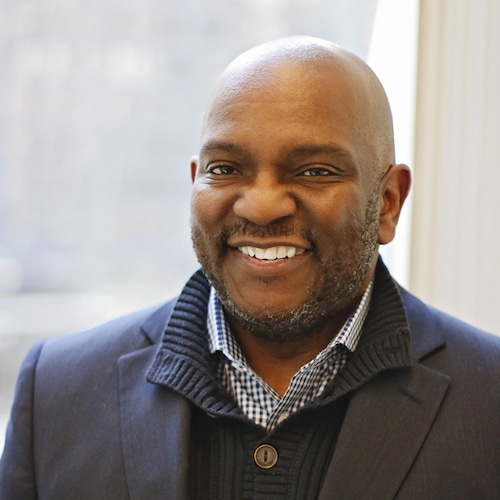
Lyneir Richardson is a man with a mission. His goal is to help 1,000 urban entrepreneurs grow their businesses, through a nine-month program run by the Center for Urban Entrepreneurship & Economic Development (CUEED) at Rutgers University in Newark, NJ. The program, where diversity abounds, has enrolled about 400 entrepreneurs so far.

As executive director of CUEED, Lyneir leads capacity-building programs, teaches an M.B.A. course in Urban Entrepreneurship and Economic Development and serves as faculty advisor to students consulting with small business owners. About 70 percent of the entrepreneurs within CUEED are African American and Latino, and 62 percent are women. Most have no connection to Rutgers. About 60 percent of the businesses employ fewer than five people but have potential to grow.

Lyneir is also co-founder and CEO of The Chicago TREND Corporation, a social enterprise initially funded by the John D. and Catherine T. MacArthur Foundation and Chicago Community Trust. It acts as a centralized resource for real estate developers, retailers and community development organizations wanting to invest in and understand Chicago’s neighborhoods, that can drive transformative change.

Lyneir was formerly the CEO of Brick City Development Corporation, where he had responsibility for real estate development, small business services and business attraction in Newark, N.J. He is an experienced commercial and residential real estate developer with over 17 years of experience in urban retail development.

Describing himself as an urban entrepreneur who is interested in strengthening economic conditions in underserved areas, Lyneir says he likes to work on bringing together private, public and philanthropic funds to support these kinds of projects. And he does that with incredible energy.

Information and Links

  • CUEED designed their rigorous nine-month program, Entrepreneurship Pioneers Initiative, exclusively for first-generation entrepreneurs.
  • CUEED’s Black and Latino Tech Initiative offers a unique pre-accelerator program for brand-new entrepreneurs that includes educational training, coaching, mentorship, networking and exposure to funding for new businesses.
  • Entrepreneurial thinking, hand-in-hand with data, can be a powerful tool when applied to community investment in disadvantaged neighborhoods.
Read the podcast transcript here

Eve Picker: [00:00:12] Hi there, thanks so much for joining me today for the latest episode of Impact Real Estate Investing.

Eve: [00:00:18] My guest today is the energetic Lyneir Richardson. In all that he does, Lyneir is razor-focused on helping urban entrepreneurs. He straddles two roles in two cities, Newark and Chicago. At Rutgers University in Newark, he is the executive director of the Center for Urban Entrepreneurship and Economic Development. There he is intent on helping 1000 diverse urban entrepreneurs grow their companies. And he’s also an entrepreneur himself. He co-founded and is CEO of the Chicago Trend, a social enterprise providing resources to real estate developers and retailers to promote investment in Chicago neighborhoods.

Eve: [00:01:05] Be sure to go to rethinkrealestateforgood.co to find out more about Lyneir on the show notes page for this episode. And be sure to sign up for my newsletter so you can access information about impact real estate investing and get the latest news about the exciting projects on my crowdfunding platform, Small change.

Eve: [00:01:38] Hello Lyneir, I’m really excited to have you here today.

Lyneir Richardson: [00:01:42] Thank you for inviting me. I’m looking forward to our conversation.

Eve: [00:01:45] Yeah. So, you’re a man with a mission and I’d really love to talk about that today. And like, firstly, in your role as the director of the Center for Urban Entrepreneurship and Economic Development at Rutgers University, and that’s quite a mouthful, you’ve set a goal there of helping 1000 urban entrepreneurs grow their businesses. And I’d really like to hear more about that.

Lyneir: [00:02:09] Great. Well, I have been at Rutgers Business School for six years. In October of 2019 we celebrated the 10th anniversary of the Rutgers Center for Urban Entrepreneurship and Economic Development. During that 10-year period, we really focused on helping a diverse set of entrepreneurs get to, quote unquote, the next level, and that’s how we always talked about, and then made the connection between entrepreneurship and economic development. Let me tell you a little bit about what I mean. We can point to the fact that we directly assisted over 400, now probably almost 500 entrepreneurs, 70 percent are entrepreneurs of color, African American or Latino largely, over 62 percent are women. 40 percent are right in the city of Newark, New Jersey which is an urban city that’s been really revitalizing through local municipal leadership and corporate support. And of those firms we’ve taken now a little over 160 above a million dollars a year in revenue. So we’re really excited about.

Eve: [00:03:22] Fabulous, yeah.

Lyneir: [00:03:23] That was really my, you know, first 10 years of work. And so the next, as we thought about it, all right, we’ve completed our 10 years, what do you want to do next? We really focused on this initiative we’re calling a thousand million. And as you mentioned, the focus is, can we help, you know, a thousand diverse entrepreneurs get to and exceed a million dollars a year of annual recurring revenue? The reason why that’s important for us is, you know, the million-dollar revenue mark is not the end all be all, but it’s an important threshold, it’s when an entrepreneur typically can start to think about either borrowing money or taking on investors. It’s at that point where they have some employees beyond themselves. It’s at that point where they hopefully will start to be able to consistently have some owner’s compensation or some profit to share. You know, they have customer validations and that type of stuff.

Eve: [00:04:21] They’re at the beginning of growth mode, right?

Lyneir: [00:04:24] The beginning of growth mode. And so, while we work with, you know, micro-entrepreneurs, you know, initially doing a hundred or two hundred thousand dollars of revenue, as long as they were in business for two years and we won’t, you know, discontinue working with them, we sort of turn to an intentional effort to take firms who are in the two to three, six hundred thousand dollar range and try to focus on getting them to the next level. That’s been fun.

Lyneir: [00:04:49] That’s our Rutgers Center for Urban…, and Rutgers has been a really supportive university environment because typically entrepreneurship centers at universities are, you know, internally focused. Helping students pursue entrepreneurial activity and helping alumni. Rutgers here, because we have this Chancellor, Nancy Cantor, who’s really made publicly engaged scholarship a strategic priority and a mission, she’s a national spokesperson for it, as well as the dean of our business school who made social impact, you know, one of her top initiatives and priorities we are able to open the doors of the business school to a community of entrepreneurs, many or most of which are not Rutgers students, and they’re not Rutgers alumni, you know. It’s just a community around us, the local coffee shop or the professional service provider in the area, in our state or region that we really are helping to accelerate and grow.

Eve: [00:05:53] Cool. How long is it going to get to a thousand of them?

Lyneir: [00:05:56] You know, it’s interesting. So, if you think about it, it took us 10 years to get 400 entrepreneurs in our program 160, I think by, you know, intentionally focusing, we’re hoping that over the next five years you will start to reach that goal. So we’re talking to a number of corporate partners, we’ve talked to some of the big philanthropy about both making, you know, our in-person courses, expanding them out some, but obviously not just because of the pandemic, but even in advance of it, using online tools so that we can expand our reach. So, yeah, we’re hoping that over the next five years, you know, we’ll start to see more, you know, more entrepreneurs across the threshold. We’re going to research it and track it and celebrate it as well.

Eve: [00:06:43] So what does an urban entrepreneur look like and where are they located? What sort of businesses are they?

Lyneir: [00:06:49] Yep. So it’s interesting. So, you know, urban entrepreneur is, it’s an interesting term. Urban is an interesting term, right? So, you know, what’s urban? Is it, in most instances place? Is it about density of place? I’ve been most passionate about urban with a racial lens. Racially diverse, economically, you know, challenged ethnic and underserved areas. So, in a lot of respects, my urban is really focused on here in the US, who have not been able to realize the full promise of our American dream, right? They have been subjected by, you know, systemic racism and that kind of stuff. So the question is, can I help them get resources and opportunity, you know to folks who have been overlooked and undervalued, right? So that’s really the focus of the urban we do. Distressed urban neighborhoods where we’ll create jobs and create wealth in communities. And then the economic development impact’s all-around quality of life, right? You know, will crime decrease? Will there be better educational outcomes, you know, more amenities and neighborhoods, you know, that type of work, right? And that’s the things that we measure, right? And so, our view is these urban entrepreneurs, as they become more successful, will be community anchors. They support the Little League team, you know, and civically active and employ locally and, you know, that’s the big dream and the vision for it all.

Eve: [00:08:20] Can you give us some examples of the sorts of businesses you’ve helped?

Lyneir: [00:08:24] So, a wide variety. I’ll talk about a few that we’re proud of.

Eve: [00:08:29] Surely, you’re proud of them all, right?

Lyneir: [00:08:33] Right, we’re proud of them all. I just did it off the top of my head, You’re right about that.

Eve: [00:08:35] It’s like your children.

Lyneir: [00:08:37] Well thank you for that, you’re right.

Lyneir: [00:08:38] We have four categories or signature program, sort of, lanes. One we call, which is our bedrock program, the Entrepreneurs Pioneers Initiative. It’s for first generation entrepreneurs. We have a program for media and art in entertainment industry entrepreneurs. We have a program that focuses on helping retail and restaurant entrepreneurs. And we have done a lot of work recently with people of color forming technology ventures and accelerating, you know, those ideas. And typically, after school and on the summer, we will do some youth entrepreneurship programs.

Lyneir: [00:09:17] You know, we have a really cool – I’ll just go walk back up the ladder – so we have a really cool technology firm called WearWorks that have started to raise capital into a number of strategic partnerships. This product is a haptics, sort of a navigation device for people with visual disabilities. Their recent accomplishment is using their product – a blind individual ran the New York Marathon for the first time without any type of seeing eye dog or, you know, used that tool to do it. We hope that they’re going to continue to grow and get resources and use their tools for training and for all types of health outcomes as well. We have put the local right down the street from our business school. We have a number of restaurants and coffee shops. Black Swan coffee, Green Chickpea is a restaurant. These are local businesses that we’ve either helped get contracts with the university, you know, one is soon to announce a second location. You know, the coffee shop I love because the donuts are so great, right? So, you know, I would I should be avoiding the donut shop, it’s really cool right down the street. A lot of professional services firms, PR firms, accounting firms.

Eve: [00:10:33] That’s a really wide variety.

Lyneir: [00:10:35] Yeah, very exciting.

Eve: [00:10:36] So, I wonder, how do you identify these entrepreneurs? What’s the bar they have to reach to be able to get into a program?

Lyneir: [00:10:43] Our initial requirement was in business at least two years, and one hundred thousand dollars of revenue is the threshold for most of our programs. The technology ventures, you know, we knew they were start-ups and, you know, it was, do we believe they could have some type of traction? Either they’ve gotten some other investment or been admitted into some other accelerator programs or, you know, have some indication of probability of success. But the goal really is, is to take people on, you know, a rung of the ladder and help them get to the next rung of the ladder. You know, at the state university where we view ourselves as an anchor, that’s going to be here. And so, we provide resources over many years. The entrepreneurs is not just in a program. You know, we give people student consulting teams over multiple years. We invite them back to universities over multiple years. So, you know, we’re in it for the long haul with the entrepreneurs in our funds.

Eve: [00:11:40] That sounds fabulous. What’s your background and how did you get here?

Lyneir: [00:11:45] Well, I started as a lawyer. I grew up in a family of entrepreneurs. My dad owned a restaurant and bar. We owned popcorn stores., we owned five popcorn stores. So, you know, like, our dinnertime conversations were around, you know, we got a new location or lease, or a truck broke down, or someone didn’t show up. You know, what are you going to do? And I, growing up as a teen, I was a D.J., a clean-up person, a delivery person, so I had all of those roles and saw business firsthand. I went to law school and practiced law initially as a bank lawyer.

Eve: [00:12:19] I have to ask, a family that owns popcorn stores begets a lawyer? How did that happen?

Lyneir: [00:12:25] Well, you know what? Yeah, our parents believed in education, right? And they believed, you know, in the value of education to continue to advance the family. What was interesting in being a bank lawyer was to de-mystify banking. I remember as a child, we’d always talk about how difficult it was to get a bank loan or, you know, and the narrative is, I was probably drawn to be a bank lawyer, and 90 lawyers in the law department there. But I remember every afternoon around 2:00 p.m., I’d start to fall asleep on the bank loan documents. It wasn’t until I got an opportunity to do a community pro bono project of loaning, instead of loaning one hundred million dollars to an airlines or a public utility, I got a project to loan one hundred thousand dollars to a little entrepreneur, a local entrepreneur who was buying the building that I think he was operating his barbershop from. And it was the same documents, promissory note, loan agreement, guarantee, minus three zeros. Instead of one hundred million it was one hundred thousand.

Eve: [00:13:27] Right, I’m very familiar.

Lyneir: [00:13:29] But I loved it, right? It was, all of a sudden, I could see the connection to the work. And, you know, being on that court or in a struggling neighborhood not far from where we initially grew up. Then that community development work became my passion, right. Getting resources to those type of entrepreneurs into the communities, that became my passion.

[00:13:50] I worked as a bank lawyer. I became an entrepreneur myself in Chicago. I developed, built and sold well over 300 single family homes and town homes, mostly in underserved areas, was Young Entrepreneur of the Year in SBA many years ago, right 25, almost 30 years ago. But then I had all the highs and all the lows of entrepreneurship from, you know, the cover of the Crain’s Magazine and the awards to the doors of bankruptcy court. I ended up selling my company in a fire sale after a tough period. I lost, got fired on the job, we over-extended ourself on a contract, you know, I had, you know personal, you know, the mother died, you know, I had this period of just needing to restructure. But I was able to get a job doing the same work, heading a national initiative with a publicly traded company that was focused on doing retail development in urban neighborhoods.

Lyneir: [00:14:45] And so by now, I start to see this pattern. I was a bank lawyer and found passion and lending in urban neighborhoods. I then started as an entrepreneur building homes in urban neighborhoods. Then I found this big corporate position that had a national focus on getting retail to urban neighborhoods. And then, when the recession hit in 2007, I got this opportunity to work with Cory Booker and head the Economic Development Organization in Newark, New Jersey. Cory Booker, as you may know, very charismatic mayor of Newark, New Jersey, ultimately became Senator Booker. And because of his charisma, we had this opportunity to position Newark as a city that would be a national model of urban transformation and started to do projects. So, we did grocery stores and office buildings and new restaurants in the city – it became a lot of fun. And when he became Senator Booker is when I moved to Rutgers. So that’s the long sort of career journey.

Eve: [00:15:45] I mean, there seems to be a lot happening in Newark. I keep running into people doing…

Lyneir: [00:15:49] Very good. I mean, even now, phenomenal current leadership. Senator Booker is working more at the national level, but we have a phenomenal local mayor who’s galvanized both the business community, the residential community, and really done phenomenal work here. So, a lot’s going on. The last thing I just want to mention is, what initially started out as a research project in my first year at Rutgers has now morphed into a social enterprise that we’re. you know, really excited about. I’m also CEO of a social enterprise called Chicago Trend. It’s a real estate focused social enterprise that now has about 15 million dollars of capital investing in the same neighborhoods, trying to determine when commercial real estate development and retail amenities and services and performing arts, and we’ve been investing two hundred thousand, two million dollars into various projects with the mission of strengthening the commercial corridors that will ultimately strengthen the neighborhoods. And again, Rutgers has been very good in allowing this research work to be in synergy with the entrepreneurial activity in Chicago. So, for me, I am at a high point in my career, both sides of the brain. One side is teaching entrepreneurs and being a champion and cheerleader of entrepreneurs in Rutgers. The other side is, I actually get to put money into ventures and, and trying to make an investment return. So, it really is a fun time. A fun career.

Eve: [00:17:24] Exciting. It sounds like you’re very busy.

Lyneir: [00:17:27] Absolutely. But, when it’s passion work, even though it’s busy, you know, it doesn’t hurt.

Eve: [00:17:32] No, I totally agree with you. So then, what, you know, what does socially responsible real estate look like to you?

Lyneir: [00:17:39] So, again, my focus has been getting resources to people in places that other people overlook and undervalue. And for me, that is, every city has a part of town, again I headed economic development in Newark, so there was a part of town where crime is higher, where there’s more blight, where, you know, educational achievement is not as great, where there’s adverse health indicators. That’s the part of town that I believe, a focus on real estate development and a focus on commercial corridor, inclusive ownership of property, getting amenities, day-care, dry cleaner, urgent care center, grocery store is what people often talk about, sit down restaurant. Those type of investments can change and strengthen a neighborhood. And people also will change, I’m concerned about gentrification. It’s always not bringing Neiman Marcus in, it’s bringing the amenities and services that improve the quality of life for the residents who have decided this is where I want to live, but to also continue to add economic diversity to a neighborhood as well. Additional income so that middle income families and, you know, people with additional educational achievements can say: I grew up here, I have some connection to this neighborhood and I can make this a place where I choose to live because of its conveniences and its history  and, you know, be a part of its continued progression.

Eve: [00:19:22] Yeah, I mean, I think the gentrification line is very difficult because we can’t leave places like that without investment. So, you have to find a way to invest respectfully, I suppose it’s the way.

Lyneir: [00:19:35] Exactly right. And doing it inclusively. So this is, you know, the capital we’ve invested. It’s with people of color who have some connection to that neighborhood. It’s helping residents open a national franchise in a neighborhood. Again, it’s getting capital to help residents and local entrepreneurs own and drive the revitalization, own and drive the economic growth. That’s what’s fun for me.

Eve: [00:20:05] So the fund, the fifteen-million-dollar fund that you’re using, how did you raise that?

Lyneir: [00:20:11] It initially philanthropically motivated impact investors. It is, the MacArthur Foundation in Chicago provided the initial five million dollars of what they call the program related investment, a very flexible, patient capital which allows us to invest it into projects in a patient and flexible way as well. We’ve had a second investor, five million dollars of venture called Benefit Chicago, which was, includes the Coward Foundation. And then most recently we announced a five-million-dollar investment from Fifth Third Bank, you know, again a flexible capital. And we have, some of the religious organizations have also made some. The American Baptist Home Mission Society has provided some equity capital that we’re using also, so really excited about it.

Eve: [00:21:04] So, you know, my next comment is going to be, you know, what about crowdfunding? Letting everyday people invest?

Lyneir: [00:21:11] Again, when I read about your work, it’s something that I would love to figure out how to do. We haven’t and it’s certainly, we want crowdfunding to be a part of our menu. And again, now that we have made investments, have a track record, you know, this thought of can I create vehicles that will allow more local ownership alongside of our investment would be phenomenal. So,

Eve: [00:21:37] Well, we should talk ’cause you don’t need to figure it out ’cause I have.

Lyneir: [00:21:40] Great. We should do something together. I love it.

Eve: [00:21:43] Yeah, it really is an impact fund with impact investors who care about what you’re doing. It’s pretty great stuff. Yeah. So, I have to ask, we’re in the middle of a pandemic and we’re both at home doing this interview, how are you supporting your entrepreneurs through this pandemic?

Lyneir: [00:22:05] Phenomenal question. You know, we have done a few webinars initially asking people, how is the pandemic affecting you? How are you thinking about your business model? How can we be supportive? So, you know, first thing was, instead of just responding, we started to talk to the entrepreneurs and try to understand from our customers how we could best support them. We’ve done a number of webinars and servers around applying for the available resources, as well as thinking about how to innovate business model to a more aligned and my favorite was, one of the entrepreneurs in our program operates a dance studio. But, you know, they’re doing their jazz dance programs via Zoom now. And the one question she wanted us to help her figure out was, you know, do I have legal liability? And, you know, how do I, you know, either get some consents because they’re not in my spaces, if someone gets hurt? So, you know, that those type of strategic questions, right?

Eve: [00:23:05] That’s interesting, yeah.

Lyneir: [00:23:06] That’s really been the nature of the work. Where I am spending a lot of time is on a program that goes deep, right? So, I think right now, everybody is having, rightfully so and thankfully so, there’s a lot of announcements about new programs and small grants, local, municipal, federal, corporate, even philanthropic, to help entrepreneurs sort of survive. I really am spending a lot of time thinking about, and we’ve designed a sort of, I call it entrepreneurial management consulting to help entrepreneurs really think beyond the first three months of opening. But to think about, you know, the economic reality over the next year and two, you know. How do you change your model? How do you create new revenue streams? Is this the time to reposition? Can you raise new capital in addition to, you know, accessing all of the survival and recovery capital and strategies that are out there? How do you really think about this as a moment to become stronger?

Eve: [00:24:16] Yes. The interesting thing is, like, entrepreneurs are wired that way, right? They’re people who think things up and work through challenges and are flexible and figure out how to get through unexpected challenges and it could be a really good opportunity to make a business stronger or different or add some programming to it or whatever. And I have noticed amongst people in general, there seems to be a clear divide between people who say, well, we’re just gonna get back to normal and others who say, well, what’s normal going to be? It’s going to be different. It’s very interesting to me. And you’re clearly one of the people thinking about a different normal, right?

Lyneir: [00:24:58] Absolutely. And again, I think entrepreneurs are thinking about that as well. I guess there’s two categories. There are some folks who say this is the time for me to reposition or to do entrepreneurship, either in a different way or to think about that this is not fun, right. And then again, there’s a lot of parts of entrepreneurship that are not fun. And, you know there’s late nights and there’s accounts payable and, you know, and chasing, you know, opportunity. And so, I think there’ll be some folks who will say, this may be my time to exit or to leave, right? But there’s another subset of entrepreneurs that I believe are, even right now, thinking where’s the new opportunity? How do I get new capital to pursue that opportunity? They’re sitting back at home and thinking about what do I need to do to create a stronger business, additional wealth, you know, when we all are back outside again in the new norm?

Eve: [00:26:03] Yeah, interesting. So, a final question is, what do you think that the Center will look like in a year? Have you thought about that?

Lyneir: [00:26:14] Yeah, so I mean, again, we have already pivoted to all of our capacity building programs now are virtual. And the thought of being able to have a broader reach. You know, we won three of four awards for the effectiveness of our programs. And to be able to have a broader reach because of technology, and it being accepted, that’s the cool thing about using all of the Zoom and WebEx and other tools is before, it always was sort of, well it was a second option, the technology was always sort of clunky. You would never make that even part of the first consideration. I think now our Center’s going to have a whole lot more reach and impact by using, and leaning into, and the acceptance of the virtual tools. And we’re also, you know, embarking on a campaign to endow our Center which will allow us to be, you know, not raising money program by program, to name the Center and to be able to continue to impact entrepreneurs along the scale. From youth to technology to the coffee shop down the street.

Eve: [00:27:30] Well, I really can’t wait to hear, see what happens next and you and I are going to have some coffee on Zoom sometime very soon. Thank you very much.

Lyneir: [00:27:42] What a phenomenal opportunity and thank you.

Eve: [00:27:46] OK, bye.

Eve: [00:28:02] That was Lyneir Richardson, while Lyneir’s work straddles two cities the goal is the same in both places. He’s searching for ways to level the playing field for entrepreneurs and real estate developers in economically disadvantaged neighborhoods. In Newark he’s helped 400 diverse entrepreneurs, growing to a thousand, grow their businesses. And in Chicago he provides resources to real estate developers and retailers to promote investment in disadvantaged Chicago neighborhoods.

Eve: [00:28:35] You can find out more about impact real estate investing and access the show notes for today’s episode at my web site, rethinkrealestateforgood.co. While you’re there, sign up for my newsletter to find out more about how to make money in real estate while building better cities.

[00:28:52] Thank you so much for spending your time with me today and thank you Lyneir for sharing your thoughts with me. We’ll talk again soon but for now, this is Eve Picker signing off to go make some change.

Image courtesy of Lyneir Richardson
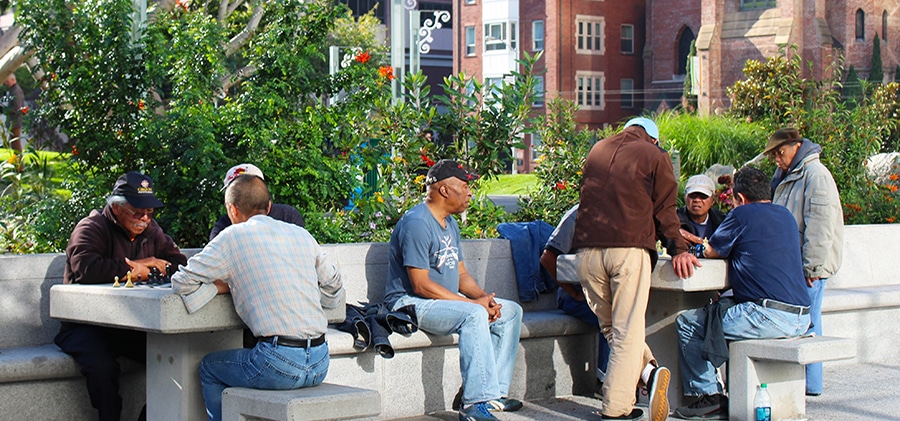
Maintaining a place for the community.

April 6, 2020

When wealthier individuals and organizations move into an urban neighborhood, both the rental and property values as well as the culture and character of the community can change. This process is known as gentrification. While this shift can do good and often results in the revitalization of struggling areas, it can also leave many people in the existing community priced out of their own neighborhood and even worse, displaced. Today, as gentrification takes place in more and more urban areas across the country, many socially conscious developers, investors and urban planners have thankfully become sensitive to the issue. And many of them are looking for ways to maintain a place for existing, lower-income members of communities that are faced with the changes that will inevitably come. One such example of a large project in a rapidly gentrifying community is the Bushwick Generator in the East Williamsburg area of Brooklyn.

Background

Williamsburg, a north Brooklyn neighborhood situated on the waterfront, was historically a manufacturing district. It originally developed due to a boom in industry in the area in the early 1900s. Over the last two decades it has increasingly transformed into a trendy neighborhood, for living, eating, shopping and visiting. And as always, the pressure of development has resulted in spill-over development activities in the adjacent neighborhoods of East Williamsburg and Bushwick which have now also become much sought after areas to live in. This is in part due to the fact that these neighborhoods are well-served by public transit. They are right on the L train, a primary mode of transportation between Brooklyn and Manhattan.

The Bushwick neighborhood itself is a diverse community with a strong Latino and African-American presence along with other immigrants and young creatives. But Bushwick is now beginning to experience the leading edge of gentrification with the arrival of affluent media and tech businesses, along with their employees, into the area. These new businesses threaten to change the neighborhood’s long-standing character and are putting at risk the affordability of the neighborhood for some of its existing residents.

About the Bushwick Generator

The Bushwick Generator is housed is a massive warehouse which was purchased by a developer in 2015. The developer’s goal was to create a “community influenced innovation lab and creative hub.” The Generator has 100,000 square feet of space and is in the process of being developed for commercial, nonprofit and creative tenants, and, most importantly, as a resource for all members of the community.

In 5,000 square feet of now-completed space, Emerick Patterson, one of the leaders of the project, does community outreach and neighborhood work. His primary goal is to offset the effects of ongoing gentrification. As media and tech tenants continue to move into the area around it, the Bushwick Generator offers not only a resource for members of the existing community but also an opportunity for them to impact what goes on in the large spaces around them.

The project is still in its early stages and is exploring how the total space can be used. Yet, at the forefront of this planning process is what members of the neighborhood want, whether that be a place for job training, job readiness, or simply a space to gather and meet. The Bushwick Generator has an open-door policy and works to get as many members of the community through the doors as possible. They regularly host events, working hard to ensure that all events are attended by members of the community. First and foremost, they want to ensure that locals are getting access to knowledge about what is now going on in the neighborhood.

Patterson says that, ideally, these efforts will result in some changes to the ongoing tech influx in the area and that the Generator will enable all members of the community to feel connected, comfortably engaging in area events and confident enough to ask for help when needed.

To learn more about the Bushwick Generator and other projects in the area, listen to the full interview with Emerick Patterson.

Image from Pxhere licensed CC0 Public Domain

How to transform a city.

February 26, 2020

Tom Murphy is the second-longest serving mayor of Pittsburgh (after David Lawrence).

He is noted for overseeing the difficult, but transformative transition of the city from the mid-1990s to mid-2000s during turbulent Downtown development cycles, an initially unpopular funding bid for two new waterfront stadiums, a new convention center (then the largest ‘green’ building in the U.S.) and investment in and development of 1,500 acres of land from abandoned steel mill sites to vacant houses. He built many miles of river trails and ran on them religiously.

“Public space can be the most democratic space in the city”

Mayor Murphy’s administration took a market-driven approach and downsized governmental departments. With the savings from downsizing, Tom created the visionary Pittsburgh Development Fund, a $60 million fund which he employed to leverage private real estate projects and investment all over the city. Public/private partnerships were key to this strategy. He was looking towards a future that not many others saw.

Struggling with outdated taxing structure regulated by the state, as well as state resistance to city growth through annexation, Mayor Murphy made hard decisions such as declaring a budget crisis and pushing through alternative funding sources such as a parking tax for commuters.

By the end of his tenure he had shepherded the city, kicking and screaming, onto a new track which led to it being held up as the model for urban transformation – a former industrial city reinvented as a biotech, medical, university and robotics hub. In 2008, the G-20 was staged in Pittsburgh, highlighting its transformation. 

Mayor Murphy, who studied urban studies in college, also previously served as a state representative for the North Side, as a neighborhood organizer there, and between college and graduate school, in the Peace Corps.

Insights and Inspirations

  • Tom focused on five things as mayor. Finding money for projects that would change the city. Taking control of vacant land. Building a really great team. Creating a vision. And building excellent public/private partnerships.
  • Since ending his tenure as mayor, Tom has come to believe that public spaces matter more than anything else in building better cities.
  • He believes that the interface between buildings and community is critical to the making of a place.

Information and Links

  • Mayor Murphy Gets Key to City (Pittsburgh Post-Gazette, Jan. 3, 2020)
  • Reaching for the Future: Creative Finance for Smaller Communities (A 2016 report for the Urban Land Institute)
  • Adapting Cities for the Future (A 2011 article for the Urban Land Institute)
Read the podcast transcript here

Eve Picker: [00:00:14] Hi there. Thanks so much for joining me today for the latest episode of Impact Real Estate Investing.

[00:00:23] My guest today is Tom Murphy, Pittsburgh’s turnaround mayor. He oversaw the difficult, but transformative transition of the city from the mid-1990s to mid-2000s. Those were turbulent times and included many highlights and many struggles. During his tenure, he declared a budget crisis, built two stadiums, created a $60 million development fund and built many miles of river trails. Tom Murphy is an authentic city expert.

Eve: [00:01:03] Be sure to go to EvePicker.com to find out more about Tom on the show notes page for this episode, and be sure to sign up for my newsletter so you can access information about impact real estate investing and get the latest news about the exciting projects on my crowdfunding platform, Small Change.

Eve: [00:01:38] Hello, Tom, I’m so delighted that you found time to join me today.

Tom Murphy: [00:01:42] I’m always honored to be with you. You were one of the pioneers in many developments in Pittsburgh when very few people saw the opportunity.

Eve: [00:01:50] You were the second longest serving mayor in the history of Pittsburgh. And in 1994, when Pittsburgh wasn’t sure what it was going to become, was really on the verge of collapse. And you shepherded the city through a very turbulent transition from a place that had emptied out with the closing of steel mills and suburban flight, to a city transformed almost every respect. And I was in Pittsburgh for every moment of it. So, you reshaped Pittsburgh, kicking and screaming all the way.

Tom: [00:02:22] Underlining kicking and screaming, Eve. As you remember, every time we tried to do something, there were, there was controversy. I mean, it just, it was amazing to me.

Eve: [00:02:34] Well, this is slightly conservative city, so maybe that was part of it, but people couldn’t imagine what you imagined. When you begin with a city that has lost its industry and half its people?

Tom: [00:02:47] Well, I’m a product of that, I mean, my father worked for 51 years at Jones & Laughlin Steel steel mill on the South Side. So, my whole life was defined by the shifts he worked there, I mean … you know, he was, he worked in the mill. I mean, he wasn’t a boss or anything, he just worked in the mill and our lives were shaped by that and … and sort of everybody I knew pretty much, their lives were tied to the mill. And so I grew up with that. And to watch that disappear in the, really the 70s and the 80s, I was a state legislator on the North Side, and I don’t think people appreciate how incredibly destructive it is for families. You know, where you had very traditional families where the husband went to work in the mill, you can make a good living, buy a house, buy a car, take a vacation and now all of a sudden that disappeared. You know, the wives went to work, kids who had thought about going to college deferred that, you know, we lost a whole generation from Western Pennsylvania – 500,000 people left and they were overwhelmingly are our kids, young people who were leaving, because they didn’t see a future in Pittsburgh. And so having come through that, having lived it, you know, on the North Side, where we’ve lived for almost 50 years now, and how destructive it was, never thinking I would be mayor. When I became mayor, I mean, my focus was how do we stabilize this situation? And to do that, we needed to re-imagine Pittsburgh in lots of different ways. In how we educate kids, because you didn’t need a high school education, let alone a college education to work in a steel mill. And you know, what we did with all this land, all of these industrial, thousands of acres of industrial property. And the culture of Pittsburgh, which, you know, was almost opposed in the technology industry because they were seen as non-union.

Tom: [00:04:40] And so we went through huge controversies in talking about re-imagining Pittsburgh. And now we’ve come out the other side and, you know, it looks very different.

Eve: [00:04:51] It does. Did you have a strategy from day one?

Tom: [00:04:57] Well, I laugh at that. I mean, hindsight always gives you the strategy. But we did in the sense that we felt we needed five things, right? We needed money. We were a flat broke city and … you know, essentially, as you said, I mean, close to bankruptcy. And we needed to figure out how we will get money so we could invest in Pittsburgh and entice developers. Two, we wanted land control. A lot of this land was tied up in bankruptcies and it was, you know, uncertain titles. And so, a developer who has a choice of buying a 100-acre greenfield site or 100-acre steel mill site, they’re going to buy the greenfield site. It’s safer. And the third was that we needed a really good team of people who were going to be public entrepreneurs, in effect, that were willing to take risk. And the fourth thing we needed, we needed a vision. We needed to be, to sort of know where we wanted to go. And the fifth thing is we needed good public-private partnerships. We needed people who believed that Pittsburgh could be a different place. And you remember back then, Eve, you were one of the few people that …

Eve: [00:06:08] Yeh.

Tom: [00:06:08] … were willing to invest in places like East Liberty. It was very hard to get local developers to re-imagine Pittsburgh. They had their little niche. They were comfortable in it. They’ve been through 30 years of decline. And so all those ingredients, you know, we talked about them when I ran for mayor. And people obviously voted for me. But when we started to do this stuff, they said we didn’t know you meant that. So where do we get money? And the first month or so I was Mayor we reduced the city’s workforce, reduced the number of police officers we had, then shifted six million dollars of that money annually to finance a $60 million bond issue, which we called the Pittsburgh Development Fund, which gave us money to invest in the future. In every city, I mean, I talk, I meet with cities a lot and talk to them and that’s one of the challenges they face is, your demands for the day-to-day. Just ‘today’ is huge in a city. I mean, everybody wants more police. Nobody’s streets are getting salted enough, and potholes, and if you just spend the stuff on all your resources on today, nothing changes. I mean, you’re Pittsburgh and in Pittsburgh we were still declining, so the challenge was how do we get some of those resources and use it to invest in the future, which entails risk.

Tom: [00:07:27] The second thing we did, Eve, we went out and bought, as you know, Mulugetta Birru was head of the Urban Redevelopment Authority, and we had him go out and buy almost 1500 acres of land. You know, we bought what was then the South Side works of Jones & Laughlin. We bought the slag dump in Squirrel Hill. We bought the old Sears site in East Liberty. And then, you know, we looked at each other and said, what do we do with this stuff? And that’s when we began to form great partnerships with developers. Somebody like you who was willing to invest in that old building in East Liberty and, you know, and others. And the $60 million gave us the ability to create really creative and effective public-private partnerships that share the risk with developers who believe that Pittsburgh could be a different place. That’s what we did.

Eve: [00:08:17] I was going to ask the question that, do you believe developers played an important role in the transformation of the city? Obviously you do.

Tom: [00:08:24] I do. I think place is everything. I think it has huge impact on how people live, I think, like crime rates, a whole host of other things. How they, what they think about themselves. I mean, if I live in a neighborhood that has, half the buildings are vacant and there’s a lot of litter and everything, you know, I come out my door every morning, I probably have a different reaction than if I live in a neighborhood that has lots of gardens and clean. And so I think that, it has huge impact. And so developers, from our point of view, as you know, were really important partners. And this is, I tell this story all the time, is when we started to see things happen, developers would come and say, Mayor, I have a great idea for you. And we’d say, with all due respect, tell us why it’s a great idea for you. And we’ll decide whether it’s a great idea for us, and if our self interests come together, we’ll figure out how to be a good partner and share the risk with you. But that assumed we knew what we wanted and so that was one of the really big challenges. As you remember early in my administration, I had a really great planning director, Eloise Hirsh, who really helped shape that vision, as well as Tom Cox and Mulu and Steve Leaper, really helped shape that whole vision of what Pittsburgh could be. It was really reimagining, you know, old steel mills in the South Side and a slag dump in Squirrel Hill. And so we were looking at, not to ignore other things, but we were looking for things that could be catalytic, that could change people’s image of Pittsburgh. And the ballparks obviously help with that, too. I mean that when I was running for mayor, I wasn’t planning to be, have anything to do with sports stadiums. And that sort of was one of the challenges of running the city, as you know, I didn’t think about it. And then all of a sudden, it’s the number-one topic.

Eve: [00:10:17] Well, it’s always the number one topic in Pittsburgh. Sports, so.

[00:10:20] Well, unfortunately, I mean, I don’t know if you know the story, Eve. As I, when I ran for mayor, I was elected mayor in November. In early December, the then-owners of the Pirates gave me a letter that said they intended to sell the team. I don’t even know this, that Dick Caligiuri many years ago had signed an agreement with the team that if ever they were going to sell it, that the city would in affect own the team for nine months in which they would be required to find a buyer. And if we couldn’t in nine months find a buyer, then the team could be sold to another city. And so there I was, having run on crimes, jobs and taxes, now owning a baseball team. It really, literally when I was running in November, I had no idea that the first year of my time as mayor, two years, would be dominated by trying to figure out how to build a baseball park and a football stadium and a convention center. So, that’s life, right? So, we had to figure it out, right?

Eve: [00:11:20] When the sun goes down, with Downtown as a backdrop, it’s a very special place.

Tom: [00:11:27] Well, it’s a, my favorite seat in PNC Park, regardless of what the team is doing, is that, at the very highest point in the left field stands, and because the view of the city at dusk like that is incredible.

Eve: [00:11:41] Was the Pittsburgh Development Fund the most important thing that you implemented? Were there the other programs or policies with very big impact?

Tom: [00:11:49] Well, what’s the Development Fund gave us is, it gave us the ability to be, to be flexible. When I go to lots of cities, they would say, we’d love to do this, but we don’t have any money. The money, for better, for worse, becomes a really important part of being able to pursue your dreams. And so the Development Fund was our money in the sense that we didn’t have to look to the state or the federal government, you know, to wait for months or a year before you figure out whether you’re going to get the money or not. We also, as you know, in the URA, people at the URA led by Mulu and Steve, were very entrepreneurial in understanding how they used tax increment financing and other federal and state sources, so it … it was fairly typical, it might be true in your deal, your deals that you were doing, is that you were getting sources of money from 10 or 12 different sources. And what I have found is that’s unusual in a lot of cities, that cities are not entrepreneurial like that, of understanding how you mix and match money to make a deal work. So, what I say, Eve, is it’s really, it’s really a market driven approach, is that basically you as a developer come and say, you know, I want to do this building, but this is what the bank is going to lend me, and there’s this gap in financing, and if it’s something we want to see happen, we being the city in this case, then we become your partner and figure out how to help finance it, whether it’s our Development Fund or other sources.

Eve: [00:13:30] My experience with the Liberty Bank Building was very typical. I think I had 12 sources of financing.

Tom: [00:13:36] Yeh.

Eve: [00:13:36] Most of the URA money, which I’m really glad gets to be recycled. But Mulu was extremely entrepreneurial. He, first of all, he didn’t quite trust me when we started …

Tom: [00:13:36] Well, but you were a small developer at the time, right? With not a long track record. But with great ideas.

Eve: [00:14:05] There were really interesting meetings. I really became very fond of Mulu. So, but he, you know, his approach was, look, we have this amount of money. 300,000 dollars out of this pot of money, or whatever it was. And you need two million. Go away and think about how it might work. And so I would come back and I’d say, look, I could make it work if you took little interest payments for two years or, you know, whatever, whatever it was that made it to some sort of stabilized scenario. I learned a lot. And then, you know, things shifted very much, and I think the URA lost a lot of its funding in the mid-2000s and the banks got more skittish and it all changed, right?

Tom: [00:14:49] Well, it did and it didn’t. I mean, I think the philosophy in the city changed and maybe … so I was saying this about being market driven. Mulu met with you and you convinced him that the market was what it was, that without flexible public money that could defer interest or payments even for a few years, that that this deal was not going to happen, and we wanted it to happen, and so we would make the loan. The market has become much better in Pittsburgh, though. You were, you know, in my view, the early bird gets the worm in this case, in the case of your building, you were, you were the early bird. Is that you got better financing then maybe after the market’s healthy. So, we tried to be market sensitive in that sense. And at the same time, recognize that we wanted these deals to happen, so we were willing to put, risk public money. I think the key to it, what I learned about myself in this, Eve, as I was, I am not a good day-to-day manager, but I understood how to hire good people and just give them room. And if a deal blew up, you know, that’s what’s going to get reported on the news. But I need to be willing to support the people if they did the deal for the right reasons and it just didn’t work. And we had some of those done, you know, Fifth and Forbes Downtown was one of those examples. But we were willing to take those risks, whether it was with you or other developers, that we didn’t know with the market, we didn’t know if people would move and live on a slag dump in Squirrel Hill or, you know, live in apartments in South Side. We didn’t know what the market was. We were way out there and that was the risk involved in this, and using public money.

Eve: [00:16:33] I moved to Pittsburgh accidentally and was kind of involved in all of this on the periphery, and it really shaped my life. The way I think about cities is very different now. So, thank you for that. The plan that did not work out was the redevelopment plan to reshape Downtown which…

Tom: [00:16:49] Actually it worked though didn’t it? I mean, four of the five blocks that we were going to acquire have been redeveloped.

Eve: [00:16:57] Yes, it did work. But my question was, yeah, it just took time, didn’t it? Took time for people to get used to the idea.

Tom: [00:17:04] Well, it looks differently than what we would have, I mean, we were more focused on a retail strategy and it might or might not have worked. I don’t know.

Eve: [00:17:12] Well, today with Amazon, it might have backfired again.

Tom: [00:17:15] And that’s where you don’t, I don’t know with today’s retailing whether it would have worked or not. If we would have been able to put together sort of what we were thinking. But, in any case, all five blocks have now been redeveloped, that we focused on. And it’s a much more vibrant place. We could see the decline there. I mean, we could look at the sales numbers of businesses that were there and just see the decline of what was going on, and I think felt the need to try to intervene, you know, and maybe did it really in a clumsy kind of way. And but, you know, at the end of the day, it was a necessary intervention that ended up working. PNC played a big part, was a big partner in that with their new building

Eve: [00:17:59] Yes. It was really difficult, I remember. What would you do differently today? A different city.

Tom: [00:18:06] When I’ve come to really love is the public spaces. So, in East Liberty, I think we would have had, we had the opportunity, which we didn’t do, to create a sort of a central plaza somewhere there. That we could have really recreated a much more, you know, in a public space, it can be the most democratic place in the city. And so, I mean and so with Home Depot, we were looking to make a democratic place where people, wealthy people and poor people would all shop. If I had done East Liberty thoughtfully more, maybe we would have created a public space like that, too. And Market Square, in many ways, plays that role Downtown now. There’s a public space where people of, with all incomes and all backgrounds show up. And so even in smaller neighborhoods like Lawrenceville and other places, because there were such, you know, abandonment of property, we had opportunities to really create better public spaces, little town squares. Because one of the strengths of Pittsburgh is with its 90 neighborhoods is, is that we have this real sense of communities and I’ve come to appreciate that much more. And we really would have focused more on creating places where that community can play out in neighborhoods like Lawrenceville and other places. I go to China a fair amount. Not recently. thank goodness. And when I, I get up early in the morning to go for a run and one of the things I see there, and China has done a very bad job of creating public spaces, but where there is public spaces like at six, seven o’clock in the morning, there are hundreds of people there in the plaza doing tai chi or dancing to a boombox. It’s this great sense of community. There’s lots of older people or people running. And you can see feel this community, I mean, people talking and laughing. Every morning they’re there. And we don’t have that tradition in America. But it would be wonderful. We did, but but we ought to create places where that happens. You know, the Blue Slide Playground is a place like that in Squirrel Hill. I mean, famous now because of Mac Miller.

Eve: [00:20:24] I visited Beijing three years ago, and the photo I loved the most from there is a small urban park which had exercise equipment in it. And in fact, I saw this several times …

Tom: [00:20:34] Right.

Eve: [00:20:35] … exercise equipment, really basic. And you could see people all congregating, and doing their little exercises in the park, open to everyone, It was fabulous.

Tom: [00:20:46] Right. We did a half step under Eloise’s leadership in public works. We made a decision to rebuild all of our 100 and some neighborhood parks, like the Blue Slide Playground or the Schenley Park, and also many of the smaller ones. And we would have community meetings and we would hire landscape architects who would meet with the community and, you know, with the playbooks. And then they would work to design the kind of playground they wanted. They would given a budget, 100, 150 thousand dollars, and they could pick from the play equipment books, the playground they wanted. But the instinct we had was right, but we should have expanded it. And in many neighborhoods where, like Homewood. I mean, you have an opportunity in Homewood, still today, I think, to create a really great plaza that would become the center of Homewood, and how you would do that. And East Liberty represented that opportunity. I mean, there were, as you remember, lots of vacant land there that was tax, you know, essentially abandoned. So that’s probably one of my bigger regrets, was not creating places where that sense of community can play out.

Eve: [00:21:58] What do you love most about Pittsburgh? I know you still live here.

Tom: [00:22:01] Our strength and our weakness is our parochialism and that’s what I love most … is that we’re an unusually friendly city. I’m in Washington four days a week, right? And my habit in Pittsburgh is pretty much everybody you see, even before I was mayor, but when I’m mayor I don’t know whether I know them or not, or they know me. So you say hello to people, right? You get on an elevator, you say good morning, right? People, you do that in Washington, D.C. people look at you like you’re … going to rob them. You know, it’s a weird feeling for me. I see that in lots of cities. I would just did Orlando for a couple of days that I felt it there. Same thing, is that, sort of people don’t make eye contact, don’t acknowledge. I mean, if there was just two of you in a place, that you don’t, they don’t acknowledge you.

Eve: [00:22:50] You know, that’s interesting. There are other cities like, I think Atlanta and Detroit are very friendly. I always notice it when I go there.

Tom: [00:22:56] Yeah. So it’s, and I hear that. It’s funny, I mean, when I speak, and I was in 50 cities last year, so I end up engaging with thousands of people. One, is the numbers of people that have lived in Pittsburgh. You know, I mean, that’s sort of the legacy. I always say you’re our failures. We couldn’t give you a reason to stay, you know, there’s so many people that left in the 70s and the 80s. And the other is inevitably people who are not from Pittsburgh. I just was talking to a guy in Orlando yesterday who, his daughter and he, and they’ve never had any connection with Pittsburgh, but she loves the Pittsburgh Penguins. And they go to Pittsburgh every year to see a couple of Penguins game, and he was telling me he’s going in March and, you know, he said, I’ve never been to a friendlier place in my life. Everybody talks to you and it’s just, it’s a great place, right? We don’t even think of that. And that’s partly what I like. And I think that’s the strength of Pittsburgh. When I say parochial is that we are really, those of us who are from Pittsburgh or who moved there, you become really rooted in your neighborhood, and in the city. I think in places like Orlando, that is, you know, a lot of Florida cities in California and even Texas cities. You know, there’s lots of new residents. And so they don’t have that kind of history. And so I, that’s part of the challenge of Pittsburgh. How to keep that, and at the same time not have it be a deterrent to making Pittsburgh a competitive city.

Eve: [00:24:28] But you know, I think what’s most interestingly Pittsburgh, about Pittsburgh to me, is again, I’ve always thought it’s topography saved it from becoming what Detroit has become.

Tom: [00:24:40] Oh, I think definitely, I mean, the hills and valleys and how Pittsburgh is defined, I think is a large part because of its topography. You know, I learned that running for office when I was in the legislature, when I first ran for the legislature. If you confuse people from Spring Garden with people from Spring Hill, they will never vote for you. I mean, they’re very rooted in their neighborhoods, right? And so there’s that whole hierarchy like that around Pittsburgh. When I meet somebody, when they say they’re from Pittsburgh, I typically say, where did you go to school? And that tells me a lot about them.

Eve: [00:25:19] Interesting. Yeah, I think the topography also, it kind of contains each neighborhood. So, I think that that sense of being in a neighborhood is going to stay.  I can’t, I can’t see it disappearing in the city.

Tom: [00:25:33] No, and that’s what, when I was talking about the public space, I mean that’s, that’s what I have a big regret it was around that idea of how do you build even a stronger sense community using public space, whether it’s playgrounds or a park, a community. How do you in a very thoughtful way connect people in that neighborhood so they feel a sense of place? And there’s a purpose for that, because I think if people feel rooted in their neighborhood, I think they’re willing to put up with a lot of problems if they see themselves and others committed to wanting to making it better. I mean, if I can see a light at the end of the tunnel, I’m willing to stay on the journey, right? A lot of people are not willing if they don’t see any end to it. And I think of a neighborhood like Allentown that’s been through a lot of problems. And yet, there’s a strong core of people in Allentown who have really stayed with that neighborhood. And, you know, it has gone up and done and now I think it’s back, going back up again. I know we used say, Eve, you know, that houses in the North Side up in Fineview at the time, I mean, you could buy for 30 or 40 thousand dollars. And we said if Pittsburgh’s population were like any other city and it was growing, those houses would be worth a million dollars with the views. And that was part of the problem, is that we weren’t growing as a city. And it’s still part of the challenge of Pittsburgh, is that we’re doing much better, but we’re still not growing compared to, certainly the region is not, compared to a lot of other cities and communities.

Eve: [00:27:19] Today you work, you’re a senior fellow at the Urban Land Institute, which some of my listeners may not know about. What do you do in your role there?

Tom: [00:27:32] So the Urban Land Institute is an organization founded about 75 years ago by a group of developers concerned about the quality of development beginning to happen in America. And fast forward, the Urban Land Institute now has about 50,000 members worldwide. And it really, it’s focus is how do you create thriving communities? And ULI had participated in several programs in Pittsburgh when I was mayor, and then I got recruited to speak at different ULI events. And when I was leaving as mayor, it was right after Katrina in New Orleans and along the Mississippi coast. And they asked me whether I would go down and work with the mayor of New Orleans and with other public officials across the Mississippi coast. And so I did that for about a year and a half after leaving as mayor. And it was fascinating. I mean, it was really a fascinating experience. And, you know, in New Orleans, their mayor ended up going to jail for 15 years. And the political structure was really fairly inept back then. It’s gotten better. And so I watched, really, New Orleans return in large part because of grassroots decisions and leadership, through churches and nonprofit groups and neighborhood groups, and a lot of outside help. Foundations and movie stars like Brad Pitt. But people, but ultimately, the up-swelling was really, really bottom up. It wasn’t top down. And so it was a fascinating experience to work in, there. And I still am, I was on the board for many years of a community development corporation there. So it’s been an experience. Since then I got to about 50 cities a year and speak at ULI events or other events, and then often end up working with cities for a while. And I’ve written several papers – working on one now for ULI.

Tom: [00:29:40] It’s been a good, a good experience, really a great experience after being a mayor. And part of what I get asked to do all over the world is, in part I get asked to talk about Pittsburgh. How we went from this failing industrial city  to what we’re becoming. And the reason I get asked by, about that is, wheat I’ve come to realize, Eve, is virtually every city in the world, whether it’s Hong Kong or London or Dublin, or are all struggling with some of the same issues that we went through in Pittsburgh, of sort of what what is our place in the world? We were forced to have that conversation because of the collapse of the steel industry. Other cities have not had that kind of dramatic change, but they are seeing the world change and they are trying to figure out how to  stay current and get in front of those changes and manage them.

Eve: [00:30:34] Are there any current trends in real estate development that interest you the most?

[00:30:39] Well,every city, every place I’ve been, and this is, I mean, last month I was in Dublin and London, right. And I was supposed to go, I go to China about four times a year. I was supposed to be going in March. My plane trips are now all being canceled, but I was going to cancel anyhow. But so whether it’s cities in China or European cities, affordability is a huge issue. Of how do people, where do people live? And how do they afford to live? And so how cities develop affordable housing is a big, big issue. Where am I going to work? Because of the impact of technology and we see it in Pittsburgh up close every day as we see a whole litany of driverless cars on the streets of Pittsburgh or autonomous vehicles with attendants in them. But, you know, pretty soon the attendance won’t be there. As I mentioned, I was in Orlando yesterday, just east of Downtown Orlando but still in Orlando is a place called Lake Nona. And they now have, I don’t know, a half a dozen driverless autonomous buses that drive people around this very large development. Nobody driving. Nobody in, no driver. And no attendant. It is just on its own already on a sort of a, sort of private street where bikes and others places can go, but not cars. So we’re seeing this happen and what does that mean? I mean, if you think of 50 percent of the land use of a typical city is for cars, between roads and parking and everything like that, what does that do to how we think about cities. And not it’s not even that kind of technology. It’s why do young people want to come places? Part of what I say is what does General Electric and McDonald’s and Marriott and Fifth Third Bank and Heinz Kraft Foods and what they have in common is over the last five years they’ve all moved their headquarters from suburban office parks into cities. And why are they doing that? They’re doing it because … they’re having a hard time recruiting talent, young people, to move to the suburban office park. Where you need a car to get to. You know, if you do a survey of the Google employees in East Liberty, I’m betting that 25, 30 percent of them either walk or ride a bike to work. So that has huge implications on cities. You know, do you spend your money building more highways or do you build a transit system. That’s part of Orlando’s challenge. They don’t have a good transit system and now they’re  strangling, you know, because of the congestion.

Eve: [00:33:33] Yeah. It’s changing.

[00:33:34] So it’s those debates that I’m watching all over. Mobility is a huge conversation. The equity conversation, I mean, one of the things I see really fascinating, The New York Times did this, I thought, very cruelly. A few months ago they did an article about cities and they talked about winners and losers.

Eve: [00:33:56] Yes.

Tom: [00:33:56] And they talked, and they compared Nashville and Birmingham. And they said Nashville is a winner, they both start at the same place 25 years ago. Nashville is now a hot city, booming, and Birmingham is not. And they talk about, why, how that happens is really a lot to do with leadership. And then within, so we’re seeing cities sort of separate themselves, if you understand, those that are, where Amazon is going to consider locating, and those that are not. And what are the ingredients that make that cut? And then the other, within cities we are watching a huge divide with lower income people and the people that are sort of part of the new economy. And so, I think that equity issue is a huge challenge for cities also.

Eve: [00:34:43] Yes. You know, I have always thought that one of the things that’s most overlooked in discussions about cities and how to grow them is their connection to other cities. And, you know, I think that’s probably Pittsburgh’s growth problem. It takes a really long time go by train.

Tom: [00:35:00] Well, we lost a whole generation of people that would normally be having babies.

Eve: [00:35:07] If you want to get to New York by train, it’s a day. There’s no easy, fast way to get to work hubs. We’re sort of a little bit stranded. And I was always puzzled by the fact that we, you know, people would talk about better transit in the city, but I wanted better transit to other places, nearby, to open up opportunities. If I wanted to do a development project in a city, I wanted to be able to get there in a day in and back. Right?

Tom: [00:35:37] Right.

Eve: [00:35:37] So I, you know, I wonder if you plot out those connections, you know, where the, you know, the cities done well, will land.

[00:35:49] I think it’s a mix. I think mobility is one piece of the conversation of how easy it is to move around a city. Our son, for example, is now 29 years old, does not even have a driver’s license. He lives in Pittsburgh. On the North Side right now with us, he’s moving, though. You know, he is, has been able to manage fine living in Pittsburgh, using Uber and using public transit and, you know, walking a host of other things and abusing his friends every once while they’re able to, you know, he’s able to sort of manage living in a city pretty well. But I think mobility is part of the conversation. And that’s what, when I was becoming mayor, Eve, our focus was we need to figure out how to create a diversity of jobs. And we needed to make Pittsburgh a place where people wanted to live. You know, we’re never going to be, maybe we will someday, we’re never going to be a warm city. Like I was just in Orlando yesterday. It was 90 degrees. We’re not going to be near the ocean, but we had other assets. And so, as you might remember, I was very focused on building riverfront trails for that reason is that was an underutilized asset. You know, we watched, you know, a great music and bar scene sort of, and that happened organically. It’s funny, I watch the, I read the media in Pittsburgh now about the Strip District and we made a very intentional decision not to do anything in the Strip District. We, you know, people would come and why don’t we do this and why don’t we do that in the Strip District.tAnd we really said The place is working really well. Why do we want to get involved in it? Let it, it’s just happening on its own. So. You know, that it’s interesting that that’s the big, big debate right now in Pittsburgh, I guess about, are we killing the Strip District. So I think that you make decisions, you know, some of them are going to be right. Some of them were wrong. Hindsight will tell you whether it works or not.

Eve: [00:37:56] You know, this show is about real estate impact investing. And I want to know what you think a key factor is that makes a real estate development project impactful.

Tom: [00:38:06] You know, I think it’s the public space. Is the building itself attractive, but it’s the space around it, how it engages people that work in that building, and even people walking by, how they might use it. I think that, how it all connects. And you can get senses of it, right? When it works well? I think, you know, there are places in Pittsburgh that I think of that are just great places to be. People like to be there, right? I look at Mellon Park, you know, going back many, many years, long before I was mayor. Still a very iconic place on a nice summer day. It’s packed with people, having lunch. And I think how that happens, and that’s where the public private interface is so importantA and where the public needs to have, to be put money in the game, to say to a developer, you know, we want to get this quality in, and a developer might say, but I can’t afford to do that. And if you look at the books and the market is going to be make it hard for the developer to do that, then there’s a public role for that. I think another good example is that is Schenley Plaza, which for for 40 years or 50 years was a parking lot. I mean, think about that. I mean, I, you know, on one side is Schenley Park, on the other side are the museums, on the other side is the Pitt law school. And then on the other side, the Cathedral of Learning. And what is the highest and best use of that land for 50 years? It was surface parking. And Mark, this chancellor at Pitt and I got together and said we should be, we should do better than that. And so we work with the Parks Conservancy and came up with an idea to put a park there, to take the parking. And I got all this hate mail, but I’m never going to vote for you again. You’re taking away my parking place. And I said, you know, you’ll get over it. There’ll be other places to park it. But this is, this, we can do better than that is the interest of a great university. To a great park. To a great museum. We can do better than that. And you look at that on a nice summer day, it’s filled with people. So creating those kinds of places, I think is is that there’s a responsibility of both the developer and the community. You know, you did something quirky Downtown with those statues. And I bet lots of people walk over, who maybe have never been in Pittsburgh, walk over just to look at them.

Eve: [00:40:58] Yes. In fact, I think the taxi drivers use it for directions when someone says, I want to go Downtown.

Tom: [00:41:05] Yeah. So that’s what I mean. And look at Randyland on the North side.

Eve: [00:41:10] It’s fabulous. Yeah.

Tom: [00:41:12] You know, I mean, it’s just things like that make a cityS so the other word that we use a lot in ULI is authenticity, right? Pittsburgh has a great history. It has a great story. And we could still do better at telling that story. The South Side Works, when we started to develop that we put, had a competition for, and we brought artists and old steel workers who worked there together for like a morning of talking. And then we had a competition for artists. And there’s, at the end of Hot Metal Bridge is a little monument that we established for the steelworkers. But Pittsburgh is an incredible story.

Eve: [00:41:56] So I’m going to ask one last question, because I’ve taken up a lot of your time.

Tom: [00:42:00] It’s fine, I’ve enjoyed it. It’s fun to talk to somebody who actually knows Pittsburgh, Eve.

Eve: [00:42:05] So is there something that you think could really change real estate development in the U.S., for the better?

Tom: [00:42:14] I think it is, is the idea, the partnership idea. I’m amazed that the cities I go to, many developers attitude is I want a minimize my involvement with the city. Maybe there’s a reason for it. I want to get in and get out. I want to get the entitlements, whatever I may need and do what I want to do. So the challenge is the developer has a piece of property. The developer needs to figure out how to make money from that property. I accept that. I want the developer to make money from the property. On the other hand, the city, the city has the responsibility to build a great city. That it will never be a great city if these developers see their development as sort of an island disconnected from what’s next to it. And so the city’s responsibility is to figure out how that all fits together. Give you two examples that drive me nuts. I can drive on pretty much any suburban shopping street. I can go into a gas station. Maybe I want to go to the store next door. And I have to drive back out onto the highway. Or maybe I want to go to a store across the street, I have to go out on the highway. Maybe I have to drive a half a mile to get over there to the other side. So I can’t, there’s no sense of connection between any of that. And the other is, I watch in suburban areas like Cranberry Township subdivisions being developed of 100 acres or so. What would it take for those subdivisions that, maybe there’s five different developers doing one hundred acres each, if they would, then the city’s role would be to say we want to connect all this with a bike trail at the edge of your property so that every, so now instead of having a couple little playgrounds, you might have a five or ten mile bike ride, safe, off road. You don’t have to worry about traffic with your little children. And there is examples of where the public fails. Both the public and private developers fail. Because you create great, great amenities if you begin to think in a bigger way rather than individual pieces of property. That’s what’s destroying development, and quality in America today.

Eve: [00:44:33] Yeah, I agree, I think we both believe that real estate development, just as a financial tool, as a way to make money, isn’t making our cities better.

Tom: [00:44:43] Well, I think you make more money if you build quality. In the long run I think your development is more valuable. I mean, we didn’t get into all the other sustainability and all that which a lot of cities are facing.

Eve: [00:44:54] Thank you very much.

Tom: [00:44:55] Look forward to see you sometime. Bye bye.

Eve: [00:45:04] That was Tom Murphy, past mayor of Pittsburgh. Tom thinks place is everything, so place is what he invested in during his long term as mayor. He did that by reducing operational costs and creating the Pittsburgh Development Fund, a $60 million fund focused on helping developers who were willing to work in places and on projects that made the city better and better. It was a very bold, and unpopular move, but paid off in ways that no one imagined, as did many other moves that Mayor Murphy made.

You can find out more about impact real estate investing and access the show notes for today’s episode at my website, EvePicker.com. While you’re there, sign up for my newsletter to find out more about how to make money in real estate while building better cities. Thank you so much for spending your time with me today. And thank you, Tom, for sharing your thoughts. We’ll talk again soon. But for now, this is Eve Picker signing off to go make some change.

Image courtesy of Tom Murphy

Delicious urban soup.

February 19, 2020

Entrepreneur-in-Residence is a bold and unusual title for a real estate developer. Emerick Paul Patterson, who owns that title, fits the bill.

Emerick’s work over the past two years has focused on the East Williamsburg neighborhood of Brooklyn, where he partnered with the real estate developer, Heritage Equity Partners, to create a large-scale (500,000 square foot) culture and innovation hub called The Bushwick Generator.

The Bushwick Generator is a community oriented – and most importantly community led – innovation lab in Brooklyn. It is home to experts and novices in urban tech, blockchain, AI, agriculture, and other social impactful focused industries. And its intention is to open the doors to the local community in the face of a swiftly growing technology hub. Emerick wants to make sure they are included.

Emerick is about to embark on his next venture, as founder of Urban Parti, an innovation studio and neighborhood planning lab. Urban Parti will focus on new neighborhood models for innovation as well as leveraging technology to enhance local participation and engagement.

Prior to joining Heritage, Emerick built and led a data-driven commercial real estate investment team at Marcus & Millichap, and started his career in emerging market investment banking. Emerick has a Masters in Real Estate Development from Columbia University’s Graduate School of Architecture, Planning, and Preservation (GSAPP), where he founded the Real Estate Development Lab (RED Lab) and earned an undergraduate degree from The School of Sustainable Engineering and the Built Environment at Arizona State University.

Insights and Inspirations

  • What’s the process for community engagement? Developing deep relationships.
  • To Emerick, East Williamsburg, an extremely diverse neighborhood is a “delicious urban soup”.
  • For community engagement to be successful, Emerick believe you have to meet people where they are and provide a space for them to access.

Information and Links

  • The BK Reader has an interesting perspective on the changing hyper-local news landscape in Brooklyn.
  • The Bushwick Blockchain Alliance is an initiative that aims to integrate blockchain technology into the neighborhood in a more transparent and equitable way.
Read the podcast transcript here

Eve: [00:00:00] Hi there. Thanks so much for joining me today for the latest episode of impact real estate investing.

[00:00:06] My guest today is Emerick Patterson, a developer with a conscience. Emerick is currently entrepreneur in residence at Heritage Equity Partners, but he’s about to launch his own brand Urban Parti. With his latest project, The Bushwick Generator, he focuses on ways in which to find and keep a place for the existing community in the face of gentrification.

[00:00:33] Be sure to go to rethinkrealestateforgood.co to find out more about Emerick on the show notes page for this episode and be sure to sign up for my newsletter so you can access information about impact real estate investing and get the latest news about the exciting projects on my crowdfunding platform, Small change.

Eve: [00:00:54] Hello, Emerick. Thanks for joining me today.

Emerick: [00:00:56] Hello. It’s nice to talk to you.

Eve: So I reached out to you because I heard about a project that you’re involved in called the Bushwick Generator. And I’ve seen it described as a community oriented and community led innovation lab in Brooklyn, which is pretty intriguing. So I wanted to start by having you tell us a little about that project.

Emerick: [00:01:22] Yes, I will. And for first I want to say thanks for having me on. And I am a big fan of Small Change and the work that you’re doing and just generally of the ecosystem or community that you are creating. So, yes, I’m happy to tell you about the Bushwick Generator. It’s an innovation hub based in Brooklyn, New York, an area called East Williamsburg. So have you been to Williamsburg before?

Eve: [00:01:47] Yeah, it’s been a while, but I have. Yes.

Emerick: [00:01:51] So Williamsburg was basically a manufacturing district on the waterfront. There’s a ton of industry. This is really north of Brooklyn. There was a ton of industry here in the 1900s. And you know, the industry is transformed, moved on in some cases and the waterfront of Williamsburg basically was repositioned into more of a living destination and also a tourist destination. You know, if you look on Netflix now, basically the majority of shows that are filmed are filmed in Brooklyn. So, you know, it has changed dramatically in the last 10 years and the area that I’ve been working in is in East Williamsburg and Bushwick, which is really an up and coming area in north Brooklyn. What’s special about it is that highly [friend] and accessible there. It’s right on the L-train and the L-train is really the main mode of transportation from Brooklyn to Manhattan. Aapproximately two hundred and fifty thousand people take the L-train every day. So this sits right on the L-train, very close to where folks live. That means it really has the potential to be a true live work and play district. And so all my focus over the past two years has been in this area. And Bushwick is generally a very central area, very, very diverse. I’d like to say that Bushwick has all the ingredients for a delicious urban soup because you have a mix of ethnicities. It’s primarily actually, Latino migrants, immigrants, that have been in the area for a long time. And then as well as a large African-American population. We’re also very close to Bedside.

Emerick: [00:03:47] So very interesting, very diverse area. You also have all the young creatives who live along the L-train. Most of them live in Bushwick because the price of housing is lower.

Eve: [00:03:58] Yes. Interesting. So what’s what’s the goal of the Bushwick Generator.

Emerick: [00:04:03] So when I showed up at the Bushwick Generator there wasn’t much going on, but it was always conceived as a place for office tenants and creative tenants, which is really, you know, the standard for a warehouse type development. So basically there was a lot that’s approximately a hundred thousand square feet. There was a warehouse and there was a company there that made tanks. We purchased the site in 2015. And since then, we’ve repositioned the buildings to be from the tank and storage facility to be for creative office, and, you know, in the creative office tenants, essentially. And so we’re now still today the building is a bit under construction because the L-train actually was shut down for a long period of time and really slowed down the progress of the East Williamsburg, Bushwick as far as tenants wanting to move in. Everybody thought that Bushwick and Brooklyn were going to be disconnected from Manhattan. And so it’s still today mostly under construction. However, we’re going through some permitting on a portion of the site.

Emerick: [00:05:26] And we do have a 5000 square foot space that is completed. And that space know is where I do a lot of the neighborhood work. And we also do have a couple of tech tenants in the building. So we have a tenant called Paper Space, which is a machine learning tenant. And we also have a company called Romenesko, which is a Latin American media tenant.

Eve: [00:05:52] So the ultimate goal is to… What is the ultimate goal of this space?

Emerick: [00:05:59] Yes, sure. So I would say that it’s a standard development. We are going through a process to build more than we’re currently building. However, I would say that the goal of the building is this  is a unique opportunity here to kind of offset gentrification, if you will. I mean, there’s clearly a lot of capitalized stakeholders that are moving into this area. Netflix is coming in just a stone’s throw away and they’re building 250,000 square feet of production facilities. Also, a company called [Consensys], which is a large blockchain company, founded Ethereum which is also a stone’s throw away.

Emerick: [00:06:42] There’s other tech and media tenants in the area. So tech is definitely moving into a neighborhood. But at the same time, as I mentioned, Bushwick and East Williamsburg is a highly diverse area. And so there’s a huge opportunity to really align some of the effects that a new capitalized stakeholders will create by coming into the areas. That could mean job training and job readiness. It could just mean space equity to convene for some of the residents in the neighborhood now. But in the end, it’s really about taking the steps to really have the neighborhood influence what what could be in the building. And I think that’s the most important part.

Emerick: [00:07:23] How did you take those steps and how do they have a say?

Emerick: [00:07:27] Yeah. So community work is not easy. Exactly. So we have space.and the Bushwick Generator really is its ethos. I mean, for lack of a better word at the moment, we have 5000 square feet, we have an open door policy for people in the neighborhood to come in. And we also encourage them to come in. And we do a lot of outreach to make sure that they get in the door. So when we do an event, for example, you know, we do a lot of outreach. We have a local nonprofit that works out of the space called Sustainable United Neighborhoods. And we do a lot of outreach to make sure that the people who show up in the generator, or virtually any event, make up a kind of representative sample of what the neighborhood actually is.

Emerick: [00:08:13] It’s very easy to throw a tech event, but it’s not as easy to get local young adults from, say, major housing into the building. So we really tried to bring together the normal events that would happen in the tech hub with kind of the young adults who are in the area who really want access to the possibilities that are happening now in the space and also will happen in the future. And we really work to bring these two things together.

Eve: [00:08:41] So what’s what’s the best outcome for this project? Do you think, for the neighborhood?

Emerick: [00:08:45] Well, there’s a lot of unknowns. I would say the absolute best outcome here is that there’s a shift in the status quo of creating a tech hub. You know, I mean, I think that this is a well-positioned development in an urban area that is outside the core district. And it’s really very close, within walking distance to a lot of people who could really use training without the cost of getting into the city every day. And they could use kind of the [augeration effect], frankly, that, you know, has happened in the city or has happened in Manhattan and in their own neighborhood. So I think that the scenario here is where the young adults that live in this neighborhood feel like this is also their home and they feel confident enough to be a part of this community and and really, you know, ask for help.

Emerick: [00:09:45] And I think the other side of that, of course, is that people coming into the area, into this tech hub, really understand what this neighborhood is all about. And that they offer, you know, their time and mentorship to make sure that the young adults of the neighborhood really have have access.

Eve: [00:10:03] I know how hard it is to make something like this happen in the face of, you know, wealthy development. So it’s commendable, ethical, and I hope you’re successful. I’ve also noticed that there’s a wiki page that the community keeps for the lab or incubator, which is really interesting.

Emerick: [00:10:33] Yes. The Wiki page. Yes. We’ve done a lot of work around open source technology and really looking at what is it that really makes it create trust in neighborhoods. And I think that I just don’t believe that the future is that people are going to shove technology down the throats of people who live in neighborhoods. So we’ve done a lot of work to consider what does it look like if for basically tech to be in the neighborhood. I feel like it’s something that the people in the neighborhood created or have access to to change or control themselves.

Eve: [00:11:11] Right. Interesting. What’s your background and what led you to this point? Working on projects like this?

Emerick: [00:11:21] My background is, I mean, just before even getting into real estate, I was very young, so I graduated with an engineering degree when I was twenty four. I got a crazy idea that the stock market crashed two thousand eight, that commodities were going to do very well, so I dreamt up a very crazy idea to move to Brazil and tried [to turn my farmland]. It didn’t work out and years paying people back for that mistake. And, you know, friends and family and so forth. And from there, I’ve gotten to investment banking.

Eve: [00:11:59] Hold on a sec. I wouldn’t call that a mistake. I would call that a pretty bold experiment.

Emerick: [00:12:07] It was a it was a grand journey. But, you know, when you’re young and naive, you know, you don’t you don’t think it’s easy to gloss over it.

Eve: [00:12:17] That’s how you learn, right?

Emerick: [00:12:19] I definitely learned. So I went into investment banking for a bit down in Miami where I was doing Latin American receivables financing. Eventually I made my way to New York and I worked for a few tech companies for a bit, doing fiber optic cable.

Emerick: [00:12:41] And then I had a friend call me up and say, Hey, man, I’m starting this real estate business. Will you help me build it? So I helped to build a real estate business. And then I went back to Columbia to do a degree in master’s in real estate development. It was at that point that I really committed myself to the urban environment. And I said, you know, this is what I’m going to focus on, basically the rest of my life. So whatever happens, it happens within the context of of the built environment or urban. And from there I went to work with a large developer in Brooklyn, really a pioneering developer. It’s called Heritage Equity Partners, led by Toby Moskovitz. And I went there to do acquisitions. But eventually I changed my my title to entrepreneur in residence and went to work on this property.

Eve: [00:13:46] That’s a nice journey. So shifting gears a bit. You know, this is a risk,  socially responsible work that you’re doing. So, you know, do you think socially responsible real estate is necessary in today’s development landscape?

Emerick: [00:14:02] Yes, absolutely. Absolutely. More than necessary. It’s almost it’s almost critical. I mean, because we’re really talking about know we’re really talking about equity. And we’re also talking about, you know, real estate is a political endeavor almost always, unless you’re building as of right. And you know that it’s really a negotiation oftentimes with the city as to what’s being built and why and for whom. And so I would say that it’s definitely critical that there’s more people in this conversation, essentially.

Eve: [00:14:45] All right. Yeah, I mean, I agree. But is there enough of it is the question. I’m not convinced that many developers think this way yet.

Emerick: [00:14:54] Yeah, I definitely don’t think there’s enough of it. And I would say that I don’t think enough developers have the capacity to think this way. I think until we see, you know, the capital markets really transformed for, you know, that we’re not going to see real change. And the reality is, is that, you know, with highly debt and debt driven investments and development, you’re going to continue to push rents.

Emerick: [00:15:19] And I’m not even speaking about the residential market. That’s just that’s its own animal. But even in the commercial market, you know that debt-driven investments are going to push rents into neighborhoods. And that is definitely going to a force displacement. So I agree that it’s very. It is also very tough for a developer to fully think through and to fully act on what would take to be a good developer, I mean, Brian, from Shift Capital, I think like one of the best examples of a developer who is really committed and, you know. I don’t know what his capital stack is. But I think that his capital stack is aligned with you know, the work that he wants to really do in the neighborhood. So, yeah, I don’t think we’re there yet.

Emerick: [00:16:16] Certainly on small change, we’ve helped raise homes for a number of developers who I think are really thinking hard about this and working hard on it. So I think they’re, um, there are more. But it’s a capital problem is huge because if you have to provide a return to keep hungry investors happy, it’s not always possible to do something that’s socially responsible. So they’re really at odds with each other, right?

Emerick: [00:16:44] Yes, exactly. Yes. Yes.

Emerick: [00:16:47] And just get put in a situation where you have to basically push rents. It’s a vicious cycle. Right. You know, and if you’re pushing rents, if you’re pushing rents in communities, I mean, you’re really, it really becomes a problem because if people don’t have the space to convene and to grow, you know, then the question is where do they really go for that? And it all plays, a lot of it plays into the structural transformation around mobility and, you know, just the cost on time and resources that it takes to get somebody from … As people move farther and farther out into neighborhoods, you can’t have them all coming all the way into the core area to get some sort of training. So there’s definitely, there’s definitely like a space shift that’s happening.

Eve: [00:17:46] Yeah. You know, if you if you get a moment and take a listen to the podcast interview I did with Jeremy McCleod in Australia. He’s building affordable, sustainable buildings in a country that really doesn’t have an affordable housing policy. But one of the things that is fascinating is they have like eighty five hundred people lined up for the units that they’re building, but they’re putting civil servants, teachers, firefighters, people who are necessary to keep the city going, at the top of the list. They are always the first to get an option to buy.Yes, because that group of people are not paid enough and pushed further and further out. It’s a really, it’s an interesting thesis, a different take on the problem. I just find it fascinating.

Emerick: [00:18:33] That’s how the affordable housing structure is kind of set up in New York, just to some extent was to make sure that the first responders always had a place to be close to the core area.

Emerick: [00:18:47] Yeah, is he in architecture, Jeremy?

Eve: [00:18:50] Jeremy, he’s an architect. Yeah, but he’s really stretching his role as an architect and has spun off a non-profit to build more buildings like this. And that’s really sort of taken on the role of developer in many ways. It’s fascinating. People are tackling the problem all over the world and in different ways, which I find really hopeful actually. It’s a really huge problem.

Eve: [00:19:18] Are there any other tenant trends in real estate development that interest you the most or that you think are important for the future of our cities.

Emerick: [00:19:27] Yeah, I mean, I believe. I believe governance, the governance dynamic is changing and the political, like the hyper local political landscape is changing. I think that cities generally and municipalities they’re stretched kind of to the limit. And I think that it’s going to be difficult for them to to really have the resources where their mouth is. And so I think that that is something that developers or intermediaries are going to have to really take on, which there’s an opportunity as well. You know, and really manage some of the hyper local type of coordination that’s needed to be sustainable. So, you know, I believe that sustainability includes both the social fabric and the physical fabric. I believe that they go hand in hand and I believe it is incumbent on people to understand what is it involved, you know, with some degree of creating, you know, neighborhood or cities. They understand the dynamics or understand what capacity they have to actually make a difference, do something in neighborhoods and what the mechanisms are to do that. You know, that is what’s needed for people to feel confident enough to change and to participate. I think the shift is that people actually want to co-create their neighborhoods and cities and you know, the mechanisms mechanisms to do so aren’t exactly there. And it’s not so much about a product or, you know, a short term goal, as it is about the long term process of education, of empathy and of feeling, also of innovation.

Eve: [00:21:39] So you talked about you know, we talked about how difficult it is to engage community members. What engagement tools have you seen or used that you think work best?

Emerick: [00:21:51] I think that space is very important. Having a space where people can access. The tool is really not an app, you know. I mean, you know, these are these are things that definitely complement the work. But I think that in the end, you have to meet people where they are and where they want to go in life. You know, not everybody is interested in real estate development. Not everybody is interested in local urbanist type stuff. You know, we are because that’s what we like. But that doesn’t mean that a young kid from Florida who lives in a housing project or you know around the neighborhood, cares at all about that. So they may want to go find a shoe or they may want to make a business or they may want to learn something and get a job. So I think that there’s this infinite complexity in neighborhoods. And to say that there’s one or one idea that’s really going to fix everything. It’s an approach that’s not necessarily my approach. So I think the tool is the process itself. The tool is in deep relationships. And also programming. So I would say programming is critical and everything else is secondary.

Eve: [00:23:12] So in other words, it’s a lot of hard work, right?

Emerick: [00:23:15] Yes. I think it’s a great because I think there’s a ton of opportunity in that. I mean, you know, every time you speak to somebody more in the neighborhood, you really you learn something new. And that is part of innovation. I mean, I don’t I frankly don’t see how innovation works in any other way. So I you know, I know what all the tech companies are doing, you know. But I think there’s tremendous opportunity in learning about people in dense urban areas.

Eve: [00:23:48] Where do you think ultimately the future of real estate impact investing lives? What do you think real estate in the US needs to look like in the future?

Emerick: [00:24:00] I think you started with your Small Change index, you know, in attempting to quantify impact. I think that is definitely important and that is that is the direction it’s headed. And I mean, I think that ultimately the capital markets have to change. There really has to be a new kind of return on investment that we’re getting to a point where debt capital for speculative development, at least in the commercial office space, for example, is not really the right way to fund a development, but it could be. That make sense?

Eve: [00:24:44] Yeah. It makes lot of sense. So with that, I’m gonna sign off. And thank you very much for taking the time to talk to me today. It’s been really fascinating. Oh, you know, I have one more question. I’m gonna I’m gonna ask you and that is what’s next for you? That’s the most important question.

Emerick: [00:25:01] Yeah. Thank you. For now, I’m still working with the generator property in Brooklyn. I do have launching a brand which is Urban Parti. You can see information at urbanparti.com that you know, which is really all the work I’ve done here in Brooklyn just to put a form to what I’ve done, which is really about creating local access points for urban innovation. And so the next step is really building up the partnerships around, you know, in this community, really, of people who care about real estate development. And I believe that it needs to be changed and I’m growing that brand.

Eve: [00:25:48] That sounds fabulous. I can’t wait to see what you do next.

Emerick: [00:25:51] Great. Thank you very much for the time. I appreciate it. Thank you. Bye.

Eve: [00:25:59] That was Emerick Patterson. Emerick believes that in order for socially responsible development really to take hold, the capital markets must change. We need to move away from debt and equity. That essentially requires developers to squeeze out more and more rent, displacing more and more people. And Emerick also believes that when there is a shift in status in a neighborhood, it is incumbent on developers to build a relationship with neighborhood residents and provide a space for them to stay and grow. You can find out more about impact real estate investing and access the show notes for today’s episode at my web site rethinkrealestateforgood.co. While you’re there. Sign up for my newsletter to find out more about how to make money in real estate, while building better cities. Thank you so much for spending your time with me today. And thank you, Emerick, for sharing your thoughts with me. We’ll talk again soon. But for now, this is Eve Picker signing off to go make some change.

Image courtesy of Emerick Paul Patterson

Revitalization strategist to barista.

November 13, 2019

“Nobody should have to move out of their neighborhood to live in a better one.”

Majora Carter is an American urban revitalization strategist and broadcast producer/host from the South Bronx in New York. Her career has spanned environment, economy, social mobility, and real estate development. Her work has won major awards in each sector including a MacArthur ‘genius’ Grant, a Peabody Award, the Rudy Bruner Award Silver Medal, nine honorary doctorates, and accolades from various professional groups too many to mention here.

The quote, on the walls of the Smithsonian Museum of African American History and Culture, is attributed to Majora. In fact, that’s just the opposite of what Majora was taught to do as a young woman growing up in the South Bronx. She believed, as she was taught to believe along with many others, that her only hope was to get out and abandon her neighborhood.

But she defied the norm and moved back to the very street she grew up on, bringing back with her what she had learned through her corporate consulting work. Her take on real estate and economic development is based on this understanding – that talent retention is key to building better neighborhoods.

Majora believes in talent retention. By placing higher quality third space enterprises for social gathering (cafes, bars and restaurants) ahead of the typical market curve, she believes that talented successful people who would ordinarily migrate out will stay, and keep their spending, reinvestment acumen and day to day example where they grew up. In a stagnant neighborhood , their only option is to flee, leaving communities in a constant talent deficit situation, that (again) makes the place a bargain for those who see value.

Majora is uncompromising about her mission. She lives and works in Hunts Point in the South Bronx, one of America’s lowest status communities just two blocks from the house she grew up in. And she is undaunted by taking new and necessary steps. When it became clear that no coffee shop operator wanted to operate out of her space in the neighborhood, she created her own business to achieve her goal. She’s committed to further developing the neighborhood where she lives and has her sights set on the conversion of a vacant building into a food hall. She lives in a brownstone, two blocks from the one she grew up in.

So listen. You must.

Insights and Inspirations

  • Majora uses the term “low-status” to describe communities where the schools are worse, where there are more environmental burdens, where the air is more polluted, where there are fewer and less well-maintained parks and trees and where the local population’s health statistics are worse. While philanthropy and elected officials acknowledge these endless disparities, they do little to change them except to use them as campaign tools to get elected, raise money and congratulate themselves.
  • South Bronx is one of the lowest-status neighborhoods in the country.
  • Talent retention is key to stopping the typical, stagnant economic cycle of low-status communities.
  • Billions go into low-status communities every year, but with little impact. You need to mix it up to lift a neighborhood up.
  • Mixed income and mixed use are key to building stronger communities.

Information and Links

  • See Majora’s unabridged bio here.
  • This is Majora’s coffee shop, the Boogie Down Grind Cafe, which was featured in Edible Bronx.
  • Read about the Self-Gentrification Salon.
Read the podcast transcript here

Eve Picker: Hey, everyone, this is Eve Picker, and if you listen to this podcast series, you’re going to learn how to make some change.

Eve Picker: Hi there. Thanks so much for joining me today for the latest episode of Impact Real Estate Investing. My guest today is Majora Carter, and, wow, you won’t want to miss this. It’s hard to know where to begin describing Majora, who is, quite simply put, a powerhouse. Described as an urban revitalization strategist, her career has spanned environment, economy, social mobility, and real estate development, and her work has won major awards in each sector, including a MacArthur Genius Grant, a Peabody Award, the Rudy Bruner Award – Silver Medal, and nine honorary doctorates amongst many, many more.

Eve Picker: Majora is quoted on the walls of the Smithsonian Museum of African-American History and Culture as saying, “Nobody should have to move out of their neighborhood to live in a better one.” There is no way around it; if you are really interested in impact investing, this podcast is a must-listen. Be sure to go to EvePicker.com to find out more about Majora on the show notes page for this episode and be sure to sign up for my newsletter so you can access information about impact real estate investing and get the latest news about the exciting projects on my crowdfunding platform, Small Change.

Eve Picker: Good morning, Majora. I’m so delighted that you’re on the show with me.

Majora Carter: Good morning. Thanks for having me.

Eve Picker: I was reading a little background on you, and the thing that stood out to me is this quote, “Nobody should have to move out of their neighborhood to live in a better one.” These are your words, and they can be found on the walls of the Smithsonian Museum of African-American History and Culture. I just wonder how these words play into your work?

Majora Carter: Oh, those words are- were actually not my words, but they’ve certainly been attributed to me. They were the words of a woman who worked with me – Marta Rodriguez – as a organizer, when I ran Sustainable South Bronx, and it really embodied exactly what we were trying to do at the time, when I was running a small environmental and economic development organization – which is this is our community. How are we not creating the kind of community of our dreams here? It really continues on, as we’re thinking about real estate development, and how do you use real estate development to truly transform your community into something that you can age into, and stay there, because you feel as though everything that you need and want is actually part of it?

Eve Picker: Yeah. So, you’re working- are you still working mostly in the South Bronx?

Majora Carter: No, I work nationally. I certainly do have some projects that I’d love to get off the ground, here in the South Bronx, and some that we’re working on, but we actually work nationally, as well. We’ve got a really amazing real estate development project, a mixed-income housing, mixed-use development, going on out in Mapleton-Fall Creek, Indianapolis, which I’m absolutely delighted about. There’ll be about 50 units of home ownership; another 150 units of mixed-income housing, and about 50,000 square feet specifically for light manufacturing, commercial, and cultural space. We’re delighted to be the developer on it.

Eve Picker: Wow. You weren’t a developer when you started out, right?

Majora Carter: Oh, no! Although, interestingly enough, I’ve been developing a lot longer than I actually gave myself credit for. I was a card-carrying member of the non-profit industrial complex, and moved out of my neighborhood, or left my neighborhood for college, and didn’t really want to come back, because it’s really like America’s low-status community – one of America’s low-status communities.

Majora Carter: I want to just articulate what I mean by ‘low-status.’ We don’t generally use ‘disadvantaged,’ or ‘low-income’ to describe the communities that we want to work in most; but low-status are the kind of communities where there are more liquor stores, and corner stores than there are opportunities for good, affordable, different, diverse options for food. You’ll find, instead of banks, or credit unions, you’ll find payday-loan places, and check-cashing stores. You’ll find the kind of places where there’s an enormous amount of very highly subsidized affordable housing, and very little economic range between.

Majora Carter: Essentially, in those areas, inequality is assumed, both inside, and outside the community. These are the places where, if you’re a bright, talented kid, you are taught to measure your success by how far you get away from those communities. We don’t have a way to think about retaining talent in those neighborhoods.

Majora Carter: When I was growing up in the South Bronx, I was one of those bright kids who was definitely told, “You’re going to grow up and be somebody,” which meant you get out of the neighborhood. I embraced it hook, line, and sinker. Only when I came back to the neighborhood and realized that the way our communities were being used via real estate – in particular, for us, it was environmental burdens that just kept getting heaped upon us – I also started realizing that we could use real estate as a way to transform our communities to benefit us.

Majora Carter: I first started in park development, and riverfront restoration, green jobs, training, and placement, and literally just moved into real estate development, when I realized that … It seemed to me like a very natural trajectory to go at scale, in terms of creating the kind of community that you really felt you didn’t have to move out of, in order to live in a better one.

Majora Carter: My first development project was literally squatting a building across the street from the house that my parents lived in, and I was born and raised in. It was a crazy story because it kind of technically had been in my family for decades at that point. The woman who owned it died 20 years before I decided to move in, and no one in her family wanted the house.

Eve Picker: Wow.

Majora Carter: Yeah, so it was like I’d move back in, and I’m like, “I want to set some roots down.” What did I do? I moved in there, took over all the bills, the taxes, and everything. That’s when predatory speculators obtained a fraudulent deed for my house, just as I was in the process of trying to purchase it and finding – getting title. It was a crazy, crazy story.

Majora Carter: There I was, acting as an owner/landlord for years, at that point, and it was a wonderful, just crazy opportunity to realize that, no, I am actually developing this space. and preserving affordable housing in my own community, and generating wealth for myself, because it’s like, look, we’re losing that. I wasn’t thinking about the wealth gap or anything like that, I just needed a place to live. I wanted the people who were living in my building to continue to have a place to live. But I was a developer back then, and I’m a developer now.

Eve Picker: Right. That’s really interesting to me, because I’ve been lots of places lately where ‘developer’ is just a bad word.

Majora Carter: It still is. Oh, my gosh, yeah-

Eve Picker: Yeah, I know. It’s getting worse, I think. Not just still … The question is, I mean, we know that just like there’s good doctors and there’s bad doctors-

Majora Carter: Exactly.

Eve Picker: -there’s good developers and there’s bad developers. But the narrative is really all developers are bad.

Majora Carter: Right [cross talk] and there’s no space in it for those of us who are trying to use development for what it actually could be, which is a truly transformative way to support communities that we love. We really think about how do you use it as a tool, specifically, to support the visions and the values that we have, which is that [inaudible] and no one should have to move out of their neighborhood to live in a better one. You should have opportunities to live, work, and play, in wonderful ways, in ways that match your income, but there’s all sorts of opportunities for you to engage in a beautiful community that actually does not require money, but builds community, and through [cross talk]

Majora Carter: Why is it that, in low-status areas – whether it’s an inner-city community, like the South Bronx, or a Native American reservation, or a former coal-mining town that has no real jobs anymore, where it was all white – why do we think of those, of developing in those places, where it’s only two kinds of development, where it’s either the poor folks that are there are either bought it; generally bought out, or displaced by people with higher incomes  – that typical gentrification kind of phenomena – or its poverty-level economic maintenance, which is still real estate development, wherein there’s [cross talk]

Majora Carter: The whole idea is that why are there only two kinds of development that happen in low-status communities? Why can’t we use it as a way to increase economic diversity, and to build wealth creation, and just make it so that people love their neighborhoods, as opposed to feeling like they’ve got to move out of them in order to live a little bit better? I accept that challenge, and I really believe that that’s what I’m doing. So, yeah, as a developer, and as a black woman developer, whose working in this really interesting way, where I absolutely … There is no way I would ever build an exclusively affordable-housing complex for the lowest-

Eve Picker: I’m glad you said that.

Majora Carter: Never, never! I’ve been, in some circles within the non-profit industrial complex, demonized for that, because I should be doing the kind of things, where it’s like [cross talk] for the people. I’m like, poor communities concentrate- low-status communities concentrate poverty and all of the issues that are associated with it – low health outcomes, poor educational attainment, higher rates of being involved in the justice system, or being touched by it in some way, and your family … Obviously, higher rates of unemployment, and poverty, and just creating a sense of lack of hope within those communities.

Majora Carter: Why would I want to build more of that?

Eve Picker: Yeah.

Majora Carter: Unless, of course, you’re getting big developer fees, and you really don’t care about the communities that you’re working in, which is why I understand why most people hate developers so much.

Eve Picker: Be sure to go to EvePicker.com and sign up for my free educational newsletter about impact real estate investing. You’ll be among the first to hear about new projects you can invest in. That’s EvePicker.com. Thanks so much.

Eve Picker: Yeah, no, I get it, too. But I’m really fascinated by what you’re saying, and I totally agree with it. I’ve watched, for years, in Pittsburgh, the affordable housing product sort of live in neighborhoods that all start looking the same – this cookie-cutter affordable-housing product. It doesn’t … While, definitely, people need decent places to live, and it accomplishes that, it doesn’t change the nature of what’s happening in those neighborhoods. The moment you kind of push that edge of that, that’s when … I don’t know, how do you stop speculators? It’s something I think about a lot.

Majora Carter: We [cross talk] try to and are still trying a number of things. One of them is to continue talking about the approach that we’ve taken with our own real estate development and actually putting our own money where our mouth is. So, as developers, we did spend a lot of time within our own community just really understanding what are some of the hopes, and dreams, and aspirations, and, of course, needs within the community.

Majora Carter: We did hundreds and hundreds of surveys; realized that what people in a neighborhood, like the South Bronx, which is one of the poorest parts of the country within congressional districts, are the kind of the same things that anybody in a middle-class community wants. They want great places to work, with housing that- quality housing that matches their income. They want places where they could afford to buy new things that they need. They want lifestyle infrastructure, like cafes, and coffee shops, and bars, and things of that nature. They want those kind of things so they can feel a sense of value that is inherent within their own community. That goes back to that …

Majora Carter: What happens within low-status communities a lot … Because, of course, real estate developers, they take the kind of 20-, 30-year long-term view of what’s happening, in terms of how communities are going, to plan; whereas, in our communities, we’re taught that there’s no real value in them. So, it’s easy, I think, for them, if your family owned a home during a time of severe financial disinvestment in America, like the way that my family … My dad bought the house I was born and raised in the 1940s. By the time the ’60s, and the ’70s rolled around, there was so much white flight and disinvestment within the community, and arson, because landlords were torching the buildings there, because there was no financial investment coming in, so the most they could do is get insurance money.

Majora Carter: It was a really bad kind of space. That kind of lingering understanding – this is what our community is … Of course, you own property. It’s going to have an impact on you, and you’re going to feel like … The second you can move, you’re going to get out. Predatory speculators understand that. They’re counting on us not knowing the value of our own home. I can’t tell you how many little notes I get under my door, or they found my cell phone … They’re telling me they can buy my house for cash, and close within a week. This is a common occurrence.

Eve Picker: Wow.

Majora Carter: For folks that don’t understand what they have, guess what? They’re going to be like, “You want to pay me what for this crap that I’m living in right now?” So, they end up selling, actually, generally for less than what the house is worth, because they just don’t know. Then the predatory speculator makes out really well.

Majora Carter: Since there isn’t a whole lot, from what I’ve seen, within the non-profit industrial complex and communities like this, that’s actually going to support homeowners within a community; which I think home homeownership is actually often – especially in areas where there’s a rental unit in them – there’s very little support to support those folks, like there’s [cross talk] non-profits or government. They’re like, “Oh, we’re going to focus on the poorest people in those communities,” and anybody else, it’s like sucks to be them, because it’s almost like they’re invisible.

Majora Carter: What we’ve actually been doing on our own is trying to identify what are … First of all, some of the homeowners, and just letting them know, “You’re sitting on your family’s legacy. You should be using this to help create wealth and retain it within your own family. Or, if you want to sell, at least understand what you got so that you’re not being reamed for it.”

Majora Carter: The other thing is we’ve actually hosted things like small zero-percent-interest loan workshops, and low-interest-loan workshops and you specifically – on our own dime – just so that folks have an understanding of what that is. On another level, and I think funny, because this is, again, on my own time, because we don’t have funding to do this; it’s just that we saw that it was a need … We’re really hoping that we are going to be able to convince somebody or other to develop some kind of a fund that supports low-income homeowners in low-status communities.

Majora Carter: You know there’s that cooling-off period, if you change and get insurance, or you buy a house, or whatever, and you’ve got a little bit of time where you’ve got to prove that this is what you want? Wouldn’t that be kind of great that before any kind of real estate transaction goes down in a neighborhood like this, that there’s actually folks just making sure that folks understand what their options are?

Eve Picker: That would be great. What would the fund ideally do?

Majora Carter: It would, number one, support folks to actually be in that role, to play that kind of adviser role to the folks to let them know what their options are. But also, people may need … We find that some folks are selling their homes [cross talk]

Eve Picker: -could not repair the roof.

Majora Carter: Yeah!

Eve Picker: I know, I know.

Majora Carter: One little thing, and it’s just like [cross talk]

Eve Picker: So, a neighborhood fund- a neighborhood fund for people who really need help to keep them in their homes. I thought Philadelphia was doing a program like that.

Majora Carter: It is … New York is definitely not; New York City, at least [cross talk]

Eve Picker: Yeah.

Majora Carter: -sad how little they think about it-

Eve Picker: I think there are ways to do a fund like that. Do you think there are people in the neighborhood that would contribute to a fund like that, themselves, in their own neighborhood?

Majora Carter: I’m not sure about that. I think it’s something that, frankly, should be a part of city government. I really do, because I feel like they’ve just- they watch the tax rolls in communities like ours, and it does fall along racial lines, as well. Nobody pays attention in poorer communities of color to supporting the homeownership right here. It’s not in our government. There are non-profits; there are a few nonprofits that work on- none in the area that I’m in, actually, which is why we’ve been posting those type of meetings and bringing those resources in. It’s really challenging.

Majora Carter: Another thing that we’re working on and is literally building our own projects to prove this talent-retention strategy that we have. It’s like if you build the kind of community that makes people feel like they don’t have to move out of it, in order to live in a better one … But you’ve got to build it. One of the things that we saw in all of our research, in the market research that we did here, was that people were leaving the community across income levels; not because they thought the neighborhood was dangerous or anything like that.

Majora Carter: It was because it was- there was no real lifestyle infrastructure here. There was no place to get a drink, if you’re an adult, that wasn’t a topless bar; there wasn’t a coffee shop, or a bookstore, anything like that. Even the kind of cute stores that people want to go to, or a place to get dinner. There’s plenty of greasy spoon places, and, of course, fast-food chains, et cetera, but nothing that actually spelled quality in any real way, and no attractive third spaces that made people want to stick around, like a coffee shop with Wi-Fi.

Majora Carter: We actually were able to acquire the lease on two very inexpensive leases on the main street in our community. It was just a wonderful deal that we got, long term. So, we were just like, “This is great.” We looked, actually, for a coffee-shop operator for years-

Eve Picker: For years?

Majora Carter: Oh, yeah, literally. We had that lease for a while [cross talk] and basically, it was clear, because it looked like the market here wouldn’t appreciate anything like this, even though we knew that our data proved otherwise, because we knew people were leaving the community to experience things like that-

Eve Picker: I know what happened. You started it yourself, right?

Majora Carter: Exactly. I was never planning to be a barista [cross talk]

Eve Picker: Well, there’s not many developers who’ve done that in areas where no one sees the market potential, because our financial institutions – I sound a little bit like a broken record, because there’s lots of reasons to say this – financial institutions, really, they’re crushing the innovation of the cities-

Majora Carter: Exactly.

Eve Picker: They’re really just financing cookie-cutter projects, so the moment you do something different  … I mean, I get it. They have regulators, but shouldn’t someone step up?

Majora Carter: Yes! Yes! You know what? What was wonderful is that, in our example … We decided to open- we first started- it was a joint venture with a really amazing coffee shop and roaster downtown. They’d never had a Bronx presence, and was kind of interested in the idea, called Birch Coffee. So, we partnered with them for almost a year. First, it took six months just to understand the business. Then, we actually opened in the latter half of the year. We learned everything from them about how to actually operate a coffee shop, and bringing people in, all that stuff. It was amazing. It really was their guidance [inaudible] I am so grateful.

Majora Carter: But it was sort of clear that the market up here was a little different than this very high-end big coffee shop downtown, where there’d be no flavors, or whipped cream, and syrups, and people … That’s what, frankly, people wanted up here. We also wanted to provide healthy options, as well, but we had- in order to stay in business, we actually had to respond to the market. So, we actually [cross talk]

Eve Picker: They wanted over-the-top luxury, right?

Majora Carter: Yes, and it’s just like no. I know expertly steamed milk is beautiful, on its own, but, look, if somebody wants whipped cream on top of it, I’m going to give it to them.

Eve Picker: Yes!

Majora Carter: Oh, it was just [cross talk]

Eve Picker: That’s a Viennese, right? [cross talk]

Majora Carter: -we should start calling it that now. You’re totally right.

Eve Picker: Yeah, and they’re all over the … Call it a Viennese.

Majora Carter: What was so interesting is that it … It also gave us an opportunity to stick our own swagger on it, quite frankly-

Eve Picker: Right.

Majora Carter: -because, after all, this is the South Bronx. It is the birthplace of hip hop. We are all about innovation. We were like, we need this cafe to pay homage to that. We literally ended up moving it to a larger space, and then we actually hired a two hip hop historians to actually help us curate the actual wallpaper, which is literally the early days of hip hop, mostly [broad] space. We just built this … It’s like an homage to graffiti, and it’s just beautiful.

Majora Carter: We use it as this tremendous third space for open mikes, and art shows. It’s just really this beautiful community gathering spot. It did take us a while to get to that point at a place where we won’t be losing money soon, which is awesome. But what was fascinating about it was the fact that, early on, we literally ran out of money to do it, because we were not anticipating … First-time coffee shop owners not knowing anything [cross talk] One of the members of the advisory board that we had that was literally giving us intel about how to do our projects better, actually, they volunteered to invest- her family volunteered to invest in our project-

Eve Picker: Isn’t that great?

Majora Carter: It was just like … What was amazing was that we didn’t talk about it. We socialize a lot of things, and it’s a small community, but what was interesting is that the way people found out that another family in the community had invested in this business was just like, “Wait, we can do that?” I’ll never forget some of the conversations we’ve had about it. It was just so beautiful that it was … Because people just did not realize that this was like within their grasp.

Eve Picker: Yeah.

Majora Carter: For our next project, we acquired [cross talk]

Eve Picker: I think you should- I think you should be the spokesperson for Small Change [cross talk] that’s really what my hope is for it, that people can invest in the way big investors can invest and they can get the same return. Because, you know, hey, it’s money, right? Why should they get less than someone else? Anyway, I’m sorry to interrupt you-

Majora Carter: -powerful place.

Eve Picker: Very powerful.

Majora Carter: -just to even know that you can add value. Literally, you are adding the value to make this project grow. It is really amazing. Our next project, we acquired a rail station, a former rail station, that was designed by the same architect that did the Woolworth Building, and the U.S. Supreme Court building – his name’s Cass Gilbert. Of course, I’m sure you know who that is. I owned a little piece of Cass Gilbert, like Woo-Hoo!, Which just makes me very happy. It really does! It’s only about 4,000 square feet. Our goal is to transform that into a restaurant incubator, or a food hub for local chefs, because we’ve … Interestingly enough, the Bronx has some tremendous culinary talent that comes out [cross talk]

Eve Picker: I’m sure it does, yeah.

Majora Carter: There’s this one group called Ghetto Gastros. It is four young men from the Bronx; [cross talk] one of them I mentored 20 years ago, which I’m so proud of. Now, they’re like these ridiculous caterers that are flown all over the world to do their version … Haute couture is- I think that’s a fashion term. That’s not a food term. It’s like nouvelle cuisine, except they put their spin on it, because they’re these wonderful boys from the hood, but they’re all trained chefs. It’s unbelievable what they do, and it’s just extraordinary. Ghetto Gastro – you look it up [cross talk] There are folks like that literally come from our communities, but then kind of parachute out, because there aren’t many opportunities for them to open up businesses here. I’m like, how cool would it be if we had this restaurant [cross talk]

Eve Picker: Yeah, that’d be awesome. You know, we have an incubator like that in Pittsburgh that’s done very well. I think they’ve got three stations, and they have like rotating startups in there.

Majora Carter: Because the restaurant incubatees, all they do, they cook … In our version, we would manage the bar and the dining area, and each one of the restaurateurs, either three or four, depending on what we can fit, is literally what … They would, instead of rent, we would get a gross percentage of sales [cross talk]

Eve Picker: Right, right, right, right.

Majora Carter: -they get a chance to really hone their craft-

Eve Picker: Right.

Majora Carter: -and at least focus on building their market, but the-

Eve Picker: What’s the holdup? Why can’t you get that off the ground?

Majora Carter: We’re in a neighborhood that’s not … You can read lots of real estate development articles about the South Bronx, and how it’s like the next … It’s like the next extension of Manhattan, and it’s booming, and there’s a lot of market rate development going on, and a lot of commercial things happening in it. But that’s the part of the South Bronx where that’s happening. There are other parts of the South Bronx, which is where I’m in, and born, and raised, and still live, that’s the part that’s sort of being reserved for poverty level economic maintenance [cross talk] Yep.

Majora Carter: There is one big project that’s coming up here that’s about … Basically, it’s another low-income-housing project. It’s so crystal clear that all that’s happening is they’re trying to concentrate more and more poverty here. I think that’s one of the reasons why it’s kind of like, “Well, that’s what happens here, so we can’t really think about investing in it.” Also, it seems like it might be considered a smaller- like almost too small a project for some folks, as well, because-

Eve Picker: How many square feet is that?

Majora Carter: It’s only 4,000 square feet.

Eve Picker: Oh, that’s big enough.

Majora Carter: That’s about- with all the added … We actually, interestingly enough, discovered a basement [cross talk] found the other room up top. It was- we discovered another basement [cross talk]

Eve Picker: That could be the speakeasy [cross talk]

Majora Carter: You know that to redevelop a 5,000-square-foot space, it’s almost as … The brain damage is about the same as a 50,000-square-foot space, but the returns are much higher for the 50,000-square-foot space. So, I think that’s also part of it, as well.

Eve Picker: Yes, but the return on this would be phenomenal for that neighborhood [cross talk]

Majora Carter: Oh, absolutely.

Eve Picker: -the triple-bottom-line return that really we’re talking about here. I don’t know. I think there would be people who would invest. I really do. It’s really an amazing story. I want to come see the building, and I want to eat with Ghetto Gastro, and-

Majora Carter: I know! Oh, my gosh, who knows where they are right now? [cross talk]

Eve Picker: -because the neighborhood sounds amazing, and I want to cry when I hear about more and more affordable housing being built.

Majora Carter: I know, I know, and it’s just like … I know whenever I say that, I have to preface it with, “Please don’t think that Majora Carter hates poor people,” because I think that’s the way that folks immediately go, like, “Oh, she doesn’t want any more affordable housing.” I want- Actually, I do want more affordable housing. I want affordable housing for a range of incomes, because we know that economic diversity needs economic stability and community stability. Whereas, the concentration of poverty is exactly opposite that.

Majora Carter: But again, if we’ve been led to believe that this is all that happens in low-status communities, we start to believe it, and then feel the only option is to leave, if we have an opportunity to do so. Who does that benefit? It benefits the predatory speculators and the government programs, who take advantage of the fact that there are really poor people in our communities that probably have lifestyle-related illnesses, low educational attainment, or who’ll probably be within the justice system. They make money for somebody; not for the people that are here. It just seems like such a tragically obvious thing that we see happening over, and over, and over again, and since we’re led to believe that there’s no real value in our communities, we internalize it.

Eve Picker: Yes. A lot of this is about educating community, right?

Majora Carter: Yeah.

Eve Picker: What community-engagement tools do you think work best?

Majora Carter: Honestly, opening our coffee shop [cross talk] having a presence, and being there has been so transformative. My husband and I both work there [inaudible] and work out of it a lot. We’ve met … I thought I knew a lot of people in my own neighborhood, but I have met so many more, as a result of having that space, opening it up in a way that is just- it’s not a community center that people feel like they’ve got to tip-toe in, or have a problem to be in. No, this is a place of joy, and access.

Majora Carter: I’ll give you an example of how I knew that we were really something that our community appreciated, because, again, the idea … I mentioned before that some folks within the social justice industrial complex totally demonized me and think that I’m bringing in developers to kick out poor people. Some of the stuff is just insane, and they won’t acknowledge that I’m actually a developer. It’s like, no, no, no, I’m the developer. I want to be called a developer … I have my own ideas. I don’t want to talk to these guys.

Majora Carter: We were hosting a workshop for small business owners in the community, as well as homeowners to get access to capital for zero-percent-interest loans and low-interest loans and also figure out other ways … There was going to be a presentation on how to make your building- add additional units on top of your building, to see if this is something even you could do. We were protested. We had 40 people inside the space waiting to hear more about these zero-percent-interest loans and how do you make your actual building work for you, and there were like 10-15 people outside yelling about how I was destroying the neighborhoods with bringing a coffee shop there.

Eve Picker: Really?

Majora Carter: Yeah, and I have to tell you, I was … The signs were huge. They were saying, “Majora Carter destroys the South Bronx one coffee at a time.” That I’m a community destroyer. It was just like, “Some of you people know me … You could’ve just literally knocked on my door and said, ‘Can we talk?'” But they wouldn’t do that. But I have to say, after that, I’m like, “Oh, my God, my whole neighborhood is seeing people yelling, with my name on a sign, talking about how evil I am.

Eve Picker: Yeah.

Majora Carter: I was just like, “We might have to close this stupid coffee shop. I mean, who’s going to want to come?” The next day, we had the best day ever-

Eve Picker: Oh, that’s really great.

Majora Carter: The best day ever. We had people coming in, one after another. It was like, “You know what? I’ve actually never even been here before, but I saw that, and I thought that was stupid. I’m going to buy a cup of coffee just to support you.” I was just like [cross talk]

Eve Picker: That’s really lovely. That’s really lovely. Yes, yes, it is. Many people just fear change, right?

Majora Carter: Yes, and I get it, and I understand … That’s like to your point, it is we fear what we don’t know, but if we don’t actually look at … Because real estate developers … You know that Bishop Desmond Tutu quote? A knife’s a knife. You could either use it to cut a hole in somebody or to cut a slice of bread and feed it to your child … It’s a tool. We can use it for horrible things, or we could use it for great stuff, but it is what it is. But how we use it, and unless we are empowering ourselves and other folks who are actually looking at places that actually have that triple bottom line and going, “That’s valuable. Maybe I won’t make the kind of returns …” because I’m sure … My rail station, one of the reasons why it’s also empty is because I’ve been very choosy. I am not going to open it up to another health clinic, or a tax-prep place that’s [cross talk]

Eve Picker: Yeah, yeah, yeah …

Majora Carter: We’ve said no to folks like that.

Eve Picker: Yeah.

Majora Carter: No. So, yeah-

Eve Picker: So have I, so you’re making me feel stronger.

Majora Carter: Good, good. No, I don’t mind at all; at all.

Eve Picker: I said no to a tax-prep space. I couldn’t bring myself to sign the lease. I just couldn’t do it.

Majora Carter: They have so much money, and they don’t even have to be open. It’s really crazy.

Eve Picker: No, they don’t have to be open. That’s the really bad thing. What a horrible thing to do in a neighborhood, just have a place that’s open for three months and then a shuttered storefront [cross talk] Anyway, now we’ve said what we think … Just like there’s been a wave of green-washing in this country, but I feel like there’s a wave of good-washing. People are talking about impact investing.

Majora Carter: I hope so.

Eve Picker: But when I hear you, I really wonder if they’re really impact investing.

Majora Carter: Nope.

Eve Picker: What do you think the future holds for impact investing? What do we have to do to change that?

Majora Carter: I am actually hopeful about some of the smaller-scale investment platforms that are out there, and just crowdfunding, in general, for real estate. I’m still learning about it. I do feel like our communities and our country, as a whole, is really only going to be changed when we start seeing each other in ways that we want to support. Look, I’m a woman of faith, so I think I actually really do believe that we can create a kind of heaven on earth, if we were really good at it, but I also think that- I am hopeful that … People are really tired of the expecting the status quo, because, by all accounts … I’ve got great vision. I have no balance sheet, so I don’t look good to anybody, and I get that, but I have a track record of getting things done, and-

Eve Picker: No, you don’t look good to very traditional financial [cross talk]

Majora Carter: No, I look miserable.

Eve Picker: You look great to other people, so that’s-

Majora Carter: Yes, and those are the people that I’m hoping will go, “Oh, wait …” But in order to continue to do that great work, she needs something that’s a little bit different than what she was getting before.” That’s what I’m hoping. Because I do- I also love the idea of people really taking ownership. I think that’s been one of the reasons why our low-status communities in America feel so disjointed and so destabilized is because we don’t have a way to really keep and retain roots in those areas where there’s access to capital, or predatory speculation. It’s all up in there, just [cross talk]

Eve Picker: But it’s really hard to get a neighborhood to focus, when has more than its fair share of single parents and people with two or three jobs.

Majora Carter: Those are the people that want more, and you know what? Believe me, and not to pooh-pooh it at all, yes, there are those who are not going to get out of their heads at all, but then there’s those are just like, “You know what? Why can’t I have it?” There’s always a critical mass of folks who are just literally waiting for something to do, like, frankly, the folks who saw me being bullied with this protest and who were just like, “No, wait … I see that. I know what I can do.” You may think that just buying a cup of coffee, a specialty cup of coffee, might not be an act of rebellion or resistance, but I absolutely looked at it like it was.

Eve Picker: Yeah, I think you’re right.

Majora Carter: I think there’s more of that that’s just waiting for a reason to be there, to actually stand up and be counted, and maybe even count a little bit of their own dollars to say, “You know what? Yeah, I believe in it. I believe in it so much that I’m going to invest in it.”

Eve Picker: So that’s what we’ve got to make happen at the train station, right?

Majora Carter: Yes [cross talk]

Eve Picker: I’m going to ask three sign-off questions that I ask of everyone, because I think I’ve taken up enough of your time. I could keep talking to you all day long.

Majora Carter: I know. I love it [cross talk]

Eve Picker: I think I know the answer to this, but we may as well reiterate – what’s the key factor that makes a real estate project impactful to you?

Majora Carter: Mixed-income housing, mixed-use … Well, the actual specifics – mixed income housing and mixed-use economic developments. But I think the real vision is talent retention in low-status communities.

Eve Picker: Then, do you think that crowdfunding might … I mean, you touched on crowdfunding. Do you think it might benefit impact real estate developers in more ways than just raising money?

Majora Carter: Would it impact real estate developers?

Eve Picker: Well, or neighborhoods or any [cross talk]

Majora Carter: -no, I think that you couple the idea of putting your cash into something that you believe in that is actually going to support your community creates a level of ownership that, you can’t buy that; you just can’t. It sets up a foundation and roots in ways that I think a lot of folks wouldn’t know what else to deal with.

Eve Picker: I think that’s right. Then, this is a really hard one – if you were going to change one thing to make real estate development better in the U.S., what would it be?

Majora Carter: Just one?

Eve Picker: Blow up all the Walmarts … I’m just joking …

Majora Carter: You know what? Honestly, I really would go back to  … It’s very practical. Creating a fund and education platform specifically for people in low-status communities to either retain their properties or purchase them.

Eve Picker: Like a land bank.

Majora Carter: Mm-hmm. It’s not necessarily a community land trust, although that could certainly be a byproduct or a result of it, absolutely. But I think, ultimately, right now, we just have to stop the bleeding. I just think about my own neighborhood, whereas, I think within the past 10 years, our local homeownership rate has gone down from like 20 percent down to less than seven.

Eve Picker: Oh, why? Why did that happen?

Majora Carter: Because predatory speculators [cross talk]

Eve Picker: -foreclosures …

Majora Carter: Yeah.

Eve Picker: That’s really bad.

Majora Carter: Yep, exactly.

Eve Picker: Well, on that sad note, I’m going to say [cross talk] I’m going to say thank you very much for talking to me. I thoroughly enjoyed it-

Majora Carter: Thank you. Right back at you.

Eve Picker: -and I really hope we’ll continue talking.

Majora Carter: Cool. I hope so. Yes.

Eve Picker: That was Majora Carter. I’m in awe. Majora is uncompromising about her mission. She lives and works in Hunts Point in the South Bronx, one of America’s lowest-status communities, just two blocks from the house she grew up in. Majora is undaunted by taking new and necessary steps. When it became clear that no coffee shop operator wanted to operate out of her space in the neighborhood, she created a own business to achieve her goal. She’s committed to further developing the neighborhood where she lives and has now set her sights on the conversion of a former railway station into a food hub. She lives in a brownstone, two blocks from the one she grew up in. Now that is putting your money where your mouth is.

Eve Picker: You can find out more about impact real estate investing and access the show notes for today’s episode at my website, EvePicker.com. While you’re there, sign up for my newsletter to find out more about how to make money in real estate while building better cities. Thank you so much for spending your time with me today, and thank you, Majora, for sharing your thoughts. We’ll talk again soon, but for now, this is Eve Picker signing off to go make some change.

Image courtesy of Majora Carter Group

« Previous Page
Next Page »

Primary Sidebar

sign up here

APPLY TO BE A PODCAST GUEST

More to See

(no title)

February 22, 2025

Bellevue Montgomery

February 11, 2025

West Lombard

January 28, 2025

FOLLOW

  • LinkedIn
  • RSS

Tag Cloud

Affordable housing Climate Community Creative economy Crowdfunding Design Development Environment Equity Finance FinTech Gentrification Impact Investing Mobility Offering Opportunity zones PropTech Technology Visionary Zoning

Footer

©rethinkrealestateforgood.co. The information contained on this website is for general information purposes only. Nothing on this website is intended as investment, legal, tax or accounting strategy or advice, or constitutes an offer to sell, solicit or buy securities.
 
Any projections discussed or made may not be accurate and do not guarantee a specific outcome. All projections or investments are subject to risk due to uncertainty and change, including the risk of loss, and past performance is not indicative of future results. You should make independent decisions and seek independent advice regarding investments or strategies mentioned on this website.

Recent

  • The Mulberry
  • Mount Vernon Plaza
  • The Seven
  • Real estate and women.
  • Oculis Domes.

Search

Categories

Climate Community Crowdfunding Development Equity Fintech Investing Mobility Proptech Visionary


Copyright © 2026 · Magazine Pro on Genesis Framework · WordPress · Log in