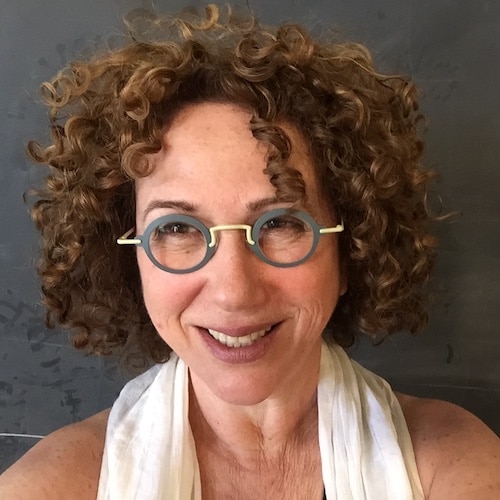
Michael Lee, a cultural planner and designer with an architectural background, co-founded SNDBOX in 2017. A design studio working to create tools to integrate communities, businesses and creative projects, they are relying on the new tools of the blockchain world.
In 2019, Michael and his team launched the BLDGBLOX app, which they describe as “the end-game project for SNDBOX.” It leverages blockchain technologies to “facilitate seamless social-investment in civic institutions, real estate projects, and cultural programming.” During these first early years of development, Michael’s team has
- Distributed $438,000 USD in project development funds to 13 built projects and programs;
- Built a global community (28 countries) with hundreds of designers, non-profit organizations, program leaders, and more;
- Developed the world’s first public development using blockchain governance and cryptocurrency, Steem Park.
- Organized workshops, exhibitions, and public events that highlight public utility with blockchain.
Previously, Michael was a resident entrepreneur at the Harvard Innovation Labs, a member of the group called Base 15 Studio which focused on public design advocacy, or “creative consultancy.” Before starting graduate school he participated in a design collective founded by Cornell University architecture graduates, Hither Yon, based in Berlin, Rome and New York. And while still at Cornell he did art outreach in Johannesburg, as well as a year in Rome working on a film installation project. Michael also has a proficiency in Korean, Italian, German and Spanish.
Insights and Inspirations
- BLDGBLOX is a place where new projects can be born.
- We’ve always thought that blockchain = crypto. Here’s an amazing example of blockchain being used as an organizing tool.
- Michael wants to democratize the power of data.
Information and Links
- Michael checks in on on IOBY (In Our Backyard) frequently to see what new high impact neighborhood projects are being crowdfunded.
- He’s proud of Steem Park, his first attempt at democratized city-building.
Read the podcast transcript here
Eve Picker: [00:00:11] Hi there. Thanks so much for joining me today for the latest episode of Impact Real Estate Investing.
Eve: [00:00:18] My guest today is Michael Lee of BLDG BLOX a civic technology company dedicated to empowering neighborhood stakeholdership. Their goal is to help shape better, more resilient and inclusive cities. In this podcast, we’re diving into Michael’s current primary focus, an online platform called BLDG. It’s a platform for neighborhood collaboration and it’s picking up steam. So, listen in to learn more.
Eve: [00:00:57] Be sure to go to rethinkrealestateforgood.co to find out more about Michael on the show notes page for this episode. And be sure to sign up for my newsletter so you can access information about impact real estate investing and get the latest news about the exciting projects on my crowdfunding platform, Small Change.
Eve: [00:01:21] Hello, Michael, I’m excited to have you here today.
Michael Lee: [00:01:25] Hi Eve, thanks for having me on. I’m very excited to be here.
Eve: [00:01:26] It’s a pleasure. So, you’re a wayward architect, much like me, and you’ve built a very cool app, which I’d like you to tell me a little bit about.
Michael: [00:01:36] Absolutely. So, you mentioned the background in architecture. Just a little back story. I was trained as an architect. I moved towards public art and cultural consulting. And back in 2016, my co-founder introduced me to a lot of developments that were happening in the blockchain space. And so blockchain can be very complicated with cryptocurrency and things like that but for the sake our app and this conversation, essentially, we were looking at decentralized technologies. Ways that we could create and distribute more value, track it and, with our background in architecture and urban design, we saw an opportunity for that to impact the way we do real estate, the way we deal with communities and community growth. And so, we created a company called BLDG BLOX and for the past few years we’ve been developing this app. We just launched it at the beginning of this year before everything happened with covid. It’s called the BLDG app, it’s live and the app is a online bulletin board to manage projects with your community. So, these are real estate projects, these are coworking spaces, mutual aid groups, non-profits. Any organization or new initiative that is looking to build alongside, build consensus, build value with the communities that are involved.
Eve: [00:02:53] Okay. So, you use blockchain and do you use other technologies on this app? I’d love to know a little bit more about the technology.
Michael: [00:03:02] Sure. It’s a web application, so you don’t have to download anything. You go to bldg.app, BLDG app and it’s all online. Similar to how you use Kickstarter, Instagram. So the front end is fairly user friendly, you can use Google or Facebook to log in and on the back end we’re starting to implement and integrate everything that goes on in the app. Typically with a lot of social media apps, web applications, you don’t really know where the data is going and what’s being tracked. On ours we are starting to link it to the blockchain. So, all the activity is very transparent. And our goal is to be able to make all that data transparent, compile it in a way that other organizations, whether it’s, it can be investors as well, can start to see how a project, in this case a real estate project, is acting, what kind of value it’s distributing, how people engage it and start to value, again, in this case, social impacts in a way that can be measured more dynamically. So, we’re starting to use this transparent ledger system as a way to create a new foundation for impact. That’s kind of the way we’re seeing it.
Eve: [00:04:12] How interesting. And who will have access to that ledger and all that information?
Michael: [00:04:17] When the blockchain information becomes live, when all these transactions become live, anyone can see the information. And on the application, itself, when those metrics are up, we’ll have a much more user-friendly UI for people to understand: OK, this project is involving this amount of people this is not a value transferred, these are the number of community members involved in a project. This information will all be tracked holistically in the app as people use it, and we’ll present it to different project owners, so they know how much impact. however they define impact, is going into the project.
Eve: [00:04:55] Well, that’s really interesting. So, I’m going to change some of the questions I was going to ask you. I was going to ask you, how is this different than other social media apps like Facebook or perhaps Nextdoor or Meetup? But, you know, the data collection that you’re doing is pretty radically different than any of those, right?
Michael: [00:05:16] Right. That’s generally the ethos of a lot of people who work with this new technology, with blockchain. And what you see with a lot of applications is you don’t really know what data is being collected and how it’s being used. We generally know that it’s monetized privately with adverts and things like that. We want to be able to open up, democratize, the power of data and open it up so that people can use it in all different ways. In this case, and this is really the long term vision of this first app and other functionalities or apps that we produce under the umbrella of BLDG and BLDG BLOX, is that we can start to track data dynamically and then use that for, for example, driving certain people to invest in certain projects or to decide which projects they think are really impactful for their community and be involved in those. Data can be used in a lot of different ways that I think we just haven’t gotten to that point yet. And this new infrastructure really motivates us to expand and explore those possibilities of data and make more informed decisions, more empowering decisions.
Eve: [00:06:24] I did play around with the app a little bit, and I see when you go to some of the communities, they have sort of slightly different functions. So, when you create a new page, what are your options? How do you set up a community? What sort of communities can you set up?
Michael: [00:06:40] So you can log onto the app right now and create a project page. It’s fairly straightforward, takes about a minute or two to create one. And then the idea is you would send that page just like an Instagram page to anybody that you think is part of the community or wants to be part of that community. They can sign up and join right away and then everybody involved can start to post questions or polls or ideas or different things that they want to offer. There’s different tags for events, for polls, for ideation. And the idea, again, is to allow anyone to bring to the table whatever they want to and start discussions or start voting or start to see if they can gather the resources, they need to push that particular project forward. And so we’re already starting to see projects that are more university-based or socially-based with mutual aid groups, especially now during Covid under the quarantine, and the projects are fairly diverse and everyone is on there basically to try to pool resources, help one another and make decisions together. And that’s really what the app is geared towards.
Eve: [00:07:48] Interesting. So, could you use this as a community engagement tool if you’re a real estate developer?
Michael: [00:07:55] That’s definitely the goal. We’ve already started to work with co-working spaces where the owner of the coworking space is the real estate developer or the one that developed it. And the idea, and our thesis here, and we want to get deeper with the real estate industry and with prop tech and people that are looking at more of these impactful ways to do real estate, is integrate this application with their development process and allow, and we’re starting to see real estate firms do this more and more, allow people who are maybe the tenants of the building or people who live nearby where the community board that is involved with the decision making of that building to be involved and help make further decisions, help maintain the project, help gain equity in the project, whatever that might be in both financial and non-financial ways, and generally nurture this idea of community buying and stakeholdership with the people that are involved, which I generally believe, my thesis behind all of this is that the more people that are involved, the more doors that are open for a community to have buy-in and participate, the more successful a real estate project will be in the long term. And so that’s really our ethos when it comes to how this impacts the real estate sector.
Eve: [00:09:11] You know, I have Small Change, which is a crowdfunding platform. And because we are members of FINRA and use a crowdfunding regulation that permits anyone to invest, we’re highly regulated and we can’t really host discussions on our website. So, what sort of page would you create for Small Change that might help people educate themselves and talk to other people? What would that look like?
Michael: [00:09:38] So, Small Change is a great example because you can look at it as an organization that houses projects under it. And so, with Small Change itself, you can use the page to interact with the people who are crowdfunding on the page, host more evergreen information. So, tutorials or tips that will help anyone that wants to engage with Small Change. And then, on a secondary level, all of the projects, because presumably any project that is crowdfunding on your platform wants to have meaningful impact not just in this crowdfunding process, but also likely once the project is erected and live, and people are occupying it. They want to make sure that their project lives on in an impactful way and impactful stakeholders are part of it and it continues to have that kind of general consequence with the neighborhood that it’s being built in. And so, each one of the projects could have its own page and then people can continue to support the project financially and non-financially, which is a big emphasis on our platform. If certain projects need help with physical aspects of the building, with the architectural design, with the construction documents, that’s one thing they can solicit, and members could offer. If they need help with programming or maintenance or they need help with integration with local organizations and institutions to be involved in their project. That’s the type of, sort of playground, as some of our users have put it, that these types of projects could create so that their constituents can come together and contribute things that typically have been very difficult to contribute in the past beyond the financial aspect. And we’re already working with some crowdfunding platforms to see if we can expand the initial financial support that has been opened up to a larger audience and then see if they can continue, that audience can continue to support those projects in non-financial ways as well, with their expertise, with their network, with their in kind donations and categories like that.
Eve: [00:11:34] Interesting. You know, there’s always sort of a push pull with real estate developers who are, that’s kind of an evil would at the moment isn’t it, developer? How they communicate with the community. It can be very difficult and there can be a lot of friction so it sounds like this might help bond some relationships.
Michael: [00:11:57] That’s precisely what we want to hit on. We understand the friction there. I myself, I go to community board meetings and I see, I live in Bushwick and Backstein, New York City and Brooklyn and there’s development happening all the time. And when you go to these meetings with developers and the community, it’s very palpable, the tension there. And our approach to this and our understanding is, because there isn’t a good way for communities to collaborate with developers, for that communication to actually scale and take place, the resulting situation is one of great tension and opposition. And we’re seeing that. We’re seeing a rise in NIMBYism, a rising neighborhood opposition. Just last year, we had the whole fiasco around Amazon’s HQ2, in Long Island City. And so, we’re looking at projects like this. And we see that not just at the highest, at the very top with Amazon, Google, Facebook, where their campuses have been consistently opposed, but also at a much smaller scale. So, with mixed use housing in New York, that’s a big point of tension. And there’s always this negotiation, which tends to be very tense, tends to be not so good-willed, or at least get to that point.
Eve: [00:13:10] Right, very confrontational.
Michael: [00:13:12] Very confrontational. And we want to transform that environment. And I really believe that if we had the right tools, that environment would be different. And if we can transform that environment to one where people feel like their voice is being heard, they’re participating in it, we can turn it into a from a lose-lose situation, into a win-win. Because currently there’s so much risk on the side of real estate developers because they understand that, with all these tools of social media and the way communities are mobilizing, it’s very easy to oppose projects. And on the other side, communities are struggling with the idea because they want to see meaningful and impactful development, but because they’re not able to come to the table with developers in a meaningful way, those tend to become very risky for them and it’s easier to oppose. And so, it’s currently a very lose-lose situation. But if we can insert the kind of right tools and the ways for people to communicate, we’re hoping we can flip that on its head.
Eve: [00:14:05] Have you thought at all about, and this is a really difficult question so I apologize in advance, but have you thought at all about communities that poorer, have less investment, may not have access to computers and, you know, an online app and how this would fit into those communities, how you would make it accessible?
Michael: [00:14:27] That is definitely a difficult challenge that we’re struggling with on an ongoing way. And part of our answer, at this point, goes into design of the app. So, we didn’t want to have a downloadable mobile app. We think that creates another point of friction. It’s just a website you go into, you can sign in with any email. And so, we definitely want to make it technologically as accessible as possible. The other way that we’re trying to get over that is working very closely with the organizations that sign up for the app. And so, presumably anybody that creates a project page, there’re a real person or real organization. They have a physical presence wherever they are, and their projects are mostly physical. So, spaces and buildings and such. And so, we constantly communicate with them to make sure that we can bring in even constituents that don’t use a computer or device very often. We can bring in their input, we can have a way to capture that data, that advice, those comments, different ways that people who aren’t on the computer all the time can contribute. And so, this is a way that we’re dealing with the issue. But we definitely see that as an ongoing hurdle. We want every demographic to be involved. This is even more sensitive in places that people don’t have access to those resources. And this is what makes the Covid19 situation so unfortunate. Before everything happened, we were constantly holding workshops, we were showing people how it was done, we were pairing people who do use the computer fairly often with people who weren’t, trying to make this engagement as digital as it was physical. And now we’re trying to adapt to the situation and make sure that even, you know, if you aren’t as technologically fluent or don’t have access to those resources, your information and your voice can make its way to the application. That’s definitely a very sensitive and difficult point and we’re always working on that.
Eve: [00:16:18] Unfortunately, that pandemic has disenfranchised those communities even further. It’s really pretty sad. So, tell me again how you arrived at this app. Your background, you’re an architect. You’ve gone to a pretty unusual route.
Michael: [00:16:36] We have gone an unusual route. And the one thing we’ve always interested in is the process. Even when I was studying architecture and practicing architecture, the process in which buildings were designed and created seemed very linear, depending on what was being created. It didn’t take into account the community that was being impacted the most. And this, of course, is a common theme in real estate as well. And so, the concern is how do we bring as many people into the process as possible? And when we looked at the current tools, at the time around 2015 and 16, we just came to the conclusion that no matter what you did with things like Facebook pages, or on Slack, it’s very difficult to scale decision making, engagement, to exchange resources and distribute resources. And that’s how we came to this idea of creating a new digital tool. And again, we were lucky because it timed well with the emergence of blockchain and decentralized technologies to explore this. And if you look at the blockchain sector, we see a lot of people with real estate backgrounds actually exploring this as well. So, you have groups like Elevated Returns and HARBOR, RealBlocks. These are real estate firms that are introducing ideas of fractionalized, equity. And starting to use real estate equity more like corporate stocks of shares, making them more liquid accessible. And my ultimate goal is to introduce this idea of sweat equity into the real estate market and any general organizational market. And that’s kind of how we got to this idea of the application and starting off with one that brings communities and organizations together.
Eve: [00:18:22] Interesting. So what other projects are you thinking about? You said this is one of, you know, one of a number.
Michael: [00:18:30] Well, so, we want to start, and we are starting with the BLDG app as the first step. And within the app and around the app we want to create more functions and more components. For example, right now on the app you can create a project page and start to engage with the community, distribute responsibility, you can see what backgrounds your community members have, whether they’re an engineer or a marketing person and so forth, and start to bring those resources together to try to drive and motivate those project further. We’re going to implement more of that blockchain data system that I just explained and have it so that other companies, other investors, can look at these projects and make decisions on their own behalf based on this data and what’s going on. And whether that’s in another app or in this one, we want to continue to grow out more functions where people have more opportunity to engage in their local real estate projects, to contribute to them, to help make decisions and then eventually get to the point where people can earn sweat equity in those real estate projects based on their contributions to those projects, not just the financial contributions, but also, like you see in start-ups or in general any corporation, people can earn equity based on their commitment or how long they’ve been there or their general value to that company. We want to get to that point. And so, we are constantly going to expand on the tools that real estate companies that investors that community stakeholders can use to determine that value for any given local project.
Eve: [00:20:04] Interesting. So, then I have to ask you, what’s the big, hairy, audacious goal for this app? Like, where would you like it to be in five years or in 10 years?
Michael: [00:20:13] In five or 10 years I would like it to be a place where new products are born or existing ones are continued and everyone involved is, quote unquote, rewarded for their contributions. That’s the type of economy that myself and my team are really working towards, that no matter how small scale the project, no matter how new or no matter how big and burdensome, like a large mixed-use project for example, people’s contributions allow them a level of equity or a level of buy-in to those projects. And people who are involved are constantly discovering new opportunities as they commit themselves to those projects. Because we all understand, to a certain degree, that the success of a real estate project is based on so many multi valuable factors. The environments, the general safety of it, the vibrancy, the culture that’s there, the diverse community that’s there and we want to be able to quantify that value in a way that’s constantly evolving and anyone that helps contribute to those forms of value are rewarded with something that allows it to have buy-in to those projects.
Eve: [00:21:22] So has that happened yet at all, in any form?
Michael: [00:21:26] To my knowledge, we have not seen that happen financially in the real estate sector. There are social impact, real estate firms that are experimenting with, for example, reduced rent based on if you help maintain the property that you own. We’re seeing different kinds of economic deals being put into place that are trying to incentivize people who actually have equity to maintain it and they can get some value back with its reduced rent or other opportunities like that. I would like to see that pushed and evolved even further where, you know, you’re the doorman that lives in your building, or maybe the person who, the tenant that has a educational business in your building, these people can continue and are incentivized to contribute and earn an actual financial stake in the project in the long term. We understand that these are the types of people and programs and activities that give a building or a city the value that it has. And we should be able to recursively reward the people who are actively contributing to that value, not just see it as a mutually exclusive thing that happens within our buildings.
Eve: [00:22:34] Yeah, yeah. Interesting. So final question for you. What’s next for you? You sound super busy and I know what it’s like working on something like this, it’s all consuming. Covid19 has shifted things a bit, so what’s next?
Michael: [00:22:50] So definitely. Bringing up Covid19, you know, we are all struggling with this transition to a more remote environment. And I think, like you mentioned before, the disenfranchised communities are suffering even more now. They don’t have access to all of these tools. That’s another reason why we wanted to create this space. We didn’t want to create another just hammer or tool for the digital environment we wanted to place where people can bring their Zoom conversations together or they are resource sharing on Google Drive to one place. Our goal for the near future is just to help these communities, one by one, transition to the site, make use of all the tools and try to get their community together, because this is a time when communities are kind of just being torn apart naturally because we are physically distinct from each other and distanced. We want to help rebuild this community, or these communities, by transitioning them to these online tools. We’re very excited and very hopeful. We’re already getting a lot of feedback from people saying that, you know, the current tools are very unscalable. There are 10 or 20 different tools that they have to manage all at once. And it’s very difficult to scale on that promise to their constituents that they’ll stay involved, that they’ll keep them involved in their process.
Eve: [00:24:04] Very difficult. Very difficult.
Michael: [00:24:07] Right. And we want to be able to push a bit of that momentum and help support these communities. Anyone that signs up to the site organically, we reach out to and we say, hey, can we help? You know, tell us about your organization, what are the challenges you’re struggling with? Is there any way we can help any features you think we could implement? Because the app is constantly evolving. And we’re also constantly reaching out to organizations that we think we can help. We’re seeing everywhere, you know, people who are less active on Facebook or their own websites and media channels because we know that internally they’re struggling with how to transition into this new environment, especially now. And we are constantly trying to outreach to them and say, look, we know you’re struggling. We know you need different kinds of support and these tools were doing OK when you were meeting in person or working in person but now that we’ve transitioned, it’s very difficult to keep things in order and keep everyone involved. So, at this point, we just really want to help as many organizations as possible transition and make use of the resources available. And we want to be one of those stable resources.
Eve: [00:25:15] Well, I think it’s a terrific idea and I’m going to start by suggesting it to a couple of developers who raised funds on Small Change and are perpetually struggling with how to relay progress to the investors. So, I think it would be a great way to create a little community of investors. So that’s a starting point for us and you and I will be talking more about how it might work for Small Change, I’m sure.
Michael: [00:25:39] Absolutely. That would be fantastic. I mean, anyone that’s raised on Small Change or is hearing this and thinks that this might be interesting, social impacts, real estate investing is, is definitely interesting because when I speak to a lot of real estate developers, they are all interested in this idea or already committed to this idea. And yet it’s difficult to find places where you can communicate with other like-minded people, share those resources and in terms of impact real estate investing, we definitely want to help foster that type of conversation and that resource sharing.
Eve: [00:26:11] Maybe that’s the first page to start?
Michael: [00:26:13] It might be. That might very well be.
Eve: [00:26:15] Something around this podcast page. And I just did a retrospective for the year and in the first year I recorded forty-nine podcasts, which is probably why I’m so tired.
Michael: [00:26:27] Well you’re doing something incredible for the community and we definitely want to build on that momentum. I mean, there’s so much experience and lessons to be had.
Eve: [00:26:37] That’s what I was going to say. The people I interviewed are, each and every one of them, a rock star doing their own thing. And that’s a that’s a lot of experience, too, corral. It’s really interesting. So, I’ll definitely be in touch. And thank you very much for taking the time to talk to me today.
Michael: [00:26:53] Thank you Eve. Thank you for having me on.
Eve: [00:26:59] That was Michael Lee of BLDG BLOX, a civic technology company dedicated to empowering neighborhood stakeholdership. His online platform bldg.app is currently in its beta phase. Michael’s goal is to help civic organizations, communities and companies build community and scale decision making. The app is designed to support community building in a myriad of ways. It can be a tool for organized public engagement for new projects, it can support initiatives with campaigns that mobilize their communities or local causes, or it can even serve as a shared workspace. I’m excited to see it unfold.
Eve: [00:27:45] You can find out more about impact real estate investing and access to the show notes for today’s episode at my website rethinkrealestateforgood.co While you’re there, sign up for my newsletter to find out more about how to make money in real estate while building better cities.
Eve: [00:28:04] Thank you so much for spending your time with me today. And thank you, Michael, for sharing your thoughts. We’ll talk again soon. But for now, this is Eve Picker signing off to go make some change.
Image courtesy of Michael Lee, BLDG BLOX