• Skip to main content
  • Skip to secondary menu
  • Skip to primary sidebar
  • Skip to footer
  • Home
  • About Us
  • Say hello
Rethink Real Estate. For Good.

Rethink Real Estate. For Good.

  • Podcast
  • Posts
  • In the news
  • Speaking and media
    • About Eve
    • Speaking requests
    • Speaking engagements
    • Press kit
  • Investment opportunities

Community

Jumpstarting a community.

October 7, 2020

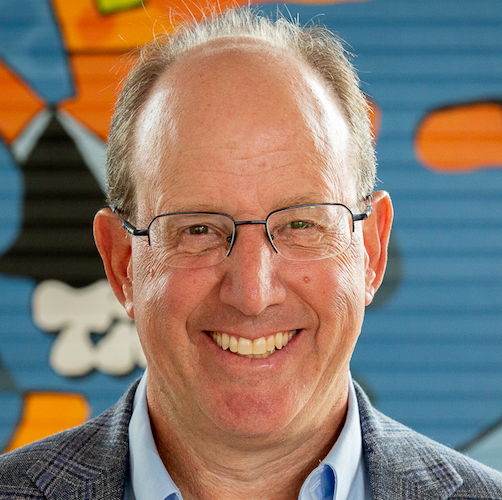
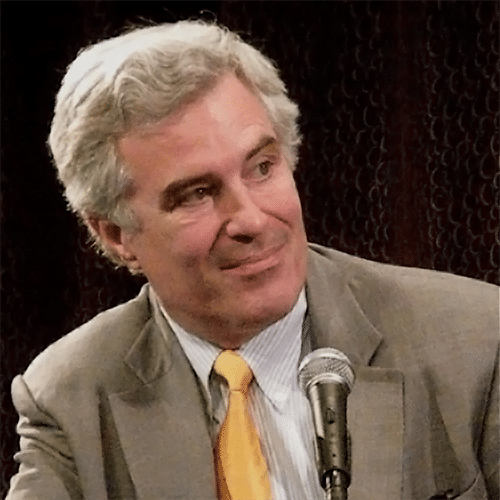
Ken Weinstein is a highly respected entrepreneur and developer based in the Philadelphia metro area. He is the founder and president of Philly Office Retail, an organization which has renovated and restored over 300 vacant and deteriorated properties and now owns and manages more than 800,000 square feet of space. “I was really inspired by my landlady,” he once said, “She had renovated six properties with her own two hands. I thought, ‘How cool is that? I want to do that.”

When Ken moved to Germantown he was drawn to the neighborhood’s architectural integrity and began renovating properties there. By 2000, he had moved onto larger projects and today his office is working to renovate six historically significant factory buildings on Germantown’s southern border, near the recently renovated Wayne Junction Train Station which serves 321,000 passengers annually.

But wait. Ken is also widely known for creating Jumpstart Germantown, a 12-hour boot camp for aspiring developers. Since launching Jumpstart, in 2015, other city neighborhoods (West Philly, Southwest, Kensington, Tioga and Hunting Park) have all started their own programs using Ken’s as a model. Developers from Camden to New Orleans have also expressed interest in starting Jumpstart programs. As of this podcast, Jumpstart Germantown has graduated 850 people, with hundreds of applications pending, and 85% of the program participants being African American or women.

Still not satisfied, Ken launched a Jumpstart Germantown Loan program that offers financing for the acquisition and renovation of residential properties in Germantown and its adjacent neighborhoods. Ken has said, “We can train and mentor aspiring developers all day, but if you can’t loan them money, they’re not going to get very far.” To date, they have loaned around $20 million.

Over the years, Ken has been honored with numerous leadership, business and social impact awards from Philadelphia organizations. He co-founded the Mt. Airy Business Improvement District and has chaired the Philadelphia Housing Development Corporation. Ken has also created four restaurants including the Cresheim Cottage Cafe, a renovated 300-year-old house on Germantown Ave, and the Trolley Car Diner, a 1952 stainless-steel diner moved and reinstalled in Philadelphia from Wilkes Barre.

Insights and Inspirations

  • Triple Bottom Line (or PPP – People, Profit, Planet) is a win-win-win for the developer, the community and the tenant.
  • Park a block down from your project when you visit your project. Introduce yourself, tell people what you’re doing, why you’re doing it. Interact with the community.

Information and Links

  • Listen in to the Jumpstart Philly Real Estate Radio Show.
  • Ken’s love for the game of table tennis encouraged him to found and operate the Philadelphia region’s only full time table tennis club.
  • Ken also wants to point to the Philadelphia Housing Development Corporation and the Preservation Alliance for Greater Philadelphia, both of whom he has worked closely with for years.
Read the podcast transcript here

Eve Picker: [00:00:10] Hi there. Thanks so much for joining me today for the latest episode of Impact Real Estate Investing.

Eve: [00:00:17] My guest today is Ken Weinstein, the CEO of Philly Office Retail, ordinary by name only. Ken has built his company into one that serves the neighborhood it invests in, always tackling underutilized and blighted properties and turning them back to good use. But that’s not quite enough for Ken. He launched a boot camp for wannabe developers in his neighborhood, called Jumpstart Germantown. To date, he has trained 850 of them, and a half a dozen other neighborhoods have started their own program using his open source program information. Still not satisfied, Ken has also launched a loan program and lends to developers that cannot get bank financing. He’s a powerhouse. Listen in.

Eve: [00:01:10] Be sure to go to EvePicker.com to find out more about Ken on the show notes page for this episode, and be sure to sign up for my newsletter so you can access information about impact real estate investing and get the latest news about the exciting projects on my crowdfunding platform, Small Change.

Eve: [00:01:35] Welcome to the show, Ken. I’m really eager to talk to you.

Ken Weinstein: [00:01:38] Thank you, Eve.

Eve: [00:01:38] You are a very prolific developer by the sounds of it and also a prolific entrepreneur, I really want to hear about everything you’re working on. Maybe we could start with your real estate projects. I’m wondering what led you to tackle the very challenging work of restoring vacant and blighted properties?

Ken: [00:01:57] Yeah, it’s been a passion of mine for over 30 years now and I started part time for first 15, 17 years, of my real estate career. And for the first 10 years, I started exclusively in renovating vacant residential properties for the first, you know, mostly single family duplexes, triplexes, and then about 20 years ago switched over to renovating vacant commercial properties, which is what we still do today. But my passion over the years has been blight removal. I grew up in the suburbs of New York City and North Jersey, and we didn’t have blight. So, when I moved to Philadelphia, which is a community I very much love, I couldn’t understand why and how there was blighted properties and I set out to do something about that.

Eve: [00:02:53] Oh, that’s interesting, that’s kind of the way I see it. I grew up in a pretty suburban area as well, and we didn’t have blight, so moving to Pittsburgh was pretty much the same experience of you moving to Philly, I think.

Ken: [00:03:06] Sounds about right. Yeah, I came here in the late 80s and have not left.

Eve: [00:03:11] You know, what’s your key development focus now and what neighborhoods you focus on?

Ken: [00:03:16] Well, over time, like a lot of developers, our projects got larger and larger. So, you know, we used to do train stations and storefronts and small mixed-use projects. Now we’ve moved on to schools and churches and former factory buildings. We find that we now have the expertise, of course, to get those things done. But it also takes the same amount of time to buy and renovate a storefront, a vacant storefront, as it does a larger, either former office building or factory building. So, we’ve tended to go towards the larger projects. We focus almost entirely on what I call ‘middle neighborhoods,’ not your most struggling neighborhoods that are hard to rent at the end of the day after you renovate, and also not the hottest neighborhoods. In Philadelphia that means everything sort of surrounding Center City. Those areas have already been largely gentrified; there’s less need for us to come in and try to maintain and improve the community in which we’re working. So, we’re focusing on those middle neighborhoods, which are probably about 50 percent of Philadelphia.

Eve: [00:04:36] Wow. OK. Tell us about a favorite project that you’ve worked on and what it looks like.

Ken: [00:04:41] Yeah, there are so many. Hard to pick just one, but a couple of years ago, there’s probably been a few years ago now, we took a vacant St. Peter’s Church campus in Upper Germantown, which is a neighborhood that I’ve particularly focused on. And it’s about a one and a half acre campus, a total of four buildings, three of them historic, from the late 1800s. Historically designated properties, so there was a lot of requirements on what we could and couldn’t do to the property. But it had been sitting vacant for about 10 years. Two of the buildings in particular were very close to coming down on their own. So, it was very tired and risky project. We purchased it for less than $500,000, put about six million construction dollars into the project, saved these four wonderful historic structures, and we did a long term lease with a Waldorf school …

Eve: [00:05:49] Oh, nice.

Ken: [00:05:50] … which continues to occupy the property five years later. So, it’s a classic win-win-win strategy that we’ve used over time to save this property that otherwise would have gone under if we hadn’t bought the property.

Eve: [00:06:07] Yeah, yeah. So, what’s the most important thing you strive to accomplish with every project you do?

Ken: [00:06:14] You know, like I said, my passion is blight removal, so, you know, to me it’s relatively easy to buy a vacant piece of land and do new construction. It’s more difficult and more needed to renovate and do adaptive reuse on an existing building. So, that’s what we try to focus on. But more than anything, we try to do, you know, what’s now a common term, PPP – People, Profit, Planet – also sometimes referred to as Triple Bottom Line investing, and try to create, just like the Waldorf example, a win-win-win for the developer, the community and the tenant. And I’m not going to tell you all of our projects benefit all three, but most of them do. And that’s what we strive for. The developer should make a reasonable profit and cover overhead. Otherwise, we’re not going to get commercial loans to do our projects. The community should see jobs, should see a better quality of life, should see blight removal. The tax base should be increased to pay for services for the city. There should be amenities involved, you know, people in the neighborhood should enjoy whatever tenant is coming into the property. You can’t just improve the property, you also have to improve the neighborhood at the same time. And then, lastly, and what a lot of developers, I think, miss, is the tenant also needs to benefit from the project. There needs to be reasonable rent. We are unique in that we offer a 100 percent fit out for a lot of tenants so that startup tenants, in particular, can come into our properties. We help our tenants with initial marketing. And we also help to place them in the right spot, you know. Just because someone comes to us and says, I’m a startup restaurant, can you find me a location? We’re going to put them in a location that we think makes sense because we know and understand the community.

Eve: [00:08:20] Great. So, what’s the biggest challenge you’ve had?

Ken: [00:08:24] Over time, that changes sometimes or very often, the biggest challenge is finding tenants in the past that has held us up a lot. Currently, I would say, a challenge is construction. Construction costs are going up …

Eve: [00:08:40] Yeh.

Ken: [00:08:40] … Hard to find experienced carpenters, in particular. So, it’s held us back. You know, that we have tenants that are waiting for their properties to be fit out and we need to make that happen more quickly. Another challenge right now is, you know, during the pandemic, is financing.

Eve: [00:08:59] Yeh.

Ken: [00:08:59] Financing seems to be fairly easy for multifamily housing, but most of our projects are commercial in nature …

Eve: [00:09:08] Yeh.

Ken: [00:09:08] … and financing is not so easy. I am fully confident that will come out of this and financing for commercial will be a lot easier a year from now. But until then, we’re going to have to fight and get a little more creative.

Eve: [00:09:22] Yeah, I’ve been hearing the same thing from many people. That’s really interesting. So, now I’d like to dive into the other things you do because all of that doesn’t seem to be enough for you, in that …

Ken: [00:09:35] Never enough (laughter).

Eve: [00:09:35] No, no, I wonder when you sleep (laughter). So, in 2015, you started a really fascinating program called Jumpstart. I’d like you to tell me a little bit about it and why you developed it.

Ken: [00:09:52] They are very excited about this project. And, you know, like a lot of projects, you see a need and you respond to that need and you don’t know if it’s going to make it or fall on its face. And, so here is a project that we started that just excelled and took off beyond my wildest dream. It’s called the Jumpstart Germantown, and now Jumpstart Philly. But what we set out to do is train, network, mentor and loan money to a new group of real estate developers that have had trouble breaking into the industry. We started this, like you said, in 2015, and it really came out of a lot of people knocking on my door and emailing me and calling me, and saying, “Hey, I love what you do. Can you show me how to do it, too?” And of course, we all love to pay it forward, so, we say yes and we sit down with people for an hour at a time, and … but at the end of the day, I just felt like I was their cheerleader. “Hey, here’s how I got started. You can do it, too. Good luck. Stay in touch.” I wasn’t helping anybody get started in real estate development. So, what we did, I started to say ‘no’ to those requests and instead put together a 12-hour curriculum that I can take people through, hand them off to a mentor after they graduate from our program, and then loan them money to get started with their first, second, third project. Because we all know that traditional banks don’t like to lend to newbie developers without a lot of experience. So, it’s just been incredibly successful. We have graduated 850 people so far through our …

Eve: [00:11:37] Wow.

Ken: [00:11:38] … Jumpstart Germantown program. We have lent them over twenty million dollars …

Eve: [00:11:43] Oh wow.

Ken: [00:11:44] … for 200 projects. And then, it’s been so successful, and we’ve made all of our resources and our workbook and other materials ‘open source,’ that other neighborhoods have picked up on this model and have run with it. So, there’s now six other Jumpstart programs in Philadelphia that other people run and there are Jumpstart programs in Norristown, Pennsylvania, and Wilmington, Delaware, that will be starting this fall.

Eve: [00:12:15] Wow.

Ken: [00:12:15] So, we’re just really excited that people see the value in this model. And we have changed a lot of lives and removed a lot of blight from the communities in which we serve.

Eve: [00:12:26] So 850 people, who are they and why do they want to become developers?

Ken: [00:12:32] That’s a good question. You got to be a little crazy …

Eve: [00:12:34] Yeh, you really do.

Ken: [00:12:34] … to become a developer.

Eve: [00:12:37] Yes.

Ken: [00:12:37] And part of what we talk about in the beginning of the training program is what is real estate development and who is best apt to do it? You know, what traits are needed to be a successful real estate developer? And one of the things we talk about, or one of the things we focus on, is risk. Because that’s what is true of every real estate developer. If you’re not willing to take risk, if you’re not willing to take the last 20,0000 dollars you have in your bank account and put it into a project, you probably should not be a real estate developer. And that’s OK. No judgment. Real estate development is not made for everybody, but it does attract a certain group of people. And once people get a taste for it, it’s addictive. You know, people keep going with projects …

Eve: [00:13:22] That’s for sure.

Ken: [00:13:24] Yeah. Some people have done, gone through Jumpstart and they were intending on doing one project and they liked it so much, they’re now going to do one a year. Or we’ve had dozens of people who have quit their day jobs and gone into real estate full-time.

Eve: [00:13:39] Oh wow.

Ken: [00:13:39] But there’s no one group of people for Jumpstart. When I first started it, I thought, oh, you know, it’ll be young people, the next generation. Turns out it’s everybody. It’s contractors who retired who want to benefit from the fruits of their labors. It’s realtors who know how to source properties, but don’t know the other six steps of real estate development. So, it’s just a variety of people. But one thing has been really wonderful is that more than 85 percent of our graduates have been women or people of color who are traditionally left out of the real estate development process.

Eve: [00:14:22] That’s fantastic.

Ken: [00:14:23] So, it’s great that, just organically, that we’ve been able to attract that group of people.

Eve: [00:14:29] That’s really pretty fabulous. So if you can hammer one thing into new or an old developer’s head aside from risk, what would that be?

Ken: [00:14:40] It’s knowing what you’re doing, willingness to take risk, but a lot of what we also cover … You know, there’s a lot of get rich quick kind of schemes out there, and people that show you how to flip properties quickly. The reason why our Jumpstart program is different, and something that I say to everyone who wants to be a real estate developer, is keep the community in mind when you are developing properties. There’s a lot of developers out there, as you know, to get started, they put their head down, and they literally walk to and from their properties as quickly as possible. They park right in front of their property so they don’t have to interact with neighbors or talk to people. No. We’re teaching you park a block down from your project when you visit your project. You go door-to-door, initially, when you start your project, introduce yourself, tell people what you’re doing, why you’re doing it. Interact with the community. Don’t be like that elected official that waits till it’s election time to go door-to-door and ask for people’s support and vote. No. Introduce yourself to the community, get to know the community so that when you do go through zoning or you need support from a community member, they already know you, they already trust you. And definitely, as I said earlier, think about the impact that you’re having on the community as you develop. Because you can’t just do it in order to make a profit. You really need to do it in order to improve the community in which you’re investing. And then you’ll invest and benefit much more in the future.

Eve: [00:16:29] Yeah, that’s a great thought. Great advice.

Ken: [00:16:32] Thank you.

Eve: [00:16:33] So, are there current trends in real estate development that you think are the most important for the future of our cities?

Ken: [00:16:41] Yeah, it’s … interesting, obviously, with the pandemic trend is an interesting topic right now. Because there’s trends, I think, that will exist for the next year that will not be long-term trends. There’s a lot of people suggesting that everyone needs larger houses and people are going to move to the burbs because of the pandemic. I think that’s all short-term. I think, and what I’m hearing is that long-term, the cities are still going to be the place that people want to be, that people will return to public transit, that people will want to live and work within walking distance of a train station. So, those are the things that we’re still focusing on. Again, they may not be true for the next year during the pandemic, but they are certainly trends that had started a few years ago that I believe will continue, and developers should pay attention to that.

Eve: [00:17:41] So, stay the course, right.

Ken: [00:17:43] Stay the course. Exactly.

Eve: [00:17:45] Yeah, I feel pretty much the same way. But I think at the moment people are so scared of the unknown that it’s difficult to predict the next year.

Ken: [00:17:54] Right.

Eve: [00:17:55] So, your whole life is wrapped up in what really is impact real estate development. Do you think there’s a best approach towards impact real estate development and investment? Is there something that we could be doing better? People talk a lot about impact goals, but I really wonder how many people actually follow through.

Ken: [00:18:15] Yeah. And it’s hard because banks in particular push you or force you to think about the financial bottom line.

Eve: [00:18:25] Yes.

Ken: [00:18:25] And if you’re a caring person, you want to think about something larger than that. So, you really have to buck the trend in order to continue to think about the community. Is there any one way to do impactful real estate? No. I’m the last person to say you got to do exactly what I’m doing if you want to be impactful. No. There’s a lot of ways to be impactful. We are all sort of watching each other and learning from each other. And we all know who are the impactful developers within a community. We can learn from each other, but there are lots of different ways of being impactful, and it really depends on what your goals are, what your niche is, and what resources you have. So, some of us have more funding than others. So, I know that you’re very involved in crowdfunding, which is awesome. And if you have less dollars, you need to focus more on crowdfunding, which certainly has its benefits.

Eve: [00:19:27] Yeah, I really wonder when we reach a tipping point, because it’s really still so many buildings going up that do not benefit communities.

Ken: [00:19:35] Right.

Eve: [00:19:35] I mean, the large majority of them, I think, developers like you are still few and far between. And I’d love to be able to imagine 10 years from now it’ll tip the other way, but I’m probably too hopeful.

Ken: [00:19:50] Well, that is, you know, I didn’t say it, but that really is one of the goals of the Jumpstart program, is by showing newbie developers how to be impactful, how to care about the community while developing, up front, we’re hoping to turn that trend. I would agree. Right now, most developers are not focusing on how to be impactful. But I am hopeful that if we can train newbie developers and aspiring developers in a better way, that will change five or 10 years from now.

Eve: [00:20:26] Yeah, it’s almost like you need a Restart program …

Ken: [00:20:31] Yes.

Eve: [00:20:31] … for the old developers.

Ken: [00:20:32] Yes. Well, funny you mention that because we are starting up a what we’re calling Jumpstart 2.0, which is taking developers that have done 10 or more residential properties and helping them through a 21-hour program, graduate to commercial real estate, which is a specialized niche, as you know.

Eve: [00:20:55] Interesting.

Ken: [00:20:56] So, yes, in some ways it is a reset because we’re going to show them how to be impactful in commercial neighbourhoods.

Eve: [00:21:04] Well, that’s great. How do you think we can build better cities and neighborhoods for everyone, aside from all the work you’re doing? I mean, I think you’re pointing towards a way to do it, but is there anything else we’re missing?

Ken: [00:21:17] Yeah, there’s a multitude of answers to your question, of course. Part of it which we’re starting is training, mentoring, networking and funding for women and people of color, in particular, so we can diversify the network of real estate developers. But part of it is that government needs to step in, not in an obstructive way, but in a way that’s relatively easy, to help keep tenants in their apartments and  houses so they don’t get displaced when neighborhoods become hot. Better loan programs for homeowners, so, again, that they can buy and stay in the neighborhood of their choice. Government needs to help us make sure that neighborhoods don’t get gentrified while we’re improving neighborhoods. So, it’s not just up to the developers to get it done.

Eve: [00:22:15] Yeah, I always think about people on a fixed income, when a neighborhood gentrifies, and they own a property and they’re forced out. That really is within government’s purview, to change the way that property taxes are implemented.

Ken: [00:22:29] Yeah, that’s absolutely right. Although I do focus more on the tenant because tenants are much more quickly and immediately …

Eve: [00:22:39] Displaced, yeh.

Ken: [00:22:39] … displaced. Exactly.

Eve: [00:22:41] Yeah. Yeah yeah.

Ken: [00:22:42] Homeowners are much more slowly displaced.

Eve: [00:22:46] Yes. That’s a really difficult problem.

Ken: [00:22:49] And then again, it’s up to the developers or government. But we should not be encouraging what I call ‘urban renewal,’ you know, the knocking down of a whole bunch of properties in order to build new. We should be focusing on the reuse of properties, in particular, the adaptive reuse.

Eve: [00:23:09] Right, right. Right. And then, you know, you mentioned crowdfunding. Do you think, you know, I have noticed over the last few months a real uptick in developers reaching out to us. And I’ve heard them say that banks have basically shut down. And yet we need creative new solutions right now more than ever. I mean, how do we deal with that? Banks are really retreating and we need these projects. Can crowdfunding really play a role?

Ken: [00:23:39] Yeah, absolutely, and I have not used crowdfunding yet, but I am, like I said, the developers watch each other. So, I’m watching Philadelphia projects done by Mosaic Partners …

Eve: [00:23:53] Oh yeh.

Ken: [00:23:53] … Leslie Smallwood and Greg Reeves, who speak highly of you, and you know how they’ve been able to use it. But again, I want to, I do want to make clear that I think the financing issue right now and the lack of banks wanting to finance is short-term. Right. And as soon as we move out of this pandemic, those funds will keep flowing again.

Eve: [00:24:15] It hasn’t been short term for projects that make a change, like, let’s talk about a first time investment in a neighborhood after 10 or 15 years. That’s the sort of project the bank has been veering away from for the last decade, at least, if not longer, because they want to see an appraisal, they want to make sure the project is going to cash flow. If it’s something new and innovative, they’re not comfortable there.

Ken: [00:24:40] Right.

Eve: [00:24:40] That’s been the case for a long time.

Ken: [00:24:44] Yeah, right now, we’re in a totally different world, to be honest. It has totally clamped down. So, that’s why I’m distinguishing now versus a few years ago. There has absolutely, banks don’t want to use the word redlining, but we all know that illegal redlining continues, even though it is officially, on the books, illegal. But we do catch banks and insurance companies that veer away from middle and struggling neighborhoods when they shouldn’t be.

Eve: [00:25:17] Yeah.

Ken: [00:25:17] And to me, more of how they do it, and the crime is that they veer away from aspiring developers and newbie developers …

Eve: [00:25:28] Yeh.

Ken: [00:25:28] … who are focusing on these middle and struggling neighborhoods. So, they’re blaming it on lack of experience when many of us know that the real reason why they’re rejecting it is where the property is located. So …

Eve: [00:25:44] Yeah, yeah.

Ken: [00:25:46] … it’s absolutely a problem. But crowdfunding, as you said, is one way to break through that and to raise equity for projects that are otherwise not being funded.

Eve: [00:25:58] Or maybe your Jumpstart loan program, which sounds amazing.

Ken: [00:26:01] Yeah, it is very much geared towards providing those loans that the banks won’t do. If someone can be bankable and can get their own loan, please go out and do it.

Eve: [00:26:13] Yeah, yeah, exactly.

Ken: [00:26:15] We’re not looking to do every loan because we have limited resources. But if you are unable to get a loan because you lack experience, or because your credit is not good enough, or you are developing in a neighborhood that’s not attractive to banks, then absolutely, we want to fund those projects.

Eve: [00:26:37] Yeah, yeah. So, what’s next for you, besides all of this?

Ken: [00:26:42] You never know. I think our projects continue to get larger and larger. We’re looking at a 150,000 square foot school building right now that we plan to renovate into multifamily housing. But I think Jumpstart also continues to grow, both in Philadelphia and around the country. We’ve heard from folks in Tulsa, Oklahoma, Milwaukee, Chicago, you know, probably a dozen other cities that are interested in starting a Jumpstart program. So, I think it’s a matter of time before this idea goes national and really helps a lot of urban neighborhoods. So, it’s sort of, the sky’s the limit.

Eve: [00:27:31] Yeah, well, I love it. And you may be hearing from someone in Pittsburgh soon. So …

Ken: [00:27:35] Awesome! That would be great.

Eve: [00:27:37] Thank you. I’ve really enjoyed talking to you and thank you very much for sharing all of this with us.

Ken: [00:27:42] Great. Thank you, Eve. It’s nice to be on your podcast. Appreciate it.

Eve: [00:27:54] That was Ken Weinstein. He’s a developer and he’s a teacher, too. He’s trained 850 everyday people on how to develop their own properties. They live in his neighborhood and more often than not, they are Black or women. And he’s lending them money too. “We can train and mentor aspiring developers all day, says Ken, “but if you can’t loan the money, they’re not going to get very far.” You can find out more about impact real estate investing and access the show notes for today’s episode at my website EvePicker.com. While you’re there, sign up for my newsletter to find out more about how to make money in real estate while building better cities. Thank you so much for spending your time with me today.

Eve: [00:28:54] And thank you, Ken, for sharing your thoughts. We’ll talk again soon. But for now, this is Eve Picker signing off to go make some change.

Image courtesy of Ken Weinstein

Reimagining the role of real estate development.

September 28, 2020

The affordable housing crisis in the United States is affecting more people than you might think.

For many Americans, across many income spectrums, a modest apartment is a cost burden and out of reach. There are multiple factors that have contributed to this affordability crisis. Wages have not kept up with rents, fiscal policy has favored homeowners, cars and transport are expensive and take up valuable real estate space and then there’s the rising cost of building affordable housing.

Experiments are being conducted to grapple with this problem in cities around the globe. Berlin is freezing rents, Minneapolis is working towards more affordable housing through updated zoning regulations, New York wants to produce quality affordable housing through careful design, California has passed a law permitting the construction of ADUs (Accessory Dwelling Units ) and many cities, including San Francisco, Boston and Milwaukee, are recapturing highways to provide more land for housing close in. All of this is leading to affordable housing innovation.

Entrepreneurs are working hard to make a difference too. Thibault Manekin founded Seawall Development, a real estate development company, focused on a particular housing niche – affordable housing for teachers. Seawall’s first project, the $20 million Center for Educational Excellence, is an adaptive reuse of a 100,000 square foot vacant factory building. In its reimagined form, the building houses 40 apartments for teachers along with 30,000 square feet of collaborative office space for a variety of non-profits that underpin the success of the school system. Seawall approached the development process collaboratively. They saw this as an opportunity to listen to educators and provide them with affordable, well located housing, shared with like-minded people. And bringing them together with education focused non-profits allowed for further collaboration and sharing of resources. The teachers provided design input for their apartments, chose the amenities for the shared resource center and even chose their own rents based on salaries.

“Everything that we’ve ever done has been built inside out” says Thibault “And what we mean by that is that we start with the end users, the people that are going to be living and working in our buildings. It’s important for us that they have a sense of pride, of authorship and ownership in what’s being created.”

Listen to my interview with Thibault to hear more about Seawall Development’s unusual and wholistic approach to real estate development.

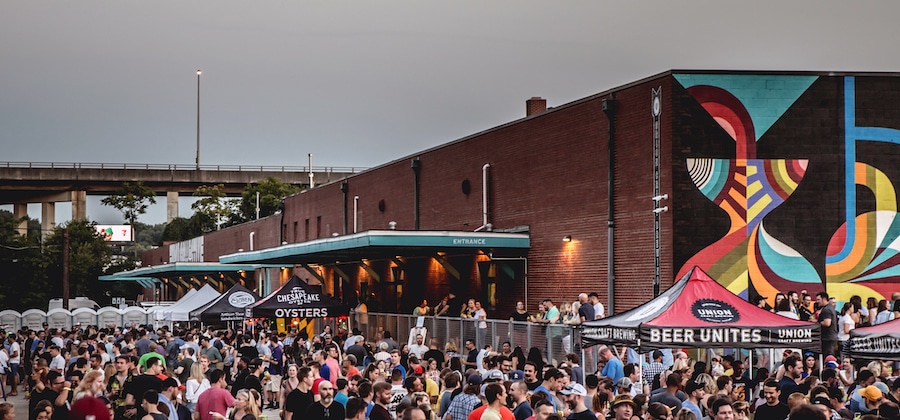
Union Craft Brewing, Baltimore, courtesy of Seawall Development.

Saving places.

September 23, 2020

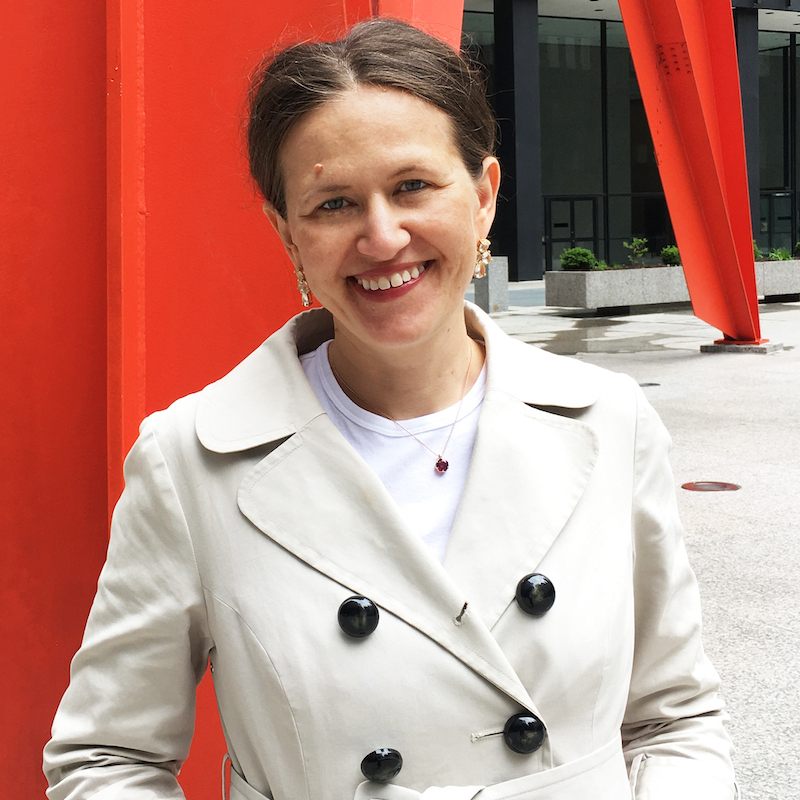
Patrice Frey is President and CEO of the National Main Street Center, where she oversees the Center’s work. Patrice and her team offer programs and guidance on placemaking, local entrepreneurship, facade improvements, crowdfunding and green rehabs to their network of approximately 1,800 members, all in service of revitalizing commercial main streets in both big cities and small towns alike.

Based in Chicago, Illinois, the National Main Street Center is a subsidiary of the National Trust for Historic Preservation, and has participated in the renewal of more than 2,000 older commercial districts during its 30-year history. Before joining the National Main Street Center in May 2013, Patrice served as the Director of Sustainability at the National Trust for Historic Preservation, where she oversaw the National Trust’s efforts to promote the reuse and greening of older and historic buildings, including research and policy development work through the Seattle-based Preservation Green Lab.

Patrice worked for several years in the field of community development and urban research before joining the National Trust. She is a graduate of the University of Pennsylvania’s program in historic preservation, where she received a master’s degree in preservation planning and a certificate in real estate design and development through the Penn School of Design and Wharton Business School. Patrice completed her master’s thesis on the application of the U.S. Green Building Council’s Leadership in Energy and Environmental Design standards to historic buildings. Patrice also worked for the City of Goleta, California, where she coordinated the acquisition and preservation of coastal open space, as well as a number of community development related programs. Prior to her time in Goleta, Patrice worked for the Brookings Institution’s Center on Urban and Metropolitan Policy in Washington, D.C., where she served as the executive assistant to the center director. She received her bachelor’s degree in politics and international relations from Scripps College in Claremont, California.

Insights and Inspirations

  • Main streets are the heart of their community.
  • They are often the single biggest asset that a neighborhood or small town has.
  • And Patrice sees them as entrepreneurial eco-systems.
  • Two main streets that Patrice loves are in Edenton, North Carolina and Emporia, Kansas.

Information and Links

  • Patrice finds this Roadmap to Recovery a great source of inspiration. She especially loves the community response map at the bottom of the page.
  • The National Trust for Historic preservation wants your help finding 1,000 places where women have made their mark. Submit your entry!
  • Follow this reddit thread for serious lego and creativity talent. Patrice has been collecting since she was eight and her favorite sets date back to the 1980’s.
Read the podcast transcript here

Eve Picker: [00:00:10] Hi there. Thanks, so much for joining me today for the latest episode of Impact Real Estate Investing.

Eve: [00:00:18] My guest today is Patrice Frey, the president and CEO of the National Main Street Center. Through the Center, Patrice and her team offer programs and guidance on placemaking, local entrepreneurship, facade improvements, crowdfunding and green habs, all in service of revitalizing commercial main streets in both big cities and small towns alike. Their network is very big with eighteen hundred members. If you want to hear why main streets matter, listen into our conversation.

Eve: [00:01:04] Be sure to go to rethinkrealestateforgood.co to find out more about Patrice on the show notes page for this episode. And be sure to sign up for my newsletter so you can access information about impact real estate investing and get the latest news about the exciting projects on my crowdfunding platform, Small change.

Eve: [00:01:35] Good morning, Patrice. I’m really looking forward to our conversation today.

Patrice Frey: [00:01:39] Hi, Eve. Thanks for having me. I’m looking forward to it.

Eve: [00:01:42] Good. You have a pretty big job. The National Main Street Center now has eighteen hundred members. Is that right?

Patrice: [00:01:50] It is, yeah. Eighteen hundred members all across the country. Every state in the union, I think, except maybe saving Hawaii.

Eve: [00:01:59] Ok. That’s pretty big. How has it grown under your watch? You’ve been there since 2013, is that right?

Patrice: [00:02:09] Yeah, I have. We launched as a subsidiary of the National Trust in 2013. Before then, we had been a program embedded at the National Trust for Historic Preservation and we have been very fortunate to see a strong membership growth in the last, in the last seven years or so. You know, those 18 hundred members are located all across the country. It’s a really good mix of rural programs and more mid-sized and then quite a bit of representation in some larger cities as well. When we took over in 2013, the team had a real focus on reaching out to folks that had been members in the past and maybe they had lapsed. And we’ve also just put a tremendous focus on developing new content and new resources that have helped to, I think, attract people, attract people to the organization. Yeah. So, it’s been really gratifying. We’re so proud to have such a large and strong membership.

Eve: [00:03:10] So I have to ask, I suppose the main question is why Main Streets?

Patrice: [00:03:16] Well, great question. You know, Main Street is important, I think, in at least two ways. The first is they truly are in the heart of a community and people tend to feel about their town, the way they feel about their downtown, which is to say you’ve got a healthy, vibrant, thriving downtown. I think that’s a real sense of pride, provides a real sense of pride and helps shape the identity, a positive identity for a community. And the reverse is true as well, where if you look at downtown and there’s nothing happening, I think that can help sort of create a sense of distress and incredibly challenged. So, psychologically, we know main streets are extraordinarily important. They’re really important for the quality of life factor, you know, providing restaurants, dynamic shopping experiences, all of that good stuff. But we also know that they’re key to economic competitiveness, right? Because as the economy, we’ve seen these seismic changes in the economy in the last 10, 20 years, we know that people are more mobile and they’re often picking where they live and then choosing a job. And that means for those employers, for local leaders, it’s extraordinarily important that there are high quality places in those communities and downtowns have those qualities in abundance.

Eve: [00:04:40] So that’s what’s going to be my next question. Why is it important to save them? So, one reason is that it offers an option for people. But what if they didn’t have that option? Why is it really important to save main streets?

Patrice: [00:04:54] A couple of reasons come to mind. The first is that often if you’re looking in some of our more stressed areas, cross country, whether that’s in rural or urban areas, other than the people, that commercial quarter is often the single greatest asset that that community has, right? It tends to be affordable, stay flexible, it’s adaptable, it’s walkable and we know more and more people are really appreciating the benefits of walkability. So, it really is an approach to asset based economic development that leverages what you already have. The other thing is main streets, particularly those, you know, those truly that were built like before the 1950s, you have just such a beautiful sense of character. They really reflect the local culture. They were built in a human scale. They’re super, and I’ve already talked about adaptability, but that is extremely important, 5the fact that you can adapt these places, you know, you can do like light manufacturing, you can do a restaurant, you can do standard office. You can, you know, turn upstairs into apartments or condos. So, it’s important and for many communities, this is the single biggest asset they’ve got.

Eve: [00:06:13] Yeah, I always find when I go to a small town or borough with a charming main street, I feel very comfortable with the scale. It’s kind of very easy to relate to, which is a bit of a relief sometimes, I think.

Patrice: [00:06:28] It is, it is. And it’s so funny because, you know, with Covid I’ve been spending a lot of time at home and I have a four-year-old son and we had checked out a book from the library on Roman design, Roman construction. And it’s just, you know, looking at the sketches was just reminded that, you know, this is an urban form that has existed for millennia. And I think it’s existed for a reason. It’s certainly existed for purposes of transacting commerce, but it’s also been a place that people go to connect with each other. And I think Covid is making us realize how much we appreciate having places to go.

Eve: [00:07:09] Yeah, and how much we miss it, right?

Patrice: [00:07:11] Yeah.

Eve: [00:07:12] So a hard question. How do we bring equity to small towns? This is the other pandemic, right?

Patrice: [00:07:21] Yeah, no, no, no. And yes, equally as concerning, if not more so. I think the first thing is acknowledging the problem for what it is and speaking openly about it. You know, in many communities, there is a legacy of African Americans being excluded that dates back to Jim Crow where African Americans were really only allowed downtown on certain days, during certain times to complete their shopping. So, I think some of it is really just acknowledging that in many ways main streets were, just have extraordinary histories of exclusion. And my own thinking is you only fix that by a truly intensive community engagement process where you are committed to reaching audiences and meeting members that you haven’t had traditionally part of downtown and then programming in a way in which those communities, particularly African-American community, feels supported. We, at the Center, do a lot of work on entrepreneurial ecosystems, and we’re taking a fresh look at that in terms of really understanding and helping communities embed within their work practices that really create for more diverse representation downtown.

Eve: [00:08:53] Yeah, I think exciting time about this moment is everyone I am talking to is really thinking about this issue very constructively. And I’m not sure that’s ever happened before. It’s going to be really wonderful to see, you know, what a year of thinking brings, right?

Patrice: [00:09:11] Yeah, it will. And I think now we’ve got to do the work, right? It’s getting past the talking and acknowledging that, yeah, that we have a problem. And, you know, we’re certainly, I personally am really committed to it, and then the organization, Main Street America, are very committed to it as well. You know, I think we’re going to have more tools and resources, support our communities in this conversation in the coming months and I would also say, you know, we’re eager to intensively engage in places where they’re ready to have this conversation and, you know, they want to make some changes.

Eve: [00:09:50] Yeah. Yeah. What are the primary activities of the Main Street Center? How do you help communities?

Patrice: [00:09:57] So, we’re the leading national revitalization organization nationally. So that means we can provide training, technical assistance, grants, networking opportunities. All of that good stuff. But we’re probably best known for something called the Main Street approach, or the four point approach, which is a revitalization strategy that’s been used now by about 2000 communities to help them really identify their values, identify their vision for downtown, and then program in a way to really make that happen. It’s a very comprehensive approach. A lot of times what we see in economic development is, you know, kind of the  one-shot wonder where you build the stadium, or you build the museum or a baseball park, and expect that that will automatically transform an area. That is very rarely the case. Instead, what we know makes a big change, big differences, is small steps, incremental change over time in a way that really takes into consideration the design of the place, economic vitality, the strategies, how you’re, what kind of place you’re actually trying to create and how you are attractor helping those businesses. And of course, promoting it, marketing, marketing it, all that good stuff.

Eve: [00:11:19] Right now, what communities have you been working on?

Patrice: [00:11:24] Well, we do a lot of work in communities. Up until Covid, right?

Eve: [00:11:28] Yes. Yeah, yeah.

Patrice: [00:11:29] We have our field services team that I think was in 200 communities…

Eve: [00:11:35] You know, Covid19, I’m just astonished at the trickle-down effect. Every time I talk to someone there’s another impact I haven’t thought about.

Patrice: [00:11:45] Yeah, yeah. So, our field services typically visits, will visit at least 200 communities a year. And we have transitioned a lot of those services online. But particularly when you’re talking about place, it’s really tough work to do. Place and relationship building. It’s really tough to do.

Eve: [00:12:11] Impossible remotely, right?

Patrice: [00:12:13] I won’t say it’s all impossible. I will say a lot of it is extremely difficult. Yeah.

Eve: [00:12:19] Yeah. I mean, you can only go so far.

Patrice: [00:12:22] Yeah. Exactly. So, you know, it’s hard for me to pick a place where we’re doing work, but, we’re in so many places, but Ohio, we’re doing some really exciting work there in a few of the heavily coal-impacted areas in terms of supporting the development of entrepreneurial ecosystems in that place. And I would say that work is almost certainly shifting off, because of Covid, to be focused on recovery as well.

Eve: [00:12:54] I suppose the question is, you know, how are you shifting your thinking because of this pandemic?

Patrice: [00:13:01] Well, yeah. So, I actually have great hope for main streets on the other side of all of this. I think the reason I’m so hopeful is because I think they, you know, like we talked about, they’re so adaptable. And even though I think we’re going to see the marketplace change a little bit, I think the space to sort of inherently, you know, we can do it, right Eve?

Eve: [00:13:33] Well, you know, I think main streets have a future because I think there are going to be a lot of people who want the calm, peace and space in places that have small main streets. Unfortunately, I think we’re going to go through a period of time where downtowns in larger cities might be scary for some people. And that could be to the advantage of smaller communities.

Patrice: [00:13:59] Well, I think that’s right. And I think we are also seeing where so many of our big cities were reaching peak unaffordability.

Eve: [00:14:07] Oh, yeah, there that too.

Patrice: [00:14:09] Yeah, that combined with the dynamic of, you know, people wanting a little bit more space and realizing that they can work from anywhere. I do think that bodes well for rural towns. I just feel like Americans have reconnected with the value of walkability in recent years. And, you know, I think that persists on the other side of this as well. Even though the economic impacts are going to be severe, we’re going to have vacancies, storefront vacancies that we’re, you know, going to be challenged by, overall, I think, we come out for the better.

Eve: [00:14:44] Yeah. So, storefront vacancies were happening before the pandemic, right? Because retail was really shifting dramatically.

Patrice: [00:14:52] Yeah. Because we’re so massively overbuilt in terms of commercial space especially.

Eve: [00:14:57] And I think because retail activities have changed so much in the last few years.

Patrice: [00:15:02] Absolutely.

Eve: [00:15:02] So, what does that mean for main streets? I mean, hasn’t it changed so much in small places? I mean, I like having my groceries delivered from Whole Foods or Costco or somewhere, but I don’t know if that’s possible in a small town, so…

Patrice: [00:15:17] Yeah, yeah. From what I’ve seen, probably not. I guess maybe there have been some changes. Maybe there will be some changes. We are seeing where, particularly larger retailer vacancies, were really starting to be a problem. My impression is that those tended to be in places, maybe central business district downtown, the malls, the lifestyle centers, et cetera. But I don’t tend to see those national retailers concentrated quite so heavily on our main streets, at least in the type of communities that we’re working with. So, I’m a little bit, you know, less concerned about that dynamic there, because we were seeing, people were really being extraordinarily creative in creating an experience at customers. And whether that was a restaurant or retail. Yeah. And so, again, I think, you know, none of the fundamentals have changed. And so, I see that continuing on the other side.

Eve: [00:16:18] Yeah. So, it’s maybe a shift towards slightly different retail types. Which is kind of exciting to think about.

Patrice: [00:16:26] Yes, it is, it is. I mean, I don’t know about you, but I, I am sick of like trying to online shop for clothes.

Eve: [00:16:34] Oh, I hate it.

Patrice: [00:16:36] I want somewhere I can look at them, you know, like touch them, feel them, like, you know that sort of human want, you know. I think that it’s real and doesn’t go away.

Eve: [00:16:48] So, I’d love to hear about, like, an accomplishment you’re really proud of or a project that you thought sort of exemplified what you do at the Main Street Center, something that’s, that you love.

Patrice: [00:17:01] Yeah. Well, I love that you ask that question, thank you. We are working on an advocacy campaign right now to ask for congressional support for, I mean through organizations, and so, I have been so heartened and just thrilled to see the way that our network has really rallied behind this cause. Unfortunately, state and local Main Street Programs are in peril. We know fiscal budgets, which are a big source of funding for these programs, are badly endangered. And so, we have been rallying and approaching Congress about what sounds like a large number to me, but I’m told is actually a small number. We’ve been rallying around a 100 million dollar ask to ensure that we can sustain these main street programs when small businesses need them most. You know, these Main Street Programs, the leaders of these programs are the folks on the ground who are helping the small businesses with their PPP application or they’re directing them to local community foundations for grants or making sure they understand what might be available through the state. They’re also sometimes in the room negotiating with landlords for rent forgiveness or forbearance. In this moment, what I’m most excited about, most proud of, is the way that folks have rallied to Main Street’s defence. And I’m pleased that Congress seems to be listening. We have a long way to go yet, but I’m feeling good about it.

Eve: [00:18:44] Awesome, that sounds fantastic. So, I’m just shifting a little bit to you. What’s your background and how did you, what led you to this role?

Patrice: [00:18:54] Well, it was a meandering path. So

Eve: [00:18:57] They’re always the good ones.

Patrice: [00:19:00] Well, you know, some people, some people know. Like my husband, you know, knew in third grade what he wanted to do and he’s doing it today. So, I, to make a long story short, I ended up at Brookings Institution. That was the Center on Urban and Metropolitan Policy at that point. And right after, soon after college, because I just love cities and, you know, I was sort of leaning towards the idea of a planning degree. And then I ended up on a tour in downtown Tacoma, Washington, with my dad. And, you know, we had this tour guide. Michael Sullivan, very well known locally, who captured my ardent attention. He just took us down, through downtown, telling the stories of the buildings. And I thought, OK, well, this is what I want to do. So, from there I, because I had really been interested in policy and really interested in architecture, and so I figured, OK, this is preservation is really a melding of those two things. So, from there, I took my time, but I ended up in grad school at Penn for preservation in the Design School. And I did my thesis actually on the greening of older historic buildings and ended up at the National Trust working as their research director. And then it’s it was a lot, I had so much fun in that job working on sustainability and older buildings. And then Main Street came along and I thought, well, you know, there are a lot of parallels between, a lot of threads, between sustainability and main streets. And so, I threw my name in the hat and here I am.

Eve: [00:20:50] That’s fabulous. So, you get to run this really pretty unique organization.

Patrice: [00:20:56] I love it.

Eve: [00:20:57] And spend time on main streets.

Patrice: [00:20:59] When times are normal, I get to see some of the most beautiful, most special places that I think people often never see. So, I am really grateful for that.

Eve: [00:21:11] So what’s one of the most beautiful, most special places you’ve seen?

Patrice: [00:21:17] So, a couple come to mind immediately. One is Emporia, Kansas. And I wouldn’t say it’s like beautiful in the way that, you know, you might think about a landscape or something. But it’s a city of, I think it’s twenty-five thousand, it’s near nothing, right, which is to say, I think Kansas City is a good two and a half, three hours away. And they have done such an extraordinary job of nurturing entrepreneurship there and have had just like success story after success story. I want to say that the Main Street Program has helped to support something like 70 or 80 new business starts there. They will allow good stuff with housing downtown. Just extraordinarily dynamic leadership. Great community. Yeah, just, just…

Eve: [00:22:11] In an unexpected place, right?

Patrice: [00:22:13] Yeah. Yeah. And then, you know, the other thing that I realize is, well the other, to one of the other key lessons I’ve learned, it’s from place called Edenton, North Carolina, and it’s an absolutely charming downtown. But sometimes with the preservation lens you can look at a place and say like, “oh, that facade isn’t”, you know, “that facade isn’t quite right”, “those windows…”, etc., etc.. And there’s a lot of what I would describe as imperfect preservation there, but I say that with no judgment. The thing I realized is, you know, it’s really not about the way it looks, it’s about what’s happening at 2:00 p.m. on a Tuesday afternoon, which is: Is this vibrant? Are people using this space? Are they getting what they need? And, you know, Edenton is absolutely just incredible.

Eve: [00:23:06] Oh, I’m going to have to put them on my bucket list.

Patrice: [00:23:08] Yeah, it is right on the water. It’s a beautiful, beautiful place. I’m probably getting my history wrong, but I think it was very briefly the capital of North Carolina.

Eve: [00:23:18] Fabulous. So, do you think socially responsible real estate is necessary in today’s development landscape?

Patrice: [00:23:26] I think it’s absolutely essential. I’m pleased to see that, you know, there is a bit more attention on it than perhaps in the past. My two big concerns when it comes to real estate are, well really three, building in a way that truly supports the community, is in line with the community’s vision. The second is building with time in mind. Meaning, I think so much of what gets constructed today is just utter crap.

Eve: [00:23:57] Oh, yeah, I agree.

Patrice: [00:23:58] And it will, it will not stand the stand the test of time either design wise or, you know, the fundamentals, the physical structures are so poorly constructed. And then the third thing that is, again, just kind of how I look at the world, is the reuse factor. You know, I tend to really gravitate to projects, you know appreciate projects, that are making use of an old building in some form or some fashion because they, the research I did early on in my career regarding the carbon impacts associated with new construction, was kind of formative in my thinking about this. I mean, there are just massive, massive impacts associated with constructing new buildings and tearing down old ones. And it’s just critically important that we’re giving that our full attention as we’re designing these places.

Eve: [00:24:52] Yeah, and, you know, I’ve done a lot of reuse projects and I find people really love the idea that they’re living in or occupying something that has a history. So, it’s a shame to eradicate it. It’s useful today.

Patrice: [00:25:09] Yeah. And Eve, you are a hero, a true champion among the development community for the work you’ve done on.

Eve: [00:25:19] Oh, thank you.

Patrice: [00:25:19] Yeah, and reuse. I think you’re right. I mean, I do think there’s an element of the human psyche that finds it very important to connect to elements of the past. And that’s what building reuse allows us to do. I mean, unfortunately, so much of what is being constructed today, you know, has so little value that, yeah, it’s hard to imagine 50 years from now that people are going to be fighting to save those places.

Eve: [00:25:46] Yes. Yep. Shifting gears again, what community engagement tools have you seen that have worked best? I know you talked about going further with them in the future, but I’m just wondering what works?

Patrice: [00:26:02] Yeah. So, I mean, there’s certainly the you hold a meeting and you see who shows up and you create the space for them to, for everyone to have a voice and to talk. And that’s very important. But there are two engagement tools in particular that we’ve had some success within recent years. One are surveys. I mean, obviously, that’s a little bit different and limited because you’re not having a dynamic conversation with someone. But that can be extraordinarily helpful in reaching a larger community group about and engaging them in terms of how they want to see their downtown evolve. And the second, and this is really important, is going to where they are, right? So, which is to say, if you have groups that just tend to not engage downtown and yet, you know, there’s a festival happening or there’s some sort of gathering, churches, what have you. That can be a great place to go and engage directly, you know, hand somebody a survey and talk to them at the same time. That’s been extraordinarily valuable.

Eve: [00:27:04] Oh, interesting. And then I have to ask this question. Do you think equity crowdfunding can play a role in building main streets? I’m hoping the answer is yes.

Patrice: [00:27:15] Money? Absolutely. Absolutely. And I think that crowdfunding, is probably the most exciting thing I’ve seen come along and real estate, I’d say full stop. Precisely because I think it creates a foundation for better community engagement, literally community buy-in.

Eve: [00:27:35] Yes. Yeah, that’s the important bit. Yeah.

Patrice: [00:27:37] Yeah. And that is, you know, that’s what it’s all about.

Eve: [00:27:42] Yeah, so they get to vote with their dollars. I mean, they also get to see the upside.

Patrice: [00:27:49] They do. They do. Yeah.

Eve: [00:27:51] Yeah. That’s what I love about it. So final question, what’s next for the Center and what’s next for you if you’re looking five years ahead, like what are the big goals?

Patrice: [00:28:03] Oh boy, I can answer the one for the Center pretty easily.

Eve: [00:28:07] Well, the 100 million for sure, right. That’s a really big goal.

Patrice: [00:28:10] After we get our 100 million and I go on vacation…I will not go on vacation. In terms of what’s next for the Center it is a renewed focus on diversity, equity and inclusion. You know, we’ve recently been doing some strategic planning that we’ve completely, I think, rethought our strategic plan to be aligned with goals of enhancing equity on main streets. I don’t want to be Pollyanna-ish about this and say, you know, we’re going to be able to snap our fingers and massive changes overnight but I do think we’re going to focus on creating tools and partnerships that will really support communities who want to have this conversation, are committed to creating a more diverse representation downtown. So, you’re going to see more resources come from the Center focused on the diversity issue. You know, the five-year question, Eve, is a really hard one because I’m spending all the time with Main Street. So, every year sort of presents a new challenge and you never know what’s coming down the road for you. I hope that, you know, five years from now, we’ve got double the membership and that we honestly have really engaged on the diversity issue in a really meaningful way.

Eve: [00:29:38] Yeah, I think that’s a good goal. And I hope there’s quite a few more main streets with less vacant storefronts.

Patrice: [00:29:45] That’s a good hope as well.

Eve: [00:29:48] Well, thank you very much for talking to me today. And I’m really looking forward to seeing what else, what else happens.

Patrice: [00:29:54] Thanks Eve, great to talk to you as well.

Eve: [00:30:08] That was Patrice Frey, the president and CEO of The National Main Street Center. Patrice impressed on me the importance of main streets. These commercial corridors are often the single biggest asset that a neighborhood or small town has. They are the center of commercial activity, often full of well-built, historic buildings, and they are the heart of their community. It’s important that they thrive. It’s important that they are saved and reused in ways that befit the way we live today.

Eve: [00:30:47] You can find out more about impact real estate investing and access the show notes for today’s episode at my website, rethinkrealestateforgood.co. While you’re there, sign up for my newsletter to find out more about how to make money in real estate while building better cities.

Eve: [00:31:04] Thank you so much for spending your time with me today. And thank you, Patrice, for sharing your thoughts with me. We’ll talk again soon but for now, this is Eve Picker signing off to go make some change.

Image courtesy of Patrice Frey

Cities are networks.

September 16, 2020

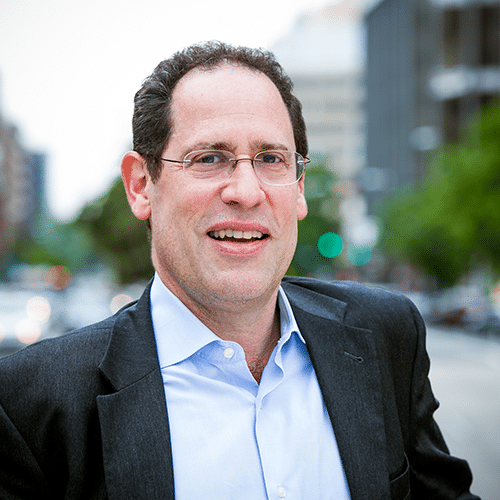
Over the last 25 years, Bruce Katz has established himself as one of the foremost policy experts working on urban and metro areas. He founded the Metropolitan Policy Program at the Brookings Institution, whose work has helped to reshape and revitalize several cities in the U.S. He is currently a Distinguished Fellow at Drexel University, heading their Nowak Metro Finance Lab. Bruce has also co-written two books on the challenges and opportunities of global urbanization: The New Localism: How Cities Can Thrive in the Age of Populism (2018), and The Metropolitan Revolution: How Cities and Metros are Fixing Our Broken Politics and Fragile Economy (2013).

Bruce’s recent work includes investigating how ‘clusters’ or regional innovation districts helped the resurgence of certain regions, both in the U.S. and abroad, as well as exploring how cities can thrive in the age of populism – what he calls The New Localism. He writes, “Power is drifting downward from the nation-state to cities and metropolitan communities, horizontally from government to networks of public, private, and civic actors, and globally along transnational circuits of capital, trade, and innovation.” It is this ‘new’ framework of governance and economics that drives his current work.

Bruce began his career as senior counsel, then staff director, for the Senate Subcommittee on Housing and Urban Affairs, then served as chief of staff to Henry Cisneros, former Secretary of Housing and Urban Development. He also co-led the Obama administration’s housing and urban transition team.

Insights and Inspirations

  • Cities are networks. They must knit together solutions.
  • It’s an imperative. We need a different model in the U.S. for growth so that it is sustainable and inclusive.
  • Transforming our cities requires long term thinking. It will take a 20 to 40-year cycle.
  • Improving the quantity and quality of affordable housing in the U.S. will take a radical systemic change.

Information and Links

  • Bruce and colleagues are thinking (and writing) about the Covid19 crisis and business recovery for minority owned businesses.
  • Bruce’s books are available here.
  • Research and briefs on The New Localism are available here.
Read the podcast transcript here

Eve Picker: [00:00:07] Hi there. Thanks so much for joining me today for the latest episode of Impact Real Estate Investing.

Eve: [00:00:13] My guest today is Bruce Katz, co-founder of New Localism Advisors. Over the last 25 years, Bruce has established himself as one of the foremost policy experts working on urban and metro areas. He founded the Metro Policy Program at the Brookings Institution and is credited with reshaping and revitalizing several cities in the U.S. More recently, he co-wrote several books shifting his thinking to how cities can thrive in the age of populism, what he calls the new localism.

Eve: [00:00:52] Be sure to go to rethinkrealestateforgood.co to find out more about Bruce on the show notes page for this episode. And be sure to sign up for my newsletter so you can access information about impact real estate investing and get the latest news about the exciting projects on my crowdfunding platform, Small change.

Eve: [00:01:13] Hello, Bruce. I’m so pleased you could join me today.

Bruce Katz: [00:01:16] Well, thanks for having me.

[00:01:18] Yeah, it’s really a pleasure. So, I would really love to talk about your current work and what you call the new localism. And first, I just wanted to know what that means.

Bruce: [00:01:29] Well, I think the new localism is the way we solve problems in the world today. Cities are networks of public, private, civic, community institutions, intermediaries. They’re not governments. And I think the kinds of challenges we have today require multidisciplinary and multi-sectoral solutions. And so, cities have become the places where you can do that. Whether it’s around transportation or housing or small business or any number of other significant challenges we have today.

Eve: [00:02:10] How do you see this trend emerging?

Bruce: [00:02:12] Well, I think it’s been emerging for quite some time. In the United States it’s emerged partly to fill the vacuum left by a dysfunctional and erratic federal government. In many states, also, which have ceased to function in any effective and efficient manner. I mean, obviously, you’ve seen this play out during the Covid crisis in the United States. So, I think what has happened is governments at the higher levels, quote unquote, of our societies have become hijacked by partisanship and have been divided by ideological polarization. And so, the only place where pragmatism and problem solving is the order of the day is the local, is the city level or county or metropolitan level, because that’s where you have different stakeholders who come together to collaborate to compete and collaborate to solve problems. So I think this is partly as a response to the growing partisanship in the United States and around the world, and partly just because 21st century solutions, which are enormously complex, require multi-sectoral horizontal solutions rather than one agency, one bureaucracy, which is more the way government is organized, resolving the issue.

Eve: [00:03:38] So, yeah, I’m not sure whether I find that comforting or scary. So, if the federal government is letting us down, we have to rely on each other locally that could be really good in a way that that could really promote innovation and entrepreneurism that’s probably impossible at the federal government level.

Bruce: [00:03:59] Well, I think for, you know, the mid 20th century is when we saw national governments balloon up in the United States. It happened in the aftermath of the Second World War. And there’s a purpose with national governments. They play a very important role around the safety net, around, obviously, universal health care and, you know, other essential supports for families. They obviously, the defence role they play around the military and so forth. I mean, there are certain things that a national government does that local networks can’t do, and they should do that job well. But they are not the full sum of a nation, you know, and the United States is a federal republic with enormous amount of power and capacity and resources distributed and decentralized. And so, really what the new localism is about is about harnessing and leveraging all this incredible, innovative power that we have in our country to solve problems and push forward. And the national government can be a platform for that and be a participant in it. But we shouldn’t be looking to that level to solve issues that, at the end of the day, require so much local interaction and local networks.

Eve: [00:05:33] That makes a lot of sense. So, I mean, what does this mean pragmatically then, for cities and metropolitan areas, at least in the way they are organized and might reorganize themselves moving forward?

Bruce: [00:05:48] Well, first is recognition that cities are not governments and metropolitan areas are not government, so you shouldn’t be thinking the way we think about government. When we think about government, we say, well, what’s the Department of Transportation going to do? Or what’s the Department of Housing going to do? Very bureaucratic, very vertical, very hierarchical. Cities are networks so we should be thinking about, if we’re going to solve our congestion problem or solve our housing affordability problem or grow Black- and brown-owned business. What’s the network way of doing that? How do we knit together different kinds of sectors, different ways of thinking, different sources of capital? It’s more likely that those solutions that are horizontal rather than vertical will be more sustained over time.

Bruce: [00:06:37] So, you know, thinking through network governance, right? Not just who do we elect to be mayor or county executive, which is very important, but really, how does universities and health care systems and corporations and entrepreneurs and the public sector philanthropies, how do these work together around solving specific concrete, tangible solutions or problems? I mean, what I’m trying to basically put forward with the new localism, which I co-wrote with a close friend of mine, Jeremy Nowak, is a completely different way of thinking about how we solve problems in the 21st century. And it’s to get away from 20th century thinking about government and silos and compartments as a way to do that.

Eve: [00:07:29] So, you know, I have I have a couple of questions around that and one is what brought you to this thinking?

Bruce: [00:07:36] Well, I spent my professional career moving from the federal level to the local level. I was chief of staff at HUD, the federal Department of Housing and Urban Development in the United States. I was chief of staff, staff director of a U.S. Senate subcommittee on Housing and Urban Affairs. So, I, I spent 10 years in the federal government working on issues of importance to cities but coming at it from a top down perspective. Then I left to start a city think tank at the Brookings Institution in Washington, D.C., and really spent the next two decades working with cities all over the U.S. and around the world and beginning to work out a different theory around bottom-up nation building, essentially.

Bruce: [00:08:24] And so I’ve traveled a pretty long circle here of starting at the federal level, wanting to work on cities, but then really trying to work with cities and think through different mechanisms, different approaches and fundamentally different, more transformational outcomes that we’re trying to achieve. So, you know, we’re in an odd moment now because of these multiple pandemics that we’re facing in the United States and beyond. The health pandemic, the race pandemic. But at the end of the day, I think success will occur ultimately when communities, cities, counties, metropolitan areas are able to operate in this in a very radically different way than they’ve operated in the past.

Eve: [00:09:13] Interesting. So, you know, are there some cities that have emerged that are shining examples of this new power shift or new localism?

Bruce: [00:09:24] I think many cities actually have, and the crises that we’re going through have forced more collaboration across multiple sectors. In the book, The New Localism, we wrote a lot about Pittsburgh, which is sort of an informal network of philanthropies, universities, hospitals, corporations, government, community, to sort of lift Pittsburgh from the depths of a industrial collapse, which happened back in the late 1970s. Pittsburgh today is seen as that incredible vanguard of the innovative economy, partly because of…..

Eve: [00:10:04] I have to, I have to say full disclosure. You’re not just saying that because I’m in Pittsburgh, right?

Bruce: [00:10:10] No, not at all. I didn’t even know you were, but.

Eve: [00:10:12] I’m in Pittsburgh, so I’ve seen that transformation firsthand. It was pretty interesting and mind blowing to watch. But please, please go on.

Bruce: [00:10:24] Pittsburgh was a normal older industrial city in the United States. It would have been left for dead. I mean, most were, right? I mean, the comeback of Pittsburgh is because of local leaders understanding their distinctive advantages, investing in them for decades without any significant returns. And now, as the economy restructures and we move to the next generation of technologies, Pittsburgh has the ability not just to be a competitive city, but to be an inclusive city. So, Pittsburgh has an informal network that has been operating for decades. Indianapolis, which we also talk about has a more formal structure where the corporations and the universities and the philanthropies came together and set up an entity called the Central Indiana Corporate Partnership to literally help steward the economy for several decades. And what distinguishes Pittsburgh and Indianapolis is the ability to think long term. The US is a very short-term culture. Someone once said to me their idea of planning was lunch. We have a culture that looks at, you know, the corporations look at quarterly returns. You know, people watch stock market gyrations on a daily basis. The key here is to think in these 20, 25, 40-year cycles, just that’s how long it takes to really restructure economies and to have them have full inclusive effect.

Eve: [00:12:01] That’s really interesting. So, you know, I’ve actually seen that myself as I invested in properties in Pittsburgh maybe two decades ago. And now the city is, I don’t know if I would say booming, but it’s certainly in a very different place. But, you know, one of the things that we haven’t done well here in Pittsburgh and I’m sure is probably mimicked in other places, is the race issue where I think Black people have been left behind for a whole multitude of reasons. And, you know, the affordable housing which affects every city certainly becomes worse when a city gains more value. So, are local leaders really thinking about that well enough in advance?

Bruce: [00:12:48] Well, I think this is a, you know, this is an interesting thing about the United States and the other story we tell of the new localism is around Copenhagen. And how Copenhagen was able to move from an older industrial city where manufacturing collapsed to really one of the wealthiest cities of the world in a 30-year cycle. They did that because they established a public asset corporation that was able to use the land and the buildings that were owned by the public sector to basically grow a very different kind of economy and then to generate revenues as the economy grew so that they were able to reinvest in infrastructure. So, there was a public benefit to growth. In the US, the benefit to growth only accrues to the private sector, right? In Northern Europe, in Germany and the Netherlands and in Denmark and the Nordics there is a public benefit. The public has a piece of the pie, so to speak. So, as the pie grows, you’re able to generate revenues that can benefit a much broader segment of the population.

Eve: [00:14:00] That’s interesting. Yeah, the other place I’ve been watching with interest is Australia, because I’ve been gone from there for a long time, but they really lack an affordable housing policy and they’re…. it’s a very wealthy country. And from what I’ve seen, they’ve done a very poor job of transferring any of that wealth for public benefit. So, I don’t think the US is the only place with this issue. Don’t know if I’m right, but that’s my guess.

Bruce: [00:14:31] Well, I think it’s, again, I think of the US. The US as quite odd because in the United States we tend to localize education policy and to some extent, nationalize housing policy. The rest of the world operates in a completely different way. They tend to natutionalize education policy and localize housing policy, right? So, the reason why Hamburg and Copenhagen and Stockholm are able to grow very robust economies but continually invest in affordable housing is because it’s localized in these places. They’re not looking to their national governments to somehow solve the housing problem. They’re basically baking in affordability in the way they grow. And so, a lot of what really applies to cities is to think at a system level but to also think at a global level, because somewhere in the world there’s a city that’s cracking the code on whatever the issue that bedevils you. And that means that there’s just a very broad sort of pool of cities to draw from.

Eve: [00:15:42] Yeah, interesting. Do you know of any cities in the US cracking the affordable housing code, so to speak?

Bruce: [00:15:50] I think they’re mostly sort of at the edges of the affordable housing problem because I think it’ll take a radical systemic change. I mean, I think it’ll take what essentially is more of a German or Danish model and applying it here. We’re doing bits of that, but we’re not doing it at the scale they’re doing it. So, I think we haven’t quite broken out of our own failed system to tell you the truth. You know, on the other hand, you know, the Germans and the Danes and others could learn a lot from our innovation ecosystem, right? The US is hard wired around technological innovation and the rest of the world, you know, some parts of the world are obviously very competitive with us, but we have basically built the very unique U.S. innovation ecosystem. Built, by the way, on federal research and development like at Carnegie Mellon or Pitt, or etc. But we’re quite good at that and we’re quite terrible at these other things.

Eve: [00:17:00] Yeah. So, and then, how do you think this pandemic, the health pandemic, might change the trajectory for these rising cities, the cities that are actually doing a good job of new localism?

Bruce: [00:17:15] Well, personally, it just depends how long this going to go on for?

Eve: [00:17:20] A yeah, we know it’s going to go for a little while, right?

Bruce: [00:17:22] I’m very concerned as we keep cycling through this. So this is a moment where you really do need the national government to step in and sort of catch everyone if they fall, catch people through unemployment insurance, catch small businesses through capital that’s fit to purpose, catch local and county and state governments because of the loss of fiscal revenue. This is the role the federal government, right? This is why we have a federal government. They play this role during natural disasters like hurricanes or floods. Well, this is a hurricane happening everywhere, for an uncertain period of time. And what we really don’t have at the national level at this stage, curbing the spread of the virus or responding to its economic effects, is any kind of functional, predictable, reliable partner. It’s just partisanship. We’re know nothing-ism, you know, on steroids. So, I am worried that the aftermath of this pandemic is going to be with us for a long period of time because of the centrally federal malpractice. Other countries have already come out of the pandemic like the Nordics, and they were smarter about how they supported their workers, their companies and their cities during the entire process. So, I’m very worried about the decade long effect of the corona virus. And on top of it now, we have civil unrest following the death, the murder of George Floyd and we need systems change in the US. And that’s the only way that we’re going to accelerate any kind of inclusive growth recovery. And it’s going to require some real soul searching about why the economic performance and prosperity we had pre-covid was not shared by large segments of our population. So, there’s no return to normal here. And normal was not getting us the kind of outcomes we wanted in the first place.

Eve: [00:19:39] Yeah, exactly. No more is not getting us the outcomes. You know, the question I have is how, there’s so many answers to this, how do you make cities more equitable places for everyone? Because they are inequitable in a thousand and one ways. And yeah, I could see that networks of people are perhaps the only way to solve it. I don’t know. It’s a very big problem.

Bruce: [00:20:05] Well, we do take what we’re good at. We’re very good at innovation in the US. It’s partly because we have an ecosystem in every major city. Take Pittsburgh, we have advanced research. We have the companies. We have start-ups and scale-ups. We have capital to commercialize research, you know, with angel loans, seed money, series A’s, Series B, we have incubators we have accelerators. We have an ecosystem. If you move that over to, how do we grow Black-owned business or Latino-owned business or even women-owned businesses. There frankly is no ecosystem.

Eve: [00:20:40] No, there’s no ecosystem.

Bruce: [00:20:41] We have a, we have sets of goals. Sometimes we have set asides, but we don’t really have this deep infrastructure, intermediaries and different kinds of capital that fit the purpose. So, I think that’s what has to happen. We should take what we’re good at and begin to apply it more broadly. We’re never going to be the Danes or the Germans or the Israelis or someone else. I mean, we need to take what is exceptionally American, this network of sectors that tend to come together and collaborate to compete globally, we need to build on that because that is what makes us highly distinctive in the world.

Eve: [00:21:24] Yeah. On a slightly different track. Do you think there are any current trends in real estate development that are important to the future of cities? Keeping in mind the pandemic as well, I think about this a lot. And, you know, I own real estate with restaurant tenants, and we talk about whether they will survive or not and what it’s going to look like.

Bruce: [00:21:49] Well, to some extent, what you’re describing is that a lot of landlords in the US are really small business, so…

Eve: [00:21:56] Oh yeah, they are. Absolutely.

Bruce: [00:21:57] So, there’s a domino effect to this crisis as we just shut down the economy. The first that were affected were the face-to-face businesses like restaurants and bars and hair salons. But all of those businesses are ecosystems unto themselves. They have lenders, they have landlords, they have suppliers, they have workers, they have customers. So, this whole crisis has exposed the intricacy and the complexity of our economies. I’ve been working on this idea about a new kind of intermediary that we’re calling regenerators, you know, in our main streets, where many of our face serving businesses are co-located and concentrated. And over the course of the next several years, I think what we need to do is have entities that can refill vacant buildings quickly, maybe pop-ups that can provide master leases. So that we don’t see a collapse in the real estate sector, essentially looking for an intermediary that can stabilize important cadres and business districts and main streets in our cities until we really begin to see businessman come back to where it needs to be. So, I think part of the issue here is just the need for different kinds of business models. If we think that every small business is going to snap back by itself, I think we’re delusional. I think we need more collaborative, cooperative models, particularly around retail and particularly around these business districts in which a lot of enterprises co-locate. And real estate’s a big part of that.

Eve: [00:23:47] Yeah, it is.

Bruce: [00:23:47] Another cost of the equation.

Eve: [00:23:50] Yeah, definitely. I am also very worried. But I’m pretty sure we’re going to get through it one way or another. So, what what’s your hope for cities and metros maybe in the next five or 10 years?

Bruce: [00:24:06] You know the imperative, I think at this point, is that cities and metros begin to grow in very different ways, right? The kind of growth that we had in the US pre-crises was not sustainable and was not inclusive. I mean, the US was not making the kind of transition to a carbon neutral future that needs to be made. Copenhagen is, Stockholm is. But our cities were not. At the same time our cities were not really growing income or wealth for large portions of their populations due to a whole complex set of reasons, some deeply rooted in our history. So, we need a different growth model in the US. And there’s a lot of commitment to, quote unquote, inclusive growth and quote unquote, sustainable growth. But those are slippery terms. They’re vague terms. So my hope in the next year or so is that U.S. cities and metropolitan areas commit to some audacious goals for the next decade and then use this period to sort of back cast the kind of more ambitious initiatives and system change that’s necessary so that they can achieve those goals. And if the federal government can be a partner, fantastic, they should be. If states can be partners, great. But the vision for what our future should look like should be essentially designed locally.

Eve: [00:25:46] Oh, I can’t wait to see that.

Bruce: [00:25:47] These are systems or communities with radically different pasts and different priorities, and they should, so, every major city in Metro of the US should be going through this kind of process.

Eve: [00:26:01] It’s an exciting thought. And so, final question, what’s next for you? You said you’re very busy.

Bruce: [00:26:09] I’ve been spending a lot of time thinking about this question about, and, you know, first of all, looking at the current set of data that we have in the US around Black-owned business, brown-owned business, and trying to think through what would be a step change. You know, only two percent of employer firms in the US are owned by Blacks today. They’re 14 percent of our population. There’s a whole set of reasons around that. So, the question is, if over the next decade we were going to double that share or triple that share and also have Black-owned businesses participate in sectors of the economy which tends to pay higher wages, have higher benefits, higher revenues. What would that take? And I think that’s the kind of system building that I’m really interested in working on, perhaps with the next administration, should that come to pass in this election, but also really growing from the local level on up. So, intensely focused on building what I call community wealth in the US as a antidote to the kind of deep racial and ethnic disparities on income, health and wealth we have today.

Eve: [00:27:31] Well, I, I really can’t wait to see what comes of it and I really appreciate the time you’ve taken today. Thank you so much.

Bruce: [00:27:38] No, thanks for having me. I really appreciate the.

Eve: [00:28:00] That was Bruce Katz. Bruce thinks we should stop thinking about cities as governments and instead think of them as networks. The question is, how can we knit together lasting solutions to improve our cities from a network of leaders, both public and private? Transforming our cities requires long term thinking. It will take a 20 to 40-year cycle. But Bruce believes this is an imperative. We need a different model in the U.S. for growth so that it is sustainable and inclusive.

Eve: [00:28:40] You can find out more about impact real estate investing and access the show notes for today’s episode at my website EvePicker.com. While you’re there, sign up for my newsletter to find out more about how to make money in real estate while building better cities.

Eve: [00:28:58] Thank you so much for spending your time with me today. And thank you, Bruce, for sharing your thoughts. We’ll talk again soon. But for now, this is Eve Picker signing off to go make some change.

Image courtesy of Bruce Katz

Building virtual communities.

September 9, 2020

Michael Lee, a cultural planner and designer with an architectural background, co-founded SNDBOX in 2017. A design studio working to create tools to integrate communities, businesses and creative projects, they are relying on the new tools of the blockchain world.

In 2019, Michael and his team launched the BLDGBLOX app, which they describe as “the end-game project for SNDBOX.” It leverages blockchain technologies to “facilitate seamless social-investment in civic institutions, real estate projects, and cultural programming.” During these first early years of development, Michael’s team has

  • Distributed $438,000 USD in project development funds to 13 built projects and programs;
  • Built a global community (28 countries) with hundreds of designers, non-profit organizations, program leaders, and more;
  • Developed the world’s first public development using blockchain governance and cryptocurrency, Steem Park.
  • Organized workshops, exhibitions, and public events that highlight public utility with blockchain.

Previously, Michael was a resident entrepreneur at the Harvard Innovation Labs, a member of the group called Base 15 Studio which focused on public design advocacy, or “creative consultancy.” Before starting graduate school he participated in a design collective founded by Cornell University architecture graduates, Hither Yon, based in Berlin, Rome and New York. And while still at Cornell he did art outreach in Johannesburg, as well as a year in Rome working on a film installation project. Michael also has a proficiency in Korean, Italian, German and Spanish.

Insights and Inspirations

  • BLDGBLOX is a place where new projects can be born.
  • We’ve always thought that blockchain = crypto. Here’s an amazing example of blockchain being used as an organizing tool.
  • Michael wants to democratize the power of data.

Information and Links

  • Michael checks in on on IOBY (In Our Backyard) frequently to see what new high impact neighborhood projects are being crowdfunded.
  • He’s proud of Steem Park, his first attempt at democratized city-building. 
Read the podcast transcript here

Eve Picker: [00:00:11] Hi there. Thanks so much for joining me today for the latest episode of Impact Real Estate Investing.

Eve: [00:00:18] My guest today is Michael Lee of BLDG BLOX a civic technology company dedicated to empowering neighborhood stakeholdership. Their goal is to help shape better, more resilient and inclusive cities. In this podcast, we’re diving into Michael’s current primary focus, an online platform called BLDG. It’s a platform for neighborhood collaboration and it’s picking up steam. So, listen in to learn more.

Eve: [00:00:57] Be sure to go to rethinkrealestateforgood.co to find out more about Michael on the show notes page for this episode. And be sure to sign up for my newsletter so you can access information about impact real estate investing and get the latest news about the exciting projects on my crowdfunding platform, Small Change.

Eve: [00:01:21] Hello, Michael, I’m excited to have you here today.

Michael Lee: [00:01:25] Hi Eve, thanks for having me on. I’m very excited to be here.

Eve: [00:01:26] It’s a pleasure. So, you’re a wayward architect, much like me, and you’ve built a very cool app, which I’d like you to tell me a little bit about.

Michael: [00:01:36] Absolutely. So, you mentioned the background in architecture. Just a little back story. I was trained as an architect. I moved towards public art and cultural consulting. And back in 2016, my co-founder introduced me to a lot of developments that were happening in the blockchain space. And so blockchain can be very complicated with cryptocurrency and things like that but for the sake our app and this conversation, essentially, we were looking at decentralized technologies. Ways that we could create and distribute more value, track it and, with our background in architecture and urban design, we saw an opportunity for that to impact the way we do real estate, the way we deal with communities and community growth. And so, we created a company called BLDG BLOX and for the past few years we’ve been developing this app. We just launched it at the beginning of this year before everything happened with covid. It’s called the BLDG app, it’s live and the app is a online bulletin board to manage projects with your community. So, these are real estate projects, these are coworking spaces, mutual aid groups, non-profits. Any organization or new initiative that is looking to build alongside, build consensus, build value with the communities that are involved.

Eve: [00:02:53] Okay. So, you use blockchain and do you use other technologies on this app? I’d love to know a little bit more about the technology.

Michael: [00:03:02] Sure. It’s a web application, so you don’t have to download anything. You go to bldg.app, BLDG app and it’s all online. Similar to how you use Kickstarter, Instagram. So the front end is fairly user friendly, you can use Google or Facebook to log in and on the back end we’re starting to implement and integrate everything that goes on in the app. Typically with a lot of social media apps, web applications, you don’t really know where the data is going and what’s being tracked. On ours we are starting to link it to the blockchain. So, all the activity is very transparent. And our goal is to be able to make all that data transparent, compile it in a way that other organizations, whether it’s, it can be investors as well, can start to see how a project, in this case a real estate project, is acting, what kind of value it’s distributing, how people engage it and start to value, again, in this case, social impacts in a way that can be measured more dynamically. So, we’re starting to use this transparent ledger system as a way to create a new foundation for impact. That’s kind of the way we’re seeing it.

Eve: [00:04:12] How interesting. And who will have access to that ledger and all that information?

Michael: [00:04:17]  When the blockchain information becomes live, when all these transactions become live, anyone can see the information. And on the application, itself, when those metrics are up, we’ll have a much more user-friendly UI for people to understand: OK, this project is involving this amount of people this is not a value transferred, these are the number of community members involved in a project. This information will all be tracked holistically in the app as people use it, and we’ll present it to different project owners, so they know how much impact. however they define impact, is going into the project.

Eve: [00:04:55] Well, that’s really interesting. So, I’m going to change some of the questions I was going to ask you. I was going to ask you, how is this different than other social media apps like Facebook or perhaps Nextdoor or Meetup? But, you know, the data collection that you’re doing is pretty radically different than any of those, right?

Michael: [00:05:16] Right. That’s generally the ethos of a lot of people who work with this new technology, with blockchain. And what you see with a lot of applications is you don’t really know what data is being collected and how it’s being used. We generally know that it’s monetized privately with adverts and things like that. We want to be able to open up, democratize, the power of data and open it up so that people can use it in all different ways. In this case, and this is really the long term vision of this first app and other functionalities or apps that we produce under the umbrella of BLDG and BLDG BLOX, is that we can start to track data dynamically and then use that for, for example, driving certain people to invest in certain projects or to decide which projects they think are really impactful for their community and be involved in those. Data can be used in a lot of different ways that I think we just haven’t gotten to that point yet. And this new infrastructure really motivates us to expand and explore those possibilities of data and make more informed decisions, more empowering decisions.

Eve: [00:06:24] I did play around with the app a little bit, and I see when you go to some of the communities, they have sort of slightly different functions. So, when you create a new page, what are your options? How do you set up a community? What sort of communities can you set up?

Michael: [00:06:40] So you can log onto the app right now and create a project page. It’s fairly straightforward, takes about a minute or two to create one. And then the idea is you would send that page just like an Instagram page to anybody that you think is part of the community or wants to be part of that community. They can sign up and join right away and then everybody involved can start to post questions or polls or ideas or different things that they want to offer. There’s different tags for events, for polls, for ideation. And the idea, again, is to allow anyone to bring to the table whatever they want to and start discussions or start voting or start to see if they can gather the resources, they need to push that particular project forward. And so we’re already starting to see projects that are more university-based or socially-based with mutual aid groups, especially now during Covid under the quarantine, and the projects are fairly diverse and everyone is on there basically to try to pool resources, help one another and make decisions together. And that’s really what the app is geared towards.

Eve: [00:07:48] Interesting. So, could you use this as a community engagement tool if you’re a real estate developer?

Michael: [00:07:55] That’s definitely the goal. We’ve already started to work with co-working spaces where the owner of the coworking space is the real estate developer or the one that developed it. And the idea, and our thesis here, and we want to get deeper with the real estate industry and with prop tech and people that are looking at more of these impactful ways to do real estate, is integrate this application with their development process and allow, and we’re starting to see real estate firms do this more and more, allow people who are maybe the tenants of the building or people who live nearby where the community board that is involved with the decision making of that building to be involved and help make further decisions, help maintain the project, help gain equity in the project, whatever that might be in both financial and non-financial ways, and generally nurture this idea of community buying and stakeholdership with the people that are involved, which I generally believe, my thesis behind all of this is that the more people that are involved, the more doors that are open for a community to have buy-in and participate, the more successful a real estate project will be in the long term. And so that’s really our ethos when it comes to how this impacts the real estate sector.

Eve: [00:09:11] You know, I have Small Change, which is a crowdfunding platform. And because we are members of FINRA and use a crowdfunding regulation that permits anyone to invest, we’re highly regulated and we can’t really host discussions on our website. So, what sort of page would you create for Small Change that might help people educate themselves and talk to other people? What would that look like?

Michael: [00:09:38] So, Small Change is a great example because you can look at it as an organization that houses projects under it. And so, with Small Change itself, you can use the page to interact with the people who are crowdfunding on the page, host more evergreen information. So, tutorials or tips that will help anyone that wants to engage with Small Change. And then, on a secondary level, all of the projects, because presumably any project that is crowdfunding on your platform wants to have meaningful impact not just in this crowdfunding process, but also likely once the project is erected and live, and people are occupying it. They want to make sure that their project lives on in an impactful way and impactful stakeholders are part of it and it continues to have that kind of general consequence with the neighborhood that it’s being built in. And so, each one of the projects could have its own page and then people can continue to support the project financially and non-financially, which is a big emphasis on our platform. If certain projects need help with physical aspects of the building, with the architectural design, with the construction documents, that’s one thing they can solicit, and members could offer. If they need help with programming or maintenance or they need help with integration with local organizations and institutions to be involved in their project. That’s the type of, sort of playground, as some of our users have put it, that these types of projects could create so that their constituents can come together and contribute things that typically have been very difficult to contribute in the past beyond the financial aspect. And we’re already working with some crowdfunding platforms to see if we can expand the initial financial support that has been opened up to a larger audience and then see if they can continue, that audience can continue to support those projects in non-financial ways as well, with their expertise, with their network, with their in kind donations and categories like that.

Eve: [00:11:34] Interesting. You know, there’s always sort of a push pull with real estate developers who are, that’s kind of an evil would at the moment isn’t it, developer? How they communicate with the community. It can be very difficult and there can be a lot of friction so it sounds like this might help bond some relationships.

Michael: [00:11:57] That’s precisely what we want to hit on. We understand the friction there. I myself, I go to community board meetings and I see, I live in Bushwick and Backstein, New York City and Brooklyn and there’s development happening all the time. And when you go to these meetings with developers and the community, it’s very palpable, the tension there. And our approach to this and our understanding is, because there isn’t a good way for communities to collaborate with developers, for that communication to actually scale and take place, the resulting situation is one of great tension and opposition. And we’re seeing that. We’re seeing a rise in NIMBYism, a rising neighborhood opposition. Just last year, we had the whole fiasco around Amazon’s HQ2, in Long Island City. And so, we’re looking at projects like this. And we see that not just at the highest, at the very top with Amazon, Google, Facebook, where their campuses have been consistently opposed, but also at a much smaller scale. So, with mixed use housing in New York, that’s a big point of tension. And there’s always this negotiation, which tends to be very tense, tends to be not so good-willed, or at least get to that point.

Eve: [00:13:10] Right, very confrontational.

Michael: [00:13:12] Very confrontational. And we want to transform that environment. And I really believe that if we had the right tools, that environment would be different. And if we can transform that environment to one where people feel like their voice is being heard, they’re participating in it, we can turn it into a from a lose-lose situation, into a win-win. Because currently there’s so much risk on the side of real estate developers because they understand that, with all these tools of social media and the way communities are mobilizing, it’s very easy to oppose projects. And on the other side, communities are struggling with the idea because they want to see meaningful and impactful development, but because they’re not able to come to the table with developers in a meaningful way, those tend to become very risky for them and it’s easier to oppose. And so, it’s currently a very lose-lose situation. But if we can insert the kind of right tools and the ways for people to communicate, we’re hoping we can flip that on its head.

Eve: [00:14:05] Have you thought at all about, and this is a really difficult question so I apologize in advance, but have you thought at all about communities that poorer, have less investment, may not have access to computers and, you know, an online app and how this would fit into those communities, how you would make it accessible?

Michael: [00:14:27] That is definitely a difficult challenge that we’re struggling with on an ongoing way. And part of our answer, at this point, goes into design of the app. So, we didn’t want to have a downloadable mobile app. We think that creates another point of friction. It’s just a website you go into, you can sign in with any email. And so, we definitely want to make it technologically as accessible as possible. The other way that we’re trying to get over that is working very closely with the organizations that sign up for the app. And so, presumably anybody that creates a project page, there’re a real person or real organization. They have a physical presence wherever they are, and their projects are mostly physical. So, spaces and buildings and such. And so, we constantly communicate with them to make sure that we can bring in even constituents that don’t use a computer or device very often. We can bring in their input, we can have a way to capture that data, that advice, those comments, different ways that people who aren’t on the computer all the time can contribute. And so, this is a way that we’re dealing with the issue. But we definitely see that as an ongoing hurdle. We want every demographic to be involved. This is even more sensitive in places that people don’t have access to those resources. And this is what makes the Covid19 situation so unfortunate. Before everything happened, we were constantly holding workshops, we were showing people how it was done, we were pairing people who do use the computer fairly often with people who weren’t, trying to make this engagement as digital as it was physical. And now we’re trying to adapt to the situation and make sure that even, you know, if you aren’t as technologically fluent or don’t have access to those resources, your information and your voice can make its way to the application. That’s definitely a very sensitive and difficult point and we’re always working on that.

Eve: [00:16:18] Unfortunately, that pandemic has disenfranchised those communities even further. It’s really pretty sad. So, tell me again how you arrived at this app. Your background, you’re an architect. You’ve gone to a pretty unusual route.

Michael: [00:16:36] We have gone an unusual route. And the one thing we’ve always interested in is the process. Even when I was studying architecture and practicing architecture, the process in which buildings were designed and created seemed very linear, depending on what was being created. It didn’t take into account the community that was being impacted the most. And this, of course, is a common theme in real estate as well. And so, the concern is how do we bring as many people into the process as possible? And when we looked at the current tools, at the time around 2015 and 16, we just came to the conclusion that no matter what you did with things like Facebook pages, or on Slack, it’s very difficult to scale decision making, engagement, to exchange resources and distribute resources. And that’s how we came to this idea of creating a new digital tool. And again, we were lucky because it timed well with the emergence of blockchain and decentralized technologies to explore this. And if you look at the blockchain sector, we see a lot of people with real estate backgrounds actually exploring this as well. So, you have groups like Elevated Returns and HARBOR, RealBlocks. These are real estate firms that are introducing ideas of fractionalized, equity. And starting to use real estate equity more like corporate stocks of shares, making them more liquid accessible. And my ultimate goal is to introduce this idea of sweat equity into the real estate market and any general organizational market. And that’s kind of how we got to this idea of the application and starting off with one that brings communities and organizations together.

Eve: [00:18:22] Interesting. So what other projects are you thinking about? You said this is one of, you know, one of a number.

Michael: [00:18:30] Well, so, we want to start, and we are starting with the BLDG app as the first step. And within the app and around the app we want to create more functions and more components. For example, right now on the app you can create a project page and start to engage with the community, distribute responsibility, you can see what backgrounds your community members have, whether they’re an engineer or a marketing person and so forth, and start to bring those resources together to try to drive and motivate those project further. We’re going to implement more of that blockchain data system that I just explained and have it so that other companies, other investors, can look at these projects and make decisions on their own behalf based on this data and what’s going on. And whether that’s in another app or in this one, we want to continue to grow out more functions where people have more opportunity to engage in their local real estate projects, to contribute to them, to help make decisions and then eventually get to the point where people can earn sweat equity in those real estate projects based on their contributions to those projects, not just the financial contributions, but also, like you see in start-ups or in general any corporation, people can earn equity based on their commitment or how long they’ve been there or their general value to that company. We want to get to that point. And so, we are constantly going to expand on the tools that real estate companies that investors that community stakeholders can use to determine that value for any given local project.

Eve: [00:20:04] Interesting. So, then I have to ask you, what’s the big, hairy, audacious goal for this app? Like, where would you like it to be in five years or in 10 years?

Michael: [00:20:13] In five or 10 years I would like it to be a place where new products are born or existing ones are continued and everyone involved is, quote unquote, rewarded for their contributions. That’s the type of economy that myself and my team are really working towards, that no matter how small scale the project, no matter how new or no matter how big and burdensome, like a large mixed-use project for example, people’s contributions allow them a level of equity or a level of buy-in to those projects. And people who are involved are constantly discovering new opportunities as they commit themselves to those projects. Because we all understand, to a certain degree, that the success of a real estate project is based on so many multi valuable factors. The environments, the general safety of it, the vibrancy, the culture that’s there, the diverse community that’s there and we want to be able to quantify that value in a way that’s constantly evolving and anyone that helps contribute to those forms of value are rewarded with something that allows it to have buy-in to those projects.

Eve: [00:21:22] So has that happened yet at all, in any form?

Michael: [00:21:26] To my knowledge, we have not seen that happen financially in the real estate sector. There are social impact, real estate firms that are experimenting with, for example, reduced rent based on if you help maintain the property that you own. We’re seeing different kinds of economic deals being put into place that are trying to incentivize people who actually have equity to maintain it and they can get some value back with its reduced rent or other opportunities like that. I would like to see that pushed and evolved even further where, you know, you’re the doorman that lives in your building, or maybe the person who, the tenant that has a educational business in your building, these people can continue and are incentivized to contribute and earn an actual financial stake in the project in the long term. We understand that these are the types of people and programs and activities that give a building or a city the value that it has. And we should be able to recursively reward the people who are actively contributing to that value, not just see it as a mutually exclusive thing that happens within our buildings.

Eve: [00:22:34] Yeah, yeah. Interesting. So final question for you. What’s next for you? You sound super busy and I know what it’s like working on something like this, it’s all consuming. Covid19 has shifted things a bit, so what’s next?

Michael: [00:22:50] So definitely. Bringing up Covid19, you know, we are all struggling with this transition to a more remote environment. And I think, like you mentioned before, the disenfranchised communities are suffering even more now. They don’t have access to all of these tools. That’s another reason why we wanted to create this space. We didn’t want to create another just hammer or tool for the digital environment we wanted to place where people can bring their Zoom conversations together or they are resource sharing on Google Drive to one place. Our goal for the near future is just to help these communities, one by one, transition to the site, make use of all the tools and try to get their community together, because this is a time when communities are kind of just being torn apart naturally because we are physically distinct from each other and distanced. We want to help rebuild this community, or these communities, by transitioning them to these online tools. We’re very excited and very hopeful. We’re already getting a lot of feedback from people saying that, you know, the current tools are very unscalable. There are 10 or 20 different tools that they have to manage all at once. And it’s very difficult to scale on that promise to their constituents that they’ll stay involved, that they’ll keep them involved in their process.

Eve: [00:24:04] Very difficult. Very difficult.

Michael: [00:24:07] Right. And we want to be able to push a bit of that momentum and help support these communities. Anyone that signs up to the site organically, we reach out to and we say, hey, can we help? You know, tell us about your organization, what are the challenges you’re struggling with? Is there any way we can help any features you think we could implement? Because the app is constantly evolving. And we’re also constantly reaching out to organizations that we think we can help. We’re seeing everywhere, you know, people who are less active on Facebook or their own websites and media channels because we know that internally they’re struggling with how to transition into this new environment, especially now. And we are constantly trying to outreach to them and say, look, we know you’re struggling. We know you need different kinds of support and these tools were doing OK when you were meeting in person or working in person but now that we’ve transitioned, it’s very difficult to keep things in order and keep everyone involved. So, at this point, we just really want to help as many organizations as possible transition and make use of the resources available. And we want to be one of those stable resources.

Eve: [00:25:15] Well, I think it’s a terrific idea and I’m going to start by suggesting it to a couple of developers who raised funds on Small Change and are perpetually struggling with how to relay progress to the investors. So, I think it would be a great way to create a little community of investors. So that’s a starting point for us and you and I will be talking more about how it might work for Small Change, I’m sure.

Michael: [00:25:39] Absolutely. That would be fantastic. I mean, anyone that’s raised on Small Change or is hearing this and thinks that this might be interesting, social impacts, real estate investing is, is definitely interesting because when I speak to a lot of real estate developers, they are all interested in this idea or already committed to this idea. And yet it’s difficult to find places where you can communicate with other like-minded people, share those resources  and in terms of impact real estate investing, we definitely want to help foster that type of conversation and that resource sharing.

Eve: [00:26:11] Maybe that’s the first page to start?

Michael: [00:26:13] It might be. That might very well be.

Eve: [00:26:15] Something around this podcast page. And I just did a retrospective for the year and in the first year I recorded forty-nine podcasts, which is probably why I’m so tired.

Michael: [00:26:27] Well you’re doing something incredible for the community and we definitely want to build on that momentum. I mean, there’s so much experience and lessons to be had.

Eve: [00:26:37] That’s what I was going to say. The people I interviewed are, each and every one of them, a rock star doing their own thing. And that’s a that’s a lot of experience, too, corral. It’s really interesting. So, I’ll definitely be in touch. And thank you very much for taking the time to talk to me today.

Michael: [00:26:53] Thank you Eve. Thank you for having me on.

Eve: [00:26:59] That was Michael Lee of BLDG BLOX, a civic technology company dedicated to empowering neighborhood stakeholdership. His online platform bldg.app is currently in its beta phase. Michael’s goal is to help civic organizations, communities and companies build community and scale decision making. The app is designed to support community building in a myriad of ways. It can be a tool for organized public engagement for new projects, it can support initiatives with campaigns that mobilize their communities or local causes, or it can even serve as a shared workspace. I’m excited to see it unfold.

Eve: [00:27:45] You can find out more about impact real estate investing and access to the show notes for today’s episode at my website rethinkrealestateforgood.co While you’re there, sign up for my newsletter to find out more about how to make money in real estate while building better cities.

Eve: [00:28:04] Thank you so much for spending your time with me today. And thank you, Michael, for sharing your thoughts. We’ll talk again soon. But for now, this is Eve Picker signing off to go make some change.

Image courtesy of Michael Lee, BLDG BLOX

« Previous Page
Next Page »

Primary Sidebar

sign up here

APPLY TO BE A PODCAST GUEST

More to See

(no title)

February 22, 2025

Bellevue Montgomery

February 11, 2025

West Lombard

January 28, 2025

FOLLOW

  • LinkedIn
  • RSS

Tag Cloud

Affordable housing Climate Community Creative economy Crowdfunding Design Development Environment Equity Finance FinTech Gentrification Impact Investing Mobility Offering Opportunity zones PropTech Technology Visionary Zoning

Footer

©rethinkrealestateforgood.co. The information contained on this website is for general information purposes only. Nothing on this website is intended as investment, legal, tax or accounting strategy or advice, or constitutes an offer to sell, solicit or buy securities.
 
Any projections discussed or made may not be accurate and do not guarantee a specific outcome. All projections or investments are subject to risk due to uncertainty and change, including the risk of loss, and past performance is not indicative of future results. You should make independent decisions and seek independent advice regarding investments or strategies mentioned on this website.

Recent

  • The Mulberry
  • Mount Vernon Plaza
  • The Seven
  • Real estate and women.
  • Oculis Domes.

Search

Categories

Climate Community Crowdfunding Development Equity Fintech Investing Mobility Proptech Visionary


Copyright © 2026 · Magazine Pro on Genesis Framework · WordPress · Log in