• Skip to main content
  • Skip to secondary menu
  • Skip to primary sidebar
  • Skip to footer
  • Home
  • About Us
  • Say hello
Rethink Real Estate. For Good.

Rethink Real Estate. For Good.

  • Podcast
  • Posts
  • In the news
  • Speaking and media
    • About Eve
    • Speaking requests
    • Speaking engagements
    • Press kit
  • Investment opportunities

Community

Public Practice.

March 30, 2022

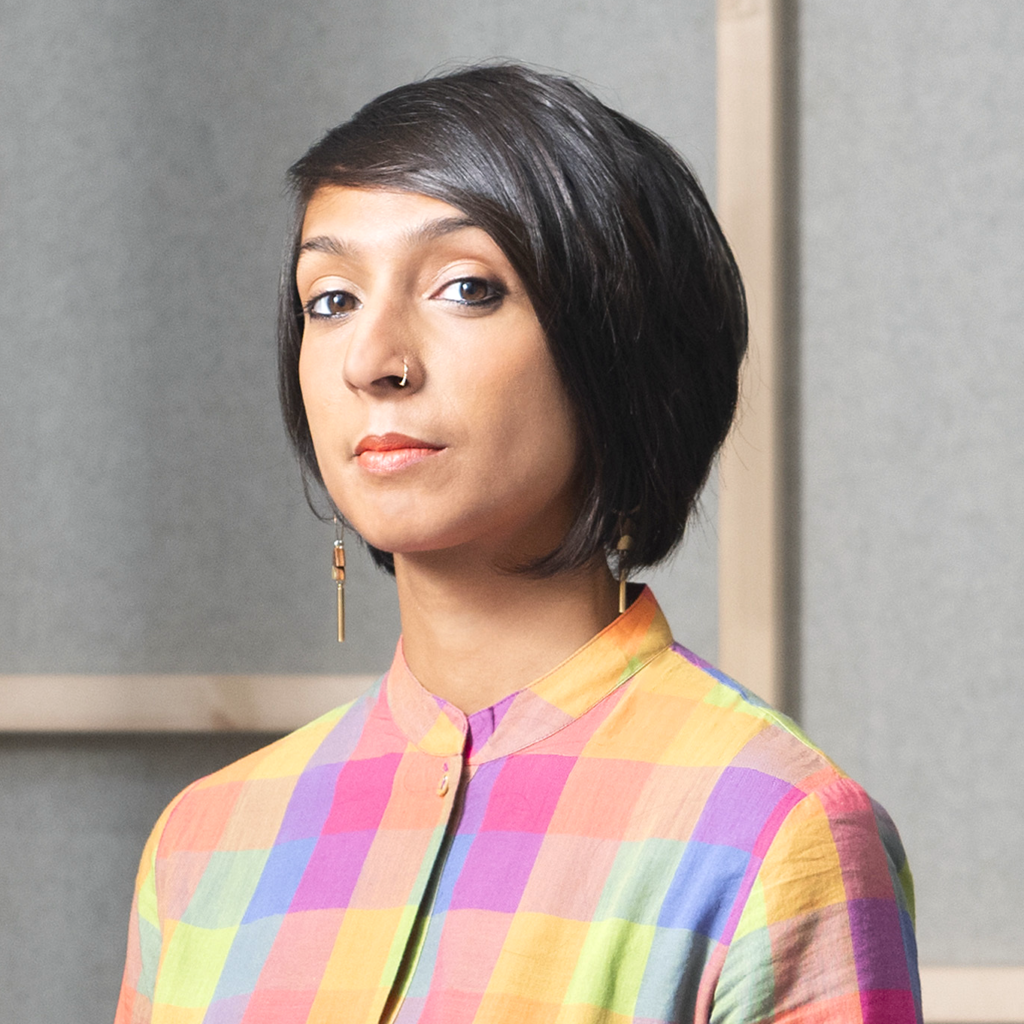
Trained as an architect, and with a background in planning and government, Pooja Agrawal understands the need for talented architects and planning practitioners in local government, where talent is thin. She co-founded Public Practice to fill that void.

Based in London, Public Practice trains and places architects and planners in local government positions with the  aim of  building capacity to respond to the affordable housing crisis. They currently onboard two cohorts per year and place them in 24 partner councils across London and south-east England but they are growing.

Many associates stay beyond their one year placement. Over time Pooja expects Public Practice to grow and strategically change the talent and culture in government in additional sectors, such as energy solutions, all towards building better places for everyone. 

And in case she’s not busy enough, Pooja also co-hosts a ‘diversity platform’ called Sound Advice, and has a slew of honors and engagements attached to her name.

Pooja has worked as a public servant at Homes England and the Greater London Authority, and in private architecture and urban design practices including Publica and We Made That. She co-published Now You Know, a compendium of fifty essays exploring spatial and racial inequality, is a Fellow at the Institute of Innovation and Public Purpose and an Associate at the Quality of Life Foundation. She has previously mentored at FLUID and Stephen Lawrence Trust, taught at Central Saint Martins and was a trustee for the Museum of Architecture. And she was nominated for the Planner’s Woman of Influence in 2018 and 2019.

Read the podcast transcript here

Eve Picker: [00:00:09] Hi there. Thanks for joining me on Rethink Real Estate. For Good. I’m Eve Picker and I’m on a mission to make real estate work for everyone. I love real estate. Real estate makes places good or bad, rich or poor, beautiful or not. In this show, I’m interviewing the disruptors, those creative thinkers and doers that are shrugging off the status quo, in order to build better for everyone. If you haven’t already, check out all of my podcasts at our website RethinkRealEstateForGood.co, or you can find them at your favorite podcast station. You’ll find lots worth listening to, I’m sure.

Eve: [00:01:08] Today, I’m talking with Puja Aggarwal, the founder of Public Practice and what a pleasure it is. Trained as an architect and with a background in government, Pooja understands the need for talented architects and planning practitioners in local government where talent is thin. She co-founded Public Practice to fill that void. Based in London, Public Practice trains and places architects and planners in local government positions with the aim of building capacity to respond to the affordable housing crisis. They currently onboard two cohorts per year and place them in 24 partner councils across London and South England, but they are growing. Many associates stay beyond their one year placement. Over time, Puja expects Public Practice to grow and strategically change the talent and culture in government in additional sectors such as energy solutions, all towards building better places for everyone. And in case she’s not busy enough, Puja also co-hosts a diversity platform called Sound Advice and has a slew of honors and engagements attached to her name. Puja is a dynamo. Listen in to learn more.

Eve: [00:02:37] If you’d like to join me in my quest to rethink real estate, there are two simple things you can do. Share this podcast and go to RethinkRealEstateForGood.co, where you can subscribe to be the first to hear about my podcasts, blog posts and other goodies.

Eve: [00:03:13] Hello, Pooja. I’m hugely excited to talk to you today.

Pooja Agrawal: [00:03:17] Hi Eve, thank you so much for having me.

Eve: [00:03:20] You’re an architect by training, but you launched a non-profit called Public Practice, which I think has a really clear and simple vision. “We find, select, and place built environment professionals into local authority teams.” I’m just wondering, why did you start Public Practice? Can you take me on that journey?

Pooja: [00:03:39] Yeah, absolutely. So, you’re right, I am an architect by background, and it takes a very long time, I think probably in most places in the world, to become an architect. I guess the things that always attracted me to architecture was the impact it can have on people’s lives. And throughout my career, I was always trying to work for places that were sort of pushing what that actually looks like. So, I was always interested in looking beyond the building. And I think even when I was studying, it was always that same kind of radical at the time. So, hold on, why are you talking about what’s happening just outside the building? We’re interested in the fabric of the building or the form of the building. And I was more interested in the wider context of the places that we were designing these propositional buildings in, or through actual practice. I worked in both New York and in London for a number of years in private practices. And I guess increasingly started to come across some really interesting clients who tended to be public sector clients. And I realized then that, I guess, actually the clients had some of the really interesting opportunities to shape those places. So, I guess as an architect, you were given this remit. We were given you’ve got a budget of 300,000 pounds to design this town centre in this place. And I suppose I was asking, hold on, why are we even looking at town centres in the first place? Why is it this particular town centre and why only 300,000 pounds?

Pooja: [00:05:16] And I realized, actually the people that were making that decision had a lot of power, and there was this really interesting opportunity to be in that position and make change from that side of the table. So, I joined the Greater London Authority, which is the equivalent of the city mayor, the Mayor of London. And here that’s about eight hundred people working in an organization. So, I brought, I suppose, my architectural background and design into this team that was looking at regeneration more broadly and was able to make, I guess, some of those spatial decisions with my background, but also input on a whole range of other things like policy, looking at design quality in housing, or looking at the circular economy- how can that be embedded in the London plan? Or just all public spaces – how can that appeal and be equal for all different types of people? So, I guess that was the beginning of my journey.

Eve: [00:06:16] It sounds really, really familiar to me because I made very similar choices, maybe not as clearly as you, but it was very frustrating to be an architect, to be told to kind of draw lines and toilet details and stair details for projects that I wanted to understand why this project in this place? So, I totally get it. I actually ended up at a planning department myself for very similar reasons. Yeah,

Pooja: [00:06:43] That’s fascinating.

[00:06:44] I’m not sure what at the time, I was too young to realise that’s where the power lay. But I think the power definitely lies there, and with finances. There’s no doubt about it. And architects hold, unfortunately, very little power, right?

Pooja: [00:07:00] Completely. And I think that’s it. I realise as an architect, I felt like I was at the bottom of this pecking order of decision makers and people with power. And actually, the higher you would go in that decision making process, you’d be able to make more decisions. So, I guess the ultimate aim is to be the Prime Minister, right?

Eve: [00:07:18] Yeah, exactly. Oh yes, way to go Pooja! So, you know, the thing that’s odd about this is that I think architecture training is probably the best training that you could possibly get. It’s like creatives trained to take absolutely nothing and turn it into something. That sort of brainpower is unbelievable, right?

Pooja: [00:07:41] It’s a really good question. So, especially in the UK system, it’s very siloed the way we think about learning. Actually, I moved to the UK from India when I was about 16, so I’ve done most of my higher education and formal education in this country, and I was really surprised, aged 16, you were having to choose three or four subjects. And I know it’s really different in America and even through university, we choose one subject. Lots of friends are choosing English or science or biology, and yeah, I just…

Eve: [00:08:15] I mean, it was the same for me in Australia. I think we’re based on the English system.

Pooja: [00:08:19] Yes, it’s very similar. Exactly. Unfortunately, I don’t know why. So, I think the appeal for me, even with architecture, was because I have a creative mind, but I also have quite a practical and technical mind, and I’m quite entrepreneurial. So, architecture somehow always was this kind of, the most broad education I could have had and hence choosing architecture. So yes, in many ways, I find it a really interesting training because you do have so many different parts of your brain are working and you’re trying to think about all of these different complexities. What I felt was missing in my own personal education and training, even in architecture, was the more city-making side of things. And I guess that’s why I sort of pushed and found myself working in practices or places that were kind of influencing that. And I suppose, I guess, going back to where Public Practice evolved or came from, it was at the Greater London Authority that when I was working there, we work very closely with lots of different partners, including the municipalities and where I saw places having the most holistic visions or ambitions was where the people were most ambitious or the places or municipalities that had the people power.

Pooja: [00:09:37] So there was a huge gap in terms of the capacity of local authorities, and there’s lots of evidence on this whole subject about, I guess, austerity. You know, the public sector has massively shrunk over the years. There’s a lot of what municipalities do here is kind of children’s and adult services, and all of the more innovative vision making side of public sector has shrunk and planning is a huge part of that. And on the other side, you have all of these brilliant people working in architecture, urban design, who just didn’t really think about working the public sector at all because, I mean, no one ever came and spoke to me about that when I was at university.

Eve: [00:10:22] Yeah, that’s true.

Pooja: [00:10:22] And I do think things have changed over the last 10, 15 years. I’d like to think Public Practice has had a big part of that, at least in this part of the country, but it wasn’t really seen as an ambitious and fulfilled, like an ambitious thing to do. So, I suppose in summary, where Public Practice emerged or came from, me and a colleague set it up from within the Greater London Authority but spun it out as an independent organisation. And the whole purpose of Public Practice is to be able to find those people, attract the most talented people, really advocate for working in the public sector is a really ambitious thing to do. And we place them in the public sector for a variety of different roles that influence places for a year-long program. That’s the kind of core of what we do, and we…

Eve: [00:11:14] It’s a yearlong programme. It’s a specific programme.

Pooja: [00:11:17] Exactly. So the programme itself is a yearlong, but we have found that most of the people we have placed in the public sector, we’re young organisations only just over four years old, over 90 percent of the people we’ve placed have stayed on from that first year. So, from the architectural design side, people have found us. It’s almost like they’re kind of dipping their toes and they’re like, “oh, wait, this is great!” and have continued to stay on. And in parallel, these people who, we call them are associates, we put in a cohort of people, so they all start at the same time. So, there’s say twenty five people starting on this journey together, we have a whole training programme for them that happens in parallel, both in terms of kind of hard knowledge, but also some of the more softer support network that they have with each other that helps them transition into the public sector.

Eve: [00:12:12] That’s really interesting. I mean, I had a very similar journey myself, and I think it’s almost like trade school when you’re at high school. I don’t know what you call trade school in England, but the trades, like being a chef or welding or something that isn’t a college degree. They just don’t talk about them at high school as if they’re some lesser way to live your life, right? So, it’s really interesting. So, you’re pretty young. How do architects and other built environment professionals find you?

Pooja: [00:12:47] So we have really established our brand where we are in London, but in the wider region of this country at the moment, and we really, I think just advocating for the public sector, we just seem to have really grown our support network over time. So, we, really practically and pragmatically, we just really, we’re out there where we have written opinion pieces, we do lots of events, we go to universities so that four years on, they’ll come and join the program. So just to say, this is not, we attract people who have been working for at least three or four years in a professional environment. So, we want people who know what they’re doing and can hit the floor running as it were. So, I guess we’ve just been able to really build our brand and reputation over time. And when we first started four years ago, we were very much focused on design skills and were very much looking at London. But over those last four years, what has been quite interesting to see is actually the local authorities are asking us for a whole variety of different skills to be able to impact their places. So, for example, loads of local authorities have committed to being net zero by 2030, but do not have the skills to be able to even envision what that looks like. So they come to us

Eve: [00:14:10] That’s pretty ambitious, yeah.

Pooja: [00:14:12] Absolutely. So, they come to us and we’re able to find those people who are really committed to making change and put them in those positions. So, it’s been an interesting journey for us.

Eve: [00:14:24] So that was my next question. Do you place everyone? What does the process look like for someone who is interested in participating in your program?

Pooja: [00:14:33] So we run a really competitive process, and I think that’s part of the, being part of the cohort is almost that like stamp on your CV because it’s so competitive to get on the program. So, every round of applications, which in this region we do every six months, we get a couple of hundred applications and twenty-five people tend to go through. We run a very bespoke recruitment process, which is a three-step process, and I won’t go into all the detail, but the process has been designed to be really inclusive, and we look at best practice in terms of, how do you create a really inclusive environment for a whole variety of different needs? We look at a whole range of different things. So yes, we look at, you know, a little bit maybe about experience, but actually we look at things like, how do these people work in a team? Are they kind of humble enough? Will they listen to other people? Because working in the public sector is, if you’re talking about architects, you really need to leave your ego behind to get anything done.

Pooja: [00:15:41] The one thing about a public service is bringing people together on a journey to make something happen, and you will always have people with really strongly differing views. Not even in the public, just but within a public sector organisation. And that’s because every single department has a different ambition or is trying really hard to do something really specific. So how do you build consensus, for example? And that’s one of the things we test in our recruitment design process. And then we try and understand people’s own personal motivations and ambitions. We’re a value-led organisation. We believe strongly in the public sector about change-making from within the system. We really believe in social equality, and we believe in that interdisciplinary approach. So, we see whether these people have a passion and really believe in these things. And so that’s how we shortlist from, like I said, a couple of hundred people to about twenty-five people at the end. And at the same time, we do the same with local authorities. We really push them to say, hold on are these ambitious roles because we have ambitious people who want to make change. It shouldn’t just be the standard role that you’ve been trying to recruit to for three years and haven’t had any luck. Like what is it that’s slightly different? Are you being really ambitious about this? Are you engaging with your communities? We push them as well.

Eve: [00:17:05] It’s a real matchmaking process.

Pooja: [00:17:07] Exactly. So, we have a very complex matchmaking process, which we’re refining every round, but we are getting there and it’s really fulfilling to see when it all kind of comes together and all these people the first week when they start their journey together, it’s truly inspiring. And every six months you think, great, this is this is amazing.

Eve: [00:17:26] Well, that was my next question. You talked about a cohort. So, it’s yeah, twice a year event at the moment.

Pooja: [00:17:32] At the moment it is exactly. And at the moment it’s also within a particular region. So, we say that in this country, it’s like the southeast of England, the east of England and London. We have, as of a few weeks ago, actually just got funding from national government to expand our services to across England. So, we are in a really exciting, pivotal moment. And I guess we are in that process of just determining our strategy, but within the next two years, we should be operating across the country.

Eve: [00:18:05] Well, that’s very exciting. And I had a question about diversity, and you touched on that. What does diversity look like in architecture and the built environment in England today?

Pooja: [00:18:16] It’s pathetic. It’s really quite depressing. So I personally have been an advocate for diversity in the industry more broadly for quite a long time, and I have sort of attacked it in lots of different ways. So, when I was at the Greater London Authority, we tried to, with the team obviously, it was not only me, but we worked on a more policy-led approach. I have also set up another organisation called Sound Advice with a dear friend, and that was really provocative, really like gets people really uncomfortable and primarily on Instagram, and we published a book with the whole variety of people of colour a couple of years ago, last year. So, I suppose I’ve always attacked it in different ways. At Public Practice in the last six months actually, since I’ve come, we’ve just been trying to break down the data a little bit more and actually seeing where the data gaps are. So historically, we have always compared the data of our associates, of our cohort compared to the industry, and we tend to do way, way better than the industry. But the problem is that that’s not actually that hard. To date Public Practice has done quite well compared to the industry. So, if we were to take something like ethnic minorities, public practices cohorts have been twenty-six percent diverse in that instance.

Pooja: [00:19:46] But some something like architect is only four percent in this country and planning and surveying is even much less. So, we’ve tended to be really like good in terms of the industry or, for example, over 60 percent of people identify as women. And again, I think architecture is about thirty five percent here in this country. So, in some ways, we could pat ourselves in the back and say, we’re doing really well. But actually, what we’re trying to do now is compare ourselves to the regions or the places we represent. And as soon as you do that, of course, our statistics drop. But if we target that in the longer term, that’s really where we’d like to be. So, we, from our data analysis, learned that the lowest number of candidates we’ve had have been black men. So, we have in the last six months launched a #BlackInThePublicSector campaign, and you can see that on our Twitter and LinkedIn, but it’s very much targeting and celebrating Black men in the public sector to be those role models for people to see that as a career ambition. And this will take time to build, make that change within public practice but more broadly, but it’s something that we are genuinely passionate about and are trying to take a very data-led approach to it.

Eve: [00:21:06] You know, I’m kind of surprised because I always think of England as, especially London, as such a diverse place. These statistics are pretty awful. Does that start in architecture school? Like, can you, are you controlled by what’s happening there?

Pooja: [00:21:22] Yeah, there’s a lot of interesting literature about this. And in fact, one of the pieces of work I worked on at the Greater London Authority was called Supporting Diversity, and there’s a lot of evidence there. It looks at the architecture career, journey even, at each stage and shows what is happening, what are the key barriers. And I’m sure this is common everywhere. At every stage you seem to lose, if we’re talking about ethnic minorities, at every stage you get less and less and less. And as soon as you get to the director level of running a practice, it becomes minuscule. So, there’s lots of different ways you can tackle this, but there is definitely a sense of urgency of trying to tackle it, in a real, tangible way.

Eve: [00:22:06] Right. Interesting. How many are there? I mean, you said there are 25 people in a cohort. Is that 25 authorities that you’re dealing with it? That would be a lot.

Pooja: [00:22:15] Yeah. So, at the moment, it tends to be at around twenty, twenty-five authorities in one particular cohort. But of course, there’s always two cohorts running in parallel. So while our network of authorities fundraise, and what we try and do is create those spaces for them to learn from each other as well. And I think that’s a really important and interesting thing. Over the years, it’s been interesting to see where, so it’s been four years now, we’re seeing teams develop, in particular authorities of our alumni and then new associates. So, we might have 12 or 15 people in a particular authority who’ve had some sort of link or route through Public Practice. And another thing that’s really interesting there is seeing people placing people in different departments. So, you might have someone in the transport and highways team, and you might have someone in the housing team. And because of Public Practice, they have a relationship, and you start to see them working together within their local authority. So, we’re seeing that sort of culture shift that is building over time and when you start to see local authorities talking to each other across the region, say, we’re all trying to tackle coastal poverty, for example, you can start to see how we’ll be able to use our network to connect those dots and share those learnings.

Eve: [00:23:38] So you’re building a complete ecosystem of architects who are not practicing architecture but are using their skills in an entirely different way. It’s pretty exciting. How do you think about impact and how do you track that for your organization? Like, what are the stats look like?

Pooja: [00:23:53] It’s a really good question. So, there’s so many different ways that we can track that way. Like I said, we’re quite young now. So, so far, what a really tangible impact is us being able to say we’ve placed over two hundred people in over 50 authorities in this region. We can say things like, from the first few years what we’ve been able to track, over 90 percent of people have stayed on. It’s those types of impacts and statistics that we’re able to capture. Where we’re getting to now, a few years on, are actually looking at particular case studies. So, looking at places like Cambridgeshire. So, we’ve just actually made a video which shows, over the years, the different types of skills we brought into Cambridge, whether it’s digital skills or community engagement skills or architecture and urban design skills, and how they have worked to create different projects in places. It’s hard for us to take the impact of what associates are doing on the ground as the impact that Public Practice is making directly but we see that more as that qualitative evidence that we’ve been able to influence these places by those places having those multidisciplinary skills within their authorities.

Eve: [00:25:09] What are some examples of some really notable projects that have been impacted by your placements, that you love? Your favorites.

Pooja: [00:25:18] One, if the local authorities we’ve worked with quite a lot over the years and we’ve placed a whole number of different associates, I think it’s over 10 people there over the last few years is, it’s a district council called Epping Forest District Council but there’s a particular area where five different authorities come together working on a garden town. So, Harlow and Gilston Garden Town. And their whole ambition was delivering over sixteen-thousand homes. What is really particularly interesting about this is the different types of skills they came to us for. So, we’ve placed urban design architect and master planning skills, but we’ve also placed sustainability skills, landscape architecture, planning skills and also ecology and biodiversity. And that has been really interesting seeing all of these different people working together. So, we placed someone who had a very specific specialism in SUDS (sustainable urban drainage systems) and other people who were more transport experts. And one of the kind of, I guess, outcomes of products that came out of the work they were doing was a sustainability guidance and checklist. And these things seem really like, oh, it’s another report or a technical thing, but a lot of what, about working in public sector is bringing all of these different people to commit to saying, we’re going to do this. And in this document, they’ve committed to making these different types of changes or encouraging developers or encouraging people. These are the things that you actually really pragmatically need to look at if you want to create a sustainable place. So, I think that is one, like a more process-driven example.

Pooja: [00:26:54] I guess another example that springs to mind is a project in Oxford City Council, and I think that speaks quite well to where we’ve been over the last few years with COVID. So again, we’ve placed a few associates there with actually more urban design and engagement and actually social enterprise skills there. And with COVID, I guess we were in that position, you know, everyone knows how over the last few years.

Eve: [00:27:33] Very weird,

[00:27:35] Really hard. And suddenly you realize the importance of public spaces as a place to actually bring different people together. And when you’re not allowed to go inside and have a coffee with a friend what do you do? So actually, a few of our associates worked, bringing their different expertise to create a temporary outdoor space, and it’s called Broad Meadow. And it was meant to be this temporary project. And yeah, it has all of these like lovely green elements to it, and it became such a kind of loved place in the town center that actually it’s become a long-term project and the council are investing in it. And most, like, you know, it’s like 90 percent of the respondents said that they want this to become a permanent scheme and building that momentum from the community and really delivering something tangible on the ground that has been really celebrated and loved is a really exciting and another interesting example of something we’ve seen on the ground.

Eve: [00:28:34] What excites you most about the work you’re doing?

Pooja: [00:28:40] What excites me the most is seeing people excited about their jobs. I guess a lot of what I’m doing is bringing all of these people into public sector roles, and I think that, almost that first day when people are sort of bright-eyed and thinking, oh, this is going to be a really exciting year and then tends to be about four months in, they’re like, oh my God, this is so hard and I’m not going to be4 able to do anything this year. And then eight months in they’re like, oh, I don’t know if I’m gonna achieve anything. And then 10 months in, they’re like, oh, wow, look at this thing, it’s happening. And seeing that journey…

Eve: [00:29:17] That’s great. That’s really great.

Pooja: [00:29:18] …it’s really exciting. And now, you know, whenever I go to any built environment, architecture planning event, there will be someone from the Public Practice family that is there. And just knowing that you’re making that influence like you’re creating this network of change through people. For me, it’s really, I find that quite powerful. And I’m sort of this idealist, I do really believe in the public sector and the impact public sector can have. If it’s designed well, if it’s really representative of communities, I do believe that that’s where change can come from. So, for me, that is seeing that kind of change build over time makes me excited and passionate about what we’re trying to do here.

Eve: [00:30:08] So would you say that Public Practice has met your expectations?

Pooja: [00:30:13] Well, I mean, nothing ever meets my expectations. Eve, I’m always trying to improve things.

Eve: [00:30:22] So what can you do better? Then what do you want to do better?

Pooja: [00:30:26] That’s a good question. So, I guess the first thing would be about measuring our impact better, you know, to be honest. You touched on that already. Like, how can we really capture what we’re doing? It sometimes can feel nuanced. Like, how do you capture culture change? That’s hard. And that’s something we’re thinking about. How do we grow across the country and still ensure that quality is going to be a really interesting challenge for us over the few years? And that’s something I’m thinking about. And being maybe just still being in that kind of thought leadership space. What is the next type of need? What is it that we need the public sector to have in-house in a year’s time or two years’ time knowing what is happening in our wider context? Being able to be able to predict that and build. Be ready for that or always tell them that that’s what they need. I think that is another interesting space that we are constantly thinking about.

Eve: [00:31:26] So what is that next need? I’m going to have to ask,

Pooja: [00:31:30] What is that next need? =I like, I’m… We just launched this report around town centre recovery, looking at high streets and one of those things that, I guess I’m interested in what you do as well. We had a crowdfunding platform at the Mayor of London and…

[00:31:50] Spacehive, right?

[00:31:51] Yeah, exactly.

Eve: [00:31:51] I love Chris Gourlay. I interviewed him. I’ve known him for years. It’s a really fabulous platform. I was going to ask you, you know, because his model sort of reminds me of what you’re doing, and it’s fascinating to me how he has this partnership with all these local authorities. It’s fascinating how the local authorities are so engaged in the U.K.

Pooja: [00:32:12] Yeah. No, it’s interesting. And maybe it’s almost the work that Spacehive are doing and we’re doing is almost engaging local authorities to see that they can drive that change. I’ve forgotten your question now.

Eve: [00:32:25] Oh, me too. Okay.

Pooja: [00:32:26] What were we talking about?

Eve: [00:32:26] So, what’s the what’s the next step? You know, and…

Pooja: [00:32:30] Oh yeah, what’s the next thing? Yeah, I think it’s something, I feel like we’re still a little bit, and I think I’ve thought of this as well. We can be quite siloed and being like, it’s all about communities leading the change. It’s all about the public sector leading the change. And increasingly, there is something a bit more nuanced about how all of these different players play a role. We also tend to think, where does the private sector fit into this space as well? You know, increasingly there’s a whole conversation about B Corps or, you know, green financing and all of this stuff. And like, how do all of these different bodies, if you want to call them that, these organisms work together in a more network way or in a way that’s not so perhaps idealistic, which I can critique myself for, and not feel like you’re giving up on your ethics because you’re making that longer-term change. So, there’s something there around… oh, that’s so boring to say a partnership working, but there’s something more about, like, a bit more nuance around power and change-making, perhaps.

Eve: [00:33:40] Interesting. So, what’s your big, hairy, audacious goal, as they say in the US – your BHAG?

Pooja: [00:33:48] My what? I’ve never of this.

Eve: [00:33:50] You never heard that before? The big, hairy, audacious goal.

Pooja: [00:33:54] Big, hairy audacious… No, I need to write this down, look it up and make one.

Eve: [00:34:00] I love that: big, hairy, audacious goal. You don’t have one. I can’t. Well, it’s the Mayor of London, right? That’s your BHAG.

Pooja: [00:34:08] Yeah, sure. Or, Prime Minister, we joked about that. No, I think that increasingly I feel like we’re in this interesting space where it’s nice not to be like, this is what I’m going to do in five years’ time. Actually, especially the people we bring into the public sector, our associates have quite squiggly careers. I actually find that quite inspiring that we’re finding our way and through making change you find different opportunities and it’s almost like creating Public Practice. Six years ago, I wouldn’t have been able to say I’ll be CEO of an organization that I’m going to create. Like, who knew that was going to happen? So, I guess it’s hard for me to predict what it is that’s going to capture my imagination next.

Eve: [00:34:54] I have a feeling your mother probably knew, but. Anyway, this is truly inspirational, and I’ve really enjoyed talking to you, and I’d love to chat more, and I just feel drawn to come back to England at some point and just… There’s something about the way that you approach working with authorities there that’s very different. I love what I see with Spacehive and with Public Practice, and I love that connectivity. It’s really interesting. Congratulations.

Pooja: [00:35:30] Thank you so much. It’s been such a pleasure, and I hope…

Eve: [00:35:33] Can’t wait to see what happens.

Pooja: [00:35:34] Yeah. Oh well, you’ll know, I’ll keep you updated. But come and visit, it’ll be lovely to meet you properly.

Eve: [00:35:40] Okay, wonderful.

Eve: [00:35:48] That was Pooja Aggarwal. She’s an insightful and forceful leader, trained as an architect and with a background in government. Puja understands the need for talented architects and planning practitioners in local government where talent is thin. She’s not waiting around for anyone else to fix that problem. She plans to fix it herself.

Eve: [00:36:17] You can find out more about this episode or others you might have missed on the show notes page at our website RethinkRealEstateForGood.co. There’s lots to listen to there. A special thanks to David Allardice for his excellent editing of this podcast and original music, and thanks to you for spending your time with me today. We’ll talk again soon, but for now, this is Eve Picker signing off to go make some change.

Image courtesy of Pooja Agrawal and Public Practice

Women-owned. Michigan-made.

March 16, 2022

Jill Ferrari is all about creating impact where it is needed.

An attorney with twenty-five years of real estate development and operations experience, she is also the co-founder (with Shannon Morgan) of Renovare Development, a woman-owned, social impact, real estate development company focused on transformational projects in Michigan. To say Jill knows this space would be an understatement. She has worked in consulting and community development, managed complex brownfield redevelopment projects in multiple states, and she has experience forming complicated capital stacks that combine both federal and local funding with unique financing programs and conventional debt.

Previously Jill was CEO of Shelbourne Development, working on affordable housing, and before that, CEO at Michigan Community Resources, working on community and economic development. And as the former director of community development for Wayne County, MI, she managed the distribution of over 100 million in federal funds to various projects and communities, including the development of housing for victims of domestic violence and returning citizens. Jill also serves as co-chair of the Urban Land Institute (ULI) Michigan District Council and is the founder of ULI Michigan’s Women’s Leadership Initiative, designed to promote leadership for women in the real estate industry. Plus, she is a member of the ULI Michigan Small Scale Development Local Product Council and a member of the Women’s Development Collaborative.

Read the podcast transcript here

Eve Picker: [00:00:09] Hi there. Thanks for joining me on Rethink Real Estate. For Good. I’m Eve Picker and I’m on a mission to make real estate work for everyone. I love real estate. Real estate makes places good or bad, rich or poor, beautiful or not. In this show, I’m interviewing the disruptors, those creative thinkers and doers that are shrugging off the status quo, in order to build better for everyone. If you haven’t already, check out all of my podcasts at our website RethinkRealEstateForGood.co, or you can find them at your favorite podcast station. You’ll find lots worth listening to, I’m sure.

Eve: [00:01:06] Jill Ferrari is the developer who believes in community. She and her partner, Shannon Morgan, co-founded Renovare Development in Detroit just a few years ago. They focus on transformational, mixed-use projects in urban areas and rural main streets that meet community needs. Both Jill and Shannon bring significant experience to their new venture, including private real estate. Government roles and non-profit community development. This gives them the broad perspective necessary for the social impact projects they are developing. Their network of municipal contacts and professional service providers are their secret sauce. These connections provide access to redevelopment opportunities throughout the state of Michigan and beyond. Their first six projects, valued at $88 million, are well underway. Not shabby for a woman owned start up. You’ll want to hear more.

Eve: [00:02:16] If you’d like to join me in my quest to rethink real estate, there are two simple things you can do. Share this podcast and go to rethinkrealestateforgood.co, where you can subscribe to be the first to hear about my podcasts, blog posts and other goodies.

Eve: [00:02:38] Hi, Jill, thanks so much for joining me today.

Jill Ferrari: [00:02:43] Thanks for having me.

Eve: [00:02:45] So you’re a real estate developer with a mission that’s pretty solidly grounded in community. Tell me why this is important to you.

Jill: [00:02:56] When we launched Renovare Development, we knew as mothers that we were uniquely qualified to solve problems through commercial real estate development. As mothers, as women who are caregivers for both our children and our parents, we are cooks, we are problem solvers, we’re executives. We juggle so many different tasks in our lives. We approach commercial real estate development the same way. We look at how communities need to solve certain problems and how real estate can help solve those problems for communities. And it’s just a unique perspective that we are deeply committed to applying in our projects.

Eve: [00:03:44] Most developers need dose of motherhood, right?

Jill: [00:03:48] Or womanhood. You know, I think that we just have a very unique perspective that allows us to see ourselves and our parents and our children in projects. So when it comes to multigenerational products like ADUs and granny flats, or the types of programming in commercial retail centers, we are thinking about our children, we are thinking about our parents and it helps create more sustainable, more community driven projects.

Eve: [00:04:19] You co-founded Renovare with your partner, Shannon Morgan, and when was that? And how did the two of you meet? And why?

Jill: [00:04:27] Right. We met during the crash of 2008, 2009. I was working in community development, I was the head of community development for Wayne County, Michigan. We received a large package of stimulus funds at the time. Shannon was a C-suite individual at a large development company, and she completed a few projects for me. Single family rehab, mostly. And she just stood out as a problem solver. A lot of the developers were really struggling to use those federal funds correctly and within compliance. And Shannon and her team were just really skilled at meeting compliance requirements and getting that money out the door appropriately. And we developed a relationship. And 10 years later, we were working at the same affordable housing development company and just had a really similar vision on what it meant to create transformational projects that really solved community needs. And I think a lot of that is that mother’s perspective, that woman’s perspective, on how development should be done. And we’ve been together since 2019, and we rarely have different perspectives on how things should be done. So, it’s really nice a few years into your partnership that you still think you chose the right person.

Eve: [00:05:51] That’s really great. It’s a perfect marriage. And when did you launch Renovare?

Jill: [00:05:55] We formed in 2008 but didn’t officially launch until 2019.

Eve: [00:06:01] Okay. So, why Michigan? You’re based in Michigan, you’re in Detroit, you’re sticking to Michigan.

Jill: [00:06:08] We have decided to start in Michigan because of our relationships. We have chosen projects, not really because we’ve sought out the location, but because we have been invited. We’ve been invited to a community by the municipality to solve a certain housing need, or we’ve been invited to a community by a major employer to partner on a project or by a local non-profit. All of our projects are partnerships with some local employer agency non-profit who has identified a community need that needed to be solved. And when we launched and made it public what we were trying to accomplish, the invitations were endless. And we’ve chosen these first six projects because we believe deeply in the communities that they’re located in and the partners that we have. And we would love to expand outside of Michigan but the need for housing here and community centric commercial spaces is so deep that we could spend our entire careers and leave legacies for our children just by working in the state of Michigan. But we have some great relationships outside of Michigan. Women across the country that we are connected to that have invited us to come work on housing in their states, and we hope to get to those projects.

Eve: [00:07:30] So what’s the overall strategy for the company?

Jill: [00:07:35] When the company launched, we made a commitment to each other that we would focus on a diverse pipeline of projects. We had seen colleagues really focus on just multifamily or just low-income housing tax credits, and we knew that in order to be sustainable, we needed to pursue a diverse mix of product types. So, in our first six projects, we have a single-family development in Ypsilanti, Michigan. We have long term hold projects, mixed use developments in multiple cities, and we have a low-income housing tax credit project. And the reason that we formulated our business plan that way is that the cash flow is diverse from the different product types, and we wanted to make sure that we maintain that diversity over time because it makes us stronger and makes our cash flow more sustainable.

Eve: [00:08:32] So, some of them are for sale, some of them for rent. Some of them are going to be completed before others. There are developer fees, there’s income from rental or all of that mix of cash flow.

Jill: [00:08:44] Exactly. Some are tax credit projects. Some have more market rate units than others. Most of our, almost all of our projects, have workforce housing as a component of the project because we both come from workforce families. We are blue collar born and raised. And we believe that there are just thousands of Michigan families out there that fit that workforce demographic that can’t afford to buy a home, and we want to be a part of that solution.

Eve: [00:09:14] So actually, I’m going to diverge a little bit. People talk about workforce housing versus affordable. What’s the difference?

Jill: [00:09:21] In our definition affordable housing is from roughly 30 percent area median income to 60 percent area median income. Workforce housing is 60 percent area median income to 120 percent area median income. And that’s where most of our housing is focused.

Eve: [00:09:41] Ok, so where I live, they consider that affordable housing. And the lower end would be really sort of dire need target housing. Ok, got it. These are complicated projects. How do you finance them? Like, I could imagine that the financing of these projects takes up more time than anything else.

Jill: [00:10:04] I think that’s where we’ve spent the majority of the past two years. First, it was identifying the communities and the partners that we wanted to work with, and the next step is the capital stack and really understanding how these pieces work together. Shannon has tremendous experience in low-income housing tax credit ownership in other projects in Michigan, and my background, I’m a lawyer by training but my background has really been about creating unique financing solutions for real estate projects. So, our partnership is very compatible in what we’re trying to accomplish here. But it is a very difficult process to figure out how to stack these deals to make them work. And it’s why most market rate folks don’t spend the time because the fees are less, the cash flow is not as strong, but they are transformational projects that mean everything to the community that they’re in.

Eve: [00:11:01] So to keep a housing project affordable means that equity investors can’t get as much return. I’m really surprised at how many people don’t understand that. That, you know, the more return you give a bank or an investor, the greater the rent or the sale price is going to be, and the less affordable it’s going to be. So, who’s out there who helps kind of fill that capital stack for you

Jill: [00:11:25] In the state of Michigan we are using a local tool, a tax increment financing tool, that is helping create affordability in the single-family units. It was originally written as a brownfield redevelopment financing tool. However, cities in the state of Michigan are utilizing a piece of that legislation that talks about economic development to create workforce housing. So, we’re kind of left, as developers, to using tools as creatively as the state and the community that we’re in will let us to create workforce housing. But to your point, there aren’t a lot of gap financing tools for this population. There aren’t a lot of philanthropic dollars outside of entitlement communities, you know, large urban areas. So, it is really difficult, and we filled the gap with corporate sponsors, we’ve filled the gap with local foundations as equity partners, and it’s just a lot of work.

Eve: [00:12:30] You’ve got six projects that you’re pushing forward totaling how much value?

Jill: [00:12:36] Eighty-eight million in total development costs.

Eve: [00:12:39] And when do you expect the first one will break ground?

Jill: [00:12:43] We are hoping to break ground in Ypsilanti in the summer and the rest of the projects will follow throughout the fall and next year.

Eve: [00:12:53] Okay, and then do you expect your pipeline to grow once that’s underway?

Jill: [00:12:58] Yes. Once again, following the sustainable cash flow model, we’ll be looking for some single-family developments to close in 2024. And then after that, we’ll kind of go back to some mixed-use projects. And again, looking in the state of Michigan, but also, we are partner driven. So, if there’s a partner that pulls us out of the state of Michigan or a community that desperately needs us, we would look elsewhere too.

Eve: [00:13:25] Ok, I want to just shift gears a bit and talk about some of the challenges you’ve been confronted with as a woman, as a developer working in community projects, all of those things. You talk about challenges that you’ve been confronted with, that perhaps a white man would not have been confronted with.

Jill: [00:13:47] Yeah. Fundraising for the development company has been one of the most exhausting and educational experiences I’ve ever gone through. And I have been in real estate for over twenty-five years. The capital world, VC world and angel investment world is really not suited for women commercial real estate developers. It’s a high-risk industry. Investors don’t really understand how to evaluate the opportunity. It’s not an app that anyone can use. Very different from some of the successful tech apps that have raised millions of dollars. So, this space is definitely a very lonely space. And friends and family are a very strong audience for investment, but we have a very strong identity. We are definitely looking to raise significant cash flow and provide an attractive return. But at the same time, we are picking projects based on partnership and community need. So, a lot of investors don’t really understand what we’re trying to do or why we’re trying to do it. So, it’s really difficult to raise money, and it’s been a journey. But we have met some women along the way that are in this space that have been tremendous resources, you included. I think that this space is growing. There’s a lot of emerging women commercial real estate developers who are looking to launch and do their first projects. And I think this growing ecosystem of support for women in commercial real estate is getting stronger, and I’m just happy to see it.

Eve: [00:15:36] It’s very exciting. What about when you go to a bank for a loan? Do you think you’re treated any differently there?

Jill: [00:15:44] It depends on whether we are meeting their needs. So when we talk to banks that have Community Reinvestment Act obligation and we’re working in one of their target communities, the red carpet is rolled out. If we are looking in small towns across Michigan that are not part of anybody’s targeted lending strategies, it is really difficult to get lenders interested in projects. And that’s where we see, one of the biggest challenges in what we do, is that the need for housing and the appetite for lenders is completely mismatched. And we are hoping that the commercial lending industry evolves where there are loan loss reserves and risk management strategies so lenders will be more likely to lend in these smaller towns because there are employers across the state of Michigan who are hoping to expand, are in a position to expand, but are choosing not to because of the lack of housing.

Eve: [00:16:49] Interesting. That’s really tough. So, right now you’re raising funds for your company and this first set of projects on Small Change. Why crowdfunding in amongst all of this?

Jill: [00:17:03] Because our mission is to help solve community problems, we wanted to incorporate the community into our company, and we’re really interested in the way that Small Change was structured and the audience that was being reached and wanted to tap into the network of individuals across the country that are passionate about supporting women in commercial real estate. And honestly, part of our hope is to build momentum for other commercial real estate developers that are women, that they’ll follow in our footsteps and be able to raise funds through the community to help them launch.

Eve: [00:17:47] Well, it’s all really pretty exciting. I’m very excited for you. It’s a great thing to have a new company to work on. But what’s your really big, hairy, audacious goal? Where would you like to be in five 10 years?

Jill: [00:18:03] Oh, I want to take my child on a tour of completed projects, and I want to go to some of those projects and have the community members know me and remember me and maybe even vaguely if we do this right. But I think both Shannon and I feel deeply that we want to leave a legacy for our children. And that’s all really why we’re doing this.

Eve: [00:18:31] That’s really wonderful. I also want to be invited on a tour, maybe sooner than five years. I’d love to see the projects you’re working on, and…

Jill: [00:18:39] We’d love to have you back in Michigan.

Eve: [00:18:41] OK! Well, thank you, Jill. Thanks for joining me today.

Jill: [00:18:45] Thank you for having me.

Eve: [00:18:49] That was Jill Ferrari. For Jill, her career as a developer and her womanhood are entwined. Her personal experiences as a mother and caregiver are brought to the table in every project that she and Shannon tackle together. Surely this is an added bonus.

[00:19:12] You can find out more about this episode or others you might have missed on the show notes page at our website RethinkRealEstateForGood.co. There’s lots to listen to there. A special thanks to David Allardice for his excellent editing of this podcast and original music, and thanks to you for spending your time with me today. We’ll talk again soon, but for now, this is Eve Picker signing off to go make some change.

Image courtesy of Jill Ferari

Repairing the urban environment.

March 2, 2022

As a university student, Tracy Gabriel blended city planning with international affairs. As a Fulbright Scholar she studied in Damascus. She built a career in planning and development in New York and Washington D.C. that led her, in 2018, to the leadership role for the National Landing BID in Arlington, Virginia, being billed as the state’s ”largest walkable neighborhood” (which even if true may. in fact, be a tad misleading). Formerly known as the Crystal City BID, under her tenure which coincided with the Amazon HQ2 project, the service district increased by over 70%, incorporating portions of Pentagon City and Potomac Yard-Arlington.

Previously, Tracy spent six years across the river as associate director at the D.C. Office of Planning focusing on community revitalization, sustainability, economic development and design. This included the redevelopment of federal assets such as Walter Reed and St. Elizabeth’s Hospitals, as well as working plans for neighborhoods in transition such as Southwest, Mid-City East and Adams Morgan. She also was involved in sustainability projects like the EcoDistrict model and Sustainable DC, and served as citywide lead for Anacostia Waterfront’s planning and development coordination. Before D.C. Tracy worked at the New York City Economic Development Corporation, which handled notable design-rich projects like Cornell-Technion Applied Science Campus at Roosevelt Island and Hunter’s Point South on the Long Island City Waterfront. She is a native New Yorker.

Crystal City has a fascinating, sometimes contentious development history. The riverfront runs essentially south to north starting with Crystal City (and Reagan National airport), the Pentagon complex, Arlington Cemetery, and the office tower skyline of Rosslyn. This entire metro area is surrounded and divided by a chaotic spaghetti of thruways for suburban commuters. Crystal City (technically a neighborhood) was originally planned around the car commuters in the 1970s, using ‘superblocks’ and pedestrian tunnels. And so, today, much of the current planning has been working towards corrective development. Tracy has worked on both sides of the Potomac, and probably understands their relationship better than most. Additionally, now that Amazon started putting down roots in Northern Virginia, with property values that are probably skyrocketing, it should make for an interesting conversation.

Read the podcast transcript here

Eve Picker: [00:00:09] Hi there. Thanks for joining me on Rethink Real Estate. For Good. I’m Eve Picker and I’m on a mission to make real estate work for everyone. I love real estate. Real estate makes places good or bad, rich or poor, beautiful or not. In this show, I’m interviewing the disruptors, those creative thinkers and doers that are shrugging off the status quo, in order to build better for everyone. If you haven’t already, check out all of my podcasts at our website RethinkRealEstateForGood.co, or you can find them at your favorite podcast station. You’ll find lots worth listening to, I’m sure.

Eve: [00:01:07] Tracey Gabriel works at Repairing Urban Environments. She’s president and executive director of the National Landing BID. There she puts her experience as urbanist, planner and place maker to work, leading the makeover of Virginia’s largest downtown with over $8 billion in private investment in the pipeline. Crystal City was designed with the best of intentions and the best of planning principles in the 1970s. It’s a car-centric place spotted with pedestrian tunnels and underground malls. It’s Tracy’s job to turn this inward-looking place into an outward looking one. Walkable, livable and vibrant at street level is the goal. It’s quite a tall order. For a woman who is committed to addressing complex urban challenges and building great neighborhoods, this is the ultimate role.

Eve: [00:02:06] If you’d like to join me in my quest to rethink real estate, there are two simple things you can do. Share this podcast and go to RethinkRealEstateForGood.co, where you can subscribe to be the first to hear about my podcasts and blog posts.

Eve: [00:02:34] Hello, Tracy, I’m really excited to hear about your work today.

Tracy: [00:02:39] Eve I’m so happy to be here.

Eve: [00:02:41] So a really big question, how do you transform a very large neighborhood built for the car with underground pathways into a paradigm for 21st century urban centers?

Tracy: [00:02:53] Well, that is our grand challenge. So if you aren’t familiar with it, we’re talking about the National Landing area, which is comprised of Pentagon City, Crystal City and Potomac Yard in Arlington, Virginia, just minutes from downtown D.C., Washington, D.C. And you know, this area came to fruition during the sixties and seventies with a very, you know, auto centric sensibility. We had actually like urban density, drivable density, but the sensibility was one of inverted or introverted buildings, mega blocks, retaining walls, just a hostile environment.

Eve: [00:03:44] And this. And I read underground retail, too, so…

Tracy: [00:03:47] Oh underground, exactly. It’s again that introverted nature of the buildings. And we know today that it’s so critical for our urban centers that we actually are competing on place and the experience of place. And so much of that is about walkability. It’s about street level activity. It’s about engaging storefronts. It’s about interesting businesses that create authenticity and the identity of place. As we’re looking at sustainability, it’s also about green and bringing nature into our urban environments. It’s about having every mode of access and getting around. So we are trying to right now in the National Landing area is take that sixties and seventies paradigm and turn it on its head. And actually, our goal is to become the most connected downtown in the country. It’s very ambitious.

Eve: [00:04:51] It’s a pretty big goal, yeah.

Tracy: [00:04:52] It is a big goal. How do you do it, you ask the question? You do it through very good planning. First off, I think as someone who comes from an urban planning background, I’ve appreciated how much our local jurisdiction has focused on planning and important inflection points, including a plan just approved this past weekend and the idea of actually planning for growth. And through that growth and development, making those on-the-ground changes to our urban infrastructure that really have a people-centered transformation at its heart. So whether that’s block-by-block buildings that now have activated retail and storefronts, it’s reclaiming streets for multiple modes and for people. It’s about extroverts eating our buildings, even repositioning, you know, our existing portfolio buildings and making them have the kind of urban sensibilities that we have today. And of course, it’s investment in new infrastructure. Parks connected to place and then actual transportation options that are really about next generation mobility.

Eve: [00:06:03] I love the idea of going from introvert to extrovert for a city. That’s a great way to describe it. But like, let’s start talking first about the actual National Landing BID. What is that and why was it formed?

Tracy: [00:06:17] The National Landing BID was formed back in 2006 as the Crystal City Business Improvement District, and it was really in response to base realignment and closure and the shrinking of the federal sector locally. BIDs are often, come in at the moment where an area needs extra place management

Eve: [00:06:37] And BID stands for Business Improvement District, right?

Tracy: [00:06:39] Yes. And just to tell what a business improvement district is, it’s a public private partnership financed by property owners to focus on the vibrancy and vitality of a central business district or downtown. And the focus has typically been around clean and safe and business attraction. And I think what’s different for, I think the National Landing BID, is that we are really focused on being place makers, storytellers, ideas generators and community builders

Eve: [00:07:15] Who are the major players in a BID. I mean, I know we have a BID locally here in Pittsburgh, and I know they exist everywhere, and they all function a little differently. So, what was the idea behind this particular BID and who pushed it forward?

Tracy: [00:07:30] Yes. So, we expanded three years ago and then became the National Landing BID. We increased our geography to reflect the entire downtown. But it came on the heels of the announcement of Amazon…

[00:07:43] Oh, okay.

[00:07:45] …locating its HQ2 in our area, which, you know, in truth it was a long-standing goal of our area to expand the BID to reflect our entire downtown, and I think with the advent of Amazon coming to the area and the opportunity to actually unify our district is really an essential moment to see the importance of a BID in managing change and growth in the area and being, having a local steward for our business owners and our property owners.

Eve: [00:08:21] It sounds like this might be one of the largest BIDs in the country.

Tracy: [00:08:25] In terms of budget, we’re at just about five million dollars, which is probably mid-sized, but I think what we have going for us in terms of biggest is, I think the biggest transformation underway. We have eight billion dollars in private sector investment, of which many people have read about the $2.5 Billion that Amazon is bringing to the area. We are a downtown that is comparable in scale to downtown Oakland or downtown Austin. We’re set to be a downtown Miami soon and we’ll continue to grow from there. So, I think it’s the notable component of our downtown is just how much change is underway in terms of the pipeline of investment and the emphasis on innovation and the repairing of the urban experience is what is a distinguishing feature of our area.

Eve: [00:09:28] So when you repair the urban experience and there’s this focus on transformation, what does that look like for residents or for workers or for retail activities?

Tracy: [00:09:40] Yes, repairing the urban fabric is all about, I think, stitching together our area more seamlessly. I think what we know is that walkability is increasingly important, as is having spaces for surprise and delight and respite in an urban environment. We know that during the pandemic, how important that is. So, the kind of ease of getting around, the ability to have everything that you need in one district to be able to access the small businesses that you love to shop, to eat locally. So that’s all part of the transformation. It’s really about a live work balance. I think one of the things we also know is that, you know, monolithic places don’t feel great. And I think building a place in terms of the urban repair, it’s about balancing the mix of uses and ensuring that workers and residents and live work is and embodied abundance.

Eve: [00:10:43] So just tell us in detail what have been the residential and workplace transformations. What’s been built so far, what’s been accomplished to date and what’s still being planned? It’s probably a really long list.

Tracy: [00:10:56] One of the things we’re seeing and, as we speak, I am looking at several cranes right across the street from me. And what we’re seeing is sort of a block-by-block transformation now. Some are, you know, rehabbing of existing buildings to again go back to our first metaphor of extroverted buildings, we’re seeing, you know, retail that was once internalized being brought to the street front. Bringing more green on a block-by-block basis. Just recently, we reclaimed the front door to our neighborhood or metro system, made that into really a park experience as people came out, come out of our metro. And so, we are building lots of new housing. So we already have 26,000 residents. But each new building in the past 10 years has added to mostly our residential staff, and we have about 7,000 more units already approved and set to be constructed. So, we’ll be actually the fastest-growing residential neighborhood in the Washington, DC area.

Eve: [00:12:04] And what about like from a zoning point of view? Have you made any changes? I ask this question because I was really impressed by a neighborhood in Australia a few years back where they had just left industrial and retail and residential sort of all mixed up, and it was an incredibly vibrant place. It was, you know, really the sort of, a very enticing idea to live in a place like that rather than segregated into like, you know, a neighborhood.

Tracy: [00:12:34] Absolutely. So, I mentioned that good planning has been at the heart of the faith in a blueprint for sustainable growth, for yielding the kind of environments we want to live in. And one example of that is the fact that in the plans, there has been incredible intentionality in retaining a 50/50 balance between office and housing. And in some ways, I think the Arlington County, our local jurisdiction was ahead of its time because what we’re discovering now is that office markets that are just office are feeling very under loved at the moment.

Eve: [00:13:18] The pain? Yeah,

Tracy: [00:13:20] In pain.

Eve: [00:13:21] Absolutely.

Tracy: [00:13:22] And there’s cascading effects where retail can’t survive in that environment. So, the fortunate thing that we have here is that we plan for that balance and we actually have a 1:1 ratio by presence between jobs and housing. And we’re going to continue that with all the growth and development. We’ll continue to have that 1:1 ratio, that ideal balance between jobs and housing. And why is that important? It means that our streets are going to have people on them, no matter what the back to office environment or the new work experience for everyone is, that we will have a vibrant, very characteristically urban place and we’ll be able to sustain the small businesses that again are the lifeblood of how people experience and identify with places on the ground, street level activity.

Eve: [00:14:13] I imagine that you are also able to reduce the amount of parking and the number of cars being used when you have that sort of relationship, right?

Tracy: [00:14:22] Absolutely. You can reduce that, and you want there to be walkable trips to do most of what we have. The other benefit we have locally is that we are investing in the larger-scale transformation of transportation assets. So how do you make it super easy for anyone who lives here or works here to get anywhere else in the region? And so, there’s been a lot of investment in big infrastructure in terms of how we are going to connect people to where they want to live or work, but also then focusing very locally on the micro mobility, the human-scaled streets. How do you get the last mile that you need to get in? And I think, yes, we are overbuilt in terms of parking. Again, we came of age at a time where it was very auto centric, and we have lots of empty garages. So much so that we annually have a bike race in our garages on the three lower floors that that are not used. On weekdays. So, it just shows you we know that we are overbuilt and we actually, only I think 20 percent of our trips are single occupancy vehicles. So, we are extremely transit oriented in how people go to and from our area. And I think the way people want to live is to be able to take some individualized, maybe a scooter, maybe their bike or maybe walking to this and we can offer, our goal is to be able to offer seamless ways to do any of that.

Eve: [00:15:55] Interesting. So, what’s going to happen to all those empty garages? Are they going to be torn down, converted into lofts? Like, what’s the goal?

Tracy: [00:16:03] Very interesting, because if you, look, there’s so much complexity, because one of the things that we have going on here is that we have a lot of concentrated ownership and that’s historically, and it’s changed hands, but the portfolio has stayed largely intact, which means you have multiple buildings sitting on large parking garages. So very complex urban infrastructure when you don’t have the garages just tied to one building, but you have the fortunate circumstance that with large-scale property owners, they can make investments that are transformative because they see the value, the entire portfolio. So, what the future of our underground is that you mentioned before, the underground retail, what the future of our garages are, I think are yet to be seen. But I think what we know is that we need more of the street-oriented retail and less of the parking garages and more multimodal options. And I think having what we have is an asset, but we don’t need, we don’t need more.

Eve: [00:17:08] Right, right. Interesting. So, I have to ask, who decides on how to rebuild this place? Is this a top-down project or is the community involved?

Tracy: [00:17:18] We have one of the most engaged local communities. I’m so impressed. As an urban planner myself, my history and work experience has been largely in community-based planning, so I’ve always been on the public side of the planning equation doing that engagement. And the thing that strikes me locally is just how engaged. As I mentioned, we have a number of plans that were community-based plans, but we’ve even had the community go further to create their own plans around livability and joint visions beyond, even. So, you have a lot of bottom up planning, and we’re seeing how that has dovetailed into the plans for the county. Ideas like green ribbons going through our neighborhoods, green networks tying together our places have, came up from the community and have made it to our plans. And of course, during the development review process, it is a case study in community conversation over the scale and the benefits of development. So, I think one of the unique things with that level of engagement and involvement and the amount of planning and what is pretty exceptional in this area is just how much commensurate investment in parks and transportation and great design is able to be achieved, which could mean that growth actually can equal greater liveability, which isn’t always the case. And I think so much of that is because of the robust dialogue about how you balance development with the needs of who’s living here.

Eve: [00:19:03] Interesting. So, what does the demographic look like there?

Tracy: [00:19:07] In our downtown area, we have about 26,000 residents, and like much of Arlington County, we probably skew pretty heavily in a Millennial demographic. So, a lot of folks in early to mid-career. And, but we have the full gamut. We have a lot of people who have naturally occurring retirement communities here as well. People who moved here at the outset and then, from a diversity perspective is something that the BID has been really passionate about, is making sure that we retain the diversity that we do have. We are in a very diverse region. Washington, D.C. is a metro area, is a minority majority region, and that is a quintessential component of what great cities are, is having great diversity. And we’re very interested in not just retaining but also growing, making this an inclusive place that is really for everyone. And as you know, I think affordability always is the greatest challenge for ensuring that we retain the diversity that we do.

Eve: [00:20:19] That was going to be my next question. How is affordable housing part of this mix?

Tracy: [00:20:23] I think one of the things that we know is that the perils of growth and development are really what it does. It can potentially do to an already existing affordable housing crisis. I think we have two parallel things happening. One is just growing the inventory of housing generally, as a release valve. So, we I mentioned we have a lot of units in production and it is a hope that that helps to deliver on the demand that exists. Additionally, unfortunately, we started off here with a baseline that there wasn’t very many committed affordable housing units, but that has been a joint focus of the county, of our property owners, of Amazon, to up the focus on affordable housing. And that’s incrementally on a project-by-project basis on what they can deliver in terms of affordable housing, either on site or through funding for affordable housing. And then there were game-changer investments. We had the fortunate circumstance of being Amazon’s housing equity fund, which is a $2 billion fund. Their very first initial investment was in a property that’s just a block from their current campus and that, through the Washington Housing Conservancy, turned an existing housing development into what will be long-term affordable housing, especially workforce housing, over time. So those kinds of investments, where that’s to the scale of like 800 units and another, potentially another 800 units that go with infill development around it. You have 1600 units that are within, or will be, within a block from a major job centre. I think it’s that combination of policy of incremental steps towards affordable housing. And then, we’re fortunate to have this, kind of the game-changer, large-scale investments that really change the conversation and change the metrics that we could accomplish.

Eve: [00:22:40] Yeah, I suppose that’s always the worry. Like if you the more gorgeous you make it place, the more unaffordable the housing becomes, and 800 units just seems to kind of scratch the surface. It’s a problem…

Tracy: [00:22:52] Oh, absolutely.

Eve: [00:22:53] Every country is having. So yeah, I don’t know how you solve it.

Tracy: [00:22:58] Yeah. The other issue that exists broadly in the housing market is just that predominantly in our market, it’s almost all rental. And that’s a product of the fact that we mostly have REITs here and other things and just historically what has been built. And so, opportunities for kind of multifamily condos and home ownership hasn’t been in abundance and in terms of zoning, I think tackling some of the single family areas to see what other missing middle housing can get developed is also in a joint effort.

Eve: [00:23:35] I think D.C.’s had a pretty transitory population to right, which is kind of pushed it towards more rental than ownership. What I understand, I don’t know. So, tell me the really big things that you’re excited about for the next five years and maybe even the next 10 years.

Tracy: [00:23:52] I’m excited on multiple fronts, but I mentioned before I’m excited about a people-oriented transformation. We actually, as a BID, have tried to be the spokesperson for that transformation, and we have a People Before Cars campaign. But People Before Cars Coalition, bringing together transit advocates to really elevate the conversation. And we have four billion dollars in transportation projects in our area. Four billion. So astounding number. That includes Big Rail that can seamlessly connect our region, transformation of our airport, which is actually adjacent to our district, and one of those projects that we’re talking about is a big idea that the BID spawned and that was, that’s a pedestrian or multimodal connection to the airport, from the airport to our main street, which will be a five+ minute walk.

Eve: [00:24:55] Wow.

Tracy: [00:24:56] And is currently in the planning and will be in the design phase going forward. So, things like that, where we will go from maybe a hidden edge city to the only downtown in the country where you can walk a comfortable and attractive walk to an airport in five minutes?

Eve: [00:25:15] Wow, that’s pretty significant.

Tracy: [00:25:19] Yeah.

Eve: [00:25:20] Are all those funds, federal dollars? Where do the funds come from, the four billion dollars?

Tracy: [00:25:25] It’s a mix, right? So, some of it is state and federal on the big rail projects. Some of it is state on our rail multimodal facilities and other ones are the complete streets projects and the kind of human scale work is being done by our county. So, it is a rich tapestry of transportation funding sources, but also we have public private partnerships to execute new metro station entrances and the like. So many players and, which is why we had put together a report called Mobility Next because there are so many different actors doing different projects, they just see the complete picture. You could understand the scale of the impact of those investments. And you know, quite honestly, from the standpoint of the BID, the thing I’m excited about is to be one of those ideas champions and be able to kind of push the envelope on what it can mean to have people-oriented infrastructure. So, we’re quite excited about that. I personally am excited to see, hopefully in the next five to 10 years in our role as a steward, is to hope that we can have shared benefits of all this development. I think we are a case study in urban development and urban transformations, given the pace and scale of what we’re experiencing and how we do it and how well we do, will be a measure and hopefully a model for how this can get done. And so we’ve been very focused at the BID and amongst our stakeholders having conversations around everything from racial equity to how do we build an inclusive community and, so I’m hopeful that we see advances there. And I think on the horizon, I think that we could have a real innovation district, a hub of activity between Amazon and we have the Virginia Tech Innovation Campus to the South. So, we’re really kind of interested in seeing what a living lab of innovation might be in our area.

Eve: [00:27:28] So I mean, what I love about this is that I think the powers that be understand that this is a really long-term hold on investment, but eventually there’ll be a return, right? And it’s not going to be in a year, but it’s going to be worthwhile because it’s a pretty big investment to make. That’s me thinking like a developer.

Tracy: [00:27:47] Yes. No, absolutely. And it’s precisely that. It’s that being able to think about the future and the impact and what the benefits can be and the return on investment.

Eve: [00:28:01] I’m going to just move to you now. You’ve always been a planner. And what led you to this career?

Tracy: [00:28:08] I would say planning is somewhat in my blood. I’m a born and raised New Yorker. I was raised in Manhattan, lived on the twenty first floor of an apartment building, a rent stabilized unit that my parents still live in, but, you know, I probably spent a lot of maybe too much time dreaming, staring out my window at the cityscape and being kind of a voracious observer of city life. So, it builds a compassion for cities in terms of their form, function, energy, but also I think cities are the top expression of community living and so I really also am interested in community and urban policy. And so what is the well-being of city dwellers? It’s also been kind of front of mind, but I think that foundation and that passion was born out of my experience as being.

Eve: [00:29:14] It sounds like you’re living your dream.

Tracy: [00:29:16] Yes, it is. It is a dream role.

Eve: [00:29:20] Yes. So where did you work before taking on this particular project?

Tracy: [00:29:25] It’s funny that I feel like taking on growth and change or being able to talk about and have conversations and convene around managing change, around, you know, discussing what is a best community outcome for an area that has been part of, I think, a through line in my career because I realize that if we’re going to have a sustainable future, growth is not optional in certain places, that is if you have a great infrastructure then we need to build around it. So many of the places in my career have been in a state of growth or re-envisioning. And so, before this role, I was focused on neighbourhood planning for all of Washington D.C. So, a community based planning role, really trying to think at the start of what equity driven planning might be and design-forward planning. So was talking to, you know, doing all the work throughout the neighborhoods and in D.C., it was a time of, I think, demographic shifts and lots of development. And so, I think that community conversation and upping the bar for engagement and just doing more to outreach to people and have a conversation was a big part of my role in development. And prior to that, I worked at the New York City Economic Development Corporation. And again, I think that was kind of an era of take it or leave it. A lot of mega-project thinking, but some of those around big ideas for affordable housing. So, I worked on the Queens portfolio, a central business district projects and on projects like Hunter’s Point South, which again, a combination of affordable housing and parks. And how do you create growth in existing neighborhoods.

Eve: [00:31:29] I just want to ask one final question. A project like this makes me wonder or a goal like this makes me wonder what went wrong in the first place. You know, and it makes me wonder, you know, what’s being built today that we’ll have to fix in 20 or 30 years? And I’m sure you’ve thought about that. I think about that a lot when I see projects emerge in the urban landscape. Some are pretty horrifying. I mean, how can we ensure, or can we ensure that the places we build today will work for many years to come?

Tracy: [00:32:04] Yeah, I think it’s a great question. How do you future proof? And I don’t, I mean, and how can you identify your blind spots in the moment? I often ask that question to my myself. And I even think that right now, urban planning lacks a paradigm to to work through some of this because I think the mantra of community engagement has always been the central component of that. And the idea of revitalization. But right now, we’re in an era where we need to know what that next thing is. It’s really about equity and planning, about inclusion, about growth, about really attacking, systemically the affordable housing crisis. I think that planning is lacking that toolbox to really tackle that. So, I think we know some of the places where we have blind spots like, as you mentioned the affordability that we’re achieving, it’s a drop in the bucket for what the overarching need is. Having a focus that’s predominantly on rental doesn’t have the diversity of options that you would want. And then of course, I think we’re already living this now, is like thinking about street level activity is so important. But you can’t have ground level activity everywhere because it kind of erodes the ability to be able to attract it and not every place can sustain it. So, making sure that when we think about how important that is to us that we’re actually more targeted about where that goes and it doesn’t have to be everywhere. I think there’s a growing understanding of that. But I think there will always be misses and then we’ll have vacant storefronts and trouble. And of course, future proofing the future of office is something I think we’re all trying to muddle through and discern what the changes and workforce and kind of what is the permanency of COVID-related shifts in behavior and what will that mean for the future of office going forward?

Eve: [00:34:20] I really appreciate what you’re doing, and I especially appreciate it because I worked for a planning department for a while, and I think you are probably an extrovert, which is why you’re able to drag this place from introvert to extrovert. I’m an introvert, and I found it very difficult managing community engagement. I mean, you haven’t talked about that much, but that is a really tough part of the job because people are so scared of change. You’re in the role of having to convince them, right?

Tracy: [00:34:47] Yeah. You know, I think that one of the things that is a little bit different here and there’s an incredible appetite for community engagement and conversation. We might have meetings like nearly every night, even virtually in this virtual context.

Eve: [00:35:02] Oh, wow.

Tracy: [00:35:03] Right. I think that the thing that is very heartening is just how much alignment there is in terms of what people want as goals and outcomes and where that aligns between the community and the business community and then the county’s planners. There’s so much alignment about what is good for residents and community is actually good for business. So, retail parks, great transportation, walkability, vibrancy, these are all things that, affordability. We want to live in richly textured places and those are actually the places that perform well. So, I feel like the alignment that exists between having the same goals of what, some of what success means, it’s so critical.

Eve: [00:35:56] So it makes your job a little bit easier. Well, thank you very much. I’ve really enjoyed the conversation and the next time I’m down in D.C., I’m going to be heading over to Crystal City and all the other places and checking it out. It sounds amazing.

Tracy: [00:36:10] Well, we’d love to have you. So, thanks so much.

Eve: [00:36:13] Thank you. That was Tracy Gabriel. Tracy loves cities. She’s had a remarkable career as an urbanist, planner and place maker, committed to addressing complex urban challenges and building great neighborhoods. Now she’s turning her passion towards the remaking of Virginia’s largest downtown. We can’t wait to see the final outcome.

Eve: [00:36:53] You can find out more about this episode or others you might have missed on the show notes page at our website RethinkRealEstateForGood.co. There’s lots to listen to there. A special thanks to David Allardice for his excellent editing of this podcast and original music, and thanks to you for spending your time with me today. We’ll talk again soon, but for now, this is Eve Picker signing off to go make some change.

Image courtesy of Tracy Gabriel, National Landing

More housing, less parking (in Toronto).

February 28, 2022

“Sending a clear message that cars are finally taking a backseat in Toronto planning, City Council has just changed regulations for parking spots” writes Erin Nicole Davis for STOREYS. “Late yesterday, the City announced it has adopted zoning bylaw amendments that will remove most requirements for new developments to provide a minimum number of parking spaces. At the same time, limits on the number of spaces that can be built will be added. This will permit developers to build spaces based on market demand.”

With a population of almost 3 million, Toronto is Canada’s largest city. Its climate action plan, TransformTO Net Zero Strategy, has an ambitious goal with 75 percent of school/work trips under 5km made by walking, biking or using public transit by 2030. It is hoped that new zoning bylaw amendments will align with this action plan by discouraging car use and encouraging alternative transport methods.

The zoning bylaw amendments are also expected to help to make housing more affordable. Parking spaces are expensive to build, especially underground, and removing the required minimum will reduce both the costs and the time to construct ground up housing developments, which costs are inevitably passed on to the consumer. Data from the Residential Construction Council of Ontario (RESCON) shows a significant rise in parking stall prices over the last few years with an average of one third of parking stalls remaining unsold in new condo developments. “Forcing developers to provide parking that might not be used just didn’t make any sense” says RESCON president Richard Lyall.

And with less cars, Toronto will be able to transform more parking lots into green spaces.

Read the original article here.

Image courtesy of J. D. Norton, modified

52,500 clients served.

February 16, 2022

Tom De Simone came right out of graduate school on the East Coast with an urban planning degree, and dove right into the wonderful world of housing policy on the West Coast. He first worked for the Deputy Mayor’s office in Los Angeles and then in the City’s Housing Department. He did research and analysis on pretty much … everything: zoning, marketing, downtown housing, economic development, homelessness, housing and development funds, land trust models and outreach to lending institutions. After four years, he joined Genesis LA as project manager, becoming VP of Real Estate, and since 2013, President and CEO.

Genesis LA is a community investment loan fund, a CDFI. They direct loans and investments from their fund, which is capitalized at about 60 million. They finance acquisitions, predevelopment, construction, and community and economic development projects. Their focus is on nonprofits, small businesses, and women and minority owned enterprises, and they primarily work in underserved communities. Founded in 1998 out of Mayor Richard Riordan’s office, Genesis LA works in the heart of Los Angeles County, but they have funded projects as far out as San Bernadino, Long Beach and San Fernando. Projects include LA Prep (Mott Smith) and Star Apartments (Skid Row Housing Trust), My Home Mi Casa (affordable housing) and the Sheenway School (charter school). Drawn to small, unused lots of land that often go untouched by large developers, Tom’s organization likes innovative housing projects which can transform underused spaces.

Read the podcast transcript here

Eve Picker: [00:00:06] Hi there. Thanks for joining me on Rethink Real Estate. For Good. I’m Eve Picker and I’m on a mission to make real estate work for everyone. I love real estate. Real estate makes places good or bad, rich or poor, beautiful or not. In this show, I’m interviewing the disruptors, those creative thinkers and doers that are shrugging off the status quo, in order to build better for everyone. If you haven’t already, check out all of my podcasts at our website RethinkRealEstateForGood.co, or you can find them at your favorite podcast station. You’ll find lots worth listening to, I’m sure.

Eve: [00:01:00] Tom DeSimone is totally into community finance. He runs an $80 million community loan fund called Genesis LA. It’s a community development financial institution which looks and feels like a bank because they make loans, but with special superpowers reserved for triple bottom line projects and customers. Community Development Financial Institutions emerged in the 1990s specifically to build capacity and projects in places that banks don’t want to be. So CDFIs like Genesis LA filled that niche, investing in economic development, community services, housing and providing working capital for small businesses. Genesis LA boasts a lot of impact. For a start, 90 percent of their investments are made in distressed census tracts. Sixty five percent of borrowers are women and/or minority businesses. Fifty five percent of projects promote environmental and community sustainability. So, if you’ve always wanted to understand community finance, then listen in.

Eve: [00:02:15] If you’d like to join me in my quest to rethink real estate there are two simple things you can do. Share this podcast and go to RethinkRealEstateForGood.co where you can subscribe to be the first to hear about my podcasts, blog posts and other goodies.

Eve: [00:02:41] Hi, Tom, I’m really excited to have you on my show today.

Tom De Simone: [00:02:45] Thank you, glad to be here.

Eve: [00:02:47] You run a CDFI, a Community Development Financial Institution, and what are CDFIs?

Tom: [00:02:55] Yeah, good question. Many would say CDFIs were the original social impact investors. We evolved out of the federal government in a formal way. But even before that, CDFIs were the venue that folks who wanted to change the systems of capital really got together. Activists, civil rights folks, jaded bankers, and they created a variety of different funds. LISC is a popular CDFI folks might have heard of, Enterprise. So some of these predated the formalization of CDFIs, which really happened under the Bill Clinton administration, where the U.S. Treasury Department created the CDFI fund. And what that did was sort of give a stamp of approval to these funds that they had accountability; they were actually creating social impact in lower income communities across the country. And it also created government subsidies to them to help put equity into these funds so that they could then leverage debt. And so that’s what we do as CDFIs. There’s over a thousand CDFIs across the country. The majority of us are unregulated loan funds, so we have social accountability, regulatory accountability to the government but we don’t have the same banking rules so we can become much more flexible with things like loan to value for a loan, or the underwriting of a borrower, or debt service coverage, or a lot of these different terms that you hear bankers, you just can’t provide a loan. And we as CDFIs can be just much more flexible. And so we do that by aggregating grants from the government, debt from banks, grants and other sorts of social loans from foundations, and just a variety of different places. And we aggregate all that capital on our own balance sheets, and we re-lend it out through a fund model. And CDFIs do everything from consumer lending to home mortgages to small business to real estate. It really runs the gamut across the country, both small and large.

Eve: [00:05:00] Yeah, I was going to ask, how are they different from banks? I’m interested to hear it’s really a loan to value, that banks are really constrained about what they can do and you are not.

Tom: [00:05:09] Yeah. And you know, many of our borrowers, for example, will have years with losses, especially non-profits. You know, one year they make a surplus, the next year they have a deficit, and a lot of banks can’t lend to a borrower who in the last three years has had losses in any year. And so, we can really just look bigger picture at a lot of these folks and help drive capital to the kinds of unbanked borrowers out there.

Eve: [00:05:34] So the original impact bank, basically.

Tom: [00:05:37] Mm hmm. We’d like to think that.

Eve: [00:05:40] Okay! So, they’ve been around now for almost 30 years. Has anything changed during that time?

Tom: [00:05:46] Yeah. The field has grown tremendously in that time, and probably even more so in just the last 10. CDFIs have become much more recognized. So we’ve become an important partner with banks in their Community Reinvestment Act or CRA requirements, which is a great endorsement from traditional capital sources that they are willing to capitalize CDFIs. So that’s really changed. The federal government’s become a consistent investor through grants. Again, if you were thinking similar to a bank, you know you have investors, shareholders who put equity into the bank. That’s what the government is doing to us. We don’t have shareholders, so the government is giving grants that we can then leverage debt with and blend it together to provide capital. So, the government’s become much more of a consistent and ongoing partner in that work. And then many more CDFIs have sprouted up. You know it’s hundreds over the past few years that have really been getting into those micro markets that have been underserved for decades.

Eve: [00:06:47] So because of the grant influx, you can blend that with other more expensive funds and lend it out at more reasonable rate for higher risk of project.

Tom: [00:06:55] Exactly. And we buffer losses, right? The grant dollars will experience the loss before the debtors will, and so they’re willing to invest.

Eve: [00:07:04] You know, I live in Pittsburgh, and I learnt that community development corporations, I think, had their start here, and they were probably the precursor for CDFIs that whole activist grassroot movement in the 60s and 70s, right?

Tom: [00:07:18] Yeah. Yeah, well, in many ways, you know, CDCs, Community Development Corporations, where the developers, the boots on the ground trying to do things, and they’re our borrowers. That’s most of our borrowers are CDCs. And so, you know, I think what was missing from that formula was, who will finance them outside of local government, federal government grantors. And that’s where the CDFIs have come along to blend traditional finance with the kinds of things CDCs are doing on the ground,

Eve: [00:07:46] So they really grew out of the original hipsters. I suppose that’s the way to look at it. Okay, so you run Genesis LA, a CDFI, and how big is Genesis LA and where are you located?

Tom: [00:07:58] Yeah, we’re in Los Angeles. We serve L.A. County, which is just one county, but would be the 10th or 11th largest state in the country if it were its own state. So it’s a huge place, 10 million people here, and we serve many low income communities here in L.A. We do that with direct loans we make. We have about an $80- $90-million balance sheet, which we make loans off of, to different community development projects. And we also participate in the New Markets tax credit program, which is sort of an incentive program that the federal government, new markets allocation to groups like us, we compete for that annually, and it provides about a 25 to 30 percent subsidy to development projects. So, we have to leverage the rest with other types of leveraged finance.

Eve: [00:08:45] That’s typically what’s needed in underserved neighborhoods that are not a hot market, right? In Pittsburgh it always used to be 40 percent. It just is pretty standard no matter where you are, there’s this financing gap.

Tom: [00:08:56] That’s exactly right. And so, we use that as well. And we’ve had almost $400 million of those resources over the years that we’ve deployed.

Eve: [00:09:04] Yeah, that’s interesting. Tell me a little bit about how businesses find you and what they look like.

Tom: [00:09:09] Yeah. Really, it’s a lot of word of mouth. We don’t advertise. We don’t have billboards around town. We really try to serve a niche in the market. We’ve really said, what are larger CDFIs not able to do? Because maybe these projects are to nuance, these borrowers are too small, they’re inexperienced. And so what are the things sort of falling through the cracks, not just of traditional finance banking, but also other CDFIs that have a larger national footprint? And so we’ve tried to gather those crumbs that fall through those cracks here in Los Angeles and really try to provide almost a boutique service to them. So, we get a lot of word of mouth referrals. Because of that, people realize that we’re a place to go when sort of no one else will lend to you. And part of how we get really comfortable with that is we provide a lot of what we call capacity building services with our borrowers. So most of our borrowers are nonprofits. Many of them, though not all of those nonprofits are first-time developers or they’re just trying to build a facility for their operations, trying to do something different, maybe create housing differently than we’ve done it before. And so, we work really closely with them to help structure their budgets, their performers, raise other capital with them, bring in other technical advisors on the real estate side, you know, contractors, architects, engineers, that sort of stuff. And so, we’re really trying to help resource not just capital, but some of the other components that are critical to making a development happen. And so after you go through a process like that with many of these borrowers, you know them so intimately and you’ve been a part of bolstering the viability of their project, that it’s a huge risk mitigator for us to then be able to deploy capital. And so, you know, that kind of experience that our borrowers go through often becomes a really great referral source, basically for others who are in a similar position, and we get a lot of our borrowers that way through just friendly networks.

Eve: [00:11:10] Yeah, it doesn’t sound dissimilar to what we do at Small Change because, you know, it’s that very large group of people who are working on innovative projects that banks can’t really appraise, or first of their kind, or unfortunately, still, if they don’t look like the rest of the development world, they may get turned down. So, yeah, those are really an enormous number of people that are left out of the system. It’s actually a number I’ve been trying to get at. If you have any ideas, I’d love to know, you know, how many people are left out of the system, this sort of very homogeneous white real estate industry?

Tom: [00:11:45] Yeah, that’s exactly right.

Eve: [00:11:47] That really caters towards people making money on buildings that are commodities. It’s not about making better place. It’s really interesting. Tell us about some of your favorite projects.

Tom: [00:11:59] Yeah, we’ve got a lot. I know you’ve spoken with Mott Smith on one of your other podcasts.

Eve: [00:12:05] Oh yeah, that sounded like a fabulous project. That’s amped kitchens, right?

[00:12:09] That’s right.

[00:12:10] That sounded like a brain damage sort of project.

Tom: [00:12:13] Mott’s up for the brain damage. He’s hardened that brain over the years. Yeah, I mean, it’s a, it’s just one example. But you know, this is a borrower that didn’t have a ton of liquidity, had a big project with a big budget and was leasing to small kitchens.

Eve: [00:12:29] And a really brand new idea, right? That wasn’t really a proven concept. So like for our listeners, if they haven’t listened to the Amped Kitchen podcast, it’s really kind of co-working for kitchens, right?

Tom: [00:12:42] That’s exactly right, yeah. So, it made tons of sense, but you know, he needed to close financing with no leases because these are little small businesses that are not going to sign a lease for 18, 24 months down the road. They can’t do that. So you just take that. Forget all the other constraints of lending to a project like this. No bank is going to lend to a project with zero lease-up. And then certainly something that has no comparables to look at, either. So those are the kinds of things that come our way. We did another project a couple of years ago. It’s now open, really younger Hispanic guy in the city of Montebello, which is an inner ring suburb here in Los Angeles. He was an entrepreneur. He’d done a lot of food, entrepreneurialism with start-ups and taco trucks and carts and things like that, and he wanted to create a sort of an outdoor food hall that would help revitalize the main street of Montebello. Same story, you know, first project, very little liquidity, scrapping up some dollars with friends and family, that sort of a thing. And so we work with him for over a year and helped him to get this built. It started right before the pandemic, and then he had to suffer through the pandemic. But he’s up and going and fully leased, and he’s got eight effectively start-up or newer, all minority-owned food businesses in this food hall. So, you know, the kind of borrower really struggles because they don’t have the balance sheet, they don’t have the track record and again, they’re leasing to non-credit, what banks would say non-credit tenants. And so those are all the sorts of things that we just find ways to get comfortable with it.

Eve: [00:14:16] It sounds a lot, it sounds pretty fun. And these are the things that really make a difference to those neighborhoods, which is the most gratifying thing, right?

Tom: [00:14:24] Yes, absolutely.

Eve: [00:14:26] Ok, so what’s your background? How did you get here? And did you imagine you would be here? Was this your goal in life?

Tom: [00:14:34] Yeah, I thought I wanted to be a developer. I think I might have more fun on this side now. But I started working in government after college. I worked in the mayor’s office here in Los Angeles, and then I did a year at the Housing Department. And during those two years, I realized, gosh, all of these projects and these social goals we’re trying to achieve on the government side still all depend on financing, and I got to go figure out how that works. And so I went back to graduate school and studied regional planning with a focus on real estate, and came out of graduate school, thought I wanted to go work for an affordable housing developer, but had the opportunity to come to Genesis LA as sort of a loan officer role. And it’s just been a blast because the diversity of things that I’ve been able to be exposed to has been so much broader than just, you know, doing affordable housing, which is brain damage in and of itself. But you know, being able to do commercial and nonprofit and some operating businesses and affordable housing has just been such a great laboratory for me. It just personally, to have satisfaction, but also to unwrap some of these challenges as an organization at Genesis and really try to make capital flow better to these sorts of underserved borrowers.

Eve: [00:15:56] I have to say this, from the outside it feels like the banking system is broken. If you have to create a completely different one to make this happen. Like, does anyone talk about that, like, are there moves to make banking friendlier to projects like this?

Tom: [00:16:18] Yeah, it’s a great question. There’s a lot of criticism in our field of banks, and interestingly enough, there’s criticism outside of our sector from people who feel some CDFIs at least have become too much like banks. I think it’s a factor of scale, to be honest. I think if you think about scale, the bigger the scale something gets generally, the more standardized it has to become. You’re doing things at volume, it’s sort of press and repeat. And I don’t want to, you know, make little the nuance to it but that’s sort of scale, right? Like you think of the mortgage market. It’s sort of you fit in the parameters of Fannie and Freddie, and you can sell the loan to the secondary market. So it’s a very, it’s a sort of a narrow box. And I think that’s, that defines the lending sector and certainly banks. And to me, what we have to do on our side, as CDFIs and as a finance industry, is think of it as a holistic system and have the deployment of capital happening at a variety of scales. So, there’s the things that fit in the big box. I think we want those systems so we can move as much capital to as many people as we can, but not forget those folks who don’t fit within that box because that’s where the work of CDFIs have really been set up, is to make sure that we can service those folks that just don’t fit in the standard process. And we can’t lose sight of that as we as CDFIs scale up ourselves.

Eve: [00:17:51] Yeah, no, I think that’s right. So then given that this exists, how does community capital look today, compared to 25 or 30 years ago? Does it look wildly different? Is there more happening? Like, how, what sort of impact has this had?

Tom: [00:18:06] Yeah, I think there’s a ton more CDFI capital going out there. I don’t remember the numbers offhand, but billions and billions are moving every year in the CDFI sector. It’s tremendous. Many CDFIs now are bigger than a lot of your community banks. You know, 500 million, a billion-dollar balance sheets, some of them. But I think you know, what’s a little bit lost in that is not every problem can be solved with debt. In fact, many problems can’t be solved with debt. Unfortunately, there’s still a lot of disadvantage in the United States, and people don’t have the income to pay the kinds of rents, whether it’s a resident in an apartment building or a small business, and it does take subsidy or patient money, whatever you want to call it, and I think that’s where the CDFI system just, it can only go so far. We really do need to come up with other programs, whether that’s government subsidy or philanthropy, to kind of close some of those gaps. Those gaps exist because there’s inequality in this country and, you know, capital seeking a return is just not going to solve all of those problems.

Eve: [00:19:14] Do you think we’re there yet? Like very patient capital, small returns?

Tom: [00:19:22] You know, in some ways, we’re getting there in other ways. I don’t think so. I think more people have opened up their investments to smaller returns and sort of social impact investing. I think one of the problems is most of that money is short term. You know, they kind of want to get repaid quick and where deals become not viable.

Eve: [00:19:43] This is really all about patience.

Tom: [00:19:45] It is patience. You need that low return or no return for the long run, right? You can borrow cheap money for construction, but who’s going to be your permanent lender on that apartment building that can only support half the debt that it cost to build it? Where do you get that other half of the capital? And that’s where I don’t think social impact investing has has been willing to take that position, and that’s where government or somebody else really has to step in.

Eve: [00:20:13] Interesting. So that’s really the missing piece. Is anyone thinking about it, building it, addressing it?

Tom: [00:20:19] Yeah, that’s a good question. Not from the traditional capital markets. You know, there’s talk, you know, in Washington and in places like that about more government roles for some of this. But I have not seen it from kind of the funds and the investor markets. You know, I see a lot of these tech companies have opened up, you know, the Googles, the Apples, but even they want to be the last dollar in. They want to revolve the money multiple times. So again, it’s a short-term cycle that they’re trying to revolve their money in, and that’s not really where the gap is. The gap is on the long-term patient piece. That’s what’s missing. And I think as the federal government sort of retreated from the sixties and seventies to be a little less of an investor in these kinds of things, it’s made it more challenging to make these kinds of projects work.

Eve: [00:21:11] Yeah. I want to go back to redlining, which is supposed to have been eradicated. What’s your experience with that in L.A. and the people you serve? Are they turned down often by banks for no other reason than the way they look or where they live?

Tom: [00:21:29] Yes, it’s been a few years since I had this experience, but we were trying to refinance a loan in South Los Angeles, which is an underserved community, minority community and an interesting story to this very point. We were talking to a bank. They’d looked at the financials. They looked at the business model. They loved it and they wanted to go to the next level. And I got a call that their supervisor went out and drove past the site and decided it wasn’t the right fit for them, which was absolute code for redlining, or not even so coded. So, I definitely think it exists. This was a few years back now, but these kinds of patterns very much do exist and continue to be barriers to getting traditional capital into the neighborhoods.

Eve: [00:22:16] Very depressing, I don’t know how you change that unless a whole generation of people dies.

Tom: [00:22:23] Yeah, it is entrenched.

Eve: [00:22:24] We’re working with a developer right now, a white developer who’s helping provide technical support to black men who are trying to buy a building and renovate it. And it’s really a pretty fabulous project, and they’re pretty fabulous people. And he said they went to several banks and put a whole portfolio together, including photographs of these two men, and were turned down and were turned down and were turned down. So, they submitted it without photos, and that’s when they got interest. And, you know, I even wonder, I don’t know if people are doing it purposefully anymore. I think it’s just; I don’t even know what it is. I don’t know what to say about it, but I hear stories like that all the time. And it’s

Tom: [00:23:07] Discouraging, very.

Eve: [00:23:07] Yeah, very discouraging. So, if a developer has access to your sort of capital, which is really hard to assemble by the sounds of it, should they have some sort of reciprocal responsibilities?

Tom: [00:23:21] Yes, that is a condition of a lot of our financing. So, we’re looking to have our borrowers support small businesses or minority businesses or to rent more affordable housing or to populate their buildings with some nonprofit that’s providing services.

Eve: [00:23:39] So there is an impact goal, it’s not just about, you know, building a building in a place where no one’s built it before, it’s about building a building with a purpose.

Tom: [00:23:48] Absolutely. We basically say we need to see how our investment is supporting some low-income end user. Are they a consumer, are they a resident, are they a recipient of some services? But we need to see how you’re interacting with low-income people, not just that you’re in their neighborhood and ignoring them. You have to be improving their life. Otherwise, we’re not the right fit.

Eve: [00:24:10] And how do you prove that? What proof do they give you? What evidence?

Tom: [00:24:14] Yeah. You know, some of it is, have they done stuff like this before that we can look at? We look at projections and kind of what they’re planning to do, and then we do a lot of follow up after the project is done. We do annual or semi-annual reporting. We go out to the sites. As a local investor we can get to these projects very easily. We have them report on their sort of impacts. We talk to other people who might know them, who can sort of speak to the impact that they’re having. So there’s a lot of oversight that goes way beyond the checking their covenants and their financial ratios.

Eve: [00:24:47] Right, right, right. So this is really intense work, Tom, for small loans.

Tom: [00:24:52] Yes, it is.

Eve: [00:24:53] Do you limit how small a loan will be because of this? Or do you look at all comers, no matter the size?

Tom: [00:25:00] Yeah, we don’t do microloans as they call it, which is sort of 50,000 and less, but we have some loans that are around the hundred, two hundred thousand dollars.

Eve: [00:25:09] That’s really small.

Tom: [00:25:10] It is small, but we also go up to, I think, six million is our loan limit now from our CDFI loan fund. So, it’s a balance for us. You know, I think a lot of investors look at the return on every single investment. Is it worth my time to do this one deal? And we look at it as a portfolio, we realize that we might make some big loans that turn a nice interest payoff to us and we might do some small loans that, if we were really tracking our time on it, we’re probably losing money. But we look at it as an ecosystem, a portfolio approach. And that lets us, what it actually pays dividends both socially and economically to us is that a lot of those smaller things we’re investing in are giving us information and ideas that can be replicated or scaled up later. And they’re the seeds for something new and that can become a whole new product line or a business line for us to make the kinds of investment returns we need to stay afloat.

Eve: [00:26:11] Interesting. I want to ask one other question about this. So, you provide debt. How much equity do you require of these businesses?

Tom: [00:26:21] It varies. We have lent unsecured loans, for example, to a lot of affordable housing developers. They don’t own the land. Maybe they’re going to do a ground lease. So, we have given them a couple million dollars unsecured. It’s really based on their reputation. So, they have no equity, we’re their equity at that point, at least. We’ve done construction and permanent loans where our borrowers have had, you know, five or 10 percent equity in because they just don’t have enough capital. So we try to be flexible.

Eve: [00:26:52] Well, that’s wildly different than banks, right?

Tom: [00:26:56] Very much so.

Eve: [00:26:57] Which are really at 35 percent, which makes it almost impossible for someone who’s trying to build a business for themselves in real estate for the first time to even find a bank to talk to.

Tom: [00:27:09] That’s exactly right. Our standard policy is 85 percent loan to value, but we make exceptions, we really do. And we work with folks on how to bridge that gap if everything else is checking out.

Eve: [00:27:22] So I’m going to ask you one more question because we met before this virtually, sort of, do you think that investment crowdfunding can play a role in building community capital?

Tom: [00:27:34] I do.

Eve: [00:27:35] And I ask you this question because we raised money for a project that I believe Genesis LA loaned the funds for. And actually, often banks we work with don’t like the idea of crowdfunding. So I’m wondering if CDFIs on the whole are a little more entrepreneurial? See the possibilities?

Tom: [00:27:58] Yes, we do. We absolutely do. We were involved in an eight-unit bungalow court that Small Change raised equity of $100,000. It was a great pairing, I think, because it helped bring the traditional equity capital into these projects and sort of de-risks the loan for us. We don’t have to be thinking of that going to above that policy limit. And it really helps make deals look more traditional, but through the grassroots, and I think it’s a tremendous opportunity going forward.

Eve: [00:28:28] And what I love for that project on our side is the speed with which they raised the money because people really, they want to help. And it was it’s a little, it’s a project for formerly homeless people and people invested small amounts quickly. And so, you know, there’s this crowd of people out that want to participate, which is pretty fabulous, too. I think.

Tom: [00:28:51] It is.

Eve: [00:28:52] Big picture question. So, there’s this enormous disparity between the wealthy, the haves and the have nots, not only in what they own, but in how they go about banking and building a business. How do you think we need to think about our cities and neighborhoods and these types of business to make our country more equitable for everyone?

Tom: [00:29:17] Yeah, it’s a weighty question. I think we have a lot of soul-searching to do about the inequality that we still face. And really, what kind of investment is needed to give every person and every neighborhood in America the right opportunity to move forward. I have a board member who sort of said this once and I’ll paraphrase, but you really, you can’t have a meritocracy if people can’t have an education, have health care and have a roof over their head. And I think we can’t expect that some investment programs or a loan guarantee program or something of that sort is going to solve these issues if we haven’t taken care of those baseline things in communities. And I’m not saying that the government has to pay for all that sort of stuff, but I think we have to look at this as a public and a private partnership to get those baseline conditions sorted out so that, you know, lending and investing can work and can work more equitably than it does. But we have a deficit on just the basic conditions for a segment of our population and our geography in this country that we’ve never really, I think, taken a serious effort to resolve.

Eve: [00:30:41] No, and I think it’s becoming more and more visible and obvious every day. As you were describing the CDFI system, I’m thinking, well, it’s two different systems for two different groups of people in one country, because you know, the one system, the big one, the banking system just doesn’t service everyone for whatever reason, so that’s a little disturbing. Ok, final question, what’s next for you?

Tom: [00:31:13] We are getting more programmatic. We’re trying, to some of the points that you just mentioned, we’re trying to get on the front end of some of these challenges and not just be a lender who’s investing in some good ideas that come our way, but how do we start to change some of these systems? How do we close the the homeownership gap in this country, which is a major wealth generator for those who can get in, for example? How do we reform some of the ways we go about building affordable housing? It’s sort of a singular system now, it’s terribly inefficient, it’s very expensive, and it leaves a lot of good ideas on the sidelines. So, we’re really trying to figure out how can we get in to some of these things much earlier, not just as a traditional lender, but as sort of a someone at the development table with our partners. There’s another peer CDFI leader who once said something along these lines, and I love it because we basically are trying to do the same thing, which is, when the kinds of projects we want to see don’t exist, sometimes we just have to go out there even as CDFIs and create them ourselves. And so, we really see our role increasingly being, how do we get in on the incubation side than just on when the projects ready for financing. And I think that is part certainly not all, but part of how we begin to address some of those issues that you said about the great inequalities in the United States.

Eve: [00:32:39] Well, thank you very much, Tom. I’ve really enjoyed it. I learned a lot more about CDFIs than I knew. A little more depressed now, but I think we’re going in the right direction.

Tom: [00:32:49] Yeah, it’s an imperfect system. I think we as CDFIs see it as how do we get big enough that we’re like a true peer to the banking system or a subset of the banking system? And I think, like I said, it’s great to get scaled up, but we also can’t lose the other things that don’t fit in the big box, right? And that’s where there’s always nuance. There’s always a niche we have to make sure we address.

Eve: [00:33:15] Well, thank you.

Tom: [00:33:16] Thank you.

Eve: [00:33:28] With 52,500 clients served and 1734 housing units funded, Tom is happily chugging away on making impact where it matters.

Eve: [00:33:47] You can find out more about this episode or others you might have missed on the show notes page at our website RethinkRealEstateForGood.co. There’s lots to listen to there. A special thanks to David Allardice for his excellent editing of this podcast and original music. And thanks to you for spending your time with me today. We’ll talk again soon but for now, this is Eve Picker signing off to go make some change.

Image courtesy of Tom De Simone

« Previous Page
Next Page »

Primary Sidebar

sign up here

APPLY TO BE A PODCAST GUEST

More to See

(no title)

February 22, 2025

Bellevue Montgomery

February 11, 2025

West Lombard

January 28, 2025

FOLLOW

  • LinkedIn
  • RSS

Tag Cloud

Affordable housing Climate Community Creative economy Crowdfunding Design Development Environment Equity Finance FinTech Gentrification Impact Investing Mobility Offering Opportunity zones PropTech Technology Visionary Zoning

Footer

©rethinkrealestateforgood.co. The information contained on this website is for general information purposes only. Nothing on this website is intended as investment, legal, tax or accounting strategy or advice, or constitutes an offer to sell, solicit or buy securities.
 
Any projections discussed or made may not be accurate and do not guarantee a specific outcome. All projections or investments are subject to risk due to uncertainty and change, including the risk of loss, and past performance is not indicative of future results. You should make independent decisions and seek independent advice regarding investments or strategies mentioned on this website.

Recent

  • The Mulberry
  • Mount Vernon Plaza
  • The Seven
  • Real estate and women.
  • Oculis Domes.

Search

Categories

Climate Community Crowdfunding Development Equity Fintech Investing Mobility Proptech Visionary


Copyright © 2026 · Magazine Pro on Genesis Framework · WordPress · Log in