• Skip to main content
  • Skip to secondary menu
  • Skip to primary sidebar
  • Skip to footer
  • Home
  • About Us
  • Say hello
Rethink Real Estate. For Good.

Rethink Real Estate. For Good.

  • Podcast
  • Posts
  • In the news
  • Speaking and media
    • About Eve
    • Speaking requests
    • Speaking engagements
    • Press kit
  • Investment opportunities

Community

New markets for main street.

May 11, 2022

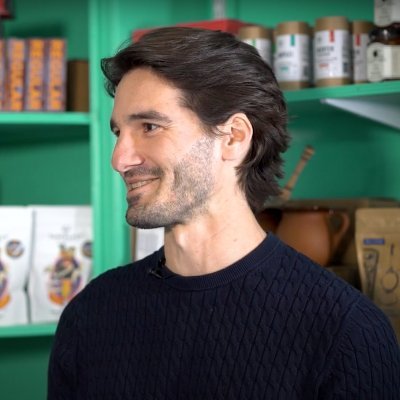
NuMarket was born out of the pandemic. Ross Chanowski founded the social crowdfunding platform in 2020 because he felt there wasn’t a way for communities to purposefully support the survival and growth of their local businesses. In an interview with The Boston Globe, Ross said that he wanted to develop a way for customers to meaningfully support the businesses they love while, yes, getting something in return.

On NuMarket, main street businesses raise funds for a variety of reasons like renovations, expansion, a popup, a new product line or even a second location. But instead of going to a bank to get a loan, they go to their customers, raising funds through contributions made in an online campaign on NuMarket. The payoff for each contributor is  120% of their money back in credits that can be used at that business. Contributors receive a bonus from the businesses they support, and those businesses get much-needed funds from the customers who love them!  To date, NuMarket has helped 23 small businesses raise funds through successful campaigns with more coming. The amounts raised vary, but the largest (and first) raise was completed by Mamalehs, an iconic delicatessen in Cambridge, that raised over $185k to open a second location. Prior to launching NuMarket, Ross was living in the UK, completing his Master’s degree work in social innovation at the LSE. While there he found time to co-found Jungle, a collective of creative thinkers, designers and strategists growing companies with social impact, working to build product ideas with intrinsic impact. Their current project is Jungle Brew – cold brew coffee designed for socially impactful behavior. Past engagements for Ross include Allen & Gerritsen and Draftfcb and an internship with former House representative Barney Frank. Ross is currently an advisor at the Kenarava Group in Kenya, “a progressive company offering climate-smart agribusiness solutions for a healthier, sustainable future.”

Read the podcast transcript here

Eve Picker: [00:00:12] Hi there. Thanks for joining me on Rethink Real Estate. For Good. I’m Eve Picker and I’m on a mission to make real estate work for everyone. I love real estate. Real estate makes places good or bad, rich or poor, beautiful or not. In this show, I’m interviewing the disruptors, those creative thinkers and doers that are shrugging off the status quo, in order to build better for everyone. If you haven’t already, check out all of my podcasts at our website RethinkRealEstateForGood.co, or you can find them at your favorite podcast station. You’ll find lots worth listening to, I’m sure.

Eve: [00:01:04] Ross Chanowski wanted to help when the pandemic hit, so he founded the social crowdfunding platform NuMarket as a way for communities to purposefully support the survival and growth of their local businesses. He wanted to develop a way for customers to meaningfully support the businesses they love while yes, getting something in return. Ross has put his background in marketing and a master’s in social innovation and entrepreneurship from the London School of Economics and Political Science to good use. Numarket helps Main Street businesses raise funds in a compelling way. Make a contribution to a business you love now, and you’ll get goods and services back with a 20% bonus, ten bagels become 12 in your tummy, all the while supporting the bagel shop you love. It’s a lovely story about a lovely business. Please listen in to hear more. If you’d like to join me in my quest to rethink real estate, there are two simple things you can do: share this podcast and go to rethinkrealestateforgood.co where you can subscribe to be the first to hear about my podcasts, blog posts and other goodies.

Eve: [00:02:42] Hi, Ross.

Ross Chanowski: [00:02:44] Eve, it is great to see you and hear you.

Eve: [00:02:48] I’m really happy to talk to you today. And, you know, Numarkets is one of my favorite companies. I’m really excited to talk to you. So let’s talk about Numarket. NuMarket, I think, is a pandemic, baby, right?

Ross: [00:02:59] It is, yeah.

Eve: [00:03:01] When did you found it and why? And how?

Ross: [00:03:05] As we all have found, pandemic time feels like a very odd construct. So thinking about two years of being in it, I’m still not quite sure when it started. Now we got going, we launched into the world in February of 2021, and the impetus and the idea and research behind New Market, I think had been happening for years before that and a lot of interesting in different ways. But when the pandemic hit, there was a clear insight that everyday customers of businesses and people in communities desperately wanted to do something positive for the places that that they love and that they need. And we were all struggling to find ways to do that. We were hashtagging on Instagram. We were tipping our delivery drivers and bartenders on the way out. We were buying gift cards, kind of doing anything we could, but it definitely didn’t feel like we were giving the kind of support that we could. And on the flip side, businesses were finding it incredibly difficult to get financing at the time to survive. But for decades before that, to to thrive and to open. And so there was something of matching those two up, this desire to support and be a critical part of independent businesses and businesses that couldn’t find avenues to financing that worked for them. So that’s where NuMarket came from. And what we do is we create crowdfunding campaigns for those businesses to raise money from their customers and community. But the contributors to those campaigns, they get more back than what they put in, 20% more, actually, as credits to use towards the business over time. So, it’s not a donation. You’re getting a lot more back than what you put in and you get to use it towards the business in the months that follow, in the years that follow. So, it generates this really interesting economic engine around these important and critical independent businesses all around us.

Eve: [00:05:23] Interesting. So, I’m having a thought. Could Small Change run a campaign on NuMarkets and offer people some investment coupon for future use?

Ross: [00:05:37] You know, I know we’re recording and if there are any regulators listening, we have to check that out first.

Eve: [00:05:43] No, this is, well, what’s interesting and this was going to be my next question. So NuMarkets doesn’t fall under any securities law, does it?

Ross: [00:05:52] Right. So, we’re issuing promotional credits. That’s kind of what our model entails. You are not receiving back cash. It is not a security. It is in the promotional credit category where you’re getting that 20% back as essentially a voucher to use towards goods and services, not that different from a gift card. And we’re very clear about that with everyone involved in knowing that there are some risks involved. But you’re getting this great chance to support a business. And unlike some donation-based platforms, where your money is going towards incredible causes, this is going towards businesses, for profit businesses like restaurants, yoga studios, online platforms, things like that.

Eve: [00:06:44] Right. I don’t think it would break any securities law, but we’ll talk about that later.

Ross: [00:06:50] I didn’t realize this was going to be a whiteboarding session.

Eve: [00:06:53] No, I mean, it really just occurred to me. My favorite Korean restaurant right next door, if they came to you and they did a campaign and I, what do you call it, make a donation. It’s not really a donation. Yeah, a contribution. It’s a contribution. So, it’s some way between investment and donation. So, make a contribution. Then thereafter, I could buy their bibimbap for 20% less.

Ross: [00:07:19] Exactly. Yeah. And you could buy their bibimbap, you could buy drinks, you could get anything that’s in there. Goods and services that they’re offering, which is one of the things we found has been a really big value add, where contributors get to use it, how they’d like to. And for businesses, they get to do exactly what they do best, which is just run their business. You don’t need to change your offering. You don’t need to offer any special packages or anything like that.

Eve: [00:07:47] So what do these businesses I mean, what do these businesses generally raise money for?

Ross: [00:07:54] Yeah. It’s we find a really big mix of things, new locations, new product lines, being able to move from, let’s say, a brick-and-mortar model to a nationwide or worldwide delivery service or the opposite. We find a lot of delivery, whether it be home delivery locally or nationally, moving into more of a permanent space. A lot of pop ups that are turning into brick and mortars. So, we’re at this point where some really amazing, vibrant and oftentimes funky businesses get to fund their dreams and get that validation that those dreams are real from their funders who turn into their best customers.

Eve: [00:08:45] That’s pretty cool. So, walk me through how a campaign works.

Ross: [00:08:50] Yeah. Campaigns, they last for 30 days, and you get a unique URL and campaign page designed with content that shows sort of who you are as the business owners, what your business is, and really gets to the soul of why you’re doing what you do. And anyone with access to a credit card can contribute during that 30-day period. You can gift contributions if you’d like to, to others, which we find a lot. You can leave testimonials that really show how much a lot of these great independent businesses are loved. So, it’s really special there. And then after the campaigns end, what we do is we handle all of the credit distribution, and we start doing that one month after the campaign ends. And that one difference for us of how our credits work is that we break them up monthly. So, we’ll start sending you your credits just one month after the campaign ends super quickly. And we do that monthly for six months. The way that math works out is, let’s say you contribute $100 to Eve’s Cafe. You would get back a total of $120 in credits, and you’d get $20 worth of credits every month.

Eve: [00:10:09] Okay. And this is to make sure that the funds are raised to spread out for the business as well.

Ross: [00:10:19] Exactly, yeah. And what we found happens quite often is you’ll have $20 worth of credits in month one and you’ll go in and you’ll spend those 20 credits and spend above them. So, there’s this really great engine around supporting independent businesses in a really, really strong way, not just as funders, but as your most loyal customers.

Eve: [00:10:43] How did you come up with that formula?

Ross: [00:10:46] Just trying to understand, I think, and talking with a lot of business owners and understanding the problems that are that are facing them and just taking a human first approach of, you know, just talk to us. Tell us what’s going on. Tell us why when you look for institutional funding, it’s difficult. Tell us why when you might find that funding, it’s difficult for you. And then, and then iterating. You know, our model wasn’t always exactly like this. We have great feedback loop and we’re super close with our customers and have a willingness to make those changes when we see that they’re needed.

Eve: [00:11:28] Interesting. Okay. So, I have to ask then, what percentage of your customers are not white male?

Ross: [00:11:38] Yeah, we don’t sort of publish exact data, but it’s a vast, vast majority.

Eve: [00:11:45] So often they fit into that minority or woman-owned business category that we all know does very poorly in the fundraising world.

Ross: [00:11:56] Yes. Yeah. The statistics on that are shocking.

Eve: [00:12:01] They’re really shocking. I think something like 2% for women owned businesses it’s ridiculous.

Ross: [00:12:07] Yeah, we’re very excited about the opportunity that we have in front of us to try to change that. And we’re at this point way above a majority of the businesses being led and managed by women and people of color.

Eve: [00:12:23] So what’s their average amount raised for businesses that you’ve helped so far? And how many have listed campaigns with you?

Ross: [00:12:31] Yeah, we’re up over 30 right now in the past year and at a pretty solid growth rate, which is exciting but also daunting, as you know. Yeah. And the average contribution amount, which I think is one piece of of data that is that’s pretty important for us, is around $150 per person. So, and that’s kind of the spot that we like to be in, which is no matter if you’re putting in $10 or 10,000, what you’re getting back is going to be the same. You’re getting that 20% back. And so we’ve found all different types of people from all different income levels who are able to participate and get that 20%.

Eve: [00:13:19] It must also depend on the business what value $150 has. Like it’s going to be different for bake shop than for something that sells more expensive goods, right?

Ross: [00:13:31] Yeah. Yeah, we found some really interesting, I think at this point slightly anecdotal, data on that of how do contributions change based on your average cost of goods. What’s been really interesting for us is the success of recurring purchase models. So, things like subscriptions, we’ve had some everything from farm delivery boxes to dumpling delivery and those have done incredibly well. I think there’s something to the idea that you know, as a customer that you’re going to be either going in or getting delivered something every week, every month. So, it makes a lot of sense to support and get 20% more.

Eve: [00:14:19] Interesting. Okay, let’s talk about geography. Where where do you do this right now?

Ross: [00:14:23] Yeah, we just kind of moved into Nationwide in the US. So, we started off in Boston in New England with a really, really great community of customers. And we, just this month, started launching campaigns that are across the country. What’s been really interesting, given what’s going on in the world right now, is that where you’re based has taken on an entirely new meaning on both sides of the platform. So, for contributors, people are living all over the place. Maybe you’re spending three months out of the year in New York, three months out of the year in Albuquerque, three months out of the year and in Indonesia. And for businesses, it’s a little bit of the same. You might be based in Los Angeles, but most of your customers are in Miami or in Topeka or wherever it may be.

Eve: [00:15:14] Interesting. So, do you find people contributing who are not customers or might be new customers for these businesses? I suppose the question is, is there crossover between campaigns? Are you building your own contributor base? Yeah.

Ross: [00:15:31] There is, yes. And we’re still early on. And I think that number will, we hope, grow. But we have found a really strong amount of repeat contributors, whether that’s our doing or the fact that there are just some really great businesses in similar communities, it doesn’t really matter to us. We’re just excited that people want to see this model grow and they want to see great independent businesses grow. We’re just there as the tool to make that happen.

Eve: [00:16:03] You said you’ve gone national. Where have you had campaigns?

Ross: [00:16:08] We’ve had some in California. We’ve had some in Florida. We’ve had a lot in New England, Connecticut, Boston, up in Maine, expansion into Maine, I should say. And in the next few weeks, we’re going to have a little bit more dotting across the country.

Eve: [00:16:26] Okay. None in Pittsburgh yet, right?

Ross: [00:16:29] Not until you help us out Eve. That’s what we need.

Eve: [00:16:31] I’m going to help you out, I’m going to help you out!

Ross: [00:16:33] You’ve got to spread the word.

Eve: [00:16:35] I think it’s a really great idea. So, do you think this model might become mainstream?

Ross: [00:16:40] We’re pretty confident that it will if we do our job well. I think that’s kind of the feeling that we all have right now, which is if we can continue to spread the word about it and make it known to more independent business owners that this is an option and that there is great support and there’s a way to engage your community of customers, we do think it can go mainstream. I guess it depends on your definition of mainstream. We’re not focused on world domination as a tech platform. I think we’re focused on being an option for every independent business that wants that option. Yeah.

Eve: [00:17:20] What’s your revenue stream? How do you get paid?

Ross: [00:17:23] Yeah, it’s pretty simple. We take a percentage of the funds that are raised in the campaigns. We have no subscription fees, no upfront fees. So, the only time businesses see us in their accounts is when we send them their funds at the end of the campaign.

Eve: [00:17:40] Shifting gears a little, you know, I looked at your background, which is very interesting, and community and social impact are clearly a really big theme in your life. There must have been a story. There’s got to be a journey that led you to NuMarkets, and I’d love to hear it.

Ross: [00:17:57] Yeah. Eve, if you recall to how we met, one of the big themes of that accelerator was Origin story. And unfortunately, there’s no great origin story. It’s, I guess, the seeds of how NuMarket came about in my background, were doing work and research that took me to some places all over the world and getting to see how different financial models work, how different businesses engaged in commerce and getting a lot of exposure to just difference.

Eve: [00:18:38] But to be fair, you’ve got a masters in entrepreneurship and social impact. So, you you’ve had a path towards this, right?

Ross: [00:18:46] Sure. Yeah, absolutely. And I think what that sort of academic piece of my life did was to really frame around the idea of understanding the problem from a very human lens. So instead of taking an idea and overlaying it onto people, it’s let yourself understand the challenges and day to day problems that are facing real communities and try to design ideas and business models and products against that. I can remember being in very specific instances and looking at the way that people have funded independent businesses all over the world, the ways that they’ve been able to create financial inclusion and just being so interested and impressed and engaged by those experiences that in some odd way Eve, leads to you running down the stairs one day and saying, Oh, I think I think now it makes sense. I think now NuMarket is ready. I think we’ve got the model.

Eve: [00:19:56] Right, I get it. But there’s another company that you’re involved in that intrigues me and I’ve just got to hear about, and that’s called Jungle. Tell me about that.

Ross: [00:20:05] Yeah, so Jungle started off sort of consulting and working with other corporates on how to increase their community impact through their revenue models. And in a strange twist and turn of events, it ended up being a coffee company that I started a few years ago, a handful of years ago now, with the idea that coffee is the most ubiquitous and habitual product that probably exists in the world where I’m holding one right now, we all…

Eve: [00:20:40] Here’s mine.

Ross: [00:20:40] I shouldn’t say we all. There’s yours. Exactly. It’s something that many people across the world really understand and purchase, and it affects over 25 million people across the supply chain. So, ended up starting a cold brew coffee company in in London a handful of years ago and a very different, of course, business model to what NuMarket is. But I think a lot of the partners and customers that we had are the same people and same type of people that we’re supporting at NuMarket now, owners of coffee shops, owners of bakeries, restaurants. We just launched a campaign for a coffee producer in Lawrence, Massachusetts, and it’s pretty cool to see, see some of the same challenges that we were facing in the coffee world and be able to support people doing it themselves now through NuMarket.

Eve: [00:21:38] Very cool. You’ve developed a thesis which is really fascinating. What do you think needs to be fixed in the world of small business? I know that’s a really big question, but I’m asking it anyway.

Ross: [00:21:50] Yeah, well, you know, there is, there’s no doubt that there’s power in commerce and who holds the purse strings. And I think the thing that we’re focused on from a systemic change perspective is allowing everyday customers to be the arbiters of the success of these businesses. So, if you’re the ultimate end user, you’re the person who’s buying the product. If we allow those same people to decide who gets the funding to start and grow, I think we’ll see a big, big change towards businesses that are important, that are independent, that are really, really doing great things for their communities, as opposed to businesses that have one very clear single bottom line, which is how fast can we grow? How quickly can we increase our margins as opposed to can we make people’s lives better and also make money at the same time?

Eve: [00:22:46] So if you were going to leave your mark on the world, what would that look like?  How would you like to leave your mark on the world?

Ross: [00:22:54] Eve, that is such a big question.

Eve: [00:22:57] It is! But you’re pretty close, I think, you know.

Ross: [00:23:01] Yeah, not even.

Eve: [00:23:03] Okay, I didn’t ask. What would your gravestone say?

Ross: [00:23:09] Oh, that’s a good one, too. Well. You know, I think it would just be. You know Eve, I don’t know and I’m going to be honest, I think we’re supposed to answer these questions with authority and strong character and all of that in these types of settings. But I think it’s okay to not know and to still be figuring that out. And right now, I think what I want my mark to be today, it’s just to have done worthwhile work.

Eve: [00:23:46] I’m pretty much in the same place. She led a good life. She was a decent person. That’d be pretty good. Yeah.

Ross: [00:23:53] And had a few good cups of coffee. Right, right. And a few bad ones too.

Eve: [00:23:58] Okay. So, I have to ask, ‘cause you sound pretty prolific there, what’s next for you? Like, are you focused solely on growing this business or is there something else you’re cooking up?

Ross: [00:24:10] I think I’m very laser focused on growing NuMarket in a way that is positive on a lot of levels. But I think there are lots of challenges and opportunities to solve those challenges out there. And I hope that whether it’s through NuMarket or through other efforts, that I and our team can start to tackle those and find some great momentum towards this idea of mutual value models. How can everyone involved in the equation of commerce or economies put something in and get more out from doing so? So, we’ll see where that takes us and we’ll see whether that’s tomorrow or ten years from now or ten weeks from now.

Eve: [00:25:01] Well, it’s fascinating. And I have one final question, if I find a business for you in Pittsburgh, will you come?

Ross: [00:25:08] Absolutely. I’ll come tomorrow. Let’s have some Korean food. Let’s have some good coffee.

Eve: [00:25:14] It’s a deal.

Ross: [00:25:16] We should hang up and stop recording now so we can start, we can start creating spots

Eve: [00:25:20] Okay. Thanks very much for joining me.

Ross: [00:25:24] Thank you, Eve. It was a pleasure.

Eve: [00:25:35] Ross Chanowski is passionate about building businesses that are needed and that make a difference. It looks like NuMarket is well on its way to making a mark.

Eve: [00:25:56] You can find out more about this episode or others you might have missed on the show notes page at our website RethinkRealEstateForGood.co. There’s lots to listen to there. A special thanks to David Allardice for his excellent editing of this podcast and original music, and thanks to you for spending your time with me today. We’ll talk again soon, but for now, this is Eve Picker signing off to go make some change.

Image courtesy of Ross Chanowski

Female cities.

April 18, 2022

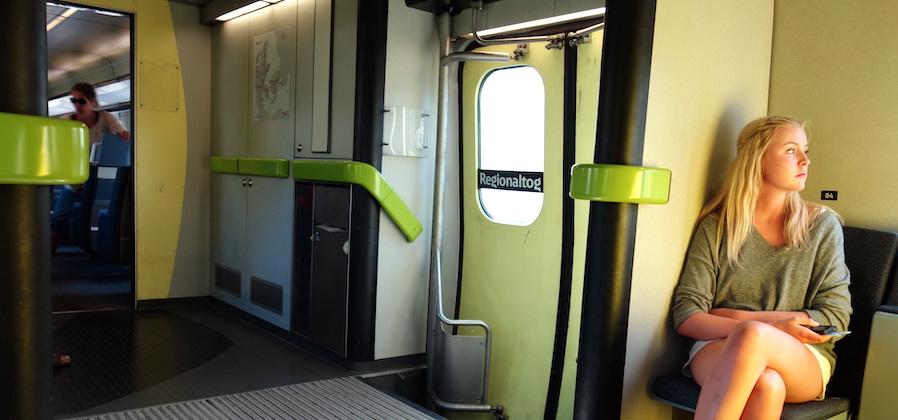
“Experiences of sexual harassment and violence intersect with other social inequalities, especially those of class, race, disability and sexual orientation. To track all of these indicators through an urban planning and design agenda can be bewildering, drawing attention away from deep-seated, long-standing ‘structures’ of inequality that become embedded in the built environment and in the mindsets of politicians and planners” writes Marion Roberts for Resilience.org.

Women and girls do not have the same freedoms as the other half of the population. Sexual harassment and violence, which are an everyday occurrence worldwide, hinder their ability to move freely in public spaces without fear and at any time of day or night. 

Urban planning is the act of planning the structures (and spaces) of our urban environment, including its policies, infrastructure, neighborhoods, building codes and regulations. Urban planning is data driven and both technical and political. It can be constrained by legislation as well as by market-driven economic policies. As a part of this discipline, urban planners use tools such as gender impact assessments and gender auditing and budgeting to try to meet gender equality objectives.

Marion Roberts argues that a socialist-feminist approach reduces all that complexity. By recognizing that the work of reproduction, caring and domestic duties are of equal value to other work in our society, this approach has the potential to radically transform and improve living conditions and create cities that uphold the rights of all to fair and equal citizenship.

There are many examples worldwide of inspired attempts, on different scales, to achieve this kind of equality. But the only city to truly embrace this idea is the City of Vienna where planning strategy is now based on considering housework, caring work and waged work as equal. To put this into practice they are planning a polycentric city of well-connected neighborhoods. One such neighborhood is the new Aspern Seestadt, an urban extension with a projected 20,000 households with employment opportunities, schools, medical services, Austria’s first managed high street, leisure facilities, refugee facilities, an urban park around a lake and a high-speed metro connection to the city center. 

There are also many initiatives to increase safety in cities. The program Safer Streets, Safer Trails in Mexico City, for example, reduced street crimes against women by 29 percent when they introduced measures such as better lighting, security cameras and alarm buttons to 125 miles of streets and paths. “A feminist approach to the city goes beyond merely treating women as victims and addresses all inequalities” writes Marion Roberts. “Social movements, committed politicians and educated professionals all have a role to play in transforming the urban landscape, which, in turn, shapes our lives.”

Read the original article here.

Image by Eve Picker

Skylight studios.

April 13, 2022

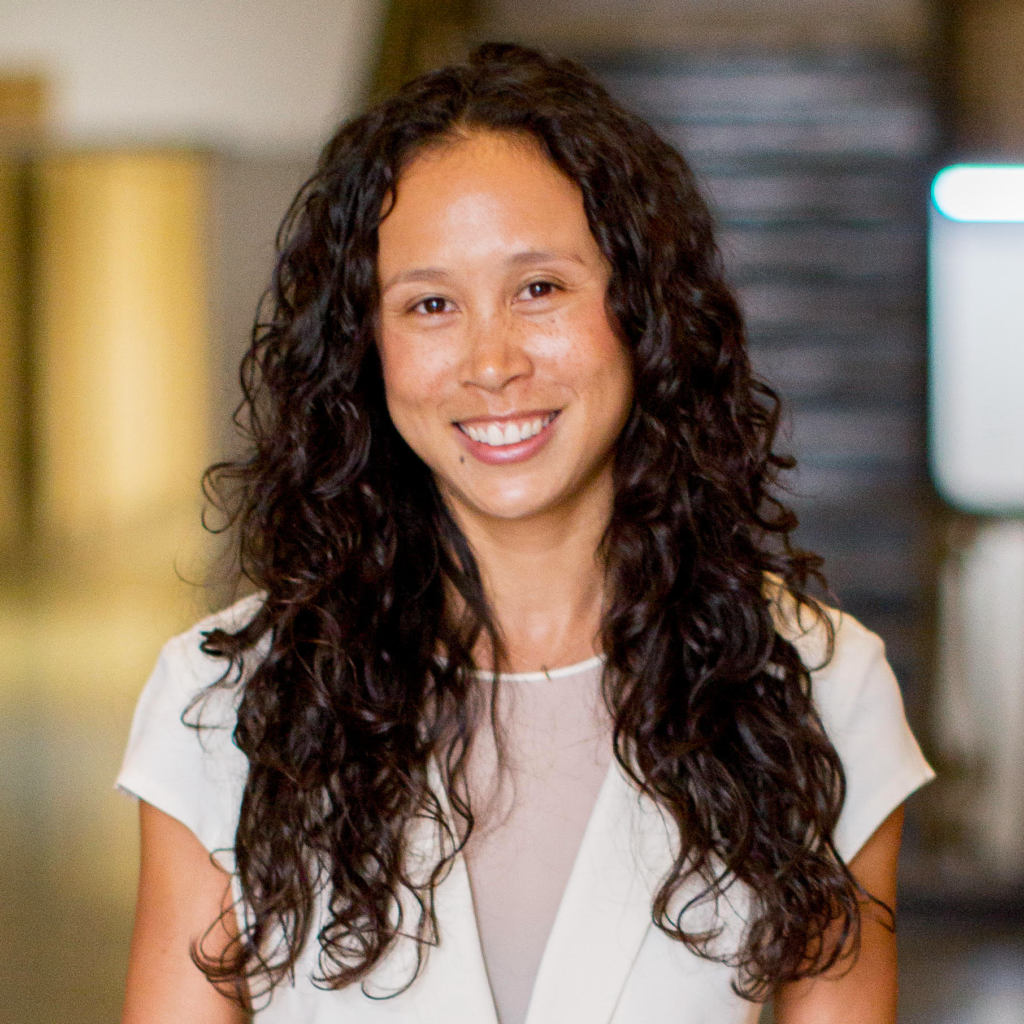
Stephanie Blake is the CEO of Skylight Studios and an historian at heart. That’s what she studied at Yale, much to her parents’ dismay. They didn’t understand how she could leverage history into a career. But she has. In a big way. Skylight Studios has built a business on taking short-term leases on large, derelict buildings to transform them into venues, often for fashion shows, art shows and corporate brand events.  

They revel in enormously gorgeous and gritty vacant buildings. The sort of buildings that most people can’t reimagine to have any useful life today. 19th century post offices, millions of square feet of vacant commercial space and empty industrial buildings that all have a story to tell. Skylight Studios finds good use for those spaces, turning them into a branding campaign for their next act. What began as a small business creating temporary popups in unused spaces, has become a big one – with a non-traditional portfolio of venues, where temporary can mean a decade.  For Stephanie there is always a story that will pave the way from old to new. She calls it “intentional short-term real estate opportunities … reimagining the industry in the way coworking companies changed the way we use office space.”

The company was founded by Jennifer Blumin, in 2008 (during the recession, by the way). But when she unexpectedly died in 2017, Stephanie was then the company’s president, and she had to step up in a big way under difficult circumstances.

Today, Skylight has assembled a set of remarkable venue spaces in New York City, San Francisco, Los Angeles, and coming soon, in Chicago and Ontario. From Art Deco to Modern Warehouse to Powerplant Industrial. Today, Skylight works directly with major development firms like Vornado Realty Trust, Brookfield, L&L Holding and Atlas Capital Group, taking their unused or underused real estate and offering it to brands and studios for immersive experiences. It’s not just high-profile events, but also smaller economic development projects such the “Love, Bleecker” project, a retail activation project that Skylight did with Brookfield Properties, which drew shoppers via curated stores and events. Stephanie has also talked about the possibility of adaptive reuse in office space, something that has barely been touched. A fascinating way to approach marketing, Skylight projects not only benefit real estate owners who have vacant buildings, but it can draw attention to neglected architecture, neighborhoods, and local businesses.

Read the podcast transcript here

Eve Picker: [00:00:05] Hi there. Thanks for joining me on Rethink Real Estate. For Good. I’m Eve Picker and I’m on a mission to make real estate work for everyone. I love real estate. Real estate makes places good or bad, rich or poor, beautiful or not. In this show, I’m interviewing the disruptors, those creative thinkers and doers that are shrugging off the status quo, in order to build better for everyone. If you haven’t already, check out all of my podcasts at our website RethinkRealEstateForGood.co, or you can find them at your favorite podcast station. You’ll find lots worth listening to, I’m sure.

Eve: [00:00:59] Stephanie Blake is an historian at heart. That’s what she studied at Yale, much to her parents’ dismay. They didn’t understand how she could leverage history into a career, but she has in a big way. Stephanie leads a company that revels in enormously gorgeous and gritty, vacant buildings, the sort of buildings that most people can’t re-imagine to have any useful life today. 19th century post offices, millions of square feet of vacant commercial space and empty industrial buildings that all have a story to tell. Skylight Studios finds good use for those spaces, turning them into a branding campaign for their next act. What began as a small business creating temporary pop ups in unused spaces has become a very big one, with a non-traditional portfolio of venues where temporary can mean a decade. For Stephanie, there is always a story that will pave the way from old to new. You’ll want to hear more. If you’d like to join me in my quest to rethink real estate, there are two simple things you can do, share this podcast and go to rethinkrealestateforgood.co where you can subscribe to be the first to hear about my podcast, blog posts and other goodies.

Eve: [00:02:34] Hi, Stephanie. Thanks so much for joining me today.

Stephanie Blake: [00:02:37] Thanks so much for having me.

Eve: [00:02:39] So, you run a really fascinating and innovative company known for creating intentional short term real estate opportunities. Do you want to tell us what Skylight Studios is all about?

Stephanie: [00:02:53] Yeah, you know, Skylight Studios, we consider ourselves to be a creative place making and non-traditional venue development and management firm. And I think the two businesses are really linked because about a decade ago we started, really longer now, during the 2008 recession to sort of identify creative use for underutilized buildings. And I think by bringing in really interesting events and experiences with some of the most creative brands at the time, organically, we created a sense of place and identity for these buildings that jump started development investment. And we’ve seen that only continue in terms of the way the built environment just can’t keep up with how human behavior and the sort of cycles of.

Eve: [00:03:45] And viruses, right?

Stephanie: [00:03:47] Viruses, yeah. Exactly. Yes.

Eve: [00:03:52] How does it work? How does the business work?

Stephanie: [00:03:55] We were founded in New York City specifically because in sort of an urban environment. And back in 2008, there were so many incredible buildings that were sort of either historic or purpose built that didn’t have a use in sort of at that time, and so we really focused on adaptive reuse and looking at buildings and seeing why are they vacant, how are they so underutilized, and how do we partner with the owners of those buildings to both generate revenue but also create activity that enhances the community and provides a canvas for potential future tenants. So, I think that’s really mainly it’s a function of partnerships with the owners of buildings, often historic and underutilized buildings and Skylight having a vision around what makes the bones of a creative canvas. And then, throughout the year, as we’ve seen starting back in 2008, with fashion being sort of at its height in New York, seeing some of the creatives like a Ralph Lauren or a Chanel or any of these guys who are setting the tone for interesting experiences, who also appreciated history and architecture and something that others might see as just a dilapidated warehouse and celebrating that and putting investment against these ephemeral experiences, and from that they would set the tone and media and tech would follow and they would want to also create experiences. So, from that, we feel like we’ve created the sort of luxury shared economy where for a building that is interesting and an interesting canvas, you can achieve market rent or greater by putting together the best of industries in an environment that isn’t set up for necessarily even having all the power and the restrooms and the things you would imagine you need in a traditional venue.

Eve: [00:05:53] So how big are the buildings or the spaces that you tackle? Is there any typical?

Stephanie: [00:05:58] Yeah. You know, I think for us we do look at larger spaces, but I think it’s not a typical venue because we’ll do it in part. The High Line was an amazing project for us working on still today with four Freedom Park, the Louis Kahn Design Park on Roosevelt Island. It’s really about, we often talk about the third place. So, yes, it usually is 10,000 square feet or greater just because the types of events and the creativity and the experience of a space for us, be it for filming content or events, does require a bit of scale. We are looking for high ceiling heights, which is the interesting part about when we say adaptive reuse. These purpose-built buildings, whether it’s power plants or warehouses or post offices or printing presses, they’re meant for production, and the ceiling height and the materials used allow for both a sense of strength and of soulfulness, but also just purely from production, if you’re doing something in a temporary way, you want to create an incredible experience and it helps to have scale to do that.

Eve: [00:07:12] Let me back up a bit. So, these are short term events and do you pick spaces and find partners to activate them with or do you find spaces and talk to the landlords about the potential or do people with vacant buildings come to you or all of the above?

Stephanie: [00:07:30] Yeah, that’s all of the above for us. While our events are short term, our engagement is not short term, even if it might be an interim use. Often it might be five years, seven years with a lot of these projects that are stalled and looking to be jumpstarted through creative activation and revenue and to gain interest. So, Moynihan Station is a great example of that. Thinking about the middle of New York City and Midtown, the post office that was the sister building to the original Penn Station was vacant for 30 years and counting. A significant portion, probably 10% of it was still an active post office. There were leaks in the ceiling, there were cobwebs and pigeons all over the building and it’s 2 million square feet that’s just vacant.

Eve: [00:08:19] Wow.

Stephanie: [00:08:20] And you needed $10 million to even begin to make it into something that a standard tenant would take on. The carrying costs were significant and we walked in and we lit up and it was the skylights and the nature of the sort of black resin floor where 80% of the mail would come across from Europe and it was black so that you could see the mail that would fall on the floor and you had these catwalks before there were security systems where people would sit up in these catwalks and this 60 foot ceiling and look and watch people sorting the mail to make sure that no one was stealing anything and it was being done the way that is expected. And to have that and recognize the creatives we work with, we move New York Fashion Week from Lincoln Center there because the designers that want to create these experiences that feel otherworldly, they really appreciate the history and also the nature of what that building was. Buildings aren’t built that way anymore. And so, for us, you know, we came in, we created a short term event venue, but it was over the course of five years and counting. And to this day, they credit Skylight moving New York Fashion Week, bringing through the Anna Wintours, doing things with, you know, Hermes and the Whitney Museum and Edible Schoolyard and all of these things just to bring an audience and exposure. And also, you know, we generated over $17 million and so for Vornado and related to them come in and see the investment and for them to restore the skylights in a way that originally, they thought they were going to just rebuild. It was just a very interesting arc to then also, as Vornado’s doing this $3 billion redevelopment Skylight has come back in, Vornado tapped us to think about how can we continue now that they actually have redeveloped and are launching? We have two venues that will be operating and we’re also the partner to think about interesting programming to help keep that redevelopment vibrant and the future of work and sort of what that can be to Midtown requires more than just the materials and an incredible architect to design spaces. You need that heartbeat of what actually keeps these spaces active and interesting and engaging.

Eve: [00:10:40] It sounds like your role is unexpectedly become historic renovation advocate as well.

Stephanie: [00:10:48] Yeah, I like that term. We often consider what we do to be urban archaeology because I think we’re sort of seeing these buildings, understanding how they were built, how incredible the bones are and the stories of why and how they were built and what they meant to the city and bringing them back into today’s context and through.

Eve: [00:11:12] Fascinating.

Stephanie: [00:11:13] Yeah, I think we have a real a deep appreciation for history.

Eve: [00:11:17] It sounds like it’s so just run through for me. What type of vacant spaces do you tackle? Like, how big is the range?

Stephanie: [00:11:24] Yeah. It ranges from, you know, 10,000 square feet to millions of square feet, I think, at this point we have a 32 acre district that we work with in downtown L.A. Obviously, the post office Moynihan was 2 million square feet and counting. Thinking about some of the parks that were brought into, I think that, you know, we’re working with Ford on the revitalization of Michigan, Central and Detroit. I think that a lot of these projects I think what I was starting to say earlier around the third place, you know, especially coming out of COVID, we’re very aware of the first place being your home, the second place being where you go to work and these third places are not defined for us as a culture, as a society. And I think they can be parks; they could be libraries maybe once upon a time they were the mall. And I think it fuses sort of entertainment with community and art and culture and music and the different things that bring us together. And I think more than ever, a lot of developers, landlords, cities are focused on how do you make sense of this third place? What does that mean for vacant retail, for the future of malls, for even the way people are questioning office and how and why and when we come together? And so, I think a lot of what Skylight looks at and the reason I think our spaces have gotten bigger and even more interesting is because it is what is the third place when you have a district, how do you think about the negative space, the walkways, the common areas, the outdoor environment that might be the quad between your retail. So, I think we like to think of what we do as not just being confined to a specific building or 10,000 square feet, but truly how do we think about the sort of master operations of a district or a neighborhood? And how do we connect the public space to the private space, to the retailers, to the SMB in a way that can be fused through intentional programming and experiences?

Eve: [00:13:28] So you really are urban design strategists. That’s really what it sounds like. How do you interconnect everything in the environment?

Eve: [00:13:35] I think we work with a lot of experts in different fields and whether they are urban planners or economists or the bid or the Economic Development Corporation or architects. And I think a lot of these experts help inform our activation strategy where we see so much value and bringing expertise to the table. But ultimately, I think what we’ve organically evolved into is to your point, that of these urban planning sort of activators, if you will, because I think that as we’ve seen between technology, these viruses, all the things in which has just sort of sped up the world and how we interact and our expectation of space and environment, the built world just can’t keep up. And so a lot of the experts and a lot of the things that are static and built can’t keep up. And so I do think our role is to think about how everything from in real estate, where everything has been about these traditional asset classes and these types of uses. And then when you think about on the flip side, the idea of urban planning and it’s meant to be built in a sustainable way and last for decades, but our behavior is changing quickly. So, I think it’s Skylights role to interpret and take in information and allow for a program that helps adapt and change and that that really is events and experiences in a way that maybe even five years or ten years ago, events were seen as a very superficial thing. But now I think it’s truly a fundamental part of our society and the development of the built environment.

Eve: [00:15:19] So the big question I have is, is does the ultimate post-event goal differ for your clients or you? I mean, do you have different end goals in mind?

Stephanie: [00:15:30] I think we do. But I think ultimately there is this concept of all ships rise with the rising tide and the idea of even there is a disconnect between a landlord’s goals and the retailer who or the tenant who’s filling their space but if you’re choosing to be in a space because of the neighborhood, because of the architecture, because of the design, because of the demographic that’s there, it works. And I think we’ve seen more and more a lot of brands and activations be a way that creates community. The goal for product driven brands is to create loyalty from their customers and I think honestly, a big part of Skylight has been finding that common ground between the city officials, planning, the police department, the fire department, the landlord and the brands. And I think there’s common ground to be found because when you create a great experience, it helps everyone. And I think there’s a pressure on brands more than ever to have a mission to do good in the world, and I think that falls very nicely in line with generating community and thinking about a neighborhood and that the experience is not just slapping up your logo and showing your new shoes, it’s the story. And that’s the stuff that resonates with people and humanity generally. And I think the storytelling through events is something that you can find the right thread and it can be very powerful to identify that common ground in terms of how are you playing a role in revitalizing this neighborhood and establishing community, and where does your brand story fit into that?

Eve: [00:17:07] So do you think your model can help to rescue the central business district, which is facing an existential crisis right now? Like we’re thinking about entire places, not just buildings, right, that are looking pretty vacant and have to really think about how to reinvent themselves.

Stephanie: [00:17:26] Yes, I do think it’s a big challenge and I think it’s very dependent on the buildings and the way a central business district might be set up for us we’ve had interesting experiences in Chicago with the Board of Trade Building, having these trading floors that are 30, 40 foot ceilings, 30,000 square feet, and when you have that, we could do interesting things, not just trying to repurpose ten foot ceiling height.

Eve: [00:17:57] Right.

Stephanie: [00:17:58] Old eighties offices. I think there’s different ways to think about Skylight being a catalyst for what is the future of some of this vacant office space and how do you still draw people to it? And if there isn’t the triple net ten-year lease, how do you think about why companies are bringing people together and can you create spaces that can be shared and still draw people to that space, which then allows for the other businesses that exist, be it the cobbler or the Sweet Greens or whoever needs to be patronized by the office workers. So, I think there’s some ways we’ve thought about that and depending on the physical bones of the buildings in that area, I think we can play a role in that. I think it’s different than the plight of retail and malls, but I think there’s some similarities there where I think just the expectation in the use of physical space is changing. And I think there’s been an understanding for a very long time that it is traditional, it’s one use, it’s a restaurant, it’s an office space, it’s a brick-and-mortar store that just sells what’s coming out of its inventory there. And I think the world is changing and I think entertainment experience work, all of that in combination with content creation and the digital footprint against the physical is an important formula for central business districts, because I think there’s an inherent challenge. I don’t think they can stay static and just be revitalized with the existing mix of types of businesses, particularly for some of the less interesting central business district where they don’t have a historic, beautiful building or they don’t have the bones, they’re very sort of built for what was meant to be there, which is you have your cubicles, you have your office, you have the smaller retail down below, and I think with that, it’s taking a more holistic view. I think that’s also a big thing we’ve seen that can be a factor is how do the landlords come together? Like what’s the role of the bid? Or does a landlord come in and swoop up a significant portion of real estate so that they have a more cohesive approach to the tenant thing, to the community, to what’s happening there? I think we’ve seen that be a pretty big factor in where even where Skylight can make a difference or not.

Eve: [00:20:24] You were involved in the remaking of Bleecker Street, which sounds really interesting because I think there were financial aspects for how that street came back that also play a really big role. So that that was five blocks, right, a five block street that was in pretty bad shape. What happened there to bring it back?

Stephanie: [00:20:45] Yeah, I think that’s a great jumping off point because it was Brookfield coming in and purchasing a number of those storefronts and providing that sort of overarching opportunity to not just have one storefront but multiple across these few blocks. And I think Bleecker Street was always, in terms of the corridor and the West Village and having this sort of sense of being a charming place where you have discovery and surprise and delight, as it became more successful, and landlords saw they could increase rents and they could take the stores that could pay top dollar and Fifth Avenue and put them there. You know, the community and the neighborhood, it was disconnected with its identity.

Eve: [00:21:32] No more surprise and delight, right?

Stephanie: [00:21:35] No more surprise and delight, exactly. And so, I think as vacancy increased and it was recognized that these stores, even the big box, the one the ones that were very well resourced, it didn’t make sense for them to stay open. It made more sense for them to even hang on to their lease, but not to staff it, which is a crazy challenge. And so I think Brookfield really saw an opportunity as place makers and part of that sort of ethos to shift that and take a chance, and so I think by taking five storefronts and working with a firm like us, it was very much to think about not just filling the stores, but also how do we create sort of a sense of community and programming on that street to bring back the legacy of what Bleecker was to the beatnik poets, to the days of Kerouac, to the music, to all of those pieces. And think about also what is the future of retail and how do you take some of these digitally native brands and give them an opportunity? For Skylight I think we were very thoughtful around even thinking about mentorship. So, the stores that had survived and that were there, why did they survive and how can you create a community and a platform between these digitally native brands and those that had been there that were really based in brick and mortar and have connectivity? And it was successful in that, it became self-sustaining. So, once we connected these different brands with one another, and I think that’s where the special sort of connection happened, was just not only to be thoughtful about who you were trying to place there, but also how did they jive with the existing stores there? And how do you create a program for programming and experiences and activation that allow these brands and companies to get a jump start in terms of seeing how programming on the street and doing things together can actually drive traffic and sales. And then once Skylight, once we set that program, they got it and they were able to continue that level of programming to today, and I think that’s been a huge success for them.

Eve: [00:23:49] It sounds like a really interesting model that might be used in other places. You know, as we see a lot of vacancies in in retail strip districts, main streets.

Stephanie: [00:23:59] Yeah, I think it’s definitely the West Village is a really you know, we had a lot to work with. I think when you think about some of the other districts, I do think community and a platform that really creates a shared sense of responsibility and also a shared customer or shared approach because I think that there does need to be some structure, even though everything can and will and should be hyper localized, I do think there’s a formula around how to give tools and resources to these sort of retail districts and help them move into a space where they can meet the consumers the way that the landscape is changing.

Eve: [00:24:42] So what about big tech? Have you worked with Big Tech at all and what are they trying to accomplish?

Stephanie: [00:24:51] Yeah. I think, you know, we have worked with all of the big tech. And I think it’s really interesting to see their emphasis on short term experiences and being able to sort of experiment and build on proof of concept. I think similarly to how we were just speaking about the built environment not keeping up, I think Big Tech is aware of a lot of what they’re doing digitally, and in the cloud, but I think ultimately they recognize that we’re human beings with bodies and need to also come together around what big tech is doing. And I think whether it’s Netflix, right, they are content platform, at the same time, I think the number of experiences that they’ve launched in person shows the value that they see in creating loyalty and experiences around their shows and connecting fans with one another through physical experiences. I think similarly in the work we’ve done with Meta and with Google and Amazon, events foster these moments that are memorable, that I think as humans, nothing can be replaced with what you experience online, with what you might experience in person, and so I think creating a level of engagement and identity, I think Big Tech is really aware of the importance of events and experiences and the in-person value against the platforms that they’ve created in the digital space.

Eve: [00:26:34] Is there any backlash to brand bankrolled community space and how do you engage a community that’s already there?

Stephanie: [00:26:44] Yeah, I think that’s a great question. I think that ultimately, as I’ve seen, you know, even sitting in my small city that I live in now, I sit on the advisory committee to city council on setting the general plan for the next 20 years, and cities and politics is very, very slow and hard to get things done. I think the beauty of some of these bigger brands with the right intention is that they can be these 21st century patrons of community, of the arts, of these spaces. I think there’s a lot of ways that Skylight has structured things to allow for the sort of VIP, the product launch, but then also community programming and educational programs that come from that. And I think there can be the same level of investment that gets amortized over the course of a couple of weeks, where initially there is this big experience that is for their top clientele or for the creators that are part of their network and all of that. And then to think about that same build and that same experience and how to translate it. I think there’s also a lot of ways that we look at a full calendar year or five years of a project where these brands come in and they are the ones paying and subsidizing for the community driven programs. So, if you’re thinking of a lot of our model at Skylight, is this sort of lower frequency, high caliber where you have maybe 25, 30% of the calendar year filled with the stuff that provides that revenue stream and also provides the investment to then work with the community. And I do think that there is this focus on an overused authenticity or honesty around what you’re doing as a brand and as a developer and there’s so much more of a spotlight, even from the community, to have a voice and what that looks like. And so, I do think generally, yes, gentrification is not going to go at any time, you’re redeveloping, you’re doing something. But I do think there’s a way to be really thoughtful around the brands, what they’re doing, how those dollars get reinvested and creating a place for the community and continuing to work with the existing organizations that have been a part of that community, the artists, the various non-profits that have played a role in whether it’s education, the schools, all of that to integrate in a calendar that does feel like it’s addressing all of the different parts of a community.

Eve: [00:29:18] Little authenticity. So, what’s your story? I mean, how did you get from Yale to here?

Stephanie: [00:29:27] Um, you know, I was a history major, and I think I’ve always had an appreciation. What?

Eve: [00:29:34] Yeah, I said, well, that fits the history, Major.

Stephanie: [00:29:40] It does it. And it’s so interesting because I could have never predicted from being a history major at a liberal arts school that this would become sort of my my path. But I did, and my parents actually, they are they grew up in Jamaica. They’re immigrants who sort of really self-made but felt really strongly that history was not a super useful degree. And when I was graduating and I was offered a job at Google, that was a great opportunity, even though I didn’t understand, I mean, Google explained that they don’t hire people that necessarily have a tech background or know what to do in this sort of framework but they just want smart people who can think, but I think my parents were very surprised and excited that that was a transition from history major. And I think being at Google, it was an incredible environment to learn a lot and to understand the tools that are being used and the sort of digital space and sort of the software and the. For me, it felt so intangible. But to understand how this platform was created around something that I couldn’t touch, see, feel or really understand, and I think I struggled with that, even though I was really grateful and excited to be part of something at a time. You know, this is 2005 where it was changing rapidly, and it did feel like it was truly the pioneering thing that was changing the world and being around other people who were so smart and innovative. But I think I always knew that being in a physical space design, how the built environment really affects your mood, it affects how you connect with people. It’s just end of the day, I just I feel so much that we’re physical beings and the built environment is a really important piece of how we see the world and how we connect with one another and so, it was just an interesting opportunity that a good friend of mine who was at Google said, Hey, I met this woman who’s doing this interesting thing in this warehouse and we were going to do something there for YouTube. At the time, a YouTube had just become a part of Google, and I met with them, and one thing led to another and I helped think about how space and the creative nature of a lot of these companies building things in the cloud and how that revenue stream can really help with the revitalization. And I think that at the time it really wasn’t more than thinking about vacant space and creative experiences and having a revenue stream that could help float these spaces in the interim pay for offset the cost of just the carrying costs. And I think it really evolved into understanding the power of these types of experiences, the way that these big companies thought differently about short- and long-term investment in space and the value of that against saturation of the digital space.

Eve: [00:32:37] That’s interesting.

Stephanie: [00:32:38] And I think today it’s interesting to see it in the way that I can see real estate, almost as in my head. It’s very bizarre, but I do see it almost as like the search function of you have your ads on Google and they enable the search platform. I think there’s a lot of controversy of how much can you tell between ads and the actual search results these days but, I do think there’s a lot of value in thinking about, to your question earlier, how these big companies and brands can affect the quality of the built environment and how they can help fund that shift, and I don’t think that the traditional model of just the landlord tenant relationship across all of these spaces where they are purpose built for one tenant and one use is the future. And so I think it’s interesting to apply some of the ways that I think being at Google in those sort of early days of my career and seeing how they were thinking so differently about this sort of space in the cloud could be applied to the built environment.

Eve: [00:33:42] So I’d love to know what services you don’t provide yet that you’re thinking about or how you’d like to grow this company. Because it seems like you must be getting bigger pretty quickly. What are you thinking about? Where else can this go?

Stephanie: [00:33:57] Yeah, I think the primary use of our portfolio these days is twofold. It’s really offering location based, interesting environments for film and content, and that’s often sort of the easiest way to go into. We have this 800-acre active steel manufacturing plant off of Lake Ontario or the power plant sitting on the Pacific Ocean in Redondo Beach. And that’s something that I feel with the amount of dollars and the craze around the white-hot market that is studio, there’s still a significant amount of content and film that’s done outside of the studio. And so, I think identifying these really amazing assets for as film and content locations is something that I think could grow very quickly for us, especially because you can repurpose the workforce. The workforce that was part of the steel manufacturing plant can be the workforce to make this a content environment. And so, I think that’s been really interesting and I think offers up a lot of different environments across the world for Skylight to go into. And I think additionally thinking about this place and Skylight being the operator of the third place, I think there are so many amazing historic buildings and spaces, museums included, who are starting to struggle to come into their identity as the world is changing and technology is changing, and all the immersive experiences are all of the sort of trend. And how can Skylight identify how to increase revenue streams and direct dollars, given that a lot of the biggest brands spending the most money on these creative experiences trust our vision. And so in my ideal world, we would look to identify existing businesses even that we can help amplify and add to not just these sort of underutilized buildings and I think that’s a huge opportunity for expansion for us, is to take some of the trends where we see whether it’s Netflix or Google or these companies creating experiences, how could we layer them into existing business models and existing uses like museums in a way that museums have been so thoughtful and evolving also and doing very creative exhibitions and installations. But I think the dollars I think we could help bring the dollars and connect the dots in a way that hasn’t been done yet.

Eve: [00:36:20] It sounds fabulous. And I thank you very much for joining me. I really enjoyed the conversation.

Stephanie: [00:36:25] Well, thank you so much for having me. It was fun to talk about.

Eve: [00:36:43] Buildings is branding, buildings to tell stories, buildings to make places. Skylight studios take storied and important buildings and reinvents their future quickly while the expensive and permanent redevelopment process churns on in the background.

Eve: [00:37:18] You can find out more about this episode or others you might have missed on the show notes page at our website RethinkRealEstateForGood.co. There’s lots to listen to there. A special thanks to David Allardice for his excellent editing of this podcast and original music, and thanks to you for spending your time with me today. We’ll talk again soon, but for now, this is Eve Picker signing off to go make some change.

Image of Stephanie Blake by Allan Zepeda

Reclaiming your Community.

April 6, 2022

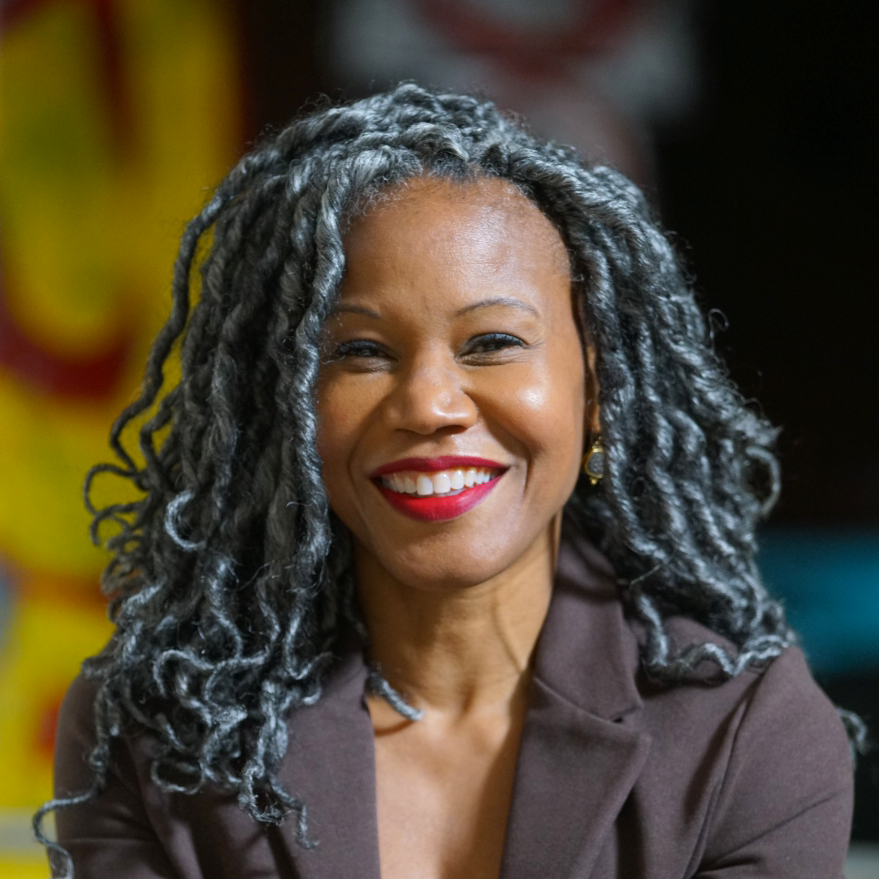
Majora Carter’s career as urban revitalization strategist has spanned environment, economy, social mobility, and real estate development. Her work has won major awards in each sector, including a MacArthur ‘genius’ Grant and Peabody Award winning broadcaster.

Majora’s words — “Nobody should have to move out of their neighborhood to live in a better one” — are inscribed on the walls of the Smithsonian Museum of African American History and Culture. And her new book, called “Reclaiming Your Neighborhood”, the subject of our podcast, takes a next step in her thesis – build where you live,  talent will stay and your neighborhood will prosper.

Born and raised in the South Bronx, Majora has long-focused much of her work there, looking always to make positive change for her community, and in doing so, gained both national and international attention. She believes that talent retention may be the key to turning around low-status neighborhoods. And she’s backed that up with her Boogie Down Ground Hip-Hop coffee spot which she owns and operates with her husband in Hunts Point, around the corner from where she grew up.

Majora is also a lecturer at Princeton University’s Keller Center, serves as editor and senior producer at GROUNDTRUTH, a platform for telling stories of people building community power, and she previously served as associate director of The POINT Community Development Corporation. She founded and ran Sustainable South Bronx and co-founded Green for All.

Read the podcast transcript here

Eve Picker: [00:00:07] Hi there. Thanks for joining me on Rethink Real Estate. For Good. I’m Eve Picker and I’m on a mission to make real estate work for everyone. I love real estate. Real estate makes places good or bad, rich or poor, beautiful or not. In this show, I’m interviewing the disruptors, those creative thinkers and doers that are shrugging off the status quo, in order to build better for everyone. If you haven’t already, check out all of my podcasts at our website RethinkRealEstateForGood.co, or you can find them at your favorite podcast station. You’ll find lots worth listening to, I’m sure.

Eve: [00:01:01] My guest today is Majora Carter, my second interview with this powerhouse. Her career as urban revitalization strategist has spanned environment, economy, social mobility and real estate development, and her work has won major awards in each sector, including a MacArthur Genius grant. Majora’s words are inscribed on the walls of the Smithsonian Museum of African American History and Culture: “Nobody should have to move out of their neighborhood to live in a better one.” Her new book called “Reclaiming Your Neighborhood”, the subject of our podcast, takes a next step in her thesis. Build where you live, talent will stay, and your neighborhood will prosper. Look for the book on Amazon, in bookstores or on Majora’s website. There is no way around it. If you are really interested in impact investing, this podcast is a must listen.

Eve: [00:02:19] Hello, Majora. I’m so delighted to have you back on this show.

Majora Carter: [00:02:23] Thanks for having me.

Eve: [00:02:25] It’s been a while, but you’ve just written a book called “Reclaiming Your Community,” and in it you ask how we can address the problem of persistent poverty in low status communities differently. So, I wanted to start by asking you what is a low status community and what does it mean to you?

Majora: [00:02:46] A low status community to me – the way that our company defines it is a place where inequality is assumed by both the people that are in that community and those outside looking in. And so, what that what it looks like and I think that’s easier to describe that way; It’s the kind of places where there are more environmental burdens, where there’s higher rates of poverty, lower educational attainment, the kind of places where you won’t find diverse options for food. Not many great places to invest your money or you’re charged for it, like through check cashing stores or places like that. And it’s just literally the places where inequality is just understood. And so and they look different. They can be inner cities, they could be Native American reservations, they could be the kind of former booming Rust Belt towns that only white people lived in. But the jobs are long gone.

Eve: [00:03:44] This is a really big and hard question. So why is it difficult to improve the status of a low status neighborhood?

Majora: [00:03:52] Well, like a lot of things, it comes down to who benefits from it. And because if you look at those communities, literally billions of dollars are pumped into them through the philanthropic industrial sector and as well as our government. And it looks different, but it comes in the form of whether there are subsidies to build very low-income housing and homeless shelters, whether it’s the multibillion dollar economic engine that’s our pharmaceutical industry that absolutely does profit off of lifestyle related health conditions from diabetes and obesity and heart conditions. And it’s the, you know, the fact that there’s such low educational attainment but really, we’re not investing in public education within those areas either. And so, again, so it’s always like a problem to be solved. Again, folks, there are definitely industries set up to perpetuate that and actually benefit from them, but the people in those communities are not getting any better.

Eve: [00:04:53] So how does the redevelopment industry impact this cycle?

Majora: [00:04:58] Yeah, so like I think there’s an old saying, “all relationships are about real estate” and I believe it’s true in this regard because real estate development can be used as a transformational tool if we use it that way. I mean, think about it. What we’re doing is literally redefining what constitutes what is happening in those areas. So, when you do it by creating really interesting commercial, industrial, residential development. And so, you can tweak the formula and create benefits for the people that are there or not. Right?

Eve: [00:05:32] Right.

Majora: [00:05:32] And so if we’re thinking about development as a transformational tool and if we know that sort of status quo development, which either content to concentrate poverty and everything and all the ills associated with it from low health outcomes, low educational attainment, you know, higher rates of people being incarcerated. If we know that, then what if we designed those places and developed them in ways that actually promoted the opposite?

Eve: [00:06:01] Right.

Majora: [00:06:01] And that’s when we decided to look at a tool. We literally borrowed a page from the business community that looks at if you are an employer, if you own a business and you train, you hire your staff, that’s your talent and you pour resources into them, whether it’s training or benefits or reasons for them to want to stay. You know, you’re not doing it so that your competitor will hire them away. You’re doing it so that your talent sees you as the place to be. But we don’t do that in American low status communities. We don’t treat our communities that way. And so, what we’re trying to do is apply a talent retention approach to real estate development. Like what do folks that are born and raised in those communities, the talented ones, the ones that are either academically or artistically or any kind of talent, the ones that are literally taught to measure success by how far they get away from those communities, what can we do to keep them there? And so, we ask, what are you looking for in the community that you desire? We ask community members in my hometown in the South Bronx, what’s that? In that classic kind of low status community and people of all income levels, they were looking for kind of things that made them feel good about being in their own community, whether it was good places like cafes, restaurants, great parks, places to play and work. Those are the kind of things that they wanted. And so why aren’t we building those things here in our own community? And that is when we realize that that’s the kind of real estate development we wanted to do. And we labeled it a talent retention, real estate development strategy.

Eve: [00:07:47] You talk about real estate development impacting low status neighborhoods in one of two ways, and the first is displacement gentrification, which we touched on, and the second is poverty maintenance. So, tell me about poverty maintenance.

Majora: [00:08:03] Yeah. So, poverty level economic maintenance as we’ve called it, or PLM, which really sounds gross, but because it kind of is, where again, billions pumped into these communities from government and philanthropic sources, but the economic level of the people in that community does not change. So, subsidies that go to low income, quote unquote, affordable housing developers, which is only for very low income housing and even homeless shelters, lots of money in terms of the health clinics and the multinational pharmaceutical industry that are government subsidized and actually do support lifestyle illnesses according to, whether they are diabetes, obesity. But things related to the quality of life that that happen in communities, low status communities and seeing those type of things, even community centers that are that I think are often just there’s like resources that are poured in specifically to support the bright ones in the community. And so those are the ones that measure success by how far they get away. And those type of things literally pull people outside of our own community to seek greener pastures. But again, the people that remain are usually the ones that remain in poverty. And that is the way that those communities are treated.

Eve: [00:09:31] Right.

Majora: [00:09:32] Whether it’s by the philanthropic and our government interest, it’s like we play to that in terms of like creating more low-income housing, more health clinics and opportunities to support people that are chronically suffering from lifestyle health conditions. And through that, we are not seeing the kind of transition from people who are actually creating more healthy opportunities for them, for themselves in those communities. And we’re seeing more and more money pumped into those things. And thus, we’re seeing the concentration of more and more poverty and all the things associated with it, whether it’s low educational attainment, higher rates of folks involved in the justice system, poor health outcomes, and more reasons for more people to want to leave those communities. So again, poverty level, economic maintenance, somebody is doing well, but not the people that are in those communities.

Eve: [00:10:27] So, you know, I think actually in the built environment, what you’re talking about is perpetuated by the affordable building types that we see, because you can really drive through a neighborhood and you can see you can point out affordable housing very clearly. And that, I think, is a very visible manifestation of that Poverty Maintenance or PLM, as you called it.

Majora: [00:10:49] Yeah. The architecture of poverty is, you know, you know it when you see it.

Eve: [00:10:55] Yes.

Majora: [00:10:55] It’s kind of like pornography. It’s like you know it when you see it.

Eve: [00:10:59] Yes, it’s true.

Majora: [00:11:01] Yeah, it may look different in a rural or urban or a suburban context, but everybody knows.

Eve: [00:11:07] That’s right. So, you know, you’ve already touched on this, but you write about how third spaces are key to talent retention in low status community economics. And so what is a third space?

Majora: [00:11:21] So, third spaces are these urban planning parlance for places that are neither work nor home. Right? And it’s just this third space where community can happen. And to us, community is not just a place, it’s an activity. Right? It is literally an action verb, but you do need places to do it. And so, if you don’t and so if you’re in general, if you’re in a low status community, the kind of places, the kind of third spaces that are in those communities are generally not the kind of places where people feel like they’re vibrant and they’re working to support the kind of goals and aspirations for their lives. It’s like, I think about some of the places in my neighborhood in the South Bronx where the largest places were communal real estate was either the waiting rooms at health clinics or pharmacies and also community centers where most people do not go and hang out or don’t want to be seen in. Right. Or for long anyway. And it’s just like, you know, in terms of cafes or cool places to hang out, very few. And so that’s when we realize we’re creating this this architecture or the architecture that’s here is literally creating this sort of like talent repulsion experience for people who are feeling like, I know I’ve got something good to offer because I don’t – Low status communities have never had a shortage of amazing people coming from them. Right. But I do have a problem with them staying. I mean, even America loves the Cinderella story of like somebody being born into some kind of hardscrabble community and they have to pull themselves up and then they go out and make something great of themselves. They’re coming from these communities. Why can’t we make something of ourselves here?

Eve: [00:13:13] Yeah.

Majora: [00:13:14] And that’s both the challenge, but also the joy of realizing that it’s not just this thing that this this miracle that needs to happen, it’s something that we can do because we already have the tools and the keys to our own recovery within our own communities.

Eve: [00:13:33] So, you know, I visited you in the Bronx and there’s not a lot of third places there. But you created a coffee shop, and didn’t you tell me that it was voted, what was it voted, number one?

Majora: [00:13:44] We were voted the best cafe in New York in 2021.

Eve: [00:13:49] Can you believe that? That’s awesome.

Majora: [00:13:51] Yes, I can. Yes, I absolutely can. And it’s because we but it was by time out in New York and it was because we were, and yes, we do have great specialty coffee. I’m sorry. Do you hear that.

Eve: [00:14:09] The dog? Yes.

Majora: [00:14:09] Yes, I’m sorry.

Eve: [00:14:10] Everyone will have to deal with the dog on this podcast.

Majora: [00:14:13] I know.

Eve: [00:14:14] Is my life, right?

Majora: [00:14:15] He’s like really upset because my husband just walked out and he’s like, “don’t go” anyway. I’ll Start over. But yes, we were voted best cafe in New York City in 2021 by “Time Out New York magazine.” And I like to think it wasn’t just because we’ve got great coffee and tea and an awesome local craft beer and wine and sangria, but and really awesome community vibes. But it really was the vibes part because what we did was really instil within our community that our cafe was simply a vessel in which to hold all the great hopes and dreams and aspirations of our community and then gave it a platform to show it. We absolutely took advantage of having to do much of our work outdoors because of COVID, and suddenly we became this, this wasn’t just encased within the four walls of our cafe, but we took it outside and people were doing things like open mics and even credit repair workshops and art exhibits, and basically it was just such a liberating way for people to see how beautiful their community was. And because it was literally like spilling out onto the sidewalk for everybody to see. And I feel like that is the reason why we won that award. You know, not, you know, again, we do have really good stuff there, but it was mostly that we created this this environment that allowed people to see how beautiful their community was and participate in it.

Eve: [00:15:54] So you tested this thesis out. Do you know of any people who stayed in the community because of this third place? So, what’s next? How do you – that’s a big block you’re on, by the way. And yes, that’s going to take quite a lot of work to transform into a community asset, shall we say.

Majora: [00:16:12] Yes. Well, you know, you’ve got to start somewhere. I mean, some environmentalists would say, what’s the best time to plant a tree? You know, 20 years ago. What’s the next best time? Today. And so that’s where you start. And you have to start somewhere. And by creating examples and showing them what it does do is give people that are open to it an opportunity to say, well, if they could do something, why can’t I?

Eve: [00:16:37] Yes.

Majora: [00:16:37] And that is exactly what we’ve seen, like our little cafe has, actually, because it’s just allows people to connect together. We’ve seen everything from people being able to buy homes from one another. We’ve seen people start new businesses and locate them within the community. We’ve seen people develop their own capacity to see themselves as a different person, but the same one, but being able to do it within their own community. I’ve been incredibly excited by seeing folks realize that looking around and going, Wait, there’s people like me here. Why do I feel like I need to to escape when I could build something right here? So, yes. And what’s also super exciting is that I’ve also seen folks from around the country intuitively do this. And writing this book was simply a way to help other folks see that this may be mostly my story and how I got to the point where it’s like reclaiming my community was something that I want to see everybody to do because I feel like we have to do something to sort of repair the social fabric of our country. And we should start in the places that are most impacted by some of the specious problems that whether it’s systemic racism and classism have actually created in this country, but really created low status communities that are not helping us as a as a country evolve into the greatness that it could be.

Eve: [00:18:11] So I know you’re also working on a second third space, which I’ve had the good fortune to visit.

Majora: [00:18:16] Yes.

Eve: [00:18:17] A beautiful old railway building. Tell us about that. What’s going on there? It’s not far away. It’s like less than half a block away from your coffee shop, right?

Majora: [00:18:28] My world is really small at this point. I mean, the coffee shop is literally a three-minute walk away. The other project that you’re referring to is even a minute walk away from where I live.

Eve: [00:18:41] Yes, yeah, yeah.

Majora: [00:18:43] It’s a historic rail station designed by Cass Gilbert, America’s first starchitect, as they call them, Cass Gilbert, who designed also the Woolworth Building and the US Supreme Court building. It was quite the dandy in his day in the early part of the 20th century, and so we had this beautiful aesthetic. And so, this old rail station is about 4000 square feet, and so we’re transforming it into an event hall. So, my husband James and I actually literally did the initial demolition ourselves. Fortunately, we got other people to help us to finish it up, and it’s super exciting because the idea that we can take a space and by its nature as an event hall, it’s literally being filled by other people to do all sorts of things. And so we’re hoping to see it used as an amazing music venue, which actually sort of hearkens back to literally right across the street from where the rail station is, used to be a place where vaudeville excuse me, vaudeville, you know, Latin music as well is like it was like a musical and theater place where people would come right across the we want to bring some of that back as well. You know, and it’s also really interesting for me because that rail station is the reason why my family decided to settle there. My father was from down south, a big old black man who was a Pullman porter, and he bought our house for cash because back in the 1940s, there weren’t a whole lot of banks giving money to black men for mortgages. So, he actually won 15,000 in a horse race in California, put it in a satchel, literally cash, put it in a satchel, brought it back to New York. You found an Italian family that would sell to him, and he bought it.

Eve: [00:20:38] Which, in itself, was unusual, right?

Majora: [00:20:41] Literally, yeah. And he didn’t feel comfortable staying in the house for a couple of years, so he just rented it to them because it was the neighborhood was all white, but he bought that house because there was talk that they were going to reactivate that particular rail station and that was actually his line. So he was just like, Oh. Two blocks from my house. That’s what I want!

Eve: [00:21:01] He understood the power of transit, right?

Majora: [00:21:04] Exactly. Unfortunately, they never reopened it for transit, but he did have the conductor to slow down the train so he could hop off and climb out to his house.

Eve: [00:21:12] Oh, that’s great.

Majora: [00:21:13] Yeah, so that was pretty funny.

Eve: [00:21:16] Right? So, you know, I have to go back to the words that you’re quote that’s on the walls of the Smithsonian Museum of African American History and Culture. And you said, “Nobody should have to move out of the neighborhood to live in a better one.” And it really sounds like you just got tired of waiting around for someone to fix yours.

Majora: [00:21:34] Yes. In a nutshell, it was just like, you know, I mean, it was a little deeper than that, actually, because it really did come from this place where, you know, because I was one of those kids who measured success by how far she got away. I was told from very early on that I was a smart kid and that I was going to grow up and be somebody. And of course, I believed that I was just like I was really smart. I was reading when I was three. I was like, I’m getting out of here, especially when my brother was killed. And, you know, and I did watch, you know, because of financial disinvestment. All, so many of the buildings in my neighborhood were burned down. And I watched a lot of it. And there was a there was some trauma associated, I think, with like seeing and feeling these things, experiencing these things. So, yeah, I was like, education’s going to be my ticket out. And it was until I ended up back here only because I was broke and I needed a cheap place to stay when I went to graduate school. And that’s the only reason why I came back. And it did. It felt like such a horrifying defeat to be this kid with like I had a bunch of letters behind my name. I went to good schools, and then all of a sudden, I’m like back home and mommy and daddy’s house in the South Bronx. Hard and, but what was amazing was discovering that that education and distance actually was a blessing because like that’s when I saw when the city and state were building this huge waste facility on our waterfront, and we already handled an enormous amount of it. I was like, Oh my gosh. Like, it’s because we just this is history repeating itself. We are a poor community of color, politically vulnerable, and this is what happens. And all I could think was I mean, first was shame when I understood it and I was like, oh, like I just wanted to run away. And I did. And you know what? No one blamed me. But now I see it like, literally, with like eyes completely wide open, and I wanted to do something about it. And yeah, like, I wanted nice things in my own doggone community. Absolutely. For me and for everybody else.

Eve: [00:23:51] Yes. Yeah. I don’t know what to say next because I know how hard it’s been for you. It’s an amazing it’s an amazing journey that you’ve taken. I just want to say that. So, you also talked to me about the Jumpstart program in Philly, which I actually I interviewed Ken Weinstein, who launched the program in our second podcast season. If anyone wants to listen, it’s an amazing program. Tell me about it and why you why you love it so much.

Majora: [00:24:23] Wow. Yes. So, I was actually getting an award in Philadelphia, and it was the Edward Bacon Award who was actually it is Kevin Bacon’s father. And but he was like this amazing urban planner in Philly, and everybody loved him. Yeah.

Eve: [00:24:42] Yeah, yeah.

Majora: [00:24:43] And so I was getting this award and like part of it, and it’s like a really big thing over there. And so, part of it was that I got to hang out with some, some notable people in Philly, and I was like, okay, cool. And I sat in on this roundtable with graduates from this program called Jumpstart Germantown. And they were all, almost all black folks younger than me. And they were all talking about, like, the deals that they were doing. And I was just like. What? This many in a major American city talking about real estate deals and what they’re doing and how they’re doing it. And I was amazed. And so, but Jumpstart Germantown literally was a way to get folks from communities just like mine to be more involved in residential real estate development in Philadelphia, in Germantown. And so, the way that it was done, Ken Weinstein was literally, was getting inundated with, because he’s really a nice affable guy, and folks were just like, how do you do this? And he’s just like, oh, I can tell you. And he’d give them that information, and then he realized this is too much. And then he got his friends like help, created a training that gave people just enough information so that they could actually get out on their own. And then the best thing that he did was create a fund. So, where he gave the first couple of loans to those folks to do their first few deals.

Eve: [00:26:13] I remember him saying he realized that no matter what he taught them, if they couldn’t get the financing, it was useless.

Majora: [00:26:18] Exactly.

Eve: [00:26:19] And they couldn’t get the financing.

Majora: [00:26:20] No, no, no.

Eve: [00:26:22] What a guy. Yeah.

Majora: [00:26:24] So I was just like. Wait. What? And I totally flipped out and actually decided, I mean, I literally went to Philly for the next four weeks to just to take that class. And I’d love at some point to be able to start a project like that here in New York. And I actually encourage everybody to consider it in other places, too. But again, what we saw there was an incredible example. It wasn’t like a non-profit kind of like, “Oh, we’re here to help the poor people.” It was more like, “Nah, we’re going to help you compete” in this capitalist system that we’re in so that you can actually reclaim your own doggone community. And I was blown away.

Eve: [00:27:05] Pretty fabulous. And he’s franchised it, right? So, there have been a number of different neighborhoods and cities that are now have jumpstart programs.

Majora: [00:27:13] Yes, quite a few at this point.

Eve: [00:27:15] If I weren’t so busy, I would start one.

Majora: [00:27:17] I know.

Eve: [00:27:18] Pretty it’s pretty fabulous. But requires a little bit of resources. I want to ask one other big question and that is what does meaningful community engagement look like, especially when it comes to redevelopment of an area? What should it look like?

Majora: [00:27:37] Yeah. For us, meaningful community engagement means that it’s actually driven, at least in part, by listening to what the community’s hopes and dreams and aspirations actually are. And by no means assuming that you know what they are before you start. Because if you do, basically what we’ll do is what we see the non-profit industrial complex and even our government telling us what needs to happen in those communities. And that’s the same kind of status quo development that actually concentrates poverty. And what we did, we literally created surveys and did focus groups, and we even had an advisory board built from very informal leaders within our community that allow folks to give them reasons to think about. Yeah, what does it look like? What does a great community look like for me? And they were really specific about what those things were, and we knew it because they would talk about the things that they would leave the community to experience. And when we realized like honestly, where somebody’s hardest is, where they spend their money, and if you weren’t spending it in your community, what were you spending it on? And could we actually create the same kind of experience in our community that make people that just to give people a second look. And it has been hard because there’s such low expectations applied to low status communities and after a while people even internalize them. And that’s why it’s difficult to do that, which is why I’m so glad that I’ve actually gotten there’s company now. I mean, being the first one in to do something as crazy as like a really high-end specialty coffee shop in a place that hasn’t had anything like that in decades. It was exhausting. But at the same time.

Eve: [00:29:35] You got a lot of pushback early on from the neighbors, right?

Majora: [00:29:38] I got some pushback. I didn’t get a lot. What I got was they were very loud, but I think it was basically rooted in fear.

Eve: [00:29:46] I agree. I was going to say the same thing. I think change is very difficult for most people. And.

Majora: [00:29:52] Yeah.

Eve: [00:29:53] And they’re worried about being left out, you know, and, and they usually are left out, let’s be honest about it. So, you know, that was really why I asked that question. Like, how do we make people feel like part of something?

Majora: [00:30:08] Right, and their people are left out because the folks that are doing most of the development never had any intention of letting them in in the first place. I mean, if you think about the kind of development that happens in poverty level economic maintenance, I mean, there isn’t a place for most of the people in our community to even participate at all. I mean, there’s this thing, like, oh, we do community engagement and outreach, which means you get people together for some kind of little visioning thing and some ridiculous highly paid consultant gets like post-its up on a wall. And then you say, you did it. What did you do? I mean, it’s just like this is ridiculous. The kind of development that happens in low status communities was never intended to include people from those communities, except as recipients of like whatever they’re putting out, which we know concentrates poverty, and everything associated with it.

Eve: [00:31:04] Or gentrified it. Right. But either way, they’re left out. Yeah.

Majora: [00:31:09] Yeah, totally. And so, they know that. And that’s why I’ve been advocating as much as I can and also literally putting myself in that role of developer because I’m like, I’m already trying to create more opportunities for folks like we’ve done revenue shares for the cafe. We, we set it up so that people from our community can actively use it in a way that meets their goals and dreams and aspirations. I do that and I’m not a non-profit of not like I do that on my own. We’re absolutely looking to develop more opportunities for crowdfunding investment projects, for people within our community, for the other projects that we’re doing, because we want them to feel like they actually have an investment in their own community. And the only way to do that –

Eve: [00:32:01] I’ll help you bring them to Small Change. That’d be so cool, I’ll be waiting.

Majora: [00:32:02] I’m pretty, I would love that. I would love that. So, it is different when people do the development from our own communities because we are sensitive to what we haven’t had and what we do need and what our dreams are, because we bothered to ask and I’ve also experienced it, you know, I was that little girl who was just like, there’s nothing in this neighborhood. And it makes me feel like I’ve got a stain attached to me because of the way people think about my community. And, and I don’t want that on anybody. Like, I also don’t want them to feel like they’ve got to leave in order to believe that that they’re of any value.

Eve: [00:32:48] Awesome. So final question. If you were to change one thing about real estate development in the US to make better cities for everyone, what would that be? Maybe that’s unfair, you can say two or three.

Majora: [00:33:04] Yes, I’m going to say a few things. I’m sure. So, oh, gosh. If I could change the way real estate development happens in order to support more people doing it. I mean, I’m not exactly sure how to do this, but I know that the cost of doing it just literally is physically doing it is just so high. And I just wish that the cost of construction could go down. Don’t ask me how to do that.

Eve: [00:33:30] Oh God, yeah, everyone I think wishes that.

Majora: [00:33:33] But it’s just insane. And then sort of like the barriers to entry I wish would be a lot more equitable. I mean, I remember my very first deal where and it was just to do a small rehab know our mortgage broker literally made me write a letter because she looked at me, looked at my community and literally said, you know, I have a story in the book. She was like. Why did you want another house? Or another property? You already have one. And I was like, do?

Eve: [00:34:09] Because this is called wealth creation. This is called Building My Future, right?

Majora: [00:34:14] Yes. And but she, to her, it was just like, why would a black woman want to do that? Especially from a neighborhood like that. And so, she made me write a letter to the underwriters explaining to them that I was a fine, upstanding individual. That does nice things for her community. And I was like, I know she doesn’t ask any white men about this, but you know what? I wrote the letter. So, this was me. And I had great credit, property in mind, a willing seller, a free development loan, already pre-approved. I mean, it was just like and that’s a small example. You know, I hear about them all the time, you know, access to capital, how hard it can be.

Eve: [00:34:58] Yeah. So do I, I think the access to capital is completely inequitable.

Majora: [00:35:02] Yeah, exactly. And those are the main two things. But also, I think the other one is making sure that people in low status communities see themselves as rightful developers of their own community. Because that is one of the hardest things where I think even some of the challengers that I get is more like, who do you think you are? And these are people from communities like mine within the social justice industrial complex who are just like, “You shouldn’t do that.” And it’s just like, why should that? It does like because again, such low expectations of folks in our communities like here, I’m being challenged because I’m actually saying, no, I can do better than what’s actually happening here. Yeah. And I get it coming and going sometimes. But there are more people who see the value of it and who are actually thinking about how they can do it themselves.

Eve: [00:35:59] Well, thank you, Marjora. I love you to death. And I think this is fantastic. And I can’t wait to visit again.

Majora: [00:36:08] I know.

Eve: [00:36:09] Hang out in that coffee shop.

Majora: [00:36:11] Yes. Yes. Oh, my gosh. It’s so super exciting. And wait till you see the rail station within the next few weeks. We’re getting it ready for a pretty big event. Ted X the Bronx is

Eve: [00:36:25] Fabulous!

Majora: [00:36:26] Doing their event there. Yeah,

Eve: [00:36:27] That’s really fabulous.

Majora: [00:36:29] You know, we’re phasing it in.

Eve: [00:36:31] I have to come back again soon.

Majora: [00:36:33] You’re going to love it.

Eve: [00:36:34] Cool. Okay. Bye.

Majora: [00:36:35] Thank you. All right. Take care. Bye bye.

Eve: [00:36:44] That was Majora Carter. I’m repeating myself, but I’m still in awe. Majora is uncompromising about her mission. She lives and works in Hunts Point in the South Bronx, one of America’s lowest status communities, just two blocks from the house she grew up in. When it became clear that no coffee shop operator wanted to operate out of her space in the neighborhood. She created her own business to achieve a goal. Now that is putting your money where your mouth is.

Eve: [00:37:27] You can find out more about this episode or others you might have missed on the show notes page at our website RethinkRealEstateForGood.co. There’s lots to listen to there. A special thanks to David Allardice for his excellent editing of this podcast and original music, and thanks to you for spending your time with me today. We’ll talk again soon, but for now, this is Eve Picker signing off to go make some change.

Image courtesy of Majora Carter

Why transit matters.

April 4, 2022

“Public transportation is nothing new, but with modern technology, cities can create better infrastructures like never before.” Remix

City living has many advantages with cultural attractions, restaurants and nightlife topping the list. But what are those amenities worth if you can’t get to them easily? Good infrastructure is equally as important and by that, of course, we mean public transit. Public transit promotes connectivity, density and vibrancy, adding to that city vibe, not only in city centres but also in ex-urban areas. And that brings increased productivity and economic growth. And public transit reduces each person’s carbon footprint, making cities more sustainable.‌

Good public transportation should be:

  • Accessible and available to everyone.
  • Convenient with stops at the most frequented places – for locals and visitors alike.
  • Affordable for all and an attractive alternative to using a car.
  • Frequent and reliable so that riders can depend on it.
  • Flexible, providing options for riders to get where they want to go.
  • Visitor friendly, easy to understand and use.
  • App friendly so that you can pay for or track your ride easily.

Over the last few decades, rapid urbanization has propelled the construction of mass transit systems all over the world. But the United States is lagging far behind. We don’t have a great reputation when it comes to public transit. While the country is lagging, many cities are working hard on meeting the population’s needs when it comes to transit. Here are ten cities we can all learn from. Or listen to rail advocate David Peter Alan. He knows a thing or two about public transit. He’s ridden the entire Amtrak system and about 300 transit providers in the U.S. and Canada as well.

Image courtesy of John D. Norton

« Previous Page
Next Page »

Primary Sidebar

sign up here

APPLY TO BE A PODCAST GUEST

More to See

(no title)

February 22, 2025

Bellevue Montgomery

February 11, 2025

West Lombard

January 28, 2025

FOLLOW

  • LinkedIn
  • RSS

Tag Cloud

Affordable housing Climate Community Creative economy Crowdfunding Design Development Environment Equity Finance FinTech Gentrification Impact Investing Mobility Offering Opportunity zones PropTech Technology Visionary Zoning

Footer

©rethinkrealestateforgood.co. The information contained on this website is for general information purposes only. Nothing on this website is intended as investment, legal, tax or accounting strategy or advice, or constitutes an offer to sell, solicit or buy securities.
 
Any projections discussed or made may not be accurate and do not guarantee a specific outcome. All projections or investments are subject to risk due to uncertainty and change, including the risk of loss, and past performance is not indicative of future results. You should make independent decisions and seek independent advice regarding investments or strategies mentioned on this website.

Recent

  • The Mulberry
  • Mount Vernon Plaza
  • The Seven
  • Real estate and women.
  • Oculis Domes.

Search

Categories

Climate Community Crowdfunding Development Equity Fintech Investing Mobility Proptech Visionary


Copyright © 2026 · Magazine Pro on Genesis Framework · WordPress · Log in