• Skip to main content
  • Skip to secondary menu
  • Skip to primary sidebar
  • Skip to footer
  • Home
  • About Us
  • Say hello
Rethink Real Estate. For Good.

Rethink Real Estate. For Good.

  • Podcast
  • Posts
  • In the news
  • Speaking and media
    • About Eve
    • Speaking requests
    • Speaking engagements
    • Press kit
  • Investment opportunities

Visionary

Foreclosure free.

February 9, 2022

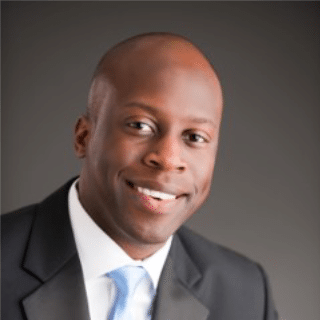
John Green is a developer and investor who sees opportunity in a real estate market that innovates. With well over a decade of experience in real estate and finance, he co-founded Blackstar Stability (“BSS”) modeled on two proven programs that were created and operated by John and his co-founders. These programs began at the state-level and were scaled to the national level using both public and private funding. BSS is built using the lessons learned from running the program amid the 2007 Global Financial Crisis and is designed from the ground up using a double-bottom line business model that creates compelling risk-adjusted returns for investors while generating significant benefits for low-income and middle-income families and communities.

Their business model started after the Global Financial Crisis (GFC) back in 2007. They started with a state-funded program designed to keep families in their homes following the housing market downturn and recession. The program helped families with substantial negative equity and focused on loan modifications to re-adjust the principal balance and monthly payment on their loans. Their state-funded program was a great success. They successfully helped hundreds of families stay in their homes despite initially being underwater. So they went national by leveraging private capital, still targeting low-income, moderate income, and minority communities that were slow to reach full recovery following the Great Recession.

A co-founding principal of Blackstar Real Estate Partners, John Green directs firm-wide strategic planning, and leads the investment management efforts. John has over 18 years of real estate and finance experience, and has managed approximately $5 billion in commercial, multifamily residential and mixed-use properties in greater Washington, D.C.; New York City; Baltimore; San Francisco; and other major metropolitan areas within the United States. For the decade prior to founding Blackstar, he served as Managing Director for MacFarlane Partners, a San Francisco based real estate private equity firm. In that role, John led all investment and asset management activities in the East Coast markets, which included acquisitions, dispositions, and financing of property investments. He also oversaw the development process of projects undertaken by the firm and its joint-venture partners. Overall, he was responsible for managing a portfolio consisting of over 2.75 million sf of commercial space, 7,500 apartment units, 400,000 sf of retail, 1,000 hotel keys, and over 10 million sf of potential development. Prior to joining MacFarlane Partners, John worked in the real estate development group of The Community Builders; and as an investment banker at Goldman, Sachs & Co. He also managed the business development efforts at Viacom Inc.

John earned his MBA from Harvard Business School and MPA from Harvard Kennedy School. He also holds a BS degree in Systems Engineering from the University of Virginia.

Read the podcast transcript here

Eve Picker: [00:00:09] Hi there. Thanks for joining me on Rethink Real Estate. For Good. I’m Eve Picker and I’m on a mission to make real estate work for everyone. I love real estate. Real estate makes places good or bad, rich or poor, beautiful or not. In this show, I’m interviewing the disruptors, those creative thinkers and doers that are shrugging off the status quo, in order to build better for everyone. If you haven’t already, check out all of my podcasts at our website RethinkRealEstateForGood.co, or you can find them at your favorite podcast station. You’ll find lots worth listening to, I’m sure.

Eve: [00:01:06] John Green is working on a very big idea with well over a decade of experience in real estate and finance, John has co-founded Black Star Stability, a program that uses a double bottom line business model to create compelling risk adjusted returns for investors while generating significant benefits for low income and middle-income families and communities. The program’s roots go back to the 2007 recession, when John ran a program which helped families with substantial negative equity and focused on loan modifications to readjust the principal balance and monthly payment on their loans. It was a great success, so they went national by leveraging private capital, still targeting low income, moderate income and minority communities that were slow to reach full recovery following the Great Recession. And minority communities that were slow to reach full recovery. This is social impact with a capital I.

Eve: [00:02:18] If you’d like to join me in my quest to rethink real estate, there are two simple things you can do. Share this podcast and go to RethinkRealEstateForGood.co, where you can subscribe to be the first to hear about my podcasts, blog posts and other goodies.

Eve: [00:02:48] Hi, John, thanks so much for joining me today, I’m really looking forward to talking with you.

John Green: [00:02:53] Oh, excited to talk. Thanks so much for having me.

Eve: [00:02:5] Good. So, you’ve had a pretty solid career in real estate, but now you’re focusing on one very specific sector of the market and that is assisting families facing foreclosure, if I understand it correctly. Why did you launch Blackstar Stability, which is the name of your company?

John: [00:03:13] We’ve launched Blackstar Stability, really to focus on what we consider high impact single family strategies, and in particular, we try to expand equitable ownership of affordable single-family properties. And we do that in some ways that we think are creative and unique. In particular we focus on strategies that attack predatory lending practices. And so, it’s just a surprisingly large and robust and consistent market that seems to present lots of opportunities to demonstrate that there are better ways of interacting with families and people. That you can create fair opportunities to finance properties that are not extractive, and so we’re happy to demonstrate market driven, scalable solutions toward that end.

Eve: [00:04:03] What pointed you in that direction? What made it important to you?

John: [00:04:09] Yeah. So, it’s issues of housing affordability and community building are ones that have always been of interest. You know, they’re issues that I’ve focused a lot of my time and attention on during grad school and the team that I put together, I would say, are folks who have had that as a common thread throughout their careers in various capacities. My Chief Investment Officer, Erik Sten, was a former housing commissioner for the city of Portland for more than 12 years and led an organization that focused on issues of homelessness, housing affordability, issues like that. My head of investments, Toks Ladejobi, and I worked together for more than a decade at a company called Macfarlane Partners. It’s a unique real estate private equity company based in the Bay Area that does primarily commercial real estate investment, but just has a uniquely strong appetite for public private partnerships. And this more complicated, thorny projects that result in robust community

Eve: [00:05:13] And something good, right?

John: [00:05:15] Oh, absolutely. Absolutely. And so, I focus on finding ways to use the various levers in the market to create outcomes that are pro-social. And so with Blackstar, we wanted to leverage a lot of those things that we have been doing with various sorts of large scale real estate and find ways to tap into this market. And housing affordability is at crisis levels in this country, and we see the single-family market, in particular the sort of small balance segment of the single-family market, as as a unique component that can serve as a big part of the solution. And so, for us, starting Blackstar Stability in this particular strategy, we thought a very creative way of being able to tackle those issues.

Eve: [00:05:59] So you started the company a while back. It sounds like it’s morphed into something slightly different. So you started it with government funds. Is that correct?

John: [00:06:09] No. Blackstar Stability has been all privately financed, but we structure our offerings as funds, at least to this point we have, and so the seed funding for the platform that we have right now is actually from catalytic funds, from an organization called Living Cities, which is a consortium of large financial institutions and foundations that are oriented around issues that help to address the racial equity gap. And so, you know, that became the sort of capital that helped launch this most recent platform that we’re executing.

Eve: [00:06:45] Interesting. And so how does it work, the program that you’ve put in place?

John: [00:06:50] What we do, in essence, is by large pools of single-family properties that are encumbered by generally predatory forms of seller financing. In particular, a pretty unique product called Contracts for Deed, which is a huge industry here in the United States, more than $200 billion industry and extraordinarily problematic. It’s existed for more than 100 years. We buy properties that are encumbered by those CFDs, we call them for short or similar sorts of problematic seller financing and generally at pretty significant discounts. And then we work with the families that occupy those homes to convert that form of seller financing into a more traditional mortgage. But we are resetting the terms of the debt pretty significantly. We’re reducing interest rates. We are, to the extent of properties underwater, reducing the principal balance, and we are extinguishing a lot of penalties and arrearages that generally have been applied in some, often predatory manner.

Eve: [00:07:53] And they grow really fast, with high interest rates. I know that’s awful.

John: [00:07:57] High interest rates and also, you know, just the sort of standards of practice in this space really mirror the sort of behavior that you would associate with payday lenders. So that sort. You know, it’s where the penalties are really an intentional part of the revenue stream in this space. And so, we reset the terms of the debt as we’re originating those mortgages, we’re generally taking performing pools of those CFDs and converting them into performing pools of mortgages. We hold in season them for a period of time to demonstrate payment performance and then sell them into the secondary market and recycle the capital. So, the focus is on completing a transaction that transfers title to these families. Because these CFDs are structured in a way where the sellers remain, the owners of the properties until the very last payments made. But the buyers take on not only possession, but all of the responsibilities of ownership, right? So, maintenance, insurance, taxes, those sorts of things and meet their obligations, so

Eve: [00:08:59] Do they realize what they’ve taken on, like how often are the owners simply unaware of what that contract meant?

John: [00:09:07] Yeah, generally not. Ta-Nehisi Coates had a great quote about it. He characterized these contracts as ones that combine all the responsibilities of homeownership with all the disadvantages of rentals and provides the benefits of neither. Generally, these families do not realize what they have. They think that they own the property and so they think and behave the way the typical owner would. So, they’re investing sweat equity and real capital into improving these places. And in a lot of cases, they’re accepting deferred maintenance obligations. So, they realize that they need to improve a property and they don’t realize that not only do they not own it, but that if they are delinquent, even once, that they could lose everything. And lose it in a process that’s much more aggressive than the sort of foreclosure process that you would associate the mortgage, right? It’s a process called forfeiture. And what happens is it’s essentially a breach of contract. And just think a very aggressive form of eviction.

Eve: [00:10:09] Wow. And so, you must have seen that accelerate during the pandemic when people lost their jobs, right?

John: [00:10:16] You know, we saw a really big acceleration of it actually after the global financial crisis. And I think we had a really big fear that it would accelerate a lot during the pandemic. We don’t have a lot of evidence at the moment that specifically underscores whether there’s been a big shift in the velocity of it after the pandemic. Part of what makes it hard to make those judgments is, it’s a market that’s intentionally shrouded in darkness. It’s relatively opaque because it’s largely unregulated at the federal level. It’s subject mostly to a patchwork of state level regs, and the states are inconsistent about requiring things as fundamental as recording those contracts. And even where they are required by law, it tends to be very poorly enforced. There was a study that was done a few years ago in Texas, which is one of the states that actually does require by-law to record these contracts. What that research effort found was that more than two thirds of the contracts that the research team was able to identify were not recorded, despite the fact that they’re required by law in Texas. So, nationally, the stats tend to be very inconsistent, and the best source of information for them historically had been the American Housing Survey, which is part of the U.S. Census. But all the questions related to these CFDs were pulled in two thousand nine.

Eve: [00:11:36] Why? Why were they pulled?

John: [00:11:39] Not entirely clear to me. It’s a fragmented market where the information tends to be hard to, especially nationally.

Eve: [00:11:48] Purposefully hard. So, you know, you talked about, what was it $100 billion market? More?

John: [00:11:53] No, we think it’s more than $200 billion industry. It’s more than five percent of all single family that’s not occupied by renters in the U.S.

Eve: [00:12:03] That’s what I was wondering what, how many homes are we talking about?

John: [00:12:07] Yeah, we’ve seen stats that suggest more than four million families. We’ve seen stats that say over nine, but more of them seem to be, you know, in the sort of the estimates and the plus minus four million family range.

Eve: [00:12:20] Wow. Ok, so how many homeowners have you impacted so far?

John: [00:12:26] We have a portfolio that’s relatively modest at this point. It’s about 200 properties that we are working with those families, and we’ve converted more than a quarter of those into mortgages. But we’re in the process of raising a fund to actively execute on this strategy. So, the portfolio that we have was basically the proof of concept and we are raising a fund to be able to do more of that activity.

Eve: [00:12:52] Okay. And then, like, you know, where are these homes? Is there any type of demographic or is it just anywhere, anyone who signed a contract like this?

John: [00:13:04] Yeah, you tend to see the most in places where the consumer regulations are weakest at the state level and where there are high concentrations of properties that are low value. Think less than $100,000. And so, geographically, we see that overweighted in the Midwest and the South, especially the Southeast and you know, that’s reflected in the portfolio that we have now. You know, again, our portfolio now is roughly 200 properties, you know? Over time, we’ll serve thousands. But in our pipeline right now we have more than a thousand units in pipeline, and it generally reflects that as well.

Eve: [00:13:37] And what about racially? Is it?

John: [00:13:41] Yeah, it is an issue that disproportionately affects black and brown communities. The Hispanic and Black populations are consistently overrepresented with respect to this, and it stands to reason. This is a relic of the redlining era and there are some very direct lines. At one point, this was the predominant form of housing finance for black people in America. And so there are some studies that really, really focus on that. You know, essentially, if you think about what gives oxygen to a product like this to exist, it is primarily the lack of access to traditional mortgages, right? And so in that vacuum, products like this have the capacity to thrive. So, when families were frozen out of the traditional mortgage markets, their means of housing finance, you know, reverts to something like this. Duke University did a study just a couple of years ago. It was focused on the city of Chicago during the housing boom from the 50s, during the 50s and 60s and what they found was fascinating. It was that somewhere between 75 and 95 percent of all transactions involving black buyers were financed with a CFD.

Eve: [00:14:51] Oh!

John: [00:14:53] Or something similar. And that somewhere between three and four billion dollars was expropriated from their hands into profiteers. And the practice is just absolutely malignant. You know, it’s in the same communities that mortgages wouldn’t be offered to families. Loans were extended to investors who then, in turn, went and sold these properties on, on a contract. But the contract buyers’ rights are basically subordinate to everyone else’s. And so if the owner of the property, despite being paid by the contract buyer, didn’t pay the mortgage that they had taken out on the property or the loan in whatever form if they didn’t pay taxes. All of those rights were senior and superior to the rights of the contract buyer. So even if you never missed a payment as a buyer, you could be kicked out of your home because of the actions of the seller. The seller doesn’t actually have to even provide a clean title to the family until the very last payment’s made and less than one in five of these transactions ever resulted in the families taking ownership.

Eve: [00:16:08] It’s actually completely heartbreaking. By the time you talk to these families, what shape are they in? They must be like battle scarred.

John: [00:16:18] Depends on whether something’s gone wrong, and it depends on how much they realize they’ve been had, right? When we look at these, there’s kind of four categories of problems we tend to observe, you know. So, first is that sort of illusion of ownership that I mentioned, right? That, you know, most don’t realize until too late that they don’t already own the home. The second is that these tend to happen at above market prices. Right? So, in our portfolio, the properties we purchased averaged roughly 10 percent interest rates. In our pipeline, the rates get as high as 18 to 20 percent. So predatory usurious sorts of range of rates, but they also tend to happen at prices that are well in excess of the property value, right? So, we have a pretty clear line of sight into kind of when these transactions were struck. So, in the portfolio that we purchased, a lot of those were REO that were purchased, you know, after the housing crisis. A lot of Fannie and Freddie product in particular. And so, what you would see was that a lot of those properties were purchased at rock bottom prices. They were marked up three to five X. And with no improvements being made to them, they were sold one to two quarters later at these huge markups. That would be a fantastic profit for anyone if it had any bearing on the actual value of the property, but they didn’t.

John: [00:17:42] So, you know, the way that it works from a buyer’s perspective feels pretty rational, right? It’s, they’re not focused on the comparison to mortgage interest rates or to the comparable property values. They’re not looking at comps, they’re not looking at mortgages, they’re looking at the monthly cost. And they’re comparing it to how much rent otherwise costs in their neighborhood. They make what feels like a rational decision. I’ll pay about what I’m paying for rent, or maybe a little more for the prospect of becoming a homeowner. Right? And I think I can afford that. And so I’ll sign up for this deal that doesn’t require a huge down payment and is pretty painless, and they don’t realize that you don’t have to pay much more than your rent to have a deal that’s not a that’s not a fair deal. It’s a very, very much a one-sided deal. So, just quickly, the other issues, you know, the obligations travel without the benefits, right? So, most of these families have no rights to sell or transfer their property. And it’s a mixed bag as to whether they can even deduct the interest from their taxes the way you would a traditional mortgage.

John: [00:18:56] Meanwhile, as I said, they’re responsible for maintenance, insurance, taxes, all that sort of thing. And then lastly, they’re just very few consumer protections. It’s just essentially unregulated at the federal level. The states are inconsistent, so there are very few property disclosures, no truth in lending standards. None of the typical process you associate with home buying. So, no appraisals, no home inspections. So, this very vulnerable population that generally is less experienced and less sophisticated about the home purchase process is exposed to just a very much one-sided transaction. And that sort of power imbalance and the asymmetric information all inures to the benefit of these sellers. And many of these sellers kind of characterize themselves as, you know, white knights who are intending to make the home buying process easy. But, you know, they set up a process that condemns these families to failure. It just, they’re built to fail. And in many cases to create a cycle of having the families responsible for fixing up any problems with the home, with paying exorbitantly while they’re there, very quickly covering the seller’s basis and then to the extent that they turn out, they just quickly replace them with another family.

Eve: [00:20:16] Yeah, I mean, it’s clearly a very good deal for them. It’s pretty shocking that it’s poorly regulated. So, with around four million homes like this in the country, what dent in that do you hope to make?

John: [00:20:28] Yeah, I think, you know, more than anything, this fund will be the first and what we hope will be a series of funds that have increasing impact and scale, you know, toward the issue. But I think one of the most important things we can do is demonstrate that there’s a better way to finance these and to solve for this, and that you don’t have to charge 18 and 20 percent, that you don’t have to charge 10 percent to finance these properties. And I think we have just a general thesis that the risk is being mispriced by the market for these families and for these borrowers. And so that if the more that we can unveil the, you know, the reality, provide the data that supports that, provide the sort of track record that supports that there’s an approach that’s scalable and market driven, we hope that we can invite the sort of activity that helps to collectively solve for that issue, but also that helps to support policy, that provides some common sense measures to better protect the consumers involved.

Eve: [00:21:24] That’s going to be the heavy lift, probably, right? The policy?

John: [00:21:29] Yeah, no, absolutely. I think there are a lot of folks who are spying the issue and have thoughts about it. You know, there’s a sensitivity to the issue that folks are mindful not to throw out the baby with the bathwater, right? Non-profits and other institutions use these CFDs. I would say, you know, there are a lot of benign actors that use this to create pathways to ownership, using the same flexibility and very loose regulations to be able to provide a well-intentioned opportunity to families. But much more often, that flexibility is abused at much larger scale. And so there’s a desire to be able to find ways to preserve the benefits of it to have that capacity, while finding ways to eliminate the worst of what a bad faith actor might do.

Eve: [00:22:23] So you have investors, it sounds like institutional investors in this thing that you’re building. What are your investors looking for in terms of return? What can you give them?

John: [00:22:33] Our investors, I would say not necessarily institutional. Institutional through a different lens, right? So the sort of strategies that we executed previously with the company that I was with before the, you know, a very traditional institutional manager where pension funds, insurance companies, reinsurers, those sorts of things. That’s not the investor profile that we have today. We have, I would say, a mission-oriented coalition of investors that’s a combination of family offices, some foundations, some large financial institutions, but generally through their social impact arms or community development arms that are more than, as opposed to being concessionary in terms of their return expectations, they have more impact oriented-goals in tandem with their return expectations. And they have a bit more patience with their capital. In terms of the returns, you know, generally speaking, you’re thinking low double digit net returns.

Eve: [00:23:37] Which is pretty nice for anyone doing anything, let alone someone doing something that’s impactful and important.

John: [00:23:45] Yeah, absolutely. Absolutely. Yeah, I think, you know, our argument is that these are compelling risk-adjusted returns by any objective measure and that the impact-oriented nature of what we do is just, it’s inherent in the action. You know, I think there are a lot of impact strategies that have the capacity to generate impact. But you know, it’s, you don’t find out, you don’t figure out until much later whether or not you’ve accomplished that. I think, you know, for us, you know, kind of the very nature of what we do, if we’re successful at generating return, it will be because we’re accomplishing what we’ve said. And so, you know, I think our investors find that, you know, important as well. It’s, the strategy is unique, if only in that, whereas most affordable strategies today tend to focus on multifamily and rental, ours are focused on single family and ownership. And each of those are, you know, tricky to solve for various reasons.

Eve: [00:24:42] So what’s the really long-term goal?

John: [00:24:46] I think the long-term goal from our perspective is to build a better mousetrap for small-balance mortgage lending. And I think, you know, what we have is a unique way of driving activity using the activity with the CFDs to better understand the dynamics of that market, to work with an audience that uniquely demands it and to be able to provide solutions that hopefully not only solve the issue for them but help pre-empt the issue from occurring at all. You know, if you look nationally, less than 30 percent of all properties that are $70,000 or less are financed with the traditional mortgage. And the reason for that is simple. It’s the fixed costs of originating a mortgage are essentially the same for $50,000 mortgage as a $500,000 mortgage. And so [???] tends not to produce many of the former. And so that leaves a huge gap that provides the air space for a product like CFDs to continue to thrive. So, I think one of the most effective ways for us to be able to preserve naturally occurring affordable housing in this country, and for us to be able to promote the sort of reinvestment in that sort of product, is to give families the capacity to be able to finance those transactions in a fair and equitable manner. And so, you know, for us to be able to become an increasingly important player in helping to facilitate that, you know, really is the the long game for Blackstar.

Eve: [00:26:21] Okay. So, I’m going to shift gears a bit. I just want to talk to you generally as a Black developer, what challenges you’ve faced over the years?

John: [00:26:32] Sure. The real estate industry is…

Eve: [00:26:36] Homogenous?

John: [00:26:39] To say the least. It is incredible that it should be the, by far the largest asset class globally, how homogenous it is. You know, the EEOC in the U.S. had done some studies over time looking at the executive ranks of real estate leadership. You know, what’s incredible is from 2010 to 2015, the stats got worse. It went from bad to worse. It was senior executives and leadership in real estate companies went from about three percent in 2010 to about two percent in 2015. It’s just dramatically underrepresented. And so, you don’t see people of color populating the ranks of leadership. You don’t see it among the people who are allocating capital, and you certainly see a huge underrepresentation of people who are accessing that capital. And so, it has some of the ripple effects that we were talking about before. You don’t see the same level of investment into a lot of these communities. You don’t see the sort of thoughtful, continuous rebuilding and reinvestment that’s required to allow participation. And that has very direct implications into the lack of opportunity to generate multiple multigenerational wealth, to be able to close the wealth gap that has persisted and grown to extraordinary levels in this country. And you see that across, you know, essentially every role within the industry. You see the deficit of contractors of of practical trades, you see the deficit in the bonding capacity of those folks. So, this sort of asymmetry of both the roles that allow for the execution and the building of wealth, as well as the ones that control them, to be problematic at every level. You see that in a place like Washington, D.C., where I reside, that is a majority minority city. yet in that same study by the EEOC, the respondents who were characterized, self-reporting race, who were the leadership of real estate companies were ninety-six percent white. You certainly see a huge disparity in terms of gender as well.

Eve: [00:29:08] Oh, I should. I should note here that I was the only female developer in Pittsburgh for quite a few years, which is completely, I mean, I’m white, so, it’s just the whole thing is completely shocking.

John: [00:29:22] It is incredible but unsurprising. And that’s what’s unfortunate. And so, I’m encouraged that there seems to be more acknowledgement of that today and that there does seem to be at least a desire to do something about it.

Eve: [00:29:36] So the developers we work with on Small Change who are, you know, minorities have said to me that the hardest thing for them is access to capital. And out of all of those things that you listed, access to capital is still the most difficult. And I think that’s because of what they look like. And you know, I had a really interesting conversation with someone I interviewed who is actually helping support to minority developers purchase a building. And he said they couldn’t get a bank to talk to them until he submitted the prospectus to the bank without their photographs. So, while redlining is not supposed to be happening, you know, how do we even begin to address this?

John: [00:30:23] Yeah, no, absolutely. So, I think, you know, part of it goes to holding accountable the allocation of capital and ensuring that the composition of the organizations who are allocating capital represent more diverse interests, are more diverse themselves and are held to task and actually measured by virtue, amongst other performance indicators, of how they’re how they’re performing on that. Ultimately, if you look at the organizations that we consider institutional investment, they represent very diverse coalitions of people, right? If you look at pension funds and the composition of the workforce that those pensions represent, they’re diverse. There’s not this gender imbalance. There’s not this, the same sort of racial disparity. And in many cases, it’s, you know, may cut the other way, right? But you don’t see those interests being reflected in the communities necessarily, being invested in, and certainly not to the composition of the sort of managers and people with the lived experience that may better reflect. So, I think first holding those huge institutions that tend to be the primary source of capital for the largest of real estate execution, and then those firms that they are allocating capital to that are making individual deal- and manager-level investments, right, that those allocators themselves be more diverse and representative in their various ways, and that opportunities that they invest in, you know, reflect some level of diversity.

Eve: [00:31:59] I’m listening to you, but I’m completely overwhelmed at the prospect of actually getting there. It’s a very, very big problem. Do you think over the last three years that capital has begun to flow more to BIPOC communities, or to people who don’t look like a white male? There’s no other way to say it.

John: [00:32:24] Yeah, you know, what’s interesting is I think there are some trends that encourage me, although I’m careful not to overstate them, right? I think there has been this sort of increasing trend toward a democratization of capital in various forms, right? You know, the ascent of family offices really means that the sort of latitude of individual or smaller non-institutional investors that still control very significant capital to be able to invest in opportunities and managers with standards that sometimes allow for more flexible considerations around emerging managers, or to be able to directly influence the diversity of the candidates that they’re considering or the sorts of strategies that they’re supporting. That trend has been happening for organizations like yours, Eve, that help to provide for crowdfunding and for communities and smaller individuals that otherwise wouldn’t be able to access opportunities to be able to do it. And I think that, increasingly, the focus even amongst large institutions toward ESG-related goals, and that those institutions themselves are being held accountable, and that by extension, they are holding their managers more accountable, you know, certainly help to improve those trends. I think this sort of social reckoning that was initiated following the death of George Floyd and this sort of more public acknowledgement that the disparities exist, because before there really wasn’t even that, and this sort of acceptance that something needs to be done about it, encourages me that there will be at least more focus on it. I think that time will tell, but a lot of the rhetoric hasn’t necessarily met the reality to this point. And I think that, you know, we have to find ways to establish enduring solutions, you know, ones that create a real pipeline of talent, a real pipeline that will be more continuous in terms of that sort of access to capital.

John: [00:34:30] That it’s not just a feature of a small moment that’s quickly extinguished, but something that you know, provides more tectonic and secular change that, you know, changes the way that we think and act. There’s so much tumult and change that’s wrought by everything going on in the world right now. That the pandemic has helped to accelerate things like remote working trends and people’s willingness to move away for however long from, you know, from city centers and from having to live as close to work as they did and changing the sorts of places that people are choosing to spend their time, that some of these things may affect the way that opportunities will unfold over the next decade. And you know what’s wrought by that or lots of opportunities to think about how we’re going to affect the built environment and the way that we, the ways that we live, work and play together. And so, I think there’ll be tremendous opportunity for the folks who are able to be a part of figuring out and executing on that. At the same time, technology is having an increasing role in the way that real estate strategies are executed. And so that just provides avenues for a different sort of cast of characters to influence and to benefit economically. So, I’m encouraged that at the same time, some of these considerations around how access to capital and who the leadership is comprised by are happening, that some of these, you know, big, important. Market moving changes or otherwise happening because there are a lot of opportunities that’ll abound.

Eve: [00:36:07] It really does feel a little bit like the rise of the rest, doesn’t it?

John: [00:36:11] In some ways, absolutely so.

Eve: [00:36:15] So, yeah. So, also one last thing. You are one of a cohort in a renowned accelerated program called the Turner Housing Lab. And I’m just wondering what you’re hoping to get out of the program and how it’s going.

John: [00:36:32] The program is actually nearing its end now, unfortunately for our cohort, but it has been a fantastic experience. Michelle Boyd and the team there at the Turner Center, as well as all of the members of our cohort, have just been fantastic to interact with. I think, you know, for us, it’s really helped to provide access to a lot of perspective. There are just so many innovative housing strategies that are always being conceived that to have this, you know, to be a part and have access to the sort of hub of that sort of activity, the conversations that are constantly going on, has been phenomenal. You know, the nature of what we do is simple at the highest level, but in the practical execution of it, just incredibly complex for a number of reasons. So, to have access to resources like that to help you know, detangle and consider some of the thornier areas has been fantastic. And then, even though the members of our cohort all have very different strategies, the challenges that we face are not as distinct, right? So, to find the sort of common threads and to be able to benefit from one another’s perspective and to challenge your own thinking about the way that you execute your own business or that you consider your market or to recognize some of your own biases, you know, and how they may influence the way you attack opportunity, has just been tremendous. And so, you know, the advisors that have been involved, the, you know, the resources at the center and the peer learnings from our cohort members have all been fantastic.

Eve: [00:38:15] It’s amazing to me how an absolute crisis around housing has just created this abundance of creativity because there are, as you said, so many solutions emerging, physical and programmatic and lending and in every corner of our society, so that gives me hope that together we can crack the problem. I’m not sure, but maybe, right?

John: [00:38:44] Absolutely. If we can’t crack it, we’ll put a big dent in it, for sure.

Eve: [00:38:48] Okay, so one final question what’s next for you?

John: [00:38:53] Prospects for Blackstar, so, in 2022, we are very much focused on growth. We have been fortunate in having pretty significant success and momentum so far in our fundraise. And so, we’re, in just a few weeks, we’ll be closing our second round, which will take us about halfway toward our $100 million fundraising goal. So, we’re hoping to close out our fund in 2022. We have a big pipeline, as I mentioned, more than a thousand units, so we’ll be busy closing and executing and operating. We’re expanding our lending relationships and so, lots of wood to chop. So, you know, what’s next for Blackstar is a big focus on growing the platform, on executing on the strategy and on finding ways to better serve the families that we support.

Eve: [00:39:43] I can’t wait to see how it goes.

John: [00:39:46] Thank you so much. We definitely appreciate it.

Eve: [00:39:59] And that’s how John planned to change the equation for so many people losing control of their homes and their lives.

Eve: [00:40:16] You can find out more about this episode or others you might have missed on the show notes page at our website RethinkRealEstateForGood.co. There’s lots to listen to there. A special thanks to David Allardice for his excellent editing of this podcast and original music, and thanks to you for spending your time with me today. We’ll talk again soon, but for now, this is Eve Picker signing off to go make some change.

Image courtesy of John Green,

On loving a challenge.

February 7, 2022

Nick Perold is a curious guy. On his podcast show, Curiosity in Progress, he asks these questions — What if we did things differently? What would it look like? How might it change life for the better? Nick believes that progress is fueled by these questions, and so are his guests.

In this episode Nick interviews Eve Picker, a pretty curious person herself. She’s the founder of Small Change, the first equity crowdfunding platform for impact investing in real estate. And she hosts her own podcast show, Rethink Real Estate (for good). Eve loves cities and challenges. If you want to learn more, you’re going to have to listen in!

Image courtesy of Curiosity In Progress

Next Gen recycling.

February 2, 2022

A bit of a technology ‘man for all seasons’, Harri Holopainen started his career in computer graphics on a Commodore 64. He worked on smart card payment systems, co-founded a small graphics software company, and even designed and implemented a prototype online gaming world, a subject he did his university thesis on. Upon graduating, he and his partners grew their computer graphics software company, Hybrid Graphics Oy, until NVIDIA stepped up and bought the company in 2006. Harri later struck out on his own again, as a partner at Love of Technology Strategies, and co-founder of Microtasks, a microwork company.

In 2013, Harri stepped into the world of machine learning and robotics, at ZenRobotics, a company that builds smart robots for waste sorting and recycling. Founded in 2007, they are at the cutting edge of applying AI-based (they call it “ZenBrain”) robotics to sorting all kinds of trash. Their mission is nothing less than defining Next Generation Recycling. They have two main products, a ‘fast picker’ that is aimed at traditional mixed recycling streams, and a ‘heavy picker’ that can sort construction and demolition waste materials. The latter makes up to 6900 picks per hour using multiple sensors and can be found in Scandinavia, throughout mainland Europe, China, Japan and Singapore, and even in the U.S. There is even a system running on wind power, in Sweden.

Over the last nine years, Harri has served at ZenRobotics as Robot Lab Head, Head of Technology, and now, CTO. He describes himself as a generalist, having worked on VC rounds, defined product strategies, negotiated licensing agreements with Ericsson and Nokia, headed R&D development teams, and even hand-built critical robot components. But as he notes now, “Lately I’ve also been up to my elbows in trash.”

Read the podcast transcript here

Eve Picker: [00:00:09] Hi there. Thanks for joining me on Rethink Real Estate. For Good. I’m Eve Picker and I’m on a mission to make real estate work for everyone. I love real estate. Real estate makes places good or bad, rich or poor, beautiful or not. In this show, I’m interviewing the disruptors, those creative thinkers and doers that are shrugging off the status quo, in order to build better for everyone. If you haven’t already, check out all of my podcasts at our website RethinkRealEstateForGood.co, or you can find them at your favorite podcast station. You’ll find lots worth listening to, I’m sure.

Eve: [00:00:53] Harri Holopainen has a mission. To define Next Generation recycling. A bit of a technology ‘man for all seasons’, Harri started his career in computer graphics on a Commodore 64. He moved onto smart card payment systems, co-founded a small computer graphics software company, and even designed and implemented a prototype online gaming world, a subject he did his university thesis on. But in 2013, Harry stepped into the world of machine learning and robotics at ZenRobotics, a Finnish company that built smart robots for waste sorting and recycling. And there he helped build their A.I. based ZenBrain robots, which sort all kinds of trash, first as a robot lab head and now as CTO. Harry describes himself as a generalist. He’s worked on VC rounds, defined product strategies, negotiated licensing agreements, headed R&D development teams, and even handled critical robot components. But lately, he says, “I’ve been up to my elbows in trash”. You’ll want to hear more.

Eve: [00:02:23] If you’d like to join me in my quest to rethink real estate there are two simple things you can do. Share this podcast and go to RethinkRealEstateForGood.co where you can subscribe to be the first to hear about my podcasts, blog posts and other goodies.

Eve: [00:02:55] Hi, Harri, thanks for joining me today.

Harri Holopainen: [00:02:58] Hi Eve, glad to be here.

Eve: [00:03:00] So I was really fascinated reading about your career. You did early work on a Commodore 64 and technology has defined your career. So, like everything from computer science to online gaming, I’d really love to hear about this trajectory and what the common thread is for you.

Harri: [00:03:22] Well, I think the common thread has always been in working with technologies that at some point will have an impact in everyday life and that sounded quite sort of absurd actually when we started to work with computer graphics, but then along the way came computer game consoles that started to bring home computer graphics into living rooms. And then you’ve got PCs and finally, you got mobile phones and I remember the first things, when there was a big customer asking for us that they would like to have these graphics very advanced graphics on a cell phone display that had, maybe, I don’t know, 80 times 60 black and white pixels. And we were thinking kind of like, yeah, like, what’s this is never going to go anywhere. But then again, a couple of years later, we realized that it’s the user interfaces of these mobile phones that actually will require quite sophisticated graphics. And this sort of graphics portion of my life ended in 2006. We sold the company that we founded to Nvidia, who was then and is still the number one graphics software and hardware company. And also the movie Avatar came out. And I remember seeing Avatar, and my first realisation was that, OK, so I have been in computer graphics long enough, so my work is done. Time to find something else to do.

Eve: [00:05:13] Interesting. So, you moved on to many other things and you have ended up in machine learning at ZenRobotics.

Harri: [00:05:26] Yes. And I’ve been here now for eight years, and this is, well, I would say that the primary sort of thing that comes to mind is that nobody really is against robots picking up our trash, and everybody agrees that there’s quite a lot of trahs out there and it ain’t going to recycle itself. So, it’s kind of a no brainer thing to do to apply robots there. And that’s also another kind of technology, which has been in people’s imaginations for over 100 years. But then this idea of smart robots actually doing something useful outside assembly lines, it still hasn’t quite happened. And I feel that this waste sorting is one big step towards that direction.

Eve: [00:06:24] So ZenRobotics sorts waste, all sorts of waste. And what’s your role there?

Harri: [00:06:33] My current title is CTO. The first thing that I did in the company was that I made the first prototype of the current type of robots that we currently use. Made it big for the first time. And then after that, I have been working in basically, since we are sort of a smaller company and need to move fast, so the research is very fast paced activity. So the research is the things that you think you can sell in 12 months’ time. And basically, those are the projects that I’ve been spending almost all of my time in, and it involves things like mechanisms for grouping waste and, of course, mechanisms that actually can survive in a waste plant and then also a lot of higher-level software to make the robots really earn its pay at the customer site.

Eve: [00:07:32] Let’s step back a bit. So ZenRobotics is a company that basically sorts waste using robots.

Harri: [00:07:40] Yes.

Eve: [00:07:41] And I read somewhere about the ZenBrain. What’s the ZenBrain and what are the products you’ve developed to sort waste

Harri: [00:07:52] ZenBrain is basically the collection of technologies that use a variety of sensors to look at the waste on a conveyor belt and then recognize the objects on the belt and then figure out how the robot could actually grip the objects on the belt. And then finally, the pieces of software that tell the robot to move over. So that the object from the belt actually ends up in the correct place, and the first application area was construction and demolition waste. And there are the objects can be quite large. I think we are talking about maybe 30 kilograms of maximum weight for pieces of concrete and stuff. And then the second robot that we have done is a robot designed for handling packaging and light waste. And the difference there is that that robot is much faster. But of course, it doesn’t need to lift 30 kilos because most of the things that it picks are things like hamburger cartons and plastic bottles and things like that.

Eve: [00:09:09] So they have different brains. So, what’s the problem that Zen Robotics is trying to solve? Why was the company launched?

Harri: [00:09:17] The company was founded by two old friends of mine and then some waste sorting experts. And the first slogan for the company was that’s basically “let’s do something cool with robots and A.I.” And then they try to figure out what that might be. And they actually did quite a lot of, sort of, small-time projects. I think there was discussions about going to fisheries and make a robot that picks up the dead fish from those containers before they make all the other fish sick. And that’s an interesting challenge in gripping that fish. And then there was another project done for a nuclear power company where the challenge was to, Recycling of these fuel rods that was apparently required some, some high level A.I. So then, at one point my friend, who has often trouble getting sleep in the evening, he was basically just at his home watching TV and there was Discovery Channel on showing images about these staggering piles of waste that’s, that you can find in all around the world. And then he realized that how about applying A.I. to make a robot that actually can sort waste? And it sounded very easy because, of course, you have these industrial robots, and they are not really that expensive. So that’s problem solved. And then there’s already, back then there was equipment that was used to identify materials on a conveyor belt. So, just put those two things together and we will have a robot that sorts trash. And it didn’t turn out quite, to be quite that simple.

Eve: [00:11:16] Simple, yeah, that’s what I was going to say. Sounds simple, but probably not.

Harri: [00:11:20] Yes.

Eve: [00:11:21] So I’m really fascinated by the whole construction industry and how this might impact it. And have you seen a change in approach to recycling materials over the years? And how readily is this being adopted in real estate projects or demolition projects or anything like that?

Harri: [00:11:42] Back when we started, the idea of using robots to sort construction and demolition waste was quite sort of novel. And when we were discussing people, then there was this category of people who were forward-looking. Back then they quickly realized that, actually, this makes a lot of sense and also so that it’s, it should be also quite profitable. And today we are in a situation where pretty much all the recycling industry agrees that robots are one important piece in this puzzle of getting circular economy work. So there’s quite a big, sort of, change in overall attitude. And of course, on the practical side, the waste industry is, first of all, it’s quite conservative. It’s not really the kind of an industry that immediately jumps into all the new things out there. And also the existing waste processing plants are quite large and expensive. So, even if today we would invent something completely sort of ground-breaking, then it would take quite a lot of time before the customers could actually employ it because these new breakthroughs, they don’t make any practical difference. If you have a 20 million, year old plant that you just built last year, and it’s incompatible with that. But now, actually this year, we have seen an opening of two new plants, one here in Helsinki. It’s about 30-40 million Euro plant, and it’s designed around robots. And most of all, the plant is designed to recycle waste so that none of it goes to landfill. And that’s quite a fantastic sort of starting point.

Eve: [00:13:43] That’s amazing. Yeah!

Harri: [00:13:45] And there’s also another plant in Switzerland that’s opened, also this year, and they are employing robots to recycle actually concrete and other inert materials. As you may know, cement industry is one of the biggest CO2 polluters. And the point of their plant is that they will take in concrete, stone and all the other inert mineral materials and then recycle it into something that can be used to make a concrete with less cement in it.

Eve: [00:14:18] Interesting.

Harri: [00:14:19] And that’s also a kind of plant and process that you can’t have without robots because there’s no other way to sort that kind of material.

Eve: [00:14:29] So what countries are at the forefront of this Next Gen recycling trend?

Harri: [00:14:35] I think that the waste industry itself is quite interesting because it’s especially, in C&D, it’s quite a regional industry and there’s a lot of regional differences. And that means that there is not that much competition globally. Because obviously, if you do C&D sorting in Finland, it would be completely unfathomable to just not be competing with companies in the US, for example, because you can’t transfer the waste itself, nor you can really transfer the end results of the recycling. And so, our customer, first customers ended up being the first adopters, essentially, all around the world, which is and has been quite challenging because we are a small company in Finland and our then first customers were, well, one of them was, well, a couple of them on in Central Europe, then one in the U.S., then I believe we have one in Australia and then one in, I think, Singapore or Japan.

Eve: [00:15:49] Oh, interesting. So, I’m Australian, you know, so that’s thumbs up for Australians. So, your company is in Finland, but when you say that customers, do they buy these robots from you? Is that what you’re selling?

Harri: [00:16:03] Yes, we sell the, basically the robots and then our customers are the companies that operate waste sorting facilities. And of course, we are in close cooperation with the companies that design these waste processing plants and processes and equipment.

Eve: [00:16:27] Ok. It’s really interesting. So, you have a fast picker and a heavy picker. And you describe, the heavy picker is really used for the construction industry, and the fast picture is for light boxes and things and like, what’s next? I mean, there must be other pickers in the, I’m a Picker too, but that’s not what we’re talking about. There must be other pickers in the works, right?

Harri: [00:16:58] At this point we have about, I think, maybe 60 arms around the world in production and we are currently scaling up. And it’s really no problem for us of identifying potential new use cases because there’s basically one new potential use case coming up every week. And there’s the, yeah, there’s like, for example, textile recycling is one big area where there are very few existing solutions. And then there’s obviously scrap metal and all that entails.

Eve: [00:17:38] Salvage yards, yeah.

Harri: [00:17:40] Yeah. And then recycling processes for cars and electronics. And there’s the recycling process for used batteries. Like practical problems like if you have a facility that recycles lead acid batteries, then it’s rather straightforward because you strip out the plastic shell and take out the lid and then basically, you’re done. And but then again, in that pile of batteries, you have a used lithium-ion battery, if you put that battery in that process, it may explode there, and that’s going to be a big problem for them. So that’s a typical kind of place where this added complexity of basically the everyday products out there will pose these interesting new challenges to companies that are already recycling things. And then there’s obviously, there’s a potentially very large amount of waste categories that are not really yet recycled at all because there is no economic way of doing it.

Harri: [00:18:51] And construction and demolition waste, there are other ways to do it than with robots. One thing to separate, for example, wood and light plastics from stones is to dunk them in water and then skim what floats. And that kind of works but of course, it makes everything wet, and soon that pool of water itself will be contaminated. And then, of course, there’s manual waste sorters are what are currently used in the quality control of municipal waste and also in construction and demolition waste and pretty much every sort of waste process where there is a significant sort of operation going on. And of course, one of our entries to the market has been that we will reduce the number of manual sorters required. Well, the possibilities are, of course, endless and unlimited. So that has never been our problem. So this picking and sorting is the easiest thing that makes a difference and has commercial value. But of course, after you have a robot that’s good at picking these things, why not use the robot to tear them apart as well?

Eve: [00:20:10] One thing that springs to mind, I saw a amazing show where a woman had an architect design a house for her and they used the wings of a decommissioned airplane for the roof, which was just fascinating, you know? But the fields of decommissioned airplanes are just crazy. I don’t know if anyone’s tackling those.

Harri: [00:20:30] Yeah, that’s also, and I would think that that entails a massive amount of manual labor. I guess a similar use case is decommissioning of ships, which I believe basically happened by, I don’t know, stranding them on a beach somewhere and having them [???]

Eve: [00:20:49] And then they just rust.

Harri: [00:20:51] Yeah. Or then there’s like 200 guys that come with, I don’t know, pliers and angle grinders and that, and put it into tiny pieces and.

Eve: [00:21:02] Interesting.

Harri: [00:21:03] Very, very manual, intensive, and very hazardous work.

Eve: [00:21:07] So I have to ask, what is the economics of this look like for someone who wants to deconstruct a building manually using a robot? Is it cheaper than sending out a crew?

Harri: [00:21:17] Well, I think if you have a building that needs to be decommissioned, then today I’m not really sure if our customers use the robots as a unique selling point, because the point of the robots for our customers is basically just to be able to give you a better price because there’s less, the operation has less cost. And of course, especially in the municipal waste, the regulatory bar is obviously rising constantly, and that obviously applies also to C&D sorting. That means that there are higher sort of regulations for the total operation of demolishing a building because you can’t demolish a building and then just dump it somewhere. So at the end of the day, that, at least it will mean that the prices of putting stuff in landfill, they are quite steeply rising and that forces the operators of these recycling facilities to make their processes more efficient.

Eve: [00:22:30] Interesting, so can you tell me what your team looks like? And you said you’re a small company? What does that look like?

Harri: [00:22:38] In the early, earlier days when a lot of the stuff that we had to do was quite sort of exploratory in nature, then I think I maybe had a 10-person team at that point. And I think we are about 60 persons at the moment. And then nowadays, when our focus is on delivery and maintenance and making sure that our customers get basically, professionally built and maintained equipment, then that means that the role of sort of rocket science is something that is luckily less needed today than five years back, when we still had problems in making sure that the robots actually keep working. And now, at the moment, we are focusing on making sure that our first about 50 customers are happy. And also, my team is now basically focusing on measuring and estimating the performance of the robot. And that’s actually quite a fascinating problem because one thing that people really don’t realize about waste is that waste is extremely hard to measure. The only thing that is easy to measure is to drive a truck on a weigher and notice that there’s 20 tons of waste in the truck. But then again, measuring what’s inside that container. The only known way of measuring it is actually to have some guy come over and take a peek.

Eve: [00:24:10] Interesting. That’s the manual bit, right?

Harri: [00:24:14] Yes. And that’s currently a quite a massive blocker in the waste industry, because if you think of an industrial process, it works because it’s measured. Whereas in the waste industry, it’s a bit difficult to even notice whether the process is actually working well or not. So, if you have a facility that sorts plastic, let’s assume, let’s say that this facility provides 10 tons of HTP plastic a year. So how do you know that there’s actually 10 tonnes of plastic instead of nine tons of plastic and one ton of other stuff? Well, you don’t really know. And of course, you will know if you have a process that really dislikes these contaminants, then you notice that something went wrong when you put into that HTB plastic in the process and you notice that there’s an explosion, then you notice that maybe there was a couple of these nice lithium-ion batteries inside that 10 tons of HDP. And of course, that’s too late. And in order to prevent that, there’s manual checks that are done more or less sort of consistently and the problem of this manual checking is that it’s expensive and it’s also very difficult to get a statistically relevant measure of basically a pile of waste by just a guy eyeballing it. And connection with robots is that the robots actually do look at every single object that comes under their sensors, and they take a really hard look at it and they may determine whether it should be picked or not. And that means that the robots actually can tell you quite a lot of what the customer actually had flowing in his waste process. And there are also some other sorting equipment that can tell that but they are not quite widely used yet, and they definitely are not used at the front gate of these waste processing facilities. So whatever people put in the waste basket that will at some point end up in one of these facilities, and no one really knows what the stuff is, we see one glimpse of it, and we are working in making sure that the robot can actually tell something useful of the waste itself. And over time, it may be that the knowledge of the waste itself, that might even be more valuable to the customer than the sorting result.

Eve: [00:27:00] So, yeah, I always wonder about sorting residential waste, which, I can’t imagine is an exact or efficient process, I think most people probably ignore the guidelines for recycling, and everything ends up being dumped in one place, so it feels like all that waste you’ve got to go back to the beginning.

Harri: [00:27:20] That’s an interesting question about how much people should be sorting at home. And I guess the extremes are that, especially in the US, there’s, in a lot of public places, there’s a big container where you dump everything, and it says that it’s sorted somewhere else. And then another extreme was that I was skiing in Austria some years back and that flat that we rented, it had nine garbage bins.

Eve: [00:27:50] You know, that’s very common in Germany, too. My husband has shared photos of me of these recycling bins and even more so there’s limited hours when you can put glass in them because it might disturb the neighbors.

Harri: [00:28:03] And you need to have nine of these in your kitchen. So, they’re under the sink there’s three, and I don’t know beside the sofa, there’s two and there’s a couple of in the cupboard over there and it’s just complete insanity because if you have nine categories to think of then it just, it’s ridiculous. It will just get people annoyed. And it’s also not efficient at all, because the problem is that you need to have nine different trucks visiting your home, or you have, need to have one truck that has nine compartments. And they all fill at different sort of pace,

Eve: [00:28:41] And you have to have someone who’s diligent enough to fill them properly, right? Yeah, the human element.

Harri: [00:28:46] I don’t mind that because of course, we’ll happily sell robots that fix those issues later on at the plant. But I personally, I think that there’s like, first of all, this bio stuff, leftover food and that should be kept separate because that’s really a nasty thing because it will foul up everything else. And then after that, well, I would say that glass is quite straightforward. Uh, in Finland and other European countries, at least we have this, and I guess in the US too, there’s

Eve: [00:29:26] Some places, not everywhere.

Harri: [00:29:28] Yeah. You’ll return empty bottles, and you get some money back.

Eve: [00:29:32] Yeah.

Harri: [00:29:34] And so that makes sense. And then cardboard and paper, probably. But then if you put people starting to sort of recycle different kind of plastics, then it’s just not going to work.

Eve: [00:29:48] But even the paper like, yeah, some people argue that they put the dirty pizza box in the paper recycling, but it’s dirty, it’s got food in it.

Harri: [00:29:58] Yeah, yeah there’s a lot of this. My wife has also lived in Germany, and she also lived in Switzerland for a while, and they are absolutely sort of fanatic about what the neighbors put in the trash.

Eve: [00:30:12] So recycling is a really big business, and maybe your robots have to develop a sense of smell as well. In the ZenBrain,

Harri: [00:30:20] I felt that for a long time we have all the technology that we will ever need. So, the technology is are not really the difficult bit. The difficult bit is actually finding a customer who can make a business out of a process that has a robot. And for these new areas where they are no working large scale solutions, it’s going to be really hard because they would need quite a massive capital to set up a shop that would produce enough of these, whatever resulting fractions that would be, where the volumes would be so high that using those fractions would be a business for someone else. So, if you want to recycle textiles, I guess recycling textiles itself is not necessarily that hard. Uh, but the problem is that exactly what are you going to recycle, what are your fractions and what’s going to happen to those fractions? And that’s, what are you going to do with, for example, cotton that has been reclaimed from textiles. Do you, like, it would be really stupid to like, incinerate it. It would be even more stupid to put it into a landfill. There’s a company that does these sound insulation panels out of the reclaimed fiber.

Eve: [00:31:45] There’s a company in Pittsburgh that makes fabric and is done very well out of plastics.

Harri: [00:31:49] Yes.

Eve: [00:31:50] So actually, plastics from Haiti, so they’re very, very specific. I don’t imagine they have robots sorting that in Haiti, but that’s what they do. Yeah, interesting. So just to round up, what are some of your favorite success stories, you know, people where things really change because of one of your robots?

Harri: [00:32:14] I would really say that this recently opened facility at one of our customers, Remeo, here in Finland. It has 12 robot arms, and the plant is designed not to send anything to landfill. That’s quite a remarkable achievement.

Eve: [00:32:31] Yeah, that is.

Harri: [00:32:33] And the plant is brand new and it’s quite, sort of, well it’s something else. I’ve seen a lot of waste processing plants and all of them are fascinating in their own manner. But this is something new and it’s enabled by robots, and it has taken us basically 10 years of work to get there.

Eve: [00:32:52] Interesting. So that’s a glimpse of the future for sorting waste. Nothing goes to a landfill.

Harri: [00:32:59] Yep.

Eve: [00:33:00] Well, thank you very much. You’ve been heard to say “lately, I’ve also been up to my elbows in trash”.

Harri: [00:33:07] Yes.

Eve: [00:33:08] So I’m just wondering, are you having fun? Is this interesting work?

Harri: [00:33:13] Yeah. Waste is fascinating because going to a waste plant, well, the first thing you notice basically might be the smell, but the big thing in these waste facilities is the conveyor belt. That’s where the waste is flowing and it’s just mesmerizing. And you’ll see all of the, basically, by-products of humans living, and for some really completely inexplicable reason when we go at the site where our big robots sort construction and demolition waste, there’s, like, uncanny amount of shoes on the belt. Yes. And I just, at some, we looked at data on one of our sites in Norway, and that was only for one day, and I just basically had to calculate the rate of shoes appearing on that line. And the conclusion was that if that rate holds for a month, they will have a ton of shoes. And it’s really like, absolutely amazing because if you go on the belt, it goes like half a meter per second and there’s a shoe and then, whoa, that’s a shoe, and then wait for 10 seconds or a minute, hey, there’s another shoe. But you can’t figure out how many shoes there actually are over a one day, or one week, or one month of production. And that’s the kind of things that’s really…

Eve: [00:34:42] Really fascinating.

Harri: [00:34:43] You never get bored.

Eve: [00:34:45] No. So, I have to ask, are there more women’s or more men’s shoes?

Harri: [00:34:50] We haven’t really made statistics, but I’m actually absolutely positive that at some point, our A.I. will have this built in function in detecting shoes.

Eve: [00:35:02] This is really fascinating. Well, thank you very much for joining me. I really enjoyed it, and I can’t wait to see what you scale up to.

Harri: [00:35:11] Thank you.

Eve: [00:35:11] Wonderful.

Harri: [00:35:12] Yeah, me neither.

Eve: [00:35:17] Smart brains building smart robots to sort trash in very smart ways.Eve: [00:35:24] You can find out more about this episode or others you might have missed on the show notes page at our website RethinkRealEstateForGood.co. There’s lots to listen to there. A special thanks to David Allardice for his excellent editing of this podcast and original music. And thanks to you for spending your time with me today. We’ll talk again soon but for now, this is Eve Picker signing off to go make some change.

Image courtesy of Harri Holopainen, ZenRobotics

Running on fumes.

January 26, 2022

John Liss is running on fumes.  He’s up very early every morning building his company FAST. And he’s doing something important and having fun.

John founded True Footage, with a Harvard business degree in hand, to help a rather sloppy industry get a little more accurate. A real estate data authentication platform built to streamline residential transactions, they provide AI-based residential transaction data for the purpose of reducing subjectivity in appraisals and tax assessments for home buyers, from inaccurate square footage to under-assessment for minority property owners. The company uses video, computer vision, and machine learning to offer products such as square footage certification, floorplan, and property data capture, enabling lenders to save time and standardize data. The company operates in 17 states and is the fastest growing appraisal provider in the country. John started his career as a real estate agent before moving into real estate private equity and development. He has a BA from Harvard where he wrote his thesis on the real estate brokerage industry and an MBA from Harvard Business School. 

Read the podcast transcript here

Eve Picker: [00:00:08] Hi there. Thanks for joining me on Rethink Real Estate. For Good. I’m Eve Picker and I’m on a mission to make real estate work for everyone. I love real estate. Real estate makes places good or bad, rich or poor, beautiful or not. In this show, I’m interviewing the disruptors, those creative thinkers and doers that are shrugging off the status quo, in order to build better for everyone. If you haven’t already, check out all of my podcasts at our website RethinkRealEstateForGood.co, or you can find them at your favorite podcast station. You’ll find lots worth listening to, I’m sure.

Eve: [00:01:06] John Liss is running on fumes. He’s up very early every morning, building his company, fast. And he’s doing something important and having fun. John has always been fascinated by the real estate industry, but, more often than not, John says people do not realize the true value of their real estate asset because the industry is a little sloppy. If someone enters 1100 square feet instead of 1200 square feet into a sales listing, then when it’s appraised, often using square footage comparisons, one hundred square feet of value is passed along to the buyer for free. Sometimes a subjective decision is made about a neighborhood or a street. And that, too might inaccurately value a property. John has set out to solve that problem with the company he launched in 2019, True Footage. They provide residential appraisals that are super accurate, using lidar and machine language-based software. Not only can they create faster turn times and more accurate underwriting for lenders, they are adding objectivity to a process that is often highly subjective and they are in demand. Over the last year, John has added 200 employees. He’s in 17 cities and he’s only just started.

[00:02:38] If you’d like to join me in my quest to rethink real estate, there are two simple things you can do. Share this podcast and go to RethinkRealEstateForGood.co, where you can subscribe to be the first to hear about my podcasts, blog posts and other goodies.

Eve: [00:03:01] Hi, John, thanks so much for joining me today.

John Liss: [00:03:04] Thanks for having me.

Eve: [00:03:05] I’m pretty excited about what you’re doing, but I wanted to start by going back to your thesis when you were at Harvard. You got a high honors for thesis on steering practices and I would like to know what steering practices are.

John: [00:03:20] Yeah, sure. So, my background has always been in the real estate industry. I started getting interested in it when I was about 12 years old. I grew up right outside of New York, and it was always a running joke in my family that I was going to become a real estate agent, but I actually decided to do that between high school and college. So, I took 15 months off and worked in a real estate office prior to going to undergrad. And so, then when I got to school, I knew that I wanted to incorporate real estate into my studies somehow and wrote my senior thesis on the residential brokerage industry. Doing an ethnographic study of New York City real estate industry. And New York City is a particular real estate market. Obviously, you have the highest prices in the country, but also you have building types that almost operate like country clubs. And those country club buildings are called cooperatives. Basically, it has in history have been very, kind of, drivers of segregation, I would say. And not just racial segregation, but also religious segregation, to the point where people knew which buildings accepted what kinds of people and then brokers would perpetuate those stereotypes by saying, oh, you can’t go to that, you can’t go to that building because they don’t like Jews there. Or you can’t go to that building because you don’t belong to your kids, don’t go to the right schools. And so that was kind of the history of New York. And obviously, over time, the city’s gotten better and the practice has dissipated a little bit, but it’s definitely a major part of the residential story on Manhattan.

Eve: [00:05:03] Interesting. So those are steering practices, right?

John: [00:05:09] Yeah, and you know, there’s been a lot of talk, now we’re in the appraisal industry, and there’s been a lot of talk about kind of what’s going on there. But I would actually argue that it starts in the brokerage space and appraisers have had to deal with kind of historical data that is, you know, punished by redlining and punished by some of these other practices, and it makes the job of the appraiser much more difficult because of kind of all of the upstream problems that are happening.

Eve: [00:05:35] So how did that influence your life? That thesis.

John: [00:05:40] Oh, I mean, I’ve been obsessed with real estate ever since I was little, and I always knew that I wanted to go into a career in the real estate industry. And I think another thing that I noticed in that thesis was just the use of data and how brokers use data and the importance of having clean and accurate data. I’ll tell you another part of the, not in the thesis, but later on in my journey in the real estate industry, I walked around New York City with a 3D camera. It was 23 pounds, so I looked a little ridiculous. And I measured properties and compared them to what was listed on Zillow or StreetEasy, which is the New York City version of Zillow. And I was finding discrepancy of 16 percent on average, and these are people that are buying houses for one thousand two thousand even nine thousand dollars per square foot. So, if you have this discrepancy and the brokers are reporting, you know, misreporting square footage, then you have a lot of people buying things that they don’t really know what they’re buying. And so, that kind of experience also informed my decision to eventually try to start a company that was all about objectivity and all about kind of getting to the right answers and making sure that the people who were determining those answers had all the tools they needed to deliver that service.

Eve: [00:07:01] So, the name is extremely appropriate. True footage is the name of your company, right?

John: [00:07:06] Yeah. So, the name definitely is from the square footage, but we’ve evolved immensely into an entire platform for appraising and beyond, so I’m really excited about kind of where we’ve been, but very excited about where we’re going.

Eve: [00:07:21] What are some examples of what goes wrong? Just, you know, besides in New York. There was an article recently about, in Northern California, about a black couple suing for a really lowball appraisal. They got a better one when they sent a white friend. Is that a problem that you can solve with your platform?

John: [00:07:45] Look, I think it’s important to note that ninety seven percent of appraisers are really, really good at their job. And so, there are some people that are really bad at their job.

Eve: [00:07:55] That’s true in every profession, right?

John: [00:07:57] Exactly. And I think there are people who, you know, have subconscious bias that affects their decision making. And again, that’s true in life. And we need to work hard to get, first of all, get those people out of the industry, but also provide tools to people to make sure that all of these instances are completely mitigated because it’s totally unacceptable, obviously. So, you know, those cases exist, and I think the main problem around kind of why this happens is just a lack of objectivity. Yeah, you can use technology to create more objective reports. So, one thing that we do is we have a ladder-based mapping solution that extracts square footage data using video, and we used adjustment technology that makes sure that our adjustments to the comparables are accurate and we have automated ways in which we report other parts of our data and make sure that some of the data that populates all the forms is done in the most transparent way. Because the problem is, a lot of the times, is the precedent data is terrible. So you have the MLS, where brokers are telling a story and they manipulate data in order to get across their vision of what they want to sell the property. And then you have County, which, you know, especially during COVID, they haven’t been out to assess a property in several years. And so, a lot of this information is extraordinarily stale. So that’s why the appraiser is more important than ever in terms of delivering accurate data to the equation because without them, you’re using data that is just oftentimes either purposely or im-purposely wrong.

Eve: [00:09:40] So that’s what True Footage does. Tell me exactly how it works, like do you have clients who come to you or, you know, how does this little business work?

John: [00:09:50] Yeah. So, I mean, we’re a full-service appraisal business and also a valuation business. So, what that means is we deliver appraisal reports, but we also can deliver alternative valuation reports as well. And we’re live in 17 states. We’ll be, call it in over 25 by next quarter. We have over two hundred employees and we’re working with over two hundred vendors already. So, what was a small little business is quickly resonating with banks and with customers, and we’re really excited about the progress, but really feel like we’re in the top of the first inning here.

Eve: [00:10:28] Wow, so are you in my state, Pennsylvania?

John: [00:10:33] We’re coming. We actually are looking at a Philadelphia office, but I know you’re in Pittsburgh, so we got to get…

Eve: [00:10:37] Oh yeah, it’s a big state. It’s the other end of it.

John: [00:10:40] Well, now that I met you, maybe we’ll get there faster.

Eve: [00:10:43] Yeah, OK. So, but still, who are your clients and how do they come to you?

John: [00:10:48] Yeah, so most of our customers are banks, and we develop relationships with them through all of our appraisers. So, we have appraisers around the country, they are best in class in each of their markets. We identify them, then we sign them on to the platform. And most of their banks are, you know, excited to work with them and continue to work with them. I think the way that the industry works is most banks have a scorecard system where appraisers are scored based on how accurate their reports are, how fast they get work done. And so, at a time like this, where volume is at an all-time high and the appraisals are taking longer than ever, people who are at the top of the scorecard are, continue to get more demand for their work because they’re good at their job. And so, we look for those people.

Eve: [00:11:37] Yeah. And actually, if any of our listeners don’t understand this, when you purchase a building and you go to the bank, the bank will order the appraisal. You don’t order the appraisal. The bank orders the appraisal. So, it’s a third-party discrete appraisal that they have control over, if you don’t provide one for them. So, I can see how banks would be like your most important customer for growth.

John: [00:12:00] Yeah, and I think that’s really important this third-party aspect, because obviously after 2009, what happened was that there was just not enough control, and a lot of the bad things happen. And so, the kind of third party component of the appraiser acting as an independent evaluator is an extraordinarily important part of the real estate engine in this country.

Eve: [00:12:25] So what’s been the feedback you’ve gotten from banks? What are they seeing in your appraisals and why are you growing so fast?

John: [00:12:33] I think everybody’s excited. You know, there’s a lot of change going on in the appraisal industry right now because of kind of, you know, the increased volume during COVID demonstrated a need for just faster and better reporting. I think generally what’s important to note is the appraisal industry, you have to deliver the reports in a way that is within the guidelines of Fannie and Freddie. And so. how the sausage is made is important but delivering the sausage in the fully compliant way is the most important thing, and that’s exactly what we do. So, the output kind of looks pretty similar to what a traditional appraisal model would look like. It’s more just kind of what’s going on internally to make sure that all of our data is done appropriately. The quality is high, and it’s delivered faster than other people in the market.

Eve: [00:13:24] Ok, so any favorite success stories? Any interesting facts on Earth?

John: [00:13:30] Well, that’s an interesting question. I can’t think of something right now but let me come back to you on that.

Eve: [00:13:36] Ok? And how long have you been in business for? You started. True Footage…

John: [00:13:42] So the idea came in business school, but we commercially launched on July 1st.

Eve: [00:13:48] And you’ve got 200 employees?

John: [00:13:51] Yes.

Eve: [00:13:52] Wow. You must not be sleeping much.

John: [00:13:56] I’m so excited, I’m not kidding, I beat my alarm clock by three hours every day. I literally am having the time of my life and more importantly, I think our appraising team is having a lot of fun. I mean, we have people that have been appraising for 30 plus years on the roster that said they’ve never had this much fun. So that’s kind of the best part of this all, is is getting buy-in from people that have been doing it much longer than I have and making sure that they’re super excited and pumped about kind of where this is going.

Eve: [00:14:27] Let me ask you, what did it take to launch? What happened before the launch?

John: [00:14:31] Oh God, a lot. I mean,

Eve: [00:14:33] That’s really what it’s all about, right?

John: [00:14:35] I had bad days. You know, I remembered like calling my ex-girlfriend once. I remember, just like worrying about kind of like, am I on the right track? There’s a lot of squirming. I had the idea originally that it was a square footage calculator. You know, I thought, why is it that, you know, we have our biggest asset in our lives, and we don’t know anything about it? There should be more verification and square footage is the biggest driver of value. And realize that that wasn’t enough of a business, and we needed to expand kind of the product offering. And obviously, COVID hit and what was a hardware product originally became a software product because Apple released their iPad that had Lidar in it. And there was so much literature going on about the appraisal industry around kind of the increased turn times and the issues around bias, which, you know, now the Biden administration is addressing. And I thought, wow, we had spent so much time building this technology. Let’s apply it to a broader industry. And that kind of was a big moment. We signed up. I got to work with my CTO who’s phenomenal, and he has a background in the appraisal industry as well. And we said, you know, let’s go at this and let’s spend the next six to nine months with our heads down building and then launch in the summer. And that’s kind of what we did.

Eve: [00:16:02] How long was that pre-launch period altogether, from idea to launch?

John: [00:16:07] Almost two years when I came up with the original idea. I was also in school. So, the innovation lab at school was an amazing place to bounce ideas and learn. And so that was kind of, I don’t want to say I was dragging my feet because I wasn’t, but it was definitely, you know, I knew once school ended, it was go time.

Eve: [00:16:29] So now you’ve launched, what are the biggest challenges you’re encountering now?

John: [00:16:36] That’s a good question. I think, you know, speed is an interesting one because obviously the incumbent banks have their own processes and just getting everyone on board and fast enough and getting order flow at the pace, we would like it. We obviously are appraisers are incredibly busy, but I think just generally getting everyone to move in sync together with all the different stakeholders is one. And we want to deliver more products. We have over five products in our kind of development phase right now. And so, I think just getting all of those out the door and delighting our customers is kind of our main focus right now. So, the main issue, I would say, is that we just want to get a lot done and there’s only twenty-four hours in the day.

Eve: [00:17:26] Actually, let’s go back to Lidar. What is Lidar?

John: [00:17:30] Lidar is a technology often used in autonomous cars that basically measures depth, and so it stands for light detection and ranging. And what it is is, when it’s embedded in all of the new kind of Apple products for virtual reality. Obviously, we’ve been seeing a lot about the Metaverse, et cetera. And so what it allows for is for using video to measure depth. And so, when you create a video measuring depth, you’re able to extract measurements and get to really accurate square footage data. I mean, you think about traditionally how floor plans are measured, and I had to, when I was an intern in my office, I would have to sit with the floor plan measure and watch him for four hours. And it was really with measuring tape or a single point laser if you were lucky.

Eve: [00:18:19] Right. Oh, a little tool that you roll on the ground, right?

John: [00:18:23] Exactly. You’re an architect, so you must have seen it before, right? And so, I mean, it’s crazy. So obviously with Lidar, you’re taking millions of points. It’s not just one point, and we like to think that all rooms are rectangles, but the truth is they’re not. And so having access to this lidar where you can create a map that’s much more dense in terms of the amount of points it’s collecting, is a huge value add, and also helps the appraiser save time. So, the appraiser is really happy because a lot of their risk has been mitigated. There’s nobody that’s going to come after them about the square footage because they know that it’s been validated by this technology.

Eve: [00:18:59] So tell me then, an appraiser’s job. I know what an appraiser does, but maybe most people don’t. It’s pretty tedious. What’s the job for you look like?

John: [00:19:09] Yeah, I think appraising is really cool and it’s something I wish, honestly, when I chose to be a broker, I might have chosen to kind of start as an appraiser because you really learn how to value things in the market. I mean, we have people that have leveraged their appraising career and gone into other parts of the real estate ecosystem on the side, and I think that’s really cool. What does an appraiser do? It’s all about valuation, so think of each property is almost like a little puzzle and you have to kind of get to what the value of that puzzle is. So, it starts with getting an order in and you have to bid on how much you think you should get paid for that appraisal, basically. And then you drive to the site or someone in your, your trainee drives to the site. And you conduct the inspection. You record all of the information around quality, condition, size and then you drive around, and depending on the bank, you have to shoot comparable properties for that. And then you go back to your desk and you kind of fill out a grid. And that grid is pulling comparable properties and then adjusting those comparable properties back towards the subject property to make sure that the subject property if you’re looking at [???]

Eve: [00:20:26] So you get like, I actually did an appraisal course and I passed it, but so, if you have two properties that are the same and one of them has a porch with a view, there’s going to be extra points for that. It’s going to have extra value or one of them has a garage and one does not. All of those things come into play, right?

John: [00:20:45] Exactly. And so, then you kind of arrive at an appraised value for that property and then based on what the contract price is for the house. Or if it’s a refi, you either get approved or not for that amount. And then if you’re under, you have to come up with cash in a purchase situation to kind of squeeze, fill that gap.

Eve: [00:21:07] And so, now with this new tool, everyone has an iPad?

John: [00:21:12] Yeah, all of appraisers have the Lidar iPad.

Eve: [00:21:15] And so they go out and they take a video of the space inside and they can get very, very accurate, true footage.

John: [00:21:22] Exactly. And I think also they can go back to that video and refer to it. If they forget, if they’re doing multiple inspections in a day and they’re like, oh, wait, which one was that? And so it’s much more kind of ability to check back.

Eve: [00:21:35] So your business is really, truly built on this new technology. You really couldn’t do it without it.

John: [00:21:40] Oh, absolutely. And I think, you know, there’s so much we’re adding on the data science side as well for the dust portion of the job that is really going to standardize and automate the report with the appraiser fully in the driving seat. I mean, we’ve seen what happens when big companies try to ignore the human at the end over the past couple of months, and it’s a disaster. So you’ve got to have an appraiser in the driving seat, otherwise your accuracy is going to be seriously doubted.

Eve: [00:22:08] Ok, so I’m going to ask, the other services that you’re planning. Can you talk about them yet?

John: [00:22:14] Yeah, I mean, it’s more just around different products within the valuation services umbrella, right? So, you know, an appraisal is the gold standard, but it’s not the most appropriate valuation in every instance. Sometimes people just need kind of a refresh of their valuation quarterly or something like that, and so we’re looking to expand the menu of offerings so that our customers can say, for this house, I need this type of report and for this house, I need that type of report. We’re building technology that will allow banks to spit in and address and then let us tell them what kind of report they might want.

Eve: [00:22:52] What about larger commercial buildings? Are you focusing on them at all? Because, you know, you just made me think about when I have to do refinancing or after five years when my mortgage expires on my 25,000 square foot little commercial building. The bank orders another appraisal from scratch, and that person has no information about the first appraisal.

John: [00:23:15] You just told me I’m not sleeping, and now you’re asking me to go into commercial. I think commercial is coming, but I think we’re really focused. Residential is awesome because it’s over a hundred and forty million properties. And so, let’s get that right. And then we can think about kind of next.

Eve: [00:23:33] Ok, so one last question what’s your big, hairy, audacious goal?

John: [00:23:40] My big, hairy, audacious goal. I’ve never heard it asked like that…

Eve: [00:23:44] It’s a BHAG. You don’t know what a BHAG is? A big hairy audacious goal?

John: [00:23:50] Is that an Australian?

Eve: [00:23:51] No, I don’t think so.

John: [00:23:54] Well, it shows what I know.

Eve: [00:23:55] It’s probably an older generation actually, John.

John: [00:24:00] We want to rebuild the residential data sector. We think that there’s a lot of, a lot left to be desired, and we think that appraisers are kind of in the prime position to be the leaders of that change. And that’s why we’re focused on appraisers being a part of the story and really kind of the cornerstone of that story. And we believe that access to accurate data is in the best interest of everybody involved. It’s in the best interest of the consumers and the homeowners. It’s in the best interest of the lending industry. It’s in the best interest of the U.S. government who’s backstopping all of this activity. And nobody solved the problem yet, and we’re on our way.

Eve: [00:24:42] Well, I’m super excited just listening to you. It sounds, I think it sounds fantastic. Thank you very much for spending some time with me today.

John: [00:24:50] Thank you so much. I really appreciate it.

Eve: [00:25:08] John is unpacking a tiny little piece of the real estate industry that could have a dramatic impact for everyday people. True Footage promises equitable appraisals no matter what neighborhood your house is in.

Eve: [00:25:33] You can find out more about this episode or others you might have missed on the show notes page at our website RethinkRealEstateForGood.co. There’s lots to listen to there. A special thanks to David Allardice for his excellent editing of this podcast and original music. And thanks to you for spending your time with me today. We’ll talk again soon, but for now, this is Eve Picker signing off to go make some change.

Image courtesy of John Liss, True Footage

Mission (Almost) Impossible.

January 5, 2022

Saki Bailey, the Executive Director of San Francisco Community Land Trust (SFCLT), has a decade of experience in nonprofit management and program development roles; a decade of experience in facilitation, teaching and training roles both in the academic and non-profit sectors with a focus on the legal regulation around Community Land Trusts, Co-op formation, and incorporation. Saki is a published author on property law, community land trusts, and the commons with three books and multiple articles published by both academic and non-academics publishers and journals translated into multiple languages. Saki is an educator and trainer on community land trusts, coops, and other shared equity ownership models based on her six plus years of research on the topic and serves currently on the board of the California Community Land Trust Network and its policy committee in advancing legislation for Community Land Trusts and Limited Equity Housing Cooperatives.

Read the podcast transcript here

Eve Picker: [00:00:07] Hi there. Thanks for joining me on Rethink Real Estate. For Good. I’m Eve Picker and I’m on a mission to make real estate work for everyone. I love real estate. Real estate makes places good or bad, rich or poor, beautiful or not. In this show, I’m interviewing the disruptors, those creative thinkers and doers that are shrugging off the status quo in order to build better for everyone. If you haven’t already, check out all of my podcasts at our website RethinkRealEstateforGood.co, or you can find them at your favorite podcast station. You’ll find lots worth listening to, I’m sure.

Eve: [00:00:58] Today, I’m talking with Saki Bailey. Saki is the executive director of the San Francisco Community Land Trust and an expert in community land trusts, co-ops, and limited equity housing cooperatives. To back that up, she has authored books on property law, community land trusts and the Commons in multiple languages. In this podcast, she breaks down how community land trusts emerged, how they have morphed from land to buildings, and how they are gaining rapidly in popularity. More importantly, she explains how a community land trust might be usefully applied to ownership models. And she tells us about the Community Land Trust’s latest project on 285 Turk Street in San Francisco’s Tenderloin district. She’s hoping the community will fill in the equity gap through a crowdfunding campaign to convert 34 units into a permanently affordable co-op. It’s a fascinating conversation you’ll want to listen in.

Eve: [00:02:06] If you’d like to join me in my quest to rethink real estate, there are two simple things you can do. Share this podcast and go to Rethink Real Estate for Good Doc Co., where you can subscribe to be the first to hear about my podcasts, blog posts and other goodies.

Eve: [00:02:31] Hello, Saki, I’m really delighted to have you with me today.

Saki Bailey: [00:02:35] Hi, Eve. Thank you so much for having me. It’s really an honor to be here.

Eve: [00:02:39] So, I’ve come to know you through an offering that your non-profit organization has listed on Small Change. And it’s a really challenging project and pretty unique. But I wanted to first talk about your non-profit organization, which is called the San Francisco Community Land Trust. So, what is a community land trust?

Saki: [00:03:00] Yeah, that’s a great question, and it isn’t an easy answer, but I’ll try to keep it as simple as possible. Community Land Trust holds land in perpetuity to keep it permanently affordable for the residents and the tenants, who either live on the properties of the Land Trust as renters but permanently affordable renters, meaning that their rents are kept very low or where they own actually an equity share and actually are homeowners of the structure. It’s a delinking between the structure, the home itself and the land beneath, with the Land Trust owning the land with a 99-year ground lease and the resident owning the structure through shares.

Eve: [00:03:47] When did land trusts, community land trusts emerge first?

Saki: [00:03:51] Yes, there’s a long history of community land trusts. So, while it’s sort of a model that I think really has taken off in the last, I would say, decade and especially the last few years as the affordable housing crisis really heats up around the country. This model has actually been in existence since the late 60s. Yeah! So, the first Community Land Trust was created in Albany, Georgia, and actually really has an interesting history and rootedness in the civil rights movement and really was a mechanism by which black plantation workers were actually able to take back land ownership and really was an effort to create agricultural land wealth holdings for the black community. And since then, has evolved over time. And really, the focus of the Land Trust is now on housing and less about agricultural land, but really with the same mission of returning land and wealth that’s been appropriated from people of color back to people of color. And that’s really the focus of San Francisco Community Land Trust. So, we have this complex model, but really the aim of it is to provide black and people of color homeownership in a city where that’s really become impossible.

Eve: [00:05:21] Very difficult, yeah.

Saki: [00:05:23] Yeah, absolutely.

Eve: [00:05:24] So how long has the San Francisco Community Land Trust been in existence?

Saki: [00:05:29] So, San Francisco Community Land Trust has been around since 2003, and we really developed as a community grassroots political activist organization, organizing around, at that time, different types of legislation that were coming up on, sort of, the map of the San Francisco political landscape and namely the Small Sites program and even precursors to the Small Sites program. So, this is a city program that really focused on displacement that was happening in units between five to 25 units. So those smaller units, the units that actually are, that make up the majority of the housing stock in San Francisco. And around that time, we got involved in a really huge tenant struggle that was going on in Chinatown with first generation Chinese immigrants and second-generation Chinese Americans really being the community that was organizing around a building that was being threatened to first be demolished and then purchased by a predatory real estate company. So San Francisco Community Land Trust came in and assisted those tenants to purchase that twenty-one-unit building in Chinatown, and that was the first project that we had. That project got incorporated into a limited equity housing cooperative, so that model where the tenants own shares and own their building while the Land Trust owns the land. And we turned it into the first project called Columbus United Cooperative.

Eve: [00:07:06] Wow. So, you’ve been at the Land Trust for a short time? And what brought you there? What’s your background?

Saki: [00:07:13] Yeah. So, my background, while I’ve been here for a short time, so it’s been eight months, eight crazy months of drinking….

Eve: [00:07:20] Sounds like it.

Saki: [00:07:21] Yeah, absolutely, absolutely. But in a way, I feel like this is very much home for me. And the reason why is because prior to this, I was already on another Land Trust – Bay Area Community Land Trust, which is across the bay in Berkeley – and then prior to that, for 15 years, I actually have been a researcher and policy advocate and attorney around the Community Land Trust model, and I’ve written several books and articles, both in academic and policy journals, around this model of how do you create access to land which de-commodifies the land, takes the land off of the speculative market and creates more equitable access for people of low and moderate income?

Eve: [00:08:09] Yeah, that’s a lot to absorb. It’s a pretty unique model. There are also co-operatives mixed in in the work that you do, and there’s limited equity cooperatives. So on top of the land trust model, there’s also, you seem to, at least the San Francisco Community Land Trust, also works with co0operatives. So, tell us a little bit about how that works, because I learned a little bit with a project that you’re currently raising money for. But it, and I’m a pretty experienced developer, but it was brain damage for me to understand how that process works.

Saki: [00:08:46] Yeah, absolutely. So, I mean, what might be helpful in trying to kind of think about, why are we trying to do this? Why are we trying to make it so complicated for you, Eve, and everybody else with these models that that requires so much explanation and almost like a law degree to, sort of, understand because of the way that there’s this delinked ownership, the ownership of the land, the ownership of the structure. And really what it comes down to is, you know, I think we need to put it in the social context of the problem of affordability in cities like San Francisco and cities like Manhattan, which have actually long histories of cooperatives of this type, these types of affordable cooperatives. So, I just want to kind of take us to the setting in which we are for your listeners, people who might be living all over the U.S. and not so familiar with what has happened in San Francisco over the last 15 years. You know, San Francisco has gone through such a dramatic change with the sort of increase of tech billionaires, the growth of Silicon Valley. We have tens of thousands of jobs which have sort of exploded into this area and people coming from all over the world, all over the U.S., to work in the tech industry. You know, we have some absurd number like one out of eleven thousand six hundred people in San Francisco is a billionaire. I mean, you know there’s….

Eve: [00:10:19] Ooh, that’s crazy.

Saki: [00:10:20] Yes, that’s right. I mean, so we’re living in a city which, where we’re walking amongst billionaires, and yet there’s 8000 people out on the streets living homeless, unhoused. You know, this is a place where Leilani Farha, who is the U.N. special rapporteur on housing, came after a tour where she had visited cities like Mexico City and Delhi and said that San Francisco had the worst conditions that she has ever seen in housing, even compared to those cities. And she said, you know, that, sadly, her heart was broken in San Francisco because of how tragic the kinds of conditions that she saw here. So, we’re really living in a kind of, you know, actual Gotham City, you know, a city where there’s these complete huge inequalities of wealth and…

Eve: [00:11:20] And yeah, and really just and just for everyday people who may not even be homeless. I remember about five years ago or four years ago, I was there, and I caught an Uber and I was talking to the driver. The driver was a schoolteacher who said that the only way he could put food on the table was to drive every night of the week when he finished his… I mean, that’s very broken, you know.

[00:11:44] That’s extremely broken, that’s right. When you have your children’s schoolteachers needing to take a second job and driving Uber at night and then going back to teach school in the morning. Yeah, we’re living in a broken society. And that’s why I say Gotham City, because it really feels like that you have people living in such undignified conditions and then you have such incredible wealth at the same time. And it’s really about, how are we going to redistribute that wealth? How are we going to make sure that some of that wealth trickles down to the communities of color that have been displaced by the thousands in these last 15 years? For example, you know, in the height of the 60s, we saw the height of the black population. So, 14 percent of San Francisco was black. Today, San Francisco is less than five percent black. Yes, and it’s not an accident. It’s really not an accident. It’s not just the product of an extreme inequality in wealth, but it’s actually also the product of intentional racism and redlining and discrimination against this black community. For example, in 1945, there was a master plan in San Francisco that was put into place really for the aim of keeping certain neighborhoods elite and keeping certain neighborhoods from being re-zoned to create more dense housing for the immigrants that were coming into the city. And from then during that plan, they bought out something like 5000 households from the Fillmore in Western addition districts which have always been historically black districts. And so that kind of practice of forcing black communities out of certain neighborhoods that were gentrifying has been going on forever in San Francisco.

Eve: [00:13:45] Yeah, it’s also been going on everywhere else as well.

Saki: [00:13:48] Absolutely, everywhere else that we really see it like, for example, I raise it because that particular government action, of buying out those five thousand families, is the topic of the film, for example, which came out several years ago now, which is, you know, The Last Black Man in San Francisco. And it’s really the story of a person whose grandfather’s house got bought out when he was five years old. And the whole premise of the film is of this man who then grows up in San Francisco is one of the last black men in San Francisco wanting to then buy back his ancestral home many, many years later. And you know, this is the reality for San Franciscans today.

Eve: [00:14:32] So, so you work against that backdrop, right?

Saki: [00:14:35] Exactly, exactly. So let me get to where the limited equity housing cooperative fits in here. So, working in this extreme backdrop of racism, of inequality in wealth of, you know, astronomical real estate prices, what is a way forward by which we can create ownership for people of color? Well, it’s not going to come through the market, OK? An average median price of a house in San Francisco is $1.6 million. That is. Yes. That is, and that’s cheap. That’s probably not totally reflective of some of the neighborhoods, right? So, the more wealthier neighborhoods, it’s easily three point five million dollars. So, you know, but as an area median price of a house, I mean, most people have no way of ever saving that much. We know that, for example, for every dollar of white wealth, one cent of that is owned by people of color. So, we know that the gap is so huge that there’s just no way to own a house of this value.

Saki: [00:15:48] So how do we do it? We do it through limited equity. So, by the Land Trust going in and becoming a partner with the community and becoming partner with these residents we’re able to use the Land Trust and the non-profit to secure the loans that are necessary to buy the land. So the land is already very expensive, but we are able to have access to state subsidies, city subsidies and also the equity that we raise through our very generous foundations and individuals who contribute to our projects like, for example, in this latest project, I know that we will start talking about next, which is advertised on Small Change, 1.4 million dollars in equity was raised by San Francisco Community Land Trust through these generous foundations and individuals who contributed to make this project permanently affordable. So by being able to sort of draw upon these resources, because we have relationships with lenders, we’re able to buy the land, and then what we’re able to do then is to turn around and go to the residents and say, now let’s give you a piece of this. So, this remains yours forever. Now it’s not going to be outright homeownership in the sense that one day you’ll be able to sell at windfall prices that float on the market. Rather, we cap the equity so that it remains affordable for the next generation of buyers. So, we sell shares, the prices are not so high that people aren’t able to buy in. So, we capped the price of the shares to something like $10,000 each or even less. And so, people buy these shares and then they appreciate over time something between one and four percent capped to an index like the consumer price index or area median income. And so over time, people get equity back from their property in the form of kind of a modest savings. But what they really get is a right to live in their home as a homeowner in the sense that they can actually pass this property on, their unit, on to their successors. In sort of the bundle of rights when you own a property. And so, this is the way in which we’re trying to make San Francisco more affordable and to give people a home ownership stake, particularly for people of color.

Eve: [00:18:08] So it’s not easy. Like, in order to keep a property affordable, you have to give up the potential for equity, which means that many investors who don’t understand what the triple bottom line really means are not going to be waiting to invest in a project like this. They have to really want to be giving something back to accept what’s probably going to be a much lower return. And I imagine it’s just as difficult to find lenders who don’t understand these models because lenders tend to be sort of used to seeing the same thing over and over again. This is a very different model. So you know, who are you lenders and partners in projects like this besides the equity partners?

Saki: [00:18:54] Yes. Yes, I think you raise a number of really important things. It is not easy creating this type of housing, and the complexity is also a barrier for many lenders. So we don’t have partners like banks. Like Wells Fargo or Bank of America or more mainstream lenders, right? Because mainstream lenders are concerned about, you know, for example, their ability to foreclose on the property with this kind of model where the tenants own a piece of it and the Land Trust owns another part, right? So, we work with credit unions, we work with CDFI’s. We work with lenders like Self-help Credit Union for this project, this latest project, with LISC or LIIF. These are a couple of CDFIs. We work also with impact investors, right? So, you mentioned the type of investors that are going to be interested in our types of projects are really those who understand the impact of what they do. So, they aren’t looking for a really high rate of return. They’re looking for a modest rate of return and really about the kind of impact that they’re creating through the project. So that’s really the target of our focus here is, are folks like that. And we thought, you know what? We might actually have a network of people who are willing, and there’s an appetite for that kind of project, and the reason for that is because of this $1.4 million equity raising.

Eve: [00:20:26] I think that’s probably true. We had a project in Los Angeles that was an eight-unit project for four formerly homeless people, and it filled up faster than, and it wasn’t a huge raise, but it filled up faster than any other. I think because many people have a conscience, and they really want to help somehow. Somehow, even if they only have a little way to do that, so, but getting back to banks, we talked about mainstream banks not wanting to have projects like this on their books. But how are we going to address the huge housing gap if they don’t start having projects like this on their books? I mean, LISC cannot fund everything in the country that needs to happen. So, you know, what needs to happen in the banking world to make it possible to accomplish much more?

Saki: [00:21:23] Yeah, that’s a really great question. Well, I think that it has to start with the lenders in the secondary mortgage market like Freddie Mac and Fannie Mae. And actually, some of that has started to happen. So, for example, Freddie Mac, a couple of years ago, went in to the CLT market and set, told the mainstream lenders, actually we are now in this market. So, if, should you choose to lend, we’re going to mitigate your risk. That’s essentially what happens when these lenders in the secondary market go in is that they’re saying, look, we’re willing to buy up your debt. And so, as a result, your risk is being mitigated and what happened is that it’s still taking sort of years. Now it’s, I guess, a couple of years, maybe two or three years, to sort of have that trickle down and get actually made into policy on the ground level. So, we haven’t seen those shifts yet that we expected to see when we heard that announcement. So that’s one, is that I think that we need to kind of get the banks on board with this new information and kind of push them to figure out how they’re going to do their underwriting for these types of projects. Another part of it is that the underwriting is a bit complicated, right? So, another innovation is that Freddie Mac, also as part of that move to create this kind of secondary market and CLT mortgages is to streamline the underwriting process to make it easier. So that’s another big step.

Saki: [00:23:01] But one of the other things is that that legislation, or that policy shift that took place within Freddie Mac, it was not for multi-unit buildings. And so it really didn’t have an impact on cities. Yeah, so I think that’s another part of it, is that that policy needs to be applied to CLT-owned multi-unit buildings. And I know that there’s some lobbying work, advocacy work around that. But I think that’s really what we need to do is to really fund this model. And I just want to say, Eve, you know, what’s really unique about this model as opposed to, you know, you were saying, if we’re going to address the affordable housing crisis that’s taking place throughout this country, we really need the banks to kind of shift in understanding models like ours. And I just want to say, why models like ours are so important in that context. It’s really important, of course, to keep building and new housing production, creating new affordable housing. But what our model does is preservation, right? So, it’s really about creating affordability in the existing buildings, now as opposed to 10 years from now. Like, for example, in an affordable housing production, we know that just by producing housing for the market, it takes something like 10 years before that sort of trickles down to people of low and moderate income. Why….

Eve: [00:24:27] And it’s very expensive to produce new housing compared to saving it?

Saki: [00:24:32] Absolutely. Absolutely. That’s exactly it. It takes so much more, so many more dollars to create new housing than to actually keep the affordable housing stock that we have or to create affordability in the existing housing stock. So that’s really why our work is so critical because we’re keeping people in place today, you know, before they have to leave the city, as opposed to a plan of, well in 10 years, well, you know, please, whenever, you move back.

Eve: [00:25:01] You come back, I know.

Saki: [00:25:03] It should be called a right of return, or something like that, because that’s essentially what it is. It’s not really keeping people housed right now.

Eve: [00:25:11] Right. So, tell us a little about the current project. It’s 285 Turk Street.  Well, it’s located on Turk Street, but where is that in San Francisco?

Saki: [00:25:23] Yeah. So, 285 Turk is in the Tenderloin. So, this is a really, kind of interesting area of the city. Interesting may be a euphemism in some ways, because it’s also.

[00:25:35] I was going to say that

[00:25:36] It’s a very colorful part of the city.

Eve: [00:25:37] Very colorful, yes.

Saki: [00:25:39] Yes, yes. And it kind of perfectly captures that inequality that I was talking about because we’re, you have on one hand, the theater district, right? You have the Opera, you have City Hall, one of the most, sort of, monumental buildings in all of San Francisco where everything is happening. All the deals are being made. You have, you see Hastings School of Law, you know, you have courts, you have lawyers running back and forth on the street. And yet at the same time, we have the highest percentage of our un-housed population there, right there in the Tenderloin. We have, you know, a number of non-profits as a result that serve those communities that are really leaders in our community, the Tenderloin Housing District, for example, or Glide Memorial Church, these are, kind of, really iconic sort of non-profits that are really, really doing amazing community work, really organizing people at the sort of grassroots level. And then you have the transgender cultural district. So and part of that is that you do have a lot of sex work that is happening in the city. There’s also rampant drugs and crime, and we have, you know, now what’s emerging is that the highest new percentage of unhoused folks are actually people between the age of 18 to 25, which is a real tragedy. That really shows there’s another, right, sign of a broken society when you have kids that are actually the unhoused. So, another part of it is that it also borders on the Vietnamese cultural district, so you have a number of Vietnamese shops and restaurants. And so it’s a really very unique part of the city in some ways creates what we put in quotes natural, affordable or naturally kind of developed affordable housing in the sense of that, you know, the economy there is block to block and some of the blocks are just really affordable because of the features of that neighborhood.

Eve: [00:27:55] But the neighborhood is feeling pressure, right? It has to be because of what’s happening in the whole of San Francisco. Is it, is there fear of gentrification? What’s happening there?

Saki: [00:28:08] Yeah, I wouldn’t say that there’s kind of an impending gentrification that’s going on. But as you say, it’s sort of an inevitable part of San Francisco. Yes, eventually in 10 years, I don’t think this neighborhood will look the way that it does right now. On the other hand, it sort of resists gentrification because of all these features that I just mentioned. But yeah, I mean, I think it’s probably inevitable that if we don’t start to save these buildings now, we are on what they call the edge of a real estate apocalypse, right, where soon land is going to be so expensive that we’re just not going to be able to buy it as non-profits or the city publicly using public tax dollars to keep it affordable going forward. So it’s really now, right. If we’re going to save these neighborhoods, we have to invest now.

Eve: [00:28:58] And 285 Turk Street, how big is it? I’ve seen photos of it. It’s actually a very pretty building. Tell us a little bit about the building.

Saki: [00:29:09] Yeah. So, this was a building owned by Mosser, a very large real estate investment company. It still is, we’re still in the midst of the closing. And the closing is around, should be closing around January 15th. So still, lots of time for folks to invest. But yes, I mean, you know, this building, you know, it is very beautiful. The Mosser did do a number of renovations, so it’s 40 units, something like 29 of them being studio apartments, the rest being one- and two-bedroom units. Most of the units have been fully renovated and the remaining ones we intend to renovate once we obtain the post-acquisition funding that we’re trying to raise the money for right now through the our crowd raise. It is a very beautiful building, the community that is in the building currently, so there’s 30 households, and the 30 households are primarily of Filipino and Latino descent. So Filipino, Black and Latino descent and actually the Latino population, it’s very interesting, but a majority of them are actually indigenous from the Yucatan Peninsula. Kind of a very interesting San Francisco population, which is growing. Yeah.

Eve: [00:30:32] So, and do these people know of your plans and how do they how do they feel about it?

Saki: [00:30:38] Yeah. So, we have been working from the beginning with a organizer, Lorenzo Listana, who is with the Filipino Development Corporation. So, he’s been an organizer at this unit now for, I think it’s almost three years, that he’s been organizing the tenants, talking to them about their rights, initially assisting them with the predatory rent hikes that were being imposed on them, to fight that. Also, uninhabitable conditions, et cetera. So, Lorenzo’s really been working very closely with the residents and also informing them about the plans. He was actually interviewed just recently on PBS NewsHour. We just had a piece done about 285. If anybody’s interested in seeing that, you can pop in PBS Weekend Edition and you can learn a little bit more about the CLT and the purchase there. So, we really rely heavily on Lorenzo in providing this sort of education about the Community Land Trust. But going forward, we have also hired a resident education coordinator, and this is a kind of critical part of how we turn this building from a permanently affordable rental into a limited equity housing cooperative. So, our one part of the model in terms of how we finance it, is that we build a kind of half-time employee who works half-time for the building and half-time for the Land Trust into the project budget. And that’s really, as folks will see when they go into the details of this project, they’ll see that some portion of the raise is going towards that person’s salary. So, we’ve been able to already anticipate that we’ll be able to raise this money and we’ve hired that resident coordinator who is half, who is a bilingual, fully bilingual in Spanish and English. And she also has a co-op education background. So, she’s going to be providing this kind of important, what we call a five step or five part co-op curriculum, to the residents over the next many months. But that work will begin after we close on January 15th.

Eve: [00:32:56] So really, this is way more than buying a building and flipping it. It’s really about educating all of the tenants and bringing them along with your plans, and it’s hugely challenging.

Saki: [00:33:09] It is. It’s almost like a mission impossible. I mean, in a way, that’s really how I kind of view our work, is that we’re trying to create affordability in one of the most unaffordable cities in the city, and we’re trying to do it through a model that really provides low- and moderate-income people with an equity stake in a building and creating home ownership. So yes, it takes education. It takes time. Part of why it takes time, as well, is because we’re helping these residents to save for their equity share. You know, not all of these residents already have the savings to contribute towards an equity share. So, it’s really also about financial empowerment and creating access to financial empowerment tools and assisting them to save. And that’s why we put a kind of five-year timeline around this conversion to a limited equity housing cooperative.

Eve: [00:34:04] It’s pretty fabulous. Requires a lot of patience. So, what success rate do you expect in converting these residents to owners?

Saki: [00:34:16] Yeah, I mean, it depends on a lot of different circumstances. I can’t say that we have, like, so many buildings that we’ve converted to this model that we know exactly what it’s going to take. Our first project, the one that I mentioned, Columbus United Cooperative in Chinatown, that was converted to a limited equity housing cooperative within three years. So, it’s really hard to tell with this very diverse population. And I think maybe potentially those who are of lower income, how long it will take for them to save and organize. You know, a huge part of it, though, is the success of that resident and education coordinator. You know, part of the success of the Columbus United Cooperative really comes from the fact that from the beginning we baked in, or built in, that coordinator who actually is still with us today. She’s our longest-running employee, Julie Dye(??), who’s half, who’s Chinese and speaks full bilingual Mandarin. And I think that’s a really critical part of this as well, is that the coordinator is someone who’s really rooted in that community, really is able to overcome the language access barriers, so that’s really why we focused on this new resident coordinator being fully bilingual in Spanish.

Eve: [00:35:40] She must really love her job. It must give her great satisfaction.

Saki: [00:35:45] Yeah, I think it’s hard work, but absolutely, it’s one of those jobs that on a good day, it’s like the best day you’ve ever had, yeah,

Eve: [00:35:52] I have to ask, is there anyone else in the US using this model, doing what you’re doing?

Saki: [00:35:58] Absolutely. You know, we’re a really fast emerging model. So, there are something like three hundred community land trusts across the United States, and that number is going up every day. I mean, I think in the last five years, there were more CLTs created than in the entire, you know, history from the 60s. Yeah, exactly. So there are CLTs popping up everywhere. And I think especially in urban areas, right? Where that affordability is really, really… So, in the past, it really was, as I mentioned, a model that was focused on agricultural land. But obviously in the last 30 years, it’s all been in cities.

Eve: [00:36:40] That’s really interesting. So, what’s next for you? More the same? Lots more.

Saki: [00:36:46] Yeah, I guess that’s it. I mean, that’s yes, absolutely. That’s sort of how we measure our success is how many buildings can we make permanently affordable this year and the next year and before this real estate apocalypse, like I mentioned, is sort of upon us. Or perhaps it’s already upon us. But, you know, I think it’s really about figuring out how do we make these projects deeply affordable going forward? Some of it has to be done through public dollars through city subsidies. So, we continue to work with the Small Sites program and actually we’re in the midst of another acquisition, right now.

Eve: [00:37:24] Oh great! That’s great.

Saki: [00:37:26] Yeah, through the City of San Francisco. So we have had a long, ongoing partnership with the City of San Francisco ever since the Small Sites program was created. Actually, San Francisco’s Neil Antress (??), as I mentioned, was one of the authors of the Small Sites program. So, we work with the city to make units permanently affordable, and it’s really about, I think, also shifting the city’s politics around cooperatives because that’s one of the difficulties for us is that we’d love to make every project a Small Sites project. But not every Small Sites project can be converted into a limited equity housing cooperative because of various legislative barriers. So we’re working, you know, I guess that’s kind of next on my agenda, aside from creating more affordable buildings, is really working on that reform or policy change, which needs to take place around cooperatives in San Francisco.

Eve: [00:38:21] Well, San Francisco is such a beautiful city. Really, everyone should enjoy it. It’s been really miserable watching this happen from the outside. So, I hope you have enormous success. It’s a pretty fabulous program.

Saki: [00:38:37] Thank you so much, Eve. Yeah, it is a beautiful city, and yes, I think we can make it available for more people to live in and work in as opposed to just visit as tourists, the more beautiful it will be also for everyone else, including those tourists. So, thank you.

Eve: [00:38:55] Thank you. That was Saki Bailey. She’s spent a career becoming an expert on community land trusts, and now she’s putting that knowledge to work as the executive director of the San Francisco Community Land Trust. There, she leads a team working on the conversion of existing rental properties into permanently affordable housing co-ops for the tenants who live there. She’s helping to put assets into the hands of those who’ve never had that opportunity before. It’s challenging, but so very important.

[00:39:44] You can find out more about this episode or others you might have missed on the show notes page at our website RethinkRealEstateForGood.co There’s lots to listen to there. A special thanks to David Allardice for his excellent editing of this podcast and original music. And thanks to you for spending your time with me today. We’ll talk again soon, but for now, this is Eve Picker signing off to go make some change.

Image courtesy of Saki Bailey, San Francisco Community Land Trust

« Previous Page
Next Page »

Primary Sidebar

sign up here

APPLY TO BE A PODCAST GUEST

More to See

(no title)

February 22, 2025

Bellevue Montgomery

February 11, 2025

West Lombard

January 28, 2025

FOLLOW

  • LinkedIn
  • RSS

Tag Cloud

Affordable housing Climate Community Creative economy Crowdfunding Design Development Environment Equity Finance FinTech Gentrification Impact Investing Mobility Offering Opportunity zones PropTech Technology Visionary Zoning

Footer

©rethinkrealestateforgood.co. The information contained on this website is for general information purposes only. Nothing on this website is intended as investment, legal, tax or accounting strategy or advice, or constitutes an offer to sell, solicit or buy securities.
 
Any projections discussed or made may not be accurate and do not guarantee a specific outcome. All projections or investments are subject to risk due to uncertainty and change, including the risk of loss, and past performance is not indicative of future results. You should make independent decisions and seek independent advice regarding investments or strategies mentioned on this website.

Recent

  • The Mulberry
  • Mount Vernon Plaza
  • The Seven
  • Real estate and women.
  • Oculis Domes.

Search

Categories

Climate Community Crowdfunding Development Equity Fintech Investing Mobility Proptech Visionary


Copyright © 2026 · Magazine Pro on Genesis Framework · WordPress · Log in