• Skip to main content
  • Skip to secondary menu
  • Skip to primary sidebar
  • Skip to footer
  • Home
  • About Us
  • Say hello
Rethink Real Estate. For Good.

Rethink Real Estate. For Good.

  • Podcast
  • Posts
  • In the news
  • Speaking and media
    • About Eve
    • Speaking requests
    • Speaking engagements
    • Press kit
  • Investment opportunities

Visionary

Equity is the thread.

April 22, 2020

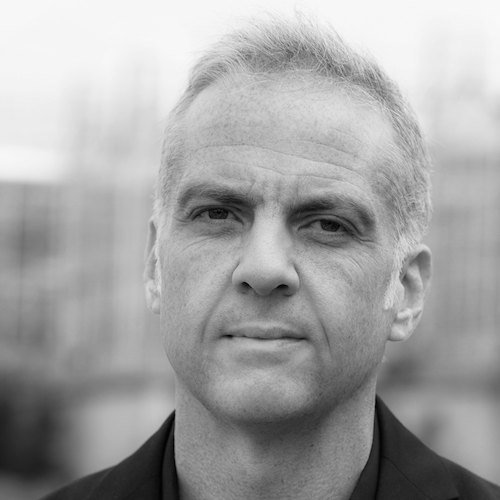
John Folan is an architect and teacher like no other I know. He frames his work around issues of the environment, social justice and equity. Not only is his own body of work significant, but he is dedicated to teaching students to be the next generation of thoughtful architects, makers and citizens.

John is probably best known for his work in Pittsburgh, as founder of the Urban Design Build Studio. He has used design processes to work with under-represented communities on the development and implementation of a variety of interesting projects for most of his professional career. In 2011, he co-founded PROJECT RE_ also in Pittsburgh, geared towards creating entrepreneurial opportunities for local communities with a three-part mission: “Reuse materials. Rebuild communities and Restore lives by teaching trade skills to help people secure a living wage.”

In 2019 John was appointed architecture department head in the Fay Jones School of Architecture and Design at the University of Arkansas. Previously he was the T. David Fitz-Gibbon Professor of Architecture at Carnegie Mellon University’s School of Design. His work has been recognized by the American Institute of Architects (AIA), the Association of Collegiate Schools of Architecture (ASCA), and Design Corps SEED Awards. Before joining Carnegie Mellon University, John was a tenured faculty member at the University of Arizona, and the co-founder of Drachman Design Build Coalition (DDBC), a university-affiliated, non-profit corporation dedicated to the design and construction of environmentally specific, energy-efficient, affordable housing prototypes. He has been registered as an architect since 1995 and a LEED Accredited Professional since 2008.

Insights and Inspirations

  • Successful design projects can emerge organically out of conversations with communities and stakeholders long before any building or idea is imagined.
  • Design training has increasingly become important to fields outside of architecture, because of the ability to think critically and across disciplines.
  • Design education should help students to understand opportunities, while learning an agility that allows them to adapt and grow and change.
  • Cities have actually been improving, making strides towards being much more inclusive in terms of both social and economic platforms, although we have to move the meter much further.

Information and Links

  • John founded and leads the The Urban Design Build Studio (UDBS), a collaborative of students, professors, and allied professionals who work with community residents on implementation of appropriate, affordable, replicable design solutions.
  • John also founded PROJECT RE_, with a mission to reuse materials and facilitate landfill diversion; rebuild communities by strengthening capacity of local residents; and restore lives by teaching people trade skills to secure a living wage. The 10,000 SF Project RE_ space includes a community room, design studio, gallery and workshops for wood, metal, masonry, and digital fabrication.
  • And here’s an example. Re_Fab is a mobile fabrication lab that brings digital tools and educational activities to your front door.
Read the podcast transcript here

Eve Picker: [00:00:17] Hi there. Thanks so much for joining me today for the latest episode of Impact Real Estate Investing.

Eve: [00:00:23] My guest today is John Folan, head of the Department of Architecture and Design at the University of Arkansas. John is probably best known for his recent work in Pittsburgh. As founder of the Urban Design Build Studio, he has used design processes to work with underrepresented communities on the development and implementation of a variety of interesting projects. And in 2011, he co-founded PROJECT RE_, also in Pittsburgh, which was geared towards creating entrepreneurial opportunities for local communities with a three part mission: re-use materials, rebuild communities and restore lives by teaching trade skills to help people secure a living wage.

Eve: [00:01:16] Be sure to go to EvePicker.com to find out more about John on the show notes page for this episode, and be sure to sign up for my newsletter so you can access information about impact real estate investing and get the latest news about the exciting projects on my crowdfunding platform, Small Change.

Eve: [00:01:40] Hello, John. It’s just lovely to be able to chat with you today.

John Folan: [00:01:45] It’s great to speak with you, too.

Eve: [00:01:46] Yeah, it’s been way too long.

John: [00:01:48] Yeah.

Eve: [00:01:49] So, you are now the head of the School of Architecture at the University of Arkansas. But I’ve known you, I knew you through your tenure at Carnegie Mellon University and saw you launch the Urban Design Build Studio there. It’s pretty rare to meet an architect and teacher who is so squarely focused on public interest and equity. And I wanted you to tell me a little bit about the Urban Design Build Studio and the goals you have there.

John: [00:02:19] Well, the Urban Design Build Studio is still alive and well, actually, I’ve carried it with me to the University of Arkansas and it’s now at the Fay Jones School of Architecture. We’re on the initial phases of the first project down here, with promises of many more to come, even in the context of the changes that we’re experiencing with the pandemic. The focus of the Urban Design Build Studio is really to focus on public interest design issues. The clear objective is to use collective intelligence so that the work benefits from the perspectives of multiple entities, multiple individuals, people of multiple expertise. And what we’re trying to do is develop work … tangible outcomes, tangible impact that is replicable and appropriate for the circumstances being addressed. So, it’s quite often that Urban Design Build Studio projects start without having an idea of what the project is, but they emerge more organically out of conversations with community stakeholders and community leaders.

Eve: [00:03:41] So, tell us a little bit about the first project that you’re doing there. Or, maybe a past project that you did in Pittsburgh, but one that you think is really a good example of what you’re trying to do.

John: [00:03:51] I think probably the best example of the one in Pittsburgh, and then I can talk about what we’re starting to do here. The projects in Pittsburgh have ranged in scope from a fabrication facility to a cafe to housing proposals and all sorts of projects in between. Mobile advocacy projects, as well. Probably the one that demonstrates the underpinnings of the Urban Design Build Studio best would be Cafe 524, which is now the Everyday Cafe in Homewood. That project was initiated with …

Eve: [00:04:34] Everyday Cafe?

John: [00:04:36] Yeah, Everyday Cafe, which is right there on North Homewood Avenue, in Homewood, and that project emerged out of a chance introduction to Dr. John Wallace at the University of Pittsburgh and is a native of the Homewood neighborhood, and working with students. By virtue of the suggestion of the Urban Redevelopment Authority, we started working in Homewood and and started with some community engagement, met Dr. Wallace and really focused on this notion of a “third place.” And he had put together a group of people who were interested in establishing a third place and a business opportunity for local residents, and put together a team with Operation Better Block and obtained a license agreement for the property, and then ultimately stuck with that project. And Dr. Wallace has now run that facility for about three years. So, that’s the type of project that probably best exemplifies an organic path to coming up with something that’s meaningful and sustainable for a community.

Eve: [00:05:53] A little bit of background for our listeners. So, Homewood is one of the neighborhoods that kind of suffered most, I think, when Pittsburgh lost half its population, and really hasn’t come back. I don’t know about, I don’t know the demographic numbers there, maybe you do, but it’s very poor …

John: [00:06:12] Yeah, it’s one of the most economically challenged neighborhoods in the city, if not the most, depending on the sector of the neighborhood that you look at. It is, it demonstrates the most challenged characteristics in terms of median income levels. So, there are a number of factors that the significance of that project and the significance of having stakeholders who are really invested in the community, and want to sustain something. So, you know, the work of the Urban Design Build Studio, we’re bringing design services to a group of individuals who may not have had access to those services otherwise. And to achieve something that they might not achieve otherwise. By virtue of affiliations with a research university, there’s an opportunity to spend longer periods of time and working on the projects with those stakeholders than might be possible in a traditional market rate scenario.

Eve: [00:07:13] So, your projects are then in pretty underserved neighborhoods where people are in serious need economically, or affordable homes, or any variety of those options, right?

John: [00:07:27] Yes.

Eve: [00:07:29] Okay. And so you also launched PROJECT RE _ in Pittsburgh. And I don’t know if you took that with you as well. But what was that about?

John: [00:07:37] PROJECT RE_ was a way to expand the efforts of the Urban Design Build Studio. I’m still the executive director of PROJECT RE_. PROJECT RE_ was focused to address regional issues in Allegheny County and Pittsburgh, focusing on restoring community, rebuilding lives and re-use of materials. So, it was a transactional entity and a physical space that has been put together to bring design expertise … You submit materials that are extracted from building deconstruction associated with blight that exists, in Pittsburgh, and then involve efforts of job skill training in the creation of the projects. So, it’s a, the space is about 20,000 square feet in size. There’s a large community meeting center. There’s a gallery in there. There’s a small studio. There’s an industrial fabrication shop that has CNC technology as well as a wood shop. And then there’s an assembly area, and welding training centers.

Eve: [00:08:49] Wow.

John: [00:08:50] Since 2012 that’s been the main working space for the Urban Design Build Studio in Pittsburgh. And we plan to use that space, now that I’m in Arkansas as the head of the Fay Jones School, the intention is to use that space in the summers for design build projects with a number of universities around the country and potentially around the globe, to work on projects that are more targeted in nature, and bring people to Pittsburgh. And then during the year, we’re planning on moving forward to have a series of fabricators and artists and residents who work on projects and initiatives that they’re interested in.

Eve: [00:09:41] That’s pretty extensive. So, how do you hope these initiatives will impact architecture, and architects as citizens, in general? This is not what most architecture schools do, right?

John: [00:09:54] No, it’s not, but I think that there’s been a growing awareness of it. I would say it’s become much more common now. There’s a much greater awareness of the benefit that people can have. I think that, you know, when we talk statistically, if you reference the Cooper-Hewitt Museum exhibition from a number of years ago, you know, they always talk about the other 98 percent, that two percent of the population can afford to use the services of an architect. That statistic is not really correct. The language, more precisely, should be to two percent of population elect to use the services of an architect. And so if we take a look at that, that 98 percent sector is enormous. There is a large portion of that sector that simply don’t value design. And so there needs to be greater awareness.

Eve: [00:10:53] I used to always say that people would spend more time picking the sneakers they buy then choosing an architect, right?

John: [00:11:00] True. Yeah, they will. And so there’s a culture that has to be cultivated around that and and an appreciation for that. So, the intent here is not that every student emerges wanting to be a contractor, or wanting to build their own work, or that they pursue public interest design as a full-time endeavor. But it’s more that we’re elevating their awareness, more that we are helping them to become better citizens, helping them to understand opportunities and how to navigate the context of projects to help them be innovative in ways that are appropriate and have impact to broader communities.

Eve: [00:11:41] You know, I’ve always thought that architectural training is really unique because it teaches these kids to take nothing and turn it into something in a very creative way. And it’s a training and problem solving that I don’t think, I don’t think you can really match in another profession, but maybe in engineering, but perhaps not so creatively there.

John: [00:12:04] No, I agree entirely. I think that it’s an enormous skill set. And most of the students who are successful in migrating the whole way through a curriculum possess a great deal of passion, and a great deal of persistence, as well. And I think those sensibilities and those attributes become so important. And I think that we undervalue ourselves …

Eve: [00:12:30] Yeah, I agree.

John: [00:12:31]  … quite clearly. And, you know, and it’s interesting, too, this trend towards project-based learning that has been adopted across academic circles. You know, it’s really interesting, that’s been embedded in architectural education since its inception. We never seemed to value it. But now other academic units find enormous value in it. And it’s something that’s always been inherent, what we do.

Eve: [00:12:57] So, you know, I’m an architect by training and I’ve morphed over the years into now … I’m a fintech expert! And who knew? But I would say that, you know, early on when I was young, I had a very hard time thinking about leaving architecture because it felt like a waste of training. But I’ve realized over the years that’s absolutely not true, and that training has helped me in innumerable ways. So, I wonder whether architecture schools are getting better at showing young architecture students the possibilities of what they can do with this training. They don’t need to just go work for a, you know, a starchitect somewhere, but there’s sort of endless possibilities for what they can do.

John: [00:13:45] No, I think that students emerging today are so much more aware. I do think that schools are being far more successful in terms of providing opportunities  to students that suggest the full spectrum of things, that they might branch out and might explore professionally after they leave the academic setting. It’s really interesting. I’ve always been amazed at what you’ve accomplished. And I think in a way you’re sort of the poster child for …

Eve: [00:14:19] The wayward architect, right?

John: [00:14:20] Well, yeah. I mean, but not really. You’ve always come back and you’ve been an advocate for design. And I think that, I think where there’s now greater awareness of what architectural education can do is evidenced by programs that are not necessarily professional programs. Like four year programs that are really elevating the awareness of young individuals about the potency of design, what design has to offer. And what happens is those people who graduate, say, with a bachelor of science that will not position them for professional licensure, they’re merging and entering other disciplines, allied disciplines and allied fields. Allied fields are as important, as you know, to the implementation of innovative work as design. I mean, so, yes, I think that the schools are much better now at getting students away from navel-gazing. You know, where you just sit in isolation and try to develop things in isolation. I think that there’s much more emphasis placed on collaboration, team building. I think you see that across the board.

Eve: [00:15:37] Yeah, that’s pretty fabulous. So, as head of the architecture school there, what do you think is the most vital now for the next generation of architecture students, then?

John: [00:15:49] Well, I think it’s probably the same thing that it’s always been, is agility. And I think that’s probably a lot of what we’ve been discussing today, is the the ability of somebody to adapt to a situation, to understand a situation, to bring different levels of expertise and to orchestrate that expertise in a positive way. It’s also knowing when to be a soldier and when to be a leader. And I think that those are important things, important sensibilities. And of course, with climate change being such a significant factor, I mean, that has been part of the conversation. We’re starting to see much greater awareness in the area of social justice and equity. That will need to continue as well. So, I think, again, this training is a problem solver. It’s really just the critical thinking skills and being agile that you really want to have somebody emerge with. They don’t feel that they’re indoctrinated, in a way that they’re equipped with a series of tools that will allow them to adapt and grow and change …

Eve: [00:17:01] Yeah.

John: [00:17:01] … as they move through their career.

Eve: [00:17:03] I’m jealous that they’re learning that so young. Because it really wasn’t a possibility when I went through school.

John: [00:17:08] Yeah, no. Same for me. There was one way to do it. And you kind of had to find your way after you got out.

Eve: [00:17:16] We had to butt our heads against it, right?

John: [00:17:18] Yeah.

Eve: [00:17:19] So, what’s your background and what … You’ve spent a life kind of fascinated with equity in architecture and in the physical environment. And I’m just wondering how you got there.

John: [00:17:29] Well, I’m always proud to tell people that I’m from Chicago, if they’re willing to ask and if they can’t discern from my accent. So, I had, you know, I’m also old enough that when I was young, there were a number of significant buildings that were being constructed at the time. And I was fortunate enough to have the opportunity to see those buildings being built and was just fascinated by construction and the physical environment. And so I really can’t remember a time where I did not want to be involved in architecture, professionally. It was always a an interest of mine and something that I thought would be a great privilege to be involved with. I think as I got older I started to develop an interest in affordable housing and equity, just by virtue of circumstance that I had growing up. Then my career took me about as far away from that and as you can get and I went to work for a couple of starchitects and worked on large projects, significant projects. And then I was principal for a large, well-known firm. And when … I hit a point in my career where I was not addressing things necessarily related to equity and not related to issues in neighborhoods that I felt needed help and made it a sea change in my career and focused on nonprofit work … an extension of that. So that’s kind of the path I took.

Eve: [00:19:07] Yes. We know that you care about socially responsible real estate, but are there any current trends in real estate development that interest you the most? And perhaps the second question is, given what’s going on with the coronavirus right now, how might an architecture change to address things like pandemics and keeping people safe?

[00:19:33] Those are really interesting questions. And, you know, it’s interesting that you’re asking it because the answer, probably .. well, it might have been same a few weeks ago, but it’s … you know, given the perspective that we all have at this time. Of course, it’s changed all of our perspectives. Things that are interesting in terms of real estate; I think that there’s much greater awareness of how market rate development can be leveraged to advantage mixed-income development and provide an opportunity for communities where fixed income residents can be part of a successful neighborhood. I think that there’s an enormous amount of advocacy that is still needed with regard to that. Issues around gentrification. I think people are very keenly aware of some of those issues, but a lot of what’s perceived as gentrification, it is byproduct, in fact, of misinformation many times. That there’s a perception that somebody will be pushed out rather than understanding that there’s a mechanism for long-term residents to stay in an area. So, I think advocacy there becomes really important. The things that Small Change is doing by allowing people to invest through crowdsourced funding is incredibly important. I know the range of projects that you have that are demonstrated through the website really illustrate the potency of groups of people coming together to impact change in areas where it would probably be risk averse in terms of taking on opportunities. So, those are probably the areas in development. In terms of response to the pandemic, I really am at a loss on that.

Eve: [00:21:28] I am a little bit, too. But I’ve been thinking a lot about Small Change. And first and foremost, I have this tool that lets everyday people invest. And yet, you know how many people filed for unemployment in one week, this …

John: [00:21:43] Yeah.

Eve: [00:21:43] … last week? You know, and I can’t really kind of reconcile the two at the moment. I think we’re going to have to wait and see.

John: [00:21:53] Yeah. Yeah, no, I, You know when I think, with the pandemic, I think I probably, I haven’t been thinking about it in terms of the investment side. But the point that you raise is really important. My mind tends to shift more towards the practicalities of one’s physical health. And then, of course, I   of the work of MASS, things that they’ve done with Dr. Farmer, and just simple things.

Eve: [00:22:21] We’re going to see a sea of technological changes as to how you open doors for example.

John: [00:22:28] Oh yeah. No, that’s right. Yes, it will it will transform those things that we take for granted. So, fundamentally. Yes.

Eve: [00:22:35] Yeah, it’s a bit crazy. And of course it’s having an impact on your school because the teamwork that is clearly really part of what you’re doing is sort of being shut down at the moment, right? With the students and how they work together. Or has it? Or are you finding other ways to do that?

John: [00:22:53] Well, we’re still in the first weeks. I think unfortunately … what struck me … You know, it’s interesting if I just relay a story. When we made, when they first made the announcement they were going to distance learning, and anybody who knows architects knows how, understands the intensity of the educational process and studio culture. The younger students in the school happened to be outside my office and I heard this eruption of laughter. And, you know, they’re quite happy that they might gain relief from the demands of the curriculum. And then, when I went up to visit my studio, because I work with students who are further along in the program the kids were in tears. And it was at that time that I really realized the impact that it’s having on those who are emerging into the profession. They understood the gravity of the situation at that time by virtue of the fact that they understood that was probably gonna be the last time they were going to see their classmates as a large group. That was, you know, the celebrations of graduation were clearly going to be suspended, at least for a while. And then, immediate concerns over what it meant for viability of their professional future … the immediate viability. So, I think your perspective, depending on your age …

Eve: [00:24:30] Yes. Definitely.

John: [00:24:30] … changes and your understanding of the impact.

Eve: [00:24:39] Yeah, and then, I asked the current terms question in other interviews and a month ago, you know, people are talking about co-working. And this month, I have to wonder if co-working is dead. You know, it’s very, very difficult …

John: [00:24:57] Yeah.

Eve: [00:24:57] … It’s difficult to imagine. Anyway, now we’re down this depressing path, so.

John: [00:25:01] Yeah. Well, I think to think about it optimistically, you know, going back to what we said. This is a wicked problem. And it’s not a wicked problem. It is illuminating thousands of wicked problems. And I think that the opportunities will emerge out of what we understand. And I think right now it’s so early in the process, as we start to come out of this, as the virus is controlled and contained, and we start to plan for the future. I think that will open up all sorts of avenues. But what those are I don’t know, and I really haven’t had time to speculate.

Eve: [00:25:47] But, you know, I think architects might be at the center of some solutions, I’m sure. So.

John: [00:25:52] Yes. Yeah.

Eve: [00:25:53] So, it’s actually a very interesting thought. How do you think we need to think about our cities and neighborhoods to build better places for everyone?

John: [00:26:04] Well, I think we’ve been on a rather positive trajectory. When I was a, you know, again, going back to when I was a child, when I was a child cities were horrible places. You didn’t want to be in cities, you know, unless you were really serious about urbanism. We avoided cities. And I think that the perceptions of cities really didn’t start shifting until the early 90s. And it really hasn’t been until, I would say, the last decade that we’ve seen the benefits of positive urban thinking, and consideration of new models of development. Yeah, I think that the cities are making strides towards being much more inclusive in terms of both social and economic platforms. And so, we still have to move the meter a lot further in terms of that. You still have, you know, there’s still issues of segregation. There’s still issues of economic disparity and concentrated poverty. So, I think that where urban environments need to start moving is towards deep concentration of those negative attributes. I think that it has gotten significantly better in recent history and I think we are on a path forward. And again, I think crowdfunding in support of developments is a significant component to that continued success in the future. I do think it’s interesting, we always talk about density being … and then, of course, in cities like Pittsburgh, where there been a population loss, you know, the term that was developed was “right sizing.” I don’t know if the pandemic is is going to lead us to start thinking about what appropriate levels of density are or how that ties into the general health and well-being that’s to be determined in the future.

Eve: [00:28:16] Well, I really enjoyed this conversation, and I’m excited to see how you and your students put some thought to the post-pandemic problems and the future that we’re all looking at. It’s going to be really interesting to see.

John: [00:28:31] Well, thank you. I really enjoyed the conversation. This has been a great conversation.

Eve: [00:28:37] Ok, bye John. Bye.

John: [00:28:37] All right. Bye Eve. Thanks.

Eve: [00:28:44] That was John Folan, head of the Department of Architecture and Design at the University of Arkansas. John is an architect and teacher like no other I know. He frames his work around issues of the environment, social justice and equity. Not only is his own body of work significant, but he is dedicated to teaching students to be the next generation of thoughtful architects, makers and citizens.

Eve: [00:29:21] You can find out more about impact real estate investing and access, the show notes for today’s episode at my website, EvePicker.com. While you’re there, sign up for my newsletter to find out more about how to make money in real estate while building better cities.

Eve: [00:29:38] Thank you so much for spending your time with me today. And thank you, John, for sharing your thoughts. We’ll talk again soon. But for now, this is Eve Picker, signing off to go make some change.

Image courtesy of John Folan.

Mobility is pretty pedestrian.

April 8, 2020

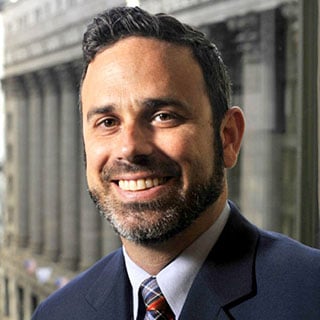
Gabe Klein has invested his life and career in all facets of urban mobility, both as an entrepreneur and within the halls of city government. Now a consultant and advocate for positive urban change, Gabe co-created Cityfi, in 2016, to help cities adapt to new technologies, sustainability issues and growth using public-private partnerships and market-based ideas.

Growing up in the 1970s during the energy crisis, Gabe remembers the rationing of fuel and how it inspired his father to get into the bicycle business. He worked for his family’s company until he went to college and saw first-hand the opportunity to rethink the way people get around in urban areas. Hired by ZipCar in 2002, just as it was getting started, Gabe helped to grow that early mobility company dramatically during its formative years. He served as the director of the District of Columbia Department of Transportation (2008-10), and as commissioner of the Chicago Department of Transportation (2011-13), where he helped create two of the first bike share programs in the U.S., and worked on issues such as bus rapid transit, infrastructure projects and cycling and pedestrian plans, to name a few. He even started an electric-powered, organic food truck chain called On The Fly.

Gabe is also the co-author, with David Vega Barachowitz, of Start-Up City: Inspiring Private and Public Entrepreneurship, Getting Projects Done, and Having Fun (2015).

A huge fan of challenging the status quo, Gabe says one of his mottos is “if somebody is not calling you crazy, then you’re not working hard enough.”

Insights and Inspirations

  • Our biggest problems can be solved through an exchange of ideas between the public and private sectors.
  • Reallocation of urban space away from cars is critical for urban mobility. The majority of urban trips are less than one to three miles, and there’s a big market there.
  • We need more rebels, people pushing the envelope, even when we don’t agree with them.

Information and Links

  • You can buy Gabe’s book at Island Press or on Amazon.
  • Watch Gabe’s TEDx talk: Cars Almost Killed Our Cities, But Here’s How We Can Bring Them Back.
Read the podcast transcript here

Eve Picker: [00:00:14] Hi there. Thanks so much for joining me today for the latest episode of Impact Real Estate Investing.

[00:00:21] Today’s guest is Gabe Klein. Gabe has invested his life and career in all facets of urban mobility, both as an entrepreneur and within halls of city government. That’s made for a very interesting point of view, from Zipcar to bike sharing to transportation commissioner to book and now to Cityfi, Gabe has left a mark on mobility in this country.

[00:00:50] So, listen in and be sure to go to EvePicker.com to find out more about Gabe on the show notes page for this episode. And be sure to sign up for my newsletter so you can access information about impact real estate investing and get the latest news about the exciting projects on my crowdfunding platform, Small Change.

Eve: [00:01:18] Hello, Gabe. Thanks so much for joining me today.

Gabe Klein: [00:01:20] Thanks for having me, Eve.

Eve: [00:01:22] So, you’ve done so much, I really don’t know where to begin. Zipcar. Bike sharing. Transportation commissioner. A book called ‘Startup City.’ And my personal favorite, On The Fly, your own electric-powered, organic, food truck chain.

Gabe: [00:01:37] That’s correct.

Eve: [00:01:39] And, of course, now you wrap that all up in your company called Cityfi. I’m wondering how you got there and why transportation issues matter so much to you.

Gabe: [00:01:50] Yeah. Well, you know, I grew up in the 1970s, actually, as a kid, and 80s, but I grew up during the energy crisis, and I remember the rationing of fuel and it inspired my dad to get into the bicycle business. And so from the age of, like, five years old, six years old, I was always around bicycles. We had skateboards and we had mopeds in the stores. And we used these things at home, too. And my dad actually commuted by bike, many days. And so I grew up looking at these quote unquote alternative modes of transportation, actually as normal ways of getting around. And, by the way, we lived in a rural area. So, we would commute all the way from our rural home into the local town on these busy roads. And so, as I got older and I was, so, you know, in the bicycle business, even post-college, I realized that in urban areas there was this huge opportunity to rethink the way people got around. And I had moved to Washington, D.C., in the mid 90s, and, you know, our major arterials were speedways. People were doing 65, 70 miles an hour …

Eve: [00:03:04] Oh, yeah.

Gabe: [00:03:04] … completely out of control. And yet, we had all these people moving back to our cities. So, I met Robin Chase, and that was around 2002, and she hired me as an executive at Zipcar, and I helped build that business, and it was really instrumental in me understanding the relationship between public and private sector, and how important the public sector was in empowering small businesses like ours, and tying them in to the existing infrastructure in the city, in the space, in, you know, in terms of giving us parking spaces, in terms of tying us into the transit system. And it was really the key to our success, I think. And so, ever since then, I’ve been really focused on, you know, how do we do good, make money and enhance the lives of people in our urban areas.

Eve: [00:03:59] From those early beginnings, because things have changed a lot since Zipcar, right? Zipcar has waned a little bit because other things have popped up instead. What is the mobility landscape look like to you in the U.S. today by comparison?

Gabe: [00:04:13] Yeah, well, look, I think businesses always need to evolve, right? I mean, look at Amazon. It started out as a bookstore out of a garage, right? So, I think that there’s been a lot of evolution related to the technology that we have in our hands. The GPS technology that allows us to geolocate where things are. Solar and electrification. Obviously, the backbone of it all, the enhanced cell phone networks. And that’s what’s really powered the transformation in mobility. At the same time, what we find is we have all these new modes, and they’re really exciting, and it’s actually gotten a lot of people on bikes, which I love.

Eve: [00:04:50] Yes.

Gabe: [00:04:50] Right? But on the other hand, things are pretty pedestrian. And what I mean by that is, like, there’s a basic way that we’ve been getting around for a couple 100,000 years. You know, we’ve been walking, we’ve been riding the horse. Then we start riding bikes, taking streetcars. And fundamentally, you have a sort of geometry problem, and you have, sort of, movement of people and the geometry of how you move them, and it’s really about volumetrics. And so, in a dense urban area, you can only move so many people so quickly. And so it becomes about bigger things. It’s about, like, what creates a healthy city, what creates a safe city, creates an equitable city, or town, by the way, it doesn’t have to be a big city. And so, you know, my time in government was really instrumental in seeing that the levers that we had that could really change the quality of life for people. And now we’re talking about things like universal basic mobility. We’re having conversations in the public square about, you know, because mobility and transportation are so closely tied to land use and real estate, and because so much of people’s income goes to those two things, that if you can create a system where people don’t have to use a very complex transport system, and you don’t have to make a capital investment in the transportation, they can afford to live in a place …

Eve: [00:06:16] Yeh.

Gabe: [00:06:16] … that they want to live and they can do it in a way that they have a higher quality of life, and more access to jobs. And so, that’s …

Eve: [00:06:22] Solving the mobility issue actually makes housing more affordable.

Gabe: [00:06:29] Well, look, if you shed one car like, let’s say you’re a two-car family, you shed a car, that’s 150,000 dollars more real estate you can afford.

Eve: [00:06:36] Yes.

Gabe: [00:06:37] Right?

Eve: [00:06:37] If you’re a worker who needs to get to a job every day and there is, you can walk to pick up your groceries, and there’s a train or bus near you that gets to work, you can shed both the cars.

Gabe: [00:06:50] Right. Right. I mean, look, people say like D.C., San Francisco, Boston, these are the most expensive places to live. However, you know, in D.C., car payments are less than 10 percent of people’s income, right? And you look at a lot of other, like Sunbelt cities, it’s 20, 25, 30 percent. In a low-income neighborhood, over 50 percent. My household? We’ve gotten to, because we have an apartment downstairs, one, two, three, four, five, six, seven people. And there’s one car, …

Eve: [00:07:17] Yeh.

Gabe: [00:07:17]  … you know. And so, actually, our cost of living is relatively low.

Eve: [00:07:23] Yes. Yeah. So, you know, interestingly, I mean, I think about this. So, while technology has been advancing some mobility solutions, we’re really kind of still stuck in how to model the physical landscape, right?

Gabe: [00:07:38] Oh, absolutely. And that’s what I was getting at when I was saying, like some of the problems are very pedestrian. I was trying to be funny, but it’s like, it’s really about the reallocation of space, right? It’s like, you can only move so many people if you allocate all the lanes to cars that carry one or two people, what we call single-occupancy vehicles. And so, there’s a big movement, like, if this technology and these new modes are going to be successful, like scooters, for instance, and shared bicycles, you’ve got to give space to them or people won’t feel safe. And if they don’t feel safe, even for a small portion of the trip, let’s say they’re driving, or riding, excuse me, from home to work, and it’s a five mile trip and there’s two blocks that feel terribly unsafe. That mom may not make that trip, the entire five mile trip, because of those two blocks. And so, it’s really about creating a safe system for people.

Eve: [00:08:28] I know that the public sector is thinking about this. Is the private sector thinking about this? Who’s more advanced in their thinking? Are they talking to each other?

Gabe: [00:08:40] Well, that’s actually why I wrote ‘Startup City.’ When I went into the public sector, I had never worked, I mean, and I came in running the agency, I had never worked in government in my life. And so I had a very different perspective. And I’m really fixated and focused on this exchange of ideas between public and private. Because, to be honest, to solve the climate crisis, our affordability crisis, all the major problems of our time, we’re not going to do it without the two sides working together. Now, government has a very strong arm in terms of regulation and setting the tone, which I think they are going to need to flex. But the more we can work with the private sector, understand the private sector’s, you know, business models, their motivations, their, the outcomes that they’re looking for, and we can inform the regulatory environment and policy, then we can come together and make change a lot more quickly. And to be honest, in the situation we find ourselves in, particularly with climate, we need to move a lot faster.

Eve: [00:09:38] So, do you think that the public sector can somehow be infused with the urgency and energy of a startup?

Gabe: [00:09:47] Well, that’s what I did. I’d like to think I did. I mean, I ran these two agencies as if they were well-funded startups. And, you know, there were some people that thought I was crazy.

Eve: [00:09:59] Ha.

Gabe: [00:09:59] And, you know, one of my mottos is, like, if you’re, if somebody is not calling you crazy, then you’re not working hard enough. You know, like, if somebody doesn’t think that your ideas are a little crazy, then you’re not challenging the status quo enough. And I think the government can work on behalf of taxpayers, move a lot faster, and also, to be honest, be fiscally responsible, and in some cases, share in profits, or losses, with the private sector, which is what we did with some of our bike share programs. I think the private sector needs to be much more open to working for the greater good, taking a long term view versus the short term view. And looking at the long-term sustainability of their business, and sustainability of the planet, and the urban environment that they’re operating in. And if we can get the two thinking alike, and I work with a lot of companies and governments, it is just amazing what they can do and the speed that they can do it in. A lot of it comes down to … tried and true old school relationships, and understanding and trust. And that’s what we try to build.

Eve: [00:11:02] Yes. Yeah. Yeah. So, Then how should equity play into transportation solutions?

Gabe: [00:11:11] Yeah. I mean, there’s so much to talk about here.

Eve: [00:11:14] Yes.

Gabe: [00:11:14] But it’s actually, at the end of the day, and I hate to say something like this as an entrepreneur, but transportation doesn’t make any money. I mean, like how many transportation systems, you know, that consistently make money. Like Pepsi does, right? Almost none. Uber lost almost eight billion dollars last year. There are a couple of transit systems that are profitable because so many people use them, like Hong Kong and Singapore. There are some private sector companies that make money some times, like some of the airlines. But fundamentally, it is not a big moneymaking business. And so, we need to think about the outcomes that we want for our people, We need to think about creating equitable outcomes around all the elements that make up quality of life, or the happiness index, for instance, and then figure out how do we fund transportation to make that work. So, Uber today might be funded by venture capitalists, and long term it may be partially funded by the government …

Eve: [00:12:08] Yes.

Gabe: [00:12:09] … for certain types of trips. For low-income people, late at night, hourly workers, when the bus isn’t running, to make it home, you know? So, I think the business models are going to change and shift. We saw this around the turn of the last century where there were so many streetcar systems built by developers, funded by developers, so that people could reach their new streetcar suburbs. And then over time, as the automobile came up and you had such a fractured marketplace, you had the consolidation of them, and then you eventually had the collapse of them, and then they became public sector entities, and then they were killed by the car companies. I mean, it’s a little bit of an oversimplification, but that’s sort of how it went down.

Eve: [00:12:47] Yeh. Pretty correct.

Gabe: [00:12:48] Right? And so, I mean, you know, everything’s cyclical. We’re going to see a lot of interesting high-flying startups. We’re going to see a lot of consolidation. We’re gonna see mobility service systems, where you see, like, Spin scooters and Argo autonomous vehicles, and the bus. And you’re gonna see a lot of public-private partnerships where good actors, that want to share in risk and reward with the government, will be given concessions to operate various types of services. And that’s, I think, how it’s going to shake out in the long term.

Eve: [00:13:21] Yeh, also last week, and I’m trying to remember where this was, I read an article about a town, city, that had done the analysis on what it will cost them to upgrade their fare structure. And they decided it was cheaper just to make it free for people who ride the bus. Where was that?

Gabe: [00:13:39] You’re probably thinking of Kansas City?

Eve: [00:13:40] Yeah.

Gabe: [00:13:41] I have, actually, I was out there a few years ago. One of my partners was the chief innovation officer there. And I went out and met with the city manager, years ago, and he wanted to do this and they finally got it done. And the argument was, look, you know, we’re spending five million dollars a year to recover eight to 10 million dollars of farebox, right?

Eve: [00:14:07] Right.

Gabe: [00:14:07] So, you have a net positive of three or four million. You know, what if we just made it free, how many more people would ride? What kind of friction would we reduce? How many cars we take off the road? How much more equity would we create with low-income people that need to take the bus and maybe a dollar or two every trip is a lot. I think that’s really interesting.

Eve: [00:14:29] I think it’s fascinating, but I’m wondering why it took them so long to come to it, to, you know, to decide to do it. It seems obvious.

Gabe: [00:14:36] This is why we need more rebels, right? In government and in the private sector. Like people are very critical of Elon Musk, particularly in my sort of urban, you know, transportation world. And I get it. And I’m critical of him, too. But at the same time, we need people pushing the envelope, even when we don’t agree with that. Even when we think that some of their ideas are crazy. Because sometimes the application of things – like the Boring Company, for instance, you know, tunneling – the ultimate application may not be what they’re selling today, and it could be very, very useful. And let’s face it, the Second Avenue subway that took 100 years to build in New York. We can do better. So, we need to take disparate ideas, different types of people, put them in the mix, be patient, have some tolerance, and try some things.

Eve: [00:15:24] Yes. So, failure could be a good thing, right?

Gabe: [00:15:27] Absolutely. We …

Eve: [00:15:28] People don’t like failure in the United States. We gotta try, right?

Gabe: [00:15:33] Well, we’re either obsessed with failure and think it’s a good thing, it’s a horrible thing. It comes down to, you know, government risk aversion vs. private sector risk acceptance, right? And we have two very different cultures. And so, when you try to bring the two together to work on things, this is actually one of the big issues that keeps them from understanding each other. One is trying to keep their name out of the paper. One is trying to not get noticed. One is trying to do good for the citizens, look out for the greater good, but not make a big splash, typically. And you have the opposite on the private side. And these are generalizations. Sometimes it’s the opposite. But if you get the two to understand how they can benefit each other, and the value that they each bring, and the leverage they can get out of each other, it’s amazing what could happen.

Eve: [00:16:18] Yeah, so, the interesting thing is what you’re talking about, you know, is that’s really the way I developed my real estate portfolio, in partnership with the city of Pittsburgh, and the Urban Redevelopment Authority. And we both fully understood what we were bringing to the table and how we could help each other. That was in real estate. And I thought that was an amazing opportunity for both of us. And the city understood that, and I understood that. So, it’s kind of puzzling why … why this doesn’t extend to other things, I think.

Gabe: [00:16:49] I agree 100 percent. That’s why people like you, me, and many others are important in pushing that envelope. Pittsburgh is a really interesting city, and we’re doing a lot of work in Pittsburgh right now, trying to create a first-of-its-kind, mobility-as-a-service offering, basically, for the city. So, unlike Lyft and Uber, which are creating their own, like, walled gardens, and I don’t fault them for that, but they’re creating their own sort of systems within their app. We’re saying, how about if you bring best in class providers together?

Eve: [00:17:23] Yes.

Gabe: [00:17:24] From all different walks of life. And then let, aggregate the services in one app, transit app …

Eve: [00:17:29] Right.

Gabe: [00:17:29] … and let people use them, and create a physical installation, right? Near real estate. So, create a physical mobility hub, and there’ll be like 50 of them. So, you get some of that enhancement around real estate like you get from a TOD metro stop, but then also have to be virtual, too. And give the city some level of access to data and some level of control …

Eve: [00:17:55] Right.

Gabe: [00:17:55] … versus being 100 percent private.

Eve: [00:17:58] I actually interviewed Karina Ricks on these little mobility stations. It’s a very exciting program. And, you know, you just led me right into my next question, which was how do you think data can help to formulate better solutions?

Gabe: [00:18:17] Oh yeah. Data is really important. And it’s really evolving and changing. And there’s all kinds of arguments, you know, within our little nerdy world about privacy and, you know, very important topics, but at the end of the day, this idea that data that’s generated by citizens belongs to somebody, is sort of misguided, right? I mean, at the end of the day, it really belongs to the citizen that’s generating that data. And you could argue in some sense that it belongs to nobody. But the data is now being shared a little more widely with cities. So, that cities can plan more effectively for the future. So, that they have a sense of what’s happening on their street. And we’re really moving from an analog system of operational control of how the city signal system works, for instance. We started moving to GPS about 10 years ago, where we started to gather a lot of data from GPS trackers on our buses and our taxis, like in places like Chicago. We could start to estimate for our constituency what congestion was looking like in real time. But now it’s becoming more about operating, than just planning for the future. So, it’s like, how you operate day to day, a very complex system where Waze might have better data than the city does? And so, it’s really interesting how it’s playing out. And the Open Mobility Foundation, which we worked with LA DOT and other consultants on helping to set up, is a really interesting place for a lot of these ideas to germinate, and a lot of the cities to work together and figure out with the private sector, by the way, how to share data, effectively, how to be very respectful and careful about privacy, and how to look at both planning, as well as day to day operating, utilizing these very rich data sets.

Eve: [00:20:12] Can you give me an example of a solution that was crafted from data that you think is fabulous?

Gabe: [00:20:18] Sure, sure. Well, look, scooters have been very controversial, right? Some people love them. some people just despise them. And that goes for politicians as well. So, you know, you go to a place like D.C. or L.A. and you have, you know, very smart, bold leadership. And they see the potential with an electric scooter to displace fossil fuel-powered car trips. So, they want to go big. But they know that you have elderly people that need access to the sidewalks, and disabled people, and children. So, if you don’t have some level of control, then what happens is it doesn’t work. And it ends up, you know, flaming out.

Eve: [00:21:00] We’re rubbing up against the physical landscape again, right?

Gabe: [00:21:03] Exactly.

Eve: [00:21:04] Yeah.

Gabe: [00:21:05] But often people who have not worked in government don’t understand it. They understand it theoretically, they understand the data side, but they don’t actually understand how this plays out politically in a city. And so in a place like L.A., we have council members saying, hey, I don’t want any of these in Brentwood. Right? The ability to geofence, and to then know if, like, not just to say we’re gonna geofence scooters out of this council member’s ward, but we’re actually going to be able to know and validate if the scooter company was able to get people to adhere to that. That’s very important. You know, that’s how L.A. went to 30,000 plus scooters, because the council members …

Eve: [00:21:49] Wow.

Gabe: [00:21:49] … and the people felt comfortable that LA DOT actually had the tools to manage a program that large. In Dallas, where it was a total free for all, they had no data, and they told people to just do whatever they wanted, it was a disaster.

Eve: [00:22:05] Oh, interesting.

Gabe: [00:22:05] And so I think it what … yeah. So, what we’ve learned is that, and the private sector has learned right along with the public sector, is like, oh, we need a common data standard. We need to share data. We need to be more transparent. Or the public and the politicians will rise up and boot us out of here. And so, it’s very much, actually, the folks that are running the DOTs that are trying to help a lot of these new companies be successful.

Eve: [00:22:31] Wow. Is there a current trend in transportation that holds the most hope for you?

Gabe: [00:22:38] When you say trend, do you mean a mode per se or do you mean …

Eve: [00:22:41] I mean a mode or, you know … even like, I’ll give you something that I’ve been reading a lot recently. And one thing that I read that I thought was fascinating was a couple of cities and states taking a look at their very wide roads and very heavily trafficked roads and actually deciding to give them a road diet. I think this is an example in New York State of one of the most heavily trafficked roads, and rather than widening it, they decided to narrow it, which I think is really an interesting trend. Because it opens up space in an unexpected way and it controls traffic in a very different and unexpected way, as well. So, I don’t really know what the outcome will be, but I’ve noticed, I suppose, experiments like that, more and more.

Gabe: [00:23:34] Right, uhm, no, I would say the number one thing I’m excited about is the reallocation of space that we’re finally starting to see on our streets. The closing of Market Street in San Francisco. You know, I put a bike lane down the middle of Pennsylvania Avenue, and, you know, there’s a real movement towards serious reallocations of space, as was as the idea of actually implementing congestion pricing in cities. So, I think that’s a very positive movement. And then, obviously, on the private side, the venture capital investment and efforts in active mobility, you know, and bike share and scooter share, I think these are very positive movements. You know, not to say that all the companies will be successful, but the realization that the majority of urban trips are less than one to three miles and that there’s a big market there, and that cities also want to get people out of cars. So, I think, you know, these are the things that that give me quite a bit of hope.

Eve: [00:24:35] Yeah. And then there’s some fallout that I just personally find very interesting. I had a conversation with someone last week who said, you know, in the next five years, we’re going to be figuring out how to repurpose parking garages. And I thought that was like, that’s really fascinating.

Gabe: [00:24:50] Well, yes. And the important thing is to build them in such a way that they can be repurposed. Flat, right? That the ramps are on the exterior. That you run the ductwork for the electrical and HVAC when you build the garage. So, the smarter people are about what the potential is, the more they can build into their developments, and I have a lot of funny stories about conversations I’ve had with folks over the years that were building buildings and, you know, feeling like I should have been paid for my 15 minute conversation that saved them millions of dollars. Because, I mean, I’m sort of kidding. But, you know, shared parking facilities, not building parking facilities and convincing cities to move more towards parking maximum, shared parking zoning and ordinances, creating mobility wallets to give people access to mobility instead of incenting people to use parking. There’s so many interesting things that we can do and a lot of it comes down to carrots and sticks, both for developers, for cities and for individuals.

Eve: [00:25:53] Right. I’d love to know a little bit more about the sort of you tackled through Cityfi.

Gabe: [00:25:57] Yeah.

Eve: [00:25:57] It’s a great name.

Gabe: [00:26:00] Thank you. So, we do a lot of different types of work. I’ll say that about half our work is public sector, mostly cities. And then about half is private sector. And we do some foundation work as well. We’ve been working with the Knight Foundation on autonomous vehicle piloting and outreach, which has been fascinating work. But we do a lot of public-private partnership work. We do a lot of urban planning, around everything from strategic plans for cities, shared mobility plans, curbside management, which is becoming a huge issue with the change in how people move around. And a big opportunity as well. And then, you know, we do a lot with the private sector on go-to-market strategy, and positioning them to be triple bottom line companies that the government will want to do business with. Which means sometimes like a wholesale revamp, not just of how they market themselves, but how they conduct their business, and making sure that sustainability and health and equity and positive outcomes for society are not just talking points in their marketing, but key pillars, north stars of their strategy. And when we’re successful there, I mean, it’s very rewarding. Very … it feels really good to have that kind of impact.

Eve: [00:27:14] So, I think right now, socially responsible real estate is still a minority fraction of what is going on in this country. I’m wondering what you think it will take to kind of move it to the only way to do real estate development, or think about building in cities.

Gabe: [00:27:30] It’ll be a combination of the regulatory environment changing. You know, we’re gonna get away from single-use anything. We’re going to get away from fossil fuel-powered anything. And so, you know, as these are put into a regulatory form, these policies, that will change the way people build. We need more affordable housing. We need more workforce housing. I do think that government leads. I know we have challenges with the finance folks who will say, yeah, I’m not going to finance that if you don’t build two spaces per unit. And this is where government is so important, because obviously if a local government says, look, we’re going to parking maximums for minimums, it’s not like finance companies will say, oh, we’re not going to build in New York City, we’re not going to build in Nashville. They will. And that’s why government’s got to lead. I think, also, the other side of this coin is that once people see what they want, they will buy it. And then once you hit a tipping point …

Eve: [00:28:32] Right.

Gabe: [00:28:34] …. the market sort of takes over and …

Eve: [00:28:36] Kind of like iPhone, right?

Gabe: [00:28:39] Yeh. I mean, look, government used to lead. Government incented Tesla to build electric cars and loaned them a billion dollars, and all of that, right?

Eve: [00:28:47] Right.

Gabe: [00:28:48] But now the reason people are buying Teslas is they’re saving money and they’re really high quality cars. And so people are self-selecting into micro-units or developments without parking that are cheaper, but also maybe closer to the things that they want to experience. And the market is begging for this. We are so … like I was talking to Chris Leinberger the other day and he said we have 40 years of pent up demand for urban, livable, walkable. And so at some point, the next generation of developers are going to come out and say, well, why the hell are we building that?

Eve: [00:29:23] Right. You know, I think that zoning is a really important piece in this. And I was involved in the zoning code rewrite, and it is huge. You know, and every municipality has a different zoning code. When I think about this, it’s overwhelming how you kind of move towards countrywide acceptance and regulatory changes to really make this happen for everyone. It’s a big, big job.

Gabe: [00:29:51] That’s interesting. Yeah, it’ll be interesting to see when when we get a new president, hopefully in November, you know, the tack that they take towards transportation, and, you know, hopefully getting away from the sort of modal silos that we have DOT and thinking much more across HUD and DOT and DOE, which, you know, was attempted last time, but it was never funded. And I would love to see that really happen. I mean, you could almost see collapsing these agencies into one, and … with different divisions internally based around land use type, you know, urban,  suburban, exurban, rural, versus the bimodal stuff and then addressing the energy, you know, around housing and transportation and production.

Eve: [00:30:42] Yeah, yeah, yeah. Well, this has been fascinating, but I want to know what’s next for you.

Gabe: [00:30:48] Yeah. Well, you know, I’m really enjoying my work. I mean, we’ll see if the entire economy just grinds to a halt.

Eve: [00:30:56] For at least a month, right?

Gabe: [00:30:57] Yeah. Maybe we’ll all be living in communes soon and just dancing and eating tofu. But in the in the meantime, I going to continue working with cities, working with companies. I also work with Fontinalis Partners out of Detroit, wonderful firm, and we invest in scalable platforms, you know, often software based, but sometimes hardware based also. So, I really enjoy working with startups. And we do that at Cityfi. But also, obviously, at Fontinalis, there’s a lot of work to not just invest in these companies, but then to help make them successful. And in my personal life, I’m revamping a beach house.

Eve: [00:31:37] Oh, lovely.

Gabe: [00:31:38] Trying to get that done by summer.

Eve: [00:31:41] I’m revamping a tiny little rural cottage. It’s fun. Well, thank you very much, Gabe, it’s been really delightful talking to you. And I can’t wait to see what you do next.

Gabe: [00:31:54] Well, thank you and thanks for thinking of me and I’ll be following your work as well.

Eve: [00:31:58] OK.

Eve: [00:32:02] That was Gabe Klein of Cityfi. Gabe believes a few things adamantly. First, that there is enormous power in collaboration between the private and public sector. Second, that data rules. And third, that over the next few years we’ll see a reallocation towards pedestrians first and automobiles second.

Eve: [00:32:32] You can find out more about impact real estate investing and access, the show notes for today’s episode at my website, EvePicker.com. While you’re there, sign up for my newsletter to find out more about how to make money in real estate while building better cities.

[00:32:50] Thank you so much for spending your time with me today. And thank you, Gabe, for sharing your thoughts with me. We’ll talk again soon. But for now, this is Eve Picker signing off to go make some change.

Image courtesy of Gabe Klein, Cityfi

Public space. The heart of the city.

March 30, 2020

There are numerous factors that city planners, politicians, developers and designers consider when planning cities; from infrastructure to transit to the creation of residential, commercial and retail space, all to draw new businesses and residents. But often the last thing to be considered, and yet perhaps the most critical component in any city neighborhood, is public space. Parks, plazas, walking and bike paths and even wide, strollable sidewalks all play an integral role in connecting communities and giving people a sense of belonging.

In a recent podcast interview with Eve, former Pittsburgh Mayor, Tom Murphy, reflected on some of his administration’s big wins in revitalizing the city of Pittsburgh, as well as some missed opportunities. In his post-mayoral career, Mayor Murphy regrets not putting public space front and center.

Turnaround mayor

Tom Murphy served as Pittsburgh’s major from 1994 to 2006, a turbulent and transformative time for the city. He took over the reins of the city when it was decimated by a loss of the steel industry and out-migration of over 50% of its population. During his tenure Tom created a $60 million development fund to jump-start development in abandoned neighborhoods, built two new waterfront stadiums, and developed many miles of river trails. At the end of his tenure, he had presided over a remarkable urban comeback story, and the city has been transformed in a myriad of ways.

At the heart of Murphy’s plan to revive Pittsburgh was the purchase of 1,500 acres of land for new development. This gave the city a chance to create effective public-private partnerships with developers to restore struggling parts of the city, all the while luring new businesses to the region and encouraging others to stay and grow.    

Planning for public spaces

Murphy strongly believes that a sense of “place is everything,” and can have a huge impact on the quality of peoples’ lives. He notes that in addition to the large-scale developments his administration sponsored, they were also able to also rebuild all of the city’s 100 or so neighborhood parks, both small and large, all while involving the local communities. But he is quick to add, that although their instinct was right, they should have gone further, expanding the city’s park system instead of just rebuilding it. Some neighborhoods that have long lacked communal gathering places would have benefitted from the creation of wonderful new plazas.

Reflecting on his experiences in Pittsburgh, and as a frequent visitor to cities all over the world in his role as a Senior Fellow at the Urban Land Institute, Tom has come to believe that an even a stronger sense of community can be encouraged through the use of public space, whether it’s a playground or a park. He wonders how you can thoughtfully connect people in a neighborhood so that they feel a sense of belonging to the place. He believes that “if people feel rooted in their neighborhood, … they’re willing to put up with a lot of problems if they see themselves and others committed to wanting to making it better.”    

Getting communities invested

Public spaces are crucial for building successful cities. They help to bring communities together and invest people in their neighborhoods, regardless of background or income. Amidst lucrative development plans, it can be easy to overlook the importance of public space, but as Murphy notes, city government and local communities can and should work in partnership with developers to make sure public space is at the forefront of every new development and planning project.      

Listen to the full interview with Tom Murphy to hear more about his vision for public spaces and the role that public space plays in building better cities.      

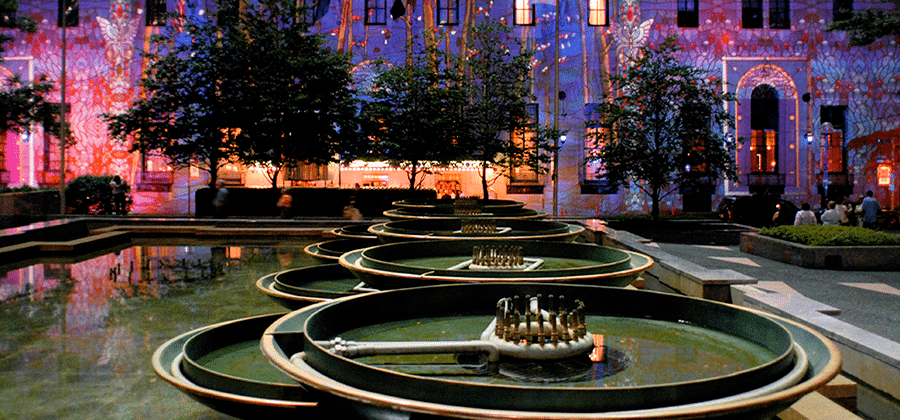
Artlumiere light projections ’09 courtesy of Jonathan Greene

A bold experiment in coal country.

March 18, 2020

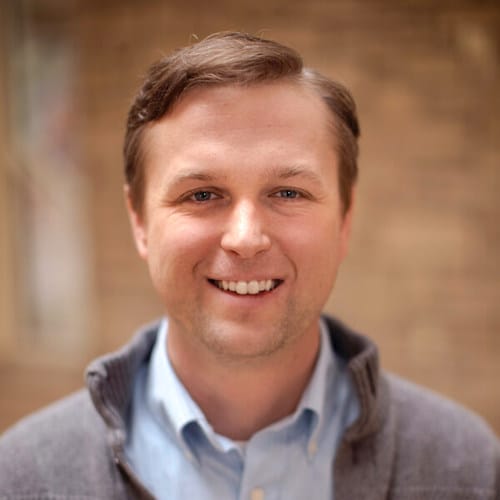
Brandon Dennison founded Coalfield Development in 2011 to offer a unique workforce approach focused on transforming communities – a bold experiment in tackling the generational poverty West Virginia has long wrestled with.

This experiment grew out of his early memories while growing up in a comfortable middle-class family in West Virginia. Others were not so fortunate. West Virginia’s jobless rate is high. But Brandon noticed that people wanted to find work, even if only through odd jobs, and this memory stayed with him. While still at school, Brandon developed a business plan for Coalfield Development, the first step towards launching the nonprofit which is focused on countering the generational poverty and lack of economic opportunities in West Virginia.

Coalfield’s workforce model is called 33-6-3: 33 hours a week are spent in on-the-job training, along with participation in training workshops; six hours a week are devoted to community college and business classes for an associate degree in applied sciences; and three hours a week are committed to personal development coaching and life skills. 

Coalfield has since expanded into a family of small, social enterprises. Revitalize Appalachia is developing a green-collar workforce deployed on projects that include rejuvenating empty buildings, and which was pivotal to starting Solar Holler, southern West Virginia’s first solar installation company. Refresh Appalachia produces fresh, healthy, local food. Reintegrate Appalachia is part of a region-wide coalition to support people in recovery from drug addiction on the path to finding employment. And Reclaiming Appalachia Coalition is a multi-state network exploring more innovative, sustainable approaches to mine-land reclamation.

On the development side, since 2013, Coalfield Development has incubated two wood shops, a coffee shop and an antique mall. In addition to a 2019 Heinz Award, Coalfield was recognized in 2018 with a $1 million grant from the Rockefeller Foundation/Chan Zuckerberg Initiative to replicate their model in Appalachia. 

Insights and Inspirations

  • Brandon believes that the American small town is poised for a comeback.
  • He is most proud of the deep human development his programs deliver, where participants move from hopelessness to optimism and confidence.
  • Real estate projects tackled by Coalfield Development do much more than deliver a building. They house new enterprises, create jobs, and train people in a multitude of skills.

Information and Links

  • Refresh Appalachia is turning coal mines into farms.
  • Solar Holler is pursuing innovative approaches to bring solar within reach of people and places who have always been left out.
  • Revitalize Appalachia builds community-based construction projects along with on-the-job training. Crews are local and projects are green.
Read the podcast transcript here

Eve Picker: [00:00:08] Hi there. Thanks so much for joining me today for the latest episode of Impact Real Estate Investing.

[00:00:15] My guest today is Brandon Dennison, a young creative powerhouse working to bring an economy to mid-Appalachia. As a young adult, Brandon noticed the poverty and lack of jobs in the town he grew up in. That early memory stayed with him through his college years. While still at school, he launched Coalfield Development, which is focused on workforce development to counter the generational poverty and lack of economic opportunities in Western Virginia. While workforce development is the center of Brandon’s focus, that has also spilled over into creative, sustainable and community-centric real estate development. Brandon’s work has been recognized with a Heinz Award, and a $1 million grant from the Rockefeller Foundation/Chan Zuckerberg Initiative. You are going to want to hear all about it.

[00:01:24] Be sure to go to EvePicker.com to find out more about Brandon on the show notes page for this episode. And be sure to sign up for my newsletter so you can access information about impact real estate investing and get the latest news about the exciting projects on my crowdfunding platform, Small Change.

Eve: [00:01:58] Thanks so much for joining me today, Brandon.

Brandon Dennison: [00:02:01] Happy to be here. Thanks for having me.

Eve: [00:02:03] So, we are rebuilding the Appalachian economy from the ground up. That statement is front and center on the home page of Coalfield Development, the organization you founded and lead. Well, I’d love you to tell me exactly what that means.

Brandon: [00:02:20] Well, it is a bold statement. There’s no doubt about that. And we are trying to model and pioneer what a whole new and better and fairer and more sustainable economy can look like for our region. This is a region that’s been overdependent on coal for far too long and that overdependence has left us economically vulnerable. It’s also left our environment in a difficult situation, not as clean as it should be and it’s hurt, it’s ultimately hurt the fabric of our societies and our communities, as you can see with the growing opioid and addiction crisis that we’re in. So, at Coalfield, we know that we can’t re-employ every single unemployed person that’s out there in Appalachia, but we can model what a newer and better way of doing things can look like.

Eve: [00:03:13] So, you know, what does that modeling look like? Have you developed programs? What are you working on?

Brandon: [00:03:18] Yeah. So, we incubate, mostly from scratch, but also in partnership with other entrepreneurs, we incubate what we call social enterprises. These are business models that blend the compassion of the nonprofit world with the efficiencies of the for-profit world. And the enterprises are in new sectors of the economy where we can innovate and show what a more sustainable economy can look like. So, for example, we’ve helped start the first solar installation company in southern West Virginia. We have an organic agriculture company. We make t-shirts out of recycled plastics. We make wood furniture out of reclaimed lumber from dilapidated buildings, some very innovative businesses. And we use those businesses to put people back to work, and then to support their lifelong learning and development.

Eve: [00:04:06] And so how many businesses like that have you developed to date?

Brandon: [00:04:09] From scratch, we’ve helped start 11 new social enterprises that we own and operate. And then we’ve also invested in more than 50 other social enterprises throughout the region.

Eve: [00:04:21] That’s a lot. That’s over 60, already.

Brandon: [00:04:25] Yeah.

Eve: [00:04:26] And so that creates a lot of jobs. How many jobs have those enterprises created?

Brandon: [00:04:32] We’ve created more than 250 new jobs. And those are permanent positions. And we’ve trained over 1,000 people through our training programs.

Eve: [00:04:41] That’s that’s pretty amazing. So, tell me a little bit about the programs that you’ve developed, as well.

Brandon: [00:04:47] When we hire a person onto these social enterprises, we hire them according to what we call our 33, 6 and 3 model. This is how we organize the work week, 33 hours of paid work each week, six hours of classroom time. All of our crew members are working towards an associates degree at the local community college. And three hours a week of personal development, which is, essentially, it’s life stuff …

Eve: [00:05:15] Yeh.

Brandon: [00:05:15] … to help our people overcome the challenges that are getting in the way of their quality of life. So, it’s a very holistic model. And what we found is, whether it’s in agriculture or construction or manufacturing, the model’s replicable across different sectors of the economy.

Eve: [00:05:31] So, you’re also providing, I think, a lot of support services in a variety of programs, like you, you say you train people. How do you do that? What resources you provide them with?

Brandon: [00:05:43] So, this is a paid experience. The 33 hours, it’s paid work, it’s a real job. And then we do a scholarship for the “6” and the “3,” so none of our college students have student debt. And then we layer on some additional life support. We have a zero interest emergency loan program that folks can tap if they have an unexpected emergency. And we facilitate a personal development program, which is really its reflection, where part of those three hours we’re creating time for folks to really evaluate where they’re at in life, and sometimes for the first time, assess a future and how to attain that future.

Eve: [00:06:22] So, it sounds like you have a huge amount of support, I think you’re just probably telling me little pieces of it, for a lot of people. And what impact has that had? I mean, how are you measuring success? What does that look like to you?

Brandon: [00:06:40] Well, there are some easy ways to do that. And then there are some deeper ways to do that. What excites us is really the deep human development. When we see a person who’s been able to calm chaos in their life, and they’re now able to develop a life plan and goals and start to achieve those goals, and start to have a quality of life they never thought attainable. That’s why this organization really exists. So, we measure our success by jobs created, and businesses created, and people trained. But then we also, internally, every crew member has a monthly evaluation by which we track their professional development. And then every week we also have a personal reflection which actually monitors and tracks the improvements in the well-being of the person themselves. So, we can measure this through peer-reviewed surveys on things such as optimism and self-confidence and sense of self-agency and self-worth. And that’s harder to measure. but that’s really the magic of this organization, I think, are those deeper human, really, transformation is not too strong a word for what we see happen in people’s lives. We’ve seen people go from struggling with addiction to, all the way to becoming entrepreneurs. Folks who have been couch surfing and homeless to first time homeowners and opening savings accounts. So, I don’t think transformation would be too dramatic a word.

Eve: [00:08:10] No, absolutely not. That’s pretty remarkable. Tell me, how does real estate development fit into your model?

Brandon: [00:08:19] Yep. So, we have a niche with real estate where we take on older historic buildings. We use our locally hired construction crews to revitalize those buildings into mixed use, mixed income hubs for economic development. So, what I mean by mixed use, there’s usually an affordable housing component. We do the housing green and sustainable upstairs, and then downstairs there’s usually a small business component where we’re creating new space for new businesses to come into the communities. New social enterprises to open up shop. And then by mixed income, you know, we’re creating assets that are really accessible for people of all different incomes. And so, the real estate component really supports the personal development and the enterprise development strategies that we’ve already talked about. And it’s important for gaining community trust because it’s so tangible. I think sometimes there is a lot of cynicism down in southern West Virginia. There’ve been so many government programs and mission trips and charitable efforts that folks have become really skeptical about what it actually means for their lives. I think part of the reason our real estate component is so popular is it’s tangible. People see an empty building coming back to life. They see their neighbors moving in there, having a great place to live. They see new businesses opening and putting people to work. And it’s hard to deny that positive momentum.

Eve: [00:09:44] Yeah, that’s true. I think real estate is pretty fabulous that way. It’s sort of visible proof of change, right?

Brandon: [00:09:50] Yup, exactly.

Eve: [00:09:51] Yeah. How many projects have you completed?

Brandon: [00:09:55] I would have to add that up, exactly, but I’d say at least about a dozen. We have another three or four in our in our pipeline, right now.

Eve: [00:10:03] And your role in these projects, are you the developer, or do you help someone else who’s developing the project?

Brandon: [00:10:11] We are almost always the developer. So, we have the competency as an organization to put the finances together, to lead the community engagement, the community visioning. We’re usually the contractor. We’re a licensed general contractor. So, that creates local jobs through which we can use that 33, 6 and 3 model that I referenced earlier. Sometimes we’re the owner and manager, but not always.

Eve: [00:10:35] So, I have to ask if there’s something you don’t do?

Brandon: [00:10:40] (Laughter) That’s a fair question.

Eve: [00:10:41] Because you’re rattling off, like, an extraordinary number of accomplishments, and I’m sure there’s more tucked away that you’re not talking about.

Brandon: [00:10:48] So, I studied nonprofit management in graduate school, so I know the term “mission drift” and it’s always a concern. But kind of our theory of change for southern West Virginia is that things had gotten so stagnant and so, sometimes hopeless feeling, that what was needed were really were some bold experiments. And that it wasn’t enough to just pick one area and say, this is what we do and this is all we do. And so, we are into a lot of different things, but it’s actually kind of on purpose.

Eve: [00:11:19] Yeah, it sounds like you’re pretty happy about it, too, Brandon.

Brandon: [00:11:23] Yes. Because of those transformations, that I realize, it’s hard not to wake up excited about what we’re doing. This is where I’m born and raised. So, I love this place. I’m committed to this place. And to get to see people transform their lives and communities transform, you know, literally empty buildings transformed into new places of business. It’s inspiring to be a part of it.

Eve: [00:11:46] So, let me let me ask you, are you working in one town, city, or are you working all over the state?

Brandon: [00:11:55] We have partnerships all over the state now, and even a few outside of our state borders. But most of our work is focused in southern West Virginia, kind of near the Kentucky border.

Eve: [00:12:07] Okay. And tell me again what sort of problems? You, I know, there’s an opioid crisis, I mean, what sort of unemployment are you dealing with there? What’s happening economically in that part of the state?

Brandon: [00:12:21] Well, I’ve had to learn the hard way the difference between generational poverty and circumstantial poverty.

Eve: [00:12:28] Yeh.

Brandon: [00:12:28] Circumstantial poverty, you have folks who have had stable income, have had good jobs and lose those jobs, and it is very scary. But there’s kind of a base or a foundation for them to rebuild off of. Whereas, with generational poverty, you’ve got several generations gone by without wealth and assets accumulating. And it’s just a deeper, more complex sort of challenge. And that’s the kind of challenge we’re facing in Central Appalachia and have been for generations. And so, that’s why our work goes so deep and long. You know, we’re creating actual jobs. These are two and a half year contracts. We’re sticking with people all the way through the end of their associates degree, which is, usually takes two and a half years. So, it’s more expensive, it takes longer, but it’s what’s required, given the complex generational challenges we’re staring down.

Eve: [00:13:20] What is unemployment like there?

Brandon: [00:13:23] Unemployment is, it’s always above the national average. But what actually stresses me out even more is the labor participation rate. Unemployment measures people who are out of the workforce, but are actively trying to get back into it.

Eve: [00:13:36] Right.

Brandon: [00:13:36] Whereas labor participation, that measures the number of folks who are trying to be in the workforce versus those who have totally given up. And we have a lot of counties where less than 50 percent of the working age population is in, actively in the workforce. And that, frightening. You can’t build a modern, healthy economy with a number like that.

Eve: [00:13:56] No. So, then what is your and your organization’s long term goal? What do you hope things will look like in 10 years?

Brandon: [00:14:03] This is why we’re so committed to starting new businesses ourselves. It’s not enough to just train a workforce for the businesses that exist because there’s just not enough economic activity happening right now to really build an economy for the future. And so, this is why the startup component of our work is so important.

Eve: [00:14:24] Yes. So, out of everything you’ve done, what do you think’s been most successful and perhaps what’s been least successful?

Brandon: [00:14:32] Well, one of our social enterprises was a coffee shop in a small town in southern West Virginia that we were very proud of. It was in a formerly vacant building. It was a beautiful project. It filled a need and a gap that wasn’t being met in the community. The idea for the coffee shop came out of community charrettes, But ultimately the coffee shop, it just didn’t make it financially. And I think what that reinforced for me, you know, retail businesses are going to struggle until we’ve rebuilt that economy to have outside investment coming in, to have businesses, like manufacturers or construction companies that really generate a multiplier effect, it’s gonna be tough for a retailer-type businesses to take hold. So, it was so sad to close the coffee shop, but we learned so much from that. And on the success side, I mean, I think of the human beings whose lives have transformed, the 250 new jobs that we’ve created. And ultimately, what those people as part of social enterprises have achieved, is they’ve modeled what a whole new and better economy can look like, especially when you think about that solar company.

Eve: [00:15:41] Yes.

Brandon: [00:15:41] To think that we’ve grown a solar installation company. It’s totally for-profit now. No grant money needed. We did that right in the heart of coal country. That’s a pretty bold accomplishment.

Eve: [00:15:51] That’s pretty bold. Yeah. Just going back to real estate a little bit.

Brandon: [00:15:56] Sure.

Eve: [00:15:57] I’ve done this sort of real estate project myself, and I’m wondering how you fund your projects.

Brandon: [00:16:03] It’s always a mix. We never like to do a project that can’t sustain at least some debt. You know, we feel like if it has to be 100 percent grant-funded, that’s probably not a good sign that it’s viable. And yet in our distressed communities, to expect a property to handle 100 percent debt service is not fair either.

Eve: [00:16:23] I don’t think you can expect that in too many places anymore, so, especially if you’re trying to build affordable housing where, you know, affordability depends on keeping debt down. So, it’s very tough. Yeah.

Brandon: [00:16:36] So, we almost always have a bank loan that, anywhere between 10 to 20 percent of the projects, sometimes more. And then we fundraise. And for the housing piece, the Federal Home Loan Bank of Pittsburgh has been a fantastic funding partner for us. And on the commercial side, we’ve had some good luck with the United States Economic Development Administration.

Eve: [00:16:59] Ok, creeping up to 40 percent would be a good thing, right?

Brandon: [00:17:03] Yeah.

Eve: [00:17:04] Yeah. I think given in Pittsburgh, projects that are in underserved neighborhoods typically need, maybe 40 percent of subsidy, and the market’s gotten pretty strong here. So, it’s very difficult. What you’re doing is very, very difficult. And what role does the community around you play in the funding of these projects?

Brandon: [00:17:24] Part of the problem with the generational breakdowns that I was referencing earlier, that means there’s not been an accumulation of wealth over the generations. And so we do not have a philanthropic base like what many urban areas have.

Eve: [00:17:40] Right.

Brandon: [00:17:41] Our local community foundation can really only do grants of five to ten thousand a pop. One in Charleston that can do a little bit better. So, we are really forced to look to the public sector for funding help and we’re forced to look outside of our region for folks who understand the oppression and the divestment that’s happened here, and are willing to help us try and rebuild a stronger base.

Eve: [00:18:06] Yes. So, that brings me to the question. You know, I have an equity crowdfunding platform. Do you think that could play a role in building communities for everyone where you work?

Brandon: [00:18:16] I think so. I think it’s a brilliant model. And I think, you know, to answer your question more directly from before, about the role of the community, what makes our projects really go is this the sense of community ownership. So, we start every project with multiple community town halls, and charrettes, and the community members actually sit down with the architects and help design these projects. So, we often times, even though Coalfield is technically the owner and the developer, there is a wide sense of connection and ownership to these buildings from community members themselves. And so I think that sort of approach that we take might very well make us a good fit for your crowdfunding approach.

Eve: [00:19:00] What community engagement tools have you use that have worked best?

Brandon: [00:19:05] We used to start with a charrette right out of the gate. We realized the charrettes go better when there’s more knowledge built up of the history of the building, and what’s possible and what’s not, given the funding source. And so, we start with the town hall, sometimes two or three, just to build the awareness of the history of the building and the funding sources at play.

Brandon: [00:19:26] Then we have a charrette, and sometimes more than one charrette, to actually let the community members sit down with the architects and have their fingerprints on the actual blueprints for these projects. And then we continue to engage the community once the properties are up and running. We hire local community members to staff these facilities. And we continue to lead community engagement efforts well into the future operations of the buildings.

Eve: [00:19:52] So, community engagement from beginning to end, right?

Brandon: [00:19:56] Yeah, absolutely.

Eve: [00:19:58] Going back to you. I’m just wondering what your background has been that’s led you down this path, creating this pretty amazing organization.

Brandon: [00:20:06] I was born and raised in southern West Virginia. I had a happy middle-class upbringing, but I knew all around me there was a lot of pain and suffering. I went away to school about six hours east of here, and I got very involved with a progressive Presbyterian church. I loved the youth group and I would take the group on service trips, all over, mainly to learn and to do a little bit of service. And I had some amazing experiences, but everywhere I went, I felt like, where I belong was back home in my own backyard because I knew that’s where I could probably have the biggest impact. I understood that place the most. And then the very last service trip I led was to Mingo County right back in southern West Virginia. And we had this experience where we were doing service work on a house. And these two young guys approached us and they had tool belts slung over their shoulders, and they asked us if we have work available. And I explained we were volunteers, and they went on their way, and it was just a brief, brief interaction. But I felt like that brief moment really summed up the situation in southern West Virginia, which is, we have people who want to work and want to learn and want to be a part of something, but our economies stagnated so badly that there’s nowhere for that gumption to really be applied. So, that was the seed that really started me thinking about Coalfield Development.

Eve: [00:21:30] And then after that, how did you get it off the ground?

Brandon: [00:21:33] I went to graduate school to study nonprofit management with the Indiana University. I knew that I wanted to move back home but Indiana had a great program. And while I was there, the business school actually was helping start this new program in social entrepreneurship. And that was a phrase I’d never heard before, but it really caught my attention. The more I learned, the more I felt like, here was something different, and new and potentially more effective than some of the other public and nonprofit programs that have been tried back home. I had an internship in the summer of 2010 to kind of listen and learn. And then I took the whole second year of graduate school and just threw myself into the business plan for Coalfield Development. And then I, when I was done with school, I moved back in with Mom and Dad and they gave me financial cover and shelter to make a try at this thing.

Eve: [00:22:26] (Laughter) Very good. Have you moved out? I have to ask.

Brandon: [00:22:30] (Laughter) I did finally make it out. I’m married and we have two boys now.

Eve: [00:22:34] Thank goodness. Your parents are probably saying thank goodness too. Right?

Brandon: [00:22:38] Yeah, probably so. It’s kind of, like, the millennial thing to do, you know. (Laughter)

Eve: [00:22:42] It’s a very millennial thing to do. Really. It’s been a tough 10 years, right?

Brandon: [00:22:49] It has been.

Eve: [00:22:49] So, then, do you think socially responsible real estate is necessary in today’s development landscape?

Brandon: [00:22:56] I think it’s critical and I think it’s too often overlooked. You know, we organize our organization by what we call three core capabilities. It’s the personal professional development. It’s the incubating of the social enterprises. And then it’s the community based real estate. And the community based real estate in many instances is what’s making the first two possible. You know, it can be complex. There’s many different funding sources. It takes years for these projects to get pulled off. And so sometimes it’s not the easiest … kind of sexiest piece of our work to talk about. But it’s a critical component.

Eve: [00:23:31] Yes. Yep. And are there any current trends in real estate development that interest you the most that you think could be relevant, too?

Brandon: [00:23:39] Well, I think the American small town is poised for a comeback. Rural has challenges, but I think more and more, people are looking for a good quality of life. They’re looking for outdoor recreation opportunities and clean air and clean water and peace and quiet. And with some historic buildings. When you think about sustainability, I think, historic preservation gets overlooked. But one of the best things we can do to build new housing in a sustainable manner is to preserve our current building stock rather than knock it over and put it all in a landfill. So, I think there, the future of the market might be good for rural small towns. I hope so.

Eve: [00:24:18] Yeah, I think you’re probably right. I was in Australia recently and I travelled to Hobart, which is in Tasmania, to the south of it. And it was fascinating because Melbourne is the closest city to the north and it’s one of the most expensive cities in the world and growing really, really quickly. But it was this tiny little city. I hesitate to call it a city, it’s very small. And it had really had a huge influx of young people who were experimenting, and building businesses in exactly the way you’ve described. Just trying to, kind of, build up a new place for themselves where they could afford it. It was pretty dramatic.

Brandon: [00:24:59] Very cool.

Eve: [00:24:59] Yeah, very cool. Yeah.

Brandon: [00:25:00] I think that’s the future.

Eve: [00:25:01] Yeah. I think, you know, people have to find their way out of some of our cities which have become just too expensive for most people. How do we think about our cities, towns and neighborhoods so that we can build better places for everyone?

Brandon: [00:25:17] I think historic preservation, again, is a key part of that conversation. I think that mixed use, mixed income projects are important. The reason the mixed income, you know, if you look at affordable housing development in years past, it’s often, it’s taken low-income people and shoved them in a corner of the city and kind of consolidated all the challenges that come with poverty. It really cut people out of pathways and avenues and access to opportunity. The mixed income is important, and the mixed use is important as well, so that we’re not just creating affordable housing, but really, we’re building up communities that include small businesses and recreation opportunities and community engagement opportunities that contribute to a whole quality of life.

Eve: [00:26:07] So, I think basically you’re saying we should just keep mixing it up, right?

Brandon: [00:26:11] I think so.

Eve: [00:26:12] Just mix it up. Well, thank you very, very much for your time. I really enjoyed talking with you and all the best for this pretty fabulous organization that you’ve built.

Brandon: [00:26:22] This was a great conversation. I love the work that you’re doing as well. And I hope we can find a way to work together.

Eve: [00:26:28] Absolutely.

That was Brandon Dennison of Coalfield Development. Brandon measures success in the lives he helps to transform, from poverty stricken and jobless to optimistic and confident. Each participant in the 33-6-3 program that he developed works for 33 hours, studies towards an educational degree for six hours, and works on personal development for three hours, each and every week. While workforce development is the center of Brandon’s focus, that has spilled over into creative, sustainable and community-centric real estate development as well. Historic preservation, community engagement and job creation all come together in a very holistic real estate development program.

Eve: [00:27:30] You can find out more about impact real estate investing and access the show notes for today’s episode at my website, Eve.Picker.com. While you’re there, sign up for my newsletter to find out more about how to make money in real estate while building better cities. Thank you so much for spending your time with me today. And thank you, Brandon, for sharing your thoughts with me. We’ll talk again soon, but for now, this is Eve Picker signing off to go make some change.

Images courtesy Brandon Dennison, Coalfield Development.

Big change.

March 4, 2020

Ommeed Sathe is a Vice President and head of the Impact Investment unit in the Office of Corporate Social Responsibility at Prudential. He grew up in a family who felt public service, through work or volunteerism, “was fundamental.” And that rubbed off.

Just out of Harvard Law School, Ommeed was in New Orleans after Katrina and decided to put his background in urban planning to use to help the city recover. For four years he worked with the New Orleans Redevelopment Authority (NORA), working on properties around the city. It was with NORA that he began working with Prudential, and became impressed with their willingness to stay working in the community for more than twice as long as other corporations. 

Ommeed joined Prudential’s Office of Corporate Social Responsibility in 2011. His unit manages a portfolio of over $1 billion in impact investments.

The investment work he oversees at Prudential is about 80 percent stable, predictable credits with established sponsors, while 20 percent “are far more risky and untested but have the potential to create significant social impact and to pioneer new markets.” Much of their recent work has been in Newark, such as with the 1901 Hahne & Company department store, and as of 2016, his portfolio had supported the creation of over 1,000 housing units, 250 hotel rooms and 300,000 s.f of retail space in the city, where Prudential is based.

Previously Ommeed was director of real estate development for the New Orleans Redevelopment Authority, and a real estate and land use attorney with Fried, Frank, Harris, Shriver & Jacobson in NYC.

Insights and Inspirations

  • For Ommeed, investing is more than a way to make money.
  • For Ommeed, three key things define impact – the physical characteristics of a project, community engagement and whether or not the project is catalytic in nature.
  • Is bigger better? While other funds aspire to reach 10 billion dollars when the 1 billion dollar hurdle has passed, Ommeed’s aspirations differ. Rather than go bigger he’d like go riskier – with untested developers and untested ideas in untested neighborhoods.

Information and Links

  • Read about Ommeed and the business of doing good at Prudential.
  • Prudential has focused some of their impact investing in Newark, a city that has suffered through 140 years of disinvestment. They helped to restore the iconic Hahne’s Department Store in Newark. Now it’s a vibrant mixed-use center.
Read the podcast transcript here

Eve: [00:00:14] Hi there, thanks so much for joining me today for the latest episode of Impact Real Estate Investing. 

My guest today is Ommeed Sathe. Ommeed is Vice President of Impact Investments in Prudential Financial’s Office of Corporate Social Responsibility.  His unit manages a portfolio of $1 billion in impact investments.

That’s a big number and it doesn’t seem like Ommeed is slowing down.

Ommeed grew up in a family who felt public service, through work or volunteerism, “was fundamental.” And that has clearly rubbed off.

Be sure to go to rethinkrealestateforgood.co to find out more about Ommeed on the show notes page for this episode. And be sure to sign up for my newsletter so you can access information about impact real estate investing and get the latest news about the exciting projects on my crowdfunding platform, SmallChange.

Eve: [00:01:42] Well hello Ommeed, thanks for taking the time to talk to me today.

Ommeed Sathe: Absolutely, Eve, it’s a real pleasure to be with you.

Eve: Well, that’s great. So I wanted to start with your title, Vice President of Impact Investments at Prudential. What does that mean?

Ommeed: [00:01:59] Yeah, so I head up the company’s impact investing activities, and that’s obviously one of those terms that kind of sounds OK, but it doesn’t really necessarily clearly translate. But what it is, for us, is it’s a portfolio of investments we’ve made that are trying to have both a financial and a social impact. And so they are genuine investments that try to make money, but we invest them exclusively in projects that we think have outsize social investments and in particular in the types of projects that our company and traditional capital markets wouldn’t do otherwise.

So, they’re really meant not to be sort of a subset of what the company was doing already, but to be a portfolio, to be used to be catalytic and differentiated and to invest in places we wouldn’t be investing otherwise and in projects we wouldn’t be looking at otherwise.

Eve: [00:02:51] So how big is the portfolio?

Ommeed: [00:02:53] At the moment, it’s, it’s about a billion dollars.

Eve: [00:02:57] Wow, that’s pretty big. Can you give us some examples of the things you’ve invested in?

Ommeed: [00:03:02] We have sort of two halves of the portfolio. One is around very physical types of projects, affordable housing. We’ve made a lot of investments in our hometown of Newark in big transformative developments and redevelopments. And then we also do some interesting work around new ways of doing agriculture, new ways of sort of growing and feeding the planet. And that’s sort of on the physical side of the work. And on the other side of the portfolio is investments in really interesting social purpose businesses. And those have been largely focused on financial inclusion. And then on education and how do we re-skill and retrain the labor force?

Eve: [00:03:42] That’s pretty great. How would you define impact in real estate? How does Prudential define it? Like, both of you?

Ommeed: [00:03:50] Yes. So, this is actually a really fascinating question. So, I think there’s probably three ways to think about it. You can think about it just sort of on the the most, I’d say, straightforward which is, you know, units of affordable housing, square feet of redevelopment, square feet of the building, and if it’s a LEED platinum. Your, sort of, the physical characteristics of the development very much sort of very clear outputs of sort of what the real estate is. I think the second way to think about it is what’s sort of the community level and at the residents’ level. And so how are residents’ lives being impacted and living in certain places? How are services? What’s the quality and satisfaction of tenants? So very sort of a consumer impact as well as in looking at sort of the communities in which this real estate is. So, are these places where investment wasn’t being made and after you make these investments, does more investment come in? Are those investments leading to good outcomes or is it just catalyzing sort of unhealthy gentrification? Those are a couple of dimensions. And then I think the third and both, sort of, most qualitative and trickiest maybe to sort of measure, but something that really drives us is, is this work in any way catalytic? Does it change the trajectory of what a market is going towards? Does it prove that a new way or a new type of housing or new type of sort of investment strategy that could work thing be replicated in other places?

Eve: [00:05:18] That last one must be more of a hope than a metric that you can measure.

Ommeed: [00:05:23] That’s right, it’s true that it’s nothing than more of a hope. But I’ll give you some examples, maybe that last one, because I think it kind of brings it to life.

So, you know, one of the things that we’ve been looking at and I think we’ve done with the great sort of sort of architectural firms is how do you say we take lots that have been deemed substandard, often sort of ineligible even for development and develop really creative structures and housing and building models that can sort of create value on land that is otherwise essentially worthless. And are there ways to sort of replicate that and make that go to other places? Because it’s interesting, right? Like, you know, with land getting so expensive and all the prime development sites gone. If you’re trying to get more affordable housing into sort of affluent markets, sometimes figuring out really creative design solutions for substandard or non-standard lots is one way to do that. Another thing that we’ve done sort of I think has been really catalytic. We worked with some colleagues down in Washington, D.C. They had recently passed a new ordinance that required much higher levels of stormwater retention. And a lot of our city’s stormwater is actually a sort of surprisingly under-appreciated problem. Enormous source of pollution, flooding. And so, cities are starting to try to grapple with how they do this better.

[00:06:37] And so D.C. passed this ordinance requiring much higher levels of stormwater capture. You know, one of the few ways you can do that on a development is you can either sort of build in essentially bladders in the basement to capture water or green roofs on the roof. But what DC did that was really interesting was they permitted people to fill some of their obligation by making improvements to green infrastructure in other parts of the city. And so we helped fund a bunch of improvements to green infrastructure and you got essentially tradeable stormwater credits. And so this was a version of sort of what people talk about wanting to try to do with carbon by creating tax and trade mechanisms and, but done at the local level around a whole novel problem with stormwater. And so that’s sort of an example of something that I think we helped build the first green infrastructure products and create the first tradable stormwater credits. And we think that solution is really interesting. And we also think other cities will see that, and potentially try re-create a similar solution.

Eve: [00:07:35] That is catalytic. So, you know, when you were talking about unusable lots, I was thinking about an article I read recently about the downsizing of some freeways and the land that that might free up. For, you know, development use. I think that’s a really interesting thesis in this time when we’re starting to see autonomous vehicles and a lot of people who don’t want to own cars. It’s really interesting to think about where land is available, right?

Ommeed: [00:08:04] I think it is. And it’s still strange to me, actually, because there’s a sort of funny meme, right, that what will happen in Silicon Valley finally invents a technology that allows us to build the second story. And, you know, I think that spirit is kind of true even in New York City. You go around and see so many easy and obvious potential sites that you could build on. Sites that are being used for car dealerships, parking lots, abandoned, your public assets, you know, right of ways. And it’s amazing just how much of that land is there when you start to look. And it does feel like some of the lowest hanging fruit, in terms of how do we find opportunities to create more affordable products. Again, it may not be the best location in the city, but it’s certainly habitable and buildable and safe. And I think it’s been really interesting. We worked with this great architecture firm down in New Orleans the Office of John Tate, and they’ve done really interesting stuff thinking about how to do that.

Eve: [00:09:02] Yes. Yeah, I know Jonathan really well. He was, he actually did the first crowdfunding offering with us.

Ommeed: Oh, there you go, it’s a small world.

Eve: It was one of his Starter Homes on an odd lot. Pretty fascinating times. Do you have metrics that you’ve developed to test against projects that come to you?

Ommeed: [00:09:23] We do. There’s a couple of ways, and I think goes back to sort of thinking about the different impacts, you’re capturing metrics for things like the number of affordable housing units, the square feet of, extra, square feet of Y that’s fairly straightforward to capture. You know, I heard this quote the other day. I thought it sort of kind of interesting. We can grind to a fine dust that we can easily ascertain. And yet sometimes in doing that, we don’t really measure what’s most important. And I think the things that are most important are somewhat, by their nature, more ambiguous. And so some of this is actually the process of asking those questions. So, I’ll give you an example with affordable housing. You know, we know it’s desperately needed and in many affluent communities. And yet a lot of times where affordable housing gets built isn’t necessarily the, you know, the most affluent areas. Is that a good or a bad thing? Right. You know, it’s not a question that can be answered with a single metric, because it matters in terms of looking at the public education system and saying, OK, you know, are there good education resources or are there community resources? You know, there’s research by Raj Chetty that sort of speaks to just how relevant place really is the social and economic mobility.

[00:10:27] And that data is not. It’s really interesting and compelling, but it’s certainly not black or white, in terms of its implications. And so one of the things I do think we’re trying to do a better job and actually think is something that’s so under-appreciated in real estate is really to survey tenant residents and try to get data from the people who live in buildings,  about their lives getting better, what’s happening actually as a result of being in this complex here, because I think some of these questions are important questions, but they’re not solvable with the data we have. And yet, you know, every other sector of our economy, it’s you know, if you could buy shoes from Zappos, every one of those companies is has a net promoter score and wonders what it is and as careful about it and uses that as a leading indicator of telling you whether something’s working. And yet in real estate and I don’t know about you, but no landlord has ever, no only one I should say, has ever asked me, like, was I happy.

Eve: Yeah, yeah, interesting.

Ommeed: And it’s striking, the one landlord that did ask me that question was absolutely, no surprise, the single best landlord I ever had.

Eve: Often landlords are pretty scared of the tenants.

Ommeed: [00:11:32] And it’s funny, I do think one of the trends we’re seeing that I think is a really interesting trend, is that as far as people I see and real estate are really moving in this direction, that so much of real estate development used to be about the physical development of the assets, actually getting the things built and getting it through entitlements and through reviews and all of that. And so, the field really focused on the physical construction and not the management and hospitality.

But you just look at sort of food halls or even kind of we-work and co-working spaces. All of those models are fundamental, about taking spaces that exist and thinking about how do we manage them better, how do we program them better? How do we get more stuff out of the same space? More and more, I think real estate is actually moving to hospitality. That if you think about hotels, right, with hotels, you think about brands and you think about your experience. You don’t really think about hotels and associate them with the physical structure. To some extent, everything you see and experience is on the inside.

Eve: [00:12:31] Yes. So, you know, I interviewed someone a couple of weeks ago you might be interested in them in Amsterdam. He has a spin-off, an architect who spun off a company called Superlofts. You can find it on my website.

And it’s very interesting because he creates a community before he, before they even start designing the building. They start meeting with groups of people who want to buy these little condominiums and talk to them about the needs, the dreams. Almost, he said like a video – what would you like a day in your life to look like? And when they have a group of like-minded people together they will start to kind of design the physical space around them. It was fascinating.

Ommeed: That sounds amazing.

Eve: Really fascinating, beautiful architecture as well. So I think there’s a lot of really interesting innovation going on. So, why Prudential? That might be surprising to some people.

Ommeed: [00:13:25] Yeah, it is, I mean, it’s sometimes surprising to me as well. My connection to Prudential’s at a couple of levels. One, before I joined the company, I was in New Orleans working after Hurricane Katrina. And in that role, I led redevelopment for the New Orleans Redevelopment Authority. And we were tasked with trying to really catalyze neighborhood-based redevelopment in the wake of the storm. And in doing that, in that role, got to work with just about every kind of capital source around the country, philanthropic, government, private sector. And we were trying to coalesce all of that capital around really important, really transformative projects. And Pru is just one of the best people we worked with. And in that experience, and it really shaped for me how different the access to capital is by place. So I’d come from working in New York largely in the boom times ahead of the financial crisis, working on often quite foolish projects with unimaginably easy access to capital. And even if they’d worked, relatively low returns and then going to New Orleans and having really vital projects with great returns, but just in a place where there was almost no capital available. And seeing how important it was to have sort of, you know, investments and capital to try to move away from a very limited set of places which have kind of capital they need for reinvestment.

[00:14:45] You know, I think a lot of people who are urbanists, I’m sure this will sort of resonate, you know they’ve grown up in New York, San Francisco, D.C., Boston, you know real estate we call the sexy 7, right, The 7 kind of big, urban markets where capital is unbelievably plentiful. And that’s not really reflective of what it’s like to work in most urban communities around this country. You know, in most urban communities, even good projects have a hard time finding financing. And it’s even harder for projects that are really sort of aspirational at a social level because a lot of those projects are often coming from entrepreneurs or untested, who have limited ability to manage pre-development. The work that you described in terms of sort of crowdfunding and some of that I think is a really interesting angle to bringing capital into those markets. But another is sort of getting institutional money like Prudential to have dedicated programs that really start to look in these non-traditional markets and opportunities.

Eve: [00:15:41] Right. So I’ve done a lot of real estate development like that in Pittsburgh, which is a city that was in pretty bad shape when I started doing the work I did and I relied heavily on public funds and the mayor’s office and the Urban Redevelopment Authority to fill that role. But I imagine that many cities don’t have those sorts of resources for developers. And I also think those funds have dried up a little. So that makes Prudential’s role perhaps even more important.

[00:16:07] Yeah. No, it does. And I think we’re trying to push ourselves to get even more early stage with our investments. You know, I think some of the stuff we’ve done in Newark has actually been very large projects and in some other markets we’ve been able to do projects which are 50 to 100 million dollar kind of projects where we’ll be investing 10 or 20 million at a time. But where I think the real need is to have, you know, institutions like us really push to do more in pre-development to do more with sort of, you know, young and minority development firms and to really try to continue to push earlier, because the earlier you get, the more you see that acute lack of capital. You know, when you really get into the machinery of real estate, you see why and how access to capital is such a profound differentiator. It’s not really the project economics that blow things up. You know, what we see is people get stuck in pre-development.

Eve: Yes.

Ommeed: [00:16:57] You know, they get stuck having, you know, bought land and thinking it would take them a year to get permits. And now it’s two years and they don’t have money to make the payment on an acquisition loan or they’ve got to pay for another X, Y, Z of permitting or entitlement costs. And they just can’t get the project to the finish line. Typically, you know, the most underserved markets are often also the ones that are actually most difficult to operate in because they don’t have some of the robust public sectors like you saw, even saw in Pittsburgh, right, and so you couple those challenges and we really do see it as being a pretty acute need to solve.

Eve: [00:17:32] Prudential would actually go in at such an early stage of pre-development stage? That’s pretty unusual.

Ommeed: [00:17:38] I want to be clear we haven’t done it yet, and I think it’s sort of where we want to get to. You know, as we see it, adding a part of this is just the evolution of the real estate market. When we started this program seven or eight years ago, I’d say, it was really just not a lot of capital flowing in. Like, take a town like Newark, there was almost no equity capital to support redevelopment. And it really felt like even our financing at the project level was pretty transformative. Fast forward to where we are today, I’d say, if you can get a project to being at a closing even in Newark, there’s a lot of sources that’ll provide equity capital now, but it’s the money to support the pre-development and planning, entitlement, that stage of the work that’s really very, very scarce. Because that money’s so scarce, it means that the people who do big projects are going to look can be and have a certain set of values and approaches and people with new ideas and real creativity won’t be able to be even having a seat at the table.

Eve: [00:18:36] So a billion dollars now. What’s what’s the goal for this portfolio?

Ommeed: [00:18:40] There’s a couple of ways you can go, right? Like most people in financial services, you get to a billion and then you want to get to 10 billion. And bigger is just better. Actually, I think given sort of our mandate to be catalytic and creative, we’re trying to actually push to some extent to the opposite. So, not to necessarily get the portfolio bigger, but actually try to push earlier down the risk spectrum and really push ourselves to be more catalytic and more transformative and more creative rather than build to be bigger. Because I actually think this is sort of in my experience, once something gets bigger, it actually gets more vanilla, more predictable and usually if it makes sense, there will be lots of people who’d be willing to invest.

Eve: [00:19:23] Got it. That’s really fascinating. What percentage of the total Prudential portfolio is the impact portfolio?

Ommeed: [00:19:32] Good question. I’d say there’s two ways to think about that. Right, so when you’re an insurance company, you have a tremendous amount of assets. But somewhere in the neighborhood for Prudential, you know, five hundred billion dollars of assets, let’s say. But that’s not really a very accurate measure because the way insurance companies are regulated, ninety five percent of what they do has to be in very safe, predictable bonds and rated kind of loans. And so, the portfolio we manage is essentially 5 percent of the company’s risk appetite.

Eve: [00:20:06] OK. Well, I know a little bit about the work in Newark through Jonathan Tate. I’d love to hear a little bit more about that. I think what you’re doing there is tackling quite a big problem and quite a big project by the sounds of it.

Ommeed: [00:20:19] Yes. You know, so Prudential’s been headquartered here in Newark for the better part of a hundred and forty years, and obviously, the city of Newark has gone through many, sort of evolutions during that time. I think what’s interesting, right, is that you can sort of contrast what we’re doing now with maybe what people did 30 or 40 years ago. There was obviously a fairly disruptive and difficult period of urban unrest, and the riots and a lot of people fled the city, a lot of companies left the city and there was sort of a cycle of disinvestment for many, many years. And we’ve done this really interesting research, actually, you know, Newark, pre the civil unrest had more urban renewal than anywhere in the country.

[00:20:58] And you can watch these videos and they are just heart wrenching because the helicopter shots of the city. And it looks like Berlin after World War Two. And yet the voice-over on the video is so proud of what they’ve done.

Eve: Ooh.

[00:21:14] They state literally there’s been more, you know, more of urban renewal per person in New York than anywhere else in the country. And this was Newark 1950, and you see actually sort of the devastating impact of that cycle in the community. But you can really see some of that and that’s sort of just a random aside. But in the sort of reaction after the civil unrest, a lot of the investment that was made, was made and things like if you’ve ever been to Newark there’s something called the Gateway Center, which is like the Renaissance Center in Detroit. Towers, skybridges connected to transit, you know, kind of fortress style orientation to the urban environment. Instead of doing that, what we decided to try to do sort in this most recent cycle and look, you know, Pru had a role in building those gateway complexes in the 70s and so this is by no means, you know, a story that doesn’t sort of involve us.

[00:23:02] But in the most recent sort of time when a company had a choice around building a new tower, rather than build it near any of the train stations or in any of the sort of locations that would have been most accessible to commuters, we built that tower literally in sort of the heart of the city. Now it’s on Broad Street, which was aptly named, it’s the broadest street in downtown. It’s on the side of what used to be a sort of a former shopping strip. So, it’s a center where all the department stores and movie theaters used to be in downtown. In building that tower, we also made, I think, a really critical decision with the team I run, to not only just build something for ourselves but to start to invest in all of the sort of transformative developments in and around that location. And the most important of those was an old department store called the Hanes Department Store, which during its heyday was a department store that would have competed with Saks. It had a four-story grand atrium like the Grand Magasin in Paris. People would come up and have these amazing memories of putting on white gloves and dressing up and going to this department store.

[00:23:08] There was the Maple Room and the Pine Room and, you know, we just, it was this incredible legacy experience and actually even had a really interesting role as one of the first places where integration happened in the city. Shopping was actually one of those areas where integration was sort of, one of the first places to happen. So, really a pretty legendary history, but had been closed for 25 years and the building itself had completely fallen apart and we made it sort of our passion project to redevelop that building. And we were able to do it in this incredibly complicated, mixed use way. So, the first floor is retail, which is both big box retail and neighborhood retail. The second floor is offices. Third and fourth floors are housing. 40 percent of the housing was set aside for affordable housing. The retail mix is everything from fintech companies and co-working to really cutting-edge nonprofits. And then, maybe the sort of cherry that made it both the most difficult project I’ve ever worked on but also the best, was Rutgers University brought in all of their arts and design program into that building and did it in this way that I think is really unprecedented where, first of all there’s no separate entrance for the university, the public can go into those spaces. But even intermixed in the Rutgers space are private galleries and a rotating space, right in the front of their space for, you know, kind of community serviing arts nonprofits. They essentially have like six month displays where they can come in and sort of gain visibility and access to resources. And so it’s been a real labor of love. And it’s physically, that building, plus the Prudential Tower plus Military Park, plus some other things we were doing, started to re-knit together parts of the downtown. So we followed that up with another half a dozen investments that I think are sort of all, again trying to sort of replicate that playbook of mixed income, mixed use development with a mix of both sort of national needed amenities and community serving retail and office tenants that both sort of try to draw exciting new things, but also, you know, cater to some of our legacy businesses.

Eve: [00:25:13] Yeah, so common theme I’m hearing from a lot of people now is that part of the process of keeping a community whole is to provide space, a community hub, space in some way or another for a community to feel that it belongs while improvements are going on around them. Does that make sense?

Ommeed: [00:25:32] Yeah, absolutely. One of the things that we had in that building is we, we sort of restored this grand atrium and the grand atrium is actually sort of open to the public year around. And so it becomes this place where you see people, especially in winter here right like, it serves almost like, you know, the function of a town town commons and we sort of made it kind of connect both sides of the building so this is a really kind of interesting passageway.

Eve: [00:25:56] That sounds lovely, I’d love to see it. Perhaps this question is redundant, but I’m going to ask it anyway. Do you think socially responsible real estate is necessary in today’s development landscape?

Ommeed: [00:26:07] I do. And it’s got a place to play at a lot of different levels. So I think if you look at sort of the institutional level, I think given some interesting things where people are starting to sort of demand that portfolios be LEED certified and have certain environmental obligations, and I think that’s something that sort of very both important and do-able at the very sort of macro level for real estate. But then I also think, with what we’re facing as a country between the challenges around affordable housing, just radical inequity, and then honestly, we haven’t built a lot of housing in this current boom. It’s one of the most sort of striking things that’s happened is that we haven’t built enough housing, we haven’t created enough units, and that’s driving up the price for everyone. And I do think we, we need capital to be creative and thoughtful about how do you get more going on in places where it’s not and get it to a density in a scale that actually starts to bend the cost curve?

Eve: Yes.

Ommeed: [00:26:59] You know, one of the things that, you know, we get asked a lot is sort of, you know, this gentrification question.

Eve: That’s a big one.

Ommeed: [00:27:06] And again, I think that that question, it’s so much shaped by people’s experience in cities like D.C., Boston, New York, cities that are going through these incredible economic booms but have also hardly permitted any housing. If you look at New York, New York City I think last year permitted as much housing as Jersey City. That’s one city of eight million people, another three hundred thousand during, you know, year 10 of an economic boom. And so, you know, historically, when we’ve had economic booms, we’ve been able to produce a lot of housing. And the thing that’s really striking right now, we’re just not doing that as a country. And so what’s happening is because there’s no real housing production and because we’ve really reduced, for reasons that no one really quite fully understands, geographic mobility, so people aren’t moving like they used to, the jobs that are being created and the wealth that’s being created in certain places in many cases is all being swallowed back up by people’s rent.

Eve: [00:27:59] Interesting.

Ommeed: [00:28:00] The cost of living. And so, you know, I think we are really as a society, not doing what we need to do in terms of connecting people to economic growth.

Eve: [00:28:09] Do you have any ideas about that? I talked to an architect in Australia who’s kind of plugging away building affordable, sustainable buildings and making sure that the first buyers are city-serving civil servants who need to be close in. People are taking it from every angle.

Ommeed: [00:28:29] There’s no silver bullet. Sure, I do think one of the things that we have to rethink from a design perspective is density.

You go to a city like Vancouver, I mean, I think there’s really different ways in which density can be expressed at the street level. And people’s experience, you know, people are very poor at actually gauging how dense something is. So, one of those things is I think actually becoming comfortable saying like, you know, we do want to sort of start to think about infill and densification and how do we do that? I do think some of the stuff that’s happening on the West Coast about accessory dwelling units and trying to come up not with sort of solutions that, you know, are project solutions, but are actually these kind of decentralized solutions, making it much more easy for people to add a unit, or what Minneapolis did with eliminating single family zoning.

Eve: Yeah.

[00:29:19] I think it’s really, really interesting. A few other things we’ve seen that we’re really excited by – in Texas and Colorado and a few other places, we’ve seen this interesting move to take assets that were built in say the 1970s and 80s as large market-rate rental and kind of reverse convert those to affordable housing. And the way that works is that basically in exchange for really substantial tax abatements, buyers go ahead and dedicate a portion of those units to being affordable and they end up working out roughly the same to what it would be if they bought those buildings and invested lots into to aesthetic renovations and tried to remarket them as luxury. So, these are essentially perfectly lovely units built except with carpet and cherry wood that rather than ripping all that out and trying to convert them into luxury housing, you leave them like they are and convert them into good quality, you know, mixed income developments.

Eve: Yeah, yeah, yeah.

Ommeed: [00:30:16] I think some of the reverse conversions are really interesting too, as another theme as to how we can get affordability on scale.

Eve: [00:30:22] You know, in Melbourne, Australia, years ago, I was really fascinated, there was, the zoning department implemented densification along major roads where there was infrastructure. It’s actually a really sprawly city. And so, what they permitted was much higher density buildings, housing, along roads that had bus and train tram. It’s been really interesting watching it unfold, you know you can really see the physical spaces changing. But it’s a really smart move to take existing infrastructure in a very big city, which is going to be very expensive to increase, and find a way to create density around it. I thought that was pretty smart.

Ommeed: [00:31:06] Yeah, it does sound like a really elegant solution.

Eve: [00:31:09] There’s another neighborhood there that I know has now put an overlay district in place where they are not permitting anymore parking spaces moving forward. They’re really trying to eliminate them completely. It’s a very dense, mixed-use neighborhood, very close to the central business district. So, they’re making some pretty bold moves with zoning to try and handle what is sort of a rapid sprawl.

And of course, that means if you can live close in and you can have a smaller unit and you don’t need a car because you’ve got access to infrastructure and it’s more affordable. Right.

Ommeed: [00:31:42] Right. You know, it’s interesting, I question required parking. Most of the development we’ve done has has either had minimal or no parking associated with it because the zoning codes here were permissive and it’s a real driver of, as you said, you know, you can create more units, you can reduce the cost. Parking minimums are, I think, a hidden and really destructive part of many zoning codes.

Eve: [00:32:05] They’ve been very destructive, not just for housing, but even when you think about retail strip malls with seas of parking in front of them which are really all about parking minimums.

So are there any other current trends in real estate development that you think are important?

Ommeed: [00:32:19] We’ve talked about a lot and it’s not so much a real estate trend, but this decline in human mobility and our declining mobility rates, I think is just one of those fascinating social trends that I think has implications for place and how we do things that I don’t think we fully quite grapple with. I do also think that, you know, we’re entering an increasingly dark age for retail.

Eve: Yes, we are.

Ommeed: [00:32:44] You know, there’s aesthetic implications to that but it’s hard to imagine true vibrant urban places without vibrant retail corridors. And so trying to figure out sort of what else can we do on ground floors? We see this problem in Newark, almost every square foot of retail we’ve had has had to be filled by a food and beverages. And even then, after a while, you reach saturation. So, what can you do with spaces that actually are interesting and inviting, and, you know, if you are pessimistic on the future retail?

Eve: [00:33:14] This is a dilemma, because other countries we’re not really, not really seeing the demise of retail in the same way. It’s really a shame for us. Right. It’s very difficult.

Ommeed: Very difficult.

Eve: You also engage the community, right, in your work in Newark?

Ommeed: [00:33:30] We do. One of the things that’s been interesting in Newark is that I think there’s this big cadre of, you know, of what people would call sort of anchor institutions, and that have been a nice kind of vehicle to sort of get all of those different institutions to really try to, sort of, really think differently about this community engagement and not sort of recreate what happened in the 1950s and 60s in terms of just sort of having this kind of urban renewal from the top down.I think part of what we’ve tried to do in insurance in the beginning is, in finding a way to sort of help smaller infill neighborhood based projects, you actually get to interact with people in community and get just an insight, at a much more human level, into what’s sort of driving people and what needs there are felt. I think wherever you can, trying to sort of really, I think encourage transparency.

[00:34:21] We’ve, you know, we’ve been really fortunate, I think, to have good leadership at the Mayoral level in Newark and I think they have really forced and encouraged that same kind of community convening, but also done it in a way that, I think, you know, too often those meetings are either sort of lip service or not willing to sort of push back on these issues, let’s say, around gentrification. And what I think the Mayor has done a really good job of here is both coming up with good policies around inclusion and local hiring, but also signing up for the fact that, look, inclusive growth also means we have to be able to grow and do things the right way and that if you look at a city like Newark, almost everything we’ve built has been vacant buildings are vacant lots.

[00:35:04] You know, there’s still a long arch before you get into displacement. And actually, if you’re adding units of affordability and doing that, you can be constructive in taking the edge off of those pressures.And so I think there’s been a really good set of conversations that aren’t trying to sort of demonize either side, but trying to get to a pretty reasonable resolution. So, we’ve been fortunate here.

Eve: [00:35:28] So I’m going to just ask a wrap-up question. Where do you think the future of real estate impact investing lies for the country? It’s really just a little blip right now. Right?

Ommeed: [00:35:39] Hmm. I think it can be two things at the same time. I do think there’s a real role for institutional capital in pushing more investment into things like affordable housing preservation and sustainable large scale development and I think that’s largely about sort of preserving existing assets and upgrading existing assets and I think that’s one scenario that impact real estate can do. And then I think there’s a need for the kind of catalytic capital that we have to really push money into the places where there’s just very little capital availability. I think you could see two, sort of very different approaches, depending on sort of the type of capital of the scale and the places they go, but both are needed.

Eve: [00:36:23] Well, it sounds like a fascinating job you have and probably most people listening to this, are very surprised that Prudential is kind of taking a lead in this and I’m looking forward to seeing what else you invest in. It sounds pretty fabulous.

Ommeed: [00:37:37] Well, thank you. I’m so excited to go look at sort of some of the examples you mentioned.

Eve: Ok, we’ll talk again soon, OK?

Ommeed: Thanks.

Eve: That was Ommeed Sathe. For Ommeed, investing is more than a way to make money. It’s a way to make a difference. His portfolio at Prudential has already supported the creation of well over 1,000 housing, 250 hotel rooms and plenty of retail space in Newark.  But most importantly while other funds aspire to reach 10 billion dollars once the 1 billion hurdle has passed, Ommeed’s aspirations differ. Rather than go bigger he’d like go riskier – with untested developers and untested ideas in untested neighborhoods.

You can find out more about impact real estate investing and access the show notes for today’s episode at my website, rethinkrealestateforgood.co.  While you’re there sign up for my newsletter to find out more about how to make money in real estate and while building better cities.

Thank you so much for spending your time with me today, and thank you Ommeed, for sharing your thoughts with me.

We’ll talk again soon, but for now, this is Eve Picker signing off to go make some change.

Image courtesy of Ommeed Sathe

« Previous Page
Next Page »

Primary Sidebar

sign up here

APPLY TO BE A PODCAST GUEST

More to See

(no title)

February 22, 2025

Bellevue Montgomery

February 11, 2025

West Lombard

January 28, 2025

FOLLOW

  • LinkedIn
  • RSS

Tag Cloud

Affordable housing Climate Community Creative economy Crowdfunding Design Development Environment Equity Finance FinTech Gentrification Impact Investing Mobility Offering Opportunity zones PropTech Technology Visionary Zoning

Footer

©rethinkrealestateforgood.co. The information contained on this website is for general information purposes only. Nothing on this website is intended as investment, legal, tax or accounting strategy or advice, or constitutes an offer to sell, solicit or buy securities.
 
Any projections discussed or made may not be accurate and do not guarantee a specific outcome. All projections or investments are subject to risk due to uncertainty and change, including the risk of loss, and past performance is not indicative of future results. You should make independent decisions and seek independent advice regarding investments or strategies mentioned on this website.

Recent

  • The Mulberry
  • Mount Vernon Plaza
  • The Seven
  • Real estate and women.
  • Oculis Domes.

Search

Categories

Climate Community Crowdfunding Development Equity Fintech Investing Mobility Proptech Visionary


Copyright © 2026 · Magazine Pro on Genesis Framework · WordPress · Log in