• Skip to main content
  • Skip to secondary menu
  • Skip to primary sidebar
  • Skip to footer
  • Home
  • About Us
  • Say hello
Rethink Real Estate. For Good.

Rethink Real Estate. For Good.

  • Podcast
  • Posts
  • In the news
  • Speaking and media
    • About Eve
    • Speaking requests
    • Speaking engagements
    • Press kit
  • Investment opportunities

Technology

Embracing Smart Homes.

October 18, 2019

We’ve always thought of housing as shelter and little more. Now we are on the cusp of a massive cultural shift here in the United States, and soon we’ll expect our homes to be much more than a place to hang our hat at the end of the day. It seems that the possibilities are endless and that they are very much in our grasp. Now is not the time to limit our collective imagination.

Technology integration

In the near future we’re going to be able to interact with our homes in a completely different way than we do today. Smart Homes and the Internet of Things have already changed how we listen to music in our homes, connect with digital assistants like Siri and Amazon Echo, how we control the climate of our homes with smart thermostats, how we open our doors with smart locks and many other digital-age upgrades that are changing the way we use and enjoy our homes.

And getting smarter is not just about gadgets and ease of use. Homebuyers and renters are looking for ways to reduce their environmental impact while saving money on their mortgage or rental payment at the same time. More and more luxury homes have integrated technology solutions that combine solar panels with battery systems like Tesla’s Powerpack to essentially turn their home into a mini power plant. Power is generated for every day household use, plug-in hybrids and electric vehicles and even provides a credit on your electric bill by sending surplus electricity generated back into the grid for the rest of the community to use as needed.

Builders and developers have an opportunity to embrace these changes in order to increase the appeal of their projects, attract technology and growth investors, and make a positive environmental impact on the community at large at that same time.

Smart City infrastructure

All these smart new home features allow city planners, builders, and developers the potential to integrate each home into a smart city net, which is essentially a series of homes that send relevant data back to a central processing area, so that various city and municipal professionals can parse that data.

Cities are already processing metrics which include energy/electricity and water use, and some municipal internet/fiber monitoring. Increasingly cities are also installing sensors that measure air quality, sunlight coverage, traffic monitoring sensors, pedestrian trackers, and many other data points that may be used to improve the community at large. Many of these sensors are not fixed in place – they are attached to city vehicles, buses, police and fire vehicles, so that data can be collected in and around the city’s geographic area.

Developers have the opportunity to incorporate these data collection systems into new real estate projects in order to allow residents to benefit from increased efficiencies in energy, water, and internet delivery. Rather than merely building houses, builders and developers can be a potent force for improving the lives of residents in an abundance of ways.

Mobility

As we shift towards homes as a hub for the devices and networks that we use every day, there is an opportunity to integrate new transportation modes into development projects as well. For example, as the use of ridesharing soars, particularly in dense urban cores, developers may opt to allocate less space for traditional solo-use parking spaces, and instead create a designated area for rideshare apps like Uber, Lyft and others. Or they may include more charging stations for hybrid or electric vehicles. Or more bike racks. Or they might even consider providing a shared vehicle for the use of property residents. Space that is typically set aside for ground level parking can instead by used for indoor or outdoor common areas and other such community enhancing features.

_

To remain relevant, developers and builders must embrace Smart Homes and Smart Cities. As the technology scales up, features that are now primarily seen in luxury homes will soon become part of middle and even lower-income housing markets. Everyone stands to benefit from the economic and energy efficiencies offered by smart grids, better and more efficient mobility options, and smart and sensible integrated housing systems.

Image ”We .. were .. waiting .. ages” they droned, by :mrMark:, CC BY-2.0
The rise of prefab.

October 11, 2019

The residential and commercial building industry has changed radically in the last few decades, following the pattern of many other vital sectors of the US economy. Two of the developments that the industry has been focused on, which happen to be interlinked, are prefabrication and offsite construction. Coupled with this, vertical integration is a focus of many companies as they seek ever more technologically advanced efficiencies. Compared to ten years ago, building projects today require less labor and have a faster construction cycle. Both of these factors have been driving down construction and labor costs for large-scale builders. The question is will prefab construction upturn the industry further and change how we build in the future? Maybe.

Prefab and offsite construction

Prefab buildings are not new. As early as 1908 Sears Catalog Homes started being sold through the Sears catalog with a reported 40,000 sold in North America between 1908 and 1940. Although the catalog home trend waxed and waned, much ado was made regarding modular construction. But at that time modular construction resulted in an entire generation of utilitarian and bland prefabricated buildings that were far more function than form. Now the offsite construction industry has moved beyond a purely functional role and offers pre-made, cost-effective and attractive structures for every purpose, from single-family homes to skyscrapers and everything in between.

Some larger companies are taking up prefab construction initiatives, such as the hotel-giant Marriott, which is undertaking six projects nationwide. Rehab construction specialists like Clark Pacific and Guerdon Modular buildings are reporting significant upticks in prefab orders across the country. At the same time building contractors are becoming more familiar and comfortable with the modular construction process, and designers are recognizing that prefab buildings can allow for significant flexibility, while not constraining innovation or imagination.

Benefits offered by prefab

A combination of lowered labor, building and material costs along with the ability to design a prefab structure from scratch, makes this industry sector especially enticing for both commercial and residential buildings that need to be replicated. Some examples of potential growth areas include fast-food buildings, hotels, coffee shops, and other spaces that follow a standard design and use pattern.

Labor costs

One of the most significant prefab drivers is not just the cost savings in on-site building labor. It’s the ability to build quickly in an industry in which there are simply not enough skilled workers available. For the last two years the multifamily and affordable housing sector has been hit particularly hard by a shortage of workers. This in turn drives up project costs and can cause building cost overruns or expensive delays in the completion of projects. Offsite manufacturing has the potential to not only solve these problems, but to reduce project schedules as well.

Controlled manufacturing environments

There is a pretty stark difference between the average manufacturing facility and most building sites when it comes to cleanliness and control of the site. Construction sites must be prepared for exposure to the elements, security and safety risks posed by trespassers, unwanted intrusion by animals or birds and a whole host of other problems. These prevent building sites from being ideal manufacturing facilities. Offsite construction avoids all of these problems as the building process is completed inside a clean and controlled warehouse facility.

Opportunities for collaboration

While not so long-ago architects, builders and other real estate professionals turned their collective noses up at the mention of a prefab building, today there is plenty of dialogue between all of these sectors – they want to be involved in prefab building design and manufacturing. Many designers are embracing prefab as the way of the future.

_

In an era of shrinking margins and growing costs in the development and construction space, prefab makes sense. It can be applied on scale, with no limitations on size or scope. Prefab skyscrapers are already being erected in many Chinese cities, with structures as tall as 57 stories high being built in less than 20 days. While the United States has lagged behind many Asian and European cities with their embrace of modular construction, astute developers and builders are beginning to leverage this new(ish) technology to reduce costs, improve build times, and introduce new levels of efficiency to operations.

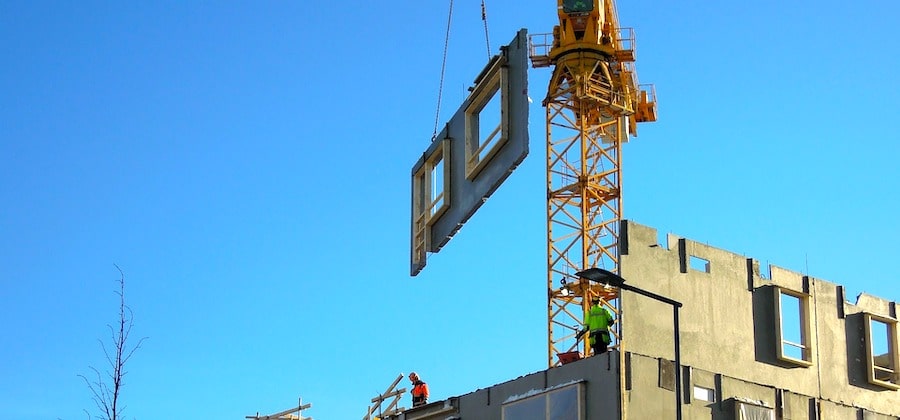
Image by AI Leino from Pixabay

Living the Jetson life.

September 25, 2019

Jennifer Castensen is the vice president of programming at Hanley Wood, a company which serves the construction and design industry through their analytics-driven Construction Industry Database.

In this capacity, she provides leadership and collaboration across all verticals in the building products industry to drive innovation. Castenson establishes themes and coordinates content from Metrostudy and Meyers Group, Hanley Wood’s industry leading data and research arms, along with content from the editorial team to provide audiences with fresh, innovative content in a variety of forums. Castenson also serves in a project management and editorial capacity for multiple concept projects spearheaded by the Hanley Wood editorial teams. Prior to joining Hanley Wood in 2015, Castenson spent nine years as the vice president of marketing for a building product manufacturer. 

Jennifer has her finger on the pulse of innovation in the building industry … and she loves it. Listen in to hear all about the rapidly evolving building industry and what Jennifer thinks the next big thing will be.

Insights and Inspirations

  • In the future housing will need to deliver far more than just shelter. Think the Jetsons.
  • Lots of attention is being paid to pre-fab. Innovations in prefab may well be a major part of the solution to the lack of housing in the United States.
  • Lots of attention is being paid to vertical integration. New companies and processes are emerging that promise to change the building industry forever.
  • A focus on health and well being is having massive cultural implications in the building industry.  
  • We need to stop thinking that change in the building industry is slow. Change is moving very fast.

Information and Links

  • The HIVE community brings an energy and passion for innovation and improvement in future housing options that Jennifer loves.
  • The HIVE 50 list showcases people, products, and processes that are leading the charge to inspire creativity, improve performance, and explore better ways to build. Look for the 2019 list in November.
  • Jennifer is proud of the concept project – Building Positive + Living Well – that she was involved in with Skidmore, Owings and Merrill and Amli Residential. She believes this work redefines how we will live in the future, in a healthier, more sustainable way. 
Read the podcast transcript here

Eve Picker: Hey, everyone, this is Eve Picker, and if you listen to this podcast series, you’re going to learn how to make some change.

Eve Picker: Hi there. Thanks so much for joining me today for the latest episode of Impact Real Estate Investing. My guest today is Jennifer Castenson. Jennifer is the VP of programming at Hanley Wood, a company which serves the construction and design industry through their analytics-driven Construction Industry Database. Based on this information, Jennifer establishes themes and develops content to provide Hanley Wood’s audience with up-to-date industry intelligence. As such, Jennifer has her finger on the pulse of innovation in the building industry, and she loves it.

Eve Picker: Be sure to go to Eve Picker.dot com to find out more about Jennifer on the Show Notes page for this episode and be sure to sign up for my newsletter so you can access information about impact real estate investing and get the latest news about the exciting projects on my crowdfunding platform, Small Change.

Eve Picker: Hi, Jennifer. It’s really lovely to have you here. You have a fascinating job. I know that you’ve been on the marketing side of the building industry for at least a dozen years. Is that right?

Jennifer Castenson: Yeah, for a decade.

Eve Picker: A decade? Yeah. Now, as I understand it, you use leading data or research information from the industry to help establish themes and content for Hanley Wood, is that correct?

Jennifer Castenson: That’s correct. Yes.

Eve Picker: So, that means that you have your finger on the pulse of innovation in the building industry, which is pretty fabulous.

Jennifer Castenson: It’s amazing. It’s a really fun job, and it’s also very amazing to see the innovators who are behind the scenes and actually doing something to change all of the challenges that are facing the housing industry right now.

Eve Picker: Tell us a little bit more about what you actually do.

Jennifer Castenson: What I do at Hanley Wood is mostly programming for our events. Hanley Wood has a number of different publications and mediums, and we have conferences associated with a lot of those that we call branding conferences. Then we also do custom events where we program for our partners in various capacities.

Jennifer Castenson: For our conferences, we are very focused on creating a theme, and sticking with the theme, and finding experts who can deliver the content in the best way; who can deliver best practices; who can talk about research, innovation within a certain space. I work on the conference program in determining, with our editorial team, what is the right focus. Then I go out, I search for, find the experts, and then work with them to deliver the content at the event.

Jennifer Castenson: I also work on editorial content, working with some of those leaders in the industry to write certain material for our websites. That could be Builder, which focuses on single-family; for Multifamily Executive, for Architect, for Journal of Light Construction, or Remodeling or ProSales. I’m looking very holistically at the industry and then solutions for each one of those verticals within the industry and how we can help the industry leaders move forward strategically into the future.

Eve Picker: I was one of the fortunate ones who was found by you a couple of years ago, right? That’s how we [cross talk]

Jennifer Castenson: Yeah. Thank you so much for being part of Hive.

Eve Picker: Yeah, that was great. How did you end up in this role? This is pretty recent, right?

Jennifer Castenson: I’m going on four years that Hanley Wood. Before that, I worked for Organized Living, which is a building products supplier. Like I said, I was there for about a decade doing marketing and sales, and I was working with Hanley Wood. I had been part of the events from a sponsorship and exhibitor standpoint and knew the folks very well, and they recruited me in to be part of the Hanley Wood team.

Eve Picker: Pretty great. Your world intersects, then, with … You know this podcast is about impact in real estate, and the building industry is part of real estate, so your world intersects pretty squarely with that, as you see innovation emerge. I’ve seen that you’re a prolific speaker, as well as being an organizer, and you actually moderate panels yourself. So, you’ve touched lots and lots of topics; some of them, really big ones, like power, or affordable housing, or ADUs, or prefabrication. What theme do you think has the loudest drumbeat in the building industry today?

Jennifer Castenson: That’s a really good question, and I really have to think that there are two, and they, just like you said, intersect with each other. I think prefabrication/offsite construction and vertical integration are the two that I’m referring to.

Jennifer Castenson: I think modular and offsite are getting more and more attention. They’ve been around for a very long time. However, in today’s age, they are getting the benefit of new and enhanced technology. Then, they are extending the benefit to many different aspects that are really important to today’s construction environment. There’s more sustainability factors. There are more efficiency to respond to the need for more affordable housing.

Jennifer Castenson: That touches on the less need for less labor, faster construction cycle, less labor, and therefore reducing the time, reducing the costs. That’s just really, really critical in today’s age that we’re pulling together projects faster and at lower cost to put homeownership or rent in the hands of more people. But then, also the sustainability factors. There’s less onsite waste. There’s less waste altogether.

Jennifer Castenson: The projects can happen in any type of environment, which is also important, because if you look at climate change, we’re dealing with a lot of different climate factors, but if you’re inside of a factory, then the housing can continue to be built regardless of what the conditions are outside of that factory. Prefabrication/offsite construction just has a lot of different benefits right now.

Eve Picker: I never thought of that last one. That’s really interesting. But still, I’m in Pittsburgh. When I talk to some builders here, they still say that stick build is cheaper here than prefab. How much does that have to do with the labor in any particular market or the building conditions in any particular market? Is it really equally efficient everywhere?

Jennifer Castenson: No. Actually, I would say, nationwide, you’ll find that stick build, traditional build is very similar in cost to prefabrication. However, the time savings reduces the cost. The hard costs are there, and they’re probably the same. Sometimes, prefabrication might cost a little bit more. There are actually markets, right now, where prefabrication is so popular, for a variety of reasons, where the manufacturers are able to then bid up, and it’s … The costs are rising for factory construction. So, all those things are coming together.

Jennifer Castenson: Actually, if you think of labor unions, the costs involved with labor unions, sometimes the offsite construction might help avoid some of the labor unions. It depends on what kind of market you’re in and all of those variety of factors – how many offsite manufacturers are there, and what the demand is for that type of construction, along with labor unions, the amount of transportation to site, because that’s a huge component of it that will drive up costs. All of those things factor into the cost, but then the time savings is the real savings.

Eve Picker: Interesting. So, someone might argue that you’re putting people out of jobs. I’m in a heavy union-labor market in Pittsburgh, so they might not be happy to hear you say that.

Jennifer Castenson: No, I know, and it’s actually … Those jobs are evolving, and it’s a real big question right now. I said the second thing, for me, that I see impacting housing the most is vertical integration. There are a lot of organizations, like Katerra, and I’m also working with another one in the multifamily realm that’s called Cortland, who are trying to vertically integrate more and more and to take parts of the process that weren’t together under one roof and make them seamless under one roof where-

Eve Picker: I’m sorry I interrupted you, but I’m wondering what precisely you mean by vertical integration here? What is all part of that?

Jennifer Castenson: It might be different with different organizations. In the two examples I just gave, it’s very different. Katerra, for instance, is bringing in design, and development, and the manufacturing all under one roof. They’re bringing in even more than that, because they’re manufacturing some of the products that they’re using in their projects and some of the software that they’re using in the design regard.

Jennifer Castenson: It’s making the process- it’s making it more seamless and making fewer connections so that it can happen more efficiently and more effectively. They’re one of the biggest examples of it, but I was talking about Cortland, as well. They’re taking a lot of things under one roof that weren’t considered before, in terms of property management. It’s happening more and more with more organizations-

Eve Picker: Where do you think all of this is leading?

Jennifer Castenson: I think that it’s leading to more affordable housing, for one. That’s the aim that most people have; most organizations have, when they start doing vertical integration. That was why and how Katerra kicked off; and creating efficiencies. It will take some time to ramp up, because those, let’s say, legacy organizations – the big developers, the big builders – they have relationships that will be very hard to break. If you look at- I’m talking about the top 10 developers, legacy developers have relationships, in all the markets they’re building, with general contractors. Once they start saying no to the general contractors and start doing offsite construction or changing the parameters of those relationships, it’s going to be really taxing on their business to, one, just to figure out how to do it-

Eve Picker: Yeah.

Jennifer Castenson: -how to restructure their organization. But, two, what will, then, that general contractor do? That general contractor might go from being involved in 50 percent of the project to only having 10 percent of the project. Is he going to ratchet up his pricing? Those dynamics aren’t-

Eve Picker: Or is he going to be innovative and figure out how to become part of the industry, himself?

Jennifer Castenson: Exactly. Hopefully. Hopefully, there’s innovation behind it.

Eve Picker: Be sure to go to EvePicker.com and sign up for my free educational newsletter about impact real estate investing. You’ll be among the first to hear about new projects you can invest in. That’s Eve Picker.com. Thanks so much.

Eve Picker: That’s absolutely fascinating. The ramifications of one change towards the top can be huge, can’t they? Other than these two, which obviously really interest you, are there any other current trends in the building, or the real estate industry, or in cities that interest you the most?

Jennifer Castenson: There’s so much that’s happening, and I think there’s some really big trends in health and well-being from a living standpoint. It’s going to be a massive culture shift within the United States. We have been looking at housing as a shelter, but we’re going to be … As homeowners and as renters, we’re going to be thinking about our housing needs to be delivering more than that. That’s not only from health and well-being; that’s the builders and developers thinking about how to integrate technology in order to do that.

Jennifer Castenson: We are going to be able to, as homeowners, walk into our home and think of it as a character in our lives; to be thinking of it as we can have … Not only can we ask our house to put something on the grocery list, but we can also ask our house to get us ready for bed. That is a whole series of things that will be kicked off by a technology that’s behind the walls, and that will literally help us get to sleep and have better sleep during the night and, therefore, better performance during the next day.

Eve Picker: That is so awesome. It brings to mind a show I used to love called The Jetsons.

Jennifer Castenson: Yeah, right? Yes.

Eve Picker: It feels like we’ll be entering the life of The Jetsons.

Jennifer Castenson: It is. There’s so much. Years ago, I heard somebody talking who was an employee of Disney, and he was saying that we will have characters in our home; characters who speak to us. I feel like we’re almost there. Now, there’s a whole bunch of hurdles with security issues, and there’s also hurdles in terms of integration and what people are willing to pay for these sorts of technologies. However, we are on a fast track because of the way that technology accelerates, so [cross talk]

Eve Picker: -yeah, interesting. But do you think these trends will make for better cities? Are these really important, impactful trends, having [cross talk]

Jennifer Castenson: -I was talking about health and well-being. I think health and well-being, I was focused on it in terms of just one residence. However, more and more people, from an urban planning standpoint, and smart cities development standpoint, are working together. There are more and more collaborations, and more people are understanding, recognizing the benefits of collaboration.

Jennifer Castenson: You’ll see more cities are creating- working with developers or leading organizations in order to change the city; in order to mold it to be not only prepared for the smart city infrastructure, but to have a focus on health and well-being and creating a more strategically resilient community, where people can prosper; where they can, not only economically, but healthy- from a health standpoint.

Jennifer Castenson: Putting access to fresh food in walking distance of residences; putting more public transportation options in place. We are a nation that’s growing older. So, a lot of folks are starting to think about how are we thinking about accessibility, and how are we making that available for this aging population?

Eve Picker: Yeah, that’s really interesting because actually everything you touched on there is part of the Change Index on Small Change. I don’t know if you’ve looked at it lately, but those are the key things – livability for everyone, whether they’re three years old, or 85 years old, right?

Jennifer Castenson: Right. Exactly.

Eve Picker: An accessible, healthy place to live where you can move around, and reach good food, and all of those things. I was having a conversation with someone the other day about assisted living and how it needs to evolve. I think there was an article in The New York Times about how broken the system is. Do you see any innovation in assisted living or the way that people are thinking about housing our aging population?

Jennifer Castenson: Oh, for sure. I think there’s so much that’s going into that. There are new design guides that are going into that and actually being picked up by certain legislations that have to meet-  or building code that are being incorporated into the building code.

Jennifer Castenson: Then, there’s so much in terms of technology to help people. I’ve seen projects where there is technology that can alert a caregiver of somebody who is in a home alone – if they’ve fallen, if they haven’t moved for a certain amount of time; can tell them when to take their medications, can do so much for the aging population, assist them in just living for day to day and [cross talk]. 

Eve Picker: -help them age in place. 

Jennifer Castenson: Exactly. Well, the age place … That’s also, when I was talking about having the access to the public transportation, when people live that- age out of the ability to independently drive their cars, they lose a little bit of independence. So, having access to public transportation or having things within walking distance is really important. That’s why so many people are thinking of community design and not just how someone lives within their own residence.

Eve Picker: Yeah, I know everyone’s thinking ADUs as a way to deal with affordable housing, but I actually think about it a lot as a way to deal with the aging population, because, when I get old, I’d love one of my kids to have me in an ADU in their backyard. That sounds to me much more appealing than an assisted living community. If there’s technology developed that helps keep me safe in that place and able to age like that, that would be amazing, right? 

Jennifer Castenson: Yeah, absolutely, and you’re right. They are an option for affordability, but it’s also being looked at as a second home on property that could house in an older relative. A lot of people are looking at it as that option.

Eve Picker: Or a teenager you don’t want to see every day, right?

Jennifer Castenson: Right. 

Eve Picker: Okay, so the big question is, really, do you think socially responsible real estate or building methods necessary in today’s still development landscape?

Jennifer Castenson: Oh, for sure. It’s actually really impressive that we talk about that change in the building industry is very slow. But if you look at change in terms of code, all of it has been socially responsible, right?

Eve Picker: Yes.

Jennifer Castenson: We’ve actually layered on so much code to be more responsible in terms of environmental impact. Now, we’re using codes in projects, and certifications that also – like the Fitwel program – that are focused on health and well-being in our communities and in our homes. Then, we’re also taking on codes, and we’re involved in another project at Hanley Wood that’s focusing on reducing the amount of embodied carbon. Those types of things are the responsibility- are things that builders and developers are owning. They’ve been evolving quite quickly over the years. They’re taking more and more responsibility for providing housing in a way that is socially responsible, environmentally responsible, and then that is comfortable, and also will help people from a perspective of emotionally, psychologically, and mentally growing. It’s a lot to combine into a home.

Eve Picker: Maybe eventually we’ll become the happiest country on the planet.

Jennifer Castenson: Right.

Eve Picker: We’re far from that right now, right? We’re sort of gradually catching up on some European standards, which is really pretty fabulous. My big wrap-up question is where do you think the future of real estate impact investing lies?

Jennifer Castenson: I was talking about before that we’re working on various conferences, and the one that we had you involved in was called Hive, which stands for Housing Innovation Vision Economics. Through that conference, we do an honors program that’s called the Hive 50, which our editors select the top 50 innovations in housing. I would say that a lot of the innovations are around finance.

Jennifer Castenson: Impact investing has had a smaller presence on that list, and I think that there’s a lot of opportunity for that to grow. I think that as more cities and their collaborations come into the picture, we’ll see more and more of that happening. Tangentially, you see a lot of organizations getting involved in sponsoring, donating, subsidizing affordable housing construction in various areas. That actually has picked up a lot in the last 12 months-

Eve Picker: In fact, there’s impact investing, right?

Jennifer Castenson: Yeah, absolutely. And I think we’ll see more and more of that, just as we are not able to meet the demand of housing in this country, and we’re not actually on a trajectory to meet it anytime soon. So, hopefully we see more of that; more of the money coming in so that we can develop the housing that we need.

Eve Picker: I also have three sign-off questions that I usually ask, because I want to hear everyone’s answer on these. The first one is what’s the key factor that makes a real estate project impactful to you?

Jennifer Castenson: I think what makes it interesting to me is that it becomes something that teaches the industry, the rest of the industry, and that we can pick up at a volume scale and bring it to more places.

Eve Picker: That sounds like innovation-

Jennifer Castenson: Yeah.

Eve Picker: -really is the most important thing to you. You know I have a crowdfunding platform, right? Do you think there could be other benefits, other than raising money, that could come out of crowdfunding in real estate?

Jennifer Castenson: Oh, for sure. Absolutely. I think you have done such an amazing job bringing crowdfunding to a more visible level in housing, and that means … I give you all of the kudos in the world, and I hope that you guys keep elevating that. It has done a tremendous job to give visibility to projects that wouldn’t have made it otherwise. Those projects are the ones that we need more of, because they’re innovative. They’re new approaches to what traditionally, or legacy organizations, are not approaching because of their capital streams, so it’s … I think it’s amazing.

Eve Picker: Well, thank you. I feel like we’re just scratching the surface. There’s so much to do, right?

Jennifer Castenson: Right.

Eve Picker: This is a really big question: if you want to improve one thing about the real estate industry in this country, what would that be?

Jennifer Castenson: If I could change one thing, I think it would just be something about regulation, which I wouldn’t know how to approach because it’s such a complicated web. But I would say that there’s something either to policy and regulation that would remove some of the hurdles and allow building to happen in a more efficient way with maybe some of the responsibilities back on … I’m not sure. There’s just so much to do there.

Eve Picker: No, I think you’re talking about zoning and building codes all wrapped up together, and that’s a lot of stuff to unravel. I know some cities are trying to unravel bits of zoning codes and move things forward in a different way, but, yes, it’s a lot. Jennifer, this was just delightful. Thank you very much for taking the time to talk with me [cross talk] I’m going to call this Entering the Life of The Jetsons.

Jennifer Castenson: I like it.

Eve Picker: Okay. Have a great day. Bye.

Jennifer Castenson: Thanks, You, too. Bye.

Eve Picker: That was Jennifer Castenson. She gave me lots to think about. First, she thinks that a focus on health and well-being is having massive cultural implications in the building industry. Second, in the future, she believes that housing will need to deliver far more than just shelter. And third, innovations in prefab may well be a major part of the solution to the lack of housing in the U.S..

Eve Picker: You can find out more about impact real estate investing and access the show notes for today’s episode at my website, Eve Picker.com. While you’re there, sign up for my newsletter to find out more about how to make money in real estate while building better cities. Thank you so much for spending your time with me today, and thank you, Jennifer, for sharing your thoughts with me. We’ll talk again soon, but for now, this is Eve Picker signing off to go make some change.

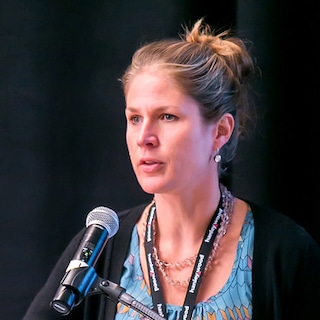
Image courtesy of Jennifer Castensen

Securing housing.

August 30, 2019

Homelessness and housing insecurity are among the greatest challenges facing our communities. The US Department of Housing and Urban Development, in their 2018 Annual Homeless Assessment, reported that there were more than 550,000 homeless men, women, and children in the United States. Numerous factors contribute to the growing homeless crisis. The primary drivers include the skyrocketing cost of homes, whether for sale or for rent, flat or low-growth nominal wages, and the scaling back of governmental social and housing assistance programs.

Developers and investors hold some of the blame for housing insecurity. In many of the hardest-hit cities, developers have prioritized constructing luxury buildings. This focus on the higher end of the market can be more profitable, but units in these developments are inaccessible to the vast majority of people affected by rising home prices. What can we, as socially conscious investors and entrepreneurs, do to help resolve this seemingly insurmountable issue?

Housing costs and homelessness

For many years now, even before the housing crisis in ’08, developers have shifted their focus toward luxury construction. There are a few reasons why most new construction is in the luxury space. As properties age, the physical structure that sits on the lot, the actual building, becomes less valuable. While many of the affordable units on the market today did not start life that way, they aged into being affordable. This is known as “filtering.”

In addition, much of the current affordable housing stock in this country was built at a time when regulations, permits, and environmental concerns relating to new construction were a significantly lower burden to developers and builders. Creating low, and even middle-income housing is simply not as profitable as it used to be.

A multifaceted approach

When setting out to solve a problem as complicated as homelessness, there is rarely a “silver bullet” solution. Instead of focusing on a single contributing factor, to make real progress, it is imperative that we employ a patchwork of strategies.

New construction technology

Developers can leverage new construction technologies to reduce the total cost per unit of new housing. New technologies that can help lower the cost of housing include drones to more effectively and cheaply survey lots, self-healing concrete to reduce foundation issues, or even the use of robotics during construction.

Partnering with cities to increase affordable housing stock

While many in the real estate industry take a cautious or even adversarial approach to local governments, they can be fantastic partners when it comes to getting affordable housing projects off the ground. Cities have a vested interest in creating sustainable neighborhoods and offer many tax breaks, land discounts on city-owned lots and other services and benefits to socially minded developers.

Work with social service providers

Social service nonprofits are on the frontline of the housing crisis. These groups step in when there is inadequate governmental or societal response to problems like homelessness. Many of these groups are shifting their focus from a reactive model to a proactive model. Instead of dealing with the consequences of homelessness, they are employing their resources to stop the cycle before it begins.

Investors and real estate professionals can work with these groups to help determine the needs of low-income residents and to find ways to build housing that stops the cycle of homelessness. The cherry on top is that through working with these groups, developers can build grassroots community support for their projects, which will make neighborhood and local stakeholder opposition less of a problem.

_

Homelessness affects all of us in one way or another.  Socially minded developers can use their skills and capital to help end this problem and make all of our communities safer and more livable- and they can do so while still maintaining a healthy return on their capital and time investments.

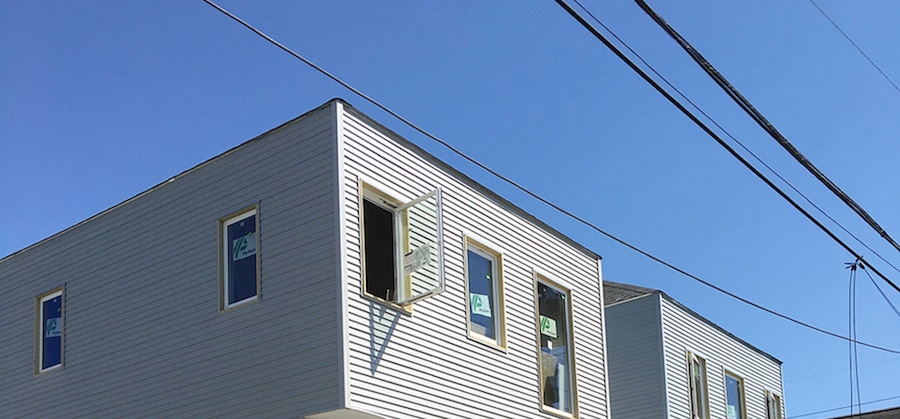
Image Starter Home Two, courtesy of Office of Jonathan Tate

« Previous Page

Primary Sidebar

sign up here

APPLY TO BE A PODCAST GUEST

More to See

(no title)

February 22, 2025

Bellevue Montgomery

February 11, 2025

West Lombard

January 28, 2025

FOLLOW

  • LinkedIn
  • RSS

Tag Cloud

Affordable housing Climate Community Creative economy Crowdfunding Design Development Environment Equity Finance FinTech Gentrification Impact Investing Mobility Offering Opportunity zones PropTech Technology Visionary Zoning

Footer

©rethinkrealestateforgood.co. The information contained on this website is for general information purposes only. Nothing on this website is intended as investment, legal, tax or accounting strategy or advice, or constitutes an offer to sell, solicit or buy securities.
 
Any projections discussed or made may not be accurate and do not guarantee a specific outcome. All projections or investments are subject to risk due to uncertainty and change, including the risk of loss, and past performance is not indicative of future results. You should make independent decisions and seek independent advice regarding investments or strategies mentioned on this website.

Recent

  • The Mulberry
  • Mount Vernon Plaza
  • The Seven
  • Real estate and women.
  • Oculis Domes.

Search

Categories

Climate Community Crowdfunding Development Equity Fintech Investing Mobility Proptech Visionary


Copyright © 2026 · Magazine Pro on Genesis Framework · WordPress · Log in