• Skip to main content
  • Skip to secondary menu
  • Skip to primary sidebar
  • Skip to footer
  • Home
  • About Us
  • Say hello
Rethink Real Estate. For Good.

Rethink Real Estate. For Good.

  • Podcast
  • Posts
  • In the news
  • Speaking and media
    • About Eve
    • Speaking requests
    • Speaking engagements
    • Press kit
  • Investment opportunities

Mobility

The mobility landscape.

June 8, 2020

Mobility and transportation are inextricably linked to real estate and land use. Why?  Because the largest proportion of most people’s incomes are spent on these two things alone. This is why the demand for walkable urban neighborhoods just keeps growing. But mobility is all about volumetrics. In dense urban areas, there are limiting factors to how many people you can move and how quickly.

The question is, how do you create a system that lets people live where they want with a good quality of life, affordably and with greater access to jobs? Solving this problem will help to solve the affordable housing crisis. Just becoming a one-car family, instead of a two-car family can save around $150,000. And if you can walk to shop for groceries, and there is transport to get you to work, you might opt to have no car at all.

Reallocating space

The ability to move people relies on the physical landscape. If all the lanes in a street are used for cars that only carry one or two people, we can’t move very many people. And new modes of transport like e-scooters and bike shares need safe space to be successful. Further, cities want to get people out of cars for numerous other reasons. It’s expensive to give over valuable land to cars. They take up a lot of space and they make our air unhealthy to breathe.

The reallocation of our streets has already begun.  Cities are narrowing their streets, adding bike lanes and closing some to pedestrian traffic only. This movement is gaining momentum, and even more quickly since the coronavirus shutdown.

Technology

At the same time there’s a technology revolution going on that has reached the mobility sector. GPS technology, electrification of cars, enhanced cell phone networks and even solar energy are powering a transformation in mobility. Data will help to harmonize seemingly disparate transportation modes. One example is Los Angeles, where the Department of Transportation is using data to successfully manage the addition of more than 30,000 scooters to its streets.

Soon we’ll have dockless rentable scooters, autonomous vehicles and mobility services that will seamlessly combine transit services for users. Pittsburgh is already creating a first-of-its-kind, mobility-as-a-service system. Diverse mobility services will be organized into a one-stop transit app, along with physical hubs. Users will be able to seamlessly opt for a variety of transit options to get them from A to B.

Joining Forces

This mobility revolution ultimately depends on strong public-private partnerships with a sharing of the risks and rewards. Many cities already work with the private sector on sharing data effectively for planning and operating systems. At the same time venture capital, private dollars, are being invested into mobility solutions. These private companies need government support to be successful, from the building of a physical landscape that supports them to concessions for operating services that support their citizens.

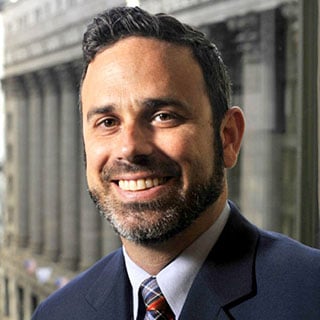
Gabe Klein has spent his career specializing in all facets of urban mobility, both within government and as an entrepreneur. He sees the exchange of ideas between the public and private sectors, two very different cultures, as essential to solving the major problems of our times.

Listen in to my interview with Gabe.

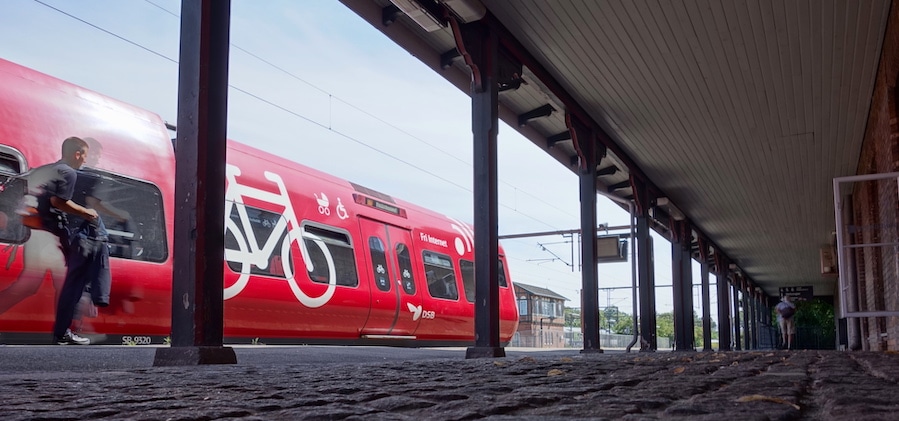
Image from pxhere, licensed CC0

The reluctant planner.

May 6, 2020

Self-described as a “planning geek” and “transport nerd,” Harriet Tregoning is a veteran smart-growth advocate who has been wrestling with issues of planning, mobility, disaster resilience, housing and community development issues for over two decades. Her work has centered both on resilience in the face of a changing climate, as well as on an economy based on enhancing quality of place, economic opportunity, fiscal stability, transportation choice and affordability.

Harriet is the Director of NUMO, the New Urban Mobility alliance, a new collaborative effort that aims to guide policymakers, the private sector and people toward a shared vision of cities and urban mobility. The pace of technology-driven disruption in transportation is not only changing how people get around but changing cities themselves as ride-hailing, dock-less bikes and scooters, and even autonomous vehicles are added to the list of transit options. NUMO aims to help answer these questions through collaboration with alliance members around research priorities, innovative pilot projects, public engagement and policy development in cities around the world. Hosted by WRI Ross Center, NUMO is an outgrowth of the Shared Mobility Principles for Livable Cities, which more than 170 companies and governments have signed on to as a guiding vision for more sustainable, inclusive, prosperous and resilient cities.

Harriet has been deeply engaged on planning, smart mobility, disaster resilience, housing and community development issues for the past two decades. She has been working with organizations around the country to help states and localities prepare for a range of future challenges, including smart mobility; climate change; disaster recovery and resilience; housing affordability; and community development. She served in the Obama Administration as Principal Deputy Assistant Secretary of the Office of Community Planning and Development at the U.S Department of Housing and Urban Development. She initiated the first ever $1 billion National Disaster Resilience Competition. Her work encompassed helping states, regions, cities, counties and towns across the country build a strong foundation for resilience in the face of a changing climate, and for a diverse and prosperous economy based on enhancing community quality of place, economic opportunity, fiscal stability, transportation choice, and affordability. She was the Director of the District of Columbia Office of Planning under the past 2 Mayors, where she worked to make DC a walkable, bike-able, eminently livable, globally competitive and thriving city.

She studied Engineering and Public Policy at Washington University. She was a Loeb Fellow at the Harvard Graduate School of Design.

Harriet believes good transportation policy is good land use policy. We can’t fix our transportation woes without addressing the root of the problem: development patterns that have allowed auto-mobility to be a substitute for proximity.  I’m right there with her.

Insights and Inspirations

  • Good transportation policy is good land use policy. We can’t fix our transportation woes without addressing the root of the problem: development patterns that have allowed auto-mobility to be substitute for proximity.
  • Transportation is about access. Essential workers during COVID-19 pandemic had always been essential but they were poorly served by existing transportation options during the pandemic.
  • We often think of redundancy as a bad thing, but in another context, we call it choice. A resilient transportation system provides real choices for all trip lengths.

Information and Links

  • NUMO New Mobility Atlas is an extensive global platform that tracks and visualizes the rapid growth and proliferation of new mobility in cities. Right now, it’s been updated to reflect the current shared micro-mobility landscape globally.
  • Sign up for Leveraging Mobility Disruptions to Build Better Cities, an eight-week edX course co-developed by MIT and NUMO and offered for free starting May 12.
  • Read how Bogotá company MUVO deployed 400 free e-bikes to help health workers respond to COVID-19 as the result of a hackathon.
  • Speaking of Bogotá, learn more about how cities in Latin America are responding to new mobility challenges during the COVID19 crisis, and how actions taken now will affect future resilience planning.
Read the podcast transcript here

Eve Picker: [00:00:16] Hi there, thanks so much for joining me today for the latest episode of Impact Real Estate Investing.

Eve: [00:00:22] My guest today is Harriet Tregoning, the director of NUMO, the New Urban Mobility Alliance. As a self-described “planning geek” and “transport nerd”, Harriet is a veteran, smart-growth advocate. She has been wrestling with issues of planning, mobility, disaster resilience, housing and community development issues for over two decades. In her work, she has focused on resilience in the face of disaster and challenge, including the changing climate and equity in transportation and access.

Eve: [00:01:06] Be sure to go to rethinkrealestateforgood.co to find out more about Harriet on the show notes page for this episode and be sure to sign up for my newsletter so you can access information about impact real estate investing and get the latest news about the exciting projects on my crowdfunding platform, Small Change.

Eve: [00:01:27] Hello, Harriet, I’m really honored to have you on my show today.

Harriet Tregoning: [00:01:31] It’s my pleasure. I’ve been really looking forward to it.

Eve: [00:01:34] Great. You know, you’ve said for many people, change is a really difficult topic. And you actually said I can’t say I love it myself in my own neighborhood. And it sounds to me like change has been a theme in your career from planning director in DC to director of HUD’s Office of Economic Resilience and now heading up the new Urban Mobility Alliance. So, you wrestle constantly with what could be better and what should come next. And right now, the huge change we’re all confronting is driven by this pandemic. I’m wondering what the thread is that you see emerging around Covid19, this pandemic, and transportation issues.

Harriet: [00:02:17] Well, I think the link has been really, really an important one and I think the pandemic has revealed both the vulnerability of our transportation system and pointed out who is not being well served, how transit is vulnerable and yet essential, but also highlighted that while there are some risks to being close together, that is also essential in many ways, to have things and people that you need near you. So, I think in many ways you could see the pandemic and its impact very much through the lens of transportation and, you know, even our development pattern and how that affects what people can get to easily or not.

Eve: [00:03:13] Yeah. In Pittsburgh, we have a pretty active bus system, which is all about, you know, cramming people onto this moving box, right? And that’s the exact opposite that you want right now. What other way can these can people get around right now?

Harriet: [00:03:32] Well, I think what it highlights maybe, Eve, is not so much even that that type of transportation is that, is an optimal right now. I think it suggests that we need redundancy in our transportation system. That we, there are many occasions, you know, global pandemic or not, where one mode of transportation isn’t suitable for you, but yet you’re trapped if that’s the only mode you have, whether that’s auto mobility, whether that’s transit, whether that’s, you know, maybe you have mobility issues in general and it’s hard for you to do other things like walk or bike.

Harriet: [00:04:14] But, you know, one of the great things I got to do when I was at HUD was really work on resilience from disasters. And at the same time, in D.C., I had a firsthand experience with being a local official during the last great, you know, during the Great Recession and an economic crisis. In both of those roles I got to see first-hand how important those transportation choices and options really are. Think of evacuating Houston in the advance of a predicted hurricane. Now, despite having more lane miles and freeway than virtually any other U.S. city, things were utterly gridlocked and people couldn’t get out. We had an earthquake in D.C. in 2011. The federal government and all the governments in the area told people to go home while they check the stability of buildings at exactly the same instant and the gridlock was unbelievable. But if you were on a bicycle, you had not just a normal commute home, but you had a space commute because no other vehicle was moving. And so, you didn’t have to worry about speeding cars or things like that. So, that redundancy is really, really an important thing. And what we’re seeing is that we don’t have that in the US in most cases, that people have at best, they have one choice and when that choice is no longer suitable for whatever reason, they’re really stuck.

Eve: [00:05:47] How do you change that? How do you design that redundancy into a transportation system in a city?

Harriet: [00:05:54] Well, one of the great things, you know, that’s true about the moment we’re in right now is both the technology and some degree of electrification have provided us with a lot of additional choices that can either substitute for or better complement the transportation that we already have. We’re a long way away from a perfect intermodal system, but e-bikes, e-scooters, e-mopeds are recent additions to many cities across the globe and those additions can cover a range of trips from, you know, a few hundred yards to, you know, to on an e-bike you could easily go seven or ten miles without breaking a sweat. Those options are really, really new things in cities and a lot of ways and so, having those to help you get more easily to a transit stop or help you get from a transit stop to the place that you need to go, bikes can be great because they can carry cargo and probably electric cargo bikes are one of the fastest growing types of individual transportation that’s out there. Some places, Germany for example, have seen unbelievable increases in e-bikes. I have to say, I’m a proud bike owner myself as of last summer. It’s really game-changing and super fun as a way to get around. So, I think that making provisions for walk, bike and micro-mobility on our streets where people don’t have to be in fear of their lives from fast moving vehicles is really critical.

Eve: [00:07:38] Probably in my mind that’s the real issue, you know, these solutions like e-bikes and e-scooters and e-mopeds are all fabulous, but it’s the traffic on the street and a cultural shift that really has to happen, maybe as much as these solutions, right?

Harriet: [00:07:55] You know, you’ve really hit the nail on the head with that comment. It’s absolutely true that there’s a lot of latent demand for that sort of transportation, that people are totally fearful about riding in mixed traffic with automobiles, and so I think it’s really up to city planners and transportation departments to provide those safe facilities and, you know, it’s absolutely been demonstrated that if you build it, people will use them. Those things are really important. I could give you another example from when I was a local official during the recession. You know, we saw hundreds of cars drop off the DMV rolls in D.C. I was afraid people were fleeing the jurisdiction. But it turns out they were dialling down their transportation costs because they could. So, they were getting rid of a car. So, they were a two-car household they were becoming a one-car household. I’m sure in their minds, temporarily, right? Just a temporary step to lower their costs. And some one-car households became no-car household. Again, maybe they thought of it as a hardship, but there were other options that they could use so it was absolutely doable for them. As a consequence. we had very little bankruptcy, very little foreclosure in the district because people could manage those economic hard times and it was similarly true for the other inner ring jurisdictions, Arlington and Alexandria. But in the same jobs and housing market, which was the Washington metropolitan region, the jurisdictions fared extremely differently and so did households. If you didn’t have those transportation choices, you were stuck. And those communities saw so much more bankruptcy and foreclosure, so much more, so much higher declines in property value. There are still some parts of our region who have not fully recovered. Whereas the places that had these choices, the market and the budget debt, but they didn’t plummet and the rebound was so rapid that this was really a case where those jurisdictions sprang ahead in terms of their resilience. They didn’t just recover, they did better. They improved on their share of the region’s job and housing growth post-recession. I know in part because of the lesson of those choices and what they can do for the resiliency of households and of jurisdictions.

Eve: [00:10:19] I was in Beijing a few years ago and was really struck by, you know, first of all, they have a pretty wonderful subway system. But the stops are really far apart and whenever you go to a subway stop, there are literally thousands of bicycles parked outside it. Thousands. So, the culture there is very much you have an old battered bike and you get yourself to, you know, the next bit of transportation which gets you where you want to go faster. And so, it’s sort of this connected string of things that get you to places, not just one type of transportation. I thought it was pretty fabulous. I’m afraid China’s probably going the other way now. The other thing in China that I thought was really amazing was, if you watched bicycles on a street with cars it was almost like a dance. They just sort of respected each other and the bikes would keep going and the cars would move around them. It is an entirely different arrangement then in our cities here.

Harriet: [00:11:22] I think that that’s a good point, too. And I think that you see, when bicycles become a visible and significant part of the transportation picture, they are treated differently. You know, I’ve been in Shanghai and been in a mob of cyclists. I mean, the largest group of cyclists I’ve ever been in and it wasn’t an organized ride. People were just, you know, riding, you know, going about their business and, you know, and they took up lanes, you know, travel lanes, general purpose lanes, you know, for the bikes. And it didn’t, you know, it wasn’t causing an outcry. And in places like Amsterdam and Copenhagen, the cyclists easily outnumber the vehicles on any given day and they’ve given over more and more of the right-of-way to accommodate cycling. You have to wait through several light cycles in some places, you know, on your bike in order to get through an intersection because there’s so many cyclists. So, yeah, that makes a difference.

Eve: [00:12:20] Why are we not there in the US? Like, why are we sort of lagging behind all these other countries?

Harriet: [00:12:25] Well, I know that you’re all about real estate. I mean, I think the answer is the real estate issue. We, in the U.S., with the advent of the automobile, you know, more than a hundred years ago, we started making decisions that, more so than any other western country, we started substituting auto mobility for proximity. I mean, think of how much proximity was valued and how, when we didn’t have an automobile for transportation, you know, things were close together. You know, neighborhoods had almost everything you needed, you know, in walking distance. Even the streetcar suburbs, which is one of the earliest examples of transport and real estate kind of going together, a lot of those early streetcar suburbs were actually owned by property owners and developers who wanted to open up land for development, even though distances weren’t very far. But with the automobile, you know, our U.S. cities in particular really bent over backward to accommodate the automobile and accommodate those who wanted to use auto mobility in order to access what was largely cheap, undeveloped land, you know, to put factories, to put office parks, to put housing and to use cars instead of walking or biking or streetcars to be able to get people there.

Harriet: [00:13:57] And what’s happened increasingly is that auto mobility is out of the range, the price range for many households and that means that they don’t get access to really important things that are part of economic mobility. They can’t get or keep a good job because their transportation is unreliable. They can’t access health opportunities, educational opportunities, you know, without a lot of time and effort. So, it’s really created a bifurcated society. And I think one of the things about this crisis that we’re in globally, is that some of the workers that we most value, that we most rely on, who are part of the food chain, the supply chain for our food, who re-stock grocery stores, who clean, ICU’s, these low wage workers are really struggling to get to their jobs and to keep doing the important, and at this point even dangerous things that they’re doing to serve the rest of us. And you know, that is part of the example of why and how our transportation system is not serving us.

Eve: [00:15:04] And I think also in terms of real estate, 30 years ago people did not live in cities. So, cities have really seen a pretty, pretty significant comeback. And in places like San Francisco, especially, it is out of reach of those workers to be living in the city. So, they’re being pushed further and further and further out, which means that transportation becomes an ever bigger problem, right?

Harriet: [00:15:32] This whole conversation is really about transportation and land use, like, these two things have to happen together. That’s an example of where the land uses and the provision of housing isn’t keeping up with the provision of jobs. And in California, part of that conversation is really about their tax structure. But yeah, I think in every place we have that mismatch, that spatial mismatch that we need to solve, and I’d rather solve it with land use and real estate than providing lots of additional transportation infrastructure that’s costly to maintain, costly to access and keeps people further apart.

Eve: [00:16:13] Yeah, I mean I read an article recently in Strong Towns, I think it was a an old one, but about the parking requirements for a retail space, which sort of drives that space to become a little bit of a strip mall. And obviously the more parking a small retail space has to provide, the more they seek cheaper solutions, which, again probably further out of the city. All of those decisions, all the parking requirements, all the decisions that are sort of burdened on land use just make the problem exponentially worse. If you waive those parking requirements for a small business so that they could locate in the heart of a small main street, then they’d be within walking distance of a lot of people and…

Harriet: [00:17:03] I think that’s right, and I think that parking, the parking requirements, which, you know, one of my heroes is Don Shoup, you know, who’s written a wonderful book called The High Cost of Free Parking, you know, and his researchers, the students and graduate students at UCLA have basically identified that there are six to nine parking spaces for each and every automobile in the US, which is horrifying to, kind of, contemplate and that, you know, at any given moment that parking isn’t being used, right? You know, and when retailers provide parking, what they want is, you know, parking for, you know, Black Friday. You know, they want the peak of the peak parking, which means that any other time, it’s mostly not being used.

Harriet: [00:17:56] So I think smart cities, you know, are lowering parking requirements, requiring shared parking, you know, so that the time of day usage can be shared. So, an office building and an apartment building, you know, might be able to share parking or a movie theater and, you know, and an office might be able to share parking and they’re also de-coupling the parking. So, if I don’t want to have to pay as part of my apartment rent for a parking space because I can get by without a car, I don’t want to have to have that parking included. And I don’t want to have to buy a house or a condo where that is necessarily included either. I’d like to be able to purchase those things separately only if I need them.

Harriet: [00:18:40] So all those things that cities are doing to de-couple parking and to be smarter about it means that they’re producing less parking going forward. And almost everyone who’s looking at the future of travel is also thinking that we will have less individual car ownership in the future and also less need for parking. Because right now, you know, not only is parking wasteful, but we don’t drive cars that much. You know, our average in the US is 5 percent of the time, on average, the cars are being driven along, 95 percent of the time they’re not being driven. If you’re in some other business, yeah, you’d say, oh, my gosh, that’s not an asset utilization that’s very good. I should be trying to be more efficient. So, I think that’s also the future.

Eve: [00:19:30] And then, of course, as parking requirements are reduced, you’re freeing up land. Much needed land for affordable housing and other things like that, that are close in to jobs. So, they’re really big issues. So, yeah. So, what’s your background and what path led you to all of this?

Harriet: [00:19:51] So, I studied civil engineering in school, but I’ve been, you know, I’ve been essentially pretending to be a planner for more than 20 years, really. And I have to say I was probably a reluctant planner. I admired planners very much but, you know, I wasn’t necessarily trained in it.

Harriet: [00:20:10] And my first job, my first official planning job was actually to be the secretary of planning for the state of Maryland. I worked with an organization you might know, the Urban Land Institute.

Eve: [00:20:22] Oh, yes.

Harriet: [00:20:23] When I was at the Environmental Protection Agency to help create a national smart-growth movement, because, from my perspective sitting at EPA, we were kind of swabbing the deck of the Titanic to worry about what was smaller and smaller amounts of pollution coming out of tailpipes and smokestacks and utterly ignoring the changing use of the land. That more and more land was being converted to roads and driveways and parking lots and making watersheds impervious and causing lots of runoff, and even though automobiles were getting more efficient in terms of fuel and economy and pollution, that people were driving more every year. So, and EPA was doing absolutely nothing to address those issues. So, from a pollution perspective, I thought if we could figure out a way to have more compact developments, so in the course of doing that I actually became completely impassioned about the idea of returning to a historical development pattern that was six thousand years old, you know, the walkable neighborhood, and that so many people would benefit. If we had more walkable neighborhoods, it wouldn’t be a rarity and an expensive amenity that only a few could afford but if we had it for everyone we’d be healthier, our transportation would be a lot more affordable, it wouldn’t be nearly so expensive to serve people from a government perspective, and maintaining infrastructure, we’d save farmland and forests, we would reduce pollution and greenhouse gases. I mean, there were just tons of reasons from so many stakeholders’ perspectives why it was better, that it really did grow into a movement.

Harriet: [00:22:02] And so, ever since, I’ve been doing something having to do with this. I mean, the good news, the bad news is that there are so many reasons why we have the development pattern that we do in the US than in other parts of the world, that any one change, any one job can’t fix it all. There are hundreds of jobs, hundreds of things that would need to change and have begun to change to make a difference. So that there are lots of jobs that I could be in and I’d play a role in that change and have held a lot of those different jobs, whether it’s doing disaster recovery at the federal level or sitting on the board of our transit agency or being the head of planning for a state or for a city, and now at an advocacy organization that really focuses on all the different stakeholders in transportation.

Eve: [00:22:52] Yeah, no, I agree with you and I’m doing my little bit at Small Change and trying to support projects that make a difference in the same way. You know, I’ve been fortunate with this podcast to, to interview really amazing people tackling these issues in so many different ways it’s absolutely astounding. So, do you think we’re better off than we were when you started thinking about this decades ago?

Harriet: [00:23:16] I think we are. I think that, as you mentioned, the comeback in cities, the increase in walking and biking in a lot of our cities, the increase in transit use, you know, relatively speaking I would say we’ve hit the peak and declined and obviously transit is on life support at the moment with this particular global pandemic. But transit of the value-add for real estate has also been amazing. You know, I find it wonderful that there’s now something like walk scores that people look at when they’re deciding where to site an office or where to buy a house or rent an apartment – to look at what’s the stuff within walking distance?, how convenient is my neighborhood going to be? So, yeah, I think that we’re definitely making progress.

Harriet: [00:24:02] We have a, we have a long way to go to make it normative in the US for these choices to be ubiquitous and every-day. But I think every crisis that we’ve had, whether it was the Great Recession or what we’re in the middle of now, point to some of the benefits of proximity and I think we’ll see more of that when we come out of the health part of this crisis and start really looking at the impacts on the economy. And my hope is that we can do more to provide that infrastructure that will make it safe and comfortable for people to use the transportation choices that should be available to them – the walking, the biking, the micro-mobility, the transit – that we’ll continue to think about trying to put the things that people need closer to them. And I think telework is going to be a much bigger part of our future employment picture and that also means that on any given day in any ostensibly residential neighborhood, there’s gonna be an office building’s worth of workers, you know, in that neighborhood needing coffee, needing a place to meet people for lunch, you know, needing a place to get out of the house and do some work and hopefully that will encourage more mixed use in even those currently residential only neighborhoods.

Eve: [00:25:24] Yeah, so a real loosening up of zoning as well that can really help make better cities for everyone, right?

Harriet: [00:25:31] Yeah, absolutely.

Eve: [00:25:32] So I have a question for you and that’s what’s next for NUMO?

Harriet: [00:25:37] Well, NUMO is definitely looking at both responding during this crisis, but also looking at what’s coming. You know, a lot of the micro-mobility that have entered market in the last couple of years, you know, have brought some new choices to residents, but they have come in as pure market players when in fact micro-mobility might be a great thing for employers who can’t fill certain types of jobs to be offering to those workers. It might be that cities are interested in using micro mobility to help people better access transit or to be a substitute when transit isn’t running for whatever reason and really think of more integration of these new choices with the existing public transportation system. So, I think those opportunities are there. Those have not been the business model that a lot of these new entrants have been using. But we’re working with some folks right now to talk about how employers, hospital employers, grocery employers are really interested in helping their workers get to their place of work and that having dedicated fleets of micro-mobility vehicles, whether those are e-bikes or e-scooters or e-mopeds. Those might be really great choices for them and I think they’ll find that that’s true, not just in the crisis, but after. And I think that’s also true for transit agencies. You know, if we could integrate the payments across different types of transportation, you pay once and you can take, you know, you can have a number of choices for how you get from the place where you are to the place you want to be, even if those trips involve an e-bike and then a train and then a scooter at the other end. If those were all part of a seamless transportation experience, a lot more people would be doing it and you could bundle trips in a way that really create value and incentives for the rider for the person needing the transportation.

Eve: [00:27:45] So this is sort of a perfect storm for transportation and technology and maybe this horrible pandemic will kind of move a little forward more quickly and we’ll see something good come out of it.

Harriet: [00:27:56] Yeah, and I think the data that all of these new options are generating is a whole nother thing that we haven’t been getting from, you know, we don’t know nearly as much about any individual car movements as we know about transit and about these technology-enabled micro-mobility devices. So that tells us a lot about who’s traveling where and when and where there are big gaps where people don’t have access and how that access, you know, that access this crisis has really highlighted how really important that is. Whether it’s two grocery stores or to hospitals or to critical places of work. So that’s, that’s the thing I think we’re gonna be focusing on.

Eve: [00:28:41] Well, thank you very much for talking with me today. I can’t wait to see what comes next.

Harriet: [00:28:45] Thank you so much. It’s really been a pleasure. I’m really happy to have done it.

[00:28:52] OK, thank you. Bye.

[00:28:56] That was Harriet Tregoning, the director of NUMO, the New Urban Mobility Alliance. While she calls herself a reluctant planner, planning has been the full-frontal focus of her career as she has tugged and wrestled with issues of how to make our country better, more sustainable and more equitable. Harriet believes good transportation policy is good land use policy. We can’t fix up transportation woes without addressing the root of the problem. Development patterns that have allowed auto mobility to be the substitute for proximity. I’m right there with her.

Eve: [00:29:44] You can find out more about impact real estate investing and access the show notes for today’s episode at my website rethinkrealestateforgood.co. While you’re there, sign up for my newsletter to find out more about how to make money in real estate while building better cities.

Eve: [00:30:01] Thank you so much for spending your time with me today. And thank you, Harriet, for sharing your thoughts. We’ll talk again soon. But for now, this is Eve Picker signing off to go make some change.

Image courtesy of Harriet Tregoning

Mobility is pretty pedestrian.

April 8, 2020

Gabe Klein has invested his life and career in all facets of urban mobility, both as an entrepreneur and within the halls of city government. Now a consultant and advocate for positive urban change, Gabe co-created Cityfi, in 2016, to help cities adapt to new technologies, sustainability issues and growth using public-private partnerships and market-based ideas.

Growing up in the 1970s during the energy crisis, Gabe remembers the rationing of fuel and how it inspired his father to get into the bicycle business. He worked for his family’s company until he went to college and saw first-hand the opportunity to rethink the way people get around in urban areas. Hired by ZipCar in 2002, just as it was getting started, Gabe helped to grow that early mobility company dramatically during its formative years. He served as the director of the District of Columbia Department of Transportation (2008-10), and as commissioner of the Chicago Department of Transportation (2011-13), where he helped create two of the first bike share programs in the U.S., and worked on issues such as bus rapid transit, infrastructure projects and cycling and pedestrian plans, to name a few. He even started an electric-powered, organic food truck chain called On The Fly.

Gabe is also the co-author, with David Vega Barachowitz, of Start-Up City: Inspiring Private and Public Entrepreneurship, Getting Projects Done, and Having Fun (2015).

A huge fan of challenging the status quo, Gabe says one of his mottos is “if somebody is not calling you crazy, then you’re not working hard enough.”

Insights and Inspirations

  • Our biggest problems can be solved through an exchange of ideas between the public and private sectors.
  • Reallocation of urban space away from cars is critical for urban mobility. The majority of urban trips are less than one to three miles, and there’s a big market there.
  • We need more rebels, people pushing the envelope, even when we don’t agree with them.

Information and Links

  • You can buy Gabe’s book at Island Press or on Amazon.
  • Watch Gabe’s TEDx talk: Cars Almost Killed Our Cities, But Here’s How We Can Bring Them Back.
Read the podcast transcript here

Eve Picker: [00:00:14] Hi there. Thanks so much for joining me today for the latest episode of Impact Real Estate Investing.

[00:00:21] Today’s guest is Gabe Klein. Gabe has invested his life and career in all facets of urban mobility, both as an entrepreneur and within halls of city government. That’s made for a very interesting point of view, from Zipcar to bike sharing to transportation commissioner to book and now to Cityfi, Gabe has left a mark on mobility in this country.

[00:00:50] So, listen in and be sure to go to EvePicker.com to find out more about Gabe on the show notes page for this episode. And be sure to sign up for my newsletter so you can access information about impact real estate investing and get the latest news about the exciting projects on my crowdfunding platform, Small Change.

Eve: [00:01:18] Hello, Gabe. Thanks so much for joining me today.

Gabe Klein: [00:01:20] Thanks for having me, Eve.

Eve: [00:01:22] So, you’ve done so much, I really don’t know where to begin. Zipcar. Bike sharing. Transportation commissioner. A book called ‘Startup City.’ And my personal favorite, On The Fly, your own electric-powered, organic, food truck chain.

Gabe: [00:01:37] That’s correct.

Eve: [00:01:39] And, of course, now you wrap that all up in your company called Cityfi. I’m wondering how you got there and why transportation issues matter so much to you.

Gabe: [00:01:50] Yeah. Well, you know, I grew up in the 1970s, actually, as a kid, and 80s, but I grew up during the energy crisis, and I remember the rationing of fuel and it inspired my dad to get into the bicycle business. And so from the age of, like, five years old, six years old, I was always around bicycles. We had skateboards and we had mopeds in the stores. And we used these things at home, too. And my dad actually commuted by bike, many days. And so I grew up looking at these quote unquote alternative modes of transportation, actually as normal ways of getting around. And, by the way, we lived in a rural area. So, we would commute all the way from our rural home into the local town on these busy roads. And so, as I got older and I was, so, you know, in the bicycle business, even post-college, I realized that in urban areas there was this huge opportunity to rethink the way people got around. And I had moved to Washington, D.C., in the mid 90s, and, you know, our major arterials were speedways. People were doing 65, 70 miles an hour …

Eve: [00:03:04] Oh, yeah.

Gabe: [00:03:04] … completely out of control. And yet, we had all these people moving back to our cities. So, I met Robin Chase, and that was around 2002, and she hired me as an executive at Zipcar, and I helped build that business, and it was really instrumental in me understanding the relationship between public and private sector, and how important the public sector was in empowering small businesses like ours, and tying them in to the existing infrastructure in the city, in the space, in, you know, in terms of giving us parking spaces, in terms of tying us into the transit system. And it was really the key to our success, I think. And so, ever since then, I’ve been really focused on, you know, how do we do good, make money and enhance the lives of people in our urban areas.

Eve: [00:03:59] From those early beginnings, because things have changed a lot since Zipcar, right? Zipcar has waned a little bit because other things have popped up instead. What is the mobility landscape look like to you in the U.S. today by comparison?

Gabe: [00:04:13] Yeah, well, look, I think businesses always need to evolve, right? I mean, look at Amazon. It started out as a bookstore out of a garage, right? So, I think that there’s been a lot of evolution related to the technology that we have in our hands. The GPS technology that allows us to geolocate where things are. Solar and electrification. Obviously, the backbone of it all, the enhanced cell phone networks. And that’s what’s really powered the transformation in mobility. At the same time, what we find is we have all these new modes, and they’re really exciting, and it’s actually gotten a lot of people on bikes, which I love.

Eve: [00:04:50] Yes.

Gabe: [00:04:50] Right? But on the other hand, things are pretty pedestrian. And what I mean by that is, like, there’s a basic way that we’ve been getting around for a couple 100,000 years. You know, we’ve been walking, we’ve been riding the horse. Then we start riding bikes, taking streetcars. And fundamentally, you have a sort of geometry problem, and you have, sort of, movement of people and the geometry of how you move them, and it’s really about volumetrics. And so, in a dense urban area, you can only move so many people so quickly. And so it becomes about bigger things. It’s about, like, what creates a healthy city, what creates a safe city, creates an equitable city, or town, by the way, it doesn’t have to be a big city. And so, you know, my time in government was really instrumental in seeing that the levers that we had that could really change the quality of life for people. And now we’re talking about things like universal basic mobility. We’re having conversations in the public square about, you know, because mobility and transportation are so closely tied to land use and real estate, and because so much of people’s income goes to those two things, that if you can create a system where people don’t have to use a very complex transport system, and you don’t have to make a capital investment in the transportation, they can afford to live in a place …

Eve: [00:06:16] Yeh.

Gabe: [00:06:16] … that they want to live and they can do it in a way that they have a higher quality of life, and more access to jobs. And so, that’s …

Eve: [00:06:22] Solving the mobility issue actually makes housing more affordable.

Gabe: [00:06:29] Well, look, if you shed one car like, let’s say you’re a two-car family, you shed a car, that’s 150,000 dollars more real estate you can afford.

Eve: [00:06:36] Yes.

Gabe: [00:06:37] Right?

Eve: [00:06:37] If you’re a worker who needs to get to a job every day and there is, you can walk to pick up your groceries, and there’s a train or bus near you that gets to work, you can shed both the cars.

Gabe: [00:06:50] Right. Right. I mean, look, people say like D.C., San Francisco, Boston, these are the most expensive places to live. However, you know, in D.C., car payments are less than 10 percent of people’s income, right? And you look at a lot of other, like Sunbelt cities, it’s 20, 25, 30 percent. In a low-income neighborhood, over 50 percent. My household? We’ve gotten to, because we have an apartment downstairs, one, two, three, four, five, six, seven people. And there’s one car, …

Eve: [00:07:17] Yeh.

Gabe: [00:07:17]  … you know. And so, actually, our cost of living is relatively low.

Eve: [00:07:23] Yes. Yeah. So, you know, interestingly, I mean, I think about this. So, while technology has been advancing some mobility solutions, we’re really kind of still stuck in how to model the physical landscape, right?

Gabe: [00:07:38] Oh, absolutely. And that’s what I was getting at when I was saying, like some of the problems are very pedestrian. I was trying to be funny, but it’s like, it’s really about the reallocation of space, right? It’s like, you can only move so many people if you allocate all the lanes to cars that carry one or two people, what we call single-occupancy vehicles. And so, there’s a big movement, like, if this technology and these new modes are going to be successful, like scooters, for instance, and shared bicycles, you’ve got to give space to them or people won’t feel safe. And if they don’t feel safe, even for a small portion of the trip, let’s say they’re driving, or riding, excuse me, from home to work, and it’s a five mile trip and there’s two blocks that feel terribly unsafe. That mom may not make that trip, the entire five mile trip, because of those two blocks. And so, it’s really about creating a safe system for people.

Eve: [00:08:28] I know that the public sector is thinking about this. Is the private sector thinking about this? Who’s more advanced in their thinking? Are they talking to each other?

Gabe: [00:08:40] Well, that’s actually why I wrote ‘Startup City.’ When I went into the public sector, I had never worked, I mean, and I came in running the agency, I had never worked in government in my life. And so I had a very different perspective. And I’m really fixated and focused on this exchange of ideas between public and private. Because, to be honest, to solve the climate crisis, our affordability crisis, all the major problems of our time, we’re not going to do it without the two sides working together. Now, government has a very strong arm in terms of regulation and setting the tone, which I think they are going to need to flex. But the more we can work with the private sector, understand the private sector’s, you know, business models, their motivations, their, the outcomes that they’re looking for, and we can inform the regulatory environment and policy, then we can come together and make change a lot more quickly. And to be honest, in the situation we find ourselves in, particularly with climate, we need to move a lot faster.

Eve: [00:09:38] So, do you think that the public sector can somehow be infused with the urgency and energy of a startup?

Gabe: [00:09:47] Well, that’s what I did. I’d like to think I did. I mean, I ran these two agencies as if they were well-funded startups. And, you know, there were some people that thought I was crazy.

Eve: [00:09:59] Ha.

Gabe: [00:09:59] And, you know, one of my mottos is, like, if you’re, if somebody is not calling you crazy, then you’re not working hard enough. You know, like, if somebody doesn’t think that your ideas are a little crazy, then you’re not challenging the status quo enough. And I think the government can work on behalf of taxpayers, move a lot faster, and also, to be honest, be fiscally responsible, and in some cases, share in profits, or losses, with the private sector, which is what we did with some of our bike share programs. I think the private sector needs to be much more open to working for the greater good, taking a long term view versus the short term view. And looking at the long-term sustainability of their business, and sustainability of the planet, and the urban environment that they’re operating in. And if we can get the two thinking alike, and I work with a lot of companies and governments, it is just amazing what they can do and the speed that they can do it in. A lot of it comes down to … tried and true old school relationships, and understanding and trust. And that’s what we try to build.

Eve: [00:11:02] Yes. Yeah. Yeah. So, Then how should equity play into transportation solutions?

Gabe: [00:11:11] Yeah. I mean, there’s so much to talk about here.

Eve: [00:11:14] Yes.

Gabe: [00:11:14] But it’s actually, at the end of the day, and I hate to say something like this as an entrepreneur, but transportation doesn’t make any money. I mean, like how many transportation systems, you know, that consistently make money. Like Pepsi does, right? Almost none. Uber lost almost eight billion dollars last year. There are a couple of transit systems that are profitable because so many people use them, like Hong Kong and Singapore. There are some private sector companies that make money some times, like some of the airlines. But fundamentally, it is not a big moneymaking business. And so, we need to think about the outcomes that we want for our people, We need to think about creating equitable outcomes around all the elements that make up quality of life, or the happiness index, for instance, and then figure out how do we fund transportation to make that work. So, Uber today might be funded by venture capitalists, and long term it may be partially funded by the government …

Eve: [00:12:08] Yes.

Gabe: [00:12:09] … for certain types of trips. For low-income people, late at night, hourly workers, when the bus isn’t running, to make it home, you know? So, I think the business models are going to change and shift. We saw this around the turn of the last century where there were so many streetcar systems built by developers, funded by developers, so that people could reach their new streetcar suburbs. And then over time, as the automobile came up and you had such a fractured marketplace, you had the consolidation of them, and then you eventually had the collapse of them, and then they became public sector entities, and then they were killed by the car companies. I mean, it’s a little bit of an oversimplification, but that’s sort of how it went down.

Eve: [00:12:47] Yeh. Pretty correct.

Gabe: [00:12:48] Right? And so, I mean, you know, everything’s cyclical. We’re going to see a lot of interesting high-flying startups. We’re going to see a lot of consolidation. We’re gonna see mobility service systems, where you see, like, Spin scooters and Argo autonomous vehicles, and the bus. And you’re gonna see a lot of public-private partnerships where good actors, that want to share in risk and reward with the government, will be given concessions to operate various types of services. And that’s, I think, how it’s going to shake out in the long term.

Eve: [00:13:21] Yeh, also last week, and I’m trying to remember where this was, I read an article about a town, city, that had done the analysis on what it will cost them to upgrade their fare structure. And they decided it was cheaper just to make it free for people who ride the bus. Where was that?

Gabe: [00:13:39] You’re probably thinking of Kansas City?

Eve: [00:13:40] Yeah.

Gabe: [00:13:41] I have, actually, I was out there a few years ago. One of my partners was the chief innovation officer there. And I went out and met with the city manager, years ago, and he wanted to do this and they finally got it done. And the argument was, look, you know, we’re spending five million dollars a year to recover eight to 10 million dollars of farebox, right?

Eve: [00:14:07] Right.

Gabe: [00:14:07] So, you have a net positive of three or four million. You know, what if we just made it free, how many more people would ride? What kind of friction would we reduce? How many cars we take off the road? How much more equity would we create with low-income people that need to take the bus and maybe a dollar or two every trip is a lot. I think that’s really interesting.

Eve: [00:14:29] I think it’s fascinating, but I’m wondering why it took them so long to come to it, to, you know, to decide to do it. It seems obvious.

Gabe: [00:14:36] This is why we need more rebels, right? In government and in the private sector. Like people are very critical of Elon Musk, particularly in my sort of urban, you know, transportation world. And I get it. And I’m critical of him, too. But at the same time, we need people pushing the envelope, even when we don’t agree with that. Even when we think that some of their ideas are crazy. Because sometimes the application of things – like the Boring Company, for instance, you know, tunneling – the ultimate application may not be what they’re selling today, and it could be very, very useful. And let’s face it, the Second Avenue subway that took 100 years to build in New York. We can do better. So, we need to take disparate ideas, different types of people, put them in the mix, be patient, have some tolerance, and try some things.

Eve: [00:15:24] Yes. So, failure could be a good thing, right?

Gabe: [00:15:27] Absolutely. We …

Eve: [00:15:28] People don’t like failure in the United States. We gotta try, right?

Gabe: [00:15:33] Well, we’re either obsessed with failure and think it’s a good thing, it’s a horrible thing. It comes down to, you know, government risk aversion vs. private sector risk acceptance, right? And we have two very different cultures. And so, when you try to bring the two together to work on things, this is actually one of the big issues that keeps them from understanding each other. One is trying to keep their name out of the paper. One is trying to not get noticed. One is trying to do good for the citizens, look out for the greater good, but not make a big splash, typically. And you have the opposite on the private side. And these are generalizations. Sometimes it’s the opposite. But if you get the two to understand how they can benefit each other, and the value that they each bring, and the leverage they can get out of each other, it’s amazing what could happen.

Eve: [00:16:18] Yeah, so, the interesting thing is what you’re talking about, you know, is that’s really the way I developed my real estate portfolio, in partnership with the city of Pittsburgh, and the Urban Redevelopment Authority. And we both fully understood what we were bringing to the table and how we could help each other. That was in real estate. And I thought that was an amazing opportunity for both of us. And the city understood that, and I understood that. So, it’s kind of puzzling why … why this doesn’t extend to other things, I think.

Gabe: [00:16:49] I agree 100 percent. That’s why people like you, me, and many others are important in pushing that envelope. Pittsburgh is a really interesting city, and we’re doing a lot of work in Pittsburgh right now, trying to create a first-of-its-kind, mobility-as-a-service offering, basically, for the city. So, unlike Lyft and Uber, which are creating their own, like, walled gardens, and I don’t fault them for that, but they’re creating their own sort of systems within their app. We’re saying, how about if you bring best in class providers together?

Eve: [00:17:23] Yes.

Gabe: [00:17:24] From all different walks of life. And then let, aggregate the services in one app, transit app …

Eve: [00:17:29] Right.

Gabe: [00:17:29] … and let people use them, and create a physical installation, right? Near real estate. So, create a physical mobility hub, and there’ll be like 50 of them. So, you get some of that enhancement around real estate like you get from a TOD metro stop, but then also have to be virtual, too. And give the city some level of access to data and some level of control …

Eve: [00:17:55] Right.

Gabe: [00:17:55] … versus being 100 percent private.

Eve: [00:17:58] I actually interviewed Karina Ricks on these little mobility stations. It’s a very exciting program. And, you know, you just led me right into my next question, which was how do you think data can help to formulate better solutions?

Gabe: [00:18:17] Oh yeah. Data is really important. And it’s really evolving and changing. And there’s all kinds of arguments, you know, within our little nerdy world about privacy and, you know, very important topics, but at the end of the day, this idea that data that’s generated by citizens belongs to somebody, is sort of misguided, right? I mean, at the end of the day, it really belongs to the citizen that’s generating that data. And you could argue in some sense that it belongs to nobody. But the data is now being shared a little more widely with cities. So, that cities can plan more effectively for the future. So, that they have a sense of what’s happening on their street. And we’re really moving from an analog system of operational control of how the city signal system works, for instance. We started moving to GPS about 10 years ago, where we started to gather a lot of data from GPS trackers on our buses and our taxis, like in places like Chicago. We could start to estimate for our constituency what congestion was looking like in real time. But now it’s becoming more about operating, than just planning for the future. So, it’s like, how you operate day to day, a very complex system where Waze might have better data than the city does? And so, it’s really interesting how it’s playing out. And the Open Mobility Foundation, which we worked with LA DOT and other consultants on helping to set up, is a really interesting place for a lot of these ideas to germinate, and a lot of the cities to work together and figure out with the private sector, by the way, how to share data, effectively, how to be very respectful and careful about privacy, and how to look at both planning, as well as day to day operating, utilizing these very rich data sets.

Eve: [00:20:12] Can you give me an example of a solution that was crafted from data that you think is fabulous?

Gabe: [00:20:18] Sure, sure. Well, look, scooters have been very controversial, right? Some people love them. some people just despise them. And that goes for politicians as well. So, you know, you go to a place like D.C. or L.A. and you have, you know, very smart, bold leadership. And they see the potential with an electric scooter to displace fossil fuel-powered car trips. So, they want to go big. But they know that you have elderly people that need access to the sidewalks, and disabled people, and children. So, if you don’t have some level of control, then what happens is it doesn’t work. And it ends up, you know, flaming out.

Eve: [00:21:00] We’re rubbing up against the physical landscape again, right?

Gabe: [00:21:03] Exactly.

Eve: [00:21:04] Yeah.

Gabe: [00:21:05] But often people who have not worked in government don’t understand it. They understand it theoretically, they understand the data side, but they don’t actually understand how this plays out politically in a city. And so in a place like L.A., we have council members saying, hey, I don’t want any of these in Brentwood. Right? The ability to geofence, and to then know if, like, not just to say we’re gonna geofence scooters out of this council member’s ward, but we’re actually going to be able to know and validate if the scooter company was able to get people to adhere to that. That’s very important. You know, that’s how L.A. went to 30,000 plus scooters, because the council members …

Eve: [00:21:49] Wow.

Gabe: [00:21:49] … and the people felt comfortable that LA DOT actually had the tools to manage a program that large. In Dallas, where it was a total free for all, they had no data, and they told people to just do whatever they wanted, it was a disaster.

Eve: [00:22:05] Oh, interesting.

Gabe: [00:22:05] And so I think it what … yeah. So, what we’ve learned is that, and the private sector has learned right along with the public sector, is like, oh, we need a common data standard. We need to share data. We need to be more transparent. Or the public and the politicians will rise up and boot us out of here. And so, it’s very much, actually, the folks that are running the DOTs that are trying to help a lot of these new companies be successful.

Eve: [00:22:31] Wow. Is there a current trend in transportation that holds the most hope for you?

Gabe: [00:22:38] When you say trend, do you mean a mode per se or do you mean …

Eve: [00:22:41] I mean a mode or, you know … even like, I’ll give you something that I’ve been reading a lot recently. And one thing that I read that I thought was fascinating was a couple of cities and states taking a look at their very wide roads and very heavily trafficked roads and actually deciding to give them a road diet. I think this is an example in New York State of one of the most heavily trafficked roads, and rather than widening it, they decided to narrow it, which I think is really an interesting trend. Because it opens up space in an unexpected way and it controls traffic in a very different and unexpected way, as well. So, I don’t really know what the outcome will be, but I’ve noticed, I suppose, experiments like that, more and more.

Gabe: [00:23:34] Right, uhm, no, I would say the number one thing I’m excited about is the reallocation of space that we’re finally starting to see on our streets. The closing of Market Street in San Francisco. You know, I put a bike lane down the middle of Pennsylvania Avenue, and, you know, there’s a real movement towards serious reallocations of space, as was as the idea of actually implementing congestion pricing in cities. So, I think that’s a very positive movement. And then, obviously, on the private side, the venture capital investment and efforts in active mobility, you know, and bike share and scooter share, I think these are very positive movements. You know, not to say that all the companies will be successful, but the realization that the majority of urban trips are less than one to three miles and that there’s a big market there, and that cities also want to get people out of cars. So, I think, you know, these are the things that that give me quite a bit of hope.

Eve: [00:24:35] Yeah. And then there’s some fallout that I just personally find very interesting. I had a conversation with someone last week who said, you know, in the next five years, we’re going to be figuring out how to repurpose parking garages. And I thought that was like, that’s really fascinating.

Gabe: [00:24:50] Well, yes. And the important thing is to build them in such a way that they can be repurposed. Flat, right? That the ramps are on the exterior. That you run the ductwork for the electrical and HVAC when you build the garage. So, the smarter people are about what the potential is, the more they can build into their developments, and I have a lot of funny stories about conversations I’ve had with folks over the years that were building buildings and, you know, feeling like I should have been paid for my 15 minute conversation that saved them millions of dollars. Because, I mean, I’m sort of kidding. But, you know, shared parking facilities, not building parking facilities and convincing cities to move more towards parking maximum, shared parking zoning and ordinances, creating mobility wallets to give people access to mobility instead of incenting people to use parking. There’s so many interesting things that we can do and a lot of it comes down to carrots and sticks, both for developers, for cities and for individuals.

Eve: [00:25:53] Right. I’d love to know a little bit more about the sort of you tackled through Cityfi.

Gabe: [00:25:57] Yeah.

Eve: [00:25:57] It’s a great name.

Gabe: [00:26:00] Thank you. So, we do a lot of different types of work. I’ll say that about half our work is public sector, mostly cities. And then about half is private sector. And we do some foundation work as well. We’ve been working with the Knight Foundation on autonomous vehicle piloting and outreach, which has been fascinating work. But we do a lot of public-private partnership work. We do a lot of urban planning, around everything from strategic plans for cities, shared mobility plans, curbside management, which is becoming a huge issue with the change in how people move around. And a big opportunity as well. And then, you know, we do a lot with the private sector on go-to-market strategy, and positioning them to be triple bottom line companies that the government will want to do business with. Which means sometimes like a wholesale revamp, not just of how they market themselves, but how they conduct their business, and making sure that sustainability and health and equity and positive outcomes for society are not just talking points in their marketing, but key pillars, north stars of their strategy. And when we’re successful there, I mean, it’s very rewarding. Very … it feels really good to have that kind of impact.

Eve: [00:27:14] So, I think right now, socially responsible real estate is still a minority fraction of what is going on in this country. I’m wondering what you think it will take to kind of move it to the only way to do real estate development, or think about building in cities.

Gabe: [00:27:30] It’ll be a combination of the regulatory environment changing. You know, we’re gonna get away from single-use anything. We’re going to get away from fossil fuel-powered anything. And so, you know, as these are put into a regulatory form, these policies, that will change the way people build. We need more affordable housing. We need more workforce housing. I do think that government leads. I know we have challenges with the finance folks who will say, yeah, I’m not going to finance that if you don’t build two spaces per unit. And this is where government is so important, because obviously if a local government says, look, we’re going to parking maximums for minimums, it’s not like finance companies will say, oh, we’re not going to build in New York City, we’re not going to build in Nashville. They will. And that’s why government’s got to lead. I think, also, the other side of this coin is that once people see what they want, they will buy it. And then once you hit a tipping point …

Eve: [00:28:32] Right.

Gabe: [00:28:34] …. the market sort of takes over and …

Eve: [00:28:36] Kind of like iPhone, right?

Gabe: [00:28:39] Yeh. I mean, look, government used to lead. Government incented Tesla to build electric cars and loaned them a billion dollars, and all of that, right?

Eve: [00:28:47] Right.

Gabe: [00:28:48] But now the reason people are buying Teslas is they’re saving money and they’re really high quality cars. And so people are self-selecting into micro-units or developments without parking that are cheaper, but also maybe closer to the things that they want to experience. And the market is begging for this. We are so … like I was talking to Chris Leinberger the other day and he said we have 40 years of pent up demand for urban, livable, walkable. And so at some point, the next generation of developers are going to come out and say, well, why the hell are we building that?

Eve: [00:29:23] Right. You know, I think that zoning is a really important piece in this. And I was involved in the zoning code rewrite, and it is huge. You know, and every municipality has a different zoning code. When I think about this, it’s overwhelming how you kind of move towards countrywide acceptance and regulatory changes to really make this happen for everyone. It’s a big, big job.

Gabe: [00:29:51] That’s interesting. Yeah, it’ll be interesting to see when when we get a new president, hopefully in November, you know, the tack that they take towards transportation, and, you know, hopefully getting away from the sort of modal silos that we have DOT and thinking much more across HUD and DOT and DOE, which, you know, was attempted last time, but it was never funded. And I would love to see that really happen. I mean, you could almost see collapsing these agencies into one, and … with different divisions internally based around land use type, you know, urban,  suburban, exurban, rural, versus the bimodal stuff and then addressing the energy, you know, around housing and transportation and production.

Eve: [00:30:42] Yeah, yeah, yeah. Well, this has been fascinating, but I want to know what’s next for you.

Gabe: [00:30:48] Yeah. Well, you know, I’m really enjoying my work. I mean, we’ll see if the entire economy just grinds to a halt.

Eve: [00:30:56] For at least a month, right?

Gabe: [00:30:57] Yeah. Maybe we’ll all be living in communes soon and just dancing and eating tofu. But in the in the meantime, I going to continue working with cities, working with companies. I also work with Fontinalis Partners out of Detroit, wonderful firm, and we invest in scalable platforms, you know, often software based, but sometimes hardware based also. So, I really enjoy working with startups. And we do that at Cityfi. But also, obviously, at Fontinalis, there’s a lot of work to not just invest in these companies, but then to help make them successful. And in my personal life, I’m revamping a beach house.

Eve: [00:31:37] Oh, lovely.

Gabe: [00:31:38] Trying to get that done by summer.

Eve: [00:31:41] I’m revamping a tiny little rural cottage. It’s fun. Well, thank you very much, Gabe, it’s been really delightful talking to you. And I can’t wait to see what you do next.

Gabe: [00:31:54] Well, thank you and thanks for thinking of me and I’ll be following your work as well.

Eve: [00:31:58] OK.

Eve: [00:32:02] That was Gabe Klein of Cityfi. Gabe believes a few things adamantly. First, that there is enormous power in collaboration between the private and public sector. Second, that data rules. And third, that over the next few years we’ll see a reallocation towards pedestrians first and automobiles second.

Eve: [00:32:32] You can find out more about impact real estate investing and access, the show notes for today’s episode at my website, EvePicker.com. While you’re there, sign up for my newsletter to find out more about how to make money in real estate while building better cities.

[00:32:50] Thank you so much for spending your time with me today. And thank you, Gabe, for sharing your thoughts with me. We’ll talk again soon. But for now, this is Eve Picker signing off to go make some change.

Image courtesy of Gabe Klein, Cityfi

A different kind of mobility conference.

February 7, 2020

The 2019 Mobiliti Conference, hosted in Pittsburgh, was described by one of its organizers, Karina Ricks, as “a conference, a workshop [and a] co-creation kind of event.” What resulted, she said, were great insights and innovative ideas and actionable steps that should help both individuals and communities gain increased access to mobility options. In fact, many of the suggested actions that emerged will be relatively easy to implement, such as new ways to incorporate micro-transit and micro-mobility into existing transportation infrastructure.

In an interview with Small Change, Ricks, who serves as director of Pittsburgh’s Department of Mobility and Infrastructure, said the impetus for the Mobiliti Conference was a recent gathering she had attended on next steps in transportation, including the rise of autonomous vehicles and the future of urban mobility. At that invite-only conference were the best and brightest in the industry, and encouragingly, at the center of their discussions was a focus on equity and inclusion.

However, she said, noticeably absent were the very people that deal with these issues day in and day out – individuals that struggle with mobility with regard to access to jobs, services and food. Recognizing the importance of hearing from this group, Ricks and a colleague decided to create another conference.

New and revised

The Mobiliti Conference was also invite-only, but this conference had a more inclusive list of participants. One third of participants were leaders in the industry, one third were government organizations and nonprofits, and the final, but most important, group of participants were people that actually live on the economic margins and who continually struggle with mobility access. Reimbursed financially and given mobility funding to allow them to attend, this group included single mothers, ex-offenders who had lost driver licenses, night workers and individuals just trying to get by on minimum wage salaries.

Micro transit solutions

One big issue that was addressed at the conference was the need for transportation solutions for individuals that work at night, many in the hotel or restaurant industries. Those workers needing transportation during those hours have limited options. A team working on this noted that during daytime hours companies often use shuttle services for their employees. So, a plan emerged to leverage ride-hailing technology and those existing shuttles, otherwise sitting idle at night, to create an on-demand form of transportation.

The team worked with a company called MoveIt to create an app that would enable night employees to be picked up by shuttles. Further, they worked with employers to subsidize the project, known as Safe Shift Service. Encouragingly, employers quickly saw the value in the plan and were eager to help, as it offered a way to reduce turnover and help to create a stronger, more reliable workforce.

Mobility hubs

Another innovative idea with roots in the conference is that of Mobility Hubs. Transportation that aims at reducing the footprint needed to move people small distances within cities, such as electric scooters, docked and shared bikes, is called micro-mobility. Such quick commute options are popping up in cities around the country, but they’re often poorly utilized and not effectively used in cooperation with other transit options. Embracing this issue, another team, partnering with stakeholder companies, worked to rethink how to strategically implement micro-mobility such that it functioned with existing public transportation, rather than just competing with it.

What emerged was the concept of Mobility Hubs – highly trafficked locations that concentrated mobility options, such as scooters, bikes or zipcars, multi-purpose charging stations and even a designated ride-hailing station. These Hubs would enable users to use micro-mobility in conjunction with public transit options giving them more control and choices. Plans are currently underway to develop an initial 50 Mobility Hubs throughout the city of Pittsburgh.

–

By bringing together all of the relevant parties; talking and listening; and thinking creatively, Pittsburgh’s Mobiliti Conference led to innovative solutions to ongoing mobility issues. Hopefully other communities will track the progress of these projects and build upon their successes and learn from any failures.

To learn more about how Pittsburgh is thinking strategically about mobility issues, listen in to Eve’s interview with Karina Ricks.

Image courtesy of John D. Norton

Mobility, real estate and equity.

February 3, 2020

The connection between access to transportation, whether public transit or freeways, and the value of real estate has long been understood. Build a subway station or a highway on-ramp, and development rapidly grows up around it. However, the connection between mobility, a far broader and contemporary concept of transportation and access, and equity, has never been as widely acknowledged or well-understood.

What is mobility?

It’s first worth taking a moment to talk about what we mean when we use the word ‘mobility’ today. Historically, government departments that dealt with the movement of people and creation of infrastructure had names like Department of Transportation or Department of Highways. And these titles reflect how narrowly we used to think about these issues, namely, as a solution to more people, more cars, or to a desire to bring development and jobs to a region. Build it and they will come.

In 2015, researchers from Harvard University were able to show that time of travel and reliability of travel are the single strongest factors in determining a family or household’s ability to change their economic status for the better. But they didn’t define access to transportation as simply being on an interstate or near a bus or train route. Instead, they thought of it in terms of the goals of that access. In other words, the ability of people to get from where they live to where they need to go for jobs, services, and goods. This is, in part, what we think of when we talk about mobility, and why we increasingly tie access to equity.

Mobility objectives for citizens

A new department in Pittsburgh, the Department of Mobility and Infrastructure, helps to highlight this connection and shows how mobility, real estate, and equity are inextricably intertwined. The director, Karina Ricks, oversees a team that has a singular focus on mobility, which they define as both helping people get from place to place, as well as finding ways to improve people’s lives through better and more thoughtfully planned transportation options.

Their objectives are to ensure that in Pittsburgh:

  • No one dies or is seriously injured traveling on city streets
  • Every household in Pittsburgh can access fresh fruit and vegetables within 20 minutes travel of home without a private vehicle
  • All trips less than one mile can be easily enjoyed by non-vehicle travel
  • Streets and intersections can be intuitively navigated by adolescents
  • The combined cost of transportation, housing, and energy does not exceed 45% of household income for any income group

While these goals may seem straightforward, it’s actually quite revolutionary. Ricks and her team are looking at housing, transportation, infrastructure, planning and design through a new lens in an effort to better meet the needs of members of the community. Hopefully, their efforts will help to develop a model that can be replicated in other places.

To learn more about these issues and about the connection between mobility, equity and real estate, listen to Ricks talk in detail about her department and the work it’s doing.

Image by FaceMePLS licensed CC BY-2.0

« Previous Page
Next Page »

Primary Sidebar

sign up here

APPLY TO BE A PODCAST GUEST

More to See

(no title)

February 22, 2025

Bellevue Montgomery

February 11, 2025

West Lombard

January 28, 2025

FOLLOW

  • LinkedIn
  • RSS

Tag Cloud

Affordable housing Climate Community Creative economy Crowdfunding Design Development Environment Equity Finance FinTech Gentrification Impact Investing Mobility Offering Opportunity zones PropTech Technology Visionary Zoning

Footer

©rethinkrealestateforgood.co. The information contained on this website is for general information purposes only. Nothing on this website is intended as investment, legal, tax or accounting strategy or advice, or constitutes an offer to sell, solicit or buy securities.
 
Any projections discussed or made may not be accurate and do not guarantee a specific outcome. All projections or investments are subject to risk due to uncertainty and change, including the risk of loss, and past performance is not indicative of future results. You should make independent decisions and seek independent advice regarding investments or strategies mentioned on this website.

Recent

  • The Mulberry
  • Mount Vernon Plaza
  • The Seven
  • Real estate and women.
  • Oculis Domes.

Search

Categories

Climate Community Crowdfunding Development Equity Fintech Investing Mobility Proptech Visionary


Copyright © 2026 · Magazine Pro on Genesis Framework · WordPress · Log in