• Skip to main content
  • Skip to secondary menu
  • Skip to primary sidebar
  • Skip to footer
  • Home
  • About Us
  • Say hello
Rethink Real Estate. For Good.

Rethink Real Estate. For Good.

  • Podcast
  • Posts
  • In the news
  • Speaking and media
    • About Eve
    • Speaking requests
    • Speaking engagements
    • Press kit
  • Investment opportunities

Investing

The democratization of finance.

August 19, 2019

Throughout history finance has been the province of emperors and kings. Later it included the merchant classes and the new aristocracy born of the Industrial Revolution. Your average Joe only really got involved in investing during the stock craze of the 1920s. Even today the average investor holds assets in a small subset of classes – primarily stocks, mutual funds, and bonds. If Joe wanted to acquire real estate assets, she was relegated to a mortgage on her home, or her residential rental properties, or publicly-traded real estate service firms like the Simon Group, AvalonBay Communities, and others.

While all those asset classes have value and the potential to generate returns, the ability to invest in other real estate classes without a massive pile of capital has been limited until recently. In the early 2010s other real estate asset classes like commercial, shopping centers and retail became available to the average Joe as a result of the 2011 Entrepreneur Access to Capital Act.

The Entrepreneur Access to Capital Act gave a much wider pool of investors the ability to participate in crowdfunded investments. It did this by providing a crowdfunding exemption from SEC (U.S. Securities and Exchange Commission) regulations, as long as a company raised a maximum of one to two million dollars, the amount set at the time the bill was signed. Under the Entrepreneur Access to Capital Act, anyone could invest up to $10,000 or 10% of their annual income, whichever was lower.

Opening up markets to new investors

When markets open to firms, economic growth tends to follow. A great example of this is the surge in investment capital and growth in China after they gained Most Favored Trading Status in late 2001. China went from third-rate to one of the most dominant economic powers within just a few decades. While not entirely analogous, the democratization of finance could follow a similar trajectory, providing great economic benefit to a much larger pool of real estate investors and the communities in which they choose to deploy capital.

Rather than well-heeled and institutional investors sucking up profits by virtue of being the only ones allowed to play the game, now individual investors can take advantage of commercial real estate opportunities. This includes investing in a wide array of property types, such as multifamily apartment buildings, self-storage facilities, retail and shopping centers. Real estate projects with capital requirements that are out of the reach of most individual accredited investors are now within reach thanks to equity crowdfunding. 

Impact investing and the democratization of finance

One of the most exciting possibilities that the democratization of finance brings, is its possible marriage to socially responsible impact investing. Historically, the type of person who is interested in high-finance has not typically been particularly socially responsible. We can see that through industry’s past opposition to things we take for granted, like the weekend, child labor laws, safety standards, and a whole host of other protections. That is not to say that all investors or capitalists are bad people – just that they are laser-focused on profit, often to the detriment of society at large.

As many new investors enter the scene, bring different attitudes to ethical investing with them, this focus on profit may take a backseat to sustainable, community-led development projects. Impact investing does not need to mean sacrificing returns or investing in unprofitable projects – it is simply a market mechanism for affecting change while also generating a return on your investment.

_

As we’ve seen throughout history, large concentrations of power are not good, regardless of whether that power is financial, political, social etc. The democratization of finance has the potential to avoid or even alleviate many of the corruptive and detrimental effects of the finance system- by spreading ownership and wealth amongst the crowd instead of amongst just a few, and by shifting investment focus to impact investing with the end result of creating better places for everyone.

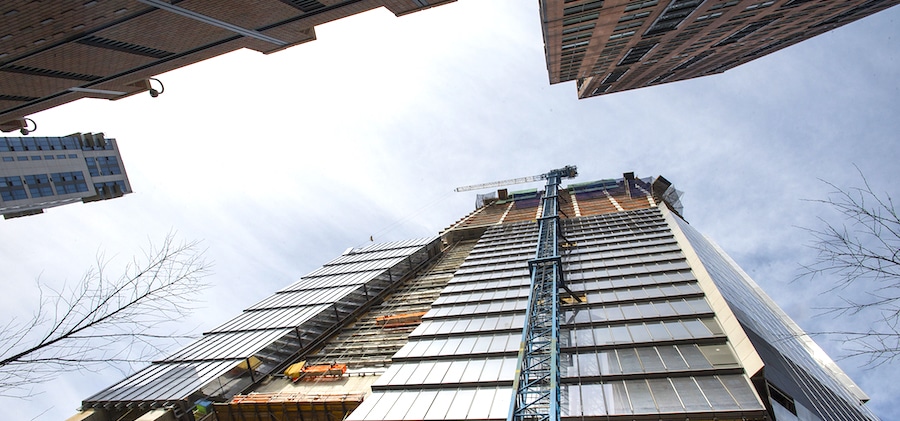
Image by MTAPhotos, Hudson Yards Real Estate Development Update: April 16, 2015, CC-BY-2.0, image cropped.
Is revitalization a dirty word?

August 16, 2019

Revitalization, gentrification, and displacement are now a mainstay in the heated national conversation about housing. For many years urban renewal and revival were sold as cure-alls for improving economically vulnerable neighborhoods in big cities from New York to Oakland. Unfortunately, the effort to bring new life to these areas was more successful than anyone predicted. In fact, it was so successful that it began to drive low and middle-income residents out of their homes as property values and the desirability of each neighborhood grew. And in the process revitalization went from a hopeful phrase to a coded word for displacement of minority and low-income residents.

This process started in the early 1990s in some high cost of living areas like San Francisco and Seattle and has substantially ramped up during the current real estate boom. Much of the issues arise from the Gen-X and millennial preference for smaller homes and their desire to have immediate access to urban life rather than schlepping in from the suburbs. As these young people flock to urban areas, existing residents are unable to keep up with rising rents, property taxes, and the general increase in expenses as their neighborhoods gentrify.

A silver lining

It is clear that gentrification is negatively affecting many Americans, with those most affected coming from low-income and minority groups. Some critics make no distinction between unmanaged market-driven gentrification, and the revitalization efforts happening in cities across the country. These revitalization efforts are having real, positive effects in some rust-belt states which are seeing incredible turnarounds, at least partially as a result of real estate revitalization.

Detroit as a model?

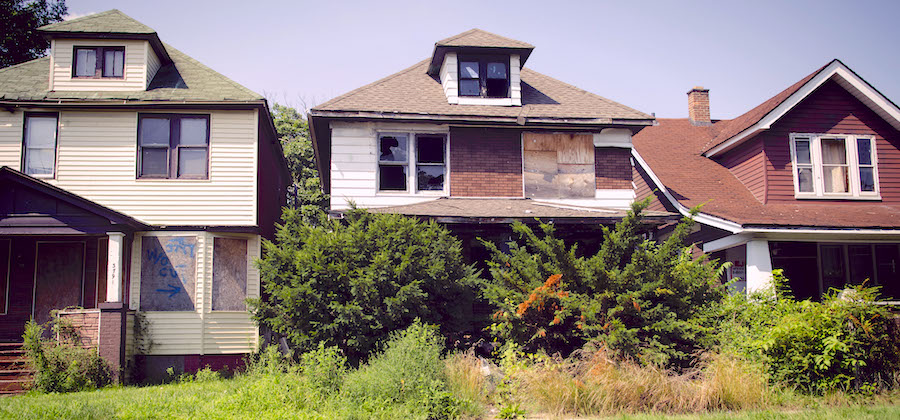
Detroit was, and continues to be, the poster-child for urban decay in America. The hollowing out of the American manufacturing base led to a situation where middle and upper-middle class residents fled to the suburbs, taking their tax dollars with them. Left behind were the poorest, many of whom came from minority communities. The city lurched from year to year in a state of disrepair until a few years after the 2008 financial crisis.

Over the past decade, real estate investors have helped develop millions of square feet of prime real estate in downtown Detroit. Areas that were once in significant decline, bordering on a demilitarized zone, became livable once again- and property values and the city’s economic picture rose with the real estate sector.

The housing market in Detroit is incredibly large and complex, and there are success stories as well as the emergence of some of the more common issues with gentrification and displacement. Many of the people on the ground working to protect residents from the deleterious effects work in partnerships with local governments, nonprofits- and developers.

Riding the wave

Spider-Man once said, “With great power, comes great responsibility.” This truism can be applied to how we approach housing issues such as sustainability and affordability. When local stakeholders are not heeded, projects can have disastrous consequences- both from an investor and resident perspective. Many grassroots movements have sprung up across the country as a response to development growth, and what some locals see as the destruction of their communities.

As developers and investors, we have a surefire way to avoid conflict with locals- and that is to  build to benefit the community, rather than just to make a buck. Everyone has to eat, and there is nothing wrong with an honest buck- but finding the intersection between community-minded morals and market forces will help each party benefit- the developer, investors, and residents.

_

Revitalization does not have to be a dirty word. In fact, it can be a net positive for all parties when implemented correctly.  Many cities and states throughout the country are taking steps to mitigate some of the worst problems arising from gentrification- and insightful investors have the chance to be on the ground floor of an entirely new development model- one where community and business interests are aligned, rather than at odds.

Image by Eve Picker

Investing in nature.

August 12, 2019

The natural environment and real estate investment

When it comes to housing, for many years, concerns about the natural environment were low on the list of priorities for developers. Community-builders saw the natural environment as a backdrop for their projects rather than a critical element in their design and function. Think gated developments set within lush valleys or mountainside retreats that sit apart from their surroundings, rather than being integrated into the natural environment.

Despite the mistakes of the past, societal and consumer demands have led to a sea change in how many developers view the environment, and how they can integrate and protect the environment while still generating solid returns on their capital investments.

Encouraging walkability

Among the most important contributions a developer can make to the local environment is to build walkable communities. The ability to walk to local shops, work, and recreational activities decreases the addition of carbon monoxide and other noxious gases into the air. There are many other benefits offered by walkability, including healthier populations, increased local commerce, and the ability to save space by not building wide roads and parking lots.

Leaving the tree canopy intact

A 2018 US Forest Service study found that communities lost 36 million trees in just five years between 2009 and 2014, almost 1% of total tree coverage in the United States. Trees provide shade for nearby buildings and lower surface temperatures in the area. They also actively take in and release moisture, which helps cool the air. By embracing non-traditional development models, and protecting tree canopy and other natural features, developers can create communities that benefit the environment, while also attracting residents who have an appreciation for green living.

Embracing water saving technologies

The planet is getting hotter. Many areas of the country, particularly in Sun Belt states like Arizona, Nevada and New Mexico, are experiencing increasingly more severe and longer heatwaves. Many Sun Belt states rely heavily on aquifers, in particular, the Ogallala Aquifer, which acts as a significant source of water for eight states in and around the Sun Belt. Water-saving technologies like low drip faucets, water-efficient dishwashers and laundry machines, and xeriscaping can help save residents and investors money, while also preserving our precious water resources.

Utilizing alternative, pro-environment funding sources

One hundred of the largest companies on the planet are responsible for 71% of greenhouse gas emissions, according to The Guardian. These companies enjoy a symbiotic relationship with traditional banks, mortgage lenders, and other big financial players who are the primary source of funding for most real estate projects. If green building and green tech projects become the standard, these companies may lose billions or even trillions of dollars in value over the long term.  So it should comes as no surprise that these same companies are not particularly gung-ho about investing in green real estate projects.

Instead of soliciting funds from financial institutions that are diametrically opposed to progressive environmental and social ideals, developers can go straight to the people by raising capital with crowdfunding platforms. Millions of investors across the United States are ready to invest with their conscience, not just their pocket book, and a not-insignificant amount of those investors are interested in green building solutions.

Partnering with local governments and nonprofit organizations

Environmentally-friendly developers hold a unique advantage over large firms- they are well-positioned to work with the community and with government entities to get projects shovel ready and completed as soon as possible. This is especially true in dense urban areas. Cities are leading the way in green legislation, from building codes to transportation, and this allows developers in this space to have projects greenlit with far less resistance than a traditional development.

_

Every industry-not just real estate development- will have to adapt to a greener future. We’re already seeing the growth in this trend in the automotive, restaurant, logistics, and energy sectors, among others. This makes the choice to get in on the ground floor with environmentally sustainable development an easy one. The combination of community and government support, along with return on investment and cash flow boosting green measures make developing sustainably a formidable strategy for developers and investors.

Image by Eve Picker

Development as art.

August 9, 2019

Real estate development as art

When you think of art, you probably think of Picasso or Matisse, not property developers like Mill Creek Residential or Greystar Real Estate Partners. Despite popular perception, real estate development is an inherently artistic endeavor. Some of the greatest artists in human history, people like Brunelleschi, Michaelangelo, and Da Vinci, all worked to create buildings and livable spaces.

For decades, since the birth of the modern housing industry at Levittown in the late 1940s, developers have focused on cranking out endless rows of homes with little thought given to much more than finances. Profits and growth were in the driver’s seat, with few considerations given to long-term community sustainability and dare I say it, beauty.

Many in the real estate sphere, on the investor and the developer side, are starting to realize that creating economically, environmentally, and yes, artistically focused housing is not only the right choice for society- it is absolutely essential to continue to remain relevant in a changing development landscape.

Crafting one of a kind environments

Innovative developers across the country are focusing on creating carefully crafted, artistic communities. Some of these new neighborhoods are purpose-built from the ground up. More commonly they are repurposed structures or vacant, unused lots in urban areas. Instead of seeing these areas as blighted, or unworthy of capital investment, forward-thinking developers and investors are focusing on them, partly due to the immense opportunity underserved areas present, and partly because of a genuine desire to create socially responsible communities.

Focus on urban infill

One strategy for creating art-driven developments is to focus on urban infill, defined as any new development in areas that are already built-up. Think abandoned lots in dense urban areas. There are many opportunities to create unique structures and neighborhoods in these areas, primarily because they are often overlooked by large-scale developers who prefer to develop on large and more traditional sites.

Adaptive reuse

Adaptive reuse may be leveraged to help artistically minded developers reuse existing buildings for new purposes. Many blighted or economically challenged areas have an abundance of old commercial and industrial buildings. With some hard work and lots of imagination, these underutilized structures can contribute to establishing new communities that are not constrained by the narrow-mindedness of traditional development models.

An example might be an old cannery turned into a loft housing site, with a small commercial area in the vicinity. Or an empty school re-envisioned as a community meeting place or artist studios. Beautification and artistic efforts can brighten these once abandoned or unused places to add some life and meaning to the neighborhood – not to mention the sustainability of converting an old building rather than starting from the ground up.

Creative redevelopment projects

Both of the above strategies share a commonality: Creativity. As cliché as it sounds, you will need to think out of the box to create an artistic and livable development. This not only applies to the building and the community it is part of, but it also applies to the methods that a developer might deploy to get these projects off the ground.

Creative financing strategies can help developers build the communities that people clamor to live in, no matter how out of the ordinary. While traditional lenders and banks are often reticent to lend to smaller developers pursuing “out of the ordinary” projects, new financial tools such as crowdfunding, present an opportunity for developers to build something cutting edge and extraordinary.

Instead of trying to squeeze an unique development project into a traditional lender’s box, you can go directly to potential investors via a crowdfunding platform. Investors and developers can even solicit support directly from the community in which they intend to build.

_

Most residential, commercial, and mixed-use developments across the country suffer from a lack of artistic vision, and this has hurt their aesthetic qualities, but more importantly, it exposes a lack of care for the daily needs of residents, the neighborhoods they live in and the cities they are part of. Steps towards embracing artistic diversity in the real estate world will pay dividends for years to come.

Image by Eve Picker

Reinventing housing.

August 5, 2019

Market conditions necessitate a radical shift in the way we think about housing as investors. While creeping housing bloat has afflicted the broader market for decades, the trend towards urbanism and millennial-driven demand for centrally located, affordable living spaces has led to the rise of alternative housing developments– and alternative financing and investment paths.

The rise of formulaic development

The market embrace of mid-rise housing and the typology surrounding multi-family housing has led to a situation where the homogenization of urban environments is of growing concern to urban designers and other city and real estate professionals. Put another way- every development is starting to look the same.

Most new developments fit a similar pattern of a four-over-two, or a three-over-one, where the base is not constructed non-combustible. That bottom floor may be a parking lot, a lobby, or retail shops. Above that, you have three to four levels of housing. This model has always been present in urban areas, and it continues to grow in popularity to meet changing tenant needs.

Urban areas out of reach

Across the United States, urbanization is a significant driver of property values in cities. Metro areas like New York, San Francisco and Atlanta have benefited from explosive growth for almost a decade now. This has left a considerable segment of first time (and other) home buyers without the ability to purchase homes due to financial constraints. This challenge presents an opportunity for developers who take advantage of nontraditional lots and properties.

The value in unrealized urban property and land

Investors in cities from New Orleans to New York City, are taking a second look at unrealized urban property and land that has gone unnoticed until now. Often located on small and oddly shaped plots, unrealized land presents an opportunity for developing properties that appeals to buyers in the market for starter homes, retirement cottages, and everything in between. This is supported by a growing awareness that cities are the most sustainable places to live making these formerly discarded lots look ever more attractive. Micro-homes are particularly well-suited for construction on these properties.

Small lots as a framework for starter homes

To meet the challenge of the affordability crisis, developers need to find ways to make starter homes more attainable. This benefits new homeowners who may otherwise be priced out of a neighborhood or city. It also helps investors and developers. The ability to place micro-homes on small lots opens up an entirely new, previously underserved market with a scalable development model that you can use from Austin, Texas to Portland, Oregon.

Distinct ways of living

Developers and investors need to keep pace with how Americans choose to live, work, and play. New housing models and other work-live cooperatives or co-living arrangements are gaining popularity, particularly in urban areas. These projects differ in scale, goals and methodology, but all aim to change the way we think about housing.

Crowdfunding to finance new housing models

Lenders and institutional real estate investors tend to follow predictable models. They have to set and hit financial targets to remain solvent, and there is little room for error. This is partially the reason we see so many of the same buildings in city after city. Those buildings work for their financial goals. Trying something new may rock the boat. But we need creative new ideas to solve this growing problem. We need creative new ideas to innovate in cities.

Crowdfunding offers alternative financing to help get nascent micro-home and co-living spaces out of the planning stages and into construction. These platforms could give developers, architects and other real estate experts the ability to source capital to develop projects that would have otherwise fallen by the wayside. A micro-home community in downtown Cleveland might not be profitable for a mega-developer, but it may be a viable opportunity for a smaller investor using a crowdfunding site.

_

The housing market is changing. As investors, we need to change as well. Embracing alternatives to traditional housing exposes you to opportunities to generate profit from previously underserved market niches in cities across the country.

Image courtesy of OJT (Office of Jonathan Tate)

« Previous Page
Next Page »

Primary Sidebar

sign up here

APPLY TO BE A PODCAST GUEST

More to See

The Seven

August 29, 2025

Real estate and women.

February 26, 2025

Oculis Domes.

February 25, 2025

FOLLOW

  • LinkedIn
  • RSS

Tag Cloud

Affordable housing Climate Community Creative economy Crowdfunding Design Development Environment Equity Finance FinTech Gentrification Impact Investing Mobility Offering Opportunity zones PropTech Technology Visionary Zoning

Footer

©rethinkrealestateforgood.co. The information contained on this website is for general information purposes only. Nothing on this website is intended as investment, legal, tax or accounting strategy or advice, or constitutes an offer to sell, solicit or buy securities.
 
Any projections discussed or made may not be accurate and do not guarantee a specific outcome. All projections or investments are subject to risk due to uncertainty and change, including the risk of loss, and past performance is not indicative of future results. You should make independent decisions and seek independent advice regarding investments or strategies mentioned on this website.

Recent

  • Vacant Upper Floors: Unlocking Downtown Housing
  • Podcast hiatus.
  • Pop City: Changing the Conversation
  • The Mulberry
  • Mount Vernon Plaza

Search

Categories

Climate Community Crowdfunding Development Equity Fintech Investing Mobility Proptech Visionary


Copyright © 2026 · Magazine Pro on Genesis Framework · WordPress · Log in