• Skip to main content
  • Skip to secondary menu
  • Skip to primary sidebar
  • Skip to footer
  • Home
  • About Us
  • Say hello
Rethink Real Estate. For Good.

Rethink Real Estate. For Good.

  • Podcast
  • Posts
  • In the news
  • Speaking and media
    • About Eve
    • Speaking requests
    • Speaking engagements
    • Press kit
  • Investment opportunities

Investing

Connecting impact and creativity.

October 16, 2019

Laura Callanan is connecting impact investing to the creative economy. 
To accomplish this, she founded Upstart Co-Lab. Upstart Co-Lab’s goal is to show impact investors that the arts can be a powerful economic driver in communities. 

Laura brings a powerful background to Upstart Co-Lab. Before launching Upstart Co-Lab, Laura was senior deputy chair of the National Endowment for the Arts; consultant with McKinsey & Company’s Social Sector Office; and associate director of the Rockefeller Foundation where she managed the endowment and co-led impact investing, closing two investments in the creative economy.

She has also been a visiting fellow at the San Francisco Fed, a scholar in residence at UC-Berkeley/Haas School of Business and a Rockefeller Foundation Bellagio fellow. Laura chairs the GlobalGiving Foundation, advises Shift Capital, and is a member of the British Council Creative Industries International Council. 

Listen in to Eve and Laura to learn how creativity is connected to impact, and how together they can build better cities.

Insights and Inspirations

  • Incremental change is insufficient. Be open and bold!
  • Artists are by nature peculiarly suited to community development since art is built on tradition, whether it embraces it or not.
  • Creative endeavors can bring every bit as much to the economy as any other enterprise.
  • Strategy and focus are key to accomplishing Upstart Co-Lab’s big goals. Make the case. Build the coalition. Bring investible products to market.
  • Laura is intrigued by the hunger for immersive experiences. Is this a reflection of the isolated lives we live?

Information and Links

  • Subscribe to ImpactAlpha.
  • Go to SOCAP.
  • Read the books by Jed Emerson and Cathy Clark.
Read the podcast transcript here

Eve Picker: Hey, everyone, this is Eve Picker, and if you listen to this podcast series, you’re going to learn how to make some change. Thanks so much for joining me today for the latest episode of Impact Real Estate Investing. 

Eve Picker: Hi there.  Thanks so much for joining me today for the latest episode of Impact Real Estate Investing.  My guest today is Laura Callanan, The founding partner of Upstart Co-Labs. Upstart believes that creative people solve problems. It is disrupting how creativity is funded by connecting impact investing to the creative economy.  One way the creative economy drives impact is in communities.

Laura brings a powerful background to Upstart Co-Lab.  Just a few of her many past roles include serving as senior deputy chairman of the National Endowment of the Arts;  consultant with McKinsey & Company’s Social Sector Office and associate director at the Rockefeller Foundation 

Be sure to go to evepicker dot com to find out more about Laura on the shownotes page for this episode. And be sure to sign up for my newsletter so you can access information about impact real estate investing and get the latest news about the exciting projects on my crowdfunding platform, SmallChange.

Eve Picker: Be sure to go to EvePicker.com to find out more about Laura on the Show Notes page for this episode and be sure to sign up for my newsletter so you can access information about impact real estate investing and get the latest news about the exciting projects on my crowdfunding platform, Small Change.

Eve Picker: Hi, Laura. It’s really a pleasure to have you here. Thank you for joining me. I’ve come to know you through your most recent enterprise, Upstart Co-Lab, where you’re a founding partner. I’m wondering if you could just tell us a little bit about Upstart’s mission and goals?

Laura Callanan: So Upstart Co-Lab is a field builder, a catalyst, a connector. We are connecting impact investing to the creative economy. We know that creative people solve problems. Like all entrepreneurs, they need capital to do it. Most creative entrepreneurs are very socially minded. Artists care about the human condition and that extends to the work they do through an enterprise model. So, the capital that fits them best is social capital, impact capital. Upstart Co-Lab is trying to unleash more of that impact investment capital for the creative economy.

Eve Picker: That’s great. How do you propose to accomplish that? I know you have a few different strategies you’ve been working on, but I’d love to hear more.

Laura Callanan: Well, from the beginning, we realized that what we were doing for the creative sector, in a lot of ways, followed on from what leaders had done around gender lens investing, so we went to the mothers of gender lens investing, and we said, “How did you do it? How did you take this idea, and, in a pretty short period of time, it really infused the notion of gender lens throughout the impact investing space?” They said it was a three-part recipe: make the case, build the coalition, and bring investable products to market. So, that’s what we’ve tried to do.

Laura Callanan: We have undertaken research to get facts, and case studies, and examples in hand to be able to really articulate the opportunity for investors and the demand for capital in the creative sector to really represent that case. We have shared what we’ve learned through the research published on our website, through opinion pieces in the Financial Times and other publications, in conference panels and keynote talks. We’ve been trying to get these ideas out into the world. That’s how we’ve done the first step.

Laura Callanan: Building the coalition, we have been working with strategic partners from the very beginning. We’ve taken an approach of being small, nimble, spunky; trying to take our ideas and work with much larger, older, better-established partners to get the idea of the potential for the creative economy to make change and do good, infused into the work of community development – finance institutions, impact platforms, like CapShift, and Small Change, your own platform, and work with partners who can help us make these changes happen quickly. 

Laura Callanan: We’ve also been building relationships on the investor side. Through a number of conversations in small and large meetings, we’ve really started to build this community of impact investors who recognize the power of art, and design, and culture, and heritage, and creativity to drive change. We have recently re-oriented our approach to what we’re calling Upstart 2.0, and we’re really going to focus on building a member community of the ambassadors, the evangelists who – as donor-advised funds, as private foundations, as endowed cultural institutions – want to take these ideas back to their peer group.

Laura Callanan: Then, the third step – bring investable products to market – our greatest example of that to date is work that we did with the Local Initiative Support Corporation (LISC) to launch a New York City Inclusive Creative Economy Fund. This is working with the oldest and largest national community development finance institutions, harnessing the power of their AA rating; harnessing their ability to underwrite and manage loans to real estate projects – in this case, affordable workspace for multi-tenant creative economy businesses.

Laura Callanan: We’ve found this to be really exciting, because we set out to raise $5 million of impact capital for the New York City Inclusive Creative Economy Fund. We closed the fund after about six months, having raised $6.2 million [cross talk] all Foundation that capital is fully deployed. We’re talking with LISC now about what a $100 million National Inclusive Creative Economy Fund could be [cross talk] That’s been our approach: make the case, build the coalition, and bring investable products to market to make it easier for investors to deploy their capital.

Eve Picker: I think you must be a very focused person not to get distracted, because that’s … You make it sound easy, but it’s pretty big. I’m very familiar with LISC; one of our would-be issuers on Small Change actually tried to use that program. She didn’t end up being able to buy the building, but it was that program that would have made it possible for her. That’s pretty great. How do you think that LISC might expand that? Are you talking to them about expansion?

Laura Callanan: As I said, the national fund is in the works, so let’s just wait and see when that’s ready to be announced.

Eve Picker: Okay, very good. I have to backtrack a little bit and say, why is all of this important to you, personally?

Laura Callanan: I majored in theater in college. I started my career working in the arts. My husband, my late husband, was a playwright and a novelist. So, in my personal life, I’ve always had a connection to creative people and the work that they do. I guess, now about eight or nine years ago, I had a lunch with a guy named Jim Howden, a founding artistic director of an off-Broadway theatre company in New York, Signature Theatre Company. And I at that point, I’d known Jim for about 20 years. I had known him from the very first days at the very beginning of his founding Signature Theatre Company.

Laura Callanan: We were having a lunch, and catching up, and he was talking to me about the $70 million Signature Theatre Company had raised in a public-private partnership to create a new three-theatre complex in West 42nd Street in the Times Square area. He was talking about how that new space would allow Signature Theatre to expand their programming. He reiterated the commitment to be sure that every ticket for every play was affordably priced at about $25. He was just describing all of the vision and what was going to happen next.

Laura Callanan: The architect on the project was Frank Gehry. They were designing a 7,500-square-foot open lobby space that would be a community center … A community green in the middle of Hell’s Kitchen was how Jim talked about it. He was just describing all of these plans. I knew where this company had started. The budget for their first year with $30,000. They were in a borrowed space way downtown. Things had not always been smooth and easy. They had made a commitment to equity and access from the early days. I knew that it had not been a smooth trajectory, but here was Jim talking about what was happening next.

Laura Callanan: It was at a moment that I was working at McKinsey & Company in the social sector office. I was in the middle of an engagement with the school foundation, so I was thinking a lot about social entrepreneurship. I heard these words coming out of my mouth. I said, “Jim, you’re what they call a social entrepreneur, but nobody calls you that because you’re working in the arts and you don’t call yourself that because you’re working in the arts. But take it from me. I am a highly paid McKinsey consultant. I know this stuff, and this is what you are.”

Laura Callanan: I left the lunch really scratching my head and thinking, if this guy were not a friend, would I put him in the same group as Muhammad Yunus, Wangari Maathai, Paul Farmer, Wendy Kopp, all of these card-carrying social entrepreneurs? If Jim is objectively a social entrepreneur of that caliber, is he the exception that proves the rule? Is there nobody else in the arts who could be called a social entrepreneur, or is there this whole overlooked cohort of talented, socially oriented, potentially hugely successful leaders who, for some reason, have not benefited from the grants, the networks, the incubators, the accelerators, the impact capital that other social entrepreneurs have access to?

Laura Callanan: I thought about this for a while. A few years later, in my role as the senior deputy chairman of the National Endowment for the Arts, I started to explore what it would take to close this gap for creative people who’ve decided to move beyond the studio, beyond the theatre, beyond the concert hall, and to work in their communities and to work as every bit of a social entrepreneur. That’s the background and how we got started with Upstart Co-Lab. 

Eve Picker: That’s pretty fabulous. So, I suppose the question is – what’s the end goal for Upstart Co-Lab? What does it look like when you’ve succeeded? 

Laura Callanan: When we’ve succeeded, every impact investment advisor on their website, next to talking about how they can help their clients invest in community development, and environmental sustainability, and by using a gender lens, they’ll also have a nice tab, a nice page, that talks about all of the ways that their clients can invest in the creative economy. We want to see this be as much of a theme, as much of a focus for impact investors as all of the other things that are already grabbing attention and investment dollars.

Laura Callanan: Our goal is to integrate this into the thinking of all impact investors and, frankly, to welcome a whole set of potential impact investors who’ve been sitting on the sidelines up to this point. By our calculation, more than $58 billion sits in the endowments of our museums, performing arts centers, libraries, or just endowed foundations, schools like Juilliard and RISD. 

Laura Callanan: These are institutions that are, at the moment, under some pressure for taking small donations from folks connected with opioids, tobacco, fossil fuels, and weapons. There’s been a lot in the headlines in recent months about cultural institutions declining contributions from these tainted sources. But the conversation stopped a bit short, and folks have not yet recognized that these are institutions controlling billions and billions of dollars and, unless they have taken active steps, are likely invested in, and earning returns from tobacco, and fossil fuels, and weapons, and private prisons, and some of these other things. 

Laura Callanan: The future that we hope we’re building through Upstart is one where all impact investors have more access to the great opportunities happening in sustainable food, ethical fashion, social-impact media, and other parts of the creative economy, and that artists, art lovers, arts institutions, who are investing, are able to learn about and are welcomed into a larger conversation about socially responsible investing through the door of the creative economy.

Eve Picker: Be sure to go to EvePicker.com and sign up for my free educational newsletter about impact real estate investing. You’ll be among the first to hear about new projects you can invest in. That’s EvePicker.com. Thanks so much.

Eve Picker: It’s really a shift in thinking, isn’t it? You’re an early pioneer in thinking that the creative arts are social impact, and you really have to wait until that idea takes hold with the masses. That’s a pretty hard road- 

Laura Callanan: Introducing any new idea takes some time, and some patience, and some moral fortitude. We’re trying to bring all of that to our work.

Eve Picker: Yeah, that’s pretty wonderful. That brings us to real estate, which is really my interest and the interest on this show. You talked about investment in creative enterprises. What do those enterprises look like? 

Laura Callanan: Let me describe one where real estate is a really core component. It’s interesting because it’s actually in the social-impact media space. When you hear social-impact media and you think about film and TV, music, video games, things like that, you think about content. That seems to be the furthest thing- as far as away as possible from real estate. But actually, real estate can play a crucial role.

Laura Callanan: I’m speaking to you today from the Hudson Valley of New York. One of my neighbors is the actor-director Mary Stuart Masterson. She is an example of a creative person who is also very much a social entrepreneur. She is launching a film and TV studio here in the Hudson Valley called Upriver Studios. She is doing it, in part, because she would like to be able to work where she lives, when she acts, and directs, and produces. But she also understands that film and TV can be a significant economic driver for a region. 

Laura Callanan: There’s a tax credit in this region of New York state, as in the rest of the state, and other places around the country, that incents producers to bring their projects here. One of the obligations to qualify for the tax credit is that your project needs to spend two days shooting on a certified soundstage in the geography, or the tax credit doesn’t apply to you. 

Laura Callanan: Mary Stuart, and her business partner, Beth Davenport, are launching Upriver Studios, a women-led New York State benefit corporation that will be environmentally friendly. They’re looking at solar power, and a green roof, and some other features like that, as well as environmentally friendly on-set practices.

Laura Callanan: It’s a hoteling model. They will have the state-of-the-art facility, and producers, directors, projects will come in; rent the space. It’s very fit for purpose. It’s a specialized space. There is sound attenuation; there are loading docks. There are high ceilings. There’s shop space. There are all of these things that are very particular to what it takes to film a TV series.

Laura Callanan: The advantage of this, for the community, is a couple-fold. First of all, every TV series generates between 150 and 200 production-crew jobs. We all think about the actors, and the writers, and the directors who are behind some of our favorite programs, but in fact, they’re the minority of people working on the show. There are all of the electricians, and the grips, and the sound folks, and the hair and makeup folks. You look at all those names that run on the credits at the end of a movie or at the end of a TV show [cross talk] 

Eve Picker: -Yeah, pretty long list. 

Laura Callanan: -150 to 200 people. These are quality jobs. Most of them are union jobs. They pay between $75,000, and $250,000 dollars a year. They have excellent health benefits. To bring this sort of work to this region creates a real opportunity for folks to work in those jobs. There’s a sister nonprofit to Upriver Studios, called Stockade Works, that is training the 21st century production crew to be ready to take those jobs.

Laura Callanan: There’s also an economic multiplier benefit. There’s also a tourism benefit. People like to go to the place that they learn about on their favorite TV show. So, the real estate is crucial to all the rest of this working; to the training program paying off; for the graduates of the training program to have a place to work; to attract folks to come, in partnership with the tax credit; provide the access to the sound stages that will make people really want to come to this region. That’s an example of real estate, as I said, connected to a content-focused industry – TV and film.

Eve Picker: So, that’s a pretty sexy use. While you’re speaking, I’m thinking that also, I think, restaurants are creative.

Laura Callanan: Absolutely. We are working right now on a deep dive around sustainable food, as it pertains to the creative economy. Obviously, there’s a big focus, within impact investing, on food and agriculture. We’re not looking at the crop. We’re looking at what it is on your plate. As I was thinking about it earlier today, we’re not focused on the milk, but we are focused on the cheese, right?

Eve Picker: Yes, yeah … 

Laura Callanan: So, the cheese factory is an example. We’re not focused on the groceries as much as we are the recipes. Those recipes get turned into delicious dishes in kitchens … We see a lot of community kitchens and commercial kitchens that can support multiple small-scale entrepreneurs. So, absolutely. Then, the restaurant, as an experience – the setting, the location, the ambiance, the type of building that it’s in – it’s all part of thinking about food and eating as a form of culture and community, not just nutrition.

Eve Picker: So, I’m realizing we’re actually talking to someone who may be a neighbor of yours about a restaurant idea, which is really immersed in the community. They would like to open the door for investment at a very small amount – $250 per investor – because they really want to involve the community. That’s another interesting way to look at it. From what I understand, creative enterprises seep into a lot of different things. I have to remind myself from time to time what a creative enterprise is; probably, Small Change is a creative enterprise, because I’m trained as an architect. Do architects count, Laura? 

Laura Callanan: We see that a lot of creative people are creative in many ways. They get trained as architects, or painters, or actors, and they decide to start different enterprises. We don’t talk about creativity as a skill set or a mindset. We focus on creativity from an industry perspective. We think that’s the way that investors can understand best. We had to do a lot of thinking early on about how we were going to scope our focus, because you’re right, people can be creative in many fields. But in terms of the type of work we’re trying to support and that we’re trying to get impact investors to pay attention to – food, fashion, media, other types of creative businesses, and the sorts of real estate projects that we’re describing here that make it possible for those creative activities to take place.

Eve Picker: That makes a lot of sense. This is a general question I usually ask – do you think socially responsible real estate is necessary in today’s development landscape? I don’t know how much you know or are involved in just real estate development. Do you have thoughts about that?

Laura Callanan: Well, it’s something that people who think about arts and the creative sector can’t overlook, because, as I’m sure you think about often, creative people are pioneers in different ways, not just in terms of the work they do, but where they choose to live and do their work; often looking for affordable places to be to give themselves the flexibility and the capacity to experiment and take risks.

Laura Callanan: Increasingly, we see examples where creative people are in neighborhoods that are ripe for gentrification. There can be confused conversations about the role that the presence of creative people plays in stimulating or contributing to that gentrification. Obviously, I believe that gentrification is a problem that lands on the doorstep of the asset owners and the developers, not the residents and the renters in a neighborhood. The creatives are frequently, like other residents, in a renter capacity. 

Laura Callanan: We spend a lot of time looking at academic research and other reports about how the presence of artists and creatives in a neighborhood is not the precipitating factor for gentrification, but actually occurs after the gentrification has begun. We think a lot about what different paradigms could be that would enable residents in a neighborhood to benefit as the neighborhood strengthens; how they can be rewarded for being good neighbors, for sweeping their stoops, for keeping their sidewalks clean – all that stuff that makes the neighborhood inviting and habitable – and what the system could look like – where the folks who are responsible for growing the value of the real estate assets in a community can actually benefit, even if they’re not the owners, themselves.

Eve Picker: Yeah, I do think that there is also a piece of this that government is responsible for, because if there’s an open free market, then it’s very difficult to control, but there are ways to control gentrification that benefit everyone, if you think about it early enough. I’m wondering, are there any current trends in arts innovation that interest you?

Laura Callanan: We don’t think about arts innovation, specifically. We’re thinking about that larger creative economy; we’re thinking about the role that industry plays [cross talk] 

Eve Picker: -that’s Upstart Co-Lab, but I’m just wondering if there’s anything that fascinates you.

Laura Callanan: Anything that fascinates me … I’m intrigued by our hunger for experience, and this is something where creative people are playing a role. I’m sure that you’re familiar with Meow Wolf, the phenomenon that started in Santa Fe that’s spreading to Denver, and Las Vegas, and Phoenix, and Chicago, and Washington, and on, and on, and on.

Laura Callanan: This is something where artists have come together. They transformed – in the Santa Fe example – an abandoned bowling alley. They turned it into this funhouse; this art gallery; this community space. It’s a place that attracts folks of all ages. All economic, demographic, sociological backgrounds, come, and walk through, and participate in Meow Wolf and find it intriguing.

Laura Callanan: The appetite for these types of immersive experiences, I think, is a reflection of our very isolated, tech-enhanced daily life. I love it that creative people – whether it’s through a food experience, whether it’s through an art experience, a music experience – that they are at the heart of what people choose to do when they leave their laptop.

Eve Picker: Yes. I think probably Starbucks was one of the first companies that realized this and created an experience out of coffee, right?

Laura Callanan: Exactly.

Eve Picker: What should those of us who are not in the creative world be following? What of these trends do you think is most important for the future of our cities? 

Laura Callanan: There’s an important role in the creative future for diversity, equity, and inclusion. Put aside the moral and ethical imperative. There’s just an imperative in terms of what’s going to come out- what’s going to generate the most intriguing content, the most relevant experience, the most interesting food, or fashion.

Laura Callanan: As you know, heterogeneous groups of people have been shown to solve harder problems, better and faster. If you think of both challenges and opportunities as problems to be solved, the more engaged the broader set of actors can be in contributing to imagining what comes next, the better the results will be. From a serious point of view, it’s a more effective solution. From a more lighthearted point of view, it’s that beautiful, delicious, joyful, wonderment experience, right?

Eve Picker: Yes. 

Laura Callanan: That having a variety of perspectives, a variety of experiences, a variety of backgrounds, a variety of skills brought together to imagine what’s next will get us the best result.

Eve Picker: Yeah, I think you’re probably right about that. It’s just very hard getting there, isn’t it?

Laura Callanan: It depends. If you hang out with enough creative people, it can make you ridiculously optimistic, so … 

Eve Picker: That’s what I need to do, then … Because you have a very different point of view than many of the people I’ve talked to, who are developers, or work in the securities world, or are really focused on the built environment. You have sort of a more expanded view, I think. How do you think we need to think about our cities and neighborhoods so that we build better places for everyone? You may have just answered that.

Laura Callanan: Well, we think that the creative people and creative organizations, meaning arts- and design-type organizations, have some lessons that are useful to the rest of the economy. We’ve started to articulate values for an inclusive, creative economy. I can just share them with you because our hope is that we can transform; we can improve; we can strengthen the entire economy by sharing some of these lessons from the creative economy.

Eve Picker: Yeah, that would be great.

Laura Callanan: These are things that we’ve touched on already, but one is an orientation that’s open and experimental. So, openness and experimentation, I think, is crucial. It will help us to keep pace in our rapidly changing world. Continuous improvement, radical new approaches, that’s what we need. Incremental change is insufficient given the dynamism, the complexity of the world that we’re in. Sometimes, small improvements are just simply inadequate, and you need something that’s much more bold. 

Laura Callanan: You get that by being curious and having this learning orientation. Artists, designers, very much are built that way, and I think that’s a general approach that can benefit all types of businesses, all sorts of real estate projects, governments, philanthropy. I think everyone benefits from that approach. That’s the first value that we think the creatives can share with the rest of the economy.

Laura Callanan: The second one – diversity and inclusion – we’ve already talked about; the capacity to solve problems better and faster that comes when you’ve got diverse perspectives on the task. It’s not just that it’s the ethically right thing to do. It’s that there’s business value. There is a strategic advantage to approaching it in this way. Creativity simply can’t be optimized if you don’t have both diversity and inclusion at play.

Laura Callanan: The last idea is one around tradition and innovation and recognizing that communities have both – I’ll call it – knowledge and wisdom. With that, they’re able to learn from the past experience and apply that to what’s coming up next in the future. You know that creative people are always reacting to what came before. They might be building off of it. They might be rejecting it outright and trying to do something very different, but creative work is always in context, and it’s in context with what has preceded it.

Laura Callanan: The long-term thinking, the sense of stewardship that social-sector leaders and impact investors hold, I think, is very compatible with the way creatives do their work. I think creative take it even a step further; having a really deep respect and awareness of prior tradition, but not being restrained by that or being held back by that; using that actually as a launch pad to innovation.

Laura Callanan: Those are the three ideas that we think are crucial. Creatives just know this in their bones to be open and experimenting, to welcome in diverse perspectives and be very inclusive of various voices and to connect to tradition and innovation. We think that those are ideas and lessons that can strengthen the entire economy.

Eve Picker: I’m very honored that you asked to partner with Small Change and that we’re now highlighting creative economy projects on our site. I’m just wondering what you think equity crowdfunding- how you think it can play a role in building these special creative economy projects and communities?

Laura Callanan: I think it’s crucial as a way for projects like Upriver Studios that I mentioned a minute ago, or a Meow Wolf, that started in one community and is now expanding to the next six or so communities around the country. I think it’s important for these organizations, these enterprises, to engage the communities that they’re in, in an active way.

Laura Callanan: This is a way to signal that it’s not just building something for a small group of employees or a small group of investors. If you are a Mary Stuart Masterson and you’re launching something that you hope is going to really boost the economy of the Hudson River Valley, this is a way to say, “And you, my neighbor, can have a stake in this. You can benefit as we grow this thing together,” whether or not your $250 dollars, your $1,000 dollars, whatever the small bite size might be of investment that’s facilitated through Small Change … It’s a really clear communication to local folks that this is for them and that they’re welcome.

Laura Callanan: I think it’s a really strong indicator for larger-scale investors who want to test the morals and the intentions of a real estate developer. It gives them a really strong indication. If the developer is going to take the time and engage with the local community and allow them to participate through a crowdfunding structure, then they’re serious about boosting the local community. If they can’t be bothered, I think that is a real question mark about the intention of the developer.

Eve Picker: That also extends to planning departments and zoning hearings. If you can bring along a crowd of people who are supporting the project, that’s a very strong statement, I think, in many ways-

Laura Callanan: Absolutely.

Eve Picker: Where do you think the future of impact investing lies? I ask this because I’m afraid it’s still just a word that people use. I have yet to really believe that people will take a lesser return because a project is socially responsible. Perhaps that’s coming, but still hard to believe.

Laura Callanan: Well, I would disabuse you or anyone listening to this podcast that impact investing is asking people to take a lesser return. I know that 25 years ago, when I started to get into the impact investing space – when the space was very new and impact investing was not the term it went by – that there were a few early, less sophisticated, less professionally managed investment opportunities, and that might have been the story back in the 1990s.

Laura Callanan: I would say that we have Goldman Sachs, BlackRock, UBS, Morgan Stanley – all these large names, these premier financial institutions, participating in the socially responsible and impact investing sector, not because they and their clients are expecting to make less money. We can have a whole separate conversation about the whys and wherefores for this. We can talk about the risk management component of introducing social, responsible ESG factors into decision-making, but I would hate for anyone to hear this conversation and walk away thinking that they’re going to lose money by engaging in impact [cross talk] 

Eve Picker: I don’t think lose money but let me just pose the question a bit differently in what I see, and that is, in particular, affordable housing. As a real estate developer, when you work in an underserved neighborhood, it is very hard to get projects to pencil out; very, very difficult. That’s why there are so many subsidies around affordable housing projects, and that’s why it’s slow to build them fast enough.

Eve Picker: If you want to keep a project- an asset like that affordable for the next 15 or 30 years, it’s not an asset that will increase in value. It’s a difficult thing to invest in. Absolutely, investors in those types of projects will have to take a lesser return than if they invested in a more traditional real estate project. There’s a real differentiation there, and I would love to have this conversation with you- 

Laura Callanan: No, that suggests that each investment’s looked at in isolation, and an investor is looking at their total portfolio. There should be some things that are lower risk and commensurate return, and here are some things that are going to be higher risk and commensurate return.

Laura Callanan: When we were talking with investors about the New York City, the LISC New York City Inclusive Creative Economy Fund, we were talking to them about an eight-year note with full recourse to a AA-rated issuer that was paying 2.75 percent annual interest. As I talk to you today, in September of 2019, and we sit with an inverted yield curve, the 2.75 interest on a seven-, eight-year investment from a AA-rated issuer is looking awfully good. So, a lower-risk commensurate-return opportunity, which has a place in everybody’s portfolio.

Eve Picker: I see it- I’m not seeing it yet in my world, but I hope to see it. I think there’s still a lot of people who don’t think that way … Maybe we can convince them. There’s just some sign-off questions that I’d like to ask.

Laura Callanan: Sure. 

Eve Picker: What would be the key factor that makes a real estate project impactful to you?

Laura Callanan: Well, the community orientation, clearly, is something that we would probably both agree on. I see that- it’s not a surprise to me that a lot of the creative economy real estate projects that I’m aware of are deeply focused on their role in their community, whether it’s Meow Wolf, Upriver Studios … We haven’t yet talked about Greenbelt Hospitality, which is launching out of Phoenix. These are examples where the entrepreneurs behind the projects all are really thoughtful about their community, and real estate is core to what these businesses are all about. The businesses can’t succeed if the community is not engaged. I think that that’s fundamental.

Eve Picker: Yeah, I agree. If you’re looking at the real estate landscape in the U.S., which you see every day, if there were one thing that you could change to make it better, what would that be?

Laura Callanan: Well, I think there’s got to be a regulatory solution to the gentrification question. Obviously, improving communities is a good thing. The only reason that we have a term like gentrification that conjures up something that’s really, really bad is because when the community improves, there are winners and losers. I think there needs to be a regulatory fact or a solution that comes into play to close that gap, because the notion of keeping communities where they are already and not allowing them to strengthen is not an alternative. It’s not a solution to the issue.

Eve Picker: Yeah, I totally agree with you. Thank you very, very much. Thanks for spending the time with us. I really enjoyed the conversation, and I’m going to continue having conversations with you off the air, okay? 

Laura Callanan: My pleasure. Thanks, Eve.

Eve Picker: Thank you. Bye-bye. That was Laura Callanan of Upstart Co-Lab. She shared some powerful concepts with me. First, that strategy and focus are key to accomplish big goals, like the goals that Upstart Co-Lab has. Second, that creative endeavors can bring every bit as much to the economy as any other enterprise. Third, that artists, by nature, are suited to community development. Art is built on tradition, whether it embraces it or not. Expect to hear more about creative economy investment opportunities in the next few years, because that is what Laura is determined to do.


Eve Picker: You can find out more about impact real estate investing and access the show notes for today’s episode at my website, EvePicker.com. While you’re there, sign up for my newsletter to find out more about how to make money in real estate while building better cities. Thank you so much for spending your time with me today, and thank you, Laura, for sharing your thoughts with me. We’ll talk again soon, but for now, this is Eve Picker signing off to go make some change.

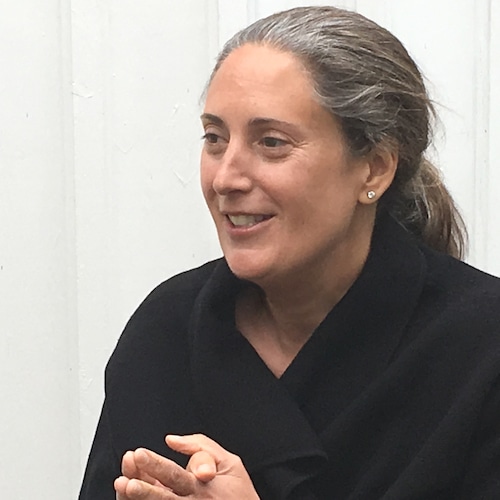
Photo of Laura Callanan by Helga Sigvaldadottir.

Making allies, not opponents.

October 7, 2019

Impact investing is a relatively new phenomenon. Community-minded entrepreneurs who strive to be socially responsible are independently coming up with innovative solutions to solve or alleviate problems across the country. They are tackling issues like housing insecurity, the deleterious effects of suburban sprawl and environmental concerns related to housing. While every project is different, there is a game plan that developers can follow to make sure they are heading down the right path towards a socially responsible project.

Make the case

Every essay starts with a thesis, and so should an impactful development project. Onboarding investors and other stakeholders should always begin with a plan. Developers need to make the case for why and how the development in question will change lives for the better, while meeting or exceeding investor return on investment goals and matching their appetite for risk (or lack thereof). This process should include environmental and economic impact studies, as well as a clear explanation to current residents about how the project will preserve and enhance their neighborhood, rather than displace residents and lower their quality of life.

Build a coalition

Once the roadmap is in place, it’s time to build a coalition. This should include current neighborhood residents, local business owners, elected officials and real estate and development financial institutions. Recruiting stakeholders and including them in your vision can not only help avoid costly delays that can come from neighborhood opposition, but also genuinely speak to your desire to make meaningful change. You want allies, not opponents.

Your goal should be to create a community of impact investors, with a focus on embracing design, art, cultural and environmental concerns. By connecting like-minded developers and investors in the community you will help ensure the success of the project at hand, as well as plant seeds and forging connections for the next series of transformative development projects.

Bring investable products to market

And last, but not least, you must bring investable products to market. Make it easy for investors to deploy capital into your socially responsible project. You’ll find many of the partners in the coalition you have built may be interested in participating as investors, particularly development finance institutions, since now they have a stake in it. They can leverage their AAA ratings, underwriting abilities and loan management services to ensure a clear path forward to a well-capitalized real estate development.

Setting the stage for the future

This process transcends any single project or development. To truly make an impact as an investor, you must work towards making structural changes, and the best way to do this is by building a mass movement. There is incredible economic power in leveraging social networks, like Facebook, LinkedIn, and other platforms like this since they are geared towards the masses. The presence of accredited investors and developers will only have a multiplying effect on the economic value that your social network brings.

_

Impact investing is by nature more complex than traditional return-driven real estate development. Not only do developers need to set and hit ROI goals, they need to do so with social responsibility in mind. Unfortunately, government incentives and regulations do not always reward making the right choice. For example, tiny houses might not be permitted under some zoning and building regulations – although the market is clearly interested in them and they can be an affordable and environmentally friendly housing solution. By not permitting tiny houses, developers are driven to produce housing that is the same as the housing we’ve built since Levittown.

To be successful as an impact investor, you have to be smarter, more creative and nimbler than most. Having a game plan really helps. These three important steps – making your case, building your coalition, and bringing impactful investable products to market – may be critical to your success and the future of the community you are working in.

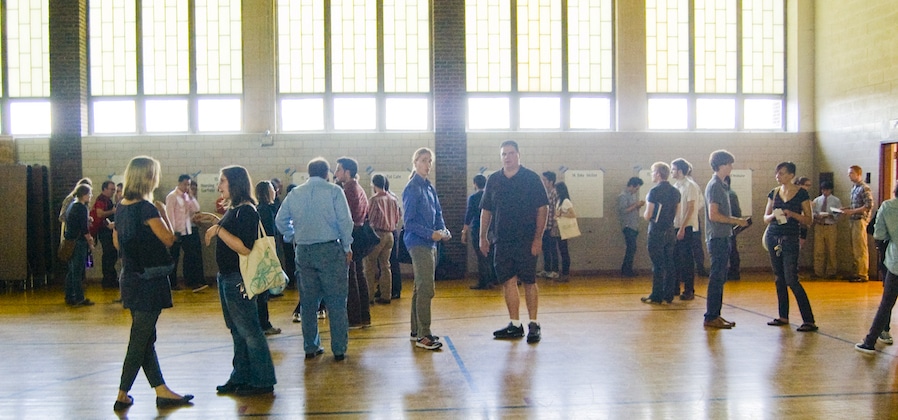
Image, Garfield Community Meeting, courtesy of Eve Picker.

Investors as educators.

October 4, 2019

Most people have some familiarity with the process of buying real estate, either through popular media or their own experiences purchasing a home. But when you enter the world of commercial property development and investment, there is a “lingua franca” that is unique to the real estate business. While there may be a justifiable need for this “secret language” between real estate professionals, investors, and developers, it can act as a barrier to increasing the pool of people, laymen and experts alike, who are involved in real estate development and investing.

If we make real estate development terminology accessible and understandable to the average investor, we’ll start to raise awareness about real estate development and how to make great and inclusive places. And we’ll help prosocial, environmentally conscious developments reach a more mainstream investor audience. It is much harder to explain a sustainable, inclusive vision for the future if sustainability advocates are not even speaking the same language as investors, This is a way to shift the focus from bottom line to triple bottom line.

Remember, it takes convincing a pretty diverse group of people to successfully push a sustainable project forward. Not only do the numbers have to make sense to lenders or investors, but local municipalities or counties must also be convinced. The ability to speak the same language as the people who determine whether or not your project proceeds is critical. No matter how financially beneficial the investment, or how sustainable the project, if you can’t sell it to local authorities your capital will evaporate with costly studies, complaints and revisions.

Sell the benefits of revitalization

Words like “displacement” and “gentrification” have entered the national conversation around housing development. In many places, chatter relating to these issues is driving the discussion, and almost always in a manner that portrays property development as incompatible with the goals of a more equitable and verdant society. When entering into a new community, developers must work to challenge this notion. The best way to do that is through education. Create a dialogue with the local community to alert them to the potential benefits of new commercial/residential spaces. Remember that dialogue goes two ways and that residents have a wealth of information to share about how developers and investors can make the project truly sustainable, in an economic or an environmental sense.

Triple bottom line

When making your case, hitting on the “triple bottom line” goals of sustainability, environmental stewardship, and economic justice will address many local concerns. There is an old adage in the sales community: “sell, not tell.” This truism should be adopted when selling anything, from an automobile to a development plan. Instead of just telling the community how your vision will hit these triple bottom goals, get into specifics. Sell them on the benefits of sustainable development, and how their day to day lives are likely to improve once construction begins.

This dialogue can also act as a phenomenal way to raise capital for a project. After all, you are reaching groups of people who understand the realities on the ground and have a vested interest in making sure that property lifts their neighborhood, rather than pulling it down. Combining your community outreach efforts with a crowdfunding campaign can help build up support among local residents and help get your project off the ground.

_

Historically, top-down efforts have not had much success in alleviating the housing problems we face today as a society. Conversely, grassroots, community-based projects have seen and continue to see success in cities across the country. If your goal is to create better communities, it is imperative that the community you wish to improve is kept in the loop, consulted, and shown respect.

Image, Empty Desks, from Pixnio

Advancing community development.

October 2, 2019

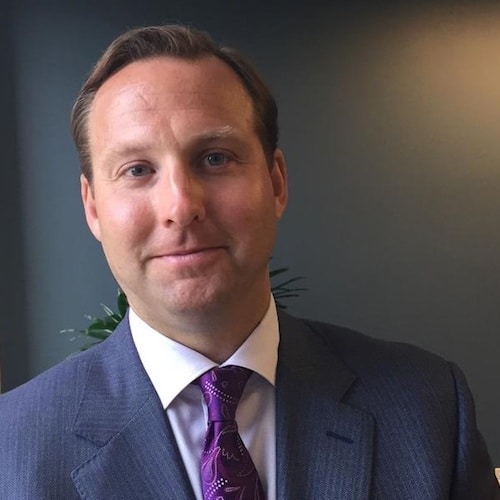
Joshua Lavrinc is a multi-disciplinary real estate professional with a breadth of experience in development and finance consulting, lending and investment, and fund management. He’s also a colleague and friend of mine in Pittsburgh,

What sets Josh apart is the type of funds and projects he is involved in. He’s carved out a little niche for himself in Pittsburgh, helping to raise and manage funds like the Strategic Investment Fund and Power of 32 Site Development Fund through his company, Callay Capital. Callay, a real estate investment advisory firm, was formed to advance economic and community development goals and that’s just what Josh does. And he’s an expert on alternative financial structures as well, like New Market Tax Credits and Opportunity Zone Funds. He sits on Novogradac’s national Opportunity Zones Working Group. 

More recently Josh founded Grow Community Development to explore the real estate development work he really loves. Some examples of the projects he is involved in are the recently opened the Oaklander Hotel and is working on impactful, mixed-use projects in Pittsburgh and Detroit anchored by co-working company the Beauty Shoppe. Josh’s education includes a B.S. in Accounting from Pennsylvania State University, a J.D. from the University of Pennsylvania and a Certificate of Management and Public Policy from the Wharton School of Business. 

Listen in to hear more about Josh and his thoughts on impact in real estate and Opportunity Zone Funds.

Insights and Inspirations

  • The capital markets can be squarely directed at impact investing.
  • There are some large and strategic impact funds that have been around for a while, like Pittsburgh’s Strategic Investment Fund.
  • Impact investing isn’t just one size fits all. It can serve projects of many shapes and sizes.

Information and Links

  • Josh is proud of the Oaklander, the first hotel development project he has co-developed with business partners Jim Noland and Concord Hospitality.
  • Josh loves the Rich Roll Podcast series which explores Rich’s plant-fueled feats of boundary-pushing athleticism and fuels Josh’s exercise routine. He likes this latest episode in particular.
Read the podcast transcript here

Eve Picker: Hey, everyone, this is Eve Picker, and if you listen to this podcast series, you’re going to learn how to make some change. Thanks so much for joining me today for the latest episode of Impact Real Estate Investing. My guest today is Joshua Lavrinc, a colleague of mine in Pittsburgh. Josh is the CEO of Grove Community Development, a real estate development and consulting company. He’s also the CEO of Callay Capital, a fund advisory and management company.

Eve Picker: While Josh started his professional life as an attorney, he pretty quickly moved into the capital-raising world and has stayed there ever since, but he shifted his role to developer, development consultant, and fund manager, squarely in the impact arena. What sets Josh apart is the type of funds and projects he’s involved in. He’s carved out a little niche for himself in Pittsburgh, helping to raise and manage funds like the Strategic Investment Fund and the Power of 32 Site Development Funds.

Eve Picker: In this podcast, we explore the inherent challenges in impact investing. Be sure to go to EvePicker.com to find out more about Josh on the show notes page for this episode and be sure to sign up for my newsletter, so you can access information about impact real estate investing and get the latest news about the exciting projects on my crowdfunding platform, Small Change.

Eve Picker: Hi, Josh, how are you?

Josh Lavrinc: Good morning, Eve. I’m very well, thank you.

Eve Picker: Josh, I know a lot about you, but our listeners do not. I would love you to just tell us a little bit about yourself.

Josh Lavrinc: Fantastic. Well, thanks for the opportunity to speak. I’m in Pittsburgh, as you are these days, working on real estate investment, in particular, for socially responsible mission-based investments, which we’ll talk about as we proceed in the conversation.

Josh Lavrinc: My background … I’ve lived in several places in the Northeast and went to college, undergrad, at Penn State, where I learned accounting, among other things; started my career as an accountant very briefly, before deciding to continue on to law school. After studying accounting and being in an accounting firm for a short while, I decided to proceed to law school, and went to the University of Pennsylvania in Philadelphia with my now wife.

Josh Lavrinc: We stayed there for about five years, through law school and practicing law, really in the areas- two areas – one, real estate finance and development and the other area, structured finance, working, in particular, on commercial mortgage securitization for large rating agency clients and large investor clients. Then combining that with a more traditional dirt practice, as they call it, on real estate development, and then representing banks, insurance companies on lending and investment, as well.

Josh Lavrinc: When it was time to have children – my wife is from Pittsburgh – we came back to Pittsburgh and here we’ve been since about 2005. I continued practicing law for a few years until the market crashed in 2008. I had left the law firm to start a development career and started, actually, a distressed debt strategy that was difficult to pull off, raising capital and sourcing distressed debt transactions as a way to try and acquire property at the right basis during that cycle.

Josh Lavrinc: With little resources to pursue that strategy, my partner and I at the time – he was also young with new children in the house, like I – we decided to look at residential real estate as an overlooked asset class; something that had been hit pretty hard by the financial crisis. We started a real estate development and construction company in Pittsburgh, which went on. After starting that up. about 24 months into it, I sold my interests and moved on to the mission-based investment fund management platform that I’ve grown and am part of now. I sold those interests, and he went on to become the largest owner of houses in Allegheny County, where Pittsburgh is located, in 2014..

Josh Lavrinc: I have a residential development and an investment background thanks to those couple of years, but I’ve moved back into commercial, which was much more of my professional training. I’m excitedly applying my skills for a particular mission rather than an array of clients, an array of projects, where I had responsibilities previously, just to execute on a transaction somewhat disconnected from the underlying projects. Now, I’m on the front side of the transaction, helping, assisting clients in figuring out how to finance those projects or actually providing the capital for those projects, and with a particular mission, as I was saying [cross talk] I can talk a little bit about that.

Eve Picker: Yeah. Can you tell us a little bit about the mission? That’d be really great.

Josh Lavrinc: My current partner, Jim Noland, had a mortgage banking firm back in Pittsburgh that he had started in the late ’70s-early ’80s. At some point, towards the end of that decade, some of the local union building trades came to him and said, “We’ve been investing in these national strategies with our local pension fund money. They will create financial returns, but they’re invested in projects at major metros that are very large, and they don’t really have any impact on us, here locally, so we would like to see if we can invest our money in local projects, create jobs, and create financial return.”

Josh Lavrinc: So, before it became popular to talk about responsible investments or mission-based investment, here was a fund that formed. Fast forward, that fund is called the Employees Real Estate Construction Trust. It’s a regional fund from Cleveland, Ohio, through West Virginia that has a collection of union, municipal and private pension fund investors, the majority of whom originally were local union building trades. There is a 100-percent union building-trade labor requirement attached to those funds for every investment they do, in order to create high-quality jobs through the union building trades and invest that money for financial return, locally.

Eve Picker: How much has been invested locally through that fund over the years?

Josh Lavrinc: It’s been, I believe, over a billion dollars at this point, although the corpus of the funds is in the $200 million range, a little over that [cross talk]

Eve Picker: -that’s pretty high impact, Josh.

Josh Lavrinc: Pretty high impact, and that’s not a track record I can claim responsibility for. There’s a great team. There’s a trustee of those funds, AmeriServ Bank. My partner, Jim Noland, and his company, Penn Trust Real Estate Advisory Services, Incorporated, of which I was part, has served as the real estate advisor, essentially in charge of origination, and execution, and servicing of all those assets. There are strategies within those funds – a debt strategy and an equity strategy. They’ve been very flexible in the market; able to do things a little more aggressively than conventional lenders and have built up a great reputation in the development community in this region, as a result of that, and their great, diligent, and friendly relationships.

Eve Picker: That’s how you dipped your toe in the water of impact and socially responsible developments. If you fast forward today, what other projects have you worked on or what other funds have you managed that fit that criteria?

Josh Lavrinc: Great. When I met Jim Noland on a nonprofit board he and I were serving on, he was pursuing a program with the State of Pennsylvania – the Commonwealth of Pennsylvania, I should say – called the Building Pennsylvania Mezzanine Loan Program, trying to do support; provide gap financing to support commercial projects in promoting an economic development mission in the state. That program successfully was pursued, and we’ve used that a number of times, including to finance the Ace Hotel here in Pittsburgh. That’s one additional mission-based fund that we continue to manage from time to time.

Eve Picker: Be sure to go to EvePicker.com and sign up for my free educational newsletter about impact real estate investing. You’ll be among the first to hear about new projects you can invest in. That’s EvePicker.com. Thanks so much.

Eve Picker: We should tell people, the Ace Hotel in Pittsburgh is a pretty high-impact project, because it’s a hotel that was … The hotel actually re-utilized, renovated a beautiful old building that had been long vacant in a very underserved neighborhood that was quite poor at the time. It really did a number of amazing things. It’s not just an Ace Hotel. It’s an Ace Hotel that really made an impact, I think.

Josh Lavrinc: Yeah, it came at a time, just before this … Really at the cusp for … This neighborhood in Pittsburgh, East Liberty, had been, prior to that, fairly distressed. Certainly, the Bakery Square project and the folks at Walnut Capital helped to transform that neighborhood, among others, but our friends, Nate Cunningham and Matthew Ciccone – Matthew sort of envisioning that project …

Josh Lavrinc: A former YMCA associated with a church across the street; had been sort of mid-block. Not a hard corner. Not an easy site to see, and certainly, at that time, not a neighborhood where you thought about hospitality assets, nor a brand, in Ace, that lenders still to this day think about wanting to see a major franchise and the loyalty customer base of that franchise brought to bear. Difficult to do boutique hotel financing in this neighborhood, mid-block, in the conversion of a former YMCA, but it turned out beautifully. It has been a social magnet for that neighborhood and certainly part of the recovery, I think [cross talk] 

Eve Picker: So that’s what-

Josh Lavrinc: Interestingly enough, another- Oh, go ahead, Eve.

Eve Picker: No, you go ahead.

Josh Lavrinc: Interestingly enough, at that time, we also arranged senior financing, or I should say bridge financing, with a fund called the Strategic Investment Fund, which I now manage through our company, Callay Capital – a third fund in our portfolio of funds that we manage. At that time, we were doing servicing for this fund and had helped with origination. We weren’t formerly the fund manager, we were just a particular service provider, but it was a good fit for that mission.

Josh Lavrinc: That fund now has recently changed its mission a bit but was originally formed in the ’90s to revitalize downtown Pittsburgh in the wake of the collapse of the steel industry. I should say not just downtown Pittsburgh, but also industrial reparation of the river valleys, where so much steel job loss actually was experienced. The Strategic Investment Fund’s intent was to create economic development – primarily its focus – in those river valleys, but also to revitalize housing and make a vibrant downtown community in the Pittsburgh CBD, in particular. It was very active in financing residential, retail, some hospitality, and a lot of commercial in the region, but focused on those two strategies.

Josh Lavrinc: Again, subordinate financing, taking aggressive pieces of the capital stack that were unable to be financed by conventional lenders – second, third mortgages, bridge loans, those kind of financing. We now manage that. The strategy is shifting a bit. We’re looking at- now that downtown Pittsburgh has essentially become revitalized, although, perhaps not at 100 percent, it’s drastically different than it was even 20 years ago. The mission now is to try and spread that growth into other neighborhoods that have more challenges for resources and try and help those more challenged communities. There’s also a sub-mission to assist with the affordable housing crisis that we have nationally and trying to create affordable housing. We’re looking at affordable housing in well-resourced communities, as well as lesser-resource communities [cross talk] In the last-

Eve Picker: No, you go ahead. Go ahead.

Josh Lavrinc: I was just going to say the last fund that we’re managing currently, as an active fund, is the Power of 32 Site Development Fund. This was a fund in 2014 that we raised to assist in creating shovel-ready sites for our region to promote a land development and attract companies from across the globe to locate here in our region and create jobs.

Josh Lavrinc: It’s called the Power of 32, because there was a larger think-tank initiative trying to promote the greater Pittsburgh region, identifying with four states: Ohio, Maryland, West Virginia, Pennsylvania – 32 counties in those states – and really community development, broadly – rails to trails, and venture capital, and site development. A bunch of initiatives were discussed, and we were one of those initiatives was to do the site development and we were chosen as the fund manager and helped to raise and implement that fund. It’s been successful to date. We’ve raised about $50 million and have … We’ve done about $25 million of projects right now, and we’re continuing that investment.

Eve Picker: That, in itself, is a huge body of work, but I know you’re squarely involved in socially responsible real estate and finance in Pittsburgh, but I also know that you are working on your own real estate development projects. You and I have partnered to try and raise money for Opportunity Zone real estate, which I’d love us to talk about and the difficulties around that entire tax law and how it’s playing out. Do you want to talk about that?

Josh Lavrinc: Yes, absolutely. That’s the fund that has not been named yet-

Eve Picker: That’s right.

Josh Lavrinc: and we are … Eve and I have been actively involved since the tax cuts and JOBS Act of 2017 came out. In the wake of the announcement of the designated Opportunity Zones in April of 2018, or March of 2018, we’ve been actively monitoring this potential huge impact game-changer for socially responsible investment and impact investment. Maybe I’ll unpack that a little bit and just-

Eve Picker: I think that’s a great idea.

Josh Lavrinc: -how it’s set up.

Eve Picker: I was going to suggest that, yep.

Josh Lavrinc: When we talk about impact investment or social responsibility and investment, these all sort of have a categorical place, I think, in my mind, around certain missions. I think any time we’re talking about investment funds, there’s obviously a financial mission, but when we talk about socially responsible or impact investments, we’re coupling financial investment, without trying to compromise it, with some social mission and likely environmental; which might be part of social, but I would break out as a third category. So, financial, social and environmental missions; social sometimes is referred to as community.

Josh Lavrinc: I think that community development should and does occur in all communities. Most of the time, when we talk about community development, we’re talking about low-income communities and trying to help the communities with less resources, but really, there can be good community, positive community development. For instance, we’re pursuing right now an affordable housing project in Pittsburgh’s Strip District, which is a neighborhood that’s on fire for job growth, and retail development, and hospitality resources, adjacent to the CBD, and multi-family apartment, market-rate apartments, condominiums, office. All of the commercial real estate products are well represented there, but not affordable housing.

Eve Picker: In other words, it’s gentrifying very, very quickly.

Josh Lavrinc: Yes, and I think it was a fairly low population community to begin with, because it’s primarily industrial in nature, right? [cross talk]

Eve Picker: It was. That’s correct. That’s correct.

Josh Lavrinc: -there are concerns about displacement and gentrification throughout all of these conversations about responsible community development, but here’s a community that maybe did not have a large, low-income population, and we need to try and develop it in a balanced manner and help-

Eve Picker: That’s correct.

Josh Lavrinc: I think a key to creating affordable housing and creating a region, a strong region for all, is in those hot neighborhoods to try and remember the responsible uses, as well. We’re working on a project that I hope we’ll be closing on later this summer to create a significant amount of affordable units in that neighborhood. A slight digression there from our categorical discussion of impact investment.

Josh Lavrinc: Just one example of community development, though, is affordable housing, and most of the time, that market, whenever we have a use that doesn’t bring in rents that are sufficient to motivate investors on their own – hence the crisis we’re in, where we don’t have enough supply because there’s not enough financial investment incentive to attract investors and developers to create that product – there’s some subsidy or incentives. And in this case of affordable housing, obviously, there’s the Low Income Housing Tax Credit, and those-

Eve Picker: Well, I’ve got to interject here. You have said a couple of things now that I think are absolutely key. That is that there’s not enough financial incentive; that we’re trying to do socially responsible projects, while at the same time keeping the financial returns the same. That, I think, is the crux of the issue. I think that perhaps we’ve all gotten a little bit too greedy, but it isn’t- it isn’t always possible to keep the financial return in the 20-to 25-percent internal rate of return arena for a project that is socially responsible. Yet you and I have not … I think we both don’t believe that we have investors really ready to invest for less. They really want both. Am I right? They want the financial returns, and they want [cross talk]

Josh Lavrinc: Yeah, they do. They do [cross talk] and it’s tough to deliver both. It’s tough to deliver both, especially when you get into … When you get into a structured product like the Low Income Housing Tax Credit, you’ve got rent restrictions – for good reasons – that go on for sometimes upwards of 20 years. That’s difficult to project a financial return on sort of … All real estate is perhaps a depreciating asset, other than their land value, that require repair and reinvestment over time. If you have a challenged underlying land value because it’s in a less-resourced community, you have a restriction on the income potential of that property, it really becomes a very specialized, niche investment opportunity [cross talk] like most other investments.

Eve Picker: -yeah, because the asset value can’t increase over time because it’s restricted. Typically, investors- or often investors are looking for some return over the years and then some share the upside at the end, when the project is sold. But the upside on an asset, on a building that has been restricted, is just not going to be there.

Josh Lavrinc: That’s right. Sometimes, it is. Obviously, on the margins, there are exceptions. When you have something in a rent-restricted unit to a project in a rapidly, or even not rapidly, but a neighborhood that changes over the course of 20 years and becomes very valuable at the end and you lift the restrictions. That’s no longer developed for the same mission. That then, perhaps … The value becomes in converting that to another use. I think the silver lining to all of this, interestingly … How do we reconcile financial return and investment? You hit the nail on the head. There requires some compromise, in the absence of other incentives. I think the Opportunity Zone program or incentive is potentially one of the solutions that can really spur new impact investment in communities. The reason I say that- oh, go ahead.

Eve Picker: No, I was going to say for our listeners who don’t know what Opportunity Zones are, they were introduced as part of the 2017 JOBS and Tax Act. I think there are over 8,000 of them. Am I right, Josh? 8,000 [cross talk]

Josh Lavrinc: -25 percent of all eligible low-income census tracts in the United States were delegated to the state level to be selected by the chief executives in each of those states, and then they designated 25 percent of those. It is a large number, as you said, Eve, across the country. There has been a lot of focus on this program, about whether it’s really a program. I’ve used that word a couple of times. It’s an incentive, for sure, but it is different than a tax-credit program or other incentive program that we’ve seen in the past in that only those with capital gains can directly benefit by investing into an Opportunity Zone – one of these designated low-income census tracts.

Josh Lavrinc: The benefit is in a short-term deferral of a prior capital gain. If, meeting the qualifications, you can maintain that capital gains investment in an Opportunity Zone for a whole period exceeding 10 years – a long-term investment -then you would receive a step up in basis for that capital gains that was reinvested into a new investment to the fair market value of that investment at the end of that hold period [cross talk] has the potential for tax exemption, essentially.

Eve Picker: That’s correct. I think it’s actually a great program. It could be a great program. It has a couple of really, I think, serious flaws, and it’s inequitable in the fact that only someone with capital gains can really take advantage of it. That already skews it towards wealthy investors. Secondly, in the selection of these census tracts, one can only imagine how much politics was involved, because you and I know that the tracks that were selected in Pittsburgh, particularly difficult, and they were selected for the right reasons, because those really need the most investment. But other states didn’t really think about it that way, or other cities. They selected tracts that already had investment and they thought they could attract more dollars to. Even the selection of the census tracts has been inequitable. I don’t know what you think about that, Josh, but …?

Josh Lavrinc: Yeah, I think it may have been equitable in that everyone every state was participating, and every leadership group had discretion to choose the census tracts that made sense for their for their states. But when you do things equitably, it doesn’t necessarily always result in an equitable distribution of resources after that. I think, unfortunately, there will be … With our real estate lens, thinking about it in a real estate investment perspective, over the past 18 months, as we have … When I say ‘we,’ I mean all of us; all of the thought leaders on the investment, accountants, lawyers, investment professionals coming together, talking about Opportunity Zones.

Josh Lavrinc: There has been concern about how will this come about? What is the financial impact of this incentive? Will it really be a game-changing flow of capital to all the Opportunity Zones? Obviously, I left out, in that conversation with the communities and economic development trust professionals across the country, who are hoping that this is a new resource to help revitalize their communities. There is certainly, when looked out through the lens of investment capital, in projects out, real estate projects out, there will be some lowest common denominator that attracts capital to the primary market.

Josh Lavrinc: Rather than changing a capital flow from Silicon Valley to Pittsburgh, which may have been the original intent of the program, and I think was, based on the political leadership that have spoken about it, if there are qualified Opportunity Zones, designated Opportunity Zones in Silicon Valley, in New York, in L.A., then those folks that are already investing in those communities don’t have to look very far to find another opportunities. In fact, West Hollywood, and East Palo Alto, and portions of New York City – of course, they have low-income communities and have been designated Opportunity Zones..

Josh Lavrinc: If there’s a competition among Opportunity Zones across the country for limited dollars, there will not- the problem necessarily won’t be solved by the Opportunity Zone designation, itself. But I think, and reflecting on it 18 months in, I think the real change that can come through Opportunity Zones is the operating business incentive. This doesn’t just apply to real estate projects. The Opportunity Zone benefit applies to capital gains of any type, with some exceptions – some very nuanced tax exceptions – but operating businesses are squarely within the regulations that have come out from the IRS.

Josh Lavrinc: I think that when we see greater investment in operating businesses … There are already folks saying that private equity shops looking to invest in venture capital, looking to invest in companies; Company A is located outside an Opportunity Zone. “Why don’t you just move down the street to an Opportunity Zone, and we’ll make an investment, because it’ll be more tax advantaged for us.”

Josh Lavrinc: When that flow happens, when we see venture capital, private equity, and investment, and operating businesses start to prefer Opportunity Zones, I think that tide – that’s a trend that can occur throughout the Opportunity Zones, not just isolated … When that happens, we’re going to see real businesses relocate, real jobs relocate, real homes relocate. That will attract more jobs, more retail, more housing, and start to really revitalize a community in a fundamental way that I think we talked about revitalization, which is putting dollars into a community.

Josh Lavrinc: There may be adverse impacts of that, if we don’t use those dollars responsibly by providing for affordable housing in those communities, along- maintaining affordable housing at a high quality, for instance, as a community is revitalizing, but hopefully, those jobs that are moving down the street initially … Although the people in those jobs may or may not have come from the target Opportunity Zone community, new jobs that are attracted to that new company, whether they are community goods and services, like retail, or strategically associated companies with the original company that moved, or some other service in the community that has more demand, those hopefully will be employing folks in the community, and is such that, hopefully, the gentrification that happens is inclusive and participatory, so that we’re not seeing a series of outsiders coming into this community alone, but that there is a strengthening of the existing community that may not touch and concern every person.

Josh Lavrinc: Therefore, there’s a need to make sure we’re thinking about responsible community development goals, like affordable housing and investing in social services. That program, creating new businesses in an Opportunity Zone and the downstream impact of a new business locating in a community, I think, is the opportunity to bring together financial return and impact investment, social responsibility, because we’ll then [cross talk]

Eve Picker: -where does that leave real estate in the equation?

Josh Lavrinc: That’s the downstream effect. I think that it only takes one company moving into East Liberty, for instance – Duolingo moving into East Liberty; Google moving into East Liberty – to suddenly revitalize that community. There are much more real estate- many more real estate projects taking place in that community as a result of those business moves..

Josh Lavrinc: If we can continue to see more businesses move into Opportunity Zones that will beget more real estate investment, and folks that say, “We’re going to invest in this community … We wouldn’t have otherwise, because we were worried about compromising our financial return.” But then, when we combine the incentives for capital gains with the Opportunity Zone incentive with the potential transformation of this community over 10 years – transformation meaning revitalization; hopefully, appreciation – now we have a large enough financial return to incentivize us to invest and in this particular community. That’s what we’ve been trying to accomplish all along.

Josh Lavrinc: Obviously, there is place-based responsibility. Just investing in a low-income community is helpful, but it’s also subject-based, use-based responsibility. What are we building in that area? We’re building commercial real estate to support jobs. That’s a that’s a version of social responsibility. If we’re doing it to support housing, that’s a version. Obviously, we want to consider the environmental impact, which I’ve kind of left out of this conversation about financial incentives and social responsibility. All of those things can be serviced. We’ll still have, however, a need for some segment of the market to support the under-resourced portion of the community through other affordable housing, or social services. I think [cross talk] role of responsible tax management and those kind of things for the governing bodies, in addition to charitable and private efforts.

Eve Picker: But also, there’s people in the community who want to invest, as you know, right? I do believe that equity crowdfunding can play a huge role in the revitalization of communities, because now, if you have a business that moves in, or a building that is revitalized, the people in that neighborhood can actually invest in it. That’s a really important piece of building wealth within a community for the community, not just making it better for the community and leaving them on the outside. Difficult, as you know.

Josh Lavrinc: I think that’s a great point that the community, itself, with new financial tools and e-commerce, information-age tools, like crowdfunding and the regulatory predicates of crowdfunding that you’ve harnessed with Small Change, bringing not just capital into these communities for financially viable projects, but also on tapping neighbors, and neighbors, perhaps in a colloquial sense, that might be stretching across the globe that are motivated about something that compromises financial return in order to accomplish impact. That’s a real experiment with social capital [cross talk] can be accomplished. That story hasn’t been told yet, entirely.

Eve Picker: In my time in Pittsburgh, the thing that has had the biggest impact on me is – this is true throughout the Rust Belt, I think. I’m not sure about other cities, but certainly many places I’ve been – how much people love the cities they live in, and how much they want to be engaged in making them better. It’s a pretty astounding phenomenon..

Eve Picker: Give them an opportunity to invest $500, $1,000, $2,000, or whatever, in the place they live, rather than put it in a mutual fund, where they don’t know where it’s going to go, that circulates money locally, and it gives them an opportunity to share in making that place better. It’s an amazing opportunity. Now we just have to educate investors, right, Josh?

Josh Lavrinc: Of course. Yeah, that’s right. Not to mention the bite-sized piece of the investment that you’re talking about. The other power of this is we would all like to own the local restaurant, or the local general store, or name any other part of the community that you utilize and would like to support or own. Without a large amount of resources, it’s practically very difficult to accomplish that.

Josh Lavrinc: This allows, through fractional ownership at very humble investment levels, the opportunity to make a change and invest in something that … Whether it’s financially motivated, or more community motivated, depending on the mission of that particular project or fund, crowdfunding certainly is a powerful tool to try and unlock investment and change for the masses.

Eve Picker: Yeah. Moving away from Opportunity Zones, what other current trends in real estate development are you seeing that you think are really important for the future of our cities?

Josh Lavrinc: I think I would focus on the word ‘community.’ What  by that is I think we’re defining the way – in particular, in cities and urban environments – the way people come together, and live, work, and play. Those are terms popularized by commercial real estate development to try and identify or put a friendly face around mixed-use projects and make them simple to understand, but fundamentally, there is a big social change there of trying to make productive and as accessible a community as possible.

Josh Lavrinc: I was listening recently to another podcast with the co-founder of WeWork, talking about their perspective on co-working, how that came out of a desire to create community. I’m involved with a co-working company here, locally, called The Beauty Shop, in Pittsburgh, where we’re trying to develop similar communities, but growing that community outside of just an office space. Their first thought, back right around of the time the financial crisis, was that people working in isolated environments can be more productive, more happy, more engaged, and feel more appreciated and better-served by those around them that are similarly motivated; similarly making sacrifices for their businesses, if they are put together in a community.

Josh Lavrinc: When you combine that and expand that into residential real estate, can those people perhaps live in environments where they feel more supported and have more of a social fabric? I think this comes along with trends on isolationism and depression that are plaguing our country these days. Those are growing problems for our nation. This is one way to tackle that social problem is bringing together community.

Josh Lavrinc: Obviously, it can extend into other parts of the community, where instead of spending time isolated, commuting to your job, you might be able to create an entire ecosystem around your business, or your apartment, or your entertainment venue, and have that all in one … Obviously, that’s what a city represents [cross talk] extending that community into a broader scale about technology, connectedness, and resource- infrastructure resources in a particular city – all of these things are really the same concept, at a different scale.

Eve Picker: I can’t help but think it’s the modern-day version of the kibbutz [cross talk]

Josh Lavrinc: Yes, right, and-

Eve Picker: -the kibbutz probably got all of this right a long time ago.

Josh Lavrinc: That communal living is exactly what is perhaps needed to get people back, attached, especially in the age of digital devices and the connected-with-ness we have, and yet, perhaps, the over-connectivity that’s coming with that, without having perhaps enough emotional and human support with that connectivity. Definitely, it’s funny [cross talk]

Eve Picker: It’s also affordability, because if you share resources, whether it’s a shared kitchen or whatever it is, then your living costs are going to go down. I think that’s also part of the reason why co-housing options are being explored.

Josh Lavrinc: That’s right. You’re right, when we talk about the impact of an urban environment, or it doesn’t necessarily have to occur just in an urban environment, the community, generally, there are social health and well-being aspects. There are business aspects, and there are certainly affordable aspects of the development that can be brought to bear as a result of the sharing of a common amenity base and spreading those costs across many uses.

Josh Lavrinc: That’s one of the focuses of my current development in addition to fund management and the structured finance consulting, new markets, tax credits, historic tax credits that I work on in my primary business, I also spend a lot of time on commercial real estate development; in particular, recently, anchored by coworking, but has molded that into a strategy around community, where we are looking at secondary and tertiary cities, not primary markets, to try and create these full-scale communities in urban environments. Although I think suburban environments are a huge untapped market, as well, to try and bring together a greater sense of community and all of those benefits that come with it – the social, the financial and the affordability.

Eve Picker: Probably in suburban markets, people are even more isolated.

Josh Lavrinc: Exactly, exactly. When we talk about commute times and disparate destinations for live, work, and play, bring those things together into a town center, into a real Main Street … Revitalizing the main street. Obviously, there are a lot of Main Streets programs across the United States. It’s a very similar theme for community development. But bringing an urban spin to it, with a responsible amount of density and set of uses, I think has a lot of power, and I think we’ll see a lot of that coming up.

Josh Lavrinc: Hopefully, we’ll see that happening in Opportunity Zones. I think if we can bring together Opportunity Zone development and businesses locating in those Opportunity Zones and then try to develop more community, then we’ll see some pretty significant change in the next decade of real estate, business, and real community development conspiring together to implement improvement or accomplish improvement.

Eve Picker: Given all of this, where do you think the future of real estate impact investing lies?

Josh Lavrinc: Well, I think that it probably is the future. I think that the days of solely focusing on financial returns are probably starting to narrow, and it seems that the aware, responsible person is going to make more decisions. As we provide more information and more connectivity to individuals to not only their investments, but to the world around them, and their neighbors, and the people in the communities around them, they’re going to make more conscious decisions to better … To increase their efforts to deploy what investment funds they have into those things that help people around them and the environment around them.

Josh Lavrinc: Whether it’s crowdfunding, whether it’s an Opportunity Zone fund, whether it’s a tax credit incentive, there are … We are seeing a growth in responsible investment, in mission-based investment, and for good reason, because, fundamentally, we aren’t robots. We’re humans, and we have a moral compass, and we have emotion, and emotional intelligence that directs our activities to things that we favor for reasons other than purely financial. The closer we can get to combining financial return – which is almost a third-party neutral arbiter, selecting return responsibly for our good of our income and wealth in the future – if we can start to align that financial return, even more strongly than just the Opportunity Zone, with responsible investment, I think I think we’ll get there.

Eve Picker: We have, in fact, lived through the era of green-washing, and we’re heading into the era of good-washing, right?

Josh Lavrinc: Yeah, that’s an interesting way … Hopefully, it’s not washing at all, but you’re right. You’re right that there’s been popularization, perhaps over-popularization and overuse of terms around, for instance, green. I think we’re getting into a period, an enlightenment, if you will, where individuals are receiving information about their investments, receiving information about what’s happening in the world around them, and then are given opportunities to vote with their own dollars in projects that have real meaning to them and to the people around them that they care about.

Eve Picker: I have three sign-off questions for you that I ask everyone. I’m wondering what your answers are going to be. The first one is what’s the one thing that makes a real estate project impactful to you?

Josh Lavrinc: The impact for me, although I skew towards economic development, I would say it’s serving the people. Keying in on that community that we have spoken about here, we could easily talk about the environmental crisis that we face as a globe. We could talk about the lack of social services and the need in our community for the poor. But I think that cutting across all of those for impact, in my mind, is assessing whether a project is responsibly targeting its community.

Josh Lavrinc: I’m not inventing anything new with that response. When you think about the New Markets Tax Credit program and what community development enterprises across the country look at, when they’re assessing projects, one of the first questions they ask are what are the community’s plans? Does the community have a development plan? Is there community support for a proposed project, prior to awarding a subsidy or incentive? I think there’s really good wisdom in that practice. It doesn’t necessarily mean that you’re getting the best project, or necessarily a particular outcome, but it does mean that you’re considering what that community’s needs are and trying to address it responsibly. That’s how I would answer that.

Eve Picker: The second question – other than by raising money, how do you think crowdfunding might benefit the impact real estate developer?

Josh Lavrinc: Well [cross talk] obviously-

Eve Picker: These are not trick questions.

Josh Lavrinc: No, no, I think … Obviously, I think, when we think about influencers, and social media, and the power of marketing in our current environment, crowdfunding has a way of making something more popular, more highlighted, and can be a great marketing tool, and perhaps a vote of confidence from the community. It might be a third party, whether those people are local to the community or outside, it’s a third-party validation of whether this investment is responsible, or desirable for whatever- depending on the purpose of the crowdfunded group, that it’s meeting their mission. I think there could be strong marketing efforts as a result of the crowdfunded opportunity, but I’m sure there are a couple of other [cross talk]

Eve Picker: -in effect, a community engagement tool.

Josh Lavrinc: That’s right.

Eve Picker: Yeah, yeah. Final question – what one thing in real estate development do you think would improve … I’m going to ask that question again. How do you think real estate development in the US could be improved by just one thing?

Josh Lavrinc: I think that if we could … We can work hard to tie together our incentives, make sure they are aligned. We have a lot of … All of the real estate industry is motivated fundamentally by financial return. We have folks whose livelihood is based on their development project, their construction project, their leasing of the project. That is a powerful tool to impact activity, to create activity financially, for each one of us.

Josh Lavrinc: The more we can align incentives, like the Opportunity Zone, to create the outcomes we want and make sure that those incentives are narrowly tailored to really accomplish what we want … For instance, I think there are some great things about the Low Income Housing Tax Credit, which is an area I don’t practice a lot in – although we’re investing in affordable housing, regionally, that’s not a national practice that I participate in – I think that we see the competition over the program; the structure of a program that tries to compensate with fees, given the lack of value creation. Those fees then create outsized projects that maybe are more expensive than they need to be, or more inefficient than they need to be.

Josh Lavrinc: If we can go back and fix programs to address the value equation differently and think about the model we’re setting up and the downstream impact of that model to be more efficient and more effective for our goals, I think that would have perhaps the most profound effect, because you’re not … Instead of trying to change the fundamental capitalistic income-driven goal of a professional, which I don’t think we can change – other than to redirect it through incentives – and if we can align those incentives with what we think currently are the crises facing our country, which are probably the social isolation, the isolation of resources, so that everyone has access to good education, and training, and jobs, and economic advancement of themselves, and healthcare, and all the rest of those basic needs, and hopefully in a way that’s aligned responsibly for the environment, long term … We have a lot of great rapid change happening there, obviously, with autonomous vehicles and renewable energy. The more we can align these programs into creating a community that’s hitting on all cylinders across both of those major programmatic missions, I think that the better our commercial real estate market will be, the better our professionals will be in accomplishing those goals and the end result for the community.

Eve Picker: Yes. Agreed. Well, Josh, thank you very much for talking with me today. I really enjoyed our conversation, and I’m sure we’ll be talking again soon. Thanks so much-

Josh Lavrinc: I did as well. Thank you very much, Eve.

Eve Picker: Bye.

Eve Picker: That was Josh Lavrinc. Today, I learned that the capital markets can be squarely directed at impact investing. There are some large and strategic funds in Pittsburgh that have been doing this for quite a while now. Impact investing in real estate spans the spectrum from tiny projects, some of which we’ve listed on Small Change, to large funds that focus solely on impact.

Eve Picker: You can find out more about impact real estate investing and access the show notes for today’s episode at my website, EvePicker.com. While you’re there, sign up for my newsletter to find out more about how to make money in real estate while building better cities. Thank you so much for spending your time with me today, and thank you, Josh, for sharing your thoughts with us. We’ll talk again soon, but for now, this is Eve Picker signing off to go make some change.

Image courtesy of Joshua Lavrinc

Striving for impact.

September 23, 2019

How can real estate developers and investors make substantial positive change in the places in which they build? It’s a vexing question that luckily has numerous answers. You just need to know where to look.

Be direct and honest

Let’s face it, you’re not going to be able to please all the people all the time. As an individual investor or developer, your project’s scope and scale is going to be limited, and while you can make an impact, there are limits to that ability. Your best path forward is to be accessible, transparent, and to listen to community concerns. Avoid falling into the trap of being too vague or using wishy-washy language. If you are unable to address people’s concerns, tell them, and tell them why. Be accessible, be transparent, listen to them, and give honest responses. You won’t be able to take everyone’s suggestions into account, but you can listen and sometimes that alone can bring value to a neighborhood.

Survey the locals

The primary factor in making a positive change is ensuring that the project meets the needs of the community it is located in. To do that, it is vital to get out and talk to people in the area and try to understand what they want. Some communities are in dire need of affordable housing. Other communities may need retail stores. Grocery stores, in particular, are needed in many communities. Urban areas throughout the United States exist in what are called “food deserts” where the only access to food is via unhealthy options like fast food, convenience stores, etc. When you know what that community needs, you can adjust your investment to be as impactful as possible.

Consider alternative funding sources

Traditional banks and lenders will, for the most part, only finance conventional forms of development: suburban tract houses, sprawling commercial districts, office parks with little connection to their surroundings. The democratization of real estate capital finance is upending their domination of the property and development markets. Options like real estate crowdfunding, hard money lenders, and Opportunity Zone funds are all excellent sources of financing for non-traditional, non-greenfield projects.

_

The definition of “impactful” is different for everyone. But the opinions of future residents and current stakeholders should be a primary concern when gauging what will work best for a development in a community.

Finding financing, working with local authorities, and getting the community on board are all necessary steps to building for the maximum impact. With the right approach, and the right team, you’ll be right on target.  

Rendering of Benning Market courtesy of Neighborhood Development Company.

« Previous Page
Next Page »

Primary Sidebar

sign up here

APPLY TO BE A PODCAST GUEST

More to See

(no title)

February 22, 2025

Bellevue Montgomery

February 11, 2025

West Lombard

January 28, 2025

FOLLOW

  • LinkedIn
  • RSS

Tag Cloud

Affordable housing Climate Community Creative economy Crowdfunding Design Development Environment Equity Finance FinTech Gentrification Impact Investing Mobility Offering Opportunity zones PropTech Technology Visionary Zoning

Footer

©rethinkrealestateforgood.co. The information contained on this website is for general information purposes only. Nothing on this website is intended as investment, legal, tax or accounting strategy or advice, or constitutes an offer to sell, solicit or buy securities.
 
Any projections discussed or made may not be accurate and do not guarantee a specific outcome. All projections or investments are subject to risk due to uncertainty and change, including the risk of loss, and past performance is not indicative of future results. You should make independent decisions and seek independent advice regarding investments or strategies mentioned on this website.

Recent

  • The Mulberry
  • Mount Vernon Plaza
  • The Seven
  • Real estate and women.
  • Oculis Domes.

Search

Categories

Climate Community Crowdfunding Development Equity Fintech Investing Mobility Proptech Visionary


Copyright © 2026 · Magazine Pro on Genesis Framework · WordPress · Log in