• Skip to main content
  • Skip to secondary menu
  • Skip to primary sidebar
  • Skip to footer
  • Home
  • About Us
  • Say hello
Rethink Real Estate. For Good.

Rethink Real Estate. For Good.

  • Podcast
  • Posts
  • In the news
  • Speaking and media
    • About Eve
    • Speaking requests
    • Speaking engagements
    • Press kit
  • Investment opportunities

Investing

Seven rules.

January 15, 2020

Nick Raithel interviews Eve Picker, founder of Small Change on 7 Rules for Real Estate Investing.

They talk about Hobart, impact investing, and how to tell when your property lies in the path of progress.

Image from 7 Rules For Real Estate Investing

The power of incremental development.

January 13, 2020

It’s often thought that community development and revitalization can only come from major projects, substantial policy changes, or top-down adjustments and actions. But there’s another powerful way to change and revive communities, and that is through incremental development. The concept is a simple one, rooted in the idea of starting small and building upon small successes.

Interestingly, when it comes to urban design, the idea of incremental development is based in ecology. In the field of ecology, scientists look at how species of trees or plants naturally promulgate through an area or forest over time. This doesn’t happen all at once, but the growth gradually spreads until you can see the entire species throughout the area.

From this idea comes the concept of urban patch dynamics, which simply takes these basic ecological theories and applies them in urban areas. Rather than being dependent on big projects or favorable policy changes, urban patch dynamics relies on small changes, happening in patches and gradually over time, to create major changes across a community.

Starting small leads to big

The best way to understand how powerful incremental development can be is to look at some case studies. Once such example is in Indianapolis, where Urban Patch, led by Justin Garrett Moore and his parents, is working to improve the neighborhood that he grew up in. The process and philosophy that guides Urban Patch is grounded in incremental change.

The Moores began by being committed to starting small. Their first step was simply to buy vacant houses in the neighborhood, fixing them up, and renting them out. Their idea was that if this worked, they’d keep repeating it as long as it was successful. So far, they’ve improved 8 houses and 9 or 10 lots. As you can imagine, when this amount of development is concentrated in one neighborhood, it begins to have a noticeable impact across the community.

As part of their philosophy of incremental development, Urban Patch has worked to take many different actions – no matter how small the action might be – at the same time. The idea is that these small actions will combine to create a big impact. With that concept in mind, in addition to revitalizing houses and lots, Urban Patch has also led tree-planting campaigns; provided free trees to people in the community to help rebuild the tree canopy; and supported community gardens, artwork, and murals.

A community together

Central to their strategy is the importance of involving the community in the changes that are taking place. They understand that projects like community gardens and tree planting can help to involve all members of the community and invest them in the development. These seemingly small projects give Urban Patch the opportunity to get to know the people in their community, talk with them, and, perhaps most importantly, listen to them. For Justin and his parents, understanding the community that they’re partnering with and listening to the needs of members in that community is an integral part of their work and one of the things that has helped lead to their success.

Right now, Urban Patch is working with a local neighborhood development corporation and a community developer to revitalize a three-block vacant area. Obviously, this is a larger scale development, but one that has been made possible by the incremental strategy effectively employed by Urban Patch for the last eight years.

_

The work that Urban Patch is doing in Indianapolis provides an inspiring model for the impact that small changes can have. Listen to an interview with Justin to learn more about his work and the power of incremental development.

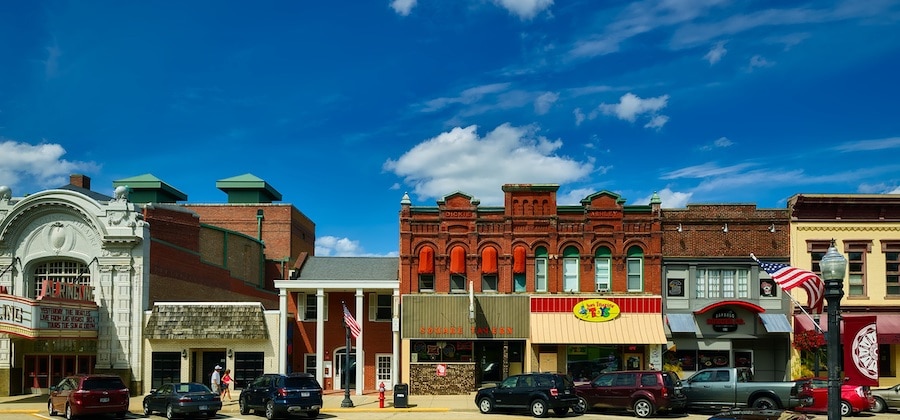
Image from pxhere / CC0 Public Domain

Unpacking the housing crisis.

January 6, 2020

We’re all hearing about the affordable housing crisis constantly these days, but for many homeowners, investors and renters alike, it’s a confusing and overwhelming topic. Understanding more about the causes and trends in the affordable housing crisis might help accelerate solutions to this problem as well as opportunities for real estate investors.

For housing to be affordable you shouldn’t have to spend more than 30% or less of your annual income on rent and utilities, or on a mortgage, property taxes and insurance. Recent data shows that almost half of renters across the country currently spend more than 30% on rent. Even worse, more than 11 million Americans spend more than 50% of their income on rent. Another two-thirds of renters say they can’t afford to buy a home and won’t be able to save for the down payment on one anytime in the near future.

Cities across the country are facing escalating housing insecurity. In the last few years, housing prices have increased at twice the rate of wages. Stagnant wage growth combined with increasing housing costs have led to increased inequality and a housing climate that makes it difficult for millions of Americans to be able to afford a basic need – housing.

How did this happen?

A number of factors have led to the disparity between housing costs and income. In recent years, demographic shifts have been a large part of the problem. Baby boomers living longer and more often living independently have significantly impacted housing inventory. And when baby boomers decide to downsize, which is frequently, this means that there is increased competition for entry-level homes.

In addition, housing policy continues to be a factor in this crisis, as our affordable housing policy increasingly favors homeowners. According to  the Harvard University Joint Center for Housing Studies, under current policies, the federal government provides more subsidies and support to middle and upper-middle class homeowners than to low-income renters.

Adding to these foundational issues is a growing NIMBY (not in my backyard) sentiment which stifles many denser projects. Neighbors often oppose new development of affordable housing, making it harder than it should be to build the necessary inventory. In many cities, transportation problems compound this problem, as people have less flexibility to move outside of urban areas. But move outside urban areas they must, as city-living becomes increasingly expensive.

And last but not least are the endless ground up, urban developments targeted at millennials, consisting primarily of studio and one-bedroom units. These too have skewed the marketplace.

Emerging trends

A few additional factors are escalating this problem right now. First, since housing supply continues to be limited, demand is driving up sales prices and rent. At the same time, new construction has stalled, in part due to increased cost of materials and labor. Plus, the cost of land in urban areas has increased, further reducing the number of new builds, and forcing smaller more efficient apartments to be built. As a result, the scarcity of new and diverse inventory and the scarcity of resale inventory is working to drive up both home prices and rent, and so the cycle continues.

What does this mean for real estate investors?

The encouraging news for the real estate developer or investor is that while new policies are being created, there is a role that they can play in helping to alleviate this problem.

When considering building a housing project, or investing in one, look to invest in areas that are committed to providing affordable housing and that have plans in place to do so. These markets  are probably going to grow.

Finding equity for these projects may not be as hard as it was ten or fifteen years ago. Today there are a growing number of businesses focused on providing affordable housing in a number of ways. Social impact investment firms, opportunity funds and others might provide socially conscious investment for a project that tackles this challenge head on at the same time providing a reasonable rate of return for investors. Crowdfunding equity might also be an opportunity.  Recently, Small Change raised $100,000 for a small homeless housing project in Los Angeles from 57 investors who cared enough to invest, some with as little as $500. The offering filled to capacity very quickly. 

Finally, keep in mind that new builds alone do not provide the answer to this problem. There are over a million vacant properties across the country. Investing in affordable housing often provides an opportunity to buy inexpensively or through a distressed sale. This can lead to an affordable rental or purchase price while also providing reasonable returns.

The affordable housing crisis is perhaps the most important trend impacting today’s real estate markets. Paying attention to this crisis and deploying a little ingenuity and creativity can lead to both socially conscious and solid investments.

San Francisco, USA, copyright 2004 Mai-Linh Doan, formatted to fit 900×420, CC BY-SA 3.0

The impact of Reg A+.

December 16, 2019

Historically, investing in startups and real estate has only been available to accredited investors. Accredited investors are those that, due to income, net worth, assets, or professional experience, have special privileges when it comes to financial regulations. Recent legislation, however, has aimed to make investing more accessible to all potential investors.

The 2012 Jumpstart Our Business Startups Act, the JOBS Act, aimed to make it easier for startups and small businesses to raise capital while also providing opportunities for both investors and entrepreneurs. Included in this legislation were Regulation Crowdfunding (Reg CF) and Regulation A (Reg A+), both of which finally made it possible for non-accredited investors to participate in investment activity. While only $1.07 million can be raised by entrepreneurs under Reg CF, Reg A permits these entrepreneurs to raise up to $50 million in a year from accredited and non-accredited investors alike. Obviously, this changes the landscape for both investors and entrepreneurs.

What is Reg A+?

Signed into life on May of 2015, Reg A+ allows both accredited and non-accredited investors to invest in businesses or real estate. Under this legislation, up to $50 million dollars of equity can be raised per year. Each Reg A+ offering must be qualified by the SEC, but this process is substantially less complicated than that of an initial public offering (IPO). As a result, some refer to it as a “mini-IPO.”

There are two tiers of Reg A+: Tier I, which permits raising up to $20 million in capital in a year, and Tier 2, which permits raising up to $50 million in capital in a year. While Tier 2 limits the amount that can be contributed by non-accredited investors, it is generally preferred to Tier 1. In large part this is due to the fact that it preempts blue sky laws, meaning that the offering doesn’t have to qualify and be registered in every state. As you can imagine, having to comply with blue sky laws can be time consuming, complicated, expensive and very frustrating.

What are the benefits of Reg A+?

While Reg A+ clearly has some benefits for investors, especially those that don’t meet the wealth criteria to qualify as an accredited investor, it also has benefits for entrepreneurs, startups, and small businesses. First, it provides an efficient and effective way to raise money. It is often much faster to raise capital through Reg A+ than to deal with venture capitalists or angel investors. Additionally, it’s much simpler and less expensive than an IPO. Second, it gives businesses an immediate base of customers, advocates, clients, and supporters that have a vested interest in the success of the business. Third, because ownership shares are spread across so many people, it enables entrepreneurs to maintain control.

Reg A+ has proven to open up opportunities for small businesses, entrepreneurs, real estate developers and investors alike. It gives investors of all levels an opportunity to participate in a wide range of projects while still having plenty of protections. For many smaller investors, it’s changed the landscape of investing and enables unprecedented opportunities. Similarly, it’s given entrepreneurs new ways to structure, fund, and complete projects. 

_

One company that has used Reg A+ very successfully to raise funds for real estate is American Homeowner Preservation (AHP), an innovative and impactful business. To learn more, listen to Jorge Newbery talk about the fascinating, lucrative and socially conscious work he is spearheading across the country.

Image from pxfuel, royalty free

Political infrastructure and investment potential.

December 12, 2019

When investigating a community to determine its investment potential, there are a number of factors to consider. These might include physical, social, economic, development, and political infrastructure for a start. While all factors play a part in this evaluation, political structure is perhaps the most important criteria to consider. Unfortunately, it’s also one that’s often overlooked by investors.

Political infrastructure is a broad term that includes everything that impacts the way the government functions. It encompasses the way local government works; its regulations, laws, and codes; and its leaders and groups. While not always considered or thoroughly examined in the anticipation of community development, political infrastructure can profoundly impact the success of such efforts. In reality, it can help make or break a project.

What does strong political infrastructure look like?

When determining whether a community’s political climate is ripe for investment, there are a few objective factors to consider. One important thing to look at is continuity of leadership. When leaders have experience in local government, they become increasingly proficient in their roles and more able to get things done. Further, they’re able to focus on projects at hand and are less distracted by constant turnover, campaigning, or reelection efforts.

In addition to experience, it’s important to evaluate the relevant skills of local leaders. Specifically, do they have expertise in local government and a thorough understanding of the development process, including zoning, architecture, placemaking, and finance.

Local commitment to development projects is another important factor to consider. It’s essential that local leaders are focused and dedicated to community revitalization and development. Further, beyond just primary leaders, it’s important to evaluate the support networks that the political infrastructure has, including the support of local constituents, the involvement of constituents in local politics, and the presence of individuals that can help facilitate development, including engineers and a skilled housing committee.

How to effectively evaluate political infrastructure

If you’re considering investing in a community, don’t overlook the political environment of the area. Thoroughly evaluate the skills, experience, and focus of local leaders. In addition, become familiar with relevant building codes and regulations that could impact development. Finally, look beyond leaders to the support network of constituents and community employees to determine their willingness and ability to make projects successful.

It can also be helpful to look at case studies of different development projects to evaluate some political factors that lead to success and others that can interfere with the project. For example,Sadie McKeown of the Community Preservation Corporation of New York describes the efforts they made in Newburgh and Beacon, New York, providing a good such study to follow. In these two small cities the relevant political factors seem to have significantly impacted the success of development efforts in Beacon and the less successful efforts in Newburgh.

It’s important to note that if you’re in the midst of a project and finding that the political infrastructure is inhibiting it, there are things you can do to help make the project successful. One simple thing the area can do is provide training for local leaders and relevant employees. Helping build their knowledge base around development can change the long-term trajectory of projects. Additionally, rallying and engaging the efforts of local constituents can help to provide support, focus, and energy for a project.

_

You can’t always predict what will happen with the political infrastructure of a community, but you can consider these factors to better understand how the political environment will impact your investment potential in an area. Making sure to prioritize this evaluation can only make your investment decisions stronger.

Image of Dutch Reformed Church, Newburgh, by Eve Picker

« Previous Page
Next Page »

Primary Sidebar

sign up here

APPLY TO BE A PODCAST GUEST

More to See

(no title)

February 22, 2025

Bellevue Montgomery

February 11, 2025

West Lombard

January 28, 2025

FOLLOW

  • LinkedIn
  • RSS

Tag Cloud

Affordable housing Climate Community Creative economy Crowdfunding Design Development Environment Equity Finance FinTech Gentrification Impact Investing Mobility Offering Opportunity zones PropTech Technology Visionary Zoning

Footer

©rethinkrealestateforgood.co. The information contained on this website is for general information purposes only. Nothing on this website is intended as investment, legal, tax or accounting strategy or advice, or constitutes an offer to sell, solicit or buy securities.
 
Any projections discussed or made may not be accurate and do not guarantee a specific outcome. All projections or investments are subject to risk due to uncertainty and change, including the risk of loss, and past performance is not indicative of future results. You should make independent decisions and seek independent advice regarding investments or strategies mentioned on this website.

Recent

  • The Mulberry
  • Mount Vernon Plaza
  • The Seven
  • Real estate and women.
  • Oculis Domes.

Search

Categories

Climate Community Crowdfunding Development Equity Fintech Investing Mobility Proptech Visionary


Copyright © 2026 · Magazine Pro on Genesis Framework · WordPress · Log in