• Skip to main content
  • Skip to secondary menu
  • Skip to primary sidebar
  • Skip to footer
  • Home
  • About Us
  • Say hello
Rethink Real Estate. For Good.

Rethink Real Estate. For Good.

  • Podcast
  • Posts
  • In the news
  • Speaking and media
    • About Eve
    • Speaking requests
    • Speaking engagements
    • Press kit
  • Investment opportunities

Impact

Mission (Almost) Impossible.

January 5, 2022

Saki Bailey, the Executive Director of San Francisco Community Land Trust (SFCLT), has a decade of experience in nonprofit management and program development roles; a decade of experience in facilitation, teaching and training roles both in the academic and non-profit sectors with a focus on the legal regulation around Community Land Trusts, Co-op formation, and incorporation. Saki is a published author on property law, community land trusts, and the commons with three books and multiple articles published by both academic and non-academics publishers and journals translated into multiple languages. Saki is an educator and trainer on community land trusts, coops, and other shared equity ownership models based on her six plus years of research on the topic and serves currently on the board of the California Community Land Trust Network and its policy committee in advancing legislation for Community Land Trusts and Limited Equity Housing Cooperatives.

Read the podcast transcript here

Eve Picker: [00:00:07] Hi there. Thanks for joining me on Rethink Real Estate. For Good. I’m Eve Picker and I’m on a mission to make real estate work for everyone. I love real estate. Real estate makes places good or bad, rich or poor, beautiful or not. In this show, I’m interviewing the disruptors, those creative thinkers and doers that are shrugging off the status quo in order to build better for everyone. If you haven’t already, check out all of my podcasts at our website RethinkRealEstateforGood.co, or you can find them at your favorite podcast station. You’ll find lots worth listening to, I’m sure.

Eve: [00:00:58] Today, I’m talking with Saki Bailey. Saki is the executive director of the San Francisco Community Land Trust and an expert in community land trusts, co-ops, and limited equity housing cooperatives. To back that up, she has authored books on property law, community land trusts and the Commons in multiple languages. In this podcast, she breaks down how community land trusts emerged, how they have morphed from land to buildings, and how they are gaining rapidly in popularity. More importantly, she explains how a community land trust might be usefully applied to ownership models. And she tells us about the Community Land Trust’s latest project on 285 Turk Street in San Francisco’s Tenderloin district. She’s hoping the community will fill in the equity gap through a crowdfunding campaign to convert 34 units into a permanently affordable co-op. It’s a fascinating conversation you’ll want to listen in.

Eve: [00:02:06] If you’d like to join me in my quest to rethink real estate, there are two simple things you can do. Share this podcast and go to Rethink Real Estate for Good Doc Co., where you can subscribe to be the first to hear about my podcasts, blog posts and other goodies.

Eve: [00:02:31] Hello, Saki, I’m really delighted to have you with me today.

Saki Bailey: [00:02:35] Hi, Eve. Thank you so much for having me. It’s really an honor to be here.

Eve: [00:02:39] So, I’ve come to know you through an offering that your non-profit organization has listed on Small Change. And it’s a really challenging project and pretty unique. But I wanted to first talk about your non-profit organization, which is called the San Francisco Community Land Trust. So, what is a community land trust?

Saki: [00:03:00] Yeah, that’s a great question, and it isn’t an easy answer, but I’ll try to keep it as simple as possible. Community Land Trust holds land in perpetuity to keep it permanently affordable for the residents and the tenants, who either live on the properties of the Land Trust as renters but permanently affordable renters, meaning that their rents are kept very low or where they own actually an equity share and actually are homeowners of the structure. It’s a delinking between the structure, the home itself and the land beneath, with the Land Trust owning the land with a 99-year ground lease and the resident owning the structure through shares.

Eve: [00:03:47] When did land trusts, community land trusts emerge first?

Saki: [00:03:51] Yes, there’s a long history of community land trusts. So, while it’s sort of a model that I think really has taken off in the last, I would say, decade and especially the last few years as the affordable housing crisis really heats up around the country. This model has actually been in existence since the late 60s. Yeah! So, the first Community Land Trust was created in Albany, Georgia, and actually really has an interesting history and rootedness in the civil rights movement and really was a mechanism by which black plantation workers were actually able to take back land ownership and really was an effort to create agricultural land wealth holdings for the black community. And since then, has evolved over time. And really, the focus of the Land Trust is now on housing and less about agricultural land, but really with the same mission of returning land and wealth that’s been appropriated from people of color back to people of color. And that’s really the focus of San Francisco Community Land Trust. So, we have this complex model, but really the aim of it is to provide black and people of color homeownership in a city where that’s really become impossible.

Eve: [00:05:21] Very difficult, yeah.

Saki: [00:05:23] Yeah, absolutely.

Eve: [00:05:24] So how long has the San Francisco Community Land Trust been in existence?

Saki: [00:05:29] So, San Francisco Community Land Trust has been around since 2003, and we really developed as a community grassroots political activist organization, organizing around, at that time, different types of legislation that were coming up on, sort of, the map of the San Francisco political landscape and namely the Small Sites program and even precursors to the Small Sites program. So, this is a city program that really focused on displacement that was happening in units between five to 25 units. So those smaller units, the units that actually are, that make up the majority of the housing stock in San Francisco. And around that time, we got involved in a really huge tenant struggle that was going on in Chinatown with first generation Chinese immigrants and second-generation Chinese Americans really being the community that was organizing around a building that was being threatened to first be demolished and then purchased by a predatory real estate company. So San Francisco Community Land Trust came in and assisted those tenants to purchase that twenty-one-unit building in Chinatown, and that was the first project that we had. That project got incorporated into a limited equity housing cooperative, so that model where the tenants own shares and own their building while the Land Trust owns the land. And we turned it into the first project called Columbus United Cooperative.

Eve: [00:07:06] Wow. So, you’ve been at the Land Trust for a short time? And what brought you there? What’s your background?

Saki: [00:07:13] Yeah. So, my background, while I’ve been here for a short time, so it’s been eight months, eight crazy months of drinking….

Eve: [00:07:20] Sounds like it.

Saki: [00:07:21] Yeah, absolutely, absolutely. But in a way, I feel like this is very much home for me. And the reason why is because prior to this, I was already on another Land Trust – Bay Area Community Land Trust, which is across the bay in Berkeley – and then prior to that, for 15 years, I actually have been a researcher and policy advocate and attorney around the Community Land Trust model, and I’ve written several books and articles, both in academic and policy journals, around this model of how do you create access to land which de-commodifies the land, takes the land off of the speculative market and creates more equitable access for people of low and moderate income?

Eve: [00:08:09] Yeah, that’s a lot to absorb. It’s a pretty unique model. There are also co-operatives mixed in in the work that you do, and there’s limited equity cooperatives. So on top of the land trust model, there’s also, you seem to, at least the San Francisco Community Land Trust, also works with co0operatives. So, tell us a little bit about how that works, because I learned a little bit with a project that you’re currently raising money for. But it, and I’m a pretty experienced developer, but it was brain damage for me to understand how that process works.

Saki: [00:08:46] Yeah, absolutely. So, I mean, what might be helpful in trying to kind of think about, why are we trying to do this? Why are we trying to make it so complicated for you, Eve, and everybody else with these models that that requires so much explanation and almost like a law degree to, sort of, understand because of the way that there’s this delinked ownership, the ownership of the land, the ownership of the structure. And really what it comes down to is, you know, I think we need to put it in the social context of the problem of affordability in cities like San Francisco and cities like Manhattan, which have actually long histories of cooperatives of this type, these types of affordable cooperatives. So, I just want to kind of take us to the setting in which we are for your listeners, people who might be living all over the U.S. and not so familiar with what has happened in San Francisco over the last 15 years. You know, San Francisco has gone through such a dramatic change with the sort of increase of tech billionaires, the growth of Silicon Valley. We have tens of thousands of jobs which have sort of exploded into this area and people coming from all over the world, all over the U.S., to work in the tech industry. You know, we have some absurd number like one out of eleven thousand six hundred people in San Francisco is a billionaire. I mean, you know there’s….

Eve: [00:10:19] Ooh, that’s crazy.

Saki: [00:10:20] Yes, that’s right. I mean, so we’re living in a city which, where we’re walking amongst billionaires, and yet there’s 8000 people out on the streets living homeless, unhoused. You know, this is a place where Leilani Farha, who is the U.N. special rapporteur on housing, came after a tour where she had visited cities like Mexico City and Delhi and said that San Francisco had the worst conditions that she has ever seen in housing, even compared to those cities. And she said, you know, that, sadly, her heart was broken in San Francisco because of how tragic the kinds of conditions that she saw here. So, we’re really living in a kind of, you know, actual Gotham City, you know, a city where there’s these complete huge inequalities of wealth and…

Eve: [00:11:20] And yeah, and really just and just for everyday people who may not even be homeless. I remember about five years ago or four years ago, I was there, and I caught an Uber and I was talking to the driver. The driver was a schoolteacher who said that the only way he could put food on the table was to drive every night of the week when he finished his… I mean, that’s very broken, you know.

[00:11:44] That’s extremely broken, that’s right. When you have your children’s schoolteachers needing to take a second job and driving Uber at night and then going back to teach school in the morning. Yeah, we’re living in a broken society. And that’s why I say Gotham City, because it really feels like that you have people living in such undignified conditions and then you have such incredible wealth at the same time. And it’s really about, how are we going to redistribute that wealth? How are we going to make sure that some of that wealth trickles down to the communities of color that have been displaced by the thousands in these last 15 years? For example, you know, in the height of the 60s, we saw the height of the black population. So, 14 percent of San Francisco was black. Today, San Francisco is less than five percent black. Yes, and it’s not an accident. It’s really not an accident. It’s not just the product of an extreme inequality in wealth, but it’s actually also the product of intentional racism and redlining and discrimination against this black community. For example, in 1945, there was a master plan in San Francisco that was put into place really for the aim of keeping certain neighborhoods elite and keeping certain neighborhoods from being re-zoned to create more dense housing for the immigrants that were coming into the city. And from then during that plan, they bought out something like 5000 households from the Fillmore in Western addition districts which have always been historically black districts. And so that kind of practice of forcing black communities out of certain neighborhoods that were gentrifying has been going on forever in San Francisco.

Eve: [00:13:45] Yeah, it’s also been going on everywhere else as well.

Saki: [00:13:48] Absolutely, everywhere else that we really see it like, for example, I raise it because that particular government action, of buying out those five thousand families, is the topic of the film, for example, which came out several years ago now, which is, you know, The Last Black Man in San Francisco. And it’s really the story of a person whose grandfather’s house got bought out when he was five years old. And the whole premise of the film is of this man who then grows up in San Francisco is one of the last black men in San Francisco wanting to then buy back his ancestral home many, many years later. And you know, this is the reality for San Franciscans today.

Eve: [00:14:32] So, so you work against that backdrop, right?

Saki: [00:14:35] Exactly, exactly. So let me get to where the limited equity housing cooperative fits in here. So, working in this extreme backdrop of racism, of inequality in wealth of, you know, astronomical real estate prices, what is a way forward by which we can create ownership for people of color? Well, it’s not going to come through the market, OK? An average median price of a house in San Francisco is $1.6 million. That is. Yes. That is, and that’s cheap. That’s probably not totally reflective of some of the neighborhoods, right? So, the more wealthier neighborhoods, it’s easily three point five million dollars. So, you know, but as an area median price of a house, I mean, most people have no way of ever saving that much. We know that, for example, for every dollar of white wealth, one cent of that is owned by people of color. So, we know that the gap is so huge that there’s just no way to own a house of this value.

Saki: [00:15:48] So how do we do it? We do it through limited equity. So, by the Land Trust going in and becoming a partner with the community and becoming partner with these residents we’re able to use the Land Trust and the non-profit to secure the loans that are necessary to buy the land. So the land is already very expensive, but we are able to have access to state subsidies, city subsidies and also the equity that we raise through our very generous foundations and individuals who contribute to our projects like, for example, in this latest project, I know that we will start talking about next, which is advertised on Small Change, 1.4 million dollars in equity was raised by San Francisco Community Land Trust through these generous foundations and individuals who contributed to make this project permanently affordable. So by being able to sort of draw upon these resources, because we have relationships with lenders, we’re able to buy the land, and then what we’re able to do then is to turn around and go to the residents and say, now let’s give you a piece of this. So, this remains yours forever. Now it’s not going to be outright homeownership in the sense that one day you’ll be able to sell at windfall prices that float on the market. Rather, we cap the equity so that it remains affordable for the next generation of buyers. So, we sell shares, the prices are not so high that people aren’t able to buy in. So, we capped the price of the shares to something like $10,000 each or even less. And so, people buy these shares and then they appreciate over time something between one and four percent capped to an index like the consumer price index or area median income. And so over time, people get equity back from their property in the form of kind of a modest savings. But what they really get is a right to live in their home as a homeowner in the sense that they can actually pass this property on, their unit, on to their successors. In sort of the bundle of rights when you own a property. And so, this is the way in which we’re trying to make San Francisco more affordable and to give people a home ownership stake, particularly for people of color.

Eve: [00:18:08] So it’s not easy. Like, in order to keep a property affordable, you have to give up the potential for equity, which means that many investors who don’t understand what the triple bottom line really means are not going to be waiting to invest in a project like this. They have to really want to be giving something back to accept what’s probably going to be a much lower return. And I imagine it’s just as difficult to find lenders who don’t understand these models because lenders tend to be sort of used to seeing the same thing over and over again. This is a very different model. So you know, who are you lenders and partners in projects like this besides the equity partners?

Saki: [00:18:54] Yes. Yes, I think you raise a number of really important things. It is not easy creating this type of housing, and the complexity is also a barrier for many lenders. So we don’t have partners like banks. Like Wells Fargo or Bank of America or more mainstream lenders, right? Because mainstream lenders are concerned about, you know, for example, their ability to foreclose on the property with this kind of model where the tenants own a piece of it and the Land Trust owns another part, right? So, we work with credit unions, we work with CDFI’s. We work with lenders like Self-help Credit Union for this project, this latest project, with LISC or LIIF. These are a couple of CDFIs. We work also with impact investors, right? So, you mentioned the type of investors that are going to be interested in our types of projects are really those who understand the impact of what they do. So, they aren’t looking for a really high rate of return. They’re looking for a modest rate of return and really about the kind of impact that they’re creating through the project. So that’s really the target of our focus here is, are folks like that. And we thought, you know what? We might actually have a network of people who are willing, and there’s an appetite for that kind of project, and the reason for that is because of this $1.4 million equity raising.

Eve: [00:20:26] I think that’s probably true. We had a project in Los Angeles that was an eight-unit project for four formerly homeless people, and it filled up faster than, and it wasn’t a huge raise, but it filled up faster than any other. I think because many people have a conscience, and they really want to help somehow. Somehow, even if they only have a little way to do that, so, but getting back to banks, we talked about mainstream banks not wanting to have projects like this on their books. But how are we going to address the huge housing gap if they don’t start having projects like this on their books? I mean, LISC cannot fund everything in the country that needs to happen. So, you know, what needs to happen in the banking world to make it possible to accomplish much more?

Saki: [00:21:23] Yeah, that’s a really great question. Well, I think that it has to start with the lenders in the secondary mortgage market like Freddie Mac and Fannie Mae. And actually, some of that has started to happen. So, for example, Freddie Mac, a couple of years ago, went in to the CLT market and set, told the mainstream lenders, actually we are now in this market. So, if, should you choose to lend, we’re going to mitigate your risk. That’s essentially what happens when these lenders in the secondary market go in is that they’re saying, look, we’re willing to buy up your debt. And so, as a result, your risk is being mitigated and what happened is that it’s still taking sort of years. Now it’s, I guess, a couple of years, maybe two or three years, to sort of have that trickle down and get actually made into policy on the ground level. So, we haven’t seen those shifts yet that we expected to see when we heard that announcement. So that’s one, is that I think that we need to kind of get the banks on board with this new information and kind of push them to figure out how they’re going to do their underwriting for these types of projects. Another part of it is that the underwriting is a bit complicated, right? So, another innovation is that Freddie Mac, also as part of that move to create this kind of secondary market and CLT mortgages is to streamline the underwriting process to make it easier. So that’s another big step.

Saki: [00:23:01] But one of the other things is that that legislation, or that policy shift that took place within Freddie Mac, it was not for multi-unit buildings. And so it really didn’t have an impact on cities. Yeah, so I think that’s another part of it, is that that policy needs to be applied to CLT-owned multi-unit buildings. And I know that there’s some lobbying work, advocacy work around that. But I think that’s really what we need to do is to really fund this model. And I just want to say, Eve, you know, what’s really unique about this model as opposed to, you know, you were saying, if we’re going to address the affordable housing crisis that’s taking place throughout this country, we really need the banks to kind of shift in understanding models like ours. And I just want to say, why models like ours are so important in that context. It’s really important, of course, to keep building and new housing production, creating new affordable housing. But what our model does is preservation, right? So, it’s really about creating affordability in the existing buildings, now as opposed to 10 years from now. Like, for example, in an affordable housing production, we know that just by producing housing for the market, it takes something like 10 years before that sort of trickles down to people of low and moderate income. Why….

Eve: [00:24:27] And it’s very expensive to produce new housing compared to saving it?

Saki: [00:24:32] Absolutely. Absolutely. That’s exactly it. It takes so much more, so many more dollars to create new housing than to actually keep the affordable housing stock that we have or to create affordability in the existing housing stock. So that’s really why our work is so critical because we’re keeping people in place today, you know, before they have to leave the city, as opposed to a plan of, well in 10 years, well, you know, please, whenever, you move back.

Eve: [00:25:01] You come back, I know.

Saki: [00:25:03] It should be called a right of return, or something like that, because that’s essentially what it is. It’s not really keeping people housed right now.

Eve: [00:25:11] Right. So, tell us a little about the current project. It’s 285 Turk Street.  Well, it’s located on Turk Street, but where is that in San Francisco?

Saki: [00:25:23] Yeah. So, 285 Turk is in the Tenderloin. So, this is a really, kind of interesting area of the city. Interesting may be a euphemism in some ways, because it’s also.

[00:25:35] I was going to say that

[00:25:36] It’s a very colorful part of the city.

Eve: [00:25:37] Very colorful, yes.

Saki: [00:25:39] Yes, yes. And it kind of perfectly captures that inequality that I was talking about because we’re, you have on one hand, the theater district, right? You have the Opera, you have City Hall, one of the most, sort of, monumental buildings in all of San Francisco where everything is happening. All the deals are being made. You have, you see Hastings School of Law, you know, you have courts, you have lawyers running back and forth on the street. And yet at the same time, we have the highest percentage of our un-housed population there, right there in the Tenderloin. We have, you know, a number of non-profits as a result that serve those communities that are really leaders in our community, the Tenderloin Housing District, for example, or Glide Memorial Church, these are, kind of, really iconic sort of non-profits that are really, really doing amazing community work, really organizing people at the sort of grassroots level. And then you have the transgender cultural district. So and part of that is that you do have a lot of sex work that is happening in the city. There’s also rampant drugs and crime, and we have, you know, now what’s emerging is that the highest new percentage of unhoused folks are actually people between the age of 18 to 25, which is a real tragedy. That really shows there’s another, right, sign of a broken society when you have kids that are actually the unhoused. So, another part of it is that it also borders on the Vietnamese cultural district, so you have a number of Vietnamese shops and restaurants. And so it’s a really very unique part of the city in some ways creates what we put in quotes natural, affordable or naturally kind of developed affordable housing in the sense of that, you know, the economy there is block to block and some of the blocks are just really affordable because of the features of that neighborhood.

Eve: [00:27:55] But the neighborhood is feeling pressure, right? It has to be because of what’s happening in the whole of San Francisco. Is it, is there fear of gentrification? What’s happening there?

Saki: [00:28:08] Yeah, I wouldn’t say that there’s kind of an impending gentrification that’s going on. But as you say, it’s sort of an inevitable part of San Francisco. Yes, eventually in 10 years, I don’t think this neighborhood will look the way that it does right now. On the other hand, it sort of resists gentrification because of all these features that I just mentioned. But yeah, I mean, I think it’s probably inevitable that if we don’t start to save these buildings now, we are on what they call the edge of a real estate apocalypse, right, where soon land is going to be so expensive that we’re just not going to be able to buy it as non-profits or the city publicly using public tax dollars to keep it affordable going forward. So it’s really now, right. If we’re going to save these neighborhoods, we have to invest now.

Eve: [00:28:58] And 285 Turk Street, how big is it? I’ve seen photos of it. It’s actually a very pretty building. Tell us a little bit about the building.

Saki: [00:29:09] Yeah. So, this was a building owned by Mosser, a very large real estate investment company. It still is, we’re still in the midst of the closing. And the closing is around, should be closing around January 15th. So still, lots of time for folks to invest. But yes, I mean, you know, this building, you know, it is very beautiful. The Mosser did do a number of renovations, so it’s 40 units, something like 29 of them being studio apartments, the rest being one- and two-bedroom units. Most of the units have been fully renovated and the remaining ones we intend to renovate once we obtain the post-acquisition funding that we’re trying to raise the money for right now through the our crowd raise. It is a very beautiful building, the community that is in the building currently, so there’s 30 households, and the 30 households are primarily of Filipino and Latino descent. So Filipino, Black and Latino descent and actually the Latino population, it’s very interesting, but a majority of them are actually indigenous from the Yucatan Peninsula. Kind of a very interesting San Francisco population, which is growing. Yeah.

Eve: [00:30:32] So, and do these people know of your plans and how do they how do they feel about it?

Saki: [00:30:38] Yeah. So, we have been working from the beginning with a organizer, Lorenzo Listana, who is with the Filipino Development Corporation. So, he’s been an organizer at this unit now for, I think it’s almost three years, that he’s been organizing the tenants, talking to them about their rights, initially assisting them with the predatory rent hikes that were being imposed on them, to fight that. Also, uninhabitable conditions, et cetera. So, Lorenzo’s really been working very closely with the residents and also informing them about the plans. He was actually interviewed just recently on PBS NewsHour. We just had a piece done about 285. If anybody’s interested in seeing that, you can pop in PBS Weekend Edition and you can learn a little bit more about the CLT and the purchase there. So, we really rely heavily on Lorenzo in providing this sort of education about the Community Land Trust. But going forward, we have also hired a resident education coordinator, and this is a kind of critical part of how we turn this building from a permanently affordable rental into a limited equity housing cooperative. So, our one part of the model in terms of how we finance it, is that we build a kind of half-time employee who works half-time for the building and half-time for the Land Trust into the project budget. And that’s really, as folks will see when they go into the details of this project, they’ll see that some portion of the raise is going towards that person’s salary. So, we’ve been able to already anticipate that we’ll be able to raise this money and we’ve hired that resident coordinator who is half, who is a bilingual, fully bilingual in Spanish and English. And she also has a co-op education background. So, she’s going to be providing this kind of important, what we call a five step or five part co-op curriculum, to the residents over the next many months. But that work will begin after we close on January 15th.

Eve: [00:32:56] So really, this is way more than buying a building and flipping it. It’s really about educating all of the tenants and bringing them along with your plans, and it’s hugely challenging.

Saki: [00:33:09] It is. It’s almost like a mission impossible. I mean, in a way, that’s really how I kind of view our work, is that we’re trying to create affordability in one of the most unaffordable cities in the city, and we’re trying to do it through a model that really provides low- and moderate-income people with an equity stake in a building and creating home ownership. So yes, it takes education. It takes time. Part of why it takes time, as well, is because we’re helping these residents to save for their equity share. You know, not all of these residents already have the savings to contribute towards an equity share. So, it’s really also about financial empowerment and creating access to financial empowerment tools and assisting them to save. And that’s why we put a kind of five-year timeline around this conversion to a limited equity housing cooperative.

Eve: [00:34:04] It’s pretty fabulous. Requires a lot of patience. So, what success rate do you expect in converting these residents to owners?

Saki: [00:34:16] Yeah, I mean, it depends on a lot of different circumstances. I can’t say that we have, like, so many buildings that we’ve converted to this model that we know exactly what it’s going to take. Our first project, the one that I mentioned, Columbus United Cooperative in Chinatown, that was converted to a limited equity housing cooperative within three years. So, it’s really hard to tell with this very diverse population. And I think maybe potentially those who are of lower income, how long it will take for them to save and organize. You know, a huge part of it, though, is the success of that resident and education coordinator. You know, part of the success of the Columbus United Cooperative really comes from the fact that from the beginning we baked in, or built in, that coordinator who actually is still with us today. She’s our longest-running employee, Julie Dye(??), who’s half, who’s Chinese and speaks full bilingual Mandarin. And I think that’s a really critical part of this as well, is that the coordinator is someone who’s really rooted in that community, really is able to overcome the language access barriers, so that’s really why we focused on this new resident coordinator being fully bilingual in Spanish.

Eve: [00:35:40] She must really love her job. It must give her great satisfaction.

Saki: [00:35:45] Yeah, I think it’s hard work, but absolutely, it’s one of those jobs that on a good day, it’s like the best day you’ve ever had, yeah,

Eve: [00:35:52] I have to ask, is there anyone else in the US using this model, doing what you’re doing?

Saki: [00:35:58] Absolutely. You know, we’re a really fast emerging model. So, there are something like three hundred community land trusts across the United States, and that number is going up every day. I mean, I think in the last five years, there were more CLTs created than in the entire, you know, history from the 60s. Yeah, exactly. So there are CLTs popping up everywhere. And I think especially in urban areas, right? Where that affordability is really, really… So, in the past, it really was, as I mentioned, a model that was focused on agricultural land. But obviously in the last 30 years, it’s all been in cities.

Eve: [00:36:40] That’s really interesting. So, what’s next for you? More the same? Lots more.

Saki: [00:36:46] Yeah, I guess that’s it. I mean, that’s yes, absolutely. That’s sort of how we measure our success is how many buildings can we make permanently affordable this year and the next year and before this real estate apocalypse, like I mentioned, is sort of upon us. Or perhaps it’s already upon us. But, you know, I think it’s really about figuring out how do we make these projects deeply affordable going forward? Some of it has to be done through public dollars through city subsidies. So, we continue to work with the Small Sites program and actually we’re in the midst of another acquisition, right now.

Eve: [00:37:24] Oh great! That’s great.

Saki: [00:37:26] Yeah, through the City of San Francisco. So we have had a long, ongoing partnership with the City of San Francisco ever since the Small Sites program was created. Actually, San Francisco’s Neil Antress (??), as I mentioned, was one of the authors of the Small Sites program. So, we work with the city to make units permanently affordable, and it’s really about, I think, also shifting the city’s politics around cooperatives because that’s one of the difficulties for us is that we’d love to make every project a Small Sites project. But not every Small Sites project can be converted into a limited equity housing cooperative because of various legislative barriers. So we’re working, you know, I guess that’s kind of next on my agenda, aside from creating more affordable buildings, is really working on that reform or policy change, which needs to take place around cooperatives in San Francisco.

Eve: [00:38:21] Well, San Francisco is such a beautiful city. Really, everyone should enjoy it. It’s been really miserable watching this happen from the outside. So, I hope you have enormous success. It’s a pretty fabulous program.

Saki: [00:38:37] Thank you so much, Eve. Yeah, it is a beautiful city, and yes, I think we can make it available for more people to live in and work in as opposed to just visit as tourists, the more beautiful it will be also for everyone else, including those tourists. So, thank you.

Eve: [00:38:55] Thank you. That was Saki Bailey. She’s spent a career becoming an expert on community land trusts, and now she’s putting that knowledge to work as the executive director of the San Francisco Community Land Trust. There, she leads a team working on the conversion of existing rental properties into permanently affordable housing co-ops for the tenants who live there. She’s helping to put assets into the hands of those who’ve never had that opportunity before. It’s challenging, but so very important.

[00:39:44] You can find out more about this episode or others you might have missed on the show notes page at our website RethinkRealEstateForGood.co There’s lots to listen to there. A special thanks to David Allardice for his excellent editing of this podcast and original music. And thanks to you for spending your time with me today. We’ll talk again soon, but for now, this is Eve Picker signing off to go make some change.

Image courtesy of Saki Bailey, San Francisco Community Land Trust
Sustainable, affordable and beautiful.

December 15, 2021

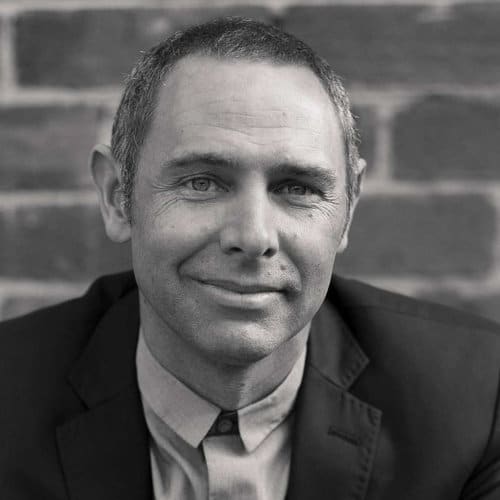
“If you want to build something that is both affordable and sustainable,” says Jeremy McLeod, “every project manager in Melbourne will tell you you can’t do it.”

Jeremy is the founding Director of Breathe Architecture, a world class architecture firm in Melbourne, Australia, delivering fabulous projects to its clients. They have built a reputation for delivering high quality design and sustainable Architecture for all scale projects in Melbourne, Australia. But Jeremy isn’t resting on his laurels. He really cares about the ever widening gap between those who have wealth and those who do not. 

And so 13 years ago he embarked on a journey to deliver sustainability and affordability in one housing model. His first project, the Commons, was met with huge success. Now with a waiting list of over 8,000 buyers (no marketing, no realtors) he intends his Nightingale project to be an open source housing model led by Architects.  

Breathe approached this challenge through reductionism. They discovered that what people actually want is really good and meaningful housing with space, light, outlook and plants — not marble countertops, 3 bathrooms and shag carpet. They have achieved affordability and sustainability through reductionism.  If you don’t need it, take it out.

Melbourne is growing at a rapid rate, and housing is an expensive commodity there. The city has Jeremy to thank for starting a movement that will yield affordable and sustainable urban housing with his stunning and thoughtfully executed projects.

Insights and Inspirations

  • Just a few years ago Jeremy started with an idea to build high quality affordable housing in Melbourne, an expensive city where this was unheard of. Now he can’t build fast enough. Nightingale has a waiting list of over 8,000 people.
  • Jeremy has combined sustainability with affordability through a process of reduction. If you don’t need it, take it out.
  • I was lucky enough to tour Nightingale l, an exquisite building located adjacent to a railway station and bikeway that both lead into Melbourne’s central business district. The garage is full of bikes. No cars here.
  • Preference is given in the balloting process (the process established for the equitable purchase of units) to essential service workers, such as nurses or fire-fighters, key community contributors, individuals with disabilities, Aboriginals or Torres Strait Islanders.

Information and Links

  • Watch Jeremy’s TedX talk here.
  • Nightingale Village will soon be under construction. The Village is a collection of six neighboring buildings, each designed by a different award-winning architect using the social, environmental and financial sustainability principles of the Nightingale model.
  • Read about Nightingale Housing.
  • Take a look at The Commons.
Read the podcast transcript here

Eve Picker: [00:00:06] Thanks so much for joining me today for the latest episode of Rethink Real Estate. For Good. Today I’m going back to a favorite interview from Season 1. My guest was Jeremy McLeod, founding director of Breathe Architecture in Melbourne, Australia. This is one I just haven’t been able to forget.

Eve: [00:00:33] “Every project manager in Melbourne will tell you that you can’t build something that is both affordable and sustainable,” says Jeremy. No wasn’t an option for Jeremy so he embarked on a journey to define sustainability through reductionism. And along the way he discovered that what people actually want is really good and meaningful housing with space, light, outlook and plants — not marble countertops, 3 bathrooms and shag carpet. With a waiting list of over 8,000 people for his projects, he can’t be wrong. Take a little time and listen to Jeremy. You won’t regret it.

Eve: [00:01:18] If you’d like to join me in my quest to rethink real estate there are two simple things you can do. Share this podcast.  And go to rethinkrealestateforgood.co where you can subscribe to be the first to hear about my podcasts, blog posts and other goodies.

Eve: [00:01:43] So hi, Jeremy. It’s really lovely to finally meet you.

Jeremy McLeod: [00:01:48] Yeah, I did think we were doing this interview over Zoom so I was surprised to see you in my office in Australia. Thanks for coming.

Eve: [00:01:54] Oh, you thought it was by Zoom. I told you it was local. It’s really fun to be recording in your beautiful building and actually see it because I’ve really wanted to do that for a long time. So you’re an architect and you’ve taken your fabulous education and you’re working on a new housing model for Melbourne, Australia, where we’re recording today. And I wanted to talk about what’s kind of driven you to think about that, to develop a better housing model and what even that means.

Jeremy: [00:02:24] It’s not hard to build a better housing model in Australia. It’s because our housing system is broken. I mean, the interesting thing about Australia is that we’re the richest country per capita in the world, yet we have one of the highest greenhouse gas emissions per capita in the world. But importantly, we have over, at the last census, we have over one hundred and sixteen thousand homeless people here. So for an incredibly wealthy country with lots of opportunity, there’s incredible inequity here. And that inequity is growing. In countries, you know, Scandinavian countries or Austria or Germany or anywhere in Europe, basically, there’s an affordable housing requirement. In London there’s inclusionary zoning which requires you to put in 20 percent affordable housing. In New York there’s inclusionary zoning, but in Australia there is no inclusionary zoning, which means that the private housing developers can build whatever they want without including any affordable housing.

Eve: [00:03:26] So, not held accountable for the economy at all.

Jeremy: [00:03:28] No, absolutely not. And so in that instance, then you would assume it’s the responsibility of the state to provide housing for its people. But in the 1980s, state governments around the country started divesting their responsibility for housing and people through a public housing system and started giving it to smaller, not-for-profit organizations, church-based or faith-based organizations or community housing providers to provide housing. And they started selling down their assets and importantly, stopped building housing. And so what we’ve seen is a steady growth of homelessness at the same time as a steady growth in wealth in this country. As an architect. I mean, before I was an architect, I studied environmental design. So I understand, you know, inherently the issues around climate change. I’ve looked at the issues around the last IPCC report which says that, you know, if we’re not careful, we’re going to find 2 billion refugees globally, a billion coming out of Africa and a billion coming out of Asia. Where do you think those people are going to be? And we also understand that people at the edges are the people that suffer the most in times of climate change. So, I mean, I think that climate change and homelessness and housing are all intrinsically linked and that we need to resolve both those issues simultaneously. And we need to resolve those issues very rapidly. The state doesn’t… has divested their responsibility. and the private sector obviously is interested in returning profit to their shareholders, not in delivering kind of, you know, on corporate responsibility goals that, you know, may or may not exist within their boardrooms. So the idea for us was that we would build a model, a prototype basically to encourage private developers to change the way that they worked. And our contention was that you can build housing that simultaneously builds community that is sustainable and that is affordable and it returns some fair and reasonable return back to investors.

Eve: [00:05:43] You thought this was an important role for you as an architect? Because it’s an unusual role for an architect.

Jeremy: [00:05:52] Yeah. Look, I mean, of course, my first love is architecture. I would love to just design great buildings all day, every day. I would love to build great housing. But as an architect yourself, you would understand that to make a great project, you need three things. You need a great architect, you need a great builder, you need a great client. And so if we’re trying to build great housing projects in Melbourne, it was, you know, let’s assume for a moment that Breathe Architecture was a great architect. I can find a great builder, but I couldn’t find a great client. So for us to be able to deliver on the projects that we needed to, I felt that the only way was to become our own client.

Eve: [00:06:34] That makes sense.

Jeremy: [00:06:36] Yeah. And to basically build a system that could be replicated, that was kind of the birth of Nightingale.

Eve: [00:06:43] Right. I watched your TedX talk, which I thought was really interesting. And you said that there’s a population explosion going on here, which I know, but I think I didn’t realize it was quite so rapid. But how many people in Melbourne today?

Jeremy: [00:06:56] So there’s five million at the moment. We’re going towards 8 million by 2050. It’s essentially a hundred thousand Melbournians every year for the next 30.

Eve: [00:07:05] I think it’s one of the fastest growing cities in the world, right?

Jeremy: [00:07:08] Yeah. So interestingly, we’ve always been smaller than Sydney. We’ve always been the little sister to Sydney and we’re now about to outstrip Sydney in terms of population.

Eve: [00:07:16] Yeah, I can feel it every time I come and visit. You talked in that TedX talk about urban compression versus urban sprawl, which I thought was a really great way of describing what’s available and what’s probably true in most of the United States as well. The idea being that urban compression is like warehousing people in really dense, maybe warehousing isn’t a way to say it, but building very dense, high-rise housing products in inner cities versus urban sprawl, which is building, you know, the American/Australian dream of a house on a lot. Right? And not much in between yet. So what’s in between look like?

Jeremy: [00:07:58] Well, I mean, the interesting thing here is it’s all about politics, right. So, in the centre of our city, it’s all old commercial land. It was a commercial centre. So it’s easy to build one hundred and eight story towers there to warehouse people, so to say, because no one objects to that, because everyone sees that if someone builds a 108 stories there, then I can then build my old shop to 108 stories and I’ll get that value uplift. So it’s a great capital gain. And the city, in the middle ring suburbs, so in all the places really close to infrastructure, schools, hospitals, work, public transport, those areas there are all held by the city’s wealthiest population. They’re well-moneyed, they’re well resourced  and they’ve got a very, very loud political voice. And they say very clearly to the state planning minister and to the state politicians that they don’t want any increase in density around them. But like San Francisco, instead, they’ve got no issue with density per se, just not in my backyard.

Eve: [00:09:12] Yes. NIMBY, right?

Jeremy: [00:09:14] So that’s right. So they’re the NIMBYs. So, instead what happens is that if you’re a first time buyer in Australia, if you could possibly afford to be a first time buyer here, you can’t afford to buy a house in the middle ring suburbs close to work, close to hospitals, close to schools.

Eve: [00:09:30] Yeah, you’re very far away.

Jeremy: [00:09:32] You end up very far away. So in Sydney, I saw a graph recently where if you’re a nurse and you work in a hospital and you’re a first home buyer, you’re an hour and a half away from the nearest hospital that you are working in.

Eve: [00:09:44] Wow.

Jeremy: [00:09:37] That’s three hours every day. Yeah.

Eve: [00:09:40] So in effect, those people are really the ones that need to be closer to the city and need to be, have access to public transit.

Jeremy: [00:09:48] Absolutely.

Eve: [00:09:49] And of all of those things to make, to make their lives work.

Jeremy: [00:09:52] Well, to make the city work for all the well-moneyed people as well, you know. Yeah. So the city works because of those people. And so, and the other issue that we’ve got in Melbourne is this incredible sprawl issue where currently we have built over 40 percent of our farming land. So we’ve got 60 percent of our farming land left, but our population is growing at unprecedented rates. At the same time, we’ve got pressure where China is coming in and buying our farming resources. So they’re buying, you know, beef, dairy, big farmland, so I worry about food security for, you know, for Australians in the future when there’s 1.5 billion Chinese and 600 million middle class Chinese, you know, in a time when food security becomes a big issue all of our food will be being exported.

Eve: [00:10:49] Wow.

Jeremy: [00:10:49] So I see that as this incredible, this madness of us building over all of our good farming land.

Eve: [00:10:56] And then the other piece of it is, I think you and I agree on this, that many new buildings are built as a financial commodity. And really, they’re really about making money not about making place better, which is really disturbing to me because I think you can take the same money and build, you know, add to a city in a really meaningful way or not, right? So…

Jeremy: [00:11:20] Yeah, looking at examples, like there’s a suburb in Sydney called Ultimo and over 90 % of Ultimo has been bought by investors. So essentially a lot of our apartments, and in Melbourne, in

Eve: [00:11:36] And is that, like, little single-family houses or…

Jeremy: [00:11:38] No, so it’s all apartments. So the whole, nearly all …

Eve: [00:11:41] So it’s a bit of a ghost town then? Or is it just all rental?

Jeremy: [00:11:44] Well, a lot of it is rental. You know, until very recently, there were no foreign ownership maximums on how much of an apartment or, or how much of a building you could sell to foreign owners. So we were. we had Australian developers selling 100 percent of their buildings to offshore waiting lists in Kuala Lumpur or Shanghai. We would find that, you know, whole buildings are owned by offshore investors that have never been to the city or have never seen the actual apartments. They bought it off a spreadsheet through, through an investment vehicle. And of course, when you get a city built on a spreadsheet, it becomes a pretty, pretty sad outcome.

Eve: [00:12:24] Right. So your journey started in 2007 when you bought the piece of land where you’re sitting on right now, right?

Jeremy: [00:12:35] Yeah.

Eve: [00:12:35] And, so where did you begin?

Jeremy: [00:12:38] Well, so maybe  I’ll go back to 1972 when I was born. So, so my parents were a couple of hippies. When I was about eleven, my dad took me to old Parliament House to lobby the government then about public housing in a suburb called Footscray in Melbourne. So then I go on study sustainability, environmental design, and then I go on to be an architect where my focus is on studying housing. I then work for a big firm, and when I’m working in that big firm, I end up working on, you know, 88 story towers, which just, you know,.

Eve: [00:13:18] And the toilet details, right?

Jeremy: [00:13:19] Yeah. Yeah, lots of toilet details, lots of stairs, correct. But it was the last building that I worked on in that big practice, I was working on the carpark for six weeks.

Eve: [00:13:29] Oh, that’s really crushing.

Jeremy: [00:13:30] And I thought that that was crushing and I didn’t think it was a good use of my time or, it wasn’t that I was interested in, you know, housing cars. What a meaningless act. So I start Breathe Architecture in 2001. When I started Breathe Architecture, the simple idea was that every room would have a window so the occupants could breathe.

Jeremy: [00:13:53] So in 2007, as an architect working in the city, we’d been working for a bunch of property developers. It was, it was disappointing. We resigned a couple of commissions, we got fired from a couple of commissions because we wouldn’t back down on certain things like, you know, we wouldn’t take the solar panels off the roof. We wouldn’t take the,.. yeah, yeah, we wouldn’t take the solar hot water out of the  building. We wanted to make sure that we got winter sun into the building, you know, like. really simple things that we wouldn’t back down on.

Jeremy: [00:14:29] So after that, we decided that we would partner with some other architects and we would try and embark on building a prototype building. So there were six of us. Six architects. We all came together, we bought this site. It was originally called Nightingale back in 2007, and it took us until 2013 to finish it. So it took us six years. In the middle of it, thanks to sub-prime issues in the United States, the financial crisis washed across the shores to Australia. By the time I needed finance to build this…the idea was that it would be a zero carbon building. A building that focused on sustainability and community and affordability. By the time I needed to get money for that, it was after the financial crisis had actually, bit into Australia as well, and we lost our funding to build it. And so then…

Eve: [00:15:22] Why did you lose the funding, is it because banks just got more conservative? Or..

Jeremy: [00:15:28] Yeah, banks just got more conservative.

Eve: [00:15:30] So the same reasons I saw in the States.

Jeremy: [00:15:33] Yeah, and look, I actually don’t blame the bank. I think that leading up to the global financial crisis, you know, it was too easy to get money. So as a group of six architects, you know, we were about to borrow seven point one million dollars, you know, on a kind of prototype project that hadn’t been built before. So I can understand why the bank was nervous by the time, you know, we got into, you know, 2010, 2011.

Jeremy: [00:16:01] We went and met with a whole different raft of impact investors. We met a group called Small Giants and Small Giants bought the project off us. They renamed the project from Nightingale to the Commons because their marketing team thought that was a good idea. I can, I can live with it, but you know, what’s in, what’s in a name. But anyway, the Commons then ended up being delivered and in 2014, it won the National Award for Sustainability, the National Award for Housing. And it became, you know, kind of a destination for people to come and look at. And so in the following year, we opened the building up for tours. We took every property developer in the city through. We took Melbourne residents through. And we talked a lot about, you know, the importance of change in our housing model. And then the idea was, off the back of that, that we would influence change in the marketplace.

Eve: [00:17:01] Well, that was one of my questions here. Has your work influenced the status quo?

Jeremy: [00:17:06] Well, the interesting thing was that when we, when we completed the Commons and it won all those awards, and it got lots of media and lots of people were interested, the answer to that is no. It was seen as an exception to the rule. And so, the idea was that the pilot project or the prototype project would influence change, but it was seen as an outlier.

Eve: [00:17:26] Interesting. And like just breaking up a bit. So what is different about the Commons, this building?

Jeremy: [00:17:32] So the Commons, I think that if you want to build something that’s affordable and sustainable simultaneously, every project manager says that you can’t do that. Every project manager will tell you that sustainability is more expensive and so to build sustainability means that you can’t build it affordably. And so instead, Bonnie Herring, who was the project architect of Breathe who led this project, her whole approach was one of sustainability through reductionism. So she constantly interrogated the idea is, if we don’t need it, take it out. Ask people, what are the things they actually need not what they want from some real estate glossy brochure.

Eve: [00:18:14] What they think they need because everyone else has it right.

Jeremy: [00:18:17] Yeah, but when we when we started talking to people, the interesting thing was that what people actually wanted was space, light, outlook, plants, you know, natural materials. No one wanted marble bench tops, you know, a thousand down lights, white shag-pile carpet, a swimming pool, three bathrooms, you know, what people actually wanted, we were finding, was just kind of really good meaningful housing. So our approach on The Commons was, yes, sustainability through reductionism. If I step you through that, you’ll see that it makes total sense. So the first thing is, we took the basement car parking out. And why is that important? So, for a seven million dollar building, the basement car park was gonna cost seven hundred and fifty thousand dollars. So by taking that out, we reduced the build cost by over 10 per cent. But importantly, we just, we didn’t just reduce the price of all the apartments by $30000 each. We also took some of that money and put it into making the rooftop garden, you know, really incredible. Where you would have ordinarily had a driveway coming in off the street and a ramp up and then a ramp down to get into that driveway and a roller door to close that driveway off to get down to the basement carpark, instead, Instead of having that there, we put in a wine shop where the driveway and the ramp would have been.

Jeremy: [00:19:42] And then we sold the wine shop for four hundred and twenty five thousand dollars. We then took the revenue from the wine shop and we used it to increase all of our glazing to get the best possible double glazing that money could buy in the country at the time. We pumped up all of the insulation on our walls. So we made all of our walls fatter. we got better insulation in them. So we used that money to improve the thermal envelope of the building. Then, that then made the apartments perform…so we’ve got the star rating system here, so you need kind of, you need a minimum of five stars or an average of six stars to be able to get a building permit here. And instead, we set the minimum at seven and a half stars here. The panacea is 10 stars means you don’t require any energy for heating or cooling, which would be incredible. But we’ll make it to seven and a half stars out there. More modelling told us that the building could operate within a thermal comfort range of between 19 and 27 degrees. And the interesting thing is that that’s kind of the European thermal comfort range of the Germans deemed that to be.

Eve: [00:20:47] So that’s all Celsius right now. Got it. That’s about …oh I can’t do that in my head right now. We’ll figure it out later.our Yeah, I’ll let you do the calculations. You’ll figure it out later.

Jeremy: [00:20:57] But but basically, the Australian thermal comfort range, you know, is generally been seen to be in between 19 and 22 degrees.

Jeremy: [00:21:08] So by stretching it out from nineteen to twenty seven, the German comfort range, all of a sudden we found that we didn’t need to put air conditioning in. When we take air conditioning out, we save another 5 percent out of the building costs throughout the building and obviously drastically reduce the operational costs and operational energy required in the building. Normally every two bedroom apartment in Melbourne at that time was being designed with two bathrooms. So a primary bathroom and then an en suite to the master bedroom. Instead we took out all of the en suites, so we had one bathroom in each apartment. We kept them at the same size. So the apartments, by taking out the really energy intensive detail-heavy bathrooms, we saved about $10,000 out of the cost of each of the apartments and all the living rooms got seven square meters bigger, which is 70 square feet. We took out all of all of the individual laundries out of each of the apartments and instead put one beautiful laundry on the rooftop, which overlooks an incredible rooftop garden.

Eve: [00:22:14] And I assume you could save money on all the stacks. Correct. And the space in the unit. Correct. So everyone’s. Exactly right. And the cost of all these appliances. Exactly. Seventy costs.

Jeremy: [00:22:28] Exactly. You get it. You get it. So you do that over and over again. We have one shared Internet connection. So we bring fibre into the building and we share that Internet throughout the building. So we pay for it at one point and then we use bulk buying to share that. It gets really, really cheap, really, really fast internet in a city where the Internet here is expensive.

Eve: [00:22:47] That’s smart. That’s a very good idea generally to buy it as a retailer.

Jeremy: [00:22:50] It’s expensive and it’s poor quality here. And we do the same thing with the power through an embedded network.

Eve: [00:22:57] So it’s this constant that you’re a very pragmatic approach. It’s really pragmatic, pragmatic to chisel away what’s really necessary in a building and and really make it work. Yeah. And think about it.

Jeremy: [00:23:10] You know, what can you share? It’s all about sharing and using, you know, bulk buying and trying to get maximum utilization. So you know what? Our laundry, for example, is six washing machines, which could use a lot more than having, you know, 24 washing machines that get used in a very infrequently.

Eve: [00:23:28] I think a lot of people might find that concept difficult, but I suppose you don’t need to find a lot for one building do you.

Jeremy: [00:23:38] Well, I mean, initially when we started when we finished this project and we started work on Nightingale 1 and I’ll tell you why we started Nightingale 1, there were eleven people that had written to us to say, if you’re going to build another building, like The Commons, can you please let us know. And so we put those eleven people on a waiting list. That waiting list through Nightingale housing is eight and a half thousand people.

Jeremy: [00:24:03] So apparently there is eight and a half thousand people in Melbourne that would be happy to have a cheaper apartment with a bigger living room, with a beautiful shared rooftop laundry ,with one bathroom, with no individual or private car parking, but with a free car-share membership to, you know, 20 cars parked within a 400 meter radius.

Eve: [00:24:29] And to be fair, in a beautifully designed building.

Jeremy: [00:24:33] Thank you.

Eve: [00:24:35] I’ll sign up for the waiting list!

Jeremy: [00:24:38] I think the great thing about, you know, being your own client is that you can definitely make sure that the architecture is what it should be.

Jeremy: [00:24:49] So I actually for people listening in, the thing that’s also very incredible here is The Commons. This building sits right on a railway line. You can see there you can see the station. Out of the windows. So it’s really it’s really a transit oriented development as well, which really makes it much easier not to have a car.

Jeremy: [00:25:08] Yeah, absolutely. So there’s that train station right next door or the bike path right next door or the 503 bus and then the tramline.

Eve: [00:25:16] And the garage packed full of bikes.

Jeremy: [00:25:18] Yeah. So we do have the highest ratio of bikes to apartments in the country. Yeah, but the interesting thing about that is that we just looked at what were the bike ratios used in the Netherlands and then we used those and brought that over here. So it’s not none of this is rocket science, at least, you know. How’s it been done?

Jeremy: [00:25:36] So you have investors in this project and how did they do?

[00:25:42] So in the Commons there were six architects and all of us and we all invested. So Tamara and I, my partner and I, yeah, we literally bet the house on it. And so, yeah, out of the Commons, we did at the end of the project when Small Giants, we bought the site, we redesigned the site, we got the D.A. approval, we got the price in place. Then we had to sell the project at Small Giants. They sold they bought the project back off us. And at that point we had bought the site for five hundred and forty five thousand and we sold it back to them for two million dollars.

Eve: [00:26:23] How did they do then?

Jeremy: [00:26:27] Eventually, they never actually disclosed to me how they did, but they built and entire brand off the back of The Commons.

Eve: [00:26:35] There you go!

Jeremy: [00:26:36] But interestingly, everything sold in The Commons. The project was delivered on time and on budget. And you know.

Eve: [00:26:43] And did it sell quickly?

Jeremy: [00:26:45] Yes. And that kind of thing else was.

Eve: [00:26:48] Yeah, that’s probably keeping in a project like this, because having a couple of vacant units if your profit and a building like this.

Jeremy: [00:26:54] Yeah. That didn’t happen here.

Eve: [00:26:57] That’s fantastic. So then, you know, the triple bottom line here actually made a financial return as well. That’s a pretty strong argument for doing the right thing. Yeah. How hard is it to find investors who really care about the triple bottom line?

Jeremy: [00:27:16] Well, so maybe let me let me just come back to the move from The Commons to Nightingale 1. Or why we started Nightingale Housing. Do you want to hear?

Eve: [00:27:25] Oh, yeah, absolutely.

Jeremy: [00:27:26] So this idea that that the Commons would drive change by being a prototype building. And I said before that it kind of failed because it was seen as the exception, not the rule. What we decided to do after that first, you know, with that wait list of eleven people was to, if if the market wouldn’t change, then we would drive change in the market and we would continue to build buildings until such a time as the market actually came to us, you know, until we didn’t need to exist any longer. So we established Nightingale Housing. We got some corporate sponsorship. We got a government grant. We got a grant from the National Australia Bank. So we built a really small team of about three of us and we embarked on Nightingale One.

Eve: [00:28:15] And that’s a non-profit driven.

Jeremy: [00:28:18] Yes. So Nightingale One was still delivered. And the way that we wrote that feasibility study was that we capped the return at 15 per cent per annum and then we capped that return at a three year project timeline. So essentially it was a gross return of forty-five per cent over three years. So there was a lot of pressure on us to deliver that for our investors to deliver it within the three year time window.

Jeremy: [00:28:42] So – to get to get – we tried to do that at 10 per cent per annum. And when we tried to raise impact investment to build a carbon neutral building. So when we tried to raise equity,  I spoke to probably 60 architects in the city because I wanted architects to invest in it. I wanted architects to own it. I want to share the IP with architects that would take it and scale the idea. I met with architect after architect for about, you know, six weeks and we ended up getting 27 investors all putting in $100,000 each. A lot of people with not a lot of money borrowed against their homes to invest money in. And when we first said we want to return 10 per cent per annum, ur first investor said that wasn’t enough. It wasn’t it didn’t match the risk versus return matrix for them. And so they wanted fifteen percent return. So we ended up taking all the equity. In Nightingale One it was about a 10 million dollar project and we raised $2.7 billion in equity with a capped return of 15 percent per annum. Going forward from that …

Eve: [00:29:49] Did you return the 15 percent?

Jeremy: [00:29:52] Yeah, absolutely. We returned. And so the way that we that our model worked was that we have a construction contingency in the project, and so after we returned all the money to the shareholder, exactly as we said in our prospectus at the end of the project, the money left over from that contingency, instead of taking that as developer, which a developer would normally keep that as [crane?]. We then gave that back to the residents. So the residents that had balloted into the building, because by that time there was more demand than there was supply after the success of the comments. So we had to run a public ballot where the mayor drew the names for the apartments out of a hard hat. And those residents, those lucky residents at the end of the project, their apartments were about $90,000 under market. And when we finished the project, we gave the building a check for $109,000 dollars back.

Eve: [00:30:43] Wow. And just to be clear, because in the US apartments are usually, well, this is this is all for sale. At this point. Right. Yes. Which is really what the market is in Melbourne.

Jeremy: [00:30:53] Yeah, absolutely. It’s all you know, it’s all for sale. Everything’s for sale.

Eve: [00:31:00] Which is in itself an interesting discussion. That’s really amazing. So now now that was the first project. What’s happening next?

Jeremy: [00:31:08] Well, so after the completion of Nightingale One, and then we did Nightingale Two which is just completed and Nightingale Brunswick East, which is just completed.

Eve: [00:31:18] How many units did you build?

Jeremy: [00:31:19] So Nightingale One. So the Commons is 24 apartments, Nightingale One is 20 apartments, Nightingale Two is 20 apartments, Nightingale Brunswick East is a hybrid with a property developer. So that’s 38 Nightingale apartments and about 25 straight to market apartments.

Eve: [00:31:37] So that’s a real mixed income project.

Jeremy: [00:31:39] Yeah. Yeah. And that’s interesting. It’s interesting. The developer was so good. They funded the whole project. They agreed to run everything transparently with us. So it’s you know, so Nightingale’s principles are that it has to be minimum seven and a half stars, has to be carbon neutral and operations can’t have natural gas pumped into it, has to have, you know, all those Nightingale principles. And we’ve got to lock up. We also have a restrictive caveat which says that if we’re selling and owning an apartment to you and we’re capping the maximum sale price that we’re selling to you based on a maximum return to investors, then you can’t sell it tomorrow and make a massive profit.

Eve: [00:32:19] And so you want to keep it affordable.

Jeremy: [00:32:21] Yeah, absolutely. And so this developer, Lucent, agreed to do all of those things. They handled all the delivery side. And the benefit the upside for them was that they were trying to sell apartments in a street where someone else was about to sell 700 apartments. Someone else was selling 60 apartments. There was about a thousand apartments on the market. They broke their building in half, did half Nightingale half straight to market. We said that we would do that only if the entire project, including their straight to market apartments, were carbon neutral in operations and met the minimum seven and a half star requirement. They agreed to do that. The Nightingale apartments went to ballot. They balloted in one day. So they sold all of 38 apartments in one day.

Eve: [00:33:04] That’s astounding.

Jeremy: [00:33:05] Which then got them the sales target that they needed to get financial closure from the bank to cover the debt, which meant that they could then demolish the building, start their basement construction, which gave them a massive program jump on all the other buildings. They then opened their straight to market sales. And some of the people that it missed out on the Nightingale ballot went and bought there because they could afford to. But also, they were interested in the sustainability idea of carbon neutrality and the idea of community. And then it gave them a kind of a massive differentiator in the market. And so when no one else was selling anything in that street, they sold their 25 apartments in three weeks, which was unheard of.

Eve: [00:33:50] I don’t know what balloting is. Can you explain that to me?

Jeremy: [00:33:53] Sure. So ordinarily, the way that a straight to market developer would sell their properties by employing a real estate agent. The real estate agent generally charges a fee of about 2.25% percent. So there’s two different ways you can sell in Australia. But if you if you employ a real estate agent here, they’ll charge you 2 per cent of the gross revenue of the project, so if  the project is a 10 million dollar project, they’ll charge you $200,000 for the 20 million dollar project, they’ll charge you $400,000.

Eve: [00:34:22] Because they’re going to sell all units for that.

Jeremy: [00:34:25] That’s right. They are going to sell all the units for that. If you historically had trouble selling, you would go to financial advisors in inverted commas, who are meant to be independent and they could sell your apartments to people looking for investment advice and they might charge six or seven percent. Okay. I think they’re trying to outlaw that at the moment. Because they’re their commission obviously makes it difficult, the rate of their commission is so high, it makes difficult for them to make independent advice about what to buy into or what not to. But Nightingale’s says no real estate agents, no sales, no marketing. Instead, it has a series of information nights, it talks to all the purchasers and it provides information, fearless information, warts and all, about the great things about the project and the not so great things about it.

Jeremy: [00:35:17] So for The Commons, for Nightingale One, we talk about all the great things, but we also say that it’s right next to the train line. So the great thing about that is that it’s really close. But it also means that train runs 24 hours on a Friday and Saturday night. And if you got your window open, you know you can. You’re going to hear it. You know, that’s a very, very it’s a place of urban flux, and that where you see all the single story warehouses now, you’ll be a construction site for the next five years. So we talk about all those things openly.

Eve: [00:35:43] So how do you find those people, though? How did they find you?

Jeremy: [00:35:46] I don’t know. So so, look, we don’t have you know, we don’t have a marketing team. We had some political trouble on Nightingale One where we got a planning permit. The developer next door took us to the appeals court here based on the fact that they didn’t want us to sell apartments that were 20 percent bigger, 20 percent cheaper and 120 percent better than theirs, because I think that they thought that it might provide a market problem for them. They took us to the appeals court and they were well funded by the developer. And we weren’t particularly well-funded. And they had a good legal team. And then they had our permits stripped from us. So they got our permit taken off us.

Jeremy: [00:36:33] Well, it’s a very, very strange planning system here where  individuals can veto a local government decision. It’s very interesting. So we then had to lodge a new  planning application from scratch for Nightingale One.

Jeremy: [00:36:53] But the interesting thing was that when Nightingale One lost the local planning permit at that at the appeals tribunal, the local media, particularly the liberal media, got very, very bent out of shape about a project that was trying to deliver carbon neutral housing affordably, particularly trying to house millennials and first time buyers that had just been totally priced out of the market. And they got really bent out of shape that that the one thing that that project was defeated on at the appeals court was on car parking. So basically the whole fight was that we didn’t provide any car parking. How our whole contention was that it sat on top of a train station next to a place where people were unlikely to have cars. Well, over 30 percent of them didn’t have a license. Thirty percent of them didn’t have cars. And the last 40 percent had filled out statics saying that they would either get rid of their cars when they moved into the building or that they would garage them in surrounding buildings that have masses of basement carbon that is under utilized. Well, the biggest thing that happened for us was that it totally changed the landscape for us in terms of everyone suddenly had heard of Nightingale, heard about this.

Eve: [00:38:03] That bad thing was great marketing.

Jeremy: [00:38:05] Yeah. The bad thing that nearly broke me emotionally, like Breathe architecture was nearly broken the day after that. We couldn’t believe what had happened in the 21st century in this city, given its incredible problems with climate change and kind of housing justice. And anyway, what we found was that beyond that, after that, our waiting list, like the week after that, our waiting list had jumped from 125 people to over 400 people.

Jeremy: [00:38:34] So people had read it in the mainstream. Wow. So you’re wonderful. You’re absolutely right. I think that was the start at which people actually started to hear about us.

Eve: [00:38:42] So because we’re running out of time. But I really want to know what’s next.

Jeremy: [00:38:47] Mm hmm. Good question. So off the back of all of the Nightingales we’ve done, what we found was that Nightingale One opposite the Commons, they’re both really great strong communities. But what we’ve found is that there’s that they’ve actually started to work together as an organism. So the residents of The Commons and the residents of Nightingale One have worked together to lobby the council, to close the street at the front. So in two years time, the street will be closed and they’re going to pull up the asphalt and replace it with grass and turf.

Eve: [00:39:18] Well, it’s wonderful. And so you’ve started to see really build a community here.

Jeremy: [00:39:22] Yes. And they and importantly, what else we’ve seen is with those two buildings in close proximity to each other, they’ve started to engage with other residents around. So it’s not just individual communities, but everyone within that street now and across the railway lines and around the corner are all now kind of engaging in street parties, garage sale days, you know, Christmas parties or just talking to each other as they go past. There’s no more anonymity. And so the big thing for us was how do we kind of learn from that? And so we bought seven sites to Street south of the Commons. And that’s what’s called Nightingale Village. So that’s there was gonna be seven buildings by seven architects, all carbon neutral communities, no individually owned cars, a car share hub for 15 share cars, a consolidated bike park with 450 bikes. But importantly, no cars allowed on the streets. So on the streets above, again, pulling up the asphalt, replacing it with grass, trees, street furniture and making it a place for pedestrians and cyclists. That’s fabulous. Yeah. And so then, you know, at that scale, it jumped from a 10 million dollar project to one hundred million dollar project. We had a superannuation company, HESTA work with an organization called Social Ventures Australia, an impact investor, and they put in 20 million dollars worth of equity into that project. And then we’ve had a big bank here, National Australia Bank essentially build a two billion dollar housing innovation fund to step into the gap that our federal government and state governments have left to. Yeah. And so the debt will be funded out of that National Australia Bank housing fund. So it’s been incredible getting institutional finance coming in to make that happen. And then within that, obviously, we understand and that we’re part of the gentrification problem. And so we’ve been looking at this idea of inclusionary zoning and why can it work in London and why doesn’t it work here or why isn’t it called for here? And basically, the property council here, lobbies our planning minister, not to put inclusionary zoning. They say that we won’t be able to afford it, that it will make..

Eve: [00:41:32] But who does the Property Council represent.

Jeremy: [00:41:36] Property developers. And so. And so we’ve decided at Nightingale Housing to now make sure that every project we do has 20 percent affordable housing in it, whether there’s inclusionary zoning or not. And so what we’re intending at Nightingale Village, we’re now putting in 20 percent affordable housing. And so within that, we want to prove to the planning minister and to the government that you can put in affordable housing, that you can salt and pepper it through your developments, that it can be done well and it can be done elegantly and it can be done equitably. And if we can do it, there’s no reason why a well-managed, publicly listed housing company or development company can’t do it. So, yeah, look, the big push for us is now to actually make sure that we don’t just we just try and get better with every project. We try and think through what are the other issues that need to be done and then we’ll deal with it.

Eve: [00:42:35] OK. So I have a couple of really quick questions for you. What trends in real estate development architecture do you see emerging that you think are important for the future?

Jeremy: [00:42:47] Yeah. Yeah. So, look, I mean, we’re not plumbing natural gas and all of our buildings are carbon neutral in operation. So it has to be powered by 100 per cent certified green power, 100 percent renewables. So that’s the measure that we use in Australia before we started Nightingale, every property developer told me that was impossible because people liked gas to cook on their woks, you know, to have a wok burner in their apartments and that they would never go without gas. Since Nightingale One has been complete, there are now five zero gas buildings within a one kilometre radius of Nightingale One. Quite interesting. So we’ve shifted the bar on this idea of can I operate without gas? Are my purchasers interested in carbon neutrality and around here? Absolutely.

Eve: [00:43:37] And of course, if you don’t have gas you don’t need to run gas lines and that is another savings.

Jeremy: [00:43:41] Correct. In the building. Correct. No gas made a room. No gas particularly. Right. Right. Yeah.

Eve: [00:43:46] Wrap up question here. So where do you think the future real estate impact investing lies? Because you’ve been dealing with those impact investors from day one?

Jeremy: [00:43:56] Yeah. It’s a really good question. I think that and I’m very, very interested in your model, because I think that peer to peer lending is going to be really interesting about people being able to invest in projects with meaning. We see that the people of Melbourne who funded the early equity projects in Nightingale, they did it not so much for the return, but because they cared about what was happening to our city, what was happening.

Eve: [00:44:25] That’s why I built small change, because I think the people in the cities they’re in and they just want to be part of making it better.

Jeremy: [00:44:33] Yeah, I agree. Totally. And so it’s incredible to see Melbournians investing in projects and people with not a lot of money, but literally, you know, borrowing against their own home to help make this happen, because they’re not just interested in making the city more livable place, but they’re also interested in and they care about the future generations and what’s happening to Millennials being locked out of the housing market and wondering what’s going to happen for them in housing security in the future, so I don’t think that’s going to put a lot of pressure on institutional funds. We’ve got a lot of superannuation money in Australia.

Eve: [00:45:11] So do you think the interest requirement of 15 per cent is going to grow?

Jeremy: [00:45:15] Well, the interesting thing is, since the village. That’s the last time we paid those rates. Oh, very good. So since then, we’ve got two new projects on line and the offers are becoming back in. And now, you know, 13 per cent and 11 per cent because, you know, by the time we finished the village that’s 14 projects. And with a wait list of eight and a half thousand people, the single biggest risk in a project is sales and settlement. Right.

Eve: [00:45:39] There’s not much risk. Right. Right. So I’ve really enjoyed the conversation. Thank you very, very much. Yeah, there’s lots more and want to know, but it’s pretty fabulous what you’re doing. Thank you.

Eve: [00:46:19] That was Jeremy McLeod of Breathe Architecture and the Nightingale project.  He’s designing and building the real deal – Sustainable, affordable, and gorgeous too.

Eve: [00:46:16] You can find out more about this episode or others you might have missed on the show notes page at our website, rethinkrealestateforgood.co. There’s lots to listen to there. A special thanks to David Allardice for his excellent editing of this podcast and original music, and thanks to you for spending your time with me today. We’ll talk again soon, but for now, this is Eve Picker signing off to go make some change.

Image courtesy of Jeremy McLeod

It’s the data, stupid.

December 8, 2021

Joseph Minicozzi is an urban designer who wants to help communities understand the economic impact of development. Like demystifying tax codes, government jargon and municipal finance data.

In 2012, Joe created a data-focused consulting company called Urban3. Based in Western North Carolina, Urban3 was spun out of Public Interest Projects, a non-profit focused on reinvigorating downtown Asheville. For over a decade Joe had worked there as New Projects Director, including a two-year stint as executive director of the Asheville Downtown Association.

Urban3 embraces data and GIS mapping to highlight land value economics, property and retail tax analysis while wedding that to community design. While they have a vested interest in Asheville, Urban3 has consulted for cities both in the U.S. and abroad.

Previous to U3 and Public Interest Projects, Joe was a founding member of the Asheville Design Center, a non-profit community design center. He also worked as independent consultant on urban design and planning issues for many years, before which he was the primary administrator of the Form-Based Code for downtown West Palm Beach.

Joe holds a Bachelor of Architecture from the University of Miami and a Master of Architecture and Urban Design from Harvard University. In 2017, Joe was recognized as one of the 100 Most Influential Urbanists of all time.

Read the podcast transcript here

Eve Picker: [00:00:08] Hi there. Thanks for joining me on Re-Think Real Estate for good. I’m Eve Picker and I’m on a mission to make real estate work for everyone. I love real estate. Real estate makes places good or bad. Rich or poor, beautiful or not. In this show, I’m interviewing the disruptors, those creative thinkers and doers that are shrugging off the status quo in order to build better for everyone. If you haven’t already, check out all of my podcasts at our website. Rethinkrealestateforgood.co. Or you can find them at your favorite podcast station. You’ll find lots worth listening to, I’m sure.

Eve: [00:00:58] Joe Minicozzi has been recognized as one of the 100 most influential urbanists of all time. Although he trained as an architect and urban designer, that honour was not bestowed for designing buildings or places. Joe’s influence comes through data. Joe helps communities understand the economic impact of development. He does this by tracking data in the built environment. Demystifying tax codes, government jargon and municipal finance. Stuff that most developers and governmental entities don’t think about when planning their next development project. Joe’s deep dives have uncovered some astounding and important truths about the cities we live in. I’m fascinated by his work and findings, and I’m sure you will be too.

Eve: [00:01:50] If you’d like to join me in my quest to rethink real estate, there are two simple things you can do. Share this podcast and go to Rethinkrealestateforgood.co, where you can subscribe to be the first to hear about my podcasts, blog posts and other goodies.

Eve: [00:02:12] Good morning, Joe. I’m really delighted to have you on my show today.

Joe Minicozzi: [00:02:15] Thank you for having me. I’m glad to be here.

Eve: [00:02:18] So,I trolled your website a little and I found a really, which is actually a really interesting name. Your business Urban3. I found a really interesting quote that I want to understand. Don’t fly blind. Visualize and reshape your economic reality with Urban3. What does that mean?

Joe: [00:02:39] Well, the visualizations and visualizing your reality is, basically we use Esri software. GIS software to make maps of cities to reflect their economic position. What’s going on from a cash flow standpoint and what you find in that, is different building types actually produce more wealth than other building types. Or once you see the picture, it helps people realize that there’s policies that are actually affecting cash flow. And the name Urban3 is kind of a funny thing that we did that originally was supposed to be Urban Cubed because the three-dimensional environment is cubic. It’s the 3D world. You and I are both urban designers. So, I wanted to kind of play on urban design in the name. But the IRS wouldn’t accept the cube is a part of our name, and they dropped it to the 3 after the name, So,they were stuck with it. So,that’s where we’re at.

Eve: [00:03:40] They don’t accept the at the beginning too, you know? Yeah. Very strict rules.

Joe: [00:03:45] Very big rules. Yeah.

Eve: [00:03:47] Yeah. So, OK, So,you’re visualizing the three-dimensional shape of cities to determine the economic reality of the cities?

Joe: [00:04:01] Sure. Or to think of it is, you know, for the real estate developer folks on this podcast, you’re playing with the cash flow, right? Things cost money and you have to pay for them. You have to make money on rent to pay for the building. And it’s really simple cash flow and you need to make more money than it costs or else you’d be out of business. You wouldn’t be a real estate developer or even in business as a person, you know, I can’t sell donuts at a loss, you know? So,cities are the same thing. Cities are really big real estate development projects and counties more so. Counties are are fixed. You can’t annex the next county over. So,when you have a city, it’s got a cost of roads, the cost of pipes, the cost of infrastructure, infrastructure that real estate wouldn’t be worth anything until somebody ran a pipe and a road to it. So, the question I ask is, are you paying enough taxes to cover the cost of that expense? And what we demonstrate with these models is we show it. We show how financially subsidized certain development patterns are.

Eve: [00:05:03] And So,and how do you create these models?

Joe: [00:05:07] That’s math and fancy software. It’s a geographic software, So,it’s got networks within it. You know and cities already have the data. That’s the thing that’s kind of crazy. They alSo,have the software. We’re just we’re just innovating the use of the software.

Eve: [00:05:25] So,for people listening, I’m sure they’ve seen spiky charts which show huge spikes of activity in urban areas. And so, it’s kind of like 3D charting of data.

Joe: [00:05:38] Exactly.

Eve: [00:05:39] Okay.

Joe: [00:05:40] Or do you think, there’s for more people who are into, I guess you call it BIM in the architecture world, or they are doing feedback systems of HVAC and all this stuff, and you’re starting to see way more sophistication on running your thermostat differently and particularly in green technologies. This is taking that same type of technology but applying it at a macro level across the city.

Eve: [00:06:03] So,we’re living in a data driven world and you’re applying data to helping cities become healthier economically.

Joe: [00:06:13] That and getting people to realize the consequences and costs of sprawl. So, we’re not going to change sprawl habits until people are aware of the true destruction that it causes and the defense of people that live in that, who wouldn’t take the deal when a house is a single family detached house in Eugene, Oregon, is subsidized to the tune of 1,400 dollars an acre. You know, it’s like…

Eve: [00:06:35] Right.

Joe: [00:06:35] You’d be stupid not to take that deal. So, if we want to see it, if we want to see…

Eve: [00:06:39] Call me stupid.

Joe: [00:06:42] Well, me too. I live, I bicycle to work.

Eve: [00:06:48] I walk down two steps. I’m in downtown.

Joe: [00:06:50] Ok, that’s even better. So,anyway, it’s and this isn’t to say that we shouldn’t have suburbia. It’s just, allow people to see the real consequences and people will make different choices. I know that if I, I’m Italian, my family has a history of heart disease. I like to eat pizza. I know because of my family history I can’t eat pizza every day. I would love to eat pizza every day. But because of the saturated fat content, I know that eating one slice is my caloric intake for like a week, So,I’ll still eat pizza, but I’ll exercise the whole rest of the week, you know, it’s just keeping things in balance.

Eve: [00:07:26] So,who? Who comes to you for help?

Joe: [00:07:29] Initially, it was activists that were doing conservation and community planning at large. The Sonoran Institute in Rockies. And over in California, the local governments commission. Now it’s we get finance officers, city managers, planning directors, mayors, politicians. Our clients are all over the place. And it’s because our work is more well known.

Eve: [00:07:55] And when did that shift, do you think?

Joe: [00:07:58] Well, initially, here’s what’s funny, I used to work in a real estate development for a company called Public Interest Projects and we were a for-profit real estate development company in downtown Asheville. It’s like basically think of it as a $15 million revolving fund. 75 percent of the money went into sticks and bricks, the buildings, and we reserved 25 percent of that fund to seed businesses and get businesses going on the ground floor. Our time is the direct opposite. We spent more time with the entrepreneurs than the buildings because businesses need help. And then this thing called the recession happened. I don’t know if you remember that, but and what happens in real estate development? We were dead in the water, So,I was actually going to conferences and explaining to people how to articulate the benefits of urban development in downtown stuff and actually started a presentation in Seattle Smart Growth Conference with a quote from Mark Twain that says a person who won’t read has no advantage over one who can’t read. Right? So,that’s a quote about literacy. If you choose not to read, you’re just as illiterate as somebody that can’t read. And I had my hand in the air and I said, OK, who in this room understands the tax assessment system and how property valuation happens in the United States? And I’m standing in front of a bunch of my peers, urban designers, landscape architects, planners. Not a single person raised their hand, and I was dumbfounded. I’m like, look, I’m trained as an architect. I like to look at pictures, but I read the tax system. It’s not hard and it basically is an incentive to crappy buildings. That’s simple. And people came to me like, we just hire you to do that, and that’s how Urban3 got started.

Eve: [00:09:35] That’s really interesting.

Joe: [00:09:36] Probably five years in. It changed.

Eve: [00:09:40] To what?

Joe: [00:09:41] Then it was seen as like, this is some sort of gimmick that this is just, you know, Joe being cute to, OK, we need to do this stuff. When I when I started doing the value per acre analysis…

Eve: [00:09:52] It took five years.

Joe: [00:09:53] People are slow. Good.

Eve: [00:09:55] Good things take a long time. People are slow.

Joe: [00:09:58] Well, it’s all right. It’s good to be skeptical. The irony about all of our work, this is really simple. When you do a per acre analysis, it normalizes all real estate into a metric unit. Like think of miles per gallon. We don’t see miles per tank. So,we all know the gasoline is what drives the car. So, all tanks are different sizes. Well, the same is true with real estate. The irony is like what we’re seen as like just a cute little trick of doing value per acre analysis. And seriously, economists would tell me that they’re like, Oh, that’s a gimmick. I’m like, Are you high? Like, Is there more land on this planet? And so, if you look at literature from the 1930s and 1920s, the development, I’ve got books, historic books from the 1920s about building small neighborhoods. The whole thing revolves around value per acre analysis. That was commonplace back then. Somehow, in the intervening like thirty interesting year gap, we somehow lost this idea.

Eve: [00:10:54] Interesting.

Joe: [00:10:54] Australia, they do it on a per hectare basis. Like they understand the value of land in Australia, but not here.

Eve: [00:11:00] Interesting.  Thats’ because most of Australia is desert. Probably. Seriously.

Joe: [00:11:05] You’re alSo,reasonable people. Interestingly, we’re cousins, right? Like, we both came from the same parents. Like we like poke mom in the eye. We were the first ones and then the United States were, like, we don’t need to be British anymore. We left with the same damn tax policies. You in Australia, us in the United States and Canadians. In the intervening two hundred and something years, the Canadians, the Australians and New Zealanders all adapted their tax policies. In the United States we didn’t. Ours is the most crude, blunt instrument.

Eve: [00:11:38] Yes.

Joe: [00:11:38] If you tax on value, there’s a perverse incentive to build crappy buildings, period. That’s it.

Eve: [00:11:44] Right, right. Ok, So,I’m going to break this down a little because maybe I’m one of those stupid people. But I mean, I do understand this, but still. I live in downtown Pittsburgh, and the value of residential is pretty high in downtown Pittsburgh. And I take up a very small portion of land because I live in a unit that is in a building that is four stories tall. Many people live in units that are much taller than that, So,they take up an even smaller portion of land. But the city gets substantial taxes from my unit. If I took my unit and I bought something equivalent in an outlying suburb of Pittsburgh, they had the same value, let’s say, to $500,000 value, OK, $500,000 in a building which has a whole bunch of other things going on it that are alSo,taxed.

Joe: [00:12:37] In taxes.

Eve: [00:12:38] Versus $500,000 on a one-acre piece of land in an outlying suburb. The city gets the same return, right?

Joe: [00:12:49] No, they’re getting well. Let’s just say you’ve got, we’ll go with a coffee shop on the ground floor and three stories of condos, right, for your building?

Eve: [00:12:58] Oh, no, no, that’s what I meant. Yeah, no. They get way more return for the little sliver of land downtown than the one acre on the outlying in the outlying neighborhood.

Joe: [00:13:09] And on top of that, keep going.

Eve: [00:13:09] Yes, let’s see if I get this right. It’s a test. On top of that, you know, the infrastructure is already there downtown. The pipes that bring water into the building and Comcast cable and whatever else you need are there. Whereas if it’s an outlying piece of land that’s never been developed before, someone’s got to pay to get that stuff there, right?

Joe: [00:13:32] And…

Eve: [00:13:34] You can finish.

Joe: [00:13:35] Think of the frontage on that one-acre parcel versus the frontage on your parcel. So, the consumption of cost is 12 times for the frontage versus your frontage, So,in addition to the fact that yours is already amortized its way out and paid for itself, probably in two cycles already, their stuff is like you’ve got to run it out there, you’ve got all the infrastructure that gets you to that point that’s not being paid for because of the existing. There’s a lot of suburbs that you’ve got to go through to get to that end of the line, and all of those suburbs still don’t pay for themselves. So, it’s essentially, we do a lot of work with strong towns. There’s a guy Chuck Marohn, who’s a civil engineer, and Chuck calls it the Ponzi growth scheme, and he’s totally right. The only way that we look, we look solid on paper, the more we grow in suburbia because we’re getting new cash flow. And everybody should have caught this when the recession hit. When the recession hit, all of a sudden, cities were broke. It’s like, well yeah, you should be able to cover your cost if nobody comes in the door and buys a commodity, right? I should still be able to pay rent if nobody hires me. I have a reserve account and we should be able to get through, in our case, our business, we can handle about six months of working without new clients coming in the door. With cities, if they don’t have new permits, all of a sudden, they’re broke. Like that should tell you something. We should tax our system to be able to cover the costs of what we’ve got. In the case of Pittsburgh. When you lost your population, you’re essentially carrying all of this extra infrastructure for a city much larger than you, So,you should not be adding more to it. You’ve got to like, find ways to compact a little bit.

Eve: [00:15:19] Yeah. Now in the Urban Redevelopment Authority’s favor in the city of Pittsburgh, they’ve always really stressed trying to fill out the existing neighborhoods in the support they provide. So, and way back, we had a mayor, Tom Murphy, who, you know, probably familiar with, who really went out on a limb and took operating funds and created a development fund, the Pittsburgh Development Fund, to support projects right in the city because I think he got this, right?

Joe: [00:15:51] Yeah, he did. Like in the case of South Bend, Indiana. Now, the Rust Belt, the big expense of an infrastructure, the big, expensive stuff is lift stations and force means. Everything else gravity feed, you just put a pipe in water goes downhill, but the force means we have to push it uphill or something like that and then lift it. That’s the expensive stuff. So,in 1960, they had 130,000 people, and today they have 103,000 people, So,they lost 22 percent of their population.

Eve: [00:16:22] Which is quite a lot.

Joe: [00:16:22] Yeah, So,but in 1960, they had three lift stations and a third of a mile of force main. Today they have 43 lift stations and 19 miles. So, a 1,000 percent growth in lift stations and a 6,000 percent growth in force mains even though their population was going minus 22. That is a recipe for disaster. When you’re, and cities do this, they’re just like, well, people want new houses out at the edge. So, we’re going to build pipes out there for the builder to build housing. It’s like you were basically building yourself off a cliff. Somebody’s got to pay for this stuff and the developers pay for it. But then they fold it into the mortgage and then the city shows up and like, whoa, new infrastructure. Thanks. Thanks. Thanks, developer. They’ve just taken on this huge liability in maintenance and stuff that doesn’t fix itself.

Eve: [00:17:12] Right. Interesting. So, what’s been the best turnaround story for you? Like, you know, can you describe a client you’ve worked with that perhaps was unbelieving and really kind of transformed their city or at least the processes to?

Joe: [00:17:30] It’s yeah, that’s not an easy question to answer because it’s all been different. And you know, one of the things that you’ll see in our work, and this is something you and I probably have a lot in common in this, that we’re both visual people. I’m a visual learner and a visual thinker. And that’s a lot of people that go into design education get that way. And then we then we get indoctrinated full bore into the design world. So, for me, it’s all about pictures and visuals, and in our work, we make it extremely visual, but some highly nerdy stuff like lift stations and tax flow and stuff like that. But if I can make a picture of it, it communicates to regular people. And what I find with politicians, I mean, think about politicians. I don’t mean this in a demeaning way,

Eve: [00:18:19] But they’re not trained in any civic design.

Joe: [00:18:23] No.

Eve: [00:18:24] Or any of this. They’re politicians, you know, this is a career.

Joe: [00:18:28] You win a popularity contest and you’re like, I’m going to help fix the city and then you show up and you’re like, oh my God, this is a disaster. Where do I start? And then you meet, you meet the technicians that run the city and they’re like planners talking about form-based code or whatever. And you meet the engineer and they’re talking about these, you know, whatever TDM models. You have no idea what they’re talking about, they’re talking in this kind of gibberish. And so, it’s actually a professional problem, not a political problem that the politicians really have no idea what’s going on. So, they just basically just go with the flow, and we take the tack in argument that is the professional that needs to visually communicate, so that people understand it. So, what we’ll do is, we’ll take in South Bend case, Mayor Pete was the mayor when they hired us. We put all the pipes on a map and showed them that they had enough pipe that would go from South Bend, Indiana, to Asheville, North Carolina. And I said, like that, you get to fix that every 40 years. Good luck with that. And once you do that, people are just like, oh my God, we don’t need to add more to this. You know, it should. But like, my mom could understand that.

Eve: [00:19:31] I should not be laughing, but it’s just it’s ludicrous. I’m sorry.

Joe: [00:19:36] Well, it’s systems.

Eve: [00:19:37] Right.

Joe: [00:19:37] You know, it’s you know, you and I talked before the recording. For me, like a very influential author for me is Michael Lewis, and the book Moneyball is brilliant. And so, you know, I worked in real estate development. We’re actually still in the developer’s office. But our company was $15 million. Our city is worth, at that time, $12 billion. Ok, that’s Asheville. 90,000 people taxable value of $12 billion. I know our politicians, some of them are friends of mine. I can’t imagine them running a $12 billion company. And then it’s just like, what do people want? Let’s have more trees. It’s like, I got that. But can we think a little bit more sophisticated than this? And in the beginning of Moneyball, Michael Lewis is talking about the Oakland Athletics being in the playoffs all the time, and they’re the cheapest team in baseball. And and then he meets Billy Beane and they talk about Bill James statistics and the data that Bill James was talking about that was an anathema to baseball. So, the Oakland Athletics were basically following this guy who was asking these really crazy questions like why is an error and error? You know, I fail to close my hand on the ball, but at least I stopped the ball. Shouldn’t we be measuring where the ball lands and where the person is that isn’t catching the ball. So, that distance is really what the problem is because somebody could just never be where the ball lands and they’re never going to commit an error like that makes perfect sense. But in baseball, they’re like, you can’t question the error. We’ve had the error forever. And so, the quote that nailed me in that book, baseball is a is a 7-billion-dollar industry operating without mathematics.

Eve: [00:21:21] Oh, wow.

Joe: [00:21:22] Let that wash over you for a second. I just told you my city is twice the value of all baseball.

Eve: [00:21:28] Wow.

Joe: [00:21:28] And it’s just like Pittsburgh is worth maybe 45 billion.

Eve: [00:21:34] Is anyone using math in Pittsburgh?

Joe: [00:21:39] Some people. I’ve done a couple of presentations there. We actually did a valuation of, took all municipal park property and said, OK, what’s how could you cash flow this? So, there’s the HH Richardson jail that’s at the backside of the county building.

Eve: [00:21:55] That’s a beautiful building. Gorgeous building.

Joe: [00:21:57] Incredible. Modeled after the Bullfinch Jail in Boston, a similar kind of like star shaped plan, although the Richardsons one’s kind of like a half star.

Eve: [00:22:07] Beautiful building.

Joe: [00:22:07] Phenomenal. It’s two-foot-thick walls. But anyway, in Boston, they converted that jail into a lobby for a hotel and stuck a hotel on the back side of it. So,it went from a non-taxable building and it’s actually a really cool lobby. And now it’s kicking out about $3 million a year in taxes. So, went from zero value to $3 million of cash flow to the community. You didn’t lose the building. You know, it’s not a jail anymore, it’s a lobby, but people can go into it. So, we just said, Well  let’s just do the same thing with the Richardson jail. The Richardson jail right now, it’s been renovated, but it’s being used for like county offices. It’s like those could be…

Eve: [00:22:49] Family courts, I think. Yeah.

Joe: [00:22:51] Does it need to be in that building?

Eve: [00:22:54] Such a shame.

Joe: [00:22:56] Yeah.

Eve: [00:22:56] So, I just interviewed Jonathan Cohen, who’s the founder of the Society Hotels in Portland, Oregon. And you know, I’ve always thought the riches in jail, like if you had if you had travelers who wanted to stay cheap, you know, what he’s done is he’s created these bunk beds in this old historic maritime building. So, people can stay there for as little as 35 to 50 dollars, pre-pandemic, obviously, and share a bathroom. You know, people who really don’t want to spend $200 on a hotel room. And wouldn’t it be great to stay in a cell like it would be really fun? Maybe not So fun for some people who originally stayed there. But yeah, I’m totally with you. It’s a very weird re-use.

Joe: [00:23:43] And there’s also, there’s a little corner. There’s like a little tiny, little triangular, oddball lot behind it. That’s just this abandoned, weird site where there’s like a memorial out there for something.

Eve: [00:23:57] Interesting.

Joe: [00:23:59] Seriously, you live in Pittsburgh. Go walk behind this, there’s like this…

Eve: [00:24:01] I will. I will.

Joe: [00:24:02] This weird little triangular piece of dirt that’s there. It’s like, really, this thing is abandoned. There’s like a street that is unnecessary. So, what if we just threw the street in in that little triangular lot? And maybe that’s where you put the hotel and you just build a little hotel tower back there and tap it into the jail? Call it a day. The real simple is the quarter acre, which is a huge piece of land in the downtown. We estimated the taxable value of that would be about seventy-five million dollars and that was 2017. So, it’s like, OK, So, you currently have zero on this thing. You can pump that thing up to 75 million. And let’s say you hold it as a ground lease, you say, look, we’re not going to give this to the developer. We’re going to let them lease it for 75 to 100 years. And then we’re going to as the city of Pittsburgh pull that revenue and fund things like Eve. Eve’s doing cool things. We’re going to create a cash flow to fund Eve in equity projects, and she’s going to go off in neighborhoods and help build wealth. We now have a cash flow off this thing. Anyway, we did that citywide. We’re like, we’re not saying get rid of the University of Pittsburgh, but seriously, there’s land all over the city. The current Pittsburgh GDP is $17 billion. We estimated off public assets doing projects like what I just said, or there’s a four-acre police impound lot on the damn river. It’s like seriously.

Eve: [00:25:28] I know I know it. I know it. It’s such a waste of the space.

Joe: [00:25:31] So, yeah, I mean, you could hit it out of the park on a site like that. And it’s like, seriously, this is the best place to put stored cars in Pittsburgh. Anyway, So, your GDP is 17 billion. We estimated you could get about 15.6 billion off existing assets in a way that’s mutually beneficial. Like, that’s a hell of a value game for Pittsburgh. And cities all across the country have that. Yeah, 15 billion is a pretty big deal. I wouldn’t, you know, I would take half that. If you want to give me half that, I’ll be happy

Eve: [00:25:59] And no one would, no one would listen to you.

Joe: [00:26:02] Well, I think they were a little stunned, you know, because it’s just a different way of thinking. And the thing that’s crazy is this is commonplace in Europe. This is commonplace in Boston. This is what you know, Boston. They’re just like, Yeah, we got to use that jail for something.

Eve: [00:26:14] You could basically double the income for the city.

Joe: [00:26:17] It’s double the GDP, the gross domestic product, which is that’s your cash flow of your place. So, yeah.

Eve: [00:26:26] Pretty, pretty significant. And is that what you find in most cities? That you do studies for. Is it a similar? Does it vary greatly depending on the the land available or the history of the city?

Joe: [00:26:40] Yeah. In that and that aspect, yes. Pittsburgh, obviously, you have tremendous riches of these buildings that you can’t reproduce at cost the way that they exist today. So, it’s like you’re in a better position. Places like Phoenix, Arizona, you know, you don’t have buildings like that, but you still have massive tracts of land and surface parking lots and downtown that the city owns. It’s a complete waste of real estate, and they’ll be like, well, Joe, people need parking. It’s like, all right, we’ll build a parking deck and wrap it with a different building that’s producing taxes. You don’t need to. You know, there’s plenty of developers that would kill for that location if you gave it access and you’re actually predictable with the developer. Developer doesn’t want to go through a process of a community design thing where it’s like they have no idea what’s going to happen by the end of it. You know, things cost money, architects, attorneys, all of that. If you drag somebody through a three-year process, they need to make that money back. You know, it’s that simple. And it’s just people just aren’t even thinking that simply about it.

Eve: [00:27:42] Interesting. So, how long have you been in business now with Urban3?

Joe: [00:27:48] 10 years.

Eve: [00:27:50] And how many clients have you had?

Joe: [00:27:53] We’ve worked in four different countries, 40 different states. I don’t, like 150 different cities. We’re slowly becoming like the international tax experts, So, as a by-product of all of this. And there’s really weird things out there like finance departments in government. So, we were sitting down. We were working with Chuck Marohn from Strong Towns in Louisiana. And Chuck and I were interviewing all of the department directors and we sat down with the finance officer. And finance departments keep a depreciation schedule of their roads and pipes and all this stuff. They know what it costs. Yet it’s in a third set of books called the called the Asset Ledger. And Chuck was like, how is a pipe an asset? And they’re like, well, it’s got money, you know, it’s worth money, and so, it’s an asset. And I said, Laurie, can you pick your roads and pipes up? Can you pick them up out of Lafayette, Louisiana, and sell them to Baton Rouge? And she goes, well, no, and I said, that doesn’t sound like an asset to me. I said my computer is an asset to my business, I can sell it, it depreciates. If I had delivery vehicles in my business, those are assets. How is a road an asset? And she’s like, well, that’s just our finance standards and the gap documents that we have to follow. I’m like, who the hell made those? And she’s like, well, I don’t know. So, now you’re the mayor of Pittsburgh and you’re given the books. And your books have costs, expenses and revenues. And then there’s this third set of books called The Assets. You don’t look at the assets, you’re just like, OK, we’ve got a lot of money over, sitting over here. These gifts of gold called roads. It’s like they’re not assets. It’s like this big anchor you’re dragging.

Eve: [00:29:39] A huge liability. Yeah, they’re a liability.

Joe: [00:29:43] So, cities can’t see this because of something as simple as we follow these gap standards. Well, who created the gap standards? The gap standards are created by bond companies. So, bond companies want to know  how much stuff cities have so that they know how to turn you into a piggy bank. Because they want to give you more money. It’s like payday loan scandal or something like that. It’s like, oh, here’s another bond. And so, cities are like, we’ve got a AAA rating. It’s like, are you crazy?

Eve: [00:30:13] Are you telling me the bond ratings are based on roads and pipes?

Joe: [00:30:17] Yeah.

Eve: [00:30:18] Oh. That’s a shocker.

Joe: [00:30:21] Mm hmm. No one ever told you that, did they?

Eve: [00:30:25] No. No.

Joe: [00:30:25] That’s the thing is like, you and I go through urban design school, we maybe learn a little bit about a real estate development pro forma. Taxation, maybe like a half day class or half a class on that and one session about municipal finance.

Eve: [00:30:39] I don’t think I had any when I went through school.

Joe: [00:30:42] Yeah.

Eve: [00:30:42] And what’s more, I don’t think architects get any.

Joe: [00:30:45] Oh God.

Eve: [00:30:46] I mean, architects are woefully undereducated when it comes to both real estate development and finance.

Joe: [00:30:53] I would say wilfully ignorant. I wouldn’t say woefully undereducated because we, and I’m saying putting myself into that bucket, it’s like, Oh, that’s finance. I am a designer. I am above that. It’s like, Oh, really, OK?

Eve: [00:31:08] As a developer, we sit at the table with an architect thinking, please don’t draw that line. It’s going to cost me too much money.

Joe: [00:31:14] Yeah. And it’s and it’s sad because I love architecture and I love the profession. I think the best education you could have is an architectural education because you’re basically given a blank piece of paper and they’re like, OK, now be creative.

Eve: [00:31:27] Oh, I so completely agree with you. I think architects are trained to be problem solvers, to turn nothing into something. It’s an amazing education.

Joe: [00:31:36] And be critical thinkers. And so, it’s like, All right, take that same critical thinking skill and just be a little curious over about finance. And in defense of architects, the language that people use in finance is deliberately opaque. And I think that’s the best thing about that movie, The Big Short, where they make fun of the opacity of financial language. Well, the same is true inside real estate development. We’re going to get some mezzanine financing. I used to sit in meetings with people. I’m like, What’s the mezzanine? And I would just do that just to be an idiot. But I was mostly making fun of the fact that this has created fictitious language, and I’m explain it to me, I’m just a dummy. I only went to Harvard. What do I know?

Eve: [00:32:16] You know? Yes. And what’s a sponsor? There is a lot of secret language in the real estate world.

Joe: [00:32:24] Yeah.

Eve: [00:32:24] And I have to say this about the SEC in the regulation crowdfunding rule, they created one of the regulations, one of the things that you have to do is explain things in plain English. So everyone can understand. And I kind of love that because what is the sponsor? What’s a capital stack? What’s the mezzanine? What’s like, you know, all of this stuff is like for very special people, but everyone should have access. Yeah.

Joe: [00:32:49] And it’s funny when people, you watch people and you’ve been hanging out with people like this, there’s like, oh, I got my capital stack and it’s like, I just picture people with like a big pile of money that they’re walking around with and they’re like, look at me with my pile of money. Like, you’re just like, come off as the biggest fool when people talk that way. But it’s like, I don’t know, I’m suspicious of that because it’s like, what do you really, did you really work at this or do you just know somebody that’s a banker? They gave you access to money, and you’re proud that you succeeded because you have access and availability that John and Jane Doe off the street don’t have that access. Or somebody that, God forbid, is a different color skin doesn’t have access to the same power and wealth that you’ve got. So, let’s talk about that and there’s matters of inequity baked into the system through the whole thing.

Eve: [00:33:36] Yes, I think the real estate industry is probably one of the most inequitable industries.

Joe: [00:33:42] We’ve done analysis of redlining in Kansas City, and we showed them that even today, when you drop the Red Line map onto the model, you see this staircase step down from green to red, So, you know the gradients of redlining.

Eve: [00:33:59] No, I don’t know the gradients.

Joe: [00:34:01] Oh, OK. So, in 1934, the Federal Housing Administration changed mortgages from seven years in the United States to 30 years. Think of that. That’s a huge change to the mortgage industry. And they said, you know, basically the dirty little secret here is these are Democrats doing this and they were doing it because we were afraid of socialism. So, our country was looking at Europe in the depression going, OK, this is a little freaky. They’re becoming socialists. We need to do something to make people homeowners so that when they own something, they’ll be less apt to want to be socialist. So, let’s find a way to make more homeowners in the country. And this is in the middle of the depression. And so, they created this system of we don’t know what Pittsburgh is like. We don’t understand Pittsburgh, but you have to come up with a map in Pittsburgh to map what’s good real estate, what’s desirable real estate, what’s declining real estate and what is hazardous. So, those are the four grades, the hazardous areas were the red areas. And so, arbitrarily you mapped your hazardous real estate, by like if it was next to a train yard or if it had an infiltration of immigrants. Or if it had Negroes.

Eve: [00:35:16] So, who did that mapping?

Joe: [00:35:19] Our local people. So, it was Pittsburgh did it to themselves. Asheville did it to themselves, cities 50,000 and higher did it to themselves. They did it in Kansas City. Incidentally, my favorite one is in Denver, where they took an Italian neighborhood,  because coincidentally Italians were the driving immigrant class of the 1930s and coming in at number two, where Germans. Well, what kind of Germans were coming in in the nineteen 1930s? That would be Jewish people. So, you find Italian neighborhoods and Jewish neighborhoods were redlined as much as is black neighborhoods.

Eve: [00:35:56] That’s interesting.

Joe: [00:35:56] Now what’s interesting about Italians is I can change my name to Smith, you know, or there were Italian neighborhoods in Denver. There was this one neighborhood that wasn’t redlined that was Italian, 50 percent Italians. And they wrote, right in the document, these Italians peddled liquor during the prohibition era. It’s like those are the mafia Italians. We’re not going to redline them. So, but as a black person, you can’t change your skin.

Eve: [00:36:20] No.

Joe: [00:36:22] So, your family wakes up that day that the map is adopted, and they can’t sell the house, right? Because no one can get a mortgage in that neighborhood. That went on for 30 years from 1934 to 1968. And so, for three generations, you don’t get, you can’t get a home rehab loan. You’re basically just disconnected from the financial system of our country.

Eve: [00:36:45] I realized that I just didn’t know how the initial mapping happened, I suppose.

Joe: [00:36:52] Well, we ran the number in one neighborhood in Kansas City, Kansas. Is like a half square mile where there’s just all vacant houses in it. Well, not all, but 700 vacant lots. And we just real simply went back in time, pulled the old values from 1930, glued the houses back on the map and ran a cash flow of if those houses just stayed low value but paid their taxes over time, how much taxes would they matriculate over 30 years? And it’s insane. It’s $30 million. So, when I was presenting to the community, I said, Look you need to realize your great grandparents were racist, period. There’s no way around it. They adopted racist policies. This neighborhood was redlined because it was black, and you basically wrote a check for 30 million dollars and flushed it down the toilet. That’s the cost and consequences of being racist. Now that was just one neighborhood. What did you what did you blow in the entire city?

Eve: [00:37:43] Wow.

Joe: [00:37:43] And that’s the thing that we need to. I think I would argue that that’s part of being anti-racist, is you have to point out the racism that happened and make it a way that people can understand it. It wasn’t at all comfortable to say that on stage in Kansas City, but that’s the truth.

Eve: [00:38:00] Interesting. So, I have to ask you, also, what does your team look like? How do you hire people in your office? Do you hire architects?

Joe: [00:38:12] God, it’s funny. We have one urban designer other than me, several planners. Most folks are GIS based. It actually, really, we don’t fully get into design the way that an architect or designer would. We’re information curious and a technically proficient with GIS software. The design side we can train internally, but we’re mostly looking for creative thinkers that understand this technology but are also ridiculously curious about systems in cities and have a sense of humor. We do a lot of joking in our presentations, in our data, is a method of delivering information because it’s pretty depressing to just drop a bunch of redlining stuff on people.

Eve: [00:39:05] Anyway, someone who has a sense of humor has probably a higher IQ, right?

Joe: [00:39:12] Well, it’s also, I don’t know, if you’ve read Daniel Kahneman’s Thinking, Fast and Slow.

Eve: [00:39:16] No.

Joe: [00:39:19] The guy is a psychologist at one. He won a Nobel Prize on behavioral economics or in economics. He and Amos are the godfathers of behavioral economics. And there’s a third one. His name is Richard Thaler, who also won a Nobel Prize in economics. And the three of them did all of these studies about how do people make the wrong decisions economically? And it’s there’s human flaws in the way that our brains operate. But there’s also ways that you could take advantage of those. One is where we’re as a species, we’re oral communicators. We tell stories. So, people need a narrative of understanding the economic data. We just don’t drop like a spreadsheet on somebody. We actually tell stories with the data. The other thing is like simple things like they would put pencils in people’s mouths. And you can see my camera and nobody else can, but. And they put one cohort of students through these tests with pencils in their mouths. In another cohort of students through the same test without pencils. And the students with the pencils in their mouths learn more than the students without. And what they figured out is that So, you watch my face? I’m smiling. You know, if you put a pencil in your mouth, you’re forced to smile, and when you smile, the back of your neck opens up. Your brain operates differently than if I’m sitting in the class with my arms folded and I’m like, looking at you like this, you know, it’s just there’s ways of learning that we have survived with and that we just basically use that. So, I highly recommend actually one of my favorite books is Misbehaving by Richard Thaler. And he’s one of the three Nobel Prize winners. Daniel Kahneman is awesome. His book, Thinking, Fast and Slow is incredible. I find it really hard to read. I much prefer Daniel Ariely’s, Predictably Irrational.

Eve: [00:41:12] These are all great titles, you know?

Joe: [00:41:15] Yeah. Well it’s, look, we deal with humans, you know. And we don’t, we go to design school. Even planners. Planners of all people should have degrees like some subset of psychology, you know, because they have to deal with groups of people. But it’s funny that we go into these professions, and we don’t learn how humans operate.

Eve: [00:41:34] So, I’m fascinated and I’ve lost my train of thought here completely.

Joe: [00:41:39] I’ve taken you off course. We’re supposed to be talking about real estate, aren’t we?

Eve: [00:41:42] No, but this is good. So, if cities adopted, you know, sort of this data exploration, what would cities, what would cities look like in the best of best of all worlds if they really paid attention and adopted, you know, this information that you’ve uncovered to their advantage? And what would we have to stop doing now that we’re doing?

Joe: [00:42:15] Well, it is. That’s a hard question. You know, there’s ultimately, I think we need to change our tax system. And right now, the majority of cities in the United States counties to operate off property tax. And So, think of it this way your building is probably worth what a square foot? Like maybe like 500 bucks a square foot?

Eve: [00:42:42] Oh, I’d be so lucky. Maybe 300.

Joe: [00:42:46] Ok, even 300. Like, what would it, you’d pay $300 a square foot to reproduce your building?

Eve: [00:42:52] No, but I couldn’t probably sell it for more than that.

Joe: [00:42:57] Ok, let’s call it 300. What’s a Walmart worth per square foot?

Eve: [00:43:01] Boy, I don’t know.

Joe: [00:43:02] Fifty. So, per square foot, you’re paying six times the production of a Walmart.

Eve: [00:43:11] Yes.

Joe: [00:43:13] That’s simple math, right?

Eve: [00:43:14] Right.

Joe: [00:43:15] That’s our tax system.

Eve: [00:43:17] Interesting.

Joe: [00:43:19] And it’s just like, what, so architects, of all people, we should be at the front line saying get rid of property tax as a valuation of property value is the indicator of taxation because there’s a perverse incentive to build crap. Wal-mart doesn’t make any bones about it. I actually went to, I presented at the International Association of Tax Assessing Officers Conference. I don’t know if you hang out…

Eve: [00:43:41] That must have been a blast.

Joe: [00:43:43] Oh, it makes it makes an AIA convention feel like Burning Man. It was the squarest thing ever. And but, you know, they’re cool people. I like, I love assessors. And the thing is like, there’s no other designers there. And I’m like wandering around with all of these nerds. I’m like, How the hell does this system work? Trying to learn from them? And the more I learn from them, I’m like, wow, that’s amazing, the way that they think. They like, go into a forest and they’re just like, is, is this a Norwegian spruce or is this a Douglas fir? I don’t quite understand what tree this is. It’s like, do you see the forest that’s around you? And they don’t. And so, they have their biases just like any other profession, and they are completely obsessed with figuring out what kind of tree this one tree is. And they will have an entire week’s long conference about that and not see the forest. And the head of Walmart’s real estate got up there and was the keynote speaker one morning. And I remember this, 3,000 assessors in the room. This guy did this amazing presentation on how cheap Walmarts are. He showed spreadsheet after spreadsheet on how crappy is buildings are. And I’m like in the audience drinking my coffee and I’m like, oh my god, this is brilliant. This guy is the bomb. This is the smartest thing I’ve ever seen anybody do. You’ve got 3,000 assessors in one meeting. You can get all of your property taxes lowered in one meeting, right? And then I’m like having a coronary because as a designer, I’m like, Holy cow, how is he getting away with this? Now, assessors in their defense, they’re agnostic. If it’s crap, it’s crap.

Eve: [00:45:15] It’s not about design. It’s not about, yeah.

Joe: [00:45:18] They’re like, thanks for making our jobs easier. So, I go up to the microphone and I was trembling. I was so, pissed off and I was like, Mr. Tyrrell, what’s the useful life of one of your buildings? And he goes, 15, maybe 20 years. We designed the building to depreciate it as fast as possible. We don’t care about the buildings. They’re throwaway. We’ll design another building, build another building, move into it and start the depreciation cycle down again. We don’t care about the buildings; we care about the transportation system. And once we set up a transportation system of goods and services, the buildings are thrown away for us. And I was like, damn. Like, that’s the life cycle of a cat. 15 years, you know, and so, when I present to people, I actually make fun of that experience and I actually show a big picture of a cat and I tell the mayor I’m like, is that what you want in your corporation? Is the CEO of a corporation that’s worth whatever, $15-billion, do you want a cat? And as long as you’re making that choice, that this is what you need. Awesome. The average Walmart consumes more in police services than it pays in property taxes. So, I tell people…

Eve: [00:46:17] Wow.

Joe: [00:46:18] Don’t hate the player. This isn’t about Walmart. Hate the game. Understand the game is in your control. And until you control it, you’re at the mercy of the game. So, cities that don’t look at their cash flow situation, they have these biases that roads and pipes are assets and not even look at them as liabilities. That’s their own stupid fault.

Eve: [00:46:37] Right.

Joe: [00:46:38] I’d like I wish we could all live in a version of Paris or something or Milan or, you know, I think you go to Europe, and you see these incredible cities and you’re like, what kind of what kind of Martians left these places for these people to live and happily? And then you come to American cities, and we live in such rubbish.

Eve: [00:46:58] Well, it’s partly the culture of the country. Like, you know, I lived in Australia, and I’ve lived in the states. And so, there’s a real cultural divide when it comes to ownership rights. You know, and property rights, and you should have complete control here over whether you can park your car in your front yard. Whether you can cut a tree down because it’s going to make your car dirty. It’s really not about the neighborhood as a whole or even the environment as a whole. You get to cut your tree down. It doesn’t matter if it looks bad like, or it doesn’t matter if it devalues the neighborhood. You can’t do that in Australia. In Australia, if you want to cut a limb off your tree, you have to go to City Council and get approval. Like it is, and people accept that. You know, they kind of accept that as the status quo. So, I think, you know, I don’t know what it’s like in New Zealand or in Canada, but that’s definitely, I think the dividing point I see. Does that make sense?

Joe: [00:48:04] You know, back to the point I made earlier that the interesting thing is culturally, we’re really not that far from you. We’re both basically British descent as countries go. Both about the same size. You had as much land as we did or more. Australia is a big country, but most of it’s desert. In our country, we kind of how do I put this? We have these narratives, and this is where the psychology comes in. So, we talk about freedom and all this stuff. But think about our country. Our country was formed on a tax revolt, right? We were taxed differently about our tea. We weren’t in control of it. So, we got pissed off at mom and dad and started a little fight and separated our country from their country. So, there’s a great old colonial barb in our country that people used to say as colonists, Don’t tax me, don’t tax thee, tax the fellow behind the tree. I love that saying. We’re a country of tax evaders. That’s it. And it’s like, and we’re fiercely independent, which is cool. And you know, there’s I live in Appalachia. You’re part of Appalachia. I was like in a meeting one time I got into this argument with this guy and you know, we went to breakfast the next day and he gave me his political philosophy and he’s like, Look, Joe, I run out in the woods with my gun. I go out with my gun and get out in the woods, and I run around, and he was doing this kind of like sitting in his chair, like he’s Chubby Checker doing the twist or something. He’s like, I run with my gun and I’m so happy. And like, you know, Steve, I don’t care. Do whatever you want with your gun. I don’t care if you sit in your yard and get naked and rub yourself on the belly with a chipmunk if that makes you happy. Knock yourself out. Would I have a problem with is that road to your house? You get to drive on that road every single day and you’re not paying for it? I think there needs to be a toll gate at the end of your driveway and you pay to use that road. And then when I go to drive past your house to go out mountain biking, I’ll pay to use that road too. And everybody should pay their own fair share. And he just looked at me and he goes. You know, that makes a hell of a lot of sense.

Eve: [00:50:16] Interesting.

Joe: [00:50:17] You know, So, rather than, what I find with people is we’re really good at this in our country. More so, now, is we will take our own little tribe and stay in our bucket and blame the other tribe without going across to understand their mindset. So, I understand Steve’s mindset. I understand the freedom because he’s been led down the primrose path that that’s some sort of American mythology until he’s confronted with the cost of that road. He doesn’t know that the road cost money. You know, he doesn’t pay for it. So, what I’d like to do is I’d like to see Steve get a tax bill that shows him his subsidy So, he doesn’t run around thinking he’s thinks he’s paying for himself. So, when we show that model, the reason why we do it county wide is in, particularly in my county, I’ve got two voters out in the county for every one voter in the city. Those folks out there control the place politically. They’re subsidized, So, they hate my city. In fact, they got my state legislator to call us a cesspool of sin.

Eve: [00:51:17] Oh.

Joe: [00:51:17] And that was on the downtown. Seriously and we’re out on the downtown association. And we’re just like, really? How about a thank you card for all the money we’re shelling out? We showed the model showing how much more taxes is coming out of downtown. Remember everybody in the county pays the same millage rate. So, we’re paying. I pay six mills in county taxes. People out there pay six mills. Their value, you can see it in the model is like one 20th what my value is. So, on a per square foot basis, I’m kicking out 20 times the taxes that they are. When you show it to them on the map, you’re just like, OK, so, what you’re saying about that subsidy that you guys have? You know, then they can see it. So, it’s really, it’s all of our responsibilities to try to find a way to communicate. And make a common ground, and that’s kind of why that’s our practice.

Eve: [00:52:06] Well, it sounds like you’re doing an amazing job and I have thoroughly enjoyed this conversation. I could go on forever. I’m such a nerd. I love this stuff. You showed me a pretty fabulous PowerPoint, which I would love to at least point to on our blog post for our listeners. Maybe you can give me a link, or I can post it there.

Joe: [00:52:28] Yeah. We’ll send you a link. We have a YouTube channel with a bunch of videos.

Eve: [00:52:32] Oh, that’s perfect.

Joe: [00:52:33] Some of them are super long. So, just for the audience, just be aware. But, but really, it’s their narratives. They’re all three act plays as far as I’m concerned, So, we do work real hard to make them fun to watch because it’s highly nerdy stuff, but you’ll see the visuals and the presentations.

Eve: [00:52:52] Well, thank you so much. I’ve really enjoyed the conversation and I hope we can continue it.

Joe: [00:52:57] Definitely. Thanks for having me. And anytime you want me back, just let me know.

Eve: [00:53:16] Joe brings energy, passion and a brand-new perspective to the built environment. If you look at the data, good stuff will follow. You can find out more about this episode or others you might have missed on the show notes page at our website, Rethinkrealestateforgood.co. There’s lots to listen to there. A special thanks to David Allardice for his excellent editing of this podcast and original music, and thanks to you for spending your time with me today. We’ll talk again soon, but for now, this is Eve Picker signing off to go make some change.

Image courtesy of Joseph Minicozzi, Urban3

Shift real estate.

December 1, 2021

Jonathan Cohen, based in the Pacific Northwest, is an engineer turned developer/hotelier/social entrepreneur.  Always interested in sustainability, Jonathan also has a strong DIY streak in him. When he was younger, he volunteered on an environmental farm and did an internship working on wind turbines at the National Renewable Energy Lab in Colorado. He also built a house and worked at a charter school. When he eventually tried working at a high-tech firm, he just didn’t like it.

So, in 2003, embracing the proliferation of new sustainable energy technologies, Jonathan launched Imagine Energy, as an online resource to connect people to creative solutions to fulfill their energy needs. Later he added solar installation to the business, as well as heating, ventilation and air-conditioning solutions he went on to devise for a range of unusual projects.

The Society Hotels came a decade later. Jonathan (along with three partners) purchased a vacant, historic building in downtown Portland, OR, built in 1881, but vacant since 1975. A challenging adaptive reuse project, the vision for The Society Hotel was part hostel, part hotel, with a 24-bed bunk room, 38 private rooms and suites, a café and a rooftop deck. Acting as their own general contractors, they completed the project in 2015 to a wave of positive press. And that first project soon led to a second, larger one in Bingen, WA, in the Columbia River Gorge, which opened up in 2019.

While the Society Hotels certainly have a sustainable and social component, Jonathan’s next act goes even further. He has cofounded Equity Development Lab, an innovative development company created to shift business and real estate development industries towards social equity. While it’s still in stealth mode while he builds trust with his largely minority clients, his goal is big.  He hopes to shift ownership of some Portland neighborhoods into the hands of those who have never had ownership before.

Read the podcast transcript here

Eve Picker: [00:00:08] Hi there. Thanks for joining me on Re-Think Real Estate. For Good. I’m Eve Picker and I’m on a mission to make real estate work for everyone. I love real estate. Real estate makes places good or bad. Rich or poor. Beautiful or not. In this show, I’m interviewing the disruptors, those creative thinkers and doers that are shrugging off the status quo in order to build better for everyone. If you haven’t already, check out all of my podcasts at our website Rethinkrealestateforgood.co. Or you can find them at your favorite podcast station. You’ll find lots worth listening to, I’m sure.

Eve: [00:01:00] Jonathan Cohen has made his mark. While he started his professional life as an environmental engineer, his true persona as a restless entrepreneur emerged when he tackled the remake of an historic building in Portland’s Chinatown district. This project might have frightened most people, but Jonathan and his partners turned the building into something shiny and new for the 21st century. They rebuilt it from the foundations up and converted it into a hotel for everyone. The Society Hotel offers bunk beds for weary travelers for as little as $35 and private suites for those of us who like a little privacy. All of this neatly offered in a very hip package. Jonathan and his partners were ahead of their time, and he’s doing it again. Listen in to hear more.

Eve: [00:02:01] If you’d like to join me in my quest to rethink real estate, there are two simple things you can do. Share this podcast and go to rethinkrealestateforgood.co where you can subscribe to be the first to hear about my podcasts, blog posts and other goodies.

Eve: [00:02:20] Oh, hello, Jonathan, I’m really delighted to have you on my show today.

Jonathan Cohen: [00:02:26] Thanks for having me here.

Eve: [00:02:28] So your best known as the developer behind the Society Hotel Brand, which launched in Portland, Oregon. But you started your professional career in a very different space. As an aerospace engineer, I read. And you also own an energy company?

Jonathan: [00:02:45] That’s right. Yes, I’ve definitely had a non-traditional career and it’s kind of wandered all over the place, but I promise there is a thread of theme in all of those different career choices.

Eve: [00:02:58] Yeah, that’s what I want to hear about. How do they all fit together?

Jonathan: [00:03:01] Sure. So, as you stated, I started my educational career in aerospace engineering and I studied that for my undergraduate and graduate programs, and I was really interested in aerodynamics and how that could be applied to make the world better specifically in green energy. So that naturally led me to study wind turbines because you take aerodynamics and green energy, and that’s what you get. And so I studied that for a while, but I could never quite find my toe hold in the field at that time, which in the early 2000s era was really just beginning the wind turbine industry in the United States. And I just couldn’t get my foot in the door as a young engineer. So, I ended up trying a bunch of different things. I worked in high tech for a while in Silicon Valley. I came back to Pennsylvania, and I worked in agriculture, small agriculture. I worked in construction, briefly building timber frame homes, also in Pennsylvania. And then when I moved to the West Coast, I wanted to kind of combine these interests in education. And I also forgot to mention it was a fifth-grade teacher there for a little while. So, I loved education. I love green energy, I love green building, and I wanted to kind of combine all of those interests. And when I moved to the west coast of Portland, Oregon, in 2003, and it was kind of in this little mini recession of the post bubble bursting and I couldn’t find a job. So, I decided to start my own job of having an energy company. And our goal was to fundamentally change the way people think about and use energy. And that company was called Imagine Energy. And I started that in 2003 and ran it all the way until last summer when I handed off the reins to a co-worker. I ended up doing that. I ended up being kind of where the rubber meets the road with energy technology. And I was really it was a really good time to be in that field where we brought a lot of technologies to the forefront, including solar for homes and businesses, high efficiency approaches to insulation and air sealing of buildings. And I worked on retrofitting a lot of buildings and really transforming the way that they were. So, you could have this really old building that really had all the modern comforts and efficiencies of brand new buildings. So that’s what really got me hooked. And that idea of transformation was something I became really obsessed with. Of how can we take something that’s old and give it a once over? How can we transform what people think is possible with certain things? And so, a friend approached me some years later in 2013 and said he was interested in developing kind of a boutique hotel/hostel, kind of hip hostel concept in Portland. And I thought it was a great idea, and I made the mistake of telling my wife who told me that we immediately had to do it. And so, I knew that once she got her teeth kind of sunk into it, there would be no going back and that’s what happened. And literally, within a couple of days, we were in contract on a building, which ultimately is the one that houses our hotel currently in the Old Town neighborhood of Portland, Oregon. It’s a beautiful old building built in 1880. Has a cast iron facade like many buildings do in Portland, as well as New York City. Lower Manhattan has a lot of buildings like this as well. And it needed a little bit of everything, so it really fit into my idea of transformation. How could we transform this once sailors’ lodging house into something modern, something new, something exciting? And we gave it the full treatment, including all of the energy goodies that I care about. So, we gave it LEED certification through all of the energy work that we did, and it actually performs about 40 percent better than a modern code built building.

Eve: [00:07:17] Interesting.

Jonathan: [00:07:17] Even though it has no wall insulation. It’s an old brick building, has no wall insulation.

Eve: [00:07:23] And also the neighborhood needed a little help as well. I’ve had the pleasure of staying in your hotel. So, I remember the neighborhood, this was a few years back, still was teetering. It’s a gentle way of putting it.

Jonathan: [00:07:36] Yeah, I think that’s a fair way to say it. Yeah, the Old Town neighborhood is kind of, it’s always been a little rough and ready, a little on the fringes. Since its beginnings when people disembarked from ships there and brought all kinds. It was really our Ellis Island for this port city. And it’s always been a rough and tumble place and continues that legacy. Although it had an iteration as Chinatown and Japantown and many other immigrant groups came through. Jews, Roma people, Greek immigrants, all kinds of different people, African Americans called this district home at different periods of time over the last 150 years. And so, it’s been kind of taken ownership by everyone, but by no one at the same time. And it’s been in a long period of decay over the last 40, 50 years as its searched for an identity. And it’s become a home for a lot of social service agencies. Which is not in itself a bad thing, but we’ve become a little bit out of balance. We have only 54 units of market rate housing in the whole district. Which is many city blocks.

Eve: [00:08:51] Oh wow. That’s not a lot. Yeah. Yeah, yeah.

Jonathan: [00:08:52] Not a lot. So we’ve really seen the need for transformation and that’s where my wife comes in. She’s really Jessie Burke. She’s really passionate and has degrees in urban renewal, and she’s done that to our, where we live in North Portland. She’s really revived our neighborhood here through commercial activity and activation. And she’s been the large driving force on reinvigorating our district now. And I’m also helping out with that effort through a new entity that we formed called Equity Development Lab.

Eve: [00:09:32] Let me stay with the hotel for a moment, though, because it’s an unusual hotel, and I’m wondering if the history of the place sort of spoke to what you decided to do with it. Can you explain? It’s not a whole bunch of suites, right?

Jonathan: [00:09:45] Yeah, you’re right. Thank you. And I forget that people may not know that know this is a very unusual hotel, especially in America. It has more analogs in other countries, like in Europe and in Asia, for sure. But we call it kind of a boutique hostel and hotel, if that makes any sense. But we kind of think of it as being between those spaces. So between the hostel and between a higher end boutique hotel. So, we’ve kind of got affordable style kind of place to stay. So, it has three types of rooms. It has a bunk room, which is very unusual. You have to imagine this. Has 18-foot-tall ceilings and we filled those with triple tall bunk beds, and they have steel frames and are clad in beautiful northwest Douglas fir cladding. But so, they’re very, very sturdy. They’re adult bunk beds. They’re not meant for kids. In fact, you can’t be. You have to be over 18 to stay there, but they’re triple tall, so you have to climb a very large, tall ladder to get to that upper bunk. And they’re very unique and they stay. You can stay there for anywhere from 35 to 55 dollars a night, depending on the season. And they’re a fun, affordable way to explore the city because we’re right downtown, right on all of the transit lines in the city so you can get anywhere, including the airport, for about two dollars. So, it’s a really affordable way to explore the city.

Eve: [00:11:07] And how popular has that been? The bunk beds?

Jonathan: [00:11:09] It’s been incredible. I mean, through our history until COVID, those were occupied on an annual basis about 85 percent.

Eve: [00:11:16] Wow.

Jonathan: [00:11:17] So even including the winter, so very, very popular. We have had some new hostel type properties come online, but it really hasn’t diminished our success with those types of rooms. So that’s been a really fun place to stay. And then you can kind of step up from there and go to our what we call European standards, which are a private room. They range from about 10 by 10 to about 10 by 12. They’re pretty small. Their largest dimension is usually the height, actually. The ceilings range from 14 to 16 feet, and they have really large windows that let in tons of light. But the rooms themselves are very compact, so we’ve been very efficient with the space layout. The beds are custom made so you can fit your storage underneath. We have lots of hooks and little storage cubbies on the walls, and then you have a sink in every room so you can brush your teeth, wash your face, and then there’s a private bath across the hall that you share with up to two or three other rooms. And those rooms are again affordable. They go for anywhere from 75 to about 109 dollars a night, depending on season. So again, substantially less expensive than other hotels downtown. Even comparable hotels, we try and be about 30 percent less than them. So again, our goal is like affordable boutique style. And then finally, we have some suites that recently got treatment from some local artists. So, we have some really unique suites that are again, kind of a more traditional size for a hotel room with an ensuite bath and all the things you would expect of a normal hotel room. So, yeah, it’s a unique property.

Eve: [00:12:52] So as a developer, I’m thinking, how do you make that cash flow? You had a what sounds like a fairly big renovation with a lot of care to green environmental sustainable issues, which are expensive up front. And you know, and now you have a variety of rooms that are really at the lower end of the market. How does that? How does that pencil out?

Jonathan: [00:13:17] That is an amazing question. I love that question, and I love talking to people with the development mindset because that’s exactly where you’re going. You’re like, well, wait a minute, how does that work? And the funny thing is, this model was actually the most effective model because you’re right, in our district, we get lower rents than other areas. And if we wanted to develop this building for office or apartments, we just would not be able to make it work because the building needed everything. It sat vacant for over 75 years. Needed every type of upgrade you can imagine, including dramatic seismic upgrades to protect ourselves against future earthquakes here. So, the way we amortized out those costs was by two means. One we did general contract the construction ourselves, both myself and my partners at the time all had construction backgrounds, so that wasn’t as a big deal for us, as it would be for other people. But that is a big way that we saved money. We probably saved about a million dollars there. The total budget for the whole project, including project, including hard soft costs and acquisition, was about 4.2 million dollars. So we saved a significant chunk by general contracting it. Though I think the project could have survived if we hadn’t done that because the other way we saved money was by operating the hotel ourselves. A lot of people would bring in an operator, but for a hotel this size, relatively small, it has the equivalent of about 50 keys, 50 doors. It’s hard to find an operator to run a building that small. So, it’s kind of in between a mom-and-pop operation and a more traditional hotel that would have an operator. So, we operated it ourselves and we had some experience in both retail, food service. My wife had run a café for several years at this point, and we have done Airbnb in our houses. So, I guess that was something, but we learned the industry and it wasn’t as hard, honestly, as the food service business. Things are a lot steadier; your margins are thicker and there’s just a lot it’s a lot easier to work with. The rooms are less perishable than food, let’s just put it that way. So, it’s a lot easier to manage that. So that made it palatable to run the operation ourselves, and it’s quite successful, with over 25 percent net profit margin sometimes higher. So that was the way we made that work. When we developed our hotel again, we have a lot of shared bath type rooms where there are private baths, but they’re used by several different rooms. So, we’re not building one bathroom for every room. That means that we have more space for more rooms, so our density is very high. So, in 12,000 square feet, we sleep one hundred people, which is quite a lot for that size footprint. Even our café is only about 100 square feet and we do almost a half a million dollars a year of business there.

Eve: [00:16:11] Wow.

Jonathan: [00:16:12] So it’s all about efficiency. So, if you take each of our standard rooms at 100 square feet, four them is 400 square feet and we didn’t have, we only had to build one bathroom for those in addition to that. So, a typical room, let’s say a 400 square foot suite in a regular hotel might go for 250 to 350 dollars a night for that size suite. Well, in that same 400 square feet, which we at a lower build cost for, dollars per square foot of build cost, we actually get more like 400 to 450 dollars of revenue.

Eve: [00:16:49] So the economics are pretty good.

Jonathan: [00:16:50] So we get more revenue per square foot, and we have less build cost per square foot. So actually, our business does quite well through this efficiency model. And our theory was when we built it that we could do well even with suppressed rates, which has come to pass and we’re able to survive or break even with much lower rates than other hotels.

Eve: [00:17:15] That makes sense.

Jonathan: [00:17:15] The downside of our business is that we have relatively low keys, so we still have a same number of desk agents and café agents and all this stuff, despite the fact that we have a lower number of rooms to amortize those out. So, it’d be more ideal to have more rooms for the staffing level we have. But in general, our business model can work because of that efficiency of our space and build.

Eve: [00:17:41] But that’s the story of all smaller projects and that that’s something I think about a lot because, you know, cities are great. Not because you rip down an entire block and fill it with one mega structure. They’re great because there’s all these little interstitial projects just doing different things. And yet they’re very inefficient to build, and they cost a lot more. And I wish someone would solve that.

Jonathan: [00:18:07] Yeah. Well, I mean, it’s it’s what we do a lot in our neighborhood is trying come up with creative ways of finding different types of occupancies that can have that sort of efficiency model. And certainly, co-working is one of those things. It’s just been kind of overdone at this point. So, it’s hard to find niches. But I still think a few unexplored areas that I’m very curious to explore in our city that haven’t been done but have been done in other parts of the world are really the micro loft type model.

Eve: [00:18:38] Oh yes.

Jonathan: [00:18:38] Even with our shared kitchens. This is not a new idea, right? I mean, boarding houses of some depression-era or other immigration areas. Lower Manhattan. In the turn of the century, this has been done many, many times over. It’s essentially a boarding house model. It’s now becoming kind of called like a co-housing model, but these are other things that we have not tried with our housing. And but they’re also good for real estate development because they create that same sort of high efficiency space utilization with lower build out costs.

Eve: [00:19:15] Well, you know, there’s the whole kitchen thing, which I don’t get. American kitchens are huge. And what do most people do in them? They get out their frozen dinner and they stick it in the microwave. I don’t get it.

Jonathan: [00:19:28] We don’t need a bed to be sitting there all day long. Right? Beds can be stored away.

Eve: [00:19:32] Yes. Yes, exactly.

Jonathan: [00:19:35] We’ve had Murphy beds for over a hundred years.

Eve: [00:19:37] I know I have a couple myself. Yeah. And then, I have to ask, financing. When you started this, this didn’t look like a normal hotel. Who’s interested in helping you with financing something like that?

Jonathan: [00:19:50] Yeah, it’s a great question. Luckily, our urban redevelopment agency, Prosper Portland, is right in our neighborhood. Now, I have a lot of choice words to say about them and how they don’t really achieve their mission of improving equity, and that’s part of why I started my own organization. But one of the tools that they have is a subordinate loan and subordinate loan means just they’ll take…

Eve: [00:20:15] I’ve used them often.

Jonathan: [00:20:15] Yeah, they’ll take a security position behind. Sometimes people call it mezzanine financing. So, it’s usually higher interest, but they’ll take a position behind senior debt or a conventional loan from a bank. And so, what we did was we raised money from friends and family, and we raised about $900,000 from friends and family through individual personal loans. And we used that money to buy the building, and we bought the building with cash and the banks like seeing that. They like seeing that we owned this asset outright or it was outright to them because they didn’t have to deal with our personal notes. And then we were able to leverage that equity we had in the building to secure this, this mezzanine financing from the local redevelopment agency. And that was $750,000, including a $50,000 grant that they offer. So now we had roughly 1.6, 1.7 million dollars and of what of what a bank saw as not equity. But they didn’t see it as dead either because it was all behind them. So, we were actually able to secure a commercial loan, although it took calling about 20 banks to find the right bank.

Eve: [00:21:26] Wow.

Jonathan: [00:21:27] But we did find a bank that was willing to lend us the other roughly 2.5 million dollars that we needed. And we had a commercial loan. And we refinanced that several years later with a little bit better one when we built our second hotel. But we were able to do it in a reasonably traditional way. So, a little bit of grant, a little bit of friends and family financing and some mezzanine financing and a commercial loan.

Eve: [00:21:53] Yes, that sounds, the friends and family sounds like crowdfunding before it started.

Jonathan: [00:21:59] I think that’s accurate. I would say that’s accurate. Yeah.

Eve: [00:22:02] Yes. Yes. Interesting. And you’ve got a second hotel. Where is that located?

Jonathan: [00:22:07] So our second hotel is in a scenic area called the Columbia River Gorge. It’s a really beautiful area just east of Portland. The Columbia River runs just north of Portland and cuts through the Cascade Mountains, and when it does, it creates this dramatic river gorge with 4,000-foot cliffs on either side. It’s really a beautiful area for hiking, biking, skiing. Every outdoor activity you can possibly imagine. And it’s truly the kind of backyard for Portlanders, so everybody from Portland goes to the gorge at some point or other to look at waterfalls or do whatever do it any million number of different activities there are through the seasons. So nestled in that, so that whole region is a protected area, and it stretches for about 60 miles or about an hour’s drive. But at the kind of end of that is a small town called Hood River, which is also known as the windsurfing capital of the world because the wind whipped through that gorge. And so, it’s where wind surfers and kite boarders and everybody interested in wind sport goes. There’s also amazing river kayaking there, just anything you could want to do. And so in that little area, there’s a few small towns, Hood River one of them. That’s about 7,000 people. And then a couple of other small towns Bingen, Washington and White Salmon. Bingen has 700 people, and that is where we found our little Old Bingen Schoolhouse, which had been used as a hostel up until we bought it, but needed a lot of love, and we re-imagine that as a sort of adult summer camp getaway for Portlanders. And that’s what it’s become. We turned the schoolhouse into lodging and a cafe. We have a gym for events and parties, and then we built on the old ball field a ring of cabins in a very sort of Asian inspired design motif with a beautiful spa and bath house in the middle of it that has soaking pools warm, hot, and cold soaking pools, a sauna and massage services. So, it’s a nice getaway from Portland, or to make a ski weekend of it or just get out of town and enjoy the outdoors.

Eve: [00:24:20] So is this the last one?

Jonathan: [00:24:22] Oh, I don’t know. You never say never, you know, but you know, it’s been a challenging pandemic for us in the hospitality industry.

Eve: [00:24:29] I was going to say, I was going to ask you how you made it through the pandemic. Well, it’s not over, but it’s. at least we know what we have to do now. Yes.

Jonathan: [00:24:38] We’re past the worst of it, we believe. Yeah, I think that you said it exactly right. We know what we have to do. I think that’s the right way to think about it. It’s been challenging for sure. Our Gorge Hotel, which has been a getaway for locals, has fared a little bit better. But as you know, most travel within the United States and international travel, which is just opening today, has been shut off.

Eve: [00:25:04] That’s right.

Jonathan: [00:25:05] So we haven’t seen anybody from even from Canada in 20 months. And so that’s really hurt the Portland hotel, which is more of a destination for people from outside of the area. And Portland’s undergone a lot of challenges, with its downtown being largely abandoned during this time. So, the Portland hotel has had a harder time and been closed for in total about six months during the last almost two years, a year and a half to two years. But we’re recovering, and the Gorge Hotel has done better and recovered faster but has never closed. So, it’s been challenging like it has for many hospitality properties and restaurants across America. But we’re surviving,

Eve: [00:25:48] So I’m going to move on to your next business because we reconnected. I met you a few years back at your hotel. And we reconnected recently through a new business that you’ve started. I wanted to talk about that. Remind me what it’s called. It’s called the…

Jonathan: [00:26:05] Equity Development Lab.

Eve: [00:26:06] Equity Development Lab, and it’s a very mysterious website. It does not have a lot on it.

Jonathan: [00:26:11] That’s true.

Eve: [00:26:13] I really wanted to figure out what you’re doing and there’s nothing there. So tell me what that’s about.

Jonathan: [00:26:20] Yeah, thank you. In March 2020, you know, we really, the world was in flux and we didn’t know what was going to happen with our hotel businesses. And of course, that summer, many protests were sparked across the country and in Portland as well after the death of George Floyd. And it really brought light once again to the gross injustices that are experienced by many people of color in the United States and other parts of the world, too, but in particular in the United States. And with these two things happening of our business being in flux and seeing this happening, we really were thinking a lot about the experience of minorities in America, in particular Black Americans. And it reminded us of, we went to an MLK Day breakfast some years ago, which is led by the Black community here in Portland. And this was years ago, and they talked about business ownership in the Black community and that even though there’s a high rate of business ownership and entrepreneurship in that community, the average number of employees is like less than two. So, the point is there are really a lot of sole proprietors and they’re not able to grow those businesses successfully for many different reasons. But access to capital is a big one. And, also, real estate ownership is almost the lowest among all groups in America, and it really reminded me of that last year and how the path to generational wealth has been cut off for most of these communities. And it was something that we’ve learned a lot about through real estate development and we wanted to share our knowledge. So, we started this organization, which is it’s just easier to pop up an LLC, but we’re going to apply to become a non-profit here very soon. And our goal is to really teach other communities about real estate development and assist entrepreneurs, particularly people of color in starting businesses, building their businesses, leasing retail space, or buying buildings and developing those buildings. And so, the way that that happens, we offer many different services. Currently, all of these services are free. We don’t charge for any of them. Eventually, we’ll support them internally with grant funding, but we help with negotiating leases. My wife is a commercial broker, so she helps negotiate commercial leases. We help negotiate purchase of commercial property and residential property. And I help a lot with business plan development, business plan financials, finding, financing, and presenting that information to financing organizations like yours and working through that process really in tandem with you and helping through construction. With my 17 years in the construction industry and developing my own properties. I also built the Second Gorge Hotel by myself, as well as a general contractor. So, applying all of those lessons to help people navigate the process. Because entrepreneurs a lot of times have a lot of knowledge and passion and expertise in their particular area, whatever that may be. But there’s all these other things you have to do to open a brick-and-mortar shop, right? Or even an online presence.

Eve: [00:29:52] That’s right.

Jonathan: [00:29:53] And the reason our website is fairly naked…

Eve: [00:29:59] Mysterious?

Jonathan: [00:30:00] Mysterious. It’s intentional for now because we’re really just trying to build support through because we’re one still trying to recover our own businesses. So, we have a limited amount of time and we really don’t want word to get out too fast. And we want to be able to help people kind of one at a time. So that’s what we’re doing is we’re kind of building a portfolio and we’ve helped about seven different clients so far and they’re in different stages. So, we have one guy that’s just about to start construction on his retail tenant improvement for a high-end menswear shop in our neighborhood in Old Town. And that’s going to open this winter. He’s almost there. We have another set of gentlemen who were helping. We’re working with you to to acquire a commercial property, 16,000 square feet in our neighborhood and redevelop it. And they’re in contract right now to do that, to close at the end of the year. Just had our first kind of fundraiser for that on Friday night. And so, we’re working with a variety of people in different stages of their businesses, and we’re going to put up some case studies to explain more of what we do. Probably this winter, once those property projects are all further along.

Eve: [00:31:13] It’s a very big idea. It’s something I’ve heard other people talk about. How do you take the vast knowledge? Let’s just talk about the real estate industry, in the very white real estate industry and start sharing, sharing that knowledge. I mean, most of us who are developers have a lot of fun thinking those sorts of projects through. You can count on me being a volunteer for you.

Jonathan: [00:31:38] Thank you.

Eve: [00:31:38] I mean, it’s, I think you would find a room full of people in no time at all who would say, Yeah, I can spend a little time helping someone else find capital, build a business, figure out how to renovate a building. It’s almost like, you know, in the legal world, aren’t lawyers supposed to do some pro-bono work? I feel like we should be. We should be required to as well.

Jonathan: [00:32:04] Yeah.

Eve: [00:32:04] It’s a fabulous idea. So, I have to ask the obvious question. Two things you talked about the redevelopment authority letting you down, and that’s in part why you started this business. And the second is, well, how is this going to pencil out for you eventually?

Jonathan: [00:32:19] Yeah, thanks. Yeah. Well, so one area, I’ll answer the revenue question first. So, one area that we have revenue is real estate commissions. So, our clients aren’t paying the commissions, but the sellers are or the property owners who are leasing the space. So that’s one way we can support ourselves. But eventually we believe we’ll be able to get substantial grant funding once we’re a non-profit, the 51c3. So, I don’t think that’s really going to be a problem. And for now, it’s really just kind of done in our spare time and once our properties are more stabilized, I’ll have even more, more free time because I am not looking for more development opportunities right now. This is kind of where I’m funnelling my development energy into our own neighborhood, our own community, by helping other people do it. And honestly, I don’t really have more to learn. I’m not interested in learning too much more about developing another property myself. I’m more interested in learning what I learn by helping somebody else develop a property. So that’s for my personal growth. My personal…

Eve: [00:33:26] Teacher’s bubbling up now, right?

Jonathan: [00:33:27] Yeah, that’s a good, good point. So, when I was when I was teaching fifth grade, Eve, you’re really good at this, I’ll tell you. When I was teaching fifth grade, I was just exhausted. It was so much energy to give to teach children all day long. I loved it. I mean, I love working with kids. I have three children of my own now and I love working with children. I love teaching. But it was exhausting, and I felt like I wanted to learn so much on my own. I wanted to do. I wanted to achieve. At that point when I was 22 years old or whatever. So, I wasn’t ready to give. And that’s what teaching is, is really giving. But now, so now I’m bringing that energy back, as you rightly said, and I’m just I just love it. I love it and I’m learning so much. I’m learning so much through the process. It’s fascinating. And I think back to myself in earlier years of what I knew and what I didn’t know. It’s like I had all these bits of knowledge that helped me in doing development, about finance or about just about construction or just all these little bits, you know? But like, you need it all filled in with different mentors. And I would see those different mentors, or I learned it myself because, you know, I became a self-starter and I learned how to I learned how to learn really well. But I got a lot of help from other mentors, too that filled in those gaps of knowledge. So, I’m just doing the same thing for these entrepreneurs.

Eve: [00:34:53] But that’s what’s interesting. You’re a white man. Your mentors were probably white men.

Jonathan: [00:34:58] Yeah.

Eve: [00:34:59] Yep. And so the Black community doesn’t really have that wealth of knowledge and therefore no mentors, right? So, I know capital is the thing that’s talked about most, but it’s also the whole educational experience is somehow missing.

Jonathan: [00:35:16] Yeah, the institutional knowledge has not been passed down because I mentioned there are not very many large Black owned businesses. There’s not a lot of commercial real estate owned by Black individuals.

Eve: [00:35:29] Right.

Jonathan: [00:35:30] So there’s not a lot of that experience to pass down through the community. And rightly so, the community is very slow to trust people from the outside for very, very good reasons.

Eve: [00:35:44] Yes.

Jonathan: [00:35:45] That’s another reason our website is sort of incognito because we want to build trust slowly. And that’s why word of mouth is the best referral because it means that people felt like they had a good experience from with us and they could trust us. And so, we are trying to kind of take that slowly as we go.

Eve: [00:36:02] Yes. This is really fabulous, so what’s your big, hairy, audacious goal?

Jonathan: [00:36:08] Hmm. Well, our goal, right now… So, with different stakeholders in our neighborhood in Old Town, we have a lively kind of nightlife district. We have a large social service agency with a lot of affordable housing, and we have a smattering of independent businesses and restaurants and other, kind of, and we have some education and cultural institutions. We have this fabulous Lan Su Chinese Gardens, this world class Chinese gardens, a block away from us. It’s just incredible. And many other cultural institutions, educational institutions. So, we have this really, really diverse group of stakeholders in our neighborhood. But some of those stakeholders pulled out during the pandemic. And what that meant was that there was opportunities for new stakeholders to come in. So, our goal is really to get as much commercial real estate in the hands of people of color as possible in the next five years in our neighborhood and to activate those spaces and that wealth building process to go 100 percent to those communities. That’s what we want. We don’t want. I’ve seen other models where people do what we’re doing and they often take a stake in these properties that they’re working on, and we don’t want to do that at all. We don’t want, if we’re taking a stake, it’s only ever going to be, and this has never happened yet, this is just an idea, but we would potentially partner only to help people secure financing that they need, but with the express goal of exiting as soon as possible so that the equity is 100 percent belonging to the communities that are developing these properties. So, we really want to transfer this knowledge and this wealth building potential to these communities and so that they can have generational wealth and generational knowledge to pass on to their community and their family and friends.

Eve: [00:38:05] That’s a pretty great goal. So, what would you change in the real estate industry? Aside from what you’re doing to make it a more equitable place. I know that’s a very big question.

Jonathan: [00:38:17] Yeah.

Eve: [00:38:18] It’s one of the toughest industries, I think. You know, I was the only female developer in Pittsburgh for a long time.

Jonathan: [00:38:25] Yeah.

Eve: [00:38:25] Which is like, are you kidding me?

Jonathan: [00:38:28] Yeah, no. I’m sure you faced a big uphill challenge of that.

Eve: [00:38:31] Well, not as big as Black people.

Jonathan: [00:38:34] Yeah.

Eve: [00:38:34] But still, you know, anyone’s really been excluded except white men. So that is a seismic shift that you have to…

Jonathan: [00:38:47] It’s, there’s a story I want to tell you, but I feel like I’ll to save it for a repeat visit once this transaction is complete.

Eve: [00:38:54] Okay.

Jonathan: [00:38:54] That’s really germane to this question, but I’ll certainly share it with you privately. And then maybe on another time we can talk about on air once the time has passed that it would matter. But, you know, I think the answer is just standing alongside people, fighting alongside people, calling out when you see it. My wife is extremely good at this. I’m learning and becoming better at it. But once you get tuned in to the experience, and that’s honestly the biggest gift for me doing this work, I’m Jewish and which is not a handicap in the development world at all. In fact, it might be a benefit because our community is pretty well embedded in real estate development and banking and other places. So, I actually find more friendly faces than not. But I also have had the experience of discrimination outwardly and more covertly in my lifetime and obviously in every generation before. So, there’s a lens from which I can understand the experience that particularly Black Americans feel. And now that I’m kind of alongside a lot of my clients whom most are Black, not all. But I see what they experience, and it is shocking and fascinating and horrifying. And you just watch the ease with which people dole out discrimination and they maybe they have no idea they’re doing it, but you just, when you’re standing alongside, you’re like, there it is. Boy, wow. There it is. You know, in small ways and big ways. And so, my job is to call it out. To call it out for what it is because I’m sort of like a translator. Like I can understand, I can see it happening. But because the way I look, people don’t expect me to call it out, but I call it out.

Eve: [00:40:53] Can you give us an example?

Jonathan: [00:40:56] Yeah. So, we’ll go to a lender or a seller and they’ll say, Well, we’re really interested in leasing this to anybody. We’re really desperate. We don’t have any tenants. We’re really interested in leasing this to anybody. And they said, oh yeah, this woman was here, and she had an idea, and we were just really willing to do anything. And so we said OK, well, we’ll put together a proposal with our clients. And our clients, put together a really beautiful business plan. And I’m saying this because I vetted it and I know I’ve written and I’m not patting myself on the back here.

Eve: [00:41:33] It was a good business plan.

Jonathan: [00:41:34] I’ve written many business plans and I know what a good business plan needs to look like, and it doesn’t have to be a white paper. Doesn’t have to be complicated. It can be…

Eve: [00:41:42] Just thorough, right?

Jonathan: [00:41:43] Thorough. It covers all the bases, looks great. The financials look great. We’ve done analysis. Best case, worst. We’ve kind of pressure tested the financials. We know that they can survive even if it doesn’t go as well as we think. We present conservative estimates, and it still looks great. And then we put these guys pictures in there. And all of a sudden, there’s extra questions, all of a sudden there’s oh, well, we just don’t know if their business can attract that type of customer. We just don’t know if that type of customer exists.

Eve: [00:42:20] That’s just heartbreaking.

Jonathan: [00:42:21] It’s like, oh well, because that’s not the kind of customer you would be. Then you don’t believe that they can attract that type of customer. And it’s subtle things like that. It’s little things like that. It’s like, oh well, these aren’t high net individuals. Oh well, neither was I.

Eve: [00:42:40] Right.

Jonathan: [00:42:40] Any time I’ve been under bank scrutiny, I’m still not particularly a high net worth individual without my hotels. And those are very subjective to their performance right now. So, it’s just funny the questions I’ve gotten versus the questions that they get.

Eve: [00:42:57] Yes.

Jonathan: [00:42:57] And it’s like you think about things like redlining, right? And we think now with this lens of like, oh, redlining was this, you know, horrible, pernicious, intentional action where evil real estate agents and mortgage brokers and banks carved up these cities and said, here’s where Black people have to live, and here’s where you can’t. Well, you look to the actual maps from those days, which you literally had red lines on them. And it wasn’t quite as evil as you might think. It was kind of like, well, here’s where Black people live. So, we’re considering these higher risk loans, right? But I’m not saying it wasn’t overtly racist. I’m sure it was. I mean, this is the era of Jim Crow. This is definitely overtly racist. But the things that are happening now that I watch and experience, I think in 20 years we’re going to look back at those with the same lens and be like, this was overtly racist. And yet today, when I do say it to people, they’re like, Oh, no, no, I wasn’t saying that. And it’s like, well, what are you saying then, right? Why are you saying that when you wouldn’t say that to someone who looks like me? And so, I think we might be surprised at how our viewpoints on how people act now will change over time. And we’ll see some of the actions that people take right now as being much more overtly racist than they’re perceived as currently.

Eve: [00:44:25] I hope in 20 years. I’ve been waiting all my life for people to treat women differently, so it’s been a lot longer than 20 years.

Jonathan: [00:44:34] Yeah.

Eve: [00:44:35] So, no, I don’t know what my next question is, because that’s so fascinating. Ok, so let me just ask you, look, are there any. this is just a real estate question after these much more difficult questions, but are there any current trends in real estate that you find really interesting that are worth watching? I mean, especially now, you know, this pandemic has really shifted things the way we do things. I don’t want to put on the same clothes anymore. I don’t know about you, but in real estate, you know everyone debating what’s going to happen to Main Street, what’s going to happen to this? Have you seen anything emerging that might provide an answer?

Jonathan: [00:45:19] It’s a good question. I mean, you know, it’s sort of the question I ask myself every single day, right?

Eve: [00:45:24] So we can ask it together.

Jonathan: [00:45:25] Yeah, because I’m in my job specifically within our own company is forecasting people’s behavior. And it’s been that way throughout the whole pandemic as we’ve tried to stay open and make our staff feel comfortable and make our guests feel comfortable with the varying regulations and health concerns around the pandemic. So it is a challenging question and I do scan, you know, I’m watching for trends all the time, both in our city and across the country. Gosh, a lot of things are happening, right?

Eve: [00:46:01] People have moved online so rapidly. It’s kind of head spinning. I was pulling some numbers together for a deck to explain our business and this statistic really floored me. It took about 12 years for 70 percent of Americans to use social media in their everyday lives. Mm hmm. It took one year from last year to this for the adoption of fintech to go from 60 percent to 90 percent.

Jonathan: [00:46:29] Wow.

Eve: [00:46:30] So, you know, now depositing a check. You do everything online. Everything to do with finance is just moving online rapidly.

Jonathan: [00:46:41] I just got a request from my insurance company to do an inspection of our property, which the insurance company normally does, by myself. They want me to send them the pictures. I’m like, oh, for commercial insurance it just seems bizarre. Yeah, I think so many things have been found to be cheaper and more efficient by doing online or outsourcing so that people don’t have to travel places to do it. I think that will stick in a lot of different ways. You know, even before the pandemic, using social media so much, people were feeling isolated from each other. You know, you’ve maybe read the book Bowling Alone, which was written 20 years ago, and talking about how people become more and more lonely and depressed from lack of community. So, I feel like the pandemic has only accelerated those feelings. So, on one hand, we are definitely going to do more business by ourselves and separated and through this medium where we’re remote. On the other hand, I think the need has never been higher for people to feel connected to each other.

Eve: [00:47:54] Um hmm.

Jonathan: [00:47:54] And I’m curious of how that’s going to sort itself. Our hotel model is all about creating communal spaces and we’re like, Oh God, this is not a good pandemic for us, right?

Eve: [00:48:06] No, no.

Jonathan: [00:48:06] Like, it’s not good, you know, between our bunk rooms and our bunk rooms have been slowest to recover of all of our room types, for sure, because of those health concerns. Rightly so. But on the same hand, people meet each other, people need. There’s a difference between seeing someone virtually and embracing someone, shaking their hand.

Eve: [00:48:28] That’s right.

Jonathan: [00:48:28] You know, there’s, you’re not going to change that biochemistry need for people to be physically near each other. It’s exhausting being on Zoom meetings all day where your eyes are darting around the screen because you rely on your peripheral vision to get a lot of data input, and it’s exhausting to have to look everywhere. So I don’t know what’ll happen, but I do know that people need each other. And I think that there are certainly people who are going to be last to come back to that world of greeting each other. And there will be people like our clientele. It seems that boutique hotels are recovering fastest, not chain hotels. And I’m a little bit surprised by that on one hand. But on the other hand, I’m not because our travelers are, who want our kind of unique type of hospitality, are more adventurous travelers. That’s why our tagline is serving adventurous travelers since 1881. That’s when our building was built. And so we feel that those are the type of people who want to come out in the world first. So that’s who’s out there right now. But as things recover and more people are willing to travel, they have those needs and those needs are going to be pent up of connecting with people having real experiences together. So, I don’t know. I think a lot of things will change permanently, and this is something that you can’t change. But where is the trend? Man, I haven’t seen anything that’s even like a trend lit yet.

Eve: [00:49:55] No. Well…

Jonathan: [00:49:56] I haven’t seen anything.

Eve: [00:49:58] I do know that the restaurant industry is just decimated, and it’s not just people coming to eat, but I have a friend who has four bars and he said he can’t hire people. He’s paying extraordinary prices for line cooks. He says that a complete restaurant crisis, so that whole industry. Oh, it’s pretty heartbreaking.

Jonathan: [00:50:24] It is. It’s really hard. It’s already one of the hardest industries.

Eve: [00:50:28] Yes.

Jonathan: [00:50:29] And to add the staffing crisis that we have right now is even harder. So, we’re struggling with it too. It’s just been hard through the pandemic of people’s emotional level. And hospitality requires a positivity, and that positivity has been hard to find at times during this time.

Eve: [00:50:48] So that’s been the hard stuff. But look what’s come out of it, your Equity Development Lab, and that’s the upside of it all, right? That’s a pretty amazing thing to give birth to in the middle of a pandemic.

Jonathan: [00:51:03] I would guess I would say I’m bullish on humanity, you know?

Eve: [00:51:07] Yes.

Jonathan: [00:51:07] You know, I’ve always been I’m a scientist first, you know, and I’m just a true believer in humanity’s ability to solve problems. And so, I’m always positive even about climate change and big, big, big issues. I believe in our ability to solve problems. If you want another fabulous podcast is The Secret History of the Future. Have you ever listened to that one?

Eve: [00:51:33] No, no.

Jonathan: [00:51:34] And it’s all about problems that we’re facing now. I think they only have one or two seasons. Supposedly, they’re coming out with another one. But they talk about, here’s a problem we’re dealing with now. Here’s how we already dealt with that problem 100 or 200 years ago. It’s similar but different, and I like it because it gives me hope about how we always find a way. We have gone from a billion people on Earth in 1900 to eight billion people in 2000, give or take. And that’s dramatic, and that doesn’t happen without solving a lot of problems. So, I’m not saying that growth rate is sustainable, but I also believe that we will solve those problems of sustainability in the next hundred years. So, I believe in our society to solve these problems, and I think the pandemic showed our resilience, even if it was not easy for everyone, myself included.

Eve: [00:52:32] Well, Jonathan, this has been a fascinating conversation. I can’t wait to see what happens with your Equity Development Lab and I’m expecting to be included.

Jonathan: [00:52:40] You are.

Eve: [00:52:42] Thank you very much for joining me.

Jonathan: [00:52:45] Thank you so much for having me. It was a pleasure.

Eve: [00:53:03] That was Jonathan Cohen. In everything he does, Jonathan is focused on the underdog. He’s out to level the playing field and we’ll be eagerly watching him. You can find out more about this episode or others you might have missed on the show notes page at our website. Rethinkrealestateforgood.co. There’s lots to listen to there. A special thanks to David Allardice for his excellent editing of this podcast and original music. And thanks to you for spending your time with me today. We’ll talk again soon, but for now, this is Eve Picker signing off to go make some change.

Image courtesy of Jonathan Cohen

Amped Kitchens.

November 10, 2021

In 2015, Mott Smith pivoted his development focus towards commercial food prep and co-founded Amped Kitchens. At the time, Los Angeles’ food industry was expanding rapidly and he saw an opportunity to provide turnkey food production space to both new startups and existing food companies. It took two years, working with the L.A. County, the Department of Public Health, food business accelerator Food Centricity, and even Southern California Gas Co for Amped Kitchens to complete their first building, a 56,000 sf facility in the Lincoln Heights neighborhood of LA. With 54 pre-licensed wholesale kitchens for lease the building opened 50% pre-leased, and they quickly had a waiting list. Clients included brand name companies like Beyond Meat, Soylent, Blue Bottle Coffee and Applebee’s as well as startup companies who had outgrown their hourly, incubator and home kitchens.

Of note, this $18 million project was complex, involving seven financial partners, tax credits, loans and equity investments. They’ve opened a second building in Chicago since and have plans for more.

Mott founded his development company, Civic Enterprise (CE), with Brian Albert in 2003. CE’s goal was to specialize in projects that added value to emerging neighborhoods while leveraging innovative regulatory tools. Before embracing the role of developer, Mott served as acting director of planning at Los Angeles Unified School District, and was director of special projects there for four years. This followed his role as founding executive director of New Schools‐Better Neighborhoods. Mott also has taught ‘urban infill’ at USC, is a founding board member of the California Infill Builders Federation, and served on the boards of affordable housing developer Restore Neighborhoods L.A. and L.A. Más. He is also, wait for it, the former bassist of L.A. area rock band, All Day Sucker.

Read the podcast transcript here

Eve Picker: [00:00:13] Hi there. Thanks for joining me on Rethink Real Estate. For Good. I’m Eve Picker and I’m on a mission to make real estate work for everyone. I love real estate. Real estate makes places good or bad. Rich or poor. Beautiful or not. In this show, I’m interviewing the disruptors, those creative thinkers and doers that are shrugging off the status quo in order to build better for everyone. If you haven’t already, check out all of my podcasts at our website Rethinkrealestateforgood.co. Or you can find them at your favorite podcast station. You’ll find lots worth listening to, I’m sure.

Eve: [00:01:10] Mott Smith is not a big box developer, at least not the big box that might spring to mind. His company, Amped Kitchens, rebuilds vacant warehouses into turnkey food production spaces. Think of it as an apartment building for commercial food producers, says Mott. This might sound straightforward to you, but it took two years working with the L.A. County, the Department of Public Health, Food Business Accelerator, Food Centricity and even Southern California Gas Company to get the first Amped Kitchen building off the ground. It opened 50 percent leased and quickly had a waiting list. Clients included brand name companies like Beyond Meat, Soylent, Blue Bottle Coffee and Applebee’s, as well as startup companies who have outgrown their hourly incubator and home kitchens. And this first facility was quickly followed by a second in Chicago. Mott’s plans are big despite the complexity of these projects. I’m fascinated by his approach and I’m sure you will be too. If you’d like to join me in my quest to rethink real estate, there are two simple things you can do. Share this podcast and go to Rethinkrealestateforgood.co, where you can subscribe to be the first to hear about my podcasts, blog posts and other goodies.

Eve: [00:02:44] Hello, Mott! I’m so happy to have you on the show. You sound like a developer after my own heart, and you’ve landed in such an interesting place.

Mott Smith: [00:02:54] Yeah, thank you for having me, Eve. It’s a pleasure to be here.

Eve: [00:02:58] So I’m most interested in your career pivots, which sound interesting and pretty nimble from planner to founder to teach to developer. What’s the common thread there?

Mott: [00:03:12] Well first of all, I mean, we can call them pivots, but the truth is I’m doing all of them simultaneously, even now. I think like you, I have always loved cities. There’s that, that magic of generativity that you get when you put a bunch of people together and you let them create stuff organically. And there’s this emergent quality that was just, it’s like the best, it’s the best thing. My wife is an ocean person in a nature person. And she describes the feeling she gets by looking at the ocean and this feeling of possibility and endlessness. And that’s exactly the feeling that I get when I’m looking at or better in a city, you know? And I knew from the earliest times that I can remember that I wanted to somehow be involved in bringing that life force to more places. I grew up in the suburbs of Washington, DC in the 80s, and at that time D.C. was not so lively a place. And I remember going with my family to visit places like New York and thinking, oh boy, like this is where it’s at. Like, we need this, we need to recreate that type of environment. And I just kind of became an informal like fanboy student of urbanism and, you know, took it from there. That was that’s how I got my start.

Eve: [00:04:43] That’s a lovely story. So, what’s risen to the top in 2020 / 2021?

Mott: [00:04:51] As well, so, you know, I guess now I still describe myself primarily as a real estate developer, I’m very fortunate that I get to teach in the Master Real Estate Development Program at USC, which I’ve been doing for, I think, the past 10 years or more. I also graduated from that program and that keeps me sharper. It introduces me to students who always have such great ideas and gives me an excuse to talk about things and reflect on things. But I’m also involved civically. You know, I’m on the Small Business Commission here in Los Angeles. I was a founding board member of a group in California called the Council of Infill Builders, which advocates for better and more sustainable infill policies. And so, all those things take up a lot of time. But my day job is I’m Co-Founder and CEO of a company called Amped Kitchens. And you know, we are much more than a real estate development company, but we are real estate development company. We buy properties and we build multi-tenant commercial kitchen complexes and we run them. And so, I feel a little bit more like a kind of, a regular business person than, I think, I did when I was doing primarily development or things that were more recognizable as development. But I’m still a developer.

Eve: [00:06:22] So Amped Kitchen sounds like a really interesting idea. I want to know, I suppose, first and foremost, why you started doing that.

Mott: [00:06:33] Sure. So, you’re going back to the, you know, to that big idea that the thing that gets me going is this, you know, the life force of cities and the creative force of cities. And when I moved to Los Angeles, which I did with my family in 1987, when I was a teenager, I had this really palpable sense of all of this potential here. So much creativity under the surface. So, you know, this huge immigrant population. People were flocking here in droves. And it, you know, there were parts of the city that really felt like a creative, generative city. But a lot of it felt like it was just kind of sputtering. And I was fascinated with why that was. Like what was it that allowed that fire to kind of catch in a place like New York, but not really go anywhere in a place like L.A.? And I, you know, I started diving deep into the city’s planning policies and redevelopment agency practices and the politics and all that stuff. And you know, if you ask the typical person that you’d meet, why is it that New York is great and L.A. doesn’t have that vibe and the typical person, their response to that question or really any question about the city as well? The planning in L.A. sucks. There’s just not enough planning. And what I slowly came to the conclusion of was that there was actually the opposite problem that there is way too much planning and that if if something tried to happen here, like somebody wanted to open a restaurant or somebody who wanted to convert a building from commercial use to residential use, they would get 25 percent of the way there and then something in the bureaucracy of the city would stop them. And I saw this happening again and again and again, where people had these just fantastic ideas and wonderful projects, and they would just continue to hit like a regulatory brick wall because the way we regulate development in L.A. and I think in a whole lot of the English-speaking world, to be honest. If what you’re doing doesn’t match what was, you know, what was written down in some plan, it doesn’t count and should probably be stopped. And unfortunately, you know, if people’s creativity, you know, kind of natural creativity doesn’t line up with what people wrote down on a plan 20 years ago, then it generally doesn’t happen or doesn’t happen without great difficulty. And so that was kind of the diagnosis that I came to. So, my business, which I co-founded with my business partner Brian Albert back in 2003, actually under the name Civic Enterprise, Civic Enterprise Development, which still exists. Our thing has always been doing projects that create the opportunity for that kind of creative generative flow to happen better. And that’s meant is doing new product types, generally innovative product types that increase the opportunities for people, particularly at the entry level of the economy, to kind of express themselves either commercially or residentially or whatever it might be. So we were the first development firm to bring a tracked, map to market under what was called the City of L.A.’s Small Lot Subdivision Ordinance. The Small Lot Ordinance.

Eve: [00:10:30] Oh yes, I know it.  Yes.

Mott: [00:10:32] We got town homes and we had a great time with that. And we at the time, in 2007, we brought the most affordable, unsubsidized, single family turnkey homes to market in the Silver Lake neighborhood out here. And so, that was really fun. We’ve done a lot of work with parking policy, actually, helping the city of West Hollywood, for instance, rewrite its parking code to turn what was your previously, you know, a 12-to-18-month process for new restaurants and bars to go through a zoning process that did little more than costs, you know, hundreds of thousands of dollars…

Eve: [00:11:14] Yes.

Mott: [00:11:15] Offer sacrifices to the zoning gods. It turned that into an over-the-counter process, which helps enliven countless storefronts that had been vacant on Santa Monica Boulevard and Melrose Avenue and Sunset Boulevard, et cetera. We got into the food business because when the last recession hit, we were very lucky that we’d gotten out of our last deal with our, you know, with our shirts. And so, we had a little bit of cash and were excited at all the opportunities to buy up urban properties at bargain prices. And then after about two years of trying to do that, we realized that even in the depths of recession, there were, really, no great urban properties that we could find at bargain prices. The recession seemed to have the effect of causing the kind of the bad stuff to lose all its value, but a lot of the good stuff was still highly sought over and, in some cases, even more so. We were fighting with companies like Lennar and KB Home and DR Horton over these tiny little properties like 12- and 14-unit properties. It was very, very strange time. And so, Brian and I were having one, we’d go out to dinner and, you know, brainstorm about what was next. And we were at a friend’s restaurant in Hollywood. He came over and sat with us and started complaining about how he knows all these great bakers. But he couldn’t for the life of him, get bread for his restaurant because none of them could get their wholesale permits. None of them could deal with what was at the time, like a one to two year and two to $30,0000 process to go from being a just a regular commercial baker who sells at farmer’s markets to one who can legally sell to restaurants. And the light bulb went off and we said, All right, well, if there are people out there trying to do that business and they’re hitting a one to two year, two to $30,0000 regulatory wall, that’s something that we would like to address through development. And that’s where Amped Kitchens was born.

Eve: [00:13:18] Interesting. You work on projects that is just absolute brain damage for other people.

Mott: [00:13:25] That’s our value proposition is we’ll take the brain damage, so you don’t have to.

Eve: [00:13:28] Yes, I like that. It’s it sounds like a lot of fun to me, too. So, how does Amped Kitchens work? What does Amped Kitchen look like?

Mott: [00:13:40] Yeah, yeah. Ok. So, we’ve got three locations now. Two in Los Angeles and one that we recently opened in Chicago. We’re actually having our grand opening celebration on October 14th, which we’re very excited about. So, there are 50 to 60 plus kitchens in a building.

Eve: [00:13:59] Wow.

Mott: [00:13:59] That we’ve engineered. We have finished up to the point of having utilities, connections for equipment. They’ve been pre inspected by the local health department and we’ve got an operating team on site that makes sure the facility stays clean and sanitary to the highest industry standards and that we’ve got logistics support. You know, our team drives forklifts and things like that. And when you sign a lease with us and we operate very much like an apartment building does for residential uses. You sign a one-year lease, you bring your equipment in, your sign goes on your door. And instead of spending one to two years in many hundreds of thousands of dollars getting ready to get your permits, you can start selling five-dollar loaves of bread. Generally speaking, within a matter of weeks, you have your permits and you’re in a very supportive, very communal, vibrant environment where you can run your food business and get lots of support. So, when you get a life changing order from Whole Foods for 10,000 units next month, you can say yes to that without having to worry that there’s going to be a problem.

Eve: [00:15:17] So it’s a little bit of an incubator as well.

Mott: [00:15:20] You know, it’s funny. We bristle at the idea of calling it an incubator. And that’s for, it’s for three reasons primarily. One is it doesn’t accurately describe our tenant base. Because we’ve got everything from local mom and pops to very well established corporations who are just looking for innovation space, or, you know, for instance, the Beyond Burger was piloted out of one of our facilities for about a year, and it was sold at every Whole Foods in the nation. And Beyond Meat was a public company at the time with its own major manufacturing resources. But they, when you’re launching a new product like that going from the so-called benchtop in the test kitchen or the lab to the scale of a factory, that journey is a very fraught one, and nothing ever comes off the production line at a factory tasting or looking or feeling like it did in the test kitchen.

Eve: [00:16:20] Yeah.

Mott: [00:16:21] And so if you’re going to be spending millions of dollars to outfit a production line, you want to have an excellent idea that you’ve nailed your formula and process.

Eve: [00:16:28] Interesting.

Mott: [00:16:28] And so companies like Beyond Meat come to us so they can nail the formula and process in an environment where the cost of iteration is very, very low by comparison. So again, I wouldn’t call this an incubator, one because of that, and two, because it’s just been our experience that a lot of incubators have a kind of event evangelism about them.

Eve: [00:16:50] Yes, I know what you mean. Incubation seems to be a rapidly growing industry, doesn’t it?

Mott: [00:16:56] Yeah. And there’s a remedial quality to it, also. Like, you know, you come learn from us, you can one day be like the big boys or big girls. And I’ve gotten, I don’t think I have any of the answers. I just want to provide an environment that’s really supportive. And if you’ve got the answers or if you can find the answers, it’s not going to be, you’re not going to hit a brick wall of regulation, you’re not going to hit a brick wall of facilities capitalization. You’re going to have lots of opportunity in front of you and lots of support. But informal support.

Eve: [00:17:31] So maybe let’s call it a community rather than an incubator.

Mott: [00:17:34] Yeah. Sure.

Eve: [00:17:34] So do you do things that sort of encourage community or does it happen naturally?

Mott: [00:17:40] Yeah, it’s a great question. We do. I mean, we’ve, you know, there’s an online platform kind of like a Slack. It’s not quite a Slack, but people use it to ask questions of each other, and it’s really practical stuff. It’s exactly the sort of stuff that you need to develop a networked business community. Like, for instance, when we started out, our first tenant wanted their organic certification. And most of the agencies out there that do certification for organic prefer to work with, you know, big multibillion dollar companies. And so, they couldn’t find somebody who was willing to work with little old them. They put up a post on our online platform and somebody said, oh yeah, I’ve got a friend who does this and they love working with small companies.

Eve: [00:18:23] Oh, that’s great. That’s perfect.

Mott: [00:18:25] And now they’re doing everybody in the building. Same thing with kosher and halal, you know, having the people who come by and certify them. People start to know the buildings. They know how we operate, and it just creates that. There’s that goodwill that comes from that community that you’re describing, Eve.

Eve: [00:18:40] Yeah, that’s really great. So, these projects you’ve got like 50 or 60 kitchens in three locations now, that’s a ton of tenants.

Mott: [00:18:49] Yep.

Eve: [00:18:50] These projects can’t be inexpensive to build. Are they ground up? Or are they renovations?

Mott: [00:18:57] So the three that we’ve done and, right now I think we’ve got 180 kitchens total, the three of them have been renovations. They’ve been adaptive reuses of existing warehouse structures.

Eve: [00:19:10] So yet more impact.

Mott: [00:19:13] Yeah, yeah. And we love the adaptive reuse because we love reusing the old buildings. There’s generally a zoning advantage to that because if we were to build ground up, we could never comply with any city’s parking requirements. It’s just, you know, which are totally absurd and frankly anti-business. But in an ideal world, we would build ground up for our next project in a city that doesn’t have strict parking requirements.

Eve: [00:19:40] Really?

Mott: [00:19:40] Just lay all the lessons learned. Well, because it’s such a building systems intensive development…

Eve: [00:19:48] Yes.

Mott: [00:19:48] That kind of weaving your air conditioning system and your plumbing, and all that, onto an existing platform could be very challenging.

Eve: [00:20:00] Interesting, and do you have the next city planned? It’s going to be a big metropolis?

Mott: [00:20:06] You know, we used to think that we had to be in really foodie places. What we’ve discovered is that a lot of our tenants are really just, you know, workaday food companies that are feeding people in their communities. And I think any metropolis of sufficient size needs at least one or two or three of these.

Eve: [00:20:28] Interesting.

Mott: [00:20:28] So yeah, the slate is pretty open.

Eve: [00:20:33] Ok, so I mean, how much does it cost to build compared to a residential building or commercial building? And how do you finance that? Because, as you said, this is an innovative project. Banks won’t have seen these before.

Mott: [00:20:48] Yeah.

Eve: [00:20:48] How do you tackle all of that? You know?

Mott: [00:20:51] Yeah, it’s funny. When we had our first anniversary celebration at our first location in the Lincoln Heights neighborhood of L.A., one of our financing sources, a company called Genesis LA, it’s great, my favorite bank.

Eve: [00:21:04] That’s right. They work with RNLA as well, don’t they?

Mott: [00:21:08] They sure do.

Eve: [00:21:09] I think, yeah, you know, we I did a crowdfunding project with them on Small Change.

Mott: [00:21:15] Oh nice.

Eve: [00:21:16] Oh yes.

Mott: [00:21:16] We’ll have to talk more about that.

Eve: [00:21:18] Yeah, yeah.

Mott: [00:21:19] Yeah, right. I mean, I am on the board of RNLA and Genesis LA has done a lot of great work. And really, they are my favorite non-profit bank. And I say that with great love for many non-profit banks. But when we were looking for financing for our very first deal, they were the first ones to say yes to us. They gave us a very small, relative to our need approval. But they did it strategically, saying that when they said yes to us, that would be the signal for other banks that they can say yes as well, and it completely worked out that way. But the joke that we had in our first anniversary celebration was that we were, you know, our pitch to Genesis was that we were two developers without deep balance sheets, building a project, without comps for tenants, without credit. And they said, yes.

Eve: [00:22:11] Isn’t that amazing?

Mott: [00:22:12] Yeah. Yeah.

Eve: [00:22:13] I think I’m in love with Genesis LA.

Mott: [00:22:18] Well deserved.

Eve: [00:22:18] Because, you know, think about all the rest of the money floating around this country that really doesn’t think that way. You know.

Mott: [00:22:25] Well yeah, and you know, when we used funds, is what we use new markets, tax credits for all of our deals so far.

Eve: [00:22:30] Mm hmm.

Mott: [00:22:31] And one of the funds that we pulled from was one of these funds established to address food deserts. And we feel that our project is legitimately addressing food deserts through a variety of means. But it’s funny that a lot of, you know, the funds like this are often established with relatively lofty goals. And then you look at what they’re actually putting their money into and quite often it’s, you know, paying for a corporate supermarket that was going to locate in the neighborhood anyway and just giving a more favorable financing. And again, one of the things I absolutely love about Genesis is that, is not how they do business, they really look to make an impact and change. Move the Overton window, I guess, of what’s acceptable in a way that really sticks.

Eve: [00:23:21] Yeah, that’s really fabulous. So back to the cost per square foot. What does that look like in a building with, you know, 60 kitchens? It’s a lot of plumbing runs, right?

Mott: [00:23:32] Yeah, you know. So compared to what residential is costing these days, I don’t know that it’s terribly different. I mean, I would say that to take an existing structure and convert it to our use is going to be somewhere in the 250 to 275 dollars a square foot range.

Eve: [00:23:49] Okay, so that’s pretty similar.

Mott: [00:23:51] Yeah.

Eve: [00:23:53] The kitchens. How big of the kitchens generally? Or are they different sizes?

Mott: [00:23:56] Yeah, they range from as small as 150 feet, all the way up to 4,000 feet.

Eve: [00:24:02] Okay. Interesting. So, I have to ask this question. How has the pandemic affected Amped Kitchens? What does the new kitchen economy look like?

Mott: [00:24:17] Well. Yeah, so okay, so there is an explosion now of what are known as ghost kitchens or dark kitchens some people call them.

Eve: [00:24:27] Um hmm.

Mott: [00:24:28] This is this idea of a building full of virtual restaurants, where the delivery apps like Uber Eats and DoorDash and others can come and grab multiple orders from multiple brands and ship them off. And in fact, some of your listeners will probably know that Travis Kalanick, the founder of Uber, left Uber and started a company called Cloud Kitchens, which is specifically geared towards making these complexes. And he based his first building on, actually, our first building. Sort of a scaled down version of it. So, the pandemic has accelerated what was already a boom in that, and that idea of ghost kitchens. And I’ll be honest with you, Eve, that I’m not very long on the idea of ghost kitchens. You know, our complexes are really production oriented. They’re not delivery oriented. Although we do have some tenants, who do that. Most of our tenants are doing, you know, they’re selling to customers all over the country, all over the world, as opposed to people within a 10-minute drive. And the theory behind cloud kitchens was that, you know, one day everybody is going to be ordering food from their homes and, you know, it’s good to kind of aggregate these resources. And again, during the pandemic, that actually really started to happen. And I think it created a bit of a bubble in the cloud kitchen, in the cloud kitchen where there’s so much product coming online.

Eve: [00:25:59] Uh hmm.

Mott: [00:25:59] But what people are starting to discover is that cloud kitchens or ghost kitchens are really just retail locations, and there’s nothing magic about them. The fact that they don’t have seats or a front end for customers doesn’t make them, it doesn’t make them not retail. They still have to be close to the consumers geographically. And the truth is, if you’re going to be that close to consumers geographically, you probably should have a place for the customers to come, sit down and enjoy themselves and get an experience also.

Eve: [00:26:30] Yeah.

Mott: [00:26:30] So I think we’re going to see a bit of a shakeout in the industry where you know, the Domino’s pizzas of 2021, as it were, will survive and a lot of others will probably move into more traditional brick and mortar that might have certain optimizations for delivery, but it won’t be exclusive delivery.

Eve: [00:26:49] I certainly hope so.

Mott: [00:26:51] So that was a very long way to say that. There’s, yeah, so there’s been a boom. I think it’s going to contract a little bit. That was a very long answer.

Eve: [00:26:58] So it doesn’t sound like it’s really impacted your Amped Kitchens either way.

Mott: [00:27:07] Yeah, I mean, it has, I guess, a little bit. Probably positively from, you know, as a property owner perspective. About a year ago was the peak of uncertainty, I would say, and we did lose some occupancy. A lot of our tenants were struggling just because of the uncertainty about where we were going to end up.

Eve: [00:27:31] Um hmm.

Mott: [00:27:31] A certain portion of our tenants are commissaries that service retail restaurant locations. Like, you know, maybe you’ve got 10 locations in L.A. and you want one place where you cook your potatoes, you know, and ship them out every morning. So, we’ve got. We have a portion of tenants who do that. And while the restaurants were shut down, those tenants were struggling, but they’ve all bounced back. We’ve had a huge boom of meal delivery companies, people that’ll give you a subscription or you’ll buy a subscription for weekly delivery of chef driven meals. Huge boom in that. And so, given the fact that food has remained an affordable luxury that people, I think, need in terms of being able to kind of treat themselves more than ever, and the fact that meal delivery is really booming, those two things have been great for our tenants.

Eve: [00:28:27] So are most of your efforts focused on this or do you have any other projects in the works that you can talk about?

Mott: [00:28:33] My business world is exclusively focused on this, but I have very active civic life as well and have been active in the movement to end parking requirements universally in California and some efforts to make housing development more affordable and more, you know, increase the supply of housing in places like Los Angeles. I’m very active in the civic world with respect to those two issues.

Eve: [00:29:06] So, and are there current trends in real estate development that you’re following that you think, sort of, give hope in other ways?

Mott: [00:29:14] Yeah, for sure. I think that new product types and new regulatory opportunities, I mean, this is what we based our business on was what you might call regulatory innovation, where you get something legalized that hasn’t been allowed recently and go build it and be the first one to do it. That’s been our business model for since we started in 2003. And I would say that strategy still is a very rich field to mine. And there, you know, I think people who’ve got somewhat contrarian insights into various kind of micro markets in big cities are doing great and will continue to do great. You know, people who want to build, say, parking free or parking light projects in San Diego, let’s say, where they’ve for the past two years have been legal near transit. That’s starting to happen with great success, you know, for people who want to live car light or car free lifestyles. There are, you know, with the shakeout in retail, I think there is going to be a lot of interesting stuff to happen in Los Angeles, for example, the, for the next one to two years, all of the rules that constrain converting retail space to restaurant space are, or many of the rules are, being suspended. And so again, what would have been a one to two year, very expensive process to turn a shuttered retail store into a neighborhood cafe is right now basically an over-the-counter process. And so, I think they’re going to be lots of opportunities here for people to help neighborhoods rapidly respond and kind of reposition their resources in a way that’s good urbanistically and good business wise.

Eve: [00:31:16] So my last and favorite question is what’s your big, hairy, audacious goal?

Mott: [00:31:23] I think I’ve already hinted or more than hinted at them…

Eve: [00:31:27] But like a hundred kitchens all over the country, you’re going to take over the world like…

Mott: [00:31:35] Yeah, I mean, ah, I’ll give you two goals. My big, hairy, audacious Amped Kitchen’s goal is, within the next five years we’d love to have one to two facilities in the top 15 metros in the U.S. and have a, you know, a robust network of management resources that make them by far the best places to launch a new product or grow a brand. That’s my big, hairy, audacious business goal. And then my big, hairy, audacious social civic goal is the one that I’ve already mentioned, which is, I’d like to see parking requirements eliminated everywhere. It’s happening city by city. Recently in Minneapolis and, also, St. Paul. I’d like to see it happening everywhere to, kind of, unleash some of the potential that is sitting there waiting to happen in cities across the country.

Eve: [00:32:36] I’m with you on that. Well, I can’t wait to see what you accomplish. I have a feeling you’ll get pretty far.

Mott: [00:32:43] From your mouth to God’s ears, as my grandmother would have said.

Eve: [00:32:47] Thank you very much. I enjoyed the conversation.

Mott: [00:32:50] Me too, Eve. Thanks for having me and keep doing what you’re doing. I really appreciate it.

Eve: [00:33:12] You can find out more about this episode or others you might have missed on the show notes page at our website, Rethinkrealestateforgood.co. There’s lots to listen to there. A special thanks to David Allardice for his excellent editing of this podcast and original music. And thanks to you for spending your time with me today. We’ll talk again soon, but for now, this is Eve Picker signing off to go make some change.

Image courtesy of Mott Smith, Amped Kitchens

« Previous Page
Next Page »

Primary Sidebar

sign up here

APPLY TO BE A PODCAST GUEST

More to See

The Seven

August 29, 2025

Real estate and women.

February 26, 2025

Oculis Domes.

February 25, 2025

FOLLOW

  • LinkedIn
  • RSS

Tag Cloud

Affordable housing Climate Community Creative economy Crowdfunding Design Development Environment Equity Finance FinTech Gentrification Impact Investing Mobility Offering Opportunity zones PropTech Technology Visionary Zoning

Footer

©rethinkrealestateforgood.co. The information contained on this website is for general information purposes only. Nothing on this website is intended as investment, legal, tax or accounting strategy or advice, or constitutes an offer to sell, solicit or buy securities.
 
Any projections discussed or made may not be accurate and do not guarantee a specific outcome. All projections or investments are subject to risk due to uncertainty and change, including the risk of loss, and past performance is not indicative of future results. You should make independent decisions and seek independent advice regarding investments or strategies mentioned on this website.

Recent

  • Vacant Upper Floors: Unlocking Downtown Housing
  • Podcast hiatus.
  • Pop City: Changing the Conversation
  • The Mulberry
  • Mount Vernon Plaza

Search

Categories

Climate Community Crowdfunding Development Equity Fintech Investing Mobility Proptech Visionary


Copyright © 2026 · Magazine Pro on Genesis Framework · WordPress · Log in