• Skip to main content
  • Skip to secondary menu
  • Skip to primary sidebar
  • Skip to footer
  • Home
  • About Us
  • Say hello
Rethink Real Estate. For Good.

Rethink Real Estate. For Good.

  • Podcast
  • Posts
  • In the news
  • Speaking and media
    • About Eve
    • Speaking requests
    • Speaking engagements
    • Press kit
  • Investment opportunities

Impact

Next Gen recycling.

February 2, 2022

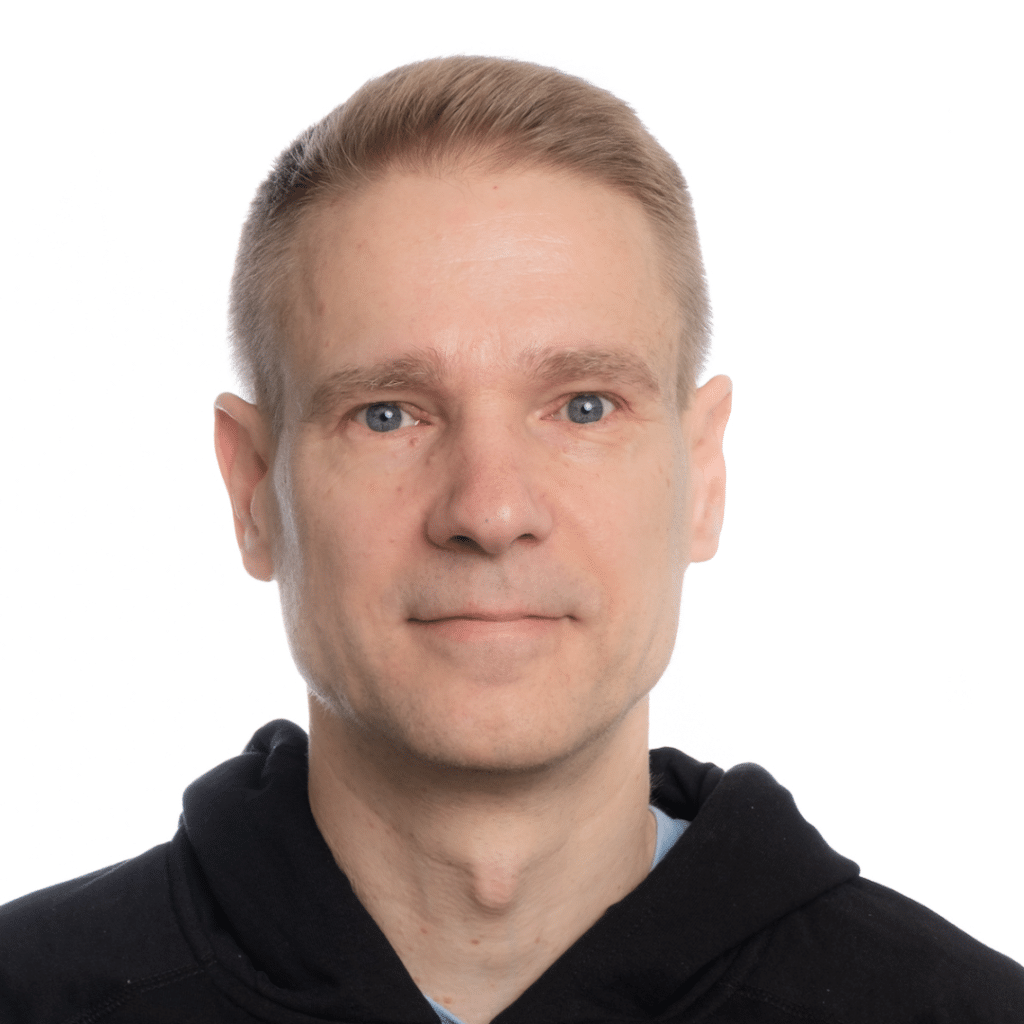
A bit of a technology ‘man for all seasons’, Harri Holopainen started his career in computer graphics on a Commodore 64. He worked on smart card payment systems, co-founded a small graphics software company, and even designed and implemented a prototype online gaming world, a subject he did his university thesis on. Upon graduating, he and his partners grew their computer graphics software company, Hybrid Graphics Oy, until NVIDIA stepped up and bought the company in 2006. Harri later struck out on his own again, as a partner at Love of Technology Strategies, and co-founder of Microtasks, a microwork company.

In 2013, Harri stepped into the world of machine learning and robotics, at ZenRobotics, a company that builds smart robots for waste sorting and recycling. Founded in 2007, they are at the cutting edge of applying AI-based (they call it “ZenBrain”) robotics to sorting all kinds of trash. Their mission is nothing less than defining Next Generation Recycling. They have two main products, a ‘fast picker’ that is aimed at traditional mixed recycling streams, and a ‘heavy picker’ that can sort construction and demolition waste materials. The latter makes up to 6900 picks per hour using multiple sensors and can be found in Scandinavia, throughout mainland Europe, China, Japan and Singapore, and even in the U.S. There is even a system running on wind power, in Sweden.

Over the last nine years, Harri has served at ZenRobotics as Robot Lab Head, Head of Technology, and now, CTO. He describes himself as a generalist, having worked on VC rounds, defined product strategies, negotiated licensing agreements with Ericsson and Nokia, headed R&D development teams, and even hand-built critical robot components. But as he notes now, “Lately I’ve also been up to my elbows in trash.”

Read the podcast transcript here

Eve Picker: [00:00:09] Hi there. Thanks for joining me on Rethink Real Estate. For Good. I’m Eve Picker and I’m on a mission to make real estate work for everyone. I love real estate. Real estate makes places good or bad, rich or poor, beautiful or not. In this show, I’m interviewing the disruptors, those creative thinkers and doers that are shrugging off the status quo, in order to build better for everyone. If you haven’t already, check out all of my podcasts at our website RethinkRealEstateForGood.co, or you can find them at your favorite podcast station. You’ll find lots worth listening to, I’m sure.

Eve: [00:00:53] Harri Holopainen has a mission. To define Next Generation recycling. A bit of a technology ‘man for all seasons’, Harri started his career in computer graphics on a Commodore 64. He moved onto smart card payment systems, co-founded a small computer graphics software company, and even designed and implemented a prototype online gaming world, a subject he did his university thesis on. But in 2013, Harry stepped into the world of machine learning and robotics at ZenRobotics, a Finnish company that built smart robots for waste sorting and recycling. And there he helped build their A.I. based ZenBrain robots, which sort all kinds of trash, first as a robot lab head and now as CTO. Harry describes himself as a generalist. He’s worked on VC rounds, defined product strategies, negotiated licensing agreements, headed R&D development teams, and even handled critical robot components. But lately, he says, “I’ve been up to my elbows in trash”. You’ll want to hear more.

Eve: [00:02:23] If you’d like to join me in my quest to rethink real estate there are two simple things you can do. Share this podcast and go to RethinkRealEstateForGood.co where you can subscribe to be the first to hear about my podcasts, blog posts and other goodies.

Eve: [00:02:55] Hi, Harri, thanks for joining me today.

Harri Holopainen: [00:02:58] Hi Eve, glad to be here.

Eve: [00:03:00] So I was really fascinated reading about your career. You did early work on a Commodore 64 and technology has defined your career. So, like everything from computer science to online gaming, I’d really love to hear about this trajectory and what the common thread is for you.

Harri: [00:03:22] Well, I think the common thread has always been in working with technologies that at some point will have an impact in everyday life and that sounded quite sort of absurd actually when we started to work with computer graphics, but then along the way came computer game consoles that started to bring home computer graphics into living rooms. And then you’ve got PCs and finally, you got mobile phones and I remember the first things, when there was a big customer asking for us that they would like to have these graphics very advanced graphics on a cell phone display that had, maybe, I don’t know, 80 times 60 black and white pixels. And we were thinking kind of like, yeah, like, what’s this is never going to go anywhere. But then again, a couple of years later, we realized that it’s the user interfaces of these mobile phones that actually will require quite sophisticated graphics. And this sort of graphics portion of my life ended in 2006. We sold the company that we founded to Nvidia, who was then and is still the number one graphics software and hardware company. And also the movie Avatar came out. And I remember seeing Avatar, and my first realisation was that, OK, so I have been in computer graphics long enough, so my work is done. Time to find something else to do.

Eve: [00:05:13] Interesting. So, you moved on to many other things and you have ended up in machine learning at ZenRobotics.

Harri: [00:05:26] Yes. And I’ve been here now for eight years, and this is, well, I would say that the primary sort of thing that comes to mind is that nobody really is against robots picking up our trash, and everybody agrees that there’s quite a lot of trahs out there and it ain’t going to recycle itself. So, it’s kind of a no brainer thing to do to apply robots there. And that’s also another kind of technology, which has been in people’s imaginations for over 100 years. But then this idea of smart robots actually doing something useful outside assembly lines, it still hasn’t quite happened. And I feel that this waste sorting is one big step towards that direction.

Eve: [00:06:24] So ZenRobotics sorts waste, all sorts of waste. And what’s your role there?

Harri: [00:06:33] My current title is CTO. The first thing that I did in the company was that I made the first prototype of the current type of robots that we currently use. Made it big for the first time. And then after that, I have been working in basically, since we are sort of a smaller company and need to move fast, so the research is very fast paced activity. So the research is the things that you think you can sell in 12 months’ time. And basically, those are the projects that I’ve been spending almost all of my time in, and it involves things like mechanisms for grouping waste and, of course, mechanisms that actually can survive in a waste plant and then also a lot of higher-level software to make the robots really earn its pay at the customer site.

Eve: [00:07:32] Let’s step back a bit. So ZenRobotics is a company that basically sorts waste using robots.

Harri: [00:07:40] Yes.

Eve: [00:07:41] And I read somewhere about the ZenBrain. What’s the ZenBrain and what are the products you’ve developed to sort waste

Harri: [00:07:52] ZenBrain is basically the collection of technologies that use a variety of sensors to look at the waste on a conveyor belt and then recognize the objects on the belt and then figure out how the robot could actually grip the objects on the belt. And then finally, the pieces of software that tell the robot to move over. So that the object from the belt actually ends up in the correct place, and the first application area was construction and demolition waste. And there are the objects can be quite large. I think we are talking about maybe 30 kilograms of maximum weight for pieces of concrete and stuff. And then the second robot that we have done is a robot designed for handling packaging and light waste. And the difference there is that that robot is much faster. But of course, it doesn’t need to lift 30 kilos because most of the things that it picks are things like hamburger cartons and plastic bottles and things like that.

Eve: [00:09:09] So they have different brains. So, what’s the problem that Zen Robotics is trying to solve? Why was the company launched?

Harri: [00:09:17] The company was founded by two old friends of mine and then some waste sorting experts. And the first slogan for the company was that’s basically “let’s do something cool with robots and A.I.” And then they try to figure out what that might be. And they actually did quite a lot of, sort of, small-time projects. I think there was discussions about going to fisheries and make a robot that picks up the dead fish from those containers before they make all the other fish sick. And that’s an interesting challenge in gripping that fish. And then there was another project done for a nuclear power company where the challenge was to, Recycling of these fuel rods that was apparently required some, some high level A.I. So then, at one point my friend, who has often trouble getting sleep in the evening, he was basically just at his home watching TV and there was Discovery Channel on showing images about these staggering piles of waste that’s, that you can find in all around the world. And then he realized that how about applying A.I. to make a robot that actually can sort waste? And it sounded very easy because, of course, you have these industrial robots, and they are not really that expensive. So that’s problem solved. And then there’s already, back then there was equipment that was used to identify materials on a conveyor belt. So, just put those two things together and we will have a robot that sorts trash. And it didn’t turn out quite, to be quite that simple.

Eve: [00:11:16] Simple, yeah, that’s what I was going to say. Sounds simple, but probably not.

Harri: [00:11:20] Yes.

Eve: [00:11:21] So I’m really fascinated by the whole construction industry and how this might impact it. And have you seen a change in approach to recycling materials over the years? And how readily is this being adopted in real estate projects or demolition projects or anything like that?

Harri: [00:11:42] Back when we started, the idea of using robots to sort construction and demolition waste was quite sort of novel. And when we were discussing people, then there was this category of people who were forward-looking. Back then they quickly realized that, actually, this makes a lot of sense and also so that it’s, it should be also quite profitable. And today we are in a situation where pretty much all the recycling industry agrees that robots are one important piece in this puzzle of getting circular economy work. So there’s quite a big, sort of, change in overall attitude. And of course, on the practical side, the waste industry is, first of all, it’s quite conservative. It’s not really the kind of an industry that immediately jumps into all the new things out there. And also the existing waste processing plants are quite large and expensive. So, even if today we would invent something completely sort of ground-breaking, then it would take quite a lot of time before the customers could actually employ it because these new breakthroughs, they don’t make any practical difference. If you have a 20 million, year old plant that you just built last year, and it’s incompatible with that. But now, actually this year, we have seen an opening of two new plants, one here in Helsinki. It’s about 30-40 million Euro plant, and it’s designed around robots. And most of all, the plant is designed to recycle waste so that none of it goes to landfill. And that’s quite a fantastic sort of starting point.

Eve: [00:13:43] That’s amazing. Yeah!

Harri: [00:13:45] And there’s also another plant in Switzerland that’s opened, also this year, and they are employing robots to recycle actually concrete and other inert materials. As you may know, cement industry is one of the biggest CO2 polluters. And the point of their plant is that they will take in concrete, stone and all the other inert mineral materials and then recycle it into something that can be used to make a concrete with less cement in it.

Eve: [00:14:18] Interesting.

Harri: [00:14:19] And that’s also a kind of plant and process that you can’t have without robots because there’s no other way to sort that kind of material.

Eve: [00:14:29] So what countries are at the forefront of this Next Gen recycling trend?

Harri: [00:14:35] I think that the waste industry itself is quite interesting because it’s especially, in C&D, it’s quite a regional industry and there’s a lot of regional differences. And that means that there is not that much competition globally. Because obviously, if you do C&D sorting in Finland, it would be completely unfathomable to just not be competing with companies in the US, for example, because you can’t transfer the waste itself, nor you can really transfer the end results of the recycling. And so, our customer, first customers ended up being the first adopters, essentially, all around the world, which is and has been quite challenging because we are a small company in Finland and our then first customers were, well, one of them was, well, a couple of them on in Central Europe, then one in the U.S., then I believe we have one in Australia and then one in, I think, Singapore or Japan.

Eve: [00:15:49] Oh, interesting. So, I’m Australian, you know, so that’s thumbs up for Australians. So, your company is in Finland, but when you say that customers, do they buy these robots from you? Is that what you’re selling?

Harri: [00:16:03] Yes, we sell the, basically the robots and then our customers are the companies that operate waste sorting facilities. And of course, we are in close cooperation with the companies that design these waste processing plants and processes and equipment.

Eve: [00:16:27] Ok. It’s really interesting. So, you have a fast picker and a heavy picker. And you describe, the heavy picker is really used for the construction industry, and the fast picture is for light boxes and things and like, what’s next? I mean, there must be other pickers in the, I’m a Picker too, but that’s not what we’re talking about. There must be other pickers in the works, right?

Harri: [00:16:58] At this point we have about, I think, maybe 60 arms around the world in production and we are currently scaling up. And it’s really no problem for us of identifying potential new use cases because there’s basically one new potential use case coming up every week. And there’s the, yeah, there’s like, for example, textile recycling is one big area where there are very few existing solutions. And then there’s obviously scrap metal and all that entails.

Eve: [00:17:38] Salvage yards, yeah.

Harri: [00:17:40] Yeah. And then recycling processes for cars and electronics. And there’s the recycling process for used batteries. Like practical problems like if you have a facility that recycles lead acid batteries, then it’s rather straightforward because you strip out the plastic shell and take out the lid and then basically, you’re done. And but then again, in that pile of batteries, you have a used lithium-ion battery, if you put that battery in that process, it may explode there, and that’s going to be a big problem for them. So that’s a typical kind of place where this added complexity of basically the everyday products out there will pose these interesting new challenges to companies that are already recycling things. And then there’s obviously, there’s a potentially very large amount of waste categories that are not really yet recycled at all because there is no economic way of doing it.

Harri: [00:18:51] And construction and demolition waste, there are other ways to do it than with robots. One thing to separate, for example, wood and light plastics from stones is to dunk them in water and then skim what floats. And that kind of works but of course, it makes everything wet, and soon that pool of water itself will be contaminated. And then, of course, there’s manual waste sorters are what are currently used in the quality control of municipal waste and also in construction and demolition waste and pretty much every sort of waste process where there is a significant sort of operation going on. And of course, one of our entries to the market has been that we will reduce the number of manual sorters required. Well, the possibilities are, of course, endless and unlimited. So that has never been our problem. So this picking and sorting is the easiest thing that makes a difference and has commercial value. But of course, after you have a robot that’s good at picking these things, why not use the robot to tear them apart as well?

Eve: [00:20:10] One thing that springs to mind, I saw a amazing show where a woman had an architect design a house for her and they used the wings of a decommissioned airplane for the roof, which was just fascinating, you know? But the fields of decommissioned airplanes are just crazy. I don’t know if anyone’s tackling those.

Harri: [00:20:30] Yeah, that’s also, and I would think that that entails a massive amount of manual labor. I guess a similar use case is decommissioning of ships, which I believe basically happened by, I don’t know, stranding them on a beach somewhere and having them [???]

Eve: [00:20:49] And then they just rust.

Harri: [00:20:51] Yeah. Or then there’s like 200 guys that come with, I don’t know, pliers and angle grinders and that, and put it into tiny pieces and.

Eve: [00:21:02] Interesting.

Harri: [00:21:03] Very, very manual, intensive, and very hazardous work.

Eve: [00:21:07] So I have to ask, what is the economics of this look like for someone who wants to deconstruct a building manually using a robot? Is it cheaper than sending out a crew?

Harri: [00:21:17] Well, I think if you have a building that needs to be decommissioned, then today I’m not really sure if our customers use the robots as a unique selling point, because the point of the robots for our customers is basically just to be able to give you a better price because there’s less, the operation has less cost. And of course, especially in the municipal waste, the regulatory bar is obviously rising constantly, and that obviously applies also to C&D sorting. That means that there are higher sort of regulations for the total operation of demolishing a building because you can’t demolish a building and then just dump it somewhere. So at the end of the day, that, at least it will mean that the prices of putting stuff in landfill, they are quite steeply rising and that forces the operators of these recycling facilities to make their processes more efficient.

Eve: [00:22:30] Interesting, so can you tell me what your team looks like? And you said you’re a small company? What does that look like?

Harri: [00:22:38] In the early, earlier days when a lot of the stuff that we had to do was quite sort of exploratory in nature, then I think I maybe had a 10-person team at that point. And I think we are about 60 persons at the moment. And then nowadays, when our focus is on delivery and maintenance and making sure that our customers get basically, professionally built and maintained equipment, then that means that the role of sort of rocket science is something that is luckily less needed today than five years back, when we still had problems in making sure that the robots actually keep working. And now, at the moment, we are focusing on making sure that our first about 50 customers are happy. And also, my team is now basically focusing on measuring and estimating the performance of the robot. And that’s actually quite a fascinating problem because one thing that people really don’t realize about waste is that waste is extremely hard to measure. The only thing that is easy to measure is to drive a truck on a weigher and notice that there’s 20 tons of waste in the truck. But then again, measuring what’s inside that container. The only known way of measuring it is actually to have some guy come over and take a peek.

Eve: [00:24:10] Interesting. That’s the manual bit, right?

Harri: [00:24:14] Yes. And that’s currently a quite a massive blocker in the waste industry, because if you think of an industrial process, it works because it’s measured. Whereas in the waste industry, it’s a bit difficult to even notice whether the process is actually working well or not. So, if you have a facility that sorts plastic, let’s assume, let’s say that this facility provides 10 tons of HTP plastic a year. So how do you know that there’s actually 10 tonnes of plastic instead of nine tons of plastic and one ton of other stuff? Well, you don’t really know. And of course, you will know if you have a process that really dislikes these contaminants, then you notice that something went wrong when you put into that HTB plastic in the process and you notice that there’s an explosion, then you notice that maybe there was a couple of these nice lithium-ion batteries inside that 10 tons of HDP. And of course, that’s too late. And in order to prevent that, there’s manual checks that are done more or less sort of consistently and the problem of this manual checking is that it’s expensive and it’s also very difficult to get a statistically relevant measure of basically a pile of waste by just a guy eyeballing it. And connection with robots is that the robots actually do look at every single object that comes under their sensors, and they take a really hard look at it and they may determine whether it should be picked or not. And that means that the robots actually can tell you quite a lot of what the customer actually had flowing in his waste process. And there are also some other sorting equipment that can tell that but they are not quite widely used yet, and they definitely are not used at the front gate of these waste processing facilities. So whatever people put in the waste basket that will at some point end up in one of these facilities, and no one really knows what the stuff is, we see one glimpse of it, and we are working in making sure that the robot can actually tell something useful of the waste itself. And over time, it may be that the knowledge of the waste itself, that might even be more valuable to the customer than the sorting result.

Eve: [00:27:00] So, yeah, I always wonder about sorting residential waste, which, I can’t imagine is an exact or efficient process, I think most people probably ignore the guidelines for recycling, and everything ends up being dumped in one place, so it feels like all that waste you’ve got to go back to the beginning.

Harri: [00:27:20] That’s an interesting question about how much people should be sorting at home. And I guess the extremes are that, especially in the US, there’s, in a lot of public places, there’s a big container where you dump everything, and it says that it’s sorted somewhere else. And then another extreme was that I was skiing in Austria some years back and that flat that we rented, it had nine garbage bins.

Eve: [00:27:50] You know, that’s very common in Germany, too. My husband has shared photos of me of these recycling bins and even more so there’s limited hours when you can put glass in them because it might disturb the neighbors.

Harri: [00:28:03] And you need to have nine of these in your kitchen. So, they’re under the sink there’s three, and I don’t know beside the sofa, there’s two and there’s a couple of in the cupboard over there and it’s just complete insanity because if you have nine categories to think of then it just, it’s ridiculous. It will just get people annoyed. And it’s also not efficient at all, because the problem is that you need to have nine different trucks visiting your home, or you have, need to have one truck that has nine compartments. And they all fill at different sort of pace,

Eve: [00:28:41] And you have to have someone who’s diligent enough to fill them properly, right? Yeah, the human element.

Harri: [00:28:46] I don’t mind that because of course, we’ll happily sell robots that fix those issues later on at the plant. But I personally, I think that there’s like, first of all, this bio stuff, leftover food and that should be kept separate because that’s really a nasty thing because it will foul up everything else. And then after that, well, I would say that glass is quite straightforward. Uh, in Finland and other European countries, at least we have this, and I guess in the US too, there’s

Eve: [00:29:26] Some places, not everywhere.

Harri: [00:29:28] Yeah. You’ll return empty bottles, and you get some money back.

Eve: [00:29:32] Yeah.

Harri: [00:29:34] And so that makes sense. And then cardboard and paper, probably. But then if you put people starting to sort of recycle different kind of plastics, then it’s just not going to work.

Eve: [00:29:48] But even the paper like, yeah, some people argue that they put the dirty pizza box in the paper recycling, but it’s dirty, it’s got food in it.

Harri: [00:29:58] Yeah, yeah there’s a lot of this. My wife has also lived in Germany, and she also lived in Switzerland for a while, and they are absolutely sort of fanatic about what the neighbors put in the trash.

Eve: [00:30:12] So recycling is a really big business, and maybe your robots have to develop a sense of smell as well. In the ZenBrain,

Harri: [00:30:20] I felt that for a long time we have all the technology that we will ever need. So, the technology is are not really the difficult bit. The difficult bit is actually finding a customer who can make a business out of a process that has a robot. And for these new areas where they are no working large scale solutions, it’s going to be really hard because they would need quite a massive capital to set up a shop that would produce enough of these, whatever resulting fractions that would be, where the volumes would be so high that using those fractions would be a business for someone else. So, if you want to recycle textiles, I guess recycling textiles itself is not necessarily that hard. Uh, but the problem is that exactly what are you going to recycle, what are your fractions and what’s going to happen to those fractions? And that’s, what are you going to do with, for example, cotton that has been reclaimed from textiles. Do you, like, it would be really stupid to like, incinerate it. It would be even more stupid to put it into a landfill. There’s a company that does these sound insulation panels out of the reclaimed fiber.

Eve: [00:31:45] There’s a company in Pittsburgh that makes fabric and is done very well out of plastics.

Harri: [00:31:49] Yes.

Eve: [00:31:50] So actually, plastics from Haiti, so they’re very, very specific. I don’t imagine they have robots sorting that in Haiti, but that’s what they do. Yeah, interesting. So just to round up, what are some of your favorite success stories, you know, people where things really change because of one of your robots?

Harri: [00:32:14] I would really say that this recently opened facility at one of our customers, Remeo, here in Finland. It has 12 robot arms, and the plant is designed not to send anything to landfill. That’s quite a remarkable achievement.

Eve: [00:32:31] Yeah, that is.

Harri: [00:32:33] And the plant is brand new and it’s quite, sort of, well it’s something else. I’ve seen a lot of waste processing plants and all of them are fascinating in their own manner. But this is something new and it’s enabled by robots, and it has taken us basically 10 years of work to get there.

Eve: [00:32:52] Interesting. So that’s a glimpse of the future for sorting waste. Nothing goes to a landfill.

Harri: [00:32:59] Yep.

Eve: [00:33:00] Well, thank you very much. You’ve been heard to say “lately, I’ve also been up to my elbows in trash”.

Harri: [00:33:07] Yes.

Eve: [00:33:08] So I’m just wondering, are you having fun? Is this interesting work?

Harri: [00:33:13] Yeah. Waste is fascinating because going to a waste plant, well, the first thing you notice basically might be the smell, but the big thing in these waste facilities is the conveyor belt. That’s where the waste is flowing and it’s just mesmerizing. And you’ll see all of the, basically, by-products of humans living, and for some really completely inexplicable reason when we go at the site where our big robots sort construction and demolition waste, there’s, like, uncanny amount of shoes on the belt. Yes. And I just, at some, we looked at data on one of our sites in Norway, and that was only for one day, and I just basically had to calculate the rate of shoes appearing on that line. And the conclusion was that if that rate holds for a month, they will have a ton of shoes. And it’s really like, absolutely amazing because if you go on the belt, it goes like half a meter per second and there’s a shoe and then, whoa, that’s a shoe, and then wait for 10 seconds or a minute, hey, there’s another shoe. But you can’t figure out how many shoes there actually are over a one day, or one week, or one month of production. And that’s the kind of things that’s really…

Eve: [00:34:42] Really fascinating.

Harri: [00:34:43] You never get bored.

Eve: [00:34:45] No. So, I have to ask, are there more women’s or more men’s shoes?

Harri: [00:34:50] We haven’t really made statistics, but I’m actually absolutely positive that at some point, our A.I. will have this built in function in detecting shoes.

Eve: [00:35:02] This is really fascinating. Well, thank you very much for joining me. I really enjoyed it, and I can’t wait to see what you scale up to.

Harri: [00:35:11] Thank you.

Eve: [00:35:11] Wonderful.

Harri: [00:35:12] Yeah, me neither.

Eve: [00:35:17] Smart brains building smart robots to sort trash in very smart ways.Eve: [00:35:24] You can find out more about this episode or others you might have missed on the show notes page at our website RethinkRealEstateForGood.co. There’s lots to listen to there. A special thanks to David Allardice for his excellent editing of this podcast and original music. And thanks to you for spending your time with me today. We’ll talk again soon but for now, this is Eve Picker signing off to go make some change.

Image courtesy of Harri Holopainen, ZenRobotics

Running on fumes.

January 26, 2022

John Liss is running on fumes.  He’s up very early every morning building his company FAST. And he’s doing something important and having fun.

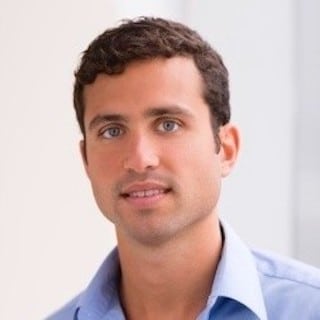
John founded True Footage, with a Harvard business degree in hand, to help a rather sloppy industry get a little more accurate. A real estate data authentication platform built to streamline residential transactions, they provide AI-based residential transaction data for the purpose of reducing subjectivity in appraisals and tax assessments for home buyers, from inaccurate square footage to under-assessment for minority property owners. The company uses video, computer vision, and machine learning to offer products such as square footage certification, floorplan, and property data capture, enabling lenders to save time and standardize data. The company operates in 17 states and is the fastest growing appraisal provider in the country. John started his career as a real estate agent before moving into real estate private equity and development. He has a BA from Harvard where he wrote his thesis on the real estate brokerage industry and an MBA from Harvard Business School. 

Read the podcast transcript here

Eve Picker: [00:00:08] Hi there. Thanks for joining me on Rethink Real Estate. For Good. I’m Eve Picker and I’m on a mission to make real estate work for everyone. I love real estate. Real estate makes places good or bad, rich or poor, beautiful or not. In this show, I’m interviewing the disruptors, those creative thinkers and doers that are shrugging off the status quo, in order to build better for everyone. If you haven’t already, check out all of my podcasts at our website RethinkRealEstateForGood.co, or you can find them at your favorite podcast station. You’ll find lots worth listening to, I’m sure.

Eve: [00:01:06] John Liss is running on fumes. He’s up very early every morning, building his company, fast. And he’s doing something important and having fun. John has always been fascinated by the real estate industry, but, more often than not, John says people do not realize the true value of their real estate asset because the industry is a little sloppy. If someone enters 1100 square feet instead of 1200 square feet into a sales listing, then when it’s appraised, often using square footage comparisons, one hundred square feet of value is passed along to the buyer for free. Sometimes a subjective decision is made about a neighborhood or a street. And that, too might inaccurately value a property. John has set out to solve that problem with the company he launched in 2019, True Footage. They provide residential appraisals that are super accurate, using lidar and machine language-based software. Not only can they create faster turn times and more accurate underwriting for lenders, they are adding objectivity to a process that is often highly subjective and they are in demand. Over the last year, John has added 200 employees. He’s in 17 cities and he’s only just started.

[00:02:38] If you’d like to join me in my quest to rethink real estate, there are two simple things you can do. Share this podcast and go to RethinkRealEstateForGood.co, where you can subscribe to be the first to hear about my podcasts, blog posts and other goodies.

Eve: [00:03:01] Hi, John, thanks so much for joining me today.

John Liss: [00:03:04] Thanks for having me.

Eve: [00:03:05] I’m pretty excited about what you’re doing, but I wanted to start by going back to your thesis when you were at Harvard. You got a high honors for thesis on steering practices and I would like to know what steering practices are.

John: [00:03:20] Yeah, sure. So, my background has always been in the real estate industry. I started getting interested in it when I was about 12 years old. I grew up right outside of New York, and it was always a running joke in my family that I was going to become a real estate agent, but I actually decided to do that between high school and college. So, I took 15 months off and worked in a real estate office prior to going to undergrad. And so, then when I got to school, I knew that I wanted to incorporate real estate into my studies somehow and wrote my senior thesis on the residential brokerage industry. Doing an ethnographic study of New York City real estate industry. And New York City is a particular real estate market. Obviously, you have the highest prices in the country, but also you have building types that almost operate like country clubs. And those country club buildings are called cooperatives. Basically, it has in history have been very, kind of, drivers of segregation, I would say. And not just racial segregation, but also religious segregation, to the point where people knew which buildings accepted what kinds of people and then brokers would perpetuate those stereotypes by saying, oh, you can’t go to that, you can’t go to that building because they don’t like Jews there. Or you can’t go to that building because you don’t belong to your kids, don’t go to the right schools. And so that was kind of the history of New York. And obviously, over time, the city’s gotten better and the practice has dissipated a little bit, but it’s definitely a major part of the residential story on Manhattan.

Eve: [00:05:03] Interesting. So those are steering practices, right?

John: [00:05:09] Yeah, and you know, there’s been a lot of talk, now we’re in the appraisal industry, and there’s been a lot of talk about kind of what’s going on there. But I would actually argue that it starts in the brokerage space and appraisers have had to deal with kind of historical data that is, you know, punished by redlining and punished by some of these other practices, and it makes the job of the appraiser much more difficult because of kind of all of the upstream problems that are happening.

Eve: [00:05:35] So how did that influence your life? That thesis.

John: [00:05:40] Oh, I mean, I’ve been obsessed with real estate ever since I was little, and I always knew that I wanted to go into a career in the real estate industry. And I think another thing that I noticed in that thesis was just the use of data and how brokers use data and the importance of having clean and accurate data. I’ll tell you another part of the, not in the thesis, but later on in my journey in the real estate industry, I walked around New York City with a 3D camera. It was 23 pounds, so I looked a little ridiculous. And I measured properties and compared them to what was listed on Zillow or StreetEasy, which is the New York City version of Zillow. And I was finding discrepancy of 16 percent on average, and these are people that are buying houses for one thousand two thousand even nine thousand dollars per square foot. So, if you have this discrepancy and the brokers are reporting, you know, misreporting square footage, then you have a lot of people buying things that they don’t really know what they’re buying. And so, that kind of experience also informed my decision to eventually try to start a company that was all about objectivity and all about kind of getting to the right answers and making sure that the people who were determining those answers had all the tools they needed to deliver that service.

Eve: [00:07:01] So, the name is extremely appropriate. True footage is the name of your company, right?

John: [00:07:06] Yeah. So, the name definitely is from the square footage, but we’ve evolved immensely into an entire platform for appraising and beyond, so I’m really excited about kind of where we’ve been, but very excited about where we’re going.

Eve: [00:07:21] What are some examples of what goes wrong? Just, you know, besides in New York. There was an article recently about, in Northern California, about a black couple suing for a really lowball appraisal. They got a better one when they sent a white friend. Is that a problem that you can solve with your platform?

John: [00:07:45] Look, I think it’s important to note that ninety seven percent of appraisers are really, really good at their job. And so, there are some people that are really bad at their job.

Eve: [00:07:55] That’s true in every profession, right?

John: [00:07:57] Exactly. And I think there are people who, you know, have subconscious bias that affects their decision making. And again, that’s true in life. And we need to work hard to get, first of all, get those people out of the industry, but also provide tools to people to make sure that all of these instances are completely mitigated because it’s totally unacceptable, obviously. So, you know, those cases exist, and I think the main problem around kind of why this happens is just a lack of objectivity. Yeah, you can use technology to create more objective reports. So, one thing that we do is we have a ladder-based mapping solution that extracts square footage data using video, and we used adjustment technology that makes sure that our adjustments to the comparables are accurate and we have automated ways in which we report other parts of our data and make sure that some of the data that populates all the forms is done in the most transparent way. Because the problem is, a lot of the times, is the precedent data is terrible. So you have the MLS, where brokers are telling a story and they manipulate data in order to get across their vision of what they want to sell the property. And then you have County, which, you know, especially during COVID, they haven’t been out to assess a property in several years. And so, a lot of this information is extraordinarily stale. So that’s why the appraiser is more important than ever in terms of delivering accurate data to the equation because without them, you’re using data that is just oftentimes either purposely or im-purposely wrong.

Eve: [00:09:40] So that’s what True Footage does. Tell me exactly how it works, like do you have clients who come to you or, you know, how does this little business work?

John: [00:09:50] Yeah. So, I mean, we’re a full-service appraisal business and also a valuation business. So, what that means is we deliver appraisal reports, but we also can deliver alternative valuation reports as well. And we’re live in 17 states. We’ll be, call it in over 25 by next quarter. We have over two hundred employees and we’re working with over two hundred vendors already. So, what was a small little business is quickly resonating with banks and with customers, and we’re really excited about the progress, but really feel like we’re in the top of the first inning here.

Eve: [00:10:28] Wow, so are you in my state, Pennsylvania?

John: [00:10:33] We’re coming. We actually are looking at a Philadelphia office, but I know you’re in Pittsburgh, so we got to get…

Eve: [00:10:37] Oh yeah, it’s a big state. It’s the other end of it.

John: [00:10:40] Well, now that I met you, maybe we’ll get there faster.

Eve: [00:10:43] Yeah, OK. So, but still, who are your clients and how do they come to you?

John: [00:10:48] Yeah, so most of our customers are banks, and we develop relationships with them through all of our appraisers. So, we have appraisers around the country, they are best in class in each of their markets. We identify them, then we sign them on to the platform. And most of their banks are, you know, excited to work with them and continue to work with them. I think the way that the industry works is most banks have a scorecard system where appraisers are scored based on how accurate their reports are, how fast they get work done. And so, at a time like this, where volume is at an all-time high and the appraisals are taking longer than ever, people who are at the top of the scorecard are, continue to get more demand for their work because they’re good at their job. And so, we look for those people.

Eve: [00:11:37] Yeah. And actually, if any of our listeners don’t understand this, when you purchase a building and you go to the bank, the bank will order the appraisal. You don’t order the appraisal. The bank orders the appraisal. So, it’s a third-party discrete appraisal that they have control over, if you don’t provide one for them. So, I can see how banks would be like your most important customer for growth.

John: [00:12:00] Yeah, and I think that’s really important this third-party aspect, because obviously after 2009, what happened was that there was just not enough control, and a lot of the bad things happen. And so, the kind of third party component of the appraiser acting as an independent evaluator is an extraordinarily important part of the real estate engine in this country.

Eve: [00:12:25] So what’s been the feedback you’ve gotten from banks? What are they seeing in your appraisals and why are you growing so fast?

John: [00:12:33] I think everybody’s excited. You know, there’s a lot of change going on in the appraisal industry right now because of kind of, you know, the increased volume during COVID demonstrated a need for just faster and better reporting. I think generally what’s important to note is the appraisal industry, you have to deliver the reports in a way that is within the guidelines of Fannie and Freddie. And so. how the sausage is made is important but delivering the sausage in the fully compliant way is the most important thing, and that’s exactly what we do. So, the output kind of looks pretty similar to what a traditional appraisal model would look like. It’s more just kind of what’s going on internally to make sure that all of our data is done appropriately. The quality is high, and it’s delivered faster than other people in the market.

Eve: [00:13:24] Ok, so any favorite success stories? Any interesting facts on Earth?

John: [00:13:30] Well, that’s an interesting question. I can’t think of something right now but let me come back to you on that.

Eve: [00:13:36] Ok? And how long have you been in business for? You started. True Footage…

John: [00:13:42] So the idea came in business school, but we commercially launched on July 1st.

Eve: [00:13:48] And you’ve got 200 employees?

John: [00:13:51] Yes.

Eve: [00:13:52] Wow. You must not be sleeping much.

John: [00:13:56] I’m so excited, I’m not kidding, I beat my alarm clock by three hours every day. I literally am having the time of my life and more importantly, I think our appraising team is having a lot of fun. I mean, we have people that have been appraising for 30 plus years on the roster that said they’ve never had this much fun. So that’s kind of the best part of this all, is is getting buy-in from people that have been doing it much longer than I have and making sure that they’re super excited and pumped about kind of where this is going.

Eve: [00:14:27] Let me ask you, what did it take to launch? What happened before the launch?

John: [00:14:31] Oh God, a lot. I mean,

Eve: [00:14:33] That’s really what it’s all about, right?

John: [00:14:35] I had bad days. You know, I remembered like calling my ex-girlfriend once. I remember, just like worrying about kind of like, am I on the right track? There’s a lot of squirming. I had the idea originally that it was a square footage calculator. You know, I thought, why is it that, you know, we have our biggest asset in our lives, and we don’t know anything about it? There should be more verification and square footage is the biggest driver of value. And realize that that wasn’t enough of a business, and we needed to expand kind of the product offering. And obviously, COVID hit and what was a hardware product originally became a software product because Apple released their iPad that had Lidar in it. And there was so much literature going on about the appraisal industry around kind of the increased turn times and the issues around bias, which, you know, now the Biden administration is addressing. And I thought, wow, we had spent so much time building this technology. Let’s apply it to a broader industry. And that kind of was a big moment. We signed up. I got to work with my CTO who’s phenomenal, and he has a background in the appraisal industry as well. And we said, you know, let’s go at this and let’s spend the next six to nine months with our heads down building and then launch in the summer. And that’s kind of what we did.

Eve: [00:16:02] How long was that pre-launch period altogether, from idea to launch?

John: [00:16:07] Almost two years when I came up with the original idea. I was also in school. So, the innovation lab at school was an amazing place to bounce ideas and learn. And so that was kind of, I don’t want to say I was dragging my feet because I wasn’t, but it was definitely, you know, I knew once school ended, it was go time.

Eve: [00:16:29] So now you’ve launched, what are the biggest challenges you’re encountering now?

John: [00:16:36] That’s a good question. I think, you know, speed is an interesting one because obviously the incumbent banks have their own processes and just getting everyone on board and fast enough and getting order flow at the pace, we would like it. We obviously are appraisers are incredibly busy, but I think just generally getting everyone to move in sync together with all the different stakeholders is one. And we want to deliver more products. We have over five products in our kind of development phase right now. And so, I think just getting all of those out the door and delighting our customers is kind of our main focus right now. So, the main issue, I would say, is that we just want to get a lot done and there’s only twenty-four hours in the day.

Eve: [00:17:26] Actually, let’s go back to Lidar. What is Lidar?

John: [00:17:30] Lidar is a technology often used in autonomous cars that basically measures depth, and so it stands for light detection and ranging. And what it is is, when it’s embedded in all of the new kind of Apple products for virtual reality. Obviously, we’ve been seeing a lot about the Metaverse, et cetera. And so what it allows for is for using video to measure depth. And so, when you create a video measuring depth, you’re able to extract measurements and get to really accurate square footage data. I mean, you think about traditionally how floor plans are measured, and I had to, when I was an intern in my office, I would have to sit with the floor plan measure and watch him for four hours. And it was really with measuring tape or a single point laser if you were lucky.

Eve: [00:18:19] Right. Oh, a little tool that you roll on the ground, right?

John: [00:18:23] Exactly. You’re an architect, so you must have seen it before, right? And so, I mean, it’s crazy. So obviously with Lidar, you’re taking millions of points. It’s not just one point, and we like to think that all rooms are rectangles, but the truth is they’re not. And so having access to this lidar where you can create a map that’s much more dense in terms of the amount of points it’s collecting, is a huge value add, and also helps the appraiser save time. So, the appraiser is really happy because a lot of their risk has been mitigated. There’s nobody that’s going to come after them about the square footage because they know that it’s been validated by this technology.

Eve: [00:18:59] So tell me then, an appraiser’s job. I know what an appraiser does, but maybe most people don’t. It’s pretty tedious. What’s the job for you look like?

John: [00:19:09] Yeah, I think appraising is really cool and it’s something I wish, honestly, when I chose to be a broker, I might have chosen to kind of start as an appraiser because you really learn how to value things in the market. I mean, we have people that have leveraged their appraising career and gone into other parts of the real estate ecosystem on the side, and I think that’s really cool. What does an appraiser do? It’s all about valuation, so think of each property is almost like a little puzzle and you have to kind of get to what the value of that puzzle is. So, it starts with getting an order in and you have to bid on how much you think you should get paid for that appraisal, basically. And then you drive to the site or someone in your, your trainee drives to the site. And you conduct the inspection. You record all of the information around quality, condition, size and then you drive around, and depending on the bank, you have to shoot comparable properties for that. And then you go back to your desk and you kind of fill out a grid. And that grid is pulling comparable properties and then adjusting those comparable properties back towards the subject property to make sure that the subject property if you’re looking at [???]

Eve: [00:20:26] So you get like, I actually did an appraisal course and I passed it, but so, if you have two properties that are the same and one of them has a porch with a view, there’s going to be extra points for that. It’s going to have extra value or one of them has a garage and one does not. All of those things come into play, right?

John: [00:20:45] Exactly. And so, then you kind of arrive at an appraised value for that property and then based on what the contract price is for the house. Or if it’s a refi, you either get approved or not for that amount. And then if you’re under, you have to come up with cash in a purchase situation to kind of squeeze, fill that gap.

Eve: [00:21:07] And so, now with this new tool, everyone has an iPad?

John: [00:21:12] Yeah, all of appraisers have the Lidar iPad.

Eve: [00:21:15] And so they go out and they take a video of the space inside and they can get very, very accurate, true footage.

John: [00:21:22] Exactly. And I think also they can go back to that video and refer to it. If they forget, if they’re doing multiple inspections in a day and they’re like, oh, wait, which one was that? And so it’s much more kind of ability to check back.

Eve: [00:21:35] So your business is really, truly built on this new technology. You really couldn’t do it without it.

John: [00:21:40] Oh, absolutely. And I think, you know, there’s so much we’re adding on the data science side as well for the dust portion of the job that is really going to standardize and automate the report with the appraiser fully in the driving seat. I mean, we’ve seen what happens when big companies try to ignore the human at the end over the past couple of months, and it’s a disaster. So you’ve got to have an appraiser in the driving seat, otherwise your accuracy is going to be seriously doubted.

Eve: [00:22:08] Ok, so I’m going to ask, the other services that you’re planning. Can you talk about them yet?

John: [00:22:14] Yeah, I mean, it’s more just around different products within the valuation services umbrella, right? So, you know, an appraisal is the gold standard, but it’s not the most appropriate valuation in every instance. Sometimes people just need kind of a refresh of their valuation quarterly or something like that, and so we’re looking to expand the menu of offerings so that our customers can say, for this house, I need this type of report and for this house, I need that type of report. We’re building technology that will allow banks to spit in and address and then let us tell them what kind of report they might want.

Eve: [00:22:52] What about larger commercial buildings? Are you focusing on them at all? Because, you know, you just made me think about when I have to do refinancing or after five years when my mortgage expires on my 25,000 square foot little commercial building. The bank orders another appraisal from scratch, and that person has no information about the first appraisal.

John: [00:23:15] You just told me I’m not sleeping, and now you’re asking me to go into commercial. I think commercial is coming, but I think we’re really focused. Residential is awesome because it’s over a hundred and forty million properties. And so, let’s get that right. And then we can think about kind of next.

Eve: [00:23:33] Ok, so one last question what’s your big, hairy, audacious goal?

John: [00:23:40] My big, hairy, audacious goal. I’ve never heard it asked like that…

Eve: [00:23:44] It’s a BHAG. You don’t know what a BHAG is? A big hairy audacious goal?

John: [00:23:50] Is that an Australian?

Eve: [00:23:51] No, I don’t think so.

John: [00:23:54] Well, it shows what I know.

Eve: [00:23:55] It’s probably an older generation actually, John.

John: [00:24:00] We want to rebuild the residential data sector. We think that there’s a lot of, a lot left to be desired, and we think that appraisers are kind of in the prime position to be the leaders of that change. And that’s why we’re focused on appraisers being a part of the story and really kind of the cornerstone of that story. And we believe that access to accurate data is in the best interest of everybody involved. It’s in the best interest of the consumers and the homeowners. It’s in the best interest of the lending industry. It’s in the best interest of the U.S. government who’s backstopping all of this activity. And nobody solved the problem yet, and we’re on our way.

Eve: [00:24:42] Well, I’m super excited just listening to you. It sounds, I think it sounds fantastic. Thank you very much for spending some time with me today.

John: [00:24:50] Thank you so much. I really appreciate it.

Eve: [00:25:08] John is unpacking a tiny little piece of the real estate industry that could have a dramatic impact for everyday people. True Footage promises equitable appraisals no matter what neighborhood your house is in.

Eve: [00:25:33] You can find out more about this episode or others you might have missed on the show notes page at our website RethinkRealEstateForGood.co. There’s lots to listen to there. A special thanks to David Allardice for his excellent editing of this podcast and original music. And thanks to you for spending your time with me today. We’ll talk again soon, but for now, this is Eve Picker signing off to go make some change.

Image courtesy of John Liss, True Footage

Dorchester rocks.

January 19, 2022

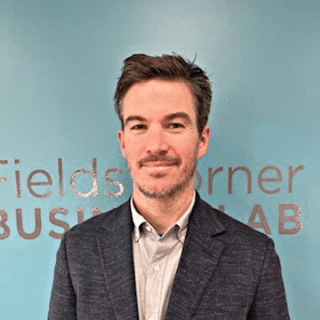
Travis Lee is founder and owner of TLee Development LLC, the developer of 1463 Dorchester Avenue. Travis is passionate about creating cross-cultural community building and economic development opportunities for low- and moderate-income Dorchester residents.

A Dorchester resident himself, Travis has over 15 years of experience developing mixed-income housing and small businesses in his community. Travis founded TLee Development (TLD) in 2014 with a core mission to help communities articulate and bring their visions to life. TLD works closely with community groups and civic associations to conceive, plan, permit and construct various mixed-income and mixed-use properties in Dorchester. To date, TLD has over 80 residential units and 50,000 square feet of neighborhood commercial space in the planning, permitting or operational phases of development. 100% of the residential units developed and owned by TLD are affordable to families making between 60%-90% of the area median income. In addition, TLD projects are designed and built to meet Passive House standards which reduces energy consumption and operating costs—ultimately creating a healthier environment for building occupants.

Prior to forming TLD, Travis served as a project manager in one of Boston’s most historic and impactful community development corporations, Madison Park CDC. While there, he oversaw the development of over 200 units of rental and homeownership housing as well as roughly 40,000 square feet of commercial space in the Roxbury neighborhood. As an entrepreneur and small business owner in Dorchester, Travis’s commitment to economic development in his neighborhood is personal. As co-founder of the Fields Corner Business Lab (2014), Travis has fostered collaboration among entrepreneurs, small businesses, and community development organizations to advance one of Dorchester’s most promising business districts. Travis also co-founded the Dorchester Brewing Company (2016), an AIA-award-winning partner-brewing facility and public Tap Room that has become a neighborhood staple and citywide favorite.

Read the podcast transcript here

Eve Picker: [00:00:11] Hi there. Thanks for joining me on Rethink Real Estate. For Good. I’m Eve Picker and I’m on a mission to make real estate work for everyone. I love real estate. Real estate makes places good or bad. Rich or poor. Beautiful or not. In this show, I’m interviewing the disruptors, those creative thinkers and doers that are shrugging off the status quo in order to build better for everyone. If you haven’t already, check out all of my podcasts at our website Re-Think Real Estate for Good, Darko, or you can find them at your favorite podcast station. You’ll find lots worth listening to, I’m sure.

Eve: [00:01:05] Travis Lee is the developer who believes in the local economy. After launching a career building big, Travis came home to Dorchester in 2014 to found TLDevelopment. Dorchester is a vibrant and diverse community in Boston. Since then, his work has not strayed beyond the boundaries of the Dorchester community, and that’s the way he likes it. Travis takes his role in the community very seriously. He works closely with community groups and civic associations to conceive, plan, permit and construct his various properties. To date, he has built, or is planning, 80 residential units and 50,000 square feet of neighborhood commercial space. One hundred per cent of his residential units are affordable to families making between 60 to 90 percent of the area median income. And his projects are designed and built to meet Passive House standards as well. He’s also co-founded a unique brewery and a co-working space, all in Dorchester. You’ll want to hear more.

Eve: [00:02:18] If you’d like to join me in my quest to rethink real estate. There are two simple things you can do. Share this podcast and go to RethinkRealEstateForGood.co, where you can subscribe to be the first to hear about my podcasts, my blog posts, and other goodies.

Eve: [00:02:46] Hi, Travis, thanks so much for joining me today.

Travis Lee: [00:02:49] My pleasure, Eve. Thanks for inviting me

Eve: [00:02:52] So, you’re a real estate developer with a mission grounded in community, and I wanted to understand why that’s important to you.

Travis: [00:03:00] Well, it’s a great question. I graduated college and moved up to Boston from South Carolina to work at a homeless shelter in downtown Boston. And my first year of living in Boston was sharing a bunk with a man recovering from substance abuse. Along with thirty-one other men in recovery at a homeless shelter, and my job was to be an informal in-house caseworker who helped folks find jobs and go to court and help them with their court cases and just be a friend, so to speak. And that was probably the most influential year of my life in terms of getting a up-close view of community development and/or broken communities and hearing all of my new friends tell me about their stories and the communities they came from. And it gave me quite the passion to be deeply involved, deeply engaged in a community as I grew older, and to play a small role in facilitating a healthy community for folks.

Eve: [00:04:22] So how did you wind your way to developer in Dorchester today?

Travis: [00:04:27] Well, after that year of living and working at the Boston Rescue Mission, I took on a role via AmeriCorps at a micro-lending organization called Accione USA, where I spent a year making five-thousand-loans to Spanish speaking entrepreneurs.

Eve: [00:04:48] Oh, that’s interesting.

Travis: [00:04:49] In the city of Boston. And I think I had more fun that year than I have in many, many years. And after that year, I got an internship at the Jamaica Plain Neighborhood Development Corporation, a community development group in Boston. And I had the great privilege of working on a redevelopment of a 1880’s brewery, the Haffenreffer Brewery.

Eve: [00:05:16] Oh, that’s fun.

Travis: [00:05:17] And we converted one hundred thousand square foot abandoned brewery into 32 small business spaces. And to be involved with the financing and the construction and the tenant fit-out of that project got all of my blood flowing for community development. From there, I got married and moved to New York City and got a job working at a public private bank called the Upper Manhattan Empowerment Zone, where I was charged with making loans and equity investments into small businesses and real estate projects that otherwise would not occur in Harlem or Upper Manhattan, and got a chance to be on the lending side for small businesses and fell in love with small business, and helping those small businesses grow and start up shops when they were having a hard time finding the capital. So, we got to play that gap financing role. And a couple of years later, moved back to Boston and moved into a neighborhood called Dorchester, where my kids would go to school and my wife would teach and I looked for a job in the community development world.

Travis: [00:06:38] This time, I wanted to be on the development side, and I found an old friend who was running a real estate department at a community development group called Madison Park CDC in Roxbury and took a job as a project manager and spent the next seven years developing two hundred or so apartments and/or homeownership opportunities in the Roxbury neighborhood called Nubian Square. And those seven years were extremely influential, mostly because for seven years I worked in the same location with the same people, the same community groups getting to know the heart and the soul of a neighborhood and getting to understand the vision that a community had for itself and thereby getting to play a role in executing their vision. And that’s when I said, I want to spend the rest of my life working in a single community, helping to advance the vision that that community has for itself. And that means getting to know a place, getting to know the people there, getting to know what they care about and putting the skills and the experience and the resources that I, as a developer, have at my disposal. Putting those to work for the sake of moving forward a community’s vision for itself and finding the balance where I can both make money and accomplish a vision that a community has, and that’s a very tight rope to walk.

Eve: [00:08:20] Yes, it is.

Travis: [00:08:21] It’s been extraordinarily enjoyable, and the relationships have been very sweet over the years.

Eve: [00:08:29] That’s wonderful. That’s a very powerful vision and a pretty unusual goal. Not many people think that smaller can be bigger, I suppose. Right? You’re just focused on one community.

Travis: [00:08:42] Yeah, it’s tough to limit the opportunism. For a long time, I got phone calls from friends or colleagues in other neighborhoods or other cities saying, hey, I’ve got a great opportunity, let’s, can you come and participate here or there? And for several years, it was really, really hard to say no. And after a few years of committing to a place and committing to a people and building those relationships with people, where they started to trust that what I said, I hear you and we can’t do exactly what you’re asking for, but we can do this and that, and moving forward and working alongside the community. After experiencing some of that, it became much easier to say, You know what, we’re going to turn down some, what might look like great opportunities way over there, to focus right here. And to be honest with you, the neighborhood that we work in, Dorchester, is the neighborhood where I live. And the neighborhood where I’ve lived for 15 years, and my five children go to school and my whole family lives and operates. And so, it all feels very close to home, and there is much satisfaction getting to see my own neighborhood grow up in a more equitable, inclusive manner and being a small, small part of practicing equity and practicing work that builds wealth in communities that have had wealth extracted from them over the years. And so, it’s…

Eve: [00:10:16] So, you know, what is Dorchester like? I mean, that brings me to think about what is that demographic like in your neighborhood?

Travis: [00:10:24] Well, Dorchester is a large neighborhood. I think there’s close to a hundred-thousand people altogether. And it is a very diverse neighborhood. Some people liken it to Queens in some ways, Queens New York. There are African American people, there are Africans, there are a strong Latino population, a white population, a strong Cape Verdean population, which of course is West African and a strong Vietnamese.

Eve: [00:10:53] I have to say Yum.

Travis: [00:10:54] It is a very diverse group of people that live here. And my humble opinion is that most of us live in our own silos. The cross-cultural gathering and community building is fairly weak, and we have mostly white people doing life with white people, and we have Vietnamese people doing life with Vietnamese people. And I think there’s a younger generation that is really working hard to bridge some of the cultural barriers there. And that’s one thing that our organization is trying to do, is trying to facilitate community building across cultures where language barriers are real, cultural differences are real, and finding commonalities. Finding things that will bring people to the same table, often over food. And that’s why most of our projects have a retail component, a small business component on the ground floor where we can help work with a local entrepreneur to open. We’ve opened four restaurants at this time.

[00:12:08] Oh, that’s great.

[00:12:08] That is the owner and that is the operator, but as the developer/landlord who wants to facilitate a community gathering space for people in the neighborhood to come and eat and be together and that’s something we believe in.

Eve: [00:12:21] So a very diverse neighborhood. And what does your team look like?

Travis: [00:12:25] Well, at the moment, we have three people on the team. Myself, I’m a white man of Western European descent. We have a woman named Dariella, who is a woman whose family comes from the Dominican Republic. She identifies as a person of color. She often identifies herself as being black. And Milton, our third teammate, is a black male who grew up in the neighborhood, although both Dariella and Milton both grew up within five to seven minutes of all of the work that we do. I am the newest comer to the neighborhood, having been here for just 15 years or so.

Eve: [00:13:11] Okay, so okay, let’s talk about the project. So you’ve done quite a lot of work. What are the projects like that you focus on in Dorchester?

Travis: [00:13:19] Well, about four years ago, we actually, our work started seven or eight years ago in buying one of the largest office buildings in Dorchester. It was sixty-five percent vacant, and it was a struggle to buy it. The financing of it was quite difficult, but we managed to purchase this mostly vacant building and over the next six to nine months, fitted out with a non-profit tenant. And then we started a shared workspace on the fourth floor because we were unable to find another tenant. So, we started a business to be our own tenant, and we call that space the Field’s Corner Business Lab. We have 120 or so members that all share the space as members of the Field’s Corner Business Lab. We, from that building, once it was occupied, we built a six-family, and our first new construction residential building in Dorchester. It was aimed at households earning 70 percent of the area median income. At that time, it was like fifty-five thousand to seventy thousand dollars a year in annual income as what we were honing in on. The vision for an income target came from some of the experience I got as a non-profit developer working for CDCs, whereby we built affordable housing strictly for households making at or below 60 percent of Boston’s area of median income. And what I started to read about, and think about, was the hollowing out of the working class. Those folks that made too much money to qualify for the quote low-income-housing and yet could not afford the market-rate housing. And so, we started with a focus on what some call middle income, others call workforce housing, and that trend has stuck.

Travis: [00:15:21] So our first six-family building was quickly occupied entirely by neighborhood residents who were working and making around 60 to 70 percent of the area median income. We then went on to build a 14-unit workforce housing project with rents between 70 and 90 percent of the area’s median income. And in that project, we had some ground floor retail space that was occupied shortly after construction by a local catering company and restaurant called Fresh New Generation, which we are extremely excited about. Not too long ago, in December of 2020, we purchased a thirty-one-unit existing building. It’s about 60 years old and was failing in many regards. The physical condition was failing, the tenants were not well cared for, and we have spent the last year systematically re-renovating the building, both physically and reaching out to each tenant, trying to figure out how we can provide folks with the resources they need to thrive. And that has been a challenging project, one that helps you realize that you don’t change the culture of a building overnight, especially one that’s been operating in a particular way for many, many years. So as a team, we have been investing in the building, both with people and investing dollar resources to help slowly turn the nature of that ship into a place that people are happy to call home. And just a month ago, we began construction on a twenty-nine-unit five-storey building in a neighborhood of Dorchester called Fields Corner. This project is the first of our projects to include a community investment offering.

Eve: [00:17:22] Yeah, on Small Change.

Travis: [00:17:24] We worked with Small Change for many numbers of months to just recently launch an offering for members of the community to invest in this building. It will have studio and one-bedroom units available to folks making between 70 and 90 percent of the area’s median income and will also have a ground floor retail component. We are currently talking with two different restaurants, restaurant owners, to possibly move into that space. So, we have a few other things in the pipeline that we’re working on in the future. But those are the things that are currently either complete or in construction.

Eve: [00:18:03] Are underway. So, let’s talk a little bit more about 1463 Dot Avenue, the crowdfunding project, which, you know, I have to say you’re the first developer who came along who really had a really serious community engagement plan in place. Often crowdfunding is more casual, a little more organic than that, you know, but I’d love to hear about that strategy.

Travis: [00:18:28] Well, I think the first part is that we weren’t primarily trying to raise money. And it all starts with what the objective is, and our objective of this community investment initiative was to do development different. And we have recognized that many of us, including our own team and our own operations, we’ve done development the same way for so long and we step back, and we wonder why we’re not creating a more equitable environment, why we’re not making a bigger change, a bigger impact. Why we’re not creating better access for people who have been historically marginalized. And so, we said to ourselves, we’ve got to do something different. We’ve got to push the envelope a little bit. We’ve got to move the needle a little bit and test the waters. And so, while we weren’t looking primarily to raise money, we were looking primarily to engage residents of Dorchester in a process. And I think we were quick to say, this is also not primarily a wealth building exercise, right? When you invest two thousand dollars into something, and you make 10 percent on that money every year. Two hundred bucks isn’t going to change your life.

Eve: [00:19:49] Oh yeah, but compare it to a bank account, which makes you -0.5 Percent a year. It might change your life a little bit, you know.

Travis: [00:19:59] But in terms of what the primary objective was, it wasn’t even wealth building. It was place-making and community building. It was this this hope for a psychological change in, say, two or three hundred people who live in the community who might otherwise have walked by this new building and said, look what somebody is doing in my neighborhood. Maybe they walk by and say, Look what I’m a part of. Look what we are doing in my neighborhood. So that was the biggest objective or that is the biggest objective. Can we steer the narrative a little bit to be one of greater inclusion and one of less look what he or she is doing but look what we are doing? And so that’s our hope, and that’s what we’re off to do. And so, you ask, why did you engage in such a robust community engagement process? It’s because of that reason. This is not about raising money. This is about raising community participation, raising engagement, connecting people to their place, to their home and to each other. And we hope that that is accomplished.

Eve: [00:21:07] So Travis, I’ll tell you, I mean, that’s why I built Small Change. I mean, it really was for that very reason because I feel that people love the cities they live in, and they really want and need a palpable connection to them. And so, I think what you’re doing is exactly right, but it’s extremely difficult. I’d love to know your playbook for community engagement because not everyone really understands that. It’s very, very difficult. But it’s working. It looks like it’s working, right? People are starting to invest. So that must feel pretty gratifying to you.

Travis: [00:21:46] Yeah. You know, we’re a week or two into this.

Eve: [00:21:49] Yes.

Travis: [00:21:50] And the investments are certainly gratifying. I am going to be more satisfied when we have a group of investors that feel more connected to their community and to their neighbors because of this, right? The ultimate achievement here won’t be that we raise fifty, one-hundred or two-hundred-thousand dollars. It will be that people care more about the place they live in, and they feel more part of its growth than they would have otherwise, and that’s going to be hard to measure. I will say, you know, as you mentioned, this is a really hard thing to pull off, technically, legally, you know, jumping through all the hoops to pull off this community investment. It was really hard and without the help of our teammates, CoEverything, Miriam and Declan, we certainly would not have been able to do this. But we won’t know that we are successful until after the fact, and we talk to people who are invested in this and get a sense of how their psychology has changed because of this project.

Eve: [00:23:01] You know, I think you’re going to find that they will come to you. One of our developers in Washington worked on a project in a food desert, and he told me that the highlight for him was every now and then he’d be walking down the street, and someone stops him and said, I invested in that building with you. And you know, it was probably 500 dollars, but it’s extremely meaningful to both of them. And I have a feeling that if you, you know, this is a marketing exercise as well, right? So, wouldn’t it be great if those people come back to you with more project ideas? Because it’s now, you know, community that they feel more connected to and they have a stake in it, that would be really wonderful.

Travis: [00:23:43] You know, having done real estate development work exclusively in this particular neighborhood for the last eight years, we’re not calling on strangers to come and participate in this investment opportunity, right? But that’s the benefit of forgoing some of the opportunism that might be out there in other cities or other parts of our state. But we get a benefit from focusing on a group of people in a certain place. We get to know them, and they get to know us. And as you said, we now call on these relationships and say, look at this opportunity, can you share it with your friends? And we have ambassadors. We have people that want to be a part of what we’re doing and that bring opportunities to us and say, Listen, our neighbor is going to sell some real estate soon. Would you all come take a look at it?

Eve: [00:24:36] Yeah, it’s pretty great.

Travis: [00:24:38] It’s super. It’s a super wonderful place for us to be. And it reminds us that if we can do what we say we’re going to do and be honest and transparent and put others before ourselves, people will start to believe that this is real and that we’re trying to be, trying to move the needle a little bit and they’ll get on board. And that’s…

Eve: [00:25:03] Yeah. So, beyond all that brain damage, you do a lot of other things Passive House standards, transit-oriented development, something called the city of Boston’s Compact Living Pilot requirements and really complicated financing from what I’ve seen. Do you want to talk about the challenges of making a project like this really, sort of, fit that affordable worker housing model?

Travis: [00:25:34] Yes, I think the financing of these projects is the most difficult part, and it’s not because money is not available. It’s because our objective to offer housing that is affordable to the median income household in a neighborhood, or in this neighborhood, I should say, that is getting harder and harder to do. And we traditionally have not sat in line for big state subsidies. We traditionally have worked with creative private lenders who are mission-aligned and have more patience and often lower returns requirements, but they still need their money back. And so we borrow real money that has to be repaid, and the costs of these projects is increasing big time each year, and material pricing. You know Covid has had a large part of this. And so it’s getting more and more difficult. Part of this Compact Living Program that the city has opened up allows developers to build much smaller apartments than otherwise, or historically, we could. And as you know, Eve, there’s not a lot of ways to reduce the price of something, right? You either get government subsidy, you build a piece of junk, or you build something smaller and more dense. You build smaller units in a more dense building and you get more in the bag. And part of our thesis here has been in order for us to be competitively affordable, and if we’re not going to rely on big government grants, which so far, we have not really done, then we’ve got to build smarter and we’ve got to get more in the bag. So, that’s been what we’ve been trying to do. We’ve built smaller unit sizes than most. Our studios are often in the three-hundred-fifty square foot range and our one bedrooms are as low as four-hundred or four-hundred-and-fifty square feet, five-hundred square feet. And on one hand, this isn’t a home run, right, because people want and need space to live in. On the other hand, if we want to bring the price down, we’ve got to take advantage of all the opportunities we’ve got.

Eve: [00:27:53] Yeah, I mean, I think those sizes are OK. I actually have a little cottage that’s a two bedroom that’s 600 square feet and it’s extremely comfortable. And I think that really comes down to the architecture and how you lay it out. Are you going to lose spaces and common areas or you’re going have some sensible layout that really efficiently captures every square foot? You know, there’s a big difference, right?

Travis: [00:28:18] Yeah. The layout’s super important, as you say, and we’ve gotten, I think, better and better at this over time. The other really important thing to ask yourself is who’s going to live here, right? Are we trying to attract the young professional who is working downtown and making a single salary, but a pretty good salary? Or are we trying to, and maybe that person lives in a more expensive part of Boston who wants a cheaper rent. Or are we trying to create opportunities for people that already live in Dorchester, have a decent job, but might have, might be a part of a household, might have a child or two? And I think knowing your audience is really important and the audience that, you know, that we are really trying to target are people that currently live here. And not just trying to attract people from outside of Dorchester but trying to create a space that people that live here and are getting priced out of here can stay. We have constraints that we’re trying to live within, and hopefully this next project with twenty-nine apartments, hopefully with our marketing efforts, we will be able to fill it with Dorchester residents. That’s the goal.

Eve: [00:29:33] That would be fabulous. So when will that be? When are they going to live there?

Travis: [00:29:39] Well, we started construction in December, so we expect to complete in about March of 2023 and we will begin our marketing efforts in the late fall or winter of 2022.

Eve: [00:29:53] I bet you must already be keeping a waiting list, right?

Travis: [00:29:56] We’re currently working on our branding and our various web pages and marketing materials, so we haven’t specifically launched a campaign for applicants yet, so we’ll start that in a couple of months.

Eve: [00:30:13] It sounds like it will go really well, but I wanted to also talk about the other stuff you do because it sounds like you haven’t stopped at buildings. You mentioned the Fields Corner Business Lab, and I also read about the Dorchester Brewing Company, which you co-founded. What about those?

Travis: [00:30:30] Yeah, I think those have largely been attempts to bring people together. Fields Corner, one of the neighborhoods of Dorchester, won an award, a handful of years ago, for being, I shouldn’t say an award. It was ranked like number eight in the country for its true diversity. And there wasn’t, you know, a few years ago, me and a friend were lamenting that while it is so diverse on paper, there was so little interaction in general, from culture to culture or community to community. And so, part of the objective was could we create a shared workspace where Vietnamese entrepreneurs and Cape Verdean entrepreneurs and Latino entrepreneurs and white entrepreneurs could come together and work not just side-by-side but get to know each other and do their work better because of relationships they’re building with other like-minded folks, maybe with different perspectives. And that was the objective there. And to date, it is an extraordinarily diverse work environment. Of the hundred and twenty members, it’s very well representing the community at large. The Dorchester Brewing Company was an idea envisioned after the Field’s Corner Business Lab took effect where we double-booked and sometimes triple-booked the number of seats in the shared workspace so that we could reduce the price of one seat by renting it to say three people, hoping that they’re not all there at the same time, right? This is sort of the airline effect.

Eve: [00:32:07] The hoteling thing, right?

Travis: [00:32:09] Yes. And so, we did something similar with this beer industry. We figured out that in Massachusetts, some 20 or 30 percent of beer companies did not have their own brick and mortar but were borrowing someone else’s brick and mortar to brew their beer. And that’s called the contract brewing industry. And we realized that there wasn’t a specific manufacturing center for beer that focused on making beer for others, as opposed to one big beer company making beer for themselves in their own building, and then pawning off a little bit of excess space to other people and often treating them like stepchildren. And so, we envisioned this concept where we would be the first state-of-the-art beer manufacturing center that existed for other beer companies. And in 2016, we finally launched in a 24,000 square foot building with the full array of packaging options and a very flexible beer production system. And we had 15 or 20 different customers that we brewed beer for all under the same roof. And they would come pick up their beer. And the beauty of the beer industry is that ninety-five percent of beers are made in a super similar manner, with mostly the same ingredients. And so, we could order ingredients in very large quantities and instead of paying 89 cents a pound for some material, we could pay 22 cents a pound.

Eve: [00:33:45] Wow.

Travis: [00:33:45] And we pass that savings on to these small brewers that are otherwise paying 89 cents a pound for that product. And it’s been a real win-win and the funnest part of the whole project has been taking a piece of all the product we’re making for these 15 or 20 different beer companies and selling them in a single tap room on premise, where the general public, the Boston population, can come and sit and drink any one of these beers.

Eve: [00:34:16] That’s fabulous.

[00:34:17] That are all on premise, but they were all authored by different companies, but made by us on premise. So, it’s fun thing.

Eve: [00:34:24] That’s really fun. So, you’re a pretty busy, guy. What’s your big, hairy, audacious goal? This is my final question, I promise.

Travis: [00:34:37] What is my big, hairy, audacious goal? You know, when I die, I would love to look back on years and say that I stewarded my opportunities as well, and that I stewarded my resources well, and when I think about what that means, I think about, was my time and energy and resource put to use in a manner. that created a more just and equitable community? And instead of thinking a mile wide and an inch deep, by focusing on literally a quarter-mile radius, could the efforts that our team, the efforts that we’re putting towards our development and towards our community, could we go a mile deep in an inch wide and create lasting impact that might build generational wealth in families who have been pushed to the side for many, many years? Could we actually bring opportunities within arm’s reach of families that haven’t been able to grab a hold of them? That’s our hope, and that would be an extraordinarily satisfying life if I could have a very small role in accomplishing that.

Eve: [00:35:55] Well, it’s been a complete pleasure talking to you, and I hope the crowdfunding raise is wildly successful. I hope you do more, too. It’s been a great pleasure. Thank you, Travis.

Travis: [00:36:06] Eve, thanks for your time. Have a lovely day.

Eve: [00:36:25] That was Travis Lee. As an entrepreneur and small business owner in Dorchester, Travis commitment to economic development in his neighborhood is personal. He works hard at fostering collaboration amongst entrepreneurs, small businesses and community development organizations to advance one of Dorchester’s most promising business districts and to improve the place that he calls home.

Eve: [00:37:04] You can find out more about this episode or others you might have missed on the show notes page at our website RethinkRealEstateForGood.co. There’s lots to listen to there. A special thanks to David Allardice for his excellent editing of this podcast and original music. And thanks to you for spending your time with me today. We’ll talk again soon, but for now, this is Eve Picker signing off to go make some change.

Image courtesy of Travis Lee, TLee Development

Beyond the Vagabond.

January 12, 2022

With a career path that has taken her from bond trading on Wall Street to developing properties along some of Miami’s trendiest streets, Avra Jain has earned a reputation for identifying the next it neighborhood. The recipient of three Sundance Film Awards for the documentary Dark Days, this industrial engineering graduate from Purdue University develops projects based around two of her favorite pursuits: art and architecture.

While living in New York City, real estate became a “hobby,” starting with her apartment, which turned into two, and then more. In the 1990’s she was pursuing real estate full time, taking on a 100,000 square foot warehouse in North Tribeca for luxury condo development. By 1999, she had moved full-time to Miami and was buying, selling and renovating properties along the Biscayne Boulevard corridor near Downtown Miami.

The Vagabond Hotel (2013) is considered Avra’s keystone restoration project in MiMo (Miami Modern historic district) and the namesake of the development company Vagabond Consulting Group, she co-founded with her partner, Dalia Lagoa. The Vagabond’s historic designation was set in 2003, and the 45-room conversion from dilapidated motel to designer hotel set the tone for the whole neighborhood.

While Avra works on very large scale projects, her passion lies squarely with the personal project portfolio she is building – the conversion of abandoned and historic motels into re-imagined affordable housing communities.  She’s leveraging her past success to tackle both the restoration of significant architecture and the making of affordable housing in a very unique way.

Some of Avra’s most recent recognitions include: Urban Environment Leaders “2014 Orchid Award for Historic Revitalization”, Greater Miami Chamber of Commerce R.E.A.L. “2015 Winner of Developer Commercial Category”, the Women’s Chamber of Commerce “15th Thelma Gibson Award of Excellence”, the AIA Miami “Developer of the Year 2016”, and the “2017 Community Catalyst Award”, amongst others.  Avra serves on the Miami Foundation Board, Dade Heritage Trust, Locust Projects, and University of Miami’s Master of Real Estate Development + Urbanism Advisory Boards. 

Insights and Inspirations

  • “In the end, our society will be defined not only by what we create, but by what we refuse to destroy.” John Sawhill.
  • You’ve got to get past the working girl on the corner, says Avra.
  • All real estate development work should start from the story.

Information and Links

  • Vagabond owner Avra Jain takes Miami back to the future.
  • About rebuilding Biscayne Boulevard.
  • Back in 2012 the Vagabond restoration was still an idea.
Read the podcast transcript here

Eve Picker: [00:00:08] Hi there. Thanks for joining me on Rethink Real Estate. For Good. I’m Eve Picker and I’m on a mission to make real estate work for everyone. I love real estate. Real estate makes places good or bad, rich or poor, beautiful or not. In this show, I’m interviewing the disruptors, those creative thinkers and doers that are shrugging off the status quo in order to build better for everyone. If you haven’t already, check out all of my podcasts at our website RethinkRealEstateforGood.co, or you can find them at your favorite podcast station. You’ll find lots worth listening to, I’m sure.

Eve Picker: [00:00:57] I’m bringing back one of my favorite interviews with Avra Jain, a wildly creative (and successful) Miami developer. Avra and her Vagabond Group have built projects that range from converting a 100,000-square foot warehouse to luxury loft condominiums in New York’s Tribeca neighborhood. But the one that put her on the map, and the one I love the most is the remake of The Vagabond, a down and out mid-century motel on Biscayne Boulevard into a hip and desirable Hotel. Today, Avra’s passion lies squarely with the personal project portfolio she is building – the conversion of abandoned and historic motels into re-imagined affordable housing communities. I love her approach and so will you!

Eve: [00:01:58] If you’d like to join me in my quest to rethink real estate there are two simple things you can do. Share this podcast. And go to rethinkrealestateforgood.co where you can subscribe to be the first to hear about my podcasts, blog posts and other goodies.

Eve: [00:02:23] Hi Avra. Thank you so much for being on my show.

Avra Jain: [00:02:27] Thanks so much.

Eve: [00:02:28] Very nice to be here, yeah. I love this quote from your website, which says, “We operate from the perspective as storytellers, allowing history to take center stage and create a genuine sense of place”. And I would really love you to tell us a little about what that means.

Avra: [00:02:46] Well, that really has come from the work that we’ve done. We, kind of, we got there. We, I’d like to think there were people that actually, sort of, do it and then rather than talk about it. So, I can say that that actually, actually came from the work that we’re doing. My team is three architects, one of which was, has a master’s in historic preservation. And so, when we start a project, or we do a project, the first thing that we do is that we study the history of the community, of the buildings themselves, architecturally, culturally. And so, we always sort of start from the story. And if there isn’t a story, we don’t do the project.

Eve: [00:03:36] Oh, interesting.

Avra: [00:03:37] Yeah, so we actually, so that quote really came from how we really operate. So that’s a real reflection of the work.

Eve: [00:03:48] So what sort of stories do you look for?

Avra: [00:03:52] You know, it varies. So, in Miami there’s a section of, there’s a historic strip from the 1950s and 60s called MiMo which stands for Miami mid-century modern. So, there’s a boulevard, Biscayne Boulevard, which used to be US1. So, if you were driving down post-World War Two in your 57 Chevy and you were going to Miami, the Magic City, you would have driven on US1 or Biscayne Boulevard. And there is a section that had these old 50s and 60s motels and, you know, with a big neon signs, and so, we came up here, one of the projects, larger projects that we did, that we’re known for is the preservation work. When we renovated the Vagabond Motel to Vagabond Boutique Hotel. And that was the tipping point for the historic boulevard. So, we bought about 10. The neighborhood at the time was all drugs and prostitution. And, you know, it had been a neighborhood that you would’ve just driven right through with, you know, the shades down next to the baby seat, you know, but there were some spectacular, you know, vintage mid-century architecture, which I know you’re an architect so you can appreciate.

Eve: [00:05:17] Yeah, I know. I took a look on your website. They are stunning.

Avra: [00:05:21] Yeah. So well, these were buildings that were up for demolition. And they were in disrepair, you know, SWAT teams were coming in once a month to empty them out because of, you know, drugs and things that would go on. And so, we knew that in order to, and this was a neighborhood that used to be Main Street, Biscayne Boulevard used to be Main Street. If you couldn’t afford to stay at the Eden Roc or the Fountain Blue, you would’ve stayed at the Vagabond. Same architect that did the very famous Delanoe Hotel on Miami Beach. So, we knew what it once was. So, it was about, you know, bringing it back. There are other times when we actually, you know, neighborhoods, right, where we go into warehouse districts and create neighborhoods. This was a neighborhood that was so all we do was bring it back. And there was actually some really affluent neighborhoods nearby and surrounding neighborhoods that were also original from the 1930s and 40s. So, it was really a beautiful project to do both architecturally and for what it did for the community. The thesis was, if we bought enough of these motels that were 20 dollars an hour, you know, sixty dollars a night. The hotel that we bought next to Vagabond, in the lobby the sign said: “no refunds after five minutes”. And it originally said ten minutes and they whited it out. That was the neighborhood and so we bought six of these old motels. A couple of them were abandoned and the rest of them we shut down. What happened was we thought is, if you shut down where people were actually doing these bad things, could the neighborhood find itself again? And it did.

Eve: [00:07:20] What gave you the courage to do that? And what sort of resistance did you feel for these projects?

Avra: [00:07:28] Oh, no resistance. Oh, my gosh. The city was like, the mayor, you know, we when we opened the Vagabond, we had nine hundred people. Everybody, all the arts, everybody. It was like a really big deal. This was, you know…

Eve: [00:07:40] I suppose I meant from the point of view of, because opening is easy. But what about the financing? I mean, how easy….

Avra: [00:07:47] Oh yeah, yeah, yeah. I was going to say, we had no community resistance. In fact, people continually thank us all the time. But the resistance, yeah, sure financing, couldn’t get any.

Eve: [00:07:58] Yeah, I’m sure.

Avra: [00:08:00] Yeah, no, I mean you know, you’ve done this enough times, Eve. So in fact even my traditional real estate investors, I had done a lot of adapted use in New York City and other places and a lot of my investors which go all the way back, you know, twenty five years to New York City, even some of them were like, ah, you’ve done a lot of crazy things, but they just could not get past the working girl on the corner. They couldn’t get past it. They could not see the architecture. They could not see, they couldn’t see the history, they just couldn’t see it. They couldn’t believe that it would come back. And so, a lot of, in this particular case, a lot of the money for that particular project was myself and my partners, you know, my spouse. I mean, we put up, I’d say 40, 50 percent of the money. So, it was really a cash project. But we found some very clever financing opportunities, financial opportunities. So, we did, I did my homework. I always tell people, you know, part of real estate is doing your homework. Understanding zoning, understanding the community and doing the outreach. Understanding building codes, a lot of homework. Well, I’d done my homework and I knew that there had been an ordinance set up in 2010, where you could sell development rights for historic properties. So, you know, in New York City, we knew that we could do this. We call them transferable development rights.

Eve: [00:09:32] Right. I’m very familiar with them. Yeah.

Avra: [00:09:34] So in Miami, for this particular strip, because it was historic, they down zoned it, meaning they limited, they did a height restriction of 35 feet. They took away buildable rights for the property owners. In exchange for doing that, they offered the property owners the ability to sell those development rights. So, floor area ratio, you know how much you could build. And then later they adopted a policy that also allowed you to sell the density. Like how many apartments you could build. The number of doors we call it, right? So, I was able to arbitrage that and the value of the transferable development rights for the Vagabond was three million dollars.

Eve: [00:10:24] Wow.

[00:10:25] And the purpose of those development rights and the ability to sell them is also to incentivize property owners to preserve and invest in the historic preservation of the property. So, you can sell those rights, but you have to reinvest them into the property and meet historic guidelines.

Eve: [00:10:43] Interesting.

[00:10:44] Yeah, it’s not a little project. Actually, I think that, you know, in order to get historic preservation to work, you really have to give people incentives because it’s very expensive. For those of us who build, doing historic preservation it’s more expensive. It would’ve been cheaper for me to knock the building down and build it again than it was to actually preserve the existing Vagabond. So, they have to give you incentives otherwise… there’s a reason why developers let those buildings go into disrepair and

Eve: [00:11:16] because they’re expensive, yeah. Historic tax credits help as well. I don’t have Florida has a state credit as well, but I’ve used those in the past and they certainly help to fill the gap, that’s for sure.

Avra: [00:11:29] Yes. We qualified. We nationally designated the Vagabond Hotel. We met those standards and got the federal tax credit. So, we got 20 percent of our investment into the property. Yeah, every state’s different. Every state’s different. Every municipality is different.

Eve: [00:11:47] This really took creative financing and the, since then, you said you bought six of them and how did the financing change one you opened the Vagabond Hotel?

Avra: [00:11:57] Well, once we opened the Vagabond, sold the development rights, we were able to, get banks to give us some financing. But most of the projects we did, we did cash. We did cash and we financed after. It was just still, even now it’s easy, you know, but I took rents, rents on the Biscayne Boulevard for twenty, twenty-five dollars. The Starbucks leases from me for 70 dollars, triple net. So, now it’s very easy to get financing. And the Boulevard has a lot of cachet, but it’s very difficult, yeah. I mean, this is actually why I started Small Change because, you know, banks almost squash the creativity out of what needs to happen, the creativity and innovation out of what needs to happen in cities, because you can’t, they want to only finance what’s been done before. So, how do you tackle a place like this if you can’t get financing and you don’t have the cash?

Avra: [00:13:00] Yes, it’s almost, I would say, it’s almost impossible. So, you know, you rely on friends and family. A lot of it’s your check book. But that’s also the opportunity. Those are the properties that are also undervalued, right? The property that trade that are most expensive, are really a function of financing. You know, Multifamily trades at a tight cap rate because that is the darling with the lenders. Banks really, and part of it is the regulations, banks have to fund based on cashflow, income from properties. The regulations almost mandate it.

Eve: [00:13:36] Yes.

[00:13:37] So, lending on land or lending on an abandoned building and for adaptive reuse, which is unfortunate because in a lot of the underserved communities you need.

Eve: [00:13:48] That’s exactly what you need, yeah.

Avra: [00:13:49] And what you lose because these are buildings that need a lot of work. Of course, they’re not income producing, nobody should be living in them. And some people do live in properties like that and shouldn’t be there. So, you know, the banking industry does not set up to be helpful. You know, what has happened, short of being able to fund yourself or have enough track record to to attract funding, is that there’s a, sort of a hybrid lending space now. Used to be you could only get bank financing or a bridge loan or, you know, hard money loan you call it, right? 13, 14 percent which makes projects also unfeasible. You just, you give away all your profits in interest costs. But there’s hybrid money out there now, that is more flexible, and you can get, you know, between six and nine percent depending on the project and you’re, and the sponsorship. We’ve been able to get hybrid money for projects like this. And it’s really because of our track record. And it’s all personal guarantees, right? I have to sign personally on everything.

Eve: [00:14:58] Oh yeah, yeah, yeah, yeah. I sign my whole life away.

Avra: [00:15:02] Until the projects completed. You know, it’s very hard for people to get into this business from the developer’s side. You know, I have three architects that work for me and they didn’t want to be in a firm, just, as you guys would call being a cad monkey. I think, you know where you’re just drawing all day, right? And so, they wanted to be developers. And so, they came and worked with me. And they’re learning development really is about money. So, when you think about what does it take to be a developer? We’re not licensed. Architects are licensed, builders are licensed, right? Your electrician’s licensed. Even the real estate agents are licensed. Developers are not licensed. You can call yourself a developer as long as you have a check book.

Eve: [00:15:52] Yes. So, what would you tell other women who want to be real estate developers?

Avra: [00:15:57] You have to love it. Well, first of all I’d ask, what does developer mean to you? So, if I asked you Eve, define developer, what, how would you define it?

Eve: [00:16:07] Well, for me, it’s all about the buildings. I’m very passionate about buildings and places and using architecture to make better places. So being a developer for me is the opportunity to really make some significant change through the money that I invest, or I put together to make buildings better.

Avra: [00:16:34] And then there’s a lot of people that would like to do that, right? So how do they do that? Right? And there’s, I think there’s a lot of people with vision and, so, you need the money, right? And then you have to be able to execute. And so, a lot of what goes right or wrong is in the execution. So, you know, you have the vision, but it’s the, now is the execution. You know, how well do you budget, the quality of the work, the team that you can assemble. And you know the surprises, right. You know, we say we’re in the problem-solving business, really, especially with more adaptive reuse or historic preservation. You have no idea where you’re buying. You know, we’ve gotten pretty good at it now and I can tell you every time it’s different.

Eve: [00:17:24] Oh, yeah, it’s a challenge. But that’s the fun of it. But listen, why? You know, you’re a female developer, I’m a female developer. There are very few of us. Why is that? Because, you know, women are very good at team building.

Avra: [00:17:40] Well, I think a lot of women are doing it. They just don’t have the title, right? So, in my particular case, I’m the founder and, you know, I know I run the company, but a lot of women are doing it. They’re just not, I think the front person. Interesting. You do your work, you’re the front person. You’re doing it but the women that work for me, they all work, you know, I give, I empower them, they all have their own projects within, within the Vagabond Group. They all run their own jobs, they do the architecture, they do the expediting, you know, of course, all under. And they’ve been with me long enough. They know at first, you know, tightly under my watch and now, you know, call me if you need me.

Eve: [00:18:25] But still, that’s a little bit different because they don’t have access to their own money. And that’s, I think, you know, as you said, the deciding factor. So, where I live there’s very few women who kind of can plan their own destiny as real estate developers. I actually don’t know of anyone else at the moment. So,

Avra: [00:18:45] It’s money, so that’s it. You’ve really defined it. But I will say there’s a couple of other things. So, you know, because people have asked me Avra, why, you know, why aren’t there more? Well, one is money. And a lot of that money comes with track record. You know, I wouldn’t give a first-time person, developer money. I mean, you know, you really have to have experience in order to gain that. So, when I first did my first projects, it was mostly my money.

Eve: [00:19:11] Yes.

[00:19:11] You don’t want to lose somebody else’s money while you’re learning, right? So, there’s a learning curve here and so, as you learn and you’d have track record, you can get sponsorship, but you really have to have that, you know, especially in what we do, right? So, what you and I do, we find these. It’s easy buying a multi-family, lipsticking it up, creating value. OK that’s one thing. But to actually go in and create place, that’s different. And that requires mostly cash investments. The returns usually reflect the risk, they always do. I mean, I don’t, you, know people, you know, people go “I get two times two times my money”. And people are happy getting two times their money in four to five years.

[00:19:59] I can tell you that isn’t, that would never be a deal on my desk. If I don’t think I’m making four to five times equity, in five years, I don’t do the deal, which is why I’m able to get sponsorship. So, part of it is discipline. You know, there’s a lot of projects I’d like to do, but I look at them and go, you know, I just can’t I can’t pencil it. And then, those projects that I can’t pencil, which is like affordable housing, I just do myself and I’m OK. But those don’t make money. I’m OK that they may or may not make money because I’m doing those for different reasons. Those are for social reasons. But when I’m doing deals where I’m taking in investment money, you know, the returns for the type of deals that we do, at least the perceived returns need to be much higher. But I do that for myself. I mean, a lot of this is my own money and I treat everybody’s money if it’s my own money. I also don’t take fees. I’m not a fee developer, so I get paid based on success. So, I don’t, I don’t take fees.

Eve: [00:21:03] Ok. So, you right alongside equity investors who risk their money, then.

Avra: [00:21:09] Right alongside. So, I don’t make a penny until you make money. And I think that’s part of what, the other way that I’ve been able to raise money. Now, not everybody can do that. That’s not realistic for a lot of people. But I’ve been able to do that because I set myself up for that. I saved enough money. I don’t want to get paid, which is why I’ve been able to get, you know, the investment I get. Because people want to know that your interests are aligned and there are a lot of developers out there, they’re really in the fee business. They’re just, they’re in the fee business period. And I don’t think that that makes us aligned.

Eve: [00:21:52] So, tell me a little bit more about the 50s motels that you’re converting to affordable housing?

Avra: [00:21:58] Yes, we I did one, we did one in Little Haiti, not too far from the Vagabond. So, if you couldn’t afford to stay at the Eden or at the Vagabond, if you couldn’t afford to stay the at the Vagabond, you would have stayed at Superior, Superior Motel and Apartments, which is west, further west and 1950s. It’s a more modest property. You know, in some of the more modest neighborhoods then historic properties are more modest, but it doesn’t mean they’re less important. And I bought the building to do affordable housing. The person that runs affordable housing for the county, Mr. Lu, he would say, he actually stalked me into doing this. He wanted to put a new face to affordable housing in the projects that were being done. So, I started by giving him suggestions on what I would do and how I would go about it and then he said, then he just asked me to do something and I did. I can tell you that it was a horrible experience. Working under the administrative aspects of affordable housing. You know, they wanted to give me a small sur-tax loan. That was a half a million dollars sur-tax loan. And then by the time they were ready to give me the loan, I said, I don’t even want it. It’ll be the most expensive money I’ve ever gotten because I’ve spent fifty thousand dollars in administrative costs to get a 500,000-dollar loan, right. There was like a 10 percent cost. You know, every draw request was like the size of a Bible. I said, you know…

[00:23:28] No, that’s right.

[00:23:29] I said, Mr Lu, I can do the work, but I can’t handle the administrative aspect of this. I wouldn’t get a draw for, you know, a draw request. I don’t know how sophisticated everybody is on the podcast so I’ll try to be a little more descriptive, but, every time you build a building and it’s time to, and you have a loan, you do the work, you turn in your invoices, so to speak, and you’re supposed to get reimbursed. Well,

Eve: [00:23:57] Quickly, right? Quickly is the idea because you’d need the money to keep going.

Avra: [00:24:00] Well, six to 10 weeks.

Eve: [00:24:03] Yes, I’ve been there.

Avra: [00:24:05] Which means that in you know, that if a guy doesn’t get paid for six weeks or would anyway, if you weren’t getting paid six weeks after you’ve done a job, you’d leave the job site.

[00:24:16] Yeah. So, it costs a lot of money in time because you’re,

[00:24:19] So I ended up floating the entire job, meaning I paid everybody myself and then getting reimbursed, you know, six, twelve weeks later. And again, that’s not feasible for most people. And that’s why affordable housing doesn’t work. And that’s why, when you drive around and you see these, sort of half-completed buildings, is because you have to have the means in order to get through those projects. And I ended up, I probably have a half a million dollars of my own money in the project making zero return. So, because the cost to do it right versus the rents that you should charge. It doesn’t mean, I can charge higher rents but truly affordable rents, you cannot build affordable housing in Miami. If you gave me a piece of dirt and said Avra, build affordable housing at 80 percent of the averaged income, I would tell you I couldn’t do it.

Eve: [00:25:15] You can’t do it anywhere, actually. You can’t do it anywhere in the world, I don’t think. So, oh, maybe some places, but it’s a standard problem, yeah.

Avra: [00:25:22] Right, so it has to be subsidized, so you have to get grants. So, the reason why we were able to do historic preservation was because of the, you know, the entitlement programs to sell entitlements. That allowed us to grant ourselves some moneys to do these, what I called public benefit projects, historic preservation of the benefit. And you’re saving time, you’re saving moments in time, right. And then, same thing with affordable housing. You cannot do affordable housing without subsidies and grants. It’s impossible. So, those are instances. And people think, oh, well you can get financing for it or people will do impact investing on these things.

Eve: [00:26:02] No, you can’t.

Avra: [00:26:03] A bank doesn’t lend to the same criteria where there’s a public benefit or not. It’s not to say they don’t want to, but they can’t.

Eve: [00:26:12] Yeah, so non-profits become very important in this equation. It’s very difficult. How successful has that motel been and have you built other ones that are affordable? Do you have a waiting list?

Eve: [00:26:22] Oh yeah. Well that project, it’s called, it was a motel and efficiency apartments. So, there’s all apartments, most of them efficiency apartments. Very successful, 100 percent occupied. When you can charge a…And we were able to lease to more high risk candidates, you know, maybe people who’ve a felony in their past, you know, not a violent crime or something, but we’re able to lease to people and not take security deposits. And a lot of, you know, our employees, one of the reasons why we started, we did, we started to do some affordable housing. When we opened the motel, or the hotel, Vagabond Hotel, because we realized our staff were taking two or three buses to get to work, and they were single Mums. So, we actually started subsidizing housing for our employees, early on. We bought an apartment building close by and then we realized that obviously this was not just a Vagabond issue. This is a national, well certainly a local and certainly a national issue. So that started our efforts in affordable housing, was sort of subsidizing for existing employees. And then, when we did the other ones, we’re very conscious about trying to fill the void. We can do that because it’s a personal investment. We’re not a large institution doing affordable housing we’ve seen. This is not a money maker. I think there’s a way to do it where you could get, you know, you can you know, people go, well can you do impact investing and get a five or six percent return? We can, because I don’t take developer fees.

Eve: [00:28:04] Right.

Avra: [00:28:05] And we self-perform a lot of the work. So, I’m able to do that. So, on the project I did after this, I took in two small investors who wanted to participate in impact investing. So, we did one in Little Haiti and then we did their next projects in Overtown. Forty-four units in Overtown. And we’re in the process of renovating that. Also, a 1950s, late 50s, so it’s a combination of preservation and affordable housing, which we think is important. You know affordable housing is not bricks and mortar, it’s about people and the qualities of their life and how they feel about themselves. We say we’re really in the self-esteem business. You know, how does a single mother feel in their house? The stress level, you know, knowing if her kids are in a healthy environment or not in a healthy environment. The projects we’re just in the process of doing, we finished two of five buildings so far, we keep everybody on-site and we rotate them. So, nobody leaves the property, they’re not relocated. So, people are not, their lives are not disrupted. They stay where the kids go to school, where they went to school. Their friends are still their friends. They go to the same church, you know. So, we think it’s important when you do affordable housing to keep communities intact. That’s one of our prerequisites. Even when we did the property in Little Haiti, we did two units at a time and rotated people. So, they did not have to move. So, in the building we just finished one of the, in one of the buildings was a single mom and her child was having a lot of health issues and DCF was going to take the child away because they didn’t think that the mother was giving the child the asthma medication and everything, because the child was suffering. And the minute we moved her from the apartment that she was in to one of the new apartments, the child was fine.

Eve: [00:28:59] Wow.

Avra: [00:30:00] She almost lost her child because of the housing, the quality of the housing she was living in.

Eve: [00:30:06] That’s pretty shocking.

Avra: [00:30:09] It’s shocking. It’s unacceptable. I mean, so, most of the buildings that we, so all these buildings that we bought in Overtown, I mean, they should be condemned buildings. I mean, I’m surprised people didn’t, well apparently, they had. Some people had fallen from the second floor into the first floor. I mean, the people live in those conditions because they can’t afford higher rent and they don’t want to move. You know, these tend to be closer to core locations, right? They’re older buildings, closer to where they work, it’s where their communities are and they don’t want the landlords to fix up the apartments because if they do, they know they have to raise the rent and then they might get kicked out. So, people choose to live in these really, you know, sub-human conditions because they can’t afford the rent if it was renovated. So, in that particular project, we teamed up with the CRH, the Community Redevelopment Agency in the area, and because they had seen our work in Little Haiti, they had asked us to do a similar project in Overtown.

Avra: [00:31:16] And my, my response was, no. I said, it doesn’t work. I go, it doesn’t work. I can’t afford to subsidize all these projects. So, I said, you know, I told them what they needed to do. One, they had to remove all the administrative. No good developer would operate under those administrative restrictions. And two, I said you’re going to have to pay for it. And if you want the rents truly affordable, you’re going to have to pay for all of it. Because if you want a seven-hundred-dollar rent, I need to be in that unit for seventy thousand dollars. And by the way, it costs eighty-two-thousand dollars to buy the apartment. And it’s going to cost you another fifty-thousand-dollars a unit.

Eve: [00:32:03] To renovate it.

Avra: [00:32:05] So if you want me to do it, and I’m not going to wait, I’m not going to take draws, you’re going to have to give me five hundred thousand dollars every time I start a building. Because I’m not going to, I’m not going to chase you down. I’ll do open book. Open book, come anytime you want, knock yourself out. But I can’t do the work and meet all the typical requirements. And so, they, they said Avra, yes. Do it.

Eve: [00:32:35] Wow.

[00:32:36] It went all the way to Commission. Commissioners voted on it and I did the project. So, they basically bought down the rents and people are living in two- and three-bedroom apartments, beautiful two- and three-bedroom apartments. When I say beautiful, you’re an architect. You know, I floated the walls. I did resilient channels for the wall boards for sound.  Wool between. Everything’s copper piping. We don’t, you know, rebuilt from the inside out. If you’d walked in, you would have fallen through to the studs, to the studs on the floor and you would have seen the roof two ceilings up. So totally rebuilt, you know, with all the right quality materials. No, everything mold-resistant, every, you know, impact glass safety, all those things. So, people are living in really beautiful apartments. And, so think about what that’s like. For them. For them, they’re people, right? The pride, how their kids feel to come home, to work, the family gatherings. Remember it’s, we don’t build buildings. You build buildings, but it’s really the quality of the experience in the building. It’s how people feel. Otherwise, buildings can be nice to look at, right? Right? What are they really? I mean, building to me, they’re made of organic materials, I mean, buildings live. And as builders and developers, we have to, you know, we feel that, we think about that. You know, so lots of times I get a building and it just doesn’t feel right. It doesn’t have the life. And our job is, that when we do these projects, these adaptive reuse and historic preservation projects, whether it’s for, you know, an adaptive reuse or for affordable housing, you have to think of it as how do people live? How are people going to feel when they’re there, when they’re inside? And that’s, you know, sort of, that’s sort of how we operate.

Eve: [00:34:48] That’s how it drives you. So, these products, I know we’ve talked about them a lot, and they’re clearly your passion projects. You also work on very, very big projects.

Avra: [00:34:58] Yes, so that I can afford to do the passion projects.

Eve: [00:35:02] Yes, that’s the bread and butter work, right?

Avra: [00:35:05] So and those, you know, are more traditional, you know, I do. By the way, they’re very good local community banks here that I work with in… we’re very fortunate during Covid and everything that, you know, my friends that had the large banks, you know, had a lot of trouble getting, having to work with them and work with their tenants. But the community banks in Miami really stepped up and were the first to say, you know, what can we do? How can we help? So, I’ve good local banking relations, banks that have lent to me for 20, 25 years that support, you know, that support my projects. Even if they’re slightly out of the box they, again track record, they support the project. So, I’m able to do, I’m getting ready to do a large adaptive reuse project towards 50,000 square feet of adaptive reuse in a warehouse district. There might have been a day where I wouldn’t get financing, but I will get financing for that, 50 percent loan to cost, and then I’ll have the capital stack of my own investors. Then, you know, on some bigger projects, I’m getting ready to do a project on the Miami River. That’s a big project to earn, it’s a new build. Two hundred fifty-nine apartments,200,000 square feet of office and retail. It’ll be almost 180-million-dollar project with 120-million-dollar loan. I’M partnering with a very large developer, Property Market Group, PMG, they build really well. I’m really excited to have a chance to work with them, there are developers that you respect and then there’s the other developers that you would really like to work with, and this is one of them. And they’re both. And so, they build beautifully. So, they, we’re teaming up. They’re going to do the residential portion and I’m going to keep the office and retail. You know, without them, they’re providing that completion guarantee. I mean, I wouldn’t have, I wouldn’t have the balance sheet. We’re talking financing here, right? I wouldn’t have the balance sheet to guarantee a 120-million-dollar construction loan. So, you know, so that’s very limiting to do big projects. Problem. You know, I don’t do, one reason why I don’t do a lot of big projects is because of the financing. It’s just by the time we bring in the capital stack and everything, you know, and then when you do that, you lose, you give up a lot of control over the integrity of the project. People start value engineering everything out of the project. And so, you know, the vision gets lost and all-of-a-sudden it’s work and it’s not fun. You know, it’s one reason why I don’t do a lot of large projects. So, whereas on the smaller projects, we can keep control. So, you know, so, yes, I am doing a large project because it’s a spectacular site with a spectacular vision. But I don’t do that as often. The risks are high and the loss, I think more than anything, is the loss of, you know, the vision. I mean when you do big, big projects. You know, what I always say you have to have two things when you, when you partner with people. You have to have the same vision, but you also have the same have the same values. Some people can have the same vision but then if they don’t the same values, it is not the same. So, lots of times that happens when you do these, sort of, bigger projects.

Eve: [00:38:36] Yeah. You know, I’ve always stuck with smaller projects for much the same reason. Because I can finish them the way I think they should be finished and no one’s egging me on to do something different.

Avra: [00:38:47] Everyone wants you to cut corners. Hey, it’s already sold. Hey, it’s already leased. You know, then, who cares, you know, it’s a, if it’s a 10-year paint or a fifteen-year paint? Well I care.

Eve: [00:38:58] Yes, I’m with you.

Avra: [00:38:59] Those decisions that get made, you know, again, the more people that are involved. For developers that have cut those corners, it’s short-sighted because then, why do they come and lease my building instead of their building? Because people can feel the difference. They can feel the difference in quality. So, you know, it’s interesting right now in this market and during Covid, and people are consolidating and deciding which offices to keep or which ones not to keep or which neighborhoods to be in or not be in. And I can tell you I have two very large tenants that had offices across the city, and they chose to consolidate. And both of them chose to be in my buildings and give up other spaces. And it really is because of the quality of our buildings, the uniqueness of our buildings. It speaks to their brand. And this was a time when spending the money and having your building be special, having there be a story to the building and the neighborhood that is in mattered. Because lots of times you can’t spreadsheet this stuff. Anybody in finance and in the financing world wants, you know, a spreadsheet, right? Well, let’s do a spreadsheet, right? You can’t spreadsheet the quality of a space. You can’t spreadsheet cool and placemaking. There’s no spreadsheeting that. But when there’s stress in the market and you see how people move and what they choose to keep and where they live or work, how, where rents are more stable or whatever, you see the performance. But when I’m doing a spreadsheet and presenting it to a bank, there’s no way to quantify that.

Eve: [00:40:45] Yeah. Just shifting gears a little bit, are there any current trends in real estate development, especially around the pandemic, that you think are most important for the future of our cities?

Avra: [00:40:58] Well, we’re staying the course. I mean, our mindfulness, our thoughtfulness, it hasn’t changed. If it’s before the pandemics, during the pandemic, or the after-pandemic. So, we’ve always practiced sustainability. Even in our new building, everybody’s talking about these new air filtration systems and water systems. We had already designed that into our building before Covid. So, you know, it was like we were already there. We already felt like the wellness trend was, we already got on that bus a while ago. Now the tenants are going to be asking about it and insisting on it. We were already on that bandwagon by. My team is architects and so we are always looking at what’s new, what’s cutting edge and hopefully somewhat cost affordable so we’ve already, we’re adopting a lot of those. So, I think those things will become more mainstream now. Good. And maybe that will even make them more cost effective. So, we haven’t changed. Again, our mindset has always been, you know, we need to adapt to reusing. You use existing buildings. I mean that’s the ultimate in sustainability, right?

Eve: [00:42:07] Yes, I agree.

Avra: [00:42:09] It’s like fruit shopping, right? The most, the best thing, people don’t realize how many CO2s go into building a building. And you knock it down, you spend more CO2s and then you rebuild it and spend more CO2s. There is a really great study out there, and I don’t know if you’ve read it, on green building. And it was put out actually by the historic preservation community but if you were to take a building and knock it down, build it back, using green, let’s say green technology, all the new Green Technologies, Sustainability, LEED certified, whatever, it would take you 80 years to make up for the damage done. 80 years to make up for the fact that you knocked down a building. So, we think, you know, so we are all about keeping existing building,

Eve: [00:42:56] Keeping, yeah, yeah.

Avra: [00:42:57] Absolutely. And it’s interesting. We, and we do it, you know, we don’t stop and think, oh, my God, we’re saving the environment, right? But we know that it’s important to the sustainability story. But we also know that it’s important to the cultural story, to the story of community and social resiliency. When people talk about resiliency, but they talk about it like, you know, well, how high is your sea wall, or whatever. Resiliency, by definition, is your ability to bounce back. It does not say how high is your seawall, it’s your ability to bounce back. And that is a social, that is a social response, not a building response, not a civilian engineering response. So, we think that focus, that part of social resiliency is part of keeping community. And part of keeping community is to try to save and do adaptive reuse with existing buildings. Again, we’re back to why we build our business around this story. We think without the story we, it doesn’t, it isn’t going to get us where, we won’t be interested. And it’s got to be a story that, when you do projects that have a story, people want to be a part of it. People want to be a part of it. People want to work on it. People want to help build it. And then people want to live in it and people want to do their business in it. You know, I think builders, developers underestimate the market.

Eve: [00:44:37] Yeah, I think you’re right.

Avra: [00:44:38] I think they underestimated them. They know the difference. And they know how it feels. And if they have a choice to spend a dollar here or a dollar there, they’re going to spend it where it also feels good.

Eve: [00:44:51] Yeah. So, one last question for you. And that is, what’s your big hairy goal?

Avra: [00:44:59] Gosh, you know, I guess just, you know, I’m living it every day. You know,

Eve: [00:45:06] That’s a great answer.

Avra: [00:44:07] Yeah, I just, you know, we just keep doing what we’re doing, and I think, you know, we talk about, you know, always wanting to learn, right? And knowledge is empowering, but it doesn’t give you power unless you use it. So we are, you know, we’re always learning, always curious. We’re always helpful to other developers. Very transparent. We open source. So, if you go on, I think you’ve been on, our website. If you go onto VagabondGroupConsulting.com and you hit open source, we open sourced our affordable housing project. You get all the money we spent, all the inspections, all the time, all the materials, everything. The things that went well, the things that didn’t go well. I think that one of the goals would be to hopefully encourage more developers and especially people in the public benefits space. Anybody’d be taking public dollars for sure, to open source their projects so more people can learn and so that more, more thoughtful developers can hopefully…

Eve: [00:46:16] That’s a great idea. I’m definitely taking a look. And I’m super jealous of all of fabulous 50s motels that you’re renovating. It’s a fabulous…

Avra: [00:46:26] Here’s a question for you. So how, in your platform, can you help developers like me?

Eve: [00:46:33] Well, if you want to start raising money from a broader group of people, from the community, that’s really what investment crowdfunding is about. And I see there’s a, how can I say this? I landed in Pittsburgh unexpectedly and one of the really big things I learned here is that people really want to be involved with their community and making it better with their city. It doesn’t really matter where you go, people are very connected to the place they live in. And I was working with dollars that dried up in the late 2000s and started thinking about crowdfunding to replace them. You know, also working with banks that became more and more skittish and wanted to do less and less innovative project lending. And so, all of that kind of led me to investment crowdfunding, which really lets the crowd decide. So, you could, very soon you’ll be able to raise, there’s actually upgrades to the rule under way, but very soon an issuer, a developer, would be able to raise up to five million dollars a year from anyone over the age of 18.

Avra: [00:47:47] Wow. No, no subscription agreement.

[00:47:50] No, no, there’s subscription agreements, but we handle all of that electronically online. So, if you go to a funding portal like Small Change, we are registered with the SEC and members of FINRA and it’s a very heavily regulated rule. We kind of manage all that. And you basically create a disclosure package which we help you create, register it with the SEC and then everything else is handled electronically as people invest. So, I think the most meaningful thing for me is that if you want to bring along people in your community, you normally don’t have a chance to invest and create wealth based on what’s happening in their own community. This is a way to do that.

Avra: [00:48:38] So, I think it’s a great idea. I actually went on your webpage and I thought about it. So, in in the affordable housing project that we did in Overtown, we actually, one of the partners, because we were getting large grants, they asked, they basically assigned us a local CDC, a community.

Eve: [00:49:00] Right, a development corporation, yeah.

Avra: [00:49:02] Yeah, to be part of the ownership. And it was Mount Zion, which was actually the oldest church in Miami, I think. They’re a part-owner, you know, less than 10 percent so the lender has no issues. And I was neglecting again, it was more control thing, it wasn’t a money thing because we’re not making money. Right, so.

Eve: [00:49:24] Right, but they can bring grants to the table that you can’t as a for-profit developer, right?

Avra: [00:49:31] But the reason why I don’t put myself in a non-for-profit space is because I know, I see a lot of the people, in non-for-profit space and it’s not non-for-profit, OK? It’s actually, I call it, so, I’m in the no-profit space. So, I’m like, so I won’t put on a non-for-profit space because everybody pays themselves salaries and things. We don’t pay. We don’t pay ourselves.

Eve: [00:49:53] Well, that’s right.

Avra: [00:49:54] So the CDC came in and they’ve been great because they helped, you know, that was the thing. I said, well, as long as everybody understands nobody’s getting paid, I’m happy to have a community organization. And I said, so they have ownership, so certainly down the line this, you know, we have a 30-year covenant and down the line there will be some value there. But I thought that it would have been great if, even instead of the CDC or in addition to the CDC, what if everybody in the community, so I get a grant from this CRA. What if every family that lived in that community all got a piece of the project? Instead of this CDC?

Eve: [00:50:37] Yeah, I’ve thought about this a lot. I’ve actually thought that, you know, in a poor community, wouldn’t it be fantastic if there were even a foundation that matched investments made, or to increase the value to people who invest, you know, maybe even 100 dollars?

Avra: [00:50:54] Yes. So anyway, we got a three-million-dollar grant, just so you know. But I mean the three-million-dollar grant, and you’ll see and, you’ll like to see the math in our open source, the three-million-dollar grant will save the residents eight million dollars in rental cost over the 30 years. So, that’s a huge benefit to the tenants with subsidized rents but if everybody in the community was given, let’s say, a thousand-dollar ownership, assigned a thousand-dollar ownership, right? I mean, as long as I don’t have to deal with, you know, a thousand investors, you know, I’m happy to have them own a piece of the project. You know, as long as me as a developer I can do what I do, you know? So, any time there’s a grant made into a project, why isn’t that grant, which is community dollars, community dollars, taxpayer dollars, why not have that grant be a crowdfund investment?

Eve: [00:51:57] Well, it can be. I just think people aren’t quite there yet.

Avra: [00:52:00] Well, let’s do it.

Eve: [00:52:01] Yeah. I’d love to do it. I’ve thought about raising a pot of funds for a community, for example, where someone, maybe you partner with a community development financial institution or a community bank, and someone manages the money, but it’s programmatically distributed in the community as well. So now you have, maybe not just your project improving the community, but you’re benefiting other people directly. Let’s just say you’re below a certain income and you need your roof replaced, you can get a loan for zero percent.

Avra: [00:52:38] Miami does a lot of that. I have to say, there is a lot of things we do. America Build does that. We have these twenty-thousand-dollar grants. If people know where to look that is made available.

Eve: [00:52:51] I know. But I’m thinking really community specific, you know. You pick a community that you’re working and you, kind of, really try to build it up and make sure that people who are not wealthy in that community come along for the ride when developers do make investments and the community is improved. So, I mean, it could happen in any number of ways but, you know, we all think about what happens to people who are left behind, right? So, there’s something there. I’m not exactly sure what it looks like precisely, but I have tools in my toolkit, these SEC regulations that I understand very well that could be deployed in that manner. Absolutely.

Avra: [00:53:34] Yeah. I think there’s something there and I think, so, you know, we should talk about that Eve because I’d like to explore that. I think that, I think there’s the political will to do it in Miami. I think there’s enough. Again, you know, the thing is, is if we do one, right, we do one project and it works, it becomes the model.

Eve: [00:53:57] Yes, absolutely.

Avra: [00:53:59] So our study, the one that we did for Vagabond Group Consulting, that open source, has become sort of a case study. You know, I get calls from all over the country. People.

Eve: [00:54:10] Yeah. That’s very important.

[00:54:12] You know, and that’s what we need to solve some of these problems we need the transparency. We need to have conversations like you and I are having. And we all need to share and figure out best practices. We need to find a solution and it’s in the developer’s best interest that we find these solutions. I try to challenge some of my big developer friends and say, listen, guys, we need to be part of the solution here. This is really our, becomes our problem. You don’t think it becomes your problem, but it does, because if the restaurant in your building, even if you don’t want to do it for all the right reasons, you know, you should understand how it affects you, because if the restaurant in your building can’t find employees because there’s no place for them to live, you know, they’re having that problem on Miami Beach and they’re having trouble hiring people because nobody can afford to live on Miami Beach. So that affects your ability to rent your space. I mean, you know, so I tried to encourage that, show them even financially why this is in their best interest. That we all, we all don’t do well unless we all do well, right? So, how do we incentivize developers to do that? There needs to be policies in place for that as well.

Avra: [00:55:26] In Miami, we have something where we, where developers can write a check. Like you’re building a building and you write a check towards public benefits. Well, you know, make the developer build the affordable, do the public benefit. You know, sometimes writing a check is easier than doing the work.

Eve: [00:55:44] Yeah, no, I agree. Well, this has been absolutely fascinating and I’m going to be in touch soon. But we should wrap up and I really enjoyed talking to you, Avra.

Avra: [00:55:56] Yeah, this has been fun. I look forward to seeing your work. So, you have to send me some of your some of your work.

Eve: [00:56:04] I will.

Avra: [00:56:04] Share some stories.

Eve: [00:56:05] Thank you. Absolutely.

Eve: [00:56:10] You can find out more about this episode or others you might have missed on the show notes page at our website RethinkRealEstateForGood.co There’s lots to listen to there. A special thanks to David Allardice for his excellent editing of this podcast and original music. And thanks to you for spending your time with me today. We’ll talk again soon, but for now, this is Eve Picker signing off to go make some change.

Image courtesy of Avra Jain

Mission (Almost) Impossible.

January 5, 2022

Saki Bailey, the Executive Director of San Francisco Community Land Trust (SFCLT), has a decade of experience in nonprofit management and program development roles; a decade of experience in facilitation, teaching and training roles both in the academic and non-profit sectors with a focus on the legal regulation around Community Land Trusts, Co-op formation, and incorporation. Saki is a published author on property law, community land trusts, and the commons with three books and multiple articles published by both academic and non-academics publishers and journals translated into multiple languages. Saki is an educator and trainer on community land trusts, coops, and other shared equity ownership models based on her six plus years of research on the topic and serves currently on the board of the California Community Land Trust Network and its policy committee in advancing legislation for Community Land Trusts and Limited Equity Housing Cooperatives.

Read the podcast transcript here

Eve Picker: [00:00:07] Hi there. Thanks for joining me on Rethink Real Estate. For Good. I’m Eve Picker and I’m on a mission to make real estate work for everyone. I love real estate. Real estate makes places good or bad, rich or poor, beautiful or not. In this show, I’m interviewing the disruptors, those creative thinkers and doers that are shrugging off the status quo in order to build better for everyone. If you haven’t already, check out all of my podcasts at our website RethinkRealEstateforGood.co, or you can find them at your favorite podcast station. You’ll find lots worth listening to, I’m sure.

Eve: [00:00:58] Today, I’m talking with Saki Bailey. Saki is the executive director of the San Francisco Community Land Trust and an expert in community land trusts, co-ops, and limited equity housing cooperatives. To back that up, she has authored books on property law, community land trusts and the Commons in multiple languages. In this podcast, she breaks down how community land trusts emerged, how they have morphed from land to buildings, and how they are gaining rapidly in popularity. More importantly, she explains how a community land trust might be usefully applied to ownership models. And she tells us about the Community Land Trust’s latest project on 285 Turk Street in San Francisco’s Tenderloin district. She’s hoping the community will fill in the equity gap through a crowdfunding campaign to convert 34 units into a permanently affordable co-op. It’s a fascinating conversation you’ll want to listen in.

Eve: [00:02:06] If you’d like to join me in my quest to rethink real estate, there are two simple things you can do. Share this podcast and go to Rethink Real Estate for Good Doc Co., where you can subscribe to be the first to hear about my podcasts, blog posts and other goodies.

Eve: [00:02:31] Hello, Saki, I’m really delighted to have you with me today.

Saki Bailey: [00:02:35] Hi, Eve. Thank you so much for having me. It’s really an honor to be here.

Eve: [00:02:39] So, I’ve come to know you through an offering that your non-profit organization has listed on Small Change. And it’s a really challenging project and pretty unique. But I wanted to first talk about your non-profit organization, which is called the San Francisco Community Land Trust. So, what is a community land trust?

Saki: [00:03:00] Yeah, that’s a great question, and it isn’t an easy answer, but I’ll try to keep it as simple as possible. Community Land Trust holds land in perpetuity to keep it permanently affordable for the residents and the tenants, who either live on the properties of the Land Trust as renters but permanently affordable renters, meaning that their rents are kept very low or where they own actually an equity share and actually are homeowners of the structure. It’s a delinking between the structure, the home itself and the land beneath, with the Land Trust owning the land with a 99-year ground lease and the resident owning the structure through shares.

Eve: [00:03:47] When did land trusts, community land trusts emerge first?

Saki: [00:03:51] Yes, there’s a long history of community land trusts. So, while it’s sort of a model that I think really has taken off in the last, I would say, decade and especially the last few years as the affordable housing crisis really heats up around the country. This model has actually been in existence since the late 60s. Yeah! So, the first Community Land Trust was created in Albany, Georgia, and actually really has an interesting history and rootedness in the civil rights movement and really was a mechanism by which black plantation workers were actually able to take back land ownership and really was an effort to create agricultural land wealth holdings for the black community. And since then, has evolved over time. And really, the focus of the Land Trust is now on housing and less about agricultural land, but really with the same mission of returning land and wealth that’s been appropriated from people of color back to people of color. And that’s really the focus of San Francisco Community Land Trust. So, we have this complex model, but really the aim of it is to provide black and people of color homeownership in a city where that’s really become impossible.

Eve: [00:05:21] Very difficult, yeah.

Saki: [00:05:23] Yeah, absolutely.

Eve: [00:05:24] So how long has the San Francisco Community Land Trust been in existence?

Saki: [00:05:29] So, San Francisco Community Land Trust has been around since 2003, and we really developed as a community grassroots political activist organization, organizing around, at that time, different types of legislation that were coming up on, sort of, the map of the San Francisco political landscape and namely the Small Sites program and even precursors to the Small Sites program. So, this is a city program that really focused on displacement that was happening in units between five to 25 units. So those smaller units, the units that actually are, that make up the majority of the housing stock in San Francisco. And around that time, we got involved in a really huge tenant struggle that was going on in Chinatown with first generation Chinese immigrants and second-generation Chinese Americans really being the community that was organizing around a building that was being threatened to first be demolished and then purchased by a predatory real estate company. So San Francisco Community Land Trust came in and assisted those tenants to purchase that twenty-one-unit building in Chinatown, and that was the first project that we had. That project got incorporated into a limited equity housing cooperative, so that model where the tenants own shares and own their building while the Land Trust owns the land. And we turned it into the first project called Columbus United Cooperative.

Eve: [00:07:06] Wow. So, you’ve been at the Land Trust for a short time? And what brought you there? What’s your background?

Saki: [00:07:13] Yeah. So, my background, while I’ve been here for a short time, so it’s been eight months, eight crazy months of drinking….

Eve: [00:07:20] Sounds like it.

Saki: [00:07:21] Yeah, absolutely, absolutely. But in a way, I feel like this is very much home for me. And the reason why is because prior to this, I was already on another Land Trust – Bay Area Community Land Trust, which is across the bay in Berkeley – and then prior to that, for 15 years, I actually have been a researcher and policy advocate and attorney around the Community Land Trust model, and I’ve written several books and articles, both in academic and policy journals, around this model of how do you create access to land which de-commodifies the land, takes the land off of the speculative market and creates more equitable access for people of low and moderate income?

Eve: [00:08:09] Yeah, that’s a lot to absorb. It’s a pretty unique model. There are also co-operatives mixed in in the work that you do, and there’s limited equity cooperatives. So on top of the land trust model, there’s also, you seem to, at least the San Francisco Community Land Trust, also works with co0operatives. So, tell us a little bit about how that works, because I learned a little bit with a project that you’re currently raising money for. But it, and I’m a pretty experienced developer, but it was brain damage for me to understand how that process works.

Saki: [00:08:46] Yeah, absolutely. So, I mean, what might be helpful in trying to kind of think about, why are we trying to do this? Why are we trying to make it so complicated for you, Eve, and everybody else with these models that that requires so much explanation and almost like a law degree to, sort of, understand because of the way that there’s this delinked ownership, the ownership of the land, the ownership of the structure. And really what it comes down to is, you know, I think we need to put it in the social context of the problem of affordability in cities like San Francisco and cities like Manhattan, which have actually long histories of cooperatives of this type, these types of affordable cooperatives. So, I just want to kind of take us to the setting in which we are for your listeners, people who might be living all over the U.S. and not so familiar with what has happened in San Francisco over the last 15 years. You know, San Francisco has gone through such a dramatic change with the sort of increase of tech billionaires, the growth of Silicon Valley. We have tens of thousands of jobs which have sort of exploded into this area and people coming from all over the world, all over the U.S., to work in the tech industry. You know, we have some absurd number like one out of eleven thousand six hundred people in San Francisco is a billionaire. I mean, you know there’s….

Eve: [00:10:19] Ooh, that’s crazy.

Saki: [00:10:20] Yes, that’s right. I mean, so we’re living in a city which, where we’re walking amongst billionaires, and yet there’s 8000 people out on the streets living homeless, unhoused. You know, this is a place where Leilani Farha, who is the U.N. special rapporteur on housing, came after a tour where she had visited cities like Mexico City and Delhi and said that San Francisco had the worst conditions that she has ever seen in housing, even compared to those cities. And she said, you know, that, sadly, her heart was broken in San Francisco because of how tragic the kinds of conditions that she saw here. So, we’re really living in a kind of, you know, actual Gotham City, you know, a city where there’s these complete huge inequalities of wealth and…

Eve: [00:11:20] And yeah, and really just and just for everyday people who may not even be homeless. I remember about five years ago or four years ago, I was there, and I caught an Uber and I was talking to the driver. The driver was a schoolteacher who said that the only way he could put food on the table was to drive every night of the week when he finished his… I mean, that’s very broken, you know.

[00:11:44] That’s extremely broken, that’s right. When you have your children’s schoolteachers needing to take a second job and driving Uber at night and then going back to teach school in the morning. Yeah, we’re living in a broken society. And that’s why I say Gotham City, because it really feels like that you have people living in such undignified conditions and then you have such incredible wealth at the same time. And it’s really about, how are we going to redistribute that wealth? How are we going to make sure that some of that wealth trickles down to the communities of color that have been displaced by the thousands in these last 15 years? For example, you know, in the height of the 60s, we saw the height of the black population. So, 14 percent of San Francisco was black. Today, San Francisco is less than five percent black. Yes, and it’s not an accident. It’s really not an accident. It’s not just the product of an extreme inequality in wealth, but it’s actually also the product of intentional racism and redlining and discrimination against this black community. For example, in 1945, there was a master plan in San Francisco that was put into place really for the aim of keeping certain neighborhoods elite and keeping certain neighborhoods from being re-zoned to create more dense housing for the immigrants that were coming into the city. And from then during that plan, they bought out something like 5000 households from the Fillmore in Western addition districts which have always been historically black districts. And so that kind of practice of forcing black communities out of certain neighborhoods that were gentrifying has been going on forever in San Francisco.

Eve: [00:13:45] Yeah, it’s also been going on everywhere else as well.

Saki: [00:13:48] Absolutely, everywhere else that we really see it like, for example, I raise it because that particular government action, of buying out those five thousand families, is the topic of the film, for example, which came out several years ago now, which is, you know, The Last Black Man in San Francisco. And it’s really the story of a person whose grandfather’s house got bought out when he was five years old. And the whole premise of the film is of this man who then grows up in San Francisco is one of the last black men in San Francisco wanting to then buy back his ancestral home many, many years later. And you know, this is the reality for San Franciscans today.

Eve: [00:14:32] So, so you work against that backdrop, right?

Saki: [00:14:35] Exactly, exactly. So let me get to where the limited equity housing cooperative fits in here. So, working in this extreme backdrop of racism, of inequality in wealth of, you know, astronomical real estate prices, what is a way forward by which we can create ownership for people of color? Well, it’s not going to come through the market, OK? An average median price of a house in San Francisco is $1.6 million. That is. Yes. That is, and that’s cheap. That’s probably not totally reflective of some of the neighborhoods, right? So, the more wealthier neighborhoods, it’s easily three point five million dollars. So, you know, but as an area median price of a house, I mean, most people have no way of ever saving that much. We know that, for example, for every dollar of white wealth, one cent of that is owned by people of color. So, we know that the gap is so huge that there’s just no way to own a house of this value.

Saki: [00:15:48] So how do we do it? We do it through limited equity. So, by the Land Trust going in and becoming a partner with the community and becoming partner with these residents we’re able to use the Land Trust and the non-profit to secure the loans that are necessary to buy the land. So the land is already very expensive, but we are able to have access to state subsidies, city subsidies and also the equity that we raise through our very generous foundations and individuals who contribute to our projects like, for example, in this latest project, I know that we will start talking about next, which is advertised on Small Change, 1.4 million dollars in equity was raised by San Francisco Community Land Trust through these generous foundations and individuals who contributed to make this project permanently affordable. So by being able to sort of draw upon these resources, because we have relationships with lenders, we’re able to buy the land, and then what we’re able to do then is to turn around and go to the residents and say, now let’s give you a piece of this. So, this remains yours forever. Now it’s not going to be outright homeownership in the sense that one day you’ll be able to sell at windfall prices that float on the market. Rather, we cap the equity so that it remains affordable for the next generation of buyers. So, we sell shares, the prices are not so high that people aren’t able to buy in. So, we capped the price of the shares to something like $10,000 each or even less. And so, people buy these shares and then they appreciate over time something between one and four percent capped to an index like the consumer price index or area median income. And so over time, people get equity back from their property in the form of kind of a modest savings. But what they really get is a right to live in their home as a homeowner in the sense that they can actually pass this property on, their unit, on to their successors. In sort of the bundle of rights when you own a property. And so, this is the way in which we’re trying to make San Francisco more affordable and to give people a home ownership stake, particularly for people of color.

Eve: [00:18:08] So it’s not easy. Like, in order to keep a property affordable, you have to give up the potential for equity, which means that many investors who don’t understand what the triple bottom line really means are not going to be waiting to invest in a project like this. They have to really want to be giving something back to accept what’s probably going to be a much lower return. And I imagine it’s just as difficult to find lenders who don’t understand these models because lenders tend to be sort of used to seeing the same thing over and over again. This is a very different model. So you know, who are you lenders and partners in projects like this besides the equity partners?

Saki: [00:18:54] Yes. Yes, I think you raise a number of really important things. It is not easy creating this type of housing, and the complexity is also a barrier for many lenders. So we don’t have partners like banks. Like Wells Fargo or Bank of America or more mainstream lenders, right? Because mainstream lenders are concerned about, you know, for example, their ability to foreclose on the property with this kind of model where the tenants own a piece of it and the Land Trust owns another part, right? So, we work with credit unions, we work with CDFI’s. We work with lenders like Self-help Credit Union for this project, this latest project, with LISC or LIIF. These are a couple of CDFIs. We work also with impact investors, right? So, you mentioned the type of investors that are going to be interested in our types of projects are really those who understand the impact of what they do. So, they aren’t looking for a really high rate of return. They’re looking for a modest rate of return and really about the kind of impact that they’re creating through the project. So that’s really the target of our focus here is, are folks like that. And we thought, you know what? We might actually have a network of people who are willing, and there’s an appetite for that kind of project, and the reason for that is because of this $1.4 million equity raising.

Eve: [00:20:26] I think that’s probably true. We had a project in Los Angeles that was an eight-unit project for four formerly homeless people, and it filled up faster than, and it wasn’t a huge raise, but it filled up faster than any other. I think because many people have a conscience, and they really want to help somehow. Somehow, even if they only have a little way to do that, so, but getting back to banks, we talked about mainstream banks not wanting to have projects like this on their books. But how are we going to address the huge housing gap if they don’t start having projects like this on their books? I mean, LISC cannot fund everything in the country that needs to happen. So, you know, what needs to happen in the banking world to make it possible to accomplish much more?

Saki: [00:21:23] Yeah, that’s a really great question. Well, I think that it has to start with the lenders in the secondary mortgage market like Freddie Mac and Fannie Mae. And actually, some of that has started to happen. So, for example, Freddie Mac, a couple of years ago, went in to the CLT market and set, told the mainstream lenders, actually we are now in this market. So, if, should you choose to lend, we’re going to mitigate your risk. That’s essentially what happens when these lenders in the secondary market go in is that they’re saying, look, we’re willing to buy up your debt. And so, as a result, your risk is being mitigated and what happened is that it’s still taking sort of years. Now it’s, I guess, a couple of years, maybe two or three years, to sort of have that trickle down and get actually made into policy on the ground level. So, we haven’t seen those shifts yet that we expected to see when we heard that announcement. So that’s one, is that I think that we need to kind of get the banks on board with this new information and kind of push them to figure out how they’re going to do their underwriting for these types of projects. Another part of it is that the underwriting is a bit complicated, right? So, another innovation is that Freddie Mac, also as part of that move to create this kind of secondary market and CLT mortgages is to streamline the underwriting process to make it easier. So that’s another big step.

Saki: [00:23:01] But one of the other things is that that legislation, or that policy shift that took place within Freddie Mac, it was not for multi-unit buildings. And so it really didn’t have an impact on cities. Yeah, so I think that’s another part of it, is that that policy needs to be applied to CLT-owned multi-unit buildings. And I know that there’s some lobbying work, advocacy work around that. But I think that’s really what we need to do is to really fund this model. And I just want to say, Eve, you know, what’s really unique about this model as opposed to, you know, you were saying, if we’re going to address the affordable housing crisis that’s taking place throughout this country, we really need the banks to kind of shift in understanding models like ours. And I just want to say, why models like ours are so important in that context. It’s really important, of course, to keep building and new housing production, creating new affordable housing. But what our model does is preservation, right? So, it’s really about creating affordability in the existing buildings, now as opposed to 10 years from now. Like, for example, in an affordable housing production, we know that just by producing housing for the market, it takes something like 10 years before that sort of trickles down to people of low and moderate income. Why….

Eve: [00:24:27] And it’s very expensive to produce new housing compared to saving it?

Saki: [00:24:32] Absolutely. Absolutely. That’s exactly it. It takes so much more, so many more dollars to create new housing than to actually keep the affordable housing stock that we have or to create affordability in the existing housing stock. So that’s really why our work is so critical because we’re keeping people in place today, you know, before they have to leave the city, as opposed to a plan of, well in 10 years, well, you know, please, whenever, you move back.

Eve: [00:25:01] You come back, I know.

Saki: [00:25:03] It should be called a right of return, or something like that, because that’s essentially what it is. It’s not really keeping people housed right now.

Eve: [00:25:11] Right. So, tell us a little about the current project. It’s 285 Turk Street.  Well, it’s located on Turk Street, but where is that in San Francisco?

Saki: [00:25:23] Yeah. So, 285 Turk is in the Tenderloin. So, this is a really, kind of interesting area of the city. Interesting may be a euphemism in some ways, because it’s also.

[00:25:35] I was going to say that

[00:25:36] It’s a very colorful part of the city.

Eve: [00:25:37] Very colorful, yes.

Saki: [00:25:39] Yes, yes. And it kind of perfectly captures that inequality that I was talking about because we’re, you have on one hand, the theater district, right? You have the Opera, you have City Hall, one of the most, sort of, monumental buildings in all of San Francisco where everything is happening. All the deals are being made. You have, you see Hastings School of Law, you know, you have courts, you have lawyers running back and forth on the street. And yet at the same time, we have the highest percentage of our un-housed population there, right there in the Tenderloin. We have, you know, a number of non-profits as a result that serve those communities that are really leaders in our community, the Tenderloin Housing District, for example, or Glide Memorial Church, these are, kind of, really iconic sort of non-profits that are really, really doing amazing community work, really organizing people at the sort of grassroots level. And then you have the transgender cultural district. So and part of that is that you do have a lot of sex work that is happening in the city. There’s also rampant drugs and crime, and we have, you know, now what’s emerging is that the highest new percentage of unhoused folks are actually people between the age of 18 to 25, which is a real tragedy. That really shows there’s another, right, sign of a broken society when you have kids that are actually the unhoused. So, another part of it is that it also borders on the Vietnamese cultural district, so you have a number of Vietnamese shops and restaurants. And so it’s a really very unique part of the city in some ways creates what we put in quotes natural, affordable or naturally kind of developed affordable housing in the sense of that, you know, the economy there is block to block and some of the blocks are just really affordable because of the features of that neighborhood.

Eve: [00:27:55] But the neighborhood is feeling pressure, right? It has to be because of what’s happening in the whole of San Francisco. Is it, is there fear of gentrification? What’s happening there?

Saki: [00:28:08] Yeah, I wouldn’t say that there’s kind of an impending gentrification that’s going on. But as you say, it’s sort of an inevitable part of San Francisco. Yes, eventually in 10 years, I don’t think this neighborhood will look the way that it does right now. On the other hand, it sort of resists gentrification because of all these features that I just mentioned. But yeah, I mean, I think it’s probably inevitable that if we don’t start to save these buildings now, we are on what they call the edge of a real estate apocalypse, right, where soon land is going to be so expensive that we’re just not going to be able to buy it as non-profits or the city publicly using public tax dollars to keep it affordable going forward. So it’s really now, right. If we’re going to save these neighborhoods, we have to invest now.

Eve: [00:28:58] And 285 Turk Street, how big is it? I’ve seen photos of it. It’s actually a very pretty building. Tell us a little bit about the building.

Saki: [00:29:09] Yeah. So, this was a building owned by Mosser, a very large real estate investment company. It still is, we’re still in the midst of the closing. And the closing is around, should be closing around January 15th. So still, lots of time for folks to invest. But yes, I mean, you know, this building, you know, it is very beautiful. The Mosser did do a number of renovations, so it’s 40 units, something like 29 of them being studio apartments, the rest being one- and two-bedroom units. Most of the units have been fully renovated and the remaining ones we intend to renovate once we obtain the post-acquisition funding that we’re trying to raise the money for right now through the our crowd raise. It is a very beautiful building, the community that is in the building currently, so there’s 30 households, and the 30 households are primarily of Filipino and Latino descent. So Filipino, Black and Latino descent and actually the Latino population, it’s very interesting, but a majority of them are actually indigenous from the Yucatan Peninsula. Kind of a very interesting San Francisco population, which is growing. Yeah.

Eve: [00:30:32] So, and do these people know of your plans and how do they how do they feel about it?

Saki: [00:30:38] Yeah. So, we have been working from the beginning with a organizer, Lorenzo Listana, who is with the Filipino Development Corporation. So, he’s been an organizer at this unit now for, I think it’s almost three years, that he’s been organizing the tenants, talking to them about their rights, initially assisting them with the predatory rent hikes that were being imposed on them, to fight that. Also, uninhabitable conditions, et cetera. So, Lorenzo’s really been working very closely with the residents and also informing them about the plans. He was actually interviewed just recently on PBS NewsHour. We just had a piece done about 285. If anybody’s interested in seeing that, you can pop in PBS Weekend Edition and you can learn a little bit more about the CLT and the purchase there. So, we really rely heavily on Lorenzo in providing this sort of education about the Community Land Trust. But going forward, we have also hired a resident education coordinator, and this is a kind of critical part of how we turn this building from a permanently affordable rental into a limited equity housing cooperative. So, our one part of the model in terms of how we finance it, is that we build a kind of half-time employee who works half-time for the building and half-time for the Land Trust into the project budget. And that’s really, as folks will see when they go into the details of this project, they’ll see that some portion of the raise is going towards that person’s salary. So, we’ve been able to already anticipate that we’ll be able to raise this money and we’ve hired that resident coordinator who is half, who is a bilingual, fully bilingual in Spanish and English. And she also has a co-op education background. So, she’s going to be providing this kind of important, what we call a five step or five part co-op curriculum, to the residents over the next many months. But that work will begin after we close on January 15th.

Eve: [00:32:56] So really, this is way more than buying a building and flipping it. It’s really about educating all of the tenants and bringing them along with your plans, and it’s hugely challenging.

Saki: [00:33:09] It is. It’s almost like a mission impossible. I mean, in a way, that’s really how I kind of view our work, is that we’re trying to create affordability in one of the most unaffordable cities in the city, and we’re trying to do it through a model that really provides low- and moderate-income people with an equity stake in a building and creating home ownership. So yes, it takes education. It takes time. Part of why it takes time, as well, is because we’re helping these residents to save for their equity share. You know, not all of these residents already have the savings to contribute towards an equity share. So, it’s really also about financial empowerment and creating access to financial empowerment tools and assisting them to save. And that’s why we put a kind of five-year timeline around this conversion to a limited equity housing cooperative.

Eve: [00:34:04] It’s pretty fabulous. Requires a lot of patience. So, what success rate do you expect in converting these residents to owners?

Saki: [00:34:16] Yeah, I mean, it depends on a lot of different circumstances. I can’t say that we have, like, so many buildings that we’ve converted to this model that we know exactly what it’s going to take. Our first project, the one that I mentioned, Columbus United Cooperative in Chinatown, that was converted to a limited equity housing cooperative within three years. So, it’s really hard to tell with this very diverse population. And I think maybe potentially those who are of lower income, how long it will take for them to save and organize. You know, a huge part of it, though, is the success of that resident and education coordinator. You know, part of the success of the Columbus United Cooperative really comes from the fact that from the beginning we baked in, or built in, that coordinator who actually is still with us today. She’s our longest-running employee, Julie Dye(??), who’s half, who’s Chinese and speaks full bilingual Mandarin. And I think that’s a really critical part of this as well, is that the coordinator is someone who’s really rooted in that community, really is able to overcome the language access barriers, so that’s really why we focused on this new resident coordinator being fully bilingual in Spanish.

Eve: [00:35:40] She must really love her job. It must give her great satisfaction.

Saki: [00:35:45] Yeah, I think it’s hard work, but absolutely, it’s one of those jobs that on a good day, it’s like the best day you’ve ever had, yeah,

Eve: [00:35:52] I have to ask, is there anyone else in the US using this model, doing what you’re doing?

Saki: [00:35:58] Absolutely. You know, we’re a really fast emerging model. So, there are something like three hundred community land trusts across the United States, and that number is going up every day. I mean, I think in the last five years, there were more CLTs created than in the entire, you know, history from the 60s. Yeah, exactly. So there are CLTs popping up everywhere. And I think especially in urban areas, right? Where that affordability is really, really… So, in the past, it really was, as I mentioned, a model that was focused on agricultural land. But obviously in the last 30 years, it’s all been in cities.

Eve: [00:36:40] That’s really interesting. So, what’s next for you? More the same? Lots more.

Saki: [00:36:46] Yeah, I guess that’s it. I mean, that’s yes, absolutely. That’s sort of how we measure our success is how many buildings can we make permanently affordable this year and the next year and before this real estate apocalypse, like I mentioned, is sort of upon us. Or perhaps it’s already upon us. But, you know, I think it’s really about figuring out how do we make these projects deeply affordable going forward? Some of it has to be done through public dollars through city subsidies. So, we continue to work with the Small Sites program and actually we’re in the midst of another acquisition, right now.

Eve: [00:37:24] Oh great! That’s great.

Saki: [00:37:26] Yeah, through the City of San Francisco. So we have had a long, ongoing partnership with the City of San Francisco ever since the Small Sites program was created. Actually, San Francisco’s Neil Antress (??), as I mentioned, was one of the authors of the Small Sites program. So, we work with the city to make units permanently affordable, and it’s really about, I think, also shifting the city’s politics around cooperatives because that’s one of the difficulties for us is that we’d love to make every project a Small Sites project. But not every Small Sites project can be converted into a limited equity housing cooperative because of various legislative barriers. So we’re working, you know, I guess that’s kind of next on my agenda, aside from creating more affordable buildings, is really working on that reform or policy change, which needs to take place around cooperatives in San Francisco.

Eve: [00:38:21] Well, San Francisco is such a beautiful city. Really, everyone should enjoy it. It’s been really miserable watching this happen from the outside. So, I hope you have enormous success. It’s a pretty fabulous program.

Saki: [00:38:37] Thank you so much, Eve. Yeah, it is a beautiful city, and yes, I think we can make it available for more people to live in and work in as opposed to just visit as tourists, the more beautiful it will be also for everyone else, including those tourists. So, thank you.

Eve: [00:38:55] Thank you. That was Saki Bailey. She’s spent a career becoming an expert on community land trusts, and now she’s putting that knowledge to work as the executive director of the San Francisco Community Land Trust. There, she leads a team working on the conversion of existing rental properties into permanently affordable housing co-ops for the tenants who live there. She’s helping to put assets into the hands of those who’ve never had that opportunity before. It’s challenging, but so very important.

[00:39:44] You can find out more about this episode or others you might have missed on the show notes page at our website RethinkRealEstateForGood.co There’s lots to listen to there. A special thanks to David Allardice for his excellent editing of this podcast and original music. And thanks to you for spending your time with me today. We’ll talk again soon, but for now, this is Eve Picker signing off to go make some change.

Image courtesy of Saki Bailey, San Francisco Community Land Trust

« Previous Page
Next Page »

Primary Sidebar

sign up here

APPLY TO BE A PODCAST GUEST

More to See

(no title)

February 22, 2025

Bellevue Montgomery

February 11, 2025

West Lombard

January 28, 2025

FOLLOW

  • LinkedIn
  • RSS

Tag Cloud

Affordable housing Climate Community Creative economy Crowdfunding Design Development Environment Equity Finance FinTech Gentrification Impact Investing Mobility Offering Opportunity zones PropTech Technology Visionary Zoning

Footer

©rethinkrealestateforgood.co. The information contained on this website is for general information purposes only. Nothing on this website is intended as investment, legal, tax or accounting strategy or advice, or constitutes an offer to sell, solicit or buy securities.
 
Any projections discussed or made may not be accurate and do not guarantee a specific outcome. All projections or investments are subject to risk due to uncertainty and change, including the risk of loss, and past performance is not indicative of future results. You should make independent decisions and seek independent advice regarding investments or strategies mentioned on this website.

Recent

  • The Mulberry
  • Mount Vernon Plaza
  • The Seven
  • Real estate and women.
  • Oculis Domes.

Search

Categories

Climate Community Crowdfunding Development Equity Fintech Investing Mobility Proptech Visionary


Copyright © 2026 · Magazine Pro on Genesis Framework · WordPress · Log in