• Skip to main content
  • Skip to secondary menu
  • Skip to primary sidebar
  • Skip to footer
  • Home
  • About Us
  • Say hello
Rethink Real Estate. For Good.

Rethink Real Estate. For Good.

  • Podcast
  • Posts
  • In the news
  • Speaking and media
    • About Eve
    • Speaking requests
    • Speaking engagements
    • Press kit
  • Investment opportunities

Impact

Dump it Right There.

October 19, 2022

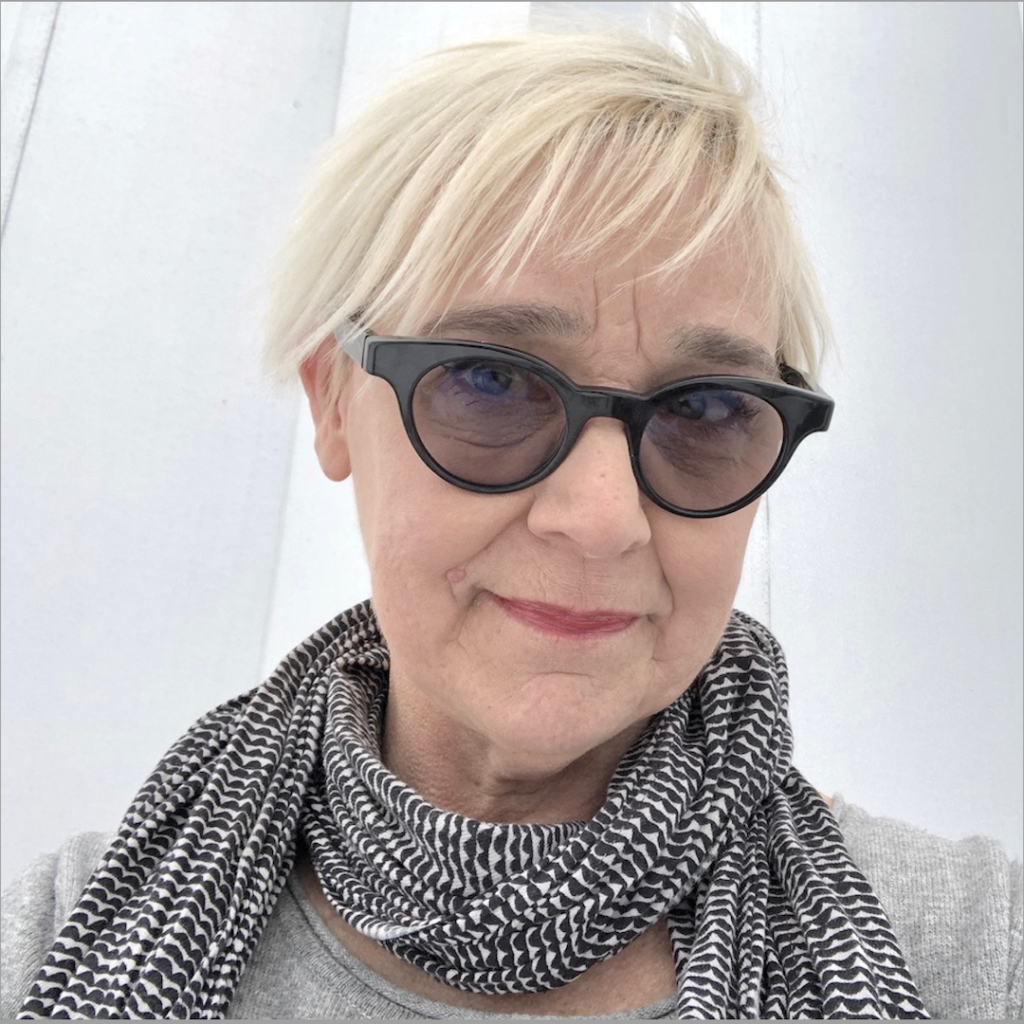
In 1992 Julie Bargmann founded D.I.R.T (Dump It Right There) studio, a landscape architecture firm in Charlottesville, VA. She set out to focus on regenerating contaminated and forgotten urban and post industrial sites. Early on, one of the studio’s first major projects catapulted her work into the spotlight and became the early poster child for D.I.R.T.

The Vintondale Reclamation Park, a 25 acre park on a former coal mine near Pittsburgh, was designed in collaboration with an artist, an historian and a hydrogeologist. An acid-polluted stream was diverted into a series of six pools, where limestone, engineered soil, and plants leeched toxins out of the water. Vintondale became a model for bioremediation and was featured in the Cooper Hewitt National Design Triennial.

Many other projects have followed, like Urban Outfitters Headquarters at the abandoned Navy Yard in Philadelphia, transformed with pathways, lawns, and dog parks. Julie won a 2014 Honor Award from the American Society of Landscape Architects for this project. Or Core City Park in Detroit, a collaboration with Philip Kafka of Prince Concepts, converting an abandoned parking lot into a public park. Completed in April 2019 this project was featured in Landscape Architecture magazine.

While studying at Harvard, Julie came under the wing and influence of Michael Van Valkenburgh. “Her energy and enthusiasm made her stand out”, he recalled, and she later worked in his firm. She was also influenced by Frederick Law Olmsted, the 19th century architect of Central Park, and Robert Smithson, the artist-designer known for “Spiral Jetty,” a large-scale earthwork sculpture in Utah.

Julie is a professor of Landscape Architecture at the University of Virginia, and was named Professor Emerita this past summer (2022) after teaching there since the 1990s. In 2021 she was named Innovator of the Year by Architectural Record and that same year was awarded the inaugural Cornelia Hahn Oberlander International Landscape Architecture Prize (described as the landscape architecture equivalent of a Pritzker Prize). In 2001 she won a National Design Award for Environmental Design, and in 2007 was awarded the University of Wisconsin-Milwaukee Urban Edge Award. She was a Fellow of the American Academy in Rome for Landscape Architecture in 1990, and a United States Artists Fellow in 2008. She was named as one of the most influential people of the 21st century by CNN and Time Magazine.

Read the podcast transcript here

Eve Picker: [00:00:07] Hi there. Thanks for joining me on Rethink Real Estate. For Good. I’m Eve Picker and I’m on a mission to make real estate work for everyone. I love real estate. Real estate makes places good or bad, rich or poor, beautiful or not. In this show, I’m interviewing the disruptors, those creative thinkers and doers that are shrugging off the status quo, in order to build better for everyone.

Eve: [00:00:42] Meet Julie Bargmann, the inaugural recipient of the Cornelia Hahn Oberlander International Landscape Architecture Prize. This prize has been described as the landscape architecture equivalent of a Pritzker Prize, so it’s a really big deal. What makes this most exciting is the work that is being honored. In 1992, Julie founded Dirt Studio, which stands for Dump It Right There. She was intent on regenerating contaminated and forgotten urban and post-industrial sites. And it all began near Pittsburgh at the Vintondale Reclamation Park, a 25-acre park on a former coal mine. The end result became the early poster child of her business, a model for bioremediation that was featured in the Cooper Hewitt National Design Triennial. Today, she is often referred to as the fairy godmother of industrial wastelands, as she crafts amazing new landscapes out of the contaminated and toxic sites she works on. You’ll want to hear more.

Eve: [00:01:59] If you’d like to join me in my quest to rethink real estate, there are two simple things you can do. Share this podcast and go to rethinkrealestateforgood.co, where you can subscribe to be the first to hear about my podcasts, blog posts and other goodies.

Eve: [00:02:20] Julie, it’s really an incredible honor to have you on my show today. Thank you for joining me.

Julie Bargmann: [00:02:25] Yes, I am honored. I love that you chose a landscape architect to enter into this realm of speaking about real estate. I’m actually quite passionate about it in terms of what landscape architecture’s role is within it.

Eve: [00:02:41] So, you know, I agree with you. And too often I think architects think about landscape as an afterthought, but it should really be an integral part of building and design. Absolutely, absolutely. So, I’m going to start by saying you studied to be an artist. So, where did your fascination with degraded and toxic landscapes begin?

Julie: [00:03:05] Well, I often tell the story of driving with my, riding in a station wagon down the New Jersey Turnpike and being completely fascinated by the refineries. I don’t know what it was. It was just kind of this perverse attraction, wondering, like, what is going on there and who’s working in there and what’s it like in there? So, I think that was a little kernel of it. And then I just kept finding myself attracted to working landscapes and working cities. So, off I went to Pittsburgh to study sculpture at Carnegie Mellon, and I love that city. I just, when I was there, the steel mills were still along the rivers. They were still belching smoke. It still smelled, which I thought was great, was all part of it. As an artist, I actually went into the steel mills because I wanted to see how they worked and who was working there, and I think that really did it. I still had no idea what I was going to do with my life. When later I discovered what landscape architecture was and that I could be kind of venturing into all these different types of landscapes, that was it. And not that landscape architecture at the point was kind of working in working landscapes, but I was kind of determined to do that.

Eve: [00:04:39] Yeah, but there’s a lot of very precious landscape architecture out there and what you’ve. And I think you really work in some of the worst and most toxic landscapes to be found. What about that is really interesting to you?

Julie: [00:04:56] Well, I think, first of all, I think the range that I like to be clear about with my work is that it does go to the biggest and the baddest, to the toxic, but also to the degraded. That is part of the kind of repertoire of industry. Right. It can be wicked and sometimes it can be kind of, quote unquote, inert but still impactful, you know. And the toxic ones, for a long time, I did projects with the EPA, and I was working on Superfund sites, which are the sites that are designated as kind of the biggest and the baddest. I think what I brought to that, which was completely unknown right then by the EPA for years and maybe to date, is the kind of cultural and social aspect of these landscapes. You know, they were totally focused on the remediation, right? The quote unquote, cleaning up of these landscapes. But I was like, well, come on, there’s kind of more to it than that. There are generations that still live around these sites whose grandfather probably died, black lung. And so, there are connections there. And I actually stopped working with the EPA because I just felt like I was being in my head against a wall where it was difficult to integrate that kind of factor. They always felt an enormous amount of urgency in kind of doing the fix and getting out of there versus actually engaging the community in what might be an incremental regeneration of that site. So, they’re quite myopic.

Eve: [00:06:45] Yeah, it sounds like they’re focused on fixing a problem, whereas what you saw was a future asset, really, for the community.

Julie: [00:06:54] Correct? Yeah. I don’t know if you remember way back to spell check.

Eve: [00:06:58] Oh, yes.

Julie: [00:06:59] Yeah. When I used to type in remediation, it would say correcting a fault. And then if you type in regeneration, it says creating a new. And I was like, Boom, that’s it. I’m never going to use the word remediation anymore because that’s not what this work should necessarily be about.

Eve: [00:07:20] So, I read somewhere that the Vintondale Reclamation Park, which is actually it’s a 35-acre site near Pittsburgh, was pivotal. But I’d love to know why.

Julie: [00:07:31] Well, you know, at the time I was really, really interested in this work. I did, as part of my academic research, because that’s around the time I started teaching. I did a tour around the United States just to kind of get a sense of what was going on. And I got this call, kind of out of the blue to join this team to work on Eve: Vintondale and. Well, actually to work on acid mine drainage, right. Which is the by-product of coal mining. And we were looking for to actually look at prototypes and models for, you can imagine, there are so many towns, post mining towns, former mining towns, that are plagued by acid mine drainage. So, to be on this team was my dream come true. There’s multidisciplinary. There was an artist, hydrogeologist, historian, who I, historians I love, you know, scientists, too. I love them too. And the community involved and AmeriCorps volunteers. It was just this collective effort to look at basically making the transformation of acid mine drainage visible, not behind a fence. You know, let the community know. One of the by-products, too, is yellow boy. Yellow boy is yellow boy. This is what it is. And this is you being a part of the next evolution of that landscape.

Julie: [00:09:14] Much like I was saying with the EPA in terms of trying to advocate for the community to be involved and not even maybe intensely involved, but at least a participant or a witness to what was going on in terms of the transformation here of acid mine drainage. That was, to me, a breakthrough in projects. And for me, it was a breakthrough in landscape architecture. This coincided, by the way, with a lot of the great projects that are in the Ruhr Valley of Germany. So, what we did was, in essence, make that science visible so that they could say, oh, I get it. You know, the acid, mine drainage is coming from mine number one, and it’s going through this system, and it’s coming out as biologically rich and being drained back into the streams. So, I basically, I call it an ecological washing machine. And that’s what was right near a bike trail. So, lots of folks are able to see it and nicely enough, it remains a model for the region.

Eve: [00:10:29] Interesting. So, when you work on a project like this, how does your work begin? Where does the inspiration come from?

Julie: [00:10:36] Oh, the history. Absolutely. Every time. Every time it’s the history of the site, which means the history of the people there. I just can never think about starting a project without really knowing what happened there before, because I feel that you cannot really propose anything about the future of the site unless you know it’s past, because it is all part of an evolution. It makes the process inclusive. It’s what I was thinking about in terms of private development, infusing the public in it for the public good. It’s the history. It’s the history. The history levels the playing field in terms of everyone who’s working on a project, because there’s a bigger story and a bigger picture. I feel that we want to be responsible to.

Eve: [00:11:35] So, is there an example of a project where the history took you in an unexpected direction or.

Julie: [00:11:43] Well, oh man. I guess I flash right to Detroit and I’m working with a wonderful, wonderful young developer there. And he is doing amazing things of investing in the public realm in the neighborhood, along with his private developments. And it was our like our I call it our first date. We just, I just came out and I was like, okay, you know, let’s look at the site. And we’re standing in front of like a blank, seemingly blank, parking lot covered with concrete. And he said, what would you do? And I knew that there was a historic engine house that was there. And I was like, Hmm. And it was raised in the seventies. And I was like, Hmm. I think that’s when they pushed, you know, the buildings into their basements. And I turned to him, and I said, dig. And he went. Okay. And he had a front-end loader there the next day. And I just was crossing my fingers about what would come up because I wanted to, I thought about integrating it into this public park, this community park we are making. And sure enough, beautiful redstone came up to make these, kind of, scattered little terraces. And then one day up came a giant piece of sandstone that said 1893 on it.

Eve: [00:13:22] Oh, wow.

Julie: [00:13:23] I was like, Oh. I was both very happy and very relieved. I was like, That’s it, that’s it. We found it. We found the material evidence of that history, and the park suddenly became actually quite old. I can’t tell you. I just got goose bumps again. I do every time when I think about it. The developer, he tells the story to everyone and the story kind of spreads. And everyone is knowing an essential part of history of their neighborhood, of Core city. That was unexpected and wonderful.

Eve: [00:13:58] That does sound wonderful. Is this the developer who’s working on the Caterpillar housing?

Julie: [00:14:03] Yes.

Eve: [00:14:04] Very unusual architecture as well. Quonset huts, right?

Julie: [00:14:09] Yes. He is having some architects do a little twist on Quonset huts because he wants to take something that’s very affordable and make beautiful spaces that are not terribly expensive so that they’re accessible for more folks. So, he’s quite adventurous that way and he, I just feel like, you know, his name is Philip Kafka, has his heart so much in the right place. I mean his, the proportion of like, I can’t remember, he loves trees, and I can’t remember what number he’s up to. But he’s very proud of the number of trees that he’s planted in Core City. For instance, the caterpillar. I think we planted 200, maybe 300. I can’t remember. He goes 200 trees and eight units. That’s how he thinks of it.

Eve: [00:15:04] Do you find that you need to educate people on this? Because this makes me think immediately of the people around where I live who are who are mowing down enormous old historic trees.

Julie: [00:15:17] Yeah.

Eve: [00:15:18] Because they want a flat piece of land to build their house on. But the tree seems to be the most valuable asset they have. I don’t understand it.

Julie: [00:15:27] Absolutely. I mean, everyone is quite used to a tabula rasa. You know, it’s the kind of easiest way to go. And that’s why, you know, again, I want to emphasize history of the site. Right? The trees are very much that history of the site. And you can’t replace that history, you know? Right. You just can’t. I mean, some history is buried underground like that park in Cork City, and some is just looming large, you know. And so, this is where I constantly go back to history, and I constantly go back to telling stories. Because most people like stories. And most people like to be part of a story. And that’s basically the form of education. Like I’m flashing to working with Ford Motor Company on the River Rouge plant and it took telling the story about the Coke ovens, which they wanted to wipe out. One, say we did our homework and said, you know, that part of it is toxic, that part is not, you know.

Julie: [00:16:41] So we did that homework, the environmental homework. And then when we did the history, we were reminding them that they were looking at a piece of incredible history of this Rouge River plant being the first manufacturing plant in the world. In the world. You know, so it occurred to us and they kind of came to that that was too important a story. You know, it was just too rich and too significant to so many people, so many generations that worked at Fords, they called it Fords, to obliterate. And they didn’t have to. They didn’t really have to. And that was the education part, too. You know, I called it homework and I found that, you know, especially as a woman, I needed to kill them with knowledge and just say, hey.

Eve: [00:17:48] Was it easy?

Julie: [00:17:50] Sometimes more than other. I have to say, I even changed my tone. You know, I think early on I was pretty insistent. And then, I think I was more empathetic, you know, to the folks who were really dealing with the EPA, and.

Eve: [00:18:05] Yes.

Julie: [00:18:06] And a lot of pressure to remediate. And I encourage them, I’m like, come on, let’s talk about this. Let’s show them a careful mapping. Because they didn’t know how to map. You know, they showed the flow diagram of the coke ovens, and we did another map of it and said, look, you know, this is the part that’s harmful. So, we need to deal with it in another way and this other stuff we can deal in another way. So, you don’t need a tabula rasa. You can have your cake, your coke ovens and you’re, there We put remediation fields and remediation gardens, which they just loved, you know, they just whew. You know, they put it on their website in all caps, you know?

Eve: [00:18:49] Yeah. Well, it tells an amazing story. When you work on a very large project, what does your team look like?

Julie: [00:18:58] Oh, wow. Well, sometimes I work with another landscape architect. A DIRT studio is modeled after an artist’s studio. So, the most folks I’ve had been working with me is maybe five. So, if it’s a really large project, I need, I look for a bit more firepower and so, that’s really fun working with another landscape architect. Always engineers are on there, and I think more unusually, is getting scientists on the team. I always insist about that. Like when we’re starting and the client, I’m like, no, we need this scientist. Which they, you know, they didn’t know would be at all necessary. And like I said earlier, I, which is really unusual for a client to hear, is to have a historian on the project. And then when I’m talking about like scientists, too, it’s just not even kind of like one type of scientist, soil scientist, wildlife biologist, you know, that when I had a phytoremediation scientist. And it’s, I have to tell you, it is so wonderful. I mean, my learning curve is always like vertical, you know, on these projects by bringing in. Yeah.

Eve: [00:20:22] Fabulous. So, you know, you’ve done a really broad range of projects. Like there’s some for retail clients and…

Julie: [00:20:31] Yes.

Eve: [00:20:31] …some remediation. What are some examples of the project you’ve taken on, what they were and what they became?

Julie: [00:20:40] The most kind of in a way obvious, because they’re out there, retail client was Urban Outfitters. And, with Urban Outfitters it was really interesting. They were moving from Rittenhouse Square into tight little quarters out to what was really at the time the hinterlands of the Philadelphia Navy Yard. And, you know, I worked very, very closely with the founder, Dick Kayne, which was a blessing and a curse. He’s quite something, but we got along famously. And for a project that was coming from some folks that are so aesthetically based to be kind of more, more like historically based and environmentally based was, you know, that was a challenge. I, quite frankly, learned at some point not to even talk about what I was doing, what I was proposing in terms of history and the environment. It just wasn’t of enormous interest to them. You know, as I say, I snuck sustainability out in the back door and.

Eve: [00:21:59] I hope he’s not listening.

Julie: [00:22:01] Oh, that’s OK. Dick is so cool, you know, he won’t mind. He knows I love him. We used to speak our secret language of Latin, of plants because he loved plants. So, we just got along great. And he was cool, he just was like, Yeah, bring it on. And he never really asked that many questions. There was an amazing amount of trust between us, and that’s something that I can’t speak enough about is, as you probably know from projects, that trust is enormous. And so, with the Urban Project, there wasn’t an enormous amount of remediation that needed to be done. Some lead soils had to be dealt with. And, you know, lead is tricky, man. So, they didn’t want to go through the process of other types of remediation. So, one okay way of dealing with it is actually to encapsulate it. So, it was encapsulated.

Julie: [00:23:04] But the big thing with Urban Outfitters that was tricky was when it was going into like phase four and being built around the historic dry dock that was right in the center of this gorgeous, you know, water body from way back when for the huge ships. I found myself in that precarious place of kind of, I say, I always kind of say, defending the public realm within a private enterprise. That’s when I have to say, I think design gets really tricky, you know, because there was really kind of like a teetering point where literally something that we would do, we were forming, would feel too private, you know. And how is it that we could make this campus that was private, but parts of it could be shared? So that’s, I have to say, a big deal.

Eve: [00:24:04] It’s like pushing against a gated community, right?

Julie: [00:24:07] Yeah. So, I mean, I have to say, that’s what I feel like in landscape architecture, because we’re dealing with ground, and I know this is the case in most development and I’ve had projects where, I’m just realizing I’m picturing a good old fax I sent sometime where it said I quit. Because, you know, the commitment to the public realm wasn’t there, you know, which I’m learning from working with Kafka in, you know, in Detroit is so essential. Maybe I knew it intuitively. So essential in terms of building that quality of common ground that then makes sense for the individual happily living in their private abode. So, yeah.

Eve: [00:25:00] That probably touches on my next question. You’ve written about the overlap between poor and minority communities and contaminated soils, and I certainly know of that. I mean, I have to ask, how and why did that happen and how do we fix it? Why is it that poor and minority communities have had the brunt of this mess, basically?

Julie: [00:25:23] You think about industries and how they would kind of most conveniently cite themselves, you know, and when industries were getting up and running before all the environmental legislation starting in 1973, when you think about it, my God, that’s not that long ago. You know, most of the industries started up then, you know, they were looking for floodplains to discharge all of their nasty stuff and they were looking at a lot of land that did not have a lot of value to have people be downwind and downstream from nasty stuff. So, poor soils, poor people, they go together. I mean, it’s just a thing to be conscious of now, which I think a lot of folks are.

Julie: [00:26:14] I mean, there is the kind of whole movement of environmental justice. Industries are being held accountable. I like to think that, you know, the ground that we live on is, and work on, is becoming more just. And I think it is, I think I like to think it is. I should say it should be because I think folks are much more aware. If you asked somebody what a Superfund site was, you know, what, ten years ago, 15 years ago, they wouldn’t know what you’re talking about. The level of environmental awareness has just gone up so high. But the next thing is the action to enforce it and act upon it. And I don’t think that most folks, in what the things that they’re proposing, you know, you look at developers working in Richmond, or any working city and their projects are going to be scrutinized. Yeah.

Eve: [00:27:18] Yeah, I think that’s true. So, there’s been a definite shift, but I always wonder whether it’s still too easy to forget about the poor communities. And you know, and if sufficient funds are being deployed to make those contaminated lands into assets there. Someone has to start a project, right. They have to have the funds to start it and I don’t think that’s equitable yet.

Julie: [00:27:48] Right. So, for instance, you know, I’m flashing back to Detroit where I’ve done these projects and I’m thinking about how, you know, and you probably know about some of these Eve, these deals are being struck with developers where it’s like, okay, we’ll sell you this land, you know, but you’re also going to be responsible for this land, which will be, you have to make something there to benefit the existing, often poor, community. I’m optimistic about initiatives like that. It’s kind of, or it is, forcing developers who I think could very well be just carpetbaggers, you know, in a disinvested, deep populated city like Detroit to make them more civic minded.

Julie: [00:28:49] I was running around Detroit with the former Planning Director Morris Cox. And there’s one man there who’s planting a bunch of tree farms. And I was kind of disgusted, as much as I love trees. And Maurice asked me, he goes, What’s the problem? And I said, I know it maybe improves the quality, the value of the land here, but who is it doing that for and what at all about tt is civic? You know, I’m like, where are the trees along the street where are the. And I just, I kind of went on my rant to just dissect it for what public good a private enterprise was doing, you know? And he was like, oh, and I said, you should insist. You should insist that, yeah, the city will sell you this land, but you need to do this and this for the public realm.

Eve: [00:30:00] I always thought there was just a little bit of a problem with our political structure because someone who has some power to make these decisions may have been an insurance agent in a past life. They don’t necessarily have any training on landscape or architecture or urban design or how to make better civic places. And they’re really given enormous power to control what happens in those places.

Julie: [00:30:28] Yeah.

Eve: [00:30:29] That’s a shame.

Julie: [00:30:31] I’m sorry, did you say planning folks?

Eve: [00:30:35] Well, planning folks are a little bit better because to be a planning person, you’ve got to have some background in planning. No, I’m thinking like a mayor or someone on city council who has.

Julie: [00:30:45] Oh, my God,

Eve: [00:30:46] The power to make a vote and doesn’t really have any of the necessary education or understanding, right?

Julie: [00:30:53] Yeah, absolutely. And you know, I have to jump in here to, I mean, I’m so excited to say this because I always say, like, I have a huge crush on mayors, you know, and that happened from being part of the Mayor’s Institute on City Design.

Eve: [00:31:08] Oh, yes.

Julie: [00:31:10] And I was on many sessions and blah, blah, blah, but regional and national and I just think they’re brilliant. I just really think, you know, having been in there and, you know, just one on one or just the mayors, you know, talking about a specific project, but some more in general. Just everyone I know, I saw that light bulb go up above their head and they were like, we are the architect of this city. You know, if we can’t make an informed decision, we better surround ourselves themselves with somebody who could help them. Yeah.

Eve: [00:31:52] That’s a great outcome.

Julie: [00:31:54] Yeah.

Eve: [00:31:54] So, I want to ask you about this incredible honor that’s been bestowed on you. You’re the first inaugural laureate for the Oberlander International Landscape Architecture Prize. It’s not just National, it’s international.

Julie: [00:32:10] Yeah.

Eve: [00:32:11] What does that mean to you?

Julie: [00:32:13] Well, it means a lot to me, obviously, but I can’t not be. But for me, it’s what it means to the discipline, my discipline. And that has to do with, I think, what I might represent. And that is, much like Cornelia Oberlander, who it’s named for, I decided I could take risks and I wanted to take risks. I had the advantage of teaching, so I always say I was kept by the university. But what I found is that there was something that the jury was saying in terms of the value of having a critical practice, not a commercial one, having one that was going to get out there. And the other thing was to influence a good many students after 27 years of teaching. So, that was heartening to me about receiving the prize. I’m just enormously proud, and I’m enormously proud of my discipline. You know, I’m hoping that what my getting the prize communicates is for people to go ahead, you know, be fearless, kick some ass, you know, just do it. Don’t be afraid. Yeah.

Eve: [00:33:31] So, I have to ask you, is there anyone following in your footsteps? Anyone who’s coming up young in the ranks, who’s fearless, doing really interesting things?

Julie: [00:33:42] Yeah, there are former students who are doing it. I even swell up with pride right now. My former associate, David Hill, of Hill Works is just doing some amazing projects. He’s based in Auburn, Alabama. And another former student, and also a dear friend of an architect, I’ve known her since she was nine years old, Maura Rockcastle and Ross Altheimer with TEN x TEN architects, Chloe Hawkins. Nicely enough, I think I can list a good number of folks. And also I think that I have kind of a solidarity, a group that is kind of a support group, I think of Kate Orff. Kate is absolutely fantastic and she’s doing unbelievable work and I can’t think of names right now. They’re out there, and I just know that, you know, there are a lot of emails that just say, you go girl, you know?

Eve: [00:34:46] And so, you got a little bit of prize money. What do you plan to do with that?

Julie: [00:34:50] Oh, okay. Well, I’m looking outside at my Bambi. My Airstream, Bambi. She’s named Cornelia. And she and I are going to take that cross-country trip that I took, it will be what’s 1993? What is the arithmetic? But it’s a lot of time. That mining tour that I told you about. So, I want to do that again. I want to stop at DIRT projects along the way, see how they’re doing, you know, visit with the old pals that I built it with. Hit some more Rust Belt cities. I have a project in Pittsburgh to stop at. And, you know, I think I’m just going to keep going west and look at some big holes in the ground again. I liked them.

Eve: [00:35:45] So, I’ll be really interested to see what comes out of them.

Julie: [00:35:50] Yeah, I hope so. The Cultural Landscape Foundation who has bestowed the prize, I’m hoping they will put together some sort of blog or some sort of something, you know, of my time on the road. That’d be fun.

Eve: [00:36:07] Well, I really, thoroughly enjoyed talking with you. Your work is fabulous, and I can’t thank you enough. And I can’t wait to see what’s next.

Julie: [00:36:18] Thanks. Great. Thank you.

Eve: [00:36:21] Okay.

Julie: [00:36:22] It’s been a privilege.

Eve: [00:36:30] I hope you enjoyed today’s guest and our deep dive together. You can find out more about this episode or others you might have missed on the show notes page at RethinkRealEstateforGood.co. There’s lots to listen to there. If you like what you heard, you can support this podcast by sharing it with others, posting about it on social media, or leaving a rating and review. To catch all the latest from me, you can follow me on LinkedIn. Even better, if you’re ready to dabble in some impact investing, head on over to smallchange.co, where I spend most of my time. A special thanks to David Allardice for his excellent editing of this podcast and original music. And a big thanks to you for spending your time with me today. We’ll talk again soon, but for now, this is Eve Picker signing off to go make some change.

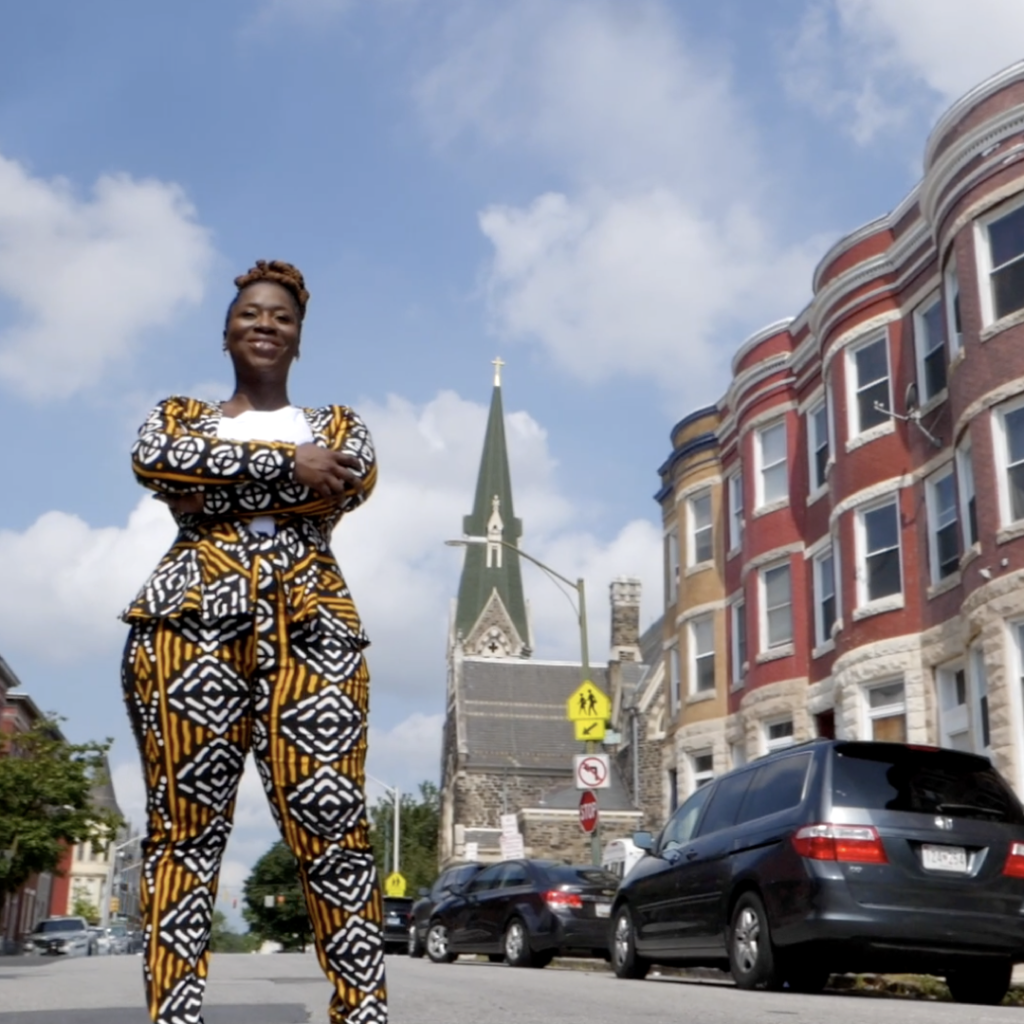
Image courtesy of Julie Bargmann

Eve Picker wins national Real Estate Award.

October 18, 2022

Connect CRE has named Small Change founder and CEO Eve Picker as one of their National 2022 Women in Real Estate Award winners. 

Central to Connect CRE’s selection of Eve was her establishment of the Small Change Index to evaluate the impact of real estate projects according to ESG-related factors. All projects listed on Small Change must score at least 60% on the Small Change Index in order to prove that they offer an opportunity for real impact within their community.

Connect CRE noted that Eve is on a personal mission to democratize real estate and highlighted Small Change’s performance as strong evidence of Eve’s success: over half of the projects have either a minority and/or female sponsor, 65% have included affordable housing and 78% have been located in underserved communities.

Connect CRE also reported that the US News & World Report has ranked Small Change as one of the top seven real estate crowdfunding platforms.

To read more visit https://www.connectcre.com/awards/2022-women-in-real-estate-awards/national/eve-picker/

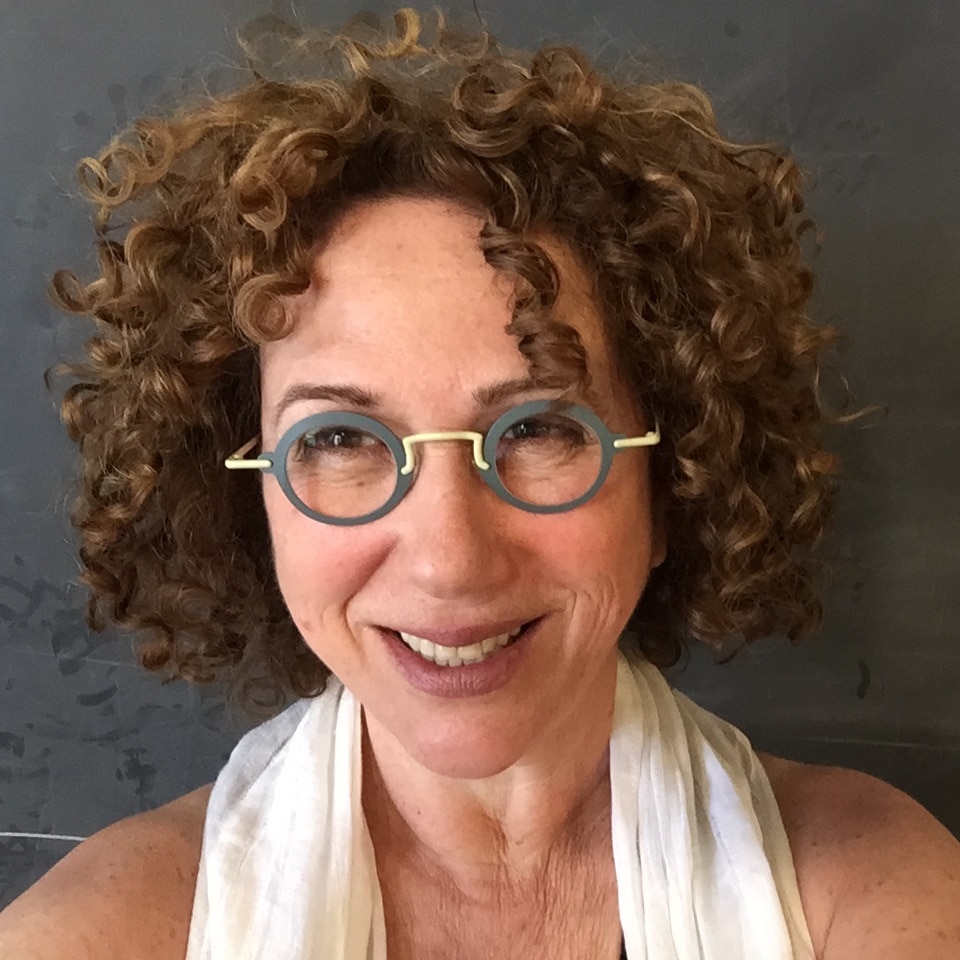
Image courtesy of Eve Picker

Not a Snowflake.

October 12, 2022

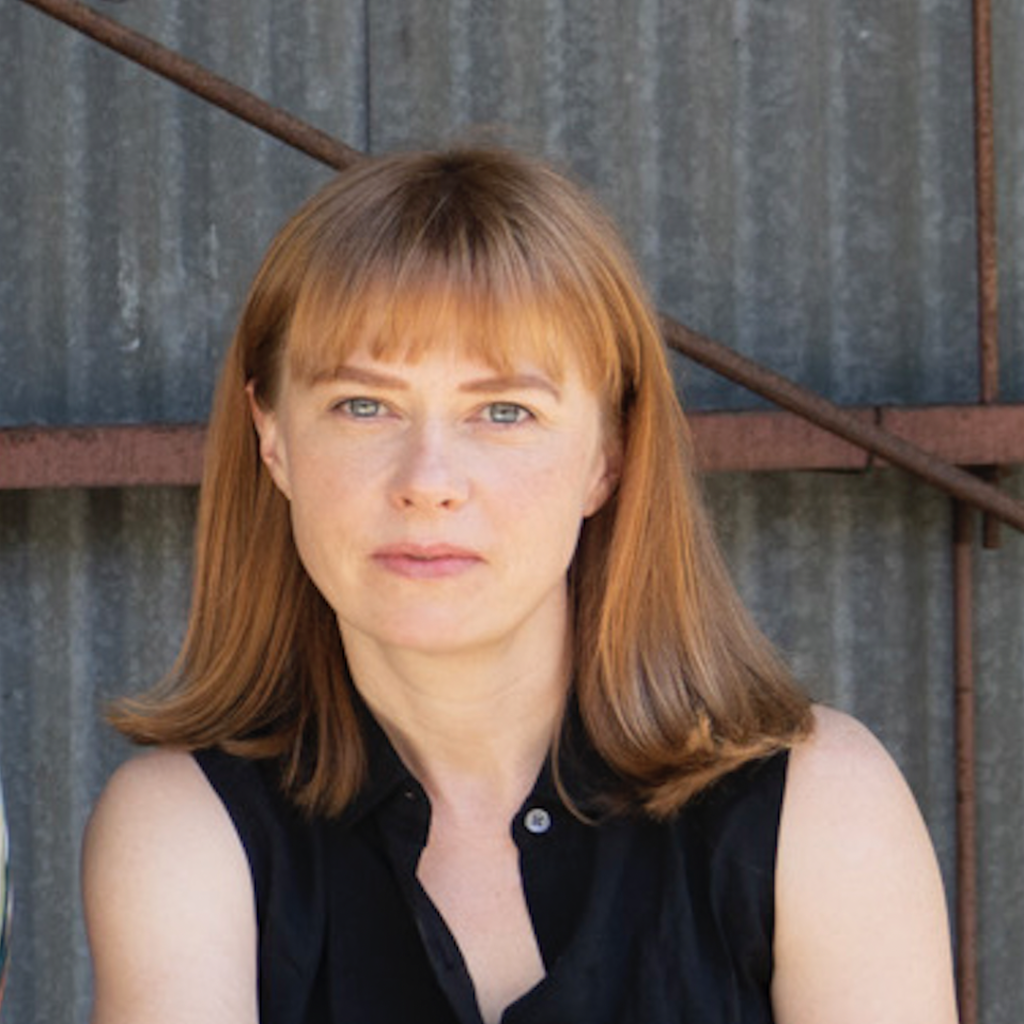
Elizabeth Timme is one of four co-founders of a brand spanking new design and planning office based in Los Angeles: Office of: Office. Elizabeth, a third generation architect, born in Texas and raised in LA, is best known for her work as founding co-director of LA-Más, a small but notable non-profit, “designing and building initiatives that promote neighborhood resilience and elevate the agency of working class communities of color.”

In its early days, LA-Más worked with the Northeast LA Community Plan Riverfront Collaborative. Their work ranged from affordable housing to storefronts for small business owners, shining a much needed spotlight on homelessness, housing shortages, and how to stabilize communities ahead of gentrification. Projects included ADUs (Backyard Homes Project), the Watts Community Studio project, the Reseda Boulevard Great Streets Initiative, and Backyard Basics, a proposal for affordable housing in Elysian Valley.

Elizabeth loves the field of architecture, but she is cognizant of the industry’s warts, including lack of diversity and accessibility in both the industry and its clients. She has said “I fundamentally challenge the layers of bureaucracy that strangle our ability to service environments that don’t have the resources to challenge, or to lobby, or to invest in something better than the status quo.” At Office of: Office the mantra is always community first.

LA-Más was named as an 2018 Emerging Voice by the Architecture League, and Elizabeth has been on the Women of the Year list by Los Angeles Magazine, a Curbed’s Young Gun of the Year, and recipient of the Vanguard Big Idea Challenge in 2019. She has written for Manifest Journal, Log 48, and Tablula Plena. Before LA-Más she served as project manager and development officer at MASS Design.

Read the podcast transcript here

Eve Picker: [00:00:05] Hi there. Thanks for joining me on Rethink Real Estate for good. I’m Eve Picker and I’m on a mission to make real estate work for everyone. I love real estate. Real estate makes places good or bad, rich or poor, beautiful or not. In this show, I’m interviewing the disruptors, those creative thinkers and doers that are shrugging off the status quo in order to build better for everyone.

Eve: [00:00:40] Elizabeth Timme is no snowflake. Strong and outspoken with degrees in architecture under her belt, she’s building an alternative career on the strong beliefs she holds. That great design should be a right, not a privilege. A third generation architect born in Texas with childhood years spent in Italy and West Indies, Elizabeth has made roots in L.A.. First, she co-founded La Mas in northeast L.A. and now Office of Office, a nonprofit focused on designing joyful and careful places in collaboration with communities. You’ll want to hear more.

Eve: [00:01:23] If you’d like to join me in my quest to rethink real estate, there are two simple things you can do share this podcast and go to rethinkrealestateforgood.co, where you can subscribe to be the first to hear about my podcasts, blog posts and other goodies.

Eve: [00:01:48] Hello, Elizabeth. It’s really nice to have you here today.

Elizabeth Timme: [00:01:51] It’s wonderful to be here.

Eve: [00:01:53] So, you’re an architect by training, but you launched LA-Más now office of: Office, which are really not typical architecture firms. And you’ve been heard to say great design should be a right, not a privilege. So, how does that all come together?

Elizabeth: [00:02:11] Well, I think it really starts from having the perspective of being a third generation architect. And also, my father really came from a blue collar family, household, and so did my mother. In Texas doing industry trades, working for Howard Hughes oil and, on both sides of the family. And for me, I saw how far and how hard my father worked to be able to kind of become middle class. And so, it’s always really been important to me that architecture was broadened and widened to include individuals perspective and voice who didn’t have the privilege that I had to come into an upper middle class family where a college education was assumed. And I think there’s so much really profound substance to the dialogue of architecture in city making and place keeping that is not a part of the table when people who have challenges, who don’t have safety nets and have a lot of pain associated with living in modern cities or anywhere, their perspective isn’t represented and their perspective doesn’t fundamentally shape how we go about building cities and keeping cities. Right. So, I think that my perspective around these two different practices and even going back from the naissance of my professional career, is that architecture should and can be of service and really wanting for there to be more diversity in the field and the conversation.

Eve: [00:04:05] So then you launched LA Más and now Office of: Office. And how, how do they, take me on that journey.

Elizabeth: [00:04:12] Well, I think it really began in 2008 when I went into my graduate career and, as a graduate student. And that was the beginning of the Great Recession. And that was very different than my undergraduate education, where in 2005 I was being offered 401Ks and really cushy things and architecture seemed.

Eve: [00:04:43] Yeah, ofcourse.

Elizabeth: [00:04:44] And my friends were negotiating for that. They were like, Where are you picking? Like, Who has the best 401K and what is your health insurance? And it was so wild and so different and architecture seemed like a very stable place to have a professional, lifelong career. And then when I went back into graduate school, it was because I was really frustrated with the lack of innovation and curiosity that was present in the architecture firms that I was working in. And I graduated in 2010, and there was no career opportunities. The architecture profession and, neck and neck with law, was the most unemployed professional discipline in the United States.

Eve: [00:05:32] But it makes sense, right? Like all of those developers went out of business and boom, everyone else attached to them went out of business.

Elizabeth: [00:05:41] Absolutely. And I think that also the schools, and I’ve been witness to this, they churn out tons of kids who really have a lot of strong ideals about shaping the world and supporting a better future. And there’s not a real clear professional conduit for getting a job.

Eve: [00:06:02] I think that’s right. Yeah. I think architecture has been treated as a really precious career. And yet architects are so well trained to do so many things, right?

Elizabeth: [00:06:14] Absolutely. And also the numbers and the NCARB AIA and the licensing process has gotten better. But if you look at how many architects graduate school every year versus how many, and we’re I’m a little off topic, but how many licensed architects are active in our profession? I want to say it’s in the thousands of licensed architects, whereas it’s like hundreds of thousands of architects graduate.

Eve: [00:06:43] Interesting.

Elizabeth: [00:06:43] And so, we have a really impoverished process that supports really curious young perspectives, being able to call themselves architects. And so, I graduated in 2010, and the career that I knew and the career that I had watched my father had, for instance, was not an option for me. And it wasn’t just not an option for me. It wasn’t an option for any of my peers. It wasn’t an option for people who I had gone to undergrad with and they had lost their jobs. And so, it was really a. Paul Nakazawa, who was one of my mentors in grad school. He was a business, he got his major in business and architecture. He always said the recession was the most valuable time for him to retool and recalibrate about why he was doing anything.

Elizabeth: [00:07:39] And so, to graduate in that climate, it made me really question what the value of the architectural practice was and why I would be a part of it. And so, this was radical for me, where the values in which I grew up in, in the household I grew up in, instead of going to playgrounds, I was going to Roman ruins, right? So, it was very hard to unlink that from some core identity that I had. And so, there, you know, I worked at another kind of nonprofit architecture firm, really saw the kind of inner workings of that. And I founded LA Más, three months pregnant with kind of coming back from grad school in 2012 and seeing a conversation happening with urban planners and landscape architects around the future of the city, and about the kind of early underpinnings of gentrification and displacement and really, really being curious about what that meant, but also wanting to add value and support that conversation and not see it being had in the discipline of development and architecture.

Eve: [00:08:52] So what sort of projects did you work on in LA Más when you launched?

Elizabeth: [00:08:55] So when I launched, we started working on the Northeast L.A. Community Plan River Riverfront Collaborative, and this was kind of early. So the CRA also, the Community Redevelopment Agency, had been dissolved by Jerry Brown to balance the budget in maybe 2010, or between 2010 and 2012. And there were the early seedlings of all of that lack of investment in the state of California and in specifically Los Angeles. So what that meant is new library sites were not being identified and developed, storefronts and small businesses weren’t being supported. The public realm and the public right of way didn’t have a clear conduit for investment. There were all of these ways in which there wasn’t an agency that was proactively developing and supporting existing communities and neighborhoods. And so, we were starting parallel with the mayor at the time, Eric Garcetti, who was doing a lot of urban planning initiatives like Great Streets and Parklet work.We were starting a critical conversation in parallel to that about how are we going to be stabilizing communities ahead of gentrification.

Elizabeth: [00:10:13] And so, the neighborhood plan for northeast L.A. was about identifying sites where there was community power and community stakeholders and the built environment didn’t match the kind of thriving residents and thriving cultural activity that was happening there. And so, from there, we went into doing some of the great streets work where there were 15 boulevards identified by 15 councilmen in the 15 council districts that were kind of these quasi vanity projects around, let’s do something cool to really make L.A. Streets great. And we started off by saying, listen, the the metrics that you all have for success don’t match the ways in which you should make it accessible to invest in communities. Why are you talking about $100,000 of steel furniture when we could do something out of marine grade plywood with a certain type of finish and it would cost us 10,000. Why aren’t you doing it in coalition with community members and non-profits? Why are you doing it in a silo and a political process? Why are you not considering the small business adjacent to the public realm and their right to expand their operating and stabilize their income through being able to access the sidewalk?

Elizabeth: [00:11:37] And so, we did a lot of work that was design plus in that period where we were doing community engagement, but we were really partnering with the small business owners to redefine what it meant to invest in the public right of way. That the storefront and the small business owners right didn’t end at the store, at the beginning of the sidewalk, that it extended to the middle of the street. And that the pedestrian needed to really have a visible imprint in the city and that a pedestrian oriented public space was more important than a car oriented one. And so, it’s all these “duh” things that were very easy for us to establish in those first half of our existence, to be able to have a conversation in parallel with the political one where we’re actually implementing projects with very different short term time frames, in partnership with community members and with drastically more accessible budgets.

Eve: [00:12:39] Sounds like really hard work.

Elizabeth: [00:12:41] It was. Yes, it was. And in tandem with that, I was building my family. I have three kids and I was pregnant every two years, and in not a strategic way at all, while we were doing the majority of that.

Eve: [00:12:58] Just makes you work harder. Being a mother makes you very focused, doesn’t it?

Elizabeth: [00:13:03] Yeah. And for me, it was a huge amount of creative energy that came from that process, kind of birthing some very early seedlings of ideas as well as birthing children. It was pretty powerful and I don’t hear women talking about that very much. And I’m guessing it’s probably because there’s not clear avenues by women led conversations, but it felt very organic to be creative personally and professionally at the same time.

Eve: [00:13:35] You know, for me as a mother, I think what fell away was everything else I was wasting my time on. I had to be ultra focused on the family and the work, and the rest of it was like, poof, you know, no time for that, you know?

Elizabeth: [00:13:49] And it is interesting because I have had periods where I’m not the best mentor because I’m at home doing that work.

Eve: [00:14:00] Yes.

Elizabeth: [00:14:00] And I think that there’s a real backlash professionally if women aren’t willing to do the work of mentorship.

Eve: [00:14:07] Oh, really?

Elizabeth: [00:14:08] Yeah. I think that, you know, and I kind of battled that in my office. And I think I’ve been able to walk a middle line. But the idea that you wouldn’t come to the table to nurture other people in a in a professional environment, I think in some ways you don’t realize it’s expected of you until you graduate into a profession that is so reliant on mentorship. And yet you see people who are excelling, not giving any of it, not offering any of it. And that was one of the biggest challenges with me having working in a traditional, quote unquote architecture practice is there was no conduit for me to be mentored by anyone in a position of power. I had to find it myself.

Eve: [00:14:50] Yeah, I think that’s true, yes.

Elizabeth: [00:14:53] Across the board, you know. I think the kind of boomer mentality is that everyone’s a special snowflake. And I don’t think that that really extends to, how do we mentor a younger group in some of these kind of hard skills.

Eve: [00:15:07] Right.

Elizabeth: [00:15:08] So anyhow, I think the expectation was that you have to do that, offer that mentorship in a kind of nurturing environment. And I think that that was a real limitation that I had early in this career that I’m talking about, because I didn’t have that creative ability.

Elizabeth: [00:15:28] Interesting. So let me ask you about the very playful and bold architectural language you use and how you arrived at that. How does that fit into the story?

Elizabeth: [00:15:39] Well, it really did begin, I lost both of my parents when I was 23, the year that I was graduating from college, four months apart from completely preventable. And my my father had lung cancer that could have been prevented if caught earlier and my mom had a stroke that could have been treated if it hadn’t been misdiagnosed. And so, I’m an only child and my parents were very work focused, so I didn’t have a strong relationship at the time with our extended family, and I felt very alone. And very placeless. And I really immersed myself in the different communities of Los Angeles. In Little Tokyo, and my favorite restaurant or in Little Ethiopia. Having a conversation with some store owners about how they kind of weathered the civil unrest or the earthquake and the kind of network of community members that they relied on over coffee. Ethiopian coffee we were having together, or even going up to Northridge and working in a clothing store. And so for me, through small business owners, mainly, I developed this kind of extended network of understanding and being connected to people’s oral history. And every instance everyone was a person of color or a black individual, right? Kind of bringing me into something that felt larger.

Elizabeth: [00:17:20] And I went from feeling so alone and empty to so full and full of joy. And I think I got to move through that grieving process because I was able to connect and share a kind of much richer collective community experience that doesn’t exist within the white framework. And I felt so much, and I continue to feel so much gratitude and joy about what it means to live in Los Angeles, and joy when I connect to others and I am kind of brought into community that I want to celebrate that and I want to kind of have the world reflect all of that incredible exuberance that exists. And it makes me upset when people move from New York and they come to Los Angeles and they talk so much shit about the city. And it makes me really mad because I know moving from Houston when I was 13 and then losing my parents ten years later how much play, how much fun, how much vibrancy exists in this city. And it’s because of a bunch of dead male planners that existed nearly 100 years ago that the city looks the way it does. It has nothing to do with the people who live here.

Eve: [00:18:45] Yeah, it’s going to take a lot to change it.

Elizabeth: [00:18:48] If we could all remember that it was made by a handful of people, if not less, over a very short period of time. And we’re just kind of playing that out rather than challenging it.

Eve: [00:19:00] So then it was really top down, and what you’re doing is this bubbling bottom up stuff that we hope is going to seep through to everything.

Elizabeth: [00:19:09] I think that if you present a parallel world that is the one that people could choose and you show them how, then you build in where they have the agency to choose it and the ability for their identity and their lived experience to shape it. I think that that’s far more sustainable and powerful than whatever these kind of starchitect solutions are that are pretty boring and age terribly and look dated so quickly. I mean, you know, our culture moves so rapidly now and thanks to the Internet and technology that people finish construction on these projects and they’re already getting made fun of, and it’s because they’re just not very resilient systems in which we could put forward civic investment and institutional investment in the city.

Eve: [00:20:03] So tell me, like Office of: Office, how is that different as a practice and is it for profit or nonprofit? was LA Más non-profit?

Elizabeth: [00:20:13] Yeah, we were a non-profit. And so, what happened is during the beginnings of the pandemic, we were already looking at restructuring so that we could be place based. And this is a strange bucket to think about, because outside of Los Angeles, we are place based in Los Angeles. Inside Los Angeles, you understand the city to be a region. The county of Los Angeles includes 88 cities. And the city of Los Angeles is a kind of gerrymandered, strange object that touches all of these different 15 council districts that in and of themselves are different cities. And we really wanted to look at what it meant to be doing community led community development. And so we began that process. And when you say that what we’re doing is grassroots, I wouldn’t say, or bottom up. I would say that the process of making LA Más something that was truly bottom up was a really deep education in what that line is between where you are from outside a community, regardless of your identity, and what your place should be in supporting community members in their agency to shape the world they live in. And so, we switched to mutual aid efforts. We switch, we paused, all of our storefront work, all of our small business support, our public realm work, our Section eight ADUs, all of that thinking, to have and support community members leading the thinking. And after two years, it became clear that that was just going to be the best place for LA Más to be. And it also became clear that those of us who had been leading the programs around small business and public realm and affordable housing alternatives wanted to continue to do that work at a larger scale and really understand that mechanism between supporting and being in partnership and coalition with community based organizations, right? So it was going through that process of becoming a community based organization that really got us a very deep amount of insight into what that sweet spot is for a group of policy weirdos and architecture dorks and graphic design geeks to really be able to stand in our power and be of greatest assistance, right?

Eve: [00:22:59] One of my questions was going to be, what does meaningful community engagement look like? And I think you’ve answered it. That’s a really big struggle, right?

Elizabeth: [00:23:07] I think that the thing is, is if you are doing it, you are of it, right? You don’t, it’s not a pop in, pop out, check off the box thing. It’s something where, you are a community based organization, you were led, and you are a community member and it’s not the community, it’s your community. And so, the best possible situation would be, you know, you’re from a different community in L.A. or you’re from a different city or you’re a city agency or a council office and you want to support that community based organization, those community members, and you let them continue to do that work and you further that work, and you let them lead that conversation, right? And you’re all in the same space together. There’s no bullshit table where there’s flawed negotiations. And so, the community engagement process is kind of a fiction because it’s an organic, living, ongoing, continuous thing that others can be invited into or not. And we shouldn’t pretend certain projects are for communities when they’re really not. And I think being able to be transparent about those distinctions is half of it, because so many communities have been told something is for them when it’s clearly not. And so, it’s kind of a little bit of a complicated thing to answer, but I hope I’ve.

Eve: [00:24:34] It is. What is it the new practice focuses on then?

Elizabeth: [00:24:37] So the new practice is really, although we’re based in LA, it’s really centering the kind of community knowledge and leadership in being foundational to the built environment and that we are and we have always been great collaborators and we have all of these tools that we are very clear about being tools that we are using to be at the service of a community conversation. Right. And that we’re really not centering those tools in the conversation, but using them to be in service of the conversation. And so, I think that’s an important distinction. And we’re a nonprofit and we have these programs that we had at LA Más. But I think the big difference is the way that we are talking with and in coalition with community based organizations. From the outset, all of that is something that we are in deep partnership with our community based partners rather than in a perfunctory or kind of transactional one.

Eve: [00:25:43] So, can you tell us about a project you’re working on and how it works?

Elizabeth: [00:25:48] We are working with the city of Southgate and we are helping to inform how they roll out all of their ADU policy and programming, but also how they are building affordable housing units and meeting their housing goals. So, that is an example where we are very purposefully reflecting back to the city of Southgate, what it looks like to have a contextual ADU approach that really matches a lot of the unpermitted and informally created affordable housing and thinking about a network strategy so that as we upgrade that housing, we’re not displacing any existing residents that are benefiting. And we’re not putting any residents in a precarious economic situation by getting into the big unknown of permitting something that’s unpermitted. So, that’s one example. I think there’s some others, kind of continuing this affordable ADU work as a program. And a lot of that is kind of really understanding the expanded voucher system that exists now and didn’t exist when we started the program. And being able to understand the nuances between these different housing providers and where they link up and match with the residents. And I think we’re now in a place where at this current phase of our work, we’re expanding the tent and partnering with groups like the Casino Coalition so that we’re capacity building these different nonprofits, rather than just ourselves, to have an affordable housing program. So for us, that kind of 2.0 is expanding the tent and bringing in others to do this work and having a kind of nurturing network where everyone’s benefiting from each other’s kind of hard knocks rather than everyone doing it in silo and us kind of supporting that conversation based on our ten years of experience.

Eve: [00:27:54] So going back to architects, should architects be trained differently? What’s missing?

Elizabeth: [00:28:00] I think that the training of architecture. How do you think about prioritizing and organizing discretely different buckets of technical information and having those result in something ephemeral and perceptual like rooms or space? It was one of the most impactful experiences I’ve had as a human, is to be a part of that educational process. It was also one of the most traumatizing. And the room for me as an individual didn’t exist. The way in which I came into that program with some cognitive differences, there wasn’t room for that, and there wasn’t room for the people that I felt had the ability to shape the profession the most, which is my friends who were black and my friends who were Latino or Pacific Islander, you know, kind of backgrounds, Filipina. Like that wasn’t really on the table. And so, I think also watching my friends and with those different identities and backgrounds, struggle was really traumatizing and scary. And it sent a clear message to me that as a woman, I didn’t have a place. And my place was best guaranteed in the profession if I could support men or if I could be masculine myself. And so, I think that the education of architecture has a lot of really powerful things and a lot of potential, but the culture of architecture is profoundly toxic.

Eve: [00:29:46] Well, that would be true of the whole real estate industry, I think, on the whole. So, that’s definitely where the power is held. And I think it’s shifting, but maybe not fast enough, right?

Elizabeth: [00:29:58] Absolutely. However, it was very clearly told to me when I entered school as a young architect that it was going to be as hard as becoming a doctor. And if I wanted to opt out of that, I should as soon as possible so I didn’t waste anyone else’s time. And being in that process, you get really brainwashed over those five years or let’s say four, and then you go on to do a three year post professional degree. I don’t know, I think that the challenge is, is that you kind of get enculturated and you get, and if you don’t fit into that model, you’re not even in the peripheral edges of the conversation around what things like beauty and identity and context or culture and community, you don’t even get to bring that to the table. And so, you see all these terrible white projects, these terrible quasi pseudo organic things, because there is no reference point anymore to the conversation. It is an art without subject.

Eve: [00:31:13] Yes. I mean, I love architecture. It’s pretty hard to damn it all. But, you know, I hear what you’re saying that certainly, you know, I go back a few years earlier than you do. And certainly women had a very precarious place in architecture then. And it’s just profoundly depressing that it hasn’t changed a lot. I suppose that’s my takeaway. I can only imagine what it’s like for someone who’s of a different culture. It’s just got to be much worse. But that’s true of real estate, like across the board construction, real estate development. It is just heavily dominated by white men. It’s going to change. It has to change, right?

Elizabeth: [00:31:59] Yeah. It’s very hard without banks lending in different ways, without lenders kind of. And I think it will change because there is more diversity inside banks. But the kind of racist underpinnings of the redlining and the kind of, then that period of time still exist.

Eve: [00:32:22] Yes.

Elizabeth: [00:32:24] There’s all these other things that exist that are barriers to people being able to get into the profession or become developers because they’re able to seem like a sure bet when in reality, 90% of Angelinos are living $400 away from being completely bankrupt? Yeah, homeless. And so, how do you have there be development models that reflect the kind of incredible resilience and vibrancy to which people are surviving in that context in a way that’s far more sustainable than these Rick Caruso terrible, displacing, unsustainable foam and marshmallow projects that are.

Eve: [00:33:14] Foam and marshmallow. I’m writing that down.

Elizabeth: [00:33:17] They’re just like terror, like Italianate, Mediterranean esque, you know, terrible things that are going to be so impossible to make work in 10 to 15 years when we have a different climate and a different kind of world, they’re going to become wastelands. And I think the idea that we’re not lending and we’re not allowing, there’s not more room for communities of color to be developers or to have resident led development is just such an oversight. The banks took huge risks in building suburbs and malls, and they can take those same risks in allowing for resident led development in communities of color.

Eve: [00:34:05] Do you think they can or they won’t?

Elizabeth: [00:34:07] Well, they won’t.

Eve: [00:34:08] Well, they should.

Elizabeth: [00:34:10] They should. They can. They’re not.

Eve: [00:34:13] Yes. Yeah.

Elizabeth: [00:34:15] And so, I can say anecdotally, we were talking about architecture and diversity and women. And I think the hardest conversation to have is that white women do not structurally change the profession of architecture. And if they did, we would be seeing a different kind of context and climate and conversation.

Eve: [00:34:35] What do you mean by that?

Elizabeth: [00:34:36] I think that our proximity to power makes it really hard for us to challenge it. I think that you know what I have seen.

Eve: [00:34:46] But then there’s you and there’s me. So some of us challenge it.

Elizabeth: [00:34:51] I’m challenging. I’m not changing. And I.

Eve: [00:34:54] That’s true.

Elizabeth: [00:34:55] I can speak to the ways that these constructs are racist, but I can’t talk to the lived experience of someone who’s black and terrorized. And so, if we’re not having black women, if we’re not having people of color being able to inform that conversation and also be at the helm of structurally changing it, you know, as a white woman, I’m not capable of structurally changing something that’s racist without perpetuating it. And so, all I can do is just kind of unveil and expose, but I don’t have the ability to offer sustainable models for the future. And so, I think that that is the kind of crux of it, is for there to be a return to white women being in that supportive environment so that we’re really clear that we’re accomplices, but we’re not foundational underpinnings of diversity and change.

Eve: [00:35:50] I’m feeling really depressed now.

Elizabeth: [00:35:53] I know it’s rough, but then it’s like you sit on that for a while and then you realize how powerful it is to support there being radical change and that you know, that we don’t have a legacy of talking about white women and how they’re doing that rather than co-opting that work. You know, and they exist, I know so many white women that are great accomplices. And so, it’s just being really clear about what our role is. And so, I felt like it was a misstep to not kind of say that because I don’t want it to be confused that somehow I’m structurally changing anything. I think that it’s more so just trying to offer a kind of parallel conversation so that there’s more room for there to be a bit more depth in how we do development and architecture.

Eve: [00:36:41] What I like is that you’ve taken this really extraordinary education in architecture, which is, you know, a problem solving education that makes you really think about how to take nothing and turn it into something. And you’ve shifted away from, you know, those glamour buildings into an area where you can really use exactly the same skills to make something out of nothing. Right. And I really think that architecture is a very unique education in that way. It’s pretty powerful. It’s pretty rare to find someone who has those creative problem solving skills from any other profession. I think so. I think it behooves the architecture. It’s just not my, I shouldn’t be saying this, it’s not my interview. But I think it behooves the architecture profession and architecture schools to think really hard about what else those students can do with these skills because they could really change the world. Right.

Elizabeth: [00:37:43] Absolutely. And I think it does really begin with your education and those who are leading that process, but also the ways in which people have access to it and their exclusive, notoriously known expensive schools like USC, University of Southern California in Los Angeles. They do a really good job of offering scholarships and being diverse and inclusive. But the, and the planning school and there are other schools that do a really great job of including the identity and the kind of pathway for there to be a USC alumni network at the disposal of these young graduates. And it does not exist in the school of architecture. And I think that’s not happenstance. I think that there’s no economic or professional, how do you call that limitation or what is it when you do something bad.

Elizabeth: [00:38:39] Consequence.

Elizabeth: [00:38:40] Consequence, thank you! There’s no consequence at this point for the architectural education to not structurally be rethought because it is a machine, an economic machine.

Eve: [00:38:53] Well, that’s true of universities and schools across the board, right?

Elizabeth: [00:38:57] Well, potentially. But I think that with planners, planners that don’t represent the communities they’re in, it’s very hard to get those projects done. Architects that are doing projects for developers, you know, we have, I think, the consequences the architects and the architectural profession is getting smaller and smaller. And the amount of things that architects do is getting kind of whittled down into something quite impoverished.

Eve: [00:39:22] Yes. So the planners also don’t think about the built environment. Right. So, I mean, have a masters in urban design because because at the time I really wanted to think bigger than buildings, how the buildings shape cities. But, surely there’s got to be something that’s, you know, a masters in something else that thinks about the physicality of architecture and how it can improve places. A master of community design, community place building. I don’t know, maybe urban design just has to change.

Elizabeth: [00:39:57] Yeah, it is. The other thing about it is that the amount of things you have to be an expert in is so wide. When you touch architecture, it’s green building design, environment, anthropology, context, politics, permitting, building construction, space, aesthetics, color that is very hard to pretend that you’re going to be good at all of it.

Elizabeth: [00:40:25] No, I think that’s true. That’s really true. I’m working on a project in Australia and actually this is really interesting because I’ve been wondering about the way architects perform there and they use a lot more consultants than I’ve ever seen in the States. They have consultants for every corner of accessibility and sustainability. Exactly, I think because I think they’re remaining focused on design and place. Maybe it’s harder there. I don’t know. But I was sort of, I’ve been fascinated by that. Very different.

Elizabeth: [00:40:57] It is very different. I mean, I think that that’s a far more collaborative model than the one that tends to happen here in the US, where all of that stuff can get done in a very half assed way, if not completely ignored around the kind of, just supporting the aims of a developer and being able to check off the boxes of the things that the city requires you to do.

Eve: [00:41:24] Yeah.

Elizabeth: [00:41:24] And also just regurgitating the plans that you did before because it’s a terrible business model to be an architect because you have to do too much stuff. Right.

Eve: [00:41:33] Right, right.

Elizabeth: [00:41:34] Is a really hard business model. And so, I think we would be in a better place if we had power over capital and or we were comfortable being intermediaries and negotiators and facilitators instead of centering our really cute, the really precious creative idea. Which is a kind of absurd pretext right now when we have such a diverse, kind of multifaceted conversation that’s happening across so many different technology and communication platforms. So, I think architects would do better to de-center themselves from the conversation. But I think that’s very hard with the kind of Frank Lloyd Wright, Rem Koolhaas precedent for what it should look like to be an architect.

Eve: [00:42:24] A starchitect, right.

Elizabeth: [00:42:26] Yeah a jerk.

Eve: [00:42:29] So, what excites you most about the work you’re doing and what potential do you think Office of: Office has? Where do you want to be in five years? Horrible question, but I’m going to ask it. What’s your hope?

Elizabeth: [00:42:42] Someone asked me that. What was it? It was like, I don’t know. I’ve never been able to plan, and this isn’t a good thing, beyond a day. I do get a little depressed, and I guess we all do, if I don’t have anything I’m looking forward to. But, it’s never been work for me that I look forward to. It’s always been spending time with my friends or we have a trip planned for me and a couple friends to go to Guadalajara and some other places. I’m looking forward to that. I am looking forward to being surprised by the growth of the people I work with and I’m partnering with for Office of: Office. I’m looking forward to, when you have children, I don’t know what they’re going to be like. It’s so wild. And the same thing with LA Más, when I created LA Más, or now that I’m a part of creating Office of: Office with my partners. I think I just love that potential of, you don’t know what’s going to happen and you don’t, you’re kind of surprised by that. And so, every day it’s better than what you could imagine. I love, what I love is working with our partners like Tom DeSimone, who you had on. They’re just so cool. Like, they’re just so, I’m not proud of the projects I’m proud of the people that are crazy enough to want to work with us and that are okay with this level of transparency in our conversation. Because the conversation you and I are having is the conversation we have with our partners.

Eve: [00:44:22] I love it. So this is almost like a child that’s going to grow up and you’re going to be surprised along the way, right?

Elizabeth: [00:44:30] Yeah. Like if I had an idea, like, oh, I’m going to have three kids, I’m going to get married, I’m going to, you know, I, ugh. I don’t know. I was probably voted least likely to get married or least likely to have kids in high school. I don’t have any landmarks really.

Eve: [00:44:48] Well, I have one more question. You probably are not going to have an answer for this, but what keeps you up at night, if anything?

Elizabeth: [00:44:56] Oh my God. So many things.

Eve: [00:44:57] Oh, really? I’m surprised.

Elizabeth: [00:44:58] Like Anne wakes me up in the middle. So many things. Like I think about this crazy. I’m going to think about this conversation and all the stupid shit I said and all that. I’m absolutely going to think, oh, I should have said that.

Eve: [00:45:14] And I’ll probably get a ton of emails from people saying, I love that conversation you had with Elizabeth.

Elizabeth: [00:45:19] Well, I’m going to think about little things. I’m going to think about like I canceled a dentist appointment. I’m going to think about like the people that were inconvenienced by that. I obsess about the ways in which I was not thoughtful enough when I spoke or interacted with people usually. I also think about the commitments I make professionally that I can’t follow through on because I overcommit myself, because I’m excited about everything.

Eve: [00:45:47] That’s scary. I do that a lot.

Elizabeth: [00:45:49] So much. I don’t think as much about not doing the things that I should, or not being the person that I thought I would be. And that used to happen more. I would say, at the beginning of my career. I used to stay up at night thinking, how am I going to become, how am I going to be in a position where I can become the person I’d like to grow into?

Eve: [00:46:16] That’s interesting. Well, as you get older, you just tend to not care anymore.

Elizabeth: [00:46:20] Yeah. And just like, okay, well, if I can’t go, you know, I don’t know. Like, if I can’t go do that, then I’m going to go do something else.

Eve: [00:46:31] Well, Elizabeth, on that note, I’m going to end this. I’m going to be really interested to see who you become, because I’m sure it’s going to be someone you’re already someone pretty fabulous. But I’m building on that. So, can’t wait to see what else you do. Thank you very much for joining me.

Elizabeth: [00:46:47] Thank you so much. I’m so honored to be a part of your prestigious list of interviewees.

Eve: [00:46:51] Oh, for heaven’s sake, not prestigious, but thank you.

Elizabeth: [00:46:55] Very much so. I was very proud to have you extend the invitation. Thank you so much.

Eve: [00:47:00] Okay. Well, thank you.

Eve: [00:47:12] I hope you enjoyed today’s guest and our deep dive together. You can find out more about this episode or others you might have missed on the show notes page at RethinkRealEstateforGood.co. There’s lots to listen to there. You can support this podcast by sharing it with others, posting about it on social media, or leaving a rating and review to catch all the latest from me follow me on LinkedIn. Even better, if you’re ready to dabble in some impact investing, head on over to smallchange.co where I spend most of my time. A special thanks to David Allardice for his excellent editing of this podcast and original music. And a big thanks to you for spending your time with me today. We’ll talk again soon, but for now this is Eve Picker signing off to go make some change.

Image courtesy Elizabeth Timme

People first.

September 28, 2022

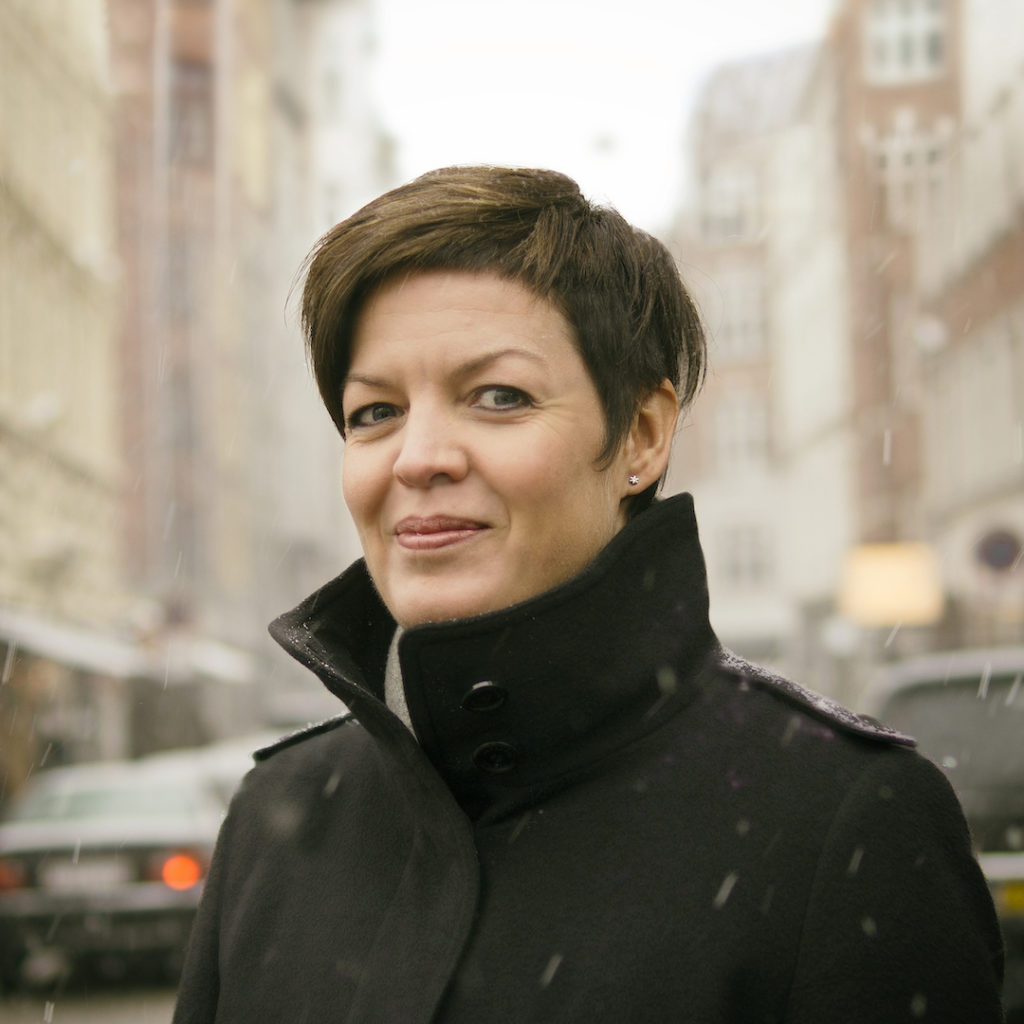
In 2000, Helle Søholt and her (professional) partner, Professor Jan Gehl (a Danish architect and urban designer) launched Gehl Architects (later Gehl), which grew into a notable urban research and design consulting firm based in Copenhagen. The firm, now over two decades old, focuses on improving the quality of urban life, in part by prioritizing the pedestrian and the cyclist in urban design. Jan Gehl was Helle’s professor at the Royal Academy of Fine Arts, and after completing her master’s degree at the University of Washington in Seattle, she started working with him on urban design projects in Copenhagen. Shortly after this (she was 28) they co-founded Gehl. Today, as CEO, Helle’s role at Gehl focuses more on the overall strategy of the firm.

Gehl has grown significantly, with projects in over 50 countries and 250 cities globally. This includes the New York City DOT, the Melbourne City Council, the Energy Foundation in Beijing, the Brighton & Hove City Council in the UK, the Institute of Genplan in Moscow, to name a few. Today, they have offices in Copenhagen, San Francisco and New York. Helle describes their approach to be “people first,” which comes down to exploring the needs of the people living in said cities or communities, with a focus on walkability and access to greenery and public space.

Today Helle is a prominent leader in her field. She has acted as an advisor to the City of Copenhagen and other great cities in Scandinavia like Oslo, Stockholm and Gothenburg, advocating for a new alternative to traditional planning. Internationally, Helle has worked in cities such as Cape Town, Sao Paulo, Mexico City, Seattle, New York, Vancouver, London, Beijing, Kuala Lumpur and Melbourne adding to her global experience in the field of urban design and development. She has extensive international urban design experience at various levels of intervention and at a multitude of scales – from urban research and analysis, visioning and strategy to design development and implementation. In 2010, Helle was awarded membership of the Danish Arts Society, as well as the Danish Dreyer’s Prize of Honor for Architects in Denmark. She also serves as a member on several boards of foundations, organizations and committees, such as the Realdania Foundation in Denmark and the Danish Federal Realestate Development Agency.

Read the podcast transcript here

Eve Picker: [00:00:09] Hi there. Thanks for joining me on Rethink Real Estate. For Good. I’m Eve Picker and I’m on a mission to make real estate work for everyone. I love real estate. Real estate makes places good or bad, rich or poor, beautiful or not. In this show, I’m interviewing the disruptors, those creative thinkers and doers that are shrugging off the status quo, in order to build better for everyone.

Eve: [00:00:46] Helle Soholt was just 28 years old in 2000 when she co-founded Gehl Architects with Jan Gehl, her professor at the Royal Academy of Fine Arts in Copenhagen. Together, they built a commanding firm, now over two decades old. Gehl focuses on people first in urban design with a focus on walkability and access to greenery and public space. In 2016, Helle took over as CEO and the firm now has offices in Copenhagen, San Francisco and New York. People first has gone from its humble beginnings in Copenhagen, to work that spans over 50 countries and 250 cities globally. You’ll want to hear more.

Eve: [00:01:38] If you’d like to join me in my quest to rethink real estate, there are two simple things you can do. Share this podcast and go to rethinkrealestateforgood.co where you can subscribe to be the first to hear about my podcasts, blog posts and other goodies.

Eve: [00:02:05] So welcome to my show Helle. I’m so honored to talk to you.

Helle Søholt: [00:02:10] Thank you so much Eve.

Eve: [00:02:12] How did urban design come to take center stage in your professional life?

Helle: [00:02:18] Oh, I think very early on as an architect, I found out that I was really interested in not just the buildings themselves, but actually the neighborhood and the context around the building. And I was just very interested in sort of political processes and how society is created. And that made me sort of relatively quickly in my studies, way back then in the nineties, shift from building architecture and then moving into to urban design at a fairly early age.

Eve: [00:03:00] So, that led you to meet Jan Gehl and you launched Gehl with him. How did that happen? That was pretty early on, you were young.

Helle: [00:03:11] I was very young indeed. I was 28 at the time and I had, first I finished a master’s in Urban Design at the Architecture School and Royal Academy in Copenhagen. And I worked for Jan actually for about half a year. And then I went to the States, to Seattle, actually, Washington University, and got another master’s degree there. And when I came back, I started working in a different firm, actually coming back to Copenhagen. But, I kept doing some side projects with Jan. And after about half a year back in Copenhagen, he invited me to start the office together with him because until then it had primarily been him running sort of a sole consultancy. So, I accepted the challenge and we started Gehl together at my age, 28. And Jan was in his late career at the time, 64 years old.

Eve: [00:04:16] So, it looks like he made a wise move. What was the primary focus? What were you planning to do with this firm when you started?

Helle: [00:04:24] Well, we started out in the year 2000 and back then there was not a lot of focus in planning on people, on behavioral aspects of planning, sustainability or was something that mostly was thought of by extremists and it was not part of the sort of general planning processes. So, we really started out with this ambition to change the paradigm within planning. It was a rather big sort of move and bold ambition we had because we focused globally from the very beginning, and we were able to do so due to Jan’s vast international academic network.

Eve: [00:05:11] Interesting. So, you’ve also been heard to say mission is not to Copenhagenize the world, which wouldn’t really be so bad because Copenhagen’s lovely. So, what is the mission then? Just generally project by project maybe.

Helle: [00:05:28] Yeah. Well, I don’t like the term Copenhagen-izing because it really sounds as if we think that all the solutions in Copenhagen is fit for every place and we certainly don’t think so. So, our method is much more based on urban anthropological studies, ethnographic studies, where we go to places, and we use our public life methods to investigate what is the local life and how can we best understand the needs and the behavior of the local people there to then develop strategies and plans and so forth. And by that come up with customized, localized solutions that still brings the place towards a more people-oriented position. So, our ambition started out, as I said, to change the paradigm of planning, and I had that ambition for ten years together with the Jan. But when he retired and I sort of bought the company from Jan at the point, this was back in 2011, the ambition changed and became a bit more sort of action oriented because at the time we had already sort of changed somewhat the planning paradigm after talking about it and sort of advocating for it for ten years. And since then, I would say we’ve been more focused on making cities for people, making actual change and creating what we are now focusing on. Places for all.

Eve: [00:07:10] So then what type of projects do you work on right now?

Helle: [00:07:14] In Denmark at the moment we are part of a couple of large projects. One is actually working with the National Foundation for Social Housing, and we are advising this national entity on how to make sure that their investments, they are investing about 40 billion Danish kroner into real estate development for the social housing across the country. And we want to make sure that that money that is poured into mostly renovation projects, that they actually have a social and equitable outcome and is benefiting not just the buildings but the people and the wider community in those areas. So, that’s a big project that we are helping on and working on at the moment. We also in Denmark engaged in a new sort of masterplan for development where we are actually designing the lived experience for people who are going to live in this new neighborhood. So, going all the way down into master planning and landscape design of public spaces in the area.

Eve: [00:08:32] That’s in Denmark but I think you look all over the world, right?

Helle: [00:08:37] We do.

Eve: [00:08:38] What other cities and countries have you worked in or are you working in now?

Helle: [00:08:44] We have quite a large team actually at the moment in the US and we started out back in 2014 with an office in New York and San Francisco and we actually have three teams now up and running in the US, one focusing more on cities and foundations, a second team focusing on the real estate sector, really being engaged in introducing a new type of master planning approach to the US market. And then the last team focusing more on corporate clients, working more with placemaking and the impact on communities from larger corporations.

Eve: [00:09:30] So, how large have you grown from just the two of you? How many people now?

Helle: [00:09:38] Today we are 100 staff and seven partners.

Eve: [00:09:43] That’s quite large. So, I have to ask, do you have any favorite cities and why?

Helle: [00:09:51] Oh, I’m often being asked that question. I have to say Copenhagen, because this is where I live and the place that I call home. And as you alluded to as well, I think at a point in our conversation, Eve, Copenhagen has become one of the most livable cities in the world with time and having worked here myself in that transition for the past 20 years, it is a place that I really deeply love. But of course, there are so many other places in the world that I’ve come to love so much. You know, messy cities like the city of Buenos Aires in Argentina, for example, where we have worked as well since 2017, Melbourne, that you know yourself so well where we have worked also for about 20 years. I like cities that have an ambition to do better and to strive for that quality-of-life aspect and sustainable ways of living. And if I feel that there is that ambition, I can become very attracted to the place.

Eve: [00:11:00] Yes.

Helle: [00:11:00] Regardless of how messy it is.

Eve: [00:11:03] Yeah, I think I like messy cities too. I think if they’re too cleaned up it worries me.

Eve: [00:11:09] Yeah. Yeah. And Copenhagen, of course, has become more clean or nice with time. But then I supplement, you could say, with going to more messy cities around the world, working there to further develop.

Eve: [00:11:24] Yes. Can you tell us about one of your favorite projects that you’ve done over the years and how it changed the place?

Helle: [00:11:32] Yeah, there’s quite a few important projects, I think having worked in Mexico City, for example, with their bicycle strategy. That was the first time I worked in a really large megacity, a real sort of hard one as well, where the traffic is intense and the processes are intense and hard and it’s, the engagement piece is difficult. But we managed to drive a process that ended up with some beautiful results in terms of implementation of bicycle ways and a public bike system and I believe a culture and positions that has remained within the city organization. So that work is being and has been continued over the years. A city like both New York and San Francisco where we are based, I’m also very proud of the transition projects we’ve been a part of, both in New York with the Public Plaza program, transforming Times Square, Madison Square, introducing bikeways in New York, as well as the transformation of Market Street in San Francisco. A big reference project, I think, from across the country, actually. So, these are just to mention a few.

Eve: [00:12:59] Right. Well, the one I’m very familiar with is New York, which I watched unfold. The Plaza Project and it was astounding to watch how it transformed the city. I studied there and every time I went back it was just a different, walkable, less congested place. Pretty fabulous use of, I suppose it was a reorganization, of streets to become friendlier to people. It was really fabulous to watch. So, congrats for that one. So, how has your you know, I suppose the big question is, is what are cities demanding now that they didn’t ask for ten or 20 years ago?

Helle: [00:13:41] That’s a great question, I think when we started out, it’s been a sort of a transition, I would say, because when we started out there was not a focus on delivering public spaces, having a focus on public life, neighborhood communities and so forth. But I would say that has certainly become something that the cities are now looking for, planning for, caring for, to a much larger extent. And now after COVID and the COVID crisis, we’ve seen further changes in this direction where there is now a strong, strong demand from people in cities to have access to green space, have access to places where you can meet people and socialize outside of your work and your living conditions and so forth. Much more focused on inclusion and equity. Diversity and inclusion, I would say, is something that most people, most cities, sorry, are struggling with. How to engage people locally, how to ensure proper processes, how to ensure processes and efficient decision making at the same time, and how to ensure how do we get more out of the investments that we are pouring into cities? Those are some of the challenges that I feel that are more urgent now after the COVID crisis.

Eve: [00:15:19] I think that’s right. So, I think the outdoors has taken front and center stage over the last few years, and that’s a good thing. So, in all of that, what do you think is the future of cities? Because, you know, certainly a year or two ago, there were a lot of grim forecasts about people fleeing cities forever, right?

Helle: [00:15:38] Yeah, I don’t think the concept of city is dying. We’ve had cities for thousands of years, so cities will definitely continue to exist and flourish. We come to cities not just because we are going to and from work, but because that’s where we can offer services. We can be closer to education and other health options and offerings and so forth. So, there are many, many reasons for coming to cities and living closer together. However, I do see an opportunity to have much more flexibility in our lives. And we see that also with a lot of companies offering more flexibility, people working from home, having much more of a fluent work-life situation where you don’t necessarily have to come into work every day. And that requires a change in cities where we don’t have these business districts and mono functional areas and cities, and we sort of transport ourselves from one end to the other. I think we need to move in a direction where neighborhoods are more diverse in terms of functions, allowing people to have that much more flexible lifestyle, live urban so that you can walk and bicycle on an everyday basis and have access to public transportation where the density of people is needed. So, I think we have a ways to go in terms of still being able to move in a direction where the neighborhood level in cities are developed to allow that type of lifestyle to happen rather than these mono functional urban areas as we are seeing it right now.

Eve: [00:17:36] So I think you’re talking about the tantalizing terms, 24-hour neighborhoods and 15 minute cities, meaning that you can walk anywhere in 15 minutes. Right? That’s a pretty big goal. Also, I noticed on your website something called Inclusive Healthy Places framework. What is that?

Helle: [00:17:58] Very happy you mention it. The inclusive, Healthy Places framework is toolkit that we developed actually with the foundation, Robert Wood Johnson, and the idea with this toolkit is for real estate developers or community developers or place makers to use this tool to help make sure that we think about equity and health as we develop places and public spaces. The tool came about in a process where we collaborated in Gehl with health practitioners from across the states and community developers. And for the past couple of years, we’ve worked together with various organizations, including the American Planning Association, to spread the word about this tool so that more organizations can approach planning in a more holistic way. So, it’s out there, and there is also a website now where you can go in and read some a bit about the cases.

Eve: [00:19:11] Oh, okay. When you move towards making places that work for everyone, everyone feels comfortable in, are there basic elements that you always think about? Basic elements for great spaces.

Helle: [00:19:25] Well, first of all, it’s important to, as I mentioned, not just to think about the place as a very closed entity but think about the context of the area. What’s the history of the place? What’s the culture of the neighborhood? Then there is both the physical and the program aspects, the, you could say the activities in the place as well as the design. And then lastly, the fourth element, which is the whole sort of, how are people actually engaged? How are they, also how is the institution around the place set up in a way that allows people to continuously feel ownership and engagement within the area? So, that’s more of a political, organizational, economic, you could say, structure around the place. Those are the four categories of topics you could say that we are looking into.

Eve: [00:20:29] Okay. So, you know, I have to ask how like, are cities focusing on making sure that good design is available to everyone no matter whether the place is rich or poor, that everyone has access to beautiful urban spaces. I know some cities have more money than other cities, but typically in the past certainly, great spaces have been in higher end neighborhoods, you know. Do you think that is shifting at all?

Helle: [00:21:00] It is perhaps shifting, but I don’t think quickly enough at all. And this varies a lot across the world, I would say. In the US, unfortunately, we still see many, many neighborhoods across cities that are disinvested in and has been for ages for decades.

Eve: [00:21:22] I live in Pittsburgh, so I know what that looks like.

Helle: [00:21:25] Yeah, yeah.

Eve: [00:21:26] It’s half its population, so, you know.

Helle: [00:21:29] Yeah, exactly. And in other parts of the world where sometimes the public sector might be a little bit stronger and have more means, we see a stronger effort to actually even out some of the differences and inequalities in terms of investments. So, I definitely feel that this is an area where we could, especially in the US cities, could do so much more because it’s a rich society and there should be possibilities to actually ensure high quality, proper public spaces for all and it doesn’t have to be expensive granite pavements and what have you. We saw that in New York. It is a matter of the geometry of the space and the prioritization of the people above cars, for example, and just plain access to open space and green space. So, it’s not so much design as it is the pure access and availability of space.

Eve: [00:22:41] I mean, New York’s a great example. It was really paint and some bollards and plants and some furniture from a supermarket originally, like a Target or Walmart, right?

Helle: [00:22:55] Exactly.

Eve: [00:22:55] Just to completely transform the city. Yeah. It isn’t about granite, as you said. I wish we could move along faster. Do you notice different sources of funding coming to the table? Foundations, or other than public sources? Is that shifting? Because there’s a lot of talk in the foundation world about sort of rectifying the inequality, but I wonder if it’s filtered through to urban places.

Helle: [00:23:24] I think that’s a great collaboration and this is also in the US and we are learning from that, I think in Europe with a strong collaboration between foundations and public sector NGOs, community organizations. And that’s admirable because sometimes in our part of the world the public sector is perceived to deliver all of it. So there is a collaboration. I think the collaboration could be more action oriented, more testing, more actually willing to actually get your hands dirty, so to speak. I mean, make some real changes. And I sometimes worry that too much effort is lost in planning processes and strategies. And one of the approaches that we really advocate for is to, yes, you need to have a strategy and a plan. Yes, you need to analyze your conditions properly, but you also need to engage through actions. And in that way, you actually really show the willingness to commit and to make change locally. And too often I think we we don’t get to that level of engagement.

Eve: [00:24:41] I used to work at the Planning Department years ago in Pittsburgh, and we used to call that analysis paralysis. There were many, many plans on the shelves that had never been enacted because of fear or inability to take the next step or I really don’t know what, but a lot of money wasted that way. I totally agree with you. That is actually one of the reasons why I loved what happened in New York, because it was very quick and dirty. They tested it out. They tested it out with not even very nice bollards just to see what would happen and then move forward. And that I, I love that. I think it’s great. I’m going to ask you another hard question. So, I want to know is Denmark more supportive of female leaders than the US? And if so, how are women encouraged to take leadership roles?

Helle: [00:25:39] I do know that the Danish Society is one of the most, sort of, equal society in terms of men and women having equal opportunities. So, there is definitely something in our societal model that allows women to have a career. And the fact that we have so good public childcare system and school system and so forth enables many women to have a career. So that’s for sure part of it. It’s also been a process here. I mean, when I started out in real estate, in planning 20 to 25 years ago, it was much more male dominated. So, I would often in my early career be the sole woman in in a room. And I can see over these last 20 years or so in Denmark how that has changed. And also, in architecture education. We now have 60% women, actually. That is not to say that, we don’t necessarily have 60% women when it comes to leadership positions. So, there is still a gap even in even in Denmark on that front.

Eve: [00:26:58] What about women who control money? I mean, I think the problem we have here is maybe not in architecture, been in real estate in general. There are very, very few women in positions of control in real estate in the US. It’s a very heavily male dominated industry. And when you control the money, you control the decisions, right?

Helle: [00:27:22] Yeah, and that’s definitely the same here. I think the problem with real estate in general is that it’s a very conservative business and it’s a market that is used to developing a model and then sort of really refining that model and copying so that you can sort of earn more and more money over time. And there is very relatively little experimentation actually, and that’s actually what is needed more possibility to experiment with different types of lifestyles and different types of ways of living. I think many of ours.

Eve: [00:28:04] Different solutions.

Eve: [00:28:05] Yeah. I always think about affordable housing in Pittsburgh where I’ve lived for many years. I mean, affordable housing is absolutely important and was heavily supported by the city and I am not criticizing it, but it became a cookie cutter thing. You could drive down a street and you could point to the subsidized house because it had a very certain look to it. And that’s a shame. I mean, again, that speaks to good design shouldn’t only be for people with means. There are people who need affordable housing who want to live differently. It’s a little depressing.

Helle: [00:28:44] Yeah. And Denmark, we have a special model for social housing that is more than 100 years old. And I’ve often tried to export this model even to the US. Generally, it’s called common housing, or it’s called general housing because it’s not social for the people who need support from the government. Actually, in Denmark everybody can apply for general housing or for common housing. And the way it works is that it’s actually run as a separate private company, and all the private companies that run these estates, they pay part of their rent, after having paid back relatively cheap loan to the government, after 30 years, then they can start paying rent into a national fund and the national fund then repays back in a circular system. You can apply for money from the foundation whenever you need to do renovation or social projects in your estate. So, this basically means that we don’t have any common housing estates in Denmark that are badly maintained. We have money to run social programs and job training programs and health programs and renovate public spaces and stuff like that in the public housing estates across the country. And in our planning law, in new developments, you are required to have 30% common housing in your area.

Eve: [00:30:39] Interesting.

Helle: [00:30:40] So, it’s super interesting, sort of circular, sort of, at least in money terms, circular system that has existed in Denmark for 400 years. And I think there should be ways to set up similar types of mechanisms, maybe at more of, sort of, a regional level also in the US. It would be super interesting to think about.

Eve: [00:31:09] Oh, that’s really fascinating. I will look into it for sure. Yeah. So, what’s your ultimate goal?

Helle: [00:31:22] My ultimate goal is I think, currently my ultimate goal would be to try and create a sort of more of a community of thinkers and doers around our approach to development so that we can hopefully impact even more places to create even more sort of visionary projects that can be references and lead impact behind, so that it can inspire others. And do that through more strategic partnerships globally. So, I’m really still very focused on the sort of more global transformation, you could say, within our field.

Eve: [00:32:20] Well, I’d be really fascinated to see what you do, and I think I’m going to make up a list of places that you’ve worked on to go see next. As travel opens up a little bit, and certainly back to Copenhagen, which is an amazing, amazing city. Although I have to say I almost got run over by a bike there. It’s a little scary crossing the bike lanes. And then I actually brought a bike in Copenhagen back to Pittsburgh, so I have a little bit of it there.

Helle: [00:32:47] It’s fantastic.

Eve: [00:32:48] But the bikes certainly rule the road, don’t they, in Copenhagen?

Helle: [00:32:53] They certainly do. And I would say, Eve any time you’re welcome to visit. We have also done a bit of a collaboration with the city of Pittsburgh actually, but I don’t believe any of it has been implemented yet.

Eve: [00:33:08] Oh, I can’t wait to hear.

Helle: [00:33:11] If any of our team is there. I’ll connect you.

Eve: [00:33:14] Absolutely. That’d be fabulous. Thank you very much for joining me today. Bye.

Helle: [00:33:19] You’re welcome, Eve. Bye.

Eve: [00:33:31] I hope you enjoyed today’s guest and our deep dive together. You can find out more about this episode or others you might have missed on the show notes page at RethinkRealEstateforGood.co. There’s lots to listen to there. If you like what you heard, you can support this podcast by sharing it with others, posting about it on social media, or leaving a rating and review. To catch all the latest from me, you can follow me on LinkedIn. Even better, if you’re ready to dabble in some impact investing, head on over to smallchange.co, where I spend most of my time. A special thanks to David Allardice for his excellent editing of this podcast and original music. And a big thanks to you for spending your time with me today. We’ll talk again soon, but for now, this is Eve Picker signing off to go make some change.

Image courtesy of Helle Søholt

$3.22 Trillion.

September 26, 2022

“We want to champion the power of investing, and the power of female investment, in order to demonstrate that inclusivity and diversity matters—and that the time to act is now.” Hanneke Smits, CEO, BNY Mellon Investment Management.

The 2021 report The Pathway to Inclusive Investment was compiled from 8,000 interviews with women and men, 100 asset management firms representing assets of US$60 trillion, and an independent advisory panel. The report found that if women invested at the same rate as men, an extra $3.22 trillion could become available for investment.

What is stopping women from investing?

  • Engagement. Only 28 percent of women worldwide feel confident about investing. This varies with different countries and cultures and with age. Data suggests that younger women are more engaged with investing.
  • Income. Globally, women believe that they need almost $50,000 a year of disposable income before they invest any of that money. In the US, that amount is even higher.
  • High risk.There is always some risk in investing, but 45 percent of women believe that any investment is too risky.

We know that women are more likely to invest in causes that they believe in and are motivated by the impact that their investments make. 55 percent of women say they would invest (or invest more) if the impact of their investment aligned with their personal values.This is particularly so with young women investors (under30) who see their money as a powerful force for good.

More women investing might change the world!

So many things have changed over the last few years but some industries such as the investment industry are slow in moving along. It’s time to move the focus from a male audience to a diverse one, and to find a way to reach women, with their different motivations. Giving women financial power and control over their wealth will benefit everyone.

« Previous Page
Next Page »

Primary Sidebar

sign up here

APPLY TO BE A PODCAST GUEST

More to See

(no title)

February 22, 2025

Bellevue Montgomery

February 11, 2025

West Lombard

January 28, 2025

FOLLOW

  • LinkedIn
  • RSS

Tag Cloud

Affordable housing Climate Community Creative economy Crowdfunding Design Development Environment Equity Finance FinTech Gentrification Impact Investing Mobility Offering Opportunity zones PropTech Technology Visionary Zoning

Footer

©rethinkrealestateforgood.co. The information contained on this website is for general information purposes only. Nothing on this website is intended as investment, legal, tax or accounting strategy or advice, or constitutes an offer to sell, solicit or buy securities.
 
Any projections discussed or made may not be accurate and do not guarantee a specific outcome. All projections or investments are subject to risk due to uncertainty and change, including the risk of loss, and past performance is not indicative of future results. You should make independent decisions and seek independent advice regarding investments or strategies mentioned on this website.

Recent

  • The Mulberry
  • Mount Vernon Plaza
  • The Seven
  • Real estate and women.
  • Oculis Domes.

Search

Categories

Climate Community Crowdfunding Development Equity Fintech Investing Mobility Proptech Visionary


Copyright © 2026 · Magazine Pro on Genesis Framework · WordPress · Log in