• Skip to main content
  • Skip to secondary menu
  • Skip to primary sidebar
  • Skip to footer
  • Home
  • About Us
  • Say hello
Rethink Real Estate. For Good.

Rethink Real Estate. For Good.

  • Podcast
  • Posts
  • In the news
  • Speaking and media
    • About Eve
    • Speaking requests
    • Speaking engagements
    • Press kit
  • Investment opportunities

Equity

Be Good Development.

September 6, 2023

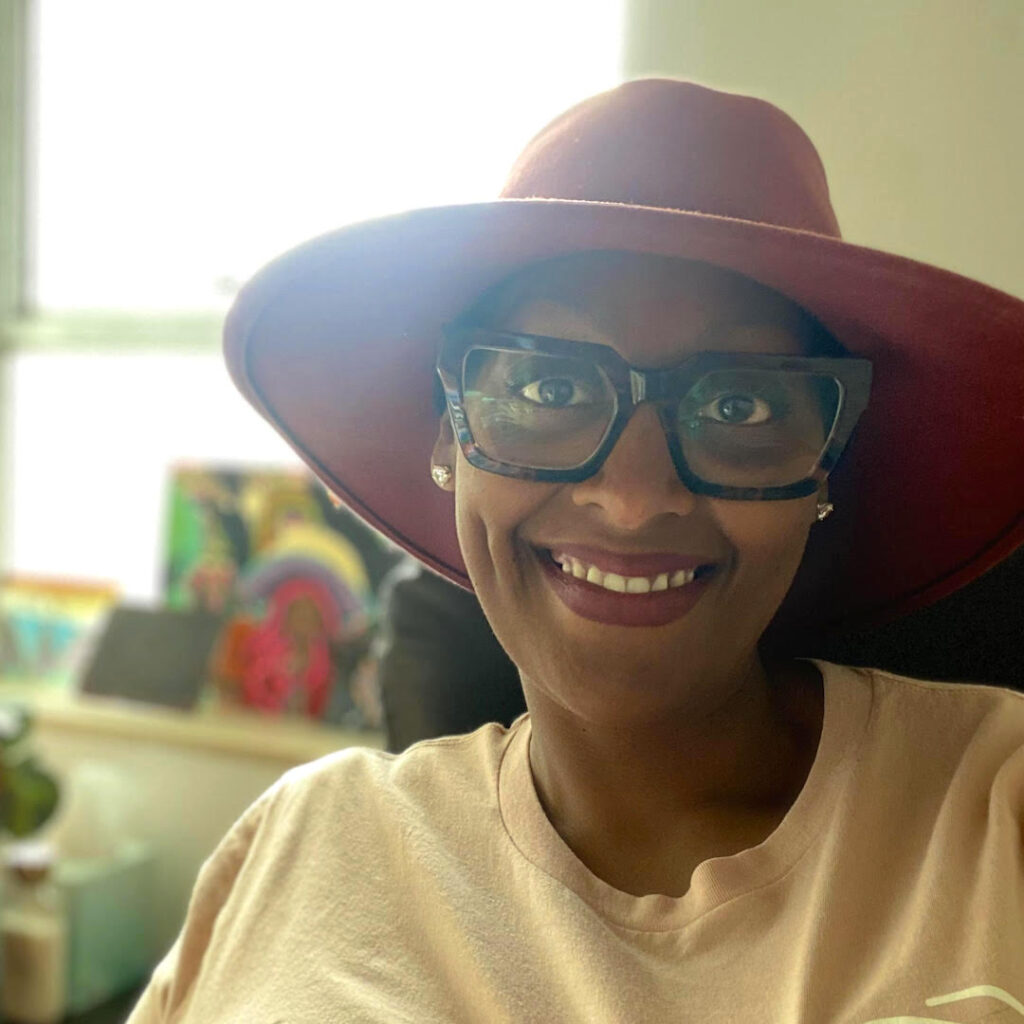
Franchell Abdalla is the principal of BE GOOD DEVELOPMENT PARTNERS,  a real estate development firm specializing in the acquisition, financial structuring, community engagement and execution of real estate projects.

BE GOOD’s development consulting services enable their clients to achieve their full development goals. For municipal governments and public housing authorities, Francell adapts methods suited to the particular municipal context and agency portfolio. For non-profit and for-profit developers, she provides a range of services throughout the pre-development, development and post-development periods, emphasizing strategic investments in people, places and transformative projects.  In addition, Franchell has an equity stake in many of the projects she is working on.

Franchell has over 15 years’ experience driving strategic growth and diversifying funding portfolios for nonprofit organizations, government entities, public housing authorities and community stakeholders. She is highly competitive, detail focused, persuasive and articulate, able to achieve results others believed to be impossible. Her expertise lies in forging collaborations across sectors, building sustainable partnerships, commercial real estate development, strategic visioning and program development. She is trained in social anthropology, at the University of Nebraska, holds a Masters in Public Administration from Bellevue University and a Masters Certificate in Nonprofit Management (focus in Urban Public Policy) from the University of Nebraska at Omaha.

Read the podcast transcript here

Eve Picker: [00:00:07] Hi there. Thanks for joining me on Rethink Real Estate. For Good. I’m Eve Picker and I’m on a mission to make real estate work for everyone. I love real estate. Real estate makes places good or bad, rich or poor, beautiful or not. In this show, I’m interviewing the disruptors, those creative thinkers and doers that are shrugging off the status quo in order to build better for everyone.

Eve: [00:00:41] Today I’m interviewing Franchell Abdalla, a minority in every sense of the word. She is black, a woman, and a real estate developer. But that’s not stopping her, not for one little moment. Franchell only recently launched her development company, Be Good Development. And yet she has her sights set on an incredibly complex and rich real estate project. She assembled an astounding team to win a significant request for proposals issued by the city of Tulsa in Oklahoma. She won and has been grappling with a 100,000 square foot foundry building, planning its repurposed life and working on the legal and financial structure. There are plenty of setbacks, as there always are in projects like this, but to Franchell it is all a joyful challenge. There is lots to love in my conversation with Franchell. Please listen in.

Eve: [00:01:54] Hello, Franchell, I’m really delighted to have you join me today.

Franchell Abdulla: [00:01:57] It’s great to be here, Eve. Thank you so much for inviting me.

Eve: [00:02:01] Good. So how does a sociology major become a real estate developer? I’d really like to hear about your journey.

Franchell: [00:02:09] Yeah, absolutely. I would say in a very non-traditional, kind of circuitous way. I started off really, as a pre-med major in college, and so as a pre-med major, I thought, you know, like most people, I’m going to graduate, go to med school and then my focus was really on becoming a Foreign Service officer, wanted to do Peace Corps and the like. And so, started off, but, you know, never thought about sociology, didn’t know anything about sociology, started taking classes and was hooked, right? So sociology and then cultural anthropology were things that I focused on as an undergraduate. And really, just the study of people and cultures and societies is what really gave me this kind of foundational understanding of the importance of community and community building in real estate development. I landed in real estate in a way that’s very non-traditional, right? I needed a job. I just had my second little one. She was six weeks old and there was an opportunity to work at the Housing Authority in Omaha. And so. I literally took a temp job on a whim because we needed to feed them and went and just fell in love.

Franchell: [00:03:19] I’ve always had a love of the built environment, and I think my mother probably would have been an architect if she had the language for it. But she went into computer science engineering instead. But she was an artist and a very analytical mind. And so, we were like really steeped in that. And so when I get to the housing Authority, it was really a merging of all of those experiences I had had along the way. It was both built environment it was just kind of pragmatic approach to development and my understanding of development, it was the practical application of really learning how to work through grants and fund raising and capital improvement projects. And then at the same time, it was just undergirded by the love of community and how do you create opportunities in communities. So, it wasn’t a direct path. I didn’t even know what real estate development was when I got into it. But I definitely am so grateful for the way that it is, it’s kind of unfolding.

Eve: [00:04:17] Isn’t it great the way you can find a path unexpectedly and fall in love with it? It’s really great.

Franchell: [00:04:23] Absolutely. That’s why I love the story of Iris Apfel, where she talks about, she is like this accidental icon. I feel like I’m the accidental developer very much in the same way.

Eve: [00:04:34] The accidental developer. That’s what we’ll have to call this podcast. Okay.

Franchell: [00:04:36] Yes.

Eve: [00:04:39] So then you launched Be Good Development Partners. What led you to launch that? That’s a long journey from the Housing Authority too, and when was that?

Franchell: [00:04:51] So I launched fully in 2018 as Be Good Development Partners, and it really initially was called Transformative Community Development. It was a way that I was consulting for the Housing Authority and for the city of Omaha while I was working at the Housing Authority. And so, once I transitioned to Tulsa, I wanted to be able to move TCF with me and thought, you know, it’s a, it needs a rename, right? It’s time to rebrand. I wanted something fresh and new, and I really grew up with a very large family and something that my grandmother always talked about, you know, was like being like this silent kind of goodness, right? At the block level. My grandmother didn’t go past sixth grade, and so she was kind of like this rock on our block, right? when I was a little kid. And she always had a saying that was be good. Every time we would talk to her or leave or have a conversation with her, she always ended with, well, be good. And so, for me, that was a way to kind of like honor her legacy and honor her. And so, when I came to Tulsa and decided that it was time to also go into development, which was also accidental, by the way, Be Good seemed fitting as a name, so Be Good Development Partners kind of was born out of that.

Eve: [00:06:04] So what is your philosophy then as a real estate developer?

Franchell: [00:06:09] I would say my philosophy is really about transforming communities from the inside out, really looking at what are ways that we can create goodness by being small and intentional and impactful in the spaces that we reside in? How can we think about the communities that we’re developing and as a neighbor rather than an outsider? And then, how do we create this real, not only catalytic, I think, but disruptive change from a systems level? And so Be Good really is that amalgamation of those things. It’s how do we create good? How do we ensure that there is long, impactful good? And then, you know, at the end of it, how are we just being in community, showing up in those ways in order to be good?

Eve: [00:06:56] And then I have to ask, so, your portfolio, when did you launch? It’s been a while.

Franchell: [00:07:03] It’s been 2018 since I came here, but I literally launched in 2021 with the Evans Venture Project. Oh, so very young.

Eve: [00:07:13] Very, very new firm.

Eve: [00:07:15] Yes. And why Tulsa?

Franchell: [00:07:17] So, I was initially relocated to Tulsa for a job, so I was kind of poached out of Omaha doing some of the work that I’d been doing in community and, you know, attracted to come here. So, I worked for a small nonprofit, and my goal was to really raise about $13 million and do a full-blown capital campaign for our Child Abuse Network, which is a small nonprofit focused on like childhood intervention and prevention around child abuse and neglect. And so it was in a very different space that I had operated in. But it was kind of this opportunity that I couldn’t pass up. There was a great leader at the helm of it at the time that had come. She’d been a city councilor. As soon as I came here, I really believed in the vision. I really believed in, like, what the direction was going to be for the organization. And so I just decided it was time, you know? And so we uprooted and came to Tulsa, and six weeks later she left the organization. It ended up in hindsight, it was probably one of the most incredible opportunities that ever happened because it forced me to dig in and figure out where I was at, start to break apart what is this community? Who are some of the key stakeholders in the community around this particular issue? What are other communities that I’d be interested in? And I got an opportunity to really raise and recruit money and then do the construction feasibility and build out. So, I was able to kind of like lean into all these different spaces in a very unique way. And then we stayed, you know, great friends and stuff. So, she continues to be a mentor, even though she works for the city of Tulsa now.

Eve: [00:08:53] Interesting. So, do you have any projects under your belt yet for Be Good?

Franchell: [00:08:59] So projects under my belt for Be Good, again, like I said, I do a lot of development consultant, so working with the small ten-acre project, it’s really an agrihood kind of project I’m very excited about where it’ll be a really an arts and culture enclave, so it’ll be a small creative co-working space and venue. It’ll be some Air BnB cabins, and then it’ll also be a small, tiny home village for artists to come and do residencies and fellowships in the arts. So very excited about that. Um, I would say we’re also working on a very, very, very, very cool project that I’ll be heading out to look at today that’s really focused on our large, unhoused population. And so, it’s also a village concept looking at what are, like, how do we insert supportive services and wrap-around supports for people who are chronically unhoused? And its master planning that site. And so being able to pull together, you know, a small all-female team is like really exciting for me on that. And it’s 23 acres. And then of course, the one that we’re probably the most well-known for that really launched us is the Evans-Fintube project in historic Greenwood. And so those are some of the projects that I’m working on.

Eve: [00:10:16] And that’s a really big one too, right?

Franchell: [00:10:18] It’s a huge project, not in terms of its footprint, although it is an 11-acre site and it’s a historic mixed-use. It would look to change the Oklahoma Ironworks into commercial retail community anchored commerce as well as some retail and breweries. But then it would also create hospitality as well as some additional office space.

Eve: [00:10:41] So you’re glossing over these, but really, these are unusual, unusually large and complex projects for a small star-up real estate developer.

Franchell: [00:10:52] Yes.

Eve: [00:10:53] You know, typically you hear, well, I flipped a couple of houses and now I’m looking at a fourplex. So, you just went from nothing to everything, Right?

Franchell: [00:11:05] Right. If you’re just going to go, go all the way in. Right.

Eve: [00:11:55] And especially through Covid, which has been really horrendously difficult in the construction industry. And borrowing money. So, any of these projects yours or are they mostly consulting projects?

Franchell: [00:11:20] The first project that I talked about with Agrihood, I am an equity partner and then the developer on that project, the same with Evans-Fintube would also be a part of the ownership group as well. And that would be my project.

Eve: [00:11:33] Okay, that’s fabulous. They are big and complex projects. So where does your inspiration come from and how do you find these projects and does history count?

Franchell: [00:11:46] Um, history always counts, right? If we’re going to be thinking about how we build for the future, history is critically important, but I think the projects, they come out of where I am, you know, the folks that I’m working with, architects, planners, construction folks, community members, my neighbors. I think they come out of my love for this place. Um, seeing things that are currently missing in either the skyline or the landscape that that we deserve to have injected back into community. And I think they come out of this just passion for making sure that what we build is not just meaningful, but it’s sustainable and it’s built and designed and led by and owned by folks who look like people that come from the places and spaces I come from. So that’s kind of what it’s born out of.

Eve: [00:13:40] Let’s talk about the Evans-Fintube project, which is the big one in in Tulsa, Oklahoma, and just explain what is that?

Franchell: [00:12:55] Evans-Fintube, it was a foundry. And so, it was a site for one of the largest kind of steel and metal manufacturing facilities in the state of Oklahoma, let alone Tulsa. But it was established in about 1901, and it was originally Bethlehem Steel and Supply. And so much of the steel that’s in the skyscrapers that are in the downtown skyline came out of this particular foundry. And so, between 1901, which is really pre-statehood in Oklahoma all the way to about 1961, this building operated and it was a series of about 20 buildings that were on 22 acres of land. Well, to the north of us now is the BMX international headquarters that occupies 11. And then Evans-Fintube, which is the only originally standing building, is on the remaining southern edge, which is 11 acres as well.

Franchell: [00:13:52] But what’s really unique, I think, about this particular site is that it tells the story of Tulsa. It is Tulsa. Tulsa as we know it. It talks about the story of philanthropy, Bethlehem Steel and Supply, which then became known as the Oklahoma Ironworks Building. It is sitting on 11 acres of historic Greenwood. And what that means in terms of the 1921 Tulsa race massacre, the building itself sits on top of two Cherokee allotments, which is interesting because Tulsa, yeah, Tulsa is the largest reservation in Oklahoma. And so, we’re still in Indian territory. And this building kind of is a line of demarcation for that. And then the southern edge is actually the original block 49 of the city of Tulsa. And so, it is an actual Creek Freedmen settlement.

Franchell: [00:14:42] And so it’s all this unique complexity and beauty of Tulsa, both, you know, good as we know it, right? The oil boom, the art deco buildings that have gone up, you know, the story of, you know, small town boomers that come and build their livings. And then it’s also the complexity of the forced migration into Indian territory, being on a reservation, re-allotment of land. We’re bounded by Highway 244, so it speaks to eminent domain and what that did in communities of color. And then again, it’s in historic Greenwood. And so, when we think about what happened in 1921 and the Tulsa race massacre, this building actually sits as a backdrop to that experience. And so, while most of Greenwood burned in 1921, this building was never scorched. And so, you know, we really feel like it’s an opportunity to not just reclaim space but reassert the right to have space into the future. And so, for us, it’s really this interesting weaving of a Tulsa narrative that I think has the potential to speak to not just Tulsans, but I think The Globe. And so that’s what’s exciting about the project. It’s a very unique project.

Eve: [00:15:53] I’m watching your face and I’m seeing your excitement. And most people would run screaming from this sort of complexity, but it looks to me like you run right into it. Yeah, yeah, That’s pretty fascinating. So, what is the building? How big is it and what are you turning it into?

Franchell: [00:16:12] So the building is 100,000ft² and it’s simply beautiful. It has this incredible layout. And because it was a foundry, I mean, there are lots of, like, steel and brick and glass. And so, we’re going to be reskinning it in that way. But what we’re looking at is having a 54-room boutique hotel. And really that’s a tribute and an honor to J.B. Stratford, who was one of the, I would say, singular, most well-known folks who had a hotel in Tulsa at the time of the height of 1921. It was burned to the ground. And so, we want to be able to pay homage to that and rebuild that with inside the footprint. And then there will be about 25,000ft² of localized retail. So again, really kind of restitching that thought and that ethos around Black Wall Street being rebuilt, creating these opportunities for local businesses and small entrepreneurs to come into this space and that retail space and have pop-ups to be able to have shops, to be able to really make their mark and create a new market for commerce and cultural tourism. And then there’s a small, I would say it’s about 14,000ft², of creative office. And so it’s like, how do we encourage folks who are into tech, who are into arts and culture, music production, video production, to be able to come and be housed there? So it’s a producers lab is really what it is in terms of creative office and then again, a food hall concept, but not your food hall of the 2000s, really more of a chefs collective, where it’s a curated list of local restaurateurs and local chefs that have pop-up menus, provide a variety of different offerings to folks at our site as well as to the BMX and then also throughout the downtown corridor. So that’s the building.

Eve: [00:18:10] So in other words, as complex as its history.

Franchell: [00:18:14] It could get. It is actually.

Eve: [00:18:17] It’s totally wonderful. So, you won an RFP. The city owns this project. Tell me about that. For those of our listeners, you’re a Black real estate developer, which is in itself extremely unusual. But you won this, unfortunately very rare, but you won this RFP from the city. Probably, there was some, you know, rather traditional developers who went up against you. Right?

Franchell: [00:18:45] There were, there were lots. There were actually 12 that we competed against.

Eve: [00:18:50] Wow.

Franchell: [00:18:51] And that was exciting. So, we started the RFQ originally in April of 2021. And so, we had been in that process for a while. And so, we went through RFQ and out of the 12 developers or development teams that submitted, it was actually whittled down to four. And out of the four, I was on two teams and so I was on one team as a development consultant and then one kind of leading this small, localized, ragtag team of folks. And at that point it became public that I was on two. And so, I made a decision that if there was ever going to be an opportunity to launch, this might be the way to launch.

Eve: [00:19:35] Yes, indeed.

Franchell: [00:19:36] And so decided to lead that team from RFQ into the RFP. And then we were in the RFP for about a year, and I was able to assemble not just a local team that was really strong that I love, right? Because we have a lead project engineer that is African American. Our lead project architect runs a small architecture firm, young African American woman. The head of our construction, while it’s a large construction entity, our project director is an African American woman. The person who leads the minority contractor Academy for Trade Partner Development and Skill Development is an African American woman. We were able to really start to identify these strengths in community that oftentimes get overlooked but could be elevated given the opportunity. And so, you know, our mantra was this, you know, we have an opportunity to create and really expand local capacity, leveraging national talent. And so our construction company is a national firm. We have a design consultant, is a national firm. Our historic preservation consultant is also a national firm.

Franchell: [00:20:50] And so we’re able to use those skill sets, that capacity to be able to bolster what we have at the local level. So once this development project is over, that capacity stays in community and can only grow and evolve. And so that has really been the gift of being the leader of this team, is being able to see that flourish. Stayed in the RFP for a year, went through a lot of series of, you know, fits and starts in that process because there were many people that didn’t want to see it maybe progress as far as it did. But eventually, you know, after we started, we were awarded May 10th of 2022, the RFP, and it was announced. And then since it was announced, we have continued to kind of work through a series of both requirements and challenges. Community engagement. I really credit community to ensuring that we won not because we weren’t the most qualified with community backing, but we were the most qualified team with the greatest amount of community engagement and support. And so, I’m very, very proud of that because we are a community team with, I think, national expertise. And so, we just continue to work on that. We have definitely faced challenges as it relates to this project.

Eve: [00:22:12] Tell me about the challenges, because I’ve been through an RFP process like this as well, and we had the architecture team drop out at the most awful moment when I think we would have been selected. So it was, you know, I understand that because it’s such a long process, it’s a pretty fragile process.

Franchell: [00:22:32] It is. It is. And I think those are the lessons that you learn when you get into this space, right? It’s the things that you don’t know that can happen. And so as we’ve progressed through the project, have had lots of iterations around how to properly set up the LLCs, what are the roles and responsibilities, what is the role of the city, right? Because the city is the actual owner of the land. But there is an economic development entity that has actually managed and facilitated the process even though they don’t own it. So, we kind of have two constituencies that we have to support and ensure that they feel comfortable with us. The project team, the project team has stayed intact. We did have one shift. We previously had someone who was maybe a managing member of an entity moved from being an employee to becoming his own kind of developer. And so that shift caused a great amount of concern in our team to the point where this kind of economic development entity said, well, you know what, no, you no longer have the capacity, you no longer have the skill set that left when this individual left. And so we want to stop the process, put it on hold and not award you the RFP.

Franchell: [00:23:47] What it is teaching me is that I never understood how political the development process is. Right? You can love a great building, love a great space, believe in the possibility of a project, but understanding the complexity and the politics around how things get built is equally important. And it’s also showing us, I think, as a team, a collective team, because I will say, while that individual left, no one on my team has dropped out in the two years that we’ve been in this, which is a testament to their own passion and commitment to this. But what I love about it is it’s also showing that there are tough times where, as women and as developers of color, in particular, you know, being a black female developer, developing in a space that there are no black female developers. I’m the first black developer to ever make it this far in an RFP in the city and absolutely the first female developer to do that. It is creating conversations around the discomfort of seeing me show up in the space that traditionally we have not occupied. And so, I love that, right? I love that. The room doesn’t have to be prepared for me. I can figure out a way to create a new table, but I want to have those uncomfortable conversations about why it’s necessary that I’m in the room. Necessary, why folks who look like us are in those spaces. We bring a very different view to development and one that’s missing and necessary in the future of how cities are built and created.

Eve: [00:25:28] Right. And there are challenges with financing, too, which may be.

Franchell: [00:25:33] My goodness.

Eve: [00:25:34] Are they political or are they just inbred? I don’t know.

Franchell: [00:25:38] Right. And are they both?

Eve: [00:25:40] Are they both.

Franchell: [00:26:41] You know, political at the local level, right? Like did you use a local bank? Who got the local construction contract that’s going to have the depository, you know? And then at a national level, like these changes in capital markets, inflation, rising interest rates, I mean, they’ve increased our project budget by about 20 million in the first phase. And so, to have a project that went from $41 million in the first phase to $68 million in the first phase, I mean changes all the numbers, right?

Eve: [00:26:12] And so now I’m building a project where it’s exactly the same, a 50% increase. It’s crazy. It’s been a crazy couple of years, Franchell, really crazy.

Franchell: [00:26:23] It has been. I mean, whether it’s lending requirements have changed, how you’re being scrutinized through underwriting, right? And there’s something to be said when you’re managing just numbers and they’re looking at that as a package. And then there’s something to be said when you add on the layer and complexity of the mitigating you as the risk as well. And so, we’ve had to think through that and get creative about reprogramming, building out in stages even within the first phase. And then we’ve had to think more creatively about what type of capital should we attract, whether that’s individual investment, community investment now. What additional federal dollars could be attracted to the project, new markets, tax credits, solar? And then also, you know, is there philanthropic investment that we can look to to fund some of these, like, financing gaps?

Eve: [00:27:14] Right, right. So, do you think all of this is going to be resolved?

Franchell: [00:27:18] You know, development is funny. That’s why I kind of love it. You never, never know, right? We get a notice from partner Tulsa or, excuse me, the development entity that they no longer want to negotiate with us and the project is off. But ultimately, they’re the facilitators of the process, not the owners of it, right? And so I always learned, you know, in real estate, it’s about the buyer and a seller. And so we went to the seller, which is the city of Tulsa, right? And had a conversation with the mayor. And what I recognize is that there is a desire to come to a common ground. What is the middle? Right? Because we could have polar views on how we get this done, right? You know, the economic development entity and I might not see eye to eye, but where is the middle space in which both of our kind of initiatives and goals are achieved? And I’m finding that that’s actually sitting within the city of Tulsa, at the mayor’s level. And so, I am hopeful. We’ve had great conversations about moving the project forward. What are the ways in which we can do that and then what are the ways that we can create a lose-lose and not a win-win, right? Because we’re taught, okay, you want the win-win, we want everyone to win. Well, that’s not possible. How do I lose a thing that I want without changing the nature and character and the integrity of the project and how do they lose a thing that maybe they want in order to ensure that there is partnership on board, that we can move the project to become built? I believe in our administration, challenging as it is at the city level, I believe that the mayor is committed to getting this built and committed to ensuring that the legacy that he leaves is one of like, opportunity for the city of Tulsa. So, I remain hopeful. I’m optimistic by nature.

Eve: [00:29:14] So you don’t see it as a setback. You see it as another challenge, right?

Franchell: [00:29:18] Absolutely. Only challenges get….

Eve: [00:29:31] Only challenges, right. So, I’m going to shift gears a little bit because I met you at a really interesting event. It was a panel discussion that Freddie Mac, of all institutions, invited us to. And I learned a lot about Freddie Mac there. They’re actually a really amazing organization. And one of the things I learned about was that Freddie Mac has started a Develop the Developer academy.

Franchell: [00:29:46] Yes.

Eve: [00:29:47] And that you were the first graduate from their first cohort. So, I was astounded by that. I want to hear what it was like and how they found you.

Franchell: [00:29:59] Yeah, absolutely. So, like you said, Freddie Mac has been an incredible partner. And so, in 2019 going into 2020, Omaha actually launched the first Develop the Developer academy through a CDI called Spark. And because I’m from Omaha, Nebraska, still had really great ties there, learned of the program. I said, well, you know, can I participate? And was selected, went through an application process, was selected, and it went online because of Covid. And so that hybrid opportunity gave us an opportunity to just dig in. I mean, we learned about Proformas at length, the development team, the development process. Who are the, you know, what roles and responsibilities, how do you actually think about equitable neighborhood development? There were a series of panelists exams and through that process I really found the confidence to become a developer, a confidence to launch, right? Because much of my experience has come inside of institutions, nonprofit institutions, the Housing Authority, the municipality and so much of what I know is attributed to them. This is an opportunity for me to say, no, no, no, no, I know some things and support it with some additional learning and expanded networks and resources. I could do this for myself. And so, their whole focus is to create a cadre of really skilled developers of color and those who identify as women to be able to go into community and to begin transforming it.

Franchell: [00:31:36] And so we went through this class, you know, they laid out everything and it was just, um, it unlocked something in me around development to where I didn’t know that I shouldn’t go after an Evan-Fintube, right? Like I felt like, hey, I’m ready to launch. Like, I can figure it out, right? We can build it as it’s flying. And so given the opportunity, once I had graduated from there, I felt like there are so many folks right in Tulsa that are doing incredible work and given the same experience, would create incredible change. And so, I wanted to bring it to Tulsa. Talked with Freddie Mac, talked with Spark about mentorship and kind of helping us form it. And I was working at a CDFI at the time, and they literally were looking to create some type of developer’s academy, more so focused on nonprofits, But we were like, no, no, no, no, this is an opportunity to create like real generational wealth change. And so, we were able to launch it in Tulsa solely focused on BIPOC developers, developers that identify as women, folks from community that really wanted to launch into for-profit development.

Eve: [00:32:46] Yeah, it’s pretty amazing. Really impressive. So, you were obviously a star pupil because you are a star graduate because they invited you onto that panel, which was really pretty fabulous too. So, all of this is amazing. So, what’s next for you Franchell?

Franchell: [00:33:05] To continue moving forward, right? Like continuing to be good, like making change where I can, partnering on projects where I can, leading development projects. Um, you know, being a parent, like running a very solid business, like that’s really what’s next. And so, I’m thinking about ways in which that we can reframe Evans-Fintube. I’m looking at new opportunities in the landscape around redevelopment. Um, I do kind of want to go back to my roots a bit in terms of residential infill and incremental development. And so, kind of, going back to that block level two and four unit that I was doing in Omaha, just as a person living in community. I’d love to see the opportunity emerge where I could consult in other spaces around creating new developer academies. There is something about the mix of information and training and expanded networks and the opportunity to practice that, like really makes a difference in terms of the confidence of developers. You just need an opportunity to launch. And so, to be able to create that or help facilitate that in other communities, I would love that. So that’s really what’s next.

Eve: [00:34:26] Well, I can’t wait to see what’s next. And thank you so much for joining me today. I’ve really thoroughly enjoyed this, and I’ve thoroughly enjoyed meeting you. So, best of luck with the Evans-Fintube project.

Franchell: [00:34:38] Thank you. I appreciate that, it was wonderful connecting with you too.

Eve: [00:34:59] I hope you enjoyed today’s guest and our deep dive. You can find out more about this episode or others you might have missed on the show notes page at RethinkRealEstateforGood.co. There’s lots to listen to there. Please support this podcast and all the great work my guests do by sharing it with others, posting about it on social media, or leaving a rating and a review. To catch all the latest from me, you can follow me on LinkedIn. Even better, if you’re ready to dabble in some impact investing, head on over to smallchange.co where I spend most of my time. A special thanks to David Allardice for his excellent editing of this podcast and original music. And a big thanks to you for spending your time with me today. We’ll talk again soon. But for now, this is Eve Picker signing off to go make some change.

Image courtesy of Franchell Abdalla

Globe Street Class of 2023

July 24, 2023

Who’s my crowd? According to GlobeSt.com/Real Estate Forum, the 2023 Women of Influence. 

That’s right: The publication named me a “Diversity Champion,” one of its special recognition awards. I’m proud to be included among so many women who are making their mark in what is still a male-dominated industry. And I’m especially proud that my work to enhance participation of women and minorities in real estate development and investment has resulted in this honor. 

Thank you to GlobeSt./Real Estate Forum!

Later this month many of the other winners will congregate at the annual Women of Influence event in Lake Tahoe. Although I’m unable to attend, I’ll be celebrating and congratulating my “new crowd” from afar. Let’s keep the momentum going as we further democratize commercial real estate! 

Strong Towns

June 7, 2023

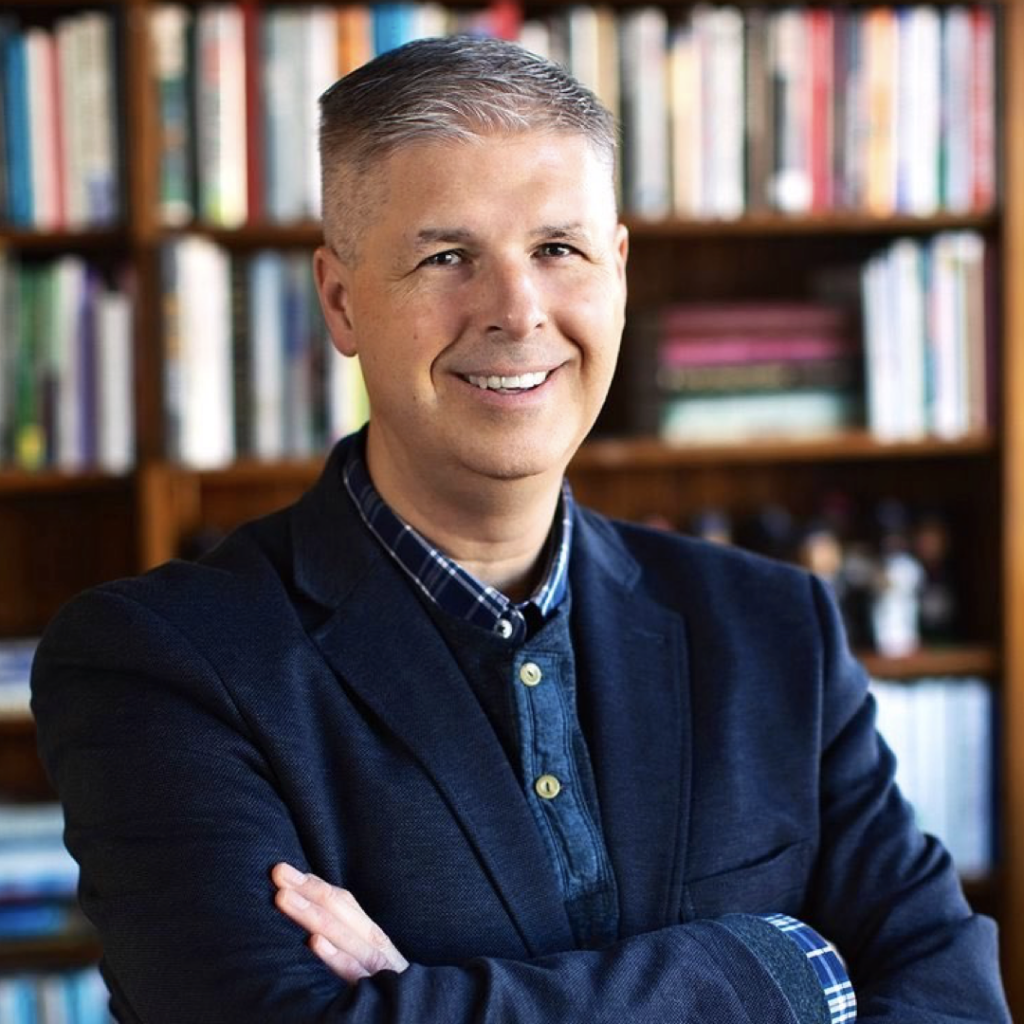
Charles Marohn, known as “Chuck” to friends and colleagues, is the founder and president of Strong Towns. He is a land use planner and civil engineer with decades of experience. He holds a bachelor’s degree in civil engineering and a Master of Urban and Regional Planning, both from the University of Minnesota.

Marohn is the author of Strong Towns: A Bottom-Up Revolution to Rebuild American Prosperity (Wiley, 2019) and Confessions of a Recovering Engineer: Transportation for a Strong Town (Wiley 2021). He hosts the Strong Towns Podcast and is a primary writer for Strong Towns’ web content. He has presented Strong Towns concepts in hundreds of cities and towns across North America. Planetizen named him one of the 10 Most Influential Urbanists of all time.

Chuck grew up on a small farm in central Minnesota. The oldest of three sons of two elementary school teachers, he joined the Minnesota National Guard on his seventeenth birthday during his junior year of high school and served in the Guard for nine years. In addition to being passionate about building a stronger America, he loves playing music, is an obsessive reader, and religiously follows his favorite baseball team, the Minnesota Twins.

Chuck and his wife live with their two daughters in their hometown of Brainerd, Minnesota.

Read the podcast transcript here

Eve Picker: [00:00:12] Hi there. Thanks for joining me on Rethink Real Estate. For Good. I’m Eve Picker and I’m on a mission to make real estate work for everyone. I love real estate. Real estate makes places good or bad, rich or poor, beautiful or not. In this show, I’m interviewing the disruptors, those creative thinkers and doers that are shrugging off the status quo in order to build better for everyone.

Eve: [00:00:55] Charles Mahron is a recovering engineer. He used to build roads. Charles followed all the rules he learned while studying to become an engineer. But in 2008, well into his engineering career, he became disenchanted with the notion that more roads lead to prosperity. So, Charles started blogging his thoughts. He advocated for a new approach to land use and warned about the dangers of suburban sprawl. With each blog, Charles gained readers until the blog converted into a nonprofit organization called Strong Towns. Today, Strong Towns has millions of followers. Listen in to learn more.

Eve: [00:01:43] If you’d like to join me in my quest to rethink real estate, there are two simple things you can do, share this podcast and go to rethinkrealestateforgood.co, where you can subscribe to be the first to hear about my podcasts, blog posts and other goodies.

Eve: [00:02:09] Hi, Charles. I’m really honored to have you here today.

Charles Mahron: [00:02:12] Thanks, Eve. It’s so nice to chat with you.

Eve: [00:02:15] Very nice. So, you recently wrote a book called Confessions of a Recovering Engineer: Transportation for a Strong Town. That’s a really tantalizing title. What’s behind it?

Charles: [00:02:27] Well, I have a lot on behalf of the engineering profession to confess to people. I think there’s a lot that people take as being normal in our transportation system. And when you work inside of it, when you work as an engineer, when you work as a design professional, many of those things that are taken as gospel, that are taken as this is the way things are and this is the way things have to be, are built on a very kind of fragile construct. And it’s a construct that conflicts with a lot of the way humanity actually operates. We have these books that are seen as the, you know, the founding texts of our profession. We have these doctrines that are brought down from on high. And I just wanted to pull back the curtain and talk seriously about those things and make it far more accessible for people, particularly people who don’t think the system is working very well.

Eve: [00:03:30] So, I suppose my question is, is what made you think about that at all in the first place, if you were trained just like all other civil engineers in your profession?

Charles: [00:03:38] It’s a fair question. I’m not a very good engineer is the way I put it. I think a good engineer is someone who colors within the lines

Eve: [00:03:49] Embraces it.

Charles: [00:03:50] Yeah, follows the rules. I got a civil engineering degree and then worked as an engineer, got my license, but then I went back to graduate school and got a planning degree, a degree in urban planning and it’s interesting because I have only met one other person who holds the same two degrees, yet, I’m sure there are more, but I’ve only met one. They seem very similar, right? They’re both working with the built environment. They’re both the physical layout and construction of cities, but they’re two very different mental approaches and two very different backgrounds. One is a very left-brain pursuit; one is a very right brain pursuit. And I think that discomfort with both allowed me to see it in a different way. And so, I’ve acknowledged I’m not a very good engineer, I’m not a very good planner, but I am a really good strong towns advocate, which kind of tries to understand and reconcile some of the things that conflict between both of those pursuits.

Eve: [00:04:54] So then, you gave up this job and you created a nonprofit, Strong Towns, eventually. What is Strong Towns?

Charles: [00:05:01] Well, giving up the job was part of figuring that out, right? I started to write a blog and it was an evenings and weekends kind of pursuit. I was interested in figuring out why our cities were going broke. Why the cities that I was working with, which were all very fast growing, you know, had some degree of affluence, although a lot of them were very small and very poor. But they were all investing in growth in a certain way. And it was very obvious to me that this was not leading to success. And so, I started a blog way back in 2008 to explore that. Like, why is that? And, you know, because you do writing as well. When you write, it forces you to think through ideas in ways that, you know, just talking about them or just experiencing them doesn’t. And so, three days a week, I would write about these issues. And out of that came this kind of body of insight that some friends of mine said we need to start a nonprofit over. And my first thing was like, No, I don’t want to do that.

Charles: [00:06:09] And they’re like, no, we insist. And they actually filled the paperwork out and got it going. And all of a sudden, we had a 501C3, and then a foundation gave us a grant, and I’ve been trying to figure out how best to infect the world with a new set of ideas ever since. And that’s really what Strong Towns is. Strong Towns is about sharing this message, here’s how we build cities that are financially strong and resilient. Here’s how we build places that are prosperous and places where people can, through their own efforts, working together with others, make their community a better place to live and a better place to pass on to the next generation.

Eve: [00:06:52] So, how many followers do you have today? How has that grown?

Charles: [00:06:56] It depends on how we measure it. I remember in the very early days when I would have, you know, 20 readers in a month and I’d say, oh, my gosh, that’s incredible. We had two and a half unique viewers of our content last year, so it’s grown quite a bit. Strong Towns has, I think, 4200 members, which are people who have donated to our 501C3 in the last 12 months. And that also is trending upward. It has grown to be quite a movement of people dedicated to doing something different.

Eve: [00:07:30] So, let’s talk a little bit more in detail. What are the key features of a strong town versus a weak town?

Charles: [00:07:39] Yeah, it’s a very good question. And we have, you know, a Strong Town’s approach and Strong Town’s principles. We are currently in the midst of something that we call the strongest town contest. And in that contest, we try to identify places that are using good practices. So, ultimately, we describe a strong town, not in terms of a destination, but in terms of the journey. Are you doing things in a bottom-up way? Are you attentive and attuned and sensitive to the struggles of people in the neighborhood as opposed to the cash that you can get from this program, that program or this developer? Are you building things at a human scale as opposed to orienting your neighborhoods around the automobile? Are you taking incremental steps to try to learn and figure things out? Or are you doing kind of these big Hail Mary transformative projects? So, for us Strong Towns is about a frame of mind. I’d like to use the analogy, it’s a lot like diet and exercise for a city. How do we have good practices, good approaches, good discipline about how we go about things and then we celebrate that because the results are there, the results pay off.

Eve: [00:09:02] So, I mean, let’s talk about practices. I’m just wondering what position you take on key issues, just to spell it out for our listeners. So, what about zoning and density? What makes a strong town?

Charles: [00:09:16] I always like the density question. When it comes to zoning, and it comes to density, I think we recognize a couple things. First, if we look at traditional development patterns, the pattern of development we had really before the Great Depression and even going back a little bit further than that, it was organic. And in being organic, it did not have anything like the regulatory framework we had today. That is almost like a libertarian ideal of what a city is. I’ve been fortunate enough to spend a lot of time in Italy. I think you can think of like the Italian hill town is such a beautiful, wonderful place to be built with completely without regulation. We recognize, though, that today the body of knowledge that created that is in a sense, absent. All of the incentives, all of the cultural understandings, not to mention the trades understandings of how to build places like that. And so, zoning becomes this like essential thing we need to make our cities work. And we spend a lot of time on how do we make zoning codes better, less responsive to, again, the cookie cutter exercise of repeating the same development pattern over and over, and instead the very kind of humble and urgent exercise of making sure that the things we build connect with and respect neighborhoods and the, you know, the adjacent buildings and all that.

Charles: [00:10:56] If we take the next step to density then, we actually are not anti-dense, we’re very pro kind of density as an outcome, but we tend to struggle with density as a metric. I see a lot of planners who obsess over density and they build really horrible places. What we talk about is neighborhoods maturing over time. Every neighborhood should be allowed to evolve and mature and thicken up and the goal of a good street, the goal of a good zoning code, the goal of a city regulatory process should be to assist every neighborhood in reaching its next level of maturity. So, if you are a toddler neighborhood of single-family homes, the expectation should be how do you become an adolescent neighborhood of duplexes? And if you’re an adolescent neighborhood of duplexes, how do we get you into something that would be more intense. Two, three story buildings, densities of multiple units per lot. How do we get you to that next stage of success? That kind of mimics the development patterns of the past that were so successful. It also tends to harmonize a little bit some of the tensions across neighborhoods that make us resist growth. And I think it’s a more kind of realistic and reality-based way to experience prosperity as opposed to neighborhoods that are stagnant and designed to never change.

Eve: [00:12:29] So, I’m going to go back to something you said, which I think maybe a lot of people don’t agree with, and that how do you move a single-family neighborhood to the next level of success, which is duplexes? And I’m pretty sure that there’s a lot of people in this country who don’t see that as a successful move. Why is it important?

Charles: [00:12:52] Yeah, there are a lot of people who don’t see that as success. I respect that and understand that, but I wholeheartedly disagree. The marketing brochure of the post-World War II pattern of development is stagnation and eternal prosperity. The idea is that if we go out and build the perfect neighborhood and we plan it just right and we zone it just right and we build the homes in a certain way, and then we come in with this regulatory overlay after it that makes it stagnate in place that we will somehow be able to not only achieve prosperity but sustain prosperity. And the reality is anybody can go look at 1950s and 1960s neighborhoods and observe that for almost all of it that is not the case. Suburbia, post-war development has a natural life cycle to it. And the life cycle is very simple to understand. It is one generation of being brand new and prosperous, a second generation of hanging on and trying to sustain that prosperity. And then a third generation of decline and sometimes gentrification, but oftentimes just decline. This is the way that all systems that are artificially stagnated operate and as opposed to pre-war pre-depression development patterns, which always had the next increment of development intensity as part of their DNA, you would start small, you would add on, you would take that house that kind of went into decline and renew it up to something more intense, more productive.

Charles: [00:14:36] And this renewal process created this kind of natural vibrancy, a cycle of life that we see in neighborhoods that allowed them to mature and allow the people who lived in it to participate in that maturing, both physically participate, like go out and build stuff, but also financially participate, gain in wealth and gain in standing as their neighborhood became a more complete and more productive, a more valuable place. We’ve arrested that from our development patterns. So, now you know your choice is one version of stagnation or another. And if you’re very affluent, you can get a high-end version of stagnation. If you’re middle class, you can get a middle-class version of stagnation. And if you’re poor, which, you know, increasingly we are a very poor country with very poor neighborhoods, you can have the poor version of stagnation. And to me, this is a one-way path to a stagnant economy, a stagnant country, a stagnant population.

Eve: [00:15:42] I think that’s a great description. It’s bringing to mind some places I know that are tackling that. But then how do streets and roads and parking minimums and walkability play into that change? Because, you know, if you start with the single-family suburban neighborhood, how can you progress to the next level in a place that’s really designed quite rigorously never to be that?

Charles: [00:16:07] Yeah, it’s really hard. And I’m not going to pretend that it isn’t hard. I’m on record as saying I think that over half of what we built post World War Two is going to ultimately go away, that we don’t have the wherewithal to maintain it. We don’t have the desire to maintain it. We don’t actually have the capacity to maintain all those roads and sidewalks and pipe. We certainly don’t have the money to maintain it. And so, the question that I kind of deal with is less about how do we get people who live in single family home neighborhoods to allow that accessory apartment or allow the house next door to convert into the duplex or that kind of thing. And I focus more of my time on the neighborhoods that are ready to do this, the places that are ready to embrace it. How do we clear the things out of their path so that this natural evolution can start to happen again? Because I’m convinced that those are the places that actually will be the leaders where, when this becomes a more, and it’s becoming more of a widespread phenomenon. But I think when that expands even more, we need good places to turn to as examples to say, okay, the trajectory of my neighborhood is one of two paths. Path number one is the stagnation and decline. And ultimately my neighborhood is going to fail and go away and be a place that doesn’t thrive. That is the natural destination for the stagnant post-World War II development pattern. Or option number two is like this neighborhood over here, which, yeah, they allow duplexes and triplexes and corner stores and other things to come in. But wow, look at the cool place that that is now. Look at how that has added to their prosperity. And those places are growing in value, growing in prosperity, growing in wealth. I want to be like that. And so, we’re really focused on getting, I think, those green shoot kind of neighborhoods up and started that, as this accelerates, we can point to and say, be like this. This is a better option.

Eve: [00:18:17] Right. You know, this brings to mind I am actually developing a project in Australia with my sister, just a small 15-unit building. But it’s in a neighborhood that was, you know, the city very purposefully said we want this to be the next Barcelona. And what’s really interesting about the neighborhood is it’s a hodgepodge of zoning. It’s got commercial and retail and industrial and housing all jammed together. It’s a fabulously vibrant place. It has a very long main street with, you know, 20 restaurants, five banks, everything you really want in one place, lots of public transit and their goal is to remove all parking in the next ten years. So, that’s kind of taking it to the ultimate, you know, hillside Italian town ideal, right. So, I suppose you need to have visionaries who get that to be able to drive that forward, you know?

Charles: [00:19:14] Yes. I feel like what you’re describing is a neighborhood, right? Like a real neighborhood. It’s a real neighborhood. Yeah. And the thing about a real neighborhood is that once it starts to accelerate, the massive waste that is parking becomes revealed to everybody.

Eve: [00:19:34] It’s expensive. Yeah.

Charles: [00:19:35] If we didn’t have this parking, we could have more seating. We could have more places to, you know, more room for walking. We could have more stores. We could have more stuff.

Eve: [00:19:44] More housing, more housing.

Charles: [00:19:47] More housing, right. In most cities in the US, parking is looked at this necessary thing, maybe even a necessary evil that we need for transactions to take place. But once you start accelerating in this way, parking becomes the huge, obvious extraneous waste of resources, and most cities seek to lessen it or eliminate it altogether, which is a really smart step to take.

Eve: [00:20:16] Yeah, and what’s been interesting to watch there is the evolution of public transit and how that city’s recognized the value of the public transit they have, which isn’t strong everywhere, right. But in this particular place, there’s a tram, they’ve added a subway station. And these have all been towards this goal of making this a walkable only place. It’s been really interesting to watch and I really want to live there. I mean, I’m not going to live there full-time. My home is in the US, but it makes me want to be there because it’s so incredibly vibrant.

Charles: [00:20:51] Yeah.

Eve: [00:20:51] So, this is really a fiscally responsible argument too, right? That’s really what it’s all about.

Charles: [00:20:57] That is where I started and that’s where I kind of focus. And it’s fascinating because I’ve gotten to places where I think a lot of people who quite frankly don’t care about the money end up as well. But I got there by doing the math, by actually sitting and running the numbers. And you brought up transit. Transit is an interesting financial case because here throughout the US we tend to treat transit as this charitable overlay of our transportation system. And when you think of it as charity for the poor or what have you, it really doesn’t work very well. It doesn’t function very well and it doesn’t create a lot of value. When you look at transit and understand that when you can successfully deploy transit, you can actually get rid of that wasteful automobile space. You can you can move out the parking, you can move out the cars because you don’t need them because people can get around easily. You can get more transactions, more people per block, per unit of space. You realize that transit is the biggest wealth accelerator that our cities have.

Eve: [00:22:05] Right.

Charles: [00:22:06] And I think we can embrace that as a financial reality while also embracing some of the other things that we value about transit in terms of being able to help people and being able to, you know, create better places for people to live and places where people who can’t afford an automobile can also utilize it and be very successful with that.

Eve: [00:22:28] I’m going to ask a question I normally don’t ask, but I’m going to bring politics into this. You’re a Republican and I’m a Democrat. And why should we both believe in strong towns? I know we do, but why should we?

Charles: [00:22:42] It’s a good question, because I know there’ll be people who will react to that strongly.

Eve: [00:22:48] I’m sure.

Charles: [00:22:49] In Minnesota, we have the caucus system. So, for our primaries, you have to identify a party and go and sit in a room with a bunch of other people and talk about policy. And for many years I caucused with the Republican Party. I haven’t caucused with the Republicans since about 2012, which is neither here nor there. I don’t generally vote Democrat. I voted a lot of independent and third party the last maybe decade, but I’m certainly more conservative than I am progressive. So, it’s a very fair insight.

Eve: [00:23:24] Right. I really meant it as you, generally. You know, I mean.

Charles: [00:23:30] Yeah. No, totally get it.

Eve: [00:23:32] I hope it didn’t make you feel uncomfortable.

Charles: [00:23:34] No, no, not at all.

Eve: [00:23:36] I generally vote Democrat, but from time to time I’m really annoyed with them. So let’s, so I think we’re all on that page, right?

Charles: [00:23:44] Yeah. No, we’re on the same page. Yeah. I voted for way more Republicans in my life. But the Republican Party, we’re in a very interesting, like, strange political time, right?

Eve: [00:23:54] Very strange. Yes. Okay. Let’s just say, why should everyone believe in strong towns?

Charles: [00:23:59] Yeah, let me answer your specific question, because I think it’s very good because I do think Republicans should be about cities. Right. And Republicans tend to not be about cities. Republicans tend to be anti-city. Right. If we go through the things that make me personally a conservative and let’s traditionally look at things like fiscal prudence, responsible government, family values, community. These are all things that require a community. They require people working together. They require people living in spaces together. And when we step back and analyze that and look at that about the most dysfunctional way you can arrange people on a landscape financially, community wise, working together, family values, prudence, all these things disappear the more dissipated we become, the more kind of separated from each other physically, which is what the marketing brochure of suburban America is. The more we actually undermine those values. And I will throw a bone to the progressives because I’ve learned to really appreciate and value, if not the means, at least the intentions of some of my progressive friends.

Charles: [00:25:25] I think if we look at the suburbs, we recognize that these are largely places that through zoning, through our way of assembling them, through our way of investing in them, have segregated themselves by class at the very least. And to a degree that is almost pathological. If you’re going to live in $200,000 house, you will be in a pod with other $200,000 houses. And if you’re going to live in a $400,000 house, you’re going to live in a pod with other $400,000 houses. And there will be earthen berms and forests and fences between you because God help us, if someone who could only afford a $200,000 house had to interact with someone who could afford a $400,000 house. This is a pathological degree of separation that we have brought into our places that is anti-human anti-community and really, I think, anti-everything that conservatives suggest that they value about, you know, just about living, about life, about places.

Eve: [00:26:33] And probably caused a lot of unnecessary friction.

Charles: [00:26:36] Yes. And I write about this in confessions. I think there’s a libertarian aspect of modern Republicans that starts and ends with equating the automobile with freedom. And you get to crazy places where I will have people like Randal O’Toole saying that the proper role of local government is to go to the state legislature and lobby for more government funding for roads, because that will give people freedom to drive more. And I believe I’m a little more intellectually honest than that, I would like to think. But when I look at the automobile, I look at a tool that is really helpful for moving me long distance at speed. But I look at it as a tool that is not very helpful for allowing me day to day to take one block two block six, block 12 block trips. But I’m forced to do it in my automobile because of the very, very expensive environment that we’ve worked. And then, by the way, I’m also required to pay large amounts of taxes for this environment because it’s not financially solvent. And I’m required to sacrifice other services in my community, like maintaining the park and running a good government because we don’t have the money to do those things because we’ve spent it all on these roads. So, there’s a very good fiscal conservative argument, but you have to get beyond the automobile equals freedom libertarian overlay to that discussion.

Eve: [00:28:14] So, what crises are we facing that you think make your argument an imperative today?

Charles: [00:28:20] There are a lot of overlapping crises, obviously. I mean, I think we’re in very tumultuous times. I’ll say this and it’s going to sound a little over the top, but, you know, there’s a little bit of like the Romanesque decadence thing that we’ve gone through. I remember watching The Hunger Games and I think a lot of people watch The Hunger Games in the US and we’re like, Yeah, I can identify with District 12 and all this, and I’m like, no, no, no, we’re paying ‘em. We’re like the capital. You don’t get it. Like, that’s the way we are living today. But the crises that we focus on at Strong Towns primarily is the financial crisis that local governments have. Local governments are broke. If you go to any city across the country that is mature. So, not a suburb in their first or second life cycle, but any place that has gone through that illusion of wealth phase of this development pattern, what you’ll find is that they have really high taxes, they have high levels of debt, they have enormous backlogs of infrastructure maintenance that they cannot fund.

Charles: [00:29:32] And they are, in all intent and purposes, a ward of the state unable to provide reliably their basic services. That is a failed local government. And we have thousands of them here in the United States. We are trying to help them understand why they are broke and we are trying to help them take rational steps to deal with that, because ultimately Detroit is not some kind of crazy anomaly. Detroit is the destination that you get when you mismanage your city, when you take a great city and you spread it out, drive up your costs, denude your tax base, you get Detroit. And Detroit is a beautiful place that has struggled and its people have suffered as a consequence. And to me, that’s the crisis that gets me up in the morning, is I want an alternative path for cities that have gone decades down this road.

Eve: [00:30:32] And what about social equity? How does that play into the equation for a strong town?

Charles: [00:30:39] It’s a very good question. I don’t talk about social equity the way that progressives talk about it, because I’m not a progressive. I’m a conservative. And I know that sometimes riles people up because they want to be affirmed in their approach and their way of talking about things. But if people will be generous with me, I think they will hear someone speaking who shares a lot of their goals and values. When we look at the landscape of North America today, what we see is that the most productive places in every city is the pre-great depression development pattern. If we just look at cities through a financial lens, what we see is that those neighborhoods that were built before the 1930s, the walkable kind of mixed-use gridded neighborhoods around neighborhood cores or a downtown, those are the places that financially are the most successful in every city. And here’s the key insight to this. They’re the most successful even when they are occupied by the poorest people in the community. And often that is the case. I mean, you have fast growing cities where these neighborhoods have gentrified, but the vast majority of US cities, the poorest people in the city, live in the old neighborhoods. And those people are subsidizing through their taxes that they pay, through the rent that they pay, that their landlord pays the taxes they are subsidizing the new affluent development that is being built out on the edge.

Charles: [00:32:11] And so, once we recognize that, that that is where our repository of wealth is. It is a massive injustice for us to not only ask these people living in these struggling neighborhoods to pay for a luxury that other people are unwilling to pay for in their own neighborhoods, but that we are devaluing and not providing the level of service and support that is commensurate with not only just being a human being. I mean, I think we can make that argument and I would be willing to go there. But my gosh, with the level of commitment and the level of contribution that they’re making to the city, my office is in a very poor neighborhood. It’s adjacent to the neighborhood that I live, which is not a very poor neighborhood, but is a, you know, on the edge of that. This neighborhood here is subsidizing the wealthy people who live on the edge of town, on the lakes. There is no reason that this neighborhood should ever want for broken and cracked sidewalks for a rundown park or any of those things. Yet we are required to live with all of that while our city invests millions of dollars out on the edge. It’s an injustice combined with a ludicrously dumb financial approach for the community. And it’s that intersection that I think can bring us together, right?

Eve: [00:33:39] So, I have to disagree on one thing. I think you are mis-labeling yourself.

Charles: [00:33:44] Please.

Eve: [00:33:44] That is a very progressive point of view. Well, it’s the same point of view I hold. I mean, I think these labels are kind of ludicrous. And, you know, you’re, it’s a very pragmatic way to approach it, but it comes to the same conclusion. Right?

Charles: [00:34:01] Here’s where I feel that you and I overlap Eve, and it’s where I find a lot of people politically who identify from a top-down way in different factions over that. You’re a very bottom-up thinker. I’m a very bottom-up thinker. And when you are very bottom up, what you recognize is that cities need people who are sensitive to conservative things, and they need people who are sensitive to progressive things, and they need those people to work together in a place. And that is how cities have always been throughout all of human history. It’s the top down where we get divided and where we struggle and where we kind of lose each other. And so, I try to avoid all those top-down conversations because I don’t find them to be very helpful.

Eve: [00:34:50] No, I agree. And I think political divide really for me comes around some very emotional and personal issues, not necessarily these ones. So, at least for me, that’s true. So, I think we agree on all of this. And in fact, you know, I live in downtown Pittsburgh and, you know, my view out the front door is often a homeless person. And I feel very uncomfortable in places where people are segregated into one class. I don’t think, I don’t know why I feel that discomfort, but I like and need to be where, you know, the whole of mankind is because that for me is reality. So, everyone has a different way they want to live their life, I suppose.

Charles: [00:35:37] I think the idea of discomfort is an interesting one, right? Because what I hear you saying is that I feel discomfort perceiving this in this way, and I’m going to give some validation to that because I think that as humans, we are wired to, for example, find nature to be beautiful, right? In many ways. But nature is nothing but organic chaos.

Eve: [00:36:05] It’s violent.

Charles: [00:36:07] It is. It is. But the beauty emerges from that. And what we try to do as humans is create and impose a certain order on the chaos. And what happens is that you don’t get the emergent beauty then. So, we can look at a city like Charleston and we can go to the old core of Charleston or Pittsburgh, where you live, which has beautiful pre 1930 neighbors. I mean, just gorgeous places.

Eve: [00:36:38] Gorgeous and the architecture in downtown is spectacular. Beautiful.

Charles: [00:36:42] Spectacular. We can go to these places and we can see that what emerged from that messiness and chaos was something very beautiful. And it feels almost natural and organic. The way that a forest does, because it did emerge in this way. But then we can go to a different neighborhood that was built in the 80s or 90s or in the last couple of decades, and we see something that is very orderly and is very clean, but almost like orderly clean in a hospital kind of way. Right. Like everything has its place. Everything’s been taken care of, but it doesn’t feel natural. It feels unnatural. And for people who are sensitive to this, it actually is very disorienting.

Eve: [00:37:28] It’s very disorienting. And my question is, is which one is likely to have more tourists?

Charles: [00:37:36] Well, yeah. Yeah.

Eve: [00:37:38] I mean, I’m an urban designer, not an urban planner. So, I think about, you know, the physical aspect of what makes streets and squares great places to be. And, you know, Italy is really the best place in the world to understand this. And when cities sort of stomp out the ability for those surprising moments through zoning or not permitting a wide variety of density, you start to get creep into that very sterile sort of boring zone. So, I don’t know, for me, it’s like, make room for that chaos a little bit. I like my cities with a little grit in them, you know. My husband always laughs when we drive into the suburbs and I start looking very nervous because there’s something about in my brain I need markers to help me figure out where I am. And I just get lost in the suburb. It’s a sea of all the same to me. And it’s not, it doesn’t, I don’t know where I belong there. Does that make sense?

Charles: [00:38:43] It is disorienting. Yes. Let me tell you a funny story. We had a friend of Strong Towns, actually, one of our early colleagues here, who would write for us occasionally. He was getting married and he had this funny idea to go out and take his engagement photos in a suburb. And you know how most people, if you’ve seen like my daughter, I’ve got a daughter, graduated from high school and she had her grad photos taken. And of course, they go to, you go to a city and you sit on the bench and you stand by the wall and you do. They’re all urban photos or nature photos, right? Like she went out to a park and stood in the park and stuff. But Nate Hood, this friend of mine, went out with him and his wife and took the pictures in a cul-de-sac and in like a strip mall and at like a suburban setting. And it was so, the thing about it is the concept was funny, right? But the photos themselves were so weird because you just don’t, people don’t pose in these environments. They’re not appealing to look at. They’re not appealing to be in. You looked at them and it didn’t feel comfortable or safe. You got this very, it was the abstract, right? It was you felt a level of discomfort looking at these photos, even though it was two very attractive people all dressed up, very nice, posing, very nice. They were in a landscape that was very anti-human, which is what a suburb is. It’s very car oriented, anti-human. And so, they looked ridiculously out of place and it was stunning. I mean, it was visually stunning to see.

Eve: [00:40:33] Interesting. So, do you live in a strong town? Like what are the features of your hometown that you love and what would you fix if you could?

Charles: [00:40:43] I would fix a lot of things if I could. I am blessed with living in a city where my great, great grandparents lived. In fact, I grew up on the family farm that was homesteaded by my great, great grandparents. And I live in the city now near where I used to walk to from school to have lunch with my grandmother when I was a little kid. I take the dog for walks and we go past the cemetery where my ancestors are buried. I go to church right over there, like right outside the window. And on the wall is a plaque that has my grandfather’s name on it because he was a marine in World War Two. And they did something then to, to acknowledge that. So, I am here because this is where I am from and when I acknowledge that I can see a lot of the beauty in this place. But when I lose touch with that, which we all occasionally do, I start to get very frustrated. A lot of the early strong towns writing was me voicing frustration with my city, which I think in a lot of ways has become stronger over the last decade, has evolved in our thinking. There’s an article in the paper today about how we’re looking to get rid of our parking minimums throughout the core of the downtown, which is 20 years overdue, but better late than never.

Eve: [00:42:16] What city is this?

Charles: [00:42:18] Well, Brainerd, Minnesota. You probably have never heard of this. It’s a couple hours north of Minneapolis, Saint Paul.

Eve: [00:42:23] Parking minimum reduction is taking hold rapidly. But anyway, please go on. Yes.

Charles: [00:42:28] Well, my city is 14,000 people. So, that gives you some context. And it’s not 14. Yeah, it’s not 14,000 people adjacent to a larger city. It’s 14,000 people two hours away from Minneapolis. So, we’re a long way away. Yeah, but, you know, I have found a lot of beauty here in working with my neighbors and in doing things that are very Strong Towns. This summer we have a park, a small little neighborhood park that’s kind of been neglected and overlooked. And some of us are getting together, and as soon as the snow melts, which it’s the end of March and it was below zero last night, so I don’t know what is going on. It might be June before we get rid of the snow here. But we are going to go out and spend a summer making this park a more special place just with the resources that we have and the elbow grease and the that kind of stuff. So, I feel like we have aspects of a strong town and like any place, it is a work in progress and a struggle. But I see it starting to move in the right direction. And I guess ultimately I’m confident and I think this is a core part of being part of a strong town. I’m confident that my contribution will not be wasted. Like I’m confident that we won’t get there. Like this is always going to be a journey and there’s always going to be things that frustrate me. But I am more confident now that the things I do are going to matter and will make life better for people who come after me. And a decade ago, I certainly couldn’t say that.

Eve: [00:44:20] Well, that’s a great note to end this podcast on. I certainly appreciate what you do and I really enjoyed talking to you, Chuck.

Charles: [00:44:32] Thank you, Eve. That is very sweet. And I hope you know that I follow your work as well. And I feel like your part of the answer is an important part of the answer. This whole Small Change, bottom-up funding concept is a very radical way to activate capital in ways that I think connects our heart to our pocketbooks and can be, is essential to transforming our places. So, I’m a huge fan of yours as well. And I’m grateful you took the time to put this together. Thank you.

Eve: [00:45:22] I hope you enjoyed today’s guest and our deep dive. You can find out more about this episode or others you might have missed on the show notes page at RethinkRealEstateforGood.co. There’s lots to listen to there. Please support this podcast and all the great work my guests do by sharing it with others, posting about it on social media, or leaving a rating and a review. To catch all the latest from me, you can follow me on LinkedIn. Even better, if you’re ready to dabble in some impact investing, head on over to smallchange.co where I spend most of my time. A special thanks to David Allardice for his excellent editing of this podcast and original music. And a big thanks to you for spending your time with me today. We’ll talk again soon. But for now, this is Eve Picker signing off to go make some change.

Image courtesy of Charles Marohn

Toronto

May 30, 2023

Canada has opened its arms to immigrants. We tried to build a wall. This is how that decision plays out.

Drive just 5 hours directly north from Pittsburgh, and weave around the Great Lakes a little, and you’ll be in Toronto, perhaps the most multicultural and multi-racial city in the world.

With the foreign-born population in Toronto now over 50%, New York City is in the rear view mirror. Pittsburgh is not even a speck on the horizon, with only 4% foreign-born residents. This multi-cultural population gap plays out in so many visible and important ways that it’s impossible to even begin to list them here. But what’s most visible when you visit Toronto is that minorities are fully-integrated into every walk of life. They are economists, real estate developers, taxi cab drivers and business owners. They have turned Toronto into a very colorful mosaic indeed. Every corner of Toronto is a thriving, vital metropolis.

And then there is the construction. There is not a block that has escaped. The foreign-born population is expected to rise by another 500,000 immigrants over the next year. As Ontario works to add 1.5 million new homes by 2031, construction in Toronto is unrivaled by any other North American city. According to the RLB Crane Index for North America, Toronto, at a count of 238, has more cranes in use than all U.S. cities combined. And while Seattle (in second place) has a commendable 51 cranes, Pittsburgh is not on the list at all.

This dynamic metropolis with a core of soaring skyscrapers is not shying away from immigration. In India, Canada is hailed as pretty much the holy land. Adverts abound in Punjab urging one to “Study English, move to Canada.” Along the way, someone (collectively) decided that an immigrant is an economic driver and will bring prosperity. And that decision defined the remarkable course of Toronto and Ontario.

They decided to encourage immigrants. We decided to build a wall.

Waste to Energy.

May 24, 2023

Samuel Alemayehu is an experienced global serial entrepreneur and active angel investor. His work in the
past two decades has been guided with an obsession to empower the individual and sustain the village.
His current focus is running Frontier Resilient Capital (FRC) to incubate or invest in companies who are
developing or commercializing breakthrough technologies that empower the individual (personalized
web) and sustain the village (biomanufacturing, renewable energy, carbon capture and circular
economy).

Sam started his career in Silicon Valley as a serial entrepreneur launching two companies from his college dorm room. He first got introduced to venture capital at Venrock Associates, where he focused on consumer media investments. He then moved to Africa, founding and investing in numerous companies across the continent and in a range of industries through Cambridge Investment Group and most recently FRC. Sam incubated 4AFRI at Venrock before growing the platform in 12 African countries with over 25m customers. He then built a mobile gaming platform, LotoPhone, in 18 countries with millions of customers before exiting the startup in 2013. He also created Sen Sante in partnership with leading investment banks to help develop large health infrastructures in Africa with a mobile based universal health insurance. Sam created mobile solutions aimed at empowering the individual.

Over the next decade Sam incubated Cambridge Industries Ltd, East Africa Electric Ltd, and Contingent Technologies Inc. to accelerate the implementation of pioneering infrastructure projects in emerging cities. He set up the first locally manufactured wind study program in over two dozen sites throughout East Africa. He oversaw the planning, design and construction of the first municipal waste-to-energy facility in Africa, located in Addis Ababa, Ethiopia, as part of a pan-African sustainability city park project to industrialize the circular economy with the initial facility built at a cost of USD120m. The full project has created over 20,000 jobs and aims to employ over 250,000 before the end of 2030 in ten cities. Each facility is designed as a multi-purpose plant with numerous functions, including metal recycling, brick production, industrial steam, producing biodegradable plastic, and modern insect farming. Sam has recently invested in commercializing breakthrough technologies through projects in Uganda, Kenya, Cameroon, Nigeria, Ghana, Senegal, DRC, Somaliland, Djibouti, Botswana, Angola, Namibia, and South Africa.

Sam is an active angel investor globally and sits on the board of numerous companies as an investor. He also sits on three non-profit boards: the Ron Brown Scholars Program, KID Museum, and VC Include. Sam is a founding partner at Pitch and Flow, an innovative storytelling platform that uses the global appeal and power of hip-hop to showcase and celebrate the next generation of entrepreneurs. He is a graduate of Stanford University School of Engineering and a World Economic Forum Young Global Leader.

Read the podcast transcript here

Eve: [00:00:14] Hi there. Thanks for joining me on Rethink Real Estate. For Good. I’m Eve Picker and I’m on a mission to make real estate work for everyone. I love real estate. Real estate makes places good or bad, rich or poor, beautiful or not. In this show, I’m interviewing the disruptors, those creative thinkers and doers that are shrugging off the status quo in order to build better for everyone. 

Eve: [00:00:54] Today I’m talking with Samuel Alemayehu, born in Ethiopia and educated in the US, Samuel is a serial entrepreneur and investor focused on deploying technology as an equalizing force. “Let’s change the world to technology and products that empower the individual and sustain the village” says Samuel. Through his work with Cambridge Industries, Samuel is revolutionizing the way we think about sustainable energy and infrastructure. He built the first waste to energy plant customized for sub-Saharan Africa in Ethiopia, the Reppie Waste to Energy project. The project takes 80% of the city’s garbage and turns it into 25% of its electricity. Samuel has boundless energy and a lot to tell. So, listen in. 

Eve: [00:01:53] If you’d like to join me in my quest to rethink real estate, there are two simple things you can do. Share this podcast and go to RethinkRealEstateforGood.co where you can subscribe to be the first to hear about my podcasts, blog posts, and other goodies. 

Eve: [00:02:24] Hello, Samuel. Thanks so much for joining me today. 

Samuel Alemayehu: [00:02:28] Thank you for having me. Excited to be here. 

Eve: [00:02:30] Very excited. So, you have said “let’s change the world through technology and products that empower the individual and sustain the village”. And I’m just wondering how you’re tackling that? 

Sam: [00:02:44] Exactly. So that has been our mantra as long as I remember. And whenever you’re building any kind of product and services, it has to focus on the individual, kind of be usable. Does it improve our life? And most importantly, does it improve the community that we live in sustaining our village? And at the end of the day, this is a global village and we’re doing it one waste trash at a time and starting in emerging markets. And we have evolved to do many things right now. Um, but our focus has been how can we take something that has been a headache, a nuisance and convert it into a treasure, convert it into something of value and do it in a way that really addresses water treatment, sanitation, and most importantly, a vibrant circular economy in every city. 

Eve: [00:03:42] So this you’re referring to the Reppie waste to energy plant, I think first and foremost, right? 

Sam: [00:03:48] That’s the first facility we’ve done. 

Eve: [00:03:50] And that was, where is that located? 

Sam: [00:03:53] That is located in Addis Ababa, Ethiopia. 

Eve: [00:03:56] And that’s where you were born, right? 

Sam: [00:03:59] I was born and raised there, and I left when I was 14. 

Eve: [00:04:02] So what goes around comes around, I think. So, tell me tell me why. Why did you start this waste to energy plant? 

Sam: [00:04:12] So, a lot of people start projects or entrepreneurial endeavors for something they love. A labor of love. For me, it was a labor of hate. Hated the garbage in Addis Ababa. I, it’s just, it’s everywhere. Um, you know, you would think if you live in a wealthy neighborhood, it’s collected and taken out, out of sight, out of mind. But no, not for me. Not where I grew up. Like I remembered the garbage was everywhere. We picked around, it really annoyed you. And even in the area where it’s being dumped, it used to be the outskirts, but it’s smack in the center. It is not a modern, even, you know, landfill site, but it is something where we’re digging the ground and throwing this garbage. And it’s in a country that imports metal, that imports plastic, and we’re not recycling it, we’re not reusing it. And we’re not trying to come up with a way, want to address the health impact, the direct sanitation impact of the garbage, but also when this could be an opportunity to create something of value. And I, you know, I left Ethiopia when I was 14, did my high school in the D.C. area and then went to Stanford and then was a software engineer, did a bunch of different companies around software. So, when I came back to Ethiopia, I was like, okay, we need to do something about this and it needs to happen, and started working with those that have addressed it in Europe. But we wanted to create something unique for Africa because the waste was unique, the challenge was unique, the community was unique. 

Eve: [00:05:54] So how does the plant work? 

Sam: [00:05:58] So the first facility, because the overall concept is how do you build a facility that takes in garbage and creates value? That’s a purpose. And have minimal garbage out of it as possible? The very first facility that we built in Ethiopia, does combustion, but with a flue gas treatment, the same flue gas treatment that allows you to capture the nasty gases that would come out from burning it, because that allows you to reduce the significant amount of the waste and capture those gas through flue gas treatment as per the EU standard that allows you to be located within 100-meter radius of residential areas all over the EU. So that’s the standard that we followed. Then over time, when we’ve been implementing other projects, we started to add, hold on, for the food waste, how can we separate the food waste and what is the optimum value we could get out of food waste? And that was doing insect farming and that is taking the food waste, separating it and feeding it to black soldier flies that grow 230 times their weight within ten days. 

Eve: [00:07:06] Whoa.  

Sam: [00:07:07] And making that into chicken feed and fish feed and organic fertilizers. 

Eve: [00:07:12] Whoa. 

Sam: [00:07:13] So it becomes really, really incredible value-add. And then for the waste and then we say, ooh, what about the plastic waste? How can we separate plastic waste and recycle it in the most exciting way possible? So, we started working with scientists around the world that have been using new type of enzymes that break down the plastic, and that allows you to filter it and separate them. And then you say, what about once it has gone through the system? And if you are to use combustion and you’ve burned it, the ash that comes out, we could turn the ash into bricks. What about the metal that is in there? We use super magnets to separate out the metal. This facility in Addis right now alone is separating 3.8 million kilograms of metal every single year. 

Eve: [00:08:02] Wow! So, this plant does a lot more than one thing. 

Sam: [00:08:08] It does a lot of things within one facility. It is how do you take garbage, but how do you turn it into value? And one of those values is electricity. So, it is able to generate 185,000,000 kilowatt hours of electricity, which is the equivalent of about 20% of the household energy generated in a city of 5 million people. 

Eve: [00:08:31] Wow. 

Sam: [00:08:33] And then you have other byproducts, be it making interlocking bricks, recycling plastic, being able to create food waste and converting that into chicken feed, fish feed and other. So, currently, we’re in the process of building a new facility in Kinshasa, which is a city of 18 million people. It’s actually the largest French-speaking city in the world, double the size of Paris. 

Eve: [00:09:01] Wow. All these things I didn’t know. 

Sam: [00:09:05] You never know. And Kinshasa is this vibrant place. But we’re not using incineration and with the flue gas treatment, but instead, it’s fully entirely set up with what’s called anaerobic digesters. And we’re able to capture the gas and use the gas for energy generation as well as to replace household charcoal usage. 

Eve: [00:09:26] So what’s the… It’s a lot. So, what’s the long-term plan? I mean, how many plants, how much garbage are you tackling? I mean, how much more is there to tackle in Ethiopia? Are you seeing cleaner streets? I have lots of questions. 

Sam: [00:09:42] We are. We have seen cleaner streets, one, in the program that we implemented in order to collect garbage better. But most importantly, the challenge has always been disposal. So, our core goal is to continuously evolve and change with advances in technology so that, how can we create the maximum value from the resource? To us, the waste is not garbage or a waste. We like to call it feedstock. So, to us it’s a raw material that comes in and we say, how can we maximize the highest amount of value from this garbage and, or from this waste, from this feedstock? And the goal is to be left with almost no waste whatsoever. Right now, we still send about 2% of the garbage back into landfills, but everything else gets to be used to different values, but within one central facility. So, in Addis, it’s a city of 5 million people, it’s processes 500,000,000kg of garbage a year. And that’s the only facility we want to add other additional facilities next to it.  

Sam: [00:10:52] We partner with others as well. And it is a facility that we’ve built in partnership with the Ethiopian government. In Kinshasa, we’re fully owning the facility and we will be processing 3,000,000,000kg of garbage a year and really creating over 35,000 jobs in collection as well as disposal and, and other projects. But there are other cities, so we have feasibility studies in Gabon. We’re also working in places like Guatemala, Honduras, Nicaragua are the three places that we’re exploring in Latin America. We have a partner we’re working with in Bangladesh. We think the technology that we’ve put together, the system and it’s allowing even other innovators and entrepreneurs to plug in, into our existing infrastructure because we have the waste, if they come up with a better way to deal with, let’s say, battery waste or another type of waste, they could easily plug into our platform and be able to service and provide a circular economy solution. 

Eve: [00:11:57] So any plan for the US? 

Sam: [00:12:01] Uh, Eve, that is a good and interesting question. We do think we have come up with even better solution that could work for the US. But the US is tough. The US, because it really is bureaucratic. You have two companies that totally dominate anything that has to do, to be done with waste. That is Waste Management and Republica. If they want it done, it will be done. If they want to block it, they will block. 

Eve: [00:12:28] And if they want to hike up prices, they hike up prices. I bet they do that. Yeah. 

Sam: [00:12:32] Look at their stock! Their stock, for the past 20 years, they’ve performed better than many companies. 

Eve: [00:12:38] Oh, yes. 

Sam: [00:12:40] It’s a multi-billion-dollar enterprise.  

Eve: [00:12:40] I fired them on my little buildings because it was so expensive. It was outrageous. And… 

Sam: [00:12:47] I mean, one of the challenges there is the US is on track to have landfill that is the size of the state of Rhode Island. Throughout the US. And this is land we’re never going to get back. This is land where, you know, it’s just continuing. And they talk about, oh, we have landed the right way or the different… But this is a permanently wasted land. If you want to re-mine it, it is really challenging. But instead of coming up with newer solutions, they’re continuously rebuilding more landfill. But all is not lost. There are some companies that are doing some exciting projects, specifically around anaerobic digesters and the recycling of plastic waste. 

Eve: [00:13:32] I’m actually, I’m a little shocked to hear that, you know, that the management of waste is actually controlled by two companies in the US. 

Sam: [00:13:42] A supermajority of it. That’s correct. 

Eve: [00:13:45] That’s kind of crazy. 

Sam: [00:13:47] Well, a lot of things in the US are either a monopoly or a quadropoly. I mean, be it… 

Eve: [00:13:53] That’s a monopoly, isn’t it? That’s… 

Sam: [00:13:56] Yeah, that’s a duopoly. You know, and you look at grain supply. You have four companies, the ABCDs, you know, Archer Daniels, Cargill, and a few others that dominate, like there’s various sectors. 

Eve: [00:14:14] But if you were to go to a particular region or a city and say, we want to try this in your city, could those monopolies stop you? 

Sam: [00:14:28] If, because it’s long-term contracts. So, when it comes to the waste collection, they have a long-term contract. 

Eve: [00:14:36] I know, I fought with them about that. That’s actually why I fired them because I refused to sign long term contracts. Interesting. 

Sam: [00:14:44] There are places where the cities, because it’s regional, you don’t need something that needs to be done fully. Vermont, New Hampshire. California has put in requirements. So, EU does a lot of innovative work because regions make a requirement saying you cannot throw to a landfill, or the amount of money we give you is not going to be as much. Like if you pay less, it will actually will lead to more innovation. Because if they pay them enough, they can just throw it in there and they don’t have to worry about monetizing it in order to be competitive. In Ethiopia, we have to come up with all these monetization schemes because we are not making that much money. Like they would make about $100 per ton of waste, on average, it really does vary in different places. So, they don’t have to worry about it, but we do because we make less than $2 per ton of waste. So, we have to come up with as many ways as possible to generate revenue from the waste, and that is recycling it, that is putting it through a circular system. 

Eve: [00:15:44] That’s innovation, right? You get complacent when you make too much money. 

Sam: [00:15:49] Necessity is the mother of innovation. 

Eve: [00:15:51] Yes, I know. That’s exactly right. The city that, what city is this first plant in? 

Sam: [00:16:00] The one that we’ve done is in Addis Ababa, Ethiopia. Okay. 

Eve: [00:16:03] So what do the people who live there think? 

Sam: [00:16:07] That’s a good question. So, as the main facility, we do have great support because one of the things, Eve, is building the very first facility of its kind in Africa. I have as much challenges, I don’t think we have enough time on the podcast of the challenges that we have faced as implementing projects. 

Eve: [00:16:26] I’d love to hear about them. 

Sam: [00:16:28] But a lot of it is artificial challenges, as bureaucracies and when governments change, you know, they make it very, very, very tough. But what it has done is it has been able to remove garbage from just piling up in landfills. Landfills take a large amount of land, usually for a city of this size, it would be around 200 hectares every 20 years, every 25 years that you have to dedicate for that. And it needs to be within close proximity of the city or it’s going to cost you quite a lot to transport that garbage. So, with the city, we have gotten incredible support, but when bureaucratic changes happen, we have to continuously provide support and program for the community. So, those are some of the challenges that we’ve faced, is bureaucracy and government changing rules on you. But right now, it is going in the right direction. We’ve gotten a whole lot of support because at the end of the day it is providing much needed electricity, significant amount of job creation, but also turning something that was, you know, a problem into a significant amount of a solution and a treasure. 

Eve: [00:17:47] How many jobs have you created? 

Sam: [00:17:50] So when it comes to waste collection, in a distributed way, it’s 11,000 jobs have been created in Addis Ababa. 11,000. And then with the waste disposal system and the ancillary works, it’s about 850 jobs. 

Eve: [00:18:05] That’s quite a lot. So how quickly do you think, you know, the others that are in planning will emerge? 

Sam: [00:18:13] We do see half of those facilities up and running. 

Eve: [00:18:17] Okay. This is amazing. I’m sort of stumped for asking questions. So, what were some of the most unusual challenges that you’ve had? So, we all know about bureaucracy and you know that rules changing. 

Sam: [00:18:31] Let me give you a couple. One was initially. So, when we started operating the facility, a lot of the waste collection that was done, we implemented a per kilogram. That’s the international standard for waste collectors. And what we realized was as soon as we implemented that system, initially it was used to be just a monthly fee. A lot of the waste collectors would fill up the weight, so the weight all of a sudden increased. Oh, and it was a bit suspicious. And within a week we had to shut down the facility because half of the waste that we’re collecting was rock and dirt that have been dug up on the ground. 

Eve: [00:19:11] So those are all the entrepreneurs out there being entrepreneurial. 

Sam: [00:19:15] You do the incentive this way. So, we had to bring them back in and create a different set of incentives that really aligned with all of us and that had a trust-based system and a support system. So that was one of them that happened with waste collection. And another one that you face is there’s a lot of misconception around waste to energy. So, the typical incinerator of the past is not good for the environment at all because anybody could start a fire. Burning waste by itself is the worst thing you could do to the waste. But a modern flue gas treatment, the flue gas treatment alone costs us about $40 million of capex. And you see them all over Europe. There are over 400 of these facilities in Europe. In Denmark, over 95% of all the waste is processed through these facilities. But what they do with the flue gas treatment is a modern facility that is able to capture what would have been emitted and convert it. And so, educating that part was quite important. But the more work that we continue to do, we even found more innovative solutions that were way more superior, both financially and environmentally, to even the combustion process that even Europe uses right now. Which is being able to separate the waste as much as possible, using enzymes to break down those wastes to their individual values, to include projects like insect farming. That allowed us to really maximize the value of every single bit of that waste. And so those were some of the innovative projects that came out from the challenge of this legacy brand that incineration had addressing that, but also really growing away from it because of a lot of the innovations that are out there. 

Eve: [00:21:18] So when you separate out the trash, how do you do that? And I’m asking because I interviewed someone in Norway who had created these robot waste pickers that were just fascinating for large objects and small ones. 

Sam: [00:21:35] So, we use humans and kind of separation systems because we need to employ. You could use robots, we have systems, we can employ robots as well. But in Africa we need as much of the jobs as we could get. We provide safe environments and usually we do it three ways. One is to separate them at source as much as possible. Two, once they have arrived on site conveyor belts and to be able to separate them. The first facility that we did is bulk, so we didn’t need to do the separation and the separation is done using super magnets or other parts at the end, but earlier is using as much of human power as possible. But when it comes to, for example, metal, we use super magnets. For non-ferrous metals we use eddy current technologies. With plastic, once we have plastic waste, we actually have, you’ll like this. So global plastic recycling in the world is abysmal. It’s 8/10% maximum. A lot of the waste makes it to landfills and waste disposal sites. The reason that Europe and US have a higher calorific value, meaning its ability to generate energy is higher, is mainly because of the amount of plastic and paper that makes it to those waste to energy facilities as well as disposal facilities. A huge number. Because it doesn’t get recycled and it’s a shame that it doesn’t get recycled. It makes it to waterways as well. It’s a detriment for different things. So, what we have done is we take out plastic waste separately together and then all of the plastic, we don’t separate the plastics. We introduce an enzyme. This is a technology that was developed in University of Texas Austin and a team out of University of Nottingham. And this enzyme that they have breaks down the plastics to its individual components and then we’re able to use a specialized membranes that allow us to filter the different chemical compounds of the plastic individually, separately. And you can maximize the recycling process to up to 80/85%.  

Eve: [00:23:49] Wow.That’s a big difference. 

Sam: [00:23:51] And something, once it’s scaled, could be a game-changer. 

Eve: [00:23:54] Yes. So you must have a lot of scientists and software engineers and other people involved in this project. 

Sam: [00:24:03] We do. We work with scientists both as subject matter experts that advise us, but also in our team. We’ve also been early adopters for a lot of scientists that are working in the waste sector, because one of the advantages of emerging markets compared to Europe or US, usually is, when you want something to be adopted in the US, you go head-on into legacy companies that are usually well capitalized and very powerful. So very hard to change it. Or as a legacy infrastructure that is already a sunken cost that somebody will lose money to adopt a new technology. So there quite a lot of hesitation. But for us in an emerging market, that infrastructure hasn’t been built yet. So, when somebody comes up and say, I have the solution, it’s new. It’s like, we raise our hands quickly and say we will adopt. Can we work? So, we have been early adopters to a lot of this technologies that allows us to start working with them to even invest in them. So, when they come back into Europe, US, we’ve had an opportunity to really have a seat and be a player in a lot of these emerging technologies. 

Eve: [00:25:17] It’s really fascinating. It makes me want to go to Africa. 

Sam: [00:25:21] You’re welcome. We would love to host you. 

Eve: [00:25:25] So, yeah, it’s very difficult when you’re up against a system, right? And you’ve probably seen that in your other work as a VC because, you know, I’m the 1.9% that you would invest in, a female, right? And then if I were black, I’d be the 1%, right? And that’s just, you know, that’s a system that’s very difficult to break through to. There’s so many of them. 

Sam: [00:25:52] Oh, absolutely. Yeah. 

Eve: [00:25:54] And zoning, like in my world, in real estate, you know, zoning has really shaped the physical landscape in the US and not always, sometimes in a good way, sometimes in a very bad way. Right now, it’s a detriment to really building new affordable housing quickly. But breaking through it, there’s so many layers, there’s so much to go up against so I totally get it. But you’ve also been, you’re also part of something called the Power Africa Initiative, which was set forth by the Obama administration to work on large-scale wind farms in Africa. Can you tell us about that? 

Sam: [00:26:30] Yeah, so the Power Africa Initiative was something, as you said, that the Obama administration spearheaded, and it’s to support and assist renewable energy adoption throughout the continent of Africa. So, our collaboration with them is in the support of wind farms in a place called Aysha, and different parts of Ethiopia. But we’ve also worked with them in putting up wind mass to select and identify the best wind locations. So wind is one of those renewable energy technologies where location matters, just like real estate, location, location, location. And if you have the right type of location, the investment return on it, as well as its impact, its ability to generate electricity, you can go to a site where it’s generating maybe 15% of the time effectively, or you could have some of the sites that we’ve worked with in Aysha and another site called Lake Turkana in Kenya, on the border of Kenya and Ethiopia, they have plant factors as much as 65 to 70%. 

Eve: [00:27:38] Interesting. 

Sam: [00:27:38] That means for the same one wind farm that you have in there, it is operating and generating electricity at full capacity for 65% of the time. 

Eve: [00:27:48] That’s amazing.  

Sam: [00:27:50] That’s a significant amount of return. So, it’s identifying those sites where what we’ve worked on and what we have realized is, you know, especially with climate change and climate adaption, it has to be incorporated with where humans are located. Where are the load zones, how can we get them, how can we help them with energy transition? How can we use waste problem as a means of addressing the environment problem? Because one of the things is, you know, the same way you could emit a significant amount of carbon dioxide through gas fired power plants or, you know, diesel fired power plants, you also generate a significant amount of greenhouse gases in a landfill. Landfills around the world are responsible for that. So, the way we looked at it was energy transition, circular economy, they’re all very similar in addressing climate change. And if you are to do it where the development is happening, so that when energy, when new housing is built, you plug in. Hey, it needs to have a waste solution. If you have a good waste solution, if you have a reliable energy source, then the quality of living in those new housing projects becomes very attractive. So, we work with developers very closely to make sure that we are their partners, both for recycling and circular economy waste management as well as renewable energy supply. 

Eve: [00:29:17] I was going to ask you how could your model be improved? But it sounds to me like you’re thinking about that every moment. 

Sam: [00:29:24] No, because you can always improve. You know, Eve, the one thing that just heartens me right now, given all of the challenges that are out there, is advances in science and technology. Everybody’s talking about AI, ChatGPT, but what AI has done to plastic recycling, to the way we’ve been able to create a lot of these enzymes is because of AI. The ability to simulate the right type of wind locations, steady multiple sites at the same time. So, a lot of technological advances have made it very, very attractive to start addressing things. So, what we do is, we always have our ears, so as you alluded, my day job now, I’m still on the board and a majority owner of Cambridge, is in a new VC fund called C1 Ventures. Our work is, how do you continuously find, identify and collaborate with entrepreneurs and scientists that come from different environments? Because a lot of solutions, as you said, women get less than 2% of the global VC funding, minorities because… But at the end of the day, female entrepreneurs have performed better than any other entrepreneur out there. But if we want to find a solution, so how do we use the technologies? How do we bring individuals from different fields and put them in the right location, connect them with implementation projects, connect them with the right services? And if you could do that, innovative solutions are going to come up. Some of them, they use technology, some of them they’re going to innovate socially, business model innovation. But you need the diversity of thoughts. You need the diversity of experience. 

Eve: [00:31:14] Yeah, I agree. So, tell me what’s going on with real estate in Africa? 

Sam: [00:31:20] I am glad you asked that. Let me give you two stats to just show how real estate is extremely important in Africa and very dynamic. One is, for the next 15 years, the top ten fastest growing cities in the world are all in Africa. 

Eve: [00:31:37] Oh, interesting.

Sam: [00:31:39] We have…  

Eve: [00:31:40] Except for Melbourne, Australia. 

Sam: [00:31:43] Well, no, as a city it doesn’t even come close. 

Eve: [00:31:46] Oh, I think it ranks, it’s really. No, I read somewhere it was the second fastest growing city in the world, so I’m not sure… 

Sam: [00:31:52] For the next 15 years – I’ll share with you the UN study. 

Eve: [00:31:55] Okay. 

Sam: [00:31:56] Exactly. And I want everybody to take a look at that. But it is, it’s incredible. 

Eve: [00:32:02] It’s exploding. 

Sam: [00:32:04] It’s a young population, but a lot of the cities have the infrastructure and the housing. So, for example, take Addis Ababa. It is, it has the infrastructure and the housing made for 500,000 people. But it’s a city of 5 million. It is growing at a much faster pace than the city was ever designed for because we’re talking about Ethiopia as a country in 1990 had a population of 42 million. Right now, we’re a population of 120 million. 

Eve: [00:32:33] Wow. 

Sam: [00:32:34] So, a much, much faster growth where infrastructure hasn’t kept up. So, there’s a huge demand for housing. And the more housing you just patch in, that is a strain on the infrastructure because the infrastructure needs to also be designed for that. So, you have an opportunity to build smart cities, to build self-sufficient communities. You’re starting to see innovative solutions that are trying to adapt local building materials instead of importing building materials or using traditionally Western building materials and steel or cement. There are modern mud houses that are incredibly beautiful and well designed for insulation, in country. You will see adoption for modular construction. You’re starting to see, and we have supported and funded a project, for example, in Nigeria, a project called Butterfly Island. 

Eve: [00:33:33] I’ve talked to him, yeah. 

Sam: [00:33:35] Yeah, a small city where they’re building really exciting communities of, a community of 100,000, a community of 50,000. But anybody that is working on modern building technologies, brand new way of building, building materials, they need to go to Africa. We have more cement factories, more building material factories being built every day. You have companies like, Brimstone Energy that have reinvented the way we make cement. So, Brimstone is, has designed, and this is a couple of scientists from Caltech, that have taken instead of having limestone, because when you want to make Portland cement, limestone is your raw material. Limestone, you heat it up, it automatically generates calcium oxide, which is what you need for, Portland cement, but also carbon dioxide. But they replaced it with calcium silicate, which is black rocks. And they’re are 200 times more abundant than limestone. But when you process calcium silicate, you’re able to produce Portland cement and silica, but in a carbon negative process. 

Eve: [00:34:46] Interesting. 

Sam: [00:34:46] We’re starting to see more of those type of cement facilities that are entirely reimagining, again, the same identical Portland cement, but reimagining the way it’s made. They will get adoption in Africa. The housing demand in Africa is high. Every government, every government that is going through an election, the one thing that they’re asked, the one thing that they keep on promising, is affordable housing, affordable housing, affordable housing. Jobs and affordable housing are the bottlenecks but they could also be an innovative linchpin for some of the most exciting business models, some of the most exciting building materials companies to come up and build housing the right way. 

Eve: [00:35:29] So, for a real estate entrepreneur like myself, I love seeing new things. I’ve never been to Africa. I’ve traveled all over the world, but not Africa. What would be the first place you’d suggest I go? I love cities. 

Sam: [00:35:41] I’m biased, of course I’d like you to go to Ethiopia first. Ethiopia, Addis Ababa and explore what Addis Ababa has done. I mean, this is an open invitation. We would love for you to also go to Kigali. They’ve done a really good job of being a welcoming environment, specifically for housing entrepreneurs. You get tax benefit, tax holidays like ten, 15 years, tax holidays. Gabon is another really exciting place, Senegal. And we could share information around, kind of, the governments that are being quite open to attract investment, to attract entrepreneurs to come and build their creative solutions. I’ll be remiss not to mention, for example, what Habitat for Humanity is doing, Jonathan’s leadership there with innovative platforms to attract and bring in building technology innovators together and accelerate them, but also collaborate with them to build. So, it’s an incredible place. Africa is very, very beautiful and welcoming, and we would love for you to come there. 

Eve: [00:36:52] Well, it’s risen to the top of my list after this conversation. 

Sam: [00:36:56] We need, yeah, we need to get you out there quickly. 

Eve: [00:37:00] So I’m going to go back to your background. You were born in Ethiopia and you emigrated to the US. I watched the little video clip when you were accepted to, I don’t know how many universities just four years after you arrived. That was pretty amazing. So, what took you from that early beginning to where you are today and the path you’ve chosen in your life? 

Sam: [00:37:24] Oh, that’s a really good question. You know, one thing I would say is, for me personally I have been the beneficiary of the generosity of strangers. I have asked for help. It’s just all of us need luck. My story would not have been possible if I had stayed just in Ethiopia. The American opportunity was incredible. But even my opportunity in the US would not have been possible if it wasn’t for individuals that are just asked and that have transformed my life. So let me give you just a couple of examples. One was, so when we came to the US, my dad used to be minister, uh, head of transportation in Ethiopia, and he was a prisoner there as well, a political prisoner and came here and was driving a taxi in DC. 

Eve: [00:38:17] Oh. 

Sam: [00:38:18] And he was also a Parliament member. From being a Parliament member and as minister to being a taxi driver. But but one thing he wanted for us is to get a good education. He was like, I’ll do my work and my mom as well. When my mom was a teacher in Ethiopia, became a parking attendant. But when he was driving his taxis one day and this was like six months after we have arrived, this was in 2000, I was 13 turning 14 in 2000. And a passenger in his taxi, a random white guy, was having a conversation with him. And and my dad was like, I want my kids to go to the best schools. He didn’t even know which one was the best schools. And this guy said oh, that’s wonderful, like, does he like engineering? And he was like, yes, yes, yes, he does. And he was like, oh, I read in my alma mater at MIT, there’s this Ethiopian kid that did his undergrad at MIT. Now he’s about to do his PhD. His name is Solomon Assefa. You should reach out to him. And my Dad writes the name, comes home to me. He’s like, you need to call this guy. So, I went to the MIT database, found his name, send him a random email saying, oh, you don’t know me, just arrived in the US but would love to go to this place called MIT. 

Sam: [00:39:31] I wasn’t even sure. And guess what? 24 hours later I get this two-page, like detailed, what became my blueprint of like, good thing. If you’re very serious, this is what you need to do. Take the most challenging classes. These are the various things that you need to do – da, da, da, da, da. Boom, printed it, put it on my wall, and that was my blueprint. And the fast forward, four years later or three and a half years later, I was fortunate enough, and there are so many others, my teachers at my high school and others I said, I want to do this, can you help me? Boom, they were there. After school. Then, became valedictorian of my school and got accepted to all of the top schools and then I reached out to him saying, you don’t remember me, but three and a half years ago, you really changed my life. You told me it was possible and that I could do it. I followed that blueprint. It worked, and I’m about to come for an admit weekend at MIT, would love to meet you. Then the guy goes oh, my God, [inaudible] I’m so glad. So, we met and we’ve been kind of really good friends ever since. And he’s… 

Eve: [00:40:40] That’s wonderful. 

Sam: [00:40:41] Yeah. My partner in our venture fund now, again, the generosity. Going out there and asking. He had, for the projects that I did when I was at Stanford. Nobel Prize winner Dagga Shroff, who won the Nobel Prize in 1992 for Superfluidity of Helium, became my partner in a project that we did where we helped kids. In East Palo Alto, learn science and technology by transforming golf carts. 

Eve: [00:41:08] Right. 

Sam [00:41:09] And so a lot of time the key thing is going out there and asking has been has been the thing for me and giving back. 

Eve: [00:41:16] Do you think that generosity is unique to America.  

Sam: [00:41:21] From strangers? No, it’s not. But America, the opportunity merged with the generosity to help. Unlocks incredible opportunities. 

Eve: [00:41:31] But speaking to you, Samuel, I’m sure they got a lot out of it, too. It wasn’t just generosity. So, but… 

Sam: [00:41:39] But for most of them, it came out with no currying favor, or looking ahead. Yes, they really wanted to help. And yes, like, we became great friends and we’ve invested together and we’ve done stuff. And, you know, a good mentorship is rewarding for the mentor as well as the mentee, the sponsor. And we all need to do that out there. But in the US, the opportunity, taking advantage of those really generous connections and supports have been very, very helpful for me. 

Eve: [00:42:14] A couple more questions. What’s the entrepreneurial space like in Africa? 

Sam [00:42:18] Again, another really good question and want to be careful in how I answer it because everybody, like a majority of Africans, are entrepreneurs by necessity. Every subsistence farmer is an entrepreneur, that owns his own little land. You go to the city, be it the shoeshine boy or others, they’re all entrepreneurs. There’s a difference between entrepreneurial by necessity, because there are a lot of them that will tell you, I won’t trade that for a steady job and for a predictable way that could support my family. But it’s built that entrepreneurial spirit. It’s about survival. Life is challenging in many parts, but there is ingenuity.  

Sam: [00:43:02] Incredible ingenuity, sadly, is not met with resources. So they are not able to scale up what they could do. But recently you’ve also seen entrepreneurial spirits flourishing in the tech sector, in the mobile sector. Where, you know, the best mobile money project came out of Africa with M-Pesa out of Kenya. You have a lot of innovative solutions from farm tech, agritech and insurance tech that are just flourishing all over the continent. And it makes the continent have a very dynamic path, and it’s entrepreneurship that will take it to the next level. But what it lacks is the resources, funding, mentorship from other businesses. There’s angel investment and risk capital from those that have done it. It’s not there as much. It’s still family and friends, and it’s very, very challenging expecting somebody to be able to do that. 

Eve: [00:44:03] Yes, it is. 

Sam: [00:44:03] Structures need to be in place, but that, it’s there. It’s the entrepreneurial and it’s a young, young continent. More than 50% of Ethiopians are under the age of 15. 

Eve: [00:44:16] That’s really interesting because, you know, necessity is the mother of invention. I grew up in Australia when it was, I think, much more entrepreneurial, now Australia has become very wealthy. It’s an amazing place, absolutely gorgeous. But I think with wealth comes complacency and less entrepreneurship. And that’s, there’s this is wonderful sort of balance, right, you’ve got to get to to keep new things happening, I think. 

Sam: [00:44:45] No, you’re absolutely right because I mean, take the US, you have places like Silicon Valley and Austin and parts of pockets of the US that have been quite entrepreneurial in the tech sector. But we need entrepreneurship everywhere. We need, and you’re right, like, it does breed complacency and we’re starting to see climate change is really putting a bit of a fire on many people. You know, scientists that would have been comfortable working in a big company are very much demanding to go out there, and they’re quitting to start their own companies. 

Sam: [00:45:29] So I think we want innovation to happen in every sector. You know, sadly a lot of Internet based or software-based innovation limits itself in a few sectors, but we want to transform the way cement is made. We want to transform the way steel is made. Agriculture has been stuck. It’s a 10,000-year-old technology. If Jesus is to come back, we still make things exactly the same way, our protein and carbohydrates. But there are better ways and we’re starting to see them and we’re starting to see this extremely unprecedented excitement to reinvent the way we do things. 

Eve: [00:46:04] So one more question for you, and I’ll leave you alone. What keeps you enjoying it? What keeps you up at night? 

Sam: [00:46:12] So, well, the main one is am I being a good dad? So, I’ve got three kids. Dad, that has been the biggest job, the biggest project I’ve ever undertaken. 

Eve: [00:46:23] It’s A very big job, yeah. 

Sam: [00:46:24] That keeps me up at night. The other one is, you know, I kind of, I’ve been extremely fortunate in my life to have traveled a lot to really call the US and Africa and even parts of Europe, my home and at the end of the day, we are a global citizen. But at the end of the day, a lot of innovations and advances, there’s a lot of waste in certain places, but shortage in many other places and there’s this disconnect and you feel hopeless. It’s like, how do we connect it? Because it’s just even food production there’s excess here in the US and Europe and there’s shortage in many parts of the world, but there’s enough that is already being made. 

Sam: [00:47:11] How do we create that equality and equitable sharing and innovation and growing together, but connecting and shrinking our village to this global village of the human tribe. It’s something that we all, you know, aspire to see. Sometimes you get, you’re very proud that things are going in the right direction, and at times you’re really depressed because we’re really separating even further. 

Eve: [00:47:39] Yeah, it’s not really a global economy yet, is it? No. Well, this has been absolutely delightful. Thank you very much for joining me. I’ve thoroughly enjoyed myself. 

Sam: [00:47:48] Thanks for having me. 

Eve: [00:47:50] I can’t wait to hear more. 

Sam: [00:47:52] Absolutely. We’ll be looking forward. Thank you so much. 

Eve: [00:48:06] I hope you enjoyed today’s guest and our deep dive. You can find out more about this episode or others you might have missed on the show notes page at RethinkRealEstateforGood.co. There’s lots to listen to there. Please support this podcast and all the great work my guests do by sharing it with others, posting about it on social media, or leaving a rating and a review. To catch all the latest from me, you can follow me on LinkedIn. Even better, if you’re ready to dabble in some impact investing, head on over to smallchange.co where I spend most of my time. A special thanks to David Allardice for his excellent editing of this podcast and original music. And a big thanks to you for spending your time with me today. We’ll talk again soon. But for now, this is Eve Picker signing off to go make some change. 

Image courtesy of Samuel Alemayehu

« Previous Page
Next Page »

Primary Sidebar

sign up here

APPLY TO BE A PODCAST GUEST

More to See

(no title)

February 22, 2025

Bellevue Montgomery

February 11, 2025

West Lombard

January 28, 2025

FOLLOW

  • LinkedIn
  • RSS

Tag Cloud

Affordable housing Climate Community Creative economy Crowdfunding Design Development Environment Equity Finance FinTech Gentrification Impact Investing Mobility Offering Opportunity zones PropTech Technology Visionary Zoning

Footer

©rethinkrealestateforgood.co. The information contained on this website is for general information purposes only. Nothing on this website is intended as investment, legal, tax or accounting strategy or advice, or constitutes an offer to sell, solicit or buy securities.
 
Any projections discussed or made may not be accurate and do not guarantee a specific outcome. All projections or investments are subject to risk due to uncertainty and change, including the risk of loss, and past performance is not indicative of future results. You should make independent decisions and seek independent advice regarding investments or strategies mentioned on this website.

Recent

  • The Mulberry
  • Mount Vernon Plaza
  • The Seven
  • Real estate and women.
  • Oculis Domes.

Search

Categories

Climate Community Crowdfunding Development Equity Fintech Investing Mobility Proptech Visionary


Copyright © 2025 · Magazine Pro on Genesis Framework · WordPress · Log in