• Skip to main content
  • Skip to secondary menu
  • Skip to primary sidebar
  • Skip to footer
  • Home
  • About Us
  • Say hello
Rethink Real Estate. For Good.

Rethink Real Estate. For Good.

  • Podcast
  • Posts
  • In the news
  • Speaking and media
    • About Eve
    • Speaking requests
    • Speaking engagements
    • Press kit
  • Investment opportunities

Equity

The Placemaking Podcast.

February 10, 2021

“The Placemaking Podcast is meant for the developer looking to continually improve their craft and provide others with wonderful spaces within their communities.” Matt Loos.

Matt Loos believes that “placemaking” is the art of capitalizing on a local community’s assets, inspiration and potential, to create good public spaces that promote people’s health, happiness, and economic well-being. His podcast series dives into this topic through the eyes of architects, engineers, bankers, surveyors, and real estate developers.

In this episode he interviews founder of Small Change, Eve Picker, for an episode he calls Creating a lasting legacy through investing in Small Change. They talk about the genesis of Small Change and what’s involved in the process of offering and investing in projects through the platform.

Image from The Placemaking Podcast
Human City.

February 9, 2021

“The mother who made a community garden, the professor who dedicated his life to parking, the architect who studied the nuances of a public bench – these are the people who make our places, well, human.” Stig Terrebonne.

Through the words of leaders, thinkers, designers and simply doers, this podcast series, hosted by Stig Terrebonne, investigates what makes our bursting cities human and how this may liberate our growing urban population.

In this episode, Stig talks to Eve Picker, founder of Small Change, a real estate crowd funding platform for impactful real estate projects. Eve has worn many a hat in her quest to make change – real estate developer, architect, urban designer and tech pioneer. Listen in to hear about Eve’s background, her thoughts on the built environment, how crowdfunding works and how you can get involved.

Image from the Human City podcast

Investing in community.

February 8, 2021

Community investment plays an important role in helping to make our cities more equitable and sustainable. Community investment contributes to economic vitality, affordable housing and the overall liveability of all communities. Often it is a necessary piece of the capital stack in under-served communities, where soft markets make it difficult to raise sufficient conventional financing for projects.

Community investment can come from numerous sources — foundations, banks, companies, individuals, public subsidy and philanthropy – and in numerous forms — loans, bonds, tax-credit equity, structured investment or even investment crowdfunding.

It’s not a new phenomenon. Black-owned banks, which came about due to segregation, once provided capital to Black entrepreneurs and prospective homeowners who had an almost impossible task finding loans. Credit unions (not-for-profit financial cooperatives) also met the need for financial services where banks would not step in and became an important source of micro-finance for poorer and rural communities.

In the 1960s, after Lyndon B. Johnson announced a ‘war on poverty’, community development corporations saw an era of unprecedented federal funding. But when this source of funding slowed down in the 1980s, non-profit loan funds emerged instead. And in an important policy innovation in 1994, the Community Development Financial Institution (CDFI) fund was born, creating the kind of equity capital that the community investment industry needs.

Community investment knits together all of these organizations and institutions from different origin stories. Today, despite still being a small part of the financial services sector, the industry has become more mainstream. This has been accelerated by the pandemic which has focused attention on the plight of underserved communities and has also brought attention to CDFIs.

LISC (Local Initiatives Support Corporation) where Annie Donovan is COO, is such a CDFI. The pandemic has increased their funding stream rapidly, specifically through corporations wishing to make a difference. By traditional measures, the rate of return for investing in underserved communities is not normally commensurate with the risk. That’s the reason capital doesn’t flow to those communities. But the pandemic and the Black Lives Matter movement has highlighted the inequity in communities, and LISC is proving that the places and the people they’re investing in are creditworthy. They’ve raised and invested funds and they’ve done it in a financially and fiscally responsible way. And this, in turn, is what helps the industry grow.

We’re optimistic that community investment will continue to blossom and so is Annie. Listen to our conversation here.

Image courtesy of Eve Picker

Turning renters into homeowners.

February 3, 2021

Darryl Scipio is a man of many talents.

He’s been deeply involved in community and political activism since his college days, taking on leadership of the Black Law Students, earning a fellowship to attend the Eagleton Institute of Politics for a year, and working in the Community Law Clinic. After graduating law school, Darryl joined the ACLU of New Jersey, running the Racial Justice Program there. And he spent the next few years working in the labor movement with Local 32BJ Service Employees International Union.

Justice runs deep with Darryl.

And now he’s applying that passion to a real estate project he’s embarking on called Savers Village. He aims to help every tenant save enough for a down payment on a home, to turn renters into homeowners and start building generational wealth. And he listed the investment opportunity on Small Change because he believes that crowdfunding really levels the playing field for investors.

Insights and Inspirations

  • While Darryl’s interests are diverse, there is a common thread that binds them. He was brought up to help others and he’s passing that on.
  • Darryl believes that culturally, philanthropy is outdated. Philanthropists tend to give to tried, tested and big organizations. He views crowdfunding as having enormous potential for igniting new ideas.
  • What’s Darryl’s big hairy audacious goal? He wants to build 60 Savers Villages over the next few years.

Information and Links

  • Darryl is proudest of his wife starting a company that makes beard oil for men. He uses it and loves it. It’s at www.ancestralelement.com.
  • And then there is his nonprofit chess mentorship program. It has two sites www.newarkchessclub.com and www.successwithchess.com. They’ve taught over 5,000 children how to play chess, and given tens of thousands of dollars to chess tournament winners in scholarships during the last decade.
  • He also wants to put a spotlight on Meshele Hardy – she has a podcast called Progress on Purpose and its full of great tips on making it! She also owns a clothing company called Sew Naturally Talented, and she makes each piece by hand. AND she is a high school biology teacher. Just all around amazing! And also his sister :-).
Read the podcast transcript here

Eve Picker: [00:00:19] Hi there. Thanks so much for joining me today for the latest episode of Impact Real Estate Investing. Daryl Scipio is a man of many talents. He’s been deeply involved in community and political activism since his college days, taking on leadership of the Black law students, earning a fellowship to attend the Eagleton Institute of Politics for a year and working in the Community Law Clinic. After graduating law school, Daryl joined the ACLU of New Jersey, running the racial justice program there, and he spent the next few years working in the labor movement with Local 32 BJ Service Employees International Union. Justice runs deep with Daryl. And now he’s applying that passion to a real estate project he’s embarking on called Savers Village. He aims to help every tenant save enough for a down payment on a home. You’ll want to hear more. Be sure to go to Evepicker.com to find out more about Daryl on the show notes page for this episode. And be sure to sign up for my newsletter so you can access information about impact real estate investing and get the latest news about the exciting projects on my crowdfunding platform, Small Change.

Eve: [00:01:51] Hello, Daryl, thanks so much for joining me.

Daryl Scipio: [00:01:54] Hi, Eve, it’s my pleasure. Absolutely.

Eve: [00:01:57] So you’ve led an incredibly rich and varied life, as far as I can see. Dual degrees in political science and Africana studies, .com jobs, entrepreneur, political fellowships, launching a chess mentorship program, racial justice work at the ACLU. And as a lawyer and I’m wondering how and why all of this and what really drives you.

Daryl: [00:02:24] Thanks for the question and thanks for having me today.

Eve: [00:02:27] Yeah, it’s a pleasure.

Daryl: [00:02:28] It’s a real pleasure and an honor to be here. I have always had varied interests, and if something looks interesting to me, I would say to myself, I want to try that. I want to learn more about that. I’d like to see what that’s about. Sometimes it’s worked and I’ve had great success. Sometimes it hasn’t and I’ve been like, get me out of here. But, you know, I’ve really tried to take life by the horns and live it to the fullest and have as many experiences as I possibly can while I’m here. So I think one of the threads, the common threads between everything that I’ve participated in or most of the things that I’ve participated in is a desire to help others and a desire to take the resources that I’ve been blessed with having access to and using the knowledge or the connections that I’ve gained to help people that don’t have access to that resource.

Eve: [00:03:37] Yeah, I think I see a fairly solid strain of racial justice in your work as well. Is that correct?

Daryl: [00:03:45] That is correct. It’s because I’ve always been impacted by race in America. And so I just thought that the right thing to do was to to fight for racial justice in one way or another. Racial justice has always been and race has been a central factor in my life. As a Black man in America and as someone that has grown up with mentors and adults that are important to me, that have given themselves to me and their time and their expertise and their mentorship. And the only thing that they’ve said to me was, now, when it’s your turn, give it back to someone else and you know, there’s been in this country, a lot more racial unrest that I’ve seen since, you know, in the past decade or so. And it is something that has placed itself into my life because of who I’ve been around and who I’ve been influenced by. When you see some sort of injustice, I was taught that you address it. Because we’re all, I believe that we’re all here to make this world a better place and the way you do that and when it comes to racial injustice, it’s to create racial justice.

Eve: [00:05:24] Yeah, I have to say, I feel a little more hopeful after meeting people like you and the project that you’ve embarked on, which which I’d really love to talk about next. It’s a real estate project in Newark, New Jersey, and I know it has a social mission, but let’s talk about the structure first. So after all these other things that you’ve done, you’re now turning your attention to real estate and you’re planning to build a rather large building. You want to just tell us a little bit about the building itself?

Daryl: [00:05:53] Yes, the building will be on a plot of land that’s about twenty six thousand square feet, a little over half an acre. We plan to build 39 units in an apartment building. And we’ll have three bedroom units, two bedroom units and one bedroom units, and I’m not exactly sure about the breakdown. It’ll probably be 15 one and two bedroom units and nine three bedroom units.

Eve: [00:06:27] Right. Do you have a timeline for construction? Where are you in the in the process?

Daryl: [00:06:34] We are currently in the process of acquiring the land and getting city approvals, we’re anticipating that takes about six months, and then we will spend 18 months on construction, so we hope to open our doors at the end of 2022. Worst case scenario, beginning of 2023.

Eve: [00:06:59] And who are your partners in this?

Daryl: [00:07:01] I’ve partnered with a developer named Patrick Turborg. I’ve partnered with real estate professionals Frank Robinson, Stephen Aravilo. And my architect is Mark Best. My engineer is Brian Grant. And these are folks, honestly that have a lot more experience than I do. So it was important that my team knows more than I do about their about their specific areas of expertise.

Eve: [00:07:37] And if I’m correct, it’s largely a Black team as well. A team of Black professionals, is that correct?

Daryl: [00:07:43] That is correct. One of the goals that I seek to make a reality is that not only do we help empower the residents of Newark, that and the members of Savers Village, but also the people that are building and developing and raising capital. And we want to help empower folks that look like me so that, you know, we can start to pass down that institutional knowledge to our children and they can do it with their children. And the only way to do that is through having the experiences.

Eve: [00:08:17] So you mentioned the name of the project, Savers Village, which is a really interesting name. And I know there’s a bigger social mission behind this project. And what challenge are you trying to solve with these thirty nine units?

Daryl: [00:08:32] We are working to turn renters into homeowners with this project. Newark, New Jersey, where the project is located, has a population that has seventy five percent of the people that live there as renters, they rent from other folks and that’s that’s huge. As you can imagine. So there’s a big push to turn those folks into homeowners. And the city of Newark supports this initiative because part of that big push to turn renters into homeowners comes from the city and from the mayor and his administration to start to create and build wealth for Black folks in America. Most of our wealth has come through homeownership and land ownership. So during the mortgage crisis of 2008, 40 percent of the Black wealth in America was wiped away.

Eve: [00:09:29] Interesting.

Daryl: [00:09:29] And when all those subprime mortgages defaulted and all those banks went out of business. So, you know, there’s a social component of trying to help turn renters into homeowners, but then also try to help folks understand what it means to build generational wealth and start to save and start to create systems to support people that are going to be here long after you’re gone.

Eve: [00:09:56] So in addition to the building, you’re building some systems. What are those? How you planning to turn renters into homeowners?

Daryl: [00:10:04] Our plan consists of taking 10 percent of someone’s rent and putting it into an account for them and save that money and invest portions of it so that after a certain amount of time, let’s say anywhere from three to five years, and they can take that money and use it for a down payment on a new home and to cover any closing costs that may come up.

Eve: [00:10:35] Are you going to do this for all renters in the building? Do they have to commit to that?

Daryl: [00:10:41] Our goal is to do it for all renters. And yes, we want them to commit to that. If they change their minds midway, through living there, then there’s nothing that we can do to stop them and that money is their’s, they’ll get that if they say, hey, you know what, I’m moving out and I’m going to Bali and I’m taking my money with me. Then we’ll say, hey, here’s your money, have a great time in Bali, sent us a postcard.

Eve: [00:11:09] And they might buy a shack there, you know.

Daryl: [00:11:11] That’s right. Yeah. I mean, with the amount of money that they’re going to save with us, they can buy a lot more than a shack in Bali.

Eve: [00:11:19] Yeah, probably. Yeah.

Daryl: [00:11:21] They can do really well down there. It’s voluntary. But, you know, we’re looking for renters that are committed to home ownership and starting to build generational wealth through home and land ownership, saving and investing. Part of what we’re going to offer to the tenants is financial literacy, credit repair and first time home buying education.

Eve: [00:11:43] And how are you going to do that?

Daryl: [00:11:45] We’re going to partner with local non-profits that offer those services and make sure that they offer it to our tenants and, you know, it can be in person or over Zoom, but our tenants will have to commit to taking those steps towards achieving that goal through the education.

Eve: [00:12:03] And so how are you going to vet and prioritize tenants who come to you? Like people looking for somewhere to live.

Daryl: [00:12:10] Mainly through our application process. We’re going to do a deep dive into who the tenant is and really kind of understand what their goals are and see if there’s a fit between the tenant and our project and find people that meet that criteria and let them know that, you know, this is a long term project, but will have long term consequences as well.

Eve: [00:12:36] Do you think there’s an ideal person? Is there an avatar of a tenant that you’d like to see move into this project?

Daryl: [00:12:43] To be honest, I would say, you know, when I think about who would be the ideal person, it was it would really just be someone that wants to be a homeowner, someone that has tried to save for home ownership, but has been unsuccessful and is really committed to moving from renting to home ownership. There’s two things that you generally need for home ownership. And the first thing is a good credit score. So someone that’s committed to keeping a credit score above 700, ideally. And then the second thing is, you know, someone that has constant income, if you have constant income and if you have a good credit score, then you can give a mortgage to a bank and get a loan for a home. So folks that are committed to those things are ideal tenants.

Eve: [00:13:34] Are there any local banks that are interested in partnering with you? I wonder about redlining as well. And, you know, if it’s going to be more difficult for some tenants than others.

Daryl: [00:13:45] There are some local banks that are interested. Investor’s Bank has shown some interest in working with us. There’s  a community development, financial institution in Newark called Invest Newark that’s interested in working with us. And New Jersey Community Capital, a nonprofit lender and developer, is interested in partnering with us on this project.

Eve: [00:14:11] That sounds really great. So you’ve also listed the project on Small Change, and I’m wondering why crowdfunding and what you hope to get out of raising funds for the project through our real estate platform.

Daryl: [00:14:26] Sure, it’s been a real blessing to have the opportunity to list the project on a platform like Small Change. I’m a huge fan of crowdfunding. As someone that comes from the non-profit world I run a 501(c)(3) chess mentorship program and I think that crowdfunding is an awesome way to get donations and to raise money. I don’t know if you’re familiar with the philanthropic world, but there’s a way to do things that are outdated.

Eve: [00:14:55] Oh, yeah, I’m very I’m very familiar.

Daryl: [00:14:57] Yeah, there’s a culture of philanthropy that says, all right, we’re going to choose you and we’re going to give you everything. And and even though this other group might have a great program, we’re not going to give them anything because they don’t come to us. We don’t know them. And so I think crowdfunding really levels the playing field when it comes to investing in real estate. And it gives folks that otherwise would not have the opportunity to invest in a project that’s worth millions of dollars, it gives them a chance to invest in a project for as little as a thousand dollars or as little as five hundred in some instances. I really like crowdfunding for that. It allows you to market your project while you’re fundraising for it as well.

Eve: [00:15:45] Yes. And that brings me to another point. You talked about building generational wealth, and I’m wondering how you think this might take hold in in Newark. If it’s possible to get the word out there so that people might invest in a project at their own doorstep.

Daryl: [00:16:05] I think people will invest. I’ve been sharing it on my social media and I’ve been getting a great response and I think when we launched in late December, it was a very busy time in most people’s lives. And now that we’re out of the holiday season, then, you know, I do believe that it will start to come to the forefront in most people’s minds. And I’ll make sure to get it to the forefront of most people’s investment through sharing it with my friends and family that are here locally and through my social media channels.

Eve: [00:16:43] Yeah, I mean, investing is yet another step in figuring out how to build wealth, and it’s not an easy one so it requires some education.

Daryl: [00:16:52] Education and patience and largely trust.

Eve: [00:16:55] Yes.

Daryl: [00:16:56] There’s a relationship that my community has had with the government, with banking, with insurance, where we place our trust in these institutions. And we would be treated differently than other folks that don’t look like us. You know, Black Americans are being treated differently than white Americans historically. And it’s not just in the private sector. It’s been in the public sector as well.

Eve: [00:17:20] Yes.

Daryl: [00:17:20] And so there’s a distrust there when it comes to investing and not just in real estate. Investing in the stock market, as well is another area where there’s some distrust amongst the Black community. We have to do our part to overcome that, to change that.

Eve: [00:17:36] I think that’s why I love real estate, because it’s so tangible, it’s so visible. It’s right in the middle of your community. And I don’t know, maybe it’s easier to trust that.

Daryl: [00:17:48] I think it is. I think it is.

Eve: [00:17:50] So this is one building. What’s your big, hairy, audacious goal?

[00:17:55] My big, hairy, audacious goal is to do 60 of these within the next few years with Newark being the first one and starting to build Savers Villages in Detroit and Houston and Camden and in Philadelphia and Pittsburgh and places all over the country where folks are facing the same challenges that Newark residents face with regard to moving from renting to home owning.

Eve: [00:18:27] 60 of them. Have you scoped out any of the next ones?

Daryl: [00:18:32] We we we started to look at a site in Philadelphia that may be ideal for this. But outside of that, no, we’re pretty laser focused on Newark at the moment and just getting this one done. Yeah.

Eve: [00:18:49] Well, Darryl, I can’t wait to see how this goes. I can’t wait to see when it’s built and I can’t wait to see the first tenants become homeowners. I think that’s an amazing goal. And I really appreciate you sharing this with us.

Daryl: [00:19:03] Thank you very much. I appreciate you joining us on this journey and supporting this initiative, with Small Change, so thank you.

Eve: [00:19:28] That was Daryl Scipio. He’s led an incredibly rich and varied life. Degrees in political science, Africana studies and law, .com jobs, entrepreneur, political fellowships, launching a chess mentorship program, racial justice work at the ACLU and more. The common thread has always been social and racial justice. Now Daryl is turning his attention to his next endeavor, Savers Village, where he plans to help renters become homeowners and to build generational wealth. And he’s listed the investment opportunity on Small Change because he believes that crowdfunding really levels the playing field for investors. You can find out more about impact real estate investing and access the show notes for today’s episode at my website, Evepicker.com. While you’re there, sign up for my newsletter to find out more about how to make money in real estate while building better cities. Thank you so much for spending your time with me today. And thank you, Daryl, for sharing your thoughts. We’ll talk again soon. But for now, this is Eve Picker signing off to go make some change.

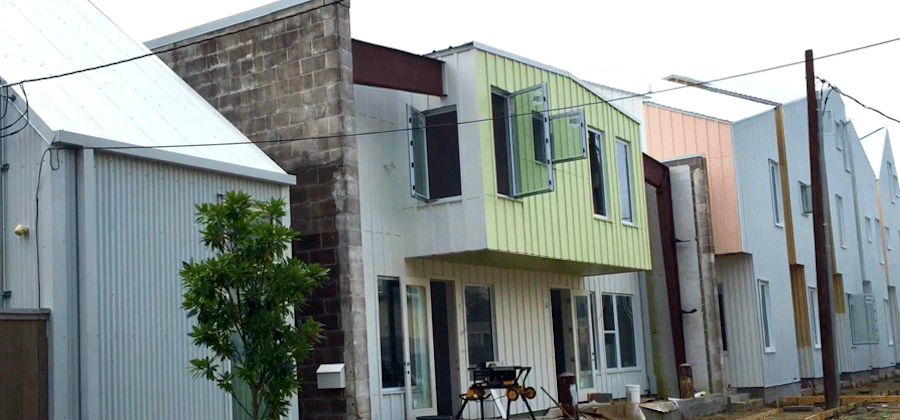
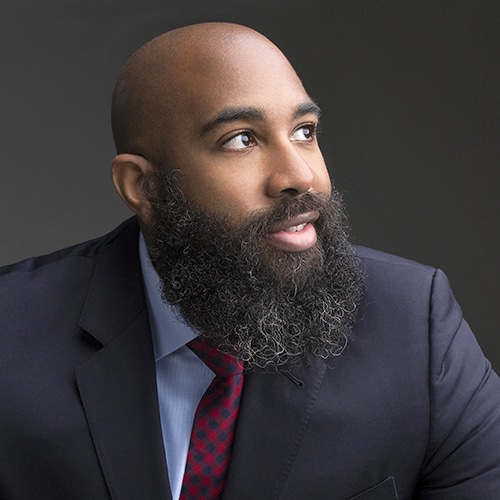
Image courtesy of Daryl Scipio

Rethink Real Estate.

January 27, 2021

What happens when three friends and kindred spirits start dedicating their Saturday mornings to the pursuit of more equitable development and democratized finance?

For years, Dutch MacDonald, architect and technologist, Josh McManus, entrepreneur and place-maker, and Eve Picker, urban designer and developer, have been rooting each other on in their respective pursuits. And then the pandemic happened. We traded in time spent on trains and planes for weekly meetings. Over the last year our discussions have led to an emerging consensus regarding the acute need to rethink real estate for the future. 

In our respective worlds we have encountered developers, companies, foundations and family offices all looking for counsel. Not an esoteric brand of futurism, but on-the-ground real experience, and solutions to the diverse problems facing anyone who wants to create buildings and places that work for everyone. 

And so, Small Change Advisors was born. We’ve an eye on reimagining the way that spaces and places work. And we have a wealth of collective experience amongst us. Just listen in to Josh and Eve in this first of a series of ongoing conversations, and you’ll get the picture.

Insights and Inspirations

  • There is a radical transformation of real estate going on right before our eyes, and in a system that hasn’t changed much since this country’s inception.
  • We’ve watched the broker model in insurance and the mortgage industry being displaced. Real estate may be next in line.
  • The ‘dollars and square foot, for many years at a time’ model for commercial real estate needs to be reimagined.
  • We have to stop looking at buildings as ‘warehouses for humans’ and see them as ‘machines for the maximization of human potential.’
  • Real estate is a tool for transformation, able to stitch places and communities and cities together.
  • We need a broader toolkit of options to expand the lessee/landlord relationship, including a democratization of real estate that can let owners, renters and communities (literally) invest in where they live and work.

Information and Links

  • Get some (community, development, impact, crowdfunding, visionary) advice from Small Change Advisors.
Read the podcast transcript here

Eve Picker: [00:00:19] Hi there. Thanks so much for joining me today for the latest episode of Impact Real Estate Investing. What happens when three friends and kindred spirits start dedicating their Saturday mornings to the pursuit of more equitable development and democratized finance? Well, a lot.

Eve: [00:00:44] For years, Dutch MacDonald, architect and technologist, Josh McManus, entrepreneur and placemaker, have been rooting each other, and me, on in their respective pursuits. And then the pandemic happened. We substituted planes and trains with weekly meetings, and over time a picture emerged that there’s an acute need regarding how to tackle real estate in the future. Developers, companies, foundations and family offices are all looking for counsel. Not the esoteric, academic brand of futurism, but real talk, real experience and real solutions to the problems facing people working to build places that work for everyone. And so, Small Change Advisors was born. We’ve an eye on reimagining the way that spaces and places work. And we have a wealth of collective experience amongst us. Just listen in to Josh and I and you’ll get the picture. Be sure to go to EvePicker.com to find out more about our Saturday morning adventure, and be sure to sign up for my newsletter so you can access information about impact real estate investing and get the latest news about the exciting projects on my crowdfunding platform, Small Change.

Eve: [00:02:16] Hey, Josh, thanks so much for joining me today.

Josh McManus: [00:02:19] Hi Eve. Happy to be here.

Eve: [00:02:21] So, you and I talk a lot on Saturday mornings with our friend, Dutch MacDonald.

Josh: [00:02:26] That we do.

Eve: [00:02:27] We started doing that like maybe mid-last year? And what brought us there, why did we decide to do that?

Josh: [00:02:35] I think it was a unique combination of our ongoing realization that we all come to, a very similar set of shared beliefs, but from very different experiences and angles. And, you know, to give away your time on Saturday morning when you have a lot of other things that you could be working on, I think there has to be a lot of serendipity and symbiosis. And we seem to have found that amongst the group, that time always flies by.

Eve: [00:03:05] Yeah, I mean, I remember thinking I’ve known you for quite a long time now, right? Through CEOs for Cities and after that. So, you and I have had a lot of commonalities in the way we think about cities and do things. And Dutch, Dutch was the architect for my real estate portfolio, and then moved on to a slightly different world, business strategy and digital placemaking, I suppose. I don’t know, I have always thought that together the three of us can be better than alone.

Josh: [00:03:37] Yeah, yeah, I totally agree. I think the more, and it’s probably been, I don’t know, 15, 20 years since you and I first crossed paths?

Eve: [00:03:47] Yeh, probably.

Josh: [00:03:48] But the further I go into this work, there’s a very small set of people that I call, you know, at the Ph.D. Level that have been on the, sort of, the front lines of placemaking, community change, this sort of transformational development. And so, it gets harder and harder to find friends that you can have the right conversations with. And so, there’s a certain solace in finding folks that you can talk about any of these problems and issues and opportunities with. But then each of us come at it, you know, you guys have a, very technical training. I have business training. Dutch has been doing a lot of work and consulting in the digital world. And so, I think there’s a lot of magic that’s happened, is collapsing our insights together and turning them into shared action.

Eve: [00:04:35] So, we each have a special superpowers, and I think that’s what’s always fascinated me. And also the thought of working with people who, as you said, think the same way, love the same things, are passionate about cities, want to make a difference. All of those things. It’s hard to find people who really want to do that.

Josh: [00:04:54] Yeah.

Eve: [00:04:55] Anyway, so I’m going to ask you, what’s the one thing you believe about real estate right now that others don’t seem to believe in, yet?

Josh: [00:05:04] I think that we are seeing the radical transformation of real estate right before our eyes and that we should be surprised and amazed by that because it’s a system that hasn’t changed pretty much in the United States since our inception. And the thing that I believe about real estate that I don’t know that others have completely come to terms with yet, is that I don’t think the business model is going to hold. I don’t think that the dollars and square foot, for many years at a time for commercial real estate, is going to be the way that business is done even a dozen years from now. I think there’s going to be a radical imagination of the monetization for commercial spaces. And I think that we’re getting a first look at it through the work of Small Change, and also through some of the work that I’m doing in these post-industrial cities.

Eve: [00:06:02] When you talk about that … are you talking about ‘demand pricing’? Explain a little more.

Josh: [00:06:07] Yeah, I think either brokers with a much broader toolset, or a displacement of the broker, which has happened in the insurance and the mortgage industry, and the toolset then becomes much bigger. So, I mean, demand pricing and pricing, that’s also got the arbitrage for the amount of time that you want the space for. So, right now, it’s really hard for potential tenants to find short-term lease offerings. But, you know, We Work, despite its failure, or despite its setbacks, started to chart that territory. And then you’re seeing a number of other providers following those footsteps. But not just demand pricing. You’re seeing unique revenue share models, a lot of retail, and food and beverage, is shifting much more to revenue share. Food halls are driving a lot of innovation around revenue models where risk and costs are shared by different entities. And so, I just see, you know, the ways that you can and use commercial space turning from a singular, ‘it’s about dollars, square feet and years,’ into a much more broad and varied menu of offerings that are priced accordingly, that are staffed accordingly, and that are, frankly, much more mutually beneficial to both the landlord on the lessee.

Eve: [00:07:29] That’s a really exciting concept. I have to tell you, I was thinking about that 15 years ago when I developed two buildings which had unusually small commercial spaces. Like little studios and spaces that range from about 400 square feet to under 2000 square feet. And I couldn’t find a broker who wanted to take on leasing them. And the reason was, because the broker model is based on commission. And that broker model, really, I don’t want to say it forces greed because that’s a bad way to put it. I mean, people need to put food on their table. So so brokers, right? But it forces them to really pursue the bigger deals because that’s how they get paid. And so, all the little ones get left behind. And yet they’re the ones that are really important for building, you know, the next business, a creative and diverse economy. And I ended up marketing all of those spaces myself for that reason. But it is a very broken system. Very broken.

Josh: [00:08:32] Yeah, well …we’re seeing the radical disruption and displacement … so AirBnB, you know displaced a whole set of brokers. You used to go to the beach and you dealt with a real estate firm that was set up to do short-term rentals. And now AirBnB is …

Eve: [00:08:50] That’s right.

Josh: [00:08:50] Vacasa and others. Yeah. And same thing if you look at under Warren Buffett’s holdings at Berkshire Hathaway, a Geico, like, you know, just used to have your neighborhood insurance man, and you don’t right now. You go direct when you’re going with Geico. I was at Quicken Loans as part of my work with Rock Ventures. That’s a 50 state sales-side operation. So, they’re competing against banks who have brick and mortar locations in neighborhoods, and they have this sustained competitive advantage, in that they don’t have that brick and mortar and they don’t have that whole traditional brokerage model. So, I don’t see any reason why it won’t happen in commercial real estate. You know, it’s in the process of arriving right now.

Eve: [00:09:31] Yeah, at the moment, really, Craigslist is the only option.

Josh: [00:09:35] Yeah, yeah …

Eve: [00:09:36] For those little spaces …

Josh: [00:09:37] … and that’s a sketchy option.

Eve: [00:09:39] It’s a sketchy option. It’s difficult.

Josh: [00:09:41] But I, I think it’ll change quickly.

Eve: [00:09:43] Yeah, that’s exciting. What’s your biggest pet peeve in real estate? Aside from this one?

Josh: [00:09:51] Well, this one is a major pet peeve of mine. There’s a philosophical one that I don’t know if you and I have talked about before, which is, I think that all too often we look at buildings as warehouses for humans instead of as machines for the maximisation of human potential. And what I mean by that is, a lot of folks, when you were doing commoditized-type work, if it was piecework or sales work or light manufacturing, which is, where can we find some space that has basic amenities so that people can do their work inside of them. Now that we’ve moved to a much more knowledge work-based economy, you have to ask yourself, how do I help the people that are inside of those, which are our most valuable asset, be their most productive selves? And so, I still walk into too many spaces and I feel like they’re trying to compete on the warehousing front. So, how many people can we warehouse in here for how many dollars and how many square feet?

Eve: [00:10:49] Right.

Josh: [00:10:49] And they’re not thinking about this is a machine for maximisation of human potential. So, what happens in the public realm? The quality of the food and bev, the quality of the shared spaces, the shared amenities? I always say in the real estate project I work on, you can’t austerity your way to prosperity. And so, I’m constantly peeved when I find people that are trying to do that.

Eve: [00:11:12] Interesting.

Josh: [00:11:14] What about for you, Eve?

Eve: [00:11:15] I’ve got a couple of pet peeves. One is banking. You know, I really and I’m not sure it’s the fault of banks, but I really believe that banks are squashing creative real estate innovation in the way that they lend. Because in order to get a bank loan, you need to get an appraisal. And in order to get an appraisal, there need to be a couple of, like, kind projects. So, this means that some new idea or a first of its kind project in a neighborhood is not going to get traditional bank financing. And I think that’s really holding back remaking places in a meaningful way. I think it’s a really big problem. The second pet peeve I have, I think, is zoning. Same issue. I have a little cottage in this wonderful little place that was, really, a fisherman’s village. It’s a miniature little thing. And sometime in the 19 .. probably in the 1960s or 70s, some wanting the zoning department thought it was a really good idea to overlay a completely suburban zoning rule over that funky little neighborhood. Everything that was there is grandfathered in, but everything that’s being built now looks completely different. It looks suburban with side yards and backyard setbacks that really are a completely suburban model. And I think that’s a horrible shame. But, you know, I think contextual zoning is critical to keep places intact and characterful and interesting and to really maintain the culture of them. But on the other hand, rewriting zoning codes, not zoning law, is immensely expensive. And I really don’t know the answer to that. I mean, small municipalities simply aren’t going to be able to afford to address that. They’re just not.

Josh: [00:13:15] Yeah, yeah. I see a regular friction with this, especially in post-industrial cities that have draconian old zoning laws, and they also don’t have the municipal finance to even start thinking about how they decrease these barriers. There’s an exciting piece of these pink zones or innovation zones, or they’re sort of peeling back zoning temporarily to see what happens. And I hope that that leads to some mass scale changes. But it seems to me in general, you know, when a lot of this was laid out, you know, heavy industry was big and dirty and that’s not even the case anymore. And so, all of the things that were being accounted for and attempted to be prevented, not to mention the things that were attempted to be prevented that were terribly racist classist or something else -ist, but I don’t think it’s the looming threat that it was when a lot of this came about. So, I’m hopeful that some of these innovation programs will chip away at it.

Eve: [00:14:14] Yeah, things like that have happened recently, like zoning overlay districts in the entire state of Oregon and California to permit accessory dwelling units. They’re really good. Planners need to just go for it a little bit more.

Josh: [00:14:29] So you have this incredibly rich experience where you’ve worked on a lot of projects. And I’m curious to know of all these projects that you’ve worked on, and you’ve taken on some of the hardest to figure out buildings in some of the most needed urban places of all of them that you’ve ever done. Like what’s your favorite project and why?

Eve: [00:14:50] This is like picking your favorite child. It’s very difficult to do. Oh, favourites, that’s really hard. So, They all have the pros and cons. But I would say … I think the most challenging for me were the most fun. I don’t know if I would call them my favorite, but that tiny house that I built in Garfield, 250 square feet of it, was the most challenging project I ever took on, by far. And it was challenging because it challenged zoning codes, building codes, financing. I mean, there were things I discovered along the way that we just never anticipated. I couldn’t get an appraisal for it because it was the first tiny house on a foundation in the tristate region. Therefore, I crowdfunded the debt, because I was not going to get a bank loan. It was extremely challenging, and I enjoy that. It’s solving an enormous puzzle and along the way you discover the pieces of it that you really need to address. I think I’m a design snob. I love great design and I love wonderful and beautiful buildings and places. But for me, I think the projects I’m proudest of are the ones that just didn’t look like they would ever work. And I, I got them to work through sheer tenacity. Many of my projects have design features that people point out, which really are not design features. I live in a loft with a polished concrete floor because we couldn’t afford to cover it with anything, you know. Three of the walls are concrete block for the same reason. Dutch helped me with these projects. So, he was an integral part of this. We used the raw materials that we knew we couldn’t get away from, to turn them into design features because that’s what the budget dictated. So, I don’t know if I have a favorite, but I think that’s my favorite part of building is really making something wonderful happen with the resources you have. Does that make sense?

Josh: [00:16:58] Yeah, absolutely. And that willingness to let the problem dictate the solution, in some ways flies in the face of probably some of the real estate advice you’ve been given along the way.

Eve: [00:17:11] Oh, yeah, that encapsulates it really well. That’s what I really enjoy.

Josh: [00:17:16] So, what other real estate advice have you been given, or have heard other people giving, that you don’t agree with? Because I love this contrarian line of thought.

Eve: [00:17:25] Real estate advice that I’ve discarded. I think probably the biggest one, and this may be a problem for me is that I fall in love with the buildings I buy. I really, I really love architecture and I love buildings. And so I become passionately entwined in my projects, which, you know, every big developer tells you never to do, you know? Be ready to walk away from a project if it doesn’t work. That is really hard for me. I can’t walk away. I spend a lot of time kind of pressing the challenge, trying to make it work. So, I think that’s probably the biggest advice I’ve ignored. Don’t become passionately involved in the buildings you choose to develop. For me, it matters. If I’m going to spend time on redeveloping a property, or building a new one, or maintaining it afterwards, managing it. I’ve got to love it. I really don’t want to be doing that, you know, with a Microtel in a suburb. That would be painful for me.

Josh: [00:18:28] Sure. Yeah. That relates to the piece of advice that I’ve been given that I just, sort of, fundamentally reject, which is that, you know, often times I’m working with large organizations, you know, companies, sometimes entire communities, sometimes foundations, sometimes family offices, and there’s still people who come to me and say, well, you have to understand that within that, real estate is a unique discipline. The buildings work differently and only developers understand how buildings work. And for me, again, a building is a machine for the maximization of human potential.

Eve: [00:19:04] I think that’s right.

Josh: [00:19:06] And so, if I’m advising a company to say, well, let’s not worry about what the lease is on this space, if you have 20 million dollars of payroll sitting in this building and the building could make those people 10 percent more productive, that will eclipse whatever the dollars in square foot price was at the bottom of the development deal.

Eve: [00:19:29] Right. It’s about change making, right?

Josh: [00:19:32] Real estate is a tool for transformation. Yep. It is not a warehouse for human beings. It is a tool for transformation. And if you look at what companies and communities and foundations and family offices are willing to spend on other tools for transformation, to then walk up to real estate and say, well, we should use the 300 year old model about competitive, you know, commodity prices per square feet. I think that’s just patently ridiculous.

Eve: [00:20:00] Well, you know, I think I bring that same thinking to small change the crowdfunding platform. I venture to say I’d be a lot further along with that business if I were willing to raise funds for any old project that came along. But I’m not. I’ve made it harder for myself, but also much more gratifying by insisting that Small Change is going to help transform places. And so, the projects we raise funds for really need to be making some change in some way, in the place they’re in. I really hope that takes hold. I believe there are lots of people who think about it, but it’s certainly not as many, and there’s not as many big dollars invested as your everyday, you know, development that you see pop up everywhere that all look the same over and over again. There’s far more money in those than these challenging little enterprises, right?

Josh: [00:20:59] Yeah. Yeah. Well, this might be leading the witness a little bit, but I’m curious, based upon that, if you had a magic wand and you could change anything about the development industry, overall, what is it that you would change? I’m sure it relates somehow to the projects that are getting done.

Eve: [00:21:18] Yeah, I mean, I think it goes back to the real estate industry. I think the zoning and financing are the key pieces for me. I wish there were a pool of funds, a bank, a group of banks that would support creative, ground-up projects that really offer the opportunity to stitch places and communities and cities together, and I wish they weren’t so much money being spent on the wrong type of projects in suburban places where you have to drive to them, which causes further pollution, where they really don’t face the street, that don’t add anything to the community there … as you said, warehouses for people. So, that’s what I would like to see change. How about you? What’s your magic wand? What would you like to see?

Josh: [00:22:11] For me on the magic wand, I feel like there is just a missing toolbox that fits between the landlord and the lessee. And so right now there’s a very traditional leasing model that sits between most landlords and lessees. And there’s about dollars and square feet and years. And I would create a much broader toolkit of options that says no matter what you need right now, here is a tool that might be able to help you as the entrepreneur and also benefit the landlord. And so, part of my background is working in creating entrepreneurial ecosystems. And so, I’ve worked with so many small businesses of so many sizes and stages of development, I know that most of them do one of two things. They either sign up for the wrong space and that becomes a particular detriment to them, or they avoid getting space for far too long. And that stunts their growth. And it’s because they’re terrified of, you know, they just got started five weeks ago and they’re asked to sign a five year lease and they don’t know what business is going to be like in, you know, five months, much less five years.

Eve: [00:23:26] Yes, I know.

Josh: [00:23:27] So, creating a much broader toolkit that allows you to nurture an ecosystem of tenants through the maximization of their potential. And I believe that tenants will pay for the arbitrage, like they’ll pay for you to direct them. And we’ve seen this with the We Works and Industrious’ of the world. They’re realizing, like, people will pay for optionality and therefore the landlord can be made whole, and sometimes above whole. But I’m super excited for that toolkit. If I had the magic wand then I would accelerate that toolkit to where there was a whole suite of services available to every potential lessee from every landlord. And then it wouldn’t be necessarily cumbersome or it wouldn’t be, like, finding a unicorn when you’re in a city trying to get a business off the ground.

Eve: [00:24:19] But then, you know, you’d have to work with me on my magic wand, because as the landlord, when I go to the bank with the building and I want to refinance it, the first thing they look at is the length of the lease. The leases that we have on the building. And so, if I have a building providing optionality and I’ve been in this position, even if I have a history with that bank and have never missed a payment, they probably won’t come to the table with a loan. This is why I think, you know, some of these boring things like banking are really critical. So, if we were to develop that toolkit, I’d be right there looking for banks that would support it.

Josh: [00:24:57] I think the toolkit requires a new capital class, and that’s the conundrum of it.

Eve: [00:25:02] That’s right.

Josh: [00:25:03] But if we can make that clear, I actually do believe that there are capital providers that would be interested in that capital class. If you look at the impact funders that want to see the stagnation of small business development in the United States offset, this would be one of the ways to do that. Because you could better incubate small businesses if they had the appropriate arrangements and services in order to grow.

Eve: [00:25:29] Yeah, I think it’s right. I think you just they’re all so intertwined. It’s not a small problem.

Josh: [00:25:36] No.

Eve: [00:25:37] But I have to ask you, like, we’re forming this company, Small Change Advisors, the three of us together. What roles would you love to be involved in as a Small Change Advisor? How do you think we can help people?

Josh: [00:25:50] Yeah, well, I guess we kind of buried the lede from the audio side of things, which is we’ve been working together on Saturday mornings and we finally got to a point where we were like, hey, enough people are asking for these services that we’ve got to do something about it.

Eve: [00:26:04] That’s right.

Josh: [00:26:05] So, we said, OK, well, the easiest thing to do is extend off from the Small Change platform and all the success that you’ve already created there, and the deals that you’ve helped people get done, and form Small Change Advisors. Because we are seeing these companies, these communities, these foundations and these family offices that are trying to figure this out. So, my life mission is to strengthen the humanity immune system. And what I mean by that is I believe the more people that are equipped and empowered to be agents of change, the better off the world will be. And I don’t just mean individual people organizing in their neighborhoods. That’s important. But I think that companies, communities, like entire communities, again these these family offices, these foundations can be equipped to be agents of change. And so what I hope we can do with Small Change Advisors is accelerate the amount of people that are thinking about real estate in these ways that you and I have been looking at it for the last 10, 15, 20 years, the same way that Dutch looks at it, which is, as a tool for transformation for communities, you know, as a great benefit both to the organizations that are doing them, but also to the communities that surround them. And as a overarchingly source of abundance for, you know, a lot of post-industrial places that we work in that have forgotten what abundance looks like.

Eve: [00:27:33] So what is a dream project? Look like them? Like an example of one?

Josh: [00:27:38] Yeah. So, I’m super lucky in that I get to work on a couple of dream projects right now. And the one that’s public facing that I get to help out with is Ford Motor Company’s work on Michigan Central and Detroit. And Michigan Central is a development that’s anchored by Michigan Central Station, which is the Beaux Arts station that’s been abandoned for about 30 years that is designed by the same folks who designed Grand Central Station in New York. And Ford is turning that into a mobility innovation district and a place of discovery for the future of mobility. And so, working to support a company and a community like Detroit, a neighborhood like Corktown, and to think about how you create new products and services, how you create jobs for a community, how you create a place that’s more dynamic and attractive, like that’s the sort of dream project. And so, I got to work in Downtown Detroit on similar stuff. I was at Rock Ventures and we worked on the acquisition and the transformation of over 10 million square feet. But that sort of size and scale is what I’m super fascinated with, because I’m seeing non-traditional actors in the real estate world intervene and say we’re going to make our places better. We have to, it’s table stakes for retaining and attracting the best employees. And it’s also the right thing to do for the communities that we call home. And so, those are sort of dream projects that I get to work on now. I’m interested in that same question for you as well. And then I’ve got another question behind that.

Eve: [00:29:19] I’ve got a variety of dream projects. One of my big dream projects is that someone approaches Small Change who gets that it is a tool for them, to really remake an entire place. That they can raise a bunch of small raises with people from the neighborhood investing in a variety of buildings, maybe even, you know, your project in Michigan. You know, you open the door for neighborhood investors in each project that is built. But you can also do much larger raises and let much larger investors in as well. So, that over time the people who live there can enjoy the increased value of that asset. I would love someone to come along with something that scale and sort of realize the potential of how we can help to generate wealth over a long period of time. I’d also love to create a Small Change fund. So far we’ve been working on individual project basis, but there are some securities tools out there, Regulation A in particular, that I think could really be used to create a large fund which lets everyone over the age of 18 invest, and really puts our theories to work on where investments should be made, where they’re not being made right now, to sort of build community. I think those are probably my two top picks. I have like little dream projects for real estate as well. But we won’t talk about those.

Josh: [00:30:51] Yeah, yeah. Those are super exciting and I think we’re lucky to be working on the projects we already are. And I can see these new things on the horizon. Beyond those projects they inform a larger, more audacious goal. And so much of what has attracted me to spend the time with you and Dutch every Saturday morning, and to want to be a part of Small Change, and that’s a broader democratization. So, you referenced it that there and community participation. But could you talk a little bit more about that big audacious goal, what you’d like to see for real estate and investment overall? If we could fly back down in 100 years and look at the world, how would it be different because Small Change has been around?

Eve: [00:31:38] Well, I mean, Small Change is sort of tackling, we’re right at the beginning of tackling the democratization of investment. And until these new securities laws were written in 2016, regulation crowdfunding, unaccredited investors could, or non-accredited investors could not invest. Investment in real estate was only for the elite, for the three percent that have a minimum net worth of one million dollars without their primary residence, or 200,000 dollars a year in income. And even then, that elite would have to know someone in the real estate business to be able to invest. So, the places where money was coming from was altogether very limited. And what I learned in my work in Pittsburgh is that people have a palpable need, a desire, to be part of improving their city and they look for ways to do that. I mean, this is one of the key things I learnt in Pittsburgh. It’s extremely powerful. And I really believe that giving them an opportunity to invest at some small level is the right thing to do. In the long run, it will benefit the city and make it a stronger, more tightly-knit place. Does that make sense?

Josh: [00:33:00] Yes, absolutely.

Eve: [00:33:03] That’s one, what the hopes are, that somehow Small Change can become a community banking system of sorts and fill in where financial institutions just don’t want to go right now. Or can’t go right now, for whatever reason. It’s a big, hairy, audacious goal.

Josh: [00:33:21] Yeh, and it’s also such a beautiful dream. And so I’m grateful to you for inviting Dutch and I into the fold. I’m super excited about us forming Small Change Advisors. And I do know from my days in fundraising that you don’t get anything that you don’t ask for. So, I guess as we sort of wrap up this first session, and I made a bunch of notes. It feels like we’ve got a lot more things to talk about. We should say to the folks that are listening, if you are a company, a community, a foundation or a family office, and you’re trying to figure out a project that aligns with this dream of democratizing real estate finance and building better places through these progressive real estate projects, we’d love to talk to you. And also, if you are somebody that has built a tool, created a solution that you think may help along this goal, too, or you’re interested in what we’re going to do as a team, as Small Change Advisors reach out to us as well. Because this is a mission that about a lot more than a traditional company would have. And so we’re going to need all the help we can get along the way.

Eve: [00:34:29] And I would say a final thing is if you have something that you’d like us to talk about, let us know. We plan a couple of conversations like this, and one of you out there may have an idea that hadn’t occurred to us. So, please be in touch.

Josh: [00:34:44] Yeah. Yeah. So, on the horizon, space as a product versus space as a service, continuously variable financing, monetizing public amenities, and the specifics of involving the crowd in the finance stack are all things that are on my notes for additional discussion. So, again, thank you for the invitation to talk.

Eve: [00:35:07] Oh, thank you very much. I’m looking forward to the next one.

Josh: [00:35:10] Thank you.

Eve: [00:35:25] You can find out more about impact real estate investing and access the show notes for today’s episode at my website, EvePicker.com. While you’re there, sign up for my newsletter to find out more about how to make money in real estate while building better cities. Thank you so much for spending your time with Josh and I today. There’ll be more to come soon. We’ll talk again soon. But for now, this is Eve Picker signing off to go make some change.

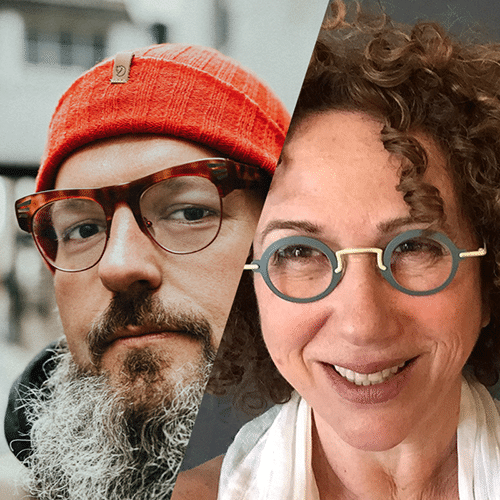
Images courtesy of For Purpose and Small Change Advisors.

« Previous Page
Next Page »

Primary Sidebar

sign up here

APPLY TO BE A PODCAST GUEST

More to See

(no title)

February 22, 2025

Bellevue Montgomery

February 11, 2025

West Lombard

January 28, 2025

FOLLOW

  • LinkedIn
  • RSS

Tag Cloud

Affordable housing Climate Community Creative economy Crowdfunding Design Development Environment Equity Finance FinTech Gentrification Impact Investing Mobility Offering Opportunity zones PropTech Technology Visionary Zoning

Footer

©rethinkrealestateforgood.co. The information contained on this website is for general information purposes only. Nothing on this website is intended as investment, legal, tax or accounting strategy or advice, or constitutes an offer to sell, solicit or buy securities.
 
Any projections discussed or made may not be accurate and do not guarantee a specific outcome. All projections or investments are subject to risk due to uncertainty and change, including the risk of loss, and past performance is not indicative of future results. You should make independent decisions and seek independent advice regarding investments or strategies mentioned on this website.

Recent

  • The Mulberry
  • Mount Vernon Plaza
  • The Seven
  • Real estate and women.
  • Oculis Domes.

Search

Categories

Climate Community Crowdfunding Development Equity Fintech Investing Mobility Proptech Visionary


Copyright © 2026 · Magazine Pro on Genesis Framework · WordPress · Log in